EP2091585B1 - Oberflächenbehandlung biomedizinischer vorrichtungen - Google Patents
Oberflächenbehandlung biomedizinischer vorrichtungen Download PDFInfo
- Publication number
- EP2091585B1 EP2091585B1 EP07871278A EP07871278A EP2091585B1 EP 2091585 B1 EP2091585 B1 EP 2091585B1 EP 07871278 A EP07871278 A EP 07871278A EP 07871278 A EP07871278 A EP 07871278A EP 2091585 B1 EP2091585 B1 EP 2091585B1
- Authority
- EP
- European Patent Office
- Prior art keywords
- biomedical device
- solution
- polymer
- lens
- copolymer
- Prior art date
- Legal status (The legal status is an assumption and is not a legal conclusion. Google has not performed a legal analysis and makes no representation as to the accuracy of the status listed.)
- Revoked
Links
- 0 CC*(C(C(*)(C(C)(CC)CC)C(O)=O)N)C1CC1 Chemical compound CC*(C(C(*)(C(C)(CC)CC)C(O)=O)N)C1CC1 0.000 description 2
Images



Classifications
-
- C—CHEMISTRY; METALLURGY
- C09—DYES; PAINTS; POLISHES; NATURAL RESINS; ADHESIVES; COMPOSITIONS NOT OTHERWISE PROVIDED FOR; APPLICATIONS OF MATERIALS NOT OTHERWISE PROVIDED FOR
- C09D—COATING COMPOSITIONS, e.g. PAINTS, VARNISHES OR LACQUERS; FILLING PASTES; CHEMICAL PAINT OR INK REMOVERS; INKS; CORRECTING FLUIDS; WOODSTAINS; PASTES OR SOLIDS FOR COLOURING OR PRINTING; USE OF MATERIALS THEREFOR
- C09D133/00—Coating compositions based on homopolymers or copolymers of compounds having one or more unsaturated aliphatic radicals, each having only one carbon-to-carbon double bond, and at least one being terminated by only one carboxyl radical, or of salts, anhydrides, esters, amides, imides, or nitriles thereof; Coating compositions based on derivatives of such polymers
- C09D133/02—Homopolymers or copolymers of acids; Metal or ammonium salts thereof
-
- A—HUMAN NECESSITIES
- A61—MEDICAL OR VETERINARY SCIENCE; HYGIENE
- A61L—METHODS OR APPARATUS FOR STERILISING MATERIALS OR OBJECTS IN GENERAL; DISINFECTION, STERILISATION OR DEODORISATION OF AIR; CHEMICAL ASPECTS OF BANDAGES, DRESSINGS, ABSORBENT PADS OR SURGICAL ARTICLES; MATERIALS FOR BANDAGES, DRESSINGS, ABSORBENT PADS OR SURGICAL ARTICLES
- A61L27/00—Materials for grafts or prostheses or for coating grafts or prostheses
- A61L27/14—Macromolecular materials
- A61L27/18—Macromolecular materials obtained otherwise than by reactions only involving carbon-to-carbon unsaturated bonds
-
- A—HUMAN NECESSITIES
- A61—MEDICAL OR VETERINARY SCIENCE; HYGIENE
- A61L—METHODS OR APPARATUS FOR STERILISING MATERIALS OR OBJECTS IN GENERAL; DISINFECTION, STERILISATION OR DEODORISATION OF AIR; CHEMICAL ASPECTS OF BANDAGES, DRESSINGS, ABSORBENT PADS OR SURGICAL ARTICLES; MATERIALS FOR BANDAGES, DRESSINGS, ABSORBENT PADS OR SURGICAL ARTICLES
- A61L27/00—Materials for grafts or prostheses or for coating grafts or prostheses
- A61L27/28—Materials for coating prostheses
- A61L27/34—Macromolecular materials
-
- A—HUMAN NECESSITIES
- A61—MEDICAL OR VETERINARY SCIENCE; HYGIENE
- A61L—METHODS OR APPARATUS FOR STERILISING MATERIALS OR OBJECTS IN GENERAL; DISINFECTION, STERILISATION OR DEODORISATION OF AIR; CHEMICAL ASPECTS OF BANDAGES, DRESSINGS, ABSORBENT PADS OR SURGICAL ARTICLES; MATERIALS FOR BANDAGES, DRESSINGS, ABSORBENT PADS OR SURGICAL ARTICLES
- A61L27/00—Materials for grafts or prostheses or for coating grafts or prostheses
- A61L27/50—Materials characterised by their function or physical properties, e.g. injectable or lubricating compositions, shape-memory materials, surface modified materials
-
- A—HUMAN NECESSITIES
- A61—MEDICAL OR VETERINARY SCIENCE; HYGIENE
- A61L—METHODS OR APPARATUS FOR STERILISING MATERIALS OR OBJECTS IN GENERAL; DISINFECTION, STERILISATION OR DEODORISATION OF AIR; CHEMICAL ASPECTS OF BANDAGES, DRESSINGS, ABSORBENT PADS OR SURGICAL ARTICLES; MATERIALS FOR BANDAGES, DRESSINGS, ABSORBENT PADS OR SURGICAL ARTICLES
- A61L29/00—Materials for catheters, medical tubing, cannulae, or endoscopes or for coating catheters
- A61L29/08—Materials for coatings
- A61L29/085—Macromolecular materials
-
- A—HUMAN NECESSITIES
- A61—MEDICAL OR VETERINARY SCIENCE; HYGIENE
- A61L—METHODS OR APPARATUS FOR STERILISING MATERIALS OR OBJECTS IN GENERAL; DISINFECTION, STERILISATION OR DEODORISATION OF AIR; CHEMICAL ASPECTS OF BANDAGES, DRESSINGS, ABSORBENT PADS OR SURGICAL ARTICLES; MATERIALS FOR BANDAGES, DRESSINGS, ABSORBENT PADS OR SURGICAL ARTICLES
- A61L29/00—Materials for catheters, medical tubing, cannulae, or endoscopes or for coating catheters
- A61L29/14—Materials characterised by their function or physical properties, e.g. lubricating compositions
-
- A—HUMAN NECESSITIES
- A61—MEDICAL OR VETERINARY SCIENCE; HYGIENE
- A61L—METHODS OR APPARATUS FOR STERILISING MATERIALS OR OBJECTS IN GENERAL; DISINFECTION, STERILISATION OR DEODORISATION OF AIR; CHEMICAL ASPECTS OF BANDAGES, DRESSINGS, ABSORBENT PADS OR SURGICAL ARTICLES; MATERIALS FOR BANDAGES, DRESSINGS, ABSORBENT PADS OR SURGICAL ARTICLES
- A61L31/00—Materials for other surgical articles, e.g. stents, stent-grafts, shunts, surgical drapes, guide wires, materials for adhesion prevention, occluding devices, surgical gloves, tissue fixation devices
- A61L31/08—Materials for coatings
- A61L31/10—Macromolecular materials
-
- A—HUMAN NECESSITIES
- A61—MEDICAL OR VETERINARY SCIENCE; HYGIENE
- A61L—METHODS OR APPARATUS FOR STERILISING MATERIALS OR OBJECTS IN GENERAL; DISINFECTION, STERILISATION OR DEODORISATION OF AIR; CHEMICAL ASPECTS OF BANDAGES, DRESSINGS, ABSORBENT PADS OR SURGICAL ARTICLES; MATERIALS FOR BANDAGES, DRESSINGS, ABSORBENT PADS OR SURGICAL ARTICLES
- A61L31/00—Materials for other surgical articles, e.g. stents, stent-grafts, shunts, surgical drapes, guide wires, materials for adhesion prevention, occluding devices, surgical gloves, tissue fixation devices
- A61L31/14—Materials characterised by their function or physical properties, e.g. injectable or lubricating compositions, shape-memory materials, surface modified materials
-
- C—CHEMISTRY; METALLURGY
- C08—ORGANIC MACROMOLECULAR COMPOUNDS; THEIR PREPARATION OR CHEMICAL WORKING-UP; COMPOSITIONS BASED THEREON
- C08J—WORKING-UP; GENERAL PROCESSES OF COMPOUNDING; AFTER-TREATMENT NOT COVERED BY SUBCLASSES C08B, C08C, C08F, C08G or C08H
- C08J7/00—Chemical treatment or coating of shaped articles made of macromolecular substances
- C08J7/04—Coating
- C08J7/0427—Coating with only one layer of a composition containing a polymer binder
-
- C—CHEMISTRY; METALLURGY
- C08—ORGANIC MACROMOLECULAR COMPOUNDS; THEIR PREPARATION OR CHEMICAL WORKING-UP; COMPOSITIONS BASED THEREON
- C08J—WORKING-UP; GENERAL PROCESSES OF COMPOUNDING; AFTER-TREATMENT NOT COVERED BY SUBCLASSES C08B, C08C, C08F, C08G or C08H
- C08J7/00—Chemical treatment or coating of shaped articles made of macromolecular substances
- C08J7/04—Coating
- C08J7/052—Forming heat-sealable coatings
-
- C—CHEMISTRY; METALLURGY
- C08—ORGANIC MACROMOLECULAR COMPOUNDS; THEIR PREPARATION OR CHEMICAL WORKING-UP; COMPOSITIONS BASED THEREON
- C08J—WORKING-UP; GENERAL PROCESSES OF COMPOUNDING; AFTER-TREATMENT NOT COVERED BY SUBCLASSES C08B, C08C, C08F, C08G or C08H
- C08J7/00—Chemical treatment or coating of shaped articles made of macromolecular substances
- C08J7/04—Coating
- C08J7/056—Forming hydrophilic coatings
-
- G—PHYSICS
- G02—OPTICS
- G02B—OPTICAL ELEMENTS, SYSTEMS OR APPARATUS
- G02B1/00—Optical elements characterised by the material of which they are made; Optical coatings for optical elements
- G02B1/04—Optical elements characterised by the material of which they are made; Optical coatings for optical elements made of organic materials, e.g. plastics
- G02B1/041—Lenses
- G02B1/043—Contact lenses
-
- C—CHEMISTRY; METALLURGY
- C08—ORGANIC MACROMOLECULAR COMPOUNDS; THEIR PREPARATION OR CHEMICAL WORKING-UP; COMPOSITIONS BASED THEREON
- C08J—WORKING-UP; GENERAL PROCESSES OF COMPOUNDING; AFTER-TREATMENT NOT COVERED BY SUBCLASSES C08B, C08C, C08F, C08G or C08H
- C08J2433/00—Characterised by the use of homopolymers or copolymers of compounds having one or more unsaturated aliphatic radicals, each having only one carbon-to-carbon double bond, and only one being terminated by only one carboxyl radical, or of salts, anhydrides, esters, amides, imides, or nitriles thereof; Derivatives of such polymers
Definitions
- the present invention is directed to the surface treatment of biomedical devices including ophthalmic lenses, stents, implants and catheters to increase their wettability.
- ophthalmic lenses made from, for example, silicone-containing materials
- silicone-containing materials have been investigated for a number of years.
- Such materials can generally be subdivided into two major classes, namely hydrogels and non-hydrogels.
- Hydrogels can absorb and retain water in an equilibrium state, whereas non-hydrogels do not absorb appreciable amounts of water.
- both hydrogel and non-hydrogel silicone medical devices tend to have relatively hydrophobic, non-wettable surfaces that have a high affinity for lipids. This problem is of particular concern with contact lenses.
- Silicone lenses have been subjected to plasma surface treatment to improve their surface properties, e.g., surfaces have been rendered more hydrophilic, deposit resistant, scratch-resistant, or otherwise modified.
- plasma surface treatments include subjecting the surface of a contact lens to a plasma containing an inert gas or oxygen (see, for example, U.S. Patent Nos. 4,055,378 ; 4,122,942 ; and 4,214,014 ); various hydrocarbon monomers (see, for example, U.S. Patent No. 4,143,949 ); and combinations of oxidizing agents and hydrocarbons such as water and ethanol (see, for example, WO 95/04609 and U.S. Patent No. 4,632,844 ).
- 4,312,575 discloses a process for providing a barrier coating on a silicone or polyurethane lens by subjecting the lens to an electrical glow discharge (plasma) process conducted by first subjecting the lens to a hydrocarbon atmosphere followed by subjecting the lens to oxygen during flow discharge, thereby increasing the hydrophilicity of the lens surface.
- plasma electrical glow discharge
- U.S. Patent Nos. 4,168,112 , 4,321,261 and 4,436,730 disclose methods for treating a charged contact lens surface with an oppositely charged ionic polymer to form a polyelectrolyte complex on the lens surface that improves wettability.
- U.S. Patent No. 4,287,175 discloses a method of wetting a contact lens that comprises inserting a water-soluble solid polymer into the cul-de-sac of the eye.
- the disclosed polymers include cellulose derivatives, acrylates and natural products such as gelatin, pectins and starch derivatives.
- U.S. Patent No. 5,397,848 discloses a method of incorporating hydrophilic constituents into silicone polymer materials for use in contact and intra-ocular lenses.
- U.S. Patent Nos. 5,700,559 and 5,807,636 disclose hydrophilic articles (e.g., contact lenses) comprising a substrate, an ionic polymeric layer on the substrate and a disordered polyelectrolyte coating ionically bonded to the polymeric layer.
- U.S. Patent No. 5,705,583 discloses biocompatible polymeric surface coatings.
- the polymeric surface coatings disclosed include coatings synthesized from monomers bearing a center of positive charge, including cationic and zwitterionic monomers.
- EP 0 963 761 A1 discloses biomedical devices with coatings that are said to be stable, hydrophilic and antimicrobial, and which are formed using a coupling agent to bond a carboryl-containing hydrophilic coating to the surface of the devices by ester or amide linkages.
- U.S. Patent No. 6,428,839 discloses a method for improving the wettability of a medical device which includes the steps of (a) providing a medical device formed from a monomer mixture comprising a hydrophilic monomer and a silicone-containing monomer; and (b) contacting a surface of the medical device with a solution including a polymer or copolymer of (meth)acrylic acid.
- a medical device such as a contact lens is exposed to an aqueous environment having a pH in the range from 6.5 to 8.0 during storage in a package and during wear.
- a problem associated with coatings formed from a polymer or copolymer of (meth)acrylic acid is that during use of the contact lens in this pH environment, these polymers are highly ionized and have little surface activity. Therefore, the coating can be removed from the lens relatively easily thereby exposing the lens surface and resulting in a reduction in wetting and lubricity.
- a silicone hydrogel contact lens with an optically clear, hydrophilic surface film that will not only exhibit improved wettability, but which will generally allow the use of a silicone hydrogel contact lens in the human eye for an extended period of time.
- a silicone hydrogel lens for extended wear it would be desirable to provide a contact lens with a surface that is also highly permeable to oxygen and water. Such a surface treated lens would be comfortable to wear in actual use and would allow for the extended wear of the lens without irritation or other adverse effects to the cornea.
- a method for improving the wettability of a biomedical device comprising the step of contacting a surface of the biomedical device with a composition comprising a polymer or copolymer having one or more repeating units of the formula: wherein R independently is a C 2 -C 20 hydrocarbon radical and n is an integer of 2 to 5000,
- a method for improving the wettability of a biomedical device comprising the step of contacting a surface of a biomedical device formed from a monomeric mixture comprising a hydrophilic monomer and a silicone-containing monomer with a composition comprising a polymer or copolymer having one or more repeating units of the formula: wherein R independently is a C 2 -C 20 hydrocarbon radical and n is an integer of 2 to 5000.
- a surface modified biomedical device comprising a biomedical device having a coating on a surface thereof, the coating comprising a polymer or copolymer having one or more repeating units of the formula: wherein R independently is a C 2 -C 20 hydrocarbon radical and n is an integer of 2 to 5000.
- a surface modified biomedical device comprising a biomedical device having a coating on a surface thereof, the coating comprising a polymer or copolymer obtained from the polymerization or copolymerization of a monomeric mixture comprising one or more C 2 -C 20 straight chain, branched, and cyclic 2-alpha-alkyl acrylic acids.
- a method of forming a surface modified biomedical device comprising (a) providing a biomedical device; and (b) coating a surface of the biomedical device with a coating composition comprising a polymer or copolymer having one or more repeating units of the formula: wherein R independently is a C 2 -C 20 hydrocarbon radical and n is an integer of 2 to 5000.
- a method comprising:
- a packaging system for the storage of an ophthalmic device comprising a sealed container containing one or more unused ophthalmic devices immersed in an aqueous packaging solution comprising a polymer or copolymer having one or more repeating units of the formula: wherein R independently is a C 2 -C 20 hydrocarbon radical and n is an integer of 2 to 5000. wherein the solution has an osmolality of at least about 200 mOsm/kg and a pH in the range of about 6 to about 9 and is heat sterilized.
- a packaging system for the storage of an ophthalmic device comprising:
- the present invention provides a surface modified biomedical device such as a contact lens, e.g., a silicone hydrogel contact lens, which has a coating on at least a portion thereon.
- a surface modified biomedical device such as a contact lens, e.g., a silicone hydrogel contact lens, which has a coating on at least a portion thereon.
- the coating composition advantageously improves the hydrophilicity and lipid resistance of the biomedical device by forming a coating thereon.
- the preferred biomedical devices for use herein are ophthalmic devices, more preferably contact lenses, and most preferably contact lenses made from silicone hydrogels.
- the biomedical devices such as wettable silicone-based hydrogel formulations are coated with the coating composition described herein to render a lubricious, stable, highly wettable poly(carboxylic acid) containing surface coating on the biomedical device.
- the terms “lens” and “opthalmic device” refer to devices that reside in or on the eye. These devices can provide optical correction, wound care, drug delivery, diagnostic functionality or cosmetic enhancement or any combination of these properties. Representative examples of such devices include, but are not limited to, soft contact lenses, e.g.. soft, hydrogel lens, soft, non-hydrogel lens and the like, hard contact lenses, e.g., hard, gas permeable lens materials and the like, intraocular lenses, overlay lenses, ocular inserts, optical inserts and the like. As is understood by one skilled in the art, a lens is considered to be “soft” if it can be folded back upon itself without breaking. Any material known to produce a biomedical device including an ophthalmic device can be used herein.
- the preferred substrates are hydrogel materials, including silicone hydrogel materials.
- Particularly preferred materials include vinyl functionalized polydimethylsiloxanes copolymerized with hydrophilic monomers as well as fluorinated methacrylates and methacrylate functionalized fluorinated polyethylene oxides copolymerized with hydrophilic monomers.
- Representative examples of substrate materials for use herein include those disclosed in U.S. Patent Nos.
- Hydrogels in general are a well known class of materials that comprise hydrated, cross-linked polymeric systems containing water in an equilibrium state. Silicone hydrogels generally have a water content greater than about 5 weight percent and more commonly between about 10 to about 80 weight percent. Such materials are usually prepared by polymerizing a mixtures containing at least one silicone-containing monomer and at least one hydrophilic monomer. Typically, either the silicone-containing monomer or the hydrophilic monomer functions as a crosslinking agent (a crosslinker being defined as a monomer having multiple polymerizable functionalities) or a separate crosslinker may be employed.
- a crosslinking agent a crosslinker being defined as a monomer having multiple polymerizable functionalities
- Representative examples of applicable silicon-containing monomeric units include bulky polysiloxanylalkyl(meth)acrylic monomers.
- An example of a bulky polysiloxanylalkyl(meth)acrylic monomer is represented by the structure of Formula I: wherein X denotes -O- or -NR-; each R 1 independently denotes hydrogen or methyl; each R 2 independently denotes a lower alkyl radical, phenyl radical or a group represented by wherein each R 2 independently denotes a lower alkyl or phenyl radical; and h is 1 to 10.
- Examples of bulky monomers are methacryloxypropyl tris(trimethyl-siloxy)silane or tris(trimethylsiloxy)silylpropyl methacrylate, sometimes referred to as TRIS and tris(trimethylsiloxy)silylpropyl vinyl carbamate, sometimes preferred to as TRIS-VC and the like.
- Such bulky monomers may be copolymerized with a silicone macromonomer, which is a poly(organosiloxane) capped with an unsaturated group at two or more ends of the molecule.
- a silicone macromonomer which is a poly(organosiloxane) capped with an unsaturated group at two or more ends of the molecule.
- U.S. Patent No. 4,153,641 discloses, for example, various unsaturated groups such as acryloxy or methacryloxy groups.
- silicone-containing monomers includes, but is not limited to, silicone-containing vinyl carbonate or vinyl carbamate monomers such as, for example, 1,3-bis[4-vinyloxycarbonyloxy)but-1-yl]tetramethyl-disiloxane; 3-(trimethylsilyl)propyl vinyl carbonate; 3-(vinyloxycarbonylthio)propyl-[tris(trimethylsiloxy)silane]; 3-[tris(trimethylsiloxy)silyl]propyl vinyl carbamate; 3-[tris(trimethylsiloxy)silyl]propyl allyl carbamate; 3-[tris(trimethylsiloxy)silyl]propyl vinyl carbonate; t-butyldimethylsiloxvethyl vinyl carbonate; trimethylsilylethyl vinyl carbonate; trimethylsilylmethyl vinyl carbonate and the like and mixtures thereof.
- silicone-containing vinyl carbonate or vinyl carbamate monomers such as, for example, 1,3
- silicon-containing monomers includes polyurethane-polysiloxane macromonomers (also sometimes referred to as prepolymers), which may have hard-soft-hard blocks like traditional urethane elastomers. They may be end-capped with a hydrophilic monomer such as HEMA.
- silicone urethanes are disclosed in a variety or publications, including Lai, Yu-Chin, "The Role of Bulky Polysiloxanylalkyl Methacryates in Polyurethane-Polysiloxane Hydrogels," Journal of Applied Polymer Science, Vol. 60, 1193-1199 (1996 ). PCT Published Application No.
- WO 96/31792 discloses examples of such monomers, which disclosure is hereby incorporated by reference in its entirety.
- Further examples of silicone urethane monomers are represented by Formulae II and III: E(*D*A*D*G) a *D*A*D*E'; (II) or E(*D*G*D*A) a *D*A*D*E'; (III) or wherein:
- a preferred silicone-containing urethane monomer is represented by Formula VI: wherein m is at least 1 and is preferably 3 or 4, a is at least 1 and preferably is 1, p is a number which provides a moiety weight of about 400 to about 10.000 and is preferably at least about 30, R is a diradical of a diisocyanate after removal of the isocyanate group, such as the diradical of isophorone diisocyanate, and each E" is a group represented by:
- a silicone hydrogel material comprises (in bulk, that is, in the monomer mixture that is copolymerized) about 5 to about 50 percent, and preferably about 10 to about 25, by weight of one or more silicone macromonomers, about 5 to about 75 percent, and preferably about 30 to about 60 percent, by weight of one or more polysiloxanylalkyl (meth)acrylic monomers, and about 10 to about 50 percent, and preferably about 20 to about 40 percent, by weight of a hydrophilic monomer.
- the silicone macromonomer is a poly(organosiloxane) capped with an unsaturated group at two or more ends of the molecule.
- the silane macromonomer may be a silicon-containing vinyl carbonate or vinyl carbamate or a polyurethane-polysiloxane having one or more hard-soft-hard blocks and end-capped with a hydrophilic monomer.
- Suitable hydrophilic monomers include, but arc non limited to amides such as dimethylacrylamide and dimethylmethacrylamide, cyclic lactams such as N-vinyl-2-pyrrolidone and poly(alkene glycols) functionalized with polymerizable groups.
- useful functionalized poly(alkene glycols) include poly(diethylene glycols) of varying chain length containing monomethacrylate or dimethacrylate end caps.
- the poly(alkene glycol) polymer can contain at least two alkene glycol monomeric units.
- Still further examples are the hydrophilic vinyl carbonate or vinyl carbamate monomers disclosed in U.S. Patent No. 5,070,215 , and the hydrophilic oxazolone monomers disclosed in U.S. Patent No. 4,910,277 .
- Other suitable hydrophilic monomers will he apparent to one skilled in the art.
- silicone-containing monomers includes fluorinated monomers. Such monomers have been used in the formation of fluorosilicone hydrogels to reduce the accumulation of deposits on contact lenses made wherefrom, as disclosed in, for example, U.S. Patent Nos. 4,954,587 ; 5,010,141 and 5,079.319 .
- the use of silicone-containing monomers having certain fluorinated side groups, i.e.. -(CF 2 )-H, have been found to improve compatibility between the hydrophilic and silicone-containing monomeric units. See, e.g., U.S. Patent Nos. 5.321,108 and 5,387,662 .
- silicone materials are merely exemplary, and other materials for use as substrates that can benefit by being coated with the hydrophilic coating composition according to the present invention and have been disclosed in various publications and are being continuously developed for use in contact lenses and other medical devices can also be used.
- Contact lenses for application of the present invention can be manufactured employing various conventional techniques, to yield a shaped article having the desired posterior and anterior lens surfaces.
- Spincasting methods are disclosed in U.S. Patent Nos. 3,408,429 and 3,660,545 : and static casting methods are disclosed in U.S. Patent Nos. 4,113,224 , 4,197,266 and 5,271,876 .
- Curing of the monomeric mixture may be followed by a machining operation in order to provide a contact lens having a desired final configuration.
- U.S. Patent No. 4,555,732 discloses a process in which an excess of a monomeric mixture is cured by spincasting in a mold to form a shaped article having an anterior lens surface and a relatively large thickness.
- the posterior surface of the cured spincast article is subsequently lathe cut to provide a contact lens having the desired thickness and posterior lens surface. Further machining operations may follow the lathe cutting of the lens surface, for example, edge-finishing operations.
- an organic diluent is included in the initial monomeric mixture in order to minimize phase separation of polymerized products produced by polymerization of the monomeric mixture and to lower the glass transition temperature of the reacting polymeric mixture, which allows for a more efficient curing process and ultimately results in a more uniformly polymerized product.
- Sufficient uniformity of the initial monomeric mixture and the polymerized product is of particular importance for silicone hydrogels, primarily due to the inclusion of silicone-containing monomers which may tend to separate from the hydrophilic comonomer.
- Suitable organic diluents include, for example, monohydric alcohols such as C 6 -C 10 straight-chained aliphatic monohydric alcohols, e.g., n-hexanol and n-nonanol; diols such as ethylene glycol: polyols such as glycerin, ethers such as diethylene glycol monoethyl ether; ketones such as methyl ethyl ketone; esters such as methyl enanthate; and hydrocarbons such as toluene.
- the organic diluent is sufficiently volatile to facilitate its removal from a cured article by evaporation at or near ambient pressure.
- the diluent may be included at about 5 to about 60 percent by weight of the monomeric mixture, with about 10 to about 50 percent by weight being especially preferred.
- the cured lens may be subjected to solvent removal, which can be accomplished by evaporation at or near ambient pressure or under vacuum. An elevated temperature can be employed to shorten the time necessary to evaporate the diluent.
- the lens can then be subjected to mold release and optional machining operations.
- the machining step includes, for example, buffing or polishing a lens edge and/or surface.
- machining processes may be performed before or after the article is released from a mold part.
- the lens may be dry released from the mold by employing vacuum tweezers to lift the lens from the mold.
- the biomedical devices are contacted with a coating composition of this invention.
- the devices may either be unhydrated or prehydrated in water or aqueous solution.
- the coating composition of this invention contains a polymer or copolymer having one or more repeating units of the formula: wherein R independently is a C 2 -C 20 hydrocarbon radical and preferably a C 2 -C 6 hydrocarbon radical and n is an integer of 2 to 5000, preferably 2 to about 2000 and most preferably from about 10 to about 1000.
- Suitable C 2 -C 20 hydrocarbon radicals include, by way of example, straight chain or branched alkyl groups, cycloalkyl groups, cycloalkyl alkyl groups, cycloalkenyl groups, aryl groups, arylalkyl groups and the like.
- the copolymers can be random, block or grafted copolymers.
- the polymers or copolymers can have a weight average molecular weight ranging from about 500 to about 1,000,000 and preferably from about 10,000 to about 500,000.
- alkyl groups for use herein include, by way of example, a straight or branched hydrocarbon chain radical containing carbon and hydrogen atoms of from 2 to 20 and preferably 2 to 6 carbon atoms with or without unsaturation, to the rest of the molecule, e.g., ethyl, propyl, 1-methylethyl (isopropyl), n-butyl, n-pentyl, etc., and the like.
- cycloalkyl groups for use herein include, by way of example, a substituted or unsubstituted non-aromatic mono or multicyclic ring system of from 3 to 20 and preferably about 3 to about 6 carbon atoms such as, for example, cyclopropyl, cyclobutyl, cyclopentyl, cyclohexyl, and the like.
- cycloalkylalkyl groups for use herein include, by way of example, a substituted or unsubstituted cyclic ring-containing radical containing from from 3 to 20 and preferably about 3 to 6 carbon atoms directly attached to an alkyl group which is then attached to the main structure of the monomer at any carbon from the alkyl group that results in the creation of a stable structure such as, for example, cyclopropylmethyl, cyclobutylethyl, and the like.
- cycloalkenyl groups for use herein include, by way of example, a substituted or unsubstituted cyclic ring-containing radical containing from from 3 to 20 and preferably about 3 to 6 carbon atoms with at least one carbon-carbon double bond such as, for example, cyclopropenyl, cyclobutenyl, cyclopentenyl and the like.
- aryl groups for use herein include, by way of example, a substituted or unsubstituted aromatic-containing radical having from 5 to 20 and preferably 5 to carbon atoms such as, for example, phenyl, and the like.
- arylalkyl groups for use herein include, by way of example, a substituted or unsubstituted aryl group as defined above directly bonded to an alkyl group as defined above, e.g., -CH 2 C 6 H 5 , -C 2 H 5 H 6 H 5 and the like.
- the polymer or copolymer can be obtained from the polymerization or copolymerization of a monomeric mixture comprising one or more C 2 -C 20 2-alpha-hydrocarbon susbstituted acrylic acids.
- Preferred hydrocarbon susbstituted acrylic acid monomers for use in preparing the polymeric materials include ethylacrylic acid (EAA), propylacrylic acid (PAA), butylacrylic acid (BAA) and mixtures thereof.
- Copolymers of these monomers by themselves or other monomers such as acrylic acid can be used.
- additional monomers include hydrophilic monomers such as acrylamides, e.g., N,N-dimethylacrylamide (DMA) and the like, vinyl lactams, e.g., N-vinylpyrrolidinone (NVP) and the like; (meth)acrylated poly(alkylene oxides), e.g., methoxypolyoxyethylene methacrylates and the like, hydroxyalkyl (meth)acrylates, e.g., hydroxyethyl methacrylate (HEMA) and the like, epoxy-functional monomers, e.g., glycidyl methacrylate (GMA) and the like and mixtures thereof.
- hydrophilic monomers such as acrylamides, e.g., N,N-dimethylacrylamide (DMA) and the like, vinyl lactams, e.g., N-vinylpyrrol
- the polymers or copolymers can be synthesized in any manner known per se, from the corresponding monomers (the term monomer herein also including a macromer) by a polymerization reaction customary to the person skilled in the art.
- the polymers or copolymers can be obtained by at least (a) mixing the one or more monomers together: (b) adding a polymerization initiator: (c) subjecting the monomer initiator mixture to thermal energy or a source of ultraviolet or other light and curing the mixture.
- Typical polymerization initiators include free-radical-generating polymerization initiators of the type illustrated by acetyl peroxide, lauroyl peroxide, decanoyl peroxide, coprylyl peroxide, benzoyl peroxide, tertiary butyl peroxypivalate, sodium percarbonate, tertiary butyl peroctoate, and azobis-isobutyronitrie (AIBN).
- Ultraviolet free-radical initiators illustrated by diethoxyacetophenone can also be used. The curing process will of course depend upon the initiator used and the physical characteristics of the comonomer mixture such as viscosity. In any event, the level of initiator employed may vary within the range of about 0.01 to about 2 weight percent of the mixture of monomers, Usually a mixture of the above-mentioned monomers is warmed with addition of a free-radical former.
- block copolymers can he synthesized by controlled free radical techniques known in the art to produce a segmented block copolymer.
- Suitable solvents are in principle all solvents which dissolve the monomeric mixture used such as, for example, water, alcohols such as lower alkanols, e.g., methanol, methanol and the like: carboxamides such as dimethylformamide and the like; dipolar aprotic solvents such as dimethyl sulfoxide and the like; ketones such as acetone, methyl ethyl ketone, cyclohexanone, and the like: aliphatic or aromatic hydrocarbons such as toluene, xylene, n-hexane and the like: ethers such as THF, dimethoxyethane, dioxane and the like; halogenated hydrocarbons such as trichloroethane and the like, and also mixtures of suitable solvents, for example mixtures of water and an alcohol, e.g., a
- the coating can be formed on the biomedical device by conventional techniques, for example, immersion, dip coating, spray coating, electrostatic coating and the like.
- a surface of a biomedical device can be contacted with a coating composition of this invention containing a polymer or copolymer formed from a monomeric mixture containing at least one C 2 -C 20 hydrocarbon substituted acrylic acid monomer, and the polymer or copolymer forms a coating on the surface thereof.
- the biomedical device can be contacted with the coating polymer in an aqueous or organic solvent at a temperature and time period sufficient to form the coating on the surface of the device.
- a biomedical device such as a contact lens can be coated by immersing the biomedical device in a packaging solution containing the polymer or copolymers described hereinabove.
- the solution is a packaging solution for storing the lens.
- the packaging solutions according to the present invention are physiologically compatible, Specifically, the solution must be "ophthalmically safe" for use with a lens such as a contact lens, meaning that a contact lens treated with the solution is generally suitable and safe for direct placement on the eye without rinsing, that is, the solution is safe and comfortable for dally contact with the eye via a contact lens that has been wetted with the solution.
- An ophthalmically safe solution has a tonicity and pH that is compatible with the eye and includes materials, and amounts thereof, that are non-cytotoxic according to ISO standards and U.S. Food Drug Administration (FDA) regulations.
- the polymer or copolymer will ordinarily be present in the solution in an amount ranging from about 10 ppm to about 10 wt. %, and preferably about 0.1 wt. % to about 5 wt. %.
- the solution of the present invention should also be sterile in that the absence of microbial contaminants in the product prior to release must be statistically demonstrated to the degree necessary for such products.
- the liquid media useful in the present invention are selected to have no substantial detrimental effect on the lens being treated or cared for and to allow or even facilitate the present lens treatment or treatments.
- the liquid media are preferably aqueous-based.
- a particularly useful aqueous liquid medium is that derived from saline, for example, a conventional saline solution or a conventional buffered saline solution.
- the pH of the present solutions should be maintained within the range of about 6 to about 9, and preferably about 6.5 to about 7.8.
- Suitable buffers may be added, such as boric acid, sodium borate, potassium citrate, citric acid, sodium bicarbonate, trimethamine, and various mixed phosphate buffers (including combinations of Na 2 HPO 4 , NaH 2 PO 4 and KH 2 PO4) and mixtures thereof.
- buffers will be used in amounts ranging from about 0.05 to about 2.5 percent by weight, and preferably from about 0.1 to about 1.5 percent by weight of the solution.
- the solutions of the present invention are also adjusted with tonicity agents, to approximate the osmotic pressure of normal lacrimal fluids which is equivalent to a 0.9 percent solution of sodium chloride or 2.5 percent of glycerol solution.
- the solutions are made substantially isotonic with physiological saline used alone or in combination, otherwise if simply blended with sterile water and made hypotonic or made hypertonic the lenses will lose their desirable optical parameters.
- excess saline may result in the formation of a hypertonic solution which will cause stinging and eye irritation.
- Suitable tonicity adjusting agents include, but are not limited to, sodium and potassium chloride, dextrose, glycerin, calcium and magnesium chloride and the like and mixtures thereof. These agents are typically used individually in amounts ranging from about 0.01 to about 2.5% w/v and preferably from about 0.2 to about 1.5% w/v.
- the tonicity agent will be employed in an amount to provide a final osmotic value of at least about 200 mOsm/kg, preferably from about 200 to about 400 mOsm/kg, more preferably from about 250 to about 350 mOsm kg, and most preferably from about 280 to about 320 mOsm kg.
- one or more additional components can be included in the packaging solution.
- Such additional component or components are chosen to impart or provide at least one beneficial or desired property to the packaging solution.
- Such additional components may be selected from components which are conventionally used in one or more ophthalmic device care compositions. Examples of such additional components include cleansing agents, wetting agents, nutrient agents, sequestering agents, viscosity builders, contact lens conditioning agents, antioxidants, and the like and mixtures thereof.
- These additional components may each be included in the packaging solutions in an amount effective to impart or provide the beneficial or desired property to the packaging solutions.
- such additional components may be included in the packaging solutions in amounts similar to the amounts of such components used in other, e,g., conventional, contact lens care products.
- Useful sequestering agents include, but are not limited to, disodium ethylene diamine tetraacetate, alkali metal hexametaphosphate, citric acid, sodium citrate and the like and mixtures thereof.
- Useful viscosity builders include, but are not limited to, hydroxyethyl cellulose, hydroxymethyl cellulose, polyvinyl pyrrolidone, polyvinyl alcohol and the like and mixtures thereof.
- Useful antioxidants include, but are not limited to, sodium metabisulfite, sodium thiosulfate, N-acetvlcysteine, butylated hydroxyanisole, butylated hydroxytoluene and the like and mixtures thereof.
- the method of packaging and storing a biomedical device such as an ophthalmic lens according to the present invention includes at least packaging an ophthalmic lens immersed in an aqueous ophthalmic-lens packaging solution.
- the method may include immersing the lens in an aqueous packaging solution prior to delivery to the customer/wearer, directly following manufacture of the ophthalmic lens.
- the packaging and storing in the solution of the present invention may occur at an intermediate point before delivery to the ultimate customer (wearer) but following manufacture and transportation of the lens in a dry state, wherein the dry lens is hydrated by immersing the lens in the ophthalmic-lens packaging solution. Consequently, a package for delivery to a customer may include a sealed container containing one or more unused ophthalmic lenses immersed in an aqueous packaging solution according to the present invention.
- the steps leading to the present ophthalmic lens packaging system includes (1) molding an ophthalmic lens in a mold comprising a posterior and anterior mold portion, (2) removing the lens from the mold and hydrating the lens, (3) introducing the packaging solution with the C 2 -C 20 hydrocarbon substituted acrylic acid polymer or copolymer into the container with the lens supported therein, and (4) sealing the container.
- the method also includes the step of sterilizing the contents of the container. Sterilization may take place prior to, or most conveniently after, sealing of the container and may be effected by any suitable method known in the art, e.g., by autoclaving of the sealed container and its contents at temperatures of about 120°C or higher.
- this invention comprises: (1) molding an ophthalmic lens in a mold comprising a posterior and anterior mold portion, (2) removing the lens from the mold, and (3) introducing the lens and the solution with the C 2 -C 20 hydrocarbon substituted acrylic acid polymer or copolymer into a container.
- Step I Preparation of 2-Ethylacrylic acid.
- 2-Ethylacrylic acid was prepared from diethyl ethylmalonate using procedures set forth in the literature (e.g., Ferrito et al., Macromol. Synth., 11, pp. 59-62 (1992 )). Diethyl ethylmalonate (100 g. 0.53 mol) was added to a 1 L round bottom flask and stirred overnight with 700 mL of 1 M KOH in 95% ethanol. The ethanol was then removed with a rotary evaporator and the residue was dissolved in a minimum amount of water and acidified to a pH of 2.0 by slow addition of concentrated HCl.
- the separated oil (2-carboethoxybutyric acid) was taken up into diethyl ether (3 x 200mL portions of ether in a separatory funnel), dried over magnesium sulfate and concentrated on a rotary evaporator.
- the crude 2-carboethoxybutyric acid (84.9 g, 0.53 mol) was placed in a I L round bottom flask and cooled to -5°C. Diethylamine (55 mL, 0.53 mol) was then added to the flask and an addition funnel containing 43.5 g formaline solution (0.54 mol) was added dropwise to the reaction mixture while allowing the solution to slowly warm to room temperature.
- the solution was allowed to cool to room temperature and was acidified with 1N HCl to a pH of 2.
- the separated oil was extracted four times with 700 mL of ether, dried over magnesium sulfate and concentrated on a rotary evaporator.
- the yellow oil was vacuum distilled (bp 50°C / 1 mm Hg) to yield pure, colorless 2-ethylacrylic acid (35 g).
- Step II Preparation of Poly(2-ethylacylic acid).
- Distilled 2-ethylacrylic acid was placed in ampules and subjected to four freeze-degas-thaw cycles and sealed under vacuum.
- AIBN from 0.1-5 mol% was added and the polymerizations was carried out in bulk at 64°C for 24 hours.
- the resulting slurry was dissolved in methanol and precipitated into diethyl ether.
- Step I Preparation of 2-Propylacrylic acid.
- 2-Propylacrylic acid was prepared from diethyl propylmalonate by a modification of a procedure set forth in the literature (e.g., Ferrito et al., Macromol. Synth., 11, pp. 59-62 (1992 )) in which diethyl propylmalonate was used instead of diethyl ethylmalonate.
- the procedure used was identical to that set forth in Example 1.
- Crude 2-propylacrylic acid (yellow oil) was vacuum distilled (b.p. 60°C / 1 mm Hg) to yield pure, colorless 2-Propylacrylic acid (35 gm).
- Step II Preparation of Poly(2-propylacrylic acid).
- Distilled 2-Propylacrylic acid was placed in ampules and subjected to four freeze-degas-thaw cycles and sealed under vacuum.
- AIBN from 0.1-5 mol% was added and the polymerizations were carried out in bulk at 64°C for 24 hours.
- the resulting slurry was dissolved in methanol and precipitated into diethyl ether.
- Buffers of higher buffer capacity were prepared ranging in pH from 2.2 to 10.0 using either citric acid-phosphate, sodium and disodium phosphate, or boric acid-borax buffering systems. Samples for fluorescence measurements were prepared by mixing 0.5 ml of the polymer/pyrene stock solution with 1.5 ml of the higher buffer capacity solutions at various solution pH, to give final concentrations of 1 mg/mL of the poly(carboxylic acid) and 50 ⁇ M pyrene.
- Pyrene was excited at 337 nm and the conformational transition was followed by measuring the intensity of the fluorescence emitted at 373 nm (peak 1) and at 384 nm (peak 3) using a PTI fluorescence spectrophotometer.
- PAA polyacrylic acid
- PMAA poly(methacrylic acid)
- PMAA poly(methacrylic acid)
- PEAA poly(2-ethylacrylic acid)
- PPAA poly(2-propylacrylic acid)
- the substituent at the 2 position progressively becomes more hydrophobic going from a proton, to a methyl group, to an ethyl group, to a propyl group.
- This conformational transition can be correlated with the ionization of the polymer where at higher pH's the chains are highly ionized and more hydrophilic (therefore showing a low fluorescence intensity in the pyrene assay) and at lower pH's the carboxylate groups along the polymer chain become protonated and the polymer chain collapsed to a more compact coil, is more hydrophobic, and therefore more surface active as well.
- This situation corresponds to the high fluorescence intensity in the pyrene assay, where the pyrene is localized in the hydrophobic collapsed coil.
- Aqueous solutions containing the PAA, PMAA, PEAA, and PPAA described in Example 3 were prepared at a concentration of 0.5% by weight and the pH's were adjusted to 2.9, 3.2, 5.5, and 6.1 respectively.
- PureVision ® contact lenses (Bausch & Lomb Incorporated, Rochester, New York, USA) made of balafilicon A were rinsed in deionized water and placed in a lens vial along with 2.5 mL of the aforementioned aqueous solutions. The lens vials were then autoclaved for 30 minutes (121°C, 30 PSI).
- the lenses were removed from the autoclave vials, rinsed by dipping into deionized water 10 times and placed in buffers of varying pH (2.6-8.8) in scintillation vials. After thorough rinsing of the lenses at desired pH, the lenses were subjected to surface analysis.
- the lenses and solutions of this invention could be autoclaved while contained in a blister package sealed with lidstock.
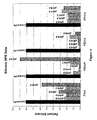
- Figure 4 shows the percent silicone in the XPS spectra of PureVision ® lenses treated with the various poly(carboxylic acid)s that have been thoroughly rinsed with buffers of various pH's after being autoclaved in the polyacid solutions.
- the pH of the rinsing solution is noted in the figure above each of the bars.
- the PureVision control is shown as solid black bars.
- HPLC water was drawn into the VCA system microsyringe, and a 0.6 ⁇ l drop is dispensed from the syringe onto the sample.
- the contact angle was calculated by placing three to five markers along the circumference of the drop.
- the software calculates a curve representing the circumference of the drop and the contact angle was recorded. Both a right and left contact angle were reported for each measurement.
Landscapes
- Health & Medical Sciences (AREA)
- Chemical & Material Sciences (AREA)
- Life Sciences & Earth Sciences (AREA)
- Animal Behavior & Ethology (AREA)
- Veterinary Medicine (AREA)
- Public Health (AREA)
- General Health & Medical Sciences (AREA)
- Epidemiology (AREA)
- Medicinal Chemistry (AREA)
- Chemical Kinetics & Catalysis (AREA)
- Organic Chemistry (AREA)
- Dermatology (AREA)
- Transplantation (AREA)
- Oral & Maxillofacial Surgery (AREA)
- Polymers & Plastics (AREA)
- Physics & Mathematics (AREA)
- Surgery (AREA)
- Vascular Medicine (AREA)
- Heart & Thoracic Surgery (AREA)
- Engineering & Computer Science (AREA)
- Materials Engineering (AREA)
- Wood Science & Technology (AREA)
- General Physics & Mathematics (AREA)
- Optics & Photonics (AREA)
- Materials For Medical Uses (AREA)
- Eyeglasses (AREA)
- Paints Or Removers (AREA)
Claims (25)
- Verfahren zur Verbesserung der Benetzbarkeit einer biomedizinischen Vorrichtung, das Verfahren umfassend den Schritt des Inkontaktbringens einer Oberfläche der biomedizinischen Vorrichtung mit einer Zusammensetzung, beinhaltend ein Polymer oder Copolymer, aufweisend ein oder mehr wiederkehrende Einheiten der Formel:

- Verfahren gemäß Anspruch 1, wobei die biomedizinische Vorrichtung eine Kontaktlinse ist.
- Verfahren gemäß Anspruch 1, wobei die biomedizinische Vorrichtung eine Silikonhydrogel-Kontaktlinse ist.
- Verfahren gemäß Anspruch 1, wobei R eine C2-C6 gradkettige oder verzweigte Alkylgruppe ist.
- Verfahren gemäß Anspruch 1, wobei R eine Ethyl- oder Propylgruppe ist.
- Verfahren gemäß Anspruch 1, wobei das Polymer oder Copolymer aus der Polymerisation oder Copolymerisation einer Monomermischung erhalten wird, die eine oder mehr C2-C6 gradkettige, verzweigte und zyklische 2-alpha-Alkylacrylsäuren beinhaltet.
- Verfahren gemäß Anspruch 6, wobei die Monomermischung ferner ein oder mehr hydrophile Monomere enthält.
- Oberflächenmodifizierte biomedizinische Vorrichtung, bestehend aus einer biomedizinischen Vorrichtung, die auf einer Oberfläche eine Beschichtung aufweist, die Beschichtung enthaltend ein Polymer oder Copolymer, aufweisend eine oder mehr wiederkehrende Einheiten der Formel:

- Oberflächenmodifizierte biomedizinische Vorrichtung gemäß Anspruch 8, wobei die biomedizinische Vorrichtung eine Kontaktlinse ist.
- Oberflächenmodifizierte biomedizinische Vorrichtung gemäß Anspruch 8, wobei die biomedizinische Vorrichtung eine Silikonhydrogel-Kontaktlinse ist.
- Oberflächenmodifizierte biomedizinische Vorrichtung gemäß Anspruch 8, wobei R eine C2-C6 gradkettige oder verzweigte Alkylgruppe ist.
- Oberflächenmodifizierte biomedizinische Vorrichtung gemäß Anspruch 8, wobei R eine Ethyl- oder Propylgruppe ist.
- Oberflächenmodifizierte biomedizinische Vorrichtung gemäß Anspruch 8, wobei das Polymer oder Copolymer aus der Polymerisation oder Copolymerisation einer Monomermischung erhalten wird, die ein oder mehr C2-C6 gradkettige, verzweigte und zyklische 2-alpha-Alkylacrylsäuren beinhaltet.
- Oberflächenmodifizierte biomedizinische Vorrichtung gemäß Anspruch 13, wobei die Monomermischung ferner ein oder mehr hydrophile Monomere enthält.
- Verfahren gemäß Anspruch 1, wobei das Verfahren umfasst:(a) das Eintauchen einer ophthalmischen Vorrichtung in eine Lösung, beinhaltend ein Polymer oder Copolymer, aufweisend eine oder mehr wiederkehrende Einheiten der Formel:

wobei die Lösung eine Osmolalität von mindestens ungefähr 200 mOsm/kg und einen pH-Wert im Bereich von ungefähr 6 bis ungefähr 9 aufweist;(b) das Verpacken der Lösung und der Vorrichtung in einer Weise, die die Kontamination der Vorrichtung durch Mikroorganismen verhindert; und(c) das Sterilisieren der verpackten Lösung und der Vorrichtung. - Verfahren gemäß Anspruch 15, wobei die biomedizinische Vorrichtung eine Kontaktlinse ist.
- Verfahren gemäß Anspruch 15, wobei die biomedizinische Vorrichtung eine Silikonhydrogel-Kontaktlinse ist.
- Verfahren gemäß Anspruch 15, wobei R eine C2-C6 gradkettige oder verzweigte Alkylgruppe ist.
- Verfahren gemäß Anspruch 15, wobei R eine Ethyl- oder Propylgruppe ist.
- Verfahren gemäß Anspruch 15, wobei das Polymer oder Copolymer aus der Polymerisation oder Copolymerisation einer Monomermischung erhalten wird, die ein oder mehr C2-C6 gradkettige, verzweigte und zyklische 2-alpha-Alkylacrylsäuren enthält.
- Verfahren gemäß Anspruch 20, wobei die Monomermischung ferner ein oder mehr hydrophile Monomere enthält.
- Verfahren gemäß Anspruch 15, ferner enthaltend das hermetische Versiegeln der Vorrichtung und der Lösung in der Verpackung.
- Verfahren gemäß Anspruch 22, wobei nach dem Versiegeln der Verpackung eine Hitzesterilisation durchgeführt wird.
- Verfahren gemäß Anspruch 15, wobei die Lösung keine wirksame desinfizierende Menge eines Desinfektionsmittels enthält.
- Verfahren gemäß Anspruch 15, wobei die Lösung keine keimtötenden Verbindungen enthält.
Applications Claiming Priority (2)
| Application Number | Priority Date | Filing Date | Title |
|---|---|---|---|
| US87017206P | 2006-12-15 | 2006-12-15 | |
| PCT/US2007/082932 WO2008076528A1 (en) | 2006-12-15 | 2007-10-30 | Surface treatment of biomedical devices |
Publications (2)
| Publication Number | Publication Date |
|---|---|
| EP2091585A1 EP2091585A1 (de) | 2009-08-26 |
| EP2091585B1 true EP2091585B1 (de) | 2010-12-15 |
Family
ID=39400406
Family Applications (1)
| Application Number | Title | Priority Date | Filing Date |
|---|---|---|---|
| EP07871278A Revoked EP2091585B1 (de) | 2006-12-15 | 2007-10-30 | Oberflächenbehandlung biomedizinischer vorrichtungen |
Country Status (8)
| Country | Link |
|---|---|
| US (2) | US7919136B2 (de) |
| EP (1) | EP2091585B1 (de) |
| JP (1) | JP2011502269A (de) |
| CN (1) | CN101557841A (de) |
| AT (1) | ATE491479T1 (de) |
| DE (1) | DE602007011317D1 (de) |
| ES (1) | ES2355773T3 (de) |
| WO (1) | WO2008076528A1 (de) |
Families Citing this family (27)
| Publication number | Priority date | Publication date | Assignee | Title |
|---|---|---|---|---|
| CN102665779B (zh) * | 2009-12-21 | 2015-04-01 | 科洛普拉斯特公司 | 具有低分子量多元醇和缓冲剂的润湿介质 |
| US9522980B2 (en) | 2010-05-06 | 2016-12-20 | Johnson & Johnson Vision Care, Inc. | Non-reactive, hydrophilic polymers having terminal siloxanes and methods for making and using the same |
| KR102159909B1 (ko) | 2010-07-30 | 2020-09-25 | 알콘 인코포레이티드 | 수분이 풍부한 표면을 갖는 실리콘 히드로겔 렌즈 |
| US9170349B2 (en) | 2011-05-04 | 2015-10-27 | Johnson & Johnson Vision Care, Inc. | Medical devices having homogeneous charge density and methods for making same |
| US20130203813A1 (en) | 2011-05-04 | 2013-08-08 | Johnson & Johnson Vision Care, Inc. | Medical devices having homogeneous charge density and methods for making same |
| CN103917899B (zh) | 2011-10-12 | 2018-04-03 | 诺华股份有限公司 | 通过涂布制备uv吸收性眼用透镜的方法 |
| WO2013090813A1 (en) | 2011-12-14 | 2013-06-20 | Semprus Biosciences Corp. | Redox processes for contact lens modification |
| WO2013090790A1 (en) | 2011-12-14 | 2013-06-20 | Semprus Biosciences Corp. | Silicone hydrogel contact lens modified using lanthanide or transition metal oxidants |
| CA2858730C (en) | 2011-12-14 | 2017-07-18 | Semprus Biosciences Corp. | Surface modified contact lenses |
| US9000063B2 (en) * | 2011-12-14 | 2015-04-07 | Semprus Biosciences Corporation | Multistep UV process to create surface modified contact lenses |
| US9006359B2 (en) | 2011-12-14 | 2015-04-14 | Semprus Biosciences Corporation | Imbibing process for contact lens surface modification |
| US9244196B2 (en) | 2012-05-25 | 2016-01-26 | Johnson & Johnson Vision Care, Inc. | Polymers and nanogel materials and methods for making and using the same |
| US10073192B2 (en) | 2012-05-25 | 2018-09-11 | Johnson & Johnson Vision Care, Inc. | Polymers and nanogel materials and methods for making and using the same |
| US9297929B2 (en) | 2012-05-25 | 2016-03-29 | Johnson & Johnson Vision Care, Inc. | Contact lenses comprising water soluble N-(2 hydroxyalkyl) (meth)acrylamide polymers or copolymers |
| US9823493B2 (en) * | 2012-08-30 | 2017-11-21 | Johnson & Johnson Vision Care, Inc. | Compliant dynamic translation zones for contact lenses |
| SG11201504592YA (en) * | 2012-12-11 | 2015-07-30 | Novartis Ag | Method for applying a coating onto a silicone hydrogel lens |
| US10338408B2 (en) | 2012-12-17 | 2019-07-02 | Novartis Ag | Method for making improved UV-absorbing ophthalmic lenses |
| CN105829081B (zh) | 2013-12-17 | 2017-12-19 | 诺华股份有限公司 | 具有交联的亲水性涂层的硅水凝胶镜片 |
| CN104042295B (zh) * | 2014-06-23 | 2017-01-11 | 复旦大学附属眼耳鼻喉科医院 | 一种亲水润滑抗菌泪道管及其制备方法 |
| US11002884B2 (en) | 2014-08-26 | 2021-05-11 | Alcon Inc. | Method for applying stable coating on silicone hydrogel contact lenses |
| MY184638A (en) | 2015-12-15 | 2021-04-13 | Alcon Inc | Method for applying stable coating on silicone hydrogel contact lenses |
| US20180305286A1 (en) * | 2016-03-21 | 2018-10-25 | Novomer, Inc. | Systems and Processes for Producing Organic Acids Direct from Beta-Lactones |
| CN106383224A (zh) * | 2016-08-31 | 2017-02-08 | 中国科学院长春应用化学研究所 | 一种生物检测元件及其制备方法 |
| TWI610802B (zh) * | 2017-04-10 | 2018-01-11 | 明基材料股份有限公司 | 眼用鏡片及其製造方法 |
| KR102570413B1 (ko) | 2017-08-09 | 2023-08-28 | 도레이 카부시키가이샤 | 의료 디바이스 및 그의 제조 방법 |
| MY201826A (en) | 2017-12-13 | 2024-03-19 | Alcon Inc | Method for producing mps-compatible water gradient contact lenses |
| JP7492966B2 (ja) | 2019-01-29 | 2024-05-30 | ボシュ・アンド・ロム・インコーポレイテッド | コンタクトレンズのための包装溶液 |
Family Cites Families (51)
| Publication number | Priority date | Publication date | Assignee | Title |
|---|---|---|---|---|
| NL137711C (de) | 1961-12-27 | |||
| NL128305C (de) | 1963-09-11 | |||
| US4055378A (en) | 1971-12-31 | 1977-10-25 | Agfa-Gevaert Aktiengesellschaft | Silicone contact lens with hydrophilic surface treatment |
| US4122942A (en) | 1974-01-31 | 1978-10-31 | Wolfson Leonard G | Hydrophilic contact lens case |
| US4113224A (en) | 1975-04-08 | 1978-09-12 | Bausch & Lomb Incorporated | Apparatus for forming optical lenses |
| US4197266A (en) | 1974-05-06 | 1980-04-08 | Bausch & Lomb Incorporated | Method for forming optical lenses |
| US4143949A (en) | 1976-10-28 | 1979-03-13 | Bausch & Lomb Incorporated | Process for putting a hydrophilic coating on a hydrophobic contact lens |
| US4136250A (en) | 1977-07-20 | 1979-01-23 | Ciba-Geigy Corporation | Polysiloxane hydrogels |
| US4153641A (en) | 1977-07-25 | 1979-05-08 | Bausch & Lomb Incorporated | Polysiloxane composition and contact lens |
| DE2756114B1 (de) | 1977-12-16 | 1979-05-23 | Titmus Eurocon Kontaktlinsen | Verfahren zur Oberflaechenbehandlung einer harten oder dehydratisierten hydrophilen Kontaktlinse |
| US4168112A (en) | 1978-01-05 | 1979-09-18 | Polymer Technology Corporation | Contact lens with a hydrophilic, polyelectrolyte complex coating and method for forming same |
| US4287175A (en) | 1978-06-22 | 1981-09-01 | Merck & Co., Inc. | Contact lens wetting agents |
| US4436730A (en) | 1979-06-25 | 1984-03-13 | Polymer Technology Corporation | Ionic opthalmic cellulose polymer solutions |
| US4312575A (en) | 1979-09-18 | 1982-01-26 | Peyman Gholam A | Soft corneal contact lens with tightly cross-linked polymer coating and method of making same |
| JPS60163901A (ja) | 1984-02-04 | 1985-08-26 | Japan Synthetic Rubber Co Ltd | プラズマ重合処理方法 |
| US4555732A (en) | 1984-03-22 | 1985-11-26 | Xerox Corporation | Image sensor correction system |
| US4740533A (en) | 1987-07-28 | 1988-04-26 | Ciba-Geigy Corporation | Wettable, flexible, oxygen permeable, substantially non-swellable contact lens containing block copolymer polysiloxane-polyoxyalkylene backbone units, and use thereof |
| US5271876A (en) | 1986-12-02 | 1993-12-21 | Solomat Partners, L.P. | Process for analyzing, monitoring and/or controlling the internal structure of non-conductive, moldable material by inducing an electrical effect therein before it is molded |
| US4910277A (en) | 1988-02-09 | 1990-03-20 | Bambury Ronald E | Hydrophilic oxygen permeable polymers |
| US4954587A (en) | 1988-07-05 | 1990-09-04 | Ciba-Geigy Corporation | Dimethylacrylamide-copolymer hydrogels with high oxygen permeability |
| US5070215A (en) | 1989-05-02 | 1991-12-03 | Bausch & Lomb Incorporated | Novel vinyl carbonate and vinyl carbamate contact lens material monomers |
| US5034461A (en) | 1989-06-07 | 1991-07-23 | Bausch & Lomb Incorporated | Novel prepolymers useful in biomedical devices |
| US5079319A (en) | 1989-10-25 | 1992-01-07 | Ciba-Geigy Corporation | Reactive silicone and/or fluorine containing hydrophilic prepolymers and polymers thereof |
| US5010141A (en) | 1989-10-25 | 1991-04-23 | Ciba-Geigy Corporation | Reactive silicone and/or fluorine containing hydrophilic prepolymers and polymers thereof |
| US5397848A (en) | 1991-04-25 | 1995-03-14 | Allergan, Inc. | Enhancing the hydrophilicity of silicone polymers |
| US5705583A (en) | 1991-07-05 | 1998-01-06 | Biocompatibles Limited | Polymeric surface coatings |
| US5310779A (en) | 1991-11-05 | 1994-05-10 | Bausch & Lomb Incorporated | UV curable crosslinking agents useful in copolymerization |
| US5358995A (en) | 1992-05-15 | 1994-10-25 | Bausch & Lomb Incorporated | Surface wettable silicone hydrogels |
| US5260000A (en) | 1992-08-03 | 1993-11-09 | Bausch & Lomb Incorporated | Process for making silicone containing hydrogel lenses |
| US5321108A (en) | 1993-02-12 | 1994-06-14 | Bausch & Lomb Incorporated | Fluorosilicone hydrogels |
| US5616757A (en) | 1993-04-08 | 1997-04-01 | Bausch & Lomb Incorporated | Organosilicon-containing materials useful for biomedical devices |
| TW253849B (de) | 1993-08-09 | 1995-08-11 | Ciba Geigy | |
| JPH0782318A (ja) * | 1993-09-17 | 1995-03-28 | Idemitsu Kosan Co Ltd | 変性アクリル系樹脂の製造方法及びアクリル系樹脂の処理方法 |
| US5760100B1 (en) | 1994-09-06 | 2000-11-14 | Ciba Vision Corp | Extended wear ophthalmic lens |
| US5700559A (en) | 1994-12-16 | 1997-12-23 | Advanced Surface Technology | Durable hydrophilic surface coatings |
| ES2164265T3 (es) | 1995-12-07 | 2002-02-16 | Bausch & Lomb | Unidades monomericas utiles para reducir el modulo de hidrogeles de silicona. |
| US5714557A (en) | 1995-12-07 | 1998-02-03 | Bausch & Lomb Incorporated | Monomeric units useful for reducing the modulus of low water polymeric silicone compositions |
| US5708094A (en) | 1996-12-17 | 1998-01-13 | Bausch & Lomb Incorporated | Polybutadiene-based compositions for contact lenses |
| SE9701789D0 (sv) * | 1997-05-14 | 1997-05-14 | Tetra Laval Holdings & Finance | Tryckfärgsdekorerat förpackningsmaterial för aseptiska förpackningar samt sätt att framställa förpackningsmaterialet |
| GB9717905D0 (en) * | 1997-08-22 | 1997-10-29 | Univ Aston | Lipid-containing compositions and uses thereof |
| US6060235A (en) * | 1997-09-19 | 2000-05-09 | Geltex Pharmaceuticals, Inc. | Antiviral polymers comprising acid functional groups and hydrophobic groups |
| US6849671B2 (en) * | 1998-03-02 | 2005-02-01 | Johnson & Johnson Vision Care, Inc. | Contact lenses |
| US6087415A (en) | 1998-06-11 | 2000-07-11 | Johnson & Johnson Vision Care, Inc. | Biomedical devices with hydrophilic coatings |
| US20040037891A1 (en) * | 1999-10-04 | 2004-02-26 | Karagoezian Hampar L. | Synergistic antimicrobial ophthalmic and dermatologic preparations containing chlorite and hydrogen peroxide |
| US6478423B1 (en) * | 1999-10-12 | 2002-11-12 | Johnson & Johnson Vison Care, Inc. | Contact lens coating selection and manufacturing process |
| CN1313842C (zh) * | 1999-10-12 | 2007-05-02 | 庄臣及庄臣视力保护公司 | 接触透镜涂层选择及其制造工艺 |
| US6689480B2 (en) * | 2000-05-10 | 2004-02-10 | Toray Industries, Inc. | Surface-treated plastic article and method of surface treatment |
| JP4834916B2 (ja) * | 2000-05-10 | 2011-12-14 | 東レ株式会社 | 表面処理プラスチック成形品 |
| US6428839B1 (en) * | 2000-06-02 | 2002-08-06 | Bausch & Lomb Incorporated | Surface treatment of medical device |
| US7247313B2 (en) * | 2001-06-27 | 2007-07-24 | Advanced Cardiovascular Systems, Inc. | Polyacrylates coatings for implantable medical devices |
| EP1802357B2 (de) * | 2004-10-01 | 2013-09-18 | Menicon Singapore Pte Ltd. | Verfahren zur sterilisation verpackter kontaktlinsen mit verpackungslösung |
-
2007
- 2007-10-30 AT AT07871278T patent/ATE491479T1/de not_active IP Right Cessation
- 2007-10-30 DE DE602007011317T patent/DE602007011317D1/de active Active
- 2007-10-30 WO PCT/US2007/082932 patent/WO2008076528A1/en not_active Ceased
- 2007-10-30 EP EP07871278A patent/EP2091585B1/de not_active Revoked
- 2007-10-30 CN CNA2007800462916A patent/CN101557841A/zh active Pending
- 2007-10-30 ES ES07871278T patent/ES2355773T3/es active Active
- 2007-11-20 US US11/874,427 patent/US7919136B2/en not_active Expired - Fee Related
-
2008
- 2008-03-18 JP JP2009541440A patent/JP2011502269A/ja active Pending
-
2011
- 2011-02-28 US US13/036,402 patent/US20110152399A1/en not_active Abandoned
Also Published As
| Publication number | Publication date |
|---|---|
| ES2355773T3 (es) | 2011-03-30 |
| JP2011502269A (ja) | 2011-01-20 |
| EP2091585A1 (de) | 2009-08-26 |
| US20110152399A1 (en) | 2011-06-23 |
| WO2008076528A1 (en) | 2008-06-26 |
| ATE491479T1 (de) | 2011-01-15 |
| CN101557841A (zh) | 2009-10-14 |
| DE602007011317D1 (de) | 2011-01-27 |
| WO2008076528A9 (en) | 2008-09-25 |
| US7919136B2 (en) | 2011-04-05 |
| US20080143957A1 (en) | 2008-06-19 |
Similar Documents
| Publication | Publication Date | Title |
|---|---|---|
| US7919136B2 (en) | Surface treatment of biomedical devices | |
| JP6526768B2 (ja) | 水溶性n−(2ヒドロキシアルキル)(メタ)アクリルアミドポリマー又はコポリマーを含むコンタクトレンズ | |
| US7837934B2 (en) | Packaging solutions | |
| US8454689B2 (en) | Brush copolymers | |
| US8668736B2 (en) | Brush copolymers | |
| US8631631B2 (en) | Packaging solutions | |
| EP2244953B1 (de) | Verpackungslösungen | |
| AU2001261599B2 (en) | Surface treatment of medical device | |
| US11845813B2 (en) | Crosslinked polymeric network and use thereof | |
| WO2009089205A1 (en) | Packaging solutions | |
| EP3917837B1 (de) | Verpackungslösungen für kontaktlinsen | |
| US20090156745A1 (en) | Surface modified biomedical devices | |
| HK1204793B (en) | Contact lenses comprising water soluble n-(2 hydroxyalkyl) (meth) acrylamide polymers or copolymers |
Legal Events
| Date | Code | Title | Description |
|---|---|---|---|
| PUAI | Public reference made under article 153(3) epc to a published international application that has entered the european phase |
Free format text: ORIGINAL CODE: 0009012 |
|
| 17P | Request for examination filed |
Effective date: 20090612 |
|
| AK | Designated contracting states |
Kind code of ref document: A1 Designated state(s): AT BE BG CH CY CZ DE DK EE ES FI FR GB GR HU IE IS IT LI LT LU LV MC MT NL PL PT RO SE SI SK TR |
|
| 17Q | First examination report despatched |
Effective date: 20090916 |
|
| DAX | Request for extension of the european patent (deleted) | ||
| GRAP | Despatch of communication of intention to grant a patent |
Free format text: ORIGINAL CODE: EPIDOSNIGR1 |
|
| GRAS | Grant fee paid |
Free format text: ORIGINAL CODE: EPIDOSNIGR3 |
|
| GRAA | (expected) grant |
Free format text: ORIGINAL CODE: 0009210 |
|
| AK | Designated contracting states |
Kind code of ref document: B1 Designated state(s): AT BE BG CH CY CZ DE DK EE ES FI FR GB GR HU IE IS IT LI LT LU LV MC MT NL PL PT RO SE SI SK TR |
|
| REG | Reference to a national code |
Ref country code: GB Ref legal event code: FG4D Ref country code: CH Ref legal event code: EP |
|
| REG | Reference to a national code |
Ref country code: IE Ref legal event code: FG4D |
|
| REF | Corresponds to: |
Ref document number: 602007011317 Country of ref document: DE Date of ref document: 20110127 Kind code of ref document: P |
|
| REG | Reference to a national code |
Ref country code: ES Ref legal event code: FG2A Ref document number: 2355773 Country of ref document: ES Kind code of ref document: T3 Effective date: 20110330 |
|
| REG | Reference to a national code |
Ref country code: NL Ref legal event code: VDEP Effective date: 20101215 |
|
| PG25 | Lapsed in a contracting state [announced via postgrant information from national office to epo] |
Ref country code: LT Free format text: LAPSE BECAUSE OF FAILURE TO SUBMIT A TRANSLATION OF THE DESCRIPTION OR TO PAY THE FEE WITHIN THE PRESCRIBED TIME-LIMIT Effective date: 20101215 |
|
| LTIE | Lt: invalidation of european patent or patent extension |
Effective date: 20101215 |
|
| PG25 | Lapsed in a contracting state [announced via postgrant information from national office to epo] |
Ref country code: CY Free format text: LAPSE BECAUSE OF FAILURE TO SUBMIT A TRANSLATION OF THE DESCRIPTION OR TO PAY THE FEE WITHIN THE PRESCRIBED TIME-LIMIT Effective date: 20101215 Ref country code: AT Free format text: LAPSE BECAUSE OF FAILURE TO SUBMIT A TRANSLATION OF THE DESCRIPTION OR TO PAY THE FEE WITHIN THE PRESCRIBED TIME-LIMIT Effective date: 20101215 Ref country code: SI Free format text: LAPSE BECAUSE OF FAILURE TO SUBMIT A TRANSLATION OF THE DESCRIPTION OR TO PAY THE FEE WITHIN THE PRESCRIBED TIME-LIMIT Effective date: 20101215 Ref country code: SE Free format text: LAPSE BECAUSE OF FAILURE TO SUBMIT A TRANSLATION OF THE DESCRIPTION OR TO PAY THE FEE WITHIN THE PRESCRIBED TIME-LIMIT Effective date: 20101215 Ref country code: FI Free format text: LAPSE BECAUSE OF FAILURE TO SUBMIT A TRANSLATION OF THE DESCRIPTION OR TO PAY THE FEE WITHIN THE PRESCRIBED TIME-LIMIT Effective date: 20101215 Ref country code: NL Free format text: LAPSE BECAUSE OF FAILURE TO SUBMIT A TRANSLATION OF THE DESCRIPTION OR TO PAY THE FEE WITHIN THE PRESCRIBED TIME-LIMIT Effective date: 20101215 Ref country code: BG Free format text: LAPSE BECAUSE OF FAILURE TO SUBMIT A TRANSLATION OF THE DESCRIPTION OR TO PAY THE FEE WITHIN THE PRESCRIBED TIME-LIMIT Effective date: 20110315 Ref country code: LV Free format text: LAPSE BECAUSE OF FAILURE TO SUBMIT A TRANSLATION OF THE DESCRIPTION OR TO PAY THE FEE WITHIN THE PRESCRIBED TIME-LIMIT Effective date: 20101215 |
|
| PG25 | Lapsed in a contracting state [announced via postgrant information from national office to epo] |
Ref country code: PT Free format text: LAPSE BECAUSE OF FAILURE TO SUBMIT A TRANSLATION OF THE DESCRIPTION OR TO PAY THE FEE WITHIN THE PRESCRIBED TIME-LIMIT Effective date: 20110415 Ref country code: GR Free format text: LAPSE BECAUSE OF FAILURE TO SUBMIT A TRANSLATION OF THE DESCRIPTION OR TO PAY THE FEE WITHIN THE PRESCRIBED TIME-LIMIT Effective date: 20110316 Ref country code: IS Free format text: LAPSE BECAUSE OF FAILURE TO SUBMIT A TRANSLATION OF THE DESCRIPTION OR TO PAY THE FEE WITHIN THE PRESCRIBED TIME-LIMIT Effective date: 20110415 Ref country code: BE Free format text: LAPSE BECAUSE OF FAILURE TO SUBMIT A TRANSLATION OF THE DESCRIPTION OR TO PAY THE FEE WITHIN THE PRESCRIBED TIME-LIMIT Effective date: 20101215 Ref country code: CZ Free format text: LAPSE BECAUSE OF FAILURE TO SUBMIT A TRANSLATION OF THE DESCRIPTION OR TO PAY THE FEE WITHIN THE PRESCRIBED TIME-LIMIT Effective date: 20101215 Ref country code: EE Free format text: LAPSE BECAUSE OF FAILURE TO SUBMIT A TRANSLATION OF THE DESCRIPTION OR TO PAY THE FEE WITHIN THE PRESCRIBED TIME-LIMIT Effective date: 20101215 |
|
| PG25 | Lapsed in a contracting state [announced via postgrant information from national office to epo] |
Ref country code: SK Free format text: LAPSE BECAUSE OF FAILURE TO SUBMIT A TRANSLATION OF THE DESCRIPTION OR TO PAY THE FEE WITHIN THE PRESCRIBED TIME-LIMIT Effective date: 20101215 Ref country code: RO Free format text: LAPSE BECAUSE OF FAILURE TO SUBMIT A TRANSLATION OF THE DESCRIPTION OR TO PAY THE FEE WITHIN THE PRESCRIBED TIME-LIMIT Effective date: 20101215 Ref country code: PL Free format text: LAPSE BECAUSE OF FAILURE TO SUBMIT A TRANSLATION OF THE DESCRIPTION OR TO PAY THE FEE WITHIN THE PRESCRIBED TIME-LIMIT Effective date: 20101215 |
|
| PLBI | Opposition filed |
Free format text: ORIGINAL CODE: 0009260 |
|
| PLAX | Notice of opposition and request to file observation + time limit sent |
Free format text: ORIGINAL CODE: EPIDOSNOBS2 |
|
| 26 | Opposition filed |
Opponent name: NOVARTIS AG Effective date: 20110915 Opponent name: JOHNSON & JOHNSON VISION CARE, INC. Effective date: 20110915 |
|
| PG25 | Lapsed in a contracting state [announced via postgrant information from national office to epo] |
Ref country code: DK Free format text: LAPSE BECAUSE OF FAILURE TO SUBMIT A TRANSLATION OF THE DESCRIPTION OR TO PAY THE FEE WITHIN THE PRESCRIBED TIME-LIMIT Effective date: 20101215 |
|
| REG | Reference to a national code |
Ref country code: DE Ref legal event code: R026 Ref document number: 602007011317 Country of ref document: DE Effective date: 20110915 |
|
| PLAF | Information modified related to communication of a notice of opposition and request to file observations + time limit |
Free format text: ORIGINAL CODE: EPIDOSCOBS2 |
|
| PLBB | Reply of patent proprietor to notice(s) of opposition received |
Free format text: ORIGINAL CODE: EPIDOSNOBS3 |
|
| PG25 | Lapsed in a contracting state [announced via postgrant information from national office to epo] |
Ref country code: MC Free format text: LAPSE BECAUSE OF NON-PAYMENT OF DUE FEES Effective date: 20111031 |
|
| REG | Reference to a national code |
Ref country code: CH Ref legal event code: PL |
|
| PG25 | Lapsed in a contracting state [announced via postgrant information from national office to epo] |
Ref country code: CH Free format text: LAPSE BECAUSE OF NON-PAYMENT OF DUE FEES Effective date: 20111031 Ref country code: LI Free format text: LAPSE BECAUSE OF NON-PAYMENT OF DUE FEES Effective date: 20111031 |
|
| PG25 | Lapsed in a contracting state [announced via postgrant information from national office to epo] |
Ref country code: MT Free format text: LAPSE BECAUSE OF FAILURE TO SUBMIT A TRANSLATION OF THE DESCRIPTION OR TO PAY THE FEE WITHIN THE PRESCRIBED TIME-LIMIT Effective date: 20101215 |
|
| PG25 | Lapsed in a contracting state [announced via postgrant information from national office to epo] |
Ref country code: LU Free format text: LAPSE BECAUSE OF NON-PAYMENT OF DUE FEES Effective date: 20111030 |
|
| APBM | Appeal reference recorded |
Free format text: ORIGINAL CODE: EPIDOSNREFNO |
|
| APBP | Date of receipt of notice of appeal recorded |
Free format text: ORIGINAL CODE: EPIDOSNNOA2O |
|
| PG25 | Lapsed in a contracting state [announced via postgrant information from national office to epo] |
Ref country code: TR Free format text: LAPSE BECAUSE OF FAILURE TO SUBMIT A TRANSLATION OF THE DESCRIPTION OR TO PAY THE FEE WITHIN THE PRESCRIBED TIME-LIMIT Effective date: 20101215 |
|
| APAH | Appeal reference modified |
Free format text: ORIGINAL CODE: EPIDOSCREFNO |
|
| PG25 | Lapsed in a contracting state [announced via postgrant information from national office to epo] |
Ref country code: HU Free format text: LAPSE BECAUSE OF FAILURE TO SUBMIT A TRANSLATION OF THE DESCRIPTION OR TO PAY THE FEE WITHIN THE PRESCRIBED TIME-LIMIT Effective date: 20101215 |
|
| APBQ | Date of receipt of statement of grounds of appeal recorded |
Free format text: ORIGINAL CODE: EPIDOSNNOA3O |
|
| RAP2 | Party data changed (patent owner data changed or rights of a patent transferred) |
Owner name: BAUSCH & LOMB INCORPORATED |
|
| REG | Reference to a national code |
Ref country code: DE Ref legal event code: R103 Ref document number: 602007011317 Country of ref document: DE Ref country code: DE Ref legal event code: R064 Ref document number: 602007011317 Country of ref document: DE |
|
| APBU | Appeal procedure closed |
Free format text: ORIGINAL CODE: EPIDOSNNOA9O |
|
| REG | Reference to a national code |
Ref country code: FR Ref legal event code: PLFP Year of fee payment: 9 |
|
| PGFP | Annual fee paid to national office [announced via postgrant information from national office to epo] |
Ref country code: GB Payment date: 20150924 Year of fee payment: 9 Ref country code: IE Payment date: 20150928 Year of fee payment: 9 |
|
| PGFP | Annual fee paid to national office [announced via postgrant information from national office to epo] |
Ref country code: FR Payment date: 20150924 Year of fee payment: 9 |
|
| PGFP | Annual fee paid to national office [announced via postgrant information from national office to epo] |
Ref country code: DE Payment date: 20151030 Year of fee payment: 9 Ref country code: IT Payment date: 20151016 Year of fee payment: 9 |
|
| PGFP | Annual fee paid to national office [announced via postgrant information from national office to epo] |
Ref country code: ES Payment date: 20151014 Year of fee payment: 9 |
|
| RDAF | Communication despatched that patent is revoked |
Free format text: ORIGINAL CODE: EPIDOSNREV1 |
|
| RDAG | Patent revoked |
Free format text: ORIGINAL CODE: 0009271 |
|
| STAA | Information on the status of an ep patent application or granted ep patent |
Free format text: STATUS: PATENT REVOKED |
|
| 27W | Patent revoked |
Effective date: 20150917 |
|
| GBPR | Gb: patent revoked under art. 102 of the ep convention designating the uk as contracting state |
Effective date: 20150917 |