EP2103631A1 - Dérivé macromoléculaire modifié par un groupe mercapto et matériau réticulé - Google Patents
Dérivé macromoléculaire modifié par un groupe mercapto et matériau réticulé Download PDFInfo
- Publication number
- EP2103631A1 EP2103631A1 EP07816478A EP07816478A EP2103631A1 EP 2103631 A1 EP2103631 A1 EP 2103631A1 EP 07816478 A EP07816478 A EP 07816478A EP 07816478 A EP07816478 A EP 07816478A EP 2103631 A1 EP2103631 A1 EP 2103631A1
- Authority
- EP
- European Patent Office
- Prior art keywords
- thiol
- solution
- modified
- cross
- macromolecule
- Prior art date
- Legal status (The legal status is an assumption and is not a legal conclusion. Google has not performed a legal analysis and makes no representation as to the accuracy of the status listed.)
- Granted
Links
Images

Classifications
-
- C—CHEMISTRY; METALLURGY
- C07—ORGANIC CHEMISTRY
- C07B—GENERAL METHODS OF ORGANIC CHEMISTRY; APPARATUS THEREFOR
- C07B43/00—Formation or introduction of functional groups containing nitrogen
- C07B43/06—Formation or introduction of functional groups containing nitrogen of amide groups
-
- C—CHEMISTRY; METALLURGY
- C07—ORGANIC CHEMISTRY
- C07C—ACYCLIC OR CARBOCYCLIC COMPOUNDS
- C07C323/00—Thiols, sulfides, hydropolysulfides or polysulfides substituted by halogen, oxygen or nitrogen atoms, or by sulfur atoms not being part of thio groups
- C07C323/23—Thiols, sulfides, hydropolysulfides or polysulfides substituted by halogen, oxygen or nitrogen atoms, or by sulfur atoms not being part of thio groups containing thio groups and nitrogen atoms, not being part of nitro or nitroso groups, bound to the same carbon skeleton
- C07C323/39—Thiols, sulfides, hydropolysulfides or polysulfides substituted by halogen, oxygen or nitrogen atoms, or by sulfur atoms not being part of thio groups containing thio groups and nitrogen atoms, not being part of nitro or nitroso groups, bound to the same carbon skeleton at least one of the nitrogen atoms being part of any of the groups, X being a hetero atom, Y being any atom
- C07C323/40—Y being a hydrogen or a carbon atom
- C07C323/41—Y being a hydrogen or an acyclic carbon atom
-
- C—CHEMISTRY; METALLURGY
- C07—ORGANIC CHEMISTRY
- C07C—ACYCLIC OR CARBOCYCLIC COMPOUNDS
- C07C323/00—Thiols, sulfides, hydropolysulfides or polysulfides substituted by halogen, oxygen or nitrogen atoms, or by sulfur atoms not being part of thio groups
- C07C323/50—Thiols, sulfides, hydropolysulfides or polysulfides substituted by halogen, oxygen or nitrogen atoms, or by sulfur atoms not being part of thio groups containing thio groups and carboxyl groups bound to the same carbon skeleton
- C07C323/51—Thiols, sulfides, hydropolysulfides or polysulfides substituted by halogen, oxygen or nitrogen atoms, or by sulfur atoms not being part of thio groups containing thio groups and carboxyl groups bound to the same carbon skeleton having the sulfur atoms of the thio groups bound to acyclic carbon atoms of the carbon skeleton
- C07C323/60—Thiols, sulfides, hydropolysulfides or polysulfides substituted by halogen, oxygen or nitrogen atoms, or by sulfur atoms not being part of thio groups containing thio groups and carboxyl groups bound to the same carbon skeleton having the sulfur atoms of the thio groups bound to acyclic carbon atoms of the carbon skeleton with the carbon atom of at least one of the carboxyl groups bound to nitrogen atoms
-
- C—CHEMISTRY; METALLURGY
- C07—ORGANIC CHEMISTRY
- C07K—PEPTIDES
- C07K1/00—General methods for the preparation of peptides, i.e. processes for the organic chemical preparation of peptides or proteins of any length
- C07K1/107—General methods for the preparation of peptides, i.e. processes for the organic chemical preparation of peptides or proteins of any length by chemical modification of precursor peptides
- C07K1/1072—General methods for the preparation of peptides, i.e. processes for the organic chemical preparation of peptides or proteins of any length by chemical modification of precursor peptides by covalent attachment of residues or functional groups
- C07K1/1077—General methods for the preparation of peptides, i.e. processes for the organic chemical preparation of peptides or proteins of any length by chemical modification of precursor peptides by covalent attachment of residues or functional groups by covalent attachment of residues other than amino acids or peptide residues, e.g. sugars, polyols, fatty acids
-
- C—CHEMISTRY; METALLURGY
- C08—ORGANIC MACROMOLECULAR COMPOUNDS; THEIR PREPARATION OR CHEMICAL WORKING-UP; COMPOSITIONS BASED THEREON
- C08B—POLYSACCHARIDES; DERIVATIVES THEREOF
- C08B11/00—Preparation of cellulose ethers
- C08B11/02—Alkyl or cycloalkyl ethers
- C08B11/04—Alkyl or cycloalkyl ethers with substituted hydrocarbon radicals
- C08B11/14—Alkyl or cycloalkyl ethers with substituted hydrocarbon radicals with nitrogen-containing groups
- C08B11/15—Alkyl or cycloalkyl ethers with substituted hydrocarbon radicals with nitrogen-containing groups with carbamoyl groups, i.e. -CO-NH2
-
- C—CHEMISTRY; METALLURGY
- C08—ORGANIC MACROMOLECULAR COMPOUNDS; THEIR PREPARATION OR CHEMICAL WORKING-UP; COMPOSITIONS BASED THEREON
- C08B—POLYSACCHARIDES; DERIVATIVES THEREOF
- C08B37/00—Preparation of polysaccharides not provided for in groups C08B1/00 - C08B35/00; Derivatives thereof
- C08B37/0006—Homoglycans, i.e. polysaccharides having a main chain consisting of one single sugar, e.g. colominic acid
- C08B37/0024—Homoglycans, i.e. polysaccharides having a main chain consisting of one single sugar, e.g. colominic acid beta-D-Glucans; (beta-1,3)-D-Glucans, e.g. paramylon, coriolan, sclerotan, pachyman, callose, scleroglucan, schizophyllan, laminaran, lentinan or curdlan; (beta-1,6)-D-Glucans, e.g. pustulan; (beta-1,4)-D-Glucans; (beta-1,3)(beta-1,4)-D-Glucans, e.g. lichenan; Derivatives thereof
- C08B37/0027—2-Acetamido-2-deoxy-beta-glucans; Derivatives thereof
- C08B37/003—Chitin, i.e. 2-acetamido-2-deoxy-(beta-1,4)-D-glucan or N-acetyl-beta-1,4-D-glucosamine; Chitosan, i.e. deacetylated product of chitin or (beta-1,4)-D-glucosamine; Derivatives thereof
-
- C—CHEMISTRY; METALLURGY
- C08—ORGANIC MACROMOLECULAR COMPOUNDS; THEIR PREPARATION OR CHEMICAL WORKING-UP; COMPOSITIONS BASED THEREON
- C08B—POLYSACCHARIDES; DERIVATIVES THEREOF
- C08B37/00—Preparation of polysaccharides not provided for in groups C08B1/00 - C08B35/00; Derivatives thereof
- C08B37/0006—Homoglycans, i.e. polysaccharides having a main chain consisting of one single sugar, e.g. colominic acid
- C08B37/0045—Homoglycans, i.e. polysaccharides having a main chain consisting of one single sugar, e.g. colominic acid alpha-D-Galacturonans, e.g. methyl ester of (alpha-1,4)-linked D-galacturonic acid units, i.e. pectin, or hydrolysis product of methyl ester of alpha-1,4-linked D-galacturonic acid units, i.e. pectinic acid; Derivatives thereof
-
- C—CHEMISTRY; METALLURGY
- C08—ORGANIC MACROMOLECULAR COMPOUNDS; THEIR PREPARATION OR CHEMICAL WORKING-UP; COMPOSITIONS BASED THEREON
- C08B—POLYSACCHARIDES; DERIVATIVES THEREOF
- C08B37/00—Preparation of polysaccharides not provided for in groups C08B1/00 - C08B35/00; Derivatives thereof
- C08B37/006—Heteroglycans, i.e. polysaccharides having more than one sugar residue in the main chain in either alternating or less regular sequence; Gellans; Succinoglycans; Arabinogalactans; Tragacanth or gum tragacanth or traganth from Astragalus; Gum Karaya from Sterculia urens; Gum Ghatti from Anogeissus latifolia; Derivatives thereof
- C08B37/0063—Glycosaminoglycans or mucopolysaccharides, e.g. keratan sulfate; Derivatives thereof, e.g. fucoidan
- C08B37/0069—Chondroitin-4-sulfate, i.e. chondroitin sulfate A; Dermatan sulfate, i.e. chondroitin sulfate B or beta-heparin; Chondroitin-6-sulfate, i.e. chondroitin sulfate C; Derivatives thereof
-
- C—CHEMISTRY; METALLURGY
- C08—ORGANIC MACROMOLECULAR COMPOUNDS; THEIR PREPARATION OR CHEMICAL WORKING-UP; COMPOSITIONS BASED THEREON
- C08B—POLYSACCHARIDES; DERIVATIVES THEREOF
- C08B37/00—Preparation of polysaccharides not provided for in groups C08B1/00 - C08B35/00; Derivatives thereof
- C08B37/006—Heteroglycans, i.e. polysaccharides having more than one sugar residue in the main chain in either alternating or less regular sequence; Gellans; Succinoglycans; Arabinogalactans; Tragacanth or gum tragacanth or traganth from Astragalus; Gum Karaya from Sterculia urens; Gum Ghatti from Anogeissus latifolia; Derivatives thereof
- C08B37/0063—Glycosaminoglycans or mucopolysaccharides, e.g. keratan sulfate; Derivatives thereof, e.g. fucoidan
- C08B37/0072—Hyaluronic acid, i.e. HA or hyaluronan; Derivatives thereof, e.g. crosslinked hyaluronic acid (hylan) or hyaluronates
-
- C—CHEMISTRY; METALLURGY
- C08—ORGANIC MACROMOLECULAR COMPOUNDS; THEIR PREPARATION OR CHEMICAL WORKING-UP; COMPOSITIONS BASED THEREON
- C08B—POLYSACCHARIDES; DERIVATIVES THEREOF
- C08B37/00—Preparation of polysaccharides not provided for in groups C08B1/00 - C08B35/00; Derivatives thereof
- C08B37/006—Heteroglycans, i.e. polysaccharides having more than one sugar residue in the main chain in either alternating or less regular sequence; Gellans; Succinoglycans; Arabinogalactans; Tragacanth or gum tragacanth or traganth from Astragalus; Gum Karaya from Sterculia urens; Gum Ghatti from Anogeissus latifolia; Derivatives thereof
- C08B37/0063—Glycosaminoglycans or mucopolysaccharides, e.g. keratan sulfate; Derivatives thereof, e.g. fucoidan
- C08B37/0075—Heparin; Heparan sulfate; Derivatives thereof, e.g. heparosan; Purification or extraction methods thereof
-
- C—CHEMISTRY; METALLURGY
- C08—ORGANIC MACROMOLECULAR COMPOUNDS; THEIR PREPARATION OR CHEMICAL WORKING-UP; COMPOSITIONS BASED THEREON
- C08B—POLYSACCHARIDES; DERIVATIVES THEREOF
- C08B37/00—Preparation of polysaccharides not provided for in groups C08B1/00 - C08B35/00; Derivatives thereof
- C08B37/006—Heteroglycans, i.e. polysaccharides having more than one sugar residue in the main chain in either alternating or less regular sequence; Gellans; Succinoglycans; Arabinogalactans; Tragacanth or gum tragacanth or traganth from Astragalus; Gum Karaya from Sterculia urens; Gum Ghatti from Anogeissus latifolia; Derivatives thereof
- C08B37/0084—Guluromannuronans, e.g. alginic acid, i.e. D-mannuronic acid and D-guluronic acid units linked with alternating alpha- and beta-1,4-glycosidic bonds; Derivatives thereof, e.g. alginates
-
- C—CHEMISTRY; METALLURGY
- C08—ORGANIC MACROMOLECULAR COMPOUNDS; THEIR PREPARATION OR CHEMICAL WORKING-UP; COMPOSITIONS BASED THEREON
- C08H—DERIVATIVES OF NATURAL MACROMOLECULAR COMPOUNDS
- C08H1/00—Macromolecular products derived from proteins
Definitions
- the invention relates to compounds, especially to thiol-modified macromolecule derivatives.
- it also relates to disulfide bond and thiol-reactive crosslinker cross-linked materials composed of thiol-modified macromolecule derivatives.
- the thiol-modified macromolecule derivatives have many important uses in biomedicine, such as for chemical-active modification of various small molecular drugs and polypeptide/protein drugs, for preparing various cross-linked macromolecule materials and so on. These new materials can be used as the cell growth matrix, the wound repairing and regenerating matrix, the drug delivery carrier, the wound dressing, in situ cell encapsulation matrix and so on. They play important roles in biomedicine. So far, however, few kinds of thiol-modified macromolecule derivatives are reported. Only the thiol-modified macromolecule derivatives that reported by Shu et al. in Biomacromolecules, 3, 1304, 2002 showed good perspective of application and this kind of thiol-modified macromolecule derivative have the following structure:
- P is a residue of macromolecule.
- the side chain structures and properties of these thiol-modified macromolecule derivatives are unitary and cannot meet the various requirements in biomedicine well.
- the side chains of these thiol-modified macromolecule derivatives are very short, which limits the probability of collision between their thiols and other chemical functional groups when they are modified and cross-linked chemically further, which may lead to the weak chemical reactivity. So, it is of great significance to prepare thiol-modified macromolecule derivatives with adjustable molecular structure of side chain and chemical properties.
- One technical problem to be solved in this invention is to provide a new kind of thiol-modified macromolecule derivatives with important biomedical usages which contain adjustable molecular structure of side chain and has adjustable chemical properties.
- the second technical problem to be solved of this invention is to provide a kind of disulfide bond cross-linked materials composed of the thiol-modified macromolecule derivatives.
- the third technical problem to be solved of this invention is to provide a kind of cross-linked materials composed of thiol-modified macromolecule derivatives and cross-linked by thiol-reactive crosslinker.
- the macromolecules with side carboxyl groups are used as starting materials, and the new thiol-modified macromolecule derivatives are synthesized through chemical modification.
- This kind of derivatives contains adjustable molecular structure of side chain and has adjustable chemical properties, and has important uses in biomedicine.
- the thiol-modified macromolecule derivatives in this invention are represented as the following general formula (I) or (II):
- R 1 and R 2 can be an alkylene group, a substituted alkylene group, an arylene group, a polyether backbone etc.; R 1 and R 2 may have same or different chemical structures; the thiol-modified macromolecule derivatives has the molecular weight from 1000 to 5000,000.
- the macromolecules with side carboxyl groups include polysaccharides, proteins, synthesized macromolecules and so on.
- the polysaccharides include chondroitin sulfate, dermatan, heparin, heparan, alginic acid, hyaluronic acid, dermatan sulfate, pectin, carboxymethyl cellulose, carboxymethyl chitosan etc. and their salts
- the synthesized macromoleculars include polyacrylic acid, polyaspartic acid, polytartaric acid, polyglutamic acid, polyfumaric acid etc.
- the proteins include collagen protein, alkaline type gelatin, acidic type gelatin, alkaline type gene-recombinated gelatin, acidic type gene-recombinated gelatin, elastin, decorin, laminin, fibronectin etc.
- the preferred macromolecules with side carboxyl groups include chondroitin sulfate, heparin, heparan, alginic acid, hyaluronic acid, polyaspartic acid, polyglutamic acid and their salts (such as sodium salt, potassium salt etc.), alkaline type gelatin, acidic type gelatin, alkaline type gene-recombinated gelatin, acidic type gene-recombinated gelatin.
- chondroitin sulfate, heparin, hyaluronic acid and their salts such as sodium salt, potassium salt etc.
- alkaline type gelatin, acidic type gelatin are especially preferred.
- the above-mentioned alkylene group refers to -(CH 2 ) n - (n is an integer from 1 to 15), and the preferred n is an integer from 1 to 8.
- the above-mentioned substituted alkylene group refers to the alkylene group whose at least one hydrogen atoms is substituted by lower alkyl, hydroxyl group, amino, alkoxyl, phenyl, and ester group etc.
- arylene group refers to phenylene group, naphthylene group etc., and preferably to phenylene group.
- polyether backbone refers to group of -[(CHR) n O] m -, wherein, R is a lower alkyl, n is an integer from 1 to 10, m is an integer from 1 to 500.
- R is a hydrogen atom, while n equals to 2, 3 or 4.
- the above-mentioned lower alkyl refers to those straight-chain or branched-chain alkyl groups having 1 ⁇ 8 carbon atoms e.g. methyl, ethyl, propyl, isopropyl, butyl, isobutyl, tert-butyl, sec-butyl, amyl, neopentyl, hexyl, heptyl, octyl etc.
- the straight-chain or branched-chain alkyls having 1-4 carbon atoms, and especially methyl, ethyl and propyl are preferred.
- alkoxyl refers to straight-chain or branched-chain alkoxyl groups having 1-6 carbon atoms e.g. methoxyl, ethoxyl, propoxyl, iso-propoxyl, butoxyl, isobutoxyl, tert-butoxyl, sec-butoxyl, pentoxyl, neopentoxyl, hexoxyl and so on.
- the straight-chain or branched-chain alkoxyl groups having 1-4 carbon atoms, and especially methoxyl and ethoxyl are preferred.
- ester group refers to -C(O)OR, wherein R is the above-mentioned lower alkyl, and preferably to methoxycarbonyl, ethoxycarbonyl, propoxycarbonyl and butoxycarbonyl.
- the preferred compounds of this invention are those whose R 1 and R 2 is an alkylene group respectively.
- the most preferred compounds are those whose R 1 and R 2 is an alkylene group having 1 ⁇ 8 carbon atoms respectively.
- the thiol-modified macromolecule derivatives in this invention have the following chemical structure feature: or
- R 1 and R 2 are defined as above; i is an integer greater than 0; j is an integer equal to or greater than 0.
- the thiol-modified macromolecule derivatives with general formula (I) or (II) of this invention are normally prepared through hydrazide/carbodiimide coupling chemical method.
- the basic principle is as follows: firstly the side carboxyl groups of macromolecules are activated by carbodiimide to form a reactive intermediate, then the reactive intermediate is attacked nucleophilically by the amino of dihydrazide having a disulfide linkage to form an adduct, lastly the disulfide bonds of the adduct is deoxidized to free thiols and the product is collected after purification.
- R 1 and R 2 are defined as previously.
- These two kinds of new dihydrazides having a disulfide linkage characterized by a disulfide bond, two amide bonds and two hydrazide functional groups, can be prepared from corresponding dicarboxylic acids having a disulfide linkage or diamines having a disulfide linkage.
- the followings are the chemical structures of some dihydrazides having a disulfide linkage which can be used to prepare the thiol-modified macromolecule derivatives with general formula (I) or (II) of this invention:
- compound (1) is dithiodiethanediyldicarbonyldiamino diacetic acid dihydrazide (abbr. DGDTPDH); compound (2) is dithiodiethanediyldicarbonyldiamino dimethylacetic acid dihydrazide (abbr. DADTPDH); compound (3) is dithiodiethanediyldicarbonyldiamino dihydroxylacetic acid dihydrazide (abbr. DHADTPDH); compound (4) is dithiodiethanediyldicarbonyldiamino dipropionic acid dihydrazide (abbr.
- DPDTPDH dithiodiethanediyldicarbonyldiamino dibutanoic acid dihydrazide
- compound (6) is dithiodipropanediyldicarbonyldiamino diacetic acid dihydrazide
- compound (7) is dithiodipropanediyldicarbonyldiamino dipropionic acid dihydrazide (abbr. DPDTBDH)
- compound (8) is dithiodiethanediyldiaminodicarbonyl diacetic acid dihydrazide (abbr.
- DPCDH dithiodiethanediyldiaminodicarbonyl dipropionic acid dihydrazide
- compound (10) is dithiodiethanediyldiaminodicarbonyl diisobutanoic acid dihydrazide
- compound (11) is dithiodiethanediyldiaminodicarbonyl dibutanoic acid dihydrazide
- compound (12) is dithiodiethanediyldiaminodicarbonyl dipentanoic acid dihydrazide (abbr. DACDH)
- compound (13) is dithiodiethanediyldiaminodicarbonyl dihexanoic acid dihydrazide (abbr. DHCDH).
- a method for preparing the thiol-modified macromolecule derivatives with general formula (I) or (II) of this invention is as follows: after activated by 1-ethyl-3-(3-dimethylaminopropyl)carbodiimide hydrochloride, the side carboxyl groups of macromolecule reacts with one or two hydrazide functional groups of dihydrazide having a disulfide linkage to form an adduct; then the disulfide bonds of the adduct are deoxidized to free thiols by mercaptan alcohol, dithiothreitol, sodium borohydride or other deoxidizers, at last the thiol-modified macromolecule derivatives with general formula (I) or (II) of this invention is collected after dialysis purification to remove the impurities.
- the followings are the chemical synthesis pathway and chemical structures, wherein, R 1 and R 2 can be an alkylene group, a substituted alkylene group, an arylene
- the preferred thiol-modified macromolecule derivatives with general formula (I) or (II) of this invention are those whose R 1 and R 2 is an alkylene group respectively and the followings are their chemical structures:
- formula (1) represents the general chemical structure of the thiol-modified macromolecule derivatives with general formula (I) or (II) that R 1 and R 2 are an alkylene group respectively
- formula (2) represents the general chemical structure of thiol-modified macromolecule derivatives with general formula (I) or (II) that R 1 and R 2 are an alkylene group respectively (i, j, m, n are an integer greater than 1).
- the most preferred thiol-modified macromolecule derivatives with general formula (I) or (II) of this invention are those whose R 2 is an alkylene group having 2 or 3 carbon atoms and R 1 is an alkylene group having 1 ⁇ 5 carbon atoms and P is the residue of one of chondroitin sulfate, heparin, an hyaluronic acid and their salts (such as sodium salt, potassium salt etc.), or alkaline type gelatin, acidic type gelatin.
- R 2 is an alkylene group having 2 or 3 carbon atoms
- R 1 is an alkylene group having 1 ⁇ 5 carbon atoms
- P is the residue of one of chondroitin sulfate, heparin, an hyaluronic acid and their salts (such as sodium salt, potassium salt etc.), or alkaline type gelatin, acidic type gelatin.
- the followings are their chemical structures:
- compound (1) is the thiol-modified macromolecule derivatives modified by dithiodiethanediyldicarbonyldiamino diacetic acid dihydrazide (abbr. P-DGDTPDH);
- compound (2) is the thiol-modified macromolecule derivatives modified by is dithiodiethanediyldicarbonyldiamino dipropionic acid dihydrazide (abbr. P-DPDTPDH);
- compound (3) is the thiol-modified macromolecule derivatives modified by dithiodipropanediyldicarbonyldiamino diacetic acid dihydrazide (abbr.
- compound (4) is the thiol-modified macromolecule derivatives modified by dithiodipropanediyldicarbonyldiamino dipropionic acid dihydrazide (abbr. P-DADTBDH); compound (5) is the thiol-modified macromolecule derivatives modified by dithiodiethanediyldiaminodicarbonyl dipropionic acid dihydrazide (abbr. P-DSCDH); compound (6) is the thiol-modified macromolecule derivatives modified by dithiodiethanediyldiaminodicarbonyl dibutanoic acid dihydrazide (abbr.
- compound (7) is the thiol-modified macromolecule derivatives modified by dithiodiethanediyldiaminodicarbonyl dipentanoic acid dihydrazide (abbr. P-DACDH); and compound (8) is the thiol-modified macromolecule derivatives modified by dithiodiethanediyldiaminodicarbonyl dihexanoic acid dihydrazide (abbr. P-DHCDH).
- the molecular weight and its distribution do not change remarkably during thiol-modification.
- the molecular weight and its distribution of thiol-modified macromolecule derivatives with general formula (I) or (II) of this invention are almost the same as those of the starting materials (macromolecules with side carboxyl groups).
- Various starting materials have rather different molecular weight generally from 1000 to 5,000,000 and have also rather different molecular weight distribution.
- the molecular weight distribution of gelatin is broad.
- the molecular weight and its distribution of the starting materials do not affect the process of thiol-modification and do not affect the preparation of thiol-modified macromolecule derivatives with general formula (I) or (II) of this invention.
- the thiol-modified macromolecule derivatives with general formula (I) or (II) of this invention has many beneficial effects.
- the use of hydrazide coupling method for thiol-modification of this invention has the notable benefits: mild preparing conditions, high rate of production, high degree of modification, good controllability and so on. Compared with the side chain of thiol-modified macromolecule derivatives reported in Biomacromolecules, 3, 1304, 2002 and WO 2004/03716 by Shu et al.
- the side chain of thiol-modified macromolecule derivatives with general formula (I) or (II) of this invention has more flexible chemical structures and more adjustable characters due to the introduction of an amide bond creatively, despite that the hydrazide coupling method is used for thiol-modification both.
- Related studies indicate that the thiol-modified macromolecule derivatives with general formula (I) or (II) in this invention have two following major favorable effects:
- thiol-modified macromolecule derivatives with general formula (I) or (II) of this invention have much more particular characters.
- the compounds of appropriate chemical structure can be chosen according to the acquirement of practical application.
- the following thiol-modified derivatives of hyaluronic acid (HA) are taken as examples to describe the favorable effects of thiol-modified macromolecule derivatives with general formula (I) or (II) of this invention further:
- compound (a) is the thiolated derivatives of macromolecule reported in Biomacromolecules, 3, 1304, 2002 and WO 2004/03716 by Shu et al.
- compound (b) is the thiol-modified macromolecule derivatives with general formula (I) of this invention
- compound (c) is the thiol-modified macromolecule derivatives with general formula (II) of this invention.
- the reaction ability of thiol-modified macromolecule derivatives (b) is far more active than that of compound (a), and its ability of forming disulfide-bond-cross-linked gel increases by about 50%.
- the reaction ability of thiol-modified macromolecule derivatives (c) is far more inactive than that of compound (a), and the stability of its thiol increases by more than one time.
- the thiol-modified macromolecule derivatives with general formula (I) or (II) of this invention contains at least one side free thiol, and can be oxidated to form a disulfide bond again under proper conditions. Oxygen, low concentration hydrogen peroxide, iodine, trivalent ferric ion and other moderate oxidizers can enable the free thiol to form a disulfide bond, thus the cross-linked macromolecule materials is prepared.
- disulfide bond generally depends on pH value of the solution: under alkaline conditions, the thiol ionizes to negative ion which has highly activity and even the oxygen in the air can promote the formation of disulfide bond rapidly; however, under acidic conditions, the ionization of thiol is inhibited and the reactivity decreases and the thiol is more stable.
- the thiol of thiol-modified macromolecule derivatives with general formula (I) of this invention is more active and can form a disulfide-bond cross-linked material even under the neutral conditions or under the action of weak oxidizers.
- the thiols of thiol-modified macromolecule derivatives with general formula (II) of this invention is more stable and forms a disulfide-bond cross-linked material rapidly only under the alkalescent conditions or under the action of strong oxidizers.
- the method for preparing disulfide-bond cross-linked materials composed of thiol-modified macromolecule derivatives of this invention is simple and dependable and the product is flexible.
- the usual preparing method is as follows: prepare the aqueous solution or mixed aqueous solution of the thiol-modified macromolecule derivatives with general formula (I) or (II) of this invention and prepare the disulfide-bond cross-linked materials through the oxidation of oxygen in the air under the neutral or alkalescent conditions at room temperature; or prepare the disulfide-bond cross-linked materials through the oxidation of low concentration hydrogen peroxide, trivalent ferric ion and other stronger oxidizers under the acidulous or acidic conditions.
- disulfide cross-linked materials composed of one or two thiol-modified macromolecule derivatives of this invention are represented as the following general formula (III), (IV) or (V):
- P 1 and P 2 are the residue of macromolecules with side carboxyl groups defined as previously; R 5 and R 4 are defined the same as R 1 and R 2 ; R 1 , R 2 , R 5 and R 4 may have same or different chemical structures. It is the single-component cross-linked material while P 1 is the same as P 2 and it is the two-component cross-linked material while P 1 is not the same as P 2 .
- the disulfide cross-linked materials composed of three or more thiol-modified macromolecule derivatives of this invention, whose structure is characterized by formation of disulfide bond by linking three or more macromolecule compounds, are prepared using three or more thiol-modified macromolecule derivatives of general formula (I) or (II).
- the cross-linked materials composed of the thiol-modified macromolecule derivatives of this invention and cross-linked by thiol-reactive crosslinker are prepared using one or more thiol-modified macromolecule derivatives with general formula (I) or (II) and thiol-reactive crosslinker.
- the thiol-reactive functional group used in this invention includes maleimide, vinyl sulfone, ⁇ , ⁇ unsaturated acrylic acid ester, ⁇ , ⁇ unsaturated methacrylic acid ester, halogenated propionic acid ester, halogenated propionamide, dipyridyl disulfide, N-hydroxysuccinimide ester and so on.
- thiol-modified macromolecule derivatives with general formula (I) in this invention is taken as an example to illustrate the chemical equation between thiols and these functional groups as follows, wherein, R 1 and R 2 can be an alkylene group, a substituted alkylene group, an arylene group, or a polyether backbone etc.
- the reactions include three kinds: (1) addition reaction between thiol and activated unsaturated double bond.
- the functional group which can be used in this kind of reactions includes maleimide, vinyl sulfone, ⁇ , ⁇ unsaturated acrylic acid ester, ⁇ , ⁇ unsaturated methacrylic acid ester and so on; (2) substitution reaction between thiol and activated alkylogen.
- the functional group which can be used in this kind of reactions includes iodopropionic acid ester, bromated propionic acid ester, chloropropionic acid ester, iodopropionamide, bromated propionamide, chloropropionamide, dipyridyl disulfide and so on; (3) the last kind is thioesterification reaction.
- the functional group which can be used in this kind of reactions includes activated esters of various carboxylic acids, such as N-hydroxysuccinimide ester and so on.
- the thiol-reactive crosslinker used in this invention is the derivative of polyethylene glycol (abbr. PEG) having at least two above-mentioned reaction functional groups, such as two-arm, three-arm, four-arm, eight-arm and more arms PEG derivatives having the following typical chemical structures: G 1 -PEG-G 2 two-arm PEG crosslinker Wherein, G 1 , G 2 , G 3 , G 4 , G 5 , G 6 , G 7 and G 8 are above-mentioned thiol-reactive functional groups e.g.
- PEG polyethylene glycol
- PEG is the chain segment consisting of repeated unit CH 2 CH 2 O, with a molecular weight from 100 to 1,000,000.
- the usual method for preparing cross-linked materials composed of the thiol-modified macromolecule derivatives of this invention and cross-linked by thiol-reactive crosslinker is as follows: prepare the aqueous solution or mixed aqueous solution contained one or more thiol-modified macromolecule derivatives with general formula (I) or (II), adjust the pH value of the above solution to neutral, then add in the aqueous solution of above thiol-reactive crosslinker, mix uniformly, the gel will form after keep standing for a moment at room temperature and the crosslinking material is formed.
- the thiols of the thiol-modified macromolecule derivatives with general formula (I) of this invention are more active and react with crosslinker more rapidly. However, the thiols of the thiol-modified macromolecule derivatives with general formula (I) of this invention are more stable and react with crosslinker more slowly.
- thiol-modified macromolecule derivatives with general formula (I) in this invention and the above-mentioned two-arm PEG thiol-reactive crosslinker are taken as examples to illustrate the structures of cross-linked materials composed of one or two thiol-modified macromolecule derivatives and cross-linked by thiol-reactive crosslinker as follows:
- P 1 and P 2 are the residues of macromolecules with side carboxyl groups, defined as previously; R 1 , R 2 , R 5 and R 4 are also defined as previously; R 1 , R 2 , R 5 and R 4 may have same or different chemical structures. It is the single-component cross-linked material while P 1 is same as P 2 and it is the two-component cross-linked material while P 1 is not same as P 2 .
- the cross-linked material composed of thiol-modified macromolecule derivatives and cross-linked by thiol-reactive crosslinker can also be prepared through co-cross-linked with two or more above-mentioned two-arm PEG thiol-reactive crosslinker.
- the cross-linked material composed of thiol-modified macromolecule derivatives and cross-linked by thiol-reactive crosslinker can also be prepared using one or more multi-arm PEG derivative crosslinker (such as three-arm PEG derivative crosslinker, four-arm PEG derivative crosslinker, eight-arm PEG derivative crosslinker and so on.).
- the cross-linked material composed of thiol-modified macromolecule derivatives with general formula (II) and (I) and cross-linked by thiol-reactive crosslinker have the analogous structures.
- the cross-linked material composed of three or more thiol-modified macromolecule derivatives and cross-linked by thiol-reactive crosslinker can be prepared using three or more thiol-modified macromolecule derivatives with general formula (I) or (II) of this invention.
- the usual preparing route is as follows: firstly prepare the mixed solution of three or more thiol-modified macromolecule derivative with general formula (I) or (II), then adjust the pH value of the solution to neutral and add in one or more above-mentioned PEG thiol-reactive crosslinkers, thus to prepare multi-component cross-linked materials.
- hyaluronate sodium (molecular weight 0.62 ⁇ 1.15 million, NovaMatrix FMC BIOPOLYMER, USA) is dissolved in 200 ml of distilled water to give a clear and transparent solution.
- 1.32 g of DGDTPDH prepared in Example1 is added into above solution, dissolved under stirring.
- the solution pH is adjusted to 4.75 by adding 0.1 mol/L HCl solution, and 0.36 g of 1-ethyl-3-(3-dimethylaminopropyl)carbodiimide hydrochloride (Aldrich, USA) is added, stirring magnetically.
- the solution pH is maintained at 4.75 by continuously adding sufficient 0.1 mol/L HCl solution.
- the viscosity of the solution increases gradually, and gel forms at ca. 15 minute. After gel formation, keep still and reaction is conducted at room temperature for 2 hours. Then 10 g of dithiothreitol (Diagnostic Chemical Limited, USA) and a little of 0.1 mol/L NaOH solution are added, stirring. The gel dissolves gradually and the solution pH is maintained at 8.5 by continuously adding sufficient 0.1 mol/L NaOH solution. After dissolution of all gel, the reaction is conducted for 24 hours under magnetic stirring at room temperature. Then sufficient 6 mol/L HCl solution is added until the pH is around 3.0. The above solution is placed into dialysis tube (the molecular weight cutoff is 3500, Sigma, USA).
- the dialysis is conducted for 5 days in 10 L water with 0.001 mol/L HCl and 0.3 mol/L sodium chloride and the dialyzate is replaced every 8 hours. Then the dialysis is conducted for 3 days further in 10 L of 0.001 mol/L HCl solution and the dialyzate is replaced every 8 hours. At last the solution in dialysis tube is collected and freeze-dried to get approximately 0.7 g of white flocculent solid.
- hyaluronate sodium (molecular weight 0.62 ⁇ 1.15 million, NovaMatrix FMC BIOPOLYMER, USA) is dissolved in 200 ml of distilled water to give a clear and transparent solution.
- 2.64 g of DGDTPDH prepared in Example1 is added into above solution, dissolved under stirring.
- the solution pH is adjusted to 4.75 by adding 0.1 mol/L HCl solution, and 0.96 g of 1-ethyl-3-(3-dimethylaminopropyl)carbodiimide hydrochloride (Aldrich, USA) is added, stirring magnetically.
- the solution pH is maintained at 4.75 by continuously adding sufficient 0.1 mol/L HCl solution.
- the viscosity of the solution increases gradually, and gel comes into being at ca. 10 minute. After the formation of gel, keep still and conduct reaction at room temperature for 2 hours. Then 20 g of dithiothreitol (Diagnostic Chemical Limited, USA) and a little of 0.1 mol/L NaOH solution are added, stirring. The gel dissolves gradually and the solution pH is maintained at 8.5 by continuously adding sufficient 0.1 mol/L NaOH solution. After dissolution of all gel, the reaction is conducted for 24 hours under magnetic stirring at room temperature. Then sufficient 6 mol/L HCl solution is added until the pH is around 3.0. The above solution is placed into dialysis tube (the molecular weight cutoff is 3500, Sigma, USA).
- the dialysis is conducted for 5 days in 10 L water with 0.001 mol/L HCl and 0.3 mol/L sodium chloride solution and the dialyzate is replaced every 8 hours. Then the dialysis is conducted for 3 days further in 10 L of 0.001 mol/L HCl solution and the dialyzate is replaced every 8 hours. At last the solution in dialysis tube is collected and freeze-dried to get approximately 0.7 g of white flocculent solid.
- HA-DGDTPDH The chemical structure of HA-DGDTPDH is as follows:
- Example 2 The characterization of HA-DGDTPDH prepared in Example 2 and Example 3 is as follows:
- hyaluronate sodium (molecular weight 0.62 ⁇ 1.15 million, NovaMatrix FMC BIOPOLYMER, USA) is dissolved in 200 ml of distilled water to give a clear and transparent solution.
- 1.43g of DPDTPDH prepared in Example 5 is added into above solution, dissolved under stirring.
- the solution pH is adjusted to 4.75 by adding 0.1 mol/L HCl solution, and 0.48 g of 1-ethyl-3-(3-dimethylaminopropyl)carbodiimide hydrochloride (Aldrich, USA) is added, stirring magnetically.
- the solution pH is maintained at 4.75 by continuously adding sufficient 0.1 mol/L HCl solution.
- the viscosity of the solution increases gradually, and gel forms at ca. 15 minute. After the formation of gel, keep still and conduct reaction at room temperature for 2 hours. Then 12g of dithiothreitol (Diagnostic Chemical Limited, USA) and a little of 0.1 mol/L NaOH solution are added, stirring. The gel dissolves gradually and the solution pH is maintained at 8.5 by continuously adding sufficient 0.1 mol/L NaOH solution. After dissolution of all gel, the reaction is conducted for 24 hours under magnetic stirring at room temperature. Then sufficient 6 mol/L HCl solution is added until the pH is around 3.0. The above solution is placed into dialysis tube (the molecular weight cutoff is 3500, Sigma, USA).
- the dialysis is conducted for 5 days in 10 L water with 0.001 mol/L HCl and 0.3 mol/L sodium chloride and the dialyzate is replaced every 8 hours. Then the dialysis is conducted for 3 days further in 10 L of 0.001 mol/L HCl solution and the dialyzate is replaced every 8 hours. At last the solution in dialysis tube is collected and freeze-dried to get approximately 0.7 g of white flocculent solid.
- GPC pure water is used as the mobile phase, measure the absorption at 210 nm of ultraviolet light
- the characteristic absorption peak of methyl in acetyl of hyaluronic acid is taken as internal standard to figure out that substitution degree of side chain in the synthesized HA-DPDTPDH is 61% based on the area of absorption peaks.
- the content of active thiol of HA-DPDTPDH measured using improved Ellman method reported in Biomacromolecules, 3, 1304, 2002 by Shu et al. is 53.6 thiol per 100 repeated units of disaccharide in hyaluronic acid. The result is slightly lower than that of detecting using hydrogen nuclear magnetic resonance.
- cystamine dihydochloride 100 g of cystamine dihydochloride (Aldrich, USA) is dissolved into 1500 ml of distilled water to give a clear and transparent solution. Sufficient 4 mol/L NaOH solution is added until the pH is 10. Then under magnetic stirring, 133 g of succinic anhydride (Aldrich, USA) is added, and simultaneously the solution pH is maintained at 7 ⁇ 10 by continuously adding sufficient 4 mol/L NaOH.
- hyaluronate sodium (molecular weight 0.62 ⁇ 1.15 million, NovaMatrix FMC BIOPOLYMER, USA) is dissolved in 200 ml of distilled water to give a clear and transparent solution.
- 0.95 g of DSCDH prepared in Example 7 is added into above solution, dissolved under stirring.
- the solution pH is adjusted to 4.75 by adding 0.1 mol/L HCl solution, and 0.288 g of 1-ethyl-3-(3-dimethylaminopropyl)carbodiimide hydrochloride (Aldrich, USA) is added, stirring magnetically.
- the solution pH is maintained at 4.75 by continuously adding sufficient 0.1 mol/L HCl solution.
- the viscosity of the solution increases gradually, and gel forms at ca. 10 minute. After the gel is formed, keep still and conduct reaction at room temperature for 2 hours. Then 10g of dithiothreitol (Diagnostic Chemical Limited, USA) and a little of 0.1 mol/L NaOH solution are added, stirring. The gel dissolves gradually and simultaneously the solution pH is maintained at 8.5 by continuously adding sufficient 0.1 mol/L NaOH solution. After dissolution of all gel, the reaction is conducted for 24 hours under magnetic stirring at room temperature. Then sufficient 6 mol/L HCl solution is added until the pH is around 3.0. The above solution is placed into dialysis tube (the molecular weight cutoff is 3500, Sigma, USA).
- the dialysis is conducted for 5 days in 10 L water with 0.001 mol/L HCl and 0.3 mol/L sodium chloride and the dialyzate is replaced every 8 hours. Then the dialysis is conducted for 3 days further in 10 L of 0.001 mol/L HCl solution and the dialyzate is replaced every 8 hours. At last the solution in dialysis tube is collected and freeze-dried to get approximately 0.7 g of white flocculent solid.
- GPC pure water is used as the mobile phase, measure the absorption at 210 nm of ultraviolet light
- the characteristic absorption peak of methyl in acetyl of hyaluronic acid is taken as internal standard to figure out that the substitution degree of side chain in the synthesized HA-DSCDH is 38% based on the area of absorption peaks.
- the content of active thiol of HA-DSCDH measured using improved Ellman method reported in Biomacromolecules, 3, 1304, 2002 by Shu et al. is 39.1 thiol per 100 repeated units of disaccharide in hyaluronic acid. The result is almost consistent with of the data detected using hydrogen nuclear magnetic resonance.
- chondroitin sulfate (C form, from shark cartilage, Sigma, USA) is dissolved in 100 ml of distilled water to give a clear and transparent solution.
- 0.704 g of DSCDH prepared in Example 7 is added into above solution, dissolved under stirring.
- the solution pH is adjusted to 4.75 by adding 0.1 mol/L HCl solution, and 0.192 g of 1-ethyl-3-(3-dimethylaminopropyl)carbodiimide hydrochloride (Aldrich, USA) is added, stirring magnetically.
- the solution pH is maintained at 4.75 by continuously adding sufficient 0.1 mol/L HCl solution, and the reaction is conducted 2 hours under magnetic stirring at room temperature.
- GPC pure water is used as the mobile phase, measure the absorption at 210 nm of ultraviolet light
- the characteristic absorption peak of methyl in acetyl of hyaluronic acid is taken as internal standard to figure out that the substitution degree of side chain in synthesized CS-DSCDH is 47% based on the area of absorption peaks.
- the content of active thiol of CS-DSCDH measured using improved Ellman method reported in Biomacromolecules, 3, 1304, 2002 by Shu et al. is 44.2 thiol per 100 repeated units of disaccharide in hyaluronic acid. The result is slightly lower than that detected using hydrogen nuclear magnetic resonance.
- GPC pure water is used as the mobile phase, measure the absorption at 210 nm of ultraviolet light
- the content of active thiol of GEL-DSCDH measured using improved Ellman method reported in Biomacromolecules, 3, 1304, 2002 by Shu et al. is 0.57 mmol/L thiol per 1 g of GEL-DSCDH.
- cystamine dihydochloride 100 g of cystamine dihydochloride (Aldrich, USA) is dissolved into 1500 ml of distilled water to give a clear and transparent solution. Sufficient 4 mol/L NaOH solution is added until the pH is 10. Then under magnetic stirring, 152 g of glutaric anhydride (Aldrich, USA) is added, and simultaneously the solution pH is maintained at 7 ⁇ 10 by continuously adding sufficient 4 mol/L NaOH.
- hyaluronate sodium (molecular weight 0.62 ⁇ 1.15 million, NovaMatrix FMC BIOPOLYMER, USA) is dissolved in 200 ml of distilled water to give a clear and transparent solution.
- 1.53 g of DSCDH prepared in Example 11 is added into above solution, dissolved under stirring.
- the solution pH is adjusted to 4.75 by adding 0.1 mol/L HCl solution, and 0.48 g of 1-ethyl-3-(3-dimethylaminopropyl)carbodiimide hydrochloride (Aldrich, USA) is added, stirring magnetically.
- the solution pH is maintained at 4.75 by continuously adding sufficient 0.1 mol/L HCl solution.
- the viscosity of the solution increases gradually, and gel forms at ca. 10 minute. After the gel is formed, keep still and conduct reaction at room temperature for 2 hours. Then 10 g of dithiothreitol (Diagnostic Chemical Limited, USA) and a little of 0.1 mol/L NaOH solution are added, stirring. The gel dissolves gradually and simultaneously the solution pH is maintained at 8.5 by continuously adding sufficient 0.1 mol/L NaOH solution. After dissolution of all gel, the reaction is conducted for 24 hours under magnetic stirring at room temperature. Then sufficient 6 mol/L HCl solution is added until the pH is around 3.0. The above solution is placed into dialysis tube (the molecular weight cutoff is 3500, Sigma, USA).
- the dialysis is conducted for 5 days in 10 L water with 0.001 mol/L HCl and 0.3 mol/L sodium chloride and the dialyzate is replaced per 8 hours. Then the dialysis is conducted for 3 days further in 10 L of 0.001 mol/L HCl solution and the dialyzate is replaced per 8 hours. At last the solution in dialysis tube is collected and freeze-dried to get approximately 0.7 g of white flocculent solid.
- GPC pure water is used as the mobile phase, measure the absorption at 210 nm of ultraviolet light
- the characteristic absorption peak of methyl in acetyl of hyaluronic acid is taken as internal standard to figure out that the substitution degree of side chain in synthesized HA-DGCDH is 52% based on the area of absorption peaks.
- the content of active thiol of HA-DGCDH measured using improved Ellman method reported in Biomacromolecules, 3, 1304, 2002 by Shu et al. is 49.4 thiol per 100 repeated units of disaccharide in hyaluronic acid. The result is almost consistent with of the data detected using hydrogen nuclear magnetic resonance.
- HA-DGDTPDH thiol-modified hyaluronic acid derivative prepared in Example 3 of this invention is dissolved in 10 ml of 0.1 mol/L phosphate buffer solution (pH 7.0) to give a clear and transparent solution.
- 0.1 mol/L NaOH is added into above solution until the pH of solution is 7.4. Then the solution is moved into a 25 ml glass beaker and kept stand at room temperature for 12 hours. The viscosity of the solution increases gradually and a gel forms.
- thiol-modified gelatin derivative prepared in Example 10 of this invention is dissolved in 10 ml of 0.1 mol/L phosphate buffer solution (pH 7.0) to give a clear and transparent solution.
- 0.1 mol/L phosphate buffer solution pH 7.0
- Sufficient 0.1 mol/L NaOH is added into above solution until the pH of solution is 7.4. Then the solution is moved into a 25 ml glass beaker and kept standing at room temperature for 12 hours. The viscosity of the solution increases gradually and a gel forms.
- thiol-modified hyaluronic acid derivative prepared in Example 3 of this invention is dissolved in 10 ml of 0.1 mol/L phosphate buffer solution (pH 7.0) to give a clear and transparent solution.
- Sufficient 0.1 mol/L NaOH is added into above solution until the pH of solution is 7.4.
- 0.3 g of thiol-modified gelatin derivative (GEL-DSCDH) prepared in Example 10 of this invention is dissolved in 10 ml of 0.1 mol/L phosphate buffer solution (pH 7.0) to give a clear and transparent solution.
- Sufficient 0.1 mol/L NaOH is added into above solution until the pH of solution is 7.4. Then the two kinds of above solution are moved into a 50 ml glass beaker together, stirred magnetically for 10 min, keep standing at room temperature for 12 hours. The viscosity of the solution increases gradually and gel forms.
- thiol-modified chondroitin sulfate derivative (CS-DSCDH) prepared in Example 9 of this invention is dissolved in 10 ml of 0.1 mol/L phosphate buffer solution (pH 7.0) to give a clear and transparent solution.
- Sufficient 0.1 mol/L NaOH is added into above solution until the pH of solution is 7.4.
- 0.3 g of thiol-modified gelatin derivative (GEL-DSCDH) prepared in Example 10 of this invention is dissolved in 10 ml of 0.1 mol/L phosphate buffer solution (pH 7.0) to give a clear and transparent solution.
- Sufficient 0.1 mol/L NaOH is added into above solution until the pH of solution is 7.4. Then the two above solutions are poured into a 50 ml glass beaker together, stirred magnetically for 10 min, keep standing at room temperature for 12 hours. The viscosity of the solution increases gradually and gel forms.
- thiol-modified hyaluronic acid derivative prepared in Example 3 of this invention is dissolved in 10 ml of 0.1 mol/L phosphate buffer solution (pH 7.0) to give a clear and transparent solution.
- Sufficient 0.1 mol/L NaOH is added into above solution until the pH of solution is 7.4.
- 0.3 g of thiol-modified chondroitin sulfate derivative (CS-DSCDH) prepared in Example 9 of this invention is dissolved in 10 ml of 0.1 mol/L phosphate buffer solution (pH 7.0) to give a clear and transparent solution.
- Sufficient 0.1 mol/L NaOH is added into above solution until the pH of solution is 7.4.
- thiol-modified gelatin prepared in Example 10 of this invention is dissolved in 10 ml of 0.1 mol/L phosphate buffer solution (pH 7.0) to give a clear and transparent solution.
- 0.1 mol/L phosphate buffer solution pH 7.0
- Sufficient 0.1 mol/L NaOH is added into above solution until the pH of solution is 7.4.
- the three kinds of above solution are move into a 50 ml glass beaker together, stirred magnetically for 10 min, keep standing at room temperature for 12 hours.
- the viscosity of the solution increases gradually and gel forms.
- 0.1 g of thiol-modified hyaluronic acid derivative (HA-DGDTPDH) prepared in Example 3 of this invention is dissolved in 10 ml of 0.1 mol/L phosphate buffer solution (pH 7.0) to give a clear and transparent solution.
- Sufficient 0.1 mol/L NaOH is added into above solution until the pH of solution is 7.4.
- 0.1 g of PEG-bis-vinyl sulfone molecular weight is 3400, Nektar Therapeutics, USA
- 2.5 ml of 0.1 mol/L phosphate buffer solution (pH 7.0) to give a clear and transparent solution.
- CS-DSCDH thiol-modified chondroitin sulfate derivative
- thiol-modified gelatin derivative (GEL-DSCDH) prepared in Example 10 of this invention is dissolved in 10 ml of 0.1 mol/L phosphate buffer solution (pH 7.0) to give a clear and transparent solution.
- Sufficient 0.1 mol/L NaOH is added into above solution until the pH of solution is 7.4.
- 0.1 g of PEG-bis-vinyl sulfone (molecular weight is 3400, Nektar Therapeutics, USA) is dissolved in 2.5 ml of 0.1 mol/L phosphate buffer solution (pH 7.0) to give a clear and transparent solution.
- thiol-modified hyaluronic acid derivative prepared in Example 3 of this invention is dissolved in 10 ml of 0.1 mol/L phosphate buffer solution (pH 7.0) to give a clear and transparent solution.
- Sufficient 0.1 mol/L NaOH is added into above solution until the pH of solution is 7.4.
- 0.3 g of thiol-modified gelatin derivative (GEL-DSCDH) prepared in Example 10 of this invention is dissolved in 10 ml of 0.1 mol/L phosphate buffer solution (pH 7.0) to give a clear and transparent solution.
- Sufficient 0.1 mol/L NaOH is added into above solution until the pH of solution is 7.4.
- PEG-bis-acrylic acid ester (molecular weight is 3400, Nektar Therapeutics, USA) is dissolved in 5 ml of 0.1 mol/L phosphate buffer solution (pH 7.0) to give a clear and transparent solution. Then above 10 ml of HA-DGDTPDH solution, 10 ml of GEL-DSCDH solution and 5 ml of PEG-bis-acrylic acid ester solution are poured into a 50 ml glass beaker together, stirred magnetically for 30 sec immediately, keep standing for 30 min at room temperature. The viscosity of the solution increases gradually and gel forms.
- thiol-modified chondroitin sulfate derivative (CS-DSCDH) prepared in Example 9 of this invention is dissolved in 10 ml of 0.1 mol/L phosphate buffer solution (pH 7.0) to give a clear and transparent solution.
- Sufficient 0.1 mol/L NaOH is added into above solution until the pH of solution is 7.4.
- 0.3 g of thiol-modified gelatin derivative (GEL-DSCDH) prepared in Example 10 of this invention is dissolved in 10 ml of 0.1 mol/L phosphate buffer solution (pH 7.0) to give a clear and transparent solution.
- Sufficient 0.1 mol/L NaOH is added into above solution until the pH of solution is 7.4.
- PEG-bis-acrylic acid ester (molecular weight is 3400, Nektar Therapeutics, USA) is dissolved in 5 ml of 0.1 mol/L phosphate buffer solution (pH 7.0) to give a clear and transparent solution. Then above 10 ml of CS-DSCDH solution, 10 ml of GEL-DSCDH solution and 5 ml of PEG-bis-acrylic acid ester solution are moved into a 50 ml glass beaker together, stirred magnetically for 30 sec immediately, keep standing for 30 min at room temperature. The viscosity of the solution increases gradually and gel forms.
- thiol-modified hyaluronic acid derivative prepared in Example 3 of this invention is dissolved in 10 ml of 0.1 mol/L phosphate buffer solution (pH 7.0) to give a clear and transparent solution.
- Sufficient 0.1 mol/L NaOH is added into above solution until the pH of solution is 7.4.
- 0.3 g of thiol-modified chondroitin sulfate derivative (CS-DSCDH) prepared in Example 9 of this invention is dissolved in 10 ml of 0.1 mol/L phosphate buffer solution (pH 7.0) to give a clear and transparent solution.
- Sufficient 0.1 mol/L NaOH is added into above solution until the pH of solution is 7.4.
- thiol-modified gelatin derivative (GEL-DSCDH) prepared in Example 10 of this invention is dissolved in 10 ml of 0.1 mol/L phosphate buffer solution (pH 7.0) to give a clear and transparent solution.
- Sufficient 0.1 mol/L NaOH is added into above solution until the pH of solution is 7.4.
- 0.3 g of PEG-bis-acrylic acid ester (molecular weight is 3400, Nektar Therapeutics, USA) is dissolved in 7.5 ml of 0.1 mol/L phosphate buffer solution (pH 7.0) to give a clear and transparent solution.
- Disulfide-bond cross-linked hydrogel of hyaluronic acid is used for preventing adherence of cells.
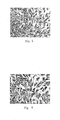
- the disulfide-bond cross-linked hydrogel of hyaluronic acid is prepared in a standard 24-well cell culture plate at 1 ml per well according to Example 13. After 12 hours, the whole cell culture plate is sterilized by dipped in 75% alcohol solution for 2 hours. Then the cell culture plate is dip-washed three times with sterile normal saline. 1 ml of cell culture medium (DMEM, 10% bovine serum) and 20,000 NIH 3T3 fibroblasts are added in each well. The cell culture plate is incubated for 24 hours at 37 °C in CO 2 cell incubator.
- DMEM cell culture medium
- 20,000 NIH 3T3 fibroblasts are added in each well.
- Disulfide-bond cross-linked double-component hydrogel of hyaluronic acid-gelatin is used as matrix of cellular adherence and growth.
- the disulfide-bond cross-linked double-component hydrogel of hyaluronic acid-gelatin is prepared in a standard 24-well cell culture plate at 1 ml per well according to Example 14. After 12 hours, the whole cell culture plate is sterilized by dipped in 75% alcohol solution for 2 hours. Then the cell culture plate is dip-washed three times with sterile normal saline. 1 ml of cell culture medium (DMEM, 10% bovine serum) and 20,000 NIH 3T3 fibroblasts are added in each well. The cell culture plate is incubated for 24 hours at 37 °C in CO 2 cell incubator.
- DMEM 10% bovine serum
- disulfide-bond cross-linked double-component hydrogel of hyaluronic acid-gelatin is similar with blank cell culture plate and the cells have a spindle shape. This result indicates that the disulfide-bond cross-linked two-component hydrogel of hyaluronic acid-gelatin is a good matrix of cellular adherence and growth.
- the PEG-bis-vinyl sulfone cross-linked hydrogel of hyaluronic acid is used for preventing adherence of cells.
- the PEG-bis-vinyl sulfone cross-linked hydrogel of hyaluronic acid is prepared in a standard 24-well cell culture plate at 1 ml per well according to Example 15. After 12 hours, the whole cell culture plate is sterilized by dipped in 75% alcohol solution for 2 hours. Then the cell culture plate is dip-washed three times with sterile normal saline. 1 ml of cell culture medium (DMEM, 10% bovine serum) and 20,000 NIH 3T3 fibroblasts are added in each well. The cell culture plate is incubated for 24 hours at 37 °C in CO 2 cell incubator.
- DMEM 10% bovine serum
- Two-component PEG-bis-acrylic acid ester cross-linked hydrogel of hyaluronic acid-gelatin is used as matrix of cellular adherence and growth.
- the two-component PEG-bis-acrylic acid ester cross-linked hydrogel of hyaluronic acid-gelatin is prepared in a standard 24-well cell culture plate at 1 ml per well according to Example 16. After 12 hours, the whole cell culture plate is sterilized by dipped in 75% alcohol solution for 2 hours. Then the cell culture plate is dip-washed three times with sterile normal saline. 1 ml of cell culture medium (DMEM, 10% bovine serum) and 20,000 NIH 3T3 fibroblasts are added in each well. The cell culture plate is incubated for 24 hours at 37 °C in CO 2 cell incubator.
- DMEM 10% bovine serum
- the thiol-modified macromoleculele derivatives with general formula (I) or (II) in this invention has many beneficial effects.
- the use of hydrazide coupling method for thiolated modification in this invention has the notable benefits of mild preparing conditions, high rate of production, high degree of modification, good controllability and so on.
- disulfide-bond cross-linked macromolecule materials can be easily prepared according to this invention, such as the disulfide-bond cross-linked material composed of a polysaccharide, the disulfide-bond cross-linked material composed of a protein, the disulfide-bond cross-linked material composed of two polysaccharides, the disulfide-bond cross-linked material composed of two proteins, the disulfide-bond cross-linked material composed of a polysaccharide and a protein and so on.
- These disulfide-bond cross-linked materials can be made into film, sponge, gel and other forms and can be used to prevent the adherence of cells or used as the matrix of cellular growth.
- the crosslinking process between thiol-reactive crosslinker and thiol-modified macromolecule derivative with general formula (I) or (II) of this invention is very rapid, the gelation rate improves more than five times than the disulfide bond crosslinking.
- These materials have important uses in biomedicine, such as for embedding of cells in situ and so on.
- Various thiol-reactive crosslinker cross-linked macromolecular materials can be easily prepared according to this invention, such as cross-linked material composed of a polysaccharide, cross-linked material composed of a protein, cross-linked material composed of two polysaccharides, cross-linked material composed of two proteins, cross-linked material composed of a polysaccharide and a protein and so on.
- These thiol-reactive crosslinker cross-linked macromolecular materials can be made into film, sponge, gel and other forms and can be used to prevent the adherence of cells or used as the matrix of cellular growth.
Landscapes
- Chemical & Material Sciences (AREA)
- Organic Chemistry (AREA)
- Health & Medical Sciences (AREA)
- Life Sciences & Earth Sciences (AREA)
- Biochemistry (AREA)
- Chemical Kinetics & Catalysis (AREA)
- Medicinal Chemistry (AREA)
- Engineering & Computer Science (AREA)
- Materials Engineering (AREA)
- Polymers & Plastics (AREA)
- General Health & Medical Sciences (AREA)
- Molecular Biology (AREA)
- General Chemical & Material Sciences (AREA)
- Analytical Chemistry (AREA)
- Biophysics (AREA)
- Genetics & Genomics (AREA)
- Proteomics, Peptides & Aminoacids (AREA)
- Dermatology (AREA)
- Polysaccharides And Polysaccharide Derivatives (AREA)
- Materials For Medical Uses (AREA)
- Peptides Or Proteins (AREA)
- Compositions Of Macromolecular Compounds (AREA)
- Addition Polymer Or Copolymer, Post-Treatments, Or Chemical Modifications (AREA)
- Other Resins Obtained By Reactions Not Involving Carbon-To-Carbon Unsaturated Bonds (AREA)
Applications Claiming Priority (2)
| Application Number | Priority Date | Filing Date | Title |
|---|---|---|---|
| CN200610119414A CN101200504B (zh) | 2006-12-11 | 2006-12-11 | 高分子巯基化改性衍生物及其交联材料 |
| PCT/CN2007/002864 WO2008071058A1 (fr) | 2006-12-11 | 2007-09-29 | Dérivé macromoléculaire modifié par un groupe mercapto et matériau réticulé |
Publications (3)
| Publication Number | Publication Date |
|---|---|
| EP2103631A1 true EP2103631A1 (fr) | 2009-09-23 |
| EP2103631A4 EP2103631A4 (fr) | 2011-08-24 |
| EP2103631B1 EP2103631B1 (fr) | 2017-06-28 |
Family
ID=39511244
Family Applications (1)
| Application Number | Title | Priority Date | Filing Date |
|---|---|---|---|
| EP07816478.7A Active EP2103631B1 (fr) | 2006-12-11 | 2007-09-29 | Dérivé macromoléculaire modifié par un groupe mercapto et matériau réticulé |
Country Status (7)
| Country | Link |
|---|---|
| US (1) | US8124757B2 (fr) |
| EP (1) | EP2103631B1 (fr) |
| JP (1) | JP5211064B2 (fr) |
| CN (1) | CN101200504B (fr) |
| AU (1) | AU2007332031A1 (fr) |
| CA (1) | CA2672019C (fr) |
| WO (1) | WO2008071058A1 (fr) |
Cited By (7)
| Publication number | Priority date | Publication date | Assignee | Title |
|---|---|---|---|---|
| US7829118B1 (en) | 2009-07-30 | 2010-11-09 | Carbylan Biosurgery, Inc. | Modified hyaluronic acid polymer compositions and related methods |
| EP2103662A4 (fr) * | 2007-01-09 | 2012-11-28 | Bioregen Biomedical Changzhou | Dérivés de gélatine multiples modifiés et leur matériau de réticulation |
| CN108096637A (zh) * | 2017-12-27 | 2018-06-01 | 上海其胜生物制剂有限公司 | 一种梯度仿生人工玻璃体的制备方法 |
| WO2019238954A1 (fr) | 2018-06-15 | 2019-12-19 | Croma-Pharma Gmbh | Composition d'hydrogel comprenant un polymère réticulé |
| WO2019238953A1 (fr) | 2018-06-15 | 2019-12-19 | Croma-Pharma Gmbh | Composition d'hydrogel comprenant un polymère réticulé |
| WO2021123247A1 (fr) | 2019-12-19 | 2021-06-24 | Croma-Pharma Gmbh | Hyaluronane modifié par thiol et hydrogel comprenant l'hyaluronane réticulé |
| EP3778653B1 (fr) * | 2018-03-28 | 2025-07-09 | Mochida Pharmaceutical Co., Ltd. | Nouveaux dérivés d'acide alginique réactifs |
Families Citing this family (41)
| Publication number | Priority date | Publication date | Assignee | Title |
|---|---|---|---|---|
| CN101338036B (zh) * | 2007-07-06 | 2010-11-03 | 常州百瑞吉生物医药有限公司 | 生物相容快速凝胶化水凝胶及其喷雾剂的制备方法 |
| CN101721349B (zh) | 2008-10-16 | 2011-07-20 | 常州百瑞吉生物医药有限公司 | 可注射原位交联水凝胶及其制备方法和用途 |
| US8962823B2 (en) | 2010-01-19 | 2015-02-24 | Organoclick Ab | Heterogeneous thiol-ene click modifications of solid polysaccharide-based materials |
| CN102399295B (zh) | 2010-09-09 | 2013-11-06 | 常州百瑞吉生物医药有限公司 | 低巯基化改性度生物相容高分子巯基化衍生物及其交联材料和用途 |
| CN107281549B (zh) | 2010-11-23 | 2021-10-15 | 爱力根制药国际有限公司 | 与多糖交联的蛋白质的制备和/或制剂 |
| CN102408496B (zh) * | 2011-09-13 | 2013-02-06 | 武汉理工大学 | 一种原位交联海藻酸钠水凝胶及其制备方法 |
| CN102617852B (zh) * | 2012-04-24 | 2013-07-17 | 华东师范大学 | 马来酰亚胺-聚谷氨酸-天冬氨酸聚合物和其复合物、及其制备方法和用途 |
| CN102690516B (zh) * | 2012-06-11 | 2013-12-18 | 哈尔滨工程大学 | 一种可生物降解交联壳聚糖螯合树脂及其制备方法 |
| CN103613686B (zh) * | 2013-11-12 | 2015-08-19 | 广州恩轲肽医药科技有限公司 | 巯基化透明质酸的制备方法及其应用 |
| CN103936883B (zh) * | 2014-03-25 | 2015-12-30 | 中国医学科学院生物医学工程研究所 | 含巯基壳聚糖衍生物及复合物纳米粒子及制备方法 |
| ITRM20150204A1 (it) * | 2015-05-13 | 2016-11-13 | Nanofaber S R L | Microspugne di acido ialuronico e metodo per la preparazione delle stesse |
| CN104958783B (zh) * | 2015-06-19 | 2017-08-08 | 暨南大学 | 一种天然多糖基水凝胶及制备和在眼结膜修复中的应用 |
| CN105273105B (zh) * | 2015-11-13 | 2018-02-16 | 华东理工大学 | 改性海藻酸钠及其用途 |
| TWI660740B (zh) | 2016-10-21 | 2019-06-01 | 財團法人工業技術研究院 | 水膠組合物及包含其之藥物傳輸系統 |
| CN109096483B (zh) * | 2017-06-28 | 2020-09-04 | 北京键凯科技股份有限公司 | 分枝型多元甘醇环氧衍生物交联透明质酸钠凝胶及其制备和应用 |
| CN109265705A (zh) * | 2017-07-18 | 2019-01-25 | 中国科学院苏州纳米技术与纳米仿生研究所 | 胶原巯基化衍生物及其制备方法和应用 |
| CN109459503B (zh) * | 2017-09-06 | 2023-04-07 | 上海绿谷制药有限公司 | 一种测定肝素类药物重均分子量和含量的方法 |
| CN107929804A (zh) * | 2017-12-26 | 2018-04-20 | 常州百瑞吉生物医药有限公司 | 改性明胶基复合海绵及其制备方法和用途 |
| CN110343264B (zh) * | 2018-04-03 | 2021-11-26 | 中国科学院苏州纳米技术与纳米仿生研究所 | 壳聚糖水凝胶及其制备方法与应用 |
| CN110408050B (zh) * | 2018-04-28 | 2021-11-23 | 南京理工大学 | 纤维素基接枝改性可逆凝胶及其制备方法 |
| CA3103227A1 (fr) | 2018-06-14 | 2019-12-19 | Mochida Pharmaceutical Co., Ltd. | Nouvel acide alginique reticule |
| US20220296485A1 (en) | 2019-08-18 | 2022-09-22 | Pmidg, Llc | Compositions for sunscreen compounds and methods thereof |
| US11795320B2 (en) * | 2019-09-20 | 2023-10-24 | Bausch + Lomb Ireland Limited | Grafted polymer and use thereof |
| CN110787325A (zh) * | 2019-09-21 | 2020-02-14 | 常州百瑞吉生物医药有限公司 | 用于预防腹(盆)腔术后组织粘连的二硫键交联透明质酸凝胶及其制备方法 |
| CN120463977A (zh) * | 2019-09-25 | 2025-08-12 | 持田制药株式会社 | 新型交联海藻酸结构体 |
| CN112812201B (zh) | 2019-11-18 | 2023-06-16 | 孛朗孚(杭州)生物科技有限公司 | 巯基改性透明质酸及其制备方法和用途 |
| CN112812200B (zh) | 2019-11-18 | 2023-06-16 | 孛朗孚(杭州)生物科技有限公司 | 巯基改性高分子化合物及其制备方法和用途 |
| CN112812329B (zh) * | 2019-11-18 | 2023-06-16 | 孛朗孚(杭州)生物科技有限公司 | 巯基改性高分子化合物的水凝胶及其制备方法和用途 |
| CN112842929A (zh) * | 2019-11-27 | 2021-05-28 | 华熙生物科技股份有限公司 | 一种巯基化透明质酸及其制备方法和应用 |
| CN111068099B (zh) * | 2019-12-11 | 2021-04-06 | 杭州千芝雅卫生用品有限公司 | 高分子吸收聚合体、制备方法及其用途 |
| WO2021125255A1 (fr) | 2019-12-18 | 2021-06-24 | 持田製薬株式会社 | Nouvel acide alginique réticulé |
| CN112358628B (zh) * | 2020-11-09 | 2022-06-21 | 华中科技大学同济医学院附属协和医院 | 一种使用牺牲材料为水凝胶及生物材料进行脱模的方法 |
| CN113185716B (zh) * | 2021-04-20 | 2022-04-22 | 中国海洋大学 | 一种巯基化透明质酸多糖水凝胶及其制备方法和应用 |
| CN114409911B (zh) * | 2021-12-15 | 2023-06-27 | 广州宝会树脂有限公司 | 一种高保水的SiO2改性丙烯酸吸水树脂的制备方法 |
| CN114478829B (zh) * | 2021-12-31 | 2023-07-28 | 常州百瑞吉生物医药有限公司 | 一种透明质酸交联活性材料组合物、制备方法及应用 |
| CN114316087B (zh) * | 2021-12-31 | 2022-10-28 | 常州百瑞吉生物医药有限公司 | 一种透明质酸交联活性材料、制备方法及其应用 |
| CN114716581A (zh) * | 2022-03-25 | 2022-07-08 | 常州百瑞吉生物医药有限公司 | 一种多重改性透明质酸衍生物及其应用 |
| CN115785490A (zh) * | 2022-11-29 | 2023-03-14 | 广西医科大学 | 一种交联改性的明胶材料及其制备方法 |
| WO2024162445A1 (fr) * | 2023-02-03 | 2024-08-08 | Spiber株式会社 | Procédé de production de composé polymère |
| CN119431610A (zh) * | 2023-08-01 | 2025-02-14 | 中国石油化工股份有限公司 | 一种胺基改性聚阴离子纤维素降滤失剂及其制备方法 |
| CN116966114B (zh) * | 2023-09-21 | 2026-04-24 | 常州百瑞吉生物医药股份有限公司 | 一种透明质酸组合物及其应用 |
Family Cites Families (15)
| Publication number | Priority date | Publication date | Assignee | Title |
|---|---|---|---|---|
| JPS6357569A (ja) * | 1986-08-28 | 1988-03-12 | Teijin Ltd | ヒドラジド化合物及びその製造方法 |
| US5157123A (en) * | 1989-03-13 | 1992-10-20 | Georgetown University | S-(2-thiopyridyl)-l-cysteine, a heterobifunctional crosslinking reagent |
| WO2000053577A1 (fr) * | 1999-03-12 | 2000-09-14 | The Government Of The United States Of America, As Represented By The Secretary, Department Of Health And Human Services, The National Institutes Of Health | Inhibiteurs de l'integrase du hiv-1 a base d'hydrazide |
| EP1368309B2 (fr) * | 2001-02-22 | 2014-10-01 | Anika Therapeutics Inc. | Derives d'hyaluronane thiol-modifies |
| JP2003019869A (ja) * | 2001-07-09 | 2003-01-21 | Oji Paper Co Ltd | 感熱記録体 |
| ATA13842001A (de) * | 2001-08-31 | 2002-10-15 | Mucobiomer Biotechnologische F | Chitosan-thio-alkyl-amidin konjugate und deren kosmetische sowie pharmazeutische verwendung |
| CA2489712C (fr) * | 2002-06-21 | 2016-07-12 | University Of Utah Research Foundation | Composes reticules et leurs procedes de preparation et d'utilisation |
| WO2004003716A1 (fr) | 2002-06-27 | 2004-01-08 | Tai Guen Enterprise Co.,Ltd | Dispositif de traitement de donnee integre portable a interface de donnees standard |
| AU2003284634A1 (en) * | 2002-11-21 | 2004-06-15 | Chugai Seiyaku Kabushiki Kaisha | Sustained release drug carrier |
| CN1186357C (zh) * | 2003-03-14 | 2005-01-26 | 王立强 | 壳聚糖巯基醋酸偶合物的新合成工艺 |
| WO2005000402A2 (fr) * | 2003-05-15 | 2005-01-06 | University Of Utah Research Foundation | Composites anti-adherence et methodes d'utilisation desdits composites |
| WO2005054301A1 (fr) * | 2003-11-14 | 2005-06-16 | Chugai Seiyaku Kabushiki Kaisha | Microparticules de polysaccharides reticulees, et procede de production |
| AU2004297231B2 (en) * | 2003-12-04 | 2012-02-02 | University Of Utah Research Foundation | Modified macromolecules and associated methods of synthesis and use |
| WO2005105853A1 (fr) * | 2004-04-28 | 2005-11-10 | Yamaha Hatsudoki Kabushi Kaika | COMPOSITE DE β-CHITINE ET PROCÉDÉ POUR LA FABRICATION DE CELUI-CI |
| CN100497443C (zh) * | 2006-02-10 | 2009-06-10 | 天津理工大学 | 制备巯基聚天冬氨酸与壳聚糖共聚物的方法与用途 |
-
2006
- 2006-12-11 CN CN200610119414A patent/CN101200504B/zh active Active
-
2007
- 2007-09-29 CA CA2672019A patent/CA2672019C/fr active Active
- 2007-09-29 JP JP2009540576A patent/JP5211064B2/ja active Active
- 2007-09-29 WO PCT/CN2007/002864 patent/WO2008071058A1/fr not_active Ceased
- 2007-09-29 US US12/518,473 patent/US8124757B2/en active Active
- 2007-09-29 EP EP07816478.7A patent/EP2103631B1/fr active Active
- 2007-09-29 AU AU2007332031A patent/AU2007332031A1/en not_active Abandoned
Cited By (16)
| Publication number | Priority date | Publication date | Assignee | Title |
|---|---|---|---|---|
| EP2103662A4 (fr) * | 2007-01-09 | 2012-11-28 | Bioregen Biomedical Changzhou | Dérivés de gélatine multiples modifiés et leur matériau de réticulation |
| US8790702B2 (en) | 2009-07-30 | 2014-07-29 | Carbylan Therapeutics, Inc. | Modified hyaluronic acid polymer compositions and related methods |
| US9192678B2 (en) | 2009-07-30 | 2015-11-24 | Carbylan Therapeutics, Inc. | Modified hyaluronic acid polymer compositions and related methods |
| US9446136B2 (en) | 2009-07-30 | 2016-09-20 | Carbylan Therapeutics, Inc. | Modified hyaluronic acid polymer compositions and related methods |
| US9980977B2 (en) | 2009-07-30 | 2018-05-29 | Carbylan Therapeutics, Inc. | Modified hyaluronic acid polymer compositions and related methods |
| US7829118B1 (en) | 2009-07-30 | 2010-11-09 | Carbylan Biosurgery, Inc. | Modified hyaluronic acid polymer compositions and related methods |
| CN108096637B (zh) * | 2017-12-27 | 2020-09-18 | 上海其胜生物制剂有限公司 | 一种梯度仿生人工玻璃体的制备方法 |
| CN108096637A (zh) * | 2017-12-27 | 2018-06-01 | 上海其胜生物制剂有限公司 | 一种梯度仿生人工玻璃体的制备方法 |
| EP3778653B1 (fr) * | 2018-03-28 | 2025-07-09 | Mochida Pharmaceutical Co., Ltd. | Nouveaux dérivés d'acide alginique réactifs |
| WO2019238953A1 (fr) | 2018-06-15 | 2019-12-19 | Croma-Pharma Gmbh | Composition d'hydrogel comprenant un polymère réticulé |
| US12097277B2 (en) | 2018-06-15 | 2024-09-24 | Croma-Pharma Gmbh | Hydrogel composition comprising a crosslinked polymer |
| US12297346B2 (en) | 2018-06-15 | 2025-05-13 | Croma-Pharma Gmbh | Hydrogel composition comprising a crosslinked polymer |
| WO2019238954A1 (fr) | 2018-06-15 | 2019-12-19 | Croma-Pharma Gmbh | Composition d'hydrogel comprenant un polymère réticulé |
| US12458582B2 (en) | 2018-06-15 | 2025-11-04 | Croma-Pharma Gmbh | Stabilized hyaluronic acid |
| WO2021123247A1 (fr) | 2019-12-19 | 2021-06-24 | Croma-Pharma Gmbh | Hyaluronane modifié par thiol et hydrogel comprenant l'hyaluronane réticulé |
| US12428499B2 (en) | 2019-12-19 | 2025-09-30 | Croma-Pharma Gmbh | Thiol-modified hyaluronan and hydrogel comprising the crosslinked hyaluronan |
Also Published As
| Publication number | Publication date |
|---|---|
| CN101200504A (zh) | 2008-06-18 |
| JP2010512433A (ja) | 2010-04-22 |
| EP2103631A4 (fr) | 2011-08-24 |
| AU2007332031A1 (en) | 2008-06-19 |
| CA2672019A1 (fr) | 2008-06-19 |
| CN101200504B (zh) | 2010-05-12 |
| CA2672019C (fr) | 2012-12-04 |
| WO2008071058A1 (fr) | 2008-06-19 |
| US20100152423A1 (en) | 2010-06-17 |
| JP5211064B2 (ja) | 2013-06-12 |
| EP2103631B1 (fr) | 2017-06-28 |
| US8124757B2 (en) | 2012-02-28 |
Similar Documents
| Publication | Publication Date | Title |
|---|---|---|
| EP2103631B1 (fr) | Dérivé macromoléculaire modifié par un groupe mercapto et matériau réticulé | |
| Guaresti et al. | In situ cross–linked chitosan hydrogels via Michael addition reaction based on water–soluble thiol–maleimide precursors | |
| JP5872576B2 (ja) | アルケン単位およびチオールクリック化学カップリング反応を含む多糖誘導体 | |
| EP2177236A1 (fr) | Procédé pour la formation d'un hydrogel biocompatible à gélification rapide et préparation d'un agent de pulvérisation | |
| EP2103662B1 (fr) | Dérivés de gélatine multiples modifiés et leur matériau de réticulation | |
| CN112812201B (zh) | 巯基改性透明质酸及其制备方法和用途 | |
| AU658498B2 (en) | Semi-synthetic glycosaminoglycans with heparin or heparan structure of alpha-L-iduronic-2-sulfate acid modified in position 2 | |
| WO2004022603A1 (fr) | Derives d'acide hyaluronique et leurs procedes de preparation | |
| Bao et al. | Synthesis of biodegradable protein–poly (ε-caprolactone) conjugates via enzymatic ring opening polymerization | |
| WO2018050764A1 (fr) | Hydrogels à base de polysaccharides fonctionnalisés | |
| CN112842929A (zh) | 一种巯基化透明质酸及其制备方法和应用 | |
| US7829337B2 (en) | Cell-releasing agent and method of releasing cell sheet | |
| US10968286B2 (en) | Site-selective modification of polysaccharides and applications thereof | |
| Tran et al. | RGD-conjugated in situ forming hydrogels as cell-adhesive injectable scaffolds | |
| EP3584318A1 (fr) | Bille de polymère | |
| JPH06298805A (ja) | α−L−イズロン酸−2−O−硫酸の2位が修飾されたヘパリンまたはヘパラン構造を有する半合成グリコサミノグリカンの合成方法 | |
| Gao | Regioselective Synthesis of Glycosaminoglycan Analogs |
Legal Events
| Date | Code | Title | Description |
|---|---|---|---|
| PUAI | Public reference made under article 153(3) epc to a published international application that has entered the european phase |
Free format text: ORIGINAL CODE: 0009012 |
|
| 17P | Request for examination filed |
Effective date: 20090708 |
|
| AK | Designated contracting states |
Kind code of ref document: A1 Designated state(s): AT BE BG CH CY CZ DE DK EE ES FI FR GB GR HU IE IS IT LI LT LU LV MC MT NL PL PT RO SE SI SK TR |
|
| DAX | Request for extension of the european patent (deleted) | ||
| RIC1 | Information provided on ipc code assigned before grant |
Ipc: C07K 1/107 20060101ALI20110707BHEP Ipc: C07C 241/04 20060101ALI20110707BHEP Ipc: C07B 43/06 20060101ALI20110707BHEP Ipc: A61K 31/728 20060101ALI20110707BHEP Ipc: C08H 1/00 20060101ALI20110707BHEP Ipc: C08B 37/00 20060101AFI20110707BHEP Ipc: C08G 18/00 20060101ALI20110707BHEP |
|
| A4 | Supplementary search report drawn up and despatched |
Effective date: 20110722 |
|
| REG | Reference to a national code |
Ref country code: DE Ref legal event code: R079 Ref document number: 602007051494 Country of ref document: DE Free format text: PREVIOUS MAIN CLASS: C08B0037000000 Ipc: C07C0323410000 |
|
| GRAP | Despatch of communication of intention to grant a patent |
Free format text: ORIGINAL CODE: EPIDOSNIGR1 |
|
| RIC1 | Information provided on ipc code assigned before grant |
Ipc: C08B 11/15 20060101ALI20170307BHEP Ipc: C07C 323/60 20060101ALI20170307BHEP Ipc: C08B 37/00 20060101ALI20170307BHEP Ipc: C07K 1/107 20060101ALI20170307BHEP Ipc: C08H 1/00 20060101ALI20170307BHEP Ipc: C07B 43/06 20060101ALI20170307BHEP Ipc: C08B 37/08 20060101ALI20170307BHEP Ipc: C07C 323/41 20060101AFI20170307BHEP |
|
| INTG | Intention to grant announced |
Effective date: 20170327 |
|
| GRAS | Grant fee paid |
Free format text: ORIGINAL CODE: EPIDOSNIGR3 |
|
| GRAA | (expected) grant |
Free format text: ORIGINAL CODE: 0009210 |
|
| AK | Designated contracting states |
Kind code of ref document: B1 Designated state(s): AT BE BG CH CY CZ DE DK EE ES FI FR GB GR HU IE IS IT LI LT LU LV MC MT NL PL PT RO SE SI SK TR |
|
| REG | Reference to a national code |
Ref country code: GB Ref legal event code: FG4D |
|
| REG | Reference to a national code |
Ref country code: CH Ref legal event code: EP |
|
| REG | Reference to a national code |
Ref country code: AT Ref legal event code: REF Ref document number: 904708 Country of ref document: AT Kind code of ref document: T Effective date: 20170715 |
|
| REG | Reference to a national code |
Ref country code: IE Ref legal event code: FG4D |
|
| REG | Reference to a national code |
Ref country code: DE Ref legal event code: R096 Ref document number: 602007051494 Country of ref document: DE |
|
| REG | Reference to a national code |
Ref country code: FR Ref legal event code: PLFP Year of fee payment: 11 |
|
| PG25 | Lapsed in a contracting state [announced via postgrant information from national office to epo] |
Ref country code: GR Free format text: LAPSE BECAUSE OF FAILURE TO SUBMIT A TRANSLATION OF THE DESCRIPTION OR TO PAY THE FEE WITHIN THE PRESCRIBED TIME-LIMIT Effective date: 20170929 Ref country code: LT Free format text: LAPSE BECAUSE OF FAILURE TO SUBMIT A TRANSLATION OF THE DESCRIPTION OR TO PAY THE FEE WITHIN THE PRESCRIBED TIME-LIMIT Effective date: 20170628 Ref country code: FI Free format text: LAPSE BECAUSE OF FAILURE TO SUBMIT A TRANSLATION OF THE DESCRIPTION OR TO PAY THE FEE WITHIN THE PRESCRIBED TIME-LIMIT Effective date: 20170628 |
|
| REG | Reference to a national code |
Ref country code: NL Ref legal event code: MP Effective date: 20170628 |
|
| REG | Reference to a national code |
Ref country code: LT Ref legal event code: MG4D |
|
| REG | Reference to a national code |
Ref country code: AT Ref legal event code: MK05 Ref document number: 904708 Country of ref document: AT Kind code of ref document: T Effective date: 20170628 |
|
| PG25 | Lapsed in a contracting state [announced via postgrant information from national office to epo] |
Ref country code: LV Free format text: LAPSE BECAUSE OF FAILURE TO SUBMIT A TRANSLATION OF THE DESCRIPTION OR TO PAY THE FEE WITHIN THE PRESCRIBED TIME-LIMIT Effective date: 20170628 Ref country code: NL Free format text: LAPSE BECAUSE OF FAILURE TO SUBMIT A TRANSLATION OF THE DESCRIPTION OR TO PAY THE FEE WITHIN THE PRESCRIBED TIME-LIMIT Effective date: 20170628 Ref country code: BG Free format text: LAPSE BECAUSE OF FAILURE TO SUBMIT A TRANSLATION OF THE DESCRIPTION OR TO PAY THE FEE WITHIN THE PRESCRIBED TIME-LIMIT Effective date: 20170928 Ref country code: SE Free format text: LAPSE BECAUSE OF FAILURE TO SUBMIT A TRANSLATION OF THE DESCRIPTION OR TO PAY THE FEE WITHIN THE PRESCRIBED TIME-LIMIT Effective date: 20170628 |
|
| PG25 | Lapsed in a contracting state [announced via postgrant information from national office to epo] |
Ref country code: RO Free format text: LAPSE BECAUSE OF FAILURE TO SUBMIT A TRANSLATION OF THE DESCRIPTION OR TO PAY THE FEE WITHIN THE PRESCRIBED TIME-LIMIT Effective date: 20170628 Ref country code: CZ Free format text: LAPSE BECAUSE OF FAILURE TO SUBMIT A TRANSLATION OF THE DESCRIPTION OR TO PAY THE FEE WITHIN THE PRESCRIBED TIME-LIMIT Effective date: 20170628 Ref country code: SK Free format text: LAPSE BECAUSE OF FAILURE TO SUBMIT A TRANSLATION OF THE DESCRIPTION OR TO PAY THE FEE WITHIN THE PRESCRIBED TIME-LIMIT Effective date: 20170628 Ref country code: EE Free format text: LAPSE BECAUSE OF FAILURE TO SUBMIT A TRANSLATION OF THE DESCRIPTION OR TO PAY THE FEE WITHIN THE PRESCRIBED TIME-LIMIT Effective date: 20170628 Ref country code: AT Free format text: LAPSE BECAUSE OF FAILURE TO SUBMIT A TRANSLATION OF THE DESCRIPTION OR TO PAY THE FEE WITHIN THE PRESCRIBED TIME-LIMIT Effective date: 20170628 |
|
| PG25 | Lapsed in a contracting state [announced via postgrant information from national office to epo] |
Ref country code: ES Free format text: LAPSE BECAUSE OF FAILURE TO SUBMIT A TRANSLATION OF THE DESCRIPTION OR TO PAY THE FEE WITHIN THE PRESCRIBED TIME-LIMIT Effective date: 20170628 Ref country code: PL Free format text: LAPSE BECAUSE OF FAILURE TO SUBMIT A TRANSLATION OF THE DESCRIPTION OR TO PAY THE FEE WITHIN THE PRESCRIBED TIME-LIMIT Effective date: 20170628 Ref country code: IT Free format text: LAPSE BECAUSE OF FAILURE TO SUBMIT A TRANSLATION OF THE DESCRIPTION OR TO PAY THE FEE WITHIN THE PRESCRIBED TIME-LIMIT Effective date: 20170628 Ref country code: IS Free format text: LAPSE BECAUSE OF FAILURE TO SUBMIT A TRANSLATION OF THE DESCRIPTION OR TO PAY THE FEE WITHIN THE PRESCRIBED TIME-LIMIT Effective date: 20171028 |
|
| REG | Reference to a national code |
Ref country code: DE Ref legal event code: R097 Ref document number: 602007051494 Country of ref document: DE |
|
| PG25 | Lapsed in a contracting state [announced via postgrant information from national office to epo] |
Ref country code: DK Free format text: LAPSE BECAUSE OF FAILURE TO SUBMIT A TRANSLATION OF THE DESCRIPTION OR TO PAY THE FEE WITHIN THE PRESCRIBED TIME-LIMIT Effective date: 20170628 |
|
| REG | Reference to a national code |
Ref country code: CH Ref legal event code: PL |
|
| PLBE | No opposition filed within time limit |
Free format text: ORIGINAL CODE: 0009261 |
|
| STAA | Information on the status of an ep patent application or granted ep patent |
Free format text: STATUS: NO OPPOSITION FILED WITHIN TIME LIMIT |
|
| PG25 | Lapsed in a contracting state [announced via postgrant information from national office to epo] |
Ref country code: MC Free format text: LAPSE BECAUSE OF FAILURE TO SUBMIT A TRANSLATION OF THE DESCRIPTION OR TO PAY THE FEE WITHIN THE PRESCRIBED TIME-LIMIT Effective date: 20170628 |
|
| 26N | No opposition filed |
Effective date: 20180329 |
|
| REG | Reference to a national code |
Ref country code: IE Ref legal event code: MM4A |
|
| REG | Reference to a national code |
Ref country code: BE Ref legal event code: MM Effective date: 20170930 |
|
| PG25 | Lapsed in a contracting state [announced via postgrant information from national office to epo] |
Ref country code: LU Free format text: LAPSE BECAUSE OF NON-PAYMENT OF DUE FEES Effective date: 20170929 |
|
| PG25 | Lapsed in a contracting state [announced via postgrant information from national office to epo] |
Ref country code: LI Free format text: LAPSE BECAUSE OF NON-PAYMENT OF DUE FEES Effective date: 20170930 Ref country code: CH Free format text: LAPSE BECAUSE OF NON-PAYMENT OF DUE FEES Effective date: 20170930 Ref country code: IE Free format text: LAPSE BECAUSE OF NON-PAYMENT OF DUE FEES Effective date: 20170929 |
|
| PG25 | Lapsed in a contracting state [announced via postgrant information from national office to epo] |
Ref country code: BE Free format text: LAPSE BECAUSE OF NON-PAYMENT OF DUE FEES Effective date: 20170930 Ref country code: SI Free format text: LAPSE BECAUSE OF FAILURE TO SUBMIT A TRANSLATION OF THE DESCRIPTION OR TO PAY THE FEE WITHIN THE PRESCRIBED TIME-LIMIT Effective date: 20170628 |
|
| REG | Reference to a national code |
Ref country code: FR Ref legal event code: PLFP Year of fee payment: 12 |
|
| PG25 | Lapsed in a contracting state [announced via postgrant information from national office to epo] |
Ref country code: MT Free format text: LAPSE BECAUSE OF NON-PAYMENT OF DUE FEES Effective date: 20170929 |
|
| PG25 | Lapsed in a contracting state [announced via postgrant information from national office to epo] |
Ref country code: HU Free format text: LAPSE BECAUSE OF FAILURE TO SUBMIT A TRANSLATION OF THE DESCRIPTION OR TO PAY THE FEE WITHIN THE PRESCRIBED TIME-LIMIT; INVALID AB INITIO Effective date: 20070929 |
|
| PG25 | Lapsed in a contracting state [announced via postgrant information from national office to epo] |
Ref country code: CY Free format text: LAPSE BECAUSE OF NON-PAYMENT OF DUE FEES Effective date: 20170628 |
|
| PG25 | Lapsed in a contracting state [announced via postgrant information from national office to epo] |
Ref country code: TR Free format text: LAPSE BECAUSE OF FAILURE TO SUBMIT A TRANSLATION OF THE DESCRIPTION OR TO PAY THE FEE WITHIN THE PRESCRIBED TIME-LIMIT Effective date: 20170628 |
|
| PG25 | Lapsed in a contracting state [announced via postgrant information from national office to epo] |
Ref country code: PT Free format text: LAPSE BECAUSE OF FAILURE TO SUBMIT A TRANSLATION OF THE DESCRIPTION OR TO PAY THE FEE WITHIN THE PRESCRIBED TIME-LIMIT Effective date: 20170628 |
|
| REG | Reference to a national code |
Ref country code: DE Ref legal event code: R082 Ref document number: 602007051494 Country of ref document: DE Representative=s name: HL KEMPNER PATENTANWAELTE, SOLICITORS (ENGLAND, DE Ref country code: DE Ref legal event code: R082 Ref document number: 602007051494 Country of ref document: DE Representative=s name: HL KEMPNER PATENTANWALT, RECHTSANWALT, SOLICIT, DE Ref country code: DE Ref legal event code: R082 Ref document number: 602007051494 Country of ref document: DE Representative=s name: HL KEMPNER PARTG MBB, DE |
|
| PGFP | Annual fee paid to national office [announced via postgrant information from national office to epo] |
Ref country code: DE Payment date: 20250922 Year of fee payment: 19 |
|
| PGFP | Annual fee paid to national office [announced via postgrant information from national office to epo] |
Ref country code: GB Payment date: 20250923 Year of fee payment: 19 |
|
| PGFP | Annual fee paid to national office [announced via postgrant information from national office to epo] |
Ref country code: FR Payment date: 20250815 Year of fee payment: 19 |