EP2116852A2 - Automatisches Analysengerät - Google Patents
Automatisches Analysengerät Download PDFInfo
- Publication number
- EP2116852A2 EP2116852A2 EP09158089A EP09158089A EP2116852A2 EP 2116852 A2 EP2116852 A2 EP 2116852A2 EP 09158089 A EP09158089 A EP 09158089A EP 09158089 A EP09158089 A EP 09158089A EP 2116852 A2 EP2116852 A2 EP 2116852A2
- Authority
- EP
- European Patent Office
- Prior art keywords
- sample
- automatic analyzer
- analysis
- special treatment
- request
- Prior art date
- Legal status (The legal status is an assumption and is not a legal conclusion. Google has not performed a legal analysis and makes no representation as to the accuracy of the status listed.)
- Granted
Links
Images



Classifications
-
- G—PHYSICS
- G01—MEASURING; TESTING
- G01N—INVESTIGATING OR ANALYSING MATERIALS BY DETERMINING THEIR CHEMICAL OR PHYSICAL PROPERTIES
- G01N35/00—Automatic analysis not limited to methods or materials provided for in any single one of groups G01N1/00 - G01N33/00; Handling materials therefor
- G01N35/00584—Control arrangements for automatic analysers
- G01N35/0092—Scheduling
-
- G—PHYSICS
- G01—MEASURING; TESTING
- G01N—INVESTIGATING OR ANALYSING MATERIALS BY DETERMINING THEIR CHEMICAL OR PHYSICAL PROPERTIES
- G01N35/00—Automatic analysis not limited to methods or materials provided for in any single one of groups G01N1/00 - G01N33/00; Handling materials therefor
- G01N35/00584—Control arrangements for automatic analysers
- G01N35/00594—Quality control, including calibration or testing of components of the analyser
- G01N35/00603—Reinspection of samples
-
- G—PHYSICS
- G01—MEASURING; TESTING
- G01N—INVESTIGATING OR ANALYSING MATERIALS BY DETERMINING THEIR CHEMICAL OR PHYSICAL PROPERTIES
- G01N35/00—Automatic analysis not limited to methods or materials provided for in any single one of groups G01N1/00 - G01N33/00; Handling materials therefor
- G01N35/00584—Control arrangements for automatic analysers
- G01N35/00594—Quality control, including calibration or testing of components of the analyser
- G01N35/00613—Quality control
- G01N35/00663—Quality control of consumables
-
- G—PHYSICS
- G01—MEASURING; TESTING
- G01N—INVESTIGATING OR ANALYSING MATERIALS BY DETERMINING THEIR CHEMICAL OR PHYSICAL PROPERTIES
- G01N35/00—Automatic analysis not limited to methods or materials provided for in any single one of groups G01N1/00 - G01N33/00; Handling materials therefor
- G01N35/00584—Control arrangements for automatic analysers
- G01N35/00722—Communications; Identification
-
- G—PHYSICS
- G01—MEASURING; TESTING
- G01N—INVESTIGATING OR ANALYSING MATERIALS BY DETERMINING THEIR CHEMICAL OR PHYSICAL PROPERTIES
- G01N35/00—Automatic analysis not limited to methods or materials provided for in any single one of groups G01N1/00 - G01N33/00; Handling materials therefor
- G01N35/00584—Control arrangements for automatic analysers
- G01N35/00594—Quality control, including calibration or testing of components of the analyser
- G01N35/00613—Quality control
- G01N35/00663—Quality control of consumables
- G01N2035/00673—Quality control of consumables of reagents
-
- G—PHYSICS
- G01—MEASURING; TESTING
- G01N—INVESTIGATING OR ANALYSING MATERIALS BY DETERMINING THEIR CHEMICAL OR PHYSICAL PROPERTIES
- G01N35/00—Automatic analysis not limited to methods or materials provided for in any single one of groups G01N1/00 - G01N33/00; Handling materials therefor
- G01N35/00584—Control arrangements for automatic analysers
- G01N35/00722—Communications; Identification
- G01N35/00732—Identification of carriers, materials or components in automatic analysers
- G01N2035/00742—Type of codes
- G01N2035/00752—Type of codes bar codes
-
- G—PHYSICS
- G01—MEASURING; TESTING
- G01N—INVESTIGATING OR ANALYSING MATERIALS BY DETERMINING THEIR CHEMICAL OR PHYSICAL PROPERTIES
- G01N35/00—Automatic analysis not limited to methods or materials provided for in any single one of groups G01N1/00 - G01N33/00; Handling materials therefor
- G01N35/00584—Control arrangements for automatic analysers
- G01N35/00722—Communications; Identification
- G01N2035/00891—Displaying information to the operator
- G01N2035/009—Displaying information to the operator alarms, e.g. audible
-
- G—PHYSICS
- G01—MEASURING; TESTING
- G01N—INVESTIGATING OR ANALYSING MATERIALS BY DETERMINING THEIR CHEMICAL OR PHYSICAL PROPERTIES
- G01N35/00—Automatic analysis not limited to methods or materials provided for in any single one of groups G01N1/00 - G01N33/00; Handling materials therefor
- G01N35/00584—Control arrangements for automatic analysers
- G01N35/00722—Communications; Identification
- G01N2035/00891—Displaying information to the operator
- G01N2035/0091—GUI [graphical user interfaces]
-
- G—PHYSICS
- G01—MEASURING; TESTING
- G01N—INVESTIGATING OR ANALYSING MATERIALS BY DETERMINING THEIR CHEMICAL OR PHYSICAL PROPERTIES
- G01N35/00—Automatic analysis not limited to methods or materials provided for in any single one of groups G01N1/00 - G01N33/00; Handling materials therefor
- G01N35/00584—Control arrangements for automatic analysers
- G01N35/0092—Scheduling
- G01N35/0095—Scheduling introducing urgent samples with priority, e.g. Short Turn Around Time Samples [STATS]
Definitions
- the present invention relates to an automatic analyzer for qualitatively and quantitatively analyzing a biological sample such as blood and urine.
- the invention more particularly relates to an automatic analyzer and an automatic analysis system, each of which has functions to easily perform a process for a series of operations including a special treatment to take for an unusual condition, a request for a re-measurement after the special treatment, and confirmation of the result of the re-measurement when an unusual condition attributable to the states of a sample or a reagent during analysis occurs.
- a typical automatic analyzer receives a constant amount of a sample and a constant amount of a reagent, causes the sample and the reagent to react in a reaction vessel and measures absorbance or fluorescence.
- the automatic analyzer analyzes samples of patients in accordance with multiple analysis items and therefore uses multiple reagents to treat the samples.
- samples of patients and reagents are set to the automatic analyzer and measurements are completed without any trouble during analyses, there is no special problem. However, the following unusual conditions may occur during the analyses since the analyses are clinical examinations.
- analyses are requested to be performed in accordance with fifteen analysis items for a certain sample and that clogging of a sample probe is detected during the analysis for the fifth item, In that case, the analyses for the subsequent analysis items for which measurement is to be performed will be interrupted. An operator extracts the sample from the automatic analyzer and removes a foreign material such as fibrin. Even if the operator wants to immediately resume the analysis for any of such analysis items, the analysis cannot be performed again using the same IDs since sample IDs will be duplicated during a period of time until results of the first four items for which sampling has been completed are output.
- the operator operates the automatic analyzer for the unusual condition, e.g., sets the sample from a general sample to an urgent sample or manually enters a virtual ID into the automatic analyzer. After that, the operator operates the automatic analyzer to cause the automatic analyzer to perform a re-measurement on the sample. The result of the re-measurement is reported without being distinguished from the result of a measurement performed in the normal routine operation.
- the operator When an unusual condition attributable to the states of a sample or a reagent occurs, the operator understands the status of the automatic analyzer, identifies and deals with the cause of the unusual condition, and performs a series of tasks for re-measurement.
- the automatic analyzer may be stopped and restarted whereas only the sample or a part of items is problematic and the automatic analyzer may not need to be stopped.
- the operator extracts the sample from the automatic analyzer and performs troubleshooting in order to introduce a special treatment to take for an unusual condition into a normal operation (normal treatment to be performed by the automatic analyzer) of the automatic analyzer.
- a typical introduction method used is to measure the sample as an urgent sample.
- the special treatment for such an unusual condition is different from a routine operation and complicated.
- the operator may erroneously enter data and erroneously operate the automatic analyzer. Even when such an error is found, the conventional technique cannot trace why and where the error took place.
- the result obtained through the special treatment is reported without being distinguished from the result of a measurement performed in the normal routine operation.
- it is a cumbersome task to search samples one by one for finding a sample subjected to a special treatment for such an unusual condition and confirm measurement results of the samples.
- An object of the present invention is to provide an automatic analyzer and automatic analysis system, each of which is capable of being rapidly handled when an unusual condition occurs and ensuring traceability during a treatment for the unusual condition.
- an analysis for the analysis item is regarded as a failure.
- the result of the sample thus measured is displayed on the basis of sample IDs and patient IDs, the analysis result is displayed as if the result of the sample was that of another sample.
- the automatic analyzer includes an analyzer for analyzing a sample in accordance with a first analysis item and in response to a first request; and a storage mechanism for associating, with identification information used to identify a sample subjected to a special treatment, measurement data on the sample analyzed by the analyzer in accordance with the first analysis item and in response to a second request different from the first request, and storing the measurement data associated with the identification information.
- An automatic analyzer has a data processor.
- the data processor is described below with reference to Fig. 1 .
- the automatic analyzer according to the embodiment includes an analyzer and a controller (storage mechanism).
- the controller is connected with an external computer.
- the controller is adapted to transmit and receive measurement request information and a measurement result to and from the external computer.
- the controller has a database dedicated for a normal sample and a database dedicated for a sample accompanied by an unusual condition.
- the database dedicated for a normal sample is used to manage a sample normally treated.
- the database dedicated for a sample accompanied by an unusual condition is used to manage a sample subjected to a special treatment for an unusual condition.
- the database dedicated for a sample accompanied by an unusual condition includes data on the following three screens: a measurement result screen; a re-measurement request screen; and a special treatment trace screen.
- the three screens are used only for samples subjected to a special treatment performed for unusual conditions.
- the measurement result screen is denoted by reference numeral 1 shown in Fig. 3 .
- the re-measurement request screen is denoted by reference numeral 9 shown in Fig. 4 .
- the special treatment trace screen is denoted by reference numeral 10 shown in Fig. 5 .
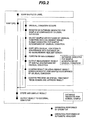
- the outline of a work flow of the automatic analyzer is described with reference to Fig. 2 .
- An operator sets samples to the automatic analyzer and presses a start button of the automatic analyzer. Then, the automatic analyzer automatically scans an identification (ID) label of the sample and samples the sample. The automatic analyzer then outputs the results of the scanning and the sampling.
- the output results are stored in the database dedicated for a normal sample, displayed on a screen and output to a printer and the external computer.
- an unusual condition for example, when a reagent is not sufficient, or the sample is stuck, or a barcode is not correctly read
- the operator understands the status of the automatic analyzer, identifies and deals with the cause of the unusual condition, and performs a series of handling for re-measurement.
- the operator handles the sample and operates the automatic analyzer in order to introduce a special treatment to take for an unusual condition into a normal operation (normal treatment that is to be performed by the automatic analyzer) of the automatic analyzer.
- the measurement result screen 1 the re-measurement request screen 9 and the special treatment trace screen 10, which are dedicated for a sample accompanied by an unusual condition, are described below.
- Fig. 3 shows the measurement result screen 1 dedicated for a sample accompanied by an unusual condition.
- the measurement result screen 1 has a status field.
- a sample that cannot be completely measured due to an occurrence of an alarm (generated due to, for example, a lack of reagent, a clogged sample probe, or a failure to read a barcode) is registered in the measurement result screen 1.
- the status field for the sample that cannot be completely measured indicates "trouble”.
- a re-measurement button 5 is pressed to open the re-measurement request screen 9 shown in Fig. 4 .
- the re-measurement request screen 9 displays an ID attached to a sample accompanied by an unusual condition, the position of the sample and the cause of the unusual condition.
- the re-measurement request screen 9 shows procedures required to be performed by the operator before the re-measurement. The procedures are displayed for each of causes of unusual conditions in a flow format.
- the operator operates the automatic analyzer in accordance with a guidance displayed on the re-measurement request screen 9 to cause the analyzer to perform each operation.
- the operator presses a checkbox the time when an operation indicated by the checkbox is performed is recorded in the automatic analyzer.
- the operator finally presses a start button the re-measurement is performed.
- the result of the re-measurement is displayed on the measurement result screen 1 shown in Fig. 3 .
- the operator confirms a measured value for each of samples subjected to a special treatment.
- the operator presses a confirmation button 4.
- the administrator approves the confirmed results.
- the confirmed results are transferred into the database dedicated for a normal sample and output to the external computer in real time or collectively.
- a process for entering a user ID and pass word of a person who confirms the measured results or entering a user ID and pass word of a person who approves the measured results may be performed to confirm and approve each sample.
- the special treatment trace screen 10 shown in Fig. 5 is displayed. Contents of the special treatment are displayed in chronological order on the special treatment trace screen 10.
- Fig. 6 is a flow of a process that is to be performed in the case (1).
- An ID label of a sample set in a disk or rack is scanned by a barcode reader.
- the automatic analyzer When the barcode reader cannot read the sample ID label due to a taint, scratch or the like of the label, the automatic analyzer generates an alarm indicative of an error in reading the barcode for the sample and cancels an analysis of the sample. In this case, only the sample for which the alarm is generated is required to be treated. Thus, the automatic analyzer does not need to be stopped.
- the operator handles the sample and operates the automatic analyzer to introduce a special treatment to take for an unusual condition (referred to as special treatment) into the normal operation of the automatic analyzer.
- special treatment a special treatment to take for an unusual condition
- the sample treated in the case (1) is registered in the measurement result screen 1 dedicated for a sample accompanied by an unusual condition.
- the status field for the sample treated in the case (1) indicates "trouble".
- the operator selects the sample treated in the case (1) on the measurement result screen 1 and presses the re-measurement button 5. Then, the re-measurement request screen 9 is displayed.
- the re-measurement request screen 9 shows items (shown in Fig. 6 ) of operations in a flow format.
- the items of the operations are to be performed by the operator or to be performed by the automatic analyzer.
- the operator extracts the sample in accordance with the guidance, and performs troubleshooting (manual registration of the position and ID of the sample and the like).
- the sample subjected to the troubleshooting is reset to the automatic analyzer and measured by the automatic analyzer.
- the results of the measurement are output and stored in the database for a sample accompanied by an unusual condition.
- This database dedicated is different from the database that is dedicated for a normal sample and designed to store a sample normally treated.
- the results are displayed on the measurement result screen 1.
- the operator selects a target sample and confirms a measured value of the target sample for each item. After that, when the operator presses the confirmation button 4, the status field for the sample indicates "confirmation".
- the sample is required to be re-measured, the operator needs to press the re-measurement button 5.
- the operator confirms samples subjected to all operations of the special treatment and then presses an approval button 6 data on the samples are erased from the screen 1, transferred into the database dedicated for a normal sample and output to the external computer in real time or collectively.
- the automatic analyzer records therein operations of the special treatment (shown in Fig. 6 ) and times when the operations are performed.
- the automatic analyzer records therein the operations and the times by using, as a trigger, the generation of the alarm indicative of the error in reading the barcode.
- the automatic analyzer can trace contents of the special treatment.
- the result of the measurement of the sample subjected to the special treatment is displayed on the dedicated measurement result screen 1.
- the operator does not need to search a sample subjected to the auxiliary treatment from a lot of samples.
- the search performance can be improved. Since the processes for confirmation and approval by the administrator are performed, only approved measured results can be output to the external computer among measured results of samples subjected to the special treatment.
- By displaying the recorded operations of the special treatment and the recorded times on the special treatment trace screen 10 in order to confirm and approve the measured results contents of the special treatment can be confirmed in chronological order on the special treatment trace screen 10.
- Fig. 7 shows a flow of a process that is to be performed in the case (2).
- the automatic analyzer adds an alarm indicative of a lack of the sample to an item of the sample for which sampling has not been performed.
- an analysis for an item indicative of already-performed sampling continues to be performed.
- an analysis for a remaining item whose sampling has not been performed is cancelled.
- the automatic analyzer then performs an analysis operation on a sample that is to be next measured. In this case, only the sample for which the alarm indicative of a lack of sample is generated is required to be treated.
- the automatic analyzer does not need to stop.
- the operator handles the sample and operates the automatic analyzer to introduce a special treatment into the normal operation of the automatic analyzer.
- the sample treated in the case (2) is registered in the measurement result screen 1.
- the status field for the sample treated in the case (2) indicates "trouble".
- the operator selects the sample treated in the case (2) on the measurement result screen 1 and presses the re-measurement button 5.
- the re-measurement request screen 9 is displayed.
- the re-measurement request screen 9 shows items (shown in Fig. 7 ) of operations in a flow format.
- the items of operations are to be performed by the operator or to be performed by the automatic analyzer.
- the operator extracts the sample from the automatic analyzer in accordance with the guidance. After that, the operator replaces a sample vessel with another sample vessel and adds a sample to the replaced sample vessel.
- the results of the re-measurement are output and stored in the database dedicated for a sample accompanied by an unusual condition.
- This database is different from the database that is dedicated for a normal sample and designed to store a sample normally treated.
- the output results are displayed on the measurement result screen 1.
- the results of the measurement of the sample, which are confirmed and approved by the administrator, are transferred into the database dedicated for a normal sample and output to the external computer in real time or collectively.
- the automatic analyzer records unusual conditions shown in Fig. 7 such as contents of the alarm and screen operations performed to avoid the duplication of the IDs by using, as a trigger, the generation of the alarm indicative of the lack of the sample. Then, the recorded unusual conditions are displayed on the special treatment trace screen 10.
- the performance for searching a sample subjected to the special treatment is improved in a similar way to the aforementioned example.
- reliability of the automatic analyzer is improved due to the processes for the confirmation and approval.
- traceability of the automatic analyzer is ensured by recording the contents of the special treatment for the unusual condition.
- Fig. 8 shows a flow of a process that is to be performed in the case (3).
- the automatic analyzer adds an alarm indicative of detection of the clogging to an item of the sample for which sampling has not been performed.
- an analysis for an item for a sampled sample continues to be performed.
- an analysis for a remaining item whose sampling has not been performed is cancelled, and the process proceeds to the cleaning operation.
- the automatic analyzer then performs an analysis operation on a sample that is to be next measured.
- the automatic analyzer does not need to stop.
- the operator handles the sample and operates the automatic analyzer to introduce a special treatment into the normal operation of the automatic analyzer.
- the results of the re-measurement are output and stored in the database dedicated for a sample accompanied by an unusual condition.
- This database is different from the database that is dedicated for a normal sample and designed to store a sample normally treated.
- the output results are displayed on the measurement result screen 1.
- the results of the measurement of the sample, which are confirmed and approved by the administrator, are transferred into the database dedicated for a normal sample and output to the external computer in real time or collectively.
- the automatic analyzer records therein unusual conditions shown in Fig. 8 such as contents of the alarm and screen operations performed to avoid the duplication of the IDs by using, as a trigger, the generation of the alarm indicative of detection of clogging of a sample probe. Then, the recorded unusual conditions are displayed on the special treatment trace screen 10.
- Data on a sample that is to be measured next to the sample detected to be clogged can be preset to be automatically stored in the database dedicated for a sample subjected to a special treatment.
- the performance for searching a sample subjected to the special treatment is improved in a similar way to the aforementioned examples.
- reliability of the automatic analyzer is improved due to the processes for the confirmation and approval.
- traceability of the automatic analyzer is ensured by recording the contents of the special treatment for the unusual condition.
- Fig. 9 shows a flow of a process that is to be performed in the case (4).
- the automatic analyzer adds the alarm indicative of detection of clogging of the sample probe to an item of the sample for which sampling has not been performed.
- an analysis for an item for a sampled sample continues to be performed.
- an analysis for a remaining item whose sampling has not been performed is cancelled, and the process proceeds to the cleaning operation.
- the sampling is stopped.
- the result of the measurement of an item for which the measurement is in progress is output.
- the automatic analyzer assumes a standby state. In this case, only a sample for which the alarm indicative of detection of clogging of a sample probe is generated is required to be treated.
- the automatic analyzer is in the state where the analyzer cannot sample a sample. Thus, the automatic analyzer is stopped and recovered.
- the sample treated in the case (4) is registered in the measurement result screen 1.
- the status field for the sample treated in the case (4) indicates "trouble".
- the operator selects the sample treated in the case (4) on the measurement result screen 1 and presses the re-measurement button 5.
- the re-measurement request screen 9 is displayed.
- the re-measurement request screen 9 shows items (shown in Fig. 9 ) of operations in a flow format.
- the items of operations are to be performed by the operator or to be performed by the automatic analyzer.
- the operator extracts the sample probe in accordance with the guidance and manually removes the foreign material from the sample probe. In addition, the operator performs maintenance such as air purge and adjustment of the position of the probe. After that, the operator resets to the automatic analyzer a sample that is not yet measured and operates the automatic analyzer to cause the automatic analyzer to perform a re-measurement.
- the results of the re-measurement are output and stored in the database dedicated for a sample accompanied by an unusual condition.
- This database is different from the database that is dedicated for a normal sample and designed to store a sample normally treated.
- the output results are displayed on the measurement result screen 1.
- the results of the measurement of the samples, which are confirmed and approved by the administrator, are transferred into the database dedicated for a normal sample and output to the external computer in real time or collectively.
- the automatic analyzer records therein unusual conditions shown in Fig. 9 such as the alarm and the maintenance by using, as a trigger, the detection of the clogging of the sample probe.
- the unusual conditions are displayed on the special treatment trace screen 10.
- the performance for searching a sample subjected to the special treatment is improved in a similar way to the aforementioned examples.
- reliability of the automatic analyzer is improved by the processes for the confirmation and approval.
- traceability of the automatic analyzer is ensured by recording the contents of the special treatment for the unusual condition.
- Fig. 10 shows a flow of a process that is to be performed in the case (5).
- the automatic analyzer adds the alarm indicative of the lack of the reagent to an item indicative of the sampling of the sample for samples that are to be measured next to the sample.
- An analysis for an item other than the above item continues to be performed.
- an analysis for the item indicative of the sampling of the sample is cancelled.
- the automatic analyzer assumes the standby state. In this case, although only the item for which the amount of the reagent is insufficient is required to be solved, the reagent cannot be replaced during the operation of the automatic analyzer.
- the mode of the automatic analyzer is changed from an operation mode to a standby mode, and then the operator recovers the automatic analyzer to the operation mode.
- the sample for which the alarm indicative of the lack of the reagent is generated is registered in the measurement result screen 1.
- the status field for the sample treated in the case (5) indicates "trouble".
- the operator selects the sample treated in the case (5) on the measurement result screen 1 and presses the re-measurement button 5.
- the re-measurement request screen 9 is displayed.
- the re-measurement request screen 9 shows items (shown in Fig. 10 ) of operations in a flow format.
- the items of operations are to be performed by the operator or to be performed by the automatic analyzer.
- the operator confirms the position of the reagent used for the abovementioned item and replaces a reagent bottle containing the reagent with a new reagent bottle in accordance with the guidance.
- the automatic analyzer registers the reagent therein and recognizes the position of the new reagent bottle. After that, the automatic analyzer calibrates the position of the new reagent bottle and measures a quality control sample when necessary. Then, the automatic analyzer sets the sample and measures the sample for a remaining item.
- the results of the measurement are output and stored in the database dedicated for a sample accompanied by an unusual condition.
- This database is different from the database that is dedicated for a normal sample and designed to store a sample normally treated.
- the output measurement results are displayed on the measurement result screen 1.
- the measurement results of the sample which are confirmed and approved by the administrator, are transferred into the database dedicated for a normal sample and output to the external computer in real time or collectively.
- the automatic analyzer records therein unusual conditions shown in Fig. 10 such as the contents of the alarm and the registration of the reagent by using, as a trigger, the generation of the alarm indicative of the lack of the reagent.
- the unusual conditions are displayed on the special treatment trace screen 10.
- the performance for searching a sample subjected to the special treatment is improved in a similar way to the abovementioned examples.
- reliability of the automatic analyzer is improved by the processes for the confirmation and approval.
- traceability of the automatic analyzer is ensured by recording the contents of the special treatment for the unusual condition.
- the measurement results of each of the samples subjected to the special treatment for the unusual conditions are displayed on the measurement result screen dedicated for a sample subjected to a special treatment.
- the samples subjected to the special treatment may be distinguished from normally treated samples by adding identification marks to the samples subjected to the special treatment.
- the samples subjected to the special treatment may be distinguished from normally treated samples by adding, to the samples subjected to the special treatment, marks that are different based on the unusual conditions.
- the occurrences of the unusual conditions are determined by the generations of the alarms.
- the operator may register any sample as a sample accompanied by an unusual condition and register any item as a special item to ensure that the sample is determined to be in an unusual condition.
Landscapes
- Physics & Mathematics (AREA)
- Health & Medical Sciences (AREA)
- Life Sciences & Earth Sciences (AREA)
- Chemical & Material Sciences (AREA)
- Analytical Chemistry (AREA)
- Biochemistry (AREA)
- General Health & Medical Sciences (AREA)
- General Physics & Mathematics (AREA)
- Immunology (AREA)
- Pathology (AREA)
- Engineering & Computer Science (AREA)
- Quality & Reliability (AREA)
- Automatic Analysis And Handling Materials Therefor (AREA)
Applications Claiming Priority (1)
| Application Number | Priority Date | Filing Date | Title |
|---|---|---|---|
| JP2008107389A JP5171368B2 (ja) | 2008-04-17 | 2008-04-17 | 自動分析装置 |
Publications (3)
| Publication Number | Publication Date |
|---|---|
| EP2116852A2 true EP2116852A2 (de) | 2009-11-11 |
| EP2116852A3 EP2116852A3 (de) | 2011-07-06 |
| EP2116852B1 EP2116852B1 (de) | 2018-01-03 |
Family
ID=41087120
Family Applications (1)
| Application Number | Title | Priority Date | Filing Date |
|---|---|---|---|
| EP09158089.4A Not-in-force EP2116852B1 (de) | 2008-04-17 | 2009-04-16 | Automatisches Analysengerät |
Country Status (4)
| Country | Link |
|---|---|
| US (1) | US20090263281A1 (de) |
| EP (1) | EP2116852B1 (de) |
| JP (1) | JP5171368B2 (de) |
| CN (1) | CN101561445B (de) |
Cited By (1)
| Publication number | Priority date | Publication date | Assignee | Title |
|---|---|---|---|---|
| EP2682755A4 (de) * | 2011-03-04 | 2014-08-27 | Hitachi High Tech Corp | Analysevorrichtung |
Families Citing this family (16)
| Publication number | Priority date | Publication date | Assignee | Title |
|---|---|---|---|---|
| JP5385865B2 (ja) * | 2010-06-29 | 2014-01-08 | 日本分光株式会社 | 測定支援機能付きリアルタイム測定曲線表示型分析装置 |
| JP5371905B2 (ja) * | 2010-07-30 | 2013-12-18 | シスメックス株式会社 | 検体処理装置の管理システム、検体処理装置及び管理装置ならびに管理方法 |
| JP5670129B2 (ja) | 2010-09-10 | 2015-02-18 | シスメックス株式会社 | 検体処理装置および検体処理方法 |
| JP5613522B2 (ja) * | 2010-10-12 | 2014-10-22 | シスメックス株式会社 | 検体分析装置 |
| JP2013140103A (ja) * | 2012-01-05 | 2013-07-18 | Hitachi High-Technologies Corp | 自動分析装置 |
| CN103207281B (zh) * | 2012-01-13 | 2014-06-25 | 深圳迈瑞生物医疗电子股份有限公司 | 样本分析仪的样本重测方法及系统 |
| CN111175240A (zh) * | 2014-05-30 | 2020-05-19 | 株式会社日立高新技术 | 自动分析装置 |
| US20210208174A1 (en) * | 2016-03-24 | 2021-07-08 | Hitachi High-Technologies Corporation | Specimen Conveyance System and Specimen Conveyance Method |
| JP6909224B2 (ja) * | 2016-09-21 | 2021-07-28 | 株式会社日立ハイテク | 自動分析装置及びリモート保守システム並びに保守方法 |
| JP6895792B2 (ja) * | 2017-04-14 | 2021-06-30 | キヤノンメディカルシステムズ株式会社 | 自動分析装置 |
| CN110875086B (zh) * | 2018-09-04 | 2024-04-12 | 深圳迈瑞生物医疗电子股份有限公司 | 一种样本分析方法、样本分析系统及计算机存储介质 |
| CN110967500A (zh) * | 2018-09-30 | 2020-04-07 | 深圳迈瑞生物医疗电子股份有限公司 | 一种样本检测方法、装置、样本分析仪和存储介质 |
| JP6954949B2 (ja) * | 2019-04-26 | 2021-10-27 | 日本電子株式会社 | 自動分析装置 |
| CN114556106B (zh) * | 2019-12-13 | 2025-08-12 | 深圳迈瑞生物医疗电子股份有限公司 | 体外诊断设备、检验流水线和异常检测方法 |
| CN112491782B (zh) * | 2020-09-29 | 2022-05-27 | 新华三信息安全技术有限公司 | 一种安全检测分析方法及装置 |
| EP4310856A1 (de) | 2022-07-19 | 2024-01-24 | F. Hoffmann-La Roche AG | Verarbeitung von testproben in einer laborumgebung |
Citations (1)
| Publication number | Priority date | Publication date | Assignee | Title |
|---|---|---|---|---|
| JPH08262031A (ja) | 1995-03-17 | 1996-10-11 | Hitachi Ltd | 自動分析装置 |
Family Cites Families (25)
| Publication number | Priority date | Publication date | Assignee | Title |
|---|---|---|---|---|
| JPS58103665A (ja) * | 1981-12-16 | 1983-06-20 | Olympus Optical Co Ltd | 異常検体の自動判定表示方法および装置 |
| JPS6298262A (ja) * | 1985-10-25 | 1987-05-07 | Hitachi Ltd | 臨床検査システムにおける再検査処理方式 |
| JPH0310161A (ja) * | 1989-06-08 | 1991-01-17 | Hitachi Ltd | 再検査指示方式 |
| IL94212A0 (en) * | 1989-07-24 | 1991-01-31 | Tri Tech Partners And Triton B | Automated analytical apparatus and method |
| JPH05232123A (ja) * | 1992-02-21 | 1993-09-07 | Hitachi Ltd | 臨床検査用の自動分析装置 |
| US5314825A (en) * | 1992-07-16 | 1994-05-24 | Schiapparelli Biosystems, Inc. | Chemical analyzer |
| JPH06249857A (ja) * | 1993-02-26 | 1994-09-09 | Hitachi Ltd | 自動分析装置 |
| JP3710534B2 (ja) * | 1995-12-07 | 2005-10-26 | 株式会社日立製作所 | 工程制御方法 |
| EP0977039B1 (de) * | 1998-07-27 | 2010-04-07 | Hitachi, Ltd. | Verfahren zur Handhabung von Körperflüssigkeitsproben und Analysevorrichtung. die diese verwendet |
| JP4070312B2 (ja) * | 1998-07-30 | 2008-04-02 | 株式会社日立製作所 | 検体検査システムおよび検体検査方法 |
| JP4091194B2 (ja) * | 1999-02-03 | 2008-05-28 | 株式会社東芝 | 自動分析装置およびそれに用いる分析結果処理方法 |
| JP4083339B2 (ja) * | 1999-03-30 | 2008-04-30 | オリンパス株式会社 | 分析装置 |
| JP3987675B2 (ja) * | 2000-07-05 | 2007-10-10 | 株式会社日立製作所 | 臨床検査システム |
| JP2003187069A (ja) * | 2001-12-21 | 2003-07-04 | Fujitsu Ten Ltd | 品質問題フォロー方法およびシステム |
| JP2003329690A (ja) * | 2002-05-09 | 2003-11-19 | Sysmex Corp | 臨床検査システム |
| JP3901587B2 (ja) * | 2002-06-12 | 2007-04-04 | 株式会社東芝 | 自動分析装置および自動分析装置におけるデータ管理方法 |
| JP2004020457A (ja) * | 2002-06-19 | 2004-01-22 | Olympus Corp | 自動分析装置 |
| JP3925445B2 (ja) * | 2003-03-27 | 2007-06-06 | 株式会社島津製作所 | 分析機器の制御装置 |
| US7185288B2 (en) * | 2003-07-18 | 2007-02-27 | Dade Behring Inc. | Operator interface module segmented by function in an automatic clinical analyzer |
| JP4369247B2 (ja) * | 2004-01-05 | 2009-11-18 | 株式会社日立ハイテクノロジーズ | 自動分析装置のサポートシステム |
| DE102004007298A1 (de) * | 2004-02-14 | 2005-09-01 | Universitätsklinikum Düsseldorf Anstalt öffendlichen Rechts | Verfahren zur Überwachung von Laborproben |
| JP2006030100A (ja) * | 2004-07-21 | 2006-02-02 | Aloka Co Ltd | 検体処理装置 |
| JP4474271B2 (ja) * | 2004-12-17 | 2010-06-02 | 株式会社日立ハイテクノロジーズ | 自動分析装置 |
| JP4744218B2 (ja) * | 2005-07-25 | 2011-08-10 | シスメックス株式会社 | 分析システム、検査情報処理装置、コンピュータプログラム、および分析装置 |
| JP5089307B2 (ja) * | 2007-09-20 | 2012-12-05 | シスメックス株式会社 | 検体分析装置 |
-
2008
- 2008-04-17 JP JP2008107389A patent/JP5171368B2/ja not_active Expired - Fee Related
-
2009
- 2009-04-14 US US12/423,337 patent/US20090263281A1/en not_active Abandoned
- 2009-04-16 CN CN2009101335726A patent/CN101561445B/zh not_active Expired - Fee Related
- 2009-04-16 EP EP09158089.4A patent/EP2116852B1/de not_active Not-in-force
Patent Citations (1)
| Publication number | Priority date | Publication date | Assignee | Title |
|---|---|---|---|---|
| JPH08262031A (ja) | 1995-03-17 | 1996-10-11 | Hitachi Ltd | 自動分析装置 |
Cited By (1)
| Publication number | Priority date | Publication date | Assignee | Title |
|---|---|---|---|---|
| EP2682755A4 (de) * | 2011-03-04 | 2014-08-27 | Hitachi High Tech Corp | Analysevorrichtung |
Also Published As
| Publication number | Publication date |
|---|---|
| JP2009257931A (ja) | 2009-11-05 |
| US20090263281A1 (en) | 2009-10-22 |
| EP2116852B1 (de) | 2018-01-03 |
| JP5171368B2 (ja) | 2013-03-27 |
| EP2116852A3 (de) | 2011-07-06 |
| CN101561445A (zh) | 2009-10-21 |
| CN101561445B (zh) | 2013-04-24 |
Similar Documents
| Publication | Publication Date | Title |
|---|---|---|
| EP2116852A2 (de) | Automatisches Analysengerät | |
| JP5183457B2 (ja) | 自動分析装置、その支援システム | |
| USRE49503E1 (en) | Sample processing apparatus | |
| US9395378B2 (en) | Analyzer and method of analyzing | |
| JP5134931B2 (ja) | 自動分析装置 | |
| EP2040081A2 (de) | Probenanalysegerät und Verfahren zur Anzeige von Fehlerdaten | |
| JP5331056B2 (ja) | 自動分析装置 | |
| JP2000310643A (ja) | 自動分析装置 | |
| JP2010060431A (ja) | 自動分析装置 | |
| JP2011191204A (ja) | 臨床検査装置、臨床検査情報管理システム、及びコンピュータプログラム | |
| WO2019198345A1 (ja) | 自動分析装置 | |
| CN112215020B (zh) | 样本分析设备及其信息输入方法及计算机存储介质 | |
| JP7329625B2 (ja) | 自動分析装置、自動分析装置の表示システム、および自動分析装置における表示方法 | |
| JP7527900B2 (ja) | 自動分析装置および検体情報作成方法 | |
| CN110914692B (zh) | 自动分析装置及图像处理方法 | |
| JP7581523B2 (ja) | 自動分析装置及び検体情報表示方法 | |
| JP4185845B2 (ja) | 自動分析装置 | |
| JP2015049063A (ja) | 検体分析装置 | |
| JP2005274469A (ja) | 分析装置 | |
| US20220026453A1 (en) | Automatic analyzer | |
| JP6147557B2 (ja) | 自動分析装置 | |
| US20260018264A1 (en) | Analyzing device, and information output method | |
| JP5864793B2 (ja) | 検体測定装置および表示方法 | |
| JP2022160062A (ja) | 自動分析装置 |
Legal Events
| Date | Code | Title | Description |
|---|---|---|---|
| PUAI | Public reference made under article 153(3) epc to a published international application that has entered the european phase |
Free format text: ORIGINAL CODE: 0009012 |
|
| 17P | Request for examination filed |
Effective date: 20090514 |
|
| AK | Designated contracting states |
Kind code of ref document: A2 Designated state(s): AT BE BG CH CY CZ DE DK EE ES FI FR GB GR HR HU IE IS IT LI LT LU LV MC MK MT NL NO PL PT RO SE SI SK TR |
|
| PUAL | Search report despatched |
Free format text: ORIGINAL CODE: 0009013 |
|
| AK | Designated contracting states |
Kind code of ref document: A3 Designated state(s): AT BE BG CH CY CZ DE DK EE ES FI FR GB GR HR HU IE IS IT LI LT LU LV MC MK MT NL NO PL PT RO SE SI SK TR |
|
| 17Q | First examination report despatched |
Effective date: 20120711 |
|
| GRAP | Despatch of communication of intention to grant a patent |
Free format text: ORIGINAL CODE: EPIDOSNIGR1 |
|
| STAA | Information on the status of an ep patent application or granted ep patent |
Free format text: STATUS: GRANT OF PATENT IS INTENDED |
|
| INTG | Intention to grant announced |
Effective date: 20170703 |
|
| GRAS | Grant fee paid |
Free format text: ORIGINAL CODE: EPIDOSNIGR3 |
|
| GRAA | (expected) grant |
Free format text: ORIGINAL CODE: 0009210 |
|
| STAA | Information on the status of an ep patent application or granted ep patent |
Free format text: STATUS: THE PATENT HAS BEEN GRANTED |
|
| AK | Designated contracting states |
Kind code of ref document: B1 Designated state(s): AT BE BG CH CY CZ DE DK EE ES FI FR GB GR HR HU IE IS IT LI LT LU LV MC MK MT NL NO PL PT RO SE SI SK TR |
|
| REG | Reference to a national code |
Ref country code: GB Ref legal event code: FG4D |
|
| REG | Reference to a national code |
Ref country code: CH Ref legal event code: EP Ref country code: AT Ref legal event code: REF Ref document number: 960774 Country of ref document: AT Kind code of ref document: T Effective date: 20180115 |
|
| REG | Reference to a national code |
Ref country code: IE Ref legal event code: FG4D |
|
| REG | Reference to a national code |
Ref country code: DE Ref legal event code: R096 Ref document number: 602009050186 Country of ref document: DE |
|
| REG | Reference to a national code |
Ref country code: FR Ref legal event code: PLFP Year of fee payment: 10 |
|
| REG | Reference to a national code |
Ref country code: NL Ref legal event code: MP Effective date: 20180103 |
|
| REG | Reference to a national code |
Ref country code: LT Ref legal event code: MG4D |
|
| REG | Reference to a national code |
Ref country code: AT Ref legal event code: MK05 Ref document number: 960774 Country of ref document: AT Kind code of ref document: T Effective date: 20180103 |
|
| PG25 | Lapsed in a contracting state [announced via postgrant information from national office to epo] |
Ref country code: NL Free format text: LAPSE BECAUSE OF FAILURE TO SUBMIT A TRANSLATION OF THE DESCRIPTION OR TO PAY THE FEE WITHIN THE PRESCRIBED TIME-LIMIT Effective date: 20180103 |
|
| PG25 | Lapsed in a contracting state [announced via postgrant information from national office to epo] |
Ref country code: CY Free format text: LAPSE BECAUSE OF FAILURE TO SUBMIT A TRANSLATION OF THE DESCRIPTION OR TO PAY THE FEE WITHIN THE PRESCRIBED TIME-LIMIT Effective date: 20180103 Ref country code: HR Free format text: LAPSE BECAUSE OF FAILURE TO SUBMIT A TRANSLATION OF THE DESCRIPTION OR TO PAY THE FEE WITHIN THE PRESCRIBED TIME-LIMIT Effective date: 20180103 Ref country code: ES Free format text: LAPSE BECAUSE OF FAILURE TO SUBMIT A TRANSLATION OF THE DESCRIPTION OR TO PAY THE FEE WITHIN THE PRESCRIBED TIME-LIMIT Effective date: 20180103 Ref country code: LT Free format text: LAPSE BECAUSE OF FAILURE TO SUBMIT A TRANSLATION OF THE DESCRIPTION OR TO PAY THE FEE WITHIN THE PRESCRIBED TIME-LIMIT Effective date: 20180103 Ref country code: NO Free format text: LAPSE BECAUSE OF FAILURE TO SUBMIT A TRANSLATION OF THE DESCRIPTION OR TO PAY THE FEE WITHIN THE PRESCRIBED TIME-LIMIT Effective date: 20180403 Ref country code: FI Free format text: LAPSE BECAUSE OF FAILURE TO SUBMIT A TRANSLATION OF THE DESCRIPTION OR TO PAY THE FEE WITHIN THE PRESCRIBED TIME-LIMIT Effective date: 20180103 |
|
| PG25 | Lapsed in a contracting state [announced via postgrant information from national office to epo] |
Ref country code: SE Free format text: LAPSE BECAUSE OF FAILURE TO SUBMIT A TRANSLATION OF THE DESCRIPTION OR TO PAY THE FEE WITHIN THE PRESCRIBED TIME-LIMIT Effective date: 20180103 Ref country code: LV Free format text: LAPSE BECAUSE OF FAILURE TO SUBMIT A TRANSLATION OF THE DESCRIPTION OR TO PAY THE FEE WITHIN THE PRESCRIBED TIME-LIMIT Effective date: 20180103 Ref country code: PL Free format text: LAPSE BECAUSE OF FAILURE TO SUBMIT A TRANSLATION OF THE DESCRIPTION OR TO PAY THE FEE WITHIN THE PRESCRIBED TIME-LIMIT Effective date: 20180103 Ref country code: AT Free format text: LAPSE BECAUSE OF FAILURE TO SUBMIT A TRANSLATION OF THE DESCRIPTION OR TO PAY THE FEE WITHIN THE PRESCRIBED TIME-LIMIT Effective date: 20180103 Ref country code: BG Free format text: LAPSE BECAUSE OF FAILURE TO SUBMIT A TRANSLATION OF THE DESCRIPTION OR TO PAY THE FEE WITHIN THE PRESCRIBED TIME-LIMIT Effective date: 20180403 Ref country code: GR Free format text: LAPSE BECAUSE OF FAILURE TO SUBMIT A TRANSLATION OF THE DESCRIPTION OR TO PAY THE FEE WITHIN THE PRESCRIBED TIME-LIMIT Effective date: 20180404 Ref country code: IS Free format text: LAPSE BECAUSE OF FAILURE TO SUBMIT A TRANSLATION OF THE DESCRIPTION OR TO PAY THE FEE WITHIN THE PRESCRIBED TIME-LIMIT Effective date: 20180503 |
|
| REG | Reference to a national code |
Ref country code: DE Ref legal event code: R097 Ref document number: 602009050186 Country of ref document: DE |
|
| PG25 | Lapsed in a contracting state [announced via postgrant information from national office to epo] |
Ref country code: IT Free format text: LAPSE BECAUSE OF FAILURE TO SUBMIT A TRANSLATION OF THE DESCRIPTION OR TO PAY THE FEE WITHIN THE PRESCRIBED TIME-LIMIT Effective date: 20180103 Ref country code: RO Free format text: LAPSE BECAUSE OF FAILURE TO SUBMIT A TRANSLATION OF THE DESCRIPTION OR TO PAY THE FEE WITHIN THE PRESCRIBED TIME-LIMIT Effective date: 20180103 Ref country code: EE Free format text: LAPSE BECAUSE OF FAILURE TO SUBMIT A TRANSLATION OF THE DESCRIPTION OR TO PAY THE FEE WITHIN THE PRESCRIBED TIME-LIMIT Effective date: 20180103 |
|
| PLBE | No opposition filed within time limit |
Free format text: ORIGINAL CODE: 0009261 |
|
| STAA | Information on the status of an ep patent application or granted ep patent |
Free format text: STATUS: NO OPPOSITION FILED WITHIN TIME LIMIT |
|
| PG25 | Lapsed in a contracting state [announced via postgrant information from national office to epo] |
Ref country code: DK Free format text: LAPSE BECAUSE OF FAILURE TO SUBMIT A TRANSLATION OF THE DESCRIPTION OR TO PAY THE FEE WITHIN THE PRESCRIBED TIME-LIMIT Effective date: 20180103 Ref country code: CZ Free format text: LAPSE BECAUSE OF FAILURE TO SUBMIT A TRANSLATION OF THE DESCRIPTION OR TO PAY THE FEE WITHIN THE PRESCRIBED TIME-LIMIT Effective date: 20180103 Ref country code: MC Free format text: LAPSE BECAUSE OF FAILURE TO SUBMIT A TRANSLATION OF THE DESCRIPTION OR TO PAY THE FEE WITHIN THE PRESCRIBED TIME-LIMIT Effective date: 20180103 Ref country code: SK Free format text: LAPSE BECAUSE OF FAILURE TO SUBMIT A TRANSLATION OF THE DESCRIPTION OR TO PAY THE FEE WITHIN THE PRESCRIBED TIME-LIMIT Effective date: 20180103 |
|
| REG | Reference to a national code |
Ref country code: CH Ref legal event code: PL |
|
| 26N | No opposition filed |
Effective date: 20181005 |
|
| REG | Reference to a national code |
Ref country code: BE Ref legal event code: MM Effective date: 20180430 |
|
| GBPC | Gb: european patent ceased through non-payment of renewal fee |
Effective date: 20180416 |
|
| REG | Reference to a national code |
Ref country code: IE Ref legal event code: MM4A |
|
| PG25 | Lapsed in a contracting state [announced via postgrant information from national office to epo] |
Ref country code: LU Free format text: LAPSE BECAUSE OF NON-PAYMENT OF DUE FEES Effective date: 20180416 |
|
| PG25 | Lapsed in a contracting state [announced via postgrant information from national office to epo] |
Ref country code: SI Free format text: LAPSE BECAUSE OF FAILURE TO SUBMIT A TRANSLATION OF THE DESCRIPTION OR TO PAY THE FEE WITHIN THE PRESCRIBED TIME-LIMIT Effective date: 20180103 Ref country code: LI Free format text: LAPSE BECAUSE OF NON-PAYMENT OF DUE FEES Effective date: 20180430 Ref country code: CH Free format text: LAPSE BECAUSE OF NON-PAYMENT OF DUE FEES Effective date: 20180430 Ref country code: GB Free format text: LAPSE BECAUSE OF NON-PAYMENT OF DUE FEES Effective date: 20180416 Ref country code: BE Free format text: LAPSE BECAUSE OF NON-PAYMENT OF DUE FEES Effective date: 20180430 |
|
| PG25 | Lapsed in a contracting state [announced via postgrant information from national office to epo] |
Ref country code: IE Free format text: LAPSE BECAUSE OF NON-PAYMENT OF DUE FEES Effective date: 20180416 |
|
| PG25 | Lapsed in a contracting state [announced via postgrant information from national office to epo] |
Ref country code: MT Free format text: LAPSE BECAUSE OF NON-PAYMENT OF DUE FEES Effective date: 20180416 |
|
| PG25 | Lapsed in a contracting state [announced via postgrant information from national office to epo] |
Ref country code: TR Free format text: LAPSE BECAUSE OF FAILURE TO SUBMIT A TRANSLATION OF THE DESCRIPTION OR TO PAY THE FEE WITHIN THE PRESCRIBED TIME-LIMIT Effective date: 20180103 |
|
| PG25 | Lapsed in a contracting state [announced via postgrant information from national office to epo] |
Ref country code: PT Free format text: LAPSE BECAUSE OF FAILURE TO SUBMIT A TRANSLATION OF THE DESCRIPTION OR TO PAY THE FEE WITHIN THE PRESCRIBED TIME-LIMIT Effective date: 20180103 Ref country code: HU Free format text: LAPSE BECAUSE OF FAILURE TO SUBMIT A TRANSLATION OF THE DESCRIPTION OR TO PAY THE FEE WITHIN THE PRESCRIBED TIME-LIMIT; INVALID AB INITIO Effective date: 20090416 |
|
| PG25 | Lapsed in a contracting state [announced via postgrant information from national office to epo] |
Ref country code: MK Free format text: LAPSE BECAUSE OF NON-PAYMENT OF DUE FEES Effective date: 20180103 |
|
| PGFP | Annual fee paid to national office [announced via postgrant information from national office to epo] |
Ref country code: FR Payment date: 20200312 Year of fee payment: 12 |
|
| REG | Reference to a national code |
Ref country code: DE Ref legal event code: R082 Ref document number: 602009050186 Country of ref document: DE Representative=s name: PUSCHMANN BORCHERT BARDEHLE PATENTANWAELTE PAR, DE Ref country code: DE Ref legal event code: R081 Ref document number: 602009050186 Country of ref document: DE Owner name: HITACHI HIGH-TECH CORPORATION, JP Free format text: FORMER OWNER: HITACHI HIGH-TECHNOLOGIES CORPORATION, TOKYO, JP Ref country code: DE Ref legal event code: R082 Ref document number: 602009050186 Country of ref document: DE Representative=s name: PUSCHMANN BORCHERT KAISER KLETTNER PATENTANWAE, DE |
|
| PG25 | Lapsed in a contracting state [announced via postgrant information from national office to epo] |
Ref country code: FR Free format text: LAPSE BECAUSE OF NON-PAYMENT OF DUE FEES Effective date: 20210430 |
|
| PGFP | Annual fee paid to national office [announced via postgrant information from national office to epo] |
Ref country code: DE Payment date: 20240227 Year of fee payment: 16 |
|
| REG | Reference to a national code |
Ref country code: DE Ref legal event code: R119 Ref document number: 602009050186 Country of ref document: DE |
|
| PG25 | Lapsed in a contracting state [announced via postgrant information from national office to epo] |
Ref country code: DE Free format text: LAPSE BECAUSE OF NON-PAYMENT OF DUE FEES Effective date: 20251104 |