EP2125353B1 - Dispositif et procédé de fabrication de sacs en plastique - Google Patents
Dispositif et procédé de fabrication de sacs en plastique Download PDFInfo
- Publication number
- EP2125353B1 EP2125353B1 EP08701502A EP08701502A EP2125353B1 EP 2125353 B1 EP2125353 B1 EP 2125353B1 EP 08701502 A EP08701502 A EP 08701502A EP 08701502 A EP08701502 A EP 08701502A EP 2125353 B1 EP2125353 B1 EP 2125353B1
- Authority
- EP
- European Patent Office
- Prior art keywords
- heated
- bags
- flexible
- constituent parts
- tube pieces
- Prior art date
- Legal status (The legal status is an assumption and is not a legal conclusion. Google has not performed a legal analysis and makes no representation as to the accuracy of the status listed.)
- Not-in-force
Links
- 229920003023 plastic Polymers 0.000 title claims abstract description 22
- 239000004033 plastic Substances 0.000 title claims abstract description 22
- 238000000034 method Methods 0.000 title claims abstract description 16
- 238000004519 manufacturing process Methods 0.000 title claims abstract description 10
- 239000012530 fluid Substances 0.000 claims abstract description 31
- 238000010438 heat treatment Methods 0.000 claims abstract description 18
- 238000007789 sealing Methods 0.000 claims abstract description 6
- 238000004026 adhesive bonding Methods 0.000 claims abstract description 4
- 238000003825 pressing Methods 0.000 claims abstract 6
- 239000000470 constituent Substances 0.000 claims description 23
- 239000004744 fabric Substances 0.000 claims description 13
- 238000006073 displacement reaction Methods 0.000 claims description 4
- 238000011144 upstream manufacturing Methods 0.000 claims description 3
- 239000000284 extract Substances 0.000 claims 1
- 239000004753 textile Substances 0.000 abstract 1
- 239000003570 air Substances 0.000 description 26
- 238000000576 coating method Methods 0.000 description 14
- 239000011248 coating agent Substances 0.000 description 10
- 239000000463 material Substances 0.000 description 6
- 239000007787 solid Substances 0.000 description 6
- 238000005520 cutting process Methods 0.000 description 4
- 230000006978 adaptation Effects 0.000 description 2
- 229910052782 aluminium Inorganic materials 0.000 description 2
- XAGFODPZIPBFFR-UHFFFAOYSA-N aluminium Chemical compound [Al] XAGFODPZIPBFFR-UHFFFAOYSA-N 0.000 description 2
- 230000006835 compression Effects 0.000 description 2
- 238000007906 compression Methods 0.000 description 2
- 238000001816 cooling Methods 0.000 description 2
- 238000005553 drilling Methods 0.000 description 2
- 230000000284 resting effect Effects 0.000 description 2
- 239000002689 soil Substances 0.000 description 2
- 238000009941 weaving Methods 0.000 description 2
- 239000000853 adhesive Substances 0.000 description 1
- 230000001070 adhesive effect Effects 0.000 description 1
- 239000012080 ambient air Substances 0.000 description 1
- 238000010276 construction Methods 0.000 description 1
- 239000004615 ingredient Substances 0.000 description 1
- 238000005304 joining Methods 0.000 description 1
- 238000002844 melting Methods 0.000 description 1
- 230000008018 melting Effects 0.000 description 1
- 229910052751 metal Inorganic materials 0.000 description 1
- 239000002184 metal Substances 0.000 description 1
- 238000003801 milling Methods 0.000 description 1
- 239000000126 substance Substances 0.000 description 1
Images
Classifications
-
- B—PERFORMING OPERATIONS; TRANSPORTING
- B29—WORKING OF PLASTICS; WORKING OF SUBSTANCES IN A PLASTIC STATE IN GENERAL
- B29C—SHAPING OR JOINING OF PLASTICS; SHAPING OF MATERIAL IN A PLASTIC STATE, NOT OTHERWISE PROVIDED FOR; AFTER-TREATMENT OF THE SHAPED PRODUCTS, e.g. REPAIRING
- B29C65/00—Joining or sealing of preformed parts, e.g. welding of plastics materials; Apparatus therefor
- B29C65/02—Joining or sealing of preformed parts, e.g. welding of plastics materials; Apparatus therefor by heating, with or without pressure
- B29C65/10—Joining or sealing of preformed parts, e.g. welding of plastics materials; Apparatus therefor by heating, with or without pressure using hot gases (e.g. combustion gases) or flames coming in contact with at least one of the parts to be joined
- B29C65/103—Joining or sealing of preformed parts, e.g. welding of plastics materials; Apparatus therefor by heating, with or without pressure using hot gases (e.g. combustion gases) or flames coming in contact with at least one of the parts to be joined direct heating both surfaces to be joined
-
- B—PERFORMING OPERATIONS; TRANSPORTING
- B29—WORKING OF PLASTICS; WORKING OF SUBSTANCES IN A PLASTIC STATE IN GENERAL
- B29C—SHAPING OR JOINING OF PLASTICS; SHAPING OF MATERIAL IN A PLASTIC STATE, NOT OTHERWISE PROVIDED FOR; AFTER-TREATMENT OF THE SHAPED PRODUCTS, e.g. REPAIRING
- B29C65/00—Joining or sealing of preformed parts, e.g. welding of plastics materials; Apparatus therefor
- B29C65/78—Means for handling the parts to be joined, e.g. for making containers or hollow articles, e.g. means for handling sheets, plates, web-like materials, tubular articles, hollow articles or elements to be joined therewith; Means for discharging the joined articles from the joining apparatus
- B29C65/7841—Holding or clamping means for handling purposes
- B29C65/7847—Holding or clamping means for handling purposes using vacuum to hold at least one of the parts to be joined
-
- B—PERFORMING OPERATIONS; TRANSPORTING
- B29—WORKING OF PLASTICS; WORKING OF SUBSTANCES IN A PLASTIC STATE IN GENERAL
- B29C—SHAPING OR JOINING OF PLASTICS; SHAPING OF MATERIAL IN A PLASTIC STATE, NOT OTHERWISE PROVIDED FOR; AFTER-TREATMENT OF THE SHAPED PRODUCTS, e.g. REPAIRING
- B29C66/00—General aspects of processes or apparatus for joining preformed parts
- B29C66/01—General aspects dealing with the joint area or with the area to be joined
- B29C66/02—Preparation of the material, in the area to be joined, prior to joining or welding
- B29C66/024—Thermal pre-treatments
- B29C66/0242—Heating, or preheating, e.g. drying
-
- B—PERFORMING OPERATIONS; TRANSPORTING
- B29—WORKING OF PLASTICS; WORKING OF SUBSTANCES IN A PLASTIC STATE IN GENERAL
- B29C—SHAPING OR JOINING OF PLASTICS; SHAPING OF MATERIAL IN A PLASTIC STATE, NOT OTHERWISE PROVIDED FOR; AFTER-TREATMENT OF THE SHAPED PRODUCTS, e.g. REPAIRING
- B29C66/00—General aspects of processes or apparatus for joining preformed parts
- B29C66/01—General aspects dealing with the joint area or with the area to be joined
- B29C66/05—Particular design of joint configurations
- B29C66/10—Particular design of joint configurations particular design of the joint cross-sections
- B29C66/11—Joint cross-sections comprising a single joint-segment, i.e. one of the parts to be joined comprising a single joint-segment in the joint cross-section
- B29C66/112—Single lapped joints
- B29C66/1122—Single lap to lap joints, i.e. overlap joints
-
- B—PERFORMING OPERATIONS; TRANSPORTING
- B29—WORKING OF PLASTICS; WORKING OF SUBSTANCES IN A PLASTIC STATE IN GENERAL
- B29C—SHAPING OR JOINING OF PLASTICS; SHAPING OF MATERIAL IN A PLASTIC STATE, NOT OTHERWISE PROVIDED FOR; AFTER-TREATMENT OF THE SHAPED PRODUCTS, e.g. REPAIRING
- B29C66/00—General aspects of processes or apparatus for joining preformed parts
- B29C66/40—General aspects of joining substantially flat articles, e.g. plates, sheets or web-like materials; Making flat seams in tubular or hollow articles; Joining single elements to substantially flat surfaces
- B29C66/47—Joining single elements to sheets, plates or other substantially flat surfaces
- B29C66/472—Joining single elements to sheets, plates or other substantially flat surfaces said single elements being substantially flat
-
- B—PERFORMING OPERATIONS; TRANSPORTING
- B29—WORKING OF PLASTICS; WORKING OF SUBSTANCES IN A PLASTIC STATE IN GENERAL
- B29C—SHAPING OR JOINING OF PLASTICS; SHAPING OF MATERIAL IN A PLASTIC STATE, NOT OTHERWISE PROVIDED FOR; AFTER-TREATMENT OF THE SHAPED PRODUCTS, e.g. REPAIRING
- B29C66/00—General aspects of processes or apparatus for joining preformed parts
- B29C66/80—General aspects of machine operations or constructions and parts thereof
- B29C66/83—General aspects of machine operations or constructions and parts thereof characterised by the movement of the joining or pressing tools
- B29C66/834—General aspects of machine operations or constructions and parts thereof characterised by the movement of the joining or pressing tools moving with the parts to be joined
- B29C66/8341—Roller, cylinder or drum types; Band or belt types; Ball types
- B29C66/83411—Roller, cylinder or drum types
- B29C66/83413—Roller, cylinder or drum types cooperating rollers, cylinders or drums
-
- B—PERFORMING OPERATIONS; TRANSPORTING
- B29—WORKING OF PLASTICS; WORKING OF SUBSTANCES IN A PLASTIC STATE IN GENERAL
- B29C—SHAPING OR JOINING OF PLASTICS; SHAPING OF MATERIAL IN A PLASTIC STATE, NOT OTHERWISE PROVIDED FOR; AFTER-TREATMENT OF THE SHAPED PRODUCTS, e.g. REPAIRING
- B29C66/00—General aspects of processes or apparatus for joining preformed parts
- B29C66/80—General aspects of machine operations or constructions and parts thereof
- B29C66/83—General aspects of machine operations or constructions and parts thereof characterised by the movement of the joining or pressing tools
- B29C66/834—General aspects of machine operations or constructions and parts thereof characterised by the movement of the joining or pressing tools moving with the parts to be joined
- B29C66/8341—Roller, cylinder or drum types; Band or belt types; Ball types
- B29C66/83411—Roller, cylinder or drum types
- B29C66/83417—Roller, cylinder or drum types said rollers, cylinders or drums being hollow
-
- B—PERFORMING OPERATIONS; TRANSPORTING
- B29—WORKING OF PLASTICS; WORKING OF SUBSTANCES IN A PLASTIC STATE IN GENERAL
- B29C—SHAPING OR JOINING OF PLASTICS; SHAPING OF MATERIAL IN A PLASTIC STATE, NOT OTHERWISE PROVIDED FOR; AFTER-TREATMENT OF THE SHAPED PRODUCTS, e.g. REPAIRING
- B29C66/00—General aspects of processes or apparatus for joining preformed parts
- B29C66/80—General aspects of machine operations or constructions and parts thereof
- B29C66/83—General aspects of machine operations or constructions and parts thereof characterised by the movement of the joining or pressing tools
- B29C66/836—Moving relative to and tangentially to the parts to be joined, e.g. transversely to the displacement of the parts to be joined, e.g. using a X-Y table
-
- B—PERFORMING OPERATIONS; TRANSPORTING
- B29—WORKING OF PLASTICS; WORKING OF SUBSTANCES IN A PLASTIC STATE IN GENERAL
- B29C—SHAPING OR JOINING OF PLASTICS; SHAPING OF MATERIAL IN A PLASTIC STATE, NOT OTHERWISE PROVIDED FOR; AFTER-TREATMENT OF THE SHAPED PRODUCTS, e.g. REPAIRING
- B29C66/00—General aspects of processes or apparatus for joining preformed parts
- B29C66/80—General aspects of machine operations or constructions and parts thereof
- B29C66/84—Specific machine types or machines suitable for specific applications
- B29C66/851—Bag or container making machines
- B29C66/8511—Bag making machines
-
- B—PERFORMING OPERATIONS; TRANSPORTING
- B29—WORKING OF PLASTICS; WORKING OF SUBSTANCES IN A PLASTIC STATE IN GENERAL
- B29C—SHAPING OR JOINING OF PLASTICS; SHAPING OF MATERIAL IN A PLASTIC STATE, NOT OTHERWISE PROVIDED FOR; AFTER-TREATMENT OF THE SHAPED PRODUCTS, e.g. REPAIRING
- B29C69/00—Combinations of shaping techniques not provided for in a single one of main groups B29C39/00 - B29C67/00, e.g. associations of moulding and joining techniques; Apparatus therefore
- B29C69/005—Combinations of shaping techniques not provided for in a single one of main groups B29C39/00 - B29C67/00, e.g. associations of moulding and joining techniques; Apparatus therefore cutting-off or cutting-out a part of a strip-like or sheet-like material, transferring that part and fixing it to an article
- B29C69/006—Combinations of shaping techniques not provided for in a single one of main groups B29C39/00 - B29C67/00, e.g. associations of moulding and joining techniques; Apparatus therefore cutting-off or cutting-out a part of a strip-like or sheet-like material, transferring that part and fixing it to an article rotating transfer means
-
- B—PERFORMING OPERATIONS; TRANSPORTING
- B27—WORKING OR PRESERVING WOOD OR SIMILAR MATERIAL; NAILING OR STAPLING MACHINES IN GENERAL
- B27D—WORKING VENEER OR PLYWOOD
- B27D5/00—Other working of veneer or plywood specially adapted to veneer or plywood
- B27D5/003—Other working of veneer or plywood specially adapted to veneer or plywood securing a veneer strip to a panel edge
-
- B—PERFORMING OPERATIONS; TRANSPORTING
- B29—WORKING OF PLASTICS; WORKING OF SUBSTANCES IN A PLASTIC STATE IN GENERAL
- B29C—SHAPING OR JOINING OF PLASTICS; SHAPING OF MATERIAL IN A PLASTIC STATE, NOT OTHERWISE PROVIDED FOR; AFTER-TREATMENT OF THE SHAPED PRODUCTS, e.g. REPAIRING
- B29C2793/00—Shaping techniques involving a cutting or machining operation
- B29C2793/0081—Shaping techniques involving a cutting or machining operation before shaping
-
- B—PERFORMING OPERATIONS; TRANSPORTING
- B29—WORKING OF PLASTICS; WORKING OF SUBSTANCES IN A PLASTIC STATE IN GENERAL
- B29C—SHAPING OR JOINING OF PLASTICS; SHAPING OF MATERIAL IN A PLASTIC STATE, NOT OTHERWISE PROVIDED FOR; AFTER-TREATMENT OF THE SHAPED PRODUCTS, e.g. REPAIRING
- B29C66/00—General aspects of processes or apparatus for joining preformed parts
- B29C66/70—General aspects of processes or apparatus for joining preformed parts characterised by the composition, physical properties or the structure of the material of the parts to be joined; Joining with non-plastics material
- B29C66/73—General aspects of processes or apparatus for joining preformed parts characterised by the composition, physical properties or the structure of the material of the parts to be joined; Joining with non-plastics material characterised by the intensive physical properties of the material of the parts to be joined, by the optical properties of the material of the parts to be joined, by the extensive physical properties of the parts to be joined, by the state of the material of the parts to be joined or by the material of the parts to be joined being a thermoplastic or a thermoset
- B29C66/737—General aspects of processes or apparatus for joining preformed parts characterised by the composition, physical properties or the structure of the material of the parts to be joined; Joining with non-plastics material characterised by the intensive physical properties of the material of the parts to be joined, by the optical properties of the material of the parts to be joined, by the extensive physical properties of the parts to be joined, by the state of the material of the parts to be joined or by the material of the parts to be joined being a thermoplastic or a thermoset characterised by the state of the material of the parts to be joined
- B29C66/7371—General aspects of processes or apparatus for joining preformed parts characterised by the composition, physical properties or the structure of the material of the parts to be joined; Joining with non-plastics material characterised by the intensive physical properties of the material of the parts to be joined, by the optical properties of the material of the parts to be joined, by the extensive physical properties of the parts to be joined, by the state of the material of the parts to be joined or by the material of the parts to be joined being a thermoplastic or a thermoset characterised by the state of the material of the parts to be joined oriented or heat-shrinkable
- B29C66/73711—General aspects of processes or apparatus for joining preformed parts characterised by the composition, physical properties or the structure of the material of the parts to be joined; Joining with non-plastics material characterised by the intensive physical properties of the material of the parts to be joined, by the optical properties of the material of the parts to be joined, by the extensive physical properties of the parts to be joined, by the state of the material of the parts to be joined or by the material of the parts to be joined being a thermoplastic or a thermoset characterised by the state of the material of the parts to be joined oriented or heat-shrinkable oriented
-
- B—PERFORMING OPERATIONS; TRANSPORTING
- B29—WORKING OF PLASTICS; WORKING OF SUBSTANCES IN A PLASTIC STATE IN GENERAL
- B29C—SHAPING OR JOINING OF PLASTICS; SHAPING OF MATERIAL IN A PLASTIC STATE, NOT OTHERWISE PROVIDED FOR; AFTER-TREATMENT OF THE SHAPED PRODUCTS, e.g. REPAIRING
- B29C66/00—General aspects of processes or apparatus for joining preformed parts
- B29C66/70—General aspects of processes or apparatus for joining preformed parts characterised by the composition, physical properties or the structure of the material of the parts to be joined; Joining with non-plastics material
- B29C66/73—General aspects of processes or apparatus for joining preformed parts characterised by the composition, physical properties or the structure of the material of the parts to be joined; Joining with non-plastics material characterised by the intensive physical properties of the material of the parts to be joined, by the optical properties of the material of the parts to be joined, by the extensive physical properties of the parts to be joined, by the state of the material of the parts to be joined or by the material of the parts to be joined being a thermoplastic or a thermoset
- B29C66/739—General aspects of processes or apparatus for joining preformed parts characterised by the composition, physical properties or the structure of the material of the parts to be joined; Joining with non-plastics material characterised by the intensive physical properties of the material of the parts to be joined, by the optical properties of the material of the parts to be joined, by the extensive physical properties of the parts to be joined, by the state of the material of the parts to be joined or by the material of the parts to be joined being a thermoplastic or a thermoset characterised by the material of the parts to be joined being a thermoplastic or a thermoset
- B29C66/7392—General aspects of processes or apparatus for joining preformed parts characterised by the composition, physical properties or the structure of the material of the parts to be joined; Joining with non-plastics material characterised by the intensive physical properties of the material of the parts to be joined, by the optical properties of the material of the parts to be joined, by the extensive physical properties of the parts to be joined, by the state of the material of the parts to be joined or by the material of the parts to be joined being a thermoplastic or a thermoset characterised by the material of the parts to be joined being a thermoplastic or a thermoset characterised by the material of at least one of the parts being a thermoplastic
- B29C66/73921—General aspects of processes or apparatus for joining preformed parts characterised by the composition, physical properties or the structure of the material of the parts to be joined; Joining with non-plastics material characterised by the intensive physical properties of the material of the parts to be joined, by the optical properties of the material of the parts to be joined, by the extensive physical properties of the parts to be joined, by the state of the material of the parts to be joined or by the material of the parts to be joined being a thermoplastic or a thermoset characterised by the material of the parts to be joined being a thermoplastic or a thermoset characterised by the material of at least one of the parts being a thermoplastic characterised by the materials of both parts being thermoplastics
-
- B—PERFORMING OPERATIONS; TRANSPORTING
- B29—WORKING OF PLASTICS; WORKING OF SUBSTANCES IN A PLASTIC STATE IN GENERAL
- B29L—INDEXING SCHEME ASSOCIATED WITH SUBCLASS B29C, RELATING TO PARTICULAR ARTICLES
- B29L2031/00—Other particular articles
- B29L2031/712—Containers; Packaging elements or accessories, Packages
- B29L2031/7128—Bags, sacks, sachets
- B29L2031/7129—Bags, sacks, sachets open
-
- B—PERFORMING OPERATIONS; TRANSPORTING
- B31—MAKING ARTICLES OF PAPER, CARDBOARD OR MATERIAL WORKED IN A MANNER ANALOGOUS TO PAPER; WORKING PAPER, CARDBOARD OR MATERIAL WORKED IN A MANNER ANALOGOUS TO PAPER
- B31B—MAKING CONTAINERS OF PAPER, CARDBOARD OR MATERIAL WORKED IN A MANNER ANALOGOUS TO PAPER
- B31B50/00—Making rigid or semi-rigid containers, e.g. boxes or cartons
- B31B50/60—Uniting opposed surfaces or edges; Taping
- B31B50/72—Uniting opposed surfaces or edges; Taping by applying and securing strips or sheets
-
- B—PERFORMING OPERATIONS; TRANSPORTING
- B31—MAKING ARTICLES OF PAPER, CARDBOARD OR MATERIAL WORKED IN A MANNER ANALOGOUS TO PAPER; WORKING PAPER, CARDBOARD OR MATERIAL WORKED IN A MANNER ANALOGOUS TO PAPER
- B31B—MAKING CONTAINERS OF PAPER, CARDBOARD OR MATERIAL WORKED IN A MANNER ANALOGOUS TO PAPER
- B31B70/00—Making flexible containers, e.g. envelopes or bags
- B31B70/60—Uniting opposed surfaces or edges; Taping
- B31B70/64—Uniting opposed surfaces or edges; Taping by applying heat or pressure
Definitions
- the invention relates to a device and a method for connecting at least two components of sacks or pieces of tubing made of plastic with a sealing and / or gluing method.
- This plastic hose pieces often serve as starting workpieces, which may for example consist of a coated plastic fabric.
- This plastic fabric is often made of stretched plastic tapes, which are woven on a loom to a round fabric.
- Another possibility is the creation of a flat fabric, which is later formed by joining the long sides to form a tube.
- the coating of the plastic fabric can be done in two ways. So the stretched ribbon can be coated before weaving. However, it is advisable to provide the finished fabric as a whole with a one-sided or two-sided coating.
- the structure of the fabric of stretched plastic tape and a coating gives this material special properties.
- the stretched plastic tapes are very tear-resistant and result in a workpiece produced therefrom to a high strength, which is due to the weaving in all possible load directions.
- the coating provided, which adheres strongly to the plastic tape.
- these coatings when two components of these pieces of tubing or bags are to be connected, are fused together. Attempting to connect the plastic tapes directly to such processes often results in compromising strength. This is especially true when heat acts on the plastic tapes.
- the publication DE 198 18 720 A1 proposes to use hot air at a defined temperature to join components of coated plastic fabric.
- the coating is plasticized or dissolved by the hot air.
- the heat is thereby passed to the surfaces of the respective components to be joined together, wherein an excessive heating of the actual tissue is to be avoided.
- the surfaces are brought into contact with each other and the components are pressed together.
- This compression is carried out by compression means such as two rollers which form a nip through which the components are passed as long as the surface coatings are still plasticized.
- This process, in which the fused surfaces are joined is called the sealing process. It can be between the surfaces to be bonded, an adhesive, for example, by heating liquefied plastic, are introduced.
- a disadvantage of the known device is that when the coating of the respective workpiece is heated, the passage time must be matched to the energy or heat input brought about by the hot air flow. This means that the workpiece can only be moved through the device as fast as the coating can be plasticized. This is the performance, d. H. the number of sacks produced per unit time, limits such a device.
- the object of the present invention is therefore to modify a known device such that a higher performance in terms of bag making is possible.
- the object is achieved by a device having the characterizing features of claim 1 and a method having the characterizing features of claim 11.
- a preheating device with which at least one of the components to be connected pieces of tubing can be acted upon by a heated, gaseous fluid and can be brought to a temperature which is above the room temperature.
- the preheating device is arranged upstream in the running direction of the hose pieces or the sacks of the heater.
- the gaseous fluid used to preheat the ingredients has a temperature that is substantially higher than the plasticizing temperature, for example, at 400 degrees Celsius. at Such a temperature also depends on the temperature at which the constituents are ultimately heated, on the residence time of the relevant components in the effective range of the preheater.
- flow channels are provided in the preheating, which are flowed through by a temperature-controlled fluid, wherein the fluid is gaseous. It is understood that the fluid is to bring as close as possible to the surfaces to be joined in order to obtain the best possible heat transfer.
- the flow channels may have openings with which the fluid can be passed to the constituents.
- the heat transfer to be achieved is particularly large.
- the flow channels comprise recesses which are incorporated in at least one surface of the preheating device facing the components to be tempered, which faces the components to be tempered. This can be accomplished particularly simply if the preheating device comprises a metal piece, for example a cuboidal aluminum plate, which faces the hose piece or the bag with its largest outside plane.
- the recesses are arched.
- the cross-section can be semicircular, for example. Regardless of the cross-sectional shape, this recess is open on the hose piece facing side of the surface of the preheater.
- the flow channels extend transversely to the transport direction of the tube pieces, so that the tempered fluid as possible covers the entire width of at least one component of a piece of tubing, which is to be connected to another component.
- the flow channels can be formed by simple blind holes or through holes or cutouts. In such a case, it is advantageous if separate closure pieces are provided, with which the open end regions of the flow channels can be closed, so that no fluid can escape through these end regions.
- closure pieces are displaceable within the flow channels in order to adapt the area of the flow channels through which the fluid flows to the extent of the components which are to be heated. This can easily prevent even areas that are not to be heated, heated and possibly affected.
- This embodiment of the invention deserves special attention.
- Devices for making sacks of coated ribbon fabric as described above are often format-variable. In particular, bags can be produced whose bottoms have different widths.
- such devices include adjusting devices, with which the distances of the devices, which are required for the closing of the bottom flaps, for example baffles, are variable.
- it is provided to couple the closure pieces to the adjustment, so that at a format adaptation and the flow-through portions of the flow channels are adapted without a separate operation.
- At least one first hollow body and at least one second hollow body are provided on an outer surface of the preheating device, whose cavities communicate via at least one connecting line, for example a bore, with at least one of the flow channels.
- a first and a second hollow body may be connected to each other in particular via a plurality of flow channels, the latter being able to run parallel to one another.
- a first hollow body is to be regarded as a distributor for the fluid.
- the corresponding second hollow body then serves as a collecting device for the fluid.
- each hollow body with a connection piece, via which the fluid can be supplied to the cavities or removed therefrom.
- the at least one first hollow body is connected to a positive pressure source.
- the fluid is acted upon in particular in the flow channels with a flow direction, so that the fluid actually flows past the part of the hose piece to be heated and releases it to all areas of the same heat. Due to the overpressure in a cavity, a pressure gradient is caused.
- This pressure gradient can be increased if the at least one second hollow body is connected to a vacuum source. The fluid that has passed through the flow channels is thereby removed from the device and discharged. The fluid can no longer release any residual heat uncontrollably to the pieces of hose or to the environment. This avoids heating of the ambient air in the course of the production of sacks.
- the flow direction in such a way Overlap adjust that the fluid is first passed along the first item and then along the second.
- the arrangement of the preheating device should be selected accordingly. Particularly when hot air is used as the fluid, this arrangement of the preheating device is of particular advantage since otherwise there is a risk that the resting individual part will be caught and erected by the air flow, so that the subsequent production steps can not proceed properly.
- the workstations are made double, so that the corresponding work can be performed simultaneously at both ends of the hose pieces, which are usually conveyed transversely to their longitudinal tube axis.
- the number of work stations for introducing the valve leaves or hoses may differ from this rule, depending on the desired number of valves.
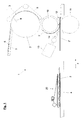
- the Fig. 1 shows the side view of such a workstation 1 in a device according to the invention, which is a workstation for applying bottom cover sheets 3, 3 'on sacks 2, 2' is.
- the transversely conveyed sacks 2, 2 ' lie on a table 4 and are transported by a suitable, not shown transport in the transport direction z.
- the already added floors are also placed in the plane of the table.
- the invention is not limited to this, but the floors can also lie in a plane which is orthogonal to the plane which is spanned by the table level.
- the workstation 1 is supplied with a web material 6, from which the bottom cover sheets 3, 3 'are separated.
- the leading end of the web material 6 is detected by the cutting cylinder 7 and the conveyor belt 8 and pulled forward and cut transversely by the cutting device 7 integrated in the cutting cylinder 7, but not shown in detail.
- the resulting bottom cover sheet 3, 3 ' is taken over by the suction cylinder 10 and placed on the bottom of the bag 2, 2'.
- the suction cylinder 10 forms with the impression cylinder 11 a nip 12. In this way, the bottom cover sheet 3 'is pressed onto the bag 2' with high force.
- FIG. 1 already a part of the bag 2 'has been performed with resting ground cover sheet 3' through the nip.
- a hot air blower 13 On the inlet side of the nip 12, a hot air blower 13 is arranged, whose directed through a nozzle 14 hot air stream is passed into the inlet side of the nip 12.
- the hot air causes a melting of the coating both on the bottom of the bag 2 'and on the bottom cover sheet 3'. It will, as the FIG. 1 can be removed, the coatings of the surfaces melted or plasticized, which are brought together immediately thereafter.
- the Matching of the surfaces with the still fused coating material takes place in the nip 12, so that the coatings now form an intermediate layer, which can be regarded as homogeneous, between the ground cover sheet and the base, which permanently binds said components after cooling.
- a preheating device 20 is arranged upstream of the hot air blower, which already preheats the next piece of tubing or the next bag 2, so that the material of the bag 2 through the hot air blower 13 no longer has to be supplied as much heat to the plasticization of the surface coating it would be the case if the bag had still ambient temperature just before the entry into the nip 12.
- the amount of hot air passed through the nozzle 14 per unit of time can be lower and / or the temperature of the hot air stream can be reduced and / or the residence time of the components to be heated in the hot air stream can be shortened.
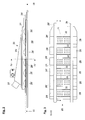
- the preheating device 20 comprises a plate-shaped solid body 21, in which flow channels 22 are incorporated, such as by milling and / or drilling.
- On the side facing away from this surface of the solid body 21 are in these at least two longitudinal recesses 23, 23 '( FIGS. 4 and 5 ), which may have a rectangular shape.
- the solid body 21 may be made of any suitable material, but is preferably aluminum.
- the flow channels 22 are formed in the embodiment shown vaulted, ie, their cross section is a circular segment.
- the preheating unit 20 is arranged in the apparatus according to the invention shown in such a way that the longitudinal axes of the flow channels extend transversely to the transport direction z of the hose pieces or the sacks 2. You can but also extend along the transport direction z.
- the flow channels 22 are connected to the recesses 23, 23 ', so that the hot air introduced into the recesses can flow through the said bores into the flow channels and can act directly on the relevant workpiece from here.
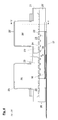
- FIGS. 4 and 5 It can be seen that the hot air flows through a first recess 23 or through a plurality of first recesses 23 via the bores 24 in the flow channel and flows from the flow channel 22 via further bores 24 in a second recess 23 'or more second recess 23'.
- the hot air flow is doing the said flow direction, in the Fig. 4 is marked with the arrow x, imprinted by at the at least one first recess 23, an overpressure and / or at the at least one second recess 23 ', a negative pressure is generated.
- a hollow body 25 is fixed in the edge region of the recess 23 of the solid body 21, which is open in the region of the recess. Recess 23 and hollow body 25 thus define a cavity 26. However, the hollow body 25 still includes a nozzle 27, via which hot air under pressure can be supplied.
- a hollow body 25 ' is provided above the at least one second recess 23', so that the at least one second recess 23 'and the hollow body 25' define a cavity 26 '.
- the hollow body 25 ' is also equipped with a nozzle 27' through which the hot air can be removed.
- this connection piece 27 ' can be connected to a vacuum source.
- the flow channels 22 extend over the entire width of the solid body 21 and are open at the side.
- closure pieces 28, 28 ' are provided which correspond in their cross section, at least substantially, the cross section of the flow channels 22.
- these shutters are relative to the solid body 21 and the flow channels 22 movable.
- closure pieces to fill entire flow channels in order to put the corresponding flow channel out of operation.
- each flow channel 22 is assigned at least two closure pieces 28 and 28 ', the length of which is smaller than the longitudinal extent of the relevant flow channel 22.
- the individual closure pieces 28, 28' are displaceable along the longitudinal direction of the flow channels 22, so that different with them Holes 24 can be closed. By moving it is therefore possible to release the desired number of holes 24 through which then the hot air can reach the workpiece.
- Such adjustability is advantageous if the device according to the invention is to be variable in format, ie if, for example, bags with different dimensions of the trays should be producible.
- a plurality of closure pieces 28 are fastened to a rail.
- the displacement of a closure piece 28 and / or the rail 29 leads to the displacement of all the closure pieces 28.
- the closure pieces 28 ' are connected to a rail 29'.
- the rails 29, 29 ' are directly connected to elements for format adjustment of the entire device, so that a separate displacement of the closure pieces completely eliminated.
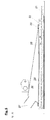
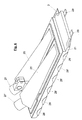
- FIG. 6 is again a perspective view of the preheating 20 to see.
Landscapes
- Engineering & Computer Science (AREA)
- Mechanical Engineering (AREA)
- Chemical & Material Sciences (AREA)
- Combustion & Propulsion (AREA)
- Physics & Mathematics (AREA)
- Thermal Sciences (AREA)
- Lining Or Joining Of Plastics Or The Like (AREA)
- Casting Or Compression Moulding Of Plastics Or The Like (AREA)
- Blow-Moulding Or Thermoforming Of Plastics Or The Like (AREA)
- Extrusion Moulding Of Plastics Or The Like (AREA)
Claims (12)
- Dispositif (1) pour l'assemblage de au moins deux composants, comprenant du plastique, de sacs (2, 2') ou de bouts de flexible avec un procédé de scellement et/ou un procédé de collage, de préférence pour la fabrication de sacs (2, 2') à partir de tissu plastique recouvert, qui comporte les caractéristiques suivantes:- un dispositif de transport, avec lequel les sacs (2, 2') ou bouts de flexible peuvent être transportés dans un sens de marche (z),- un système de chauffage (13, 14), avec lequel au moins les surfaces à relier des au moins deux composants peuvent être chauffés jusqu'au-dessus de la température de plastification, et- un dispositif de pressage (10, 11, 12) pour la compression des deux composants, qui se raccordent dans le sens de marche des bouts de flexible au système de chauffage, et avec lequel les au moins deux composants peuvent être amenés en contact et/ou comprimés ensemble, aussi longtemps que leurs surfaces sont encore plastifiées,
caractérisé en ce que
un dispositif de préchauffage (20) est prévu,- avec lequel au moins l'un des au moins deux composants des sacs (2, 2') ou bouts de flexible peut être sollicité avec un fluide réchauffé et gazeux et qui peut être chauffé à une température au-dessus de la température ambiante,- qui est disposé dans le sens de marche (z) des sacs (2, 2') ou des bouts de flexible avant le système de chauffage (13, 14), et qui comprend des canaux d'écoulement (22), qui sont traversés par le fluide, au moins une zone d'extrémité de respectivement un canal d'écoulement (22) pouvant être fermée avec au moins un bout de fermeture (28, 28'), lequel (28,28') peut coulisser à l'intérieur et le long des canaux d'écoulement. - Dispositif selon l'une quelconque des revendications précédentes,
caractérisé en ce que
un fluide réchauffé et gazeux peut être acheminé au moyen du dispositif de préchauffage (20) directement sur l'un des au moins deux composants d'un sac (2, 2') ou d'un bout de flexible. - Dispositif selon l'une quelconque des revendications précédentes,
caractérisé en ce que
les canaux d'écoulement (22) comportent des évidements intégrés dans une surface tournée vers les composants à réchauffer des bouts de flexible. - Dispositif selon la revendication précédente, caractérisé en ce que
les évidements sont conçus en forme de voûte et sont ouverts en direction des composants à réchauffer des bouts de flexible. - Dispositif selon l'une quelconque des revendications précédentes,
caractérisé en ce que
les canaux d'écoulement (22) sont agencés transversalement au sens de transport (z) des sacs (2, 2') ou des bouts de flexible. - Dispositif selon l'une quelconque des revendications précédentes,
caractérisé en ce que
au moins un premier corps creux (25) et au moins un second corps creux (25') sont disposés sur les surfaces extérieures, opposées aux composants des sacs (2, 2') ou des bouts de flexible, du système de préchauffage, corps creux dont les cavités (26, 26') communiquent au moins avec un canal d'écoulement (22). - Dispositif selon la revendication précédente, caractérisé en ce que
le dispositif de préchauffage comprend des conduites, par exemple des perçages de passage, dont les premières extrémités débouchent dans les canaux d'écoulement et dont les secondes extrémités débouchent dans l'une des cavités des corps creux. - Dispositif selon la revendication précédente, caractérisé en ce que
chaque corps creux (25, 25') dispose de tubulures de raccordement (27, 27') par lesquelles un fluide peut être introduit ou aspiré dans la cavité respective. - Dispositif selon la revendication précédente, caractérisé en ce que
un premier corps creux (25) est relié à un dispositif pour le réchauffement de fluide, qui introduit le fluide réchauffé avec surpression dans la cavité (26) correspondante, et un second corps creux (25') peut être relié à un dispositif de génération de dépression, lequel aspire le fluide, le premier et le second corps creux étant reliés l'un à l'autre au moyen d'un canal d'écoulement (22) et de conduites (par exemple perçages (24)), de sorte que le fluide s'écoule dans une direction d'écoulement (x) prédéfinie. - Dispositif selon la revendication précédente, caractérisé en ce que,
lorsque les composants à réchauffer sont constitués d'un premier composant (16) et d'un second composant (17), le premier composant (16) recouvrant par contact le second composant (17), le sens d'écoulement (x) va du premier composant (16) en direction du second composant (17). - Procédé pour relier au moins deux composants, comprenant du plastique, de sacs ou de bouts de flexible par scellement et/ou collage, de préférence pour la fabrication de sacs à base de tissu plastique revêtu,- dans lequel les sacs ou bouts de flexible sont transportés avec un dispositif de transport dans un sens de marche,- dans lequel au moins les surfaces sceller des au moins deux composants sont réchauffés au moyen d'un système de chauffage jusqu'au-dessus de la température de plastification, et- dans lequel les deux composants sont comprimés ensemble après le réchauffement, aussi longtemps que leurs surfaces sont encore plastifiées,
caractérisé en ce que
au moins l'un des au moins deux composants des bouts de flexible est réchauffé au moyen d'un fluide réchauffé et gazeux à une température supérieure à la température ambiante, le préchauffage étant effectué avant que les sacs ou les bouts de flexible atteignent le dispositif de chauffage, le fluide étant acheminé par des canaux d'écoulement, au moins une zone d'extrémité d'un canal d'écoulement (22) étant fermée avec au moins un bout de fermeture (28, 28'), lequel (28, 28') est amené par déplacement à l'intérieur et le long des canaux d'écoulement dans une position souhaitée. - Procédé selon la revendication précédente, caractérisé en ce que
au moins l'un des au moins deux composants des bouts de flexible est réchauffé au moyen du fluide réchauffé et gazeux à une température inférieure à la température de plastification.
Applications Claiming Priority (2)
| Application Number | Priority Date | Filing Date | Title |
|---|---|---|---|
| DE102007004244A DE102007004244B4 (de) | 2007-01-23 | 2007-01-23 | Vorrichtung und Verfahren zur Herstellung von Kunststoffsäcken |
| PCT/EP2008/050393 WO2008090056A1 (fr) | 2007-01-23 | 2008-01-15 | Dispositif et procédé de fabrication de sacs en plastique |
Publications (2)
| Publication Number | Publication Date |
|---|---|
| EP2125353A1 EP2125353A1 (fr) | 2009-12-02 |
| EP2125353B1 true EP2125353B1 (fr) | 2010-11-24 |
Family
ID=39283895
Family Applications (1)
| Application Number | Title | Priority Date | Filing Date |
|---|---|---|---|
| EP08701502A Not-in-force EP2125353B1 (fr) | 2007-01-23 | 2008-01-15 | Dispositif et procédé de fabrication de sacs en plastique |
Country Status (6)
| Country | Link |
|---|---|
| EP (1) | EP2125353B1 (fr) |
| CN (1) | CN101678630B (fr) |
| AT (1) | ATE489223T1 (fr) |
| DE (2) | DE102007004244B4 (fr) |
| ES (1) | ES2355645T3 (fr) |
| WO (1) | WO2008090056A1 (fr) |
Cited By (1)
| Publication number | Priority date | Publication date | Assignee | Title |
|---|---|---|---|---|
| DE102011005109A1 (de) | 2011-03-04 | 2012-09-06 | Windmöller & Hölscher Kg | Verfahren und Vorrichtung zum Herstellen von Säcken, deren Wandungen gerecktes Polyolefinmaterial enthalten |
Families Citing this family (6)
| Publication number | Priority date | Publication date | Assignee | Title |
|---|---|---|---|---|
| DE102009036556A1 (de) * | 2009-08-10 | 2011-02-17 | Windmöller & Hölscher Kg | Verfahren und Vorrichtung zur Herstellung eines Sacks oder eines Beutels mit Vliesmaterial sowie Sack oder Beutel, welcher Vliesmaterial umfasst |
| DE102012103508A1 (de) * | 2011-11-24 | 2013-07-25 | Holger Kluge | Düsenanordnung für eine Kantenstreifenaufbringvorrichtung zur Beaufschlagung eines kleberlosen, wärmeaktivierbaren oder mit Heißkleber beschichteten Kantenstreifens oder Werkstücks mit Heißluft und Kantenstreifenaufbringvorrichtung mit einer Düsenanordnung |
| CN108068402A (zh) * | 2017-11-30 | 2018-05-25 | 颍上县浩楠塑料包装有限公司 | 一种塑料袋手提孔制造设备 |
| PL3670171T3 (pl) | 2018-12-17 | 2021-06-14 | Starlinger & Co Gesellschaft M.B.H. | Urządzenie i sposób nanoszenia wierzchnich arkuszy na końce wężowych odcinków uformowanych wstępnie w dno krzyżowe |
| DE102021119591A1 (de) * | 2021-07-28 | 2023-02-02 | Homag Gmbh | Beschichtungsvorrichtung, Beschichtungsmaschine sowie Verfahren zum Betrieb einer Beschichtungsvorrichtung |
| DE102022130569A1 (de) * | 2022-11-18 | 2024-05-23 | Homag Gmbh | Beschichtungsvorrichtung, Beschichtungsmaschine und Verfahren zum Beschichten von Werkstücken |
Family Cites Families (7)
| Publication number | Priority date | Publication date | Assignee | Title |
|---|---|---|---|---|
| GB789981A (en) * | 1954-09-30 | 1958-01-29 | Paper Sacks Ltd | Improvements in and relating to the heat sealing of thermoplastic coated paper webs for making bag tubes |
| GB1200302A (en) * | 1966-10-25 | 1970-07-29 | Comitex Ltd | Improvements to heat sealing machines |
| US3481051A (en) * | 1969-02-06 | 1969-12-02 | Paramount Packaging Corp | Heating apparatus |
| DE2403370A1 (de) * | 1974-01-24 | 1975-08-07 | Windmoeller & Hoelscher | Vorrichtung zum verschweissen von flachen thermoplastischen werkstuecken mit einem zettel |
| CH595202A5 (en) * | 1975-05-08 | 1978-02-15 | Konrad Buob | Articles from synthetic thermoplastic with welded seams |
| DE19818720B4 (de) | 1998-04-27 | 2008-08-07 | Windmöller & Hölscher Kg | Verfahren zum Verschweißen von kontinuierlich geförderten Kunststoffolien |
| CA2447620A1 (fr) * | 2001-05-23 | 2002-11-28 | Steve Hack | Thermoscelleuse pour appareil d'emballage sous film etirable |
-
2007
- 2007-01-23 DE DE102007004244A patent/DE102007004244B4/de not_active Expired - Fee Related
-
2008
- 2008-01-15 CN CN200880009516.5A patent/CN101678630B/zh not_active Expired - Fee Related
- 2008-01-15 AT AT08701502T patent/ATE489223T1/de active
- 2008-01-15 ES ES08701502T patent/ES2355645T3/es active Active
- 2008-01-15 WO PCT/EP2008/050393 patent/WO2008090056A1/fr not_active Ceased
- 2008-01-15 DE DE502008001890T patent/DE502008001890D1/de active Active
- 2008-01-15 EP EP08701502A patent/EP2125353B1/fr not_active Not-in-force
Cited By (2)
| Publication number | Priority date | Publication date | Assignee | Title |
|---|---|---|---|---|
| DE102011005109A1 (de) | 2011-03-04 | 2012-09-06 | Windmöller & Hölscher Kg | Verfahren und Vorrichtung zum Herstellen von Säcken, deren Wandungen gerecktes Polyolefinmaterial enthalten |
| WO2012119863A1 (fr) | 2011-03-04 | 2012-09-13 | Windmöller & Hölscher Kg | Procédé et dispositif pour fabriquer des sacs dont les parois contiennent une matière polyoléfinique étirée |
Also Published As
| Publication number | Publication date |
|---|---|
| DE502008001890D1 (de) | 2011-01-05 |
| CN101678630A (zh) | 2010-03-24 |
| DE102007004244B4 (de) | 2010-09-02 |
| DE102007004244A1 (de) | 2008-08-07 |
| CN101678630B (zh) | 2015-01-28 |
| EP2125353A1 (fr) | 2009-12-02 |
| ATE489223T1 (de) | 2010-12-15 |
| ES2355645T3 (es) | 2011-03-29 |
| WO2008090056A1 (fr) | 2008-07-31 |
Similar Documents
| Publication | Publication Date | Title |
|---|---|---|
| DE102007004244B4 (de) | Vorrichtung und Verfahren zur Herstellung von Kunststoffsäcken | |
| DE60218760T2 (de) | Verpackungsbeutel mit selbstverschliessbarer ausflussöffnung und verfahren zur herstellung des verpackungsbeutels | |
| EP2441574B1 (fr) | Procédé et dispositif de formation de fonds ouverts sur des zones d'extrémité de corps de sachets tubulaires | |
| EP2782725B1 (fr) | Arrangement de tuyères pour un dispositif de revetêment latéral par bandes pour alimentation d'air chaud sur les bandes couvertes d'un revetement activable par chaleur ou de thermocolle ou sur la piece et dispositif de collage de bandes comprenant un tel arrangement | |
| EP2049327A1 (fr) | Procédé de fabrication de sachets d'emballage avec une zone de fond renforcée ainsi que dispositif de réalisation du procédé | |
| EP1648688B1 (fr) | Dispositif d'application de fonds pour sacs en papier | |
| WO2013017620A1 (fr) | Procédé et dispositif pour fabriquer, remplir et fermer des sacs ainsi qu'un sac | |
| EP2681033B1 (fr) | Procédé et dispositif pour fabriquer des sacs dont les parois contiennent une matière polyoléfinique étirée | |
| WO2016120059A1 (fr) | Procédé et dispositif pour le moulage d'au moins un fond sur un tronçon de tuyau flexible | |
| EP1646495B1 (fr) | Dispositif d'application de fonds pour sacs en papier | |
| EP0953429A2 (fr) | Procédé de règlage de la température de l'air chauffé dans un appareil de soudage de feuilles synthétiques par air chaud | |
| EP2346676B1 (fr) | Dispositif et procede pour la transformation de produits semi-finis pour sacs et poste d'encollage pour des produits semi-finis pour sacs | |
| DE10104002B4 (de) | Verfahren zum Temperieren zu verklebender Kunststofffolien sowie Vorrichtung zum Verkleben von Kunstfolie mit temperaturgesteuerter Transportwalze | |
| DE1248912B (de) | Kunststoffsack mit mindestens einem durch zwei seitenumschläge gebildeten boden sowie verfahren und vorrichtung zu seiner herstellung | |
| EP4395980A1 (fr) | Station d'application et procédé permettant d'appliquer une première pièce à usiner plate sur une seconde pièce à usiner | |
| EP1923202B1 (fr) | Procédé et dispositif pour produire un sac tubulaire | |
| WO2009033197A1 (fr) | Sac en matière plastique | |
| DE202017007051U1 (de) | Vorrichtung zur Herstellung von Säcken aus Kunststoffmaterial | |
| DE102008053032B4 (de) | Vorrichtung zur Herstellung von Säcken unterschiedlichen Formats sowie Beleimungsstation | |
| EP4330032B1 (fr) | Dispositif de fabrication d'une feuille de carton ondulé contrecollée sur les deux faces | |
| DE102008053280B4 (de) | Vorrichtung und ein Verfahren zur Weiterverarbeitung von Sackhalbzeugen sowie Beleimungsstation für Sackhalbzeuge | |
| WO2018073224A1 (fr) | Système et procédé de fabrication de sacs en matière plastique | |
| DE2055016C3 (de) | Verfahren zum Erzeugen einer gasdichten Verklebung der Bodenseitenumschläge einer Kreuzbodenfaltung mit den Eckeinschlägen und Vorrichtungen zur Durchführung des Verfahrens | |
| EP3532271B1 (fr) | Amélioration de la fabrication de sachets à rabat | |
| DE202024100948U1 (de) | Vorrichtung zum Anbringen eines Kantenbandes |
Legal Events
| Date | Code | Title | Description |
|---|---|---|---|
| PUAI | Public reference made under article 153(3) epc to a published international application that has entered the european phase |
Free format text: ORIGINAL CODE: 0009012 |
|
| 17P | Request for examination filed |
Effective date: 20090824 |
|
| AK | Designated contracting states |
Kind code of ref document: A1 Designated state(s): AT BE BG CH CY CZ DE DK EE ES FI FR GB GR HR HU IE IS IT LI LT LU LV MC MT NL NO PL PT RO SE SI SK TR |
|
| RIN1 | Information on inventor provided before grant (corrected) |
Inventor name: RUBBEL, CHRISTIAN Inventor name: HAEGER, CHRISTIAN |
|
| DAX | Request for extension of the european patent (deleted) | ||
| GRAP | Despatch of communication of intention to grant a patent |
Free format text: ORIGINAL CODE: EPIDOSNIGR1 |
|
| GRAS | Grant fee paid |
Free format text: ORIGINAL CODE: EPIDOSNIGR3 |
|
| GRAA | (expected) grant |
Free format text: ORIGINAL CODE: 0009210 |
|
| AK | Designated contracting states |
Kind code of ref document: B1 Designated state(s): AT BE BG CH CY CZ DE DK EE ES FI FR GB GR HR HU IE IS IT LI LT LU LV MC MT NL NO PL PT RO SE SI SK TR |
|
| REG | Reference to a national code |
Ref country code: GB Ref legal event code: FG4D Free format text: NOT ENGLISH |
|
| REG | Reference to a national code |
Ref country code: CH Ref legal event code: EP |
|
| REG | Reference to a national code |
Ref country code: IE Ref legal event code: FG4D |
|
| REF | Corresponds to: |
Ref document number: 502008001890 Country of ref document: DE Date of ref document: 20110105 Kind code of ref document: P |
|
| REG | Reference to a national code |
Ref country code: NL Ref legal event code: VDEP Effective date: 20101124 |
|
| REG | Reference to a national code |
Ref country code: ES Ref legal event code: FG2A Ref document number: 2355645 Country of ref document: ES Kind code of ref document: T3 Effective date: 20110329 |
|
| LTIE | Lt: invalidation of european patent or patent extension |
Effective date: 20101124 |
|
| PG25 | Lapsed in a contracting state [announced via postgrant information from national office to epo] |
Ref country code: NO Free format text: LAPSE BECAUSE OF FAILURE TO SUBMIT A TRANSLATION OF THE DESCRIPTION OR TO PAY THE FEE WITHIN THE PRESCRIBED TIME-LIMIT Effective date: 20110224 Ref country code: LT Free format text: LAPSE BECAUSE OF FAILURE TO SUBMIT A TRANSLATION OF THE DESCRIPTION OR TO PAY THE FEE WITHIN THE PRESCRIBED TIME-LIMIT Effective date: 20101124 |
|
| PG25 | Lapsed in a contracting state [announced via postgrant information from national office to epo] |
Ref country code: IS Free format text: LAPSE BECAUSE OF FAILURE TO SUBMIT A TRANSLATION OF THE DESCRIPTION OR TO PAY THE FEE WITHIN THE PRESCRIBED TIME-LIMIT Effective date: 20110324 Ref country code: LV Free format text: LAPSE BECAUSE OF FAILURE TO SUBMIT A TRANSLATION OF THE DESCRIPTION OR TO PAY THE FEE WITHIN THE PRESCRIBED TIME-LIMIT Effective date: 20101124 Ref country code: BG Free format text: LAPSE BECAUSE OF FAILURE TO SUBMIT A TRANSLATION OF THE DESCRIPTION OR TO PAY THE FEE WITHIN THE PRESCRIBED TIME-LIMIT Effective date: 20110224 Ref country code: PT Free format text: LAPSE BECAUSE OF FAILURE TO SUBMIT A TRANSLATION OF THE DESCRIPTION OR TO PAY THE FEE WITHIN THE PRESCRIBED TIME-LIMIT Effective date: 20110324 Ref country code: SE Free format text: LAPSE BECAUSE OF FAILURE TO SUBMIT A TRANSLATION OF THE DESCRIPTION OR TO PAY THE FEE WITHIN THE PRESCRIBED TIME-LIMIT Effective date: 20101124 Ref country code: FI Free format text: LAPSE BECAUSE OF FAILURE TO SUBMIT A TRANSLATION OF THE DESCRIPTION OR TO PAY THE FEE WITHIN THE PRESCRIBED TIME-LIMIT Effective date: 20101124 Ref country code: SI Free format text: LAPSE BECAUSE OF FAILURE TO SUBMIT A TRANSLATION OF THE DESCRIPTION OR TO PAY THE FEE WITHIN THE PRESCRIBED TIME-LIMIT Effective date: 20101124 Ref country code: HR Free format text: LAPSE BECAUSE OF FAILURE TO SUBMIT A TRANSLATION OF THE DESCRIPTION OR TO PAY THE FEE WITHIN THE PRESCRIBED TIME-LIMIT Effective date: 20101124 Ref country code: NL Free format text: LAPSE BECAUSE OF FAILURE TO SUBMIT A TRANSLATION OF THE DESCRIPTION OR TO PAY THE FEE WITHIN THE PRESCRIBED TIME-LIMIT Effective date: 20101124 Ref country code: CY Free format text: LAPSE BECAUSE OF FAILURE TO SUBMIT A TRANSLATION OF THE DESCRIPTION OR TO PAY THE FEE WITHIN THE PRESCRIBED TIME-LIMIT Effective date: 20101124 |
|
| REG | Reference to a national code |
Ref country code: IE Ref legal event code: FD4D |
|
| REG | Reference to a national code |
Ref country code: HU Ref legal event code: AG4A Ref document number: E010244 Country of ref document: HU |
|
| PG25 | Lapsed in a contracting state [announced via postgrant information from national office to epo] |
Ref country code: GR Free format text: LAPSE BECAUSE OF FAILURE TO SUBMIT A TRANSLATION OF THE DESCRIPTION OR TO PAY THE FEE WITHIN THE PRESCRIBED TIME-LIMIT Effective date: 20110225 |
|
| PG25 | Lapsed in a contracting state [announced via postgrant information from national office to epo] |
Ref country code: EE Free format text: LAPSE BECAUSE OF FAILURE TO SUBMIT A TRANSLATION OF THE DESCRIPTION OR TO PAY THE FEE WITHIN THE PRESCRIBED TIME-LIMIT Effective date: 20101124 Ref country code: IE Free format text: LAPSE BECAUSE OF FAILURE TO SUBMIT A TRANSLATION OF THE DESCRIPTION OR TO PAY THE FEE WITHIN THE PRESCRIBED TIME-LIMIT Effective date: 20101124 Ref country code: CZ Free format text: LAPSE BECAUSE OF FAILURE TO SUBMIT A TRANSLATION OF THE DESCRIPTION OR TO PAY THE FEE WITHIN THE PRESCRIBED TIME-LIMIT Effective date: 20101124 |
|
| BERE | Be: lapsed |
Owner name: WINDMOLLER & HOLSCHER K.G. Effective date: 20110131 |
|
| PG25 | Lapsed in a contracting state [announced via postgrant information from national office to epo] |
Ref country code: RO Free format text: LAPSE BECAUSE OF FAILURE TO SUBMIT A TRANSLATION OF THE DESCRIPTION OR TO PAY THE FEE WITHIN THE PRESCRIBED TIME-LIMIT Effective date: 20101124 Ref country code: MC Free format text: LAPSE BECAUSE OF NON-PAYMENT OF DUE FEES Effective date: 20110131 Ref country code: PL Free format text: LAPSE BECAUSE OF FAILURE TO SUBMIT A TRANSLATION OF THE DESCRIPTION OR TO PAY THE FEE WITHIN THE PRESCRIBED TIME-LIMIT Effective date: 20101124 Ref country code: DK Free format text: LAPSE BECAUSE OF FAILURE TO SUBMIT A TRANSLATION OF THE DESCRIPTION OR TO PAY THE FEE WITHIN THE PRESCRIBED TIME-LIMIT Effective date: 20101124 Ref country code: SK Free format text: LAPSE BECAUSE OF FAILURE TO SUBMIT A TRANSLATION OF THE DESCRIPTION OR TO PAY THE FEE WITHIN THE PRESCRIBED TIME-LIMIT Effective date: 20101124 |
|
| PLBE | No opposition filed within time limit |
Free format text: ORIGINAL CODE: 0009261 |
|
| STAA | Information on the status of an ep patent application or granted ep patent |
Free format text: STATUS: NO OPPOSITION FILED WITHIN TIME LIMIT |
|
| REG | Reference to a national code |
Ref country code: FR Ref legal event code: ST Effective date: 20110930 |
|
| PG25 | Lapsed in a contracting state [announced via postgrant information from national office to epo] |
Ref country code: FR Free format text: LAPSE BECAUSE OF NON-PAYMENT OF DUE FEES Effective date: 20110131 |
|
| 26N | No opposition filed |
Effective date: 20110825 |
|
| PG25 | Lapsed in a contracting state [announced via postgrant information from national office to epo] |
Ref country code: BE Free format text: LAPSE BECAUSE OF NON-PAYMENT OF DUE FEES Effective date: 20110131 |
|
| REG | Reference to a national code |
Ref country code: DE Ref legal event code: R097 Ref document number: 502008001890 Country of ref document: DE Effective date: 20110825 |
|
| PG25 | Lapsed in a contracting state [announced via postgrant information from national office to epo] |
Ref country code: IT Free format text: LAPSE BECAUSE OF FAILURE TO SUBMIT A TRANSLATION OF THE DESCRIPTION OR TO PAY THE FEE WITHIN THE PRESCRIBED TIME-LIMIT Effective date: 20101124 Ref country code: MT Free format text: LAPSE BECAUSE OF FAILURE TO SUBMIT A TRANSLATION OF THE DESCRIPTION OR TO PAY THE FEE WITHIN THE PRESCRIBED TIME-LIMIT Effective date: 20101124 |
|
| REG | Reference to a national code |
Ref country code: CH Ref legal event code: PL |
|
| GBPC | Gb: european patent ceased through non-payment of renewal fee |
Effective date: 20120115 |
|
| PG25 | Lapsed in a contracting state [announced via postgrant information from national office to epo] |
Ref country code: GB Free format text: LAPSE BECAUSE OF NON-PAYMENT OF DUE FEES Effective date: 20120115 Ref country code: LI Free format text: LAPSE BECAUSE OF NON-PAYMENT OF DUE FEES Effective date: 20120131 Ref country code: CH Free format text: LAPSE BECAUSE OF NON-PAYMENT OF DUE FEES Effective date: 20120131 |
|
| PG25 | Lapsed in a contracting state [announced via postgrant information from national office to epo] |
Ref country code: LU Free format text: LAPSE BECAUSE OF NON-PAYMENT OF DUE FEES Effective date: 20110115 |
|
| REG | Reference to a national code |
Ref country code: DE Ref legal event code: R079 Ref document number: 502008001890 Country of ref document: DE Free format text: PREVIOUS MAIN CLASS: B31B0019640000 Ipc: B31B0070640000 |
|
| PGFP | Annual fee paid to national office [announced via postgrant information from national office to epo] |
Ref country code: DE Payment date: 20170131 Year of fee payment: 10 |
|
| PGFP | Annual fee paid to national office [announced via postgrant information from national office to epo] |
Ref country code: AT Payment date: 20170126 Year of fee payment: 10 Ref country code: HU Payment date: 20170116 Year of fee payment: 10 |
|
| PGFP | Annual fee paid to national office [announced via postgrant information from national office to epo] |
Ref country code: TR Payment date: 20170102 Year of fee payment: 10 Ref country code: ES Payment date: 20170221 Year of fee payment: 10 |
|
| REG | Reference to a national code |
Ref country code: DE Ref legal event code: R119 Ref document number: 502008001890 Country of ref document: DE |
|
| REG | Reference to a national code |
Ref country code: AT Ref legal event code: MM01 Ref document number: 489223 Country of ref document: AT Kind code of ref document: T Effective date: 20180115 |
|
| PG25 | Lapsed in a contracting state [announced via postgrant information from national office to epo] |
Ref country code: HU Free format text: LAPSE BECAUSE OF NON-PAYMENT OF DUE FEES Effective date: 20180116 Ref country code: DE Free format text: LAPSE BECAUSE OF NON-PAYMENT OF DUE FEES Effective date: 20180801 |
|
| PG25 | Lapsed in a contracting state [announced via postgrant information from national office to epo] |
Ref country code: AT Free format text: LAPSE BECAUSE OF NON-PAYMENT OF DUE FEES Effective date: 20180115 |
|
| REG | Reference to a national code |
Ref country code: ES Ref legal event code: FD2A Effective date: 20190730 |
|
| PG25 | Lapsed in a contracting state [announced via postgrant information from national office to epo] |
Ref country code: ES Free format text: LAPSE BECAUSE OF NON-PAYMENT OF DUE FEES Effective date: 20180116 |
|
| PG25 | Lapsed in a contracting state [announced via postgrant information from national office to epo] |
Ref country code: TR Free format text: LAPSE BECAUSE OF NON-PAYMENT OF DUE FEES Effective date: 20180115 |