EP2127686A2 - Raumdekontaminierung unter Verwendung von gering dosierten Desinfektionsmitteln - Google Patents
Raumdekontaminierung unter Verwendung von gering dosierten Desinfektionsmitteln Download PDFInfo
- Publication number
- EP2127686A2 EP2127686A2 EP09251113A EP09251113A EP2127686A2 EP 2127686 A2 EP2127686 A2 EP 2127686A2 EP 09251113 A EP09251113 A EP 09251113A EP 09251113 A EP09251113 A EP 09251113A EP 2127686 A2 EP2127686 A2 EP 2127686A2
- Authority
- EP
- European Patent Office
- Prior art keywords
- area
- germicidal
- germicidal agent
- agent
- concentration
- Prior art date
- Legal status (The legal status is an assumption and is not a legal conclusion. Google has not performed a legal analysis and makes no representation as to the accuracy of the status listed.)
- Withdrawn
Links
Images


Classifications
-
- A—HUMAN NECESSITIES
- A61—MEDICAL OR VETERINARY SCIENCE; HYGIENE
- A61L—METHODS OR APPARATUS FOR STERILISING MATERIALS OR OBJECTS IN GENERAL; DISINFECTION, STERILISATION OR DEODORISATION OF AIR; CHEMICAL ASPECTS OF BANDAGES, DRESSINGS, ABSORBENT PADS OR SURGICAL ARTICLES; MATERIALS FOR BANDAGES, DRESSINGS, ABSORBENT PADS OR SURGICAL ARTICLES
- A61L2/00—Disinfection or sterilisation of materials or objects, in general; Accessories therefor
- A61L2/16—Disinfection or sterilisation of materials or objects, in general; Accessories therefor using chemical substances
- A61L2/20—Gaseous substances, e.g. vapours
- A61L2/208—Hydrogen peroxide
-
- A—HUMAN NECESSITIES
- A61—MEDICAL OR VETERINARY SCIENCE; HYGIENE
- A61L—METHODS OR APPARATUS FOR STERILISING MATERIALS OR OBJECTS IN GENERAL; DISINFECTION, STERILISATION OR DEODORISATION OF AIR; CHEMICAL ASPECTS OF BANDAGES, DRESSINGS, ABSORBENT PADS OR SURGICAL ARTICLES; MATERIALS FOR BANDAGES, DRESSINGS, ABSORBENT PADS OR SURGICAL ARTICLES
- A61L2/00—Disinfection or sterilisation of materials or objects, in general; Accessories therefor
- A61L2/16—Disinfection or sterilisation of materials or objects, in general; Accessories therefor using chemical substances
- A61L2/20—Gaseous substances, e.g. vapours
- A61L2/202—Ozone
-
- A—HUMAN NECESSITIES
- A61—MEDICAL OR VETERINARY SCIENCE; HYGIENE
- A61L—METHODS OR APPARATUS FOR STERILISING MATERIALS OR OBJECTS IN GENERAL; DISINFECTION, STERILISATION OR DEODORISATION OF AIR; CHEMICAL ASPECTS OF BANDAGES, DRESSINGS, ABSORBENT PADS OR SURGICAL ARTICLES; MATERIALS FOR BANDAGES, DRESSINGS, ABSORBENT PADS OR SURGICAL ARTICLES
- A61L2/00—Disinfection or sterilisation of materials or objects, in general; Accessories therefor
- A61L2/16—Disinfection or sterilisation of materials or objects, in general; Accessories therefor using chemical substances
- A61L2/22—Phase substances, e.g. smokes or aerosols
-
- A—HUMAN NECESSITIES
- A61—MEDICAL OR VETERINARY SCIENCE; HYGIENE
- A61L—METHODS OR APPARATUS FOR STERILISING MATERIALS OR OBJECTS IN GENERAL; DISINFECTION, STERILISATION OR DEODORISATION OF AIR; CHEMICAL ASPECTS OF BANDAGES, DRESSINGS, ABSORBENT PADS OR SURGICAL ARTICLES; MATERIALS FOR BANDAGES, DRESSINGS, ABSORBENT PADS OR SURGICAL ARTICLES
- A61L2/00—Disinfection or sterilisation of materials or objects, in general; Accessories therefor
- A61L2/24—Apparatus using programmed or automatic operation
-
- A—HUMAN NECESSITIES
- A61—MEDICAL OR VETERINARY SCIENCE; HYGIENE
- A61L—METHODS OR APPARATUS FOR STERILISING MATERIALS OR OBJECTS IN GENERAL; DISINFECTION, STERILISATION OR DEODORISATION OF AIR; CHEMICAL ASPECTS OF BANDAGES, DRESSINGS, ABSORBENT PADS OR SURGICAL ARTICLES; MATERIALS FOR BANDAGES, DRESSINGS, ABSORBENT PADS OR SURGICAL ARTICLES
- A61L9/00—Disinfection, sterilisation or deodorisation of air
- A61L9/015—Disinfection, sterilisation or deodorisation of air using gaseous or vaporous substances, e.g. ozone
-
- A—HUMAN NECESSITIES
- A61—MEDICAL OR VETERINARY SCIENCE; HYGIENE
- A61L—METHODS OR APPARATUS FOR STERILISING MATERIALS OR OBJECTS IN GENERAL; DISINFECTION, STERILISATION OR DEODORISATION OF AIR; CHEMICAL ASPECTS OF BANDAGES, DRESSINGS, ABSORBENT PADS OR SURGICAL ARTICLES; MATERIALS FOR BANDAGES, DRESSINGS, ABSORBENT PADS OR SURGICAL ARTICLES
- A61L9/00—Disinfection, sterilisation or deodorisation of air
- A61L9/14—Disinfection, sterilisation or deodorisation of air using sprayed or atomised substances including air-liquid contact processes
-
- F—MECHANICAL ENGINEERING; LIGHTING; HEATING; WEAPONS; BLASTING
- F24—HEATING; RANGES; VENTILATING
- F24F—AIR-CONDITIONING; AIR-HUMIDIFICATION; VENTILATION; USE OF AIR CURRENTS FOR SCREENING
- F24F3/00—Air-conditioning systems in which conditioned primary air is supplied from one or more central stations to distributing units in the rooms or spaces where it may receive secondary treatment; Apparatus specially designed for such systems
- F24F3/12—Air-conditioning systems in which conditioned primary air is supplied from one or more central stations to distributing units in the rooms or spaces where it may receive secondary treatment; Apparatus specially designed for such systems characterised by the treatment of the air otherwise than by heating and cooling
- F24F3/16—Air-conditioning systems in which conditioned primary air is supplied from one or more central stations to distributing units in the rooms or spaces where it may receive secondary treatment; Apparatus specially designed for such systems characterised by the treatment of the air otherwise than by heating and cooling by purification, e.g. by filtering; by sterilisation; by ozonisation
-
- F—MECHANICAL ENGINEERING; LIGHTING; HEATING; WEAPONS; BLASTING
- F24—HEATING; RANGES; VENTILATING
- F24F—AIR-CONDITIONING; AIR-HUMIDIFICATION; VENTILATION; USE OF AIR CURRENTS FOR SCREENING
- F24F8/00—Treatment, e.g. purification, of air supplied to human living or working spaces otherwise than by heating, cooling, humidifying or drying
- F24F8/20—Treatment, e.g. purification, of air supplied to human living or working spaces otherwise than by heating, cooling, humidifying or drying by sterilisation
- F24F8/24—Treatment, e.g. purification, of air supplied to human living or working spaces otherwise than by heating, cooling, humidifying or drying by sterilisation using sterilising media
-
- F—MECHANICAL ENGINEERING; LIGHTING; HEATING; WEAPONS; BLASTING
- F24—HEATING; RANGES; VENTILATING
- F24F—AIR-CONDITIONING; AIR-HUMIDIFICATION; VENTILATION; USE OF AIR CURRENTS FOR SCREENING
- F24F8/00—Treatment, e.g. purification, of air supplied to human living or working spaces otherwise than by heating, cooling, humidifying or drying
- F24F8/20—Treatment, e.g. purification, of air supplied to human living or working spaces otherwise than by heating, cooling, humidifying or drying by sterilisation
- F24F8/24—Treatment, e.g. purification, of air supplied to human living or working spaces otherwise than by heating, cooling, humidifying or drying by sterilisation using sterilising media
- F24F8/26—Treatment, e.g. purification, of air supplied to human living or working spaces otherwise than by heating, cooling, humidifying or drying by sterilisation using sterilising media using ozone
-
- A—HUMAN NECESSITIES
- A61—MEDICAL OR VETERINARY SCIENCE; HYGIENE
- A61L—METHODS OR APPARATUS FOR STERILISING MATERIALS OR OBJECTS IN GENERAL; DISINFECTION, STERILISATION OR DEODORISATION OF AIR; CHEMICAL ASPECTS OF BANDAGES, DRESSINGS, ABSORBENT PADS OR SURGICAL ARTICLES; MATERIALS FOR BANDAGES, DRESSINGS, ABSORBENT PADS OR SURGICAL ARTICLES
- A61L2103/00—Materials or objects being the target of disinfection or sterilisation
- A61L2103/75—Room floors or walls
-
- F—MECHANICAL ENGINEERING; LIGHTING; HEATING; WEAPONS; BLASTING
- F24—HEATING; RANGES; VENTILATING
- F24F—AIR-CONDITIONING; AIR-HUMIDIFICATION; VENTILATION; USE OF AIR CURRENTS FOR SCREENING
- F24F8/00—Treatment, e.g. purification, of air supplied to human living or working spaces otherwise than by heating, cooling, humidifying or drying
- F24F8/20—Treatment, e.g. purification, of air supplied to human living or working spaces otherwise than by heating, cooling, humidifying or drying by sterilisation
- F24F8/22—Treatment, e.g. purification, of air supplied to human living or working spaces otherwise than by heating, cooling, humidifying or drying by sterilisation using UV light
Definitions
- the present disclosure is directed to area decontamination via low-level concentration of germicidal agent, and devices for providing the same.
- microorganisms to contaminate environmental surfaces in areas such as a hospital patient room. Accordingly, operators of facilities concerned with health and wellness have stringent regimens to reduce or eliminate environmental contamination to prevent transfer of microorganisms from these surfaces to customers, patients, or personnel.
- the primary agent by which microorganisms are transferred from environmental surfaces to patients or workers is the hands of the patients or workers.
- standard environmental cleaning is most concerned with high-touch surfaces, e.g., bed rails and less concerned with low-touch surfaces, e.g., floors and ceilings.
- Standard procedures to address area contamination include measures, such as dusting, vacuuming, mopping and wiping low-touch areas, with or without disinfecting agents.
- High-touch surfaces are typically disinfected using chemical agents that are wiped or sprayed on, allowed the proper contact time to ensure germicidal activity, and then wiped off. As these high-touch surfaces are manifold in both number and complexity, the opportunity for failure to treat all surfaces properly is high. Because of the noxious character of the disinfecting agents, these regimens typically occur, for example, between patient occupancy of hospital rooms and between surgical procedures in operating rooms. Even though healthcare facilities take great care to address decontamination issues, it is not uncommon to find residual contamination after cleaning.
- Embodiments of the present disclosure provide a device and related method of decontaminating microorganisms in an area at low concentrations of germicidal agent that does not require the area to be taken out of service. Accordingly, areas, such as hospital rooms, can be occupied continuously or nearly continuously while decontamination is underway.
- Embodiments of the present disclosure provide devices and method of decontaminating an area.
- the method comprises releasing a germicidal agent into the area from a germicidal source, controlling the germicidal agent concentration in the area to a predetermined concentration that does not exceed a Permissible Exposure Limit, and contacting microorganisms in the area with the germicidal agent to decontaminate the area.
- the area may be the air and/or surfaces of any room or facility known to those of ordinary skill in the art that are subject to growth or development of microorganisms, and where it is desired and/or required to maintain sanitary conditions.
- areas contemplated by the present disclosure include an office, a home, a hospital facility, a hospital patient room, an intensive care unit, an ambulance, an operating room, an airport, a health club facility, a restaurant, a restroom facility, a laboratory, an animal facility, such an animal kennel, an animal hospital, or an animal shelter, and combinations of any thereof.
- the area may be enclosed or semi-enclosed, such as in situations were a door or window is ajar or partially ajar.
- the germicidal agent may be released into the area from a germicidal source in the form of a gas, a vapor, a mist, or combinations of any thereof.
- gas is defined as a state of matter in which molecules do not condense into liquid or solid under normal conditions, i.e., standard temperature and pressure.
- vapor is defined as the air dispersion of molecules of a substance that is liquid or solid in its normal state, i . e ., at standard temperature and pressure.
- the term “mist” refers to small droplets of liquid.
- the term “mist” is used as a generic expression to include all forms of droplets suspended in a gas phase composition, including aerosols, fogs, and the like.
- the germicidal agent may be released into the area at concentrations whereby humans or animals can be chronically and safely exposed, and which are suitable to reduce, eliminate or weaken microorganisms in the air and/or on surfaces of the area.
- Microorganisms contemplated by the present disclosure for decontamination include various infectious agents, such as viruses, vegetative bacteria, fungi, mycobacteria, bacterial spores, and combinations thereof, and in particular, include, for example, Methicillin-resistant Staphylococcus aureus (MRSA), Vancomycin-resistant enterococcus (VRE), Norovirus, S. aureus, C. difficile , and the like.
- the germicidal agent may be, for example, hydrogen peroxide or ozone.
- the germicidal source may be, for example, a liquid hydrogen peroxide solution or a solid peroxide complex.
- the liquid hydrogen peroxide solution may be, for example, H 2 O/H 2 O 2 solutions.
- the hydrogen peroxide solutions may contain 30% water, in certain embodiments 60% water, in certain other embodiments no more than 90% water, by weight.
- hydrogen peroxide solutions may be employed to generate a substantially non-aqueous ( i . e ., substantially anhydrous) source of hydrogen peroxide gas, vapor, and/or mist which is processed during vaporization to remove water, such as under vacuum.
- the aqueous complex may be converted to a substantially non-aqueous hydrogen peroxide germicidal agent while carrying out the process, as described in U.S. Patent Nos. 5,667,753 , 5,674,450 , and 5,785,934 , which are incorporated by reference herein in their entirety.
- the germicidal source may be heated to facilitate the release of germicidal agent.
- the solid peroxide complex has the advantage of releasing substantially no water into the atmosphere with the peroxide.
- a substantially non-aqueous (i.e., substantially anhydrous) source of hydrogen peroxide generally releases a substantially non-aqueous hydrogen peroxide gas or vapor.
- the substantially non-aqueous hydrogen peroxide vapor is produced directly from a substantially nonaqueous hydrogen peroxide complex.
- the germicidal agent is hydrogen peroxide released from a urea hydrogen peroxide complex.
- Urea hydrogen peroxide complex is available in tablet form from Fluka Chemical Corp., Ronkonkoma, N.Y.
- urea peroxide hydrogen peroxide urea complex
- peroxide urea peroxide urea adduct
- urea peroxide adduct percarbamide
- carbamide perhydrate peroxide
- carbamide peroxide peroxide
- urea peroxide encompasses all of the foregoing terms.
- hydrogen peroxide complexes may be employed in the present disclosure.
- suitable hydrogen peroxide complexes contemplated by the present disclosure include a poly(vinyl alcohol)-hydrogen peroxide complex, a poly(vinyl methyl ether)-hydrogen peroxide complex, a poly(vinyl methyl ketone)-hydrogen peroxide complex, a poly(acrylic acid)-hydrogen peroxide complex, a poly(vinyl acetate) hydrogen peroxide complex, a cellulose acetate hydrogen peroxide complex, a sodium alginate hydrogen peroxide complex, a cellulose sulfate, sodium salt, hydrogen peroxide complex, a glycine-hydrogen peroxide complex, poly(4-vinylpyridine) hydrogen peroxide complex, a histamine hydrogen peroxide complex, a propionamide hydrogen peroxide complex, a 1,3-dimethylurea hydrogen peroxide complex, a biuret hydrogen peroxide complex, a polyacrylamide hydrogen peroxide complex, a nylon 6 hydrogen peroxide complex,
- the germicidal source is oxygen.
- the oxygen may be supplied by air, a source of pure oxygen, or a combination thereof.
- the germicidal agent When released into the area, the germicidal agent may be controlled within any suitable concentration at which humans or animals can be chronically exposed. Typically, the concentration of the germicidal agent is controlled in the area to a predetermined level that does not exceed a "low- level” concentration, or “Permissible Exposure Limit.”
- Permissible Exposure Limit PEL refers to regulatory limits on the amount or concentration of a substance in the air, as imposed by a government or national health authority.
- OSHA Occupational Safety and Health Administration
- the PEL set by OSHA is 1.0 ppm.
- the PEL of ozone as set by OSHA, is 0.1 ppm. Regulatory bodies in other countries may have different PEL's.
- the germicidal agent may be controllably released in the area at various predetermined concentrations that are no greater than imposed PEL limits.
- the predetermined concentration is no greater than one-half of the Permissible Exposure Limit.
- the predetermined concentration is no greater than one-third of the Permissible Exposure Limit.
- the germicidal agent may be controllably released at 1.0 ppm or less, in other embodiments at 0.75 ppm or less, in still other embodiments at 0.5 ppm or less, and in other embodiments at 0.3 ppm or less.
- the germicidal agent is ozone for which the OSHA PEL is 0.1 ppm
- the ozone is controllably released at 0.1 ppm or less, and in some embodiments at 0.05 ppm or less.
- these concentration levels are controlled and/or maintained during standard operation of the device (i.e. between the times conventionally known as "startup” and "shutdown").
- the germicidal agent may be released into the area at various frequencies that allow concentration control at chronic levels. For example, it is contemplated that release of the germicidal agent into the area may be continuous, intermittent, periodic, or combinations thereof. Continual and controlled release of the germicidal agent allows manual and substantially unsupervised operation of the decontamination device. In other embodiments, release of the germicidal agent may be intermittent or periodic. It is contemplated that intermittent or periodic release of the germicidal agent may be made at various stages of decontamination, such as after a low-level concentration of the germicidal agent has reached a predetermined set point after continual operation.
- control of the low levels of the germicidal agent in the area to a predetermined concentration may be performed by various methods, such as by positioning optional sensors and monitors in the area.
- the release may be interrupted for a period of time based on feedback controls through sensor devices and/or programmable monitoring that allows the release of germicidal agent to be temporarily suspended, such as by turning off a power supply, such as a heater, and/or by shutting down a distribution mechanism, such as a fan or blower, in the device.
- the intermittent or periodic release may be based on various set points, discussed herein, which may be incorporated into the device.
- duty cycle may also be varied.
- release may be restricted to a certain number of hours per day, a number of days per week, or by time of day. For instance, release may occur for 8 hours per day or, for example, in a restroom, only late at night, to minimize human exposure.
- Various set points may be incorporated into the device that provide selections of, for example, running time (on time, off time, or on/off times), rate (amount released per unit time), germicidal agent concentration, and/or area size or condition (seal/closed and evacuated area), and combinations thereof, such that the germicidal agent may be controllably release within the predetermined low concentration levels.
- running time on time, off time, or on/off times
- rate amount released per unit time
- germicidal agent concentration and/or area size or condition (seal/closed and evacuated area), and combinations thereof, such that the germicidal agent may be controllably release within the predetermined low concentration levels.
- an operator can select from one or more operation settings on the device that control the release of germicidal agent into the area.
- the various set points allow the device to be more conveniently operated in areas that may demand adjustment to the operating conditions.
- a method of decontaminating an area comprises controlling a concentration of the germicidal agent in the area to a predetermined level that does not exceed the PEL while the area is in standard operation, and then increasing the concentration of the germicidal agent in the area to a level that exceeds the PEL for a period of time for acute decontamination.
- the device may be configured to release a germicidal agent at a predetermined concentration into the area such that in standard operation does not exceed a PEL, but for acute decontamination may exceed the PEL for short periods of time.
- Standard operation is defined as those times where the area is occupied by humans and/or animals and is being used for its intended and designated purpose. Standard operation may be, for example, during normal business hours.
- acute decontamination is defined as decontamination with germicidal agent at concentrations that greatly exceed PEL for short periods of time. For example, when hydrogen peroxide is employed as the germicidal agent, acute decontamination is typically conducted at levels ranging from 30 to 1500 ppm for up to 6-8 hours.
- the area may be decontaminated with germicidal agent at concentrations above the PEL. In this manner, decontaminating an area may be made more efficient during periods outside normal business hours or when the area is not in use, such as between procedures, at night, during weekends, over holiday closings, and the like.
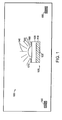
- FIG. 1 is a schematic of a device 100, in the form of a humidifier, for decontaminating an area 150.
- the device 100 comprises a germicidal source 110 positioned within a housing 120, and a releasing mechanism 130 in communication with the housing 120.
- the releasing mechanism 130 is configured to release the germicidal agent 140 from the germicidal source 110 at a predetermined concentration into the area 150 such that the predetermined concentration of germicidal agent 140 in the area 150 does not exceed the PEL.
- the housing 120 may comprise a support 122 for holding the germicidal source 110 when the germicidal source 110 is hydrogen peroxide, and may be, for example, a tank, a plate, or a pan. As illustrated, the housing 120 may comprise, for example, a metal support, such as a pan, e.g. , an aluminum pan.
- the germicidal agent 140 may be produced from the germicidal source 110 in the form of a gas, a vapor, and/or a mist by various mechanisms, such as a gas generator, a mist generator, a humidifier (illustrated), a heater, and combinations of any thereof.
- the "releasing mechanism” may be any device or mechanism that allows or assists the germicidal agent in traversing from the germicidal source into the area.
- the releasing mechanism 130 may comprise a gas permeable screen or cloth that allows the germicidal agent to diffuse into the area 150.
- the releasing mechanism 130 may incorporate a fan or blower to assist in diffusing the germicidal agent 140 throughout the area 150. In small areas, or when the device 100 is incorporated into an existing air circulation system, such as an HVAC system, discussed below, a fan or blower may not be necessary.
- the releasing mechanism 130 may also comprise a flow controller, such as a controller commercially available from Bronkhorst High-Tech B.V., Netherlands.
- a flow controller is a device or material that by its composition, geometry, or mechanical action controls the release of germicidal agent 140 into the area 150.
- Control of the low levels of the germicidal agent 140 in the area 150 to a predetermined concentration may be performed by various methods, such as by positioning one or more optional sensors 160 in the area 150.
- the sensor 160 may be positioned on the housing 120 or may be remotely located in the area 150 to provide, for example, programmable monitoring of the concentration levels of the germicidal agent 140 in the area 150 and provide a feedback control mechanism to, for example, a flow controller configured to control the release and concentration of the germicidal agent in the area 150.
- Release of germicidal agent 140 may be continuous, intermittent, and/or periodic as set forth herein.
- the release frequency of the germicidal agent 140 may be based on various set points that are selected from a set point controller 170.
- the set points may be programmable or manual and may include, for example, running time, germicidal agent concentration, area size, and combinations of any thereof.
- the number of sensors 160 employed and their orientation may vary depending upon the desired uniformity of germicidal agent concentration throughout the area 150.
- the releasing mechanism 130 can be controlled by a microprocessor and configured so that, for example, multiple flow controllers may be independently controlled such that one or more flow controllers directed to certain locations of the area 150, or in certain rooms of a facility, may operate to emit different amounts of germicidal agent 140 in order to create greater uniformity of germicidal agent 140, or, alternatively, to provide higher or lower concentrations of germicidal agent 140 in particular selected locations, based on sensor feedback controls.
- the device 100 may comprise other optional features, such as a use-life indicator 180, to indicate, for example, when the amount of germicidal source 110 in the housing 120 has been expended.
- the use-life indicator could be a liquid level sensor, a hydrogen peroxide detector of the remote sensor.
- FIG. 2 is a schematic of a device 180, in the form of an ozone generation device connected to a conventional HVAC system 185 for decontaminating an area 190.
- the device 180 comprises a housing 182, and a releasing mechanism 184 in communication with the housing 182.
- the releasing mechanism 184 is configured to release the germicidal agent at a predetermined concentration into the area 190 such that the predetermined concentration of germicidal agent in the area 190 does not exceed the PEL.
- the releasing mechanism 184 may comprise an ozone generation device 186, such, for example, an arc discharge, a corona discharge, or an ultraviolet-emitting (UV) source, such as a UV lamp.
- UV ultraviolet-emitting
- ozone gas within the predetermined and controlled concentrations set forth herein may be produced using a corona discharge generator.
- the corona discharge generator may comprise a sealed glass tube that was filled with a gas.
- An electrical conductor rod passed through the glass tube at one end may extend the entire length of the tube.
- a perforated, metal grid may surround the tube so that when a high voltage is applied across the rod and the grid, a corona is developed between the glass tube and the grid.
- Oxygen passing through the corona is ionized to produce ozone.
- Ozone produced by the corona may be dispersed into the area by virtue of the ion wind produced by the corona, and/or by an optional fan or blower.
- Concentration of the ozone may be controlled through the use of sensors and programmable monitors, as discussed herein, to control a predetermined concentration no greater than the PEL ranges set forth herein.
- relative humidity levels are maintained above 20%, and in some embodiments are maintained at levels ranging from 70% to 90%.
- Humidity can be controlled by a humidifier and humidity sensor.
- forced and/or heated air may be supplied to the device 180 by the existing HVAC system 185 via an existing ventilation system 188. Accordingly, in certain embodiments, separate heating and distribution systems, if desired, may be provided by the existing HVAC system 185.
- the device 180 may be configured for releasing germicidal agent, such as ozone, into the area 190 in the form of ozone gas.
- the concentration of the ozone gas may be controlled at low levels in the area 190 to a predetermined concentration through the use of options sensors 192 that provide a feedback control mechanism to control the release of ozone gas in the area 190.
- Release of ozone gas may be continuous, intermittent, and/or periodic by a set point controller 194, in a manner discussed herein.
- FIG. 3 is a schematic of a device 200, in the form of a wall-mount disposable single use or reusable system, for decontaminating an area 250.
- the device 200 comprises a germicidal source 210 positioned within a housing 220, and a releasing mechanism 230 in communication with the housing 220.
- the releasing mechanism 230 is configured to release the germicidal agent 240 from the germicidal source 210 at a predetermined concentration into the area 250 such that the predetermined concentration of germicidal agent 240 in the area 250 does not exceed the PEL.
- the housing 220 may comprise a support 222 for holding the germicidal source 210 when the germicidal source 210 is solid peroxide complex or liquid hydrogen peroxide solution, and may be, for example, a tank, a plate, or a pan.
- the housing 220 may comprise, for example, a metal support, such as a pan, e.g. , an aluminum pan, and an optional heater 290 for heating the germicidal source 210 to release the germicidal agent in the form of a gas, a vapor, and/or a mist.
- a temperature monitor such as a thermometer, may be in communication with the housing 220 to monitor and control the support temperature.
- the germicidal source 210 may be placed directly on or in the support 222.
- the germicidal source is a solid peroxide complex, in order to provide even heating of the solid peroxide complex, the peroxide complex can be placed between one or more aluminum screens (not shown) placed on top of a support 222.
- the peroxide complex may be covered with a gas permeable layer such as a layer of medical grade TYVEK, commercially available from DuPont de Nemours & Co., Wilmington, DE, or SPUNGUARD, commercially available from Kimberly-Clark Co., Dallas, TX, so that the germicidal agent 240 released from the germicidal source 210 may pass through the covering before diffusing into the area 250 by a releasing mechanism 230.
- a gas permeable layer such as a layer of medical grade TYVEK, commercially available from DuPont de Nemours & Co., Wilmington, DE, or SPUNGUARD, commercially available from Kimberly-Clark Co., Dallas, TX
- the concentration of the germicidal agent 240 may be controlled at low levels in the area 250 to a predetermined concentration through the use of options sensors 260 provide a feedback control mechanism to control the release of germicidal agent 240, as discussed herein. Release of germicidal agent 240 may be continuous, intermittent, and/or periodic by a set point controller 270, in a manner discussed herein. As illustrated, the device 200 may have other optional features, such as a use-life indicator 280.
- the device 200 may include an insulating housing (not shown), from which may extend terminal portions 226, 228 of a standard wall-mounted plug 224 which can be plugged into mating sockets of a wall outlet, such as a standard 120 volt wall outlet.
- the act of plugging the device 200 into the mating socket of the power supply activates the power supply to heat the germicidal source 210 and to release the germicidal agent 240.
- the voltage of the device is only applied when the device 200 is plugged into the power supply. If desired, the device 200 can be locked in position with suitable locating screws or fittings. In other embodiments of the present disclosure, the device may be battery operated.
- the device 200 may be reusable such that when the germicidal source 210 is expended, the support 222, such as in the form of a replacement cartridge, may be removed and replaced.
- the device 200 may be a single use device that is disposed of when the germicidal source 210 is spent.
- FIG. 4 is a schematic of a device 300, in the form of a room unit connected to a conventional HVAC system 305, for decontaminating an area 350, such as a single room.
- the device 300 comprises a germicidal source 310 positioned within a housing 320, and a releasing mechanism 330 in communication with the housing 320.
- the releasing mechanism 330 is configured to release the germicidal agent 340 from the germicidal source 310 at a predetermined concentration into the area 350 such that the predetermined concentration of germicidal agent 340 in the area 350 does not exceed the PEL.
- the housing 320 may comprise a support 322 for holding the germicidal source 310, which may be a solid peroxide complex or liquid hydrogen peroxide solution, an optional heater 390, as discussed herein, for heating the germicidal source, or an ozone generating device, such as those devices set forth herein.
- the support 322 may include a gas permeable enclosure to package the germicidal source 310.
- forced and/or heated air may be supplied to the device 300 by the existing HVAC system 305 via an existing ventilation system. Accordingly, in certain embodiments, a separate heating and distribution systems, if desired, may be provided by the existing HVAC system 305.
- the housing 320 may comprise multiple controllable openings 324 to direct the air flow and for releasing germicidal agent into the area 350 in the form of a gas, a vapor, and/or a mist.
- the releasing mechanism 330 may comprise, for example, the openings 324 and the forced air of the HVAC system 305.
- the concentration of the germicidal agent 340 may be controlled at low levels in the area 350 to a predetermined concentration through the use of options sensors 360 that provide a feedback control mechanism to control the release of germicidal agent 340, such as through flow controllers, configured to control the release of germicidal agent through the openings 324 and the concentration of the germicidal agent 340 in the area 350.
- Release of germicidal agent 340 may be continuous, intermittent, and/or periodic by a set point controller (not shown), in a manner discussed herein.
- FIG. 5 is a schematic of one or more devices 400, 500, in the form of a multiple room units connected to a conventional HVAC system 405, for decontaminating one or more areas 450.
- the device 400 may comprise a germicidal source 410 positioned within a housing 420, and a releasing mechanism 430 in communication with the housing 420.
- the releasing mechanism 430 is configured to release the germicidal agent 440 from the germicidal source 410 at a predetermined concentration into the area 450 such that the predetermined concentration of germicidal agent 440 in the area 450 does not exceed the PEL.
- the housing 420 may comprise a support 422 for holding the germicidal source 410, which may be a solid peroxide complex or liquid hydrogen peroxide solution, an optional heater 490, as discussed herein, for heating the germicidal source, or an ozone generating device, such as those devices set forth herein.
- the releasing mechanism 430 may release germicidal agent 440 into the area 450 in the form of a gas, a vapor, and/or a mist. Heat and forced air, if desired, can be supplied by the existing HVAC system 405, as discussed above.
- one or more regions of area 450 may also, or alternatively, comprise an ozone generation device 500 connected to the HVAC system 405, for decontaminating a second region of the area 450.
- the device 500 comprises a releasing mechanism 530 configured to release the germicidal agent 540, such as ozone gas, at a predetermined concentration into the area 450 such that the predetermined concentration of germicidal agent 540 in the area 450 does not exceed the PEL, in a manner set forth here.
- forced and/or heated air may be supplied to the device 500 by the existing HVAC system 405 via an existing ventilation system. Accordingly, in certain embodiments, separate heating and distribution systems, if desired, may be provided by the existing HVAC system 405.
- the area 450 may include one or more regions, with at least one region comprising one or more devices 400, 500 such that device 400 and device 500 work independently or cooperatively to control the level of germicidal agent in the area 450.
- one region may include only device 400, such as a humidifier, that controls the level of germicidal agent, such as hydrogen peroxide, as provided herein.
- a second region may include only device 500, that may be the same or different than device 400, such as an ozone generator, that controls the level of ozone gas, as provided herein.
- a third region may include more than one device 400, 500, that may be the same or different, such as, for example, a humidifier and an ozone generator.
- the humidifier controls the level of germicidal agent 440, and the ozone generator controls the level of germicidal agent 540 in the area.
- the ozone generator controls the level of germicidal agent 540 in the area.
- the concentration of the germicidal agent 440, 540 may be controlled at low levels in the area 450 to a predetermined concentration through the use of optional sensors 460, 470 that provide a feedback control mechanism to control the release of germicidal agent 440, 540, respectively.
- sensor 460 may be a hydrogen peroxide sensor
- sensor 470 may be an ozone sensor.
- the number of sensors 460, 470 employed and their orientation may vary depending upon the desired uniformity of germicidal agent concentration throughout the area 450.
- the releasing mechanism 430, 530 can be controlled by a microprocessor and configured so that, for example, a flow restrictor in each room of the area 450 may be independently controlled such that germicidal agent 440, 540 may be provided at higher or lower concentrations in particular selected locations, based on sensor feedback controls.
- release of germicidal agent 440, 540 may be continuous, intermittent, and/or periodic as set forth here by a set point controller (not shown), in a manner discussed herein.
- FIG. 6 is a schematic of a device 600 for decontaminating an area 650 of the present disclosure in the form of multiple room units connected to a conventional HVAC system.
- the device 600 may comprise a germicidal source 610 positioned within a housing 620, and a releasing mechanism 630 in communication with the housing 620.
- the releasing mechanism 630 may be configured to release the germicidal agent 640 from the germicidal source 610 at a predetermined concentration into the area 650 such that the predetermined concentration of germicidal agent 640 in the area 650 does not exceed the PEL.
- the housing 620 may contain the germicidal source 610, which as discussed herein, may be, for example, a solid peroxide complex, liquid hydrogen peroxide solution, or an ozone generating device.
- the releasing mechanism 630 may release germicidal agent 640 into the area 650 in the form of a gas, a vapor, and/or a mist. Heat and forced air, if desired, can be supplied by the existing HVAC system 605, as discussed above.
- the device 600 need not be positioned within the area 650, but, instead, may be positioned in-line with an existing ventilation system.
- the concentration of the germicidal agent 640 may be controlled within the PEL ranges set forth herein in the area 650 to a predetermined concentration through the use of optional sensors 660 that provide a feedback control mechanism to control the release of germicidal agent 640.
- the number of sensors 660 employed and their orientation may vary depending upon the desired uniformity of germicidal agent concentration throughout the area 660.
- the sensor 660 may be positioned in-line with an existing ventilation system, near the germicidal source, so that germicidal agent concentration is uniformly distributed to the various regions of the area 650.
- the releasing mechanism 630 can be controlled by a microprocessor and configured so that, for example, a flow restrictor may be independently controlled to release germicidal agent 640 at higher or lower concentrations into the area 650, based on sensor feedback controls.
- release of germicidal agent 640 may be continuous, intermittent, and/or periodic as set forth here by a set point controller 670, in a manner discussed herein.
- the embodiments shown in Figures 5 and 6 may be combined to ensure the desired germicide concentrations are achieved in all areas.
- Embodiments of the present disclosure could also provide increased flexibility and efficiency relative to present decontamination systems by providing the option to greatly increase the concentration of the germicidal agent from the chronic low concentrations set forth herein to a concentration above the PEL to provide acute treatment of an area for a period of time. This would require the area to be taken out of service for the duration of the acute treatment. Thereafter, the system could, again, be run at low chronic concentration levels.
- embodiments of the present disclosure provide a device and related method of decontamination of microorganisms in an area at low concentrations of germicidal agent that does not require the area to be taken out of service. Accordingly, areas, such as hospital rooms, can be occupied continuously or nearly continuously while decontamination is underway.
- Table 1 demonstrate an approximate 0.5 log reduction in G. stearothermophilus spores per day with a nominal concentration of 0.6 ppm of hydrogen peroxide.
- G. stearothermophilus spores have the highest known resistance to hydrogen peroxide.
- the effectiveness of the method against non-spore forming microorganisms such as S. aureus and even spore former C. difficile is expected to be greater.
- concentrations shown above are averages over the entire exposure time. As demonstrated, some variation in 0.35 ppm nominal concentration exists, but the data in the Tables indicates higher concentration produces higher kill rates of microorganisms.
Landscapes
- Health & Medical Sciences (AREA)
- Engineering & Computer Science (AREA)
- Chemical & Material Sciences (AREA)
- General Health & Medical Sciences (AREA)
- Veterinary Medicine (AREA)
- Public Health (AREA)
- Epidemiology (AREA)
- Life Sciences & Earth Sciences (AREA)
- Animal Behavior & Ethology (AREA)
- General Engineering & Computer Science (AREA)
- Mechanical Engineering (AREA)
- Combustion & Propulsion (AREA)
- Chemical Kinetics & Catalysis (AREA)
- General Chemical & Material Sciences (AREA)
- Apparatus For Disinfection Or Sterilisation (AREA)
- Disinfection, Sterilisation Or Deodorisation Of Air (AREA)
- Agricultural Chemicals And Associated Chemicals (AREA)
Applications Claiming Priority (1)
| Application Number | Priority Date | Filing Date | Title |
|---|---|---|---|
| US12/105,919 US20090263499A1 (en) | 2008-04-18 | 2008-04-18 | Area decontamination via low-level concentration of germicidal agent |
Publications (2)
| Publication Number | Publication Date |
|---|---|
| EP2127686A2 true EP2127686A2 (de) | 2009-12-02 |
| EP2127686A3 EP2127686A3 (de) | 2010-01-20 |
Family
ID=40852041
Family Applications (1)
| Application Number | Title | Priority Date | Filing Date |
|---|---|---|---|
| EP09251113A Withdrawn EP2127686A3 (de) | 2008-04-18 | 2009-04-17 | Raumdekontaminierung unter Verwendung von gering dosierten Desinfektionsmitteln |
Country Status (9)
| Country | Link |
|---|---|
| US (1) | US20090263499A1 (de) |
| EP (1) | EP2127686A3 (de) |
| JP (1) | JP2009254832A (de) |
| CN (1) | CN101601864A (de) |
| AU (1) | AU2009201473A1 (de) |
| BR (1) | BRPI0900738A2 (de) |
| MX (1) | MX2009004204A (de) |
| RU (1) | RU2009114616A (de) |
| TW (1) | TW201004661A (de) |
Cited By (4)
| Publication number | Priority date | Publication date | Assignee | Title |
|---|---|---|---|---|
| WO2011036644A1 (en) * | 2009-09-24 | 2011-03-31 | Aslan S.R.L. | Apparatus for the disinfection/sterilization treatment of environments by ozone |
| DE102015008589A1 (de) * | 2015-06-25 | 2016-12-29 | Swingtec Gmbh | Desinfektionseinrichtung zum Desinfizieren von Räumen sowie Verfahren zum Desinfizieren von Räumen |
| EP3988134A1 (de) * | 2020-10-20 | 2022-04-27 | Boga GmbH Gesellschaft für Moderne Gerätetechnik | Verfahren zur sanitation oder desinfektion mit wenigstens einem aerosol, das tröpfchen eines desinfektionsmittels enthält |
| WO2023114439A1 (en) * | 2021-12-17 | 2023-06-22 | Prompt Care, Inc. | System and method for abatement of allergens, pathogens and volatile organic compounds |
Families Citing this family (42)
| Publication number | Priority date | Publication date | Assignee | Title |
|---|---|---|---|---|
| JP4104548B2 (ja) * | 2001-08-30 | 2008-06-18 | エンブレクス,インコーポレイテッド | 接合子嚢を生成するための改良方法 |
| KR100782040B1 (ko) * | 2007-06-29 | 2007-12-04 | 주식회사 리노셈 | 과산화수소 및 오존을 사용하는 멸균방법 및 그 방법에따른 장치 |
| KR20100061665A (ko) | 2007-08-07 | 2010-06-08 | 리 안티마이크로바이얼 솔루션즈 엘엘씨 | Uv 공기처리 방법 및 장치 |
| US9616145B2 (en) | 2009-07-06 | 2017-04-11 | Medizone International, Inc. | Healthcare facility disinfecting system |
| MX344243B (es) * | 2009-07-06 | 2016-12-08 | Medizone Int Inc * | Proceso y sistema de desinfeccion de centros de atencion medica con mezcla de oxigeno/ozono. |
| WO2011085466A1 (en) | 2010-01-18 | 2011-07-21 | Medizone International Inc. | Bio-terrorism counteraction using ozone and hydrogen peroxide |
| WO2012018867A1 (en) * | 2010-08-02 | 2012-02-09 | University Of Medicine And Dentistry Of New Jersey | Gas-based treatment for infective disease |
| CN102370999A (zh) * | 2010-08-04 | 2012-03-14 | 曼尼托沃食品服务有限公司 | 使用脉宽调制的制冰机离子清洁器的功率控制方法和系统 |
| JP2012034771A (ja) * | 2010-08-05 | 2012-02-23 | Tamura Teco:Kk | オゾン滅菌装置 |
| WO2012031366A1 (en) | 2010-09-08 | 2012-03-15 | Medizone International Inc. | Food-handling facility disinfection treatment |
| US20130276357A1 (en) * | 2010-09-08 | 2013-10-24 | Medizone International Inc. | Combating insect infestations |
| WO2012031364A1 (en) | 2010-09-08 | 2012-03-15 | Medizone International Inc. | Sports equipment and facility disinfection |
| EP2629808A4 (de) * | 2010-10-22 | 2014-10-15 | Prolitec Inc | Glycolsensor zur steuerung von rückkopplungsschleifen |
| JP5572105B2 (ja) * | 2011-01-26 | 2014-08-13 | 武田薬品工業株式会社 | 除染方法、及び、その除染方法の実施に使用する除染システム |
| FR2972357B1 (fr) * | 2011-03-11 | 2013-07-19 | Anios Lab Sarl | Procede et dispositif pour la desinfection par voie aerienne |
| US9545585B2 (en) * | 2012-07-16 | 2017-01-17 | Rasirc, Inc. | Method, system, and device for delivery of high purity hydrogen peroxide |
| PT2996474T (pt) | 2013-05-17 | 2020-12-04 | Synexis Llc | Métodos para o controlo de artrópodes usando peróxido de hidrogénio em fase gasosa quase ideal |
| CN106232148B (zh) * | 2014-04-30 | 2019-11-05 | 株式会社爱瑞思 | 除污系统 |
| JP6423004B2 (ja) | 2014-05-13 | 2018-11-14 | ラシリック, インコーポレイテッドRASIRC, Inc. | プロセスガスを重要工程処理に送達するための方法および系 |
| US10150048B2 (en) * | 2014-10-23 | 2018-12-11 | Rasirc, Inc. | Method, system, and device for delivery of process gas |
| US10195300B2 (en) | 2016-02-25 | 2019-02-05 | Ralph Birchard Lloyd | System and method for disinfecting an occupied area using germicidal radiation based on eye protection worn by persons in the area |
| RU2629399C1 (ru) * | 2016-08-08 | 2017-08-29 | Федеральное государственное бюджетное образовательное учреждение высшего профессионального образования "Кубанский государственный аграрный университет" | Способ профилактики африканской чумы свиней |
| US10398795B2 (en) * | 2017-12-29 | 2019-09-03 | Tomi Environmental Solutions, Inc. | Decontamination device and method using ultrasonic cavitation |
| IL269021B2 (en) * | 2019-08-29 | 2023-05-01 | Riskin Yefim | Air disinfection method and disinfection device |
| JP7415574B2 (ja) * | 2020-01-10 | 2024-01-17 | 三浦工業株式会社 | 滅菌処理方法及び滅菌装置 |
| CN111437413A (zh) * | 2020-03-20 | 2020-07-24 | 湖北加泰房地产开发集团有限公司 | 一种臭氧消毒仓的臭氧浓度控制系统及控制方法 |
| WO2021224673A1 (en) * | 2020-05-05 | 2021-11-11 | CO2Apps S.R.L. | Substance and method for preventing the transmission of viruses in the respiratory system |
| US11686485B2 (en) * | 2020-07-17 | 2023-06-27 | BioSans LLC | Facility disinfectant and pesticide distribution system |
| US20240033386A1 (en) * | 2020-08-09 | 2024-02-01 | Vikas Khurana | A disinfection system, method and chamber thereof |
| CN112856757B (zh) * | 2021-01-29 | 2022-05-31 | 重庆海尔空调器有限公司 | 空调器的杀菌控制方法及空调器 |
| CN112856754A (zh) * | 2021-01-29 | 2021-05-28 | 青岛海尔空调器有限总公司 | 空调器的杀菌控制方法及空调器 |
| CN113091250A (zh) * | 2021-03-29 | 2021-07-09 | 青岛海尔空调器有限总公司 | 卫生间空调器的杀菌控制方法及卫生间空调器 |
| CN113091251A (zh) * | 2021-03-29 | 2021-07-09 | 青岛海尔空调器有限总公司 | 公厕空调器的杀菌控制方法及公厕空调器 |
| CN113085929B (zh) * | 2021-03-29 | 2022-12-23 | 青岛海尔空调器有限总公司 | 列车卫生间空调器的杀菌控制方法及列车卫生间空调器 |
| FR3122585A1 (fr) * | 2021-05-04 | 2022-11-11 | Universite Claude Bernard Lyon 1 | Solide mésoporeux pour réguler l’humidité dans les espaces clos |
| US12435892B2 (en) * | 2021-05-14 | 2025-10-07 | Humatador, LLC | Process and system for dry mist dispenser and ozone sanitizer with automatic water replenishment |
| CN114159234B (zh) * | 2021-07-23 | 2022-08-05 | 江苏亚华救生装备有限公司 | 一种野外单兵多功能急救包及其使用方法 |
| JP7735820B2 (ja) * | 2021-11-26 | 2025-09-09 | 株式会社アイシン | 殺菌装置 |
| US12559370B2 (en) * | 2022-03-21 | 2026-02-24 | 13482073 Canada Inc. | Method and system for ozone generation |
| CN116379549A (zh) * | 2023-04-10 | 2023-07-04 | 广州华立学院 | 一种循环除菌方法 |
| US12496369B1 (en) * | 2025-02-04 | 2025-12-16 | Sterilmetric Innovations, Llc | Systems and methods for monitoring a gas sterilization environment |
| CN120317765A (zh) * | 2025-06-18 | 2025-07-15 | 杭州元杰环保科技有限公司 | 基于实时监测的智慧卫生间环境监控方法及系统 |
Citations (10)
| Publication number | Priority date | Publication date | Assignee | Title |
|---|---|---|---|---|
| WO2001035754A1 (en) | 1999-11-18 | 2001-05-25 | Agroquality International, Llc | Method for diffusing ozone in a closed environment |
| US20030133833A1 (en) | 2001-09-14 | 2003-07-17 | Thomas John E. | Method, device and composition for the sustained release of an antimicrobial gas |
| US20040047776A1 (en) | 2002-05-20 | 2004-03-11 | Thomsen James M. | Mobile air decontamination method and device |
| US20050074359A1 (en) | 2003-10-06 | 2005-04-07 | Steris Inc. | Aircraft and passenger decontamination system |
| US20050123436A1 (en) | 2002-04-16 | 2005-06-09 | Cumberland John R. | Method for abatement of allergens, pathogens and volatile organic compounds |
| EP1557181A1 (de) | 1994-04-28 | 2005-07-27 | JOHNSON & JOHNSON MEDICAL, INC. | Dampfsterilisation unter Verwendung einer nichtwässrigen Wasserstoffperoxidquelle |
| US20050186108A1 (en) | 2004-02-20 | 2005-08-25 | William Michael Fields | Bio-air sterilization system |
| WO2006031957A1 (en) | 2004-09-14 | 2006-03-23 | Steris Inc. | High capacity flash vapor generation systems |
| US20060088441A1 (en) | 2004-10-21 | 2006-04-27 | Steris Inc. | Vaporized hydrogen peroxide concentration detector |
| WO2007008205A1 (en) | 2005-07-07 | 2007-01-18 | Steris Inc. | Room decontamination with hydrogen peroxide vapor |
Family Cites Families (13)
| Publication number | Priority date | Publication date | Assignee | Title |
|---|---|---|---|---|
| US4644790A (en) * | 1985-04-01 | 1987-02-24 | Sharp Kabushiki Kaisha | Liquid level indicator for humidifier |
| JPS6249932A (ja) * | 1985-08-27 | 1987-03-04 | Matsushita Electric Works Ltd | 浄化法 |
| US4863688A (en) * | 1986-12-31 | 1989-09-05 | American Sterilizer Company | Method of decontaminating surfaces on or near living cells with vapor hydrogen peroxide |
| JPH02237565A (ja) * | 1989-03-11 | 1990-09-20 | Nippon Ceramic Co Ltd | 室内殺菌方法 |
| US5667753A (en) * | 1994-04-28 | 1997-09-16 | Advanced Sterilization Products | Vapor sterilization using inorganic hydrogen peroxide complexes |
| US5820841A (en) * | 1996-09-19 | 1998-10-13 | Ethicon, Inc. | Hydrogen peroxide complexes of inorganic salts and synthesis thereof |
| US7407624B2 (en) * | 2002-04-16 | 2008-08-05 | Prompt Care, Inc. | Method for abatement of allergens, pathogens and volatile organic compounds |
| WO2005016391A1 (en) * | 2003-01-31 | 2005-02-24 | Steris Inc. | Building decontamination with vaporous hydrogen peroxide |
| US6991532B2 (en) * | 2003-12-09 | 2006-01-31 | Valeo Climate Control Corp. | Method and apparatus for decontamination for automotive HVAC systems |
| JP4558538B2 (ja) * | 2004-03-04 | 2010-10-06 | エシコン・インコーポレイテッド | 液体滅菌剤を滅菌器に送達する方法 |
| US7354551B2 (en) * | 2004-07-08 | 2008-04-08 | Steris Inc | Room decontamination with hydrogen peroxide vapor |
| US20060280665A1 (en) * | 2005-06-10 | 2006-12-14 | S.C. Johnson & Son, Inc. | Vapor phase hydrogen peroxide deodorizer |
| NL2000064C2 (nl) * | 2006-04-28 | 2007-10-30 | Infection Control B V | Werkwijze en inrichting voor het desinfecteren van een ruimte. |
-
2008
- 2008-04-18 US US12/105,919 patent/US20090263499A1/en not_active Abandoned
-
2009
- 2009-04-15 AU AU2009201473A patent/AU2009201473A1/en not_active Abandoned
- 2009-04-17 JP JP2009100646A patent/JP2009254832A/ja active Pending
- 2009-04-17 EP EP09251113A patent/EP2127686A3/de not_active Withdrawn
- 2009-04-17 BR BRPI0900738-5A patent/BRPI0900738A2/pt not_active IP Right Cessation
- 2009-04-17 TW TW098112727A patent/TW201004661A/zh unknown
- 2009-04-17 RU RU2009114616/15A patent/RU2009114616A/ru not_active Application Discontinuation
- 2009-04-17 CN CNA2009102039448A patent/CN101601864A/zh active Pending
- 2009-04-20 MX MX2009004204A patent/MX2009004204A/es unknown
Patent Citations (10)
| Publication number | Priority date | Publication date | Assignee | Title |
|---|---|---|---|---|
| EP1557181A1 (de) | 1994-04-28 | 2005-07-27 | JOHNSON & JOHNSON MEDICAL, INC. | Dampfsterilisation unter Verwendung einer nichtwässrigen Wasserstoffperoxidquelle |
| WO2001035754A1 (en) | 1999-11-18 | 2001-05-25 | Agroquality International, Llc | Method for diffusing ozone in a closed environment |
| US20030133833A1 (en) | 2001-09-14 | 2003-07-17 | Thomas John E. | Method, device and composition for the sustained release of an antimicrobial gas |
| US20050123436A1 (en) | 2002-04-16 | 2005-06-09 | Cumberland John R. | Method for abatement of allergens, pathogens and volatile organic compounds |
| US20040047776A1 (en) | 2002-05-20 | 2004-03-11 | Thomsen James M. | Mobile air decontamination method and device |
| US20050074359A1 (en) | 2003-10-06 | 2005-04-07 | Steris Inc. | Aircraft and passenger decontamination system |
| US20050186108A1 (en) | 2004-02-20 | 2005-08-25 | William Michael Fields | Bio-air sterilization system |
| WO2006031957A1 (en) | 2004-09-14 | 2006-03-23 | Steris Inc. | High capacity flash vapor generation systems |
| US20060088441A1 (en) | 2004-10-21 | 2006-04-27 | Steris Inc. | Vaporized hydrogen peroxide concentration detector |
| WO2007008205A1 (en) | 2005-07-07 | 2007-01-18 | Steris Inc. | Room decontamination with hydrogen peroxide vapor |
Cited By (4)
| Publication number | Priority date | Publication date | Assignee | Title |
|---|---|---|---|---|
| WO2011036644A1 (en) * | 2009-09-24 | 2011-03-31 | Aslan S.R.L. | Apparatus for the disinfection/sterilization treatment of environments by ozone |
| DE102015008589A1 (de) * | 2015-06-25 | 2016-12-29 | Swingtec Gmbh | Desinfektionseinrichtung zum Desinfizieren von Räumen sowie Verfahren zum Desinfizieren von Räumen |
| EP3988134A1 (de) * | 2020-10-20 | 2022-04-27 | Boga GmbH Gesellschaft für Moderne Gerätetechnik | Verfahren zur sanitation oder desinfektion mit wenigstens einem aerosol, das tröpfchen eines desinfektionsmittels enthält |
| WO2023114439A1 (en) * | 2021-12-17 | 2023-06-22 | Prompt Care, Inc. | System and method for abatement of allergens, pathogens and volatile organic compounds |
Also Published As
| Publication number | Publication date |
|---|---|
| MX2009004204A (es) | 2009-10-21 |
| BRPI0900738A2 (pt) | 2009-12-01 |
| RU2009114616A (ru) | 2010-10-27 |
| TW201004661A (en) | 2010-02-01 |
| EP2127686A3 (de) | 2010-01-20 |
| US20090263499A1 (en) | 2009-10-22 |
| AU2009201473A1 (en) | 2009-11-05 |
| CN101601864A (zh) | 2009-12-16 |
| JP2009254832A (ja) | 2009-11-05 |
Similar Documents
| Publication | Publication Date | Title |
|---|---|---|
| EP2127686A2 (de) | Raumdekontaminierung unter Verwendung von gering dosierten Desinfektionsmitteln | |
| EP2012837B1 (de) | Verfahren zur desinfektion eines raums | |
| AU2004264779B2 (en) | Building decontamination with vaporous hydrogen peroxide | |
| US8236236B2 (en) | Method of sterilizing | |
| EP2525838B1 (de) | Massnahme gegen bioterrorismus mit ozon und wasserstoffperoxid | |
| EP2968632B1 (de) | Verfahren für fokussierte gasphasenanwendung eines biozids | |
| US20160101202A1 (en) | System for Sterilizing Objects Utilizing Germicidal UV-C Radiation and Ozone | |
| KR20120035206A (ko) | 산소/오존 혼합물을 사용한 건강관리 시설 소독 방법 및 시스템 | |
| BR112020011395A2 (pt) | método e sistema de descontaminação de pequenos compartimentos | |
| JP2003227622A (ja) | 殺菌水を用いた除菌脱臭空調システム | |
| JP2000257913A (ja) | 中性水を用いた除菌空調システム | |
| JPH11216336A (ja) | 空気清浄装置 | |
| US20100135850A1 (en) | Air disinfection device | |
| CA2776850C (en) | A method and system for disinfecting a greenhouse and greenhouse related enclosures | |
| KR102167206B1 (ko) | 허니컴 구조체를 이용하는 과산화수소 증기 제독 시스템 | |
| JPH02237565A (ja) | 室内殺菌方法 | |
| CA2663389A1 (en) | Area decontamination via low-level concentration of germicidal agent | |
| KR20090110795A (ko) | 저농도 수준의 살균제를 통한 지역 오염 정화 | |
| CN121015929B (zh) | 一种护理床单元终末消毒系统 | |
| CN222676909U (zh) | 一种封闭式环境的除臭消杀设备 | |
| WO2019106689A9 (en) | Air purification system for air handling units | |
| KR20100012957A (ko) | 고농도 오존 가스를 이용한 의료용 청정장치 | |
| CN118267506A (zh) | 一种消杀除臭设备及方法 | |
| KR100937313B1 (ko) | 실내 소독 방법 및 실내 소독 설비 | |
| US20150238943A1 (en) | Catalyst comprising silver oxide and calcium carbonate, method for the manufacture of the catalyst and its use for the destruction of sterilant |
Legal Events
| Date | Code | Title | Description |
|---|---|---|---|
| PUAI | Public reference made under article 153(3) epc to a published international application that has entered the european phase |
Free format text: ORIGINAL CODE: 0009012 |
|
| AK | Designated contracting states |
Kind code of ref document: A2 Designated state(s): AT BE BG CH CY CZ DE DK EE ES FI FR GB GR HR HU IE IS IT LI LT LU LV MC MK MT NL NO PL PT RO SE SI SK TR |
|
| PUAL | Search report despatched |
Free format text: ORIGINAL CODE: 0009013 |
|
| AK | Designated contracting states |
Kind code of ref document: A3 Designated state(s): AT BE BG CH CY CZ DE DK EE ES FI FR GB GR HR HU IE IS IT LI LT LU LV MC MK MT NL NO PL PT RO SE SI SK TR |
|
| AX | Request for extension of the european patent |
Extension state: AL BA RS |
|
| 17P | Request for examination filed |
Effective date: 20100623 |
|
| 17Q | First examination report despatched |
Effective date: 20100716 |
|
| GRAP | Despatch of communication of intention to grant a patent |
Free format text: ORIGINAL CODE: EPIDOSNIGR1 |
|
| RIC1 | Information provided on ipc code assigned before grant |
Ipc: A61L 2/22 20060101ALI20140214BHEP Ipc: F24F 3/16 20060101ALI20140214BHEP Ipc: A61L 101/10 20060101ALN20140214BHEP Ipc: A61L 2/24 20060101ALI20140214BHEP Ipc: A61L 9/14 20060101ALI20140214BHEP Ipc: A61L 2/20 20060101AFI20140214BHEP Ipc: A61L 101/22 20060101ALN20140214BHEP Ipc: A61L 9/015 20060101ALI20140214BHEP |
|
| INTG | Intention to grant announced |
Effective date: 20140318 |
|
| STAA | Information on the status of an ep patent application or granted ep patent |
Free format text: STATUS: THE APPLICATION IS DEEMED TO BE WITHDRAWN |
|
| 18D | Application deemed to be withdrawn |
Effective date: 20140729 |