EP2129232B9 - Procede de compaction de poudres vegetales et produits obtenus - Google Patents
Procede de compaction de poudres vegetales et produits obtenus Download PDFInfo
- Publication number
- EP2129232B9 EP2129232B9 EP08717138A EP08717138A EP2129232B9 EP 2129232 B9 EP2129232 B9 EP 2129232B9 EP 08717138 A EP08717138 A EP 08717138A EP 08717138 A EP08717138 A EP 08717138A EP 2129232 B9 EP2129232 B9 EP 2129232B9
- Authority
- EP
- European Patent Office
- Prior art keywords
- powder
- coffee
- compaction
- seconds
- volume
- Prior art date
- Legal status (The legal status is an assumption and is not a legal conclusion. Google has not performed a legal analysis and makes no representation as to the accuracy of the status listed.)
- Active
Links
Images

Classifications
-
- A—HUMAN NECESSITIES
- A23—FOODS OR FOODSTUFFS; TREATMENT THEREOF, NOT COVERED BY OTHER CLASSES
- A23F—COFFEE; TEA; THEIR SUBSTITUTES; MANUFACTURE, PREPARATION, OR INFUSION THEREOF
- A23F5/00—Coffee; Coffee substitutes; Preparations thereof
- A23F5/44—Coffee substitutes
-
- A—HUMAN NECESSITIES
- A23—FOODS OR FOODSTUFFS; TREATMENT THEREOF, NOT COVERED BY OTHER CLASSES
- A23F—COFFEE; TEA; THEIR SUBSTITUTES; MANUFACTURE, PREPARATION, OR INFUSION THEREOF
- A23F3/00—Tea; Tea substitutes; Preparations thereof
- A23F3/16—Tea extraction; Tea extracts; Treating tea extract; Making instant tea
- A23F3/30—Further treatment of dried tea extract; Preparations produced thereby, e.g. instant tea
- A23F3/32—Agglomerating, flaking or tabletting or granulating
-
- A—HUMAN NECESSITIES
- A23—FOODS OR FOODSTUFFS; TREATMENT THEREOF, NOT COVERED BY OTHER CLASSES
- A23F—COFFEE; TEA; THEIR SUBSTITUTES; MANUFACTURE, PREPARATION, OR INFUSION THEREOF
- A23F3/00—Tea; Tea substitutes; Preparations thereof
- A23F3/34—Tea substitutes, e.g. matè; Extracts or infusions thereof
-
- A—HUMAN NECESSITIES
- A23—FOODS OR FOODSTUFFS; TREATMENT THEREOF, NOT COVERED BY OTHER CLASSES
- A23F—COFFEE; TEA; THEIR SUBSTITUTES; MANUFACTURE, PREPARATION, OR INFUSION THEREOF
- A23F5/00—Coffee; Coffee substitutes; Preparations thereof
- A23F5/10—Treating roasted coffee; Preparations produced thereby
- A23F5/12—Agglomerating, flaking or tabletting
- A23F5/125—Tablets or other similar solid forms
-
- A—HUMAN NECESSITIES
- A23—FOODS OR FOODSTUFFS; TREATMENT THEREOF, NOT COVERED BY OTHER CLASSES
- A23F—COFFEE; TEA; THEIR SUBSTITUTES; MANUFACTURE, PREPARATION, OR INFUSION THEREOF
- A23F5/00—Coffee; Coffee substitutes; Preparations thereof
- A23F5/24—Extraction of coffee; Coffee extracts; Making instant coffee
- A23F5/36—Further treatment of dried coffee extract; Preparations produced thereby, e.g. instant coffee
- A23F5/38—Agglomerating, flaking or tabletting or granulating
-
- A—HUMAN NECESSITIES
- A23—FOODS OR FOODSTUFFS; TREATMENT THEREOF, NOT COVERED BY OTHER CLASSES
- A23L—FOODS, FOODSTUFFS OR NON-ALCOHOLIC BEVERAGES, NOT OTHERWISE PROVIDED FOR; PREPARATION OR TREATMENT THEREOF
- A23L2/00—Non-alcoholic beverages; Dry compositions or concentrates therefor; Preparation or treatment thereof
- A23L2/385—Concentrates of non-alcoholic beverages
- A23L2/39—Dry compositions
- A23L2/395—Dry compositions in a particular shape or form
-
- A—HUMAN NECESSITIES
- A23—FOODS OR FOODSTUFFS; TREATMENT THEREOF, NOT COVERED BY OTHER CLASSES
- A23P—SHAPING OR WORKING OF FOODSTUFFS, NOT FULLY COVERED BY A SINGLE OTHER SUBCLASS
- A23P10/00—Shaping or working of foodstuffs characterised by the products
- A23P10/20—Agglomerating; Granulating; Tabletting
- A23P10/28—Tabletting; Making food bars by compression of a dry powdered mixture
Definitions
- the present invention relates to pellets for the preparation of coffee by contact with hot water. It also relates to the preparation process for manufacturing said pellets.
- the pellets according to the invention are used in leaching processes for the preparation of hot beverages.
- the use of powder is very common because it greatly facilitates the exhalation of the aroma and taste qualities, but it has some drawbacks, such as the large volume compared to the weight, the difficulty of dosage, and dirt when you have it. drop during manipulations
- the Turkish coffee has the disadvantage of leaving the coffee grounds in the cup where you drink, which is unpleasant to drink if the marc passes in the mouth.
- the use of sachets has the disadvantage of leaving the powder in the air before use, and thus to lose the aroma; in addition the use of filter piston coffee maker requires to possess this special type of coffee maker, and if the quantity of drink to be prepared is not equal to that of the volume of the coffeemaker, the coffee is wasted.
- the coffee drink obtained by percolation has the disadvantage that you have to have this type of coffee maker, often the cups are prepared one by one, which is unpleasant when making coffee for a group of people. Because of the pressure to be exerted, the material must be solid and relatively expensive. This system also has the disadvantage of making coffee strength and concentration determined, often excessive.
- the compaction of such compounds in the form of powders at rates sufficient to allow industrial exploitation is made particularly difficult because of the chemical composition of the natural plants of these powders.
- the plant compounds present in these powders often comprise polymers, such as for example cellulose, hemicellulose, lignin, which have a high elastic deformation component.
- This elastic deformation component causes instability of the products obtained by compaction of these vegetable powders according to the conventional methods of compaction of the prior art: thus the products obtained can be unstable, fragile and subject to attrition when a low compaction force has been used.
- the products obtained exhibit cleavage phenomena, and therefore unsatisfactory fragility, when a high compaction force is used.
- the document US 3,121,635 describes a method for obtaining pellets compacted from coffee powder.
- the method comprises moistening the powder with water, compaction at constant pressure and then drying. This method, comprising an addition of water and drying, however, inevitably leads to a loss of aromas.
- the patent application EP 0 229 920 also describes a method for compacting coffee powder.
- the compaction is carried out under a constant pressure of 20.7-48.3 MPa and is accompanied by a notable exudation of oils.
- these coffee lozenges it can be observed an alteration of taste including an accentuation of bitterness.
- the alteration of the taste properties is also illustrated by obtaining, after leaching, a yield of dry extract greater than that obtained for the coffee powder and therefore greater than 100%.
- CA 808 588 A discloses a process for the preparation of coffee-based tablets.
- the compression takes place at a pressure of 8,000-13,000 psig for a time interval long enough to arrive at a product with a relative extract yield increased by 10-20% over an equivalent amount of freshly roasted and ground coffee. .
- This treatment also causes a pronounced degassing of the coffee.
- the tablets provide coffee that contains less coffee oil. Compression times of 0.2-0.5 s at a constant pressure of 10,000 psig, as well as the coffee preparation from these tablets are also disclosed.
- US-A-3,770,457 discloses a method of preparing coffee tablets, with an initial degassing step by keeping the coffee at ambient conditions for at least 3 hours, followed by a compression step at a pressure of 8,000-16,000 psi after heating the coffee powder. Compression at a pressure of 8,000 - 16,000 psi is maintained for a time long enough to obtain a tablet having an extract yield increased by at least 10% over an equivalent amount of freshly roasted and ground coffee.
- the degassing step is essential to avoid the appearance of cracks in the tablets.
- the particle size distribution of the coffee particles is preferably as well as the size of 85% of the coffee particles is between 12 and 30 US Standard mesh and the size of 15% of the particles is less than 30 mesh.
- the problem is to develop compact products based on vegetable ingredients, resistant to shocks, disintegrating in water and having satisfactory taste properties.
- the dry extract yield of the compact products according to the invention is comparable to or less than the yield obtained with the starting vegetable powders.
- the taste qualities of vegetable powders are thus preserved or improved.
- An object of the present invention is to make compacted products based on plant ingredients in the solid state, based on coffee, allowing the preparation of hot drinks by leaching, while still being optionally used in percolation or infusion.
- Another object of the invention is to provide products for making hot drinks, these products having a reduced volume compared to powders.
- Another object of the invention is to provide compacted products, or pellets, or tablets, allowing a good exhalation of flavors and taste qualities.
- Another object of the invention is to make products for hot beverages by leaching, based on coffee, having a reduced bitterness.
- Another object of the invention is to provide compacted products for conveniently preparing quantities of hot drinks corresponding to one or more cups of drinks, the concentration of the drink easily matching the wishes of the drinkers of said drinks.
- Another object of the invention is to provide pellets, also called tablets, for leaching with a good extraction rate of non-aqueous materials.
- Another object of the invention is to provide pellets having good strength during normal handling of said pellets.
- Another object of the invention is to provide pellets easy to manufacture in large series with high productivity.
- Another object of the invention is to provide a method for the preparation or the convenient manufacture of said pellets.
- Another object of the invention is to provide a method for the preparation or manufacture of said pellets with high productivity and at a high rate.
- the invention also relates to a process for preparing or manufacturing compacted products based on coffee powder, comprising the following steps, as claimed.
- the reduction of the initial volume takes place over a period of 0.1 to 2 seconds, preferably from 0.2 to 0.8 seconds; as for the compaction stress, once the final volume obtained, it is preferred to maintain it for a duration between 0.3 and 2 seconds, and even more preferably between 0.5 and 1.5 seconds.
- the compaction stress at constant volume is maintained at least until the loss of elasticity of the powder.
- the amount of powder used in the invention is advantageously between 2 and 30 grams, preferably between 5 and 15 grams.
- the compaction according to the invention is preferably carried out with a compaction system (or forming) in which the applied pressure is transmitted by displacement over a given length of one or two walls (sometimes called punch) surrounding the material to be compacted.
- An advantageous embodiment according to the invention consists in implementing a cam press, that is to say where the displacement of the wall (s) of the confinement space is determined by a connecting rod whose movement is determined by a cam, the results of the invention being much easier to obtain than if one tries to use a hydraulic press.
- These presses advantageously comprise an extruder type tube, with a punch at one end, or a punch at each end.
- the powder used for compaction is one or the other of the powders existing or marketed to make coffee drink.
- These products are known per se and are preferably constituted by roasted or roasted coffee, and ground, optionally mixed with additives or chicory.
- These starting materials, or powder, used in the invention have a moisture content of the order of 3 to 10% by weight; subjected to a temperature of 120 ° C for 20 minutes, they have a loss of volatile matter greater than 2% by weight, preferably between 2 and 10%, and even more preferably between 3 and 7%.
- the present invention allows the preparation of compact products, especially for use in the food industry, stable, resistant, so easy to handle and store, and deleterious in water, especially in hot water.
- the compact products according to the invention are capable of generating a drink by contact with water, in particular by percolation, decoction, infusion or leaching.
- the loss of mass is measured according to the following method: the sample is weighed and its initial mass is noted. The sample is heated at 110 ° C for 20 minutes. We then measure its final mass. The percentage of mass lost between the final mass and the initial mass is then calculated.
- the particle size of a powdery composition or a powder is defined by the mean diameter of the particles constituting this powder composition or this powder.
- Loss of volatiles means the loss of water vapor or any other volatile compounds.
- the apparent density is defined by the density of the composition, which is the mass relative to a unit of volume in the state of its presentation (expressed in g / cm 3 ).
- the density of water is 1.
- the relative yield of the leached extract is the relative ratio for the compacted product relative to the powder obtained by simple manual crushing of this compacted product, this ratio being the quotient of the leached extracts under similar conditions (generally a slow leaching of the leached extract). order of 5 minutes with water at about 90 ° C) and then dried by evaporation of water.
- the powder is compacted to a reduced volume and the compaction stress is maintained at a constant volume (compaction volume).
- the reduced volume (compaction volume) is advantageously less than or equal to the final volume of the pellet.
- the maintenance time of the compaction stress at constant volume is essential for obtaining satisfactory compact products. This holding time of the compaction stress can be determined experimentally.
- the Applicant has found that the compaction stress must be maintained at least until the loss of elasticity of the plant compound powder.
- plant ingredients have an elastic property that allows them to recover their shape and initial volume after disappearance of a constraint.
- the main property of elasticity is to be reversible.
- the Applicant has observed the existence of a breaking point (or compaction point) beyond which the powder loses its elasticity.
- This breaking point may be determined by those skilled in the art by measuring the resistance of the powder during the maintenance of the compaction stress.
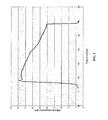
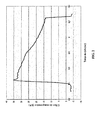
- the measurement of the compression force over time makes it possible to determine the compression curve of a given plant powder. This compression curve is specific to each plant powder as a function of its elasticity, its moisture content, etc.
- the compaction stress must be maintained at a constant volume for a specified duration longer than the time required to reach the compaction point. This compaction point is identifiable in the compression curve.
- Roasted and milled coffee of 1mm average grain size, with a 4% loss of volatile matter after a stay of 20 minutes at 120 ° C, is compacted by means of a compaction system allowing to arrive at a constant volume controlled. 7 g of powder are reduced to 30% of their initial volume in 0.4 seconds, and this volume is maintained for 0.85 seconds.
- a cylindrical flat pellet with a density of 0.76 g / cm 3 is obtained. This pellet has a loss of volatile matter of 4% after a residence time of 20 minutes at 120 ° C .; under 40 megapascal at 20 ° C, it exudes 0.05% oil; under 100 megapascal at 20 ° C it exudes 0.25% oil.
- a force of 50 Newton is applied according to a transverse diameter; the pellet is not damaged. 5 similar pellets fall by 1.5m and give a weight loss by breaking greater than 30%; 5 other pellets falling 1m give a weight loss of only 3%.
- Hot water at 80 ° C is produced by a coffee maker, and is passed 500 cm3 on these pellets in the filter.
- An aroma coffee equivalent to that obtained with powdered coffee is collected with a reduced bitterness.
- the ratio of the amount of dry extract leached between the beverages obtained respectively from pellet and powder is 85%.
- Example 1 is repeated with different operating conditions. These conditions and the results obtained are indicated, with those of Example 1, in the following table, the other conditions and results being the same as in Example 1.
Landscapes
- Life Sciences & Earth Sciences (AREA)
- Chemical & Material Sciences (AREA)
- Engineering & Computer Science (AREA)
- Food Science & Technology (AREA)
- Polymers & Plastics (AREA)
- Health & Medical Sciences (AREA)
- Nutrition Science (AREA)
- Tea And Coffee (AREA)
- Seasonings (AREA)
- Coloring Foods And Improving Nutritive Qualities (AREA)
- General Preparation And Processing Of Foods (AREA)
- Agricultural Chemicals And Associated Chemicals (AREA)
- Preparation Of Compounds By Using Micro-Organisms (AREA)
- Fertilizers (AREA)
Description
- La présente invention concerne des pastilles permettant la préparation de café par contact avec de l'eau chaude. Elle concerne également le procédé de préparation permettant de fabriquer les dites pastilles.
- On sait que le consommateur ordinaire de boissons chaudes, notamment de café, les prépare habituellement par l'un ou l'autre des procédés de percolation, d'infusion ou de lixiviation. Ces termes, dans leurs sens propre, désignent les opérations suivantes :
- dans la percolation, il y a passage d'eau sous forme liquide ou vapeur à travers une poudre ou un solide, le passage étant forcé sous l'effet de la pression appliquée à l'eau.
- dans l'infusion, on met directement dans la tasse ou l'on doit boire de la poudre solide, et on verse l'eau chaude dessus, et on laisse séjourner l'ensemble pendant plusieurs minutes. Dans le cas du café, ce mode de préparation fournit ce qui est connu sous le nom de « café à la turque ». Selon une variante de l'infusion, la poudre de café est mise dans un sachet qu'on laisse tremper dans l'eau chaude. Une autre variante de l'infusion est pratiquée dans des cafetières surtout répandues au Royaume-Uni, la poudre séjournant dans l'eau chaude de la cafetière, puis une opération de poussage d'un piston filtrant permet de localiser le marc au fond de la cafetière. Certains végétaux peuvent donner lieu à une boisson chaude par décoction, la décoction se distinguant de l'infusion par le fait que l'eau est à température d'ébullition.
- dans la lixiviation, on place le café en poudre dans un filtre en papier porté par une cafetière ; le filtre a une forme générale à peu près conique, et on verse de l'eau chaude qui lèche et/ou traverse la poudre et passe lentement à travers le filtre en papier en descendant sous l'effet de la simple gravité. La cafetière a pour rôle principal de chauffer l'eau et de porter le filtre ; il s'agit donc d'un matériel de grande simplicité.
- Dans un mode de réalisation particulier, les pastilles selon l'invention sont mises en oeuvre dans des procédés de lixiviation pour la préparation de boisson chaudes. L'usage de poudre est très répandu car il facilite grandement l'exhalaison de l'arôme et des qualités gustatives, mais il présente quelques inconvénients, comme le volume important par rapport au poids, la difficulté de dosage, et la saleté quand on en laisse tomber lors des manipulations
- Le café à la turque à l'inconvénient de laisser le marc de café dans la tasse où l'on boit, ce qui est désagréable à boire si le marc passe dans la bouche. L'usage de sachets à l'inconvénient de laisser la poudre à l'air avant usage, et donc de perdre de l'arôme ; en outre l'usage de cafetière à piston filtrant nécessite de posséder ce type spécial de cafetière, et si la quantité de boisson à préparer n'est pas égal à celui du volume de la cafetière, on gaspille le café.
- La boisson café obtenue par percolation a l'inconvénient qu'il faut posséder ce type de cafetières, souvent les tasses sont préparées une à une, ce qui est désagréable quand on fait du café pour un groupe de personnes. À cause de la pression à exercer, le matériel doit être solide et relativement coûteux. Ce système a aussi l'inconvénient de faire du café de force et de concentration déterminée, souvent excessive.
- Il est donc très désirable de fournir des boissons chaudes à base de produits végétaux, spécialement de café, sous une forme adaptée à la lixiviation (c'est-à-dire à la préparation de boisson chaude par passage de l'eau chaude sur un ingrédient solide par simple gravité), sans pour autant que cette forme appropriée à la lixiviation ne soit utilisable que pour la préparation de boisson par lixiviation.
- On a bien pensé à faire des pastilles, ou comprimés de poudre de café, mais cela va à l'encontre du préjugé a priori très favorable en faveur des poudres dont il a été parlé plus haut. D'ailleurs, les brevets qui ont quand même tenté de faire des comprimés avaient en vue avant tout la percolation (brevet
US 3,511,666 , brevetBE 792661 EP 0 229 920 ), et l'usage éventuel de sacs préconisés pour contenir les dits comprimés était significatif de la mauvaise cohésion desdits comprimés, cette mauvaise cohésion étant elle-même un résultat de ce que les procédés proposés tentaient de comprimer sans trop s'éloigner de l'état pulvérulent favorable à l'exhalaison des arômes et qualités gustatives, ledit état étant jugé a priori le plus désirable. - Pourtant, pour des raisons de facilité de transport, de manipulation et d'utilisation, il est de plus en plus courant de disposer de produits compacts. Ainsi, dans le domaine alimentaire, on cherche à transformer des composés originalement sous une forme pulvérulente en produits compacts afin de faciliter leur transport, leur manipulation et leur utilisation. En particulier, disposer de produits compacts permet de simplifier le dosage de ces composés par exemple pour réaliser des décoctions, des infusions ou des lixiviations dans l'eau. La forme compacte permet également d'éviter la dissémination non souhaitée de particules fines et d'améliorer la résistance à l'oxydation des composés concernés.
- Il serait utile de pouvoir disposer de produits compacts à base de composés végétaux naturels préalablement broyés et se trouvant à l'état de poudres.
- Toutefois, la compaction de tels composés sous forme de poudres à des cadences suffisantes pour autoriser une exploitation industrielle est rendue particulièrement difficile du fait de la composition chimique des végétaux naturels de ces poudres. En effet, les composés végétaux présents dans ces poudres comprennent souvent des polymères, comme par exemple de la cellulose, de l'hémicellulose, de la lignine, qui présentent une forte composante de déformation élastique. Cette composante de déformation élastique entraîne une instabilité des produits obtenus par compaction de ces poudres végétales selon les procédés classiques de compaction de l'art antérieur : ainsi les produits obtenus peuvent être instables, fragiles et sujets à l'attrition lorsqu'on a utilisé une faible force de compaction. Au contraire, les produits obtenus présentent des phénomènes de clivage, et donc une fragilité insatisfaisante, lorsqu'on utilise une force de compaction élevée.
- Il peut être proposé d'ajouter à ces poudres de composés végétaux des excipients pour limiter les effets de leur composante de déformation élastique. Toutefois, en particulier dans le domaine de l'alimentaire, ces excipients doivent pouvoir être ingérés. Ils ne doivent pas non plus altérer le goût ou l'effet du produit alimentaire dans lequel ils sont rajoutés.
- Ainsi, il existe le besoin d'un procédé permettant de compacter de façon industrielle des poudres de composés végétaux naturels afin d'obtenir des produits compacts ingérables présentant d'une part une stabilité et une résistance les rendant faciles à transporter et à manipuler, et d'autre part une aptitude au délitement dans l'eau chaude les rendant propices à la préparation de solutions dosées, comme par exemple des décoctions.
- Le document
US 3,121, 635 décrit un procédé pour obtenir des pastilles compactées à partir de poudre de café. Le procédé comprend une humidification de la poudre avec de l'eau, une compaction à pression constante puis une dessiccation. Ce procédé, comprenant un ajout d'eau puis une dessiccation, conduit cependant immanquablement à une perte d'arômes. - La demande de brevet
EP 0 229 920 décrit également un procédé pour compacter de la poudre de café. La compaction s'effectue sous une pression constante de 20.7-48.3 MPa et s'accompagne d'une exsudation notable d'huiles. Lors de l'utilisation de ces pastilles de café, il peut cependant être observé une altération du goût et notamment une accentuation de l'amertume. L'altération des propriétés gustatives est également illustrée par l'obtention après lixiviation d'un rendement en extrait sec supérieur à celui obtenu pour la poudre de café et donc supérieur à 100%. -
CA 808 588 A décrit un procédé pour la préparation de comprimés à base de café. La compression a lieu à une pression de 8 000-13 000 psig pendant un intervalle de temps suffisamment long pour arriver à un produit avec un rendement relatif en extrait augmenté de 10-20% par rapport à une quantité équivalente de café fraichement torréfié et moulu. Ce traitement provoque aussi un dégazage prononcé du café. Les comprimés fournissent du café qui contient moins d'huile de café. Des durées de compression de 0.2-0.5 s à une pression constante de 10 000 psig, ainsi que la préparation de café à partir de ces comprimés sont aussi divulgués. -
US-A-3 770 457 décrit un procédé de préparation de comprimés de café, avec une étape de dégazage initiale en maintenant le café à des conditions ambiantes pendant au moins 3 heures, suivi par une étape de compression à une pression de 8 000-16 000 psi après chauffage de la poudre de café. La compression à une pression de 8 000 - 16 000 psi est maintenue pendant une durée suffisamment longue pour obtenir une tablette présentant un rendement en extrait est augmenté d'au moins 10% par rapport à une quantité équivalente de café fraichement torréfié et moulu. L'étape de dégazage est essentielle pour éviter l'apparition de fissures dans les comprimés. La distribution des tailles des particules de café est, de préférence, ainsi que la taille de 85% des particules de café se situe entre 12 et 30 U.S. Standard mesh et la taille de 15% des particules est inférieure à 30 mesh. - Le problème est donc de developper des produits compacts, à base d'ingrédients végétaux, résistants aux chocs, se délitant dans l'eau et possédant des propriétés gustatives satisfaisantes.
- La demanderesse a maintenant constaté de façon surprenante que le compactage des poudres végétales à volume constant plutôt qu'à pression constante permet d'obtenir des produits à la fois suffisamment résistants et conservant leurs propriétés gustatives.
- Ainsi, après décoction, le rendement en extrait sec des produits compacts selon l'invention est comparable ou inférieur au rendement obtenu avec les poudres végétales de départ. Les qualités gustatives des poudres végétales sont ainsi conservées ou améliorées.
- Il est probable que les procédés selon l'état de la technique comportent l'application d'une pression top élevée ayant pour conséquence une modification des propriétés gustatives des produits obtenus. Cette « surcompression » se traduisant lors de la mise en contact avec l'eau chaude par des rendements relatifs en extraits secs trop élevés. En effet, d'un point de vue gustatif, il ne s'agit pas de préparer des produits « pressés » mais des produits compactés dont les arômes seront extraits lors de la mise en contact avec l'eau par par percolation, infusion ou lixiviation notamment. Un but de la présente invention est de faire des produits compactés à base d'ingrédients végétaux à l'état solide, à base de café, permettant la préparation de boissons chaudes par lixiviation, tout en étant quand même éventuellement utilisables en percolation ou infusion.
- Un autre but de l'invention est de fournir des produits pour faire des boissons chaudes, ces produits ayant un volume réduit par rapport aux poudres.
- Un autre but de l'invention est de proposer des produits compactés, ou pastilles, ou comprimés, permettant une bonne exhalaison des arômes et qualités gustatives.
- Un autre but de l'invention est de faire des produits pour boissons chaudes par lixiviation, à base de café, ayant une amertume réduite.
- Un autre but de l'invention est de proposer des produits compactés permettant de préparer commodément de quantités de boissons chaudes correspondant à une ou plusieurs tasses de boissons, la concentration de la boisson correspondant facilement aux désirs des buveurs des dites boissons.
- Un autre but de l'invention est de proposer des pastilles, également appelées comprimés, permettant une lixiviation avec un bon taux d'extraction des matières non aqueuses.
- Un autre but de l'invention est de fournir des pastilles ayant une bonne solidité lors des manipulations normales des dites pastilles.
- Un autre but de l'invention est de fournir des pastilles faciles à fabriquer en grandes séries avec une haute productivité.
- Un autre but de l'invention est de fournir un procédé permettant la préparation ou la fabrication commode des dites pastilles.
- Un autre but de l'invention est de fournir un procédé permettant la préparation ou la fabrication des dites pastilles avec une haute productivité et à une grande cadence.
- D'autres buts et objets de l'invention apparaîtront au cours de la description qui va suivre.
- Il a maintenant été trouvé que tout ou partie de ces buts pouvaient être atteints grâce aux produits selon l'invention et au procédé de l'invention.
- Dans le présent exposé, le signe de séparation, dans les valeurs numériques, entre la partie entière et les décimales est le point et non pas la virgule (10.5 représente dix et demi).
- L'invention a aussi pour objet un procédé de préparation, ou de fabrication, de produits compactés, à base de poudre de café, comprenant les étapes suivantes, tels que revendiquées.
- Selon l'invention, il est préféré que la réduction du volume initial se fasse pendant une durée de 0.1 à 2 seconde, de préférence de 0.2 à 0.8 seconde ; quant à la contrainte de compaction, une fois le volume final obtenu, on préfère la maintenir pendant une durée entre 0.3 et 2 seconde, et encore plus préférentiellement entre 0.5 et 1.5 seconde.
- De manière préférentielle, la contrainte de compaction à volume constant est maintenue au moins jusqu'à la perte d'élasticité de la poudre.
- La quantité de poudre mise en oeuvre dans l'invention est avantageusement comprise entre 2 et 30 grammes, de préférence entre 5 et 15 grammes.
- On a aussi découvert dans l'invention que l'absence de dégazage préalable de la poudre est favorable à la réalisation des produits de l'invention ; un dégazage préalable produit souvent une fragilité par tendance au clivage et/ou une perte d'arômes et/ou de qualités gustatives.
- La compaction selon l'invention s'effectue de préférence avec un système de compactage (ou formage) dans laquelle la pression appliquée est transmise par déplacement sur une longueur déterminée de une ou deux parois (appelées quelquefois poinçon) entourant le matériau à compacter.
- Un mode de réalisation avantageux selon l'invention consiste à mettre en oeuvre une presse à came, c'est-à-dire où le déplacement de la ou des paroi(s) de l'espace de confinement est déterminé par une bielle dont le mouvement est déterminé par une came, les résultats de l'invention étant beaucoup plus faciles à obtenir que si l'on tente d'utiliser une presse hydraulique.
- Ces presses comportent avantageusement un tube de type extrudeur, avec un poinçon à un bout, ou un poinçon à chaque bout.
- La poudre utilisée pour le compactage est l'une ou l'autre des poudres existantes ou commercialisées pour faire de la boisson café. Ces produits sont connus en soi et sont constitués préférentiellement par du café rôti ou torréfié, et moulu, éventuellement mélangé avec des additifs ou de la chicorée. Ces produits de départ, ou poudre, mis en oeuvre dans l'invention, ont une teneur en humidité de l'ordre de 3 à 10% en poids ; soumis à une température de 120°C pendant 20 mn, ils présentent une perte en matières volatiles supérieure à 2% en poids, de préférence comprise entre 2 et 10 %, et de manière encore plus préférentielle comprise entre 3 et 7 %.
- Dans le cas du café, on sait que le café vert est obtenu en décortiquant les grains de café, que ces grains sont ensuite torréfiés (fortement chauffés, on parle aussi de brûlage ou de grillage), ce qui développe leur arôme et leur donne leur couleur foncée. Avec la torréfaction, les grains doublent de grosseur environ. Ils sont ensuite moulus afin d'obtenir une poudre de café dont la taille des particules est généralement de l'ordre de 0.1 à 3mm en moyenne, de préférence 0.2 à 2mm ; la poudre a une perte en masse, à 110°c pendant 20 minutes, généralement supérieure ou égale à 2%. La densité du café moulu obtenu est généralement inférieure ou égale 0,6, de préférence inférieure ou égale à 0.4.
- La présente invention permet la préparation de produits compacts, en particulier pour utilisation dans le domaine alimentaire, stables, résistants, donc faciles à manipuler et à stocker, et délitables dans l'eau, en particulier dans de l'eau chaude.
- Les produits compacts selon l'invention sont susceptibles de générer une boisson par contact avec l'eau notamment par percolation, décoction, infusion ou lixiviation.
- Dans la présente demande, la perte de masse est mesurée selon la méthode suivante : l'échantillon est pesé et sa masse initiale est notée. L'échantillon est porté à 110°C pendant 20 minutes. On mesure alors sa masse finale. On calcule alors le pourcentage de masse perdue entre la masse finale et la masse initiale.
- Dans la présente demande, on définit la granulométrie d'une composition pulvérulente ou d'une poudre par le diamètre moyen des particules constituant cette composition pulvérulente ou cette poudre.
- Par « perte de matières volatiles » on entend la perte de vapeur d'eau ou de tous autres composés volatils.
- Dans la présente demande, on définit la densité apparente par la masse volumique de la composition, qui est la masse rapportée à une unité de volume dans l'état de sa présentation (exprimée en g/cm3). A titre d'exemple la densité de l'eau est égale à 1.
- Le rendement relatif en extrait lixivié, est le rapport relatif pour le produit compacté par rapport à la poudre obtenue par écrasement manuel simple de ce produit compacté, ce rapport étant le quotient des extraits lixiviés dans des conditions semblables (généralement une lixiviation lente de l'ordre de 5mn avec de l'eau à environ 90°C), puis séchés par évaporation de l'eau.
- Dans les procédés selon la présente invention, la poudre est compactée jusqu'à un volume réduit puis la contrainte de compaction est maintenue à volume constant (volume de compaction). Le volume réduit (volume de compaction) est avantageusement inférieur ou égal au volume final de la pastille.
- Le temps de maintien de la contrainte de compaction à volume constant est essentiel pour l'obtention de produits compacts satisfaisants. Ce temps de maintien de la contrainte de compaction peut être déterminé expérimentalement.
- Avantageusement, la demanderesse a trouvé que la contrainte de compaction doit être maintenue au moins jusqu'à la perte d'élasticité de la poudre de composé végétal. En effet, les ingrédients végétaux ont une propriété élastique qui leur permet de recouvrer leur forme et leur volume initial après disparition d'une contrainte. La principale propriété de l'élasticité est d'être réversible. Lors du maintien d'une contrainte de compaction sur une poudre d'ingrédients végétaux, la demanderesse a observé l'existence d'un point de rupture (ou point de compaction) au delà duquel la poudre perd son elasticité. Ce point de rupture pourra être déterminé par l'homme du métier en mesurant la résistance de la poudre lors du maintien de la contrainte de compaction. Ainsi, la mesure de l'effort de compression au cours du temps permet de déterminer la courbe de compression d'une poudre végétale donnée. Cette courbe de compression étant propre à chaque poudre végétale en fonction de son élasticité, de sa teneur en humidité, etc.
- La contrainte de compaction doit être maintenue à volume constant pendant une durée déterminée supérieure à la durée nécessaire pour atteindre le point de compaction. Ce point de compaction est repérable dans la courbe de compression.
- L'invention a donc pour objet un procédé de préparation d'un produit compact solide d'une composition pulvérulente sous forme de produit compact de volume déterminé comprenant les étapes suivantes:
- placer la composition pulvérulente dans un espace confiné ayant la forme dudit produit compact de volume déterminée,
- compacter ladite composition pulvérulente à un volume de compaction inférieur ou égal au volume déterminé,
- maintenir ladite composition comprimée audit volume de compaction pendant une durée déterminée pour dépasser un point de compaction, et
- relâche de la contrainte de compaction.
- Les exemples et figures, donnés à titre non limitatif, illustrent l'invention, et montrent comment elle peut être mise en oeuvre.
-
-
Figure 1 : Courbe de compression du café de l'exemple 1 -
Figure 2 : Courbe de compression du café de l'exemple 2 -
Figure 3 : Courbe de compression du café de l'exemple 3 - Du café rôti et moulu en grain de taille moyenne 1mm, et ayant une perte en matières volatiles de 4 % après un séjour de 20mn à 120°C , est compacté à l'aide d'un système de compactage permettant d'arriver à un volume constant contrôlé. 7g de poudre sont réduits jusqu'à 30% de leur volume initial en 0.4 seconde, et ce volume est maintenue durant 0.85 seconde. On obtient une pastille plate cylindrique de densité 0.76 g/cm3. Cette pastille a une perte en matières volatiles de 4 % après un séjour de 20mn à 120°C ; sous 40 megapascal à 20°C, elle exsude 0.05% d'huile ; sous 100 megapascal à 20°C elle exsude 0.25% d'huile. On applique une force de 50 Newton selon un diamètre transversal ; la pastille n'est pas endommagée. 5 pastilles semblables tombent de 1.5m et donnent une perte en poids par brisement supérieure à 30% ; 5 autres pastilles tombant de 1m donnent une perte en poids de 3% seulement.
- Quatre pastilles semblables sont placées dans un filtre en papier de forme globalement conique, mais ayant une arête linéaire à la place du sommet pointu et ponctuel (arête perpendiculaire à l'axe du cône) ; ces filtres sont connus et commercialisés pour les cafetières fonctionnant par lixiviation.
- De l'eau chaude à 80°C est produite par une cafetière électrique, et on en fait passer 500 cm3 sur ces pastilles dans le filtre. On recueille un café d'arôme équivalent à celui obtenu avec du café en poudre, avec une amertume réduite.
- Le rapport de quantité d'extrait sec lixivié entre les boissons obtenues à partir respectivement de pastille et de poudre est de 85%.
- On reproduit l'exemple 1 avec différentes conditions opératoires. Ces conditions et les résultats obtenus sont indiqués, avec ceux de l'exemple 1, dans le tableau suivant, les autres conditions et résultats étant les mêmes qu'à l'exemple 1.
EXEMPLE 1 2 3 4 5 6 7 8 9 Quantité de poudre mise en oeuvre, en grammes 7 7 7 7 7 6 8 7 7 Compaction avec réduction de volume de la poudre (exprimé en pourcent) 30 30 30 30 30 30 30 40 20 Durée en secondes de la compaction avant d'atteindre le volume minimal final 0.4 0.4 0.4 0.4 0.4 0.4 0.4 0.4 0.4 Durée en seconds du maintien sous pression du volume constant (de la pastille) 0.85 0.65 0.85 0.85 1.1 1.1 0.65 1.1 0.65 Densité de la pastille produite en g/cm3 0.76 0.69 0.82 0.65 0.87 0.63 0.81 0.69 0.90 Perte en matières volatiles de la poudre de départ et de la pastille d'arrivée, en 20mn à 120°C (en pourcent) 4 4 6 3 4 4 4 4 4 Exsudation à 40 megapascal en pourcent 0.05 0.05 0.05 0.05 0.05 0.05 0.05 0.02 0.02 Exsudation à 100 megapascal en pourcent 0.245 0.245 0.28 0.21 0.245 0.21 0.315 0.22 0.26 Force, en Newton, appliquée selon un diamètre transversal sans qu'il y ait brisement 50 40 55 35 60 33 55 40 60 Perte de poids par brisement de 5 pastilles chutant de 1m 3 4 3 5 1 3 2 4 1 Perte de poids, en %, par brisement de 5 pastilles chutant de 1.5m > 30 > 40 > 20 > 40 > 20 > 35 > 28 > 50 > 15 Pourcentage de quantité d'extrait sec lixivié de la boisson obtenue avec une pastille par rapport à la boisson issue de la poudre 85 90 80 82 81 80 93 94 80
Claims (10)
- Procédé de préparation d'un produit compact à base de poudre de café caractérisé en ce qu'il comprend les étapes suivantes :a. on place de la poudre de café dans un espace confiné,b. on compacte ladite poudre jusqu'à un volume réduit compris entre 20% et 60% du volume initial, de préférence entre 25% et 45%,c. une fois le volume réduit obtenu, on maintient la poudre comprimée audit volume réduit pendant une durée comprise entre 0.2 seconde et 5 secondes,d. on relâche la contrainte de compaction.
- Procédé selon la revendication 1, caractérisé en ce que la réduction du volume initial a lieu pendant une durée de 0.1 à 2 seconde, de préférence de 0.2 à 0.8 seconde, et que le volume réduit est maintenu constant pendant une durée comprise entre 0.3 et 2 secondes, et plus préférentiellement entre 0.5 et 1.5 seconde.
- Procédé selon l'une des revendications 1 ou 2, dans lequel le volume réduit est maintenu constant au moins jusqu'à la perte d'élasticité de la poudre.
- Procédé selon l'une des revendications 1 à 3, caractérisé en ce que la quantité de poudre mise en oeuvre est comprise entre 2 et 30 grammes, de préférence entre 5 et 15 grammes.
- Procédé selon l'une des revendications 1 à 4, sans phase de dégazage préalable de la poudre.
- Procédé selon l'une des revendications 1 à 5, caractérisé en ce que la compaction s'effectue avec un système de compactage dans laquelle la pression appliquée est transmise par déplacement sur une longueur déterminée de une ou deux parois entourant le matériau à compacter.
- Procédé selon l'une des revendications 1 à 6, caractérisé en ce que la poudre utilisée pour le compactage est du café rôti ou torréfié, et moulu, éventuellement mélangé avec des additifs ou de la chicorée, et ayant de préférence une teneur en humidité de l'ordre de 3% à 10% en poids.
- Procédé selon l'une des revendications 1 à 7, caractérisé en ce que la poudre de café présente, lorsqu'elle est soumise à une température de 120°C pendant 20 mn, une perte en matières volatiles supérieure à 2% en poids, de préférence comprise entre 2% et 10%.
- Procédé selon l'une des revendications 1 à 8, caractérisé en ce que la poudre utilisée pour le compactage est du café rôti ou torréfié, et moulu, la taille des particules de poudre étant de 0.2mm à 3mm en moyenne, de préférence 0.4mm à 2mm.
- Produit compact susceptible d'être obtenu selon le procédé de l'une quelconque des revendications 1 à 9.
Priority Applications (1)
| Application Number | Priority Date | Filing Date | Title |
|---|---|---|---|
| PL08717138T PL2129232T3 (pl) | 2007-02-26 | 2008-02-26 | Sposób prasowania proszków roślinnych i otrzymane produkty |
Applications Claiming Priority (3)
| Application Number | Priority Date | Filing Date | Title |
|---|---|---|---|
| FR0701338A FR2912876B1 (fr) | 2007-02-26 | 2007-02-26 | Procede de compaction de poudres vegetales et produits obtenus |
| FR0758272A FR2912877B1 (fr) | 2007-02-26 | 2007-10-12 | Procede de compaction de poudres vegetales et produits obtenus |
| PCT/EP2008/052311 WO2008107342A1 (fr) | 2007-02-26 | 2008-02-26 | Procede de compaction de poudres vegetales et produits obtenus |
Publications (3)
| Publication Number | Publication Date |
|---|---|
| EP2129232A1 EP2129232A1 (fr) | 2009-12-09 |
| EP2129232B1 EP2129232B1 (fr) | 2011-08-31 |
| EP2129232B9 true EP2129232B9 (fr) | 2012-02-22 |
Family
ID=38658464
Family Applications (1)
| Application Number | Title | Priority Date | Filing Date |
|---|---|---|---|
| EP08717138A Active EP2129232B9 (fr) | 2007-02-26 | 2008-02-26 | Procede de compaction de poudres vegetales et produits obtenus |
Country Status (10)
| Country | Link |
|---|---|
| US (2) | US8420150B2 (fr) |
| EP (1) | EP2129232B9 (fr) |
| JP (1) | JP5586964B2 (fr) |
| AT (1) | ATE522145T1 (fr) |
| BR (1) | BRPI0807700B1 (fr) |
| CA (1) | CA2678485C (fr) |
| ES (1) | ES2371512T3 (fr) |
| FR (2) | FR2912876B1 (fr) |
| PL (1) | PL2129232T3 (fr) |
| WO (1) | WO2008107342A1 (fr) |
Families Citing this family (20)
| Publication number | Priority date | Publication date | Assignee | Title |
|---|---|---|---|---|
| RU2413420C2 (ru) * | 2006-01-13 | 2011-03-10 | БЕЛЛОЛИ Джанпаоло | Продукт, полученный из порошкообразного или гранулированного материала, и способ его получения |
| CN104757223B (zh) | 2009-04-09 | 2019-12-10 | 福尔杰咖啡公司 | 咖啡片及其制备方法 |
| US20120015094A1 (en) | 2009-04-09 | 2012-01-19 | The Folgers Coffee Company | Ground roast coffee tablet |
| US8920743B2 (en) | 2011-04-06 | 2014-12-30 | The Clorox Company | Faucet mountable water conditioning devices |
| FR2977128B1 (fr) * | 2011-06-30 | 2014-11-07 | Eurotab | Procede de fabrication de tablettes de cafe soluble |
| GB2515486A (en) * | 2013-06-24 | 2014-12-31 | Kraft Foods R & D Inc | Soluble Beverage Ingredients |
| JP6998764B2 (ja) | 2014-10-01 | 2022-01-18 | ユニリーバー・アイピー・ホールディングス・ベー・フェー | 茶製品及びその調製方法 |
| PL3115316T3 (pl) * | 2015-07-07 | 2018-10-31 | Swiss Coffee Innovation Ag | Kapsułka zawierająca proszek do przygotowania napoju, w szczególności do przygotowania parzonej kawy |
| EP3225566B1 (fr) | 2016-03-31 | 2018-09-05 | Axel Nickel | Capsule contenant de la poudre pour boisson, en particulier destinée a la préparation de café |
| US11896025B2 (en) | 2018-10-01 | 2024-02-13 | The Folger Coffee Company | Coffee composition and items made therefrom |
| DE102018132394A1 (de) * | 2018-12-17 | 2020-06-18 | Hillesheims Kapsel-Manufaktur e.K. | Gewürzmischung in tablettenform |
| EP4470389A3 (fr) * | 2019-03-01 | 2025-05-14 | Voyage Foods, Inc. | Succédanés de café produits à partir de composants individuels |
| WO2021033011A1 (fr) * | 2019-08-18 | 2021-02-25 | Stalmakhou Yury | Procédé de production de tablettes de café |
| EP3788884A1 (fr) * | 2019-09-05 | 2021-03-10 | Delica AG | Capsule compostable ainsi que sa fabrication et son utilisation |
| WO2022132203A1 (fr) | 2020-12-15 | 2022-06-23 | OTP Enterprises LLC | Systèmes et procédés de friture de produits alimentaire |
| ES3020565T3 (en) | 2021-07-16 | 2025-05-23 | Voyage Foods Inc | Chocolate replicas produced from individual components |
| USD1031353S1 (en) | 2021-12-15 | 2024-06-18 | OTP Enterprises LLC | Centrifuging deep fryer |
| EP4580950A2 (fr) * | 2022-08-30 | 2025-07-09 | Pocket Tea, LLC | Sachet à usage oral adaptable par l'utilisateur et procédé d'utilisation |
| JP2025531065A (ja) * | 2022-09-28 | 2025-09-19 | ノヴァデルタ - コメルシオ エ インダストリア デ カフェス,ウニペッソアル,エルディーエー. | コーヒー圧密化プロセス及び加圧フローによる抽出のための圧密化コーヒータブレット |
| JP2025531064A (ja) * | 2022-09-28 | 2025-09-19 | ノヴァデルタ - コメルシオ エ インダストリア デ カフェス,ウニペッソアル,エルディーエー. | 圧密化のプロセス及びそれから得られる寸法安定性を備えたコーヒータブレット |
Family Cites Families (23)
| Publication number | Priority date | Publication date | Assignee | Title |
|---|---|---|---|---|
| BE401697A (fr) * | ||||
| CA808588A (en) * | 1969-03-18 | General Foods Corporation | Method of making coffee tablets | |
| US2371093A (en) * | 1943-08-13 | 1945-03-06 | Walter W Willison | Method of making coffee tablets |
| US3071470A (en) * | 1959-12-24 | 1963-01-01 | Bishop Lee Porter | Method for preparing soluble coffee wafers |
| US3121635A (en) * | 1961-04-13 | 1964-02-18 | Western Instant Products Inc | Method of making soluble coffee tablets |
| US3293041A (en) * | 1963-01-11 | 1966-12-20 | Hills Bros Coffee | Beverage extract tabletting method |
| US3511666A (en) * | 1967-01-11 | 1970-05-12 | Gen Foods Corp | Method of making a pelletized coffee brewing package |
| BE792661A (fr) | 1972-04-19 | 1973-06-13 | Gen Foods Corp | Fabrication de conditionnement de cafe pour percolateur |
| US3801716A (en) * | 1972-08-18 | 1974-04-02 | Gen Foods Corp | Compression-granulation of roasted coffee |
| US3888999A (en) * | 1973-05-30 | 1975-06-10 | Gen Foods Corp | Coffee percolator packages and method |
| US4154864A (en) * | 1974-12-17 | 1979-05-15 | Societe D'assistance Technique Pour Produits Nestle S.A. | Extracts of vegetable materials |
| US4384005A (en) * | 1980-09-26 | 1983-05-17 | General Foods Corporation | Non-friable, readily-soluble, compressed tablets and process for preparing same |
| JPS6236173A (ja) | 1985-08-09 | 1987-02-17 | Wakoudou Kk | 固形成型物およびその製造法 |
| ES2023800B3 (es) * | 1986-01-09 | 1992-02-16 | Nestle Sa | Tabletas de cafe |
| US4975295A (en) * | 1989-08-31 | 1990-12-04 | Sierra Mario A M | Instant coffee tablets |
| US5202067A (en) * | 1991-11-12 | 1993-04-13 | Chemplex Industries, Inc. | Powder compacting press apparatus and methods |
| JP2001128619A (ja) * | 1999-11-09 | 2001-05-15 | Nof Corp | タブレット茶及びその製造方法 |
| JP2005253474A (ja) * | 2000-04-27 | 2005-09-22 | Jinseido:Kk | 緑茶組成物の成形体及びその製造方法 |
| JP2003112298A (ja) | 2001-10-03 | 2003-04-15 | Kakoki Shoji Kk | 圧縮成形装置及びその運転方法 |
| GB2394164B (en) * | 2002-10-16 | 2007-02-07 | Mars Inc | Process for the preparation of a coffee product |
| EP1980155A1 (fr) | 2007-04-06 | 2008-10-15 | Sara Lee/DE N.V. | Procédé de fabrication d'une pastille de café, et pastille de café obtenue avec un tel procédé pour préparer du café |
| BRPI0809574B1 (pt) | 2007-04-06 | 2017-11-21 | Koninklijke Douwe Egberts B.V. | Method for manufacturing a coffee board designed to prepare coffee, and, coffee tablet |
| EP1977651A1 (fr) | 2007-04-06 | 2008-10-08 | Sara Lee/DE N.V. | Procédé de préparation d'une boisson et une tablette pour ce procédé |
-
2007
- 2007-02-26 FR FR0701338A patent/FR2912876B1/fr active Active
- 2007-10-12 FR FR0758272A patent/FR2912877B1/fr active Active
-
2008
- 2008-02-26 US US12/528,444 patent/US8420150B2/en active Active
- 2008-02-26 BR BRPI0807700A patent/BRPI0807700B1/pt active IP Right Grant
- 2008-02-26 EP EP08717138A patent/EP2129232B9/fr active Active
- 2008-02-26 JP JP2009550729A patent/JP5586964B2/ja active Active
- 2008-02-26 AT AT08717138T patent/ATE522145T1/de not_active IP Right Cessation
- 2008-02-26 ES ES08717138T patent/ES2371512T3/es active Active
- 2008-02-26 WO PCT/EP2008/052311 patent/WO2008107342A1/fr not_active Ceased
- 2008-02-26 CA CA2678485A patent/CA2678485C/fr active Active
- 2008-02-26 PL PL08717138T patent/PL2129232T3/pl unknown
- 2008-10-10 US US12/682,244 patent/US8734692B2/en not_active Expired - Fee Related
Also Published As
| Publication number | Publication date |
|---|---|
| CA2678485A1 (fr) | 2008-09-12 |
| JP2010518844A (ja) | 2010-06-03 |
| ES2371512T3 (es) | 2012-01-04 |
| PL2129232T3 (pl) | 2012-01-31 |
| JP5586964B2 (ja) | 2014-09-10 |
| EP2129232A1 (fr) | 2009-12-09 |
| BRPI0807700B1 (pt) | 2017-02-14 |
| WO2008107342A1 (fr) | 2008-09-12 |
| FR2912877A1 (fr) | 2008-08-29 |
| US8734692B2 (en) | 2014-05-27 |
| BRPI0807700A2 (pt) | 2014-05-27 |
| ATE522145T1 (de) | 2011-09-15 |
| US20100323083A1 (en) | 2010-12-23 |
| FR2912876B1 (fr) | 2009-05-15 |
| EP2129232B1 (fr) | 2011-08-31 |
| FR2912877B1 (fr) | 2011-04-01 |
| FR2912876A1 (fr) | 2008-08-29 |
| US8420150B2 (en) | 2013-04-16 |
| US20100297320A1 (en) | 2010-11-25 |
| CA2678485C (fr) | 2015-04-28 |
Similar Documents
| Publication | Publication Date | Title |
|---|---|---|
| EP2129232B1 (fr) | Procede de compaction de poudres vegetales et produits obtenus | |
| EP2197290B1 (fr) | Procede de compaction d'une composition pulverulente a volume constant | |
| FR2971404A1 (fr) | Compacts de soupe | |
| CN115315190A (zh) | 饮料合成物 | |
| LU502556B1 (en) | Fuel briquettes, process and device for their production | |
| FR2927770A1 (fr) | Procede de compaction d'une composition pulverulente a volume constant. | |
| RU2378837C1 (ru) | Способ производства ароматизированного кофейного напитка "смоленский" | |
| RU2379914C1 (ru) | Способ производства ароматизированного кофейного напитка "осенний" | |
| RU2367186C1 (ru) | Способ получения инстант-порошка для топинамбурно-мандаринового напитка | |
| RU2379916C1 (ru) | Способ производства ароматизированного кофейного напитка "осенний" | |
| RU2384084C1 (ru) | Способ производства ароматизированного кофейного напитка "осенний" | |
| RU2379913C1 (ru) | Способ производства ароматизированного кофейного напитка "осенний" | |
| RU2384168C1 (ru) | Способ производства ароматизированного кофейного напитка "подмосковный" | |
| RU2396780C1 (ru) | Способ производства ароматизированного кофейного напитка "смоленский" | |
| RU2377831C1 (ru) | Способ производства ароматизированного кофейного напитка "битцевский" | |
| RU2379915C1 (ru) | Способ производства ароматизированного кофейного напитка "осенний" | |
| RU2378852C1 (ru) | Способ производства ароматизированного кофейного напитка "осенний" | |
| RU2386306C1 (ru) | Способ производства инстант-порошка для ароматизированного кофейного напитка "подмосковный" | |
| RU2387215C1 (ru) | Способ производства инстант-порошка для ароматизированного кофейного напитка "подмосковный" | |
| RU2377848C1 (ru) | Способ производства ароматизированного кофейного напитка "битцевский" | |
| RU2384083C1 (ru) | Способ производства ароматизированного кофейного напитка "осенний" | |
| RU2370053C1 (ru) | Способ производства инстант-порошка для ароматизированного кофейного напитка "осенний" | |
| FR3098091A1 (fr) | Procede de deshydratation de produits liquides, semi-liquides ou pateux comprenant une etape de cryogenie sous pression et une etape de lyophilisation | |
| RU2370064C1 (ru) | Способ производства инстант-порошка для ароматизированного кофейного напитка "кубань" | |
| RU2377845C1 (ru) | Способ производства ароматизированного кофейного напитка "битцевский" |
Legal Events
| Date | Code | Title | Description |
|---|---|---|---|
| PUAI | Public reference made under article 153(3) epc to a published international application that has entered the european phase |
Free format text: ORIGINAL CODE: 0009012 |
|
| 17P | Request for examination filed |
Effective date: 20090925 |
|
| AK | Designated contracting states |
Kind code of ref document: A1 Designated state(s): AT BE BG CH CY CZ DE DK EE ES FI FR GB GR HR HU IE IS IT LI LT LU LV MC MT NL NO PL PT RO SE SI SK TR |
|
| 17Q | First examination report despatched |
Effective date: 20091228 |
|
| DAX | Request for extension of the european patent (deleted) | ||
| GRAP | Despatch of communication of intention to grant a patent |
Free format text: ORIGINAL CODE: EPIDOSNIGR1 |
|
| RAP1 | Party data changed (applicant data changed or rights of an application transferred) |
Owner name: EUROTAB |
|
| GRAS | Grant fee paid |
Free format text: ORIGINAL CODE: EPIDOSNIGR3 |
|
| GRAA | (expected) grant |
Free format text: ORIGINAL CODE: 0009210 |
|
| AK | Designated contracting states |
Kind code of ref document: B1 Designated state(s): AT BE BG CH CY CZ DE DK EE ES FI FR GB GR HR HU IE IS IT LI LT LU LV MC MT NL NO PL PT RO SE SI SK TR |
|
| REG | Reference to a national code |
Ref country code: GB Ref legal event code: FG4D Free format text: NOT ENGLISH Ref country code: CH Ref legal event code: EP |
|
| REG | Reference to a national code |
Ref country code: IE Ref legal event code: FG4D Free format text: LANGUAGE OF EP DOCUMENT: FRENCH |
|
| REG | Reference to a national code |
Ref country code: CH Ref legal event code: NV Representative=s name: MICHELI & CIE SA |
|
| REG | Reference to a national code |
Ref country code: DE Ref legal event code: R096 Ref document number: 602008009308 Country of ref document: DE Effective date: 20111103 |
|
| REG | Reference to a national code |
Ref country code: NL Ref legal event code: T3 |
|
| REG | Reference to a national code |
Ref country code: SE Ref legal event code: TRGR |
|
| REG | Reference to a national code |
Ref country code: ES Ref legal event code: FG2A Ref document number: 2371512 Country of ref document: ES Kind code of ref document: T3 Effective date: 20120104 |
|
| LTIE | Lt: invalidation of european patent or patent extension |
Effective date: 20110831 |
|
| PG25 | Lapsed in a contracting state [announced via postgrant information from national office to epo] |
Ref country code: IS Free format text: LAPSE BECAUSE OF FAILURE TO SUBMIT A TRANSLATION OF THE DESCRIPTION OR TO PAY THE FEE WITHIN THE PRESCRIBED TIME-LIMIT Effective date: 20111231 Ref country code: LT Free format text: LAPSE BECAUSE OF FAILURE TO SUBMIT A TRANSLATION OF THE DESCRIPTION OR TO PAY THE FEE WITHIN THE PRESCRIBED TIME-LIMIT Effective date: 20110831 Ref country code: NO Free format text: LAPSE BECAUSE OF FAILURE TO SUBMIT A TRANSLATION OF THE DESCRIPTION OR TO PAY THE FEE WITHIN THE PRESCRIBED TIME-LIMIT Effective date: 20111130 Ref country code: HR Free format text: LAPSE BECAUSE OF FAILURE TO SUBMIT A TRANSLATION OF THE DESCRIPTION OR TO PAY THE FEE WITHIN THE PRESCRIBED TIME-LIMIT Effective date: 20110831 |
|
| REG | Reference to a national code |
Ref country code: PL Ref legal event code: T3 |
|
| REG | Reference to a national code |
Ref country code: AT Ref legal event code: MK05 Ref document number: 522145 Country of ref document: AT Kind code of ref document: T Effective date: 20110831 |
|
| PG25 | Lapsed in a contracting state [announced via postgrant information from national office to epo] |
Ref country code: LV Free format text: LAPSE BECAUSE OF FAILURE TO SUBMIT A TRANSLATION OF THE DESCRIPTION OR TO PAY THE FEE WITHIN THE PRESCRIBED TIME-LIMIT Effective date: 20110831 Ref country code: SI Free format text: LAPSE BECAUSE OF FAILURE TO SUBMIT A TRANSLATION OF THE DESCRIPTION OR TO PAY THE FEE WITHIN THE PRESCRIBED TIME-LIMIT Effective date: 20110831 Ref country code: GR Free format text: LAPSE BECAUSE OF FAILURE TO SUBMIT A TRANSLATION OF THE DESCRIPTION OR TO PAY THE FEE WITHIN THE PRESCRIBED TIME-LIMIT Effective date: 20111201 Ref country code: CY Free format text: LAPSE BECAUSE OF FAILURE TO SUBMIT A TRANSLATION OF THE DESCRIPTION OR TO PAY THE FEE WITHIN THE PRESCRIBED TIME-LIMIT Effective date: 20110831 Ref country code: AT Free format text: LAPSE BECAUSE OF FAILURE TO SUBMIT A TRANSLATION OF THE DESCRIPTION OR TO PAY THE FEE WITHIN THE PRESCRIBED TIME-LIMIT Effective date: 20110831 |
|
| REG | Reference to a national code |
Ref country code: IE Ref legal event code: FD4D |
|
| PG25 | Lapsed in a contracting state [announced via postgrant information from national office to epo] |
Ref country code: SK Free format text: LAPSE BECAUSE OF FAILURE TO SUBMIT A TRANSLATION OF THE DESCRIPTION OR TO PAY THE FEE WITHIN THE PRESCRIBED TIME-LIMIT Effective date: 20110831 Ref country code: IE Free format text: LAPSE BECAUSE OF FAILURE TO SUBMIT A TRANSLATION OF THE DESCRIPTION OR TO PAY THE FEE WITHIN THE PRESCRIBED TIME-LIMIT Effective date: 20110831 Ref country code: CZ Free format text: LAPSE BECAUSE OF FAILURE TO SUBMIT A TRANSLATION OF THE DESCRIPTION OR TO PAY THE FEE WITHIN THE PRESCRIBED TIME-LIMIT Effective date: 20110831 |
|
| PG25 | Lapsed in a contracting state [announced via postgrant information from national office to epo] |
Ref country code: PT Free format text: LAPSE BECAUSE OF FAILURE TO SUBMIT A TRANSLATION OF THE DESCRIPTION OR TO PAY THE FEE WITHIN THE PRESCRIBED TIME-LIMIT Effective date: 20120102 Ref country code: RO Free format text: LAPSE BECAUSE OF FAILURE TO SUBMIT A TRANSLATION OF THE DESCRIPTION OR TO PAY THE FEE WITHIN THE PRESCRIBED TIME-LIMIT Effective date: 20110831 Ref country code: EE Free format text: LAPSE BECAUSE OF FAILURE TO SUBMIT A TRANSLATION OF THE DESCRIPTION OR TO PAY THE FEE WITHIN THE PRESCRIBED TIME-LIMIT Effective date: 20110831 |
|
| PG25 | Lapsed in a contracting state [announced via postgrant information from national office to epo] |
Ref country code: DK Free format text: LAPSE BECAUSE OF FAILURE TO SUBMIT A TRANSLATION OF THE DESCRIPTION OR TO PAY THE FEE WITHIN THE PRESCRIBED TIME-LIMIT Effective date: 20110831 |
|
| PLBE | No opposition filed within time limit |
Free format text: ORIGINAL CODE: 0009261 |
|
| STAA | Information on the status of an ep patent application or granted ep patent |
Free format text: STATUS: NO OPPOSITION FILED WITHIN TIME LIMIT |
|
| 26N | No opposition filed |
Effective date: 20120601 |
|
| REG | Reference to a national code |
Ref country code: DE Ref legal event code: R097 Ref document number: 602008009308 Country of ref document: DE Effective date: 20120601 |
|
| PG25 | Lapsed in a contracting state [announced via postgrant information from national office to epo] |
Ref country code: MC Free format text: LAPSE BECAUSE OF NON-PAYMENT OF DUE FEES Effective date: 20120229 |
|
| REG | Reference to a national code |
Ref country code: DE Ref legal event code: R082 Ref document number: 602008009308 Country of ref document: DE Representative=s name: KILIAN KILIAN & PARTNER, DE Ref country code: DE Ref legal event code: R082 Ref document number: 602008009308 Country of ref document: DE Representative=s name: KILIAN KILIAN & PARTNER MBB PATENTANWAELTE, DE |
|
| PG25 | Lapsed in a contracting state [announced via postgrant information from national office to epo] |
Ref country code: BG Free format text: LAPSE BECAUSE OF FAILURE TO SUBMIT A TRANSLATION OF THE DESCRIPTION OR TO PAY THE FEE WITHIN THE PRESCRIBED TIME-LIMIT Effective date: 20111130 |
|
| PG25 | Lapsed in a contracting state [announced via postgrant information from national office to epo] |
Ref country code: MT Free format text: LAPSE BECAUSE OF FAILURE TO SUBMIT A TRANSLATION OF THE DESCRIPTION OR TO PAY THE FEE WITHIN THE PRESCRIBED TIME-LIMIT Effective date: 20110831 |
|
| PG25 | Lapsed in a contracting state [announced via postgrant information from national office to epo] |
Ref country code: TR Free format text: LAPSE BECAUSE OF FAILURE TO SUBMIT A TRANSLATION OF THE DESCRIPTION OR TO PAY THE FEE WITHIN THE PRESCRIBED TIME-LIMIT Effective date: 20110831 |
|
| PG25 | Lapsed in a contracting state [announced via postgrant information from national office to epo] |
Ref country code: LU Free format text: LAPSE BECAUSE OF NON-PAYMENT OF DUE FEES Effective date: 20120226 |
|
| PG25 | Lapsed in a contracting state [announced via postgrant information from national office to epo] |
Ref country code: HU Free format text: LAPSE BECAUSE OF FAILURE TO SUBMIT A TRANSLATION OF THE DESCRIPTION OR TO PAY THE FEE WITHIN THE PRESCRIBED TIME-LIMIT Effective date: 20080226 |
|
| REG | Reference to a national code |
Ref country code: FR Ref legal event code: PLFP Year of fee payment: 9 |
|
| REG | Reference to a national code |
Ref country code: FR Ref legal event code: PLFP Year of fee payment: 10 |
|
| REG | Reference to a national code |
Ref country code: FR Ref legal event code: PLFP Year of fee payment: 11 |
|
| REG | Reference to a national code |
Ref country code: FI Ref legal event code: MAE |
|
| REG | Reference to a national code |
Ref country code: SE Ref legal event code: EUG |
|
| GBPC | Gb: european patent ceased through non-payment of renewal fee |
Effective date: 20200226 |
|
| PG25 | Lapsed in a contracting state [announced via postgrant information from national office to epo] |
Ref country code: SE Free format text: LAPSE BECAUSE OF NON-PAYMENT OF DUE FEES Effective date: 20200227 Ref country code: FI Free format text: LAPSE BECAUSE OF NON-PAYMENT OF DUE FEES Effective date: 20200226 |
|
| PG25 | Lapsed in a contracting state [announced via postgrant information from national office to epo] |
Ref country code: GB Free format text: LAPSE BECAUSE OF NON-PAYMENT OF DUE FEES Effective date: 20200226 |
|
| PG25 | Lapsed in a contracting state [announced via postgrant information from national office to epo] |
Ref country code: PL Free format text: LAPSE BECAUSE OF NON-PAYMENT OF DUE FEES Effective date: 20200226 |
|
| PGFP | Annual fee paid to national office [announced via postgrant information from national office to epo] |
Ref country code: NL Payment date: 20250128 Year of fee payment: 18 |
|
| PGFP | Annual fee paid to national office [announced via postgrant information from national office to epo] |
Ref country code: DE Payment date: 20250212 Year of fee payment: 18 |
|
| PGFP | Annual fee paid to national office [announced via postgrant information from national office to epo] |
Ref country code: ES Payment date: 20250317 Year of fee payment: 18 |
|
| PGFP | Annual fee paid to national office [announced via postgrant information from national office to epo] |
Ref country code: BE Payment date: 20250226 Year of fee payment: 18 Ref country code: CH Payment date: 20250301 Year of fee payment: 18 |
|
| PGFP | Annual fee paid to national office [announced via postgrant information from national office to epo] |
Ref country code: IT Payment date: 20250210 Year of fee payment: 18 |
|
| PGFP | Annual fee paid to national office [announced via postgrant information from national office to epo] |
Ref country code: FR Payment date: 20260114 Year of fee payment: 19 |