EP2137327B1 - Acier pour formage a chaud ou trempe sous outil, a ductilite amelioree - Google Patents
Acier pour formage a chaud ou trempe sous outil, a ductilite amelioree Download PDFInfo
- Publication number
- EP2137327B1 EP2137327B1 EP08775621A EP08775621A EP2137327B1 EP 2137327 B1 EP2137327 B1 EP 2137327B1 EP 08775621 A EP08775621 A EP 08775621A EP 08775621 A EP08775621 A EP 08775621A EP 2137327 B1 EP2137327 B1 EP 2137327B1
- Authority
- EP
- European Patent Office
- Prior art keywords
- steel
- blank
- optionally
- temperature
- hot
- Prior art date
- Legal status (The legal status is an assumption and is not a legal conclusion. Google has not performed a legal analysis and makes no representation as to the accuracy of the status listed.)
- Active
Links
Images

Classifications
-
- C—CHEMISTRY; METALLURGY
- C21—METALLURGY OF IRON
- C21D—MODIFYING THE PHYSICAL STRUCTURE OF FERROUS METALS; GENERAL DEVICES FOR HEAT TREATMENT OF FERROUS OR NON-FERROUS METALS OR ALLOYS; MAKING METAL MALLEABLE, e.g. BY DECARBURISATION OR TEMPERING
- C21D8/00—Modifying the physical properties of ferrous metals or ferrous alloys by deformation combined with, or followed by, heat treatment
- C21D8/02—Modifying the physical properties of ferrous metals or ferrous alloys by deformation combined with, or followed by, heat treatment during manufacturing of plates or strips
- C21D8/0247—Modifying the physical properties of ferrous metals or ferrous alloys by deformation combined with, or followed by, heat treatment during manufacturing of plates or strips characterised by the heat treatment
- C21D8/0263—Modifying the physical properties of ferrous metals or ferrous alloys by deformation combined with, or followed by, heat treatment during manufacturing of plates or strips characterised by the heat treatment following hot rolling
-
- C—CHEMISTRY; METALLURGY
- C22—METALLURGY; FERROUS OR NON-FERROUS ALLOYS; TREATMENT OF ALLOYS OR NON-FERROUS METALS
- C22C—ALLOYS
- C22C38/00—Ferrous alloys, e.g. steel alloys
- C22C38/18—Ferrous alloys, e.g. steel alloys containing chromium
- C22C38/40—Ferrous alloys, e.g. steel alloys containing chromium with nickel
- C22C38/58—Ferrous alloys, e.g. steel alloys containing chromium with nickel with more than 1.5% by weight of manganese
-
- B—PERFORMING OPERATIONS; TRANSPORTING
- B32—LAYERED PRODUCTS
- B32B—LAYERED PRODUCTS, i.e. PRODUCTS BUILT-UP OF STRATA OF FLAT OR NON-FLAT, e.g. CELLULAR OR HONEYCOMB, FORM
- B32B15/00—Layered products comprising a layer of metal
- B32B15/01—Layered products comprising a layer of metal all layers being exclusively metallic
- B32B15/012—Layered products comprising a layer of metal all layers being exclusively metallic one layer being formed of an iron alloy or steel, another layer being formed of aluminium or an aluminium alloy
-
- B—PERFORMING OPERATIONS; TRANSPORTING
- B32—LAYERED PRODUCTS
- B32B—LAYERED PRODUCTS, i.e. PRODUCTS BUILT-UP OF STRATA OF FLAT OR NON-FLAT, e.g. CELLULAR OR HONEYCOMB, FORM
- B32B15/00—Layered products comprising a layer of metal
- B32B15/01—Layered products comprising a layer of metal all layers being exclusively metallic
- B32B15/013—Layered products comprising a layer of metal all layers being exclusively metallic one layer being formed of an iron alloy or steel, another layer being formed of a metal other than iron or aluminium
-
- C—CHEMISTRY; METALLURGY
- C21—METALLURGY OF IRON
- C21D—MODIFYING THE PHYSICAL STRUCTURE OF FERROUS METALS; GENERAL DEVICES FOR HEAT TREATMENT OF FERROUS OR NON-FERROUS METALS OR ALLOYS; MAKING METAL MALLEABLE, e.g. BY DECARBURISATION OR TEMPERING
- C21D1/00—General methods or devices for heat treatment, e.g. annealing, hardening, quenching or tempering
- C21D1/18—Hardening; Quenching with or without subsequent tempering
-
- C—CHEMISTRY; METALLURGY
- C21—METALLURGY OF IRON
- C21D—MODIFYING THE PHYSICAL STRUCTURE OF FERROUS METALS; GENERAL DEVICES FOR HEAT TREATMENT OF FERROUS OR NON-FERROUS METALS OR ALLOYS; MAKING METAL MALLEABLE, e.g. BY DECARBURISATION OR TEMPERING
- C21D6/00—Heat treatment of ferrous alloys
- C21D6/005—Heat treatment of ferrous alloys containing Mn
-
- C—CHEMISTRY; METALLURGY
- C21—METALLURGY OF IRON
- C21D—MODIFYING THE PHYSICAL STRUCTURE OF FERROUS METALS; GENERAL DEVICES FOR HEAT TREATMENT OF FERROUS OR NON-FERROUS METALS OR ALLOYS; MAKING METAL MALLEABLE, e.g. BY DECARBURISATION OR TEMPERING
- C21D7/00—Modifying the physical properties of iron or steel by deformation
- C21D7/13—Modifying the physical properties of iron or steel by deformation by hot working
-
- C—CHEMISTRY; METALLURGY
- C21—METALLURGY OF IRON
- C21D—MODIFYING THE PHYSICAL STRUCTURE OF FERROUS METALS; GENERAL DEVICES FOR HEAT TREATMENT OF FERROUS OR NON-FERROUS METALS OR ALLOYS; MAKING METAL MALLEABLE, e.g. BY DECARBURISATION OR TEMPERING
- C21D8/00—Modifying the physical properties of ferrous metals or ferrous alloys by deformation combined with, or followed by, heat treatment
- C21D8/02—Modifying the physical properties of ferrous metals or ferrous alloys by deformation combined with, or followed by, heat treatment during manufacturing of plates or strips
-
- C—CHEMISTRY; METALLURGY
- C21—METALLURGY OF IRON
- C21D—MODIFYING THE PHYSICAL STRUCTURE OF FERROUS METALS; GENERAL DEVICES FOR HEAT TREATMENT OF FERROUS OR NON-FERROUS METALS OR ALLOYS; MAKING METAL MALLEABLE, e.g. BY DECARBURISATION OR TEMPERING
- C21D8/00—Modifying the physical properties of ferrous metals or ferrous alloys by deformation combined with, or followed by, heat treatment
- C21D8/02—Modifying the physical properties of ferrous metals or ferrous alloys by deformation combined with, or followed by, heat treatment during manufacturing of plates or strips
- C21D8/0278—Modifying the physical properties of ferrous metals or ferrous alloys by deformation combined with, or followed by, heat treatment during manufacturing of plates or strips involving a particular surface treatment
-
- C—CHEMISTRY; METALLURGY
- C21—METALLURGY OF IRON
- C21D—MODIFYING THE PHYSICAL STRUCTURE OF FERROUS METALS; GENERAL DEVICES FOR HEAT TREATMENT OF FERROUS OR NON-FERROUS METALS OR ALLOYS; MAKING METAL MALLEABLE, e.g. BY DECARBURISATION OR TEMPERING
- C21D8/00—Modifying the physical properties of ferrous metals or ferrous alloys by deformation combined with, or followed by, heat treatment
- C21D8/02—Modifying the physical properties of ferrous metals or ferrous alloys by deformation combined with, or followed by, heat treatment during manufacturing of plates or strips
- C21D8/04—Modifying the physical properties of ferrous metals or ferrous alloys by deformation combined with, or followed by, heat treatment during manufacturing of plates or strips to produce plates or strips for drawing, e.g. for deep-drawing
-
- C—CHEMISTRY; METALLURGY
- C21—METALLURGY OF IRON
- C21D—MODIFYING THE PHYSICAL STRUCTURE OF FERROUS METALS; GENERAL DEVICES FOR HEAT TREATMENT OF FERROUS OR NON-FERROUS METALS OR ALLOYS; MAKING METAL MALLEABLE, e.g. BY DECARBURISATION OR TEMPERING
- C21D8/00—Modifying the physical properties of ferrous metals or ferrous alloys by deformation combined with, or followed by, heat treatment
- C21D8/02—Modifying the physical properties of ferrous metals or ferrous alloys by deformation combined with, or followed by, heat treatment during manufacturing of plates or strips
- C21D8/04—Modifying the physical properties of ferrous metals or ferrous alloys by deformation combined with, or followed by, heat treatment during manufacturing of plates or strips to produce plates or strips for drawing, e.g. for deep-drawing
- C21D8/0478—Modifying the physical properties of ferrous metals or ferrous alloys by deformation combined with, or followed by, heat treatment during manufacturing of plates or strips to produce plates or strips for drawing, e.g. for deep-drawing involving a particular surface treatment
-
- C—CHEMISTRY; METALLURGY
- C21—METALLURGY OF IRON
- C21D—MODIFYING THE PHYSICAL STRUCTURE OF FERROUS METALS; GENERAL DEVICES FOR HEAT TREATMENT OF FERROUS OR NON-FERROUS METALS OR ALLOYS; MAKING METAL MALLEABLE, e.g. BY DECARBURISATION OR TEMPERING
- C21D9/00—Heat treatment, e.g. annealing, hardening, quenching or tempering, adapted for particular articles; Furnaces therefor
- C21D9/46—Heat treatment, e.g. annealing, hardening, quenching or tempering, adapted for particular articles; Furnaces therefor for sheet metals
-
- C—CHEMISTRY; METALLURGY
- C21—METALLURGY OF IRON
- C21D—MODIFYING THE PHYSICAL STRUCTURE OF FERROUS METALS; GENERAL DEVICES FOR HEAT TREATMENT OF FERROUS OR NON-FERROUS METALS OR ALLOYS; MAKING METAL MALLEABLE, e.g. BY DECARBURISATION OR TEMPERING
- C21D9/00—Heat treatment, e.g. annealing, hardening, quenching or tempering, adapted for particular articles; Furnaces therefor
- C21D9/46—Heat treatment, e.g. annealing, hardening, quenching or tempering, adapted for particular articles; Furnaces therefor for sheet metals
- C21D9/48—Heat treatment, e.g. annealing, hardening, quenching or tempering, adapted for particular articles; Furnaces therefor for sheet metals deep-drawing sheets
-
- C—CHEMISTRY; METALLURGY
- C22—METALLURGY; FERROUS OR NON-FERROUS ALLOYS; TREATMENT OF ALLOYS OR NON-FERROUS METALS
- C22C—ALLOYS
- C22C38/00—Ferrous alloys, e.g. steel alloys
- C22C38/001—Ferrous alloys, e.g. steel alloys containing N
-
- C—CHEMISTRY; METALLURGY
- C22—METALLURGY; FERROUS OR NON-FERROUS ALLOYS; TREATMENT OF ALLOYS OR NON-FERROUS METALS
- C22C—ALLOYS
- C22C38/00—Ferrous alloys, e.g. steel alloys
- C22C38/04—Ferrous alloys, e.g. steel alloys containing manganese
-
- C—CHEMISTRY; METALLURGY
- C22—METALLURGY; FERROUS OR NON-FERROUS ALLOYS; TREATMENT OF ALLOYS OR NON-FERROUS METALS
- C22C—ALLOYS
- C22C38/00—Ferrous alloys, e.g. steel alloys
- C22C38/06—Ferrous alloys, e.g. steel alloys containing aluminium
-
- C—CHEMISTRY; METALLURGY
- C22—METALLURGY; FERROUS OR NON-FERROUS ALLOYS; TREATMENT OF ALLOYS OR NON-FERROUS METALS
- C22C—ALLOYS
- C22C38/00—Ferrous alloys, e.g. steel alloys
- C22C38/12—Ferrous alloys, e.g. steel alloys containing tungsten, tantalum, molybdenum, vanadium, or niobium
-
- C—CHEMISTRY; METALLURGY
- C22—METALLURGY; FERROUS OR NON-FERROUS ALLOYS; TREATMENT OF ALLOYS OR NON-FERROUS METALS
- C22C—ALLOYS
- C22C38/00—Ferrous alloys, e.g. steel alloys
- C22C38/14—Ferrous alloys, e.g. steel alloys containing titanium or zirconium
-
- C—CHEMISTRY; METALLURGY
- C22—METALLURGY; FERROUS OR NON-FERROUS ALLOYS; TREATMENT OF ALLOYS OR NON-FERROUS METALS
- C22C—ALLOYS
- C22C38/00—Ferrous alloys, e.g. steel alloys
- C22C38/18—Ferrous alloys, e.g. steel alloys containing chromium
- C22C38/40—Ferrous alloys, e.g. steel alloys containing chromium with nickel
- C22C38/48—Ferrous alloys, e.g. steel alloys containing chromium with nickel with niobium or tantalum
-
- C—CHEMISTRY; METALLURGY
- C22—METALLURGY; FERROUS OR NON-FERROUS ALLOYS; TREATMENT OF ALLOYS OR NON-FERROUS METALS
- C22C—ALLOYS
- C22C38/00—Ferrous alloys, e.g. steel alloys
- C22C38/18—Ferrous alloys, e.g. steel alloys containing chromium
- C22C38/40—Ferrous alloys, e.g. steel alloys containing chromium with nickel
- C22C38/50—Ferrous alloys, e.g. steel alloys containing chromium with nickel with titanium or zirconium
-
- C—CHEMISTRY; METALLURGY
- C23—COATING METALLIC MATERIAL; COATING MATERIAL WITH METALLIC MATERIAL; CHEMICAL SURFACE TREATMENT; DIFFUSION TREATMENT OF METALLIC MATERIAL; COATING BY VACUUM EVAPORATION, BY SPUTTERING, BY ION IMPLANTATION OR BY CHEMICAL VAPOUR DEPOSITION, IN GENERAL; INHIBITING CORROSION OF METALLIC MATERIAL OR INCRUSTATION IN GENERAL
- C23C—COATING METALLIC MATERIAL; COATING MATERIAL WITH METALLIC MATERIAL; SURFACE TREATMENT OF METALLIC MATERIAL BY DIFFUSION INTO THE SURFACE, BY CHEMICAL CONVERSION OR SUBSTITUTION; COATING BY VACUUM EVAPORATION, BY SPUTTERING, BY ION IMPLANTATION OR BY CHEMICAL VAPOUR DEPOSITION, IN GENERAL
- C23C2/00—Hot-dipping or immersion processes for applying the coating material in the molten state without affecting the shape; Apparatus therefor
- C23C2/02—Pretreatment of the material to be coated, e.g. for coating on selected surface areas
-
- C—CHEMISTRY; METALLURGY
- C23—COATING METALLIC MATERIAL; COATING MATERIAL WITH METALLIC MATERIAL; CHEMICAL SURFACE TREATMENT; DIFFUSION TREATMENT OF METALLIC MATERIAL; COATING BY VACUUM EVAPORATION, BY SPUTTERING, BY ION IMPLANTATION OR BY CHEMICAL VAPOUR DEPOSITION, IN GENERAL; INHIBITING CORROSION OF METALLIC MATERIAL OR INCRUSTATION IN GENERAL
- C23C—COATING METALLIC MATERIAL; COATING MATERIAL WITH METALLIC MATERIAL; SURFACE TREATMENT OF METALLIC MATERIAL BY DIFFUSION INTO THE SURFACE, BY CHEMICAL CONVERSION OR SUBSTITUTION; COATING BY VACUUM EVAPORATION, BY SPUTTERING, BY ION IMPLANTATION OR BY CHEMICAL VAPOUR DEPOSITION, IN GENERAL
- C23C2/00—Hot-dipping or immersion processes for applying the coating material in the molten state without affecting the shape; Apparatus therefor
- C23C2/02—Pretreatment of the material to be coated, e.g. for coating on selected surface areas
- C23C2/022—Pretreatment of the material to be coated, e.g. for coating on selected surface areas by heating
- C23C2/0224—Two or more thermal pretreatments
-
- C—CHEMISTRY; METALLURGY
- C23—COATING METALLIC MATERIAL; COATING MATERIAL WITH METALLIC MATERIAL; CHEMICAL SURFACE TREATMENT; DIFFUSION TREATMENT OF METALLIC MATERIAL; COATING BY VACUUM EVAPORATION, BY SPUTTERING, BY ION IMPLANTATION OR BY CHEMICAL VAPOUR DEPOSITION, IN GENERAL; INHIBITING CORROSION OF METALLIC MATERIAL OR INCRUSTATION IN GENERAL
- C23C—COATING METALLIC MATERIAL; COATING MATERIAL WITH METALLIC MATERIAL; SURFACE TREATMENT OF METALLIC MATERIAL BY DIFFUSION INTO THE SURFACE, BY CHEMICAL CONVERSION OR SUBSTITUTION; COATING BY VACUUM EVAPORATION, BY SPUTTERING, BY ION IMPLANTATION OR BY CHEMICAL VAPOUR DEPOSITION, IN GENERAL
- C23C2/00—Hot-dipping or immersion processes for applying the coating material in the molten state without affecting the shape; Apparatus therefor
- C23C2/02—Pretreatment of the material to be coated, e.g. for coating on selected surface areas
- C23C2/024—Pretreatment of the material to be coated, e.g. for coating on selected surface areas by cleaning or etching
-
- C—CHEMISTRY; METALLURGY
- C23—COATING METALLIC MATERIAL; COATING MATERIAL WITH METALLIC MATERIAL; CHEMICAL SURFACE TREATMENT; DIFFUSION TREATMENT OF METALLIC MATERIAL; COATING BY VACUUM EVAPORATION, BY SPUTTERING, BY ION IMPLANTATION OR BY CHEMICAL VAPOUR DEPOSITION, IN GENERAL; INHIBITING CORROSION OF METALLIC MATERIAL OR INCRUSTATION IN GENERAL
- C23C—COATING METALLIC MATERIAL; COATING MATERIAL WITH METALLIC MATERIAL; SURFACE TREATMENT OF METALLIC MATERIAL BY DIFFUSION INTO THE SURFACE, BY CHEMICAL CONVERSION OR SUBSTITUTION; COATING BY VACUUM EVAPORATION, BY SPUTTERING, BY ION IMPLANTATION OR BY CHEMICAL VAPOUR DEPOSITION, IN GENERAL
- C23C2/00—Hot-dipping or immersion processes for applying the coating material in the molten state without affecting the shape; Apparatus therefor
- C23C2/04—Hot-dipping or immersion processes for applying the coating material in the molten state without affecting the shape; Apparatus therefor characterised by the coating material
- C23C2/06—Zinc or cadmium or alloys based thereon
-
- C—CHEMISTRY; METALLURGY
- C23—COATING METALLIC MATERIAL; COATING MATERIAL WITH METALLIC MATERIAL; CHEMICAL SURFACE TREATMENT; DIFFUSION TREATMENT OF METALLIC MATERIAL; COATING BY VACUUM EVAPORATION, BY SPUTTERING, BY ION IMPLANTATION OR BY CHEMICAL VAPOUR DEPOSITION, IN GENERAL; INHIBITING CORROSION OF METALLIC MATERIAL OR INCRUSTATION IN GENERAL
- C23C—COATING METALLIC MATERIAL; COATING MATERIAL WITH METALLIC MATERIAL; SURFACE TREATMENT OF METALLIC MATERIAL BY DIFFUSION INTO THE SURFACE, BY CHEMICAL CONVERSION OR SUBSTITUTION; COATING BY VACUUM EVAPORATION, BY SPUTTERING, BY ION IMPLANTATION OR BY CHEMICAL VAPOUR DEPOSITION, IN GENERAL
- C23C2/00—Hot-dipping or immersion processes for applying the coating material in the molten state without affecting the shape; Apparatus therefor
- C23C2/04—Hot-dipping or immersion processes for applying the coating material in the molten state without affecting the shape; Apparatus therefor characterised by the coating material
- C23C2/12—Aluminium or alloys based thereon
-
- C—CHEMISTRY; METALLURGY
- C23—COATING METALLIC MATERIAL; COATING MATERIAL WITH METALLIC MATERIAL; CHEMICAL SURFACE TREATMENT; DIFFUSION TREATMENT OF METALLIC MATERIAL; COATING BY VACUUM EVAPORATION, BY SPUTTERING, BY ION IMPLANTATION OR BY CHEMICAL VAPOUR DEPOSITION, IN GENERAL; INHIBITING CORROSION OF METALLIC MATERIAL OR INCRUSTATION IN GENERAL
- C23C—COATING METALLIC MATERIAL; COATING MATERIAL WITH METALLIC MATERIAL; SURFACE TREATMENT OF METALLIC MATERIAL BY DIFFUSION INTO THE SURFACE, BY CHEMICAL CONVERSION OR SUBSTITUTION; COATING BY VACUUM EVAPORATION, BY SPUTTERING, BY ION IMPLANTATION OR BY CHEMICAL VAPOUR DEPOSITION, IN GENERAL
- C23C2/00—Hot-dipping or immersion processes for applying the coating material in the molten state without affecting the shape; Apparatus therefor
- C23C2/26—After-treatment
-
- C—CHEMISTRY; METALLURGY
- C23—COATING METALLIC MATERIAL; COATING MATERIAL WITH METALLIC MATERIAL; CHEMICAL SURFACE TREATMENT; DIFFUSION TREATMENT OF METALLIC MATERIAL; COATING BY VACUUM EVAPORATION, BY SPUTTERING, BY ION IMPLANTATION OR BY CHEMICAL VAPOUR DEPOSITION, IN GENERAL; INHIBITING CORROSION OF METALLIC MATERIAL OR INCRUSTATION IN GENERAL
- C23C—COATING METALLIC MATERIAL; COATING MATERIAL WITH METALLIC MATERIAL; SURFACE TREATMENT OF METALLIC MATERIAL BY DIFFUSION INTO THE SURFACE, BY CHEMICAL CONVERSION OR SUBSTITUTION; COATING BY VACUUM EVAPORATION, BY SPUTTERING, BY ION IMPLANTATION OR BY CHEMICAL VAPOUR DEPOSITION, IN GENERAL
- C23C2/00—Hot-dipping or immersion processes for applying the coating material in the molten state without affecting the shape; Apparatus therefor
- C23C2/26—After-treatment
- C23C2/28—Thermal after-treatment, e.g. treatment in oil bath
-
- C—CHEMISTRY; METALLURGY
- C23—COATING METALLIC MATERIAL; COATING MATERIAL WITH METALLIC MATERIAL; CHEMICAL SURFACE TREATMENT; DIFFUSION TREATMENT OF METALLIC MATERIAL; COATING BY VACUUM EVAPORATION, BY SPUTTERING, BY ION IMPLANTATION OR BY CHEMICAL VAPOUR DEPOSITION, IN GENERAL; INHIBITING CORROSION OF METALLIC MATERIAL OR INCRUSTATION IN GENERAL
- C23C—COATING METALLIC MATERIAL; COATING MATERIAL WITH METALLIC MATERIAL; SURFACE TREATMENT OF METALLIC MATERIAL BY DIFFUSION INTO THE SURFACE, BY CHEMICAL CONVERSION OR SUBSTITUTION; COATING BY VACUUM EVAPORATION, BY SPUTTERING, BY ION IMPLANTATION OR BY CHEMICAL VAPOUR DEPOSITION, IN GENERAL
- C23C2/00—Hot-dipping or immersion processes for applying the coating material in the molten state without affecting the shape; Apparatus therefor
- C23C2/26—After-treatment
- C23C2/28—Thermal after-treatment, e.g. treatment in oil bath
- C23C2/29—Cooling or quenching
-
- C—CHEMISTRY; METALLURGY
- C21—METALLURGY OF IRON
- C21D—MODIFYING THE PHYSICAL STRUCTURE OF FERROUS METALS; GENERAL DEVICES FOR HEAT TREATMENT OF FERROUS OR NON-FERROUS METALS OR ALLOYS; MAKING METAL MALLEABLE, e.g. BY DECARBURISATION OR TEMPERING
- C21D1/00—General methods or devices for heat treatment, e.g. annealing, hardening, quenching or tempering
- C21D1/68—Temporary coatings or embedding materials applied before or during heat treatment
-
- C—CHEMISTRY; METALLURGY
- C21—METALLURGY OF IRON
- C21D—MODIFYING THE PHYSICAL STRUCTURE OF FERROUS METALS; GENERAL DEVICES FOR HEAT TREATMENT OF FERROUS OR NON-FERROUS METALS OR ALLOYS; MAKING METAL MALLEABLE, e.g. BY DECARBURISATION OR TEMPERING
- C21D2211/00—Microstructure comprising significant phases
- C21D2211/002—Bainite
-
- C—CHEMISTRY; METALLURGY
- C21—METALLURGY OF IRON
- C21D—MODIFYING THE PHYSICAL STRUCTURE OF FERROUS METALS; GENERAL DEVICES FOR HEAT TREATMENT OF FERROUS OR NON-FERROUS METALS OR ALLOYS; MAKING METAL MALLEABLE, e.g. BY DECARBURISATION OR TEMPERING
- C21D2211/00—Microstructure comprising significant phases
- C21D2211/005—Ferrite
-
- C—CHEMISTRY; METALLURGY
- C21—METALLURGY OF IRON
- C21D—MODIFYING THE PHYSICAL STRUCTURE OF FERROUS METALS; GENERAL DEVICES FOR HEAT TREATMENT OF FERROUS OR NON-FERROUS METALS OR ALLOYS; MAKING METAL MALLEABLE, e.g. BY DECARBURISATION OR TEMPERING
- C21D2211/00—Microstructure comprising significant phases
- C21D2211/008—Martensite
-
- Y—GENERAL TAGGING OF NEW TECHNOLOGICAL DEVELOPMENTS; GENERAL TAGGING OF CROSS-SECTIONAL TECHNOLOGIES SPANNING OVER SEVERAL SECTIONS OF THE IPC; TECHNICAL SUBJECTS COVERED BY FORMER USPC CROSS-REFERENCE ART COLLECTIONS [XRACs] AND DIGESTS
- Y10—TECHNICAL SUBJECTS COVERED BY FORMER USPC
- Y10T—TECHNICAL SUBJECTS COVERED BY FORMER US CLASSIFICATION
- Y10T428/00—Stock material or miscellaneous articles
- Y10T428/12—All metal or with adjacent metals
- Y10T428/12493—Composite; i.e., plural, adjacent, spatially distinct metal components [e.g., layers, joint, etc.]
- Y10T428/12736—Al-base component
- Y10T428/1275—Next to Group VIII or IB metal-base component
- Y10T428/12757—Fe
-
- Y—GENERAL TAGGING OF NEW TECHNOLOGICAL DEVELOPMENTS; GENERAL TAGGING OF CROSS-SECTIONAL TECHNOLOGIES SPANNING OVER SEVERAL SECTIONS OF THE IPC; TECHNICAL SUBJECTS COVERED BY FORMER USPC CROSS-REFERENCE ART COLLECTIONS [XRACs] AND DIGESTS
- Y10—TECHNICAL SUBJECTS COVERED BY FORMER USPC
- Y10T—TECHNICAL SUBJECTS COVERED BY FORMER US CLASSIFICATION
- Y10T428/00—Stock material or miscellaneous articles
- Y10T428/12—All metal or with adjacent metals
- Y10T428/12493—Composite; i.e., plural, adjacent, spatially distinct metal components [e.g., layers, joint, etc.]
- Y10T428/12771—Transition metal-base component
- Y10T428/12785—Group IIB metal-base component
- Y10T428/12792—Zn-base component
- Y10T428/12799—Next to Fe-base component [e.g., galvanized]
-
- Y—GENERAL TAGGING OF NEW TECHNOLOGICAL DEVELOPMENTS; GENERAL TAGGING OF CROSS-SECTIONAL TECHNOLOGIES SPANNING OVER SEVERAL SECTIONS OF THE IPC; TECHNICAL SUBJECTS COVERED BY FORMER USPC CROSS-REFERENCE ART COLLECTIONS [XRACs] AND DIGESTS
- Y10—TECHNICAL SUBJECTS COVERED BY FORMER USPC
- Y10T—TECHNICAL SUBJECTS COVERED BY FORMER US CLASSIFICATION
- Y10T428/00—Stock material or miscellaneous articles
- Y10T428/12—All metal or with adjacent metals
- Y10T428/12493—Composite; i.e., plural, adjacent, spatially distinct metal components [e.g., layers, joint, etc.]
- Y10T428/12771—Transition metal-base component
- Y10T428/12861—Group VIII or IB metal-base component
- Y10T428/12951—Fe-base component
- Y10T428/12972—Containing 0.01-1.7% carbon [i.e., steel]
Definitions
- the invention relates to the manufacture of hot-rolled or cold-rolled steel parts having, after hot forming or tool quenching, particularly favorable and homogeneous properties of resistance, elongation and corrosion resistance.
- steel parts combining high mechanical strength, high impact resistance and good corrosion resistance.
- This type of combination is particularly desirable in the automotive industry where significant vehicle lightening is sought.
- This can be achieved in particular by the use of steel parts with high mechanical properties whose microstructure is martensitic or bainito-martensitic: anti-intrusion parts, structural or involved in the safety of motor vehicles such as crossbars shocks, reinforcements door or foot, require for example the above qualities.
- the patent FR2780984 thus discloses an aluminum-coated steel sheet having a very high resistance after heat treatment, this treatment comprising a heating between Ac3 and 1200 ° C and hot forming in a tool.
- the elements of the composition of the steel are as follows: C: 0.15-0.5%, Mn: 0.5% -3%, Si: 0.1% -0.5%, Cr: 0, 0.1-1%, Ti ⁇ 0.2%, Al, P ⁇ 0.1%, S ⁇ 0.05%, B: 0.0005% -0.08%.
- the alloy compound formed by interdiffusion of pre-coating and steel during heat treatment provides protection against decarburization and corrosion.
- the implementation of a steel comprising 0.231% C. 1.145% Mn, 0.239% Si, 0.043% Al, 0.020% P, 0.0038% S, 0.179% Cr, 0.009% Cu, 0.020% Ni, 0.032% Ti, 0.0042% N, 0.0051% Ca, 0.0028% B, makes it possible to obtain, after hot forming, a strength greater than 1500 MPa, associated with a totally martensitic structure.
- the present invention aims to solve the problems mentioned above. It aims in particular to provide hot-rolled or cold-rolled steel parts having, simultaneously after hot forming or tool quenching, a strength greater than 500 MPa, an elongation at break greater than 15%, for a range of thickness ranging from 0.5 to 4 mm.
- the invention also aims to provide parts with excellent homogeneity of structure and characteristics mechanical, that is to say whose resistance and elongation do not vary in the different parts of the parts, even if the rate of local deformation or local cooling rate is not uniform during manufacture.
- the invention also aims to provide readily weldable steel parts by the usual assembly processes (resistance welding, arc, LASER) welding parts that can be performed before or after hot forming or quenching under a tool.
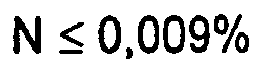
- the invention relates to a steel part whose composition comprises, the contents being expressed by weight: 0.040% ⁇ C ⁇ 0.100%, 0.80% ⁇ Mn ⁇ 2.00%, Si ⁇ 0, 30%, S ⁇ 0.005%, P ⁇ 0.030%, 0.010% ⁇ Al ⁇ 0.070%, 0.015% ⁇ Nb ⁇ 0.100%, 0.030% ⁇ Ti ⁇ 0.080%, N ⁇ 0.009%, Cu ⁇ 0.100%, Ni ⁇ 0.100 %, Cr ⁇ 0.100%, Mo ⁇ 0.100%, Ca ⁇ 0.006%, the remainder of the composition consisting of iron and unavoidable impurities resulting from the preparation, the microstructure of the steel consisting of at least 75 % equiaxed ferrite, martensite in an amount greater than or equal to 5% and less than or equal to 20%, and bainite in an amount of less than or equal to 10%
- the invention also relates to a steel part according to the characteristics below.
- the composition of the steel comprises, the contents being expressed by weight: 0.050% ⁇ C ⁇ 0.080%, 1.20% ⁇ Mn ⁇ 1.70%, Si ⁇ 0.070%, S ⁇ 0.004% , P ⁇ 0.020%, 0.020% ⁇ Al ⁇ 0.040%, 0.030% ⁇ Nb ⁇ 0.070%, 0.060% ⁇ Ti ⁇ 0.080%, N ⁇ 0.009%, Cu ⁇ 0.100%, Ni ⁇ 0.100%, Cr ⁇ 0.100%, Mo ⁇ 0.100%. Ca ⁇ 0.005%, the rest of the composition consisting of iron and unavoidable impurities resulting from the elaboration.
- the average ferritic grain size of the steel of the piece is less than 6 micrometers.
- the steel part is coated with an alloy layer over the entire thickness of this layer.
- This alloy layer results from at least one alloy heat treatment between the steel and a pre-coating, the latter being an alloy based on zinc or aluminum.
- the strength of the steel piece is greater or equal to 500 MPa and its elongation at break is greater than 15%.
- the invention also relates to a welded object of which at least one of the parts is a part according to any one of the above characteristics.
- the invention also relates to a method of manufacturing a coated steel part, comprising the steps of supplying a hot-rolled or cold-rolled steel sheet of the above composition, and then carrying out a pre-treatment. coating the sheet, the pre-coating being an alloy based on zinc or aluminum. The sheet is cut to obtain a blank and then possibly welded this blank.
- the blank is optionally deformed cold and then heated to a temperature T R in an oven so as to form, by alloying between the steel and the pre-coating, a layer alloyed with the surface of the blank, the alloying being achieved over the entire layer, and so as to confer a completely austenitic structure on the steel.
- the blank is removed from the oven and then optionally deformed hot to obtain a room which is cooled under conditions suitable for imparting the mechanical characteristics targeted for it.
- the subject of the invention is also a method for manufacturing a part, comprising the steps according to which a hot-rolled or cold-rolled steel sheet is supplied with a composition according to the preceding claim, and then the sheet is cut out. to get a blank.
- the blank is optionally soldered and then this blank is optionally deformed in the cold state. This is heated to a temperature T R in an oven so as to give a completely austenitic structure to the steel and then the blank is removed from the oven. If necessary, a hot deformation is carried out to obtain a part, then this part is cooled under conditions suitable for imparting the mechanical characteristics targeted for it, and then a coating of the part is optionally carried out.
- the temperature T R is between 880 and 950 ° C and the holding time t R at this temperature is between 3 and 10 minutes.
- the average cooling rate V R between the temperature T R and 400 ° C is between 30 and 80 ° C / s.
- the average cooling rate V R between the temperature T R and 400 ° C is preferably between 35 and 60 ° C / s.
- the invention also relates to the use of a part or object above, or manufactured according to one of the methods described above, for the manufacture of structural parts or safety for land vehicle to engine, for the field of agricultural machinery or shipbuilding.
- niobium and titanium are in precipitated form.
- a complete austenitization of the steel is subsequently carried out followed by quenching in a tooling.
- the inventors have demonstrated that the precipitates, in particular titanium, effectively slow down the growth of the austenitic grain during heating and limit the formation of secondary constituents of great hardness which reduce the ductility.
- This control of the size of the austenitic grain makes it possible to obtain a low sensitivity to the variation of the cooling rate.
- the composition of the steel may also comprise elements such as copper, chromium, nickel or molybdenum which contribute to the increase of the resistance by hardening in solid solution or by their influence on the quenchability.
- their individual content must be limited to 0.1%, under penalty of forming bainitic structures after austenitization furnace, these structures being sensitive to a variation of the cooling rate.
- the steel may also comprise a calcium addition of up to 0.006%, and preferably 0.005%, for the purpose of globulizing the sulphides and improving the fatigue resistance.
- the invention can be implemented on a blank or pre-coated sheet or blank.
- a pre-coating of the sheet is carried out, the pre-coating being an alloy based on zinc or aluminum.
- This pre-coating can in particular be carried out by a hot dipping, electrodeposition or vacuum deposition method.
- the deposition can be carried out in a single step or by combination of successive steps.
- the deposit is preferably carried out continuously.
- the thickness of this pre-coating may be between 5 and 35 micrometers in order to obtain a coating resistant to the conditions of implementation.
- the alloy of the pre-coating may be aluminum or an alloy based on aluminum: for example, the pre-coating may be carried out by hot quenching in an aluminum-based bath which also comprises 8 to 11%. by weight of silicon and 2 to 4% of iron.
- the role of the aluminum or zinc pre-coating is as follows: during furnace heating, an alloying reaction between the steel substrate and the pre-coating occurs and an alloy layer is formed on the surface of the flan. Alliation occurs over the entire thickness of the precoat. Depending on the composition of the pre-coating, one or more intermetallic phases are formed in this alloy layer. The melting temperature of these phases being greater than the temperature at which the part is carried, the coating does not melt at high temperature.
- pre-coating the alloy before heating, and "coating" the alloy layer formed during heating. The heat treatment therefore modifies the nature of the pre-coating and its geometry, since the thickness of the coating is greater than that of the pre-coating due to the diffusion reactions towards the steel substrate.
- the heat treatment forms a temperature-resistant layer.
- This layer protects the substrate by avoiding contact with the furnace atmosphere. Consequently, it avoids the problems of decarburization or oxidation that would occur if the heating was performed on a part without pre-coating.
- the formed coatings also have the advantage of being adherent and of being adapted to the possible hot forming operations which will follow.
- the heating is performed at a temperature T R greater than Ac3, the latter temperature designating the end of austenitic transformation temperature of the steel heating.
- the temperature T R is preferably between 880 and 950 ° C.
- a maintenance t R of 3 to 10 minutes at T R can be carried out so as to homogenize the temperature of the blank. Under these conditions, a fine austenitic grain is formed in this temperature range slightly above Ac3. Quenchability is moderate from such a structure, which makes it possible to avoid the formation of microstructural constituents with low ductility. A temperature variation within this range does not cause a great variability of the final mechanical properties.
- the heated blank is then removed from the furnace and transferred into a tool where it performs either a hot deformation to obtain the desired geometry for the part, or a simple conformation as described above. .
- a hot deformation to obtain the desired geometry for the part, or a simple conformation as described above.
- the blank has not been deformed beforehand, it is at the hot deformation stage that the deformation will be completely achieved.
- the presence of the part within the tooling leads to a cooling which intervenes essentially by thermal conduction.
- the cooling rate depends on parameters such as the transfer time between the furnace and the tooling, the thickness and the temperature of the part, the possible cooling of the tool itself by a coolant, the maintenance more or less length of the piece in the tooling.
- the part can be transferred to another tool, called "secondary" tooling that controls the end of the cooling cycle.
- this parameter designates the average cooling rate between the temperature T R of the piece at the outlet of the oven and the temperature 400 ° C.
- This temperature range between T R and 400 ° C covers a particular range where allotropic transformations leading to the desired microstructures for the steel compositions according to the invention occur.
- the speed V R is between 30 and 80 ° C / s: when V R is less than 30 ° C / s, the part structure is very predominantly ferritic and a resistance level greater than 500 MPa can not always be reached. When the speed V R is between 35 and 60 ° C / s, the variability of the mechanical properties obtained is particularly small.
- the microstructure according to the invention consists of at least 75% of equiaxed fine ferrite, this percentage corresponding to the surface fraction which can be measured for example on a polished and etched cut.
- the equiaxed qualifier designates a structure whose average ratio between the greatest length of ferritic grains and the shortest length does not exceed 1,2.
- the average ferritic grain size is less than 6 micrometers, so as simultaneously to obtain a high strength and an elongation at break much greater than 15%.
- the structure also comprises martensite, the surface fraction of which is between 5 and 20%.
- This constituent is in the form of islets dispersed within the ferritic matrix, the size of these islets. being generally less than or equal to that of ferritic grains. In this fine and dispersed form, the presence of 5 to 20% of martensite makes it possible to increase the mechanical strength without reducing the ductility too much.
- the structure may also contain bainite in a quantity limited to 10%. It has been shown that the presence of this constituent is not desirable for the manufacture of parts which must have a high homogeneity of the mechanical characteristics.
- the formed parts thus obtained can then be optionally assembled by welding to other elements of identical or different thickness or composition, so as to constitute for example a more complex structure.
- the formed parts can naturally be coated after heat treatment with a suitable coating if requirements against corrosion are required for them.
- Hot-rolled or cold-rolled steel sheets having a thickness ranging from 1.2 to 2 mm, with the following weight composition: Table 1: Composition of steel (% by weight) Steel VS mn Yes S P al Nb Ti NOT Other AT 0.059 1,646 0,022 0,004 0.016 0,024 0.048 0.067 0, 005 Cu: 0.009 Mo: 0.003 Ni: 0.016 Ce: 0.027 Ca: 0.003 B 0,063 1,677 0,018 0,003 0,018 0,030 0,050 0,071 0.005 Cr: 0.023 VS 0125 1,444 0384 0,002 0,020 0,030 0003 0011 0.005 Cr: 0.189 D 0.057 0626 0.074 0008 0,018 0,030 0.066 0001 0.005 This: 0.021 Underlined values indicate features outside the invention
- Steels A and B are steels of composition according to the invention.
- Steels C and D are reference steels.
- Hot rolled steel sheet has a thickness of 2mm.
- Steel B was tested in the form of 2mm thick hot-rolled sheets, cold-rolled and annealed sheets 1.5 and 1.2mm thick.
- Steels C and D are cold-rolled and annealed reference steels 1.2 mm thick.
- the sheets of these different steels were pre-coated by dipping in a molten bath of an aluminum alloy comprising 9.3% of silicon and 2.8% of iron, the remainder being made of aluminum and impurities. inevitable.
- the thickness of the precoat is about 25 microns per side. The sheets were then cut into blanks.
- the blanks were then heated to a temperature T R for a holding time t R indicated in Table 2.
- Some steels were subjected to several test conditions such as steel B under conditions marked B1 to B3. .
- the heating conditions all lead to a complete austenitic transformation of the steels.
- the pre-coating is transformed into an alloyed layer over its entire thickness.
- This alloy coating, high melting point and high hardness has a high resistance to corrosion and avoids oxidation and decarburization of the underlying steel base during and after the heating phase.
- microstructures obtained after heat treatment were examined on polished and etched sections.
- the average size of ferritic grain was determined by means of image analyzes.
- the tests carried out on the steel A indicate that the mechanical characteristics depend little on the austenitization temperature in the range of the process of the invention. Industrial production will therefore be insensitive to an unforeseen change in this parameter.
- An example of a microstructure is presented at figure 1 .
- the structure, relative to test B1, is composed of 93% equiaxed ferrite having an average size of 5 micrometers, and 7% of martensite.
- Tests A1, A2, B1, B2 all lead to structures consisting of more than 75% equiaxed ferrite, martensite in an amount of between 5% and 20%, and less than 10% of bainite.
- a too high cooling rate (100 ° C./s, test B3) leads to a proportion of martensite slightly greater than 20%. Martensite is present in the form of islands may exceed 5 micrometers. The elongation is then less than 15%.
- Steel C contains too much carbon and silicon, and does not contain enough micro-alloy elements for effective grain control: even under cooling conditions of 35 ° C / s, is not ferritic but predominantly bainitic as illustrated by figure 2 relating to test C1. The elongation is then less than 15%. When the cooling rate increases (tests C2 and C3), the structure becomes predominantly martensitic with traces of bainite. The lengthening undergoes a notable reduction.
- Steel D has an insufficient content of manganese and titanium and contains an excessive amount of sulfur. As a result, the resistance is insufficient, less than 500 MPa in the test condition D1.
- EXAMPLE 2 A steel sheet B of composition according to the invention and detailed in Table 1 was considered.
- the 2 mm thick sheet is pre-coated with an aluminum-based alloy as disclosed in FIG. Example 1.
- the sheet was heated at 900 ° C for 8 minutes and then hot stamped to make a part.
- the cooling rate V R is 60 ° C / s.
- the elastic limit is between 430 and 475 MPa, the resistance between 580 and 650 MPa, the elongation at break between 17 and 22%.
- the steel and the method according to the invention are characterized by the fact that the properties remain very homogeneous within the same room.
- the resistance and elongation at break remain greater than 500 MPa and 15% respectively, whatever the rate of deformation considered.
- the invention thus allows the manufacture of coated parts with high characteristics of strength and ductility, having these characteristics homogeneously in all the rooms.
- the steels according to the invention are not very sensitive to a modification of the manufacturing parameters, which presents an advantage in the event of unexpected waiting on the production line, or in case of a change of manufacture (pieces of different thickness passing successively within the same oven for example).
Landscapes
- Chemical & Material Sciences (AREA)
- Engineering & Computer Science (AREA)
- Materials Engineering (AREA)
- Mechanical Engineering (AREA)
- Metallurgy (AREA)
- Organic Chemistry (AREA)
- Thermal Sciences (AREA)
- Physics & Mathematics (AREA)
- Crystallography & Structural Chemistry (AREA)
- Chemical Kinetics & Catalysis (AREA)
- Oil, Petroleum & Natural Gas (AREA)
- Heat Treatment Of Steel (AREA)
- Heat Treatment Of Articles (AREA)
- Heat Treatment Of Sheet Steel (AREA)
- Coating With Molten Metal (AREA)
Abstract
Description
- L'invention concerne la fabrication de pièces d'acier laminé à chaud ou à froid présentant, après formage à chaud ou trempe sous outil, des propriétés de résistance, d'allongement et de résistance à la corrosion, particulièrement favorables et homogènes.
- Pour certaines applications, on cherche à réaliser des pièces en acier combinant une résistance mécanique élevée, une grande résistance aux chocs et une bonne tenue à la corrosion. Ce type de combinaison est particulièrement désirable dans l'industrie automobile où l'on recherche un allègement significatif des véhicules. Ceci peut être notamment obtenu grâce à l'utilisation de pièces d'aciers à hautes caractéristiques mécaniques dont la microstructure est martensitique ou bainito-martensitique : des pièces anti-intrusion, de structure ou participant à la sécurité des véhicules automobiles telles que traverses de pare-choc, renforts de portière ou de pied milieu, nécessitent par exemple les qualités ci-dessus.
- Le brevet
FR2780984 - Dans un exemple de réalisation, la mise en oeuvre d'un acier comprenant 0.231%C. 1,145%Mn, 0,239%Si, 0,043%Al, 0,020%P, 0,0038%S, 0,179%Cr, 0,009%Cu, 0,020%Ni, 0.032%Ti, 0,0042%N, 0,0051%Ca, 0,0028%B, permet d'obtenir après mise en forme à chaud, une résistance supérieure à 1500MPa, associée à une structure totalement martensitique.
- En contrepartie de ce niveau de résistance très élevé, l'allongement à rupture est relativement faible après traitement thermique, de l'ordré de 5%. Certaines applications structurales ne nécessitent cependant pas un niveau de résistance aussi élevé mais requièrent par contre une capacité d'allongement à rupture supérieure à 15%. Ces applications requièrent également une bonne protection des pièces contre la corrosion. Tôles d'acier pour l'industrie d'automobile sont proposés dans
EP1146132 etEP1195447 . Les documentsEP1767659 ,EP1143029 ,FR2833504 EP1013785 divulguent le formage à chaud extrempe sous outil de pièce ou flans. Ces applications structurales concernent des pièces de renfort d'épaisseur comprise entre 0,5 et 4 mm environ. On cherche à disposer d'un acier dont la résistance et l'allongement à rupture, après traitement thermique des pièces, sont respectivement supérieurs à 500MPa et à 15%. La combinaison de ces caractéristiques mécaniques assure, en cas de choc, une énergie d'absorption élevée. Ces exigences de résistance et d'allongement doivent être satisfaites même si les vitesses de refroidissement au sein d'un outillage peuvent être différentes entre des pièces d'épaisseur 0,5mm et celles d'épaisseur 4 mm environ. Ceci permettrait par exemple de ne pas changer les réglages d'une ligne industrielle comportant un chauffage et un refroidissement lorsque des pièces d'épaisseur différente, au sein de la gamme d'épaisseur ci-dessus, sont traitées successivement sur la ligne. - Par ailleurs, on sait que l'emboutissage à chaud d'une pièce ou la trempe entre outils peuvent conduire à des déformations locales plus ou moins importantes dans certaines zones. Le contact entre la pièce et l'outillage peut être plus ou moins parfait, si bien que la vitesse de refroidissement peut ne pas être identique en tout point. Ces variations locales en termes de taux de déformation ou de vitesse de refroidissement peuvent avoir pour conséquences une structure et des propriétés hétérogènes dans la pièce après traitement thermique.
- La présente invention a pour but de résoudre les problèmes évoqués ci-dessus. Elle vise en particulier à mettre à disposition des pièces d'acier laminées à chaud ou à froid présentant simultanément après mise en forme à chaud ou trempe sous outil une résistance supérieure à 500MPa, un allongement à rupture supérieur à 15%, pour une gamme d'épaisseur allant de 0,5 à 4 mm environ. L'invention vise également à mettre à disposition des pièces avec une excellente homogénéité de structure et de caractéristiques mécaniques, c'est à dire dont la résistance et l'allongement ne varient pas dans les différentes parties des pièces, même si le taux de déformation locale ou la vitesse de refroidissement locale n'y est pas uniforme durant la fabrication.
- L'invention vise également à mettre à disposition des pièces d'acier aisément soudables par les procédés d'assemblage usuels (soudage par résistance, arc, LASER) le soudage des pièces pouvant être réalisé soit avant, soit après mise en forme à chaud ou trempe sous outil.
- Dans ce but, l'invention a pour objet une pièce en acier dont la composition comprend, les teneurs étant exprimées en poids : 0,040% ≤ C ≤ 0,100%, 0,80% ≤ Mn ≤ 2,00%, Si ≤ 0,30%, S ≤ 0,005%, P≤ 0,030%, 0,010% ≤ Al ≤ 0,070%, 0.015% ≤ Nb ≤ 0,100%, 0,030% ≤ Ti≤ 0,080%, N ≤ 0,009%, Cu ≤ 0,100%, Ni ≤ 0,100%, Cr ≤ 0,100%, Mo ≤ 0,100%, Ca ≤ 0,006%, le reste de la composition étant constitué de fer et d'impuretés inévitables résultant de l'élaboration, la microstructure de l'acier étant constituée d'au moins 75% de ferrite équiaxe, de martensite en quantité supérieure ou égale à 5% et inférieure ou égale à 20%, et de bainite en quantité inférieure ou égale à 10% L'invention a également pour objet une pièce en acier selon les caractéristiques ci-dessus, caractérisée en ce que la composition de l'acier comprend, les teneurs étant exprimées en poids : 0,050% ≤ C ≤ 0,080%, 1,20% ≤ Mn ≤ 1,70%, Si ≤ 0,070%, S ≤ 0,004%, P ≤ 0,020%, 0.020% ≤ Al ≤ 0,040%, 0,030% ≤ Nb ≤ 0,070%, 0,060% ≤ Ti ≤ 0,080%, N ≤ 0,009%, Cu ≤ 0,100%, Ni ≤ 0,100%, Cr ≤ 0,100%, Mo ≤ 0,100%. Ca ≤ 0,005%, le reste de la composition étant constitué de fer et d'impuretés inévitables résultant de l'élaboration.
- Selon un mode particulier, la taille moyenne de grain ferritique de l'acier de la pièce est inférieure à 6 micromètres.
- Selon un mode particulier, la pièce en acier est revêtue d'une couche alliée sur la totalité de l'épaisseur de cette couche. Cette couche alliée résulte d'au moins un traitement thermique d'alliation entre l'acier et un pré-revêtement, ce dernier étant un alliage à base de zinc ou d'aluminium.
- Selon un mode préféré, la résistance de la pièce en acier est supérieure ou égale à 500MPa et son allongement à rupture est supérieur à 15%. L'invention a également pour objet un objet soudé dont l'une au moins des parties est une pièce selon l'une quelconque des caractéristiques ci-dessus. L'invention a également pour objet un procédé de fabrication d'une pièce en acier revêtu, comportant les étapes selon lesquelles on approvisionne une tôle d'acier laminée à chaud ou laminée à froid de composition ci-dessus, puis on effectue un pré-revêtement de la tôle, le pré-revêtement étant un alliage à base de zinc ou d'aluminium. On découpe la tôle pour obtenir un flan puis on soude éventuellement ce flan. On déforme éventuellement à froid le flan puis on le chauffe à une température TR dans un four de manière à former, par alliation entre l'acier et le pré-revêtement, une couche alliée à la surface du flan, l'alliation étant réalisée sur la totalité de la couche, et de manière à conférer une structure totalement austénitique à l'acier. On extrait le flan du four puis on le déforme éventuellement à chaud pour obtenir une pièce qu'on refroidit dans des conditions propres à conférer les caractéristiques mécaniques visées pour celle-ci.
- L'invention a également pour objet un procédé de fabrication d'une pièce, comportant les étapes selon lesquelles on approvisionne une tôle d'acier laminée à chaud ou laminée à froid, de composition selon la revendication ci-dessus, puis on découpe la tôle pour obtenir un flan. On soude éventuellement le flan puis on déforme éventuellement à froid ce flan. On chauffe celui-ci à une température TR dans un four de manière à conférer une structure totalement austénitique à l'acier puis on extrait le flan du four. On effectue éventuellement une déformation à chaud pour obtenir une pièce puis on refroidit cette pièce dans des conditions propres à conférer les caractéristiques mécaniques visées pour celle-ci, puis on effectue éventuellement un revêtement de la pièce.
- Selon un mode particulier, la température TR est comprise entre 880 et 950°C et le temps de maintien tR à cette température est compris entre 3 et 10 minutes.
- Selon un mode particulier, la vitesse moyenne de refroidissement VR entre la température TR et 400°C, est comprise entre 30 et 80°C/s.
- La vitesse moyenne de refroidissement VR entre la température TR et 400°C, est préférentiellement comprise entre 35 et 60°C/s.
- L'invention a également pour objet l'utilisation d'une pièce ou d'un objet ci-dessus, ou fabriquée selon l'un des procédés décrits ci-dessus, pour la fabrication de pièces de structures ou de sécurité pour véhicule terrestre à moteur, pour le domaine du machinisme agricole ou de la construction navale.
- D'autres caractéristiques et avantages de l'invention apparaîtront au cours de la description ci-dessous donnée à titre d'exemple et faite en référence aux figures jointes suivantes :
- La
figure 1 présente la microstructure d'un acier selon l'invention après traitement thermique - La
figure 2 présente la microstructure d'un acier non conforme à l'invention, après traitement thermique - En ce qui concerne la composition chimique de l'acier, le carbone joue un rôle important sur la trempabilité et sur la résistance mécanique obtenue après le refroidissement qui suit le traitement d'austénitisation. Au-dessous d'une teneur de 0,040% en poids, il n'est pas possible d'obtenir une résistance supérieure à 500MPa dans toutes les conditions de refroidissement. Au delà d'une teneur de 0,100%, il existe le risque de former une proportion trop importante de martensite dans les conditions de refroidissement les plus rapides, par exemple lorsque les pièces sont maintenues au sein d'un outillage refroidi. L'allongement à rupture peut être alors inférieur à 15%. Une teneur en carbone comprise entre 0,050 et 0,080% permet d'obtenir une grande stabilisé des caractéristiques de résistance et d'allongement en fonction des conditions de fabrication ainsi qu'une très bonne soudabilité dans les procédés d'assemblage usuels.
- Outre son rôle de désoxydant, le manganèse a également un effet important sur la trempabilité en particulier lorsque sa teneur en poids est au moins de 0,80%. Au-delà de 2,00%, son caractère gammagène conduit cependant à la formation d'une structure en bandes trop marquée. Une gamme de 1,20-1,70% de Mn est préférée de façon à obtenir une trempabilité satisfaisante sans risque de ségrégation. De plus, on obtient ainsi une très bonne ténacité en conditions de sollicitation mécanique statique ou dynamique.
- Le silicium participe à la désoxydation de l'acier liquide et contribue au durcissement de l'acier. Sa teneur doit être cependant limitée pour éviter la formation excessive d'oxydes superficiels et pour favoriser la revêtabilité et la soudabilité. Une addition de plus de 0,30% en poids de silicium conduirait à une stabilisation éventuelle de l'austénite après refroidissement dans l'outillage, ce qui n'est pas recherché ici. Une teneur en silicium inférieure à 0,070% est préférée pour obtenir les résultats ci-dessus.
- En quantités excessives, le soufre et le phosphore réduisent la ductilité. C'est pourquoi leur teneur est limitée respectivement à 0,005 et 0,030 % en poids. Une teneur respectivement inférieure à 0,004 et à 0,020% permet d'augmenter plus particulièrement la ductilité et la ténacité.
- En quantité comprise entre 0,010 et 0,070% en poids, l'aluminium permet la désoxydation de l'acier liquide. Une quantité comprise préférentiellement entre 0,020 et 0,040% permet d'éviter une stabilisation éventuelle de l'austénite.
- Le titane et le niobium font partie de la catégorie des éléments de micro-alliage, éléments efficaces même pour de faibles quantités allant de quelques 10-3 à quelques 10-2% :
- Lorsque la teneur en niobium de l'acier est comprise entre 0,015 et 0,100%, de fins précipités durcissants de carbonitrures Nb(CN) se forment dans l'austénite ou dans la ferrite lors du laminage à chaud. Ces précipités permettent également de limiter la croissance du grain austénitique lors d'un soudage éventuel. Une teneur en niobium comprise entre 0,030 et 0,070% permet d'obtenir un durcissement appréciable tout en accroissant modérément les caractéristiques mécaniques à haute température, ce qui permet de limiter les efforts lors du laminage à chaud sur trains à bandes.
- Lorsque la teneur en titane est comprise entre 0,030 et 0,080% en poids, une précipitation a lieu sous forme de nitrures TiN à très haute température, puis à plus basse température dans l'austénite sous forme de fins carbures TiC conduisant à un durcissement. Les précipités TiN permettent de limiter efficacement la croissance du grain austénitique lors d'éventuelles opérations de soudage. Une teneur en titane comprise entre 0,060 et 0,080% permet d'obtenir une précipitation plus intense de TiC ou de carbosulfures de titane.
- La teneur en azote est inférieure à 0,009% pour éviter une précipitation de TiN qui interviendrait dès la solidification sous une forme grossière.
- Après laminage à chaud ou laminage à froid et recuit, le niobium et le titane se trouvent sous forme précipitée. Dans le procédé selon l'invention, on réalise ultérieurement une austénitisation complète de l'acier suivie d'une trempe au sein d'un outillage. Les inventeurs ont mis en évidence que les précipités, en particulier de titane, freinent effectivement la croissance du grain austénitique au chauffage et limitent la formation de constituants secondaires de grande dureté qui réduisent la ductilité. Ce contrôle de la taille du grain austénitique permet d'obtenir une faible sensibilité à la variation de la vitesse de refroidissement. - La composition de l'acier peut également comprendre des éléments tels que le cuivre, le chrome, le nickel ou le molybdène qui contribuent à l'augmentation de la résistance par durcissement en solution solide ou par leur influence sur la trempabilité. Cependant, leur teneur individuelle doit être limitée à 0,1%, sous peine de former des structures bainitiques après austénitisation en four, ces structures étant sensibles à une variation de la vitesse de refroidissement.
- L'acier peut également comprendre une addition de calcium allant jusqu'à 0,006%, et préférentiellement 0,005%, dans le but de globuliser les sulfures et d'améliorer la résistance à la fatigue.
- Le procédé de fabrication selon l'invention est le suivant :
- On approvisionne une tôle ou un flan découpé à partir d'une tôle d'une des compositions ci-dessus. La microstructure initiale de cette tôle joue un rôle relativement secondaire dans la mesure où une austénitisation totale intervient ultérieurement. Il faut cependant que les éléments de micro-alliage soient sous forme précipitée : on pourra par exemple fabriquer les tôles et les flans par coulée d'acier liquide suivie d'un réchauffage à 1100°C. Un laminage à chaud sera effectué avec une température de fin de laminage inférieure à 940°C. On effectuera ensuite un refroidissement jusqu'à 500-700°C avec une vitesse comprise entre 20 et 100°C/s. Après refroidissement ultérieur à l'air, la tôle sera ensuite bobinée à une température comprise entre 450 et 680°C. Ces conditions permettent d'obtenir une précipitation fine et dispersée des éléments de micro-alliage.
- On peut mettre en oeuvre l'invention sur une tôle ou un flan, nu ou pré-revêtu. Dans ce dernier cas, on effectue un pré-revêtement de la tôle, le pré-revêtement étant un alliage à base de zinc ou d'aluminium. On peut notamment effectuer ce pré-revêtement par un procédé au trempé à chaud, par électrodéposition ou par un procédé de dépôt sous vide. Le dépôt peut être réalisé en une seule étape ou par combinaison d'étapes successives. Le dépôt est effectué préférentiellement en continu. L'épaisseur de ce pré-revêtement peut être comprise entre 5 et 35 micromètres dans le but d'obtenir un revêtement résistant aux conditions de mise en oeuvre.
- L'alliage du pré-revêtement peut être de l'aluminium ou un alliage à base d'aluminium : on peut effectuer par exemple le pré-revêtement par trempé à chaud dans un bain à base d'aluminium comportant en outre 8 à 11 % en poids de silicium et 2 à 4% de fer.
- L'alliage du pré-revêtement peut être également du zinc ou un alliage à base de zinc. Cet alliage de zinc peut également contenir de l'aluminium, par exemple en quantité allant jusqu'à 5% en poids. L'alliage à base de zinc peut également contenir à titre optionnel un ou plusieurs éléments tels que le silicium, le plomb, l'antimoine, le bismuth, le lanthane ou le cérium.
- La tôle pré-revêtue est ensuite découpée pour obtenir un flan de géométrie en rapport avec celle de la pièce finale à obtenir.
- Selon une variante de l'invention, on soude optionnellement le flan pré-revêtu à d'autres éléments en acier. On sait en effet que certaines applications ne requièrent pas le même niveau de caractéristiques mécaniques en tout point des pièces. On a ainsi assisté à un développement des flans raboutés, qui sont des assemblages à partir de tôles d'aciers présentant éventuellement des compositions ou des épaisseurs différentes. Le flan pré-revêtu selon l'invention peut ainsi être incorporé par soudage au sein d'un ensemble plus complexe. Le soudage peut être effectué par un procédé continu, par exemple par faisceau LASER, à l'arc électrique, ou par un procédé discontinu tel que par exemple le soudage par résistance par points. Le flan peut être assemblé à un ou plusieurs autres flans en acier dont la composition et l'épaisseur peuvent être identiques ou différentes, de façon à obtenir au stade final des pièces dont les caractéristiques mécaniques, après mise en forme et traitement thermique, varient en leur sein et sont adaptées localement aux sollicitations ultérieures. Outre le fer et les inévitables impuretés, la composition en poids des flans d'acier assemblés au flan selon l'invention comprendra par exemple : C :0,040-0,25%C, 0,8-2%Mn, Si≤0,4%, Al ≤0,1%.
- Selon une autre variante de l'invention, on déforme éventuellement à froid le flan pré-revêtu. Cette déformation peut être réalisée de façon à se rapprocher à un degré plus ou moins grand de la géométrie finale de la pièce que l'on veut obtenir. Dans le cas d'une faible déformation à froid, celle-ci pourra être complétée par une déformation effectuée à chaud, comme il sera exposé plus loin. Dans le cas où la déformation à froid conduit pratiquement à la géométrie finale, on chauffe ensuite la pièce puis on fait subir à celle-ci une étape de conformation au sein d'un outillage. Cette dernière étape vise à éviter les déformations éventuelles des pièces au refroidissement et à assurer un cycle de refroidissement particulier grâce à un contact adapté entre la pièce et l'outillage. Cette étape de conformation est donc caractérisée par un effort appliqué minime de l'outillage sur la pièce.
- Après ces étapes optionnelles de soudage et de déformation à froid, on chauffe le flan dans un four de traitement thermique. Ce traitement a pour but de réaliser une austénitisation complète de l'acier. Dans le cas où le flan est pré-revêtu, ce traitement a également pour but de former un revêtement apte à protéger sa surface pendant le traitement et lors de l'utilisation ultérieur de la pièce.
- Le rôle du pré-revêtement à base d'aluminium ou de zinc est le suivant : lors du chauffage en four, une réaction d'alliation entre le substrat en acier et lé pré-revêtement se produit et une couche alliée se forme à la surface du flan. L'alliation intervient sur la totalité de l'épaisseur du pré-revêtement. En fonction de la composition du pré-revêtement, on forme une ou plusieurs phases intermétalliques dans cette couche alliée. La température de fusion de ces phases étant supérieure à la température à laquelle est portée la pièce, le revêtement ne fond pas à haute température. On désigne par le terme de « pré-revêtement » l'alliage avant chauffage, et par « revêtement » la couche alliée formée lors du chauffage. Le traitement thermique modifie donc la nature du pré-revêtement et sa géométrie, puisque l'épaisseur du revêtement est supérieure à celle du pré-revêtement en raison des réactions de diffusion vers le substrat d'acier. Comme on l'a vu, le traitement thermique forme une couche résistant à la température. Cette couche protège le substrat en évitant le contact avec l'atmosphère du four. En conséquence, on évite les problèmes de décarburation ou d'oxydation qui interviendraient si le chauffage était effectué sur une pièce sans pré-revêtement. Les revêtements formés présentent également l'avantage d'être adhérents et d'être adaptés aux opérations éventuelles de mise en forme à chaud qui vont suivre.
- Le chauffage est effectué à une température TR supérieure à Ac3, cette dernière température désignant la température de fin de transformation austénitique de l'acier au chauffage. La température TR est comprise de préférence entre 880 et 950°C. Un maintien tR de 3 à 10 minutes à TR peut être réalisé de façon à homogénéiser la température du flan. Dans ces conditions, un grain austénitique fin est formé dans cette gamme de température légèrement au dessus de Ac3. La trempabilité est modérée à partir d'une telle structure, ce qui permet d'éviter la formation de constituants microstructuraux à faible ductilité. Une variation de température au sein de cet intervalle n'entraîne pas une grande variabilité des propriétés mécaniques finales.
- Le flan chauffé est ensuite extrait du four et transféré au sein d'un outillage où l'on effectue soit une déformation à chaud en vue d'obtenir la géométrie désirée pour la pièce, soit une simple conformation comme on l'a décrit plus haut. Bien entendu, si le flan n'a pas été déformé préalablement, c'est au stade de la déformation à chaud que la déformation sera entièrement réalisée. Dans les deux cas, la présence de la pièce au sein de l'outillage conduit à un refroidissement qui intervient essentiellement par conduction thermique. La vitesse de refroidissement dépend de paramètres tels que le temps de transfert entre le four et l'outillage, l'épaisseur et la température de la pièce, le refroidissement éventuel de l'outillage lui-même par un fluide caloporteur, le maintien plus ou moins long de la pièce dans l'outillage. Selon une variante, la pièce peut être transférée dans un autre outillage, dit outillage « secondaire » qui permet de contrôler la fin du cycle de refroidissement.
- Les inventeurs ont mis en évidence que l'obtention des propriétés mécaniques désirées était liée au contrôle d'un paramètre particulier VR : ce paramètre désigne la vitesse moyenne de refroidissement entre la température TR de la pièce à la sortie du four et la température de 400°C. Cette gamme de température entre TR et 400°C recouvre un intervalle particulier où se produisent les transformations allotropiques conduisant aux microstructures désirées pour les compositions d'aciers selon l'invention.
- La vitesse VR est comprise entre 30 et 80°C/s : lorsque VR est inférieure à 30°C/s, la structure des pièces est très majoritairement ferritique et un niveau de résistance supérieur à 500MPa ne peut pas toujours être atteint. Lorsque la vitesse VR est comprise entre 35 et 60°C/s, la variabilité des propriétés mécaniques obtenues est particulièrement réduite.
- Lorsque la vitesse est supérieure à 80°C/s, on constate la présence excessive de bainite au sein de la microstructure : les propriétés de ce constituant sont sensibles à une faible variation de VR. En conséquence, une variation locale des conditions de contact entre la pièce et l'outillage, une variation inopinée des conditions de traitement par rapport aux paramètres nominaux, auront pour effet une variabilité des propriétés mécaniques soit au sein d'une pièce donnée, soit d'une pièce à l'autre.
- La microstructure selon l'invention est constituée d'au moins 75% de ferrite fine équiaxe, ce pourcentage correspondant à la fraction surfacique qui peut être mesuré par exemple sur une coupe polie et attaquée. Le qualificatif équiaxe désigne une structure dont le rapport moyen entre la plus grande longueur des grains ferritiques et la plus petite longueur, n'excède pas 1,2. Préférentiellement, la taille moyenne de grain ferritique est inférieure à 6 micromètres, de façon à obtenir simultanément une haute résistance et un allongement à rupture très supérieur à 15%.
- La structure comporte également de la martensite, dont la fraction surfacique est comprise entre 5 et 20%. Ce constituant se présente sous la forme d'îlots dispersés au sein de la matrice ferritique, la taille de ces îlots. étant généralement inférieure ou égale à celle des grains ferritiques. Sous cette forme fine et dispersée, la présence de 5 à 20% de martensite permet d'accroître la résistance mécanique sans diminution trop marquée de la ductilité.
- La structure peut également comporter de la bainite en quantité limitée à 10%. On a montré en effet que la présence de ce constituant n'était pas souhaitable pour la fabrication de pièces qui doivent présenter une grande homogénéité des caractéristiques mécaniques.
- Les pièces formées ainsi obtenues peuvent être ensuite éventuellement assemblées par soudage à d'autres éléments, d'épaisseur ou de composition identiques ou différentes, de façon à constituer par exemple une structure plus complexe.
- Dans le cas où la tôle ou le flan initial ne comportent pas de pré-revêtement, les pièces formées peuvent naturellement être revêtues après traitement thermique par un revêtement approprié si des exigences contre la corrosion sont requises pour celles-ci.
- A titre d'exemple, les modes de réalisation suivants vont illustrer d'autres avantages conférés par l'invention.
- . On a considéré des tôles d'acier laminées à chaud ou à froid d'épaisseur allant de 1,2 à 2 mm, de composition pondérale suivante :
Tableau 1 : Composition de l'acier (% poids) Acier C Mn Si S P Al Nb Ti N Autres A 0,059 1,646 0,022 0,004 0,016 0,024 0,048 0,067 0,005 Cu : 0,009 Mo : 0,003 Ni : 0,016 Ce : 0,027 Ca : 0,003 B 0,063 1,677 0,018 0,003 0,018 0,030 0,050 0,071 0,005 Cr : 0,023 C 0.125 1,444 0.384 0,002 0,020 0,030 0.003 0.011 0,005 Cr : 0,189 D 0,057 0.626 0,074 0.008 0,018 0,030 0,066 0.001 0,005 Ce : 0,021 - Les aciers A et B sont des aciers de composition selon l'invention. Les aciers C et D sont des aciers de référence. La tôle d'acier A laminée à chaud a une épaisseur de 2mm. L'acier B a fait l'objet d'essais sous la forme de tôles laminées à chaud de 2mm d'épaisseur, et de tôles laminées à froid et recuites de 1,5 et 1,2mm d'épaisseur.
- Les aciers C et D sont des aciers de référence laminés à froid et recuits de 1,2mm d'épaisseur.
- Des tôles de ces différents aciers ont été pré-revêtues au trempé dans un bain fondu d'un alliage d'aluminium comprenant 9,3% de silicium et 2,8 % de fer, le reste étant constitué d'aluminium et d'impuretés inévitables. L'épaisseur du pré-revêtement est de 25 micromètres par face environ. Les tôles ont été ensuite découpées sous forme de flans.
- Les flans ont été ensuite chauffés jusqu'à une température TR pendant un temps de maintien tR indiqués au tableau 2. Certains aciers ont fait l'objet de plusieurs conditions d'essai tel l'acier B dans des conditions repérées B1 à B3. Les conditions de chauffage conduisent toutes à une transformation austénitique complète des aciers. Durant cette phase de chauffage et de maintien, le pré-revêtement se transforme en une couche alliée, sur l'intégralité de son épaisseur. Ce revêtement allié, à point de fusion élevé et à haute dureté, présente une grande résistance à la corrosion et évite l'oxydation et la décarburation de l'acier de base sous-jacent pendant et après la phase de chauffage.
- Après austénitisation, les flans ont été extraits du four la température TR, puis déformés à chaud. On a fait varier la vitesse moyenne de refroidissement VR dans les conditions indiquées au tableau 2. Les caractéristiques mécaniques mesurées sur les pièces (limite d'élasticité Re, résistance mécanique Rm, allongement à rupture A) ont été également indiquées au tableau 2.
Tableau 2 : Conditions d'austénitisation et de refroidissement. Caractéristiques mécaniques obtenues Les valeurs soulignées indiquent des caractéristiques hors invention Acier, condition TR(°C) tR (mn) VR (°C/s) Re (MPa) Rm (MPa) Re/Rm A(%) A1 900 6 45 380 600 0,63 22 A2 950 6 45 370 597 0,62 22 B1 920 7 30 366 562 0,65 22,5 B2 930 10 45 409 618 0,66 21,5 B3 920 7 100 470 703 0,67 13 C1 920 5 35 499 819 0,61 14,5 C2 920 5 50 543 831 0,65 10 C3 920 5 90 1069 1358 0,78 5.5 D1 920 6 35 410 455 0,90 23,5 - Les microstructures obtenues après traitement thermique ont été examinées sur coupes polies et attaquées. La taille moyenne de grain ferritique a été déterminée au moyen d'analyses d'images.
- Les essais réalisés sur l'acier A indiquent que les caractéristiques mécaniques dépendent peu de la température d'austénitisation dans la gamme du procédé de l'invention. Une production industrielle sera donc peu sensible à une modification imprévue de ce paramètre. Un exemple de microstructure est présenté à la
figure 1 . La structure, relative à l'essai B1, est composée de 93% de ferrite équiaxe présentant une taille moyenne de 5 micromètres, et de 7% de martensite. - Les essais A1, A2, B1, B2, conduisent tous à des structures constituées de plus de 75% de ferrite équiaxe, de martensite en quantité comprise entre 5% et 20%, et de moins de 10% de bainite.
- Une vitesse de refroidissement trop importante (100°C/s, essai B3) conduit à une proportion de martensite légèrement supérieure à 20%. La martensite est présente sous forme d'îlots pouvant excéder 5 micromètres. L'allongement est alors inférieur à 15%.
- L'acier C contient une teneur en carbone et en silicium trop importante, et ne contient pas suffisamment d'éléments de micro-alliage pour un contrôle efficace du grain : même pour des conditions de refroidissement de 35°C/s, la structure n'est pas ferritique mais majoritairement bainitique comme l'illustre la
figure 2 relative à l'essai C1. L'allongement est alors inférieur à 15%. Lorsque la vitesse de refroidissement augmente (essais C2 et C3), la structure devient majoritairement martensitique avec des traces de bainite. L'allongement subit une réduction notable. - L'acier D présente une teneur insuffisante en manganèse et en titane et contient une quantité excessive de soufre. En conséquence, la résistance est insuffisante, inférieure à 500MPa dans la condition d'essai D1.
- Exemple 2: On a considéré une tôle d'acier B, de composition selon l'invention et détaillée au tableau 1. La tôle de 2mm d'épaisseur est pré-revêtue d'un alliage à base d'aluminium comme exposé dans l'exemple 1. La tôle a été chauffée à 900°C pendant 8 minutes puis emboutie à chaud de façon à fabriquer une pièce. La vitesse de refroidissement VR est de 60°C/s. Compte tenu de la morphologie de la pièce, la déformation équivalente ε varie selon les différentes zones : certaines parties n'ont pratiquement pas été déformées localement (ε=0%) alors que d'autres ont subi une déformation de 20%. Des observations micrographiques, des mesures de dureté et des éprouvettes de traction ont été prélevées dans ces zones déformées de façon très différente. La limite d'élasticité se situe entre 430 à 475MPa, la résistance entre 580 et 650MPa, l'allongement à rupture entre 17 et 22%. Ainsi, en dépit du fait que le grain austénitique est déformé à chaud de façon plus ou moins intense selon l'endroit considéré, l'acier et le procédé selon l'invention sont caractérisés par le fait que les propriétés restent très homogènes au sein d'une même pièce. En particulier, la résistance et l'allongement à rupture restent supérieurs respectivement à 500MPa et à 15% quel que soit le taux de déformation considéré.
- L'invention permet ainsi la fabrication de pièces revêtues à hautes caractéristiques de résistance et de ductilité, présentant ces caractéristiques de façon homogène dans l'ensemble des pièces. Les aciers selon l'invention sont peu sensibles à une modification des paramètres de fabrication, ce qui présente un avantage en cas d'attente imprévue sur ligne de fabrication, ou en cas de changement de fabrication (pièces de différentes épaisseurs passant successivement au sein d'un même four par exemple).
- Ces pièces seront utilisées avec profit pour la fabrication de pièces de sécurité, et notamment de pièces structurales ou de renfort, pour la construction de véhicules automobiles, et dans le domaine du machinisme agricole ou de la construction navale.
Claims (12)
- Pièce obtenue par déformation et refroidissement au sein d'un outillage, d'une tôle ou d'un flan en acier, pré-revêtu à titre optionnel, dont la composition comprend, les teneurs étant exprimées en poids :


- Pièce en acier selon la revendication 1, caractérisé en ce que la composition dudit acier comprend, les teneurs étant exprimées en poids :




- Pièce en acier selon la revendication 1 ou 2, caractérisée en ce que la taille moyenne de grain ferritique dudit acier est inférieure à 6 micromètres
- Pièce en acier selon l'une quelconque des revendications 1 à 3, caractérisée en ce que ladite pièce est revêtue d'une couche alliée sur la totalité de l'épaisseur de ladite couche, ladite couche alliée résultant d'au moins un traitement thermique d'alliation entre ledit acier et un pré-revêtement, ledit pré-revêtement étant un alliage à base de zinc ou d'aluminium
- Pièce en acier selon l'une quelconque des revendications 1 à 4, caractérisée en ce que sa résistance est supérieure ou égale à 500MPa et son allongement à rupture est supérieur à 15%
- Objet soudé, dont l'une au moins des parties est une pièce selon l'une quelconque des revendications 1 à 5
- Procédé de fabrication d'une pièce en acier revêtu, la microstructure dudit acier étant constituée d'au moins 75% de ferrite équiaxe, de martensite en quantité supérieure ou égale à 5% et inférieure ou égale à 20%, et de bainite en quantité inférieure ou égale à 10%, comportant les étapes selon lesquelles :- on approvisionne une tôle d'acier laminée à chaud ou laminée à froid, de composition selon la revendication 1 ou 2, puis- on effectue un pré-revêtement de ladite tôle, ledit pré-revêtement étant un alliage à base de zinc ou d'aluminium, puis- on découpe ladite tôle pour obtenir un flan, puis- on soude éventuellement ledit flan, puis- on déforme éventuellement à froid ledit flan, puis- on chauffe ledit flan à une température TR dans un four de manière à former, par alliation entre ledit acier et ledit pré-revêtement, une couche alliée à la surface dudit flan, l'alliation étant réalisée sur la totalité de ladite couche, et de manière à conférer une structure totalement austénitique audit acier, puis- on extrait ledit flan du four, puis- on déforme éventuellement ledit flan à chaud pour obtenir une pièce, puis- on refroidit ladite pièce au sein d'un outillage dans des conditions propres à conférer une résistance mécanique supérieure à 500MPa et un allongement à rupture supérieur à 15% à ladite pièce d'acier.
- Procédé de fabrication d'une pièce en acier, la microstructure dudit acier étant constituée d'au moins 75% de ferrite équiaxe, de martensite en quantité supérieure ou égale à 5% et inférieure ou égale à 20%, et de bainite en quantité inférieure ou égale à 10%, comportant les étapes selon lesquelles :- on approvisionne une tôle d'acier laminée à chaud ou laminée à froid, de composition selon la revendication 1 ou 2, puis- on découpe ladite tôle pour obtenir un flan, puis- on soude éventuellement ledit flan, puis- on déforme éventuellement à froid ledit flan, puis- on chauffe ledit flan à une température TR dans un four de manière à conférer une structure totalement austénitique audit acier, puis- on extrait ledit flan du four, puis- on déforme éventuellement ledit flan à chaud pour obtenir une pièce, puis- on refroidit ladite pièce au sein d'une résistance mécanique supérieur à 500 MPa et un allongement à rupture supérieur à 15% à un outillage dans des conditions propres à conférer ladite pièce d'acier, puis- on effectue éventuellement un revêtement de ladite pièce
- Procédé de fabrication selon la revendication 7 ou 8, caractérisé en ce que ladite température TR est comprise entre 880 et 950°C, le temps de maintien tR à ladite température étant compris entre 3 et 10 minutes
- Procédé de fabrication selon l'une quelconque des revendications 7 à 9, caractérisé en ce que la vitesse moyenne de refroidissement VR entre ladite température TR et 400°C, est comprise entre 30 et 80°C/s
- Procédé de fabrication selon l'une quelconque des revendications 7 à 9, caractérisé en ce que la vitesse moyenne de refroidissement VR entre la température TR et 400°C, est comprise entre 35 et 60°C/s
- Utilisation d'une pièce ou d'un objet selon l'une quelconque des revendications 1 à 6, ou fabriquée selon l'une quelconque des revendications 7 à 11, pour la fabrication de pièces de structures ou de sécurité pour véhicule terrestre à moteur, pour le domaine du machinisme agricole ou de la construction navale
Priority Applications (1)
| Application Number | Priority Date | Filing Date | Title |
|---|---|---|---|
| PL08775621T PL2137327T3 (pl) | 2007-03-14 | 2008-03-03 | Stal do obróbki na gorąco lub hartowania w tłoczniku, o ulepszonej ciągliwości |
Applications Claiming Priority (2)
| Application Number | Priority Date | Filing Date | Title |
|---|---|---|---|
| PCT/FR2007/000441 WO2008110670A1 (fr) | 2007-03-14 | 2007-03-14 | Acier pour formage a chaud ou trempe sous outil a ductilite amelioree |
| PCT/FR2008/000278 WO2008132303A1 (fr) | 2007-03-14 | 2008-03-03 | Acier pour formage a chaud ou trempe sous outil, a ductilite amelioree |
Publications (2)
| Publication Number | Publication Date |
|---|---|
| EP2137327A1 EP2137327A1 (fr) | 2009-12-30 |
| EP2137327B1 true EP2137327B1 (fr) | 2012-05-02 |
Family
ID=38799374
Family Applications (1)
| Application Number | Title | Priority Date | Filing Date |
|---|---|---|---|
| EP08775621A Active EP2137327B1 (fr) | 2007-03-14 | 2008-03-03 | Acier pour formage a chaud ou trempe sous outil, a ductilite amelioree |
Country Status (17)
| Country | Link |
|---|---|
| US (2) | US8722203B2 (fr) |
| EP (1) | EP2137327B1 (fr) |
| JP (1) | JP5726419B2 (fr) |
| KR (5) | KR101952525B1 (fr) |
| CN (1) | CN101631880B (fr) |
| AR (1) | AR065764A1 (fr) |
| AT (1) | ATE556152T1 (fr) |
| BR (1) | BRPI0809006B1 (fr) |
| CA (1) | CA2680623C (fr) |
| ES (1) | ES2387229T3 (fr) |
| MA (1) | MA31235B1 (fr) |
| MX (1) | MX2009009769A (fr) |
| PL (1) | PL2137327T3 (fr) |
| RU (1) | RU2423532C1 (fr) |
| UA (1) | UA99127C2 (fr) |
| WO (2) | WO2008110670A1 (fr) |
| ZA (1) | ZA200905998B (fr) |
Cited By (6)
| Publication number | Priority date | Publication date | Assignee | Title |
|---|---|---|---|---|
| CZ305175B6 (cs) * | 2013-04-22 | 2015-05-27 | Západočeská Univerzita V Plzni | Způsob výroby ocelových dílů |
| DE102014010660A1 (de) * | 2013-07-24 | 2015-08-13 | GM Global Technology Operations LLC (n. d. Ges. d. Staates Delaware) | Verfahren zur Behandeln von Blech |
| DE102014010661A1 (de) * | 2014-07-18 | 2016-01-21 | GM Global Technology Operations LLC (n. d. Ges. d. Staates Delaware) | Blech und Verfahren zu dessen Behandlung |
| US9845518B2 (en) | 2014-07-30 | 2017-12-19 | Arcelormittal | Method for fabricating steel sheet for press hardening, and parts obtained by this method |
| US11629388B2 (en) | 2017-06-02 | 2023-04-18 | Arcelormittal | Steel sheet for manufacturing press hardened parts, press hardened part having a combination of high strength and crash ductility, and manufacturing methods thereof |
| US11814696B2 (en) | 2015-07-09 | 2023-11-14 | Arcelormittal | Steel for press hardening and press hardened part manufactured from such steel |
Families Citing this family (51)
| Publication number | Priority date | Publication date | Assignee | Title |
|---|---|---|---|---|
| EP1767659A1 (fr) * | 2005-09-21 | 2007-03-28 | ARCELOR France | Procédé de fabrication d'une pièce en acier de microstructure multi-phasée |
| DE102010004081C5 (de) * | 2010-01-06 | 2016-11-03 | Benteler Automobiltechnik Gmbh | Verfahren zum Warmformen und Härten einer Platine |
| CN102251177A (zh) * | 2011-07-12 | 2011-11-23 | 内蒙古包钢钢联股份有限公司 | 一种含稀土高强度钢板及其轧制方法 |
| CN102230129A (zh) * | 2011-07-12 | 2011-11-02 | 内蒙古包钢钢联股份有限公司 | 一种含稀土高强度钢板及其热处理工艺 |
| WO2013014481A1 (fr) | 2011-07-26 | 2013-01-31 | Arcelormittal Investigación Y Desarrollo Sl | Pièce d'acier soudée préalablement mise en forme à chaud à très haute résistance mécanique et procédé de fabrication |
| RU2562582C1 (ru) * | 2011-08-09 | 2015-09-10 | Ниппон Стил Энд Сумитомо Метал Корпорейшн | Горячекатаный стальной лист с высоким отношением предела текучести к пределу прочности, который имеет превосходные характеристики поглощения энергии удара при низкой температуре и устойчивость к размягчению зоны термического влияния (haz), и способ его получения |
| UA109963C2 (uk) * | 2011-09-06 | 2015-10-26 | Катана сталь, яка затвердіває внаслідок виділення часток після гарячого формування і/або загартовування в інструменті, яка має високу міцність і пластичність, та спосіб її виробництва | |
| CN102367554A (zh) * | 2011-10-28 | 2012-03-07 | 内蒙古包钢钢联股份有限公司 | 一种工程机械用高性能调质钢板及其生产工艺 |
| EP2803748B1 (fr) | 2012-01-13 | 2018-03-14 | Nippon Steel & Sumitomo Metal Corporation | Article moulé par estampage à chaud et procédé de production d'un article moulé par estampage à chaud |
| ES2727684T3 (es) * | 2012-01-13 | 2019-10-17 | Nippon Steel Corp | Chapa de acero laminada en frío y método para producir chapa de acero laminada en frío |
| BR112014023783B1 (pt) | 2012-03-28 | 2019-09-10 | Nippon Steel & Sumitomo Metal Corp | chapa feita sob medida para estampagem a quente, seu método de produção e membro estampado a quente |
| DE102012006941B4 (de) * | 2012-03-30 | 2013-10-17 | Salzgitter Flachstahl Gmbh | Verfahren zur Herstellung eines Bauteils aus Stahl durch Warmumformen |
| EP2664682A1 (fr) | 2012-05-16 | 2013-11-20 | ThyssenKrupp Steel Europe AG | Acier destiné à la fabrication d'un composant en acier, produit plat en acier en étant constitué, composant en étant issu et leur procédé de fabrication |
| CN102747295B (zh) * | 2012-07-27 | 2014-06-18 | 武汉钢铁(集团)公司 | 一种利用控轧控冷方法生产的贝氏体薄钢板及其制备方法 |
| KR101448473B1 (ko) | 2012-12-03 | 2014-10-10 | 현대하이스코 주식회사 | 테일러 웰디드 블랭크, 그 제조방법 및 이를 이용한 핫스탬핑 부품 |
| CN103114292B (zh) * | 2013-02-18 | 2015-01-07 | 梅河口市弘业无缝钢管有限公司 | 激光熔敷多元共渗复合处理的油井管、生产工艺及装置 |
| EP2982772B1 (fr) | 2013-04-02 | 2018-10-10 | Nippon Steel & Sumitomo Metal Corporation | Article moulé estampé à chaud, tôle d'acier laminée à froid, et procédé de fabrication d'article moulé estampé à chaud |
| US20170029914A1 (en) * | 2013-11-29 | 2017-02-02 | Nippon Steel & Sumitomo Metal Corporation | Hot formed steel sheet component and method for producing the same as well as steel sheet for hot forming |
| US10344351B2 (en) * | 2013-12-20 | 2019-07-09 | Nippon Steel & Sumitomo Metal Corporation | Hot-pressed steel sheet member, method of manufacturing the same, and steel sheet for hot pressing |
| US20160326608A1 (en) | 2014-01-06 | 2016-11-10 | Nippon Steel & Sumitomo Metal Corporation | Hot-formed member and method of manufacturing same |
| KR20160078807A (ko) | 2014-12-24 | 2016-07-05 | 주식회사 포스코 | 연신율 및 충격 인성이 우수한 열간 프레스 부재 및 그 제조방법 |
| WO2016132165A1 (fr) * | 2015-02-19 | 2016-08-25 | Arcelormittal | Procede de fabrication d'une piece phosphatable a partir d'une tole revetue d'un revetement a base d'aluminium et d'un revetement de zinc |
| EP3278895B1 (fr) * | 2015-03-31 | 2020-03-11 | Nippon Steel Corporation | Tôle d'acier pour estampage à chaud, son procédé de fabrication et article moulé estampé à chaud |
| WO2017017483A1 (fr) | 2015-07-30 | 2017-02-02 | Arcelormittal | Tôle d'acier revêtue d'un revêtement métallique à base d'aluminium |
| WO2017017485A1 (fr) | 2015-07-30 | 2017-02-02 | Arcelormittal | Procédé de fabrication d'une pièce phosphatable à partir d'une tôle d'acier revêtue d'un revêtement métallique à base d'aluminium |
| WO2017017484A1 (fr) * | 2015-07-30 | 2017-02-02 | Arcelormittal | Procédé pour la fabrication d'une pièce durcie qui ne présente pas de problèmes lme (liquide metal embrittlement - fragilité par les métaux liquides) |
| DE102015014490A1 (de) | 2015-11-10 | 2017-05-11 | GM Global Technology Operations LLC (n. d. Ges. d. Staates Delaware) | Verfahren zur Verarbeitung eines Blechwerkstücks |
| WO2017187215A1 (fr) * | 2016-04-29 | 2017-11-02 | Arcelormittal | Feuille d'acier ordinaire enduite d'un revêtement protecteur |
| KR101726139B1 (ko) | 2016-09-21 | 2017-04-12 | 주식회사 포스코 | 연신율 및 충격 인성이 우수한 열간 프레스 부재 및 그 제조방법 |
| JP6424195B2 (ja) * | 2016-11-14 | 2018-11-14 | 株式会社豊田中央研究所 | 熱間プレス成形方法 |
| WO2018096387A1 (fr) | 2016-11-24 | 2018-05-31 | Arcelormittal | Tôle d'acier laminé à chaud et revêtu pour estampage à chaud, pièce d'acier revêtu estampé à chaud, et ses procédés de fabrication |
| CN107190203B (zh) * | 2017-05-31 | 2019-07-23 | 武汉钢铁有限公司 | 用薄板坯直接轧制的屈服强度≥800MPa热轧薄板及生产方法 |
| MX2020003896A (es) | 2017-10-02 | 2020-08-20 | Nippon Steel Corp | Producto estampado en caliente, lamina de acero para estampado en caliente y metodo de fabricacion de los mismos. |
| CA3076934C (fr) * | 2017-11-02 | 2023-03-21 | Ak Steel Properties, Inc. | Acier estampe a chaud ayant des proprietes particulieres apres un traitement thermique innovant |
| WO2019102255A1 (fr) | 2017-11-24 | 2019-05-31 | Arcelormittal | Procédé de fabrication d'une ébauche en acier soudée avec fourniture d'un fil de remplissage ayant une teneur en carbone définie, ébauche soudée associée, procédé de fabrication d'une pièce soudée avec pièce en acier formée par pressage à chaud et refroidie et pièce associée |
| DE102017131247A1 (de) | 2017-12-22 | 2019-06-27 | Voestalpine Stahl Gmbh | Verfahren zum Erzeugen metallischer Bauteile mit angepassten Bauteileigenschaften |
| DE102017131253A1 (de) | 2017-12-22 | 2019-06-27 | Voestalpine Stahl Gmbh | Verfahren zum Erzeugen metallischer Bauteile mit angepassten Bauteileigenschaften |
| WO2019166852A1 (fr) | 2018-02-27 | 2019-09-06 | Arcelormittal | Procédé de production d'une pièce en acier soudée au laser durcie à la presse et pièce en acier soudée au laser durcie à la presse |
| DE102018133143A1 (de) * | 2018-11-06 | 2020-05-07 | Salzgitter Flachstahl Gmbh | Innenhochdruck umgeformtes Bauteil aus Stahl und Verwendung eines Stahls für Vorprodukte zur Herstellung eines innenhochdruckumgeformten Bauteiles sowie Vorprodukt hierfür |
| CN109821951B (zh) * | 2018-12-06 | 2020-07-21 | 苏州普热斯勒先进成型技术有限公司 | 一种耐腐蚀热冲压零件的制备方法及装置 |
| KR102633542B1 (ko) | 2019-04-01 | 2024-02-06 | 닛폰세이테츠 가부시키가이샤 | 핫 스탬프 성형품 및 그 제조 방법 |
| WO2020204037A1 (fr) | 2019-04-01 | 2020-10-08 | 日本製鉄株式会社 | Article moulé estampé à chaud, plaque d'acier pour estampage à chaud, et procédés de fabrication de ceux-ci |
| KR102213974B1 (ko) * | 2019-04-30 | 2021-02-08 | 현대제철 주식회사 | 핫 스탬핑 부품 및 그 제조방법 |
| JP7235621B2 (ja) | 2019-08-27 | 2023-03-08 | 株式会社神戸製鋼所 | 低強度ホットスタンプ用鋼板、ホットスタンプ部品およびホットスタンプ部品の製造方法 |
| CN113924373B (zh) | 2019-12-20 | 2023-09-01 | 现代制铁株式会社 | 热冲压部件及其制造方法 |
| MX2022007980A (es) | 2020-01-16 | 2022-07-05 | Nippon Steel Corp | Carroceria estampada en caliente. |
| KR102747960B1 (ko) | 2020-01-16 | 2024-12-31 | 닛폰세이테츠 가부시키가이샤 | 핫 스탬프 성형체 |
| CN112301276B (zh) * | 2020-10-12 | 2021-10-22 | 马鞍山钢铁股份有限公司 | 一种高强、高耐候冷轧双相耐候钢的制作方法 |
| CN112962021B (zh) * | 2021-01-25 | 2022-06-10 | 唐山钢铁集团有限责任公司 | 激光拼焊后用于整体热冲压成形的强塑钢板及生产方法 |
| WO2024023553A1 (fr) * | 2022-07-28 | 2024-02-01 | Arcelormittal | Procédé de fabrication d'une pièce en acier revêtu, durcie sous presse, ayant un aspect amélioré et pièce en acier correspondante |
| CN117327977B (zh) * | 2023-09-25 | 2026-04-03 | 马鞍山钢铁有限公司 | 抗拉强度500MPa级铝合金涂层热成形钢板及生产方法、热成形钢构件和应用 |
Family Cites Families (21)
| Publication number | Priority date | Publication date | Assignee | Title |
|---|---|---|---|---|
| RU2082767C1 (ru) * | 1993-02-10 | 1997-06-27 | Акционерное общество "Верх-Исетский металлургический завод" | Способ отжига оцинкованной тонкой стальной полосы |
| RU2055916C1 (ru) * | 1993-09-10 | 1996-03-10 | Научно-производственное предприятие "Эста" | Способ производства оцинкованных металлических полос |
| RU2135622C1 (ru) * | 1996-12-16 | 1999-08-27 | Ниппон Стил Корпорейшн | Сталь, имеющая высокую ударную вязкость в зоне термического воздействия при сварке |
| FR2780984B1 (fr) * | 1998-07-09 | 2001-06-22 | Lorraine Laminage | Tole d'acier laminee a chaud et a froid revetue et comportant une tres haute resistance apres traitement thermique |
| FR2787735B1 (fr) * | 1998-12-24 | 2001-02-02 | Lorraine Laminage | Procede de realisation d'une piece a partir d'une bande de tole d'acier laminee et notamment laminee a chaud |
| JP3698046B2 (ja) * | 1999-10-22 | 2005-09-21 | Jfeスチール株式会社 | 加工性およびめっき性に優れた高強度溶融亜鉛めっき鋼板ならびにその製造方法 |
| WO2001031077A1 (fr) * | 1999-10-22 | 2001-05-03 | Kawasaki Steel Corporation | Tole d'acier galvanisee par immersion a chaud presentant de bonnes qualites de resistance, de formabilite et de galvanisation |
| CN1145709C (zh) * | 2000-02-29 | 2004-04-14 | 川崎制铁株式会社 | 应变时效硬化特性优良的高强度冷轧钢板及其制造方法 |
| FR2807447B1 (fr) * | 2000-04-07 | 2002-10-11 | Usinor | Procede de realisation d'une piece a tres hautes caracteristiques mecaniques, mise en forme par emboutissage, a partir d'une bande de tole d'acier laminee et notamment laminee a chaud et revetue |
| AU780588B2 (en) * | 2000-04-07 | 2005-04-07 | Jfe Steel Corporation | Hot rolled steel plate, cold rolled steel plate and hot dip galvanized steel plate being excellent in strain aging hardening characteristics, and method for their production |
| JP4333940B2 (ja) * | 2001-08-31 | 2009-09-16 | 新日本製鐵株式会社 | アルミ系めっき鋼板を用いた高強度自動車部材の熱間プレス方法 |
| CN100434564C (zh) * | 2001-10-23 | 2008-11-19 | 住友金属工业株式会社 | 热压成型方法,其电镀钢材及其制备方法 |
| KR100467487B1 (ko) * | 2001-10-26 | 2005-01-24 | 현대자동차주식회사 | 자동차용 강판의 강성강화 방법 및 그 성형품 |
| FR2833504A1 (fr) * | 2001-12-14 | 2003-06-20 | Usinor | Procede de mise en forme a chaud et notamment l'obtention de tout ou partie d'une roue de vehicule automobile |
| JP4400079B2 (ja) * | 2002-03-29 | 2010-01-20 | Jfeスチール株式会社 | 超微細粒組織を有する冷延鋼板の製造方法 |
| JP4168750B2 (ja) * | 2002-12-27 | 2008-10-22 | Jfeスチール株式会社 | 超微細粒組織を有し疲労特性に優れる溶融亜鉛めっき冷延鋼板の製造方法 |
| JP4506434B2 (ja) * | 2004-11-29 | 2010-07-21 | Jfeスチール株式会社 | 剛性に優れた高強度鋼板およびその製造方法 |
| FR2883007B1 (fr) * | 2005-03-11 | 2007-04-20 | Usinor Sa | Procede de fabrication d'une piece d'acier revetu presentant une tres haute resistance apres traitement thermique |
| KR100676935B1 (ko) * | 2005-06-25 | 2007-02-02 | 신닛뽄세이테쯔 카부시키카이샤 | 가공성이 우수한 고강도 합금화 용융 아연 도금 강판 및 그제조 방법 |
| RU2292404C1 (ru) * | 2005-07-15 | 2007-01-27 | Открытое акционерное общество "Северсталь" | Способ производства полос для изготовления труб |
| JP5029361B2 (ja) * | 2005-08-03 | 2012-09-19 | 住友金属工業株式会社 | 熱延鋼板及び冷延鋼板並びにそれらの製造方法 |
-
2007
- 2007-03-14 WO PCT/FR2007/000441 patent/WO2008110670A1/fr not_active Ceased
-
2008
- 2008-03-03 UA UAA200910344A patent/UA99127C2/ru unknown
- 2008-03-03 PL PL08775621T patent/PL2137327T3/pl unknown
- 2008-03-03 EP EP08775621A patent/EP2137327B1/fr active Active
- 2008-03-03 KR KR1020177008499A patent/KR101952525B1/ko active Active
- 2008-03-03 JP JP2009553176A patent/JP5726419B2/ja active Active
- 2008-03-03 AT AT08775621T patent/ATE556152T1/de active
- 2008-03-03 KR KR1020097019061A patent/KR20090128414A/ko not_active Ceased
- 2008-03-03 WO PCT/FR2008/000278 patent/WO2008132303A1/fr not_active Ceased
- 2008-03-03 KR KR1020157010080A patent/KR20150048913A/ko not_active Ceased
- 2008-03-03 CA CA2680623A patent/CA2680623C/fr active Active
- 2008-03-03 RU RU2009137930/02A patent/RU2423532C1/ru active
- 2008-03-03 US US12/530,791 patent/US8722203B2/en active Active
- 2008-03-03 KR KR1020187032044A patent/KR102008641B1/ko active Active
- 2008-03-03 BR BRPI0809006-8A patent/BRPI0809006B1/pt active IP Right Grant
- 2008-03-03 ES ES08775621T patent/ES2387229T3/es active Active
- 2008-03-03 MX MX2009009769A patent/MX2009009769A/es active IP Right Grant
- 2008-03-03 CN CN2008800078916A patent/CN101631880B/zh active Active
- 2008-03-03 KR KR1020197022301A patent/KR20190091571A/ko not_active Withdrawn
- 2008-03-14 AR ARP080101077A patent/AR065764A1/es active IP Right Grant
-
2009
- 2009-08-27 ZA ZA200905998A patent/ZA200905998B/xx unknown
- 2009-09-02 MA MA32198A patent/MA31235B1/fr unknown
-
2014
- 2014-04-10 US US14/249,902 patent/US9611517B2/en active Active
Cited By (8)
| Publication number | Priority date | Publication date | Assignee | Title |
|---|---|---|---|---|
| CZ305175B6 (cs) * | 2013-04-22 | 2015-05-27 | Západočeská Univerzita V Plzni | Způsob výroby ocelových dílů |
| DE102014010660A1 (de) * | 2013-07-24 | 2015-08-13 | GM Global Technology Operations LLC (n. d. Ges. d. Staates Delaware) | Verfahren zur Behandeln von Blech |
| DE102014010661A1 (de) * | 2014-07-18 | 2016-01-21 | GM Global Technology Operations LLC (n. d. Ges. d. Staates Delaware) | Blech und Verfahren zu dessen Behandlung |
| US9845518B2 (en) | 2014-07-30 | 2017-12-19 | Arcelormittal | Method for fabricating steel sheet for press hardening, and parts obtained by this method |
| US11814696B2 (en) | 2015-07-09 | 2023-11-14 | Arcelormittal | Steel for press hardening and press hardened part manufactured from such steel |
| US12398438B2 (en) | 2015-07-09 | 2025-08-26 | Arcelormittal | Process for manufacturing a press hardened laser welded steel part |
| US11629388B2 (en) | 2017-06-02 | 2023-04-18 | Arcelormittal | Steel sheet for manufacturing press hardened parts, press hardened part having a combination of high strength and crash ductility, and manufacturing methods thereof |
| US12392008B2 (en) | 2017-06-02 | 2025-08-19 | Arcelormittal | Steel sheet for manufacturing press hardened parts, press hardened part having a combination of high strength and crash ductility, and manufacturing methods thereof |
Also Published As
| Publication number | Publication date |
|---|---|
| CA2680623A1 (fr) | 2008-11-06 |
| BRPI0809006B1 (pt) | 2017-11-21 |
| KR20090128414A (ko) | 2009-12-15 |
| AR065764A1 (es) | 2009-07-01 |
| KR101952525B1 (ko) | 2019-02-26 |
| KR20190091571A (ko) | 2019-08-06 |
| KR102008641B1 (ko) | 2019-08-07 |
| CA2680623C (fr) | 2013-02-05 |
| RU2009137930A (ru) | 2011-04-20 |
| KR20180122489A (ko) | 2018-11-12 |
| ES2387229T3 (es) | 2012-09-18 |
| EP2137327A1 (fr) | 2009-12-30 |
| CN101631880B (zh) | 2012-07-04 |
| US20100221572A1 (en) | 2010-09-02 |
| JP5726419B2 (ja) | 2015-06-03 |
| KR20150048913A (ko) | 2015-05-07 |
| MA31235B1 (fr) | 2010-03-01 |
| US8722203B2 (en) | 2014-05-13 |
| WO2008132303A1 (fr) | 2008-11-06 |
| RU2423532C1 (ru) | 2011-07-10 |
| ZA200905998B (en) | 2010-04-28 |
| MX2009009769A (es) | 2009-10-07 |
| PL2137327T3 (pl) | 2012-10-31 |
| BRPI0809006A2 (pt) | 2014-09-16 |
| CN101631880A (zh) | 2010-01-20 |
| US20140216612A1 (en) | 2014-08-07 |
| JP2010521584A (ja) | 2010-06-24 |
| WO2008110670A1 (fr) | 2008-09-18 |
| ATE556152T1 (de) | 2012-05-15 |
| US9611517B2 (en) | 2017-04-04 |
| KR20170038119A (ko) | 2017-04-05 |
| UA99127C2 (ru) | 2012-07-25 |
Similar Documents
| Publication | Publication Date | Title |
|---|---|---|
| EP2137327B1 (fr) | Acier pour formage a chaud ou trempe sous outil, a ductilite amelioree | |
| EP3783116B1 (fr) | Tôles prerevêtues permettant la fabrication de pieces d'acier revêtues et durcies a la presse | |
| EP1929053B1 (fr) | Procede de fabrication d une piece en acier de microstructure multi-phasee | |
| EP2171112B1 (fr) | Procede de fabrication de tôles d'acier a hautes caracteristiques de resistance et de ductilite, et tôles ainsi produites | |
| US8721809B2 (en) | Method of thermomechanical shaping a final product with very high strength and a product produced thereby | |
| EP3175006B1 (fr) | Procédé de fabrication de tôles d'acier pour durcissement sous presse, et pièces obtenues par ce procédé | |
| EP2155915B1 (fr) | Procede de fabrication de tôles d'acier laminees a froid et recuites a tres haute resistance, et tôles ainsi produites | |
| EP1943368B1 (fr) | Procede de fabrication d'une piece a tres hautes caracteristiques mecaniques a partir d'une tole laminee et revetue | |
| EP2707513B1 (fr) | Procede de fabrication d'acier martensitique a tres haute resistance et tôle ou piece ainsi obtenue | |
| CA3065036C (fr) | Procede de fabrication de pieces d'acier a haute resistance mecanique et ductilite amelioree, et pieces obtenues par ce procede | |
| WO2007118939A1 (fr) | Procede de fabrication d'une piece soudee a tres hautes caracteristiques mecaniques a partir d'une tole laminee et revetue | |
| WO2011104443A1 (fr) | Procédé de fabrication d'une pièce a partir d'une tôle revêtue d'aluminium ou d'alliage d'aluminium |
Legal Events
| Date | Code | Title | Description |
|---|---|---|---|
| PUAI | Public reference made under article 153(3) epc to a published international application that has entered the european phase |
Free format text: ORIGINAL CODE: 0009012 |
|
| 17P | Request for examination filed |
Effective date: 20091014 |
|
| AK | Designated contracting states |
Kind code of ref document: A1 Designated state(s): AT BE BG CH CY CZ DE DK EE ES FI FR GB GR HR HU IE IS IT LI LT LU LV MC MT NL NO PL PT RO SE SI SK TR |
|
| DAX | Request for extension of the european patent (deleted) | ||
| 17Q | First examination report despatched |
Effective date: 20101210 |
|
| GRAP | Despatch of communication of intention to grant a patent |
Free format text: ORIGINAL CODE: EPIDOSNIGR1 |
|
| GRAS | Grant fee paid |
Free format text: ORIGINAL CODE: EPIDOSNIGR3 |
|
| GRAA | (expected) grant |
Free format text: ORIGINAL CODE: 0009210 |
|
| AK | Designated contracting states |
Kind code of ref document: B1 Designated state(s): AT BE BG CH CY CZ DE DK EE ES FI FR GB GR HR HU IE IS IT LI LT LU LV MC MT NL NO PL PT RO SE SI SK TR |
|
| REG | Reference to a national code |
Ref country code: GB Ref legal event code: FG4D Free format text: NOT ENGLISH |
|
| REG | Reference to a national code |
Ref country code: AT Ref legal event code: REF Ref document number: 556152 Country of ref document: AT Kind code of ref document: T Effective date: 20120515 Ref country code: CH Ref legal event code: EP |
|
| REG | Reference to a national code |
Ref country code: IE Ref legal event code: FG4D Free format text: LANGUAGE OF EP DOCUMENT: FRENCH |
|
| REG | Reference to a national code |
Ref country code: DE Ref legal event code: R096 Ref document number: 602008015397 Country of ref document: DE Effective date: 20120705 |
|
| REG | Reference to a national code |
Ref country code: RO Ref legal event code: EPE |
|
| REG | Reference to a national code |
Ref country code: NL Ref legal event code: T3 |
|
| REG | Reference to a national code |
Ref country code: SE Ref legal event code: TRGR |
|
| REG | Reference to a national code |
Ref country code: ES Ref legal event code: FG2A Ref document number: 2387229 Country of ref document: ES Kind code of ref document: T3 Effective date: 20120918 |
|
| REG | Reference to a national code |
Ref country code: SK Ref legal event code: T3 Ref document number: E 12140 Country of ref document: SK |
|
| REG | Reference to a national code |
Ref country code: LT Ref legal event code: MG4D Effective date: 20120502 |
|
| PG25 | Lapsed in a contracting state [announced via postgrant information from national office to epo] |
Ref country code: CY Free format text: LAPSE BECAUSE OF FAILURE TO SUBMIT A TRANSLATION OF THE DESCRIPTION OR TO PAY THE FEE WITHIN THE PRESCRIBED TIME-LIMIT Effective date: 20120502 Ref country code: NO Free format text: LAPSE BECAUSE OF FAILURE TO SUBMIT A TRANSLATION OF THE DESCRIPTION OR TO PAY THE FEE WITHIN THE PRESCRIBED TIME-LIMIT Effective date: 20120802 Ref country code: LT Free format text: LAPSE BECAUSE OF FAILURE TO SUBMIT A TRANSLATION OF THE DESCRIPTION OR TO PAY THE FEE WITHIN THE PRESCRIBED TIME-LIMIT Effective date: 20120502 Ref country code: IS Free format text: LAPSE BECAUSE OF FAILURE TO SUBMIT A TRANSLATION OF THE DESCRIPTION OR TO PAY THE FEE WITHIN THE PRESCRIBED TIME-LIMIT Effective date: 20120902 |
|
| REG | Reference to a national code |
Ref country code: PL Ref legal event code: T3 |
|
| PG25 | Lapsed in a contracting state [announced via postgrant information from national office to epo] |
Ref country code: LV Free format text: LAPSE BECAUSE OF FAILURE TO SUBMIT A TRANSLATION OF THE DESCRIPTION OR TO PAY THE FEE WITHIN THE PRESCRIBED TIME-LIMIT Effective date: 20120502 Ref country code: HR Free format text: LAPSE BECAUSE OF FAILURE TO SUBMIT A TRANSLATION OF THE DESCRIPTION OR TO PAY THE FEE WITHIN THE PRESCRIBED TIME-LIMIT Effective date: 20120502 Ref country code: GR Free format text: LAPSE BECAUSE OF FAILURE TO SUBMIT A TRANSLATION OF THE DESCRIPTION OR TO PAY THE FEE WITHIN THE PRESCRIBED TIME-LIMIT Effective date: 20120803 Ref country code: SI Free format text: LAPSE BECAUSE OF FAILURE TO SUBMIT A TRANSLATION OF THE DESCRIPTION OR TO PAY THE FEE WITHIN THE PRESCRIBED TIME-LIMIT Effective date: 20120502 Ref country code: PT Free format text: LAPSE BECAUSE OF FAILURE TO SUBMIT A TRANSLATION OF THE DESCRIPTION OR TO PAY THE FEE WITHIN THE PRESCRIBED TIME-LIMIT Effective date: 20120903 |
|
| PG25 | Lapsed in a contracting state [announced via postgrant information from national office to epo] |
Ref country code: DK Free format text: LAPSE BECAUSE OF FAILURE TO SUBMIT A TRANSLATION OF THE DESCRIPTION OR TO PAY THE FEE WITHIN THE PRESCRIBED TIME-LIMIT Effective date: 20120502 Ref country code: EE Free format text: LAPSE BECAUSE OF FAILURE TO SUBMIT A TRANSLATION OF THE DESCRIPTION OR TO PAY THE FEE WITHIN THE PRESCRIBED TIME-LIMIT Effective date: 20120502 |
|
| PLBE | No opposition filed within time limit |
Free format text: ORIGINAL CODE: 0009261 |
|
| STAA | Information on the status of an ep patent application or granted ep patent |
Free format text: STATUS: NO OPPOSITION FILED WITHIN TIME LIMIT |
|
| 26N | No opposition filed |
Effective date: 20130205 |
|
| REG | Reference to a national code |
Ref country code: HU Ref legal event code: AG4A Ref document number: E014695 Country of ref document: HU |
|
| REG | Reference to a national code |
Ref country code: DE Ref legal event code: R097 Ref document number: 602008015397 Country of ref document: DE Effective date: 20130205 |
|
| PG25 | Lapsed in a contracting state [announced via postgrant information from national office to epo] |
Ref country code: BG Free format text: LAPSE BECAUSE OF FAILURE TO SUBMIT A TRANSLATION OF THE DESCRIPTION OR TO PAY THE FEE WITHIN THE PRESCRIBED TIME-LIMIT Effective date: 20120802 |
|
| PG25 | Lapsed in a contracting state [announced via postgrant information from national office to epo] |
Ref country code: MC Free format text: LAPSE BECAUSE OF NON-PAYMENT OF DUE FEES Effective date: 20130331 |
|
| REG | Reference to a national code |
Ref country code: CH Ref legal event code: PL |
|
| REG | Reference to a national code |
Ref country code: IE Ref legal event code: MM4A |
|
| PG25 | Lapsed in a contracting state [announced via postgrant information from national office to epo] |
Ref country code: IE Free format text: LAPSE BECAUSE OF NON-PAYMENT OF DUE FEES Effective date: 20130303 Ref country code: CH Free format text: LAPSE BECAUSE OF NON-PAYMENT OF DUE FEES Effective date: 20130331 Ref country code: LI Free format text: LAPSE BECAUSE OF NON-PAYMENT OF DUE FEES Effective date: 20130331 |
|
| PG25 | Lapsed in a contracting state [announced via postgrant information from national office to epo] |
Ref country code: MT Free format text: LAPSE BECAUSE OF FAILURE TO SUBMIT A TRANSLATION OF THE DESCRIPTION OR TO PAY THE FEE WITHIN THE PRESCRIBED TIME-LIMIT Effective date: 20120502 |
|
| PG25 | Lapsed in a contracting state [announced via postgrant information from national office to epo] |
Ref country code: LU Free format text: LAPSE BECAUSE OF NON-PAYMENT OF DUE FEES Effective date: 20130303 |
|
| REG | Reference to a national code |
Ref country code: FR Ref legal event code: PLFP Year of fee payment: 9 |
|
| REG | Reference to a national code |
Ref country code: FR Ref legal event code: PLFP Year of fee payment: 10 |
|
| REG | Reference to a national code |
Ref country code: FR Ref legal event code: PLFP Year of fee payment: 11 |
|
| P01 | Opt-out of the competence of the unified patent court (upc) registered |
Effective date: 20230523 |
|
| PGFP | Annual fee paid to national office [announced via postgrant information from national office to epo] |
Ref country code: CZ Payment date: 20250225 Year of fee payment: 18 Ref country code: PL Payment date: 20250303 Year of fee payment: 18 |
|
| PGFP | Annual fee paid to national office [announced via postgrant information from national office to epo] |
Ref country code: SK Payment date: 20250225 Year of fee payment: 18 |
|
| PGFP | Annual fee paid to national office [announced via postgrant information from national office to epo] |
Ref country code: ES Payment date: 20250401 Year of fee payment: 18 |
|
| PGFP | Annual fee paid to national office [announced via postgrant information from national office to epo] |
Ref country code: NL Payment date: 20260219 Year of fee payment: 19 |
|
| PGFP | Annual fee paid to national office [announced via postgrant information from national office to epo] |
Ref country code: SE Payment date: 20260219 Year of fee payment: 19 |
|
| PGFP | Annual fee paid to national office [announced via postgrant information from national office to epo] |
Ref country code: GB Payment date: 20260220 Year of fee payment: 19 |
|
| PGFP | Annual fee paid to national office [announced via postgrant information from national office to epo] |
Ref country code: DE Payment date: 20260219 Year of fee payment: 19 |
|
| PGFP | Annual fee paid to national office [announced via postgrant information from national office to epo] |
Ref country code: AT Payment date: 20260223 Year of fee payment: 19 |
|
| PGFP | Annual fee paid to national office [announced via postgrant information from national office to epo] |
Ref country code: RO Payment date: 20260303 Year of fee payment: 19 Ref country code: BE Payment date: 20260219 Year of fee payment: 19 Ref country code: FI Payment date: 20260219 Year of fee payment: 19 Ref country code: IT Payment date: 20260219 Year of fee payment: 19 |
|
| PGFP | Annual fee paid to national office [announced via postgrant information from national office to epo] |
Ref country code: HU Payment date: 20260313 Year of fee payment: 19 |
|
| PGFP | Annual fee paid to national office [announced via postgrant information from national office to epo] |
Ref country code: FR Payment date: 20260219 Year of fee payment: 19 |
|
| PGFP | Annual fee paid to national office [announced via postgrant information from national office to epo] |
Ref country code: TR Payment date: 20260223 Year of fee payment: 19 |