EP2142189B1 - Procédés et compositions pour une administration intraoculaire pour traiter des infections de l' oeil - Google Patents
Procédés et compositions pour une administration intraoculaire pour traiter des infections de l' oeil Download PDFInfo
- Publication number
- EP2142189B1 EP2142189B1 EP08744424A EP08744424A EP2142189B1 EP 2142189 B1 EP2142189 B1 EP 2142189B1 EP 08744424 A EP08744424 A EP 08744424A EP 08744424 A EP08744424 A EP 08744424A EP 2142189 B1 EP2142189 B1 EP 2142189B1
- Authority
- EP
- European Patent Office
- Prior art keywords
- composition
- component
- tki
- retinal
- eye
- Prior art date
- Legal status (The legal status is an assumption and is not a legal conclusion. Google has not performed a legal analysis and makes no representation as to the accuracy of the status listed.)
- Active
Links
- 0 CC(C*(C)NC)OC(C)(C)C Chemical compound CC(C*(C)NC)OC(C)(C)C 0.000 description 2
- HVCNXQOWACZAFN-UHFFFAOYSA-N CCN1CCOCC1 Chemical compound CCN1CCOCC1 HVCNXQOWACZAFN-UHFFFAOYSA-N 0.000 description 1
- QDLRCGABZIHADX-UHFFFAOYSA-N CN1CCN(CCCOC)CC1 Chemical compound CN1CCN(CCCOC)CC1 QDLRCGABZIHADX-UHFFFAOYSA-N 0.000 description 1
- RDKDDIHVBZQDGZ-UHFFFAOYSA-N IOCCN1CCCC1 Chemical compound IOCCN1CCCC1 RDKDDIHVBZQDGZ-UHFFFAOYSA-N 0.000 description 1
- VCHOGEPMNSLHJL-SDXDJHTJSA-N O=C1Nc2cccc([ClH]I)c2/C1=C/Nc1ccc(CCN2CCCCC2)cc1 Chemical compound O=C1Nc2cccc([ClH]I)c2/C1=C/Nc1ccc(CCN2CCCCC2)cc1 VCHOGEPMNSLHJL-SDXDJHTJSA-N 0.000 description 1
Classifications
-
- A—HUMAN NECESSITIES
- A61—MEDICAL OR VETERINARY SCIENCE; HYGIENE
- A61K—PREPARATIONS FOR MEDICAL, DENTAL OR TOILETRY PURPOSES
- A61K31/00—Medicinal preparations containing organic active ingredients
- A61K31/33—Heterocyclic compounds
- A61K31/395—Heterocyclic compounds having nitrogen as a ring hetero atom, e.g. guanethidine or rifamycins
- A61K31/40—Heterocyclic compounds having nitrogen as a ring hetero atom, e.g. guanethidine or rifamycins having five-membered rings with one nitrogen as the only ring hetero atom, e.g. sulpiride, succinimide, tolmetin, buflomedil
- A61K31/403—Heterocyclic compounds having nitrogen as a ring hetero atom, e.g. guanethidine or rifamycins having five-membered rings with one nitrogen as the only ring hetero atom, e.g. sulpiride, succinimide, tolmetin, buflomedil condensed with carbocyclic rings, e.g. carbazole
- A61K31/404—Indoles, e.g. pindolol
-
- A—HUMAN NECESSITIES
- A61—MEDICAL OR VETERINARY SCIENCE; HYGIENE
- A61K—PREPARATIONS FOR MEDICAL, DENTAL OR TOILETRY PURPOSES
- A61K31/00—Medicinal preparations containing organic active ingredients
- A61K31/33—Heterocyclic compounds
-
- A—HUMAN NECESSITIES
- A61—MEDICAL OR VETERINARY SCIENCE; HYGIENE
- A61K—PREPARATIONS FOR MEDICAL, DENTAL OR TOILETRY PURPOSES
- A61K31/00—Medicinal preparations containing organic active ingredients
- A61K31/70—Carbohydrates; Sugars; Derivatives thereof
- A61K31/715—Polysaccharides, i.e. having more than five saccharide radicals attached to each other by glycosidic linkages; Derivatives thereof, e.g. ethers, esters
- A61K31/726—Glycosaminoglycans, i.e. mucopolysaccharides
- A61K31/728—Hyaluronic acid
-
- A—HUMAN NECESSITIES
- A61—MEDICAL OR VETERINARY SCIENCE; HYGIENE
- A61K—PREPARATIONS FOR MEDICAL, DENTAL OR TOILETRY PURPOSES
- A61K9/00—Medicinal preparations characterised by special physical form
- A61K9/0012—Galenical forms characterised by the site of application
- A61K9/0048—Eye, e.g. artificial tears
-
- A—HUMAN NECESSITIES
- A61—MEDICAL OR VETERINARY SCIENCE; HYGIENE
- A61P—SPECIFIC THERAPEUTIC ACTIVITY OF CHEMICAL COMPOUNDS OR MEDICINAL PREPARATIONS
- A61P27/00—Drugs for disorders of the senses
- A61P27/02—Ophthalmic agents
-
- A—HUMAN NECESSITIES
- A61—MEDICAL OR VETERINARY SCIENCE; HYGIENE
- A61K—PREPARATIONS FOR MEDICAL, DENTAL OR TOILETRY PURPOSES
- A61K47/00—Medicinal preparations characterised by the non-active ingredients used, e.g. carriers or inert additives; Targeting or modifying agents chemically bound to the active ingredient
- A61K47/06—Organic compounds, e.g. natural or synthetic hydrocarbons, polyolefins, mineral oil, petrolatum or ozokerite
- A61K47/08—Organic compounds, e.g. natural or synthetic hydrocarbons, polyolefins, mineral oil, petrolatum or ozokerite containing oxygen, e.g. ethers, acetals, ketones, quinones, aldehydes, peroxides
- A61K47/14—Esters of carboxylic acids, e.g. fatty acid monoglycerides, medium-chain triglycerides, parabens or PEG fatty acid esters
-
- A—HUMAN NECESSITIES
- A61—MEDICAL OR VETERINARY SCIENCE; HYGIENE
- A61K—PREPARATIONS FOR MEDICAL, DENTAL OR TOILETRY PURPOSES
- A61K47/00—Medicinal preparations characterised by the non-active ingredients used, e.g. carriers or inert additives; Targeting or modifying agents chemically bound to the active ingredient
- A61K47/30—Macromolecular organic or inorganic compounds, e.g. inorganic polyphosphates
- A61K47/36—Polysaccharides; Derivatives thereof, e.g. gums, starch, alginate, dextrin, hyaluronic acid, chitosan, inulin, agar or pectin
Definitions
- the present invention relates to ophthalmically useful compositions comprising a viscosity inducing component and an active pharmaceutical agent.
- the pharmaceutically active agent can comprise a tyrosine kinase inhibitor ("TKI") or other anti-angiogenesis agent.
- TKI tyrosine kinase inhibitor
- the invention also relates to methods for treating and/or preventing ocular conditions, such as anterior ocular conditions and posterior ocular conditions.
- the present invention relates to extended release and sustained release therapeutic compositions comprising ophthalmically acceptable gels and liquid formulations comprising a viscosity inducing component and a tyrosine kinase inhibitor.
- a pharmaceutical composition is a formulation which contains at least one active ingredient (for example a tyrosine or serine kinase inhibitor capable of inhibiting angiogenesis (collectively, "TKls” unless identified specifically or separately), or another anti-angiogenesis agent) together with a viscosity enhancing component.
- the composition may also contain one or more excipients, such as a tonicity adjusting agent, an anti-oxidant, buffers, carriers, stabilizers, preservatives and/or bulking agents, and is suitable for administration to a patient to achieve a desired effect or result.
- the pharmaceutical compositions disclosed herein can have diagnostic, therapeutic, cosmetic and/or research utility in various species, such as for example in human patients or subjects.
- a variety of ocular conditions involve a disease, ailment or condition which affects or involves the eye or one of the parts or regions of the eye and is characterized to a major or minor degree by angiogenesis (the formation of new blood vessels).
- the eye includes the eyeball and the tissues and fluids which constitute the eyeball, the periocular muscles (such as the oblique and rectus muscles) and the portion of the optic nerve which is within or adjacent to the eyeball.
- An anterior ocular condition is a disease, ailment or condition which affects or which involves an anterior (i.e. front of the eye) ocular region or site, such as a periocular muscle, an eyelid or an eyeball tissue or fluid which is located anterior to the posterior wall of the lens capsule or ciliary muscles.
- an anterior ocular condition primarily affects or involves, the conjunctiva, the cornea, the conjunctiva, the anterior chamber, the iris, the posterior chamber (anterior to the retina but in posterior to the posterior wall of the lens capsule), the lens or the lens capsule and blood vessels and nerve which vascularize or innervate an anterior ocular region or site.
- a condition of the posterior segment (posterior ocular condition) of the eye is a disease, ailment or condition which significantly affects or involves a tissue or cell type in a posterior ocular region or site (that is, in a position posterior to a plane through the posterior wall of the lens capsule), such as the accordingly located parts of the choroid or sclera, vitreous, vitreous chamber, retina, optic nerve (i.e. the optic disc), and blood vessels and nerves which vascularize or innervate a posterior ocular (or posterior segment) region or site.
- a posterior ocular condition can include a disease, ailment or condition, such as for example, macular degeneration (such as non-exudative age-related macular degeneration and exudative age-related macular degeneration); choroidal neovascularization; acute macular neuroretinopathy; macular edema (such as cystoid macular edema and diabetic macular edema); Behcet's disease, retinal disorders, diabetic retinopathy (including proliferative diabetic retinopathy); retinal arterial occlusive disease; central retinal vein occlusion; uveitis (including intermediate and anterior uveitis); retinal detachment; ocular trauma which affects a posterior ocular site or location; a posterior ocular condition caused by or influenced by an ocular laser treatment; posterior ocular conditions caused by or influenced by a photodynamic therapy; photocoagulation; radiation retinopathy; epiretinal membrane disorders; branch retinal vein o
- Glaucoma can be considered a posterior ocular condition because a therapeutic goal can be to prevent the loss of or reduce the occurrence of loss of vision due to damage to or loss of retinal cells or optic nerve cells (i.e. neuroprotection).
- the infiltrative growth of new blood vessels can disrupt or destroy nervous tissue; thus the inhibition of angiogenesis can also be considered to provide protection to affected neurons.
- Macular edema is a major cause of visual loss in patients, and can accompany a number of pathological conditions, including, without limitation, diabetes, central retinal vein occlusion (CRVO) and branch retinal vein occlusion (BRVO).
- CRVO central retinal vein occlusion
- BRVO branch retinal vein occlusion
- DME diabetic macular edema
- DME diabetic macular edema
- grid laser photocoagulation may be an effective treatment for some patients.
- Diabetic macular edema is characterized abnormal leakage of macromolecules, such as lipoproteins, from retinal capillaries into the extravascular space followed by an oncotic influx of water into the extravascular space.
- the leakage may be caused by or exacerbated by the growth of new blood vessels (angiogenesis).
- Abnormalities in the retinal pigment epithelium (RPE) may also cause or contribute to diabetic macular edema. These abnormalities can allow increased fluid from the choriocapillaries to enter the retina or they may decrease the normal efflux of fluid from the retina to the choriocapillaries.
- the breakdown of the blood-retina barrier at the level of the retinal capillaries and the retinal pigment epithelium may also be accompanied or caused by changes to tight junction proteins such as occluding.
- Antcliff R., et al Marshall J. The pathogenesis of edema in diabetic maculopathy. Semin Ophthalmol 1999; 14:223-232 .
- Macular edema from venous occlusive disease can result from thrombus formation at the lamina cribrosa or at an arteriovenous crossing. These changes can result in an increase in retinal capillary permeability and accompanying retinal edema.
- the increase in retinal capillary permeability and subsequent retinal edema can ensue from of a breakdown of the blood retina barrier mediated in part by vascular endothelial growth factor (VEGF), a 45 kD glycoprotein.
- VEGF vascular endothelial growth factor
- VEGF can increase vascular permeability; possibly by increasing phosphorylation of tight junction proteins such as occludin and zonula occluden.
- VEGF has been characterized as a potent vascular permeability factor (VPF).
- VEGF is known to be a major contributor to the increase in the number of capillaries in tissue undergoing angiogenesis.
- Bovine capillary endothelial cells will proliferate and show signs of tube structures in vitro upon stimulation by VEGF.
- Upregulation of VEGF is a major component of the physiological response to exercise and its role in angiogenesis is suspected to be a possible treatment in vascular injuries.
- VEGF causes an intracellular signaling cascade in endothelial cells.
- VEGF binding to VEGF receptor-2 initiates a tyrosine kinase signaling cascade that stimulates the production of factors that variously stimulate vessel permeability (epithelial nitric oxide synthase; (eNOS), proliferation/survival (bFGF; basic fibroblast growth factor), migration (intercellular adhesion molecules (ICAMs); vascular cell adhesion molecules (VCAMs); matrix metalloproteases (MMPs)) and finally differentiation into mature blood vessels.
- eNOS epihelial nitric oxide synthase
- bFGF proliferation/survival
- IAMs intercellular adhesion molecules
- VCAMs vascular cell adhesion molecules
- MMPs matrix metalloproteases
- the normal human retina contains little or no VEGF; however, hypoxia causes upregulation of VEGF production.
- Disease states characterized by hypoxia-induced VEGF upregulation include, without limitation, CRVO and BRVO. This hypoxia induced upregulation of VEGF can be inhibited pharmacologically.
- Pe'er J. et al. Vascular endothelial growth factor upregulation in human central retinal vein occlusion, OPHTHALMOLOGY 1998; 105:412-416 . It has been demonstrated that anti-VEGF antibodies can inhibit VEGF driven capillary endothelial cell proliferation. Thus, attenuation of the effects of VEGF introduces a rationale for treatment of macular edema from venous occlusive disease.
- VEGF vascular endothelial growth factor
- a novel treatment for macular degeneration is to use a VEGF inhibiting aptamer, or other VEGF-inhibiting compound, such as a TKI, to stop the main signaling cascade for angiogenesis, thereby preventing these symptoms.
- European patent application 244 178 A2 discloses intravitreal injection of an aqueous solution of dexamethasone, a steroid, and a hyaluronic acid (HA).
- HA hyaluronic acid
- the present invention provides a composition
- a composition comprising a therapeutically effective amount of an anti-angiogenic component and a viscosity inducing component in an amount effective to increase the viscosity of the composition to a viscosity at 25 °C of at least 10 cps at a shear rate of 0.1/second, wherein said viscosity inducing component is injectable into the vitreous of a mammalian eye without permanently diminishing visual activity, the viscosity inducing component being a polymeric hyaluronate component having a molecular weight of 1.3 million - 2 million Daltons, the composition being for use in the treatment of an ocular condition in a mammal by administration to the interior of the eye of the mammal.
- administering means the step of giving (i.e. providing) a pharmaceutical composition to a subject.
- the pharmaceutical compositions disclosed herein can be "locally administered", that is administered at or in the vicinity of the site at which a therapeutic result or outcome is desired.
- intravitreal injection or implantation of a therapeutic composition such as active agent-containing viscous composition can be carried out, and is an example of local administration.
- Essentially free means that only trace amounts of other substances, or a reference substance (such trace amounts not having a substantial effect in the application), can be detected.
- “Pharmaceutical composition” means a formulation in which an active ingredient (the active agent) can be an inhibitor of angiogenesis, such as a TKI.
- the word “formulation” means that there is at least one additional ingredient in the pharmaceutical composition besides the active ingredient.
- a pharmaceutical composition is therefore a formulation which is suitable for diagnostic or therapeutic administration (e.g., by intraocular injection or by insertion of a depot or implant) to a subject, such as a human patient.
- Substantially free means present at a level of less than one percent by weight of the pharmaceutical composition.
- Viscosity values in the specification or the claims mean the viscosity at 25°C. (unless another temperature is stated) at a shear rate of 0.1/second.
- Each range of values specifically includes, and shall be regarded as containing a complete written description of) all values and sub-ranges between the minimum and maximum.
- the present compositions are highly suitable for intravitreal administration into the posterior segments of eyes without requiring any washing step, while providing for reduced ocular, for example, retinal, damage when used in an eye. Overall, the present compositions are easily and effectively injectable into the posterior segment of an eye of a human or animal.
- An advantage of the formulations of the present invention is that the TKI component is present in a viscous carrier comprising a viscosity inducing component which is biologically compatible, that is, has no substantial deleterious or cytotoxic effects on the cells of the eye.
- compositions useful for injection into a posterior segment of an eye of a human or animal comprise a TKI component, a viscosity inducing component, and an aqueous carrier component.
- the TKI component is present in a therapeutically effective amount.
- the TKI component is preferably present in the compositions in solution, but may initially be present in somewhat or partly insoluble form, such as in a plurality of particles.
- the present compositions may include a TKI component in an amount of up to 25% (w/v) or more of the composition.
- the TKI component is present in an amount up to at least 80 mg/ml of composition.
- the TKI component is present in an amount in a range of 1% to 10% or 20% (w/v) of the composition, or 0.2 mg per 100 ⁇ l or 0.4 mg per 100 ⁇ l, or 0.5 mg per 100 ⁇ l, or 1.0 mg per 100 ⁇ l or 2.0 mg per 100 ⁇ l, or 4.0 mg per 100 ⁇ l, or 5.0 mg per 100 ⁇ l, or 6.0 mg per 100 ⁇ l, or 7.0 mg per 100 ⁇ l, or 8.0 mg per 100 ⁇ l, or 10 mg per 100 ⁇ l, or 20 mg per 100 ⁇ l, or 40 mg per 100 ⁇ l, or 60 mg per 100 ⁇ l, or 80 mg per 100 ⁇ l.
- the TKIs of the present invention are inhibitors of angiogenesis, particularly ocular a such as choroidal neovascularization (CNV) accompanying a condition such as macular degeneration, in particular, though not exclusively, exudative macular degeneration, diabetic retinopathy, retinal ischemia and macular edema.
- angiogenesis particularly ocular a such as choroidal neovascularization (CNV) accompanying a condition such as macular degeneration, in particular, though not exclusively, exudative macular degeneration, diabetic retinopathy, retinal ischemia and macular edema.
- CNV choroidal neovascularization
- VEGF-A Vascular epithelial growth factor
- angiogenesis the growth of blood vessels from pre-existing vasculature.
- VEGF also enhances microvascular permeability. This family of proteins comprise splice variants resulting from alternative splicing of a single gene.
- VEGF-like proteins including VEGF-B, VEGF-C and VEGF-D and PIGF.
- VEGF receptors All members of the VEGF family stimulate cellular responses by binding to tyrosine kinase receptors (the VEGFRs) on the cell surface. Ligand binding induces dimerization which activates the tyrosine kinase activity of the receptor. This leads to receptor autophosphorylation and the initiation of intracellular signal transduction cascades causing the receptors to dimerize and become activated through transphosphorylation involving the tyrosine kinase.
- the VEGF receptors have an extracellular portion consisting of 7 immunoglobulin-like domains, a single transmembrane spanning region and an intracellular portion containing a split tyrosine kinase domain.
- VEGF vascular endothelial growth factor
- monoclonal antibodies such as ranibizumab and bevacizumab
- nucleic acids such as MACUGEN®, (pegaptanib) a PEGylated RNA aptamer, and siRNAs directed to VEGF RNA
- protein and small molecule tyrosine kinase inhibitors have been investigated for the treatment of angiogenesis associated with conditions of the posterior segment.
- VEGF expression was shown to be correlated with iris neovascularization in primate models of ischemic retinal vein occlusion and retinal neovascularization.
- Injection of VEGF in normal primate eyes produces iris neovascularization, neovascular glaucoma, and retinal microaniopathy.
- Inhibition of VEGF through the use of chimeric proteins acting as soluble VEGF receptors suppresses neovascularization in these models.
- Inhibition of tyrosine kinase activity (and particularly VEGFR-associated tyrosine kinase activated signal transduction) in the posterior segment of the eye may be accomplished using any of a number of TKIs that have activity against activation of the tyrosine kinase activity of the VEGFR. These may include TKIs listed or disclosed in one or more of the following United States patents:
- the present compositions and methods may, without exception, comprise TKI component which includes a macromolecule, such as a protein, peptide, (including modified protein or peptides and/or peptidomimetics) or a nucleic acid or modified nucleic acid, such as one containing modified nucleoside or ribonucleoside residues, or a peptide nucleic acid or other nucleic mimetic.
- TKI component may comprise an organic molecule other than a macromolecule; these organic, non-macromolecular TKI components shall be referred to herein as "small molecules".
- the viscosity inducing component of the present compositions is present in an amount effective to increase the viscosity of the composition, which is usually an aqueous composition.
- the viscosity inducing component is very preferably substantially or perfectly clear. Any suitable, ophthalmically acceptable, viscosity inducing component may be employed in accordance with the present invention. Viscosity inducing components have been proposed, known, and/or used in ophthalmic compositions for treatment of the eye.
- the viscosity inducing component is present in an amount in a range of 0.5% to 20% (w/v) of the composition.
- the viscosity inducing component is a polymeric hyaluronate component, such as sodium hyaluronate.
- the viscosity inducing component is substantially clear in solution, and present in an amount such that the refractive index of the resulting TKI-containing composition is substantially similar to that of the vitreous humor, in order to prevent drastic and deleterious changes in vision after administration (such as intraocular delivery) of the composition to a patient.
- the composition is injected into the posterior segment of the eye.
- the refractive index of the resulting TKI-containing composition is substantially identical to that of the vitreous humor.
- these parameters may be less critical when the composition is administered by other means, e.g., by way of subconjuctival or subretinal delivery.
- the present composition has a viscosity of at least 10 cps or at least 100 cps, preferably at least 1,000 cps, more preferably at least 10,000 cps and still more preferably at least 70,000 cps, for example, up to 250,000 cps, or 300,000 cps, at a shear rate of 0.1/second at 25°C.
- the present compositions are structured or formulated to be effectively, for example, manually, injected into a posterior segment of an eye of a human or animal, preferably through a 27 gauge needle, more preferably through a 29 or 30 gauge needle.
- the use of relatively high viscosity compositions provides for effective, and preferably substantially long-lasting delivery of the while, at the same time, being injectable into the posterior segment of an eye through conventionally, or even smaller than conventionally, used needles.
- the viscosity-inducing component is also effective to aid in keeping the particles in suspension, rather than being largely or mostly simply deposited on the bottom surface of the posterior segment of the eye.
- the TKI component is present in a plurality of particles which are substantially uniformly suspended in the composition and remain substantially uniformly suspended in the composition for at least 1 week, preferably at least 2 weeks or at least 1 month, and still more preferably at least 6 months or at least 1 year or at least 2 years, without requiring resuspension processing that is, without requiring being shaken or otherwise agitated to maintain the TKI component particles substantially uniformly suspended in the composition.
- compositions having such substantially uniform suspension of TKI component particles provide substantial advantages relative to the prior art.
- the present compositions may be manufactured, shipped and stored for substantial periods of time without the TKI component particles precipitating from the remainder of the composition. Having the TKI component particles maintained substantially uniformly suspended in the composition allows the composition to provide long term dosing consistency and accuracy per unit dose amount administered, without any need to resuspend the TKI particles.
- the aqueous carrier component is advantageously ophthalmically acceptable and may include one or more conventional expedients useful in ophthalmic compositions.
- the carrier component may include an effective amount of at least one of a preservative component, a tonicity component and/or a buffer component.
- the present compositions include no added preservative component. This feature reduces or minimizes or even substantially eliminates adverse reactions, such as cytotoxicity, in the eye which may be caused by or linked to the presence of a preservative component, particularly conventional preservatives such as benzalkonium chloride (known as BAC or BAK), and quaternary ammonium preservatives.
- BAC or BAK benzalkonium chloride
- compositions for use according to the present invention may be for use according to such methods.
- methods comprise administering, e.g. injecting a TKI component-containing composition, for example, a composition in accordance with the present invention, to a posterior segment of an eye of a human or animal, such as into the vitreous humor of said eye.
- Such administering step is effective in providing a desired therapeutic effect to the tissues of the posterior segment.
- the administering step preferably comprises at least one of intravitreal injecting or placement, subconjunctival injecting or placement, sub-tenon injecting or placement, retrobulbar injecting or placement, suprachoroidal injecting or placement and the like.
- the present invention encompasses a pharmaceutical composition for treating a posterior ocular condition, which term is defined below.
- the composition can comprise a TKI components; a viscosity inducing component in an amount effective to increase the viscosity of the composition, and; an aqueous carrier component.
- the composition can have a viscosity of at least 10 cps at a shear rate of 0. 1/second and is injectable into the vitreous of a human eye, for example through a 27 gauge needle. By reducing the viscosity of our formulation it can be injected into the vitreous through a 28, 29, or 30 gauge needle.
- the TKI component of the present pharmaceutical compositions comprise small molecules that are either soluble, or are substantially uniformly suspended in the composition, and the viscosity inducing component is a polymeric hyaluronate.
- a detailed embodiment within the scope of our invention is a pharmaceutical composition for treating a posterior ocular condition, comprising a TKI component; polymeric hyaluronate, in which the TKI component is present; sodium chloride; sodium phosphate, and water.
- the pharmaceutical composition has a viscosity at a shear rate of 0.1/second of at least 10 cps and preferably between 80,000 cps to 300,000 cps, preferably from 100,000 cps to 300,000 cps, and most preferably from 180,000 cps to 225,000 cps.
- the pharmaceutical composition can have a viscosity at a shear rate of 0.1/second of between 80.000 cps and 300,000 cps, and that when the pharmaceutical composition has a viscosity at a shear rate of 0.1/second of between 100,000 cps and 150,000 cps it can be injected into the vitreous through a 27, 28, 29, or 30 gauge needle. Even with a 300,000 cps it is believed the present formulations can be injected through a 30 gauge needle due to shear thinning once the formulation is in movement in the syringe.
- the sodium phosphate present in the pharmaceutical composition can comprise both monobasic sodium phosphate and dibasic sodium phosphate.
- the pharmaceutical composition can comprise an effective dose of a TKI component, between 2% w/v polymeric hyaluronate and 3% w/v polymeric hyaluronate, 0.6% w/v sodium chloride and between 0.03% w/v sodium phosphate and 0.04% w/v sodium phosphate.
- the pharmaceutical composition of claim 5 can comprise between 0.5% w/v polymeric hyaluronate and 6% w/v polymeric hyaluronate. If desired the polymeric hyaluronate can be heated (see Example 15) to decrease its molecular weight (and therefore its viscosity) in the formulation.
- the pharmaceutical composition can also comprise between 0.6% w/v sodium chloride to 0.9% w/v sodium chloride. Generally, more sodium chloride is used in the formulation as less phosphate is used in the formulation, for example 0.9% sodium chloride can be used if no phosphate is present in the formulation, as in this manner the tonicity of the formulation can be adjusted to obtain the desired isotonicity with physiological fluid.
- the pharmaceutical composition can comprise between 0.0% w/v sodium phosphate and 0.1% w/v sodium phosphate. As noted, more phosphate can be used in the formulation if less sodium chloride is present in the formulation so as to obtain a desired pH 7.4 buffering effect.
- hyaluronate solutions containing water-insoluble (or sparingly soluble) steroids or other compounds have been proposed for intravitreal injection (and in particular for a controlled delivery administration due to the particulate nature of the steroids), it has not been at all clear that intravitreally administered hyaluronate solutions would be useful for TKIs generally or any particular TKI agent specifically. This is due in part to the limited maximum injection volume (about 100 ⁇ l) possible for intravitreal injection (which limits the maximum dosage possible), to the varying solubilities, chemistries, and specific activities of the various TKIs.
- any particular TKI (including peptide, aptamer and/or small molecule TKIs) would be soluble at all in HA, 2) for water soluble TKIs, that the advantages of HA as a carrier would pertain to a soluble molecule, 3) that any particular TKI would be insoluble in HA to the extent that it is capable of being formulated in granular or particulate form with the requisite specific activity to make a TKI-HA formulation medically advantageous, 4) that peptide or aptamer TKIs could be formulated to advantage in HA, and 5) with regard to specific TKI compounds, that HA formulations combined with these particular compounds would be therapeutically efficacious, having a high enough specific activity for intravitreal administration.
- a more detailed embodiment within the scope of our invention is a pharmaceutical composition for treating a posterior ocular condition, the pharmaceutical composition consisting essentially of a TKI component, polymeric hyaluronate, in which polymeric hyaluronate the TKI component is soluble, sodium chloride, sodium phosphate, and water.
- the pharmaceutical composition can have a viscosity at a shear rate 0.1/second of between about 128,000 cps and about 225,000 cps and the sodium phosphate present in the pharmaceutical composition can be present as both monobasic sodium phosphate and dibasic sodium phosphate.
- a further embodiment of our invention is a TKI formulation for treating a posterior ocular condition, consisting of a TKI component, polymeric hyaluronate, sodium chloride, dibasic sodium phosphate heptahydrate, monobasic sodium phosphate monohydrate, and water, wherein the composition has a viscosity at a shear rate 0.1/second of between about 128,000 cps and about 225,000 cps.
- composition of the present invention may be for use in such a method.
- the method may be for treating macular edema, macular degeneration, diabetic retinopathy, and other intraocular diseases by administering to the vitreous of a human eye a pharmaceutical composition comprising a TKI component, and a hyaluronate, wherein the pharmaceutical composition having a viscosity at a shear rate 0.1/second of between 128.000 cps and 225.000 cps.
- a pharmaceutical composition within the scope of our invention for treating a posterior ocular condition can, in certain embodiments, comprise a TKI component present in a therapeutically effective amount as a plurality of particles, a viscosity inducing component in an amount effective to increase the viscosity of the composition, and an aqueous carrier component, wherein the composition has a viscosity of at least 10 cps at a shear rate of 0.1/second and is injectable into the vitreous of a human eye and wherein the pharmaceutical composition releases the TKI component slowly over a period of up to at least about 45 days after the intravitreal injection.
- This pharmaceutical composition can exhibit reduced generation of intraocular inflammation, no plume effect (that is no wide dispersion of the TKI component into the vitreous as soon as the TKI component is intravitreally injected), and cohesiveness (observed by the retention of the form of the TKI component gel for 30 weeks or longer after intravitreal injection of the TKI component gel formulation) upon intravitreal injection of the pharmaceutical composition.
- a method for treating a posterior ocular condition comprising the step of intravitreal administration of a sustained release pharmaceutical composition implant comprising a TKI component present in a therapeutically effective amount, a viscosity inducing component in an amount effective to increase the viscosity of the composition, and an aqueous carrier component, wherein the composition has a viscosity of at least about 10 cps at a shear rate of 0.1/second and is injectable into the vitreous of a human eye, and wherein the posterior ocular condition is treated for up to about 30 weeks by the TKI component of the present formulation.
- the pharmaceutical composition can comprise a TKI component, polymeric hyaluronate, sodium chloride, sodium phosphate, and water. Additionally, the intravitreal administration can be injected through a 27 gauge needle into the vitreous of a human eye.
- the invention also includes, when the TKI component is not entirely soluble in the aqueous carrier, a process for making a pharmaceutical composition by (a) mixing particles of the TKI component 4 microns to 8 microns in diameter with sodium chloride crystals, and 35% to 40% of the total volume of the water (water for injection) used to make the formulation; (b) heating the TKI component and sodium chloride mixture to a temperature between 120°C and 140° C, thereby preparing a first part; (c) mixing a sodium phosphate and water, thereby preparing a second part; (d) dissolving sodium hyaluronate with a molecular weight between 1.0 million Daltons and 1.9 million Daltons in another 35% to 40% of the total water volume used to make the formulation, followed by sterile filtration after the dissolving; (e) lyophilization of the dissolved sodium hyaluronate; (f) reconstitution of the lyophilized, sterile sodium hyaluronate, thereby preparing a
- the present invention is based upon our discovery of TKI-containing formulations specifically designed for intraocular, for example intravitreal, injection or administration to treat various ocular conditions, such a macula edema.
- Our TKI formulations have numerous superior characteristics and advantages, including the following: (1) our formulations may be made to be free of preservatives and resuspension aids, such as benzyl alcohol and/or a polysorbate; (2) concomitantly, our formulations have a much reduced retinal and photoreceptor toxicity; (3) as well as being sterile and optionally preservative-free, our TKI formulations can provide extended therapeutic effects due to the viscosity of the formulation and the relatively slow diffusion of the TKI component therefrom, and when formulated as a suspension of particles, can provide sustained release of therapeutic amounts of the TKI over, for example, a period of months periods upon intravitreal injection of such formulations.
- our viscous TKI formulations can be characterized as sustained release implants; (4) intravitreal administration of our TKI formulations is substantially unassociated with an increased incidence of adverse events such as substantially elevated intraocular pressure, glaucoma, cataract and/an intraocular inflammation; (5) intravitreal administration of our TKI formulations is not associated with an increased incidence of adverse events such elevated intraocular pressure, glaucoma, cataract and/an intraocular inflammation as compared to currently used or known intraocular (e.g., intravitreal) use TKI formulations; (6) in certain embodiments, our formulations permit TKI particles or crystals to be slowly released (as they solubilize in the viscous fluid of the posterior chamber) from a relatively discrete unitary location, thereby avoiding the plume effect (rapid dispersion) characteristic of less viscous aqueous formulations upon intravitreal administration; (7) avoidance of plume formation or rapid dispersion upon intravitreal administration, which beneficially reduces visual field obscuration.
- Advantage (3) above can be provided by particular characteristics of our formulations, such as suspension of the TKI component in one or more particular high molecular weight polymers which permit sustained release of the TKI component by the formation of ion pairing or reverse phase association therewith.
- the TKI is slowly related from its association with the gel.
- the present invention provides compositions useful for placement, preferably by injection, into a posterior segment of an eye of a human or animal.
- Such compositions in the posterior. e.g., vitreous, of the eye are therapeutically effective against one or more conditions and/or diseases of the posterior of the eye, and/or one or more symptoms of such conditions and/or diseases of the posterior of the eye.
- compositions disclosed herein are preferably administered by intravitreal injection to treat a posterior ocular condition
- our compositions can also be administered (as by injection) by other routes, such as for example subconjuctival, sub-tenon, periocular, retrobulbar, suprachoroidal, and/or intrascleral to effectively treat an ocular condition.
- a sutured or refillable dome can be placed over the administration site to prevent or to reduce "wash out", leaching and/or diffusion of the active agent in a non-preferred direction.
- compositions within the scope of our invention can comprise a TKI component; a viscosity inducing component; and an aqueous carrier component.
- the compositions are advantageously ophthalmically acceptable.
- One of the important advantages of the present compositions is that they are more compatible with or less irritating or toxic to the tissues in the posterior segment of the eye, for example, the retina of the eye, relative to therapeutic compositions previously proposed for intravitreal injection into a posterior segment of an eye, for example, a composition sold under the trademark KENALOG ® -40, which comprises the steroid triamcinolone.
- the present compositions advantageously are substantially free of added preservative components or include effective preservative components which are more compatible with or less irritating or toxic to the posterior segment, e.g., retina, of the eye relative to benzyl alcohol, which is included in the KENALOG®-40 composition as a preservative.
- the present compositions include a TKI component.
- TKI component is present in the compositions in a therapeutically effective amount that is in an amount effective in providing a desired therapeutic effect in the eye into which the composition is placed.
- the TKI component is either soluble in the aqueous formulation or in certain embodiments is present in the composition in a plurality of particles. Any suitable TKI component may be employed in according to the present invention, provided it is at least sufficiently soluble in the vitreous humor to be able to administer a therapeutically effective dose to the ocular tissue.
- the TKI component of these embodiments advantageously has a limited solubility in water, for example, at 25 °C.
- the TKI component preferably has a solubility in water at 25°C of less than 10 mg/ml.
- the TKI component should be ophthalmically acceptable, that is, should have substantially no significant or undue detrimental effect of the eye structures or tissues; of course this will depend upon the dosage regimen and the time period of continuous exposure of the tissues of the posterior segment.
- One particularly useful charactecistic of the presently useful TKI components is the ability of such component to reduce the extent of angiogenesis, particularly VEGF-associated angiogenesis, in the posterior segment of the eye into which the composition is placed caused by the result of one or more diseases and/or conditions in the posterior segment of the eye.
- TKI components include, without limitation, small molecules, such as those described in patents and patent applications listed above.
- the TKI component advantageously is present in an amount of at least 10 mg per ml of the composition.
- the TKI may be present in the present compositions in an amount in the range of 1% or less to 5% or 10% or 20% or 30% or more (w/v) of the composition, or 0.2 mg per 100 ⁇ l or 0.4 mg per 100 ⁇ l, or 0.5 mg per 100 ⁇ l, or 1.0 mg per 100 pl or 2.0 mg per 100 ⁇ l, or 4.0 mg per 100 ⁇ l, or 5.0 mg per 100 ⁇ l, or 6.0 mg per 100 ⁇ l, or 7.0 mg per 100 ⁇ l, or 8.0 mg per 100 ⁇ l , or 10 mg per 100 ⁇ l, or 20 mg per 100 ⁇ l, or 40 mg per 100 ⁇ l, or 60 mg per 100 ⁇ l, or 80 mg per 100 ⁇ l .
- the present compositions include more than 4% (w/v), for example at least 5% (w/v), to 10% (w/v) or 20% (w/v) or 30% (w/v) of the TKI component. Injection of 100 ⁇ L or more of a fluid into the vitreous can result in an excess of fluid in the vitreous with elevated intraocular pressure and leakage of the fluid from the vitreous then potentially occurring.
- the viscosity inducing component is present in an effective amount in increasing, advantageously substantially increasing, the viscosity of the composition.
- increasing the viscosity of the compositions to values well in excess of the viscosity of water, for example, at least 100 cps at a shear rate of 0. 1/second compositions which are highly effective for placement, e.g., injection, into the posterior segment of an eye of a human or animal are obtained.
- the relatively high viscosity of the present compositions are believed to enhance the ability of the present compositions to maintain the TKI component localized for a period of time within the posterior segment after intravitreal injection or placement.
- the viscosity of the composition maintains the particles in substantially uniform suspension for prolonged periods of time, for example, for as long as 1 to 2 years. without requiring resuspension processing and thereby increasing the effective shelf life of the composition.
- the relatively high viscosity of the present compositions may also have an additional benefit of at least assisting the compositions to have the ability to have an increased amount or concentration of the TKI component, as discussed elsewhere herein.
- the present compositions have viscosities of at least 10 cps or at least 100 cps or at least 1000 cps, more preferably at least 10,000 cps and still more preferably at least 70,000 cps or more, for example up to 200,000 cps or 250,000 cps, or 300,000 cps or more, at a shear rate of 0.1/second.
- the present compositions not only have the relatively high viscosity as noted above but also have the ability or are structured or formed to be effectively placeable, e.g., injectable, into a posterior segment of an eye of a human or animal, preferably through a 27 gauge needle, or even through a 30 gauge needle.
- the presently useful viscosity inducing components preferably are shear thinning components in that as the present composition containing such a shear thinning viscosity inducing component is passed or injected into the posterior segment of an eye, for example, through a narrow space, such as 27 gauge needle, under high shear conditions the viscosity of the composition is substantially reduced during such passage. After such passage, the composition regains substantially its pre-injection viscosity.
- the viscosity inducing component is present in an amount effective in providing the desired viscosity to the composition.
- the viscosity inducing component is present in an amount in a range of 0.5% or 1.0% to 5% 1.0% or 20% (w/v) of the composition.
- the specific amount of the viscosity inducing component employed depends upon a number of factors including, for example and without limitation, the specific viscosity inducing component being employed, the molecular weight of the viscosity inducing component being employed, the viscosity desired for the present composition being produced and/or used and the like factors, such as shear thinning, biocompatibility and possible biodegradability of the compositions.
- the viscosity inducing component comprises a polymeric hyaluronate component and optionally at least one viscoelastic agent, such as those materials which are useful in ophthalmic surgical procedures.
- An average molecular weight of the presently useful viscosity inducing components is in a range of 1.3 million Daltons to 2 million Daltons. In one particularly useful embodiment, the molecular weight of the viscosity inducing component is in a range of 1.3 million Daltons to 1.5 million Daltons. Again, the molecular weight of the viscosity inducing component useful in accordance with the present invention, may vary over a substantial range based on the type of viscosity inducing component employed, and the desired final viscosity of the present composition in question, as well as, possibly one or more other factors. In one embodiment, two or more distinct molecular weight ranges of the viscosity inducing component may be used to increase the shear thinning attributes of the composition.
- a viscosity inducing component is a polymeric hyaluronate component, for example, a metal hyaluronate component, preferably selected from alkali metal hyaluronates, alkaline earth metal hyaluronates and mixtures thereof, and still more preferably selected from sodium or potassium hyaluronates, and mixtures thereof.
- the molecular weight of such hyaluronate component i.e. a polymeric hyaluronic acid
- the present compositions include a polymeric hyaluronate component in an amount in a range 0.05% to 0.5% (w/v).
- the hyaluronate component is present in an amount in a range of 1% to 4% (w/v) of the composition.
- the very high polymer viscosity forms a gel that slows particle sedimentation and diffusion of dissolved solutes upon injection in the eye.
- Such a composition may be marketed in pre-filled syringes since the gel cannot be easily removed by a needle and syringe from a bulk container. Pre-filled syringes have the advantages of convenience for the injector and the safety which results from less handling and the opportunity for error or contamination.
- cross-linked hyaluronate composition since cross-linking should significantly prolong the persistence of polymer matrix in the vitreous chamber.
- the aqueous carrier component is advantageously ophthalmically acceptable and may include one or more conventional excipients useful in ophthalmic compositions.
- the present compositions preferably include a major amount of liquid water.
- the present compositions may be, and are preferably, sterile, for example, prior to being used in the eye.
- the present compositions preferably include at least one buffer component in an amount effective to control and/or maintain the pH of the composition and/or at least one tonicity component in an amount effective to control the tonicity or osmolality of the compositions; preferably the tonicity and/or osmolality will be substantially isotonic to the vitreous humor. More preferably, the present compositions include both a buffer component and a tonicity component.
- the buffer component and tonicity component may be chosen from those which are conventional and well known in the ophthalmic art.
- buffer components include, but are not limited to, acetate buffers, citrate buffers, phosphate buffers, borate buffers and the like and mixtures thereof. Phosphate buffers are particularly useful.
- Useful tonicity components include, but are not limited to, salts, particularly sodium chloride, potassium chloride, mannitol and other sugar alcohols, and other suitable ophthalmically acceptably tonicity component and mixtures thereof.
- the amount of buffer component employed preferably is sufficient to maintain the pH of the composition in a range of 6 to 8, more preferably 7 to 7.5.
- the amount of tonicity component employed preferably is sufficient to provide an osmolality to the present compositions in a range of 200 to 400, more preferably 250 to 350, mOsmol/kg respectively.
- the present compositions are substantially isotonic.
- the present compositions may include one or more other components in amounts effective to provide one or more useful properties and/or benefits to the present compositions.
- the present compositions may include effective amounts of preservative components, preferably such components which are more compatible with the tissue in the posterior segment of the eye into which the composition is placed than benzyl alcohol.
- preservative components include, without limitation, benzalkonium chloride, chlorhexidine, PHMB (polyhexamethylene biguanide), methyl and ethyl parabens, hexetidine, chlorite components, such as stabilized chlorine dioxide, metal chlorites and the like, other ophthalmically acceptable preservatives and the like and mixtures thereof.
- the concentration of the preservative component, if any, in the present compositions is a concentration effective to preserve the composition, and is often in a range of 0.00001% to 0.05% or 0.1% (w/v) of the composition.
- compositions are very preferably substantially free of added preservative components.
- unit dose products need no preservative, but are pre-sterilized, for example, by heat or irradiation, prior to being packaged for use.
- the present composition may include an effective amount of resuspension component effective to facilitate the suspension or resuspension of the TKI component particles in the present compositions.
- the present compositions are free of added resuspension components.
- resuspension components are employed, for example, to provide an added degree of insurance that the TKI component particles remain in suspension, as desired and/or can be relatively easily resuspended in the present compositions, such resuspension be desired
- the resuspension component employed in accordance with the present invention if any, is chosen to be more compatible with the tissue in the posterior segment of the eye into which the composition is placed than polysorbate 80.
- resuspension component Any suitable resuspension component may be employed in accordance with the present invention.
- resuspension components include, without limitation, surfactants such as poloxanes, for example, sold under the trademark PLURONIC®; tyloxapol; sarcosinates; polyethoxylated castor oils, other surfactants and the like and mixtures thereof.
- vitamin derivatives include, without limitation, Vitamin E tocopheryl polyethylene glycol succinates, such as Vitamin E tocopheryl polyethylene glycol 1000 succinate (Vitamin E TPGS).
- useful vitamin derivatives include, again without limitation, Vitamin E tocopheryl polyethylene glycol succinamides, such as Vitamin E tocopheryl polyethylene glycol 1000 succinamide (Vitamin E TPGSA) wherein the ester bond between polyethylene glycol and succinic acid is replaced by an amide group.
- the presently useful resuspension components are present, if at all, in the compositions in accordance with the present invention in an amount effective to facilitate suspending the particles in the present compositions, for example, during manufacture of the compositions or thereafter.
- the specific amount of resuspension component employed may vary over a wide range depending, for example, on the specific resuspension component being employed, the specific composition in which the resuspension component is being employed and the like factors. Suitable concentrations of the resuspension component, if any, in the present compositions are often in a range of 0.01 % to 5%, for example, 0.02% or 0.05% to 1.0% (w/v) of the composition.
- Solubility of the TKI component is clearly important to the effectiveness of the present TKI-containing compositions, as is the potency and efficacy of the TKI components themselves.
- Very soluble TKI components are mere readily and immediately available to the intraocular tissues, but may accordingly require smaller doses of the TKI component (and more frequent administration) to avoid substantially exceeding the effective dose.
- the viscosity of the present compositions will, to some extent, slow the diffusion of even these very soluble TKI components, but will not as effectively provide for an extended period of delivery and resulting efficacy as, for example is true when the TKI component is sequestered or somewhat insoluble (and thus solubilized over a period of time in situ ) in the TKI composition of the present invention.
- TKI components particularly small molecule TKI components
- intraocular tissues may be limited by the dissolution rate for these substances.
- slow dissolution is both good and bad for the patient.
- mean elimination half-life for the TKI component is advantageously quite long.
- therapeutic drug levels in the vitreous compartment of the eye may not be achieved for some time (for example, about 1 to about 3 days), due to the slow dissolution rate of the TKI component particles.
- an effective amount of a solubilizing component is provided in the composition to solubilize a minor amount, that is less than 50%, for example in a range of 1% or 5% to 10% or 20% of the TKI component.
- a cyclodextrin component such as ⁇ -cyclodextrin, sulfo-butylether ⁇ -cyclodextrin (SBE), other cyclodextrins and the like and mixtures thereof, at 0.5 to 5.0% (w/v) may solubilize 1 to 10% of the initial dose of the TKI component.
- This presolubilized fraction provides a readily bioavailable loading dose, thereby avoiding or minimizing delay time in achieving therapeutic effectiveness.
- solubilizing component is advantageous to provide any relatively quick "burst" release of an otherwise largely insoluble TKI component into the eye for therapeutic effectiveness.
- solubilizing component should be ophthalmically acceptable or at least sufficiently compatible with the posterior segment of the eye into which the composition is placed to avoid undue damage to the tissue in such posterior segment.
- the pharmacokinetics of the TKI component following intravitreal administration may involve both the rate of drug dissolution and the rate of drug efflux via the anterior route. Patients typically require repeat dosing, for example about every two or three months, or otherwise as necessary.
- the compositions further contain sustained release components, for example, polymers (in the form, for example, of gels and microspheres or nanospheres of between about 100 nm and about 200 nm in diameter), such as poly (D,L,-lactide) or poly(D,L-lactide co-glycolide), in amounts effective to reduce local diffusion rates and/or TKI particle dissolution rates.
- sustained release components for example, polymers (in the form, for example, of gels and microspheres or nanospheres of between about 100 nm and about 200 nm in diameter), such as poly (D,L,-lactide) or poly(D,L-lactide co-glycolide), in amounts effective to reduce local diffusion rates and/or TKI particle dissolution rates.
- the TKI component is entrapped or sequestered by the solid insert during fabrication of the sustained release inserts or spheres. These particles can then be suspended or dispersed in high molecular weight hyaluronic acid. The result is a flatter elimination rate
- the sustained release component is preferably biodegradable or bioabsorbable in the eye so that no residue remains over the long term.
- the amount of the delayed release component included may vary over a relatively wide range depending, for example, on the specific sustained release component is being employed, the specific release profile desired and the like factors. Typical amounts of delayed release components, if any, included in the present compositions are in a range of at least 0.05 to 0.1 to 0.5 or 1 or more percent (w/v) (weight of the ingredient in the total volume of the composition) of the composition.
- the sustained release components may be present in microspheres and nanoparticles containing the TKI component; in such compositions the sustained release component may be present in at least 5%, or at least 20%, or at least 15%, or at least 20%, or at least 25%, or at least 30%, or at least 35%, or at least 40%, or at least 45%, or at least 50% of the final composition.
- the TKI component is present in a concentration of 1% to 10%. All percentages listed here are weight percent.
- the present compositions can be prepared using suitable blending/processing techniques or techniques, for example, one or more conventional blending techniques.
- the preparation processing should be chosen to provide the present compositions in forms which are useful for placement or injection into the posterior segments of eyes of humans or animals.
- Soluble TKI can be simply mixed with a hyaluronic acid solution.
- a TKI component dispersion is made by combining the TKI component with water, and the excipient (other than the viscosity inducing component) to be included in the final composition. The ingredients are mixed to disperse the TKI component and then autoclaved.
- the TKI particles may be ⁇ -irradiated or ⁇ -irradiated before addition to the sterile carrier.
- the viscosity inducing component may be purchased sterile or sterilized by conventional processing, for example, by filtering a dilute solution followed by lyophylization to yield a sterile powder.
- the sterile viscosity inducing component is combined with water to make an aqueous concentrate.
- the concentrated TKI component dispersion can be blended or mixed and added or combined as a slurry to the viscosity inducing component concentrate. Water is added in a quantity sufficient (q.s.) to provide the desired composition and the composition is mixed until homogenous.
- compositions may be for use in such a method.
- such methods comprise administering a composition in accordance with the present invention to a posterior segment of an eye of a human or animal, thereby obtaining a desired therapeutic effect, such as treatment of a given condition of the anterior or posterior segment of the eye.
- the administering step advantageously comprises at least one of intravitreal injecting, subconjunctival injecting, sub-tenon injecting, retrobulbar injecting, suprachoroidal injecting and the like.
- a syringe apparatus including an appropriately sized needle, for example, a 27 gauge needle or a 30 gauge needle, can be effectively used to inject the composition with the posterior segment of an eye of a human or animal.
- Ocular conditions which can be treated using the composition of the present invention include, without limitation, the following:
- the present compositions include TKI components which comprise small molecules.
- TKIs are described in U.S. Patent App Nos. 10/256,879 ( U.S. Pub. No. 20030199478 ) and 10/259,703 ( U.S. Pub. No. 20030225152 ).
- a TKI of the present viscous intraocular compositions include organic molecules capable of modulating, regulating and/or inhibiting tyrosine kinase signal transduction.
- Some compounds useful in the present implants are represented by the following formula: wherein R 1 is selected from the group consisting of halogen, NO 2 , CN, C 1 to C 4 alkyl and aryl, e.g.
- R 2 is selected from the group consisting of hydrogen, C 1 to C 8 alkyl, COCH 3 , CH 2 CH 2 OH,CH 2 CH 2 CH 2 OH and phenyl; R is selected from the group consisting of D, halogen, C 1 to C 8 alkyl, CF 3 , OCF 3 , OCF 2 H, CH 2 CN, CN.
- the TKI is a compound having the foregoing formula, wherein R 1 is selected from the group consisting of H, i.e. b is 0; CH 3 , F, Cl and phenyl.
- R is selected from the group consisting of m-ethyl, p-methoxy, p-hydroxy, m-hydroxy, p-cyano, m-C(O)NH 2 .
- R may represent a condensed ring that is attached to the above phenyl ring at two positions.
- CH 2 CH 2 CH 2 may be attached at the 3 and 4 (or m and p) positions of the phenyl ring.
- R is selected from the group consisting of fluoro, methyl, (CR 7 R 8 ) c R 6 , O(CR 7 R 8 ) d R 6 and NR 2 (CR 7 R 8 ) d R 6 wherein R 6 is selected from dimethylamino, diethylamino, 3-fluoropyrrolidinyl, 3-fluoropiperidinyl, 3-pyridinyl, 4-pyridinyl, pyrrolidinyl, morpholinyl, piperazinyl, heptamethyleneiminyl, tetrahydrofurfurylaminyl, 4-aminotetrahydropyranyl, N,N-diisopropylethylenediaminyl and 4-aminomethyltetrahydropyran.
- the compounds of the present implants may be selected from the compounds of the tables below. TABLE 1 Unsubstituted 4-Methyl & 5-Chloro 3-[(Substituted Phenylamino)-methylene]-1,3-dihydro-indol-2-ones.
- compositions may also comprise a TKI or a combination of TKIs represented by the following formulas
- TKIs that may be used in the present implants include those compounds disclosed in Goel et al., "Tyrosine Kinase Inhibitors: A Clinical Perspective", CURRENT ONCOLOGY REPORTS, 4:9-19 (2002 ); Haluska et al., “Receptor tyrosine kinase inhibitors", CURRENT OPINION IN INVESTIGATIONAL DRUGS, 2(2):280-286 (2001 ); Hubbard et al., "Protein tyrosine kinase structure and function", ANNU. REV.
- the present compounds may also include salts of the TKIs.
- Pharmaceutically acceptable acid addition salts of the compounds of the invention are those formed from acids which form non-toxic addition salts containing pharmaceutically acceptable anions, such as the hydrochloride, hydrobromide, hydroiodide, sulfate, or bisulfate, phosphate or acid phosphate, acetate, maleate, fumarate, oxalate, lactate, tartrate, citrate, gluconate, saccharate and p-toluene sulphonate salts.
- the formulation of the present invention may comprise a TKI component which comprises, consists essentially of, or consists of a TKI, salts thereof, and mixtures thereof.
- the present invention does not include Compound A. In another embodiment the present invention does not include Compound B. In another embodiment the present invention does not include Compound C. In another embodiment the present invention does not include Compound D. In another embodiment the present invention does not include Compound E. In another embodiment the present invention does not include Compound F. In certain embodiments the present invention does not include two or more compounds selected from the group consisting of Compound A, Compound B, Compound C, Compound D, Compound E and Compound F.
- TKIs may be obtained or synthesized using conventional methods, such as by routine chemical synthesis methods known to persons of ordinary skill in the art.
- Therapeutically effective TKIs may be screened and identified using conventional screening technologies used for the TKIS described herein.
- the TKIs may be in a soluble form, or in a particulate or powder form in suspension in the present formulations.
- the TKI component of the present formulations is preferably from 10% to 90% by weight of the compositions. More preferably, the TKI component is from 20% to 80% by weight of the composition. In a preferred embodiment, the TKI component comprises 40% by weight of the composition (e.g., 30%-50%). In another embodiment, the TKI comprises 60% by weight of the composition.
- the TKI component comprises 0.2 mg per 100 ⁇ l or 0.4 mg per 100 ⁇ l, or 0.5 mg per 100 ⁇ l, or 1.0 mg per 100 ⁇ l or 2.0 mg per 100 ⁇ l, or 4.0 mg per 100 ⁇ l, or 5.0 mg per 100 ⁇ l, or 6.0 mg per 100 ⁇ l, or 7.0 mg per 100 ⁇ l, or 8.0 mg per 100 ⁇ l, or 10 mg per 100 ⁇ l, or 20 mg per 100 ⁇ l, or 40 mg per 100 ⁇ l, or 60 mg per 100 ⁇ l, or 80 mg per 100 ⁇ l.
- the present invention is drawn to a composition, or a method of making such a composition, comprising a therapeutically effective amount of a TKI component.
- a therapeutically effective amount means an amount or concentration of a TKI component contained in the composition sufficient, when administered to the posterior segment of an eye of an animal or human suffering retinal and/or choriodal angiogenesis, to provide a statistically significant, reproducible reduction in the progression of such angiogenesis, for example, as measured by retinal fluorescein leakage, retinal vessel tortuosity/dilation, and/or BAB (blood aqueous barrier) breakdown, as compared to a control eye of a similarly situated human or animal, given the same volume of an otherwise identical composition lacking the TKI component.
- BAB blood aqueous barrier
- the intraocular formulations may also include one or more additional ophthalmically acceptable therapeutic agents.
- the composition may include one or more antihistamines, one or more antibiotics, one or more beta blockers, one or more steroids, one or more antineoplastic agents, one or more immunosuppressive agents, one or more antiviral agents, one or more antioxidant agents, and mixtures thereof.
- Pharmacologic or therapeutic agents which may find use in the present systems, include, without limitation, those disclosed in U.S. Pat. Nos. 4,474,451 , columns 4-6 and 4,327,725 , columns 7-8.
- antihistamines include, and are not limited to, loradatine, hydroxyzine, diphenhydramine, chlorpheniramine, brompheniramine, cyproheptadine, terfenadine, clemastine, triprolidine, carbinoxamine, diphenylpyraline, phenindamine, azatadine, tripelennamine, dexchlorpheniramine, dexbrompheniramine, methdilazine, and trimprazine doxylamine, pheniramine, pyrilamine, chiorcyclizine, thonzylamine, and derivatives thereof.
- antibiotics include without limitation, cefazolin, cephradine, cefaclor, cephapirin, ceftizoxime, cefoperazone, cefotetan, cefutoxime, cefotaxime, cefadroxil, ceftazidime, cephalexin, cephalothin” cefamandole, cefoxitin, cefonicid, ceforanide, ceftriaxone, cefadroxil, cephradine, cefuroxime, cyclosporine, ampicillin, amoxicillin, cyclacillin, ampicillin, penicillin G, penicillin V potassium, piperacillin, oxacillin, bacampicillin, cloxacillin, ticarcillin, azlocillin, carbenicillin, methicillin, nafcillin, erythromycin, tetracycline, doxycycline, minocycline, aztreonam, chloramphenicol,
- beta blockers examples include acebutolol, atenolol, labetalol, metoprolol, propranolol, timolol, and derivatives thereof.
- steroids examples include corticosteroids, such as cortisone, prednisolone, flurometholone, dexamethasone, medrysone, loteprednol, fluazacort, hydrocortisone, prednisone, betamethasone, prednisone, methylprednisolone, riamcinolone hexacatonide, paramethasone acetate, diflorasone, fluocinonide, fluocinolone, triamcinolone, derivatives thereof, and mixtures thereof.
- corticosteroids such as cortisone, prednisolone, flurometholone, dexamethasone, medrysone, loteprednol, fluazacort, hydrocortisone, prednisone, betamethasone, prednisone, methylprednisolone, riamcinolone hexacatonide, paramethasone acetate, dif
- antineoplastic agents include adriamycin, cyclophosphamide, actinomycin, bleomycin, duanorubicin, doxorubicin, epirubicin, mitomycin, methotrexate, fluorouracil, carboplatin, carmustine (BCNU), methyl-CCNU, cisplatin, etoposide, interferons, camptothecin and derivatives thereof, phenesterine, taxol and derivatives thereof, taxotere and derivatives thereof, vinblastine, vincristine, tamoxifen, etoposide, piposulfan, cyclophosphamide, and flutamide, and derivatives thereof.
- antineoplastic agents include adriamycin, cyclophosphamide, actinomycin, bleomycin, duanorubicin, doxorubicin, epirubicin, mitomycin, methotrexate, fluorouracil, carbop
- immunosuppressive agents include cyclosporine, azathioprine, tacrolimus, and derivatives thereof.
- antiviral agents examples include interferon gamma, zidovudine, amantadine hydrochloride, ribavirin, acyclovir, valciclovir, dideoxycytidine, phosphonoformic acid, ganciclovir and derivatives thereof.
- antioxidant agents include ascorbate, alpha-tocopherol, mannitol, reduced glutathione, various carotenoids, cysteine, uric acid, taurine, tyrosine, superoxide dismutase, lutein, zeaxanthin, cryotpxanthin, astazanthin, lycopene, N-acetyl-cysteine, carnosine, gamma-glutamylcysteine, quercitin, lactoferrin, dihydrolipoic acid, citrate, Ginkgo Biloba extract, tea catechins, bilberry extract, vitamins E or esters of vitamin E, retinyl palmitate, and derivatives thereof.
- therapeutic agents include squalamine, carbonic anhydrase inhibitors, alpha agonists, prostamides, prostaglandins, antiparasitics, antifungals, and derivatives thereof.
- the amount of active agent or agents employed in the implant, individually or in combination, will vary widely depending on the effective dosage required and the desired rate of release from the implant. As indicated herein, the agent will be at least 1, more usually at least 10 weight percent of the implant, and usually not more than 80, more usually not more than 40 weight percent of the compositions.
- the present implants are configured to release an amount of the TKI(s) effective to treat or reduce a symptom of an ocular condition, such as an ocular condition selected from the conditions listed below.
- viscous formulations disclosed herein may also be configured to release the antiexcitotoxic agent(s) or additional therapeutic agents, as described above, which to prevent diseases or conditions, such as the following:
- a viscous formulation comprising a TKI component, such as the formulations disclosed herein, is administered to a posterior segment of an eye of a human or animal patient.
- a viscous TKI-containing formulation of the present invention is administered (e.g., injected, into the subretinal space of the eye.
- a method of treating a patient may include placing the TKI containing composition of the present invention directly into the posterior chamber of the eye.
- a method of treating a patient may comprise administering the composition to the patient by at least one of intravitreal injection, subconjuctival injection, sub-tenon injections, retrobulbar injection, and suprachoroidal injection.
- Improving vision or maintaining vision in a patient may comprise administering a composition containing one or more TKI component, as disclosed herein to a patient by at least one of intravitreal injection, subconjuctival injection. sub-tenon injection, retrobulbar injection, and suprachoroidal injection.
- a syringe apparatus including an appropriately sized needle for example, a 22 gauge needle, a 27 gauge needle or a 30 gauge needle, can be effectively used to inject the composition with the posterior segment of an eye of a human or animal.
- kits for treating an ocular condition of the eye comprising: a) a container comprising an extended release composition comprising a therapeutic component including a TKI component in a viscous carrier; and b) instructions for use.
- a kit may comprise a pre-loaded syringe ready for injection.
- the TKI concentration in the vitreous humor was determined using a liquid chromatography tandem mass spectrometry method (LC-MS/MS). .
- compositions are as follows: Table 3 Ingredient Example 1 Example 2 Example 3 Example 4 COMPOUND A 0.5 mg 1 mg Sodium Hyaluronate (average molecular weight 0.6x10 6 DALTONS) 0.05% (w/v) 0.5% (w/v) 0.05% (w/v) 0.5% (w/v) Sodium Phosphate 0.4% (w/v) 0.4% (w/v) 0.4% (w/v) 0.4% (w/v) Vitamin E-TPGS 0.5% (w/v) 0.5% (w/v) 0.0 0.0 COMPOUND I 0.5 mg (w/v) 1 mg Water for Injection q.s. q.s. q.s. q.s.
- compositions are prepared as follows.
- a concentrated solution of each TKI is made by combining the TKI with water, and Vitamin E-TPGS. These ingredients are mixed and then autoclaved.
- the sodium hyaluronate may be purchased as a sterile powder or sterilized by filtering a dilute solution followed by lyophilization to yield a sterile powder.
- the sterile sodium hyaluronate is dissolved in water to make an aqueous concentrate of at least twice the desired final concentration.
- Each concentrated TKI solution is mixed and added to the sodium hyaluronate concentrate, with stirring. Water is added q.s. (quantum sufficit, as much as suffices, in this case as much as is required to prepare the concentration of the solution, gel or suspension) and the mixture is then mixed until homogenous.
- compositions can be marketed in small volume pharmaceutical grade glass bottles, and are found to be therapeutically effective as a therapeutic agent for the treatment of diabetic retinopathy when injected intravitreally into human eyes.
- Example 10 COMPOUND E 0.5 mg 1.0 mg 2.0 mg Sodium hyaluronate 3.0% (w/v) 2.5% (w/v) 2.0% (w/v) Sodium Phosphate 0.4% (w/v) 0.4% (w/v) 0.4% (w/v) Water for Injection q.s. q.s. q.s. Viscosity (at 25°C) at shear rate 0.1 /second 300,000 cps 180,000 cps 100,000 cps
- compositions are prepared in a manner substantially analogous to that set forth in Example 2.
- compositions substantially slows the diffusion rate of the TKI when administered into the eye such as by intravitreal injection.
- These compositions can be marketed in prefilled syringes since they can not easily be removed by a needle and syringe from a container. However, with the compositions in prefilled syringes, the compositions can be effectively injected into the posterior segment of an eye of a human using a 27 gauge or a 30 gauge needle to provide a desired therapeutic effect in the human eye.
- compositions of Examples 9 to 11 employ or contain a sufficient concentration of high molecular weight sodium hyaluronate so as to form a gelatinous plug or drug depot upon intravitreal injection into a human eye.
- Example 12 COMPOUND F 0.5 mg 1 mg Sodium hyaluronate (polymeric) 2.5% (w/v) 2.3% (w/v) Sodium chloride 0.63% (w/v) 0.63% (w/v) dibasic sodium phosphate, heptahydrate 0.30% (w/v) 0.30% (w/v) Monobasic sodium phosphate, monohydrate 0.04%(w/v) 0.04%(w/v) Water for Injection q.s. q.s. Viscosity (at 25°C) at shear rate 0.1/second 170,000 ⁇ 25% cps 200,000 ⁇ 25% cps
- compositions are prepared in a manner substantially analogous to that set forth in Example 2.
- compositions can be marketed in prefilled syringes since they can not easily be removed by a needle and syringe from a container. However, with the compositions in prefilled syringes, the compositions can be effectively injected into the posterior segment of an eye of a human using a 27 gauge or a 30 gauge needle to provide a desired therapeutic effect in the human eye.
- the sodium hyaluronate powders used in these compositions have water contents in a range of 4% to 20%, preferably 4% to 8%, by weight. Differences in the average molecular weight of the hyaluronate used can result in variation in the viscosity of compositions in accordance with the present invention such that the compositions have the same nominal chemical make-ups.
- the viscosities indicated herein should be understood to be target viscosities, with the composition being acceptable for use if the actual viscosity of the composition is within plus or minus ( ⁇ ) 25% or 30% or 35% of the target viscosity.
- compositions set forth in the Examples has a density of about I gm/ml
- percentages set forth herein as being based on weight per volume (w/v) can also be considered as being based on weight per weight (w/w).
- compositions of Examples 12-13 employ or contain a sufficient concentration of high molecular weight (i.e. polymeric) sodium hyaluronate so as to form a gelatinous plug or drug depot upon intravitreal injection into a human eye.
- high molecular weight (i.e. polymeric) sodium hyaluronate i.e. polymeric
- the average molecular weight of the hyaluronate used is less than about 2 million, and more preferably the average molecular weight of the hyaluronate used is between about 1.3 million and 1.6 million. Since sodium hyaluronate solutions are subject to dramatic shear thinning, these formulations are easily injected through 27 gauge or even 30 gauge needles.
- the Examples 12-13 formulations can be used to treat, for example, exudative macular degeneration, diabetic retinopathy, macular edema, central retinal vein occlusion, and branch retinal vein occlusion. Notable these formulations are made using only excipients that are ophthalmically acceptable; that is, compatible (i.e. non-toxic) to the eye, particularly to the retina.
- a 64 year old obese female patient with symptoms of diabetes presents with vision loss due to macula edema with central retinal vein occlusion and/or branch retinal vein occlusion. She receives intravitreal injection of 1 mg of a high viscosity TKI (polymeric hyaluronate, based) solution containing COMPOUND F, such as the Example 13 formulation. Equivalent injections are made every 4 months.
- EDRS Early Treatment of Diabetic Retinopathy Study
- Patients with a posterior ocular condition can be treated by intravitreal injection of 1 mg or 2 mg of a TKI component in a high viscosity gel (polymeric hyaluronate based) containing COMPOUND E, substantially similar to that of the Example 12 or 13 formulation.
- the formulation can be administered by subconjunctival injection to treat the posterior ocular condition.
- These patients can demonstrate 3 months or more after injection an improved best corrected visual acuity of fifteen or more letters from baseline as determined using the Early Treatment of Diabetic Retinopathy Study (ETDRS) visual acuity chart.
- EDRS Early Treatment of Diabetic Retinopathy Study
Landscapes
- Health & Medical Sciences (AREA)
- Life Sciences & Earth Sciences (AREA)
- Public Health (AREA)
- Veterinary Medicine (AREA)
- Chemical & Material Sciences (AREA)
- Medicinal Chemistry (AREA)
- Pharmacology & Pharmacy (AREA)
- Animal Behavior & Ethology (AREA)
- General Health & Medical Sciences (AREA)
- Epidemiology (AREA)
- Ophthalmology & Optometry (AREA)
- Dermatology (AREA)
- Molecular Biology (AREA)
- Engineering & Computer Science (AREA)
- Bioinformatics & Cheminformatics (AREA)
- Chemical Kinetics & Catalysis (AREA)
- General Chemical & Material Sciences (AREA)
- Nuclear Medicine, Radiotherapy & Molecular Imaging (AREA)
- Organic Chemistry (AREA)
- Medicinal Preparation (AREA)
- Medicines That Contain Protein Lipid Enzymes And Other Medicines (AREA)
- Pharmaceuticals Containing Other Organic And Inorganic Compounds (AREA)
Claims (10)
- Composition comprenant une quantité thérapeutiquement efficace d'un composant anti-angiogénique et un composant inducteur de viscosité en une quantité efficace pour augmenter la viscosité de la composition jusqu'à une viscosité à 25°C d'au moins 10 cps à une vitesse de cisaillement de 0,1/seconde, dans laquelle ledit composant inducteur de viscosité est injectable dans le corps vitré de l'oeil d'un mammifère sans diminuer de façon permanente l'activité visuelle, le composant inducteur de viscosité étant un composant hyaluronate polymère ayant un poids moléculaire de 1,3 millions à 2 millions de daltons, la composition étant destinée à être utilisée dans le traitement d'une affection oculaire chez un mammifère par administration à l'intérieur de l'oeil du mammifère.
- Composition selon la revendication 1, dans laquelle la composition comprend une solution, un gel ou une suspension.
- Composition selon la revendication 1, dans laquelle un symptôme de l'affection oculaire est l'angiogenèse et le composant anti-angiogénique comprend un inhibiteur direct ou indirect d'une activité du facteur de croissance endothéliale vasculaire (VEGF).
- Composition selon la revendication 3, dans laquelle le composant anti-angiogénique comprend un agent choisi dans le groupe constitué par un composant peptidique inhibiteur de la tyrosine kinase (« TKI »), un composant acide nucléique TKI, et un composant petite molécule TKI.
- Composition selon la revendication 4, dans laquelle ledit composant petite molécule TKI comprend au moins un composé choisi dans le groupe constitué par le composé 1 et le composé 323.
- Composition selon la revendication 5, dans laquelle ledit composant petite molécule TKI comprend au moins un composé ayant une structure choisie dans le groupe constitué par :


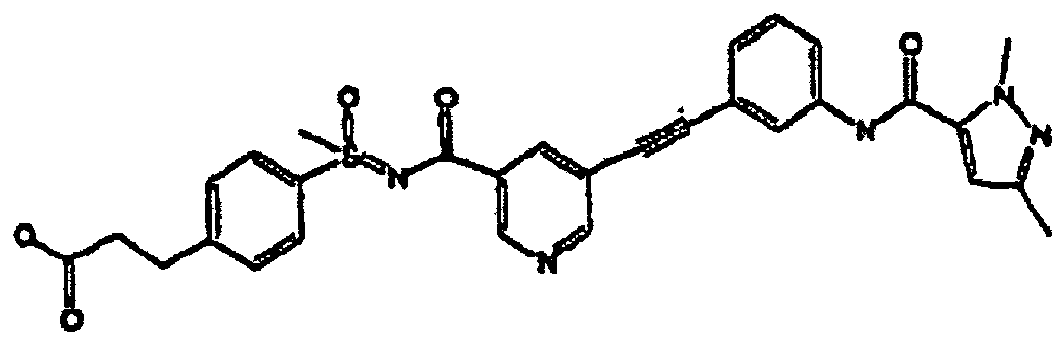
- Composition selon la revendication 1, dans laquelle ladite composition est administrée à l'intérieur dudit oeil par placement dans le segment postérieur de l'oeil par le biais d'au moins une aiguille de calibre 27.
- Composition selon la revendication 1, dans laquelle ladite affection comprend une affection du segment postérieur de l'oeil.
- Composition selon la revendication 1, dans laquelle ladite affection est choisie dans le groupe constitué par une dégénérescence maculaire, y compris la dégénérescence maculaire liée à l'âge non exsudative et la dégénérescence maculaire liée à l'âge exsudative, la néovascularisation choroïdienne, la rétinopathie, la rétinopathie diabétique, la neurorétinopathie maculaire aiguë et chronique, la choriorétinopathie séreuse centrale, l'oedème maculaire, l'épithéliopathie multifocale placoïde pigmentaire aiguë, la maladie de Behcet, la rétinochoroïdopathie de type birdshot, la sclérite postérieure, la choroïdite serpigineuse, la fibrose sous-rétinienne, le syndrome d'uvéite, le syndrome de Vogt-Koyanagi-Harada, l'occlusion artérielle rétinienne, l'occlusion de la veine centrale de la rétine, la coagulopathie intravasculaire disséminée, l'occlusion d'une branche veineuse rétinienne, les variations hypertensives du fond d'oeil, le syndrome d'ischémie oculaire, les micro-anévrismes artériels rétiniens, la maladie de Coat, la télangiectasie parafovéale, l'occlusion de la veine hémirétinienne, la papillophlébite, l'occlusion de l'artère centrale de la rétine, l'occlusion d'une branche artérielle de la rétine, la maladie de l'artère carotide (CAD), l'angéite givrée, la rétinopathie drépanocytaire, les stries angioïdes, la vitréorétinopathie exsudative familiale, la maladie d'Eales, la vitréorétinopathie proliférante, la rétinopathie diabétique proliférante, une maladie rétinienne associée à des tumeurs, l'hypertrophie congénitale de l'épithélium pigmentaire rétinien, le mélanome uvéal postérieur, l'hémangiome choroïdien, l'ostéome choroïdien, les métastases choroïdiennes, l'hamartome combiné de la rétine et de l'épithélium pigmenté rétinien, le rétinoblastome, les tumeurs vasoproliférantes du fond d'oeil, l'astrocytome rétinien, les tumeurs lymphoïdes intraoculaires, la dégénérescence rétinienne myopique, l'épithélite pigmentaire aiguë de la rétine.
- Composition pharmaceutique destinée à une administration intravitréenne pour traiter une affection oculaire, comprenant un TKI et un support acide hyaluronique polymérique de viscosité élevée pour le TKI, l'acide hyaluronique ayant un poids moléculaire moyen de 1,3 millions à 2 millions de daltons.
Priority Applications (1)
| Application Number | Priority Date | Filing Date | Title |
|---|---|---|---|
| EP12188296.3A EP2583679A1 (fr) | 2007-04-02 | 2008-03-27 | Procédés et compositions pour l'administration intraoculaire pour le traitement d'états oculaires |
Applications Claiming Priority (2)
| Application Number | Priority Date | Filing Date | Title |
|---|---|---|---|
| US11/695,527 US8642067B2 (en) | 2007-04-02 | 2007-04-02 | Methods and compositions for intraocular administration to treat ocular conditions |
| PCT/US2008/058340 WO2008121665A1 (fr) | 2007-04-02 | 2008-03-27 | Procédés et compositions pour une administration intraoculaire pour traiter des infections de l'œil |
Related Child Applications (1)
| Application Number | Title | Priority Date | Filing Date |
|---|---|---|---|
| EP12188296.3 Division-Into | 2012-10-12 |
Publications (2)
| Publication Number | Publication Date |
|---|---|
| EP2142189A1 EP2142189A1 (fr) | 2010-01-13 |
| EP2142189B1 true EP2142189B1 (fr) | 2013-02-27 |
Family
ID=39512549
Family Applications (2)
| Application Number | Title | Priority Date | Filing Date |
|---|---|---|---|
| EP12188296.3A Withdrawn EP2583679A1 (fr) | 2007-04-02 | 2008-03-27 | Procédés et compositions pour l'administration intraoculaire pour le traitement d'états oculaires |
| EP08744424A Active EP2142189B1 (fr) | 2007-04-02 | 2008-03-27 | Procédés et compositions pour une administration intraoculaire pour traiter des infections de l' oeil |
Family Applications Before (1)
| Application Number | Title | Priority Date | Filing Date |
|---|---|---|---|
| EP12188296.3A Withdrawn EP2583679A1 (fr) | 2007-04-02 | 2008-03-27 | Procédés et compositions pour l'administration intraoculaire pour le traitement d'états oculaires |
Country Status (4)
| Country | Link |
|---|---|
| US (1) | US8642067B2 (fr) |
| EP (2) | EP2583679A1 (fr) |
| ES (1) | ES2402744T3 (fr) |
| WO (1) | WO2008121665A1 (fr) |
Cited By (10)
| Publication number | Priority date | Publication date | Assignee | Title |
|---|---|---|---|---|
| US9795594B2 (en) | 2006-06-27 | 2017-10-24 | Aerpio Therapeutics, Inc. | Human protein tyrosine phosphatase inhibitors and methods of use |
| US9926367B2 (en) | 2006-04-07 | 2018-03-27 | Aerpio Therapeutics, Inc. | Antibodies that bind human protein tyrosine phosphatase beta (HPTPbeta) and uses thereof |
| US9949956B2 (en) | 2009-07-06 | 2018-04-24 | Aerpio Therapeutics, Inc. | Compounds, compositions, and methods for preventing metastasis of cancer cells |
| US9994560B2 (en) | 2014-03-14 | 2018-06-12 | Aerpio Therapeutics, Inc. | HPTP-β inhibitors |
| US10150811B2 (en) | 2011-10-13 | 2018-12-11 | Aerpio Therapeutics, Inc. | Methods for treating vascular leak syndrome and cancer |
| US10220048B2 (en) | 2013-03-15 | 2019-03-05 | Aerpio Therapeutics, Inc. | Compositions and methods for treating ocular diseases |
| US10329357B2 (en) | 2011-10-13 | 2019-06-25 | Aerpio Therapeutics, Inc. | Treatment of ocular disease |
| US10952992B2 (en) | 2015-09-23 | 2021-03-23 | Aerpio Pharmaceuticals, Inc. | Methods of treating intraocular pressure with activators of Tie-2 |
| US11253502B2 (en) | 2019-04-29 | 2022-02-22 | EyePoint Pharmaceuticals, Inc. | Tie-2 activators targeting the Schlemm's canal |
| US12152023B2 (en) | 2013-03-15 | 2024-11-26 | EyePoint Pharmaceuticals, Inc. | Compositions, formulations and methods for treating ocular diseases |
Families Citing this family (48)
| Publication number | Priority date | Publication date | Assignee | Title |
|---|---|---|---|---|
| FR2861734B1 (fr) | 2003-04-10 | 2006-04-14 | Corneal Ind | Reticulation de polysaccharides de faible et forte masse moleculaire; preparation d'hydrogels monophasiques injectables; polysaccharides et hydrogels obtenus |
| US20090148527A1 (en) * | 2007-12-07 | 2009-06-11 | Robinson Michael R | Intraocular formulation |
| US8512738B2 (en) | 2004-04-30 | 2013-08-20 | Allergan, Inc. | Biodegradable intravitreal tyrosine kinase implants |
| US7771742B2 (en) * | 2004-04-30 | 2010-08-10 | Allergan, Inc. | Sustained release intraocular implants containing tyrosine kinase inhibitors and related methods |
| US8455656B2 (en) * | 2004-04-30 | 2013-06-04 | Allergan, Inc. | Kinase inhibitors |
| US7749530B2 (en) * | 2005-07-13 | 2010-07-06 | Allergan, Inc. | Kinase inhibitors |
| SI2944306T1 (sl) | 2006-06-16 | 2021-04-30 | Regeneron Pharmaceuticals, Inc. | Formulacije antagonista VEGF, primerne za intravitrealno dajanje |
| US8143410B2 (en) * | 2006-11-16 | 2012-03-27 | Allergan, Inc. | Kinase inhibitors |
| US8558002B2 (en) | 2006-11-16 | 2013-10-15 | Allergan, Inc. | Sulfoximines as kinase inhibitors |
| US11078262B2 (en) * | 2007-04-30 | 2021-08-03 | Allergan, Inc. | High viscosity macromolecular compositions for treating ocular conditions |
| AU2014201863B2 (en) * | 2007-04-30 | 2017-02-02 | Allergan, Inc. | High viscosity macromolecular compositions for treating ocular conditions |
| EP2152743A2 (fr) | 2007-05-23 | 2010-02-17 | Allergan, Inc. | Collagène réticulé et utilisations de ce dernier |
| US8318695B2 (en) | 2007-07-30 | 2012-11-27 | Allergan, Inc. | Tunably crosslinked polysaccharide compositions |
| US8697044B2 (en) | 2007-10-09 | 2014-04-15 | Allergan, Inc. | Crossed-linked hyaluronic acid and collagen and uses thereof |
| US8353862B2 (en) * | 2007-11-02 | 2013-01-15 | Allergan, Inc. | Drug delivery systems and methods |
| EP3498299A1 (fr) | 2007-11-16 | 2019-06-19 | Aclaris Therapeutics, Inc. | Compositions et procedes de traitement du purpura |
| US8394784B2 (en) | 2007-11-30 | 2013-03-12 | Allergan, Inc. | Polysaccharide gel formulation having multi-stage bioactive agent delivery |
| US8394782B2 (en) | 2007-11-30 | 2013-03-12 | Allergan, Inc. | Polysaccharide gel formulation having increased longevity |
| US9044477B2 (en) | 2007-12-12 | 2015-06-02 | Allergan, Inc. | Botulinum toxin formulation |
| US8450475B2 (en) | 2008-08-04 | 2013-05-28 | Allergan, Inc. | Hyaluronic acid-based gels including lidocaine |
| JP5722217B2 (ja) | 2008-09-02 | 2015-05-20 | アラーガン・ホールディングス・フランス・ソシエテ・パール・アクシオン・サンプリフィエAllergan Holdings France S.A.S. | ヒアルロン酸および/またはその誘導体の糸、その作製方法、ならびにその使用 |
| US20100098772A1 (en) * | 2008-10-21 | 2010-04-22 | Allergan, Inc. | Drug delivery systems and methods for treating neovascularization |
| US8623416B2 (en) * | 2009-11-25 | 2014-01-07 | Michael Zasloff | Formulations comprising aminosterols |
| US9114188B2 (en) | 2010-01-13 | 2015-08-25 | Allergan, Industrie, S.A.S. | Stable hydrogel compositions including additives |
| US20110172180A1 (en) | 2010-01-13 | 2011-07-14 | Allergan Industrie. Sas | Heat stable hyaluronic acid compositions for dermatological use |
| CA2792729C (fr) | 2010-03-12 | 2016-06-28 | Allergan Industrie, Sas | Composition fluide pour l'amelioration d'etats cutanes |
| HUE030138T2 (en) | 2010-03-22 | 2017-04-28 | Allergan Inc | Polysaccharide and protein-polysaccharide cross-linked hydrogels for soft tissue augmentation |
| US8697057B2 (en) | 2010-08-19 | 2014-04-15 | Allergan, Inc. | Compositions and soft tissue replacement methods |
| US9005605B2 (en) | 2010-08-19 | 2015-04-14 | Allergan, Inc. | Compositions and soft tissue replacement methods |
| US8889123B2 (en) | 2010-08-19 | 2014-11-18 | Allergan, Inc. | Compositions and soft tissue replacement methods |
| US8883139B2 (en) | 2010-08-19 | 2014-11-11 | Allergan Inc. | Compositions and soft tissue replacement methods |
| AU2012262047A1 (en) | 2011-06-03 | 2014-01-16 | Allergan, Inc. | Dermal filler compositions including antioxidants |
| US9393263B2 (en) | 2011-06-03 | 2016-07-19 | Allergan, Inc. | Dermal filler compositions including antioxidants |
| US9408797B2 (en) | 2011-06-03 | 2016-08-09 | Allergan, Inc. | Dermal filler compositions for fine line treatment |
| US20130096081A1 (en) | 2011-06-03 | 2013-04-18 | Allergan, Inc. | Dermal filler compositions |
| US9662422B2 (en) | 2011-09-06 | 2017-05-30 | Allergan, Inc. | Crosslinked hyaluronic acid-collagen gels for improving tissue graft viability and soft tissue augmentation |
| US20130244943A1 (en) | 2011-09-06 | 2013-09-19 | Allergan, Inc. | Hyaluronic acid-collagen matrices for dermal filling and volumizing applications |
| JP6649246B2 (ja) * | 2013-03-14 | 2020-02-19 | アラーガン、インコーポレイテッドAllergan,Incorporated | タンパク質の徐放性送達の組成物及び製造プロセス中のタンパク質の安定化方法 |
| EP2986635B1 (fr) | 2013-04-18 | 2018-10-03 | Fondazione Telethon | Administration efficace de grands gènes par des vecteurs aav doubles |
| WO2016051219A1 (fr) | 2014-09-30 | 2016-04-07 | Allergan Industrie, Sas | Compositions d'hydrogel stables pourvues d'additifs |
| WO2016128783A1 (fr) | 2015-02-09 | 2016-08-18 | Allergan Industrie Sas | Compositions et méthodes pour améliorer l'apparence de la peau |
| EP3653232A1 (fr) | 2015-02-13 | 2020-05-20 | Allergan Industrie, SAS | Implants pour sculpter, augmenter ou corriger des caractéristiques faciales telles que le menton |
| US10253094B2 (en) | 2016-07-20 | 2019-04-09 | Aerpio Therapeutics, Inc. | Antibodies that target human protein tyrosine phosphatase-beta (HPTP-beta) and methods of use thereof to treat ocular conditions |
| US11278546B2 (en) * | 2016-07-22 | 2022-03-22 | Aiviva Biopharma, Inc. | Multikinase inhibitors and uses in ocular fibrosis |
| US11123411B2 (en) | 2016-12-08 | 2021-09-21 | Gary E. Borodic | Method of treating macular degeneration using botulinum toxin-based pharmaceuticals |
| US11096993B2 (en) | 2016-12-08 | 2021-08-24 | Gary E. Borodic | Method of treating macular degeneration using botulinum toxin-based pharmaceuticals |
| IT201800007683A1 (it) | 2018-07-31 | 2020-01-31 | Altergon Sa | Composizioni cooperative sinergiche utili per aumento del tessuto molle, rilascio di farmaco e campi correlati |
| JP7755994B2 (ja) | 2018-10-19 | 2025-10-17 | リップタイド バイオサイエンス インコーポレイテッド | 抗菌性ペプチド及びその使用方法 |
Family Cites Families (190)
| Publication number | Priority date | Publication date | Assignee | Title |
|---|---|---|---|---|
| US4327725A (en) | 1980-11-25 | 1982-05-04 | Alza Corporation | Osmotic device with hydrogel driving member |
| JPS58126435U (ja) | 1982-02-19 | 1983-08-27 | オリンパス光学工業株式会社 | Ttlオ−トストロボ用絞り制御回路 |
| US5166331A (en) | 1983-10-10 | 1992-11-24 | Fidia, S.P.A. | Hyaluronics acid fractions, methods for the preparation thereof, and pharmaceutical compositions containing same |
| EP0244178A3 (fr) | 1986-04-28 | 1989-02-08 | Iolab, Inc | Compositions intraoculaires et leur procédé d'utilisation |
| US5700823A (en) | 1994-01-07 | 1997-12-23 | Sugen, Inc. | Treatment of platelet derived growth factor related disorders such as cancers |
| US5580979A (en) | 1994-03-15 | 1996-12-03 | Trustees Of Tufts University | Phosphotyrosine peptidomimetics for inhibiting SH2 domain interactions |
| US5795910A (en) | 1994-10-28 | 1998-08-18 | Cor Therapeutics, Inc. | Method and compositions for inhibiting protein kinases |
| US7091181B2 (en) | 1994-12-12 | 2006-08-15 | Omeros Corporation | Method of inhibition of pain and inflammation during surgery comprising administration of soluble TNF receptors |
| US5721277A (en) | 1995-04-21 | 1998-02-24 | Sugen, Inc. | Compounds and methods for inhibiting hyper-proliferative cell growth |
| US6331555B1 (en) | 1995-06-01 | 2001-12-18 | University Of California | Treatment of platelet derived growth factor related disorders such as cancers |
| US6906093B2 (en) | 1995-06-07 | 2005-06-14 | Sugen, Inc. | Indolinone combinatorial libraries and related products and methods for the treatment of disease |
| US8212004B2 (en) | 1999-03-02 | 2012-07-03 | Human Genome Sciences, Inc. | Neutrokine-alpha fusion proteins |
| US7452538B2 (en) | 1997-01-28 | 2008-11-18 | Human Genome Sciences, Inc. | Death domain containing receptor 4 antibodies and methods |
| EP1012274B2 (fr) | 1997-01-28 | 2011-06-15 | Human Genome Sciences, Inc. | Recepteur 4 (dr4:recepteur 4 de mort cellulaire) contenant des domaines de mort cellulaire, membre de la superfamille du recepteur du facteur de necrose tumorale (tnf) et se liant a la trail ( apo-2l) |
| DE19704479A1 (de) | 1997-02-06 | 1998-08-13 | Cerdec Ag | Dekorpräparat zur Herstellung goldhaltiger Dekore und deren Verwendung |
| US20040136951A1 (en) | 1997-03-17 | 2004-07-15 | Human Genome Sciences, Inc. | Death domain containing receptor 5 |
| US20050233958A1 (en) | 1997-03-17 | 2005-10-20 | Human Genome Sciences, Inc. | Death domain containing receptor 5 |
| US6531502B1 (en) | 1998-01-21 | 2003-03-11 | Sugen, Inc. | 3-Methylidenyl-2-indolinone modulators of protein kinase |
| US6028099A (en) | 1998-03-13 | 2000-02-22 | John Hopkins University, School Of Medicine | Use of an inhibitor of the protein tyrosine kinase pathway in the treatment of choroidal neovascularization |
| US5980929A (en) | 1998-03-13 | 1999-11-09 | Johns Hopkins University, School Of Medicine | Use of a protein tyrosine kinase pathway inhibitor in the treatment of retinal ischmemia or ocular inflammation |
| US5919813C1 (en) | 1998-03-13 | 2002-01-29 | Univ Johns Hopkins Med | Use of a protein tyrosine kinase pathway inhibitor in the treatment of diabetic retinopathy |
| US6514981B1 (en) | 1998-04-02 | 2003-02-04 | Sugen, Inc. | Methods of modulating tyrosine protein kinase function with indolinone compounds |
| US20030175271A1 (en) | 1998-05-20 | 2003-09-18 | Kyowa Hakko Kogyo Co., Ltd. | VEGF activity inhibitor |
| US20040214836A1 (en) | 1998-05-29 | 2004-10-28 | Cheresh David A. | Method of treatment of myocardial infarction |
| IL139934A0 (en) | 1998-05-29 | 2002-02-10 | Sugen Inc | Pyrrole substituted 2-indolinone derivatives and pharmaceutical compositions containing the same |
| US20060258686A1 (en) | 1998-05-29 | 2006-11-16 | Cheresh David A | Method of treatment of myocardial infarction |
| US6685938B1 (en) | 1998-05-29 | 2004-02-03 | The Scripps Research Institute | Methods and compositions useful for modulation of angiogenesis and vascular permeability using SRC or Yes tyrosine kinases |
| US20030130209A1 (en) | 1999-12-22 | 2003-07-10 | Cheresh David A. | Method of treatment of myocardial infarction |
| US6713474B2 (en) | 1998-09-18 | 2004-03-30 | Abbott Gmbh & Co. Kg | Pyrrolopyrimidines as therapeutic agents |
| ES2188254T3 (es) | 1998-11-19 | 2003-06-16 | Warner Lambert Co | N-(4-(3-chloro-4-fluoro-fenilamino)-7-(3-morfolin-4-il-propoxi)-quin azolin-6-il)-acrilamada, un inhibidor irreversible de tirosina quinasas. |
| US6399655B1 (en) | 1998-12-22 | 2002-06-04 | Johns Hopkins University, School Of Medicine | Method for the prophylactic treatment of cataracts |
| US20040127470A1 (en) | 1998-12-23 | 2004-07-01 | Pharmacia Corporation | Methods and compositions for the prevention or treatment of neoplasia comprising a Cox-2 inhibitor in combination with an epidermal growth factor receptor antagonist |
| US6709709B1 (en) | 1999-02-08 | 2004-03-23 | Gunze Limited | Deodorizing fibers and process for producing the same |
| US7223724B1 (en) * | 1999-02-08 | 2007-05-29 | Human Genome Sciences, Inc. | Use of vascular endothelial growth factor to treat photoreceptor cells |
| US6689806B1 (en) | 1999-03-24 | 2004-02-10 | Sugen, Inc. | Indolinone compounds as kinase inhibitors |
| US6933299B1 (en) | 1999-07-09 | 2005-08-23 | Smithkline Beecham Corporation | Anilinoquinazolines as protein tyrosine kinase inhibitors |
| US6638929B2 (en) | 1999-12-29 | 2003-10-28 | Wyeth | Tricyclic protein kinase inhibitors |
| AUPQ496500A0 (en) * | 2000-01-06 | 2000-02-03 | University Of Sydney, The | Kit |
| TWI256314B (en) | 2000-02-09 | 2006-06-11 | Mitsubishi Pharma Corp | Preventive-therapeutical medicament for gastroesophageal reflux disease |
| AU2001241798A1 (en) | 2000-02-28 | 2001-09-12 | Sugen, Inc. | 3-(pyrolyllactone)-2-indolinone compounds as kinase inhibitors |
| GB0005345D0 (en) | 2000-03-06 | 2000-04-26 | Mathilda & Terence Kennedy Ins | Methods of treating sepsis septic shock and inflammation |
| EP1277730A4 (fr) | 2000-03-28 | 2005-03-16 | Inhibiteurs de la neovascularisation | |
| US6608048B2 (en) | 2000-03-28 | 2003-08-19 | Wyeth Holdings | Tricyclic protein kinase inhibitors |
| MY128449A (en) | 2000-05-24 | 2007-02-28 | Sugen Inc | Prodrugs of 3-(pyrrol-2-ylmethylidene)-2-indolinone derivatives |
| AU6513701A (en) | 2000-05-30 | 2001-12-11 | Advanced Res & Tech Inst | Compositions and methods for identifying agents which modulate pten function andpi-3 kinase pathways |
| US7879328B2 (en) | 2000-06-16 | 2011-02-01 | Human Genome Sciences, Inc. | Antibodies that immunospecifically bind to B lymphocyte stimulator |
| HUP0302779A3 (en) | 2000-06-23 | 2005-12-28 | Schering Ag | Combinations and compositions which interfere with vegf/vegf and angiopoietin/tie receptor function and their use (ii) |
| CA2413538A1 (fr) | 2000-07-06 | 2002-01-17 | Bristol-Myers Squibb Pharma Company | Compositions radiopharmaceutiques stables et procedes de fabrication de ces compositions |
| IL144507A0 (en) | 2000-07-31 | 2002-05-23 | Pfizer Prod Inc | Use of glycogen phosphorylase inhibitors to inhibit tumor growth |
| US20030050236A1 (en) | 2000-08-15 | 2003-03-13 | The University Of Chicago | Compounds that enhance tumor death |
| US20020091082A1 (en) | 2000-09-13 | 2002-07-11 | Aiello Lloyd P. | Methods of modulating symptoms of hypertension |
| GB0025438D0 (en) | 2000-10-17 | 2000-11-29 | Unilever Plc | Esters |
| SK287335B6 (sk) | 2000-10-27 | 2010-07-07 | Novartis Ag | Použitie 4-{(4-metylpiperazin-1-ylmetyl)-N-[4-metyl-3-(4-pyrid-3- yl)pyrimidin-2-ylamino]fenyl}-benzamidu na prípravu farmaceutických kompozícií na liečenie gastrointestinálnych strómových tumorov |
| US20060062786A1 (en) | 2000-11-08 | 2006-03-23 | Human Genome Sciences, Inc. | Antibodies that immunospecifically bind to TRAIL receptors |
| US20020137755A1 (en) | 2000-12-04 | 2002-09-26 | Bilodeau Mark T. | Tyrosine kinase inhibitors |
| AU2002246758A1 (en) | 2000-12-29 | 2002-07-16 | Vanderbilt University | Epididymal lipocalin gene and uses thereof |
| PA8535501A1 (es) | 2001-01-05 | 2003-07-28 | Pfizer | Anticuerpos contra el receptor del factor de crecimiento similar a insulina |
| US6878714B2 (en) | 2001-01-12 | 2005-04-12 | Amgen Inc. | Substituted alkylamine derivatives and methods of use |
| US6995162B2 (en) | 2001-01-12 | 2006-02-07 | Amgen Inc. | Substituted alkylamine derivatives and methods of use |
| LT2762140T (lt) | 2001-02-19 | 2017-06-26 | Novartis Ag | Solidinių smegenų navikų gydymas rapamicino dariniu |
| US7402312B2 (en) | 2001-04-13 | 2008-07-22 | Human Genome Sciences, Inc. | Antibodies to vascular endothelial growth factor 2 (VEGF-2) |
| US20050232921A1 (en) | 2001-04-13 | 2005-10-20 | Rosen Craig A | Vascular endothelial growth factor 2 |
| US20030125265A1 (en) | 2001-05-09 | 2003-07-03 | Mien-Chie Hung | Anti-estrogen receptor agents for chemotherapy |
| US20030113897A1 (en) | 2001-05-09 | 2003-06-19 | Mien-Chie Hung | Mutant p21Cip1/WAF1 and cell growth control and cell growth control |
| JPWO2002094809A1 (ja) | 2001-05-24 | 2004-09-09 | 山之内製薬株式会社 | 3−キノリン−2(1h)−イリデンインドリン−2−オン誘導体 |
| US20050214209A1 (en) | 2001-05-25 | 2005-09-29 | Human Genome Sciences, Inc. | Antibodies that immunospecifically bind to TRAIL receptors |
| US20050129616A1 (en) | 2001-05-25 | 2005-06-16 | Human Genome Sciences, Inc. | Antibodies that immunospecifically bind to TRAIL receptors |
| US20050214210A1 (en) | 2001-05-25 | 2005-09-29 | Human Genome Sciences, Inc. | Antibodies that immunospecifically bind to TRAIL receptors |
| US7361341B2 (en) | 2001-05-25 | 2008-04-22 | Human Genome Sciences, Inc. | Methods of treating cancer using antibodies that immunospecifically bind to trail receptors |
| US7348003B2 (en) | 2001-05-25 | 2008-03-25 | Human Genome Sciences, Inc. | Methods of treating cancer using antibodies that immunospecifically bind to TRAIL receptors |
| JP2002354721A (ja) | 2001-05-29 | 2002-12-06 | Hitachi Ltd | 永久磁石式回転子を備えた回転電機 |
| AU2002346053B2 (en) | 2001-06-22 | 2008-03-13 | Merck & Co., Inc. | Tyrosine kinase inhibitors |
| US7265134B2 (en) | 2001-08-17 | 2007-09-04 | Merck & Co., Inc. | Tyrosine kinase inhibitors |
| WO2003015717A2 (fr) | 2001-08-17 | 2003-02-27 | Merck & Co., Inc. | Inhibiteurs de tyrosines kinases |
| US6927293B2 (en) | 2001-08-30 | 2005-08-09 | Merck & Co., Inc. | Tyrosine kinase inhibitors |
| WO2003020699A2 (fr) | 2001-08-30 | 2003-03-13 | Merck & Co., Inc. | Inhibiteurs de la tyrosine kinase |
| US7101884B2 (en) | 2001-09-14 | 2006-09-05 | Merck & Co., Inc. | Tyrosine kinase inhibitors |
| US20030211075A1 (en) | 2001-09-27 | 2003-11-13 | Thorpe Philip E. | Combined compositions for tumor vasculature coagulation and treatment |
| US20030225152A1 (en) | 2001-09-27 | 2003-12-04 | Andrews Steven W. | 3-(Arylamino)methylene-1, 3-dihydro-2h-indol-2-ones as kinase inhibitors |
| US7005444B2 (en) | 2001-09-27 | 2006-02-28 | Allergan, Inc. | 3-(heteroarylamino)methylene-1, 3-dihydro-2H-indol-2-ones as kinase inhibitors |
| US7169788B2 (en) | 2001-10-30 | 2007-01-30 | Merck & Co., Inc. | Tyrosine kinase inhibitors |
| US20050214207A1 (en) | 2001-12-20 | 2005-09-29 | Human Genome Sciences, Inc. | Antibodies that immunospecifically bind toTRAIL receptors |
| US20050214206A1 (en) | 2001-12-20 | 2005-09-29 | Human Genome Sciences, Inc. | Antibodies that immunospecifically bind to TRAIL receptors |
| EP1465925A4 (fr) | 2001-12-20 | 2006-02-08 | Human Genome Sciences Inc | Anticorps se liant de maniere immunospecifique a des recepteurs trail |
| US20050214208A1 (en) | 2001-12-20 | 2005-09-29 | Human Genome Sciences, Inc. | Antibodies that immunospecifically bind to TRAIL receptors |
| US20050214205A1 (en) | 2001-12-20 | 2005-09-29 | Human Genome Sciences, Inc. | Antibodies that immunospecifically bind to TRAIL receptors |
| CA2471719A1 (fr) | 2001-12-31 | 2003-07-17 | Dana-Farber Cancer Institute, Inc. | Methode de traitement de l'apoptose et compositions associees |
| AU2003213666A1 (en) | 2002-03-02 | 2003-09-16 | Board Of Regents, The University Of Texas System | Local production and/or delivery of anti-cancer agents by stromal cell precursors |
| US7285277B2 (en) | 2002-03-15 | 2007-10-23 | Mogam Biotechnology Research Institute | Anticancer agent |
| GB0206215D0 (en) | 2002-03-15 | 2002-05-01 | Novartis Ag | Organic compounds |
| US20030181510A1 (en) | 2002-03-19 | 2003-09-25 | Robert Baker | Inhibition of muscle regeneration following myectomy |
| MXPA04009434A (es) * | 2002-04-03 | 2005-01-25 | Allergan Inc | (3z)-3- (3 -hidroisobenzofuran- 1-iliden) -1, 3-dihidro- 2h-indol -2-onas como inhibidores de cinasa. |
| EP1503751A4 (fr) | 2002-04-09 | 2007-08-01 | Novogen Res Pty Ltd | Procedes therapeutiques et compositions associees contenant des structures isoflav-3-ene et isoflavan |
| CA2480754A1 (fr) | 2002-04-12 | 2003-10-23 | Merck & Co., Inc. | Inhibiteurs de la tyrosine kinase |
| US7371754B2 (en) | 2002-04-12 | 2008-05-13 | Merck & Co., Inc. | Tyrosine kinase inhibitors |
| AU2003230835A1 (en) | 2002-04-12 | 2003-10-27 | Merck & Co., Inc. | Tyrosine kinase inhibitors |
| US20030224467A1 (en) | 2002-04-17 | 2003-12-04 | Osborne C. Kent | AIB1 as a prognostic marker and predictor of resistance to endocrine therapy |
| EP1503757B1 (fr) | 2002-05-02 | 2007-12-19 | Merck & Co., Inc. | Inhibiteurs de la tyrosine kinase |
| CA2484797A1 (fr) | 2002-05-06 | 2003-11-13 | Washington University | Methodes de traitement du glaucome et d'autres etats induits par l'expression de nos-2 par inhibition de la voie egfr |
| AU2003239368A1 (en) | 2002-05-06 | 2003-11-17 | Board Of Regents, The University Of Texas System | Targeting proteins to deliver therapeutic or diagnostic reagents |
| WO2003099833A2 (fr) | 2002-05-17 | 2003-12-04 | Board Of Regents, The University Of Texas System | La beta-2-glycoproteine 1 est un inhibiteur de l'angiogenese |
| UA77303C2 (en) | 2002-06-14 | 2006-11-15 | Pfizer | Derivatives of thienopyridines substituted by benzocondensed heteroarylamide useful as therapeutic agents, pharmaceutical compositions and methods for their use |
| AU2003248921A1 (en) | 2002-07-09 | 2004-01-23 | Point Therapeutics, Inc. | Boroproline compound combination therapy |
| US20040023981A1 (en) | 2002-07-24 | 2004-02-05 | Yu Ren | Salt forms with tyrosine kinase activity |
| US6872724B2 (en) | 2002-07-24 | 2005-03-29 | Merck & Co., Inc. | Polymorphs with tyrosine kinase activity |
| WO2004014851A2 (fr) | 2002-08-09 | 2004-02-19 | Merck & Co., Inc. | Inhibiteurs de tyrosine kinases |
| US20060128783A1 (en) | 2002-08-09 | 2006-06-15 | Dinsmore Christopher J | Tyrosine kinase inhibitors |
| US6767025B2 (en) | 2002-08-13 | 2004-07-27 | Earnest G. Hagen | Folding trailer for off-ground storage on a towing vehicle |
| US20050282814A1 (en) | 2002-10-03 | 2005-12-22 | Targegen, Inc. | Vasculostatic agents and methods of use thereof |
| BR0315053A (pt) | 2002-10-03 | 2005-08-09 | Targegen Inc | Agentes vasculostáticos , composição, artigo e processo de preparação dos mesmos |
| US20040102360A1 (en) | 2002-10-30 | 2004-05-27 | Barnett Stanley F. | Combination therapy |
| CA2501932C (fr) | 2002-11-13 | 2014-03-11 | Chiron Corporation | Utilisation des quinolinones de benzimidazole pour le traitement du cancer |
| US7250496B2 (en) | 2002-11-14 | 2007-07-31 | Rosetta Genomics Ltd. | Bioinformatically detectable group of novel regulatory genes and uses thereof |
| US6747025B1 (en) | 2002-11-27 | 2004-06-08 | Allergan, Inc. | Kinase inhibitors for the treatment of disease |
| US6699863B1 (en) | 2002-11-27 | 2004-03-02 | Allergan, Inc. | Kinase inhibitors for the treatment of disease |
| AU2003297607A1 (en) | 2002-12-02 | 2004-06-23 | Genvec, Inc | Materials and methods for treating ocular-related disorders |
| US20040121968A1 (en) | 2002-12-23 | 2004-06-24 | Alexander Ljubimov | Antiangiogenesis by inhibiting protein kinase CK2 activity |
| CA2513399A1 (fr) | 2003-01-10 | 2004-07-29 | Threshold Pharmaceuticals, Inc. | Traitement du cancer par le 2-desoxyglucose |
| US20060276527A1 (en) | 2003-01-17 | 2006-12-07 | Thresold Pharmaceuticals, Inc. | Combination therapies for the treatment of cancer |
| US20040228872A1 (en) | 2003-02-21 | 2004-11-18 | Philip Hallinger Bonner | Tyrosine kinase inhibitors as an adjunctive therapy to botulinum toxin treatment |
| US7157577B2 (en) | 2003-03-07 | 2007-01-02 | Sugen Inc. | 5-sulfonamido-substituted indolinone compounds as protein kinase inhibitors |
| US20050118154A1 (en) | 2003-04-02 | 2005-06-02 | Mien-Chie Hung | Antitumor effect of mutant Bik |
| CN1809351A (zh) | 2003-04-24 | 2006-07-26 | 麦克公司 | Akt活性抑制剂 |
| JP4679514B2 (ja) | 2003-04-24 | 2011-04-27 | メルク・シャープ・エンド・ドーム・コーポレイション | Akt活性の阻害剤 |
| JP2006524710A (ja) | 2003-04-25 | 2006-11-02 | ギリアード サイエンシーズ, インコーポレイテッド | キナーゼインヒビターホスホネート抱合体 |
| PA8603801A1 (es) | 2003-05-27 | 2004-12-16 | Janssen Pharmaceutica Nv | Derivados de la quinazolina |
| WO2005009957A1 (fr) | 2003-07-24 | 2005-02-03 | Merck & Co., Inc. | Inhibiteurs des tyrosine kinases |
| US7538231B2 (en) | 2003-07-24 | 2009-05-26 | Merck & Co, Inc. | Tyrosine kinase inhibitors |
| US20050106667A1 (en) | 2003-08-01 | 2005-05-19 | Genentech, Inc | Binding polypeptides with restricted diversity sequences |
| US7485297B2 (en) | 2003-08-12 | 2009-02-03 | Dyax Corp. | Method of inhibition of vascular development using an antibody |
| WO2005019429A2 (fr) | 2003-08-22 | 2005-03-03 | Potentia Pharmaceuticals, Inc. | Compositions et procedes permettant d'augmenter la phagocytose ou l'activite des phagocytes |
| NZ592039A (en) | 2003-08-27 | 2013-03-28 | Ophthotech Corp | Combination therapy for the treatment of ocular neovascular disorders |
| CA2536788A1 (fr) | 2003-08-29 | 2005-03-10 | Pfizer Inc. | Carboxamides de naphtalene et leurs derives utiles comme nouveaux agents anti-angiogeniques |
| CA2536321A1 (fr) | 2003-08-29 | 2005-03-10 | Pfizer Inc. | Thienopyridine-phenylacetamides et leurs derives utiles comme nouveaux agents anti-angiogeniques |
| US20050220781A1 (en) | 2003-09-04 | 2005-10-06 | Duen-Hwa Yan | IFIX, a novel HIN-200 protein, for cancer therapy |
| MXPA06002853A (es) | 2003-09-11 | 2006-06-14 | Kemia Inc | Inhibidores citoquina. |
| JPWO2005027970A1 (ja) | 2003-09-24 | 2007-11-15 | 協和醗酵工業株式会社 | 癌治療用医薬 |
| US20050090732A1 (en) | 2003-10-28 | 2005-04-28 | Triton Biosystems, Inc. | Therapy via targeted delivery of nanoscale particles |
| AU2004291062A1 (en) | 2003-11-10 | 2005-06-02 | Angiotech International Ag | Medical implants and anti-scarring agents |
| US20050250737A1 (en) * | 2003-11-12 | 2005-11-10 | Allergan, Inc. | Therapeutic ophthalmic compositions containing retinal friendly excipients and related methods |
| US20060141049A1 (en) * | 2003-11-12 | 2006-06-29 | Allergan, Inc. | Triamcinolone compositions for intravitreal administration to treat ocular conditions |
| WO2005048942A2 (fr) | 2003-11-13 | 2005-06-02 | Pharmacia Corporation | Polytherapie contenant un inhibiteur cox-2 et un agent antineoplasique |
| US20050208095A1 (en) | 2003-11-20 | 2005-09-22 | Angiotech International Ag | Polymer compositions and methods for their use |
| US20050158356A1 (en) | 2003-11-20 | 2005-07-21 | Angiotech International Ag | Implantable sensors and implantable pumps and anti-scarring agents |
| AU2004311543B2 (en) | 2003-12-12 | 2012-01-19 | Iq Corporation | Methods of inducing IL-10 production |
| US20050153990A1 (en) | 2003-12-22 | 2005-07-14 | Watkins William J. | Phosphonate substituted kinase inhibitors |
| JP4503022B2 (ja) | 2003-12-23 | 2010-07-14 | ファイザー・インク | 新規キノリン誘導体 |
| CN100548271C (zh) | 2004-01-20 | 2009-10-14 | 阿勒根公司 | 用于眼部的局部治疗、并优选包括有曲安奈德及透明质酸的组合物 |
| US7482483B2 (en) | 2004-01-27 | 2009-01-27 | University Of South Florida | Growth factor-binding compounds and methods of use |
| US7294640B2 (en) | 2004-02-06 | 2007-11-13 | Merck & Co., Inc. | Mitotic kinesin inhibitors |
| US20050202075A1 (en) | 2004-03-12 | 2005-09-15 | Pardridge William M. | Delivery of genes encoding short hairpin RNA using receptor-specific nanocontainers |
| EA201200555A1 (ru) | 2004-03-15 | 2013-01-30 | ПиТиСи ТЕРАПЬЮТИКС, ИНК. | Производные карболина, полезные в ингибировании ангиогенеза |
| US20060063736A1 (en) | 2004-03-25 | 2006-03-23 | Bertozzi Carolyn R | Compositions and methods for inhibiting mucin-type O-linked glycosylation |
| WO2005094830A1 (fr) | 2004-03-30 | 2005-10-13 | Pfizer Products Inc. | Combinaisons d'inhibiteurs de transduction de signaux |
| EP3611273A1 (fr) | 2004-03-31 | 2020-02-19 | The General Hospital Corporation | Procédé pour déterminer la réactivité du cancer aux traitements de ciblage de récepteur de facteur de croissance épidermique |
| US20050228031A1 (en) | 2004-04-13 | 2005-10-13 | Bilodeau Mark T | Tyrosine kinase inhibitors |
| WO2005105077A1 (fr) | 2004-04-28 | 2005-11-10 | Massachusetts Eye & Ear Infirmary | Maladie inflammatoire de l'oeil |
| WO2006083260A2 (fr) | 2004-04-28 | 2006-08-10 | Angiotech Biomaterials Corporation | Compositions et systemes pour la formation de biomateriaux reticules et procedes associes de preparation et d'utilisation |
| US8685435B2 (en) | 2004-04-30 | 2014-04-01 | Allergan, Inc. | Extended release biodegradable ocular implants |
| US20060182783A1 (en) * | 2004-04-30 | 2006-08-17 | Allergan, Inc. | Sustained release intraocular drug delivery systems |
| US7579371B2 (en) | 2004-04-30 | 2009-08-25 | Nereus Pharmaceuticals, Inc. | Methods of using [3.2.0] heterocyclic compounds and analogs thereof |
| US20050244469A1 (en) | 2004-04-30 | 2005-11-03 | Allergan, Inc. | Extended therapeutic effect ocular implant treatments |
| US7771742B2 (en) | 2004-04-30 | 2010-08-10 | Allergan, Inc. | Sustained release intraocular implants containing tyrosine kinase inhibitors and related methods |
| US20060264495A1 (en) | 2004-04-30 | 2006-11-23 | Michael Palladino | Methods of using [3.2.0] heterocyclic compounds and analogs thereof |
| US8512738B2 (en) | 2004-04-30 | 2013-08-20 | Allergan, Inc. | Biodegradable intravitreal tyrosine kinase implants |
| CA2570884C (fr) | 2004-06-16 | 2016-04-19 | Jack Arbiser | Formulations de carbazole destinees au traitement du psoriasis et de l'angiogenese |
| US20060156421A1 (en) | 2004-06-18 | 2006-07-13 | Cagan Ross L | High throughput screening methods for anti-metastatic compounds |
| US20060010505A1 (en) | 2004-06-18 | 2006-01-12 | Washington University | High throughput cancer pharmaceutical screening using drosophila |
| AU2005258000B2 (en) | 2004-06-21 | 2011-02-03 | Progenra Inc. | Diagnostic and screening methods and kits associated with proteolytic activity |
| US7652051B2 (en) | 2004-08-25 | 2010-01-26 | Targegen, Inc. | Heterocyclic compounds and methods of use |
| EP3173072A1 (fr) | 2004-10-01 | 2017-05-31 | Ramscor, Inc. | Compositions de médicaments à libération prolongée parfaitement implantable |
| US20060135443A1 (en) | 2004-10-18 | 2006-06-22 | Bionaut Pharmaceuticals, Inc. | Use of Na*/K*-ATPase inhibitors and antagonists thereof |
| WO2006047716A2 (fr) | 2004-10-26 | 2006-05-04 | Bioresponse Llc | Utilisation d'indoles lies au diindolylmethane et d'inhibiteurs du recepteur de facteur de croissance pour le traitement d'une maladie associee au cytomegalovirus humain |
| US7553496B2 (en) | 2004-12-21 | 2009-06-30 | University Of Kentucky Research Foundation | VEGF-A as an inhibitor of angiogenesis and methods of using same |
| US7968574B2 (en) | 2004-12-28 | 2011-06-28 | Kinex Pharmaceuticals, Llc | Biaryl compositions and methods for modulating a kinase cascade |
| US20060154285A1 (en) | 2004-12-29 | 2006-07-13 | Robishaw Janet D | Zebrafish heterotrimer G-protein gamma 2 subunit (GNG2) |
| WO2006086750A1 (fr) | 2005-02-09 | 2006-08-17 | Macusight, Inc. | Formulations liquides pour le traitement de maladies ou affections |
| AU2006213856B2 (en) | 2005-02-11 | 2011-03-17 | Regeneron Pharmaceuticals, Inc. | Therapeutic combination of a VEGF antagonist (VEGF trap) and an anti-hypertensive agent |
| WO2006089290A1 (fr) | 2005-02-18 | 2006-08-24 | Abraxis Bioscience Inc.. | Combinaisons et modes d'administration d'agents therapeutiques et traitement combine |
| TW200640443A (en) | 2005-02-23 | 2006-12-01 | Alcon Inc | Methods for treating ocular angiogenesis, retinal edema, retinal ischemia, and diabetic retinopathy using selective RTK inhibitors |
| US8524731B2 (en) | 2005-03-07 | 2013-09-03 | The University Of Chicago | Use of opioid antagonists to attenuate endothelial cell proliferation and migration |
| US20060247250A1 (en) | 2005-03-16 | 2006-11-02 | Targegen, Inc. | Pyrimidine inhibitors of kinases |
| US20060223096A1 (en) | 2005-03-25 | 2006-10-05 | Glycart Biotechnology Ag | Antigen binding molecules directed to MCSP and having increased Fc receptor binding affinity and effector function |
| US7823160B2 (en) | 2005-04-07 | 2010-10-26 | Sap Aktiengesellschaft | Methods of forwarding context data upon application initiation |
| US8411650B2 (en) | 2005-04-18 | 2013-04-02 | Cisco Technology, Inc. | Method and system for providing virtual private network services through a mobile IP home agent |
| US7238135B2 (en) | 2005-06-03 | 2007-07-03 | Gm Global Technology Operations, Inc. | Three-mode continuously variable transmission with a direct low mode and two split path high modes |
| US7550478B2 (en) | 2005-06-23 | 2009-06-23 | Merck & Co. Inc. | Tyrosine kinase inhibitors |
| US20070202186A1 (en) * | 2006-02-22 | 2007-08-30 | Iscience Interventional Corporation | Apparatus and formulations for suprachoroidal drug delivery |
| BRPI0718895A2 (pt) * | 2006-11-16 | 2013-12-10 | Allergan Inc | Composto de sulfoximina e uso do referido composto |
| US11078262B2 (en) | 2007-04-30 | 2021-08-03 | Allergan, Inc. | High viscosity macromolecular compositions for treating ocular conditions |
-
2007
- 2007-04-02 US US11/695,527 patent/US8642067B2/en not_active Expired - Fee Related
-
2008
- 2008-03-27 WO PCT/US2008/058340 patent/WO2008121665A1/fr not_active Ceased
- 2008-03-27 EP EP12188296.3A patent/EP2583679A1/fr not_active Withdrawn
- 2008-03-27 EP EP08744424A patent/EP2142189B1/fr active Active
- 2008-03-27 ES ES08744424T patent/ES2402744T3/es active Active
Cited By (19)
| Publication number | Priority date | Publication date | Assignee | Title |
|---|---|---|---|---|
| US11814425B2 (en) | 2006-04-07 | 2023-11-14 | Eye Point Pharmaceuticals, Inc. | Antibodies that bind human protein tyrosine phosphatase beta (HPTPbeta) and uses thereof |
| US9926367B2 (en) | 2006-04-07 | 2018-03-27 | Aerpio Therapeutics, Inc. | Antibodies that bind human protein tyrosine phosphatase beta (HPTPbeta) and uses thereof |
| USRE46592E1 (en) | 2006-06-27 | 2017-10-31 | Aerpio Therapeutics, Inc. | Human protein tyrosine phosphatase inhibitors and methods of use |
| US9795594B2 (en) | 2006-06-27 | 2017-10-24 | Aerpio Therapeutics, Inc. | Human protein tyrosine phosphatase inhibitors and methods of use |
| US10463650B2 (en) | 2006-06-27 | 2019-11-05 | Aerpio Pharmaceuticals, Inc. | Human protein tyrosine phosphatase inhibitors and methods of use |
| US9949956B2 (en) | 2009-07-06 | 2018-04-24 | Aerpio Therapeutics, Inc. | Compounds, compositions, and methods for preventing metastasis of cancer cells |
| US10150811B2 (en) | 2011-10-13 | 2018-12-11 | Aerpio Therapeutics, Inc. | Methods for treating vascular leak syndrome and cancer |
| US10329357B2 (en) | 2011-10-13 | 2019-06-25 | Aerpio Therapeutics, Inc. | Treatment of ocular disease |
| US10815300B2 (en) | 2011-10-13 | 2020-10-27 | Aerpio Pharmaceuticals, Inc. | Methods for treating vascular leak syndrome and cancer |
| US12043664B2 (en) | 2011-10-13 | 2024-07-23 | EyePoint Pharmaceuticals, Inc. | Methods for treating vascular leak syndrome and cancer |
| US10220048B2 (en) | 2013-03-15 | 2019-03-05 | Aerpio Therapeutics, Inc. | Compositions and methods for treating ocular diseases |
| US12152023B2 (en) | 2013-03-15 | 2024-11-26 | EyePoint Pharmaceuticals, Inc. | Compositions, formulations and methods for treating ocular diseases |
| US9994560B2 (en) | 2014-03-14 | 2018-06-12 | Aerpio Therapeutics, Inc. | HPTP-β inhibitors |
| US10858354B2 (en) | 2014-03-14 | 2020-12-08 | Aerpio Pharmaceuticals, Inc. | HPTP-Beta inhibitors |
| US11666558B2 (en) | 2015-09-23 | 2023-06-06 | EyePoint Pharmaceuticals, Inc. | Methods of treating intraocular pressure with activators of Tie-2 |
| US10952992B2 (en) | 2015-09-23 | 2021-03-23 | Aerpio Pharmaceuticals, Inc. | Methods of treating intraocular pressure with activators of Tie-2 |
| US12171751B2 (en) | 2015-09-23 | 2024-12-24 | EyePoint Pharmaceuticals, Inc. | Methods of treating intraocular pressure with activators of Tie-2 |
| US11253502B2 (en) | 2019-04-29 | 2022-02-22 | EyePoint Pharmaceuticals, Inc. | Tie-2 activators targeting the Schlemm's canal |
| US12064420B2 (en) | 2019-04-29 | 2024-08-20 | EyePoint Pharmaceuticals, Inc. | Tie-2 activators targeting the Schlemm's canal |
Also Published As
| Publication number | Publication date |
|---|---|
| US8642067B2 (en) | 2014-02-04 |
| ES2402744T3 (es) | 2013-05-08 |
| EP2142189A1 (fr) | 2010-01-13 |
| WO2008121665A1 (fr) | 2008-10-09 |
| US20080241252A1 (en) | 2008-10-02 |
| EP2583679A1 (fr) | 2013-04-24 |
Similar Documents
| Publication | Publication Date | Title |
|---|---|---|
| US8642067B2 (en) | Methods and compositions for intraocular administration to treat ocular conditions | |
| JP6247272B2 (ja) | 眼症状を処置するための高粘度高分子組成物 | |
| CA2603069C (fr) | Therapie oculaire utilisant des agonistes du recepteur adrenergique alpha-2 a taux de clairance precedents ameliores | |
| CA2553381C (fr) | Compositions pour traitement local de l'oeil, comprenant de preference de l'acetonide de triamcinolone et de l'acide hyaluronique | |
| US20060141049A1 (en) | Triamcinolone compositions for intravitreal administration to treat ocular conditions | |
| AU2017202760B2 (en) | High viscosity macromolecular compositions for treating ocular conditions | |
| AU2013200020B2 (en) | Compositions for localized therapy of the eye, comprising preferably triamcinolone acetonide and hyaluronic acid | |
| HK1184683B (en) | High viscosity macromolecluar compositions for treating ocular conditions | |
| AU2012202755A1 (en) | Ocular therapy using alpha-2 adrenergic receptor agonists having enhanced anterior clearance rates | |
| AU2014250659A1 (en) | Compositions for localized therapy of the eye, comprising preferably triamcinolone acetonide and hyaluronic acid |
Legal Events
| Date | Code | Title | Description |
|---|---|---|---|
| PUAI | Public reference made under article 153(3) epc to a published international application that has entered the european phase |
Free format text: ORIGINAL CODE: 0009012 |
|
| 17P | Request for examination filed |
Effective date: 20091028 |
|
| AK | Designated contracting states |
Kind code of ref document: A1 Designated state(s): AT BE BG CH CY CZ DE DK EE ES FI FR GB GR HR HU IE IS IT LI LT LU LV MC MT NL NO PL PT RO SE SI SK TR |
|
| DAX | Request for extension of the european patent (deleted) | ||
| 17Q | First examination report despatched |
Effective date: 20101007 |
|
| GRAP | Despatch of communication of intention to grant a patent |
Free format text: ORIGINAL CODE: EPIDOSNIGR1 |
|
| GRAS | Grant fee paid |
Free format text: ORIGINAL CODE: EPIDOSNIGR3 |
|
| GRAA | (expected) grant |
Free format text: ORIGINAL CODE: 0009210 |
|
| AK | Designated contracting states |
Kind code of ref document: B1 Designated state(s): AT BE BG CH CY CZ DE DK EE ES FI FR GB GR HR HU IE IS IT LI LT LU LV MC MT NL NO PL PT RO SE SI SK TR |
|
| REG | Reference to a national code |
Ref country code: GB Ref legal event code: FG4D |
|
| REG | Reference to a national code |
Ref country code: CH Ref legal event code: EP Ref country code: CH Ref legal event code: NV Representative=s name: NOVAGRAAF INTERNATIONAL SA, CH |
|
| REG | Reference to a national code |
Ref country code: AT Ref legal event code: REF Ref document number: 598125 Country of ref document: AT Kind code of ref document: T Effective date: 20130315 |
|
| REG | Reference to a national code |
Ref country code: SE Ref legal event code: TRGR |
|
| REG | Reference to a national code |
Ref country code: IE Ref legal event code: FG4D |
|
| REG | Reference to a national code |
Ref country code: DE Ref legal event code: R096 Ref document number: 602008022519 Country of ref document: DE Effective date: 20130425 |
|
| REG | Reference to a national code |
Ref country code: ES Ref legal event code: FG2A Ref document number: 2402744 Country of ref document: ES Kind code of ref document: T3 Effective date: 20130508 |
|
| REG | Reference to a national code |
Ref country code: NL Ref legal event code: T3 |
|
| REG | Reference to a national code |
Ref country code: AT Ref legal event code: MK05 Ref document number: 598125 Country of ref document: AT Kind code of ref document: T Effective date: 20130227 |
|
| REG | Reference to a national code |
Ref country code: LT Ref legal event code: MG4D |
|
| PG25 | Lapsed in a contracting state [announced via postgrant information from national office to epo] |
Ref country code: BG Free format text: LAPSE BECAUSE OF FAILURE TO SUBMIT A TRANSLATION OF THE DESCRIPTION OR TO PAY THE FEE WITHIN THE PRESCRIBED TIME-LIMIT Effective date: 20130527 Ref country code: NO Free format text: LAPSE BECAUSE OF FAILURE TO SUBMIT A TRANSLATION OF THE DESCRIPTION OR TO PAY THE FEE WITHIN THE PRESCRIBED TIME-LIMIT Effective date: 20130527 Ref country code: LT Free format text: LAPSE BECAUSE OF FAILURE TO SUBMIT A TRANSLATION OF THE DESCRIPTION OR TO PAY THE FEE WITHIN THE PRESCRIBED TIME-LIMIT Effective date: 20130227 Ref country code: AT Free format text: LAPSE BECAUSE OF FAILURE TO SUBMIT A TRANSLATION OF THE DESCRIPTION OR TO PAY THE FEE WITHIN THE PRESCRIBED TIME-LIMIT Effective date: 20130227 Ref country code: IS Free format text: LAPSE BECAUSE OF FAILURE TO SUBMIT A TRANSLATION OF THE DESCRIPTION OR TO PAY THE FEE WITHIN THE PRESCRIBED TIME-LIMIT Effective date: 20130627 |
|
| PG25 | Lapsed in a contracting state [announced via postgrant information from national office to epo] |
Ref country code: FI Free format text: LAPSE BECAUSE OF FAILURE TO SUBMIT A TRANSLATION OF THE DESCRIPTION OR TO PAY THE FEE WITHIN THE PRESCRIBED TIME-LIMIT Effective date: 20130227 Ref country code: SI Free format text: LAPSE BECAUSE OF FAILURE TO SUBMIT A TRANSLATION OF THE DESCRIPTION OR TO PAY THE FEE WITHIN THE PRESCRIBED TIME-LIMIT Effective date: 20130227 Ref country code: GR Free format text: LAPSE BECAUSE OF FAILURE TO SUBMIT A TRANSLATION OF THE DESCRIPTION OR TO PAY THE FEE WITHIN THE PRESCRIBED TIME-LIMIT Effective date: 20130528 Ref country code: PL Free format text: LAPSE BECAUSE OF FAILURE TO SUBMIT A TRANSLATION OF THE DESCRIPTION OR TO PAY THE FEE WITHIN THE PRESCRIBED TIME-LIMIT Effective date: 20130227 Ref country code: BE Free format text: LAPSE BECAUSE OF FAILURE TO SUBMIT A TRANSLATION OF THE DESCRIPTION OR TO PAY THE FEE WITHIN THE PRESCRIBED TIME-LIMIT Effective date: 20130227 Ref country code: LV Free format text: LAPSE BECAUSE OF FAILURE TO SUBMIT A TRANSLATION OF THE DESCRIPTION OR TO PAY THE FEE WITHIN THE PRESCRIBED TIME-LIMIT Effective date: 20130227 Ref country code: PT Free format text: LAPSE BECAUSE OF FAILURE TO SUBMIT A TRANSLATION OF THE DESCRIPTION OR TO PAY THE FEE WITHIN THE PRESCRIBED TIME-LIMIT Effective date: 20130627 |
|
| PG25 | Lapsed in a contracting state [announced via postgrant information from national office to epo] |
Ref country code: HR Free format text: LAPSE BECAUSE OF FAILURE TO SUBMIT A TRANSLATION OF THE DESCRIPTION OR TO PAY THE FEE WITHIN THE PRESCRIBED TIME-LIMIT Effective date: 20130227 |
|
| PG25 | Lapsed in a contracting state [announced via postgrant information from national office to epo] |
Ref country code: SK Free format text: LAPSE BECAUSE OF FAILURE TO SUBMIT A TRANSLATION OF THE DESCRIPTION OR TO PAY THE FEE WITHIN THE PRESCRIBED TIME-LIMIT Effective date: 20130227 Ref country code: EE Free format text: LAPSE BECAUSE OF FAILURE TO SUBMIT A TRANSLATION OF THE DESCRIPTION OR TO PAY THE FEE WITHIN THE PRESCRIBED TIME-LIMIT Effective date: 20130227 Ref country code: CZ Free format text: LAPSE BECAUSE OF FAILURE TO SUBMIT A TRANSLATION OF THE DESCRIPTION OR TO PAY THE FEE WITHIN THE PRESCRIBED TIME-LIMIT Effective date: 20130227 Ref country code: RO Free format text: LAPSE BECAUSE OF FAILURE TO SUBMIT A TRANSLATION OF THE DESCRIPTION OR TO PAY THE FEE WITHIN THE PRESCRIBED TIME-LIMIT Effective date: 20130227 Ref country code: DK Free format text: LAPSE BECAUSE OF FAILURE TO SUBMIT A TRANSLATION OF THE DESCRIPTION OR TO PAY THE FEE WITHIN THE PRESCRIBED TIME-LIMIT Effective date: 20130227 Ref country code: MC Free format text: LAPSE BECAUSE OF NON-PAYMENT OF DUE FEES Effective date: 20130331 |
|
| PG25 | Lapsed in a contracting state [announced via postgrant information from national office to epo] |
Ref country code: CY Free format text: LAPSE BECAUSE OF FAILURE TO SUBMIT A TRANSLATION OF THE DESCRIPTION OR TO PAY THE FEE WITHIN THE PRESCRIBED TIME-LIMIT Effective date: 20130227 |
|
| PLBE | No opposition filed within time limit |
Free format text: ORIGINAL CODE: 0009261 |
|
| STAA | Information on the status of an ep patent application or granted ep patent |
Free format text: STATUS: NO OPPOSITION FILED WITHIN TIME LIMIT |
|
| 26N | No opposition filed |
Effective date: 20131128 |
|
| REG | Reference to a national code |
Ref country code: DE Ref legal event code: R097 Ref document number: 602008022519 Country of ref document: DE Effective date: 20131128 |
|
| PG25 | Lapsed in a contracting state [announced via postgrant information from national office to epo] |
Ref country code: MT Free format text: LAPSE BECAUSE OF FAILURE TO SUBMIT A TRANSLATION OF THE DESCRIPTION OR TO PAY THE FEE WITHIN THE PRESCRIBED TIME-LIMIT Effective date: 20130227 |
|
| PG25 | Lapsed in a contracting state [announced via postgrant information from national office to epo] |
Ref country code: TR Free format text: LAPSE BECAUSE OF FAILURE TO SUBMIT A TRANSLATION OF THE DESCRIPTION OR TO PAY THE FEE WITHIN THE PRESCRIBED TIME-LIMIT Effective date: 20130227 |
|
| PG25 | Lapsed in a contracting state [announced via postgrant information from national office to epo] |
Ref country code: LU Free format text: LAPSE BECAUSE OF NON-PAYMENT OF DUE FEES Effective date: 20130327 Ref country code: HU Free format text: LAPSE BECAUSE OF FAILURE TO SUBMIT A TRANSLATION OF THE DESCRIPTION OR TO PAY THE FEE WITHIN THE PRESCRIBED TIME-LIMIT; INVALID AB INITIO Effective date: 20080327 |
|
| REG | Reference to a national code |
Ref country code: FR Ref legal event code: PLFP Year of fee payment: 9 |
|
| REG | Reference to a national code |
Ref country code: FR Ref legal event code: PLFP Year of fee payment: 10 |
|
| REG | Reference to a national code |
Ref country code: FR Ref legal event code: PLFP Year of fee payment: 11 |
|
| P01 | Opt-out of the competence of the unified patent court (upc) registered |
Effective date: 20230331 |
|
| PGFP | Annual fee paid to national office [announced via postgrant information from national office to epo] |
Ref country code: NL Payment date: 20240212 Year of fee payment: 17 Ref country code: IE Payment date: 20240226 Year of fee payment: 17 |
|
| PGFP | Annual fee paid to national office [announced via postgrant information from national office to epo] |
Ref country code: DE Payment date: 20240209 Year of fee payment: 17 Ref country code: GB Payment date: 20240208 Year of fee payment: 17 |
|
| PGFP | Annual fee paid to national office [announced via postgrant information from national office to epo] |
Ref country code: SE Payment date: 20240308 Year of fee payment: 17 Ref country code: IT Payment date: 20240315 Year of fee payment: 17 Ref country code: FR Payment date: 20240209 Year of fee payment: 17 |
|
| PGFP | Annual fee paid to national office [announced via postgrant information from national office to epo] |
Ref country code: CH Payment date: 20240401 Year of fee payment: 17 |
|
| PGFP | Annual fee paid to national office [announced via postgrant information from national office to epo] |
Ref country code: ES Payment date: 20240409 Year of fee payment: 17 |
|
| REG | Reference to a national code |
Ref country code: DE Ref legal event code: R119 Ref document number: 602008022519 Country of ref document: DE |
|
| REG | Reference to a national code |
Ref country code: CH Ref legal event code: H13 Free format text: ST27 STATUS EVENT CODE: U-0-0-H10-H13 (AS PROVIDED BY THE NATIONAL OFFICE) Effective date: 20251023 |
|
| REG | Reference to a national code |
Ref country code: SE Ref legal event code: EUG |
|
| REG | Reference to a national code |
Ref country code: NL Ref legal event code: MM Effective date: 20250401 |
|
| GBPC | Gb: european patent ceased through non-payment of renewal fee |
Effective date: 20250327 |
|
| PG25 | Lapsed in a contracting state [announced via postgrant information from national office to epo] |
Ref country code: NL Free format text: LAPSE BECAUSE OF NON-PAYMENT OF DUE FEES Effective date: 20250401 |
|
| PG25 | Lapsed in a contracting state [announced via postgrant information from national office to epo] |
Ref country code: DE Free format text: LAPSE BECAUSE OF NON-PAYMENT OF DUE FEES Effective date: 20251001 |
|
| PG25 | Lapsed in a contracting state [announced via postgrant information from national office to epo] |
Ref country code: GB Free format text: LAPSE BECAUSE OF NON-PAYMENT OF DUE FEES Effective date: 20250327 |
|
| PG25 | Lapsed in a contracting state [announced via postgrant information from national office to epo] |
Ref country code: FR Free format text: LAPSE BECAUSE OF NON-PAYMENT OF DUE FEES Effective date: 20250331 Ref country code: IT Free format text: LAPSE BECAUSE OF NON-PAYMENT OF DUE FEES Effective date: 20250327 |
|
| PG25 | Lapsed in a contracting state [announced via postgrant information from national office to epo] |
Ref country code: CH Free format text: LAPSE BECAUSE OF NON-PAYMENT OF DUE FEES Effective date: 20250331 |
|
| PG25 | Lapsed in a contracting state [announced via postgrant information from national office to epo] |
Ref country code: SE Free format text: LAPSE BECAUSE OF NON-PAYMENT OF DUE FEES Effective date: 20250328 Ref country code: IE Free format text: LAPSE BECAUSE OF NON-PAYMENT OF DUE FEES Effective date: 20250327 |
|
| REG | Reference to a national code |
Ref country code: ES Ref legal event code: FD2A Effective date: 20260504 |