EP2183270B1 - Utilisation de dépsipeptides cycliques pour inhiber la kallikréine 7 - Google Patents
Utilisation de dépsipeptides cycliques pour inhiber la kallikréine 7 Download PDFInfo
- Publication number
- EP2183270B1 EP2183270B1 EP08803037.4A EP08803037A EP2183270B1 EP 2183270 B1 EP2183270 B1 EP 2183270B1 EP 08803037 A EP08803037 A EP 08803037A EP 2183270 B1 EP2183270 B1 EP 2183270B1
- Authority
- EP
- European Patent Office
- Prior art keywords
- micropeptin
- alkyl
- nostopeptin
- name
- derivative
- Prior art date
- Legal status (The legal status is an assumption and is not a legal conclusion. Google has not performed a legal analysis and makes no representation as to the accuracy of the status listed.)
- Not-in-force
Links
- 0 *NN1ONN**P#C1 Chemical compound *NN1ONN**P#C1 0.000 description 4
- DFSHKDRORAWVBI-RGZLLVSESA-N CC(C)CC(C(N(CCC1)C1C(NC(Cc1ccccc1)C(N(C)C(Cc(cc1)ccc1O)C(N[C@H](C(OC(C)[C@H]1CNC(C(CCC(N)=O)NC(CC(C)C)=O)=O)=O)[F]C(C)C)=O)=O)=O)=O)NC1=O Chemical compound CC(C)CC(C(N(CCC1)C1C(NC(Cc1ccccc1)C(N(C)C(Cc(cc1)ccc1O)C(N[C@H](C(OC(C)[C@H]1CNC(C(CCC(N)=O)NC(CC(C)C)=O)=O)=O)[F]C(C)C)=O)=O)=O)=O)NC1=O DFSHKDRORAWVBI-RGZLLVSESA-N 0.000 description 1
- OPXPVOXJPMGOJA-NRTIYNGYSA-N CCC(C)C(C(OC(C)/C(/C(NC(CC(C)C)C(NC(CC=CN1C(C(C)CC)C(N(C)C2Cc(cc3)ccc3O)=O)C1=O)=O)=O)=N/C(C(CCC(N)=O)NC(C(C)C)=O)=O)=O)NC2=O Chemical compound CCC(C)C(C(OC(C)/C(/C(NC(CC(C)C)C(NC(CC=CN1C(C(C)CC)C(N(C)C2Cc(cc3)ccc3O)=O)C1=O)=O)=O)=N/C(C(CCC(N)=O)NC(C(C)C)=O)=O)=O)NC2=O OPXPVOXJPMGOJA-NRTIYNGYSA-N 0.000 description 1
- FNCZDHZUTRKQBG-UHFFFAOYSA-N NC(C1)(CC(N2)O)C1C2=O Chemical compound NC(C1)(CC(N2)O)C1C2=O FNCZDHZUTRKQBG-UHFFFAOYSA-N 0.000 description 1
Images


Classifications
-
- A—HUMAN NECESSITIES
- A61—MEDICAL OR VETERINARY SCIENCE; HYGIENE
- A61K—PREPARATIONS FOR MEDICAL, DENTAL OR TOILETRY PURPOSES
- A61K38/00—Medicinal preparations containing peptides
- A61K38/04—Peptides having up to 20 amino acids in a fully defined sequence; Derivatives thereof
- A61K38/15—Depsipeptides; Derivatives thereof
-
- A—HUMAN NECESSITIES
- A61—MEDICAL OR VETERINARY SCIENCE; HYGIENE
- A61P—SPECIFIC THERAPEUTIC ACTIVITY OF CHEMICAL COMPOUNDS OR MEDICINAL PREPARATIONS
- A61P17/00—Drugs for dermatological disorders
-
- A—HUMAN NECESSITIES
- A61—MEDICAL OR VETERINARY SCIENCE; HYGIENE
- A61P—SPECIFIC THERAPEUTIC ACTIVITY OF CHEMICAL COMPOUNDS OR MEDICINAL PREPARATIONS
- A61P17/00—Drugs for dermatological disorders
- A61P17/04—Antipruritics
-
- A—HUMAN NECESSITIES
- A61—MEDICAL OR VETERINARY SCIENCE; HYGIENE
- A61P—SPECIFIC THERAPEUTIC ACTIVITY OF CHEMICAL COMPOUNDS OR MEDICINAL PREPARATIONS
- A61P17/00—Drugs for dermatological disorders
- A61P17/06—Antipsoriatics
-
- A—HUMAN NECESSITIES
- A61—MEDICAL OR VETERINARY SCIENCE; HYGIENE
- A61P—SPECIFIC THERAPEUTIC ACTIVITY OF CHEMICAL COMPOUNDS OR MEDICINAL PREPARATIONS
- A61P35/00—Antineoplastic agents
-
- A—HUMAN NECESSITIES
- A61—MEDICAL OR VETERINARY SCIENCE; HYGIENE
- A61P—SPECIFIC THERAPEUTIC ACTIVITY OF CHEMICAL COMPOUNDS OR MEDICINAL PREPARATIONS
- A61P43/00—Drugs for specific purposes, not provided for in groups A61P1/00-A61P41/00
-
- C—CHEMISTRY; METALLURGY
- C07—ORGANIC CHEMISTRY
- C07K—PEPTIDES
- C07K14/00—Peptides having more than 20 amino acids; Gastrins; Somatostatins; Melanotropins; Derivatives thereof
- C07K14/81—Protease inhibitors
- C07K14/8107—Endopeptidase (E.C. 3.4.21-99) inhibitors
- C07K14/811—Serine protease (E.C. 3.4.21) inhibitors
-
- C—CHEMISTRY; METALLURGY
- C07—ORGANIC CHEMISTRY
- C07K—PEPTIDES
- C07K7/00—Peptides having 5 to 20 amino acids in a fully defined sequence; Derivatives thereof
- C07K7/04—Linear peptides containing only normal peptide links
- C07K7/06—Linear peptides containing only normal peptide links having 5 to 11 amino acids
-
- A—HUMAN NECESSITIES
- A61—MEDICAL OR VETERINARY SCIENCE; HYGIENE
- A61K—PREPARATIONS FOR MEDICAL, DENTAL OR TOILETRY PURPOSES
- A61K38/00—Medicinal preparations containing peptides
Definitions
- the present invention relates to cyclic depsipeptides, or a derivatives thereof.
- Kallikrein 7 is a S1 serine protease of the kallikrein gene family displaying a chymotrypsin like activity.
- Human kallikrein 7 (hK7, KLK7 or stratum corneum chymotryptic enzyme (SCCE), Swissprot P49862) plays an important role in skin physiology (1, 2, 3). It is mainly expressed in the skin and has been reported to play an important role in skin physiology.
- hK7 is involved in the degradation of the intercellular cohesive structures in cornified squamous epithelia in the process of desquamation.
- hK7 is reported to be able to cleave the corneodesmosomal proteins corneodesmosin and desmocollin 1 (4, 5, 6). The degradation of both corneodesmosomes is required for desquamation.
- hK7 very recently it has been shown that the two lipid processing enzymes ⁇ -glucocerebrosidase and acidic sphingomyelinase can be degraded by hK7 (7).
- lipid processing enzymes are co-secreted with their substrates glucosylceramides and sphingomyelin and process these polar lipid precursors into their more non-polar products e.g. ceramides, which are subsequently incorporated into the extracellular lamellar membranes.
- the lamellar membrane architecture is critical for a functional skin barrier.
- hK7 has been shown to activate Interleukin-1 ⁇ (IL-1 ⁇ ) precursor to its active form in vitro (8).
- IL-1 ⁇ activation in human epidermis occurs via another protease, a potential candidate being hK7.
- the amount of protease being expressed might be influenced by genetic factors.
- Such a genetic link a polymorphism in the 3'-UTR in the hK7 gene, was recently described (9). The authors hypothesise that the described 4 base pair insertion in the 3'-UTR of the kallikrein 7 gene stabilizes the hK7 mRNA and results in an overexpression of hK7.
- hK7 is secreted via lamellar bodies to the stratum corneum extracellular space as zymogen and it is not able to autoactivate, it needs to be activated by another protease e.g. hK5 (5). Uncontrolled activity of such an activating enzyme might result in an overactivation of hK7.
- activated hK7 can be inhibited by natural inhibitors like LEKTI, ALP or elafin (10, 11). The decreased expression or the lack of such inhibitors might result in an enhanced activity of hK7.
- hK7 has a neutral to slightly alkaline pH optimum (2) and there is a pH gradient from neutral to acidic from the innermost to the outermost layers in the skin.
- Environmental factors like soap might result in a pH increase in the outermost layers of the stratum corneum towards the pH optimum of hK7 thereby increasing the hK7 activity.
- hK7 skin diseases with an impaired skin barrier including inflammatory and hyperpoliferative skin diseases
- Netherton's syndrome patients show a phenotype dependent increase in serine protease activity, a decrease in corneodesmosomes, a decrease in the lipid processing enzymes ⁇ -glucocerebrosidase and acidic sphingomyelinase, and an impaired barrier function (15, 16).
- a transgenic mice overexpressing human kallikrein 7 shows a skin phenotype similar to that found in patients with atopic dermatitis (17, 18, 19).
- hK7 is considered to be a potential target for the treatment of diseases involved with epithelial dysfunction such as inflammatory and/or hyperpoliferative and pruritic skin diseases like atopic dermatitis, psoriasis, Netherton's syndrome or other pruritic dermatoses such as prurigo nodularis, unspecified itch of the elderly as well as other diseases with epithelial barrier dysfunction such as inflammatory bowel disease and Crohn's disease and there is a need for specific modulators (agonists or inhibitors) thereof.
- diseases involved with epithelial dysfunction such as inflammatory and/or hyperpoliferative and pruritic skin diseases like atopic dermatitis, psoriasis, Netherton's syndrome or other pruritic dermatoses such as prurigo nodularis, unspecified itch of the elderly as well as other diseases with epithelial barrier dysfunction such as inflammatory bowel disease and Crohn's disease and there is a need for specific modulators (agonists or inhibitors)
- Treatment can be by local or systemic application such a creams, ointments and suppositories or by oral or sc or iv application, respectively.
- Chondromyces is a genus in the family Polyangiaceae, which belongs to the order Myxococcales within the Delta-proteobacteria. Bacteria of the order Myxococcales, also called myxobacteria, are gram-negative rod-shaped bacteria with two characteristics distinguishing them from most other bacteria. They swarm on solid surfaces using an active gliding mechanism and aggregate to form fruiting bodies upon starvation (Kaiser (2003)). The present inventors have identified cyclic depsipeptide produced by Chondromyces that are able to specifically modulate kallikrein 7.
- the present invention relates to cyclic depsipeptides having the structure of formula (I): wherein the ester bond is found between the carboxy group of A 7 and the hydroxy group of A 2 , wherein X and A 1 are each independently optional, and wherein X is any chemical residue;
- the kallikrein 7-dependent disease is selected from the group consisting of pruritic dermatoses such as prurigo nodularis, pustular psioriasis, and cancer, in particular ovarian cancer.
- pruritic dermatoses such as prurigo nodularis, pustular psioriasis, and cancer, in particular ovarian cancer.
- the present invention relates to cyclic depsipeptides, or a derivative thereof, having the structure of formula (I): wherein the ester bond is found between the carboxy group of A 7 and the hydroxy group of A 2 , wherein X and A 1 are each independently optional, and wherein X is any chemical residue;
- the kallikrein 7-dependent disease is selected from the group consisting of pruritic dermatoses such as prurigo nodularis, pustular psioriasis, and cancer, in particular ovarian cancer.
- pruritic dermatoses such as prurigo nodularis, pustular psioriasis, and cancer, in particular ovarian cancer.
- the cyclic depsipetpides of formula (III)-(V) can be produced by the Chondromyces crocatus strain of the invention (DSM 19329).
- the cyclic depsipetpides of formula (IX)-(X) can be produced by the Chondromyces robustus of the invention (DSM 19330).
- cyclic depsipeptides of the present invention are: Table 1 Compound name CAS number Lyngbyastatin 4 928202-70-4 Micropeptin KT946 925421-06-3 Cyanopeptolin 1021 914606-83-0 Cyanopeptolin 993 914606-81-8 Cyanopeptolin 1063 912460-67-4 Largamide G 911297-59-1 Largamide F 911297-58-0 Largamide E 911297-57-9 Largamide D 911297-56-8 Cyanopeptolin 954 866718-63-0 no name 861388-86-5 no name 848891-15-6 no name 848888-25-5 no name 848780-62-1 no name 848780-61-0 Micropeptin 88Y 844636-95-9 Micropeptin 88N 844636-94-8 Cyanopeptolin 963A 790300-44-6 no name 745771-53-3 no name 685502-64-1 Planktopeptin
- a “chemical residue” can be any organic or anorganic chemical moiety.
- the expression “chemical residue” includes, but is not limited to substituted or unsubstituted aliphatic group, e.g. C 1 -C 3 alkyl, C 1 -C 6 alkyl, or C 1 -C 12 alkyl, substituted or unsubstituted aryl, substituted or unsubstituted arylalkyl, substituted or unsubstituted heteroaryl, or halogen.
- a chemical residue as defined in the claims can be any of the chemical groups described herein-below.
- chemical residue includes, but is not limited to amino acids, peptides, polypeptides, proteins and the like.
- anorganic chemical moiety examples include halogens, such as Br or Cl.
- an "aliphatic group” is non-aromatic moiety that may contain any combination of carbon atoms, hydrogen atoms, halogen atoms, oxygen, nitrogen or other atoms, and optionally contain one or more units of unsaturation, e.g., double and/or triple bonds.
- An aliphatic group may be straight chained, branched or cyclic and preferably contains between about 1 and about 24 carbon atoms, more typically between about 1 and about 12 carbon atoms.
- aliphatic groups include, for example, polyalkoxyalkyls, such as polyalkylene glycols, polyamines, and polyimines, for example. Such aliphatic groups may be further substituted.
- C 1 -C 3 alkyl refers to saturated, straight-or branched-chain hydrocarbon radicals containing between one and three, one and twelve, or one and six carbon atoms, respectively.
- C 1 -C 3 alkyl radicals include methyl, ethyl, propyl and isopropyl radicals
- examples of C 1 -C 6 alkyl radicals include, but are not limited to, methyl, ethyl, propyl, isopropyl, n-butyl, tert-butyl, sec-butyl, n-pentyl, neopentyl and n-hexyl radicals
- examples of C 1 -C 12 alkyl radicals include, but are not limited to, ethyl, propyl, isopropyl, hexyl, heptyl, octyl, nonyl, decyl, undecyl, dodecyl radicals and the like.
- substituted alkyl refers to an alkyl, such as a C 1 -C 12 alkyl or C 1 -C 6 alkyl group, substituted by one, two, three or more aliphatic substituents.
- Suitable aliphatic substituents include, but are not limited to,--F,--Cl,--Br,--I,--OH, protected hydroxy, aliphatic ethers, aromatic ethers, oxo,--NO 2 ,--CN,--C 1 -C 12 -alkyl optionally substituted with halogen (such as perhaloalkyls), C 2 -C 12 -alkenyl optionally substituted with halogen,--C 2 -C 12 -alkynyl optionally substituted with halogen,--NH 2 , protected amino,--NH-C 1 -C 12 -alkyl,--NH--C 2 -C 12 -alkenyl,--NH--C 2 -C 12 -alkenyl,--NH--C 3 -C 12 -cycloalkyl,--NH-aryl,-NH-heteroaryl,--NH-heterocycloal
- C 2 -C 12 alkenyl or "C 2 -C 6 alkenyl,” as used herein, denote a monovalent group derived from a hydrocarbon moiety containing from two to twelve or two to six carbon atoms having at least one carbon-carbon double bond by the removal of a single hydrogen atom.
- Alkenyl groups include, but are not limited to, for example, ethenyl, propenyl, butenyl, 1-methyl-2-buten-1-yl, alkadienes and the like.
- substituted alkenyl refers to a "C 2 -C 12 alkenyl” or “C 2 -C 6 alkenyl” group as previously defined, substituted by one, two, three or more aliphatic substituents.
- C 2 -C 12 alkynyl or “C 2 -C 6 alkynyl,” as used herein, denote a monovalent group derived from a hydrocarbon moiety containing from two to twelve or two to six carbon atoms having at least one carbon-carbon triple bond by the removal of a single hydrogen atom.
- Representative alkynyl groups include, but are not limited to, for example, ethynyl, 1-propynyl, 1-butynyl, and the like.
- substituted alkynyl refers to a "C 2 -C 12 alkynyl” or "C 2 -C 6 alkynyl” group as previously defined, substituted by one, two, three or more aliphatic substituents.
- C 1 -C 6 alkoxy refers to a C 1 -C 6 alkyl group, as previously defined, attached to the parent molecular moiety through an oxygen atom.
- C 1 -C 6 -alkoxy examples include, but are not limited to, methoxy, ethoxy, propoxy, isopropoxy, n-butoxy, sec-butoxy, tert-butoxy, n-pentoxy, neopentoxy and n-hexoxy.
- halo and halogen, as used herein, refer to an atom selected from fluorine, chlorine, bromine and iodine.
- aryl refers to a mono-or bicyclic carbocyclic ring system having one or two aromatic rings including, but not limited to, phenyl, naphthyl, tetrahydronaphthyl, indanyl, idenyl and the like.
- substituted aryl refers to an aryl group, as previously defined, substituted by one, two, three or more aromatic substituents.
- Aromatic substituents include, but are not limited to,--F,--Cl,--Br,--I,--OH, protected hydroxy, aliphatic ethers, aromatic ethers, oxo,--NO 2 ,--CN,--C 1 -C 12 -alkyl optionally substituted with halogen (such as perhaloalkyls), C 2 -C 12 -alkenyl optionally substituted with halogen,--C 2 -C 12 -alkynyl optionally substituted with halogen,--NH 2 , protected amino,--NH--C 1 -C 12 -alkyl,--NH-C 2 -C 12 -alkenyl,--NH--C 2 -C 12 -alkenyl,--NH--C 3 -C 12 -cycloalkyl,--NH-aryl,--NH-heteroaryl,--NH-heterocycloalkyl,
- arylalkyl refers to an aryl group attached to the parent compound via a C 1 -C 3 alkyl or C 1 -C 6 alkyl residue. Examples include, but are not limited to, benzyl, phenethyl and the like.
- substituted arylalkyl refers to an arylalkyl group, as previously defined, substituted by one, two, three or more aromatic substituents.
- heteroaryl refers to a mono-, bi-, or tri-cyclic aromatic radical or ring having from five to ten ring atoms of which at least one ring atom is selected from S, O and N; zero, one or two ring atoms are additional heteroatoms independently selected from S, O and N; and the remaining ring atoms are carbon, wherein any N or S contained within the ring may be optionally oxidized.
- Heteroaryl includes, but is not limited to, pyridinyl, pyrazinyl, pyrimidinyl, pyrrolyl, pyrazolyl, imidazolyl, thiazolyl, oxazolyl, isooxazolyl, thiadiazolyl, oxadiazolyl, thiophenyl, furanyl, quinolinyl, isoquinolinyl, benzimidazolyl, benzooxazolyl, quinoxalinyl, and the like.
- the heteroaromatic ring may be bonded to the chemical structure through a carbon or hetero atom.
- substituted heteroaryl refers to a heteroaryl group as previously defined, substituted by one, two, three or four aromatic substituents.
- C 3 -C 12 -cycloalkyl denotes a monovalent group derived from a monocyclic or bicyclic saturated carbocyclic ring compound by the removal of a single hydrogen atom. Examples include, but not limited to, cyclopropyl, cyclobutyl, cyclopentyl, cyclohexyl, bicyclo[2.2.1]heptyl, and bicyclo[2.2.2]octyl.
- substituted C 3 -C 12 -cycloalkyl refers to a C 3 -C 12 -cycloalkyl group as previously defined, substituted by one, two, three or more aliphatic substituents.
- heterocycloalkyl refers to a non-aromatic 5-, 6-or 7-membered ring or a bi-or tri-cyclic group fused system, where (i) each ring contains between one and three heteroatoms independently selected from oxygen, sulfur and nitrogen, (ii) each 5-membered ring has 0 to 1 double bonds and each 6-membered ring has 0 to 2 double bonds, (iii) the nitrogen and sulfur heteroatoms may optionally be oxidized, (iv) the nitrogen heteroatom may optionally be quaternized, (iv) any of the above rings may be fused to a benzene ring, and (v) the remaining ring atoms are carbon atoms which may be optionally oxo-substituted.
- heterocycloalkyl groups include, but are not limited to, [1,3]dioxolane, pyrrolidinyl, pyrazolinyl, pyrazolidinyl, imidazolinyl, imidazolidinyl, piperidinyl, piperazinyl, oxazolidinyl, isoxazolidinyl, morpholinyl, thiazolidinyl, isothiazolidinyl, quinoxalinyl, pyridazinonyl, and tetrahydrofuryl.
- substituted heterocycloalkyl refers to a heterocycloalkyl group, as previously defined, substituted by one, two, three or more aliphatic substituents.
- heteroarylalkyl to an heteroaryl group attached to the parent compound via a C 1 -C 3 alkyl or C 1 -C 6 alkyl residue. Examples include, but are not limited to, pyridinylmethyl, pyrimidinylethyl and the like.
- substituted heteroarylalkyl refers to a heteroarylalkyl group, as previously defined, substituted by independent replacement of one, two, or three or more aromatic substituents.
- C 1 -C 3 -alkylamino refers to one or two C 1 -C 3 -alkyl groups, as previously defined, attached to the parent molecular moiety through a nitrogen atom.
- Examples of C 1 -C 3 -alkylamino include, but are not limited to, methylamino, dimethylamino, ethylamino, diethylamino, and propylamino.
- alkylamino refers to a group having the structure--NH(C 1 -C 12 alkyl) where C 1 -C 12 alkyl is as previously defined.
- dialkylamino refers to a group having the structure--N(C 1 -C 12 alkyl) (C 1 -C 12 alkyl), where C 1 -C 12 alkyl is as previously defined.
- Examples of dialkylamino are, but not limited to, dimethylamino, diethylamino, methylethylamino, piperidino, and the like.
- alkoxycarbonyl represents an ester group, i.e., an alkoxy group, attached to the parent molecular moiety through a carbonyl group such as methoxycarbonyl, ethoxycarbonyl, and the like.
- carboxaldehyde refers to a group of formula--CHO.
- carboxamide refers to a group of formula--C(O)NH(C 1 -C 12 alkyl) or-C(O)N(C 1 -C 12 alkyl)(C 1 -C 12 alkyl),--C(O)NH 2 , NHC(O)(C 1 -C 12 alkyl), N(C 1 -C 12 alkyl)C(O)(C 1 -C 12 alkyl) and the like.
- hydroxy protecting group refers to a labile chemical moiety which is known in the art to protect a hydroxyl group against undesired reactions during synthetic procedures. After said synthetic procedure(s) the hydroxy protecting group as described herein may be selectively removed. Hydroxy protecting groups as known in the are described generally in T. H. Greene and P. G. M. Wuts, Protective Groups in Organic Synthesis, 3rd edition, John Wiley & Sons, New York (1999 ).
- hydroxyl protecting groups include benzyloxycarbonyl, 4-nitrobenzyloxycarbonyl, 4-bromobenzyloxycarbonyl, 4-methoxybenzyloxycarbonyl, methoxycarbonyl, tert-butoxycarbonyl, isopropoxycarbonyl, diphenylmethoxycarbonyl, 2,2,2-trichloroethoxycarbonyl, 2-(trimethylsilyl)ethoxycarbonyl, 2-furfuryloxycarbonyl, allyloxycarbonyl, acetyl, formyl, chloroacetyl, trifluoroacetyl, methoxyacetyl, phenoxyacetyl, benzoyl, methyl, t-butyl, 2,2,2-trichloroethyl, 2-trimethylsilyl ethyl, 1,1-dimethyl-2-propenyl, 3-methyl-3-butenyl, allyl, benzyl, para-methoxybenzyldip
- Preferred hydroxyl protecting groups for the present invention are acetyl (Ac or--C(O)CH 3 ), benzoyl (Bn or--C(O)C 6 H 5 ), and trimethylsilyl (TMS or--Si(CH 3 ) 3 ).
- protected hydroxy refers to a hydroxy group protected with a hydroxy protecting group, as defined above, including benzoyl, acetyl, trimethylsilyl, triethylsilyl, methoxymethyl groups, for example.
- amino protecting group refers to a labile chemical moiety which is known in the art to protect an amino group against undesired reactions during synthetic procedures. After said synthetic procedure(s) the amino protecting group as described herein may be selectively removed.
- Amino protecting groups as known in the are described generally in T. H. Greene and P. G. M. Wuts, Protective Groups in Organic Synthesis, 3rd edition, John Wiley & Sons, New York (1999 ). Examples of amino protecting groups include, but are not limited to, t-butoxycarbonyl, 9-fluorenylmethoxycarbonyl, benzyloxycarbonyl, and the like.
- protected amino refers to an amino group protected with an amino protecting group as defined above.
- acyl includes residues derived from acids, including but not limited to carboxylic acids, carbamic acids, carbonic acids, sulfonic acids, and phosphorous acids. Examples include aliphatic carbonyls, aromatic carbonyls, aliphatic sulfonyls, aromatic sulfinyls, aliphatic sulfinyls, aromatic sulfonyls, aliphatic sulfamyls, aromatic sulfamyls, aromatic phosphates and aliphatic phosphates.
- amino acid is a molecule that contains both amine and carboxyl functional groups with the general formula NH2CHRCOOH.
- amino acid includes standard amino acids and nonstandard amino acids.
- Standard amino acids are alanine, arginine, asparagine, aspartic acid, cysteine, glutamic acid, glutamine, glycine, histidine, isoleucine, leucine, lysine, methionine, phenylalanine, proline, serine, threonine, tryptophan, tyrosine, and valine.
- a "standard amino acid which is not aspartic acid” is selected from the group consisting of alanine, arginine, asparagine, cysteine, glutamic acid, glutamine, glycine, histidine, isoleucine, leucine, lysine, methionine, phenylalanine, proline, serine, threonine, tryptophan, tyrosine, and valine.
- Nonstandard amino acids are amino acids (molecules that contains both amine and carboxyl functional groups) which are not one of the standard amino acids. Examples thereof are selenocysteine (incorporated into some proteins at a UGA codon), pyrrolysine (used by some methanogenic bacteria in enzymes to produce methane and coded for with the codon UAG), lanthionine, 2-aminoisobutyric acid, dehydroalanine, 3-amino-6-hydroxy-2-piperidone, gamma-aminobutyric acid, ornithine, citrulline, homocysteine, dopamine or hydroxyproline.
- Non-basic standard amino acids are alanine, asparagine, aspartic acid, cysteine, glutamic acid, glutamine, glycine, isoleucine, leucine, methionine, phenylalanine, proline, serine, threonine, tryptophan, tyrosine, and valine.
- Ahp (3-amino-6-hydroxy-2-piperidone) is a nonstandard amino acid found for instance in cyanobacteria.
- Ahp derivatives include, but are not limited to 3-amino-5,6-dihydro-2-piperidone (dehydro-AHP), 3-amino-2-piperidone and "ether and ester derivatives of AHP.
- a preferred Ahp derivative is 3-amino-2-piperidone.
- Amino acid derivatives include, but are not limited to, O-alkyl, O-aryl, O-acyl, S-alkyl, S-aryl, S-S-alkyl, alkoxycarbonyl, O-carbonyl-alkoxy, carbonate, O-carbonyl-aryloxy, O-carbonyl-alkylamino, O-carbonyl-arylamino, N-alkyl, N-dialkyl, N-trialkylammonium, N-acyl, N-carbonyl-alkoxy, N-carbonyl-aryloxy, N-carbonyl-alkylamino, N-carbonyl-arylamino, N-sulfonylalkyl, or N-sulfonylaryl.
- Non-basic standard amino acid derivatives include, but are not limited to, O-alkyl, O-aryl, O-acyl, S-alkyl, S-aryl, S-S-alkyl, alkoxycarbonyl, O-carbonyl-alkoxy, carbonate, O-carbonyl-aryloxy, O-carbonyl-alkylamino, O-carbonyl-arylamino, N-alkyl, N-dialkyl, N-trialkylammonium, N-acyl, N-carbonyl-alkoxy, N-carbonyl-aryloxy, N-carbonyl-alkylamino, N-carbonyl-arylamino, N-sulfonylalkyl, or N-sulfonylaryl.
- Tyrosine derivative include, but are not limited to, -O-alkyl, O-aryl, O-heteroaryl, O-acyl, O-PO 3 H and O-SO 3 H, as well as halogenation, in ortho or meta position.
- Depsipeptide derivative include but are not limited to, depsipeptides modified as described herein and to those specifically described in the examples below. Said derivatives can be prepared using methods well known in the art.
- the invention further relates to pharmaceutically acceptable salts and derivatives of the compounds of the present invention and to methods for obtaining such compounds.
- One method of obtaining the compound is by cultivating a Chondromyces, or a mutant or a variant thereof, under suitable conditions, preferably using the fermentation protocol described herein-below.
- Salts of compounds of the present invention having at least one salt-forming group may be prepared in a manner known per se.
- salts of compounds of the present invention having acid groups may be formed, for example, by treating the compounds with metal compounds, such as alkali metal salts of suitable organic carboxylic acids, e.g., the sodium salt of 2-ethylhexanoic acid, with organic alkali metal or alkaline earth metal compounds, such as the corresponding hydroxides, carbonates or hydrogen carbonates, such as sodium or potassium hydroxide, carbonate or hydrogen carbonate, with corresponding calcium compounds or with ammonia or a suitable organic amine, stoichiometric amounts or only a small excess of the salt-forming agent preferably being used.
- metal compounds such as alkali metal salts of suitable organic carboxylic acids, e.g., the sodium salt of 2-ethylhexanoic acid
- organic alkali metal or alkaline earth metal compounds such as the corresponding hydroxides, carbonates or hydrogen carbonates, such
- Acid addition salts of compounds of the present invention are obtained in customary manner, e.g., by treating the compounds with an acid or a suitable anion exchange reagent.
- Internal salts of compounds of the present invention containing acid and basic salt-forming groups, e.g., a free carboxy group and a free amino group, may be formed, e.g., by the neutralisation of salts, such as acid addition salts, to the isoelectric point, e.g., with weak bases, or by treatment with ion exchangers.
- Salts can be converted in customary manner into the free compounds; metal and ammonium salts can be converted, for example, by treatment with suitable acids, and acid addition salts, for example, by treatment with a suitable basic agent.
- diastereoisomers can be separated in a manner known per se into the individual isomers; diastereoisomers can be separated, for example, by partitioning between polyphasic solvent mixtures, recrystallisation and/or chromatographic separation, for example over silica gel or by, e.g., medium pressure liquid chromatography over a reversed phase column, and racemates can be separated, for example, by the formation of salts with optically pure salt-forming reagents and separation of the mixture of diastereoisomers so obtainable, for example by means of fractional crystallisation, or by chromatography over optically active column materials.
- Intermediates and final products can be worked up and/or purified according to standard methods, e.g., using chromatographic methods, distribution methods, (re-) crystallization, and the like.
- the cyclic depsipeptides of the invention inhibit kallikrein 7.
- An "inhibitor” is a cyclic depsipeptide that inhibits an enzymatic reaction with a measure IC 50 of less than 100 ⁇ M, for instance 50 ⁇ M, 30 ⁇ M, 20 ⁇ M or 10 ⁇ M. Particularly preferred are cyclic depsipeptides with an IC 50 of less than 30 ⁇ M for human kallikrein 7, for instance cyclic depsipeptides with an IC 50 of less than 10 ⁇ M, 1 ⁇ M, 100 nM, 50 nM, 40 nM, 30 nM, 20 nM, 10 nM, or less.
- IC 50 for human kallikrein can be measured using the fluorescence-quenched substrate Ac-Glu-Asp(EDANS)-Lys-Pro-Ile-Leu-Phe ⁇ Arg-Leu-Gly-Lys(DABCYL)-Glu-NH 2 (where ⁇ indicates the scissile bond, identified by MS analysis) which can be purchased from Biosyntan (Berlin, Germany). Enzymatic reactions are conducted in 50 mM sodium citrate buffer at pH 5.6 containing 150 mM NaCl and 0.05 % (w/v) CHAPS. For the determination of IC 50 values the assay is performed at room temperature in 384-well plates. All final assay volumes are 30 ⁇ l.
- Test compounds are dissolved in 90 % (v/v) DMSO/water and diluted in water (containing 0.05 % (w/v) CHAPS) to 3-times the desired assay concentration.
- the 11 final compound concentrations are: 0.3 nM, 1 nM, 3 nM, 10 nM, 30 nM, 100 nM, 300 nM, 1 ⁇ M, 3 ⁇ M, 10 ⁇ M and 30 ⁇ M.
- 10 ⁇ l water/CHAPS ⁇ test compound
- 10 ⁇ l protease solution diluted with 1.5x assay buffer.
- the protease concentration in final assay solution is 0.2 nM (according to the enzyme concentrations determined by the Bradford method).
- the reaction is started by addition of 10 ⁇ l substrate solution (substrate dissolved in 1.5x assay buffer, final concentration is 2 ⁇ M).
- substrate solution substrate dissolved in 1.5x assay buffer, final concentration is 2 ⁇ M.
- the IC 50 value is calculated from the plot of percentage of inhibition vs. inhibitor concentration using non-linear regression analysis software (XLfit, Vers. 4.0; ID Business Solution Ltd., Guildford, Surrey, UK).
- Human kallikrein 7 is an enzyme with serine protease activity located in the human skin. It was first described as stratum corneum chymotryptic enzyme (SCCE) and may play a role in desquamation of stratum corneum by cleaving proteins of the stratum corneum (e.g., corneodesmosin and plakoglobin).
- SCCE stratum corneum chymotryptic enzyme
- the stratum corneum is the barrier-forming outermost layer of the epidermis and consists of cornified epithelial cells surrounded by highly organized lipids. It is continuously being formed by epidermal differentiation and in normal epidermis the constant thickness of the stratum corneum is maintained by a balance between the proliferation of the keratinocytes and desquamation.
- Enhanced expression of SCCE in inflammatory skin disease may be of etiological significance (Hansson, et al. (2002)).
- Transgenic mice expressing human kallikrein 7 in epidermal keratinocytes were found to develop pathologic skin changes with increased epidermal thickness, hyperkeratosis, dermal inflammation, and severe pruritis.
- a genetic association between a 4 bp (AACC) insertion in the 3'UTR of the stratum corneum chymotryptic enzyme gene and atopic dermatitis has been reported (Vasilopoulos, et al. (2004)), suggesting that the enzyme could have an important role in the development of atopic dermatitis.
- Kallikrein 7 is a S1 serine protease of the kallikrein gene family displaying a chymotrypsin like activity, see also Egelrud, T.; J. Invest. Dermatol. (1993) 101, 200-204 and Radau, G.; Pharmazie (2000), 55, 555-560 .
- Human kallikrein 7 (hK7, KLK7 or stratum corneum chymotryptic enzyme (SCCE), Swissprot P49862) plays an important role in skin physiology (1, 2, 3). It is mainly expressed in the skin and has been reported to play an important role in skin physiology.
- hK7 is involved in the degradation of the intercellular cohesive structures in cornified squamous epithelia in the process of desquamation.
- the desquamation process is well regulated and delicately balanced with the de novo production of corneocytes to maintain a constant thickness of the stratum corneum, the outermost layer of the skin critically involved in skin barrier function.
- hK7 is reported to be able to cleave the corneodesmosomal proteins corneodesmosin and desmocollin 1 (4, 5, 6). The degradation of both corneodesmosomes is required for desquamation.
- hK7 has been shown to activate Interleukin-1 ⁇ (IL-1 ⁇ ) precursor to its active form in vitro (8).
- IL-1 ⁇ activation in human epidermis occurs via another protease, a potential candidate being hK7.
- the amount of protease being expressed might be influenced by genetic factors.
- Such a genetic link a polymorphism in the 3'-UTR in the hK7 gene, was recently described (9). The authors hypothesise that the described 4 base pair insertion in the 3'-UTR of the kallikrein 7 gene stabilizes the hK7 mRNA and results in an overexpression of hK7.
- hK7 is secreted via lamellar bodies to the stratum corneum extracellular space as zymogen and it is not able to autoactivate, it needs to be activated by another protease e.g. hK5 (5). Uncontrolled activity of such an activating enzyme might result in an overactivation of hK7.
- activated hK7 can be inhibited by natural inhibitors like LEKTI, ALP or elafin (10, 11). The decreased expression or the lack of such inhibitors might result in an enhanced activity of hK7.
- hK7 has a neutral to slightly alkaline pH optimum (2) and there is a pH gradient from neutral to acidic from the innermost to the outermost layers in the skin.
- Environmental factors like soap might result in a pH increase in the outermost layers of the stratum corneum towards the pH optimum of hK7 thereby increasing the hK7 activity.
- hK7 An increased activity of hK7 is linked to skin diseases with an impaired skin barrier including inflammatory and hyperpoliferative skin diseases.
- Netherton's syndrome patients show a phenotype dependent increase in serine protease activity, a decrease in corneodesmosomes, a decrease in the lipid processing enzymes ⁇ -glucocerebrosidase and acidic sphingomyelinase, and an impaired barrier function (15, 16).
- a transgenic mice overexpressing human kallikrein 7 shows a skin phenotype similar to that found in patients with atopic dermatitis (17, 18, 19).
- Treatment can be by local or systemic application such a creams, ointments and suppositories or by oral or sc or iv application, respectively, in a manner well known in the art.
- the depsipeptides according to the invention are obtained by cultivating a Chondromyces crocatus strain which was deposited on 24 th April 2007 with the DSMZ (DSM 19329) or are obtained by cultivating a Chondromyces robustus strain which was deposited on 24 th April 2007 with the DSMZ (DSM 19330).
- the deposit of the strains was made under the terms of the Budapest Treaty on the International Recognition of the Deposit of Microorganisms for Purposes of Patent Procedure.
- the deposited strains will be irrevocably and without restriction or condition released to the public upon the issuance of a patent.
- the deposited strains are provided merely as convenience to those skilled in the art and are not an admission that a deposit is required for enablement.
- the present invention is not limited to cultivation of the particular strains Chondromyces crocatus and Chondromyces robustus. Rather, the present invention contemplates the cultivation of other organisms capable of producing depsipeptides, such as mutants or variants of the strains that can be derived from this organism by known means such as X-ray irradiation, ultraviolet irradiation, treatment with chemical mutagens, phage exposure, antibiotic selection and the like.
- the depsipeptides of the present invention may be biosynthesized by various microorganisms.
- Microorganisms that may synthesize the compounds of the present invention include but are not limited to bacteria of the order Myxococcales, also referred to as myxobacteria.
- Non-limiting examples of members belonging to the genera of myxobacteria include Chondromyces, Sorangium, Polyangium, Byssophaga, Haploangium, Jahnia, Nannocystis, Koffleria, Myxococcus, Corallococcus, Cystobacter, Archangium, Stigmatella, Hyalangium, Melittangium, Pyxicoccus, .
- the compounds of structural formulas (I-X) are produced by the aerobic fermentation of a suitable medium under controlled conditions via inoculation with a culture of Chondromyces crocatus or Chondromyces robustus.
- the suitable medium is preferably aqueous and contains sources of assimilable carbon, nitrogen, and inorganic salts.
- Suitable media include, without limitation, the growth media mentioned below in examples 1 and 2.
- the fermentation is conducted for about 3 to about 20 days at temperatures ranging from about 10°C to about 40 °C; however for optimum results it is preferred to conduct the fermentation at about 30°C.
- the pH of the nutrient medium during the fermentation can be about 6.0 to about 9.0.
- the culture media inoculated with the depsipeptides producing microorganisms may be incubated under aerobic conditions using, for example, a rotary shaker or a stirred tank fermentor. Aeration may be achieved by the injection of air, oxygen or an appropriate gaseous mixture to the inoculated culture media during incubation. As soon as a sufficient amount of the antibiotic compounds have accumulated, they may be concentrated and isolated from the culture in conventional and usual manner, for example by extraction- and chromatographic methods, precipitation or crystallization, and/or in a manner disclosed herein.
- the culture can be mixed and stirred with a suitable organic solvent such as n-butanol, ethyl acetate, cyclohexane, n-hexane, toluene, n-butyl acetate or 4-methyl-2-pentanone, the antibiotic compounds in the organic layer can be recovered by removal of the solvent under reduced pressure.
- the resulting residue can optionally be reconstituted with for example water, ethanol, methanol or a mixture thereof, and re-extracted with a suitable organic solvent such as hexane, carbon tetrachloride, methylene chloride, dichloromethane or a mixture thereof.
- the compounds may be further purified for example by chromatographic methods.
- stationary phases such as silica gel or aluminia oxide can be applied, with organic eluting solvents or mixtures thereof, including ethers, ketones, esters, halogenated hydrocarbons or alcohols, or reversed-phase chromatography on modified silica gel having various functional groups and eluting with organic solvents or aqueous mixtures thereof, like acetonitrile, methanol or tetrahydrofuran at different pH.
- partition-chromatography for example in the solid-liquid or in the liquid-liquid mode.
- size exclusion chromatography may be applied, for example using Sephadex LH-20 (Sigma-Aldrich) and eluting with different solvents, preferably with alcohols.
- the production as well as the recovery and purification process may be monitored by a variety of analytical methods, including bioassays, TLC, HPLC or a combination thereof, and applying different detection methods, for TLC typically UV light, iodine vapour or spraying colouring reagents, for HPLC typically UV light, mass sensitive or light scattering methods.
- TLC typically UV light
- HPLC typically UV light
- mass sensitive or light scattering methods for example a HPLC technique is represented by using a reversed-phase column with a functionalized silica gel and applying an eluent which is a linear gradient mixture of a polar water miscible solvent and water at a specific pH, and a detection method with UV light at different wavelengths and a mass sensitive detector.
- depsipetides biosynthesized by microorganisms may optionally be subjected to random and/or directed chemical modifications to form compounds that are derivatives or structural analogs. Such derivatives or structural analogs having similar functional activities are within the scope of the present invention.
- Depsipeptides may optionally be modified using methods well-known in the art and described herein.
- derivatives of the depsipeptidesof the invention may be prepared by derivatization of cyclic depsipeptides of formula which comprises
- the Chondromyces crocatus strain was isolated from an environmental sample, rotten wood of a walnut tree, in our laboratories.
- the strain has been unambiguously identified as a Chondromyces crocatus based on the morphology of the fruiting bodies as well as on the partial sequence of the 16S-RNA gene.
- C. crocatus was assigned to biological risk group 1 by the DSMZ (DSMZ (2007)).
- Chondromyces is a genus in the family Polyangiaceae, which belongs to the order Myxococcales within the Delta-proteobacteria. Bacteria of the order Myxococcales, also called myxobacteria, are gram-negative rod-shaped bacteria with two characteristics distinguishing them from most other bacteria. They swarm on solid surfaces using an active gliding mechanism and aggregate to form fruiting bodies upon starvation (Kaiser (2003)).
- the Chondromyces crocatus strain of the invention has been deposited at the DSMZ under the accession number 19329.
- the Chondromyces crocatus strain of the invention is not viable as a pure culture and cannot be maintained without a companion strain.
- the companion strain can be obtained and maintained as a pure culture by streaking an aliquot of a fermentation co-culture on agar plates (LB medium).
- LB medium agar plates
- the 424 bp sequence fragment 16S-rRNA investigated has about 98% identity (at least 8 nucleotide exchanges) to sequence AF508112 ( B. thiooxidans ) from genebank.
- B . thiooxidans was isolated from soil samples collected from different agricultural fields around Calcutta, India. It is capable to oxidate reduced inorganic sulfur compounds in the presence of some organic substrates and was described as a novel species and a novel genus in 1996 (Das, et al. (1996)).
- a phylogenetic tree derived from the partial 16S-RNA sequences of all 5 described Bosea species indicates a separate position for the Bosea companion strain isolated from C. crocatus.
- the whole fermentation broth was transferred into a 1600 l steel vessel and decanted for 1 hour.
- the wet cell pellet (200 g) was harvested from the bottom fraction by filtration through a paper filter.
- the cell pellet was extracted 3 times by turaxing it 30 minutes each with 10 l ethyl acetate. Then the residual water was separated from the solvent phase.
- the solvent phase was washed with 5 I water and then evaporated to obtain a dry extract referred to as 'cell extract'.
- the culture filtrate was extracted with 200 l ethyl acetate. After 2 hours contact time, including 1 hour of turaxing, the organic phase was separated, washed with 20 l water and finally evaporated to obtain a dry extract referred to as 'culture filtrate extract'.
- the culture filtrate extract (4.4 g) was dissolved in 80 mL Methanol. The insoluble ingredients were removed by centrifugation and the supernatant was evaporated to dryness yielding in 3.3 g extract.
- the extract was dissolved in 7.5 mL MeOH, 3 mL DMSO and 0.5 mL dichloromethane and purified by reversed phase chromatography (Waters Sunfire RP18 10 ⁇ m, 30x150 mm) using 0.01% formic acid (solvent A), and acetonitrile containing 0.1% formic acid (solvent B) as solvents
- the flow rate was 50 mL/min.
- the gradient is shown in Table 1. The material was purified in 7 chromatographic runs.
- the cell extract (6.67 g) was dissolved in dichloromethane/methanol 4:1. The solution was filtered and the filtrate was adsorbed on diatom (2g diatom /1g extract, Isolute®, International Sorbent Technology Ltd., Hengoed Mid Glam, UK) followed by evaporation. The solid residue was loaded on a pre-packed silica gel column (4x18cm, 90 g silica gel 40-63) and eluted with a gradient of cyclohexane, ethyl acetate and methanol. The gradient is shown in Table 2, the flow rate was 28 ml/min. Fractions volumes of 28 ml were collected.
- cyclic depsipeptides have also been found at a lesser concentration in the cell extract.
- these other cyclic depsipeptides were those according to formula (IV) and (V).
- the Chondromyces robustus strain was isolated from a dung sample.
- the Chondromyces robustus strain of the invention has been identified as a Chondromyces robustus based on the morphology of the fruiting bodies as well as on the partial sequence of the 16S-RNA gene.
- C. robustus was assigned to biological risk group 1 by the DSMZ (DSMZ (2007)).
- Chondromyces is a genus in the family Polyangiaceae, which belongs to the order Myxococcales within the Delta-proteobacteria. Bacteria of the order Myxococcales, also called myxobacteria, are gram-negative rod-shaped bacteria with two characteristics distinguishing them from most other bacteria. They swarm on solid surfaces using an active gliding mechanism and aggregate to form fruiting bodies upon starvation (Kaiser (2003)).
- the Chondromyces robustus strain of the invention has been deposited at the DSMZ under the accession number 19330.
- the whole fermentation broth was transferred into a 1600 I steel vessel and decanted for 1 hour.
- the wet cell pellet (about 200 g) was harvested from the bottom fraction by filtration through a paper filter.
- the cell pellet was extracted 3 times by turaxing it 30 minutes each with 10 l ethyl acetate. Then the residual water was separated from the solvent phase.
- the solvent phase was washed with 5 I water and then evaporated to obtain 11.9 g dry extract referred to as 'cell extract'.
- the culture filtrate was extracted with 200 l ethyl acetate. After 2 hours contact time, including 1 hour of turaxing, the organic phase was separated, washed with 20 I water and finally evaporated to obtain 12.5 g of dry extract referred to as 'culture filtrate extract'.
- the fractions were combined according to the peaks visible in the UV-trace.
- the fraction containing the cyclic depsipeptide of the invention was further purified using reversed-phase chromatography (Waters Sunfire RP18 10 ⁇ m, 30x150 mm) using 0.01% formic acid (solvent A), and acetonitrile containing 0.1% formic acid (solvent B) as solvents.
- the flow rate was 50 mL/min.
- the gradient is shown in Table 5.
- the material was dissolved in MeOH/DMSO 1:1 (concentration 200mg/mL).
- the collected fractions were analyzed by HPLC, fractions containing the cyclic depsipeptide of the invention were combined and evaporated in vacuum to dryness.
- the chromatography of the extract yielded in 52 mg pure (>97%) cyclic depsipeptide (VIII) A total of 85 mg pure cyclic depsipeptide (VIII) could be isolated from the combined extracts.
- cyclic depsipeptides have also been found at a lesser concentration in the cell extract.
- these other cyclic depsipeptides were those according to formula (IX) and (X).
- Table 4 Gradient used for normal phase separation time (min) cyclohexane (%) ethyl acetate (%) methanol (%) 0 75 25 0 10 75 25 0 33 25 75 0 56 20 70 10 79 0 50 50 93 0 50 50
- the compounds of the present invention e.g. including a compound of formula II-X, exhibit pharmacological activity and are therefore useful as pharmaceuticals.
- the compounds of the present invention are found to inhibit Kallikrein-7 activity.
- Compounds of the present invention have IC 50 values between 1 nM and 10 ⁇ M as determined in the following assay:
- the fluorescence-quenched substrate Ac-Glu-Asp(EDANS)-Lys-Pro-Ile-Leu-Phe ⁇ Arg-Leu-Gly-Lys(DABCYL)-Glu-NH 2 (where ⁇ indicates the scissile bond, identified by MS analysis) is purchased from Biosyntan (Berlin, Germany) and kept as a 5 mM stock solution in DMSO at -20°C. All other chemicals are of analytical grade.
- Enzymatic reactions are conducted in 50 mM sodium citrate buffer at pH 5.6 containing 150 mM NaCl and 0.05 % (w/v) CHAPS.
- FI fluorescence intensity
- IC 50 values For the determination of IC 50 values the assay is performed at room temperature in 384-well plates. All final assay volumes were 30 ⁇ l. Test compounds are dissolved in 90 % (v/v) DMSO/water and diluted in water (containing 0.05 % (w/v) CHAPS) to 3-times the desired assay concentration. The 11 final compound concentrations are: 0.3 nM, 1 nM, 3 nM, 10 nM, 30 nM, 100 nM, 300 nM, 1 ⁇ M, 3 ⁇ M, 10 ⁇ M and 30 ⁇ M. For each assay, 10 ⁇ l water/CHAPS ( ⁇ test compound) are added per well, followed by 10 ⁇ l protease solution (diluted with 1.5x assay buffer).
- the protease concentration in final assay solution is 0.2 nM (according to the enzyme concentrations determined by the Bradford method). After 1 hour of incubation at room temperature, the reaction is started by addition of 10 ⁇ l substrate solution (substrate dissolved in 1.5x assay buffer, final concentration was 2 ⁇ M). The effect of the compound on the enzymatic activity is obtained from the linear progress curves and determined from two readings, the first one taken directly after the addition of substrate and the second one after 1 hour. The IC 50 value is calculated from the plot of percentage of inhibition vs . inhibitor concentration using non-linear regression analysis software (XLfit, Vers. 4.0; ID Business Solution Ltd., Guildford, Surrey, UK).
- Cyclic depsipeptide (II) Cyclic depsipeptide according to formula (III) Cyclic depsipeptide according to formula (IV) Cyclic depsipeptide according to formula (V) Enzyme IC50 ⁇ M IC50 ⁇ M IC50 ⁇ M IC50 ⁇ M hKallikrein7 0.001 0.0004 0.005 0.006
- cyclic depsipeptides inhibited human chymotrypsin and human neutrophile elastase with an IC50 ranging from 0.001 ⁇ M to 0.02 and from 0.01 ⁇ M to 0.07 ⁇ M, respectively.
- the biological activity of the cyclic depsipeptide (VIII) was determined with kallikrein 7.
- This cyclic depsipeptide of the invention inhibits human kallikrein 7 with an IC 50 of less than 3 nM.
- This cyclic depsipeptide inhibited human chymotrypsin and human neutrophile elastase with an IC50 around 0.004 ⁇ M and around 0.0025 ⁇ M, respectively.
- Example 8 Derivatisation of a cyclic depsipeptide of the invention
Landscapes
- Health & Medical Sciences (AREA)
- Chemical & Material Sciences (AREA)
- Organic Chemistry (AREA)
- Life Sciences & Earth Sciences (AREA)
- General Health & Medical Sciences (AREA)
- Medicinal Chemistry (AREA)
- Veterinary Medicine (AREA)
- Pharmacology & Pharmacy (AREA)
- Animal Behavior & Ethology (AREA)
- Public Health (AREA)
- Engineering & Computer Science (AREA)
- Bioinformatics & Cheminformatics (AREA)
- Proteomics, Peptides & Aminoacids (AREA)
- Nuclear Medicine, Radiotherapy & Molecular Imaging (AREA)
- General Chemical & Material Sciences (AREA)
- Chemical Kinetics & Catalysis (AREA)
- Biophysics (AREA)
- Biochemistry (AREA)
- Genetics & Genomics (AREA)
- Molecular Biology (AREA)
- Gastroenterology & Hepatology (AREA)
- Dermatology (AREA)
- Immunology (AREA)
- Epidemiology (AREA)
- Medicines That Contain Protein Lipid Enzymes And Other Medicines (AREA)
- Peptides Or Proteins (AREA)
- Pharmaceuticals Containing Other Organic And Inorganic Compounds (AREA)
Claims (14)
- Depsipeptide cyclique ayant la structure de formule (I) :
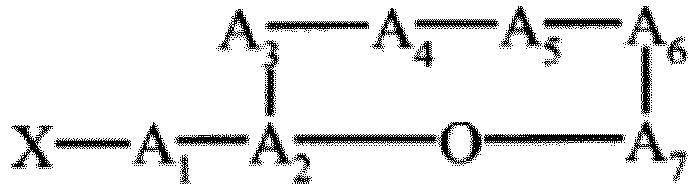
dans laquelle X et A1 sont chacun indépendamment facultatifs ;
et dans laquelle :- X représente tout reste chimique ;- A1 représente un acide aminé standard ;- A2 représente thréonine ou sérine ou 5-méthylhydroxyproline ;- A3 représente un acide aminé standard non basique ou un dérivé de celui-ci, ou un acide aminé non standard non basique, étant le dérivé d'acide aminé standard non basique est choisi parmi un dérivé O-alkyle, 0-aryle, 0-acyle, S-alkyle, S-aryle, S-S-alkyle, alcoxycarbonyle, 0-carbonyl-alcoxy, carbonate, 0-carbonyl-aryloxy, 0-carbonyl-alkylamino, 0-carbonyl-arylamino, N-alkyle, N-dialkyle, N-trialkylammonium, N-acyle, N-carbonyl-alcoxy, N-carbonyl-aryloxy, N-carbonyl-alkylamino, N-carbonyl-arylamino, N-sulfonylalkyle ou N-sulfonylaryle ;- A4 représente Ahp, déshydro-AHP ou proline ;- A5 représente isoleucine, leucine, phénylalanine, proline, thréonine ou valine ;- A6 représente alanine, phénylalanine, tryptophane, tyrosine ou un dérivé tyrosine de ceux-ci, où le dérivé tyrosine est choisi parmi un dérivé O-alkyle, 0-aryle, 0-hétéroaryle, O-acyle, O-PO3H ou O-SO3H ou parmi un dérivé qui est halogéné, en position ortho ou méta ;- A7 représente leucine, isoleucine ou valine ;- l'atome d'azote de la liaison amide entre A5 et A6 pouvant être substitué par un méthyle ;- Ahp représentant 3-amino-6-hydroxy-2-pipéridone ;ou un sel pharmaceutiquement acceptable de celui-ci, en vue d'une utilisation comme médicament pour traiter une maladie dépendante de la kallicréine 7. - Depsipeptides cycliques en vue d'une utilisation comme médicament selon la revendication 1, dans lesquels X représente H ou un résidu acyle.
- Depsipeptides cycliques en vue d'une utilisation comme médicament selon l'une des revendications 1 ou 2, dans lesquels X représente CH3CH2CH(CH3)CO, (CH3)2CHCH2CO ou (CH3)2CHCO.
- Depsipeptides cycliques en vue d'une utilisation comme médicament selon la revendication 1, choisis parmi :


- Depsipeptide cyclique en vue d'une utilisation comme médicament selon la revendication 1, ayant un spectre de RMN 1H conforme à celui qui est présenté dans la figure 1 et un spectre de RMN 13C conforme à celui qui est présenté dans la figure 2.
- Depsipeptide cyclique de formule (III) :

- Depsipeptide cyclique de formule (IV) :
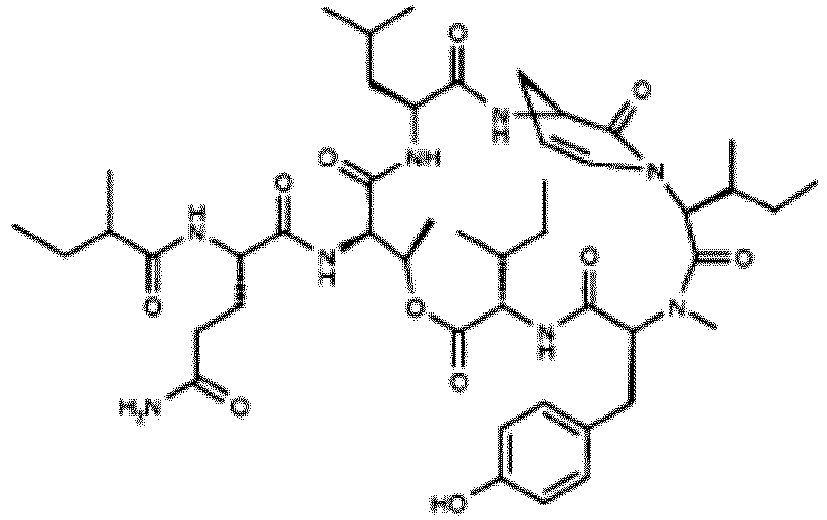
- Depsipeptide cyclique de formule (V) :

- Depsipeptides cycliques en vue d'une utilisation comme médicament selon la revendication 1, choisis parmi :
Nom du composé Numéro CAS Cyanopeptoline 1021 914606-83-0 Cyanopeptoline 993 914606-81-8 Cyanopeptoline 1063 912460-67-4 Largamide F 911297-58-0 Largamide E 911297-57-9 Largamide D 911297-56-8 Cyanopeptoline 954 866718-63-0 Pas de nom 861388-86-5 Pas de nom 848891-15-6 Pas de nom 848888-25-5 Pas de nom 848780-62-1 Pas de nom 848780-61-0 Cyanopeptoline 963A 790300-44-6 Pas de nom 685502-64-1 Planctopeptine BL 1061 637300-26-6 Planctopeptine BL 843 637300-24-4 Planctopeptine BL 1125 637300-22-2 Tasipeptine B 546123-47-1 Tasipeptine A 546123-46-0 Nostopeptine BN920 501903-96-4 Scyptoline A 403479-62-9 Pas de nom 370867-67-7 Pas de nom 370867-66-6 Micropeptine SD 1002 344939-97-5 Micropeptine SD 979 344939-95-3 Oscillapeptilide 97B 264909-20-8 Oscillapeptilide 97A 264909-19-5 Micropeptine T 1 249730-25-4 Micropeptine SF 909 248582-49-2 Micropeptine 103 190771-26-7 Nostopeptine B 185980-89-6 Oscillapeptine G 172548-91-3 Microcystilide A 157242-32-5 Aeruginopeptine 917S-C 157203-82-2 Aeruginopeptine 228A 152510-33-3 Aeruginopeptine 95A 152510-31-1 Aspergillicine E 630410-95-6 Aspergillicine D 630410-94-5 Aspergillicine C 630410-92-3 Aspergillicine B 630410-90-1 Aspergillicine A 630410-89-8 Ichtyopeptine A 946828-32-6 Ichtyopeptine B 946828-33-7 Micropeptine T20 224947-46-0 - Depsipeptides cycliques en vue d'une utilisation comme médicament pour traiter une maladie dépendante de la kallcréine 7, choisis parmi :- le composé selon la revendication 5, dans lequel l'Ahp a été convertie en une 1-propyl-cétal-Ahp ;- le composé selon la revendication 5, dans lequel l'Ahp a été convertie en une 1-octyl-cétal-Ahp ;- le composé selon la revendication 5, dans lequel l'amide de Al a été converti en un nitrile ; ou- le composé selon la revendication 5, dans lequel l'Ahp a été convertie en 3-amino-3,4-dihydro-1H-pyridin-2-one ;
où Ahp représente la 3-amino-6-hydroxy-2-pipéridone. - Depsipeptides cycliques en vue d'une utilisation comme médicament pour traiter une maladie dépendante de la kallicréine 7 choisis parmi :
Nom du composé Numéro CAS Lyngbyastatine 4 928202-70-4 Micropeptine KT946 925421-06-3 Largamide G 911297-59-1 Micropeptine 88Y 844636-95-9 Micropeptine 88N 844636-94-8 Pas de nom 500145-57-3 Scyptoline B 403479-63-0 Pas de nom 370867-65-5 Somamide B 350811-52-8 Oscillapeptine E 239088-24-5 Oscillapeptine D 239088-21-2 Oscillapeptine C 239088-18-7 Oscillapeptine B 239088-16-5 Nostopeptine D 227930-54-3 Nostopeptine C 227930-53-2 Nostopeptine J 227930-51-0 Nostopeptine I 227930-50-9 Nostopeptine F 227930-47-4 Nostopeptine E 227930-46-3 Symplostatine 2 225915-64-0 Dérivé de micropeptine 88D 208040-93-1 Triacétate de micropeptine 88D 208040-91-9 Micropeptine 88F 208040-86-2 Micropeptine 88E 208040-84-0 Micropeptine 88D 208040-82-8 Micropeptine 88C 208040-80-6 Micropeptine 88B 208040-78-2 Micropeptine 88A 208040-76-0 Nostocycline 181622-50-4 Anabaenopeptilide 202B 173450-69-6 Anabaenopeptilide 90B 173450-68-5 Anabaenopeptilide 202a 173429-63-5 Anabaenopeptilide 90A 173429-62-4 Oscillapeptine A 167172-72-7 Nostopeptine A 157744-21-3 Aeruginopeptine 917S-B 157231-94-2 Aeruginopeptine 228B 152510-34-4 Aeruginopeptine 95B 152510-32-2 Dolastatine 13 120231-23-4 Dérivé de dolastatine 13 120231-24-5 Dérivé de dolastatine 13 125310-66-9 Nostopeptine K 227930-52-1 Nostopeptine H 227930-49-6 Nostopeptine G 227930-48-5 Lyngbyastatine 5 957130-98-2 Lyngbyastatine 6 957130-99-3 Lyngbyastatine 7 957131-00-9 Cyanopeptoline 1138 1009081-69-9 Pas de nom 957187-61-0 - Depsipeptides cycliques en vue d'une utilisation comme médicament selon l'une quelconque des revendications 1-9, 10 ou 11, pour le traitement d'un sujet souffrant de dermatoses prurigineuses telles que le prurigo nodulaire, le psoriasis pustuleux et le cancer, en particulier le cancer des ovaires.
- Utilisation d'une quantité thérapeutiquement efficace d'un depsipeptide cyclique, ou d'un dérivé de celui-ci, selon l'une quelconque des revendications 1-9, 10 ou 11, pour la fabrication d'un médicament pour le traitement d'une maladie dépendante de la kallicréine 7.
- Utilisation selon la revendication 13, dans laquelle la maladie dépendante de la kallicréine 7 est choisie dans le groupe consistant en les dermatoses prurigineuses telles que le prurigo nodulaire, le psoriasis pustuleux et le cancer, en particulier le cancer des ovaires.
Priority Applications (1)
| Application Number | Priority Date | Filing Date | Title |
|---|---|---|---|
| EP08803037.4A EP2183270B1 (fr) | 2007-08-17 | 2008-08-14 | Utilisation de dépsipeptides cycliques pour inhiber la kallikréine 7 |
Applications Claiming Priority (3)
| Application Number | Priority Date | Filing Date | Title |
|---|---|---|---|
| EP07114505 | 2007-08-17 | ||
| PCT/EP2008/060693 WO2009024528A1 (fr) | 2007-08-17 | 2008-08-14 | Utilisation de dépsipeptides cycliques pour inhiber la kallikréine 7 |
| EP08803037.4A EP2183270B1 (fr) | 2007-08-17 | 2008-08-14 | Utilisation de dépsipeptides cycliques pour inhiber la kallikréine 7 |
Publications (2)
| Publication Number | Publication Date |
|---|---|
| EP2183270A1 EP2183270A1 (fr) | 2010-05-12 |
| EP2183270B1 true EP2183270B1 (fr) | 2014-12-17 |
Family
ID=38924838
Family Applications (1)
| Application Number | Title | Priority Date | Filing Date |
|---|---|---|---|
| EP08803037.4A Not-in-force EP2183270B1 (fr) | 2007-08-17 | 2008-08-14 | Utilisation de dépsipeptides cycliques pour inhiber la kallikréine 7 |
Country Status (5)
| Country | Link |
|---|---|
| US (2) | US8415305B2 (fr) |
| EP (1) | EP2183270B1 (fr) |
| JP (1) | JP5401459B2 (fr) |
| ES (1) | ES2527298T3 (fr) |
| WO (1) | WO2009024528A1 (fr) |
Families Citing this family (17)
| Publication number | Priority date | Publication date | Assignee | Title |
|---|---|---|---|---|
| PT2183273T (pt) * | 2007-08-17 | 2017-05-22 | Novartis Ag | Depsipéptidos cíclicos |
| US20110124569A1 (en) * | 2007-09-09 | 2011-05-26 | University Of Florida Research Foundation, Inc. | Macrocyclic compounds, protease inhibition, and methods of treatment |
| CN101977626A (zh) | 2008-01-21 | 2011-02-16 | 德莫迪斯公司 | 丝氨酸蛋白酶抑制剂在治疗皮肤病中的用途 |
| US8614289B2 (en) | 2011-04-20 | 2013-12-24 | Novartis Ag | Processes for the manufacture of macrocyclic depsipeptides and new intermediates |
| US8680054B2 (en) | 2011-04-20 | 2014-03-25 | Novartis Ag | Suspension type topical formulations comprising cyclic depsipeptide |
| EP2545916A1 (fr) * | 2011-07-15 | 2013-01-16 | Universite Pierre Et Marie Curie - Paris 6 | Utilisation de dérivés de coumarine pour la préparation de médicaments prévus pour traiter des maladies cutanées |
| EP2548973A1 (fr) | 2011-07-20 | 2013-01-23 | Centre National de la Recherche Scientifique | Nouvelle composition de souche d'actinomycète et son utilisation |
| WO2013172954A1 (fr) | 2012-05-17 | 2013-11-21 | Ra Pharmaceuticals, Inc | Inhibiteurs de peptides et de peptidomimétiques |
| US9067978B2 (en) | 2012-10-09 | 2015-06-30 | Novartis Ag | Solution phase processes for the manufacture of macrocyclic depsipeptides and new intermediates |
| US8987413B2 (en) | 2012-10-09 | 2015-03-24 | Novartis Ag | Aldehyde acetal based processes for the manufacture of macrocyclic depsipeptides and new intermediates |
| EP3097084B1 (fr) * | 2014-01-23 | 2020-09-30 | Sixera Pharma AB | Nouveaux inhibiteurs de la kallikréine 7 |
| CN106518868B (zh) * | 2015-11-04 | 2018-02-23 | 衡阳师范学院 | 激肽释放酶7小分子抑制剂及其制备方法、用途 |
| US11149067B2 (en) | 2017-05-12 | 2021-10-19 | Universität Duisburg-Essen | Tailored cyclodepsipeptides as potent non-covalent serine protease inhibitors |
| US20200040103A1 (en) | 2018-03-14 | 2020-02-06 | Genentech, Inc. | Anti-klk5 antibodies and methods of use |
| US11643438B2 (en) | 2018-07-20 | 2023-05-09 | The Board Of Regents Of The University Of Oklahoma | Antimicrobial peptides and methods of use |
| GR20180100521A (el) | 2018-11-16 | 2020-06-15 | Πανεπιστημιο Πατρων | Αναστολεις και ιχνηθετες ενεργοτητας της πρωτεασης klk7 με διττες εφαρμογες στη διαγνωση και θεραπεια |
| PH12022550646A1 (en) | 2019-09-18 | 2023-04-03 | Genentech Inc | Anti-klk7 antibodies, anti-klk5 antibodies, multispecific anti-klk5/klk7 antibodies, and methods of use |
Family Cites Families (7)
| Publication number | Priority date | Publication date | Assignee | Title |
|---|---|---|---|---|
| US5595756A (en) * | 1993-12-22 | 1997-01-21 | Inex Pharmaceuticals Corporation | Liposomal compositions for enhanced retention of bioactive agents |
| DE4421113A1 (de) | 1994-06-16 | 1995-12-21 | Biotechnolog Forschung Gmbh | Chondramide, Gewinnungsverfahren, Mittel mit Chondramiden und Mischkultur zur Chondramid-Gewinnung |
| SI1631295T1 (sl) * | 2003-06-06 | 2010-06-30 | Arexis Ab | Uporaba kondenziranih heterocikličnih spojin kotSCCE inhibitorjev za zdravljenje kožnih bolezni |
| EP1716248A1 (fr) | 2004-02-03 | 2006-11-02 | Bayer HealthCare AG | Methodes de diagnostic et de traitement de maladies associees a la kallikreine 7 (klk7) |
| JP4912894B2 (ja) * | 2004-02-19 | 2012-04-11 | イェール ユニバーシティー | プロテオーム技術を使用した癌タンパク質バイオマーカーの同定 |
| US7846446B2 (en) * | 2006-11-22 | 2010-12-07 | Board Of Trustees Of The University Of Arkansas | Multi-epitope peptide-loaded dendritic cell immunotherapy for cancer |
| PT2183273T (pt) | 2007-08-17 | 2017-05-22 | Novartis Ag | Depsipéptidos cíclicos |
-
2008
- 2008-08-14 WO PCT/EP2008/060693 patent/WO2009024528A1/fr not_active Ceased
- 2008-08-14 JP JP2010520587A patent/JP5401459B2/ja not_active Expired - Fee Related
- 2008-08-14 US US12/673,785 patent/US8415305B2/en active Active
- 2008-08-14 ES ES08803037.4T patent/ES2527298T3/es active Active
- 2008-08-14 EP EP08803037.4A patent/EP2183270B1/fr not_active Not-in-force
-
2013
- 2013-01-17 US US13/743,611 patent/US20130172267A1/en not_active Abandoned
Also Published As
| Publication number | Publication date |
|---|---|
| US20110092437A1 (en) | 2011-04-21 |
| US20130172267A1 (en) | 2013-07-04 |
| WO2009024528A1 (fr) | 2009-02-26 |
| US8415305B2 (en) | 2013-04-09 |
| EP2183270A1 (fr) | 2010-05-12 |
| JP5401459B2 (ja) | 2014-01-29 |
| ES2527298T3 (es) | 2015-01-22 |
| JP2010536732A (ja) | 2010-12-02 |
Similar Documents
| Publication | Publication Date | Title |
|---|---|---|
| EP2183270B1 (fr) | Utilisation de dépsipeptides cycliques pour inhiber la kallikréine 7 | |
| EP2183273B1 (fr) | Depsipeptides cycliques | |
| Mitova et al. | Cyclic peptides from a Ruegeria strain of bacteria associated with the sponge Suberites domuncula | |
| US9017692B2 (en) | Antimicrobial agent, bacterial strain, biosynthesis, and methods of use | |
| Wäspi et al. | Identification and structure of a family of syringolin variants: Unusual cyclic peptides from Pseudomonas syringae pv. syringae that elicit defense responses in rice | |
| US12084476B2 (en) | Tailored cyclodepsipeptides as potent non-covalent serine protease inhibitors | |
| RU2498995C2 (ru) | Пептиды с большим числом мостиковых связей, выделяемые из actinomadura namibiensis | |
| EP3111948A1 (fr) | Nouveau lipopeptide bicyclique, préparation et utilisation en tant qu'agent antimicrobien | |
| EP4423111B1 (fr) | Peptides et compositions à utiliser dans des produits cosmétiques | |
| Li et al. | Discovery of potent antiosteoporotic cyclic depsipeptides with an unusual nitrile hydroxy acid from Microascus croci | |
| US20190345199A1 (en) | Lipolanthipeptides and their uses as antimicrobial agents | |
| US20240294581A1 (en) | Heterologous production of leupeptin in protease inhibitors and analogs thereof | |
| Suzuki et al. | Dipeptidyl peptidase from Streptococcus anginosus with substrate specificity for Xaa-Pro/Ala and potential impact on tumor immunity | |
| Gangwar et al. | Synthesis of an esterase-sensitive cyclic prodrug of a model hexapeptide having enhanced membrane permeability and enzymatic stability using an acyloxyalkoxy promoiety | |
| Chiorean | Investigating Structural Properties of Antibacterial Peptides |
Legal Events
| Date | Code | Title | Description |
|---|---|---|---|
| PUAI | Public reference made under article 153(3) epc to a published international application that has entered the european phase |
Free format text: ORIGINAL CODE: 0009012 |
|
| 17P | Request for examination filed |
Effective date: 20100317 |
|
| AK | Designated contracting states |
Kind code of ref document: A1 Designated state(s): AT BE BG CH CY CZ DE DK EE ES FI FR GB GR HR HU IE IS IT LI LT LU LV MC MT NL NO PL PT RO SE SI SK TR |
|
| AX | Request for extension of the european patent |
Extension state: AL BA MK RS |
|
| 17Q | First examination report despatched |
Effective date: 20100608 |
|
| DAX | Request for extension of the european patent (deleted) | ||
| GRAP | Despatch of communication of intention to grant a patent |
Free format text: ORIGINAL CODE: EPIDOSNIGR1 |
|
| INTG | Intention to grant announced |
Effective date: 20130621 |
|
| GRAP | Despatch of communication of intention to grant a patent |
Free format text: ORIGINAL CODE: EPIDOSNIGR1 |
|
| INTG | Intention to grant announced |
Effective date: 20140702 |
|
| GRAS | Grant fee paid |
Free format text: ORIGINAL CODE: EPIDOSNIGR3 |
|
| GRAA | (expected) grant |
Free format text: ORIGINAL CODE: 0009210 |
|
| AK | Designated contracting states |
Kind code of ref document: B1 Designated state(s): AT BE BG CH CY CZ DE DK EE ES FI FR GB GR HR HU IE IS IT LI LT LU LV MC MT NL NO PL PT RO SE SI SK TR |
|
| REG | Reference to a national code |
Ref country code: GB Ref legal event code: FG4D |
|
| REG | Reference to a national code |
Ref country code: CH Ref legal event code: EP |
|
| REG | Reference to a national code |
Ref country code: IE Ref legal event code: FG4D |
|
| REG | Reference to a national code |
Ref country code: AT Ref legal event code: REF Ref document number: 701832 Country of ref document: AT Kind code of ref document: T Effective date: 20150115 |
|
| REG | Reference to a national code |
Ref country code: ES Ref legal event code: FG2A Ref document number: 2527298 Country of ref document: ES Kind code of ref document: T3 Effective date: 20150122 |
|
| REG | Reference to a national code |
Ref country code: DE Ref legal event code: R096 Ref document number: 602008035933 Country of ref document: DE Effective date: 20150129 |
|
| PG25 | Lapsed in a contracting state [announced via postgrant information from national office to epo] |
Ref country code: FI Free format text: LAPSE BECAUSE OF FAILURE TO SUBMIT A TRANSLATION OF THE DESCRIPTION OR TO PAY THE FEE WITHIN THE PRESCRIBED TIME-LIMIT Effective date: 20141217 Ref country code: LT Free format text: LAPSE BECAUSE OF FAILURE TO SUBMIT A TRANSLATION OF THE DESCRIPTION OR TO PAY THE FEE WITHIN THE PRESCRIBED TIME-LIMIT Effective date: 20141217 Ref country code: NO Free format text: LAPSE BECAUSE OF FAILURE TO SUBMIT A TRANSLATION OF THE DESCRIPTION OR TO PAY THE FEE WITHIN THE PRESCRIBED TIME-LIMIT Effective date: 20150317 |
|
| REG | Reference to a national code |
Ref country code: LT Ref legal event code: MG4D |
|
| PG25 | Lapsed in a contracting state [announced via postgrant information from national office to epo] |
Ref country code: HR Free format text: LAPSE BECAUSE OF FAILURE TO SUBMIT A TRANSLATION OF THE DESCRIPTION OR TO PAY THE FEE WITHIN THE PRESCRIBED TIME-LIMIT Effective date: 20141217 Ref country code: SE Free format text: LAPSE BECAUSE OF FAILURE TO SUBMIT A TRANSLATION OF THE DESCRIPTION OR TO PAY THE FEE WITHIN THE PRESCRIBED TIME-LIMIT Effective date: 20141217 Ref country code: LV Free format text: LAPSE BECAUSE OF FAILURE TO SUBMIT A TRANSLATION OF THE DESCRIPTION OR TO PAY THE FEE WITHIN THE PRESCRIBED TIME-LIMIT Effective date: 20141217 Ref country code: GR Free format text: LAPSE BECAUSE OF FAILURE TO SUBMIT A TRANSLATION OF THE DESCRIPTION OR TO PAY THE FEE WITHIN THE PRESCRIBED TIME-LIMIT Effective date: 20150318 |
|
| REG | Reference to a national code |
Ref country code: AT Ref legal event code: MK05 Ref document number: 701832 Country of ref document: AT Kind code of ref document: T Effective date: 20141217 |
|
| REG | Reference to a national code |
Ref country code: FR Ref legal event code: PLFP Year of fee payment: 8 |
|
| PG25 | Lapsed in a contracting state [announced via postgrant information from national office to epo] |
Ref country code: NL Free format text: LAPSE BECAUSE OF FAILURE TO SUBMIT A TRANSLATION OF THE DESCRIPTION OR TO PAY THE FEE WITHIN THE PRESCRIBED TIME-LIMIT Effective date: 20141217 |
|
| PG25 | Lapsed in a contracting state [announced via postgrant information from national office to epo] |
Ref country code: EE Free format text: LAPSE BECAUSE OF FAILURE TO SUBMIT A TRANSLATION OF THE DESCRIPTION OR TO PAY THE FEE WITHIN THE PRESCRIBED TIME-LIMIT Effective date: 20141217 Ref country code: SK Free format text: LAPSE BECAUSE OF FAILURE TO SUBMIT A TRANSLATION OF THE DESCRIPTION OR TO PAY THE FEE WITHIN THE PRESCRIBED TIME-LIMIT Effective date: 20141217 Ref country code: CZ Free format text: LAPSE BECAUSE OF FAILURE TO SUBMIT A TRANSLATION OF THE DESCRIPTION OR TO PAY THE FEE WITHIN THE PRESCRIBED TIME-LIMIT Effective date: 20141217 Ref country code: RO Free format text: LAPSE BECAUSE OF FAILURE TO SUBMIT A TRANSLATION OF THE DESCRIPTION OR TO PAY THE FEE WITHIN THE PRESCRIBED TIME-LIMIT Effective date: 20141217 |
|
| PG25 | Lapsed in a contracting state [announced via postgrant information from national office to epo] |
Ref country code: AT Free format text: LAPSE BECAUSE OF FAILURE TO SUBMIT A TRANSLATION OF THE DESCRIPTION OR TO PAY THE FEE WITHIN THE PRESCRIBED TIME-LIMIT Effective date: 20141217 Ref country code: PL Free format text: LAPSE BECAUSE OF FAILURE TO SUBMIT A TRANSLATION OF THE DESCRIPTION OR TO PAY THE FEE WITHIN THE PRESCRIBED TIME-LIMIT Effective date: 20141217 Ref country code: IS Free format text: LAPSE BECAUSE OF FAILURE TO SUBMIT A TRANSLATION OF THE DESCRIPTION OR TO PAY THE FEE WITHIN THE PRESCRIBED TIME-LIMIT Effective date: 20150417 |
|
| REG | Reference to a national code |
Ref country code: DE Ref legal event code: R097 Ref document number: 602008035933 Country of ref document: DE |
|
| PLBE | No opposition filed within time limit |
Free format text: ORIGINAL CODE: 0009261 |
|
| STAA | Information on the status of an ep patent application or granted ep patent |
Free format text: STATUS: NO OPPOSITION FILED WITHIN TIME LIMIT |
|
| PG25 | Lapsed in a contracting state [announced via postgrant information from national office to epo] |
Ref country code: DK Free format text: LAPSE BECAUSE OF FAILURE TO SUBMIT A TRANSLATION OF THE DESCRIPTION OR TO PAY THE FEE WITHIN THE PRESCRIBED TIME-LIMIT Effective date: 20141217 |
|
| 26N | No opposition filed |
Effective date: 20150918 |
|
| PG25 | Lapsed in a contracting state [announced via postgrant information from national office to epo] |
Ref country code: SI Free format text: LAPSE BECAUSE OF FAILURE TO SUBMIT A TRANSLATION OF THE DESCRIPTION OR TO PAY THE FEE WITHIN THE PRESCRIBED TIME-LIMIT Effective date: 20141217 |
|
| PG25 | Lapsed in a contracting state [announced via postgrant information from national office to epo] |
Ref country code: LU Free format text: LAPSE BECAUSE OF FAILURE TO SUBMIT A TRANSLATION OF THE DESCRIPTION OR TO PAY THE FEE WITHIN THE PRESCRIBED TIME-LIMIT Effective date: 20150814 Ref country code: MC Free format text: LAPSE BECAUSE OF FAILURE TO SUBMIT A TRANSLATION OF THE DESCRIPTION OR TO PAY THE FEE WITHIN THE PRESCRIBED TIME-LIMIT Effective date: 20141217 |
|
| REG | Reference to a national code |
Ref country code: CH Ref legal event code: PL |
|
| PG25 | Lapsed in a contracting state [announced via postgrant information from national office to epo] |
Ref country code: CH Free format text: LAPSE BECAUSE OF NON-PAYMENT OF DUE FEES Effective date: 20150831 Ref country code: LI Free format text: LAPSE BECAUSE OF NON-PAYMENT OF DUE FEES Effective date: 20150831 |
|
| PG25 | Lapsed in a contracting state [announced via postgrant information from national office to epo] |
Ref country code: BE Free format text: LAPSE BECAUSE OF FAILURE TO SUBMIT A TRANSLATION OF THE DESCRIPTION OR TO PAY THE FEE WITHIN THE PRESCRIBED TIME-LIMIT Effective date: 20141217 |
|
| REG | Reference to a national code |
Ref country code: IE Ref legal event code: MM4A |
|
| REG | Reference to a national code |
Ref country code: FR Ref legal event code: PLFP Year of fee payment: 9 |
|
| PG25 | Lapsed in a contracting state [announced via postgrant information from national office to epo] |
Ref country code: IE Free format text: LAPSE BECAUSE OF NON-PAYMENT OF DUE FEES Effective date: 20150814 |
|
| PGFP | Annual fee paid to national office [announced via postgrant information from national office to epo] |
Ref country code: DE Payment date: 20160809 Year of fee payment: 9 Ref country code: GB Payment date: 20160810 Year of fee payment: 9 Ref country code: IT Payment date: 20160822 Year of fee payment: 9 |
|
| PGFP | Annual fee paid to national office [announced via postgrant information from national office to epo] |
Ref country code: FR Payment date: 20160712 Year of fee payment: 9 |
|
| PG25 | Lapsed in a contracting state [announced via postgrant information from national office to epo] |
Ref country code: MT Free format text: LAPSE BECAUSE OF FAILURE TO SUBMIT A TRANSLATION OF THE DESCRIPTION OR TO PAY THE FEE WITHIN THE PRESCRIBED TIME-LIMIT Effective date: 20141217 |
|
| PG25 | Lapsed in a contracting state [announced via postgrant information from national office to epo] |
Ref country code: BG Free format text: LAPSE BECAUSE OF FAILURE TO SUBMIT A TRANSLATION OF THE DESCRIPTION OR TO PAY THE FEE WITHIN THE PRESCRIBED TIME-LIMIT Effective date: 20141217 Ref country code: HU Free format text: LAPSE BECAUSE OF FAILURE TO SUBMIT A TRANSLATION OF THE DESCRIPTION OR TO PAY THE FEE WITHIN THE PRESCRIBED TIME-LIMIT; INVALID AB INITIO Effective date: 20080814 |
|
| PG25 | Lapsed in a contracting state [announced via postgrant information from national office to epo] |
Ref country code: CY Free format text: LAPSE BECAUSE OF FAILURE TO SUBMIT A TRANSLATION OF THE DESCRIPTION OR TO PAY THE FEE WITHIN THE PRESCRIBED TIME-LIMIT Effective date: 20141217 |
|
| PG25 | Lapsed in a contracting state [announced via postgrant information from national office to epo] |
Ref country code: TR Free format text: LAPSE BECAUSE OF FAILURE TO SUBMIT A TRANSLATION OF THE DESCRIPTION OR TO PAY THE FEE WITHIN THE PRESCRIBED TIME-LIMIT Effective date: 20141217 |
|
| REG | Reference to a national code |
Ref country code: DE Ref legal event code: R119 Ref document number: 602008035933 Country of ref document: DE |
|
| GBPC | Gb: european patent ceased through non-payment of renewal fee |
Effective date: 20170814 |
|
| REG | Reference to a national code |
Ref country code: FR Ref legal event code: ST Effective date: 20180430 |
|
| PG25 | Lapsed in a contracting state [announced via postgrant information from national office to epo] |
Ref country code: GB Free format text: LAPSE BECAUSE OF NON-PAYMENT OF DUE FEES Effective date: 20170814 Ref country code: PT Free format text: LAPSE BECAUSE OF FAILURE TO SUBMIT A TRANSLATION OF THE DESCRIPTION OR TO PAY THE FEE WITHIN THE PRESCRIBED TIME-LIMIT Effective date: 20141217 Ref country code: DE Free format text: LAPSE BECAUSE OF NON-PAYMENT OF DUE FEES Effective date: 20180301 |
|
| PG25 | Lapsed in a contracting state [announced via postgrant information from national office to epo] |
Ref country code: IT Free format text: LAPSE BECAUSE OF NON-PAYMENT OF DUE FEES Effective date: 20170814 Ref country code: FR Free format text: LAPSE BECAUSE OF NON-PAYMENT OF DUE FEES Effective date: 20170831 |
|
| P01 | Opt-out of the competence of the unified patent court (upc) registered |
Effective date: 20230513 |
|
| PGFP | Annual fee paid to national office [announced via postgrant information from national office to epo] |
Ref country code: ES Payment date: 20230907 Year of fee payment: 16 |
|
| REG | Reference to a national code |
Ref country code: ES Ref legal event code: FD2A Effective date: 20250929 |
|
| PG25 | Lapsed in a contracting state [announced via postgrant information from national office to epo] |
Ref country code: ES Free format text: LAPSE BECAUSE OF NON-PAYMENT OF DUE FEES Effective date: 20240815 |