EP2186853B1 - A packaging article made from a polyester composition comprising silica particles - Google Patents
A packaging article made from a polyester composition comprising silica particles Download PDFInfo
- Publication number
- EP2186853B1 EP2186853B1 EP20100154800 EP10154800A EP2186853B1 EP 2186853 B1 EP2186853 B1 EP 2186853B1 EP 20100154800 EP20100154800 EP 20100154800 EP 10154800 A EP10154800 A EP 10154800A EP 2186853 B1 EP2186853 B1 EP 2186853B1
- Authority
- EP
- European Patent Office
- Prior art keywords
- packaging article
- wall
- silica particles
- concentration
- composition
- Prior art date
- Legal status (The legal status is an assumption and is not a legal conclusion. Google has not performed a legal analysis and makes no representation as to the accuracy of the status listed.)
- Expired - Lifetime
Links
Images


Classifications
-
- C—CHEMISTRY; METALLURGY
- C08—ORGANIC MACROMOLECULAR COMPOUNDS; THEIR PREPARATION OR CHEMICAL WORKING-UP; COMPOSITIONS BASED THEREON
- C08K—Use of inorganic or non-macromolecular organic substances as compounding ingredients
- C08K3/00—Use of inorganic substances as compounding ingredients
- C08K3/34—Silicon-containing compounds
- C08K3/36—Silica
-
- Y—GENERAL TAGGING OF NEW TECHNOLOGICAL DEVELOPMENTS; GENERAL TAGGING OF CROSS-SECTIONAL TECHNOLOGIES SPANNING OVER SEVERAL SECTIONS OF THE IPC; TECHNICAL SUBJECTS COVERED BY FORMER USPC CROSS-REFERENCE ART COLLECTIONS [XRACs] AND DIGESTS
- Y10—TECHNICAL SUBJECTS COVERED BY FORMER USPC
- Y10T—TECHNICAL SUBJECTS COVERED BY FORMER US CLASSIFICATION
- Y10T428/00—Stock material or miscellaneous articles
- Y10T428/13—Hollow or container type article [e.g., tube, vase, etc.]
- Y10T428/131—Glass, ceramic, or sintered, fused, fired, or calcined metal oxide or metal carbide containing [e.g., porcelain, brick, cement, etc.]
Definitions
- the present invention relates to a packaging article made from a polyester-based composition, and more preferably moulded packaging articles, such as containers or bottles.
- the polyester-based composition comprises silica particles.
- the packaging articles of the invention exhibits high opacity, especially at wavelengths at least from 400nm to 500nm.
- Aromatic polyester resins and in particular polyethylene terephthalate (PET), are widely used in the packaging industry for making various packaging articles.
- the wording "packaging article” used therein refers to any article that is used for storing any product or material, and especially (but not only) food or beverages.
- a packaging article can be a hollow and rigid container, such as bottle, jar or the like, a flexible plastic container, a film or a sheet for a package.
- PET is a polymer widely used for making transparent packaging articles.
- PET is used in the packaging industry for making transparent biaxially stretched containers having good mechanical properties (top load, burst pressure) and good thermal performances.
- Packaging articles made of PET alone are however not suitable for storing products that are sensible to ultraviolet radiations and/or visible light radiations (i.e. that can be altered or degraded by light radiations and/or by light induced oxidation), such as for example dairy products in the food industry.
- Such light sensible products need to be stored in opaque packaging articles having a low transmission at wavelengths up to 700nm, and more especially for visible light radiations between 400nm and 550nm.
- a first solution for making a low light transmission packaging articles consists in using an aromatic polyester composition, and for example a PET resin, mixed with a sufficient amount of opacifying agents such as for example titanium dioxide (TiO 2 ).
- opacifying agents such as titanium dioxide (TiO 2 ).
- TiO 2 titanium dioxide
- a second solution for making truly opaque packaging articles consists in making multilayered packaging articles including a black layer.
- This solution is efficient in terms of opacity to UV (wavelengths up to 400nm) and visible light (wavelengths ranging from 400nm to 700nm) and is commonly used for example in the food industry for storing dairy products such as UHT milk.
- This solution is however more costly than a monolayer solution.
- An objective of the invention is to propose a novel packaging article made from a polyester-based composition that is opaque, and in particular that have has very low transmission characteristics at least from 400nm to 550nm.
- the micrometrical silica concentration is at least 2wt% and higher concentrations are even preferred.
- micrometrical particles used therein mean particles having a particle size of at least 1 ⁇ m.
- particle size used therein mean the diameter of the particles measured by any standard laser diffraction method and for example the standard Malvern laser diffraction method.
- the laser diffraction method is well known in the prior art and is commonly used for measuring the size distribution of particles. It has to be reminded that with a laser diffraction method such as the Malvern diffraction method, the volume of the particles is actually measured, and the particle diameters are calculated from the measured volume of the particles, but with the assumption that the particles are spherical. Consequently, the diameter of the particle is calculated from a sphere equivalent volume equal to the measured volume of the particle.
- silica particles used therein mean any particle having a silica content of at least 50wt%.
- the "polyester resin” may be constituted of a single polymer (the polyester), or of a copolyester, or of a polymer blend wherein at least one component is a polyester or a copolyester.
- the dispersion in the polyester resin of micrometrical silica particles in a sufficient amount dramatically and surprisingly improves the optical properties of the packaging article made from the polymeric composition.
- low transmission at wavelengths up to 700nm, and more especially between 400nm and 550nm can be achieved at low production cost.
- the thermal stability, the mechanical properties and the gas barrier properties of the packaging article are also surprisingly enhanced.
- Polyester resins that are suitable for carrying out the invention are those generally obtained through polycondensation of diols and dicarboxylic acids or esters thereof.
- diols suitable for carrying out the invention one can mention : ethylene glycol, diethylene glycol, propylene glycol, 1,3-propanediol, 1,4-butanediol, 1,3-butanediol, 2,2-dimethylpropanediol, neopentyl glycol, 1,5-pentanediol, 1,2-hexanediol, 1,8-octanediol, 1,10-decanediol, 1,4-cyclohexanedimethanol, 1,5-cyclohexanedimethanol, 1,2-cyclohexanedimethanol, or mixtures thereof.
- terephthalic acid isophthalic acid, orthophthalic acid, 2,5-naphthalene dicarboxylic acid, 2, 6-naphthalene dicarboxylic acid, 1,3-naphthalene dicarboxylic acid, 2,7-naphthalene dicarboxylic acid, methyl terephthalic acid, 4,4'-diphenyldicarboxylic acid, 2,2'-diphenyldicarboxylic acid, 4,4'-diphenylether dicarboxylic acid, 4,4'-diphenylmethanedicarboxylic acid, 4,4'- diphenylsulfonedicarboxylic acid, 4,4'-diphenylisopropylidene-dicarboxylic acid, sulfo-5-isophthalic acid, oxalic acid, succinic acid, adipic acid, sebacic acid, azelaic acid
- polyesters for carrying out the invention are polyethylene terephthalate (PET), homo or copolymers thereof, and mixtures thereof.
- the polyester/silica composition for making the packaging article of the invention can be prepared by several methods, including notably compounding methods.
- the inert silica particles can be dispersed and mixed in the molten polyester resin, for example by using an extruder (single or twin screw extruder).
- the compound can be also used as a master batch and blended with another resin, preferably a polyester resin.
- the silica particles can be also introduced in the polyester reaction medium, preferably before the polymerization starts, said polymerization being carried out in the presence of the silica particles.
- polyester/silica composition for making the packaging article of the invention can be used for making various kinds of packaging articles, and notably rigid containers or flexible containers, or films or sheets.
- polyester/silica composition for making the packaging article of the invention is more especially particularly suitable for making monolayer packaging articles.
- polyester/silica composition of the invention can also be used for making a multilayer packaging article, wherein at least one of the layers is made from the composition of the invention.
- any micrometrical silica particles having at least 50wt% of SiO 2 can be used.
- the preferred silica particles one can use cristobalite or quartz.
- high purity silica particles will be used, in particular silica particles comprising at least 90wt% of SiO 2 , more preferably at least 95wt% of SiO 2 , and even more preferably at least 99wt% of SiO 2 .
- Polymeric compositions for making the packaging article of the invention have been more particularly used for making biaxially stretched container (jar, bottles or similar), in particular by using well-known injection stretch blow moulding techniques (one stage or two stages). It has to be underlined that surprisingly, and against all expectations, when carrying the invention, the introduction of the micrometrical silica particles in the polyester resin does not impair the processability of the polyester resin during the injection step (i.e. manufacturing step of the preform by injecting the polymeric composition into a mould).
- the polymeric composition for making the packaging article of the invention is surprisingly easier to inject than a standard grade PET resin. It involves that very thin preforms (typically preforms having a wall thickness lower than 2.5 mm) can be more easily injected, with the polymeric composition of the invention. In comparison, with standard grade PET resin, it is very difficult to inject very thin preforms because the cooling down of the resin during the injection step is too fast.
- the blowing of the preforms is more difficult (in comparison to the use for example of a standard grade PET resin) and this difficulty is increasing with the concentration of silica particles in the composition, which in turns leads to preferably (but no necessarily) carry the blowing step with very low stretch ratios and/or with thin preforms.
- polyester/silica compositions of the invention for making biaxially stretched containers (hereafter described and referred as examples N°2 to N°8 and compared notably to a reference container referred as example N°1), by using the well-know injection blow moulding technique. Nevertheless, it must be underlined that the scope of the invention is neither limited to that specific use, nor to the specific polyester/silica compositions of examples N°2 to N°8.
- polyester/silica compositions for making the packaging article of the invention can advantageously and more generally be used for making any kind of packaging articles, and more especially opaque packaging articles.
- the polymeric composition for making a packaging article (flexible or rigid) by any other known technique, and for example by using the extrusion blow moulding technique.
- the packaging article of the invention can have a monolayer structure or multilayer structure wherein at least one of the layers is made from said polyester composition.
- a polyester/silica compound (A1/B) is prepared in a first compounding step.
- said polyester/silica compound (A1/B) is blended as a master batch with a second polyester resin (A2).
- Said compound is made with 55 wt% of PET pellets (A1) and 45 wt% of micrometrical silica particles (B).
- PET pellets (A1) are those commercialized under reference 9921 P by company named from VORIDIAN.
- the silica particles (B) are made of cristobalite.
- Cristobalite is high purity silica having a narrow particle size distribution.
- the cristobalite particles are for example those commercialized under reference Sibelite® M 6000 by company named SIBELCO.
- Sibelite® M 6000 particles The composition of Sibelite® M 6000 particles is given in table 1 below.
- Table 1 Sibelite® M 6000 composition SiO 2 99.5% Fe 2 O 3 0.03% Al 2 O 3 0.20% TiO 2 0.02% K 2 O 0.05% CaO 0.01%
- the Sibelite® M6000 particles are substantially spherical and have a density around 2.35Kg/dm 3 .
- the main granulometric data of Sibelite® M 6000 particles are given in table 2.
- Table 2 Particle size distribution - Sibelite® M 6000 Particle Sizes ( ⁇ m) Size distribution >20 None >15 1% >10 3% >5 24% >2 67% >1 89%
- table 2 The particle sizes of table 2 were measured by using the standard Malvern laser diffraction method carried out with an analyzer "MASTERSIZER S" from GOFFYN MEYVIS. In table 2, the size distribution (second column) is expressed in volume percentage.
- Sibelite® M 6000 particles 89% of the Sibelite® M 6000 particles have a size greater than 1 ⁇ m ; 67% of the Sibelite® M 6000 particles have a size greater than 2 ⁇ m, 24% of the Sibelite® M 6000 particles have a size greater than 5 ⁇ m, 3% of the Sibelite® M 6000 particles have a size greater than 10 ⁇ m ; 1 % of the Sibelite® M 6000 particles have a size greater than 15 ⁇ m.
- the average particle size of the Sibelite® M 6000 is around 3 ⁇ m.
- the compounding step is performed as follows with a co-extruder.
- PET is first dried at 160 °c during 6 hours under dried air having a dew point of - 60°c.
- the residual moisture content is approximately 42 ppm.
- the co-extruder is a Berstorff Compex low-shear corotating twin-screw extruder.
- the cristobalite (45 wt% of total weight) is added in the molten PET material in the co-extruder via a side feeder.
- Table 3 Extruder- temperature profile Zones Z1 Z2 Z3 Z4 Z5 Z6 Z7 Z8 Z9 Z10 Z11 Z12 Temperature (°C) 80 300 300 290 280 270 260 250 250 250 250 250 260
- the side feeder (for adding the cristobalite in the extruder) is connected to the fifth extruder zone (Z5).
- the rotational speed of the extruder screw is settled to 180 rpm, and the material output is approximately 350 kg /hours
- the inert cristobalite micrometrical particles (B) are thus dispersed in the polyester matrix formed by the polyester resin A1.
- the molten compound is extruded into strings and cooled down in cold water bath (50°C). Then pellets are cut by using a Rieter cutter. Pellets dimension is adjusted to be similar to the pellets of polyester resin (A2).
- PET pellets (A2) and the aforesaid compound (A1/B) are dry blended at different weight percentages as summarized in table 4 below.
- Table 4 Examples N°1 to N°8 Example N°# 1 2 3 4 5 6 7 8 Compound (A1/B) - wt% 0 5 10 20 40 60 80 100
- the PET pellets (A2) are virgin PET pellets of standard grade commercialized by VORIDIAN under reference "9921 w”.
- Example N°1 is a reference example used for comparison with the polyester/silica compositions of examples N°2 to 8.
- Examples 5 to 8 are packaging articles according to the invention.
- the blend is then air dried during 6 hours at 160°c (dew point of - 51 °C) before melt processing.
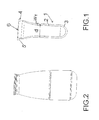
- the blend (A1/A2/B) is injected in a standard way in order to make monolayer preforms 1 of figure 1 .
- Said preforms 1 have the well-known general following structure:
- the injection step of the preforms is performed on a Husky LX 160 injection machine having a two cavities injection mould.
- N°1 to N°8 1.5 % of white masterbatch containing 60 % of TiO 2 was added during the injection process.
- the injection process conditions were the same for all examples N°1 to N°8.
- the barrel temperature was between 275°C and 290°C on each heating zone of the injection machine.
- the cycle time was approximately 11.2 seconds.
- the injection pressure and injection time for each example N°1 to N°8 are given in table 7.
- silica particles in the PET resin knowingly increases the thermal conductivity of the composition.
- One skilled in the art would thus have expected a quicker cooling down of the composition of example N°2 to N°8 as compared to the composition of example N°1 (without silica particle) during the injection step, leading to higher injection time and pressure.
- the injection pressure and the injection time of the composition of examples N°2 to N°8 are lower than the ones obtained with the composition of example N°1.
- the composition N°2 to N°8 are thus easier to inject, which in turns notably enables to design and inject thinner preforms that are easier to blow.
- examples N°1 to N°8 are biaxially stretched and blow-moulded in order to make small-sized containers like the one shown on figure 2 .
- the volume of the containers for each example is approximately 110 ml.
- the stretch ratios are the same for each example N°1 to N°8 and are given in table 8.
- Table 8 Stretch ratios- Examples N°1 to N°8 Sa 1.5 Sr 2.5 S 3.75
- the blow moulding step was performed on a Sidel stretch blow moulding machine (SB02/3 ® ).
- the settings of the Sidel machine were the same for each examples N°1 to N°8 and are summarized in table 9.
- Table 9 Blowing machine settings General heating power 60% Zone 1 55% Zone 2 55% Zone 3 65% Zone 4 85% Output 1000 bottle/mould.hour Preblow pressure 10.5 bars Blow pressure 20 bars Blow mould temperature 10°C Stretch rod diameter 10mm
- N°1 to N°8 a two-stage injection stretch blow moulding technique was used.
- the preforms are reheated for example by infrared radiations before their introduction in the blowing mould.
- one skilled in the art can also use a one-stage injection stretch blow moulding technique (i.e. without a reheating step of the preforms prior to the blowing step)
- the ash content corresponds to the real weight percentage of silica (on the total weight of the container).
- Light transmission spectrum (between 250nm to 2500nm) was measured through the wall of the containers for each example N°1 to N°8.
- a small square-shaped sample (approximately 1.5cmx1.5cm) was cut into the wall of the containers. The thickness of the sample was measured and the light transmission from 250nm to 2500 nm was measured with a spectrophotometer Shimadzu 2401/2501.
- the light transmission results show that for all examples N°2 to N° 8, in the UV wavelengths (less than 400nm), the light radiations are essentially stopped by the container wall. For wavelengths ranging from 400nm to 700nm (visible light), the percentage of light transmission is decreasing when the concentration of silica particles in the container is increasing.
- figure 4 shows the light transmission spectrum graphs of a 1liter container (weight 32g) made of five different usual materials (A, B, C, D, and E) :
- the light transmission spectrum of the container is not significantly improved as compared to the light transmission spectrum of the container made of material D. Said light transmission spectrum of the container (11-32g) made of material D can thus be considered as a limit for this container.
- brown dyeing agent has been added.
- This dyeing agent knowingly enables to lower the light transmission through the wall of the packaging for wavelengths ranging between 400nm and 550nm ; the slope of curve D at 400nm ( figure 3 ) is lower than the slope at 400nm of curve C. But, this brown dyeing agent dramatically impairs the whiteness of the container.
- the comparison of figures 3 and 4 shows that the dispersion in the PET resin of micrometrical silica particles strongly improves the optical performances of the containers, and enables to make containers that exhibits very good optical performances notably in the UV and visible lights wavelengths.
- the optical performances can be even better than those obtain with high concentration of TiO 2 .
- the visible light radiations >400nm are surprisingly almost completely stop by the container wall.
- the light transmission spectrum is far better than the light transmission spectrum that would be achievable with the use of an opacifying agent only such as TiO 2 , and is close to the results that are obtained with a multilayer container comprising a usual internal black layer.
- the light transmission is advantageously lowered when the concentration of silica particles is increased.
- the slope at 400nm of the light transmission is surprisingly dramatically lowered ( figure 3 / Example N°5 - angle ⁇ 1; Examples N° 6 and 7 angle ⁇ 2 - Example N°8 - angle at 400nm around zero).
- the light transmission at 400 nm is around 0%, but for example N°1 (TiO 2 alone), the light transmission at 450 nm is around 8%.
- the light transmission is advantageously less than 5% for wavelengths up to 550nm.
- the containers of the invention are thus suitable for storing products that are sensible to UV and visible lights radiations (i.e. that can be altered or degraded by UV and visible lights radiations and/or UV and visible lights radiations induced oxidation), such as for example dairy products, and in particular UHT milk beverages or the like.
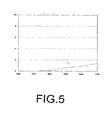
- Figure 5 shows the light transmission spectrum graph (from 200nm to 700nm) of a 200ml bottle having a wall thickness around 450 ⁇ m and made of PET resin (standard grade commercialized by VORIDIAN under reference “9921 w") containing 20wt% of micrometrical silica particles (Sibelite® M6000 particles).
- This additional example further shows a high improvement of the optical properties of the bottle (transmission at wavelengths up to 700nm is less than 2%, and the slope at 400nm of the light transmission spectrum is very low, the transmission at 550nm being less than 1 %).
- the objective of the test is to determine the vertical load that a container can withstand before deformation.
- the empty container under test is centered and positioned upright in the tester.
- the load plate is moved downward with a speed of 50mm/min into contact with the container finish and the pressure is progressively increased until the container starts to be deformed.
- the load plate returns to its initial position.
- the top load value is obtained by reading the load value (kg) on the TOPLOAD tester (TOPLOAD tester INSTRON 1011). Topload results obtained for each example N°1 to N°8 are given in table 12.
- Table 12 Top load results Example N°# 1 2 3 4 5 6 7 8 Mineral content (wt%) 0.8 3.2 6.3 9.7 15.6 24.5 32.1 45.1 Maximum load (kg) 34.2 74 78.1 55.7 64 54.9 51 41.3
- the objective of the test is to determine the O 2 gas transmission rate of the container, i.e. the quantity of oxygen gas passing through the surface of the package per unit of time.
- the testing apparatus is: Calibrated Oxygen Transmission Analysis System MOCON 2/20.
- the carrier gas is: mixture of 97.5 % N 2 and 2.5 % H 2 (minimum of 100 ppm O 2 )
- test method is derived from ASTM D 3895 (oxygen gas transmission rate through plastic film and sheeting using a coulometric sensor) and ASTM F 1307 (Oxygen transmission rate through dry packages using a coulometric sensor).
- the finish of the empty container under test is sealed on a metal plate of the testing apparatus by using epoxy glue, and in order to have a leak tight seal between the container finish and the plate.(Waiting time in order to let the epoxy glue dry around 2 hours).
- the container under test is conditioned to remove all oxygen inside the container and to acclimate to the test conditions. This is done by purging the container with a stream of the carrier gas (gas flow of 10ml/min) which transports most oxygen out of the container through holes in the metal plate.
- the stream of carrier gas with the migrated oxygen (same flow as conditioning) is transported to a coulometric detector that produces an electric current whose magnitude is proportional to the amount of oxygen flowing into the detector per unit of time (oxygen transmission rate in cm 3 /container/day).
- the transmission rates are measured for a certain period and the computer will determine when the container under test has reached equilibrium by comparing test results on a timed basis. This is called convergence testing and the convergence hours are set at 10. This means that the computer compares the test results of 10 hours before and examines the differences. Equilibrium is reached when the transmission rate varies between individual examinations by less than 1 %.
- the container is filled with 100 ml of a liquid (water for temperature test below 100°c and oil for temperature test above 100°c).
- the containers are not closed.
- the filled and opened container is then heated in a microwave oven at different heating temperatures. For each heating temperature, the volume shrinkage of the container is measured.
- the thermal stability of the containers can of course be further enhanced by using the well-known heat set process.
- the silica particles render the preforms more difficult to stretch.
- a silica concentration of 20wt% preforms having a wall thickness (wt) of 4mm were difficult to blow into containers with an overall stretch ratio (S) around 10.
- a silica concentration of 32 wt% preforms having a wall thickness (wt) of 2.9mm were difficult to blow into containers with an overall stretch ratio (S) around 10.
- the polyester resin containing silica particles is however surprisingly easier to inject than the polyester resin alone.
- the polyester/silica composition that is used for making a packaging article of the invention it is thus advantageously possible to design thinner preforms, which thinner preforms are easier to stretch-blow mould into containers.
- preforms having a wall thickness of 1.8mm and made of a PET resin (standard grade) containing 60wt% of micrometrical silica particles (Sibelite® M6000 particles) have been successfully injected and stretch-blow moulded into bottles with an overall stretch ratio of approximately 3.75.
- micrometrical silica particles in the polyester composition, because all the main properties required for the packaging article (low transmission at wavelengths up to 700nm, and especially at wavelengths between 400nm and 550nm, thermal stability, gas barrier properties, mechanical properties, in particular topload) are enhanced and the production cost of the polymeric composition is lowered. With high concentration of micrometrical silica particles, the preforms are more difficult to stretch-blow mould.
- the overall stretch ratio of the preforms will be for example preferably less than 9, more preferably less than 5, and even more preferably less than 4, and/or the wall thickness preform will be very preferably less than 3mm, more preferably less than 2.5mm, and even more preferably less than 2mm.
Landscapes
- Chemical & Material Sciences (AREA)
- Health & Medical Sciences (AREA)
- Chemical Kinetics & Catalysis (AREA)
- Medicinal Chemistry (AREA)
- Polymers & Plastics (AREA)
- Organic Chemistry (AREA)
- Compositions Of Macromolecular Compounds (AREA)
- Containers Having Bodies Formed In One Piece (AREA)
- Wrappers (AREA)
- Blow-Moulding Or Thermoforming Of Plastics Or The Like (AREA)
- Packages (AREA)
Priority Applications (3)
| Application Number | Priority Date | Filing Date | Title |
|---|---|---|---|
| ES10154800.6T ES2537646T3 (es) | 2005-05-24 | 2005-05-24 | Un artículo para envasado fabricado a partir de una composición de poliéster que comprende partículas de sílice |
| PL10154800T PL2186853T3 (pl) | 2005-05-24 | 2005-05-24 | Wyrób opakowaniowy wytworzony z kompozycji poliestrowej zawierającej cząstki krzemionki |
| EP20100154800 EP2186853B1 (en) | 2005-05-24 | 2005-05-24 | A packaging article made from a polyester composition comprising silica particles |
Applications Claiming Priority (2)
| Application Number | Priority Date | Filing Date | Title |
|---|---|---|---|
| EP20100154800 EP2186853B1 (en) | 2005-05-24 | 2005-05-24 | A packaging article made from a polyester composition comprising silica particles |
| EP20050011205 EP1726614B1 (en) | 2005-05-24 | 2005-05-24 | Polyester composition comprising silica particles and use thereof for making packaging articles |
Related Parent Applications (2)
| Application Number | Title | Priority Date | Filing Date |
|---|---|---|---|
| EP05011205.1 Division | 2005-05-24 | ||
| EP20050011205 Division EP1726614B1 (en) | 2005-05-24 | 2005-05-24 | Polyester composition comprising silica particles and use thereof for making packaging articles |
Publications (2)
| Publication Number | Publication Date |
|---|---|
| EP2186853A1 EP2186853A1 (en) | 2010-05-19 |
| EP2186853B1 true EP2186853B1 (en) | 2015-04-15 |
Family
ID=35124367
Family Applications (2)
| Application Number | Title | Priority Date | Filing Date |
|---|---|---|---|
| EP20100154800 Expired - Lifetime EP2186853B1 (en) | 2005-05-24 | 2005-05-24 | A packaging article made from a polyester composition comprising silica particles |
| EP20050011205 Expired - Lifetime EP1726614B1 (en) | 2005-05-24 | 2005-05-24 | Polyester composition comprising silica particles and use thereof for making packaging articles |
Family Applications After (1)
| Application Number | Title | Priority Date | Filing Date |
|---|---|---|---|
| EP20050011205 Expired - Lifetime EP1726614B1 (en) | 2005-05-24 | 2005-05-24 | Polyester composition comprising silica particles and use thereof for making packaging articles |
Country Status (10)
| Country | Link |
|---|---|
| US (1) | US9120915B2 (pt) |
| EP (2) | EP2186853B1 (pt) |
| AT (1) | ATE464349T1 (pt) |
| BR (1) | BRPI0613272B1 (pt) |
| CA (1) | CA2609711A1 (pt) |
| DE (1) | DE602005020598D1 (pt) |
| ES (2) | ES2342607T3 (pt) |
| MX (1) | MX2007014871A (pt) |
| PL (1) | PL2186853T3 (pt) |
| WO (1) | WO2006125549A1 (pt) |
Families Citing this family (4)
| Publication number | Priority date | Publication date | Assignee | Title |
|---|---|---|---|---|
| EP2090614A1 (en) * | 2008-02-14 | 2009-08-19 | La Seda De Barcelona S.A. | Article made from a polyester-based composition comprising silica particles |
| ES2394040T3 (es) | 2008-12-16 | 2013-01-16 | La Seda De Barcelona S.A. | Material polimérico para fabricar un artículo de envasado que tiene propiedades de barrera al oxígeno y propiedades de baja transmisión de luz |
| DE102016220280A1 (de) * | 2016-10-17 | 2018-04-19 | Mitsubishi Polyester Film Gmbh | Orientierte Polyesterfolien mit erhöhter Wärmeleitfähigkeit |
| TR2021012231A1 (tr) * | 2021-08-03 | 2023-02-21 | Si̇li̇ka katkili pet şi̇şe ve üreti̇m yöntemi̇ |
Family Cites Families (21)
| Publication number | Priority date | Publication date | Assignee | Title |
|---|---|---|---|---|
| US2993799A (en) * | 1957-08-20 | 1961-07-25 | Charles L Blake | Plastic containing composition and the process of making the same |
| US3549586A (en) * | 1969-04-01 | 1970-12-22 | Union Carbide Corp | Polyester compositions |
| US4464328A (en) * | 1979-10-09 | 1984-08-07 | Yoshino Kogyosho Co., Ltd. | Method of producing a bottle of saturated polyester resin |
| US4486378A (en) * | 1980-05-07 | 1984-12-04 | Toyo Seikan Kaisha Ltd. | Plastic bottles and process for preparation thereof |
| DE3535985A1 (de) * | 1985-10-09 | 1987-04-09 | Bayer Ag | Mineralgefuellte thermoplastische polyester, verfahren zu ihrer herstellung und ihre verwendung als formmassen |
| EP0270374A3 (en) * | 1986-12-04 | 1989-05-10 | Mitsui Petrochemical Industries, Ltd. | Molded polyester laminate and use therof |
| US5236683A (en) * | 1987-01-20 | 1993-08-17 | Mizusawa Industrial Chemicals, Ltd. | Amorphous silica spherical particles |
| US4918156A (en) * | 1987-06-30 | 1990-04-17 | Hoechst Celanese Corporation | Polyester resin having improved processability |
| US5071690A (en) * | 1989-02-01 | 1991-12-10 | Diafoil Company, Limited | Moldable biaxially stretched polyester film |
| US5091229A (en) * | 1989-10-13 | 1992-02-25 | E. I. Du Pont De Nemours And Company | Electronics protective packaging film |
| JPH04136063A (ja) * | 1990-09-27 | 1992-05-11 | Denki Kagaku Kogyo Kk | ポリエステル樹脂組成物、そのシート及び成形品 |
| JPH0892467A (ja) * | 1994-09-19 | 1996-04-09 | Mitsubishi Rayon Co Ltd | ポリエステルフィルム |
| JPH08208963A (ja) * | 1995-02-02 | 1996-08-13 | New Japan Chem Co Ltd | ポリエステル樹脂組成物 |
| US6001439A (en) * | 1996-05-09 | 1999-12-14 | Kureha Kagaku Kogyo K.K. | Stretch blow molded container and production process thereof |
| DE19813269A1 (de) * | 1998-03-25 | 1999-09-30 | Hoechst Diafoil Gmbh | Siegelfähige Polyesterfolie mit hoher Sauerstoffbarriere, Verfahren zu ihrer Herstellung und ihre Verwendung |
| US6749785B2 (en) * | 1998-09-01 | 2004-06-15 | E. I. Du Pont De Nemours And Company | Multilayer structures of poly(1,3-propylene 2,6 napthalate) and poly (ethylene terephthalate) |
| US6323271B1 (en) * | 1998-11-03 | 2001-11-27 | Arteva North America S.A.R.L. | Polyester resins containing silica and having reduced stickiness |
| DE10109217A1 (de) * | 2001-02-26 | 2002-09-05 | Mitsubishi Polyester Film Gmbh | Transparente, biaxial orientierte Polyesterfolie |
| JP4032656B2 (ja) * | 2001-03-16 | 2008-01-16 | 東レ株式会社 | 樹脂成形品およびその製造方法 |
| US6858671B2 (en) * | 2001-12-04 | 2005-02-22 | General Electric Company | Method of manufacture of polyester molding compositions and articles produced therefrom |
| EP2583903A2 (en) * | 2002-02-01 | 2013-04-24 | INVISTA North America S.à.r.l. | Process for making opaque polyester containers |
-
2005
- 2005-05-24 EP EP20100154800 patent/EP2186853B1/en not_active Expired - Lifetime
- 2005-05-24 ES ES05011205T patent/ES2342607T3/es not_active Expired - Lifetime
- 2005-05-24 ES ES10154800.6T patent/ES2537646T3/es not_active Expired - Lifetime
- 2005-05-24 PL PL10154800T patent/PL2186853T3/pl unknown
- 2005-05-24 AT AT05011205T patent/ATE464349T1/de active
- 2005-05-24 EP EP20050011205 patent/EP1726614B1/en not_active Expired - Lifetime
- 2005-05-24 DE DE200560020598 patent/DE602005020598D1/de not_active Expired - Lifetime
-
2006
- 2006-05-16 BR BRPI0613272A patent/BRPI0613272B1/pt active IP Right Grant
- 2006-05-16 CA CA 2609711 patent/CA2609711A1/en not_active Abandoned
- 2006-05-16 MX MX2007014871A patent/MX2007014871A/es active IP Right Grant
- 2006-05-16 WO PCT/EP2006/004594 patent/WO2006125549A1/en not_active Ceased
- 2006-05-16 US US11/920,896 patent/US9120915B2/en active Active
Also Published As
| Publication number | Publication date |
|---|---|
| PL2186853T3 (pl) | 2015-09-30 |
| US20090220712A1 (en) | 2009-09-03 |
| BRPI0613272B1 (pt) | 2017-03-14 |
| ES2342607T3 (es) | 2010-07-09 |
| EP1726614A1 (en) | 2006-11-29 |
| EP2186853A1 (en) | 2010-05-19 |
| ES2537646T3 (es) | 2015-06-10 |
| ATE464349T1 (de) | 2010-04-15 |
| DE602005020598D1 (de) | 2010-05-27 |
| BRPI0613272A2 (pt) | 2010-12-28 |
| MX2007014871A (es) | 2008-02-15 |
| US9120915B2 (en) | 2015-09-01 |
| CA2609711A1 (en) | 2006-11-30 |
| WO2006125549A1 (en) | 2006-11-30 |
| EP1726614B1 (en) | 2010-04-14 |
Similar Documents
| Publication | Publication Date | Title |
|---|---|---|
| CN1286910C (zh) | 含聚酯组合物的型坯和瓶制品及该型坯的制法 | |
| US20040101642A1 (en) | Glassy carbon thermoplastic compositions | |
| MXPA06011791A (es) | Articulos de envasado, tal como botellas opacas y metodo de produccion de los mismos. | |
| JP2009536244A (ja) | ポリエステル物質のための酸化チタンに基づく着色用濃厚物 | |
| EP1192222B1 (en) | Polyester compositions of low residual aldehyde content | |
| EP2186853B1 (en) | A packaging article made from a polyester composition comprising silica particles | |
| JP3118792B2 (ja) | 紫外線遮断性透明中空成形体 | |
| JP2560171B2 (ja) | 黒色系ポリエステル中空成形体、ならびに、黒色系ポリエステル中空成形体用マスターバッチおよび着色ペレット | |
| JPH04239624A (ja) | 紫外線遮断性に優れた食品包装容器 | |
| EP2199227B1 (en) | Polymeric material for making a packaging article having oxygen-barrier properties and low light transmission properties | |
| JP4296632B2 (ja) | ポリエステル、それからなる中空成形体、シート状物及び延伸フイルム | |
| EP2090614A1 (en) | Article made from a polyester-based composition comprising silica particles | |
| JP3618861B2 (ja) | ポリエステル製ボトル | |
| JP3046084B2 (ja) | 紫外線遮断性に優れた中空成形体および食品包装容器 | |
| US20070299182A1 (en) | Polyester-Based Thermoplastic Composition, Manufacturing Process and Hollow Bodies Obtained From These Compositions | |
| JP2010500940A (ja) | 酸素排除性を持つドライブレンド、及び単層包装物品を作るためのその使用 | |
| JP3012010B2 (ja) | 透明性および紫外線遮断性に優れた成形品並びに食品包装容器 | |
| JPH04239640A (ja) | 紫外線遮断性に優れた食品包装容器 | |
| JPS6326139B2 (pt) | ||
| JPS6243853B2 (pt) | ||
| JP3063766B2 (ja) | ポリエステル樹脂組成物 | |
| JPH10330607A (ja) | 熱可塑性ポリエステル成形体およびその製造方法 | |
| JPH1143129A (ja) | ポリエステル樹脂製ボトル | |
| JPH0780918A (ja) | 延伸ブロー成形物およびその製造方法 | |
| JPH02269639A (ja) | 耐熱プラスチック瓶 |
Legal Events
| Date | Code | Title | Description |
|---|---|---|---|
| PUAI | Public reference made under article 153(3) epc to a published international application that has entered the european phase |
Free format text: ORIGINAL CODE: 0009012 |
|
| 17P | Request for examination filed |
Effective date: 20100315 |
|
| AC | Divisional application: reference to earlier application |
Ref document number: 1726614 Country of ref document: EP Kind code of ref document: P |
|
| AK | Designated contracting states |
Kind code of ref document: A1 Designated state(s): AT BE BG CH CY CZ DE DK EE ES FI FR GB GR HU IE IS IT LI LT LU MC NL PL PT RO SE SI SK TR |
|
| AX | Request for extension of the european patent |
Extension state: AL BA HR LV MK YU |
|
| 17Q | First examination report despatched |
Effective date: 20110829 |
|
| RAP1 | Party data changed (applicant data changed or rights of an application transferred) |
Owner name: LA SEDA DE BARCELONA S.A. |
|
| GRAP | Despatch of communication of intention to grant a patent |
Free format text: ORIGINAL CODE: EPIDOSNIGR1 |
|
| INTG | Intention to grant announced |
Effective date: 20141203 |
|
| GRAS | Grant fee paid |
Free format text: ORIGINAL CODE: EPIDOSNIGR3 |
|
| GRAA | (expected) grant |
Free format text: ORIGINAL CODE: 0009210 |
|
| AC | Divisional application: reference to earlier application |
Ref document number: 1726614 Country of ref document: EP Kind code of ref document: P |
|
| AK | Designated contracting states |
Kind code of ref document: B1 Designated state(s): AT BE BG CH CY CZ DE DK EE ES FI FR GB GR HU IE IS IT LI LT LU MC NL PL PT RO SE SI SK TR |
|
| REG | Reference to a national code |
Ref country code: GB Ref legal event code: FG4D Ref country code: CH Ref legal event code: EP |
|
| REG | Reference to a national code |
Ref country code: FR Ref legal event code: PLFP Year of fee payment: 11 |
|
| REG | Reference to a national code |
Ref country code: IE Ref legal event code: FG4D |
|
| REG | Reference to a national code |
Ref country code: AT Ref legal event code: REF Ref document number: 721950 Country of ref document: AT Kind code of ref document: T Effective date: 20150515 |
|
| REG | Reference to a national code |
Ref country code: DE Ref legal event code: R096 Ref document number: 602005046368 Country of ref document: DE Effective date: 20150528 |
|
| REG | Reference to a national code |
Ref country code: ES Ref legal event code: FG2A Ref document number: 2537646 Country of ref document: ES Kind code of ref document: T3 Effective date: 20150610 |
|
| REG | Reference to a national code |
Ref country code: NL Ref legal event code: VDEP Effective date: 20150415 |
|
| REG | Reference to a national code |
Ref country code: AT Ref legal event code: MK05 Ref document number: 721950 Country of ref document: AT Kind code of ref document: T Effective date: 20150415 |
|
| REG | Reference to a national code |
Ref country code: LT Ref legal event code: MG4D |
|
| PG25 | Lapsed in a contracting state [announced via postgrant information from national office to epo] |
Ref country code: NL Free format text: LAPSE BECAUSE OF FAILURE TO SUBMIT A TRANSLATION OF THE DESCRIPTION OR TO PAY THE FEE WITHIN THE PRESCRIBED TIME-LIMIT Effective date: 20150415 |
|
| REG | Reference to a national code |
Ref country code: PL Ref legal event code: T3 |
|
| PG25 | Lapsed in a contracting state [announced via postgrant information from national office to epo] |
Ref country code: FI Free format text: LAPSE BECAUSE OF FAILURE TO SUBMIT A TRANSLATION OF THE DESCRIPTION OR TO PAY THE FEE WITHIN THE PRESCRIBED TIME-LIMIT Effective date: 20150415 Ref country code: PT Free format text: LAPSE BECAUSE OF FAILURE TO SUBMIT A TRANSLATION OF THE DESCRIPTION OR TO PAY THE FEE WITHIN THE PRESCRIBED TIME-LIMIT Effective date: 20150817 Ref country code: LT Free format text: LAPSE BECAUSE OF FAILURE TO SUBMIT A TRANSLATION OF THE DESCRIPTION OR TO PAY THE FEE WITHIN THE PRESCRIBED TIME-LIMIT Effective date: 20150415 |
|
| PG25 | Lapsed in a contracting state [announced via postgrant information from national office to epo] |
Ref country code: IS Free format text: LAPSE BECAUSE OF FAILURE TO SUBMIT A TRANSLATION OF THE DESCRIPTION OR TO PAY THE FEE WITHIN THE PRESCRIBED TIME-LIMIT Effective date: 20150815 Ref country code: AT Free format text: LAPSE BECAUSE OF FAILURE TO SUBMIT A TRANSLATION OF THE DESCRIPTION OR TO PAY THE FEE WITHIN THE PRESCRIBED TIME-LIMIT Effective date: 20150415 |
|
| REG | Reference to a national code |
Ref country code: CH Ref legal event code: PL |
|
| REG | Reference to a national code |
Ref country code: DE Ref legal event code: R097 Ref document number: 602005046368 Country of ref document: DE |
|
| REG | Reference to a national code |
Ref country code: DE Ref legal event code: R081 Ref document number: 602005046368 Country of ref document: DE Owner name: PLASTIPAK BAWT S.A.R.L., LU Free format text: FORMER OWNER: LA SEDA DE BARCELONA S.A., BARCELONA, ES Ref country code: DE Ref legal event code: R082 Ref document number: 602005046368 Country of ref document: DE Representative=s name: LEONHARD & PARTNER PATENTANWAELTE, DE |
|
| PG25 | Lapsed in a contracting state [announced via postgrant information from national office to epo] |
Ref country code: DK Free format text: LAPSE BECAUSE OF FAILURE TO SUBMIT A TRANSLATION OF THE DESCRIPTION OR TO PAY THE FEE WITHIN THE PRESCRIBED TIME-LIMIT Effective date: 20150415 Ref country code: EE Free format text: LAPSE BECAUSE OF FAILURE TO SUBMIT A TRANSLATION OF THE DESCRIPTION OR TO PAY THE FEE WITHIN THE PRESCRIBED TIME-LIMIT Effective date: 20150415 Ref country code: CH Free format text: LAPSE BECAUSE OF NON-PAYMENT OF DUE FEES Effective date: 20150531 Ref country code: MC Free format text: LAPSE BECAUSE OF FAILURE TO SUBMIT A TRANSLATION OF THE DESCRIPTION OR TO PAY THE FEE WITHIN THE PRESCRIBED TIME-LIMIT Effective date: 20150415 Ref country code: LI Free format text: LAPSE BECAUSE OF NON-PAYMENT OF DUE FEES Effective date: 20150531 |
|
| PLBE | No opposition filed within time limit |
Free format text: ORIGINAL CODE: 0009261 |
|
| REG | Reference to a national code |
Ref country code: IE Ref legal event code: MM4A |
|
| PG25 | Lapsed in a contracting state [announced via postgrant information from national office to epo] |
Ref country code: SK Free format text: LAPSE BECAUSE OF FAILURE TO SUBMIT A TRANSLATION OF THE DESCRIPTION OR TO PAY THE FEE WITHIN THE PRESCRIBED TIME-LIMIT Effective date: 20150415 Ref country code: RO Free format text: LAPSE BECAUSE OF NON-PAYMENT OF DUE FEES Effective date: 20150415 Ref country code: CZ Free format text: LAPSE BECAUSE OF FAILURE TO SUBMIT A TRANSLATION OF THE DESCRIPTION OR TO PAY THE FEE WITHIN THE PRESCRIBED TIME-LIMIT Effective date: 20150415 |
|
| REG | Reference to a national code |
Ref country code: GB Ref legal event code: 732E Free format text: REGISTERED BETWEEN 20160218 AND 20160224 |
|
| 26N | No opposition filed |
Effective date: 20160118 |
|
| PLAA | Information modified related to event that no opposition was filed |
Free format text: ORIGINAL CODE: 0009299DELT |
|
| PLBE | No opposition filed within time limit |
Free format text: ORIGINAL CODE: 0009261 |
|
| STAA | Information on the status of an ep patent application or granted ep patent |
Free format text: STATUS: NO OPPOSITION FILED WITHIN TIME LIMIT |
|
| REG | Reference to a national code |
Ref country code: FR Ref legal event code: TP Owner name: PLASTIPAK BAWT S.A.R.L., LU Effective date: 20160309 |
|
| REG | Reference to a national code |
Ref country code: FR Ref legal event code: PLFP Year of fee payment: 12 |
|
| R26N | No opposition filed (corrected) |
Effective date: 20160118 |
|
| RAP2 | Party data changed (patent owner data changed or rights of a patent transferred) |
Owner name: PLASTIPAK BAWT S.A.R.L. |
|
| PG25 | Lapsed in a contracting state [announced via postgrant information from national office to epo] |
Ref country code: IE Free format text: LAPSE BECAUSE OF NON-PAYMENT OF DUE FEES Effective date: 20150524 |
|
| PG25 | Lapsed in a contracting state [announced via postgrant information from national office to epo] |
Ref country code: SI Free format text: LAPSE BECAUSE OF FAILURE TO SUBMIT A TRANSLATION OF THE DESCRIPTION OR TO PAY THE FEE WITHIN THE PRESCRIBED TIME-LIMIT Effective date: 20150415 |
|
| PG25 | Lapsed in a contracting state [announced via postgrant information from national office to epo] |
Ref country code: BE Free format text: LAPSE BECAUSE OF FAILURE TO SUBMIT A TRANSLATION OF THE DESCRIPTION OR TO PAY THE FEE WITHIN THE PRESCRIBED TIME-LIMIT Effective date: 20150415 |
|
| REG | Reference to a national code |
Ref country code: FR Ref legal event code: PLFP Year of fee payment: 13 |
|
| PG25 | Lapsed in a contracting state [announced via postgrant information from national office to epo] |
Ref country code: HU Free format text: LAPSE BECAUSE OF FAILURE TO SUBMIT A TRANSLATION OF THE DESCRIPTION OR TO PAY THE FEE WITHIN THE PRESCRIBED TIME-LIMIT; INVALID AB INITIO Effective date: 20050524 Ref country code: BG Free format text: LAPSE BECAUSE OF FAILURE TO SUBMIT A TRANSLATION OF THE DESCRIPTION OR TO PAY THE FEE WITHIN THE PRESCRIBED TIME-LIMIT Effective date: 20150415 |
|
| PG25 | Lapsed in a contracting state [announced via postgrant information from national office to epo] |
Ref country code: GR Free format text: LAPSE BECAUSE OF FAILURE TO SUBMIT A TRANSLATION OF THE DESCRIPTION OR TO PAY THE FEE WITHIN THE PRESCRIBED TIME-LIMIT Effective date: 20150415 Ref country code: CY Free format text: LAPSE BECAUSE OF FAILURE TO SUBMIT A TRANSLATION OF THE DESCRIPTION OR TO PAY THE FEE WITHIN THE PRESCRIBED TIME-LIMIT Effective date: 20150415 Ref country code: SE Free format text: LAPSE BECAUSE OF FAILURE TO SUBMIT A TRANSLATION OF THE DESCRIPTION OR TO PAY THE FEE WITHIN THE PRESCRIBED TIME-LIMIT Effective date: 20150415 |
|
| PG25 | Lapsed in a contracting state [announced via postgrant information from national office to epo] |
Ref country code: LU Free format text: LAPSE BECAUSE OF NON-PAYMENT OF DUE FEES Effective date: 20150524 |
|
| REG | Reference to a national code |
Ref country code: FR Ref legal event code: PLFP Year of fee payment: 14 |
|
| REG | Reference to a national code |
Ref country code: DE Ref legal event code: R082 Ref document number: 602005046368 Country of ref document: DE Representative=s name: LEONHARD, REIMUND, DIPL.-ING., DE |
|
| PGFP | Annual fee paid to national office [announced via postgrant information from national office to epo] |
Ref country code: IT Payment date: 20230420 Year of fee payment: 19 Ref country code: FR Payment date: 20230420 Year of fee payment: 19 Ref country code: ES Payment date: 20230601 Year of fee payment: 19 Ref country code: DE Payment date: 20230419 Year of fee payment: 19 |
|
| PGFP | Annual fee paid to national office [announced via postgrant information from national office to epo] |
Ref country code: TR Payment date: 20230427 Year of fee payment: 19 Ref country code: PL Payment date: 20230424 Year of fee payment: 19 |
|
| PGFP | Annual fee paid to national office [announced via postgrant information from national office to epo] |
Ref country code: GB Payment date: 20230420 Year of fee payment: 19 |
|
| REG | Reference to a national code |
Ref country code: DE Ref legal event code: R119 Ref document number: 602005046368 Country of ref document: DE |
|
| GBPC | Gb: european patent ceased through non-payment of renewal fee |
Effective date: 20240524 |
|
| PG25 | Lapsed in a contracting state [announced via postgrant information from national office to epo] |
Ref country code: DE Free format text: LAPSE BECAUSE OF NON-PAYMENT OF DUE FEES Effective date: 20241203 |
|
| PG25 | Lapsed in a contracting state [announced via postgrant information from national office to epo] |
Ref country code: FR Free format text: LAPSE BECAUSE OF NON-PAYMENT OF DUE FEES Effective date: 20240531 |
|
| PG25 | Lapsed in a contracting state [announced via postgrant information from national office to epo] |
Ref country code: GB Free format text: LAPSE BECAUSE OF NON-PAYMENT OF DUE FEES Effective date: 20240524 Ref country code: IT Free format text: LAPSE BECAUSE OF NON-PAYMENT OF DUE FEES Effective date: 20240524 |
|
| REG | Reference to a national code |
Ref country code: ES Ref legal event code: FD2A Effective date: 20250627 |
|
| PG25 | Lapsed in a contracting state [announced via postgrant information from national office to epo] |
Ref country code: ES Free format text: LAPSE BECAUSE OF NON-PAYMENT OF DUE FEES Effective date: 20240525 |
|
| PG25 | Lapsed in a contracting state [announced via postgrant information from national office to epo] |
Ref country code: PL Free format text: LAPSE BECAUSE OF NON-PAYMENT OF DUE FEES Effective date: 20240524 |