EP2191849B1 - Wirkstoff zur suppression von in vivo auftretenden krankheitserregern - Google Patents
Wirkstoff zur suppression von in vivo auftretenden krankheitserregern Download PDFInfo
- Publication number
- EP2191849B1 EP2191849B1 EP08833835.5A EP08833835A EP2191849B1 EP 2191849 B1 EP2191849 B1 EP 2191849B1 EP 08833835 A EP08833835 A EP 08833835A EP 2191849 B1 EP2191849 B1 EP 2191849B1
- Authority
- EP
- European Patent Office
- Prior art keywords
- dextran sulfate
- ldl
- compound
- blood
- agent
- Prior art date
- Legal status (The legal status is an assumption and is not a legal conclusion. Google has not performed a legal analysis and makes no representation as to the accuracy of the status listed.)
- Active
Links
Images



Classifications
-
- A—HUMAN NECESSITIES
- A61—MEDICAL OR VETERINARY SCIENCE; HYGIENE
- A61K—PREPARATIONS FOR MEDICAL, DENTAL OR TOILETRY PURPOSES
- A61K31/00—Medicinal preparations containing organic active ingredients
- A61K31/70—Carbohydrates; Sugars; Derivatives thereof
- A61K31/715—Polysaccharides, i.e. having more than five saccharide radicals attached to each other by glycosidic linkages; Derivatives thereof, e.g. ethers, esters
- A61K31/737—Sulfated polysaccharides, e.g. chondroitin sulfate, dermatan sulfate
-
- A—HUMAN NECESSITIES
- A61—MEDICAL OR VETERINARY SCIENCE; HYGIENE
- A61K—PREPARATIONS FOR MEDICAL, DENTAL OR TOILETRY PURPOSES
- A61K38/00—Medicinal preparations containing peptides
- A61K38/16—Peptides having more than 20 amino acids; Gastrins; Somatostatins; Melanotropins; Derivatives thereof
- A61K38/164—Peptides having more than 20 amino acids; Gastrins; Somatostatins; Melanotropins; Derivatives thereof from bacteria
-
- A—HUMAN NECESSITIES
- A61—MEDICAL OR VETERINARY SCIENCE; HYGIENE
- A61K—PREPARATIONS FOR MEDICAL, DENTAL OR TOILETRY PURPOSES
- A61K47/00—Medicinal preparations characterised by the non-active ingredients used, e.g. carriers or inert additives; Targeting or modifying agents chemically bound to the active ingredient
- A61K47/50—Medicinal preparations characterised by the non-active ingredients used, e.g. carriers or inert additives; Targeting or modifying agents chemically bound to the active ingredient the non-active ingredient being chemically bound to the active ingredient, e.g. polymer-drug conjugates
- A61K47/51—Medicinal preparations characterised by the non-active ingredients used, e.g. carriers or inert additives; Targeting or modifying agents chemically bound to the active ingredient the non-active ingredient being chemically bound to the active ingredient, e.g. polymer-drug conjugates the non-active ingredient being a modifying agent
- A61K47/54—Medicinal preparations characterised by the non-active ingredients used, e.g. carriers or inert additives; Targeting or modifying agents chemically bound to the active ingredient the non-active ingredient being chemically bound to the active ingredient, e.g. polymer-drug conjugates the non-active ingredient being a modifying agent the modifying agent being an organic compound
- A61K47/549—Sugars, nucleosides, nucleotides or nucleic acids
-
- A—HUMAN NECESSITIES
- A61—MEDICAL OR VETERINARY SCIENCE; HYGIENE
- A61K—PREPARATIONS FOR MEDICAL, DENTAL OR TOILETRY PURPOSES
- A61K47/00—Medicinal preparations characterised by the non-active ingredients used, e.g. carriers or inert additives; Targeting or modifying agents chemically bound to the active ingredient
- A61K47/50—Medicinal preparations characterised by the non-active ingredients used, e.g. carriers or inert additives; Targeting or modifying agents chemically bound to the active ingredient the non-active ingredient being chemically bound to the active ingredient, e.g. polymer-drug conjugates
- A61K47/51—Medicinal preparations characterised by the non-active ingredients used, e.g. carriers or inert additives; Targeting or modifying agents chemically bound to the active ingredient the non-active ingredient being chemically bound to the active ingredient, e.g. polymer-drug conjugates the non-active ingredient being a modifying agent
- A61K47/56—Medicinal preparations characterised by the non-active ingredients used, e.g. carriers or inert additives; Targeting or modifying agents chemically bound to the active ingredient the non-active ingredient being chemically bound to the active ingredient, e.g. polymer-drug conjugates the non-active ingredient being a modifying agent the modifying agent being an organic macromolecular compound, e.g. an oligomeric, polymeric or dendrimeric molecule
- A61K47/61—Medicinal preparations characterised by the non-active ingredients used, e.g. carriers or inert additives; Targeting or modifying agents chemically bound to the active ingredient the non-active ingredient being chemically bound to the active ingredient, e.g. polymer-drug conjugates the non-active ingredient being a modifying agent the modifying agent being an organic macromolecular compound, e.g. an oligomeric, polymeric or dendrimeric molecule the organic macromolecular compound being a polysaccharide or a derivative thereof
-
- A—HUMAN NECESSITIES
- A61—MEDICAL OR VETERINARY SCIENCE; HYGIENE
- A61P—SPECIFIC THERAPEUTIC ACTIVITY OF CHEMICAL COMPOUNDS OR MEDICINAL PREPARATIONS
- A61P19/00—Drugs for skeletal disorders
-
- A—HUMAN NECESSITIES
- A61—MEDICAL OR VETERINARY SCIENCE; HYGIENE
- A61P—SPECIFIC THERAPEUTIC ACTIVITY OF CHEMICAL COMPOUNDS OR MEDICINAL PREPARATIONS
- A61P19/00—Drugs for skeletal disorders
- A61P19/02—Drugs for skeletal disorders for joint disorders, e.g. arthritis, arthrosis
-
- A—HUMAN NECESSITIES
- A61—MEDICAL OR VETERINARY SCIENCE; HYGIENE
- A61P—SPECIFIC THERAPEUTIC ACTIVITY OF CHEMICAL COMPOUNDS OR MEDICINAL PREPARATIONS
- A61P3/00—Drugs for disorders of the metabolism
- A61P3/06—Antihyperlipidemics
-
- A—HUMAN NECESSITIES
- A61—MEDICAL OR VETERINARY SCIENCE; HYGIENE
- A61P—SPECIFIC THERAPEUTIC ACTIVITY OF CHEMICAL COMPOUNDS OR MEDICINAL PREPARATIONS
- A61P37/00—Drugs for immunological or allergic disorders
- A61P37/02—Immunomodulators
- A61P37/06—Immunosuppressants, e.g. drugs for graft rejection
-
- A—HUMAN NECESSITIES
- A61—MEDICAL OR VETERINARY SCIENCE; HYGIENE
- A61P—SPECIFIC THERAPEUTIC ACTIVITY OF CHEMICAL COMPOUNDS OR MEDICINAL PREPARATIONS
- A61P39/00—General protective or antinoxious agents
- A61P39/02—Antidotes
-
- A—HUMAN NECESSITIES
- A61—MEDICAL OR VETERINARY SCIENCE; HYGIENE
- A61P—SPECIFIC THERAPEUTIC ACTIVITY OF CHEMICAL COMPOUNDS OR MEDICINAL PREPARATIONS
- A61P43/00—Drugs for specific purposes, not provided for in groups A61P1/00-A61P41/00
-
- A—HUMAN NECESSITIES
- A61—MEDICAL OR VETERINARY SCIENCE; HYGIENE
- A61P—SPECIFIC THERAPEUTIC ACTIVITY OF CHEMICAL COMPOUNDS OR MEDICINAL PREPARATIONS
- A61P7/00—Drugs for disorders of the blood or the extracellular fluid
- A61P7/08—Plasma substitutes; Perfusion solutions; Dialytics or haemodialytics; Drugs for electrolytic or acid-base disorders, e.g. hypovolemic shock
-
- A—HUMAN NECESSITIES
- A61—MEDICAL OR VETERINARY SCIENCE; HYGIENE
- A61P—SPECIFIC THERAPEUTIC ACTIVITY OF CHEMICAL COMPOUNDS OR MEDICINAL PREPARATIONS
- A61P9/00—Drugs for disorders of the cardiovascular system
-
- A—HUMAN NECESSITIES
- A61—MEDICAL OR VETERINARY SCIENCE; HYGIENE
- A61P—SPECIFIC THERAPEUTIC ACTIVITY OF CHEMICAL COMPOUNDS OR MEDICINAL PREPARATIONS
- A61P9/00—Drugs for disorders of the cardiovascular system
- A61P9/04—Inotropic agents, i.e. stimulants of cardiac contraction; Drugs for heart failure
-
- A—HUMAN NECESSITIES
- A61—MEDICAL OR VETERINARY SCIENCE; HYGIENE
- A61P—SPECIFIC THERAPEUTIC ACTIVITY OF CHEMICAL COMPOUNDS OR MEDICINAL PREPARATIONS
- A61P9/00—Drugs for disorders of the cardiovascular system
- A61P9/10—Drugs for disorders of the cardiovascular system for treating ischaemic or atherosclerotic diseases, e.g. antianginal drugs, coronary vasodilators, drugs for myocardial infarction, retinopathy, cerebrovascula insufficiency, renal arteriosclerosis
-
- C—CHEMISTRY; METALLURGY
- C07—ORGANIC CHEMISTRY
- C07K—PEPTIDES
- C07K16/00—Immunoglobulins [IG], e.g. monoclonal or polyclonal antibodies
- C07K16/18—Immunoglobulins [IG], e.g. monoclonal or polyclonal antibodies against material from animals or humans
- C07K16/28—Immunoglobulins [IG], e.g. monoclonal or polyclonal antibodies against material from animals or humans against receptors, cell surface antigens or cell surface determinants
- C07K16/2803—Immunoglobulins [IG], e.g. monoclonal or polyclonal antibodies against material from animals or humans against receptors, cell surface antigens or cell surface determinants against the immunoglobulin superfamily
- C07K16/2833—Immunoglobulins [IG], e.g. monoclonal or polyclonal antibodies against material from animals or humans against receptors, cell surface antigens or cell surface determinants against the immunoglobulin superfamily against MHC-molecules, e.g. HLA-molecules
-
- A—HUMAN NECESSITIES
- A61—MEDICAL OR VETERINARY SCIENCE; HYGIENE
- A61K—PREPARATIONS FOR MEDICAL, DENTAL OR TOILETRY PURPOSES
- A61K39/00—Medicinal preparations containing antigens or antibodies
- A61K2039/505—Medicinal preparations containing antigens or antibodies comprising antibodies
Definitions
- the present invention relates to a drug for actively metabolizing or excreting a pathogen occurring in vivo.
- Hyperlipidemia which involves an abnormal increase in level of serum lipid (mainly cholesterol, triglyceride, phospholipid, and free fatty acids). Hyperlipidemia is categorized according to the standards.
- hyper-LDL-cholesterolemia When the fasting serum LDL cholesterol level is 140 mg/dL or higher, this condition is defined as hyper-LDL-cholesterolemia, and when the fasting triglyceride level is 150 mg/dL or higher, this condition is defined as hyper-triglyceridemia.
- hyper-LDL-cholesterolemia is thought to be a main cause for coronary diseases and cerebrovascular disorders, and occurrence of these diseases is reduced by controlling the blood LDL cholesterol level, supported by sufficient evidence.
- statin drugs such as statin drugs, fibrate drugs, nicotinic acid, anion-exchange resin, cholesterol absorption inhibitors, probucol, dextran sulfate, and ethyl icosapentate.
- statin drugs such as pravastatin, sinvastatin, fluvastatin, atorvastatin, pitavastatin, and rosuvastatin are mainly employed in the treatment.
- statin drugs pitavastatin or a salt thereof is known to exhibit intense HMG-CoA reductase inhibitory effect and serve as a useful blood cholesterol level lowering agent (Patent Document 1).
- the target LDL cholesterol level of a patient is determined in accordance with the number of risk factors for arteriosclerosis of the patient.
- a statin is employed in a high-risk group, only about 25% of the patients can clear the target level.
- Homo-type familial hypercholesterolemia is a type of hereditary disease involving defect of an LDL receptor gene. Since a statin drug works by the action mechanism of activating the LDL receptor, the treatment by statin is no longer effective for a patient of this type.
- blood LDL low-density lipoprotein
- LDL receptor low-density lipoprotein
- an excessive amount of LDL is excreted as bile.
- the patients of homo-type familial hypercholesterolemia have a defect in this function.
- the serum cholesterol level is as high as 600 to 1,000 mg/dL, and arteriosclerosis progresses from early childhood, resulting in juvenile heart infarction.
- LDL apheresis is a plasma exchange technique based on extracorporal circulation
- a patient of an age under 5 or 6 cannot receive the therapy. Therefore, arteriosclerosis progressing from the birth of the patient cannot be treated.
- cost of the therapy is very high, and the physical load of the therapy is heavy to the patient.
- dialysis amyloidosis As the period of dialysis becomes longer, dialysis amyloidosis is actually observed as a complication.
- excretion of ⁇ 2 microglobulin (middle-size protein) is impeded by failure and disorders of renal functions, resulting in high blood ⁇ 2 microglobulin level.
- Accumulation of ⁇ 2 microglobulin causes dialysis amyloidosis.
- amyloid fiber deposits in the entire body of an dialysis amyloidosis patient, leading to disorders of bones, nerves, and joints, involving pain and numbness. In this case, QOL of the patient is considerably deteriorated.
- ⁇ 2 microglobulin which is a causal substance, is removed.
- HDF hemodialysisfiltration
- dialyzer having a dialysis membrane having a large pore size (high-performance membrane).
- Online HDF has gradually come to be employed, in which plasma is actively extracted from blood, and an almost equivolume of liquid replacement is perfused, thereby purifying dialysis liquid during perfusion. If the condition of the patient is grave, surgical treatment is carried out. Cost of these therapies is very high, and the physical load of such a therapy is heavy to the patient. Thus, from the viewpoint of enhancement of QOL of the patient, it is desired to establish a new therapy.
- an auxiliary tool for enhancing the therapeutic effect of a medical column for extracorporeal circulation is also employed.
- hexadecyl-group-immobilized cellulose beads (Lixelle, registered trademark), which specifically bind to ⁇ 2 microglobulin, is employed (Patent Document 2). It has also been reported that joint pain and the like of dialysis amyloidosis patients are mitigated through hemoadsorption employing hexadecyl-group-immobilized cellulose beads.
- these auxiliary tools for enhancing the therapeutic effect of a medical column for extracorporeal circulation must be used in combination with an anti-clotting agent, or the medical column for extracorporeal circulation must be imparted with an antithrombotic property.
- Use of an anti-clotting agent imposes a load to the patients, and some patients exhibit shock conditions upon use of heparin, which is a widely employed anti-clotting agent. Therefore, it is desired to establish a new therapy.
- Idiopathic dilated cardiomyopathy is a chronic and progressive disease which involves considerable dilation of the heart lumen, resulting in myocardial contraction failure and which has bad prognosis with a clinical picture showing congestive heart failure.
- DCM Idiopathic dilated cardiomyopathy
- one radical therapeutic method for DCM is typically heart transplantation in which the heart is transplanted from a brain-death donor.
- the concept "brain death" is not widely accepted by people, and heart transplantation is not often performed.
- the number of heart donors is smaller than the patients requiring heart transplantation, which is problematic.
- heart transplantation is not supported by the medical security system, the patient who undergoes transplantation is charged a high medical fee, even when a heart donor has been found.
- the patient must take an immuno-suppressor for the rest of his or her life. Therefore, the patient is susceptible to suffer an infection disease due to the suppressed immune system, which is a severe problem.
- Non-Patent Document 1 an angiotensin-converting enzyme inhibitor and a ⁇ -blocker are administered in combination to the target patients, and good therapeutic results are obtained.
- the expected effect fails to be attained, depending on the body constitution and progress of the disease condition.
- the medical therapy can only retard the progress of the disease, there is keen demand for therapeutic means for radically treating DCM based on medical therapy.
- An object of the present invention is to provide a drug for actively lowering the intracorporal level of a pathogen occurring in vivo.
- the present inventors have conducted extensive studies, and thought that if there can be provided a drug for actively introducing a pathogen occurring in vivo from the intrinsic metabolism route to another route, the drug would serve as a drug for lowering the intracorporeal level of such a pathogen occurring in vivo based on a new mechanism (called a "metabolic switching mechanism").
- the present inventors have found that a compound which is formed by modifying dextran sulfate serving as an LDL adsorbent with galactose serving as a hepatocyte asialoorosomucoid receptor ligand can transfer LDL into the blood to hepatocytes, to thereby decompose the LDL in the liver, whereby the blood LDL level is significantly lowered.
- an LDL-dextran sulfate- ⁇ 2 microglobulin antibody complex which is formed during administration of dextran sulfate which has been modified with a ⁇ 2 microglobulin antibody serving as an adsorbent for ⁇ 2 microglobulin simultaneously with LDL serving as a hepatocyte-specific ligand, can promote active incorporation of ⁇ 2 microglobulin into hepatocytes.
- an LDL-dextran sulfate-protein A complex which is formed during administration of dextran sulfate to which protein A specifically recognizing an antibody has been incorporated simultaneously with LDL serving as a hepatocyte-specific ligand, can promote active incorporation of a pathogenic antibody occurring in an excessive amount in vivo into hepatocytes.
- a compound which is formed by bonding an adsorbent for a pathogen occurring in the blood or lymph to a ligand which is specific to an organ or cells capable of metabolizing or excreting the pathogen, via a linker or with no linker can be employed as an agent for lowering the level of the pathogen occurring in the blood or lymph, whereby a disease caused by the pathogen can be treated.
- the present invention has been accomplished on the basis of these findings.
- the present invention relates to the subject matter of claim 1 to 8.
- the present invention provides a compound which is formed of (A)dextran sulfate or a salt thereof, and (B) an asialoorosomucoid receptor ligand, wherein (B) is bonded to (A) via a linker, or which is formed of (A) ⁇ 2 microglobulin antibody modified with dextran sulfate or a salt thereof or of protein A modified with dextran sulfate or a salt thereof, and (B) LDL, wherein (B) is bonded to (A) via a linker, or with no linker.
- the present invention also provides an agent for lowering the intracorporeal level of a pathogen occurring in the blood or lymph, which agent contains the compound as an active ingredient.
- the present invention also provides a prophylactic and/or therapeutic agent for a disease caused by a pathogen occurring in the blood or lymph, which agent contains the compound as an active ingredient.
- the present invention also provides a pharmaceutical composition for preventing and/or treating a disease caused by a pathogen occurring in the blood or lymph, which composition contains the compound and a pharmaceutically acceptable carrier.
- the level of a pathogen occurring in an excessive amount in the blood or lymph can be lowered through administration of a drug to the body without performing hemodialysis or various apheresis techniques.
- a compound falling within the scope of the present invention in which dextran sulfate is modified with galactose has an excellent LDL lowering action, and thus can be employed as a new agent for treating hyperlipidemia.
- the blood LDL level of a patient of severe hyperlipidemia such as homo-type familial hyperlipidemia, which would otherwise require removal of blood LDL through LDL apheresis, can be effectively lowered.
- an LDL-dextran sulfate- ⁇ 2 microglobulin antibody complex which is formed during administration of dextran sulfate- ⁇ 2 microglobulin antibody simultaneously with LDL has an excellent ⁇ 2 microglobulin lowering action, and thus can be employed as a new agent for treating amyloidosis.
- the blood ⁇ 2 microglobulin level of a patient of severe dialysis amyloidosis which would otherwise require removal of blood ⁇ 2 microglobulin through high-performance (capable of removing ⁇ 2 microglobulin) artificial kidney or hexadecyl-group-immobilized cellulose beads, can be effectively lowered.
- an LDL-dextran sulfate-protein A complex which is formed during simultaneous administration of LDL and dextran sulfate-protein A, has an excellent action of lowering the level of an antibody which is present in an excessive amount in the body and which causes a disease, and thus can be employed as a new therapeutic agent; e.g., a therapeutic agent for idiopathic dilated cardiomyopathy.
- a therapeutic agent for idiopathic dilated cardiomyopathy e.g., a therapeutic agent for idiopathic dilated cardiomyopathy.
- the blood antibody level of a patient who has been treated through surgical therapy such as heart transplantation due to the absence of effective medical therapy can be lowered.
- pathogen occurring in the blood or lymph refers to a substance which occurs in an excessive amount in the blood or lymph due to metabolic disorders, excretion failure, difficulty in removal, abnormal proliferation, etc. and which adversely affects body functions.
- specific examples thereof include LDL and oxidized LDL in hyperlipidemia patients, ⁇ 2 microglobulin in amyloidosis patients, anti-miocardial self-antibody in dilated cardiomyopathy patients, galactose in galactosuria patients, glycogen and lactic acid in diabetes patients, lactose in lactose intolerance patients, sucrose and fructose in fructose intolerance patients, phenylalanine in phenylketonuria patients, ⁇ -keto acid in maple-syrupuria patients, histidine in histidinurea patients, propionic acid in propionic-aciduria patients, methyl malonate in methyl-malonaturia patients, porphyrin in porphyria patients
- adsorbent for the pathogen refers to a substance capable of adsorbing the pathogen in the blood or lymph.
- the adsorbent for LDL include anionic polypeptides such as aspartic acid and glutamic acid; high-molecule or low-molecule compounds having an anionic group such as polysaccharide (e.g., dextran sulfate); and polymers having an anionic group such as a carboxyl group.
- dextran sulfate or a salt thereof are preferred.
- dextran sulfate include those having a molecular weight of 3,000 to 200,000.
- dextran sulfate preferably has a sulfur atom content of 3 to 10 wt.%.
- the salt of dextran sulfate include alkali metal (e.g., sodium or potassium) salts thereof. Among them, sodium salts are preferred.
- the adsorbent for ⁇ 2 microglobulin include peptides and antibodies specifically recognizing ⁇ 2 microglobulin and compounds specifically adsorbing ⁇ 2 microglobulin such as calcium hydroxide phosphate.
- the adsorbent for an antibody include protein A, which is bound specifically to the antibody.
- organ or cells capable of metabolizing or excreting the pathogen include the liver, hepatocytes, the kidney, kidney cells, the spleen, the lung, and the malpighian tube.
- the liver, hepatocytes, the kidney, kidney cells, etc. are preferred, with the liver and hepatocytes being more preferred.
- the ligand specific to the organ or cells examples include ligands which bond to a receptor present in the organ or cells. Particularly, a ligand which bonds to a receptor present in the organ or cells and which can be incorporated into the organ or cells is preferred. This is because, when the ligand per se is capable of being incorporated into the organ or cells to which the ligand has been bonded, the pathogen bonded to the ligand is also incorporated thereinto.
- examples of the ligand specific to hepatocytes include asialoorosomucoid receptor ligands (e.g., galactose, lactose, monogalactosyl diacylglycerol, agarose, and carrageenan), LDL, Fas, albumin, ApoE, and ApoB.
- asialoorosomucoid receptor ligands e.g., galactose, lactose, monogalactosyl diacylglycerol, agarose, and carrageenan
- LDL Fas
- albumin ApoE
- ApoB ApoB
- the aforementioned adsorbent may be bonded to the ligand by the mediation of a linker or may be directly bonded.
- the linker include diamines and glycols such as propylenediamine, trimethylenediamine, hexamethylenediamine, and polyethylene glycol, each member having a carbonyl group at each end.
- Specific examples include -CONH-(CH 2 ) 1 -NHCO- and -CO-(OCH 2 CH 2 ) m -OCO- (wherein each of 1 and m is a number of 1 to 100).
- linkage structure of between the adsorbent and ligand includes a case where a linker is employed.
- linkage formation include formation of covalent bonds such as amido bond, urethane bond, urea bond, ester bond, disulfide bond, and ether bond; adsorption via antibody-antigen reaction; and formation of non-covalent bonds such as formation of ionic bond and hydrophobic interaction.
- the ligand and the adsorbent are linked to each other through formation of urethane bonds by the mediation of a linker.
- step 1 dextran sulfate is reacted with an activating agent to thereby incorporate an intermediate which reacts with an amino group into some positions of dextran sulfate.
- the activating agent is a reagent which can be used for activating a hydroxyl group.
- the agent include carbonyldiimidazole (CDI) and N,N'-disuccinimidylcarbonate (DSC).
- CDI carbonyldiimidazole
- DSC N,N'-disuccinimidylcarbonate
- an imidazolecarbamate group and a succinimidylcarbamate group are incorporated into dextran sulfate.
- the reaction solvent which may be used include formamide and DMSO.
- the reaction may be performed at 0 to 40°C (preferably 25 to 37°C) .
- the reaction time is preferably 0.5 to 12 hours, particularly preferably 1 to 3 hours.
- step 2 dextran sulfate having a carbonyl group produced in step 1 is reacted with alkylenediamine to thereby form an amido group.
- a linear C1 to C100 alkylenediamine may be used, and a C3 to C50 alkylenediamine is preferably used.
- the reaction solvent which may be used include formamide and DMSO.
- the reaction may be performed at 0 to 40°C (preferably 25 to 37°C).
- the reaction time is preferably 0.5 to 24 hours, particularly preferably 5 to 16 hours.
- Step 1 and step 2 may be performed simultaneously in one pot.
- step i galactose is reacted with an activating agent to thereby incorporate an intermediate which reacts with an amino group into galactose.
- reaction solvent which may be used include formamide and DMSO.
- the reaction may be performed at 0 to 40°C (preferably 25 to 37°C).
- the reaction time is preferably 0.5 to 12 hours, more preferably 1 to 3 hours.
- step 3 the amino group of the compound produced in step 2 is reacted with the compound produced in step i to thereby form an urethane bond, whereby a compound in which galactose is incorporated to the target dextran sulfate is obtained.
- reaction solvent examples include formamide and DMSO.
- the reaction may be performed at 0 to 40°C (preferably 25 to 37°C).
- the reaction time is preferably 0.5 to 24 hours, more preferably 15 to 21 hours.
- galactose 150 to 200 mol is reacted with dextran sulfate (1 mol).
- dextran sulfate (1 mol) modified with galactose (1 to 20 mol) is preferred.
- step 4 an antibody is reacted with a cleaving reagent to thereby cleave the Fc fragment from the antibody.
- a cleaving reagent No particular limitation is imposed on the cleaving reagent, so long as the reagent is a chemical product, an enzyme, or the like which can completely or partially cleave the Fc fragment from the antibody. Particularly, pepsin is preferred.
- the reaction solvent No particular limitation is imposed on the reaction solvent, so long as the solvent does not impede reaction and can maintain activity of the antibody. Examples of the solvent which may be used include phosphate buffer and Tris buffer.
- the reaction may be performed at 0 to 100°C (preferably 25 to 40°C).
- the reaction time is preferably 0.5 to 48 hours, more preferably 24 to 48 hours.
- step 5 the F(ab') 2 antibody produced in step 4 is reacted with a reducing agent to thereby cleave a disulfide bond.
- the term "reducing agent” refers to a reagent which is capable of cleaving a disulfide bond of an antibody. Particularly, 2-mercaptoetylamine, dithiothreitol, etc, are preferably used.
- the reaction may be performed for 30 minutes to 12 hours (preferably 60 minutes to 90 minutes).
- the reaction temperature is preferably 4 to 40°C, more preferably 30 to 40°C.
- step 6 the amino-group-incorporated dextran sulfate produced in step 2 is reacted with an activating agent to thereby form an intermediate which can react with the antibody produced in step 5.
- the activating agent No particular limitation is imposed on the activating agent, so long as the agent can be used for activating an amino group.
- the agent include sulfosuccinimidyl-4-(N-maleimidomethyl)cyclohexane-1-carboxylate (sulfo-SMCC) and N-succinimidyl(4-iodoacetyl)aminobenzoate.
- the reaction solvent which may be used include water and DMSO.
- the reaction may be performed at 0 to 50°C (preferably 25 to 37°C).
- the reaction time is preferably 0.5 to 12 hours, more preferably 1 to 5 hours.
- step 7 the compound produced in step 6 is reacted with the thiol group of the compound produced in step 5 to thereby form a thioether bond, whereby a compound in which the F(ab') 2 antibody is incorporated to the target dextran sulfate is obtained.
- reaction solvent examples include DMSO and a buffer.
- the reaction may be performed at 0 to 50°C (preferably 25 to 37°C).
- the reaction time is preferably 0.5 to 72 hours, particularly preferably 12 to 40 hours.
- F(ab') 2 antibody (1 mol) is reacted with dextran sulfate (1,000 to 2,000 mol).
- step 8 the amino-group-incorporated dextran sulfate produced in step 2 is reacted with an activating agent to thereby form an intermediate which can react with protein A.
- the activating agent No particular limitation is imposed on the activating agent, so long as the agent can be used for activating an amino group.
- the agent include disuccinimidyl tartrate (DST) and glycobis(succinimidylsuccinate)(EGS).
- DST disuccinimidyl tartrate
- GLS glycobis(succinimidylsuccinate)
- the reaction solvent which may be used include water and DMSO.
- the reaction may be performed at 0 to 50°C (preferably 25 to 37°C).
- the reaction time is preferably 0.5 to 12 hours, more preferably 1 to 3 hours.
- step 9 the compound produced in step 8 is reacted with the amino group of protein A to thereby form an amido bond, whereby a compound in which protein A is incorporated to the target dextran sulfate is obtained.
- reaction solvent examples include DMSO and a buffer.
- the reaction may be performed at 0 to 50°C (preferably 4 to 37°C).
- the reaction time is preferably 0.5 to 72 hours, more preferably 12 to 40 hours.
- protein A (1 mol) is reacted with dextran sulfate (0.5 to 100 mol).
- the compound of the present invention When the compound of the present invention is administered to a subject, a pathogen occurring in the blood or lymph is adsorbed by the aforementioned adsorbent and bound to the aforementioned organ or cells by the mediation of the ligand. Eventually, the pathogen is incorporated into the organ or cells. Thereafter, the pathogen is metabolized in or excreted from the organ or cells, whereby the intracorporal pathogen level of the blood or lymph decreases. Therefore, the compound of the present invention serves as a useful prophylactic and/or therapeutic agent for a disease caused by a pathogen occurring in the blood or lymph.
- One preferred embodiment of the present invention is a compound which is formed of an LDL adsorbent, which is dextran sulfate or a salt thereof, and an asialoorosomucoid receptor ligand bonded to the adsorbent via a linker.
- LDL adsorbent which is dextran sulfate or a salt thereof
- an asialoorosomucoid receptor ligand bonded to the adsorbent via a linker.
- a compound which is formed of dextran sulfate, and galactose bonded to destran sulfate via a linker hereinafter may be referred to as dextran sulfate-galactose modified form.
- the compound has excellent LDL-lowering action and thus, can serve as a prophylactic and/or therapeutic agent for hyperlipidemia.
- blood LDL is adsorbed by the dextran sulfate moieties of the dextran sulfate-galactose modified form and delivered to the liver.
- the galactose moieties of the dextran sulfate-galactose modified form act on the asialoorosomucoid receptors which are widely present on the surfaces of hepatocytes, whereby blood LDL is incorporated into hepatocytes.
- This phenomenon is based on the mechanism (metabolic switching mechanism), in which the drug switches the metabolism route to a new route on which blood LDL conventionally does not act.
- blood LDL is decomposed in the liver.
- the dextran sulfate-galactose modified form which is a polymer compound, can attain more efficient lowering of blood LDL by the mediation of the liver.
- Another preferred embodiment of the present invention is a compound which is formed of dextran sulfate modified with a ⁇ 2 microglobulin antibody, and LDL which serves as a hepatocyte-specific ligand.
- the compound has excellent ⁇ 2-microglobulin-incorporating action and thus, can serve as a prophylactic and/or therapeutic agent for dialysis amyloidosis. More specifically, LDL which has been separately administered to the body or originally occurs in the body is adsorbed by the dextran sulfate moieties of the dextran sulfate modified with a ⁇ 2 microglobulin antibody to thereby form the aforementioned complex.
- the ⁇ 2 microglobulin antibody moieties adsorb ⁇ 2 microglobulin, which is then delivered to hepatocytes. Then, the LDL moieties of the complex act on the LDL receptors which are widely present on the surfaces of hepatocytes. According to the metabolic switching mechanism, ⁇ 2 microglobulin is incorporated into hepatocytes and decomposed in the liver. Alternatively, a ⁇ 2 microglobulin antibody-dextran sulfate-LDL complex may be prepared in advance, and the prepared complex may be administered to a subject.
- Still another preferred embodiment of the present invention is a compound which is formed of dextran sulfate modified with protein A, and LDL which serves as a hepatocyte-specific ligand.
- the compound has excellent antibody-incorporating action and thus, can serve as a prophylactic and/or therapeutic agent for, for example, idiopathic dilated cardiomyopathy.
- LDL which has been separately administered to the body or originally occurs in the body is adsorbed by the dextran sulfate moieties of the dextran sulfate modified with protein A to thereby form the aforementioned complex.
- the protein A moieties adsorb an antibody, which is then delivered to hepatocytes.
- the LDL moieties of the complex act on the LDL receptors which are widely present on the surfaces of hepatocytes.
- the antibody is incorporated into hepatocytes and decomposed in the liver.
- an protein A-dextran sulfate-LDL complex may be prepared in advance, and the prepared complex may be administered to a subject.
- the compound of the present invention allows a pathogen accumulated in the blood to alter the metabolizing route in which the pathogen is directly involved to another route, whereby metabolizing or excreting the pathogen can be promoted.
- the drug of the present invention contains, an active ingredient, the compound of the present invention.
- No particular limitation is imposed on the dosage form, and it can be appropriately selected according to therapeutic purposes.
- the dosage form include oral solid preparations, oral liquid preparations, injections, suppositories, topical agents, eye drops, nasal drops, ear drops, and adhesive preparations.
- the drug in any of these dosage forms may be manufactured through a common preparation method known by those skilled in the art by mixing the compound of the present invention with a pharmaceutically acceptable carrier.
- the compound of the present invention may be supplemented with an excipient and optionally with a binder, a disintegrant, a lubricant, a coloring agent, a flavoring agent, an odor-improving agent, and the like, and then the mixture is processed into tablets, granules, powder, capsules, or the like, by a routine method.
- Such additives may be those generally used in the art, and examples thereof include lactose, sodium chloride, sucrose, starch, microcrystalline cellulose, and silicic acid as the excipient; water, ethanol, propanol, simple syrup, gelatin solution, hydroxypropylcellulose, methylcellulose, ethylcellulose, shellac, calcium phosphate, and polyvinylpyrrolidone as the binder; agar powder, sodium hydrogencarbonate, sodium lauryl sulfate, and stearic acid monoglyceride as the disintegrant; purified talc, stearate, borax, and polyethylene glycol as the lubricant; ⁇ -carotene, yellow iron sesquioxide, and caramel as the coloring agent; and white sugar and orange peels as the flavoring agent.
- the compound of the present invention may be supplemented with a flavoring agent, a buffer, a stabilizer, a preservative, and the like to thereby produce an oral liquid medicine, a syrup, an elixir, or the like by a routine method.
- a flavoring agent e.g., peppermint, a sulfate, a sulfate, a sulfate, a sulfate, a sulfate, a sulfate, a sulfate, a sorbidi, or the like.
- the compound of the present invention may be supplemented with a pH regulator, a stabilizer, a tonicity agent, and the like to thereby produce hypodermic, intramuscular, and intravenous injections by a routine method.
- a pH regulator e.g., sodium phosphate as the pH regulator
- sodium pyrosulfite e.g., sodium pyrosulfite
- sodium chloride e.g., sodium chloride
- the compound of the present invention may be supplemented with a carrier and a surfactant to thereby produce a suppository by a routine method.
- a carrier and a surfactant may be those generally used in the art, and examples include polyethylene glycol and hard fat as the carrier and polysorbate 80 as the surfactant.
- the compound of the present invention may be supplemented with a base, a water-soluble polymer, a solvent, a surfactant, a preservative, and the like, to thereby produce a liquid preparation, a cream, a gel preparation, an ointment, or the like, by a routine method.
- the additives include liquid paraffin, white Vaseline, and purified lanolin as the base; carboxyvinyl polymers as the water-soluble polymer; glycerin and water as the solvent; polyoxyethylene fatty acid esters as the surfactant; and p-hydroxybenzoic acid esters as the preservative.
- the compound of the present invention may be supplemented with a pH regulator, a stabilizer, a tonicity agent, a preservative, and the like, to thereby produce an eye drop by a routine method.
- a pH regulator a stabilizer
- a tonicity agent a preservative
- Such additives may be those generally used in the art, and examples include sodium phosphate as the pH regulator, sodium pyrosulfite and EDTA as the stabilizer, sodium chloride as the tonicity agent, and chlorobutanol as the preservative.
- the compound of the present invention may be supplemented with a pH regulator, a stabilizer, a tonicity agent, a preservative, and the like, to thereby produce a nasal drop by a routine method.
- a pH regulator a stabilizer
- a tonicity agent a preservative
- Such additives may be those generally used in the art, and examples include sodium phosphate as the pH regulator, sodium pyrosulfite and EDTA as the stabilizer, sodium chloride as the tonicity agent, and benzalkonium chloride as the preservative.
- the compound of the present invention may be supplemented with a pH regulator, a buffer, a stabilizer, a tonicity agent, a preservative, and the like, to thereby produce an ear drop by a routine method.
- a pH regulator a buffer
- a stabilizer a tonicity agent
- a preservative a preservative
- Such additives may be those generally used in the art, and examples include sodium phosphate as the pH regulator and the buffer, sodium pyrosulfite and EDTA as the stabilizer, sodium chloride as the tonicity agent, and benzalkonium chloride as the preservative.
- the compound of the present invention may be supplemented with an adhesive, a solvent, a cross-linking agent, a surfactant, and the like, to thereby produce a hydrous adhesive preparation, an adhesive plaster, or the like, by a routine method.
- additives may be those generally used in the art, and examples include partially neutralized polyacrylic acid, sodium polyacrylate, 2-ethylhexyl polyacrylate, and styreneisoprene-styrene block copolymers as the adhesive; glycerin and water as the solvent; dihydroxy aluminum aminoacetate and dried aluminum hydroxide gel as the cross-linking agent; and polyoxyethylene fatty acid ester as the surfactant.
- the dose of the drug of the present invention varies depending on, for example, age, body weight, condition, dosage form, and the number of doses. In general, it is preferred that the drug be administered orally or parenterally to an adult at single dose or doses divided into several times, of 1 to 1,000 mg per day in terms of the amount of the compound of the present invention. Examples
- soluble dextran sulfate having a molecular weight of 36,000 to 50,000 (125 mg, 2.5 to 3.4 ⁇ mol), 1,6-hexamethylenediamine (67.4 mg, 581 ⁇ mol) serving as a linker molecule, and 1,1'-carbonyldiimidazole (78 mg, 484 ⁇ mol) serving as an activating agent were added.
- the mixture was allowed to react at 37°C for 19 hours to thereby incorporate 1,6-hexamethylenediamine (linker) to side-chain hyroxyl groups of dextran sulfate.
- Example 1 Toxicity and efficacy of the drug produced in Example 1 were investigated.
- 2g/L dextran sulfate-galactose solution 0.1 mL
- 2g/L dextran sulfate solution control
- 0.1 mL The blood cholesterol level was monitored through the cholesterol oxidase DAOS method.
- Fig. 1 shows the results.
- Pepsin-immobilized resin was washed with 20mM acetate buffer (pH: 4.5), and the washed resin was suspended in acetate buffer (pH: 4.5) (1 mL).
- ⁇ 2 microglobulin antibody 50 ⁇ g was added to the suspension and incubated at 37°C for 24 hours. After incubation, the incubate was centrifuged at 15,000 rpm for three minutes. A portion (1 mL) of the supernatant was recovered and neutralized with 100mM Tris-HCl buffer (pH: 8.0) (30 ⁇ L). The resultant liquid was purified through a protein A-immobilized column to remove unreacted products, whereby an F(ab') 2 antibody was isolated.
- sulfo-SMCC 100 mg, 229 ⁇ mol
- the reaction was allowed to react in phosphate buffer (15 mL) at 37°C for 5 hours.
- the reaction was concentrated by means of an ultrafiltration membrane (3 kDa cut), to thereby yield 500 ⁇ L of amino-group-activated dextran sulfate.
- the thus-yielded dextran sulfate solution was mixed with the F(ab') 2 reduced-form antibody solution (500 ⁇ L), and the mixture was allowed to react at 37°C for 40 hours.
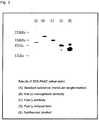
- Fig. 2 shows the results of SDS-PAGE of synthesized dextran sulfate- ⁇ 2 microglobulin antibody.
- HepG2 cells human hepatocytes
- LDL low-density lipoprotein
- F- ⁇ IIMG fluorescein-modified ⁇ 2 microglobulin
- DexS- ⁇ IIMG dextran sulfate- ⁇ 2 microglobulin antibody
- a medium to which both LDL and dextran sulfate- ⁇ 2 microglobulin antibody had been added exhibited incorporation of a larger amount of ⁇ 2 microglobulin into hepatocytes. That is, ⁇ 2 microglobulin was found to be incorporated specifically into HepG2 cells by the mediation of an LDL-dextran sulfate- ⁇ 2 microglobulin antibody complex.
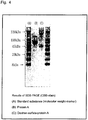
- Fig. 4 shows the results of SDS-PAGE of synthesized dextran sulfate-protein A.
- HepG2 cells human hepatocytes
- LDL-free medium a medium containing 10% of low-density lipoprotein-free serum
- low-density lipoprotein (LDL) 0.1 ⁇ g, 1.8 pmol
- fluorescein-modified rabbit anti-mouse IgG antibody (27.3 ⁇ g, 182 pmol)
- dextran sulfate-protein A 2.04 ⁇ g, 18.2 pmol
- a medium to which both LDL and the synthesized dextran sulfate-protein A had been added exhibited a significant increase in incorporation of fluorsecent-modified antibody into hepatocytes. That is, the synthesized dextran sulfate-protein A was found to be capable of incorporating the antibody specifically into HepG2 cells through formation of the LDL-dextran sulfate-protein A complex.
Landscapes
- Health & Medical Sciences (AREA)
- Chemical & Material Sciences (AREA)
- Life Sciences & Earth Sciences (AREA)
- General Health & Medical Sciences (AREA)
- Medicinal Chemistry (AREA)
- Veterinary Medicine (AREA)
- Public Health (AREA)
- Animal Behavior & Ethology (AREA)
- Pharmacology & Pharmacy (AREA)
- Bioinformatics & Cheminformatics (AREA)
- Engineering & Computer Science (AREA)
- Immunology (AREA)
- Organic Chemistry (AREA)
- General Chemical & Material Sciences (AREA)
- Nuclear Medicine, Radiotherapy & Molecular Imaging (AREA)
- Chemical Kinetics & Catalysis (AREA)
- Epidemiology (AREA)
- Molecular Biology (AREA)
- Proteomics, Peptides & Aminoacids (AREA)
- Biochemistry (AREA)
- Cardiology (AREA)
- Heart & Thoracic Surgery (AREA)
- Genetics & Genomics (AREA)
- Gastroenterology & Hepatology (AREA)
- Biophysics (AREA)
- Dermatology (AREA)
- Hematology (AREA)
- Diabetes (AREA)
- Physical Education & Sports Medicine (AREA)
- Transplantation (AREA)
- Obesity (AREA)
- Toxicology (AREA)
- Hospice & Palliative Care (AREA)
- Urology & Nephrology (AREA)
- Vascular Medicine (AREA)
- Orthopedic Medicine & Surgery (AREA)
- Rheumatology (AREA)
- Pharmaceuticals Containing Other Organic And Inorganic Compounds (AREA)
- Medicines That Contain Protein Lipid Enzymes And Other Medicines (AREA)
- Medicines Containing Antibodies Or Antigens For Use As Internal Diagnostic Agents (AREA)
Claims (8)
- Verbindung, welche aus (A) Dextransulfat oder einem Salz desselben und (B) einem Asialoorosomucoid-Rezeptorliganden gebildet wird, wobei (B) mit (A) über einen Linker verbunden ist, oder welche aus (A) einem β2-Mikroglobulin-Antikörper, der mit Dextransulfat oder einem Salz desselben modifiziert ist, oder Protein A, das mit Dextransulfat oder einem Salz desselben modifiziert ist, und (B) LDL gebildet wird, wobei (B) mit (A) über einen Linker oder ohne Linker verbunden ist.
- Verbindung nach Anspruch 1, wobei der Asialoorosomucoid-Rezeptorligand Galactose ist.
- Mittel zur Senkung des intrakorporalen Spiegels eines Pathogens, das im Blut oder der Lymphe auftritt, wobei das Mittel die in Anspruch 1 oder 2 genannte Verbindung als Wirkstoff enthält.
- Präventives und/oder therapeutisches Mittel zur Verwendung bei der Prävention oder der Therapie einer Erkrankung, die von einem Pathogen hervorgerufen wird, das im Blut oder der Lymphe auftritt, wobei das Mittel die in Anspruch 1 oder 2 genannte Verbindung als Wirkstoff enthält.
- Präventives und/oder therapeutisches Mittel nach Anspruch 4 zur Verwendung bei der Prävention oder der Therapie von Hyperlipidämie, wobei das Mittel die in Anspruch 1 oder 2 genannte Verbindung, die aus (A) Dextransulfat oder einem Salz desselben und (B) einem Asialoorosomucoid-Rezeptorliganden gebildet wird, als Wirkstoff enthält.
- Präventives und/oder therapeutisches Mittel nach Anspruch 4 zur Verwendung bei der Prävention oder der Therapie von Dialyse-Amyloidose, wobei das Mittel die in Anspruch 1 genannte Verbindung, die aus (A) einem β2-Mikroglobulin-Antikörper, der mit Dextransulfat oder einem Salz desselben modifiziert ist, und (B) LDL gebildet wird, als Wirkstoff enthält.
- Präventives und/oder therapeutisches Mittel nach Anspruch 4, zur Verwendung bei der Prävention oder der Therapie von idiopathischer dilatativer Kardiomyopathie, wobei das Mittel die in Anspruch 1 genannte Verbindung, die aus (A) Protein A, das mit Dextransulfat oder einem Salz desselben modifiziert ist, und (B) LDL gebildet wird, als Wirkstoff enthält.
- Pharmazeutische Zusammensetzung zum Verhindern oder zum Behandeln einer Erkrankung, die von einem Pathogen hervorgerufen wird, das im Blut oder der Lymphe auftritt, wobei die Zusammensetzung die in Anspruch 1 oder 2 genannte Verbindung und einen pharmazeutisch verträglichen Träger umfasst.
Applications Claiming Priority (2)
| Application Number | Priority Date | Filing Date | Title |
|---|---|---|---|
| JP2007249275 | 2007-09-26 | ||
| PCT/JP2008/002652 WO2009041037A1 (ja) | 2007-09-26 | 2008-09-25 | 体内に存在する病因物質の低下剤 |
Publications (3)
| Publication Number | Publication Date |
|---|---|
| EP2191849A1 EP2191849A1 (de) | 2010-06-02 |
| EP2191849A4 EP2191849A4 (de) | 2015-01-28 |
| EP2191849B1 true EP2191849B1 (de) | 2018-08-01 |
Family
ID=40510942
Family Applications (1)
| Application Number | Title | Priority Date | Filing Date |
|---|---|---|---|
| EP08833835.5A Active EP2191849B1 (de) | 2007-09-26 | 2008-09-25 | Wirkstoff zur suppression von in vivo auftretenden krankheitserregern |
Country Status (4)
| Country | Link |
|---|---|
| US (1) | US8834887B2 (de) |
| EP (1) | EP2191849B1 (de) |
| JP (1) | JP5429804B2 (de) |
| WO (1) | WO2009041037A1 (de) |
Families Citing this family (6)
| Publication number | Priority date | Publication date | Assignee | Title |
|---|---|---|---|---|
| US12485178B2 (en) | 2018-04-09 | 2025-12-02 | Yale University | Bifunctional small molecules to target the selective degradation of circulating proteins |
| CA3134765A1 (en) | 2018-04-09 | 2019-10-17 | Yale University | Bi-functional molecules to degrade circulating proteins |
| US20230097887A1 (en) | 2018-04-09 | 2023-03-30 | Yale University | Bi-functional Molecules to Degrade Circulating Proteins |
| WO2019199634A1 (en) | 2018-04-09 | 2019-10-17 | Yale University | Bifunctional small molecules to target the selective degradation of circulating proteins |
| AU2021213822A1 (en) | 2020-01-31 | 2022-09-22 | Avilar Therapeutics, Inc. | ASGPR-binding compounds for the degradation of extracellular proteins |
| EP4334360A2 (de) | 2021-05-03 | 2024-03-13 | Avilar Therapeutics, Inc. | Wirksame aspr-bindende verbindungen zum abbau von immunglobulinen und anderen proteinen |
Family Cites Families (18)
| Publication number | Priority date | Publication date | Assignee | Title |
|---|---|---|---|---|
| US4550192A (en) | 1983-09-01 | 1985-10-29 | The Dow Chemical Company | Fluorophenoxyphenoxypropionates and derivatives thereof |
| US5229490A (en) * | 1987-05-06 | 1993-07-20 | The Rockefeller University | Multiple antigen peptide system |
| JP2569746B2 (ja) | 1987-08-20 | 1997-01-08 | 日産化学工業株式会社 | キノリン系メバロノラクトン類 |
| US4859449A (en) * | 1987-09-14 | 1989-08-22 | Center For Molecular Medicine And Immunology | Modified antibodies for enhanced hepatocyte clearance |
| US5783400A (en) * | 1990-04-27 | 1998-07-21 | Genzyme Corporation | Method for the isolation of lipoprotein allowing for the subsequent quantification of its mass and cholesterol content |
| US5418061A (en) | 1990-11-27 | 1995-05-23 | W. R. Grace & Co.-Conn. | Microporous polysulfone supports suitable for removal of low density lipoprotein-cholesterol |
| CA2095424A1 (en) * | 1992-05-14 | 1993-11-15 | Marc Ellous Parham | Microporous polysulfone support suitable for removal of low density lipoprotein-cholesterol |
| AU5322494A (en) * | 1992-10-02 | 1994-04-26 | Trustees Of Dartmouth College | Bispecific reagents for redirected targeting of low density lipoprotein |
| JPH08253430A (ja) * | 1995-03-17 | 1996-10-01 | Kanagawa Kagaku Gijutsu Akad | Ldlレセプター媒介薬物輸送方法 |
| US5817789A (en) | 1995-06-06 | 1998-10-06 | Transkaryotic Therapies, Inc. | Chimeric proteins for use in transport of a selected substance into cells |
| WO1996040245A1 (en) * | 1995-06-07 | 1996-12-19 | Immunomedics, Inc. | Improved delivery of diagnostic and therapeutic agents to a target site |
| AU731452B2 (en) * | 1995-11-15 | 2001-03-29 | Gert Baumann | Treatment of cardiomyopathy by removal of autoantibodies |
| US6878269B2 (en) | 1996-01-31 | 2005-04-12 | Kaneka Corporation | Device for body fluid purification and system for body fluid purification |
| JPH09266948A (ja) * | 1996-01-31 | 1997-10-14 | Kanegafuchi Chem Ind Co Ltd | 血液浄化器および血液浄化装置 |
| US7329410B1 (en) * | 1998-09-30 | 2008-02-12 | Corixa Corporation | Compositions and method for WT1 specific immunotherapy |
| EP1916297B1 (de) * | 2001-04-10 | 2010-12-29 | BioE LLC | Zelltrennungszusammensetzungen und -verfahren |
| WO2008011216A2 (en) * | 2006-05-16 | 2008-01-24 | Pro-Pharmaceuticals, Inc. | Galactose-pronged polysaccharides in a formulation for antifibrotic therapies |
| GB0717864D0 (en) * | 2007-09-13 | 2007-10-24 | Peptcell Ltd | Peptide sequences and compositions |
-
2008
- 2008-09-25 EP EP08833835.5A patent/EP2191849B1/de active Active
- 2008-09-25 US US12/679,395 patent/US8834887B2/en active Active
- 2008-09-25 JP JP2009534176A patent/JP5429804B2/ja active Active
- 2008-09-25 WO PCT/JP2008/002652 patent/WO2009041037A1/ja not_active Ceased
Non-Patent Citations (1)
| Title |
|---|
| None * |
Also Published As
| Publication number | Publication date |
|---|---|
| US8834887B2 (en) | 2014-09-16 |
| JPWO2009041037A1 (ja) | 2011-01-13 |
| WO2009041037A1 (ja) | 2009-04-02 |
| EP2191849A1 (de) | 2010-06-02 |
| EP2191849A4 (de) | 2015-01-28 |
| JP5429804B2 (ja) | 2014-02-26 |
| US20100209441A1 (en) | 2010-08-19 |
Similar Documents
| Publication | Publication Date | Title |
|---|---|---|
| US8834887B2 (en) | Drug for suppressing pathogen occurring in vivo | |
| KR100520339B1 (ko) | 면역조절 방법 및 조성물 | |
| KR19990063648A (ko) | 글루타민산 데카복실라제에 대한 항체와 폴리(에틸렌 글리콜)공액물을 섬세포에 제공하는 방법 | |
| WO2007097934A3 (en) | Methods and compositions for using erythrocytes as carriers for delivery of drugs | |
| CN109415408A (zh) | 通过蛋白质、多肽、抗原修饰和血液净化治疗疾病的方法 | |
| US20080075716A1 (en) | Antibody immunization therapy for treatment of atherosclerosis | |
| WO2009026472A1 (en) | Methods for inducing tolerance | |
| JP7020656B2 (ja) | 組織因子を標的とする抗体、その調製方法及びその使用 | |
| CN109195988A (zh) | 用于增强超抗原介导的癌症免疫疗法效力的方法和组合物 | |
| EP0556285A1 (de) | Synergistische therapie mit kombinationen aus antitumor-antikörpern und biologisch aktiven wirkstoffen | |
| CZ283037B6 (cs) | Látky polypeptidové povahy, způsob výroby a farmaceutické prostředky s jejich obsahem | |
| CZ20013270A3 (cs) | Protilátkové a chemokinové konstrukty a jejich pouľití při léčbě autoimunitních chorob | |
| CZ291281B6 (cs) | Katalyticky aktivní L-methionin-L-deamino-gama-merkaptomethan-lyázový polypeptid a jeho pouľití | |
| Sudo et al. | Polyclonal IgM and IgA block in vitro complement deposition mediated by anti-ganglioside antibodies in autoimmune neuropathies | |
| CN119215188B (zh) | 抗Trop2抗体和抗5T4抗体-自然杀伤细胞偶联物及其用途 | |
| Nagao et al. | Immunotherapy for the treatment of acute paraquat poisoning | |
| Boom et al. | Complement-mediated endothelial cell damage in immune complex vasculitis of the skin: ultrastructural localization of the membrane attack complex | |
| Bernini et al. | Enhanced catabolism of low density lipoproteins in rat by lactosaminated Fab fragment. A new carrier of macromolecules to the liver. | |
| AU2003267905A1 (en) | Peptide-based passive immunization therapy for treatment of atherosclerosis | |
| Pokrovsky et al. | Development of Immunosorbents for apoB‐Containing Lipoproteins Apheresis | |
| Koll | LDL‐Therasorb immunoadsorption for the treatment of severe hypercholesterolemia refractory to conventional therapy | |
| JPS6254086B2 (de) | ||
| Harding | Eculizumab | |
| CN1255378A (zh) | 单克隆抗体Fab'-平阳霉素偶联物及其抗肿瘤作用 | |
| FR2527630A1 (fr) | Enzyme leucocytaire humaine de type pepsique, procede pour sa preparation et agent therapeutique la contenant |
Legal Events
| Date | Code | Title | Description |
|---|---|---|---|
| PUAI | Public reference made under article 153(3) epc to a published international application that has entered the european phase |
Free format text: ORIGINAL CODE: 0009012 |
|
| 17P | Request for examination filed |
Effective date: 20100310 |
|
| AK | Designated contracting states |
Kind code of ref document: A1 Designated state(s): AT BE BG CH CY CZ DE DK EE ES FI FR GB GR HR HU IE IS IT LI LT LU LV MC MT NL NO PL PT RO SE SI SK TR |
|
| AX | Request for extension of the european patent |
Extension state: AL BA MK RS |
|
| DAX | Request for extension of the european patent (deleted) | ||
| RAP1 | Party data changed (applicant data changed or rights of an application transferred) |
Owner name: KOWA COMPANY, LTD. Owner name: NATIONAL CEREBRAL AND CARDIOVASCULAR CENTER |
|
| RIC1 | Information provided on ipc code assigned before grant |
Ipc: A61P 43/00 20060101ALI20141218BHEP Ipc: A61K 47/48 20060101AFI20141218BHEP Ipc: A61K 39/395 20060101ALI20141218BHEP Ipc: A61K 47/42 20060101ALI20141218BHEP Ipc: A61K 31/737 20060101ALI20141218BHEP Ipc: A61P 9/04 20060101ALI20141218BHEP Ipc: A61P 3/06 20060101ALI20141218BHEP Ipc: A61K 38/00 20060101ALI20141218BHEP Ipc: A61P 19/02 20060101ALI20141218BHEP Ipc: A61P 19/00 20060101ALI20141218BHEP Ipc: A61K 47/26 20060101ALI20141218BHEP |
|
| A4 | Supplementary search report drawn up and despatched |
Effective date: 20150107 |
|
| 17Q | First examination report despatched |
Effective date: 20170217 |
|
| REG | Reference to a national code |
Ref country code: DE Ref legal event code: R079 Ref document number: 602008056279 Country of ref document: DE Free format text: PREVIOUS MAIN CLASS: A61K0047480000 Ipc: A61K0031737000 |
|
| GRAP | Despatch of communication of intention to grant a patent |
Free format text: ORIGINAL CODE: EPIDOSNIGR1 |
|
| RIC1 | Information provided on ipc code assigned before grant |
Ipc: A61P 9/04 20060101ALI20180207BHEP Ipc: A61K 47/42 20170101ALI20180207BHEP Ipc: A61K 47/26 20060101ALI20180207BHEP Ipc: A61K 39/395 20060101ALI20180207BHEP Ipc: A61K 38/00 20060101ALI20180207BHEP Ipc: A61P 3/06 20060101ALI20180207BHEP Ipc: A61K 31/737 20060101AFI20180207BHEP |
|
| INTG | Intention to grant announced |
Effective date: 20180306 |
|
| GRAS | Grant fee paid |
Free format text: ORIGINAL CODE: EPIDOSNIGR3 |
|
| GRAA | (expected) grant |
Free format text: ORIGINAL CODE: 0009210 |
|
| RAP1 | Party data changed (applicant data changed or rights of an application transferred) |
Owner name: KOWA COMPANY, LTD. Owner name: NATIONAL CEREBRAL AND CARDIOVASCULAR CENTER |
|
| RIN1 | Information on inventor provided before grant (corrected) |
Inventor name: KATO, YOSHIHITO Inventor name: MAHARA, ATSUSHI Inventor name: SHIBA, MARIKO Inventor name: YAMAOKA, TETSUJI |
|
| AK | Designated contracting states |
Kind code of ref document: B1 Designated state(s): AT BE BG CH CY CZ DE DK EE ES FI FR GB GR HR HU IE IS IT LI LT LU LV MC MT NL NO PL PT RO SE SI SK TR |
|
| REG | Reference to a national code |
Ref country code: GB Ref legal event code: FG4D |
|
| REG | Reference to a national code |
Ref country code: CH Ref legal event code: EP Ref country code: AT Ref legal event code: REF Ref document number: 1023517 Country of ref document: AT Kind code of ref document: T Effective date: 20180815 |
|
| REG | Reference to a national code |
Ref country code: IE Ref legal event code: FG4D |
|
| REG | Reference to a national code |
Ref country code: DE Ref legal event code: R096 Ref document number: 602008056279 Country of ref document: DE |
|
| REG | Reference to a national code |
Ref country code: FR Ref legal event code: PLFP Year of fee payment: 11 |
|
| REG | Reference to a national code |
Ref country code: NL Ref legal event code: MP Effective date: 20180801 |
|
| REG | Reference to a national code |
Ref country code: LT Ref legal event code: MG4D |
|
| REG | Reference to a national code |
Ref country code: AT Ref legal event code: MK05 Ref document number: 1023517 Country of ref document: AT Kind code of ref document: T Effective date: 20180801 |
|
| PG25 | Lapsed in a contracting state [announced via postgrant information from national office to epo] |
Ref country code: NO Free format text: LAPSE BECAUSE OF FAILURE TO SUBMIT A TRANSLATION OF THE DESCRIPTION OR TO PAY THE FEE WITHIN THE PRESCRIBED TIME-LIMIT Effective date: 20181101 Ref country code: BG Free format text: LAPSE BECAUSE OF FAILURE TO SUBMIT A TRANSLATION OF THE DESCRIPTION OR TO PAY THE FEE WITHIN THE PRESCRIBED TIME-LIMIT Effective date: 20181101 Ref country code: SE Free format text: LAPSE BECAUSE OF FAILURE TO SUBMIT A TRANSLATION OF THE DESCRIPTION OR TO PAY THE FEE WITHIN THE PRESCRIBED TIME-LIMIT Effective date: 20180801 Ref country code: AT Free format text: LAPSE BECAUSE OF FAILURE TO SUBMIT A TRANSLATION OF THE DESCRIPTION OR TO PAY THE FEE WITHIN THE PRESCRIBED TIME-LIMIT Effective date: 20180801 Ref country code: NL Free format text: LAPSE BECAUSE OF FAILURE TO SUBMIT A TRANSLATION OF THE DESCRIPTION OR TO PAY THE FEE WITHIN THE PRESCRIBED TIME-LIMIT Effective date: 20180801 Ref country code: PL Free format text: LAPSE BECAUSE OF FAILURE TO SUBMIT A TRANSLATION OF THE DESCRIPTION OR TO PAY THE FEE WITHIN THE PRESCRIBED TIME-LIMIT Effective date: 20180801 Ref country code: LT Free format text: LAPSE BECAUSE OF FAILURE TO SUBMIT A TRANSLATION OF THE DESCRIPTION OR TO PAY THE FEE WITHIN THE PRESCRIBED TIME-LIMIT Effective date: 20180801 Ref country code: FI Free format text: LAPSE BECAUSE OF FAILURE TO SUBMIT A TRANSLATION OF THE DESCRIPTION OR TO PAY THE FEE WITHIN THE PRESCRIBED TIME-LIMIT Effective date: 20180801 Ref country code: IS Free format text: LAPSE BECAUSE OF FAILURE TO SUBMIT A TRANSLATION OF THE DESCRIPTION OR TO PAY THE FEE WITHIN THE PRESCRIBED TIME-LIMIT Effective date: 20181201 Ref country code: GR Free format text: LAPSE BECAUSE OF FAILURE TO SUBMIT A TRANSLATION OF THE DESCRIPTION OR TO PAY THE FEE WITHIN THE PRESCRIBED TIME-LIMIT Effective date: 20181102 |
|
| PG25 | Lapsed in a contracting state [announced via postgrant information from national office to epo] |
Ref country code: ES Free format text: LAPSE BECAUSE OF FAILURE TO SUBMIT A TRANSLATION OF THE DESCRIPTION OR TO PAY THE FEE WITHIN THE PRESCRIBED TIME-LIMIT Effective date: 20180801 Ref country code: HR Free format text: LAPSE BECAUSE OF FAILURE TO SUBMIT A TRANSLATION OF THE DESCRIPTION OR TO PAY THE FEE WITHIN THE PRESCRIBED TIME-LIMIT Effective date: 20180801 Ref country code: LV Free format text: LAPSE BECAUSE OF FAILURE TO SUBMIT A TRANSLATION OF THE DESCRIPTION OR TO PAY THE FEE WITHIN THE PRESCRIBED TIME-LIMIT Effective date: 20180801 |
|
| PG25 | Lapsed in a contracting state [announced via postgrant information from national office to epo] |
Ref country code: EE Free format text: LAPSE BECAUSE OF FAILURE TO SUBMIT A TRANSLATION OF THE DESCRIPTION OR TO PAY THE FEE WITHIN THE PRESCRIBED TIME-LIMIT Effective date: 20180801 Ref country code: IT Free format text: LAPSE BECAUSE OF FAILURE TO SUBMIT A TRANSLATION OF THE DESCRIPTION OR TO PAY THE FEE WITHIN THE PRESCRIBED TIME-LIMIT Effective date: 20180801 Ref country code: MC Free format text: LAPSE BECAUSE OF FAILURE TO SUBMIT A TRANSLATION OF THE DESCRIPTION OR TO PAY THE FEE WITHIN THE PRESCRIBED TIME-LIMIT Effective date: 20180801 Ref country code: RO Free format text: LAPSE BECAUSE OF FAILURE TO SUBMIT A TRANSLATION OF THE DESCRIPTION OR TO PAY THE FEE WITHIN THE PRESCRIBED TIME-LIMIT Effective date: 20180801 Ref country code: CZ Free format text: LAPSE BECAUSE OF FAILURE TO SUBMIT A TRANSLATION OF THE DESCRIPTION OR TO PAY THE FEE WITHIN THE PRESCRIBED TIME-LIMIT Effective date: 20180801 |
|
| REG | Reference to a national code |
Ref country code: CH Ref legal event code: PL |
|
| REG | Reference to a national code |
Ref country code: DE Ref legal event code: R097 Ref document number: 602008056279 Country of ref document: DE |
|
| PG25 | Lapsed in a contracting state [announced via postgrant information from national office to epo] |
Ref country code: SK Free format text: LAPSE BECAUSE OF FAILURE TO SUBMIT A TRANSLATION OF THE DESCRIPTION OR TO PAY THE FEE WITHIN THE PRESCRIBED TIME-LIMIT Effective date: 20180801 Ref country code: DK Free format text: LAPSE BECAUSE OF FAILURE TO SUBMIT A TRANSLATION OF THE DESCRIPTION OR TO PAY THE FEE WITHIN THE PRESCRIBED TIME-LIMIT Effective date: 20180801 |
|
| PLBE | No opposition filed within time limit |
Free format text: ORIGINAL CODE: 0009261 |
|
| STAA | Information on the status of an ep patent application or granted ep patent |
Free format text: STATUS: NO OPPOSITION FILED WITHIN TIME LIMIT |
|
| REG | Reference to a national code |
Ref country code: BE Ref legal event code: MM Effective date: 20180930 |
|
| REG | Reference to a national code |
Ref country code: IE Ref legal event code: MM4A |
|
| PG25 | Lapsed in a contracting state [announced via postgrant information from national office to epo] |
Ref country code: LU Free format text: LAPSE BECAUSE OF NON-PAYMENT OF DUE FEES Effective date: 20180925 |
|
| 26N | No opposition filed |
Effective date: 20190503 |
|
| PG25 | Lapsed in a contracting state [announced via postgrant information from national office to epo] |
Ref country code: IE Free format text: LAPSE BECAUSE OF NON-PAYMENT OF DUE FEES Effective date: 20180925 |
|
| PG25 | Lapsed in a contracting state [announced via postgrant information from national office to epo] |
Ref country code: BE Free format text: LAPSE BECAUSE OF NON-PAYMENT OF DUE FEES Effective date: 20180930 Ref country code: SI Free format text: LAPSE BECAUSE OF FAILURE TO SUBMIT A TRANSLATION OF THE DESCRIPTION OR TO PAY THE FEE WITHIN THE PRESCRIBED TIME-LIMIT Effective date: 20180801 Ref country code: CH Free format text: LAPSE BECAUSE OF NON-PAYMENT OF DUE FEES Effective date: 20180930 Ref country code: LI Free format text: LAPSE BECAUSE OF NON-PAYMENT OF DUE FEES Effective date: 20180930 |
|
| PG25 | Lapsed in a contracting state [announced via postgrant information from national office to epo] |
Ref country code: MT Free format text: LAPSE BECAUSE OF NON-PAYMENT OF DUE FEES Effective date: 20180925 |
|
| PG25 | Lapsed in a contracting state [announced via postgrant information from national office to epo] |
Ref country code: TR Free format text: LAPSE BECAUSE OF FAILURE TO SUBMIT A TRANSLATION OF THE DESCRIPTION OR TO PAY THE FEE WITHIN THE PRESCRIBED TIME-LIMIT Effective date: 20180801 |
|
| PG25 | Lapsed in a contracting state [announced via postgrant information from national office to epo] |
Ref country code: HU Free format text: LAPSE BECAUSE OF FAILURE TO SUBMIT A TRANSLATION OF THE DESCRIPTION OR TO PAY THE FEE WITHIN THE PRESCRIBED TIME-LIMIT; INVALID AB INITIO Effective date: 20080925 Ref country code: PT Free format text: LAPSE BECAUSE OF FAILURE TO SUBMIT A TRANSLATION OF THE DESCRIPTION OR TO PAY THE FEE WITHIN THE PRESCRIBED TIME-LIMIT Effective date: 20180801 |
|
| PG25 | Lapsed in a contracting state [announced via postgrant information from national office to epo] |
Ref country code: CY Free format text: LAPSE BECAUSE OF FAILURE TO SUBMIT A TRANSLATION OF THE DESCRIPTION OR TO PAY THE FEE WITHIN THE PRESCRIBED TIME-LIMIT Effective date: 20180801 |
|
| PGFP | Annual fee paid to national office [announced via postgrant information from national office to epo] |
Ref country code: DE Payment date: 20250919 Year of fee payment: 18 |
|
| PGFP | Annual fee paid to national office [announced via postgrant information from national office to epo] |
Ref country code: GB Payment date: 20250918 Year of fee payment: 18 |
|
| PGFP | Annual fee paid to national office [announced via postgrant information from national office to epo] |
Ref country code: FR Payment date: 20250919 Year of fee payment: 18 |