EP2192178A1 - Inhibiteur de la b-glucuronidase - Google Patents
Inhibiteur de la b-glucuronidase Download PDFInfo
- Publication number
- EP2192178A1 EP2192178A1 EP08831650A EP08831650A EP2192178A1 EP 2192178 A1 EP2192178 A1 EP 2192178A1 EP 08831650 A EP08831650 A EP 08831650A EP 08831650 A EP08831650 A EP 08831650A EP 2192178 A1 EP2192178 A1 EP 2192178A1
- Authority
- EP
- European Patent Office
- Prior art keywords
- urine
- glucuronidase
- glucuronidase inhibitor
- methyl
- odor
- Prior art date
- Legal status (The legal status is an assumption and is not a legal conclusion. Google has not performed a legal analysis and makes no representation as to the accuracy of the status listed.)
- Granted
Links
Images
Classifications
-
- C—CHEMISTRY; METALLURGY
- C12—BIOCHEMISTRY; BEER; SPIRITS; WINE; VINEGAR; MICROBIOLOGY; ENZYMOLOGY; MUTATION OR GENETIC ENGINEERING
- C12N—MICROORGANISMS OR ENZYMES; COMPOSITIONS THEREOF; PROPAGATING, PRESERVING, OR MAINTAINING MICROORGANISMS; MUTATION OR GENETIC ENGINEERING; CULTURE MEDIA
- C12N9/00—Enzymes; Proenzymes; Compositions thereof; Processes for preparing, activating, inhibiting, separating or purifying enzymes
- C12N9/99—Enzyme inactivation by chemical treatment
-
- A—HUMAN NECESSITIES
- A61—MEDICAL OR VETERINARY SCIENCE; HYGIENE
- A61K—PREPARATIONS FOR MEDICAL, DENTAL OR TOILETRY PURPOSES
- A61K8/00—Cosmetics or similar toiletry preparations
- A61K8/18—Cosmetics or similar toiletry preparations characterised by the composition
- A61K8/30—Cosmetics or similar toiletry preparations characterised by the composition containing organic compounds
- A61K8/33—Cosmetics or similar toiletry preparations characterised by the composition containing organic compounds containing oxygen
- A61K8/35—Ketones, e.g. benzophenone
-
- A—HUMAN NECESSITIES
- A61—MEDICAL OR VETERINARY SCIENCE; HYGIENE
- A61K—PREPARATIONS FOR MEDICAL, DENTAL OR TOILETRY PURPOSES
- A61K8/00—Cosmetics or similar toiletry preparations
- A61K8/18—Cosmetics or similar toiletry preparations characterised by the composition
- A61K8/30—Cosmetics or similar toiletry preparations characterised by the composition containing organic compounds
- A61K8/49—Cosmetics or similar toiletry preparations characterised by the composition containing organic compounds containing heterocyclic compounds
- A61K8/4973—Cosmetics or similar toiletry preparations characterised by the composition containing organic compounds containing heterocyclic compounds with oxygen as the only hetero atom
-
- A—HUMAN NECESSITIES
- A61—MEDICAL OR VETERINARY SCIENCE; HYGIENE
- A61P—SPECIFIC THERAPEUTIC ACTIVITY OF CHEMICAL COMPOUNDS OR MEDICINAL PREPARATIONS
- A61P13/00—Drugs for disorders of the urinary system
-
- A—HUMAN NECESSITIES
- A61—MEDICAL OR VETERINARY SCIENCE; HYGIENE
- A61Q—SPECIFIC USE OF COSMETICS OR SIMILAR TOILETRY PREPARATIONS
- A61Q15/00—Anti-perspirants or body deodorants
-
- A—HUMAN NECESSITIES
- A61—MEDICAL OR VETERINARY SCIENCE; HYGIENE
- A61K—PREPARATIONS FOR MEDICAL, DENTAL OR TOILETRY PURPOSES
- A61K2800/00—Properties of cosmetic compositions or active ingredients thereof or formulation aids used therein and process related aspects
- A61K2800/74—Biological properties of particular ingredients
- A61K2800/78—Enzyme modulators, e.g. Enzyme agonists
- A61K2800/782—Enzyme inhibitors; Enzyme antagonists
Definitions
- the present invention relates to a ⁇ -glucuronidase inhibitor, and a composition for suppressing the generation of urine odor.
- ammonia is a component of offensive order having a high threshold (i.e. the odor is sensed only at high concentrations), and therefore, ammonia odor is rarely strongly sensed at present when excreta are instantaneously exhausted from the room owing to spread of a water washing system.
- a ⁇ -glucuronidase is an enzyme that hydrolyzes compounds prepared by glucuronidation of various alcohols, phenols, amines and the like (glucuronides), and exists in many living organisms such as bacteria, fungi, plants and animals.
- glucuronides prepared by glucuronidation of various alcohols, phenols, amines and the like
- it is known that glucuronides secreted into a human sweat are involved in the production of substances that generate axillary odor through metabolism of a bacterium living in the skin (Patent Document 5).
- Patent Document 5 the relation between the enzyme and the urine odor has not been known.
- the present invention provides a ⁇ -glucuronidase inhibitor, including a macrocyclic ketone represented by the formula (1):
- n 1 represents an integer of 9 to 13
- m 1 represents an integer of 0 to 2
- a dashed line portion may include one double bond.
- the present invention provides a ⁇ -glucuronidase inhibitor, including a ketone selected from cyclopentadecanone, 3-methylcyclopentadecanone, 3-methyl-4(5)-cyclopentadecen-1-one, 4-cyclopentadecen-1-one, 5-cyclohexadecen-1-one, 8-cyclohexadecen-1-one, 9-cycloheptadecen-1-one, 2-pentylcyclopentenone, ⁇ -damascone, ⁇ -damascone, cis-jasmone, 2-heptylcyclopentanone, ⁇ -ionone, ⁇ -ionone, ⁇ -methylionone, ⁇ -methylionone, 7-methyl-3,4-dihydro-(2H)-1,5-benzodioxepin-3-one, nootkatone, and 1,2,3,4,5,6,7,8-octahydro-2,3,8,8-tta
- ⁇ -glucuronidase inhibitor including a macrocyclic lactone represented by the following formula (2):
- the present invention provides a ⁇ -glucuronidase inhibitor, including a macrocyclic oxalactone represented by the following formula (3):
- the present invention provides a ⁇ -glucuronidase inhibitor, including an ester selected from 4(5)-cyclopentadecenolide, 7-cyclohexadecenolide, 10-oxa-16-hexadecanolide, 11-oxa-16-hexadecanolide, citronellyl acetate, linalyl acetate, terpinyl acetate, cinnamyl acetate, cis-3-hexenyl benzoate, and methyl-2-nonynoate.
- an ester selected from 4(5)-cyclopentadecenolide, 7-cyclohexadecenolide, 10-oxa-16-hexadecanolide, 11-oxa-16-hexadecanolide, citronellyl acetate, linalyl acetate, terpinyl acetate, cinnamyl acetate, cis-3-hexenyl benzoate, and methyl
- the present invention provides a ⁇ -glucuronidase inhibitor, including an aldehyde selected from anisaldehyde, cinnamic aldehyde, cuminaldehyde, cyclamen aldehyde, ethylvanillin, 2-methyl-3-(3,4-methylenedioxyphenyl)-propanal, 2-methyl-3-(4-tert-butylphenyl)-propanal, phenylacetaldehyde, 3-phenylpropanal, vanillin, 4-(tricyclo[5.2.1.0 2,6 ]decylidene-8)butenal, dimethyltetrahydrobenzaldehyde, 4-(4-hydroxy-4-methylpentyl)-3-cyclohexene-1-carboxyaldehyde, 4-(4-methyl-3-pentenyl)-3-cyclohexene-1-carboxyaldehyde, 2,6-nonadienal, 2-methylunde
- the present invention provides a ⁇ -glucuronidase inhibitor, including an alcohol selected from citronellol, geraniol, nerol, linalool, linalool oxide, terpineol, cinnamic alcohol, eugenol, 3-methyl-5-phenyl-1-pentanol, and vetiverol.
- a ⁇ -glucuronidase inhibitor including an alcohol selected from citronellol, geraniol, nerol, linalool, linalool oxide, terpineol, cinnamic alcohol, eugenol, 3-methyl-5-phenyl-1-pentanol, and vetiverol.
- the present invention provides a ⁇ -glucuronidase inhibitor, including an ether selected from estragole, 6,6,9 ⁇ -trimethyl-3a-ethyldodecahydronaphtho[2,1-b]furan, p-cresyl methyl ether, phenylethyl isoamyl ether, 1-methoxycyclododecane, 1-methyl-1-methoxycyclododecane, and 4,8,12-trimethyl-13-oxabicyclo-[10.1.0]trideca-4,8-diene.
- an ether selected from estragole, 6,6,9 ⁇ -trimethyl-3a-ethyldodecahydronaphtho[2,1-b]furan, p-cresyl methyl ether, phenylethyl isoamyl ether, 1-methoxycyclododecane, 1-methyl-1-methoxycyclododecane, and 4,8,12-trimethyl-13-o
- the present invention provides a ⁇ -glucuronidase inhibitor, including a terpene selected from ⁇ -phellandrene and citronellyl nitrile.
- the present invention provides a use of the above-mentioned ⁇ -glucuronidase inhibitor including a macrocyclic ketone, a ketone, a macrocyclic lactone, a macrocyclic oxalactone, an ester, an aldehyde, an alcohol, an ether, and a terpene, and a method of inhibiting a ⁇ -glucuronidase.
- the present invention provides an environmental hygiene product and a sanitary product, each including the above-mentioned novel ⁇ -glucuronidase inhibitor.
- the present invention provides a composition for suppressing the generation of urine odor containing a ⁇ -glucuronidase inhibitor (not being limited to each of the above-mentioned ⁇ -glucuronidase inhibitors and including the other various kinds of substances inhibiting ⁇ -glucuronidase activity) as an active ingredient.
- a ⁇ -glucuronidase inhibitor (not being limited to each of the above-mentioned ⁇ -glucuronidase inhibitors and including the other various kinds of substances inhibiting ⁇ -glucuronidase activity) as an active ingredient.
- the present invention provides a method of suppressing the generation of urine odor by inhibition of a ⁇ -glucuronidase activity, and a method of suppressing the generation of urine odor including application of a ⁇ -glucuronidase inhibitor inhibiting ⁇ -glucuronidase activity is applied to an object before urine is deposited to the object or before urine is dried after having been deposited to the object.
- phenol-based compounds and indoles generated from urine are main components of urine odor, and these components are remarkably increased by ⁇ -glucuronidase activity to urine derived from a microbial cell. Further, in a current living environment in which excreta are instantaneously exhausted from the room, strong ammonia odor is rarely sensed, and thus, urine odor generally sensed by consumers is thought to be derived from the above-mentioned phenol-based compounds and indoles each having a lower threshold than that of from ammonia, as offensive odor components.
- a ⁇ -glucuronidase inhibitor can actually continuously suppress the increase of phenol-based compounds and indoles in urine and the generation of unpleasant urine odor, and can be used for products associated with urine to impart an effect of suppressing the generation of urine odor on those products.
- a compound chosen from a specific group has an excellent ⁇ -glucuronidase inhibitory effect.
- the ⁇ -glucuronidase inhibitor of the present invention can continuously suppress the generation of an offensive odor component that characterizes urine odor, and hence is useful for an environmental hygiene product, each having an excellent deodorization effect, and sanitary products such as a diaper such as a detergent and a deodorant, a menstrual hygiene product, and animal excreta-related products such as a sheet for excreta of pets such as dog and cat.
- the ⁇ -glucuronidase inhibitor of the present invention may also be used as means for solving various problems other than urine odor due to ⁇ -glucuronidase activity, for example, as an agent for suppressing the generation of body odor derived from a volatile steroid, and as a medicament or a food for reducing the development of bladder cancer or large bowel cancer.
- the ⁇ -glucuronidase refers to an enzyme that hydrolyzes compounds prepared by glucuronidation of various alcohols, phenols, amines and the like (glucuronides), and exists in many living organisms such as bacteria, fungi, plants, and animals. Microorganisms are highly involved in the decomposition of urine excreted from the body. Therefore, ⁇ -glucuronidases derived from bacteria and fungi are important for the present invention.
- ⁇ -glucuronidases derived from Escherichia coli, Lactobacillus brevis, Propionibacterium acnes, Clostridium perfringens, Staphylococcus haemolyticus, Streptococcus agalactiae, Streptococcus pyogenes, Haemophilus somunus, Shigela sonnei, and Aspergillus niger.
- the ⁇ -glucuronidases from those microorganisms are classified into enzymes having a common domain.
- a ⁇ -glucuronidase derived from human plasma is also classified into a similar protein family.
- the ⁇ -glucuronidase inhibitor used in the present invention refers to an inhibitor which have been demonstrated to suppress 60% or more of ⁇ -glucuronidase Type VII-A activity of 1. 6 units/mL derived from Escherichia coli when 0.1 wt% amount of the inhibitor is added to a reaction solution.
- the inhibitor that suppresses 80% or more of the above-mentioned activity when 0.01 wt% amount of the inhibitor is added to a reaction solution is preferably used.
- n 1 represents an integer of 9 to 13
- m 1 represents an integer of 0 to 2
- a dashed line portion may include one double bond.
- Examples thereof include 3-methyl-4(5)-cyclopentadecen-1-one (Firmenich, Inc. product name; Muscenone delta), 3-methylcyclopentadecanone (Firmenich, Inc. product name; Muscone), 4-cyclopentadecen-1-one (Firmenich, Inc. product name; Exaltenone, International Flavors & Fragrances Inc. product name: Musk Z-4), 5-cyclohexadecen-1-one (Soda Aromatic Co., Ltd. product name; Musk TM2), 8-cyclohexadecen-1-one (Symrise AG product name; Globanone), 9-cycloheptadecen-1-one (Firmenich, Inc. product name; Civetone), and cyclopentadecanone (Firmenich, Inc. product name; Exaltone).
- a compound including one double bond in a cyclic structure is preferred, and examples thereof include 3-methyl-4(5)-cyclopentadecen-1-one, 4-cyclopentadecen-1-one, 5-cyclohexadecen-1-one, 8-cyclohexadecen-1-one, and 9-cycloheptadecen-1-one.
- the double bond preferably exists in a carbon-carbon bond at the most distant position from a carbonyl group in the ketone, or a carbon-carbon bond adjacent thereto, and for example, 8-cyclohexadecen-1-one and 9-cycloheptadecen-1-one are preferred.
- n 1 +m 1 preferably represents 9 to 13 and n 1 preferably represents 11 or 12.
- Examples thereof include 4(5)-cyclopentadecenolide (Firmenich, Inc. product name: Habanolide) and 7-cyclohexadecenolide (Ambrettolide).
- the macrocyclic lactone compound represented by the formula (2) preferred is a compound wherein n 2 represents 12, and more preferred is 7-cyclohexadecenolide.
- Examples thereof include 10-oxa-16-hexadecanolide (Takasago International Corporation product name; Oxalide), 11-oxa-16-hexadecanolide (Quest International product name; Musk R1), and 12-oxa-16-hexadecanolide (Quest International product name; Cervolide).
- the macrocyclic oxalactone compound represented by the formula (3) preferred is a compound in which p+q represents 13, and more preferred is 10-oxa-16-hexadecanolide.
- novel ⁇ -glucuronidase inhibitor may be used as isolated product from plants or animals, or as chemically synthesized product. Further, plant extracts including essential oils containing those compounds, such as vetiver oil, basil oil, clove oil, cinnamon oil and grapefruit oil, may be directly used as the ⁇ -glucuronidase inhibitor. Those compounds or plant extracts may be used as a combination of two or more thereof.
- the ⁇ -glucuronidase inhibitor is not limited to the above-mentioned novel ⁇ -glucuronidase inhibitor of the present invention as long as the ⁇ -glucuronidase inhibitor has such ⁇ -glucuronidase inhibitory activity as mentioned above, and any known ⁇ -glucuronidase inhibitor may also be used.
- Examples thereof known for inhibiting ⁇ -glucuronidase activity include: D-glucaro-1, 4-lactone which are lactone compounds derived from glucronic acid , and its analogs such as aceglatone, D-glucuronic acid, and D-galacturonic acid ; lysophospholipids such as lysophosphatidic acid, lysophosphatidylcholine, lysophosphatidylethanolamine, and lysophosphatidylglycerol; natural glucuronic acid conjugates found in herbal medicine components such as baicalin; and plants or fungi inhibiting ⁇ -glucuronidase activity such as Scutellariae radix, Galla rhois, Syzygium aromaticum, Gardenia jasminoides, Lithospermum erythrorhizon, Paeonia lactiflora, Rabdosia japonica, Matricaria recutita, Centella asiatica, Symphytum officinale
- one or more of whole herbs, leaves, roots, rhizomes, fruits, seeds, and flowers of the plants, and the microbes may be used directly or after grinding.
- the extract may be prepared by extraction from the above-mentioned plants or microbes or ground products thereof with a solvent at a normal temperature or under heating. The extraction may also be performed with an extraction apparatus such as a Soxhlet extraction apparatus.
- Examples of the solvent used for extraction include: water; alcohols such as methanol, ethanol, and propanol; polyalcohols such as propylene glycol and butylene glycol; ketones such as acetone and methyl ethyl ketone; esters such as methyl acetate and ethyl acetate; linear and cyclic ethers such as tetrahydrofuran and dimethyl ether; hydrogen halides such as dichloromethane, chloroform, and carbon tetrachloride; hydrocarbons such as hexane, cyclohexane, and petroleum ether; aromatic hydrocarbons such as benzene and toluene; polyethers such as polyethylene glycol; and pyridines.
- Those solvents may be used alone or as a mixture.
- supercritical fluids such as carbon dioxide, may be used.
- the prepared various solvent extracts may be directly used, may be used as diluted or concentrated preparation, or may be prepared as concentrated or lyophilized preparation and then used as a powder or a paste. Further, with use of a technology such as liquid-liquid distribution, an inactive contaminant may be removed from the above-mentioned extract before use, and in the present invention, such technology is preferably used. When required, those may be subjected to an operation such as deodorization and decolorization by a known method before use.
- composition for suppressing generation of urine odor composition for suppressing generation of urine odor, method of suppressing generation of urine odor, environmental hygiene product, and sanitary product
- the above-mentioned ⁇ -glucuronidase inhibitors may be incorporated into the composition alone or combination of two or more thereof for suppressing the generation of urine odor.
- the ⁇ -glucuronidase inhibitor or the composition for suppressing the generation of urine odor of the present invention may be incorporated into an environmental hygiene product or a sanitary product, for example, for family or facility use in an effective amount, in order to produce a product having high suppression and deodorization effects on the generation of offensive odor derived from urine.
- the ⁇ -glucuronidase inhibitor may be applied to an object (an object in which the generation of urine odor should be suppressed) before urine is deposited to the object or before the deposited urine is dried after urine has been deposited to the object, or preferably within 1 hour or more preferably within 10 minutes after urine has been deposited, to thereby suppress the generation of urine odor effectively.
- the above-mentioned urine is not limited to urine derived from a human, and may be derived from animals such as pets, typically dog or cat.
- the above-mentioned offensive odor derived from urine is not limited to offensive odor generated from urine alone, but it may be, for example, offensive odor generated from such a condition that urine and stools have been mixed in a diaper or the like.
- Examples of the offensive odor component which may be controlled by the ⁇ -glucuronidase inhibitor of the present invention include phenol-based compounds and indoles. Specific examples thereof include, but not limited to, phenol, p-cresol, 4-vinyl-2-methoxy-phenol, 4-vinylphenol, 2-methoxy-1,3-benzenediol, 1,4-benzenediol, 1,3-benzenediol, and indole, and any volatile component produced by ⁇ -glucuronidase activity on urine may be controlled.
- the content of the ⁇ -glucuronidase inhibitor in the composition for suppressing the generation of urine odor of the present invention is preferably 0.0001 to 5 wt%, more preferably 0.001 to 1 wt%, and still more preferably 0.005 to 0.5 wt%.
- the environmental hygiene product examples include a detergent, a deodorant, a textile detergent, and a wiping sheet. Further, several method may be used in combination.
- the environmental hygiene product of the present invention may be applied to places where offensive odor derived from urine is easily generated such as a toilet floor surface, a wall surface, a toilet bowl, a sanitary container, an inside of a nursing-care facility, clothes, underwear, and bedclothes, to thereby control the generation of urine odor.
- composition for suppressing the generation of urine odor used for the environmental hygiene product of the present invention may be optionally combined with, various generally used components, such as an oil, a surfactant, alcohols, a chelating agent, a pH adjustor, a microbicide, an antimicrobial agent, a preservative, a thickener, pigments, and a flavor, as well as a deodorant base, a humectant, a softener, a skin protectant, a medicinal agent, an antioxidant, a solvent, a metal salt, and a metal ion, in such a range of amount that an effect of the present invention is not inhibited, in order to prepare a formulation.
- various generally used components such as an oil, a surfactant, alcohols, a chelating agent, a pH adjustor, a microbicide, an antimicrobial agent, a preservative, a thickener, pigments, and a flavor, as well as a deodorant base, a hume
- sanitary product examples include absorbent products such as products for light urinary incontinence, a disposable paper diaper, a urine collection pad, and a menstrual hygiene product.
- absorbent products such as products for light urinary incontinence
- a disposable paper diaper a disposable paper diaper
- a urine collection pad a urine collection pad
- a menstrual hygiene product a menstrual hygiene product.
- the sanitary product of the present invention can control the time-dependent generation of offensive odor derived from urine from the deposited urine.
- the ⁇ -glucuronidase inhibitor or the composition for suppressing the generation of urine odor of the present invention is preferably impregnated in ground paper or an absorption layer, or in particular, a water-absorbent polymer.
- the impregnation amount of the ⁇ -glucuronidase inhibitor is preferably 0.005 to 10 g/m 2 and more preferably 0.05 to 2 g/m 2 with respect to an applied surface.
- composition for suppressing the generation of urine odor used for the sanitary product of the present invention may be optionally combined with generally used various components, such as an oil, a surfactant, an antistatic agent, an antioxidant, a pH adjustor, a lubricating agent, an antimicrobial agent, a fungicide, a preservative, pigments, and a flavor, as well as a deodorant base, a medicinal agent, a solvent, a metal salt, and a metal ion in such a range of amount that an effect of the present invention is not inhibited.
- various components such as an oil, a surfactant, an antistatic agent, an antioxidant, a pH adjustor, a lubricating agent, an antimicrobial agent, a fungicide, a preservative, pigments, and a flavor, as well as a deodorant base, a medicinal agent, a solvent, a metal salt, and a metal ion in such a range of amount that an effect of the present invention is not inhibited
- a generally known deodorant base may be used in combination or may be incorporated in such a range of amount that a ⁇ -glucuronidase inhibition is not impaired.
- Examples of the above-mentioned deodorant base include:
- ⁇ -glucuronidase inhibitor or the composition for suppressing the generation of urine odor of the present invention is used for an environmental hygiene product or a sanitary product
- a water-soluble organic solvent is preferable to be used in combination or incorporated.
- water-soluble organic solvent examples include:
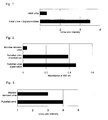
- a human urine sample (a mixture of urine from five humans), from which microorganisms were filtered with a 0.2- ⁇ m filter (Millex GV manufactured by Millipore Corporation) were added to a bottle which had been preliminarily subjected to ⁇ -ray sterilization immediately after the collection, and subsequently 0.1 mL of an Escherichia coli-derived ⁇ -glucuronidase Type VII-A (purchased from Sigma-Aldrich Corporation) aqueous solution adjusted to 250 units/mL was added and mixed. The mixture was incubated in a thermostat bath at 25°C and allowed to react for 22 hours.
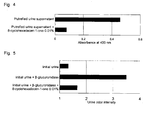
- a human urine sample (a mixture of urine from five humans) , fromwhichmicroorganisms were filtered with a 0.2- ⁇ m filter immediately after the collection, were added to a bottle which had been ⁇ -ray sterilized in advance, and subsequently 40 ⁇ L of a ⁇ -glucuronidase aqueous solution adjusted to 20 units/mL was added and mixed. The mixture was incubated in a thermostat bath at 25°C and allowed to react for 2 hours. An initial urine sample, prepared by adding 40 ⁇ L of sterilized ion exchanged water as substitution of an enzyme solution, was similarly incubated in a thermostat bath for 2 hours. An equal amount of the each sample was dropped onto the tip of a smelling strip, and the strip was used as a sample for evaluation.
- a putrefied urine product which was prepared by collecting 20 mL of a urine sample, dispensing the sample in a bottle which had been preliminarily subjected to ⁇ -ray sterilization without performing any microbe removing operation and storing the resultant at room temperature for 7 days, was used.
- 1 mL of the putrefied urine was centrifuged at 10,000 rpm for 5 minutes, and separated into a microbial cell and a supernatant.
- the precipitated microbial cell was suspended in 0.5mL of saline.
- the supernatant was subj ected to sterilizing through a 0.2- ⁇ m filter.
- 15 mL of urine prepared by removing a microbe with a filter immediately after the collection were also similarly stored at room temperature for 7 days.
- PNPG p-nitrophenyl- ⁇ -D-glucuronide
- reaction solution immediately after the start of the reaction and after 24 hours of reaction was diluted with a 0.2 M glycine buffer (pH 10.4) and measured for its absorbance at a wavelength of 400 nm.
- a value obtained by subtracting the absorbance immediately after the start from the absorbance after 24 hours of reaction was used as an index of a ⁇ -glucuronidase activity to compare the respective samples.
- the results of the measurement of the activity are shown in FIG. 2 .
- the results indicate that, the microbial cells grown in the putrefied urine has ⁇ -glucuronidase activity, the supernatant without the microbial cell also has ⁇ -glucuronidase activity, and thus an enzyme produced by those microbial cells is secreted to the outside of microbial cells as well.
- Microbe-removed urine and putrefied urine were subjected to evaluation of odor at the bottle outlet, in the evaluation the bottle used for storage was directly used.
- Sensory evaluation of odor was performed by six panelists, the evaluation being based on the six-level odor intensity indication method as described in the item (2) of Reference Example 2.
- the averages of the evaluation by the panelists are shown in FIG. 3 . According to the results, the increase of urine odor intensity by microbial cells that grew in urine was confirmed.
- the concentrations of the test compounds and plant extracts in the reaction solution were adjusted to 0.1, 0.01 and 0.001 wt%, respectively.
- a product prepared by adding DPG in place of the above-mentioned compounds and plant extracts was used as a control, and a product prepared by adding ion exchanged water in place of an enzyme solution was used as a blank for each sample and control, and the respective products were allowed to react for 2 hours in the same manner.
- the plant extract sample was used as a solvent extract.
- the above-mentioned reaction solution was diluted with a 0.2 M glycine buffer (pH 10.4) and measured for its absorbance at a wavelength of 400 nm.
- the relative activity inhibition rate of a ⁇ -glucuronidase was determined by using the obtained measurement value in accordance with the following equation. The results are shown in Tables 2a and 2b.
- Absorbance change of control Absorbance of control - Absorbance of blank for each control
- Absorbance change of sample Absorbance of sample - Absorbance of blank for each sample
- Activity inhibition rate % Absorbance change of control ⁇
- a product prepared by adding 0.1 mL of an enzyme solution to 9.9 mL of the microbe-removed urine sample was used as a control
- a product prepared by adding 0.1 mL of ion exchanged water to 9.9 mL of the microbe-removed urine sample was used as a blank, and the respective products were allowed to react for 22 hours in the same manner.
- a benzyl benzoate ethanol solution was added as an internal standard.
- the mixture was extracted twice with 10 mL of diethyl ether.
- the extracted solutions were combined and dried over anhydrous magnesium sulfate. After drying, a solid was separated by filtration, and the filtrate was concentrated with a rotary evaporator to prepare a sample for measurement.
- a product prepared by adding 4 ⁇ L of DPG and 40 ⁇ L of an enzyme solution to 360 ⁇ L of the microbe-removed urine sample and mixing was used as a control
- a product prepared by adding 4 ⁇ L of DPG and 40 ⁇ L of ion exchanged water to 360 ⁇ L of the microbe-removed urine sample and mixing was used as a blank, and the respective products were allowed to react for 2 hours in the same manner.
- An equal amount of the each sample was dropped onto the tip of a smelling strip, and the strip was used as a sample for evaluation.
- Example 5 Spray type composition for suppressing generation of urine odor
- compositions for suppressing the generation of urine odor for spray
- a to k and 1 to w each containing the ⁇ -glucuronidase inhibitor according to the present invention, and comparative compositions 1 and 2, these composition (wt%) as shown in Tables 4 and 5, were prepared, and filled in a trigger spray bottle.
- Each of those compositions was sprayed with the trigger spray bottle onto a tile surface having dimensions of 10 cm by 10 cm in an amount of 0.01 g/cm 2 and dried for 1 day.
- 0.5 g of human urine a mixture of urine from five humans
- the urine odor intensity after drying was evaluated based on the six-level odor intensity indication method as described in the item (2) of Reference Example 2.
- Tables 4 and 5 each shows the most popular evaluation in evaluation scores for the urine odor intensity by three panelists. The results confirmed that the composition containing the ⁇ -glucuronidase inhibitor of the present invention had an effect of suppressing the generation of urine odor.
- Example 6 Disposable diaper
- a composition for suppressing the generation of urine odor containing the ⁇ -glucuronidase inhibitor according to the present invention was prepared.
- the composition was sprayed onto ground paper for a disposable diaper (basis weight: 16 g/m 2 ) and dried.
- a product prepared by uniformly mixing 100 parts by weight of flap pulp and 100 parts by weight of a water-absorbent polymer (a polyacrylic acid crosslinked product) was packed with the ground paper, to obtain an absorber.
- the basis weight of a flap pulp/water-absorbent polymer mixed product in the absorber was 300 g/m 2 .
- the prepared absorber was used to prepare a disposable diaper.
- the amount of the ⁇ -glucuronidase inhibitor in the composition for suppressing the generation of urine odor, sprayed onto the ground paper was 0.32 g/m 2 of ground paper.
- a urine catching pad containing the ⁇ -glucuronidase inhibitor of the present invention as shown in Table 7 was prepared. Specifically, the urine catching pad was prepared by replacing only a water-absorbent polymer in the commercially available urine catching pad "Relief urine catching pad safe absorption (Anshin-Kyusyu)" (manufactured by Kao Corporation) with a water-absorbent polymer wherein the ⁇ -glucuronidase inhibitor of the present invention was added. The added amount of the inhibitor to the water-absorbent polymer was 1 wt% with respect to the water-absorbent polymer, and was equivalent to 1. 5 g/m 2 with respect to the urine catching pad.
- a urine addition test was performed by using test pieces having dimensions of 19 cm by 7 cm being cut out from the urine catching pad, and using a test piece containing no ⁇ -glucuronidase inhibitor as a blank.
- the test was performed as follows: 30 g of human urine (a mixture of urine from five humans) were added to these test pieces cut out from the urine catching pad, and the urine odor intensity after 1 hour, after 24 hours, and after 48 hours under preservation at 30°C was evaluated by five panelists based on the six-level odor intensity indication method as described in the item (2) of Reference Example 2.
- the average values of the urine odor intensity evaluation after each period of time are shown in Table 7.
- a test piece of the urine catching pad containing the ⁇ -glucuronidase inhibitor of the present invention was found to have an effect for suppressing the increase of urine odor even after 24 hours, compared to the blank. Further, an effect for suppressing the increase of urine odor by 8-cyclohexadecen-1-one had, even after 48 hours, was confirmed.
Landscapes
- Health & Medical Sciences (AREA)
- Life Sciences & Earth Sciences (AREA)
- General Health & Medical Sciences (AREA)
- Chemical & Material Sciences (AREA)
- Animal Behavior & Ethology (AREA)
- Public Health (AREA)
- Veterinary Medicine (AREA)
- Engineering & Computer Science (AREA)
- Organic Chemistry (AREA)
- Bioinformatics & Cheminformatics (AREA)
- Genetics & Genomics (AREA)
- Wood Science & Technology (AREA)
- Birds (AREA)
- Zoology (AREA)
- Epidemiology (AREA)
- Medicinal Chemistry (AREA)
- General Chemical & Material Sciences (AREA)
- General Engineering & Computer Science (AREA)
- Microbiology (AREA)
- Biotechnology (AREA)
- Biochemistry (AREA)
- Molecular Biology (AREA)
- Biomedical Technology (AREA)
- Emergency Medicine (AREA)
- Urology & Nephrology (AREA)
- Chemical Kinetics & Catalysis (AREA)
- Nuclear Medicine, Radiotherapy & Molecular Imaging (AREA)
- Pharmacology & Pharmacy (AREA)
- Disinfection, Sterilisation Or Deodorisation Of Air (AREA)
- Absorbent Articles And Supports Therefor (AREA)
- Materials For Medical Uses (AREA)
- Pharmaceuticals Containing Other Organic And Inorganic Compounds (AREA)
- Acyclic And Carbocyclic Compounds In Medicinal Compositions (AREA)
Applications Claiming Priority (2)
| Application Number | Priority Date | Filing Date | Title |
|---|---|---|---|
| JP2007243661 | 2007-09-20 | ||
| PCT/JP2008/002602 WO2009037861A1 (fr) | 2007-09-20 | 2008-09-19 | Inhibiteur de la β-glucuronidase |
Publications (3)
| Publication Number | Publication Date |
|---|---|
| EP2192178A1 true EP2192178A1 (fr) | 2010-06-02 |
| EP2192178A4 EP2192178A4 (fr) | 2010-10-27 |
| EP2192178B1 EP2192178B1 (fr) | 2015-11-18 |
Family
ID=40467687
Family Applications (1)
| Application Number | Title | Priority Date | Filing Date |
|---|---|---|---|
| EP08831650.0A Not-in-force EP2192178B1 (fr) | 2007-09-20 | 2008-09-19 | Inhibiteur de la b-glucuronidase |
Country Status (6)
| Country | Link |
|---|---|
| US (1) | US9200269B2 (fr) |
| EP (1) | EP2192178B1 (fr) |
| JP (2) | JP5548451B2 (fr) |
| KR (1) | KR101530398B1 (fr) |
| CN (1) | CN101802189B (fr) |
| WO (1) | WO2009037861A1 (fr) |
Families Citing this family (24)
| Publication number | Priority date | Publication date | Assignee | Title |
|---|---|---|---|---|
| JP5619484B2 (ja) * | 2010-04-06 | 2014-11-05 | 花王株式会社 | 尿臭生成抑制用組成物 |
| WO2012023444A1 (fr) * | 2010-08-18 | 2012-02-23 | 住友精化株式会社 | Composition de résine absorbant l'eau, absorbant, et article absorbant |
| CN103392007B (zh) * | 2011-02-25 | 2015-08-19 | 花王株式会社 | 尿臭产生部的视觉的判定方法 |
| JP6017330B2 (ja) * | 2013-01-30 | 2016-10-26 | 花王株式会社 | 過活動膀胱の予防又は改善剤 |
| EP3011000B1 (fr) | 2013-06-17 | 2017-08-09 | Firmenich SA | Composés pour libération contrôlée de molécules actives |
| WO2015017603A1 (fr) | 2013-08-01 | 2015-02-05 | The Procter & Gamble Company | Articles comprenant des compositions réduisant les mauvaises odeurs |
| JP5806714B2 (ja) * | 2013-08-29 | 2015-11-10 | 花王株式会社 | β−グルクロニダーゼ阻害剤 |
| JP6588715B2 (ja) * | 2014-04-14 | 2019-10-09 | 花王株式会社 | 尿臭抑制剤の探索方法 |
| JP2015224273A (ja) * | 2014-05-27 | 2015-12-14 | 花王株式会社 | 衣料用臭気抑制剤組成物 |
| EP3233034B1 (fr) * | 2014-12-18 | 2019-02-27 | Firmenich SA | Cétones macrocycliques en tant qu'ingrédient agissant contre les mauvaises odeurs |
| EP3662751B1 (fr) * | 2015-05-26 | 2021-10-13 | Kaohsiung Medical University | Dérivés de pyrazolo[4,3-c]quinoline pour l'inhibition de la b-glucuronidase |
| JP6568745B2 (ja) * | 2015-08-20 | 2019-08-28 | 花王株式会社 | 粉末洗濯前処理剤組成物 |
| WO2017090518A1 (fr) * | 2015-11-24 | 2017-06-01 | 花王株式会社 | Suppresseur d'odeur d'urine |
| JP6831674B2 (ja) * | 2015-11-24 | 2021-02-17 | 花王株式会社 | 尿臭抑制剤 |
| KR101822929B1 (ko) | 2016-05-16 | 2018-01-29 | 윤혜진 | 의류 및 섬유용 탈취제 및 이의 제조방법 |
| JP6935281B2 (ja) * | 2016-09-21 | 2021-09-15 | 三洋化成工業株式会社 | 吸着剤組成物及びそれを用いた有害物質の吸着方法 |
| CN106822070A (zh) * | 2017-01-22 | 2017-06-13 | 新乡医学院 | 一种治疗动脉粥样硬化的药物组合物与应用 |
| JP7321809B2 (ja) * | 2018-07-13 | 2023-08-07 | 花王株式会社 | 臭いの生成抑制方法 |
| JP7383453B2 (ja) * | 2019-10-31 | 2023-11-20 | 花王株式会社 | インドール臭抑制剤の選択方法 |
| EP4067475A4 (fr) | 2019-11-25 | 2024-01-03 | Kao Corporation | Procédé de régulation du métabolisme d'acides gras ramifiés |
| CN111122268A (zh) * | 2019-12-31 | 2020-05-08 | 华南理工大学 | 一种保存液体样品中硫酸酯结合体和葡萄糖苷醛酸结合体的方法 |
| CN111419843B (zh) * | 2020-05-14 | 2021-07-27 | 浙江工业大学 | 氰基亚胺噻唑烷呋喃甲酰胺类化合物在制备β-葡萄糖醛酸苷酶抑制剂中的应用 |
| CN113384562B (zh) * | 2021-04-07 | 2022-05-24 | 浙江工业大学 | 一种二萜类化合物在制备β-葡萄糖醛酸苷酶活性抑制剂中的应用 |
| CN117298031B (zh) * | 2023-10-11 | 2026-02-06 | 五峰赤诚生物科技股份有限公司 | 一种含有五倍子提取物的紧致抗皱乳液 |
Family Cites Families (30)
| Publication number | Priority date | Publication date | Assignee | Title |
|---|---|---|---|---|
| FR2599257B1 (fr) * | 1986-05-29 | 1989-12-29 | Robertet Sa | Agent neutralisant les odeurs desagreables des excretions et excrements des animaux. |
| JPH0798752B2 (ja) * | 1991-08-09 | 1995-10-25 | 株式会社ツムラ | β−グルクロニダーゼ阻害剤 |
| JP3265596B2 (ja) | 1991-11-19 | 2002-03-11 | 松下電器産業株式会社 | 悪臭発生防止部材 |
| JPH0747108A (ja) | 1993-06-04 | 1995-02-21 | Nippon Flour Mills Co Ltd | ウレアーゼ阻害剤及び消臭剤 |
| JPH0819595A (ja) | 1994-07-05 | 1996-01-23 | Maruzen Pharmaceut Co Ltd | アンモニア発生防止剤 |
| JPH0930944A (ja) | 1995-07-21 | 1997-02-04 | Pola Chem Ind Inc | 芳香剤及びこれを含有する衣類 |
| EP0958833A1 (fr) | 1998-05-20 | 1999-11-24 | Erasmus Universiteit Rotterdam | Procédé et moyens pour la prévention ou le traitement de l'inflammation |
| DE19925810A1 (de) * | 1999-06-07 | 2000-12-14 | Paz Arzneimittelentwicklung | Anwendung von Verapamil und Verapamilderivaten zur Herstellung von Arzneimitteln mit Glucuronidase hemmender Wirkung |
| US6379658B1 (en) * | 1999-12-21 | 2002-04-30 | International Flavors & Fragrances Inc. | Human sweat malodor counteractant composition and process for using same |
| EP1201738A1 (fr) * | 2000-10-30 | 2002-05-02 | Pfw Aroma Chemicals B.V. | Composition parfumante contenant de la cyclohexadécanone |
| JP4723738B2 (ja) | 2001-03-01 | 2011-07-13 | 花王株式会社 | デオドラント剤 |
| JP2003183697A (ja) * | 2001-12-20 | 2003-07-03 | Lion Corp | トイレ用洗浄剤組成物 |
| US7763238B2 (en) * | 2002-01-16 | 2010-07-27 | Monell Chemical Senses Center | Olfactory adaptation and cross-adapting agents to reduce the perception of body odors |
| ES2248652T3 (es) | 2002-03-08 | 2006-03-16 | Firmenich Sa | Utilizacion de un compuesto heteroespiro como ingrediente perfumante o aromatizante. |
| JP4450355B2 (ja) | 2002-08-29 | 2010-04-14 | 丸善製薬株式会社 | ウレアーゼ阻害剤、アンモニア臭抑制剤およびおむつかぶれ防止剤 |
| JP2004180979A (ja) | 2002-12-04 | 2004-07-02 | Ogawa & Co Ltd | 抗菌消臭剤組成物 |
| US20040223871A1 (en) * | 2003-05-05 | 2004-11-11 | The Procter & Gamble Company | Method of freshening air |
| EP1631329B1 (fr) * | 2003-05-09 | 2007-01-24 | Quest International Services B.V. | Lutte contre les odeurs corporelles feminines |
| JP2005065750A (ja) * | 2003-08-27 | 2005-03-17 | Takasago Internatl Corp | 消臭剤含有製品 |
| JP2005162756A (ja) | 2003-11-05 | 2005-06-23 | Katsutoshi Terasawa | β−グルクロニダーゼ阻害剤 |
| CA2553866A1 (fr) * | 2004-01-20 | 2005-08-11 | The Scripps Research Institute | Traitement des pathologies cartilagineuses degeneratives chez les mammiferes au moyen d'inhibiteurs de la glycosidase |
| JP4538338B2 (ja) * | 2004-02-23 | 2010-09-08 | 長瀬産業株式会社 | β−グルクロニダーゼ阻害剤 |
| JP4808633B2 (ja) * | 2004-11-12 | 2011-11-02 | 高砂香料工業株式会社 | 光学活性ムスコン組成物、およびそれを含有する香粧品 |
| JP2006149893A (ja) | 2004-11-30 | 2006-06-15 | Lion Corp | 尿臭抑制方法 |
| JP2006192127A (ja) | 2005-01-14 | 2006-07-27 | Toto Ltd | 防臭方法 |
| JP2006255290A (ja) | 2005-03-18 | 2006-09-28 | Seiko Pmc Corp | 界面活性剤、防臭剤、防臭材、及び防臭方法 |
| JP4727334B2 (ja) | 2005-07-22 | 2011-07-20 | 長谷川香料株式会社 | 透明乃至半透明ゲル状芳香剤組成物 |
| ES2355477T5 (es) * | 2005-09-23 | 2019-05-24 | Takasago Perfumery Co Ltd | Cápsulas de núcleo-envuelta que contienen un aceite o un sólido ceroso |
| JP2007176868A (ja) * | 2005-12-28 | 2007-07-12 | Nagase Chemtex Corp | β−グルクロニダーゼ阻害剤 |
| JP2008173441A (ja) | 2006-12-22 | 2008-07-31 | Kao Corp | 揮発性硫黄化合物生成抑制剤 |
-
2008
- 2008-09-19 WO PCT/JP2008/002602 patent/WO2009037861A1/fr not_active Ceased
- 2008-09-19 EP EP08831650.0A patent/EP2192178B1/fr not_active Not-in-force
- 2008-09-19 KR KR1020107004774A patent/KR101530398B1/ko not_active Expired - Fee Related
- 2008-09-19 CN CN2008801080468A patent/CN101802189B/zh active Active
- 2008-09-19 US US12/679,244 patent/US9200269B2/en not_active Expired - Fee Related
- 2008-09-19 JP JP2009533068A patent/JP5548451B2/ja active Active
-
2014
- 2014-04-14 JP JP2014082721A patent/JP5719951B2/ja active Active
Also Published As
| Publication number | Publication date |
|---|---|
| KR101530398B1 (ko) | 2015-06-19 |
| WO2009037861A1 (fr) | 2009-03-26 |
| US9200269B2 (en) | 2015-12-01 |
| CN101802189A (zh) | 2010-08-11 |
| JP5719951B2 (ja) | 2015-05-20 |
| US20100247475A1 (en) | 2010-09-30 |
| JP2014195696A (ja) | 2014-10-16 |
| JPWO2009037861A1 (ja) | 2011-01-06 |
| CN101802189B (zh) | 2013-03-27 |
| KR20100056484A (ko) | 2010-05-27 |
| EP2192178A4 (fr) | 2010-10-27 |
| JP5548451B2 (ja) | 2014-07-16 |
| EP2192178B1 (fr) | 2015-11-18 |
Similar Documents
| Publication | Publication Date | Title |
|---|---|---|
| US9200269B2 (en) | β-glucuronidase inhibitor | |
| EP1195099B1 (fr) | Composition désodorisante et son application | |
| KR101260371B1 (ko) | 뽕나무 추출물을 포함하는 항균 탈취 조성물 | |
| JP4633226B2 (ja) | 抗菌剤及び消臭剤 | |
| WO2019008089A1 (fr) | Pyridines 2,4-disubstituées en tant qu'ingrédients neutralisant les mauvaises odeurs | |
| JP2014069064A (ja) | 天然系由来の成分からなる消臭効果、消臭持続性、安全性に優れた消臭製品 | |
| JP2010246905A (ja) | 尿臭生成抑制用組成物 | |
| JP5619484B2 (ja) | 尿臭生成抑制用組成物 | |
| JP5806716B2 (ja) | β−グルクロニダーゼ阻害剤 | |
| US20220249877A1 (en) | Macrocyclic ketone as malodor counteracting ingredient | |
| JP5674283B2 (ja) | β−グルクロニダーゼ阻害剤 | |
| KR101605211B1 (ko) | 페닐프로파노이드 화합물 | |
| JP2009148326A (ja) | 尿臭生成抑制剤 | |
| JP2010220641A (ja) | β−グルクロニダーゼ阻害剤 | |
| KR101519234B1 (ko) | 울금 및 동백 잎 추출물을 유효성분으로 함유하는 화장료 조성물 | |
| JP2006249599A (ja) | 繊維防臭剤、繊維防臭組成物、および繊維防臭方法 | |
| WO2008029822A1 (fr) | Désodorisant comprenant une substance désodorisante provenant du distillat de canne à sucre en tant que substance active et procédé pour améliorer l'odeur provenant de la canne à sucre | |
| KR101781657B1 (ko) | 식물 유래 정유를 유효성분으로 포함하는 소취제 조성물 | |
| JP5744988B2 (ja) | β−グルクロニダーゼ阻害剤 | |
| JP5806714B2 (ja) | β−グルクロニダーゼ阻害剤 | |
| US20240390544A1 (en) | 2,4-disubstituted pyridines as malodor counteracting ingredients | |
| JP2003000691A (ja) | 消臭組成物 | |
| KR20250167906A (ko) | 해조류 복합추출물과 알긴산을 함유하는 탈취 및 항균효과를 갖는 조성물 | |
| KR20090034508A (ko) | 탈취제 | |
| JP2009023999A (ja) | 消臭剤の製造方法と一定濃度の含水有機溶剤。 |
Legal Events
| Date | Code | Title | Description |
|---|---|---|---|
| PUAI | Public reference made under article 153(3) epc to a published international application that has entered the european phase |
Free format text: ORIGINAL CODE: 0009012 |
|
| 17P | Request for examination filed |
Effective date: 20100319 |
|
| AK | Designated contracting states |
Kind code of ref document: A1 Designated state(s): AT BE BG CH CY CZ DE DK EE ES FI FR GB GR HR HU IE IS IT LI LT LU LV MC MT NL NO PL PT RO SE SI SK TR |
|
| AX | Request for extension of the european patent |
Extension state: AL BA MK RS |
|
| A4 | Supplementary search report drawn up and despatched |
Effective date: 20100928 |
|
| DAX | Request for extension of the european patent (deleted) | ||
| 17Q | First examination report despatched |
Effective date: 20140415 |
|
| GRAP | Despatch of communication of intention to grant a patent |
Free format text: ORIGINAL CODE: EPIDOSNIGR1 |
|
| INTG | Intention to grant announced |
Effective date: 20150623 |
|
| GRAS | Grant fee paid |
Free format text: ORIGINAL CODE: EPIDOSNIGR3 |
|
| GRAA | (expected) grant |
Free format text: ORIGINAL CODE: 0009210 |
|
| AK | Designated contracting states |
Kind code of ref document: B1 Designated state(s): AT BE BG CH CY CZ DE DK EE ES FI FR GB GR HR HU IE IS IT LI LT LU LV MC MT NL NO PL PT RO SE SI SK TR |
|
| REG | Reference to a national code |
Ref country code: GB Ref legal event code: FG4D |
|
| REG | Reference to a national code |
Ref country code: CH Ref legal event code: EP |
|
| REG | Reference to a national code |
Ref country code: AT Ref legal event code: REF Ref document number: 761596 Country of ref document: AT Kind code of ref document: T Effective date: 20151215 |
|
| REG | Reference to a national code |
Ref country code: IE Ref legal event code: FG4D |
|
| REG | Reference to a national code |
Ref country code: SE Ref legal event code: TRGR |
|
| REG | Reference to a national code |
Ref country code: DE Ref legal event code: R096 Ref document number: 602008041295 Country of ref document: DE |
|
| REG | Reference to a national code |
Ref country code: NL Ref legal event code: MP Effective date: 20160218 |
|
| REG | Reference to a national code |
Ref country code: LT Ref legal event code: MG4D |
|
| REG | Reference to a national code |
Ref country code: AT Ref legal event code: MK05 Ref document number: 761596 Country of ref document: AT Kind code of ref document: T Effective date: 20151118 |
|
| PG25 | Lapsed in a contracting state [announced via postgrant information from national office to epo] |
Ref country code: HR Free format text: LAPSE BECAUSE OF FAILURE TO SUBMIT A TRANSLATION OF THE DESCRIPTION OR TO PAY THE FEE WITHIN THE PRESCRIBED TIME-LIMIT Effective date: 20151118 Ref country code: NL Free format text: LAPSE BECAUSE OF FAILURE TO SUBMIT A TRANSLATION OF THE DESCRIPTION OR TO PAY THE FEE WITHIN THE PRESCRIBED TIME-LIMIT Effective date: 20151118 Ref country code: LT Free format text: LAPSE BECAUSE OF FAILURE TO SUBMIT A TRANSLATION OF THE DESCRIPTION OR TO PAY THE FEE WITHIN THE PRESCRIBED TIME-LIMIT Effective date: 20151118 Ref country code: NO Free format text: LAPSE BECAUSE OF FAILURE TO SUBMIT A TRANSLATION OF THE DESCRIPTION OR TO PAY THE FEE WITHIN THE PRESCRIBED TIME-LIMIT Effective date: 20160218 Ref country code: IS Free format text: LAPSE BECAUSE OF FAILURE TO SUBMIT A TRANSLATION OF THE DESCRIPTION OR TO PAY THE FEE WITHIN THE PRESCRIBED TIME-LIMIT Effective date: 20160318 Ref country code: ES Free format text: LAPSE BECAUSE OF FAILURE TO SUBMIT A TRANSLATION OF THE DESCRIPTION OR TO PAY THE FEE WITHIN THE PRESCRIBED TIME-LIMIT Effective date: 20151118 Ref country code: IT Free format text: LAPSE BECAUSE OF FAILURE TO SUBMIT A TRANSLATION OF THE DESCRIPTION OR TO PAY THE FEE WITHIN THE PRESCRIBED TIME-LIMIT Effective date: 20151118 |
|
| PG25 | Lapsed in a contracting state [announced via postgrant information from national office to epo] |
Ref country code: LV Free format text: LAPSE BECAUSE OF FAILURE TO SUBMIT A TRANSLATION OF THE DESCRIPTION OR TO PAY THE FEE WITHIN THE PRESCRIBED TIME-LIMIT Effective date: 20151118 Ref country code: GR Free format text: LAPSE BECAUSE OF FAILURE TO SUBMIT A TRANSLATION OF THE DESCRIPTION OR TO PAY THE FEE WITHIN THE PRESCRIBED TIME-LIMIT Effective date: 20160219 Ref country code: FI Free format text: LAPSE BECAUSE OF FAILURE TO SUBMIT A TRANSLATION OF THE DESCRIPTION OR TO PAY THE FEE WITHIN THE PRESCRIBED TIME-LIMIT Effective date: 20151118 Ref country code: PL Free format text: LAPSE BECAUSE OF FAILURE TO SUBMIT A TRANSLATION OF THE DESCRIPTION OR TO PAY THE FEE WITHIN THE PRESCRIBED TIME-LIMIT Effective date: 20151118 Ref country code: PT Free format text: LAPSE BECAUSE OF FAILURE TO SUBMIT A TRANSLATION OF THE DESCRIPTION OR TO PAY THE FEE WITHIN THE PRESCRIBED TIME-LIMIT Effective date: 20160318 Ref country code: AT Free format text: LAPSE BECAUSE OF FAILURE TO SUBMIT A TRANSLATION OF THE DESCRIPTION OR TO PAY THE FEE WITHIN THE PRESCRIBED TIME-LIMIT Effective date: 20151118 |
|
| PG25 | Lapsed in a contracting state [announced via postgrant information from national office to epo] |
Ref country code: CZ Free format text: LAPSE BECAUSE OF FAILURE TO SUBMIT A TRANSLATION OF THE DESCRIPTION OR TO PAY THE FEE WITHIN THE PRESCRIBED TIME-LIMIT Effective date: 20151118 |
|
| REG | Reference to a national code |
Ref country code: FR Ref legal event code: PLFP Year of fee payment: 9 |
|
| REG | Reference to a national code |
Ref country code: DE Ref legal event code: R097 Ref document number: 602008041295 Country of ref document: DE |
|
| PG25 | Lapsed in a contracting state [announced via postgrant information from national office to epo] |
Ref country code: SK Free format text: LAPSE BECAUSE OF FAILURE TO SUBMIT A TRANSLATION OF THE DESCRIPTION OR TO PAY THE FEE WITHIN THE PRESCRIBED TIME-LIMIT Effective date: 20151118 Ref country code: EE Free format text: LAPSE BECAUSE OF FAILURE TO SUBMIT A TRANSLATION OF THE DESCRIPTION OR TO PAY THE FEE WITHIN THE PRESCRIBED TIME-LIMIT Effective date: 20151118 Ref country code: DK Free format text: LAPSE BECAUSE OF FAILURE TO SUBMIT A TRANSLATION OF THE DESCRIPTION OR TO PAY THE FEE WITHIN THE PRESCRIBED TIME-LIMIT Effective date: 20151118 Ref country code: RO Free format text: LAPSE BECAUSE OF FAILURE TO SUBMIT A TRANSLATION OF THE DESCRIPTION OR TO PAY THE FEE WITHIN THE PRESCRIBED TIME-LIMIT Effective date: 20151118 |
|
| PLBE | No opposition filed within time limit |
Free format text: ORIGINAL CODE: 0009261 |
|
| STAA | Information on the status of an ep patent application or granted ep patent |
Free format text: STATUS: NO OPPOSITION FILED WITHIN TIME LIMIT |
|
| 26N | No opposition filed |
Effective date: 20160819 |
|
| PG25 | Lapsed in a contracting state [announced via postgrant information from national office to epo] |
Ref country code: SI Free format text: LAPSE BECAUSE OF FAILURE TO SUBMIT A TRANSLATION OF THE DESCRIPTION OR TO PAY THE FEE WITHIN THE PRESCRIBED TIME-LIMIT Effective date: 20151118 |
|
| PG25 | Lapsed in a contracting state [announced via postgrant information from national office to epo] |
Ref country code: BE Free format text: LAPSE BECAUSE OF FAILURE TO SUBMIT A TRANSLATION OF THE DESCRIPTION OR TO PAY THE FEE WITHIN THE PRESCRIBED TIME-LIMIT Effective date: 20151118 |
|
| PG25 | Lapsed in a contracting state [announced via postgrant information from national office to epo] |
Ref country code: MC Free format text: LAPSE BECAUSE OF FAILURE TO SUBMIT A TRANSLATION OF THE DESCRIPTION OR TO PAY THE FEE WITHIN THE PRESCRIBED TIME-LIMIT Effective date: 20151118 |
|
| REG | Reference to a national code |
Ref country code: CH Ref legal event code: PL |
|
| REG | Reference to a national code |
Ref country code: IE Ref legal event code: MM4A |
|
| PG25 | Lapsed in a contracting state [announced via postgrant information from national office to epo] |
Ref country code: LI Free format text: LAPSE BECAUSE OF NON-PAYMENT OF DUE FEES Effective date: 20160930 Ref country code: CH Free format text: LAPSE BECAUSE OF NON-PAYMENT OF DUE FEES Effective date: 20160930 Ref country code: IE Free format text: LAPSE BECAUSE OF NON-PAYMENT OF DUE FEES Effective date: 20160919 |
|
| REG | Reference to a national code |
Ref country code: FR Ref legal event code: PLFP Year of fee payment: 10 |
|
| PG25 | Lapsed in a contracting state [announced via postgrant information from national office to epo] |
Ref country code: LU Free format text: LAPSE BECAUSE OF NON-PAYMENT OF DUE FEES Effective date: 20160919 |
|
| PG25 | Lapsed in a contracting state [announced via postgrant information from national office to epo] |
Ref country code: HU Free format text: LAPSE BECAUSE OF FAILURE TO SUBMIT A TRANSLATION OF THE DESCRIPTION OR TO PAY THE FEE WITHIN THE PRESCRIBED TIME-LIMIT; INVALID AB INITIO Effective date: 20080919 Ref country code: CY Free format text: LAPSE BECAUSE OF FAILURE TO SUBMIT A TRANSLATION OF THE DESCRIPTION OR TO PAY THE FEE WITHIN THE PRESCRIBED TIME-LIMIT Effective date: 20151118 |
|
| PG25 | Lapsed in a contracting state [announced via postgrant information from national office to epo] |
Ref country code: MT Free format text: LAPSE BECAUSE OF NON-PAYMENT OF DUE FEES Effective date: 20160930 Ref country code: TR Free format text: LAPSE BECAUSE OF FAILURE TO SUBMIT A TRANSLATION OF THE DESCRIPTION OR TO PAY THE FEE WITHIN THE PRESCRIBED TIME-LIMIT Effective date: 20151118 |
|
| PG25 | Lapsed in a contracting state [announced via postgrant information from national office to epo] |
Ref country code: BG Free format text: LAPSE BECAUSE OF FAILURE TO SUBMIT A TRANSLATION OF THE DESCRIPTION OR TO PAY THE FEE WITHIN THE PRESCRIBED TIME-LIMIT Effective date: 20151118 |
|
| REG | Reference to a national code |
Ref country code: FR Ref legal event code: PLFP Year of fee payment: 11 |
|
| PGFP | Annual fee paid to national office [announced via postgrant information from national office to epo] |
Ref country code: FR Payment date: 20190815 Year of fee payment: 12 Ref country code: DE Payment date: 20190903 Year of fee payment: 12 Ref country code: SE Payment date: 20190910 Year of fee payment: 12 |
|
| PGFP | Annual fee paid to national office [announced via postgrant information from national office to epo] |
Ref country code: GB Payment date: 20190920 Year of fee payment: 12 |
|
| REG | Reference to a national code |
Ref country code: DE Ref legal event code: R119 Ref document number: 602008041295 Country of ref document: DE |
|
| GBPC | Gb: european patent ceased through non-payment of renewal fee |
Effective date: 20200919 |
|
| PG25 | Lapsed in a contracting state [announced via postgrant information from national office to epo] |
Ref country code: FR Free format text: LAPSE BECAUSE OF NON-PAYMENT OF DUE FEES Effective date: 20200930 Ref country code: DE Free format text: LAPSE BECAUSE OF NON-PAYMENT OF DUE FEES Effective date: 20210401 |
|
| PG25 | Lapsed in a contracting state [announced via postgrant information from national office to epo] |
Ref country code: SE Free format text: LAPSE BECAUSE OF NON-PAYMENT OF DUE FEES Effective date: 20200920 Ref country code: GB Free format text: LAPSE BECAUSE OF NON-PAYMENT OF DUE FEES Effective date: 20200919 |
|
| REG | Reference to a national code |
Ref country code: SE Ref legal event code: EUG |