EP2209496B1 - Nanoparticules dégradables multifonctionnelles avec contrôle sur la dimension et les fonctionnalités - Google Patents
Nanoparticules dégradables multifonctionnelles avec contrôle sur la dimension et les fonctionnalités Download PDFInfo
- Publication number
- EP2209496B1 EP2209496B1 EP08846997.8A EP08846997A EP2209496B1 EP 2209496 B1 EP2209496 B1 EP 2209496B1 EP 08846997 A EP08846997 A EP 08846997A EP 2209496 B1 EP2209496 B1 EP 2209496B1
- Authority
- EP
- European Patent Office
- Prior art keywords
- formula
- substituted
- alkyl
- structure represented
- unsubstituted
- Prior art date
- Legal status (The legal status is an assumption and is not a legal conclusion. Google has not performed a legal analysis and makes no representation as to the accuracy of the status listed.)
- Active
Links
- 0 CC*(C)C*(C)CN* Chemical compound CC*(C)C*(C)CN* 0.000 description 4
- PJYGXPFKKAJUBG-UHFFFAOYSA-N BrCc(c(CBr)c1)ccc1Br Chemical compound BrCc(c(CBr)c1)ccc1Br PJYGXPFKKAJUBG-UHFFFAOYSA-N 0.000 description 1
- KHWQITFBSAZENY-UHFFFAOYSA-N C=Cc1ccc(CS(C2)(=O)=O)c2c1 Chemical compound C=Cc1ccc(CS(C2)(=O)=O)c2c1 KHWQITFBSAZENY-UHFFFAOYSA-N 0.000 description 1
- SGUBOAFMSWGWDN-VOTSOKGWSA-N C[Si](C)(C)/C=C/c1ccc(CS(C2)(=O)=O)c2c1 Chemical compound C[Si](C)(C)/C=C/c1ccc(CS(C2)(=O)=O)c2c1 SGUBOAFMSWGWDN-VOTSOKGWSA-N 0.000 description 1
- QOGHRLGTXVMRLM-UHFFFAOYSA-N Cc(c(C)c1)ccc1Br Chemical compound Cc(c(C)c1)ccc1Br QOGHRLGTXVMRLM-UHFFFAOYSA-N 0.000 description 1
- CPSAMNRKVLQUOD-UHFFFAOYSA-N Cc1ccc(CSC2)c2c1 Chemical compound Cc1ccc(CSC2)c2c1 CPSAMNRKVLQUOD-UHFFFAOYSA-N 0.000 description 1
- QRJKMGQWHAQEST-UHFFFAOYSA-N O=S1(Cc2cc(Br)ccc2C1)=O Chemical compound O=S1(Cc2cc(Br)ccc2C1)=O QRJKMGQWHAQEST-UHFFFAOYSA-N 0.000 description 1
Images













Classifications
-
- C—CHEMISTRY; METALLURGY
- C08—ORGANIC MACROMOLECULAR COMPOUNDS; THEIR PREPARATION OR CHEMICAL WORKING-UP; COMPOSITIONS BASED THEREON
- C08G—MACROMOLECULAR COMPOUNDS OBTAINED OTHERWISE THAN BY REACTIONS ONLY INVOLVING UNSATURATED CARBON-TO-CARBON BONDS
- C08G71/00—Macromolecular compounds obtained by reactions forming a ureide or urethane link, otherwise, than from isocyanate radicals in the main chain of the macromolecule
- C08G71/02—Polyureas
-
- A—HUMAN NECESSITIES
- A61—MEDICAL OR VETERINARY SCIENCE; HYGIENE
- A61K—PREPARATIONS FOR MEDICAL, DENTAL OR TOILETRY PURPOSES
- A61K47/00—Medicinal preparations characterised by the non-active ingredients used, e.g. carriers or inert additives; Targeting or modifying agents chemically bound to the active ingredient
- A61K47/50—Medicinal preparations characterised by the non-active ingredients used, e.g. carriers or inert additives; Targeting or modifying agents chemically bound to the active ingredient the non-active ingredient being chemically bound to the active ingredient, e.g. polymer-drug conjugates
- A61K47/69—Medicinal preparations characterised by the non-active ingredients used, e.g. carriers or inert additives; Targeting or modifying agents chemically bound to the active ingredient the non-active ingredient being chemically bound to the active ingredient, e.g. polymer-drug conjugates the conjugate being characterised by physical or galenical forms, e.g. emulsion, particle, inclusion complex, stent or kit
- A61K47/6921—Medicinal preparations characterised by the non-active ingredients used, e.g. carriers or inert additives; Targeting or modifying agents chemically bound to the active ingredient the non-active ingredient being chemically bound to the active ingredient, e.g. polymer-drug conjugates the conjugate being characterised by physical or galenical forms, e.g. emulsion, particle, inclusion complex, stent or kit the form being a particulate, a powder, an adsorbate, a bead or a sphere
- A61K47/6927—Medicinal preparations characterised by the non-active ingredients used, e.g. carriers or inert additives; Targeting or modifying agents chemically bound to the active ingredient the non-active ingredient being chemically bound to the active ingredient, e.g. polymer-drug conjugates the conjugate being characterised by physical or galenical forms, e.g. emulsion, particle, inclusion complex, stent or kit the form being a particulate, a powder, an adsorbate, a bead or a sphere the form being a solid microparticle having no hollow or gas-filled cores
- A61K47/6929—Medicinal preparations characterised by the non-active ingredients used, e.g. carriers or inert additives; Targeting or modifying agents chemically bound to the active ingredient the non-active ingredient being chemically bound to the active ingredient, e.g. polymer-drug conjugates the conjugate being characterised by physical or galenical forms, e.g. emulsion, particle, inclusion complex, stent or kit the form being a particulate, a powder, an adsorbate, a bead or a sphere the form being a solid microparticle having no hollow or gas-filled cores the form being a nanoparticle, e.g. an immuno-nanoparticle
- A61K47/6931—Medicinal preparations characterised by the non-active ingredients used, e.g. carriers or inert additives; Targeting or modifying agents chemically bound to the active ingredient the non-active ingredient being chemically bound to the active ingredient, e.g. polymer-drug conjugates the conjugate being characterised by physical or galenical forms, e.g. emulsion, particle, inclusion complex, stent or kit the form being a particulate, a powder, an adsorbate, a bead or a sphere the form being a solid microparticle having no hollow or gas-filled cores the form being a nanoparticle, e.g. an immuno-nanoparticle the material constituting the nanoparticle being a polymer
- A61K47/6935—Medicinal preparations characterised by the non-active ingredients used, e.g. carriers or inert additives; Targeting or modifying agents chemically bound to the active ingredient the non-active ingredient being chemically bound to the active ingredient, e.g. polymer-drug conjugates the conjugate being characterised by physical or galenical forms, e.g. emulsion, particle, inclusion complex, stent or kit the form being a particulate, a powder, an adsorbate, a bead or a sphere the form being a solid microparticle having no hollow or gas-filled cores the form being a nanoparticle, e.g. an immuno-nanoparticle the material constituting the nanoparticle being a polymer the polymer being obtained otherwise than by reactions involving carbon to carbon unsaturated bonds, e.g. polyesters, polyamides or polyglycerol
-
- A—HUMAN NECESSITIES
- A61—MEDICAL OR VETERINARY SCIENCE; HYGIENE
- A61K—PREPARATIONS FOR MEDICAL, DENTAL OR TOILETRY PURPOSES
- A61K49/00—Preparations for testing in vivo
- A61K49/001—Preparation for luminescence or biological staining
- A61K49/0013—Luminescence
- A61K49/0017—Fluorescence in vivo
- A61K49/0019—Fluorescence in vivo characterised by the fluorescent group, e.g. oligomeric, polymeric or dendritic molecules
- A61K49/0021—Fluorescence in vivo characterised by the fluorescent group, e.g. oligomeric, polymeric or dendritic molecules the fluorescent group being a small organic molecule
- A61K49/0041—Xanthene dyes, used in vivo, e.g. administered to a mice, e.g. rhodamines, rose Bengal
- A61K49/0043—Fluorescein, used in vivo
-
- A—HUMAN NECESSITIES
- A61—MEDICAL OR VETERINARY SCIENCE; HYGIENE
- A61K—PREPARATIONS FOR MEDICAL, DENTAL OR TOILETRY PURPOSES
- A61K49/00—Preparations for testing in vivo
- A61K49/001—Preparation for luminescence or biological staining
- A61K49/0013—Luminescence
- A61K49/0017—Fluorescence in vivo
- A61K49/005—Fluorescence in vivo characterised by the carrier molecule carrying the fluorescent agent
- A61K49/0054—Macromolecular compounds, i.e. oligomers, polymers, dendrimers
-
- A—HUMAN NECESSITIES
- A61—MEDICAL OR VETERINARY SCIENCE; HYGIENE
- A61K—PREPARATIONS FOR MEDICAL, DENTAL OR TOILETRY PURPOSES
- A61K49/00—Preparations for testing in vivo
- A61K49/001—Preparation for luminescence or biological staining
- A61K49/0063—Preparation for luminescence or biological staining characterised by a special physical or galenical form, e.g. emulsions, microspheres
- A61K49/0065—Preparation for luminescence or biological staining characterised by a special physical or galenical form, e.g. emulsions, microspheres the luminescent/fluorescent agent having itself a special physical form, e.g. gold nanoparticle
- A61K49/0067—Preparation for luminescence or biological staining characterised by a special physical or galenical form, e.g. emulsions, microspheres the luminescent/fluorescent agent having itself a special physical form, e.g. gold nanoparticle quantum dots, fluorescent nanocrystals
-
- A—HUMAN NECESSITIES
- A61—MEDICAL OR VETERINARY SCIENCE; HYGIENE
- A61K—PREPARATIONS FOR MEDICAL, DENTAL OR TOILETRY PURPOSES
- A61K49/00—Preparations for testing in vivo
- A61K49/001—Preparation for luminescence or biological staining
- A61K49/0063—Preparation for luminescence or biological staining characterised by a special physical or galenical form, e.g. emulsions, microspheres
- A61K49/0069—Preparation for luminescence or biological staining characterised by a special physical or galenical form, e.g. emulsions, microspheres the agent being in a particular physical galenical form
- A61K49/0089—Particulate, powder, adsorbate, bead, sphere
- A61K49/0091—Microparticle, microcapsule, microbubble, microsphere, microbead, i.e. having a size or diameter higher or equal to 1 micrometer
- A61K49/0093—Nanoparticle, nanocapsule, nanobubble, nanosphere, nanobead, i.e. having a size or diameter smaller than 1 micrometer, e.g. polymeric nanoparticle
-
- B—PERFORMING OPERATIONS; TRANSPORTING
- B82—NANOTECHNOLOGY
- B82Y—SPECIFIC USES OR APPLICATIONS OF NANOSTRUCTURES; MEASUREMENT OR ANALYSIS OF NANOSTRUCTURES; MANUFACTURE OR TREATMENT OF NANOSTRUCTURES
- B82Y5/00—Nanobiotechnology or nanomedicine, e.g. protein engineering or drug delivery
-
- C—CHEMISTRY; METALLURGY
- C08—ORGANIC MACROMOLECULAR COMPOUNDS; THEIR PREPARATION OR CHEMICAL WORKING-UP; COMPOSITIONS BASED THEREON
- C08G—MACROMOLECULAR COMPOUNDS OBTAINED OTHERWISE THAN BY REACTIONS ONLY INVOLVING UNSATURATED CARBON-TO-CARBON BONDS
- C08G63/00—Macromolecular compounds obtained by reactions forming a carboxylic ester link in the main chain of the macromolecule
- C08G63/02—Polyesters derived from hydroxycarboxylic acids or from polycarboxylic acids and polyhydroxy compounds
- C08G63/06—Polyesters derived from hydroxycarboxylic acids or from polycarboxylic acids and polyhydroxy compounds derived from hydroxycarboxylic acids
-
- C—CHEMISTRY; METALLURGY
- C08—ORGANIC MACROMOLECULAR COMPOUNDS; THEIR PREPARATION OR CHEMICAL WORKING-UP; COMPOSITIONS BASED THEREON
- C08G—MACROMOLECULAR COMPOUNDS OBTAINED OTHERWISE THAN BY REACTIONS ONLY INVOLVING UNSATURATED CARBON-TO-CARBON BONDS
- C08G63/00—Macromolecular compounds obtained by reactions forming a carboxylic ester link in the main chain of the macromolecule
- C08G63/91—Polymers modified by chemical after-treatment
- C08G63/912—Polymers modified by chemical after-treatment derived from hydroxycarboxylic acids
-
- C—CHEMISTRY; METALLURGY
- C08—ORGANIC MACROMOLECULAR COMPOUNDS; THEIR PREPARATION OR CHEMICAL WORKING-UP; COMPOSITIONS BASED THEREON
- C08J—WORKING-UP; GENERAL PROCESSES OF COMPOUNDING; AFTER-TREATMENT NOT COVERED BY SUBCLASSES C08B, C08C, C08F, C08G or C08H
- C08J3/00—Processes of treating or compounding macromolecular substances
- C08J3/12—Powdering or granulating
-
- C—CHEMISTRY; METALLURGY
- C08—ORGANIC MACROMOLECULAR COMPOUNDS; THEIR PREPARATION OR CHEMICAL WORKING-UP; COMPOSITIONS BASED THEREON
- C08J—WORKING-UP; GENERAL PROCESSES OF COMPOUNDING; AFTER-TREATMENT NOT COVERED BY SUBCLASSES C08B, C08C, C08F, C08G or C08H
- C08J3/00—Processes of treating or compounding macromolecular substances
- C08J3/12—Powdering or granulating
- C08J3/14—Powdering or granulating by precipitation from solutions
-
- C—CHEMISTRY; METALLURGY
- C08—ORGANIC MACROMOLECULAR COMPOUNDS; THEIR PREPARATION OR CHEMICAL WORKING-UP; COMPOSITIONS BASED THEREON
- C08J—WORKING-UP; GENERAL PROCESSES OF COMPOUNDING; AFTER-TREATMENT NOT COVERED BY SUBCLASSES C08B, C08C, C08F, C08G or C08H
- C08J2300/00—Characterised by the use of unspecified polymers
- C08J2300/16—Biodegradable polymers
Definitions
- Biodegradable nanoparticles have received increasing attention as versatile drug delivery scaffolds to enhance the efficacy of therapeutics. Effectiveness of delivery, however, can be influenced by the particle size and morphology, as these parameters can greatly affect the biological function and fate of the material.
- Narrowly dispersed particles are highly preferred for use in delivery or sensing applications with respect to monitoring and predicting their behavior as their exhibit a more constant response to external stimuli.
- the present invention relates to nanoparticles, and functionalized nanoparticles and methods of making them.
- the present invention discloses degradable nanoparticles, functionalized nanoparticles and methods of making them according to claims 1 to 15.
- polymers comprising at least one monomer residue having an optionally substituted structure represented by a formula (I): wherein Z is O or NR, wherein R is H or C1 to C6 alkyl; wherein m is an integer from 0 to 6; wherein n is an integer from 0 to 2; and wherein the monomer residue comprises less than about 10% by weight of the monomer residue of halogen selected from chlorine, bromine, and iodine.
- polymers comprising monomer residues selected from two or more of an epoxide-functionalized monomer residue having an optionally substituted structure represented by a formula (I) above; and a propargyl-functionalized monomer residue having an optionally substituted structure represented by a formula (II): wherein Z is O or NR, wherein R is H or C1 to C6 alkyl, wherein m 1 is an integer from 0 to 6, and wherein n 1 is an integer from 0 to 2; and a keto-functionalized monomer residue having an optionally substituted structure represented by a formula (III): wherein Z is O or NR, wherein R is H or C1 to C6 alkyl, and wherein n 3 is an integer from 0 to 2.
- polymers comprising at least one monomer residue having an optionally substituted structure represented by a formula (IV): wherein Z is O or NR, wherein R is H or C1 to C6 alkyl, wherein Y is O, S, or NR, wherein R is H or C1 to C6 alkyl, wherein R L is selected from optionally substituted alkyl and optionally substituted alkoxylene, wherein m is an integer from 0 to 6, and wherein n is an integer from 0 to 2; and one or more of: a propargyl-functionalized monomer residue having an optionally substituted structure represented by a formula (II) above: and a keto-functionalized monomer residue having an optionally substituted structure represented by a formula (III) above.
- a formula (IV) wherein Z is O or NR, wherein R is H or C1 to C6 alkyl, wherein Y is O, S, or NR, wherein R is H or C1 to C6 alkyl, wherein R
- polymers comprising at least one monomer residue having an optionally substituted structure represented by a formula (V): wherein Z is O or NR, wherein R is H or C1 to C6 alkyl, wherein R L is selected from optionally substituted alkyl and optionally substituted alkoxylene, wherein m 1 is an integer from 0 to 6, and wherein n 1 is an integer from 0 to 2; and one or more of: an epoxide-functionalized monomer residue having an optionally substituted structure represented by a formula (I) above; and a keto-functionalized monomer residue having an optionally substituted structure represented by a formula (III) above.
- V a formula (V): wherein Z is O or NR, wherein R is H or C1 to C6 alkyl, wherein R L is selected from optionally substituted alkyl and optionally substituted alkoxylene, wherein m 1 is an integer from 0 to 6, and wherein n 1 is an integer from 0 to 2; and one or more
- Also disclosed are methods of preparing a polymer comprising the step of copolymerizing a mixture of two or more of an alkene-functionalized monomer providing a residue having an optionally substituted structure represented by a formula (VI): wherein Z is O or NR, wherein R is H or C1 to C6 alkyl; wherein m is an integer from 0 to 6; wherein n is an integer from 0 to 2; a propargyl-functionalized monomer providing a residue having an optionally substituted structure represented by a formula (II) above; and a keto-functionalized monomer providing a residue having an optionally substituted structure represented by a formula (III) above.
- a formula (VI) wherein Z is O or NR, wherein R is H or C1 to C6 alkyl; wherein m is an integer from 0 to 6; wherein n is an integer from 0 to 2; a propargyl-functionalized monomer providing a residue having an optionally substituted structure represented by
- Also disclosed are methods of preparing an epoxide-functionalized polymer comprising the step of oxidizing a polymer having at least one monomer residue having an optionally substituted structure represented by a formula (VI).
- Also disclosed are methods of crosslinking a polymer comprising the step of reacting a polymer comprising at least one monomer residue selected from an epoxide-functionalized monomer residue having an optionally substituted structure represented by a formula (I) above; and a propargyl-functionalized monomer residue having an optionally substituted structure represented by a formula (II) above; with a cross-linker having a structure represented by a formula X-R L -X', wherein X and X' are independently N 3 , OH, SH, NH 2 , or NHR, wherein R is H or C1 to C6 alkyl, and wherein R L is selected from optionally substituted alkyl and optionally substituted alkoxylene.
- Also disclosed are methods of functionalizing a polymer comprising the step of reacting an epoxide-functionalized monomer residue having an optionally substituted structure represented by a formula (I) above; with a nucleophile having a structure represented by a formula X-R 1 , wherein X is OH, SH, NH 2 , or NHR, wherein R is H or C1 to C6 alkyl; and wherein R 1 is an optionally substituted organic radical comprising 1 to 24 carbon atoms.
- Also disclosed are methods of functionalizing a polymer comprising the step of reacting a propargyl-functionalized monomer residue having an optionally substituted structure represented by a formula (II) above; with an azide having a structure represented by a formula N 3 -R 1 , wherein R 1 is an optionally substituted organic radical comprising 1 to 24 carbon atoms.
- Also disclosed are methods of functionalizing a polymer comprising the steps of reacting a keto-functionalized monomer providing a residue having an optionally substituted structure represented by a formula (III) above; with an amine having a structure represented by a formula H 2 N- R 1 , wherein R 1 is an optionally substituted organic radical comprising 1 to 24 carbon atoms; and reducing the resulting imine.
- Also disclosed are methods of functionalizing a polymer comprising the step of reacting a nucleophile-functionalized monomer residue having an optionally substituted structure represented by a formula (VII): wherein Z is O or NR, wherein R is H or C1 to C6 alkyl; wherein m is an integer from 0 to 6; wherein n is an integer from 0 to 2; wherein Y and Y' are independently O, S, or NR, wherein R is H or C1 to C6 alkyl; and wherein R L is selected from optionally substituted alkyl and optionally substituted alkoxylene; with an electrophile having a structure represented by a formula E-R 1 , wherein E is an electrophilic moiety; and wherein R 1 is an optionally substituted organic radical comprising 1 to 24 carbon atoms.
- a formula (VII) wherein Z is O or NR, wherein R is H or C1 to C6 alkyl; wherein m is an integer from 0 to 6
- An aspect of the present invention discloses degradable polymeric nanoparticles comprising at least one monomer residue having an optionally substituted structure represented by a formula (VIII): wherein m and m' are independently integers from 0 to 6; wherein n and n' are independently integers from 0 to 2; and wherein Z and Z' are independently O or NR, wherein R is H or C1 to C6 alkyl; wherein Y and Y' are independently O, S, or NR, wherein R is H or C1 to C6 alkyl; and wherein R L is selected from optionally substituted alkyl and optionally substituted alkoxylene, wherein the nanoparticle has a particle size of from about 5 nm to about 850 nm.
- VIII a formula (VIII): wherein m and m' are independently integers from 0 to 6; wherein n and n' are independently integers from 0 to 2; and wherein Z and Z' are independently O or NR, where
- degradable polymeric nanoparticles comprising at least one monomer residue having an optionally substituted structure represented by a formula (IX): wherein m 1 and m 1' are independently integers from 0 to 6; wherein n 1 and n 1' are independently integers from 0 to 2; and wherein Z and Z' are independently O or NR, wherein R is H or C1 to C6 alkyl; and wherein R L is selected from optionally substituted alkyl and optionally substituted alkoxylene, wherein the nanoparticle has a particle size of from about 5 nm to about 850 nm.
- a formula (IX) wherein m 1 and m 1' are independently integers from 0 to 6; wherein n 1 and n 1' are independently integers from 0 to 2; and wherein Z and Z' are independently O or NR, wherein R is H or C1 to C6 alkyl; and wherein R L is selected from optionally substituted alkyl and optionally substituted alk
- a method of preparing the degradable nanoparticles of the present invention comprising the step of adding a polymer comprising at least one monomer residue having a structure represented by a formula (I) above; to a solution of from about 1 to about 10 molar equivalents of a dinucleophile (nucleophilic moiety:epoxide functionality) having a structure X-R L -X', wherein X and X' are independently OH, SH, NH 2 , or NHR, wherein R is H or C1 to C6 alkyl, and wherein R L is selected from substituted or unsubstitued alkyl and substituted or unsubstituted alkoxylene; thereby producing nanoparticles.
- a dinucleophile nucleophilic moiety:epoxide functionality
- Also disclosed are methods of preparing a degradable nanoparticle comprising the step of adding a polymer comprising at least one monomer residue having a structure represented by a formula (II) above; to a solution of from about 1 to about 10 molar equivalents of a bis-azide (azide moiety:alkyne functionality) having a structure N 3 -R L -N 3 , wherein R L is selected from optionally substituted alkyl and optionally substituted alkoxylene.
- Also disclosed are methods of controlling particle size during the preparation of a degradable nanoparticle comprising the step of adding an epoxide-functionalized polymer to a solution of a dinucleophilic cross-linker, wherein the stoichiometry of the cross-linker is selected to provide a desired particle size.
- a degradable polymeric nanoparticle comprising at least one monomer residue having an optionally substituted structure represented by a formula (VIII) above and having a particle size of from 5 nm to about 850 nm are also provided.
- the methods comprise the step of reacting a degradable nanoparticle comprising at least one epoxide-functionalized monomer residue having an optionally substituted structure represented by a formula (VIII) above and having a particle size of from 5 nm to about 850 nm; with a nucleophile having a structure represented by a formula X-R 1 , wherein X is OH, SH, NH 2 , or NHR, wherein R is H or C1 to C6 alkyl; and wherein R 1 is an optionally substituted organic radical comprising 1 to 24 carbon atoms.
- the methods of functionalizing a nanoparticle comprise the step of reacting a nanoparticle comprising at least one propargyl-functionalized monomer residue having an optionally substituted structure represented by a formula (VIII) above and having a particle size of from 5 nm to about 850 nm; with an azide having a structure represented by a formula N 3 -R 1 , wherein R 1 is an optionally substituted organic radical comprising 1 to 24 carbon atoms.
- the methods of functionalizing a nanoparticle comprise the steps of reacting a nanoparticle comprising at least one keto-functionalized monomer providing a residue having an optionally substituted structure represented by a formula (III) above; with an amine having a structure represented by a formula H 2 N-R 1 , wherein R 1 is an optionally substituted organic radical comprising 1 to 24 carbon atoms; and reducing the resulting imine.
- Also disclosed are methods of functionalizing a nanoparticle comprising the step of reacting a nanoparticle comprising at least one nucleophile-functionalized monomer residue having an optionally substituted structure represented by a formula (VII) above; wherein Y and Y' are independently O, S, or NR, wherein R is H or C1 to C6 alkyl; and wherein R L is selected from optionally substituted alkyl and optionally substituted alkoxylene; with an electrophile having a structure represented by a formula E-R 1 , wherein E is an electrophilic moiety; and wherein R 1 is an optionally substituted organic radical comprising 1 to 24 carbon atoms.
- a formula (VII) above wherein Y and Y' are independently O, S, or NR, wherein R is H or C1 to C6 alkyl; and wherein R L is selected from optionally substituted alkyl and optionally substituted alkoxylene; with an electrophile having a structure represented by a formula E-R
- a method of preparing degradable nanoparticles comprising the step of reacting a polymer comprising at least one monomer residue having a structure represented by a formula (X): wherein Z is O, S, or NR, wherein R is H, alkyl, or aryl; and wherein m and n are independently non-negative integers; with a dinucleophile having a structure X-R L -X', wherein X and X' are independently OH, SH, NH 2 , or NHR, wherein R is H, alkyl, or aryl, and wherein R L is selected from substituted or unsubstituted alkyl, substituted or unsubstituted aryl, substituted or unsubstituted alkoxylene, and substituted or unsubstituted esters; thereby producing a degradable polymeric nanoparticle comprising at least one monomer residue having an optionally substituted structure represented by a formula (X): wherein Z is O, S
- Also disclosed are methods of intracellular delivery comprising administering an effective amount of a disclosed nanoparticle to a subject.
- Also disclosed are methods for the manufacture of a medicament for delivery of a biologically active agent, a pharmaceutically active agent, and/or an imaging moiety comprising combining at least one disclosed polymer or at least one disclosed nanoparticle with a pharmaceutically acceptable carrier.
- compositions comprising a therapeutically effective amount of one or more disclosed polymer and/or one or more disclosed nanoparticle and a pharmaceutically acceptable carrier for administration in a subject, for example, a mammal.
- compositions for diagnosing, treating, and/or preventing ophthalmic disorders comprising a therapeutically effective amount of one or more disclosed polymer and/or one or more disclosed nanoparticle and a pharmaceutically acceptable carrier for administration in a subject, for example, a mammal.
- the compositions can be administered transcorneally.
- Ranges can be expressed herein as from “about” one particular value, and/or to "about” another particular value. When such a range is expressed, another aspect includes from the one particular value and/or to the other particular value. Similarly, when values are expressed as approximations, by use of the antecedent "about,” it will be understood that the particular value forms another aspect. It will be further understood that the endpoints of each of the ranges are significant both in relation to the other endpoint, and independently of the other endpoint. It is also understood that there are a number of values disclosed herein, and that each value is also herein disclosed as "about” that particular value in addition to the value itself. For example, if the value “10” is disclosed, then “about 10" is also disclosed. It is also understood that each unit between two particular units are also disclosed. For example, if 10 and 15 are disclosed, then 11, 12, 13, and 14 are also disclosed.
- the terms "optional” or “optionally” means that the subsequently described event or circumstance can or can not occur, and that the description includes instances where said event or circumstance occurs and instances where it does not.
- treatment refers to the medical management of a patient with the intent to cure, ameliorate, stabilize, or prevent a disease, pathological condition, or disorder.
- This term includes active treatment, that is, treatment directed specifically toward the improvement of a disease, pathological condition, or disorder, and also includes causal treatment, that is, treatment directed toward removal of the cause of the associated disease, pathological condition, or disorder.
- this term includes palliative treatment, that is, treatment designed for the relief of symptoms rather than the curing of the disease, pathological condition, or disorder; preventative treatment, that is, treatment directed to minimizing or partially or completely inhibiting the development of the associated disease, pathological condition, or disorder; and supportive treatment, that is, treatment employed to supplement another specific therapy directed toward the improvement of the associated disease, pathological condition, or disorder.
- prevent refers to precluding, averting, obviating, forestalling, stopping, or hindering something from happening, especially by advance action. It is understood that where reduce, inhibit or prevent are used herein, unless specifically indicated otherwise, the use of the other two words is also expressly disclosed.
- administering refers to any method of providing a pharmaceutical preparation to a subject. Such methods are well known to those skilled in the art and include, but are not limited to, oral administration, transdermal administration, administration by inhalation, nasal administration, topical administration, intravaginal administration, ophthalmic administration, intraaural administration, intracerebral administration, rectal administration, and parenteral administration, including injectable such as intravenous administration, intra-arterial administration, intramuscular administration, and subcutaneous administration. Administration can be continuous or intermittent.
- a preparation can be administered therapeutically; that is, administered to treat an existing disease or condition. Further, a preparation can be administered prophylactically; that is, administered for prevention of a disease or condition.
- the term "subject” refers to a target of administration.
- the subject of the herein disclosed methods can be a vertebrate, such as a mammal, a fish, a bird, a reptile, or an amphibian.
- the subject of the herein disclosed methods can be a human, non-human primate, horse, pig, rabbit, dog, sheep, goat, cow, cat, guinea pig or rodent.
- the term does not denote a particular age or sex. Thus, adult and newborn subjects, as well as fetuses, whether male or female, are intended to be covered.
- a patient refers to a subject afflicted with a disease or disorder.
- patient includes human and veterinary subjects.
- the term "effective amount” refers to an amount that is sufficient to achieve a desired result or to have an effect on undesired symptoms, but is generally insufficient to cause adverse side affects.
- the specific effective dose level for any particular patient will depend upon a variety of factors including the disorder being treated and the severity of the disorder; the specific composition employed; the age, body weight, general health, sex and diet of the patient; the time of administration; the route of administration; the rate of excretion of the specific compound employed; the duration of the treatment; drugs used in combination or coincidental with the specific compound employed and like factors well known in the medical arts.
- the effective daily dose can be divided into multiple doses for purposes of administration. Consequently, single dose compositions can contain such amounts or submultiples thereof to make up the daily dose.
- the dosage can be adjusted by the individual physician in the event of any contraindications. Dosage can vary, and can be administered in one or more dose administrations daily, for one or several days. Guidance can be found in the literature for appropriate dosages for given classes of pharmaceutical products. A preparation can be administered in a "diagnostically effective amount"; that is, an amount effective for diagnosis of a disease or condition.
- a preparation can be administered in a "therapeutically effective amount”; that is, an amount effective for treatment of a disease or condition. Further, a preparation can be administered in a "prophylactically effective amount”; that is, an amount effective for prevention of a disease or condition.
- aqueous and nonaqueous carriers include water, ethanol, polyols (such as glycerol, propylene glycol, polyethylene glycol and the like), carboxymethylcellulose and suitable mixtures thereof, vegetable oils (such as olive oil) and injectable organic esters such as ethyl oleate.
- Proper fluidity can be maintained, for example, by the use of coating materials such as lecithin, by the maintenance of the required particle size in the case of dispersions and by the use of surfactants.
- These compositions can also contain adjuvants such as preservatives, wetting agents, emulsifying agents and dispersing agents.
- Prevention of the action of microorganisms can be ensured by the inclusion of various antibacterial and antifungal agents such as paraben, chlorobutanol, phenol, sorbic acid and the like. It can also be desirable to include isotonic agents such as sugars, sodium chloride and the like.
- Prolonged absorption of the injectable pharmaceutical form can be brought about by the inclusion of agents, such as aluminum monostearate and gelatin, which delay absorption.
- Injectable depot forms are made by forming microencapsule matrices of the drug in biodegradable polymers such as polylactide-polyglycolide, poly(orthoesters) and poly(anhydrides). Depending upon the ratio of drug to polymer and the nature of the particular polymer employed, the rate of drug release can be controlled. Depot injectable formulations are also prepared by entrapping the drug in liposomes or microemulsions which are compatible with body tissues.
- the injectable formulations can be sterilized, for example, by filtration through a bacterial-retaining filter or by incorporating sterilizing agents in the form of sterile solid compositions which can be dissolved or dispersed in sterile water or other sterile injectable media just prior to use.
- Suitable inert carriers can include sugars such as lactose. Desirably, at least 95% by weight of the particles of the active ingredient have an effective particle size in the range of 0.01 to 10 micrometers.
- biologically active agent or “bioactive agent” means an agent that is capable of providing a local or systemic biological, physiological, or therapeutic effect in the biological system to which it is applied.
- the bioactive agent can act to control infection or inflammation, enhance cell growth and tissue regeneration, control tumor growth, act as an analgesic, promote anti-cell attachment, and enhance bone growth, among other functions.
- suitable bioactive agents can include anti-viral agents, hormones, antibodies, or therapeutic proteins.
- Other bioactive agents include prodrugs, which are agents that are not biologically active when administered but, upon administration to a subject are converted to bioactive agents through metabolism or some other mechanism.
- compositions can contain combinations of two or more bioactive agents. It is understood that a biologically active agent can be used in connection with administration to various subjects, for example, to humans (i.e., medical administration) or to animals (i.e., veterinary administration).
- the term "pharmaceutically active agent” includes a “drug” or a “vaccine” and means a molecule, group of molecules, complex or substance administered to an organism for diagnostic, therapeutic, preventative medical, or veterinary purposes.
- This term include externally and internally administered topical, localized and systemic human and animal pharmaceuticals, treatments, remedies, nutraceuticals, cosmeceuticals, biologicals, devices, diagnostics and contraceptives, including preparations useful in clinical and veterinary screening, prevention, prophylaxis, healing, wellness, detection, imaging, diagnosis, therapy, surgery, monitoring, cosmetics, prosthetics, forensics and the like.
- This term may also be used in reference to agriceutical, workplace, military, industrial and environmental therapeutics or remedies comprising selected molecules or selected nucleic acid sequences capable of recognizing cellular receptors, membrane receptors, hormone receptors, therapeutic receptors, microbes, viruses or selected targets comprising or capable of contacting plants, animals and/or humans.
- This term can also specifically include nucleic acids and compounds comprising nucleic acids that produce a bioactive effect, for example deoxyribonucleic acid (DNA) or ribonucleic acid (RNA).
- Pharmaceutically active agents include the herein disclosed categories and specific examples. It is not intended that the category be limited by the specific examples. Those of ordinary skill in the art will recognize also numerous other compounds that fall within the categories and that are useful.
- Examples include a radiosensitizer, the combination of a radiosensitizer and a chemotherapeutic, a steroid, a xanthine, a beta-2-agonist bronchodilator, an anti-inflammatory agent, an analgesic agent, a calcium antagonist, an angiotensin-converting enzyme inhibitors, a beta-blocker, a centrally active alpha-agonist, an alpha-1-antagonist, an anticholinergic/antispasmodic agent, a vasopressin analogue, an antiarrhythmic agent, an antiparkinsonian agent, an antiangina/antihypertensive agent, an anticoagulant agent, an antiplatelet agent, a sedative, an ansiolytic agent, a peptidic agent, a biopolymeric agent, an antineoplastic agent, a laxative, an antidiarrheal agent, an antimicrobial agent, an antifungal agent, a vaccine, a protein, or a nucle
- the pharmaceutically active agent can be coumarin, albumin, bromolidine, steroids such as betamethasone, dexamethasone, methylprednisolone, prednisolone, prednisone, triamcinolone, budesonide, hydrocortisone, and pharmaceutically acceptable hydrocortisone derivatives; xanthines such as theophylline and doxophylline; beta-2-agonist bronchodilators such as salbutamol, fenterol, clenbuterol, bambuterol, salmeterol, fenoterol; antiinflammatory agents, including antiasthmatic anti-inflammatory agents, antiarthritis antiinflammatory agents, and non-steroidal antiinflammatory agents, examples of which include but are not limited to sulfides, mesalamine, budesonide, salazopyrin, diclofenac, pharmaceutically acceptable diclofenac salts, nimesulide, naproxene, acetominophen, ibupro
- ophthalmic disorders and/or “ophthalmic conditions” refers to ophthalmic diseases, conditions, and/or disorders including, without limitation, those associated with the anterior chamber of the eye (i.e., hyphema, synechia); the choroid (i.e., choroidal detachment, choroidal melanoma, multifocal choroidopathy syndromes); the conjunctiva (i.e., conjunctivitis, cicatricial pemphigoid, filtering Bleb complications, conjunctival melanoma, Pharyngoconjunctival Fever, pterygium, conjunctival squamous cell carcinoma); connective tissue disorders (i.e., ankylosing spondylitis, pseudoxanthoma elasticum, corneal abrasion or edema, limbal dermoid, crystalline dystrophy keratits, keratoconjunctivitis, kera
- connective tissue disorders
- imaging moiety refers to any chemical groups or sunstance useful for imaging applications, as known to those of skill in the art.
- imaging agents include radioconjugate, cytotoxin, cytokine, Gadolinium-DTPA or a quantum dot, iron oxide, manganese oxide.
- An imaging agent can be provided in nanoparticular form or in microparticular form.
- an imaging agent comprises Gadolinium-DTPA and iron oxide nanoparticles (magnetite), as specific MRI contrast agents.
- an imaging agent may compriseat least one near infrared dye, for example near infrared dyes based on a porphyrin and/or a phthalocyanine. See Ghoroghchian et al., Near-infrared-emissive polymersomes: Self-assembled soft matter for in vivo optical imaging, PNAS, 2005, vol. 102, no. 8, 2922-2927 .
- organic quantum dot refers to a generally carbon based compound having a generally particle-like overall structure and comprising a generally central functional moiety.
- An organic quantum dot may be prepared via intramolecular chain collapse. Further, an organic quantum dot can be prepared from a block copolymer comprising at least two reactive moieties and at least one functional moiety.
- polymer refers to a relatively high molecular weight organic compound, natural or synthetic, whose structure can be represented by a repeated small unit, the monomer (e.g., polyethylene, rubber, cellulose). Synthetic polymers are typically formed by addition or condensation polymerization of monomers.
- copolymer refers to a polymer formed from two or more different repeating units (monomer residues).
- a copolymer can be an alternating copolymer, a random copolymer, a block copolymer, or a graft copolymer. It is also contemplated that various block segments of a block copolymer can themselves comprise copolymers.
- oligomer refers to a relatively low molecular weight polymer in which the number of repeating units is between two and ten, for example, from two to eight, from two to six, or form two to four.
- a collection of oligomers can have an average number of repeating units of from about two to about ten, for example, from about two to about eight, from about two to about six, or form about two to about four.
- reactive residue refers to a moiety (e.g., a monomer residue) capable of undergoing chemical reaction at a reaction temperature and/or in response to a stimulus to form a reactive intermediate.
- a reactive residue may be a moiety capable undergoing an intramolecular cross-linking reaction to provide intramolecular chain collapse.
- polymerizable group refers to a group (i.e., a chemical functionality) capable of undergoing a polymerization reaction at a polymerization temperature and/or in response to a polymerization initiator to form a polymer or an oligomer.
- the polymerization reaction is a radical polymerization (e.g ., a vinyl polymerization).
- catalysts can be employed in connection with the polymerization reaction.
- polymerizable groups can optionally be used in step-growth or chain growth reactions.
- Exemplary polymerizable groups include residues of vinyl, styryl, acryloyl, methacryloyl, aryl, and heteroaryl compounds.
- reactive intermediate refers to a chemical species formed from a reactive moiety and in response to a stimulus and/or at a reaction temperature and capable of undergoing further chemical reaction (e.g ., cross-linking) with another reactive intermediate.
- Two reactive intermediates can undergo a cross-linking reaction to provide intramolecular chain collapse.
- o -quinoid moiety refers to a reactive intermediate formed from, for example, a benzocyclobutene moiety a reaction temperature and/or in response to a stimulus.
- An o-quinoid moiety can have the general structure:
- a reactive moiety capable of forming an o -quinoid moiety can be provided as, for example, a residue or as a pendant group in a copolymer.
- an o -quinoid moiety can be further substituted.
- the term "functional moiety” refers to a moiety (e.g., a monomeric residue) capable of performing a function, for example an imaging function or a drug-delivery function
- a functional moiety can be provided in a generally central portion of an organic quantum dot.
- a functional moiety can comprise a semiconducting moiety, an imaging moiety, and/or a drug-delivery moiety.
- the term "stimulus" refers to an external condition or event that is capable of acting upon a reactive species, for example a reactive moiety, to produce a reactive intermediate, for example an o -quinoid moiety.
- a stimulus can refer to temperature (i.e, thermal stimulus), a chemical species (i.e., a chemical stimulus) such as a radical or an increase or decrease in pH, or light ( i.e., an electromagnetic stimulus) or a mixture thereof).
- a residue of a chemical species refers to the moiety that is the resulting product of the chemical species in a particular reaction scheme or subsequent formulation or chemical product, regardless of whether the moiety is actually obtained from the chemical species.
- an ethylene glycol residue in a polyester refers to one or more -OCH 2 CH 2 O- units in the polyester, regardless of whether ethylene glycol was used to prepare the polyester.
- a sebacic acid residue in a polyester refers to one or more - CO(CH 2 ) 8 CO- moieties in the polyester, regardless of whether the residue is obtained by reacting sebacic acid or an ester thereof to obtain the polyester.
- the term "substituted" is contemplated to include all permissible substituents of organic compounds.
- Permissible substituents include acyclic and cyclic, branched and unbranched, carbocyclic and heterocyclic, and aromatic and nonaromatic substituents of organic compounds.
- Illustrative substituents include, for example, those described below.
- the permissible substituents can be one or more and the same or different for appropriate organic compounds.
- the heteroatoms, such as nitrogen can have hydrogen substituents and/or any permissible substituents of organic compounds described herein which satisfy the valences of the heteroatoms. This disclosure is not intended to be limited in any manner by the permissible substituents of organic compounds.
- substitution or “substituted with” include the implicit proviso that such substitution is in accordance with permitted valence of the substituted atom and the substituent, and that the substitution results in a stable compound, e.g ., a compound that does not spontaneously undergo transformation such as by rearrangement, cyclization, elimination, etc.
- a 1 ,” “A 2 ,” “A 3 ,” and “A 4 " are used herein as generic symbols to represent various specific substituents. These symbols can be any substituent, not limited to those disclosed herein, and when they are defined to be certain substituents in one instance, they can, in another instance, be defined as some other substituents.
- alkyl as used herein is a branched or unbranched saturated hydrocarbon group of 1 to 24 carbon atoms, such as methyl, ethyl, n -propyl, isopropyl, n -butyl, isobutyl, s -butyl, t -butyl, n -pentyl, isopentyl, s-pentyl, neopentyl, hexyl, heptyl, octyl, nonyl, decyl, dode cyl, tetradecyl, hexadecyl, eicosyl, tetracosyl, and the like.
- the alkyl group can also be substituted or unsubstituted.
- the alkyl group can be substituted with one or more groups including, but not limited to, optionally substituted alkyl, cycloalkyl, alkoxy, amino, ether, halide, hydroxy, nitro, silyl, sulfo-oxo, or thiol, as described herein.
- a "lower alkyl” group is an alkyl group containing from one to six carbon atoms.
- alkyl is generally used to refer to both unsubstituted alkyl groups and substituted alkyl groups; however, substituted alkyl groups are also specifically referred to herein by identifying the specific substituent(s) on the alkyl group.
- halogenated alkyl specifically refers to an alkyl group that is substituted with one or more halide, e.g ., fluorine, chlorine, bromine, or iodine.
- alkoxyalkyl specifically refers to an alkyl group that is substituted with one or more alkoxy groups, as described below.
- alkylamino specifically refers to an alkyl group that is substituted with one or more amino groups, as described below, and the like.
- alkyl is used in one instance and a specific term such as “alkylalcohol” is used in another, it is not meant to imply that the term “alkyl” does not also refer to specific terms such as “alkylalcohol” and the like.
- cycloalkyl refers to both unsubstituted and substituted cycloalkyl moieties
- the substituted moieties can, in addition, be specifically identified herein; for example, a particular substituted cycloalkyl can be referred to as, e.g., an "alkylcycloalkyl.”
- a substituted alkoxy can be specifically referred to as, e.g., a "halogenated alkoxy”
- a particular substituted alkenyl can be, e.g., an "alkenylalcohol,” and the like.
- cycloalkyl as used herein is a non-aromatic carbon-based ring composed of at least three carbon atoms.
- examples of cycloalkyl groups include, but are not limited to, cyclopropyl, cyclobutyl, cyclopentyl, cyclohexyl, norbornyl, and the like.
- heterocycloalkyl is a type of cycloalkyl group as defined above, and is included within the meaning of the term “cycloalkyl,” where at least one of the carbon atoms of the ring is replaced with a heteroatom such as, but not limited to, nitrogen, oxygen, sulfur, or phosphorus.
- the cycloalkyl group and heterocycloalkyl group can be substituted or unsubstituted.
- the cycloalkyl group and heterocycloalkyl group can be substituted with one or more groups including, but not limited to, optionally substituted alkyl, cycloalkyl, alkoxy, amino, ether, halide, hydroxy, nitro, silyl, sulfo-oxo, or thiol as described herein.
- polyalkylene group as used herein is a group having two or more CH 2 groups linked to one another.
- the polyalkylene group can be represented by the formula -(CH2) a -, where "a" is an integer of from 2 to 500.
- Alkoxy also includes polymers of alkoxy groups as just described; that is, an alkoxy can be a polyether such as-OA 1 -OA 2 or -OA 1 -(OA 2 ) a -OA 3 , where "a” is an integer of from 1 to 200 and A 1 , A 2 , and A 3 are alkyl and/or cycloalkyl groups.
- alkenyl as used herein is a hydrocarbon group of from 2 to 24 carbon atoms with a structural formula containing at least one carbon-carbon double bond.
- the alkenyl group can be substituted with one or more groups including, but not limited to, optionally substituted alkyl, cycloalkyl, alkoxy, alkenyl, cycloalkenyl, alkynyl, cycloalkynyl, aryl, heteroaryl, aldehyde, amino, carboxylic acid, ester, ether, halide, hydroxy, ketone, azide, nitro, silyl, sulfo-oxo, or thiol, as described herein.
- Examples of cycloalkenyl groups include, but are not limited to, cyclopropenyl, cyclobutenyl, cyclopentenyl, cyclopentadienyl, cyclohexenyl, cyclohexadienyl, norbornenyl, and the like.
- heterocycloalkenyl is a type of cycloalkenyl group as defined above, and is included within the meaning of the term “cycloalkenyl,” where at least one of the carbon atoms of the ring is replaced with a heteroatom such as, but not limited to, nitrogen, oxygen, sulfur, or phosphorus.
- the cycloalkenyl group and heterocycloalkenyl group can be substituted or unsubstituted.
- the cycloalkenyl group and heterocycloalkenyl group can be substituted with one or more groups including, but not limited to, optionally substituted alkyl, cycloalkyl, alkoxy, alkenyl, cycloalkenyl, alkynyl, cycloalkynyl, aryl, heteroaryl, aldehyde, amino, carboxylic acid, ester, ether, halide, hydroxy, ketone, azide, nitro, silyl, sulfo-oxo, or thiol as described herein.
- alkynyl as used herein is a hydrocarbon group of 2 to 24 carbon atoms with a structural formula containing at least one carbon-carbon triple bond.
- the alkynyl group can be unsubstituted or substituted with one or more groups including, but not limited to, optionally substituted alkyl, cycloalkyl, alkoxy, alkenyl, cycloalkenyl, alkynyl, cycloalkynyl, aryl, heteroaryl, aldehyde, amino, carboxylic acid, ester, ether, halide, hydroxy, ketone, azide, nitro, silyl, sulfo-oxo, or thiol, as described herein.
- cycloalkynyl as used herein is a non-aromatic carbon-based ring composed of at least seven carbon atoms and containing at least one carbon-carbon triple bound.
- cycloalkynyl groups include, but are not limited to, cycloheptynyl, cyclooctynyl, cyclononynyl, and the like.
- heterocycloalkynyl is a type of cycloalkenyl group as defined above, and is included within the meaning of the term “cycloalkynyl,” where at least one of the carbon atoms of the ring is replaced with a heteroatom such as, but not limited to, nitrogen, oxygen, sulfur, or phosphorus.
- the cycloalkynyl group and heterocycloalkynyl group can be substituted or unsubstituted.
- the cycloalkynyl group and heterocycloalkynyl group can be substituted with one or more groups including, but not limited to, optionally substituted alkyl, cycloalkyl, alkoxy, alkenyl, cycloalkenyl, alkynyl, cycloalkynyl, aryl, heteroaryl, aldehyde, amino, carboxylic acid, ester, ether, halide, hydroxy, ketone, azide, nitro, silyl, sulfo-oxo, or thiol as described herein.
- aryl as used herein is a group that contains any carbon-based aromatic group including, but not limited to, benzene, naphthalene, phenyl, biphenyl, phenoxybenzene, and the like.
- aryl also includes "heteroaryl,” which is defined as a group that contains an aromatic group that has at least one heteroatom incorporated within the ring of the aromatic group. Examples of heteroatoms include, but are not limited to, nitrogen, oxygen, sulfur, and phosphorus.
- non-heteroaryl which is also included in the term “aryl,” defines a group that contains an aromatic group that does not contain a heteroatom. The aryl group can be substituted or unsubstituted.
- the aryl group can be substituted with one or more groups including, but not limited to, optionally substituted alkyl, cycloalkyl, alkoxy, alkenyl, cycloalkenyl, alkynyl, cycloalkynyl, aryl, heteroaryl, aldehyde, amino, carboxylic acid, ester, ether, halide, hydroxy, ketone, azide, nitro, silyl, sulfo-oxo, or thiol as described herein.
- biasing is a specific type of aryl group and is included in the definition of "aryl.”
- Biaryl refers to two aryl groups that are bound together via a fused ring structure, as in naphthalene, or are attached via one or more carbon-carbon bonds, as in biphenyl.
- amine or “amino” as used herein are represented by the formula NA 1 A 2 A 3 , where A 1 , A 2 , and A 3 can be, independently, hydrogen or optionally substituted alkyl, cycloalkyl, alkenyl, cycloalkenyl, alkynyl, cycloalkynyl, aryl, or heteroaryl group as described herein.
- carboxylic acid as used herein is represented by the formula -C(O)OH.
- esters as used herein is represented by the formula -OC(O)A 1 or-C(O)OA 1 , where A 1 can be an optionally substituted alkyl, cycloalkyl, alkenyl, cycloalkenyl, alkynyl, cycloalkynyl, aryl, or heteroaryl group as described herein.
- polystyrene resin as used herein is represented by the formula -(A 1 O(O)C-A 2 -C(O)O) a- or -(A 1 O(O)C-A 2 -OC(O)) a -, where A 1 and A 2 can be, independently, an optionally substituted alkyl, cycloalkyl, alkenyl, cycloalkenyl, alkynyl, cycloalkynyl, aryl, or heteroaryl group described herein and "a” is an interger from 1 to 500.
- Polyyester is as the term used to describe a group that is produced by the reaction between a compound having at least two carboxylic acid groups with a compound having at least two hydroxyl groups.
- ether as used herein is represented by the formula A 1 OA 2 , where A 1 and A 2 can be, independently, an optionally substituted alkyl, cycloalkyl, alkenyl, cycloalkenyl, alkynyl, cycloalkynyl, aryl, or heteroaryl group described herein.
- polyether as used herein is represented by the formula -(A 1 O-A 2 O) a -, where A 1 and A 2 can be, independently, an optionally substituted alkyl, cycloalkyl, alkenyl, cycloalkenyl, alkynyl, cycloalkynyl, aryl, or heteroaryl group described herein and "a" is an integer of from 1 to 500.
- Examples of polyether groups include polyethylene oxide, polypropylene oxide, and polybutylene oxide.
- halide refers to the halogens fluorine, chlorine, bromine, and iodine.
- heterocycle refers to single and multi-cyclic aromatic or non-aromatic ring systems in which at least one of the ring members is other than carbon.
- Heterocycle includes pyridinde, pyrimidine, furan, thiophene, pyrrole, isoxazole, isothiazole, pyrazole, oxazole, thiazole, imidazole, oxazole, including, 1,2,3-oxadiazole, 1,2,5-oxadiazole and 1,3,4-oxadiazole,thiadiazole, including, 1,2,3-thiadiazole, 1,2,5-thiadiazole, and 1,3,4-thiadiazole, triazole, including, 1,2,3-triazole, 1,3,4-triazole, tetrazole, including 1,2,3,4-tetrazole and 1,2,4,5-tetrazole, pyridine, pyridazine, pyrimidine, pyrazine
- hydroxyl as used herein is represented by the formula -OH.
- ketone as used herein is represented by the formula A 1 C(O)A 2 , where A 1 and A 2 can be, independently, an optionally substituted alkyl, cycloalkyl, alkenyl, cycloalkenyl, alkynyl, cycloalkynyl, aryl, or heteroaryl group as described herein.
- nitro as used herein is represented by the formula -NO 2 .
- nitrile as used herein is represented by the formula -CN.
- sil as used herein is represented by the formula -SiA 1 A 2 A 3 , where A 1 , A 2 , and A 3 can be, independently, hydrogen or an optionally substituted alkyl, cycloalkyl, alkoxy, alkenyl, cycloalkenyl, alkynyl, cycloalkynyl, aryl, or heteroaryl group as described herein.
- sulfo-oxo as used herein is represented by the formulas -S(O)A 1 , -S(O)2A 1 , -OS(O) 2 A 1 , or -OS(O) 2 OA 1 , where A 1 can be hydrogen or an optionally substituted alkyl, cycloalkyl, alkenyl, cycloalkenyl, alkynyl, cycloalkynyl, aryl, or heteroaryl group as described herein.
- sulfonyl is used herein to refer to the sulfo-oxo group represented by the formula -S(O) 2 A 1 , where A 1 can be hydrogen or an optionally substituted alkyl, cycloalkyl, alkenyl, cycloalkenyl, alkynyl, cycloalkynyl, aryl, or heteroaryl group as described herein.
- a 1 S(O) 2 A 2 is represented by the formula A 1 S(O) 2 A 2 , where A 1 and A 2 can be, independently, an optionally substituted alkyl, cycloalkyl, alkenyl, cycloalkenyl, alkynyl, cycloalkynyl, aryl, or heteroaryl group as described herein.
- sulfoxide as used herein is represented by the formula A 1 S(O)A 2 , where A 1 and A 2 can be, independently, an optionally substituted alkyl, cycloalkyl, alkenyl, cycloalkenyl, alkynyl, cycloalkynyl, aryl, or heteroaryl group as described herein.
- thiol as used herein is represented by the formula -SH.
- organic residue defines a carbon containing residue, i.e., a residue comprising at least one carbon atom, and includes but is not limited to the carbon-containing groups, residues, or radicals defined hereinabove.
- Organic residues can contain various heteroatoms, or be bonded to another molecule through a heteroatom, including oxygen, nitrogen, sulfur, phosphorus, or the like. Examples of organic residues include but are not limited alkyl or substituted alkyls, alkoxy or substituted alkoxy, mono or di-substituted amino, amide groups, etc.
- Organic residues can preferably comprise 1 to 18 carbon atoms, 1 to 15, carbon atoms, 1 to 12 carbon atoms, 1 to 8 carbon atoms, 1 to 6 carbon atoms, or 1 to 4 carbon atoms. Further, an organic residue can comprise 2 to 18 carbon atoms, 2 to 15, carbon atoms, 2 to 12 carbon atoms, 2 to 8 carbon atoms, 2 to 4 carbon atoms, or 2 to 4 carbon atoms
- a radical in a particular compound has the structure regardless of whether thiazolidinedione is used to prepare the compound.
- the radical for example an alkyl
- the radical can be further modified (i.e., substituted alkyl) by having bonded thereto one or more "substituent radicals.”
- the number of atoms in a given radical is not critical to the present invention unless it is indicated to the contrary elsewhere herein.
- Organic radicals contain one or more carbon atoms.
- An organic radical can have, for example, 1-26 carbon atoms, 1-18 carbon atoms, 1-12 carbon atoms, 1-8 carbon atoms, 1-6 carbon atoms, or 1-4 carbon atoms. Further, an organic radical can have 2-26 carbon atoms, 2-18 carbon atoms, 2-12 carbon atoms, 2-8 carbon atoms, 2-6 carbon atoms, or 2-4 carbon atoms.
- Organic radicals often have hydrogen bound to at least some of the carbon atoms of the organic radical.
- an organic radical that comprises no inorganic atoms is a 5, 6, 7, 8-tetrahydro-2-naphthyl radical.
- an organic radical can contain 1-10 inorganic heteroatoms bound thereto or therein, including halogens, oxygen, sulfur, nitrogen, phosphorus, and the like.
- organic radicals include but are not limited to an alkyl, substituted alkyl, cycloalkyl, substituted cycloalkyl, mono-substituted amino, di-substituted amino, acyloxy, cyano, carboxy, carboalkoxy, alkylcarboxamide, substituted alkylcarboxamide, dialkylcarboxamide, substituted dialkylcarboxamide, alkylsulfonyl, alkylsulfinyl, thioalkyl, thiohaloalkyl, alkoxy, substituted alkoxy, haloalkyl, haloalkoxy, aryl, substituted aryl, heteroaryl, heterocyclic, or substituted heterocyclic radicals, wherein the terms are defined elsewhere herein.
- Inorganic radicals contain no carbon atoms and therefore comprise only atoms other than carbon.
- Inorganic radicals comprise bonded combinations of atoms selected from hydrogen, nitrogen, oxygen, silicon, phosphorus, sulfur, selenium, and halogens such as fluorine, chlorine, bromine, and iodine, which can be present individually or bonded together in their chemically stable combinations.
- Inorganic radicals have 10 or fewer, or preferably one to six or one to four inorganic atoms as listed above bonded together. Examples of inorganic radicals include, but not limited to, amino, hydroxy, halogens, nitro, thiol, sulfate, phosphate, and like commonly known inorganic radicals.
- the inorganic radicals do not have bonded therein the metallic elements of the periodic table (such as the alkali metals, alkaline earth metals, transition metals, lanthanide metals, or actinide metals), although such metal ions can sometimes serve as a pharmaceutically acceptable cation for anionic inorganic radicals such as a sulfate, phosphate, or like anionic inorganic radical.
- Inorganic radicals do not comprise metalloids elements such as boron, aluminum, gallium, germanium, arsenic, tin, lead, or tellurium, or the noble gas elements, unless otherwise specifically indicated elsewhere herein.
- a formula with chemical bonds shown only as solid lines and not as wedges or dashed lines contemplates each possible isomer, e.g., each enantiomer and diastereomer, and a mixture of isomers, such as a racemic or scalemic mixture.
- Compounds described herein can contain one or more asymmetric centers and, thus, potentially give rise to diastereomers and optical isomers.
- the present invention includes all such possible diastereomers as well as their racemic mixtures, their substantially pure resolved enantiomers, all possible geometric isomers, and pharmaceutically acceptable salts thereof. Mixtures of stereoisomers, as well as isolated specific stereoisomers, are also included.
- the products of such procedures can be a mixture of stereoisomers.
- compositions of the invention Disclosed are the components to be used to prepare the compositions of the invention as well as the compositions themselves to be used within the methods disclosed herein.
- these and other materials are disclosed herein, and it is understood that when combinations, subsets, interactions, groups, etc. of these materials are disclosed that while specific reference of each various individual and collective combinations and permutation of these compounds can not be explicitly disclosed, each is specifically contemplated and described herein. For example, if a particular compound is disclosed and discussed and a number of modifications that can be made to a number of molecules including the compounds are discussed, specifically contemplated is each and every combination and permutation of the compound and the modifications that are possible unless specifically indicated to the contrary.
- compositions disclosed herein have certain functions. Disclosed herein are certain structural requirements for performing the disclosed functions, and it is understood that there are a variety of structures that can perform the same function that are related to the disclosed structures, and that these structures will typically achieve the same result.
- the disclosed polymers can be used in connection with the disclosed nanoparticles and disclosed methods.
- the disclosed structures can be used in connection with the disclosed methods, the disclosed polymers, and the disclosed nanoparticles.
- a polymer comprising at least one monomer residue having an optionally substituted structure represented by a formula (I) above; and wherein the monomer residue comprises less than about 10% by weight of the monomer residue of halogen selected from chlorine, bromine, and iodine.
- the monomer residue can comprise less than about 8%, less than about 5%, less than about 4%, less than about 3%, less than about 2%, or less than about 1% of halogen selected from chlorine, bromine, and iodine, by weight of the monomer residue.
- an epoxide-functionalized polymer can further comprise at least one monomer residue selected from a propargyl-functionalized monomer residue having an optionally substituted structure represented by a formula (II) above; a monomer residue having an optionally substituted structure represented by a formula (XI): wherein Z is O or NR, wherein R is H or C1 to C6 alkyl, and wherein n 2 is an integer from 0 to 2; and a keto-functionalized monomer residue having an optionally substituted structure represented by a formula (III) above.
- the polymer residue can be a polyester residue.
- the polymer is a polyester.
- the polymer is a co-polyester.
- the Z is NR, wherein R is H or C1 to C6 alkyl.
- the polymer residue can be a polyamide residue.
- the polymer is a polyamide.
- the polymer is a co- polyamide.
- the alkyl can be optionally further substituted.
- R can be C1 to C6, C2 to C6, C1 to C5, C2 to C5, C1 to C4, C2 to C4, C1, C2, C3, C4, C5, or C6 alkyl.
- the polymer comprises at least one monomer residue having an optionally substituted structure represented by a formula (IV) above.
- the polymer further comprises at least one monomer residue selected from a propargyl-functionalized monomer residue having an optionally substituted structure represented by a formula (II) above; a monomer residue having an optionally substituted structure represented by a formula (XI) above; and a keto-functionalized monomer residue having an optionally substituted structure represented by a formula (III) above.
- the polymer comprises an optionally substituted structure represented by a formula (VIII) above.
- m can be an integer from 0 to 6, from 1 to 6, from 0 to 5, from 1 to 5, from 0 to 4, from 1 to 4, from 0 to 3, from 1 to 3, from 0 to 2, from 1 to 2, 0, 1, 2, 3, 4, 5, or 6.
- m' can be an integer from 0 to 6, from 1 to 6, from 0 to 5, from 1 to 5, from 0 to 4, from 1 to 4, from 0 to 3, from 1 to 3, from 0 to 2, from 1 to 2, 0, 1, 2, 3, 4, 5, or 6.
- m 1 can be an integer from 0 to 6, from 1 to 6, from 0 to 5, from 1 to 5, from 0 to 4, from 1 to 4, from 0 to 3, from 1 to 3, from 0 to 2, from 1 to 2, 0, 1, 2, 3, 4, 5, or 6.
- n can be an integer from 0 to 2, from 1 to 2, from 0 to 1, 0, 1, or 2.
- n' can be an integer from 0 to 2, from 1 to 2, from 0 to 1, 0, 1, or 2.
- n 1 can be an integer from 0 to 2, from 1 to 2, from 0 to 1, 0, 1, or 2.
- n 2 can be an integer from 0 to 2, from 1 to 2, from 0 to 1, 0, 1, or 2.
- n 3 can be an integer from 0 to 2, from 1 to 2, from 0 to 1, 0, 1, or 2.
- R L can be selected from optionally substituted alkyl and optionally substituted alkoxylene.
- Suitable alkyls include divalent organic radicals selected from ethyl, propyl, butyl, pentyl, hexyl, heptyl, octyl, decyl, dodecyl, hexadecyl, and higher alkyl.
- Suitable alkoxylene include divalent organic radicals selected from groups having a structure represented by a formula: Further suitable alkoxylene include divalent organic radicals selected from groups having a structure represented by a formula: or Further suitable alkoxylene include a divalent organic radical having a structure represented by a formula: which can be derived from 2,2-(ethylenedioxy)bis(ethylamine).
- the polymers and copolymers typically have a number average molecular weight (Mn) of from about 3500-4800 Daltons with a narrow polydispersity of from about 1.17 to about 1.27. It is understood that the molecular weight can be higher or lower and that one of skill in the art can readily manipulate reaction conditions to achieve a different desired molecular weight.
- Mn number average molecular weight
- a polymer can be a multifunctional polymer. That is, the polymer comprises monomer residues selected from two or more of an epoxide-functionalized monomer residue having an optionally substituted structure represented by a formula (I) above; and a propargyl-functionalized monomer residue having an optionally substituted structure represented by a formula (II) above; and a keto-functionalized monomer residue having an optionally substituted structure represented by a formula (III) above.
- the epoxide-functionalized monomer residue is present and comprises less than about 10% by weight of the monomer residue of halogen selected from chlorine, bromine, and iodine.
- the monomer residue can comprise less than about 8%, less than about 5%, less than about 4%, less than about 3%, less than about 2%, or less than about 1% of halogen selected from chlorine, bromine, and iodine, by weight of the monomer residue.
- the polymer further comprises at least one monomer residue having an optionally substituted structure represented by a formula (XI) above.
- a polymer comprises at least one monomer residue having an optionally substituted structure represented by a formula (IV); and one or more of: a propargyl-functionalized monomer residue having an optionally substituted structure represented by a formula (II) above; and a keto-functionalized monomer residue having an optionally substituted structure represented by a formula (III) above.
- the polymer further comprises at least one monomer residue having an optionally substituted structure represented by a formula (XI) above.
- the at least one monomer residue has an optionally substituted structure represented by a formula (VIII) above.
- m can be an integer from 0 to 6, from 1 to 6, from 0 to 5, from 1 to 5, from 0 to 4, from 1 to 4, from 0 to 3, from 1 to 3, from 0 to 2, from 1 to 2, 0, 1, 2, 3, 4, 5, or 6.
- m' can be an integer from 0 to 6, from 1 to 6, from 0 to 5, from 1 to 5, from 0 to 4, from 1 to 4, from 0 to 3, from 1 to 3, from 0 to 2, from 1 to 2, 0, 1, 2, 3, 4, 5, or 6.
- m 1 can be an integer from 0 to 6, from 1 to 6, from 0 to 5, from 1 to 5, from 0 to 4, from 1 to 4, from 0 to 3, from 1 to 3, from 0 to 2, from 1 to 2, 0, 1, 2, 3, 4, 5, or 6.
- m 1' can be an integer from 0 to 6, from 1 to 6, from 0 to 5, from 1 to 5, from 0 to 4, from 1 to 4, from 0 to 3, from 1 to 3, from 0 to 2, from 1 to 2,0, 1,2, 3,4, 5, or 6.
- n can be an integer from 0 to 2, from 1 to 2, from 0 to 1, 0, 1, or 2.
- n' can be an integer from 0 to 2, from 1 to 2, from 0 to 1, 0, 1, or 2.
- n 1 can be an integer from 0 to 2, from 1 to 2, from 0 to 1, 0, 1, or 2.
- n 1' can be an integer from 0 to 2, from 1 to 2, from 0 to 1, 0, 1, or 2.
- n 2 can be an integer from 0 to 2, from 1 to 2, from 0 to 1, 0, 1, or 2.
- n 3 can be an integer from 0 to 2, from 1 to 2, from 0 to 1, 0, 1, or 2.
- R L can be selected from optionally substituted alkyl and optionally substituted alkoxylene.
- Suitable alkyls include divalent organic radicals selected from ethyl, propyl, butyl, pentyl, hexyl, heptyl, octyl, decyl, dodecyl, hexadecyl, and higher alkyl.
- Suitable alkoxylene include divalent organic radicals selected from groups having a structure represented by a formula:
- alkoxylene include divalent organic radicals selected from groups having a structure represented by a formula: or
- alkoxylene include a divalent organic radical having a structure represented by a formula: which can be derived from 2,2-(ethylenedioxy)bis(ethylamine) or 2,2-(ethylenedioxy)bis(ethylazide).
- a polymer can comprise at least one monomer residue having an optionally substituted structure represented by a formula (V) above; and one or more of: an epoxide-functionalized monomer residue having an optionally substituted structure represented by a formula (I) above; and a keto-functionalized monomer residue having an optionally substituted structure represented by a formula (II) above.
- the epoxide-functionalized monomer residue is present and comprises less than about 10% by weight of the monomer residue of halogen selected from chlorine, bromine, and iodine.
- the polymer further comprises at least one monomer residue having an optionally substituted structure represented by a formula (XI) above.
- At least one monomer residue has an optionally substituted structure represented by a formula (IX) above.
- At least one monomer residue has an optionally substituted structure represented by a formula: wherein m 1 and m' are independently integers from 0 to 6; wherein n 1 and n' are independently integers from 0 to 2; and wherein Z and Z' are independently O or NR, wherein R is H or C1 to C6 alkyl; and wherein Y' is O, S, or NR, wherein R is H or C1 to C6 alkyl; wherein R L is selected from optionally substituted alkyl and optionally substituted alkoxylene.
- the disclosed nanoparticles can be used in connection with the disclosed polymers and disclosed methods.
- the disclosed structures can be used in connection with the disclosed methods, the disclosed polymers, and the disclosed nanoparticles.
- the present invention provides a degradable polymeric nanoparticle comprising at least one monomer residue having an optionally substituted structure represented by a formula (VIII) above, wherein the nanoparticle has a particle size of from about 5 nm to about 850 nm, is discussed herein.
- the nanoparticle further comprises at least one monomer residue selected from a propargyl-functionalized monomer residue having an optionally substituted structure represented by a formula (II) above; a keto-functionalized monomer residue having an optionally substituted structure represented by a formula (III) above; and a monomer residue having an optionally substituted structure represented by a formula (XI) above.
- the nanoparticle further comprises at least one epoxide-functionalized monomer residue having an optionally substituted structure represented by a formula
- the nanoparticle further comprises at least one functionalized monomer residue having an optionally substituted structure represented by a formula: wherein X is OH, SH, NH 2 , or NHR, wherein R is H or C1 to C6 alkyl; and wherein R 1 is an optionally substituted organic radical comprising 1 to 24 carbon atoms.
- R 1 is further substituted with at least one biologically active agent, at least one pharmaceutically active agent, and/or at least one imaging moiety.
- the nanoparticle further comprises at least one nucleophile-functionalized monomer residue having an optionally substituted structure represented by a formula (VII) above.
- the nanoparticle further comprises at least one functionalized monomer residue having an optionally substituted structure represented by a formula: wherein R 1 is an optionally substituted organic radical comprising 1 to 24 carbon atoms.
- R 1 is further substituted with at least one biologically active agent, at least one pharmaceutically active agent, and/or at least one imaging moiety.
- the nanoparticle further comprises at least one functionalized monomer residue having an optionally substituted structure represented by a formula: wherein R 1 is an optionally substituted organic radical comprising 1 to 24 carbon atoms.
- R 1 is further substituted with at least one biologically active agent, at least one pharmaceutically active agent, and/or at least one imaging moiety.
- the disclosed methods can be used in connection with the disclosed polymers and disclosed nanoparticles.
- the disclosed structures can be used in connection with the disclosed methods, the disclosed polymers, and the disclosed nanoparticles.
- a clean and non-toxic cross-linking entity can be provided from epoxide groups that react with dinucleophiles (e.g., diamines) to form alkane -OH groups. While this crosslinking unit has been employed to form acrylate based microparticles [ Burke, S. K.; Slatopolsky, E. A.; Goldberg, D. I., Nephrol. Dial. Transplant. 1997, 12, (8), 1640-1644 .], it has been never investigated in the formation of degradable nanoparticles due to the lack of suitable linear precursors.
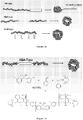
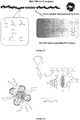
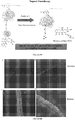
- the epoxide entity for the formation of discrete cross-linked nanoparticles can be integrated by polymerization of a low molecular weight linear copolymer, Ab, with pendant allyl groups. See Figure 1 .
- Pendant allyl groups represent valuable intermediates to many functional groups and can be incorporated into the polymer backbone by copolymerizing ⁇ -allyl- ⁇ -valerolactone, (b), and commercially available ⁇ -valerolactone, (A), via ring-opening polymerization (ROP).
- ROP ring-opening polymerization
- the pendant allyl groups can be oxidized by a Baeyer-Villiger oxidation with meta-chloroperbenzoic acid (m-CPBA) to convert the double bonds to epoxide rings, which then became a coupling group in the preparation of the nanoparticles.
- m-CPBA meta-chloroperbenzoic acid
- a method of preparing a polymer comprising the step of copolymerizing a mixture of two or more of an alkene-functionalized monomer providing a residue having an optionally substituted structure represented by a formula (VI) above; a propargyl-functionalized monomer providing a residue having an optionally substituted structure represented by a formula (II) above; and a keto-functionalized monomer providing a residue having an optionally substituted structure represented by a formula (III) above.
- the mixture further comprises at least one monomer providing a residue having an optionally substituted structure represented by a formula (XI) above.
- the alkene-functionalized monomer is present and the method further comprises the step of oxidizing the resultant polymer to provide an epoxide-functionalized monomer residue having an optionally substituted structure represented by a formula (I) above.
- the alkene-functionalized monomer is present and has an optionally substituted structure represented by a formula:
- the propargyl-functionalized monomer is present and has an optionally substituted structure represented by a formula:
- the keto-functionalized monomer is present and has an optionally substituted structure represented by a formula:
- the monomer providing a residue having an optionally substituted structure represented by a formula (XI) has an optionally substituted structure represented by a formula:
- a method of preparing an epoxide-functionalized polymer comprising the step of oxidizing a polymer having at least one monomer residue having an optionally substituted structure represented by a formula (VI) above.
- the polymer further comprises at least one monomer residue selected from: formula (II) above; formula (XI) above; and formula (III) above.
- At least one monomer residue has an optionally substituted structure represented by a formula (VI) above wherein Z is O.
- a formula (VI) above wherein Z is O.
- m is 1, and n is 0, providing an optionally substituted structure represented by a formula:
- the epoxide-functionalized polymer has an optionally substituted structure represented by a formula (I).
- a method of crosslinking a polymer comprising the step of reacting a polymer comprising at least one monomer residue selected from an epoxide-functionalized monomer residue having an optionally substituted structure represented by a formula (I) above; and a propargyl-functionalized monomer residue having an optionally substituted structure represented by a formula (II) above; with a cross-linker having a structure represented by a formula X-R L -X', wherein X and X' are independently N 3 , OH, SH, NH 2 , or NHR, wherein R is H or C1 to C6 alkyl, and wherein R L is selected from optionally substituted alkyl and optionally substituted alkoxylene.
- the linker groups can be bis-nucleophilic (e.g., diamine) compounds derived from from alkylene oxides (e.g., diamino poly(ethylene oxides)) and/or alkyls (e.g., 1,8-diaminooctane; Jeffamines) and their derivatives.
- alkylene oxides e.g., diamino poly(ethylene oxides)
- alkyls e.g., 1,8-diaminooctane; Jeffamines
- the linker groups can be thiols.
- the dinucleophile can have a structure X-R L -X', wherein X and X' are each SH, wherein R is H or C1 to C6 alkyl, and wherein R L is selected from optionally substituted alkyl, optionally substituted alkoxylene, and optionally substituted esters.
- Thiols suitable for crosslinking include mono- and di-thiol analogues of compounds derived from from alkylene oxides (e.g., diamino poly(ethylene oxides)) and/or alkyls (e.g., 1,8-diaminooctane; Jeffamines) and their derivatives.
- alkylene oxides e.g., diamino poly(ethylene oxides)
- alkyls e.g., 1,8-diaminooctane; Jeffamines
- Other suitable dithiols for cross-linking include:
- the cross-linker reacts with two polymer strands.
- X-R L -X' reacts with two epoxide-functionalized monomer residues.
- X-R L -X' reacts with two propargyl-functionalized monomer residues.
- X-R L -X' reacts with one epoxide-functionalized monomer residue and one propargyl-functionalized monomer residue.
- X X'.
- R L comprises two or more residues of ethylene oxide or trimethylene oxide.
- X-R L -X' is 2,2-(ethylenedioxy)bis(ethylamine).
- the polymer and the crosslinker are reacted in a ratio of about 1:1 (polymer:cross-linker).
- the polymer and the crosslinker are reacted in a ratio of about >1:1 (polymer:cross-linker) to provide a polymer with excess epoxide-functionalization.
- the polymer and the crosslinker are reacted in a ratio of about ⁇ 1:1 (polymer:cross-linker) to provide a polymer with excess amino-functionalization.
- the polymer and the crosslinker are reacted in a ratio of about 1:1 (polymer:cross-linker).
- the polymer and the crosslinker are reacted in a ratio of about >1:1 (polymer:cross-linker) to provide a polymer with excess alkyne-functionalization.
- the polymer and the crosslinker are reacted in a ratio of about ⁇ 1:1 (polymer:cross-linker) to provide a polymer with excess azide-functionalization.
- the polymer further comprises a keto-functionalized monomer providing a residue having an optionally substituted structure represented by a formula (III) above.
- the polymer further comprises at least one monomer providing a residue having an optionally substituted structure represented by a formula (XI) above.
- a method of functionalizing a polymer comprising the step of reacting an epoxide-functionalized monomer residue having an optionally substituted structure represented by a formula (I) above; with a nucleophile having a structure represented by a formula X-R 1 , wherein X is OH, SH, NH 2 , or NHR, wherein R is H or C1 to C6 alkyl; and wherein R 1 is an optionally substituted organic radical comprising 1 to 24 carbon atoms.
- Organic radicals suitable for use as R 1 include substituted or unsubstituted monovalent organic radicals selected from ethyl, propyl, butyl, pentyl, hexyl, heptyl, octyl, decyl, dodecyl, hexadecyl, and higher alkyl.
- the alkyl can be linear or branched and can be cyclic or acyclic.
- R 1 can comprise an optionally substituted alkoxylene.
- Suitable alkoxylene include substituted or unsubstituted monovalent organic radicals selected from groups having a structure represented by a formula: wherein R 3 comprises C1 to C6 alkyl.
- R 1 is further substituted with at least one biologically active agent, at least one pharmaceutically active agent, and/or at least one imaging moiety, thus providing a convenient method for functionalizing the polymer with one or more biologically active agents, pharmaceutically active agents, and/or imaging moieties via a nucleophilic substitution reaction. That is, R 1 can comprise at least one biologically active agent, at least one pharmaceutically active agent, and/or at least one imaging moiety. Optionally, R 1 can comprise a portion of the at least one biologically active agent, at least one pharmaceutically active agent, and/or at least one imaging moiety. Optionally, R 1 can be covalently bonded to at least one biologically active agent, at least one pharmaceutically active agent, and/or at least one imaging moiety.
- a method of functionalizing a polymer may optionally comprise the step of reacting a propargyl-functionalized monomer residue having an optionally substituted structure represented by a formula (II) above; with an azide having a structure represented by a formula N 3 -R 1 , wherein R 1 is an optionally substituted organic radical comprising 1 to 24 carbon atoms.
- R 1 is further substituted with at least one biologically active agent, at least one pharmaceutically active agent, and/or at least one imaging moiety.
- a method of functionalizing a polymer may optionally comprise the steps of reacting a keto-functionalized monomer providing a residue having an optionally substituted structure represented by a formula (III); with an amine having a structure represented by a formula H 2 N-R 1 , wherein R 1 is an optionally substituted organic radical comprising 1 to 24 carbon atoms; and reducing the resulting imine.
- the reacting step and the reducing step are performed simultaneously.
- R 1 is further substituted with at least one biologically active agent, at least one pharmaceutically active agent, and/or at least one imaging moiety.
- a method of functionalizing a polymer may optionally comprise the step of reacting a nucleophile-functionalized monomer residue having an optionally substituted structure represented by a formula (VII) above; with an electrophile having a structure represented by a formula E-R 1 , wherein E is an electrophilic moiety; and wherein R 1 is an optionally substituted organic radical comprising 1 to 24 carbon atoms.
- Y' is NH 2 or NHR.
- the electrophilic moiety is selected from alkyl halide, alkyl pseudohalide, and carboxyl derivative.
- R 1 is further substituted with at least one biologically active agent, at least one pharmaceutically active agent, and/or at least one imaging moiety.
- nanoparticles in controlled size dimensions can proceed from linear polymers containing pendant epoxide groups which crosslink with 2,2'-(ethylenedioxy)bis(ethylamine).
- reactions in which the equivalents of diamine cross-linker were linearly increased with respect to the reactive epoxide groups of the polymers were studied.
- the polymer solution with the pendant expoxide entities can be added in a dropwise fashion to a refluxing solution of different equivalents of dinucleophile (e.g., diamine) in dichloromethane.
- dinucleophile e.g., diamine
- the difunctional amine is in high excess during the addition (13 mL/min) of the linear polymer solution (0.5 M) and thus provides optimum cross-linking reactions (Table 1; particle size reported in nm diameter by dynamic light scattering (DLS) in relation to varying amine ratios).
- the first trial was employed with polymer ( AB ) and implemented 1 to 10 equivalents of amine functionalities to the pendant epoxide cross-linking entity.
- the resulting particles were characterized by transmission electron microscopy (TEM) that provides the actual size, and by dynamic light scattering (DLS), to obtain the hydrodynamic diameter as a representative measure of the particle under physiological conditions. Micrographs of representative nanoparticles are shown in Figure 2 . It is also contemplated that reaction stoichiometry can be selected to utilitze in excess of ten (10) equivalents, thereby providing microparticles, materials for us in tissue engineering and biogels in biomedical applications and devices.
- characterization of the particles with 1 H NMR confirmed the nanoparticle formation for each trial with an increase of signals at 3.5 and 2.89 ppm corresponding to protons neighboring the secondary amine of the polyethylene glycol (PEG)-linker after successful crosslinking event.
- PEG polyethylene glycol
- a shift in resonance from 2.86 to 2.89 ppm was observed due to the change of the primary amine to the secondary amine after cross-linking.
- the continuous increase in amine cross-linker equivalents not only extends the particle size, but it also introduces additional amine functionalities connected to short PEG linker that are available for further modification strategies.
- the present invention relates to a method of preparing a degradable nanoparticle comprising the step of adding a polymer comprising at least one monomer residue having a structure represented by a formula: wherein Z is O or NR, wherein R is H or C1 to C6 alkyl, wherein m is an integer from 0 to 6, and wherein n is an integer from 0 to 2; to a solution of from about 1 to about 10 molar equivalents of a dinucleophile (nucleophilic moiety:epoxide functionality) having a structure X-R L -X', wherein X and X' are independently OH, SH, NH 2 , or NHR, wherein R is H or C1 to C6 alkyl, and wherein R L is selected from optionally substituted alkyl and optionally substituted alkoxylene.
- the monomer residue comprises less than about 10% by weight of the monomer residue of halogen selected from chlorine, bromine, and
- the solution comprises from about 1 molar equivalent of a dinucleophile (nucleophilic moiety:epoxide functionality) and the resultant nanoparticle has a particle size of from about 5 nm to about 55 nm. In a further aspect, the solution comprises from about 1 molar equivalent of a dinucleophile (nucleophilic moiety:epoxide functionality) and the resultant nanoparticle has a particle size of from about 5 nm to about 55 nm.
- the solution comprises from about 2 molar equivalents of a dinucleophile (nucleophilic moiety:epoxide functionality) and the resultant nanoparticle has a particle size of from about 30 nm to about 80 nm. In a further aspect, the solution comprises from about 3 molar equivalents of a dinucleophile (nucleophilic moiety:epoxide functionality) and the resultant nanoparticle has a particle size of from about 70 nm to about 120 nm.
- the solution comprises from about 4 molar equivalents of a dinucleophile (nucleophilic moiety:epoxide functionality) and the resultant nanoparticle has a particle size of from about 110 nm to about 170 nm. In a further aspect, the solution comprises from about 5 molar equivalents of a dinucleophile (nucleophilic moiety:epoxide functionality) and the resultant nanoparticle has a particle size of from about 175 nm to about 300 nm.
- the solution comprises from about 6 molar equivalents of a dinucleophile (nucleophilic moiety:epoxide functionality) and the resultant nanoparticle has a particle size of from about 250 nm to about 350 nm. In a further aspect, the solution comprises from about 8 molar equivalents of a dinucleophile (nucleophilic moiety:epoxide functionality) and the resultant nanoparticle has a particle size of from about 400 nm to about 550 nm.
- the solution comprises from about 10 molar equivalents of a dinucleophile (nucleophilic moiety:epoxide functionality) and the resultant nanoparticle has a particle size of from about 650 nm to about 850 nm. It is also contemplated that reaction stoichiometry can be selected to utilitze in excess of ten (10) molar equivalents, thereby providing higher particle sizes.
- a method of preparing a degradable nanoparticle comprising the step of adding a polymer comprising at least one monomer residue having a structure represented by a formula: wherein Z is O or NR, wherein R is H or C1 to C6 alkyl, wherein m 1 is an integer from 0 to 6, and wherein n 1 is an integer from 0 to 2; to a solution of from about 1 to about 10 molar equivalents of a bis-azide (azide moiety:alkyne functionality) having a structure N 3 -R L -N 3 , wherein R L is selected from optionally substituted alkyl and optionally substituted alkoxylene.
- the monomer residue comprises less than about 10% by weight of the monomer residue of halogen selected from chlorine, bromine, and iodine.
- Z is O.
- a method of controlling particle size during the preparation of a degradable nanoparticle comprising the step of adding an epoxide-functionalized polymer to a solution of a dinucleophilic cross-linker, wherein the stoichiometry of the cross-linker (ratio of nucleophilic moiety:epoxide functionality) is selected to provide a desired particle size according to one or more of the graphs shown in Figure 5 - Figure 10 .
- the invention relates to a method of preparing a degradable nanoparticle comprising functionalizing a nanoparticle comprising the step of reacting a nanoparticle comprising at least one monomer residue having an optionally substituted structure represented by a formula (VIII) above and having a particle size of from about 5 nm to about 850 nm, further comprising at least one epoxide-functionalized monomer residue having an optionally substituted structure represented by a formula (I) above; with a nucleophile having a structure represented by a formula X-R 1 , wherein X is OH, SH, NH 2 , or NHR, wherein R is H or C1 to C6 alkyl; and wherein R 1 is an optionally substituted organic radical comprising 1 to 24 carbon atoms.
- a nucleophile having a structure represented by a formula X-R 1 , wherein X is OH, SH, NH 2 , or NHR, wherein R is H or C1 to C6
- R 1 is further substituted with at least one biologically active agent, at least one pharmaceutically active agent, and/or at least one imaging moiety.
- the invention relates to a method of preparing a degradable nanoparticle comprising functionalizing a nanoparticle comprising the step of reacting a nanoparticle comprising at least one monomer residue having an optionally substituted structure represented by a formula (VIII) above and having a particle size of from about 5 nm to about 850 nm, further comprising at least one propargyl-functionalized monomer residue having an optionally substituted structure represented by a formula (II) above; with an azide having a structure represented by a formula N 3 -R 1 , wherein R 1 is an optionally substituted organic radical comprising 1 to 24 carbon atoms.
- R 1 is further substituted with at least one biologically active agent, at least one pharmaceutically active agent, and/or at least one imaging moiety.
- the invention relates to a method of preparing a degradable nanoparticle comprising functionalizing a nanoparticle comprising the steps of reacting a nanoparticle comprising at least one monomer residue having an optionally substituted structure represented by a formula (VIII) above and having a particle size of from about 5 nm to about 850 nm, further comprising at least one keto-functionalized monomer providing a residue having an optionally substituted structure represented by a formula (III) above; with an amine having a structure represented by a formula H 2 N-R 1 , wherein R 1 is an optionally substituted organic radical comprising 1 to 24 carbon atoms; and reducing the resulting imine.
- the reacting step and the reducing step are performed simultaneously.
- R 1 is further substituted with at least one biologically active agent, at least one pharmaceutically active agent, and/or at least one imaging moiety.
- the invention relates to a method of preparing a degradable nanoparticle comprising functionalizing a nanoparticle comprising the step of reacting a nanoparticle comprising at least one monomer residue having an optionally substituted structure represented by a formula (VIII) above and having a particle size of from about 5 nm to about 850 nm, further comprising at least one nucleophile-functionalized monomer residue having an optionally substituted structure represented by a formula (VII) above; with an electrophile having a structure represented by a formula E-R 1 , wherein E is an electrophilic moiety; and wherein R 1 is an optionally substituted organic radical comprising 1 to 24 carbon atoms.
- the electrophilic moiety is selected from alkyl halide, alkyl pseudohalide, and carboxyl derivative. In a further aspect, R 1 is further substituted with at least one biologically active agent, at least one pharmaceutically active agent, and/or at least one imaging moiety.
- a method of degrading a degradable nanoparticle comprising subjecting the nanoparticle to reaction conditions sufficient to hydrolyze an ester.
- the conditions are biological conditions.
- the conditions involve exposure to an esterase.
- the conditions exist within an organism.
- the degradable polymer is a disclosed polymer or a product of a disclosed method.
- a method of intracellular delivery comprising administering an effective amount of a disclosed nanoparticle to a subject.
- the nanoparticle is further substituted with at least one biologically active agent, at least one pharmaceutically active agent, and/or at least one imaging moiety.
- the method further comprises the step of degrading the nanoparticle.
- a method of intracellular delivery comprising administering an effective amount of a disclosed polymer or product of a disclosed method to a subject.
- the polymer or product of a disclosed method is further substituted with at least one biologically active agent, at least one pharmaceutically active agent, and/or at least one imaging moiety.
- the method further comprises the step of degrading the polymer or product of a disclosed method.
- the disclosed nanoparticles can be functionalized with, for example, dendrimeric compounds. That is, a nanoparticle-dendrimer conjugate can be made.
- the nanoparticle can be a disclosed organic quantum dots via intramolecular chain collapse.
- the nanoparticle can be a disclosed degradable nanoparticle.
- the dendrimer can be a disclosed intracellular delivery composition.
- certain nanoparticles can bear electrophilic (e.g., ketone) functionalities.
- Vinylsulfonyl functionality can be introduced to the disclosed nanoparticles.
- a vinylsulfonyl linker moiety was prepared that can be attached in a reductive amination procedure to a keto groups of the particle. The synthesis of such a linker appears in Scheme 1. It is understood that the alkyl chain can be homologated by selection of appropriate reagents.
- the vinylsulfonyl moiety readily reacts with a nucleophile (e.g., a thiol) to form a covalent bond, thereby further functionalizing a nanoparticle.
- a nucleophile e.g., a thiol
- These linkers can be used to attach peptides that are labeled with dye molecules at the focal point of the peptide or other amines groups of the peptide.
- the thiol groups of cysteines can be used to attach to the vinyl function of the vinyl sulfonyl linker.
- the thiol group in the focal point of the disclosed dendritic molecular transporters can be attached to the vinyl sulfonyl (or allyl) group, thus allowing a transporter to be attached to any post-modified nanoparticle.
- the same reaction can be used to attach peptides that are not labeled with dye.
- the particle can be labeled with dye or not labeled.
- Peptides (or other amines) can also be attached directly through the amine terminus of the peptide to the keto group through reductive amination. See Scheme 2. Here, it is preferred that the peptide contains only one amine group.
- the particle Before the reductive amination is performed, the particle can be labeled with a dye that adds to the amine functionality of the particle. After the reaction, residual dyes can be quenched so as to not interfere with the following reductive amination.
- nucleophile-functionalized moieties e.g., peptides or disclosed intracellular delivery compositions
- allylic function on disclosed degradable nanoparticles As shown in Scheme 4, direct attachment of a thiol with an allyl functionalized polymer or nanoparticle can bypass use of the disclosed SVEC linker.
- An allylic function on disclosed degradable nanoparticles can be provided via incomplete oxidation of epoxide functionalities, as shown in Scheme 5a.
- allyl functionality is thus available for functionalization and allows very mild conditions for the attachment of peptides and other moieties that contain nucleophilic (e.g., thiol) groups.
- the allyl groups from Ab linear precursors can be partially preserved by partial oxidation to the epoxide that is needed for cross-linking to the nanoparticle to from AbB linear polymer. This chemistry is also compatible with the keto-group-containing ABD linear precursor to from AbBD.
- the nanoparticle formation does not take part in the cross-linking reaction and is therefore available for further modification.
- the allyl group is inert under the conditions used during the cross-linking process.
- the crosslinking reaction is illustrated in Scheme 6.
- the thiol group of the focal point of the dendritic molecular transporter can be attached to the ally group.
- One advantage of such attachment is that it requires no other reagent. This can permit the transporter to be attached to any already post-modified nanoparticle because of the mild reaction conditions.
- an imaging moiety e.g., a dye molecule such as rodamine or other dye
- amines such as NHS- ester or isothiocyanates
- allyl groups can then be reacted with thiol groups of the focal point of the dendritic transporter, as illustrated in Scheme 8, thereby providing multiply functionalized degradable nanoparticles.
- the number of molecular transporter(s) bonded to the nanoparticle can be selected by varying the stoichiometry of the reagents added to the allyl groups.
- the same reaction can be performed with thiol groups attached to peptides. It was found that elevated temperatures such as 37 °C speed up the reaction but do not destroy the peptide.
- a nanoparticle can be attached to a disclosed dendritic molecular transporter through an exemplary strategy shown in Scheme 8b.
- the dendritic transporter shown in Scheme 8 can be further functionalized according to Scheme 8c.
- the nanoparticle of the intramolecular chain collapse reaction can be reacted with the commercially available N-Boc ethylenoxide amine.
- the amine can be deprotected via acid cleavage with HCl or formic acid.
- Some of the free amines can be labeled with dye via NHS-ester reaction or thioisocyanide reaction.
- An SVEC moiety can then be connected trough an NHS ester reaction. After the reaction the residual amine groups are being quenched.
- the thiol groups are attached to the vinylsulfone groups of the SVEC.
- the thiol groups of the molecular transporter can also be attached in the same fashion as the peptides, as shown in Scheme 9a.
- Imaging moieties e.g., dyes or DOTA moieties
- DOTA moieties that can function as therapeutic and tracking units
- a disclosed nanoparticle can be functionalized with a dye for imaging the eye in a subject.
- a dye for imaging the eye in a subject can be accomplished conveniently by Scheme 12b.
- Analogous chemistry can be used to prepare a drug delivery system comprising a drug molecule that is attached to a pH sensitive linker and includes a hydrazide linker and doxorubicin.
- the synthesis is illustrated in Schemes 13-15.
- a novel c-RGD has been prepared and can be attached to the nanoparticles and used for targeting of the disclosed delivery systems (See Scheme 16).
- a method for the manufacture of a medicament such as a medicament for delivery of a biologically active agent, a pharmaceutically active agent, and/or an imaging moiety comprising combining at least one disclosed polymer or at least one disclosed nanoparticle with a pharmaceutically acceptable carrier.
- the pharmaceutical composition optionally relates to a composition for preventing and/or treating ophthalmic disorders.
- the disclosed compounds, compositions, and conjugates and practical synthesis of same provide approaches for applications in cancer treatment and drug delivery across biological barriers such as the cornea, tissues, skin, and the blood brain barrier.
- the nanoparticle-dendrimer conjugates comprising a disclosed degradable nanoparticle and a disclosed intracellular delivery composition can hold and deliver therapeutics ranging from small molecules to larger peptides, proteins, and antibodies.
- a disclosed polymer or a disclosed nanoparticle for trancorneal delivery of a biologically active agent, a pharmaceutically active agent, and/or an imaging moiety.
- topical drug delivery remains the preferred route of administration to the eye.
- factors that affect the absorption of drugs into the eye include: the instillation volume of the drug, the frequency of instilled drug administration, the structure and integrity of the cornea, the protein level in tears, the level of enzymes in tears, lacrimal drainage and tear turnover rate, as well the rate of adsorption and absorption of a drug by the conjunctiva, sclera, and eyelids.
- a potential way of reducing or even eliminating systemic side effects is to improve ocular targeting that would allow for the use of reduced doses of the biologically active agent in the ophthalmic drug formation.
- a major barrier to ocular drug penetration is the cornea.
- the cornea is composed of three layers: a lipid-rich epithelium, a lipid-poor soma, and a lipid-rich endothelium. Therefore, an agent must possess both lipophilic-hydrophilic balance for adequate transcorneal penetration and, thus, ocular bioavailability ( Akers, H.J., "Ocular bioavailability of topically applied ophthalmic drugs," Am Pharm, NS23:33-36 (1983 )).
- the disclosed compounds may provide improved physicochemical properties including, but not limited to, favorable ocular bioavailability and facile transcorneal penetration.
- the disclosed compounds may treat and/or protect against various ocular diseases. That is, the disclosed compounds can be used to diagnose, prevent, and/or treat ophthalmic disorders. Prefered disclosed compounds can be effective in treating and/or preventing maladies associated with vision-threatening intraocular damage due to pathophysiological predispositions. Preferred disclosed compounds include those which treat retinal infection, glaucoma, and/or macular degeneration.
- compositions comprising the disclosed compositions. That is, a pharmaceutical composition can be provided comprising a therapeutically effective amount of one or more disclosed polymer and/or one or more products of a disclosed method and/or one or more disclosed nanoparticle and a pharmaceutically acceptable carrier for administration in a mammal.
- the one or more disclosed polymer and/or one or more products of a disclosed method and/or the one or more disclosed nanoparticle is further substituted with at least one biologically active agent, at least one pharmaceutically active agent, and/or at least one imaging moiety.
- the disclosed pharmaceutical compositions can further comprise other therapeutically active compounds, which are usually applied in the treatment of the above mentioned pathological conditions. It is understood that the disclosed compositions can be employed in the disclosed methods of using.
- kits related to the disclosed compositions for example a kit comprising at least one disclosed polymer, at least one disclosed nanoparticle or at least one product of a disclosed method. It is understood that the disclosed kits can be used in connection with the disclosed methods of using.
- microparticles, and/or larger networks for use as materials for tissue engineering and biogels in biomedical devices.
- GPC Gel-permeation chromatography
- DLS dynamic light scattering
- a Zetasizer Nano Series instrument with a CGS-3 compact goniometer system by Malvern Instruments was employed at a fixed angle of 90° at 25 °C, taking the average of three measurements.
- the particles were diluted with toluene to a concentration of 5-6 mg/mL, which gave the desired number of counts in order to obtain a good signal-to-noise ratio.
- Samples for transmission electron microscopy (TEM) imaging were prepared by dissolving 0.5 mg nanoparticles in 1 mL isopropanol and 0.3 mL acetonitrile. The samples were sonicated for 5 min and were stained with 2 drops of 3% phosphotungstic acid.
- the carbon grids were prepared by placing a drop of dispersed particles onto an Ultrathin Carbon Type-A 400 Mesh Copper Grid (Ted Pella, Inc., Redding, CA) and drying at ambient temperature.
- a Philips CM20T transmission electron microscope operating at 200 kV in bright-field mode was used to obtain TEM micrographs of the polymeric nanoparticles.
- Reagent chemicals were purchased from Aldrich (Milwaukee, WI), EMD, Alfa-Aesar, Fisher Scientific, and Acros and used as received, unless otherwise stated.
- Analytical TLC was performed on commercial Merck plates coated with silica gel GF254 (0.24 mm thick).
- Silica gel for flash chromatography was Merck Kieselgel 60 (230-400 mesh, ASTM) or Sorbent Technologies 60 ⁇ (40-63 ⁇ m, technical grade).
- MAL-dPeg TM 4 -t-boc-hydrazide was obtained from Quanta Biodesign, Ltd.
- a solution of lithium diisopropylamine (2.0 M in THF/heptane/ethyl benzene, 33 mL, 66 mmol) was added to the round bottom flask.
- a solution of lithium diisopropylamine (2.0 M in THF/heptane/ethyl benzene, 22 mL, 44 mmol) was added to the flask.
- Nanoparticles can be titrated with a strong acid to determine amine content.
- Table 2 several poly(vl-evl) (AB) nanoparticle samples were titrated with perchloric acid to determine the weight percentages (wt %) of primary amine and secondary amine in the three samples that we analyzed with transmission electron microscopy.
- the three samples (shown in Table 2) titrated have the following size dimensions by DLS: 58.06, 255.7 and 425.1 nm.
- Table 2 Correlation of particle size and amine content
- AB Nanoparticle size (nm) Primary amine wt % Secondary amine wt% 58.06 0.008% 0.031% 255.7 0.025% 0.098% 425.1 0.055% 0.20%
- nanoparticles are typically prepared with a single type of polymer or copolymer
- nanoparticles have also been successfully produced from a mixture of poly(vl-evl-pvl) and poly(vl-evl-opd).
- Such nanoparticles are tabulated in Table 3.
- Table 3 Nanoparticles formed from two polymers Amine/1 Epoxide Diameter (nm) Poly(vl-evl-pvl) with poly(vl-evl-opd) 4 43.7 ⁇ 4.50 8 94.15 ⁇ 6.85
- the properties of nanoparticles can be further tailored by incorporating different percentages of epoxy- ⁇ -valerolactone (evl) into the polymer backbone.
- evl epoxy- ⁇ -valerolactone
- Table 4 shows the nanoparticles made from the linear poly(vl-evl) with 2% evl, 7% evl, and 19% evl. These data show that, as the % evl is decreased to 2% in the linear polymer, smaller nanoparticles can be obtained. As the % evl is increase to 19%, the resulting nanoparticles are larger but have a small deviation in comparison to the larger nanoparticles made from poly(vl-evl) with 7% evl.
- reaction stoichiometry The relationship between reaction stoichiometry and particle size for varying comonomer content is further illustrated in Figure 8 - Figure 10 .
- ABD nanoparticles (0.0846 g, 2.45x10 -4 mmol) were dissolved in 12.5 mL of CH 2 Cl 2 .
- ethylenediamine 2-(vinylsulfonyl)-ethyl carbonate in methanol 0.0152 g in 69 ⁇ L methanol, 5.89x10 -2 mmol
- Sodium cyanoborohydride (0.0111g, 1.76x10 -1 mmol) was dissolved in 12.5 mL methanol and added to the round bottom flask.
- the pH of the reaction mixture was adjusted to a pH of 6.5 with aqueous 1 M NaOH and 1 M HCl.
- Successful attachment of the linker was observed by the appearance of signals 6.7 ppm and 6.9 ppm ( 1 H NMR, 300MHz, CDCl 3 /TMS) due to the vinyl protons of the linker.
- linker modified nanoparticles (L- ABD ) (29.9 mg) were dissolved in 800 ⁇ L PBS buffer (pH 7.2) and 700 ⁇ L dimethylformamide.
- PBS buffer pH 7.2
- dimethylformamide 7 ⁇ L dimethylformamide
- 251 ⁇ L GV-13-Alexafluor (0.44 mg in 150 ⁇ L PBS buffer and 26.5 ⁇ L DMF) was added to the vial via micropipette.
- GV-13 (2.08 mg, 1.9x10 -3 mmol) dissolved in 200 ⁇ L PBS buffer was added.
- the reaction mixture stirred for 24 h in aluminum covered beaker.
- the purified product was concentrated via rotary evaporator. Successful attachment of peptide and dye was observed by the presence of a bright blue color due to the dye. 1 H NMR also shows the presence of the peptide.
- Cy3 NHS dye and PD-10 Desalting columns were received from GE Healthcare (Piscataway, NJ).
- Spectra/Por® Biotech Cellulose Ester (CE) Dialysis Membranes 1,000 MWCO obtained from Spectrum Laboratories, Inc. (Rancho Dominguez, CA).
- SnakeSkin® Pleated Dialysis Tubing 10,000 MWCO was obtained from Pierce Biotechnology, Inc. (Rockford, IL).
- the product was purified by column chromatography (eluted first with 2% methanol in dichloromethane, then with 5% methanol in dichloromethane, followed by 10% methanol in dichloromethane) to obtain a white solid (45%).
- FITC (0.14 g, 0.36 mmol) dissolved in 1 mL of DMF, was added to a solution of compound 8 (0.23g, 0.066 mmol) in a mixture of DMF and dichloromethane. The solution was chilled to 0 °C, to which Et 3 N (0.092 mL, 0.66 mmol) was added. The mixture was stirred overnight at room temperature. After removal of DMF in vacuo, the residue was dissolved in dichloromethane and washed with IN HCl and water. The dichloromethane layer was dried over anhydrous Na 2 SO 4 and concentrated to obtain a yellow solid.
- FITC (0.016 g, 0.0376 mmol), dissolved in 1 mL of DMF, was added to a solution of compound 9 (0.050g, 0.0125 mmol) in a mixture of DMF and dichloromethane (1:1). The solution was chilled to 0°C, to which Et 3 N (12 ⁇ L) was added. The mixture was stirred overnight at room temperature. After removal of DMF in vacuo, the residue was dissolved in dichloromethane and washed with IN HCl and water. The dichloromethane layer was dried over anhydrous Na 2 SO 4 and concentrated to obtain a solid. The product was dissolved in methanol and purified by dialysis with Spectro®Por Biotech RC membranes (MWCO 3500).
- Newkome-type dendrimers two non-peptidic fluorescently labeled Newkome-type dendrimers, differentiated over a varied alkylspacer with guanidine end moieties, were designed and synthesized.
- the assessment of internalization into mammalian cells using NIH-3T3 fibroblasts and human microvascular endothelial cells (HMEC) showed that the spacer length at the terminal generation of the dendrimers can affect direction of cargo molecules precisely into specific subcellular compartments (e.g., nucleus or cytosol). Such direction can be particularly advantageous for the controlled intracellular delivery of bioactive cargo molecules into targeted locations.
- the two exemplary FITC-dendrimer conjugates were found to be highly water soluble and were further investigated for their capability to translocate through the cell membrane.
- Internalization of FD-1 and FD-2 in mammalian cells was assessed using two different cell lines and a previously described method [ Futaki, S.; Nakase, I.; Suzuki, T.; Youjun, Y.; Sugiura, Y. Biochemistry 2002, 41, 7925 .] with NIH-3T3 fibroblasts and HMEC (human microvascular endothelial cells) and a Zeiss LSM 510 confocal microscope.
- Figure 12 shows the time course of uptake of FD-1 and FD-2 into NIH-3T3 Fibroblasts at 37 °C.
- the uptake levels of FD-2 appeared to be generally stronger than those of FD-1 after the same incubation time at the same concentration. Therefore, the dendrimer with a hexyl spacer crosses the cell membrane faster than the molecule with an ethyl chain.
- the localization patterns can also be controlled by the length of the spacer. FD-1 with the short spacer appeared to be localized everywhere in the cell, but highly concentrated in the nucleus. However, FD-2, with its longer spacer, was observed to reside mainly in the cytosol.
- translocation features of guanidinlyated dendritic scaffolds as carriers can be important for intracellular delivery of cargo molecules to specific subcellular compartments (e.g., cytosol or nucleus).
- a translocation approach that does not saturate the nucleus can be highly attractive as it can be both less cytotoxic and could afford cytosolic-targeted cargos with greater accuracy in delivery, and therefore higher efficacy.
- the differential uptake patterns by FD-1 and FD-2 are due to the presence of a hexyl spacing chain in FD-2, resulting in a greater hydrophobicity of the entire conjugate as compared with FD-1.
- the uptake of FD-1 and FD-2 conjugates by HMEC was also conducted. Entry of the two conjugates into HMEC shows a similar internalization pattern to that seen in fibroblasts.
- a three-neck round bottom flask was flame-dried under argon, to which nitrotriacid B3 (3.192 g, 0.0115 mmol), 1-hydrobenzotriazole (HOBt) (5.609 g, 0.0415 mol), DCC (8.560 g, 0.0415 mol) and 100 mL THF were added sequentially. After 2 hours activation, aminotriester B 2 (17.216 g, 0.0415 mol) was added.
- the resulting white solid (1.0 g, 0.453 mmol) was dissolved in ethanol (45 mL) and transferred into a hydrogenation vessel containing Raney-Nickel catalyst (5 g) and the suspension was stirred at 80 psi of hydrogen at 50°C for 48 h. After filtration through Celite, the solvent was removed under reduced pressure to give a B14 as a white solid (0.964 g, 97.7%).
- Potassium carbonate was added to B17 or B18 in methanol/water, the mixture was stirred at room temperature for 6 h.
- reaction mixture After addition and rinsing the dropping funnel with 25 mL of dry THF, the reaction mixture was heated for an additional 45 min under reflux to give a green brown solution. The reaction mixture was then cooled to 0 °C, DMF (15 mL, 210 mmol) was added dropwise to the solution, and the reaction mixture was heated under reflux for 15 min. The reaction mixture was poured onto 150 g of ice, acidified to pH), and neutralized with saturated NaHCO 3 solution. The crude product was extracted with ethyl acetate, the organic phase was filtered over Celite, and evaporation of the solvent gave the crude product.
- the yellow-orange solution was cooled to -78 °C, and the aldehyde 6 (7.16 g, 54.2 mmol), diluted in 34 mL of dry THF, was added slowly. The mixture warmed to room temperature, and stirring continued for 2 h. The reaction was treated sequentially with saturated NH 4 Cl and saturated NaHCO 3 solution, and the crude product was filtered over Celite, washed with diethyl ether/hexane (1:1), and evaporated to dryness (no heat) to give the crude product.
- the alkoxyamine initiator, Q7 (32.5 mg, 0.1 mmol), Q12 dissolved in styrene (10.4 g, 100 mol) and 4-vinylbenzocyclobutene, Q4 (3.25 g, 25.0 mmol) were added to a glass ampule with a stir bar. After three freeze and thaw cycles the ampule was sealed under argon and heated for 6 h at 120 °C.
- the alkoxyamine initiator Q7 (32.5 mg, 0.1 mmol) was dissolved in n -butyl acrylate (10.2 g, 72.0 mmol) and Q4 (1.04 g, 8.0 mmol) and placed in a glass ampule with a stir bar. After three freeze and thaw cycles the ampule was sealed under argon and heated for 15 h at 125 °C.
- Poly(ethylene glycol)- b -(styrene- co -benzocyclobutene), Q15 Poly(ethylene glycol)- b -(styrene- co -benzocyclobutene), Q15.
- the round bottom flask was then sealed via a rubber septum and was charged with N 2 the mixture was yellow-orange in color.
- the reaction mixture heated to 100 °C and additional vinyl trimethylsilane (5.005 g, 50.39 mmol), triethylamine (2.781 g, 27.48 mmol), triphenylphospine (0.216 g, 0.824 mmol), and palladium (II) acetate (0.0925 g, 0.413 mmol) were added to the mixture followed by a N 2 purge of the reaction and charge of the vessel after 1 hour.
- the product was collected by suction filtration on a plastic Buchner funnel and washed on the funnel with cold tetrahydrofuran until the washings were colorless. The product was then washed with 1,2-dichloroethane to displace the tetrahydrofuran. The solvent-wet product was used without further purification.
- TBDMSCl t-Butyldimethylchlorosilane
- the precipitated mercury(II) oxide was filtered off and the filtrate extracted with CH 2 Cl 2 (3 x 300 mL), dried with anhydrous Na 2 SO 4 , filtered, and concentrated to yield white crystals that were purified via column chromatography using a 3:2 Hexanes:EtOAc solvent system.
- brominated alkoxyamine initiator (0.7750 mmol, 0.3134 g) and 2,7-dibromo-9,9'-di-n-hexylfluorene (2.250 mmol, 1.1080 g) dissolved in dry toluene (13 mL) via syringe.
- the mixture stirred in 80 °C for 24 hours in the dark.
- hot solution precipitated into 600 mL of solution of HCl (conc) :acetone:methanol in ratio 1:1:1.
- the resulting dark brown precipitate was then filtered, dissolved in dichloromethane, concentrated in vacuo and reprecipitated with 200 mL solution of acetone:methanol, 1:1.
- N-Boc-N-Tfa-ethylenediamine (8.0 g, 31.5 mmol) was dissolved in 50 mL formic acid and stirred for 14 h at r.t.. After the solvent was evaporated under reduced pressure, toluene was added and concentrated to remove any residual formic acid, yielding an orange oil (4.90 g, 99.7%).
- MAL-dPegTM 4 -t-boc-hydrazide 8.8 mg, 135.0 nmol was dissolved in 10.0 mL of formic acid and stirred over night at room temperature. After the solvent was evaporated under reduced pressure, toluene was added and concentrated to remove any residual formic acid to give MAL-dPegTM 4 -hydrazide (58.1 mg, 100%).
- the nanoparticles (77.5 mg, 1.76 ⁇ 10 -6 mol) in DriSolv DMF (mL) were stirred under argon.
- the free thiol molecular transporter in DMF was added dropwise followed by the addition of a catalytic amount of N-methylmorpholine.
- MWCO 10 000
- Nanoparticles (30.0 mg, 4.75 ⁇ 10 -7 mol) in DriSolv DMF (1.0 mL) were stirred under argon.
- a solution of FITC (2.8 mg, 7.13 ⁇ 10 -6 mol) in DriSolv DMF (1.0 mL) was added dropwise and the reaction chilled to 0 °C.
- Triethylamine (1.14 ⁇ L, 8.17 ⁇ 10 -6 mol) was added to the solution and the reaction proceeded in the dark, overnight at room temperature.
- poly(avl-evl-vl-opd) nanoparticles 0.030 g, 0.0268 mmol
- benzyl mercaptan 9.48 mg, 0.0764 mmol
- the reaction mixture was heated for 72 h at 30 °C.
- peptide 33 ⁇ L of 0.013 mg/mL peptide in phosphate buffer- pH 7.2
- Alexa Fluor® 750 26.5 ⁇ L of 20 mg/mL Alexa Fluor® in dimethylformamide were added.
- the reaction stirred for 24 h in an aluminum foiled.
- To the peptide-Alexa Fluor® solution 251 ⁇ L of dissolved nanoparticles was added. After stirring for 45 min at room temperature, additional peptide (2 mg, 1.84x10 -6 mol) was added.
- the reaction mixture was purfied using concentrator tubes with a molecular weight cutoff of 10,000 Da.
- poly(vl-evl-opd) nanoparticles 63.55 mg, 1.92x10 -7 mol
- the round bottom flask was sealed with a rubber septum and purged with argon.
- Alexa Fluor® 750 5 mg in 0.5 mL anhydrous dimethylformamide was added.
- the reaction mixture stirred for 24 h at room temperature. After 24 h, N-acetoxy succinimide (50 mg, 0.3 mmol) was added to quench the remaining unreacted amines.
- PBS Buffer pH 7.3
- Alexa Fluor® 750 3 mg, 2.3 ⁇ mol
- PBS Buffer 1.2 mL
- the nanoparticles were dissolved in 4 mL of H 2 O followed by the addition of sodium bicarbonate (2.7 mg, 0.0318 mmol).
- the SVEC was added in 1 mL of ACN followed by an additional 3 mL of ACN.
- the reaction was allowed to proceed for 2 h at which time acetoxysuccinimide (127 mg, 0.79 mmol) was added in order to quench any remaining amines. This reaction was allowed to proceed for 2 h.
- TOTA triethylamine
- Alexa Fluor 750® (1.43 mg, 1.1 ⁇ mol) was dissolved in 143 ⁇ L DMSO and added to cysteamine (0.077 mg, 1.0 ⁇ mol) in 30.9 ⁇ L of PBS Buffer (pH 7.5). The reaction was allowed to proceed overnight.
- a typical Fmoc solid phase peptide synthesis was performed to synthesize the linear peptide.
- a cysteine preloaded 2-chlorotrityl resin was employed.
- HOBt: HBTU: DIPEA (1:1:2) in DMF was used as the coupling reagent and amino acids were double coupled.
- a 20% piperdine (v/v) in DMF employed to deprotect the Fmoc.
- An amino-hexyl spacer was coupled to the cystine on the resin, followed by glutamic acid, aspartic acid, glycine, arginine, phenylalanine, and finally lysine.
- the peptide was cyclized by utilizing an ODmab group, which allows for the selective deprotection carboxylic acid side chain of the glutamic acid, which can then be coupled to the N-terminus.
- the ODmab was deprotected using 2% v/v hydrazine-H 2 O/DMF added to the resin and allowed to react for 7 min. Next it was washed with 20 mL of DMF followed by 10 mL of a 5% v/v DIPEA/DMF solution which was allowed to shake for 10 min. Carboxy activation was achieved through the use of DCC (44.6 mg, mmol) and HOBt (29.2 mg, mmol) was added to 10 mL of DMF and then added to the resin and allowed to shake for 18 h.
- Reagent R was used to deprotect all side groups and cleave the cyclic peptide from the resin.
- Reagent R was prepared by combining 5.4 mL TFA, 0.3 mL thioanisole, 0.18 mL anisole, and 0.12 mL ethanedithiol. This was allowed to react for 3 hours at which time the resin was filtered off. The supernatant was cooled to 0 °C and the peptide was precipitated using cold diethyl ether. It was collected through centrifugation and then washed three times using diethyl ether. The pellet was dissolved in 0.6 mL H 2 O and 0.4 mL ACN with 0.3% TFA and purified using HPLC.
- N-Boc-N-Tfa-ethylenediamine (8.0 g, 31.5 mmol) was dissolved in 50 mL formic acid and stirred for 14 h at room temperature. After the solvent was evaporated under reduced pressure, toluene was added and concentrated to remove any residual formic acid, yielding an orange oil (4.90 g, 99.7%).
- MAL-dPeg TM 4 -t-boc-hydrazide (127.1 mg, 239.5 ⁇ mol) was dissolved in 80.0 mL of formic acid and stirred over night at room temperature. After the solvent was evaporated under reduced pressure, toluene was added and concentrated to remove any residual formic acid to give MAL-dPeg TM 4 - hydrazide (103.1 mg, 100%).
- reaction solution was filtered to remove the DCC salt and the filtrate concentrated and purified via flash column chromatography eluting with 1% methanol in dichloromethane and gradually increasing to 10% methanol in dichloromethane to yield a white solid (4.42 g, 52.0 %).
- the disulfide linker hexyl molecular transporter (257.8 mg, 61.41 ⁇ mol) in DriSolv DMF (5 mL) was stirred under argon and a solution of DL-dithiothreitol (740.0 mg, 4.80 mmol) in DMF (5 mL) was added dropwise and the reaction proceeded for 2 h at room temperature. After removal of DMF in vacuo, the reaction was purified using a Sephadex LH-20 column, eluting with DMF and concentrating the fractions in vacuo again yielding the product (251.0 mg, 100%).
- the nanoparticles (142.0 mg, 1.54 ⁇ mol) were dissolved in methanol (5.0 mL) and a 10% K2CO3 solution of 5:3 methanol:water (13.0 mL) was added to the solution and the reaction proceeded overnight at room temperature.
- Fluorescent multifunctional nanoparticle, negative control particle, FD-1, and FD-2 uptake by mammalian cells was assessed using HeLa cells, cancer cells, grown in uncoated, 14 mm diameter Microwell, No. 1.5 MatTek Dishes and a Zeiss LSM 510 META confocal microscope.
- HeLa cells were grown in Dulbecco's Modified Eagle's Medium-Low Glucose (DMEM) (Sigma Aldrich) supplemented with 10% (v/v) fetal bovine serum (Gibco) and 1% (v/v) antibiotic-antimycotic (Gibco).
- DMEM Dulbecco's Modified Eagle's Medium-Low Glucose
- the cells were treated with the multifunctional nanoparticles, negative control particles, FD-1, or FD-2 for one hour, washed three times with Ca 2+ /Mg 2+ free Phosphate Buffered Saline with EDTA (PBS), fixed with 3.3% paraformaldehyde at room temperature for 10 minutes, and analyzed using confocal microscopy.
- PBS Ca 2+ /Mg 2+ free Phosphate Buffered Saline with EDTA
- a G1-Newkome dendrimer that contains nine t-butyl end functionalities and a primary amine group at the focal point was prepared using disclosed methods ( Figure 54 ).
- the amine functionality was reacted with 3-(2-pyridinyldithio)propanoic acid via amide coupling reactions with DCC/HOBt to form a protected dendimer with a reactive core.
- the t-butyl ester groups on the periphery of the dendritic scaffold were deprotected with formic acid to give free carboxylic acid groups that were coupled with N-Boc-1,6-diaminohexane.
- the final compound is designed to localize in the cytoplasm of the cells, as an integrated a hexyl alkyl spacer is present at the periphery of the dendrimer scaffold that was previously found to be a feature for the specificity of its subcellular location.
- the pyidinyldithio linker at the focal point allows for the exchange with sulfhydryl groups to form bioconjugates that are connected over a disulfide bond to afford a reductive cleavable linker that can maintain activity of the biomolecule in cells.
- the IgG molecular transporter conjugate (IgGMT) was formed by the mild reaction of Alexa Fluor® 568 labeled IgG antibody in PBS buffer at RT with the dendrimer ( Figure 54 ). Five transporter dendrimers were attached to the IgG structure which has a molecular weight of 148 kDa. The conjugate was dialyzed against PBS buffer to remove any unreacted dendrons and the concentration in the dialysis tubing was choosen to be 1 mg ml -1 IgGMT, that allowed for the use of the solution directly for the uptake and neutralization experiments.
- the uptake efficiency of the IgGMT conjugate into human epithelial cells was tested.
- the 60% confluently grown cells were incubated with IgGMT initially for 10 min then for 30 min, 1 , 2 and 6 h.
- the uptake efficiency was studied with confocal microscopy and the uptake of the bioconjugate could be observed as early as 10 min. Later time points showed an increase of red fluorescence of the IgGMT conjugate, progressing from the cell surface membrane to localize intracellularly in the perinuclear area at time points of 2 and 6 h.
- the typical syncytia formation was observed, a combination and fusion of the infected cells, together with the expression of the green fluorescent protein (GFP).
- GFP green fluorescent protein
- HEp-2 cells infected for 24 h with RSV-GFP were incubated for 30 min with a solution of IgGMT in PBS buffer, washed and imaged 48 h later ( Figure 56a and b ).
- confocal microscopy it was observed that a significant reduction of the green fluorescence of GFP (a) and a strong red fluorescence of the Alexa Fluor® 568 labeled IgGMT conjugate (b).
- polyester nanoparticles in controlled nanoscopic dimensions have been prepared through a one-pot procedure that contains amine, keto, and allyl groups and is tailored towards the conjugation of bioactive building blocks, such as a dendritic molecular transporter to facilitate cellular uptake, or peptides and dyes to accomplish targeting and imaging.
- bioactive building blocks such as a dendritic molecular transporter to facilitate cellular uptake, or peptides and dyes to accomplish targeting and imaging.
- bioconjugate synthesis demonstrated is the versatility and the orthogonal attachment strategies involving high yielding thiol-ene reactions under mild conditions and reductive amination reactions, circumventing the integration of linker and multi-step post-modification pathways.
- Several linear nanoparticle precursors were prepared according to Scheme 22.
- the nanoparticle can be functionalized with a desired moiety.
- the N-terminus of the targeting unit e.g., a peptide
- the keto group integrated in the polymer backbone of the developed polyester particle.
- the successful reductive amination of N-Boc-ethylenediamine with keto groups of the particle has been shown and applied these reaction conditions to test the addition of peptidic units.
- the targeting peptide sequence GCGGGNHVGGSSV was tested and chosen for the reaction with the ABD nanoparticle, with the nanoscopic dimension of 118 nm prepared from the ABD linear precursor polymer with 1.5 equivalents of 2,2'-(ethylenedioxy)bis(ethylamine) cross-linking units with the conditions as described above (Scheme 22).
- the amine groups of the nanoparticle were first capped with N-acetoxysuccinimide and the modified nanoparticle and the peptide were solubilized in tetrahydrofuran with NaCNBH3 as the reducing reagent.
- linear polyester precursors containing epoxide units and remaining allyl groups could be accomplished.
- a linear polyester AbD that was partially oxidized to comprise 16 % of allyl units and 11 % of epoxide units was cross-linked with 1.5 equivalents of diamine, using the novel one-pot reaction procedure to examine the compatibility of the allyl groups to the conditions of nanoparticle formation.
- the investigation of the resulting particles with DLS showed that hydrodynamic diameters corresponded to the size and solubility of the particles that did not contain any allyl groups.
- the allyl resonance peaks were still present in the 1 H NMR spectra of the particles and were found to be analogous to the resonances of the allyl functionalities in the linear precursor.
- linear peptides GCGGGNHVGGSSV with the recognition unit HVGGSSV with protected amines after capping with N-acetoxysuccinimide were conjugated to the allyl functionality of a ABbD nanoparticle of 126.6 nm through the thiol of the cysteine unit as discussed above.
- the imaging reagent Alexa Fluor®594 was introduced to label around 20 of the incorporated amine units of the nanoparticle.
- the conjugation of 30 dendritic transporter molecules was achieved (Scheme 7), as was confirmed via 1 H NMR spectroscopy.
- the sequential conjugation of the bioactive compounds can be followed with an overlay of the 1 H NMR spectra that show the addition of first the peptide and the remaining allyl groups of the nanoparticle and the characteristic peaks of the molecular transporter molecule at 2.0 and 3.2 ppm.
- the reaction sequence was changed to obtain a similar bioconjugate product that was only differentiated by the peptidic targeting unit.
- the amine groups of the c-RGD unit were not capped to avoid inactivation of the arginine ®recognition unit. Therefore the conjugation strategy includedthat the amine groups of the nanoparticle were first labeled with the NHS Alex Fluor dye followed by the thiol-ene reaction with the targeting unit as shown in Scheme 6.
- the dendritic transporter unit was added in a sequential thiol-ene reaction (Scheme 25).
- the NHS ester Alexa Fluor dye was modified with thiolethylamine (Scheme 26) to label exclusively the particle through a thiol-ene reaction to image the system in vitro.
- the Alexa Fluor 594 dye proved to be stable under the conditions and another example of the chemical versatility of the system was given. Table 6.
- Example 123 Below are the experimental procedures relevant to Example 123.
- Nanoparticle formation from poly(vl-evl-opd) (ABD).
- N-Boc-ethylenediamine (NBED) conjugated ABD nanoparticles N-Boc-ethylenediamine (NBED) conjugated ABD nanoparticles.
- NBD nanoparticles 20 mg, 0.06 ⁇ mol
- THF 2 mL
- N-acetoxysuccinimide 0.02 g, 0.13 mmol
- N-Boc-ethylenediamine (4.6 ⁇ L of 1.59 M NBED in CH3OH) and NaCNBH3 (21.8 ⁇ L of 1.0 M NaCNBH3 in THF) were added.
- HVGGSSV peptide 1
- the HVGGSSV peptide was synthesized by solid-phase peptide synthesis using standard Fmoc chemistry on a Model 90 Peptide Synthesizer (Advanced ChemTech).
- DMF dimethylformamide
- the amino acids were attached to the resin using double coupling with a solution (9 mL) consisting of N-hydroxybenzotriazole monohydrate (HOBt) (0.9 mmol, 0.14 g) o-(benzotriazole-N,N,N',N'-tetramethyluronium hexafluorophosphate (0.9 mmol, 0.34 g), N,N'-diisopropylethylamine (DIPEA) (1.8 mmol, 0.31 mL) in 9 mL DMF.
- DIPEA N,N'-diisopropylethylamine
- the end of the coupling was controlled by the Ninhydrin test.
- a 20% (v/v) piperidine in DMF solution was used to deprotect the Fmoc groups.
- the amino acids were attached to the resin in the following sequence: Ser, Ser, Gly, Gly, Val, His, Asn, Gly, Gly, Gly, Cys, and Gly.
- HVGGSSV conjugated ABD nanoparticles (3).
- N-acetoxysuccinimide 3 mg, 18.1 ⁇ mol was added.
- Alexa Fluor® 594 conjugated ABbD nanoparticles (4).
- Alexa Fluor® 594 (0.14 mL of 10 mg/mL Alexa Fluor® 594 in DMF, 1.7 ⁇ mol) was added.
- the reaction mixture stirred for 24 h at room temperature.
- N-acetoxysuccinimide conjugated HVGGSSV peptide cHVGGSSV (7).
- N-acetoxysuccinimide conjugated HVGGSSV peptide cHVGGSSV (7).
- CH3CN 3 mL
- N-acetoxysuccinimide 0.42 g, 2.7x10⁻³ mol
- the reaction mixture stirred for 3 h at room temperature. After removal of the solvent under reduced pressure, the crude product was purified by RP-HPLC.
- RGD cyclic RGD, cRGD
- the RGD peptide was synthesized by solid-phase peptide synthesis using standard Fmoc chemistry on a Model 90 Peptide Synthesizer (Advanced ChemTech).
- the amino acids were attached to the resin using double coupling with a solution (9 mL) consisting of N-hydroxybenzotriazole monohydrate (0.9 mmol, 0.14 g) o-(benzotriazole-N,N,N',N'-tetramethyluronium hexafluorophosphate (0.9 mmol, 0.34 g), N,N'-diisopropylethylamine (1.8 mmol, 0.31 mL) in 9 mL DMF.
- the reaction mixture was shaken for 60 min and washed with DMF (4 x 10 mL), methanol (4 x 10 mL) and DMF (4 x 10 mL).
- the peptide was cyclized by utilizing an ODmab group, which allows for the selective deprotection carboxylic acid side chain of the glutamic acid, which can then be coupled to the N-terminus.
- the ODmab was deprotected using 2% v/v hydrazine monohydrate/DMF added to the resin and shaken for 7 min. Next it was washed with 20 mL of DMF followed by 10 mL of a 5% v/v DIPEA/DMF solution which was allowed to shake for 10 min.
- Carboxy activation was achieved through the use of N,N'-dicyclohexylcarboimide (DCC) (44.6 mg, 0.22 mmol) and hydroxybenzotriazole (HOBt) (29.2 mg, 0.22 mmol) which was added to 10 mL of DMF and then added to the resin and allowed to shake for 18 h.
- DCC N,N'-dicyclohexylcarboimide
- HOBt hydroxybenzotriazole
- HVGGSSV conjugated ABbD nanoparticles NP-HVGGSSV (14).
- N-acetoxysuccinimide 7 mg, 44.5 ⁇ mol was added.
- Alexa Fluor® 594 Thiolated Alexa Fluor® 594 (15). To a solution of Alexa Fluor® 594 (0.2 mL of 10 mg/mL Alexa Fluor® 594 in DMF, 2.4 ⁇ mol), cystemaine (68.4 ⁇ L of 2.5 mg/mL cysteamine in DMSO, 2.2 ⁇ mol) was added. The reaction mixture stirred for 3 h at room temperature. The product was immediately attached to 14.
- NPHVGGSSV- 594-MT 16
- 14 16 mg, 0.04 ⁇ mol
- 15 (2 mg, 1.95 ⁇ mol) in DMSO (0.2 mL)
- 5 2.7 mg, 1.2 ⁇ mol
- CH3OH 0.4 mL
- paraffin blocks were cut into 4- ⁇ m sections and were stained with traditional DAPI dye. Slides were viewed at 40x's magnification using a digital fluorescent microscope Olympus Provis AX70 digitally interfaced with a semi-cooled CCD camera to visualize Alexa Fluor 594-labeled transporter. Background autofluorescence was subtracted and the settings were held constant for both the control and the treatment eyes. To proof and image the intended eye region, images of the same location were measured under the DAPI and Alexafluor wavelength with the microscope-mounted camera ( see Figure 60 , A-D).
Landscapes
- Health & Medical Sciences (AREA)
- Chemical & Material Sciences (AREA)
- Engineering & Computer Science (AREA)
- Medicinal Chemistry (AREA)
- General Health & Medical Sciences (AREA)
- Life Sciences & Earth Sciences (AREA)
- Nanotechnology (AREA)
- Animal Behavior & Ethology (AREA)
- Public Health (AREA)
- Veterinary Medicine (AREA)
- Epidemiology (AREA)
- Chemical Kinetics & Catalysis (AREA)
- Polymers & Plastics (AREA)
- Organic Chemistry (AREA)
- Biomedical Technology (AREA)
- Pharmacology & Pharmacy (AREA)
- Bioinformatics & Cheminformatics (AREA)
- Crystallography & Structural Chemistry (AREA)
- General Engineering & Computer Science (AREA)
- Medical Informatics (AREA)
- Molecular Biology (AREA)
- Biotechnology (AREA)
- Biophysics (AREA)
- General Chemical & Material Sciences (AREA)
- Materials Engineering (AREA)
- Inorganic Chemistry (AREA)
- Immunology (AREA)
- Medicinal Preparation (AREA)
- Pharmaceuticals Containing Other Organic And Inorganic Compounds (AREA)
- Processes Of Treating Macromolecular Substances (AREA)
Claims (15)
- Méthode de préparation d'une nanoparticule dégradable, comprenant l'étape consistant à réagir un polymère comprenant au moins un reste de monomère répondant à une structure représentée par une formule (I) :
 où Z est O, S ou NR, où R est H, alkyle ou aryle ; etoù m et n sont indépendamment des nombres entiers non négatifs ;avec un dinucléophile répondant à une structure X-RL-X', où X et X' sont indépendamment OH, SH, NH2 ou NHR, où R est H, alkyle ou aryle, et où RL est choisi parmi alkyle substitué ou non substitué, aryle substitué ou non substitué, alcoxylène substitué ou non substitué, et des esters substitués ou non substitués ;produisant ainsi une nanoparticule dégradable comprenant au moins un reste de monomère répondant à une structure substituée ou non substituée, représentée par une formule :
 où m et m' sont indépendamment des nombres entiers allant de 0 à 6 ;où n et n' sont indépendamment des nombres entiers allant de 0 à 2 ;où Z et Z' sont indépendamment O ou NR, où R est H ou C1-C6-alkyle ;où Y et Y' sont indépendamment O, S ou NR, où R est H ou C1-C6-alkyle ; etoù RL est choisi parmi alkyle substitué ou non substitué et alcoxylène substitué ou non substitué ; etoù la nanoparticule possède une taille de particules allant d'environ 5 nm à environ 850 nm.
 - Méthode selon la revendication 1, dans laquelle la réaction consiste en l'addition du polymère comprenant le au moins un reste de monomère répondant à la structure représentée par la formule (I) :
 où Z est O ou NR, où R est H ou C1-C6-alkyle ; où m est un nombre entier allant de 0 à 6, et où n est un nombre entier allant de 0 à 2 ;à une solution allant de 1 à 10 équivalents molaires d'une fonctionnalité dinucléophile de motif nucléophile:époxyde, répondant à une structure X-RL-X', où X et X' sont indépendamment OH, SH, NH2 ou NHR, où R est H ou C1-C6-alkyle, et où RL est choisi parmi alkyle substitué ou non substitué et alcoxylène substitué ou non substitué.
 - Méthode selon la revendication 2, dans laquelle la réaction consiste en la mise en contact du polymère comprenant le au moins un reste de monomère répondant à la structure représentée par la formule (I) :
 où Z est O ou NR, où R est H ou C1-C6-alkyle ; où m est un nombre entier allant de 0 à 6, et où n est un nombre entier allant de 0 à 2 ;avec une solution d'un équivalent molaire du dinucléophile.
 - Nanoparticule dégradable comprenant au moins un reste de monomère répondant à une structure substituée ou non substituée, représentée par une formule :
 où m et m' sont indépendamment des nombres entiers allant de 0 à 6 ;où n et n' sont indépendamment des nombres entiers allant de 0 à 2 ;où Z et Z' sont indépendamment O ou NR, où R est H ou C1-C6-alkyle ;où Y et Y' sont indépendamment O, S ou NR, où R est H ou C1-C6-alkyle ; etoù RL est choisi parmi alkyle substitué ou non substitué et alcoxylène substitué ou non substitué ; etoù la nanoparticule possède une taille de particules allant d'environ 5 nm à environ 850 nm ; la nanoparticule dégradable étant formée à partir :a) d'un polymère comprenant au moins un reste de monomère répondant à une structure représentée par une formule (I) :
 où Z est O, S ou NR, où R est H, alkyle ou aryle ; etoù m et n sont indépendamment des nombres entiers non négatifs ; etb) d'au moins un dinucléophile répondant à une structure X-RL-X', où X et X' sont indépendamment -OH, -SH, -NH2 ou -NHR, où R est H, alkyle ou aryle, et où RL est choisi parmi alkyle substitué ou non substitué, aryle substitué ou non substitué, alcoxylène substitué ou non substitué, et des esters substitués ou non substitués.
 - Nanoparticule dégradable selon la revendication 4, dans laquelle Z est O ou NR ; où m est un nombre entier allant de 0 à 6 ; où n est un nombre entier allant de 0 à 2 ; R est H ou C1-C6-alkyle ; et où RL est choisi parmi alkyle substitué ou non substitué et alcoxylène substitué ou non substitué ; et la nanoparticule dégradable est formée à partir d'une solution allant de 1 à 10 équivalents molaires d'une fonctionnalité dinucléophile de motif nucléophile:époxyde, répondant à une structure X-RL-X'.
- Méthode selon la revendication 1 ou nanoparticule dégradable selon la revendication 4, dans laquelle, par rapport à la formule (I),
Z est O ou NR, où R est H ou C1-C6-alkyle ;
m est un nombre entier allant de 0 à 6 ;
n est un nombre entier allant de 0 à 2 ; et
le au moins un reste de monomère comprend moins de 10%, en poids du au moins un reste de monomère, d'un halogène choisi parmi le chlore, le brome et l'iode ;
et le polymère comprend en outre un ou plusieurs parmi :a. un reste de monomère à fonctionnalisation propargyle répondant à une structure substituée ou non substituée, représentée par une formule (II) : où Z est O ou NR, où R est H ou C1-C6-alkyle ;où m1 est un nombre entier allant de 0 à 6 ; etoù n1 est un nombre entier allant de 0 à 2 ; etb. un reste de monomère à fonctionnalisation céto répondant à une structure substituée ou non substituée, représentée par une formule (III) :
 où Z est O ou NR, où R est H ou C1-C6-alkyle ; etoù n3 est un nombre entier allant de 0 à 2.
 - Méthode ou nanoparticule dégradable selon la revendication 6, dans laquelle le polymère comprend en outre un reste de monomère répondant à une structure substituée ou non substituée, représentée par une formule (XI) :
 où Z est O ou NR, où R est H ou C1-C6-alkyle ; etoù n2 est un nombre entier allant de 0 à 2.
 - Méthode selon la revendication 1, comprenant en outre la préparation du polymère par une méthode comprenant les étapes :i. de copolymérisation d'un mélange de deux, ou plus, parmi :a. un monomère à fonctionnalisation alcène fournissant un reste répondant à une structure substituée ou non substituée, représentée par une formule (VI) :
 où Z est O ou NR, où R est H ou C1-C6-alkyle ;où m est un nombre entier allant de 0 à 6 ; etoù n est un nombre entier allant de 0 à 2 ; et d'au moins un parmi :b. un monomère à fonctionnalisation propargyle fournissant un reste répondant à une structure substituée ou non substituée, représentée par une formule (II) :
 où Z est O ou NR, où R est H ou C1-C6-alkyle ;où m1 est un nombre entier allant de 0 à 6 ; etoù n1 est un nombre entier allant de 0 à 2 ; etc. un monomère à fonctionnalisation céto fournissant un reste répondant à une structure substituée ou non substituée, représentée par une formule (III) :
 où Z est O ou NR, où R est H ou C1-C6-alkyle ; etoù n3 est un nombre entier allant de 0 à 2 ; etii. d'oxydation du reste de monomère à fonctionnalisation alcène du polymère afin de fournir un reste de monomère à fonctionnalisation époxyde répondant à une structure substituée ou non substituée, représentée par une formule (I) :
 iii. comprenant en outre une étape de fonctionnalisation du polymère.
 - Méthode selon la revendication 8, dans laquelle le monomère à fonctionnalisation alcène est présent et répond à une structure substituée ou non substituée, représentée par une formule :

- Méthode selon la revendication 8, dans laquelle le monomère à fonctionnalisation propargyle est présent et répond à une structure substituée ou non substituée, représentée par une formule :

- Méthode selon la revendication 8, dans laquelle le monomère à fonctionnalisation céto est présent et répond à une structure substituée ou non substituée, représentée par une formule :

- Méthode selon la revendication 8, dans laquelle le mélange comprend en outre au moins un monomère fournissant un reste répondant à une structure substituée ou non substituée, représentée par une formule (XI) :
 où Z est O ou NR, où R est H ou C1-C6-alkyle ; etoù n2 est un nombre entier allant de 0 à 2.
 - Méthode selon la revendication 12, dans laquelle le au moins un monomère fournissant un reste répondant à une structure substituée ou non substituée, représentée par une formule (XI) :


- Nanoparticule dégradable selon la revendication 5, formée à partir d'une solution de 10 équivalents molaires d'une fonctionnalité dinucléophile de motif nucléophile:époxyde, répondant à une structure X-RL-X'.
- Méthode selon la revendication 8, dans laquelle la fonctionnalisation comprend l'étapea) de réaction
d'un reste de monomère à fonctionnalisation époxyde répondant à une structure substituée ou non substituée représentée par une formule (I) telle que définie selon la revendication 8
avec
un nucléophile répondant à une structure représentée par une formule X-R1, où X est OH, SH, NH2 ou NHR, où R est H ou C1-C6-alkyle ; et où R1 est un radical organique substitué ou non substitué comprenant de 1 à 24 atomes de carbone, oub) de réaction
d'un reste de monomère à fonctionnalisation propargyle répondant à une structure substituée ou non substituée représentée par une formule (II) telle que définie selon la revendication 8
avec
un azoture répondant à une structure représentée par une formule N3-R1, où R1 est un radical organique substitué ou non substitué comprenant de 1 à 24 atomes de carbone, ouc) de réaction
d'un monomère à fonctionnalisation céto fournissant un reste répondant à une structure substituée ou non substituée représentée par une formule (III) telle que définie selon la revendication 8
avec
une amine répondant à une structure représentée par une formule
H2N-R1,
où R1 est un radical organique substitué ou non substitué comprenant de 1 à 24 atomes de carbone ;
et ensuite
de réduction de l'imine résultante.
Priority Applications (1)
| Application Number | Priority Date | Filing Date | Title |
|---|---|---|---|
| EP19172669.4A EP3574925A1 (fr) | 2007-11-05 | 2008-11-05 | Nanoparticules dégradables multifonctions avec commande de taille et fonctionnalités |
Applications Claiming Priority (5)
| Application Number | Priority Date | Filing Date | Title |
|---|---|---|---|
| US98560807P | 2007-11-05 | 2007-11-05 | |
| US3804108P | 2008-03-19 | 2008-03-19 | |
| US10075208P | 2008-09-28 | 2008-09-28 | |
| US10103908P | 2008-09-29 | 2008-09-29 | |
| PCT/US2008/082529 WO2009061854A2 (fr) | 2007-11-05 | 2008-11-05 | Nanoparticules dégradables multifonctionnelles avec contrôle sur la dimension et les fonctionnalités |
Related Child Applications (1)
| Application Number | Title | Priority Date | Filing Date |
|---|---|---|---|
| EP19172669.4A Division EP3574925A1 (fr) | 2007-11-05 | 2008-11-05 | Nanoparticules dégradables multifonctions avec commande de taille et fonctionnalités |
Publications (3)
| Publication Number | Publication Date |
|---|---|
| EP2209496A2 EP2209496A2 (fr) | 2010-07-28 |
| EP2209496A4 EP2209496A4 (fr) | 2012-08-01 |
| EP2209496B1 true EP2209496B1 (fr) | 2019-05-08 |
Family
ID=40626424
Family Applications (2)
| Application Number | Title | Priority Date | Filing Date |
|---|---|---|---|
| EP08846997.8A Active EP2209496B1 (fr) | 2007-11-05 | 2008-11-05 | Nanoparticules dégradables multifonctionnelles avec contrôle sur la dimension et les fonctionnalités |
| EP19172669.4A Withdrawn EP3574925A1 (fr) | 2007-11-05 | 2008-11-05 | Nanoparticules dégradables multifonctions avec commande de taille et fonctionnalités |
Family Applications After (1)
| Application Number | Title | Priority Date | Filing Date |
|---|---|---|---|
| EP19172669.4A Withdrawn EP3574925A1 (fr) | 2007-11-05 | 2008-11-05 | Nanoparticules dégradables multifonctions avec commande de taille et fonctionnalités |
Country Status (6)
| Country | Link |
|---|---|
| US (2) | US7935782B2 (fr) |
| EP (2) | EP2209496B1 (fr) |
| CA (2) | CA2704956C (fr) |
| DK (1) | DK2209496T3 (fr) |
| ES (1) | ES2744834T3 (fr) |
| WO (1) | WO2009061854A2 (fr) |
Families Citing this family (21)
| Publication number | Priority date | Publication date | Assignee | Title |
|---|---|---|---|---|
| WO2008024435A2 (fr) | 2006-08-23 | 2008-02-28 | Vanderbilt University | Transporteurs intracellulaires moléculaires dendritiques et leurs procédés de fabrication et d'utilisation |
| EP2209496B1 (fr) | 2007-11-05 | 2019-05-08 | Vanderbilt University | Nanoparticules dégradables multifonctionnelles avec contrôle sur la dimension et les fonctionnalités |
| US20130142733A1 (en) | 2007-11-05 | 2013-06-06 | Vanderbilt University | Multifunctional degradable nanoparticles with control over size and functionalities |
| US11254786B2 (en) | 2007-11-05 | 2022-02-22 | Vanderbilt University | Multifunctional degradable nanoparticles with control over size and functionalities |
| US20110274620A1 (en) * | 2007-11-05 | 2011-11-10 | Harth Eva M | Multifunctional degradable nanoparticles with control over size and functionalities |
| WO2010096654A1 (fr) | 2009-02-21 | 2010-08-26 | Tyco Healthcare Group Lp | Dispositifs médicaux présentant des surfaces activées |
| EP2398850B1 (fr) | 2009-02-21 | 2018-08-22 | Sofradim Production | Dispositifs médicaux à revêtement activé |
| US8535477B2 (en) * | 2009-02-21 | 2013-09-17 | Sofradim Production | Medical devices incorporating functional adhesives |
| WO2011156686A2 (fr) * | 2010-06-11 | 2011-12-15 | The Regents Of The University Of Colorado, A Body Corporate | Méthode de synthèse d'un peptide multivalent cyclique au moyen d'une réaction médiée par thiol |
| CN103764668B (zh) | 2011-07-09 | 2016-08-17 | 加利福尼亚大学董事会 | 白血病干细胞靶向配体及应用方法 |
| WO2013033513A1 (fr) | 2011-08-31 | 2013-03-07 | University Of Georgia Research Foundation, Inc. | Nanoparticules ciblant l'apoptose |
| US9493760B2 (en) | 2011-09-08 | 2016-11-15 | The Regents Of The University Of California | Fungal-specific metalloproteases and uses thereof |
| KR20130084091A (ko) | 2012-01-16 | 2013-07-24 | 삼성전자주식회사 | 화상형성장치 |
| JP6356614B2 (ja) | 2012-02-17 | 2018-07-11 | ユニバーシティ・オブ・ジョージア・リサーチ・ファウンデイション・インコーポレイテッド | 薬剤のミトコンドリア輸送のためのナノ粒子 |
| JP6343674B2 (ja) * | 2013-09-05 | 2018-06-13 | ザ ペン ステイト リサーチ ファウンデーション | バイオエラストマー及びその用途 |
| US10398663B2 (en) | 2014-03-14 | 2019-09-03 | University Of Georgia Research Foundation, Inc. | Mitochondrial delivery of 3-bromopyruvate |
| JP6852079B2 (ja) | 2015-10-09 | 2021-03-31 | デベデック フランツ レ | 架橋粒子 |
| US10927086B2 (en) | 2017-02-24 | 2021-02-23 | Merck Sharp & Dohme Corp. | Substituted sulfoximine compounds as indoleamine 2,3-dioxygenase (IDO) inhibitors |
| US10513568B2 (en) | 2017-12-01 | 2019-12-24 | Rohm and Haas Electronic Materials | Methods of making stable and thermally polymerizable vinyl, amino or oligomeric phenoxy benzocyclobutene monomers with improved curing kinetics |
| US11905377B2 (en) | 2019-01-17 | 2024-02-20 | Pendant Biosciences, Inc. | Factors controlling drug release in cross-linked poly(valerolactone) based matrices |
| CN112961329B (zh) * | 2021-02-08 | 2022-03-18 | 浙江大学 | 通过多取代六元环内酯共聚合制备功能化聚酯和聚碳酸酯及其后修饰的方法 |
Family Cites Families (15)
| Publication number | Priority date | Publication date | Assignee | Title |
|---|---|---|---|---|
| FR2576897B1 (fr) * | 1985-02-01 | 1987-02-27 | Centre Nat Rech Scient | Nouveaux derives epoxydiques, leur preparation et leur application, notamment comme medicaments antitumoraux |
| US5543158A (en) | 1993-07-23 | 1996-08-06 | Massachusetts Institute Of Technology | Biodegradable injectable nanoparticles |
| US6196993B1 (en) | 1998-04-20 | 2001-03-06 | Eyelab Group, Llc | Ophthalmic insert and method for sustained release of medication to the eye |
| WO2002026867A2 (fr) * | 2000-09-29 | 2002-04-04 | The Regents Of The University Of California | Macromolécule transporteuse ou support dendrimère |
| US6635690B2 (en) * | 2001-06-19 | 2003-10-21 | 3M Innovative Properties Company | Reactive oligomers |
| US6730772B2 (en) * | 2001-06-22 | 2004-05-04 | Venkatram P. Shastri | Degradable polymers from derivatized ring-opened epoxides |
| MXPA05008579A (es) | 2003-02-13 | 2007-11-21 | Nat Ct Scient Res Demokritos | Dendrimeros multifuncionales y polimeros hiperramificados como sistemas de distribucion de drogas y genes. |
| US8138301B2 (en) * | 2004-11-11 | 2012-03-20 | The University Of Akron | Convenient synthesis of 1→3 C-branched dendrons |
| US20080233053A1 (en) | 2005-02-07 | 2008-09-25 | Pharmalight Inc. | Method and Device for Ophthalmic Administration of Active Pharmaceutical Ingredients |
| EP1853610A1 (fr) | 2005-03-03 | 2007-11-14 | Sirtris Pharmaceuticals, Inc. | Dérivés de n-phénylbenzamide en tant qu'agents régulant la sirtuine |
| US7358733B2 (en) | 2006-02-28 | 2008-04-15 | Ge Security, Inc. | High performance security inspection system with physically isolated detection sensors |
| WO2008024435A2 (fr) | 2006-08-23 | 2008-02-28 | Vanderbilt University | Transporteurs intracellulaires moléculaires dendritiques et leurs procédés de fabrication et d'utilisation |
| US8927682B2 (en) | 2007-08-24 | 2015-01-06 | Board Of Trustees Of Michigan State University | Functionalization of polyglycolides by “click” chemistry |
| EP2209496B1 (fr) | 2007-11-05 | 2019-05-08 | Vanderbilt University | Nanoparticules dégradables multifonctionnelles avec contrôle sur la dimension et les fonctionnalités |
| US20110274620A1 (en) | 2007-11-05 | 2011-11-10 | Harth Eva M | Multifunctional degradable nanoparticles with control over size and functionalities |
-
2008
- 2008-11-05 EP EP08846997.8A patent/EP2209496B1/fr active Active
- 2008-11-05 EP EP19172669.4A patent/EP3574925A1/fr not_active Withdrawn
- 2008-11-05 DK DK08846997.8T patent/DK2209496T3/da active
- 2008-11-05 ES ES08846997T patent/ES2744834T3/es active Active
- 2008-11-05 CA CA2704956A patent/CA2704956C/fr active Active
- 2008-11-05 WO PCT/US2008/082529 patent/WO2009061854A2/fr not_active Ceased
- 2008-11-05 CA CA3007559A patent/CA3007559C/fr active Active
- 2008-11-05 US US12/265,701 patent/US7935782B2/en active Active
-
2010
- 2010-11-23 US US12/953,173 patent/US8492510B2/en active Active
Non-Patent Citations (1)
| Title |
|---|
| RIVA R ET AL: "Functionalization of poly(epsilon-caprolactone) by pendant hydroxyl, carboxylic acid and epoxide groups by atom transfer radical addition", POLYMER, ELSEVIER SCIENCE PUBLISHERS B.V, GB, vol. 46, no. 19, 8 September 2005 (2005-09-08), pages 8511 - 8518, XP027727865, ISSN: 0032-3861, [retrieved on 20050908] * |
Also Published As
| Publication number | Publication date |
|---|---|
| US20090306335A1 (en) | 2009-12-10 |
| EP2209496A4 (fr) | 2012-08-01 |
| US8492510B2 (en) | 2013-07-23 |
| WO2009061854A3 (fr) | 2009-12-30 |
| EP2209496A2 (fr) | 2010-07-28 |
| CA3007559A1 (fr) | 2009-05-14 |
| EP3574925A1 (fr) | 2019-12-04 |
| US7935782B2 (en) | 2011-05-03 |
| CA3007559C (fr) | 2022-08-02 |
| WO2009061854A2 (fr) | 2009-05-14 |
| DK2209496T3 (da) | 2019-08-05 |
| US20110257343A1 (en) | 2011-10-20 |
| CA2704956A1 (fr) | 2009-05-14 |
| CA2704956C (fr) | 2019-02-12 |
| ES2744834T3 (es) | 2020-02-26 |
Similar Documents
| Publication | Publication Date | Title |
|---|---|---|
| EP2209496B1 (fr) | Nanoparticules dégradables multifonctionnelles avec contrôle sur la dimension et les fonctionnalités | |
| US8969622B2 (en) | Dendritic molecular intracellular transporters and methods of making and using same | |
| US10442890B2 (en) | Multifunctional degradable nanoparticles with control over size and functionalities | |
| Cai et al. | Enzyme-sensitive biodegradable and multifunctional polymeric conjugate as theranostic nanomedicine | |
| US20110274620A1 (en) | Multifunctional degradable nanoparticles with control over size and functionalities | |
| KR101857900B1 (ko) | 공유결합된 치료제 전달을 위한 사이클로덱스트린-기초 중합체 | |
| Han et al. | Theranostic reduction-sensitive gemcitabine prodrug micelles for near-infrared imaging and pancreatic cancer therapy | |
| Fu et al. | Galactose targeted pH-responsive copolymer conjugated with near infrared fluorescence probe for imaging of intelligent drug delivery | |
| EP2682131B1 (fr) | Sonde de nanoparticules fluorescentes de type à commutation, et procédé d'imagerie moléculaire de fluorescence l'utilisant | |
| Chandrasiri et al. | Self-assembling PCL–PAMAM Linear Dendritic Block Copolymers (LDBCs) for bioimaging and phototherapeutic applications | |
| Zhou et al. | Acidity-responsive shell-sheddable camptothecin-based nanofibers for carrier-free cancer drug delivery | |
| Nie et al. | In vitro and in vivo evaluation of stimuli-responsive vesicle from PEGylated hyperbranched PAMAM-doxorubicin conjugate for gastric cancer therapy | |
| EP3015482A1 (fr) | Procédé de préparation de nanoparticules polymères à chaîne unique capable de se disperser dans l'eau | |
| CN105001426B (zh) | 一种具有肿瘤靶向性的聚氨基酸接枝共聚物及其制备方法 | |
| US8796234B2 (en) | Crosslinking branched molecule through thiol-disulfide exchange to form hydrogel | |
| EP2575848A2 (fr) | Conjugués peptide-polymère bloqués de pénétration cellulaire pour diagnostic et applications thérapeutiques | |
| US11254786B2 (en) | Multifunctional degradable nanoparticles with control over size and functionalities | |
| HK40018349A (en) | Multifunctional degradable nanoparticles with control over size and functionalities | |
| JP2017132746A (ja) | ポリイオンコンプレックスを有効成分とするドライアイ処置用組成物 | |
| Singh | Size Tunable Polymer Core-Shell Nanoparticles for Cisplatin Delivery to Cancer Cells | |
| Lu | Poly (LA-co-TMCC)-graft-PEG Self-assembled Polymeric Nanoparticles for Targeted Drug Delivery |
Legal Events
| Date | Code | Title | Description |
|---|---|---|---|
| PUAI | Public reference made under article 153(3) epc to a published international application that has entered the european phase |
Free format text: ORIGINAL CODE: 0009012 |
|
| 17P | Request for examination filed |
Effective date: 20100527 |
|
| AK | Designated contracting states |
Kind code of ref document: A2 Designated state(s): AT BE BG CH CY CZ DE DK EE ES FI FR GB GR HR HU IE IS IT LI LT LU LV MC MT NL NO PL PT RO SE SI SK TR |
|
| AX | Request for extension of the european patent |
Extension state: AL BA MK RS |
|
| RIN1 | Information on inventor provided before grant (corrected) |
Inventor name: CROCE, TERESA, A. Inventor name: HAMILTON, SHARON, K. Inventor name: VAN DER ENDE, ALICE, E. Inventor name: HARTH, EVA, M. |
|
| DAX | Request for extension of the european patent (deleted) | ||
| A4 | Supplementary search report drawn up and despatched |
Effective date: 20120704 |
|
| RIC1 | Information provided on ipc code assigned before grant |
Ipc: C08G 63/91 20060101ALI20120628BHEP Ipc: A61K 49/00 20060101AFI20120628BHEP Ipc: B82B 1/00 20060101ALI20120628BHEP Ipc: C08G 63/08 20060101ALI20120628BHEP |
|
| 17Q | First examination report despatched |
Effective date: 20150817 |
|
| STAA | Information on the status of an ep patent application or granted ep patent |
Free format text: STATUS: EXAMINATION IS IN PROGRESS |
|
| GRAP | Despatch of communication of intention to grant a patent |
Free format text: ORIGINAL CODE: EPIDOSNIGR1 |
|
| STAA | Information on the status of an ep patent application or granted ep patent |
Free format text: STATUS: GRANT OF PATENT IS INTENDED |
|
| INTG | Intention to grant announced |
Effective date: 20181115 |
|
| GRAS | Grant fee paid |
Free format text: ORIGINAL CODE: EPIDOSNIGR3 |
|
| GRAA | (expected) grant |
Free format text: ORIGINAL CODE: 0009210 |
|
| STAA | Information on the status of an ep patent application or granted ep patent |
Free format text: STATUS: THE PATENT HAS BEEN GRANTED |
|
| AK | Designated contracting states |
Kind code of ref document: B1 Designated state(s): AT BE BG CH CY CZ DE DK EE ES FI FR GB GR HR HU IE IS IT LI LT LU LV MC MT NL NO PL PT RO SE SI SK TR |
|
| REG | Reference to a national code |
Ref country code: GB Ref legal event code: FG4D |
|
| REG | Reference to a national code |
Ref country code: CH Ref legal event code: EP Ref country code: AT Ref legal event code: REF Ref document number: 1129167 Country of ref document: AT Kind code of ref document: T Effective date: 20190515 |
|
| REG | Reference to a national code |
Ref country code: DE Ref legal event code: R096 Ref document number: 602008060039 Country of ref document: DE |
|
| REG | Reference to a national code |
Ref country code: IE Ref legal event code: FG4D |
|
| REG | Reference to a national code |
Ref country code: DK Ref legal event code: T3 Effective date: 20190731 |
|
| REG | Reference to a national code |
Ref country code: SE Ref legal event code: TRGR |
|
| REG | Reference to a national code |
Ref country code: NL Ref legal event code: FP |
|
| REG | Reference to a national code |
Ref country code: CH Ref legal event code: NV Representative=s name: BOVARD AG PATENT- UND MARKENANWAELTE, CH |
|
| REG | Reference to a national code |
Ref country code: LT Ref legal event code: MG4D |
|
| PG25 | Lapsed in a contracting state [announced via postgrant information from national office to epo] |
Ref country code: NO Free format text: LAPSE BECAUSE OF FAILURE TO SUBMIT A TRANSLATION OF THE DESCRIPTION OR TO PAY THE FEE WITHIN THE PRESCRIBED TIME-LIMIT Effective date: 20190808 Ref country code: PT Free format text: LAPSE BECAUSE OF FAILURE TO SUBMIT A TRANSLATION OF THE DESCRIPTION OR TO PAY THE FEE WITHIN THE PRESCRIBED TIME-LIMIT Effective date: 20190908 Ref country code: HR Free format text: LAPSE BECAUSE OF FAILURE TO SUBMIT A TRANSLATION OF THE DESCRIPTION OR TO PAY THE FEE WITHIN THE PRESCRIBED TIME-LIMIT Effective date: 20190508 Ref country code: FI Free format text: LAPSE BECAUSE OF FAILURE TO SUBMIT A TRANSLATION OF THE DESCRIPTION OR TO PAY THE FEE WITHIN THE PRESCRIBED TIME-LIMIT Effective date: 20190508 Ref country code: LT Free format text: LAPSE BECAUSE OF FAILURE TO SUBMIT A TRANSLATION OF THE DESCRIPTION OR TO PAY THE FEE WITHIN THE PRESCRIBED TIME-LIMIT Effective date: 20190508 |
|
| PG25 | Lapsed in a contracting state [announced via postgrant information from national office to epo] |
Ref country code: LV Free format text: LAPSE BECAUSE OF FAILURE TO SUBMIT A TRANSLATION OF THE DESCRIPTION OR TO PAY THE FEE WITHIN THE PRESCRIBED TIME-LIMIT Effective date: 20190508 Ref country code: BG Free format text: LAPSE BECAUSE OF FAILURE TO SUBMIT A TRANSLATION OF THE DESCRIPTION OR TO PAY THE FEE WITHIN THE PRESCRIBED TIME-LIMIT Effective date: 20190808 Ref country code: GR Free format text: LAPSE BECAUSE OF FAILURE TO SUBMIT A TRANSLATION OF THE DESCRIPTION OR TO PAY THE FEE WITHIN THE PRESCRIBED TIME-LIMIT Effective date: 20190809 |
|
| PG25 | Lapsed in a contracting state [announced via postgrant information from national office to epo] |
Ref country code: SK Free format text: LAPSE BECAUSE OF FAILURE TO SUBMIT A TRANSLATION OF THE DESCRIPTION OR TO PAY THE FEE WITHIN THE PRESCRIBED TIME-LIMIT Effective date: 20190508 Ref country code: EE Free format text: LAPSE BECAUSE OF FAILURE TO SUBMIT A TRANSLATION OF THE DESCRIPTION OR TO PAY THE FEE WITHIN THE PRESCRIBED TIME-LIMIT Effective date: 20190508 Ref country code: RO Free format text: LAPSE BECAUSE OF FAILURE TO SUBMIT A TRANSLATION OF THE DESCRIPTION OR TO PAY THE FEE WITHIN THE PRESCRIBED TIME-LIMIT Effective date: 20190508 Ref country code: CZ Free format text: LAPSE BECAUSE OF FAILURE TO SUBMIT A TRANSLATION OF THE DESCRIPTION OR TO PAY THE FEE WITHIN THE PRESCRIBED TIME-LIMIT Effective date: 20190508 |
|
| REG | Reference to a national code |
Ref country code: DE Ref legal event code: R097 Ref document number: 602008060039 Country of ref document: DE |
|
| REG | Reference to a national code |
Ref country code: ES Ref legal event code: FG2A Ref document number: 2744834 Country of ref document: ES Kind code of ref document: T3 Effective date: 20200226 |
|
| PLBE | No opposition filed within time limit |
Free format text: ORIGINAL CODE: 0009261 |
|
| STAA | Information on the status of an ep patent application or granted ep patent |
Free format text: STATUS: NO OPPOSITION FILED WITHIN TIME LIMIT |
|
| PG25 | Lapsed in a contracting state [announced via postgrant information from national office to epo] |
Ref country code: TR Free format text: LAPSE BECAUSE OF FAILURE TO SUBMIT A TRANSLATION OF THE DESCRIPTION OR TO PAY THE FEE WITHIN THE PRESCRIBED TIME-LIMIT Effective date: 20190508 |
|
| 26N | No opposition filed |
Effective date: 20200211 |
|
| PG25 | Lapsed in a contracting state [announced via postgrant information from national office to epo] |
Ref country code: PL Free format text: LAPSE BECAUSE OF FAILURE TO SUBMIT A TRANSLATION OF THE DESCRIPTION OR TO PAY THE FEE WITHIN THE PRESCRIBED TIME-LIMIT Effective date: 20190508 |
|
| PG25 | Lapsed in a contracting state [announced via postgrant information from national office to epo] |
Ref country code: SI Free format text: LAPSE BECAUSE OF FAILURE TO SUBMIT A TRANSLATION OF THE DESCRIPTION OR TO PAY THE FEE WITHIN THE PRESCRIBED TIME-LIMIT Effective date: 20190508 |
|
| PG25 | Lapsed in a contracting state [announced via postgrant information from national office to epo] |
Ref country code: LU Free format text: LAPSE BECAUSE OF NON-PAYMENT OF DUE FEES Effective date: 20191105 Ref country code: MC Free format text: LAPSE BECAUSE OF FAILURE TO SUBMIT A TRANSLATION OF THE DESCRIPTION OR TO PAY THE FEE WITHIN THE PRESCRIBED TIME-LIMIT Effective date: 20190508 |
|
| REG | Reference to a national code |
Ref country code: BE Ref legal event code: MM Effective date: 20191130 |
|
| PG25 | Lapsed in a contracting state [announced via postgrant information from national office to epo] |
Ref country code: BE Free format text: LAPSE BECAUSE OF NON-PAYMENT OF DUE FEES Effective date: 20191130 |
|
| PG25 | Lapsed in a contracting state [announced via postgrant information from national office to epo] |
Ref country code: CY Free format text: LAPSE BECAUSE OF FAILURE TO SUBMIT A TRANSLATION OF THE DESCRIPTION OR TO PAY THE FEE WITHIN THE PRESCRIBED TIME-LIMIT Effective date: 20190508 |
|
| PG25 | Lapsed in a contracting state [announced via postgrant information from national office to epo] |
Ref country code: IS Free format text: LAPSE BECAUSE OF FAILURE TO SUBMIT A TRANSLATION OF THE DESCRIPTION OR TO PAY THE FEE WITHIN THE PRESCRIBED TIME-LIMIT Effective date: 20190908 |
|
| REG | Reference to a national code |
Ref country code: AT Ref legal event code: UEP Ref document number: 1129167 Country of ref document: AT Kind code of ref document: T Effective date: 20190508 |
|
| PG25 | Lapsed in a contracting state [announced via postgrant information from national office to epo] |
Ref country code: MT Free format text: LAPSE BECAUSE OF FAILURE TO SUBMIT A TRANSLATION OF THE DESCRIPTION OR TO PAY THE FEE WITHIN THE PRESCRIBED TIME-LIMIT Effective date: 20190508 Ref country code: HU Free format text: LAPSE BECAUSE OF FAILURE TO SUBMIT A TRANSLATION OF THE DESCRIPTION OR TO PAY THE FEE WITHIN THE PRESCRIBED TIME-LIMIT; INVALID AB INITIO Effective date: 20081105 |
|
| P01 | Opt-out of the competence of the unified patent court (upc) registered |
Effective date: 20230527 |
|
| PGFP | Annual fee paid to national office [announced via postgrant information from national office to epo] |
Ref country code: NL Payment date: 20251022 Year of fee payment: 18 |
|
| REG | Reference to a national code |
Ref country code: CH Ref legal event code: U11 Free format text: ST27 STATUS EVENT CODE: U-0-0-U10-U11 (AS PROVIDED BY THE NATIONAL OFFICE) Effective date: 20251201 |
|
| PGFP | Annual fee paid to national office [announced via postgrant information from national office to epo] |
Ref country code: DE Payment date: 20251022 Year of fee payment: 18 |
|
| PGFP | Annual fee paid to national office [announced via postgrant information from national office to epo] |
Ref country code: GB Payment date: 20251022 Year of fee payment: 18 |
|
| PGFP | Annual fee paid to national office [announced via postgrant information from national office to epo] |
Ref country code: AT Payment date: 20251024 Year of fee payment: 18 |
|
| PGFP | Annual fee paid to national office [announced via postgrant information from national office to epo] |
Ref country code: DK Payment date: 20251022 Year of fee payment: 18 Ref country code: IT Payment date: 20251022 Year of fee payment: 18 |
|
| PGFP | Annual fee paid to national office [announced via postgrant information from national office to epo] |
Ref country code: FR Payment date: 20251022 Year of fee payment: 18 |
|
| PGFP | Annual fee paid to national office [announced via postgrant information from national office to epo] |
Ref country code: CH Payment date: 20251201 Year of fee payment: 18 Ref country code: SE Payment date: 20251022 Year of fee payment: 18 |
|
| PGFP | Annual fee paid to national office [announced via postgrant information from national office to epo] |
Ref country code: IE Payment date: 20251024 Year of fee payment: 18 |
|
| PGFP | Annual fee paid to national office [announced via postgrant information from national office to epo] |
Ref country code: ES Payment date: 20251202 Year of fee payment: 18 |