EP2236635A1 - Legierung auf Nickelbasis und Herstellungsverfahren dafür - Google Patents
Legierung auf Nickelbasis und Herstellungsverfahren dafür Download PDFInfo
- Publication number
- EP2236635A1 EP2236635A1 EP10153772A EP10153772A EP2236635A1 EP 2236635 A1 EP2236635 A1 EP 2236635A1 EP 10153772 A EP10153772 A EP 10153772A EP 10153772 A EP10153772 A EP 10153772A EP 2236635 A1 EP2236635 A1 EP 2236635A1
- Authority
- EP
- European Patent Office
- Prior art keywords
- phase
- base alloy
- temperature
- heat treatment
- solution heat
- Prior art date
- Legal status (The legal status is an assumption and is not a legal conclusion. Google has not performed a legal analysis and makes no representation as to the accuracy of the status listed.)
- Granted
Links
Images
Classifications
-
- C—CHEMISTRY; METALLURGY
- C22—METALLURGY; FERROUS OR NON-FERROUS ALLOYS; TREATMENT OF ALLOYS OR NON-FERROUS METALS
- C22C—ALLOYS
- C22C19/00—Alloys based on nickel or cobalt
- C22C19/03—Alloys based on nickel or cobalt based on nickel
- C22C19/05—Alloys based on nickel or cobalt based on nickel with chromium
-
- C—CHEMISTRY; METALLURGY
- C22—METALLURGY; FERROUS OR NON-FERROUS ALLOYS; TREATMENT OF ALLOYS OR NON-FERROUS METALS
- C22C—ALLOYS
- C22C1/00—Making non-ferrous alloys
- C22C1/11—Making amorphous alloys
-
- C—CHEMISTRY; METALLURGY
- C22—METALLURGY; FERROUS OR NON-FERROUS ALLOYS; TREATMENT OF ALLOYS OR NON-FERROUS METALS
- C22F—CHANGING THE PHYSICAL STRUCTURE OF NON-FERROUS METALS AND NON-FERROUS ALLOYS
- C22F1/00—Changing the physical structure of non-ferrous metals or alloys by heat treatment or by hot or cold working
- C22F1/10—Changing the physical structure of non-ferrous metals or alloys by heat treatment or by hot or cold working of nickel or cobalt or alloys based thereon
Definitions
- the present invention relates to high-temperature components of gas turbines, steam turbines and the like, to a Ni-base alloy used in such high-temperature components, and to a method of producing the Ni-base alloy.
- Ni-base alloys have been strengthened by precipitation of ⁇ ' phase (Ni 3 Al) and/or ⁇ " phase (Ni 3 Nb) within each of crystal grains.
- ⁇ ' phase Ni 3 Al
- ⁇ " phase Ni 3 Nb
- it is essential to strengthen crystal grains at those grain boundaries as well as internally. Hitherto for the purpose of restraining occurrence of sliding at grain boundaries of crystal grains and of growth of cracks along the grain boundaries, the grain boundaries have been strengthened by causing lumps of carbide of Mo, Ti, Ta and so on to precipitate at the grain boundaries.
- the ⁇ phase which has been known as a detrimental phase in a superalloy, precipitates in a temperature of 800°C to 900°C.
- the Ni-Fe alloy is subjected to a solution heat treatment at a temperature of 982°C at which the ⁇ phase does not precipitate, and subsequently subjected to aging treatment at a temperature of not higher than 750°C thereby causing the ⁇ ' phase and the ⁇ '' phase to finely precipitate in each of crystal grains without precipitation of the ⁇ phase.
- the thus obtained material exhibits high strength, it has a characteristic that a growth rate of cracks in a high temperature is high because of a low amount of additive carbon for the purpose of restraining occurrence of cracks thereby causing grain boundaries smooth.
- the intra-grain strength in the case of the identical quantity of precipitates, the finer the particle size is, the higher the strength becomes, and the larger the particle size is, the lower the strength becomes.
- the ⁇ phase is caused to precipitate in a temperature exceeding 800°C, while the strength at grain boundaries are improved, there arises a problem that intra-grain strength is deteriorated because precipitates in each of crystal grains decrease and become coarse.
- an object of the present invention is to make the grain boundaries to have zigzag features by precipitation of the ⁇ phase, and simultaneously increase a quantity of fine precipitates in each of crystal grains thereby making intra-grain and inter-grains strengths compatible.
- the present invention relates to a high-strength forging Ni-base alloy and a method of producing the forging Ni-base alloy, and in particular, to a Ni-base alloy in which grain boundaries are provided with zigzag features.
- Ni-base alloy comprises not more than 0.1 wt% C, not more than 50wt% Fe, and not more than 30wt% Cr, wherein the ⁇ phase (Ni 3 Ti) is thermodynamically stable in a temperature of 800°C to 900°C, and wherein the Ni-base alloy is strengthened by precipitation of the ⁇ ' phase (Ni 3 Al) and/or the ⁇ '' phase (Ni 3 Nb).
- the grain boundaries are provided with zigzag features, and the ⁇ ' phase and/or the ⁇ '' phase are finely precipitated in each of crystal grains.
- the wording "the grain boundaries provided with zigzag features" are so defined that a plurality of nodes exist along each segment connecting two meeting points each of which point is defined by adjacent three crystal grains.
- the wording "the ⁇ ' phase and/or the ⁇ '' phase finely precipitated in each of crystal grains” mean a state that precipitates of the ⁇ ' phase (Ni 3 Al) and/or the ⁇ '' phase (Ni 3 Nb) in each of crystal grains have an average particle size of not more than 100 nm.
- the Ni-base alloy having such characteristics has an excellent property of high-temperature strength.
- the Ni-base alloy is subjected to a heat treatment which comprises the steps of:
- the heat treatment method it is possible to strengthen the each crystal grain by fine precipitates while providing the grain boundaries with zigzag features thereby making the Ni-base alloy to have excellent properties of strength, ductility, and fatigue strength.
- the above heat treatment method is carried out, with use of the Ni-base alloy having the ⁇ phase (Ni 3 Ti) thermodynamically stable in a temperature of 800°C to 900°C, by conducting the first solution heat treatment, the first aging treatment, the second solution heat treatment, and the second aging treatment in this order.
- the first solution heat treatment is conducted at a temperature not lower than solid solution temperatures of the ⁇ ', ⁇ '' and ⁇ phases.
- the first aging treatment is conducted at a temperature of 800°C to 900°C.
- the second solution heat treatment is conducted at a temperature which is higher than the solid solution temperatures of the ⁇ ' and ⁇ '' phases, and higher than the solid solution temperature of the ⁇ phase by 10°C.
- the invention method it is possible to apply the invention method to a component made of a Ni-base alloyused in an actual equipment, which is in a state of aged deterioration, in order to recover a high temperature strength of the degraded component.
- the degraded component is subjected to the second solution heat treatment at a temperature which is higher than the solid solution temperatures of the ⁇ ' and ⁇ '' phases, and higher than the solid solution temperature of the ⁇ phase by 10°C, and subsequently subjected to the second aging treatment at a temperature of not higher than 8000°C to finely precipitate the ⁇ ' phase and/or the ⁇ '' phase in each crystal grain of the Ni-base alloy.
- the Ni-base alloy having excellent high-temperature strength, and to recover a high-temperature strength of a component made of a Ni-base alloy used in an actual equipment, which is in a state of aged deterioration, in order to provide the component with a long life duration.
- the present inventors found that even when the Ni-base alloy is subjected to the first aging treatment at a temperature higher than 800°C to precipitate the ⁇ phase, and subsequently to the second solution heat treatment by temperature elevation close to a temperature at which the ⁇ phase re-melt, the zigzag features of the grain boundaries are maintained.
- a temperature in the second solution heat treatment is higher than the solid solution temperatures of the ⁇ ' phase and the ⁇ '' phase, and lower than the solid solution temperature of the ⁇ phase.
- the temperature of the second solution heat treatment can be elevated up to a temperature higher than the solid solution temperature of the ⁇ phase by 10°C. It is noted that if a small amount of the ⁇ phase remains at the grain boundaries, since it prevents the grain boundaries from movement, the zigzag features are liable to remain.
- the higher the elevated temperature of the second solution heat treatment is close to the solid solution temperature of the ⁇ phase the greater the amount of intra-grain precipitates, which are precipitated by the second aging treatment and which is effective for improving intra-grain strength, increases.
- the second aging treatment is carried out at a temperature of not higher than 800°C to cause the ⁇ ' phase and/or the ⁇ '' phase to finely precipitate in each of crystal grains.
- a temperature of not higher than 800°C it is possible to strengthen the inside of each crystal grain and to keep the zigzag features of the grain boundaries thereby ensuring the grain boundaries to have high strength.
- the ⁇ phase is not lost by the second solution heat treatment, or a small amount of the ⁇ phase precipitated by the second aging treatment remain in an alloy structure, there is no adverse affect on the alloy strength.
- the invention high strength Ni-base alloy comprises not more than 0.1 wt% C, not more than 50wt% Fe, not more than 30wt% Cr, Ti, and at least one of Nb and Al, and is strengthened by precipitates of the ⁇ ' phase (Ni 3 Al) and/or the ⁇ '' phase (Ni 3 Nb).
- the Ni-base alloy has a characteristic that a ⁇ phase (Ni 3 Ti), which is precipitated in the Ni-base alloy by an aging treatment, is thermodynamically stable in a temperature range of 800°C to 900°C.
- the Ni-base alloy is subjected to the following heat treatment process:
- the first solution heat treatment is carried out at a temperature (not lower than 900°C: for example a temperature of 950°C to 1,100°C) higher than that (a temperature range of 800°C to 900°C) at which the ⁇ phase is stable. Thereafter, the ⁇ ' phase (and the ⁇ '' phase) and the ⁇ phase are precipitated by the first aging treatment (at a temperature of 800°C to 900°C). Further, the second solution heat treatment is carried out at a temperature higher than the solid solution temperature of the ⁇ ' phase (and ⁇ " phase) and not higher than the solid solution temperature of the ⁇ phase, or at a temperature close to the solid solution temperature of the ⁇ phase or lower than the close temperature (i.e.
- the second aging treatment is carried out to finely precipitate the ⁇ ' phase (and ⁇ " phase) at a temperature (not lower than 800°C: for example a temperature of 600°C to 750°C) at which temperature the ⁇ phase is hard to precipitate and the ⁇ ' phase (and the ⁇ " phase) is not coarsened.
- Table 1 shows the chemical components of a tested material (Specimen A). Table 1 does not show residual components of Ni and incidental impurities. [Table 1] Fe Cr Ti Nb Al Si C 36.1 16.3 1.7 2.9 0.4 0.02 0.03
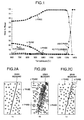
- Fig. 1 is a graph showing the results of phase equilibrium calculation, and indicates that with the chemical composition, the ⁇ phase precipitates at a temperature of 800°C to 900°C.
- a forged material of the chemical components shown in Table 1 was produced by vacuum melting (50 kg) and hot forging, and divided into a plurality of parts. The thus obtained alloy specimens were subjected to different heat treatments from one another.
- Table 2 shows heat treatment conditions (1a to 1c) for three Specimens A.
- Figs. 2A to 2C are schematic views (i.e. cross-sectional views) of micro structures of three Specimens A subjected to three different heat treatments 1a, 1b and 1c, respectively.
- Specimen A subjected to a heat treatment 1a without intermediate aging treatment and the second solution heat treatment
- fine precipitates of the ⁇ ' and ⁇ " phases each having a particle size of about 20 nm were observed in crystal grains.
- grain boundaries were linear in a cross-sectional view.
- Specimen A subjected to a heat treatment 1b without the second solution heat treatment
- many precipitates of the ⁇ phase were observed at some of the grain boundaries and in some of the crystal grains. The grain boundaries were zigzagged.
- Table 3 shows the chemical components of Specimen B. Besides the components shown in Table 3, Specimen B contains Ni and may contain impurities. [Table 3] Mo Cr Ti Co Al Si C 6 20 2.4 20 0.4 0.02 0.05
- Specimen B was melted by double melting processes of vacuum melting and electro slag remelting. The melted Specimen B was then formed into a plate having a thickness of about 5 mm by hot forging. The resultant plate material was used to produce a tubular combustor tail pipe. Before use in an actual equipment, the combustor tail pipe was subjected to heat treatments of a solution heat treatment at 1,050°C for two hours and an aging treatment at 800°C for 24 hours. The combustor tail pipe was used in a 1,300°C grade gas turbine with an output power of about 25 MW for about one year. Thereafter, the combustor tail pipe was removed from the actual equipment and tested together with the plate from a part of which the combustor tail pipe was made.
- Table 4 shows the thermal hysteresis of Specimens B (see 2a and 2b) observed before and after application to the actual equipment.
- First solution heat treatment First aging treatment Exposure conditions in an actual equipment Second solution heat treatment Second aging treatment
- Thermal hysteresia 2a (non) 1,050°C 2 hours 800°C 24 hours none none
- Thermal hysteresia 2b (as used in an actual equipment) 820°C * 6,000 hours none none Thermal hysteresia 2c (exposed to an invention embodiment heat treatment) 820°C * 6,000 hours 1,000°C 2 hours 800°C 24 hours
- Thermal hysteresia 2d (exposed to an invention embodiment heat treatment) 820°C * 6,000 hours 1,050°C 2 hours 800°C 24 hours *Design temperature
- thermal hysteresis 2c corresponds to the unused state of the plate formed into the combustor tail pipe.
- thermal hysteresis 2b corresponds to the as-used state of the specimen cut off from the degraded portion of the structure of the removed combustor tail pipe.
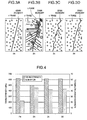
- Figs. 3A to 3D are schematic views of the structures of four Specimens B subjected to the thermal hysteresis 2a to 2d.
- the thermal hysteresis 2d corresponds to the state following the application to the actual equipment and in which the second solution heat treatment has been carried out
- the thermal hysteresis 2d corresponds to the state following the application to the actual equipment and in which the second solution heat treatment has been carried out
- a structure similar to that in the case of the thermal hysteresis 2c was observed.
- no ⁇ phase was observed even at the grain boundaries.
- the grain boundaries were zigzagged as is the case with the thermal hysteresis 2c but were more similar to straight lines than those resulting from the thermal hysteresis 2c.
- Fig. 4 shows the results of tensile test carried out on four Specimens B subjected to the thermal hysteresis 2a to 2d.
- the specimen exhibited a much lower tensile strength after the use in the actual equipment (thermal hysteresis 2b) than before the use in the actual equipment (thermal hysteresis 2a). This is due to the coarsened and reduced ⁇ ' phase for precipitation strengthening as shown in Fig. 3 .
- Tensile elongation was larger after the use (thermal hysteresis 2b) than before the use (thermal hysteresis 2a). This is mainly due to the zigzagged grain boundaries.
- thermo hysteresis 2c and 2d When the specimen used in the actual equipment was subjected to the seconf solution heat treatment and aging treatment (thermal hysteresis 2c and 2d), the tensile strength recovered to almost the same value as that observed before the use (thermal hysteresis 2a). This is due to fine re-precipitation of the ⁇ ' phase in the crystal grains.
- the tensile elongation resulting from the recovery based on the thermal hysteresis 2c and 2d was smaller than the value obtained after the use in the actual equipment (thermal hysteresis 2b) but was larger than the value obtained before the use in the actual equipment (thermal hysteresis 2a). This is because the grain boundaries were zigzagged instead of being linear. The tensile elongation was larger with the thermal hysteresis 2c, involving the significantly zigzagged grain boundaries, than with the thermal hysteresis 2d, involving the nearly linear grain boundaries.
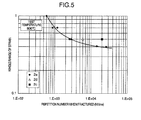
- Fig. 5 is a diagram showing the results of low cycle fatigue tests carried out on Specimen B subjected to the heat treatments based on the thermal hysteresis 2a, 2c, and 2d.
- the thermal hysteresis 2c resulted in significantly zigzagged grain boundaries and a fatigue life nearly tenfold longer than that obtained before the use (thermal hysteresis 2a).
- the thermal hysteresis 2d also resulted in an improved fatigue life, which is shorter than that resulting from the thermal hysteresis 2c with the significantly zigzagged grain boundaries.
- the above-described results indicate that the Ni-base alloy member with the ⁇ phase precipitated to reduce the strength as a result of the use in the actual equipment can be effectively recovered by the second solution heat treatment and the aging treatment. Furthermore, the recovered member offers a better strength characteristic and a longer lifetime than the unused member simply subjected to the solution heat treatment and the aging treatment.
Landscapes
- Chemical & Material Sciences (AREA)
- Engineering & Computer Science (AREA)
- Materials Engineering (AREA)
- Mechanical Engineering (AREA)
- Metallurgy (AREA)
- Organic Chemistry (AREA)
- Physics & Mathematics (AREA)
- Thermal Sciences (AREA)
- Crystallography & Structural Chemistry (AREA)
- Powder Metallurgy (AREA)
- Turbine Rotor Nozzle Sealing (AREA)
- Heat Treatment Of Steel (AREA)
Applications Claiming Priority (1)
| Application Number | Priority Date | Filing Date | Title |
|---|---|---|---|
| JP2009083990A JP5104797B2 (ja) | 2009-03-31 | 2009-03-31 | Ni基合金の熱処理方法と、Ni基合金部材の再生方法 |
Publications (2)
| Publication Number | Publication Date |
|---|---|
| EP2236635A1 true EP2236635A1 (fr) | 2010-10-06 |
| EP2236635B1 EP2236635B1 (fr) | 2019-08-07 |
Family
ID=42236287
Family Applications (1)
| Application Number | Title | Priority Date | Filing Date |
|---|---|---|---|
| EP10153772.8A Active EP2236635B1 (fr) | 2009-03-31 | 2010-02-17 | Legierung auf Nickelbasis und Herstellungsverfahren dafür |
Country Status (3)
| Country | Link |
|---|---|
| US (1) | US8906174B2 (fr) |
| EP (1) | EP2236635B1 (fr) |
| JP (1) | JP5104797B2 (fr) |
Cited By (1)
| Publication number | Priority date | Publication date | Assignee | Title |
|---|---|---|---|---|
| EP2412833A3 (fr) * | 2010-07-27 | 2012-04-11 | General Electric Company | Alliage de nickel et articles |
Families Citing this family (4)
| Publication number | Priority date | Publication date | Assignee | Title |
|---|---|---|---|---|
| EP3023509B1 (fr) * | 2013-07-17 | 2020-03-18 | Mitsubishi Hitachi Power Systems, Ltd. | Produit d'alliage à base de ni et son procédé de production |
| ES2927745T3 (es) * | 2017-05-26 | 2022-11-10 | Siemens Energy Inc | Reparación por soldadura fuerte de componente de motor de turbomáquina |
| CN114134439B (zh) * | 2021-11-30 | 2022-09-20 | 西安欧中材料科技有限公司 | 一种高合金化镍基粉末高温合金盘件的超塑性热处理方法 |
| US11525172B1 (en) | 2021-12-01 | 2022-12-13 | L.E. Jones Company | Nickel-niobium intermetallic alloy useful for valve seat inserts |
Citations (7)
| Publication number | Priority date | Publication date | Assignee | Title |
|---|---|---|---|---|
| GB2098119A (en) * | 1981-05-11 | 1982-11-17 | Chromalloy American Corp | Method of improving mechanical properties of alloy parts |
| JPS58113361A (ja) * | 1981-12-26 | 1983-07-06 | Toshiba Corp | ニツケル基超合金の熱処理方法 |
| GB2307483A (en) * | 1993-11-10 | 1997-05-28 | United Technologies Corp | Crack-resistant high strength super alloy articles |
| EP1096033A1 (fr) * | 1999-10-25 | 2001-05-02 | Mitsubishi Heavy Industries, Ltd. | Procédé pour le traitement thermique d'un alliage réfractaire à base de nickel |
| US20050072500A1 (en) * | 2003-10-06 | 2005-04-07 | Wei-Di Cao | Nickel-base alloys and methods of heat treating nickel-base alloys |
| EP1591548A1 (fr) * | 2004-04-27 | 2005-11-02 | Daido Steel Co., Ltd. | Procédé de production d'un superalliage à base de Ni à faible dilatation thermique |
| EP1605074A1 (fr) * | 2004-06-11 | 2005-12-14 | Kabushiki Kaisha Toshiba | Méthode de réparation par traitment thermique d'une pièce usée d'une turbine à gaz |
Family Cites Families (3)
| Publication number | Priority date | Publication date | Assignee | Title |
|---|---|---|---|---|
| EP0235075B1 (fr) * | 1986-01-20 | 1992-05-06 | Mitsubishi Jukogyo Kabushiki Kaisha | Alliage à base de nickel et procédé pour sa fabrication |
| FR2712307B1 (fr) * | 1993-11-10 | 1996-09-27 | United Technologies Corp | Articles en super-alliage à haute résistance mécanique et à la fissuration et leur procédé de fabrication. |
| JP4261562B2 (ja) * | 2006-08-25 | 2009-04-30 | 株式会社日立製作所 | 高温強度と高温延性の優れたNi−Fe基鍛造超合金とその製造法および蒸気タービンロータ |
-
2009
- 2009-03-31 JP JP2009083990A patent/JP5104797B2/ja not_active Expired - Fee Related
-
2010
- 2010-02-17 EP EP10153772.8A patent/EP2236635B1/fr active Active
- 2010-02-18 US US12/707,748 patent/US8906174B2/en active Active
Patent Citations (7)
| Publication number | Priority date | Publication date | Assignee | Title |
|---|---|---|---|---|
| GB2098119A (en) * | 1981-05-11 | 1982-11-17 | Chromalloy American Corp | Method of improving mechanical properties of alloy parts |
| JPS58113361A (ja) * | 1981-12-26 | 1983-07-06 | Toshiba Corp | ニツケル基超合金の熱処理方法 |
| GB2307483A (en) * | 1993-11-10 | 1997-05-28 | United Technologies Corp | Crack-resistant high strength super alloy articles |
| EP1096033A1 (fr) * | 1999-10-25 | 2001-05-02 | Mitsubishi Heavy Industries, Ltd. | Procédé pour le traitement thermique d'un alliage réfractaire à base de nickel |
| US20050072500A1 (en) * | 2003-10-06 | 2005-04-07 | Wei-Di Cao | Nickel-base alloys and methods of heat treating nickel-base alloys |
| EP1591548A1 (fr) * | 2004-04-27 | 2005-11-02 | Daido Steel Co., Ltd. | Procédé de production d'un superalliage à base de Ni à faible dilatation thermique |
| EP1605074A1 (fr) * | 2004-06-11 | 2005-12-14 | Kabushiki Kaisha Toshiba | Méthode de réparation par traitment thermique d'une pièce usée d'une turbine à gaz |
Cited By (3)
| Publication number | Priority date | Publication date | Assignee | Title |
|---|---|---|---|---|
| EP2412833A3 (fr) * | 2010-07-27 | 2012-04-11 | General Electric Company | Alliage de nickel et articles |
| US8608877B2 (en) | 2010-07-27 | 2013-12-17 | General Electric Company | Nickel alloy and articles |
| US9562276B2 (en) | 2010-07-27 | 2017-02-07 | General Electric Company | Nickel alloy and articles |
Also Published As
| Publication number | Publication date |
|---|---|
| JP5104797B2 (ja) | 2012-12-19 |
| US20100243111A1 (en) | 2010-09-30 |
| JP2010235996A (ja) | 2010-10-21 |
| US8906174B2 (en) | 2014-12-09 |
| EP2236635B1 (fr) | 2019-08-07 |
Similar Documents
| Publication | Publication Date | Title |
|---|---|---|
| US8512488B2 (en) | Ni—Fe based forging superalloy excellent in high-temperature strength and high-temperature ductility, method of manufacturing the same, and steam turbine rotor | |
| JP6057363B1 (ja) | Ni基超耐熱合金の製造方法 | |
| JP4546318B2 (ja) | Ni基合金部材とその製造法及びタービンエンジン部品並びに溶接材料とその製造法 | |
| EP3202931B1 (fr) | SURCHAUFFE Ni À BASE D'UN ALLIAGE RÉFRACTAIRE. | |
| CN106978551B (zh) | Ni基耐热合金焊接接头的制造方法及Ni基耐热合金焊接接头 | |
| JP6965364B2 (ja) | 析出硬化型コバルト−ニッケル基超合金およびそれから製造された物品 | |
| JP6223743B2 (ja) | Ni基合金の製造方法 | |
| EP3287209A1 (fr) | PROCÉDÉ DE PRODUCTION D'UN ALLIAGE À BASE DE Ni À TRÈS HAUTE RÉSISTANCE THERMIQUE | |
| JP6315319B2 (ja) | Fe−Ni基超耐熱合金の製造方法 | |
| CN107427897A (zh) | Ni基超耐热合金的制造方法 | |
| EP2236635A1 (fr) | Legierung auf Nickelbasis und Herstellungsverfahren dafür | |
| JP2014070230A (ja) | Ni基超耐熱合金の製造方法 | |
| JPH11246924A (ja) | Ni基単結晶超合金、その製造方法およびガスタービン部品 | |
| JP5395516B2 (ja) | 蒸気タービンのタービンロータ用ニッケル基合金及び蒸気タービンのタービンロータ | |
| JP2023143401A (ja) | Ni合金部材の製造方法 | |
| JP4167242B2 (ja) | Ni基耐熱合金の性能回復処理方法 | |
| JP6245728B2 (ja) | 疲労寿命回復熱処理方法 | |
| TWI657147B (zh) | 一種高應力鎳基合金 | |
| JP2001303152A (ja) | イリジウム基超合金 | |
| Meng et al. | Recrystallization of a nickel-base single crystal superalloy under compression | |
| JP2004197223A (ja) | イリジウム基超合金とその製造方法 | |
| JP2007113456A (ja) | トランジションピースの組織及び機械的特性の維持方法 |
Legal Events
| Date | Code | Title | Description |
|---|---|---|---|
| PUAI | Public reference made under article 153(3) epc to a published international application that has entered the european phase |
Free format text: ORIGINAL CODE: 0009012 |
|
| 17P | Request for examination filed |
Effective date: 20100528 |
|
| AK | Designated contracting states |
Kind code of ref document: A1 Designated state(s): AT BE BG CH CY CZ DE DK EE ES FI FR GB GR HR HU IE IS IT LI LT LU LV MC MK MT NL NO PL PT RO SE SI SK SM TR |
|
| RAP1 | Party data changed (applicant data changed or rights of an application transferred) |
Owner name: MITSUBISHI HITACHI POWER SYSTEMS, LTD. |
|
| RAP1 | Party data changed (applicant data changed or rights of an application transferred) |
Owner name: MITSUBISHI HITACHI POWER SYSTEMS, LTD. |
|
| 17Q | First examination report despatched |
Effective date: 20160728 |
|
| STAA | Information on the status of an ep patent application or granted ep patent |
Free format text: STATUS: EXAMINATION IS IN PROGRESS |
|
| RIC1 | Information provided on ipc code assigned before grant |
Ipc: C22F 1/10 20060101ALI20190315BHEP Ipc: C22C 1/00 20060101ALI20190315BHEP Ipc: C22C 19/05 20060101AFI20190315BHEP |
|
| GRAP | Despatch of communication of intention to grant a patent |
Free format text: ORIGINAL CODE: EPIDOSNIGR1 |
|
| STAA | Information on the status of an ep patent application or granted ep patent |
Free format text: STATUS: GRANT OF PATENT IS INTENDED |
|
| INTG | Intention to grant announced |
Effective date: 20190429 |
|
| GRAS | Grant fee paid |
Free format text: ORIGINAL CODE: EPIDOSNIGR3 |
|
| GRAA | (expected) grant |
Free format text: ORIGINAL CODE: 0009210 |
|
| STAA | Information on the status of an ep patent application or granted ep patent |
Free format text: STATUS: THE PATENT HAS BEEN GRANTED |
|
| AK | Designated contracting states |
Kind code of ref document: B1 Designated state(s): AT BE BG CH CY CZ DE DK EE ES FI FR GB GR HR HU IE IS IT LI LT LU LV MC MK MT NL NO PL PT RO SE SI SK SM TR |
|
| REG | Reference to a national code |
Ref country code: GB Ref legal event code: FG4D |
|
| REG | Reference to a national code |
Ref country code: CH Ref legal event code: EP Ref country code: AT Ref legal event code: REF Ref document number: 1163969 Country of ref document: AT Kind code of ref document: T Effective date: 20190815 |
|
| REG | Reference to a national code |
Ref country code: DE Ref legal event code: R096 Ref document number: 602010060366 Country of ref document: DE |
|
| REG | Reference to a national code |
Ref country code: IE Ref legal event code: FG4D |
|
| REG | Reference to a national code |
Ref country code: NL Ref legal event code: MP Effective date: 20190807 |
|
| REG | Reference to a national code |
Ref country code: LT Ref legal event code: MG4D |
|
| PG25 | Lapsed in a contracting state [announced via postgrant information from national office to epo] |
Ref country code: NO Free format text: LAPSE BECAUSE OF FAILURE TO SUBMIT A TRANSLATION OF THE DESCRIPTION OR TO PAY THE FEE WITHIN THE PRESCRIBED TIME-LIMIT Effective date: 20191107 Ref country code: PT Free format text: LAPSE BECAUSE OF FAILURE TO SUBMIT A TRANSLATION OF THE DESCRIPTION OR TO PAY THE FEE WITHIN THE PRESCRIBED TIME-LIMIT Effective date: 20191209 Ref country code: HR Free format text: LAPSE BECAUSE OF FAILURE TO SUBMIT A TRANSLATION OF THE DESCRIPTION OR TO PAY THE FEE WITHIN THE PRESCRIBED TIME-LIMIT Effective date: 20190807 Ref country code: SE Free format text: LAPSE BECAUSE OF FAILURE TO SUBMIT A TRANSLATION OF THE DESCRIPTION OR TO PAY THE FEE WITHIN THE PRESCRIBED TIME-LIMIT Effective date: 20190807 Ref country code: FI Free format text: LAPSE BECAUSE OF FAILURE TO SUBMIT A TRANSLATION OF THE DESCRIPTION OR TO PAY THE FEE WITHIN THE PRESCRIBED TIME-LIMIT Effective date: 20190807 Ref country code: LT Free format text: LAPSE BECAUSE OF FAILURE TO SUBMIT A TRANSLATION OF THE DESCRIPTION OR TO PAY THE FEE WITHIN THE PRESCRIBED TIME-LIMIT Effective date: 20190807 Ref country code: NL Free format text: LAPSE BECAUSE OF FAILURE TO SUBMIT A TRANSLATION OF THE DESCRIPTION OR TO PAY THE FEE WITHIN THE PRESCRIBED TIME-LIMIT Effective date: 20190807 Ref country code: BG Free format text: LAPSE BECAUSE OF FAILURE TO SUBMIT A TRANSLATION OF THE DESCRIPTION OR TO PAY THE FEE WITHIN THE PRESCRIBED TIME-LIMIT Effective date: 20191107 |
|
| REG | Reference to a national code |
Ref country code: AT Ref legal event code: MK05 Ref document number: 1163969 Country of ref document: AT Kind code of ref document: T Effective date: 20190807 |
|
| PG25 | Lapsed in a contracting state [announced via postgrant information from national office to epo] |
Ref country code: ES Free format text: LAPSE BECAUSE OF FAILURE TO SUBMIT A TRANSLATION OF THE DESCRIPTION OR TO PAY THE FEE WITHIN THE PRESCRIBED TIME-LIMIT Effective date: 20190807 Ref country code: GR Free format text: LAPSE BECAUSE OF FAILURE TO SUBMIT A TRANSLATION OF THE DESCRIPTION OR TO PAY THE FEE WITHIN THE PRESCRIBED TIME-LIMIT Effective date: 20191108 Ref country code: LV Free format text: LAPSE BECAUSE OF FAILURE TO SUBMIT A TRANSLATION OF THE DESCRIPTION OR TO PAY THE FEE WITHIN THE PRESCRIBED TIME-LIMIT Effective date: 20190807 Ref country code: IS Free format text: LAPSE BECAUSE OF FAILURE TO SUBMIT A TRANSLATION OF THE DESCRIPTION OR TO PAY THE FEE WITHIN THE PRESCRIBED TIME-LIMIT Effective date: 20191207 |
|
| PG25 | Lapsed in a contracting state [announced via postgrant information from national office to epo] |
Ref country code: TR Free format text: LAPSE BECAUSE OF FAILURE TO SUBMIT A TRANSLATION OF THE DESCRIPTION OR TO PAY THE FEE WITHIN THE PRESCRIBED TIME-LIMIT Effective date: 20190807 |
|
| PG25 | Lapsed in a contracting state [announced via postgrant information from national office to epo] |
Ref country code: RO Free format text: LAPSE BECAUSE OF FAILURE TO SUBMIT A TRANSLATION OF THE DESCRIPTION OR TO PAY THE FEE WITHIN THE PRESCRIBED TIME-LIMIT Effective date: 20190807 Ref country code: PL Free format text: LAPSE BECAUSE OF FAILURE TO SUBMIT A TRANSLATION OF THE DESCRIPTION OR TO PAY THE FEE WITHIN THE PRESCRIBED TIME-LIMIT Effective date: 20190807 Ref country code: EE Free format text: LAPSE BECAUSE OF FAILURE TO SUBMIT A TRANSLATION OF THE DESCRIPTION OR TO PAY THE FEE WITHIN THE PRESCRIBED TIME-LIMIT Effective date: 20190807 Ref country code: AT Free format text: LAPSE BECAUSE OF FAILURE TO SUBMIT A TRANSLATION OF THE DESCRIPTION OR TO PAY THE FEE WITHIN THE PRESCRIBED TIME-LIMIT Effective date: 20190807 Ref country code: IT Free format text: LAPSE BECAUSE OF FAILURE TO SUBMIT A TRANSLATION OF THE DESCRIPTION OR TO PAY THE FEE WITHIN THE PRESCRIBED TIME-LIMIT Effective date: 20190807 Ref country code: DK Free format text: LAPSE BECAUSE OF FAILURE TO SUBMIT A TRANSLATION OF THE DESCRIPTION OR TO PAY THE FEE WITHIN THE PRESCRIBED TIME-LIMIT Effective date: 20190807 |
|
| PG25 | Lapsed in a contracting state [announced via postgrant information from national office to epo] |
Ref country code: IS Free format text: LAPSE BECAUSE OF FAILURE TO SUBMIT A TRANSLATION OF THE DESCRIPTION OR TO PAY THE FEE WITHIN THE PRESCRIBED TIME-LIMIT Effective date: 20200224 Ref country code: SM Free format text: LAPSE BECAUSE OF FAILURE TO SUBMIT A TRANSLATION OF THE DESCRIPTION OR TO PAY THE FEE WITHIN THE PRESCRIBED TIME-LIMIT Effective date: 20190807 Ref country code: SK Free format text: LAPSE BECAUSE OF FAILURE TO SUBMIT A TRANSLATION OF THE DESCRIPTION OR TO PAY THE FEE WITHIN THE PRESCRIBED TIME-LIMIT Effective date: 20190807 Ref country code: CZ Free format text: LAPSE BECAUSE OF FAILURE TO SUBMIT A TRANSLATION OF THE DESCRIPTION OR TO PAY THE FEE WITHIN THE PRESCRIBED TIME-LIMIT Effective date: 20190807 |
|
| REG | Reference to a national code |
Ref country code: DE Ref legal event code: R097 Ref document number: 602010060366 Country of ref document: DE |
|
| PLBE | No opposition filed within time limit |
Free format text: ORIGINAL CODE: 0009261 |
|
| STAA | Information on the status of an ep patent application or granted ep patent |
Free format text: STATUS: NO OPPOSITION FILED WITHIN TIME LIMIT |
|
| PG2D | Information on lapse in contracting state deleted |
Ref country code: IS |
|
| 26N | No opposition filed |
Effective date: 20200603 |
|
| PG25 | Lapsed in a contracting state [announced via postgrant information from national office to epo] |
Ref country code: SI Free format text: LAPSE BECAUSE OF FAILURE TO SUBMIT A TRANSLATION OF THE DESCRIPTION OR TO PAY THE FEE WITHIN THE PRESCRIBED TIME-LIMIT Effective date: 20190807 |
|
| REG | Reference to a national code |
Ref country code: CH Ref legal event code: PL |
|
| REG | Reference to a national code |
Ref country code: BE Ref legal event code: MM Effective date: 20200229 |
|
| PG25 | Lapsed in a contracting state [announced via postgrant information from national office to epo] |
Ref country code: MC Free format text: LAPSE BECAUSE OF FAILURE TO SUBMIT A TRANSLATION OF THE DESCRIPTION OR TO PAY THE FEE WITHIN THE PRESCRIBED TIME-LIMIT Effective date: 20190807 Ref country code: LU Free format text: LAPSE BECAUSE OF NON-PAYMENT OF DUE FEES Effective date: 20200217 |
|
| PG25 | Lapsed in a contracting state [announced via postgrant information from national office to epo] |
Ref country code: LI Free format text: LAPSE BECAUSE OF NON-PAYMENT OF DUE FEES Effective date: 20200229 Ref country code: CH Free format text: LAPSE BECAUSE OF NON-PAYMENT OF DUE FEES Effective date: 20200229 |
|
| REG | Reference to a national code |
Ref country code: DE Ref legal event code: R082 Ref document number: 602010060366 Country of ref document: DE Representative=s name: MERH-IP MATIAS ERNY REICHL HOFFMANN PATENTANWA, DE Ref country code: DE Ref legal event code: R081 Ref document number: 602010060366 Country of ref document: DE Owner name: MITSUBISHI POWER, LTD., JP Free format text: FORMER OWNER: MITSUBISHI HITACHI POWER SYSTEMS, LTD., YOKOHAMA, JP |
|
| PG25 | Lapsed in a contracting state [announced via postgrant information from national office to epo] |
Ref country code: IE Free format text: LAPSE BECAUSE OF NON-PAYMENT OF DUE FEES Effective date: 20200217 |
|
| PG25 | Lapsed in a contracting state [announced via postgrant information from national office to epo] |
Ref country code: BE Free format text: LAPSE BECAUSE OF NON-PAYMENT OF DUE FEES Effective date: 20200229 |
|
| PG25 | Lapsed in a contracting state [announced via postgrant information from national office to epo] |
Ref country code: MT Free format text: LAPSE BECAUSE OF FAILURE TO SUBMIT A TRANSLATION OF THE DESCRIPTION OR TO PAY THE FEE WITHIN THE PRESCRIBED TIME-LIMIT Effective date: 20190807 Ref country code: CY Free format text: LAPSE BECAUSE OF FAILURE TO SUBMIT A TRANSLATION OF THE DESCRIPTION OR TO PAY THE FEE WITHIN THE PRESCRIBED TIME-LIMIT Effective date: 20190807 |
|
| PG25 | Lapsed in a contracting state [announced via postgrant information from national office to epo] |
Ref country code: MK Free format text: LAPSE BECAUSE OF FAILURE TO SUBMIT A TRANSLATION OF THE DESCRIPTION OR TO PAY THE FEE WITHIN THE PRESCRIBED TIME-LIMIT Effective date: 20190807 |
|
| PGFP | Annual fee paid to national office [announced via postgrant information from national office to epo] |
Ref country code: GB Payment date: 20221230 Year of fee payment: 14 |
|
| PGFP | Annual fee paid to national office [announced via postgrant information from national office to epo] |
Ref country code: DE Payment date: 20221229 Year of fee payment: 14 |
|
| REG | Reference to a national code |
Ref country code: DE Ref legal event code: R119 Ref document number: 602010060366 Country of ref document: DE |
|
| GBPC | Gb: european patent ceased through non-payment of renewal fee |
Effective date: 20240217 |
|
| PG25 | Lapsed in a contracting state [announced via postgrant information from national office to epo] |
Ref country code: DE Free format text: LAPSE BECAUSE OF NON-PAYMENT OF DUE FEES Effective date: 20240903 |
|
| PG25 | Lapsed in a contracting state [announced via postgrant information from national office to epo] |
Ref country code: GB Free format text: LAPSE BECAUSE OF NON-PAYMENT OF DUE FEES Effective date: 20240217 |
|
| PG25 | Lapsed in a contracting state [announced via postgrant information from national office to epo] |
Ref country code: FR Free format text: LAPSE BECAUSE OF NON-PAYMENT OF DUE FEES Effective date: 20240229 |
|
| PG25 | Lapsed in a contracting state [announced via postgrant information from national office to epo] |
Ref country code: GB Free format text: LAPSE BECAUSE OF NON-PAYMENT OF DUE FEES Effective date: 20240217 Ref country code: FR Free format text: LAPSE BECAUSE OF NON-PAYMENT OF DUE FEES Effective date: 20240229 Ref country code: DE Free format text: LAPSE BECAUSE OF NON-PAYMENT OF DUE FEES Effective date: 20240903 |
|
| PGFP | Annual fee paid to national office [announced via postgrant information from national office to epo] |
Ref country code: FR Payment date: 20230110 Year of fee payment: 14 |