EP2274882B1 - Verfahren zum senden einer nachricht und entsprechende einrichtung und computerprogrammprodukt - Google Patents
Verfahren zum senden einer nachricht und entsprechende einrichtung und computerprogrammprodukt Download PDFInfo
- Publication number
- EP2274882B1 EP2274882B1 EP09729398A EP09729398A EP2274882B1 EP 2274882 B1 EP2274882 B1 EP 2274882B1 EP 09729398 A EP09729398 A EP 09729398A EP 09729398 A EP09729398 A EP 09729398A EP 2274882 B1 EP2274882 B1 EP 2274882B1
- Authority
- EP
- European Patent Office
- Prior art keywords
- communication
- message
- user
- information
- probability
- Prior art date
- Legal status (The legal status is an assumption and is not a legal conclusion. Google has not performed a legal analysis and makes no representation as to the accuracy of the status listed.)
- Active
Links
Images


Classifications
-
- H—ELECTRICITY
- H04—ELECTRIC COMMUNICATION TECHNIQUE
- H04L—TRANSMISSION OF DIGITAL INFORMATION, e.g. TELEGRAPHIC COMMUNICATION
- H04L51/00—User-to-user messaging in packet-switching networks, transmitted according to store-and-forward or real-time protocols, e.g. e-mail
- H04L51/04—Real-time or near real-time messaging, e.g. instant messaging [IM]
-
- G—PHYSICS
- G06—COMPUTING OR CALCULATING; COUNTING
- G06Q—INFORMATION AND COMMUNICATION TECHNOLOGY [ICT] SPECIALLY ADAPTED FOR ADMINISTRATIVE, COMMERCIAL, FINANCIAL, MANAGERIAL OR SUPERVISORY PURPOSES; SYSTEMS OR METHODS SPECIALLY ADAPTED FOR ADMINISTRATIVE, COMMERCIAL, FINANCIAL, MANAGERIAL OR SUPERVISORY PURPOSES, NOT OTHERWISE PROVIDED FOR
- G06Q10/00—Administration; Management
- G06Q10/10—Office automation; Time management
- G06Q10/107—Computer-aided management of electronic mailing [e-mailing]
-
- H—ELECTRICITY
- H04—ELECTRIC COMMUNICATION TECHNIQUE
- H04L—TRANSMISSION OF DIGITAL INFORMATION, e.g. TELEGRAPHIC COMMUNICATION
- H04L51/00—User-to-user messaging in packet-switching networks, transmitted according to store-and-forward or real-time protocols, e.g. e-mail
- H04L51/21—Monitoring or handling of messages
- H04L51/226—Delivery according to priorities
-
- H—ELECTRICITY
- H04—ELECTRIC COMMUNICATION TECHNIQUE
- H04L—TRANSMISSION OF DIGITAL INFORMATION, e.g. TELEGRAPHIC COMMUNICATION
- H04L51/00—User-to-user messaging in packet-switching networks, transmitted according to store-and-forward or real-time protocols, e.g. e-mail
- H04L51/21—Monitoring or handling of messages
- H04L51/214—Monitoring or handling of messages using selective forwarding
Definitions
- the present invention relates to the field of personal communications.
- the present invention relates more particularly to the management of events that punctuate a communication.
- analysis software such as “keyloggers” or “mouseloggers” which are software for analyzing the actions of users on the keyboard or mouse, make it possible to learn about the activity of the user, but Such software is often uninstalled by these same users because it encroaches on privacy.
- the document D1 presents a method for launching the visualization of an audio and / or video clip notably at the end of the communication between two users.
- This audio or video content may have been previously downloaded to one of the users' terminals or may have been selected by one of the two users participating in the communication.
- D1 The purpose of D1 is to provide a personalization service identical to the CBRT service (Callback Ringtone, which allows users to customize the reception that is reserved for calling users) by allowing a customization of the end of the communication (Endtone).
- CBRT service Common Ringtone, which allows users to customize the reception that is reserved for calling users
- Endtone the end of the communication
- the document D2 presents a method in which the user has the possibility to be delivered an advertising message during a communication in order to maintain the free of it.
- the period of free communication is determined by the number of advertising messages that the user agrees to hear.
- the method of D2 offers the user to listen to a commercial message. If the user accepts, he can continue the communication begun after the end of the message. If he refuses, the communication is interrupted ( Figure 2D).
- the solution proposed by the invention does not have these disadvantages of the prior art. It concerns a method of transmitting a message by an entity of a communication network and to at least one terminal of a user.
- the invention makes it possible to determine the real availability of the latter to receive information that the we want to communicate to him.
- the invention proposes a non-intrusive technique based on a detection of the actual availability of the user and does not require installation of specific software. It is based solely on the analysis of information from communication flows generated by a user in a communication and through the communication network. It does not rely, as in the techniques of the prior art, on obtaining information relating to what is entered on the keypad of the terminal or what is done using a pointing system ( "Keylogger” or "mouselogger”).
- the invention is based on the information obtained to determine a probabilistic value of interruption or end of communication. This probabilistic value is used to know if the communication ends or has ended very recently and thus anticipate a greater probability that a user is available and therefore more receptive to receiving targeted information, for example of the advertising type, or of the type security alert or vulnerability information about the user's terminal.
- the information is provided to the user only when the probability of his communication ending reaches or exceeds a predetermined threshold.
- the method of the invention therefore makes it possible to wait for an optimal moment to provide the information, namely a moment when the user will be the most receptive to this information.
- the delivery of the message can occur locally when this message is already present within the terminal of the user. Delivery can take place following the transmission of the message by a remote entity.
- the invention therefore makes it possible to avoid drowning the user under an avalanche of information, mainly when he is in communication.
- the impact of the information sent at the end of the communication will be greater and the information will be perceived as less inconvenient for the user.
- said delivery step also takes account of information representative of a criticality level of said message.
- the provision of the information also takes into account a criticality of the information, namely an emergency / warning dimension of the information to be delivered to the user.
- This criticality can for example be expressed by a value.
- the predetermined supply value takes this value into account and can be lowered. For example, as part of a security alert, the predetermined supply value can be lowered to 0.6.
- the method of the invention will provide the information to the user as soon as the probability of the end of communication reaches the value 0.6.
- such a predetermined supply value may be increased to 0.9.
- the advertising information will be provided to the user only when the probability of the end of the communication reaches the value 0.9.
- the invention makes it possible to take into account probabilistic models adapted to the interruption detection of an end of communication and thus, to anticipate, if necessary, any interruption or end of a communication involving a user, so as to to transmit non-intrusive targeted information during the call, but on the contrary, once the latter has been interrupted or terminated.
- Such an approach is therefore more suitable for the user to be more receptive to the content of the message that will be sent to him on his terminal.
- the probabilistic model of the invention makes it possible to detect an interruption, or an imminent end of a communication based on analysis parameters of the latter.
- said delivery step is implemented via an instant messaging application and in that said message is in the form of an instant message.
- the invention reinforces the non-intrusive nature of the information provision.
- the instant message can be "shipped" using a virtual IM contact to provide information.
- the user is not diverted from his activity (ie the use of instant messaging) to receive the information. From the point of view of the user, this information is transmitted directly by a dedicated contact for this purpose, within the instant messenger, at the end of the communication he had in progress.
- the invention also relates to a device for transmitting a message by an entity of a communication network and to at least one terminal of a user.
- Another aspect of the invention relates to a computer program product downloadable from a communication network and / or recorded on a computer readable medium and / or executable by a processor, comprising program code instructions for the implementation the message transmission method as described above.
- the invention therefore proposes to use and analyze the communication data transmitted or received by a user to ensure its availability and, consequently, its possible receptivity to the provision of information.
- the invention makes it possible to submit to a user a message or a service at a moment of real physical presence and better availability, so as to optimize the chances that the user may be interested in the information submitted to him and thus, to optimize the targeting of information.
- a communication consists of a set of exchanges of at least one message between users, these message exchanges constituting a conversation.
- This type of system is in harmony with users' cycles of activity and is primarily intended to convey information to them when they are normally most willing to receive it.
- the invention makes it possible to detect the best moment of availability of a user by analyzing the traffic of the communications that he generates and by anticipating the end of his communications via a given communication terminal.
- the invention is based on this principle so that at the end or at least during an interruption of a communication in progress, a user can receive and especially be receptive to an automatic transmission of targeted information from a third.
- the information is provided in a non-intrusive manner, by an entity of the communication network or by a local device delivering the information.
- the delivery of information is non-intrusive because it is expected the end or at least a temporary interruption of a communication in progress to transmit to the user targeted information (advertising, for example).
- the information is itself provided in the form of a communication, which takes over from the communication whose end has just been detected.
- the information to be transmitted to the user may have an advertising character or a security character.
- the transmission method according to the invention brings a new and inventive solution to this problem by analyzing the information exchanged during the communication in order to detect the probable end of a communication.
- the invention proactively detects the end of the communication and is able to provide the information that is to be delivered to it at the end of the communication, without the detection and provision of the information. information is no longer intrusive.
- the implementation of the method of the invention is presented via an instant messaging application to which the user is connected.
- This instant messaging application can be implemented in the context of the use of a personal computer or any other communication terminal having means for implementing such an application (third-generation mobile terminals, etc.). ).
- the instant messenger traffic generated by a user is analyzed and allows to predict the purposes of the communications of the latter.
- the use of an instant messaging application in the vast majority of cases requires the presence and attention of the user in front of the screen of his terminal.
- the principle of the invention being to send information to the user at the best moment of availability, it is therefore not sufficient for example to ensure its availability by looking at the purposes of telephone communications as is the case. techniques of the prior art (the presence in front of the screen is no longer assured at that time).
- a message refers to an instant message (or IM), and a communication corresponds to a set of IM consistent between them, that is to say they correspond to the same written conversation.
- the invention can receive many applications. There are nevertheless two main types of application of the invention according to whom it is addressed.
- the invention In enterprise, where the use of professional instant messaging is developing, the invention must make it possible to transmit messages to employees. of information. It is also possible, for the sake of non-interruption of communications, allow the sending of delayed instant messages between employees. It is therefore mainly in the professional field to exploit the moment of better availability so as not to expose users to over-information.
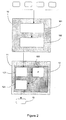
- a probe 10 for analyzing the message traffic of IM users such as user A.
- IM users such as user A.
- a probe 10 for analyzing the message traffic of IM users such as user A.
- a corporate network it is possible to perform a particular analysis on a given communication port on the appropriate switch.
- a user B has entered into communication with the user A.
- the user B is for example a client of another operator network 200.
- This probe 10 sends the data representative of the communications (such as traces of activities) to a server 11 in charge of the analysis of these representative data and the calculation of the probable end of the communication (for example using of registered models within a database 14).
- this server 11 is also in charge of transmitting the message 13 to the user A as soon as the communication ends.
- the probe 10 extracts (101) the representative data of the communications which are traces of instant messaging activity and continuously sends (102) these activity traces to the server 11 which comprises a module 12 of analysis of these traces of activities.
- this module 12 extracts (121) traces of activity the relevant data (such as the size of the messages, the time elapsed between consecutive messages) and using a decision model previously constructed by learning (for example a neural network, a decision tree, etc.) gives (122) the probability "P" that a message is the last of a communication.
- this module 12 triggers 123 sending information 13 to the user available from.
- the previously defined value can be defined as a confidence threshold of the end of communication probability. This threshold may depend on the nature of the information, its degree of importance for example.
- a first variant it can be achieved by sending an Instant Message IM (simple text or URL).
- IM simple text or URL
- a virtual contact can then be previously added to the user's notebook in a transparent manner and can therefore send these messages of an informative nature.
- This first variant has the advantage of using the same communication channel as that of the user. Thus, at the end of the communication, the information is transmitted directly in the same instant messaging application.
- the information to be sent can be displayed via pop-up windows (with a sound and in the background of the current application and / or transparent and disappearing of themselves). It is then possible to add a control system for the visualization of the information to check the relevance of the moment of provision of the information (for example by analyzing the dates of appearance and closure of the pop-up window by report to its date of dispatch).
- the invention makes it possible to detect that instant messaging (IM) communication is or is about to be completed.
- IM instant messaging
- an instant messaging communication consists of a set of messages all dated, each independently.
- the IM there is no signaling of start and end of communication.
- detecting an end of communication amounts to identifying the last message of a communication.
- the invention is based on one or more predefined templates for previously built instant messaging communication purposes.
- the first step in building such a model through learning is to build a training base.
- Positive examples are records of communication characteristics that correspond to an end of communication (eg "soon", "bye” ). Such a record will be marked as a communication end in the template.
- Negative examples are constructed identically except that the features do not correspond to communications purposes.
- the records associated with the negative examples in the learning model are therefore marked as not corresponding to an end of communication.
- Such a negative example may be "I'll be back in 2 minutes” or "wait”. These messages clearly indicate that the conversation is not over.
- the next phase is to apply a learning technique or algorithm.
- a learning technique or algorithm eg J48 algorithm
- neural networks eg J48 algorithm
- Bayesian networks e.g., Bayesian networks
- SVM vector support machines
- the created template must then be tested. Another set of examples can then be created for this purpose. It is also possible to reserve part of the training base for testing.
- test results are expressed in terms of accuracy and recall.
- Precision accounts for prediction errors. It is a question of taking into account the errors made during the recognition to integrate these errors to the model and if necessary to mark certain examples as being "negative”. The reminders allow to integrate omissions of the model.
- one property of the model may be favored over another.
- one property of the model may be preferred over another.
- a model thus constructed that is considered sufficiently powerful in its context of use can then be applied to the prediction of end of communications.
- the characteristics of the communication (with the same formalism as that adopted for the development of the model) are captured in real time and confronted with the previously constructed learning model.
- the prediction module (previously described, see 5.3) is responsible for transmitting the end of IM communication information to a decision-making module and sending messages. It is this last module that makes the final decision to send such message or not because according to its nature (security alert, advertising, etc.) we will be satisfied with a higher or lower confidence rate.
- the sending of information to the user can be achieved using several techniques.
- the first and most practical is to use the user's instant messaging channel. It is proposed for this to the user to register for the service. On this occasion he can if he wishes to specify his thematic preferences.
- the service registration has the effect of adding a virtual user to the user's contacts. It is this virtual contact that will send the information as instant messages. These instant messages may include keywords or images and where appropriate an Internet address (for example in the form of a "URL") to the detailed content of the information.
- the date of consultation of the associated web page (or its non-consultation) compared to the date of issue of the instant message makes it possible to check the relevance of the device. If the page is not consulted or late is that the moment of supposed availability was not one or the theme of the proposed information did not please the user.
- data mining in English
- Such a device comprises a memory 31 consisting of a buffer memory, a processing unit 32, equipped for example with a microprocessor P, and driven by the computer program 33, implementing the control method according to the invention .
- the code instructions of the computer program 33 are for example loaded into a RAM memory before being executed by the processor of the processing unit 32.
- the processing unit 32 receives as input (I ) a set of messages constituting a conversation between users.
- the microprocessor of the processing unit 32 implements the steps of the method described above, according to the instructions of the computer program 33, to determine the probability that the message being analyzed is the last of the communication between the user A and B.
- the engine comprises, in addition to the buffer memory 31, message analysis means and means for calculating the end of message probability. It also comprises means for providing a message comprising the information to be transmitted (T) to the user. These means are controlled by the microprocessor of the processing unit 32.
Landscapes
- Engineering & Computer Science (AREA)
- Business, Economics & Management (AREA)
- Human Resources & Organizations (AREA)
- Entrepreneurship & Innovation (AREA)
- Computer Networks & Wireless Communication (AREA)
- Signal Processing (AREA)
- Strategic Management (AREA)
- Computer Hardware Design (AREA)
- Data Mining & Analysis (AREA)
- Economics (AREA)
- Marketing (AREA)
- Operations Research (AREA)
- Quality & Reliability (AREA)
- Tourism & Hospitality (AREA)
- Physics & Mathematics (AREA)
- General Business, Economics & Management (AREA)
- General Physics & Mathematics (AREA)
- Theoretical Computer Science (AREA)
- Information Transfer Between Computers (AREA)
Claims (8)
- Verfahren zur Übertragung einer Mitteilung durch eine Entität eines Kommunikationsnetzes und an mindestens ein Endgerät eines Benutzers, dadurch gekennzeichnet, dass es enthält:- einen Schritt der Analyse einer Einheit von Mitteilungen, die in einer Kommunikation ausgetauscht werden, wobei der Analyseschritt mindestens eine Information liefert, die für eine Unterbrechungswahrscheinlichkeit der Kommunikation repräsentativ ist;- einen Schritt der Lieferung der Mitteilung an das Endgerät, wenn die Wahrscheinlichkeit höher ist als eine vorbestimmte Schwelle.
- Verfahren nach Anspruch 1, dadurch gekennzeichnet, dass der Lieferungsschritt ebenfalls eine Information berücksichtigt, die für einen Pegel der Kritizität der Mitteilung repräsentativ ist.
- Verfahren nach einem der Ansprüche 1 bis 2, dadurch gekennzeichnet, dass der Analyseschritt enthält:- einen Schritt des Erhalts einer Einheit von Informationen, die für mindestens eine Folge von Mitteilungen repräsentativ ist, die vom Benutzer bei der Kommunikation ausgetauscht werden;- einen Schritt der Wahrscheinlichkeitsanalyse der Informationen durch Vergleich mit mindestens einem Wahrscheinlichkeitsmodell der Erfassung einer Kommunikationsunterbrechung, um die mindestens eine Unterbrechungswahrscheinlichkeit der Kommunikation zu erhalten.
- Verfahren nach Anspruch 3, dadurch gekennzeichnet, dass das mindestens eine Wahrscheinlichkeitsmodell mindestens einen Parameter berücksichtigt, der zu der Gruppe gehört, die mindestens enthält:- eine mittlere Anzahl von während einer Kommunikation ausgetauschten Mitteilungen;- eine mittlere Dauer einer Kommunikation;- eine Richtung der Mitteilungen einer Kommunikation;- eine Entwicklung der Größe der während der Kommunikation ausgetauschten Mitteilungen;- eine zwischen zwei Mitteilungen einer Kommunikation vergangene Zeit.
- Verfahren nach einem der Ansprüche 1 bis 4, dadurch gekennzeichnet, dass der Schritt des Lieferns mittels einer Anwendung einer sofortigen Mitteilungsübermittlung durchgeführt wird, und dass die Mitteilung in Form einer Sofortmitteilung vorliegt.
- Vorrichtung zur Übertragung einer Mitteilung durch eine Entität eines Kommunikationsnetzes und an mindestens ein Endgerät eines Benutzers, dadurch gekennzeichnet, dass sie enthält:- Einrichtungen zur Analyse einer Einheit von in einer Kommunikation ausgetauschten Mitteilungen, wobei die Analyseeinrichtungen mindestens eine Information liefern, die für eine Unterbrechungswahrscheinlichkeit der Kommunikation repräsentativ ist;- Einrichtungen zum Liefern der Mitteilung an das Endgerät, wenn die Wahrscheinlichkeit höher ist als eine vorbestimmte Schwelle.
- System zur Übertragung einer Mitteilung an einen Benutzer eines Endgeräts, die von einer Entität eines Kommunikationsnetzes kommt, dadurch gekennzeichnet, dass es enthält:- Einrichtungen zur Analyse einer Einheit von in einer Kommunikation ausgetauschten Mitteilungen, wobei die Analyseeinrichtungen mindestens eine Information liefern, die für eine Unterbrechungswahrscheinlichkeit der Kommunikation repräsentativ ist;- Einrichtungen zum Liefern der Mitteilung an das Endgerät, wenn die Wahrscheinlichkeit höher ist als eine vorbestimmte Schwelle.
- Computerprogrammprodukt, das von einem Kommunikationsnetz heruntergeladen und/oder auf einem computerlesbaren Träger gespeichert und/oder von einem Mikroprozessor ausgeführt werden kann, dadurch gekennzeichnet, dass es Programmcodeanweisungen für die Ausführung des Verfahrens zur Übertragung einer Mitteilung nach mindestens einem der Ansprüche 1 bis 5 enthält, wenn es auf einem Computer ausgeführt wird.
Priority Applications (1)
| Application Number | Priority Date | Filing Date | Title |
|---|---|---|---|
| PL09729398T PL2274882T3 (pl) | 2008-03-20 | 2009-03-20 | Sposób przesyłania wiadomości, urządzenie i produkt programu komputerowego |
Applications Claiming Priority (2)
| Application Number | Priority Date | Filing Date | Title |
|---|---|---|---|
| FR0851826A FR2929064A1 (fr) | 2008-03-20 | 2008-03-20 | Procede de transmission de message, dispositif et produit programme d'ordinateur correspondants |
| PCT/FR2009/050487 WO2009125112A1 (fr) | 2008-03-20 | 2009-03-20 | Procede de transmission de message, dispositif et produit programme d'ordinateur correspondants |
Publications (2)
| Publication Number | Publication Date |
|---|---|
| EP2274882A1 EP2274882A1 (de) | 2011-01-19 |
| EP2274882B1 true EP2274882B1 (de) | 2012-05-23 |
Family
ID=40158254
Family Applications (1)
| Application Number | Title | Priority Date | Filing Date |
|---|---|---|---|
| EP09729398A Active EP2274882B1 (de) | 2008-03-20 | 2009-03-20 | Verfahren zum senden einer nachricht und entsprechende einrichtung und computerprogrammprodukt |
Country Status (5)
| Country | Link |
|---|---|
| EP (1) | EP2274882B1 (de) |
| ES (1) | ES2387732T3 (de) |
| FR (1) | FR2929064A1 (de) |
| PL (1) | PL2274882T3 (de) |
| WO (1) | WO2009125112A1 (de) |
Family Cites Families (4)
| Publication number | Priority date | Publication date | Assignee | Title |
|---|---|---|---|---|
| US6009150A (en) * | 1998-01-28 | 1999-12-28 | Broadpoint Commuications, Inc. | Call processing method for delivering promotional messages |
| US20030046151A1 (en) * | 2001-08-22 | 2003-03-06 | Abuan Joe S. | Dynamic audio advertising updates |
| US7761816B2 (en) * | 2006-02-10 | 2010-07-20 | Vringo, Inc. | Personalization content sharing system and method |
| US20080004954A1 (en) * | 2006-06-30 | 2008-01-03 | Microsoft Corporation | Methods and architecture for performing client-side directed marketing with caching and local analytics for enhanced privacy and minimal disruption |
-
2008
- 2008-03-20 FR FR0851826A patent/FR2929064A1/fr active Pending
-
2009
- 2009-03-20 PL PL09729398T patent/PL2274882T3/pl unknown
- 2009-03-20 WO PCT/FR2009/050487 patent/WO2009125112A1/fr not_active Ceased
- 2009-03-20 EP EP09729398A patent/EP2274882B1/de active Active
- 2009-03-20 ES ES09729398T patent/ES2387732T3/es active Active
Also Published As
| Publication number | Publication date |
|---|---|
| PL2274882T3 (pl) | 2012-10-31 |
| ES2387732T3 (es) | 2012-10-01 |
| EP2274882A1 (de) | 2011-01-19 |
| WO2009125112A1 (fr) | 2009-10-15 |
| FR2929064A1 (fr) | 2009-09-25 |
Similar Documents
| Publication | Publication Date | Title |
|---|---|---|
| CN106656742A (zh) | 移动情境sms广告 | |
| EP3087706B1 (de) | Verfahren und system zur kommunikation zwischen webbrowsern mit einer einheitlichen kommunikationsumgebung | |
| EP1995931A2 (de) | Aktualisierungssystem und -verfahren des Präsenzzustands eines Nutzers an einem Endgerät durch Aggregation von Multi-Source-Informationen | |
| US20200328990A1 (en) | Intelligent Scheduler for Chatbot Sessions | |
| WO2009047164A1 (fr) | Dispositif et procedes de diffusion personnalisee de publicites ciblees depuis un serveur local | |
| US10592832B2 (en) | Effective utilization of idle cycles of users | |
| FR2968497A1 (fr) | Procede et systeme de diffusion de contenus informatiques vers un terminal mobile | |
| CN111209381A (zh) | 对话场景中时间管理方法及装置 | |
| EP2274882B1 (de) | Verfahren zum senden einer nachricht und entsprechende einrichtung und computerprogrammprodukt | |
| US9811399B1 (en) | Maintaining temporary white lists for application notifications | |
| FR2908212A1 (fr) | Applications pour le profilage d'utilisateurs de services de telecommunications | |
| WO2021028630A1 (fr) | Etablissement d'une communication par analyse des mouvements oculaires | |
| FR2914089A1 (fr) | Appareil electronique communicant, systemes et procedes utilisant un tel appareil. | |
| EP2297687A1 (de) | Analyse von kommunikationen nach der sendung einer nachricht | |
| FR3042374A1 (fr) | Aide a l'etablissement d'une communication telephonique par provision d'informations sur l'utilisateur appelant | |
| EP3476110B1 (de) | Verfahren und vorrichtung zur verarbeitung eines multimediaobjekts | |
| EP4375899A1 (de) | Verfahren und vorrichtung zur empfehlung von aktivitäten an mindestens einen benutzer | |
| EP2835939B1 (de) | Verfahren zum Verwalten, in einem ersten Gerät, des Schreibens von einer Antwort auf eine Nachricht von einem zweiten Gerät empfangenen. | |
| WO2025242644A1 (fr) | Procédé de prévention de fraude numérique et dispositif électronique, système, produit programme d'ordinateur et support correspondants | |
| FR3019927A1 (fr) | Procede de declaration dans un systeme de mesure d'audience centree-utilisateur. | |
| FR3110320A1 (fr) | Détection d’utilisateurs sujets à l’illectronisme | |
| EP3757865A1 (de) | Verarbeitungsverfahren einer nachricht und entsprechende vorrichtung | |
| WO2006092505A1 (fr) | Procede et dispositif de mise en relation automatique de terminaux proches | |
| WO2020201663A1 (fr) | Procédé de communication sécurisée adapté pour commander un produit ou un service à l'aide d'un terminal de communication | |
| FR2882875A1 (fr) | Procede et dispositif de mise en relation automatique de terminaux proches |
Legal Events
| Date | Code | Title | Description |
|---|---|---|---|
| PUAI | Public reference made under article 153(3) epc to a published international application that has entered the european phase |
Free format text: ORIGINAL CODE: 0009012 |
|
| AK | Designated contracting states |
Kind code of ref document: A1 Designated state(s): AT BE BG CH CY CZ DE DK EE ES FI FR GB GR HR HU IE IS IT LI LT LU LV MC MK MT NL NO PL PT RO SE SI SK TR |
|
| AX | Request for extension of the european patent |
Extension state: AL BA RS |
|
| 17P | Request for examination filed |
Effective date: 20101020 |
|
| DAX | Request for extension of the european patent (deleted) | ||
| REG | Reference to a national code |
Ref country code: DE Ref legal event code: R079 Ref document number: 602009007226 Country of ref document: DE Free format text: PREVIOUS MAIN CLASS: H04L0012580000 Ipc: G06Q0030000000 |
|
| RIC1 | Information provided on ipc code assigned before grant |
Ipc: H04M 3/487 20060101ALI20110919BHEP Ipc: G06Q 30/00 20060101AFI20110919BHEP Ipc: G06Q 10/00 20060101ALI20110919BHEP Ipc: H04L 12/58 20060101ALI20110919BHEP |
|
| GRAP | Despatch of communication of intention to grant a patent |
Free format text: ORIGINAL CODE: EPIDOSNIGR1 |
|
| GRAS | Grant fee paid |
Free format text: ORIGINAL CODE: EPIDOSNIGR3 |
|
| GRAA | (expected) grant |
Free format text: ORIGINAL CODE: 0009210 |
|
| AK | Designated contracting states |
Kind code of ref document: B1 Designated state(s): AT BE BG CH CY CZ DE DK EE ES FI FR GB GR HR HU IE IS IT LI LT LU LV MC MK MT NL NO PL PT RO SE SI SK TR |
|
| REG | Reference to a national code |
Ref country code: GB Ref legal event code: FG4D Free format text: NOT ENGLISH |
|
| REG | Reference to a national code |
Ref country code: CH Ref legal event code: EP |
|
| REG | Reference to a national code |
Ref country code: AT Ref legal event code: REF Ref document number: 559371 Country of ref document: AT Kind code of ref document: T Effective date: 20120615 |
|
| REG | Reference to a national code |
Ref country code: IE Ref legal event code: FG4D Free format text: LANGUAGE OF EP DOCUMENT: FRENCH |
|
| REG | Reference to a national code |
Ref country code: DE Ref legal event code: R096 Ref document number: 602009007226 Country of ref document: DE Effective date: 20120802 |
|
| REG | Reference to a national code |
Ref country code: NL Ref legal event code: VDEP Effective date: 20120523 |
|
| REG | Reference to a national code |
Ref country code: ES Ref legal event code: FG2A Ref document number: 2387732 Country of ref document: ES Kind code of ref document: T3 Effective date: 20121001 |
|
| REG | Reference to a national code |
Ref country code: LT Ref legal event code: MG4D Effective date: 20120523 |
|
| PG25 | Lapsed in a contracting state [announced via postgrant information from national office to epo] |
Ref country code: SE Free format text: LAPSE BECAUSE OF FAILURE TO SUBMIT A TRANSLATION OF THE DESCRIPTION OR TO PAY THE FEE WITHIN THE PRESCRIBED TIME-LIMIT Effective date: 20120523 Ref country code: CY Free format text: LAPSE BECAUSE OF FAILURE TO SUBMIT A TRANSLATION OF THE DESCRIPTION OR TO PAY THE FEE WITHIN THE PRESCRIBED TIME-LIMIT Effective date: 20120523 Ref country code: FI Free format text: LAPSE BECAUSE OF FAILURE TO SUBMIT A TRANSLATION OF THE DESCRIPTION OR TO PAY THE FEE WITHIN THE PRESCRIBED TIME-LIMIT Effective date: 20120523 Ref country code: IS Free format text: LAPSE BECAUSE OF FAILURE TO SUBMIT A TRANSLATION OF THE DESCRIPTION OR TO PAY THE FEE WITHIN THE PRESCRIBED TIME-LIMIT Effective date: 20120923 Ref country code: NO Free format text: LAPSE BECAUSE OF FAILURE TO SUBMIT A TRANSLATION OF THE DESCRIPTION OR TO PAY THE FEE WITHIN THE PRESCRIBED TIME-LIMIT Effective date: 20120823 Ref country code: LT Free format text: LAPSE BECAUSE OF FAILURE TO SUBMIT A TRANSLATION OF THE DESCRIPTION OR TO PAY THE FEE WITHIN THE PRESCRIBED TIME-LIMIT Effective date: 20120523 |
|
| REG | Reference to a national code |
Ref country code: PL Ref legal event code: T3 |
|
| REG | Reference to a national code |
Ref country code: AT Ref legal event code: MK05 Ref document number: 559371 Country of ref document: AT Kind code of ref document: T Effective date: 20120523 |
|
| PG25 | Lapsed in a contracting state [announced via postgrant information from national office to epo] |
Ref country code: HR Free format text: LAPSE BECAUSE OF FAILURE TO SUBMIT A TRANSLATION OF THE DESCRIPTION OR TO PAY THE FEE WITHIN THE PRESCRIBED TIME-LIMIT Effective date: 20120523 Ref country code: PT Free format text: LAPSE BECAUSE OF FAILURE TO SUBMIT A TRANSLATION OF THE DESCRIPTION OR TO PAY THE FEE WITHIN THE PRESCRIBED TIME-LIMIT Effective date: 20120924 Ref country code: SI Free format text: LAPSE BECAUSE OF FAILURE TO SUBMIT A TRANSLATION OF THE DESCRIPTION OR TO PAY THE FEE WITHIN THE PRESCRIBED TIME-LIMIT Effective date: 20120523 Ref country code: GR Free format text: LAPSE BECAUSE OF FAILURE TO SUBMIT A TRANSLATION OF THE DESCRIPTION OR TO PAY THE FEE WITHIN THE PRESCRIBED TIME-LIMIT Effective date: 20120824 Ref country code: LV Free format text: LAPSE BECAUSE OF FAILURE TO SUBMIT A TRANSLATION OF THE DESCRIPTION OR TO PAY THE FEE WITHIN THE PRESCRIBED TIME-LIMIT Effective date: 20120523 |
|
| PG25 | Lapsed in a contracting state [announced via postgrant information from national office to epo] |
Ref country code: NL Free format text: LAPSE BECAUSE OF FAILURE TO SUBMIT A TRANSLATION OF THE DESCRIPTION OR TO PAY THE FEE WITHIN THE PRESCRIBED TIME-LIMIT Effective date: 20120523 Ref country code: DK Free format text: LAPSE BECAUSE OF FAILURE TO SUBMIT A TRANSLATION OF THE DESCRIPTION OR TO PAY THE FEE WITHIN THE PRESCRIBED TIME-LIMIT Effective date: 20120523 Ref country code: RO Free format text: LAPSE BECAUSE OF FAILURE TO SUBMIT A TRANSLATION OF THE DESCRIPTION OR TO PAY THE FEE WITHIN THE PRESCRIBED TIME-LIMIT Effective date: 20120523 Ref country code: CZ Free format text: LAPSE BECAUSE OF FAILURE TO SUBMIT A TRANSLATION OF THE DESCRIPTION OR TO PAY THE FEE WITHIN THE PRESCRIBED TIME-LIMIT Effective date: 20120523 Ref country code: EE Free format text: LAPSE BECAUSE OF FAILURE TO SUBMIT A TRANSLATION OF THE DESCRIPTION OR TO PAY THE FEE WITHIN THE PRESCRIBED TIME-LIMIT Effective date: 20120523 Ref country code: SK Free format text: LAPSE BECAUSE OF FAILURE TO SUBMIT A TRANSLATION OF THE DESCRIPTION OR TO PAY THE FEE WITHIN THE PRESCRIBED TIME-LIMIT Effective date: 20120523 Ref country code: AT Free format text: LAPSE BECAUSE OF FAILURE TO SUBMIT A TRANSLATION OF THE DESCRIPTION OR TO PAY THE FEE WITHIN THE PRESCRIBED TIME-LIMIT Effective date: 20120523 |
|
| PG25 | Lapsed in a contracting state [announced via postgrant information from national office to epo] |
Ref country code: IT Free format text: LAPSE BECAUSE OF FAILURE TO SUBMIT A TRANSLATION OF THE DESCRIPTION OR TO PAY THE FEE WITHIN THE PRESCRIBED TIME-LIMIT Effective date: 20120523 |
|
| PLBE | No opposition filed within time limit |
Free format text: ORIGINAL CODE: 0009261 |
|
| STAA | Information on the status of an ep patent application or granted ep patent |
Free format text: STATUS: NO OPPOSITION FILED WITHIN TIME LIMIT |
|
| 26N | No opposition filed |
Effective date: 20130226 |
|
| REG | Reference to a national code |
Ref country code: DE Ref legal event code: R097 Ref document number: 602009007226 Country of ref document: DE Effective date: 20130226 |
|
| PG25 | Lapsed in a contracting state [announced via postgrant information from national office to epo] |
Ref country code: BG Free format text: LAPSE BECAUSE OF FAILURE TO SUBMIT A TRANSLATION OF THE DESCRIPTION OR TO PAY THE FEE WITHIN THE PRESCRIBED TIME-LIMIT Effective date: 20120823 |
|
| BERE | Be: lapsed |
Owner name: FRANCE TELECOM Effective date: 20130331 |
|
| PG25 | Lapsed in a contracting state [announced via postgrant information from national office to epo] |
Ref country code: MC Free format text: LAPSE BECAUSE OF NON-PAYMENT OF DUE FEES Effective date: 20130331 |
|
| REG | Reference to a national code |
Ref country code: CH Ref legal event code: PL |
|
| REG | Reference to a national code |
Ref country code: IE Ref legal event code: MM4A |
|
| REG | Reference to a national code |
Ref country code: DE Ref legal event code: R119 Ref document number: 602009007226 Country of ref document: DE Effective date: 20131001 |
|
| PG25 | Lapsed in a contracting state [announced via postgrant information from national office to epo] |
Ref country code: IE Free format text: LAPSE BECAUSE OF NON-PAYMENT OF DUE FEES Effective date: 20130320 Ref country code: CH Free format text: LAPSE BECAUSE OF NON-PAYMENT OF DUE FEES Effective date: 20130331 Ref country code: LI Free format text: LAPSE BECAUSE OF NON-PAYMENT OF DUE FEES Effective date: 20130331 Ref country code: BE Free format text: LAPSE BECAUSE OF NON-PAYMENT OF DUE FEES Effective date: 20130331 Ref country code: DE Free format text: LAPSE BECAUSE OF NON-PAYMENT OF DUE FEES Effective date: 20131001 |
|
| PG25 | Lapsed in a contracting state [announced via postgrant information from national office to epo] |
Ref country code: MT Free format text: LAPSE BECAUSE OF FAILURE TO SUBMIT A TRANSLATION OF THE DESCRIPTION OR TO PAY THE FEE WITHIN THE PRESCRIBED TIME-LIMIT Effective date: 20120523 |
|
| PG25 | Lapsed in a contracting state [announced via postgrant information from national office to epo] |
Ref country code: TR Free format text: LAPSE BECAUSE OF FAILURE TO SUBMIT A TRANSLATION OF THE DESCRIPTION OR TO PAY THE FEE WITHIN THE PRESCRIBED TIME-LIMIT Effective date: 20120523 |
|
| PG25 | Lapsed in a contracting state [announced via postgrant information from national office to epo] |
Ref country code: LU Free format text: LAPSE BECAUSE OF NON-PAYMENT OF DUE FEES Effective date: 20130320 Ref country code: HU Free format text: LAPSE BECAUSE OF FAILURE TO SUBMIT A TRANSLATION OF THE DESCRIPTION OR TO PAY THE FEE WITHIN THE PRESCRIBED TIME-LIMIT; INVALID AB INITIO Effective date: 20090320 Ref country code: MK Free format text: LAPSE BECAUSE OF FAILURE TO SUBMIT A TRANSLATION OF THE DESCRIPTION OR TO PAY THE FEE WITHIN THE PRESCRIBED TIME-LIMIT Effective date: 20120523 |
|
| REG | Reference to a national code |
Ref country code: FR Ref legal event code: PLFP Year of fee payment: 8 |
|
| REG | Reference to a national code |
Ref country code: FR Ref legal event code: PLFP Year of fee payment: 9 |
|
| REG | Reference to a national code |
Ref country code: FR Ref legal event code: PLFP Year of fee payment: 10 |
|
| PGFP | Annual fee paid to national office [announced via postgrant information from national office to epo] |
Ref country code: ES Payment date: 20250401 Year of fee payment: 17 |
|
| PGFP | Annual fee paid to national office [announced via postgrant information from national office to epo] |
Ref country code: GB Payment date: 20260219 Year of fee payment: 18 |
|
| PGFP | Annual fee paid to national office [announced via postgrant information from national office to epo] |
Ref country code: FR Payment date: 20260220 Year of fee payment: 18 |
|
| PGFP | Annual fee paid to national office [announced via postgrant information from national office to epo] |
Ref country code: PL Payment date: 20260220 Year of fee payment: 18 |