EP2281971B1 - Verfahren zum Einbauen einer Putzabschlussleiste für eine Putzschicht auf einer Wärmedämmung eines Gebäudes - Google Patents
Verfahren zum Einbauen einer Putzabschlussleiste für eine Putzschicht auf einer Wärmedämmung eines Gebäudes Download PDFInfo
- Publication number
- EP2281971B1 EP2281971B1 EP10186069.0A EP10186069A EP2281971B1 EP 2281971 B1 EP2281971 B1 EP 2281971B1 EP 10186069 A EP10186069 A EP 10186069A EP 2281971 B1 EP2281971 B1 EP 2281971B1
- Authority
- EP
- European Patent Office
- Prior art keywords
- strip
- plaster
- expansion
- edge strip
- plaster edge
- Prior art date
- Legal status (The legal status is an assumption and is not a legal conclusion. Google has not performed a legal analysis and makes no representation as to the accuracy of the status listed.)
- Active
Links
Images

Classifications
-
- E—FIXED CONSTRUCTIONS
- E04—BUILDING
- E04G—SCAFFOLDING; FORMS; SHUTTERING; BUILDING IMPLEMENTS OR AIDS, OR THEIR USE; HANDLING BUILDING MATERIALS ON THE SITE; REPAIRING, BREAKING-UP OR OTHER WORK ON EXISTING BUILDINGS
- E04G21/00—Preparing, conveying, or working-up building materials or building elements in situ; Other devices or measures for constructional work
- E04G21/24—Safety or protective measures preventing damage to building parts or finishing work during construction
- E04G21/30—Safety or protective measures preventing damage to building parts or finishing work during construction against mechanical damage or dirt, e.g. guard covers of stairs
-
- E—FIXED CONSTRUCTIONS
- E04—BUILDING
- E04F—FINISHING WORK ON BUILDINGS, e.g. STAIRS, FLOORS
- E04F13/00—Coverings or linings, e.g. for walls or ceilings
- E04F13/02—Coverings or linings, e.g. for walls or ceilings of plastic materials hardening after applying, e.g. plaster
- E04F13/04—Bases for plaster
- E04F13/06—Edge-protecting borders
-
- E—FIXED CONSTRUCTIONS
- E04—BUILDING
- E04F—FINISHING WORK ON BUILDINGS, e.g. STAIRS, FLOORS
- E04F13/00—Coverings or linings, e.g. for walls or ceilings
- E04F13/02—Coverings or linings, e.g. for walls or ceilings of plastic materials hardening after applying, e.g. plaster
- E04F13/04—Bases for plaster
- E04F13/06—Edge-protecting borders
- E04F13/068—Edge-protecting borders combined with mesh material or the like to allow plaster to bond therewith
-
- E—FIXED CONSTRUCTIONS
- E06—DOORS, WINDOWS, SHUTTERS, OR ROLLER BLINDS IN GENERAL; LADDERS
- E06B—FIXED OR MOVABLE CLOSURES FOR OPENINGS IN BUILDINGS, VEHICLES, FENCES OR LIKE ENCLOSURES IN GENERAL, e.g. DOORS, WINDOWS, BLINDS, GATES
- E06B1/00—Border constructions of openings in walls, floors, or ceilings; Frames to be rigidly mounted in such openings
- E06B1/62—Tightening or covering joints between the border of openings and the frame or between contiguous frames
-
- E—FIXED CONSTRUCTIONS
- E04—BUILDING
- E04F—FINISHING WORK ON BUILDINGS, e.g. STAIRS, FLOORS
- E04F13/00—Coverings or linings, e.g. for walls or ceilings
- E04F13/02—Coverings or linings, e.g. for walls or ceilings of plastic materials hardening after applying, e.g. plaster
- E04F13/04—Bases for plaster
- E04F13/06—Edge-protecting borders
- E04F2013/063—Edge-protecting borders for corners
-
- E—FIXED CONSTRUCTIONS
- E06—DOORS, WINDOWS, SHUTTERS, OR ROLLER BLINDS IN GENERAL; LADDERS
- E06B—FIXED OR MOVABLE CLOSURES FOR OPENINGS IN BUILDINGS, VEHICLES, FENCES OR LIKE ENCLOSURES IN GENERAL, e.g. DOORS, WINDOWS, BLINDS, GATES
- E06B1/00—Border constructions of openings in walls, floors, or ceilings; Frames to be rigidly mounted in such openings
- E06B1/62—Tightening or covering joints between the border of openings and the frame or between contiguous frames
- E06B2001/624—Tightening or covering joints between the border of openings and the frame or between contiguous frames with parts to be embedded in the stucco layer or otherwise linked to this layer
-
- E—FIXED CONSTRUCTIONS
- E06—DOORS, WINDOWS, SHUTTERS, OR ROLLER BLINDS IN GENERAL; LADDERS
- E06B—FIXED OR MOVABLE CLOSURES FOR OPENINGS IN BUILDINGS, VEHICLES, FENCES OR LIKE ENCLOSURES IN GENERAL, e.g. DOORS, WINDOWS, BLINDS, GATES
- E06B1/00—Border constructions of openings in walls, floors, or ceilings; Frames to be rigidly mounted in such openings
- E06B1/62—Tightening or covering joints between the border of openings and the frame or between contiguous frames
- E06B2001/626—Tightening or covering joints between the border of openings and the frame or between contiguous frames comprising expanding foam strips
Definitions
- the weatherstrip has a base portion that supports an expansion strip with delayed expansion capability and a containment area that prevents the expansion strip from expanding in the lock-in state.
- the user of the weather strip first brings the containment area into a release state releasing the expansion strip and thereafter inserts the weather strip with its expansion strip into the existing gap.
- the weather strip is glued to the window frame so that the exposed side of the expansion strip faces the reveal.
- the presence of thermal insulation on the building and a plaster layer on the thermal insulation is described.
- the expansion strip is expanded until it rests against the soffit, not against the thermal insulation.
- the plaster layer does not reach the sealing strip.
- a sealing strip with a base portion that holds a expansion strip with a delayed expansion capability, and a Einperr Scheme that prevents the expansion strip in the lock state known.
- the sealing strip is positioned in a gap between a retaining frame and a thermal insulation and secured to the window frame by means of a double-sided adhesive tape located on the outside of the locking region. Only after a plaster layer has been applied to the surface of the thermal insulation and on a side of the sealing strip extending in extension of the heat-insulating surface, is pulled on a flag-like protruding part of a plastic film, which is guided between the expansion strip and the Einsein Switzerland, and thereby the Einperr Scheme brought into the release state. The expansion movement of the expansion strip is in the direction away from the window frame.
- a weather strip having a base portion supporting a expansion-expansible expansion strip and a containment portion preventing the expansion-stripe from expanding in the lock-in state is known.
- the user first separates the weatherstrip into a first part which supports the expansion strip and a second part which is provided with a double-sided adhesive tape, thereby also bringing the locking area into the release state.
- the second strip part is glued to a window frame or door frame.
- a heat insulation is attached to the soffit.
- a glued to the first part glass fiber fabric strip is tamped to the thermal insulation.
- plaster finishing strips are used where a plaster layer ends on the outer surface of a building wall or on a reveal surface of a window opening or door opening of a building (or on a mounted on the outer surface or the soffit surface heat insulation) in the region of a window frame or a door frame.
- a cleaning border can be ensured that the plaster layer does not reach directly to the window frame or door frame, but sitting in between the decoupling acting plaster finishing strip.
- the plaster finishing strip is useful not only for the transition between the plaster layer and a window frame or a door frame, but also for other installation situations where the plaster layer ends shortly before another component. Further examples are emerging beams, window sills, built-in mailboxes, etc.
- the base region may have a groove-like cross-section.
- Other possibilities are wall-like cross section and angle profile-like cross section.
- “gutter-like cross-section” it is preferable for the insertion space for the expansion strip to arrive.
- the installation space is provided not only by the base area in the narrow sense of the word, but partially z. B. by a cover area, a plaster boundary area or the like.
- the "groove-like cross section” such areas can be attributed to the base area.
- the expansion strip may be a delayed expandable foam strip.
- foam strips are known.
- the delayed expansion ability can be achieved by impregnation with a liquid of high viscosity. Due to the delayed expansion capability of the expansion strip, the plaster finishing strip can be installed particularly conveniently, depending on the other type of execution of the plaster finishing strip.
- the expansion strip in the final installed state should provide a seal against wind and driving rain.
- the plaster finishing strip is also used in particular if no (permanent) sticking to the counter surface is possible, for. In the case of the presence of a self-cleaning paint on the mating surface.
- the plaster finishing strip may have a projecting Einputzschenkel for embedding in the plaster layer.
- a plaster finishing strip with a protruding Einputzschenkel typically shows a particularly strong connection between the thermal insulation and the plaster finishing strip in the installed state.
- the Einputzschenkel may have a Vorreageraum which is opposite to the expansion direction of the expansion strip substantially.
- the Einputzschenkel may have a groove profile increasing the adhesion of the plaster layer.
- a reinforcing fabric section which extends in the installed state of the plaster finishing strip along a surface of the thermal insulation and can be connected thereto by means of filling, can be fastened to the plaster finishing strip.
- the Arm michsgewebeabêt may be attached to the described Einputzschenkel.
- the Arm michsgewebeabêt may be secured by welding to the rest of the plaster finishing strip. Other types of attachment are possible, in particular adhesion and entrapment.
- the lock-in area can be held in the lock-in state by positive latching. This is a cheap for the production. In addition, it is comparatively easy for a detent to bring the Einperr Scheme of the lockout in the release state.
- the locking region integrally merges into the base region.
- the locking region - seen in cross-section - integrally merges into the base region at one end and is locked in a form-fitting manner with the base region at the other end. This combines good manufacturability with good transferability of the containment area into the release state.
- the containment area can essentially have the configuration of a wall.
- Other possibilities are in particular a groove-like cross-section and a Wnkelprofil-like cross-section.
- the cleaning edge is designed so that the release state can be reached by removing the locking area from the cleaning edge strip before it is installed.
- the locking area may be associated with a tab, wherein an integral material connection between the Einperr Scheme and the base area can be separated by pivoting the tab. Subsequently, the tab can be pulled away together with the Einperr Scheme of the remaining plaster finishing strip.
- the tab may have an adhesive strip, by means of which a protective film, which prevents fouling of the non-einzuputzenden part of Putzab gleichance and contamination of the window frame or the door frame with the plaster layer material, is attachable to the plaster finishing strip.
- the protective film may span the window frame opening or the door frame opening as a whole.
- the Einperr College may have on its side facing away from the expansion strip an adhesive strip, by means of which the plaster finishing strip is temporarily fixed in position on said mating surface.
- the plaster finishing strip can have a covering area on that side of the expansion strip which, in the installed state of the plaster finishing strip, faces an observer. In this way, a viewer no longer sees the entire height of the expanded expansion strip, but only a part of this height.
- the plaster finishing strip can have a flexible protective lip on that side of the expansion strip which, in the installed state of the plaster finishing strip, faces an observer.
- the protective lip also represents an optical cover of the optionally expanded expansion strip.
- the protective lip can be performed because of their flexibility at a higher height than the coverage area described, so that it still rests on the counter surface even after significant expansion of the expansion strip.
- the protective lip can protect the expansion strip against contamination and direct rain.
- the plaster finishing strip can have a projection spread apart in the delivery state and can, if necessary, be pushed into the gap between the thermal insulation and the window frame or door frame, if necessary after elastic pressing of the projection in the direction of the remaining plaster closing strip.
- the projection and a sufficiently narrow gap may result in a pinching effect for the plaster finish. You can choose the design so that at least temporarily results in a positional fixation of the plaster finish or the pinching contributes to fixing the position.
- the plaster finishing strip can be a biasing element between the rear side of the expansion strip facing away from the window frame or door frame and the base area for the movement of the expansion strip in the expansion direction.
- the biasing member may be a metal strip or a plastic strip which is elastically deformed in the locking state of the expansion strip between the expansion strip and the base region.
- the Einperr Council may have a flat material strip, which is fastened in the lock-in state on the remaining plaster finishing strip.
- This flat material strip may differ materially from the material of the hull of the plaster border.
- the flat material strip may in particular be constructed with a nonwoven material or with a plastic film or with paper. If the sheet of flat material is to be separated from the remainder of the cleaning fin to achieve the release condition, it is beneficial to construct it from a decomposable material, particularly rotting nonwoven material, rotting plastic film, or paper. Then it can be disposed of at the construction site with little effort. Typical rotable materials rot within a few months in the ground.
- the flat material strip can be fastened by welding, gluing or clamping to the remaining plaster finishing strip.
- the thermal insulation can be mounted on the outside of a building wall or on the reveal surface of the window opening or door opening of a building.
- the plaster finish strip can be made of plastic.
- Polyvinyl chloride (PVC), polystyrene (PS) and polypropylene (PP) are among the suitable plastics. Possibly.
- the cleaning border strip can run in such a way that it can be produced by plastic extrusion.
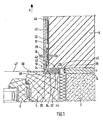
- Fig. 1 is a horizontal section. In Fig. 1 one sees a section of a building wall 2, a section of a built into a window opening of the building wall 2, fixed window frame 4, a section of an openable window sash 6, a section of thermal insulation 8, a plaster finishing strip 10, and an end portion of a plaster layer 12. Mit dem Arrow A is the direction marked away from the building wall 2 to the outside.
- the thermal insulation 8 is mounted on the outside 14 of the building wall 2 and overlaps a piece of the window frame 4. Alternatively, you can see the building wall 2 upwards in Fig. 1 keep thinking so that in this up-continued area the in Fig. 1 left boundary of the building wall 2 represents the soffit surface of the window opening. In this case, the thermal insulation 8 may be mounted on the soffit surface.
- the thermal insulation 8 is typically made of foamed polystyrene or solidified into a plate-like structure mineral fibers.
- Fig. 1 plotted plastic pin 16 is not part of the plaster finishing strip 10, when this is delivered and is later in a first installation phase.
- the function of the pen 16 will be described in more detail below. For the description that follows, let's first think of pen 16 as non-existent.
- the cleaning edge strip has a base region 20, a containment region 22, an expansion strip 24, a cover region 26, a plastering leg 28, a plaster control region 34, a tab 30, and a reinforcement fabric section 32.
- the plaster finishing strip 10 (which for reasons of abbreviation is hereinafter referred to as "strip") is inserted into a gap 36 which extends between the outwardly facing surface 38 of the window frame 4 and the surface 38 facing the end surface 40 of the thermal insulation 8 is located.
- the gap 36 need not have a (measured horizontally) height H, which corresponds to the measured in the same direction height of the introduced into the gap 36 portion of the strip 10. If the height H of the gap 36 is less than the height of said part of the strip 10, this part of the strip 10 is forced into the gap 36 for installation; the thermal insulation 8 is yielding enough to allow this. If the height H of the gap 36 is greater than the said height of the part of the strip 10, this part of the strip 10 is installed so that it rests against the surface 38 of the window frame 4, so that a residual gap to the boundary 40 of the thermal insulation 8 remains ,
- the base portion 20 of the strip 10 has in the illustrated cross-section substantially the configuration of an angle profile. Assuming the coverage area 26 to the base area 20, the base area 20 has a channel-like profile.
- the locking portion 22 has a substantially wall-like configuration.
- the Einputzschenkel 28 projects in the direction of the surface 38 away from the rest of the strip 10 and lies in the drawn installed state against the left in Fig. 1 pointing boundary surface 42 of the insulation 8 at.
- the plaster control region 34 extends substantially at 135 ° relative to the plaster leg 28 and substantially at 135 ° relative to the base wall 43 of the base region 20, which extends parallel to the outer surface 38 of the window frame 4.
- the Einperr Council 22 goes to his in Fig. 1 left end integrally into the free end of Putzend Schemes 34 via.
- the cleaning end region 34 is understood in the present application as part of the base region 20.
- the integral material transition between the end of the locking portion 22 and the end of the cleaning end portion 34 is made with a thin material thickness. Adjacent to this material range of thin material thickness goes in Fig. 1 right end of the tab 30 integrally over into the left end portion of the locking portion 22.
- Am in Fig. 1 right end is the lock-in area 22 behind a corresponding projection 44 locked at the right - bottom end of the base portion 20. If you take the tab 30, starting from the in Fig.
- the expansion strip 24 creates a secure seal of the gap 36, which also contributes later changes in the height H of the gap 36 (eg, by shrinkage or movements of the window frame 4 under wind or by slamming the sash 6) elastic as it.
- the sealing effect is maintained by the continuing expansion tendency of the expansion strip 24 as it were with a certain bias.
- the bar 10 is connected to the thermal insulation 8 and thereby fixed in position.
- the Arm michsgewebeabites 32 lies along the boundary surface 42 of the thermal insulation 8. Partially overlapping herewith is another Arm michsgewebeabêt 46. Both Arm michsgewebeabitese 32 and 46 are spatulated by means not shown putty to the boundary surface 42. After hardening of the filler, the plaster layer 12 is applied.
- a reinforced fixation of the strip 10 to the insulation 8 can be achieved that the pin 16 (in reality, several pins 16 along the length of the bar 10 distributed) through an opening in Einputzschenkel 28 is pushed through into the thermal insulation 8. After hardening of the spatula, but preferably before applying the plaster layer 12, the pin 16 can either be pulled out to the left or almost completely pushed into the heat insulation 8 to the right so that it is no longer visible in finished plaster layer 12.
- the coverage area 26 causes the in-built state (ie after removal of the Einperr Schemes 22) of the in Fig. 1 left end face of the Expansion strip 24 only part of - measured in the direction of the height H of the gap 36 - height of the expansion strip 24 is visible.
- the apparent height of the expansion strip 24 naturally depends on how much the expansion strip 24 has expanded.
- a protective film 46 which is temporarily glued to the surface of the tab 30 directed outwards and provided there with an adhesive layer, can be seen.
- a gutter profiling 48 can be seen on the cleaning end region 34 and on a subsequent part of the height of the plastering leg 28 in order to provide increased adhesion for the plaster layer 12 there.
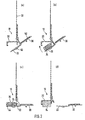
- FIG. 2 Several stages of the manufacture of the strip 10 are illustrated (where compared to Fig. 1 left and right are reversed).
- Sub-figure (a) shows the state after extrusion of the fuselage strip 10 and after applying an adhesive surface 50 on the tab 30, an adhesive strip 52 on the Einperr Society 22 and the welding of Arm michodersgewebeabitess 32.
- the sub-figure (b) shows a later phase, After the compressed expansion strip 24 has been placed on the base region 20 facing surface of the Einperr Schemes 22.
- the subfigure (c) shows a turn later phase in which the Einperr Scheme 22 has been pivoted together with the tab 30 in the clockwise direction and has been locked in the projection 44 with the base portion 20.
- the strip 10 is delivered and installed at a construction site, as in Fig. 1 drawn.
- the adhesive strip 52 helps to temporarily fix the strip 10 to the outer surface 38 of the window frame 4 so that the filling can be applied more conveniently.
- the adhesive strip 52 is just dimensioned so that the Einperr Scheme 22 can be pulled out in the plastered state of the strip 10 without difficulty.
- the sub-figure (d) illustrates the final state after the Einperr Scheme 22 has been pulled out by means of the tab 30 and an expansion of the Expansiosstsammlungs 24 has taken place.
- the locking portion 22 may have a groove-like cross-section.
- the latching projection 44 would then be in the installed state a distance away from the outer surface 38 of the window frame 4, as well as the other end of the Einperr Schemes 22 (there either integral material transition or second locking). This alternative embodiment is particularly suitable when the containment area 22 is to be brought into the release state before the bar 10 is installed.
- Fig. 3 shows a plaster finishing strip 10, which differs from the plaster finishing strip 10 in some points Fig. 1 and Fig. 2 is trained. Analogous components are given the same reference numerals as in Fig. 1 and Fig. 2 designated. Compared to Fig. 1 are at Fig. 3 reversed right and left. Building wall 2, thermal insulation 8, window frame 4 and plaster layer 12 are not drawn, although the drawn state with expanded expansion strip 24 results only in the finished installed state of the plaster finishing strip 10.
- the embodiment of the plaster finishing strip 10 according to Fig. 3 differs essentially from the embodiment of the plaster finishing strip 10 according to Fig. 1 and Fig. 2 by the following:
- the plaster-limiting region 34 extends essentially at right angles to the plastering-in limb 28.
- a flexible protective lip 53 which has been produced by coextrusion with the hull of the plaster-finishing strip 10, is present on the plaster-cutting region 34.
- the Einperr Council 22 is a flat material strip of a material which differs from the material of the hull of the plaster finishing strip 10. In the illustrated embodiment is it is a flat strip of a nonwoven material. In the illustrated embodiment, the nonwoven material, located on a plastic carrier film 54, was adhered to the fuselage plaster molding 10, while the expansion strip 24 was in the trough-shaped installation space between the two side walls 51 and the base wall 43 of the base portion 20 in the compressed state. Left in Fig. 3 the bond between the carrier film 54 and the base region 20 was on the end region of the in Fig. 3 left, angled leg 56 of the base area 20. Right in Fig. 3 was the bond with a surface 58, which is - roughly speaking - in the space between the right side wall 51 and the protective lip 52.
- a first possibility is a severing of the carrier foil 54 just to the left of the expansion strip 24 and just to the right of the expansion strip 24.
- the two wedge-shaped spaces between (a) the leg 56 of the left side wall 51 and (b) the right side wall 51 and the area of Fuselage cleaning plaster 10 at the transition between the Einputzschenkel 28 and the Putzbegrenzungsschenkel 34 allows a comfortable attachment of a knife and comfortable pulling the knife along the plaster finishing strip 10. Therefore, you can see in Fig. 3 short lateral ends of the carrier film 54, which remain after cutting at the Einperr Scheme 22.
- the carrier film 54 was and is glued in the region of the expansion strip 24 both with the expansion strip 24 and with the nonwoven material.
- a second possibility is to solve the two lateral bonds, namely at the end of the leg 56 and on the surface 58, z. B. by pulling away the edges of the carrier film 54 of said mating surfaces and "hanging" the wegholden edges on the expansion strip 24 and the nonwoven material of the Einperr Colours 22.
- the Wegziehbarkeit the edges of the carrier film 54 can be facilitated if there is an unprepared area which one can reach under the finger.
- Perforation lines on the left and / or to the right of the expansion strip 24 are also a possibility that facilitate the transfer of the strip of flat material in the release state. This applies to the removal of the plaster bordering strip 10 and for then-snagging on the plaster finishing strip 10.
- the combination of several options is possible, for. B. Pulling off a wiring right in Fig. 3 and perforation line left in Fig. 3 ,
Landscapes
- Engineering & Computer Science (AREA)
- Architecture (AREA)
- Civil Engineering (AREA)
- Structural Engineering (AREA)
- Mechanical Engineering (AREA)
- Building Environments (AREA)
- Special Wing (AREA)
- Door And Window Frames Mounted To Openings (AREA)
- Cleaning Implements For Floors, Carpets, Furniture, Walls, And The Like (AREA)
Description
- Gegenstand der Erfindung ist ein Verfahren zum Einbauen einer Putzabschlussleiste für eine Putzschicht auf einer Wärmedämmung eines Gebäudes, wobei die Putzabschlussleiste einen Basisbereich, der einen Expansionsstreifen mit verzögerter Expansionsfähigkeit haltert, und einen Einsperrbereich, der im Einsperrzustand den Expansionsstreifen an der Expansion hindert, aufweist,
dadurch gekennzeichnet, - (a) dass ein Verwender der Putzabschlussleisteden Einsperrbereich in einen den Expansionsstreifen für die Expansion freigebenden Freigabezustand bringt;
- (b) dass nach (a) die Putzabschlussleiste mit ihrem Expansionsstreifen in einen Spalt zwischen einem zuvor eingebauten Fensterrahmen oder Türrahmen und einer zuvor angebrachten Wärmedämmung eingesetzt wird derart, dass die freigegebene Seite des Expansionsstreifens dem Fensterrahmen bzw. Türrahmen zugewandt ist;
- (c) und dass die Putzabschlussleiste im eingebauten Zustand durch Verbindung mit der Wärmedämmung lagefixiert wird.
- Aus der
DE 199 11 199 A1 ist eine Dichtungsleiste für den Spalt zwischen einem Fensterrahmen und der zugeordneten Laibung einer Gebäudewandöffnung bekannt. Die Dichtungsleiste besitzt einen Basisbereich, der einen Expansionsstreifen mit verzögerter Expansionsfähigkeit haltert, und einen Einsperrbereich, der im Einsperrzustand den Expansionsstreifen an der Expansion hindert. Der Verwender der Dichtungsleiste bringt zunächst den Einsperrbereich in einen den Expansionsstreifen für die Expansion freigebenden Freigabezustand und setzt danach die Dichtungsleiste mit ihrem Expansionsstreifen in den bereits vorhandenen Spalt ein. Die Dichtungsleiste wird an dem Fensterrahmen angeklebt, so dass die freigegebene Seite des Expansionsstreifens der Laibung zugewandt ist. Bei einem Ausführungsbeispiel ist das Vorhandensein einer Wärmedämmung an dem Gebäude und einer Putzschicht auf der Wärmedämmung beschrieben. Der Expansionsstreifen ist bis zur Anlage gegen die Laibung, nicht gegen die Wärmedämmung, expandiert. Die Putzschicht geht nicht bis an die Dichtungsleiste. - Eine hinsichtlich Expansionsstreifen und Einsperrbereich sowie hinsichtlich Einfügungsort und Schritten beim Einfügen gleichartige Dichtungsleiste ist aus der
WO 02/072 990 A2 - Aus der
EP 0 530 653 A1 ist eine Dichtleiste mit einem Basisbereich, der einen Expansionsstreifen mit verzögerter Expansionsfähigkeit haltert, und einem Einsperrbereich, der im Einsperrzustand den Expansionsstreifen an der Expansion hindert, bekannt. Die Dichtleiste ist in einem Spalt zwischen einem Festerrahmen und einer Wärmedämmung positioniert und mittels eines an der Außenseite des Einsperrbereichs befindlichen, doppelseitigen Klebebands an dem Fensterrahmen befestigt. Erst nachdem eine Putzschicht auf die Oberfläche der Wärmedämmung und auf eine in Verlängerung der Wärmedämmungs-Oberfläche liegende Seite der Dichtleiste aufgebracht worden ist, wird an einem fahnenartig herausragenden Teil einer Kunststofffolie, die zwischen den Expansionsstreifen und den Einsperrbereich geführt ist, gezogen und dadurch der Einsperrbereich in den Freigabezustand gebracht. Die Expansionsbewegung des Expansionsstreifens erfolgt in Richtung von dem Fensterrahmen weg. - Aus der
DE 44 39 075 A1 ist eine Dichtungsleiste mit einem Basisbereich, der einen Expansionsstreifen mit verzögerter Expansionsfähigkeit haltert, und einem Einsperrbereich, der im Einsperrzustand den Expansionsstreifen an der Expansion hindert, bekannt. Der Verwender trennt zunächst die Dichtungsleiste in einen ersten Teil, der den Expansionsstreifen haltert, und einen zweiten Teil, der mit einem doppelseitigen Klebeband ausgestattet ist, wodurch auch der Einsperrbereich in den Freigabezustand gebracht wird. Nachdem die beiden Leistenteile über eine Steckverbindung wieder miteinander verbunden worden sind, wird der zweite Leistenteil an einen Fensterrahmen oder Türrahmen angeklebt. Danach wird an der Laibung eine Wärmedämmung angebracht. Anschließend wird ein an dem ersten Teil festgeklebter Glasfasergewebestreifen an der Wärmedämmung festgespachtelt. - Putzabschlussleisten sind in mannigfachen Ausführungen bekannt. Besonders häufig werden Putzabschlussleisten dort eingesetzt, wo eine Putzschicht auf der Aussenfläche einer Gebäudewand oder auf einer Laibungsfläche einer Fensteröffnung oder einer Türöffnung eines Gebäudes (bzw. auf eine auf der Aussenfläche oder der Laibungsfläche angebrachte Wärmedämmung) im Bereich eines Fensterrahmens oder eines Türrahmens endet. Mittels einer Putzabschlussleiste kann dafür gesorgt werden, dass die Putzschicht nicht unmittelbar an den Fensterrahmen oder Türrahmen heranreicht, sondern die entkoppelnd wirkende Putzabschlussleiste dazwischen sitzt. Es wird allerdings darauf hingewiesen, dass die Putzabschlussleiste nicht nur für den Übergang zwischen der Putzschicht und einem Fensterrahmen oder einem Türrahmen brauchbar ist, sondem auch für andere Einbausituationen, wo die Putzschicht kurz vor einem anderen Bauteil endet. Weitere Beispiele sind austretende Balken, Fensterbänke, eingebaute Briefkästen etc.
- Der Basisbereich kann einen rinnenartigen Querschnitt haben. Andere Möglichkeiten sind wandartiger Querschnitt und Winkelprofil-artiger Querschnitt. Bei "rinnenartigem Querschnitt" kommt es vorzugsweise auf den Einbringungsraum für den Expansionsstreifen an. Es gibt Fälle, in denen der Einbauraum nicht nur durch den Basisbereich im engen Wortsinn bereitgestellt wird, sondern teilweise z. B. durch einen Abdeckbereich, einen Putzbegrenzungsbereich oder dgl. Für den "rinnenartigen Querschnitt" können derartige Bereiche dem Basisbereich zugerechnet werden.
- Der Expansionsstreifen kann ein verzögert expansionsfähiger Schaumstoffstreifen sein. Derartige Schaumstoffstreifen sind bekannt. Die verzögerte Expansionsfähigkeit kann durch Tränkung mit einer Flüssigkeit hoher Viskosität erreicht werden. Auf Grund der verzögerten Expansionsfähigkeit des Expansionsstreifens, lässt sich - je nach der sonstigen Art der Ausführung der Putzabschlussleiste - die Putzabschlussleiste besonders bequem einbauen.
- "Bringen des Einsperrbereichs in den Freigabezustand" bedeutet in den meisten Fällen ein Wegtrennen des Einsperrbereichs von der restlichen Putzabschlussleiste. Es gibt aber auch Ausführungen, bei denen der Einsperrbereich auch im Freigabezustand praktisch vollständig oder teilweise an der Putzabschlussleiste verbleibt.
- Vorzugsweise soll der Expansionsstreifen im fertigen eingebauten Zustand eine Abdichtung gegen Wind und Schlagregen liefern.
- Die Putzabschlussleiste ist insbesondere auch dann einsetzbar, wenn kein (dauerfestes) Ankleben an die Gegenfläche möglich ist, z. B. im Fall des Vorhandenseins einer selbstreinigenden Farbe auf der Gegenfläche.
- Die Putzabschlussleiste kann einen vorragenden Einputzschenkel zum Einbetten in die Putzschicht aufweisen. Eine Putzabschlussleiste mit einem vorragenden Einputzschenkel zeigt typischerweise eine besonders feste Verbindung zwischen der Wärmedämmung und der Putzabschlussleiste im eingebauten Zustand. Der Einputzschenkel kann eine Vorragerichtung haben, die im wesentlichen der Expansionsrichtung des Expansionsstreifens entgegengesetzt ist. Der Einputzschenkel kann eine die Haftung der Putzschicht erhöhende Rinnenprofilierung aufweisen.
- An der Putzabschlussleiste kann ein Armierungsgewebeabschnitt befestigt sein, der sich im eingebauten Zustand der Putzabschlussleiste entlang einer Fläche der Wärmedämmung erstreckt und mit dieser durch Spachtelung verbunden werden kann. Der Armierungsgewebeabschnitt kann an dem beschriebenen Einputzschenkel befestigt sein. Der Armierungsgewebeabschnitt kann durch Schweissung an der restlichen Putzabschlussleiste befestigt sein. Andere Arten der Befestigung sind möglich, insbesondere Klebung und Einklemmung.
- Der Einsperrbereich kann durch formschlüssige Rastung in dem Einsperrzustand gehalten sein. Das ist eine für die Herstellung günstige Ausführung. Außerdem ist es bei einer Rastung vergleichsweise unproblematisch möglich, den Einsperrbereich von dem Einsperrzustand in den Freigabezustand zu bringen.
- Es ist möglich, die Putzabschlussleiste so auszuführen, dass der Einsperrbereich integral in den Basisbereich übergeht. In diesem Fall kann man den Einsperrbereich gut in einstückiger Weise mit der restlichen Putzabschlussleiste fertigen. Eine mögliche Ausführungsform besteht darin, dass der Einsperrbereich - im Querschnitt gesehen - an einem Ende integral in den Basisbereich übergeht und an dem anderen Ende formschlüssig mit dem Basisbereich verrastet ist. Dies kombiniert gute Herstellbarkeit mit guter Überführbarkeit des Einsperrbereichs in den Freigabezustand.
- Der Einsperrbereich kann im wesentlichen die Konfiguration einer Wand besitzen. Andere Möglichkeiten sind insbesondere ein rinnenartiger Querschnitt und ein Wnkelprofil-artiger Querschnitt.
- Die Putzabschlussleiste ist so ausgeführt, dass der Freigabezustand durch Entfernen des Einsperrbereichs von der Putzabschlussleiste, ehe sie eingebaut ist, erreichbar ist.
- Dem Einsperrbereich kann eine Lasche zugeordnet sein, wobei eine integrale Materialverbindung zwischen dem Einsperrbereich und dem Basisbereich durch Schwenken der Lasche auftrennbar ist. Anschließend kann die Lasche mitsamt dem Einsperrbereich von der restlichen Putzabschlussleiste weggezogen werden. Die Lasche kann einen Kleberstreifen aufweisen, mittels welchem eine Schutzfolie, die ein Verschmutzen des nicht einzuputzenden Teils der Putzabschlussleiste und ein Verschmutzen des Fensterrahmens oder des Türrahmens mit dem Putzschichtmaterial verhindert, an der Putzabschlussleiste befestigbar ist. Im Fall eines Fensterrahmens oder eines Türrahmens kann die Schutzfolie die Fensterrahmenöffnung oder die Türrahmenöffnung insgesamt überspannen.
- Der Einsperrbereich kann auf seiner dem Expansionsstreifen abgewandten Seite einen Kleberstreifen aufweisen, mittels welchem die Putzabschlussleiste temporär an der genannten Gegenfläche lagefixierbar ist.
- Die Putzabschlussleiste kann einen Abdeckungsbereich auf derjenigen Seite des Expansionsstreifens aufweisen, die im eingebauten Zustand der Putzabschlussleiste einem Betrachter zugewandt ist. Auf diese Weise sieht ein Betrachter nicht mehr die gesamte Höhe des expandierten Expansionsstreifens, sondern nur noch einen Teil dieser Höhe. Die Putzabschlussleiste kann eine flexible Schutzlippe auf derjenigen Seite des Expansionsstreifens aufweisen, die im eingebauten Zustand der Putzabschlussleiste einem Betrachter zugewandt ist. Die Schutzlippe stellt ebenfalls eine optische Abdeckung des ggf. expandierten Expansionsstreifens dar. Die Schutzlippe kann wegen ihrer Flexibilität in größerer Höhe als der beschriebene Abdeckungsbereich ausgeführt werden, so dass sie auch nach erheblicher Expansion des Expansionsstreifens noch an der Gegenfläche anliegt. Die Schutzlippe kann den Expansionsstreifen gegen Verschmutzung und unmittelbare Regeneinwirkung schützen.
- Die Putzabschlussleiste kann einen im Lieferzustand weggespreizten Vorsprung haben und kann, ggf. nach elastischem Herandrücken des Vorsprungs in Richtung zu der restlichen Putzabschlussleiste hin, in den Spalt zwischen der Wärmedämmung und dem Fensterrahmen oder Türrahmen eingeschoben werden. Bei genügendem Wegspreizmaß des Vorsprungs und bei hinreichend engem Spalt kann sich ein Einklemmeffekt für die Putzabschlussleiste ergeben. Man kann die Ausführung so wählen, dass sich mindestens temporär eine Lagefixierung der Putzabschlussleiste ergibt oder die Einklemmung zur Lagefixierung beiträgt.
- Die Putzabschlussleiste kann zwischen der dem Fensterrahmen oder Türrahmen abgewandten Rückseite des Expansionsstreifens und dem Basisbereich ein Vorspannelement für die Bewegung des Expansionsstreifens in Expansionsrichtung aufweisen. Das Vorspannelement kann insbesondere ein Metallstreifen oder ein Kunststoffstreifen sein, der im Einsperrzustand des Expansionsstreifens zwischen dem Expansionsstreifen und dem Basisbereich elastisch deformiert ist.
- Der Einsperrbereich kann einen Flachmaterialstreifen aufweisen, der im Einsperrzustand an der restlichen Putzabschlussleiste befestigt ist. Dieser Flachmaterialstreifen kann sich materialmäßig von dem Material des Rumpfes der Putzabschlussleiste unterscheiden.
- Der Flachmaterialstreifen kann insbesondere mit einem Vliesmaterial oder mit einer Kunststofffolie oder mit Papier aufgebaut sein. Wenn der Flachmaterialstreifen, um den Freigabezustand zu erreichen, von der restlichen Putzabschlussleiste weggetrennt werden soll, ist es günstig, ihn aus einem verrottungsfähigen Material, insbesondere verrottungsfähigem Vliesmaterial, verrottungsfähiger Kunststofffolie oder Papier, aufzubauen. Dann kann er auf der Baustelle aufwandsarm entsorgt werden. Typische verrottungsfähige Materialien verrotten innerhalb einiger Monate im Erdreich.
- Der Flachmaterialstreifen kann durch Schweissung, Klebung oder Klemmung an der restlichen Putzabschlussleiste befestigt sein.
- Die Wärmedämmung kann auf der Aussenseite einer Gebäudewand oder auf der Laibungsfläche der Fensteröffnung bzw. Türöffnung eines Gebäudes angebracht sein.
- Die Putzabschlussleiste kann, gewünschtenfalls mit Ausnahme des Armierungsgewebeabschnitts und gewünschtenfalls mit Ausnahme des Expansionsstreifens, aus Kunststoff bestehen. Polyvinylchlorid (PVC), Polystyrol (PS) und Polypropylen (PP) gehören zu den geeigneten Kunststoffen. Ggf. mit Ausnahme des Armierungsgewebeabschnitts und ggf. mit Ausnahme des Expansionsstreifens und ggf. mit Ausnahme der genannten Kleberstreifen läßt sich die Putzabschlussleiste in derartiger Weise ausführen, dass sie durch Kunststoffextrusion herstellbar ist.
- Die Erfindung wird nachfolgend anhand eines zeichnerisch dargestellten Ausführungsbeispiels noch näher erläutert. Die Putzabschlussleiste gemäß
Fig. 1 und2 ist nur dann im Einklang mit dem Gegenstand des Anspruchs 1, wenn der Verwender der Putzabschlussleiste - entgegen der nachfolgenden Beschreibung - den Einsperrbereich in den Freigabezustand bringt, ehe die Putzabschlussleiste mit ihrem Expansionsstreifen in den Spalt eingesetzt wird. Es zeigt: - Fig. 1
- eine Putzabschlussleiste im Querschnitt, und zwar im eingebauten Zustand aber vor Wegnahme eines Einsperrbereichs;
- Fig. 2
- die Putzabschlussleiste von
Fig. 1 zur Veranschaulichung mehrerer Phasen der Herstellung und zur Veranschaulichung des expandierten Zustands eines Expansionsstreifens; - Fig. 3
- eine andere Putzabschlussleiste im Querschnitt, und zwar nach Expansion des Expansionsstreifens.
-
Fig. 1 ist ein horizontaler Schnitt. InFig. 1 sieht man einen Ausschnitt einer Gebäudewand 2, einen Ausschnitt eines in eine Fensteröffnung der Gebäudewand 2 eingebauten, fest stehenden Fensterrahmens 4, einen Ausschnitt eines öffenbaren Fensterflügels 6, einen Ausschnitt einer Wärmedämmung 8, eine Putzabschlussleiste 10, und einen Endbereich einer Putzschicht 12. Mit dem Pfeil A ist die Richtung von der Gebäudewand 2 weg nach außen markiert. Die Wärmedämmung 8 ist auf der Aussenseite 14 der Gebäudewand 2 angebracht und übergreift ein Stück weit den Fensterrahmen 4. Alternativ kann man sich die Gebäudewand 2 nach oben inFig. 1 fortgesetzt denken, so dass in diesem nach oben fortgesetzten Bereich die inFig. 1 linke Begrenzung der Gebäudewand 2 die Laibungsfläche der Fensteröffnung darstellt. In diesem Fall kann die Wärmedämmung 8 auf der Laibungsfläche angebracht sein. Die Wärmedämmung 8 besteht typischwerweise aus geschäumtem Polystyrol oder aus zu einem plattenartigen Gebilde verfestigten Mineralfasern. - Der in
Fig. 1 eingezeichnete Kunststoffstift 16 ist nicht Bestandteil der Putzabschlussleiste 10, wenn diese angeliefert wird und sich später in einer ersten Einbauphase befindet. Die Funktion des Stifts 16 wird weiter unten noch genauer beschrieben. Für die jetzt anschließende Beschreibung möge man sich zunächst den Stift 16 als nicht vorhanden vorstellen. - Die Putzabschlussleiste besitzt einen Basisbereich 20, einen Einsperrbereich 22, einen Expansionsstreifen 24, einen Abdeckungsbereich 26, einen Einputzschenkel 28, einen Putzbegrenzungsbereich 34, eine Lasche 30, und einen Armierungsgewebeabschnitt 32.
- Nachdem der Fensterrahmen 4 in die Fensteröffnung der Gebäudewand 2 eingebaut worden ist und nachdem die Wärmedämmung 8 angebracht worden ist, wird die Putzabschlussleiste 10 (die im folgenden aus Abkürzungsgründen nur noch als "Leiste" bezeichnet wird) in einen Spalt 36 eingesetzt, der sich zwischen der nach außen gewandten Oberfläche 38 des Fensterrahmens 4 und der dieser Oberfläche 38 zugewandten Endfläche 40 der Wärmedämmung 8 befindet. Der Spalt 36 muss nicht eine (waagerecht gemessene) Höhe H haben, die der in gleicher Richtung gemessenen Höhe des in den Spalt 36 eingebrachten Teils der Leiste 10 entspricht. Wenn die Höhe H des Spalts 36 geringer ist als die Höhe des genannten Teils der Leiste 10, wird zum Einbau dieser Teil der Leiste 10 in den Spalt 36 hinein gezwängt; die Wärmedämmung 8 ist nachgiebig genug, um das zu erlauben. Wenn die Höhe H des Spalts 36 größer ist als die genannte Höhe des Teils der Leiste 10, wird dieser Teil der Leiste 10 so eingebaut, dass er an der Oberfläche 38 des Fensterrahmens 4 anliegt, so dass ein Restspalt zur Begrenzung 40 der Wärmedämmung 8 verbleibt.
- Der Basisbereich 20 der Leiste 10 hat im gezeichneten Querschnitt im wesentlichen die Konfiguration eines Winkelprofils. Wenn man den Abdeckungsbereich 26 dem Basisbereich 20 zurechnet, hat der Basisbereich 20 ein rinnenartiges Profil. Der Einsperrbereich 22 hat im wesentlichen eine wandartige Konfiguration. Der Einputzschenkel 28 ragt in Richtung von der Oberfläche 38 weg von der restlichen Leiste 10 vor und liegt im gezeichneten eingebauten Zustand gegen die nach links in
Fig. 1 weisende Begrenzungsfläche 42 der Wärmedämmung 8 an. Der Putzbegrenzungsbereich 34 verläuft im wesentlichen unter 135° relativ zu dem Einputzschenkel 28 und im wesentlichen unter 135° relativ zu der Basiswand 43 des Basisbereichs 20, die parallel zur Außenfläche 38 des Fensterrahmens 4 verläuft. - Der Einsperrbereich 22 geht an seinem in
Fig. 1 linken Ende integral in das freie Ende des Putzendbereichs 34 über. Der Putzendbereich 34 wird in der vorliegenden Anmeldung als Bestandteil des Basisbereichs 20 verstanden. Der integrale Materialübergang zwischen dem Ende des Einsperrbereichs 22 und dem Ende des Putzendbereichs 34 ist mit dünner Materialdicke ausgeführt. Benachbart diesem Materialbereich dünner Materialdicke geht das inFig. 1 rechte Ende der Lasche 30 integral über in den linken Endbereich des Einsperrbereichs 22. Am inFig. 1 rechten Ende ist der Einsperrbereich 22 hinter einem entsprechenden Vorsprung 44 am rechten - unteren Ende des Basisbereichs 20 verrastet. Wenn man die Lasche 30, ausgehend von dem inFig. 1 gezeichneten Zustand, im Uhrzeigersinn nach außen schwenkt, bricht der geschilderte Bereich dünner Materialdicke zwischen dem Putzendbereich 34 und dem Einsperrbereich 22; die Lasche 30 und der Einsperrbereich 22 bleiben aber miteinander verbunden. Jetzt kann durch Ziehen an der Lasche 30 nach links inFig. 1 der Einsperrbereich 22 aus der Verrastung hinter dem Vorsprung 44 herausgezogen und insgesamt nach links inFig. 1 von der restlichen Leiste 10 entfernt werden. Der Expansionsstreifen 24, der sich bisher zwischen der Basiswand 43 des Basisbereichs 20 und dem Einsperrbereich 22 befand, kann sich nun in Richtung auf die Außenfläche 38 des Fensterrahmens 4 hin ausdehnen. Auf diese Weise schafft der Expansionsstreifen 24 eine sichere Abdichtung des Spalts 36, die auch spätere Änderungen in der Höhe H des Spalts 36 (z.B. durch Schwindungsvorgänge oder durch Bewegungen des Fensterrahmens 4 unter Windeinfluß oder durch Zuschlagen des Fensterflügels 6) gleichsam elastisch mitmacht. Die Dichtungswirkung wird durch die weiter bestehende Expansionstendenz des Expansionsstreifens 24 gleichsam mit gewisser Vorspannung aufrechterhalten. - Bevor allerdings der Einsperrbereich 22 auf die beschriebene Weise herausgezogen wird, wird die Leiste 10 mit der Wärmedämmung 8 verbunden und dadurch lagefixiert. Der Armierungsgewebeabschnitt 32 liegt entlang der Begrenzungsfläche 42 der Wärmedämmung 8. Teilweise überlappend hiermit befindet sich ein weiterer Armierungsgewebeabschnitt 46. Beide Armierungsgewebeabschnitte 32 und 46 werden mit Hilfe von nicht eingezeichneter Spachtelmasse an die Begrenzungsfläche 42 angespachtelt. Nach dem Erhärten der Spachtelmasse wird die Putzschicht 12 aufgebracht. Gewünschtenfalls kann für die Arbeitsschritte des Anspachtelns und des Aufbringens der Putzschicht 12 eine verstärkte Fixierung der Leiste 10 an der Wärmedämmung 8 dadurch erreicht werden, dass der Stift 16 (in Wirklichkeit mehrere Stifte 16 längs der Länge der Leiste 10 verteilt) durch eine Öffnung im Einputzschenkel 28 hindurch in die Wärmedämmung 8 hineingedrückt wird. Nach dem Erhärten der Spachtelung, aber am besten vor dem Aufbringen der Putzschicht 12, kann der Stift 16 entweder nach links herausgezogen oder nach rechts quasi vollständig in die Wärmedämmung 8 hineingedrückt werden, so dass er bei fertiger Putzschicht 12 nicht mehr sichtbar ist.
- Der Abdeckungsbereich 26 bewirkt, dass im fertig eingebauten Zustand (d.h. nach Entfernung des Einsperrbereichs 22) von der in
Fig. 1 linken Endfläche des Expansionsstreifens 24 nur ein Teil der - in Richtung der Höhe H des Spalts 36 gemessenen - Höhe des Expansionsstreifens 24 sichtbar ist. Die sichtbare Höhe des Expansionsstreifens 24 hängt naturgemäß davon ab, wie stark sich der Expansionsstreifen 24 expandiert hat. - In
Fig. 1 erkennt man außerdem eine Schutzfolie 46, die temporär auf die nach außen gerichtete und dort mit einer Kleberschicht versehene Fläche der Lasche 30 aufgeklebt ist. Schließlich erkennt man eine Rinnenprofilierung 48 am Putzendbereich 34 und auf einem anschließenden Teil der Höhe des Einputzschenkels 28, um dort eine verstärkte Haftung für die Putzschicht 12 zu schaffen. - Durch
Fig. 2 sind mehrere Phasen der Herstellung der Leiste 10 veranschaulicht (wobei im Vergleich zuFig. 1 links und rechts vertauscht sind). Die Teilfigur (a) zeigt den Zustand nach Extrusion der Rumpf-Leiste 10 und nach Aufbringen einer Kleberfläche 50 auf die Lasche 30, eines Kleberstreifens 52 auf den Einsperrbereich 22 und dem Anschweißen des Armierungsgewebeabschnitts 32. Die Teilfigur (b) zeigt eine spätere Phase, nachdem der komprimierte Expansionsstreifen 24 auf die dem Basisbereich 20 zugewandte Fläche des Einsperrbereichs 22 aufgelegt worden ist. Die Teilfigur (c) zeigt eine wiederum spätere Phase, in welcher der Einsperrbereich 22 mitsamt der Lasche 30 im Uhrzeigersinn verschwenkt und bei dem Vorsprung 44 mit dem Basisbereich 20 verrastet worden ist. In diesem Zustand wird die Leiste 10 an einer Baustelle angeliefert und eingebaut, wie inFig. 1 gezeichnet. Der Kleberstreifen 52 hilft dabei für eine temporäre Fixierung der Leiste 10 an der Außenfläche 38 des Fensterrahmens 4, damit die Spachtelung bequemer aufgebracht werden kann. Der Kleberstreifen 52 ist gerade so dimensioniert, dass der Einsperrbereich 22 im eingeputzten Zustand der Leiste 10 ohne Schwierigkeiten herausgezogen werden kann. - Die Teilfigur (d) veranschaulicht den Schlusszustand, nachdem der Einsperrbereich 22 mit Hilfe der Lasche 30 herausgezogen worden ist und eine Expansion des Expansiosstreifens 24 stattgefunden hat.
- Statt des Abdeckungsbereichs 26 kann man auch eine coextrudierte flexible Schutzlippe vorsehen, die eine größere Höhe als der Abdeckungsbereich 26 haben kann. Statt der wandartigen Konfiguration kann der Einsperrbereich 22 einen rinnenartigen Querschnitt haben. Der Verrastungsvorsprung 44 würde dann im eingebauten Zustand ein Stück entfernt von der Außenfläche 38 des Fensterrahmens 4 liegen, ebenso das andere Ende des Einsperrbereichs 22 (dort entweder integraler Materialübergang oder zweite Verrastung). Diese alternative Ausführungsform ist besonders geeignet, wenn der Einsperrbereich 22 in den Freigabezustand gebracht werden soll, ehe die Leiste 10 eingebaut wird.
- Bei der ersten Phase des Einbauens der Leiste 10 kann man auch so vorgehen, dass man auf die in
Fig. 1 rechte Seite des Einputzschenkels 28 und ggf. auch auf die inFig. 1 obere Seite der Basiswand 44 des Basisbereichs 20 Spachtelmasse gibt und dann durch Andrücken der Leiste 10 an die Wärmedämmung 8 eine erste, vorläufige Fixierung der Leiste 10 an der Wärmedämmung 8 erreicht. Dies erleichtert die nachfolgenden Arbeitsschritte. -
Fig. 3 zeigt eine Putzabschlussleiste 10, die in einigen Punkten abweichend von der Putzabschlussleiste 10 gemäßFig. 1 undFig. 2 ausgebildet ist. Analoge Bestandteile werden mit den gleichen Bezugsziffern wie inFig. 1 undFig. 2 bezeichnet. Im Vergleich zuFig. 1 sind beiFig. 3 rechts und links vertauscht. Gebäudewand 2, Wärmedämmung 8, Fensterrahmen 4 und Putzschicht 12 sind nicht gezeichnet, obwohl sich der gezeichnete Zustand mit expandiertem Expansionsstreifen 24 erst im fertig eingebauten Zustand der Putzabschlussleiste 10 ergibt. - Die Ausführungsform der Putzabschlussleiste 10 gemäß
Fig. 3 unterscheidet sich im Wesentlichen von dem Ausführungsbeispiel der Putzabschlussleiste 10 gemäßFig. 1 undFig. 2 durch Folgendes: - Es gibt zwei seitliche Begrenzungswände 51, zwischen denen der Expansionsstreifen 24 sitzt und die man als Bestandteil des Basisbereichs 20 auffassen kann. Die in
Fig. 3 rechte Seitenwand 51 erinnert zwar an den Abdeckungsbereich 26 vonFig. 1 , hat inFig. 3 aber keine Abdeckungsfunktion. Der Putzbegrenzungsbereich 34 verläuft im Wesentlichen rechtwinklig zum Einputzschenkel 28. An dem Putzbegrenzungsbereich 34 ist eine flexible Schutzlippe 53 vorhanden, die durch Coextrusion mit dem Rumpf der Putzabschlussleiste 10 hergestellt worden ist. - Ein besonders prominenter Unterschied zur Putzabschlussleiste 10 von
Fig. 1 ist die Ausführung des Einsperrbereichs 22. Der Einsperrbereich 22 ist ein Flachmaterialstreifen aus einem Material, welches sich vom Material des Rumpfes der Putzabschlussleiste 10 unterscheidet. Im gezeichneten Ausführungsbeispiel handelt es sich um einen Flachmaterialstreifen aus einem Vliesmaterial. Im gezeichneten Ausführungsbeispiel war das Vliesmaterial, befindlich auf einer Kunststoff-Trägerfolie 54, an die Rumpf-Putzabschlussleiste 10 angeklebt worden, während sich der Expansionsstreifen 24 im komprimierten Zustand in dem rinnenförmigen Einbauraum zwischen den zwei Seitenwänden 51 und der Basiswand 43 des Basisbereichs 20 befand. Links inFig. 3 war die Verklebung zwischen der Trägerfolie 54 und dem Basisbereich 20 auf dem Endbereich des inFig. 3 linken, abgewinkelten Schenkels 56 des Basisbereichs 20. Rechts inFig. 3 war die Verklebung mit einer Fläche 58, die sich - grob gesprochen - im Raum zwischen der rechten Seitenwand 51 und der Schutzlippe 52 befindet. - Um den Einsperrbereich 22 in den Freigabezustand zu überführen (was zeitlich vor der in
Fig. 3 gezeigten Situation erfolgt ist), gibt es eine Reihe von Möglichkeiten. Eine erste Möglichkeit ist ein Durchtrennen der Trägerfolie 54 knapp links neben dem Expansionsstreifen 24 und knapp rechts neben dem Expansionsstreifen 24. Die zwei keilförmigen Räume zwischen (a) dem Schenkel 56 der linken Seitenwand 51 und (b) der rechten Seitenwand 51 und dem Bereich des Rumpfes der Putzabschlussleiste 10 am Übergang zwischen dem Einputzschenkel 28 und dem Putzbegrenzungsschenkel 34 ermöglicht ein bequemes Ansetzen eines Messers und bequemes Ziehen des Messers längs der Putzabschlussleiste 10. Deshalb sieht man inFig. 3 kurze seitliche Enden der Trägerfolie 54, die nach dem Durchschneiden an dem Einsperrbereich 22 verblieben sind. Die Trägerfolie 54 war und ist im Bereich des Expansionsstreifens 24 sowohl mit dem Expansionsstreifen 24 als auch mit dem Vliesmaterial verklebt. - Eine zweite Möglichkeit besteht darin, die zwei seitlichen Verklebungen, nämlich am Ende des Schenkels 56 und an der Fläche 58, zu lösen, z. B. durch Wegziehen der Ränder der Trägerfolie 54 von den genannten Gegenflächen und "Hängenlassen" der weggezogenen Ränder an dem Expansionsstreifen 24 bzw. dem Vliesmaterial des Einsperrbereichs 22. Die Wegziehbarkeit der Ränder der Trägerfolie 54 läßt sich erleichtern, wenn sich dort jeweils ein unangeklebter Bereich befindet, den man mit dem Finger untergreifen kann.
- Statt des beschriebenen Vliesmaterials kann man insbesondere auch einen Kunststofffolienstreifen oder einen Papierstreifen vorsehen. Statt der beschriebenen Verklebung kann insbesondere auch einen Verschweißung oder eine Verklemmung mit dem Rumpf der Putzabschlussleiste 10 vorgesehen sein.
- Die im Zusammenhang mit
Fig. 3 und kurz zuvor in Abwandlungen beschriebenen Ausführungsformen waren so, dass der Einsperrbereich 22 vor dem Anbringen der Putzanschlussleiste 10 an der Wärmedämmung 8 in den Freigabezustand gebracht wurde. - Perforationslinien links und/oder rechts neben dem Expansionsstreifen 24 sind auch eine Möglichkeit, die das Überführen des Flachmaterialstreifens in den Freigabezustand erleichtern. Das gilt für das Entfernen von der Putzabschlussleiste 10 und für Danach-Hängenbleiben an der Putzabschlussleiste 10. Auch die Kombination mehrerer Möglichkeiten ist möglich, z. B. Abziehen von einer Verkabelung rechts in
Fig. 3 und Perforationslinie links inFig. 3 . - Außerdem sieht man in
Fig. 3 eine beispielhafte Ausführung eines weggespreizten Vorsprungs 58.
Claims (15)
- Verfahren zum Einbauen einer Putzabschlussleiste (10) für eine Putzschicht (12) auf einer Wärmedämmung (8) eines Gebäudes, wobei die Putzabschlussleiste (10) einen Basisbereich (20), der einen Expansionsstreifen (24) mit verzögerter Expansionsfähigkeit haltert, und einen Einsperrbereich (22), der im Einsperrzustand den Expansionsstreifen (24) an der Expansion hindert, aufweist,
dadurch gekennzeichnet,(a) dass ein Verwender der Putzabschlussleiste (10) den Einsperrbereich (22) in einen den Expansionsstreifen (24) für die Expansion freigebenden Freigabezustand bringt;(b) dass nach (a) die Putzabschlussleiste (10) mit ihrem Expansionsstreifen (24) in einen Spalt (36) zwischen einem zuvor eingebauten Fensterrahmen (4) oder Türrahmen und einer zuvor angebrachten Wärmedämmung (8) eingesetzt wird derart, dass die freigegebene Seite des Expansionsstreifens (24) dem Fensterrahmen (4) bzw. Türrahmen zugewandt ist;(c) und dass die Putzabschlussleiste (10) im eingebauten Zustand durch Verbindung mit der Wärmedämmung (8) lagefixiert wird. - Verfahren nach Anspruch 1,
dadurch gekennzeichnet, dass der Basisbereich (20) der Putzabschlussleiste (10) einen rinnenartigen Querschnitt hat. - Verfahren nach Anspruch 1 oder 2,
dadurch gekennzeichnet, dass der Expansionsstreifen (24) der Putzabschlussleiste (10) ein verzögert expansionsfähiger Schaumstoffstreifen ist. - Verfahren nach einem der Ansprüche 1 bis 3,
dadurch gekennzeichnet, dass die Putzabschlussleiste (10) einen vorragenden Einputzschenkel (28) aufweist, der in die Putzschicht (12) eingebettet wird. - Verfahren nach Anspruch 4,
dadurch gekennzeichnet, dass der Einputzschenkel (28) eine die Haftung der Putzschicht (12) erhöhende Rinnenprofilierung (46) aufweist. - Verfahren nach einem der Ansprüche 1 bis 5,
dadurch gekennzeichnet, dass an der Putzabschlussleiste (10) ein Armierungsgewebeabschnitt (32) befestigt ist, der sich im eingebauten Zustand der Putzabschlussleiste (12) entlang einer Fläche der Wärmedämmung (8) erstreckt und durch Spachtelung mit dieser verbunden wird. - Verfahren nach einem der Ansprüche 1 bis 6,
dadurch gekennzeichnet, dass der Einsperrbereich (22) der Putzabschlussleiste (10) - im Querschnitt gesehen - an einem Ende integral in den Basisbereich (20) übergeht und an dem anderen Ende formschlüssig mit dem Basisbereich (20) verrastet ist. - Verfahren nach einem der Ansprüche 1 bis 7,
dadurch gekennzeichnet, dass der Freigabezustand durch Wegtrennen des Einsperrbereichs (22) von der Putzabschlussleiste (10) erreicht wird. - Verfahren nach einem der Ansprüche 1 bis 8,
dadurch gekennzeichnet, dass dem Einsperrbereich (22) eine Lasche (30) zugeordnet ist und dass zum Erreichen des Freigabezustands eine integrale Materialverbindung zwischen dem Einsperrbereich (22) und dem Basisbereich (20) durch Schwenken der Lasche (30) aufgetrennt wird. - Verfahren nach einem der Ansprüche 1 bis 9,
dadurch gekennzeichnet, dass die Putzabschlussleiste (10) einen Abdeckungsbereich (26) oder eine flexible Schutzlippe (53) auf derjenigen Seite des Expansionsstreifens (24), die im eingebauten Zustand der Putzabschlussleite (10) einem Betrachter zugewandt ist, aufweist. - Verfahren nach einem der Ansprüche 1 bis 10,
dadurch gekennzeichnet, dass die Putzabschlussleiste (10) einen im Lieferzustand weggespreizten Vorsprung hat und dass die Putzabschlussleiste (10) nach elastischem Herandrücken des Vorsprungs mit ihrem Expansionsstreifen (24) in den Spalt (36) eingeschoben wird. - Verfahren nach einem der Ansprüche 1 bis 11,
dadurch gekennzeichnet, dass vor dem Einsetzen der Putzabschlussleiste (10) mit ihrem Expansionsstreifen (24) in den Spalt (36) Spachtelmasse auf die der Wärmedämmung (8) zugewandte Seite des Einputzschenkels (28) oder auf die der Wärmedämmung (8) zugewandte Seite des Basisbereichs (20) gegeben wird. - Verfahren nach einem der Ansprüche 4 bis 12,
dadurch gekennzeichnet, dass Fixierungsstifte (16) durch Öffnungen im Einputzschenkel (28) der Putzabschlussleiste (10) hindurch in die Wärmedämmung (8) hineingedrückt werden. - Verfahren nach einem der Ansprüche 1 bis 13,
dadurch gekennzeichnet, dass der Einsperrbereich (22) der Putzabschlussleiste (10) einen Flachmaterialstreifen aufweist, der im Einspenzustand an der restlichen Putzabschlussleiste (10) befestigt ist, wobei der Flachmaterialstreifen mit einem Vliesmaterial oder mit einer Kunststofffolie oder mit Papier aufgebaut ist und wobei der Flachmaterialstreifen durch Schweissung, Klebung oder Klemmung an der restlichen Putzabschlussleiste (10) befestigt ist. - Verfahren nach einem der Ansprüche 1 bis 14,
dadurch gekennzeichnet, dass der expandierte Expansionsstreifen (24) der Putzabschlussleiste (10) gegen den Fensterrahmen (4) bzw. Türrahmen anliegt oder gegen den freigegebenen, vollständig oder teilweise an der Putzabschlussleiste (10) verbliebenen Einsperrbereich (22) anliegt.
Priority Applications (1)
| Application Number | Priority Date | Filing Date | Title |
|---|---|---|---|
| PL10186069T PL2281971T3 (pl) | 2005-12-02 | 2006-12-01 | Sposób montażu listwy tynkarskiej zakończeniowej do warstwy tynku na izolacji cieplnej budynku |
Applications Claiming Priority (2)
| Application Number | Priority Date | Filing Date | Title |
|---|---|---|---|
| DE102005057778A DE102005057778A1 (de) | 2005-12-02 | 2005-12-02 | Putzabschlussleiste für eine Putzschicht auf einer Wärmedämmung |
| EP06024935.6A EP1793061B1 (de) | 2005-12-02 | 2006-12-01 | Putzabschlussleiste für eine Putzschicht auf einer Wärmedämmung |
Related Parent Applications (2)
| Application Number | Title | Priority Date | Filing Date |
|---|---|---|---|
| EP06024935.6 Division | 2006-12-01 | ||
| EP06024935.6A Division-Into EP1793061B1 (de) | 2005-12-02 | 2006-12-01 | Putzabschlussleiste für eine Putzschicht auf einer Wärmedämmung |
Publications (3)
| Publication Number | Publication Date |
|---|---|
| EP2281971A2 EP2281971A2 (de) | 2011-02-09 |
| EP2281971A3 EP2281971A3 (de) | 2011-03-23 |
| EP2281971B1 true EP2281971B1 (de) | 2013-05-01 |
Family
ID=37888404
Family Applications (2)
| Application Number | Title | Priority Date | Filing Date |
|---|---|---|---|
| EP10186069.0A Active EP2281971B1 (de) | 2005-12-02 | 2006-12-01 | Verfahren zum Einbauen einer Putzabschlussleiste für eine Putzschicht auf einer Wärmedämmung eines Gebäudes |
| EP06024935.6A Active EP1793061B1 (de) | 2005-12-02 | 2006-12-01 | Putzabschlussleiste für eine Putzschicht auf einer Wärmedämmung |
Family Applications After (1)
| Application Number | Title | Priority Date | Filing Date |
|---|---|---|---|
| EP06024935.6A Active EP1793061B1 (de) | 2005-12-02 | 2006-12-01 | Putzabschlussleiste für eine Putzschicht auf einer Wärmedämmung |
Country Status (4)
| Country | Link |
|---|---|
| EP (2) | EP2281971B1 (de) |
| DE (1) | DE102005057778A1 (de) |
| HU (1) | HUE026445T2 (de) |
| PL (2) | PL1793061T3 (de) |
Families Citing this family (19)
| Publication number | Priority date | Publication date | Assignee | Title |
|---|---|---|---|---|
| DE102007048311B4 (de) * | 2007-10-09 | 2022-08-11 | August Braun | Anputzleiste für den Übergang zwischen einem Fensterrahmen oder Türrahmen und einer Wärmedämmung |
| AT10453U1 (de) * | 2008-02-22 | 2009-03-15 | Peter Kassmannhuber | Laibungsanschlussprofil für an putz angrenzende bauteile |
| DE102008036656A1 (de) * | 2008-08-06 | 2010-02-25 | August Braun | Kunststoff-Leiste |
| DE102009034445A1 (de) * | 2009-07-23 | 2011-01-27 | August Braun | Einteilige Abdicht- oder Anputzleiste |
| CN101775846A (zh) * | 2009-12-21 | 2010-07-14 | 吴淑环 | 一种墙体门窗洞口构造 |
| DE102011006223A1 (de) * | 2011-03-28 | 2012-10-04 | August Braun | Anputzleiste sowie Bauwerksecke mit Anputzleiste |
| DE102012223268A1 (de) * | 2012-12-14 | 2014-06-18 | Protektorwerk Florenz Maisch Gmbh & Co. Kg | Laibungsanschlussprofil |
| CN103556903B (zh) * | 2013-11-25 | 2015-08-19 | 哈尔滨森鹰窗业股份有限公司 | 一种被动式窗口安装结构 |
| DE102016110665A1 (de) | 2016-06-09 | 2017-12-14 | Odenwald-Chemie Gmbh | Verbundelement |
| AT15354U1 (de) * | 2016-08-08 | 2017-07-15 | Christian Mick Mag | Anschlussprofilleiste |
| CN107558869A (zh) * | 2017-09-14 | 2018-01-09 | 中国建筑局(集团)有限公司 | 一种窗边海绵保温收边结构、连接构造及其施工方法 |
| DE102018105610A1 (de) * | 2018-03-12 | 2019-09-12 | August Braun | Anputzleiste zur Anordnung an einem Gebäude-Übergang sowie Gebäude-Übergang damit |
| DE102019007280A1 (de) * | 2019-10-11 | 2021-04-15 | Soltkahn AG | Fensterverbund und Verfahren zum Einbau des Fensterverbundes |
| DE102020100248B3 (de) * | 2020-01-08 | 2021-07-01 | August Braun | Auflageschere zum Durchtrennen einer Anputzleiste und zum automatischen Erstellen eines Dichtbandüberstands |
| DE102021100706A1 (de) | 2021-01-14 | 2022-07-14 | Ejot Baubefestigungen Gmbh | Anputzleiste und Verfahren zur Herstellung derselben |
| DE102021102672A1 (de) | 2021-02-04 | 2022-08-04 | Ejot Baubefestigungen Gmbh | Anputzleiste |
| DE102023105542A1 (de) * | 2023-03-07 | 2024-09-12 | Protektorwerk Florenz Maisch Gmbh & Co. Kg | Anputzdichtleiste |
| AT526956B1 (de) | 2023-10-06 | 2024-09-15 | Christian Mick Mag | Anputzdichtleiste |
| EP4541996A1 (de) * | 2023-10-17 | 2025-04-23 | Braun, Magdalena | Anputzleiste |
Citations (2)
| Publication number | Priority date | Publication date | Assignee | Title |
|---|---|---|---|---|
| DE4439075A1 (de) * | 1994-11-02 | 1996-05-09 | Maisch F Protektorwerk | Abschlußleiste zum Abdichten eines Rahmenteils gegenüber einer Laibung |
| EP1582685A2 (de) * | 2004-03-30 | 2005-10-05 | August Braun | Putzanschlussleiste für Fensterrahmen oder dgl. mit Basisteil und Anputzteil |
Family Cites Families (10)
| Publication number | Priority date | Publication date | Assignee | Title |
|---|---|---|---|---|
| DE9110813U1 (de) * | 1991-08-31 | 1992-12-24 | Irbit Research + Consulting Ag, Freiburg/Fribourg | Dichtleiste |
| DE19700107B4 (de) * | 1997-01-03 | 2012-01-26 | August Braun | Expansionsfähige Leiste für den Übergang zwischen einem Fensterstock, Türstock oder dergleichen und einer anschließenden Putzschicht |
| DE19911199A1 (de) * | 1998-04-03 | 1999-10-14 | Exte Extrudertechnik Gmbh | Leiste zur Anordnung zwischen einem Fensterrahmen und einer zugeordneten Laibung |
| DE19950130A1 (de) * | 1999-10-18 | 2001-06-13 | August Braun | Eine an einem Fensterrahmen oder Türrahmen anbringbare Leiste |
| DE29922461U1 (de) * | 1999-12-22 | 2000-03-02 | Menke Kunststoffe GmbH & Co. KG, 59581 Warstein | Einrichtung zur Abdichtung eines Fensterrahmens |
| DE10066070A1 (de) * | 2000-05-16 | 2004-06-03 | Lehrhuber, Konrad, Dipl.-Ing. (FH) | Profilleiste zum Abdichten einer Bewegungsfuge zwischen einem Bauteil und einer Putzschicht |
| WO2002072990A1 (en) * | 2001-03-11 | 2002-09-19 | Vkr Holding A/S | System and methods for sealing to components such as building components, in particular windows, doors and similar building elements |
| DE20317871U1 (de) * | 2003-11-19 | 2004-03-04 | Roma Rolladensysteme Gmbh | Rollladenanordnung |
| AT7692U1 (de) * | 2004-06-04 | 2005-07-25 | Peter Kassmannhuber | Anschlussprofil für eine putzschicht an die führungsschiene eines rollladens |
| DE102007048311B4 (de) * | 2007-10-09 | 2022-08-11 | August Braun | Anputzleiste für den Übergang zwischen einem Fensterrahmen oder Türrahmen und einer Wärmedämmung |
-
2005
- 2005-12-02 DE DE102005057778A patent/DE102005057778A1/de not_active Withdrawn
-
2006
- 2006-12-01 EP EP10186069.0A patent/EP2281971B1/de active Active
- 2006-12-01 EP EP06024935.6A patent/EP1793061B1/de active Active
- 2006-12-01 HU HUE06024935A patent/HUE026445T2/en unknown
- 2006-12-01 PL PL06024935T patent/PL1793061T3/pl unknown
- 2006-12-01 PL PL10186069T patent/PL2281971T3/pl unknown
Patent Citations (2)
| Publication number | Priority date | Publication date | Assignee | Title |
|---|---|---|---|---|
| DE4439075A1 (de) * | 1994-11-02 | 1996-05-09 | Maisch F Protektorwerk | Abschlußleiste zum Abdichten eines Rahmenteils gegenüber einer Laibung |
| EP1582685A2 (de) * | 2004-03-30 | 2005-10-05 | August Braun | Putzanschlussleiste für Fensterrahmen oder dgl. mit Basisteil und Anputzteil |
Also Published As
| Publication number | Publication date |
|---|---|
| EP2281971A2 (de) | 2011-02-09 |
| EP1793061A3 (de) | 2008-02-20 |
| EP1793061A2 (de) | 2007-06-06 |
| DE102005057778A1 (de) | 2007-06-06 |
| HUE026445T2 (en) | 2016-05-30 |
| PL1793061T3 (pl) | 2015-12-31 |
| PL2281971T3 (pl) | 2013-09-30 |
| EP2281971A3 (de) | 2011-03-23 |
| EP1793061B1 (de) | 2015-08-12 |
Similar Documents
| Publication | Publication Date | Title |
|---|---|---|
| EP1793061B1 (de) | Putzabschlussleiste für eine Putzschicht auf einer Wärmedämmung | |
| EP0628121B1 (de) | Anputz- und schutzleiste für fensterstöcke, türstöcke oder dergleichen am übergang zu putz | |
| EP2093368B1 (de) | Laibungsanschlussprofil für an Putz angrenzende Bauteile | |
| DE9110813U1 (de) | Dichtleiste | |
| EP0801189B1 (de) | Laibungsanschlussprofil für Fenster- und Türoffnungen | |
| WO2001088303A1 (de) | Profilleiste | |
| EP3663498B1 (de) | Abdeckleiste | |
| DE20008712U1 (de) | Profilleiste zum Abdichten einer Bewegungsfuge zwischen einem Bauteil und einer Putzschicht | |
| EP2048314B1 (de) | Kombination einer Wärmedämmung, eines Gebäudebestandteils und einer Anputzleiste für den Übergang zwischen einem Fensterrahmen oder Türrahmen und einer Wärmedämmung | |
| EP1627982B1 (de) | Anschlussprofil | |
| EP2492429B3 (de) | Anputzleiste sowie Bauwerksecke mit Anputzleiste | |
| EP3540144B1 (de) | Anputzleiste zur anordnung an einem gebäude-übergang sowie gebäude-übergang damit | |
| EP0278364B1 (de) | Vorrichting zum Abdecken von Fenster- oder Türöffnungen von Gebäuden | |
| DE202008006053U1 (de) | Anschlussprofil, insbesondere Putzanschlussprofil | |
| EP2762668B1 (de) | Anschlussprofil | |
| EP1674649B1 (de) | Zweiteiliges Laibungsanschlussprofil für an putz angrenzende Bauteile | |
| EP3330471B1 (de) | Abdeckleiste zum anbringen an einem bauteil sowie verfahren zum anbringen einer derartigen abdeckleiste an einem bauteil | |
| EP2270304B1 (de) | Einfass- und/oder Einsteckprofil | |
| DE8702045U1 (de) | Vorrichtung zum Abdecken von Fenster- oder Türöffnungen von Gebäuden | |
| DE19923309A1 (de) | Profilleiste | |
| EP1707728B1 (de) | Profilleiste zum Anschliessen einer Verkleidungsplatte, insbesondere einer Leibungsauskleidungsplatte, an ein Bauteil insbesondere einen Fenster- oder Türstock oder eine Rolloschiene | |
| DE102017107350A1 (de) | Putzabschlussleiste | |
| DE102008057798A1 (de) | Zweiteiliges Laibungsanschlussprofil | |
| EP4446551B1 (de) | Anschlussprofil für an putz angrenzende bauteile | |
| DE202007009911U1 (de) | Dichtungsanordnung |
Legal Events
| Date | Code | Title | Description |
|---|---|---|---|
| PUAI | Public reference made under article 153(3) epc to a published international application that has entered the european phase |
Free format text: ORIGINAL CODE: 0009012 |
|
| AC | Divisional application: reference to earlier application |
Ref document number: 1793061 Country of ref document: EP Kind code of ref document: P |
|
| AK | Designated contracting states |
Kind code of ref document: A2 Designated state(s): AT BE BG CH CY CZ DE DK EE ES FI FR GB GR HU IE IS IT LI LT LU LV MC NL PL PT RO SE SI SK TR |
|
| AX | Request for extension of the european patent |
Extension state: AL BA HR MK RS |
|
| PUAL | Search report despatched |
Free format text: ORIGINAL CODE: 0009013 |
|
| AK | Designated contracting states |
Kind code of ref document: A3 Designated state(s): AT BE BG CH CY CZ DE DK EE ES FI FR GB GR HU IE IS IT LI LT LU LV MC NL PL PT RO SE SI SK TR |
|
| AX | Request for extension of the european patent |
Extension state: AL BA HR MK RS |
|
| 17P | Request for examination filed |
Effective date: 20110923 |
|
| 17Q | First examination report despatched |
Effective date: 20111111 |
|
| RIC1 | Information provided on ipc code assigned before grant |
Ipc: E04G 21/30 20060101ALN20120521BHEP Ipc: E04F 13/06 20060101ALI20120521BHEP Ipc: E06B 1/62 20060101AFI20120521BHEP |
|
| RIC1 | Information provided on ipc code assigned before grant |
Ipc: E04G 21/30 20060101ALN20120912BHEP Ipc: E04F 13/06 20060101ALI20120912BHEP Ipc: E06B 1/62 20060101AFI20120912BHEP |
|
| REG | Reference to a national code |
Ref country code: DE Ref legal event code: R079 Ref document number: 502006012809 Country of ref document: DE Free format text: PREVIOUS MAIN CLASS: E04F0013060000 Ipc: E06B0001620000 |
|
| GRAP | Despatch of communication of intention to grant a patent |
Free format text: ORIGINAL CODE: EPIDOSNIGR1 |
|
| RIC1 | Information provided on ipc code assigned before grant |
Ipc: E04F 13/06 20060101ALI20121023BHEP Ipc: E04G 21/30 20060101ALN20121023BHEP Ipc: E06B 1/62 20060101AFI20121023BHEP |
|
| GRAS | Grant fee paid |
Free format text: ORIGINAL CODE: EPIDOSNIGR3 |
|
| GRAA | (expected) grant |
Free format text: ORIGINAL CODE: 0009210 |
|
| AC | Divisional application: reference to earlier application |
Ref document number: 1793061 Country of ref document: EP Kind code of ref document: P |
|
| AK | Designated contracting states |
Kind code of ref document: B1 Designated state(s): AT BE BG CH CY CZ DE DK EE ES FI FR GB GR HU IE IS IT LI LT LU LV MC NL PL PT RO SE SI SK TR |
|
| REG | Reference to a national code |
Ref country code: GB Ref legal event code: FG4D Free format text: NOT ENGLISH |
|
| REG | Reference to a national code |
Ref country code: CH Ref legal event code: EP Ref country code: AT Ref legal event code: REF Ref document number: 610065 Country of ref document: AT Kind code of ref document: T Effective date: 20130515 |
|
| REG | Reference to a national code |
Ref country code: IE Ref legal event code: FG4D Free format text: LANGUAGE OF EP DOCUMENT: GERMAN |
|
| REG | Reference to a national code |
Ref country code: DE Ref legal event code: R096 Ref document number: 502006012809 Country of ref document: DE Effective date: 20130627 |
|
| REG | Reference to a national code |
Ref country code: CH Ref legal event code: NV Representative=s name: BOHEST AG, CH |
|
| REG | Reference to a national code |
Ref country code: NL Ref legal event code: T3 |
|
| REG | Reference to a national code |
Ref country code: PL Ref legal event code: T3 |
|
| REG | Reference to a national code |
Ref country code: LT Ref legal event code: MG4D |
|
| PG25 | Lapsed in a contracting state [announced via postgrant information from national office to epo] |
Ref country code: IS Free format text: LAPSE BECAUSE OF FAILURE TO SUBMIT A TRANSLATION OF THE DESCRIPTION OR TO PAY THE FEE WITHIN THE PRESCRIBED TIME-LIMIT Effective date: 20130901 Ref country code: SE Free format text: LAPSE BECAUSE OF FAILURE TO SUBMIT A TRANSLATION OF THE DESCRIPTION OR TO PAY THE FEE WITHIN THE PRESCRIBED TIME-LIMIT Effective date: 20130501 Ref country code: PT Free format text: LAPSE BECAUSE OF FAILURE TO SUBMIT A TRANSLATION OF THE DESCRIPTION OR TO PAY THE FEE WITHIN THE PRESCRIBED TIME-LIMIT Effective date: 20130902 Ref country code: ES Free format text: LAPSE BECAUSE OF FAILURE TO SUBMIT A TRANSLATION OF THE DESCRIPTION OR TO PAY THE FEE WITHIN THE PRESCRIBED TIME-LIMIT Effective date: 20130812 Ref country code: SI Free format text: LAPSE BECAUSE OF FAILURE TO SUBMIT A TRANSLATION OF THE DESCRIPTION OR TO PAY THE FEE WITHIN THE PRESCRIBED TIME-LIMIT Effective date: 20130501 Ref country code: FI Free format text: LAPSE BECAUSE OF FAILURE TO SUBMIT A TRANSLATION OF THE DESCRIPTION OR TO PAY THE FEE WITHIN THE PRESCRIBED TIME-LIMIT Effective date: 20130501 Ref country code: LT Free format text: LAPSE BECAUSE OF FAILURE TO SUBMIT A TRANSLATION OF THE DESCRIPTION OR TO PAY THE FEE WITHIN THE PRESCRIBED TIME-LIMIT Effective date: 20130501 Ref country code: GR Free format text: LAPSE BECAUSE OF FAILURE TO SUBMIT A TRANSLATION OF THE DESCRIPTION OR TO PAY THE FEE WITHIN THE PRESCRIBED TIME-LIMIT Effective date: 20130802 |
|
| REG | Reference to a national code |
Ref country code: SK Ref legal event code: T3 Ref document number: E 14678 Country of ref document: SK |
|
| PG25 | Lapsed in a contracting state [announced via postgrant information from national office to epo] |
Ref country code: BG Free format text: LAPSE BECAUSE OF FAILURE TO SUBMIT A TRANSLATION OF THE DESCRIPTION OR TO PAY THE FEE WITHIN THE PRESCRIBED TIME-LIMIT Effective date: 20130801 Ref country code: CY Free format text: LAPSE BECAUSE OF FAILURE TO SUBMIT A TRANSLATION OF THE DESCRIPTION OR TO PAY THE FEE WITHIN THE PRESCRIBED TIME-LIMIT Effective date: 20130501 |
|
| PG25 | Lapsed in a contracting state [announced via postgrant information from national office to epo] |
Ref country code: LV Free format text: LAPSE BECAUSE OF FAILURE TO SUBMIT A TRANSLATION OF THE DESCRIPTION OR TO PAY THE FEE WITHIN THE PRESCRIBED TIME-LIMIT Effective date: 20130501 |
|
| PG25 | Lapsed in a contracting state [announced via postgrant information from national office to epo] |
Ref country code: EE Free format text: LAPSE BECAUSE OF FAILURE TO SUBMIT A TRANSLATION OF THE DESCRIPTION OR TO PAY THE FEE WITHIN THE PRESCRIBED TIME-LIMIT Effective date: 20130501 Ref country code: DK Free format text: LAPSE BECAUSE OF FAILURE TO SUBMIT A TRANSLATION OF THE DESCRIPTION OR TO PAY THE FEE WITHIN THE PRESCRIBED TIME-LIMIT Effective date: 20130501 |
|
| PG25 | Lapsed in a contracting state [announced via postgrant information from national office to epo] |
Ref country code: RO Free format text: LAPSE BECAUSE OF FAILURE TO SUBMIT A TRANSLATION OF THE DESCRIPTION OR TO PAY THE FEE WITHIN THE PRESCRIBED TIME-LIMIT Effective date: 20130501 |
|
| PLBE | No opposition filed within time limit |
Free format text: ORIGINAL CODE: 0009261 |
|
| STAA | Information on the status of an ep patent application or granted ep patent |
Free format text: STATUS: NO OPPOSITION FILED WITHIN TIME LIMIT |
|
| 26N | No opposition filed |
Effective date: 20140204 |
|
| REG | Reference to a national code |
Ref country code: HU Ref legal event code: AG4A Ref document number: E018734 Country of ref document: HU |
|
| REG | Reference to a national code |
Ref country code: DE Ref legal event code: R097 Ref document number: 502006012809 Country of ref document: DE Effective date: 20140204 |
|
| REG | Reference to a national code |
Ref country code: CH Ref legal event code: PCAR Free format text: NEW ADDRESS: HOLBEINSTRASSE 36-38, 4051 BASEL (CH) |
|
| GBPC | Gb: european patent ceased through non-payment of renewal fee |
Effective date: 20131201 |
|
| PG25 | Lapsed in a contracting state [announced via postgrant information from national office to epo] |
Ref country code: MC Free format text: LAPSE BECAUSE OF FAILURE TO SUBMIT A TRANSLATION OF THE DESCRIPTION OR TO PAY THE FEE WITHIN THE PRESCRIBED TIME-LIMIT Effective date: 20130501 Ref country code: LU Free format text: LAPSE BECAUSE OF FAILURE TO SUBMIT A TRANSLATION OF THE DESCRIPTION OR TO PAY THE FEE WITHIN THE PRESCRIBED TIME-LIMIT Effective date: 20131201 |
|
| REG | Reference to a national code |
Ref country code: IE Ref legal event code: MM4A |
|
| PG25 | Lapsed in a contracting state [announced via postgrant information from national office to epo] |
Ref country code: IE Free format text: LAPSE BECAUSE OF NON-PAYMENT OF DUE FEES Effective date: 20131201 |
|
| PG25 | Lapsed in a contracting state [announced via postgrant information from national office to epo] |
Ref country code: GB Free format text: LAPSE BECAUSE OF NON-PAYMENT OF DUE FEES Effective date: 20131201 |
|
| PG25 | Lapsed in a contracting state [announced via postgrant information from national office to epo] |
Ref country code: TR Free format text: LAPSE BECAUSE OF FAILURE TO SUBMIT A TRANSLATION OF THE DESCRIPTION OR TO PAY THE FEE WITHIN THE PRESCRIBED TIME-LIMIT Effective date: 20130501 |
|
| REG | Reference to a national code |
Ref country code: FR Ref legal event code: PLFP Year of fee payment: 10 |
|
| PGFP | Annual fee paid to national office [announced via postgrant information from national office to epo] |
Ref country code: SK Payment date: 20151120 Year of fee payment: 10 Ref country code: NL Payment date: 20151221 Year of fee payment: 10 Ref country code: CZ Payment date: 20151120 Year of fee payment: 10 Ref country code: PL Payment date: 20151124 Year of fee payment: 10 Ref country code: BE Payment date: 20151221 Year of fee payment: 10 Ref country code: FR Payment date: 20151218 Year of fee payment: 10 Ref country code: HU Payment date: 20151130 Year of fee payment: 10 |
|
| PGFP | Annual fee paid to national office [announced via postgrant information from national office to epo] |
Ref country code: IT Payment date: 20151222 Year of fee payment: 10 |
|
| PG25 | Lapsed in a contracting state [announced via postgrant information from national office to epo] |
Ref country code: BE Free format text: LAPSE BECAUSE OF NON-PAYMENT OF DUE FEES Effective date: 20161231 |
|
| REG | Reference to a national code |
Ref country code: DE Ref legal event code: R082 Ref document number: 502006012809 Country of ref document: DE Representative=s name: SCHMITT-NILSON SCHRAUD WAIBEL WOHLFROM PATENTA, DE |
|
| PG25 | Lapsed in a contracting state [announced via postgrant information from national office to epo] |
Ref country code: CZ Free format text: LAPSE BECAUSE OF NON-PAYMENT OF DUE FEES Effective date: 20161201 |
|
| REG | Reference to a national code |
Ref country code: NL Ref legal event code: MM Effective date: 20170101 |
|
| REG | Reference to a national code |
Ref country code: SK Ref legal event code: MM4A Ref document number: E 14678 Country of ref document: SK Effective date: 20161201 |
|
| PG25 | Lapsed in a contracting state [announced via postgrant information from national office to epo] |
Ref country code: NL Free format text: LAPSE BECAUSE OF NON-PAYMENT OF DUE FEES Effective date: 20170101 |
|
| REG | Reference to a national code |
Ref country code: FR Ref legal event code: ST Effective date: 20170831 |
|
| REG | Reference to a national code |
Ref country code: DE Ref legal event code: R082 Ref document number: 502006012809 Country of ref document: DE Representative=s name: SCHMITT-NILSON SCHRAUD WAIBEL WOHLFROM PATENTA, DE Ref country code: DE Ref legal event code: R081 Ref document number: 502006012809 Country of ref document: DE Owner name: BRAUN, AUGUST, CZ Free format text: FORMER OWNER: BRAUN, AUGUST, SCHAFFHAUSEN, CH |
|
| PG25 | Lapsed in a contracting state [announced via postgrant information from national office to epo] |
Ref country code: IT Free format text: LAPSE BECAUSE OF NON-PAYMENT OF DUE FEES Effective date: 20161201 Ref country code: FR Free format text: LAPSE BECAUSE OF NON-PAYMENT OF DUE FEES Effective date: 20170102 Ref country code: SK Free format text: LAPSE BECAUSE OF NON-PAYMENT OF DUE FEES Effective date: 20161201 |
|
| PG25 | Lapsed in a contracting state [announced via postgrant information from national office to epo] |
Ref country code: HU Free format text: LAPSE BECAUSE OF NON-PAYMENT OF DUE FEES Effective date: 20161202 |
|
| REG | Reference to a national code |
Ref country code: CH Ref legal event code: PCOW Free format text: NEW ADDRESS: CESKE VRBNE 23940, 30711 CESKE BUDEJOVICE (CZ) Ref country code: CH Ref legal event code: PCOW Free format text: NEW ADDRESS: CESKE VRBNE 2390, 37011 CESKE BUDEJOVICE (CZ) |
|
| REG | Reference to a national code |
Ref country code: BE Ref legal event code: MM Effective date: 20161231 |
|
| PG25 | Lapsed in a contracting state [announced via postgrant information from national office to epo] |
Ref country code: PL Free format text: LAPSE BECAUSE OF NON-PAYMENT OF DUE FEES Effective date: 20161201 |
|
| PGFP | Annual fee paid to national office [announced via postgrant information from national office to epo] |
Ref country code: AT Payment date: 20181213 Year of fee payment: 13 |
|
| PGFP | Annual fee paid to national office [announced via postgrant information from national office to epo] |
Ref country code: CH Payment date: 20181219 Year of fee payment: 13 |
|
| REG | Reference to a national code |
Ref country code: CH Ref legal event code: PL |
|
| REG | Reference to a national code |
Ref country code: AT Ref legal event code: MM01 Ref document number: 610065 Country of ref document: AT Kind code of ref document: T Effective date: 20191201 |
|
| PG25 | Lapsed in a contracting state [announced via postgrant information from national office to epo] |
Ref country code: CH Free format text: LAPSE BECAUSE OF NON-PAYMENT OF DUE FEES Effective date: 20191231 Ref country code: LI Free format text: LAPSE BECAUSE OF NON-PAYMENT OF DUE FEES Effective date: 20191231 Ref country code: AT Free format text: LAPSE BECAUSE OF NON-PAYMENT OF DUE FEES Effective date: 20191201 |
|
| REG | Reference to a national code |
Ref country code: DE Ref legal event code: R081 Ref document number: 502006012809 Country of ref document: DE Owner name: BRAUN, MAGDALENA, CH Free format text: FORMER OWNER: BRAUN, AUGUST, CESKE BUDEJOVICE, CZ |
|
| P01 | Opt-out of the competence of the unified patent court (upc) registered |
Effective date: 20230527 |
|
| PGFP | Annual fee paid to national office [announced via postgrant information from national office to epo] |
Ref country code: DE Payment date: 20250226 Year of fee payment: 19 |