EP2284218A1 - Polymerzusammensetzung für Photobioreaktoren - Google Patents
Polymerzusammensetzung für Photobioreaktoren Download PDFInfo
- Publication number
- EP2284218A1 EP2284218A1 EP09166463A EP09166463A EP2284218A1 EP 2284218 A1 EP2284218 A1 EP 2284218A1 EP 09166463 A EP09166463 A EP 09166463A EP 09166463 A EP09166463 A EP 09166463A EP 2284218 A1 EP2284218 A1 EP 2284218A1
- Authority
- EP
- European Patent Office
- Prior art keywords
- polymer composition
- photobioreactor
- composition according
- inorganic
- organic
- Prior art date
- Legal status (The legal status is an assumption and is not a legal conclusion. Google has not performed a legal analysis and makes no representation as to the accuracy of the status listed.)
- Withdrawn
Links
- 229920000642 polymer Polymers 0.000 title claims abstract description 44
- 150000001875 compounds Chemical class 0.000 title claims description 6
- 230000005855 radiation Effects 0.000 claims abstract description 37
- 239000000203 mixture Substances 0.000 claims abstract description 33
- 239000006096 absorbing agent Substances 0.000 claims abstract description 19
- 239000000654 additive Substances 0.000 claims abstract description 19
- 230000005540 biological transmission Effects 0.000 claims abstract description 14
- 230000000996 additive effect Effects 0.000 claims abstract description 11
- 239000000975 dye Substances 0.000 claims abstract description 10
- 230000003287 optical effect Effects 0.000 claims abstract description 9
- 230000000845 anti-microbial effect Effects 0.000 claims abstract description 7
- 239000007850 fluorescent dye Substances 0.000 claims abstract description 7
- 239000004033 plastic Substances 0.000 claims abstract description 7
- 229920003023 plastic Polymers 0.000 claims abstract description 7
- 239000004599 antimicrobial Substances 0.000 claims abstract description 4
- GWEVSGVZZGPLCZ-UHFFFAOYSA-N Titan oxide Chemical compound O=[Ti]=O GWEVSGVZZGPLCZ-UHFFFAOYSA-N 0.000 claims description 28
- 239000004408 titanium dioxide Substances 0.000 claims description 14
- 238000010137 moulding (plastic) Methods 0.000 claims description 8
- 239000002245 particle Substances 0.000 claims description 8
- 238000010521 absorption reaction Methods 0.000 claims description 6
- 229920000915 polyvinyl chloride Polymers 0.000 claims description 5
- 239000004800 polyvinyl chloride Substances 0.000 claims description 5
- 230000003068 static effect Effects 0.000 claims description 5
- 230000001419 dependent effect Effects 0.000 claims description 4
- -1 polyethylene terephthalate Polymers 0.000 claims description 4
- 238000001125 extrusion Methods 0.000 claims description 3
- 239000011521 glass Substances 0.000 claims description 3
- 239000000049 pigment Substances 0.000 claims description 3
- 229910052761 rare earth metal Inorganic materials 0.000 claims description 3
- 150000002910 rare earth metals Chemical class 0.000 claims description 3
- WZMYZTPLFRSOPH-UHFFFAOYSA-N 1,3-benzoxazole;thiophene Chemical compound C=1C=CSC=1.C1=CC=C2OC=NC2=C1 WZMYZTPLFRSOPH-UHFFFAOYSA-N 0.000 claims description 2
- KXDHJXZQYSOELW-UHFFFAOYSA-M Carbamate Chemical compound NC([O-])=O KXDHJXZQYSOELW-UHFFFAOYSA-M 0.000 claims description 2
- 239000002033 PVDF binder Substances 0.000 claims description 2
- 239000004793 Polystyrene Substances 0.000 claims description 2
- 239000000956 alloy Substances 0.000 claims description 2
- 229910045601 alloy Inorganic materials 0.000 claims description 2
- 239000000919 ceramic Substances 0.000 claims description 2
- 229920001577 copolymer Polymers 0.000 claims description 2
- 229920002313 fluoropolymer Polymers 0.000 claims description 2
- 230000004048 modification Effects 0.000 claims description 2
- 238000012986 modification Methods 0.000 claims description 2
- 229920003229 poly(methyl methacrylate) Polymers 0.000 claims description 2
- 229920001707 polybutylene terephthalate Polymers 0.000 claims description 2
- 229920000515 polycarbonate Polymers 0.000 claims description 2
- 239000004417 polycarbonate Substances 0.000 claims description 2
- 229920000139 polyethylene terephthalate Polymers 0.000 claims description 2
- 239000005020 polyethylene terephthalate Substances 0.000 claims description 2
- 239000004926 polymethyl methacrylate Substances 0.000 claims description 2
- 229920000098 polyolefin Polymers 0.000 claims description 2
- 229920002223 polystyrene Polymers 0.000 claims description 2
- 229920002981 polyvinylidene fluoride Polymers 0.000 claims description 2
- 239000004332 silver Substances 0.000 claims description 2
- 229910052709 silver Inorganic materials 0.000 claims description 2
- 239000000126 substance Substances 0.000 claims description 2
- 238000000465 moulding Methods 0.000 claims 2
- 239000011248 coating agent Substances 0.000 claims 1
- 238000000576 coating method Methods 0.000 claims 1
- 239000003000 extruded plastic Substances 0.000 claims 1
- 229910052500 inorganic mineral Inorganic materials 0.000 claims 1
- 238000003475 lamination Methods 0.000 claims 1
- 239000011707 mineral Substances 0.000 claims 1
- 238000006243 chemical reaction Methods 0.000 description 11
- 239000012429 reaction media Substances 0.000 description 10
- 239000000463 material Substances 0.000 description 9
- 239000002861 polymer material Substances 0.000 description 8
- 230000005791 algae growth Effects 0.000 description 7
- 238000012360 testing method Methods 0.000 description 6
- 241000195493 Cryptophyta Species 0.000 description 4
- 230000000694 effects Effects 0.000 description 4
- 238000004519 manufacturing process Methods 0.000 description 4
- 239000002131 composite material Substances 0.000 description 3
- 230000012010 growth Effects 0.000 description 3
- 238000000034 method Methods 0.000 description 3
- 230000008569 process Effects 0.000 description 3
- 230000009467 reduction Effects 0.000 description 3
- 239000000725 suspension Substances 0.000 description 3
- CURLTUGMZLYLDI-UHFFFAOYSA-N Carbon dioxide Chemical compound O=C=O CURLTUGMZLYLDI-UHFFFAOYSA-N 0.000 description 2
- 244000089486 Phragmites australis subsp australis Species 0.000 description 2
- 230000006750 UV protection Effects 0.000 description 2
- 230000009471 action Effects 0.000 description 2
- 239000003225 biodiesel Substances 0.000 description 2
- 239000012212 insulator Substances 0.000 description 2
- 238000005259 measurement Methods 0.000 description 2
- 230000000258 photobiological effect Effects 0.000 description 2
- 238000010672 photosynthesis Methods 0.000 description 2
- 230000029553 photosynthesis Effects 0.000 description 2
- 230000004224 protection Effects 0.000 description 2
- 239000000243 solution Substances 0.000 description 2
- 238000001228 spectrum Methods 0.000 description 2
- AIXZBGVLNVRQSS-UHFFFAOYSA-N 5-tert-butyl-2-[5-(5-tert-butyl-1,3-benzoxazol-2-yl)thiophen-2-yl]-1,3-benzoxazole Chemical compound CC(C)(C)C1=CC=C2OC(C3=CC=C(S3)C=3OC4=CC=C(C=C4N=3)C(C)(C)C)=NC2=C1 AIXZBGVLNVRQSS-UHFFFAOYSA-N 0.000 description 1
- 239000002028 Biomass Substances 0.000 description 1
- BQCADISMDOOEFD-UHFFFAOYSA-N Silver Chemical compound [Ag] BQCADISMDOOEFD-UHFFFAOYSA-N 0.000 description 1
- 230000004888 barrier function Effects 0.000 description 1
- 239000011230 binding agent Substances 0.000 description 1
- 230000003115 biocidal effect Effects 0.000 description 1
- 239000003139 biocide Substances 0.000 description 1
- 239000002551 biofuel Substances 0.000 description 1
- 229910052799 carbon Inorganic materials 0.000 description 1
- 229910002092 carbon dioxide Inorganic materials 0.000 description 1
- 239000001569 carbon dioxide Substances 0.000 description 1
- 239000012141 concentrate Substances 0.000 description 1
- 238000010276 construction Methods 0.000 description 1
- 238000001816 cooling Methods 0.000 description 1
- 238000013461 design Methods 0.000 description 1
- 230000001066 destructive effect Effects 0.000 description 1
- 230000001627 detrimental effect Effects 0.000 description 1
- 238000011161 development Methods 0.000 description 1
- 230000018109 developmental process Effects 0.000 description 1
- 238000010790 dilution Methods 0.000 description 1
- 239000012895 dilution Substances 0.000 description 1
- 230000003670 easy-to-clean Effects 0.000 description 1
- 238000000295 emission spectrum Methods 0.000 description 1
- 238000011067 equilibration Methods 0.000 description 1
- 230000005284 excitation Effects 0.000 description 1
- 239000010408 film Substances 0.000 description 1
- 239000011888 foil Substances 0.000 description 1
- HKIOYBQGHSTUDB-UHFFFAOYSA-N folpet Chemical compound C1=CC=C2C(=O)N(SC(Cl)(Cl)Cl)C(=O)C2=C1 HKIOYBQGHSTUDB-UHFFFAOYSA-N 0.000 description 1
- 239000002778 food additive Substances 0.000 description 1
- 235000013373 food additive Nutrition 0.000 description 1
- 238000009472 formulation Methods 0.000 description 1
- 229910052736 halogen Inorganic materials 0.000 description 1
- 150000002367 halogens Chemical class 0.000 description 1
- 238000010438 heat treatment Methods 0.000 description 1
- 230000003993 interaction Effects 0.000 description 1
- 230000002687 intercalation Effects 0.000 description 1
- 238000009830 intercalation Methods 0.000 description 1
- 238000012423 maintenance Methods 0.000 description 1
- 238000002156 mixing Methods 0.000 description 1
- 238000006552 photochemical reaction Methods 0.000 description 1
- 238000009372 pisciculture Methods 0.000 description 1
- 239000002244 precipitate Substances 0.000 description 1
- 230000002441 reversible effect Effects 0.000 description 1
- 239000010409 thin film Substances 0.000 description 1
- 238000002834 transmittance Methods 0.000 description 1
- 239000002912 waste gas Substances 0.000 description 1
Images


Classifications
-
- C—CHEMISTRY; METALLURGY
- C12—BIOCHEMISTRY; BEER; SPIRITS; WINE; VINEGAR; MICROBIOLOGY; ENZYMOLOGY; MUTATION OR GENETIC ENGINEERING
- C12M—APPARATUS FOR ENZYMOLOGY OR MICROBIOLOGY; APPARATUS FOR CULTURING MICROORGANISMS FOR PRODUCING BIOMASS, FOR GROWING CELLS OR FOR OBTAINING FERMENTATION OR METABOLIC PRODUCTS, i.e. BIOREACTORS OR FERMENTERS
- C12M23/00—Constructional details, e.g. recesses, hinges
- C12M23/20—Material Coatings
-
- C—CHEMISTRY; METALLURGY
- C08—ORGANIC MACROMOLECULAR COMPOUNDS; THEIR PREPARATION OR CHEMICAL WORKING-UP; COMPOSITIONS BASED THEREON
- C08K—Use of inorganic or non-macromolecular organic substances as compounding ingredients
- C08K5/00—Use of organic ingredients
- C08K5/36—Sulfur-, selenium-, or tellurium-containing compounds
- C08K5/45—Heterocyclic compounds having sulfur in the ring
-
- C—CHEMISTRY; METALLURGY
- C12—BIOCHEMISTRY; BEER; SPIRITS; WINE; VINEGAR; MICROBIOLOGY; ENZYMOLOGY; MUTATION OR GENETIC ENGINEERING
- C12M—APPARATUS FOR ENZYMOLOGY OR MICROBIOLOGY; APPARATUS FOR CULTURING MICROORGANISMS FOR PRODUCING BIOMASS, FOR GROWING CELLS OR FOR OBTAINING FERMENTATION OR METABOLIC PRODUCTS, i.e. BIOREACTORS OR FERMENTERS
- C12M21/00—Bioreactors or fermenters specially adapted for specific uses
- C12M21/02—Photobioreactors
Definitions
- the invention relates to a polymer composition having a modified absorption and transmission behavior, in particular suitable for the sunlight or suitable artificial light sources exposed photoreactors or photobioreactors of plastic moldings.
- Photoreactors are reaction vessels for carrying out photochemical reactions.
- the reaction media are solutions or suspensions that undergo reactions under the action of light.
- Photobioreactors are reaction vessels for carrying out photobiological reactions similar to photosynthesis in the plant kingdom.
- microalgae are used for the production of biofuels, for example biodiesel as a form of renewable energy.
- the use of photobioreactors in the cultivation of microalgae has also become increasingly important in the production of algae concentrates with other applications, such as fish farming, the production of food additives or as a binder or neutralizer of carbon dioxide from waste gases of thermal power plants.
- UV radiation can be detrimental to the reaction medium and therefore must either be stopped or reflected, or converted into radiation suitable for the reaction medium (visible light of wavelength 400 to 700 nm).
- the material must have the best possible transparency for the appropriate radiation.
- the near-infrared radiation (NIR) contained in sunlight is responsible for the heating of the photobioreactor and the algae suspension. Because the algae growth only in a certain moderate Temperature range runs optimally, the reactor must be tempered. The concept for temperature control has a decisive influence on the structural design of the photobioreactor and its efficiency.
- the aim of an optimal photobioreactor arrangement is that the radiation usable for algae growth radiated per unit floor area is made as fully usable as possible for algae growth. Maximizing the photobioreactor area per unit floor area is therefore an important goal in optimizing the efficiency of photobioreactors. An intelligent layering of photobioreactors with simultaneous effective distribution of the incident radiation on the largest possible reactor surface must be the goal.
- the material must have the highest possible mechanical stability.
- the transparent wall of the reactor must not be contaminated by deposits, i. on the inside of the reactor deposits must be prevented. Because very large reactors, that is to say very long tubes, are required for carrying out the photobiological reactions, the weight and the price of the reaction vessel also play a major role.
- the reaction vessel consists of a double-walled tube system in which the reaction medium is conveyed in the gap between the two tubes.
- the reaction medium is exposed from the outside and from the inside of the solar radiation energy or a suitable artificial light source.
- transparent tubes made of glass or plastic are proposed for solar radiation.
- a polymer composition having a modified absorption and transmission behavior in particular suitable for the sunlight or suitable artificial light sources exposed photoreactors or photobioreactors plastic moldings, the polymer optionally having in addition to the conventional standard additives one or a combination of the following substances: an inorganic or organic near-infrared absorber for absorbing the long-wave radiation, an inorganic or organic reflector for reflecting ultraviolet radiation, an inorganic or organic reflector for reflecting visible, near-infrared or infrared radiation, an optical brightener or fluorescent dye Conversion of the absorbed ultraviolet radiation into visible light or fluorescent light, a photochromic dye for light intensity-dependent modification of the transmission behavior of the plastic molding and an antimicrobial additive for preventing or reducing organic deposits in the photobioreactor.
- an inorganic or organic near-infrared absorber for absorbing the long-wave radiation
- an inorganic or organic reflector for reflecting ultraviolet radiation
- an inorganic or organic reflector for reflecting visible, near-infrared or infrared radiation
- the reaction medium in the photobioreactor is protected against ultraviolet radiation.
- the reflector having titanium dioxide particles with particle sizes in the sub-micron or nanometer range. Nanoscale titanium dioxide particles can be selectively and permanently effectively used as UV absorbers in the appropriate size and with optimum distribution. A combination of the nanoscale titanium dioxide with submicroscale titanium dioxide means that with as little additional material as possible without the use of conventional UV absorbers, both optimum reflection of UV radiation and broad-band protection against visible light and NIR light is achieved.
- the thermal management in the reactor can be controlled.
- the near infrared absorber preferably comprises an inorganic rare earth based pigment.
- the NIR absorber can be arranged distributed either homogeneously over the entire wall thickness of the tube, or in a co-extruded tube only in the outer layer.
- the harmful UV radiation is converted into harmless blue or green light.
- the optical brightener preferably has thiophene-benzoxazole-based compounds.
- the optimal light intensity is provided in the photobioreactor.
- the photochromic dye preferably spiro-naphthoxazines or naphthopyrans.
- deposits on the inner surface of the reactor are prevented or reduced by algae growth.
- the antimicrobial additive preferably carbamate- or silver-based compounds.
- the tube wall has a dead space-free inner surface.
- the pipe wall is formed on the inside as a static mixer. This static mixer also supports the uniform irradiation of the algal suspension and promotes a uniform temperature distribution in the reaction medium.
- the wall material is modified by the new polymer composition so that optimal conditions for the growth of the microalgae and for the efficient production of biomass in the photobioreactor over the entire service life or biodiesel.
- Optimal means that the right wavelengths are transmitted from the radiation spectrum at the right intensity, that the harmful wavelengths are reflected or converted into harmless radiation for algae growth and that the inside of the wall is protected against deposits.
- the wall material receives optimum properties for operation in the photobioreactor, which remain constant over the entire service life of the reactor, ie the light transmittance of the wall material remains constant and the wall does not become dull.
- the modified wall of the photobioreactor makes an effective contribution to light dilution.
- the reflected radiation can be mirrored onto adjacent photobioreactor surfaces. The amount of light incident per unit area is thus distributed over a larger area of irradiated photobioreactor.
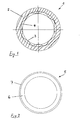
- FIG. 1 a PVC pipe 1 is shown cut.
- the PVC pipe 1 is produced as a plastic molding by extrusion and has on the inside a pipe wall 2 with a helical inner surface 3.
- the flow of the reaction medium is influenced as in a static mixer. Due to the spiral grooves 4 or structuring of the inner surface 3, an efficient mixing of the reaction medium without larger pressure loss is possible in the tubular reactor even at lower flow velocities.
- the inner surface 3 has no dead spaces, ie there are no areas where the flow rate is locally reduced so that deposits precipitate.
- the inner surface 3 is still easy to clean and done by the structure no scattering and Einkoppellage for the radiation to the reaction medium.
- any other polymer material can be used that can be modified in the absorption and transmission behavior for the processes in the photobioreactor.
- suitable polymers are, in addition to transparent polyvinyl chloride, polycarbonate, polymethyl methacrylate, polyolefin, polystyrene, polyethylene terephthalate, polybutylene terephthalate or combinations, partially or fully fluorinated polymers, such as polyvinylidene fluoride or perfluoroalkoxalkane, copolymers or alloys thereof in question.
- FIG. 2 shows a further section through a tube 5 of a photobioreactor.
- the tube 5 off FIG. 2 is produced by co-extrusion.
- the pipe wall is constructed of a thicker supporting inner layer 6 and a thinner functional outer layer 7.
- the inner layer 6 can be equipped with an antimicrobial additive and with an optical brightener or fluorescent dye.
- the outer layer 7 is preferably less than 1 mm thick and is equipped to modify the absorption and transmission behavior.
- the outer layer 7 contains the combination of nanoscale titanium dioxide with submicroscale titanium dioxide and the near infrared absorber, preferably an inorganic rare earth based pigment.
- the main or inner layer 6 is used as a thermal insulator.
- the absolute addition of the NIR absorber in the outer layer 7 required per unit area for achieving a specific cooling effect is reduced.
- the life of the optical brightener in the inner and / or outer layer 6, 7 is significantly extended, since the UV radiation is significantly reduced or can be controlled.
- the targeted distribution of the additives on the inner and outer layers 6, 7 additionally prevents destructive interactions between the various additives, which leads to a longer service life of the composite material.
- an existing pipe material may also be coated on the outside with the polymer composition according to the invention, laminated or laminated with a thin film. It is also conceivable that existing reactor tubes made of glass or ceramic are covered with such a film.
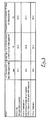
- FIG. 3 shows in a table a summary of the measurement results for thermal management in the photobioreactor with a novel polymer composition compared to a conventional polymer.
- a specimen in addition to an untreated transparent PVC-U plate with a thickness of 3 mm, such a plate with 100 ppm NIR absorber and a composite of an untreated plate with a laminated 40 micron thick PVC-U foil with 4000 ppm of the same NIR absorber compared with each other.
- the equilibrium equilibration time, the temperature of the air and the temperature of a black emitter in equilibrium were measured in a static air volume.
- the temperature at the black radiator can be seen as a measure of a reduced heat flow to the transported medium in the tube and thus demonstrates the efficiency of the NIR absorber.
- the measured data show that even with a wall homogeneously pigmented with 100 ppm NIR absorber, a significant reduction in temperature is achieved.
- the NIR absorber is deliberately added in the thinner outer layer, not only the consumption of NIR absorbers can be significantly reduced overall, but a further reduction of the temperature can be achieved.
- the inner layer is used as a thermal insulator.
- the NIR barrier is laid on the outer layer. For example, Lumogen from BASF is added as NIR absorber.
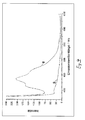
- FIG. 4 the intensity is shown as a function of the wavelength of a reference pattern (curve 8) and a sample (curve 9) with an optical brightener.
- the effect of the additive for converting the ultraviolet ray into visible light as compared with a conventional polymer is shown.
- a test specimen 0.3 mm thick PVC-U plates were pressed.
- 100 ppm of a UV-active fluorescent dye was added.
- the emission spectrum was excited after excitation Laser radiation recorded in the UV range.
- the fluorescence radiation coincides exactly with the light wave range of 400 to 700 nm relevant for algae growth.
- a fluorescent dye for example, Uvitex OB from CIBA is added.
- FIG. 5 is the transmission behavior as a function of the wavelength of conventional polymer material (curve 10) compared to the inventive polymer composition with a suitable titanium dioxide particle addition shown.
- 0.3 mm thick PVC-U plates were again produced as test specimens.
- a test specimen curve 11
- 0.5% by weight of nanoscale titanium dioxide was added.
- a further sample curve 12
- 0.5% by weight of nanoscale titanium dioxide and 0.003% by weight of submicroscale titanium dioxide were added.
- FIG. 6 is the transmission behavior as a function of the wavelength of conventional polymer material (curve 13) in comparison to the inventive polymer composition (curve 14) shown with a suitable photochromic dye particle addition.
- 0.3 mm thick transparent PVC-U plates were again produced as test specimens.
- 300 ppm photochromic dye was added and irradiated with a halogen lamp for five minutes.
- photochromic dye for example, Reversacol by James Robinson is used.
- the use of the polymer composition in the photobioreactor described here can also be used in other photoreactors.
- the tubes are preferably connected to so-called tridamp connectors.
- Triclamp compounds are lightweight, space-saving and yet easily and quickly detachable.
- the pipe end is glued or welded at the construction site with a flanged bushing with an angled flank. This type of connection is time-saving and flexible in maintenance. Instead of pipes and plates or other plastic moldings can be made with the new polymer composition.
Landscapes
- Health & Medical Sciences (AREA)
- Life Sciences & Earth Sciences (AREA)
- Chemical & Material Sciences (AREA)
- Engineering & Computer Science (AREA)
- Organic Chemistry (AREA)
- Bioinformatics & Cheminformatics (AREA)
- Wood Science & Technology (AREA)
- Zoology (AREA)
- Biotechnology (AREA)
- Genetics & Genomics (AREA)
- General Engineering & Computer Science (AREA)
- Biomedical Technology (AREA)
- Microbiology (AREA)
- Biochemistry (AREA)
- Sustainable Development (AREA)
- General Health & Medical Sciences (AREA)
- Chemical Kinetics & Catalysis (AREA)
- Molecular Biology (AREA)
- Medicinal Chemistry (AREA)
- Polymers & Plastics (AREA)
- Immunology (AREA)
- Clinical Laboratory Science (AREA)
- Compositions Of Macromolecular Compounds (AREA)
- Cultivation Of Seaweed (AREA)
- Cultivation Of Plants (AREA)
Abstract
Description
- Die Erfindung bezieht sich auf eine Polymerzusammensetzung mit einem modifizierten Absorptions- und Transmissionsverhalten, insbesondere geeignet für dem Sonnenlicht oder geeigneten Kunstlichtquellen ausgesetzten Photoreaktoren oder Photobioreaktoren aus Kunststoffformkörpern.
- Photoreaktoren sind Reaktionsgefässe zur Durchführung von photochemischen Reaktionen. Die Reaktionsmedien sind Lösungen oder Suspensionen, die unter Einwirkung von Licht Reaktionen eingehen. Photobioreaktoren sind Reaktionsgefässe zur Durchführung von photobiologischen Reaktionen ähnlich der Photosynthese im Pflanzenreich. In diesen Photobioreaktoren werden beispielsweise Mikroalgen zur Herstellung von Biotreibstoffen, beispielsweise Biodiesel als Form erneuerbarer Energie, verwendet. Die Anwendung von Photobioreaktoren in der Zucht von Mikroalgen hat auch eine wachsende Bedeutung in der Herstellung von Algenkonzentraten mit anderen Anwendungsbereichen, wie beispielsweise die Fischzucht, die Herstellung von Nahrungsmittelzusatzstoffen oder als Binder oder Neutralisator von Kohlendioxid aus Abgasen der thermischen Kraftwerken.
- An die Wandmaterialien des Reaktionsgefässes werden hohe Anforderungen gestellt. Der Werkstoff für die Wände muss eine möglichst hohe Beständigkeit gegen Ultraviolettstrahlung aufweisen. Die UV-Strahlung kann schädlich sein für das Reaktionsmedium und muss deshalb entweder abgehalten oder reflektiert werden, oder in für das Reaktionsmedium geeigneter Strahlung (sichtbares Licht der Wellenlänge 400 bis 700 nm) umgewandelt werden.
- Der Werkstoff muss eine möglichst optimale Transparenz für die geeignete Strahlung aufweisen. Die im Sonnenlicht enthaltene Nah-Infrarotstrahlung (NIR) ist massgeblich verantwortlich für die Erwärmung des Photobioreaktors und der Algensuspension. Da das Algenwachstum nur in einem bestimmten moderaten Temperaturbereich optimal verläuft, muss der Reaktor temperiert werden. Das Konzept zur Temperierung hat einen entscheidenden Einfluss auf die bauliche Ausführung des Photobioreaktors und seine Effizienz.
- Weiterhin ist es Ziel einer optimalen Photobioreaktoranordnung, dass die pro Standflächeneinheit eingestrahlte für das Algenwachstum nutzbare Strahlung möglichst vollständig für das Algenwachstum nutzbar gemacht wird. Eine Maximierung der Photobioreaktorfläche pro Standflächeneinheit ist daher ein wichtiges Ziel in der Optimierung der Effizienz von Photobioreaktoren. Eine intelligente Schichtung von Photobioreaktoren bei gleichzeitiger wirkungsvoller Verteilung der auftreffenden Strahlung auf eine möglichst grosse Reaktorfläche muss das Ziel sein.
- Weiterhin muss der Werkstoff eine möglichst hohe mechanische Stabilität aufweisen. Die transparente Wand des Reaktors darf nicht durch Ablagerungen verschmutzt werden, d.h. auf der Innenseite des Reaktors müssen Ablagerungen verhindert werden. Weil für die Durchführung der photobiologischen Reaktionen sehr grosse Reaktoren, sprich sehr lange Rohre erforderlich sind, spielen auch das Gewicht und der Preis des Reaktionsgefässes eine grosse Rolle.
- Aus der
EP 1127612 ist ein solarer Photoreaktor bekannt. Das Reaktionsgefäss besteht aus einem doppelwandigen Rohrsystem, bei dem das Reaktionsmedium im Spalt zwischen den zwei Rohren gefördert wird. Das Reaktionsmedium wird von aussen und von innen der solaren Strahlungsenergie oder einer geeigneten Kunstlichtquelle ausgesetzt. Für das Reaktionsgefäss werden für die Sonnenstrahlung transparente Rohre aus Glas oder Kunststoff vorgeschlagen. - Ausgehend von diesem Stand der Technik ist es Aufgabe der Erfindung, eine Polymerzusammensetzung für Photoreaktoren, insbesondere für Photobioreaktoren anzugeben, die das Polymermaterial für die Wand des Reaktors an die Prozessbedingungen der Photosynthese optimal anpassbar macht, ein möglichst niedriges Gewicht aufweist und eine möglichst lange Lebensdauer garantiert.
- Diese Aufgabe wird gelöst durch eine Polymerzusammensetzung mit einem modifizierten Absorptions- und Transmissionsverhalten, insbesondere geeignet für dem Sonnenlicht oder geeigneten Kunstlichtquellen ausgesetzten Photoreaktoren oder Photobioreaktoren aus Kunststoffformkörpern, wobei das Polymer zusätzlich zu den herkömmlichen Standard-Additiven wahlweise eine oder eine Kombination der folgenden Substanzen aufweist: ein anorganischer oder organischer Nah-Infrarot-Absorber zur Absorption der langwelligen Strahlung, ein anorganischer oder organischer Reflektor zur Reflexion von Ultraviolettstrahlung, ein anorganischer oder organischer Reflektor zur Reflexion von sichtbarer, Nah-Infrarot- oder Infrarot-Strahlung, ein optischer Aufheller oder Fluoreszenzfarbstoff zur Umwandlung der absorbierten Ultraviolettstrahlung in sichtbares Licht oder Fluoreszenzlicht, ein photochromer Farbstoff zur lichtintensitätsabhängigen Modifizierung des Transmissionsverhaltens des Kunststoffformkörpers und ein antimikrobieller Zusatz zur Verhinderung oder Reduktion der organischen Ablagerungen in dem Photobioreaktor.
- Bevorzugte Weiterbildungen der Erfindung ergeben sich aus den abhängigen Ansprüchen.
- Es ist von Vorteil, dass das Reaktionsmedium im Photobioreaktor gegen Ultraviolettstrahlung geschützt wird. Dies wird dadurch erreicht, dass der Reflektor Titandioxidpartikel mit Korngrössen im sub-Mikrometer- oder Nanometerbereich aufweist. Nanoskalige Titandioxidpartikel können in entsprechender Grösse und bei optimaler Verteilung selektiv und dauerhaft wirksam als UV-Absorber eingesetzt werden. Eine Kombination vom nanoskaligen Titandioxid mit submikroskaligen Titandioxid hat zur Folge, dass mit möglichst wenig Zusatzmaterial ohne den Einsatz von konventionellem UV-Absorber sowohl eine optimale Reflexion von UV-Strahlung als auch ein breitbandiger Schutz gegen sichtbares und NIR-Licht erreicht wird.
- Es ist auch von Vorteil, dass das Wärmemanagement im Reaktor gesteuert werden kann. Dies wird dadurch erreicht, dass der Nah-Infrarot-Absorber vorzugsweise ein anorganisches auf seltenen Erdmetallen basierendes Pigment aufweist. Der NIR-Absorber kann entweder homogen über die gesamte Wandstärke des Rohres verteilt angeordnet sein, oder bei einem co-extrudierten Rohr nur in der äusseren Schicht.
- Es ist weiter auch von Vorteil, dass die schädliche UV-Strahlung in unschädliches blaues oder grünes Licht umgewandelt wird. Dies wird dadurch erreicht, dass der optische Aufheller vorzugsweise Verbindungen auf Thiophen-Benzoxazol-Basis aufweist.
- Es ist auch von Vorteil, dass im Photobioreaktor die optimale Lichtintensität zur Verfügung gestellt wird. Dies wird dadurch erreicht, dass der photochrome Farbstoff vorzugsweise Spiro-Naphthoxazine oder Naphthopyrane aufweist.
- Es ist auch von Vorteil, dass auf der Innenoberfläche des Reaktors Ablagerungen durch Algenwachstum verhindert oder reduziert werden. Dies wird dadurch erreicht, dass der antimikrobielle Zusatz vorzugsweise Verbindungen auf Carbamat- oder Silberbasis aufweist. Dies wird auch dadurch erreicht, dass die Rohrwand eine totraumfreie Innenfläche aufweist. Dies wird weiterhin auch dadurch erreicht, dass die Rohrwand auf der Innenseite als ein statischer Mischer ausgebildet ist. Dieser statische Mischer unterstützt auch die gleichmässige Bestrahlung der Algensuspension und fördert eine gleichmässige Temperaturverteilung im Reaktionsmedium.
- Das Wandmaterial wird durch die neue Polymerzusammensetzung so modifiziert, dass im Photobioreaktor über die gesamte Standzeit optimale Bedingungen für das Wachstum der Mikroalgen und für die effiziente Produktion von Biomasse oder Biodiesel angeboten werden. Optimal heisst hier, dass die richtigen Wellenlängen aus dem Strahlungsspektrum in der richtigen Intensität durchgelassen werden, dass die schädlichen Wellenlängen reflektiert oder in für das Algenwachstum unschädliche Strahlung umgewandelt werden und dass die Wandinnenseite gegen Ablagerungen geschützt wird. Das Wandmaterial erhält für den Betrieb im Photobioreaktor optimale Eigenschaften, die über die gesamte Standzeit des Reaktors konstant bleiben, d.h. die Lichtdurchlässigkeit des Wandmaterials bleibt konstant und die Wand wird nicht matt.
- Durch die Reflektoreigenschaften der neuen Polymerzusammensetzung leistet die so modifizierte Wand des Photobioreaktors einen effektiven Beitrag zur Lichtverdünnung. Die reflektierte Strahlung kann auf benachbarte Photobioreaktorflächen gespiegelt werden. Die pro Standflächeneinheit auftreffende Lichtmenge wird so auf eine grössere Fläche an bestrahltem Photobioreaktor verteilt.
- Ausführungsbeispiele der Erfindung werden anhand der Figuren beschrieben. Es zeigen:
-
Figur 1 einen Schnitt durch einem erfindungsgemässen Rohr für einen Photobioreaktor, -
Figur 2 einen weiteren Schnitt durch einem Rohr für einen Photobioreaktor, -
Figur 3 eine Zusammenstellung der Messresultate zum Wärmemanagement im Photobioreaktor mit einer erfindungsgemässen Polymerzusammensetzung im Vergleich zu einem konventionellen Polymer, -
Figur 4 eine Darstellung der Wirkung des Zusatzes zur Umwandlung der UV-Strahlung in sichtbarem Licht im Vergleich zu einem konventionellen Polymer, -
Figur 5 eine Darstellung des Transmissionsverhaltens in Abhängigkeit der Wellenlänge von konventionellem Polymermaterial im Vergleich zur erfindungsgemässen Polymerzusammensetzung mit einem geeigneten Titandioxidpartikelzusatz und -
Figur 6 eine Darstellung des Transmissionsverhaltens in Abhängigkeit der Wellenlänge von konventionellem Polymermaterial im Vergleich zur erfindungsgemässen Polymerzusammensetzung mit einem geeigneten photochromen Additivzusatz. - In
Figur 1 ist ein PVC-Rohr 1 geschnitten dargestellt. Das PVC-Rohr 1 wird als ein Kunststoffformkörper durch Extrusion hergestellt und weist auf der Innenseite eine Rohrwand 2 mit einer schraubenlinienförmig ausgebildeten Innenfläche 3 auf. Hierdurch wird die Strömung des Reaktionsmediums wie in einem statischen Mischer beeinflusst. Durch die spiralförmige Rillen 4 oder Strukturierung der Innenoberfläche 3 wird im Rohrreaktor auch bei kleineren Strömungsgeschwindigkeiten eine effiziente Mischung des Reaktionsmediums ohne grösseren Druckverlust möglich. Die Innenoberfläche 3 weist keine Toträume auf, d.h. es gibt keine Bereiche, wo die Strömungsgeschwindigkeit lokal so reduziert wird, dass Ablagerungen ausfallen. Die Innenoberfläche 3 ist noch einfach genug zu reinigen und es erfolgen durch die Struktur keine Streuung und Einkoppelverluste für die Strahlung zum Reaktionsmedium. - Statt transparentem PVC kann jeder andere Polymerwerkstoff eingesetzt werden, die im Absorptions- und Transmissionsverhalten für die Prozesse im Photobioreaktor modifiziert werden können. Als Beispiele für geeignete Polymere kommen neben transparentes Polyvinylchlorid, Polycarbonat, Polymethylmetacrylat, Polyolefin, Polystyrol, Polyethylenterephthalat, Polybutylenterephthalat oder Kombinationen, teil- oder vollfluorierte Polymere, wie beispielsweise Polyvinylidenfluorid oder Perfluoralkoxalkan, Copolymeren oder Legierungen hieraus in Frage.
- Die
Figur 2 zeigt einen weiteren Schnitt durch ein Rohr 5 eines Photobioreaktors. Das Rohr 5 ausFigur 2 wird durch Co-extrusion hergestellt. Die Rohrwand ist aus einer dickeren tragenden Innenschicht 6 und einer dünneren funktionalen Aussenschicht 7 aufgebaut. Die Innenschicht 6 kann mit einem antimikrobiellen Zusatz und mit einem optischen Aufheller oder Fluoreszenzfarbstoff ausgerüstet werden. Die Aussenschicht 7 ist vorzugsweise weniger als 1 mm stark und wird zur Modifikation des Absorptions- und Transmissionsverhalten ausgerüstet. Die Aussenschicht 7 enthält die Kombination vom nanoskaligen Titandioxid mit submikroskaligen Titandioxid und den Nah-Infrarot Absorber, vorzugsweise ein anorganisches auf seltenen Erdmetallen basierendes Pigment. - Durch die Verlagerung des Wellenlängen-Managements in der dünneren Aussenschicht 7 werden folgende Vorteile erreicht: Die Haupt- bzw. Innenschicht 6 wird als thermischer Isolator genutzt. Dadurch wird der pro Flächeneinheit für das Erreichen eines bestimmten Kühleffektes notwendige absolute Zusatz des NIR-Absorbers in der Aussenschicht 7 reduziert. Die Lebensdauer des optischen Aufhellers in der Innen- und/oder Aussenschicht 6, 7 wird deutlich verlängert, da die UV-Einstrahlung deutlich reduziert ist bzw. gesteuert werden kann. In der Innenschicht 6 sind nur geringe Gehalte an konventionellen UV-Schutzadditiven erforderlich. Durch den Schichtaufbau wird in der Aussenschicht 7 zudem eine Totalreflexion der ausgefilterten Wellen möglich. Durch die gezielte Aufteilung der Additiven auf Innen- und Aussenschicht 6, 7 werden zusätzlich destruktive Wechselwirkungen zwischen den verschieden Additiven verhindert, was zu einer längeren Lebensdauer des Verbundmaterials führt.
- Anstelle eines co-extrudierten Kunststoffrohres kann auch ein bestehendes Rohrmaterial mit der erfindungsgemässen Polymerzusammensetzung an der Aussenseite beschichtet, kaschiert oder mit einer dünnen Folie laminiert werden. Denkbar ist auch, dass bestehende Reaktorrohre aus Glas oder Keramik mit einer solchen Folie bedeckt werden.
-
Figur 3 zeigt in einer Tabelle eine Zusammenstellung der Messresultate zum Wärmemanagement im Photobioreaktor mit einer erfindungsgemässen Polymerzusammensetzung im Vergleich zu einem konventionellen Polymer. Als Probekörper wurden neben einer unbehandelten transparenten PVC-U-Platte mit einer Dicke von 3 mm eine solche Platte mit 100 ppm NIR-Absorber und ein Verbund aus einer unbehandelten Platte mit einer aufkaschierten 40 µm starken PVC-U-Folie mit 4000 ppm des gleichen NIR-Absorbers mit einander verglichen. Unterhalb der Platten wurde jeweils in einem ruhenden Luftvolumen die Zeit bis zur Einstellung des Gleichgewichtes, die Temperatur der Luft und die Temperatur eines schwarzen Strahlers im Gleichgewichtszustand gemessen. Die Temperatur am schwarzen Strahler kann als Mass für einen reduzierten Wärmfluss auf das im Rohr transportierte Medium gesehen werden und demonstriert somit die Effizienz des NIR-Absorbers. - Die Messdaten zeigen, dass selbst bei einer homogen mit 100 ppm NIR-Absorber pigmentierten Wand eine deutliche Reduzierung der Temperatur erreicht wird. Wenn jedoch der NIR-Absorber gezielt in der dünneren Aussenschicht zugesetzt wird, kann nicht nur der Verbrauch an NIR-Absorber insgesamt deutlich reduziert werden, sondern eine weitere Reduzierung der Temperatur erreicht werden. In einem Verbund wird die innen liegende Schicht als thermischer Isolator genutzt. Die NIR-Barriere wird auf die Aussenschicht verlegt. Als NIR-Absorber wird beispielsweise Lumogen von BASF zugesetzt.
- In
Figur 4 wird die Intensität in Abhängigkeit der Wellenlänge eines Referenzmusters (Kurve 8) und einer Probe (Kurve 9) mit einem optischen Aufheller dargestellt. Hier ist die Wirkung des Zusatzes zur Umwandlung der UV-Strahlung in sichtbarem Licht im Vergleich zu einem konventionellen Polymer dargestellt. Als Probekörper wurden 0,3 mm dicke PVC-U-Platten gepresst. In einem Probekörper wurden 100 ppm eines UV-aktiven Fluoreszenzfarbstoffes zugesetzt. An beiden Platten wurde das Emissionspektrum nach Anregung mit Laserstrahlung im UV-Bereich aufgezeichnet. - Aus dem Vergleich wird sichtbar, dass die Fluoreszenzstrahlung genau mit dem für das Algenwachstum relevanten Lichtwellenbereich von 400 bis 700 nm zusammenfällt. Als Fluoreszenzfarbstoff wird beispielsweise Uvitex OB von CIBA zugesetzt.
- In
Figur 5 ist das Transmissionsverhalten in Abhängigkeit der Wellenlänge von konventionellem Polymermaterial (Kurve 10) im Vergleich zur erfindungsgemässen Polymerzusammensetzung mit einem geeigneten Titandioxidpartikelzusatz dargestellt. Als Probekörper wurden wiederum 0,3 mm dicke PVC-U-Platten hergestellt. In einem Probekörper (Kurve 11) wurden 0.5 Gew.% nanoskaliges Titandioxid zugesetzt. In einem weiteren Probekörper (Kurve 12) wurden 0.5 Gew.% nanoskaliges Titandioxid und 0.003 Gew.% submikroskaliges Titandioxid zugesetzt. - Aus dem Vergleich wird sichtbar, dass mit dem Zusatz des nanoskaligen Titandioxids alleine ein sehr effizienter UV-Schutz ohne Einsatz vom konventionellen UV-Absorber erreicht wird. Wenn zusätzlich noch eine sehr geringe Menge an submikroskaligem Titandioxid zugesetzt wird, so wird ein breitbandiger Reflektorschutz für sichtbare und NIR-Wellenlängen erreicht.
- In
Figur 6 ist das Transmissionsverhalten in Abhängigkeit der Wellenlänge von konventionellem Polymermaterial (Kurve 13) im vergleich zur erfindungsgemässen Polymerzusammensetzung (Kurve 14) mit einem geeigneten photochromen Farbstoffpartikelzusatz dargestellt. Als Probekörper wurden wiederum 0,3 mm dicke transparente PVC-U-Platten hergestellt. In einem Probekörper (Kurve 14) wurden 300 ppm photochromer Farbstoff zugesetzt und fünf Minuten mit einer Halogenlampe bestrahlt. Als photochromer Farbstoff wird beispielsweise Reversacol von James Robinson eingesetzt. - Aus dem Spektrum ist ersichtlich, dass durch die Einwirkung von UV-Strahlung der photochrome Farbstoff in seine gefärbte Form überführt wird und genau in dem Bereich absorbiert, der auch für das Alögenwachstum relevant ist. Dieser Vorgang ist reversibel. Hierdurch kann also eine Lichtintensitätsabhängige Steuerung des Transmissionsverhaltens der Polymerzusammensetzung erreicht werden.
- Durch vierwöchige Einlagerungsversuche von Mustern aus transparenten PVC-U Rohren der Dimension 63 x 3,0 mm basierend auf einer konventionell UVstabilisierten Rezeptur mit 0,1 % Carbamat-basierenden Biozidzusatz (Fungitrol von ISP) in einer Algenlösung unter Standard-Betriebsbedingungen (T = 25°C, p < 1 bar) konnte gegenüber einer nicht Biozid-additivierten Rohrprobe eine deutliche Reduktion des Algenbewuchses festgestellt werden. Der Effekt der Reduktion des Bewuchses wurde auf ca. 50 % geschätzt.
- Die hier beschriebene Anwendung der Polymerzusammensetzung im Photobioreaktor kann auch in anderen Photoreaktoren angewendet werden. Die Rohre werden vorzugsweise mit sogenannten Tridamp-Verbindern verbunden. Triclampverbindungen sind leicht, platzsparend und trotzdem leicht und schnell lösbar. Das Rohrende wird hierzu auf der Baustelle mit einer Bundbuchse mit einer abgewinkelten Flanke verklebt oder verschweisst. Diese Verbindungsart ist in der Wartung zeitsparend und flexibel. Statt Rohre können auch Platten oder andere Kunststoffformkörper mit der neuen Polymerzusammensetzung hergestellt werden.
Claims (15)
- Polymerzusammensetzung mit einem modifizierten Absorptions- und Transmissionsverhalten, insbesondere geeignet für dem Sonnenlicht oder geeigneten Kunstlichtquellen ausgesetzten Photobioreaktoren aus Kunststoffformkörpern, dadurch gekennzeichnet, dass das Polymer zusätzlich zu den herkömmlichen Standard-Additiven wahlweise eine oder eine Kombination der folgenden Substanzen aufweist:- ein anorganischer oder organischer Nah-Infrarot-Absorber zur Absorption der langwelligen Strahlung,- ein anorganischer oder organischer Reflektor zur Reflexion von Ultraviolettstrahlung,- ein anorganischer oder organischer Reflektor zur Reflexion von sichtbarer, Nah-Infrarot- oder Infrarot-Strahlung,- ein optischer Aufheller oder Fluoreszenzfarbstoff zur Umwandlung der absorbierten Ultraviolettstrahlung in sichtbares Licht oder Fluoreszenzlicht,- ein photochromer Farbstoff zur lichtintensitätsabhängigen Modifizierung des Transmissionsverhaltens des Kunststoffformkörpers und- ein antimikrobieller Zusatz zur Verhinderung oder Reduktion der organischen Ablagerungen in dem Photobioreaktor.
- Polymerzusammensetzung nach dem Anspruch 1, dadurch gekennzeichnet, dass der Reflektor Titandioxidpartikel mit Korngrössen im sub-Mikrometer- oder Nanometerbereich aufweist.
- Polymerzusammensetzung nach mindestens einem der Ansprüche 1 oder 2, dadurch gekennzeichnet, dass der Nah-Infrarot-Absorber vorzugsweise ein anorganisches auf seltenen Erdmetallen basierendes Pigment aufweist.
- Polymerzusammensetzung nach mindestens einem der Ansprüche 1 bis 3, dadurch gekennzeichnet, dass der optische Aufheller vorzugsweise Verbindungen auf Thiophen-Benzoxazol-Basis aufweist.
- Polymerzusammensetzung nach mindestens einem der Ansprüche 1 bis 4, dadurch gekennzeichnet, dass der photochrome Farbstoff vorzugsweise Spiro-Naphthoxazine oder Naphthopyrane aufweist.
- Polymerzusammensetzung nach mindestens einem der Ansprüche 1 bis 5, dadurch gekennzeichnet, dass der antimikrobielle Zusatz vorzugsweise Verbindungen auf Carbamat- oder Silberbasis aufweist.
- Polymerzusammensetzung nach mindestens einem der Ansprüche 1 bis 6, dadurch gekennzeichnet, dass das Polymer amorph oder teilkristallin ausgebildet ist.
- Polymerzusammensetzung nach mindestens einem der Ansprüche 1 bis 7, dadurch gekennzeichnet, dass als Polymer wahlweise transparentes Polyvinylchlorid, Polycarbonat, Polymethylmetacrylat, Polyolefin, Polystyrol, Polyethylenterephthalat, Polybutylenterephthalat oder Kombinationen, teil- oder vollfluorierte Polymere, wie beispielsweise Polyvinylidenfluorid oder Perfluoralkoxalkan, Copolymeren oder Legierungen hieraus verwendet wird.
- Verwendung der Polymerzusammensetzung nach mindestens einem der Ansprüche 1 bis 8 in einem als Photobioreaktor einsetzbaren Kunststoffformkörper, dadurch gekennzeichnet, dass die Wand des Photobioreaktors rohrförmig oder plattenförmig ausgebildet ist.
- Verwendung der Polymerzusammensetzung nach mindestens einem der Ansprüche 1 bis 9 in einem Kunststoffformkörper, dadurch gekennzeichnet, dass der Kunststoffformkörper aus verschiedenen Schichten, beispielsweise durch Co-extrusion, Kaschierung oder Beschichtung ausgebildet ist und dass die Zusätze in den verschiedenen Schichten unterschiedliche Konzentrationen aufweisen.
- Verwendung der Polymerzusammensetzung nach mindestens einem der Ansprüche 1 bis 10 in einem Photobioreaktor, dadurch gekennzeichnet, dass der rohrförmig extrudierte Kunststoffformkörper eine Rohrwand mit einer schraubenlinienförmig ausgebildeten Innenfläche aufweist.
- Verwendung der Polymerzusammensetzung nach mindestens einem der Ansprüche 1 bis 11 in einem Photobioreaktor, dadurch gekennzeichnet, dass die Rohrwand eine totraumfreie Innenfläche aufweist.
- Verwendung der Polymerzusammensetzung nach mindestens einem der Ansprüche 1 bis 12 in einem Photobioreaktor, dadurch gekennzeichnet, dass die Rohrwand auf der Innenseite als ein statischer Mischer ausgebildet ist.
- Verwendung der Polymerzusammensetzung nach mindestens einem der Ansprüche 1 bis 13 in einem Photobioreaktor, dadurch gekennzeichnet, dass die rohrförmigen Kunststoffformkörper mit einer Triclampverbindung verbindbar ausgebildet sind.
- Verwendung der das Absorptionsverhalten modifizierenden Zusätze nach mindestens einem der Ansprüche 1 bis 14 in einem Photobioreaktor, dadurch gekennzeichnet, dass der Photobioreaktor aus mineralischem Glas oder Keramik ausgebildet ist.
Priority Applications (8)
| Application Number | Priority Date | Filing Date | Title |
|---|---|---|---|
| EP09166463A EP2284218A1 (de) | 2009-07-27 | 2009-07-27 | Polymerzusammensetzung für Photobioreaktoren |
| KR1020127004299A KR20120053000A (ko) | 2009-07-27 | 2010-07-01 | 광생물반응기용 중합체 조성물 |
| AU2010278217A AU2010278217B2 (en) | 2009-07-27 | 2010-07-01 | Polymer composition for photobioreactors |
| JP2012522063A JP5738290B2 (ja) | 2009-07-27 | 2010-07-01 | フォトバイオリアクタのためのポリマー組成物 |
| PCT/EP2010/059344 WO2011012397A1 (de) | 2009-07-27 | 2010-07-01 | Polymerzusammensetzung für photobioreaktoren |
| US13/387,262 US20120184027A1 (en) | 2009-07-27 | 2010-07-01 | Polymer composition for photobioreactors |
| CN2010800329818A CN102482455A (zh) | 2009-07-27 | 2010-07-01 | 用于光生物反应器的聚合物组合物 |
| IL216785A IL216785A0 (en) | 2009-07-27 | 2011-12-06 | Polymer composition for photobioreactors |
Applications Claiming Priority (1)
| Application Number | Priority Date | Filing Date | Title |
|---|---|---|---|
| EP09166463A EP2284218A1 (de) | 2009-07-27 | 2009-07-27 | Polymerzusammensetzung für Photobioreaktoren |
Publications (1)
| Publication Number | Publication Date |
|---|---|
| EP2284218A1 true EP2284218A1 (de) | 2011-02-16 |
Family
ID=41198625
Family Applications (1)
| Application Number | Title | Priority Date | Filing Date |
|---|---|---|---|
| EP09166463A Withdrawn EP2284218A1 (de) | 2009-07-27 | 2009-07-27 | Polymerzusammensetzung für Photobioreaktoren |
Country Status (8)
| Country | Link |
|---|---|
| US (1) | US20120184027A1 (de) |
| EP (1) | EP2284218A1 (de) |
| JP (1) | JP5738290B2 (de) |
| KR (1) | KR20120053000A (de) |
| CN (1) | CN102482455A (de) |
| AU (1) | AU2010278217B2 (de) |
| IL (1) | IL216785A0 (de) |
| WO (1) | WO2011012397A1 (de) |
Cited By (2)
| Publication number | Priority date | Publication date | Assignee | Title |
|---|---|---|---|---|
| CN104105398A (zh) * | 2012-02-08 | 2014-10-15 | 冈山县 | 果实袋 |
| WO2014202159A1 (de) * | 2013-06-20 | 2014-12-24 | Biotubes Gmbh | Rohrleitung zum einsatz in einem photobioreaktor |
Families Citing this family (9)
| Publication number | Priority date | Publication date | Assignee | Title |
|---|---|---|---|---|
| US9358091B2 (en) | 2011-04-18 | 2016-06-07 | Inguran, Llc | Two-dimensional bar codes in assisted reproductive technologies |
| CN106274107A (zh) | 2011-04-18 | 2017-01-04 | 英格朗公司 | 聚合构件和用于标记聚合构件的方法 |
| US10190088B2 (en) * | 2013-02-27 | 2019-01-29 | Hitachi, Ltd. | Organism culturing system and organism culturing method |
| US9347030B2 (en) * | 2013-02-28 | 2016-05-24 | Julian Fiorentino | Photobioreactor |
| WO2014197766A1 (en) * | 2013-06-07 | 2014-12-11 | Joule Unlimited Technologies, Inc. | Flexible bioreactors, systems and methods |
| EP3092300A4 (de) * | 2014-01-07 | 2017-08-23 | SABIC Global Technologies B.V. | Sonnenenergieleitung unter verwendung von thermoplasten für algen- und cyanobakterienwachstum |
| WO2016152440A1 (ja) * | 2015-03-25 | 2016-09-29 | 株式会社クレハ | 水中で光合成を行う生物の生育促進用資材およびその用途 |
| US10344585B2 (en) * | 2015-03-26 | 2019-07-09 | Chevron U.S.A. Inc. | Methods, apparatus, and systems for steam flow profiling |
| WO2016205341A1 (en) * | 2015-06-15 | 2016-12-22 | Entegris, Inc. | Aseptic pods and load ports |
Citations (4)
| Publication number | Priority date | Publication date | Assignee | Title |
|---|---|---|---|---|
| EP0349225A1 (de) | 1988-06-27 | 1990-01-03 | Somar Corporation | Lichtstabilisierter Polyvinylchloridgegenstand |
| US5030676A (en) | 1989-07-14 | 1991-07-09 | Certainteed Corporation | UV light stabilized polyvinyl chloride composition |
| DE20015884U1 (de) * | 2000-02-25 | 2000-12-21 | DLR Deutsches Zentrum für Luft- und Raumfahrt e.V., 53175 Bonn | Solarer Photoreaktor |
| WO2006083815A1 (en) | 2005-01-31 | 2006-08-10 | E.I. Dupont De Nemours And Company | Composition comprising nanoparticle tio2 and ethylene copolymer |
Family Cites Families (17)
| Publication number | Priority date | Publication date | Assignee | Title |
|---|---|---|---|---|
| IL88260A0 (en) * | 1988-11-02 | 1989-06-30 | Erez Thermoplastic Products | Plastic sheeting |
| JPH068041B2 (ja) * | 1990-08-29 | 1994-02-02 | 大阪化成株式会社 | 農業用合成樹脂フィルム |
| US5116113A (en) * | 1990-09-10 | 1992-05-26 | American Optical Corporation | Laser eye protective devices |
| WO1995011751A1 (en) * | 1993-10-26 | 1995-05-04 | E. Heller & Company | Photocatalyst-binder compositions |
| US5998520A (en) * | 1997-07-02 | 1999-12-07 | Bayer Corporation | Photochromic compositions having improved fade rate |
| DE19746343B4 (de) * | 1997-10-21 | 2006-04-20 | Deutsches Zentrum für Luft- und Raumfahrt e.V. | Verfahren und Vorrichtung zur Einbringung solarer Strahlungsenergie in einen Photoreaktor |
| DE19916597A1 (de) * | 1999-04-13 | 2000-10-19 | Fraunhofer Ges Forschung | Photobioreaktor mit verbessertem Lichteintrag durch Oberflächenvergrößerung, Wellenlängenschieber oder Lichttransport |
| KR100529284B1 (ko) * | 2000-10-06 | 2005-11-17 | 가부시키가이샤 상기 | 향균성 수지 |
| JP2005015716A (ja) * | 2003-06-27 | 2005-01-20 | Mitsubishi Engineering Plastics Corp | ポリカーボネート樹脂組成物およびその成形品 |
| US7754825B2 (en) * | 2005-02-03 | 2010-07-13 | E. I. Du Pont De Nemours And Company | Light stabilized copolyetherester compositions |
| KR20070108798A (ko) * | 2006-05-08 | 2007-11-13 | 최길배 | 나노입자 및 메조입자로 표면 개질된 중합체 거대입자,이를 이용한 나노입자-고분자 복합소재, 및 이들의제조방법 |
| JP2007326939A (ja) * | 2006-06-07 | 2007-12-20 | Mitsubishi Engineering Plastics Corp | 芳香族ポリカーボネート樹脂組成物および樹脂成形体 |
| IL184971A0 (en) * | 2006-08-01 | 2008-12-29 | Brightsource Energy Inc | High density bioreactor system, devices and methods |
| JP4853710B2 (ja) * | 2006-11-22 | 2012-01-11 | 住友金属鉱山株式会社 | レーザー溶着用光吸収樹脂組成物及び光吸収樹脂成形体、並びに光吸収樹脂成形体の製造方法 |
| US9637714B2 (en) * | 2006-12-28 | 2017-05-02 | Colorado State University Research Foundation | Diffuse light extended surface area water-supported photobioreactor |
| JPWO2008153202A1 (ja) * | 2007-06-14 | 2010-08-26 | 学校法人早稲田大学 | 水面上に浮遊させた光合成用リアクターを用いた光合成微生物の培養方法及び光合成微生物により水素ガスを製造するための光合成用リアクター |
| BRPI0923323A2 (pt) * | 2008-12-11 | 2015-08-11 | Joule Unltd Inc | Biofábrica solar, fotobiorreatores, sistemas de regulação térmica passivos e métodos de produção de produtos. |
-
2009
- 2009-07-27 EP EP09166463A patent/EP2284218A1/de not_active Withdrawn
-
2010
- 2010-07-01 US US13/387,262 patent/US20120184027A1/en not_active Abandoned
- 2010-07-01 KR KR1020127004299A patent/KR20120053000A/ko not_active Ceased
- 2010-07-01 JP JP2012522063A patent/JP5738290B2/ja not_active Expired - Fee Related
- 2010-07-01 AU AU2010278217A patent/AU2010278217B2/en not_active Ceased
- 2010-07-01 CN CN2010800329818A patent/CN102482455A/zh active Pending
- 2010-07-01 WO PCT/EP2010/059344 patent/WO2011012397A1/de not_active Ceased
-
2011
- 2011-12-06 IL IL216785A patent/IL216785A0/en unknown
Patent Citations (5)
| Publication number | Priority date | Publication date | Assignee | Title |
|---|---|---|---|---|
| EP0349225A1 (de) | 1988-06-27 | 1990-01-03 | Somar Corporation | Lichtstabilisierter Polyvinylchloridgegenstand |
| US5030676A (en) | 1989-07-14 | 1991-07-09 | Certainteed Corporation | UV light stabilized polyvinyl chloride composition |
| DE20015884U1 (de) * | 2000-02-25 | 2000-12-21 | DLR Deutsches Zentrum für Luft- und Raumfahrt e.V., 53175 Bonn | Solarer Photoreaktor |
| EP1127612A2 (de) | 2000-02-25 | 2001-08-29 | DLR Deutsches Zentrum für Luft- und Raumfahrt e.V. | Solarer Photoreaktor |
| WO2006083815A1 (en) | 2005-01-31 | 2006-08-10 | E.I. Dupont De Nemours And Company | Composition comprising nanoparticle tio2 and ethylene copolymer |
Cited By (3)
| Publication number | Priority date | Publication date | Assignee | Title |
|---|---|---|---|---|
| CN104105398A (zh) * | 2012-02-08 | 2014-10-15 | 冈山县 | 果实袋 |
| TWI583300B (zh) * | 2012-02-08 | 2017-05-21 | Okayama Prefectural Government | Fruit bag |
| WO2014202159A1 (de) * | 2013-06-20 | 2014-12-24 | Biotubes Gmbh | Rohrleitung zum einsatz in einem photobioreaktor |
Also Published As
| Publication number | Publication date |
|---|---|
| CN102482455A (zh) | 2012-05-30 |
| IL216785A0 (en) | 2012-02-29 |
| US20120184027A1 (en) | 2012-07-19 |
| AU2010278217B2 (en) | 2014-07-03 |
| KR20120053000A (ko) | 2012-05-24 |
| JP2013500363A (ja) | 2013-01-07 |
| AU2010278217A1 (en) | 2012-01-12 |
| JP5738290B2 (ja) | 2015-06-24 |
| WO2011012397A1 (de) | 2011-02-03 |
Similar Documents
| Publication | Publication Date | Title |
|---|---|---|
| WO2011012397A1 (de) | Polymerzusammensetzung für photobioreaktoren | |
| Maraveas | Environmental sustainability of greenhouse covering materials | |
| DE60001230T2 (de) | Methode und reaktor zur desinfektion und reinigung von flüssigkeiten und gasen | |
| DE69321964T2 (de) | Verbundwerkstoff für die strahlungsabschirmung | |
| DE69801450T2 (de) | Verfahren zur desinfektion von flüssigkeiten und gasen und geräte zu dessen anwendung | |
| EP2342078B1 (de) | Nanoskalige ir-absorber in mehrschichtigen formkörpern | |
| DE102008036934B4 (de) | Bioreaktor mit Fenster | |
| Maraveas et al. | Sustainable greenhouse covering materials with nano-and micro-particle additives for enhanced radiometric and thermal properties and performance | |
| WO2019025199A1 (de) | Desinfektionsanlage für flüssigkeiten | |
| DE19644992C1 (de) | Temperierbares Solarelement für Solarreaktoren | |
| WO2022218663A1 (de) | Kunststofferzeugnisse mit leuchtstoffen | |
| Zeng et al. | Development of advanced solid-state thermochromic materials for responsive smart window applications | |
| EP0738686A1 (de) | Reaktoren für die photokatalytische Abwasserreinigung mit Stegmehrfachplatten als Solarelementen | |
| CH704424A2 (de) | Polymerzusammensetzung für Photobioreaktoren. | |
| JP6218367B2 (ja) | 光吸収材 | |
| WO2010127841A2 (de) | Vorrichtung zur durchführung photochemischer prozesse | |
| DE102013015423A1 (de) | Photobioreaktor mit seitlich licht-auskoppelnden Lichtleitermatten | |
| WO2012167865A1 (de) | Wellenlängenselektiv reflektierende beschichtung | |
| DE102010018632A1 (de) | Solarbetriebener Luftkollektor | |
| EP2000748A2 (de) | Kollektorelement zur Wärmegewinnung aus der Sonnenstrahlung und Schutzabdeckung dafür | |
| AT508132B1 (de) | Bauteil | |
| DE102005058712B4 (de) | Optisch transparentes Leichtbauelement | |
| DE102011089692B4 (de) | Bioreaktor zur Kultivierung von phototrophen Organismen | |
| Shi et al. | Hydrophilic Nanocomposite Films with a Fence-Structure-Induced Labyrinth Effect for Greenhouse Cooling and Light Enhancement | |
| DE202013002003U1 (de) | Kunststoffelement |
Legal Events
| Date | Code | Title | Description |
|---|---|---|---|
| PUAI | Public reference made under article 153(3) epc to a published international application that has entered the european phase |
Free format text: ORIGINAL CODE: 0009012 |
|
| 17P | Request for examination filed |
Effective date: 20091224 |
|
| AK | Designated contracting states |
Kind code of ref document: A1 Designated state(s): AT BE BG CH CY CZ DE DK EE ES FI FR GB GR HR HU IE IS IT LI LT LU LV MC MK MT NL NO PL PT RO SE SI SK SM TR |
|
| AX | Request for extension of the european patent |
Extension state: AL BA RS |
|
| 17Q | First examination report despatched |
Effective date: 20130403 |
|
| GRAP | Despatch of communication of intention to grant a patent |
Free format text: ORIGINAL CODE: EPIDOSNIGR1 |
|
| INTG | Intention to grant announced |
Effective date: 20160311 |
|
| STAA | Information on the status of an ep patent application or granted ep patent |
Free format text: STATUS: THE APPLICATION IS DEEMED TO BE WITHDRAWN |
|
| 18D | Application deemed to be withdrawn |
Effective date: 20160722 |