EP2302033A2 - Identification des régions RD1 et RD5 associées avec la virulence permettant le développement des vaccins améliorés de M. bovis BCG et M. microti - Google Patents
Identification des régions RD1 et RD5 associées avec la virulence permettant le développement des vaccins améliorés de M. bovis BCG et M. microti Download PDFInfo
- Publication number
- EP2302033A2 EP2302033A2 EP10179423A EP10179423A EP2302033A2 EP 2302033 A2 EP2302033 A2 EP 2302033A2 EP 10179423 A EP10179423 A EP 10179423A EP 10179423 A EP10179423 A EP 10179423A EP 2302033 A2 EP2302033 A2 EP 2302033A2
- Authority
- EP
- European Patent Office
- Prior art keywords
- seq
- bcg
- tuberculosis
- microti
- esat
- Prior art date
- Legal status (The legal status is an assumption and is not a legal conclusion. Google has not performed a legal analysis and makes no representation as to the accuracy of the status listed.)
- Withdrawn
Links
Images








Classifications
-
- A—HUMAN NECESSITIES
- A61—MEDICAL OR VETERINARY SCIENCE; HYGIENE
- A61K—PREPARATIONS FOR MEDICAL, DENTAL OR TOILETRY PURPOSES
- A61K39/00—Medicinal preparations containing antigens or antibodies
- A61K39/02—Bacterial antigens
- A61K39/04—Mycobacterium, e.g. Mycobacterium tuberculosis
-
- A—HUMAN NECESSITIES
- A61—MEDICAL OR VETERINARY SCIENCE; HYGIENE
- A61P—SPECIFIC THERAPEUTIC ACTIVITY OF CHEMICAL COMPOUNDS OR MEDICINAL PREPARATIONS
- A61P31/00—Antiinfectives, i.e. antibiotics, antiseptics, chemotherapeutics
- A61P31/04—Antibacterial agents
- A61P31/06—Antibacterial agents for tuberculosis
-
- A—HUMAN NECESSITIES
- A61—MEDICAL OR VETERINARY SCIENCE; HYGIENE
- A61P—SPECIFIC THERAPEUTIC ACTIVITY OF CHEMICAL COMPOUNDS OR MEDICINAL PREPARATIONS
- A61P35/00—Antineoplastic agents
-
- A—HUMAN NECESSITIES
- A61—MEDICAL OR VETERINARY SCIENCE; HYGIENE
- A61P—SPECIFIC THERAPEUTIC ACTIVITY OF CHEMICAL COMPOUNDS OR MEDICINAL PREPARATIONS
- A61P37/00—Drugs for immunological or allergic disorders
- A61P37/02—Immunomodulators
- A61P37/04—Immunostimulants
-
- C—CHEMISTRY; METALLURGY
- C07—ORGANIC CHEMISTRY
- C07K—PEPTIDES
- C07K14/00—Peptides having more than 20 amino acids; Gastrins; Somatostatins; Melanotropins; Derivatives thereof
- C07K14/195—Peptides having more than 20 amino acids; Gastrins; Somatostatins; Melanotropins; Derivatives thereof from bacteria
- C07K14/35—Peptides having more than 20 amino acids; Gastrins; Somatostatins; Melanotropins; Derivatives thereof from bacteria from Mycobacteriaceae (F)
-
- C—CHEMISTRY; METALLURGY
- C12—BIOCHEMISTRY; BEER; SPIRITS; WINE; VINEGAR; MICROBIOLOGY; ENZYMOLOGY; MUTATION OR GENETIC ENGINEERING
- C12N—MICROORGANISMS OR ENZYMES; COMPOSITIONS THEREOF; PROPAGATING, PRESERVING, OR MAINTAINING MICROORGANISMS; MUTATION OR GENETIC ENGINEERING; CULTURE MEDIA
- C12N1/00—Microorganisms; Compositions thereof; Processes of propagating, maintaining or preserving microorganisms or compositions thereof; Processes of preparing or isolating a composition containing a microorganism; Culture media therefor
- C12N1/36—Adaptation or attenuation of cells
-
- C—CHEMISTRY; METALLURGY
- C12—BIOCHEMISTRY; BEER; SPIRITS; WINE; VINEGAR; MICROBIOLOGY; ENZYMOLOGY; MUTATION OR GENETIC ENGINEERING
- C12Q—MEASURING OR TESTING PROCESSES INVOLVING ENZYMES, NUCLEIC ACIDS OR MICROORGANISMS; COMPOSITIONS OR TEST PAPERS THEREFOR; PROCESSES OF PREPARING SUCH COMPOSITIONS; CONDITION-RESPONSIVE CONTROL IN MICROBIOLOGICAL OR ENZYMOLOGICAL PROCESSES
- C12Q1/00—Measuring or testing processes involving enzymes, nucleic acids or microorganisms; Compositions therefor; Processes of preparing such compositions
- C12Q1/68—Measuring or testing processes involving enzymes, nucleic acids or microorganisms; Compositions therefor; Processes of preparing such compositions involving nucleic acids
- C12Q1/6876—Nucleic acid products used in the analysis of nucleic acids, e.g. primers or probes
- C12Q1/6888—Nucleic acid products used in the analysis of nucleic acids, e.g. primers or probes for detection or identification of organisms
- C12Q1/689—Nucleic acid products used in the analysis of nucleic acids, e.g. primers or probes for detection or identification of organisms for bacteria
-
- G—PHYSICS
- G01—MEASURING; TESTING
- G01N—INVESTIGATING OR ANALYSING MATERIALS BY DETERMINING THEIR CHEMICAL OR PHYSICAL PROPERTIES
- G01N33/00—Investigating or analysing materials by specific methods not covered by groups G01N1/00 - G01N31/00
- G01N33/48—Biological material, e.g. blood, urine; Haemocytometers
- G01N33/50—Chemical analysis of biological material, e.g. blood, urine; Testing involving biospecific ligand binding methods; Immunological testing
- G01N33/53—Immunoassay; Biospecific binding assay; Materials therefor
- G01N33/569—Immunoassay; Biospecific binding assay; Materials therefor for microorganisms, e.g. protozoa, bacteria, viruses
- G01N33/56911—Bacteria
- G01N33/5695—Mycobacteria
-
- A—HUMAN NECESSITIES
- A61—MEDICAL OR VETERINARY SCIENCE; HYGIENE
- A61K—PREPARATIONS FOR MEDICAL, DENTAL OR TOILETRY PURPOSES
- A61K39/00—Medicinal preparations containing antigens or antibodies
- A61K2039/51—Medicinal preparations containing antigens or antibodies comprising whole cells, viruses or DNA/RNA
- A61K2039/52—Bacterial cells; Fungal cells; Protozoal cells
- A61K2039/522—Bacterial cells; Fungal cells; Protozoal cells avirulent or attenuated
-
- A—HUMAN NECESSITIES
- A61—MEDICAL OR VETERINARY SCIENCE; HYGIENE
- A61K—PREPARATIONS FOR MEDICAL, DENTAL OR TOILETRY PURPOSES
- A61K39/00—Medicinal preparations containing antigens or antibodies
- A61K2039/51—Medicinal preparations containing antigens or antibodies comprising whole cells, viruses or DNA/RNA
- A61K2039/52—Bacterial cells; Fungal cells; Protozoal cells
- A61K2039/523—Bacterial cells; Fungal cells; Protozoal cells expressing foreign proteins
-
- A—HUMAN NECESSITIES
- A61—MEDICAL OR VETERINARY SCIENCE; HYGIENE
- A61K—PREPARATIONS FOR MEDICAL, DENTAL OR TOILETRY PURPOSES
- A61K39/00—Medicinal preparations containing antigens or antibodies
Definitions
- Virulence associated regions have been sought for a long time in Mycobacterium.
- the present invention concerns the identification of 2 genomic regions which are shown to be associated with a virulent phenotype in Mycobacteri ⁇ and particularly in M. tuberculosis. It concerns also the fragments of said regions.
- RD5 As disclosed in Molecular Microbiology (1999), vol. 32, pages 643 to 655 (Gordon S.V. et al.).
- the other region named RD1-2F9 spans the known region RD1 as disclosed in Molecular Microbiology (1999), vol. 32, pages 643 to 655 (Gordon S.V. et al.).
- Both of the regions RD1 and RD5 or at least one of them are absent from the vaccine strains of M. bovis BCG and in M. microti, strains found involved and used as live vaccines in the 1960's.
- the recombinant Mycobacteria and particularly M. bovis BCG after modification of their genome by introduction of all or part of RD1-2F9 region and/or RD5 region in said genome can be used for the immune system of patients affected with a cancer as for example a bladder cancer.
- the present invention relates to a strain of M. bovis BCG or M. microti, wherein said strain has integrated all or part of the region RD1-2F9 responsible for enhanced immunogenicity to the tubercle bacilli, especially the genes encoding the ESAT-6 and CFP-10 antigenes.
- M. bovis BCG::RD1 or M. microti:: RD1 strains will be referred to as the M. bovis BCG::RD1 or M. microti:: RD1 strains and are useful as a new improved vaccine for prevention of tuberculosis infections and for treating superficial bladder cancer.
- Mycobacterium bovis BCG (bacille Calmette-Guérin) has been used since 1921 to prevent tuberculosis although it is of limited efficacy against adult pulmonary disease in highly endemic areas.
- Mycobacterium microti another member of the Mycobacterium tuberculosis complex, was originally described as the infective agent of a tuberculosis-like disease in voles ( Microtus agrestis ) in the 1930's (Wells, A. Q. 1937. Tuberculosis in wild voles. Lancet 1221 and Wells, A. Q. 1946. The murine type of tubercle bacillus. Medical Research council special report series 259:1-42.). Until recently, M.
- microti strains were thought to be pathogenic only for voles, but not for humans and some were even used as a live-vaccine.
- the vole bacillus proved to be safe and effective in preventing clinical tuberculosis in a trial involving roughly 10,000 adolescents in the UK in the 1950's ( Hart, P. D. a., and I. Sutherland. 1977. BCG and vole bacillus vaccines in the prevention of tuberculosis in adolescence and early adult life. British Medical Journal 2:293-295 ).
- another strain, OV166 was successfully administered to half a million newborns in Prague, former Czechoslovakia, without any serious complications ( Sula, L., and 1. Radkovsky.
- M. microti vaccine against tuberculosis. J. Hyg. Epid. Microbiol. Immunol. 20:1-6 ). M. microti vaccination has since been discontinued because it was no more effective than the frequently employed BCG vaccine. As a result, improved vaccines are needed for preventing and treating tuberculosis.
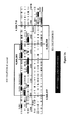
- RD1, RD3-5, RD7 and RD9 ( Fig. 1A, B ) were accorded highest priority for functional genomic analysis using "knock-ins" of M. bovis BCG to assess their potential contribution to the attenuation process.
- Clones spanning these RD regions were selected from an ordered M. tuberculosis H37Rv library of integrating shuttle cosmids ( S. T. Cole, et al., Nature 393, 537 (1998 ) and W. R. Bange, et al, Tuber. Lung Dis.
- RD1 is restricted to the avirulent strains M. bovis BCG and M. microti. Although the endpoints are not identical, the deletions have removed from both vaccine strains a cluster of six genes (Rv3871-Rv3876) that are part of the ESAT-6 locus ( Fig. 1A ( S. T. Cole, et al., Nature 393, 537 (1998 ) and F. Tekaia, et al., Tubercle Lung Disease 79, 329 (1999 )).
- ESAT-6 Rv3875
- CFP-10 Rv3874
- M bovis BCG::RD1 strain induces RD1-specific immune responses of the Th1-type, has enhanced immunogenicity and confers better protection than M. bovis BCG alone in animal models of tuberculosis.
- the M bovis BCG::RD1 vaccine is significantly more virulent than M. bovis BCG in immunodeficient mice but considerably less virulent than M tuberculosis.
- M. microti lacks a different but overlapping part of the RD1 region (RD1 mic ) to M bovis BCG and our results indicate that reintroduction of RD1-2F9 confers increased virulence of BCG ::RD1 in immunodeficient mice.
- the rare strains of M. microti that are associated with human disease contain a region referred to as RD5 mic whereas those from voles do not.
- M. bovis BCG vaccine could be improved by reintroducing other genes encoding ESAT-6 family members that have been lost, notably, those found in the RD8 and RD5 loci of M. tuberculosis. These regions also code for additional T-cell antigens.
- M. bovis BCG::RD1 could be improved by reintroducing the RD8 and RD5 loci of M. tuberculosis.
- M bovis BCG vaccine could be improved by reintroducing and overexpressing the genes contained in the RD1, RD5 and RD8 regions.
- these new strains showing greater persistence and enhanced immunogenicity, represent an improved vaccine for preventing tuberculosis and treating bladder cancer.
- these recombinant strains are an advantage for the presentation of other antigens, for instance from HIV in humans and in order to induce protection immune responses.
- Those improved strains may also be of use in veterinary medicine, for instance in preventing bovine tuberculosis.
- the present invention is aimed at a strain of M bovis BCG or M microti, wherein said strain has integrated all or part of the RD1-2F9 region as shown in SEQ ID No 1 responsible for enhanced immunogenicity to the tubercle bacilli.
- M bovis BCG::RD1 or M. microti:: RD1 strains will be referred to as the M bovis BCG::RD1 or M. microti:: RD1 strains.
- part or all of the RD1-2F9 region means that the strain has integrated a portion of DNA originating from Mycobacterium tuberculosis or any virulent member of the Mycobacterium tuberculosis complex (M. africanum, M.
- M c ⁇ nettii which comprises at least one, two, three, four, five, or more gene(s) selected from Rv3861 (SEQ ID No 4), Rv3862 (SEQ ID No 5), Rv3863 (SEQ ID No 6), Rv3864 (SEQ ID No 7), Rv3865 (SEQ ID No 8), Rv3866 (SEQ ID No 9), Rv3867 (SEQ ID No 10), Rv3868 (SEQ ID No 11), Rv3869 (SEQ ID No 12), Rv3870 (SEQ ID No 13), Rv3871 (SEQ ID No 14), Rv3872 (SEQ ID No 15, mycobacterial PE), Rv3873 (SEQ ID No 16, PPE), Rv3874 (SEQ ID No 17, CFP-10), Rv3875 (SEQ ID No 18, ESAT-6), Rv3876 (SEQ ID No 19), Rv3877 (SEQ ID No 20), Rv3878 (SEQ ID No 21), Rv3879 (SEQ ID No 22), R
- a portion of DNA means also a nucleotide sequence or a nucleic acid or a polynucleotide.
- the expression “gene” is referred herein as the coding sequence in frame with its natural promoter as well as the coding sequence which has been isolated and framed with an exogenous promoter, for example a promoter capable of directing high level of expression of said coding sequence.
- the invention relates to a strain of M. bovis BCG or M. microti wherein said strain has integrated at least one, two, three or more gene(s) selected from Rv3867 (SEQ ID No 10), Rv3868 (SEQ ID No 11), Rv3869 (SEQ ID No 12), Rv3870 (SEQ ID No 13),Rv3871 (SEQ ID No 14), Rv3872 (SEQ ID No 15, mycobacterial PE), Rv3873 (SEQ ID No 16, PPE), Rv3874 (SEQ ID No 17, CFP-10), Rv3875 (SEQ ID No 18, ESAT-6), Rv3876 (SEQ ID No 19) and Rv3877 (SEQ ID No 20).
- Rv3867 SEQ ID No 10
- Rv3868 SEQ ID No 11
- Rv3869 SEQ ID No 12
- Rv3870 SEQ ID No 13
- Rv3871 SEQ ID No 14
- Rv3872 SEQ ID No 15, mycobacterial PE
- Rv3873 SEQ
- the invention relates to a strain of M. bovis BCG or M. microti wherein said strain has integrated at least one, two, three or more gene(s) selected from Rv3871 (SEQ ID No 14), Rv3872 (SEQ ID No 15, mycobacterial PE), Rv3873 (SEQ ID No 16, PPE), Rv3874 (SEQ ID No 17, CFP-10), Rv3875 (SEQ ID No 18, ESAT-6) and Rv3876 (SEQ ID No 19).
- a strain according to the invention is one which has integrated a portion of DNA originating from Mycobacterium tuberculosis or any virulent member of the Mycobacterium tuberculosis complex (M. africanum, M. bovis, M.
- canettii which comprises at least four genes selected from Rv3861 (SEQ ID No 4), Rv3862 (SEQ ID No 5), Rv3863 (SEQ ID No 6), Rv3864 (SEQ ID No 7), Rv3865 (SEQ ID No 8), Rv3866 (SEQ ID No 9), Rv3867 (SEQ ID No 10), Rv3868 (SEQ ID No 11), Rv3869 (SEQ ID No 12), Rv3870 (SEQ ID No 13), Rv3871 (SEQ ID No 14), Rv3872 (SEQ ID No 15, mycobacterial PE), Rv3873 (SEQ ID No 16, PPE), Rv3874 (SEQ ID No 17, CFP-10), Rv3875 (SEQ ID No 18, ESAT-6), Rv3876 (SEQ ID No 19), Rv3877 (SEQ ID No 20), Rv3878 (SEQ ID No 21), Rv3879 (SEQ ID No 22), Rv3880 (SEQ ID No 23), Rv3881 (SEQ ID No 24),
- Strains which have integrated a portion of DNA originating from Mycobacterium tuberculosis or any virulent member of the Mycobacterium tuberculosis complex ( M. ⁇ fric ⁇ num, M. bovis, M canettii )comprising at least Rv3871 (SEQ ID No 14), Rv3875 (SEQ ID No 18, ESAT-6) and Rv3876 (SEQ ID No 19) or at least Rv3871 (SEQ ID No 14), Rv3875 (SEQ ID No 18, ESAT-6) and Rv3877 (SEQ ID No 20) or at least Rv3871 (SEQ ID No 14), Rv3875 (SEQ ID No 18, ESAT-6), Rv3876 (SEQ ID No 19) and Rv3877 (SEQ ID No 20) are of particular interest.
- the above strains according to the invention may further comprise Rv3874 (SEQ ID No 17, CFP-10), Rv3872 (SEQ ID No 15, mycobacterial PE) and/or Rv3873 (SEQ ID No 16, PPE).
- it may further comprise at least one, two, three or four gene(s) selected from Rv3861 (SEQ ID No 4), Rv3862 (SEQ ID No 5), Rv3863 (SEQ ID No 6), Rv3864 (SEQ ID No 7), Rv3865 (SEQ ID No 8), Rv3866 (SEQ ID No 9), Rv3867 (SEQ ID No 10), Rv3868 (SEQ ID No 11), Rv3869 (SEQ ID No 12), Rv3870 (SEQ ID No 13), Rv3878 (SEQ ID No 21), Rv3879 (SEQ ID No 22), Rv3880 (SEQ ID No 23), Rv3881 (SEQ ID No 24), Rv3882 (SEQ ID No 25), Rv3883 (SEQ ID No 26), R
- the invention encompasses strains which have integrated a portion of DNA originating from Mycobacterium tuberculosis or any virulent member of the Mycobacterium tuberculosis complex (M. africanum, M. bovis, M. canettii), which comprises Rv3875 (SEQ ID No 18, ESAT-6) or Rv3874 (SEQ ID No 17, CFP-10) or both Rv3875 (SEQ ID No 18, ESAT-6) and Rv3874 (SEQ ID No 17, CFP-10).
- M. africanum, M. bovis, M. canettii which comprises Rv3875 (SEQ ID No 18, ESAT-6) or Rv3874 (SEQ ID No 17, CFP-10) or both Rv3875 (SEQ ID No 18, ESAT-6) and Rv3874 (SEQ ID No 17, CFP-10).
- genes can be mutated (deletion, insertion or base modification) so as to maintain the improved immunogenicity while decreasing the virulence of the strains.
- mutated deletion, insertion or base modification
- the man skilled in the art can select the M bovis BCG::RD1 or M. microti:: RD1 strains, in which a mutated gene has been integrated, showing improved immunogenicity and lower virulence.
- constructs may be modified so as to be applicable as vaccine strains while being safe for immuno-compromised individuals.
- constructs means an engineered gene unit, usually involving a gene of interest that has been fused to a promoter.
- the man skilled in the art can adapt the BCG::RD1 strain by the conception of BCG vaccine strains that only carry parts of the genes coding for ESAT-6 or CFP-10 in a mycobacterial expression vector (for example pSM81) under the control of a promoter, more particularly an hsp60 promoter.
- a mycobacterial expression vector for example pSM81
- a promoter more particularly an hsp60 promoter.
- at least one portion of the esat-6 gene that codes for immunogenic 20-mer peptides of ESAT-6 active as T-cell epitopes (Mustafa AS, Oftung F, Amoudy HA, Madi NM, Abal AT, Shaban F, Rosen Krands I, & Andersen P.
- ESAT-6 and CFP-10 encoding genes could be altered by directed mutagenesis (using for example QuikChange Site-Directed Mutagenesis Kit from Stratagen) in a way that most of the immunogenic peptides of ESAT-6 remain intact, but the biological functionality of ESAT-6 is lost.
- the invention is also aimed at a method for preparing and selecting M. bovis BCG or M. microti recombinant strains comprising a step consisting of modifying the M. bovis BCG::RD1 or M. microti:: RD1 strains as defined above by insertion, deletion or mutation in the integrated RD1 region, more particularly in the esat-6 or CFP-10 gene, said method leading to strains that are less virulent for immuno-depressed individuals.
- the invention is aimed at the M. bovis BCG::RD1 strains, which have integrated a cosmid herein referred to as the RD1-2F9 and RD1-AP34 contained in the E. coli strains deposited on April 2, 2002 at the CNCM (Institut Pasteur, 25, rue du Dondel Roux, 75724 Paris cedex 15, France) under the accession number I-2831 and I-2832 respectively.
- the RD1-2F9 is a cosmid comprising the portion of the Mycobacterium tuberculosis H37Rv genome previously named RD1-2F9 that spans the RD1 region and contains a gene conferring resistance to Kanamycin.
- the RD1-AP34 is a cosmid comprising a portion of the Mycobacterium tuberculosis H37Rv genome containing two genes coding for ESAT-6 and CFP-10 as well as a gene conferring resistance to Kanamycin.
- the cosmid RD1-AP34 contains a 3909 bp fragment of the M. tuberculosis H37Rv genome from region 4350459 bp to 4354367 bp that has been cloned into an integrating vector pKint in order to be integrated in the genome of Mycobacterium bovis BCG and Mycobacterium microti strains (SEQ ID No 3).
- the Accession No. of the segment 160 of the M. tuberculosis H37Rv genome that contains this region is AL022120.
- the sequence of the fragment RD1-2F9 ( ⁇ 32 kb) covers the region of the M. tuberculosis genome AL123456 from ca 4337 kb to ca. 4369 kb, and also contains the sequence described in SEQ ID No 1. Therefore, the invention also embraces M. bovis BCG::RD1 strain and M. microti:: RD1 strain which have integrated the sequence as shown in SEQ ID No 1.
- strains fulfill the aim of the invention which is to provide an improved tuberculosis vaccine or M. bovis BCG-based prophylactic or therapeutic agent, or a recombinant M. microti derivative for these purposes.
- M. bovis BCG::RD1 strains are better tuberculosis vaccines than M. bovis BCG. These strains can also be improved by reintroducing other genes found in the RD8 and RD5 loci of M. tuberculosis or any virulent member of the Mycobacterium tuberculosis complex (M. africanum, M. bovis, M. canettii). These regions code for additional T-cell antigens.
- M. microti overexpressing the genes contained in the RD1, RD5 and RD8 regions by means of exogenous promoters is encompassed by the invention.
- M. microti strains could also be improved by reintroducing the RD8 locus of M. tuberculosis or any virulent member of the Mycobacterium tuberculosis complex (M. africanum, M. bovis, M. canettii).
- the invention is directed to a cosmid or a plasmid, more commonly named vectors, comprising all or part of the RD1-2F9 region originating from Mycobacterium tuberculosis or any virulent member of the Mycobacterium tuberculosis complex (M. africanum, M. bovis, M.
- said region comprising at least one, two, three or more gene(s) selected from Rv3861 (SEQ ID No 4), Rv3862 (SEQ ID No 5), Rv3863 (SEQ ID No 6), Rv3864 (SEQ ID No 7), Rv3865 (SEQ ID No 8), Rv3866 (SEQ ID No 9), Rv3867 (SEQ ID No 10), Rv3868 (SEQ ID No 11), Rv3869 (SEQ ID No 12), Rv3870 (SEQ ID No 13), Rv3871 (SEQ ID No 14), Rv3872 (SEQ ID No 15, mycobacterial PE), Rv3873 (SEQ ID No 16, PPE), Rv3874 (SEQ ID No 17, CFP-10), Rv3875 (SEQ ID No 18, ESAT-6), Rv3876 (SEQ ID No 19), Rv3877 (SEQ ID No 20), Rv3878 (SEQ ID No 21), Rv3879 (SEQ ID No 22), Rv3880 (SEQ ID No 23),
- vector refers to a DNA molecule originating from a virus , a bacteria, or the cell of a higher organism into which another DNA fragment of appropriate size can be integrated without loss of the vectors capacity for self replication; a vector introduces foreign DNA into host cells, where it can be reproduced in large quantities. Examples are plasmids, cosmids, and yeast artificial chromosomes; vectors are often recombinant molecules containing DNA sequences from several sources.
- a cosmid or a plasmid of the invention comprises a part of the RD1-2F9 region originating from Mycobacterium tuberculosis or any virulent member of the Mycobacterium tuberculosis complex (M. africanum, M. bovis, M.
- canettii said part comprising at least one, two, three or more gene(s) selected from Rv3867 (SEQ ID No 10), Rv3868 (SEQ ID No 11), Rv3869 (SEQ ID No 12), Rv3870 (SEQ ID No 13), Rv3871 (SEQ ID No 14), Rv3872 (SEQ ID No 15, mycobacterial PE), Rv3873 (SEQ ID No 16, PPE), Rv3874 (SEQ ID No 17, CFP-10), Rv3875 (SEQ ID No 18, ESAT-6), Rv3876 (SEQ ID No 19) and Rv3877 (SEQ ID No 20).
- Rv3867 SEQ ID No 10
- Rv3868 SEQ ID No 11
- Rv3869 SEQ ID No 12
- Rv3870 SEQ ID No 13
- Rv3871 SEQ ID No 14
- Rv3872 SEQ ID No 15, mycobacterial PE
- Rv3873 SEQ ID No 16, PPE
- Rv3874 SEQ ID No 17, CFP-10
- a cosmid or a plasmid of the invention comprises a part of the RD1-2F9 region originating from Mycobacterium tuberculosis or any virulent member of the Mycobacterium tuberculosis complex (M. africanum, M. bovis, M. canettii), said part comprising at least one, two, three or more gene(s) selected from Rv3872 (SEQ ID No 15, mycobacterial PE), Rv3873 (SEQ ID No 16, PPE), Rv3874 (SEQ ID No 17, CFP-10), Rv3875 (SEQ ID No 18, ESAT-6) and Rv3876 (SEQ ID No 19).
- Rv3872 SEQ ID No 15, mycobacterial PE
- Rv3873 SEQ ID No 16, PPE
- Rv3874 SEQ ID No 17, CFP-10
- Rv3875 SEQ ID No 18, ESAT-6
- Rv3876 SEQ ID No 19
- a cosmid or a plasmid of the invention comprises CFP-10, ESAT-6 or both or a part of them. It may also comprise a mutated gene selected CFP-10, ESAT-6 or both, said mutated gene being responsible for the improved immunogenicity and decreased virulence.
- a cosmid or a plasmid as mentioned above may comprise at least four genes selected from Rv3861 (SEQ ID No 4), Rv3862 (SEQ ID No 5), Rv3863 (SEQ ID No 6), Rv3864 (SEQ ID No 7), Rv3865 (SEQ ID No 8), Rv3866 (SEQ ID No 9), Rv3867 (SEQ ID No 10), Rv3868 (SEQ ID No 11), Rv3869 (SEQ ID No 12), Rv3870 (SEQ ID No 13), Rv3871 (SEQ ID No 14), Rv3872 (SEQ ID No 15, mycobacterial PE), Rv3873 (SEQ ID No 16, PPE), Rv3874 (SEQ ID No 17, CFP-10), Rv3875 (SEQ ID No 18, ESAT-6), Rv3876 (SEQ ID No 19), Rv3877 (SEQ ID No 20), Rv3878 (SEQ ID No 21), Rv3879 (SEQ ID No 22), Rv3880 (SEQ ID No 23),
- a cosmid or a plasmid of the invention comprises a portion of DNA originating from Mycobacterium tuberculosis or any virulent member of the Mycobacterium tuberculosis complex (M. africanum, M. bovis, M.
- canettii which comprises at least Rv3871 (SEQ ID No 14), Rv3875 (SEQ ID No 18, ESAT-6) and Rv3876 (SEQ ID No 19) or at least Rv3871 (SEQ ID No 14), Rv3875 (SEQ ID No 18, ESAT-6) and Rv3877 (SEQ ID No 20) or at least Rv3871 (SEQ ID No 14), Rv3875 (SEQ ID No 18, ESAT-6), Rv3876 (SEQ ID No 19) and Rv3877 (SEQ ID No 20).
- the above cosmids or plasmids may further comprise Rv3872 (SEQ ID No 15, mycobacterial PE) Rv3873 (SEQ ID No 16, PPE) Rv3874 (SEQ ID No 17, CFP-10). It may also further comprise at least one, two, three or four gene(s) selected from Rv3861 (SEQ ID No 4), Rv3862 (SEQ ID No 5), Rv3863 (SEQ ID No 6), Rv3864 (SEQ ID No 7), Rv3865 (SEQ ID No 8), Rv3866 (SEQ ID No 9), Rv3867 (SEQ ID No 10), Rv3868 (SEQ ID No 11), Rv3869 (SEQ ID No 12), Rv3870 (SEQ ID No 13), Rv3878 (SEQ ID No 21), Rv3879 (SEQ ID No 22), Rv3880 (SEQ ID No 23), Rv3881 (SEQ ID No 24), Rv3882 (SEQ ID No 25), Rv3883 (SEQ ID No 26), R
- cosmids of the invention are the cosmids herein referred as RD1-2F9 and RD1-AP34 contained in the E. coli strains deposited at the CNCM (Institut Pasteur, 25, rue du Dondel Roux, 75724 Paris cedex 15, France) under the accession number 1-2831 and 1-2832 respectively.
- a particular plasmid or cosmid of the invention is one which has integrated the complete RD1-2F9 region as shown in SEQ ID No 1.
- the invention also relates to the use of these cosmids or plasmids for transforming M. bovis BCG or M. microti strains.
- these cosmids or plasmids may comprise a mutated gene selected from Rv3861 to Rv3885, said mutated gene being responsible for the improved immunogenicity and decreased virulence.
- the invention embraces a pharmaceutical composition
- a pharmaceutical composition comprising a strain as depicted above and a pharmaceutically acceptable carrier.
- these pharmaceutical compositions may contain suitable pharmaceutically-acceptable carriers comprising excipients and auxiliaries which facilitate processing of the living vaccine into preparations which can be used pharmaceutically. Further details on techniques for formulation and administration may be found in the latest edition of Remington's Pharmaceutical Sciences (Maack Publishing Co., Easton, Pa .).
- composition is suitable for oral, intravenous or subcutaneous administration.
- a therapeutically effective dose refers to that amount of active ingredient, i.e the number of strains administered, which ameliorates the symptoms or condition.
- Therapeutic efficacy and toxicity may be determined by standard pharmaceutical procedures in experimental animals, e.g., ED50 (the dose therapeutically effective in 50% of the population) and LD50 (the dose lethal to 50% of the population).
- the dose ratio of toxic to therapeutic effects is the therapeutic index, and it can be expressed as the ratio, LD50/ED50.
- Pharmaceutical compositions which exhibit large therapeutic indices are preferred.
- ED50 is to be modulated according to the mammal to be treated or vaccinated.
- the invention contemplates a composition suitable for human administration as well as veterinary composition.
- the invention is also aimed at a vaccine comprising a M bovis BCG::RD1 or M. microti: : RD1 strain as depicted above and a suitable carrier.
- This vaccine is especially useful for preventing tuberculosis. It can also be used for treating bladder cancer.
- the M. bovis BCG::RD1 or M. microti:: RD1 strains are also useful as a carrier for the expression and presentation of foreign antigens or molecules of interest that are of therapeutic or prophylactic interest. Owing to its greater persistence, BCG::RD1 will present antigens to the immune system over a longer period thereby inducing stronger, more robust immune responses and notably protective responses. Examples of such foreign antigens can be found in patents and patent applications US 6,191,270 for antigen LSA3, US 6,096,879 and US 5,314,808 for HBV antigens, EP 201,540 for HIV-1 antigens, US 5,986,051 for H. pylori antigens and FR 2,744,724 for P. falciparum MSP-1 antigen.
- the invention also concerns a product comprising a strain as depicted above and at least one protein selected from ESAT-6 and CFP-10 or epitope derived thereof for a separate, simultaneous or sequential use for treating tuberculosis.
- the invention concerns the use of a M. bovis BCG::RD1 or M. microti:: RD1 strain as depicted above for preventing or treating tuberculosis.
- M. bovis BCG::RD1 or M. microti:: RD1 strain as a powerful adjuvant/immunomodulator used in the treatment of superficial bladder cancer.
- the invention also contemplates the identification at the species level of members of the M. tuberculosis complex by means of an RD-based molecular diagnostic test. Inclusion of markers for RD1 mic and RD5 mic would improve the tests and act as predictors of virulence, especially in humans.
- the invention concerns a diagnostic kit for the identification at the species level of members of the M. tuberculosis complex comprising DNA probes and primers specifically hybridizing to a DNA portion of the RD1 or RD5 region of M. tuberculosis, more particularly probes hybridizing under stringent conditions to a gene selected from Rv3871 (SEQ ID No 14), Rv3872 (SEQ ID No 15, mycobacterial PE), Rv3873 (SEQ ID No 16, PPE), Rv3874 (SEQ ID No 17, CFP-10), Rv3875 (SEQ ID No 18, ESAT-6), and Rv3876 (SEQ ID No 19), preferably CFP-10 and ESAT-6.
- a gene selected from Rv3871 (SEQ ID No 14), Rv3872 (SEQ ID No 15, mycobacterial PE), Rv3873 (SEQ ID No 16, PPE), Rv3874 (SEQ ID No 17, CFP-10), Rv3875 (SEQ ID No 18, ESAT-6), and Rv3876 (SEQ ID No 19),
- stringent conditions refers to conditions which permit hybridization between the probe sequences and the polynucleotide sequence to be detected.
- Suitably stringent conditions can be defined by, for example, the concentrations of salt or formamide in the prehybridization and hybridization solutions, or by the hybridization temperature, and are well known in the art.
- stringency can be increased by reducing the concentration of salt, increasing the concentration of formamide, or raising the hybridization temperature.
- the temperature range corresponding to a particular level of stringency can be further narrowed by calculating the purine to pyrimidine ratio of the nucleic acid of interest and adjusting the temperature accordingly. Variations on the above ranges and conditions are well known in the art.
- the present invention covers also the complementary nucleotide sequences of said above primers as well as the nucleotide sequences hybridizing under stringent conditions with them and having at least 20 nucleotides and less than 500 nucleotides.
- kits for the identification at the species level of members of the M . tuberculosis complex comprising at least one, two, three or more antibodies directed to mycobacterial PE, PPE, CFP-10, ESAT-6, are also embraced by the invention.
- such kit comprises antibodies directed to CFP-10 and ESAT-6.
- antibody refers to intact molecules as well as fragments thereof, such as Fab, F(ab').sub.2, and Fv, which are capable of binding the epitopic determinant.
- Probes or antibodies can be labeled with isotopes, fluorescent or phosphorescent molecules or by any other means known in the art.
- the invention also relates to virulence markers associated with RD1 and/or RD5 regions of the genome of M. tuberculosis or a part of these regions.
- Example 1 preparation and assessment of M. bovis BCG::RD1 strains as a vaccine for treating or preventing tuberculosis.
- RD1 encodes at least two potent T-cell antigens ( R. Colangelli, et al., Infect. Immun. 68, 990 (2000 ), M. Harboe, et al., Infect. Immun. 66, 717 (1998 ) and R. L. V. Skj ⁇ t, et al., Infect. Immun.. 68, 214 (2000 )), we investigated whether its restoration induced immune responses to these antigens or even improved the protective capacity of BCG. Three weeks following either intravenous or subcutaneous inoculation with BCG::RD1 or BCG controls, we observed similar proliferation of splenocytes to an Ag85A (an antigenic BCG protein) peptide ( K.
- Ag85A an antigenic BCG protein
- ESAT-6 When used as a subunit vaccine, ESAT-6 elicits T-cell responses and induces levels of protection weaker than but akin to those of BCG ( L. Brandt et al, Infect. Immun. 68, 791 (2000 )).
- Challenge experiments were conducted to determine if induction of immune responses to BCG::RD1-encoded antigens, such as ESAT-6, could improve protection against infection with M. tuberculosis.
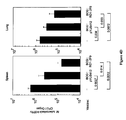
- Groups of mice inoculated with either BCG::pYUB412 or BCG::RD1 were subsequently infected intravenously with M. tuberculosis H37Rv. These experiments showed that immunisation with the BCG::RDl "knock-in" inhibited the growth of M. tuberculosis within both BALB/c ( Fig. 4D ) and C57BL/6 mice when compared to inoculation with BCG alone.
- Example 2 BAC based comparative genomics identifies Mycobacterium microti as a natural ESAT-6 deletion mutant.
- M. microti Ten regions were detected in M. microti that were different to the corresponding genomic regions in M. tuberculosis and M. bovis. To investigate if these regions were associated with the ability of M. microti strains to infect humans, their genetic organization was studied in 8 additional M. microti strains, including those isolated recently from patients with pulmonary tuberculosis. This analysis identified some regions that were specifically absent from all tested M microti strains, but present in all other members of the M tuberculosis complex and other regions that were only absent from vole isolates of M. microti.
- M. microti OV254 which was originally isolated from voles in the UK in the 1930's was kindly supplied by MJ Colston (45). DNA from M . microti OV216 and OV183 were included in a set of strains used during a multicenter study (26). M. microti Myc 94-2272 was isolated in 1988 from the perfusion fluid of a 41-year-old dialysis patient (43) and was kindly provided by L. M. Parsons. M. microti 35782 was purchased from American Type Culture Collection (designation TMC 1608 (M.P. Moscow)). M.
- microti B1 type llama, B2 type Ilama, B3 type mouse and B4 type mouse were obtained from the collection of the National Reference Center for Mycobacteria, Klastechnik Borstel, Germany.
- M. bovis strain AF2122/97, spoligotype 9 was responsible for a herd outbreak in Devon in the UK and has been isolated from lesions in both cattle and badgers.
- mycobacteria were grown on 7H9 Middlebrook liquid medium (Difco) containing 10% oleic-acid-dextrose-catalase (Difco), 0.2 % pyruvic acid and 0.05% Tween 80.
- Plasmid preparations of recombinant clones for sequencing reactions were obtained by pooling eight copies of 96 well plates, with each well containing an overnight culture in 250 ⁇ l 2YT medium with 12.5 ⁇ g.ml- 1 chloramphenicol. After 5 min centrifugation at 3000 rpm, the bacterial pellets were resuspended in 25 ⁇ l of solution A (25 mM Tris, pH 8.0, 50 mM glucose and 10 mM EDTA), cells were lysed by adding 25 ⁇ l of buffer B (NaOH 0.2 M, SDS 0.2%). Then 20 ⁇ l of cold 3 M sodium acetate pH 4.8 were added and kept on ice for 30 min.
- solution A 25 mM Tris, pH 8.0, 50 mM glucose and 10 mM EDTA
- End-sequencing reactions were performed with a Taq DyeDeoxy Terminator cycle sequencing kit (Applied Biosystems) using a mixture of 13 ⁇ l of DNA solution, 2 ⁇ l of Primer (2 ⁇ M) (SP6-BAC1, AGTTAGCTCACTCATTAGGCA (SEQ ID No 15), or T7-BAC1, GGATGTGCTGCAAGGCGATTA (SEQ ID No 16)), 2.5 ⁇ l of Big Dye and 2.5 ⁇ l of a 5X buffer (50 mM MgCl 2 , 50 mM Tris).
- SP6-BAC1, AGTTAGCTCACTCATTAGGCA SEQ ID No 15
- T7-BAC1 GGATGTGCTGCAAGGCGATTA
- 5X buffer 50 mM MgCl 2 , 50 mM Tris
- tuberculosis H37Rv database http://genolist.pasteur.fr/TubercuList/
- M. bovis BLAST server http://www.sanger.ac.uk/Projects/M _ bovis/blast_server.shtml
- in-house databases to determine the relative positions of the M microti OV254 BAC end-sequences.
- DNA for digestion was prepared as previously described (4).
- DNA (1 ⁇ g) was digested with Hind III (Boehringer) and restriction products separated by pulsed-field gel electrophoresis (PFGE) on a Biorad CHEF-DR III system using a 1% (w/v) agarose gel and a pulse of 3.5 s for 17 h at 6 V.cm -1 .
- Low-range PFGE markers (NEB) were used as size standards. Insert sizes were estimated after ethidium bromide staining and visualization with UV light. Different comparisons were made with overlapping clones from the M microti OV254, M. bovis AF2122/97, and M. tuberculosis H37Rv pBeloBAC11 libraries.
- PCR analysis to determine presence of genes in different M. microti strains. Reactions contained 5 ⁇ l of 10xPCR buffer (100 mM ß-mercaptoethanol, 600 mM Tris-HCl, pH 8.8, 20 mM MgCl 2 , 170 mM (NH 4 ) 2 SO 4 , 20 mM nucleotide mix dNTP), 2.5 ⁇ l of each primer at 2 ⁇ M, 10 ng of template DNA, 10% DMSO and 0.5 unit of Taq polymerase in a final volume of 12.5 ⁇ l. Thermal cycling was performed on a PTC-100 amplifier (MJ Inc.) with an initial denaturation step of 90 s at 95°C, followed by 35 cycles of 45 s at 95°C, 1 min at 60°C and 2 min at 72°C.
- 10xPCR buffer 100 mM ß-mercaptoethanol, 600 mM Tris-HCl, pH 8.8, 20 mM MgCl 2 , 170 mM (NH 4
- agarose plugs of genomic DNA prepared as previously described (5) were digested with either Ase I , Dr ⁇ I or Xb ⁇ I (NEB), then electrophoresed on a 1% agarose gel, and finally transferred to Hybond-C extra nitrocellulose membranes (Amersham).
- Different probes were amplified by PCR from the M microti strain OV254 or M. tuberculosis H37Rv using primers for :
- tuberculosis BAC clones identified loci that differed among the tested strains. Size variations of at least 2 kb were easily detectable and 10 deleted regions, evenly distributed around the genome, and containing more than 60 open reading frames (ORFs), were identified. These regions represent over 60 kb that are missing from M. microti OV254 strain compared to M. tuberculosis H37Rv.
- ORFs open reading frames
- microti lacks four of the genomic regions that were also absent from M. bovis BCG. In fact, these four regions of difference named RD7, RD8, RD9 and RD10 are absent from all members of the M. tuberculosis complex with the exception of M. tuberculosis and M. canettii, and seem to have been lost from a common progenitor strain of M. ⁇ fric ⁇ num, M. microti and M. bovis (3). As such, our results obtained with individual BAC to BAC comparisons show that M. microti is part of this non- M . tuberculosis lineage of the tubercle bacilli, and this assumption was further confirmed by sequencing the junction regions of RD7 ⁇ RD10 in M.
- microti OV254 The sequences obtained were identical to those from M. ⁇ fric ⁇ num, M. bovis and M. bovis BCG strains. Apart from these four conserved regions of difference, and phiRv1 (RD3) M. microti OV254 did not show any other RDs with identical junction regions to M. bovis BCG Pasteur, which misses at least 17 RDs relative to M tuberculosis H37Rv (1, 13, 35). However, five other regions missing from the genome of M microti OV254 relative to M tuberculosis H37Rv were identified (RD1 mic , RD5 mic , MiD1 MiD2, MiD3). Such regions are specific either for strain OV254 or for M microti strains in general. Interestingly, two of these regions, RD1 mic , RD5 mic partially overlap RDs from the M. bovis BCG.
- Antigens ESAT-6 and CFP-10 are absent from M. microti.
- One of the most interesting findings of the BAC to BAC comparison was a novel deletion in a genomic region close to the origin of replication ( figure 5 ).
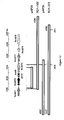
- Detailed PCR and sequence analysis of this region in M. microti OV254 showed a segment of 14 kb to be missing (equivalent to M tuberculosis H37Rv from 4340,4 to 4354,5 kb) that partly overlapped RD1 bcg absent from M. bovis BCG.
- ORFs Rv3864 and Rv3876 are truncated in M. microti OV254 and ORFs Rv3865 to Rv3875 are absent ( figure 6 ).
- RD1 bcg as the only RD region that is specifically absent from all BCG sub-strains but present in all other members of the M. tuberculosis complex (1, 4, 13, 29, 35).
- the RD1 mic deletion is responsible for the loss of a large portion of the conserved ESAT-6 family core region (40) including the genes coding for the major T-cell antigens ESAT-6 and CFP-10 (2, 15).
- ESAT-6 conserved ESAT-6 family core region
- M. microti OV254 lacks the genes pIcA, plcB, plcC and one specific PPE-protein encoding gene (Rv2352). This was confirmed by the absence of a clear band on a Southern blot of Ase I digested genomic DNA from M microti OV254 hybridized with a plcA probe. However, the genes Rv2346c and Rv2347c, members of the esat-6 family, and Rv2348c, that are missing from M. bovis and BCG strains (3) are still present in M. microti OV254.
- MiD1 encompasses the three ORFs Rv2816, Rv2817 and Rv2818 that encode putative proteins whose functions are yet unknown, and has occurred in the direct repeat region (DR), a polymorphic locus in the genomes of the tubercle bacilli that contains a cluster of direct repeats of 36 bp, separated by unique spacer sequences of 36 to 41 bp (17), ( figure 7 ).
- DR direct repeat region
- the presence or absence of 43 unique spacer sequences that intercalate the DR sequences is the basis of spacer-oligo typing, a powerful typing method for strains from the M. tuberculosis complex (23).
- microti isolates exhibit a characteristic spoligotype with an unusually small DR cluster, due to the presence of only spacers 37 and 38 (43).
- M. microti OV254 the absence of spacers 1 to 36, which are present in many other M. tuberculosis complex strains, appears to result from an IS 6110 mediated deletion of 636 bp of the DR region.
- Amplification and Pvu II restriction analysis of a 2.8 kb fragment obtained with primers located in the genes that flank the DR region (Rv2813c and Rv2819) showed that there is only one copy of IS 6110 remaining in this region ( figure 7 ).
- This IS 6110 element is inserted into ORF Rv2819 at position 3,119,932 relative to the M.
- tuberculosis H37Rv genome As for other IS 6110 elements that result from homologous recombination between two copies (7), no 3 base-pair direct repeat was found for this copy of IS 6110 in the DR region. Concerning the absence of spacers 39-43 ( figure7 ), it was found that M. microti showed a slightly different organization of this locus than M. bovis strains, which also characteristically lack spacers 39-43. In M. microti OV254 an extra spacer of 36 bp was found that was not present in M. bovis nor in M. tuberculosis H37Rv. The sequence of this specific spacer was identical to that of spacer 58 reported by van Embden and colleagues (42).
- MiD3 Absence of some members of the PPE family in M. microti.
- MiD3 was identified by the absence of two HindIII sites in BAC Mi4B9 that exist at positions 3749 kb and 3754 kb in the M. tuberculosis H37Rv chromosome.
- Rv3347c encodes a protein of 3157 aminoacids that belongs to the PPE family and Rv3346c a conserved protein that is also present in M. lepr ⁇ e.
- the function of both these putative proteins is unknown while Rv3348 and Rv3349 are part of an insertion element (Table 2).
- Table 2 At present, the consequences of the MiD3 deletions for the biology of M microti remains entirely unknown.
- M. microti OV254 possesses the 6 regions RvD1 to RvD5 and TBD1 that are absent from the sequenced strain M. tuberculosis H37Rv, but which have been shown to be present in other members of the M. tuberculosis complex, like M. canettii, M. ⁇ fric ⁇ num, M. bovis, and M. bovis BCG (3, 7, 13).
- M. canettii M. ⁇ fric ⁇ num
- M. bovis M. bovis BCG
- tuberculosis H37Rv four of these regions (RvD2-5) contain a copy of IS 6110 which is not flanked by a direct repeat, suggesting that recombination of two IS 6110 elements was involved in the deletion of the intervening genomic regions (7). In consequence, it seems plausible that these regions were deleted from the M. tuberculosis H37Rv genome rather than specifically acquired by M. microti. In addition, three other small insertions have also been found and they are due to the presence of an IS 6110 element in a different location than in M. tuberculosis H37Rv and M bovis AF2122/97. Indeed, Pvu II RFLP analysis of M. microti OV254 reveals 13 IS 6110 elements (data not shown).
- M. microti Genomic diversity of M. microti strains.
- M. microti In order to obtain a more global picture of the genetic organization of the taxon M. microti we evaluated the presence or absence of the variable regions found in strain OV254 in eight other M. microti strains. These strains which were isolated from humans and voles have been designated as M microti mainly on the basis of their specific spoligotype (26, 32, 43) and can be further divided into subgroups according to the host such as voles, llama and humans (Table 3). As stated in the introduction, M. microti is rarely found in humans unlike M. tuberculosis. So the availability of 9 strains from variable sources for genetic characterization is an exceptional resource.
- microti lacks the conserved ESAT-6 family core region stretching in other members of the M. tuberculosis complex from Rv3864 to Rv3876 and, as such, represents a taxon of naturally occurring ESAT-6 / CFP-10 deletion mutants.
- MiD3 was found to be absent from all nine M. microti strains tested and, therefore, appears to be a specific genetic marker that is restricted to M. microti strains (Table 3).
- PCR amplification showed that RD5 mic is absent only from the vole isolates OV254, OV216 and OV183, but present in the M. microti strains isolated from human and other origins (Table 3). This was confirmed by the presence of single bands but of differing sizes on a Southern blot hybridized with a plcA probe for all M. microti tested strains except OV254 (Fig. 8D).
- the presence or absence of RD5 mic correlated with the similarity of IS 6110 RFLP profiles.
- BAC based comparative genomics led to the identification of 10 regions absent from the genome of the vole bacillus M. microti OV254 and several insertions due to IS6110. Seven of these deletion regions were also absent from eight other M. microti strains, isolated from voles or humans, and they account for more than 60 kb of genomic DNA. Of these regions, RD1 mic is of particular interest, because absence of part of this region has been found to be restricted to the BCG vaccine strains to date. As M.
- RD1 genes is involved in the pathogenicity for humans. This is reinforced by the fact that RD1 bcg (29) has lost putative ORFs belonging to the esat-6 gene cluster including the genes encoding ESAT-6 and CFP-10 ( Fig. 6 ) (40). Both polypeptides have been shown to act as potent stimulators of the immune system and are antigens recognized during the early stages of infection (8, 12, 20, 34). Moreover, the biological importance of this RD1 region for mycobacteria is underlined by the fact that it is also conserved in M.
- the RD1 deletion may not be the only reason why the vole bacillus is attenuated for humans. Indeed, it remains unclear why certain M. microti strains included in the present study that show exactly the same RD1 mic deletion as vole isolates, have been found as causative agents of human tuberculosis. As human M. microti cases are extremely rare, the most plausible explanation for this phenomenon would be that the infected people were particularly susceptible for mycobacterial infections in general. This could have been due to an immunodeficiency (32, 43) or to a rare genetic host predisposition such as interferon gamma- or IL-12 receptor modification (22).
- region RD5 mic may also have an impact on the increased potential of human M. microti isolates to cause disease.
- BCG and the vole bacillus lack overlapping portions of this chromosomal region that encompasses three (pIcA, plcB, plcC) of the four genes encoding phospholipase C (PLC) in M. tuberculosis.
- PLC has been recognized as an important virulence factor in numerous bacteria, including Clostridium perfringens, Listeria monocytogenes and Pseudomonas aeruginosa, where it plays a role in cell to cell spread of bacteria, intracellular survival, and cytolysis (36, 41). To date, the exact role of PLC for the tubercle bacilli remains unclear plcA encodes the antigen mtp40 which has previously been shown to be absent from seven tested vole and hyrax isolates (28). Phospholipase C activity in M. tuberculosis, M. microti and M. bovis, but not in M. bovis BCG, has been reported (21, 47).
- plcD is responsible for the residual phospholipase C activity in strains lacking RD5, such as M. bovis and M. microti OV254. Indeed, the plcD gene is located in region RvD2 which is present in some but not all tubercle bacilli (13, 18).
- Phospholipase encoding genes have been recognized as hotspots for integration of IS 6110 and it appears that the regions RD5 and RvD2 undergo independent deletion processes more frequently than any other genomic regions (44). Thus, the virulence of some M. microti strains may be due to a combination of functional phospholipase C encoding genes (7, 25, 26, 29).
- M. microti a taxon originally named after its major host Microtus ⁇ grestis, the common vole, represents a relatively homogenous group of tubercle bacilli.
- all tested strains showed unique PFGE macro-restriction patterns that differed slightly among each other, deletions that were common to all M. microti isolates (RD7-RD10, MiD3, RD1 mic ) have been identified.
- the conserved nature of these deletions suggests that these strains are derived from a common precursor that has lost these regions, and their loss may account for some of the observed common phenotypic properties of M. microti, like the very slow growth on solid media and the formation of tiny colonies. This finding is consistent with results from a recent study that showed that M. microti strains carry a particular mutation in the gyrB gene (31).
- tuberculosis clinical isolate MT56 has lost genes Rv3878-Rv3879 ( Brosch, R., et al. A new evolutionary scenario for the Mycobacterium tuberculosis complex. Proc Natl Acad Sci US A 99, 3684-9. (2002 )) but still secretes ESAT-6 and CFP-10 ( Fig. 10 ).
- RD1 esx gene cluster a series of integrating vectors carrying fragments spanning different portions of the RD1 esx gene cluster ( Fig. 10 ). These integrating vectors stably insert into the ⁇ ttB site of the genome of tubercle bacilli.
- pAP34 was designed to carry only the antigenic core region encoding ESAT-6 and CFP-10, and the upstream PE and PPE genes, whereas RD1-I106 and RD1-pAP35 were selected to include the core region and either the downstream or upstream portion of the gene cluster, respectively.
- the fourth construct RD1-2F9 contains a ⁇ 32 kb segment from M.
- tuberculosis that stretches from Rv386 to Rv3885 covering the entire RD1 gene cluster.
- This strategy of complementation with large genomic fragments to avoid polar effects that might be expected if a putative protein complex is only partially complemented in tr ⁇ ns.
- a set of smaller expression constructs (pAP47, pAP48) was established in which individual genes are transcribed from a heat shock promoter ( Fig. 10 ). Using appropriate antibodies all of these constructs were found to produce the corresponding proteins after transformation of BCG or M. microti (see below).
- the four BCG::RD1 recombinants (BCG::RD1-pAP34, BCG::RD1-pAP35, BCG::RD1-2F9 and BCG::RD1-I106) ( Fig. 11 ) were initially tested to ensure that ESAT-6 and CFP-10 were being appropriately expressed from the respective integrated constructs.
- Immunoblotting of whole cell protein extracts from mid-log phase cultures of the various BCG::RD1 recombinants using an ESAT-6 monoclonal antibody or polyclonal sera for CFP-10 and the PPE68 protein Rv3873 demonstrated that all three proteins were expressed from the four constructs at levels comparable to those of M. tuberculosis ( Fig. 11 ).
- mice Groups of C57/BL6 mice were inoculated subcutaneously with one of six recombinant vaccines (BCG-pAP47, BCG-pAP48, BCG::RD1-pAP34, BCG::RD1-pAP35, BCG::RD1-I106, BCG::RD1-2F9) or with BCG transformed with the empty vector pYUB412.
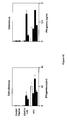
- BCG-pAP47, BCG-pAP48, BCG::RD1-pAP34, BCG::RD1-pAP35, BCG::RD1-I106, BCG::RD1-2F9 Three weeks following vaccination, T-cell immune responses to the seven vaccines were assessed by comparing antigen-specific splenocyte proliferation and gamma interferon (IFN- ⁇ ) production (Fig. 12A).
- IFN- ⁇ gamma interferon
- ESAT-6 When used alone as a subunit or DNA vaccine, ESAT-6 induces levels of protection weaker than but akin to those of BCG ( Brandt, L., Elhay, M., Rosenkrands, I., Lindblad, E.B. & Andersen, P. ESAT-6 subunit vaccination against Mycobacterium tuberculosis. Infect. Immun. 68, 791-795 (2000 )).
- BCG Brandt, L., Elhay, M., Rosenkrands, I., Lindblad, E.B. & Andersen, P. ESAT-6 subunit vaccination against Mycobacterium tuberculosis. Infect. Immun. 68, 791-795 (2000 )).
- BCG Brandt, L., Elhay, M., Rosenkrands, I., Lindblad, E.B. & Andersen, P. ESAT-6 subunit vaccination against Mycobacterium tuberculosis. Infect. Immun. 68, 791-795 (2000
- the BCG::RD1-2F9 recombinant was therefore selected for testing as a vaccine, since it was the only ESAT-6 exporting BCG that elicited vigorous antigen specific T-cell immune responses.
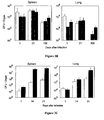
- Groups of C57BL/6 mice were inoculated intravenously with either BCG::RD1-2F9 or BCG::pYUB412 and challenged intravenously after eight weeks with M. tuberculosis H37Rv. Growth of M. tuberculosis H37Rv in spleens and lungs of each vaccinated cohort was compared with that of unvaccinated controls two months after infection (Fig. 14A). This demonstrated that, compared to vaccination with BCG, the BCG::RD1-2F9 vaccine inhibited growth of M. tuberculosis H37Rv in the spleens by 0.4 log10 CFU and was of comparable efficacy at protecting the lungs.
- Tuberculosis is still one of the leading infectious causes of death in the world despite a decade of improving delivery of treatment and control strategies ( Dye, C., Scheele, S., Dolin, P., Pathania, V. & Raviglione, M.C. Consensus statement. Global burden of tuberculosis: estimated incidence, prevalence, and mortality by country. WHO Global Surveillance and Monitoring Project. Jama 282, 677-86. (1999 )). Reasons for the recalcitrance of this pandemic are multi-factorial but include the modest efficacy of the widely used vaccine, BCG. Two broad approaches can be distinguished for the development of improved tuberculosis vaccines ( Baldwin, S.L., et al.
- the antigen genes, esxBA lie at the centre of the conserved gene cluster.
- Bioinformatics and comparative genomics predicted that both the conserved upstream genes Rv3868-Rv3871, as well as the downstream genes Rv3876-Rv3877, would be required for secretion ( Fig. 1 ) and strong experimental support for this prediction is provided here.
- Our experiments show that only when BCG or M. microti are complemented with the entire cluster is maximal export of ESAT-6 and CFP-10 obtained.
- Rv3871 and either Rv3876 or Rv3877 are indeed essential for the normal secretion of ESAT-6 as these are the only conserved genes absent or disrupted in BCG which are not complemented by RD1-I106 or RD1-pAP35. These genes encode a large transmembrane protein with ATPase activity, an ATP-dependent chaperone and an integral membrane protein, functional predictions compatible with them being part of a multi-protein complex involved in the translocation of polypeptides.
- ESAT-6 and CFP-10 form a tight, 1:1 complex and characterisation of the structural properties of ESAT-6, CFP-10 and the ESAT-6-CFP-10 complex: implications for pathogenesis and virulence. J Biol Chem 8, 8 (2002 )) but it is not known whether dimerisation precedes translocation across the cell membrane or occurs at a later stage in vivo. In either case, chaperone or protein clamp activity is likely to be required to assist dimer formation or to prevent premature complexes arising as is well documented for type III secretion systems ( Page, A.L. & Parsot, C. Chaperones of the type III secretion pathway: jacks of all trades. Mol Microbiol 46, 1-11. (2002 )).
- ESAT-6 (and probably CFP-10) is critical for inducing maximal T-cell responses although other RD1-encoded proteins may also contribute such as the PPE68 protein (Rv3873) which is located in the cell envelope.
- PPE68 protein Rv3873
- RD1-pAP47 and RD1-pAP48 that overexpress ESAT-6 intracellularly, did not generate detectable ESAT-6 specific T-cell responses.
- BCG like M. tuberculosis resides in the phagosome, where secreted antigens have ready access to the MHC class II antigen processing pathway, essential for inducing IFN- ⁇ producing CD4 T-cells considered critical for protection against tuberculosis. Further understanding of the mechanism of ESAT-6 secretion could allow the development of BCG recombinants that deliver other antigens in the same way.
- the main aim of the present invention was to qualitatively enhance the antigenicity of BCG. So, having assembled a recombinant vaccine that secreted the T-cell antigens ESAT-6 and CFP-10, and shown that it elicited powerful CD4 T-cell immunity against at least ESAT-6 and CFP-10, the next step was to rigorously test its efficacy in animal models of tuberculosis. In three distinct models, including two involving respiratory challenge, we were able to demonstrate that the ESAT-6-CFP-10 secreting recombinant improved protection when compared to a BCG control, although this effect was restricted to the spleen.
- Recombinant BCG vaccines have definite advantages over other vaccination strategies in that they are inexpensive, easy to produce and convenient to store. However, despite an unrivalled and enviable safety record concerns remain and BCG is currently not administered to individuals with HIV infection. As shown above, the recombinant BCG::RD1-2F9 grows more rapidly in Severe Combined Immunodeficient (SCID) mice, an extreme model of immunodeficiency, than its parental BCG strain. However, in both immunocompetent mice and guinea pigs we have not observed any increased pathology only a slight increase in persistence which may be beneficial, since the declining efficacy of BCG with serial passage has been attributed to an inadvertent increase in its attenuation ( Behr, M.A. & Small, P.M. Has BCG attenuated to impotence? Nature 389, 133-4. (1997 )).
- BCG::RD1-2F9 induces specific T-cell memory and enhances immune responses to other endogenous Th1 antigens such as the mycoloyl transferase, antigen 85A.
Landscapes
- Health & Medical Sciences (AREA)
- Life Sciences & Earth Sciences (AREA)
- Chemical & Material Sciences (AREA)
- Engineering & Computer Science (AREA)
- Organic Chemistry (AREA)
- Immunology (AREA)
- General Health & Medical Sciences (AREA)
- Medicinal Chemistry (AREA)
- Biotechnology (AREA)
- Microbiology (AREA)
- Molecular Biology (AREA)
- Wood Science & Technology (AREA)
- Zoology (AREA)
- Proteomics, Peptides & Aminoacids (AREA)
- Genetics & Genomics (AREA)
- Analytical Chemistry (AREA)
- Biochemistry (AREA)
- Bioinformatics & Cheminformatics (AREA)
- Biomedical Technology (AREA)
- Pharmacology & Pharmacy (AREA)
- Animal Behavior & Ethology (AREA)
- Veterinary Medicine (AREA)
- Public Health (AREA)
- Virology (AREA)
- Tropical Medicine & Parasitology (AREA)
- General Engineering & Computer Science (AREA)
- Urology & Nephrology (AREA)
- Physics & Mathematics (AREA)
- Cell Biology (AREA)
- Biophysics (AREA)
- Hematology (AREA)
- Communicable Diseases (AREA)
- Nuclear Medicine, Radiotherapy & Molecular Imaging (AREA)
- Chemical Kinetics & Catalysis (AREA)
- General Chemical & Material Sciences (AREA)
- Pulmonology (AREA)
- Food Science & Technology (AREA)
- Pathology (AREA)
- General Physics & Mathematics (AREA)
- Gastroenterology & Hepatology (AREA)
Priority Applications (1)
| Application Number | Priority Date | Filing Date | Title |
|---|---|---|---|
| EP10179423A EP2302033A3 (fr) | 2002-04-05 | 2003-04-01 | Identification des régions RD1 et RD5 associées avec la virulence permettant le développement des vaccins améliorés de M. bovis BCG et M. microti |
Applications Claiming Priority (3)
| Application Number | Priority Date | Filing Date | Title |
|---|---|---|---|
| EP02290864A EP1350839B1 (fr) | 2002-04-05 | 2002-04-05 | Identification des régions RD1 et RD5 associées avec la virulence permettant le développement des vaccins améliorés de M. bovis BCG et M. microti |
| EP10179423A EP2302033A3 (fr) | 2002-04-05 | 2003-04-01 | Identification des régions RD1 et RD5 associées avec la virulence permettant le développement des vaccins améliorés de M. bovis BCG et M. microti |
| EP03719008A EP1492867A2 (fr) | 2002-04-05 | 2003-04-01 | Identification des regions rd1 et rd5 associees a la virulence afin de permettre le developpement des vaccins ameliores de m. bovis bcg et m. microti |
Related Parent Applications (1)
| Application Number | Title | Priority Date | Filing Date |
|---|---|---|---|
| EP03719008.9 Division | 2003-04-01 |
Publications (2)
| Publication Number | Publication Date |
|---|---|
| EP2302033A2 true EP2302033A2 (fr) | 2011-03-30 |
| EP2302033A3 EP2302033A3 (fr) | 2012-03-07 |
Family
ID=27838170
Family Applications (4)
| Application Number | Title | Priority Date | Filing Date |
|---|---|---|---|
| EP07122295A Expired - Lifetime EP1914299B9 (fr) | 2002-04-05 | 2002-04-05 | Identification de la région RD1 associée à la virulence conduisant à une amélioration du vaccin de M. microti. |
| EP02290864A Expired - Lifetime EP1350839B1 (fr) | 2002-04-05 | 2002-04-05 | Identification des régions RD1 et RD5 associées avec la virulence permettant le développement des vaccins améliorés de M. bovis BCG et M. microti |
| EP03719008A Withdrawn EP1492867A2 (fr) | 2002-04-05 | 2003-04-01 | Identification des regions rd1 et rd5 associees a la virulence afin de permettre le developpement des vaccins ameliores de m. bovis bcg et m. microti |
| EP10179423A Withdrawn EP2302033A3 (fr) | 2002-04-05 | 2003-04-01 | Identification des régions RD1 et RD5 associées avec la virulence permettant le développement des vaccins améliorés de M. bovis BCG et M. microti |
Family Applications Before (3)
| Application Number | Title | Priority Date | Filing Date |
|---|---|---|---|
| EP07122295A Expired - Lifetime EP1914299B9 (fr) | 2002-04-05 | 2002-04-05 | Identification de la région RD1 associée à la virulence conduisant à une amélioration du vaccin de M. microti. |
| EP02290864A Expired - Lifetime EP1350839B1 (fr) | 2002-04-05 | 2002-04-05 | Identification des régions RD1 et RD5 associées avec la virulence permettant le développement des vaccins améliorés de M. bovis BCG et M. microti |
| EP03719008A Withdrawn EP1492867A2 (fr) | 2002-04-05 | 2003-04-01 | Identification des regions rd1 et rd5 associees a la virulence afin de permettre le developpement des vaccins ameliores de m. bovis bcg et m. microti |
Country Status (11)
| Country | Link |
|---|---|
| US (2) | US7883712B2 (fr) |
| EP (4) | EP1914299B9 (fr) |
| AT (2) | ATE535600T1 (fr) |
| AU (1) | AU2003223039A1 (fr) |
| CA (1) | CA2481318C (fr) |
| CY (1) | CY1110764T1 (fr) |
| DE (1) | DE60236573D1 (fr) |
| DK (1) | DK1350839T3 (fr) |
| ES (1) | ES2346043T3 (fr) |
| PT (1) | PT1350839E (fr) |
| WO (1) | WO2003085098A2 (fr) |
Cited By (2)
| Publication number | Priority date | Publication date | Assignee | Title |
|---|---|---|---|---|
| US20100008955A1 (en) * | 2006-09-14 | 2010-01-14 | Ajit Lalvani | Method and kit for detecting if an individual is susceptible to progress to an active mycobacterial disease |
| CN104678097A (zh) * | 2015-03-10 | 2015-06-03 | 中国人民解放军军事医学科学院基础医学研究所 | 一种用于肺结核诊断的结核分枝杆菌组合抗原 |
Families Citing this family (20)
| Publication number | Priority date | Publication date | Assignee | Title |
|---|---|---|---|---|
| ITRM20040091A1 (it) | 2004-02-19 | 2004-05-19 | Istituto Naz Per Le Malattie | Test immunologico rapido per la diagnosi ed il monitoraggio dell'infezione tubercolare. |
| GB0406271D0 (en) | 2004-03-19 | 2004-04-21 | Isis Innovation | Diagnostic test |
| WO2006117538A2 (fr) * | 2005-04-29 | 2006-11-09 | Fusion Antibodies Limited | Dosages et leur utilisation |
| US8398991B2 (en) * | 2005-06-22 | 2013-03-19 | Institut Pasteur | Modified ESAT-6 molecules and improved vaccine strains of Mycobacterium bovis BCG |
| WO2008140598A2 (fr) * | 2006-12-04 | 2008-11-20 | Bacilligen, Inc. | Nouvelles microbactéries immunothérapeutiques, formulations pharmaceutiques et utilisation de celle-ci |
| MX2011011186A (es) | 2009-04-24 | 2012-02-13 | Una vacuna antituberculosis tb para evitar la reactivacion. | |
| WO2010132112A2 (fr) * | 2009-05-14 | 2010-11-18 | Wisconsin Alumni Research Foundation | Compositions immunogènes contre la tuberculose |
| TR201101874A2 (tr) * | 2011-02-25 | 2011-08-22 | Leyla A�An Nac�Ye | Yüzeyel mesane tümorü tedavisinde kullanılabilecek mycobacterıum(mikobakteri) brumae hücre duvarı ekstreleri. |
| GR20120100415A (el) * | 2012-08-08 | 2014-03-17 | Νικολαος Χρηστου Πουλακης | Μεθοδος αμεσης ανιχνευσης του μυκοβακτηριδιου της φυματιωσης |
| JP6470179B2 (ja) * | 2012-10-23 | 2019-02-13 | スタテンス セールム インスティトゥート | 結核菌(m.tuberculosis)ワクチン |
| DK3152227T3 (en) | 2014-06-03 | 2018-12-17 | Pasteur Institut | RECOMBINANT MYCOBACTERIUM BOVIS BCG EXPRESSIVE ANTIGENS OF MYCOBACTERIUM MARINUM ESX-1 SECRETARY SYSTEM |
| CN104628834B (zh) * | 2015-01-23 | 2016-03-23 | 中国疾病预防控制中心传染病预防控制所 | 一种结核感染t细胞免疫检测抗原及其应用 |
| CN109406777B (zh) * | 2017-08-18 | 2022-02-18 | 中国科学院生物物理研究所 | 用于特异性检测结核分枝杆菌感染的蛋白Rv2824c |
| CN109406776B (zh) * | 2017-08-18 | 2022-02-11 | 中国科学院生物物理研究所 | 用于特异性检测结核分枝杆菌感染的蛋白Rv2818c |
| EP3643399B1 (fr) | 2018-10-25 | 2022-04-27 | Heraeus Medical GmbH | Dispositif et procédé de fourniture de ciment osseux |
| DE102018131268B4 (de) | 2018-12-07 | 2021-11-25 | Heraeus Medical Gmbh | Vorrichtung zum Mischen eines Knochenzements mit Hohlraum zum Monomertransfer |
| DE102018131266B4 (de) | 2018-12-07 | 2021-12-23 | Heraeus Medical Gmbh | Vorrichtung zum Mischen eines Knochenzements mit Hohlraum zum Monomertransfer und Verfahren zur Herstellung eines Knochenzementteigs |
| CN110763843B (zh) * | 2019-11-06 | 2020-09-15 | 华中农业大学 | 一种牛支原体双抗夹心elisa检测试剂盒及其应用 |
| CN116173213A (zh) * | 2023-01-16 | 2023-05-30 | 武汉大学 | Rv1977在制备抗结核分枝杆菌感染药物中的应用 |
| CN120966730B (zh) * | 2025-10-21 | 2026-04-03 | 华南理工大学 | 一种基因改造牛分枝杆菌减毒菌株及其构建方法和应用 |
Citations (6)
| Publication number | Priority date | Publication date | Assignee | Title |
|---|---|---|---|---|
| EP0201540A1 (fr) | 1984-10-18 | 1986-11-20 | Pasteur Institut | Antigenes d'enveloppe du virus des lymphadenopathies et leurs applications. |
| US5314808A (en) | 1980-04-22 | 1994-05-24 | Institut Pasteur | Method for the transformation of cells, particularly eukaryotes by a DNA originating from viruses of hepatitis, more particularly from virus of a B viral hepatitis, and preparations containing the expression products of said DNAs |
| FR2744724A1 (fr) | 1996-02-14 | 1997-08-14 | Pasteur Institut | Proteine recombinante contenant un fragment c-terminal de la proteine msp-1 d'un plasmodium infectieux pour l'homme pour la production de vaccins anti-paludiques |
| US5986051A (en) | 1991-10-03 | 1999-11-16 | Institut Pasteur | Genes of Helicobacter pylori necessary for the regulation and maturation of urease and their use |
| US6096879A (en) | 1978-12-18 | 2000-08-01 | Institut Pasteur | Nucleotide sequence comprising the genome of hepatitis B virus, nucleotide sequence coding the surface antigen of the hepatitis B virus, vectors containing the nucleotide sequences, process for the preparation thereof, and antigen obtained thereby |
| US6191270B1 (en) | 1995-06-13 | 2001-02-20 | Institut Pasteur | Malarial pre-erythrocytic stage polypeptide molecules |
Family Cites Families (5)
| Publication number | Priority date | Publication date | Assignee | Title |
|---|---|---|---|---|
| EP1003870A1 (fr) * | 1997-07-16 | 2000-05-31 | Institut Pasteur | POLYNUCLEOTIDE CODANT FONCTIONELLEMENT POUR LA PROTEINE LHP DE $i(MYCOBACTERIUM TUBERCULOSIS), FRAGMENTS DERIVES BIOLOGIQUEMENT ACTIFS, ET PROCEDES UTILISANT CE POLYNUCLEOTIDE |
| WO1999045119A2 (fr) * | 1998-03-06 | 1999-09-10 | Statens Serum Institut | Fabrication de polypeptides mycobacteriens par une bacterie d'acide lactique |
| US6294328B1 (en) * | 1998-06-24 | 2001-09-25 | The Institute For Genomic Research | DNA sequences for strain analysis in Mycobacterium tuberculosis |
| EP2087906A1 (fr) * | 1999-05-04 | 2009-08-12 | The University of Medicine and Dentistry of New Jersey | Protéines exprimées par la tuberculose par mycobacterium et non pas par BCG et leur utilisation en tant que réactifs de diagnostic et vaccins |
| DE60219589T2 (de) | 2002-02-25 | 2008-02-14 | Institut Pasteur | Spezifisch vom Genom von Mycobacterium tuberculosis deletierte Sequenzen und deren Verwendung in der Diagnostik und als Vakzine |
-
2002
- 2002-04-05 AT AT07122295T patent/ATE535600T1/de active
- 2002-04-05 DK DK02290864.4T patent/DK1350839T3/da active
- 2002-04-05 DE DE60236573T patent/DE60236573D1/de not_active Expired - Lifetime
- 2002-04-05 EP EP07122295A patent/EP1914299B9/fr not_active Expired - Lifetime
- 2002-04-05 EP EP02290864A patent/EP1350839B1/fr not_active Expired - Lifetime
- 2002-04-05 ES ES02290864T patent/ES2346043T3/es not_active Expired - Lifetime
- 2002-04-05 PT PT02290864T patent/PT1350839E/pt unknown
- 2002-04-05 AT AT02290864T patent/ATE469963T1/de active
-
2003
- 2003-04-01 AU AU2003223039A patent/AU2003223039A1/en not_active Abandoned
- 2003-04-01 EP EP03719008A patent/EP1492867A2/fr not_active Withdrawn
- 2003-04-01 WO PCT/IB2003/001789 patent/WO2003085098A2/fr not_active Ceased
- 2003-04-01 CA CA2481318A patent/CA2481318C/fr not_active Expired - Fee Related
- 2003-04-01 US US10/510,021 patent/US7883712B2/en not_active Expired - Fee Related
- 2003-04-01 EP EP10179423A patent/EP2302033A3/fr not_active Withdrawn
-
2010
- 2010-09-01 CY CY20101100800T patent/CY1110764T1/el unknown
- 2010-09-21 US US12/923,432 patent/US8747866B2/en not_active Expired - Fee Related
Patent Citations (6)
| Publication number | Priority date | Publication date | Assignee | Title |
|---|---|---|---|---|
| US6096879A (en) | 1978-12-18 | 2000-08-01 | Institut Pasteur | Nucleotide sequence comprising the genome of hepatitis B virus, nucleotide sequence coding the surface antigen of the hepatitis B virus, vectors containing the nucleotide sequences, process for the preparation thereof, and antigen obtained thereby |
| US5314808A (en) | 1980-04-22 | 1994-05-24 | Institut Pasteur | Method for the transformation of cells, particularly eukaryotes by a DNA originating from viruses of hepatitis, more particularly from virus of a B viral hepatitis, and preparations containing the expression products of said DNAs |
| EP0201540A1 (fr) | 1984-10-18 | 1986-11-20 | Pasteur Institut | Antigenes d'enveloppe du virus des lymphadenopathies et leurs applications. |
| US5986051A (en) | 1991-10-03 | 1999-11-16 | Institut Pasteur | Genes of Helicobacter pylori necessary for the regulation and maturation of urease and their use |
| US6191270B1 (en) | 1995-06-13 | 2001-02-20 | Institut Pasteur | Malarial pre-erythrocytic stage polypeptide molecules |
| FR2744724A1 (fr) | 1996-02-14 | 1997-08-14 | Pasteur Institut | Proteine recombinante contenant un fragment c-terminal de la proteine msp-1 d'un plasmodium infectieux pour l'homme pour la production de vaccins anti-paludiques |
Non-Patent Citations (103)
| Title |
|---|
| A. L. SORENSEN ET AL., INFECT. IMMUN., vol. 63, 1995, pages 1710 |
| BALDWIN, S.L. ET AL.: "Evaluation of new vaccines in the mouse and guinea pig model of tuberculosis", INFECTION & IMMUNITY, vol. 66, 1998, pages 2951 - 9 |
| BEHR, M. A; M. A. WILSON; W. P. GILL; H. SALAMON; G. K. SCHOOLNIK; S. RANE; P. M. SMALL: "Comparative genomics of BCG vaccines by whole-genome DNA microarray", SCIENCE, vol. 284, 1999, pages 1520 - 1523 |
| BEHR, M.A.; SMALL, P.M.: "Has BCG attenuated to impotence?", NATURE, vol. 389, 1997, pages 133 - 4 |
| BERTHET, F.-X.; P. B. RASMUSSE; I. ROSENKRANDS; P. ANDERSEN; B. GICQUEL: "A Mycobacterium tuberculosis operon encoding ESAT-6 and a novel low-molecular-mass culture filtrate protein (CFP-10)", MICROBIOLOGY, vol. 144, 1998, pages 3195 - 3203 |
| BOESEN, H.; JENSEN, B.N.; WILCKE, T.; ANDERSEN, P.: "Human T-cell responses to secreted antigen fractions of Mycobacterium tuberculosis", INFECT IMMUN, vol. 63, 1995, pages 1491 - 7 |
| BRANDT, L.; ELHAY, M.; ROSENKRANDS, 1; LINDBLAD, E.B.; ANDERSEN, P.: "ESAT-6 subunit vaccination against Mycobacterium tuberculosis", INFECT. IMMUN., vol. 68, 2000, pages 791 - 795 |
| BROSCH, R. ET AL.: "A new evolutionary scenario for the Mycobacterium tuberculosis complex", PROC NATL ACAD SCI U S A, vol. 99, 2002, pages 3684 - 9 |
| BROSCH, R. ET AL.: "A new evolutionary scenario for the Mycobacterium tuberculosis complex", PROC NATL ACAD SCI USA, vol. 99, 2002, pages 3684 - 9 |
| BROSCH, R.; S. V. GORDON; A. BILLAULT; T. GARNIER; K. EIGLMEIER; C. SORAVITO; B. G. BARRELL; S. T. COLE: "Use of a Mycobacterium tuberculosis H37Rv bacterial artificial chromosome library for genome mapping, sequencing, and comparative genomics", INFECT. IMMUN., vol. 66, 1998, pages 2221 - 2229 |
| BROSCH, R.; S. V. GORDON; A. PYM; K. EIGLMEIER; T. GARNIER; S. T. COLE: "Comparative genomics of the mycobacteria", INT. J. MED. MICROBIOL., vol. 290, 2000, pages 143 - 152 |
| BROSCH, R.; S. V. GORDON; C. BUCHRIESER; A. S. PYM; T. GARNIER; S. T. COLE: "Comparative genomics uncovers large tandem chromosomal duplications in Mycobacterium bovis BCG Pasteur", COMP. FUNCT. GENOM. (YEAST), vol. 17, 2000, pages 111 - 123 |
| BROSCH, R.; S. V. GORDON; M. MARMIESSE; P. BRODIN; C. BUCHRIESER; K. EIGLMEIER; T. GARNIER; C. GUTIERREZ; G. HEWINSON; K. KREMER: "A new evolutionary scenario for the Mycobacterium tuberculosis complex", PROC. NATL. ACAD. SCI. U S A, vol. 99, 2002, pages 3684 - 3689 |
| BROSCH, R.; W. J. PHILIPP; E. STAVROPOULOS; M. J. COLSTON; S. T. COLE; S. V. GORDON: "Genomic analysis reveals variation between Mycobacterium tuberculosis H37Rv and the attenuated M. tuberculosis H37Ra strain", INFECT. IMMUN., vol. 67, 1999, pages 5768 - 5774 |
| BRUSASCA, P. N.; R. COLANGELI; K. P. LYASHCHENKO; X. ZHAO; M. VOGELSTEIN; J. S. SPENCER; D. N. MCMURRAY; M. L. GENNARO: "Immunological characterization of antigens encoded by the RD1 region of the Mycobacterium tuberculosis genome", SCAND. J. IMMUNOL., vol. 54, 2001, pages 448 - 452 |
| C. E. BARRY, TRENDS MICROBIOL, vol. 9, 2001, pages 237 |
| C. LECLERC ET AL., J. VIROL., vol. 65, 1991, pages 711 |
| CAMACHO, L. R.; D. ENSERGUEIX; E. PEREZ; B. GICQUEL; C. GUILHOT: "Identification of a virulence gene cluster of Mycobacterium tuberculosis by signature- tagged transposon mutagenesis", MOL. MICROBIOL., vol. 34, 1999, pages 257 - 267 |
| COLE, S. T.; K. EIGLMEIER; J. PARKHILL; K. D. JAMES; N. R. THOMSON; P. R. WHEELER; N. HONORE; T. GARNIER; C. CHURCHER; D. HARRIS: "Massive gene decay in the leprosy bacillus", NATURE, vol. 409, 2001, pages 1007 - 1011 |
| COLE, S. T.; R. BROSCH; J. PARKHILL; T. GARNIER; C. CHURCHER; D. HARRIS; S. V. GORDON; K. EIGLMEIER; S. GAS; BARRY C E: "Deciphering the biology of Mycobacterium tuberculosis from the complete genome sequence", NATURE, vol. 393, 1998, pages 537 - 544 |
| COLE, S.T. ET AL.: "Deciphering the biology of Mycobacterium tuberculosis from the complete genome sequence", NATURE, vol. 393, 1998, pages 537 - 544 |
| DYE, C.; SCHEELE, S.; DOLIN, P.; PATHANIA, V.; RAVIGLIONE, M.C.: "Consensus statement. Global burden of tuberculosis: estimated incidence, prevalence, and mortality by country. WHO Global Surveillance and Monitoring Project", JAMA, vol. 282, 1999, pages 677 - 86 |
| ELHAY, M. J.; T. OETTINGER; P. ANDERSEN: "Delayed-type hypersensitivity responses to ESAT-6 and MPT64 from Mycobacterium tuberculosis in the guinea pig", INFECT. IMMUN., vol. 66, 1998, pages 3454 - 3456 |
| F. TEKAIA ET AL., TUBERCLE LUNG DISEASE, vol. 79, 1999, pages 329 |
| F. X. BERTHET ET AL., MICROBIOLOGY, vol. 144, 1998, pages 3195 |
| F. X. BERTHET ET AL., SCIENCE, vol. 282, 1998, pages 759 |
| FINLAY, B.B.; FALKOW, S.: "Common themes in microbial pathogenicity revisited", MICROBIOL. MOL. BIOL. REV., vol. 61, 1997, pages 136 - 169 |
| G. G. MAHAIRAS ET AL., J. BACTERIOL., vol. 178, 1996, pages 1274 |
| GARAY, S.M.: "Tuberculosis", 1996, LITTLE, BROWN AND COMPANY, pages: 373 - 413 |
| GEY VAN PITTIUS, N.C. ET AL.: "The ESAT-6 gene cluster of Mycobacterium tuberculosis and other high G+C Gram- positive bacteria", GENOME BIOL, vol. 2, 2001, pages 44.1 - 44.18 |
| GORDON S.V., MOLECULAR MICROBIOLOGY, vol. 32, 1999, pages 643 - 655 |
| GORDON, S. V.; K. EIGLMEIER; T. GARNIER; R. BROSCH; J. PARKHILL; B. BARRELL; S. T. COLE; R. G. HEWINSON: "Genomics of Mycobacterium bovis", TUBERCULOSIS (EDINB), vol. 81, 2001, pages 157 - 163 |
| GORDON, S. V.; R. BROSCH; A. BILLAULT; T. GARNIER; K. EIGLMEIER; S. T. COLE: "Identification of variable regions in the genomes of tubercle bacilli using bacterial artificial chromosome arrays", MOL. MICROBIOL., vol. 32, 1999, pages 643 - 655 |
| H. SALAMON ET AL., GENOME RES, vol. 10, 2000, pages 2044 |
| HARBOE, M.; A. S. MALIN; H. S. DOCKRELL; H. G. WIKER; G. ULVUND; A. HOLM; M. C. JORGENSEN; P. ANDERSEN: "B-cell epitopes and quantification of the ESAT-6 protein of Mycobacterium tuberculosis", INFECT. IMMUN., vol. 66, 1998, pages 717 - 723 |
| HART, P. D. A.; I. SUTHERLAND: "BCG and vole bacillus vaccines in the prevention of tuberculosis in adolescence and early adult life", BRITISH MEDICAL JOURNAL, vol. 2, 1977, pages 293 - 295 |
| HERMANS, P. W. M.; D. VAN SOOLINGEN; E. M. BIK; P. E. W. DE HAAS; J. W. DALE; J. D. A. VAN EMBDEN: "Insertion element IS987 from Mycobacterium bovis BCG is located in a hot-spot integration region for insertion elements in Mycobacterium tuberculosis complex strains.", INFECT. IMMUN., vol. 59, 1991, pages 2695 - 2705 |
| HO, T. B.; B. D. ROBERTSON; G. M. TAYLOR; R. J. SHAW; D. B. YOUNG: "Comparison of Mycobacterium tuberculosis genomes reveals frequent deletions in a 20 kb variable region in clinical isolates", COMP. FUNCT. GENOM. (YEAST), vol. 17, 2000, pages 272 - 282 |
| HONDALUS, M.K. ET AL.: "Attenuation of and protection induced by a leucine auxotroph of Mycobacterium tuberculosis", INFECT IMMUN, vol. 68, 2000, pages 2888 - 98 |
| HORSTKOTTE, M. A.; I. SOBOTTKA; K. SCHEWE CARL; P. SCHAEFER; R. LAUFS; S. RUESCH-GERDES; S. NIEMANN: "Mycobacterium microti llama-type infection presenting as pulmonary tuberculosis in a human immunodeficiency virus-positive patient", J. CLIN. MICROBIOL., vol. 39, 2001, pages 406 - 407 |
| HORWITZ, M. A.; B. W. LEE; B. J. DILLON; G. HARTH: "Protective immunity against tuberculosis induced by vaccination with major extracellular proteins of Mycobacterium tuberculosis", PROC. NATL. ACAD. SCI. U S A, vol. 92, 1995, pages 1530 - 1534 |
| HORWITZ, M.A.; HARTH, G.; DILLON, B.J.; MASLESA-GALIC, S.: "Recombinant bacillus calmette-guerin (BCG) vaccines expressing the Mycobacterium tuberculosis 30-kDa major secretory protein induce greater protective immunity against tuberculosis than conventional BCG vaccines in a highly susceptible animal model", PROC NATL ACAD SCI U S A, vol. 97, 2000, pages 13853 - 8 |
| HORWITZ, M.A.; LEE, B.W.; DILLON, B.J.; HARTH, G.: "Protective immunity against tuberculosis induced by vaccination with major extracellular proteins of Mycobacterium tuberculosis", PROC NATL ACAD SCI USA, vol. 92, 1995, pages 1530 - 4 |
| JACKSON, M. ET AL.: "Persistence and protective efficacy of a Mycobacterium tuberculosis auxotroph vaccine", INFECT IMMUN, vol. 67, 1999, pages 2867 - 73 |
| JOHANSEN, K. A.; R. E. GILL; M. L. VASIN: "Biochemical and molecular analysis of phospholipase C and phospholipase D activity in mycobacteria", INFECT. IMMUN., vol. 64, 1996, pages 3259 - 3266 |
| JOUANGUY, E.; R. DOFFINGER; S. DUPUIS; A. PALLIER; F. ALTARE; J. L. CASANOVA: "IL-12 and IFN-gamma in host defense against mycobacteria and salmonella in mice and men", CURR. OPIN. IMMUNOL., vol. 11, 1999, pages 346 - 351 |
| K. HUYGEN ET AL., INFECT. IMMUN., vol. 62, 1994, pages 363 |
| KAMERBEEK, J.; L. SCHOULS; A. KOLK; M. VAN AGTERVELD; D. VAN SOOLINGEN; S. KUIJPER; A. BUNSCHOTEN; H. MOLHUIZEN; R. SHAW; M. GOYAL: "Simultaneous detection and strain differentiation of Mycobacterium tuberculosis for diagnosis and epidemiology", J. CLIN. MICROBIOL., vol. 35, 1997, pages 907 - 914 |
| KATO-MAEDA, M.; J. T. RHEE; T. R. GINGERAS; H. SALAMON; J. DRENKOW; N. SMITTIPAT; P. M. SMALL: "Comparing genomes within the species Mycobacterium tuberculosis", GENOME RES., vol. 11, 2001, pages 547 - 554 |
| KAUFMANN, S.H.: "How can immunology contribute to the control of tuberculosis?", NATURE REV IMMUNOL, vol. 1, 2001, pages 20 - 30 |
| KREMER, K.; D. VAN SOOLINGEN; R. FROTHINGHAM; W. H. HAAS; P. W. HERMANS; C. MARTIN; P. PALITTAPONGARNPIM; B. B. PLIKAYTIS; L. W. R: "Comparison of methods based on different molecular epidemiological markers for typing of Mycobacterium tuberculosis complex strains: interlaboratory study of discriminatory power and reproducibility", J. CLIN. MICROBIOL., vol. 37, 1999, pages 2607 - 2618 |
| KREMER, K; VAN SOOLINGEN, D.; VAN EMBDEN, J.; HUGHES, S; INWALD, J.; G. HEWINSON: "Mycobacterium microti: more widespread than previously thought", J. CLIN. MICROBIOL., vol. 36, 1998, pages 2793 - 2794 |
| L. BRANDT ET AL., INFECT. IMMUN., vol. 68, 2000, pages 791 |
| L. BRANDT, J.IMMUNOL., vol. 157, 1996, pages 3527 |
| LEVY FREBAULT, V.; F. PORTAELS: "Proposed minimal standards for the genus Mycobacterium and for description of new slowly growing Mycobacterium spp", INT.. J. SYST. BACT., vol. 42, 1992, pages 315 - 323 |
| LIEBANA, E.; A. ARANAZ; B. FRANCIS; D. COUSINS: "Assessment of genetic markers for species differentiation within the Mycobacterium tuberculosis complex", J. CLIN. MICROBIOL., vol. 34, 1996, pages 933 - 938 |
| M. A. BEHR ET AL., SCIENCE, vol. 284, 1999, pages 1520 |
| M. A. BEHR; P. M. SMALL, NATURE, vol. 389, 1997, pages 133 |
| M. A. HORWITZ ET AL., PROC NATL ACAD SCI U S A, vol. 97, 2000, pages 13853 |
| M. H. LEE ET AL., PROC. NATL. ACAD. SCI. USA, vol. 88, 1991, pages 3111 |
| M. HARBOE ET AL., INFECT. IMMUN., vol. 66, 1998, pages 717 |
| M. S. GLICKMAN; J. S. COX; W. R. JACOBS, JR., MOL CELL, vol. 5, 2000, pages 717 |
| MAHAIRAS, G. G.; P. J. SABO; M. J. HICKEY; D. C. SINGH; C. K. STOVER: "Molecular analysis of genetic differences between Mycobacterium bovis BCG and virulent M. bovis", J. BACT., vol. 178, 1996, pages 1274 - 1282 |
| MANABE, Y. C.; SCOTT, C. P.; W. R. BISHAI: "Naturally attenuated, orally administered Mycobacterium microti as a tuberculosis vaccine is better than subcutaneous Mycobacterium bovis BCG", INFECT IMMUN., vol. 70, 2002, pages 1566 - 1570 |
| MUSTAFA AS; OFTUNG F; AMOUDY HA; MADI NM; ABAL AT; SHABAN F; ROSEN KRANDS I; ANDERSEN P: "Multiple epitopes from the Mycobacterium tuberculosis ESAT-6 antigen are recognized by antigen-specific human T cell lines", CLIN INFECT DIS., vol. 30, no. 3, 2000, pages 201 - 5 |
| NEUWALD, A.F.; ARAVIND, L.; SPOUGE, J.L.; KOONIN, E.V.: "AAA+: A class of chaperone- like ATPases associated with the assembly, operation, and disassembly of protein complexes", GENOME RES, vol. 9, 1999, pages 27 - 43 |
| NIEMANN, S.; E. RICHTER; H. DALUEGGE-TAMM; H. SCHLESINGER; D. GRAUPNER; B. KOENIGSTEIN; G. GURATH; U. GREINERT; S. RUESCH-GERDES: "Two cases of Mycobacterium microti-derived tuberculosis in HIV-negative immunocompetent patients. Emerg", INFECT. DIS., vol. 6, 2000, pages 539 - 542 |
| NIEMANN, S.; HARMSEN, D.; RUSCH-GERDES, S.; E. RICHTER: "Differentiation of clinical Mycobacterium tuberculosis complex isolates by gyrB DNA sequence polymorphism analysis", J. CLIN. MICROBIOL., vol. 38, 2000, pages 3231 - 3234 |
| PAGE, A.L.; PARSOT, C.: "Chaperones of the type III secretion pathway: jacks of all trades", MOL MICROBIOL, vol. 46, 2002, pages 1 - 11 |
| PARSONS, L. M.; BROSCH, R.; COLE, S. T; SOMOSKOVI, A.; LODER, A.; BRITZEL, G.; VAN SOOLINGEN, D.; HALE, Y.; SALFINGER, M.: "Rapid and easy-to-perform identification of Mycobacterium tuberculosis complex isolates using PCR-based genomic deletion analysis", J. CLIN. MICROBIOL., 2002 |
| PYM, A.S.; BRODIN, P.; BROSCH, R.; HUERRE, M.; COLE, S.T.: "Loss of RDI contributed to the attenuation of the live tuberculosis vaccines Mycobacterium bovis BCG and Mycobacterium microti", MOL. MICROBIOL., vol. 46, 2002, pages 709 - 717 |
| R. BROSCH ET AL., INFECTION IMMUN., vol. 66, 1998, pages 2221 |
| R. BROSCH ET AL., PROC NATL ACAD SCI USA, vol. 99, 2002, pages 3684 |
| R. COLANGELLI ET AL., INFECT. IMMUN., vol. 68, 2000, pages 990 |
| R. L. V. SKJØT ET AL., INFECT. IMMUN., vol. 68, 2000, pages 214 |
| RENSHAW, P.S. ET AL.: "Conclusive evidence that the major T-cell antigens of the M. tuberculosis complex ESAT-6 and CFP-10 form a tight, 1: complex and characterisation of the structural properties of ESAT-6, CFP-10 and the ESAT-6-CFP-10 complex: implications for pathogenesis and virulence", J BIOL CHEM, vol. 8, 2002, pages 8 |
| RENSHAW, P.S. ET AL.: "Conclusive evidence that the major T-cell antigens of the M. tuberculosis complex ESAT-6 and CFP-10 form a tight, 1:1 complex and characterisation of the structural properties of ESAT-6, CFP-10 and the ESAT-6-CFP-10 complex: implications for pathogenesis and virulence", J BIOL CHEM, vol. 8, 2002, pages 8 |
| ROSENKRANDS, I.; P. B. RASMUSSEN; M. CARNIO; S. JACOBSEN; M. THEISEN; P. ANDERSEN.: "Identification and characterization of a 29-kilodalton protein from Mycobacterium tuberculosis culture filtrate recognized by mouse memory effector cells", INFECT. IMMUN., vol. 66, 1998, pages 2728 - 2735 |
| S. T. COLE ET AL., NATURE, July 1953 (1953-07-01), pages 393 |
| S. T. COLE ET AL., NATURE, vol. 393, 1998, pages 537 |
| S. V. GORDON ET AL., MOLEC MICROBIOL, vol. 32, 1999, pages 643 |
| SALAMON, H.; M. KATO-MAEDA; P. M. SMALL; J. DRENKOW; T. R. GINGERAS: "Detection of deleted genomic DNA using a semiautomated computational analysis of GeneChip data", GENOME RES., vol. 10, 2000, pages 2044 - 2054 |
| SKJ0T, R.L.V. ET AL.: "Comparative evaluation of low-molecular-mass proteins from Mycobacterium tuberculosis identifies members of the ESAT-6 family as immunodominant T-cell antigens", INFECT. IMMUN., vol. 68, 2000, pages 214 - 220 |
| SONGER, J. G.: "Bacterial phospholipases and their role in virulence", TRENDS MICROBIOL., vol. 5, 1997, pages 156 - 161 |
| SORENSEN, A.L.; NAGAI, S.; HOUEN, G.; ANDERSEN, P.; ANDERSEN, A.B.: "Purification and characterization of a low-molecular-mass T-cell antigen secreted by Mycobacterium tuberculosis", INFECT IMMUN, vol. 63, 1995, pages 1710 - 7 |
| STADEN, R.: "The Staden sequence analysis package", MOL. BIOTECHNOL., vol. 5, 1996, pages 233 - 241 |
| SULA, L.; I. RADKOVSKY: "Protective effects of M. microti vaccine against tuberculosis", J. HYG. EPID. MICROBIOL. IMMUNOL., vol. 20, 1976, pages 1 - 6 |
| SULA, L.; I. RADKOVSKY: "Protective effects ofM. microti vaccine against tuberculosis", J. HYG. EPID. MICROBIOL. IMMUNOL., vol. 20, 1976, pages 1 - 6 |
| T. OETTINGER ET AL., TUBER LUNG DIS, vol. 79, 1999, pages 243 |
| TALBOT, E. A.; D. L. WILLIAMS; R. FROTHINGHAM.: "PCR identification of Mycobacterium bovis BCG", J. CLIN. MICROBIOL., vol. 35, 1997, pages 566 - 569 |
| TEKAIA, F. ET AL.: "Analysis of the proteome of Mycobacterium tuberculosis in silico", TUBERCLE LUNG DISEASE, vol. 79, 1999, pages 329 - 342 |
| TEKAIA, F.; S. V. GORDON; T. GARNIER; R. BROSCH; B. G. BARRELL; S. T. COLE: "Analysis of the proteome of Mycobacterium tuberculosis in silico", TUBERCLE & LUNG DISEASE, vol. 79, 1999, pages 329 - 342 |
| TITBALL, R. W.: "Bacterial phospholipases", SOC. APPL. BACTERIOL. SYMP. SER., vol. 27, 1998, pages 127 - 137 |
| VAN EMBDEN, J. D.; T. VAN GORKOM; K. KREMER; R. JANSEN; B. A. VAN DER ZEIJST; L. M. SCHOULS: "Genetic variation and evolutionary origin of the direct repeat locus of Mycobacterium tuberculosis complex bacteria", J. BACTERIOL., vol. 182, 2000, pages 2393 - 2401 |
| VAN SOOLINGEN, D.; A. G. M. VAN DER ZANDEN; P. E. W. DE HAAS; G. T. NOORDHOEK; A. KIERS; N. A. FOUDRAINE; F. PORTAELS; A. H. J. KO: "Diagnosis of Mycobacterium microti infections among humans by using novel genetic markers", J. CLIN. MICROBIOL., vol. 36, 1998, pages 1840 - 1845 |
| VERA-CABRERA, L.; M. A. HERNANDEZ-VERA; O. WELSH; W. M. JOHNSON; J. CASTRO-GARZA: "Phospholipase region of Mycobacterium tuberculosis is a preferential locus for IS6110 transposition", J. CLIN. MICROBIOL., vol. 39, 2001, pages 3499 - 3504 |
| W. R. BANGE ET AL., TUBER. LUNG DIS., vol. 79, 1999, pages 171 |
| W. R. BANGE; F. M. COLLINS; W. R. JACOBS, JR., TUBER. LUNG DIS., vol. 79, 1999, pages 171 |
| WELLS, A. Q.: "The murine type of tubercle bacillus", MEDICAL RESEARCH COUNCIL SPECIAL REPORT SERIES, vol. 259, 1946, pages 1 - 42 |
| WELLS, A. Q.: "Tuberculosis in wild voles", LANCET, 1937, pages 1221 |
| WHEELER, P. R.; C. RATLEDGE: "Control and location of acyl-hydrolysing phospholipase activity in pathogenic mycobacteria", J. GEN. MICROBIOL., vol. 138, 1992, pages 825 - 830 |
| WILLIAMS, A.; DAVIES, A.; MARSH, P.D.; CHAMBERS, M.A.; HEWINSON, R.G.: "Comparison of the protective efficacy of bacille calmette-Guerin vaccination against aerosol challenge with Mycobacterium tuberculosis and Mycobacterium bovis", CLIN INFECT DIS, vol. 30, no. 3, 2000, pages 299 - 301 |
| YOUNG, D.B.; FRUTH, U.: "New Generation Vaccines", 1997, MARCEL DEKKER, pages: 631 - 645 |
Cited By (3)
| Publication number | Priority date | Publication date | Assignee | Title |
|---|---|---|---|---|
| US20100008955A1 (en) * | 2006-09-14 | 2010-01-14 | Ajit Lalvani | Method and kit for detecting if an individual is susceptible to progress to an active mycobacterial disease |
| CN104678097A (zh) * | 2015-03-10 | 2015-06-03 | 中国人民解放军军事医学科学院基础医学研究所 | 一种用于肺结核诊断的结核分枝杆菌组合抗原 |
| CN104678097B (zh) * | 2015-03-10 | 2017-04-05 | 中国人民解放军军事医学科学院基础医学研究所 | 一种用于肺结核诊断的结核分枝杆菌组合抗原 |
Also Published As
| Publication number | Publication date |
|---|---|
| US20050220811A1 (en) | 2005-10-06 |
| CA2481318A1 (fr) | 2003-10-16 |
| ATE535600T1 (de) | 2011-12-15 |
| DE60236573D1 (de) | 2010-07-15 |
| AU2003223039A8 (en) | 2003-10-20 |
| EP1914299B9 (fr) | 2012-05-02 |
| EP1914299B1 (fr) | 2011-11-30 |
| WO2003085098A2 (fr) | 2003-10-16 |
| AU2003223039A1 (en) | 2003-10-20 |
| PT1350839E (pt) | 2010-08-12 |
| US7883712B2 (en) | 2011-02-08 |
| ES2346043T3 (es) | 2010-10-08 |
| CY1110764T1 (el) | 2015-06-10 |
| EP2302033A3 (fr) | 2012-03-07 |
| US8747866B2 (en) | 2014-06-10 |
| EP1914299A3 (fr) | 2008-05-21 |
| ATE469963T1 (de) | 2010-06-15 |
| US20120189662A1 (en) | 2012-07-26 |
| HK1059803A1 (en) | 2004-07-16 |
| EP1492867A2 (fr) | 2005-01-05 |
| DK1350839T3 (da) | 2010-07-12 |
| EP1350839B1 (fr) | 2010-06-02 |
| EP1350839A1 (fr) | 2003-10-08 |
| EP1914299A2 (fr) | 2008-04-23 |
| WO2003085098A3 (fr) | 2004-01-29 |
| CA2481318C (fr) | 2014-06-10 |
Similar Documents
| Publication | Publication Date | Title |
|---|---|---|
| US8747866B2 (en) | Identification of virulence associated regions RD1 and RD5 leading to improve vaccine of M. bovis BCG and M. microti | |
| Bottai et al. | Mycobacterial pathogenomics and evolution | |
| Musser et al. | Negligible genetic diversity of Mycobacterium tuberculosis host immune system protein targets: evidence of limited selective pressure | |
| Garcia-Pelayo et al. | Microarray analysis of Mycobacterium microti reveals deletion of genes encoding PE-PPE proteins and ESAT-6 family antigens | |
| Roupie et al. | Immunogenicity and protective efficacy of DNA vaccines encoding MAP0586c and MAP4308c of Mycobacterium avium subsp. paratuberculosis secretome | |
| EP1338657A1 (fr) | Séquences spécifiquement délétées du génome de Mycobacterium tuberculosis et leur utilisation dans des diagnostics et comme vaccins | |
| WO2011130878A1 (fr) | Vaccins contre la tuberculose comprenant des souches recombinantes de bcg surexprimant phop et/ou une ou des protéines du régulon de phop | |
| EP1161562B9 (fr) | Sequences deletees chez m. bovis bcg/m. bovis ou m. tuberculosis, procede de detection des mycobacteries utilisant ces sequences et vaccins | |
| EP1348036A2 (fr) | Protection contre les infections mycobacteriennes | |
| Smith et al. | Genetic screening for the protective antigenic targets of BCG vaccination | |
| Mustafa | Progress towards the development of new anti-tuberculosis vaccines | |
| Inwald et al. | Inactivation of the Mycobacterium bovis homologue of the polymorphic RD1 gene Rv3879c (Mb3909c) does not affect virulence | |
| HK1059803B (en) | Identification of virulence associated regions rd1 and rd5 enabling the development of improved vaccines of m. bovis bcg and m. microti | |
| Samir et al. | Application of mycobacterial peptide as recombinant antigen for diagnosis of bovine tuberculosis | |
| Bottai et al. | Mycobacterial and Evolution Pathogenomics | |
| Pym | Understanding attenuation in drug-resistant and vaccine strains of the mycobacterium tuberculosis complex | |
| Ghosh | Role of global gene regulators in the pathogenesis of Mycobacterium avium subspecies Paratuberculosis infection: Implications for vaccine development | |
| Cole et al. | Dissection of ESAT-6 System 1 of | |
| Loureiro et al. | A phylogeny of Mycobacterium bovis isolates from the UK N. Smith,* S. Gordon, w G. Hewinson, w JM Smith** University of Sussex, UK w VLA, Weybridge, UK | |
| Grange | Bacille Calmette-Guérin–the honorable daughter of wayward parents | |
| Kozak | The role of RD2 and NOD2 in host-pathogen interactions of the BCG vaccine | |
| Botha | The regulation and function of the ESAT-6 gene cluster operons of Mycobacterium tuberculosis | |
| Fruth et al. | New Generation Tuberculosis Vaccines for Targeted Populations | |
| Borich | A genetic approach to identify Mycobacterium bovis exported protein antigens: a thesis presented in partial fulfilment of the requirements for the degree of Doctor of Philosophy in Molecular Biology, Massey University | |
| Borich | A Genetic Approach To Identify Mycobacterium bovis Exported Protein Antigens |
Legal Events
| Date | Code | Title | Description |
|---|---|---|---|
| PUAI | Public reference made under article 153(3) epc to a published international application that has entered the european phase |
Free format text: ORIGINAL CODE: 0009012 |
|
| 17P | Request for examination filed |
Effective date: 20100924 |
|
| AC | Divisional application: reference to earlier application |
Ref document number: 1492867 Country of ref document: EP Kind code of ref document: P |
|
| AK | Designated contracting states |
Kind code of ref document: A2 Designated state(s): AT BE BG CH CY CZ DE DK EE ES FI FR GB GR HU IE IT LI LU MC NL PT RO SE SI SK TR |
|
| RIN1 | Information on inventor provided before grant (corrected) |
Inventor name: LECLERC, CLAUDE Inventor name: DEMANGEL, CAROLINE Inventor name: PYM, ALEXANDER S Inventor name: BROSCH, ROLAND Inventor name: COLE, STEWART Inventor name: BRODIN, PRISCILLE Inventor name: MAJLESSI, LALEH |
|
| RIN1 | Information on inventor provided before grant (corrected) |
Inventor name: BRODIN, PRISCILLE Inventor name: BROSCH, ROLAND Inventor name: COLE, STEWART Inventor name: MAJLESSI, LALEH Inventor name: DEMANGEL, CAROLINE Inventor name: LECLERC, CLAUDE Inventor name: PYM, ALEXANDER S |
|
| PUAL | Search report despatched |
Free format text: ORIGINAL CODE: 0009013 |
|
| RIC1 | Information provided on ipc code assigned before grant |
Ipc: A61K 39/04 20060101ALI20120118BHEP Ipc: C12N 1/36 20060101AFI20120118BHEP Ipc: G01N 33/569 20060101ALI20120118BHEP Ipc: C12N 15/11 20060101ALI20120118BHEP Ipc: C07K 14/35 20060101ALI20120118BHEP |
|
| AK | Designated contracting states |
Kind code of ref document: A3 Designated state(s): AT BE BG CH CY CZ DE DK EE ES FI FR GB GR HU IE IT LI LU MC NL PT RO SE SI SK TR |
|
| 17Q | First examination report despatched |
Effective date: 20130801 |
|
| STAA | Information on the status of an ep patent application or granted ep patent |
Free format text: STATUS: THE APPLICATION IS DEEMED TO BE WITHDRAWN |
|
| 18D | Application deemed to be withdrawn |
Effective date: 20131212 |