EP2308961A2 - Tubulinregulierungselemente zur Verwendung in Pflanzen - Google Patents
Tubulinregulierungselemente zur Verwendung in Pflanzen Download PDFInfo
- Publication number
- EP2308961A2 EP2308961A2 EP10187553A EP10187553A EP2308961A2 EP 2308961 A2 EP2308961 A2 EP 2308961A2 EP 10187553 A EP10187553 A EP 10187553A EP 10187553 A EP10187553 A EP 10187553A EP 2308961 A2 EP2308961 A2 EP 2308961A2
- Authority
- EP
- European Patent Office
- Prior art keywords
- gene
- glyphosate
- plant
- seq
- plants
- Prior art date
- Legal status (The legal status is an assumption and is not a legal conclusion. Google has not performed a legal analysis and makes no representation as to the accuracy of the status listed.)
- Granted
Links
Images

Classifications
-
- C—CHEMISTRY; METALLURGY
- C12—BIOCHEMISTRY; BEER; SPIRITS; WINE; VINEGAR; MICROBIOLOGY; ENZYMOLOGY; MUTATION OR GENETIC ENGINEERING
- C12N—MICROORGANISMS OR ENZYMES; COMPOSITIONS THEREOF; PROPAGATING, PRESERVING, OR MAINTAINING MICROORGANISMS; MUTATION OR GENETIC ENGINEERING; CULTURE MEDIA
- C12N15/00—Mutation or genetic engineering; DNA or RNA concerning genetic engineering, vectors, e.g. plasmids, or their isolation, preparation or purification; Use of hosts therefor
- C12N15/09—Recombinant DNA-technology
- C12N15/63—Introduction of foreign genetic material using vectors; Vectors; Use of hosts therefor; Regulation of expression
- C12N15/79—Vectors or expression systems specially adapted for eukaryotic hosts
- C12N15/82—Vectors or expression systems specially adapted for eukaryotic hosts for plant cells, e.g. plant artificial chromosomes (PACs)
- C12N15/8216—Methods for controlling, regulating or enhancing expression of transgenes in plant cells
- C12N15/8222—Developmentally regulated expression systems, tissue, organ specific, temporal or spatial regulation
- C12N15/8223—Vegetative tissue-specific promoters
-
- C—CHEMISTRY; METALLURGY
- C12—BIOCHEMISTRY; BEER; SPIRITS; WINE; VINEGAR; MICROBIOLOGY; ENZYMOLOGY; MUTATION OR GENETIC ENGINEERING
- C12N—MICROORGANISMS OR ENZYMES; COMPOSITIONS THEREOF; PROPAGATING, PRESERVING, OR MAINTAINING MICROORGANISMS; MUTATION OR GENETIC ENGINEERING; CULTURE MEDIA
- C12N15/00—Mutation or genetic engineering; DNA or RNA concerning genetic engineering, vectors, e.g. plasmids, or their isolation, preparation or purification; Use of hosts therefor
- C12N15/09—Recombinant DNA-technology
- C12N15/63—Introduction of foreign genetic material using vectors; Vectors; Use of hosts therefor; Regulation of expression
- C12N15/79—Vectors or expression systems specially adapted for eukaryotic hosts
- C12N15/82—Vectors or expression systems specially adapted for eukaryotic hosts for plant cells, e.g. plant artificial chromosomes (PACs)
- C12N15/8216—Methods for controlling, regulating or enhancing expression of transgenes in plant cells
- C12N15/8222—Developmentally regulated expression systems, tissue, organ specific, temporal or spatial regulation
- C12N15/823—Reproductive tissue-specific promoters
Definitions
- the invention relates to the field of plant molecular biology and plant genetic engineering and polynucleotide molecules useful for the expression of transgenes in plants.
- One of the goals of plant genetic engineering is to produce plants with agronomically desirable characteristics or traits.
- the proper expression of a desirable transgene in a transgenic plant is one way to achieve this goal.
- Regulatory elements such as promoters, leaders, and introns are non-coding polynucleotide molecules which play an integral part in the overall expression of genes in living cells. Isolated regulatory elements that function in plants are therefore useful for modifying plant phenotypes through the methods of genetic engineering.
- constitutive promoters such as P-FMV, the promoter from the 35S transcript of the Figwort mosaic virus ( U.S. Patent No. 6,051,753 ); P-CaMV 355, the promoter from the 35S RNA transcript of the Cauliflower mosaic virus ( U.S. Patent 5,530,196 ); P-Rice Actin 1, the promoter from the actin 1 gene of Oryza sativa ( U.S.
- Patent 5,641,876 the promoter from the nopaline synthase gene of Agrobacterium tumefaciens are known to provide some level of gene expression in most or all of the tissues of a plant during most or all of the plant's lifespan. While previous work has provided a number of regulatory elements useful to affect gene expression in transgenic plants, there is still a great need for novel regulatory elements with beneficial expression characteristics. Many previously identified regulatory elements fail to provide the patterns or levels of expression required to fully realize the benefits of expression of selected genes in transgenic crop plants.
- Tubulin is one of the three major families of proteins making up the cytoskeleton. Members of this multi-gene family have been reported in almost all eukaryotic species including yeast, humans, mouse, Drosophila, tobacco, maize, rice, soybean, potato and Arbabidopsis. There are two types of tubulin proteins in higher eukaryotes, ⁇ - and ⁇ -tubulin. Plant ⁇ - and ⁇ -tubulins are encoded by two gene families, each constituted by a number of different isotypes.
- a promoter from an ⁇ -tubulin gene might have a constitutive expression pattern and that the promoter and regulatory elements could be useful to direct expression of a transgene such as a glyphosate resistant 5-enolpyruvylshikimate-3-phosphate synthase (EPSPS) transgene to produce a glyphosate tolerant plant.
- EPSPS 5-enolpyruvylshikimate-3-phosphate synthase
- the efficient production of glyphosate tolerant plants requires the use of a promoter and regulatory elements capable of directing transgene expression in all tissues including the most sensitive reproductive organs such as anthers and meristem tissues.
- the present invention thus provides such promoters and regulatory elements isolated from an ⁇ -tubulin gene of Oryza sativa.
- the invention provides polynucleotide molecules isolated from Oryza sativa useful for modulating transgene expression in plants.
- the invention provides expression constructs containing the polynucleotide molecules useful for modulating transgene expression in plants.
- the invention provides transgenic plants and seeds containing the polynucleotide molecules useful for modulating transgene expression in plants.
- the invention disclosed herein provides polynucleotide molecules having gene regulatory activity from Oryza sativa.
- the design, construction, and use of these polynucleotide molecules are one object of this invention.
- the polynucleotide sequences of these polynucleotide molecules are provided as SEQ ID NO: 1-5. These polynucleotide molecules are capable of affecting the transcription of operably linked transcribable polynucleotide molecules in both vegetative and reproductive tissues of plants and therefore can selectively regulate expression of transgenes in these tissues.
- polynucleotide molecule refers to the single- or double-stranded DNA or RNA of genomic or synthetic origin, i.e ., a polymer of deoxyribonucleotide or ribonucleotide bases, respectively, read from the 5' (upstream) end to the 3' (downstream) end.
- polynucleotide sequence refers to the sequence of a polynucleotide molecule.
- the nomenclature for DNA bases as set forth at 37 CFR ⁇ 1.822 is used.
- gene regulatory activity refers to a polynucleotide molecule capable of affecting transcription or translation of an operably linked transcribable polynucleotide molecule.
- An isolated polynucleotide molecule having gene regulatory activity may provide temporal or spatial expression or modulate levels and rates of expression of the operably linked transcribable polynucleotide molecule.
- An isolated polynucleotide molecule having gene regulatory activity may comprise a promoter, intron, leader, or 3' transcriptional termination region.
- promoter refers to a polynucleotide molecule that is involved in recognition and binding of RNA polymerase II and other proteins (trans-acting transcription factors) to initiate transcription.
- a "plant promoter” is a native or non-native promoter that is functional in plant cells.
- a plant promoter can be used as a 5' regulatory element for modulating expression of an operably linked gene or genes. Plant promoters may be defined by their temporal, spatial, or developmental expression pattern.
- a promoter comprises subfragments that have promoter activity.
- Subfragments may comprise enhancer domains and may be useful for constructing chimeric promoters.
- Subfragments of SEQ ID NO: 1 comprise at least about 75, 85, 90, 95, 110, 125, 250, 400, 750, 1000, 1300, 1500, 1800, and 2000 contiguous nucleotides of the polynucleotide sequence of SEQ ID NO: 1, up to the full 2190 nucleotides of SEQ ID NO: 1.
- Subfragments of SEQ ID NO: 2 comprise at least about 95, 110, 125, 250, 400, 750, 1000, 1300, 1500, and 1800 contiguous nucleotides of the polynucleotide sequence of SEQ ID NO: 2, up to the full 1260 nucleotides of SEQ ID NO: 2.
- enhancer domain refers to a cis-acting transcriptional regulatory element, a.k.a. cis-element, which confers an aspect of the overall control of gene expression.
- An enhancer domain may function to bind transcription factors, trans-acting protein factors that regulate transcription. Some enhancer domains bind more than one transcription factor, and transcription factors may interact with different affinities with more than one enhancer domain.
- Enhancer domains can be identified by a number of techniques, including deletion analysis, i.e., deleting one or more nucleotides from the 5' end or internal to a promoter; DNA binding protein analysis using DNase I footprinting, methylation interference, electrophoresis mobility-shift assays, in vivo genomic footprinting by ligation-mediated PCR, and other conventional assays; or by DNA sequence similarity analysis with known cis-element motifs by conventional DNA sequence comparison methods.
- the fine structure of an enhancer domain can be further studied by mutagenesis (or substitution) of one or more nucleotides or by other conventional methods.
- Enhancer domains can be obtained by chemical synthesis or by isolation from promoters that include such elements, and they can be synthesized with additional flanking nucleotides that contain useful restriction enzyme sites to facilitate subsequence manipulation.
- additional flanking nucleotides that contain useful restriction enzyme sites to facilitate subsequence manipulation.
- chimeric refers to the product of the fusion of portions of two or more different polynucleotide molecules.
- chimeric promoter refers to a promoter produced through the manipulation of known promoters or other polynucleotide molecules. Such chimeric promoters may combine enhancer domains that can confer or modulate gene expression from one or more promoters, for example, by fusing a heterologous enhancer domain from a first promoter to a second promoter with its own partial or complete regulatory elements.
- the design, construction, and use of chimeric promoters according to the methods disclosed herein for modulating the expression of operably linked polynucleotide molecules are encompassed by the present invention.
- percent sequence identity refers to the percentage of identical nucleotides in a linear polynucleotide sequence of a reference polynucleotide molecule (or its complementary strand) as compared to a test polynucleotide molecule (or its complementary strand) when the two sequences are optimally aligned (with appropriate nucleotide insertions, deletions, or gaps totaling less than 20 percent of the reference sequence over the window of comparison).
- Optimal alignment of sequences for aligning a comparison window are well known to those skilled in the art and may be conducted by tools such as the local homology algorithm of Smith and Waterman, the homology alignment algorithm of Needleman and Wunsch, the search for similarity method of Pearson and Lipman, and preferably by computerized implementations of these algorithms such as GAP, BESTFIT, FASTA, and TFASTA available as part of the GCG ® Wisconsin Package ® (Accelrys Inc., Burlington, MA).
- identity fraction for aligned segments of a test sequence and a reference sequence is the number of identical components which are shared by the two aligned sequences divided by the total number of components in the reference sequence segment, i.e ., the entire reference sequence or a smaller defined part of the reference sequence. Percent sequence identity is represented as the identity fraction multiplied by 100.
- the comparison of one or more polynucleotide sequences may be to a full-length polynucleotide sequence or a portion thereof, or to a longer polynucleotide sequence.
- the term "substantial percent sequence identity” refers to a percent sequence identity of at least about 70% sequence identity, at least about 80% sequence identity, at least about 90% sequence identity, or even greater sequence identity, such as about 98% or about 99% sequence identity.
- one embodiment of the invention is a polynucleotide molecule that has at least about 70% sequence identity, at least about 80% sequence identity, at least about 90% sequence identity, or even greater sequence identity, such as about 98% or about 99% sequence identity with a polynucleotide sequence described herein.
- Polynucleotide molecules that are capable of regulating transcription of operably linked transcribable polynucleotide molecules and have a substantial percent sequence identity to the polynucleotide sequences of the polynucleotide molecules provided herein are encompassed within the scope of this invention.
- PCR polymerase chain reaction
- a number of methods are known to those of skill in the art to amplify unknown polynucleotide molecules adjacent to a core region of known polynucleotide sequence. Methods include but are not limited to inverse PCR (IPCR), vectorette PCR, Y-shaped PCR, and genome walking approaches.
- Polynucleotide fragments can also be obtained by other techniques such as by directly synthesizing the fragment by chemical means, as is commonly practiced by using an automated oligonucleotide synthesizer.
- the polynucleotide molecules were isolated from genomic DNA by designing PCR primers based on available sequence information.
- Novel chimeric promoters can be designed or engineered by a number of methods.
- a chimeric promoter may be produced by fusing an enhancer domain from a first promoter to a second promoter.
- the resultant chimeric promoter may have novel expression properties relative to the first or second promoters.
- Novel chimeric promoters can be constructed such that the enhancer domain from a first promoter is fused at the 5' end, at the 3' end, or at any position internal to the second promoter.
- the location of the enhancer domain fusion relative to the second promoter may cause the resultant chimeric promoter to have novel expression properties relative to a fusion made at a different location.
- the term "construct” refers to any recombinant polynucleotide molecule such as a plasmid, cosmid, virus, autonomously replicating polynucleotide molecule, phage, or linear or circular single-stranded or double-stranded DNA or RNA polynucleotide molecule, derived from any source, capable of genomic integration or autonomous replication, comprising a polynucleotide molecule where one or more polynucleotide molecule has been operably linked.
- operably linked refers to a first polynucleotide molecule, such as a promoter, connected with a second transcribable polynucleotide molecule, such as a gene of interest, where the polynucleotide molecules are so arranged that the first polynucleotide molecule affects the function of the second polynucleotide molecule.
- the two polynucleotide molecules may be part of a single contiguous polynucleotide molecule and may be adjacent.
- a promoter is operably linked to a gene of interest if the promoter regulates or mediates transcription of the gene of interest in a cell.
- transcribable polynucleotide molecule refers to any polynucleotide molecule capable of being transcribed into a RNA molecule. Methods are known for introducing constructs into a cell in such a manner that the transcribable polynucleotide molecule is transcribed into a functional mRNA molecule that is translated and therefore expressed as a protein product. Constructs may also be constructed to be capable of expressing antisense RNA molecules, in order to inhibit translation of a specific RNA molecule of interest.
- compositions and methods for preparing and using constructs and host cells are well known to one skilled in the art, see for example, Molecular Cloning: A Laboratory Manual, 3rd edition Volumes 1, 2, and 3 (2000) J.F. Sambrook, D.W. Russell, and N. Irwin, Cold Spring Harbor Laboratory Press .
- Constructs of the present invention would typically contain a promoter operably linked to a transcribable polynucleotide molecule operably linked to a 3' transcription termination polynucleotide molecule.
- constructs may include but are not limited to additional regulatory polynucleotide molecules from the 3'-untranslated region (3' UTR) of plant genes (e.g ., a 3' UTR to increase mRNA stability of the mRNA, such as the PI-II termination region of potato or the octopine or nopaline synthase 3' termination regions).
- Constructs may include but are not limited to the 5' untranslated regions (5' UTR) of an mRNA polynucleotide molecule which can play an important role in translation initiation and can also be a genetic component in a plant expression construct.
- 5' UTR 5' untranslated regions
- non-translated 5' leader polynucleotide molecules derived from heat shock protein genes have been demonstrated to enhance gene expression in plants (see for example, U.S. Patent No. 5,659,122 and U.S. Patent No. 5,362,865 , all of which are hereby incorporated by reference).
- These additional upstream and downstream regulatory polynucleotide molecules may be derived from a source that is native or heterologous with respect to the other elements present on the promoter construct.
- one embodiment of the invention is a promoter such as provided in SEQ ID NO: 1-2, operably linked to a transcribable polynucleotide molecule so as to direct transcription of said transcribable polynucleotide molecule at a desired level or in a desired tissue or developmental pattern upon introduction of said construct into a plant cell.
- the transcribable polynucleotide molecule comprises a protein-coding region of a gene, and the promoter provides for transcription of a functional mRNA molecule that is translated and expressed as a protein product.
- Constructs may also be constructed for transcription of antisense RNA molecules or other similar inhibitory RNA in order to inhibit expression of a specific RNA molecule of interest in a target host cell.
- transcribable polynucleotide molecules for incorporation into constructs of the present invention include, for example, polynucleotide molecules or genes from a species other than the target gene species, or even genes that originate with or are present in the same species, but are incorporated into recipient cells by genetic engineering methods rather than classical reproduction or breeding techniques.
- Exogenous gene or genetic element is intended to refer to any gene or polynucleotide molecule that is introduced into a recipient cell.
- the type of polynucleotide molecule included in the exogenous polynucleotide molecule can include a polynucleotide molecule that is already present in the plant cell, a polynucleotide molecule from another plant, a polynucleotide molecule from a different organism, or a polynucleotide molecule generated externally, such as a polynucleotide molecule containing an antisense message of a gene, or a polynucleotide molecule encoding an artificial or modified version of a gene.
- the promoters of the present invention can be incorporated into a construct using marker genes as described and tested in transient analyses that provide an indication of gene expression in stable plant systems.
- marker gene refers to any transcribable polynucleotide molecule whose expression can be screened for or scored in some way. Methods of testing for marker gene expression in transient assays are known to those of skill in the art. Transient expression of marker genes has been reported using a variety of plants, tissues, and DNA delivery systems. For example, types of transient analyses can include but are not limited to direct gene delivery via electroporation or particle bombardment of tissues in any transient plant assay using any plant species of interest.
- transient systems would include but are not limited to electroporation of protoplasts from a variety of tissue sources or particle bombardment of specific tissues of interest.
- the present invention encompasses the use of any transient expression system to evaluate promoters or promoter fragments operably linked to any transcribable polynucleotide molecules, including but not limited to selected reporter genes, marker genes, or genes of agronomic interest.
- plant tissues envisioned to test in transients via an appropriate delivery system would include but are not limited to leaf base tissues, callus, cotyledons, roots, endosperm, embryos, floral tissue, pollen, and epidermal tissue.
- Any scorable or screenable marker gene can be used in a transient assay.
- Exemplary marker genes for transient analyses of the promoters or promoter fragments of the present invention include a GUS gene ( U.S. Patent No. 5,599,670 , hereby incorporated by reference) or a GFP gene ( U.S. Patent No. 5,491,084 and U.S. Patent No 6,146,826 , both of which are hereby incorporated by reference).
- the constructs containing the promoters or promoter fragments operably linked to a marker gene are delivered to the tissues and the tissues are analyzed by the appropriate mechanism, depending on the marker.
- the quantitative or qualitative analyses are used as a tool to evaluate the potential expression profile of the promoters or promoter fragments when operatively linked to genes of agronomic interest in stable plants.
- a polynucleotide molecule of the present invention as shown in SEQ ID NO: 1-5 is incorporated into a construct such that a promoter of the present invention is operably linked to a transcribable polynucleotide molecule that provides for a selectable, screenable, or scorable marker.
- Markers for use in the practice of the present invention include, but are not limited to transcribable polynucleotide molecules encoding ⁇ -glucuronidase (GUS), green fluorescent protein (GFP), luciferase (LUC), proteins that confer antibiotic resistance, or proteins that confer herbicide tolerance.
- antibiotic resistance markers including those genes encoding proteins conferring resistance to kanamycin (nptII), hygromycin B (aph IV), streptomycin or spectinomycin (aad, spec/strep) and gentamycin (aac3 and aacC4 ) are known in the art.
- Herbicides for which transgenic plant tolerance has been demonstrated and the method of the present invention can be applied include but are not limited to: glyphosate, glufosinate, sulfonylureas, imidazolinones, bromoxynil, delapon, cyclohezanedione, protoporphyrionogen oxidase inhibitors, and isoxasflutole herbicides.
- Polynucleotide molecules encoding proteins involved in herbicide tolerance are known in the art, and include, but are not limited to a polynucleotide molecule encoding 5-enolpyruvylshikimate-3-phosphate synthase (EPSPS) described in U.S. Patent No.
- EPSPS 5-enolpyruvylshikimate-3-phosphate synthase
- a polynucleotide molecule as shown in SEQ ID NO: 1-5 is incorporated into a construct such that a polynucleotide molecule of the present invention is operably linked to a transcribable polynucleotide molecule that is a gene of agronomic interest.
- the term "gene of agronomic interest” refers to a transcribable polynucleotide molecule that includes but is not limited to a gene that provides a desirable characteristic associated with plant morphology, physiology, growth and development, yield, nutritional enhancement, disease or pest resistance, or environmental or chemical tolerance.
- a gene of agronomic interest is desirable in order to confer an agronomically important trait.
- a gene of agronomic interest that provides a beneficial agronomic trait to crop plants may be, for example, including, but not limited to genetic elements comprising herbicide resistance ( U.S. Patent No. 5,633,435 and U.S. Patent No. 5,463,175 ), increased yield ( U.S. Patent No. 5,716,837 ), insect control ( U.S. Patent No. 6,063,597 ; U.S. Patent No. 6,063,756 ; U.S. Patent No. 6,093,695 ; U.S. Patent No. 5,942,664 ; and U.S. Patent No.
- Patent No. 6,444,876 high oil production ( U.S. Patent No. 5,608,149 and U.S. Patent No. 6,476,295 ), modified fatty acid content ( U.S. Patent No. 6,537,750 ), high protein production ( U.S. Patent No. 6,380,466 ), fruit ripening ( U.S. Patent No. 5,512,466 ), enhanced animal and human nutrition ( U.S. Patent No. 5,985,605 and U.S. Patent No. 6,171,640 ), biopolymers ( U.S. Patent No. 5,958,745 and U.S. Patent Publication No. US20030028917 ), environmental stress resistance ( U.S. Patent No. 6,072,103 ), pharmaceutical peptides ( U.S.
- Patent No. 6,080,560 improved processing traits ( U.S. Patent No. 6,476,295 ), improved digestibility ( U.S. Patent No. 6,531,648 ) low raffinose ( U.S. Patent No. 6,166,292 ), industrial enzyme production ( U.S. Patent No. 5,543,576 ), improved flavor ( U.S. Patent No. 6,011,199 ), nitrogen fixation ( U.S. Patent No. 5,229,114 ), hybrid seed production ( U.S. Patent No. 5,689,041 ), and biofuel production ( U.S. Patent No. 5,998,700 ).
- the genetic elements, methods, and transgenes described in the patents listed above are hereby incorporated by reference.
- a transcribable polynucleotide molecule can effect the above mentioned phenotypes by encoding a RNA molecule that causes the targeted inhibition of expression of an endogenous gene, for example via antisense, inhibitory RNA (RNAi), or cosuppression-mediated mechanisms.
- the RNA could also be a catalytic RNA molecule (i.e., a ribozyme) engineered to cleave a desired endogenous mRNA product.
- any polynucleotide molecule that encodes a protein or mRNA that expresses a phenotype or morphology change of interest may be useful for the practice of the present invention.
- the constructs of the present invention are generally double Ti plasmid border DNA constructs that have the right border (RB or AGRtu.RB) and left border (LB or AGRtu.LB) regions of the Ti plasmid isolated from Agrobacterium tumefaciens comprising a T-DNA, that along with transfer molecules provided by the Agrobacterium cells, permits the integration of the T-DNA into the genome of a plant cell.
- the constructs also contain the plasmid backbone DNA segments that provide replication function and antibiotic selection in bacterial cells, for example, an Escherichia coli origin of replication such as ori322, a broad host range origin of replication such as oriV or oriRi, and a coding region for a selectable marker such as Spec/Strp that encodes for Tn7 aminoglycoside adenyltransferase ( aadA ) conferring resistance to spectinomycin or streptomycin, or a gentamicin (Gm, Gent) selectable marker gene.
- the host bacterial strain is often Agrobacterium tumefaciens ABI, C58, or LBA4404, however, other strains known to those skilled in the art of plant transformation can function in the present invention.
- the term "transformed” refers to a cell, tissue, organ, or organism into which has been introduced a foreign polynucleotide molecule, such as a construct.
- the introduced polynucleotide molecule may be integrated into the genomic DNA of the recipient cell, tissue, organ, or organism such that the introduced polynucleotide molecule is inherited by subsequent progeny.
- a "transgenic” or “transformed” cell or organism also includes progeny of the cell or organism and progeny produced from a breeding program employing such a transgenic plant as a parent in a cross and exhibiting an altered phenotype resulting from the presence of a foreign polynucleotide molecule.
- a plant transformation construct containing a promoter of the present invention may be introduced into plants by any plant transformation method.
- Methods and materials for transforming plants by introducing a plant expression construct into a plant genome in the practice of this invention can include any of the well-known and demonstrated methods including electroporation as illustrated in U.S. Patent No. 5,384,253 ; microprojectile bombardment as illustrated in U.S. Patent Nos. 5,015,580 ; U.S. Patent No. 5,550,318 ; U.S. Patent No. 5,538,880 ; U.S. Patent No. 6,160,208 ; U.S. Patent No. 6,399,861 ; and U.S. Patent No.
- the transformed plants are analyzed for the presence of the genes of interest and the expression level and/or profile conferred by the promoters of the present invention.
- Those of skill in the art are aware of the numerous methods available for the analysis of transformed plants. For example, methods for plant analysis include, but are not limited to Southern blots or northern blots, PCR-based approaches, biochemical analyses, phenotypic screening methods, field evaluations, and immunodiagnostic assays.
- the seeds of this invention can be harvested from fertile transgenic plants and be used to grow progeny generations of transformed plants of this invention including hybrid plant lines comprising the construct of this invention and expressing a gene of agronomic interest.
- the present invention also provides for parts of the plants of the present invention.
- Plant parts include seed, endosperm, ovule and pollen.
- the plant part is a seed.
- Still yet another aspect of the invention is a method of inhibiting weed growth in a field of transgenic crop plants comprising first planting the transgenic plants transformed with an expression cassette comprising an isolated polynucleotide molecule having gene regulatory activity and comprising a polynucleotide sequence selected from the group consisting of SEQ ID NO: 1-5 and operably linked to a DNA molecule encoding a glyphosate tolerance gene and then applying glyphosate to the field at an application rate that inhibits the growth of weeds, wherein the growth and yield of the transgenic crop plant is not substantially affected by the glyphosate application.
- the glyphosate application rate is the effective rate necessary to control weeds in a particular glyphosate tolerant crop; these rates may range from 8 ounces/acre to 256 ounces/acre, preferably 16 ounces/acre to 128 ounces/acre, and more preferably 32 ounces/acre to 96 ounces/acre.
- the glyphosate is applied at least once during the growth of the glyphosate tolerant crop and may be applied 2, 3, or 4 times during the growth of the crop or more as necessary to control weeds in the field.
- Rice genes having a constitutive expression pattern were identified as the first step in isolating heterologous elements for use in the construction of transgene cassettes. Genes involved in basic cellular functions such as cytoskeleton formation are often constitutively expressed throughout the plant. These genes often exist in gene families, however, and while the overall expression of the family members may be constitutive throughout the plant, individual members may have more restricted, temporal, developmental, or organ/tissue/cell type specific expression patterns. With this understanding, specific gene families were focused on for the selection of individual candidate genes using data from gene expression studies.
- the 5' untranslated region (UTR) sequences of members of selected multi-gene families were identified using rice genomic sequence. Primers were designed to anneal to the 5' UTR sequences and PCR was performed using standard methods. The subsequent polynucleotide molecule products were arrayed on nylon filters for mRNA expression analysis. The filters were then probed with cDNA molecules derived from rice mRNA pools from root, leaf, grain, anther, ovary, or glume tissue. The experiment was repeated twice and results were used to analyze the expression of the selected genes. From analyzing the expression data, twenty genes were chosen for further analysis using real time PCR with 3' UTR specific primers.
- the primers were used in conjunction with the SYBR Green kit (Perkin Elmer Inc., Wellesley, MA) using a Taqman machine (Applied Biosystems, Foster City, CA) and standard protocols supplied by the manufacturer to amplify sequences out of leaf, root, anther, gynoecium, or apex cDNA. Results were then compared to the level of expression for the rice actin 1 gene, whose promoter and first intron are known to provide high glyphosate tolerance when operably linked to a glyphosate resistant EPSPS gene. An ⁇ -tubulin gene, designated Os-TubA-3, was shown to be expressed in rice in all tissues at levels higher than the ractl gene.
- the generally constitutive expression pattern of the Os-TubA-3 gene was further confirmed when a BLASTN analysis was performed using its 3' UTR sequence as a query of rice EST libraries prepared from various rice organs at various developmental stages (see Table 1). Results were again compared to the level of expression for the rice actin 1 gene.
- a particularly desirable expression feature of the TubA-3 gene was EST representation in developing floral structures, including anthers.
- a BLASTN search using the Os-TubA-3 3' UTR sequence was done to identify a rice BAC which contained a complete genomic copy of the Os-TubA-3 gene including the promoter region. Table 1: Occurrence of respective 3' UTR sequences in rice EST libraries.
- the Os-TubA-3 promoter was isolated from the upstream genomic region of the Os-TubA-3 gene for incorporation into an expression cassette and subsequent characterization in transgenic plants.
- Oligonucleotides OsTUBA136-1 and OsTUBA136-2 (provided as SEQ ID NO: 6 and SEQ ID NO: 7, respectively) were designed to amplify the 5' region (promoter and 5' UTR).
- the upstream promoter region of the Os-TubA-3 gene was amplified starting immediately upstream of the translation initiation codon and ending approximately 1.2 kb immediately upstream of the start of transcription initiation site (inferred by looking at the longest 5'UTR present for the Os-TubA-3 gene in the EST collection).
- the promoter sequence is provided as SEQ ID NO: 2.
- the leader sequence is provided as SEQ ID NO: 5.
- the first intron of the Os-TubA-3 gene (which lies downstream of the start of translation) was amplified with oligonucleotides OsTUBA136-3 and OsTubA136-4 (provided as SEQ ID NO: 8 and SEQ ID NO: 9, respectively).
- the intron sequence is provided as SEQ ID NO: 4.
- the intron was then removed from its native context and placed within the 5'UTR immediately upstream of the translation initiation codon to produce a chimeric Os-TubA-3 promoter.
- the chimeric promoter sequence is provided as SEQ ID NO: 1.
- the Os-TubA-3 3' region (500-600 bp of sequence immediately downstream of the translation termination codon which includes the 3' UTR plus adjacent downstream sequence) was also amplified using oligonucleotides OsTUBA136-5 and OsTUBA136-6 (provided as SEQ ID NO: 10 and SEQ ID NO: 11).
- the 3' region sequence is provided as SEQ ID NO: 3.
- the 3' region was used in constructing the plant transformation vector in order to provide further element diversity over existing constructs and to capture any regulatory capacity (transcriptional or at the level of mRNA stability) present within the sequence.
- the Os-TubA-3 3' region was ligated onto the 3' end of the transgene of interest.
- the plant transformation vector pMON77978 as shown in Figure 1 contains the GUS reporter gene as the transgene of interest.
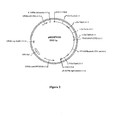
- the plant transformation vector pMON70453 as shown in Figure 2 contains the CTP2/CP4 EPSPS gene as the transgene of interest.
- the plant expression vector pMON77978 was used to transform maize callus using particle bombardment for in planta promoter characterization. The GUS activity was then analyzed quantitatively. Results are shown in Table 2. The Os-TubA-3 promoter was shown to have a desirable level of expression in this transient system. Table 2: Quantitative Analysis of GUS activity in maize callus. Construct GUS activity (pmoles/ ⁇ g protein/hour) Os-TubA-3 (pMON77978) 17.51 ⁇ 2.16 E35S (pMON77952) 33.53 ⁇ 11.28 Blank Control 1.67 ⁇ 0.502 promoterless GUS vector (pMON77951)
- the plant expression vector pMON70453 was used to transform corn using an Agrobacterium mediated transfonnation method.
- a disarmed Agrobacterium strain C58 harboring a binary DNA construct of the present invention is used.
- the DNA construct is transferred into Agrobacterium by a triparental mating method ( Ditta et al., Proc. Natl. Acad. Sci. 77:7347-7351, 1980 ).
- Liquid cultures of Agrobacterium are initiated from glycerol stocks or from a freshly streaked plate and grown overnight at 26°C-28°C with shaking (approximately 150 rpm) to mid-log growth phase in liquid LB medium, pH 7.0 containing the appropriate antibiotics.
- the Agrobacterium cells are resuspended in the inoculation medium (liquid CM4C) and the density is adjusted to OD 660 of 1.
- Freshly isolated Type Il immature HiIIxLH198 and HiII corn embryos are inoculated with Agrobacterium containing a construct and co-cultured several days in the dark at 23°C. The embryos are then transferred to delay media and incubated at 28 °C for several or more days. All subsequent cultures are kept at this temperature. The embryos are transferred to a first selection medium containing carbenicillin 500/0.5 mM glyphosate. Two weeks later, surviving tissue are transferred to a second selection medium containing carbenicillin 500/1.0 mM glyphosate.
- MFR Male Fertility Rating
- Important criteria for a successful construct include good transformation efficiency (number of events produced/# explants inoculated) and the ability to reproducibly provide vegetatively and reproductively tolerant transformants carrying a single copy of the transgene.
- CP4 EPSPS protein accumulation ( ⁇ g/mg of total protein shown as mean ⁇ standard error) in various corn tissues was then measured for single copy events in hemi-zygous F1 plants that showed good field efficacy for glyphosate tolerance.
- commercial event NK603 has approximately 21 ppm or approximately 1.4 ⁇ g CP4 EPSPS/mg total protein in V4 leaf lamina stage when grown under similar conditions. Results are shown in Table 5.
- Table 5 CP4 EPSPS accumulation in various corn tissues.
- isolated polynucleotide molecule as defined above, wherein said isolated polynucleotide molecule comprises a polynucleotide sequence which exhibits a substantial percent sequence identity of about 98% identity with the polynucleotide sequence of SEQ ID NO: 1-5.
- a DNA construct comprising an isolated polynucleotide molecule having gene regulatory activity and comprising a polynucleotide sequence selected from the group consisting of SEQ ID NO: 1-5, wherein said isolated polynucleotide molecule is operably linked to a transcribable polynucleotide molecule.
- transcribable polynucleotide molecule is a marker gene.
- transcribable polynucleotide molecule is a gene of agronomic interest.
- said gene of agronomic interest is a herbicide tolerance gene selected from the group consisting of genes that encode for phosphinothricin acetyltransferase, glyphosate resistant 5-enolpyruvylshikimate-3-phosphate synthase, hydroxyphenyl pyruvate dehydrogenase, dalapon dehalogenase, bromoxynil resistant nitrilase, anthranilate synthase, glyphosate oxidoreductase and glyphosate-N-acetyl transferase.
- phosphinothricin acetyltransferase glyphosate resistant 5-enolpyruvylshikimate-3-phosphate synthase, hydroxyphenyl pyruvate dehydrogenase, dalapon dehalogenase, bromoxynil resistant nitrilase, anthranilate synthase, glyphosate
- a transgenic plant stably transformed with the DNA construct as defined above.
- transgenic plant as defined above, wherein said plant is a monocotyledonous selected from the group consisting of wheat, maize, rye, rice, oat, barley, turfgrass, sorghum, millet and sugarcane.
- transgenic plant as defined above, wherein said plant is a dicotyledonous plant selected from the group consisting of tobacco, tomato, potato, soybean, cotton, canola, sunflower and alfalfa.
- said glyphosate tolerance gene is selected from the group consisting of a gene encoding for a glyphosate resistant 5-enolpyruvylshikimate-3-phosphate synthase, a glyphosate oxidoreductase, and a glyphosate-N-acetyltransferase.
- transgenic plants are capable of tolerating an application rate up to 256 ounces/acre.
- transgenic plants are capable of tolerating an application rate ranging from 8 ounces/acre to 128 ounces/acre.
- transgenic plants are capable of tolerating an application rate ranging from 32 ounces/acre to 96 ounces/acre.
Landscapes
- Health & Medical Sciences (AREA)
- Genetics & Genomics (AREA)
- Engineering & Computer Science (AREA)
- Life Sciences & Earth Sciences (AREA)
- Biomedical Technology (AREA)
- Bioinformatics & Cheminformatics (AREA)
- Organic Chemistry (AREA)
- Chemical & Material Sciences (AREA)
- Zoology (AREA)
- Wood Science & Technology (AREA)
- Biotechnology (AREA)
- General Engineering & Computer Science (AREA)
- Cell Biology (AREA)
- Plant Pathology (AREA)
- Molecular Biology (AREA)
- Microbiology (AREA)
- Biophysics (AREA)
- Physics & Mathematics (AREA)
- Biochemistry (AREA)
- General Health & Medical Sciences (AREA)
- Reproductive Health (AREA)
- Pregnancy & Childbirth (AREA)
- Breeding Of Plants And Reproduction By Means Of Culturing (AREA)
- Micro-Organisms Or Cultivation Processes Thereof (AREA)
- Measuring Or Testing Involving Enzymes Or Micro-Organisms (AREA)
Applications Claiming Priority (2)
| Application Number | Priority Date | Filing Date | Title |
|---|---|---|---|
| US49752303P | 2003-08-25 | 2003-08-25 | |
| EP04786581.1A EP1658364B1 (de) | 2003-08-25 | 2004-08-25 | Tubulin-regulationselemente zur verwendung in pflanzen |
Related Parent Applications (3)
| Application Number | Title | Priority Date | Filing Date |
|---|---|---|---|
| EP04786581.1A Division EP1658364B1 (de) | 2003-08-25 | 2004-08-25 | Tubulin-regulationselemente zur verwendung in pflanzen |
| EP04786581.1A Division-Into EP1658364B1 (de) | 2003-08-25 | 2004-08-25 | Tubulin-regulationselemente zur verwendung in pflanzen |
| EP04786581.1 Division | 2004-08-25 |
Publications (3)
| Publication Number | Publication Date |
|---|---|
| EP2308961A2 true EP2308961A2 (de) | 2011-04-13 |
| EP2308961A3 EP2308961A3 (de) | 2011-07-27 |
| EP2308961B1 EP2308961B1 (de) | 2017-03-01 |
Family
ID=34272575
Family Applications (3)
| Application Number | Title | Priority Date | Filing Date |
|---|---|---|---|
| EP04786581.1A Expired - Lifetime EP1658364B1 (de) | 2003-08-25 | 2004-08-25 | Tubulin-regulationselemente zur verwendung in pflanzen |
| EP11155951.4A Expired - Lifetime EP2343364B1 (de) | 2003-08-25 | 2004-08-25 | Tubulinregulierungselemente zur Verwendung in Pflanzen |
| EP10187553.2A Expired - Lifetime EP2308961B1 (de) | 2003-08-25 | 2004-08-25 | Tubulinregulierungselemente zur Verwendung in Pflanzen |
Family Applications Before (2)
| Application Number | Title | Priority Date | Filing Date |
|---|---|---|---|
| EP04786581.1A Expired - Lifetime EP1658364B1 (de) | 2003-08-25 | 2004-08-25 | Tubulin-regulationselemente zur verwendung in pflanzen |
| EP11155951.4A Expired - Lifetime EP2343364B1 (de) | 2003-08-25 | 2004-08-25 | Tubulinregulierungselemente zur Verwendung in Pflanzen |
Country Status (7)
| Country | Link |
|---|---|
| US (4) | US7511130B2 (de) |
| EP (3) | EP1658364B1 (de) |
| AR (2) | AR045495A1 (de) |
| ES (3) | ES2625486T3 (de) |
| PL (3) | PL2343364T3 (de) |
| PT (3) | PT1658364T (de) |
| WO (1) | WO2005021718A2 (de) |
Families Citing this family (19)
| Publication number | Priority date | Publication date | Assignee | Title |
|---|---|---|---|---|
| US20090044297A1 (en) * | 1999-05-06 | 2009-02-12 | Andersen Scott E | Transgenic plants with enhanced agronomic traits |
| US9322031B2 (en) | 1999-05-06 | 2016-04-26 | Monsanto Technology Llc | Transgenic plants with enhanced agronomic traits |
| US10329575B2 (en) | 1999-05-14 | 2019-06-25 | Ceres, Inc. | Regulatory sequence for plants |
| US8877916B2 (en) | 2000-04-26 | 2014-11-04 | Ceres, Inc. | Promoter, promoter control elements, and combinations, and uses thereof |
| US9029523B2 (en) * | 2000-04-26 | 2015-05-12 | Ceres, Inc. | Promoter, promoter control elements, and combinations, and uses thereof |
| US20090241217A9 (en) * | 2001-05-22 | 2009-09-24 | Jingrui Wu | Yield-improved transgenic plants |
| US20090049573A1 (en) * | 2002-10-02 | 2009-02-19 | Dotson Stanton B | Transgenic plants with enhanced agronomic traits |
| US20090183270A1 (en) | 2002-10-02 | 2009-07-16 | Adams Thomas R | Transgenic plants with enhanced agronomic traits |
| US7139218B2 (en) * | 2003-08-13 | 2006-11-21 | Intelliserv, Inc. | Distributed downhole drilling network |
| AR045495A1 (es) * | 2003-08-25 | 2005-11-02 | Monsanto Technology Llc | Elementos reguladores de la tubulina para usar en plantas |
| US11634723B2 (en) | 2003-09-11 | 2023-04-25 | Ceres, Inc. | Promoter, promoter control elements, and combinations, and uses thereof |
| US20130117881A1 (en) | 2003-10-14 | 2013-05-09 | Ceres, Inc. | Promoter, promoter control elements, and combinations, and uses thereof |
| US7402667B2 (en) * | 2003-10-14 | 2008-07-22 | Ceres, Inc. | Promoter, promoter control elements, and combinations, and uses thereof |
| US11739340B2 (en) | 2003-09-23 | 2023-08-29 | Ceres, Inc. | Promoter, promoter control elements, and combinations, and uses thereof |
| US20070006335A1 (en) * | 2004-02-13 | 2007-01-04 | Zhihong Cook | Promoter, promoter control elements, and combinations, and uses thereof |
| WO2005098007A2 (en) * | 2004-04-01 | 2005-10-20 | Ceres, Inc. | Promoter, promoter control elements, and combinations, and uses thereof |
| AR061685A1 (es) * | 2006-06-23 | 2008-09-17 | Monsanto Technology Llc | Plantas de cultivo transgenicas con mayor tolerancia al estres |
| AR065213A1 (es) * | 2007-02-08 | 2009-05-20 | Mendel Biotechnology Inc | Promotores inducibles por deficit de agua |
| KR101286752B1 (ko) * | 2012-09-03 | 2013-07-16 | 라종주 | 체내 시술 장치 및 이를 구비한 내시경 장치 |
Citations (56)
| Publication number | Priority date | Publication date | Assignee | Title |
|---|---|---|---|---|
| US4810648A (en) | 1986-01-08 | 1989-03-07 | Rhone Poulenc Agrochimie | Haloarylnitrile degrading gene, its use, and cells containing the gene |
| US5015580A (en) | 1987-07-29 | 1991-05-14 | Agracetus | Particle-mediated transformation of soybean plants and lines |
| US5094945A (en) | 1983-01-05 | 1992-03-10 | Calgene, Inc. | Inhibition resistant 5-enolpyruvyl-3-phosphoshikimate synthase, production and use |
| US5229114A (en) | 1987-08-20 | 1993-07-20 | The United States Of America As Represented By The Secretary Of Agriculture | Approaches useful for the control of root nodulation of leguminous plants |
| US5304730A (en) | 1991-09-03 | 1994-04-19 | Monsanto Company | Virus resistant plants and method therefore |
| US5362865A (en) | 1993-09-02 | 1994-11-08 | Monsanto Company | Enhanced expression in plants using non-translated leader sequences |
| US5384253A (en) | 1990-12-28 | 1995-01-24 | Dekalb Genetics Corporation | Genetic transformation of maize cells by electroporation of cells pretreated with pectin degrading enzymes |
| US5463175A (en) | 1990-06-25 | 1995-10-31 | Monsanto Company | Glyphosate tolerant plants |
| US5491084A (en) | 1993-09-10 | 1996-02-13 | The Trustees Of Columbia University In The City Of New York | Uses of green-fluorescent protein |
| US5508184A (en) | 1986-12-05 | 1996-04-16 | Ciba-Geigy Corporation | Process for transforming plant protoplast |
| US5512466A (en) | 1990-12-26 | 1996-04-30 | Monsanto Company | Control of fruit ripening and senescence in plants |
| US5516671A (en) | 1993-11-24 | 1996-05-14 | Monsanto Company | Method of controlling plant pathogens |
| US5530196A (en) | 1983-01-17 | 1996-06-25 | Monsanto Company | Chimeric genes for transforming plant cells using viral promoters |
| US5538880A (en) | 1990-01-22 | 1996-07-23 | Dekalb Genetics Corporation | Method for preparing fertile transgenic corn plants |
| US5543576A (en) | 1990-03-23 | 1996-08-06 | Mogen International | Production of enzymes in seeds and their use |
| US5550318A (en) | 1990-04-17 | 1996-08-27 | Dekalb Genetics Corporation | Methods and compositions for the production of stably transformed, fertile monocot plants and cells thereof |
| US5591616A (en) | 1992-07-07 | 1997-01-07 | Japan Tobacco, Inc. | Method for transforming monocotyledons |
| US5599670A (en) | 1986-11-11 | 1997-02-04 | Cambia Biosystems. L.L.C. | β-glucuronidase and glucuronide permease gene system |
| US5608149A (en) | 1990-06-18 | 1997-03-04 | Monsanto Company | Enhanced starch biosynthesis in tomatoes |
| US5627061A (en) | 1990-08-31 | 1997-05-06 | Monsanto Company | Glyphosate-tolerant 5-enolpyruvylshikimate-3-phosphate synthases |
| US5641876A (en) | 1990-01-05 | 1997-06-24 | Cornell Research Foundation, Inc. | Rice actin gene and promoter |
| US5689041A (en) | 1989-08-10 | 1997-11-18 | Plant Gentic Systems N.V. | Plants modified with barstar for fertility restoration |
| US5716837A (en) | 1995-02-10 | 1998-02-10 | Monsanto Company | Expression of sucrose phosphorylase in plants |
| US5750876A (en) | 1994-07-28 | 1998-05-12 | Monsanto Company | Isoamylase gene, compositions containing it, and methods of using isoamylases |
| US5773696A (en) | 1996-03-29 | 1998-06-30 | Monsanto Company | Antifungal polypeptide and methods for controlling plant pathogenic fungi |
| US5824877A (en) | 1988-07-22 | 1998-10-20 | Monsanto Company | Method for soybean transformation and regeneration |
| US5942664A (en) | 1996-11-27 | 1999-08-24 | Ecogen, Inc. | Bacillus thuringiensis Cry1C compositions toxic to lepidopteran insects and methods for making Cry1C mutants |
| US5958745A (en) | 1996-03-13 | 1999-09-28 | Monsanto Company | Methods of optimizing substrate pools and biosynthesis of poly-β-hydroxybutyrate-co-poly-β-hydroxyvalerate in bacteria and plants |
| US5981840A (en) | 1997-01-24 | 1999-11-09 | Pioneer Hi-Bred International, Inc. | Methods for agrobacterium-mediated transformation |
| US5985605A (en) | 1996-06-14 | 1999-11-16 | Her Majesty The Queen In Right Of Canada, As Represented By The Dept. Of Agriculture & Agri-Food Canada | DNA sequences encoding phytases of ruminal microorganisms |
| US5998700A (en) | 1996-07-02 | 1999-12-07 | The Board Of Trustees Of Southern Illinois University | Plants containing a bacterial Gdha gene and methods of use thereof |
| US6011199A (en) | 1992-12-15 | 2000-01-04 | Commonwealth Scientific | Method for producing fruiting plants with improved fruit flavour |
| US6013864A (en) | 1993-02-03 | 2000-01-11 | Monsanto Company | Plants resistant to infection by luteoviruses |
| US6040497A (en) | 1997-04-03 | 2000-03-21 | Dekalb Genetics Corporation | Glyphosate resistant maize lines |
| US6051753A (en) | 1989-09-07 | 2000-04-18 | Calgene, Inc. | Figwort mosaic virus promoter and uses |
| US6063597A (en) | 1997-12-18 | 2000-05-16 | Monsanto Company | Polypeptide compositions toxic to coleopteran insects |
| US6063756A (en) | 1996-09-24 | 2000-05-16 | Monsanto Company | Bacillus thuringiensis cryET33 and cryET34 compositions and uses therefor |
| US6072103A (en) | 1997-11-21 | 2000-06-06 | Calgene Llc | Pathogen and stress-responsive promoter for gene expression |
| US6080560A (en) | 1994-07-25 | 2000-06-27 | Monsanto Company | Method for producing antibodies in plant cells |
| US6093695A (en) | 1996-09-26 | 2000-07-25 | Monsanto Company | Bacillus thuringiensis CryET29 compositions toxic to coleopteran insects and ctenocephalides SPP |
| US6110464A (en) | 1996-11-20 | 2000-08-29 | Monsanto Company | Broad-spectrum δ-endotoxins |
| US6121436A (en) | 1996-12-13 | 2000-09-19 | Monsanto Company | Antifungal polypeptide and methods for controlling plant pathogenic fungi |
| US6146826A (en) | 1993-09-10 | 2000-11-14 | The Trustees Of Columbia University In The City Of New York | Green fluorescent protein |
| US6160208A (en) | 1990-01-22 | 2000-12-12 | Dekalb Genetics Corp. | Fertile transgenic corn plants |
| US6166292A (en) | 1996-04-26 | 2000-12-26 | Ajinomoto Co., Inc. | Raffinose synthetase gene, method of producing raffinose and transgenic plant |
| US6171640B1 (en) | 1997-04-04 | 2001-01-09 | Monsanto Company | High beta-conglycinin products and their use |
| US6228992B1 (en) | 1998-05-18 | 2001-05-08 | Pioneer Hi-Bred International, Inc. | Proteins for control of nematodes in plants |
| US6380466B1 (en) | 1997-05-08 | 2002-04-30 | Calgene Llc | Production of improved rapeseed exhibiting yellow-seed coat |
| US6384301B1 (en) | 1999-01-14 | 2002-05-07 | Monsanto Technology Llc | Soybean agrobacterium transformation method |
| US6399861B1 (en) | 1990-04-17 | 2002-06-04 | Dekalb Genetics Corp. | Methods and compositions for the production of stably transformed, fertile monocot plants and cells thereof |
| US6403865B1 (en) | 1990-08-24 | 2002-06-11 | Syngenta Investment Corp. | Method of producing transgenic maize using direct transformation of commercially important genotypes |
| US6444876B1 (en) | 1998-06-05 | 2002-09-03 | Calgene Llc | Acyl CoA: cholesterol acyltransferase related nucleic acid sequences |
| US6506962B1 (en) | 1999-05-13 | 2003-01-14 | Monsanto Technology Llc | Acquired resistance genes in plants |
| US20030028917A1 (en) | 1996-03-13 | 2003-02-06 | Monsanto Technology, Llc. | Methods of optimizing substrate pools and biosynthesis of poly-beta-hydroxybutyrate-co-poly-beta-hydroxyvalerate in bacteria and plants |
| US6531648B1 (en) | 1998-12-17 | 2003-03-11 | Syngenta Participations Ag | Grain processing method and transgenic plants useful therein |
| US6537750B1 (en) | 1998-08-04 | 2003-03-25 | Cargill Incorporated | Plant fatty acid desaturase promoters |
Family Cites Families (8)
| Publication number | Priority date | Publication date | Assignee | Title |
|---|---|---|---|---|
| FR2712302B1 (fr) * | 1993-11-10 | 1996-01-05 | Rhone Poulenc Agrochimie | Eléments promoteurs de gènes chimères de tubuline alpha. |
| AR014072A1 (es) * | 1998-02-26 | 2001-01-31 | Pioneer Hi Bred Int | Molecula de acido nucleico aislada que tiene una secuencia nucleotidica para un promotor que es capaz de iniciar una transcripcion constitutiva en unacelula de planta, construccion adn, vector, celula huesped, metodo para expresar en forma constitutiva una secuencia nucleotidica heteroloca en una |
| US6906245B1 (en) * | 1998-04-30 | 2005-06-14 | Sumitomo Chemical Company, Limited | Method for producing transgenic plants resistant to weed control compounds which disrupt the porphyrin pathways of plants |
| US6404497B1 (en) * | 1999-01-25 | 2002-06-11 | Massachusetts Institute Of Technology | Polarized light scattering spectroscopy of tissue |
| US7868149B2 (en) * | 1999-07-20 | 2011-01-11 | Monsanto Technology Llc | Plant genome sequence and uses thereof |
| US7365185B2 (en) * | 2000-07-19 | 2008-04-29 | Monsanto Technology Llc | Genomic plant sequences and uses thereof |
| US20110131679A2 (en) * | 2000-04-19 | 2011-06-02 | Thomas La Rosa | Rice Nucleic Acid Molecules and Other Molecules Associated with Plants and Uses Thereof for Plant Improvement |
| AR045495A1 (es) * | 2003-08-25 | 2005-11-02 | Monsanto Technology Llc | Elementos reguladores de la tubulina para usar en plantas |
-
2004
- 2004-08-25 AR ARP040103054A patent/AR045495A1/es not_active Application Discontinuation
- 2004-08-25 EP EP04786581.1A patent/EP1658364B1/de not_active Expired - Lifetime
- 2004-08-25 PT PT47865811T patent/PT1658364T/pt unknown
- 2004-08-25 ES ES10187553.2T patent/ES2625486T3/es not_active Expired - Lifetime
- 2004-08-25 US US10/925,392 patent/US7511130B2/en not_active Expired - Lifetime
- 2004-08-25 PL PL11155951T patent/PL2343364T3/pl unknown
- 2004-08-25 PL PL10187553T patent/PL2308961T3/pl unknown
- 2004-08-25 PL PL04786581T patent/PL1658364T3/pl unknown
- 2004-08-25 EP EP11155951.4A patent/EP2343364B1/de not_active Expired - Lifetime
- 2004-08-25 PT PT101875532T patent/PT2308961T/pt unknown
- 2004-08-25 WO PCT/US2004/027702 patent/WO2005021718A2/en not_active Ceased
- 2004-08-25 ES ES04786581.1T patent/ES2638554T3/es not_active Expired - Lifetime
- 2004-08-25 PT PT111559514T patent/PT2343364T/pt unknown
- 2004-08-25 ES ES11155951.4T patent/ES2609428T3/es not_active Expired - Lifetime
- 2004-08-25 EP EP10187553.2A patent/EP2308961B1/de not_active Expired - Lifetime
-
2009
- 2009-02-19 US US12/389,314 patent/US7838654B2/en not_active Expired - Lifetime
-
2010
- 2010-10-26 US US12/912,072 patent/US8088911B2/en not_active Expired - Lifetime
-
2011
- 2011-06-13 US US13/159,353 patent/US20120015810A1/en not_active Abandoned
-
2014
- 2014-02-27 AR ARP140100619A patent/AR094908A2/es not_active Application Discontinuation
Patent Citations (60)
| Publication number | Priority date | Publication date | Assignee | Title |
|---|---|---|---|---|
| US5094945A (en) | 1983-01-05 | 1992-03-10 | Calgene, Inc. | Inhibition resistant 5-enolpyruvyl-3-phosphoshikimate synthase, production and use |
| US5530196A (en) | 1983-01-17 | 1996-06-25 | Monsanto Company | Chimeric genes for transforming plant cells using viral promoters |
| US4810648A (en) | 1986-01-08 | 1989-03-07 | Rhone Poulenc Agrochimie | Haloarylnitrile degrading gene, its use, and cells containing the gene |
| US5599670A (en) | 1986-11-11 | 1997-02-04 | Cambia Biosystems. L.L.C. | β-glucuronidase and glucuronide permease gene system |
| US5508184A (en) | 1986-12-05 | 1996-04-16 | Ciba-Geigy Corporation | Process for transforming plant protoplast |
| US5015580A (en) | 1987-07-29 | 1991-05-14 | Agracetus | Particle-mediated transformation of soybean plants and lines |
| US5229114A (en) | 1987-08-20 | 1993-07-20 | The United States Of America As Represented By The Secretary Of Agriculture | Approaches useful for the control of root nodulation of leguminous plants |
| US5824877A (en) | 1988-07-22 | 1998-10-20 | Monsanto Company | Method for soybean transformation and regeneration |
| US5689041A (en) | 1989-08-10 | 1997-11-18 | Plant Gentic Systems N.V. | Plants modified with barstar for fertility restoration |
| US6051753A (en) | 1989-09-07 | 2000-04-18 | Calgene, Inc. | Figwort mosaic virus promoter and uses |
| US5641876A (en) | 1990-01-05 | 1997-06-24 | Cornell Research Foundation, Inc. | Rice actin gene and promoter |
| US6160208A (en) | 1990-01-22 | 2000-12-12 | Dekalb Genetics Corp. | Fertile transgenic corn plants |
| US5538880A (en) | 1990-01-22 | 1996-07-23 | Dekalb Genetics Corporation | Method for preparing fertile transgenic corn plants |
| US5543576A (en) | 1990-03-23 | 1996-08-06 | Mogen International | Production of enzymes in seeds and their use |
| US5550318A (en) | 1990-04-17 | 1996-08-27 | Dekalb Genetics Corporation | Methods and compositions for the production of stably transformed, fertile monocot plants and cells thereof |
| US6399861B1 (en) | 1990-04-17 | 2002-06-04 | Dekalb Genetics Corp. | Methods and compositions for the production of stably transformed, fertile monocot plants and cells thereof |
| US5608149A (en) | 1990-06-18 | 1997-03-04 | Monsanto Company | Enhanced starch biosynthesis in tomatoes |
| US5463175A (en) | 1990-06-25 | 1995-10-31 | Monsanto Company | Glyphosate tolerant plants |
| US6403865B1 (en) | 1990-08-24 | 2002-06-11 | Syngenta Investment Corp. | Method of producing transgenic maize using direct transformation of commercially important genotypes |
| US5627061A (en) | 1990-08-31 | 1997-05-06 | Monsanto Company | Glyphosate-tolerant 5-enolpyruvylshikimate-3-phosphate synthases |
| US5633435A (en) | 1990-08-31 | 1997-05-27 | Monsanto Company | Glyphosate-tolerant 5-enolpyruvylshikimate-3-phosphate synthases |
| US5512466A (en) | 1990-12-26 | 1996-04-30 | Monsanto Company | Control of fruit ripening and senescence in plants |
| US5384253A (en) | 1990-12-28 | 1995-01-24 | Dekalb Genetics Corporation | Genetic transformation of maize cells by electroporation of cells pretreated with pectin degrading enzymes |
| US5304730A (en) | 1991-09-03 | 1994-04-19 | Monsanto Company | Virus resistant plants and method therefore |
| US5591616A (en) | 1992-07-07 | 1997-01-07 | Japan Tobacco, Inc. | Method for transforming monocotyledons |
| US6011199A (en) | 1992-12-15 | 2000-01-04 | Commonwealth Scientific | Method for producing fruiting plants with improved fruit flavour |
| US6013864A (en) | 1993-02-03 | 2000-01-11 | Monsanto Company | Plants resistant to infection by luteoviruses |
| US5659122A (en) | 1993-09-02 | 1997-08-19 | Monsanto Company | Enhanced expression in plants using non-translated leader sequences |
| US5362865A (en) | 1993-09-02 | 1994-11-08 | Monsanto Company | Enhanced expression in plants using non-translated leader sequences |
| US6146826A (en) | 1993-09-10 | 2000-11-14 | The Trustees Of Columbia University In The City Of New York | Green fluorescent protein |
| US5491084A (en) | 1993-09-10 | 1996-02-13 | The Trustees Of Columbia University In The City Of New York | Uses of green-fluorescent protein |
| US5516671A (en) | 1993-11-24 | 1996-05-14 | Monsanto Company | Method of controlling plant pathogens |
| US6080560A (en) | 1994-07-25 | 2000-06-27 | Monsanto Company | Method for producing antibodies in plant cells |
| US5750876A (en) | 1994-07-28 | 1998-05-12 | Monsanto Company | Isoamylase gene, compositions containing it, and methods of using isoamylases |
| US5716837A (en) | 1995-02-10 | 1998-02-10 | Monsanto Company | Expression of sucrose phosphorylase in plants |
| US6476295B2 (en) | 1995-02-10 | 2002-11-05 | Monsanto Technology, Llc | Expression of sucrose phosphorylase in plants |
| US5958745A (en) | 1996-03-13 | 1999-09-28 | Monsanto Company | Methods of optimizing substrate pools and biosynthesis of poly-β-hydroxybutyrate-co-poly-β-hydroxyvalerate in bacteria and plants |
| US20030028917A1 (en) | 1996-03-13 | 2003-02-06 | Monsanto Technology, Llc. | Methods of optimizing substrate pools and biosynthesis of poly-beta-hydroxybutyrate-co-poly-beta-hydroxyvalerate in bacteria and plants |
| US5773696A (en) | 1996-03-29 | 1998-06-30 | Monsanto Company | Antifungal polypeptide and methods for controlling plant pathogenic fungi |
| US6166292A (en) | 1996-04-26 | 2000-12-26 | Ajinomoto Co., Inc. | Raffinose synthetase gene, method of producing raffinose and transgenic plant |
| US5985605A (en) | 1996-06-14 | 1999-11-16 | Her Majesty The Queen In Right Of Canada, As Represented By The Dept. Of Agriculture & Agri-Food Canada | DNA sequences encoding phytases of ruminal microorganisms |
| US5998700A (en) | 1996-07-02 | 1999-12-07 | The Board Of Trustees Of Southern Illinois University | Plants containing a bacterial Gdha gene and methods of use thereof |
| US6063756A (en) | 1996-09-24 | 2000-05-16 | Monsanto Company | Bacillus thuringiensis cryET33 and cryET34 compositions and uses therefor |
| US6093695A (en) | 1996-09-26 | 2000-07-25 | Monsanto Company | Bacillus thuringiensis CryET29 compositions toxic to coleopteran insects and ctenocephalides SPP |
| US6110464A (en) | 1996-11-20 | 2000-08-29 | Monsanto Company | Broad-spectrum δ-endotoxins |
| US5942664A (en) | 1996-11-27 | 1999-08-24 | Ecogen, Inc. | Bacillus thuringiensis Cry1C compositions toxic to lepidopteran insects and methods for making Cry1C mutants |
| US6121436A (en) | 1996-12-13 | 2000-09-19 | Monsanto Company | Antifungal polypeptide and methods for controlling plant pathogenic fungi |
| US6316407B1 (en) | 1996-12-13 | 2001-11-13 | Monsanto Company | Antifungal polypeptide from alfalfa and methods for controlling plant pathogenic fungi |
| US5981840A (en) | 1997-01-24 | 1999-11-09 | Pioneer Hi-Bred International, Inc. | Methods for agrobacterium-mediated transformation |
| US6040497A (en) | 1997-04-03 | 2000-03-21 | Dekalb Genetics Corporation | Glyphosate resistant maize lines |
| US6171640B1 (en) | 1997-04-04 | 2001-01-09 | Monsanto Company | High beta-conglycinin products and their use |
| US6380466B1 (en) | 1997-05-08 | 2002-04-30 | Calgene Llc | Production of improved rapeseed exhibiting yellow-seed coat |
| US6072103A (en) | 1997-11-21 | 2000-06-06 | Calgene Llc | Pathogen and stress-responsive promoter for gene expression |
| US6063597A (en) | 1997-12-18 | 2000-05-16 | Monsanto Company | Polypeptide compositions toxic to coleopteran insects |
| US6228992B1 (en) | 1998-05-18 | 2001-05-08 | Pioneer Hi-Bred International, Inc. | Proteins for control of nematodes in plants |
| US6444876B1 (en) | 1998-06-05 | 2002-09-03 | Calgene Llc | Acyl CoA: cholesterol acyltransferase related nucleic acid sequences |
| US6537750B1 (en) | 1998-08-04 | 2003-03-25 | Cargill Incorporated | Plant fatty acid desaturase promoters |
| US6531648B1 (en) | 1998-12-17 | 2003-03-11 | Syngenta Participations Ag | Grain processing method and transgenic plants useful therein |
| US6384301B1 (en) | 1999-01-14 | 2002-05-07 | Monsanto Technology Llc | Soybean agrobacterium transformation method |
| US6506962B1 (en) | 1999-05-13 | 2003-01-14 | Monsanto Technology Llc | Acquired resistance genes in plants |
Non-Patent Citations (6)
| Title |
|---|
| DEBLOCK ET AL., EMBO JOURNAL, vol. 6, 1987, pages 2513 - 2519 |
| DITTA ET AL., PROC. NATL. ACAD. SCI., vol. 77, 1980, pages 7347 - 7351 |
| J.F. SAMBROOK; D.W. RUSSELL; N. IRWIN: "Molecular Cloning: A Laboratory Manual", vol. 1, 2, 3, 2000, COLD SPRING HARBOR LABORATORY PRESS |
| MISAWA ET AL., PLANT JOURNAL, vol. 4, 1993, pages 833 - 840 |
| MISAWA ET AL., PLANT JOURNAL, vol. 6, 1994, pages 481 - 489 |
| SATHASIIVAN ET AL., POLYNUCLEOTIDES RESEARCH, vol. 18, 1990, pages 2188 - 2193 |
Also Published As
| Publication number | Publication date |
|---|---|
| US7511130B2 (en) | 2009-03-31 |
| PL2308961T3 (pl) | 2017-08-31 |
| US20110130287A1 (en) | 2011-06-02 |
| US20120015810A1 (en) | 2012-01-19 |
| EP2343364B1 (de) | 2016-10-05 |
| EP2308961A3 (de) | 2011-07-27 |
| EP2343364A3 (de) | 2011-10-26 |
| US8088911B2 (en) | 2012-01-03 |
| US7838654B2 (en) | 2010-11-23 |
| PL2343364T3 (pl) | 2017-07-31 |
| US20050048556A1 (en) | 2005-03-03 |
| WO2005021718A2 (en) | 2005-03-10 |
| PT1658364T (pt) | 2017-07-11 |
| WO2005021718A3 (en) | 2006-01-12 |
| EP2308961B1 (de) | 2017-03-01 |
| PT2343364T (pt) | 2017-01-02 |
| PT2308961T (pt) | 2017-06-07 |
| EP2343364A2 (de) | 2011-07-13 |
| PL1658364T3 (pl) | 2017-10-31 |
| ES2638554T3 (es) | 2017-10-23 |
| EP1658364A4 (de) | 2008-04-02 |
| US20090186765A1 (en) | 2009-07-23 |
| AR045495A1 (es) | 2005-11-02 |
| ES2625486T3 (es) | 2017-07-19 |
| AR094908A2 (es) | 2015-09-09 |
| EP1658364A2 (de) | 2006-05-24 |
| ES2609428T3 (es) | 2017-04-20 |
| EP1658364B1 (de) | 2017-05-31 |
Similar Documents
| Publication | Publication Date | Title |
|---|---|---|
| US7838654B2 (en) | Tubulin regulatory elements for use in plants | |
| US7838652B2 (en) | Chimeric promoters comprising a Rice Actin 1 promoter and enhancer elements for use in plants | |
| US8097714B2 (en) | Actin regulatory elements for use in plants | |
| US7132528B2 (en) | Promoter from the rice triosephosphate isomerase gene OsTPI | |
| US7547774B2 (en) | RCc3 regulatory elements for use in plants |
Legal Events
| Date | Code | Title | Description |
|---|---|---|---|
| PUAI | Public reference made under article 153(3) epc to a published international application that has entered the european phase |
Free format text: ORIGINAL CODE: 0009012 |
|
| AC | Divisional application: reference to earlier application |
Ref document number: 1658364 Country of ref document: EP Kind code of ref document: P |
|
| AK | Designated contracting states |
Kind code of ref document: A2 Designated state(s): AT BE BG CH CY CZ DE DK EE ES FI FR GB GR HU IE IT LI LU MC NL PL PT RO SE SI SK TR |
|
| PUAL | Search report despatched |
Free format text: ORIGINAL CODE: 0009013 |
|
| AK | Designated contracting states |
Kind code of ref document: A3 Designated state(s): AT BE BG CH CY CZ DE DK EE ES FI FR GB GR HU IE IT LI LU MC NL PL PT RO SE SI SK TR |
|
| 17P | Request for examination filed |
Effective date: 20120127 |
|
| 17Q | First examination report despatched |
Effective date: 20120612 |
|
| REG | Reference to a national code |
Ref country code: DE Ref legal event code: R079 Ref document number: 602004050855 Country of ref document: DE Free format text: PREVIOUS MAIN CLASS: C12N0005040000 Ipc: C12N0015820000 |
|
| RIC1 | Information provided on ipc code assigned before grant |
Ipc: C12N 15/82 20060101AFI20160805BHEP Ipc: A01H 5/00 20060101ALI20160805BHEP |
|
| GRAP | Despatch of communication of intention to grant a patent |
Free format text: ORIGINAL CODE: EPIDOSNIGR1 |
|
| INTG | Intention to grant announced |
Effective date: 20160929 |
|
| STAA | Information on the status of an ep patent application or granted ep patent |
Free format text: STATUS: GRANT OF PATENT IS INTENDED |
|
| GRAS | Grant fee paid |
Free format text: ORIGINAL CODE: EPIDOSNIGR3 |
|
| GRAA | (expected) grant |
Free format text: ORIGINAL CODE: 0009210 |
|
| STAA | Information on the status of an ep patent application or granted ep patent |
Free format text: STATUS: THE PATENT HAS BEEN GRANTED |
|
| AC | Divisional application: reference to earlier application |
Ref document number: 1658364 Country of ref document: EP Kind code of ref document: P |
|
| AK | Designated contracting states |
Kind code of ref document: B1 Designated state(s): AT BE BG CH CY CZ DE DK EE ES FI FR GB GR HU IE IT LI LU MC NL PL PT RO SE SI SK TR |
|
| REG | Reference to a national code |
Ref country code: GB Ref legal event code: FG4D |
|
| REG | Reference to a national code |
Ref country code: AT Ref legal event code: REF Ref document number: 871395 Country of ref document: AT Kind code of ref document: T Effective date: 20170315 Ref country code: CH Ref legal event code: EP |
|
| REG | Reference to a national code |
Ref country code: IE Ref legal event code: FG4D |
|
| REG | Reference to a national code |
Ref country code: DE Ref legal event code: R096 Ref document number: 602004050855 Country of ref document: DE |
|
| REG | Reference to a national code |
Ref country code: NL Ref legal event code: FP |
|
| REG | Reference to a national code |
Ref country code: RO Ref legal event code: EPE |
|
| REG | Reference to a national code |
Ref country code: PT Ref legal event code: SC4A Ref document number: 2308961 Country of ref document: PT Date of ref document: 20170607 Kind code of ref document: T Free format text: AVAILABILITY OF NATIONAL TRANSLATION Effective date: 20170529 |
|
| REG | Reference to a national code |
Ref country code: ES Ref legal event code: FG2A Ref document number: 2625486 Country of ref document: ES Kind code of ref document: T3 Effective date: 20170719 |
|
| PG25 | Lapsed in a contracting state [announced via postgrant information from national office to epo] |
Ref country code: FI Free format text: LAPSE BECAUSE OF FAILURE TO SUBMIT A TRANSLATION OF THE DESCRIPTION OR TO PAY THE FEE WITHIN THE PRESCRIBED TIME-LIMIT Effective date: 20170301 |
|
| REG | Reference to a national code |
Ref country code: GR Ref legal event code: EP Ref document number: 20170400833 Country of ref document: GR Effective date: 20170804 |
|
| REG | Reference to a national code |
Ref country code: FR Ref legal event code: PLFP Year of fee payment: 14 |
|
| PG25 | Lapsed in a contracting state [announced via postgrant information from national office to epo] |
Ref country code: SE Free format text: LAPSE BECAUSE OF FAILURE TO SUBMIT A TRANSLATION OF THE DESCRIPTION OR TO PAY THE FEE WITHIN THE PRESCRIBED TIME-LIMIT Effective date: 20170301 Ref country code: BG Free format text: LAPSE BECAUSE OF FAILURE TO SUBMIT A TRANSLATION OF THE DESCRIPTION OR TO PAY THE FEE WITHIN THE PRESCRIBED TIME-LIMIT Effective date: 20170601 |
|
| PG25 | Lapsed in a contracting state [announced via postgrant information from national office to epo] |
Ref country code: EE Free format text: LAPSE BECAUSE OF FAILURE TO SUBMIT A TRANSLATION OF THE DESCRIPTION OR TO PAY THE FEE WITHIN THE PRESCRIBED TIME-LIMIT Effective date: 20170301 Ref country code: CZ Free format text: LAPSE BECAUSE OF FAILURE TO SUBMIT A TRANSLATION OF THE DESCRIPTION OR TO PAY THE FEE WITHIN THE PRESCRIBED TIME-LIMIT Effective date: 20170301 Ref country code: SK Free format text: LAPSE BECAUSE OF FAILURE TO SUBMIT A TRANSLATION OF THE DESCRIPTION OR TO PAY THE FEE WITHIN THE PRESCRIBED TIME-LIMIT Effective date: 20170301 |
|
| REG | Reference to a national code |
Ref country code: DE Ref legal event code: R097 Ref document number: 602004050855 Country of ref document: DE |
|
| PLBE | No opposition filed within time limit |
Free format text: ORIGINAL CODE: 0009261 |
|
| STAA | Information on the status of an ep patent application or granted ep patent |
Free format text: STATUS: NO OPPOSITION FILED WITHIN TIME LIMIT |
|
| PG25 | Lapsed in a contracting state [announced via postgrant information from national office to epo] |
Ref country code: DK Free format text: LAPSE BECAUSE OF FAILURE TO SUBMIT A TRANSLATION OF THE DESCRIPTION OR TO PAY THE FEE WITHIN THE PRESCRIBED TIME-LIMIT Effective date: 20170301 |
|
| 26N | No opposition filed |
Effective date: 20171204 |
|
| PG25 | Lapsed in a contracting state [announced via postgrant information from national office to epo] |
Ref country code: SI Free format text: LAPSE BECAUSE OF FAILURE TO SUBMIT A TRANSLATION OF THE DESCRIPTION OR TO PAY THE FEE WITHIN THE PRESCRIBED TIME-LIMIT Effective date: 20170301 |
|
| REG | Reference to a national code |
Ref country code: CH Ref legal event code: PL |
|
| PG25 | Lapsed in a contracting state [announced via postgrant information from national office to epo] |
Ref country code: MC Free format text: LAPSE BECAUSE OF FAILURE TO SUBMIT A TRANSLATION OF THE DESCRIPTION OR TO PAY THE FEE WITHIN THE PRESCRIBED TIME-LIMIT Effective date: 20170301 |
|
| PG25 | Lapsed in a contracting state [announced via postgrant information from national office to epo] |
Ref country code: LI Free format text: LAPSE BECAUSE OF NON-PAYMENT OF DUE FEES Effective date: 20170831 Ref country code: CH Free format text: LAPSE BECAUSE OF NON-PAYMENT OF DUE FEES Effective date: 20170831 |
|
| PG25 | Lapsed in a contracting state [announced via postgrant information from national office to epo] |
Ref country code: LU Free format text: LAPSE BECAUSE OF NON-PAYMENT OF DUE FEES Effective date: 20170825 |
|
| REG | Reference to a national code |
Ref country code: FR Ref legal event code: PLFP Year of fee payment: 15 |
|
| REG | Reference to a national code |
Ref country code: AT Ref legal event code: UEP Ref document number: 871395 Country of ref document: AT Kind code of ref document: T Effective date: 20170301 |
|
| PG25 | Lapsed in a contracting state [announced via postgrant information from national office to epo] |
Ref country code: HU Free format text: LAPSE BECAUSE OF FAILURE TO SUBMIT A TRANSLATION OF THE DESCRIPTION OR TO PAY THE FEE WITHIN THE PRESCRIBED TIME-LIMIT; INVALID AB INITIO Effective date: 20040825 |
|
| PG25 | Lapsed in a contracting state [announced via postgrant information from national office to epo] |
Ref country code: CY Free format text: LAPSE BECAUSE OF NON-PAYMENT OF DUE FEES Effective date: 20170301 |
|
| PGFP | Annual fee paid to national office [announced via postgrant information from national office to epo] |
Ref country code: NL Payment date: 20230728 Year of fee payment: 20 |
|
| PGFP | Annual fee paid to national office [announced via postgrant information from national office to epo] |
Ref country code: TR Payment date: 20230823 Year of fee payment: 20 Ref country code: RO Payment date: 20230728 Year of fee payment: 20 Ref country code: IT Payment date: 20230726 Year of fee payment: 20 Ref country code: IE Payment date: 20230725 Year of fee payment: 20 Ref country code: GB Payment date: 20230720 Year of fee payment: 20 Ref country code: ES Payment date: 20230905 Year of fee payment: 20 Ref country code: AT Payment date: 20230725 Year of fee payment: 20 |
|
| PGFP | Annual fee paid to national office [announced via postgrant information from national office to epo] |
Ref country code: PT Payment date: 20230812 Year of fee payment: 20 Ref country code: PL Payment date: 20230726 Year of fee payment: 20 Ref country code: GR Payment date: 20230728 Year of fee payment: 20 Ref country code: FR Payment date: 20230721 Year of fee payment: 20 Ref country code: DE Payment date: 20230718 Year of fee payment: 20 Ref country code: BE Payment date: 20230728 Year of fee payment: 20 |
|
| REG | Reference to a national code |
Ref country code: DE Ref legal event code: R071 Ref document number: 602004050855 Country of ref document: DE |
|
| REG | Reference to a national code |
Ref country code: NL Ref legal event code: MK Effective date: 20240824 |
|
| REG | Reference to a national code |
Ref country code: ES Ref legal event code: FD2A Effective date: 20240830 |
|
| REG | Reference to a national code |
Ref country code: BE Ref legal event code: MK Effective date: 20240825 |
|
| REG | Reference to a national code |
Ref country code: GB Ref legal event code: PE20 Expiry date: 20240824 |
|
| REG | Reference to a national code |
Ref country code: IE Ref legal event code: MK9A |
|
| PG25 | Lapsed in a contracting state [announced via postgrant information from national office to epo] |
Ref country code: IE Free format text: LAPSE BECAUSE OF EXPIRATION OF PROTECTION Effective date: 20240825 |
|
| PG25 | Lapsed in a contracting state [announced via postgrant information from national office to epo] |
Ref country code: GB Free format text: LAPSE BECAUSE OF EXPIRATION OF PROTECTION Effective date: 20240824 Ref country code: PT Free format text: LAPSE BECAUSE OF EXPIRATION OF PROTECTION Effective date: 20240904 |
|
| REG | Reference to a national code |
Ref country code: AT Ref legal event code: MK07 Ref document number: 871395 Country of ref document: AT Kind code of ref document: T Effective date: 20240825 |
|
| PG25 | Lapsed in a contracting state [announced via postgrant information from national office to epo] |
Ref country code: ES Free format text: LAPSE BECAUSE OF EXPIRATION OF PROTECTION Effective date: 20240826 |
|
| PG25 | Lapsed in a contracting state [announced via postgrant information from national office to epo] |
Ref country code: PT Free format text: LAPSE BECAUSE OF EXPIRATION OF PROTECTION Effective date: 20240904 Ref country code: IE Free format text: LAPSE BECAUSE OF EXPIRATION OF PROTECTION Effective date: 20240825 Ref country code: GB Free format text: LAPSE BECAUSE OF EXPIRATION OF PROTECTION Effective date: 20240824 Ref country code: ES Free format text: LAPSE BECAUSE OF EXPIRATION OF PROTECTION Effective date: 20240826 |