EP2317105B1 - Pompe à alimentation de carburant haute pression et système d'alimentation de carburant - Google Patents
Pompe à alimentation de carburant haute pression et système d'alimentation de carburant Download PDFInfo
- Publication number
- EP2317105B1 EP2317105B1 EP09174393A EP09174393A EP2317105B1 EP 2317105 B1 EP2317105 B1 EP 2317105B1 EP 09174393 A EP09174393 A EP 09174393A EP 09174393 A EP09174393 A EP 09174393A EP 2317105 B1 EP2317105 B1 EP 2317105B1
- Authority
- EP
- European Patent Office
- Prior art keywords
- pressure fuel
- solenoid actuated
- actuated valve
- fuel supply
- low
- Prior art date
- Legal status (The legal status is an assumption and is not a legal conclusion. Google has not performed a legal analysis and makes no representation as to the accuracy of the status listed.)
- Not-in-force
Links
- 239000000446 fuel Substances 0.000 title claims description 958
- 230000006835 compression Effects 0.000 claims description 151
- 238000007906 compression Methods 0.000 claims description 151
- 238000002485 combustion reaction Methods 0.000 claims description 99
- 238000002347 injection Methods 0.000 claims description 30
- 239000007924 injection Substances 0.000 claims description 30
- 238000007599 discharging Methods 0.000 claims description 14
- 239000003502 gasoline Substances 0.000 claims description 7
- 230000005415 magnetization Effects 0.000 claims description 5
- 101100168642 Arabidopsis thaliana CRN gene Proteins 0.000 description 157
- 101100045632 Arabidopsis thaliana TCX2 gene Proteins 0.000 description 157
- 101150103732 sol2 gene Proteins 0.000 description 157
- 101100045633 Arabidopsis thaliana TCX3 gene Proteins 0.000 description 95
- 101150037491 SOL1 gene Proteins 0.000 description 95
- 230000001276 controlling effect Effects 0.000 description 19
- 101100203596 Caenorhabditis elegans sol-1 gene Proteins 0.000 description 16
- 230000008901 benefit Effects 0.000 description 16
- 230000033001 locomotion Effects 0.000 description 10
- 239000004071 soot Substances 0.000 description 7
- 238000005265 energy consumption Methods 0.000 description 6
- 239000002828 fuel tank Substances 0.000 description 6
- 230000033228 biological regulation Effects 0.000 description 5
- 238000006073 displacement reaction Methods 0.000 description 5
- 230000007246 mechanism Effects 0.000 description 5
- 238000001816 cooling Methods 0.000 description 3
- 230000006866 deterioration Effects 0.000 description 3
- 230000010349 pulsation Effects 0.000 description 3
- 230000004044 response Effects 0.000 description 3
- 230000009286 beneficial effect Effects 0.000 description 2
- 238000010276 construction Methods 0.000 description 2
- 230000007423 decrease Effects 0.000 description 2
- 238000000034 method Methods 0.000 description 2
- 238000003825 pressing Methods 0.000 description 2
- 230000001360 synchronised effect Effects 0.000 description 2
- 230000009471 action Effects 0.000 description 1
- 238000000889 atomisation Methods 0.000 description 1
- 230000003247 decreasing effect Effects 0.000 description 1
- 230000009977 dual effect Effects 0.000 description 1
- 230000000694 effects Effects 0.000 description 1
- 238000005516 engineering process Methods 0.000 description 1
- 230000007613 environmental effect Effects 0.000 description 1
- 238000010438 heat treatment Methods 0.000 description 1
- 238000005461 lubrication Methods 0.000 description 1
- 230000004048 modification Effects 0.000 description 1
- 238000012986 modification Methods 0.000 description 1
- 230000003534 oscillatory effect Effects 0.000 description 1
- 238000004806 packaging method and process Methods 0.000 description 1
- 230000001105 regulatory effect Effects 0.000 description 1
- 230000008439 repair process Effects 0.000 description 1
- 239000000243 solution Substances 0.000 description 1
- 238000011144 upstream manufacturing Methods 0.000 description 1
Images





Classifications
-
- F—MECHANICAL ENGINEERING; LIGHTING; HEATING; WEAPONS; BLASTING
- F02—COMBUSTION ENGINES; HOT-GAS OR COMBUSTION-PRODUCT ENGINE PLANTS
- F02M—SUPPLYING COMBUSTION ENGINES IN GENERAL WITH COMBUSTIBLE MIXTURES OR CONSTITUENTS THEREOF
- F02M63/00—Other fuel-injection apparatus having pertinent characteristics not provided for in groups F02M39/00 - F02M57/00 or F02M67/00; Details, component parts, or accessories of fuel-injection apparatus, not provided for in, or of interest apart from, the apparatus of groups F02M39/00 - F02M61/00 or F02M67/00; Combination of fuel pump with other devices, e.g. lubricating oil pump
- F02M63/02—Fuel-injection apparatus having several injectors fed by a common pumping element, or having several pumping elements feeding a common injector; Fuel-injection apparatus having provisions for cutting-out pumps, pumping elements, or injectors; Fuel-injection apparatus having provisions for variably interconnecting pumping elements and injectors alternatively
- F02M63/0225—Fuel-injection apparatus having a common rail feeding several injectors ; Means for varying pressure in common rails; Pumps feeding common rails
- F02M63/0275—Arrangement of common rails
- F02M63/0285—Arrangement of common rails having more than one common rail
-
- F—MECHANICAL ENGINEERING; LIGHTING; HEATING; WEAPONS; BLASTING
- F02—COMBUSTION ENGINES; HOT-GAS OR COMBUSTION-PRODUCT ENGINE PLANTS
- F02M—SUPPLYING COMBUSTION ENGINES IN GENERAL WITH COMBUSTIBLE MIXTURES OR CONSTITUENTS THEREOF
- F02M37/00—Apparatus or systems for feeding liquid fuel from storage containers to carburettors or fuel-injection apparatus; Arrangements for purifying liquid fuel specially adapted for, or arranged on, internal-combustion engines
- F02M37/0047—Layout or arrangement of systems for feeding fuel
-
- F—MECHANICAL ENGINEERING; LIGHTING; HEATING; WEAPONS; BLASTING
- F02—COMBUSTION ENGINES; HOT-GAS OR COMBUSTION-PRODUCT ENGINE PLANTS
- F02M—SUPPLYING COMBUSTION ENGINES IN GENERAL WITH COMBUSTIBLE MIXTURES OR CONSTITUENTS THEREOF
- F02M59/00—Pumps specially adapted for fuel-injection and not provided for in groups F02M39/00 -F02M57/00, e.g. rotary cylinder-block type of pumps
- F02M59/20—Varying fuel delivery in quantity or timing
- F02M59/36—Varying fuel delivery in quantity or timing by variably-timed valves controlling fuel passages to pumping elements or overflow passages
- F02M59/366—Valves being actuated electrically
-
- F—MECHANICAL ENGINEERING; LIGHTING; HEATING; WEAPONS; BLASTING
- F02—COMBUSTION ENGINES; HOT-GAS OR COMBUSTION-PRODUCT ENGINE PLANTS
- F02M—SUPPLYING COMBUSTION ENGINES IN GENERAL WITH COMBUSTIBLE MIXTURES OR CONSTITUENTS THEREOF
- F02M59/00—Pumps specially adapted for fuel-injection and not provided for in groups F02M39/00 -F02M57/00, e.g. rotary cylinder-block type of pumps
- F02M59/44—Details, components parts, or accessories not provided for in, or of interest apart from, the apparatus of groups F02M59/02 - F02M59/42; Pumps having transducers, e.g. to measure displacement of pump rack or piston
- F02M59/46—Valves
- F02M59/466—Electrically operated valves, e.g. using electromagnetic or piezoelectric operating means
-
- F—MECHANICAL ENGINEERING; LIGHTING; HEATING; WEAPONS; BLASTING
- F02—COMBUSTION ENGINES; HOT-GAS OR COMBUSTION-PRODUCT ENGINE PLANTS
- F02M—SUPPLYING COMBUSTION ENGINES IN GENERAL WITH COMBUSTIBLE MIXTURES OR CONSTITUENTS THEREOF
- F02M69/00—Low-pressure fuel-injection apparatus ; Apparatus with both continuous and intermittent injection; Apparatus injecting different types of fuel
- F02M69/02—Pumps peculiar thereto
-
- F—MECHANICAL ENGINEERING; LIGHTING; HEATING; WEAPONS; BLASTING
- F02—COMBUSTION ENGINES; HOT-GAS OR COMBUSTION-PRODUCT ENGINE PLANTS
- F02M—SUPPLYING COMBUSTION ENGINES IN GENERAL WITH COMBUSTIBLE MIXTURES OR CONSTITUENTS THEREOF
- F02M69/00—Low-pressure fuel-injection apparatus ; Apparatus with both continuous and intermittent injection; Apparatus injecting different types of fuel
- F02M69/04—Injectors peculiar thereto
- F02M69/042—Positioning of injectors with respect to engine, e.g. in the air intake conduit
- F02M69/046—Positioning of injectors with respect to engine, e.g. in the air intake conduit for injecting into both the combustion chamber and the intake conduit
-
- F—MECHANICAL ENGINEERING; LIGHTING; HEATING; WEAPONS; BLASTING
- F02—COMBUSTION ENGINES; HOT-GAS OR COMBUSTION-PRODUCT ENGINE PLANTS
- F02M—SUPPLYING COMBUSTION ENGINES IN GENERAL WITH COMBUSTIBLE MIXTURES OR CONSTITUENTS THEREOF
- F02M69/00—Low-pressure fuel-injection apparatus ; Apparatus with both continuous and intermittent injection; Apparatus injecting different types of fuel
- F02M69/46—Details, component parts or accessories not provided for in, or of interest apart from, the apparatus covered by groups F02M69/02 - F02M69/44
- F02M69/462—Arrangement of fuel conduits, e.g. with valves for maintaining pressure in the pipes after the engine being shut-down
- F02M69/465—Arrangement of fuel conduits, e.g. with valves for maintaining pressure in the pipes after the engine being shut-down of fuel rails
Definitions
- the present invention relates to a high-pressure fuel supply pump for pressurizing fuel and delivering the pressurized fuel to an high-pressure fuel supply system of an internal combustion engine
- the high-pressure fuel supply pump comprising a compression chamber, a plunger reciprocating in the compression chamber for pressurizing fuel in the compression chamber, a discharge valve for discharging pressurized fuel from the compression chamber to a high-pressure fuel passage of a high-pressure fuel supply system for supplying high-pressure fuel to an internal combustion engine, and a first solenoid actuated valve for connecting and disconnecting a first low-pressure fuel passage and the compression chamber, wherein the first solenoid actuated valve is biased by a first biasing member in a closing direction of the first solenoid actuated valve, and the first solenoid actuated valve is opened or kept open against the biasing force of the first biasing member, when the first solenoid actuated valve is energized.
- the present invention relates to a fuel supply system for supplying fuel to an internal combustion engine, the fuel supply system comprising a high-pressure fuel supply system for supplying high-pressure fuel to the internal combustion engine, a high-pressure fuel supply pump for pressurizing fuel and delivering pressurized fuel to the high-pressure fuel supply system, and a low-pressure fuel supply system for delivering low-pressure fuel to the high-pressure fuel supply pump, wherein the high-pressure fuel supply pump comprises a compression chamber, a plunger reciprocating in the compression chamber for pressurizing fuel in the compression chamber, a discharge valve for discharging pressurized fuel from the compression chamber to a high-pressure fuel passage of the high-pressure fuel supply system, and a first solenoid actuated valve for connecting and disconnecting a first low-pressure fuel passage of the low-pressure fuel supply system and the compression chamber, wherein the first solenoid actuated valve is biased by a first biasing member in an closing direction of the first solenoid actuated valve, and the first solenoid actuated valve is
- hybrid fuel supply systems for supplying fuel to an internal combustion engine using a hybrid solution which combine a low-pressure fuel supply system for supplying low-pressure fuel to an internal combustion engine and a high-pressure fuel supply system for supplying high-pressure fuel to an internal combustion engine.
- Such hybrid systems are configured to either supply high- pressure fuel to the internal combustion engine, e.g. via gasoline direct injection, in short referred to as GDI (sometimes also referred to as spark ignition direct injection or SIDI in short), or to supply low-pressure fuel to the internal combustion engine, e.g. via port fuel injection, in short referred to as PFI.
- GDI gasoline direct injection
- SIDI spark ignition direct injection
- PFI port fuel injection
- such hybrid fuel supply systems may for example supply fuel either in a GDI mode or in a PFI mode, and are potential candidates to allow for meeting the strict soot emission standards and future exhaust gas regulations.
- such hybrid fuel supply system may, on the one hand, benefit from the low soot emission levels which may attained with a PFI engine, and, on the other hand, benefit from the improved fuel consumption of a GDI engine.
- such a hybrid fuel supply system is known from EP 1 812 704 A1 which has a low-pressure fuel supply system including intake manifold injectors and a low-pressure delivery pipe and, in addition thereto, a high-pressure fuel supply system including in-cylinder injectors, a high-pressure delivery pipe and a high-pressure fuel pump.
- a discharge flow rate of a low-pressure fuel pump which draws fuel from a tank to the low-pressure fuel system and the high-pressure fuel supply pump of the high-pressure fuel supply pump is set based on required supply quantities to the low-pressure fuel supply system and to the high-pressure fuel supply system obtained according to the engine operation conditions.
- the high-pressure fuel supply pump comprises a solenoid actuated inlet valve which is a so-called "normally open” inlet valve which is open when there is no current applied to a coil of the solenoid and which is closed when a current is applied to the solenoid.
- Controlling an amount of fuel delivered to a high-pressure delivery pipe with such normally open solenoid actuated inlet valves has the drawback that noise and vibrations occur during operation of the high-pressure fuel pump, when high-pressure fuel is delivered to the internal combustion engine e.g. in a GDI mode of the hybrid fuel supply system and the internal combustion engine.
- the fuel supply system as described in EP 1 812 704 A1 comprises the normally open solenoid actuated inlet valve, which does not require to have electric energy applied when the internal combustion engine is operated in the PFI mode by delivering low-pressure fuel to the MPI injectors, it generates the characteristic high frequency ticking noise of a "normally open” solenoid actuated valve when operating as a flow rate control valve for delivering high-pressure fuel to the internal combustion engine.
- pump capacity which is quite severe for a "normally open” solenoid actuated valve.
- one of the main challenges is to adapt a high pressure fuel delivery system for the usage in a hybrid system combined with a low-pressure fuel system e.g. for PFI operation.
- the high-pressure fuel delivery system has to be adapted so that the high pressure fuel system can withstand long times of non-usage, when the internal combustion engine is mainly supplied with low pressure fuel to attain the low soot emissions.
- EP 1 701 031 A1 shows a high-pressure fuel supply pump comprising a so-called “normally closed” solenoid actuated valve which enables the supply high-pressure fuel at a sufficient flow rate at a reduced noise level and with reduced occurrence of vibrations.
- the term "normally closed” refers to the features that the solenoid actuated inlet valve of the high-pressure fuel supply pump is generally closed, when there is no current applied to a coil of the solenoid, e.g. by biasing the valve in the direction of closing the valve by means of a biasing member such as e.g. a spring.
- the valve when current is applied and the solenoid is energized, the valve is opened or kept open by means of the electromagnetic force generated by the energized solenoid, in contrast to the operation of the above-mentioned "normally open" solenoid actuated valves.
- the high-pressure fuel supply pump described in EP 1 701 031 A1 comprising the normally closed inlet valve provides sufficient high-pressure fuel flow rate at reduced noise level and reduced vibrations.
- the high-pressure fuel pump of EP 1 701 031 A1 requires solenoid control at zero fuel flow conditions, e.g. when there is no high-pressure fuel to be supplied to an internal combustion engine.
- supplying low-pressure fuel e.g.
- PFI mode in PFI mode will be the predominant mode of operation in a low-pressure/high pressure hybrid fuel supply system (e.g. GDI (SIDI) + PFI) in order to meet the low soot emission requirements. Accordingly, electric energy has to be continuously applied to the high-pressure fuel pump in order to only deliver low-pressure fuel pressure e.g. during PFI mode. Moreover, the fuel remaining inside the high-pressure fuel pump during low-pressure fuel supply by the hybrid system will heat up and may, therefore, deteriorate, which may further lead to injector deposit problems and the like.
- WO 2005/111409 A1 shows a low-pressure fuel supply system for applying pressure to a fuel by using a feed pump and supplying the fuel to a manifold fuel injection mechanism, and a high-pressure fuel supply system branched from the low-pressure fuel supply system and for applying pressure to the low-pressure fuel by using a high-pressure pump of a metering delivery type driven in accordance with the engine operation state and supplying the resultant fuel to an in-cylinder fuel injection mechanism are provided.
- the high-pressure pump supplies all the pressurized fuel to the high-pressure fuel supply system, irrespective of an actuation state of the in-cylinder fuel injection mechanism. Excessive fuel is returned when a relief valve is opened.
- US 2007/199542 A1 shows a low-pressure delivery pipe provided with intake manifold injectors, a fuel pressure regulator, a high-pressure fuel pump, a high-pressure delivery pipe provided with in-cylinder injectors, and an electromagnetic relief valve are connected in series at the downstream of a low-pressure fuel pump that discharges a fuel within a fuel tank at a prescribed pressure.
- the low-pressure delivery pipe is arranged downstream of the low-pressure fuel pump, and the fuel pressure within the low-pressure delivery pipe is lowered upon stop of vehicle operation, in response to stop of the low-pressure fuel pump.
- the fuel pressure within the high-pressure delivery pipe is also lowered in response to stop of the low-pressure fuel pump, by opening the electromagnetic relief valve upon stop of vehicle operation.
- WO 2008/078173 A1 shows an internal combustion engine which includes a low-pressure fuel feed system that feeds low-pressure fuel pressurized by a feed pump to first delivery pipes through a low-pressure fuel feed pipe, first injectors capable of injecting the low-pressure fuel into intake ports, a high-pressure fuel feed system that feeds high-pressure fuel pressurized by a high-pressure pump to second delivery pipes through a high-pressure fuel feed pipe, and second injectors capable of injecting the high-pressure fuel into combustion chambers.
- a bypass passage communicates the first delivery pipe with the second delivery pipe, and a check valve is provided in the bypass pipe for preventing flow of the fuel from the second delivery pipe to the first delivery pipe.
- an object of the present invention is to modify the fuel pump or the fuel system for supplying high-pressure fuel to an internal combustion engine so as to solve the above-mentioned problems and challenges of the prior art, and provide a high-pressure fuel supply pump for pressurizing fuel and delivering the pressurized fuel to a high-pressure fuel supply system of an internal combustion engine and a fuel supply system for supplying low-pressure fuel and high-pressure fuel to an internal combustion engine which operate at reduced noise level and reduced vibrations compared to the hybrid fuel supply systems known from the prior art.
- a further object of the present invention is to provide a high-pressure fuel supply pump for pressurizing fuel and delivering the pressurized fuel to a high-pressure fuel supply system of an internal combustion engine and a fuel supply system for supplying low-pressure fuel and high-pressure fuel to an internal combustion engine which retain the merits of a "normally closed” solenoid valve as described above while simultaneously addressing the challenges highlighted above, which further allows for efficient controlling of zero flow rate when no high-pressure fuel is supplied to an internal combustion engine.
- a high-pressure fuel supply pump for pressurizing fuel and delivering the pressurized fuel to a high-pressure fuel supply system of an internal combustion engine according to the present invention and a fuel supply system for supplying fuel to an internal combustion engine according to the present invention share the common general inventive concept that there are provided two solenoid actuated valves. Namely, according to the general inventive concept of the present invention, there is provided a first solenoid actuated valve for connecting and disconnecting a first low-pressure fuel passage and the compression chamber of a high-pressure fuel supply pump and a second solenoid actuated valve for connecting and disconnecting a second low-pressure fuel passage and the compression chamber.
- the first solenoid actuated valve is biased by a first biasing member in a closing direction of the first solenoid actuated valve and the first solenoid actuated valve is opened or kept open against the biasing force of the first biasing member, when said first solenoid actuated valve is energized, and the second solenoid actuated valve is configured to be closed, when said second solenoid actuated valve is energized, and the first low-pressure fuel passage and the second low-pressure fuel passage are connected to a low-pressure fuel supply system for supplying low-pressure fuel to the internal combustion engine.
- the basic inventive idea is to combine two types of solenoid actuated valves, namely, a so-called “normally closed” solenoid actuated valve of the "normally closed”-type and a so-called “normally open” solenoid actuated valve of the "normally open”-type, in one single high-pressure fuel pump or in one fuel supply system such that the high-pressure fuel pump or the fuel supply system can achieve the benefit of sufficient flow rate and low impact noise as provided by a "normally closed” solenoid actuated valve high-pressure fuel supply pump configuration and which, in addition, has the functionality provided by a "normally open” solenoid actuated valve, which does not deliver fuel when there is no control signal such that the "normally open” solenoid actuated valve is deenergized.
- the present invention provides the additional advantage that fuel recirculation during PFI injection operation mode is enabled for cooling down the high-pressure pump and the low fuel-passages with fresh fuel
- a high-pressure fuel supply pump comprises a compression chamber, a plunger reciprocating in the compression chamber for pressurizing fuel in the compression chamber, a discharge valve for discharging pressurized fuel from the compression chamber to a high-pressure fuel passage of a high-pressure fuel supply system for supplying high-pressure fuel to an internal combustion engine, and/or a first solenoid actuated valve for connecting and disconnecting a first low-pressure fuel passage and the compression chamber, wherein the first solenoid actuated valve is biased by a first biasing member in a closing direction of the first solenoid actuated valve, and the first solenoid actuated valve is opened or kept open against the biasing force of the first biasing member, when the first solenoid actuated valve is energized.
- the high-pressure fuel supply pump is characterized by a second solenoid actuated valve for connecting and disconnecting a second low-pressure fuel passage and the compression chamber, wherein the second solenoid actuated valve is configured to be closed, when the second solenoid actuated valve is energized, and the first low-pressure fuel passage and the second low-pressure fuel passage are connected to a low-pressure fuel supply system for supplying low-pressure fuel to the internal combustion engine.
- the present invention provides a high-pressure fuel supply pump which utilizes the merits of both types of solenoid valves, i.e. a "normally closed” solenoid valve and a "normally open” solenoid valve. Therefore, operation noises and vibrations may be reduced and energy consumption can be reduced. Additionally, such a configuration of the present invention provides plural various possible modes of operation (modes of solenoid control) which can be used depending on the various requirements, including plural high-pressure fuel supply modes, plural low-pressure fuel supply modes, pressure relief modes, synchronization modes and anti-failure modes.
- the second solenoid actuated valve is biased by a second biasing member in an opening direction of the second solenoid actuated valve, wherein the second solenoid actuated valve is preferably configured to be closed and/or kept closed against the force of the second biasing member, when the second solenoid actuated valve is energized.
- the second solenoid actuated valve may be configured without any biasing member such that the second solenoid actuated valve can be opened merely by hydraulic force during an upward stroke of the plunger, wherein the second solenoid actuated valve is preferably further configured to be closed and/or kept closed to against the hydraulic force, when the second solenoid actuated valve is energized.
- the second solenoid actuated valve can be biased by a second biasing member in a closing direction of the second solenoid actuated valve, wherein the biasing force of the second biasing member is smaller than a hydraulic force during an upward stroke of the plunger so that the second solenoid actuated valve can be opened merely by hydraulic force during an upward stroke of the plunger against the biasing force of the second biasing member, wherein the second solenoid actuated valve is preferably configured to be closed and/or kept closed against the hydraulic force, when the second solenoid actuated valve is energized.
- the response time of the second solenoid actuated valve can be made faster, wherein the second solenoid actuated valve still can function as normally open valve according to the invention.
- the second solenoid actuated valve may be a push-type valve, which preferably comprises a valve seat, and a push rod for coming in contact with the valve seat for closing the valve, when the second solenoid actuated valve is energized so that the push rod is preferably pushed by magnetic force until the push rod comes in contact with the valve seat, wherein the push rod is preferably pulled by the biasing force of the second biasing member from the valve seat and/or pushed by hydraulic force during an upward stroke of the plunger from the valve seat to open the valve, when the second solenoid actuated valve is deenergized.
- the second solenoid actuated valve may also be a pull-type valve, which preferably comprises a valve seat, a valve body for coming in contact with the valve seat for closing the valve, the valve body preferably being biased by a third biasing member in the direction of closing the valve, and/or a pull rod for coming in contact with the valve body, the pull rod preferably being biased by the biasing force of the second biasing member in the direction of opening the valve so that the valve is preferably opened or kept open against the biasing force of the third biasing member, when the second solenoid actuated valve is deenergized, and the pull rod is preferably pulled from the valve body by magnetic force against the biasing force of the second biasing member so that the second solenoid actuated valve is preferably closed by the biasing force of the third biasing member, when the second solenoid actuated valve is energized.
- a pull-type valve which preferably comprises a valve seat, a valve body for coming in contact with the valve seat for closing the valve, the valve body preferably being
- the low-pressure fuel supply system comprises at least one low-pressure fuel rail which preferably has at least one fuel injection means for injecting low-pressure fuel into an intake air passage of the internal combustion engine.
- the high-pressure fuel supply system comprises at least one high-pressure fuel rail which preferably has a plurality of gasoline direct injection means for injecting high-pressure fuel directly into a plurality of cylinders of the internal combustion engine.
- the high-pressure fuel supply pump is preferably controlled such that the first solenoid actuated valve and the second solenoid actuated valve are continuously kept deenergized, wherein the second solenoid actuated valve is preferably continuously kept open and fuel is preferably spilled out of the compression chamber through the second solenoid actuated valve in the upward stroke of the plunger without pressurizing fuel in the compression chamber so that the internal combustion engine is preferably only supplied with low-pressure fuel by the low-pressure fuel supply system.
- a mode of operation provides a low-pressure fuel supply mode such as PFI mode at reduced noise and vibrations in a very quiet operation without any requirement of consumption of electrical energy in the operation of the high-pressure fuel supply pump.
- the high-pressure fuel supply pump is preferably controlled such that the second solenoid actuated valve is continuously kept energized so as to be kept closed by magnetic force, wherein the first solenoid actuated valve is preferably opened or kept open by hydraulic force and/or magnetic force so as to function as an inlet valve for delivering low-pressure fuel into the compression chamber during an intake stroke of the plunger and preferably as a spill valve for spilling low-pressure fuel out of the compression chamber during an upward stroke of the plunger, wherein the first solenoid actuated valve is preferably deenergized during the upward stroke of the plunger for closing the first solenoid actuated valve by hydraulic force so that fuel in the compression chamber is pressurized and delivered to the high-pressure fuel supply system through the discharge valve.
- a mode of operation provides a high-pressure fuel supply mode such as GDI mode at reduced noise and vibrations in a very quiet operation.
- the high-pressure fuel supply pump is preferably controlled such that the second solenoid actuated valve is continuously kept closed, wherein the second solenoid actuated valve is preferably kept deenergized during an upward stroke of the plunger so as to be kept closed by hydraulic force during the upward stroke of the plunger and, wherein the second solenoid actuated valve is preferably kept energized from the end of the upward stroke, during an intake stroke, and preferably until the beginning of a next upward stroke of the plunger so as to be kept closed by magnetic force, wherein the first solenoid actuated valve is preferably opened or kept open by hydraulic force and/or magnetic force so as to function as an inlet valve for delivering low-pressure fuel into the compression chamber during the intake stroke of the plunger and preferably as a spill valve for spilling low-pressure fuel out of the compression chamber during the upward stroke and the next upward stroke of the plunger, wherein the first solenoid actuated valve is preferably deenergized during the
- the high-pressure fuel supply pump is preferably controlled such that pressurizing fuel in the compression chamber is started by deenergizing the first solenoid actuated valve during an upward stroke of the plunger while the second solenoid actuated valve is preferably kept energized, and pressurizing fuel is preferably stopped by deenergizing the second solenoid actuated valve.
- pressurizing fuel in the compression chamber is started by deenergizing the first solenoid actuated valve during an upward stroke of the plunger while the second solenoid actuated valve is preferably kept energized, and pressurizing fuel is preferably stopped by deenergizing the second solenoid actuated valve.
- the high-pressure fuel supply pump is preferably controlled such that the first solenoid actuated valve is continuously kept deenergized, wherein the second solenoid actuated valve preferably functions as an inlet valve for delivering low-pressure fuel into the compression chamber during an intake stroke of the plunger and preferably as an spill valve for spilling low-pressure fuel out of the compression chamber during an upward stroke of the plunger, wherein the second solenoid actuated valve is preferably energized during the upward stroke of the plunger for closing the second solenoid actuated valve so that fuel in the compression chamber is pressurized and delivered to the high-pressure fuel supply system through the discharge valve.
- Such a mode of operation provides an alternative high-pressure fuel supply mode such as GDI mode which provides the advantageous possibility of a failure mode, e.g. when the first solenoid actuated valve has a failure and the second solenoid valve can be used to control the high-pressure fuel supply.
- the first solenoid actuated valve and/or the second solenoid actuated valve are respectively controlled via pulse-width modulation, wherein the first solenoid actuated valve and/or the second solenoid actuated valve are preferably controlled at a duty cycle of substantially 100% after being energized for magnetizing the solenoid, and wherein the first solenoid actuated valve and/or the second solenoid actuated valve are preferably controlled at a duty cycle below 100% after magnetization of the solenoid for keeping the first solenoid actuated valve and/or the second solenoid actuated valve energized.
- energy consumption can be further reduced.
- the fuel supply system according to the present invention.
- the below described fuel system may be combined with any of the above-described features and aspects described with reference to the high-pressure fuel supply pump.
- the above-described modes of operation also can be applied to the below described fuel system according to the present invention.
- a fuel supply system for supplying fuel to an internal combustion engine comprises a high-pressure fuel supply system for supplying high-pressure fuel to the internal combustion engine, a high-pressure fuel supply pump for pressurizing fuel and delivering pressurized fuel to the high-pressure fuel supply system, and/or a low-pressure fuel supply system for delivering low-pressure fuel to the high-pressure fuel supply pump, wherein the high-pressure fuel supply pump comprises a compression chamber, a plunger reciprocating in the compression chamber for pressurizing fuel in the compression chamber, a discharge valve for discharging pressurized fuel from the compression chamber to a high-pressure fuel passage of the high-pressure fuel supply system, and/or a first solenoid actuated valve for connecting and disconnecting a first low-pressure fuel passage of the low-pressure fuel supply system and the compression chamber, wherein the first solenoid actuated valve is biased by a first biasing member in an closing direction of the first solenoid actuated valve, and the first solenoid actuated valve is opened or kept open
- the low-pressure fuel supply system is further configured to directly supply low-pressure fuel to the internal combustion engine, wherein a second solenoid actuated valve is provided for connecting and disconnecting a second low-pressure fuel passage of the low-pressure fuel supply system and the compression chamber of the high-pressure fuel supply pump , and the second solenoid actuated valve is closed, when the second solenoid actuated valve is energized.
- the second solenoid actuated valve is biased by a second biasing member in an opening direction of the second solenoid actuated valve, and the second solenoid actuated valve is preferably closed against the biasing force of the second biasing member, when the second solenoid actuated valve is energized.
- the high-pressure fuel supply system comprises a high-pressure sensor means for determining a pressure of the pressurized fuel in the high-pressure fuel supply system, wherein the second solenoid actuated valve is preferably controlled so as to be deenergized, when the pressure of the pressurized fuel in the high-pressure fuel supply system determined by the high-pressure sensor means is equal to or above a predetermined high-pressure threshold value.
- the second solenoid actuated valve may be comprised in the high-pressure fuel supply pump for connecting and disconnecting the second low-pressure fuel passage of the low-pressure fuel supply system and the compression chamber of the high-pressure fuel supply pump so that the high-pressure fuel supply pump preferably is a high-pressure fuel supply pump according to at least one of the above-described high-pressure fuel supply pumps according to the present invention.
- the high-pressure fuel supply system may comprise a high-pressure fuel rail having a plurality of gasoline direct injection means for directly injecting pressurized fuel into a plurality of cylinders of the internal combustion engine, wherein the second solenoid actuated valve is preferably configured to connect and disconnect the high-pressure fuel rail of the high-pressure fuel supply system and the second low-pressure fuel passage of the low-pressure fuel supply system. Still, the above modes of operation can be applied. Furthermore, the second solenoid actuated valve of the system may preferably be a push type valve as described above.
- the low-pressure fuel supply system comprises at least one low-pressure fuel rail preferably having at least one fuel injection means for injecting low-pressure fuel into an intake air passage of the internal combustion engine, wherein the low-pressure fuel rail preferably comprises a low-pressure sensor means for determining a pressure of low-pressure fuel in one of the at least one low-pressure fuel rail, the second low-pressure fuel passage is preferably connected to the at least one low-pressure fuel rail for delivering low-pressure fuel to the at least one low-pressure fuel rail, and/or the first low-pressure fuel passage and the second low-pressure fuel passage are preferably connected by a third low-pressure fuel passage comprising a flow-rate reducing means for reducing a flow-rate of fuel from the second low-pressure fuel passage to the first low-pressure fuel passage, preferably if the pressure of fuel in the second low-pressure fuel passage is larger than the pressure of fuel in the first low-pressure fuel passage.
- a pressure of low pressure fuel supplied from a tank by a low-pressure fuel pump can be reduced so that a more compact low-pressure fuel pump can be provided at the tank.
- Delivering low-pressure fuel to the at least one low-pressure fuel rail is then preferably controlled by the first and second solenoid actuated valves, wherein the first solenoid actuated valve is preferably controlled so as to be deenergized during an upward stroke of the plunger to start pressurizing of fuel in the compression chamber, and the second solenoid actuated valve is preferably controlled so as to be deenergized, when the pressure of the pressurized fuel in the at least one low-pressure fuel rail determined by the low-pressure sensor means is equal to or above a predetermined low-pressure threshold value.
- the present invention has the single general inventive concept of combining a so-called "normally open” solenoid actuated valve and a so-called “normally closed” solenoid actuated valve.
- a high-pressure fuel supply pump or a fuel supply system according to the present invention has two solenoid actuated valves for controlling the fuel supply of the high pressure fuel pump or the fuel supply system to the high pressure fuel injectors for supplying high-pressure fuel to the internal combustion engine, namely, a so-called "normally open” solenoid actuated valve and a so-called "normally closed” solenoid actuated valve.
- one of the solenoid actuated valves is a so-called “normally closed” solenoid valve, i.e., the valve closes when there is no actuation signal, namely, when there is no current applied to the solenoid valve.
- the second solenoid valve is a so-called “normally open” solenoid actuated valve, which is kept open when there is no actuation signal provided, namely, when there is no current applied to the solenoid valve.
- Fig. 1 shows a high-pressure fuel supply pump 1 according to an embodiment of the present invention and a fuel supply system according to an embodiment of the present invention, where the high-pressure fuel supply pump is provided in the fuel supply system.
- the high-pressure fuel supply pump 1 comprises a first solenoid actuated valve SOL1 and a second solenoid actuated valve SOL2 for controlling the flow rate of high-pressure fuel supplied to an internal combustion engine.
- the first solenoid actuated valve SOL1 is a so-called “normally closed” solenoid actuated valve and the second solenoid actuated valve SOL2 is a so-called “normally open” solenoid actuated valve. More precisely, when there is no current supplied to the solenoid of the first solenoid actuated valve SOL 1, the first solenoid actuated valve SOL 1 is generally closed (or opened by a force other than the electromagnetic force such as a hydraulic force or the like) and the first solenoid actuated valve SOL 1 is configured to be opened and/or kept open by means of electromagnetic force in that current is applied to the solenoid of the first solenoid actuated valve SOL 1.
- the second solenoid actuated valve SOL 2 when there is no current supplied to the solenoid of the second solenoid actuated valve SOL 2, the second solenoid actuated valve SOL 2 is generally open (e.g. by means of a biasing member such as a spring or a spring mechanism or also by means of a hydraulic force) and the second solenoid actuated valve SOL 2 is configured to be closed and/or kept closed by means of electromagnetic force in that current is applied to the solenoid of the second solenoid actuated valve SOL 2.
- a biasing member such as a spring or a spring mechanism or also by means of a hydraulic force
- the fuel supply system further comprises a fuel tank 2 comprising fuel which can be delivered by a low-pressure fuel pump 2a to a low-pressure fuel main passage 5 of a low-pressure fuel system which comprises a first low-pressure fuel passage 3 and a second low-pressure fuel passage 4 which are both connected to the low-pressure fuel main passage 5.
- the first low-pressure fuel passage 3 is further connected to the first solenoid actuated valve SOL 1 and the second low-pressure fuel passage 4 is further connected to the second solenoid actuated valve SOL 2 so that low-pressure fuel can be delivered from the fuel tank 2 via the low-pressure fuel main passage 5 to the solenoid actuated valves SOL 1 and SOL 2 and so that fuel which is spilled out at low-pressure from the high-pressure fuel pump 1 can be delivered (spilled) to the low-pressure fuel main passage 5 via the first low-pressure fuel passage 3 and the second low-pressure fuel passage 4 depending on the particular mode of the control operation of the solenoid actuated valves SOL 1 and SOL 2 (the various possible modes of the control operation of the solenoid actuated valves SOL 1 and SOL 2 according to the present invention will be described in detail later).
- the low-pressure fuel main passage 5 is further connected to a low-pressure fuel rail 6 comprising four injection means 6a for injecting low-pressure fuel into an intake air passage of an internal combustion engine (not shown).
- injection means 6a can be for example PFI injectors for port fuel injection.
- the high-pressure fuel pump 1 of Fig. 1 further comprises a compression chamber 8, a plunger 9 reciprocating in the compression chamber 8 for pressurizing fuel in the compression chamber 8, and a discharge valve 10 for discharging pressurized fuel from the compression chamber 8 to a high-pressure fuel passage 11 for supplying high-pressure fuel to an internal combustion engine.
- the high-pressure fuel passage 11 is connected to the discharge valve 10 of the high-pressure fuel supply pump and the high-pressure fuel passage 11 is further connected to a high-pressure fuel rail 12 comprising four gasoline direct injection means 12a for injecting high-pressure fuel directly into the cylinders of the internal combustion engine.
- the gasoline direct injection means 12a can for example be SIDI injectors.
- the fuel supply system supplies high-pressure fuel which is pressurized in the compression chamber 8 and discharged via the discharge valve 10 to the internal combustion engine in that the high-pressure fuel is directly injected into cylinders of the internal combustion engine at high-pressure, e.g. in a GDI mode or SIDI mode of the fuel supply system and the internal combustion engine.
- a hybrid fuel supply system for supplying low-pressure fuel to the internal combustion engine, e.g. in a PFI mode, and for supplying high-pressure fuel to the internal combustion engine, e.g. in GDI mode.
- the first solenoid actuated valve SOL 1 can be controlled for controlling the fuel flow into the compression chamber 8 so as to function as an inlet valve of the high-pressure fuel supply pump 1.
- the first solenoid actuated valve SOL 1 is closed when there is no actuation signal from the ECU 7, i.e. when there is no current supplied to the solenoid of the first solenoid actuated valve SOL1, so that no fuel can be spilled out from the compression chamber 8 via the first solenoid actuated valve SOL1.
- the second solenoid actuated valve SOL2 is a "normally open" solenoid actuated valve which is kept open in the absence of an actuation signal, i.e.
- the flow rate can be for example controlled by the first solenoid actuated valve SOL1, which makes it possible to avoid the typical high frequency ticking noise of "normally open” type solenoid valves as the first solenoid actuated valve SOL1 is a "normally closed” type solenoid valve, when the internal combustion engine is supplied with high-pressure fuel such as in GDI mode.
- the presence of the second solenoid actuated valve SOL2 can be used to prevent compression of the fuel in the compression chamber 8 in the absence of any control signal, i.e. when there is neither current applied to the solenoid of the first solenoid actuated valve SOL1 nor to the solenoid of the second solenoid actuated valve SOL2, thereby enabling the high-pressure fuel supply pump and the fuel supply system to output no pressurized high-pressure fuel, when there is no control signal provided. Accordingly, an energy efficient low-pressure supply mode of the hybrid fuel supply system such as a PFI mode can be provided since there is no requirement of supplying electric energy to the solenoids during the low-pressure supply mode such as a PFI mode.
- the low pressure passage connects the fuel tank and the inlet of SOL1, to supply low pressure fuel to the high pressure pump.
- SOL2 controls the passage between the compression chamber of the high pressure pump and the low pressure passage. Normally, when SOL2 is switched off, it opens the connection so that fuel in the compression chamber will spill out to the low pressure passage (i.e., preventing compression of the fuel). When SOL2 is switched on, it closes the spill passage; this enables fuel pressurization within the compression chamber during the upward stroke of the pump plunger, depending on the control action applied to SOL1.
- the basic idea and general inventive concept of the present invention is to combine these two types of solenoid actuated valves, i.e. a "normally closed” type solenoid valve and a "normally open” type solenoid valve, into one high pressure fuel pump (cf. Fig. 1 ) or a fuel supply system (e.g. either in the high-pressure fuel supply pump, i.e. as a chamber valve connected to the compression chamber of the high-pressure fuel supply pump or also elsewhere in the high-pressure fuel supply system, e.g. for connecting/disconnecting the high-pressure fuel passage 11 with the low-pressure fuel system such as e.g.
- a fuel supply system e.g. either in the high-pressure fuel supply pump, i.e. as a chamber valve connected to the compression chamber of the high-pressure fuel supply pump or also elsewhere in the high-pressure fuel supply system, e.g. for connecting/disconnecting the high-pressure fuel passage 11 with the low-pressure fuel system such as e.g.
- the high-pressure fuel supply pump is mechanically connected to a rotating shaft (typically the cam-shaft) via a pump driving lobe. This applies in all modes of operation (e.g. GDI mode and / or PFI mode). This means that even during a period in which the high-pressure fuel is not required to be delivered to the internal combustion engine, i.e. in which the fuel is not required to be pressurized in the compression chamber 8, such as e.g. during a PFI operation mode, the plunger 9 of the high-pressure fuel supply pump is still reciprocating in the compression chamber and pressurization of fuel in the compression chamber should be prevented during low-pressure fuel supply mode such as PFI mode.
- PFI mode low-pressure fuel supply mode
- first solenoid actuated valve SOL1 and the second solenoid actuated valve SOL2 (in the fuel pump or as a part of the fuel supply system outside the fuel pump) according to the single general inventive concept of the present invention enables the continuous supply of fuel to the compression chamber 8 of the high-pressure fuel supply pump and spilling out of the fuel. Hence, lubrication of the moving parts of the pump e.g. in the compression chamber 8 such as the plunger 9 can be assured even during low-pressure fuel supply mode such as PFI mode. This provides a very important advantage regarding the durability of the dual fuel system according to the invention.
- the first embodiment relates to a fuel supply system comprising a high-pressure fuel supply pump comprising the first solenoid actuated valve SOL1 and the second solenoid actuated valve SOL2, which is a push type valve
- the second embodiment relates to a fuel supply system comprising a high-pressure fuel supply pump comprising the first solenoid actuated valve SOL1 and the second solenoid actuated valve SOL2, which is a pull type valve
- the third embodiment relates to a fuel supply system comprising a high-pressure fuel supply pump comprising the first solenoid actuated valve SOL1, wherein the second solenoid actuated valve SOL2 is provided for connecting and disconnecting the high-pressure fuel rail 12 with the low-pressure fuel main passage 5.
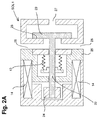
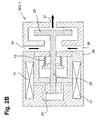
- Figs. 2A and 2B show an example of a "normally closed” solenoid actuated valve which can be used for a first solenoid actuated valve SOL1 according to the embodiments of the present invention.
- the "normally closed” solenoid actuated valve SOL 1 is shown in the open state, i.e. when current is applied to the coil 14, and in Fig. 2A , the "normally closed” solenoid actuated valve SOL1 is shown in the closed state, i.e. when no current is applied to the coil 14 and there is no hydraulic pressure, i.e. there is no pressure difference between upstream and downstream of the valve.
- valve rod 22 and the valve member 23 comprises a valve rod 22 and a valve member 23.
- the valve rod 22 and the valve member 23 are formed as a unitary body, however, the valve rod 22 and the valve member 23 can also be formed as separate bodies.
- an anchor 24 is provided at the other end of the valve rod 22, i.e. at the end on the side opposite of the valve rod 22 than the valve member 23.
- the anchor 24 and a core 25 of the solenoid valve are attracted to each other by magnetic force so that the valve rod 22 is displaced in the direction of opening the valve until the anchor 24 and the core 25 come in contact so that the displacement of the valve rod 22 is restricted.
- low-pressure fuel can be drawn from the low-pressure system via the small passage 26 as indicated by the arrow and be delivered to the compression chamber 8 of the high-pressure fuel supply pump via the inlet passage 27 as further indicated by the arrow.
- non-pressurized fuel can also be spilled backwards through the inlet passage 27 via the small passage 26 to the low-pressure fuel system as long as the valve is kept open by applying current to coil 14, when the plunger 9 in the compression chamber 8 is in an upward stroke so as to decrease the volume of the compression chamber 8.
- the fuel pressure in the compression chamber 8 decreases in comparison to the pressure of fuel in the small passage 26 which is connected to the low-pressure fuel system so that a hydraulic force is generated which can cause the displacement of the valve member 23 in the direction of opening the valve against the biasing force of the spring 13 even without applying current to the coil 14.
- the hydraulic force can either cause a full displacement of the valve rod 22 and/or the valve member 23 until the anchor 24 comes in contact with the core 25 or a displacement which is not a full displacement of the valve rod 22 and/or the valve member 23 until the anchor 24 comes in contact with the core 25.
- valve rod 22 and the valve member 23 can also be formed as separate bodies which are fixed to each other or as separate bodies where the valve rod 22 and the valve member 23 are biased by a biasing mechanism to the direction of closing the valve, where the valve rod 22 is further biased in the direction of the valve member 23 so that the valve rod 22 is displaced by a biasing force in the direction of opening the valve, when the valve member 23 is displaced to the direction of opening the valve by means of the hydraulic force.
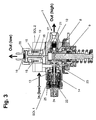
- the high-pressure fuel supply pump according to the first embodiment of the present invention is shown in Fig. 3 and comprises the compression chamber 8, the plunger 9 reciprocating in the compression chamber 8 for pressurizing fuel in the compression chamber 8, the discharge valve 10 for discharging pressurized fuel from the compression chamber 8 to the high-pressure fuel passage 11 of the high-pressure fuel supply system for supplying high-pressure fuel to the internal combustion engine, and the first solenoid actuated valve SOL1 for connecting and disconnecting the first low-pressure fuel passage 3 and the compression chamber 8.
- the first solenoid actuated valve SOL1 is biased by a spring 13 in a closing direction of the first solenoid actuated valve SOL1, and the first solenoid actuated valve SOL1 is opened or kept open against the biasing force of the spring 13, when the solenoid of the first solenoid actuated valve SOL1 is energized, i.e. when current is applied to the coil 14 of the first solenoid actuated valve SOL 1.
- SOL 1 is a "normally closed" solenoid actuated valve.
- the high-pressure fuel supply pump 1 further comprises the second solenoid actuated valve SOL2 for connecting and disconnecting the second low-pressure fuel passage 4 and the compression chamber 8.
- the second solenoid actuated valve SOL 2 is a "normally open" solenoid actuated valve which is configured to be closed, when the second solenoid actuated valve is energized, i.e. when a current is applied to the coil 15 of the second solenoid actuated valve SOL 2.
- the second solenoid actuated valve SOL 2 having no biasing member such as a spring provided for biasing the second solenoid actuated valve SOL 2 in the direction of opening the valve since the valve can be opened or be kept open by hydraulic force when being deenergized as is shown with reference to the example of a push type second solenoid actuated valve SOL2 as shown in Fig. 4 .
- a spring 16 can be provided acting a biasing force in the closing direction of the second solenoid actuated valve SOL2 which is smaller than the hydraulic force during an upward stroke of the plunger such that the second solenoid actuated valve SOL2 can be opened by hydraulic force when being deenergized.
- the present invention is not limited to this and the first embodiment may be further modified by providing a biasing member such as a spring acting in the direction of opening the second solenoid actuated valve SOL2 such that the second solenoid actuated valve SOL2 is biased by this spring in an opening direction of the second solenoid actuated valve SOL2, wherein the second solenoid actuated valve SOL2 is then configured to be closed against the force of this spring, when the second solenoid actuated valve SOL2 is energized.
- a biasing member such as a spring acting in the direction of opening the second solenoid actuated valve SOL2 such that the second solenoid actuated valve SOL2 is biased by this spring in an opening direction of the second solenoid actuated valve SOL2, wherein the second solenoid actuated valve SOL2 is then configured to be closed against the force of this spring, when the second solenoid actuated valve SOL2 is energized.
- the second solenoid actuated valve SOL2 is a push-type valve as shown with reference to the examples of Fig. 3 (SOL2 having a spring 16) and Fig. 4 (SOL2 having no spring), which comprises a valve seat 17, and a push rod 18 for coming in contact with the valve seat 17 for closing the valve, when the second solenoid actuated valve SOL2 is energized, i.e. when a current is applied to the coil 15, wherein the push rod 18 is then pushed by electromagnetic force until the push rod 18 comes in contact with the valve seat 17 so that the valve is closed or kept closed by means of the magnetic force.
- 3 and 4 has a core 19 and an anchor 20 (which can be fixed to the push rod as shown in Figs. 2 and 3 or also be formed separately).
- the anchor 20 and the core 19 are attracted to each other by magnetic force and the push rod 18 is pushed in the direction of the valve seat 17 for closing the valve and/or keeping the valve closed as long as a current is applied to the coil 15.
- the solenoid of the second solenoid actuated valve SOL2 is energized, the magnetic force pushes the push rod 18 to close the small passage 21 of the second solenoid actuated valve SOL2, which small passage 21 is connected to the compression chamber 8 of the high-pressure fuel supply pump.
- the push rod 18 can be pushed by hydraulic force from the valve seat 17 to open the valve and/or keep the valve open, when the second solenoid actuated valve SOL2 is deenergized, i.e. when there is no current applied to the coil 15.
- the anchor 20 and/or the core 19 can be provided so as to have a larger diameter than the inner diameter of the coil 15, e.g. by extending the core 19 e.g. by overhanging the core 19 outside the diameter of the coil 15.
- the solenoid of the second solenoid actuated valve SOL2 can be provided which has a strong magnetic force, with only a small drive current, realized in a very compact body size.
- Fig. 4 only shows an example of the second solenoid actuated valve SOL2 having no biasing member
- Fig. 3 shows the whole high-pressure fuel supply pump according to the first embodiment having a second solenoid actuated valve SOL2 having spring 16 as a biasing member.
- the high-pressure fuel supply pump can be provided having a second solenoid actuated valve SOL2 having no biasing member by replacing the exemplary second solenoid actuated valve SOL2 of Fig. 3 with the exemplary second solenoid actuated valve SOL2 of Fig. 4 .
- the high-pressure fuel supply pump in a fuel supply system according to a second embodiment of the present invention only differs from the fuel pump of the first embodiment in that the second solenoid actuated valve SOL2 is a pull type valve as will be described below.
- the high-pressure fuel supply pump according to the second embodiment of the present invention also comprises the compression chamber 8, the plunger 9 reciprocating in the compression chamber 8 for pressurizing fuel in the compression chamber 8, the discharge valve 10 for discharging pressurized fuel from the compression chamber 8 to the high-pressure fuel passage 11 for supplying high-pressure fuel to the internal combustion engine, and the first solenoid actuated valve SOL1 for connecting and disconnecting the first low-pressure fuel passage 3 and the compression chamber 8 as already described in detail above with reference to Figs. 1 and Fig. 2 .
- FIG. 5 An example of a high-pressure fuel supply pump according this second embodiment of the present invention is shown in Fig. 5 and comprises a pull type valve as the second solenoid actuated valve SOL2 for connecting and disconnecting the second low-pressure fuel passage 4 and the compression chamber 8. Still, according to the concept of the invention, the second solenoid actuated valve SOL2 is configured to be closed, when the second solenoid actuated valve SOL2 is energized.
- the second solenoid actuated valve SOL2 is a pull-type valve, which comprises a valve seat 17, a valve body 30 for coming in contact with the valve seat 17 for closing the valve, where the valve body 30 is biased by a spring 31 in the direction of closing the valve, and a pull rod 29 for coming in contact with the valve body 30.
- the pull rod 29 is biased by the biasing force of the spring 16 in the direction of opening the valve so that the valve can be opened or kept open against the biasing force of the spring 31, when the second solenoid actuated valve SOL1 is deenergized. Accordingly, the biasing force of the spring 16 is larger than the biasing force of the spring 31.
- the pull rod 29 is pulled from the valve body 30 by magnetic force against the biasing force of the spring 16 so that the second solenoid actuated valve SOL is closed by the biasing force of the spring 31 in that the valve body 30 is pressed onto the valve seat 17, when the second solenoid actuated valve SOL2 is energized.
- the pull rod 29 of the second solenoid actuated valve SOL2 is pulled away from the valve body 30 by magnetic force in that the anchor 20 and the core 19 are attracted to each other, when the solenoid is energized, i.e. when current is applied to coil 15, against the strong biasing force of the spring 16.
- the strong biasing force of the spring 16 biases the push rod in the direction of the valve body (in direction of opening the valve) and tends to push the valve body 30 to the open position away from the valve seat 17 against the biasing force of the spring 31 which biases the valve body 30 in the direction of closing the valve.
- the pull rod 29 will be pulled back by means of magnetic force so that the spring 31 can displace the valve body 30 for bringing the valve body 30 in contact with the valve seat 17 so as to close the valve. Then, the fuel inside the compression chamber 8 can be compressed/pressurized in an upward stroke of the plunger 9 in the compression chamber 8.
- the pull rod 29 pushes the valve body 30 in the opening direction for opening the valve so as to prevent the fuel inside the compression chamber 8 to be compressed in an upward stroke of the plunger 9 by allowing fuel to be spilled out of the compression chamber.
- FIG. 6A shows a solenoid having a structure according to which the diameter of the anchor 20 and the core 19 are larger than inner diameter of the coil 15 (i.e. using a similar concept as described with reference to a push type valve in Fig. 4 ) for generating a strong magnetic force in a small compact structure already at less drive current of the solenoid.
- Fig. 6B shows another example of the second solenoid actuated valve SOL2 of a pull-type which also enables to produce a strong magnetic force with a small drive current in a compact structure.
- a second air gap 32 is provided in addition to a first air gap between the anchor 20 and the core 19, wherein the second air gap 32 providing a larger attraction area in total.
- This construction as shown in Fig. 6B also enables the solenoid to generate a stronger magnetic force at a small drive current in a compact structure.
- the fuel supply system according to an example configuration differs from the fuel supply systems as described with reference to the first embodiment and the second embodiment in that the second solenoid actuated valve SOL2 not included in the high-pressure fuel supply pump but is provided for connecting/disconnecting the high-pressure fuel supply system and the low-pressure fuel supply systems by e.g. connecting/disconnecting one of the high-pressure fuel passage 11 and the high-pressure fuel rail 12 with one of the first or second low-pressure fuel passages 3 and 4, the low-pressure main passage 5, and the low-pressure fuel rail.
- Fig. 7 shows a fuel supply system where the second solenoid actuated valve SOL2 provided for connecting/disconnecting the high-pressure fuel rail 12 with the low-pressure main passage 5.
- the fuel systems according to all of the above-mentioned embodiments comprise the high-pressure fuel supply system for supplying high-pressure fuel to the internal combustion engine, the high-pressure fuel supply pump 1 for pressurizing fuel and delivering pressurized fuel to the high-pressure fuel supply system, and the low-pressure fuel supply system for delivering low-pressure fuel to the high-pressure fuel supply pump 1.
- the high-pressure fuel supply pump 1 has the "normally closed" type first solenoid actuated valve SOL1 which is opened and/or kept open against the biasing force of a spring 13, when current is applied to the coil 14 of the first solenoid actuated valve SOL1.
- the "normally open" type second solenoid actuated valve SOL2 is provided for connecting and disconnecting the low-pressure fuel main passage 5 of the low-pressure fuel supply system and the compression chamber 8 of the high-pressure fuel supply pump 1 as shown in Fig. 1 (first and second embodiment) or alternatively for connecting and disconnecting the low-pressure fuel main passage 5 of said low-pressure fuel supply system and the high-pressure fuel rail 12 of the high-pressure fuel system.
- the second solenoid actuated valve SOL2 is comprised in the high-pressure fuel supply pump 1, whereas according to this example configuration, the second solenoid actuated valve SOL2 is configured to connect and disconnect the high-pressure fuel rail 6 of the high-pressure fuel supply system and the low-pressure fuel main passage 5 of the low-pressure fuel supply system.
- the "normally open" second solenoid actuated valve SOL2 is mounted on the high-pressure fuel rail as shown in Fig. 7 , where the second solenoid actuated valve SOL2 is a push-type valve, similar to the structure as described with reference to the exemplary push-type valves of Figs. 3 and 4 .
- the fuel inside the high-pressure fuel passage 11 and the high-pressure fuel rail 12 can be compressed (or, in other words, high-pressure fuel can be delivered to the high-pressure fuel system at high-pressure) when the second solenoid actuated valve SOL2 is switched on, i.e.
- recirculation of fresh fuel will advantageously occur within the fuel supply system between the high-pressure fuel supply pump 1, the high-pressure fuel passage 11, the high-pressure fuel rail 12, and the low-pressure passages 3, 4, and 5 of the low-pressure fuel system, which prevents deterioration of fuel and further enables the high-pressure fuel system to be cooled down even during low-pressure fuel supply mode such as PFI mode.
- An additional benefit of this configuration is that the direct injectors 12a will be in turn also cooled down, which is beneficial to reduce deposits on the injectors 12a.
- a low-pressure sensor 34 for determining a pressure of low-pressure fuel in the low-pressure fuel rail 6 as further shown in Fig. 8 .
- the orifice 33 is provided in the low-pressure main passage 5 between the first and second low-pressure fuel passages 3 and 4, and, in addition thereto, the pressure sensor 34 is provided in the low-pressure fuel rail 6.
- the fuel pressure in the low-pressure fuel rail 6 can be increased compared to the pressure of the fuel in the low-pressure system downstream of the orifice 33 as provided by the low-pressure pump from the fuel tank 2 by controlling the recirculation of fuel flow from the high-pressure fuel rail 12 using the high-pressure fuel pump 1 and the second solenoid actuated valve SOL2.
- the operation of the high-pressure fuel pump 1 and the second solenoid actuated valve SOL2 can be controlled based on the pressure measured with the pressure sensor 34.
- This modified embodiment of the present invention can be beneficial to provide a higher fuel pressure for the injectors 6a, e.g. for improved atomization characteristics.
- such an orifice 33 may also be provided between the first and second low-fuel passages 3 and 4 for modifying any of the first and second embodiment e.g. according to Fig. 1 .
- single structural and/or functional aspects and features as described above with reference to the first and second embodiments of the present invention and the example configuration may be combined in any way, partly or as a whole, and such modifications shall be contained within the scope of disclosure of the present description, and a detailed description of every possible combination is omitted for reasons of conciseness of the present description.
- the fuel supply systems according to the above described embodiments have been described as exemplary embodiments, especially regarding the configuration of the internal combustion engine.
- Figs. 1 , 7 , and 8 there are provided one low-pressure fuel rail 6 having four injector means 6a and one high-pressure fuel rail 12 having four direct injector means 12a so that an internal combustion engine of a four-cylinder configuration is implied in these figures.
- the present invention is not limited to hybrid fuel supply systems for supplying high-pressure fuel and low-pressure fuel to an internal combustion engine of a four-cylinder configuration, and further embodiments of fuel supply systems according to the present invention can be provided for various internal combustion engine configurations, including at least the following:
- fuel supply systems of the configurations mentioned above having two or more high-pressure fuel supply pumps may combine one or more high-pressure fuel supply pumps as discussed with reference to the first and second embodiments and one or more high-pressure fuel supply pumps as discussed with reference to the example configuration.
- one or more additional pressure sensor means can be provided in the high-pressure fuel system (e.g. in the high-pressure fuel rail or high pressure fuel rails) for determining a pressure of high-pressure fuel in the high-pressure fuel system (e.g.
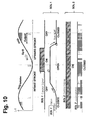
- the y-axis direction denotes an oscillatory movement of the plunger 9 as a function of time (in the x-axis direction) where the plunger 9 moves upward in the compression chamber 8, during an upward stroke of the plunger 9, for decreasing the volume of the compression chamber 8 for pressurizing fuel inside the compression chamber 8 to be discharged via the discharge valve 10 or spilling out fuel from the compression chamber 8 via the inlet/chamber/spill valve(s) SOL1 and/or SOL2 depending on the control state of the inlet/chamber/spill valve(s) SOL1 and/or SOL2, until the plunger 9 reaches a so-called "Top Dead Center" position labeled as TDC in the figures.
- the plunger 9 starts its intake stroke and, during the intake stroke of the plunger 9, the plunger 9 moves downward in the compression chamber 8 for increasing the volume of the compression chamber 8 for drawing fuel into the compression chamber 8, until the plunger 9 reaches a so-called "Bottom Dead Center” position labeled as BDC in the figures. Thereafter, the plunger 9 starts its upward stroke again and, during the upward stroke of the plunger 9, moves upward again in the compression chamber 8. Accordingly, as a function of time, the movement of the plunger 9 can be illustrated as a sine function.
- control signals according to the various possible different control operations of the first and second solenoid actuated valves SOL1 and/or SOL2 are illustrated as a step function of time (in the x-axis direction) indicating, whether voltage is applied to the coils or not, i.e. whether the control signal is ON or OFF.
- the corresponding motion of the first and second solenoid actuated valves SOL1 and/or SOL2 are illustrated as a function of time (in the x-axis direction)
- the first solenoid actuated valve SOL1 and the second solenoid actuated valve SOL2 are controlled such that low-pressure fuel is supplied to the internal combustion engine e.g. via the so-called PFI injection.
- This first mode of operation can be applied to all of the above-mentioned embodiments of the present invention, i.e. the high-pressure fuel supply pump 1 and the fuel supply system according to the first embodiment, the high-pressure fuel supply pump 1 and the fuel supply system according to the second embodiment, and the fuel supply system according to the example configuration.
- the internal combustion engine can be for example operated in the so-called PFI mode, i.e. low-pressure fuel is supplied to the internal combustion engine via the injector means 6a of the low-pressure fuel rail 6 of the low-pressure fuel supply system and no high-pressurized fuel is supplied via the high-pressure fuel system (i.e. there is no direct fuel injection at high pressure such as GDI injection in this first mode of operation).
- PFI mode i.e. low-pressure fuel is supplied to the internal combustion engine via the injector means 6a of the low-pressure fuel rail 6 of the low-pressure fuel supply system and no high-pressurized fuel is supplied via the high-pressure fuel system (i.e. there is no direct fuel injection at high pressure such as GDI injection in this first mode of operation).
- both solenoid actuated valves SOL1 and SOL2 are switched off/deenergized, i.e. the first solenoid actuated valve SOL1 and the second solenoid actuated valve SOL2 are both continuously kept deenergized, i.e. there is neither supplied current to the coil 14 of the first solenoid actuated valve SOL1 nor to the coil 15 of the second solenoid actuated valve SOL2. Accordingly, no fuel pressurization occurs in the compression chamber 8 in spite of the movement of the plunger 9 because fuel can be spilled out of the compression chamber 8 via the deenergized "normally open" second solenoid actuated valve SOL2 before any pressurization of fuel occurs in the compression chamber 8. Accordingly, there is no electrical energy required in this first mode of operation since there is no current applied at all as both solenoid actuated valves are continuously kept deenergized (continuous control signal: OFF) as shown in Fig. 9 .
- controlling the first solenoid actuated valve SOL1 and the second solenoid actuated valve SOL2 according to the first mode of operation provides a mode of operation in which the operation is very quiet and operation noise can be efficiently reduced. Furthermore, the first mode of operation provides a very efficient method for controlling the fuel supply system in a low-pressure fuel supply mode such as PFI injection mode at a minimal electrical energy requirement.
- the high-pressure fuel supply pump 1 or the fuel system is controlled for supplying high-pressure fuel to the internal combustion engine in that the second solenoid actuated valve SOL2 is continuously kept energized so as to be kept closed by magnetic force, i.e.
- the first solenoid actuated valve SOL1 is opened or kept open by hydraulic force during the intake stroke of the plunger 9 before energizing the solenoid of the first solenoid actuated valve SOL1 so as to function as an inlet valve for delivering low-pressure fuel into the compression chamber 8 during an intake stroke of the plunger 9.
- the first solenoid actuated valve SOL1 is energized (control signal ON) to be further opened or further kept open by magnetic force (or by hydraulic force and magnetic force) at least during part of the upward stroke of the plunger 9 so as to function as a spill valve for spilling low-pressure fuel out of the compression chamber 8 during part of the upward stroke of the plunger 9.
- the first solenoid actuated valve SOL1 is deenergized (control signal: OFF) for closing the first solenoid actuated valve SOL1 during the upward stroke of the plunger 9 by hydraulic force so that fuel in the compression chamber 8 is pressurized to be delivered at high pressure to the high-pressure fuel supply system through the discharge valve 10.
- the second solenoid actuated valve SOL2 is energized continuously by continuously applying current to the coil 15, thereby forcing the valve SOL2 to remain in a closed position, i.e. in the closed state.
- the high-pressure fuel supply pumps can work using the "normally closed" solenoid actuated valve SOL1 as an inlet valve according to the high-pressure fuel pump of EP 1 812 704 A1 .
- the solenoid actuated valve SOL1 work as inlet valve and is controlled to remains deenergized during the start of the intake stroke of the plunger 9. The suction force created by the downward motion of the plunger 9 during the intake stroke generates a sufficient amount of hydraulic force to open the inlet valve SOL1.
- the solenoid of the first solenoid actuated valve SOL1 is energized.
- the generated magnetic force causes the inlet valve SOL1 to extend to the fully-open position (when it is not opened up to the fully-open position by means of the hydraulic force) until its movement is restricted e.g. in that the core 25 and the anchor 24 come in contact (and thereby causing a noise at impact).
- the magnetic force keeps the inlet valve SOL1 in the fully open position even when the plunger 9 changes its direction of motion for moving upwards in the upward stroke of the plunger 9.
- the solenoid of the first solenoid actuated valve SOL1 is de-energized so that the hydraulic force caused by the compression of the fuel in the compression chamber 8 cause the solenoid actuated valve SOL1 to close immediately which, in turn, leads to a rapid pressurization rate of the fuel within the compression chamber 8 as fuel cannot spill out anymore via the solenoid actuated valve SOL1, the pressure exceeding the pressure of fuel in the high-pressure fuel supply system (e.g. in the high-pressure fuel passage 11) and, hence, the pressurized fuel is delivered from the compression chamber 8 via the discharge valve 10 to the high-pressure fuel rail.
- a noise caused by the slamming of the inlet valve SOL1 in the fully closed position after deenergization may occur and also a noise generated by the rapid fuel pressurization rate in the compression chamber 8.
- the amount of high-pressure fuel to be delivered during the upward stroke of the plunger 9 can be controlled by controlling the timing of deenergizing the solenoid of the first solenoid actuated valve SOL1 during the upward stroke of the plunger 9 (the later SOL1 is deenergized, the less fuel is delivered at high pressure to the high-pressure system).
- This mode of operation provides an operation for supplying high-pressure fuel to the high-pressure fuel system for high-pressure fuel supply mode such as GDI mode. Further, this operation mode provides the advantage that there is no noise generated by the second solenoid actuated valve which is a "normally closed” solenoid actuated valve, whereas the commonly known GDI operation in hybrid systems is controlled via a noisy "normally open” solenoid actuated valve (cf. e.g. EP 1 812 704 A1 ). However, a slightly higher amount of electrical energy is required since the second solenoid actuated valve SOL2 is kept continually energized.
- the high-pressure fuel supply pump 1 is controlled such that the second solenoid actuated valve SOL2 is continuously kept closed, wherein the second solenoid actuated valve SOL2 is kept deenergized during an upward stroke of the plunger 9 so as to be kept closed by hydraulic force during the upward stroke of the plunger 9 and, wherein the second solenoid actuated valve SOL2 is kept energized from the end of the upward stroke, during an intake stroke, and until the beginning of a next upward stroke of the plunger 9 so as to be kept closed by magnetic force, wherein the first solenoid actuated valve SOL1 is operated similar to the mode of operation according to the above-described second mode of operation.
- this third mode of operation is applicable to embodiments using a pull-type second solenoid actuated valve SOL2 so that the hydraulic force can be generated during an upward stroke of the plunger 9 such that it biases/presses the valve body 30 against the valve seat 17 during the upward stroke of the plunger 9.
- the second solenoid actuated valve SOL2 is continuously kept closed but not continuously by magnetic force but also by hydraulic force alone during at least part of the upward stroke of the plunger 9.
- this mode of operation is more energy efficient as less electrical energy is required for continuously keeping the second solenoid actuated valve SOL2 continuously closed.
- it may be applicable only during a requirement of high amount fuel delivery, i.e. when the period of time in which the pressure in the compression chamber 8 is high (when both valves SOL1 and SOL2 are closed) is relatively long. Then, the period in which the second solenoid actuated valve SOL2 can be de-energized without any risk (i.e. the risk of opening the second solenoid actuated valve SOL2) since the hydraulic force will oppose the spring force for keeping the solenoid actuated valve SOL2 closed is relatively long.
- a fourth operation mode of the high-pressure fuel supply pump 1 or the fuel system as illustrated in Figs. 12 and 13 the fuel system or the high-pressure fuel supply pump 1 is controlled such that pressurizing fuel in the compression chamber 8 is started by deenergizing the first solenoid actuated valve SOL1 during an upward stroke of the plunger 9 while the second solenoid actuated valve SOL2 is kept energized, and pressurizing fuel is stopped by deenergizing the second solenoid actuated valve SOL2.
- the second solenoid actuated valve SOL2 can accordingly operate as an electrically-controlled pressure relief valve, wherein pressurizing fuel in the compression chamber 8 is stopped by deenergizing the second solenoid actuated valve SOL2 when the pressure in the high-pressure system (e.g. in the high-pressure fuel rail 12 and/or the high-pressure passage 11) exceeds a predetermined pressure threshold, wherein the pressure in the high-pressure system can be for example determined by a pressure sensor in the high-pressure fuel system (e.g. by a pressure sensor in the high-pressure fuel rail 12).
- the second solenoid actuated valve SOL2 can be used as a relief valve to spill the high-pressure fuel supply pump's output when the pressure in the high-pressure system exceeds a predetermined pressure threshold for possibly preventing further pressure build-up in the high-pressure fuel system e.g. in the high-pressure fuel rail 12.
- the second solenoid actuated valve SOL2 is deenergized (at the instance marked by the vertical arrow A)
- the spring 16 and/or the hydraulic force will force the second solenoid actuated valve SOL2 to open for relieving the compression chamber pressure so that discharging the fuel through the discharge valve 10 is stopped (applicable to a pull-type valve SOL2, i.e. the first embodiment and the example configuration).
- the relief valve function may be further used to reduce the pressure in the high-pressure fuel system (e.g. the high-pressure fuel passage 11 and/or the high-pressure fuel rail 12).
- the second solenoid actuated valve SOL2 is provided in the high-pressure fuel supply pump according to the first embodiment, it is not possible for the second solenoid actuated valve SOL2 to relieve the pressure in the high-pressure fuel system but only to interrupt an on-going pressure stroke and prevent further pressure build-up in the high-pressure fuel system.
- this fourth operation mode of the high-pressure fuel supply pump 1 or the fuel system it is further possible to provide a highly advantageous increased flexibility for synchronizing the timing of the pressurization events with the direct injection timing in a high-pressure fuel supply mode such as a GDI mode.
- Such a synchronization can be achieved by using the first solenoid actuated valve SOL1 to control the timing for the start of pressurization stroke (by controlling the timing of deenergizing SOL1 during the upward stroke of the plunger 9), and by further using the second solenoid actuated valve SOL2 to control the end of the pressurization during the upward stroke of the plunger 9 (by controlling the timing of deenergizing SOL2 during the upward stroke of the plunger 9).
- the start time and the end time of the pressurization of fuel in the compression chamber 8 can be controlled separately so that both, the amount of discharged high-pressure fuel and the timing thereof can be controlled at the same time. According to the prior art, it is merely possible to either control the timing or the amount.
- the pump driving cam has to be configured such that it has a number of lobes being equal to the number of high-pressure fuel injectors, and furthermore such that it is oriented on the cam shaft at an angle such that the upward stroke of the plunger 9 coincides with the timing of the injection events at the desired engine condition.
- the high-pressure fuel supply pump 1 is controlled such that the first solenoid actuated valve SOL1 is continuously kept deenergized, wherein the second solenoid actuated valve SOL2 functions as an inlet valve for delivering low-pressure fuel into the compression chamber 8 during an intake stroke of the plunger 9 and/or as an spill valve for spilling low-pressure fuel out of the compression chamber 8 during an upward stroke of the plunger 8, wherein the second solenoid actuated valve SOL2 is energized during the upward stroke of the plunger 9 for closing the second solenoid actuated valve SOL2 so that fuel in the compression chamber 8 is pressurized and delivered to the high-pressure fuel supply system through the discharge valve 10.
- high-pressure fuel supply mode such as GDI mode can be alternatively be controlled also via the second solenoid actuated valve SOL2, i.e. without any control of the first solenoid actuated valve SOL1 which is kept continuously deegenergized.
- This fifth operational mode can be used for consuming less electrical energy (for example in case the amount of available electrical energy is reduced), but it will result in increased noise levels and vibrations due to the operation of the "normally open" solenoid valve.
- This fifth mode of operation may be most advantageously used in case of failure of the first solenoid actuated valve SOL2 so as to still provide the availability of a high-pressure fuel supply mode such as GDI mode in case of a failure of the first solenoid actuated valve SOL1.
- the fifth operation mode is illustrated in Fig. 14 for the first embodiment and in Fig. 15 for the second embodiment.
- the solenoid signal of the first solenoid actuated valve SOL1 remains OFF and no current is applied to the coil 14 of the first solenoid actuated valve SOL1. Still, the first solenoid actuated valve SOL1 is displaced due to a hydraulic force so that it opens in the intake stroke of the plunger 9.
- the second solenoid actuated valve SOL2 is released (by deenergization) during the intake stroke of the plunger 9 such that fuel intake can occur through the second solenoid actuated valve SOL2 (as well as through the first solenoid actuated valve SOL1 which opens by means of the hydraulic force) and for consuming less electrical energy.
- the second solenoid actuated valve SOL2 is energized such that the second solenoid actuated valve SOL2 is closed by means of magnetic force.
- the first solenoid actuated valve SOL1 is quickly closed by means of the hydraulic force and the second solenoid actuated valve SOL2 is kept closed by means of the magnetic force for pressurizing fuel and discharging high-pressure fuel via the discharge valve 10.
- the second solenoid actuated valve SOL2 is deenergized so as to open immediately (accompanied with a large impact noise) and fuel is spilled out so that pressurization of fuel is stopped.
- the solenoid signal of the first solenoid actuated valve SOL1 remains OFF and no current is applied to the coil 14 of the first solenoid actuated valve SOL1. Still, the first solenoid actuated valve SOL1 is displaced due to a hydraulic force so that it opens in the intake stroke of the plunger 9.
- the second solenoid actuated valve SOL2 is released (by deenergization) during the intake stroke of the plunger 9 such that fuel intake can occur through the second solenoid actuated valve SOL2 (as well as through the first solenoid actuated valve SOL1 which opens by means of the hydraulic force) and for consuming less electrical energy.
- the second solenoid actuated valve SOL2 is energized at a time during the upward stroke of the plunger 9 such that a predetermined amount of fuel is pressurized and discharged via the discharge valve 10.
- the second solenoid actuated valve SOL2 is energized, the second solenoid actuated valve SOL2 is closed. Since also the "normally closed" first solenoid actuated valve SOL1 is kept closed by biasing force and hydraulic force, fuel is pressurized in the compression chamber 8 and discharged via the discharge valve 10.
- the first solenoid actuated valve SOL1 and/or the second solenoid actuated valve SOL2 are controlled according to any of the above or below described modes of operation and are further controlled via pulse-width modulation when the solenoids are to be energized, wherein the first solenoid actuated valve SOL1 and/or the second solenoid actuated valve SOL2 are controlled at a duty cycle of substantially 100% after being energized for magnetizing the solenoid (directly after being switched on by applying current to the coils, current is continuously applied to the coil(s) at first).
- the first solenoid actuated valve SOL1 and/or the second solenoid actuated valve SOL are controlled at a duty cycle below 100% after magnetization of the respective solenoid for keeping the first solenoid actuated valve SOL1 and/or the second solenoid actuated valve SOL2 energized.
- the control signal is repeatedly switched between ON and OFF as shown in Fig. 16 which reduces the energy consumption of the mode of operation, while the solenoid(s) stay magnetized even if the control signal(s) is(are) controlled at a duty cycle below 100%.
- the solenoid(s) of the solenoid actuated valve(s) SOL1 and/or SOL2 will be controlled via a pulse-width modulated signal to reduce the electrical energy requirement depending on the required magnetic force.
- the duty-cycle of the PWM (pulse width modulation) signal is normally calibrated for different operating conditions to ensure the adequate magnetic force without unnecessarily expending electrical energy.
- a 100% duty cycle is applied to ensure fast current ramp up so as to cause the solenoid magnetization to build up fast.
- the operation is then continued at a smaller duty cycle signal at a duty cycle below 100%.
- the control of the solenoid(s) of the first solenoid actuated valve SOL1 and/or the second solenoid actuated valve SOL2 according to any of the above and below described modes of operation is normally repeated for every pump lobe, i.e. for each pair of intake stroke and upward stroke of the plunger 9 in the compression chamber 8.
- the seventh mode of operation can be applied to all of the above and below described modes of high-pressure fuel supply operation where the described mode is, then, only applied in during one single pair of intake stroke and upward stroke of the plunger 9 followed by a sequence of pump lobes (i.e. a sequence of pairs of intake strokes and upward strokes of the plunger 9) during which no high-pressure fuel is delivered.
- the seventh mode of operation is exemplary illustrated in Fig. 17 for a supply of the full amount of high-pressure in which fuel is pressurized and discharged via the discharge valve 10 substantially during the full upward stroke of the plunger 9.
- a single high-pressure fuel discharge is followed by a sequence of the so-called skipped pulses in which no high-pressure fuel is delivered.
- the second solenoid actuated valve SOL2 is continually kept energized so that no operation noise is generated by the second solenoid actuated valve SOL2.
- the first solenoid actuated valve SOL1 is normally also continually energized to keep it open. If a full high-pressure supply stroke is required, the first solenoid actuated valve SOL1 is the deenergized already during the single intake stroke and kept deenergized during the whole following upward stroke of the plunger 9 for pressurizing fuel in the compression chamber 8 and discharging the full amount of high-pressure fuel via the discharge valve 10.
- the first solenoid actuated valve SOL1 can be energized during the single intake stroke of the plunger 9 before the plunger reaches the BDC position so as to be deenergized again at an appropriate time during the upward stroke of the plunger 9 to deliver the correct amount of high-pressure fuel until this deenergization.
- FIG. 18 A further example of the seventh mode of operation is exemplary illustrated in Fig. 18 , wherein the first solenoid actuated valve SOL1 can be continuously kept deenergized and the second solenoid actuated valve SOL2 (push-type) is controlled so as to be energized during a single upward stroke of the plunger 9 to be closed and kept closed during the single upward stroke of the plunger 9 for discharging a full amount of high-pressure fuel during the single upward stroke followed by a sequence of the so-called skipped pulses in which no high-pressure fuel is delivered.
- this mode can be used in case of a failure of the first solenoid actuated valve SOL1.
- FIG. 19 A yet further example of the seventh mode of operation is exemplary illustrated in Fig. 19 , wherein the first solenoid actuated valve SOL1 can be continuously kept deenergized and the second solenoid actuated valve SOL2 (pull-type) is controlled so as to be energized during a single upward stroke of the plunger 9 to be closed and kept closed during the single upward stroke of the plunger 9 for discharging a full amount of high-pressure fuel during the single upward stroke followed by a sequence of the so-called skipped pulses in which no high-pressure fuel is delivered.
- the first solenoid actuated valve SOL1 can be continuously kept deenergized and the second solenoid actuated valve SOL2 (pull-type) is controlled so as to be energized during a single upward stroke of the plunger 9 to be closed and kept closed during the single upward stroke of the plunger 9 for discharging a full amount of high-pressure fuel during the single upward stroke followed by a sequence of the so-called skipped pulses in which no high
- the second solenoid actuated valve SOL2 of the pull-type does not have to be energized during the whole upward stroke of the plunger 9 since it will be kept closed by the hydraulic force during the single upward stroke of the plunger 9. Accordingly, the second solenoid actuated valve SOL2 is deenergized already short after the beginning of the single upward stroke in the example of Fig. 19 , however, it is kept closed until the end of the single upward stroke when the plunger 9 reaches the TDC position by means of the hydraulic force and fuel will be pressurized and discharged at high-pressure until the end of the single upward stroke. Compared to the example control mode of Fig. 17 , this requires significantly less electrical energy, however, some of the noise-reduction advantage is lost. Still, the total noise level is still very low. Furthermore, this mode can be used in case of a failure of the first solenoid actuated valve SOL1.
- the high-pressure fuel supply pump 1 or the fuel supply system is controlled such that the second solenoid actuated valve SOL2 is deenergized during the intake stroke of the plunger 9 and energized during the upward stroke of the plunger 9 for keeping the second solenoid actuated valve SOL2 closed during the whole upward stroke of the plunger 9, wherein the first solenoid actuated valve SOL1 is operated similar to the mode of operation according to the above-described second mode of operation.
- this mode of operation leads to an increased noise level, the energy consumption can be advantageously reduced compared to the second mode of operation.
- the second solenoid actuated valve SOL2 is deenergized during the intake stroke of the plunger 9.
- the second solenoid actuated valve SOL2 will hence quickly open by spring force and/or hydraulic pressure, thereby generating noise.
- fuel will be drawn into the compression chamber from both the first solenoid actuated valve SOL1 and the second solenoid actuated valve SOL2.
- the second solenoid actuated valve SOL2 is energized for being closed and kept closed (resulting in a large impact noise).
- the first solenoid actuated valve SOL1 is deenergized during the upward stroke of the plunger so as to close, fuel is pressurized in the compression chamber 8 and high-pressure fuel is discharged via the discharge valve 10.
- the second solenoid actuated valve SOL2 is controlled to enable the driver to drive the vehicle for repair (e.g., if the first solenoid actuated valve SOL1 has a failure).
- the control of the second solenoid actuated valve SOL2 does also not require to be synchronized with the position of the lobe of the high-pressure fuel supply pump (i.e. the position of the plunger 9), so that its control in the example configuration does not require any input from sensors of the internal combustion engine indicating this position which further provides the highly advantageous possibility as a failure mode of operation in case the position sensors in the internal combustion engine have a failure.
- the low-pressure fuel pump of the fuel tank 2 may be configured to supply low-pressure at a pressure which is lower than the low-pressure level required for low-fuel supply mode such as PFI mode and control the pressure of low-pressure fuel in the low-pressure fuel rail 6 by using the second solenoid actuated valve SOL2.
- a pressure sensor means 34 in the low-pressure fuel rail 6 would be required for precise closed loop control of the pressure in the low-pressure system on the low-pressure fuel rail side of the flow-rate reducing means such as an orifice 33.
- Such a configuration is exemplary shown for the example configuration in Fig. 8 .
- the current applied to the solenoid of the second solenoid actuated valve SOL2 can be precisely controlled such that the opening of the push-rod 18 of the push type second solenoid actuated valve SOL2 is configured such as to spill back a required amount of fuel from the high-pressure fuel rail 12 to the low-pressure system until the required (e.g. predetermined) fuel pressure in the low-pressure fuel rail is obtained.
- the present invention provides a high-pressure fuel supply pump and a fuel system configured to supply low-pressure fuel in a low-pressure fuel supply mode such as a PFI mode to an internal combustion engine and which is further configured to supply high-pressure fuel in a high-pressure fuel supply mode such as a GDI mode to an internal combustion engine, i.e. a hybrid high-pressure/low-pressure fuel supply system such as a PFI/GDI hybrid fuel supply system for efficiently reducing the soot emissions of the internal combustion engine.
- a hybrid high-pressure/low-pressure fuel supply system such as a PFI/GDI hybrid fuel supply system for efficiently reducing the soot emissions of the internal combustion engine.
- a first solenoid actuated valve for connecting and disconnecting a first low-pressure fuel passage and the compression chamber of a high-pressure fuel supply pump and a second solenoid actuated valve for connecting and disconnecting a second low-pressure fuel passage and the compression chamber or at least for connecting and disconnecting the second low-pressure fuel passage and a high-pressure fuel passage of a high-pressure fuel supply system.
- the first solenoid actuated valve is biased by a first biasing member in a closing direction of the first solenoid actuated valve and the first solenoid actuated valve is opened or kept open against the biasing force of the first biasing member, when said first solenoid actuated valve is energized, and the second solenoid actuated valve is configured to be closed, when said second solenoid actuated valve is energized, and the first low-pressure fuel passage and the second low-pressure fuel passage are connected to a low-pressure fuel supply system for supplying low-pressure fuel to the internal combustion engine.
- the basic inventive idea is to combine two types of solenoid actuated valves, namely, a so-called “normally closed” solenoid actuated valve of the "normally closed”-type and a so-called “normally open” solenoid actuated valve of the "normally open”-type, in one single high-pressure fuel pump or in one fuel supply system such that the high-pressure fuel pump or the fuel supply system can achieve the benefit of sufficient flow rate and low impact noise as provided by a "normally closed” solenoid actuated valve high-pressure fuel supply pump configuration and which, in addition, has the functionality provided by a "normally open” solenoid actuated valve, which does not deliver fuel when there is no control signal such that the "normally open” solenoid actuated valve is deenergized.
- the present invention provides the additional advantage that fuel recirculation during PFI injection operation mode is enabled for cooling down the high-pressure pump and the low fuel-passages with fresh fuel by connecting the compression chamber and the low-pressure fuel passage.
- the present invention provides a fuel supply system which utilizes the merits of both types of solenoid valves, i.e. a "normally closed” solenoid valve and a "normally open” solenoid valve. Additionally, as described above, the configuration of the present invention provides plural various possible modes of operation (modes of solenoid control) which can be used depending on the various requirements.
- modes of solenoid control modes of solenoid control
Landscapes
- Engineering & Computer Science (AREA)
- Chemical & Material Sciences (AREA)
- Combustion & Propulsion (AREA)
- Mechanical Engineering (AREA)
- General Engineering & Computer Science (AREA)
- Physics & Mathematics (AREA)
- Electromagnetism (AREA)
- Fuel-Injection Apparatus (AREA)
- Electrical Control Of Air Or Fuel Supplied To Internal-Combustion Engine (AREA)
Claims (15)
- Pompe d'alimentation en carburant à haute pression, comportant :- une chambre de compression (8),- un piston (9) animé d'un mouvement de va-et-vient dans ladite chambre de compression (8) pour mettre sous pression du carburant dans ladite chambre de compression (8),- une soupape de refoulement (10) pour refouler du carburant mis sous pression de ladite chambre de compression (8) vers un passage de carburant à haute pression (11) d'un système d'alimentation en carburant à haute pression pour délivrer du carburant à haute pression à un moteur à combustion interne, et- une première soupape actionnée par solénoïde (SOL1) pour connecter ladite chambre de compression (8) à un premier passage de carburant à basse pression (3) d'un système d'alimentation en carburant à basse pression et la déconnecter de celui-ci pour délivrer du carburant à basse pression audit monteur à combustion interne, dans laquelleladite première soupape actionnée par solénoïde (SOL1) est polarisée par un premier élément de polarisation (13) dans une direction de fermeture de ladite première soupape actionnée par solénoïde (SOL1), et
ladite première soupape actionnée par solénoïde (SOL1) est ouverte ou maintenue ouverte contre la force de polarisation dudit première élément de polarisation (13), lorsque ladite première soupape actionnée par solénoïde (SOL1) est mise sous tension,
caractérisée par- une seconde soupape actionnée par solénoïde (SOL2) pour connecter ladite chambre de compression (8) à un deuxième passage de carburant à basse pression (4) dudit système d'alimentation en carburant à basse pression et la déconnecter de celui-ci,dans laquelle ladite seconde soupape actionnée par solénoïde (SOL2) est configurée pour être fermée, lorsque ladite seconde soupape actionnée par solénoïde (SOL2) est mise sous tension. - Pompe d'alimentation en carburant à haute pression selon la revendication 1, caractérisée en ce que
ladite seconde soupape actionnée par solénoïde (SOL2) est polarisée par un deuxième élément de polarisation (16) dans une direction d'ouverture de la seconde soupape actionnée par solénoïde (SOL2), dans laquelle ladite seconde soupape actionnée par solénoïde (SOL2) est configurée pour être fermée contre la force dudit deuxième élément de polarisation (16), lorsque ladite seconde soupape actionnée par solénoïde (SOL2) est mise sous tension,
ladite seconde soupape actionnée par solénoïde (SOL2) est configurée sans élément de polarisation quelconque de sorte que la seconde soupape actionnée par solénoïde (SOL2) est ouverte par l'intermédiaire d'une force hydraulique pendant une course vers le haut du piston (9), lorsque la seconde soupape actionnée par solénoïde est mise hors tension, et dans laquelle la seconde soupape actionnée par solénoïde (SOL2) est en outre configurée pour être fermée ou maintenue fermée contre la force hydraulique, lorsque la seconde soupape actionnée par solénoïde (SOL2) est mise sous tension, ou
ladite seconde soupape actionnée par solénoïde (SOL2) est polarisée par un deuxième élément de polarisation (16) dans une direction de fermeture de la seconde soupape actionnée par solénoïde, dans laquelle la force de polarisation du deuxième élément de polarisation est inférieure à la force hydraulique pendant une course vers le haut du piston (9) de sorte que la seconde soupape actionnée par solénoïde (SOL2) est ouverte par une force hydraulique pendant la course vers le haut du piston (9) contre la force de polarisation du deuxième élément de polarisation (16), dans laquelle la seconde soupape actionnée par solénoïde (SOL2) est configurée pour être fermée ou maintenue fermée contre la force hydraulique, lorsque la seconde soupape actionnée par solénoïde (SOL2) est mise sous tension. - Pompe d'alimentation en carburant à haute pression selon la revendication 1 ou 2, caractérisée en ce que ladite seconde soupape actionnée par solénoïde (SOL2) est une soupape à poussée comportant :un siège de soupape (17), etune tige de poussée (18) pour venir en contact avec le siège de soupape (17) afin de fermer la soupape, lorsque ladite seconde soupape actionnée par solénoïde (SOL2) est mise sous tension de sorte que ladite tige de poussée (18) est poussée par une force magnétique jusqu'à ce que la tige de poussée (18) vienne en contact avec le siège de soupape (17), dans laquellela tige de poussée (18) est configurée pour être tirée par la force de polarisation d'un deuxième élément de polarisation (16) et/ou poussée par la force hydraulique dudit siège de soupape (17) afin d'ouvrir la soupape, lorsque ladite seconde soupape actionnée par solénoïde (SOL2) est mise hors tension, ouladite seconde soupape actionnée par solénoïde (SOL2) est une soupape de tirage comportant :un siège de soupape (17),un corps de soupape (30) pour venir en contact avec le siège de soupape (17) afin de fermer la soupape, ledit corps de soupape (30) étant polarisé par un troisième élément de polarisation (31) dans la direction de fermeture de la soupape, etune tige de tirage (29) pour venir en contact avec le corps de soupape (30), ladite tige de tirage (29) étant polarisée par la force de polarisation dudit deuxième élément de polarisation (16) dans la direction d'ouverture de la soupape de sorte que la soupape est ouverte ou maintenue ouverte contre la force de polarisation du troisième élément de polarisation (31), lorsque la seconde soupape actionnée par solénoïde (SOL2) est mise hors tension, etla tige de tirage (29) est tirée dudit corps de soupape (30) par une force magnétique contre la force de polarisation dudit deuxième élément de polarisation (16) de sorte que la seconde soupape actionnée par solénoïde (SOL2) est fermée par la force de polarisation dudit troisième élément de polarisation (31), lorsque ladite seconde soupape actionnée par solénoïde (SOL2) est mise sous tension.
- Pompe d'alimentation en carburant à haute pression selon l'une des revendications 1 à 3, caractérisée en ce que ladite pompe d'alimentation en carburant à haute pression est configurée pour être commandée conformément à un premier mode d'opération dans lequel ladite pompe d'alimentation en carburant à haute pression est commandée de sorte que la première soupape actionnée par solénoïde (SOL1) et la seconde soupape actionnée par solénoïde (SOL2) sont continuellement maintenues hors tension, dans laquelle la seconde soupape actionnée par solénoïde (SOL2) est continuellement maintenue ouverte et du carburant s'échappe de la chambre de combustion (8) à travers la seconde soupape actionnée par solénoïde (SOL2) dans la course vers le haut du piston (9) sans mettre le carburant sous pression dans la chambre de compression (8) de sorte que le moteur à combustion interne reçoit uniquement du carburant à basse pression par l'intermédiaire du système d'alimentation en carburant à basse pression.
- Pompe d'alimentation en carburant à haute pression selon l'une des revendications 1 à 3, caractérisée en ce que ladite pompe d'alimentation en carburant à haute pression est configurée pour être commandée conformément à un second mode d'opération dans lequel ladite pompe d'alimentation en carburant à haute pression (1) est commandée de sorte que la seconde soupape actionnée par solénoïde (SOL2) est continuellement maintenue sous tension de manière à être maintenue fermée par une force magnétique, dans laquelle la première soupape actionnée par solénoïde (SOL1) est ouverte ou maintenue ouverte par une force hydraulique et/ou une force magnétique de manière à fonctionner en tant que soupape d'admission pour délivrer du carburant à basse pression dans la chambre de compression (8) pendant une course d'admission du piston (9) et en tant que soupape de décharge pour déverser du carburant à basse pression de la chambre de compression (8) pendant une course vers le haut du piston (9), la première soupape actionnée par solénoïde (SOL1) étant mise hors tension pendant la course vers le haut du piston (9) pour fermer la première soupape actionnée par solénoïde (SOL1) par l'intermédiaire d'une force hydraulique de sorte que le carburant dans la chambre de compression (8) est mis sous pression et délivré au système d'alimentation en carburant à haute pression à travers la soupape de refoulement (10).
- Pompe d'alimentation en carburant à haute pression selon l'une des revendications 1 à 3, caractérisée en ce que ladite pompe d'alimentation en carburant à haute pression est configurée pour être commandée conformément à un troisième mode opération dans lequel ladite pompe d'alimentation en carburant à haute pression (1) est commandée de sorte que la seconde soupape actionnée par solénoïde (SOL2) est continuellement maintenue fermée, dans laquelle ladite seconde soupape actionnée par solénoïde (SOL2) est maintenue hors tension pendant une course vers le haut du piston (9) de manière à être maintenue fermée par une force hydraulique pendant la course vers le haut du piston (9) et, dans laquelle la seconde soupape actionnée par solénoïde (SOL2) est maintenue sous tension à partir de la fin de la course vers le haut, pendant une course d'admission, et jusqu'au début d'une course vers le haut suivante du piston (9) de manière à être maintenue fermée par une force magnétique, dans laquelle la première soupape actionnée par solénoïde (SOL1) est ouverte ou maintenue ouverte par une force hydraulique et/ou une force magnétique de manière à fonctionner en tant que soupape d'admission pour délivrer du carburant à basse pression dans la chambre de compression (8) pendant la course d'admission du piston (9) et en tant que soupape de décharge pour déverser du carburant à basse pression de la chambre de compression (8) pendant la course vers le haut et la course vers le haut suivante du piston (9), dans laquelle la première soupape actionnée par solénoïde (SOL1) est mise hors tension pendant la course vers le haut et la course vers le haut suivante du piston (9) pour fermer la première soupape actionnée par solénoïde (SOL1) par une force hydraulique de sorte que le carburant dans la chambre de compression (8) est mis sous pression et délivré au système d'alimentation en carburant à haute pression à travers la soupape de refoulement (10).
- Pompe d'alimentation en carburant à haute pression selon l'une des revendications 1 à 3, caractérisée en ce que ladite pompe d'alimentation en carburant à haute pression est configurée pour être commandée conformément à un quatrième mode d'opération dans lequel ladite pompe d'alimentation en carburant à haute pression (1) est commandée de sorte que la mise sous pression de carburant dans la chambre de compression (8) commence en mettant hors tension la première soupape actionnée par solénoïde (SOL1) pendant une course vers le haut du piston (9) alors que la seconde soupape actionnée par solénoïde (SOL2) est maintenue sous tension, et la mise sous pression de carburant est interrompue en mettant hors tension la seconde soupape actionnée par solénoïde (SOL2).
- Pompe d'alimentation en carburant à haute pression selon l'une des revendications 1 à 3, caractérisée en ce que ladite pompe d'alimentation en carburant à haute pression est configurée pour être commandée conformément un cinquième mode d'opération dans lequel la pompe d'alimentation en carburant à haute pression (1) est commandée de sorte que la première soupape actionnée par solénoïde (SOL1) est continuellement maintenue hors tension, dans laquelle la seconde soupape actionnée par solénoïde (SOL2) fonctionne en tant que soupape d'admission pour délivrer du carburant à basse pression dans la chambre de compression (8) pendant une course d'admission du piston (9) et en tant que soupape de décharge pour déverser du carburant à basse pression de la chambre de compression (8) pendant une course vers le haut du piston (9), dans laquelle la seconde soupape actionnée par solénoïde (SOL2) est mise sous tension pendant la course vers le haut du piston (9) pour fermer la seconde soupape actionnée par solénoïde (SOL2) de sorte que du carburant dans la chambre de compression (8) est mis sous pression et délivré au système d'alimentation en carburant à haute pression à travers la soupape de refoulement (10).
- Pompe d'alimentation en carburant à haute pression selon l'une des revendications 1 à 8, caractérisée en ce que ladite première soupape actionnée par solénoïde (SOL1) et/ou ladite seconde soupape actionnée par solénoïde (SOL2) sont configurées pour être respectivement commandées via une modulation de largeur d'impulsions, la première soupape actionnée par solénoïde (SOL1) et/ou la seconde soupape actionnée par solénoïde (SOL2) étant configurées pour être commandées à un cycle de service de quasiment 100 % après avoir été mises sous tension pour aimanter le solénoïde, et dans laquelle la première soupape actionnée par solénoïde (SOL1) et/ou la seconde soupape actionnée par solénoïde (SOL2) sont configurées pour être commandées à un cycle de service inférieur à 100 % après l'aimantation du solénoïde pour maintenir sous tension la première soupape actionnée par solénoide (SOL1) et/ou la seconde soupape actionnée par solénoide (SOL2).
- Système d'alimentation en carburant pour délivrer du carburant à un moteur à combustion interne, comportant :- un système d'alimentation en carburant à haute pression pour délivrer du carburant à haute pression audit moteur à combustion interne,- une pompe d'alimentation en carburant à haute pression (1) pour mettre du carburant sous pression et délivrer du carburant mis sous pression audit système d'alimentation en carburant à haute pression, et- un système d'alimentation en carburant à basse pression pour délivrer du carburant à basse pression à ladite pompe d'alimentation en carburant à haute pression (1), dans lequelladite pompe d'alimentation en carburant à haute pression (1) comporte :- une chambre de compression (8),- un piston (9) animé d'un mouvement de va-et-vient dans ladite chambre de compression (8) pour mettre du carburant sous pression dans ladite chambre de compression (8),- une soupape de refoulement (10) pour refouler du carburant mis sous pression de ladite chambre de compression (8) vers un passage de carburant à haute pression (11) dudit système d'alimentation en carburant à haute pression, et- une première soupape actionnée par solénoïde (SOL1) pour connecter un premier passage de carburant à basse pression (3) audit système d'alimentation en carburant à basse pression et à ladite chambre de compression (8) et le déconnecter de ceux-ci, dans lequelladite première soupape actionnée par solénoïde (SOL1) est polarisée par un premier élément de polarisation (13) dans une direction de fermeture de ladite première soupape actionnée par solénoïde (SOL1), et
ladite première soupape actionnée par solénoïde (SOL1) est ouverte ou maintenue ouverte contre la force de polarisation dudit première élément de polarisation (13), lorsque ladite première soupape actionnée par solénoïde (SOL1) est mise sous tension,
caractérisé par- ledit système d'alimentation en carburant à basse pression est en outre configuré pour délivrer directement du carburant à basse pression audit moteur à combustion interne, dans lequelune seconde soupape actionnée par solénoïde (SOL2) est fournie pour connecter un deuxième passage de carburant à basse pression (4) audit système d'alimentation en carburant à basse pression et à ladite chambre de compression (8) de ladite pompe d'alimentation en carburant à haute pression (1) et le déconnecter de ceux-ci, et
ladite seconde soupape actionnée par solénoïde (SOL2) est fermée, lorsque la seconde soupape actionnée par solénoïde (SOL2) est mise sous tension. - Système alimentation en carburant selon la revendication 10, caractérisé en ce que
ledit système d'alimentation en carburant à haute pression comporte des moyens de détection de haute pression pour déterminer une pression du carburant mis sous pression dans le système d'alimentation en carburant à haute pression, dans lequel la seconde soupape actionnée par solénoïde (SOL2) est commandée de manière à être mise hors tension, lorsque la pression du carburant mis sous pression dans le système d'alimentation en carburant à haute pression déterminée par lesdits moyens de détection à haute pression est égale ou supérieure à une valeur de seuil de haute pression prédéterminée. - Système d'alimentation en carburant selon la revendication 10 ou 11, caractérisé en ce que
ladite seconde soupape actionnée par solénoïde (SOL2) est comprise dans ladite pompe d'alimentation en carburant à haute pression (1) pour connecter ledit deuxième passage de carburant à basse pression (4) audit système d'alimentation en carburant à basse pression et à la chambre de compression (8) de ladite pompe d'alimentation en carburant à haute pression (1) et le déconnecter de ceux-ci de sorte que ladite pompe d'alimentation en carburant à haute pression (1) est une pompe d'alimentation en carburant à haute pression (1) selon au moins l'une des revendications 1 à 9. - Système d'alimentation en carburant selon l'une des revendications 10 à 12, caractérisé en ce que ledit système d'alimentation en carburant à basse pression comporte au moins un rail de carburant à basse pression (6) ayant au moins des moyens d'injection de carburant (6a) pour injecter du carburant à basse pression danse un passage d'air d'admission dudit moteur à combustion interne et/ou ledit système d'alimentation en carburant à haute pression comporte au moins un rail de carburant à haute pression (12) ayant une pluralité de moyens d'injection directe d'essence (12a) pour injecter du carburant à haute pression directement dans une pluralité de cylindres dudit moteur à combustion interne.
- Système d'alimentation en carburant selon l'une des revendications 10 à 12, caractérisé en ce que ledit système d'alimentation en carburant à basse pression comporte au moins un rail de carburant à basse pression (6) ayant au moins des moyens d'injection de carburant (6a) pour injecter du carburant à basse pression dans un passage d'air d'admission dudit moteur à combustion interne, dans lequel
ledit rail de carburant à basse pression comporte des moyens de détection de basse pression (34) pour déterminer une pression de carburant à basse pression dans l'un dudit au moins un rail de carburant à basse pression (6),
ledit deuxième passage de carburant à basse pression (4 , 5) est connecté audit au moins un rail de carburant à basse pression (6) pour délivrer du carburant à basse pression audit au moins un rail de carburant à basse pression (6),
ledit premier passage de carburant à basse pression (3) et ledit deuxième passage de carburant à basse pression (4 , 5) sont connectés par l'intermédiaire d'un troisième passage de carburant à basse pression (5) comportant des moyens de réduction de débit (33) pour réduire un débit de carburant depuis ledit deuxième passage de carburant à basse pression (4 , 5) vers ledit premier passage de carburant à basse pression (3). - Système d'alimentation en carburant selon la revendication 14, caractérisé en ce que la distribution du carburant à basse pression audit au moins un rail de carburant à basse pression (6) est commandée par lesdites première et seconde soupapes actionnées par solénoïde (SOL1, SOL2), dans lequel :ladite première soupape actionnée par solénoïde (SOL1) est configurée pour être commandée de manière à être mise hors tension pendant une course vers le haut dudit piston (2) afin de lancer la mis sous pression de carburant dans ladite chambre de compression (8), etladite seconde soupape actionnée par solénoïde (SOL2) est configurée pour être commandée de manière à être mise hors tension, lorsque la pression du carburant mis sous pression dans le au moins un rail de carburant à basse pression (6) déterminée par lesdits moyens de détection de basse pression (34) est égale ou supérieure à une valeur de seuil de basse pression prédéterminée.
Priority Applications (4)
| Application Number | Priority Date | Filing Date | Title |
|---|---|---|---|
| EP09174393A EP2317105B1 (fr) | 2009-10-28 | 2009-10-28 | Pompe à alimentation de carburant haute pression et système d'alimentation de carburant |
| JP2010209002A JP5052656B2 (ja) | 2009-10-28 | 2010-09-17 | 高圧燃料供給ポンプと燃料供給システム |
| US12/904,701 US8794936B2 (en) | 2009-10-28 | 2010-10-14 | High-pressure fuel supply pump and fuel supply system |
| CN2010105263113A CN102052219B (zh) | 2009-10-28 | 2010-10-27 | 高压燃料供应泵和燃料供应系统 |
Applications Claiming Priority (1)
| Application Number | Priority Date | Filing Date | Title |
|---|---|---|---|
| EP09174393A EP2317105B1 (fr) | 2009-10-28 | 2009-10-28 | Pompe à alimentation de carburant haute pression et système d'alimentation de carburant |
Publications (2)
| Publication Number | Publication Date |
|---|---|
| EP2317105A1 EP2317105A1 (fr) | 2011-05-04 |
| EP2317105B1 true EP2317105B1 (fr) | 2012-07-11 |
Family
ID=41800405
Family Applications (1)
| Application Number | Title | Priority Date | Filing Date |
|---|---|---|---|
| EP09174393A Not-in-force EP2317105B1 (fr) | 2009-10-28 | 2009-10-28 | Pompe à alimentation de carburant haute pression et système d'alimentation de carburant |
Country Status (4)
| Country | Link |
|---|---|
| US (1) | US8794936B2 (fr) |
| EP (1) | EP2317105B1 (fr) |
| JP (1) | JP5052656B2 (fr) |
| CN (1) | CN102052219B (fr) |
Families Citing this family (48)
| Publication number | Priority date | Publication date | Assignee | Title |
|---|---|---|---|---|
| EP2402584A1 (fr) * | 2010-06-30 | 2012-01-04 | Hitachi Ltd. | Procédé et appareil de commande pour contrôler une pompe à alimentation de carburant haute pression |
| WO2013018129A1 (fr) * | 2011-08-01 | 2013-02-07 | トヨタ自動車株式会社 | Pompe à combustible |
| CN102562394A (zh) * | 2011-12-26 | 2012-07-11 | 联合汽车电子有限公司 | 电磁流量控制阀 |
| US9303607B2 (en) | 2012-02-17 | 2016-04-05 | Ford Global Technologies, Llc | Fuel pump with quiet cam operated suction valve |
| US9989026B2 (en) | 2012-02-17 | 2018-06-05 | Ford Global Technologies, Llc | Fuel pump with quiet rotating suction valve |
| JP5975672B2 (ja) * | 2012-02-27 | 2016-08-23 | 日立オートモティブシステムズ株式会社 | 電磁駆動型の吸入弁を備えた高圧燃料供給ポンプ |
| US9453474B2 (en) | 2013-06-12 | 2016-09-27 | Ford Global Technologies, Llc | Method for operating a direct fuel injection system |
| US9399976B2 (en) * | 2013-07-18 | 2016-07-26 | Denso International America, Inc. | Fuel delivery system containing high pressure pump with isolation valves |
| US9284931B2 (en) | 2013-07-24 | 2016-03-15 | Ford Global Technologies, Llc | Engine fuel pump and method for operation thereof |
| DE102013017446A1 (de) * | 2013-10-22 | 2015-04-23 | Man Diesel & Turbo Se | Motorsteuergerät |
| US9587578B2 (en) | 2013-12-06 | 2017-03-07 | Ford Global Technologies, Llc | Adaptive learning of duty cycle for a high pressure fuel pump |
| US9243598B2 (en) | 2014-02-25 | 2016-01-26 | Ford Global Technologies, Llc | Methods for determining fuel bulk modulus in a high-pressure pump |
| US9458806B2 (en) | 2014-02-25 | 2016-10-04 | Ford Global Technologies, Llc | Methods for correcting spill valve timing error of a high pressure pump |
| US9353699B2 (en) | 2014-03-31 | 2016-05-31 | Ford Global Technologies, Llc | Rapid zero flow lubrication methods for a high pressure pump |
| JP6146365B2 (ja) * | 2014-04-03 | 2017-06-14 | 株式会社デンソー | 燃料供給システム |
| US9753443B2 (en) | 2014-04-21 | 2017-09-05 | Synerject Llc | Solenoid systems and methods for detecting length of travel |
| US9512798B2 (en) | 2014-05-06 | 2016-12-06 | Ford Global Technologies, Llc | Method and system for direct injection noise mitigation |
| US9874185B2 (en) | 2014-05-21 | 2018-01-23 | Ford Global Technologies, Llc | Direct injection pump control for low fuel pumping volumes |
| JP6323168B2 (ja) * | 2014-05-26 | 2018-05-16 | 株式会社デンソー | 高圧ポンプの制御装置 |
| US9997287B2 (en) | 2014-06-06 | 2018-06-12 | Synerject Llc | Electromagnetic solenoids having controlled reluctance |
| US10161346B2 (en) | 2014-06-09 | 2018-12-25 | Ford Global Technologies, Llc | Adjusting pump volume commands for direct injection fuel pumps |
| CN107076127B (zh) | 2014-06-09 | 2019-11-12 | 新尼杰特公司 | 用于冷却螺线管泵的螺线管线圈的方法和设备 |
| US10501199B2 (en) * | 2014-06-13 | 2019-12-10 | Stuart H. Horn | Dual fuel aircraft |
| CN106795846B (zh) * | 2014-08-28 | 2019-05-03 | 日立汽车系统株式会社 | 高压燃料供给泵 |
| JP6149833B2 (ja) * | 2014-09-12 | 2017-06-21 | トヨタ自動車株式会社 | 内燃機関の制御装置 |
| SE539663C2 (sv) * | 2014-09-15 | 2017-10-24 | Scania Cv Ab | Högtrycksbränslepump för ett bränslesystem och förfarande för att styra ett bränslesystem innefattande en sådan pump |
| US9611801B2 (en) * | 2014-12-15 | 2017-04-04 | Ford Global Technologies, Llc | Methods and systems for fixed and variable pressure fuel injection |
| US9752530B2 (en) * | 2014-12-15 | 2017-09-05 | Ford Global Technologies, Llc | Methods and systems for fixed and variable pressure fuel injection |
| US10094320B2 (en) * | 2015-06-23 | 2018-10-09 | Ford Global Technologies, Llc | Methods and systems for dual fuel injection |
| US9771910B2 (en) * | 2015-06-25 | 2017-09-26 | Ford Global Technologies, Llc | Systems and methods for fuel injection |
| US10907638B2 (en) | 2015-07-27 | 2021-02-02 | Wayne/Scott Fetzer Company | Multi-outlet utility pump |
| DE102015219415B4 (de) * | 2015-10-07 | 2020-07-09 | Vitesco Technologies GmbH | Kraftstoffhochdruckpumpe sowie Kraftstoffversorgungseinrichtung für eine Verbrennungskraftmaschine, insbesondere eines Kraftwagens |
| DE102015219419B3 (de) | 2015-10-07 | 2017-02-23 | Continental Automotive Gmbh | Pumpeinrichtung sowie Kraftstoffversorgungseinrichtung für eine Verbrennungskraftmaschine und Mischeinrichtung, insbesondere für einen Kraftwagen |
| USD823345S1 (en) | 2015-12-17 | 2018-07-17 | Wayne/Scott Fetzer Company | Pump |
| KR101911502B1 (ko) * | 2015-12-30 | 2018-10-25 | 주식회사 현대케피코 | 복합 분사 엔진용 고압 펌프 |
| JP2018003610A (ja) * | 2016-06-27 | 2018-01-11 | トヨタ自動車株式会社 | 内燃機関の燃料圧力制御装置 |
| DE102017204482A1 (de) * | 2017-03-17 | 2018-09-20 | Robert Bosch Gmbh | Verfahren zum Betreiben einer Hochdruckpumpe |
| US11326608B2 (en) | 2017-08-14 | 2022-05-10 | Wayne/Scott Fetzer Company | Thermally controlled utility pump and methods relating to same |
| US10539090B2 (en) | 2017-10-19 | 2020-01-21 | Fca Us Llc | Fuel system with deactivating fuel pump |
| KR20190044760A (ko) * | 2017-10-23 | 2019-05-02 | 현대자동차주식회사 | 마일드 하이브리드 차량의 제어 방법 및 그 제어 장치 |
| USD910719S1 (en) | 2018-07-12 | 2021-02-16 | Wayne/Scott Fetzer Company | Pump components |
| JP7172756B2 (ja) * | 2019-03-08 | 2022-11-16 | 株式会社デンソー | 高圧ポンプの制御装置 |
| US11592033B2 (en) | 2019-09-30 | 2023-02-28 | Wayne/Scott Fetzer Company | Pump assembly and related methods |
| US11536233B2 (en) * | 2020-09-15 | 2022-12-27 | Delphi Technologies Ip Limited | Fuel system for an internal combustion engine |
| USD942512S1 (en) | 2020-09-29 | 2022-02-01 | Wayne/Scott Fetzer Company | Pump part |
| CN115234381B (zh) * | 2022-07-29 | 2024-04-16 | 无锡威孚高科技集团股份有限公司 | 一种发动机可变气门的轨压控制方法及控制系统 |
| KR102856116B1 (ko) * | 2023-02-06 | 2025-09-08 | 에이치디현대중공업 주식회사 | 누출 탐지 수단, 그것을 구비하는 액상연료 공급라인의 누출 탐지 시스템 및 엔진 |
| WO2025075837A1 (fr) * | 2023-10-06 | 2025-04-10 | Icom North America Llc | Système d'alimentation en carburant qui empêche un bouchon de vapeur dans des groupes motopropulseurs convertis pour fonctionner avec un carburant de remplacement volatil |
Family Cites Families (14)
| Publication number | Priority date | Publication date | Assignee | Title |
|---|---|---|---|---|
| JPS635140A (ja) * | 1986-06-24 | 1988-01-11 | Diesel Kiki Co Ltd | 燃料噴射ポンプの噴射制御方法 |
| JP3175426B2 (ja) * | 1993-10-06 | 2001-06-11 | トヨタ自動車株式会社 | 内燃機関の燃料噴射装置 |
| JP3428443B2 (ja) * | 1998-06-29 | 2003-07-22 | 株式会社日立製作所 | 可変流量高圧燃料ポンプ及び燃料供給制御方法 |
| JP2000136763A (ja) * | 1998-11-04 | 2000-05-16 | Unisia Jecs Corp | 燃料噴射制御装置 |
| JP4432610B2 (ja) | 2004-05-17 | 2010-03-17 | トヨタ自動車株式会社 | 内燃機関の燃料供給装置 |
| EP1763631A2 (fr) | 2004-07-02 | 2007-03-21 | Toyota Jidosha Kabushiki Kaisha | Systeme d'alimentation en carburant pour moteur thermique |
| JP2006132517A (ja) * | 2004-10-07 | 2006-05-25 | Toyota Motor Corp | 内燃機関の燃料噴射装置および内燃機関の高圧燃料系統の制御装置 |
| JP4466340B2 (ja) | 2004-11-18 | 2010-05-26 | トヨタ自動車株式会社 | 燃料供給装置 |
| JP4415884B2 (ja) * | 2005-03-11 | 2010-02-17 | 株式会社日立製作所 | 電磁駆動機構,電磁弁機構及び電磁駆動機構によって操作される吸入弁を備えた高圧燃料供給ポンプ,電磁弁機構を備えた高圧燃料供給ポンプ |
| JP4455470B2 (ja) * | 2005-10-19 | 2010-04-21 | 日立オートモティブシステムズ株式会社 | 高圧燃料ポンプ、及び高圧燃料ポンプのノーマルクローズ型の電磁弁のコントローラ |
| JP2007298002A (ja) * | 2006-05-01 | 2007-11-15 | Toyota Motor Corp | デュアル噴射型内燃機関の燃料噴射制御方法 |
| JP4297160B2 (ja) * | 2006-12-22 | 2009-07-15 | トヨタ自動車株式会社 | 内燃機関 |
| JP4600399B2 (ja) * | 2007-01-25 | 2010-12-15 | トヨタ自動車株式会社 | 内燃機関の制御装置 |
| JP4696148B2 (ja) * | 2008-08-04 | 2011-06-08 | 日立オートモティブシステムズ株式会社 | 内燃機関の高圧燃料ポンプ制御装置 |
-
2009
- 2009-10-28 EP EP09174393A patent/EP2317105B1/fr not_active Not-in-force
-
2010
- 2010-09-17 JP JP2010209002A patent/JP5052656B2/ja not_active Expired - Fee Related
- 2010-10-14 US US12/904,701 patent/US8794936B2/en not_active Expired - Fee Related
- 2010-10-27 CN CN2010105263113A patent/CN102052219B/zh not_active Expired - Fee Related
Also Published As
| Publication number | Publication date |
|---|---|
| EP2317105A1 (fr) | 2011-05-04 |
| JP5052656B2 (ja) | 2012-10-17 |
| CN102052219B (zh) | 2013-04-03 |
| US8794936B2 (en) | 2014-08-05 |
| JP2011094610A (ja) | 2011-05-12 |
| US20110097228A1 (en) | 2011-04-28 |
| CN102052219A (zh) | 2011-05-11 |
Similar Documents
| Publication | Publication Date | Title |
|---|---|---|
| EP2317105B1 (fr) | Pompe à alimentation de carburant haute pression et système d'alimentation de carburant | |
| US7552720B2 (en) | Fuel pump control for a direct injection internal combustion engine | |
| EP1898085B1 (fr) | Mécanisme de commande électromagnétique et pompe d'alimentation en carburant haute pression | |
| US7013872B2 (en) | Fuel injector for internal combustion engine | |
| JP4353288B2 (ja) | 燃料ポンプ | |
| US6668800B2 (en) | Internal combustion engine fuel injection system | |
| EP2055931B1 (fr) | Pompe à carburant haute pression de type à piston | |
| CN101151448A (zh) | 燃料喷射器控制系统 | |
| CN1952381B (zh) | 带容量控制机构的高压燃料供给泵的控制器 | |
| US20120316755A1 (en) | Control system implementing polarity-switching waveforms | |
| US7077101B2 (en) | Hybrid fuel injection system | |
| JP5528754B2 (ja) | 磁気作動可能な吸入弁を有する高圧ポンプを備えた燃料噴射システム | |
| US11401883B2 (en) | System and method for direct injection fuel pump control | |
| JP4229059B2 (ja) | 内燃機関用燃料噴射装置 | |
| JP2009103008A (ja) | 燃料ポンプ | |
| KR20140117577A (ko) | 내연 기관용 커먼 레일 분사 시스템 | |
| JP2004245047A (ja) | ディーゼルエンジンの燃料噴射装置及び燃料噴射方法 | |
| CN113544378A (zh) | 高压泵的控制装置 | |
| JP7814227B2 (ja) | 高圧燃料ポンプの制御装置 | |
| JP2006291756A (ja) | 電磁弁駆動制御装置 | |
| JP2009068462A (ja) | 燃料供給装置 | |
| JP2007211653A (ja) | 内燃機関用燃料噴射装置 | |
| JP6160514B2 (ja) | 燃料ポンプ | |
| JP3172607U (ja) | 内燃機関燃料噴射装置における圧力/流れを調節するための装置 | |
| JPWO2001007779A1 (ja) | 高圧燃料ポンプ及び燃料供給方法 |
Legal Events
| Date | Code | Title | Description |
|---|---|---|---|
| PUAI | Public reference made under article 153(3) epc to a published international application that has entered the european phase |
Free format text: ORIGINAL CODE: 0009012 |
|
| 17P | Request for examination filed |
Effective date: 20100331 |
|
| AK | Designated contracting states |
Kind code of ref document: A1 Designated state(s): AT BE BG CH CY CZ DE DK EE ES FI FR GB GR HR HU IE IS IT LI LT LU LV MC MK MT NL NO PL PT RO SE SI SK SM TR |
|
| AX | Request for extension of the european patent |
Extension state: AL BA RS |
|
| RIC1 | Information provided on ipc code assigned before grant |
Ipc: F02M 63/02 20060101ALI20111122BHEP Ipc: F02M 37/00 20060101ALI20111122BHEP Ipc: F02M 69/02 20060101ALI20111122BHEP Ipc: F02M 69/04 20060101ALI20111122BHEP Ipc: F02M 59/36 20060101ALI20111122BHEP Ipc: F02D 41/38 20060101AFI20111122BHEP Ipc: F02M 59/46 20060101ALI20111122BHEP Ipc: F02M 69/46 20060101ALI20111122BHEP |
|
| GRAP | Despatch of communication of intention to grant a patent |
Free format text: ORIGINAL CODE: EPIDOSNIGR1 |
|
| GRAS | Grant fee paid |
Free format text: ORIGINAL CODE: EPIDOSNIGR3 |
|
| GRAA | (expected) grant |
Free format text: ORIGINAL CODE: 0009210 |
|
| AK | Designated contracting states |
Kind code of ref document: B1 Designated state(s): AT BE BG CH CY CZ DE DK EE ES FI FR GB GR HR HU IE IS IT LI LT LU LV MC MK MT NL NO PL PT RO SE SI SK SM TR |
|
| REG | Reference to a national code |
Ref country code: GB Ref legal event code: FG4D |
|
| REG | Reference to a national code |
Ref country code: CH Ref legal event code: EP |
|
| REG | Reference to a national code |
Ref country code: AT Ref legal event code: REF Ref document number: 566268 Country of ref document: AT Kind code of ref document: T Effective date: 20120715 |
|
| REG | Reference to a national code |
Ref country code: IE Ref legal event code: FG4D |
|
| REG | Reference to a national code |
Ref country code: DE Ref legal event code: R096 Ref document number: 602009008177 Country of ref document: DE Effective date: 20120906 |
|
| REG | Reference to a national code |
Ref country code: NL Ref legal event code: VDEP Effective date: 20120711 |
|
| REG | Reference to a national code |
Ref country code: AT Ref legal event code: MK05 Ref document number: 566268 Country of ref document: AT Kind code of ref document: T Effective date: 20120711 |
|
| REG | Reference to a national code |
Ref country code: LT Ref legal event code: MG4D Effective date: 20120711 |
|
| PG25 | Lapsed in a contracting state [announced via postgrant information from national office to epo] |
Ref country code: IS Free format text: LAPSE BECAUSE OF FAILURE TO SUBMIT A TRANSLATION OF THE DESCRIPTION OR TO PAY THE FEE WITHIN THE PRESCRIBED TIME-LIMIT Effective date: 20121111 Ref country code: CY Free format text: LAPSE BECAUSE OF FAILURE TO SUBMIT A TRANSLATION OF THE DESCRIPTION OR TO PAY THE FEE WITHIN THE PRESCRIBED TIME-LIMIT Effective date: 20120711 Ref country code: LT Free format text: LAPSE BECAUSE OF FAILURE TO SUBMIT A TRANSLATION OF THE DESCRIPTION OR TO PAY THE FEE WITHIN THE PRESCRIBED TIME-LIMIT Effective date: 20120711 Ref country code: FI Free format text: LAPSE BECAUSE OF FAILURE TO SUBMIT A TRANSLATION OF THE DESCRIPTION OR TO PAY THE FEE WITHIN THE PRESCRIBED TIME-LIMIT Effective date: 20120711 Ref country code: AT Free format text: LAPSE BECAUSE OF FAILURE TO SUBMIT A TRANSLATION OF THE DESCRIPTION OR TO PAY THE FEE WITHIN THE PRESCRIBED TIME-LIMIT Effective date: 20120711 Ref country code: BE Free format text: LAPSE BECAUSE OF FAILURE TO SUBMIT A TRANSLATION OF THE DESCRIPTION OR TO PAY THE FEE WITHIN THE PRESCRIBED TIME-LIMIT Effective date: 20120711 Ref country code: HR Free format text: LAPSE BECAUSE OF FAILURE TO SUBMIT A TRANSLATION OF THE DESCRIPTION OR TO PAY THE FEE WITHIN THE PRESCRIBED TIME-LIMIT Effective date: 20120711 Ref country code: NO Free format text: LAPSE BECAUSE OF FAILURE TO SUBMIT A TRANSLATION OF THE DESCRIPTION OR TO PAY THE FEE WITHIN THE PRESCRIBED TIME-LIMIT Effective date: 20121011 |
|
| PG25 | Lapsed in a contracting state [announced via postgrant information from national office to epo] |
Ref country code: SE Free format text: LAPSE BECAUSE OF FAILURE TO SUBMIT A TRANSLATION OF THE DESCRIPTION OR TO PAY THE FEE WITHIN THE PRESCRIBED TIME-LIMIT Effective date: 20120711 Ref country code: GR Free format text: LAPSE BECAUSE OF FAILURE TO SUBMIT A TRANSLATION OF THE DESCRIPTION OR TO PAY THE FEE WITHIN THE PRESCRIBED TIME-LIMIT Effective date: 20121012 Ref country code: PT Free format text: LAPSE BECAUSE OF FAILURE TO SUBMIT A TRANSLATION OF THE DESCRIPTION OR TO PAY THE FEE WITHIN THE PRESCRIBED TIME-LIMIT Effective date: 20121112 Ref country code: LV Free format text: LAPSE BECAUSE OF FAILURE TO SUBMIT A TRANSLATION OF THE DESCRIPTION OR TO PAY THE FEE WITHIN THE PRESCRIBED TIME-LIMIT Effective date: 20120711 Ref country code: SI Free format text: LAPSE BECAUSE OF FAILURE TO SUBMIT A TRANSLATION OF THE DESCRIPTION OR TO PAY THE FEE WITHIN THE PRESCRIBED TIME-LIMIT Effective date: 20120711 Ref country code: PL Free format text: LAPSE BECAUSE OF FAILURE TO SUBMIT A TRANSLATION OF THE DESCRIPTION OR TO PAY THE FEE WITHIN THE PRESCRIBED TIME-LIMIT Effective date: 20120711 |
|
| PG25 | Lapsed in a contracting state [announced via postgrant information from national office to epo] |
Ref country code: NL Free format text: LAPSE BECAUSE OF FAILURE TO SUBMIT A TRANSLATION OF THE DESCRIPTION OR TO PAY THE FEE WITHIN THE PRESCRIBED TIME-LIMIT Effective date: 20120711 |
|
| PG25 | Lapsed in a contracting state [announced via postgrant information from national office to epo] |
Ref country code: EE Free format text: LAPSE BECAUSE OF FAILURE TO SUBMIT A TRANSLATION OF THE DESCRIPTION OR TO PAY THE FEE WITHIN THE PRESCRIBED TIME-LIMIT Effective date: 20120711 Ref country code: CZ Free format text: LAPSE BECAUSE OF FAILURE TO SUBMIT A TRANSLATION OF THE DESCRIPTION OR TO PAY THE FEE WITHIN THE PRESCRIBED TIME-LIMIT Effective date: 20120711 Ref country code: RO Free format text: LAPSE BECAUSE OF FAILURE TO SUBMIT A TRANSLATION OF THE DESCRIPTION OR TO PAY THE FEE WITHIN THE PRESCRIBED TIME-LIMIT Effective date: 20120711 Ref country code: ES Free format text: LAPSE BECAUSE OF FAILURE TO SUBMIT A TRANSLATION OF THE DESCRIPTION OR TO PAY THE FEE WITHIN THE PRESCRIBED TIME-LIMIT Effective date: 20121022 Ref country code: DK Free format text: LAPSE BECAUSE OF FAILURE TO SUBMIT A TRANSLATION OF THE DESCRIPTION OR TO PAY THE FEE WITHIN THE PRESCRIBED TIME-LIMIT Effective date: 20120711 |
|
| PLBE | No opposition filed within time limit |
Free format text: ORIGINAL CODE: 0009261 |
|
| STAA | Information on the status of an ep patent application or granted ep patent |
Free format text: STATUS: NO OPPOSITION FILED WITHIN TIME LIMIT |
|
| PG25 | Lapsed in a contracting state [announced via postgrant information from national office to epo] |
Ref country code: SK Free format text: LAPSE BECAUSE OF FAILURE TO SUBMIT A TRANSLATION OF THE DESCRIPTION OR TO PAY THE FEE WITHIN THE PRESCRIBED TIME-LIMIT Effective date: 20120711 Ref country code: MC Free format text: LAPSE BECAUSE OF NON-PAYMENT OF DUE FEES Effective date: 20121031 |
|
| 26N | No opposition filed |
Effective date: 20130412 |
|
| PG25 | Lapsed in a contracting state [announced via postgrant information from national office to epo] |
Ref country code: BG Free format text: LAPSE BECAUSE OF FAILURE TO SUBMIT A TRANSLATION OF THE DESCRIPTION OR TO PAY THE FEE WITHIN THE PRESCRIBED TIME-LIMIT Effective date: 20121011 |
|
| REG | Reference to a national code |
Ref country code: IE Ref legal event code: MM4A |
|
| REG | Reference to a national code |
Ref country code: DE Ref legal event code: R097 Ref document number: 602009008177 Country of ref document: DE Effective date: 20130412 |
|
| PG25 | Lapsed in a contracting state [announced via postgrant information from national office to epo] |
Ref country code: IE Free format text: LAPSE BECAUSE OF NON-PAYMENT OF DUE FEES Effective date: 20121028 |
|
| PG25 | Lapsed in a contracting state [announced via postgrant information from national office to epo] |
Ref country code: MT Free format text: LAPSE BECAUSE OF FAILURE TO SUBMIT A TRANSLATION OF THE DESCRIPTION OR TO PAY THE FEE WITHIN THE PRESCRIBED TIME-LIMIT Effective date: 20120711 |
|
| PG25 | Lapsed in a contracting state [announced via postgrant information from national office to epo] |
Ref country code: TR Free format text: LAPSE BECAUSE OF FAILURE TO SUBMIT A TRANSLATION OF THE DESCRIPTION OR TO PAY THE FEE WITHIN THE PRESCRIBED TIME-LIMIT Effective date: 20120711 |
|
| PG25 | Lapsed in a contracting state [announced via postgrant information from national office to epo] |
Ref country code: SM Free format text: LAPSE BECAUSE OF FAILURE TO SUBMIT A TRANSLATION OF THE DESCRIPTION OR TO PAY THE FEE WITHIN THE PRESCRIBED TIME-LIMIT Effective date: 20120711 Ref country code: LU Free format text: LAPSE BECAUSE OF NON-PAYMENT OF DUE FEES Effective date: 20121028 |
|
| REG | Reference to a national code |
Ref country code: CH Ref legal event code: PL |
|
| GBPC | Gb: european patent ceased through non-payment of renewal fee |
Effective date: 20131028 |
|
| PG25 | Lapsed in a contracting state [announced via postgrant information from national office to epo] |
Ref country code: GB Free format text: LAPSE BECAUSE OF NON-PAYMENT OF DUE FEES Effective date: 20131028 Ref country code: LI Free format text: LAPSE BECAUSE OF NON-PAYMENT OF DUE FEES Effective date: 20131031 Ref country code: HU Free format text: LAPSE BECAUSE OF FAILURE TO SUBMIT A TRANSLATION OF THE DESCRIPTION OR TO PAY THE FEE WITHIN THE PRESCRIBED TIME-LIMIT Effective date: 20091028 Ref country code: CH Free format text: LAPSE BECAUSE OF NON-PAYMENT OF DUE FEES Effective date: 20131031 |
|
| PG25 | Lapsed in a contracting state [announced via postgrant information from national office to epo] |
Ref country code: MK Free format text: LAPSE BECAUSE OF FAILURE TO SUBMIT A TRANSLATION OF THE DESCRIPTION OR TO PAY THE FEE WITHIN THE PRESCRIBED TIME-LIMIT Effective date: 20120711 |
|
| REG | Reference to a national code |
Ref country code: FR Ref legal event code: PLFP Year of fee payment: 8 |
|
| PGFP | Annual fee paid to national office [announced via postgrant information from national office to epo] |
Ref country code: FR Payment date: 20160919 Year of fee payment: 8 |
|
| PGFP | Annual fee paid to national office [announced via postgrant information from national office to epo] |
Ref country code: DE Payment date: 20161025 Year of fee payment: 8 |
|
| PGFP | Annual fee paid to national office [announced via postgrant information from national office to epo] |
Ref country code: IT Payment date: 20161024 Year of fee payment: 8 |
|
| REG | Reference to a national code |
Ref country code: DE Ref legal event code: R119 Ref document number: 602009008177 Country of ref document: DE |
|
| REG | Reference to a national code |
Ref country code: FR Ref legal event code: ST Effective date: 20180629 |
|
| PG25 | Lapsed in a contracting state [announced via postgrant information from national office to epo] |
Ref country code: DE Free format text: LAPSE BECAUSE OF NON-PAYMENT OF DUE FEES Effective date: 20180501 |
|
| PG25 | Lapsed in a contracting state [announced via postgrant information from national office to epo] |
Ref country code: FR Free format text: LAPSE BECAUSE OF NON-PAYMENT OF DUE FEES Effective date: 20171031 |
|
| PG25 | Lapsed in a contracting state [announced via postgrant information from national office to epo] |
Ref country code: IT Free format text: LAPSE BECAUSE OF NON-PAYMENT OF DUE FEES Effective date: 20171028 |