EP2344652B1 - Ethanolherstellung durch mikroorganismen - Google Patents
Ethanolherstellung durch mikroorganismen Download PDFInfo
- Publication number
- EP2344652B1 EP2344652B1 EP09820965.3A EP09820965A EP2344652B1 EP 2344652 B1 EP2344652 B1 EP 2344652B1 EP 09820965 A EP09820965 A EP 09820965A EP 2344652 B1 EP2344652 B1 EP 2344652B1
- Authority
- EP
- European Patent Office
- Prior art keywords
- gene
- cyanobacterium
- alcohol dehydrogenase
- engineered
- expression
- Prior art date
- Legal status (The legal status is an assumption and is not a legal conclusion. Google has not performed a legal analysis and makes no representation as to the accuracy of the status listed.)
- Not-in-force
Links
Images











Classifications
-
- C—CHEMISTRY; METALLURGY
- C12—BIOCHEMISTRY; BEER; SPIRITS; WINE; VINEGAR; MICROBIOLOGY; ENZYMOLOGY; MUTATION OR GENETIC ENGINEERING
- C12P—FERMENTATION OR ENZYME-USING PROCESSES TO SYNTHESISE A DESIRED CHEMICAL COMPOUND OR COMPOSITION OR TO SEPARATE OPTICAL ISOMERS FROM A RACEMIC MIXTURE
- C12P7/00—Preparation of oxygen-containing organic compounds
- C12P7/02—Preparation of oxygen-containing organic compounds containing a hydroxy group
- C12P7/04—Preparation of oxygen-containing organic compounds containing a hydroxy group acyclic
- C12P7/06—Ethanol, i.e. non-beverage
- C12P7/065—Ethanol, i.e. non-beverage with microorganisms other than yeasts
-
- C—CHEMISTRY; METALLURGY
- C12—BIOCHEMISTRY; BEER; SPIRITS; WINE; VINEGAR; MICROBIOLOGY; ENZYMOLOGY; MUTATION OR GENETIC ENGINEERING
- C12N—MICROORGANISMS OR ENZYMES; COMPOSITIONS THEREOF; PROPAGATING, PRESERVING, OR MAINTAINING MICROORGANISMS; MUTATION OR GENETIC ENGINEERING; CULTURE MEDIA
- C12N1/00—Microorganisms; Compositions thereof; Processes of propagating, maintaining or preserving microorganisms or compositions thereof; Processes of preparing or isolating a composition containing a microorganism; Culture media therefor
- C12N1/20—Bacteria; Culture media therefor
-
- C—CHEMISTRY; METALLURGY
- C12—BIOCHEMISTRY; BEER; SPIRITS; WINE; VINEGAR; MICROBIOLOGY; ENZYMOLOGY; MUTATION OR GENETIC ENGINEERING
- C12N—MICROORGANISMS OR ENZYMES; COMPOSITIONS THEREOF; PROPAGATING, PRESERVING, OR MAINTAINING MICROORGANISMS; MUTATION OR GENETIC ENGINEERING; CULTURE MEDIA
- C12N1/00—Microorganisms; Compositions thereof; Processes of propagating, maintaining or preserving microorganisms or compositions thereof; Processes of preparing or isolating a composition containing a microorganism; Culture media therefor
- C12N1/20—Bacteria; Culture media therefor
- C12N1/205—Bacterial isolates
-
- C—CHEMISTRY; METALLURGY
- C12—BIOCHEMISTRY; BEER; SPIRITS; WINE; VINEGAR; MICROBIOLOGY; ENZYMOLOGY; MUTATION OR GENETIC ENGINEERING
- C12N—MICROORGANISMS OR ENZYMES; COMPOSITIONS THEREOF; PROPAGATING, PRESERVING, OR MAINTAINING MICROORGANISMS; MUTATION OR GENETIC ENGINEERING; CULTURE MEDIA
- C12N15/00—Mutation or genetic engineering; DNA or RNA concerning genetic engineering, vectors, e.g. plasmids, or their isolation, preparation or purification; Use of hosts therefor
- C12N15/09—Recombinant DNA-technology
- C12N15/63—Introduction of foreign genetic material using vectors; Vectors; Use of hosts therefor; Regulation of expression
- C12N15/74—Vectors or expression systems specially adapted for prokaryotic hosts other than E. coli, e.g. Lactobacillus, Micromonospora
-
- C—CHEMISTRY; METALLURGY
- C12—BIOCHEMISTRY; BEER; SPIRITS; WINE; VINEGAR; MICROBIOLOGY; ENZYMOLOGY; MUTATION OR GENETIC ENGINEERING
- C12N—MICROORGANISMS OR ENZYMES; COMPOSITIONS THEREOF; PROPAGATING, PRESERVING, OR MAINTAINING MICROORGANISMS; MUTATION OR GENETIC ENGINEERING; CULTURE MEDIA
- C12N9/00—Enzymes; Proenzymes; Compositions thereof; Processes for preparing, activating, inhibiting, separating or purifying enzymes
-
- C—CHEMISTRY; METALLURGY
- C12—BIOCHEMISTRY; BEER; SPIRITS; WINE; VINEGAR; MICROBIOLOGY; ENZYMOLOGY; MUTATION OR GENETIC ENGINEERING
- C12N—MICROORGANISMS OR ENZYMES; COMPOSITIONS THEREOF; PROPAGATING, PRESERVING, OR MAINTAINING MICROORGANISMS; MUTATION OR GENETIC ENGINEERING; CULTURE MEDIA
- C12N9/00—Enzymes; Proenzymes; Compositions thereof; Processes for preparing, activating, inhibiting, separating or purifying enzymes
- C12N9/0004—Oxidoreductases (1.)
- C12N9/0006—Oxidoreductases (1.) acting on CH-OH groups as donors (1.1)
-
- C—CHEMISTRY; METALLURGY
- C12—BIOCHEMISTRY; BEER; SPIRITS; WINE; VINEGAR; MICROBIOLOGY; ENZYMOLOGY; MUTATION OR GENETIC ENGINEERING
- C12N—MICROORGANISMS OR ENZYMES; COMPOSITIONS THEREOF; PROPAGATING, PRESERVING, OR MAINTAINING MICROORGANISMS; MUTATION OR GENETIC ENGINEERING; CULTURE MEDIA
- C12N9/00—Enzymes; Proenzymes; Compositions thereof; Processes for preparing, activating, inhibiting, separating or purifying enzymes
- C12N9/0004—Oxidoreductases (1.)
- C12N9/0008—Oxidoreductases (1.) acting on the aldehyde or oxo group of donors (1.2)
-
- C—CHEMISTRY; METALLURGY
- C12—BIOCHEMISTRY; BEER; SPIRITS; WINE; VINEGAR; MICROBIOLOGY; ENZYMOLOGY; MUTATION OR GENETIC ENGINEERING
- C12N—MICROORGANISMS OR ENZYMES; COMPOSITIONS THEREOF; PROPAGATING, PRESERVING, OR MAINTAINING MICROORGANISMS; MUTATION OR GENETIC ENGINEERING; CULTURE MEDIA
- C12N9/00—Enzymes; Proenzymes; Compositions thereof; Processes for preparing, activating, inhibiting, separating or purifying enzymes
- C12N9/0004—Oxidoreductases (1.)
- C12N9/001—Oxidoreductases (1.) acting on the CH-CH group of donors (1.3)
-
- C—CHEMISTRY; METALLURGY
- C12—BIOCHEMISTRY; BEER; SPIRITS; WINE; VINEGAR; MICROBIOLOGY; ENZYMOLOGY; MUTATION OR GENETIC ENGINEERING
- C12N—MICROORGANISMS OR ENZYMES; COMPOSITIONS THEREOF; PROPAGATING, PRESERVING, OR MAINTAINING MICROORGANISMS; MUTATION OR GENETIC ENGINEERING; CULTURE MEDIA
- C12N9/00—Enzymes; Proenzymes; Compositions thereof; Processes for preparing, activating, inhibiting, separating or purifying enzymes
- C12N9/0004—Oxidoreductases (1.)
- C12N9/0071—Oxidoreductases (1.) acting on paired donors with incorporation of molecular oxygen (1.14)
- C12N9/0083—Miscellaneous (1.14.99)
-
- C—CHEMISTRY; METALLURGY
- C12—BIOCHEMISTRY; BEER; SPIRITS; WINE; VINEGAR; MICROBIOLOGY; ENZYMOLOGY; MUTATION OR GENETIC ENGINEERING
- C12N—MICROORGANISMS OR ENZYMES; COMPOSITIONS THEREOF; PROPAGATING, PRESERVING, OR MAINTAINING MICROORGANISMS; MUTATION OR GENETIC ENGINEERING; CULTURE MEDIA
- C12N9/00—Enzymes; Proenzymes; Compositions thereof; Processes for preparing, activating, inhibiting, separating or purifying enzymes
- C12N9/10—Transferases (2.)
- C12N9/1003—Transferases (2.) transferring one-carbon groups (2.1)
- C12N9/1007—Methyltransferases (general) (2.1.1.)
-
- C—CHEMISTRY; METALLURGY
- C12—BIOCHEMISTRY; BEER; SPIRITS; WINE; VINEGAR; MICROBIOLOGY; ENZYMOLOGY; MUTATION OR GENETIC ENGINEERING
- C12N—MICROORGANISMS OR ENZYMES; COMPOSITIONS THEREOF; PROPAGATING, PRESERVING, OR MAINTAINING MICROORGANISMS; MUTATION OR GENETIC ENGINEERING; CULTURE MEDIA
- C12N9/00—Enzymes; Proenzymes; Compositions thereof; Processes for preparing, activating, inhibiting, separating or purifying enzymes
- C12N9/10—Transferases (2.)
- C12N9/1025—Acyltransferases (2.3)
- C12N9/1029—Acyltransferases (2.3) transferring groups other than amino-acyl groups (2.3.1)
-
- C—CHEMISTRY; METALLURGY
- C12—BIOCHEMISTRY; BEER; SPIRITS; WINE; VINEGAR; MICROBIOLOGY; ENZYMOLOGY; MUTATION OR GENETIC ENGINEERING
- C12N—MICROORGANISMS OR ENZYMES; COMPOSITIONS THEREOF; PROPAGATING, PRESERVING, OR MAINTAINING MICROORGANISMS; MUTATION OR GENETIC ENGINEERING; CULTURE MEDIA
- C12N9/00—Enzymes; Proenzymes; Compositions thereof; Processes for preparing, activating, inhibiting, separating or purifying enzymes
- C12N9/88—Lyases (4.)
-
- C—CHEMISTRY; METALLURGY
- C12—BIOCHEMISTRY; BEER; SPIRITS; WINE; VINEGAR; MICROBIOLOGY; ENZYMOLOGY; MUTATION OR GENETIC ENGINEERING
- C12P—FERMENTATION OR ENZYME-USING PROCESSES TO SYNTHESISE A DESIRED CHEMICAL COMPOUND OR COMPOSITION OR TO SEPARATE OPTICAL ISOMERS FROM A RACEMIC MIXTURE
- C12P1/00—Preparation of compounds or compositions, not provided for in groups C12P3/00 - C12P39/00, by using microorganisms or enzymes
- C12P1/04—Preparation of compounds or compositions, not provided for in groups C12P3/00 - C12P39/00, by using microorganisms or enzymes by using bacteria
-
- C—CHEMISTRY; METALLURGY
- C12—BIOCHEMISTRY; BEER; SPIRITS; WINE; VINEGAR; MICROBIOLOGY; ENZYMOLOGY; MUTATION OR GENETIC ENGINEERING
- C12P—FERMENTATION OR ENZYME-USING PROCESSES TO SYNTHESISE A DESIRED CHEMICAL COMPOUND OR COMPOSITION OR TO SEPARATE OPTICAL ISOMERS FROM A RACEMIC MIXTURE
- C12P13/00—Preparation of nitrogen-containing organic compounds
- C12P13/04—Alpha- or beta- amino acids
-
- C—CHEMISTRY; METALLURGY
- C12—BIOCHEMISTRY; BEER; SPIRITS; WINE; VINEGAR; MICROBIOLOGY; ENZYMOLOGY; MUTATION OR GENETIC ENGINEERING
- C12P—FERMENTATION OR ENZYME-USING PROCESSES TO SYNTHESISE A DESIRED CHEMICAL COMPOUND OR COMPOSITION OR TO SEPARATE OPTICAL ISOMERS FROM A RACEMIC MIXTURE
- C12P5/00—Preparation of hydrocarbons or halogenated hydrocarbons
-
- C—CHEMISTRY; METALLURGY
- C12—BIOCHEMISTRY; BEER; SPIRITS; WINE; VINEGAR; MICROBIOLOGY; ENZYMOLOGY; MUTATION OR GENETIC ENGINEERING
- C12P—FERMENTATION OR ENZYME-USING PROCESSES TO SYNTHESISE A DESIRED CHEMICAL COMPOUND OR COMPOSITION OR TO SEPARATE OPTICAL ISOMERS FROM A RACEMIC MIXTURE
- C12P5/00—Preparation of hydrocarbons or halogenated hydrocarbons
- C12P5/02—Preparation of hydrocarbons or halogenated hydrocarbons acyclic
-
- C—CHEMISTRY; METALLURGY
- C12—BIOCHEMISTRY; BEER; SPIRITS; WINE; VINEGAR; MICROBIOLOGY; ENZYMOLOGY; MUTATION OR GENETIC ENGINEERING
- C12P—FERMENTATION OR ENZYME-USING PROCESSES TO SYNTHESISE A DESIRED CHEMICAL COMPOUND OR COMPOSITION OR TO SEPARATE OPTICAL ISOMERS FROM A RACEMIC MIXTURE
- C12P5/00—Preparation of hydrocarbons or halogenated hydrocarbons
- C12P5/02—Preparation of hydrocarbons or halogenated hydrocarbons acyclic
- C12P5/026—Unsaturated compounds, i.e. alkenes, alkynes or allenes
-
- C—CHEMISTRY; METALLURGY
- C12—BIOCHEMISTRY; BEER; SPIRITS; WINE; VINEGAR; MICROBIOLOGY; ENZYMOLOGY; MUTATION OR GENETIC ENGINEERING
- C12P—FERMENTATION OR ENZYME-USING PROCESSES TO SYNTHESISE A DESIRED CHEMICAL COMPOUND OR COMPOSITION OR TO SEPARATE OPTICAL ISOMERS FROM A RACEMIC MIXTURE
- C12P7/00—Preparation of oxygen-containing organic compounds
-
- C—CHEMISTRY; METALLURGY
- C12—BIOCHEMISTRY; BEER; SPIRITS; WINE; VINEGAR; MICROBIOLOGY; ENZYMOLOGY; MUTATION OR GENETIC ENGINEERING
- C12P—FERMENTATION OR ENZYME-USING PROCESSES TO SYNTHESISE A DESIRED CHEMICAL COMPOUND OR COMPOSITION OR TO SEPARATE OPTICAL ISOMERS FROM A RACEMIC MIXTURE
- C12P7/00—Preparation of oxygen-containing organic compounds
- C12P7/64—Fats; Fatty oils; Ester-type waxes; Higher fatty acids, i.e. having at least seven carbon atoms in an unbroken chain bound to a carboxyl group; Oxidised oils or fats
- C12P7/6409—Fatty acids
-
- C—CHEMISTRY; METALLURGY
- C12—BIOCHEMISTRY; BEER; SPIRITS; WINE; VINEGAR; MICROBIOLOGY; ENZYMOLOGY; MUTATION OR GENETIC ENGINEERING
- C12P—FERMENTATION OR ENZYME-USING PROCESSES TO SYNTHESISE A DESIRED CHEMICAL COMPOUND OR COMPOSITION OR TO SEPARATE OPTICAL ISOMERS FROM A RACEMIC MIXTURE
- C12P7/00—Preparation of oxygen-containing organic compounds
- C12P7/64—Fats; Fatty oils; Ester-type waxes; Higher fatty acids, i.e. having at least seven carbon atoms in an unbroken chain bound to a carboxyl group; Oxidised oils or fats
- C12P7/6409—Fatty acids
- C12P7/6427—Polyunsaturated fatty acids [PUFA], i.e. having two or more double bonds in their backbone
- C12P7/6434—Docosahexenoic acids [DHA]
-
- C—CHEMISTRY; METALLURGY
- C12—BIOCHEMISTRY; BEER; SPIRITS; WINE; VINEGAR; MICROBIOLOGY; ENZYMOLOGY; MUTATION OR GENETIC ENGINEERING
- C12P—FERMENTATION OR ENZYME-USING PROCESSES TO SYNTHESISE A DESIRED CHEMICAL COMPOUND OR COMPOSITION OR TO SEPARATE OPTICAL ISOMERS FROM A RACEMIC MIXTURE
- C12P7/00—Preparation of oxygen-containing organic compounds
- C12P7/64—Fats; Fatty oils; Ester-type waxes; Higher fatty acids, i.e. having at least seven carbon atoms in an unbroken chain bound to a carboxyl group; Oxidised oils or fats
- C12P7/6436—Fatty acid esters
-
- C—CHEMISTRY; METALLURGY
- C12—BIOCHEMISTRY; BEER; SPIRITS; WINE; VINEGAR; MICROBIOLOGY; ENZYMOLOGY; MUTATION OR GENETIC ENGINEERING
- C12P—FERMENTATION OR ENZYME-USING PROCESSES TO SYNTHESISE A DESIRED CHEMICAL COMPOUND OR COMPOSITION OR TO SEPARATE OPTICAL ISOMERS FROM A RACEMIC MIXTURE
- C12P7/00—Preparation of oxygen-containing organic compounds
- C12P7/64—Fats; Fatty oils; Ester-type waxes; Higher fatty acids, i.e. having at least seven carbon atoms in an unbroken chain bound to a carboxyl group; Oxidised oils or fats
- C12P7/6436—Fatty acid esters
- C12P7/6445—Glycerides
- C12P7/6458—Glycerides by transesterification, e.g. interesterification, ester interchange, alcoholysis or acidolysis
-
- C—CHEMISTRY; METALLURGY
- C12—BIOCHEMISTRY; BEER; SPIRITS; WINE; VINEGAR; MICROBIOLOGY; ENZYMOLOGY; MUTATION OR GENETIC ENGINEERING
- C12P—FERMENTATION OR ENZYME-USING PROCESSES TO SYNTHESISE A DESIRED CHEMICAL COMPOUND OR COMPOSITION OR TO SEPARATE OPTICAL ISOMERS FROM A RACEMIC MIXTURE
- C12P7/00—Preparation of oxygen-containing organic compounds
- C12P7/64—Fats; Fatty oils; Ester-type waxes; Higher fatty acids, i.e. having at least seven carbon atoms in an unbroken chain bound to a carboxyl group; Oxidised oils or fats
- C12P7/6436—Fatty acid esters
- C12P7/6445—Glycerides
- C12P7/6463—Glycerides obtained from glyceride producing microorganisms, e.g. single cell oil
-
- C—CHEMISTRY; METALLURGY
- C12—BIOCHEMISTRY; BEER; SPIRITS; WINE; VINEGAR; MICROBIOLOGY; ENZYMOLOGY; MUTATION OR GENETIC ENGINEERING
- C12P—FERMENTATION OR ENZYME-USING PROCESSES TO SYNTHESISE A DESIRED CHEMICAL COMPOUND OR COMPOSITION OR TO SEPARATE OPTICAL ISOMERS FROM A RACEMIC MIXTURE
- C12P7/00—Preparation of oxygen-containing organic compounds
- C12P7/64—Fats; Fatty oils; Ester-type waxes; Higher fatty acids, i.e. having at least seven carbon atoms in an unbroken chain bound to a carboxyl group; Oxidised oils or fats
- C12P7/6436—Fatty acid esters
- C12P7/6445—Glycerides
- C12P7/6472—Glycerides containing polyunsaturated fatty acid [PUFA] residues, i.e. having two or more double bonds in their backbone
-
- C—CHEMISTRY; METALLURGY
- C12—BIOCHEMISTRY; BEER; SPIRITS; WINE; VINEGAR; MICROBIOLOGY; ENZYMOLOGY; MUTATION OR GENETIC ENGINEERING
- C12P—FERMENTATION OR ENZYME-USING PROCESSES TO SYNTHESISE A DESIRED CHEMICAL COMPOUND OR COMPOSITION OR TO SEPARATE OPTICAL ISOMERS FROM A RACEMIC MIXTURE
- C12P7/00—Preparation of oxygen-containing organic compounds
- C12P7/64—Fats; Fatty oils; Ester-type waxes; Higher fatty acids, i.e. having at least seven carbon atoms in an unbroken chain bound to a carboxyl group; Oxidised oils or fats
- C12P7/6436—Fatty acid esters
- C12P7/649—Biodiesel, i.e. fatty acid alkyl esters
-
- C—CHEMISTRY; METALLURGY
- C12—BIOCHEMISTRY; BEER; SPIRITS; WINE; VINEGAR; MICROBIOLOGY; ENZYMOLOGY; MUTATION OR GENETIC ENGINEERING
- C12Y—ENZYMES
- C12Y103/00—Oxidoreductases acting on the CH-CH group of donors (1.3)
- C12Y103/03—Oxidoreductases acting on the CH-CH group of donors (1.3) with oxygen as acceptor (1.3.3)
- C12Y103/03006—Acyl-CoA oxidase (1.3.3.6)
-
- C—CHEMISTRY; METALLURGY
- C12—BIOCHEMISTRY; BEER; SPIRITS; WINE; VINEGAR; MICROBIOLOGY; ENZYMOLOGY; MUTATION OR GENETIC ENGINEERING
- C12R—INDEXING SCHEME ASSOCIATED WITH SUBCLASSES C12C - C12Q, RELATING TO MICROORGANISMS
- C12R2001/00—Microorganisms ; Processes using microorganisms
- C12R2001/01—Bacteria or Actinomycetales ; using bacteria or Actinomycetales
-
- Y—GENERAL TAGGING OF NEW TECHNOLOGICAL DEVELOPMENTS; GENERAL TAGGING OF CROSS-SECTIONAL TECHNOLOGIES SPANNING OVER SEVERAL SECTIONS OF THE IPC; TECHNICAL SUBJECTS COVERED BY FORMER USPC CROSS-REFERENCE ART COLLECTIONS [XRACs] AND DIGESTS
- Y02—TECHNOLOGIES OR APPLICATIONS FOR MITIGATION OR ADAPTATION AGAINST CLIMATE CHANGE
- Y02E—REDUCTION OF GREENHOUSE GAS [GHG] EMISSIONS, RELATED TO ENERGY GENERATION, TRANSMISSION OR DISTRIBUTION
- Y02E50/00—Technologies for the production of fuel of non-fossil origin
- Y02E50/10—Biofuels, e.g. bio-diesel
-
- Y—GENERAL TAGGING OF NEW TECHNOLOGICAL DEVELOPMENTS; GENERAL TAGGING OF CROSS-SECTIONAL TECHNOLOGIES SPANNING OVER SEVERAL SECTIONS OF THE IPC; TECHNICAL SUBJECTS COVERED BY FORMER USPC CROSS-REFERENCE ART COLLECTIONS [XRACs] AND DIGESTS
- Y02—TECHNOLOGIES OR APPLICATIONS FOR MITIGATION OR ADAPTATION AGAINST CLIMATE CHANGE
- Y02E—REDUCTION OF GREENHOUSE GAS [GHG] EMISSIONS, RELATED TO ENERGY GENERATION, TRANSMISSION OR DISTRIBUTION
- Y02E50/00—Technologies for the production of fuel of non-fossil origin
- Y02E50/30—Fuel from waste, e.g. synthetic alcohol or diesel
Definitions
- the present disclosure relates to methods and engineered cyanobacteria for the biogenic production of ethanol.
- Photosynthesis is a process by which biological entities utilize sunlight and CO 2 to produce sugars for energy.
- Photosynthesis as naturally evolved, is an extremely complex system with numerous and poorly understood feedback loops, control mechanisms, and process inefficiencies. This complicated system presents likely insurmountable obstacles to either one-factor-at-a-time or global optimization approaches [ Nedbal et al., Photosynth Res., 93(1-3):223-34 (2007 ); Salvucci et al., Physiol Plant., 120(2):179-186 (2004 ); Greene et al., Biochem J., 404(3):517-24 (2007 )].
- Described herein are pathways and mechanisms to confer direct carbon-based products producing capacity to photoautotrophic organisms.
- the resultant engineered carbon-based products-producing photoautotrophs uniquely enable the efficient production of carbon-based products directly from carbon dioxide and light, eliminating the time-consuming and expensive processing steps currently required to generate biofuels and biochemicals from biomass sources including corn, sugar cane, miscanthus, cellulose, and others.
- the invention provides a method for the biogenic production of ethanol, comprising: culturing an engineered cyanobacterium in a culture medium in the presence of light and CO 2 , wherein said cyanobacterium comprises a recombinant pyruvate decarboxylase gene and at least two copies of a recombinant alcohol dehydrogenase gene encoding an NADPH-dependent alcohol dehydrogenase.
- the invention also provides an engineered cyanobacterium, which comprises a recombinant pyruvate decarboxylase gene and at least two copies of a recombinant alcohol dehydrogenase gene encoding an NADPH-dependent alcohol dehydrogenase.
- ethanol production is optimized by channeling carbon away from glycogen and toward pyruvate, etc. during light exposure. Normally glycogen is formed in the light and it is consumed for reducing power in the dark.
- glycogen-synthesis genes are attenuated or knocked out and in other embodiments, glycolytic genes are made constitutive.
- certain fermentative pathways such as those leading to acetate, lactate, succinate, etc., if present, are eliminated.
- glycogen production is optimize during light exposure (as opposed to biomass, etc.) and increased in % of dry cell weight that can be glycogen (i.e., the cell is engineered to defeat any limitation that keeps the cells from swelling full of glycogen). Then, during the dark, ethanol synthesis is allowed to proceed from the accumulated glycogen, having attenuated or knocked out the other fermentative pathways. Furthermore, using a light-dark cycle that matches rates of glycogen synthesis/catabolism such that minimal time is wasted. is disclosed (glycogen doesn't run out and the cells sit unproductively in the dark, or there is too much glycogen to consume completely during the dark period).
- the engineered nucleic acid comprised by the cell of the invention comprised by the cell of the invention encodes a NADPH-dependent alcohol dehydrogenase activity.
- the NADPH-dependent alcohol dehydrogenase activity is Moorella sp. HUC22-1 adhA.
- the pyruvate decarboxylase activity is selected from Z. palmae and Z. mobilis pdc activity.
- the engineered cell of the invention in culture, is capable of producing ethanol in a yield of at least about 249 mg/L culture medium in 72 hours. In certain other embodiments, the yield is at least about 296 mg/L of ethanol over 72 hours. In still other embodiments, the ethanol yield is between about 2.5 to about 5 g/L culture medium-hr. In other embodiments, the level of acetaldehyde in said culture after 72 hours is less than about 14 mg/L. In other embodiments, the cell in culture produces at least about 36mg/L of ethanol per OD, or at least about 47 mg/L of ethanol per OD.
- the engineered cyanobacterium is a cyanobacterium selected from the following list of algae and cyanobacterial organisms: Acanthoceras, Acanthococcus, Acaryochloris, Achnanthes, Achnanthidium, Actinastrum, Actinochloris, Actinocyclus, Actinotaenium, Amphichrysis, Amphidinium, Amphikrikos, Amphipleura, Amphiprora, Amphithrix, Amphora, Anabaena, Anabaenopsis, Aneumastus, Ankistrodesmus, Ankyra, Anomoeoneis, Apatococcus, Aphanizomenon, Aphanocapsa, Aphanochaete, Aphanothece, Apiocystis, Apistonema, Arthrodesmus, Artherospira, Ascochloris, Asterionella, Asterococcus, Audouinella, Aulacoseira, Bacillaria,
- the cell is cultured in a photobioreactor.
- the carbon-based products of interest are released, permeated or exported from the cell.
- the carbon-based product is isolated from the culture medium.
- At least one copy of said recombinant alcohol dehydrogenase gene is extrachromosomal. In certain related embodiments, the expression of at least one copy of said recombinant alcohol dehydrogenase gene is driven by a lambda cI promoter.
- the activity levels of recombinantly expressed alcohol dehydrogenase and pyruvate decarboxylase in said cyanobacterium are varied by differential expression.
- the cyanobacterium is a thermophile.
- the differential expression is achieved by modulating the strength of a promoter that controls expression of alcohol dehydrogenase or pyruvate decarboxylase.
- said expression of alcohol dehydrogenase is driven by promoters on at least two distinct plasmids, e.g., a plasmid selected from the group ofplasmids consisting of AQ1, pAQ3, pAQ4, pAQ5, pAQ6, and pAQ7.
- the activity is varied by controlling the level of a co-factor required by alcohol dehydrogenase or pyruvate decarboxylase.
- the measured level of acetaldehyde released into said culture medium by said engineered organism is less than about 7 mg/ml after approximately 10 days of culture. In certain other embodiments, the cumulative amount of ethanol released into said culture medium by said engineered organism is equal to or greater than about 4 g/L after approximately 380 hours. In yet other embodiments, the measured level of ethanol released into said culture medium by said engineered organism is at least about 1750 mgs/ml. In still other embodiments, the measured concentration (mg/ml) of ethanol released into said culture medium by said engineered organism is 100, 200 or 300 fold higher than the measured level of acetaldehyde in said culture medium.
- the engineered cyanobacterium is an engineered Synechococcus strain comprising at least two engineered plasmids.
- the plasmids could be selected from the group consisting of pAQI, pAQ3, pAQ4, pAQ5, pAQ6, and pAQ7.
- the two engineered plasmids separately encode a recombinant alcohol dehydrogenase activity.
- the recombinant alcohol dehydrogenase activity is adhA M .
- the cyanobacterium lacks a functioning lactate dehydrogenase gene or lactate dehydrogenase enzyme activity.
- the recombinant pyruvate decarboxylase activity is encoded by one of the least two engineered plasmids encoding the recombinant alcohol dehydrogenase activity.
- accession numbers throughout this description are derived from the NCBI database (National Center for Biotechnology Information) maintained by the National Institute of Health, U.S.A. The accession numbers are as provided in the database on February 1, 2008.
- Enzyme Classification Numbers The EC numbers provided throughout this description are derived from the KEGG Ligand database, maintained by the Kyoto Encyclopedia of Genes and Genomics, sponsored in part by the University of Tokyo. The EC numbers are as provided in the database on February 1, 2008.
- Amino acid Triplets of nucleotides, referred to as codons, in DNA molecules code for amino acid in a peptide.
- the term codon is also used for the corresponding (and complementary) sequences of three nucleotides in the mRNA into which the DNA sequence is transcribed.
- Attenuate generally refers to a functional deletion, including a mutation, partial or complete deletion, insertion, or other variation made to a gene sequence or a sequence controlling the transcription of a gene sequence, which reduces or inhibits production of the gene product, or renders the gene product non-functional.
- a functional deletion is described as a knockout mutation.
- Attenuation also includes amino acid sequence changes by altering the nucleic acid sequence, placing the gene under the control of a less active promoter, downregulation, expressing interfering RNA, ribozymes or antisense sequences that target the gene of interest, or through any other technique known in the art.
- the sensitivity of a particular enzyme to feedback inhibition or inhibition caused by a composition that is not a product or a reactant is lessened such that the enzyme activity is not impacted by the presence of a compound.
- an enzyme that has been altered to be less active can be referred to as attenuated.
- Carbon-based Products of Interest include alcohols such as ethanol, propanol, isopropanol, butanol, fatty alcohols, fatty acid esters, wax esters; hydrocarbons and alkanes such as propane, octane, diesel, Jet Propellant 8, polymers such as terephthalate, 1,3-propanediol, 1,4-butanediol, polyols, polyhydroxyalkanoates (PHAs), polyhydroxybutyrates (PHBs), acrylate, adipic acid, ⁇ -caprolactone, isoprene, caprolactam, rubber; commodity chemicals such as lactate, docosahexaenoic acid (DHA), 3-hydroxypropionate, ⁇ -valerolactone, lysine, serine, aspartate, aspartic acid, sorbitol, ascorbate, ascorbic acid, isopentenol, lanosterol, omega-3 DHA, lycopen
- Deletion The removal of one or more nucleotides from a nucleic acid molecule or one or more amino acids from a protein, the regions on either side being joined together.
- DNA Deoxyribonucleic acid.
- DNA is a long chain polymer which includes the genetic material of most living organisms (some viruses have genes including ribonucleic acid, RNA).
- the repeating units in DNA polymers are four different nucleotides, each of which includes one of the four bases, adenine, guanine, cytosine and thymine bound to a deoxyribose sugar to which a phosphate group is attached.
- Endogenous refers to a nucleic acid sequence or peptide that is in the cell and was not introduced into the cell (or its progentors) using recombinant engineering techniques. For example, a gene that was present in the cell when the cell was originally isolated from nature. A gene is still considered endogenous if the control sequences, such as a promoter or enhancer sequences that activate transcription or translation have been altered through recombinant techniques.
- an enzyme activity means that the indicated enzyme (e.g., “an alcohol dehydrogenase activity”) has measurable attributes in terms of, e.g., substrate specific activity, pH and temperature optima, and other standard measures of enzyme activity as the activity encoded by a reference enzyme (e.g., alcohol dehydrogenase). Furthermore, the enzyme is at least 90% identical at a nucleic or amino acid level to the sequence of the reference enzyme as measured by a BLAST search.
- nucleic acid molecule As used herein with reference to a nucleic acid molecule and a particular cell or microorganism refers to a nucleic acid sequence or peptide that was not present in the cell when the cell was originally isolated from nature. For example, a nucleic acid that originated in a different microorganism and was engineered into an alternate cell using recombinant DNA techniques or other methods for delivering said nucleic acid is exogenous.
- Expression The process by which a gene's coded information is converted into the structures and functions of a cell, such as a protein, transfer RNA, or ribosomal RNA.
- Expressed genes include those that are transcribed into mRNA and then translated into protein and those that are transcribed into RNA but not translated into protein (for example, transfer and ribosomal RNAs).
- Expression Control Sequence refers to polynucleotide sequences which are necessary to affect the expression of coding sequences to which they are operatively linked.
- Expression control sequences are sequences which control the transcription, post-transcriptional events and translation of nucleic acid sequences.
- Expression control sequences include appropriate transcription initiation, termination, promoter and enhancer sequences; efficient RNA processing signals such as splicing and polyadenylation signals; sequences that stabilize cytoplasmic mRNA; sequences that enhance translation efficiency (e.g., ribosome binding sites); sequences that enhance protein stability; and when desired, sequences that enhance protein secretion.
- control sequences differs depending upon the host organism; in prokaryotes, such control sequences generally include promoter, ribosomal binding site, and transcription termination sequence.
- control sequences is intended to include, at a minimum, all components whose presence is essential for expression, and can also include additional components whose presence is advantageous, for example, leader sequences and fusion partner sequences.
- Overexpression When a gene is caused to be transcribed at an elevated rate compared to the endogenous transcription rate for that gene.
- overexpression additionally includes an elevated rate of translation of the gene compared to the endogenous translation rate for that gene.
- Methods of testing for overexpression are well known in the art, for example transcribed RNA levels can be assessed using reverse transcriptase polymerase chain reaction (RT-PCR) and protein levels can be assessed using sodium dodecyl sulfate polyacrylamide gel elecrophoresis (SDS-PAGE) analysis.
- a gene is considered to be overexpressed when it exhibits elevated activity compared to its endogenous activity, which may occur, for example, through reduction in concentration or activity of its inhibitor, or via expression of mutant version with elevated activity.
- the host cell encodes an endogenous gene with a desired biochemical activity, it is useful to overexpress an exogenous gene, which allows for more explicit regulatory control in the fermentation and a means to potentially mitigate the effects of central metabolism regulation, which is focused around the native genes explicity.
- Downregulation When a gene is caused to be transcribed at a reduced rate compared to the endogenous gene transcription rate for that gene.
- downregulation additionally includes a reduced level of translation of the gene compared to the endogenous translation rate for that gene. Methods of testing for downregulation are well known to those in the art. For example, the transcribed RNA levels can be assessed using RT-PCR, and protein levels can be assessed using SDS-PAGE analysis.
- Knock-out A gene whose level of expression or activity has been reduced to zero.
- a gene is knocked-out via deletion of some or all of its coding sequence.
- a gene is knocked-out via introduction of one ore more nucleotides into its open-reading frame, which results in translation of a non-sense or otherwise non-functional protein product.
- Autotrophs are organisms that produce complex organic compounds from simple inorganic molecules and an external source of energy, such as light (photoautotroph) or chemical reactions of inorganic compounds.
- Hydrocarbon The term generally refers to a chemical compound that consists of the elements carbon (C), hydrogen (H) and optionally oxygen (O). There are essentially three types of hydrocarbons, e.g., aromatic hydrocarbons, saturated hydrocarbons and unsaturated hydrocarbons such as alkenes, alkynes, and dienes. The term also includes fuels, biofuels, plastics, waxes, solvents and oils. Hydrocarbons encompass biofuels, as well as plastics, waxes, solvents and oils.
- Immiscible or “ Immiscibility” refers to the relative inability of a compound to dissolve in water and is defined by the compounds partition coefficient.
- the partition coefficient, P is defined as the equilibrium concentration of compound in an organic phase (in a bi-phasic system the organic phase is usually the phase formed by the fatty acid derivative during the production process, however, in some examples an organic phase can be provided (such as a layer of octane to facilitate product separation) divided by the concentration at equilibrium in an aqueous phase (i.e., fermentation broth).
- P is usually discussed in terms of logP.
- a compound with a logP of 10 would partition 10: 1 to the organic phase, while a compound of logP of 0.1 would partition 10:1 to the aqueous phase.
- Biosynthetic pathway also referred to as "metabolic pathway,” refers to a set of anabolic or catabolic biochemical reactions for converting (transmuting) one chemical species into another.
- a hydrocarbon biosynthetic pathway refers to the set of biochemical reactions that convert inputs and/or metabolites to hydrocarbon product-like intermediates and then to hydrocarbons or hydrocarbon products.
- Anabolic pathways involve constructing a larger molecule from smaller molecules, a process requiring energy.
- Catabolic pathways involve breaking down of larger: molecules, often releasing energy.
- Cellulose [(C 6 H 10 O 5 ) n ] is a long-chain polymer polysaccharide carbohydrate, of beta-glucose. It forms the primary structural component of plants and is not digestible by humans. Cellulose is a common material in plant cell walls and was first noted as such in 1838. It occurs naturally in almost pure form only in cotton fiber; in combination with lignin and any hemicellulose, it is found in all plant material.
- Biofuel is any fuel that derives from a biological source.
- Biofuel refers to one or more hydrocarbons, one or more alcohols, one or more fatty esters or a mixture thereof.
- liquid hydrocarbons are used.
- Fuel component is any compound or a mixture of compounds that are used to formulate a fuel composition. There are “major fuel components” and “minor fuel components.” A major fuel component is present in a fuel composition by at least 50% by volume; and a minor fuel component is present in a fuel composition by less than 50%. Fuel additives are minor fuel components.
- the isoprenoid compounds disclosed herein can be a major component or a minor component, by themselves or in a mixture with other fuel components.
- a composition that is a " substantially pure " compound is substantially free of one or more other compounds, i.e., the composition contains greater than 80 vol.%, greater than 90 vol.%, greater than 95 vol.%, greater than 96 vol.%, greater than 97 vol.%, greater than 98 vol.%, greater than 99 vol.%, greater than 99.5 vol.%, greater than 99.6 vol.%, greater than 99.7 vol.%, greater than 99.8 vol.%, or greater than 99.9 vol.% of the compound; or less than 20 vol.%, less than 10 vol.%, less than 5 vol.%, less than 3 vol.%, less than 1 vol.%, less than 0.5 vol.%, less than 0.1 vol.%, or less than 0.01 vol.% of the one or more other compounds, based on the total volume of the composition.
- Nucleic Acid Molecule The term encompasses both RNA and DNA molecules including, without limitation, cDNA, genomic DNA, and mRNA and also includes synthetic nucleic acid molecules, such as those that are chemically synthesized or recombinantly produced.
- the nucleic acid molecule can be double-stranded or single-stranded, circular or linear. If single-stranded, the nucleic acid molecule can be the sense strand or the antisense strand.
- Engineered nucleic acid is a nucleic acid molecule that includes at least one difference from a naturally-occurring nucleic acid molecule.
- An engineered nucleic acid includes all exogenous modified and unmodified heterologous sequences (i.e. , sequences derived from an organism or cell other than that harboring the engineered nucleic acid) as well as endogenous genes, operons, coding sequences, or non-coding sequences, that have been modified, mutated, or that include deletions or insertions as compared to a naturally-occuring sequence.
- Engineered nucleic acids also include all sequences, regardless of origin, that are linked to an inducible promoter or to another control sequence with which they are not naturally associated.
- Suitable fermentation conditions generally refers to fermentation media and conditions adjustable with, pH, temperature, levels of aeration, etc., preferably optimum conditions that allow microorganisms to produce carbon-based products of interest.
- the microorganism can be cultured for about 24 hours to one week after inoculation and a sample can be obtained and analyzed. The cells in the sample or the medium in which the cells are grown are tested for the presence of the desired product.
- Isolated An "isolated" nucleic acid or polynucleotide (e.g., an RNA, DNA or a mixed polymer) is one which is substantially separated from other cellular components that naturally accompany the native polynucleotide in its natural host cell, e.g., ribosomes, polymerases, and genomic sequences with which it is naturally associated.
- the term embraces a nucleic acid or polynucleotide that (1) has been removed from its naturally occurring environment, (2) is not associated with all or a portion of a polynucleotide in which the "isolated polynucleotide” is found in nature, (3) is operatively linked to a polynucleotide which it is not linked to in nature, or (4) does not occur in nature.
- isolated or substantially pure also can be used in reference to recombinant or cloned DNA isolates, chemically synthesized polynucleotide analogs, or polynucleotide analogs that are biologically synthesized by heterologous systems.
- isolated does not necessarily require that the nucleic acid or polynucleotide so described has itself been physically removed from its native environment.
- an endogenous nucleic acid sequence in the genome of an organism is deemed “isolated” herein if a heterologous sequence (i.e., a sequence that is not naturally adjacent to this endogenous nucleic acid sequence) is placed adjacent to the endogenous nucleic acid sequence, such that the expression of this endogenous nucleic acid sequence is altered.
- a non-native promoter sequence can be substituted (e.g. by homologous recombination) for the native promoter of a gene in the genome of a human cell, such that this gene has an altered expression pattern.
- a nucleic acid is also considered “isolated” if it contains any modifications that do not naturally occur to the corresponding nucleic acid in a genome.
- an endogenous coding sequence is considered “isolated” if it contains an insertion, deletion or a point mutation introduced artificially, e.g. by human intervention.
- An "isolated nucleic acid” also includes a nucleic acid integrated into a host cell chromosome at a heterologous site, as well as a nucleic acid construct present as an episome.
- an "isolated nucleic acid" can be substantially free of other cellular material, or substantially free of culture medium when produced by recombinant techniques, or substantially free of chemical precursors or other chemicals when chemically synthesized.
- the term also embraces nucleic acid molecules and proteins prepared by recombinant expression in a host cell as well as chemically synthesized nucleic acid molecules and proteins.
- a first nucleic acid sequence is operably linked with a second nucleic acid sequence when the first nucleic acid sequence is placed in a functional relationship with the second nucleic acid sequence.
- a promoter is operably linked to a coding sequence if the promoter affects the transcription or expression of the coding sequence.
- operably linked DNA sequences are contiguous and, where necessary to join two protein coding regions, in the same reading frame. Configurations of separate genes that are transcribed in tandem as a single messenger RNA are denoted as operons. Thus placing genes in close proximity, for example in a plasmid vector, under the transcriptional regulation of a single promoter, constitutes a synthetic operon.
- purified does not require absolute purity; rather, it is intended as a relative term.
- a purified product preparation is one in which the product is more concentrated than the product is in its environment within a cell.
- a purified wax is one that is substantially separated from cellular components (nucleic acids, lipids, carbohydrates, and other peptides) that can accompany it.
- a purified wax preparation is one in which the wax is substantially free from contaminants, such as those that might be present following fermentation.
- Detectable Capable of having an existence or presence ascertained using various analytical methods as described throughout the description or otherwise known to a person skilled in the art.
- a recombinant nucleic acid molecule or protein is one that has a sequence that is not naturally occurring, has a sequence that is made by an artificial combination of two otherwise separated segments of sequence, or both. This artificial combination can be achieved, for example, by chemical synthesis or by the artificial manipulation of isolated segments of nucleic acid molecules or proteins, such as genetic engineering techniques. Recombinant is also used to describe nucleic acid molecules that have been artificially manipulated, but contain the same regulatory sequences and coding regions that are found in the organism from which the nucleic acid was isolated.
- recombinant host cell refers to a cell into which a recombinant vector has been introduced, e.g., a vector comprising acyl-CoA synthase. It should be understood that such terms are intended to refer not only to the particular subject cell but to the progeny of such a cell. Because certain modifications may occur in succeeding generations due to either mutation or environmental influences, such progeny may not, in fact, be identical to the parent cell, but are still included within the scope of the term “host cell” as used herein.
- a recombinant host cell may be an isolated cell or cell line grown in culture or may be a cell which resides in a living tissue or organism.
- the movement can be active or passive.
- When release is active it can be facilitated by one or more transporter peptides and in some examples it can consume energy.
- release When release is passive, it can be through diffusion through the membrane and can be facilitated by continually collecting the desired compound from the extracellular environment, thus promoting further diffusion. Release of a compound can also be accomplished by lysing a cell.
- Surfactants Substances capable of reducing the surface tension of a liquid in which they are dissolved. They are typically composed of a water-soluble head and a hydrocarbon chain or tail. The water soluble group is hydrophilic and can be either ionic or nonionic, and the hydrocarbon chain is hydrophobic. Surfactants are used in a variety of products, including detergents and cleaners, and are also used as auxiliaries for textiles, leather and paper, in chemical processes, in cosmetics and pharmaceuticals, in the food industry and in agriculture. In addition, they can be used to aid in the extraction and isolation of crude oils which are found in hard to access environments or as water emulsions.
- Anionic surfactants have detergent-like activity and are generally used for cleaning applications.
- Cationic surfactants contain long chain hydrocarbons and are often used to treat proteins and synthetic polymers or are components of fabric softeners and hair conditioners.
- Amphoteric surfactants also contain long chain hydrocarbons and are typically used in shampoos.
- Non-ionic surfactants are generally used in cleaning products.
- Vector refers to a nucleic acid molecule capable of transporting another nucleic acid to which it has been linked.
- plasmid refers to a circular double-stranded DNA loop into which additional DNA segments may be ligated.
- Other vectors include cosmids, bacterial artificial chromosomes (BACs) and yeast artificial chromosomes (YACs).
- BACs bacterial artificial chromosomes
- YACs yeast artificial chromosomes
- viral vector Another type of vector, wherein additional DNA segments may be ligated into the viral genome (discussed in more detail below).
- Certain vectors are capable of autonomous replication in a host cell into which they are introduced (e.g., vectors having an origin of replication which functions in the host cell).
- vectors can be integrated into the genome of a host cell upon introduction into the host cell, and are thereby replicated along with the host genome. Moreover, certain preferred vectors are capable of directing the expression of genes to which they are operatively linked. Such vectors are referred to herein as "recombinant expression vectors" (or simply, “expression vectors”).
- a vector can also include one or more selectable marker genes and other genetic elements known in the art.
- Wax A variety of fatty acid esters which form solids or pliable substances under an identified set of physical conditions. Fatty acid esters that are termed waxes generally have longer carbon chains than fatty acid esters that are not waxes. For example, a wax generally forms a pliable substance at room temperature.
- Fatty ester Includes any ester made from a fatty acid.
- the carbon chains in fatty acids can contain any combination of the modifications described herein.
- the carbon chain can contain one or more points of unsaturation, one or more points of branching, including cyclic branching, and can be engineered to be short or long.
- Any alcohol can be used to form fatty acid esters, for example alcohols derived from the fatty acid biosynthetic pathway, alcohols produced by the production host through non-fatty acid biosynthetic pathways, and alcohols that are supplied in the fermentation broth.
- Fatty acid Includes products or derivatives thereof made in part from the fatty acid biosynthetic pathway of the host organism.
- the fatty acid biosynthetic pathway includes fatty acid synthase enzymes which can be engineered as described herein to produce fatty acid derivatives, and in some examples can be expressed with additional enzymes to produce fatty acid derivatives having desired carbon chain characteristics.
- Exemplary fatty acid derivatives include for example, short and long chain alcohols, hydrocarbons, and fatty acid esters including waxes.
- the methods for engineering microorganisms to produce carbon-based products are based on principles of metabolic engineering, and uses, e.g., engineered pathways as described in, e.g., WO 2007/136762 and WO 2007/139925 to make products from energy captured by photoautotrophic organisms.
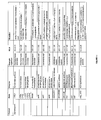
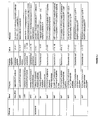
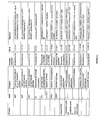
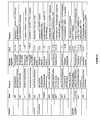
- carbon-based products of interest are produced by expressing a gene or a set of genes as described in Figure 1 in a photoautotrophic microorganism, e.g., cyanobacteria, as described herein.
- Plasmids are constructed to express various proteins that are useful in production of carbon-based products, as described in the Examples herein, e.g., Example 1 .
- constructs can be synthetically made or made using standard molecular biology methods and all the cloned genes are put under the control of constitutive promoters or inducible promoters. Plasmids containing the genes of interest are transformed into the host and corresponding transformants are selected in LB plate supplemented with antibiotics such as spectinomycin, carbenicillin, etc. Using standard molecular biology techniques, cells in which a nucleic acid molecule has been introduced are transformed to express or over-express desired genes while other nucleic acid molecules are attenuated or functionally deleted.
- Transformation techniques by which a nucleic acid molecule can be introduced into such a cell including, but not limited to, transfection with viral vectors, conjugation, transformation with plasmid vectors, and introduction of naked DNA by electroporation, lipofection, and particle gun acceleration.
- Transformants are inoculated into a suitable medium.
- the samples containing the transformants are grown at suitable temperatures in a shaker until they reach at certain OD.
- the cells are then spun down at and the cell pellets are suspended. Separation techniques allows for the sample to be subjected to GC/MS analysis. Total yield is determined.
- Microorganism Includes prokaryotic and eukaryotic microbial species from the Domains Archaea, Bacteria and Eucarya, the latter including yeast and filamentous fungi, protozoa, algae, or higher Protista.
- microbial cells and “microbes” are used interchangeably with the term microorganism.
- Suitable organisms include extremophiles that withstand various environmental parameters such as temperature, radiation, pressure, gravity, vacuum, desiccation, salinity, pH, oxygen tension, and chemicals.
- hyperthermophiles which grow at or above 80°C such as Pyrolobus fumarii ; thermophiles, which grow between 60-80°C such as Synechococcus lividis ; mesophiles, which grow between 15-60°C and psychrophiles, which grow at or below 15°C such as Psychrobacter and some insects.
- Radiation tolerant organisms include Deinococcus radiodurans.
- Pressure tolerant organisms include piezophiles or barophiles which tolerate pressure of 130 MPa.
- Hypergravity e.g., >1g
- hypogravity e.g., ⁇ 1g
- Vacuum tolerant organisms include tardigrades, insects, microbes and seeds.
- Dessicant tolerant and anhydrobiotic organisms include xerophiles such as Artemia salina; nematodes, microbes, fungi and lichens.
- Salt tolerant organisms include halophiles (e.g., 2-5 M NaCl) Halobacteriacea and Dunaliella salina.
- pH tolerant organisms include alkaliphiles such as Natronobacterium, Bacillus firmus OF4, Spirulina spp. (e.g., pH > 9) and acidophiles such as Cyanidium caldarium, Ferroplasma sp. (e.g., low pH).
- Anaerobes which cannot tolerate O 2 such as Methanococcus jannaschii ; microaerophils, which tolerate some O 2 such as Clostridium and aerobes, which require O 2 are also contemplated.
- Gas tolerant organisms which tolerate pure CO 2 include Cyanidium caldarium and metal tolerant organisms include metalotolerants such as Ferroplasma acidarmanus (e.g., Cu, As, Cd, Zn), Ralstonia sp. CH34 (e.g., Zn, Co, Cd, Hg, Pb). Gross, Michael. Life on the Edge: Amazing Creatures Thriving in Extreme Environments. New York: Plenum (1998 ) and Seckbach, J.
- Algae and cyanobacteria include but are not limited to the following genera:
- HyperPhotosynthetic conversion requires extensive genetic modification; thus, in preferred embodiments the parental photo autotrophic organism can be transformed with exogenous DNA.
- Preferred organisms for HyperPhotosynthetic conversion include: Synechococcus sp PCC 7002, Synechococcus sp. PCC 7942, Synechocystis sp. PCC 6803, and Thermosynechococcus elongatus BP-1.
- Suitable organisms include synthetic cells or cells produced by synthetic genomes as described in Venter et al. US Pat. Pub. No. 2007/0264688 , and cell-like systems or synthetic cells as described in Glass et al. US Pat. Pub. No. 2007/0269862 .
- a common theme in selecting or engineering a suitable organism is autotrophic fixation of carbon, such as CO 2 to products. This would cover photosynthesis and methanogenesis. Acetogenesis, encompassing the three types of CO 2 fixation; Calvin cycle, acetyl CoA pathway and reductive TCA pathway is also covered. The capability to use carbon dioxide as the sole source of cell carbon (autotrophy) is found in almost all major groups of prokaryotes. The CO 2 fixation pathways differ between groups, and there is no clear distribution pattern of the four presently-known autotrophic pathways. Fuchs, G. 1989. Alternative pathways of autotrophic CO2 fixation, p. 365-382. In H. G. Schlegel, and B. Bowien (ed.), Autotrophic bacteria. Springer-Verlag, Berlin, Germany . The reductive pentose phosphate cycle (Calvin-Bassham-Benson cycle) represents the CO 2 fixation pathway in almost all aerobic autotrophic bacteria, for example, the cyanobacteria.
- Thermosynechococcus elongatus BP-1 (available from the Kazusa DNAResearch Institute, Japan) is propagated in BG11 medium supplemented with 20 mM TES-KOH (pH 8.2) as previously described [ Iwai M, Katoh H, Katayama M, Ikeuchi M. "Improved genetic transformation of the thermophilic cyanobacterium, Thermosynechococcus elongatus BP-1.” Plant Cell Physiol (2004). 45(2):171-175 )]. Typically, cultures are maintained at 50°C and bubbled continuously with 5% CO2 under a light intensity of 38 ⁇ mol photons/m2/s. T. elongatus BP-1 can be grown in A + medium also as described in Example 2 .
- incubations are performed using alternate media or gas compositions, alternate temperatures (5 - 75°C), and/or light fluxes (0-5500 ⁇ mol photons/m2/s).
- Light is delivered through a variety of mechanisms, including natural illumination (sunlight), standard incandescent, fluorescent, or halogen bulbs, or via propagation in specially-designed illuminated growth chambers (for example Model LI15 Illuminated Growth Chamber (Sheldon Manufacturing, Inc. Cornelius, OR). For experiments requiring specific wavelengths and/or intensities, light is distributed via light emitting diodes (LEDs), in which wavelength spectra and intensity can be carefully controlled (Philips).
- LEDs light emitting diodes
- Carbon dioxide is supplied via inclusion of solid media supplements (i.e., sodium bicarbonate) or as a gas via its distribution into the growth incubator or media.
- solid media supplements i.e., sodium bicarbonate
- Most experiments are performed using concentrated carbon dioxide gas, at concentrations between 1 and 30%, which is directly bubbled into the growth media at velocities sufficient to provide mixing for the organisms.
- concentrated carbon dioxide gas the gas originates in pure form from commercially-available cylinders, or preferentially from concentrated sources including off-gas or flue gas from coal plants, refineries, cement production facilities, natural gas facilities, breweries, and the like.
- Synechococcus sp. PCC 7002 cells are transformed according to the optimized protocol previously described [ Essich ES, Stevens Jr E, Porter RD "Chromosomal Transformation in the Cyanobacterium Agmenellum quadruplicatum”. J Bacteriol (1990). 172(4):1916-1922 ].
- Cells are grown in Medium A (18 g/L NaCl, 5 g/L MgSO4. 7 H20, 30 mg/L Na2EDTA, 600 mg/L KCl, 370 mg/L CaCl2.
- Selections are typically performed using 200 ⁇ g/ml kanamycin, 8 ⁇ g/ml chloramphenicol, 10 ⁇ g/ml spectinomycin on solid media, whereas 150 ⁇ g/ml kanamycin, 7 ⁇ g/ml chloramphenicol, and 5 ⁇ g/ml spectinomycin are employed in liquid media.
- T. elongatus BP-1 cells are transformed according to the optimized protocol previously described (Iwai M, Katoh H, Katayama M, and Ikeuchi).
- E. coli are transformed using standard techniques known to those skilled in the art, including heat shock of chemically competent cells and electroporation [ Berger and Kimmel, Guide to Molecular Cloning Techniques, Methods in Enzymology volume 152 Academic Press, Inc., San Diego, Calif ; Sambrook et al. (1989) Molecular Cloning--A Laboratory Manual (2nd ed.) Vol. 1-3, Cold Spring Harbor Laboratory, Cold Spring Harbor Press, N.Y .; and Current Protocols in Molecular Biology, F. M. Ausubel et al., eds., Current Protocols, a joint venture between Greene Publishing Associates, Inc. and John Wiley & Sons, Inc., (through and including the 1997 Supplement )].
- biosynthetic pathways as described herein are first tested and optimized using episomal plasmids described above.
- Non-limiting optimizations include promoter swapping and tuning, ribosome binding site manipulation, alteration of gene order (e.g., gene ABC versus BAC, CBA, CAB, BCA ), co-expression of molecular chaperones, random or targeted mutagenesis of gene sequences to increase or decrease activity, folding, or allosteric regulation, expression of gene sequences from alternate species, codon manipulation, addition or removal of intracellular targeting sequences such as signal sequences, and the like.
- Each gene or engineered nucleic acid is optimized individually, or alternately, in parallel. Functional promoter and gene sequences are subsequently integrated into the E. coli chromosome to enable stable propagation in the absence of selective pressure (i.e., inclusion of antibiotics) using standard techniques known to those skilled in the art.
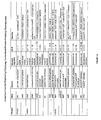
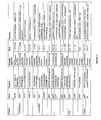
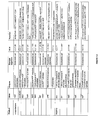
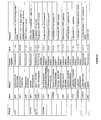
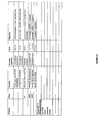
- Figure 1 lists genes involved in the production of carbon-based products of interest, related to associated pathways, Enzyme Commission (EC) Numbers, exemplary gene names, source organism, GenBank accession numbers, and homologs from alternate sources.
- EC Enzyme Commission
- Figure 1 lists genes involved in the production of carbon-based products of interest, related to associated pathways, Enzyme Commission (EC) Numbers, exemplary gene names, source organism, GenBank accession numbers, and homologs from alternate sources.
- EC Enzyme Commission
- Figure 2 provides one pathway to produce ethanol, succinate and derivatives thereof.
- the present invention therefore, provides a host cell capable of CO2 fixation that produces ethanol at a commercial level, e.g., at between about 50 and 150 g/L in about a 48 hour period.
- the rate of ethanol productivity is in the range of about 2.5g/L-hr to about 5 g/L-hr.
- a host cell capable of CO2 fixation such as a cyanobacterium Synechococcus sp.
- PCC 7002 is engineered to express genes such as pdc and/or adh as disclosed.
- Such recombinant microorganism encodes PDC activity converting pyruvic acid to acetoaldehyde and/or ADH activity converting acetoaldehyde to ethanol.
- the transformed microorganism's ability to fix CO2 obviates the need to supplement with either sugars or biomass. Accordingly, the microorganisms of the present invention are attractive alternatives to produce biofuels.
- the present invention provides the w/v of ethanol to be at least 50, or at least 60 or at least 70 or at least 80 or at least 90 or at least 100 or at least 125 or at least 150 g/L or otherwise produced in commercial scale.
- fermentative products such as ethanol, butanol, lactic acid, formate, acetate produced in biological organisms employ a NADH-dependent processes.
- NAD is used to break down glucose or other sugar sources to form NADH.
- NADH is recycled during fermentation to NAD + to allow further sugar breakdown, which results in fermentative byproducts.
- the cell forms NADPH, which is used mostly for biosynthetic operations in biological organisms, e.g., cell for growth, division, and for building up chemical stores such as glycogen, sucrose, and other macromolecules. Fermentative products are produced in the light, but in small quantities.
- the present invention provides methods for producing ethanol comprising culturing an engineered cyanobacterium that comprises a recombinant alcohol dehydrogenase gene encoding an NADPH-dependent alcohol dehydrogenase. This is an improvement from previous methods of using organisms such as algae to build stores of chemicals, which are subsequently used to make fermentation products at night or the extraneous use of separate organisms. In effect, fermentative products are formed at higher efficiencies directly in the light during photosynthesis. In addition, the obligatory production of macromolecules at high concentration is alleviated during the day, by producing such products directly during the day.
- ethanol is produced in organisms expressing or modified to express Moorella sp. HUC22-1 or a homolog thereof including at least three alcohol dehydrogenases such as AdhA (NCBI Accession YP_430754).
- AdhA NBI Accession YP_430754
- This enzyme has previously shown to preferentially use NADP as a cofactor as opposed to NAD and produce ethanol at high rates from acetaldehyde ["Characterization of enzymes involved in the ethanol production of Moorella sp. HUC22-1 "].
- NADPH 2 formed during photosynthesis can be used directly to form ethanol in these organisms.
- enzymes that naturally use NADH can be engineered using established protein engineering techniques to require NADPH 2 rather than NADH.
- NADPH-dependent AdhA from Moorella is co-expressed with pyruvate decarboxylase from Zymomonas mobilis in cyanobacteria in order to derive an efficient process for ethanol production dependent upon NADPH as a cofactor rather than the traditional NADH.
- Such transgenic organisms are able to make ethanol using NADPH-dependent processes.
- SEQ ID NO: 1 represents the codon- and expression-optimized coding sequence for the Moorella sp. HUC22-1 adhA gene.
- the cell of the present invention may comprise a nucleic acid molecule comprising or consisting of a sequence which is a codon and expression optimized version of the wild-type adhA gene.
- the cell of the present invention may comprise a nucleic acid molecule and homologs, variants and derivatives of SEQ ID NO:1 comprising or consisting of a sequence which is a variant of the adhA gene having at least 77.1 % identity to SEQ ID NO: 1.
- the nucleic acid sequence can be preferably 78%, 79%, 80%, 81% - 85%, 90% - 95%, 96% - 98%, 99%, 99.9% or even higher identity to SEQ ID NO:1.
- the cell of the invention comprises a nucleic acid molecule encoding a polypeptide having the amino acid sequence of SEQ ID NO:2.
- the nucleic acid molecules may hybridize under stringent conditions to the above-described nucleic acid molecules.
- stringent hybridizations are performed at about 25°C below the thermal melting point (T m ) for the specific DNA hybrid under a particular set of conditions, where the T m is the temperature at which 50% of the target sequence hybridizes to a perfectly matched probe.
- Stringent washing is performed at temperatures about 5°C lower than the T m for the specific DNA hybrid under a particular set of conditions.
- Nucleic acid molecules comprising a fragment of any one of the above-described nucleic acid sequences are alsodescribed. These fragments preferably contain at least 20 contiguous nucleotides. More preferably the fragments of the nucleic acid sequences contain at least 25, 30, 35, 40, 45, 50, 60, 70, 80, 90, 100 or even more contiguous nucleotides.
- the nucleic acid sequence fragments display utility in a variety of systems and methods.
- the fragments may be used as probes in various hybridization techniques.
- the target nucleic acid sequences may be either DNA or RNA.
- the target nucleic acid sequences may be fractionated (e.g., by gel electrophoresis) prior to the hybridization, or the hybridization may be performed on samples in situ.
- nucleic acid probes of known sequence find utility in determining chromosomal structure (e.g., by Southern blotting) and in measuring gene expression (e.g., by Northern blotting).
- sequence fragments are preferably detectably labeled, so that their specific hydridization to target sequences can be detected and optionally quantified.
- nucleic acid fragments may be used in a wide variety of blotting techniques not specifically described herein.
- nucleic acid sequence fragments disclosed herein also find utility as probes when immobilized on microarrays.
- Methods for creating microarrays by deposition and fixation of nucleic acids onto support substrates are well known in the art. Reviewed in DNA Microarrays: A Practical Approach (Practical Approach Series), Schena (ed.), Oxford University Press (1999) (ISBN: 0199637768 ); Nature Genet. 21(1)(suppl):1-60 (1999 ); Microarray Biochip: Tools and Technology, Schena (ed.), Eaton Publishing Company/BioTechniques Books Division (2000) (ISBN: 1881299376 ).
- microarrays comprising nucleic acid sequence fragments, such as the nucleic acid sequence fragments disclosed herein, are well-established utility for sequence fragments in the field of cell and molecular biology.
- sequence fragments immobilized on microarrays are described in Gerhold et al., Trends Biochem. Sci. 24:168-173 (1999 ) and Zweiger, Trends Biotechnol. 17:429-436 (1999 ); DNA Microarrays: A Practical Approach (Practical Approach Series), Schena (ed.), Oxford University Press (1999) (ISBN: 0199637768 ); Nature Genet. 21(1)(suppl):1-60 (1999 ); Microarray Biochip: Tools and Technology, Schena (ed.), Eaton Publishing Company/BioTechniques Books Division (2000) (ISBN: 1881299376 ).
- Isolated nucleic acid molecules encoding the NADPH-dependent AdhA polypeptide comprising alcohol dehydrogenase activity are disclosed.
- enzyme activities can be measured in various ways. For example, the pyrophosphorolysis ofOMP may be followed spectroscopically. Grubmeyer et al., J. Biol. Chem. 268:20299-20304 (1993 ). Alternatively, the activity of the enzyme can be followed using chromatographic techniques, such as by high performance liquid chromatography. Chung and Sloan, J. Chromatogr. 371:71-81 (1986 ). As another alternative the activity can be indirectly measured by determining the levels of product made from the enzyme activity.
- LCMS liquid chromatography-mass spectrometry
- HPLC high performance liquid chromatography
- MALDI-TOF MS Matrix-Assisted Laser Desorption Ionization time of flight-mass spectrometry
- NMR nuclear magnetic resonance
- NIR near-infrared
- vectors including expression vectors, which comprise the above nucleic acid molecules.
- the vectors may include the above-described nucleic acid molecules operably linked to one or more expression control sequences.
- the vectors may thus be used to express an NADPH-dependent AdhA polypeptide comprising alcohol dehydrogenase activity.
- isolated polypeptides including muteins, allelic variants, fragments, derivatives, and analogs encoded by the nucleic acid molecules described above are also described.
- the isolated polypeptide may comprise the polypeptide sequence corresponding to SEQ ID NO:2.
- the isolated polypeptide may comprise a polypeptide sequence at least 71.1% identical to SEQ ID NO: 2.
- the isolated polypeptide has 72%, 73% - 75%, 76% -80%, 81% - 90%, 95%, 96%, 97%, 98%, 98.1%, 98.2%, 98.3%, 98.4%, 98.5%, 98.6%, 98.7%, 98.8%, 98.9%, 99%, 99.1%, 99.2%, 99.3%, 99.4%, 99.5%, 99.6%, 99.7%, 99.8%, 99.9% or even higher identity to SEQ ID NO: 2.
- Isolated polypeptides comprising a fragment of the above-described polypeptide sequences are described. These fragments preferably include at least 20 contiguous amino acids, more preferably at least 25, 30, 35, 40, 45, 50, 60, 70, 80, 90, 100 or even more contiguous amino acids.
- the polypeptides also include fusions between the above-described polypeptide sequences and heterologous polypeptides.
- the heterologous sequences can, for example, include sequences designed to facilitate purification, e.g., histidine tags, and/or visualization of recombinantly-expressed proteins.
- Other non-limiting examples of protein fusions include those that permit display of the encoded protein on the surface of a phage or a cell, fusions to intrinsically fluorescent proteins, such as green fluorescent protein (GFP), and fusions to the IgG Fc region.
- GFP green fluorescent protein
- Increased level of ethanol is observed by engineering host cells to have NADPH-dependent alcohol dehydrogenase activity.
- Methods for producing increased level of ethanol comprise expression of such NADPH-dependent adhA genes as described herein.
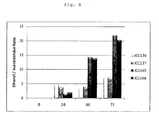
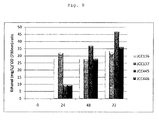
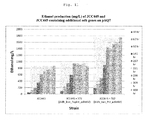
- increased levels of ethanol of at least about 249 mg/L of ethanol is produced over 72 hours. More preferably, at least about 297 mg/L of ethanol is produced over 72 hours ( Figure 6 ).
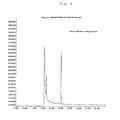
- decreased levels of acetaldehyde are produced. In preferred embodiments, less than about 14 mg/L of acetaldehyde is produced ( Figure 7 ).
- methods to produce increased amount of ethanol relative to increased OD is produced.
- at least about 36 mg/L of ethanol per OD is produced. More preferably, at least about 47 mg/L of ethanol per OD is produced ( Figure 8 ).
- NADPH-dependent enzymes for generating fermentative products such as ethanol is shown herein to increase levels of ethanol, decrease levels of acetaldehyde and in effect allows for increased ethanol production as a function of OD.
- photoautotrophic organisms typically require inorganic nutrient sources and vitamins. Required nutrients are generally supplemented to the growth media during bench-scale propagation of such organisms. However, such nutrients are prohibitively expensive in the context of industrial scale bioprocessing.
- Vitamin B12 is a vitamin cofactor that facilitates radical-based reaction catalyzation. Many organisms, including Synechococcus sp. PCC 7002, require external sources of Vitamin B12 for growth, which is prohibitively expensive in large-scale industrial bioprocessing. In one embodiment, the need for Vitamin B12 is obviated by engineering photoautotrophic cells to express the Vitamin B12 biosynthesis pathway as disclosed in PCT/US2008/083056, filed Nov. 10, 2008 .
- An exemplary biosynthesis pathway found in Salmonella typhimurium is overexpressed, including but not limited to the following genes encoding the amino acid sequences set forth in (Uroporphyrin-III C-methyltransferase (CysG), EC 2.1.1.107, locus NP_462380), (Sirohydrochlorin cobaltochelatase (CbiK), EC 4.99.1.3, locus NP_460970),
- the genes encoding the cobalt transporter are overexpressed.
- the exemplary cobalt transporter protein found in Salmonella typhimurium is overexpressed and is encoded by amino acid sequences set forth in (ABC-type Co2+ transport system, permease component (CbiM), locus NP_460968), (ABC-type cobalt transport system, periplasmic component (CbiN), locus NP_460967), and (ABC-type cobalt transport system, permease component (CbiQ), locus NP_461989).
- photoautotrophic organisms are engineered to overexpress Vitamin B12-independent enzymes to obviate the need for this cofactor entirely.
- methionine synthase EC 2.1.1.13
- class II ribonucleotide reductases require Vitamin B12.
- An exemplary Vitamin B12 independent methionine synthase (EC 2.1.1.14) from Thermotoga maritime is therefore overexpressed, as set forth in PCT/US2008/083,506 (5-methyltetrahydropteroyltriglutamate-homocysteine methyltransferase (MetE), locus NP_229090).
- an exemplary class I ribonucleotide reductase from Synechocystis sp.
- PCC 6803 is overexpressed encoding the amino acids sequences set forth in (Ribonucleoside-diphosphate reductase, alpha subunit (NrdA), locus NP_441654), (Ribonucleoside-diphosphate reductase, beta subunit (NrdB), locus NP_443040).
- the present invention provides a host cell capable of CO2 fixation such as a cyanobacterium Synechococcus sp.PCC 7002 that is engineered to express pdc and adh to produce ethanol, and is engineered to be nutrient independent.
- a host cell capable of CO2 fixation such as a cyanobacterium Synechococcus sp.PCC 7002 that is engineered to express pdc and adh to produce ethanol, and is engineered to be nutrient independent.
- glycogen in microorganisms is formed in the light, to be consumed for reducing power when it is dark.
- continuous illumination it may be disadvantageous to accumulate significant amounts of glycogen, which would draw carbon away from the desired pathway(s), especially because there could be no dark period long enough to utilize the glycogen.
- genes encoding enzyme activities related to glycogen synthesis is attenuated or eliminated entirely, to the extent that the organism continue to be easily maintained in a viable state and be robust in fermentation conditions.
- the cell of the present invention may be at least attenuated in the enzyme activities including, without limitation: glucose-1-phosphate adenylyltransferase (EC 2.7.7.27), glycogen synthase (EC 2.4.1.21 and EC 2.4.1.11), glucose-1-phosphate uridylyltransferase (EC 2.7.7.9), and 1,4-alpha-glucan branching enzyme (EC 2.4.1.18).
- glucose-1-phosphate adenylyltransferase EC 2.7.7.27
- glycogen synthase EC 2.4.1.21 and EC 2.4.1.11
- glucose-1-phosphate uridylyltransferase EC 2.7.7.9
- 1,4-alpha-glucan branching enzyme EC 2.4.1.18
- the carbon that is available from CO 2 fixation is directed to pyruvate as effectively as possible.
- Cyanobacteria can synthesize some pyruvate from carbon fixation during illumination, using glyceraldehyde-3-phosphate derived from the Calvin cycle, because they still must make biosynthetic precursors from it. However, they do so only to the extent that they require it for growth.
- the cell of the present invention may comprise further enzyme activities including, but without limitation: glyceraldehyde 3-phosphate dehydrogenase (EC 1.2.1.12 or EC 1.2.1.13), phosphoglycerate kinase (EC 2.7.2.3), phosphoglycerate mutase (EC 5.4.2.1), enolase (EC 4.2.1.11), and pyruvate kinase (EC 2.7.1.40).
- glyceraldehyde 3-phosphate dehydrogenase EC 1.2.1.12 or EC 1.2.1.13
- phosphoglycerate kinase EC 2.7.2.3
- phosphoglycerate mutase EC 5.4.2.1
- enolase EC 4.2.1.11
- pyruvate kinase EC 2.7.1.40
- the cell of the present invention also comprises additional enzyme activities for the conversion of pyruvate to ethanol.
- additional enzyme activities for the conversion can be carried out by at least four distinct pathways: 1) the pyruvate decarboxylase pathway, 2) the pyruvate dehydrogenase pathway, 3) the pyruvate oxidase pathway, and 4) the pyruvate formate-lyase pathway.
- the enzyme activities required for the pyruvate decarboxylase pathway are: pyruvate decarboxylase (EC 4.1.1.1) and alcohol dehydrogenase (EC 1.1.1.1 or EC 1.1.1.2).
- the enzyme activities required for the pyruvate dehydrogenase pathway are: acetaldehyde dehydrogenase (EC 1.2.1.10), and alcohol dehydrogenase (EC 1.1.1.1 or EC 1.1.1.2).
- the enzyme activities required for the pyruvate oxidase pathway are: pyruvate oxidase (EC 1.2.2.2), acetyl-CoA synthetase (EC 6.2.1.1), acetaldehyde dehydrogenase (EC 1.2.1.10), and alcohol dehydrogenase (EC 1.1.1.1 or EC 1.1.1.2).
- the enzyme activities required for the pyruvate formate-lyase pathway are: pyruvate formate-lyase (EC 2.3.1.54), formate hydrogen-lyase (no EC number), acetaldehyde dehydrogenase (EC 1.2.1.10), and alcohol dehydrogenase (EC 1.1.1.1 or EC 1.1.1.2).
- pyruvate formate-lyase EC 2.3.1.54
- formate hydrogen-lyase no EC number
- acetaldehyde dehydrogenase EC 1.2.1.10
- alcohol dehydrogenase EC 1.1.1.1 or EC 1.1.1.2
- one or more of these pathways is expressed constitutively or under some other controlled regulation.
- the optimization of ethanol production in microorganisms preferably requires the elimination or attenuation of certain host enzyme activities. These include, but are not limited to, pyruvate oxidase (EC 1.2.2.2), D-lactate dehydrogenase (EC 1.1.1.28), acetate kinase (EC 2.7.2.1), phosphate acetyltransferase (EC 2.3.1.8), citrate synthase (EC 2.3.3.1), phosphoenolpyruvate carboxylase (EC 4.1.1.31). The extent to which these manipulations are necessary is determined by the observed byproducts found in the bioreactor or shake-flask.
- observation of acetate would suggest deletion of pyruvate oxidase, acetate kinase, and/or phosphotransacetylase enzyme activities.
- observation of D-lactate would suggest deletion of D-lactate dehydrogenase enzyme activities, whereas observation of succinate, malate, fumarate, oxaloacetate, or citrate would suggest deletion of citrate synthase and/or PEP carboxylase enzyme activities.
- the present invention is adapted so that the microorganisms are used in systems that are suitable to run with a light-dark cycle, in which several hours of constant illumination are followed by several hours of relative darkness. Using such a cycle, the complete elimination of glycogen synthesis capability may not be a viable strategy, because the cells will require some glycogen to survive the dark period.
- one of two alternative strategies can be implemented: 1) attenuation, but not elimination, of glycogen-synthesis enzymes, so that some glycogen is still made during the light phase; or 2) maximization of glycogen production during the light phase.
- the microorganisms are attenuated but not eliminated in glycogen-synthesis enzyme activities. Such methods are implemented by deleting the native glycogen-synthesis gene(s) activities and replacing them with analogs having non-native regulation and expression at a level lower than in the native host.
- the microorganisms maximize glycogen production during the light phase.
- Such methods are implemented by screening for strains with the highest glycogen content among a collection of wild-type strains or a library of mutants of a particular strain, after such strains have been grown to a suitable cell concentration and subjected subsequently to limitation of a key nutrient such as nitrogen, phosphorus, or potassium. It would be most advantageous to utilize a light-dark cycle such that glycogen is synthesized to the maximum amount possible in terms of dry cell weight during the light cycle, then metabolized to ethanol to near completion as possible during the dark cycle.
- glycogen is converted to pyruvate by endogenous enzymes, but, as in the case of continuous illumination, these enzymes may be regulated in the host such that the overall conversion proceeds at a suboptimal rate.
- endogenous enzymes may be regulated in the host such that the overall conversion proceeds at a suboptimal rate.
- regulation is defeated, either by mutagenizing and screening strains for rapid glycogen utilization in the dark or by supplying the host with the necessary enzymes at higher expression levels and/or providing exogenous genes encoding enzymes that are less subject to allosteric regulation than those of the host.
- the preferred enzyme activities to achieve this effect include those listed above for the conversion of glyceraldehyde-3-phosphate into ethanol, in addition to enzyme activities that convert glycogen to glyceraldehyde-3-phosphate: glycogen phosphorylase (EC 2.4.1.1), phosphoglucomutase (EC 5.4.2.2), glucose-6-phosphate isomerase (EC 5.3.1.9), phosphofructokinase (EC 2.7.1.11), fructose-6-phosphate aldolase (EC 4.1.2.13), and triosephosphate isomerase (EC 5.3.1.1).
- At least one cytochrome oxidase activity is attenuated or functionally deleted.
- Cytochromeoxidases function to transfer electrons to oxygen in the dark. Howitt et al., made deletions of cytochrome oxidases (CtaI, CtaII and Cyd) and were able to get strains that did not respire in the dark but grew normally in the light. (Quinol and Cytochrome Oxidases in the Cyanobacterium Synechocystis sp. PCC 6803, [ Howitt et al., Biochemistry (1998) 37(51):17944-51 ].
- the present invention provides a carbon fixing organism, e.g., a cyanobacterium engineered wherein at least one cytochrome oxidase activity is attenuated, which increases production of ethanol, succinate and/or 1,4-butanediol.
- a DNA sequence can further include a selectable marker, such as, antibiotic resistance, for example resistance to neomycin, tetracycline, chloramphenicol, kanamycin and genes that complement auxotrophic deficiencies.
- Suitable expression control sequences for use in prokaryotic host cells include, but are not limited to, promoters capable of recognizing the T4, T3, Sp6 and T7 polymerases, the PR and P L promoters of bacteriophage lambda, the trp, recA, heat shock, and lacZ promoters of E. coli , the alpha-amylase and the sigma-specific promoters of B.
- subtilis the promoters of the bacteriophages of Bacillus, Streptomyces promoters, the int promoter of bacteriophage lambda, the bla promoter of the beta-lactamase gene of pBR322, and the CAT promoter of the chloramphenicol acetyl transferase gene.
- Prokaryotic promoters are reviewed by Glick, J. Ind. Microbiol. 1:277, 1987 ; Watson et al, MOLECULAR BIOLOGY OF THE GENES 4th Ed., Benjamin Cummins (1987 ); and Sambrook et al., supra.
- Non-limiting examples of suitable eukaryotic promoters for use within an eukaryotic host are viral in origin and include the promoter of the mouse metallothionein I gene ( Hamer et al. , J. MoI. Appl. Gen.
- a genetically modified host cell is genetically modified with a heterologous DNA sequence encoding a biosynthetic pathway gene product that is operably linked to a constitutive promoter.
- Suitable constitutive promoters are known in the art and include, constitutive adenovirus major late promoter, a constitutive MPSV promoter, and a constitutive CMV promoter.
- PCC 7002 include for example, PtacI, P-EM7, Paph2 and PaadA
- the microbial host cell can be genetically modified with a heterologous nucleic acid sequence encoding a biosynthetic pathway gene product that is operably linked to an inducible promoter.
- inducible promoters are well known in the art. Suitable inducible promoters include, but are not limited to promoters that are affected by proteins, metabolites, or chemicals.
- a bovine leukemia virus promoter a metallothionein promoter, a dexamethasone-inducible MMTV promoter, a SV40 promoter, a MRP polIII promoter, a tetracycline-inducible CMV promoter (such as the human immediate-early CMV promoter) as well as those from the trp and lac operons.
- nucleic acid sequences When a host cell is genetically modified with heterologous nucleic acid sequences encoding two or more proteins involved in a biosynthesis pathway to produce carbon-based products of interest, the nucleic acid sequences can be driven by a single promoter on a single vector or at least one promoter on separate expression vectors.
- the intracellular concentration (e.g., the concentration of the intermediate in the genetically modified host cell) of the biosynthetic pathway intermediate can be increased to further boost the yield of the final product.
- a substrate e.g., a primary substrate
- an enzyme that is active in the biosynthetic pathway and the like.
- Figure 1 provides a description of the various genes that can be modulated to alter the structure of the fatty acid derivative product and the encoded enzymes that can be used alone or in combination to make various fatty acids and hydrocarbons.
- the products can be produced such that they contain branch points, levels of saturation, and carbon chain length, thus, making these products desirable starting materials for use in many applications. Described are various carbon-based products of interest produced by the microorganisms.
- Figure 1 also lists enzymes that are directly involved in the synthesis of carbon-based products, including waxes, fatty acid esters and/or fatty alcohols.
- one or more of the enzymes can be over expressed or mutated to reduce feedback inhibition.
- enzymes that metabolize the intermediates to make nonfatty-acid based products can be functionally deleted or attenuated to increase the flux of carbon through the fatty acid biosynthetic pathway.
- the Examples provided herein describe how to engineer enzymes in the respective pathways of host organisms to yield engineered organisms that produce ethanol.
- carbon-based products of interest may be produced by leveraging other organisms that are more amenable to making any one particular product while culturing the photosynthetic organism for its carbon source. Consequently, fermentation and production of carbon-based products of interest can occur separately from carbon source production in a photobioreactor.
- the methods of producing such carbon-based products of interest may include two steps.
- the first-step includes using photosynthetic organisms to convert carbon dioxide to photosynthetic products such as glucose.
- the second-step is to use the photosynthetic products as a carbon source for cells that produce carbon-based products of interest.
- the two-stage approach may comprise a photobioreactor comprising photosynthetic cells; a second reactor comprising cells capable of fermentation; wherein the photosynthetic cells provides a carbon source such as glucose for cells capable of fermentation to produce a carbon-based product of interest.
- the second reactor may comprise more than one type of microorganism.
- the resulting carbons-based products of interest are subsequently separated and/or collected.
- the two-steps may be combined into a single-step process whereby the engineered photosynthetic organisms convert light and CO 2 directly into glucose and such organisms are capable of producing a variety of carbon-based products of interest.
- Certain changes in culture conditions of photosynthetic host cells e.g., cyanobacteria for the production of sugars can be optimized for growth.
- conditions are optimized for light intensity, light exposure, time of exposure, diurnal cycle, addition of supplements, nutrients, the rate of recirculation and flow rates that maintain a light to dark ratio.
- the conditions sufficient to achieve optimum growth will vary depending upon location, climate, and other environmental factors, such as the diurnal cycle, light intensity and time of exposure to light.
- Other adjustments may be required, for example, an organism's ability for carbon uptake. Increased carbon in the form of CO 2 may be introduced into a bioreactor by a gas sparger or aeration devices
- Advantages of consolidated photo-fermentation include a process where there is separation of chemical end products, e.g., glucose, spatial separation between end products (membranes) and time. Additionally, unlike traditional or cellulosic biomass to biofuels production, pretreatment, saccharification and crop plowing are obviated.
- the consolidated photo-fermentation process produces continuous products.
- the process may involve direct capture of light to product from engineered front-end organisms to produce various products without the need to lyse the organisms.
- the organisms can utilize 3PGAL in the light to make a desired fermentation product, e.g., ethanol.
- the organisms can accumulate glycogen in the light and metabolize ethanol in the dark to make more fermentation products.
- Such end products can be readily secreted as opposed to intracellular products such as oil and cellulose.
- Organisms may produce sugars in the light, which are secreted into the media and such sugars are used in the dark during fermentation with the same or different organisms or a combination of both.
- quorum sensing mechanisms [reviewed in Camilli and Bassler, Science 311:1113, (2006 ); Venturi FEMS Microbio Rev 30:274-291 (2006 ); and Reading and Sperandio, FEMS Microbiol Lett, 254:1-11, (2006 )] can be used to activate genes such as p53, p21, or other checkpoint genes.
- Genes that can be activated to stop cell replication and growth in E. coli include umuDC genes, the over-expression of which stops the progression from stationary phase to exponential growth [ Murli et al, J. of Bact., 182:1127, (2000 )].
- UmuC is a DNA polymerase that can carry out translesion synthesis over non-coding lesions - the mechanistic basis of most UV and chemical mutagenesis.
- the umuDC gene products are used for the process of translesion synthesis and also serve as a DNA damage checkpoint.
- UmuDC gene products include UmuC, UmuD, umuD', UmuD' 2 C, UmuD' 2 and UmUD 2 . Simultaneously, the product-producing genes are activated, thus minimizing the need for replication and maintenance pathways to be used while the fatty acid derivative is being made.
- the percentage of input carbons converted to hydrocarbon products is an efficient and inexpensive process.
- carbon dioxide as the carbon source, the oxygen is released in the form of O 2 , leading to a maximal theoretical metabolic efficiency of ⁇ 34% (w/w) (for fatty acid derived products).
- Engineered microorganisms which produce hydrocarbon products can have greater than 1, 3, 5, 10, 15, 20, 25, and 30% efficiency. In one example microorganisms will exhibit an efficiency of about 10% to about 25%. In other examples, such microorganisms will exhibit an efficiency of about 25% to about 30%, and in other examples such microorganisms will exhibit >30% efficiency.
- a continuous process can be employed.
- a reactor with organisms producing fatty acid derivatives can be assembled in multiple ways. In one example, a portion of the media is removed and allowed to separate. Fatty acid derivatives are separated from the aqueous layer, which will in turn, be returned to the fermentation chamber.
- the fermentation chamber will enclose a fermentation that is undergoing a continuous reduction.
- a stable reductive environment would be created.
- the electron balance would be maintained by the release of oxygen.
- Efforts to augment the NAD/H and NADP/H balance can also facilitate in stabilizing the electron balance.
- the availability of intracellular NADPH can be also enhanced by engineering the production host to express an NADH:NADPH transhydrogenase.
- the expression of one or more NADH :NADPH transhydrogenase converts the NADH produced in glycolysis to NADPH which enhances the production of fatty acid derivatives.
- the engineered microorganisms are grown in 10 L, 100 L or larger batches, fermented and induced to express desired products based on the specific genes encoded in plasmids as appropriate.
- Cells harboring engineered nucleic acids to over-express or attenuate gene products are incubated from a 500 mL seed culture for 10 L fermentations (5 L for 100 L fermentations) in LB media (glycerol free) at 37°C shaken at >200rpm until cultures reached a desired OD (typically 16 hours) incubated with kanamycin, ampicillin or the like.
- Media is treated with continuously supplemented to maintain a 25 mM sodium proprionate at a suitable pH of about 8.0 to activate the engineered in gene systems for production as well as to stop cellular proliferation.
- Media is continuously supplemented with carbon dioxide.
- Aliquots of no more than 10% of the total cell volume are removed each hour and allowed to sit unaggitated so as to allow the hydrocarbon product to rise to the surface and undergo a spontaneous phase separation.
- the hydrocarbon component is then collected and the aqueous phase returned to the reaction chamber.
- the reaction chamber is operated continuously. For wax ester production, subsequent to isolation, the wax esters are washed briefly in 1 M HCl to split the ester bond, and returned to pH 7 with extensive washing with distilled water.
- the carbon-based products produced by the carbon dioxide fixing organisms during fermentation can be separated from the fermentation media.
- Known techniques for separating fatty acid derivatives from aqueous media can be employed.
- One exemplary separation process provided herein is a two-phase (bi-phasic) separation process. This process involves fermenting the genetically-engineered production hosts under conditions sufficient to produce for example, a fatty acid, allowing the fatty acid to collect in an organic phase and separating the organic phase from the aqueous fermentation media. This method can be practiced in both a batch and continuous fermentation setting.
- Bi-phasic separation uses the relative immisciblity of fatty acid to facilitate separation.
- a skilled artisan will appreciate that by choosing a fermentation media and the organic phase such that the fatty acid derivative being produced has a high logP value, even at very low concentrations the fatty acid will separate into the organic phase in the fermentation vessel.
- fatty acids When producing fatty acids by the methods described herein, such products will be relatively immiscible in the fermentation media, as well as in the cytoplasm. Therefore, the fatty acid will collect in an organic phase either intracellularly or extracellularly. The collection of the products in an organic phase will lessen the impact of the fatty acid derivative on cellular function and allows the production host to produce more product.
- the fatty alcohols, fatty acid esters, waxes, and hydrocarbons produced as described herein allow for the production of homogeneous compounds with respect to other compounds wherein at least 50%, 60%, 70%, 80%, 90%, or 95% of the fatty alcohols, fatty acid esters, waxes and hydrocarbons produced have carbon chain lengths that vary by less than 4 carbons, or less than 2 carbons.
- These compounds can also be produced so that they have a relatively uniform degree of saturation with respect to other compounds, for example at least 50%, 60%, 70%, 80%, 90%, or 95% of the fatty alcohols, fatty acid esters, hydrocarbons and waxes are mono-, di-, or tri- unsaturated.
- the products of interest produced from the "solar biofactories" described herein can be analyzed by any of the standard analytical methods, e.g., gas chromatography (GC), mass spectrometry (MS) gas chromatography-mass spectrometry (GCMS), and liquid chromatography-mass spectrometry (LCMS), high performance liquid chromatography (HPLC), capillary electrophoresis, Matrix-Assisted Laser Desorption Ionization time-of-flight mass spectrometry (MALDI-TOF MS), nuclear magnetic resonance (NMR), near-infrared (NIR) spectroscopy, viscometry [ Knothe et al., Am. Chem. Soc. Symp.
- Biologically-produced carbon-based products represent a new commodity for fuels, such as alcohols, diesel and gasoline.
- fuels such as alcohols, diesel and gasoline.
- Such biofuels have not been produced using biomass but use CO2 as its carbon source.
- These new fuels may be distinguishable from fuels derived form petrochemical carbon on the basis of dual carbon-isotopic fingerprinting.
- Such products, derivatives, and mixtures thereof may be completely distinguished from their petrochemical derived counterparts on the basis of 14 C (fM) and dual carbon-isotopic fingerprinting, indicating new compositions of matter.
- isotopes of carbon There are three naturally occurring isotopes of carbon: 12 C, 13 C, and 14 C. These isotopes occur in above-ground total carbon at fractions of 0.989, 0.011, and 10 -12 , respectively.
- the isotopes 12 C and 13 C are stable, while 14 C decays naturally to 14 N, a beta particle, and an anti-neutrino in a process with a half-life of 5730 years.
- the isotope 14 C originates in the atmosphere, due primarily to neutron bombardment of 14 N caused ultimately by cosmic radiation. Because of its relatively short half-life (in geologic terms), 14 C occurs at extremely low levels in fossil carbon. Over the course of 1 million years without exposure to the atmosphere, just 1 part in 10 50 will remain 14 C.
- the 13 C: 12 C ratio varies slightly but measurably among natural carbon sources. Generally these differences are expressed as deviations from the 13 C: 12 C ratio in a standard material.
- the international standard for carbon is Pee Dee Belemnite, a form of limestone found in South Carolina, with a 13 C fraction of 0.0112372.
- the deviation of the 13 C: 12 C ratio from that of Pee Dee Belemnite is expressed as:
- ⁇ a is expressed in parts per thousand, or ⁇ .
- a negative value of ⁇ a shows a bias toward 12 C over 13 C as compared to Pee Dee Belemnite.
- Table 1 shows ⁇ a and 14 C fraction for several natural sources of carbon.
- Table 2 shows measured deviations in the 13 C: 12 C ratio for some biological products.
- Table 2 13 C; 12 C variations in selected biological products
- Product - ⁇ p ( ⁇ ) - D ( ⁇ )* References Plant sugar/starch from atmospheric CO 2 18-28 10-20 Ivlev Cyanobacterial biomass from marine DIC 18-31 16.5-31 Goericke et al., Sakata et al. Cyanobacterial lipid from marine DIC 39-40 37.5-40 Sakata et al. Algal lipid from marine DIC 17-28 15.5-28 Goericke et al., Abelseon et al. Algal biomass from freshwater DIC 17-36 3-30 Marty et al. E.
- various carbon-based products of interest may be characterized as - ⁇ p ( ⁇ ) of about 63.5 to about 66 and - D ( ⁇ ) of about 37.5 to about 40.
- pJB5 The pJB5 base plasmid was designed as an empty expression vector for recombination into Synechococcus sp. PCC 7002. Two regions of homology, the Upstream Homology Region (UHR) and the Downstream Homology Region were designed to flank the construct. These 500bp regions of homology correspond to positions 3301-3800 and 3801-4300 (Genbank Accession NC_005025) for UHR and DHR respectively.
- the aadA promoter, gene sequence, and terminator were designed to confer spectinomycin and streptomycin resistance to the integrated construct.
- pJB5 was designed with the aph2 kanamycin resistance cassette promoter and ribosome binding site (RBS).
- pJB5-PdeAdhII The pyruvate decarboxylase ( pdc ) and alcohol dehydrogenase ( adhII ) genes were cloned into the pJB5 plasmid with the following procedure.
- the pdc-adhII genes from Zymomonas mobilis (Genbank: DD161475, M15394) were designed with an NdeI site replacing the start of the pdc coding region.
- pdc gene we designed two restriction endonuclease sites ( XhoI and BamHI ).
- the adhII sequence was designed in whole subsequent to the restriction sites, and finally, the natural adhII terminator was included as well, downstream of an inserted EcoRI site.
- This construct was constructed by contract synthesis from DNA2.0 (Menlo Park, CA) and was inserted by restriction digest with NdeI and EcoRI (New England Biolabs; Ipswitch, MA) on both pJB5 and the insert followed by ligation with a Quick Ligation Kit (New England Biolabs; Ipswitch, MA). The ligated construct was transformed into The NEB 5-alpha F'Iq Competent E. coli (High Efficiency) (New England Biolabs: Ipswitch, MA).
- pJB5-PdcAdhII(TS) The pyruvate decarboxylase ( pdc ) from Zymobacter palmae (GenBank: AF474145) and alcohol dehydrogenase TS42 ( adhII ) genes as described in Rellos et al. (1998) "Thermostable variants of Zymomonas mobilis alcohol dehydrogenase obtained using PCR-mediated random mutagenesis" Protein Expr Purif 12:61-61 ) were cloned into the pJB5 plasmid with the following procedure. These genes were designed with an NdeI site replacing the start of the pdc coding region.
- a gap is present which includes XhoI and BamHI sites to allow promoters to be inserted later (total length of gap: 39 bp) and the original RBS for adhII from Z. mobilis.
- the adhII ( Z. mobilis ) gene has the original terminator present afterwards, in which an EcoRI site has been placed between the adhII gene and the terminator. Following the terminator, SpeI and PacI sites are present for cloning.
- This construct was constructed by contract synthesis from DNA2.0 (Menlo Park, CA) and was inserted by restriction digest with NdeI and EcoRI (New England Biolabs; Ipswitch, MA) on both pJB5 and the insert followed by ligation with a Quick Ligation Kit (New England Biolabs; Ipswitch, MA). The ligated construct was transformed into The NEB 5-alpha F'Iq Competent E. coli (High Efficiency) (New England Biolabs; Ipswitch, MA).
- pJB5-Pdc The pyruvate decarboxylase ( pdc ) gene was cloned into the pJB5 plasmid with the following procedure.
- the pJB5-PdcAdhII construct from Example 2 was digested with BamHI and EcoRI (New England Biolabs; Ipswitch, MA).
- the incompatible 5' and 3' DNA overhangs were removed using the Quick Blunting Kit (New England Biolabs, MA), and then ligated using the Quick Ligation Kit (New England Biolabs; Ipswitch, MA).
- pJB5 - AdhII The alcohol dehydrogenase ( adhII ) gene was cloned into the pJB5 plasmid with the following procedure.
- the pJB5-PdcAdhII construct from Example 2 was digested with NdeI and BamHI (New England Biolabs; Ipswitch, MA).
- the incompatible 5' and 3' DNA overhangs were removed using the Quick Blunting Kit (New England Biolabs, MA), and then ligated using the Quick Ligation Kit (New England Biolabs; Ipswitch, MA).
- pJB5-metE E. coli
- the Vitamin B12 independent methionine synthase ( metE ) gene from E. coli (Genbank: NP_418273.1) was cloned into the pJB5 plasmid by the following procedure.
- a construct was synthesized by contract synthesis by DNA2.0 (Menlo Park, CA) to include an NdeI site to replacing the start of the metE gene, and an EcoRI site at the end of the gene.
- This construct was inserted by restriction digest with NdeI and EcoRI (New England Biolabs; Ipswitch, MA) on both pJB5 and the insert followed by ligation with a Quick Ligation Kit (New England Biolabs; Ipswitch, MA).
- the ligated construct was transformed into The NEB 5-alpha F'Iq Competent E. coli (High Efficiency) (New England Biolabs: Ipswitch, MA).
- pJB5-metE T. elongates BP-1: The Vitamin B12-independent methionine synthase ( metE ) gene from Thermosynechococcus elongates BP-1 (Genbank: NP_681881), was cloned into the pJB5 plasmid by the following procedure. A construct was synthesized by contract synthesis by DNA2.0 (Menlo Park, CA) to include an NdeI site to replacethe start of the metE gene, and an EcoRI site at the end of the gene.
- This construct was inserted by restriction digest with NdeI and EcoRI (New England Biolabs; Ipswitch, MA) on both pJB5 and the insert followed by ligation with a Quick Ligation Kit (New England Biolabs; Ipswitch, MA). The ligated construct was transformed into The NEB 5-alpha F'Iq Competent E. coli (High Efficiency) (New England Biolabs: Ipswitch, MA).
- Thermosynechococcus elongatus BP-1 is selected as another exemplary CO2 fixing production host and is modified by engineered nucleic acids to functionally delete certain genes and/or to express, overexpress certain genes.
- plasmids (pJB18, pJB19, pJB20, and pJB21), all derivatives of pJB5, were constructed to permit homologous recombination into four different loci in the Thermosynechococcus elongatus BP-1 genome. Specifically, the 0.5 kb upstream homology (UH) and downstream homology (DH) regions used for Synechococcus sp. PCC 7002 homologous recombination in pJB5 were replaced by the following approximately 2.5 kb T.
- UH upstream homology
- DH downstream homology
- elongatus BP-1 (Accession NC_004113) regions: coordinates 831908-834231 (UH) and 834232-836607 (DH) genome for pJB8, 454847-457252 (UH) and 457252-459740 (DH) for pJB19, 481310-483712 (UH) and 483709-486109 (DH) for pJB20, and 787356-789654 (UH) 791080-793494 (DH) for pJB21.
- the first three homology regions are based on integration sites TS 1, TS3, and TS4 described in Onai K. et al. (2004).
- the UH forward PCR primer has a 5'-terminal Sbf I restriction site, the UH reverse PCR primer a 5'-terminal Not I restriction site, the DH forward PCR primer a 5'-terminal Asc I restriction site, and the DH reverse PCR primer a 5'-terminal Fse I restriction site.
- the UH region is first inserted into pJB5 via restriction digestion with Sbf I and Not I (New England Biolabs; Ipswitch, MA) of both vector and PCR-generated insert, followed by with a Quick Ligation Kit (New England Biolabs; Ipswitch, MA).
- Sbf I and Not I New England Biolabs; Ipswitch, MA
- the ligated construct is transformed into NEB 5-alpha Competent E. coli (High Efficiency) (New England Biolabs: Ipswitch, MA).
- the sequence of the UH region in pHB5 is validated by contract sequencing with GENEWIZ (South Plainfield, NJ).
- the DH region is then inserted into the pJB5-UH region construct exactly as done for the UH region, except that restriction enzymes Asc I and Fse I are used (New England Biolabs; Ipswitch, MA). DH regions are sequence confirmed by contract sequencing with GENEWIZ (South Plainfield, NJ).
- pJB 18, pJB 19, pJB20, and pJB21 two different versions of the pyruvate decarboxylase ( pdc )/alcohol dehydrogenase ( adhII ) operons are cloned, creating a set of eight plasmids ready for integration into the T. elongatus BP-1 genome.
- the selectable marker is the pJB5 aadA gene encoding resistance to spectinomycin and streptomycin.
- the first version of the operon comprises the pdc and adhII genes from Zymomonas mobilis (Genbank: DD161475, M15394) and is designed with an NdeI site covering the start codon of the pdc coding sequence. Following the pdc gene in order are: an Xho I restriction site, a BamH I restriction site, the adhII coding sequence, the natural Zymomonas mobilis adhII terminator, and finally an EcoR I restriction site.
- thermostable versions of pyruvate decarboxylase and alcohol dehydrogenase comprised the pdc gene from Zymobacter palmae (GenBank: AF474145) and the adhII mutant TS42 described in Rellos et al., Protein Expr. Purif., 12:61-61 (1998 ), and is otherwise identical to the first construct in all other ways.
- Both constructs are made by contract synthesis from DNA2.0 (Menlo Park, CA) and are inserted by restriction digest with NdeI and EcoRI (New England Biolabs; Ipswitch, MA) into pJB18, pJB 19, pJB20, and pJB21, followed by ligation with a Quick Ligation Kit (New England Biolabs; Ipswitch, MA).
- pdc-adhII operon plasmids are constructed: pJB22, pJB23, pJB24, and pJB25 containing operon version 1, based on pJB18, pJB 19, pJB20, and pJB21, respectively, and pJB26, pJB27, pJB28, and pJB29 containing operon version 2, based on pJB18, pJB19, pJB20, and pJB21, respectively.
- the pdc-adhII operon is expressed by the constitutive P aphII promoter, which is flanked by unique Not I and Nde I restriction sites. These sites permit other constitutive promoters to be cloned in, in lieu of the P aphII promoter, in case that promoter does not afford sufficient expression of the operon when integrated into the genome of T. elongatus BP-1.
- plasmids are constructed (pJB9, pJB10, pJB11, pJB12, pJB 13, pJB 14, pJB 15, pJB16, and pJB17), all made by contract synthesis e.g., DNA2.0 (Menlo Park, CA), each bearing one of nine candidate alternative constitutive promoters flanked by Not I and Nde I sites so they can replace the P aphII promoter by standard cloning methods. Seven of those promoters are native T.
- elongatus BP-1 promoters corresponding to the upstream sequence of the following genes: cpcC, apcA, tsr2142, psaA, rbcL, hsp33, and trnE_UUC and two are E. coli -type promoters: P tac (as described in De Boer et al., Proc Natl Acad USA 80:21-25 (1983 )) and the synthetic P EM7 promoter.
- Synechococcus sp. PCC 7002 Each of the constructs as described in Example 1 was integrated onto the genome of Synechococcus sp. PCC 7002 using the following protocol. Synechococcus 7002 was grown for 48h from colonies in an incubated shaker flask at 30 °C at 1 % CO 2 to an OD 730 of 1 in A + medium described in Frigaard NU et al. (2004) "Gene inactivation in the cyanobacterium Synechococcus sp. PCC 7002 and the green sulfur bacterium Chlorobium tepidum using in vitro-made DNA constructs and natural transformation" Methods Mol Biol 274:325-340 .
- 500 ⁇ L of culture was added to a test-tube with 30 ⁇ L of 1-5 ⁇ g of DNA prepped from a Qiagen Qiaprep Spin Miniprep Kit (Valencia, CA) for each construct.
- Cells were incubated bubbling in 1% CO 2 at approximately 1 bubble every 2 seconds for 4 hours.
- 200 ⁇ L of cells were plated on A + medium plates with 1.5% agarose and grown at 30°C for two days in low light. 10 ⁇ g/mL of spectinomycin was underplayed on the plates. Resistant colonies were visible in 7-10 days.
- the nucleic acid sequence of AdhIV from Moorella thermoacetica was codon optimized for expression and constructed by DNA 2.0 and designated as SEQ ID NO: 1 (the encoded amino acid is SEQ ID NO: 2).
- the sequence is flanked with CTCGAGTTGGATCC on the 5' end, which encodes the Xho and BamHI restriction sites, and on the 3' end with TTTCAAAACAGGAATTC on the 3' end (similar to pJB5-3) which contains an EcoRI site for the purposes of cloning into expression vectors.
- the Moorella adhA was then cloned downstream of two pyruvate decarboxylase genes, one from Zymomonas mobilis (Accession number: AAV89984) and one from Zymobacter palmae (Accession Number: AAM49566) to form the expression plasmids pJB136 and pJB 133, respectively.
- expression plasmids were constructed for the Z. mobilis pyruvate decarboxylase gene with the Z. mobilis adhII (Accession Number: YP_163331), and the Z.
- the plasmids pJB5-3, pJB5-4, pJB 133, pJB 136 were cloned into Synechococcus sp. PCC 7002 (JCC1) using standard procedures and designated as JCC136, JCC137, JCC445, JCC446 respectively ( Table 3 ).
- JCC1, JCC136, JCC137, JCC445, JCC446 were grown on A + media plates (1.5% agar) with 100 ug/mL spectinomycin for transgenic strains.
- a single colony was grown in 10mL A+ with 100ug/mL spectinomycin in a test tube immersed in a 37C bath with 1% CO2 bubbled through.
- Cultures were grown to OD 730nm 5.0 or higher (Molecular Devices Spectramax M2e; previously determined that an OD 730nm of 1 is equal to ⁇ 0.3 g CDW), and then spun down (21,000 RCF, 20C, 5 min), resuspended in fresh A+ media to original concentration, and then appropriately back-diluted to OD 730nm 0.2 in 25mL A + in a baffled 125mL shaker flask.
- OD 730nm was recorded (appropriately diluted to give reading between 0.04 and 0.4, which was previously determined to be most accurate range on the Spectramax M2e). Samples were immediately spun down at 4C for 10min at 21,000 RCF. Supernatant was placed in a new tube, and frozen at -80C until ready for analysis.
- Ethanol concentrations of cultures in the supernatant are plotted showing increased ethanol concentrations with respect to time in various in transgenic Synechococcus species cultures ( Figure 6 ). Notably, higher ethanol concentration was measured in JCC445, the strain transformed with Moorella adhA at 72 hours ( Table 5 ).
- strains transformed with Moorella adhA show marked increases in the ratio of ethanol to acetaldehyde as compared to the Z. mobilis based alcohol dehdyrogenases as shown in cultures over time ( Figure 8 and Table 7 ).
- Figure 9 depicts ethanol to OD 730nm ratios of cultures over time. Plotted are the ratios of ethanol concentration to OD 730nm in the supernatant at each timepoint.
- the ratio of the strains transformed with Z. mobilis adh (JCC136 and JCC137) quickly arrive at a steady state whereas, the ratio of the strains transformed with Moorella adhA constructs (JCC445 and JCC446) increase over time ( Table 8 ).
- Thermosynechococcus elongatus BP-1 From Example 2 , pJB22, pJB23, pJB24, pJB25, pJB26, pJB27, pJB28, and pJB29 are integrated into the chromosome of T. elongatus BP-1 by homologous recombination using the transformation method detailed in Onai K. et al. (2004). "Natural transformation of the thermophilic cyanobacterium Thermosynechococcus elongatus BP-1: a simple and efficient method for gene transfer.” Mol. Gen. Genomics 271: 50-59 . The selection antibiotics used are spectinomycin plus streptomycin.
- This Example provides an illustration of how ethanol production in an engineered organism can be improved and made more efficient by modifying the expression levels and/or identity of enzymes involved in ethanol production.
- adh Moorella alcohol dehydrogenase
- the levels of ethanol were highest in JCC445 + 782, where additional adhA M is expressed under the control of the lambda cI promoter.
- the cumulative levels of ethanol produced by this strain were approximately 4 g/L.
- the measured levels of ethanol were substantially higher than those measureed in JC445 or JCC445 + 773, in some cases nearly twice as high.
- the same strain produced only 50% (or less) acetaldehyde compared to JC445 or JCC445 + 773 (expressing adhA M under the control of the PaphII promoter).
- this Example demonstrates not only that enhanced levels of ethanol and reduced levels of toxic intermediates can result from alterations to promoters controlling adhA M expression, but also provides a specific example of an engineered cyanobacteria (JCC445 + 773) with enhanced ethanol producing capabilities.
Landscapes
- Chemical & Material Sciences (AREA)
- Organic Chemistry (AREA)
- Life Sciences & Earth Sciences (AREA)
- Engineering & Computer Science (AREA)
- Zoology (AREA)
- Wood Science & Technology (AREA)
- Health & Medical Sciences (AREA)
- Genetics & Genomics (AREA)
- Bioinformatics & Cheminformatics (AREA)
- Biotechnology (AREA)
- General Engineering & Computer Science (AREA)
- Biochemistry (AREA)
- General Health & Medical Sciences (AREA)
- Microbiology (AREA)
- Chemical Kinetics & Catalysis (AREA)
- General Chemical & Material Sciences (AREA)
- Biomedical Technology (AREA)
- Medicinal Chemistry (AREA)
- Molecular Biology (AREA)
- Oil, Petroleum & Natural Gas (AREA)
- Virology (AREA)
- Tropical Medicine & Parasitology (AREA)
- Mycology (AREA)
- Cell Biology (AREA)
- Physics & Mathematics (AREA)
- Biophysics (AREA)
- Plant Pathology (AREA)
- Micro-Organisms Or Cultivation Processes Thereof (AREA)
- Preparation Of Compounds By Using Micro-Organisms (AREA)
- Peptides Or Proteins (AREA)
- Liquid Carbonaceous Fuels (AREA)
Claims (18)
- Verfahren zur biogenen Ethanolherstellung, das die Kultivierung eines erzeugten Cyanobakteriums in einem Nähermedium in Gegenwart von Licht und CO2 umfasst, wobei das Cyanobakterium ein rekombinantes Pyruvat-Decarboxylase-Gen und mindestens zwei Kopien eines rekombinanten Alkoholdehydrogenase-Gens, das eine NADPH-abhängige AlkoholDehydrogenase kodiert, umfasst.
- Verfahren nach Anspruch 1, wobei mindestens ein rekombinantes Alkoholdehydrogenase-Gen extrachromosomal ist.
- Verfahren nach Anspruch 1 oder Anspruch 2, wobei die Expression von Alkoholdehydrogenase durch Promotoren auf mindestens zwei unterschiedlichen Plasmiden angetrieben wird.
- Verfahren nach einem vorhergehenden Anspruch, wobei die Aktivitätspegel von rekombinant exprimierter Alkoholdehydrogenase und Pyruvat-Decarboxylase im Cyanobakterium nach differentieller Expression unterschiedlich sind.
- Verfahren nach Anspruch 4, wobei die differentielle Expression durch Abstimmung der Stärke eines Promoters erzielt wird, der die Expression von Alkoholdehydrogenase oder Pyruvat-Decarboxylase kontrolliert.
- Verfahren nach Anspruch 1, wobei die Expression von mindestens einer Kopie des rekombinanten Alkoholdehydrogenase-Gens durch einen Lambda-Promoter cI angetrieben wird.
- Verfahren nach Anspruch 1, wobei das Cyanobakterium ein thermophiles Cyanobakterium ist.
- Verfahren nach einem vorhergehenden Anspruch, wobei das rekombinante Alkoholdehydrogenase-Gen eine Moorella sp. HUC22-1 adhA kodiert.
- Erzeugtes Cyanobakterium, das ein rekombinantes Pyruvat-Decarboxylase-Gen und mindestens zwei Kopien eines rekombinanten Alkoholdeydrogenase-Gen, das eine NADPH-abhängige Alkoholdehydrogenase kodiert, umfasst.
- Das erzeugte Cyanobakterium nach Anspruch 9, wobei mindestens ein rekombinantes Alkoholdehydrogenase-Gen extrachromosomal ist.
- Das erzeugte Cyanobakterium nach Anspruch 9 oder Anspruch 10, wobei die Expression der Alkoholdehydrogenase durch Promoter auf mindestens zwei unterschiedlichen Plasmiden angetrieben wird.
- Das erzeugte Cyanobakterium nach einem der Ansprüche 9 bis 11, wobei die Aktivitätspegel von rekombinant exprimierter Alkoholdehydrogenase und Pyruvat-Decarboxylase im Cyanobakterium nach differentieller Expression unterschiedlich sind.
- Das erzeugte Cyanobakterium nach Anspruch 12, wobei die differentielle Expression durch Abstimmung der Stärke eines Promoters erzielt wird, der die Expression von Alkoholdehydrogenase oder Pyruvat-Decarboxylase kontrolliert.
- Das erzeugte Cyanobakterium nach Anspruch 9, wobei die Expression von mindestens einer Kopie des rekombinanten Alkoholdehydrogenase-Gens durch einen Lambda-Promoter cI angetrieben wird.
- Das erzeugte Cyanobakterium nach Anspruch 9, wobei das Cyanobakterium ein funktionierendes Laktatdehydrogenase-Gen- oder eine funktionierende Laktatdeyhdrogenase-Enzym-Aktivität benötigt.
- Das erzeugte Cyanobakterium nach Anspruch 9, wobei das Cyanobakterium eine Thermophilie oder ein Stamm von Synechococcus ist.
- Das erzeugte Cyanobakterium nach Anspruch 16, wobei das Cyanobakterium ein thermophiles Cyanobakterium ist.
- Das erzeugte Cyanobakterium nach einem der Ansprüche 9 bis 17, wobei das rekombinante Alkoholdehydrogenase-Gen eine Moorella sp. HUC22-1 adhA kodiert.
Priority Applications (1)
| Application Number | Priority Date | Filing Date | Title |
|---|---|---|---|
| EP15180173.5A EP2998402A1 (de) | 2008-10-17 | 2009-09-03 | Ethanolherstellung durch mikroorganismen |
Applications Claiming Priority (43)
| Application Number | Priority Date | Filing Date | Title |
|---|---|---|---|
| US3340208P | 2008-03-03 | 2008-03-03 | |
| US3341108P | 2008-03-03 | 2008-03-03 | |
| US4441908P | 2008-04-11 | 2008-04-11 | |
| US5699908P | 2008-05-29 | 2008-05-29 | |
| US5818208P | 2008-06-02 | 2008-06-02 | |
| US7769808P | 2008-07-02 | 2008-07-02 | |
| US7970708P | 2008-07-10 | 2008-07-10 | |
| US7967308P | 2008-07-10 | 2008-07-10 | |
| US7969908P | 2008-07-10 | 2008-07-10 | |
| US7965608P | 2008-07-10 | 2008-07-10 | |
| US7969208P | 2008-07-10 | 2008-07-10 | |
| US7969708P | 2008-07-10 | 2008-07-10 | |
| US7968808P | 2008-07-10 | 2008-07-10 | |
| US7966508P | 2008-07-10 | 2008-07-10 | |
| US7968708P | 2008-07-10 | 2008-07-10 | |
| US7966708P | 2008-07-10 | 2008-07-10 | |
| US7967608P | 2008-07-10 | 2008-07-10 | |
| US8628508P | 2008-08-05 | 2008-08-05 | |
| US8641808P | 2008-08-05 | 2008-08-05 | |
| US8628808P | 2008-08-05 | 2008-08-05 | |
| US8641208P | 2008-08-05 | 2008-08-05 | |
| US8641008P | 2008-08-05 | 2008-08-05 | |
| US8628308P | 2008-08-05 | 2008-08-05 | |
| US8629108P | 2008-08-05 | 2008-08-05 | |
| US8640708P | 2008-08-05 | 2008-08-05 | |
| US8641708P | 2008-08-05 | 2008-08-05 | |
| US8629608P | 2008-08-05 | 2008-08-05 | |
| US8641408P | 2008-08-05 | 2008-08-05 | |
| US8630008P | 2008-08-05 | 2008-08-05 | |
| US10066508P | 2008-09-26 | 2008-09-26 | |
| US10065608P | 2008-09-26 | 2008-09-26 | |
| US10066308P | 2008-09-26 | 2008-09-26 | |
| US10066008P | 2008-09-26 | 2008-09-26 | |
| US10066708P | 2008-09-26 | 2008-09-26 | |
| US10654308P | 2008-10-17 | 2008-10-17 | |
| US11792808P | 2008-11-25 | 2008-11-25 | |
| US11793008P | 2008-11-25 | 2008-11-25 | |
| US11792508P | 2008-11-25 | 2008-11-25 | |
| US12153208P | 2008-12-10 | 2008-12-10 | |
| PCT/US2009/035937 WO2009111513A1 (en) | 2008-03-03 | 2009-03-03 | Engineered co2 fixing microorganisms producing carbon-based products of interest |
| US18475709P | 2009-06-05 | 2009-06-05 | |
| PCT/US2009/055949 WO2010044960A1 (en) | 2008-03-03 | 2009-09-03 | Ethanol production by microorganisms |
| US13/174,580 US8227237B2 (en) | 2008-03-03 | 2011-06-30 | Engineered CO2 fixing microorganisms producing carbon-based products of interest |
Related Child Applications (2)
| Application Number | Title | Priority Date | Filing Date |
|---|---|---|---|
| EP15180173.5A Division-Into EP2998402A1 (de) | 2008-10-17 | 2009-09-03 | Ethanolherstellung durch mikroorganismen |
| EP15180173.5A Division EP2998402A1 (de) | 2008-10-17 | 2009-09-03 | Ethanolherstellung durch mikroorganismen |
Publications (3)
| Publication Number | Publication Date |
|---|---|
| EP2344652A1 EP2344652A1 (de) | 2011-07-20 |
| EP2344652A4 EP2344652A4 (de) | 2012-03-21 |
| EP2344652B1 true EP2344652B1 (de) | 2015-11-11 |
Family
ID=46547442
Family Applications (3)
| Application Number | Title | Priority Date | Filing Date |
|---|---|---|---|
| EP09717082.3A Revoked EP2285948B1 (de) | 2008-03-03 | 2009-03-03 | Konstruierte co2 fixierende mikroorganismen, die interessierende produkte auf kohlenstoffbasis produzieren |
| EP13195355.6A Withdrawn EP2706111A1 (de) | 2008-03-03 | 2009-03-03 | Manipulierte CO2-fixierende Mikroorganismen zur Herstellung kohlenstoffbasierter Produkte von Interesse |
| EP09820965.3A Not-in-force EP2344652B1 (de) | 2008-03-03 | 2009-09-03 | Ethanolherstellung durch mikroorganismen |
Family Applications Before (2)
| Application Number | Title | Priority Date | Filing Date |
|---|---|---|---|
| EP09717082.3A Revoked EP2285948B1 (de) | 2008-03-03 | 2009-03-03 | Konstruierte co2 fixierende mikroorganismen, die interessierende produkte auf kohlenstoffbasis produzieren |
| EP13195355.6A Withdrawn EP2706111A1 (de) | 2008-03-03 | 2009-03-03 | Manipulierte CO2-fixierende Mikroorganismen zur Herstellung kohlenstoffbasierter Produkte von Interesse |
Country Status (7)
| Country | Link |
|---|---|
| US (8) | US7981647B2 (de) |
| EP (3) | EP2285948B1 (de) |
| CN (2) | CN102015995B (de) |
| CA (2) | CA2728285A1 (de) |
| IL (2) | IL207951A0 (de) |
| MX (1) | MX301000B (de) |
| WO (5) | WO2009111513A1 (de) |
Families Citing this family (224)
| Publication number | Priority date | Publication date | Assignee | Title |
|---|---|---|---|---|
| BRPI0823327A2 (pt) | 2007-03-16 | 2013-10-22 | Genomatica Inc | Biocatalisadores microbianos que não ocorrem naturalmente e métodos para a biosíntese de ácido 4-hidroxibutanóico e 1,4-butanodiol |
| WO2008137092A2 (en) | 2007-05-01 | 2008-11-13 | Acidophil, Llc | Methods for the direct conversion of carbon dioxide into a hydrocarbon using a metabolically engineered photosynthetic microorganism |
| KR101114918B1 (ko) * | 2007-08-09 | 2012-02-15 | 주식회사 엘지화학 | 재조합 미생물을 이용한 광학활성(s)-3-하이드록시부탄산 및(s)-3-하이드록시부티레이트 에스테르의 제조방법 |
| JP5777884B2 (ja) | 2008-01-03 | 2015-09-09 | プロテロ インコーポレイテッド | トランスジェニック光合成微生物およびフォトバイオリアクター |
| CA2712779C (en) | 2008-01-22 | 2021-03-16 | Genomatica, Inc. | Methods and organisms for utilizing synthesis gas or other gaseous carbon sources and methanol |
| US8163516B2 (en) * | 2008-02-08 | 2012-04-24 | Algenol Biofuels Inc. | Selection of ADH in genetically modified cyanobacteria for the production of ethanol |
| US20150353961A1 (en) * | 2008-02-23 | 2015-12-10 | James Weifu Lee | Designer Photoautotrophic and Hydrogenotrophic Production of Alcohols and Biodiesel |
| DK2250276T3 (en) | 2008-02-23 | 2017-02-13 | James Weifu Lee | DESIGN ORGANISMS FOR PHOTOBIOLOGICAL PRODUCTION OF BUTANOL FROM CARBON DIOXIDE AND WATER |
| EP2285948B1 (de) | 2008-03-03 | 2014-01-08 | Joule Unlimited Technologies, Inc. | Konstruierte co2 fixierende mikroorganismen, die interessierende produkte auf kohlenstoffbasis produzieren |
| US8048654B2 (en) | 2010-06-09 | 2011-11-01 | Joule Unlimited Technologies, Inc. | Methods and compositions for the recombinant biosynthesis of fatty acids and esters |
| DK2262901T3 (en) | 2008-03-05 | 2019-01-21 | Genomatica Inc | ORGANISMS PRODUCING PRIMARY ALCOHOL |
| US20090246841A1 (en) * | 2008-03-26 | 2009-10-01 | Jamieson Andrew C | Methods and compositions for production of acetaldehyde |
| ES2656790T3 (es) | 2008-03-27 | 2018-02-28 | Genomatica, Inc. | Microorganismos para la producción de ácido adípico y otros compuestos |
| US9376702B2 (en) * | 2008-04-24 | 2016-06-28 | The City University Of New York | Regulating the production of isoprenoids in algal cells |
| WO2009135074A2 (en) | 2008-05-01 | 2009-11-05 | Genomatica, Inc. | Microorganisms for the production of methacrylic acid |
| JP5528333B2 (ja) | 2008-05-08 | 2014-06-25 | 天野エンザイム株式会社 | β−アミラーゼ、それをコードする遺伝子及びその製造法 |
| WO2010011754A2 (en) * | 2008-07-22 | 2010-01-28 | Board Of Regents, The University Of Texas System | Continuous production and excretion of waxy products from photosynthetic organisms |
| EP3514242A3 (de) | 2008-09-10 | 2019-08-28 | Genomatica, Inc. | Mikroorganismen zur herstellung von 1,4-butandiol |
| KR101717569B1 (ko) | 2008-10-07 | 2017-03-17 | 알이지 라이프 사이언시스, 엘엘씨 | 지방족 알데히드를 생산하기 위한 방법과 조성물들 |
| ES2560281T3 (es) * | 2008-10-17 | 2016-02-18 | Joule Unlimited Technologies, Inc. | Producción de etanol por microorganismos |
| US8394621B2 (en) | 2008-10-23 | 2013-03-12 | Matrix Genetrics, LLC | Modified photosynthetic microorganisms for producing triglycerides |
| KR101636403B1 (ko) | 2008-10-28 | 2016-07-05 | 알이지 라이프 사이언시스, 엘엘씨 | 지방족 알코올들을 생산하기 위한 방법들과 조성물들 |
| WO2010057022A1 (en) * | 2008-11-14 | 2010-05-20 | Genomatica, Inc. | Microorganisms for the production of methyl ethyl ketone and 2-butanol |
| CN102245754A (zh) | 2008-12-11 | 2011-11-16 | 焦耳无限公司 | 太阳能生物工厂、光生物反应器、被动热调节系统以及用于生产产品的方法 |
| EP2373781A4 (de) | 2008-12-16 | 2012-10-10 | Genomatica Inc | Mikroorganismen und verfahren zur umwandlung von syngas und anderen kohlenstoffressourcen in nützliche produkte |
| AU2009330014A1 (en) | 2008-12-23 | 2011-08-11 | Matrix Genetics, Llc | Modified photosynthetic microorganisms with reduced glycogen and their use in producing carbon-based products |
| US9096847B1 (en) | 2010-02-25 | 2015-08-04 | Oakbio, Inc. | Methods for control, measurement and enhancement of target molecule production in bioelectric reactors |
| MY176050A (en) | 2009-04-30 | 2020-07-22 | Genomatica Inc | Organisms for the production of 1,3-butanediol |
| WO2010141920A2 (en) | 2009-06-04 | 2010-12-09 | Genomatica, Inc. | Microorganisms for the production of 1,4-butanediol and related methods |
| LT2438036T (lt) | 2009-06-04 | 2017-06-26 | Genomatica, Inc. | Fermentacijos sultinio komponentų išskyrimo būdas |
| EA201270058A1 (ru) * | 2009-06-22 | 2012-07-30 | Джул Анлимитед Текнолоджиз, Инк. | Биосинтез 1-алкенов в сконструированных микроорганизмах |
| AU2011204785B2 (en) * | 2009-07-09 | 2013-08-15 | Joule Unlimited Technologies, Inc. | Methods and compositions for the recombinant biosynthesis of N-alkanes |
| AU2012200694B2 (en) * | 2009-07-09 | 2012-11-01 | Joule Unlimited Technologies, Inc. | Methods and compositions for the recombinant biosynthesis of N-alkanes |
| US7794969B1 (en) | 2009-07-09 | 2010-09-14 | Joule Unlimited, Inc. | Methods and compositions for the recombinant biosynthesis of n-alkanes |
| US7955820B1 (en) | 2009-07-09 | 2011-06-07 | Joule Unlimited, Inc. | Methods and compositions for the recombinant biosynthesis of n-alkanes |
| US20110020867A1 (en) * | 2009-07-20 | 2011-01-27 | Joule Unlimited, Inc. | Constructs And Methods For Efficient Transformation Of Micro-Organisms For Production Of Carbon-Based Products Of Interest |
| EP2464726A1 (de) * | 2009-08-13 | 2012-06-20 | Algenol Biofuels Inc. | Metabolisch verbesserte fotoautotrophe ethanolproduzierende wirtszellen, verfahren zur herstellung der wirtszellen, konstrukte zur transformation der wirtszellen und verfahren zur ethanolproduktion mit den wirtszellen |
| EP2473597A4 (de) * | 2009-09-04 | 2013-05-15 | Harvard College | Herstellung sekretierter bioprodukte aus photosynthese-mikroben |
| MX2012003604A (es) | 2009-09-27 | 2012-09-12 | Opx Biotechnologies Inc | Metodo para producir acido 3-hidroxipropionico y otros productos. |
| KR20120083908A (ko) * | 2009-10-13 | 2012-07-26 | 게노마티카 인코포레이티드 | 1,4-부탄다이올, 4-하이드록시부탄알, 4-하이드록시부티릴-coa, 푸트레신 및 관련 화합물의 제조를 위한 미생물 및 관련 방법 |
| CA2781443A1 (en) * | 2009-11-20 | 2011-05-26 | Opx Biotechnologies, Inc. | Methods, systems, and compositions for microbial bio-production of biomolecules using syngas components, or sugars, as feedstocks |
| US8530210B2 (en) | 2009-11-25 | 2013-09-10 | Genomatica, Inc. | Microorganisms and methods for the coproduction 1,4-butanediol and gamma-butyrolactone |
| KR20120120493A (ko) | 2009-12-10 | 2012-11-01 | 게노마티카 인코포레이티드 | 합성 가스 또는 기타 가스상 탄소원 및 메탄올을 1,3-부탄디올로 변환하는 방법 및 변환용 유기체 |
| BR112012014978A2 (pt) * | 2009-12-18 | 2016-04-05 | Shell Int Research | processo para a extração de açucares e/ou lignina de biomassa sólida compreendendo lignocelulose |
| EP2336341A1 (de) * | 2009-12-21 | 2011-06-22 | Philippe Marliere | Verfahren zur Herstellung eines Alkens mittels einer enzymatischen Dehydrierung eines Alkohols |
| EP2336340A1 (de) * | 2009-12-21 | 2011-06-22 | Philippe Marliere | Verfahren zur Herstellung eines Alkens mittels einer enzymatischen Dehydrierung eines Alkohols |
| EP2529023A4 (de) * | 2010-01-27 | 2015-06-10 | Opx Biotechnologies Inc | Mikroorganismusherstellung aus chemischen produkten mit hoher strömungskraft sowie entsprechende zusammensetzungen, verfahren und systeme |
| JP2013517796A (ja) | 2010-01-29 | 2013-05-20 | ジェノマティカ・インコーポレイテッド | p−トルイル酸およびテレフタル酸を生合成するための方法および微生物 |
| WO2011100667A1 (en) * | 2010-02-14 | 2011-08-18 | Ls9, Inc. | Surfactant and cleaning compositions comprising microbially produced branched fatty alcohols |
| US8445244B2 (en) | 2010-02-23 | 2013-05-21 | Genomatica, Inc. | Methods for increasing product yields |
| US8048661B2 (en) | 2010-02-23 | 2011-11-01 | Genomatica, Inc. | Microbial organisms comprising exogenous nucleic acids encoding reductive TCA pathway enzymes |
| WO2011127069A1 (en) | 2010-04-06 | 2011-10-13 | Targeted Growth, Inc. | Modified photosynthetic microorganisms for producing lipids |
| US20110250663A1 (en) | 2010-04-08 | 2011-10-13 | Ls9, Inc. | Methods and compositions related to fatty alcohol biosynthetic enzymes |
| US9023636B2 (en) | 2010-04-30 | 2015-05-05 | Genomatica, Inc. | Microorganisms and methods for the biosynthesis of propylene |
| CA2797409C (en) * | 2010-05-05 | 2019-12-24 | Genomatica, Inc. | Microorganisms and methods for the biosynthesis of butadiene |
| CN103124791B (zh) | 2010-06-01 | 2016-08-24 | 帝斯曼知识产权资产管理有限公司 | 从细胞中提取脂质以及由此获得的产品 |
| CN105671108A (zh) | 2010-06-02 | 2016-06-15 | 沃维公司 | 甜菊糖苷的重组生产 |
| WO2011156794A2 (en) * | 2010-06-11 | 2011-12-15 | The Regents Of The University Of California | Synthetic pathways for biofuel synthesis |
| US8986962B2 (en) * | 2010-07-21 | 2015-03-24 | Pamela R. Contag | Organism co-culture in the production of biofuels |
| US8673615B2 (en) | 2010-07-23 | 2014-03-18 | Krebs & Sisler L.P. | Enhanced photosynthesis and photocatalysis water treatment/biomass growth process |
| PH12013500158A1 (en) * | 2010-07-26 | 2013-03-11 | Genomatica Inc | Microorganisms and methods for the biosynthesis of aromatics, 2,4-pentadienoate and 1,3-butadiene |
| BR112013002003A2 (pt) * | 2010-07-26 | 2019-09-24 | Sapphire Energy Inc | processo para recuperação de compostos oleaginosos de biomassa |
| WO2012026833A1 (en) * | 2010-08-26 | 2012-03-01 | Lanzatech New Zealand Limited | Process for producing ethanol and ethylene via fermentation |
| BR112013004868B1 (pt) | 2010-08-30 | 2021-06-22 | Arzeda Corp. | Método para produzir ácido 2,4-dihidroxipentanoico e método para produzir um material polimérico ou produto contendo polímero |
| US9096875B2 (en) | 2010-09-24 | 2015-08-04 | Montana State University | Bicarbonate trigger for inducing lipid accumulation in algal systems |
| US20120107894A1 (en) * | 2010-10-28 | 2012-05-03 | Joule Unlimited Technologies, Inc. | Methods and Compositions for the Recombinant Biosynthesis of Terminal Olefins |
| US20120164705A1 (en) * | 2010-11-24 | 2012-06-28 | Joule Unlimited Technologies, Inc. | Metabolic Switch |
| PL2465868T3 (pl) * | 2010-12-17 | 2016-08-31 | Neste Oyj | Ulepszenie produkcji lipidów |
| US8530207B2 (en) | 2010-12-23 | 2013-09-10 | Exxonmobil Research And Engineering Company | Photosynthetic microorganisms comprising exogenous prokaryotic acyl-ACP thioesterases and methods for producing fatty acids |
| US9605285B2 (en) | 2011-01-25 | 2017-03-28 | Cargill, Incorporated | Compositions and methods for succinate production |
| JP5960729B2 (ja) * | 2011-02-02 | 2016-08-02 | ジェノマティカ, インコーポレイテッド | ブタジエンの生合成のための微生物および方法 |
| EP2678420A4 (de) * | 2011-02-25 | 2014-10-29 | Ohio State Innovation Foundation | Autotrophe wasserstoffbakterien und verwendungen davon |
| US9206443B2 (en) | 2011-03-14 | 2015-12-08 | Easel Biotechnologies, Llc | Microbial synthesis of aldehydes and corresponding alcohols |
| US9029124B2 (en) | 2011-03-23 | 2015-05-12 | Joule Unlimited Technologies, Inc. | Photoalkanogens with increased productivity |
| KR20120108538A (ko) * | 2011-03-24 | 2012-10-05 | 삼성전자주식회사 | 말로닉 세미알데히드 환원 경로를 이용한 3-하이드록시프로피온산의 생산방법 |
| WO2012135766A1 (en) * | 2011-04-01 | 2012-10-04 | Joule Unlimited Technologies, Inc. | Methods to remove genetic markers |
| EP3483279A1 (de) | 2011-04-05 | 2019-05-15 | Lallemand Hungary Liquidity Management LLC | Verfahren zur verbesserung der produktausbeute und produkton in einem mikroorganismus durch zugabe von alternierendena elektronenakzeptoren |
| BR112013027555A2 (pt) | 2011-04-29 | 2021-08-10 | Danisco Us Inc. | células recombinantes capazes de maior produção de isopreno, mevalonato e isoprenoides e método para produzir isopreno, mevalonato e isoprenoides |
| WO2012173855A2 (en) | 2011-06-10 | 2012-12-20 | Joule Unlimited Technologies, Inc. | Systems and methods for delivery of carbon dioxide, bioreactor systems, and uses thereof |
| CN107254492A (zh) * | 2011-06-17 | 2017-10-17 | 英威达技术有限责任公司 | 产生1,3‑丁二烯的方法 |
| US9169486B2 (en) * | 2011-06-22 | 2015-10-27 | Genomatica, Inc. | Microorganisms for producing butadiene and methods related thereto |
| US8617862B2 (en) | 2011-06-22 | 2013-12-31 | Genomatica, Inc. | Microorganisms for producing propylene and methods related thereto |
| AU2012275348A1 (en) * | 2011-06-28 | 2014-02-20 | Brookhaven Science Associates, Llc | Modified plants with increased oil content |
| WO2013003597A1 (en) | 2011-06-30 | 2013-01-03 | Exxonmobil Research And Engineering Company | Regulation of toxin and antitoxin genes for biological containment |
| WO2013006681A2 (en) | 2011-07-06 | 2013-01-10 | Joule Unlimited Technologies, Inc. | Bioreactors circulation apparatus, system and method |
| WO2013012975A1 (en) * | 2011-07-20 | 2013-01-24 | Genomatica, Inc. | Methods for increasing product yields |
| US20130203136A1 (en) | 2011-07-27 | 2013-08-08 | Alliance For Sustainable Energy, Llc | Biological production of organic compounds |
| US9914947B2 (en) | 2011-07-27 | 2018-03-13 | Alliance For Sustainable Energy, Llc | Biological production of organic compounds |
| JP2014526237A (ja) | 2011-08-03 | 2014-10-06 | エルエス9・インコーポレイテッド | 脂肪族鎖長および飽和特徴が改善された脂肪酸およびその誘導体の生成 |
| WO2013022670A1 (en) | 2011-08-05 | 2013-02-14 | Joule Unlimited Technologies, Inc. | Flexible photobioreactors, systems and methods |
| CN108396044A (zh) | 2011-08-08 | 2018-08-14 | 埃沃尔瓦公司 | 甜菊醇糖苷类的重组生产 |
| DE102011110945A1 (de) | 2011-08-15 | 2013-02-21 | Evonik Degussa Gmbh | Biotechnologisches Syntheseverfahren von organischen Verbindungen mit alkIL-Genprodukt |
| DE102011110946A1 (de) * | 2011-08-15 | 2016-01-21 | Evonik Degussa Gmbh | Biotechnologisches Syntheseverfahren von omegafunktionalisierten Carbonsäuren und Carbonsäure-Estern aus einfachen Kohlenstoffquellen |
| US20130109064A1 (en) * | 2011-08-19 | 2013-05-02 | Robin E. Osterhout | Microorganisms and methods for producing 2,4-pentadienoate, butadiene, propylene, 1,3-butanediol and related alcohols |
| WO2013033278A1 (en) * | 2011-08-31 | 2013-03-07 | Hillwinds Energy Development Corporation | Method of reutilization of carbon dioxide from emissions |
| CA2848574A1 (en) | 2011-09-12 | 2013-03-21 | Oakbio Inc. | Chemoautotrophic conversion of carbon oxides in industrial waste to biomass and chemical products |
| BR112014007115A2 (pt) | 2011-09-27 | 2017-04-25 | Exxonmobil Res & Eng Co | éster sintases de cera acil-acp |
| WO2013066568A1 (en) * | 2011-10-07 | 2013-05-10 | Danisco Us Inc. | Utilization of phosphoketolase in the production of mevalonate, isoprenoid precursors, and isoprene |
| BR112014008061A2 (pt) | 2011-10-19 | 2017-04-11 | Scientist Of Fortune Sa | método para a produção enzimática de butadieno |
| US8349587B2 (en) | 2011-10-31 | 2013-01-08 | Ginkgo Bioworks, Inc. | Methods and systems for chemoautotrophic production of organic compounds |
| MY171760A (en) | 2011-11-02 | 2019-10-28 | Genomatica Inc | Microorganisms and methods for the production of caprolactone |
| CA2854450C (en) | 2011-11-03 | 2020-04-21 | Easel Biotechnologies, Llc | Microbial production of n-butyraldehyde |
| WO2013141905A2 (en) * | 2011-11-30 | 2013-09-26 | Mascoma Corporation | Engineering an increase in ethanol production by altering cofactor specificity |
| WO2013090915A1 (en) | 2011-12-16 | 2013-06-20 | Braskem S.A. | Modified microorganisms and methods of making butadiene using same |
| US20150176033A1 (en) * | 2011-12-23 | 2015-06-25 | Joule Unlimited Technologies ,Inc. a corporation | Reactive oxygen species-resistant microorganisms |
| AU2012360932A1 (en) | 2011-12-30 | 2014-07-31 | Algenol Biofuels Inc. | Metabolically enhanced cyanobacterium with sequentially inducible production genes for the production of a first chemical compound |
| AU2012360934A1 (en) | 2011-12-30 | 2014-07-31 | Algenol Biofuels Inc. | Genetically enhanced cyanobacteria for the production of a first chemical compound harbouring Zn2+, Co2+ or Ni2+ -inducible promoters |
| IN2014DN07103A (de) | 2012-02-06 | 2015-04-24 | Univ California | |
| WO2013119340A1 (en) * | 2012-02-08 | 2013-08-15 | Glycos Biotechnologies, Inc. | Microorganism and process for isoprene production |
| WO2013126855A1 (en) * | 2012-02-23 | 2013-08-29 | The Regents Of The University Of California | Atp driven direct photosynthetic production of fuels and chemicals |
| CN104245947B (zh) * | 2012-02-29 | 2018-01-05 | 杜克大学 | 用于对映选择性反应的新的氧化还原酶 |
| US8962299B2 (en) | 2012-02-29 | 2015-02-24 | Exxonmobil Research And Engineering Company | Four-gene pathway for wax ester synthesis |
| US20150017696A1 (en) * | 2012-03-02 | 2015-01-15 | Codexis, Inc. a corporation | Recombinant host cells and processes for producing 1,3-butadiene through a crotonol intermediate |
| CN103361375B (zh) * | 2012-04-05 | 2018-02-09 | 中国科学院青岛生物能源与过程研究所 | 蓝细菌生物合成乙醇的构建体、菌株与方法 |
| US9181568B2 (en) * | 2012-04-23 | 2015-11-10 | Exxonmobil Research And Engineering Company | Cell systems and methods for improving fatty acid synthesis by expression of dehydrogenases |
| US8889372B2 (en) * | 2012-04-27 | 2014-11-18 | Michael Cushman | Adaptive control of microbial populations |
| WO2013166075A1 (en) | 2012-04-30 | 2013-11-07 | Woods Hole Oceanographic Institution | Cobalamin acquisition protein and use thereof |
| IN2014DN10168A (de) * | 2012-05-30 | 2015-08-21 | Lanzatech New Zealand Ltd | |
| WO2013181647A2 (en) * | 2012-06-01 | 2013-12-05 | Danisco Us Inc. | Compositions and methods of producing isoprene and/or industrrial bio-products using anaerobic microorganisms |
| US20130323820A1 (en) * | 2012-06-01 | 2013-12-05 | Lanzatech New Zealand Limited | Recombinant microorganisms and uses therefor |
| SI2855687T1 (sl) | 2012-06-04 | 2020-09-30 | Genomatica, Inc. | Mikroorganizmi in metode za proizvodnjo 4-hidroksibutirat, 1,4-butandiola in sorodne spojine |
| BR112014031894A2 (pt) * | 2012-06-18 | 2017-08-01 | Braskem Sa | método para co-produção de butadieno e 1-propanol e/ou 1, 2-propanodiol e, microrganismo |
| AU2013289943B2 (en) * | 2012-07-13 | 2017-06-08 | Calysta Inc. | Biorefinery system, methods and compositions thereof |
| KR101411828B1 (ko) * | 2012-07-16 | 2014-06-25 | 한국과학기술원 | 에탄올 생산용 재조합 방선균 및 이를 이용한 에탄올 생산방법 |
| US9850507B2 (en) | 2012-07-25 | 2017-12-26 | Cargill, Incorporated | Yeast cells having reductive TCA pathway from pyruvate to succinate and overexpressing an exogenous NAD(P)+ transhydrogenase enzyme |
| WO2014018902A2 (en) * | 2012-07-26 | 2014-01-30 | Joule Unlimited Technologies, Inc. | Methods and compositions for the augmentation of pyruvate and acetyl-coa formation |
| MX2015001780A (es) | 2012-08-10 | 2015-09-28 | Opx Biotechnologies Inc | Microorganismos y métodos para la producción de ácidos grasos y productos derivados de ácidos grasos. |
| WO2014052923A2 (en) * | 2012-09-28 | 2014-04-03 | The Regents Of The University Of California | Trophic conversion of photoautotrophic bacteria for improved diurnal properties |
| KR20210118216A (ko) * | 2012-10-15 | 2021-09-29 | 게노마티카 인코포레이티드 | 특정 길이의 지방 알콜 및 관련 화합물의 생산을 위한 미생물 및 방법 |
| CN104919039A (zh) * | 2012-10-18 | 2015-09-16 | 阿尔吉诺生物技术有限责任公司 | 在蓝藻中生产1,3-丙二醇 |
| WO2014067584A1 (en) | 2012-11-02 | 2014-05-08 | Algenol Biofuels Inc. | Assembly and method for repeated automatic assaying of a substance from a sample containing cells undergoing photosynthesis |
| CN104781409A (zh) * | 2012-11-26 | 2015-07-15 | 昭和电工株式会社 | 1,4-丁二醇的制造方法及微生物 |
| WO2014089436A1 (en) | 2012-12-07 | 2014-06-12 | Ginkgo Bioworks, Inc. | Methods and systems for methylotrophic production of organic compounds |
| BR112015014473A2 (pt) * | 2012-12-20 | 2017-07-11 | Archer Daniels Midland Co | cepa de s. cerevisiae; e método de produção de etanol |
| WO2014100798A1 (en) | 2012-12-21 | 2014-06-26 | Algenol Biofuels, Inc. | Novel shuttle vector capable of transforming multiple genera of cyanobacteria |
| US9157101B2 (en) | 2012-12-21 | 2015-10-13 | Algenol Biotech LLC | Cyanobacterium sp. for production of compounds |
| EP2746397A1 (de) * | 2012-12-21 | 2014-06-25 | Evonik Industries AG | Herstellung von Omega-Aminofettsäuren |
| US10184140B2 (en) | 2013-01-23 | 2019-01-22 | Iowa State University Research Foundation, Inc. | Materials and methods for production of bi-functional fatty acids in recombinant bacteria |
| WO2014116754A1 (en) * | 2013-01-23 | 2014-07-31 | Iowa State University Research Foundation, Inc. | Materials and methods for characterizing and using kasiii for production of bi-functional fatty acids |
| MY174741A (en) * | 2013-01-24 | 2020-05-13 | Mitsui Chemicals Inc | Microorganism for production of chemicals derived from acetyl-coa |
| AU2014209101A1 (en) * | 2013-01-25 | 2015-09-17 | Michael Connor | Recombinant synthesis of alkanes |
| US9034629B2 (en) | 2013-01-25 | 2015-05-19 | Joule Unlimited Technologies, Inc. | Recombinant synthesis of medium chain-length alkanes |
| FI2951286T3 (fi) * | 2013-01-30 | 2023-11-20 | Lanzatech Nz Inc | Rekombinantteja mikrobeja, jotka käsittävät NAPDH:sta riippuvaisia entsyymejä, ja niiden tuotantomenetelmiä |
| CA2900882A1 (en) | 2013-02-11 | 2014-08-14 | Evolva Sa | Efficient production of steviol glycosides in recombinants hosts |
| EP2976141A4 (de) | 2013-03-15 | 2016-10-05 | Cargill Inc | Blitzverdampfung für produktionsreinigung und rückgewinnung |
| US20150119601A1 (en) | 2013-03-15 | 2015-04-30 | Opx Biotechnologies, Inc. | Monofunctional mcr + 3-hp dehydrogenase |
| EP2995684B1 (de) * | 2013-05-07 | 2019-07-03 | Korea University Research and Business Foundation | 3,6-anhydrid-l-galactose metabolisierender rekombinanter mikroorganismus und verwendung davon |
| KR101634858B1 (ko) * | 2013-05-07 | 2016-06-30 | 고려대학교 산학협력단 | 3,6―안하이드로―l―갈락토오스를 대사하는 재조합 미생물 및 이의 용도 |
| CN103233044B (zh) * | 2013-05-27 | 2014-08-06 | 青岛蔚蓝生物集团有限公司 | 一种异戊二烯的生产方法及其生产菌株 |
| WO2014198964A2 (en) | 2013-06-14 | 2014-12-18 | Algenol Biofuels Inc. | Metabolically enhanced cyanobacterial cell for the production of ethanol |
| US11408013B2 (en) | 2013-07-19 | 2022-08-09 | Cargill, Incorporated | Microorganisms and methods for the production of fatty acids and fatty acid derived products |
| EP3022310B1 (de) | 2013-07-19 | 2019-10-16 | Cargill, Incorporated | Mikroorganismen und verfahren zur herstellung von fettsäuren und aus fettsäuren gewonnenen produkten |
| CN103667109B (zh) * | 2013-10-23 | 2016-02-03 | 大连市水产技术推广总站 | 一种荚膜红细菌及其应用 |
| US10059920B2 (en) | 2014-01-16 | 2018-08-28 | University Of Delaware | Synthetic methylotrophy to liquid fuels and chemicals |
| US10113160B2 (en) * | 2014-01-30 | 2018-10-30 | Easel Biotechnologies, Llc | Carbon dioxide fixation via bypassing feedback regulation |
| GB201402172D0 (en) * | 2014-02-07 | 2014-03-26 | Verdant Bioproducts Ltd | Method for producing light renewable biofuel |
| WO2015123522A1 (en) * | 2014-02-14 | 2015-08-20 | Willow Industries, Llc | Process for phototrophic production of phas and h2 gas from wide range of organic waste |
| KR101845123B1 (ko) * | 2014-02-24 | 2018-04-05 | 서강대학교산학협력단 | 신규 탄소고정회로 및 이의 용도 |
| JP6325862B2 (ja) * | 2014-03-25 | 2018-05-16 | 積水化学工業株式会社 | 組換え細胞、並びに、環式モノテルペンの生産方法 |
| WO2015166387A1 (en) * | 2014-04-27 | 2015-11-05 | Reliance Industries Limited | Method for increasing biomass synthesis capacity of microorganisms and modified microorganisms therefrom |
| AU2015303294A1 (en) | 2014-08-11 | 2017-02-02 | Evolva Sa. | Production of steviol glycosides in recombinant hosts |
| EP2993228B1 (de) | 2014-09-02 | 2019-10-09 | Cargill, Incorporated | Herstellung von fettsäureestern |
| WO2016077555A1 (en) * | 2014-11-12 | 2016-05-19 | Visolis, Inc. | Polymers prepared from mevalonolactone and derivatives |
| EP3224365A1 (de) * | 2014-11-26 | 2017-10-04 | Invista Technologies S.à r.l. | Verfahren zur herstellung von 6-kohlenstoffmonomeren aus 8-kohlenstoffverbindungen |
| MX2017008289A (es) | 2014-12-23 | 2017-10-02 | Algenol Biotech LLC | Metodos para aumentar la estabilidad de la produccion de compuestos en celulas huesped microbianas. |
| SG11201705606PA (en) | 2015-01-30 | 2017-08-30 | Evolva Sa | Production of steviol glycosides in recombinant hosts |
| CA2979931A1 (en) | 2015-03-16 | 2016-09-22 | Dsm Ip Assets B.V. | Udp-glycosyltransferases |
| CN104726505A (zh) * | 2015-03-31 | 2015-06-24 | 上海交通大学 | 一种利用基因工程蓝藻生产三碳化合物的方法 |
| WO2016168247A1 (en) * | 2015-04-15 | 2016-10-20 | William Marsh Rice University | Modified fatty acid biosynthesis with acp-dependent thiolases |
| US11319562B2 (en) | 2015-04-15 | 2022-05-03 | Ramon Gonzalez | Modified fatty acid biosynthesis with ACP-dependent thiolases |
| CA2897454C (en) * | 2015-07-03 | 2023-03-14 | Governing Council Of The University Of Toronto | Microorganisms and methods for biosynthesis of adipic acid |
| US11680250B2 (en) * | 2015-07-14 | 2023-06-20 | University Of Copenhagen | Light-driven system and methods for chemical modification of an organic substrate |
| AU2016307066A1 (en) * | 2015-08-07 | 2018-02-08 | Evolva Sa | Production of steviol glycosides in recombinant hosts |
| US20170145441A1 (en) * | 2015-08-17 | 2017-05-25 | INVISTA North America S.à.r.l. | Methods, hosts, and reagents related thereto for production of unsaturated pentahydrocarbons, derivatives and intermediates thereof |
| US10184141B1 (en) * | 2015-12-02 | 2019-01-22 | Wisconsin Alumni Research Foundation | Microorganisms for producing glycogen and methods of using same |
| US10982249B2 (en) | 2016-04-13 | 2021-04-20 | Evolva Sa | Production of steviol glycosides in recombinant hosts |
| EP3231779B1 (de) | 2016-04-15 | 2018-11-14 | HeidelbergCement AG | Verfahren und anlage zur herstellung von zement im oxyfuel-modus |
| WO2017198682A1 (en) | 2016-05-16 | 2017-11-23 | Evolva Sa | Production of steviol glycosides in recombinant hosts |
| US10138489B2 (en) | 2016-10-20 | 2018-11-27 | Algenol Biotech LLC | Cyanobacterial strains capable of utilizing phosphite |
| US11396669B2 (en) | 2016-11-07 | 2022-07-26 | Evolva Sa | Production of steviol glycosides in recombinant hosts |
| AU2018213387B2 (en) | 2017-01-30 | 2024-06-13 | Bioverde Tech Llc | Methods and microorganisms for making 2,3-butanediol and derivatives thereof from C1 carbons |
| US11345938B2 (en) | 2017-02-02 | 2022-05-31 | Cargill, Incorporated | Genetically modified cells that produce C6-C10 fatty acid derivatives |
| EA201891926A1 (ru) * | 2017-02-03 | 2019-04-30 | Киверди, Инк. | Микроорганизмы и искусственные экосистемы для производства белка, продуктов питания и полезных побочных продуктов из субстратов c1 |
| AU2018243899A1 (en) * | 2017-03-31 | 2019-09-26 | Metabolon, Inc. | Comprehensive and quantitative lipid and tocopherol analysis |
| US11634733B2 (en) | 2017-06-30 | 2023-04-25 | Inv Nylon Chemicals Americas, Llc | Methods, materials, synthetic hosts and reagents for the biosynthesis of hydrocarbons and derivatives thereof |
| US11162115B2 (en) | 2017-06-30 | 2021-11-02 | Inv Nylon Chemicals Americas, Llc | Methods, synthetic hosts and reagents for the biosynthesis of hydrocarbons |
| CN107326054A (zh) * | 2017-08-07 | 2017-11-07 | 福建省农业科学院农业生物资源研究所 | 一种高品质黄原胶的生产方法及其应用 |
| US11505809B2 (en) | 2017-09-28 | 2022-11-22 | Inv Nylon Chemicals Americas Llc | Organisms and biosynthetic processes for hydrocarbon synthesis |
| KR102497785B1 (ko) * | 2018-01-08 | 2023-02-07 | 주식회사 엘지화학 | 2-하이드록시부티레이트 및 락테이트의 공중합체 제조를 위한 재조합 균주 및 방법 |
| EP3794017A4 (de) | 2018-05-17 | 2022-03-09 | Lumen Bioscience, Inc. | Orale arthrospira-platensis-impfstoffabgabeplattform |
| CN108753841B (zh) * | 2018-06-21 | 2021-07-13 | 中林山水(北京)生态科技股份有限公司 | 一种低温厌氧发酵菌剂及其应用 |
| CN108728474A (zh) * | 2018-06-25 | 2018-11-02 | 嘉兴欣贝莱生物科技有限公司 | 一种利用蓝藻合成丙烯酸的方法 |
| WO2020005892A1 (en) * | 2018-06-28 | 2020-01-02 | President And Fellows Of Harvard College | Modular biohybrid systems and methods of use thereof |
| US12252513B2 (en) | 2018-07-16 | 2025-03-18 | Lumen Bioscience, Inc. | Thermostable phycobiliproteins produced from recombinant arthrospira |
| US10808265B2 (en) | 2018-09-26 | 2020-10-20 | Nantbio, Inc. | Microbes and methods for improved conversion of a feedstock |
| CA3143735A1 (en) | 2019-07-03 | 2021-01-07 | Lumen Bioscience, Inc. | Arthrospira platensis non-parenteral therapeutic delivery platform |
| CN110734899B (zh) * | 2019-10-31 | 2021-06-18 | 江南大学 | 一种酶活提高的蔗糖磷酸化酶突变体及其构建方法和应用 |
| CN111066700B (zh) * | 2020-01-19 | 2021-10-22 | 西藏民族大学 | 红景天苷联合异烟肼延长海分枝杆菌斑马鱼模型生存时间的应用 |
| JP2023518197A (ja) * | 2020-03-20 | 2023-04-28 | センビタ ファクトリー、インコーポレイテッド | 組換え微生物から有機生成物を生成するためのバイオマニュファクチャリングシステム及び方法 |
| CN111482200B (zh) * | 2020-04-23 | 2023-05-12 | 西安近代化学研究所 | Zn-Bim-His/GQDs复合可见光催化剂的制备方法 |
| CN111366672B (zh) * | 2020-04-24 | 2021-06-22 | 劲牌有限公司 | 一种保健酒指纹图谱的检测方法 |
| KR20220159450A (ko) | 2020-04-29 | 2022-12-02 | 란자테크, 인크. | 가스성 기질로부터의 β-케토아디페이트의 발효 제조 |
| CN113755543B (zh) * | 2020-08-24 | 2024-02-20 | 中国科学院天津工业生物技术研究所 | 一种淀粉的生物合成方法 |
| GB202019175D0 (en) * | 2020-12-04 | 2021-01-20 | Univ Tartu | Biosynthesis method |
| CN112661821B (zh) * | 2021-01-21 | 2022-04-12 | 江南大学 | 一种柠檬酸转运蛋白及其在脂质合成中的应用 |
| US11788092B2 (en) * | 2021-02-08 | 2023-10-17 | Lanzatech, Inc. | Recombinant microorganisms and uses therefor |
| CN112941093B (zh) * | 2021-03-02 | 2023-02-03 | 华中师范大学 | 一种制备异源四聚体α2β2型蓝藻PDHc E1方法 |
| EP4314274A4 (de) * | 2021-03-29 | 2026-01-07 | Genomatica Inc | Herstellung von nichtnativen einfach ungesättigten fettsäuren in bakterien |
| WO2023285280A1 (en) * | 2021-07-12 | 2023-01-19 | Dsm Ip Assets B.V. | Recombinant yeast cell |
| JP2024529026A (ja) | 2021-08-06 | 2024-08-01 | アイソバイオニクス ベー.フェー. | テルペン基質のアリル酸化のための人工アルカン酸化系 |
| AU2022334334A1 (en) * | 2021-08-24 | 2024-02-22 | Lanzatech, Inc. | Microbial fermentation for the production of isoprenoid alcohols and derivatives |
| GB2617381A (en) * | 2022-04-07 | 2023-10-11 | Phycobloom Ltd | Engineered photosynthetic organisms |
| GB202209424D0 (en) | 2022-05-31 | 2022-08-10 | Cemvita Factory Inc | Product |
| CN119403929A (zh) | 2022-06-21 | 2025-02-07 | 朗泽科技有限公司 | 用于由c1底物连续共产生高价值专用蛋白和化学产物的微生物和方法 |
| AU2023286621A1 (en) | 2022-06-21 | 2025-01-09 | Lanzatech, Inc. | Microorganisms and methods for the continuous co-production of tandem repeat proteins and chemical products from c1-substrates |
| CN115583997B (zh) * | 2022-08-29 | 2024-03-19 | 云南大学 | 一种产黄青霉菌灭活菌丝体多糖及其提取方法和应用 |
| WO2024062253A2 (en) * | 2022-09-21 | 2024-03-28 | Oxford University Innovation Limited | Engineering of a photoautotrophic cell for co2 fixation |
| WO2025117654A1 (en) * | 2023-11-28 | 2025-06-05 | Arizona Board Of Regents On Behalf Of Arizona State University | Use of carbon dioxide nanobubbles in aqueous culture |
| TWI863779B (zh) * | 2023-12-27 | 2024-11-21 | 南亞塑膠工業股份有限公司 | 利用碳源生產腦磷脂的方法 |
| CN117736959B (zh) * | 2024-01-26 | 2024-05-14 | 湖北大学 | 运动发酵单胞菌的工程菌株、制备方法及应用 |
| CN117925653B (zh) * | 2024-03-13 | 2026-04-03 | 扬州大学 | 黄瓜CsHMGR1基因及其抗枯萎病的应用 |
| CN118956651B (zh) * | 2024-07-23 | 2025-07-25 | 中国农业科学院都市农业研究所 | 异形藻rxh-zy24及其应用 |
| CN119082169B (zh) * | 2024-08-21 | 2025-07-22 | 中国农业大学 | 南瓜CmoKARI1基因促进Ile生物合成增强黄瓜耐寒性的应用 |
| CN119824017B (zh) * | 2025-01-08 | 2025-12-12 | 昆明理工大学 | 一种支链氨基酸氨基转移酶基因RkBat2及其用途 |
Citations (1)
| Publication number | Priority date | Publication date | Assignee | Title |
|---|---|---|---|---|
| US5000000A (en) * | 1988-08-31 | 1991-03-19 | University Of Florida | Ethanol production by Escherichia coli strains co-expressing Zymomonas PDC and ADH genes |
Family Cites Families (59)
| Publication number | Priority date | Publication date | Assignee | Title |
|---|---|---|---|---|
| US4720457A (en) | 1984-12-20 | 1988-01-19 | Canadian Patents And Development Ltd. | Selective production of ethyl acetate and acetaldehyde by microorganisms |
| US5162516A (en) * | 1988-05-31 | 1992-11-10 | University Of Florida | Cloning and sequencing of the alcohol dehydrogenase II gene from Zymomonas mobilis |
| US5490864A (en) | 1991-08-02 | 1996-02-13 | Texaco Inc. | Anti-wear lubricity additive for low-sulfur content diesel fuels |
| KR940011838B1 (ko) * | 1991-09-12 | 1994-12-26 | 주식회사 미원 | 유전자 조작 미생물 발효에 의한 l-페닐알라닌의 제조방법 |
| US5284492A (en) | 1991-10-01 | 1994-02-08 | Nalco Fuel Tech | Enhanced lubricity fuel oil emulsions |
| US5743922A (en) | 1992-07-22 | 1998-04-28 | Nalco Fuel Tech | Enhanced lubricity diesel fuel emulsions for reduction of nitrogen oxides |
| US5321172A (en) | 1993-02-26 | 1994-06-14 | Exxon Research And Engineering Company | Lubricating composition for two-cycle internal combustion engines |
| US5492544A (en) | 1994-06-29 | 1996-02-20 | Mobil Oil Corporation | Lubricant compositions comprising tolyltriazole-derived tri/tetra esters as additives for distillate fuels |
| US5505867A (en) | 1994-07-06 | 1996-04-09 | Ritter; Clyde G. | Fuel and Lubrication oil additive |
| US5484462A (en) | 1994-09-21 | 1996-01-16 | Texaco Inc. | Low sulfur diesel fuel composition with anti-wear properties |
| US5630852A (en) | 1994-11-23 | 1997-05-20 | Fmc Corporation | Organophosphorus additives for improved fuel lubricity |
| GB9502041D0 (en) | 1995-02-02 | 1995-03-22 | Exxon Chemical Patents Inc | Additives and fuel oil compositions |
| US5882364A (en) | 1995-07-14 | 1999-03-16 | Exxon Chemical Patents Inc. | Additives and fuel oil compositions |
| US7026527B2 (en) | 1995-08-30 | 2006-04-11 | E. I. Du Pont De Nemours And Company | Plant methionine synthase gene and methods for increasing the methionine content of the seeds of plants |
| JP2955644B2 (ja) | 1995-09-26 | 1999-10-04 | 農林水産省農業生物資源研究所長 | イネCatB遺伝子プロモーター |
| EP0776973A1 (de) * | 1995-12-08 | 1997-06-04 | Centrum Voor Plantenveredelings- En Reproduktieonderzoek | Fettaldehyd-Decarbonylase zur Transformation von Bakterienzellen und Pflanzen |
| US5968211A (en) | 1995-12-22 | 1999-10-19 | Exxon Research And Engineering Co. | Gasoline additive concentrate |
| TW477784B (en) | 1996-04-26 | 2002-03-01 | Shell Int Research | Alkoxy acetic acid derivatives |
| US5931977A (en) | 1996-05-08 | 1999-08-03 | Yang; Chung-Hsien | Diesel fuel additive |
| TW449617B (en) | 1996-07-05 | 2001-08-11 | Shell Int Research | Fuel oil compositions |
| BR9711780A (pt) | 1996-09-13 | 1999-08-24 | Exxon Research Engineering Co | Composi-Æo de combust¡vel para uso em motores de combustÆo interna |
| WO1998039457A1 (en) * | 1997-02-19 | 1998-09-11 | Enol Energy Inc. | Genetically modified cyanobacteria for the production of ethanol |
| US6143538A (en) * | 1997-02-20 | 2000-11-07 | The United States Of America As Represented By The United States Department Of Energy | Fatty acyl-CoA reductase |
| IT1294728B1 (it) | 1997-09-12 | 1999-04-12 | Biopolo S C A R L | Ceppi di lievito per la riproduzione di acido lattico |
| US5880075A (en) | 1997-09-22 | 1999-03-09 | Exxon Chemical Patents Inc | Synthetic biodegradable lubricants and functional fluids |
| US5853436A (en) | 1997-12-22 | 1998-12-29 | Chevron Chemical Company Llc | Diesel fuel composition containing the salt of an alkyl hydroxyaromatic compound and an aliphatic amine |
| US5880072A (en) | 1998-01-14 | 1999-03-09 | Virginia Tech Intellectual Properties, Inc. | Wear reducing compositions and methods for their use |
| US5891203A (en) | 1998-01-20 | 1999-04-06 | Ethyl Corporation | Fuel lubricity from blends of a diethanolamine derivative and biodiesel |
| US6329183B1 (en) | 1998-08-04 | 2001-12-11 | Metabolix, Inc. | Polyhydroxyalkanoate production from polyols |
| US6051039A (en) | 1998-09-14 | 2000-04-18 | The Lubrizol Corporation | Diesel fuel compositions |
| US5997593A (en) | 1998-12-22 | 1999-12-07 | Ethyl Corporation | Fuels with enhanced lubricity |
| ATE373715T1 (de) * | 1999-08-04 | 2007-10-15 | Adelbert Bacher | Isoprenoid biosynthese |
| US6627425B1 (en) * | 2000-06-02 | 2003-09-30 | Millennium Pharmaceuticals, Inc. | Human glucose-6-phosphatase molecules and uses thereof |
| EP1313867A2 (de) * | 2000-08-24 | 2003-05-28 | The Scripps Research Institute | Stressregulierte nukleotidsequenzen aus pflanzen, diese enthaltende transgene pflanzen und verfahren zu deren verwendung |
| IL155154A0 (en) | 2000-09-30 | 2003-10-31 | Diversa Corp | Whole cell engineering by mutagenizing a substantial portion of a starting genome, combining mutations, and optionally repeating |
| JP3845661B2 (ja) | 2001-06-29 | 2006-11-15 | 独立行政法人農業・食品産業技術総合研究機構 | ストレス耐性植物 |
| US20050214773A1 (en) * | 2001-09-21 | 2005-09-29 | Affinium Pharmaceuticals, Inc. | Novel purified polypeptides from bacteria |
| US6632631B1 (en) * | 2001-11-09 | 2003-10-14 | Paradigm Genetics, Inc. | Methods for the identification of inhibitors of homocitrate synthase as antibiotics |
| US7118896B2 (en) | 2002-03-01 | 2006-10-10 | Monsanto Technology, L.L.C. | Methods and compositions for modification of lipid biosynthesis |
| JP2007502124A (ja) | 2003-08-11 | 2007-02-08 | コデクシス, インコーポレイテッド | 改良ケトレダクターゼポリペプチドおよび関連ポリヌクレオチド |
| JP4157494B2 (ja) | 2004-05-13 | 2008-10-01 | 財団法人地球環境産業技術研究機構 | 植物における環境ストレス耐性能力の評価法 |
| US20060075522A1 (en) * | 2004-07-31 | 2006-04-06 | Jaclyn Cleveland | Genes and uses for plant improvement |
| AU2006204997B2 (en) * | 2005-01-12 | 2011-09-01 | Monsanto Technology, Llc | Genes and uses for plant improvement |
| US10041060B2 (en) | 2005-12-06 | 2018-08-07 | Synthetic Genomics, Inc. | Method of nucleic acid cassette assembly |
| EP1963515B1 (de) | 2005-12-23 | 2014-05-28 | Synthetic Genomics, Inc. | Installation von genomen oder teilweisen genomen in zellen oder zellähnlichen systemen |
| ATE500327T1 (de) | 2006-01-13 | 2011-03-15 | Univ Hawaii | Verfahren und zusammensetzungen für ethanolproduzierende cyanobakterien |
| CA2650773C (en) | 2006-05-19 | 2014-12-02 | Jay D. Keasling | Microorganisms transformed with acetyl-coa carboxylase and wax synthase for production of fatty acid derivatives |
| WO2007139925A2 (en) | 2006-05-26 | 2007-12-06 | Amyris Biotechnologies, Inc. | Fuel components, fuel compositions and methods of making and using same |
| SG172646A1 (en) | 2006-05-26 | 2011-07-28 | Amyris Biotechnologies Inc | Production of isoprenoids |
| US7973214B2 (en) | 2006-09-25 | 2011-07-05 | Ut-Battelle, Llc | Designer organisms for photosynthetic production of ethanol from carbon dioxide and water |
| EP2615164A1 (de) | 2007-11-10 | 2013-07-17 | Joule Unlimited Technologies, Inc. | Hyperphotosynthetische Organismen |
| JP5777884B2 (ja) | 2008-01-03 | 2015-09-09 | プロテロ インコーポレイテッド | トランスジェニック光合成微生物およびフォトバイオリアクター |
| US8163516B2 (en) * | 2008-02-08 | 2012-04-24 | Algenol Biofuels Inc. | Selection of ADH in genetically modified cyanobacteria for the production of ethanol |
| US8753837B2 (en) | 2008-02-22 | 2014-06-17 | James Weifu Lee | Designer Oxyphotobacteria and greenhouse distillation for photobiological ethanol production from carbon dioxide and water |
| DK2250276T3 (en) | 2008-02-23 | 2017-02-13 | James Weifu Lee | DESIGN ORGANISMS FOR PHOTOBIOLOGICAL PRODUCTION OF BUTANOL FROM CARBON DIOXIDE AND WATER |
| EP2285948B1 (de) | 2008-03-03 | 2014-01-08 | Joule Unlimited Technologies, Inc. | Konstruierte co2 fixierende mikroorganismen, die interessierende produkte auf kohlenstoffbasis produzieren |
| AU2009330014A1 (en) | 2008-12-23 | 2011-08-11 | Matrix Genetics, Llc | Modified photosynthetic microorganisms with reduced glycogen and their use in producing carbon-based products |
| EP2473597A4 (de) | 2009-09-04 | 2013-05-15 | Harvard College | Herstellung sekretierter bioprodukte aus photosynthese-mikroben |
| US20120164705A1 (en) | 2010-11-24 | 2012-06-28 | Joule Unlimited Technologies, Inc. | Metabolic Switch |
-
2009
- 2009-03-03 EP EP09717082.3A patent/EP2285948B1/de not_active Revoked
- 2009-03-03 US US12/867,738 patent/US7981647B2/en not_active Expired - Fee Related
- 2009-03-03 CA CA2728285A patent/CA2728285A1/en not_active Abandoned
- 2009-03-03 WO PCT/US2009/035937 patent/WO2009111513A1/en not_active Ceased
- 2009-03-03 EP EP13195355.6A patent/EP2706111A1/de not_active Withdrawn
- 2009-03-03 CN CN200980114073.0A patent/CN102015995B/zh not_active Expired - Fee Related
- 2009-07-10 WO PCT/US2009/050323 patent/WO2010006312A2/en not_active Ceased
- 2009-08-04 WO PCT/US2009/052764 patent/WO2010017245A1/en not_active Ceased
- 2009-09-03 WO PCT/US2009/055949 patent/WO2010044960A1/en not_active Ceased
- 2009-09-03 CA CA2740400A patent/CA2740400A1/en not_active Abandoned
- 2009-09-03 US US13/054,470 patent/US7968321B1/en not_active Expired - Fee Related
- 2009-09-03 MX MX2011004049A patent/MX301000B/es active IP Right Grant
- 2009-09-03 EP EP09820965.3A patent/EP2344652B1/de not_active Not-in-force
- 2009-09-03 CN CN2009801452569A patent/CN102216463B/zh not_active Expired - Fee Related
- 2009-09-25 WO PCT/US2009/058467 patent/WO2010036951A2/en not_active Ceased
-
2010
- 2010-09-02 IL IL207951A patent/IL207951A0/en unknown
-
2011
- 2011-04-14 IL IL212363A patent/IL212363A0/en unknown
- 2011-06-22 US US13/166,601 patent/US8048666B1/en not_active Expired - Fee Related
- 2011-06-30 US US13/174,580 patent/US8227237B2/en not_active Expired - Fee Related
- 2011-09-23 US US13/243,194 patent/US8216816B2/en not_active Expired - Fee Related
-
2012
- 2012-01-12 US US13/349,545 patent/US9150888B2/en not_active Expired - Fee Related
- 2012-02-23 US US13/403,938 patent/US8465954B2/en not_active Expired - Fee Related
-
2013
- 2013-05-06 US US13/887,546 patent/US8986964B2/en not_active Expired - Fee Related
Patent Citations (1)
| Publication number | Priority date | Publication date | Assignee | Title |
|---|---|---|---|---|
| US5000000A (en) * | 1988-08-31 | 1991-03-19 | University Of Florida | Ethanol production by Escherichia coli strains co-expressing Zymomonas PDC and ADH genes |
Also Published As
Similar Documents
| Publication | Publication Date | Title |
|---|---|---|
| EP2344652B1 (de) | Ethanolherstellung durch mikroorganismen | |
| ES2560281T3 (es) | Producción de etanol por microorganismos | |
| US8399227B2 (en) | Methods and compositions for the recombinant biosynthesis of fatty acids and esters | |
| ES2446565T3 (es) | Microorganismos fijadores de CO2 obtenidos por ingeniería genética que producen productos basados en carbono de interés | |
| US20110020867A1 (en) | Constructs And Methods For Efficient Transformation Of Micro-Organisms For Production Of Carbon-Based Products Of Interest | |
| US20120164705A1 (en) | Metabolic Switch | |
| US20160040191A1 (en) | Engineered co2 fixing microorganisms producing carbon-based products of interest |
Legal Events
| Date | Code | Title | Description |
|---|---|---|---|
| PUAI | Public reference made under article 153(3) epc to a published international application that has entered the european phase |
Free format text: ORIGINAL CODE: 0009012 |
|
| 17P | Request for examination filed |
Effective date: 20110503 |
|
| AK | Designated contracting states |
Kind code of ref document: A1 Designated state(s): AT BE BG CH CY CZ DE DK EE ES FI FR GB GR HR HU IE IS IT LI LT LU LV MC MK MT NL NO PL PT RO SE SI SK SM TR |
|
| AX | Request for extension of the european patent |
Extension state: AL BA RS |
|
| RAP1 | Party data changed (applicant data changed or rights of an application transferred) |
Owner name: JOULE UNLIMITED TECHNOLOGIES, INC. |
|
| DAX | Request for extension of the european patent (deleted) | ||
| RIN1 | Information on inventor provided before grant (corrected) |
Inventor name: REPPAS, NIKOS Inventor name: ROBERTSON, DAN Inventor name: GREEN, BRIAN |
|
| RAP1 | Party data changed (applicant data changed or rights of an application transferred) |
Owner name: JOULE UNLIMITED TECHNOLOGIES, INC. |
|
| A4 | Supplementary search report drawn up and despatched |
Effective date: 20120222 |
|
| RIC1 | Information provided on ipc code assigned before grant |
Ipc: C12P 7/06 20060101AFI20120216BHEP Ipc: C12N 1/21 20060101ALI20120216BHEP |
|
| 17Q | First examination report despatched |
Effective date: 20130218 |
|
| GRAP | Despatch of communication of intention to grant a patent |
Free format text: ORIGINAL CODE: EPIDOSNIGR1 |
|
| INTG | Intention to grant announced |
Effective date: 20150409 |
|
| GRAS | Grant fee paid |
Free format text: ORIGINAL CODE: EPIDOSNIGR3 |
|
| GRAA | (expected) grant |
Free format text: ORIGINAL CODE: 0009210 |
|
| AK | Designated contracting states |
Kind code of ref document: B1 Designated state(s): AT BE BG CH CY CZ DE DK EE ES FI FR GB GR HR HU IE IS IT LI LT LU LV MC MK MT NL NO PL PT RO SE SI SK SM TR |
|
| REG | Reference to a national code |
Ref country code: GB Ref legal event code: FG4D |
|
| REG | Reference to a national code |
Ref country code: CH Ref legal event code: EP |
|
| REG | Reference to a national code |
Ref country code: IE Ref legal event code: FG4D |
|
| REG | Reference to a national code |
Ref country code: AT Ref legal event code: REF Ref document number: 760499 Country of ref document: AT Kind code of ref document: T Effective date: 20151215 |
|
| REG | Reference to a national code |
Ref country code: DE Ref legal event code: R096 Ref document number: 602009034873 Country of ref document: DE |
|
| REG | Reference to a national code |
Ref country code: ES Ref legal event code: FG2A Ref document number: 2560281 Country of ref document: ES Kind code of ref document: T3 Effective date: 20160218 |
|
| REG | Reference to a national code |
Ref country code: NL Ref legal event code: FP |
|
| REG | Reference to a national code |
Ref country code: LT Ref legal event code: MG4D |
|
| REG | Reference to a national code |
Ref country code: AT Ref legal event code: MK05 Ref document number: 760499 Country of ref document: AT Kind code of ref document: T Effective date: 20151111 |
|
| PG25 | Lapsed in a contracting state [announced via postgrant information from national office to epo] |
Ref country code: NO Free format text: LAPSE BECAUSE OF FAILURE TO SUBMIT A TRANSLATION OF THE DESCRIPTION OR TO PAY THE FEE WITHIN THE PRESCRIBED TIME-LIMIT Effective date: 20160211 Ref country code: IT Free format text: LAPSE BECAUSE OF FAILURE TO SUBMIT A TRANSLATION OF THE DESCRIPTION OR TO PAY THE FEE WITHIN THE PRESCRIBED TIME-LIMIT Effective date: 20151111 Ref country code: LT Free format text: LAPSE BECAUSE OF FAILURE TO SUBMIT A TRANSLATION OF THE DESCRIPTION OR TO PAY THE FEE WITHIN THE PRESCRIBED TIME-LIMIT Effective date: 20151111 Ref country code: HR Free format text: LAPSE BECAUSE OF FAILURE TO SUBMIT A TRANSLATION OF THE DESCRIPTION OR TO PAY THE FEE WITHIN THE PRESCRIBED TIME-LIMIT Effective date: 20151111 Ref country code: IS Free format text: LAPSE BECAUSE OF FAILURE TO SUBMIT A TRANSLATION OF THE DESCRIPTION OR TO PAY THE FEE WITHIN THE PRESCRIBED TIME-LIMIT Effective date: 20160311 |
|
| REG | Reference to a national code |
Ref country code: DE Ref legal event code: R082 Ref document number: 602009034873 Country of ref document: DE Representative=s name: HERNANDEZ, YORCK, DIPL.-ING., DE |
|
| PG25 | Lapsed in a contracting state [announced via postgrant information from national office to epo] |
Ref country code: AT Free format text: LAPSE BECAUSE OF FAILURE TO SUBMIT A TRANSLATION OF THE DESCRIPTION OR TO PAY THE FEE WITHIN THE PRESCRIBED TIME-LIMIT Effective date: 20151111 Ref country code: LV Free format text: LAPSE BECAUSE OF FAILURE TO SUBMIT A TRANSLATION OF THE DESCRIPTION OR TO PAY THE FEE WITHIN THE PRESCRIBED TIME-LIMIT Effective date: 20151111 Ref country code: GR Free format text: LAPSE BECAUSE OF FAILURE TO SUBMIT A TRANSLATION OF THE DESCRIPTION OR TO PAY THE FEE WITHIN THE PRESCRIBED TIME-LIMIT Effective date: 20160212 Ref country code: PL Free format text: LAPSE BECAUSE OF FAILURE TO SUBMIT A TRANSLATION OF THE DESCRIPTION OR TO PAY THE FEE WITHIN THE PRESCRIBED TIME-LIMIT Effective date: 20151111 Ref country code: PT Free format text: LAPSE BECAUSE OF FAILURE TO SUBMIT A TRANSLATION OF THE DESCRIPTION OR TO PAY THE FEE WITHIN THE PRESCRIBED TIME-LIMIT Effective date: 20160311 Ref country code: SE Free format text: LAPSE BECAUSE OF FAILURE TO SUBMIT A TRANSLATION OF THE DESCRIPTION OR TO PAY THE FEE WITHIN THE PRESCRIBED TIME-LIMIT Effective date: 20151111 |
|
| PG25 | Lapsed in a contracting state [announced via postgrant information from national office to epo] |
Ref country code: CZ Free format text: LAPSE BECAUSE OF FAILURE TO SUBMIT A TRANSLATION OF THE DESCRIPTION OR TO PAY THE FEE WITHIN THE PRESCRIBED TIME-LIMIT Effective date: 20151111 |
|
| REG | Reference to a national code |
Ref country code: DE Ref legal event code: R097 Ref document number: 602009034873 Country of ref document: DE |
|
| PG25 | Lapsed in a contracting state [announced via postgrant information from national office to epo] |
Ref country code: RO Free format text: LAPSE BECAUSE OF FAILURE TO SUBMIT A TRANSLATION OF THE DESCRIPTION OR TO PAY THE FEE WITHIN THE PRESCRIBED TIME-LIMIT Effective date: 20151111 Ref country code: SK Free format text: LAPSE BECAUSE OF FAILURE TO SUBMIT A TRANSLATION OF THE DESCRIPTION OR TO PAY THE FEE WITHIN THE PRESCRIBED TIME-LIMIT Effective date: 20151111 Ref country code: EE Free format text: LAPSE BECAUSE OF FAILURE TO SUBMIT A TRANSLATION OF THE DESCRIPTION OR TO PAY THE FEE WITHIN THE PRESCRIBED TIME-LIMIT Effective date: 20151111 Ref country code: SM Free format text: LAPSE BECAUSE OF FAILURE TO SUBMIT A TRANSLATION OF THE DESCRIPTION OR TO PAY THE FEE WITHIN THE PRESCRIBED TIME-LIMIT Effective date: 20151111 Ref country code: DK Free format text: LAPSE BECAUSE OF FAILURE TO SUBMIT A TRANSLATION OF THE DESCRIPTION OR TO PAY THE FEE WITHIN THE PRESCRIBED TIME-LIMIT Effective date: 20151111 |
|
| PLBE | No opposition filed within time limit |
Free format text: ORIGINAL CODE: 0009261 |
|
| STAA | Information on the status of an ep patent application or granted ep patent |
Free format text: STATUS: NO OPPOSITION FILED WITHIN TIME LIMIT |
|
| 26N | No opposition filed |
Effective date: 20160812 |
|
| PG25 | Lapsed in a contracting state [announced via postgrant information from national office to epo] |
Ref country code: SI Free format text: LAPSE BECAUSE OF FAILURE TO SUBMIT A TRANSLATION OF THE DESCRIPTION OR TO PAY THE FEE WITHIN THE PRESCRIBED TIME-LIMIT Effective date: 20151111 |
|
| PG25 | Lapsed in a contracting state [announced via postgrant information from national office to epo] |
Ref country code: BE Free format text: LAPSE BECAUSE OF FAILURE TO SUBMIT A TRANSLATION OF THE DESCRIPTION OR TO PAY THE FEE WITHIN THE PRESCRIBED TIME-LIMIT Effective date: 20151111 |
|
| REG | Reference to a national code |
Ref country code: DE Ref legal event code: R119 Ref document number: 602009034873 Country of ref document: DE |
|
| PG25 | Lapsed in a contracting state [announced via postgrant information from national office to epo] |
Ref country code: FI Free format text: LAPSE BECAUSE OF NON-PAYMENT OF DUE FEES Effective date: 20160903 Ref country code: MC Free format text: LAPSE BECAUSE OF FAILURE TO SUBMIT A TRANSLATION OF THE DESCRIPTION OR TO PAY THE FEE WITHIN THE PRESCRIBED TIME-LIMIT Effective date: 20151111 |
|
| REG | Reference to a national code |
Ref country code: CH Ref legal event code: PL |
|
| REG | Reference to a national code |
Ref country code: NL Ref legal event code: MM Effective date: 20161001 |
|
| GBPC | Gb: european patent ceased through non-payment of renewal fee |
Effective date: 20160903 |
|
| REG | Reference to a national code |
Ref country code: IE Ref legal event code: MM4A |
|
| PG25 | Lapsed in a contracting state [announced via postgrant information from national office to epo] |
Ref country code: NL Free format text: LAPSE BECAUSE OF NON-PAYMENT OF DUE FEES Effective date: 20161001 |
|
| REG | Reference to a national code |
Ref country code: FR Ref legal event code: ST Effective date: 20170531 |
|
| PG25 | Lapsed in a contracting state [announced via postgrant information from national office to epo] |
Ref country code: DE Free format text: LAPSE BECAUSE OF NON-PAYMENT OF DUE FEES Effective date: 20170401 Ref country code: CH Free format text: LAPSE BECAUSE OF NON-PAYMENT OF DUE FEES Effective date: 20160930 Ref country code: GB Free format text: LAPSE BECAUSE OF NON-PAYMENT OF DUE FEES Effective date: 20160903 Ref country code: IE Free format text: LAPSE BECAUSE OF NON-PAYMENT OF DUE FEES Effective date: 20160903 Ref country code: FR Free format text: LAPSE BECAUSE OF NON-PAYMENT OF DUE FEES Effective date: 20160930 Ref country code: LI Free format text: LAPSE BECAUSE OF NON-PAYMENT OF DUE FEES Effective date: 20160930 |
|
| PG25 | Lapsed in a contracting state [announced via postgrant information from national office to epo] |
Ref country code: LU Free format text: LAPSE BECAUSE OF NON-PAYMENT OF DUE FEES Effective date: 20160903 |
|
| PG25 | Lapsed in a contracting state [announced via postgrant information from national office to epo] |
Ref country code: ES Free format text: LAPSE BECAUSE OF NON-PAYMENT OF DUE FEES Effective date: 20160904 Ref country code: CY Free format text: LAPSE BECAUSE OF FAILURE TO SUBMIT A TRANSLATION OF THE DESCRIPTION OR TO PAY THE FEE WITHIN THE PRESCRIBED TIME-LIMIT Effective date: 20151111 Ref country code: HU Free format text: LAPSE BECAUSE OF FAILURE TO SUBMIT A TRANSLATION OF THE DESCRIPTION OR TO PAY THE FEE WITHIN THE PRESCRIBED TIME-LIMIT; INVALID AB INITIO Effective date: 20090903 |
|
| PG25 | Lapsed in a contracting state [announced via postgrant information from national office to epo] |
Ref country code: TR Free format text: LAPSE BECAUSE OF FAILURE TO SUBMIT A TRANSLATION OF THE DESCRIPTION OR TO PAY THE FEE WITHIN THE PRESCRIBED TIME-LIMIT Effective date: 20151111 Ref country code: MK Free format text: LAPSE BECAUSE OF FAILURE TO SUBMIT A TRANSLATION OF THE DESCRIPTION OR TO PAY THE FEE WITHIN THE PRESCRIBED TIME-LIMIT Effective date: 20151111 Ref country code: MT Free format text: LAPSE BECAUSE OF NON-PAYMENT OF DUE FEES Effective date: 20160930 |
|
| PG25 | Lapsed in a contracting state [announced via postgrant information from national office to epo] |
Ref country code: BG Free format text: LAPSE BECAUSE OF FAILURE TO SUBMIT A TRANSLATION OF THE DESCRIPTION OR TO PAY THE FEE WITHIN THE PRESCRIBED TIME-LIMIT Effective date: 20151111 |
|
| REG | Reference to a national code |
Ref country code: ES Ref legal event code: FD2A Effective date: 20181121 |