EP2354253A2 - Procede de diagnostic prenatal non effractif - Google Patents
Procede de diagnostic prenatal non effractif Download PDFInfo
- Publication number
- EP2354253A2 EP2354253A2 EP10189690A EP10189690A EP2354253A2 EP 2354253 A2 EP2354253 A2 EP 2354253A2 EP 10189690 A EP10189690 A EP 10189690A EP 10189690 A EP10189690 A EP 10189690A EP 2354253 A2 EP2354253 A2 EP 2354253A2
- Authority
- EP
- European Patent Office
- Prior art keywords
- allele
- disease
- paternal
- nucleic acid
- mutation
- Prior art date
- Legal status (The legal status is an assumption and is not a legal conclusion. Google has not performed a legal analysis and makes no representation as to the accuracy of the status listed.)
- Withdrawn
Links
Images



Classifications
-
- C—CHEMISTRY; METALLURGY
- C12—BIOCHEMISTRY; BEER; SPIRITS; WINE; VINEGAR; MICROBIOLOGY; ENZYMOLOGY; MUTATION OR GENETIC ENGINEERING
- C12Q—MEASURING OR TESTING PROCESSES INVOLVING ENZYMES, NUCLEIC ACIDS OR MICROORGANISMS; COMPOSITIONS OR TEST PAPERS THEREFOR; PROCESSES OF PREPARING SUCH COMPOSITIONS; CONDITION-RESPONSIVE CONTROL IN MICROBIOLOGICAL OR ENZYMOLOGICAL PROCESSES
- C12Q1/00—Measuring or testing processes involving enzymes, nucleic acids or microorganisms; Compositions therefor; Processes of preparing such compositions
- C12Q1/68—Measuring or testing processes involving enzymes, nucleic acids or microorganisms; Compositions therefor; Processes of preparing such compositions involving nucleic acids
- C12Q1/6876—Nucleic acid products used in the analysis of nucleic acids, e.g. primers or probes
- C12Q1/6881—Nucleic acid products used in the analysis of nucleic acids, e.g. primers or probes for tissue or cell typing, e.g. human leukocyte antigen [HLA] probes
-
- C—CHEMISTRY; METALLURGY
- C12—BIOCHEMISTRY; BEER; SPIRITS; WINE; VINEGAR; MICROBIOLOGY; ENZYMOLOGY; MUTATION OR GENETIC ENGINEERING
- C12Q—MEASURING OR TESTING PROCESSES INVOLVING ENZYMES, NUCLEIC ACIDS OR MICROORGANISMS; COMPOSITIONS OR TEST PAPERS THEREFOR; PROCESSES OF PREPARING SUCH COMPOSITIONS; CONDITION-RESPONSIVE CONTROL IN MICROBIOLOGICAL OR ENZYMOLOGICAL PROCESSES
- C12Q1/00—Measuring or testing processes involving enzymes, nucleic acids or microorganisms; Compositions therefor; Processes of preparing such compositions
- C12Q1/68—Measuring or testing processes involving enzymes, nucleic acids or microorganisms; Compositions therefor; Processes of preparing such compositions involving nucleic acids
- C12Q1/6869—Methods for sequencing
- C12Q1/6872—Methods for sequencing involving mass spectrometry
-
- C—CHEMISTRY; METALLURGY
- C12—BIOCHEMISTRY; BEER; SPIRITS; WINE; VINEGAR; MICROBIOLOGY; ENZYMOLOGY; MUTATION OR GENETIC ENGINEERING
- C12Q—MEASURING OR TESTING PROCESSES INVOLVING ENZYMES, NUCLEIC ACIDS OR MICROORGANISMS; COMPOSITIONS OR TEST PAPERS THEREFOR; PROCESSES OF PREPARING SUCH COMPOSITIONS; CONDITION-RESPONSIVE CONTROL IN MICROBIOLOGICAL OR ENZYMOLOGICAL PROCESSES
- C12Q2600/00—Oligonucleotides characterized by their use
- C12Q2600/156—Polymorphic or mutational markers
-
- C—CHEMISTRY; METALLURGY
- C12—BIOCHEMISTRY; BEER; SPIRITS; WINE; VINEGAR; MICROBIOLOGY; ENZYMOLOGY; MUTATION OR GENETIC ENGINEERING
- C12Q—MEASURING OR TESTING PROCESSES INVOLVING ENZYMES, NUCLEIC ACIDS OR MICROORGANISMS; COMPOSITIONS OR TEST PAPERS THEREFOR; PROCESSES OF PREPARING SUCH COMPOSITIONS; CONDITION-RESPONSIVE CONTROL IN MICROBIOLOGICAL OR ENZYMOLOGICAL PROCESSES
- C12Q2600/00—Oligonucleotides characterized by their use
- C12Q2600/172—Haplotypes
Definitions
- fetal DNA has been found to circulate in maternal plasma ( Lo, Y.M.D. et al, Lancet 350, 485-487 (1997 )), and development of such non-invasive prenatal diagnosis has therefore been suggested based on the analysis of a maternal blood sample.
- the non-invasive nature of such approaches represents a major advantage over conventional methods.
- the technical challenge posed by the analysis of fetal DNA lies in the need to be able to discriminate the fetal DNA from the co-existing background maternal DNA, and the diagnostic reliability of circulating DNA analysis depends on the fractional concentration of the targeted sequence, the analytical sensitivity, and the specificity of the method.
- Fetal DNA represents a minor fraction of the total DNA in maternal plasma, contributing approximately 3% to 6% of the total maternal plasma DNA in early and late pregnancy, respectively ( Lo, Y.M.D. et al. Am J Hum Genet 62, 768-775 (1998 )).
- Fetal SRY and RHD DNA detection from maternal plasma has reached close to 100% accuracy, as confirmed by many large scale evaluations ( Sekizawa, A., Kondo, T., Iwasaki, M., Watanabe, A., Jimbo, M., Saito, H. & Okai, T. (2001) Clin. Chem. 47, 1856-1858 ; Finning, K. M., Martin, P. G., Soothill, P. W. & Avent, N. D. (2002) Transfusion 42, 1079-1085 ; Costa, J. M., Benachi, A., Gautier, E., Jouannic, J. M., Ernault, P, & Dumez, Y. (2001) Prenatal Diagn.
- the RHD sequence does not exist in the genome of a rhesus D negative mother, and SRY, which is used to detect the presence of a Y chromosome, does not exist in a genome of a normal woman. Consequently, the maternal plasma SRY and RHD analyses are relatively free from interference by the background maternal DNA. This differs from a number of other conditions.
- fetal genetic diseases are caused by mutations that result in more subtle genetic differences between the maternal and fetal DNA sequences in maternal plasma. While such fetal diseases may theoretically be diagnosed non-invasively by means of the detection or exclusion of the paternally inherited mutant allele in maternal plasma, the development of robust assays for the discrimination of less dramatic differences between fetal and maternal DNA in maternal plasma has been technically challenging ( Nasis, O. Thompson, S., Hong, T., Sherwood, M., Radcliffe, S., Jackson, L. & Otevrel, T. (2004) Clin. Chem. 50, 694-701 ).
- ⁇ -thalasseibia is an autosomal recessive condition resulting from the reduced or absent synthesis of the ⁇ -globin chains of hemoglobin. It is highly prevalent in the Mediterranean, the Middle East, the Indian subcontinent and Southeast Asia ( Weatherall, D.J. & Clegg, J.B. Bull World Health Organ 79, 704-712 (2001 )). More that 200 ⁇ -thalassemia. mutations have been described, many of which are point mutations ( Weatherall, D. J. (1997) BMJ 314, 1675-1678 ). ⁇ -thalassemia major is an otherwise lethal condition where survival is dependent on life-long blood transfusions and iron chelation therapy. Curative therapies are not readily available and therefore, much focus has been devoted to disease prevention through prenatal diagnosis.
- the alpha and beta loci determine the structure of the 2 types of polypeptide chains in adult hemoglobin, Hb A. Mutant beta globin that sickles causes sickle cell anemia (http://www.ncbi.nlm.nih.gov/entrez/dispomim). Absence of the beta chain causes beta-zero-thalassemia. Reduced amounts of detectable beta globin causes beta-plus-thalassemia, which is one of the most common single gene disorders in the world.
- beta-thalassemia is divided into thalassemia major (transfusion dependent), thalassemia intermedia (of intermediate severity), and thalassemia minor (asymptomatic).
- Patients with thalassemia major present in the first year of life have severe anemia; they are unable to maintain a hemoglobin level above 5 gm/dl.
- Clinical details of this disorder have been detailed extensively in numerous monographs and are summarized by Weatherall, et al. (The hemoglobinopathies. In: Scriver, C.; Beaudet, A. L.; Sly, W. S.; Valle, D. (eds.) : The Metabolic and Molecular Bases of Inherited Disease.
- prenatal diagnosis is important. For example, it can provide a means for disease prevention.
- the conventional methods of prenatal diagnosis such as, amniocentesis, chorionic villus sampling and cordocentesis, are all associated with a small but finite risk of fetal loss. Therefore, it would be important to develop a non-invasive method for prenatal diagnosis of thalassemias. Attempts have been made in the past to develop other means of non-invasive prenatal diagnosis of ⁇ -thalassemia, including the analysis of fetal cells in maternal blood ( Cheung, M.C., Goldberg, J.D. & Kan, Y.W. Nat Genet 14, 264-268 (1996 )). However, these methods are labor-intensive and time-consuming. Consequently, the need exists to develop tools that accurately permit highly specific and sensitive detection of nucleic acids in biological samples, particularly parentally inherited alleles.
- the present invention is directed to methods of detecting nucleic acids in a biological sample.
- the invention is directed to a method for the detection of paternally-inherited fetal-specific ⁇ -thalassemia, mutations in maternal plasma based on methods for looking at nucleic acid segments using methods such as the primer-extension of polymerase chain reaction (PCR) products, at about single molecule dilution. This is preferably followed by mass spectrometric detection.
- the technique allows the non-invasive prenatal exclusion of ⁇ -thalassemia with high throughput capacity and is applicable to any disease caused by mutations in a single gene including, but not limited recessive single gene diseases such as thalassemias, such as beta thalassemias, cystic fibrosis, and congenital adrenal hyperplasia.
- the invention is also useful in detection of tumor-derived DNA mutations isolated from cells in the plasma of a cancer patient, and detecting donor-derived DNA in the plasma of a transplant recipient.
- the invention is based upon a discovery that a highly sensitive and specific mutation-specific analysis of the paternally-inherited mutation in maternal plasma can be used to exclude the fetal inheritance of the paternal mutation based on its negative detection.
- PCR polymerase chain reaction
- CD 41/42 ⁇ -thalassemia mutation codons 41/42
- HBB Chiu, R.W.K. et al. Lancet 360, 998-1000 (2002 )
- an analytical system that combines the use of an approach with better allele-specificity and high detection sensitivity is required.
- One example is the use of primer extension analysis in as system such as the MassARRAY system (SEQUENOM), that allows a high throughput approach for the detection and exclusion of paternally-inherited fetal mutations in maternal plasma with the capability of single base discrimination.
- SEQUENOM the MassARRAY system
- the MassARRAY system is basel on matrix-assisted laser desorption ionization/time-of-flight (MALDI-TOF) mass spectrometric (MS) analysis of primer-extension products ( Tang, K. et al.Proc Natl Acad Sci USA 96, 10016-10020 (1999 )).
- the invention is directed to a method of detecting a genetic disorder in a fetus from a blood, serum or plasma sample of a pregnant woman, the method comprising: a) analyzing both isolated maternal and paternal DNA for a disease-causing mutation for the single gene disorder; b) if both maternal and paternal nucleic acid, e.g., DNA carry a disease causing mutation for the same disease then isolating the nucleic acid, e.g., DNA from plasma, blood, or serum of the pregnant mother; c) determining a fetal genotype from the isolated maternal plasma DNA using primers corresponding to the paternally identified mutation and performing a mutation-specific primer-extension assay in at least two, preferably several replicates, for example 3, 5, or about 10, 12, 15, 20, 25-100 replicates and even up to about 1000 replicates. Most preferably about 15-25 replicates are used, wherein a detection of the paternal mutation in any of the replicate sample is indicative of the presence of the single-gene disorder
- the single gene disease is an autosomal recessive disease.
- the autosomal recessive disease is selected from beta thalassemias, cystic fibrosis and congenital adrenal hyperplasia.
- the disease is beta thalassemia caused by mutations selected from the group consisting of CD 41/42 -CTTT; IVS2 654 (C->T); nucleotide -28 (A->G); and CD 17 (A->T).
- the number of replicates is at least two, preferably at least about 3, 5, 10-25, or 25-100, up to at least about 1000 replicates. Most preferably the number of replicates is about 10-25.
- the primer-extension analysis is performed using the MassARRAY system (SEQUENOM).
- the invention provides a method of detecting a genetic disease in a fetus using maternally isolated DNA from plasma, serum, or blood, the method comprising:
- Figure 1 demonstrates the relationship between the number of positives detected in the 15-replicate PCR experiments for fetal gender determination (y-axis) and the fetal DNA concentration measured by real-time quantitative PCR targeting the Y-chromosome gene, SRY (x-axis).
- the theoretical basis of using the 15-replicate format is based on the Poisson distribution of fetal DNA molecules at single molecule concentration.
- the equation for the Poisson distribution is:
- each PCR using 1 ⁇ L of maternal plasma DNA contains 0.4 genome-equivalent of the paternally-inherited fetal DNA.
- the probability that a particular PCR will, be negative due to having no fetal DNA molecule is:
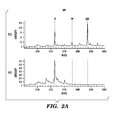
- Figures 2A and 2B show the Mass Spectrometric analyses of the SRY DNA and the paternally inherited thalassemia IVS2 654 mutation. Mass spectra for the other three thalassemia mutations are similar. For all mass spectra, Mass (x-axis) represents the molecular weight of the marked peaks. The molecular weights of all relevant peaks are calculated before the analysis and the Mass values measured by mass spectrometry are generally only 0-5 Dalton off. Intensity (y-axis) is of an arbitrary unit. P and PP represent unextended primer and pausing product (i.e., premature termination of the base extension reaction), respectively.
- the SRY peak is present (thus a positive result, marked as POS at the left side of the figure) in some of the 15 replicates (see Fig. 1 ). None of the 15 replicates has a SRY peak (thus a negative result, marked as NEG in the figure), if a women was pregnant with a female fetus.
- the pT peak is from the paternally inherited thalassemia IVS2 654 mutation and is present in some of the 15 replicates for fetuses carrying a paternally inherited thalassemia IVS2 654 mutation (see Table 1).
- the nP peak is from all other ⁇ -globin alleles except the paternally inherited thalassemia IVS2 654 allele.
- FIG. 3 shows a schematic illustration of the single allele base extension reaction (SABER) and standard MassARRAY assays.
- SABER single allele base extension reaction
- Maternal plasma detection of the paternally inherited fetal-specific ⁇ -thalassemia mutation, IVS2 654 C ⁇ T is presented as an illustrative example.
- Maternal plasma is first amplified by PCR.
- the PCR products are subjected to base extension by the standard and SABER protocols.
- the standard protocol involves the base extension of both the mutant fetal allele (T allele) and the background allele (C allele), whereas the SABER method only extends the fetal-specific mutant allele.
- the base extension reactions are terminated by dideoxynucleotides, indicated in boxes.
- the extension products of the standard protocol include a predominance of the nonmutant allele (open arrows) with a small fraction of the fetal-specific mutant allele (filled arrows).
- the low abundance of the fetal allele (filled peak) is overshadowed by the nonmutant allele (open peak) on the mass spectrum. Because SABER only involves the extension of the mutant allele, the latter's presence (filled peak) can be robustly identified from the mass spectrum.
- the striped peaks represent the unextended primer.
- Figures 4A-4D show the MS analyses-of the paternally inherited ⁇ -thalassemia .
- IVS2 654 mutation in maternal plasma For all mass spectra, mass (x axis) represents the molecular weight of the marked peaks. The expected molecular weights of all relevant peaks were calculated before the analysis. Intensity (y axis) is in arbitrary units. P and PP, unextended primer and pausing product (i.e., premature termination of the base extension reaction or incorporation of an undigested dGTP from shrimp alkaline phosphatase treatment for the wild-type DNA template), respectively.
- Figs 4A and 4B illustrate the mass spectra obtained by the standard MassARRAY protocol for a fetus negative and positive for the mutation, respectively.
- T expected mass of the mutant allele
- C position of the alleles without the IVS2 654 mutation.
- Figs 4C and 4D illustrate the mass spectra obtained by the SABER MassARRAY protocol for a fetus negative and positive for the mutation, respectively.
- IVS2 654 expected mass of the mutant allele.
- Figure 5 shows Table 1, showing prenatal exclusion of ⁇ -thalassemia, major by maternal plasma analysis. All of the parents are carriers for ⁇ -thalassemia and have one HBB mutation. The a mutations of the father and mother are marked by "F' and "M”, respectively. The maternal mutation is not indicated for cases where the maternal mutation is not one of the four HBB mutations studied. The b fetal genotype is indicated by the inheritance of the paternal mutation "F', the maternal mutation "M”, or the normal allele "*”. Results of the MassARRAY maternal plasma analysis is indicated by the c number of replicates among the 15 repeats where the paternally-inherited fetal allele was positively detected. The fetus is deemed to have inherited the paternal mutation if any of the 15 repeats showed a positive result.
- Figure 6 shows Table 2 including PCR and extension primer sequences.
- *CCT mix is ddCTP/ddGTP/ddTTP/dATP in which dd indicates the 2',3'-dideoxynucleoside.
- AC mis is ddATP/ddCTP/dGTP/dTTP.
- Figure 7 shows Table 3 including data from detection of paternally inherited HBB mutations in maternal plasma. All the patients are carriers of ⁇ -thalassemia, and have one HBB mutation. The maternal mutation is not indicated for cases where the maternal mutation is not one of the four HBB mutations studies. F and M, mutations of the father and mother, respectively; -, no mutation; neg, negative; pos, positive; N.A. not applicable. The fetal genotype determined by conventional methods is indicated by the inheritance of the paternal mutation F, the maternal mutation M, or the normal allele, *.
- Figure 8 shows Table 4 including data from haplotype analysis of paternally inherited alleles in maternal plasma. Neg, negative; Pos, positive; N.A., not applicable. ⁇ G and C denote the rs2187610 allele linked to the mutant or wild-type paternal HBB alleles, respectively. ⁇ The fetal genotype determined by conventional methods is indicated by the inheritance of the paternal mutation F, the maternal mutation M, or the normal allele, *.
- the present invention is directed to methods of detecting nucleic acids in a biological sample.
- the method is based on a novel combination of a base extension reaction, which provides excellent analytical specificity, and a mass spectrometric analysis, which provides excellent specificity.
- the method can be used, for example, for diagnostic, prognostic and treatment purposes.
- the method allows accurate detection of nucleic acids that are present in very small amounts in a biological sample.
- the method of the present invention is preferably used to detect fetal nucleic acid in a maternal blood sample; circulating tumor-specific nucleic acids in a blood, urine or stool sample; arid donor-specific nucleic acids in transplant recipients.
- one can detect viral, bacterial, fungal, or other foreign nucleic acids in a biological sample.
- the methods provided are minimally invasive, requiring generally, a small amount of a biological sample, for example, a blood, plasma, serum, urine, bucchal or nasal-swap, saliva, skin scratch, hair or stool sample from an individual.
- a biological sample for example, a blood, plasma, serum, urine, bucchal or nasal-swap, saliva, skin scratch, hair or stool sample from an individual.
- the sample can be any maternal tissue sample available without posing a risk to the fetus.
- biological materials include maternal blood, plasma, serum, saliva, cerebrospinal fluid, urine or stool samples.
- MS mass spectrometry
- the methods of the present invention are automatable. For example, use of mass spectrometry, such as MassARRAY system (Sequenom Inc, CA), in combination with the present invention allows analysis of fetal DNA with the capacity of over 2000 samples per day in triplicate samples thus making the method a practical system for routine use.
- mass spectrometry such as MassARRAY system (Sequenom Inc, CA)
- the invention provides an accurate method for determining differences between fetal and maternal nucleic acids in a maternal blood sample allowing for a minimally invasive and reliable method for prenatal diagnosis.
- the method is based on a combination of a base extension reaction and a mass spectrometric analysis.
- prenatal diagnosis can be performed without the potential complications to the fetus and the mother that are associated with traditional methods for prenatal diagnosis including amniotic fluid and/or chorionic villus sampling.
- allelic differences can be accurately amplified for analysis including changed varying from single nucleotide variations to small and large deletions, insertions, invertions and other types of nucleic acid changes that occur in even a small percentage of the pool of nucleic acids present in a sample.
- the base extension reaction according to the present invention can be performed using any standard base extension method.
- a nucleic acid primer is designed to anneal to the target nucleic acid next to or close to a site that differs between the different alleles in the locus.
- all the alleles present in the biological sample are amplified, when the base extension is performed using a polymerase and a mixture of deoxy- and dideoxcynucleosides corresponding to all relevant alleles.
- allelic variation is A/C
- primer is designed to anneal immediately before the variation site
- a mixture of ddATP/ddCTP/dTTP/dGTP will allow amplification of both of the alleles in, the sample, if both alleles are present.
- Table 2 in Figure 6 shows exemplary mixtures for the standard base extension reactions for detecting several different nucleic acid variations in the HBB locus.
- the extension products including nucleic acids with A and C in their 3' ends, can be separated based on their different masses.
- the ddNTPs are labeled with different labels, such as radioactive or fluorescent labels, the alleles can be differentiated based on the label.
- the base extension products are separated using mass spectrometric analysis wherein the peaks representing different masses of the extension products, represent the different alleles.
- the base extension is performed using single allele base extension reaction (SABER, Fig. 3 ).
- SABER single allele base extension reaction
- one allele of interest per locus is amplified in one reaction by adding only one dideoxynucleotide corresponding to the allele that one wishes to detect in the sample.
- One or more reactions can be performed to determine the presence of a variety of alleles in the same locus.
- several loci with one selected allele of interest can be extended in one reaction.
- primer extension reaction particularly SABER
- SABER primer extension reaction
- fetal nucleic acids have been generally found to represent only about 3-6% of the nucleic acids circulating in the maternal blood ( Lo et al, Am J Hum Genet 62, 768-775, 1998 ).
- the methods provided by the present invention can be used to detect polymorphisms present in the fetal nucleic acids from a sample taken from the pregnant mother.
- the invention provides a method for detecting fetal nucleic acids in maternal blood.
- the method comprises obtaining a nucleic acid sample from the pregnant mother and analyzing the sample using base extension and subsequent mass spectrometric analysis to detect one or more loci of the fetal nucleic acid in the sample.
- the invention provides a method for detecting a paternally-inherited mutations in the fetus from the maternal blood.
- the method comprises analyzing the paternal nucleic acid sample and determining the presence of one or more paternal nucleic acid polymorphisms.
- the maternal blood/plasma sample is then analyzed for the presence or absence of the paternally inherited allele using base extension, preferably SABER, wherein only ddNTP corresponding to the paternal mutation(s) is used in the base extension reaction.
- the base extension products are then detected using any detection methods, that can differentiate between the base extended nucleic acid products.
- the detection is performed using matrix assisted laser desorption ionization/time-of-flight mass spectrometric analysis, for example, as described in Example 2.
- the presence and/or absence of the paternal alleles in the maternal blood/plasma sample is exemplified in Figure 4 , wherein the presence of the peak representing the paternally inherited IVS2 654 (C ⁇ T) can be seen in Fig. 4D and absence of the same allele in Fig. 4C .
- the method can be used to reliably detect paternally inherited disease causing mutations including any dominant or recessive diseases such as achondroplasia, Huntington's disease, cystic fibrosis, hemoglobin E and the different hemoglobinopathies, such as ⁇ -thalassemia. Based on this disclosure, a skilled artisan will be able to design a detection method for prenatal diagnosis for any disease wherein the disease causing mutation or a genetic polymorphism(s) associated with or linked to the disease is/are known.
- any dominant or recessive diseases such as achondroplasia, Huntington's disease, cystic fibrosis, hemoglobin E and the different hemoglobinopathies, such as ⁇ -thalassemia.
- Circulating fetal SNPs can also be analyzed according to the method of the present invention,.
- Noninvasive fetal haplotyping can be achieved by means of analyzing polymorphisms linked to a mutated locus.
- Haplotype analysis between the HBB locus and a linked polymorphism premits the noninvasive prenatal exclusion of ⁇ -thalassemia major, despite the presence of the same HBB mutation in both parents. See, for example, case 12 of Example 2 below. This procedure overcomes the previously perceived deficiency in maternal plasma-based prenatal diagnosis of autosomal recessive diseases that limited its applicability to couples sharing different mutations.
- the haplotype approach also can be applied to maternal plasma detection of a fetal SNP allele linked to the paternal nonmutant allele.
- the positive detection of such an allele results in the noninvasive positive prenatal exclusion of a disease, such as ⁇ -thalassemia major and other recessive diseases wherein mother and father share the same mutation but carry different SNPs.
- Example 2 shows the results of non-invasive fetal haplotyping in a ⁇ -thalassemia case using an informative polymorphism at locus rs2187610.
- the invention provides a method for determining a fetal haplotype to determine the presence of paternally inherited allele at any given locus in the fetal genome from the maternal plasma/blood.
- the method comprises the steps of determining one or more polymorphisms that differ between maternal and paternal genomes, i.e., SNPs that are informative.
- SNPs should be linked to the locus wherein determination of any given allele is desired.
- the determination of informative SNPs can be performed using any genotyping methods routinely available for a skilled artisan. Any haplotyping methods can be used.
- direct molecular haplotyping method is used as explained below (see, Ding and Cantor, Proc Natl Acad Sci U S A, 100: 7449-7453, 2003 ).
- the fetal nucleic acid is analyzed from the maternal blood/plasma using the method of the present invention comprising amplification of the nucleic acids, for example using PCR, performing a base extension reaction, preferably SABER, followed by detection of the base extension products, preferably using MS based techniques.
- Haplotyping of the fetal nucleic acid allows accurate prenatal diagnosis of a disease wherein both parents may be carriers of the same mutation, but carry that mutation in only one allele. Therefore, for example, if the disease is recessive, determination of one healthy allele in the fetal nucleic acid shows that the fetus, if born, will not be affected with the disease.
- the method of the invention is applied to quantification of fetal nucleic acids from the maternal biological sample. Quantitative aberrations in circulating fetal DNA concentrations have been demonstrated for fetal chromosomal aneuploidies, preeclampsia, preterm labor, and many other pregnancy associated complications. Therefore, the present method permits for determining the risk of aneuploidies, preeclampsia, preterm labor, and other pregnancy associated complications.
- the methods use the principle of analyzing the presence of fetal specific paternally inherited allele determined using nucleic acid amplification, base extension and analysis of the base extension products as described elsewhere in the specification.
- Quantification is consequently performed either by comparing the ratio of the maternal allele and the fetal specific allele or by including an external standard in known amounts to determine the amount or relative amount of the fetal nucleic acid in the sample. Because the method of the invention allows minimally invasive sample collection, the comparison can be performed either at one desired time during pregnancy or several times during the parts or entire pregnancy to allow a follow-up of the fetal condition throughout the pregnancy.
- the invention provides a method for the detection of paternally-inherited fetal-specific ⁇ -thalassemia mutations in maternal plasma based on a method of analyzing the paternal nucleic acid at single molecule dilution.
- the analysis is performed using a primer-extension of polymerase chain reaction (PCR) and detecting the primer extension products using mass spectrometry.
- PCR polymerase chain reaction
- the detection can be performed using, for example, electrophoretic methods including capillary electrophoresis, using denaturing high performance liquid chromatography (D-HPLC), using an InvaderR Assay (Third Wave Technologies, Inc., Madison, Wis.), pyrosequencing techniques (Pyrosequencing, Inc., Westborough, MA) or solid-phase minisequencing ( U.S. Patent No. 6,013,431 , Suomalainen et al. Mol. Biotechnol. Jun;15(2):123-31, 2000 ).
- electrophoretic methods including capillary electrophoresis, using denaturing high performance liquid chromatography (D-HPLC), using an InvaderR Assay (Third Wave Technologies, Inc., Madison, Wis.), pyrosequencing techniques (Pyrosequencing, Inc., Westborough, MA) or solid-phase minisequencing ( U.S. Patent No. 6,013,431 , Suomalainen et al.
- the invention is directed to a method of detecting a genetic disorder in a fetus from a plasma sample of a pregnant woman, the method comprising: a) analyzing both maternal and paternal nucleic acid, e.g., DNA for a disease-causing mutation for the single gene disorder; b) if both maternal and paternal nucleic acid, e.g., DNA or RNA, preferably DNA, carry a disease causing mutation for the same disease then isolating nucleic acid, e.g., DNA isolated from blood, plasma or serum of the pregnant mother; c) determining a fetal genotype from the isolated maternal plasma nucleic acid, e.g., DNA using primers corresponding to the paternally identified mutation and performing a mutation-specific primer-extension assay, preferably in several replicates, wherein a detection of the paternal mutation in any of the replicate sample is indicative of the presence of the single-gene disorder in the fetus.
- the gestational age of the fetus preferably varies from about 7 to about 23 weeks.
- the genetic disease according to the present invention may be any disease wherein a disease causing mutation is known or wherein a genetic polymorphisms associated with or linked to the disease are known.
- the disease is one caused by mutations in one gene and most preferably, the diseases is a recessive single gene disease.
- the mutations can vary from single nucleotide point mutations to insertions, inversions, and deletions of any number of nucleotides in the genomic DNA.
- the recessive genetic disease is caused by two different mutations wherein one is inherited from the mother and the other from the father.
- Preferred examples of genetic diseases that can be diagnosed using the method of the present invention include but are not limited to thalassemias, such as beta thalassemias, cystic fibrosis, and congenital adrenal hyperplasia.
- DNA isolation from blood, plasma, or serum can be performed using any method known to one skilled in the art.
- One such method is disclose in Chiu, R.W.K. et al. Clin Chem 47:1607-1613. (2001 ) incorporated herein by reference in its entirety.
- Other suitable methods include, for example TRI REAGENT R BD (Molecular Research Center, Inc., Cincinnati, OH), which is a reagent for isolation of DNA from, for example, plasma.
- TRI REAGENT BD and the single-step method are described, for example, in the US Patent Nos. 4,843,155 and 5,346,994 .
- Different alleles present in the nucleic acid sample are consequently either amplified using PCR and then differentiated using various differential amplification methods described below, including different primer extension methods.
- the different alleles are amplified and differentiated simultaneously, for example using the below-described INVARER assay.
- the isolated DNA is amplified using PCR and primers flanking the known mutation site and/or the single nucleotide polymorphism (SNP) site.
- primers presented in Table 2 are used to detect the corresponding beta thalassemia mutations shown in the Table 2. In an alternative embodiments, no pre-amplification of the sample is necessary.
- a primer extension reaction is used to detect or "enhance” or “amplify” or “highlight” the different alleles present in the maternal nucleic acid sample.
- Primer extension reaction can be performed using any protocol for primer extension known to one skilled in the art (see, e.g., Molecular Cloning: A Laboratory Manual, 3rd Ed., Sambrook and Russel, Cold Spring Harbor Laboratory Press, 2001 ) .
- the primer extension reaction and analysis is performed using PYROSEQUENCINGTM (Uppsala, Sweden) which essentially is sequencing by synthesis.
- a sequencing primer designed directly next to the nucleic acid differing between the disease-causing mutation and the normal allele or the different SNP alleles is first hybridized to a single stranded, PCR amplified DNA template from the mother, and incubated with the enzymes, DNA polymerase, ATP sulfurylase, luciferase and apyrase, and the substrates, adenosine 5' phosphosulfate (APS) and luciferin.
- APS adenosine 5' phosphosulfate
- dNTP deoxynucleotide triphosphates
- DNA polymerase catalyzes the incorporation of the dNTP into the standard DNA strand.
- PPi pyrophosphate
- ATP sulfurylase converts PPi to ATP in the presence of adenosine 5' phosphosulfate.
- This ATP drives the luciferase-mediated conversion of luciferin to oxyluciferin that generates visible light in amounts that are proportional to the amount of ATP.
- the light produced in the luciferase-catalyzed reaction is detected by a charge coupled device (CCD) camera and seen as a peak in a PYROGRAMTM.
- CCD charge coupled device
- Each light signal is proportional to the number of nucleotides incorporated and allows a clear determination of the presence or absence of, for example, the disease causing allele.
- apyrase a nucleotide degrading enzyme, continuously degrades unincorporated dNTPs and excess ATP.
- another dNTP is added which corresponds to the dNTP present in for example the selected SNP. Addition of dNTPs is performed one at a time.
- Deoxyadenosine alfa-thio triphosphate (dATP ⁇ S) is used as a substitute for the natural deoxyadenosine triphosphate (dATP) since it is efficiently used by the DNA polymerase, but not recognized by the luciferase.
- dATP ⁇ S deoxyadenosine alfa-thio triphosphate
- real time PCR Another example of the methods useful for detecting the different alleles in the sample isolated from the maternal plasma, serum or blood, is real time PCR.
- All real-time PCR systems rely upon the detection and quantification of a fluorescent reporter, the signal of which increases in direct proportion to the amount of PCR product in a reaction.
- Examples of real-time PCR method useful according to the present invention include, TaqMan® and molecular beacons, both of which are hybridization probes relying on fluorescence resonance energy transfer (FRET) for quantitation.
- TaqMan Probes are oligonucleotides that contain a fluorescent dye, typically on the 5' base, and a quenching dye, typically located on the 3' base.
- TaqMan probes are designed to hybridize to an internal region of a PCR product (ABI 7700 (TaqManTM), Applied BioSystems, Foster City, CA). Accordingly, two different primers, one hybridizing to the disease-causing allele and the other to the selected SNP allele nucleic acid template, are designed. The primers are consequently allowed to hybridize to the corresponding nucleic acids in the real time PCR reaction.
- Molecular beacons also contain fluorescent and quenching dyes, but FRET only occurs when the quenching dye is directly adjacent to the fluorescent dye.
- Molecular beacons are designed to adopt a hairpin structure while free in solution, bringing the fluorescent dye and quencher in close proximity. Therefore, for example, two different molecular beacons are designed, one recognizing the disease-causing allele and the other the selected SNP nucleic acid. When the molecular beacons hybridize to the nucleic acids, the fluorescent dye and quencher are separated, FRET does not occur, and the fluorescent dye emits light upon irradiation. Unlike TaqMan probes, molecular beacons are designed to remain intact during the amplification reaction, and must rebind to target in every cycle for signal measurement.
- TaqMan probes and molecular beacons allow multiple DNA species to be measured in the same sample (multiplex PCR), since fluorescent dyes with different emission spectra may be attached to the different probes, e.g. different dyes are used in making the probes for different disease-causing and SNP alleles.
- Multiplex PCR also allows internal controls to be co-amplified and permits allele discrimination in single-tube assays. (Ambion Inc, Austin, TX, TechNotes 8(1) - February 2001, Real-time PCR goes prime time).
- Yet another method useful according to the present invention for emphasizing or enhancing the difference between the disease-causing and normal allele and the different selected SNP alleles is solid-phase mini-sequencing ( Hultman, et al., 1988, Nucl. Acid. Res., 17, 4937-4946 ; Syvanen et al., 1990, Genomics, 8, 684-692 ).
- the incorporation of a radiolabeled nucleotide was measured and used for analysis of the three-allelic polymorphism of the human apolipoprotein E gene.
- the method of detection of the variable nucleotide(s) is based on primer extension and incorporation of detectable nucleoside triphosphates in the detection step.
- this variation can be detected after incorporation of as few as one nucleoside triphosphate.
- Labelled nucleoside triphosphates matching the variable nucleotide are added and the incorporation of a label into the detection step primer is measured.
- the detection step primer is annealed to the copies of the target nucleic acid and a solution containing one or more nucleoside triphosphates including at least one labeled or modified nucleoside triphosphate, is added together with a polymerizing agent in conditions favoring primer extension.
- dNTPs deoxyribonucleoside triphosphates
- ddNTPs chain terminating dideoxyribonucleoside triphosphates
- Another method to detect the different alleles in the PCR products from the maternal sample is by using fluorescence tagged dNTP/ddNTPs.
- a standard nucleic acid sequencing gel can be used to detect the fluorescent label incorporated into the PCR amplification product.
- a sequencing primer is designed to anneal next to the base differentiating the disease-causing and normal allele or the selected SNP alleles.
- a primer extension reaction is performed using chain terminating dideoxyribonucleoside triphosphates (ddNTPs) labeled with a fluorescent dye, one label attached to the ddNTP to be added to the standard nucleic acid and another to the ddNTP to be added to the target nucleic acid.
- ddNTPs chain terminating dideoxyribonucleoside triphosphates
- an INVADEE assay can be used (Third Wave Technologies, Inc (Madison, WI)). This assay is generally based upon a structure-specific nuclease activity of a variety of enzymes, which are used to cleave a target-dependent cleavage structure, thereby indicating the presence of specific nucleic acid sequences or specific variations thereof in a sample (see, e.g. U.S. Patent No. 6,458,535 ).
- an INVADER ® operating system provides a method for detecting and quantifying DNA and RNA.
- the INVADEO ® OS is based on a "perfect match" enzyme-substrate reaction.
- the INVADER ® OS uses proprietary CLEAVASE ® enzymes (Third Wave Technologies, Inc (Madison, WI)), which recognize and cut only the specific structure formed during the INVADER ® process which structure differs between the different alleles selected for detection, i.e. the disease-causing allele and the normal allele as well as between the different selected SNPs. Unlike the PCR-based methods, the INVADER ® OS relies on linear amplification of the signal generated by the INVADER ® process, rather than on exponential amplification of the target.
- Disease-causing alleles and the SNPs may also be differentiated using allele-specific hybridization followed by a MALDI-TOF-MS detection of the different hybridization products.
- the detection of the enhanced or amplified nucleic acids representing the different alleles is performed using matrix-assisted laser desorption ionization/time-of flight (MALDT-TOF) mass spectrometric (MS) analysis described in the Examples below.
- MALDT-TOF matrix-assisted laser desorption ionization/time-of flight
- MS mass spectrometric
- each reaction will theoretically contain about 2 copies of the paternally-derived fetal DNA (i.e.,in the example above, 1000 x 0.8 x 2.5% x 5 / 50) sand about 76 copies of maternal DNA (i.e., in the example above, 1000 x 0.8 x 95% x 5 / 50).
- the low fractional concentration poses significant demands on the sensitivity and specificity required for the analytical system.
- fetal DNA fragments in maternal plasma are distributed stochastically ( Ding, C & Cantor, C.R., Proc Nail Acad Sci U S A 100, 7449-7453, 2003 ). If analyses were performed in multiple replicates, each replicate would either contain no or only some fetal DNA fragments. The proportion of replicates that does contain fetal DNA fragments is therefore governed by the Poisson distribution.
- the fractional concentration of the fetal fraction will increase from 2.5% (2/80) to 6.25%(1/16), thus, improving the robustness for fetal DNA detection and allelic discrimination.
- At least about 10, preferably 15 or more replicates up to about 20, 50, 70 or 100 replicates are used to improve statistical. accuracy of the allele determination.
- the invention provides a method wherein single nucleotide polymorphism (SNP) detection is incorporated with the simultaneous detection of the mutated or healthy alleles.
- SNPs that are associated with either the mutated or normal paternal allele can be used in this embodiment.
- the MassARRAY system was originally designed for high-throughput SNP detection ( Tang K., et al., Proc Natal Acad Sci USA 96, 10016-10020, 1999 ), the discrimination of paternal and maternal mutant alleles that share the same mutation can be achieved by the detection of SNPs that are linked particularly to the paternal mutation which combination provides an improved method for non-invasive prenatal diagnosis of recessive diseases.
- the detection of SNPs associated with the paternal normal or healthy allele instead would, for example, allow the positive exclusion of ⁇ -thalassemia ( Chiu, R.W.K et al., Clin Chem 48, 778-780, 2002 ) in the fetus by using a maternal plasma sample.
- the present method can also provide a tool to analyze other circulating nucleic acids including, but not limited to tumor-specific nucleic acid changes, viral, bacterial, fungal, and protozoan nucleic acids, and donor-specific nucleic acids in a transplant patient.
- the method comprises analyzing nucleic acids in a biological sample by primer extension to differentiate between the normal, or host nucleic acids and the mutant, or non-host nucleic acids, and analyzing the primer extension products, preferably using mass spectrometry.
- the method is used to follow development of mutant forms of, for example, tumor cells, viruses and bacteria in an individual, thus providing an easy and minimally invasive method to detect development of, for example drug-resistant tumor cells and antibiotic resistant bacteria.
- the approach allows single nucleotide discrimination between fetal and maternal DNA.
- the protocol was adopted for maternal plasma analysis of the paternally-inherited fetal-specific HBB mutation for the four most common Southeast Asian ⁇ -thalassemia mutations. These four mutations included CD 41/42 -CTTT,IVS2 654 (C ⁇ T), nt -28 (A ⁇ G) and CD 17 (A-T), and they account for about 90% of all ⁇ -thalasseznia mutations in Southeast Asia ( Lau, Y.L. et al. N Engl J Med 336, 1298-1301 (1997 )).
- fetal genotype was determined by molecular analysis of chorionic villi, amniotic fluid or fetal whole blood. The researcher who analyzed the maternal plasma samples was blinded from the fetal genotype result.
- Primer extension and MassARRAY analysis were performed essentially in the same manner as the fetal gender experiments with the exception that the fetal targets for detection were the paternally-inherited HBB mutations.
- Four PCR and primer-extension assays were designed and these corresponded to each of the four mutations.
- the PCR and extension primer sequences are provided in Table 1 ( Fig. 6 ).
- the assay primers used in a particular sample was selected according to the mutation that the father carried.
- the approach of this invention takes advantage of the Poisson distribution of DNA fragments at single molecule concentration detected in replicates to further increase the sensitivity of mass-spectrometric analysis while retaining its high specificity.
- the approach allows the determination of the presence or absence of the paternally-inherited fetal mutation in maternal plasma covering the four most common ⁇ -thalassemia, mutations in Southeast Asians.
- the present approach can be applied to at-risk pregnancies where the maternal and paternal mutations differ.
- the approach can be modified by incorporating the simultaneous detection of single nucleotide polymorphisms (SNPs) that are associated with either the mutated or normal paternal allele.
- SNPs single nucleotide polymorphisms
- the additional assessment of SNPs will also help to eliminate the false-negative results, as a diagnostic result is only regarded as valid if a paternal SNP allele is detected in at least one of the replicates.
- the MassARRAY system was originally designed for high-throughput SNP detection ( Tang, K. et al. Proc Natl Acad Sci USA 96, 10016-10020 (1999 )).
- the discrimination of paternal and maternal mutant alleles that share the same mutation can be achieved by the detection of SNPs that are linked particularly to the paternal mutation.
- the detection of SNPs associated with the paternal normal or healthy allele instead, also allows the positive exclusion of ⁇ -thalassemia ( Chiu, R.W.K. et al.
- the analytical and prenatal diagnostic approach of the present invention presents a non-invasive prenatal diagnosis of autosomal recessive diseases including but not limited to the thalassemias, cystic fibrosis and congenital adrenal hyperplasia.
- This approach can also be applied to the other diagnostic applications of plasma DNA, such as the detection of tumor-derived point mutations in cancer patients ( Anker, P. et al. Gastroenterology 112, 1114-1120 (1997 )) and donor-derived DNA in the plasma of transplant recipients ( Lo, Y.M.D. et al. Lancet 351, 1329-1330 (1998 ).
- Maternal plasma was harvested by a two-step centrifugation protocol comprised of 10-min centrifugation at 1,600 x g , followed by 10-min centrifugation at 16,000 x g ( Chiu, R. W.
- Maternal plasma DNA was extracted with the QIAamp Blood Kit (Qiagen, Valencia, CA) by following the "blood and body fluid protocol," according to the manufacturer's recommendations. To each column, 800 ⁇ l of plasma was applied and eluted into 50 ⁇ l of distilled deionized H 2 O. The plasma DNA samples were stored at -20°C until analysis by a central laboratory.
- MassARRAY is a matrix-assisted laser desorption ionization/time-of flight MS system designed for the detection ofprimer-extended PCRproducts ( Tang, K., Fu, D. J., Julien, D., Braun, A., Cantor, C. R. & Koster, H. (1999) Proc. Natl. Acad. Sci. USA 96, 10016-10020 ).
- the maternal plasma MS analyses were performed blindly without knowledge of the fetal genotype.
- SABER single allele base extension reaction
- PCR Amplification All DNA oligonucleotides were purchased from Integrated DNA Technologies (Coralville, IA). HotStar Taq Polymerase (Qiagen) was used for all PCR S . Five microliters of plasma DNA was added to each 10- ⁇ l PCR. PCR primers ( Fig. 6 , Table 2) were used at a 200 nM final concentration. The PCR condition was 95°C for 15 min for hot start, followed by denaturing at 94°C for 20 sec, annealing at 56°C for 30 sec, extension at 72°C for 1 min for 45 cycles, and final incubation at 72°C for 3 min.
- PCR products Five microliters of PCR products was treated with shrimp alkaline phosphatase (Sequenom) for 20 min at 37°C to remove excess dNTPs, as described in Ding, C. & Cantor, C. R. (2003) Proc. Natl. Acad. Sci. USA 100, 7449-7453 .
- shrimp alkaline phosphatase Sequenom
- Standard Base Extension and SABER Thermosequenase (Sequenom) was mused for the base extension reactions.
- standard protocol conventional base extension was carried out whereby both alleles interrogated by the base extension primer were extended by adding a mixture of 2',3'-dideoxynucleoside triphosphates and dNTPs ( Fig 6 , Table 2 and Fig. 3 ).
- primer extension in the SABER protocol was restricted to the fetal-specific allele of interest by the addition of a single species of dideoxynucleoside triphosphate without any dNTP ( Fig. 6 , Table 2 and Fig. 3 ). Five microliters of PCR products was used in 9- ⁇ l reactions in both protocols.
- the reaction condition was 94°C for 2 min, followed by 94°C for 5 sec, 52°C for 5 sec, and 72°C for 5 sec for 40 cycles. All reactions were carried out in a GeneAmp PCR system 9700 thermal cycler (Applied Biosystems).
- the final base extension products were analyzed by MS as described in Ding, C. & Cantor, C. R. (2003) Proc. Natl. Acad. Sci. USA 100, 7449-7453 . Briefly, the final base extension products were treated with the SpectroCLEAN (Sequenom) resin to remove salts in the reaction buffer.
- SNP Fetal-Specific Single-Nucleotide Polymorphism
- MassARRAY assays (Fig. 6 , Table 2) were designed for maternal plasma analysis of the four most common ⁇ -thalassemia, mutations in Southeast Asia, CD 41/42 -CTTT, IVS2 654 (C 3 T), nt -28 (A ->G), and CD 17 (A ->T) ( Lau, Y. L., Chan, L. C., Chan, Y. Y., Ha, S. Y., Yeung, C. Y., Waye, J. S. & Chui, D. H. (1997) N. Engl. J Med.
- Paternal mutation detection in maternal plasma was determined by using both protocols. For each sample, the mutation-specific assay was selected according to the mutation that the father carried.
- the parental genotypes at the SNP locus, rs2187610 were determined for the pregnancies at risk for ⁇ -thalassemia major.
- the linkage between the paternal HBB mutant with the SNP alleles at rs2187610 was determined.
- Haplotype analysis was determined by using a method on parental genomic DNA described in Ding, C. & Cantor, C. R. (2003) Proc. Natl. Acad. Sci. USA 100, 7449-7453 .
- the ability to detect the paternal SNP linked to the mutant HBB allele in maternal plasma was determined by using the SABER protocol.
- the SNP rs2187610 is a C/G polymorphism. Among the 50 normal pregnancies, 16 pregnant women had the CC genotype. The fetal genotypes were CC and GC in 10 and 6 of these pregnancies, respectively. MassARRAY assays were designed to detect the paternally inherited fetal-specific G allele in maternal plasma ( Fig. 6 , Table 2). The presence or absence of the G allele in maternal plasma was concordant between the standard and SABER protocols, and these results were completely concordant with amniotic fluid analyses.
- Noninvasive Fetal Haplotyping SNP analysis for the at-risk pregnancies revealed three informative couples (cases 3, 11, and 12), including the parents sharing an identical ⁇ -thalassemia mutation, whereby the maternal and paternal SNP genotypes were nonidentical. Results of the haplotype analysis are shown in Fig. 8 , Table 4. The paternal mutant allele was linked to the G allele at rs2187610 for the three cases. Maternal plasma analysis for the paternal G allele was completely concordant with the expected fetal genotype.
- the SABER assays were designed so that the base extension is devoted only to the extension of the fetal-specific allele for the single discriminatory nucleotide from the maternal one. Furthermore, the matrix-assisted laser desorption ionizationltime-of flightMS has a dynamic range of ⁇ 100-fold. Because the paternal-specific fetal allele exists at ⁇ 3-6% in total maternal plasma DNA, its corresponding peak in the mass spectrum is often dwarfed by the background peak when analyzed by the standard protocol ( Figs. 3 and 4 ). In contrast, the SABER method only extends the intended paternal-specific fetal allele so that the background allele peak is not produced, resulting in more robust detection ( Figs. 3 and 4 ). The theoretical advantages of SABER over the standard method are realized in our analyses as evident by the false-negative results for the latter protocol.
- the reliability of the SABER assays for single-nucleotide discrimination between circulating fetal and maternal DNA has been illustrated by the maternal plasma detection of fetal ⁇ -thalassemia point mutations and SNPs.
- the ability to robustly analyze fetal-specific SNPs in maternal plasma is a useful adjunct procedure for maternal-plasma fetal DNA analysis as a safeguard against the possibility of false-negative detection due to fetal DNA degradation, DNA extraction failures, or PCR allele dropout.
- Such a safeguard mechanism has been advocated by several workers in the routine performance of maternal plasma analysis for the noninvasive prenatal assessment of fetal rhesus D status ( van der Schoot,'C. E., Tax, G. H., Rijnders, R.
- Noninvasive fetal haplotyping could be achieved by means of analyzing polymorphisms linked to a mutated locus.
- haplotype analysis between the HBB locus and a linked polymorphism allowed the noninvasive prenatal exclusion of ⁇ -thalassemia major, despite the presence of the same HBB mutation in both parents, which had previously not been believed practical.
- the haplotype approach is also applicable to maternal plasma detection of a fetal SNP allele linked to the paternal nonmutant allele.
- the positive detection of such an allele would allow for the positive prenatal exclusion of ⁇ -thalassemia major noninvasively ( Chiu, R. W. K., Lau, T. K., Cheung, P. T., Gong, Z. Q., Leung, T. N. & Lo, Y. M. D. (2002) Clin. Chem. 48, 778-780 ; Bianchi, D. W. (2002) Clin. Chem. 48, 689-690 ).
- Additional SNP markers surrounding the HBB locus can be easily assessed by a person skilled in the art.
- an SNP panel could be assembled so that the noninvasive prenatal diagnosis could be applied to a larger proportion ofpregnancies at risk for ⁇ -thalassemia.
- the four mutations investigated in this study account for 90% of all ⁇ - thalassemia mutations in Southeast Asia ( Lau, Y. L., Chan, L. C., Chan, Y. Y., Ha, S. Y., Yeung, C. Y., Waye, J. S. & Chui, D. H. (1997) N. Engl. J. Med. 336, 1298-1301 ; Liang, R., Liang, S., Jiang, N.
- the MS SABER approach can also be extended to other areas of circulating nucleic acid analysis, including circulating tumor-specific DNA, such as Epstein-Barr virus DNA in nasopharyngeal carcinoma patients ( Lo, Y. M. D., Chan, L. Y. S., Lo, K. W., Leung, S. F., Zhang, J., Chan, A. T. C., Lee, J. C., Hjelm, N. M., Johnson, P. J. & Huang, D. P. (1999) Cancer Res.
- Epstein-Barr virus DNA in nasopharyngeal carcinoma patients
- KRAS point mutations Anker, P., Lefort, F., Vasioukhin, V., Lyautey, J., Lederrey, C., Chen, X. Q., Stroun, M., Mulcahy, H. E. & Farthing, M. J. (1997) Gastroenterology 112, 1114-1120 ; Sorenson, G. D. (2000) Ann. N.Y. Acad. Sci. 906, 13-16 ), and donor-specific DNA in transplant recipients ( Lo, Y. M. D., Tein, M. S., Pang, C. C., Yeung, C. K., Tong, K. L. & Hjelm, N. M. (1998) Lancet 351,1329-1330 ). Therefore, we believe that MS will play an increasingly important role in the future research and application of circulating nucleic acids.
Landscapes
- Life Sciences & Earth Sciences (AREA)
- Chemical & Material Sciences (AREA)
- Proteomics, Peptides & Aminoacids (AREA)
- Organic Chemistry (AREA)
- Health & Medical Sciences (AREA)
- Engineering & Computer Science (AREA)
- Zoology (AREA)
- Wood Science & Technology (AREA)
- Analytical Chemistry (AREA)
- Physics & Mathematics (AREA)
- Immunology (AREA)
- General Engineering & Computer Science (AREA)
- Molecular Biology (AREA)
- Biophysics (AREA)
- Microbiology (AREA)
- Biochemistry (AREA)
- Bioinformatics & Cheminformatics (AREA)
- Biotechnology (AREA)
- General Health & Medical Sciences (AREA)
- Genetics & Genomics (AREA)
- Spectroscopy & Molecular Physics (AREA)
- Cell Biology (AREA)
- Measuring Or Testing Involving Enzymes Or Micro-Organisms (AREA)
Applications Claiming Priority (2)
| Application Number | Priority Date | Filing Date | Title |
|---|---|---|---|
| US50052603P | 2003-09-05 | 2003-09-05 | |
| EP04783186.2A EP1664077B1 (fr) | 2003-09-05 | 2004-09-07 | Procede de diagnostic prenatal non effractif |
Related Parent Applications (2)
| Application Number | Title | Priority Date | Filing Date |
|---|---|---|---|
| EP04783186.2A Division-Into EP1664077B1 (fr) | 2003-09-05 | 2004-09-07 | Procede de diagnostic prenatal non effractif |
| EP04783186.2 Division | 2004-09-07 |
Publications (2)
| Publication Number | Publication Date |
|---|---|
| EP2354253A2 true EP2354253A2 (fr) | 2011-08-10 |
| EP2354253A3 EP2354253A3 (fr) | 2011-11-16 |
Family
ID=34272966
Family Applications (2)
| Application Number | Title | Priority Date | Filing Date |
|---|---|---|---|
| EP04783186.2A Expired - Lifetime EP1664077B1 (fr) | 2003-09-05 | 2004-09-07 | Procede de diagnostic prenatal non effractif |
| EP10189690A Withdrawn EP2354253A3 (fr) | 2003-09-05 | 2004-09-07 | Procede de diagnostic prenatal non effractif |
Family Applications Before (1)
| Application Number | Title | Priority Date | Filing Date |
|---|---|---|---|
| EP04783186.2A Expired - Lifetime EP1664077B1 (fr) | 2003-09-05 | 2004-09-07 | Procede de diagnostic prenatal non effractif |
Country Status (4)
| Country | Link |
|---|---|
| US (2) | US20070207466A1 (fr) |
| EP (2) | EP1664077B1 (fr) |
| AU (1) | AU2004270220B2 (fr) |
| WO (1) | WO2005023091A2 (fr) |
Families Citing this family (230)
| Publication number | Priority date | Publication date | Assignee | Title |
|---|---|---|---|---|
| EP1689884A4 (fr) * | 2003-10-08 | 2007-04-04 | Univ Boston | Methodes de diagnostic prenatal d'anomalies chromosomiques |
| US7709262B2 (en) * | 2004-02-18 | 2010-05-04 | Trustees Of Boston University | Method for detecting and quantifying rare mutations/polymorphisms |
| US7470517B2 (en) * | 2004-04-09 | 2008-12-30 | Trustees Of Boston University | Method for de novo detection of sequences in nucleic acids: target sequencing by fragmentation |
| US8024128B2 (en) * | 2004-09-07 | 2011-09-20 | Gene Security Network, Inc. | System and method for improving clinical decisions by aggregating, validating and analysing genetic and phenotypic data |
| CA2609328A1 (fr) * | 2005-05-26 | 2006-11-30 | The Trustees Of Boston University | Quantification d'acides nucleiques et de proteines au moyen d'etiquettes de masse d'oligonucleotides |
| EP2703499A1 (fr) | 2005-06-02 | 2014-03-05 | Fluidigm Corporation | Analyse utilisant des dispositifs de séparation microfluidiques pour générer des échantillons comprenant une seule cellule |
| US8532930B2 (en) | 2005-11-26 | 2013-09-10 | Natera, Inc. | Method for determining the number of copies of a chromosome in the genome of a target individual using genetic data from genetically related individuals |
| US20070178501A1 (en) * | 2005-12-06 | 2007-08-02 | Matthew Rabinowitz | System and method for integrating and validating genotypic, phenotypic and medical information into a database according to a standardized ontology |
| US10081839B2 (en) | 2005-07-29 | 2018-09-25 | Natera, Inc | System and method for cleaning noisy genetic data and determining chromosome copy number |
| US8921102B2 (en) | 2005-07-29 | 2014-12-30 | Gpb Scientific, Llc | Devices and methods for enrichment and alteration of circulating tumor cells and other particles |
| US20070027636A1 (en) * | 2005-07-29 | 2007-02-01 | Matthew Rabinowitz | System and method for using genetic, phentoypic and clinical data to make predictions for clinical or lifestyle decisions |
| US8515679B2 (en) | 2005-12-06 | 2013-08-20 | Natera, Inc. | System and method for cleaning noisy genetic data and determining chromosome copy number |
| US10083273B2 (en) | 2005-07-29 | 2018-09-25 | Natera, Inc. | System and method for cleaning noisy genetic data and determining chromosome copy number |
| US9424392B2 (en) | 2005-11-26 | 2016-08-23 | Natera, Inc. | System and method for cleaning noisy genetic data from target individuals using genetic data from genetically related individuals |
| US11111543B2 (en) * | 2005-07-29 | 2021-09-07 | Natera, Inc. | System and method for cleaning noisy genetic data and determining chromosome copy number |
| US11111544B2 (en) | 2005-07-29 | 2021-09-07 | Natera, Inc. | System and method for cleaning noisy genetic data and determining chromosome copy number |
| WO2007092473A2 (fr) | 2006-02-02 | 2007-08-16 | The Board Of Trustees Of The Leland Stanford Junior University | Dépistage génétique foetal non invasif par analyse numérique |
| US20100184044A1 (en) * | 2006-02-28 | 2010-07-22 | University Of Louisville Research Foundation | Detecting Genetic Abnormalities |
| US20100184043A1 (en) * | 2006-02-28 | 2010-07-22 | University Of Louisville Research Foundation | Detecting Genetic Abnormalities |
| SI1996728T1 (sl) * | 2006-02-28 | 2011-10-28 | Univ Louisville Res Found | Prepoznavanje kromosomskih nenormalnosti pri zarodku s pomočjo dvojnih mononukleotidnih polimorfizmov |
| US8609338B2 (en) | 2006-02-28 | 2013-12-17 | University Of Louisville Research Foundation, Inc. | Detecting fetal chromosomal abnormalities using tandem single nucleotide polymorphisms |
| AU2007223102A1 (en) * | 2006-03-06 | 2007-09-13 | The Trustees Of Columbia University In The City Of New York | Specific amplification of fetal DNA sequences from a mixed, fetal-maternal source |
| EP3260556B1 (fr) | 2006-05-31 | 2019-07-31 | Sequenom, Inc. | Procédés pour l'extraction d'acide nucléique à partir d'un échantillon |
| US8137912B2 (en) | 2006-06-14 | 2012-03-20 | The General Hospital Corporation | Methods for the diagnosis of fetal abnormalities |
| EP2029779A4 (fr) | 2006-06-14 | 2010-01-20 | Living Microsystems Inc | Utilisation de génotypage snp fortement parallèle pour diagnostic fétal |
| US8372584B2 (en) | 2006-06-14 | 2013-02-12 | The General Hospital Corporation | Rare cell analysis using sample splitting and DNA tags |
| US20080050739A1 (en) | 2006-06-14 | 2008-02-28 | Roland Stoughton | Diagnosis of fetal abnormalities using polymorphisms including short tandem repeats |
| CN101153336B (zh) | 2006-09-27 | 2011-09-07 | 香港中文大学 | 检测dna甲基化程度的方法和试剂盒 |
| US7902345B2 (en) | 2006-12-05 | 2011-03-08 | Sequenom, Inc. | Detection and quantification of biomolecules using mass spectrometry |
| US12180549B2 (en) | 2007-07-23 | 2024-12-31 | The Chinese University Of Hong Kong | Diagnosing fetal chromosomal aneuploidy using genomic sequencing |
| US12054776B2 (en) | 2007-07-23 | 2024-08-06 | The Chinese University Of Hong Kong | Diagnosing fetal chromosomal aneuploidy using massively parallel genomic sequencing |
| WO2009032781A2 (fr) | 2007-08-29 | 2009-03-12 | Sequenom, Inc. | Méthodes et compositions s'appliquant à une amplification en chaîne par polymèrase universelle spécifique de la taille |
| SG10201704689XA (en) | 2008-01-18 | 2017-07-28 | Harvard College | Methods of detecting signatures of disease or conditions in bodily fluids |
| MX2010008820A (es) * | 2008-02-12 | 2010-09-07 | Novartis Ag | Metodo para aislar acidos nucleicos fetales o apoptoticos libres de celulas. |
| WO2009114543A2 (fr) | 2008-03-11 | 2009-09-17 | Sequenom, Inc. | Tests adn pour déterminer le sexe d'un bébé avant sa naissance |
| CN104732118B (zh) | 2008-08-04 | 2017-08-22 | 纳特拉公司 | 等位基因调用和倍性调用的方法 |
| EP3103871B1 (fr) | 2008-09-16 | 2020-07-29 | Sequenom, Inc. | Procédés pour l'enrichissiment en acide nucleic fétal d'un échantillon maternel, basé sur la méthylation et utilisation pour la quantification de l'acide nucleique fétal |
| US8962247B2 (en) | 2008-09-16 | 2015-02-24 | Sequenom, Inc. | Processes and compositions for methylation-based enrichment of fetal nucleic acid from a maternal sample useful for non invasive prenatal diagnoses |
| US8476013B2 (en) | 2008-09-16 | 2013-07-02 | Sequenom, Inc. | Processes and compositions for methylation-based acid enrichment of fetal nucleic acid from a maternal sample useful for non-invasive prenatal diagnoses |
| WO2010033578A2 (fr) | 2008-09-20 | 2010-03-25 | The Board Of Trustees Of The Leland Stanford Junior University | Diagnostic non effractif d'aneuploïdie foetale par sequençage |
| US9492797B2 (en) | 2008-09-23 | 2016-11-15 | Bio-Rad Laboratories, Inc. | System for detection of spaced droplets |
| WO2011120020A1 (fr) | 2010-03-25 | 2011-09-29 | Quantalife, Inc. | Système de transport de gouttelettes à des fins de détection |
| US9764322B2 (en) | 2008-09-23 | 2017-09-19 | Bio-Rad Laboratories, Inc. | System for generating droplets with pressure monitoring |
| US8951939B2 (en) | 2011-07-12 | 2015-02-10 | Bio-Rad Laboratories, Inc. | Digital assays with multiplexed detection of two or more targets in the same optical channel |
| US9598725B2 (en) | 2010-03-02 | 2017-03-21 | Bio-Rad Laboratories, Inc. | Emulsion chemistry for encapsulated droplets |
| US8633015B2 (en) | 2008-09-23 | 2014-01-21 | Bio-Rad Laboratories, Inc. | Flow-based thermocycling system with thermoelectric cooler |
| US9132394B2 (en) | 2008-09-23 | 2015-09-15 | Bio-Rad Laboratories, Inc. | System for detection of spaced droplets |
| US9156010B2 (en) | 2008-09-23 | 2015-10-13 | Bio-Rad Laboratories, Inc. | Droplet-based assay system |
| US9089844B2 (en) | 2010-11-01 | 2015-07-28 | Bio-Rad Laboratories, Inc. | System for forming emulsions |
| US11130128B2 (en) | 2008-09-23 | 2021-09-28 | Bio-Rad Laboratories, Inc. | Detection method for a target nucleic acid |
| US9417190B2 (en) | 2008-09-23 | 2016-08-16 | Bio-Rad Laboratories, Inc. | Calibrations and controls for droplet-based assays |
| US10512910B2 (en) | 2008-09-23 | 2019-12-24 | Bio-Rad Laboratories, Inc. | Droplet-based analysis method |
| US8709762B2 (en) | 2010-03-02 | 2014-04-29 | Bio-Rad Laboratories, Inc. | System for hot-start amplification via a multiple emulsion |
| GB2502409B8 (en) | 2008-09-23 | 2014-10-15 | Bio Rad Laboratories | Droplet-based assay system |
| US8663920B2 (en) | 2011-07-29 | 2014-03-04 | Bio-Rad Laboratories, Inc. | Library characterization by digital assay |
| US9399215B2 (en) | 2012-04-13 | 2016-07-26 | Bio-Rad Laboratories, Inc. | Sample holder with a well having a wicking promoter |
| US12162008B2 (en) | 2008-09-23 | 2024-12-10 | Bio-Rad Laboratories, Inc. | Partition-based method of analysis |
| US12090480B2 (en) | 2008-09-23 | 2024-09-17 | Bio-Rad Laboratories, Inc. | Partition-based method of analysis |
| CN104531837A (zh) * | 2008-12-22 | 2015-04-22 | 赛卢拉有限公司 | 检测等位基因、基因组和转录物组的方法和基因型分析谱 |
| US8771948B2 (en) | 2009-04-03 | 2014-07-08 | Sequenom, Inc. | Nucleic acid preparation compositions and methods |
| CA2767056C (fr) | 2009-09-02 | 2018-12-04 | Bio-Rad Laboratories, Inc. | Systeme de melange de fluides par coalescence d'emulsions multiples |
| ES2640776T3 (es) | 2009-09-30 | 2017-11-06 | Natera, Inc. | Métodos para denominar de forma no invasiva ploidía prenatal |
| DK2516680T3 (en) | 2009-12-22 | 2016-05-02 | Sequenom Inc | Method and kits to identify aneuploidy |
| US9260745B2 (en) | 2010-01-19 | 2016-02-16 | Verinata Health, Inc. | Detecting and classifying copy number variation |
| US20120100548A1 (en) | 2010-10-26 | 2012-04-26 | Verinata Health, Inc. | Method for determining copy number variations |
| ES2704701T3 (es) | 2010-01-19 | 2019-03-19 | Verinata Health Inc | Nuevo protocolo de preparación de bibliotecas de secuenciación |
| AU2011207544A1 (en) | 2010-01-19 | 2012-09-06 | Verinata Health, Inc. | Identification of polymorphic sequences in mixtures of genomic DNA by whole genome sequencing |
| US9323888B2 (en) | 2010-01-19 | 2016-04-26 | Verinata Health, Inc. | Detecting and classifying copy number variation |
| US20120010085A1 (en) | 2010-01-19 | 2012-01-12 | Rava Richard P | Methods for determining fraction of fetal nucleic acids in maternal samples |
| US10388403B2 (en) | 2010-01-19 | 2019-08-20 | Verinata Health, Inc. | Analyzing copy number variation in the detection of cancer |
| US8700341B2 (en) | 2010-01-19 | 2014-04-15 | Verinata Health, Inc. | Partition defined detection methods |
| US20110312503A1 (en) | 2010-01-23 | 2011-12-22 | Artemis Health, Inc. | Methods of fetal abnormality detection |
| JP2013524169A (ja) | 2010-03-25 | 2013-06-17 | クァンタライフ・インコーポレーテッド | 液滴によるアッセイ用の検出システム |
| JP2013524171A (ja) | 2010-03-25 | 2013-06-17 | クァンタライフ・インコーポレーテッド | 液滴ベースのアッセイのための液滴の発生 |
| EP2553463B1 (fr) | 2010-03-26 | 2017-05-03 | Hongzhi Zou | Procédés et substances pour la détection de tumeurs colorectales |
| US9068017B2 (en) | 2010-04-08 | 2015-06-30 | Ibis Biosciences, Inc. | Compositions and methods for inhibiting terminal transferase activity |
| US9677118B2 (en) | 2014-04-21 | 2017-06-13 | Natera, Inc. | Methods for simultaneous amplification of target loci |
| US12655483B2 (en) | 2010-05-18 | 2026-06-16 | Natera, Inc. | Methods for simultaneous amplification of target loci |
| US11408031B2 (en) | 2010-05-18 | 2022-08-09 | Natera, Inc. | Methods for non-invasive prenatal paternity testing |
| US11339429B2 (en) | 2010-05-18 | 2022-05-24 | Natera, Inc. | Methods for non-invasive prenatal ploidy calling |
| US10316362B2 (en) | 2010-05-18 | 2019-06-11 | Natera, Inc. | Methods for simultaneous amplification of target loci |
| US12545960B2 (en) | 2010-05-18 | 2026-02-10 | Natera, Inc. | Methods for simultaneous amplification of target loci |
| US20240158855A1 (en) | 2010-05-18 | 2024-05-16 | Natera, Inc. | Methods for simultaneous amplification of target loci |
| US11326208B2 (en) | 2010-05-18 | 2022-05-10 | Natera, Inc. | Methods for nested PCR amplification of cell-free DNA |
| US11939634B2 (en) | 2010-05-18 | 2024-03-26 | Natera, Inc. | Methods for simultaneous amplification of target loci |
| US12152275B2 (en) | 2010-05-18 | 2024-11-26 | Natera, Inc. | Methods for non-invasive prenatal ploidy calling |
| US11332785B2 (en) | 2010-05-18 | 2022-05-17 | Natera, Inc. | Methods for non-invasive prenatal ploidy calling |
| EP2854058A3 (fr) | 2010-05-18 | 2015-10-28 | Natera, Inc. | Procédés pour une classification de ploïdie prénatale non invasive |
| US20190010543A1 (en) | 2010-05-18 | 2019-01-10 | Natera, Inc. | Methods for simultaneous amplification of target loci |
| US11332793B2 (en) | 2010-05-18 | 2022-05-17 | Natera, Inc. | Methods for simultaneous amplification of target loci |
| US12221653B2 (en) | 2010-05-18 | 2025-02-11 | Natera, Inc. | Methods for simultaneous amplification of target loci |
| US11322224B2 (en) | 2010-05-18 | 2022-05-03 | Natera, Inc. | Methods for non-invasive prenatal ploidy calling |
| AU2011280997A1 (en) | 2010-07-23 | 2013-02-28 | President And Fellows Of Harvard College | Methods of detecting autoimmune or immune-related diseases or conditions |
| MX2013000917A (es) | 2010-07-23 | 2013-07-05 | Harvard College | Metodos para detectar las enfermedades o condiciones usando celulas fagociticas. |
| SG10201505723UA (en) | 2010-07-23 | 2015-09-29 | Harvard College | Methods for detecting signatures of disease or conditions in bodily fluids |
| CA2806304A1 (fr) | 2010-07-23 | 2012-01-26 | President And Fellows Of Harvard College | Methodes de depistage de maladies ou d'affections prenatales ou liees a la grossesse |
| US10533223B2 (en) | 2010-08-06 | 2020-01-14 | Ariosa Diagnostics, Inc. | Detection of target nucleic acids using hybridization |
| US20140342940A1 (en) | 2011-01-25 | 2014-11-20 | Ariosa Diagnostics, Inc. | Detection of Target Nucleic Acids using Hybridization |
| US11031095B2 (en) | 2010-08-06 | 2021-06-08 | Ariosa Diagnostics, Inc. | Assay systems for determination of fetal copy number variation |
| US11203786B2 (en) | 2010-08-06 | 2021-12-21 | Ariosa Diagnostics, Inc. | Detection of target nucleic acids using hybridization |
| US20120034603A1 (en) | 2010-08-06 | 2012-02-09 | Tandem Diagnostics, Inc. | Ligation-based detection of genetic variants |
| US10167508B2 (en) | 2010-08-06 | 2019-01-01 | Ariosa Diagnostics, Inc. | Detection of genetic abnormalities |
| US20130040375A1 (en) | 2011-08-08 | 2013-02-14 | Tandem Diagnotics, Inc. | Assay systems for genetic analysis |
| US20130261003A1 (en) | 2010-08-06 | 2013-10-03 | Ariosa Diagnostics, In. | Ligation-based detection of genetic variants |
| US8700338B2 (en) | 2011-01-25 | 2014-04-15 | Ariosa Diagnosis, Inc. | Risk calculation for evaluation of fetal aneuploidy |
| WO2012027483A2 (fr) * | 2010-08-24 | 2012-03-01 | Bio Dx, Inc. | Définition de cibles diagnostiques et thérapeutiques d'adn fœtal libre flottant conservé dans la circulation sanguine maternelle |
| EP2630257B1 (fr) | 2010-10-22 | 2017-08-02 | Oslo Universitetssykehus HF | Procédés et kits de détection de la 5-hydroxyméthylcytosine |
| US8916344B2 (en) | 2010-11-15 | 2014-12-23 | Exact Sciences Corporation | Methylation assay |
| US8361720B2 (en) | 2010-11-15 | 2013-01-29 | Exact Sciences Corporation | Real time cleavage assay |
| AU2011348100B2 (en) | 2010-12-22 | 2016-08-25 | Natera, Inc. | Methods for non-invasive prenatal paternity testing |
| CN103459614B (zh) | 2011-01-05 | 2015-12-02 | 香港中文大学 | 胎儿性染色体的非侵入性产前基因分型 |
| US11270781B2 (en) | 2011-01-25 | 2022-03-08 | Ariosa Diagnostics, Inc. | Statistical analysis for non-invasive sex chromosome aneuploidy determination |
| US10131947B2 (en) | 2011-01-25 | 2018-11-20 | Ariosa Diagnostics, Inc. | Noninvasive detection of fetal aneuploidy in egg donor pregnancies |
| US8756020B2 (en) | 2011-01-25 | 2014-06-17 | Ariosa Diagnostics, Inc. | Enhanced risk probabilities using biomolecule estimations |
| US9994897B2 (en) | 2013-03-08 | 2018-06-12 | Ariosa Diagnostics, Inc. | Non-invasive fetal sex determination |
| EP3441479B1 (fr) | 2011-02-02 | 2020-09-02 | Exact Sciences Development Company, LLC | Analyse séquentielle numérique de la méthylation de l'adn |
| JP6153874B2 (ja) | 2011-02-09 | 2017-06-28 | ナテラ, インコーポレイテッド | 非侵襲的出生前倍数性呼び出しのための方法 |
| US12097495B2 (en) | 2011-02-18 | 2024-09-24 | Bio-Rad Laboratories, Inc. | Methods and compositions for detecting genetic material |
| WO2012120374A2 (fr) | 2011-03-10 | 2012-09-13 | Oslo Universitetssykehus Hf | Méthodes et biomarqueurs de détection de cancers gastro-intestinaux |
| CA2830443C (fr) | 2011-03-18 | 2021-11-16 | Bio-Rad Laboratories, Inc. | Essais numeriques multiplexes avec utilisation combinee de signaux |
| ES2572912T3 (es) | 2011-04-12 | 2016-06-03 | Verinata Health, Inc | Resolución de fracciones de genoma mediante recuento de polimorfismos |
| GB2484764B (en) | 2011-04-14 | 2012-09-05 | Verinata Health Inc | Normalizing chromosomes for the determination and verification of common and rare chromosomal aneuploidies |
| US9411937B2 (en) | 2011-04-15 | 2016-08-09 | Verinata Health, Inc. | Detecting and classifying copy number variation |
| JP2014512826A (ja) | 2011-04-25 | 2014-05-29 | バイオ−ラド ラボラトリーズ インコーポレイテッド | 核酸分析のための方法および組成物 |
| WO2012149339A2 (fr) | 2011-04-29 | 2012-11-01 | Sequenom, Inc. | Quantification d'une minorité d'espèces d'acide nucléique |
| US8993341B2 (en) | 2011-05-12 | 2015-03-31 | Exact Sciences Corporation | Removal of PCR inhibitors |
| US8808990B2 (en) | 2011-05-12 | 2014-08-19 | Exact Sciences Corporation | Serial isolation of multiple DNA targets from stool |
| CN103649298A (zh) | 2011-05-12 | 2014-03-19 | 精密科学公司 | 核酸的分离 |
| WO2012177792A2 (fr) | 2011-06-24 | 2012-12-27 | Sequenom, Inc. | Méthodes et procédés pour estimation non invasive de variation génétique |
| US8712697B2 (en) | 2011-09-07 | 2014-04-29 | Ariosa Diagnostics, Inc. | Determination of copy number variations using binomial probability calculations |
| US10424394B2 (en) | 2011-10-06 | 2019-09-24 | Sequenom, Inc. | Methods and processes for non-invasive assessment of genetic variations |
| US9984198B2 (en) | 2011-10-06 | 2018-05-29 | Sequenom, Inc. | Reducing sequence read count error in assessment of complex genetic variations |
| WO2013052913A2 (fr) | 2011-10-06 | 2013-04-11 | Sequenom, Inc. | Procédés et processus d'évaluation non invasive de variations génétiques |
| US10196681B2 (en) | 2011-10-06 | 2019-02-05 | Sequenom, Inc. | Methods and processes for non-invasive assessment of genetic variations |
| EP2764458B1 (fr) | 2011-10-06 | 2021-04-07 | Sequenom, Inc. | Méthodes et procédés pour évaluation non invasive de variations génétiques |
| US8688388B2 (en) | 2011-10-11 | 2014-04-01 | Sequenom, Inc. | Methods and processes for non-invasive assessment of genetic variations |
| US10308980B2 (en) | 2011-11-04 | 2019-06-04 | Oslo Universitetssykehus Hf | Methods and biomarkers for analysis of colorectal cancer |
| EP3425065B1 (fr) | 2011-12-13 | 2021-04-21 | Oslo Universitetssykehus HF | Procédés et kits de détection du statut de méthylation |
| US9822417B2 (en) | 2012-01-09 | 2017-11-21 | Oslo Universitetssykehus Hf | Methods and biomarkers for analysis of colorectal cancer |
| ES2929923T3 (es) | 2012-01-20 | 2022-12-02 | Sequenom Inc | Procesos de diagnóstico que condicionan las condiciones experimentales |
| EP2817627A2 (fr) | 2012-02-21 | 2014-12-31 | Oslo Universitetssykehus HF | Méthodes et biomarqueurs permettant de dépister et de pronostiquer le cancer du col utérin |
| EP4155401A1 (fr) | 2012-03-02 | 2023-03-29 | Sequenom, Inc. | Méthodes et procédés d'évaluation non invasive de variations génétiques |
| AU2013240088B2 (en) | 2012-03-26 | 2017-02-02 | The Johns Hopkins University | Rapid aneuploidy detection |
| EP2834376B1 (fr) | 2012-04-06 | 2017-03-15 | The Chinese University Of Hong Kong | Diagnostic prénatal non invasif de trisomie foetale par analyse du taux d'allèles au moyen d'un séquençage massif parallèle ciblé |
| CN104471077B (zh) | 2012-05-21 | 2017-05-24 | 富鲁达公司 | 颗粒群的单颗粒分析 |
| US9920361B2 (en) | 2012-05-21 | 2018-03-20 | Sequenom, Inc. | Methods and compositions for analyzing nucleic acid |
| US10289800B2 (en) | 2012-05-21 | 2019-05-14 | Ariosa Diagnostics, Inc. | Processes for calculating phased fetal genomic sequences |
| US10504613B2 (en) | 2012-12-20 | 2019-12-10 | Sequenom, Inc. | Methods and processes for non-invasive assessment of genetic variations |
| US10497461B2 (en) | 2012-06-22 | 2019-12-03 | Sequenom, Inc. | Methods and processes for non-invasive assessment of genetic variations |
| US20140004105A1 (en) | 2012-06-29 | 2014-01-02 | Sequenom, Inc. | Age-related macular degeneration diagnostics |
| US20140093873A1 (en) * | 2012-07-13 | 2014-04-03 | Sequenom, Inc. | Processes and compositions for methylation-based enrichment of fetal nucleic acid from a maternal sample useful for non-invasive prenatal diagnoses |
| CN104583421A (zh) | 2012-07-19 | 2015-04-29 | 阿瑞奥萨诊断公司 | 遗传变体的基于多重的顺序连接的检测 |
| US20140100126A1 (en) | 2012-08-17 | 2014-04-10 | Natera, Inc. | Method for Non-Invasive Prenatal Testing Using Parental Mosaicism Data |
| US9212392B2 (en) | 2012-09-25 | 2015-12-15 | Exact Sciences Corporation | Normalization of polymerase activity |
| CA3120521A1 (fr) | 2012-10-04 | 2014-04-10 | Sequenom, Inc. | Procedes et processus d'evaluation non invasive de variations genetiques |
| US10482994B2 (en) | 2012-10-04 | 2019-11-19 | Sequenom, Inc. | Methods and processes for non-invasive assessment of genetic variations |
| US9710596B2 (en) | 2012-11-21 | 2017-07-18 | Exact Sciences Corporation | Methods for quantifying nucleic acid variations |
| US20130309666A1 (en) | 2013-01-25 | 2013-11-21 | Sequenom, Inc. | Methods and processes for non-invasive assessment of genetic variations |
| NZ771629A (en) | 2013-03-09 | 2022-12-23 | Harry Stylli | Methods of detecting cancer |
| WO2014164362A1 (fr) | 2013-03-09 | 2014-10-09 | Harry Stylli | Procédés de détection du cancer de la prostate |
| EP3597774A1 (fr) | 2013-03-13 | 2020-01-22 | Sequenom, Inc. | Amorces pour analyse de la méthylation de l'adn |
| EP2971179B1 (fr) | 2013-03-14 | 2019-01-09 | Mayo Foundation for Medical Education and Research | Détection de néoplasme |
| EP4187543A1 (fr) | 2013-04-03 | 2023-05-31 | Sequenom, Inc. | Procédés et procédés d'évaluation non invasive de variations génétiques |
| WO2014184684A2 (fr) | 2013-05-16 | 2014-11-20 | Oslo Universitetssykehus Hf | Procédés et biomarqueurs utilisés dans la détection de cancers hématologiques |
| AU2014268377B2 (en) | 2013-05-24 | 2020-10-08 | Sequenom, Inc. | Methods and processes for non-invasive assessment of genetic variations |
| DK3011051T3 (en) | 2013-06-21 | 2019-04-23 | Sequenom Inc | Method for non-invasive evaluation of genetic variations |
| CA2924669C (fr) | 2013-09-20 | 2023-03-21 | The Regents Of The University Of Michigan | Compositions et methodes pour l'analyse de la radiosensibilite |
| US10577655B2 (en) | 2013-09-27 | 2020-03-03 | Natera, Inc. | Cell free DNA diagnostic testing standards |
| US10262755B2 (en) | 2014-04-21 | 2019-04-16 | Natera, Inc. | Detecting cancer mutations and aneuploidy in chromosomal segments |
| WO2015048535A1 (fr) | 2013-09-27 | 2015-04-02 | Natera, Inc. | Normes d'essais pour diagnostics prénataux |
| US10964409B2 (en) | 2013-10-04 | 2021-03-30 | Sequenom, Inc. | Methods and processes for non-invasive assessment of genetic variations |
| JP6680680B2 (ja) | 2013-10-07 | 2020-04-15 | セクエノム, インコーポレイテッド | 染色体変化の非侵襲性評価のための方法およびプロセス |
| US10253358B2 (en) | 2013-11-04 | 2019-04-09 | Exact Sciences Development Company, Llc | Multiple-control calibrators for DNA quantitation |
| WO2015095689A1 (fr) | 2013-12-19 | 2015-06-25 | Exact Sciences Corporation | Molécules témoins d'acides nucléiques de synthèse |
| WO2015107430A2 (fr) | 2014-01-16 | 2015-07-23 | Oslo Universitetssykehus Hf | Méthodes et biomarqueurs pour la détection et le pronostic du cancer du col de l'utérus |
| WO2015138774A1 (fr) | 2014-03-13 | 2015-09-17 | Sequenom, Inc. | Méthodes et procédés d'évaluation non invasive de variations génétiques |
| US10301680B2 (en) | 2014-03-31 | 2019-05-28 | Mayo Foundation For Medical Education And Research | Detecting colorectal neoplasm |
| US12492429B2 (en) | 2014-04-21 | 2025-12-09 | Natera, Inc. | Detecting mutations and ploidy in chromosomal segments |
| RU2717641C2 (ru) | 2014-04-21 | 2020-03-24 | Натера, Инк. | Обнаружение мутаций и плоидности в хромосомных сегментах |
| US20180173845A1 (en) | 2014-06-05 | 2018-06-21 | Natera, Inc. | Systems and Methods for Detection of Aneuploidy |
| US11783911B2 (en) | 2014-07-30 | 2023-10-10 | Sequenom, Inc | Methods and processes for non-invasive assessment of genetic variations |
| EP4428251A3 (fr) | 2014-09-11 | 2024-12-18 | Immunis.AI, Inc. | Procédés de détection du cancer de la prostate |
| US10184154B2 (en) | 2014-09-26 | 2019-01-22 | Mayo Foundation For Medical Education And Research | Detecting cholangiocarcinoma |
| WO2016094813A1 (fr) | 2014-12-12 | 2016-06-16 | Exact Sciences Corporation | Compositions et procédés pour effectuer des essais de détection de méthylation |
| CN113897432A (zh) | 2014-12-12 | 2022-01-07 | 精密科学公司 | 用于进行甲基化检测测定的组合物和方法 |
| US10364467B2 (en) | 2015-01-13 | 2019-07-30 | The Chinese University Of Hong Kong | Using size and number aberrations in plasma DNA for detecting cancer |
| WO2016160454A1 (fr) | 2015-03-27 | 2016-10-06 | Exact Sciences Corporation | Détection de troubles de l'œsophage |
| EP4428863A3 (fr) | 2015-05-11 | 2024-12-11 | Natera, Inc. | Procédés et compositions pour déterminer la ploïdie |
| WO2016205753A1 (fr) | 2015-06-17 | 2016-12-22 | The Translational Genomics Research Institute | Systèmes et procédés pour l'obtention de molécules biologiques à partir d'un échantillon |
| JP6871926B2 (ja) | 2015-08-31 | 2021-05-19 | マヨ ファウンデーション フォア メディカル エデュケーション アンド リサーチMayo Foundation for Medical Education and Research | 胃の新生物を検出すること |
| CA3002196C (fr) | 2015-10-30 | 2024-05-14 | Exact Sciences Development Company, Llc | Detection par amplification multiplexee et isolement et detection d'adn issu de plasma |
| JP7280044B2 (ja) | 2016-04-15 | 2023-05-23 | ナテラ, インコーポレイテッド | 肺癌の検出方法 |
| AU2017260630B2 (en) | 2016-05-05 | 2023-07-13 | Exact Sciences Corporation | Detection of lung neoplasia by analysis of methylated DNA |
| US20170321286A1 (en) | 2016-05-05 | 2017-11-09 | Exact Sciences Corporation | Detection of lung neoplasia by amplification of rna sequences |
| US11345949B2 (en) | 2016-07-19 | 2022-05-31 | Exact Sciences Corporation | Methylated control DNA |
| WO2018017710A1 (fr) | 2016-07-19 | 2018-01-25 | Exact Sciences Development Company, Llc | Molécules témoins d'acides nucléiques provenant d'organismes non humains |
| US11200963B2 (en) | 2016-07-27 | 2021-12-14 | Sequenom, Inc. | Genetic copy number alteration classifications |
| US20180066320A1 (en) | 2016-09-02 | 2018-03-08 | Mayo Foundation For Medical Education And Research | Detecting hepatocellular carcinoma |
| WO2018067517A1 (fr) | 2016-10-04 | 2018-04-12 | Natera, Inc. | Procédés pour caractériser une variation de nombre de copies à l'aide d'un séquençage de ligature de proximité |
| GB201618485D0 (en) | 2016-11-02 | 2016-12-14 | Ucl Business Plc | Method of detecting tumour recurrence |
| US10011870B2 (en) | 2016-12-07 | 2018-07-03 | Natera, Inc. | Compositions and methods for identifying nucleic acid molecules |
| WO2018127786A1 (fr) | 2017-01-06 | 2018-07-12 | Oslo Universitetssykehus Hf | Compositions et méthodes permettant de déterminer un plan d'action thérapeutique |
| CA3207879C (fr) | 2017-01-24 | 2026-06-16 | Sequenom, Inc. | Methodes et procedes d'evaluation de variations genetiques |
| AU2018211956B2 (en) | 2017-01-27 | 2024-06-20 | Exact Sciences Corporation | Detection of colon neoplasia by analysis of methylated DNA |
| CA3049139A1 (fr) | 2017-02-21 | 2018-08-30 | Natera, Inc. | Compositions, procedes, et kits d'isolement d'acides nucleiques |
| US10934592B2 (en) | 2017-02-28 | 2021-03-02 | Mayo Foundation For Medical Education And Research | Detecting prostate cancer |
| EP3998350B1 (fr) | 2017-03-17 | 2025-05-07 | Sequenom, Inc. | Procédés et techniques d'évaluation d'un mosaïcisme génétique |
| AU2018374176B2 (en) | 2017-11-30 | 2024-12-12 | Exact Sciences Corporation | Detecting breast cancer |
| US10648025B2 (en) | 2017-12-13 | 2020-05-12 | Exact Sciences Development Company, Llc | Multiplex amplification detection assay II |
| WO2019118926A1 (fr) | 2017-12-14 | 2019-06-20 | Tai Diagnostics, Inc. | Évaluation de la compatibilité d'une greffe pour la transplantation |
| EP3737773B1 (fr) | 2018-01-12 | 2023-04-12 | Natera, Inc. | Nouvelles amorces et utilisations correspondantes |
| WO2019161244A1 (fr) | 2018-02-15 | 2019-08-22 | Natera, Inc. | Procédés pour isoler des acides nucléiques avec sélection de taille |
| DK3781714T3 (da) | 2018-04-14 | 2026-03-30 | Natera Inc | Fremgangsmåder til cancerpåvisning og -overvågning ved personlig påvisning af cirkulerende tumor-dna |
| US12234509B2 (en) | 2018-07-03 | 2025-02-25 | Natera, Inc. | Methods for detection of donor-derived cell-free DNA |
| CN110863041A (zh) * | 2018-08-27 | 2020-03-06 | 深圳华大生命科学研究院 | 一种与地中海贫血相关的突变基因及其检测试剂和应用 |
| EP3847280A1 (fr) | 2018-09-07 | 2021-07-14 | Sequenom, Inc. | Procédés et systèmes pour détecter un rejet de greffe |
| US11408030B2 (en) | 2018-09-10 | 2022-08-09 | Andy Madrid | Test for detecting Alzheimer's disease |
| CN109182494B (zh) * | 2018-09-14 | 2021-02-05 | 张娇 | 一种用于无创产前评估半侧颜面短小综合征的基因芯片、试剂盒及基因芯片的应用方法 |
| WO2020099938A2 (fr) | 2018-11-16 | 2020-05-22 | Oslo Universitetssykehus Hf | Procédés et compositions de caractérisation du cancer de la vessie |
| CA3127329A1 (fr) | 2019-01-24 | 2020-07-30 | Mayo Foundation For Medical Education And Research | Detection du cancer de l'endometre |
| US20220093208A1 (en) | 2019-02-19 | 2022-03-24 | Sequenom, Inc. | Compositions, methods, and systems to detect hematopoietic stem cell transplantation status |
| AU2020254760B2 (en) | 2019-04-03 | 2025-10-23 | Exact Sciences Corporation | Detecting pancreatic ductal adenocarcinoma in plasma |
| US12305235B2 (en) | 2019-06-06 | 2025-05-20 | Natera, Inc. | Methods for detecting immune cell DNA and monitoring immune system |
| CN110577990B (zh) * | 2019-09-12 | 2021-03-16 | 南方医科大学 | 一种检测地贫基因突变的试剂盒 |
| EP4031683A4 (fr) | 2019-09-16 | 2024-01-17 | Exact Sciences Corporation | Substrats de flap endonucléase dépendant de la température et de la structure |
| JP7799607B2 (ja) | 2019-10-31 | 2026-01-15 | マヨ ファウンデーション フォア メディカル エデュケーション アンド リサーチ | 卵巣癌の検出 |
| CA3173571A1 (fr) | 2020-02-28 | 2021-09-02 | Laboratory Corporation Of America Holdings | Compositions, methodes et systemes de determination de paternite |
| WO2022040306A1 (fr) | 2020-08-19 | 2022-02-24 | Mayo Foundation For Medical Education And Research | Détection de lymphome non hodgkinien |
| WO2023021330A1 (fr) | 2021-08-16 | 2023-02-23 | University Of Oslo | Compositions et méthodes permettant de déterminer un plan d'action thérapeutique |
| WO2026055641A1 (fr) | 2024-09-06 | 2026-03-12 | Exact Sciences Corporation | Procédés et compositions pour préparer des analytes biomoléculaires à partir d'échantillons complexes |
Citations (6)
| Publication number | Priority date | Publication date | Assignee | Title |
|---|---|---|---|---|
| US4843155A (en) | 1987-11-19 | 1989-06-27 | Piotr Chomczynski | Product and process for isolating RNA |
| US5346994A (en) | 1992-01-28 | 1994-09-13 | Piotr Chomczynski | Shelf-stable product and process for isolating RNA, DNA and proteins |
| US6013431A (en) | 1990-02-16 | 2000-01-11 | Molecular Tool, Inc. | Method for determining specific nucleotide variations by primer extension in the presence of mixture of labeled nucleotides and terminators |
| US6210891B1 (en) | 1996-09-27 | 2001-04-03 | Pyrosequencing Ab | Method of sequencing DNA |
| US6355433B1 (en) | 2000-06-02 | 2002-03-12 | Dna Sciences, Inc. | Determination of nucleotide sequence variations through limited primer extension |
| US6458535B1 (en) | 1996-01-24 | 2002-10-01 | Third Wave Technologies, Inc | Detection of nucleic acids by multiple sequential invasive cleavages 02 |
Family Cites Families (8)
| Publication number | Priority date | Publication date | Assignee | Title |
|---|---|---|---|---|
| GB9704444D0 (en) * | 1997-03-04 | 1997-04-23 | Isis Innovation | Non-invasive prenatal diagnosis |
| US6423536B1 (en) * | 1999-08-02 | 2002-07-23 | Molecular Dynamics, Inc. | Low volume chemical and biochemical reaction system |
| US6287778B1 (en) * | 1999-10-19 | 2001-09-11 | Affymetrix, Inc. | Allele detection using primer extension with sequence-coded identity tags |
| WO2001075163A2 (fr) * | 2000-04-04 | 2001-10-11 | Polygenyx, Inc. | Procede d'haplotypage a haut debit |
| US7041447B2 (en) * | 2001-04-09 | 2006-05-09 | St. Jude Children's Hospital, Inc. | Haplotyping method for multiple distal nucleotide polymorphisms |
| US20020187477A1 (en) * | 2001-06-06 | 2002-12-12 | Hong Xue | Method for detecting single nucleotide polymorphisms (SNPs) and point mutations |
| JP4683922B2 (ja) * | 2002-09-06 | 2011-05-18 | トラスティーズ オブ ボストン ユニバーシティ | 遺伝子発現の定量方法 |
| WO2004065617A2 (fr) * | 2003-01-17 | 2004-08-05 | The Trustees Of Boston University | Analyse d'haplotypes |
-
2004
- 2004-09-07 AU AU2004270220A patent/AU2004270220B2/en not_active Ceased
- 2004-09-07 WO PCT/US2004/028857 patent/WO2005023091A2/fr not_active Ceased
- 2004-09-07 EP EP04783186.2A patent/EP1664077B1/fr not_active Expired - Lifetime
- 2004-09-07 EP EP10189690A patent/EP2354253A3/fr not_active Withdrawn
-
2006
- 2006-02-28 US US11/364,294 patent/US20070207466A1/en not_active Abandoned
-
2012
- 2012-02-08 US US13/369,000 patent/US20120225798A1/en not_active Abandoned
Patent Citations (6)
| Publication number | Priority date | Publication date | Assignee | Title |
|---|---|---|---|---|
| US4843155A (en) | 1987-11-19 | 1989-06-27 | Piotr Chomczynski | Product and process for isolating RNA |
| US6013431A (en) | 1990-02-16 | 2000-01-11 | Molecular Tool, Inc. | Method for determining specific nucleotide variations by primer extension in the presence of mixture of labeled nucleotides and terminators |
| US5346994A (en) | 1992-01-28 | 1994-09-13 | Piotr Chomczynski | Shelf-stable product and process for isolating RNA, DNA and proteins |
| US6458535B1 (en) | 1996-01-24 | 2002-10-01 | Third Wave Technologies, Inc | Detection of nucleic acids by multiple sequential invasive cleavages 02 |
| US6210891B1 (en) | 1996-09-27 | 2001-04-03 | Pyrosequencing Ab | Method of sequencing DNA |
| US6355433B1 (en) | 2000-06-02 | 2002-03-12 | Dna Sciences, Inc. | Determination of nucleotide sequence variations through limited primer extension |
Non-Patent Citations (82)
| Title |
|---|
| ANGERT, R. M.; LESHANE, E. S.; YARNELL, R. W.; JOHNSON, K. L.; BIANCHI, D. W., AIN. J. OBSTET. GVNECOL., vol. 190, 2004, pages 1087 - 1090 |
| ANKER, P. ET AL., GASTROENTEROLOGY, vol. 112, 1997, pages 1114 - 1120 |
| ANKER, P.; LEFORT, F.; VASIOUKHIN, V.; LYAUTEY, J.; LEDERREY, C.; CHEN, X. Q.; STROUN, M.; MULCAHY, H. E.; FARTHING, M. J., GASTROENTEROLOGY, vol. 112, 1997, pages 1114 - 1120 |
| AVENT, N. D.; FINNING, K. M.; MARTIN, P. G.; SOOTHILL, P. W., VOX SANAGUINIS, vol. 78, 2000, pages 155 - 162 |
| AVENT, N. D.; FINNING, K. M.; MARTIN, P. G.; SOOTHILL, P. W., VOX SANGUINIS, vol. 78, 2000, pages 155 - 162 |
| BERNARD ET AL., NUCLEIC ACIDS RESEARCH, vol. 24, no. 8, 1996, pages 1435 - 42 |
| BIANCHI, D. W., CLIN. CHEM., vol. 48, 2002, pages 689 - 690 |
| BIANCHI, D. W.; ROMERO, R., J. MATERNAL FETAL NEONATAL MED., vol. 14, 2003, pages 123 - 129 |
| BOTEZATU, I.; SERDYUK, O.; POTAPOVA, G.; SHELEPOV, V.; ALECHINA, R.; MOLYAKA, Y.; ANANEV, V.; BAZIN, I.; GARIN, A.; NARIMANOV, M., CLIN. CHEM., vol. 46, 2000, pages 1078 - 1084 |
| CHEUNG, M.C.; GOLDBERG, J.D.; KAN, Y.W., NAT GENET, vol. 14, 1996, pages 264 - 268 |
| CHIU, R. W. K.; LAU, T. K.; CHEUNG, P. T.; GONG, Z. Q.; LEUNG, T. N.; LO, Y. M. D., CLIN. CHEM., vol. 48, 2002, pages 778 - 780 |
| CHIU, R. W. K.; LAU, T. K.; LEUNG, T. N.; CHOW, K. C. K.; CHUI, D. H. K.; LO, Y. M. D., LANCET, vol. 360, 2002, pages 998 - 1000 |
| CHIU, R. W. K.; POON, L. L. M.; LAU, T. K.; LEUNG, T. N.; WONG, E. M. C.; LO, Y. M. D, CLIN. CHEM., vol. 47, 2001, pages 1607 - 1613 |
| CHIU, R.W.K ET AL., CLIN CHEM, vol. 48, 2002, pages 778 - 780 |
| CHIU, R.W.K. ET AL., CLIN CHEM, vol. 47, 2001, pages 1607 - 1613 |
| CHIU, R.W.K. ET AL., CLIN CHEM, vol. 48, 2002, pages 778 - 780 |
| CHIU, R.W.K. ET AL., LANCET, vol. 360, 2002, pages 998 - 1000 |
| CHIU, R.W.K.; LO, Y.M.D., EXPERT REV MOL DIAGN, vol. 2, 2002, pages 32 - 40 |
| COSTA, J. M.; BENACHI, A.; GAUTIER, E.; JOUANNIC, J. M.; ERNAULT, P.; DUMEZ, Y., PRENATAL DIAGN., vol. 21, 2001, pages 1070 - 1074 |
| COSTA, JM.; BENACHI, A.; GAUTIER, E., NENGL JMED, vol. 346, 2002, pages 1502 |
| DING, C.; CANTOR, C. R., PROC. NATL. ACAD. SCI. USA, vol. 100, 2003, pages 3059 - 3064 |
| DING, C.; CANTOR, C. R., PROC. NATL. ACAD. SCI. USA, vol. 100, 2003, pages 7449 - 7453 |
| DING, C.; CANTOR, C.R., PROC NATL ACAD SCI USA, vol. 100, 2003, pages 7449 - 7453 |
| DING, C; CANTOR, C.R., PROC NAIL ACAD SCI USA, vol. 100, 2003, pages 7449 - 7453 |
| DING; CANTOR, PROC NATL ACAD SCI U S A, vol. 100, 2003, pages 7449 - 7453 |
| DORIS ET AL., J. CHROMATOGR, vol. 806, no. 1, 1998, pages 47 - 60 |
| FINNING, K. M.; MARTIN, P. G.; SOOTHILL, P. W.; AVENT, N. D., TRANSFUSION, vol. 42, 2002, pages 1079 - 1085 |
| FUCHAROEN, G.; TUNGWIWAT, W.; RATANASIRI, T.; SANCHAISURIYA, K.; FUCHAROEN, S., PRENATAL DIAGN., vol. 23, 2003, pages 393 - 396 |
| GONZALEZ-GONZALEZ, M. C.; GARCIA-HOYOS, M.; TRUJILLO, M. J.; RODRIGUEZ DE ALBA, M.; LORDA-SANCHEZ, 1.; DIAZ-RECASENS, J.; GALLARDO, PRENATAL DIAGN., vol. 22, 2002, pages 946 - 948 |
| GONZALEZ-GONZALEZ, M. C.; TRUJILLO, M. J.; RODRIGUEZ DE ALBA, M.; RAMOS, C., NEUROLOGY, vol. 60, 2003, pages 1214 - 1215 |
| HEID ET AL., GENOME RES., vol. 6, 1996, pages 986 - 994 |
| HOLLAND ET AL., PROC NATL ACAD SCI USA, vol. 88, 1991, pages 7276 - 7280 |
| HULTMAN ET AL., NUCL. ACID. RES., vol. 17, 1988, pages 4937 - 4946 |
| LAU, Y. L.; CHAN, L. C.; CHAN, Y. Y.; HA, S. Y.; YEUNG, C. Y.; WAYE, J. S.; CHUI, D. H., N. ENGL. J MED., vol. 336, 1997, pages 1298 - 1301 |
| LAU, Y. L.; CHAN, L. C.; CHAN, Y. Y.; HA, S. Y.; YEUNG, C. Y.; WAYE, J. S.; CHUI, D. H., N. ENGL. J. MED., vol. 336, 1997, pages 1298 - 1301 |
| LAU, Y.L. ET AL., NENGL J MED, vol. 336, 1997, pages 1298 - 1301 |
| LEUNG, T. N.; ZHANG, J.; LAU, T. K.; HJELM, N. M.; LO, Y. M. D., LANCET, vol. 352, 1998, pages 1904 - 1905 |
| LIANG, R.; LIANG, S.; JIANG, N. H.; WEN, X. J.; ZHAO, J. B.; NECHTMAN, J. F.; STOMING, T. A.; HUISMAN, T. H., BR. J HAEMATOL., vol. 86, 1994, pages 351 - 354 |
| LIANG, R.; LIANG, S.; JIANG, N. H.; WEN, X. J.; ZHAO, J. B.; NECHTMAN, J. F.; STOMING, T. A.; HUISMAN, T. H., BR. J. HAEMATOL, vol. 86, 1994, pages 351 - 354 |
| LO ET AL., AM J HUM GENET, vol. 62, 1998, pages 768 - 775 |
| LO Y ET AL., AM. J. HUM. GENET., vol. 62, 1998, pages 768 - 775 |
| LO, Y. M. D., J. PATHOL., vol. 174, 1994, pages 1 - 6 |
| LO, Y. M. D.; CHAN, L. Y. S.; LO, K. W.; LEUNG, S. F.; ZHANG, J.; CHAN, A. T. C.; LEE, J. C.; HJELM, N. M.; JOHNSON, P. J.; HUANG,, CANCER RES., vol. 59, 1999, pages 1188 - 1191 |
| LO, Y. M. D.; LAU, T. K.; ZHANG, J.; LEUNG, T. N.; CHANG, A. M.; HJELM, N. M.; ELMES, R. S.; BIANCHI, D. W., CLIN. CHEM., vol. 45, 1999, pages 1747 - 1751 |
| LO, Y. M. D.; LEUNG, T. N.; TEIN, M. S.; SARGENT, 1. L.; ZHANG, J.; LAU, T. K.; HAINES, C. J.; REDMAN, C. W., CLIN. CHEM., vol. 45, 1999, pages 184 - 188 |
| LO, Y. M. D.; LO, E. S.; WATSON, N.; NOAKES, L.; SARGENT, I. L.; THILAGANATHAN, B.; WAINSCOAT, J. S., BLOOD, vol. 88, 1996, pages 4390 - 4395 |
| LO, Y. M. D.; PATEL, P.; WAINSCOAT, J. S.; FLEMING, K. A., LANCET, vol. 335, 1990, pages 724 |
| LO, Y. M. D.; PATEL, P.; WAINSCOAT, J. S.; SAMPIETRO, M.; GILLMER, M. D.; FLEMING, K. A., LANCET, vol. 2, 1989, pages 1363 - 1365 |
| LO, Y. M. D.; TEIN, M. S.; PANG, C. C.; YEUNG, C. K.; TONG, K. L.; HJELM, N. M., LANCET, vol. 351, 1998, pages 1329 - 1330 |
| LO, Y.M.D. ET AL., AM J HUM GENET, vol. 62, 1998, pages 768 - 775 |
| LO, Y.M.D. ET AL., LANCET, vol. 350, 1997, pages 485 - 487 |
| LO, Y.M.D. ET AL., LANCET, vol. 351, 1998, pages 1329 - 1330 |
| LO, Y.M.D. ET AL., N ENGL J MED, vol. 339, 1998, pages 1734 - 1738 |
| MODEL ET AL.: "Survival in beta-thalassaemia major in the UK: data from the UK Thalassaemia Register", LANCET, vol. 355, 2000, pages 2051 - 2052 |
| MOL BIOTECHNOL, vol. 15, no. 2, June 2000 (2000-06-01), pages 123 - 131 |
| NASIS, 0.; THOMPSON, S.; HONG, T.; SHERWOOD, M.; RADCLIFFE, S.; JACKSON, L.; OTEVREL, T., CLIN. CHEM, vol. 50, 2004, pages 694 - 701 |
| NASIS, 0.; THOMPSON, S.; HONG, T.; SHERWOOD, M.; RADCLIFFE, S.; JACKSON, L.; OTEVREL, T., CLIN. CHEM., vol. 50, 2004, pages 694 - 701 |
| NASIS, O.; THOMPSON, S.; HONG, T.; SHERWOOD, M.; RADCLIFFE, S.; JACKSON, L.; OTEVREL, T., CLIN. CHEM., vol. 50, 2004, pages 694 - 701 |
| NELSON, J. L., LANCET, vol. 358, 2001, pages 2011 - 2012 |
| NG, I. S.; ONG, J. B.; TAN, C. L.; LAW, H. Y., HUM. GENET., vol. 94, 1994, pages 385 - 388 |
| RIJNDERS, R. J.; CHRISTIAENS, G. C.; BOSSERS, B.; SMAGT, J. J.; DER SCHOOT, C. E.; HAAS, M., OBSTET. GYNECOL., vol. 103, 2004, pages 157 - 164 |
| SAITO, H.; SEKIZAWA, A.; MORIMOTO, T.; SUZUKI, M.; YANAIHARA, T., LANCET, vol. 356, 2000, pages 1170 |
| SAMBROOK; RUSSEL: "Molecular Cloning: A Laboratory Manual", 2001, COLD SPRING HARBOR LABORATORY PRESS |
| SANGUANSERMSRI, T.; THANARATTANALCORN, P.; STEGER, H. F.; TONGSONG, T.; CHANPRAPAPH, P.; WANPIRAK, C.; SIRIWATANAPA, P.; SIRICHOTI, HEMOGLOBIN, vol. 25, 2001, pages 19 - 27 |
| SCHOOL, C. E.; TAX, G. H.; RIJNDERS, R. J.; HAAS, M.; CHRISTIAENS, G. C., TRANSFUSION MED. REV., vol. 17, 2003, pages 31 - 44 |
| SCHOOT, C. E.; TAX, G. H.; RIJNDERS, R. J.; HAAS, M.; CHRISTIAENS, G. C., TRANSFUSION MED. REV., vol. 17, 2003, pages 31 - 44 |
| SEKIZAWA, A.; KONDO, T.; IWASAKI, M.; WATANABE, A.; JIMBO, M.; SAITO, H.; OKAI, T., CLIN. CHEM., vol. 47, 2001, pages 1856 - 1858 |
| SHALON ET AL., GENOME RESEARCH, vol. 6, no. 7, 1996, pages 639 - 45 |
| SORENSON, G. D., ANN. N.Y. ACAD. SCI., vol. 906, 2000, pages 13 - 16 |
| STEINBERG, M. H.; ADAMS, J. G.: "Thalassemia: recent insights into molecular mechanisms", AN2. J HEMAT, vol. 12, 1982, pages 81 - 92 |
| SUOMALAINEN ET AL., MOL. BIOTECHNOL. JUN, vol. 15, no. 2, 2000, pages 123 - 31 |
| SYVANEN ET AL., GENOMICS, vol. 8, 1990, pages 684 - 692 |
| TANG K. ET AL., PROE NATL ACAD SCI USA, vol. 96, 1999, pages 10016 - 10020 |
| TANG, K. ET AL., PROC NATL ACAD SCI USA, vol. 96, 1999, pages 10016 - 10020 |
| TANG, K.; FU, D. J.; JULIEN, D.; BRAUN, A.; CANTOR, C. R.; KOSTER, H., PROC. NATL. ACAD. SCI. USA, vol. 96, 1999, pages 10016 - 10020 |
| TECHNOTES, vol. 8, no. 1, February 2001 (2001-02-01) |
| WEATHERALL ET AL.: "The Metabolic and Molecular Bases of Inherited Disease", 1995, MCGRAW-HILL, article "The hemoglobinopathies", pages: 3417 - 3484 |
| WEATHERALL, D. J., BMJ314, 1997, pages 1675 - 1678 |
| WEATHERALL, D.J.; CLEGG, J.B., BULL WORLD HEALTH ORGAN, vol. 79, 2001, pages 704 - 712 |
| ZHONG, X. Y.; BURK, M. R.; TROEGER, C.; JACKSON, L. R.; HOLZGREVE, W.; HAHN, S., PRENATAL DIAGN., vol. 20, 2000, pages 795 - 798 |
| ZHONG, X. Y.; HOLZGREVE, W.; HAHN, S., SWISS MED. WKLY., vol. 131, 2001, pages 70 - 74 |
| ZHONG, X. Y.; LAIVUORI, H.; LIVINGSTON, J. C.; YLIKORKALA, O.; SIBAI, B. M.; HOLZGREVE, W.; HALM, S., AM. J. OBSTET. GYNECOL., vol. 184, 2001, pages 414 - 419 |
Also Published As
| Publication number | Publication date |
|---|---|
| WO2005023091A2 (fr) | 2005-03-17 |
| EP2354253A3 (fr) | 2011-11-16 |
| EP1664077B1 (fr) | 2016-04-13 |
| EP1664077A4 (fr) | 2007-12-19 |
| EP1664077A2 (fr) | 2006-06-07 |
| AU2004270220A1 (en) | 2005-03-17 |
| AU2004270220B2 (en) | 2009-03-05 |
| US20070207466A1 (en) | 2007-09-06 |
| US20120225798A1 (en) | 2012-09-06 |
| WO2005023091A3 (fr) | 2005-06-16 |
Similar Documents
| Publication | Publication Date | Title |
|---|---|---|
| EP1664077B1 (fr) | Procede de diagnostic prenatal non effractif | |
| US8367325B2 (en) | Late-PCR | |
| US9376714B2 (en) | Method for detecting and quantifying rare mutations/polymorphisms | |
| JP7537746B2 (ja) | ヌクレオチド組成が限定されたプライマーを用いたデジタル増幅 | |
| US20060094010A1 (en) | Methods and compositions for analyzing comprised sample using single nucleotide polymorphism panels | |
| WO2012114075A1 (fr) | Procédé de traitement d'adn maternel et fœtal | |
| US20170058350A1 (en) | Processes and compositions for methylation-based enrichment of fetal nucleic acid from a maternal sample useful for non-invasive prenatal diagnoses | |
| US11542556B2 (en) | Single nucleotide polymorphism in HLA-B*15:02 and use thereof | |
| JP2002512814A (ja) | 核酸を検出するためのプライマ伸長法 | |
| Li et al. | Noninvasive genotyping fetal Kell blood group (KEL1) using cell‐free fetal DNA in maternal plasma by MALDI‐TOF mass spectrometry | |
| IES20150206A2 (en) | A method for detecting PCR amplification in a sample | |
| WO2011062258A1 (fr) | Ensemble d'amorces pour l'amplification du gène mthfr, réactif d'amplification du gène mthfr le comprenant et son utilisation | |
| CA2697532A1 (fr) | Procede d'amplification d'un acide nucleique | |
| EP3908677B1 (fr) | Procédé de détection d'une séquence d'acide nucléique | |
| JP5367365B2 (ja) | Sult1a1遺伝子増幅用プライマーセット、それを含むsult1a1遺伝子増幅用試薬およびその用途 | |
| US20080172183A1 (en) | Systems and methods for methylation prediction | |
| HK1153785A (en) | Method for non-invasive prenatal diagnosis | |
| HK1089184B (en) | Method for non-invasive prenatal diagnosis | |
| HK1098789B (en) | Method for detecting and quantifying rare mutations/polymorphisms |
Legal Events
| Date | Code | Title | Description |
|---|---|---|---|
| PUAI | Public reference made under article 153(3) epc to a published international application that has entered the european phase |
Free format text: ORIGINAL CODE: 0009012 |
|
| AC | Divisional application: reference to earlier application |
Ref document number: 1664077 Country of ref document: EP Kind code of ref document: P |
|
| AK | Designated contracting states |
Kind code of ref document: A2 Designated state(s): AT BE BG CH CY CZ DE DK EE ES FI FR GB GR HU IE IT LI LU MC NL PL PT RO SE SI SK TR |
|
| PUAL | Search report despatched |
Free format text: ORIGINAL CODE: 0009013 |
|
| AK | Designated contracting states |
Kind code of ref document: A3 Designated state(s): AT BE BG CH CY CZ DE DK EE ES FI FR GB GR HU IE IT LI LU MC NL PL PT RO SE SI SK TR |
|
| RIC1 | Information provided on ipc code assigned before grant |
Ipc: C12Q 1/68 20060101AFI20111013BHEP |
|
| REG | Reference to a national code |
Ref country code: HK Ref legal event code: DE Ref document number: 1153785 Country of ref document: HK |
|
| 17P | Request for examination filed |
Effective date: 20120510 |
|
| 17Q | First examination report despatched |
Effective date: 20121005 |
|
| STAA | Information on the status of an ep patent application or granted ep patent |
Free format text: STATUS: THE APPLICATION IS DEEMED TO BE WITHDRAWN |
|
| 18D | Application deemed to be withdrawn |
Effective date: 20130216 |
|
| REG | Reference to a national code |
Ref country code: HK Ref legal event code: WD Ref document number: 1153785 Country of ref document: HK |