EP3260556B1 - Procédés pour l'extraction d'acide nucléique à partir d'un échantillon - Google Patents
Procédés pour l'extraction d'acide nucléique à partir d'un échantillon Download PDFInfo
- Publication number
- EP3260556B1 EP3260556B1 EP17180962.7A EP17180962A EP3260556B1 EP 3260556 B1 EP3260556 B1 EP 3260556B1 EP 17180962 A EP17180962 A EP 17180962A EP 3260556 B1 EP3260556 B1 EP 3260556B1
- Authority
- EP
- European Patent Office
- Prior art keywords
- nucleic acid
- dna
- solid support
- molecular weight
- sample
- Prior art date
- Legal status (The legal status is an assumption and is not a legal conclusion. Google has not performed a legal analysis and makes no representation as to the accuracy of the status listed.)
- Active
Links
Images



Classifications
-
- C—CHEMISTRY; METALLURGY
- C12—BIOCHEMISTRY; BEER; SPIRITS; WINE; VINEGAR; MICROBIOLOGY; ENZYMOLOGY; MUTATION OR GENETIC ENGINEERING
- C12N—MICROORGANISMS OR ENZYMES; COMPOSITIONS THEREOF; PROPAGATING, PRESERVING, OR MAINTAINING MICROORGANISMS; MUTATION OR GENETIC ENGINEERING; CULTURE MEDIA
- C12N15/00—Mutation or genetic engineering; DNA or RNA concerning genetic engineering, vectors, e.g. plasmids, or their isolation, preparation or purification; Use of hosts therefor
- C12N15/09—Recombinant DNA-technology
- C12N15/10—Processes for the isolation, preparation or purification of DNA or RNA
- C12N15/1003—Extracting or separating nucleic acids from biological samples, e.g. pure separation or isolation methods; Conditions, buffers or apparatuses therefor
- C12N15/1006—Extracting or separating nucleic acids from biological samples, e.g. pure separation or isolation methods; Conditions, buffers or apparatuses therefor by means of a solid support carrier, e.g. particles, polymers
-
- C—CHEMISTRY; METALLURGY
- C12—BIOCHEMISTRY; BEER; SPIRITS; WINE; VINEGAR; MICROBIOLOGY; ENZYMOLOGY; MUTATION OR GENETIC ENGINEERING
- C12N—MICROORGANISMS OR ENZYMES; COMPOSITIONS THEREOF; PROPAGATING, PRESERVING, OR MAINTAINING MICROORGANISMS; MUTATION OR GENETIC ENGINEERING; CULTURE MEDIA
- C12N15/00—Mutation or genetic engineering; DNA or RNA concerning genetic engineering, vectors, e.g. plasmids, or their isolation, preparation or purification; Use of hosts therefor
- C12N15/09—Recombinant DNA-technology
- C12N15/10—Processes for the isolation, preparation or purification of DNA or RNA
- C12N15/1003—Extracting or separating nucleic acids from biological samples, e.g. pure separation or isolation methods; Conditions, buffers or apparatuses therefor
-
- C—CHEMISTRY; METALLURGY
- C12—BIOCHEMISTRY; BEER; SPIRITS; WINE; VINEGAR; MICROBIOLOGY; ENZYMOLOGY; MUTATION OR GENETIC ENGINEERING
- C12N—MICROORGANISMS OR ENZYMES; COMPOSITIONS THEREOF; PROPAGATING, PRESERVING, OR MAINTAINING MICROORGANISMS; MUTATION OR GENETIC ENGINEERING; CULTURE MEDIA
- C12N15/00—Mutation or genetic engineering; DNA or RNA concerning genetic engineering, vectors, e.g. plasmids, or their isolation, preparation or purification; Use of hosts therefor
- C12N15/09—Recombinant DNA-technology
- C12N15/10—Processes for the isolation, preparation or purification of DNA or RNA
- C12N15/1003—Extracting or separating nucleic acids from biological samples, e.g. pure separation or isolation methods; Conditions, buffers or apparatuses therefor
- C12N15/1006—Extracting or separating nucleic acids from biological samples, e.g. pure separation or isolation methods; Conditions, buffers or apparatuses therefor by means of a solid support carrier, e.g. particles, polymers
- C12N15/1013—Extracting or separating nucleic acids from biological samples, e.g. pure separation or isolation methods; Conditions, buffers or apparatuses therefor by means of a solid support carrier, e.g. particles, polymers by using magnetic beads
-
- C—CHEMISTRY; METALLURGY
- C12—BIOCHEMISTRY; BEER; SPIRITS; WINE; VINEGAR; MICROBIOLOGY; ENZYMOLOGY; MUTATION OR GENETIC ENGINEERING
- C12Q—MEASURING OR TESTING PROCESSES INVOLVING ENZYMES, NUCLEIC ACIDS OR MICROORGANISMS; COMPOSITIONS OR TEST PAPERS THEREFOR; PROCESSES OF PREPARING SUCH COMPOSITIONS; CONDITION-RESPONSIVE CONTROL IN MICROBIOLOGICAL OR ENZYMOLOGICAL PROCESSES
- C12Q1/00—Measuring or testing processes involving enzymes, nucleic acids or microorganisms; Compositions therefor; Processes of preparing such compositions
- C12Q1/68—Measuring or testing processes involving enzymes, nucleic acids or microorganisms; Compositions therefor; Processes of preparing such compositions involving nucleic acids
- C12Q1/6806—Preparing nucleic acids for analysis, e.g. for polymerase chain reaction [PCR] assay
-
- C—CHEMISTRY; METALLURGY
- C12—BIOCHEMISTRY; BEER; SPIRITS; WINE; VINEGAR; MICROBIOLOGY; ENZYMOLOGY; MUTATION OR GENETIC ENGINEERING
- C12Q—MEASURING OR TESTING PROCESSES INVOLVING ENZYMES, NUCLEIC ACIDS OR MICROORGANISMS; COMPOSITIONS OR TEST PAPERS THEREFOR; PROCESSES OF PREPARING SUCH COMPOSITIONS; CONDITION-RESPONSIVE CONTROL IN MICROBIOLOGICAL OR ENZYMOLOGICAL PROCESSES
- C12Q1/00—Measuring or testing processes involving enzymes, nucleic acids or microorganisms; Compositions therefor; Processes of preparing such compositions
- C12Q1/68—Measuring or testing processes involving enzymes, nucleic acids or microorganisms; Compositions therefor; Processes of preparing such compositions involving nucleic acids
- C12Q1/6844—Nucleic acid amplification reactions
- C12Q1/686—Polymerase chain reaction [PCR]
Definitions
- the invention relates to methods for the extraction of nucleic acids from a sample as characterized in the claims.
- the methods of the invention may be used in a wide range of applications, including the extraction of fetal nucleic acids from maternal plasma, the detection of circulating nucleic acids from neoplasms (malignant or non-malignant), the detection of early onset of tissue rejection, or any other application requiring the selective separation of nucleic acids based on their size and/or apoptotic origin.
- nucleic acids play a central role in molecular biology. Isolated, purified nucleic acids may be used, inter alia , as a starting material for diagnosis and prognosis of diseases or disorders. Therefore, the isolation of nucleic acids, particularly by non-invasive means, is of particular importance for use in genetic analyses.
- Chromatography-based methods increase flexibility and automation since these methods can be used in combination with multiple matrices (e.g., membranes, latex, magnetic beads, micro-titer plate, etc.) and in the presence or absence of ligands (e . g ., DEAE, silica, acrylamide, etc.). However, these methods are better suited to extract larger strands of nucleic acids to ensure greater success in downstream analysis.
- multiple matrices e.g., membranes, latex, magnetic beads, micro-titer plate, etc.
- ligands e. g ., DEAE, silica, acrylamide, etc.
- the invention relates to the embodiments as characterized in the claims. There is a need for improved extraction methods capable of capturing small nucleic acid molecules. At the same time, these methods need to be simple, cost-effective and automatable in order to prove useful in the research and clinical environments. Thus, the invention relates to methods for the extraction of nucleic acids based on their size.
- the invention relates to a method for extracting low molecular weight nucleic acid from a sample comprising a mixture of low molecular weight nucleic acid and high molecular weight nucleic acid, which comprises: (a) mixing the sample, a salt and a solid support capable of reversibly binding nucleic acid, thereby forming a first binding solution, wherein the salt is present at a concentration at which the high molecular weight nucleic acid selectively adsorbs to the solid support; (b) separating the solid support from the first binding solution, thereby yielding a fraction separated from the solid support; (c) mixing the fraction separated from the solid support in (b) with additional salt, whereby the salt is present at a higher concentration than that of the first binding solution in (a); (d) introducing additional solid support to the mixture in (c), thereby forming a second binding solution, wherein the low molecular weight nucleic acid selectively adsorbs to the additional solid support; and (e) separating the additional solid support
- compositions and kits for the extraction, amplification and analysis of nucleic acids based on their size are also disclosed herein.
- the present invention therefore, provides methods for the enrichment, based on size discrimination, of nucleic acid of approximately 1,200 base pairs or less (herein referred to as "target nucleic acid”) in a high background of genomic nucleic acid (herein referred to as “non-target nucleic acid”).
- target nucleic acid nucleic acid of approximately 1,200 base pairs or less
- non-target nucleic acid a high background of genomic nucleic acid
- the present invention provides methods for extracting target nucleic acid from a biological sample containing a mixture of non-target nucleic acid based on the size of the nucleic acid, wherein the target nucleic acid size is less than the size of the non-target nucleic acid in the mixture, comprising the steps of introducing the biological sample to a first extraction method designed to isolate non-target nucleic acid, wherein the target nucleic acid is not substantially isolated, thereby creating a supernatant that contains target nucleic acid; removing the supernatant and introducing said supernatant to a second extraction method designed to isolate target nucleic acid, and, optionally, eluting the target nucleic acid with an elution buffer suitable for eluting nucleic acid, whereby the target nucleic acid has been selectively extracted from the sample as defined in the claims.
- the present specification also provides compositions, methods and kits for the adsorption of target nucleic acid to a solid support in the presence of increasing concentrations of salt, whereby the target nucleic acid is selectively enriched based on its molecular size.
- the compositions and methods may be used to extract and enrich the amount of normally trace nucleic acid, which is initially in the presence of high amounts of non-desired background nucleic acid, to levels suitable for detection and analysis.
- the specification also provides compositions and methods for binding nucleic acid under specific conditions to introduce size selection with the purpose of extraction of any nucleic acid within the range of about 10 bases to about 5000 bases.
- Nucleic acids are known to bind to a solid phase in the presence of a chaotropic agent (see US Patent No. 5,234,809 ).
- a chaotropic agent see US Patent No. 5,234,809 .
- improved methods for extracting low molecular weight nucleic acid in a sample by bringing a nucleic acid-containing solution to a low salt concentration state; adsorbing the nucleic acid to a solid support and separating the solid support from the solution; bringing the solution to a high salt concentration state; adsorbing the nucleic acid to a solid support and separating the solid support from the solution; and eluting adsorbed nucleic acid from the solid support, whereby the low molecular weight nucleic acid has been selectively enriched from the sample.
- the invention provides a method for extracting target nucleic acid from a biological sample containing a mixture of non-target nucleic acid based on the size of the nucleic acid, wherein the target nucleic acid size is less than the size of the non-target nucleic acid in the mixture, comprising the steps of mixing said biological sample, a salt and a nucleic acid binding solid support, wherein the salt is present at a concentration sufficient to bind non-target nucleic acid, while binding substantially little to no target nucleic acid, thereby creating a first binding solution; adsorbing the non-target nucleic acid to the solid support, and separating the solid support from the solution; removing the supernatant of the first binding solution, and mixing said supernatant with additional salt and a nucleic acid binding solid support, wherein the salt is present at a concentration sufficient to bind the target nucleic acid, thereby creating a second binding solution; adsorbing the target nucleic acid to the solid support, and separating
- the methods of the present disclosure may be used to extract nucleic acid within the range of about 10 bases to about 5000 bases.
- the target nucleic acid is at least about 25 base pairs, but less than about 1200 base pairs, and can be between about 200 base pairs and about 600 base pairs.
- the present disclosure also relates to extracting nucleic acids such as DNA, RNA, mRNA, oligonucleosomal, mitochondrial, epigenetically modified, single-stranded, double-stranded, circular, plasmid, cosmid, yeast artificial chromosomes, artificial or man-made DNA, including unique DNA sequences, and DNA that has been reverse transcribed from an RNA sample, such as cDNA, and combinations thereof.
- the nucleic acid may be cell-free nucleic acid.
- the nucleic acids are derived from apoptotic cells.
- the target nucleic acid is of fetal origin, and the non-target nucleic acid is of maternal origin.
- the present disclosure relates to extracting nucleic acid from a biological sample such as whole blood, serum, plasma, umbilical cord blood, chorionic villi, amniotic fluid, cerbrospinal fluid, spinal fluid, lavage fluid (e . g ., bronchoalveolar, gastric, peritoneal, ductal, ear, athroscopic) biopsy sample, urine, feces, sputum, saliva, nasal mucous, prostate fluid, semen, lymphatic fluid, bile, tears, sweat, breast milk, breast fluid, embryonic cells and fetal cells.
- the biological sample is plasma.
- the biological sample may be cell-free or substantially cell-free.
- the biological sample may be a sample of previously extracted nucleic acids.
- the present invention is particularly useful for extracting fetal nucleic acid from maternal plasma.
- the biological sample may be from an animal, most preferably a human.
- the biological sample is from a pregnant human.
- the biological sample may be collected from a pregnant human after the fifth week of gestation.
- the pregnant human may have a relatively elevated concentration of free fetal nucleic acid in her blood, plasma or amniotic fluid.
- the pregnant human may have a relatively decreased concentration of apoptotic nucleic acid in her blood, plasma or amniotic fluid.
- the methods of the present invention may be performed in conjunction with any known method to elevate fetal nucleic acid in maternal blood, plasma or amniotic fluid.
- the methods of the present invention may be performed in conjunction with any known method to decrease apoptotic nucleic acid in maternal blood, plasma or amniotic fluid.
- the presently described method is based on the ability of nucleic acid to reversibly bind to a nucleic acid-binding solid support in the presence of a salt, such as guanidine salt, sodium iodide, potassium iodide, sodium thiocyanate, urea, sodium chloride, magnesium chloride, calcium chloride, potassium chloride, lithium chloride, barium chloride, cesium chloride, ammonium acetate, sodium acetate, ammonium perchlorate or sodium perchlorate, for example.
- the salt is a guanidine salt, most preferably guanidine (iso)thiocyanate, or is a sodium salt, most preferably sodium perchlorate.
- the salt is introduced at a concentration to bind nucleic acid to a solid support.
- a salt is added to yield a solution with a concentration in the range of 10 to 30% weight per volume capable of binding non-target nucleic acid, while minimizing the binding of target nucleic acid.
- the non-target nucleic acid is at least 1200 base pairs.
- a chaotropic substance is added to yield a solution with a salt concentration greater than 10%, and preferably in the range of 20 to 60% weight per volume, which is capable of binding target nucleic acid.
- the solid support is a hydroxyl donor (e . g ., silica or glass).
- the solid support contains a functional group that serves as a hydroxyl donor and is attached to a solid support.
- solid supports include paramagnetic microparticles, silica gel, silica particles, controlled pore glass, magnetic beads, biomagnetic separation beads, microspheres, divinylbenzene (DVB) resin, cellulose beads, capillaries, filter membranes, columns, nitrocellulose paper, flat supports, glass surfaces, metal surfaces, plastic materials, multiwell plates or membranes, wafers, combs, pins and needles, or any combination thereof, for example.
- the solid support may be modified to reversibly bind nucleic acid.
- the solid support may be a silica gel membrane.
- the nucleic acid-solid support interaction may be an electrostatic interaction or a polar interaction.
- the solid support may have a functional group-coated surface.
- the functional group-coated surface may be silica-coated, hydroxyl coated, amine-coated, carboxyl-coated or encapsulated carboxyl group-coated, for example.
- a bead may be silica-coated or a membrane may contain silica gel.
- the solid support e . g ., silica-coated magnetic bead
- the solid support can be separated from the solutions by any method known in the art, including applying a magnetic field, applying vacuum filtration and/or centrifugation, or any combination thereof.
- Paramagnetic beads may be separated from one or both solutions using magnets or magnetic devices.
- the biological sample may be first lysed in the presence of a lysis buffer, which may comprise a chaotropic substance (e . g ., salt), a proteinase, a protease or a detergent, or combinations thereof, for example.
- a lysis buffer which may comprise a chaotropic substance (e . g ., salt), a proteinase, a protease or a detergent, or combinations thereof, for example.
- the lysis step and the creation of the first binding solution may be performed simultaneously at a salt concentration sufficient to solubilize or precipitate non-nucleic acid material (e.g., protein) in the sample and to bind the non-target nucleic acid to the solid support.
- the method may include adding a washing step or steps to remove non-nucleic acid from the solid-support-target nucleic acid complex.
- the solid support-target nucleic acid complex may be further washed successively with a wash buffer and one or more alcohol-water solutions, and subsequently dried.
- the wash buffer may comprise a chaotropic substance (e.g., salt), and optionally, a carrier such as LPA, RNA, tRNA, dextran blue, glycogen or polyA RNA, for example.
- the second binding solution may also comprise a carrier such as LPA, RNA, tRNA, dextran blue, glycogen or polyA RNA, for example.
- the methods provided herein may also be modified to combine steps, for example, in order to improve automation. For example, mixing the first binding solution and adsorbing the non-target nucleic acid to the solid support may be performed simultaneously. Likewise, mixing the second binding solution and adsorbing the target nucleic acid to the solid support may be performed simultaneously.
- the methods provided herein may be performed prior to, subsequent to, or simultaneously with another method for extracting nucleic acid such as electrophoresis, liquid chromatography, size exclusion, microdialysis, electrodialysis, centrifugal membrane exclusion, organic or inorganic extraction, affinity chromatography, PCR, genome-wide PCR, sequence-specific PCR, methylation-specific PCR, introducing a silica membrane or molecular sieve, and fragment selective amplification.
- nucleic acid such as electrophoresis, liquid chromatography, size exclusion, microdialysis, electrodialysis, centrifugal membrane exclusion, organic or inorganic extraction, affinity chromatography, PCR, genome-wide PCR, sequence-specific PCR, methylation-specific PCR, introducing a silica membrane or molecular sieve, and fragment selective amplification.
- the present disclosure also further relates to a kit comprising reagents for a first binding buffer formulated to comprise a suitable salt, wherein the salt is present at a concentration appropriate for binding a non-target nucleic acid characterized by a particular size, to the solid support; a second binding buffer formulated to comprise a suitable salt, wherein the salt is present at a concentration appropriate for binding a target nucleic acid characterized by a particular size, to the solid support; an aqueous solution of functional group-coated paramagnetic microparticles; and instructions for performing the target nucleic acid extraction.
- the kit may additionally comprise reagents for the formulation of a wash buffer and an elution buffer, wherein the wash buffer dissolves impurities, but not nucleic acids bound to solid support and the elution buffer is a non-salt buffered solution with a pH range between about 7.0 to 8.5.
- the present disclosure also provides methods for a post purification process which allows enrichment of target nucleic acid by ligation-based methods followed by amplification.
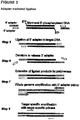
- the present disclosure also provides a method for selectively amplifying a target nucleic acid from a biological sample containing a mixture of non-target nucleic acid, wherein the target nucleic acid is a double stranded, blunt end nucleic acid fragment with 5' phosphorylated ends, comprising the steps of a) mixing the biological sample, a 5' adapter and a 3' adapter, wherein the 3' adapter is complementary to the 5' adapter at the 3' end and thus capable of creating a double-stranded adapter complex; b) introducing a ligase to the mixture of step a) and ligating the 5' adapter of the double-stranded adapter complex to the target nucleic acid, thereby creating a ligated sample; c) heating ligated sample to release the 3' adapter; d) adding a polyme
- the method may include the additional step of performing target-specific amplification using target-specific primers.
- a dideoxy-nucleotide may be incorporated into the 3' position of the 3' adapter.
- the 5' adapters of step a) may be bound to a solid support.
- spacer arms are introduced between the 5' adapter at the 5' end and the solid support.
- Solid support-bound ligation products may be combined with the non-solid support products of claim 1 prior to amplification step e).
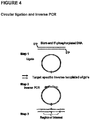
- Also disclosed herein is a method that selectively detects and amplifies target nucleic acid using a combination of the following 3 steps: 1) treating total isolated nucleic acid from a biological sample with a ligase that can covalently join blunt 5'-phosphorylated nucleic acid ends (e.g.
- T4 or T7 DNA ligase under conditions that favor unimolecular circularization of the nucleic acid molecules; 2) amplifying the nucleic acid with target-specific primers and a method that is selective for circular nucleic acid, for example, either a) via a rolling circle amplification with target-specific primers, or b) via inverse PCR with target-specific primers for the gene of interest; and 3) characterizing the amplified nucleic acid by direct or indirect qualitative and/or quantitative molecular characterization methods.
- cell-free nucleic acid may originate from several sources, it has been demonstrated that one source of circulating extracellular nucleic acid originates from programmed cell death, also known as apoptosis.
- the source of nucleic acid that arise as a result of apoptosis may be found in many body fluids and originate from several sources, including, but not limited to, normal programmed cell death in the host, induced programmed cell death in the case of an autoimmune disease, septic shock, neoplasms (malignant or non-malignant), or non-host sources such as an allograft (transplanted tissue), or the fetus or placenta of a pregnant woman.
- the applications for the detection, extraction and relative enrichment of extracellular nucleic acid from peripheral blood or other body fluids are widespread and may include inter alia, non-invasive prenatal diagnosis, cancer diagnostics, pathogen detection, auto-immune response and allograft rejection.
- the present invention includes methods to extract and relatively enrich by physical separation short base pair nucleic acid in the presence of a high background of genomic material (e . g ., host or maternal nucleic acids). More specifically, the present invention provides methods for the selective extraction and relative enrichment, based on size discrimination, of nucleic acid of approximately 1,200 base pairs or less (herein referred to as "target nucleic acid”) in a high background of genomic nucleic acids (herein referred to as "non-target nucleic acid”). This leads to a relatively enriched fraction of nucleic acid that has a higher concentration of smaller nucleic acids.
- the methods of the present invention may be used to improve pathogen detection.
- Methods for rapid identification of unknown bioagents using a combination of nucleic acid amplification and determination of base composition of informative amplicons by molecular mass analysis are disclosed in published U.S. Patent applications 20030027135 , 20030082539 , 20030124556 , 20030175696 , 20030175695 , 20030175697 , and 20030190605 and U.S. patent application Ser. Nos. 10/326,047 , 10/660,997 , 10/660,122 and 10/660,996 .
- host cell is any cell into which exogenous nucleic acid can be introduced, producing a host cell which contains exogenous nucleic acid, in addition to host cell nucleic acid.
- host cell nucleic acid and “endogenous nucleic acid” refer to nucleic acid species (e . g ., genomic or chromosomal nucleic acid) that are present in a host cell as the cell is obtained.
- exogenous refers to nucleic acid other than host cell nucleic acid; exogenous nucleic acid can be present into a host cell as a result of being introduced in the host cell or being introduced into an ancestor of the host cell.
- a nucleic acid species which is exogenous to a particular host cell is a nucleic acid species which is non-endogenous (not present in the host cell as it was obtained or an ancestor of the host cell).
- Appropriate host cells include, but are not limited to, bacterial cells, yeast cells, plant cells and mammalian cells.
- extraction refers to the partial or complete separation and isolation of a nucleic acid from a biological or non-biological sample comprising other nucleic acids.
- selective and selective refer to the ability to extract a particular species of nucleic acid molecule, on the basis of molecular size from a combination which includes or is a mixture of species of nucleic acid molecules.
- nucleic acid and “nucleic acid molecule” may be used interchangeably throughout the disclosure.
- the terms refer to a deoxyribonucleotide (DNA), ribonucleotide polymer (RNA), RNA/DNA hybrids and polyamide nucleic acids (PNAs) in either single- or double-stranded form, and unless otherwise limited, would encompass known analogs of natural nucleotides that can function in a similar manner as naturally occurring nucleotides.
- DNA deoxyribonucleotide
- RNA ribonucleotide polymer
- PNAs polyamide nucleic acids
- target nucleic acid refers to the nucleic acid of interest that is extracted based on its molecular size, preferably in a second extraction step, and further isolated for downstream analysis.
- the target nucleic acid has a molecular size smaller than the non-target nucleic acid present in the biological sample, for example, smaller than 1200 base pairs.
- the target nucleic acid may be from apoptotic DNA, fetal DNA, oncogenic DNA, or any non-host DNA.
- the target nucleic acid may be cell-free nucleic acid.
- the target nucleic acid may be oligonucleosomal nucleic acid generated during programmed cell death.
- non-target nucleic acid refers to the relatively high amount of non-desired background nucleic acid present in a biological sample, which is extracted, preferably, in a first extraction step.
- non-target nucleic acid has a molecular size larger than target nucleic acid, for example, greater than 1200 base pairs.
- Non-target nucleic acid may be from a host or host cell. In a preferred embodiment, non-target nucleic acid is of maternal origin.
- molecular size refers to the size of a nucleic acid molecule, which may be measured in terms of a nucleic acid molecule's mass or length (bases or base pairs).
- Fetal nucleic acid is present in maternal plasma from the first trimester onwards, with concentrations that increase with progressing gestational age ( Lo et al. Am J Hum Genet (1998) 62:768-775 ). After delivery, fetal nucleic acid is cleared very rapidly from the maternal plasma ( Lo et al. Am J Hum Genet (1999) 64:218-224 ). Fetal nucleic acid is present in maternal plasma in a much higher fractional concentration than fetal nucleic acid in the cellular fraction of maternal blood ( Lo et al. Am J Hum Genet (1998) 62:768-775 ).
- the target nucleic acid is of fetal origin
- the non-target nucleic acid is of maternal origin.
- the present invention relates to extracting nucleic acid from a biological sample as defined in the claims, including blood serum, blood plasma or urine.
- biological samples such as whole blood, umbilical cord blood, chorionic villi, amniotic fluid, cerbrospinal fluid, spinal fluid, lavage fluid ( e . g ., bronchoalveolar, gastric, peritoneal, ductal, ear, athroscopic), biopsy sample, urine, feces, sputum, saliva, nasal mucous, prostate fluid, semen, lymphatic fluid, bile, tears, sweat, breast milk, breast fluid, embryonic cells and fetal cells.
- the biological sample is blood plasma.
- blood encompasses whole blood or any fractions of blood, such as serum and plasma as conventionally defined.
- Blood plasma refers to the fraction of whole blood resulting from centrifugation of blood treated with anticoagulants.
- Blood serum refers to the watery portion of fluid remaining after a blood sample has coagulated.
- blood handling protocols are followed to ensure minimal degradation of nucleic acid in the sample and to minimize the creation of apoptotic nucleic acid in the sample. Blood handling methods are well known in the art.
- the biological sample may be cell-free or substantially cell-free.
- the biological sample may be a sample containing previously extracted, isolated or purified nucleic acids.
- One way of targeting target nucleic acid is to use the non-cellular fraction of a biological sample; thus limiting the amount of intact cellular material (e . g ., large strand genomic DNA) from contaminating the sample.
- a cell-free sample such as pre-cleared plasma, urine, etc. may be first treated to inactivate intracellular nucleases through the addition of an enzyme, a chaotropic substance, a detergent or any combination thereof.
- the biological sample may be first treated to remove substantially all cells from the sample by any of the methods known in the art, for example, centrifugation, filtration, affinity chromatography, etc.
- concentration sufficient to selectively bind refers to an amount sufficient to cause at least 50%, more preferably 70%, even more preferably 90% or more of the target nucleic acid to bind to an adsorptive surface.
- Suitable solid phase carriers include, but are not limited to, other particles, fibers, beads and or supports which have an affinity for nucleic acids or may be modified ( e . g ., the addition of a functional group or groups) to bind nucleic acids, and which can embody a variety of shapes, that are either regular or irregular in form, provided that the shape maximizes the surface area of the solid phase, and embodies a carrier which is amenable to microscale manipulations.
- silica-coated magnetic beads are used.
- the solid support may be modified to reversibly bind nucleic acid.
- the solid support may have a functional group-coated surface.
- the functional group-coated surface may be silica-coated, hydroxyl-coated, amine-coated, carboxyl-coated and encapsulated carboxyl group-coated.
- the term "functional group-coated surface” as used herein refers to a surface which is coated with moieties which reversibly bind, nucleic acids.
- One example is a surface which is coated with moieties which each have a free functional group which is bound to the amino group of the amino silane or the solid support; as a result, the surfaces of the solid support are coated with the functional group containing moieties.
- the functional group may be a carboxylic acid.
- a suitable moiety with a free carboxylic acid functional group is a succinic acid moiety in which one of the carboxylic acid groups is bonded to the amine of amino silanes through an amide bond and the second carboxylic acid is unbonded, resulting in a free carboxylic acid group attached or tethered to the surface of the paramagnetic microparticle.
- Suitable solid phase carriers having a functional group coated surface that reversibly binds nucleic acid molecules are for example, magnetically responsive solid phase carriers having a functional group-coated surface, such as, but not limited to, silica-coated, hydroxyl-coated, amino-coated, carboxyl-coated and encapsulated carboxyl group-coated magnetic beads.
- an oligonucleotide e.g ., an adapter or primer
- biotin which may bind to immobilized streptavidin.
- nucleic acid from biological material requires cell lysis, inactivation of cellular nucleases and separation of the desired nucleic acid from cellular debris.
- Common lysis procedures include mechanical disruption (e . g ., grinding, hypotonic lysis), chemical treatment (e . g ., detergent lysis, chaotropic agents, thiol reduction), and enzymatic digestion (e . g ., proteinase K).
- the biological sample may be first lysed in the presence of a lysis buffer, chaotropic agent (e.g., salt) and proteinase or protease. Cell membrane disruption and inactivation of intracellular nucleases may be combined.
- a single solution may contain detergents to solubilise cell membranes and strong chaotropic salts to inactivate intracellular enzymes. After cell lysis and nuclease inactivation, cellular debris may easily be removed by filtration or precipitation.
- Lysis may be blocked.
- the sample may be mixed with an agent that inhibits cell lysis to inhibit the lysis of cells, if cells are present, where the agent is a membrane stabilizer, a cross-linker, or a cell lysis inhibitor.
- the agent may be a cell lysis inhibitor, and may be glutaraldehyde, derivatives of glutaraldehyde, formaldehyde, formalin, or derivatives of formaldehyde. See U.S. patent application 20040137470 .
- the method may include adding a washing step or steps to remove non-nucleic acid molecules, for example salts, from the solid-support-target nucleic acid complex or surrounding solution.
- Non-nucleic acid molecules are then removed with an alcohol-based wash and the target nucleic acid is eluted under low- or no-salt conditions (TE buffer or water) in small volumes, ready for immediate use without further concentration.
- Extraction may be improved by the introduction of a carrier such as tRNA, glycogen, polyA RNA, dextran blue, linear poly acrylamide (LPA), or any material that increases the recovery of nucleic acid.
- the carriers may be added to the second binding solution or washing buffer.
- the final relative percentage of target nucleic acid to non-target nucleic acid may be at least about 5-6% fetal DNA, about 7-8% fetal DNA, about 9-10% fetal DNA, about 11-12% fetal DNA, about 13-14% fetal DNA.
- fetal DNA about 15-16% fetal DNA, about 16-17% fetal DNA, about 17-18% fetal DNA, about 18-19% fetal DNA, about 19-20% fetal DNA, about 20-21% fetal DNA, about 21-22% fetal DNA, about 22-23% fetal DNA, about 23-24% fetal DNA, about 24-25% fetal DNA, about 25-35% fetal DNA, about 35-45% fetal DNA, about 45-55% fetal DNA, about 55-65% fetal DNA, about 65-75% fetal DNA, about 75-85% fetal DNA, about 85-90% fetal DNA, about 90-91% fetal DNA, about 91-92% fetal DNA, about 92-93% fetal DNA, about 93-94% fetal DNA, about 94-95% fetal DNA, about 95-96% fetal DNA, about 96-97% fetal DNA, about 97-98% fetal DNA, about 98-99% fetal DNA, or about 99-99.7% fetal
- the methods provided herein may also be modified to combine steps, for example, in order to improve automation.
- the methods of the present invention may be used in conjunction with any known technique suitable for the extraction, isolation or purification of nucleic acids, including, but not limited to, cesium chloride gradients, gradients, sucrose gradients, glucose gradients, centrifugation protocols, boiling, Microcon 100 filter, Chemagen viral DNA/RNA 1k kit, Chemagen blood kit, Qiagen purification systems, Qiagen MinElute kits, QIA DNA blood purification kit, HiSpeed Plasmid Maxi Kit, QIAfilter plasmid kit, Promega DNA purification systems, MangeSil Paramagnetic Particle based systems, Wizard SV technology, Wizard Genomic DNA purification kit, Amersham purification systems, GFX Genomic Blood DNA purification kit, Invitrogen Life Technologies Purification Systems, CONCERT purification system, Mo Bio Laboratories purification systems, UltraClean BloodSpin Kits, and UlraClean Blood DNA Kit.
- cesium chloride gradients including cesium chloride gradients, gradients, sucrose gradients, glucose
- the first extraction method may be any known or modified technique suitable for the extraction, isolation or purification of non-target nucleic acids (i . e ., larger than target nucleic acids), including, but not limited to, cesium chloride gradients, gradients, sucrose gradients, glucose gradients, centrifugation protocols, boiling, Microcon 100 filter, Chemagen viral DNA/RNA 1k kit, Chemagen blood kit, Qiagen purification systems, Qiagen MinElute kits, QIA DNA blood purification kit, HiSpeed Plasmid Maxi Kit, QIAfilter plasmid kit, Promega DNA purification systems, MangeSil Paramagnetic Particle based systems, Wizard SV technology, Wizard Genomic DNA purification kit, Amersham purification systems, GFX Genomic Blood DNA purification kit, Invitrogen Life Technologies Purification Systems, CONCERT purification system, Mo Bio Laboratories purification systems, UltraClean BloodSpin Kits, and UlraClean Blood DNA Kit.
- One or more of the above methods may
- the second extraction method may be any known or modified technique suitable for the extraction, isolation or purification of target nucleic acids (i . e ., smaller than non-target nucleic acids), including, but not limited to, cesium chloride gradients, gradients, sucrose gradients, glucose gradients, centrifugation protocols, boiling, Microcon 100 filter, Chemagen viral DNA/RNA 1k kit, Chemagen blood kit, Qiagen purification systems, Qiagen MinElute kits, QIA DNA blood purification kit, HiSpeed Plasmid Maxi Kit, QIAfilter plasmid kit, Promega DNA purification systems, MangeSil Paramagnetic Particle based systems, Wizard SV technology, Wizard Genomic DNA purification kit, Amersham purification systems, GFX Genomic Blood DNA purification kit, Invitrogen Life Technologies Purification Systems, CONCERT purification system, Mo Bio Laboratories purification systems, UltraClean BloodSpin Kits, and UlraClean Blood DNA Kit.
- One or more of the above methods may
- the present specification also further relates to kits for practicing the disclosed methods.
- apoptosis is an essential mechanism in morphogenesis, development, differentiation, and homeostasis in all multicellular organisms.
- apoptosis is distinguished from necrosis by activation of specific pathways that result in characteristic morphological features including DNA fragmentation, chromatin condensation, cytoplasmic and nuclear breakdown, and the formation of apoptotic bodies.
- CAD Caspase-activated DNase
- DFF DNA fragmentation factor
- any method that can select for DNA fragments with blunt, 5'- phosphorylated ends is suitable to select for specific features (such as size, sequence and DNA base methylation differences) of the apoptotic DNA in a given biological sample. See for example, US patent applications 20050019769 , 20050164241 , 20030044388 , or 20060019278 .
- a method For enrichment and detection of apoptotic DNA ladders in mammalian tissues, a method has been described that takes advantage of the presence of blunt, 5'-phosphorylated ends in apoptotic DNA by ligation of synthetic, blunt-ended linkers to both ends of linear apoptotic DNA fragments with T4 ligase which is able to form a covalent bond between the 3'-hydroxy ends of the synthetic linker and the 5'-phosphorylated ends of the DNA fragments ( Staley et al, Cell Death Differ. 1997 Jan;4(1):66-75 ).
- the method can only be used as a generic tool to characterize the size distribution of apoptotic ladders in specific tissues in general, and is not site or sequence specific.
- the present specification therefore, also provides a method for selectively amplifying short, fragmented nucleic acid by adapter mediated ligation and other related methods.
- the method capitalizes on the blunt end and 5'-phosphorylated nature of the target nucleic acid as a means to attach a non-genome specific adapter to the blunt ends using a ligation process. While the nature of the termini of all cell-free nucleic acid is unknown, coupling this method with short extension times during amplification will favor the amplification of the oligonucleosome monomer and short multimers. Since the target nucleic acid is shorter than the non-targeted nucleic acid, the target nucleic acid can be enriched over the non-target nucleic acid.
- This method can be further coupled with specific amplification of a nucleic acid region of interest for further analysis.
- the 3' and 5' dephosphorylated adapters are complementary and form a double-stranded blunt end adapter complex.
- the 5' adapter of the adapter complex ligates to the 5' phosphorylated strand of the target nucleic acid, and heat is introduced to release the shorter, unligated 3' adapter.
- the 5' protruding ends of the ligated complex are filled in by a thermostable DNA polymerase.
- the 5' adapter is reintroduced and serves as a PCR primer for whole genome amplification.
- Oligonucleosomes are the repeating structural units of chromatin, each consisting of approximately 200 base pairs of DNA wound around a histone core that partially protects the DNA from nuclease digestion in vitro and in vivo. These units can be found as monomers or multimers and produce what is commonly referred to as an apoptotic DNA ladder. The units are formed by nuclease digestion of the flanking DNA not bound to histone resulting in the majority of oligonucleosomes being blunt ended and 5'-phorsphorylated.
- oligonucleosomes are hard to detect and harder to isolate; however, they can serve as predictors for disease and other conditions (see US patent application 20040009518 ).
- 5' dephosphorylated adapter refers to a nucleic acid which comprises about 20 to 30 base pairs that is complementary to a short dephosphorylated adapter and capable of hybridizing thereto to form a double-stranded, blunt end adapter complex capable of ligating to target nucleic acid. Specifically, the 5'adapter ligates to the 5'phosphorylated base of the target nucleic acid.
- 3' dephosphorylated adapter refers to a nucleic acid which comprises about 10 to 15 base pairs that is complementary to the 5' adapter at the 3' end, thus capable of creating a double-stranded blunted end necessary for ligation.
- the 3' adapter does not bind or ligate to the oligonucleosomal DNA.
- 5' adapter primer refers to the same oligonucleotide sequence as the 5' dephosphorylated adapter, but is later reintroduced to the ligated sample to facilitate the whole genome amplification.
- adapter complex refers to the hybridized, double-stranded 5' adapter and 3' adapter molecule.
- the method is semi quantitative. By comparing the numbers of PCR cycles needed to detect target nucleic acid in two samples, the relative amount of target nucleic acid occurring in each sample can be estimated.
- the 5' adapters may be bound to a solid support for increased enrichment of the target nucleic acid.
- non-ligated, non-target nucleic acid is substantially removed from the solution, and amplification can proceed using only the targeted material that has ligated to the 5' adapters. This improves the enrichment of the target nucleic acid by removing genomic non-target nucleic acid that may compete with the target nucleic acid in the target-specific amplification step.
- the target sequence is present in both the mother and the fetus, and the maternal sample is very abundant (>95%), under normal circumstances the fetal nucleic acid would not be detectable as it would be out-competed by the maternal nucleic acid in the first cycles of amplification.
- the fetal nucleic acid is part or wholly oligonucleosomal in nature, and the majority of the ligated sample is fetal in nature, maternal nucleic acid is still present in the sample, which can compete with the fetal nucleic acid in the target-specific amplification step. Separation of non-target nucleic acid from the target nucleic acid ( i .
- ligated sample increases the detection of fetal nucleic acid in cases where there is an abundance of maternal nucleic acid in the initial biological sample, there is sample degradation, or there is a maternal condition (e . g ., autoimmune disease, transplant rejection, cancer) that increases the amount of maternal oligonucleosomes.
- Spacer arms may be introduced between the solid support and 5' adapter to improve ligation of the target nucleic acid to the adapter molecule.
- the ligated sample bound to a solid support may be combined with a ligated sample that does not have a solid support prior to the amplification step.
- spacer arms refers to any molecule that can be used in single or multiples to create space between the solid support and an oligonucleotide (e.g., target nucleic acidOne or more hexathylene (HEG) spacer units may be inserted between the aminohexyl groups and the 5' end of the 5' adapter.
- the aminohexyl group is used for covalent coupling to the solid support.
- spacer arms include multiple dTTP's (up to 15), spacer 18 (an 18 atom hexa-ethylene glycol spacer), spacer 9 (a triethylene glycol spacer), or photocleavable spacers known in the art.
- An alternative method disclosed herein selectively detects and amplifies target nucleic acid using a combination of the following 3 steps:
- any combination of these 3 steps will selectively enrich the double-stranded, blunt-ended 5'-phosphorylated DNA such as DNA from apoptotic ladders by several orders of magnitude over the DNA fragments present in the biological sample that cannot by circularized due to lack of blunt ends and/or missing 5'-terminal phosphate groups and allow a comparison of its sequence with the wild-type sequence of the same organism or the host organism in case of a transplant or a maternal sequence in case of a pregnancy, for instance.
- step 2 an aliquot of the total DNA is either treated with methylation-sensitive or methylation-resistant enzymes or with chemicals that convert methylated bases into different bases so that methylated bases in the apoptotic DNA fragments can be characterized after step 2 and 3.
- Circulating nucleic acids in the plasma and serum of patients are associated with certain diseases and conditions (See, Lo YMD et al., N Eng J Med 1998;339:1734-8 ; Chen XQ, et al., Nat Med 1996;2:1033-5 , Nawroz H et al., Nat Med 1996;2:1035-7 ; Lo YMD et al., Lancet 1998;351:1329-30 ; Lo YMD, et al., Clin Chem 2000;46:319-23 ). Further, the method of nucleic acid isolation may affect the ability to detect these disease-associated nucleic acids circulating in the blood ( Wang et al. Clin Chem. 2004 Jan;50(1):211-3 ).
- the characteristics and biological origin of circulating nucleic acids are not completely understood. However, it is likely that cell death, including apoptosis, is one major factor ( Fournie e al., Gerontology 1993;39:215-21 ; Fournie et al., Cancer Lett 1995;91:221-7 ). Without being bound by theory, as cells undergoing apoptosis dispose nucleic acids into apoptotic bodies, it is possible that at least part of the circulating nucleic acids in the plasma or serum of human subjects is short, fragmented DNA that takes the form particle-associated nucleosomes.
- the present invention provides methods for extracting the short, fragmented circulating nucleic acids present in the plasma or serum of subjects, thereby enriching the short, predictive nucleic acids relative to the background genomic DNA.
- the present specification provides methods of evaluating a disease condition in a patient suspected of suffering or known to suffer from the disease condition.
- the specification describes obtaining a biological sample from the patient suspected of suffering or known to suffer from a disease condition, selectively extracting and enriching extracellular nucleic acid in the sample based on its size using the methods provided herein, and evaluating the disease condition by determining the amount or concentration or characteristic of enriched extracellular nucleic acid and comparing the amount or concentration or characteristic of enriched extracellular nucleic acid to a control (e . g ., background genomic DNA from biological sample).
- a control e . g ., background genomic DNA from biological sample.
- evaluating a disease condition refers to assessing the disease condition of a patient.
- evaluating the condition of a patient can include detecting the presence or absence of the disease in the patient. Once the presence of disease in the patient is detected, evaluating the disease condition of the patient may include determining the severity of disease in the patient. It may further include using that determination to make a disease prognosis, e . g . a prognosis or treatment plan. Evaluating the condition of a patient may also include determining if a patient has a disease or has suffered from a disease condition in the past. Evaluating the disease condition in that instant might also include determining the probability of reoccurrence of the disease condition or monitoring the reoccurrence in a patient.
- Evaluating the disease condition might also include monitoring a patient for signs of disease. Evaluating a disease condition therefore includes detecting, diagnosing, or monitoring a disease condition in a patient as well as determining a patient prognosis or treatment plan. The method of evaluating a disease condition aids in risk stratification.
- nucleic acids including DNA and RNA
- RNA RNA
- the methods provided herein may be used to extract oncogenic nucleic acid, which may be further used for the detection, diagnosis or prognosis of a cancer-related disorder.
- nucleic acids including DNA and RNA
- RNA RNA
- These molecules are likely packaged in apoptotic bodies and, hence, rendered more stable compared to 'free RNA' ( Anker P and Stroun M, Clin Chem (2002) 48, 1210-1211 ; Ng EK, et al. Proc Natl Acad Sci USA (2003) 100, 4748-4753 ).
- Tumor-specific DNA for a wide range of malignancies has been found: haematological, colorectal, pancreatic, skin, head-and-neck, lung, breast, kidney, ovarian, nasopharyngeal, liver, bladder, gastric, prostate and cervix.
- haematological, colorectal, pancreatic, skin, head-and-neck, lung, breast, kidney, ovarian, nasopharyngeal, liver, bladder, gastric, prostate and cervix In aggregate, the above data show that tumor-derived DNA in plasma is ubiquitous in affected patients, and likely the result of a common biological process such as apoptosis. Investigations into the size of these plasma DNA fragments from cancer patients has revealed that the majority show lengths in multiples of nucleosomal DNA, a characteristic of apoptotic DNA fragmentation ( Jahr S, et al. Cancer Res (2001) 61,1659-1665 ).
- PCR-specific strategies can be developed.
- clinical application awaits optimization of methods to isolate, quantify and characterize the tumor-specific DNA compared to the patient's normal DNA, which is also present in plasma. Therefore, understanding the molecular structure and dynamics of DNA in plasma of normal individuals is necessary to achieve further advancement in this field.
- the present specification describes detection of specific extracellular nucleic acid in plasma or serum fractions of human or animal blood associated with neoplastic, premalignant or proliferative disease. Specifically, the specification relates to detection of nucleic acid derived from mutant oncogenes or other tumor-associated DNA, and to those methods of detecting and monitoring extracellular mutant oncogenes or tumor-associated DNA found in the plasma or serum fraction of blood by using DNA extraction with enrichment for mutant DNA as provided herein.
- the specification relates to the detection, identification, or monitoring of the existence, progression or clinical status of benign, premalignant, or malignant neoplasms in humans or other animals that contain a mutation that is associated with the neoplasm through the size selective enrichment methods provided herein, and subsequent detection of the mutated nucleic acid of the neoplasm in the enriched DNA.
- the present specification features methods for identifying DNA originating from a tumor in a biological sample. These methods may be used to differentiate or detect tumor-derived DNA in the form of apoptotic bodies or nucleosomes in a biological sample. In preferred cases, the non-cancerous DNA and tumor-derived DNA are differentiated by observing nucleic acid size differences, wherein low base pair DNA is associated with cancer.
- the present specification features methods for differentiating DNA species originating from different individuals in a biological sample. These methods may be used to differentiate or detect fetal DNA in a maternal sample.
- the DNA species can be differentiated by observing nucleic acid size differences.
- the differentiation between maternal and fetal DNA may be performed with or without quantifying the concentration of fetal DNA in maternal plasma or serum. Where the fetal DNA is quantified, the measured concentration may be used to predict, monitor or diagnose or prognosticate a pregnancy-associated disorder.
- non-invasive and invasive techniques available for prenatal diagnosis including ultrasonography, amniocentesis, chorionic villi sampling (CVS), fetal blood cells in maternal blood, maternal serum alpha-fetoprotein, maternal serum beta-HCG, and maternal serum estriol.
- CVS chorionic villi sampling
- fetal blood cells in maternal blood maternal serum alpha-fetoprotein
- maternal serum beta-HCG maternal serum alpha-fetoprotein
- maternal serum estriol maternal serum estriol
- the first marker that was developed for fetal DNA detection in maternal plasma was the Y chromosome, which is present in male fetuses ( Lo et al. Am J Hum Genet (1998) 62:768-775 ).
- the robustness of Y chromosomal markers has been reproduced by many workers in the field ( Costa JM, et al. Prenat Diagn 21:1070-1074 ). This approach constitutes a highly accurate method for the determination of fetal gender, which is useful for the prenatal investigation of sex-linked diseases ( Costa JM, Ernault P (2002) Clin Chem 48:679-680 ).
- Maternal plasma DNA analysis is also useful for the noninvasive prenatal determination of fetal RhD blood group status in RhD-negative pregnant women ( Lo et al. (1998) N Engl J Med 339:1734-1738 ). This approach has been shown by many groups to be accurate, and has been introduced as a routine service by the British National Blood Service since 2001 ( Finning KM, et al. (2002) Transfusion 42:1079-1085 ).
- fetal DNA in maternal plasma include the detection of achondroplasia ( Saito H, et al. (2000) Lancet 356:1170 ), myotonic dystrophy ( Amicucci P, et al. (2000) Clin Chem 46:301-302 ), cystic fibrosis ( Gonzalez-Gonzalez MC, et al. (2002) Prenat Diagn 22:946-948 ), Huntington disease ( Gonzalez-Gonzalez MC, et al. (2003) Prenat Diagn 23:232-234 ), and congenital adrenal hyperplasia ( Rijnders RJ, et al. (2001) Obstet Gynecol 98:374-378 ). It is expected that the spectrum of such applications will increase over the next few years.
- the patient is pregnant and the method of evaluating a disease or physiological condition in the patient or her fetus aids in the detection, monitoring, prognosis or treatment of the patient or her fetus. More specifically, the present specification features methods of detecting abnormalities in a fetus by detecting fetal DNA in a biological sample obtained from a mother.
- the methods according to the present specification provide for detecting fetal DNA in a maternal sample by differentiating the fetal DNA from the maternal DNA based on DNA characteristics ( e . g ., size, weight, 5' phosphorylated, blunt end). See Chan et al. Clin Chem. 2004 Jan;50(1):88-92 ; and Li et al. Clin Chem.
- fetal DNA that is predictive of a genetic anomaly or genetic-based disease may be identified thereby providing methods for prenatal diagnosis. These methods are applicable to any and all pregnancy-associated conditions for which nucleic acid changes, mutations or other characteristics (e . g ., methylation state) are associated with a disease state. Exemplary diseases that may be diagnosed include, for example, preeclampsia, preterm labor, hyperemesis gravidarum, ectopic pregnancy, fetal chromosomal aneuploidy (such as trisomy 18, 21, or 13), and intrauterine growth retardation.
- the methods of the present invention allow for the analysis of fetal genetic traits including those involved in chromosomal aberrations (e . g . aneuploidies or chromosomal aberrations associated with Down's syndrome) or hereditary Mendelian genetic disorders and, respectively, genetic markers associated therewith (e . g . single gene disorders such as cystic fibrosis or the hemoglobinopathies). Size-based extraction of extracellular fetal DNA in the maternal circulation thus facilitates the non-invasive detection of fetal genetic traits, including paternally inherited polymorphisms which permit paternity testing.
- pregnancy-associated disorder refers to any condition or disease that may affect a pregnant woman, the fetus the woman is carrying, or both the woman and the fetus. Such a condition or disease may manifest its symptoms during a limited time period, e.g., during pregnancy or delivery, or may last the entire life span of the fetus following its birth.
- a pregnancy-associated disorder include ectopic pregnancy, preeclampsia, preterm labor, and fetal chromosomal abnormalities such as trisomy 13, 18, or 21.
- chromosomal abnormality refers to a deviation between the structure of the subject chromosome and a normal homologous chromosome.
- normal refers to the predominate karyotype or banding pattern found in healthy individuals of a particular species.
- a chromosomal abnormality can be numerical or structural, and includes but is not limited to aneuploidy, polyploidy, inversion, a trisomy, a monosomy, duplication, deletion, deletion of a part of a chromosome, addition, addition of a part of chromosome, insertion, a fragment of a chromosome, a region of a chromosome, chromosomal rearrangement, and translocation.
- a chromosomal abnormality can be correlated with presence of a pathological condition or with a predisposition to develop a pathological condition.
- the present specification also provides a method of evaluating the disease condition of a patient suspected of having suffered from a trauma or known to have suffered from a trauma.
- the method includes obtaining a sample of plasma or serum from the patient suspected of having suffered from a trauma or known to have had suffered from a trauma, and detecting the quantity or concentration of mitochondrial nucleic acid in the sample.
- the example provides a procedure, using a method provided herein, to selectively extract DNA based on its size.
- chaotropic salt for example, less than 30% solution (weight per volume) to the sample solution to denature proteins and inactivate nucleases, proteinase K or any protease, for example 100 to 1000 ⁇ g) to further inactivate nucleases and break down proteins in solution.
- detergents for example SDS or Triton-X 100 up to 1% volume per volume, may be used alone or in combination with a salt.
- wash target nucleic acid-bound solid support using an appropriate washing solution comprised of salt, buffer, water and alcohol.
- an appropriate washing solution comprised of salt, buffer, water and alcohol.
- Figure 1 shows the successful extraction of low base pair DNA from a 1kb DNA ladder (PromegaTM) in the presence of guanidine thiocyanate (GuSCN).
- the DNA is first bound to silica at various low concentrations of guanidine thiocyanate as shown in Figure 1 .
- the supernatant from the first binding solution is subsequently bound to silica at varying guanidine thiocyanate concentrations, with a finishing high concentration of 4.6M. These steps are followed by wash and elution steps.
- the method can be employed to produce size selective separation of a commercially available DNA ladder with DNA strands ranging in mass from 250bp to 10,000 bp from normal human plasma in the presence of guanidine thiocyanate as the chaotropic salt. The following steps are performed:
- Figure 2 shows the successful extraction of low base pair DNA from a 1kb DNA ladder (PromegaTM) in the presence of sodium perchlorate (NaClO 4 ).
- the DNA is first bound to silica at various low concentrations of sodium perchlorate as shown in Figure 2 .
- the supernatant from the first binding solution is subsequently bound to silica at varying sodium perchlorate concentrations, with a finishing high concentration of 4.5 M. These steps are followed by wash and elution steps.
- the method can be employed to produce size selective separation of a commercially available DNA ladder with DNA strands ranging in mass from 250bp to 10,000 bp from normal human plasma in the presence of sodium perchlorate (NaClO 4 ) as the chaotropic salt.
- NaClO 4 sodium perchlorate
- the below example provides a procedure, using the method provided herein, to selectively amplify target nucleic acid that is blunt-ended and 5'-phosphorylated.
- the method relies on the ligation of a non-genome specific adapter to the blunt ends, which allows for whole genome amplification followed by target-specific amplification. While the nature of the termini of all cell-free nucleic acid is unknown, coupling this method with short extension times during amplification will favor the amplification of the oligonucleosome monomer and short multimers. Since the target nucleic acid is shorter than the non-targeted nucleic acid, the target nucleic acid can be enriched over the non-target nucleic acid.
- the 3' adapter is complementary to the 3'-end of 5' adapter to create the blunt-end, double-stranded adapter complex.
- 5' adapter 5'-ACACGGCGCACGCCTCCACG-3' ⁇ blunt-end
- 3' adapter 3'-GTGCGGAGGTGC-5'
- the 3' adapter molecule is modified such that the new sequence consists of 13 nucleobases with a dideoxy-nucleotide at its 3'-position. This terminator nucleotide does not allow extension of the 3' adapter molecule by any polymerase, thus improving assay efficiency and detection.
- Alternative 3' adapter 3' adapter (SSGA13dd3'): 5'-CGTGGAGGCGTG ddNTP -3'
- the 3' adapter is shorter to reduce the melting temperature and allow for release from the 5' adapter following ligation.
- Both adapters are non-phosphorylated, and may be made of any sequence that is nonspecific to the nucleic acid to be amplified to prevent non-specific amplification of the genome.
- An exemplary procedure is provided below: 1. Prepare total or size selective nucleic acid sample in water or buffer. 2. Add ligation buffer, 5' adapter, 3' adapter, and water to reaction volume. 3. Place the reaction into a thermocycler and heat the reaction to 55°C for 10 minutes, then slowly ramp down the temperature to 10°C over 1 hour. 4. Add 1 ⁇ l T4 ligase (1-3 U per ul) (or ligation enzyme) and mix well and incubate for 10 min at 10°C, then ramp temperature up to 16°C and incubate for 10 minutes to over night (12-16 hours). 5. Add 5' primer, 10x PCR buffer, MgCl 2 , dNTPs, and polymerase. 6.
- Described hereafter is a method for intramolecular ligation followed by amplification of a target by inverse PCR or rolling circle amplification to detect a target nucleic acid.
Landscapes
- Chemical & Material Sciences (AREA)
- Engineering & Computer Science (AREA)
- Health & Medical Sciences (AREA)
- Life Sciences & Earth Sciences (AREA)
- Organic Chemistry (AREA)
- Genetics & Genomics (AREA)
- Zoology (AREA)
- Wood Science & Technology (AREA)
- Biomedical Technology (AREA)
- Biotechnology (AREA)
- General Engineering & Computer Science (AREA)
- Bioinformatics & Cheminformatics (AREA)
- Analytical Chemistry (AREA)
- Molecular Biology (AREA)
- Microbiology (AREA)
- Biophysics (AREA)
- Physics & Mathematics (AREA)
- Biochemistry (AREA)
- General Health & Medical Sciences (AREA)
- Proteomics, Peptides & Aminoacids (AREA)
- Plant Pathology (AREA)
- Crystallography & Structural Chemistry (AREA)
- Chemical Kinetics & Catalysis (AREA)
- Immunology (AREA)
- Measuring Or Testing Involving Enzymes Or Micro-Organisms (AREA)
Claims (14)
- Méthode d'extraction d'un acide nucléique de faible poids moléculaire à partir d'un échantillon comprenant un mélange d'un acide nucléique de faible poids moléculaire et d'un acide nucléique de poids moléculaire élevé, qui comprend:(a) le mélange de l'échantillon, d'un sel et d'un support solide capable de se lier à l'acide nucléique de manière réversible, pour former ainsi une première solution de liaison, dans lequel le sel est présent à une concentration à laquelle l'acide nucléique de poids moléculaire élevé s'adsorbe sélectivement sur le support solide:(b) la séparation du support solide de la première solution de liaison, pour obtenir ainsi une fraction séparée du support solide;(c) le mélange de la fraction séparée du support solide de (b) avec un sel supplémentaire, le sel étant présent à une concentration plus élevée que celle de la première solution de liaison de (a);(d) l'introduction d'un support solide supplémentaire au mélange de (c), pour former ainsi une seconde solution de liaison, dans laquelle l'acide nucléique de faible poids moléculaire s'adsorbe sélectivement sur le support solide supplémentaire: et(e) la séparation du support solide supplémentaire de la seconde solution de liaison, pour extraire ainsi l'acide nucléique de faible poids moléculaire de l'échantillon, dans laquelle l'acide nucléique de faible poids moléculaire comprend moins de 1 200 paires de bases et l'acide nucléique de poids moléculaire élevé comprend 1 200 paires de bases ou plus.
- Méthode selon la revendication 1, dans laquelle l'échantillon est le sérum sanguin, le plasma sanguin ou l'urine.
- Méthode selon la revendication 1 ou la revendication 2, comprenant en outre l'élution de l'acide nucléique adsorbé du support solide séparé de (e).
- Méthode selon les revendications 2, dans laquelle le plasma provient d'une femme enceinte.
- Méthode selon l'une quelconque des revendications 1 à 4, dans laquelle l'acide nucléique de faible poids moléculaire est d'au moins 10 paires de bases.
- Méthode selon l'une quelconque des revendications 1 à 5, dans laquelle l'acide nucléique de faible poids moléculaire est un produit apoptotique.
- Méthode selon l'une quelconque des revendications 1 à 6, dans laquelle l'acide nucléique de faible poids moléculaire est d'origine foetale.
- Méthode selon l'une quelconque des revendications 1 à 7, dans laquelle l'acide nucléique de poids moléculaire élevé est d'origine maternelle.
- Méthode selon l'une quelconque des revendications 1 à 8, dans laquelle le sel est au moins un composé choisi dans le groupe constitué du chlorure de sodium, du chlorure de magnésium, du chlorure de calcium, du chlorure de potassium, du chlorure de lithium, du chlorure de baryum, du chlorure de césium, de l'acétate d'ammonium, de l'acétate de sodium, de l'(iso)thiocyanate de guanidine, de l'iodure de sodium, du perchlorate de sodium, de l'iodure de potassium, du thiocyanate de sodium, de l'urée et du perchlorate d'ammonium.
- Méthode selon l'une quelconque des revendications 1 à 9, dans laquelle la concentration du sel de (a) est comprise dans la plage allant de 10 % à 30 % en poids par volume.
- Méthode selon l'une quelconque des revendications 1 à 10, dans laquelle la concentration du sel de (c) est comprise dans la plage allant de 20 % à 60 % en poids par volume.
- Méthode selon l'une quelconque des revendications 1 à 11, dans laquelle le support solide est choisi dans le groupe constitué des microparticules paramagnétiques, d'un gel de silice, des particules de silice, des billes magnétiques enrobées de silice, d'un verre à pores contrôlés, des billes magnétiques, des billes de séparation biomagnétiques, des microsphères, d'une résine divinylbenzène (DVB), du papier nitrocellulosique, des billes de cellulose, des capillaires, des surfaces en verre, des surfaces métalliques, d'une matière plastique, des membranes de filtration, des colonnes, des supports plats, des plaques ou membranes multipuits, des tranches, des peignes, des broches et des aiguilles.
- Méthode selon l'une quelconque des revendications 1 à 12, dans laquelle le support solide comprend un donneur d'hydroxyle.
- Méthode selon la revendication 13, dans lequel le donneur d'hydroxyle comprend une silice ou un verre.
Priority Applications (2)
| Application Number | Priority Date | Filing Date | Title |
|---|---|---|---|
| EP19183631.1A EP3617321B1 (fr) | 2006-05-31 | 2007-05-30 | Kit pour l'extraction et l'amplification d'acide nucléique à partir d'un échantillon |
| EP24207680.0A EP4524246A3 (fr) | 2006-05-31 | 2007-05-30 | Procédés et compositions pour l'extraction et l'amplification d'acide nucléique à partir d'un échantillon |
Applications Claiming Priority (5)
| Application Number | Priority Date | Filing Date | Title |
|---|---|---|---|
| US81022806P | 2006-05-31 | 2006-05-31 | |
| US80706106P | 2006-07-11 | 2006-07-11 | |
| PCT/US2007/069991 WO2007140417A2 (fr) | 2006-05-31 | 2007-05-30 | Procédés et compositions destinés à l'extraction et l'amplification d'un acide nucléique à partir d'un échantillon |
| EP07797885.6A EP2029777B1 (fr) | 2006-05-31 | 2007-05-30 | Procédés et compositions destinés à l'extraction d'un acide nucléique à partir d'un échantillon |
| EP12196349.0A EP2602321B1 (fr) | 2006-05-31 | 2007-05-30 | Procédés et compositions pour l'extraction et l'amplification d'acide nucléique à partir d'un échantillon |
Related Parent Applications (3)
| Application Number | Title | Priority Date | Filing Date |
|---|---|---|---|
| EP12196349.0A Division-Into EP2602321B1 (fr) | 2006-05-31 | 2007-05-30 | Procédés et compositions pour l'extraction et l'amplification d'acide nucléique à partir d'un échantillon |
| EP12196349.0A Division EP2602321B1 (fr) | 2006-05-31 | 2007-05-30 | Procédés et compositions pour l'extraction et l'amplification d'acide nucléique à partir d'un échantillon |
| EP07797885.6A Division EP2029777B1 (fr) | 2006-05-31 | 2007-05-30 | Procédés et compositions destinés à l'extraction d'un acide nucléique à partir d'un échantillon |
Related Child Applications (2)
| Application Number | Title | Priority Date | Filing Date |
|---|---|---|---|
| EP24207680.0A Division EP4524246A3 (fr) | 2006-05-31 | 2007-05-30 | Procédés et compositions pour l'extraction et l'amplification d'acide nucléique à partir d'un échantillon |
| EP19183631.1A Division EP3617321B1 (fr) | 2006-05-31 | 2007-05-30 | Kit pour l'extraction et l'amplification d'acide nucléique à partir d'un échantillon |
Publications (2)
| Publication Number | Publication Date |
|---|---|
| EP3260556A1 EP3260556A1 (fr) | 2017-12-27 |
| EP3260556B1 true EP3260556B1 (fr) | 2019-07-31 |
Family
ID=38779445
Family Applications (5)
| Application Number | Title | Priority Date | Filing Date |
|---|---|---|---|
| EP17180962.7A Active EP3260556B1 (fr) | 2006-05-31 | 2007-05-30 | Procédés pour l'extraction d'acide nucléique à partir d'un échantillon |
| EP12196349.0A Active EP2602321B1 (fr) | 2006-05-31 | 2007-05-30 | Procédés et compositions pour l'extraction et l'amplification d'acide nucléique à partir d'un échantillon |
| EP07797885.6A Active EP2029777B1 (fr) | 2006-05-31 | 2007-05-30 | Procédés et compositions destinés à l'extraction d'un acide nucléique à partir d'un échantillon |
| EP24207680.0A Pending EP4524246A3 (fr) | 2006-05-31 | 2007-05-30 | Procédés et compositions pour l'extraction et l'amplification d'acide nucléique à partir d'un échantillon |
| EP19183631.1A Active EP3617321B1 (fr) | 2006-05-31 | 2007-05-30 | Kit pour l'extraction et l'amplification d'acide nucléique à partir d'un échantillon |
Family Applications After (4)
| Application Number | Title | Priority Date | Filing Date |
|---|---|---|---|
| EP12196349.0A Active EP2602321B1 (fr) | 2006-05-31 | 2007-05-30 | Procédés et compositions pour l'extraction et l'amplification d'acide nucléique à partir d'un échantillon |
| EP07797885.6A Active EP2029777B1 (fr) | 2006-05-31 | 2007-05-30 | Procédés et compositions destinés à l'extraction d'un acide nucléique à partir d'un échantillon |
| EP24207680.0A Pending EP4524246A3 (fr) | 2006-05-31 | 2007-05-30 | Procédés et compositions pour l'extraction et l'amplification d'acide nucléique à partir d'un échantillon |
| EP19183631.1A Active EP3617321B1 (fr) | 2006-05-31 | 2007-05-30 | Kit pour l'extraction et l'amplification d'acide nucléique à partir d'un échantillon |
Country Status (3)
| Country | Link |
|---|---|
| US (5) | US8679741B2 (fr) |
| EP (5) | EP3260556B1 (fr) |
| WO (1) | WO2007140417A2 (fr) |
Families Citing this family (158)
| Publication number | Priority date | Publication date | Assignee | Title |
|---|---|---|---|---|
| US11111543B2 (en) | 2005-07-29 | 2021-09-07 | Natera, Inc. | System and method for cleaning noisy genetic data and determining chromosome copy number |
| US11111544B2 (en) | 2005-07-29 | 2021-09-07 | Natera, Inc. | System and method for cleaning noisy genetic data and determining chromosome copy number |
| US9424392B2 (en) | 2005-11-26 | 2016-08-23 | Natera, Inc. | System and method for cleaning noisy genetic data from target individuals using genetic data from genetically related individuals |
| EP3260556B1 (fr) | 2006-05-31 | 2019-07-31 | Sequenom, Inc. | Procédés pour l'extraction d'acide nucléique à partir d'un échantillon |
| US7902345B2 (en) | 2006-12-05 | 2011-03-08 | Sequenom, Inc. | Detection and quantification of biomolecules using mass spectrometry |
| AU2008230813B2 (en) | 2007-03-26 | 2014-01-30 | Sequenom, Inc. | Restriction endonuclease enhanced polymorphic sequence detection |
| US9404150B2 (en) | 2007-08-29 | 2016-08-02 | Sequenom, Inc. | Methods and compositions for universal size-specific PCR |
| US8357296B2 (en) | 2007-09-24 | 2013-01-22 | Emd Millipore Corporation | Centrifugal filter |
| US7888127B2 (en) | 2008-01-15 | 2011-02-15 | Sequenom, Inc. | Methods for reducing adduct formation for mass spectrometry analysis |
| BRPI0908128A2 (pt) * | 2008-02-12 | 2015-08-04 | Novartis Ag | Método para isolamento de ácido nucleicos apoptóticos ou fetais livres de células |
| US8206926B2 (en) | 2008-03-26 | 2012-06-26 | Sequenom, Inc. | Restriction endonuclease enhanced polymorphic sequence detection |
| EP2128169A1 (fr) | 2008-05-30 | 2009-12-02 | Qiagen GmbH | Procédé d'isolation d'acides nucléiques à chaînes courtes |
| EP2853601B1 (fr) | 2008-07-18 | 2016-09-21 | TrovaGene, Inc. | Procédés de détection à base de PCR de séquences d'acide nucléique ultracourt |
| US8476013B2 (en) | 2008-09-16 | 2013-07-02 | Sequenom, Inc. | Processes and compositions for methylation-based acid enrichment of fetal nucleic acid from a maternal sample useful for non-invasive prenatal diagnoses |
| CA2737200C (fr) | 2008-09-16 | 2020-03-31 | Sequenom Center For Molecular Medicine | Procedes et compositions pour enrichissement base sur la methylation en acide nucleique foetal dans un echantillon maternel, utiles pour les diagnostics prenatals non invasifs |
| US8962247B2 (en) | 2008-09-16 | 2015-02-24 | Sequenom, Inc. | Processes and compositions for methylation-based enrichment of fetal nucleic acid from a maternal sample useful for non invasive prenatal diagnoses |
| EP2414545B1 (fr) | 2009-04-03 | 2017-01-11 | Sequenom, Inc. | Compositions constituées d'une préparation d'acides nucléiques et procédés associés |
| DK2516680T3 (en) | 2009-12-22 | 2016-05-02 | Sequenom Inc | Method and kits to identify aneuploidy |
| US11408031B2 (en) | 2010-05-18 | 2022-08-09 | Natera, Inc. | Methods for non-invasive prenatal paternity testing |
| US10316362B2 (en) | 2010-05-18 | 2019-06-11 | Natera, Inc. | Methods for simultaneous amplification of target loci |
| US12221653B2 (en) | 2010-05-18 | 2025-02-11 | Natera, Inc. | Methods for simultaneous amplification of target loci |
| US11322224B2 (en) | 2010-05-18 | 2022-05-03 | Natera, Inc. | Methods for non-invasive prenatal ploidy calling |
| US11332793B2 (en) | 2010-05-18 | 2022-05-17 | Natera, Inc. | Methods for simultaneous amplification of target loci |
| US8825412B2 (en) | 2010-05-18 | 2014-09-02 | Natera, Inc. | Methods for non-invasive prenatal ploidy calling |
| US11332785B2 (en) | 2010-05-18 | 2022-05-17 | Natera, Inc. | Methods for non-invasive prenatal ploidy calling |
| US11939634B2 (en) | 2010-05-18 | 2024-03-26 | Natera, Inc. | Methods for simultaneous amplification of target loci |
| US11326208B2 (en) | 2010-05-18 | 2022-05-10 | Natera, Inc. | Methods for nested PCR amplification of cell-free DNA |
| US20190010543A1 (en) | 2010-05-18 | 2019-01-10 | Natera, Inc. | Methods for simultaneous amplification of target loci |
| US11339429B2 (en) | 2010-05-18 | 2022-05-24 | Natera, Inc. | Methods for non-invasive prenatal ploidy calling |
| US12152275B2 (en) | 2010-05-18 | 2024-11-26 | Natera, Inc. | Methods for non-invasive prenatal ploidy calling |
| US12545960B2 (en) | 2010-05-18 | 2026-02-10 | Natera, Inc. | Methods for simultaneous amplification of target loci |
| US9677118B2 (en) | 2014-04-21 | 2017-06-13 | Natera, Inc. | Methods for simultaneous amplification of target loci |
| EP2656263B1 (fr) | 2010-12-22 | 2019-11-06 | Natera, Inc. | Procédés de recherche de paternité prénatale, non invasive |
| JP6153874B2 (ja) | 2011-02-09 | 2017-06-28 | ナテラ, インコーポレイテッド | 非侵襲的出生前倍数性呼び出しのための方法 |
| US20130059762A1 (en) | 2011-04-28 | 2013-03-07 | Life Technologies Corporation | Methods and compositions for multiplex pcr |
| WO2012149438A1 (fr) | 2011-04-28 | 2012-11-01 | Life Technologies Corporation | Procédés et compositions pour pcr multiplexe |
| US20130059738A1 (en) | 2011-04-28 | 2013-03-07 | Life Technologies Corporation | Methods and compositions for multiplex pcr |
| US20140235474A1 (en) | 2011-06-24 | 2014-08-21 | Sequenom, Inc. | Methods and processes for non invasive assessment of a genetic variation |
| US9304070B2 (en) | 2011-07-13 | 2016-04-05 | Emd Millipore Corporation | All-in-one sample preparation device and method |
| US20140243216A1 (en) | 2011-09-26 | 2014-08-28 | Qiagen Gmbh | Methods for separating nucleic acids by size |
| US9984198B2 (en) | 2011-10-06 | 2018-05-29 | Sequenom, Inc. | Reducing sequence read count error in assessment of complex genetic variations |
| US10424394B2 (en) | 2011-10-06 | 2019-09-24 | Sequenom, Inc. | Methods and processes for non-invasive assessment of genetic variations |
| EP3922731A3 (fr) | 2011-10-06 | 2022-01-05 | Sequenom, Inc. | Méthodes et procédés d'évaluation non invasive de variations génétiques |
| US10196681B2 (en) | 2011-10-06 | 2019-02-05 | Sequenom, Inc. | Methods and processes for non-invasive assessment of genetic variations |
| US9367663B2 (en) | 2011-10-06 | 2016-06-14 | Sequenom, Inc. | Methods and processes for non-invasive assessment of genetic variations |
| US20140242588A1 (en) | 2011-10-06 | 2014-08-28 | Sequenom, Inc | Methods and processes for non-invasive assessment of genetic variations |
| CA2851537C (fr) | 2011-10-11 | 2020-12-29 | Sequenom, Inc. | Methodes et procedes d'evaluation non invasive de variations genetiques |
| US8688388B2 (en) | 2011-10-11 | 2014-04-01 | Sequenom, Inc. | Methods and processes for non-invasive assessment of genetic variations |
| EP2805280B1 (fr) | 2012-01-20 | 2022-10-05 | Sequenom, Inc. | Processus de diagnostic qui tiennent compte des conditions d'expérimentation |
| US9605313B2 (en) | 2012-03-02 | 2017-03-28 | Sequenom, Inc. | Methods and processes for non-invasive assessment of genetic variations |
| US9920361B2 (en) | 2012-05-21 | 2018-03-20 | Sequenom, Inc. | Methods and compositions for analyzing nucleic acid |
| ES2902401T3 (es) | 2012-05-21 | 2022-03-28 | Sequenom Inc | Métodos y procesos para la evaluación no invasiva de variaciones genéticas |
| US10504613B2 (en) | 2012-12-20 | 2019-12-10 | Sequenom, Inc. | Methods and processes for non-invasive assessment of genetic variations |
| AU2013266076B2 (en) * | 2012-05-24 | 2018-04-05 | Meridian Bioscience, Inc. | Methods of nucleic acid fractionation and detection |
| CN104350152B (zh) * | 2012-06-01 | 2017-08-11 | 欧米伽生物技术公司 | 选择性核酸片段回收 |
| US10497461B2 (en) | 2012-06-22 | 2019-12-03 | Sequenom, Inc. | Methods and processes for non-invasive assessment of genetic variations |
| EP2872648B1 (fr) | 2012-07-13 | 2019-09-04 | Sequenom, Inc. | Procédés et compositions pour l'enrichissement basé sur la méthylation d'un échantillon maternel en acide nucléique foetal, utiles pour les diagnostics prénatals non invasifs |
| WO2014017187A1 (fr) * | 2012-07-25 | 2014-01-30 | ソニー株式会社 | Procédé de préparation et dispositif de préparation pour échantillon pour la réaction d'amplification d'un acide nucléique |
| US20140100126A1 (en) | 2012-08-17 | 2014-04-10 | Natera, Inc. | Method for Non-Invasive Prenatal Testing Using Parental Mosaicism Data |
| CA2887094C (fr) | 2012-10-04 | 2021-09-07 | Sequenom, Inc. | Procedes et processus d'evaluation non invasive de variations genetiques |
| US10482994B2 (en) | 2012-10-04 | 2019-11-19 | Sequenom, Inc. | Methods and processes for non-invasive assessment of genetic variations |
| WO2014113204A1 (fr) | 2013-01-17 | 2014-07-24 | Personalis, Inc. | Procédés et systèmes d'analyse génétique |
| US20130309666A1 (en) | 2013-01-25 | 2013-11-21 | Sequenom, Inc. | Methods and processes for non-invasive assessment of genetic variations |
| US20130189684A1 (en) | 2013-03-12 | 2013-07-25 | Sequenom, Inc. | Quantification of cell-specific nucleic acid markers |
| WO2014168711A1 (fr) | 2013-03-13 | 2014-10-16 | Sequenom, Inc. | Amorces pour analyse de la méthylation de l'adn |
| US9305756B2 (en) | 2013-03-13 | 2016-04-05 | Agena Bioscience, Inc. | Preparation enhancements and methods of use for MALDI mass spectrometry |
| EP4187543A1 (fr) | 2013-04-03 | 2023-05-31 | Sequenom, Inc. | Procédés et procédés d'évaluation non invasive de variations génétiques |
| US10699800B2 (en) | 2013-05-24 | 2020-06-30 | Sequenom, Inc. | Methods and processes for non-invasive assessment of genetic variations |
| KR102299305B1 (ko) | 2013-06-21 | 2021-09-06 | 시쿼넘, 인코포레이티드 | 유전적 변이의 비침습 평가를 위한 방법 및 프로세스 |
| US9217167B2 (en) | 2013-07-26 | 2015-12-22 | General Electric Company | Ligase-assisted nucleic acid circularization and amplification |
| US9644232B2 (en) | 2013-07-26 | 2017-05-09 | General Electric Company | Method and device for collection and amplification of circulating nucleic acids |
| EP3039161B1 (fr) | 2013-08-30 | 2021-10-06 | Personalis, Inc. | Méthodes et systèmes d'analyse génomique |
| GB2535066A (en) | 2013-10-03 | 2016-08-10 | Personalis Inc | Methods for analyzing genotypes |
| DK3053071T3 (da) | 2013-10-04 | 2024-01-22 | Sequenom Inc | Fremgangsmåder og processer til ikke-invasiv bedømmelse af genetiske variationer |
| EP3495496B1 (fr) | 2013-10-07 | 2020-11-25 | Sequenom, Inc. | Méthodes et procédés d'évaluation non invasive d'altérations chromosomiques |
| EP3590588A1 (fr) * | 2013-12-02 | 2020-01-08 | Biocartis N.V. | Extraction d'acides nucléiques circulants |
| US11286519B2 (en) | 2013-12-11 | 2022-03-29 | Accuragen Holdings Limited | Methods and compositions for enrichment of amplification products |
| KR20240025725A (ko) * | 2013-12-11 | 2024-02-27 | 아큐라젠 홀딩스 리미티드 | 희귀 서열 변이를 검출하기 위한 조성물 및 방법 |
| US11859246B2 (en) | 2013-12-11 | 2024-01-02 | Accuragen Holdings Limited | Methods and compositions for enrichment of amplification products |
| US11365447B2 (en) | 2014-03-13 | 2022-06-21 | Sequenom, Inc. | Methods and processes for non-invasive assessment of genetic variations |
| US12492429B2 (en) | 2014-04-21 | 2025-12-09 | Natera, Inc. | Detecting mutations and ploidy in chromosomal segments |
| CN113774132A (zh) | 2014-04-21 | 2021-12-10 | 纳特拉公司 | 检测染色体片段中的突变和倍性 |
| CN105087756A (zh) * | 2014-04-23 | 2015-11-25 | 北京贝瑞和康生物技术有限公司 | 一种无创检测胎儿耳聋致病基因突变的方法及试剂盒 |
| EP2942400A1 (fr) | 2014-05-09 | 2015-11-11 | Lifecodexx AG | Détection multiplexe d'ADN qui provient d'un type cellulaire spécifique |
| US10801067B2 (en) | 2014-05-09 | 2020-10-13 | Eurofins Lifecodexx Gmbh | Detection of DNA that originates from a specific cell-type and related methods |
| AU2015267190B2 (en) | 2014-05-30 | 2020-10-01 | Sequenom, Inc. | Chromosome representation determinations |
| US20180173846A1 (en) | 2014-06-05 | 2018-06-21 | Natera, Inc. | Systems and Methods for Detection of Aneuploidy |
| EP3175000B1 (fr) | 2014-07-30 | 2020-07-29 | Sequenom, Inc. | Méthodes et procédés d'évaluation non invasive de variations génétiques |
| CN107075513B (zh) | 2014-09-12 | 2020-11-03 | 深圳华大智造科技有限公司 | 分离的寡核苷酸及其在核酸测序中的用途 |
| JP6971845B2 (ja) | 2014-10-10 | 2021-11-24 | セクエノム, インコーポレイテッド | 遺伝子の変動の非侵襲的評価のための方法および処理 |
| WO2016065218A1 (fr) | 2014-10-23 | 2016-04-28 | Corning Incorporated | Nanoparticules magnétiques encapsulées par polymère |
| EP3209403A4 (fr) * | 2014-10-24 | 2018-09-12 | Abbott Molecular Inc. | Enrichissement de petits acides nucléiques |
| US10125399B2 (en) | 2014-10-30 | 2018-11-13 | Personalis, Inc. | Methods for using mosaicism in nucleic acids sampled distal to their origin |
| GB201504459D0 (en) * | 2015-03-17 | 2015-04-29 | Moorlodge Biotech Ventures Ltd | Isolation of DNA |
| DK3294906T3 (en) | 2015-05-11 | 2024-08-05 | Natera Inc | Methods for determining ploidy |
| CA2986036C (fr) | 2015-05-18 | 2022-07-26 | Karius, Inc. | Compositions et procedes pour l'enrichissement de populations d'acides nucleiques |
| TWI691595B (zh) * | 2015-09-02 | 2020-04-21 | 創想生物科技有限公司 | 選擇性分離核酸之方法及套組 |
| WO2017040992A1 (fr) | 2015-09-04 | 2017-03-09 | Mo Bio Laboratories, Inc. | Procédés de co-isolement de protéines et d'acides nucléique |
| WO2017041013A1 (fr) | 2015-09-04 | 2017-03-09 | Mo Bio Laboratories, Inc. | Sélection de la taille d'acides nucléiques au moyen de petites molécules |
| EP3754011B1 (fr) | 2015-09-09 | 2022-02-16 | Drawbridge Health, Inc. | Dispositifs pour la collecte, la stabilisation et la conservation d'échantillons |
| MX2018004284A (es) | 2015-10-09 | 2018-05-16 | Accuragen Holdings Ltd | Metodos y composiciones para el enriquecimiento de productos de amplificacion. |
| HUE050491T2 (hu) | 2015-11-10 | 2020-12-28 | Eurofins Lifecodexx Gmbh | Magzati kromoszomális aneuploidiák kimutatása olyan DNS régiókat alkalmazva, amelyek különbözõképpen vannak metilezve a magzat és a terhes nõstény között |
| EP3383994A4 (fr) | 2015-12-03 | 2019-08-28 | Accuragen Holdings Limited | Méthodes et compositions pour former des produits de ligature |
| DK3443119T3 (da) | 2016-04-15 | 2022-05-23 | Natera Inc | Fremgangsmåde til bestemmelse af lunge cancer |
| CN109511265B (zh) | 2016-05-16 | 2023-07-14 | 安可济控股有限公司 | 通过链鉴定改进测序的方法 |
| US11299783B2 (en) | 2016-05-27 | 2022-04-12 | Personalis, Inc. | Methods and systems for genetic analysis |
| US20170342477A1 (en) | 2016-05-27 | 2017-11-30 | Sequenom, Inc. | Methods for Detecting Genetic Variations |
| CA3030430A1 (fr) | 2016-07-15 | 2018-01-18 | The Regents Of The University Of California | Procedes de production de bibliotheques d'acides nucleiques |
| WO2018022906A1 (fr) | 2016-07-27 | 2018-02-01 | Sequenom, Inc. | Procédés d'évaluation non invasive de l'instabilité génomique |
| US11200963B2 (en) | 2016-07-27 | 2021-12-14 | Sequenom, Inc. | Genetic copy number alteration classifications |
| WO2018035170A1 (fr) | 2016-08-15 | 2018-02-22 | Accuragen Holdings Limited | Compositions et procédés permettant de détecter des variants de séquences rares |
| KR102406951B1 (ko) * | 2016-09-14 | 2022-06-10 | 도레이 카부시키가이샤 | 무세포 dna의 회수 방법 |
| WO2018064486A1 (fr) | 2016-09-29 | 2018-04-05 | Counsyl, Inc. | Dépistage prénatal non invasif utilisant une optimisation de profondeur itérative dynamique |
| WO2018067517A1 (fr) | 2016-10-04 | 2018-04-12 | Natera, Inc. | Procédés pour caractériser une variation de nombre de copies à l'aide d'un séquençage de ligature de proximité |
| GB201618485D0 (en) | 2016-11-02 | 2016-12-14 | Ucl Business Plc | Method of detecting tumour recurrence |
| US10011870B2 (en) | 2016-12-07 | 2018-07-03 | Natera, Inc. | Compositions and methods for identifying nucleic acid molecules |
| WO2018136882A1 (fr) | 2017-01-20 | 2018-07-26 | Sequenom, Inc. | Procédés d'évaluation non invasive de variations du nombre de copies |
| CA3194557A1 (fr) | 2017-01-20 | 2018-07-26 | Sequenom, Inc. | Fabrication et utilisation d'adaptateur de sequencage |
| US11929145B2 (en) | 2017-01-20 | 2024-03-12 | Sequenom, Inc | Methods for non-invasive assessment of genetic alterations |
| WO2018140521A1 (fr) | 2017-01-24 | 2018-08-02 | Sequenom, Inc. | Méthodes et procédés d'évaluation de variations génétiques |
| CN106834274B (zh) * | 2017-02-17 | 2019-12-06 | 苏州贝斯派生物科技有限公司 | 一种回收片段化降解dna的方法 |
| PT3596233T (pt) | 2017-03-17 | 2022-08-22 | Sequenom Inc | Métodos e processos para avaliação de mosaicismo genético |
| TW201843450A (zh) | 2017-03-28 | 2018-12-16 | 彥燾 招 | 從液體活檢中準確診斷疾病生物標記物的方法 |
| US20200208137A1 (en) | 2017-09-18 | 2020-07-02 | Yin To Chiu | Method for Using Aqueous Two-Phase System for the Isolation, Purification and/or Concentration of Short Nucleic Acid Fragments |
| CN107779389B (zh) * | 2017-12-04 | 2024-02-06 | 浙江拓创医疗科技有限公司 | 核酸提取扩增装置及其使用方法 |
| WO2019118926A1 (fr) | 2017-12-14 | 2019-06-20 | Tai Diagnostics, Inc. | Évaluation de la compatibilité d'une greffe pour la transplantation |
| EP3737774B1 (fr) | 2018-01-12 | 2024-12-25 | Claret Bioscience, LLC | Procédée d'analyse d'acide nucléique |
| US12043826B2 (en) | 2018-01-19 | 2024-07-23 | Phase Scientific International, Ltd. | Spontaneous nucleic acid purification and concentration in a single step |
| US20190225958A1 (en) * | 2018-01-23 | 2019-07-25 | JBS Science Inc. | Method for enrichment and purification of cell-free dna from body fluid for high-throughput processing |
| US11203782B2 (en) | 2018-03-29 | 2021-12-21 | Accuragen Holdings Limited | Compositions and methods comprising asymmetric barcoding |
| DK3781714T3 (da) | 2018-04-14 | 2026-03-30 | Natera Inc | Fremgangsmåder til cancerpåvisning og -overvågning ved personlig påvisning af cirkulerende tumor-dna |
| CN118599962A (zh) | 2018-04-24 | 2024-09-06 | 凯杰科技有限公司 | 从复杂样品中分离核酸并去除抑制剂 |
| US11814750B2 (en) | 2018-05-31 | 2023-11-14 | Personalis, Inc. | Compositions, methods and systems for processing or analyzing multi-species nucleic acid samples |
| US10801064B2 (en) | 2018-05-31 | 2020-10-13 | Personalis, Inc. | Compositions, methods and systems for processing or analyzing multi-species nucleic acid samples |
| AU2019280712B2 (en) | 2018-06-06 | 2025-11-20 | The Regents Of The University Of California | Methods of producing nucleic acid libraries and compositions and kits for practicing same |
| WO2019241290A1 (fr) | 2018-06-12 | 2019-12-19 | Accuragen Holdings Limited | Méthodes et compositions pour former des produits de ligature |
| US12234509B2 (en) | 2018-07-03 | 2025-02-25 | Natera, Inc. | Methods for detection of donor-derived cell-free DNA |
| JP7485653B2 (ja) | 2018-09-07 | 2024-05-16 | セクエノム, インコーポレイテッド | 移植片拒絶を検出する方法およびシステム |
| EP3891301A4 (fr) * | 2018-12-05 | 2022-11-23 | William Marsh Rice University | Quantification d'adn étranger dans des échantillons de sang à faible volume à l'aide d'un profilage snp |
| AU2020253471A1 (en) | 2019-04-05 | 2021-10-14 | Claret Bioscience, Llc | Methods and compositions for analyzing nucleic acid |
| EP3980559A1 (fr) | 2019-06-06 | 2022-04-13 | Natera, Inc. | Procédés de détection d'adn de cellules immunitaires et de surveillance du système immunitaire |
| WO2021072037A1 (fr) | 2019-10-09 | 2021-04-15 | Claret Bioscience, Llc | Procédés et compositions d'analyse d'acide nucléique |
| CA3159786A1 (fr) | 2019-10-31 | 2021-05-06 | Sequenom, Inc. | Application d'un rapport du mosaicisme dans des gestations multiftales et evaluation de risque personnalise |
| WO2021092066A1 (fr) | 2019-11-05 | 2021-05-14 | Personalis, Inc. | Estimation de la pureté d'une tumeur à partir d'échantillons uniques |
| CA3131632A1 (fr) * | 2019-12-04 | 2021-06-10 | Tong Liu | Preparation de bibliotheques de sequencage d'adn pour la detection d'agents pathogenes d'adn dans le plasma |
| WO2021130415A1 (fr) * | 2019-12-23 | 2021-07-01 | Biopsense Oy | Procédé, système et cartouche automatisés pour l'extraction d'acides nucléiques acellulaires à partir d'un échantillon de sang |
| CA3173571A1 (fr) | 2020-02-28 | 2021-09-02 | Laboratory Corporation Of America Holdings | Compositions, methodes et systemes de determination de paternite |
| WO2021185336A1 (fr) | 2020-03-20 | 2021-09-23 | Phase Scientific International, Ltd. | Compositions et méthodes d'extraction d'acide ribonucléique |
| CN111549024B (zh) * | 2020-05-09 | 2023-06-30 | 浙江省中药研究所有限公司 | 一种核酸提取试纸条及其使用方法 |
| WO2021262805A1 (fr) | 2020-06-24 | 2021-12-30 | Claret Bioscience, Llc | Procédés et compositions pour analyse d'acide nucléique |
| US20240395358A1 (en) | 2020-10-08 | 2024-11-28 | Claret Bioscience, Llc | Methods and compositions for analyzing nucleic acid |
| US20220403372A1 (en) * | 2021-06-18 | 2022-12-22 | Luminex Corporation | Method for extraction of cell-free dna |
| EP4413580A4 (fr) | 2021-10-05 | 2025-08-13 | Personalis Inc | Essais personnalisés pour la surveillance personnalisée d'un cancer |
| CN114317521B (zh) * | 2021-11-25 | 2022-10-11 | 北京擎科生物科技有限公司 | 寡核糖核苷酸的纯化方法及试剂盒 |
| AU2023374883A1 (en) | 2022-11-02 | 2025-05-22 | Phase Scientific International, Ltd. | Methods for isolating target analytes from biological samples using atps and solid phase media |
| WO2024093523A1 (fr) * | 2022-11-02 | 2024-05-10 | Phase Scientific International, Ltd. | Procédés et kits pour isoler des acides nucléiques cibles au-dessous d'une taille cible à partir d'un échantillon |
| WO2024186778A1 (fr) | 2023-03-03 | 2024-09-12 | Laboratory Corporation Of America Holdings | Procédés et systèmes de criblage d'adncf positif sur des variations génétiques à l'aide d'un rapport de mosaïcisme |
| WO2024238593A1 (fr) | 2023-05-15 | 2024-11-21 | Laboratory Corporation Of America Holdings | Approches d'apprentissage automatique pour un dépistage pancancéreux dans un séquençage de génome entier |
Family Cites Families (144)
| Publication number | Priority date | Publication date | Assignee | Title |
|---|---|---|---|---|
| GB8311018D0 (en) * | 1983-04-22 | 1983-05-25 | Amersham Int Plc | Detecting mutations in dna |
| US4683195A (en) * | 1986-01-30 | 1987-07-28 | Cetus Corporation | Process for amplifying, detecting, and/or-cloning nucleic acid sequences |
| US5656493A (en) * | 1985-03-28 | 1997-08-12 | The Perkin-Elmer Corporation | System for automated performance of the polymerase chain reaction |
| US4965188A (en) * | 1986-08-22 | 1990-10-23 | Cetus Corporation | Process for amplifying, detecting, and/or cloning nucleic acid sequences using a thermostable enzyme |
| US4683202A (en) * | 1985-03-28 | 1987-07-28 | Cetus Corporation | Process for amplifying nucleic acid sequences |
| US4851331A (en) * | 1986-05-16 | 1989-07-25 | Allied Corporation | Method and kit for polynucleotide assay including primer-dependant DNA polymerase |
| US5202231A (en) * | 1987-04-01 | 1993-04-13 | Drmanac Radoje T | Method of sequencing of genomes by hybridization of oligonucleotide probes |
| US5525464A (en) * | 1987-04-01 | 1996-06-11 | Hyseq, Inc. | Method of sequencing by hybridization of oligonucleotide probes |
| US5234809A (en) * | 1989-03-23 | 1993-08-10 | Akzo N.V. | Process for isolating nucleic acid |
| US5075212A (en) * | 1989-03-27 | 1991-12-24 | University Of Patents, Inc. | Methods of detecting picornaviruses in biological fluids and tissues |
| US5800992A (en) * | 1989-06-07 | 1998-09-01 | Fodor; Stephen P.A. | Method of detecting nucleic acids |
| US5143854A (en) * | 1989-06-07 | 1992-09-01 | Affymax Technologies N.V. | Large scale photolithographic solid phase synthesis of polypeptides and receptor binding screening thereof |
| US6013431A (en) * | 1990-02-16 | 2000-01-11 | Molecular Tool, Inc. | Method for determining specific nucleotide variations by primer extension in the presence of mixture of labeled nucleotides and terminators |
| AU7997791A (en) * | 1990-05-23 | 1991-12-10 | Trustees Of Columbia University In The City Of New York, The | Replicatable hybridizable recombinant rna probes and hybridization assay |
| WO1992014832A1 (fr) * | 1991-02-26 | 1992-09-03 | Ajinomoto Co., Inc. | Procedes pour la purification de fdlb humains |
| US6004744A (en) * | 1991-03-05 | 1999-12-21 | Molecular Tool, Inc. | Method for determining nucleotide identity through extension of immobilized primer |
| DE4214112A1 (de) * | 1991-08-02 | 1993-02-04 | Europ Lab Molekularbiolog | Neues verfahren zur sequenzierung von nukleinsaeuren |
| US5346994A (en) | 1992-01-28 | 1994-09-13 | Piotr Chomczynski | Shelf-stable product and process for isolating RNA, DNA and proteins |
| GB9208733D0 (en) * | 1992-04-22 | 1992-06-10 | Medical Res Council | Dna sequencing method |
| GB9211979D0 (en) * | 1992-06-05 | 1992-07-15 | Buchard Ole | Uses of nucleic acid analogues |
| CA2153387A1 (fr) * | 1993-01-07 | 1994-07-21 | Hubert Koester | Sequencage de l'adn par spectrometrie de masse |
| US6194144B1 (en) * | 1993-01-07 | 2001-02-27 | Sequenom, Inc. | DNA sequencing by mass spectrometry |
| US5605798A (en) * | 1993-01-07 | 1997-02-25 | Sequenom, Inc. | DNA diagnostic based on mass spectrometry |
| DE4321904B4 (de) * | 1993-07-01 | 2013-05-16 | Qiagen Gmbh | Verfahren zur chromatographischen Reinigung und Trennung von Nucleinsäuregemischen |
| US5503816A (en) | 1993-09-27 | 1996-04-02 | Becton Dickinson And Company | Silicate compounds for DNA purification |
| US6156501A (en) * | 1993-10-26 | 2000-12-05 | Affymetrix, Inc. | Arrays of modified nucleic acid probes and methods of use |
| US6045996A (en) * | 1993-10-26 | 2000-04-04 | Affymetrix, Inc. | Hybridization assays on oligonucleotide arrays |
| EP0765401B1 (fr) * | 1993-11-17 | 2001-02-21 | Amersham Pharmacia Biotech UK Limited | Procede de sequencage d'acide nucleique par spectroscopie de masse a extension d'amorce |
| DE69531542T2 (de) * | 1994-02-07 | 2004-06-24 | Beckman Coulter, Inc., Fullerton | Ligase/polymerase-vermittelte analyse genetischer elemente von einzelnukleotid-polymorphismen und ihre verwendung in der genetischen analyse |
| JP3256238B2 (ja) * | 1994-02-11 | 2002-02-12 | クイアジェン・ゲゼルシャフト・ミット・ベシュレンクテル・ハフツング | 二本鎖/単鎖核酸構造物の分離方法 |
| WO1995029251A1 (fr) * | 1994-04-25 | 1995-11-02 | Applied Technology Genetics Corporation | Detection de mutations par clivage par resolvase |
| US5851770A (en) * | 1994-04-25 | 1998-12-22 | Variagenics, Inc. | Detection of mismatches by resolvase cleavage using a magnetic bead support |
| US5510328A (en) * | 1994-04-28 | 1996-04-23 | La Jolla Cancer Research Foundation | Compositions that inhibit wound contraction and methods of using same |
| US5834189A (en) * | 1994-07-08 | 1998-11-10 | Visible Genetics Inc. | Method for evaluation of polymorphic genetic sequences, and the use thereof in identification of HLA types |
| US5589330A (en) * | 1994-07-28 | 1996-12-31 | Genzyme Corporation | High-throughput screening method for sequence or genetic alterations in nucleic acids using elution and sequencing of complementary oligonucleotides |
| US5849483A (en) * | 1994-07-28 | 1998-12-15 | Ig Laboratories, Inc. | High throughput screening method for sequences or genetic alterations in nucleic acids |
| US5705628A (en) * | 1994-09-20 | 1998-01-06 | Whitehead Institute For Biomedical Research | DNA purification and isolation using magnetic particles |
| FR2726286B1 (fr) * | 1994-10-28 | 1997-01-17 | Genset Sa | Procede d'amplification d'acides nucleiques en phase solide et trousse de reactifs utile pour la mise en oeuvre de ce procede |
| US5660984A (en) | 1994-12-09 | 1997-08-26 | Davis; Thomas E. | DNA isolating apparatus comprising a non-porous DNA binding, anion exchange resin and methods of use thereof |
| US5565340A (en) * | 1995-01-27 | 1996-10-15 | Clontech Laboratories, Inc. | Method for suppressing DNA fragment amplification during PCR |
| US6239273B1 (en) * | 1995-02-27 | 2001-05-29 | Affymetrix, Inc. | Printing molecular library arrays |
| DE19515552A1 (de) * | 1995-04-27 | 1996-10-31 | Europ Lab Molekularbiolog | Simultane Sequenzierung von Nukleinsäuren |
| US5981186A (en) * | 1995-06-30 | 1999-11-09 | Visible Genetics, Inc. | Method and apparatus for DNA-sequencing using reduced number of sequencing mixtures |
| JP3193301B2 (ja) * | 1995-09-14 | 2001-07-30 | 麒麟麦酒株式会社 | 生理活性タンパク質p160 |
| US5869242A (en) * | 1995-09-18 | 1999-02-09 | Myriad Genetics, Inc. | Mass spectrometry to assess DNA sequence polymorphisms |
| US6613508B1 (en) * | 1996-01-23 | 2003-09-02 | Qiagen Genomics, Inc. | Methods and compositions for analyzing nucleic acid molecules utilizing sizing techniques |
| WO1997037041A2 (fr) | 1996-03-18 | 1997-10-09 | Sequenom, Inc. | Sequençage d'adn par spectrometrie de masse |
| IL126544A (en) * | 1996-04-25 | 2004-08-31 | Genicon Sciences Inc | Analyte assay using scattered-light detectable particles |
| US5928906A (en) * | 1996-05-09 | 1999-07-27 | Sequenom, Inc. | Process for direct sequencing during template amplification |
| US5786146A (en) * | 1996-06-03 | 1998-07-28 | The Johns Hopkins University School Of Medicine | Method of detection of methylated nucleic acid using agents which modify unmethylated cytosine and distinguishing modified methylated and non-methylated nucleic acids |
| WO1997047761A1 (fr) * | 1996-06-14 | 1997-12-18 | Sarnoff Corporation | Procede de sequençage de polynucleotides |
| GB9620209D0 (en) * | 1996-09-27 | 1996-11-13 | Cemu Bioteknik Ab | Method of sequencing DNA |
| ATE204290T1 (de) | 1996-11-06 | 2001-09-15 | Sequenom Inc | Zusammensetzungen und verfahren zur immobilisierung von nukleinsäure auf festträgern |
| US6013438A (en) | 1996-11-27 | 2000-01-11 | Baylor College Of Medicine | Assay for detecting apoptotic cells |
| US6017702A (en) * | 1996-12-05 | 2000-01-25 | The Perkin-Elmer Corporation | Chain-termination type nucleic acid sequencing method including 2'-deoxyuridine-5'-triphosphate |
| US5876934A (en) * | 1996-12-18 | 1999-03-02 | Pharmacia Biotech Inc. | DNA sequencing method |
| US6046005A (en) * | 1997-01-15 | 2000-04-04 | Incyte Pharmaceuticals, Inc. | Nucleic acid sequencing with solid phase capturable terminators comprising a cleavable linking group |
| US20050287583A1 (en) * | 1997-01-21 | 2005-12-29 | Promega Corporation | Methods and kits for isolating biological target materials using silica magnetic particles |
| WO1999005574A1 (fr) | 1997-07-25 | 1999-02-04 | Affymetrix, Inc. | PROCEDE ET SYSTEME D'OBTENTION D'UNE BASE DE DONNEES DE CONCEPTION DE PUCES A ENSEMBLES DE SONDES$i() |
| EP1019536B1 (fr) * | 1997-08-15 | 2004-10-20 | Affymetrix, Inc. | Detection des polymorphismes a l'aide de la theorie des grappes |
| US5817798A (en) * | 1997-09-17 | 1998-10-06 | Abbott Laboratories | Rapid RNA isolation procedure in the presence of a transition metal ion |
| US6111096A (en) * | 1997-10-31 | 2000-08-29 | Bbi Bioseq, Inc. | Nucleic acid isolation and purification |
| US6596480B1 (en) | 1997-11-26 | 2003-07-22 | Baylor College Of Medicine | Assay for detecting apoptotic cells |
| US5998143A (en) * | 1997-12-05 | 1999-12-07 | The Perkin-Elmer Corporation | Cycle sequencing thermal profiles |
| JP2001526052A (ja) * | 1997-12-12 | 2001-12-18 | インタージェン カンパニー | Fret標識オリゴヌクレオチドを用いたアポトーシスを検出する方法 |
| CA2319712A1 (fr) * | 1998-02-04 | 1999-08-12 | Variagenics, Inc. | Procedes de detection d'un mauvais appariement |
| US7078224B1 (en) | 1999-05-14 | 2006-07-18 | Promega Corporation | Cell concentration and lysate clearance using paramagnetic particles |
| US6183958B1 (en) * | 1998-05-06 | 2001-02-06 | Variagenics, Inc. | Probes for variance detection |
| WO1999058664A1 (fr) | 1998-05-14 | 1999-11-18 | Whitehead Institute For Biomedical Research | Technique en phase solide pour isoler selectivement des acides nucleiques |
| US7270958B2 (en) * | 1998-09-10 | 2007-09-18 | The Regents Of The University Of Michigan | Compositions and methods for analysis of nucleic acids |
| US6140054A (en) * | 1998-09-30 | 2000-10-31 | University Of Utah Research Foundation | Multiplex genotyping using fluorescent hybridization probes |
| US6229991B1 (en) * | 1998-10-13 | 2001-05-08 | Motorola, Inc. | Method of and apparatus for automatic frequency control range extension |
| GB2346615B (en) * | 1998-11-17 | 2003-10-15 | Cambridge Molecular Tech | Isolating nucleic acid |
| NO986133D0 (no) * | 1998-12-23 | 1998-12-23 | Preben Lexow | FremgangsmÕte for DNA-sekvensering |
| US6142681A (en) * | 1999-02-22 | 2000-11-07 | Vialogy Corporation | Method and apparatus for interpreting hybridized bioelectronic DNA microarray patterns using self-scaling convergent reverberant dynamics |
| US6136541A (en) | 1999-02-22 | 2000-10-24 | Vialogy Corporation | Method and apparatus for analyzing hybridized biochip patterns using resonance interactions employing quantum expressor functions |
| CA2299119C (fr) * | 1999-02-23 | 2013-02-05 | Qiagen Gmbh | Une methode pour stabiliser et/ou isoler des acides nucleiques |
| US6303343B1 (en) * | 1999-04-06 | 2001-10-16 | Caliper Technologies Corp. | Inefficient fast PCR |
| NZ533466A (en) * | 1999-06-28 | 2005-10-28 | California Inst Of Techn | Microfabricated elastomeric valve and pump systems |
| US20050287592A1 (en) * | 2000-08-29 | 2005-12-29 | Yeda Research And Development Co. Ltd. | Template-dependent nucleic acid polymerization using oligonucleotide triphosphates building blocks |
| US6274320B1 (en) | 1999-09-16 | 2001-08-14 | Curagen Corporation | Method of sequencing a nucleic acid |
| AU7751600A (en) | 1999-10-06 | 2001-05-10 | Amersham Biosciences Corp. | Method for detecting mutations using arrayed primer extension |
| WO2001027327A2 (fr) | 1999-10-08 | 2001-04-19 | Protogene Laboratories, Inc. | Procede et appareil destines a produire un grand nombre de reactions au moyen d'une plaque matrice |
| US6297016B1 (en) | 1999-10-08 | 2001-10-02 | Applera Corporation | Template-dependent ligation with PNA-DNA chimeric probes |
| US6221600B1 (en) | 1999-10-08 | 2001-04-24 | Board Of Regents, The University Of Texas System | Combinatorial oligonucleotide PCR: a method for rapid, global expression analysis |
| US6709816B1 (en) | 1999-10-18 | 2004-03-23 | Affymetrix, Inc. | Identification of alleles |
| US7892854B2 (en) * | 2000-06-21 | 2011-02-22 | Bioarray Solutions, Ltd. | Multianalyte molecular analysis using application-specific random particle arrays |
| US7001724B1 (en) * | 2000-11-28 | 2006-02-21 | Applera Corporation | Compositions, methods, and kits for isolating nucleic acids using surfactants and proteases |
| CA2438757A1 (fr) * | 2001-02-21 | 2002-09-06 | Stryker Corporation | Methodes pour determiner la degenerescence et le vieillissement du cartilage en utilisant les proteines morphogeniques osseuses |
| US7226739B2 (en) * | 2001-03-02 | 2007-06-05 | Isis Pharmaceuticals, Inc | Methods for rapid detection and identification of bioagents in epidemiological and forensic investigations |
| US20030027135A1 (en) | 2001-03-02 | 2003-02-06 | Ecker David J. | Method for rapid detection and identification of bioagents |
| US20040121314A1 (en) * | 2002-12-06 | 2004-06-24 | Ecker David J. | Methods for rapid detection and identification of bioagents in containers |
| US20040121309A1 (en) * | 2002-12-06 | 2004-06-24 | Ecker David J. | Methods for rapid detection and identification of bioagents in blood, bodily fluids, and bodily tissues |
| DE10112515B4 (de) * | 2001-03-09 | 2004-02-12 | Epigenomics Ag | Verfahren zum Nachweis von Cytosin-Methylierungsmustern mit hoher Sensitivität |
| US6777187B2 (en) * | 2001-05-02 | 2004-08-17 | Rubicon Genomics, Inc. | Genome walking by selective amplification of nick-translate DNA library and amplification from complex mixtures of templates |
| US7217510B2 (en) | 2001-06-26 | 2007-05-15 | Isis Pharmaceuticals, Inc. | Methods for providing bacterial bioagent characterizing information |
| US6927028B2 (en) | 2001-08-31 | 2005-08-09 | Chinese University Of Hong Kong | Non-invasive methods for detecting non-host DNA in a host using epigenetic differences between the host and non-host DNA |
| DE10147439B4 (de) * | 2001-09-26 | 2014-01-30 | Qiagen Gmbh | Verfahren zur Isolierung von DNA aus biologischen Proben |
| US20040137449A1 (en) * | 2001-10-05 | 2004-07-15 | Nargessi R D | Magnetic isolation and purification of nucleic acids |
| DE60230788D1 (de) | 2001-11-06 | 2009-02-26 | Cortex Biochem Inc | Isolierung und aufreinigung von nukleinsäuren |
| WO2003046146A2 (fr) * | 2001-11-28 | 2003-06-05 | Applera Corporation | Compositions et procedes d'isolation selective d'acides nucleiques |
| WO2003068249A1 (fr) * | 2002-02-15 | 2003-08-21 | Ocean Nutrition Canada Limited | Extrait de cartilage de requin et utilisation de celui-ci a des fins d'immunomodulation |
| US6977162B2 (en) | 2002-03-01 | 2005-12-20 | Ravgen, Inc. | Rapid analysis of variations in a genome |
| EP1487999B1 (fr) * | 2002-03-15 | 2006-12-27 | Epigenomics AG | Procedes de decouverte et de diagnostic utilisant glycosylase adn 5-methylcytosine |
| US20040009518A1 (en) | 2002-05-14 | 2004-01-15 | The Chinese University Of Hong Kong | Methods for evaluating a disease condition by nucleic acid detection and fractionation |
| US20050053942A1 (en) * | 2002-06-24 | 2005-03-10 | Sakari Kauppinen | Methods and systems for detection and isolation of a nucleotide sequence |
| US7049073B2 (en) * | 2002-10-30 | 2006-05-23 | The University Of Chicago | Double stranded nucleic acid biochips |
| CA2507189C (fr) * | 2002-11-27 | 2018-06-12 | Sequenom, Inc. | Procedes et systemes de detection et d'analyse de variations de sequences bases sur la fragmentation |
| EP1606417A2 (fr) * | 2003-03-07 | 2005-12-21 | Rubicon Genomics Inc. | Immortalisation d'adn in vitro et amplification genomique complete a l'aide de bibliotheques generees a partir d'adn fragmente de maniere aleatoire |
| US20060078923A1 (en) * | 2003-04-02 | 2006-04-13 | Mckernan Kevin | Method for isolating nucleic acids |
| JP4330372B2 (ja) * | 2003-04-25 | 2009-09-16 | 独立行政法人理化学研究所 | 胃癌由来の転移癌細胞の検出方法 |
| US20050016424A1 (en) | 2003-05-16 | 2005-01-27 | Ellington Kenneth J. | Crop preparation apparatus |
| ES2355899T3 (es) * | 2003-05-19 | 2011-04-01 | Brandeis University | Procedimientos, kits y dispositivos de tratamiento de ácidos nucleicos. |
| US20080139800A1 (en) * | 2003-06-04 | 2008-06-12 | Qiagen Gmbh | Process For the Concentration and/or Isolation of Nucleic Acid or Nucleic Acid-Containing Species |
| WO2004108925A1 (fr) | 2003-06-04 | 2004-12-16 | Qiagen As | Methode d'isolation sequentielle d'adn et d'arn a partir du meme echantillon contenant des acides nucleiques |
| US20050059024A1 (en) * | 2003-07-25 | 2005-03-17 | Ambion, Inc. | Methods and compositions for isolating small RNA molecules |
| EP1510577A1 (fr) | 2003-08-29 | 2005-03-02 | Qiagen GmbH | Méthode pour l'isolation des acides nucléiques en utilisant des particules magnétiques |
| EP1664077B1 (fr) | 2003-09-05 | 2016-04-13 | Trustees of Boston University | Procede de diagnostic prenatal non effractif |
| DE60328193D1 (de) | 2003-10-16 | 2009-08-13 | Sequenom Inc | Nicht invasiver Nachweis fötaler genetischer Merkmale |
| EP1529840A1 (fr) * | 2003-11-04 | 2005-05-11 | Qiagen GmbH | Procédé rapide et économique pour l'isolement d' acides nucléiques |
| CA2558266C (fr) | 2004-03-05 | 2017-10-17 | Gen-Probe Incorporated | Reactifs, procedes et kits utilise dans la desactivation d'acides nucleiques |
| US7432055B2 (en) * | 2004-03-05 | 2008-10-07 | Uchicago Argonne Llc | Dual phase multiplex polymerase chain reaction |
| US7709194B2 (en) | 2004-06-04 | 2010-05-04 | The Chinese University Of Hong Kong | Marker for prenatal diagnosis and monitoring |
| WO2006004611A2 (fr) * | 2004-06-25 | 2006-01-12 | Invitrogen Corporation | Separation d'acide nucleique |
| EP1776458A2 (fr) * | 2004-07-30 | 2007-04-25 | Agencourt Bioscience Corporation | Procedes d'isolement d'acides nucleiques au moyen de supports a phase solide revetus de groupes multifonctionnels |
| US7482122B1 (en) * | 2004-10-19 | 2009-01-27 | Hai Xing Chen | Method of signal enhancement for measurement of nucleic acid sequences |
| WO2006056480A2 (fr) | 2004-11-29 | 2006-06-01 | Klinikum Der Universität Regensburg | Moyens et procedes pour la detection d'adn methyle |
| DE102005009479A1 (de) * | 2005-03-02 | 2006-09-07 | Molzym Gmbh & Co. Kg | Verwendung von Nukleasen zum Abbau von Nukleinsäure in Gegenwart von chaotropen Agenzien und/oder Tensiden |
| US8758990B2 (en) * | 2005-07-28 | 2014-06-24 | Id-Fish Technology, Inc. | Methods for detecting and differentiating Mycobacterium genus and Mycobacterium avium complex in a sample or culture |
| DE102005040259A1 (de) * | 2005-08-24 | 2007-03-01 | Qiagen Gmbh | Verfahren zur Gewinnung von Nukleinsäuren aus Blut |
| US7569367B2 (en) * | 2005-09-07 | 2009-08-04 | Roche Diagnostics Operations, Inc. | Nucleic acid preparation from whole blood for use in diagnosis of transmissible spongiform encephalopathy |
| JP4699868B2 (ja) * | 2005-11-04 | 2011-06-15 | 株式会社日立ハイテクノロジーズ | 核酸精製方法及び核酸精製器具 |
| EP1960601B2 (fr) | 2005-12-14 | 2015-05-06 | BASF Performance Products plc | Procede de fabrication de papier |
| HUE030215T2 (en) * | 2006-02-02 | 2017-04-28 | Univ Leland Stanford Junior | Non-invasive fetal genetic screening by digital analysis |
| US20070202511A1 (en) * | 2006-02-28 | 2007-08-30 | Sigma-Aldrich Co. | Methods and compositions for the rapid isolation of small RNA molecules |
| EP3260556B1 (fr) | 2006-05-31 | 2019-07-31 | Sequenom, Inc. | Procédés pour l'extraction d'acide nucléique à partir d'un échantillon |
| AU2007260750A1 (en) | 2006-06-16 | 2007-12-21 | Sequenom, Inc. | Methods and compositions for the amplification, detection and quantification of nucleic acid from a sample |
| US20080003585A1 (en) * | 2006-06-29 | 2008-01-03 | Bio-Rad Laboratories, Inc., A Corporation Of The State Of Delaware | Purification and amplification of nucleic acids in a microfluidic device |
| WO2008033936A2 (fr) * | 2006-09-12 | 2008-03-20 | Sierra Molecular Corporation | Elimination d'interferences sur des dosages moleculaires d'acides nucleiques mettant en œuvre des solutions tamponnees de chaotropes |
| US8133701B2 (en) | 2006-12-05 | 2012-03-13 | Sequenom, Inc. | Detection and quantification of biomolecules using mass spectrometry |
| US9404150B2 (en) | 2007-08-29 | 2016-08-02 | Sequenom, Inc. | Methods and compositions for universal size-specific PCR |
| WO2009032779A2 (fr) | 2007-08-29 | 2009-03-12 | Sequenom, Inc. | Procédés et compositions utilisés dans la séparation, en fonction de sa taille, de l'acide nucléique d'un échantillon |
| WO2009091934A1 (fr) | 2008-01-17 | 2009-07-23 | Sequenom, Inc. | Procédés et compositions d'analyse de séquence d'acide nucléique à simple molécule |
| EP2414545B1 (fr) | 2009-04-03 | 2017-01-11 | Sequenom, Inc. | Compositions constituées d'une préparation d'acides nucléiques et procédés associés |
-
2007
- 2007-05-30 EP EP17180962.7A patent/EP3260556B1/fr active Active
- 2007-05-30 EP EP12196349.0A patent/EP2602321B1/fr active Active
- 2007-05-30 EP EP07797885.6A patent/EP2029777B1/fr active Active
- 2007-05-30 EP EP24207680.0A patent/EP4524246A3/fr active Pending
- 2007-05-30 WO PCT/US2007/069991 patent/WO2007140417A2/fr not_active Ceased
- 2007-05-30 EP EP19183631.1A patent/EP3617321B1/fr active Active
- 2007-05-30 US US12/301,985 patent/US8679741B2/en active Active
-
2014
- 2014-02-14 US US14/180,810 patent/US9453257B2/en active Active
-
2016
- 2016-08-18 US US15/240,692 patent/US10662421B2/en active Active
-
2020
- 2020-04-15 US US16/849,780 patent/US11952569B2/en active Active
-
2024
- 2024-02-29 US US18/591,066 patent/US20240384256A1/en not_active Abandoned
Non-Patent Citations (1)
| Title |
|---|
| None * |
Also Published As
| Publication number | Publication date |
|---|---|
| EP4524246A2 (fr) | 2025-03-19 |
| US9453257B2 (en) | 2016-09-27 |
| EP4524246A3 (fr) | 2025-06-25 |
| US8679741B2 (en) | 2014-03-25 |
| US20240384256A1 (en) | 2024-11-21 |
| EP3617321A2 (fr) | 2020-03-04 |
| US20100297710A1 (en) | 2010-11-25 |
| US10662421B2 (en) | 2020-05-26 |
| EP2602321A1 (fr) | 2013-06-12 |
| EP2602321B1 (fr) | 2017-08-23 |
| WO2007140417A2 (fr) | 2007-12-06 |
| US20140255943A1 (en) | 2014-09-11 |
| EP2029777A2 (fr) | 2009-03-04 |
| US20170029807A1 (en) | 2017-02-02 |
| EP2029777B1 (fr) | 2017-03-08 |
| US20200332279A1 (en) | 2020-10-22 |
| EP3617321B1 (fr) | 2024-10-23 |
| EP3617321A3 (fr) | 2020-04-29 |
| EP2029777A4 (fr) | 2010-05-19 |
| WO2007140417A3 (fr) | 2008-02-21 |
| EP3260556A1 (fr) | 2017-12-27 |
| US11952569B2 (en) | 2024-04-09 |
Similar Documents
| Publication | Publication Date | Title |
|---|---|---|
| US20240384256A1 (en) | Methods and compositions for the extraction and amplification of nucleic acid from a sample | |
| EP2195452B1 (fr) | Méthodes et compositions s'appliquant à une amplification en chaîne par polymèrase universelle spécifique de la taille | |
| CN114150041B (zh) | 用于分析相联系核酸的试剂和方法 | |
| WO2009032779A2 (fr) | Procédés et compositions utilisés dans la séparation, en fonction de sa taille, de l'acide nucléique d'un échantillon | |
| US20080096766A1 (en) | Methods and compositions for the amplification, detection and quantification of nucleic acid from a sample | |
| CN108885649A (zh) | 使用纳米孔技术对短dna片段进行快速测序 | |
| AU2017246480A1 (en) | Isolation and analysis of fetal DNA from extravillous trophoblast cells retrieved from the endocervical canal | |
| US20160017315A1 (en) | Methods for one step nucleic acid amplification of non-eluted samples | |
| US20240309434A1 (en) | Targeted rare allele crispr enrichment | |
| HK40018177A (en) | Kit for the extraction and amplification of nucleic acid from a sample | |
| HK40018177B (en) | Kit for the extraction and amplification of nucleic acid from a sample | |
| HK1247966B (en) | Methods for the extraction of nucleic acid from a sample | |
| HK1247966A1 (en) | Methods for the extraction of nucleic acid from a sample | |
| HK1128734B (en) | Methods and compositions for the extraction of nucleic acid from a sample | |
| HK1128734A (en) | Methods and compositions for the extraction of nucleic acid from a sample | |
| JP2023531386A (ja) | ゲノム内の構造再編成を検出するための方法及び組成物 |
Legal Events
| Date | Code | Title | Description |
|---|---|---|---|
| PUAI | Public reference made under article 153(3) epc to a published international application that has entered the european phase |
Free format text: ORIGINAL CODE: 0009012 |
|
| STAA | Information on the status of an ep patent application or granted ep patent |
Free format text: STATUS: THE APPLICATION HAS BEEN PUBLISHED |
|
| AC | Divisional application: reference to earlier application |
Ref document number: 2029777 Country of ref document: EP Kind code of ref document: P Ref document number: 2602321 Country of ref document: EP Kind code of ref document: P |
|
| AK | Designated contracting states |
Kind code of ref document: A1 Designated state(s): AT BE BG CH CY CZ DE DK EE ES FI FR GB GR HU IE IS IT LI LT LU LV MC MT NL PL PT RO SE SI SK TR |
|
| STAA | Information on the status of an ep patent application or granted ep patent |
Free format text: STATUS: REQUEST FOR EXAMINATION WAS MADE |
|
| 17P | Request for examination filed |
Effective date: 20180607 |
|
| RBV | Designated contracting states (corrected) |
Designated state(s): AT BE BG CH CY CZ DE DK EE ES FI FR GB GR HU IE IS IT LI LT LU LV MC MT NL PL PT RO SE SI SK TR |
|
| STAA | Information on the status of an ep patent application or granted ep patent |
Free format text: STATUS: EXAMINATION IS IN PROGRESS |
|
| 17Q | First examination report despatched |
Effective date: 20180718 |
|
| REG | Reference to a national code |
Ref country code: HK Ref legal event code: DE Ref document number: 1247966 Country of ref document: HK |
|
| REG | Reference to a national code |
Ref country code: DE Ref legal event code: R079 Ref document number: 602007058966 Country of ref document: DE Free format text: PREVIOUS MAIN CLASS: C12Q0001680000 Ipc: C12Q0001686000 |
|
| GRAP | Despatch of communication of intention to grant a patent |
Free format text: ORIGINAL CODE: EPIDOSNIGR1 |
|
| STAA | Information on the status of an ep patent application or granted ep patent |
Free format text: STATUS: GRANT OF PATENT IS INTENDED |
|
| RIC1 | Information provided on ipc code assigned before grant |
Ipc: C12N 15/10 20060101ALI20190108BHEP Ipc: C12Q 1/6806 20180101ALI20190108BHEP Ipc: C12Q 1/686 20180101AFI20190108BHEP |
|
| INTG | Intention to grant announced |
Effective date: 20190131 |
|
| GRAJ | Information related to disapproval of communication of intention to grant by the applicant or resumption of examination proceedings by the epo deleted |
Free format text: ORIGINAL CODE: EPIDOSDIGR1 |
|
| STAA | Information on the status of an ep patent application or granted ep patent |
Free format text: STATUS: EXAMINATION IS IN PROGRESS |
|
| GRAR | Information related to intention to grant a patent recorded |
Free format text: ORIGINAL CODE: EPIDOSNIGR71 |
|
| GRAS | Grant fee paid |
Free format text: ORIGINAL CODE: EPIDOSNIGR3 |
|
| STAA | Information on the status of an ep patent application or granted ep patent |
Free format text: STATUS: GRANT OF PATENT IS INTENDED |
|
| GRAA | (expected) grant |
Free format text: ORIGINAL CODE: 0009210 |
|
| STAA | Information on the status of an ep patent application or granted ep patent |
Free format text: STATUS: THE PATENT HAS BEEN GRANTED |
|
| INTC | Intention to grant announced (deleted) | ||
| AC | Divisional application: reference to earlier application |
Ref document number: 2029777 Country of ref document: EP Kind code of ref document: P Ref document number: 2602321 Country of ref document: EP Kind code of ref document: P |
|
| AK | Designated contracting states |
Kind code of ref document: B1 Designated state(s): AT BE BG CH CY CZ DE DK EE ES FI FR GB GR HU IE IS IT LI LT LU LV MC MT NL PL PT RO SE SI SK TR |
|
| INTG | Intention to grant announced |
Effective date: 20190625 |
|
| REG | Reference to a national code |
Ref country code: CH Ref legal event code: EP Ref country code: GB Ref legal event code: FG4D |
|
| REG | Reference to a national code |
Ref country code: AT Ref legal event code: REF Ref document number: 1160936 Country of ref document: AT Kind code of ref document: T Effective date: 20190815 |
|
| REG | Reference to a national code |
Ref country code: IE Ref legal event code: FG4D |
|
| REG | Reference to a national code |
Ref country code: DE Ref legal event code: R096 Ref document number: 602007058966 Country of ref document: DE |
|
| REG | Reference to a national code |
Ref country code: NL Ref legal event code: MP Effective date: 20190731 |
|
| REG | Reference to a national code |
Ref country code: LT Ref legal event code: MG4D |
|
| REG | Reference to a national code |
Ref country code: AT Ref legal event code: MK05 Ref document number: 1160936 Country of ref document: AT Kind code of ref document: T Effective date: 20190731 |
|
| PG25 | Lapsed in a contracting state [announced via postgrant information from national office to epo] |
Ref country code: PT Free format text: LAPSE BECAUSE OF FAILURE TO SUBMIT A TRANSLATION OF THE DESCRIPTION OR TO PAY THE FEE WITHIN THE PRESCRIBED TIME-LIMIT Effective date: 20191202 Ref country code: SE Free format text: LAPSE BECAUSE OF FAILURE TO SUBMIT A TRANSLATION OF THE DESCRIPTION OR TO PAY THE FEE WITHIN THE PRESCRIBED TIME-LIMIT Effective date: 20190731 Ref country code: BG Free format text: LAPSE BECAUSE OF FAILURE TO SUBMIT A TRANSLATION OF THE DESCRIPTION OR TO PAY THE FEE WITHIN THE PRESCRIBED TIME-LIMIT Effective date: 20191031 Ref country code: NL Free format text: LAPSE BECAUSE OF FAILURE TO SUBMIT A TRANSLATION OF THE DESCRIPTION OR TO PAY THE FEE WITHIN THE PRESCRIBED TIME-LIMIT Effective date: 20190731 Ref country code: LT Free format text: LAPSE BECAUSE OF FAILURE TO SUBMIT A TRANSLATION OF THE DESCRIPTION OR TO PAY THE FEE WITHIN THE PRESCRIBED TIME-LIMIT Effective date: 20190731 Ref country code: FI Free format text: LAPSE BECAUSE OF FAILURE TO SUBMIT A TRANSLATION OF THE DESCRIPTION OR TO PAY THE FEE WITHIN THE PRESCRIBED TIME-LIMIT Effective date: 20190731 Ref country code: AT Free format text: LAPSE BECAUSE OF FAILURE TO SUBMIT A TRANSLATION OF THE DESCRIPTION OR TO PAY THE FEE WITHIN THE PRESCRIBED TIME-LIMIT Effective date: 20190731 |
|
| PG25 | Lapsed in a contracting state [announced via postgrant information from national office to epo] |
Ref country code: ES Free format text: LAPSE BECAUSE OF FAILURE TO SUBMIT A TRANSLATION OF THE DESCRIPTION OR TO PAY THE FEE WITHIN THE PRESCRIBED TIME-LIMIT Effective date: 20190731 Ref country code: GR Free format text: LAPSE BECAUSE OF FAILURE TO SUBMIT A TRANSLATION OF THE DESCRIPTION OR TO PAY THE FEE WITHIN THE PRESCRIBED TIME-LIMIT Effective date: 20191101 Ref country code: LV Free format text: LAPSE BECAUSE OF FAILURE TO SUBMIT A TRANSLATION OF THE DESCRIPTION OR TO PAY THE FEE WITHIN THE PRESCRIBED TIME-LIMIT Effective date: 20190731 Ref country code: IS Free format text: LAPSE BECAUSE OF FAILURE TO SUBMIT A TRANSLATION OF THE DESCRIPTION OR TO PAY THE FEE WITHIN THE PRESCRIBED TIME-LIMIT Effective date: 20191130 |
|
| PG25 | Lapsed in a contracting state [announced via postgrant information from national office to epo] |
Ref country code: TR Free format text: LAPSE BECAUSE OF FAILURE TO SUBMIT A TRANSLATION OF THE DESCRIPTION OR TO PAY THE FEE WITHIN THE PRESCRIBED TIME-LIMIT Effective date: 20190731 |
|
| PG25 | Lapsed in a contracting state [announced via postgrant information from national office to epo] |
Ref country code: IT Free format text: LAPSE BECAUSE OF FAILURE TO SUBMIT A TRANSLATION OF THE DESCRIPTION OR TO PAY THE FEE WITHIN THE PRESCRIBED TIME-LIMIT Effective date: 20190731 Ref country code: RO Free format text: LAPSE BECAUSE OF FAILURE TO SUBMIT A TRANSLATION OF THE DESCRIPTION OR TO PAY THE FEE WITHIN THE PRESCRIBED TIME-LIMIT Effective date: 20190731 Ref country code: DK Free format text: LAPSE BECAUSE OF FAILURE TO SUBMIT A TRANSLATION OF THE DESCRIPTION OR TO PAY THE FEE WITHIN THE PRESCRIBED TIME-LIMIT Effective date: 20190731 Ref country code: PL Free format text: LAPSE BECAUSE OF FAILURE TO SUBMIT A TRANSLATION OF THE DESCRIPTION OR TO PAY THE FEE WITHIN THE PRESCRIBED TIME-LIMIT Effective date: 20190731 Ref country code: EE Free format text: LAPSE BECAUSE OF FAILURE TO SUBMIT A TRANSLATION OF THE DESCRIPTION OR TO PAY THE FEE WITHIN THE PRESCRIBED TIME-LIMIT Effective date: 20190731 |
|
| PG25 | Lapsed in a contracting state [announced via postgrant information from national office to epo] |
Ref country code: CZ Free format text: LAPSE BECAUSE OF FAILURE TO SUBMIT A TRANSLATION OF THE DESCRIPTION OR TO PAY THE FEE WITHIN THE PRESCRIBED TIME-LIMIT Effective date: 20190731 Ref country code: SK Free format text: LAPSE BECAUSE OF FAILURE TO SUBMIT A TRANSLATION OF THE DESCRIPTION OR TO PAY THE FEE WITHIN THE PRESCRIBED TIME-LIMIT Effective date: 20190731 Ref country code: IS Free format text: LAPSE BECAUSE OF FAILURE TO SUBMIT A TRANSLATION OF THE DESCRIPTION OR TO PAY THE FEE WITHIN THE PRESCRIBED TIME-LIMIT Effective date: 20200224 |
|
| REG | Reference to a national code |
Ref country code: DE Ref legal event code: R097 Ref document number: 602007058966 Country of ref document: DE |
|
| PLBE | No opposition filed within time limit |
Free format text: ORIGINAL CODE: 0009261 |
|
| STAA | Information on the status of an ep patent application or granted ep patent |
Free format text: STATUS: NO OPPOSITION FILED WITHIN TIME LIMIT |
|
| PG2D | Information on lapse in contracting state deleted |
Ref country code: IS |
|
| PG25 | Lapsed in a contracting state [announced via postgrant information from national office to epo] |
Ref country code: IS Free format text: LAPSE BECAUSE OF FAILURE TO SUBMIT A TRANSLATION OF THE DESCRIPTION OR TO PAY THE FEE WITHIN THE PRESCRIBED TIME-LIMIT Effective date: 20191030 |
|
| PGFP | Annual fee paid to national office [announced via postgrant information from national office to epo] |
Ref country code: MC Payment date: 20200430 Year of fee payment: 14 |
|
| 26N | No opposition filed |
Effective date: 20200603 |
|
| PG25 | Lapsed in a contracting state [announced via postgrant information from national office to epo] |
Ref country code: SI Free format text: LAPSE BECAUSE OF FAILURE TO SUBMIT A TRANSLATION OF THE DESCRIPTION OR TO PAY THE FEE WITHIN THE PRESCRIBED TIME-LIMIT Effective date: 20190731 |
|
| PGFP | Annual fee paid to national office [announced via postgrant information from national office to epo] |
Ref country code: BE Payment date: 20200416 Year of fee payment: 14 |
|
| PG25 | Lapsed in a contracting state [announced via postgrant information from national office to epo] |
Ref country code: CH Free format text: LAPSE BECAUSE OF NON-PAYMENT OF DUE FEES Effective date: 20200531 Ref country code: LI Free format text: LAPSE BECAUSE OF NON-PAYMENT OF DUE FEES Effective date: 20200531 |
|
| PG25 | Lapsed in a contracting state [announced via postgrant information from national office to epo] |
Ref country code: LU Free format text: LAPSE BECAUSE OF NON-PAYMENT OF DUE FEES Effective date: 20200530 |
|
| PG25 | Lapsed in a contracting state [announced via postgrant information from national office to epo] |
Ref country code: IE Free format text: LAPSE BECAUSE OF NON-PAYMENT OF DUE FEES Effective date: 20200530 |
|
| PG25 | Lapsed in a contracting state [announced via postgrant information from national office to epo] |
Ref country code: MC Free format text: LAPSE BECAUSE OF NON-PAYMENT OF DUE FEES Effective date: 20210531 |
|
| REG | Reference to a national code |
Ref country code: BE Ref legal event code: MM Effective date: 20210531 |
|
| PG25 | Lapsed in a contracting state [announced via postgrant information from national office to epo] |
Ref country code: MT Free format text: LAPSE BECAUSE OF FAILURE TO SUBMIT A TRANSLATION OF THE DESCRIPTION OR TO PAY THE FEE WITHIN THE PRESCRIBED TIME-LIMIT Effective date: 20190731 Ref country code: CY Free format text: LAPSE BECAUSE OF FAILURE TO SUBMIT A TRANSLATION OF THE DESCRIPTION OR TO PAY THE FEE WITHIN THE PRESCRIBED TIME-LIMIT Effective date: 20190731 |
|
| PG25 | Lapsed in a contracting state [announced via postgrant information from national office to epo] |
Ref country code: BE Free format text: LAPSE BECAUSE OF NON-PAYMENT OF DUE FEES Effective date: 20210531 |
|
| REG | Reference to a national code |
Ref country code: FR Ref legal event code: PLFP Year of fee payment: 17 |
|
| P01 | Opt-out of the competence of the unified patent court (upc) registered |
Effective date: 20230425 |
|
| PGFP | Annual fee paid to national office [announced via postgrant information from national office to epo] |
Ref country code: DE Payment date: 20250529 Year of fee payment: 19 |
|
| PGFP | Annual fee paid to national office [announced via postgrant information from national office to epo] |
Ref country code: GB Payment date: 20250527 Year of fee payment: 19 |
|
| PGFP | Annual fee paid to national office [announced via postgrant information from national office to epo] |
Ref country code: FR Payment date: 20250526 Year of fee payment: 19 |