EP2363873A1 - Procédé de récupération de terres rares à partir de lampes fluorescentes - Google Patents
Procédé de récupération de terres rares à partir de lampes fluorescentes Download PDFInfo
- Publication number
- EP2363873A1 EP2363873A1 EP20110164426 EP11164426A EP2363873A1 EP 2363873 A1 EP2363873 A1 EP 2363873A1 EP 20110164426 EP20110164426 EP 20110164426 EP 11164426 A EP11164426 A EP 11164426A EP 2363873 A1 EP2363873 A1 EP 2363873A1
- Authority
- EP
- European Patent Office
- Prior art keywords
- phosphors
- phosphor
- rare earths
- rare earth
- digestion
- Prior art date
- Legal status (The legal status is an assumption and is not a legal conclusion. Google has not performed a legal analysis and makes no representation as to the accuracy of the status listed.)
- Granted
Links
Images



Classifications
-
- H—ELECTRICITY
- H01—ELECTRIC ELEMENTS
- H01J—ELECTRIC DISCHARGE TUBES OR DISCHARGE LAMPS
- H01J9/00—Apparatus or processes specially adapted for the manufacture, installation, removal, maintenance of electric discharge tubes, discharge lamps, or parts thereof; Recovery of material from discharge tubes or lamps
- H01J9/52—Recovery of material from discharge tubes or lamps
-
- C—CHEMISTRY; METALLURGY
- C09—DYES; PAINTS; POLISHES; NATURAL RESINS; ADHESIVES; COMPOSITIONS NOT OTHERWISE PROVIDED FOR; APPLICATIONS OF MATERIALS NOT OTHERWISE PROVIDED FOR
- C09K—MATERIALS FOR MISCELLANEOUS APPLICATIONS, NOT PROVIDED FOR ELSEWHERE
- C09K11/00—Luminescent materials, e.g. electroluminescent or chemiluminescent
- C09K11/01—Recovery of luminescent materials
-
- C—CHEMISTRY; METALLURGY
- C09—DYES; PAINTS; POLISHES; NATURAL RESINS; ADHESIVES; COMPOSITIONS NOT OTHERWISE PROVIDED FOR; APPLICATIONS OF MATERIALS NOT OTHERWISE PROVIDED FOR
- C09K—MATERIALS FOR MISCELLANEOUS APPLICATIONS, NOT PROVIDED FOR ELSEWHERE
- C09K11/00—Luminescent materials, e.g. electroluminescent or chemiluminescent
- C09K11/08—Luminescent materials, e.g. electroluminescent or chemiluminescent containing inorganic luminescent materials
- C09K11/77—Luminescent materials, e.g. electroluminescent or chemiluminescent containing inorganic luminescent materials containing rare earth metals
- C09K11/7706—Aluminates
-
- Y—GENERAL TAGGING OF NEW TECHNOLOGICAL DEVELOPMENTS; GENERAL TAGGING OF CROSS-SECTIONAL TECHNOLOGIES SPANNING OVER SEVERAL SECTIONS OF THE IPC; TECHNICAL SUBJECTS COVERED BY FORMER USPC CROSS-REFERENCE ART COLLECTIONS [XRACs] AND DIGESTS
- Y02—TECHNOLOGIES OR APPLICATIONS FOR MITIGATION OR ADAPTATION AGAINST CLIMATE CHANGE
- Y02P—CLIMATE CHANGE MITIGATION TECHNOLOGIES IN THE PRODUCTION OR PROCESSING OF GOODS
- Y02P10/00—Technologies related to metal processing
- Y02P10/20—Recycling
-
- Y—GENERAL TAGGING OF NEW TECHNOLOGICAL DEVELOPMENTS; GENERAL TAGGING OF CROSS-SECTIONAL TECHNOLOGIES SPANNING OVER SEVERAL SECTIONS OF THE IPC; TECHNICAL SUBJECTS COVERED BY FORMER USPC CROSS-REFERENCE ART COLLECTIONS [XRACs] AND DIGESTS
- Y02—TECHNOLOGIES OR APPLICATIONS FOR MITIGATION OR ADAPTATION AGAINST CLIMATE CHANGE
- Y02W—CLIMATE CHANGE MITIGATION TECHNOLOGIES RELATED TO WASTEWATER TREATMENT OR WASTE MANAGEMENT
- Y02W30/00—Technologies for solid waste management
- Y02W30/50—Reuse, recycling or recovery technologies
- Y02W30/82—Recycling of waste of electrical or electronic equipment [WEEE]
Definitions
- the invention is based on a method for the recovery of rare earths from fluorescent lamps according to the preamble of claim 1. Such methods are particularly suitable for linear, but also for compact fluorescent lamps.
- the methods developed are intended to achieve the required quality by economically acceptable means, allowing unrestricted recycling of the reprocessed products as a phosphor.
- the DE-OS 34 10 989 describes a process based on a two-stage acid leaching with subsequent precipitation of rare earths with oxalic acid.
- the halophosphate is separated from the tribandic acid mixture by leaching with nitric acid.
- the remaining rare earth-phosphor mixture is treated again with a nitric acid at least 90 ° C.
- the rare earth oxides go into solution.
- the solid consisting of the sparingly soluble aluminate phosphors, is washed, dried and annealed. From the filtrate, the yttrium and europium are precipitated by addition of 10% oxalic acid as Mischoxalat.
- the DD-A 246 551 describes a complete dissolution of the rare earth phosphor component in hydrochloric or nitric acid at 90 ° C. To separate divalent metals, the rare earths from the solution are then precipitated with ammonia as hydroxides. The hydroxides are redissolved in hydrochloric or nitric acid and then as oxalates precipitated.
- this rare earth oxide mixture is not suitable for direct use in phosphor production, but only as an intermediate for an additional complex process for separating rare earth elements.
- the treatment is based on the treatment of the phosphor waste with dilute hydrochloric acid.
- the halophosphate phosphors are brought as far as possible with dilute hydrochloric acid with the addition of oxidizing agent in solution.
- rare-earth phosphors remaining in the residue are thoroughly washed with deionized water, separated from the aqueous phase, dried and calcined at T> 1200 ° C.
- the DE-A 199 18 793 describes a method for tri-band phosphors, with which the yttrium-europium oxide is recovered as a single component. Its quality allows for unrestricted recycling in the phosphor production.
- mercury and halophosphate phosphors are dissolved out of the phosphor waste by means of nitric acid.
- the rare earth phosphor mixture is treated with carbonate liquor.
- the yttrium-europium oxide selectively dissolves and is precipitated as yttrium-europium carbonate and then annealed to the oxide.
- the JP-A 11071111 is a method for the extraction of rare earth compounds known.
- a substance containing rare earth metals is treated mechanochemically for a predetermined time to change the crystal structure.
- the resulting substance is then leached with an acid at a low concentration to extract the rare earth-containing compound.
- Rare earths are here in particular Y and Sc or also an element from the group of lanthanides.
- the mechanochemical treatment is preferably carried out with a high-energy ram.
- the low concentration acid is preferably hydrochloric acid and sulfuric acid at a concentration of N ⁇ 1 because the rare earth compound can be extracted from the fluorescent lamp waste relatively mild conditions, the working environment can be made relatively safe here.
- the fluorescent lamp waste can be classified as a promising future urban source for rare earths. this creates a possibility of recycling rare raw materials.
- the object of the present invention is to provide a method which allows the recovery of elements such as terbium, europium and yttrium for use in phosphor production.
- a phosphor-containing fraction separated from the lamp bulb is generated.
- This phosphor powder is present as a mixture of halophosphate, three-band, and special phosphors, which is contaminated by mercury among other things by glass splinters and metals and -ifferent. A direct return to the production process is therefore not possible.
- the phosphor waste, in Germany about 250 to 300 tons per year, are stored due to their toxicity and inadequate treatment options so far in underground storage.
- the novel method therefore pursues the goal of supplying the waste phosphor a regulated recycling.
- the rare earths (SE) are recovered as individual components, preferably as SE oxides, in a quality which corresponds to the products produced from natural ores and which thus permits unrestricted use in the production of new phosphors.
- Previous recycling processes end either in a poor quality phosphor that is unusable for lamp manufacturing, or in a process that is less effective, so that only a fraction of the rare earth phosphors present in the waste is used.
- the main advantage of the new method is that the recycling cycle includes a rare earth separation process and thus leads to fully usable high purity rare earth oxides, which can not be obtained in principle with other methods.
- the aim of the newly developed process, described below, is to obtain, after various separation, dissolution and digestion processes by precipitation, a synthetic rare earth compound whose fraction of economically significant rare earths is at least as high as in naturally occurring ores.
- a synthetic rare earth compound whose fraction of economically significant rare earths is at least as high as in naturally occurring ores.
- terbium and europium is due to the fact that a phosphor mixture is used as starting material, much higher than in natural occurrences.
- the old phosphor is a mixture of different phosphors whose main components are halophosphate and three-band phosphors.
- This phosphor mixture is mainly contaminated with lamp components such as bulb glass, metal (coils, power supplies, sockets), plastic (base, insulations) and putty.
- lamp components such as bulb glass, metal (coils, power supplies, sockets), plastic (base, insulations) and putty.
- mercury contamination Depending on the origin and pretreatment (de-saturation) of the old phosphor can also occur mercury contamination. The following is based on de-swollen material.
- Typical proportions by weight of the old phosphor are shown in Table 1.
- Tab. 1 component Share in% by weight coarse fraction 65-70% fine fraction 25-30% Rare earth about 10% (as oxide in the fine fraction) (depending on the starting material)
- the process can be made up of the following modules. These can be combined as desired. Schemes 1 to 4 are possible examples of process flows. These process steps have not yet been applied to phosphor recycling. It is achieved for the first time to extract the rare earths as far as possible and to convert them back into raw materials, especially in the form of oxides. This process sequence is optimized in such a way that the yield of the expensive rare earths just required for the production of phosphorus is maximized for a given process outlay. The big advantage of this recovery is that only these raw materials required for the lamp phosphors are contained in the starting material, while virgin ores contain all sorts of other rare earths that are difficult to separate.
- the first step is the mechanical separation of coarse parts.
- Coarse residual components of the fluorescent lamps such as broken glass, metal, plastic or kite residues are removed.
- the rare earth-containing three-band phosphors typically have mean particle sizes d 50 ⁇ 10 microns and hardly have grain fractions over 20 microns, is screened with the smallest possible mesh size to achieve best possible enrichment.
- the screening can be carried out in one or more stages depending on the process.
- the mesh size of the finest screening also depends on the methods used and is typically 25 ⁇ m for a dry or 20 ⁇ m for a wet screening process.
- the fines are processed further by chemical processes.
- the second step is the separation of the halophosphate. There are several possibilities here.
- the first is the cold lye.
- Acids for example hydrochloric acid
- yttrium europium oxide the most acid-soluble of the three-band phosphors, in the temperature range below 30.degree.
- the remaining components, especially the aluminates, are stable under these conditions and remain in the insoluble residue.
- the residue containing the rare earths is fed to the next processing step and the filtrate is sent to the wastewater treatment plant.
- a second option is the hot lye.
- the calcium ions are in very high concentration, they precipitate due to their solubility product in the rare earth oxalate precipitation and should be separated.
- the separation of calcium and rare earths takes place by precipitation as sulfate. After the solid-liquid separation remains calcium sulfate (gypsum) in the residue, the filtrate contains the rare earths.
- a simplified separation of calcium ions from halophosphate is achieved by the illustrated method for halophosphate separation with sulfuric acid.
- the halophosphate dissolves rapidly at ambient temperature.
- the interfering Ca 2+ ions in the further course of the procedure are completely precipitated as insoluble calcium sulfate.
- the other phosphor powder component such as easily soluble SE oxides and sparingly soluble SE phosphates in acids, are also attacked by the strongly sulfuric acid solution at room temperature. This can be difficult to dissolve in acid double sulfates form, which go into solution by washing the residue with cold water.
- this fraction can preferably be reduced by gravity separation before the wet-chemical treatment. Together with the halophosphate, other impurities whose density is below the density value selected for the separation of halophosphate are advantageously separated off in this step.
- Another third step is the extraction of the slightly acid - soluble SE compounds.
- rare earth oxide Y 2 O 3 : Eu
- Y 2 O 3 : Eu is predominantly present in the old phosphor, which is soluble at elevated temperature, preferably between 60 ° and 90 ° C.
- the dissolution of the SE - oxides is possible in hydrochloric acid or in sulfuric acid.
- the rare earth oxides completely dissolve and the sparingly soluble aluminates remain in the residue.
- Another fourth step is the extraction of the poorly acidic SE compounds.
- this phosphor is dissolved either in acids or alkalis, these processes being referred to as acidic or alkaline (or basic) digestion.
- acid digestion the phosphate is dissolved in 120-230 ° C hot, concentrated sulfuric acid, while the very stable aluminates such as CAT and BAM remain undissolved.
- the rare earths are present either in ionic form in the filtrate or as sparingly soluble double sulfates. By washing the residue with cold water, the double sulfates are dissolved.
- Another fifth step is the digestion of the remaining SE - containing components.
- aluminate phosphors used in fluorescent lamps, in particular barium magnesium aluminate, europium doped (BAM) and cerium magnesium aluminate, terbium doped (CAT).
- a first option is the alkaline digestion.
- These phosphors are digested in alkaline digestion either with potash or caustic soda or with soda / potash melt.
- the aluminate mixture is converted by treatment with 150 ° C hot 35% sodium or potassium hydroxide under pressure in the mixture of insoluble hydroxides.
- poorly soluble phosphates such as lanthanum phosphate, are digested.
- the aluminates are melted with a soda / potash mixture.
- the melt cake is extracted with hot water or with acid.
- the undissolved residues are centrifuged off in both cases and dumped as waste.
- a second option for the fifth step which can be carried out additionally or alternatively to the first option, is the acid digestion.
- the aluminates are digested in acid, for example phosphorus or sulfuric acid, at elevated temperature and, if necessary, at elevated pressure.
- acid for example phosphorus or sulfuric acid
- the solutions contain the rare earths.
- sulfuric acid double sulfates are extracted as needed with cold water from the residues.
- a sixth step is finally the final treatment and precipitation.
- the rare earths are precipitated from the solutions obtained in the various process steps.
- the precipitation of the rare earths takes place either with oxalic acid solution as oxalate or with ammonia to precipitate the rare earth in the form of basic salts.
- the oxalates are then calcined to oxides.
- the rare earth compounds thus obtained are used as "synthetic ore" in the standard separation process for rare earths and further processed after separation into any desired SE compounds.
- the phosphor waste represents a raw material potential.
- the recovery of the precious SE elements in a form that allows recycling in phosphor production relieves the natural resources.
- the relevant substances are not processed on landfill, but sorted into directly usable SE compounds.
- SE-containing product preferably lamp phosphors
- these compounds, preferably oxides can be incorporated without restriction in established processes. Both the production process itself and the quality of the final product correspond to the standard procedure.
- Fluorescent recycling makes sense not only for ecological but also for economic reasons. In addition to important raw materials, the energy needed to extract raw materials is saved.
- the accumulating in the recycling process of the phosphor waste residues are less harmful to the environment than the primary incurred in the lamp utilization phosphor powder. This reduction of pollutants facilitates the disposal of these by-products.
- the new recycling technology meets the requirements of modern waste management.
- the recycling of phosphorus helps in the construction of modern recycling systems, whereby the material cycles are actually closed in an economical and environmentally friendly way.
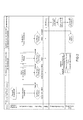
- FIG. 1 shows a scheme for the process of recycling.
- Halophosphate is separated by cold leaching in the first step of the process.
- the extraction of the rare earths is dependent on the solubility of the present compounds in three separate stages.
- the liquid phases are collected and processed into rare earths.
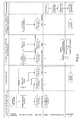
- FIG. 2 shows a further embodiment of the process of Recylcings.
- halophosphate and slightly soluble rare earth phosphors are dissolved together. It follows the digestion of the sparingly soluble rare earth phosphors in two stages.
- FIG. 3 shows a third embodiment of the process of recycling. notwithstanding Scheme 2, after dissolving halophosphate and sparingly soluble rare earth phosphors, calcium ions are separated.
- FIG. 4 shows a fourth embodiment for the Aböetz of recycling. notwithstanding Scheme 1-3, in the first step both easy and difficult to dissolve acid-soluble compounds and simultaneously separated calcium ions.
- FIG. 5 shows a further embodiment.
Landscapes
- Chemical & Material Sciences (AREA)
- Engineering & Computer Science (AREA)
- Manufacturing & Machinery (AREA)
- Materials Engineering (AREA)
- Organic Chemistry (AREA)
- Inorganic Chemistry (AREA)
- Processing Of Solid Wastes (AREA)
- Luminescent Compositions (AREA)
- Manufacture And Refinement Of Metals (AREA)
Applications Claiming Priority (2)
| Application Number | Priority Date | Filing Date | Title |
|---|---|---|---|
| DE200610025945 DE102006025945A1 (de) | 2006-06-02 | 2006-06-02 | Verfahren zur Rückgewinnung Seltener Erden aus Leuchtstofflampen |
| EP20070729706 EP2027591B1 (fr) | 2006-06-02 | 2007-05-31 | Procédé de récupération de terres rares dans des lampes à substances luminescentes |
Related Parent Applications (3)
| Application Number | Title | Priority Date | Filing Date |
|---|---|---|---|
| EP07729706.7 Division | 2007-05-31 | ||
| EP20070729706 Division EP2027591B1 (fr) | 2006-06-02 | 2007-05-31 | Procédé de récupération de terres rares dans des lampes à substances luminescentes |
| EP20070729706 Division-Into EP2027591B1 (fr) | 2006-06-02 | 2007-05-31 | Procédé de récupération de terres rares dans des lampes à substances luminescentes |
Publications (2)
| Publication Number | Publication Date |
|---|---|
| EP2363873A1 true EP2363873A1 (fr) | 2011-09-07 |
| EP2363873B1 EP2363873B1 (fr) | 2012-10-03 |
Family
ID=38468823
Family Applications (2)
| Application Number | Title | Priority Date | Filing Date |
|---|---|---|---|
| EP20070729706 Not-in-force EP2027591B1 (fr) | 2006-06-02 | 2007-05-31 | Procédé de récupération de terres rares dans des lampes à substances luminescentes |
| EP20110164426 Not-in-force EP2363873B1 (fr) | 2006-06-02 | 2007-05-31 | Procédé de récupération de terres rares à partir de lampes fluorescentes |
Family Applications Before (1)
| Application Number | Title | Priority Date | Filing Date |
|---|---|---|---|
| EP20070729706 Not-in-force EP2027591B1 (fr) | 2006-06-02 | 2007-05-31 | Procédé de récupération de terres rares dans des lampes à substances luminescentes |
Country Status (8)
| Country | Link |
|---|---|
| US (2) | US7976798B2 (fr) |
| EP (2) | EP2027591B1 (fr) |
| JP (1) | JP5424873B2 (fr) |
| KR (1) | KR101488164B1 (fr) |
| CN (2) | CN101461024B (fr) |
| DE (1) | DE102006025945A1 (fr) |
| TW (1) | TWI415164B (fr) |
| WO (1) | WO2007141177A1 (fr) |
Cited By (1)
| Publication number | Priority date | Publication date | Assignee | Title |
|---|---|---|---|---|
| DE102016223566A1 (de) | 2016-11-28 | 2018-05-30 | Fraunhofer-Gesellschaft zur Förderung der angewandten Forschung e.V. | Leuchtstoffmischung aus löslichen und unlöslichen Leuchtstoffen und Verfahren zur Rückgewinnung der Leuchtstoffe |
Families Citing this family (34)
| Publication number | Priority date | Publication date | Assignee | Title |
|---|---|---|---|---|
| FR2944276B1 (fr) * | 2009-04-14 | 2011-04-01 | Rhodia Operations | Procede de recuperation des terres rares a partir d'un melange solide contenant un halophosphate et un compose d'une ou plusieurs terres rares |
| US8936770B2 (en) | 2010-01-22 | 2015-01-20 | Molycorp Minerals, Llc | Hydrometallurgical process and method for recovering metals |
| US8137645B2 (en) * | 2010-02-23 | 2012-03-20 | General Electric Company | Rare earth recovery from fluorescent material and associated method |
| US10106437B2 (en) | 2010-07-07 | 2018-10-23 | Tusaar Inc. | Metal removal system |
| US8282703B2 (en) | 2010-12-20 | 2012-10-09 | General Electric Company | Rare earth recovery from phosphor material and associated method |
| FR2970709A1 (fr) * | 2011-01-25 | 2012-07-27 | Rhodia Operations | Procede de recuperation des terres rares a partir d'un melange solide contenant un halophosphate et un compose d'une terre rare et melange solide adapte a ce procede |
| DE102011007669A1 (de) | 2011-04-19 | 2012-10-25 | Osram Ag | Verfahren zur Rückgewinnung seltener Erden aus Leuchtstofflampen |
| DE102011076038A1 (de) * | 2011-05-18 | 2012-11-22 | Osram Ag | Verfahren zur Rückgewinnung von Phosphorsäure aus Leuchtstofflampen |
| US8216532B1 (en) | 2011-06-17 | 2012-07-10 | Vierheilig Albert A | Methods of recovering rare earth elements |
| US8940256B2 (en) | 2011-12-07 | 2015-01-27 | Xylon Technical Ceramics, Inc. | Method for recycling of rare earth and zirconium oxide materials |
| US8524176B2 (en) | 2011-12-15 | 2013-09-03 | Reenewal Corporation | Rare earth recovery from phosphor |
| CN102660688B (zh) * | 2012-05-10 | 2014-09-17 | 北京科技大学 | 一种从废旧稀土发光材料中回收稀土的方法 |
| DE102012213457A1 (de) | 2012-07-31 | 2014-02-06 | Siemens Aktiengesellschaft | Verfahren und Vorrichtung zur Rückgewinnung von seltenen Erden aus Abfällen |
| CN102776366B (zh) * | 2012-08-10 | 2014-12-10 | 北京科技大学 | 一种两代酸解分解废旧稀土发光材料的工艺 |
| WO2014071510A1 (fr) * | 2012-11-08 | 2014-05-15 | Electrochem Technologies & Materials Inc. | Procédé pour récupérer des oxydes de terre rare à partir de luminophores, de lampes fluorescentes et d'ampoules électriques, de tubes cathodiques et d'autres déchets industriels |
| DE102013105177A1 (de) | 2013-05-21 | 2014-11-27 | Fraunhofer-Gesellschaft zur Förderung der angewandten Forschung e.V. | Verfahren zur Gewinnung metallischer Anteile sowie von metallabgereichertem Material aus metallhaltigen Materialien |
| CN103627906B (zh) * | 2013-12-09 | 2016-03-23 | 湖南稀土金属材料研究院 | 废稀土荧光灯的综合回收处理方法 |
| CN103773357B (zh) * | 2014-01-17 | 2015-08-05 | 北京科技大学 | 一种去除废旧稀土荧光粉中玻璃渣和硅铝氧化物的方法 |
| JP5826877B2 (ja) * | 2014-03-14 | 2015-12-02 | 株式会社東芝 | クロック同期管理装置、クロック同期管理装置の制御方法及び制御プログラム |
| DE102014206223B4 (de) | 2014-04-01 | 2025-06-18 | Fme Freiberger Metallrecycling Und Entwicklungsdienstleistungen Gmbh | Verfahren zur Rückgewinnung Seltener Erden aus FeNdB-haltigen Magneten |
| GB201419227D0 (en) * | 2014-10-29 | 2014-12-10 | Univ Leuven Kath | Process for recovery of yttrium and europium from lamp phosphor waste |
| CN104388087B (zh) * | 2014-11-21 | 2016-08-24 | 武汉理工大学 | 利用废弃荧光粉制备稀土荧光上转换材料的方法 |
| DE102014224015B4 (de) | 2014-11-25 | 2019-07-04 | Fme Freiberger Metallrecycling Und Entwicklungsdienstleistungen Gmbh | Verfahren zur Rückgewinnung Seltener Erden aus Seltene Erden-haltigen Leuchtstoffen |
| DE102015109618A1 (de) | 2015-06-16 | 2016-12-22 | Forschungsinstitut für Anorganische Werkstoffe - Glas/Keramik - GmbH | Verfahren und Anlage zur Gewinnung eines metallhaltigen Sekundärrohstoffs |
| US10029920B2 (en) | 2015-06-25 | 2018-07-24 | Iowa State University Research Foundation, Inc. | Separation of terbium(III,IV) oxide |
| FR3049958A1 (fr) * | 2016-04-07 | 2017-10-13 | Rhodia Operations | Procede de recuperation des terres rares a partir d'un melange solide contenant un halophosphate et un compose d'une ou plusieurs terres rares |
| FR3049959A1 (fr) * | 2016-04-07 | 2017-10-13 | Rhodia Operations | Procede de recuperation des terres rares a partir d'un melange solide contenant un halophosphate et un compose d'une ou plusieurs terres rares |
| US10533239B2 (en) | 2016-11-01 | 2020-01-14 | Battelle Energy Alliance, Llc | Methods of recovering rare earth elements from a material |
| CN106783473A (zh) * | 2017-02-21 | 2017-05-31 | 深圳光能环保科技有限公司 | 一种废旧荧光灯管的回收处理方法 |
| EP3556873A1 (fr) * | 2018-04-19 | 2019-10-23 | Paul Scherrer Institut | Procédé de recyclage individuel de terres rares à partir de déchets électroniques fluorescents en poudre |
| WO2020030084A1 (fr) * | 2018-08-10 | 2020-02-13 | 有研稀土新材料股份有限公司 | Procédé de fusion et de séparation d'un concentré de terres rares au moyen d'un procédé de combinaison |
| CN111826177B (zh) | 2020-07-10 | 2021-08-13 | 北京工业大学 | 一种废弃发光二极管封装材料热解处理协同荧光粉稀土回收方法 |
| CN111979411A (zh) * | 2020-09-25 | 2020-11-24 | 贵州省地质矿产中心实验室(贵州省矿产品黄金宝石制品质量检验站) | 一种从含稀土磷矿中分离磷富集稀土的方法 |
| EP4484377A1 (fr) * | 2023-06-26 | 2025-01-01 | ETH Zurich | Procédé de séparation efficace de composés de terres rares et nouveaux complexes de terres rares utilisés à cet effet |
Citations (5)
| Publication number | Priority date | Publication date | Assignee | Title |
|---|---|---|---|---|
| DE3410989A1 (de) | 1984-03-16 | 1985-09-26 | Patent-Treuhand-Gesellschaft für elektrische Glühlampen mbH, 8000 München | Verfahren und vorrichtung zur aufarbeitung von stabfoermigen leuchtstofflampen |
| DD246551A1 (de) | 1986-03-07 | 1987-06-10 | Paedagogische Hochschule Wolfg | Verfahren zur rueckgewinnung von seltenerdverbindungen aus fluoreszenzlampen |
| DE19617942C1 (de) | 1996-04-29 | 1997-06-26 | Inst Technologie Und Umweltsch | Verfahren zur Wiederaufbereitung quecksilber- und phosphathaltiger Seltenerdleuchtstoffgemische |
| JPH1171111A (ja) | 1997-08-25 | 1999-03-16 | Fumiyoshi Saito | 希土類金属化合物の抽出方法 |
| DE19918793A1 (de) | 1999-04-26 | 2000-11-02 | Eberhard Gock | Verfahren zum Recycling von Dreibanden-Leuchtstoffen |
Family Cites Families (6)
| Publication number | Priority date | Publication date | Assignee | Title |
|---|---|---|---|---|
| CN1010303B (zh) * | 1987-12-30 | 1990-11-07 | 兰州大学 | 一种用光还原法从稀土富集物中分离提取荧光级三氧化二铕的方法 |
| JP3027299B2 (ja) * | 1994-05-30 | 2000-03-27 | 信越化学工業株式会社 | 希土類元素燐酸塩粒子およびその製造方法 |
| JPH1129312A (ja) * | 1997-07-09 | 1999-02-02 | Shin Etsu Chem Co Ltd | 高純度希土類元素燐酸塩 |
| JP3497089B2 (ja) * | 1998-12-22 | 2004-02-16 | 文良 齋藤 | 廃棄蛍光材からレアメタル成分を選択分離する方法 |
| TW494438B (en) * | 2000-03-30 | 2002-07-11 | Toshiba Lighting & Amp Technol | Method of recycling fluorescent substance for fluorescent lamp, recycled fluorescent lamp and lighting apparatus using thereof |
| JP4275461B2 (ja) * | 2003-05-30 | 2009-06-10 | 化成オプトニクス株式会社 | 蛍光ランプ用蛍光体の回収再生方法および蛍光ランプ |
-
2006
- 2006-06-02 DE DE200610025945 patent/DE102006025945A1/de not_active Ceased
-
2007
- 2007-05-31 KR KR20087032169A patent/KR101488164B1/ko not_active Expired - Fee Related
- 2007-05-31 US US12/227,032 patent/US7976798B2/en not_active Expired - Fee Related
- 2007-05-31 EP EP20070729706 patent/EP2027591B1/fr not_active Not-in-force
- 2007-05-31 CN CN2007800202764A patent/CN101461024B/zh not_active Expired - Fee Related
- 2007-05-31 JP JP2009512597A patent/JP5424873B2/ja not_active Expired - Fee Related
- 2007-05-31 TW TW96119513A patent/TWI415164B/zh active
- 2007-05-31 CN CN201110359761.2A patent/CN102496545B/zh not_active Expired - Fee Related
- 2007-05-31 WO PCT/EP2007/055295 patent/WO2007141177A1/fr not_active Ceased
- 2007-05-31 EP EP20110164426 patent/EP2363873B1/fr not_active Not-in-force
-
2011
- 2011-07-11 US US13/179,667 patent/US8628734B2/en not_active Expired - Fee Related
Patent Citations (6)
| Publication number | Priority date | Publication date | Assignee | Title |
|---|---|---|---|---|
| DE3410989A1 (de) | 1984-03-16 | 1985-09-26 | Patent-Treuhand-Gesellschaft für elektrische Glühlampen mbH, 8000 München | Verfahren und vorrichtung zur aufarbeitung von stabfoermigen leuchtstofflampen |
| EP0157249A1 (fr) * | 1984-03-16 | 1985-10-09 | Patent-Treuhand-Gesellschaft für elektrische Glühlampen mbH | Procédé pour la récuperation de matières fluorescentes |
| DD246551A1 (de) | 1986-03-07 | 1987-06-10 | Paedagogische Hochschule Wolfg | Verfahren zur rueckgewinnung von seltenerdverbindungen aus fluoreszenzlampen |
| DE19617942C1 (de) | 1996-04-29 | 1997-06-26 | Inst Technologie Und Umweltsch | Verfahren zur Wiederaufbereitung quecksilber- und phosphathaltiger Seltenerdleuchtstoffgemische |
| JPH1171111A (ja) | 1997-08-25 | 1999-03-16 | Fumiyoshi Saito | 希土類金属化合物の抽出方法 |
| DE19918793A1 (de) | 1999-04-26 | 2000-11-02 | Eberhard Gock | Verfahren zum Recycling von Dreibanden-Leuchtstoffen |
Cited By (2)
| Publication number | Priority date | Publication date | Assignee | Title |
|---|---|---|---|---|
| DE102016223566A1 (de) | 2016-11-28 | 2018-05-30 | Fraunhofer-Gesellschaft zur Förderung der angewandten Forschung e.V. | Leuchtstoffmischung aus löslichen und unlöslichen Leuchtstoffen und Verfahren zur Rückgewinnung der Leuchtstoffe |
| WO2018095740A1 (fr) | 2016-11-28 | 2018-05-31 | Fraunhofer-Gesellschaft zur Förderung der angewandten Forschung e.V. | Mélange de substances luminescentes composé de substances luminescentes solubles et non solubles et procédé pour récupérer les substances luminescentes |
Also Published As
| Publication number | Publication date |
|---|---|
| KR20090018988A (ko) | 2009-02-24 |
| CN102496545B (zh) | 2014-08-13 |
| EP2027591A1 (fr) | 2009-02-25 |
| TWI415164B (zh) | 2013-11-11 |
| US7976798B2 (en) | 2011-07-12 |
| US20120027651A1 (en) | 2012-02-02 |
| WO2007141177A1 (fr) | 2007-12-13 |
| JP5424873B2 (ja) | 2014-02-26 |
| DE102006025945A1 (de) | 2007-12-06 |
| KR101488164B1 (ko) | 2015-01-30 |
| TW200816263A (en) | 2008-04-01 |
| EP2363873B1 (fr) | 2012-10-03 |
| US20090162267A1 (en) | 2009-06-25 |
| CN101461024B (zh) | 2012-01-18 |
| JP2009538949A (ja) | 2009-11-12 |
| EP2027591B1 (fr) | 2014-10-01 |
| US8628734B2 (en) | 2014-01-14 |
| CN102496545A (zh) | 2012-06-13 |
| CN101461024A (zh) | 2009-06-17 |
Similar Documents
| Publication | Publication Date | Title |
|---|---|---|
| EP2363873B1 (fr) | Procédé de récupération de terres rares à partir de lampes fluorescentes | |
| EP0298035B1 (fr) | Méthode pour recycler des tubes fluorescents et des tubes de télévision | |
| DE2507930A1 (de) | Verfahren zur gewinnung des nickels und kupfers aus erzen des typs der manganhaltigen knollen grosser meeresablagerungen | |
| EP2910654B1 (fr) | Procédé de récupération et éventuellement de séparation de lanthanides sous forme de ses chlorures ou oxydes à partir de déchets et résidus minéraux | |
| DE102014206223B4 (de) | Verfahren zur Rückgewinnung Seltener Erden aus FeNdB-haltigen Magneten | |
| DE102011076038A1 (de) | Verfahren zur Rückgewinnung von Phosphorsäure aus Leuchtstofflampen | |
| DE19918793A1 (de) | Verfahren zum Recycling von Dreibanden-Leuchtstoffen | |
| DD246551A1 (de) | Verfahren zur rueckgewinnung von seltenerdverbindungen aus fluoreszenzlampen | |
| DE19617942C1 (de) | Verfahren zur Wiederaufbereitung quecksilber- und phosphathaltiger Seltenerdleuchtstoffgemische | |
| EP2652078A2 (fr) | Procédé de récupération de terres rares dans des lampes fluorescentes et substances fluorescentes et sources lumineuses associées | |
| DE102014224015B4 (de) | Verfahren zur Rückgewinnung Seltener Erden aus Seltene Erden-haltigen Leuchtstoffen | |
| DE1187018B (de) | Verfahren zur Gewinnung von Metallen, insbesondere Niob, Tantal und Titan, aus silikatischen Schlacken | |
| DE102014209314A1 (de) | Verfahren zur Verarbeitung von mineralischen Rohstoffen | |
| EP0656669B1 (fr) | Procédé de traitement hydrométallurgique de batteries usagées provenant d'appareils ménager et équipements | |
| DE102011082687A1 (de) | Verfahren zum Wiederaufbereiten von Seltenerd-Oxisulfiden | |
| DE102012213457A1 (de) | Verfahren und Vorrichtung zur Rückgewinnung von seltenen Erden aus Abfällen | |
| DE102019105796A1 (de) | Verfahren zur Herstellung von Eisen(III)-chlorid (FeCl3) aus eisenhaltigen Rohstoffen | |
| EP0077975B1 (fr) | Procédé pour la récupération de matériaux luminescents à base d'oxydes ou d'oxysulfures des terres rares | |
| DE102014201303A1 (de) | Verfahren zur Abtrennung von Seltenerd-Bestandteilen aus einem unterschiedliche Seltenerd-Bestandteile sowie wenigstens einen Nicht-Seltenerd-Bestandteil enthaltenden Gemengestrom | |
| DD151056B1 (de) | Verfahren zur herstellung von magnesiumoxidmassen | |
| DD207223A1 (de) | Hydrometallurgisches gewinnungsverfahren fuer ausgewaehlte metalle | |
| DD151056A1 (de) | Verfahren zur herstellung von magnesiumoxidmassen | |
| DE1467408A1 (de) | Neue Leuchtfarben auf Spinellbasis |
Legal Events
| Date | Code | Title | Description |
|---|---|---|---|
| PUAI | Public reference made under article 153(3) epc to a published international application that has entered the european phase |
Free format text: ORIGINAL CODE: 0009012 |
|
| AC | Divisional application: reference to earlier application |
Ref document number: 2027591 Country of ref document: EP Kind code of ref document: P |
|
| AK | Designated contracting states |
Kind code of ref document: A1 Designated state(s): DE FR GB NL |
|
| AX | Request for extension of the european patent |
Extension state: AL BA HR MK RS |
|
| 17P | Request for examination filed |
Effective date: 20110923 |
|
| RIC1 | Information provided on ipc code assigned before grant |
Ipc: H01J 9/50 20060101AFI20120320BHEP Ipc: C09K 11/01 20060101ALI20120320BHEP Ipc: H01J 9/52 20060101ALI20120320BHEP |
|
| GRAP | Despatch of communication of intention to grant a patent |
Free format text: ORIGINAL CODE: EPIDOSNIGR1 |
|
| RAP1 | Party data changed (applicant data changed or rights of an application transferred) |
Owner name: OSRAM AG |
|
| GRAS | Grant fee paid |
Free format text: ORIGINAL CODE: EPIDOSNIGR3 |
|
| GRAA | (expected) grant |
Free format text: ORIGINAL CODE: 0009210 |
|
| AC | Divisional application: reference to earlier application |
Ref document number: 2027591 Country of ref document: EP Kind code of ref document: P |
|
| AK | Designated contracting states |
Kind code of ref document: B1 Designated state(s): DE FR GB NL |
|
| REG | Reference to a national code |
Ref country code: GB Ref legal event code: FG4D Free format text: NOT ENGLISH |
|
| REG | Reference to a national code |
Ref country code: DE Ref legal event code: R096 Ref document number: 502007010657 Country of ref document: DE Effective date: 20121129 |
|
| REG | Reference to a national code |
Ref country code: NL Ref legal event code: T3 |
|
| RAP2 | Party data changed (patent owner data changed or rights of a patent transferred) |
Owner name: OSRAM GMBH |
|
| REG | Reference to a national code |
Ref country code: DE Ref legal event code: R081 Ref document number: 502007010657 Country of ref document: DE Owner name: OSRAM GMBH, DE Free format text: FORMER OWNER: OSRAM AG, 81543 MUENCHEN, DE Effective date: 20130205 |
|
| RAP2 | Party data changed (patent owner data changed or rights of a patent transferred) |
Owner name: OSRAM GMBH |
|
| PLBE | No opposition filed within time limit |
Free format text: ORIGINAL CODE: 0009261 |
|
| STAA | Information on the status of an ep patent application or granted ep patent |
Free format text: STATUS: NO OPPOSITION FILED WITHIN TIME LIMIT |
|
| 26N | No opposition filed |
Effective date: 20130704 |
|
| REG | Reference to a national code |
Ref country code: DE Ref legal event code: R081 Ref document number: 502007010657 Country of ref document: DE Owner name: OSRAM GMBH, DE Free format text: FORMER OWNER: OSRAM GMBH, 81543 MUENCHEN, DE Effective date: 20130829 |
|
| REG | Reference to a national code |
Ref country code: DE Ref legal event code: R097 Ref document number: 502007010657 Country of ref document: DE Effective date: 20130704 |
|
| REG | Reference to a national code |
Ref country code: FR Ref legal event code: PLFP Year of fee payment: 9 |
|
| PGFP | Annual fee paid to national office [announced via postgrant information from national office to epo] |
Ref country code: DE Payment date: 20150521 Year of fee payment: 9 Ref country code: GB Payment date: 20150521 Year of fee payment: 9 |
|
| PGFP | Annual fee paid to national office [announced via postgrant information from national office to epo] |
Ref country code: NL Payment date: 20150520 Year of fee payment: 9 Ref country code: FR Payment date: 20150521 Year of fee payment: 9 |
|
| REG | Reference to a national code |
Ref country code: DE Ref legal event code: R119 Ref document number: 502007010657 Country of ref document: DE |
|
| REG | Reference to a national code |
Ref country code: NL Ref legal event code: MM Effective date: 20160601 |
|
| GBPC | Gb: european patent ceased through non-payment of renewal fee |
Effective date: 20160531 |
|
| PG25 | Lapsed in a contracting state [announced via postgrant information from national office to epo] |
Ref country code: NL Free format text: LAPSE BECAUSE OF NON-PAYMENT OF DUE FEES Effective date: 20160601 |
|
| REG | Reference to a national code |
Ref country code: FR Ref legal event code: ST Effective date: 20170131 |
|
| PG25 | Lapsed in a contracting state [announced via postgrant information from national office to epo] |
Ref country code: FR Free format text: LAPSE BECAUSE OF NON-PAYMENT OF DUE FEES Effective date: 20160531 Ref country code: DE Free format text: LAPSE BECAUSE OF NON-PAYMENT OF DUE FEES Effective date: 20161201 |
|
| PG25 | Lapsed in a contracting state [announced via postgrant information from national office to epo] |
Ref country code: GB Free format text: LAPSE BECAUSE OF NON-PAYMENT OF DUE FEES Effective date: 20160531 |