EP2373287B1 - Extrudat d'un medicament sous forme d'aiguille - Google Patents
Extrudat d'un medicament sous forme d'aiguille Download PDFInfo
- Publication number
- EP2373287B1 EP2373287B1 EP09763855.5A EP09763855A EP2373287B1 EP 2373287 B1 EP2373287 B1 EP 2373287B1 EP 09763855 A EP09763855 A EP 09763855A EP 2373287 B1 EP2373287 B1 EP 2373287B1
- Authority
- EP
- European Patent Office
- Prior art keywords
- extrudate
- glycerol
- extrudates
- extrusion
- needle
- Prior art date
- Legal status (The legal status is an assumption and is not a legal conclusion. Google has not performed a legal analysis and makes no representation as to the accuracy of the status listed.)
- Active
Links
Images


Classifications
-
- A—HUMAN NECESSITIES
- A61—MEDICAL OR VETERINARY SCIENCE; HYGIENE
- A61K—PREPARATIONS FOR MEDICAL, DENTAL OR TOILETRY PURPOSES
- A61K9/00—Medicinal preparations characterised by special physical form
- A61K9/14—Particulate form, e.g. powders, Processes for size reducing of pure drugs or the resulting products, Pure drug nanoparticles
- A61K9/16—Agglomerates; Granulates; Microbeadlets ; Microspheres; Pellets; Solid products obtained by spray drying, spray freeze drying, spray congealing,(multiple) emulsion solvent evaporation or extraction
-
- A—HUMAN NECESSITIES
- A61—MEDICAL OR VETERINARY SCIENCE; HYGIENE
- A61K—PREPARATIONS FOR MEDICAL, DENTAL OR TOILETRY PURPOSES
- A61K31/00—Medicinal preparations containing organic active ingredients
- A61K31/185—Acids; Anhydrides, halides or salts thereof, e.g. sulfur acids, imidic, hydrazonic or hydroximic acids
- A61K31/19—Carboxylic acids, e.g. valproic acid
- A61K31/195—Carboxylic acids, e.g. valproic acid having an amino group
- A61K31/196—Carboxylic acids, e.g. valproic acid having an amino group the amino group being directly attached to a ring, e.g. anthranilic acid, mefenamic acid, diclofenac, chlorambucil
-
- A—HUMAN NECESSITIES
- A61—MEDICAL OR VETERINARY SCIENCE; HYGIENE
- A61K—PREPARATIONS FOR MEDICAL, DENTAL OR TOILETRY PURPOSES
- A61K31/00—Medicinal preparations containing organic active ingredients
- A61K31/60—Salicylic acid; Derivatives thereof
- A61K31/606—Salicylic acid; Derivatives thereof having amino groups
-
- A—HUMAN NECESSITIES
- A61—MEDICAL OR VETERINARY SCIENCE; HYGIENE
- A61K—PREPARATIONS FOR MEDICAL, DENTAL OR TOILETRY PURPOSES
- A61K47/00—Medicinal preparations characterised by the non-active ingredients used, e.g. carriers or inert additives; Targeting or modifying agents chemically bound to the active ingredient
- A61K47/06—Organic compounds, e.g. natural or synthetic hydrocarbons, polyolefins, mineral oil, petrolatum or ozokerite
- A61K47/08—Organic compounds, e.g. natural or synthetic hydrocarbons, polyolefins, mineral oil, petrolatum or ozokerite containing oxygen, e.g. ethers, acetals, ketones, quinones, aldehydes, peroxides
- A61K47/14—Esters of carboxylic acids, e.g. fatty acid monoglycerides, medium-chain triglycerides, parabens or PEG fatty acid esters
-
- A—HUMAN NECESSITIES
- A61—MEDICAL OR VETERINARY SCIENCE; HYGIENE
- A61K—PREPARATIONS FOR MEDICAL, DENTAL OR TOILETRY PURPOSES
- A61K47/00—Medicinal preparations characterised by the non-active ingredients used, e.g. carriers or inert additives; Targeting or modifying agents chemically bound to the active ingredient
- A61K47/44—Oils, fats or waxes according to two or more groups of A61K47/02-A61K47/42; Natural or modified natural oils, fats or waxes, e.g. castor oil, polyethoxylated castor oil, montan wax, lignite, shellac, rosin, beeswax or lanolin
-
- A—HUMAN NECESSITIES
- A61—MEDICAL OR VETERINARY SCIENCE; HYGIENE
- A61K—PREPARATIONS FOR MEDICAL, DENTAL OR TOILETRY PURPOSES
- A61K9/00—Medicinal preparations characterised by special physical form
- A61K9/14—Particulate form, e.g. powders, Processes for size reducing of pure drugs or the resulting products, Pure drug nanoparticles
-
- A—HUMAN NECESSITIES
- A61—MEDICAL OR VETERINARY SCIENCE; HYGIENE
- A61K—PREPARATIONS FOR MEDICAL, DENTAL OR TOILETRY PURPOSES
- A61K9/00—Medicinal preparations characterised by special physical form
- A61K9/14—Particulate form, e.g. powders, Processes for size reducing of pure drugs or the resulting products, Pure drug nanoparticles
- A61K9/141—Intimate drug-carrier mixtures characterised by the carrier, e.g. ordered mixtures, adsorbates, solid solutions, eutectica, co-dried, co-solubilised, co-kneaded, co-milled, co-ground products, co-precipitates, co-evaporates, co-extrudates, co-melts; Drug nanoparticles with adsorbed surface modifiers
- A61K9/145—Intimate drug-carrier mixtures characterised by the carrier, e.g. ordered mixtures, adsorbates, solid solutions, eutectica, co-dried, co-solubilised, co-kneaded, co-milled, co-ground products, co-precipitates, co-evaporates, co-extrudates, co-melts; Drug nanoparticles with adsorbed surface modifiers with organic compounds
-
- A—HUMAN NECESSITIES
- A61—MEDICAL OR VETERINARY SCIENCE; HYGIENE
- A61K—PREPARATIONS FOR MEDICAL, DENTAL OR TOILETRY PURPOSES
- A61K9/00—Medicinal preparations characterised by special physical form
- A61K9/14—Particulate form, e.g. powders, Processes for size reducing of pure drugs or the resulting products, Pure drug nanoparticles
- A61K9/141—Intimate drug-carrier mixtures characterised by the carrier, e.g. ordered mixtures, adsorbates, solid solutions, eutectica, co-dried, co-solubilised, co-kneaded, co-milled, co-ground products, co-precipitates, co-evaporates, co-extrudates, co-melts; Drug nanoparticles with adsorbed surface modifiers
- A61K9/146—Intimate drug-carrier mixtures characterised by the carrier, e.g. ordered mixtures, adsorbates, solid solutions, eutectica, co-dried, co-solubilised, co-kneaded, co-milled, co-ground products, co-precipitates, co-evaporates, co-extrudates, co-melts; Drug nanoparticles with adsorbed surface modifiers with organic macromolecular compounds
-
- A—HUMAN NECESSITIES
- A61—MEDICAL OR VETERINARY SCIENCE; HYGIENE
- A61P—SPECIFIC THERAPEUTIC ACTIVITY OF CHEMICAL COMPOUNDS OR MEDICINAL PREPARATIONS
- A61P29/00—Non-central analgesic, antipyretic or antiinflammatory agents, e.g. antirheumatic agents; Non-steroidal antiinflammatory drugs [NSAID]
-
- A—HUMAN NECESSITIES
- A61—MEDICAL OR VETERINARY SCIENCE; HYGIENE
- A61P—SPECIFIC THERAPEUTIC ACTIVITY OF CHEMICAL COMPOUNDS OR MEDICINAL PREPARATIONS
- A61P33/00—Antiparasitic agents
-
- Y—GENERAL TAGGING OF NEW TECHNOLOGICAL DEVELOPMENTS; GENERAL TAGGING OF CROSS-SECTIONAL TECHNOLOGIES SPANNING OVER SEVERAL SECTIONS OF THE IPC; TECHNICAL SUBJECTS COVERED BY FORMER USPC CROSS-REFERENCE ART COLLECTIONS [XRACs] AND DIGESTS
- Y10—TECHNICAL SUBJECTS COVERED BY FORMER USPC
- Y10T—TECHNICAL SUBJECTS COVERED BY FORMER US CLASSIFICATION
- Y10T428/00—Stock material or miscellaneous articles
- Y10T428/29—Coated or structually defined flake, particle, cell, strand, strand portion, rod, filament, macroscopic fiber or mass thereof
- Y10T428/2982—Particulate matter [e.g., sphere, flake, etc.]
Definitions
- the invention relates to extrudates containing at least one pharmaceutically active substance in the form of needles, wherein the ratio of particle size of the acicular pharmaceutical substance to strand diameter of at least 1:20, the extrudate contains a lipid base as an excipient and the extrudate below the melting range of the therein Basis was extruded, as well as the use of these extrudates for the production of medicines.
- Taste masking of bitter drugs is important for improving compliance in human medicines, not least for pediatric formulations, but also for veterinary medicines.
- the simplest type of taste masking is the addition of aromas, which can be problematic for very bitter and highly water-soluble substances (Bienz, 1996).
- Taste masking by processing an active ingredient with a hydrophobic carrier into granules has also been described ( WO 1998/03157 Kalbe and Hopkins, 1998 ). Another possibility is the coating of drug forms.
- Eudragit E (Cerea et al., 2004, Lovrecich et al., 1996, Ohta and Buckton, 2004, Petereit and Weisbrod, 1999)
- shellac Pearnchob et al., 2003b, Pearnchob et al. 2003a
- Cellulose derivatives Al-Omran et al., 2002; Li et al., 2002; Shirai et al., 1993.
- the disadvantage of Eudragit E is that the taste masking is based on an ionic interaction between cationic excipient and anionic agents.
- shellac is that it is a natural polymer whose composition can vary.
- Ion exchange resins and inclusion complexes are also used for taste masking.
- the applicability of ion exchange resins is limited by the need to have ionic properties of the drug (Chun and Choi, 2004; Lu et al., 1991, Prompruk et al., 2005).
- Inclusion complexes can only be loaded with small amounts of drugs (Sohi et al., 2004).
- Lipid bases can also be used for taste masking. Described are monolithic dosage forms based on hard fat, which additionally contain lecithin and sweeteners for taste masking (Suzuki et al., 2003, Suzuki et al., 2004). The disadvantage of this is that the lipids must be completely melted during manufacture, which can lead to physical instabilities.
- hard fat, glycerol distearate and stearic acid were used as lipophilic binders in cold extrusion, again requiring the use of Eudragit E as a coating to achieve taste masking (Breitkreutz et al., 2003).
- the extrusion of fats below their melting point for the preparation of drug forms has also been described, but not for the purpose of taste masking (Reitz and Kleine Budde, 2007, Windbergs et al., 2008).
- Taste-masked formulations with quinolone-type gyrase inhibitors were obtained by mixing the active ingredient with higher fatty acids and optionally further additives, heating them and, after cooling, granulating or pulverizing them ( EP 1998/0855183 Ahrens et al., 1998 ). Furthermore, wax-based pellets were made (Adeyeye and Price, 1991, Adeyeye and Price, 1994, Zhou et al., 1996, Zhou et al., 1998). The investigations showed that the release of the active ingredients depends on the melting point of the wax used and its concentration in the pellet. The higher the melting point and wax content, the slower the release.
- Compritol® 888 ATO has been described as a matrix-forming component.
- the pellets consisted of molten Compritol®, the active ingredient and a polysaccharide coating (Mirghani et al., 2000).
- matrix tablets were compressed either directly from a powder mix or a powdered solid dispersion. The tablets of the powdered solid dispersion showed better taste masking, however, for their preparation the Compritol® had to be completely melted (Li et al., 2006).
- Barthelemy used Compritol® to coat theophylline pellets and granules. Again, the fat was completely melted (Barthelemy et al., 1999).
- phospholipids are another possibility of taste masking of bitter taste, but not of other flavors (Katsuragi et al., 1997, Takagi et al., 2001).
- the addition of phospholipids influences the crystallinity of the lipids, which can lead to instabilities (Schubert, 2005).
- Taste masking of powders is possible by placing small excipient particles on larger drug particles (Barra et al., 1999).
- Thombre describes a formulation for hobby animals in multiparticulate form with a taste-masking additive ( WO 2004/014346 Thombre, 2004 ).
- extrudates with improved taste masking German patent application Akz. 102007026550.8 , see also corresponding PCT application no. PCT / EP2008 / 004218 ) described pharmaceutically acceptable extrudates having a strand diameter of 0.5 mm and less. These extrudates are suitable for taste masking of drugs.
- the EP 1 690 528 A1 relates to processes for the preparation of dosage forms comprising a solid dispersion of a microcrystalline active ingredient, in which a thermoplastic polymer having a glass transition temperature (Tg) of at least 40 ° C is melted and an active substance is homogeneously dissolved in the melt, in the resulting mass crystallization of the active ingredient at a Temperature at or above the Tg of the polymer is initiated and the mass is cooled to a temperature below the Tg of the polymer.
- Tg glass transition temperature
- Ibuprofen also showed very poor flowability, cohesive and adhesive properties in needle-shaped crystal form, high energy input was required for compaction and tableting, and the resulting tablets were mechanically unstable.
- the tabletting properties of ibuprofen could be significantly improved (Jbilou et al., 1999, Rasenack and Müller, 2002).
- the skilled person would have expected no problems, provided that the particle size is smaller by a significant factor (eg 5) than the strand diameter, in particular, since he could assume that the particles would align favorably in parallel for the extrusion.
- a significant factor eg 5
- Extrusion temperatures of 20 ° C below the melting range of the lipid used in the melting range are possible. If the temperature is too low, the nozzles clog up immediately and the pressure increases very quickly, if the temperature is too high, the lipids completely melt and leave the nozzles as a soft paste.
- the drug powder is ground (eg in an air jet mill); the grinding causes the needle-shaped crystal structures to be broken up. It turns out that with sufficiently small particle size, the extrudates can be produced easily.
- the extrusion process with sufficiently finely ground active substance generally proceeds uniformly and reproducibly at constant pressure, even at high drug loading (eg 50% or even up to 80%) and a nozzle diameter of e.g. B. 0.3 mm or even only 0.2 mm.
- the ratio of particle size of the acicular pharmaceutically active substances to strand diameter is usually at least 1:15, according to the present invention as claimed at least 1:20, more preferably at least 1:25, most preferably at least 1:50, especially at least 1: 100.
- particle size is meant here in doubt the determined by laser diffractometry d (0.9) value.
- d (0.9) is understood as meaning a volume-related particle size distribution in which 90% of all particles have a dimension (diameter) smaller than or equal to this value (occasionally the data d (90) or d (v, 90), the latter to make it clear that it is a volume-based particle size distribution). Accordingly, the terms d (0.5), d (0.1), etc. are to be understood.
- the particle sizes given here were determined by the method of laser diffraction with the device Mastersizer 2000 (dispersing unit Hydro 2000G) from Malvern and the evaluation mode of Fraunhoferbeugung, since the refractive indices of the active ingredient particles are not known.
- sample solution was predispersed with 2-3 ml of a dispersing medium (eg, a 0.1% dioctyl sodium sulfosuccinate aqueous solution for praziquantel or ethanol for mesalazine) with stirring.
- a dispersing medium eg, a 0.1% dioctyl sodium sulfosuccinate aqueous solution for praziquantel or ethanol for mesalazine
- the dispersion was then added with stirring (300 rpm) and pumping (900 rpm) to the dispersion unit of the instrument and measured.
- the evaluation software reported the particle size as d (0.9) values (or d (0.5) values, etc.).
- Active substance particles that are too soluble in common solvents are dry-dispersed with an appropriate unit (eg Scirocco 2000 dry powder feeder) by means of an air stream at 0.5 bar air pressure.
- an appropriate unit eg Scirocco 2000 dry powder feeder
- the strand diameter of the extrudates according to the invention is preferably at most 0.5 mm, particularly preferably at most 0.3 mm.
- extrudates can be used from a diameter of 0.1 mm, preferably from 0.2 mm.
- the maximum edge length or ellipse length is at most 0.5 mm, preferably at most 0.3 mm.
- the extrudates contain a suitable base for the extrusion of a thermoplastically deformable material or a mixture of several thermoplastically deformable materials and optionally other pharmaceutically acceptable auxiliaries and additives.
- the basis consists of thermoplastically deformable materials such as polymers, for example polyacrylates or cellulose derivatives, lipids, for example acylglycerides, surfactants, for example glycerol monostearate or sodium stearate, macrogols, for example polyethylene glycol 6000, sugars or sugar alcohols, for example mannitol or xylitol.
- the extrudate contains a lipid base.
- lipid base are z.
- fat bases, especially glycerol esters preferably are esters with C 12 -C 24 fatty acids.
- As glycerol esters may be mentioned Glyceroldiester such. B.
- Glycerol Glycerol; Glycerol triester, such as. As glycerol trilaurate, Glyceroltrimyristat, Glyceroltripalmitat or Glyceroltristearat, mixtures of glycerol mono-, di- and triesters, such as. B. glycerol palmitostearate. Also mentioned are triglycerides based on coconut oil, palm oil and / or palm kernel oil (such as, for example, hard fats sold under the name Witocan®). Mono- or diglycerides of citric and / or lactic acid can also be used.
- waxes especially those having 30 to 60 carbon atoms, such as cetyl palmitate.
- Such lipids are for. B. commercially available under the names Precirol®, Compritol® and Dynasan®.
- glycerol dibehenate eg Compritol® 888 ATO, which contains mainly glycerol dibehenate but also glycerol monobehenate and glycerol tribehenate.
- glycerol triester series are glycerol trimyristate (eg Dynasan® 114), glycerol tripalmitate (eg Dynasan® 116) and glycerol tristearate (eg Dynasan® 118).
- the fat bases are powdery.
- Many lipids are polymorphic and may form metastable forms with temperature and pressure changes. Upon storage, modifications of the modifications may occur and more stable modifications may occur.
- glycerol triesters eg known as Dynasan®
- Dynasan® glycerol trimyristate
- Dynasan® 116 glycerol tripalmitate
- Dynasan® 118 glycerol tristearate
- the substances used as fat bases are often used as mixtures z.
- mono-, di- and / or triglycerides in the trade.
- uniform fat bases which consist essentially of only one component, preferred.
- Formulations produced with these auxiliaries are characterized by a good storage stability.
- the amount of base used depends on the amount of other ingredients of the extrudates. Usually 15 to 99% [m / m], preferably 20 to 99% [m / m], particularly preferably 25 to 80% [m / m], very particularly preferably 30 to 70% [m / m] are used.
- the bases used in particular the lipid bases, generally have a melting range whose lower limit is usually at least 50.degree. C., preferably at least 60.degree.
- the extrudates according to the invention may optionally contain one or more other auxiliaries and additives. Suitable as such are: flow control agents, preferably colloidal silica in a concentration of 0.2 to 2% [m / m]; Lubricant, preferably magnesium stearate or calcium dibehenate in a concentration of 0.2 to 5% [m / m]; Surfactants, preferably lecithin in a concentration of 0.5 to 10% [m / m].
- flow control agents preferably colloidal silica in a concentration of 0.2 to 2% [m / m]
- Lubricant preferably magnesium stearate or calcium dibehenate in a concentration of 0.2 to 5% [m / m]
- Surfactants preferably lecithin in a concentration of 0.5 to 10% [m / m].
- antioxidants for example butylhydroxyanisole (BHA) or butylhydroxytoluene (BHT), which are used in customary amounts, generally from 0.01 to 0.5% [m / m], preferably from 0.05 to 0 , 2% [m / m].
- BHA butylhydroxyanisole
- BHT butylhydroxytoluene
- the release of active ingredient can be controlled, for example, by adding so-called pore formers. These are z.
- sugars especially lactose, polyols, especially mannitol or polyethylene glycols (PEG), preferably PEG 1500 to 10,000, more preferably PEG 1500 to 6000, z.
- PEG 1500 Microgol 1500
- the pore formers are used in a concentration of 5 to 40% [m / m], preferably in a concentration of 5 to 20% [m / m].
- disintegrants so-called superdisintegrants such as crospovidone, croscarmellose sodium or cross-linked sodium carboxymethyl starch can be used.
- the super-disintegrants are used in a concentration of 1 to 15% [m / m], preferably in a concentration of 3 to 10% [m / m].
- substances that are acid soluble and / or develop carbon dioxide such as magnesium carbonate or calcium carbonate can be used.
- the carbon dioxide-releasing substances are used in a concentration of 5 to 15% [m / m], preferably in a concentration of 5 to 10% [m / m].
- the extrudates according to the invention may contain antistatic agents. This is especially recommended when electrostatic charges affect the extrusion. Electrostatic charges can clog the nozzle holes, which can be prevented by adding antistatic agents.
- PEGs may preferably be added as antistatic agents, in particular PEG 1500 to 6000.
- the PEG should preferably be present in powder form and melt during the extrusion in order to develop an antistatic effect. When PEG is added as an antistatic agent, therefore, the melting point of the PEG should be low enough that the PEG but not the fat base used melts during extrusion.
- static charges do not occur at all basics. They are mainly with glycerol fatty acid triesters with fatty acids, such as. As glycerol trimyristate, Glyceroltripalmitat or Glyceroltristearat observed.
- the antistatic agents are used in a concentration of at least 5% [m / m], preferably of at least 10% [m / m]. Usually not more than 30% [m / m] is used.
- active pharmaceutical ingredients can be used active pharmaceutical ingredients, and in particular those whose unpleasant taste is to be laminated.
- active ingredients are used which are in needle form.
- the needle-shaped crystals As a rule, the needle-shaped crystals.
- needle or “needle-shaped” is meant here particles whose length is significantly greater than their diameter, wherein the length / diameter ratio is at least greater than 3: 1, preferably greater than 5: 1, more preferably greater than 10 : 1, most preferably greater than 20: 1. Since the needles are usually not round, "diameter” in doubt the largest dimension perpendicular to the length to be understood.
- one is not very limited in the choice of needle-shaped drug, since it is not necessary to melt the drug. Due to the taste-masking effect of the extrudates they are preferably suitable for unpleasant -. B. bitter - tasting agents.
- the active ingredients may, for. B. belonging to the following groups: antibiotics, antiparasitic agents, anthelmintics, metabolic stimulants, anti-inflammatory agents.
- drug also includes acicular salts and solvates.
- mesalazine As a concrete example of an active ingredient is called mesalazine.
- Mesalazine is an anti-inflammatory drug used to treat inflammatory bowel disease. It is very slightly soluble in water, has a melting point of 280 ° C and a needle-shaped crystal form.
- Another example is crystalline caffeine.
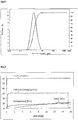
- acicular drug As a preferred concrete example of acicular drug, mention may be made of praziquantel, a long-known anthelmintic that works against tapeworms and schistosomes. It is poorly soluble in water, has a melting point of 139 ° C and a needle-shaped crystal form. Usually used is a quality ground in a pin mill with a particle size of 25 ⁇ m, expressed as d (0.9), measured by laser diffractometry ( Fig. 1 ).
- the amount of active ingredient used in the extrudates depends on the potency and the desired dosage. It has been found that it is also possible to produce extrudates with high active ingredient concentrations of up to 80% [m / m], preferably up to 70% [m / m], particularly preferably up to 60% [m / m]. Usual concentration ranges are z. 1 to 80% [m / m], preferably 5 to 70% [m / m], more preferably 30 to 60% [m / m].
- the extrudates according to the invention are prepared by mixing the starting materials (the pharmaceutically active substance (s), the base and optionally auxiliaries and additives) and then extruding.
- the extrusions are preferably carried out at a temperature which does not result in complete melting of the thermoplastically deformable materials, typically at a temperature in the range of from room temperature, preferably from 40 ° C, to below the melting range of the thermoplastically deformable materials. In practice, this usually refers to the melting range specified for the respective basis.
- the extrusion temperature is not lower than 20 ° C., preferably 15 ° C., particularly preferably 10 ° C., below the lower limit of the melting range of the base, in particular the fat base.
- the extrusion temperature is not set higher than the lower limit of the melting range of the base, preferably 1 ° C lower, more preferably 5 ° C lower.
- the goal is to avoid the extrusion of a soft paste.
- the extrusion process should be carried out at as constant a material temperature as possible.
- heatable screw extruders in particular twin-screw extruders, are suitable for this purpose.
- the extruded strand preferably has a round cross-section and a diameter as indicated above.
- the extruded strand can be directly extruded with a knife or in a separate step by gentle grinding in a conventional mill, for. B. in a centrifugal mill, are crushed.
- the grain size of the product obtained depends on the diameter of the nozzle used, the shredded strands have a maximum length equal to three times the strand diameter. Typical particle sizes are z. B. 300 to 500 microns or smaller nozzle diameter and 200 to 500 microns. According to a preferred embodiment, the material to be ground can still be sieved. As a result, the fine fraction can be removed.
- the extrudates are extruded below their melting point, it being understood that the extrudates are extruded, as noted above, at a temperature at which the thermoplastic base employed does not yet completely melt. Often, other ingredients, such as. As the active ingredients, a higher melting point. Such extrudates are suitable for flavoring unpleasant-tasting ingredients.
- extrudates according to the invention may, after gentle comminution, be further processed, if appropriate, into suitable pharmaceutical forms. For further processing, it may be necessary to add further auxiliaries.
- the pharmaceutical form preferred according to the invention are tablets which, if appropriate, can have forms adapted to the desired application.
- Other forms of drugs that may be considered are pastes, suspensions, sachets, capsules, etc.
- extrudates or medicaments according to the invention are generally suitable for use in humans and animals.
- they are used in livestock and animal breeding in livestock, breeding, zoo, laboratory, experimental and hobby animals, especially in mammals.
- breeding and breeding animals include mammals such. B. cattle, horses, sheep, pigs, goats, camels, water buffalo, donkeys, rabbits, fallow deer, reindeer, fur animals such. As mink, chinchilla, raccoon, and birds such. Chickens, geese, turkeys, ducks, pigeons and ostriches. Examples of preferred farm animals are beef, sheep, pork and chicken.
- Laboratory and experimental animals include dogs, cats, rabbits and rodents such as mice, rats, guinea pigs and golden hamsters.
- the hobby animals include dogs, cats, horses, rabbits, rodents such as golden hamsters, guinea pigs, mice, reptiles, amphibians and birds for home and zoo keeping.
- extrudates are usually carried out directly or in the form of suitable preparations (pharmaceutical forms) enteral, in particular orally.
- the enteral application happens z.
- One option for oral administration is the so-called top dressing, which is a powder, granules or a paste, which is added to the feed and absorbed with the feed.
- Suitable preparations are: solid preparations such as granules, pellets, tablets, Boli and active ingredient-containing moldings.
- the comminuted extrudates are mixed with suitable excipients, if appropriate with the addition of auxiliaries, and brought into the desired form.
- Suitable carriers are all physiologically compatible solid inert substances.
- inorganic and organic substances are used.
- Inorganic substances are z.
- common salt carbonates such as Calcium carbonate, bicarbonates, aluminas, silicas, clays, precipitated or colloidal silica, phosphates.
- Organic substances are z. As sugars, cellulose, food and feed such as milk powder, animal flours, cereal flours and meals, starches.
- Excipients are preservatives, antioxidants, dyes. Suitable auxiliaries and the required amounts are generally known to the person skilled in the art. As a preservative z. B. called sorbic acid. Suitable antioxidants are, for example, butylhydroxyanisole (BHA) or butylhydroxytoluene (BHT). Suitable dyes for pharmaceutical purposes suitable organic and inorganic dyes or pigments in question, such as. B. iron oxide.
- auxiliaries are lubricants and lubricants such.
- magnesium stearate stearic acid, talc, bentonites, disintegrants such as starch or crosslinked polyvinylpyrrolidone, binders such.
- starch gelatin or linear polyvinylpyrrolidone and dry binders such as microcrystalline cellulose.
- oils such as vegetable oils (eg olive oil, soybean oil, sunflower oil) or oils of animal origin, such as eg. As fish oil can be used.
- Usual amounts are 0.5 to 20% [m / m], preferably 0.5 to 10% [m / m], particularly preferably 1 to 2% [m / m].
- Suspensions can be used orally. They are prepared by suspending the comminuted extrudates in a carrier liquid, if appropriate with the addition of further auxiliaries, such as wetting agents, dyes, absorption-promoting substances, preservatives, antioxidants, light stabilizers.
- auxiliaries such as wetting agents, dyes, absorption-promoting substances, preservatives, antioxidants, light stabilizers.
- Suitable carrier liquids are homogeneous solvents or solvent mixtures in which the respective extrudates do not dissolve.
- physiologically acceptable solvents such as water, alcohols such as ethanol, butanol, glycerol, propylene glycol, polyethylene glycols and mixtures thereof.
- Viscosity-increasing and suspension stabilizing substances such as carboxymethylcellulose, methylcellulose and other cellulose and starch derivatives, polyacrylates, alginates, gelatin, gum arabic, polyvinylpyrrolidone, polyvinyl alcohol, copolymers of methyl vinyl ether and maleic anhydride, polyethylene glycols, waxes, colloidal silica or mixtures of the substances listed.
- Semi-solid preparations can be administered orally. They differ from the suspensions and emulsions described above only by their higher viscosity.
- the active compounds can also be used in combination with synergists or with other active ingredients.
- a powder mixture consisting of the active ingredient praziquantel (50% [m / m]) with a particle size d (0.9) 25 microns, see Fig. 1 ) and the excipients Compritol® 888 ATO (49% [m / m]), a fatty base with the main constituent glycerol dibehenate (it also contains the mono- and triesters, as well as smaller amounts of esters with C 16 -C 20 fatty acids), and Aerosil® 200 (1% [m / m]), a pyrogenic colloidal silica (also referred to as fumed silica) whose use contributes to improving the flowability of the powder mass, was mixed in a laboratory mixer at room temperature prior to extrusion (15 min, 40 min Rpm) and the powder mixture is transferred to the gravimetric metering unit of the extruder.
- Compritol® 888 ATO 50% [m / m]
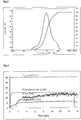
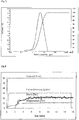
- the milled praziquantel extrusion process was uniform and reproducible at constant pressure with a drug loading of 50% and a nozzle diameter of 0.3 mm. From the process in Fig. 4 It can be seen that the pressure has stabilized at a constant level after about 12 minutes and at about 10 bar was significantly lower than in the process with unmilled praziquantel ( Fig. 2 ), where the pressure had increased to just under 40 bar after 15 minutes of process time. It was extruded through all the nozzle holes at a uniform speed.
- Extrusions with ground praziquantel were prepared analogously to Example II.
- a powder mixture of 50% [m / m] ground praziquantel / 49% [m / m] Dynasan 116® / 1% [m / m] fumed silica (Aerosil®) was used.
- Dynasan 116® is a fatty base which consists of 98% glycerol tripalmitate.
- Extrusion was through a nozzle plate of 0.3 mm diameter.
- Extrudates were prepared with the addition of 5 and 10% PEG 1500 as an antistatic analog to Comparative Example V.
- the cylinder temperature was 60 ° C, which ensured melting of the PEG 1500 during the extrusion process.
- Extrudates were prepared with the addition of 10% PEG 6000 as an antistatic agent analogous to Example VI.
- a mixed powder of 50% [m / m] milled praziquantel / 39% [m / m] Dynasan 116® 10% [m / m] PEG 6000/1% [m / m] fumed silica (Aerosil®) was used.
- the cylinder temperature was initially at 60 ° C and was cooled after 8 minutes initially to 55 ° C and finally to 52 ° C.
- the melting range of PEG 6000 is 55-60 ° C, so that the PEG was no longer melted after cooling the cylinder temperature.
- the PEG should be molten during the extrusion process in order to develop its antistatic effect.
- Extrudates were prepared with unground caffeine analogously to Comparative Example I.
- a powder mixture of 50% [m / m] unground caffeine (particle size d (0.9) 1170 ⁇ m) was used / 49% [m / m] Compritol® / 1% [m / m] fumed silica (Aerosil®) ; was extruded through a nozzle plate of 0.3 mm diameter.
- Compritol® / 1% [m / m] fumed silica (Aerosil®)
- Nozzle diameter 0.3 mm (100% free nozzle holes on extrusion), screw speed: 60 rpm, extrusion temperature: 67 ° C.
- Nozzle diameter 0.2 mm (180 nozzle holes, 100% free nozzle holes in extrusion), screw speed: 60 rpm, extrusion temperature: 67 ° C.
- Nozzle diameter 0.3 mm (100% free nozzle holes on extrusion), screw speed: 60 rpm, extrusion temperature: 67 ° C.
- Nozzle diameter 0.3 mm (3% free nozzle holes in extrusion), screw speed: 60 rpm, extrusion temperature: 67 ° C.
Landscapes
- Health & Medical Sciences (AREA)
- Chemical & Material Sciences (AREA)
- Veterinary Medicine (AREA)
- General Health & Medical Sciences (AREA)
- Medicinal Chemistry (AREA)
- Public Health (AREA)
- Pharmacology & Pharmacy (AREA)
- Life Sciences & Earth Sciences (AREA)
- Animal Behavior & Ethology (AREA)
- Engineering & Computer Science (AREA)
- Bioinformatics & Cheminformatics (AREA)
- Epidemiology (AREA)
- General Chemical & Material Sciences (AREA)
- Chemical Kinetics & Catalysis (AREA)
- Organic Chemistry (AREA)
- Nuclear Medicine, Radiotherapy & Molecular Imaging (AREA)
- Oil, Petroleum & Natural Gas (AREA)
- Pain & Pain Management (AREA)
- Rheumatology (AREA)
- Tropical Medicine & Parasitology (AREA)
- Medicinal Preparation (AREA)
- Pharmaceuticals Containing Other Organic And Inorganic Compounds (AREA)
- Acyclic And Carbocyclic Compounds In Medicinal Compositions (AREA)
Claims (12)
- Produits extrudés, contenant au moins une substance pharmaceutiquement active sous forme d'aiguilles, caractérisés en ce que le rapport de la grosseur de particule de la substance pharmaceutiquement active sous forme d'aiguilles au diamètre du brin est d'au moins 1:20, en ce que le produit extrudé contient une base lipidique comme adjuvant et en ce que le produit extrudé a été extrudé sous la limite inférieure de la plage de fusion de la base qui y est contenue.
- Produits extrudés selon la revendication 1, présentant un rapport de la grosseur de particule de la substance pharmaceutiquement active sous forme d'aiguilles au diamètre du brin d'au moins 1:25.
- Produits extrudés selon l'une quelconque des revendications précédentes, présentant un diamètre de brin de 0,5 mm ou moins.
- Produit extrudé selon l'une quelconque des revendications précédentes, contenant un ester de glycérol avec des acides gras en C12-C24 comme base lipidique.
- Produit extrudé selon l'une quelconque des revendications précédentes, contenant un diester de glycérol comme base lipidique.
- Produit extrudé selon la revendication 5, contenant du dibéhénate de glycérol comme base lipidique.
- Produit extrudé selon l'une quelconque des revendications 1 à 4, contenant un triester de glycérol comme base lipidique.
- Produit extrudé selon la revendication 7, contenant du trimyristate de glycérol, du tripalmitate de glycérol ou tristéarate de glycérol comme base lipidique.
- Produit extrudé selon la revendication 8, contenant du tristéarate de glycérol comme base lipidique.
- Produit extrudé selon l'une quelconque des revendications précédentes, contenant un antistatique, en particulier un polyéthylèneglycol.
- Utilisation de produits extrudés selon l'une quelconque des revendications précédentes pour la préparation de médicaments.
- Médicament contenant un produit extrudé selon l'une quelconque des revendications 1 à 10 ainsi qu'un ou plusieurs adjuvants et/ou additifs pharmaceutiquement acceptables.
Applications Claiming Priority (2)
| Application Number | Priority Date | Filing Date | Title |
|---|---|---|---|
| DE102008060472 | 2008-12-05 | ||
| PCT/EP2009/008341 WO2010063387A1 (fr) | 2008-12-05 | 2009-11-24 | Produits extrudés présentant des principes actifs sous forme d'aiguilles |
Publications (2)
| Publication Number | Publication Date |
|---|---|
| EP2373287A1 EP2373287A1 (fr) | 2011-10-12 |
| EP2373287B1 true EP2373287B1 (fr) | 2018-05-30 |
Family
ID=41785839
Family Applications (1)
| Application Number | Title | Priority Date | Filing Date |
|---|---|---|---|
| EP09763855.5A Active EP2373287B1 (fr) | 2008-12-05 | 2009-11-24 | Extrudat d'un medicament sous forme d'aiguille |
Country Status (27)
| Country | Link |
|---|---|
| US (1) | US20120034273A1 (fr) |
| EP (1) | EP2373287B1 (fr) |
| JP (2) | JP5860284B2 (fr) |
| KR (1) | KR20110096145A (fr) |
| CN (1) | CN102238940B (fr) |
| AR (1) | AR075106A1 (fr) |
| AU (1) | AU2009321822B2 (fr) |
| BR (1) | BRPI0922302B8 (fr) |
| CA (1) | CA2745456A1 (fr) |
| CL (1) | CL2011001207A1 (fr) |
| CO (1) | CO6440550A2 (fr) |
| CR (1) | CR20110285A (fr) |
| DO (1) | DOP2011000160A (fr) |
| EC (1) | ECSP11011080A (fr) |
| ES (1) | ES2685472T3 (fr) |
| IL (1) | IL212846A0 (fr) |
| MX (1) | MX2011005572A (fr) |
| NI (1) | NI201100103A (fr) |
| NZ (1) | NZ593217A (fr) |
| PE (1) | PE20120182A1 (fr) |
| RU (1) | RU2549450C2 (fr) |
| SV (1) | SV2011003919A (fr) |
| TW (1) | TWI522114B (fr) |
| UA (1) | UA105648C2 (fr) |
| UY (1) | UY32287A (fr) |
| WO (1) | WO2010063387A1 (fr) |
| ZA (1) | ZA201104145B (fr) |
Families Citing this family (5)
| Publication number | Priority date | Publication date | Assignee | Title |
|---|---|---|---|---|
| HU231017B1 (hu) * | 2012-05-08 | 2019-11-28 | LAVET Gyógyszeripari Kft. | Praziquantel tartalmú ízfedett formulációk |
| CN111803465B (zh) * | 2013-03-15 | 2023-05-09 | 阿根塔创新有限公司 | 可咀嚼配制物 |
| IN2013MU03583A (fr) * | 2013-11-14 | 2015-07-31 | Cipla Ltd | |
| DE18837223T1 (de) | 2017-07-26 | 2020-03-26 | Tgx Soft Chew, Llc | Stärkefreier weicher kausnack für veterinärmedizinische anwendungen |
| KR20230061465A (ko) | 2020-09-04 | 2023-05-08 | 엘랑코 유에스 인코포레이티드 | 기호성 제형 |
Family Cites Families (15)
| Publication number | Priority date | Publication date | Assignee | Title |
|---|---|---|---|---|
| JP4402752B2 (ja) * | 1997-05-19 | 2010-01-20 | 大日本住友製薬株式会社 | 免疫増強製剤 |
| IT1298574B1 (it) * | 1998-02-06 | 2000-01-12 | Vectorpharma Int | Composizioni farmaceutiche in forma di microparticelle a base polimerica ottenute mediante estrusione e sferonizzazione |
| DE19916383A1 (de) * | 1999-03-31 | 2000-10-05 | Schering Ag | Pharmazeutische Zusammensetzung mit einem Extrusionsstoff |
| WO2003013525A1 (fr) * | 2001-08-06 | 2003-02-20 | Euro-Celtique S.A. | Formulations d'agoniste opioide a antagoniste liberable et sequestre |
| PL373148A1 (en) * | 2002-06-27 | 2005-08-22 | Cilag Ag | Spherical pellet formulations |
| TWI347201B (en) * | 2003-04-21 | 2011-08-21 | Euro Celtique Sa | Pharmaceutical products,uses thereof and methods for preparing the same |
| US20060165790A1 (en) * | 2003-06-27 | 2006-07-27 | Malcolm Walden | Multiparticulates |
| EP1841414A1 (fr) * | 2003-12-31 | 2007-10-10 | Alpharma, Inc. | Preparations de rosiglitazone et de metformine |
| DE602004001969T2 (de) * | 2004-02-20 | 2007-03-15 | Mattern, Udo | Orale pharmazeutische Zusammensetzung und Verfahren zu ihrer Herstellung |
| EP1690528A1 (fr) * | 2005-02-11 | 2006-08-16 | Abbott GmbH & Co. KG | Procedé pour la préparation des formes de dosage comprenant une dispersion solide d'un agent active microcristalline |
| WO2006090640A1 (fr) * | 2005-02-23 | 2006-08-31 | Taiyokagaku Co., Ltd. | Composition de comprimé contenant un acide aminé et procédé de fabrication du comprimé |
| DE102005062270A1 (de) * | 2005-12-24 | 2007-06-28 | Bayer Technology Services Gmbh | Geschmacksmaskierung von Pulvern |
| CA2665726C (fr) * | 2006-10-11 | 2016-04-19 | Alpharma, Inc. | Compositions pharmaceutiques |
| DE102007026550A1 (de) * | 2007-06-08 | 2008-12-11 | Bayer Healthcare Ag | Extrudate mit verbesserter Geschmacksmaskierung |
| CN101590020B (zh) * | 2008-05-30 | 2012-02-08 | 上海新菲尔生物制药工程技术有限公司 | 一种对氨基水杨酸钠结肠定位给药系统 |
-
2009
- 2009-11-24 CA CA2745456A patent/CA2745456A1/fr not_active Abandoned
- 2009-11-24 NZ NZ593217A patent/NZ593217A/xx not_active IP Right Cessation
- 2009-11-24 JP JP2011538866A patent/JP5860284B2/ja not_active Expired - Fee Related
- 2009-11-24 WO PCT/EP2009/008341 patent/WO2010063387A1/fr not_active Ceased
- 2009-11-24 PE PE2011001057A patent/PE20120182A1/es not_active Application Discontinuation
- 2009-11-24 EP EP09763855.5A patent/EP2373287B1/fr active Active
- 2009-11-24 MX MX2011005572A patent/MX2011005572A/es active IP Right Grant
- 2009-11-24 KR KR1020117015299A patent/KR20110096145A/ko not_active Ceased
- 2009-11-24 AU AU2009321822A patent/AU2009321822B2/en active Active
- 2009-11-24 RU RU2011127248/15A patent/RU2549450C2/ru not_active IP Right Cessation
- 2009-11-24 ES ES09763855.5T patent/ES2685472T3/es active Active
- 2009-11-24 BR BRPI0922302A patent/BRPI0922302B8/pt active IP Right Grant
- 2009-11-24 US US13/132,872 patent/US20120034273A1/en not_active Abandoned
- 2009-11-24 UA UAA201108386A patent/UA105648C2/uk unknown
- 2009-11-24 CN CN200980148665.4A patent/CN102238940B/zh not_active Expired - Fee Related
- 2009-12-02 AR ARP090104642A patent/AR075106A1/es unknown
- 2009-12-02 UY UY0001032287A patent/UY32287A/es not_active Application Discontinuation
- 2009-12-04 TW TW098141443A patent/TWI522114B/zh not_active IP Right Cessation
-
2011
- 2011-05-12 IL IL212846A patent/IL212846A0/en unknown
- 2011-05-19 CO CO11061972A patent/CO6440550A2/es not_active Application Discontinuation
- 2011-05-24 CL CL2011001207A patent/CL2011001207A1/es unknown
- 2011-05-25 EC EC2011011080A patent/ECSP11011080A/es unknown
- 2011-05-26 SV SV2011003919A patent/SV2011003919A/es unknown
- 2011-05-26 NI NI201100103A patent/NI201100103A/es unknown
- 2011-05-27 CR CR20110285A patent/CR20110285A/es unknown
- 2011-05-27 DO DO2011000160A patent/DOP2011000160A/es unknown
- 2011-06-03 ZA ZA2011/04145A patent/ZA201104145B/en unknown
-
2015
- 2015-03-25 JP JP2015063172A patent/JP2015134812A/ja active Pending
Non-Patent Citations (1)
| Title |
|---|
| None * |
Also Published As
Similar Documents
| Publication | Publication Date | Title |
|---|---|---|
| EP1318799B1 (fr) | Formes galeniques stables contenant des ubiquinones | |
| AT393794B (de) | Pharmazeutische cefuroximaxetil-zusammensetzung und verfahren zu ihrer herstellung | |
| DE69532415T3 (de) | Schmelzextrudierte oral verabreichbare opioidformulierungen | |
| DE60222160T2 (de) | Zusammensetzungen mit einer kombination aus eigenschaften sofortiger freisetzung und kontrollierter freisetzung | |
| DE69432186T2 (de) | Verfahren zur herstellung stabiler arzneimittel | |
| EP2170272B1 (fr) | Produits extrudés présentant un masquage amélioré des goûts | |
| WO1999056733A1 (fr) | Formulation pharmaceutique de ciclosporine presentant de meilleures proprietes biopharmaceutiques, une meilleure qualite et stabilite en termes de physique, et procede permettant de la preparer | |
| KR20140034944A (ko) | 약물 함유 왁스 매트릭스 입자의 제조 방법, 상기 방법에 사용되는 익스트루더, 및 실로스타졸을 함유하는 서방성 제제 | |
| EP1267828B1 (fr) | Formulations pharmaceutiques comprenant des esters d'acides gras et de saccharose pour contrôler la liberation des agents actifs | |
| EP0756480A1 (fr) | Pellets a liberation retard a matrice d'enrobage et leur procede de preparation | |
| WO2010063387A1 (fr) | Produits extrudés présentant des principes actifs sous forme d'aiguilles | |
| EP2662075B1 (fr) | Compositions de masquage de goût de praziquantel | |
| EP1083196B1 (fr) | Granulation sous l'eau à l'état fondu comprenant un principe actif | |
| DE102011053068A1 (de) | Darreichungsform mit stabilisierten Wirkstoffpartikeln | |
| DE10341264A1 (de) | Schmelzformulierte, multipartikuläre orale Darreichungsform | |
| EP2934590A1 (fr) | Carbonate d'hydroxyde de magnésium utilisé comme porteur dans des préparations pharmaceutiques présentant une meilleure libération des principes actifs | |
| HK1163547B (en) | Extrudate having spicular active substances |
Legal Events
| Date | Code | Title | Description |
|---|---|---|---|
| PUAI | Public reference made under article 153(3) epc to a published international application that has entered the european phase |
Free format text: ORIGINAL CODE: 0009012 |
|
| 17P | Request for examination filed |
Effective date: 20110705 |
|
| AK | Designated contracting states |
Kind code of ref document: A1 Designated state(s): AT BE BG CH CY CZ DE DK EE ES FI FR GB GR HR HU IE IS IT LI LT LU LV MC MK MT NL NO PL PT RO SE SI SK SM TR |
|
| DAX | Request for extension of the european patent (deleted) | ||
| RAP1 | Party data changed (applicant data changed or rights of an application transferred) |
Owner name: BAYER INTELLECTUAL PROPERTY GMBH |
|
| 17Q | First examination report despatched |
Effective date: 20150513 |
|
| GRAP | Despatch of communication of intention to grant a patent |
Free format text: ORIGINAL CODE: EPIDOSNIGR1 |
|
| INTG | Intention to grant announced |
Effective date: 20171212 |
|
| GRAS | Grant fee paid |
Free format text: ORIGINAL CODE: EPIDOSNIGR3 |
|
| GRAA | (expected) grant |
Free format text: ORIGINAL CODE: 0009210 |
|
| AK | Designated contracting states |
Kind code of ref document: B1 Designated state(s): AT BE BG CH CY CZ DE DK EE ES FI FR GB GR HR HU IE IS IT LI LT LU LV MC MK MT NL NO PL PT RO SE SI SK SM TR |
|
| REG | Reference to a national code |
Ref country code: GB Ref legal event code: FG4D Free format text: NOT ENGLISH |
|
| REG | Reference to a national code |
Ref country code: CH Ref legal event code: EP |
|
| REG | Reference to a national code |
Ref country code: AT Ref legal event code: REF Ref document number: 1002842 Country of ref document: AT Kind code of ref document: T Effective date: 20180615 |
|
| REG | Reference to a national code |
Ref country code: IE Ref legal event code: FG4D Free format text: LANGUAGE OF EP DOCUMENT: GERMAN |
|
| REG | Reference to a national code |
Ref country code: DE Ref legal event code: R096 Ref document number: 502009014999 Country of ref document: DE |
|
| REG | Reference to a national code |
Ref country code: NL Ref legal event code: MP Effective date: 20180530 |
|
| REG | Reference to a national code |
Ref country code: ES Ref legal event code: FG2A Ref document number: 2685472 Country of ref document: ES Kind code of ref document: T3 Effective date: 20181009 |
|
| REG | Reference to a national code |
Ref country code: LT Ref legal event code: MG4D |
|
| REG | Reference to a national code |
Ref country code: FR Ref legal event code: PLFP Year of fee payment: 10 |
|
| PG25 | Lapsed in a contracting state [announced via postgrant information from national office to epo] |
Ref country code: BG Free format text: LAPSE BECAUSE OF FAILURE TO SUBMIT A TRANSLATION OF THE DESCRIPTION OR TO PAY THE FEE WITHIN THE PRESCRIBED TIME-LIMIT Effective date: 20180830 Ref country code: FI Free format text: LAPSE BECAUSE OF FAILURE TO SUBMIT A TRANSLATION OF THE DESCRIPTION OR TO PAY THE FEE WITHIN THE PRESCRIBED TIME-LIMIT Effective date: 20180530 Ref country code: NO Free format text: LAPSE BECAUSE OF FAILURE TO SUBMIT A TRANSLATION OF THE DESCRIPTION OR TO PAY THE FEE WITHIN THE PRESCRIBED TIME-LIMIT Effective date: 20180830 Ref country code: SE Free format text: LAPSE BECAUSE OF FAILURE TO SUBMIT A TRANSLATION OF THE DESCRIPTION OR TO PAY THE FEE WITHIN THE PRESCRIBED TIME-LIMIT Effective date: 20180530 Ref country code: LT Free format text: LAPSE BECAUSE OF FAILURE TO SUBMIT A TRANSLATION OF THE DESCRIPTION OR TO PAY THE FEE WITHIN THE PRESCRIBED TIME-LIMIT Effective date: 20180530 Ref country code: CY Free format text: LAPSE BECAUSE OF FAILURE TO SUBMIT A TRANSLATION OF THE DESCRIPTION OR TO PAY THE FEE WITHIN THE PRESCRIBED TIME-LIMIT Effective date: 20180530 |
|
| PG25 | Lapsed in a contracting state [announced via postgrant information from national office to epo] |
Ref country code: HR Free format text: LAPSE BECAUSE OF FAILURE TO SUBMIT A TRANSLATION OF THE DESCRIPTION OR TO PAY THE FEE WITHIN THE PRESCRIBED TIME-LIMIT Effective date: 20180530 Ref country code: GR Free format text: LAPSE BECAUSE OF FAILURE TO SUBMIT A TRANSLATION OF THE DESCRIPTION OR TO PAY THE FEE WITHIN THE PRESCRIBED TIME-LIMIT Effective date: 20180831 Ref country code: LV Free format text: LAPSE BECAUSE OF FAILURE TO SUBMIT A TRANSLATION OF THE DESCRIPTION OR TO PAY THE FEE WITHIN THE PRESCRIBED TIME-LIMIT Effective date: 20180530 |
|
| PG25 | Lapsed in a contracting state [announced via postgrant information from national office to epo] |
Ref country code: NL Free format text: LAPSE BECAUSE OF FAILURE TO SUBMIT A TRANSLATION OF THE DESCRIPTION OR TO PAY THE FEE WITHIN THE PRESCRIBED TIME-LIMIT Effective date: 20180530 |
|
| PG25 | Lapsed in a contracting state [announced via postgrant information from national office to epo] |
Ref country code: SK Free format text: LAPSE BECAUSE OF FAILURE TO SUBMIT A TRANSLATION OF THE DESCRIPTION OR TO PAY THE FEE WITHIN THE PRESCRIBED TIME-LIMIT Effective date: 20180530 Ref country code: EE Free format text: LAPSE BECAUSE OF FAILURE TO SUBMIT A TRANSLATION OF THE DESCRIPTION OR TO PAY THE FEE WITHIN THE PRESCRIBED TIME-LIMIT Effective date: 20180530 Ref country code: DK Free format text: LAPSE BECAUSE OF FAILURE TO SUBMIT A TRANSLATION OF THE DESCRIPTION OR TO PAY THE FEE WITHIN THE PRESCRIBED TIME-LIMIT Effective date: 20180530 Ref country code: RO Free format text: LAPSE BECAUSE OF FAILURE TO SUBMIT A TRANSLATION OF THE DESCRIPTION OR TO PAY THE FEE WITHIN THE PRESCRIBED TIME-LIMIT Effective date: 20180530 Ref country code: CZ Free format text: LAPSE BECAUSE OF FAILURE TO SUBMIT A TRANSLATION OF THE DESCRIPTION OR TO PAY THE FEE WITHIN THE PRESCRIBED TIME-LIMIT Effective date: 20180530 Ref country code: PL Free format text: LAPSE BECAUSE OF FAILURE TO SUBMIT A TRANSLATION OF THE DESCRIPTION OR TO PAY THE FEE WITHIN THE PRESCRIBED TIME-LIMIT Effective date: 20180530 |
|
| PG25 | Lapsed in a contracting state [announced via postgrant information from national office to epo] |
Ref country code: SM Free format text: LAPSE BECAUSE OF FAILURE TO SUBMIT A TRANSLATION OF THE DESCRIPTION OR TO PAY THE FEE WITHIN THE PRESCRIBED TIME-LIMIT Effective date: 20180530 |
|
| REG | Reference to a national code |
Ref country code: DE Ref legal event code: R097 Ref document number: 502009014999 Country of ref document: DE |
|
| PLBE | No opposition filed within time limit |
Free format text: ORIGINAL CODE: 0009261 |
|
| STAA | Information on the status of an ep patent application or granted ep patent |
Free format text: STATUS: NO OPPOSITION FILED WITHIN TIME LIMIT |
|
| 26N | No opposition filed |
Effective date: 20190301 |
|
| PG25 | Lapsed in a contracting state [announced via postgrant information from national office to epo] |
Ref country code: SI Free format text: LAPSE BECAUSE OF FAILURE TO SUBMIT A TRANSLATION OF THE DESCRIPTION OR TO PAY THE FEE WITHIN THE PRESCRIBED TIME-LIMIT Effective date: 20180530 |
|
| REG | Reference to a national code |
Ref country code: CH Ref legal event code: PL |
|
| PG25 | Lapsed in a contracting state [announced via postgrant information from national office to epo] |
Ref country code: MC Free format text: LAPSE BECAUSE OF FAILURE TO SUBMIT A TRANSLATION OF THE DESCRIPTION OR TO PAY THE FEE WITHIN THE PRESCRIBED TIME-LIMIT Effective date: 20180530 Ref country code: LU Free format text: LAPSE BECAUSE OF NON-PAYMENT OF DUE FEES Effective date: 20181124 |
|
| REG | Reference to a national code |
Ref country code: BE Ref legal event code: MM Effective date: 20181130 |
|
| REG | Reference to a national code |
Ref country code: IE Ref legal event code: MM4A |
|
| PG25 | Lapsed in a contracting state [announced via postgrant information from national office to epo] |
Ref country code: CH Free format text: LAPSE BECAUSE OF NON-PAYMENT OF DUE FEES Effective date: 20181130 Ref country code: LI Free format text: LAPSE BECAUSE OF NON-PAYMENT OF DUE FEES Effective date: 20181130 |
|
| PG25 | Lapsed in a contracting state [announced via postgrant information from national office to epo] |
Ref country code: IE Free format text: LAPSE BECAUSE OF NON-PAYMENT OF DUE FEES Effective date: 20181124 |
|
| PG25 | Lapsed in a contracting state [announced via postgrant information from national office to epo] |
Ref country code: BE Free format text: LAPSE BECAUSE OF NON-PAYMENT OF DUE FEES Effective date: 20181130 |
|
| REG | Reference to a national code |
Ref country code: AT Ref legal event code: MM01 Ref document number: 1002842 Country of ref document: AT Kind code of ref document: T Effective date: 20181124 |
|
| PG25 | Lapsed in a contracting state [announced via postgrant information from national office to epo] |
Ref country code: AT Free format text: LAPSE BECAUSE OF NON-PAYMENT OF DUE FEES Effective date: 20181124 Ref country code: MT Free format text: LAPSE BECAUSE OF FAILURE TO SUBMIT A TRANSLATION OF THE DESCRIPTION OR TO PAY THE FEE WITHIN THE PRESCRIBED TIME-LIMIT Effective date: 20180530 |
|
| PG25 | Lapsed in a contracting state [announced via postgrant information from national office to epo] |
Ref country code: TR Free format text: LAPSE BECAUSE OF FAILURE TO SUBMIT A TRANSLATION OF THE DESCRIPTION OR TO PAY THE FEE WITHIN THE PRESCRIBED TIME-LIMIT Effective date: 20180530 |
|
| PG25 | Lapsed in a contracting state [announced via postgrant information from national office to epo] |
Ref country code: PT Free format text: LAPSE BECAUSE OF FAILURE TO SUBMIT A TRANSLATION OF THE DESCRIPTION OR TO PAY THE FEE WITHIN THE PRESCRIBED TIME-LIMIT Effective date: 20180530 |
|
| PG25 | Lapsed in a contracting state [announced via postgrant information from national office to epo] |
Ref country code: MK Free format text: LAPSE BECAUSE OF NON-PAYMENT OF DUE FEES Effective date: 20180530 Ref country code: HU Free format text: LAPSE BECAUSE OF FAILURE TO SUBMIT A TRANSLATION OF THE DESCRIPTION OR TO PAY THE FEE WITHIN THE PRESCRIBED TIME-LIMIT; INVALID AB INITIO Effective date: 20091124 |
|
| PG25 | Lapsed in a contracting state [announced via postgrant information from national office to epo] |
Ref country code: IS Free format text: LAPSE BECAUSE OF FAILURE TO SUBMIT A TRANSLATION OF THE DESCRIPTION OR TO PAY THE FEE WITHIN THE PRESCRIBED TIME-LIMIT Effective date: 20180930 |
|
| REG | Reference to a national code |
Ref country code: GB Ref legal event code: 732E Free format text: REGISTERED BETWEEN 20240321 AND 20240327 |
|
| REG | Reference to a national code |
Ref country code: DE Ref legal event code: R081 Ref document number: 502009014999 Country of ref document: DE Owner name: ELANCO ANIMAL HEALTH GMBH, DE Free format text: FORMER OWNER: BAYER INTELLECTUAL PROPERTY GMBH, 40789 MONHEIM, DE |
|
| REG | Reference to a national code |
Ref country code: ES Ref legal event code: PC2A Owner name: ELANCO ANIMAL HEALTH GMBH Effective date: 20241024 |
|
| PGFP | Annual fee paid to national office [announced via postgrant information from national office to epo] |
Ref country code: DE Payment date: 20251022 Year of fee payment: 17 |
|
| PGFP | Annual fee paid to national office [announced via postgrant information from national office to epo] |
Ref country code: GB Payment date: 20251022 Year of fee payment: 17 |
|
| PGFP | Annual fee paid to national office [announced via postgrant information from national office to epo] |
Ref country code: IT Payment date: 20251022 Year of fee payment: 17 |
|
| PGFP | Annual fee paid to national office [announced via postgrant information from national office to epo] |
Ref country code: FR Payment date: 20251022 Year of fee payment: 17 |
|
| PGFP | Annual fee paid to national office [announced via postgrant information from national office to epo] |
Ref country code: ES Payment date: 20251201 Year of fee payment: 17 |