EP2380938A1 - Hydrophilierungsmittel für ein aluminiumhaltiges metallmaterial, hydrophilierungsverfahren und hydrophiliertes aluminiumhaltiges metallmaterial - Google Patents
Hydrophilierungsmittel für ein aluminiumhaltiges metallmaterial, hydrophilierungsverfahren und hydrophiliertes aluminiumhaltiges metallmaterial Download PDFInfo
- Publication number
- EP2380938A1 EP2380938A1 EP10733503A EP10733503A EP2380938A1 EP 2380938 A1 EP2380938 A1 EP 2380938A1 EP 10733503 A EP10733503 A EP 10733503A EP 10733503 A EP10733503 A EP 10733503A EP 2380938 A1 EP2380938 A1 EP 2380938A1
- Authority
- EP
- European Patent Office
- Prior art keywords
- polyvinyl alcohol
- aluminum
- modified polyvinyl
- metal material
- containing metal
- Prior art date
- Legal status (The legal status is an assumption and is not a legal conclusion. Google has not performed a legal analysis and makes no representation as to the accuracy of the status listed.)
- Granted
Links
- 0 CC(*)(*)*(*)N=C Chemical compound CC(*)(*)*(*)N=C 0.000 description 1
Images

Classifications
-
- C—CHEMISTRY; METALLURGY
- C09—DYES; PAINTS; POLISHES; NATURAL RESINS; ADHESIVES; COMPOSITIONS NOT OTHERWISE PROVIDED FOR; APPLICATIONS OF MATERIALS NOT OTHERWISE PROVIDED FOR
- C09D—COATING COMPOSITIONS, e.g. PAINTS, VARNISHES OR LACQUERS; FILLING PASTES; CHEMICAL PAINT OR INK REMOVERS; INKS; CORRECTING FLUIDS; WOODSTAINS; PASTES OR SOLIDS FOR COLOURING OR PRINTING; USE OF MATERIALS THEREFOR
- C09D151/00—Coating compositions based on graft polymers in which the grafted component is obtained by reactions only involving carbon-to-carbon unsaturated bonds; Coating compositions based on derivatives of such polymers
-
- C—CHEMISTRY; METALLURGY
- C08—ORGANIC MACROMOLECULAR COMPOUNDS; THEIR PREPARATION OR CHEMICAL WORKING-UP; COMPOSITIONS BASED THEREON
- C08F—MACROMOLECULAR COMPOUNDS OBTAINED BY REACTIONS ONLY INVOLVING CARBON-TO-CARBON UNSATURATED BONDS
- C08F261/00—Macromolecular compounds obtained by polymerising monomers on to polymers of oxygen-containing monomers as defined in group C08F16/00
- C08F261/02—Macromolecular compounds obtained by polymerising monomers on to polymers of oxygen-containing monomers as defined in group C08F16/00 on to polymers of unsaturated alcohols
- C08F261/04—Macromolecular compounds obtained by polymerising monomers on to polymers of oxygen-containing monomers as defined in group C08F16/00 on to polymers of unsaturated alcohols on to polymers of vinyl alcohol
-
- B—PERFORMING OPERATIONS; TRANSPORTING
- B32—LAYERED PRODUCTS
- B32B—LAYERED PRODUCTS, i.e. PRODUCTS BUILT-UP OF STRATA OF FLAT OR NON-FLAT, e.g. CELLULAR OR HONEYCOMB, FORM
- B32B15/00—Layered products comprising a layer of metal
- B32B15/04—Layered products comprising a layer of metal comprising metal as the main or only constituent of a layer, which is next to another layer of the same or of a different material
- B32B15/08—Layered products comprising a layer of metal comprising metal as the main or only constituent of a layer, which is next to another layer of the same or of a different material of synthetic resin
- B32B15/082—Layered products comprising a layer of metal comprising metal as the main or only constituent of a layer, which is next to another layer of the same or of a different material of synthetic resin comprising vinyl resins; comprising acrylic resins
-
- C—CHEMISTRY; METALLURGY
- C08—ORGANIC MACROMOLECULAR COMPOUNDS; THEIR PREPARATION OR CHEMICAL WORKING-UP; COMPOSITIONS BASED THEREON
- C08F—MACROMOLECULAR COMPOUNDS OBTAINED BY REACTIONS ONLY INVOLVING CARBON-TO-CARBON UNSATURATED BONDS
- C08F285/00—Macromolecular compounds obtained by polymerising monomers on to preformed graft polymers
-
- C—CHEMISTRY; METALLURGY
- C09—DYES; PAINTS; POLISHES; NATURAL RESINS; ADHESIVES; COMPOSITIONS NOT OTHERWISE PROVIDED FOR; APPLICATIONS OF MATERIALS NOT OTHERWISE PROVIDED FOR
- C09D—COATING COMPOSITIONS, e.g. PAINTS, VARNISHES OR LACQUERS; FILLING PASTES; CHEMICAL PAINT OR INK REMOVERS; INKS; CORRECTING FLUIDS; WOODSTAINS; PASTES OR SOLIDS FOR COLOURING OR PRINTING; USE OF MATERIALS THEREFOR
- C09D151/00—Coating compositions based on graft polymers in which the grafted component is obtained by reactions only involving carbon-to-carbon unsaturated bonds; Coating compositions based on derivatives of such polymers
- C09D151/003—Coating compositions based on graft polymers in which the grafted component is obtained by reactions only involving carbon-to-carbon unsaturated bonds; Coating compositions based on derivatives of such polymers grafted on to macromolecular compounds obtained by reactions only involving unsaturated carbon-to-carbon bonds
-
- C—CHEMISTRY; METALLURGY
- C09—DYES; PAINTS; POLISHES; NATURAL RESINS; ADHESIVES; COMPOSITIONS NOT OTHERWISE PROVIDED FOR; APPLICATIONS OF MATERIALS NOT OTHERWISE PROVIDED FOR
- C09D—COATING COMPOSITIONS, e.g. PAINTS, VARNISHES OR LACQUERS; FILLING PASTES; CHEMICAL PAINT OR INK REMOVERS; INKS; CORRECTING FLUIDS; WOODSTAINS; PASTES OR SOLIDS FOR COLOURING OR PRINTING; USE OF MATERIALS THEREFOR
- C09D5/00—Coating compositions, e.g. paints, varnishes or lacquers, characterised by their physical nature or the effects produced; Filling pastes
-
- C—CHEMISTRY; METALLURGY
- C08—ORGANIC MACROMOLECULAR COMPOUNDS; THEIR PREPARATION OR CHEMICAL WORKING-UP; COMPOSITIONS BASED THEREON
- C08K—Use of inorganic or non-macromolecular organic substances as compounding ingredients
- C08K5/00—Use of organic ingredients
- C08K5/0008—Organic ingredients according to more than one of the "one dot" groups of C08K5/01 - C08K5/59
- C08K5/0025—Crosslinking or vulcanising agents; including accelerators
-
- C—CHEMISTRY; METALLURGY
- C08—ORGANIC MACROMOLECULAR COMPOUNDS; THEIR PREPARATION OR CHEMICAL WORKING-UP; COMPOSITIONS BASED THEREON
- C08L—COMPOSITIONS OF MACROMOLECULAR COMPOUNDS
- C08L39/00—Compositions of homopolymers or copolymers of compounds having one or more unsaturated aliphatic radicals, each having only one carbon-to-carbon double bond, and at least one being terminated by a single or double bond to nitrogen or by a heterocyclic ring containing nitrogen; Compositions of derivatives of such polymers
- C08L39/04—Homopolymers or copolymers of monomers containing heterocyclic rings having nitrogen as ring member
-
- Y—GENERAL TAGGING OF NEW TECHNOLOGICAL DEVELOPMENTS; GENERAL TAGGING OF CROSS-SECTIONAL TECHNOLOGIES SPANNING OVER SEVERAL SECTIONS OF THE IPC; TECHNICAL SUBJECTS COVERED BY FORMER USPC CROSS-REFERENCE ART COLLECTIONS [XRACs] AND DIGESTS
- Y10—TECHNICAL SUBJECTS COVERED BY FORMER USPC
- Y10T—TECHNICAL SUBJECTS COVERED BY FORMER US CLASSIFICATION
- Y10T428/00—Stock material or miscellaneous articles
- Y10T428/31504—Composite [nonstructural laminate]
- Y10T428/31678—Of metal
- Y10T428/31692—Next to addition polymer from unsaturated monomers
- Y10T428/31699—Ester, halide or nitrile of addition polymer
Definitions
- the present invention relates to a hydrophilizing agent for an aluminum-containing metal material, a hydrophilizing method, and a hydrophilized aluminum-containing metal material, and more particularly, to a hydrophilizing agent and the like for forming a coating film that can impart excellent wettability for dew condensation to an aluminum-containing metal material used for a heat exchanger and the like.
- the heat exchangers formed by various assembly methods using an aluminum-containing metal materials and the like as the members have been designed such that the surface area of the radiator and the cooling unit to be as large as possible, in order to enhance heat dissipation or cooling effect. Additionally, the spacing of the fins is too close for downsizing. Thus, when the air conditioner is operated (in a cooling mode), atmospheric moisture is condensed between the fins to cause dew condensation. The more hydrophobic the surface of a fin, the more likely the dew condensation water is to collect into droplets. If the water collects into droplets, the spacing of the fins is likely to be clogged.
- the methods for imparting a hydrophilic property to the surface of a member of a heat exchanger include, for example, a method in which polyvinyl alcohol is mixed with polyvinylpyrrolidone having a specific degree of polymerization in specific proportions (see Patent Document 1), and a method in which polyvinyl alcohol is mixed with polyoxyethylene glycol (see Patent Document 2).
- an ingredient with a high hydrophilicity hereinafter referred to as "highly hydrophilic ingredient”
- polyvinylpyrrolidone and polyoxyethylene glycol is used in mixing with polyvinyl alcohol to impart a hydrophilic property.
- a method in which polyvinyl alcohol is mixed with silica fine particles see Patent Document 3 and the like have been proposed.
- An object of the invention is to provide a hydrophilizing agent for an aluminum-containing metal material, for forming a coating film that can impart excellent wettability for dew condensation to an aluminum-containing metal material used for a heat exchanger and the like.
- Another object of the invention is to provide a hydrophilizing method using the hydrophilizing agent of the invention, and a hydrophilized aluminum-containing metal material.
- a hydrophilizing agent for an aluminum-containing metal material of the invention for solving the above-described problems comprises: a modified polyvinyl alcohol having a polymer and/or copolymer of at least one type of N-vinyl lactam in a side chain of the polyvinyl alcohol having vinyl alcohol and vinyl acetate as its components; and a water-soluble crosslinking agent capable of binding the lactam moiety and/or the hydroxyl group of the modified polyvinyl alcohol.
- the coating film formed onto an aluminum-containing metal material by applying and drying the treatment agent that contains a modified polyvinyl alcohol having a polymer and/or copolymer of at least one type of N-vinyl lactam in a side chain of the polyvinyl alcohol and a water-soluble crosslinking agent capable of binding the lactam moiety and/or the hydroxyl group of the modified polyvinyl alcohol has an excellent hydrophilicity.
- the agent to an aluminum-containing metal material that constitutes a heat exchanger or the like for example, this allows an excellent wettability for due condensation, which solves the problems of decrease in heat exchange efficiency due to clogging by dew condensation water, droplet spattering, and the like.
- the polyvinyl alcohol is represented by the following Formula (1).
- R 1 and R 2 are the same or different side chain; part or all of R 1 and R 2 is a polymer and/or copolymer of at least one type of N-vinyl lactam that is graft polymerized; and R 1 and R 2 that is not graft polymerized represent H.
- part or all of the at least one type of N-vinyl lactam is N-vinylpyrrolidone.
- the water-soluble crosslinking agent has one or more organic compounds that have two or more of one or more functional groups selected from a carboxyl group, a phosphonic group, and a hydroxyl group.
- a hydrophilizing method of the invention for solving the above-described problems comprises: applying the hydrophilizing agent according to any one of claims 1 to 5 to part or all of the surface of an untreated or cleaned aluminum-containing metal material; and drying the agent to form a coating film.
- a hydrophilized aluminum-containing metal material of the invention for solving the above-described problems has on part or all of its surface a hydrophilic coating film composed of the hydrophilizing agent, the hydrophilic coating film comprising: a modified polyvinyl alcohol having a polymer and/or copolymer of at least one type of N-vinyl lactam in a side chain of the polyvinyl alcohol having vinyl alcohol and vinyl acetate as its components; and a water-soluble crosslinking agent capable of binding the lactam moiety and/or the hydroxyl group of the modified polyvinyl alcohol.
- the coating film When the coating film is formed by applying the hydrophilizing agent for an aluminum-containing metal material of the invention to an aluminum-containing metal material and dried it, the coating film has excellent hydrophilicity. And by applying the agent to an aluminum-containing metal material that constitutes a heat exchanger or the like for example, this allows an excellent wettability for due condensation, which solves the problems of decrease in heat exchange efficiency due to clogging by dew condensation water, droplet spattering, and the like. Additionally, a hydrophilic coating film formed using the hydrophilizing method of the invention can maintain excellent wettability for due condensation and excellent hydrophilicity in long-term use.
- the aluminum-containing metal material of the invention which has a hydrophilic coating film on part or all of the surface, has a very high practical value when it is used for a heat exchanger, because of the hydrophilic coating film having excellent wettability for due condensation, which solves the problems of decrease in heat exchange efficiency due to clogging by dew condensation water, droplet spattering, and the like. Additionally, the aluminum-containing metal material of the invention not only has high applicability to air conditioning components, but also can be applied to other wide range of application.
- hydrophilizing agent for an aluminum-containing metal material the hydrophilizing method, and the hydrophilized aluminum-containing metal material of the invention will be described in more detail with reference to the embodiments.
- weight and “mass”, and “percent by weight” and “percent by mass” are used synonymously.
- hydrophilizing agent for an aluminum-containing metal material contains Modified Polyvinyl Alcohol (A) having a polymer and/or copolymer of at least one type of N-vinyl lactam in a side chain of the polyvinyl alcohol having vinyl alcohol and vinyl acetate as its components; and Water-Soluble Crosslinking Agent (B) capable of binding the lactam moiety and/or the hydroxyl group of Modified Polyvinyl Alcohol (A).
- A Modified Polyvinyl Alcohol
- B Water-Soluble Crosslinking Agent capable of binding the lactam moiety and/or the hydroxyl group of Modified Polyvinyl Alcohol (A).
- the hydrophilizing agent of the invention contains Modified Polyvinyl Alcohol (A) and Water-Soluble Crosslinking Agent (B).
- Modified Polyvinyl Alcohol (A) has at least one type of N-vinyl lactam as a polymer and/or copolymer in a side chain of the polyvinyl alcohol having vinyl alcohol and vinyl acetate as its components.
- Water-Soluble Crosslinking Agent (B) is a crosslinking agent capable of binding the lactam moiety and/or the hydroxyl group of Modified Polyvinyl Alcohol.
- Modified Polyvinyl Alcohol (A) has a polymer and/or copolymer of at least one type of N-vinyl lactam in a side chain of the polyvinyl alcohol having vinyl alcohol and vinyl acetate as its components, and is represented by the following Formula (1).
- R 1 and R 2 are the same or different side chain; part or all of R 1 and R 2 is a polymer and/or copolymer of at least one type of N-vinyl lactam that is graft polymerized; and R 1 and R 2 that is not graft polymerized represent H.
- m is the number of vinyl alcohol units
- n is the number of vinyl acetate units.
- [m+n] can be referred to as "degree of polymerization”
- [m/(m+n)x100] can be referred to as " degree of saponification”.
- the polyvinyl alcohol has vinyl alcohol and vinyl acetate as its components, and it is a water-soluble polymer produced by at least partially saponifying vinyl acetate.
- the polyvinyl alcohol is represented by Formula (2) as described below. It is not specially limited as far as it is water-soluble, and any commercially-available polyvinyl alcohol may be used.
- m is the number of vinyl alcohol units
- n is the number of vinyl acetate units.
- [m+n] is referred to as "degree of polymerization”
- [m/(m+n) ⁇ 100] is referred to as "degree of saponification”.
- the polymer that has a degree of saponification [m/(m+n)x 100] of from 98% inclusive to 100% exclusive can be called “fully saponified”
- the polymer that has a degree of saponification of from 90% inclusive to 98% exclusive can be called “almost-fully saponified”
- the polymer that has a degree of saponification of less than 90% can be called “partially saponified”.
- the degree of saponification [m/(m+n) ⁇ 100] of the polyvinyl alcohol is not specially limited as far as it is water-soluble. Any polyvinyl alcohol that has various degrees of saponification may be used. However, polyvinyl alcohol with a low degree of saponification can lead to insufficient formation of the coating film, which can result in decrease in the durability of the coating film against water (hereinafter referred to as "water resistance") and decrease in the wettability for due condensation. Thus, the polyvinyl alcohol preferably has a degree of saponification of 70% or more, and especially preferably 90% or more.
- the degree of polymerization [m+n] of the polyvinyl alcohol is not specially limited as far as it is water-soluble. Although any polyvinyl alcohol that has various degrees of polymerization may be used, the polyvinyl alcohol has preferably a degree of polymerization of from 400 to 3,000. A degree of polymerization of less than 400 can lead to insufficient formation of the coating film, which can decrease the water resistance and the wettability for due condensation.
- a degree of polymerization of more than 3,000 allows the formation of the coating film, and the wettability for due condensation and the like, which is the spirit of the invention, but it can cause the solution viscosity to excessively increase, which can decrease the workability in the manufacturing process of the hydrophilizing agent and decrease the workability of hydrophilization with the hydrophilizing agent.
- the polyvinyl alcohol may be a water-soluble derivative that has a copolymer component different from vinyl alcohol and vinyl acetate.
- X is a copolymer component different from vinyl alcohol and vinyl acetate
- m is the number of vinyl alcohol units
- n is the number of vinyl acetate units
- 1 is the number of the copolymer components different from vinyl alcohol and vinyl acetate.
- the copolymer component X different from vinyl alcohol and vinyl acetate can include anionic comonomers, nonionic comonomers, and cationic comonomers.
- the anionic comonomers can include acrylic acid, methacrylic acid, itaconic acid, and maleic acid, or salts thereof and the like.
- the nonionic comonomers can include styrene, acrylic nitrile, vinyl ether, (meth)acrylamide, N-methylol (meth)acrylamide, methyl(meth)acrylate, hydroxyethyl (meth)acrylate, vinylpyrrolidone, acroylmorpholine, vinyl acetate and the like.
- the cationic comonomers can include aminoethyl(meth)acrylate, N-hydroxypropyl aminoethyl(meth)acrylate, vinylimidazole, and N,N-dimethyldiallylamine and the like.
- a plurality of copolymer components X may exist in the polyvinyl alcohol of Formula (3), to the extent that they do not impair the spirit of the invention and the performance of the coating film.
- the at least one type of N-vinyl lactam has a structure with an unsaturated ethylene group attached to a nitrogen atom in the lactam.
- the N-vinyl lactam is not specially limited as far as it is water-soluble, and includes, for example, N-vinylpyrrolidone, 3-methyl-N-vinylpyrrolidone, 4-methyl-N-vinylpyrrolidone, 5-methyl-N-vinylpyrrolidone, N-vinylpyridone, N-vinylcaprolactam and the like.
- N-vinylpyrrolidone is preferably used and it is preferred to use N-vinylpyrrolidone as part or all of the at least one type ofN-vinyl lactam.
- Such at least one type of N-vinyl lactam is graft-polymerized as part of a side chain of the polyvinyl alcohol and compose the modified polyvinyl alcohol.
- Modified Polyvinyl Alcohol (A) has a polymer and/or copolymer of at least one type of N-vinyl lactam in a side chain of the polyvinyl alcohol, and is obtained by graft-polymerization of the at least one type of N-vinyl lactam with the polyvinyl alcohol.
- the modified polyvinyl alcohol is not specially limited as far as it is obtained by the graft-polymerization. Any modified polyvinyl alcohol obtained by the graft-polymerization in different proportions may be used.
- the ratio of the N-vinyl lactam (i) is less than 0.1, the degree of polymerization of the graft chains and/or the amount of the chains added can be insufficient, while if the ratio is more than 0.9, the degree of polymerization of the graft chains and/or the amount of the chains added can be excessive, with the result that the formation of the coating film can be influenced and the water resistance can be decreased, failing to provide the wettability for due condensation.
- Modified Polyvinyl Alcohol (A) obtained by the graft-polymerization at the mixing ratio described above may contain a monomer, homopolymer, and copolymer of the N-vinyl lactam that remains ungrafted polymerized. Additionally, the graft chain may contain a monomer capable of copolymerizing with N-vinyl lactam to the extent that the spirit of the invention is not impaired.
- the molecular weight of the polymer and/or copolymer of the N-vinyl lactam (i) in a side chain of Modified Polyvinyl Alcohol (A) is not specially limited, as far as the graft-polymerization is carried out at the mixing ratio described above.
- the molecular weight preferably ranges from 1,000 to 200,000.
- the molecular weight is less than 1,000, it may not be able to give the wettability for due condensation due to an insufficient molecular weight of the graft chains, while if the molecular weight is more than 200,000, formulation of the coating film may be influenced due to an excessive molecular weight of the graft chains and the water resistance may decrease, with the result that the wettability for due condensation can not be provided.
- Water-Soluble Crosslinking Agent (B) is contained in the hydrophilizing agent in order to maintain the water resistance and the excellent wettability for due condensation of the resultant coating film. And it is a crosslinking agent capable of binding the lactam moiety and/or the hydroxyl group of Modified Polyvinyl Alcohol (A). Water-Soluble Crosslinking Agent (B) is not specially limited as far as it forms a cross-linked structure with the lactam moiety and/or the hydroxyl group. One or more types of water-soluble compounds selected from inorganic and organic crosslinking agents may be used.
- the preferred inorganic crosslinking agents are a metal compound capable of forming a complex compound with the hydroxyl group of Modified Polyvinyl Alcohol (A), including, for example, compounds of metal such as chromium, zirconium, titanium, aluminum, silica, zinc and the like. Additionally, if needed, the inorganic crosslinking agents can be used in combination with an organic crosslinking agent.
- A Modified Polyvinyl Alcohol
- the organic crosslinking agents are more preferably an organic compound that has two or more functional groups capable of reacting with the lactam moiety and/or the hydroxyl group of Modified Polyvinyl Alcohol (A).
- the functional groups capable of reacting with the lactam moiety and/or the hydroxyl group include, for example, a (blocked) isocyanate group, a carboxyl group, a phosphonic group, a hydroxyl group, and an epoxy group.
- organic compounds that have the two or more functional groups include, for example, hexamethylene diisocyanate, tetramethylene diisocyanate, sorbitol polyglycidyl ether, polyglycerol polyglycidyl ether, pentaerythritol polyglycidyl ether, oxalic acid, malonic acid, maleic acid, fumaric acid, succinic acid, malic acid, citric acid, glutamic acid, aspartic acid, tartaric acid, phthalic acid, itaconic acid, mellitic acid, trimellitic acid, trimesic acid, pyromellitic acid, naphthalene tetracarboxylic acid, propane dicarboxylic acid, butane dicarboxylic acid, pentane dicarboxylic acid, hexane dicarboxylic acid, heptane dicarboxylic acid, butane tricarboxylic acid, butan
- Soluble Crosslinking Agent (B) contained in the hydrophilizing agent is an organic compound that has two or more of one or more functional groups selected from a carboxyl group, a phosphonic group, and a hydroxyl group, in order to give both of the water resistance and the wettability for due condensation to the resultant coating film.
- the organic compounds that have the two or more functional groups include, for example, oxalic acid, malonic acid, maleic acid, fumaric acid, succinic acid, malic acid, citric acid, glutamic acid, aspartic acid, tartaric acid, phthalic acid, itaconic acid, mellitic acid, trimellitic acid, trimesic acid, pyromellitic acid, naphthalene tetracarboxylic acid, propane dicarboxylic acid, butane dicarboxylic acid, pentane dicarboxylic acid, hexane dicarboxylic acid, heptane dicarboxylic acid, butane tricarboxylic acid, butane tetracarboxylic acid, cyclohexane tetracarboxylic acid, hexane tricarboxylic acid, polyacrylic acid, polymethacrylic acid, acrylic acid-methacrylic acid copolymers, 1-hydroxyethylid
- the amount (mixed amount) of Soluble Crosslinking Agent (B) in the hydrophilizing agent is not specially limited, preferably 0.1 to 200 parts by weight and more preferably 1.0 to 100 parts by weight of Soluble Crosslinking Agent (B) is contained in 100 parts by weight of Modified Polyvinyl Alcohol (A) on a solid weight basis, in order to provide both of the coating film-forming property and the wettability for due condensation. If the mixed amount of Soluble Crosslinking Agent (B) is less than 0.1 parts by weight, crosslinking is insufficient in formation of the coating film and then the water resistance is reduced, with the result that the wettability for due condensation may not be provided.
- the mixed amount is more than 200 parts by weight, a bond with the hydrophilic functional group is excessive, with the result that the wettability for due condensation may decrease and the water resistance may be reduced due to remaining crosslinking agent that did not engaged in the cross-linking reaction.
- a rust inhibitor, a leveling agent, a filler such as colloidal silica, a plastic pigment and the like, a colorant, a surfactant, an antifoaming agent, an antimicrobial and antifungal agent, and the like may be added to the hydrophilizing agent of the invention to the extent that they do not impair the spirit of the invention and the performance of the coating film.
- a method for using the hydrophilizing agent of the invention to form a hydrophilized coating film on an aluminum-containing metal material that is a material to be coated or a heat exchanger made from an aluminum-alloy is applied to part or all of the surface of an untreated or cleaned aluminum-containing metal material and then the agent is dried to form a coating film.
- the material to be coated is preferably an aluminum-containing metal material (an aluminum or aluminum alloy material) used in applications that require wettability for due condensation, and is especially preferably a heat exchanger made from an aluminum alloy. Although it is preferred to clean such material with an alkaline or acidic aqueous cleaner in advance, the cleaning treatment may be omitted when it is not required. Further, where necessary, the untreated or cleaned aluminum-containing metal material may be rust-proofed before the hydrophilizing agent is applied and dried.
- the rust-proofing can include formation of a corrosion resistant coating film (chemical conversion coating film or corrosion resistant primer layer). Although the corrosion resistant coating film is not specially limited, it can include known underlying coating films such as chromate, zinc phosphate, titanium, zircon, organic coating films and the like.
- the hydrophilizing agent is applied to the material to be coated using a suitable application means to give the required coating film amount, and the agent is heat-dried.
- the application means can include, for example, roll coating, spraying, dipping and the like.
- heat-drying is not specially limited, the agent is heat-dried preferably at a temperature of from 100 to 220°C for a period of from 5 seconds to 120 minutes, and more preferably at a temperature of from 120 to 200°C. If the drying temperature is lower than 100°C, formation of the coating film is insufficient, with the result that the water resistance and the wettability for due condensation may not be provided.
- the hydrophilic coating film formed by such method has preferably an amount of from 0.05 to 5.0g/m2. If the amount is less than 0.05g/m2, the ability of the hydrophilic coating film to cover a substrate may be insufficient. If the amount is more than 5.0g/m2, it is not preferred from a cost perspective, although it has no problem in the performance that is the spirit of the invention.
- the aluminum-containing metal material of the invention has on part or all of its surface a hydrophilic coating film composed of the hydrophilizing agent containing a modified polyvinyl alcohol having a polymer and/or copolymer of at least one type of N-vinyl lactam in a side chain of the polyvinyl alcohol having vinyl alcohol and vinyl acetate as its components and a water-soluble crosslinking agent capable of binding the lactam moiety and/or the hydroxyl group of the modified polyvinyl alcohol.
- the hydrophilic coating film is formed using the hydrophilizing method as described above.
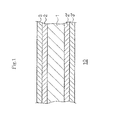
- FIG. 1 is a schematic cross section of an example of the aluminum-containing metal material of the invention.
- FIG. 2 is a schematic cross section of an example of a heat exchanger treated with the hydrophilizing agent for an aluminum-containing metal material of the invention (a hydrophilized aluminum-containing metal material).
- the constitution shown in FIG. 1 and 2 is just an example and the invention is not limited to the illustrated constitution.
- the example shown in FIG. 1 has Corrosion Resistant Coating films 2 and 2' that is formed if needed, on the both surfaces of Aluminum-Containing Metal Material 1 that is the material to be coated.
- Hydrophilic Coating films 3 and 3' are provided on the surface of Corrosion Resistant Coating films 2 and 2', respectively.
- Aluminum-Containing Metal Material 1 may or may not have Corrosion Resistant Coating films 2 and 2', and Hydrophilic Coating film 3 may be provided only on the required surface (one surface).
- Heat Exchanger 20 that has Radiators (Fins) 21 between adjacent Refrigerant Pipes (Tubes) 22 is shown, but the invention is not limited to the heat exchangers having such constitution. That is, the hydrophilized heat exchanger (aluminum-containing metal material) can be in the form of tubes (hollow tubes), solid tubes, hollow boards, or solid boards, and Hydrophilic Coating films 3 are provided on such heat exchanger to give Aluminum-Containing Metal Material (Heat Exchanger) 20 of the invention.
- the foregoing has described the hydrophilizing agent for an aluminum-containing metal material, the hydrophilizing method, and the hydrophilized aluminum-containing metal material of the invention.
- the coating film formed by applying and drying the hydrophilizing agent for an aluminum-containing metal material of the invention on an aluminum-containing metal material has an excellent hydrophilicity.
- Application of the coating film to an aluminum-containing metal material that constitutes a heat exchanger or the like for example this allows an excellent wettability for due condensation, which solves the problems of decrease in heat exchange efficiency due to clogging by dew condensation water, droplet spattering, and the like.
- a hydrophilic coating film formed using the hydrophilizing method of the invention can maintain excellent wettability for due condensation and excellent hydrophilicity in long-term use.
- the aluminum-containing metal material of the invention which has a hydrophilic coating film on part or all of the surface, has a very high practical value when it is used for a heat exchanger, because the hydrophilic coating film has excellent wettability for due condensation, which solves the problems of decrease in heat exchange efficiency due to clogging by dew condensation water, droplet spattering, and the like. Also, the aluminum-containing metal material of the invention not only has high applicability to air conditioning components, but also can be applied to a broad range of other applications.
- N-vinylcaprolactam, N-vinylpyrrolidone, and fully saponified polyvinyl alcohol represented by Formula (2) described above (with a degree of saponification of 98% or more and a degree of polymerization of 1,100) were mixed at a ratio of 0.05:0.05:0.9 on a solid weight basis and graft polymerized to give a modified polyvinyl alcohol.
- N-vinylcaprolactam, N-vinylpyrrolidone, and fully saponified polyvinyl alcohol represented by Formula (2) described above (with a degree of saponification of 98% or more and a degree of polymerization of 1,100) were mixed at a ratio of 0.25:0.25:0.5 on a solid weight basis and graft polymerized to give a modified polyvinyl alcohol.
- N-vinylpyridone, N-vinylpyrrolidone, and fully saponified polyvinyl alcohol represented by Formula (2) described above (with a degree of saponification of 98% or more and a degree of polymerization of 1,100) were mixed at a ratio of 0.25:0.25:0.5 on a solid weight basis and graft polymerized to give a modified polyvinyl alcohol.
- N-vinylpyridone, N-vinylcaprolactam, and fully saponified polyvinyl alcohol represented by Formula (2) described above (with a degree of saponification of 98% or more and a degree of polymerization of 1,100) were mixed at a ratio of 0.25:0.25:0.5 on a solid weight basis and graft polymerized to give a modified polyvinyl alcohol.
- N-vinylcaprolactam, N-vinylpyrrolidone, and fully saponified polyvinyl alcohol represented by Formula (2) described above (with a degree of saponification of 98% or more and a degree of polymerization of 1,100) were mixed at a ratio of 0.45:0.45:0.1 on a solid weight basis and graft polymerized to give a modified polyvinyl alcohol.
- N-vinylcaprolactam, N-vinylpyrrolidone, and fully saponified polyvinyl alcohol represented by Formula (2) described above (with a degree of saponification of 98% or more and a degree of polymerization of 400) were mixed at a ratio of 0.1:0.1:0.8 on a solid weight basis and graft polymerized to give a modified polyvinyl alcohol.
- N-vinylcaprolactam, N-vinylpyrrolidone, and fully saponified polyvinyl alcohol represented by Formula (2) described above (with a degree of saponification of 98% or more and a degree of polymerization of 1,700) were mixed at a ratio of 0.1:0.1:0.8 on a solid weight basis and graft polymerized to give a modified polyvinyl alcohol.
- N-vinylcaprolactam, N-vinylpyrrolidone, and fully saponified polyvinyl alcohol represented by Formula (2) described above (with a degree of saponification of 98% or more and a degree of polymerization of 3,000) were mixed at a ratio of 0.4:0.4:0.2 on a solid weight basis and graft polymerized to give a modified polyvinyl alcohol.
- N-vinylcaprolactaan and fully saponified polyvinyl alcohol represented by Formula (2) described above were mixed at a ratio of 0.5:0.5 on a solid weight basis and graft polymerized to give a modified polyvinyl alcohol.
- 90g of an aqueous modified polyvinyl alcohol solution that was prepared by adding pure water to the resultant modified polyvinyl alcohol to adjust the solid concentration to 3% and 10g of an aqueous crosslinking agent solution that was prepared by adding water to 1,2,3,4-butane tetracarboxylic acid as the crosslinking agent to adjust the solid concentration to 3% were mixed to give the hydrophilizing agent of Example 9.
- 3-methyl-N-vinylpyrrolidone and fully saponified polyvinyl alcohol represented by Formula (2) described above were mixed at a ratio of 0.5:0.5 on a solid weight basis and graft polymerized to give a modified polyvinyl alcohol.
- N-vinylpyridone and fully saponified polyvinyl alcohol represented by Formula (2) described above were mixed at a ratio of 0.5:0.5 on a solid weight basis and graft polymerized to give a modified polyvinyl alcohol.
- 90g of an aqueous modified polyvinyl alcohol solution that was prepared by adding pure water to the resultant modified polyvinyl alcohol to adjust the solid concentration to 3% and 10g of an aqueous crosslinking agent solution that was prepared by adding water to 1,2,3,4-butane tetracarboxylic acid as the crosslinking agent to adjust the solid concentration to 3% were mixed to give the hydrophilizing agent of Example 11.
- N-vinylpyrrolidone and almost-fully saponified polyvinyl alcohol represented by Formula (2) described above were mixed at a ratio of 0.5:0.5 on a solid weight basis and graft polymerized to give a modified polyvinyl alcohol.
- 90g of an aqueous modified polyvinyl alcohol solution that was prepared by adding pure water to the resultant modified polyvinyl alcohol to adjust the solid concentration to 3% and 10g of an aqueous crosslinking agent solution that was prepared by adding water to 1,2,3,4-butane tetracarboxylic acid as the crosslinking agent to adjust the solid concentration to 3% were mixed to give the hydrophilizing agent of Example 12.
- N-vinylpyrrolidone and partially saponified polyvinyl alcohol represented by Formula (2) described above were mixed at a ratio of 0.5:0.5 on a solid weight basis and graft polymerized to give a modified polyvinyl alcohol.
- 90g of an aqueous modified polyvinyl alcohol solution that was prepared by adding pure water to the resultant modified polyvinyl alcohol to adjust the solid concentration to 3% and 10g of an aqueous crosslinking agent solution that was prepared by adding water to 1,2,3,4-butane tetracarboxylic acid as the crosslinking agent to adjust the solid concentration to 3% were mixed to give the hydrophilizing agent of Example 13.
- N-vinylpyrrolidone and fully saponified polyvinyl alcohol represented by Formula (2) described above were mixed at a ratio of 0.2:0.8 on a solid weight basis and graft polymerized to give a modified polyvinyl alcohol.
- 90g of an aqueous modified polyvinyl alcohol solution that was prepared by adding pure water to the resultant modified polyvinyl alcohol to adjust the solid concentration to 3% and 10g of an aqueous crosslinking agent solution that was prepared by adding water to ammonium zirconium carbonate as the crosslinking agent to adjust the solid (ZrO 2 ) concentration to 3% were mixed to give the hydrophilizing agent of Example 15.
- N-vinylpyrrolidone and fully saponified polyvinyl alcohol represented by Formula (2) described above were mixed at a ratio of 0.2:0.8 on a solid weight basis and graft polymerized to give a modified polyvinyl alcohol.
- 90g of an aqueous modified polyvinyl alcohol solution that was prepared by adding pure water to the resultant modified polyvinyl alcohol to adjust the solid concentration to 3% and 10g of an aqueous crosslinking agent solution that was prepared by adding water to nitrilotris methylene phosphonic acid (NTMP) as the crosslinking agent to adjust the solid concentration to 3% were mixed to give the hydrophilizing agent of Example 16.
- NTMP nitrilotris methylene phosphonic acid
- N-vinylpyrrolidone and fully saponified polyvinyl alcohol represented by Formula (2) described above were mixed at a ratio of 0.2:0.8 on a solid weight basis and graft polymerized to give a modified polyvinyl alcohol.
- N-vinylpyrrolidone and fully saponified polyvinyl alcohol represented by Formula (2) described above were mixed at a ratio of 0.2:0.8 on a solid weight basis and graft polymerized to give a modified polyvinyl alcohol.
- 90g of an aqueous modified polyvinyl alcohol solution that was prepared by adding pure water to the resultant modified polyvinyl alcohol to adjust the solid concentration to 3% and 10g of an aqueous crosslinking agent solution that was prepared by adding water to citric acid as the crosslinking agent to adjust the solid concentration to 3% were mixed to give the hydrophilizing agent of Example 18.
- N-vinylpyrrolidone and fully saponified polyvinyl alcohol represented by Formula (2) described above were mixed at a ratio of 0.5:0.5 on a solid weight basis and graft polymerized to give a modified polyvinyl alcohol.
- Pure water was added to the resultant modified polyvinyl alcohol to adjust the solid concentration to 3% to give the hydrophilizing agent of Comparative Example 1.
- N-vinylpyrrolidone and fully saponified polyvinyl alcohol represented by Formula (2) described above were mixed at a ratio of 0.5:0.5 on a solid weight basis and graft polymerized to give a modified polyvinyl alcohol.
- N-vinylpyrrolidone and fully saponified polyvinyl alcohol represented by Formula (2) described above were mixed at a ratio of 0.05:0.95 on a solid weight basis and graft polymerized to give a modified polyvinyl alcohol.
- N-vinylpyrrolidone and fully saponified polyvinyl alcohol represented by Formula (2) described above were mixed at a ratio of 0.95:0.05 on a solid weight basis and graft polymerized to give a modified polyvinyl alcohol.
- an aqueous polyvinylpyrrolidone solution that was prepared by adding pure water to polyvinylpyrrolidone (available from ISP Japan Ltd., PVP K30 grade) to adjust the solid concentration to 3%
- 50g of an aqueous polyvinyl alcohol solution that was prepared by adding pure water to fully saponified polyvinyl alcohol represented by Formula (2) described above (with a degree of saponification of 98% or more and a degree of polymerization of 1,100) to adjust the solid concentration to 3% were mixed to give the hydrophilizing agent of Comparative Example 5.
- hydrophilic coated aluminum materials that were formed by using a hydrophilizing agent prepared with the compositions shown in Table 1 and 2 and the hydrophilizing method described below were evaluated by the evaluation methods as described below.
- An aluminum alloy material that corresponds to a commercially available material of JIS A 1000 and that has a thickness of 0.8mm, a width of 70mm, and a length of 150mm was used.
- test materials as described above were immersed for 2 minutes in a bath where the temperature is set to 60°C and containing alkaline degreasing agent "FINECLEANER TM 315" (available from Nihon Parkerizing Co., Ltd.) at an agent concentration of 20g/L; and the dust and oil resting on the surface were removed; and after that, the alkalinity resting on the surface were washed with tap water.
- alkaline degreasing agent "FINECLEANER TM 315" (available from Nihon Parkerizing Co., Ltd.) at an agent concentration of 20g/L
- test materials cleaned as described above were immersed in each of the hydrophilizing agents of Examples 1-18 and Comparative Examples 1-6, and then suspended in a blow drier at 160°C for 6 minutes for heat-drying to give the test plates with a dried coating film amount of 0.5g/m2 for use in the evaluation test as described below.
- the surface of the test plates was cooled to 5°C and the plates were placed for 5 minutes in a steady temperature- and humidity-controlled room conditioned at a temperature of 25°C and a humidity of 60% to condense moisture on the surface of the plates. Then, the due condensation on the surface of the plates was evaluated visually.
- the hydrophilized test plates were cut into 40mm ⁇ 40mm, immersed in deionized water for 100 hours, and dried.
- test plates were immersed in deionized water for 100 hours and heat-dried for an hour in a blow drier at 50°C. After cooling to room temperature, the plates were weighed to determine the percentage of remaining hydrophilic coating film using the following formula.
- Comparative Example 1 which is a hydrophilizing agent without adding water-soluble crosslinking agent
- Comparative Example 2 which is a hydrophilizing agent with a water-soluble crosslinking excessively added
- their water resistance and the durability of their hydrophilicity were changed due to the excess or deficiency of the crosslinking agent.
- Comparative Examples 5 and 6 which are a hydrophilizing agent formed by simply adding a homopolyner of polyvinylpyrrolidone (with a PVP K30 grade) to polyvinyl alcohol and adding or not adding the crosslinking agent, have inferior wettability for due condensation, although they have good hydrophilicity (contact angle).
- the results are different from those obtained by the hydrophilizing agent according to the invention, which is a hydrophilizing agent obtained from a modified polyvinyl alcohol formed by graft polymerization of N-vinyl lactam.
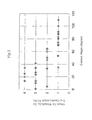
- FIG. 3 is a graph showing the relationship between "contact angle”, which is a general indicator for evaluating hydrophilicity and used as the indicator in the invention, and "wettability for due condensation", which is used as another evaluation indicator in the invention.
- the contact angle obtained by examining each of the hydrophilic coating films formed from Examples 1-18 and Comparative Examples 1-6 is plotted along the abscissa, and the wettability for due condensation is plotted along the ordinate.
- the grades 4, 3, 2, and 1 represent Double-circle (excellent), Single-circle (good), Triangle (relatively poor), and Cross mark (unacceptable) in Table 3, respectively.
- the results show that even a coating film considered as hydrophilic from the contact angle may generate drops of dew condensation water as shown in "Triangle (relatively poor) " and " Cross mark (unacceptable) " in Table 3 and cause clogging between the fins.
- the ability of a coating film to prevent dew condensation water from causing the clogging of the fins by using not only the contact angles, but also the wettability for due condensation as described herein.
- the method as described herein, in which the wettability is evaluated with focusing on the wetting-out in the early stage of due condensation (the surface condition is evaluated after moisture is condensed on the surface for 5 minutes) can be said to be a practical evaluation method.
- the hydrophilizing agents that meet the evaluation criteria can solve the problems of the invention.
Landscapes
- Chemical & Material Sciences (AREA)
- Organic Chemistry (AREA)
- Chemical Kinetics & Catalysis (AREA)
- Polymers & Plastics (AREA)
- Health & Medical Sciences (AREA)
- Medicinal Chemistry (AREA)
- Materials Engineering (AREA)
- Wood Science & Technology (AREA)
- Engineering & Computer Science (AREA)
- Life Sciences & Earth Sciences (AREA)
- Paints Or Removers (AREA)
- Laminated Bodies (AREA)
- Compositions Of Macromolecular Compounds (AREA)
- Treatments For Attaching Organic Compounds To Fibrous Goods (AREA)
Applications Claiming Priority (2)
| Application Number | Priority Date | Filing Date | Title |
|---|---|---|---|
| JP2009010507 | 2009-01-21 | ||
| PCT/JP2010/050669 WO2010084896A1 (ja) | 2009-01-21 | 2010-01-21 | アルミニウム含有金属材用親水化処理剤、親水化処理方法及び親水化処理されたアルミニウム含有金属材 |
Publications (4)
| Publication Number | Publication Date |
|---|---|
| EP2380938A1 true EP2380938A1 (de) | 2011-10-26 |
| EP2380938A4 EP2380938A4 (de) | 2012-08-01 |
| EP2380938B1 EP2380938B1 (de) | 2013-08-21 |
| EP2380938B8 EP2380938B8 (de) | 2013-09-25 |
Family
ID=42355948
Family Applications (1)
| Application Number | Title | Priority Date | Filing Date |
|---|---|---|---|
| EP20100733503 Not-in-force EP2380938B8 (de) | 2009-01-21 | 2010-01-21 | Hydrophilierungsmittel für ein aluminiumhaltiges metallmaterial, hydrophilierungsverfahren und hydrophiliertes aluminiumhaltiges metallmaterial |
Country Status (8)
| Country | Link |
|---|---|
| US (1) | US20110274939A1 (de) |
| EP (1) | EP2380938B8 (de) |
| JP (1) | JP5503556B2 (de) |
| KR (1) | KR101441176B1 (de) |
| CN (1) | CN102292404B (de) |
| AU (1) | AU2010207282B2 (de) |
| BR (1) | BRPI1006964A2 (de) |
| WO (1) | WO2010084896A1 (de) |
Cited By (1)
| Publication number | Priority date | Publication date | Assignee | Title |
|---|---|---|---|---|
| WO2015181265A1 (de) * | 2014-05-30 | 2015-12-03 | Henkel Ag & Co. Kgaa | Hydrophile beschichtung für wärmetauscher |
Families Citing this family (7)
| Publication number | Priority date | Publication date | Assignee | Title |
|---|---|---|---|---|
| CN103788552B (zh) * | 2012-10-26 | 2016-12-21 | 厦门加岩高分子材料有限公司 | 聚乙烯醇共混物 |
| JP6041717B2 (ja) * | 2012-12-25 | 2016-12-14 | 日本合成化学工業株式会社 | 親水化処理剤、及び該親水化処理剤で表面処理されたアルミニウム材 |
| HUE035627T2 (en) * | 2013-03-21 | 2018-05-28 | Nihon Parkerizing | Hydrophilic Surface Treatment Agent for Aluminum Heat Exchanger with Excellent Conductivity |
| JP6250405B2 (ja) * | 2014-01-09 | 2017-12-20 | 株式会社神戸製鋼所 | 樹脂被覆金属板及びそれからなる熱交換器用フィン材 |
| JP6479381B2 (ja) * | 2014-09-19 | 2019-03-06 | 株式会社クラレ | 耐水性組成物の製造方法 |
| JP6941465B2 (ja) * | 2017-04-07 | 2021-09-29 | 日本ペイント・サーフケミカルズ株式会社 | 親水化処理剤及び親水性皮膜の形成方法 |
| WO2021014655A1 (ja) * | 2019-07-25 | 2021-01-28 | 三好化成株式会社 | 親水化無機粉体及び当該親水化無機粉体を配合した化粧料 |
Family Cites Families (18)
| Publication number | Priority date | Publication date | Assignee | Title |
|---|---|---|---|---|
| US2169250A (en) * | 1937-05-27 | 1939-08-15 | Du Pont | Process of forming films, threads, and the like |
| JPS55721A (en) * | 1978-06-19 | 1980-01-07 | Showa Denko Kk | Aqueous dispersion of water-soluble high polymer complex |
| JP2731988B2 (ja) | 1991-06-12 | 1998-03-25 | 日本ペイント株式会社 | 親水性表面処理剤、親水性表面処理浴、及び親水性表面処理方法 |
| JPH06322292A (ja) * | 1993-03-18 | 1994-11-22 | Nippon Paint Co Ltd | 親水化処理用ポリマー組成物 |
| JPH1036757A (ja) * | 1996-07-23 | 1998-02-10 | Dai Ichi Kogyo Seiyaku Co Ltd | 熱交換器フィン用親水性表面処理剤 |
| JP4008620B2 (ja) | 1999-06-04 | 2007-11-14 | カルソニックカンセイ株式会社 | アルミニウム合金製熱交換器 |
| JP3474866B2 (ja) | 2000-05-12 | 2003-12-08 | 日本ペイント株式会社 | 熱交換器の親水化処理方法および親水化処理された熱交換器 |
| JP3836742B2 (ja) * | 2001-03-27 | 2006-10-25 | 株式会社デンソー | 親水化処理方法及び親水化処理された熱交換器 |
| AU780675B2 (en) * | 2001-03-27 | 2005-04-07 | Denso Corporation | Hydrophilic modification method and heat exchanger treated thereby |
| MXPA05005478A (es) * | 2002-11-27 | 2005-07-25 | Isp Investments Inc | Polimeros rigidos. |
| CN100402187C (zh) * | 2003-09-02 | 2008-07-16 | 新东工业株式会社 | 型芯成型方法与金属铸造用型芯 |
| EP1661639B1 (de) * | 2003-09-02 | 2018-10-10 | Sintokogio, Ltd. | Verfahren zur herstellung einer form und eines kerns für metallguss |
| JP2006213840A (ja) * | 2005-02-04 | 2006-08-17 | Dai Ichi Kogyo Seiyaku Co Ltd | ポリビニルアルコール変性グラフト重合体、その製造方法及びそれを含有するインクジェット記録用媒体 |
| US7604668B2 (en) * | 2005-07-29 | 2009-10-20 | Gore Enterprise Holdings, Inc. | Composite self-cohered web materials |
| JP2007084694A (ja) * | 2005-09-22 | 2007-04-05 | Mitsubishi Alum Co Ltd | 塗料組成物、フィンおよびその製造方法ならびに熱交換器 |
| JP4971867B2 (ja) * | 2007-05-07 | 2012-07-11 | 第一工業製薬株式会社 | ポリビニルアルコール−ポリビニルピロリドングラフトコポリマーの製造方法 |
| US20100143720A1 (en) * | 2007-05-21 | 2010-06-10 | Kuraray Co., Ltd. | Crosslinkable polyvinyl acetal porous powder, method for producing the same, and use of the same |
| JP5006758B2 (ja) * | 2007-10-26 | 2012-08-22 | 第一工業製薬株式会社 | 金属表面処理剤 |
-
2010
- 2010-01-21 US US13/143,524 patent/US20110274939A1/en not_active Abandoned
- 2010-01-21 AU AU2010207282A patent/AU2010207282B2/en not_active Ceased
- 2010-01-21 BR BRPI1006964A patent/BRPI1006964A2/pt not_active Application Discontinuation
- 2010-01-21 JP JP2010547504A patent/JP5503556B2/ja active Active
- 2010-01-21 KR KR1020117019298A patent/KR101441176B1/ko not_active Expired - Fee Related
- 2010-01-21 WO PCT/JP2010/050669 patent/WO2010084896A1/ja not_active Ceased
- 2010-01-21 CN CN201080005017.6A patent/CN102292404B/zh not_active Expired - Fee Related
- 2010-01-21 EP EP20100733503 patent/EP2380938B8/de not_active Not-in-force
Cited By (2)
| Publication number | Priority date | Publication date | Assignee | Title |
|---|---|---|---|---|
| WO2015181265A1 (de) * | 2014-05-30 | 2015-12-03 | Henkel Ag & Co. Kgaa | Hydrophile beschichtung für wärmetauscher |
| US10407589B2 (en) | 2014-05-30 | 2019-09-10 | Henkel Ag & Co. Kgaa | Hydrophilic coating for heat exchangers |
Also Published As
| Publication number | Publication date |
|---|---|
| WO2010084896A1 (ja) | 2010-07-29 |
| KR20110117188A (ko) | 2011-10-26 |
| AU2010207282A1 (en) | 2011-08-11 |
| AU2010207282B2 (en) | 2012-12-20 |
| CN102292404B (zh) | 2015-04-01 |
| JPWO2010084896A1 (ja) | 2012-07-19 |
| EP2380938B1 (de) | 2013-08-21 |
| EP2380938B8 (de) | 2013-09-25 |
| BRPI1006964A2 (pt) | 2016-04-12 |
| CN102292404A (zh) | 2011-12-21 |
| EP2380938A4 (de) | 2012-08-01 |
| US20110274939A1 (en) | 2011-11-10 |
| KR101441176B1 (ko) | 2014-09-17 |
| JP5503556B2 (ja) | 2014-05-28 |
Similar Documents
| Publication | Publication Date | Title |
|---|---|---|
| EP2380938B1 (de) | Hydrophilierungsmittel für ein aluminiumhaltiges metallmaterial, hydrophilierungsverfahren und hydrophiliertes aluminiumhaltiges metallmaterial | |
| JP4464076B2 (ja) | 架橋性微粒子、親水処理剤、親水皮膜被覆方法及び親水皮膜 | |
| AU2011319006A1 (en) | Hydrophilic film formed on a surface of a metal material, hydrophilization treatment agent and hydrophilization treatment method | |
| EP1136591A1 (de) | Hydrophilierungslösung für metallmaterial, hydrophilierungsflüssigkeit, verfahren zum hydrophilieren, metallmaterial und wärmetauscher | |
| KR20180015155A (ko) | 친수화 처리제, 친수 피막 형성방법 및 친수 피막 | |
| WO2017038251A1 (ja) | 表面処理剤、皮膜の製造方法及び皮膜付き金属材料 | |
| US6987143B2 (en) | Hydrophilizing agent, hydrophilizing fluid, and method of hydrophilizing | |
| WO2016002484A1 (ja) | アルミニウム製フィン材の親水皮膜被覆方法、アルミニウム製フィン材及びアルミニウム製熱交換器 | |
| JP2013190178A (ja) | アルミニウム製フィン材 | |
| JPH09296121A (ja) | 金属材料用水性表面親水性化処理剤および表面処理方法 | |
| JP2574197B2 (ja) | アルミニウム製熱交換器用親水化表面処理剤、及び親水化表面処理方法 | |
| JPH09316434A (ja) | 金属材料の親水性化用水性処理剤および処理方法 | |
| US20030039850A1 (en) | Modifier for hydrophilicity, hydrophilic modification method and aluminum material or aluminum alloy material modified hydrophilic thereby | |
| JP3717205B2 (ja) | アルミニウム含有金属製熱交換器および製造方法 | |
| JP7601731B2 (ja) | アルミニウム製フィン材 | |
| JP5180145B2 (ja) | 架橋性微粒子、親水処理剤、親水皮膜被覆方法及び親水皮膜 | |
| KR20210107663A (ko) | 친수화 처리제, 친수 피막 형성 방법, 및 친수 피막 | |
| CN117120795A (zh) | 铝制翅片材 | |
| JP2009179811A5 (de) | ||
| JP2731988B2 (ja) | 親水性表面処理剤、親水性表面処理浴、及び親水性表面処理方法 | |
| JP4467264B2 (ja) | フィン用塗料組成物およびフィン材 | |
| JP5503165B2 (ja) | ロール成形時の耐皮膜剥離性に優れた樹脂塗装金属板 | |
| JP5654844B2 (ja) | 熱交換器用耐アルカリ性アルミニウムフィン材及び熱交換器 | |
| JPH11201688A (ja) | 熱交換器用フィン材 | |
| JP2025023487A (ja) | アルミニウム製フィン材とその製造方法 |
Legal Events
| Date | Code | Title | Description |
|---|---|---|---|
| PUAI | Public reference made under article 153(3) epc to a published international application that has entered the european phase |
Free format text: ORIGINAL CODE: 0009012 |
|
| 17P | Request for examination filed |
Effective date: 20110719 |
|
| AK | Designated contracting states |
Kind code of ref document: A1 Designated state(s): AT BE BG CH CY CZ DE DK EE ES FI FR GB GR HR HU IE IS IT LI LT LU LV MC MK MT NL NO PL PT RO SE SI SK SM TR |
|
| DAX | Request for extension of the european patent (deleted) | ||
| A4 | Supplementary search report drawn up and despatched |
Effective date: 20120704 |
|
| RIC1 | Information provided on ipc code assigned before grant |
Ipc: C09D 5/00 20060101ALI20120628BHEP Ipc: C08F 261/04 20060101ALI20120628BHEP Ipc: C09D 129/04 20060101ALI20120628BHEP Ipc: C09D 139/04 20060101ALI20120628BHEP Ipc: C09D 139/06 20060101ALI20120628BHEP Ipc: C09D 151/00 20060101AFI20120628BHEP Ipc: B32B 15/082 20060101ALI20120628BHEP Ipc: C09K 3/00 20060101ALI20120628BHEP |
|
| GRAP | Despatch of communication of intention to grant a patent |
Free format text: ORIGINAL CODE: EPIDOSNIGR1 |
|
| GRAS | Grant fee paid |
Free format text: ORIGINAL CODE: EPIDOSNIGR3 |
|
| GRAA | (expected) grant |
Free format text: ORIGINAL CODE: 0009210 |
|
| AK | Designated contracting states |
Kind code of ref document: B1 Designated state(s): AT BE BG CH CY CZ DE DK EE ES FI FR GB GR HR HU IE IS IT LI LT LU LV MC MK MT NL NO PL PT RO SE SI SK SM TR |
|
| RAP1 | Party data changed (applicant data changed or rights of an application transferred) |
Owner name: NIHON PARKERIZING CO., LTD. |
|
| REG | Reference to a national code |
Ref country code: GB Ref legal event code: FG4D |
|
| RAP2 | Party data changed (patent owner data changed or rights of a patent transferred) |
Owner name: DENSO CORPORATION Owner name: NIHON PARKERIZING CO., LTD. |
|
| REG | Reference to a national code |
Ref country code: CH Ref legal event code: EP |
|
| REG | Reference to a national code |
Ref country code: AT Ref legal event code: REF Ref document number: 628106 Country of ref document: AT Kind code of ref document: T Effective date: 20130915 |
|
| REG | Reference to a national code |
Ref country code: IE Ref legal event code: FG4D |
|
| REG | Reference to a national code |
Ref country code: DE Ref legal event code: R096 Ref document number: 602010009672 Country of ref document: DE Effective date: 20131017 |
|
| REG | Reference to a national code |
Ref country code: NL Ref legal event code: VDEP Effective date: 20130821 Ref country code: AT Ref legal event code: MK05 Ref document number: 628106 Country of ref document: AT Kind code of ref document: T Effective date: 20130821 |
|
| REG | Reference to a national code |
Ref country code: LT Ref legal event code: MG4D |
|
| PG25 | Lapsed in a contracting state [announced via postgrant information from national office to epo] |
Ref country code: PT Free format text: LAPSE BECAUSE OF FAILURE TO SUBMIT A TRANSLATION OF THE DESCRIPTION OR TO PAY THE FEE WITHIN THE PRESCRIBED TIME-LIMIT Effective date: 20131223 Ref country code: CY Free format text: LAPSE BECAUSE OF FAILURE TO SUBMIT A TRANSLATION OF THE DESCRIPTION OR TO PAY THE FEE WITHIN THE PRESCRIBED TIME-LIMIT Effective date: 20130724 Ref country code: IS Free format text: LAPSE BECAUSE OF FAILURE TO SUBMIT A TRANSLATION OF THE DESCRIPTION OR TO PAY THE FEE WITHIN THE PRESCRIBED TIME-LIMIT Effective date: 20131221 Ref country code: SE Free format text: LAPSE BECAUSE OF FAILURE TO SUBMIT A TRANSLATION OF THE DESCRIPTION OR TO PAY THE FEE WITHIN THE PRESCRIBED TIME-LIMIT Effective date: 20130821 Ref country code: LT Free format text: LAPSE BECAUSE OF FAILURE TO SUBMIT A TRANSLATION OF THE DESCRIPTION OR TO PAY THE FEE WITHIN THE PRESCRIBED TIME-LIMIT Effective date: 20130821 Ref country code: AT Free format text: LAPSE BECAUSE OF FAILURE TO SUBMIT A TRANSLATION OF THE DESCRIPTION OR TO PAY THE FEE WITHIN THE PRESCRIBED TIME-LIMIT Effective date: 20130821 Ref country code: HR Free format text: LAPSE BECAUSE OF FAILURE TO SUBMIT A TRANSLATION OF THE DESCRIPTION OR TO PAY THE FEE WITHIN THE PRESCRIBED TIME-LIMIT Effective date: 20130821 Ref country code: NO Free format text: LAPSE BECAUSE OF FAILURE TO SUBMIT A TRANSLATION OF THE DESCRIPTION OR TO PAY THE FEE WITHIN THE PRESCRIBED TIME-LIMIT Effective date: 20131121 |
|
| PG25 | Lapsed in a contracting state [announced via postgrant information from national office to epo] |
Ref country code: GR Free format text: LAPSE BECAUSE OF FAILURE TO SUBMIT A TRANSLATION OF THE DESCRIPTION OR TO PAY THE FEE WITHIN THE PRESCRIBED TIME-LIMIT Effective date: 20131122 Ref country code: FI Free format text: LAPSE BECAUSE OF FAILURE TO SUBMIT A TRANSLATION OF THE DESCRIPTION OR TO PAY THE FEE WITHIN THE PRESCRIBED TIME-LIMIT Effective date: 20130821 Ref country code: SI Free format text: LAPSE BECAUSE OF FAILURE TO SUBMIT A TRANSLATION OF THE DESCRIPTION OR TO PAY THE FEE WITHIN THE PRESCRIBED TIME-LIMIT Effective date: 20130821 Ref country code: BE Free format text: LAPSE BECAUSE OF FAILURE TO SUBMIT A TRANSLATION OF THE DESCRIPTION OR TO PAY THE FEE WITHIN THE PRESCRIBED TIME-LIMIT Effective date: 20130821 Ref country code: PL Free format text: LAPSE BECAUSE OF FAILURE TO SUBMIT A TRANSLATION OF THE DESCRIPTION OR TO PAY THE FEE WITHIN THE PRESCRIBED TIME-LIMIT Effective date: 20130821 Ref country code: LV Free format text: LAPSE BECAUSE OF FAILURE TO SUBMIT A TRANSLATION OF THE DESCRIPTION OR TO PAY THE FEE WITHIN THE PRESCRIBED TIME-LIMIT Effective date: 20130821 |
|
| PG25 | Lapsed in a contracting state [announced via postgrant information from national office to epo] |
Ref country code: CY Free format text: LAPSE BECAUSE OF FAILURE TO SUBMIT A TRANSLATION OF THE DESCRIPTION OR TO PAY THE FEE WITHIN THE PRESCRIBED TIME-LIMIT Effective date: 20130821 |
|
| PG25 | Lapsed in a contracting state [announced via postgrant information from national office to epo] |
Ref country code: SK Free format text: LAPSE BECAUSE OF FAILURE TO SUBMIT A TRANSLATION OF THE DESCRIPTION OR TO PAY THE FEE WITHIN THE PRESCRIBED TIME-LIMIT Effective date: 20130821 Ref country code: EE Free format text: LAPSE BECAUSE OF FAILURE TO SUBMIT A TRANSLATION OF THE DESCRIPTION OR TO PAY THE FEE WITHIN THE PRESCRIBED TIME-LIMIT Effective date: 20130821 Ref country code: NL Free format text: LAPSE BECAUSE OF FAILURE TO SUBMIT A TRANSLATION OF THE DESCRIPTION OR TO PAY THE FEE WITHIN THE PRESCRIBED TIME-LIMIT Effective date: 20130821 Ref country code: RO Free format text: LAPSE BECAUSE OF FAILURE TO SUBMIT A TRANSLATION OF THE DESCRIPTION OR TO PAY THE FEE WITHIN THE PRESCRIBED TIME-LIMIT Effective date: 20130821 Ref country code: DK Free format text: LAPSE BECAUSE OF FAILURE TO SUBMIT A TRANSLATION OF THE DESCRIPTION OR TO PAY THE FEE WITHIN THE PRESCRIBED TIME-LIMIT Effective date: 20130821 |
|
| PG25 | Lapsed in a contracting state [announced via postgrant information from national office to epo] |
Ref country code: ES Free format text: LAPSE BECAUSE OF FAILURE TO SUBMIT A TRANSLATION OF THE DESCRIPTION OR TO PAY THE FEE WITHIN THE PRESCRIBED TIME-LIMIT Effective date: 20130821 |
|
| PLBE | No opposition filed within time limit |
Free format text: ORIGINAL CODE: 0009261 |
|
| STAA | Information on the status of an ep patent application or granted ep patent |
Free format text: STATUS: NO OPPOSITION FILED WITHIN TIME LIMIT |
|
| 26N | No opposition filed |
Effective date: 20140522 |
|
| PG25 | Lapsed in a contracting state [announced via postgrant information from national office to epo] |
Ref country code: LU Free format text: LAPSE BECAUSE OF FAILURE TO SUBMIT A TRANSLATION OF THE DESCRIPTION OR TO PAY THE FEE WITHIN THE PRESCRIBED TIME-LIMIT Effective date: 20140121 |
|
| REG | Reference to a national code |
Ref country code: CH Ref legal event code: PL |
|
| REG | Reference to a national code |
Ref country code: DE Ref legal event code: R097 Ref document number: 602010009672 Country of ref document: DE Effective date: 20140522 |
|
| GBPC | Gb: european patent ceased through non-payment of renewal fee |
Effective date: 20140121 |
|
| PG25 | Lapsed in a contracting state [announced via postgrant information from national office to epo] |
Ref country code: LI Free format text: LAPSE BECAUSE OF NON-PAYMENT OF DUE FEES Effective date: 20140131 Ref country code: CH Free format text: LAPSE BECAUSE OF NON-PAYMENT OF DUE FEES Effective date: 20140131 |
|
| REG | Reference to a national code |
Ref country code: FR Ref legal event code: ST Effective date: 20140930 |
|
| REG | Reference to a national code |
Ref country code: IE Ref legal event code: MM4A |
|
| PG25 | Lapsed in a contracting state [announced via postgrant information from national office to epo] |
Ref country code: GB Free format text: LAPSE BECAUSE OF NON-PAYMENT OF DUE FEES Effective date: 20140121 Ref country code: FR Free format text: LAPSE BECAUSE OF NON-PAYMENT OF DUE FEES Effective date: 20140131 |
|
| PG25 | Lapsed in a contracting state [announced via postgrant information from national office to epo] |
Ref country code: IE Free format text: LAPSE BECAUSE OF NON-PAYMENT OF DUE FEES Effective date: 20140121 |
|
| PG25 | Lapsed in a contracting state [announced via postgrant information from national office to epo] |
Ref country code: MC Free format text: LAPSE BECAUSE OF FAILURE TO SUBMIT A TRANSLATION OF THE DESCRIPTION OR TO PAY THE FEE WITHIN THE PRESCRIBED TIME-LIMIT Effective date: 20130821 |
|
| PG25 | Lapsed in a contracting state [announced via postgrant information from national office to epo] |
Ref country code: MT Free format text: LAPSE BECAUSE OF FAILURE TO SUBMIT A TRANSLATION OF THE DESCRIPTION OR TO PAY THE FEE WITHIN THE PRESCRIBED TIME-LIMIT Effective date: 20130821 |
|
| PG25 | Lapsed in a contracting state [announced via postgrant information from national office to epo] |
Ref country code: SM Free format text: LAPSE BECAUSE OF FAILURE TO SUBMIT A TRANSLATION OF THE DESCRIPTION OR TO PAY THE FEE WITHIN THE PRESCRIBED TIME-LIMIT Effective date: 20130821 |
|
| PG25 | Lapsed in a contracting state [announced via postgrant information from national office to epo] |
Ref country code: BG Free format text: LAPSE BECAUSE OF FAILURE TO SUBMIT A TRANSLATION OF THE DESCRIPTION OR TO PAY THE FEE WITHIN THE PRESCRIBED TIME-LIMIT Effective date: 20130821 |
|
| PG25 | Lapsed in a contracting state [announced via postgrant information from national office to epo] |
Ref country code: TR Free format text: LAPSE BECAUSE OF FAILURE TO SUBMIT A TRANSLATION OF THE DESCRIPTION OR TO PAY THE FEE WITHIN THE PRESCRIBED TIME-LIMIT Effective date: 20130821 Ref country code: HU Free format text: LAPSE BECAUSE OF FAILURE TO SUBMIT A TRANSLATION OF THE DESCRIPTION OR TO PAY THE FEE WITHIN THE PRESCRIBED TIME-LIMIT; INVALID AB INITIO Effective date: 20100121 |
|
| PGFP | Annual fee paid to national office [announced via postgrant information from national office to epo] |
Ref country code: IT Payment date: 20180122 Year of fee payment: 9 |
|
| PG25 | Lapsed in a contracting state [announced via postgrant information from national office to epo] |
Ref country code: MK Free format text: LAPSE BECAUSE OF FAILURE TO SUBMIT A TRANSLATION OF THE DESCRIPTION OR TO PAY THE FEE WITHIN THE PRESCRIBED TIME-LIMIT Effective date: 20130821 |
|
| PG25 | Lapsed in a contracting state [announced via postgrant information from national office to epo] |
Ref country code: IT Free format text: LAPSE BECAUSE OF NON-PAYMENT OF DUE FEES Effective date: 20190121 |
|
| PGFP | Annual fee paid to national office [announced via postgrant information from national office to epo] |
Ref country code: CZ Payment date: 20200109 Year of fee payment: 11 |
|
| PG25 | Lapsed in a contracting state [announced via postgrant information from national office to epo] |
Ref country code: CZ Free format text: LAPSE BECAUSE OF NON-PAYMENT OF DUE FEES Effective date: 20210121 |
|
| PGFP | Annual fee paid to national office [announced via postgrant information from national office to epo] |
Ref country code: DE Payment date: 20221130 Year of fee payment: 14 |
|
| REG | Reference to a national code |
Ref country code: DE Ref legal event code: R119 Ref document number: 602010009672 Country of ref document: DE |
|
| PG25 | Lapsed in a contracting state [announced via postgrant information from national office to epo] |
Ref country code: DE Free format text: LAPSE BECAUSE OF NON-PAYMENT OF DUE FEES Effective date: 20240801 |
|
| PG25 | Lapsed in a contracting state [announced via postgrant information from national office to epo] |
Ref country code: DE Free format text: LAPSE BECAUSE OF NON-PAYMENT OF DUE FEES Effective date: 20240801 |