EP2389378B1 - Preparation and therapeutic applications of (2s,3r)-n-2-((3-pyridinyl)methyl)-1-azabicyclo[2.2.2]oct-3-yl)-3,5-difluorobenzamide - Google Patents
Preparation and therapeutic applications of (2s,3r)-n-2-((3-pyridinyl)methyl)-1-azabicyclo[2.2.2]oct-3-yl)-3,5-difluorobenzamide Download PDFInfo
- Publication number
- EP2389378B1 EP2389378B1 EP20100701307 EP10701307A EP2389378B1 EP 2389378 B1 EP2389378 B1 EP 2389378B1 EP 20100701307 EP20100701307 EP 20100701307 EP 10701307 A EP10701307 A EP 10701307A EP 2389378 B1 EP2389378 B1 EP 2389378B1
- Authority
- EP
- European Patent Office
- Prior art keywords
- methyl
- pyridinyl
- oct
- azabicyclo
- difluorobenzamide
- Prior art date
- Legal status (The legal status is an assumption and is not a legal conclusion. Google has not performed a legal analysis and makes no representation as to the accuracy of the status listed.)
- Active
Links
- UAKZGMMGIMKFMV-OYKVQYDMSA-N O=C(c1cc(F)cc(F)c1)NC1C(CC2)CCN2[C@H]1Cc1cnccc1 Chemical compound O=C(c1cc(F)cc(F)c1)NC1C(CC2)CCN2[C@H]1Cc1cnccc1 UAKZGMMGIMKFMV-OYKVQYDMSA-N 0.000 description 1
- UAKZGMMGIMKFMV-RBUKOAKNSA-N O=C(c1cc(F)cc(F)c1)N[C@@H]1C(CC2)CCN2[C@H]1Cc1cnccc1 Chemical compound O=C(c1cc(F)cc(F)c1)N[C@@H]1C(CC2)CCN2[C@H]1Cc1cnccc1 UAKZGMMGIMKFMV-RBUKOAKNSA-N 0.000 description 1
Images









Classifications
-
- C—CHEMISTRY; METALLURGY
- C07—ORGANIC CHEMISTRY
- C07D—HETEROCYCLIC COMPOUNDS
- C07D453/00—Heterocyclic compounds containing quinuclidine or iso-quinuclidine ring systems, e.g. quinine alkaloids
- C07D453/02—Heterocyclic compounds containing quinuclidine or iso-quinuclidine ring systems, e.g. quinine alkaloids containing not further condensed quinuclidine ring systems
- C07D453/04—Heterocyclic compounds containing quinuclidine or iso-quinuclidine ring systems, e.g. quinine alkaloids containing not further condensed quinuclidine ring systems having a quinolyl-4, a substituted quinolyl-4 or a alkylenedioxy-quinolyl-4 radical linked through only one carbon atom, attached in position 2, e.g. quinine
-
- A—HUMAN NECESSITIES
- A61—MEDICAL OR VETERINARY SCIENCE; HYGIENE
- A61K—PREPARATIONS FOR MEDICAL, DENTAL OR TOILETRY PURPOSES
- A61K31/00—Medicinal preparations containing organic active ingredients
- A61K31/33—Heterocyclic compounds
- A61K31/395—Heterocyclic compounds having nitrogen as a ring hetero atom, e.g. guanethidine or rifamycins
- A61K31/435—Heterocyclic compounds having nitrogen as a ring hetero atom, e.g. guanethidine or rifamycins having six-membered rings with one nitrogen as the only ring hetero atom
- A61K31/44—Non condensed pyridines; Hydrogenated derivatives thereof
- A61K31/4427—Non condensed pyridines; Hydrogenated derivatives thereof containing further heterocyclic ring systems
- A61K31/444—Non condensed pyridines; Hydrogenated derivatives thereof containing further heterocyclic ring systems containing a six-membered ring with nitrogen as a ring heteroatom, e.g. amrinone
-
- A—HUMAN NECESSITIES
- A61—MEDICAL OR VETERINARY SCIENCE; HYGIENE
- A61K—PREPARATIONS FOR MEDICAL, DENTAL OR TOILETRY PURPOSES
- A61K31/00—Medicinal preparations containing organic active ingredients
- A61K31/33—Heterocyclic compounds
- A61K31/395—Heterocyclic compounds having nitrogen as a ring hetero atom, e.g. guanethidine or rifamycins
- A61K31/435—Heterocyclic compounds having nitrogen as a ring hetero atom, e.g. guanethidine or rifamycins having six-membered rings with one nitrogen as the only ring hetero atom
- A61K31/439—Heterocyclic compounds having nitrogen as a ring hetero atom, e.g. guanethidine or rifamycins having six-membered rings with one nitrogen as the only ring hetero atom the ring forming part of a bridged ring system, e.g. quinuclidine
-
- A—HUMAN NECESSITIES
- A61—MEDICAL OR VETERINARY SCIENCE; HYGIENE
- A61P—SPECIFIC THERAPEUTIC ACTIVITY OF CHEMICAL COMPOUNDS OR MEDICINAL PREPARATIONS
- A61P1/00—Drugs for disorders of the alimentary tract or the digestive system
- A61P1/02—Stomatological preparations, e.g. drugs for caries, aphtae, periodontitis
-
- A—HUMAN NECESSITIES
- A61—MEDICAL OR VETERINARY SCIENCE; HYGIENE
- A61P—SPECIFIC THERAPEUTIC ACTIVITY OF CHEMICAL COMPOUNDS OR MEDICINAL PREPARATIONS
- A61P1/00—Drugs for disorders of the alimentary tract or the digestive system
- A61P1/04—Drugs for disorders of the alimentary tract or the digestive system for ulcers, gastritis or reflux esophagitis, e.g. antacids, inhibitors of acid secretion, mucosal protectants
-
- A—HUMAN NECESSITIES
- A61—MEDICAL OR VETERINARY SCIENCE; HYGIENE
- A61P—SPECIFIC THERAPEUTIC ACTIVITY OF CHEMICAL COMPOUNDS OR MEDICINAL PREPARATIONS
- A61P1/00—Drugs for disorders of the alimentary tract or the digestive system
- A61P1/16—Drugs for disorders of the alimentary tract or the digestive system for liver or gallbladder disorders, e.g. hepatoprotective agents, cholagogues, litholytics
-
- A—HUMAN NECESSITIES
- A61—MEDICAL OR VETERINARY SCIENCE; HYGIENE
- A61P—SPECIFIC THERAPEUTIC ACTIVITY OF CHEMICAL COMPOUNDS OR MEDICINAL PREPARATIONS
- A61P11/00—Drugs for disorders of the respiratory system
-
- A—HUMAN NECESSITIES
- A61—MEDICAL OR VETERINARY SCIENCE; HYGIENE
- A61P—SPECIFIC THERAPEUTIC ACTIVITY OF CHEMICAL COMPOUNDS OR MEDICINAL PREPARATIONS
- A61P11/00—Drugs for disorders of the respiratory system
- A61P11/06—Antiasthmatics
-
- A—HUMAN NECESSITIES
- A61—MEDICAL OR VETERINARY SCIENCE; HYGIENE
- A61P—SPECIFIC THERAPEUTIC ACTIVITY OF CHEMICAL COMPOUNDS OR MEDICINAL PREPARATIONS
- A61P13/00—Drugs for disorders of the urinary system
- A61P13/12—Drugs for disorders of the urinary system of the kidneys
-
- A—HUMAN NECESSITIES
- A61—MEDICAL OR VETERINARY SCIENCE; HYGIENE
- A61P—SPECIFIC THERAPEUTIC ACTIVITY OF CHEMICAL COMPOUNDS OR MEDICINAL PREPARATIONS
- A61P17/00—Drugs for dermatological disorders
-
- A—HUMAN NECESSITIES
- A61—MEDICAL OR VETERINARY SCIENCE; HYGIENE
- A61P—SPECIFIC THERAPEUTIC ACTIVITY OF CHEMICAL COMPOUNDS OR MEDICINAL PREPARATIONS
- A61P17/00—Drugs for dermatological disorders
- A61P17/04—Antipruritics
-
- A—HUMAN NECESSITIES
- A61—MEDICAL OR VETERINARY SCIENCE; HYGIENE
- A61P—SPECIFIC THERAPEUTIC ACTIVITY OF CHEMICAL COMPOUNDS OR MEDICINAL PREPARATIONS
- A61P17/00—Drugs for dermatological disorders
- A61P17/06—Antipsoriatics
-
- A—HUMAN NECESSITIES
- A61—MEDICAL OR VETERINARY SCIENCE; HYGIENE
- A61P—SPECIFIC THERAPEUTIC ACTIVITY OF CHEMICAL COMPOUNDS OR MEDICINAL PREPARATIONS
- A61P19/00—Drugs for skeletal disorders
- A61P19/02—Drugs for skeletal disorders for joint disorders, e.g. arthritis, arthrosis
-
- A—HUMAN NECESSITIES
- A61—MEDICAL OR VETERINARY SCIENCE; HYGIENE
- A61P—SPECIFIC THERAPEUTIC ACTIVITY OF CHEMICAL COMPOUNDS OR MEDICINAL PREPARATIONS
- A61P19/00—Drugs for skeletal disorders
- A61P19/06—Antigout agents, e.g. antihyperuricemic or uricosuric agents
-
- A—HUMAN NECESSITIES
- A61—MEDICAL OR VETERINARY SCIENCE; HYGIENE
- A61P—SPECIFIC THERAPEUTIC ACTIVITY OF CHEMICAL COMPOUNDS OR MEDICINAL PREPARATIONS
- A61P25/00—Drugs for disorders of the nervous system
-
- A—HUMAN NECESSITIES
- A61—MEDICAL OR VETERINARY SCIENCE; HYGIENE
- A61P—SPECIFIC THERAPEUTIC ACTIVITY OF CHEMICAL COMPOUNDS OR MEDICINAL PREPARATIONS
- A61P25/00—Drugs for disorders of the nervous system
- A61P25/02—Drugs for disorders of the nervous system for peripheral neuropathies
-
- A—HUMAN NECESSITIES
- A61—MEDICAL OR VETERINARY SCIENCE; HYGIENE
- A61P—SPECIFIC THERAPEUTIC ACTIVITY OF CHEMICAL COMPOUNDS OR MEDICINAL PREPARATIONS
- A61P25/00—Drugs for disorders of the nervous system
- A61P25/04—Centrally acting analgesics, e.g. opioids
-
- A—HUMAN NECESSITIES
- A61—MEDICAL OR VETERINARY SCIENCE; HYGIENE
- A61P—SPECIFIC THERAPEUTIC ACTIVITY OF CHEMICAL COMPOUNDS OR MEDICINAL PREPARATIONS
- A61P25/00—Drugs for disorders of the nervous system
- A61P25/06—Antimigraine agents
-
- A—HUMAN NECESSITIES
- A61—MEDICAL OR VETERINARY SCIENCE; HYGIENE
- A61P—SPECIFIC THERAPEUTIC ACTIVITY OF CHEMICAL COMPOUNDS OR MEDICINAL PREPARATIONS
- A61P25/00—Drugs for disorders of the nervous system
- A61P25/18—Antipsychotics, i.e. neuroleptics; Drugs for mania or schizophrenia
-
- A—HUMAN NECESSITIES
- A61—MEDICAL OR VETERINARY SCIENCE; HYGIENE
- A61P—SPECIFIC THERAPEUTIC ACTIVITY OF CHEMICAL COMPOUNDS OR MEDICINAL PREPARATIONS
- A61P25/00—Drugs for disorders of the nervous system
- A61P25/28—Drugs for disorders of the nervous system for treating neurodegenerative disorders of the central nervous system, e.g. nootropic agents, cognition enhancers, drugs for treating Alzheimer's disease or other forms of dementia
-
- A—HUMAN NECESSITIES
- A61—MEDICAL OR VETERINARY SCIENCE; HYGIENE
- A61P—SPECIFIC THERAPEUTIC ACTIVITY OF CHEMICAL COMPOUNDS OR MEDICINAL PREPARATIONS
- A61P29/00—Non-central analgesic, antipyretic or antiinflammatory agents, e.g. antirheumatic agents; Non-steroidal antiinflammatory drugs [NSAID]
-
- A—HUMAN NECESSITIES
- A61—MEDICAL OR VETERINARY SCIENCE; HYGIENE
- A61P—SPECIFIC THERAPEUTIC ACTIVITY OF CHEMICAL COMPOUNDS OR MEDICINAL PREPARATIONS
- A61P3/00—Drugs for disorders of the metabolism
-
- A—HUMAN NECESSITIES
- A61—MEDICAL OR VETERINARY SCIENCE; HYGIENE
- A61P—SPECIFIC THERAPEUTIC ACTIVITY OF CHEMICAL COMPOUNDS OR MEDICINAL PREPARATIONS
- A61P3/00—Drugs for disorders of the metabolism
- A61P3/04—Anorexiants; Antiobesity agents
-
- A—HUMAN NECESSITIES
- A61—MEDICAL OR VETERINARY SCIENCE; HYGIENE
- A61P—SPECIFIC THERAPEUTIC ACTIVITY OF CHEMICAL COMPOUNDS OR MEDICINAL PREPARATIONS
- A61P3/00—Drugs for disorders of the metabolism
- A61P3/08—Drugs for disorders of the metabolism for glucose homeostasis
- A61P3/10—Drugs for disorders of the metabolism for glucose homeostasis for hyperglycaemia, e.g. antidiabetics
-
- A—HUMAN NECESSITIES
- A61—MEDICAL OR VETERINARY SCIENCE; HYGIENE
- A61P—SPECIFIC THERAPEUTIC ACTIVITY OF CHEMICAL COMPOUNDS OR MEDICINAL PREPARATIONS
- A61P35/00—Antineoplastic agents
-
- A—HUMAN NECESSITIES
- A61—MEDICAL OR VETERINARY SCIENCE; HYGIENE
- A61P—SPECIFIC THERAPEUTIC ACTIVITY OF CHEMICAL COMPOUNDS OR MEDICINAL PREPARATIONS
- A61P37/00—Drugs for immunological or allergic disorders
- A61P37/02—Immunomodulators
- A61P37/06—Immunosuppressants, e.g. drugs for graft rejection
-
- A—HUMAN NECESSITIES
- A61—MEDICAL OR VETERINARY SCIENCE; HYGIENE
- A61P—SPECIFIC THERAPEUTIC ACTIVITY OF CHEMICAL COMPOUNDS OR MEDICINAL PREPARATIONS
- A61P43/00—Drugs for specific purposes, not provided for in groups A61P1/00-A61P41/00
-
- A—HUMAN NECESSITIES
- A61—MEDICAL OR VETERINARY SCIENCE; HYGIENE
- A61P—SPECIFIC THERAPEUTIC ACTIVITY OF CHEMICAL COMPOUNDS OR MEDICINAL PREPARATIONS
- A61P7/00—Drugs for disorders of the blood or the extracellular fluid
- A61P7/02—Antithrombotic agents; Anticoagulants; Platelet aggregation inhibitors
-
- A—HUMAN NECESSITIES
- A61—MEDICAL OR VETERINARY SCIENCE; HYGIENE
- A61P—SPECIFIC THERAPEUTIC ACTIVITY OF CHEMICAL COMPOUNDS OR MEDICINAL PREPARATIONS
- A61P9/00—Drugs for disorders of the cardiovascular system
-
- A—HUMAN NECESSITIES
- A61—MEDICAL OR VETERINARY SCIENCE; HYGIENE
- A61P—SPECIFIC THERAPEUTIC ACTIVITY OF CHEMICAL COMPOUNDS OR MEDICINAL PREPARATIONS
- A61P9/00—Drugs for disorders of the cardiovascular system
- A61P9/10—Drugs for disorders of the cardiovascular system for treating ischaemic or atherosclerotic diseases, e.g. antianginal drugs, coronary vasodilators, drugs for myocardial infarction, retinopathy, cerebrovascula insufficiency, renal arteriosclerosis
-
- C—CHEMISTRY; METALLURGY
- C07—ORGANIC CHEMISTRY
- C07D—HETEROCYCLIC COMPOUNDS
- C07D453/00—Heterocyclic compounds containing quinuclidine or iso-quinuclidine ring systems, e.g. quinine alkaloids
- C07D453/02—Heterocyclic compounds containing quinuclidine or iso-quinuclidine ring systems, e.g. quinine alkaloids containing not further condensed quinuclidine ring systems
-
- C—CHEMISTRY; METALLURGY
- C07—ORGANIC CHEMISTRY
- C07D—HETEROCYCLIC COMPOUNDS
- C07D471/00—Heterocyclic compounds containing nitrogen atoms as the only ring hetero atoms in the condensed system, at least one ring being a six-membered ring with one nitrogen atom, not provided for by groups C07D451/00 - C07D463/00
- C07D471/02—Heterocyclic compounds containing nitrogen atoms as the only ring hetero atoms in the condensed system, at least one ring being a six-membered ring with one nitrogen atom, not provided for by groups C07D451/00 - C07D463/00 in which the condensed system contains two hetero rings
- C07D471/08—Bridged systems
Definitions
- the present invention relates to compounds that bind to and modulate the activity of neuronal nicotinic acetylcholine receptors, to processes for preparing these compounds, to pharmaceutical compositions containing these compounds, and to compounds of the present invention for use in treating a wide variety of conditions and disorders, including those associated with dysfunction of the central nervous system (CNS).
- CNS central nervous system
- NNRs neuronal nicotinic receptors
- nAChRs nicotinic acetylcholine receptors
- NNR ligands have been proposed as therapies
- cognitive disorders including Alzheimer's disease, attention deficit disorder, and schizophrenia
- Levin and Rezvani Curr. Drug Targets: CNS Neurol. Disord. 1: 423 (2002 )
- Graham et al. Curr. Drug Targets: CNS Neurol. Disord. 1: 387 (2002 )
- Ripoll et al. Curr. Med. Res. Opin. 20(7): 1057 (2004 )
- McEvoy and Allen Curr. Drug Targets: CNS Neurol. Disord.
- nAChR subtypes which are predominant in vertebrate brain are ⁇ 4 ⁇ 2, ⁇ 7, and ⁇ 3 ⁇ 2, whereas those which predominate at the autonomic ganglia are ⁇ 3 ⁇ 4 and those of neuromuscular junction are ⁇ 1 ⁇ 1 ⁇ and ⁇ 1 ⁇ 1 ⁇ (see Dwoskin et al., Exp. Opin. Ther. Patents 10: 1561 (2000 ) and Holliday et al. J. Med. Chem. 40(26), 4169 (1997 )).
- nicotinic compounds are associated with various undesirable side effects due to non-specific binding to multiple nAChR subtypes. For example, binding to and stimulation of muscle and ganglionic nAChR subtypes can lead to side effects which can limit the utility of a particular nicotinic binding compound as a therapeutic agent.
- the compounds of the present invention exhibit a high degree of specific binding to the ⁇ 7 nAChR subtype and low affinity for the ⁇ 4 ⁇ 2 subtype as well as ganglionic and muscle nAChR subtypes.
- these compounds can serve as therapeutic modulators of ⁇ 7 nAChRs in patients in need of such treatment, without producing side effects caused by non-specific nAChR subtype binding.
- the present invention includes (2S,3R)-N-2-((3-pyridinyl)methyl)-1-azabicyclo[2.2.2]oct-3-yl)-3,5-difluorobenzamide (Formula I) or a pharmaceutically acceptable salt thereof.
- the compound of the present invention binds with high affinity to NNRs of the ⁇ 7 subtype and exhibit selectivity for this subtype over the ⁇ 4 ⁇ 2 NNR subtype, as well as over ganglion and muscle subtypes.
- the present invention includes pharmaceutical compositions comprising the compound of the present invention or a pharmaceutically acceptable salt thereof.
- the pharmaceutical compositions of the present invention can be used for treating or preventing a wide variety of conditions or disorders, including those disorders characterized by dysfunction of nicotinic cholinergic neurotransmission or the degeneration of the nicotinic cholinergic neurons.
- the present invention includes compounds of the present invention for use in treating or preventing disorders and dysfunctions, such as CNS disorders and dysfunctions, inflammation, inflammatory response associated with bacterial and/or viral infection, pain, metabolic syndrome, autoimmune disorders, or other disorders described in further detail herein.
- the present invention includes compounds of the present invention for use in modulating neovascularization. The use involves administering a therapeutically effective amount of a compound of the present invention, including a salt thereof, or a pharmaceutical composition that includes such compounds. Additionally the present invention includes compounds that have utility as diagnostic agents and in receptor binding studies as described herein.
- compound(s) may be used to mean the free base form, or alternatively, a salt form of (2S,3R)-N-2-((3-pyridinyl)methyl)-1-azabicyclo[2.2.2]oct-3-yl)-3,5-difluorobenzamide, depending on the context, which will be readily apparent Those skilled in the art will be able to distinguish the difference.
- (2S,3R)-N-2-((3-pyridinyl)methyl)-1-azabicyclo[2.2.2]oct-3-yl)-3,5-difluorobenzamide (Formula I) or a pharmaceutically acceptable salt thereof is also referred to as Compound A.
- a structural analog is used herein for comparative purposes.
- (2S,3R)-N-2-((3-Pyridinyl)methyl)-1-azabicyclo[2.2.2]oct-3-yl)-4-fluorobenzamide or a pharmaceutically acceptable salt thereof is referred to as Compound B.
- Compound B is a single isomer of a racemic mixture as published in WO 04/76449 .
- the term "pharmaceutically acceptable” refers to carrier(s), diluent(s), excipient(s) or salt forms of the compound of the present invention that are compatible with the other ingredients of the formulation and not deleterious to the recipient of the pharmaceutical composition.
- composition refers to a compound of the present invention optionally admixed with one or more pharmaceutically acceptable carriers, diluents, or exipients.
- Pharmaceutical compositions preferably exhibit a degree of stability to environmental conditions so as to make them suitable for manufacturing and commercialization purposes.
- the terms “effective amount”, “therapeutically effective amount”, “therapeutic amount,” or “effective dose” refer to an amount of the compound of the present invention sufficient to elicit the desired pharmacological or therapeutic effects, thus resulting in effective prevention or treatment of a disorder.
- Prevention of the disorder may be manifested by delaying or preventing the progression of the disorder, as well as the onset of the symptoms associated with the disorder.
- Treatment of the disorder may be manifested by a decrease or elimination of symptoms, inhibition or reversal of the progression of the disorder, as well as any other contribution to the well being of the patient.
- the effective dose can vary, depending upon factors such as the condition of the patient, the severity of the symptoms of the disorder, and the manner in which the pharmaceutical composition is administered.
- the effective dose may be less than 100 mg, preferably less than 50 mg, more preferably less than 10 mg, and most preferably less than 1 mg.
- These effective doses typically represent the amount administered as a single dose, or as one or more doses administered over a 24 hours period.
- One aspect of the present invention includes a compound (2S,3R)-N-2-((3-pyridinyl)methyl)-1-azabicyclo[2.2.2]oct-3-yl)-3.5-difluorobenzamide (Formula I) or a pharmaceutically acceptable salt thereof.
- the compound is substantially free of one or more of (2R,3S)-N-2-((3-pyridinyl)methyl)-1-azabicyclo[2.2.2]oct-3-yl)-3,5-difluorobenzamide, (2R,3R)-N-2-((3-pyridinyl)methyl)-1-azabicyclo[2.2.2]oct-3-yl)-3,5-difluorobenzamide, and (2S,3S)-N-2-((3-pyridinyl)methyl)-1-azabicyclo[2.2.2]oct-3-yl)-3,5-difluorobenzamide.
- the is an acid addition salt, wherein the acid is selected from hydrochloric add, methanesulfonic acid, maleic acid, phosphoric acid, 1-hydroxy-2-naphthoic acid, malonic acid, L-tartaric acid, fumaric acid, citric acid, L-malic acid, R-mandelic acid, S-mandelic acid, succinic acid, 4-acetamidobenzoic acid, adipic acid, galactaric acid, di-p-toluoyl-D-tartaric acid, oxalic acid, D-glucuronic acid, 4-hydroxybenzoic acid, 4-methoxybenzoic acid, ( S)-(+)-10-camphorsulfonic acid, (1R,3S)-(+)-camphoric acid, and p-toluenesulfonic add, or a hydrate or solvate thereof.
- the acid is selected from hydrochloric add, methanesulfonic acid, maleic acid, phospho
- the molar ratio of acid to (2S,3R)-N-2-((3-pyridinyl)methyl)-1-azabicyclo[2.2.2]oct-3-yl)-3,5-difluorobenzamide is 1:2 or 1:1.
- Another aspect of the present invention includes a compound selected from:
- Another aspect of the present invention includes a compound, (2S,3R)-N-2-((3-pyridinyl)methyl)-1-azabicyclo[2.2.2]oct-3-yl)-3,5-difluorobenzamide or a pharmaceutically acceptable salt thereof containing less than 25%, preferably containing less than 15%, preferably containing less than 5%, preferably containing less than 2%, preferably containing containing less than 1% of (2R,3R)-, (2S,3S)-, or (2R,3S)-N-2-((3-pyridinyl)methyl)-1-azabicyclo[2.2.2]oct-3-yl)-3,5-difluorobenzamide, either individually or in combination, by weight.
- Another aspect of the present invention includes a compound (2S,3R)-N-2-((3-pyridinyl)methyl)-1-azabicyclo[2.2.2]oct-3-yl)-3,5-difluorobenzamide (Formula I) or a pharmaceutically acceptable salt thereof which is substantially crystalline.
- Another aspect includes a polymorphic form of a compound (2S,3R)-N-2-((3-pyridinyl)methyl)-1-azabicyclo[2.2.2]oct-3-yl)-3,5-difluorobenzamide hydrochloride characterized by an x-ray diffraction pattern comprising one or more peaks within ⁇ 0.5 degrees 2 ⁇ of the following peaks: 2 ⁇ 8.4 8.8 11.9 13.2 15.2 16.0 17.6 18.4 18.9 19.9 20.1 21.3 23.1 25.4 26.2
- Another aspect of the present invention is a polymorphic form of a compound (2S,3R)-N-2-((3-pyridinyl)methyl)-1-azabicyclo[2.2.2]oct-3-yl)3,5-difluorobenzamide hydrochloride characterized by an x-ray powder diffraction pattern that substantially corresponds to Figure 9 .
- Another aspect of the present invention includes use of a compound of the present invention, in the manufacture of a medicament for the treatment or prevention of an ⁇ 7-mediated disease or dysfunction.
- Another aspect of the present invention includes a compound of the present invention for use in treating or preventing an ⁇ 7-mediated disease or dysfunction.
- the disease or dysfunction is selected from the group consisting of:
- Another aspect of the present invention includes a pharmaceutical composition
- a pharmaceutical composition comprising a compound of the present invention and one or more pharmaceutically acceptable carrier.
- Another aspect includes compounds of the present invention for use in enhancing acetylcholine-induced current.
- Another embodiment of the present invention includes (2S,3R)-N-2-((3-pyridinyl)methyl)-1-azabicyclo[2.2.2]oct-3-yl)-3,5-difluorobenzamide or a pharmaceutically acceptable salt thereof with reference to any one of the Examples.
- Another embodiment of the present invention includes (2S,3R)-N-2-((3-pyridinyl)methyl)-1-azabicyclo[2.2.2]oct-3-yl)-3,5-difluorobenzamide or a pharmaceutically acceptable salt thereof for use as an active therapeutic substance.
- Another embodiment of the present invention indudes a method of modulating NNR in a subject in need thereof through the administration of (2S,3R)-N-2-((3-pyridinyl)methyl)-1-azabicyclo[2.2.2]oct-3-yl)-3,5-difluorobenzamide or a pharmaceutically acceptable salt thereof.
- structures depicted herein are also meant to include compounds which differ only in the presence of one or more isotopically enriched atoms.
- compounds having the present structure except for the replacement of a hydrogen atom by deuterium or tritium, or the replacement of a carbon atom by 13 C or 14 C, or the replacement of a nitrogen atom by 15 N, or the replacement of an oxygen atom with 17 O or 18 O are within the scope of the invention.
- Such isotopically labeled compounds are useful as research or diagnostic tools.
- the present invention includes a salt or solvate of the (2S,3R)-N-2-((3-pyridinyl)methyl)-1-azabicydo[2.2.2]oct-3-yl)-3,5-diluorobenzamide, including combinations thereof, such as a solvate of a salt.
- the compounds of the present invention may exist in solvated, for example hydrated, as well as unsolvated forms, and the present invention encompasses all such forms.
- salts of the present invention are pharmaceutically acceptable salts.
- Salts encompassed within the term “pharmaceutically acceptable salts” refer to non-toxic salts of the compounds of this invention.
- Suitable pharmaceutically acceptable salts include inorganic acid addition salts such as chloride, bromide, sulfate, phosphate, and nitrate; organic acid addition salts such as acetate, galactarate, propionate, succinate, lactate, glycolate, malate, tartrate, citrate, maleate, fumarate, methanesulfonate, p-toluenesulfonate, and ascorbate; salts with acidic amino acid such as aspartate and glutamate; alkali metal salts such as sodium salt and potassium salt; alkaline earth metal salts such as magnesium salt and calcium salt; ammonium salt; organic basic salts such as trimethylamine salt, triethylamine salt, pyridine salt, picoline salt, dicyclohexylamine salt, and N,N'-dibenzylethylenediamine salt; and salts with basic amino acid such as lysine salt and arginine salt.
- the salts may be in some cases hydrate
- the present invention includes specific compounds, which are identified herein with particularity.
- the compounds of this invention may be made by a variety of methods, including well-known standard synthetic methods. Illustrative general synthetic methods are set out below and then specific compounds of the invention are prepared in the working Examples.
- protecting groups for sensitive or reactive groups are employed where necessary in accordance with general principles of synthetic chemistry.
- Protecting groups are manipulated according to standard methods of organic synthesis (see, for example, T. W. Green and P. G. M. Wuts, Protecting Groups in Organic Synthesis, 3rd Edition, John Wiley & Sons, New York (1999 )). These groups are removed at a convenient stage of the compound synthesis using methods that are readily apparent to those skilled in the art. The selection of processes as well as the reaction conditions and order of their execution shall be consistent with the preparation of compounds of the present invention.
- the present invention also provides a method for the synthesis of compounds useful as intermediates in the preparation of compounds of the present invention along with methods for their preparation.
- the compounds can be prepared according to the following methods using readily available starting materials and reagents. In these reactions, variants may be employed which are themselves known to those of ordinary skill in this art, but are not mentioned in greater detail.
- One aspect of the present invention relates to novel salt forms of (2S,3R)-N-2-((3-pyridinyl)methyl)-1-azabicyclo[2.2.2]oct-3-yl)-3,5-difluorobenzamide.
- (2S,3R)-N-2-((3-pyridinyl)methyl)-1-azabicyclo[2.2.2]oct-3-yl)-3,5-difluorobenzamide in the free base form is a solid with limited water solubility.
- the free base will react with both inorganic and organic acids to make certain acid addition salts that have physical properties that are advantageous for the preparation of pharmaceutical compositions such as crystallinity, water solubility, and stability toward chemical degradation.
- these salt forms are pharmaceutically acceptable salts.
- the present invention includes pharmaceutically acceptable salts of (2S,3R)-N-2-((3-pyridinyl)methyl)-1-azabicyclo[2.2.2]oct-3-yl)-3,5-difluorobenzamide.
- suitable pharmaceutically acceptable salts include inorganic acid addition salts such as chloride, bromide, sulfate, phosphate, and nitrate; organic acid addition salts such as acetate, galactarate, propionate, succinate, lactate, glycolate, malate, tartrate, citrate, maleate, fumarate, methanesulfonate, p-toluenesulfonate, and ascorbate; salts with acidic amino acid such as aspartate and glutamate; alkali metal salts such as sodium salt and potassium salt; alkaline earth metal salts such as magnesium salt and calcium salt; ammonium salt; organic basic salts such as trimethylamine salt, triethylamine salt, pyridine salt, pico
- One aspect of the present invention includes acid addition salts of (2S,3R)-N-2-((3-pyridinyl)methyl)-1-azabicyclo[2.2.2]oct-3-yl)-3,5-difluorobenzamide wherein the acid is selected from hydrochloric acid, methanesulfonic acid, maleic acid, phosphoric acid, 1-hydroxy-2-naphthoic acid, malonic acid, L-tartaric acid, fumaric acid, citric acid, L-malic acid, R-mandelic acid, S-mandelic acid, succinic acid, 4-acetamidobenzoic acid, adipic acid, galactaric acid, di-p-toluoyl-D-tartaric acid, oxalic acid, D-glucuronic add, 4-hydroxybenzoic acid, 4-methoxybenzoic add, (1S)-(+)-10-camphorsulfonic acid, (1R,3S)-(+)-camphoric
- the stoichiometry of the salts comprising the present invention can vary.
- the molar ratio of acid to (2S,3R)-N-2-((3-pyridinyl)methyl)-1-azabicyclo[2.2.2]oct-3-yl)-3,5-diluorobenzamide is 1:2 or 1:1, but other ratios, such as 3:1, 1:3, 2:3, 3:2 and 2:1, are possible.
- the salt has a stoichiometry of acid to of (2S,3R)-N-2-((3-pyridinyf)methyl)-1-azabicyclo[2.2.2]oct-3-yl)-3,5-difluorobenzamide of 1:2.
- the salt has a stoichiometry of acid of (2S,3R)-N-2-((3-pyridinyl)methyl)-1-azabicyclo[2.2.2]oct-3-yl)-3,5-difluorobenzamide of 1:1.
- the salts can have crystal structures that occlude solvents that are present during salt formation.
- the salts can occur as hydrates and other solvates of varying stoichiometry of solvent relative to (2S,3R)-N-2-((3-pyridinyl)methyl)-I -azabicydo[2.2.2]oct-3-yl)-3,5-difluorobenzamide.
- Another embodiment of the present invention includes (2S,3R)-N-2-((3-pyridinyl)methyl)-1-azabicyclo[2.2.2]oct-3-yl)-3,5-difluorobenzamide or a hydrate or solvate thereof.
- Another embodiment of the present invention includes (2S,3R)-N-2-((3-pyridinyl)methyl)-1-azabicyclo[2.2.2]oct-3-yl)-3,5-difluorobenzamide mono-hydrochloride or a hydrate or solvate thereof.
- Another embodiment of the present invention indudes (2S,3R)-N-2-((3-pyridinyl)methyl)-1-azabicyclo[2.2.2]oct-3-yl)-3,5-difluorobenzamide mono-4-hydroxybenzoate or a hydrate or solvate thereof.
- Another embodiment of the present invention indudes (2S,3R)-N-2-((3-pyridinyl)methyl)-1-azabicyclo[2.2.2]oct-3-yl)-3,5-difluorobenzamide hemi-4-hydroxybenzoate or a hydrate or solvate thereof.
- a further aspect of the present invention includes processes for the preparation of the salts.
- the precise conditions under which the salts are formed may be empirically determined.
- the salts may be obtained by crystallization under controlled conditions.
- One embodiment of the present invention includes a method for the preparation of (2S,3R)-N-2-((3-pyridinyl)methyl)-1-azabicyclo[2.2.2]oct-3-yl)-3,5-difluorobenzamide or a pharmaceutically acceptable salt thereof containing less than 25%, preferably less than 15%, more preferably less than 5%, even more preferably less than 2%, and most preferably less than 1% of (2R,3R)-, (2S,3S)-, or (2R,3S)- N-2-((3-pyridinyl)methyl)-1-azabicyclo[2.2.2]oct-3-yl)-3,5-difluorobenzamide by weight either individually or in combination.
- the method for preparing the salt forms can vary.
- the preparation (2S,3R)-N-2-((3-pyridinyl)methyl)-1-azabicyclo[2.2.2]oct-3-yl)-3,5-difluorobenzamide salt forms typically involves:
- solvents that can be used to prepare or recrystallize the salt forms include, without limitation, ethanol, methanol, propanol, isopropyl alcohol, isopropyl acetate, acetone, ethyl acetate, toluene, water, methyl ethyl ketone, methyl isobutyl ketone, tert-butyl methyl ether, tetrahydrofuran, dichloromethane, n-heptane, and acetonitrile.
- activating agents such as N,N'-dicyclohexylcarbodiimide (DCC), (benzotriazol-1-yloxy)tris(dimethylamino)phosphonium hexafluorophosphate (BOP), (benzotriazol-1-yloxy)tripyrrolidinophosphonium hexafluorophosphate (PyBOP), O-(benzotriazol-1-yl)-N,N,N',N'-bis(tetramethylene)uronium hexafluorophosphate (HBPyU), O-(benzotriazol-1-yl)-N,N,N',N'-tetramethyluronium hexafluorophosphate(HBTU), O-(benzotriazo4-1-yl)-N,N,N',N'-tetramethyluronium tetrafluoroborate (TBTU), and (1-ethyl-3-(3-
- the compounds of the present invention have the ability to selectively bind to and modulate the activity of ⁇ 7 NNRs. Consequently, these compounds can be used for the prevention or treatment of various conditions or disorders for which other types of nicotinic compounds have been proposed or are shown to be useful as therapeutics, such as CNS disorders, inflammation, inflammatory response associated with bacterial and/or viral infection, pain, metabolic syndrome, autoimmune disorders or other disorders described in further detail herein. These compounds can be used for modulating neovascularization and as diagnostic agents in receptor binding studies ( in vitro and in vivo ). Such therapeutic and other teachings are described, for example, in Williams et al., Drug News Perspec. 7(4): 205 (1994 ), Arneric et al., CNS Drug Rev.
- the compounds and their pharmaceutical compositions are useful in the treatment or prevention of a variety of CNS disorders, including neurodegenerative disorders, neuropsychiatric disorders, neurologic disorders, and addictions.
- the compounds and their pharmaceutical compositions can be used to treat or prevent cognitive deficits and dysfunctions, age-related and otherwise; attentional disorders and dementias, including those due to infectious agents or metabolic disturbances; to provide neuroprotection; to treat convulsions and multiple cerebral infarcts; to treat mood disorders, compulsions and addictive behaviors; to provide analgesia; to control inflammation, such as mediated by cytokines and nuclear factor kappa B; to treat inflammatory disorders; to provide pain relief; and to treat infections, as anti-infectious agents for treating bacterial, fungal, and viral infections.
- diseases and conditions that the compounds and pharmaceutical compositions of the present invention can be used to treat or prevent are: age-associated memory impairment (AAMI), mild cognitive impairment (MCI), age-related cognitive decline (ARCD), pre-senile dementia, early onset Alzheimer's disease, senile dementia, dementia of the Alzheimer's type, Alzheimer's disease, cognitive impairment no dementia (CIND), Lewy body dementia, HIV-dementia, AIDS dementia complex, vascular dementia, Down syndrome, head trauma, traumatic brain injury (TBI), dementia pugilistica, Creutzfeld-Jacob Disease and prion diseases, stroke, ischemia, attention deficit disorder, attention deficit hyperactivity disorder, dyslexia, schizophrenia.
- AAMI age-associated memory impairment
- MCI mild cognitive impairment
- ARCD age-related cognitive decline
- pre-senile dementia early onset Alzheimer's disease
- senile dementia dementia of the Alzheimer's type
- Alzheimer's disease cognitive impairment no dementia
- CIND cognitive impairment no dementia
- Lewy body dementia HIV-d
- schizophreniform disorder schizoaffective disorder, cognitive dysfunction in schizophrenia, cognitive deficits in schizophrenia, Parkinsonism including Parkinson's disease, postencephalitic parkinsonism, parkinsonism-dementia of Gaum, frontotemporal dementia Parkinson's Type (FTDP), Pick's disease, Niemann-Pick's Disease, Huntington's Disease, Huntington's chorea, tardive dyskinesia, hyperkinesia, progressive supranudear palsy, progressive supranudear paresis, restless leg syndrome, Creutzfeld-Jakob disease, multiple sclerosis, amyotrophic lateral sclerosis (ALS), motor neuron diseases (MND), multiple system atrophy (MSA), corticobasal degeneration, Guillain-Barré Syndrome (GBS), and chronic inflammatory demyelinating polyneuropathy (CIDP), epilepsy, autosomal dominant nocturnal frontal lobe epilepsy, mania, anxiety, depression, premenstrual dysphori
- Cognitive impairments or dysfunctions may be associated with psychiatric disorders or conditions, such as schizophrenia and other psychotic disorders, including but not limited to psychotic disorder, schizophreniform disorder, schizoaffective disorder, delusional disorder, brief psychotic disorder, shared psychotic disorder, and psychotic disorders due to a general medical conditions, dementias and other cognitive disorders, including but not limited to mild cognitive impairment, pre-senile dementia, Alzheimer's disease, senile dementia, dementia of the Alzheimer's type, age-related memory impairment, Lewy body dementia, vascular dementia, AIDS dementia complex, dyslexia, Parkinsonism including Parkinson's disease, cognitive impairment and dementia of Parkinson's Disease, cognitive impairment of multiple sclerosis, cognitive impairment caused by traumatic brain injury, dementias due to other general medical conditions, anxiety disorders, including but not limited to panic disorder without agoraphobia, panic disorder with agoraphobia, agoraphobia without history of panic disorder, specific phobia, social phobia, obsessive-compulsive disorder, post-traumatic stress disorder, acute
- Cognitive performance may be assessed with a validated cognitive scale, such as, for example, the cognitive subscale of the Alzheimer's Disease Assessment Scale (ADAS-cog).
- ADAS-cog Alzheimer's Disease Assessment Scale
- One measure of the effectiveness of the compounds of the present invention in improving cognition may include measuring a patient's degree of change according to such a scale.
- the nervous system primarily through the vagus nerve, is known to regulate the magnitude of the innate immune response by inhibiting the release of macrophage tumor necrosis factor (TNF).
- TNF macrophage tumor necrosis factor
- This physiological mechanism is known as the "cholinergic anti-inflammatory pathway” (see, for example, Tracey, "The inflammatory reflex," Nature 420: 853-9 (2002 )).
- Excessive inflammation and tumor necrosis factor synthesis cause morbidity and even mortality in a variety of diseases. These diseases include, but are not limited to, endotoxemia, rheumatoid arthritis, osteoarthritis, psoriasis, asthma, atherosclerosis, idiopathic pulmonary fibrosis, and inflammatory bowel disease.
- Inflammatory conditions that can be treated or prevented by administering the compounds described herein include, but are not limited to, chronic and acute inflammation, psoriasis, endotoxemia, gout, acute pseudogout, acute gouty arthritis, arthritis, rheumatoid arthritis, osteoarthritis, allograft rejection, chronic transplant rejection, asthma, atherosclerosis, mononuclear-phagocyte dependent lung injury, idiopathic pulmonary fibrosis, atopic dermatitis, chronic obstructive pulmonary disease, adult respiratory distress syndrome, acute chest syndrome in sickle cell disease, inflammatory bowel disease, Crohn's disease, ulcerative colitis, acute cholangitis, aphteous stomatitis, pouchitis, glomerulonephritis, lupus nephritis, thrombosis, and graft vs. host reaction.
- bacterial and/or viral infections are associated with side effects brought on by the formation of toxins, and the body's natural response to the bacteria or virus and/or the toxins.
- the body's response to infection often involves generating a significant amount of TNF and/or other cytokines.
- TNF and/or other cytokines The over-expression of these cytokines can result in significant injury, such as septic shock (when the bacteria is sepsis), endotoxic shock, urosepsis and toxic shock syndrome.
- Cytokine expression is mediated by NNRs, and can be inhibited by administering agonists or partial agonists of these receptors.
- Those compounds described herein that are agonists or partial agonists of these receptors can therefore be used to minimize the inflammatory response associated with bacterial infection, as well as viral and fungal infections. Examples of such bacterial infections include anthrax, botulism, and sepsis. Some of these compounds may also have antimicrobial properties.
- Antitoxins can also be used as adjunct therapy in combination with existing therapies to manage bacterial, viral and fungal infections, such as antibiotics, antivirals and antifungals.
- Antitoxins can also be used to bind to toxins produced by the infectious agents and allow the bound toxins to pass through the body without generating an inflammatory response. Examples of antitoxins are disclosed, for example, in U.S. Patent No. 6,310,043 to Bundle et al. Other agents effective against bacterial and other toxins can be effective and their therapeutic effect can be complemented by co-administration with the compounds described herein.
- the compounds can be administered to treat and/or prevent pain, including acute, neurologic, inflammatory, neuropathic and chronic pain.
- pain including acute, neurologic, inflammatory, neuropathic and chronic pain.
- the analgesic activity of compounds described herein can be demonstrated in models of persistent inflammatory pain and of neuropathic pain, performed as described in U.S. Published Patent Application No. 20010056084 A1 (Allgeier et al .) (e.g. , mechanical hyperalgesia in the complete Freund's adjuvant rat model of inflammatory pain and mechanical hyperalgesia in the mouse partial sciatic nerve ligation model of neuropathic pain).
- the analgesic effect is suitable for treating pain of various genesis or etiology, in particular in treating inflammatory pain and associated hyperalgesia, neuropathic pain and associated hyperalgesia, chronic pain (e.g ., severe chronic pain, post-operative pain and pain associated with various conditions including cancer, angina, renal or biliary colic, menstruation, migraine and gout).
- Inflammatory pain may be of diverse genesis, including arthritis and rheumatoid disease, teno-synovitis and vasculitis.
- Neuropathic pain includes trigeminal or herpetic neuralgia, diabetic neuropathy pain, causalgia, low back pain and deafferentation syndromes such as brachial plexus avulsion.
- the ⁇ 7 NNR is associated with neovascularization.
- Inhibition of neovascularization for example, by administering antagonists (or at certain dosages, partial agonists) of the ⁇ 7 NNR can treat or prevent conditions characterized by undesirable neovascularization or angiogenesis.
- Such conditions can include those characterized by inflammatory angiogenesis and/or ischemia-induced angiogenesis.
- Neovascularization associated with tumor growth can also be inhibited by administering those compounds described herein that function as antagonists or partial agonists of ⁇ 7 NNR.
- Representative tumor types that can be treated using the compounds described herein include NSCLC, ovarian cancer, pancreatic cancer, breast carcinoma, colon carcinoma, rectum carcinoma, lung carcinoma, oropharynx carcinoma, hypopharynx carcinoma, esophagus carcinoma, stomach carcinoma, pancreas carcinoma, liver carcinoma, gallbladder carcinoma, bile duct carcinoma, small intestine carcinoma, urinary tract carcinoma, kidney carcinoma, bladder carcinoma, urothelium carcinoma, female genital tract carcinoma, cervix carcinoma, uterus carcinoma, ovarian carcinoma, choriocarcinoma, gestational trophoblastic disease, male genital tract carcinoma, prostate carcinoma, seminal vesicles carcinoma, testes carcinoma, germ cell tumors, endocrine gland carcinoma, thyroid carcinoma, adrenal carcinoma, pituitary gland carcinoma, skin carcinoma, hemangiomas, melanomas, sarcomas, bone and soft tissue sarcoma, Kaposi's sarcoma, tumors of the brain, tumors
- the compounds can also be administered in conjunction with other forms of anti-cancer treatment, including co-administration with antineoplastic antitumor agents such as cis-platin, adriamycin, daunomycin, and the like, and/or anti-VEGF (vascular endothelial growth factor) agents, as such are known in the art.
- antineoplastic antitumor agents such as cis-platin, adriamycin, daunomycin, and the like
- anti-VEGF vascular endothelial growth factor
- the compounds can be administered in such a manner that they are targeted to the tumor site.
- the compounds can be administered in microspheres, microparticles or liposomes conjugated to various antibodies that direct the micropartides to the tumor.
- the compounds can be present in microspheres, microparticles or liposomes that are appropriately sized to pass through the arteries and veins, but lodge in capillary beds surrounding tumors and administer the compounds locally to the tumor.
- Such drug delivery devices are known in the art.
- the compounds of the present invention can be also used to prevent or treat certain other conditions, diseases, and disorders in which NNRs play a role.
- autoimmune disorders such as Lupus, disorders associated with cytokine release, cachexia secondary to infection (e.g ., as occurs in AIDS, AIDS related complex and neoplasia), obesity, pemphitis, urinary incontinence, retinal diseases, infenctious diseases, myasthenia, Eaton-Lambert syndrome, hypertension, osteoporosis, vasoconstriction, vasodilatation, cardiac arrhythmias, type I diabetes, bulimia, anorexia as well as those indications set forth in published PCT application WO 98/25619 .
- the compounds of this invention can also be administered to treat convulsions such as those that are symptomatic of epilepsy, and to treat conditions such as syphillis and Creutzfeld-
- the compounds can be used in diagnostic compositions, such as probes, particularly when they are modified to include appropriate labels.
- the probes can be used, for example, to determine the relative number and/or function of specific receptors, particularly the ⁇ 7 receptor subtype.
- the compounds of the present invention most preferably are labeled with a radioactive isotopic moiety such as 11 C, 18 F, 76 Br, 123 I or 125 I.
- the administered compounds can be detected using known detection methods appropriate for the label used. Examples of detection methods include position emission topography (PET) and single-photon emission computed tomography (SPECT).
- PET position emission topography
- SPECT single-photon emission computed tomography
- the radiolabels described above are useful in PET ( e.g ., 11 C, 18 F or 76 Br) and SPECT ( e.g ., 123 I) imaging, with half-lives of about 20.4 minutes for 11 C, about 109 minutes for 18 F, about 13 hours for 123 I, and about 16 hours for 76 Br.
- a high specific activity is desired to visualize the selected receptor subtypes at non-saturating concentrations.
- the administered doses typically are below the toxic range and provide high contrast images.
- the compounds are expected to be capable of administration in non-toxic levels. Determination of dose is carried out in a manner known to one skilled in the art of radiolabel imaging. See, for example, U.S. Patent No. 5,969
- the compounds can be administered using known techniques. See, for example, U.S. Patent No. 5,969,144 to London et al.
- the compounds can be administered in formulation compositions that incorporate other ingredients, such as those types of ingredients that are useful in formulating a diagnostic composition.
- Compounds useful in accordance with carrying out the present invention most preferably are employed in forms of high purity. See, U.S. Patent No. 5,853,696 to Elmalch et al.
- the compounds After the compounds are administered to a subject (e.g ., a human subject), the presence of that compound within the subject can be imaged and quantified by appropriate techniques in order to indicate the presence, quantity, and functionality of selected NNR subtypes.
- the compounds can also be administered to animals, such as mice, rats, dogs, and monkeys.
- SPECT and PET imaging can be carried out using any appropriate technique and apparatus. See Villemagne et al., In: Arneric et al. (Eds.) Neuronal Nicotinic Receptors: Pharmacology and Therapeutic Opportunities, 235-250 (1998 ) and U.S. Patent No. 5,853,696 to Elmalch et al.
- the radiolabeled compounds bind with high affinity to selective NNR subtypes (e.g ., ⁇ 7) and preferably exhibit negligible nori-specific binding to other nicotinic cholinergic receptor subtypes (e.g ., ⁇ 4 ⁇ 2 and those receptor subtypes associated with muscle and ganglia).
- the compounds can be used as agents for noninvasive imaging of nicotinic cholinergic receptor subtypes within the body of a subject, particularly within the brain for diagnosis associated with a variety of CNS diseases and disorders.
- the diagnostic compositions can be used to diagnose disease in a subject, such as a human patient, by administering to that patient a detectably labeled compound as described herein, and detecting the binding of that compound to selected NNR subtypes (e.g ., ⁇ 7 receptor subtypes).
- a detectably labeled compound as described herein can be used to diagnose a wide variety of conditions and disorders, including conditions and disorders associated with dysfunction of the central and autonomic nervous systems.
- Such disorders include a wide variety of CNS diseases and disorders, induding Alzheimer's disease, Parkinson's disease, and schizophrenia.
- These and other representative diseases and disorders that can be evaluated include those that are set forth in U.S. Patent No. 5,952,339 to Bencherif et al.
- the diagnostic compositions can be used to monitor selective nicotinic receptor subtypes of a subject, such as a human patient, by administering a detectably labeled compound as described herein to that patient and detecting the binding of that compound to selected nicotinic receptor subtypes namely, the ⁇ 7 receptor subtype.
- the compounds of this invention can be used as reference ligands in binding assays for compounds which bind to NNR subtypes, particularly the ⁇ 7 receptor subtype.
- the compounds of this invention are preferably labeled with a radioactive isotopic moiety such as 3 H, or 14 C. Examples of such binding assays are described in detail below.
- the present invention includes pharmaceutical compositions comprising the compound of the present invention and one or more pharmaceutically acceptable carriers, diluents, or excipients.
- Another aspect of the invention provides a process for the preparation of a pharmaceutical composition including admixing the compound of the present invention with one or more pharmaceutically acceptable carriers, diluents or excipients.
- the manner in which the compound of the present invention is administered can vary.
- the compound of the present invention is preferably administered orally.
- Preferred pharmaceutical compositions for oral administration include tablets, capsules, caplets, syrups, solutions, and suspensions.
- the pharmaceutical compositions of the present invention may be provided in modified release dosage forms such as time-release tablet and capsule formulations.
- compositions can also be administered via injection, namely, intravenously, intramuscularly, subcutaneously, intraperitoneally, intraarterially, intrathecally, and intracerebroventricularly.
- Intravenous administration is a preferred method of injection.
- Suitable carriers for injection are well known to those of skill in the art and include 5% dextrose solutions, saline, and phosphate buffered saline.
- the formulations may also be administered using other means, for example, rectal administration.
- Formulations useful for rectal administration such as suppositories, are well known to those of skill in the art.
- the compounds can also be administered by inhalation, for example, in the form of an aerosol; topically, such as, in lotion form; transdermally, such as, using a transdermal patch (for example, by using technology that is commercially available from Novartis and Alza Corporation), by powder injection, or by buccal, sublingual, or intranasal absorption.
- compositions may be formulated in unit dose form, or in multiple or subunit doses
- the administration of the pharmaceutical compositions described herein can be intermittent, or at a gradual, continuous, constant or controlled rate.
- the pharmaceutical compositions may be administered to a warm-blooded animal, for example, a mammal such as a mouse, rat, cat, rabbit, dog, pig, cow, or monkey; but advantageously is administered to a human being.
- a mammal such as a mouse, rat, cat, rabbit, dog, pig, cow, or monkey
- the time of day and the number of times per day that the pharmaceutical composition is administered can vary.
- the compound of the present invention may be used in the treatment of a variety of disorders and conditions and, as such, may be used in combination with a variety of other suitable therapeutic agents useful in the treatment or prophylaxis of those disorders or conditions.
- one embodiment of the present invention includes the administration of the compound of the present invention in combination with other therapeutic compounds.
- the compound of the present invention can be used in combination with other NNR ligands (such as varenicline), antioxidants (such as free radical scavenging agents), antibacterial agents (such as penicillin antibiotics), antiviral agents (such as nucleoside analogs, like zidovudine and acyclovir), anticoagulants (such as warfarin), anti-inflammatory agents (such as NSAIDs), anti-pyretics, analgesics, anesthetics (such as used in surgery), acetylcholinesterase inhibitors (such as donepezil and galantamine), antipsychotics (such as haloperidol, clozapine, olanzapine, and quetiapine), immuno-suppressants (such as cyclosporin and methotrexate), neuroprotective agents, steroids (such as steroid hormones), corticosteroids (such as dexamethasone, predisone, and hydrocortisone), vitamins, minerals, nutraceutic
- Such a combination of pharmaceutically active agents may be administered together or separately and, when administered separately, administration may occur simultaneously or sequentially in any order.
- the amounts of the compounds or agents and the relative timings of administration will be selected in order to achieve the desired therapeutic effect.
- the administration in combination of a compound of the the present invention with other treatment agents may be in combination by administration concomitantly in: (1) a unitary pharmaceutical composition including both compounds; or (2) separate pharmaceutical compositions each including one of the compounds.
- the combination may be administered separately in a sequential manner wherein one treatment agent is administered first and the other second. Such sequential administration may be close in time or remote in time.
- Another aspect of the present invention includes combination therapy comprising administering to the subject a therapeutically or prophylactically effective amount of the compound of the present invention and one or more other therapy including chemotherapy, radiation therapy, gene therapy, or immunotherapy.
- NMR spectra were collected on either a Varian Unity 300 MHz instrument or a Bruker 400MHz instrument equipped with an auto-sampler and controlled by a DRX400 console. Automated experiments were acquired using ICONNMR v4.0.4 (build 1) running with Topspin v 1.3 (patch level 8) using the standard Bruker loaded experiments. For non-routine spectroscopy, data were acquired through the use of Topspin alone.
- a Fisher-Johns hot stage melting point apparatus was used, at a setting corresponding to a heating rate of about 5 °C per min.
- Dsc data were collected on a Mettler DSC 823e equipped with a 50 position auto-sampler. The instrument was calibrated for energy and temperature using certified indium. Typically 0.5-1.5 mg of each sample, in a pin-holed aluminum pan, was heated at 10 °c.min-1 from 25 °C to 300 °C. A nitrogen purge at 50 ml/min-1 was maintained over the sample. Instrument control and data analysis were performed using the stare v 9.10 software package.
- X-Ray Powder Diffraction patterns were collected on a Siemens D5000 diffractometer using Cu K ⁇ radiation (40kV, 40mA), ⁇ - ⁇ goniometer, divergence of V20 and receiving slits, a graphite secondary monochromator and a scintillation counter.
- the instrument is performance checked using a certified Corundum standard (NIST 1976).
- the software used for data collection was Diffrac Plus XRD Commander v2.3.1 and the data were analysed and presented using Diffrac Plus EVA v 11,0.0.2 or v 13.0.0.2.
- X-Ray Powder Diffraction patterns were collected on a Bruker AXS C2 GADDS diffractometer using Cu K ⁇ radiation (40 kV, 40 mA), automated XYZ stage, laser video microscope for auto-sample positioning and a HiStar 2-dimensional area detector.
- X-ray optics consists of a single Göbel multilayer mirror coupled with a pinhole colimator of 0.3 mm.
- the beam divergence i.e. the effective size of the X-ray beam on the sample, was approximately 4 mm.
- a ⁇ - ⁇ continuous scan mode was employed with a sample - detector distance of 20 cm which gives an effective 2 ⁇ range of 3.2 ° - 29.7 °.
- the sample would be exposed to the X-ray beam for 120 seconds.
- the software used for data collection was GADDS for WNT 4.1.16 and the data were analysed and presented using Diffrac Plus EVA v 9.0.0.2 or v 13.0.0.2.
- Samples run under ambient conditions were prepared as flat plate specimens using powder as received without grinding. Approximately 1-2 mg of the sample was lightly pressed on a glass slide to obtain a flat surface. Samples run under non-ambient conditions were mounted on a silicon wafer with heatconducting compound. The sample was then heated to the appropriate temperature at ca. 10 °C.min -1 and subsequently held isothermally for ca 1 minute before data collection was initiated.
- the strength of the product in the crude oil was determined at 66.0 wt % by quantitative HPLC against a reference standard; this corresponds to a yield of 15.1 g (78%).
- the oil was dissolved in methyl ethyl ketone (50 mL) which was subsequently distilled off in vacuo; this process was repeated a total of three times.
- Procedure B Concentrated hydrochloric acid (0.54 mL of 37% (w/w), 6.6 mmol) was added drop-wise, with ice bath cooling, to tetrahydrofuran (THF , -4 mL) and diluted to 5 mL volume with THF. This solution was added drop-wise (over a 5 min period) to a warm (45-50 °C) solution of (2S,3R)-N-2-((3-pyridinyl)methyl)-1-azabicyclo[2.2.2]oct-3-yl)-3,5-difluorobenzamide (2.43 g of 96.8% purity, 6.58 mmol) in acetone (20 mL). Solids began to precipitate.
- the mixture was heated near boiling for 15 min, cooled to ambient temperature and allowed to sit 16 h.
- the solids were collected by suction filtration under nitrogen, washed with acetone and dried in a vacuum oven (85 °C, 3 h). This left 2.26 g of material that was 93% pure by LCMS.
- the entire sample was digested in hot (near boiling) 2-propanol (25 mL) for 10 min.
- the mixture was cooled to ambient temperature and allowed to stand for 3 h.
- the solids were collected by suction filtration under nitrogen and dried in a vacuum oven (85 °C, 2.5 h).
- the resulting white crystals were >99% pure by HPLC, weighed 2.03 g (78.4% yield) and melted at 273-276 °C.
- each vial was charged with 2 ml of free base stock solution at ambient (40-50 mg of free base/vial). To each vial was then added appropriate volumes of stock acid solution, (1 M in THF, unless otherwise stated) at either 1.1 or 2.2 equivalents at ambient. Insoluble acids were added as solids accordingly. All samples were the warmed to 50 °C prior to cooling to 0 °C over 10 hours. All amorphous solids, including gums and oils, were placed on maturation (ambient-50 °C in 4 hour cycles over 2 days) followed by XRPD re-analysis. To those samples which remained amorphous post maturation 2 ml of methyl ethyl ketone was added and the samples further matured for 3 days.
- Crystals of hydrochloride salt were obtained by maturation between room temperature and 50°C of a methanol solution of (2S,3R)-N-2-((3-pyridinyl)methyl)-1-azabicyclo[2.2.2]oct-3-yl)-3,5-difluorobenzamide mono-hydrochloride.
- the single crystal structure data are indicated in the table below.
- the value of the absolute structure parameter enabled the determination of the configuration of the chiral centers. This configuration is indicated in Figure 10 .
- Rats female, Sprague-Dawley
- Rats weighing 150-250 g
- Animals were anesthetized with 70% CO 2 , and then decapitated. Brains were removed and placed on an ice-cold platform.
- the cerebral cortex was removed and placed in 20 volumes (weight:volume) of ice-cold preparative buffer (137 mM NaCl, 10.7 mM KCI, 5.8 mM KH 2 PO 4 , 8 mM Na 2 HPO 4 , 20 mM HEPES (free acid), 5 mM iodoacetamide, 1.6 mM EDTA, pH 7.4); PMSF, dissolved in methanol to a final concentration of 100 ⁇ M, was added and the suspension was homogenized by Polytron. The homogenate was centrifuged at 18,000 x g for 20 min at 4 °C and the resulting pellet was re-suspended in 20 volumes of ice-cold water. After 60 min incubation on ice, a new pellet was collected by centrifugation at 18,000 x g for 20 min at 4 °C. The final pellet was re-suspended in 10 volumes of buffer and stored at -20°C.
- ice-cold preparative buffer
- the frozen membranes were thawed and spun at 48,000 x g for 20 min. The supernatant was decanted and discarded. The pellet was resuspended in Dulbecco's phosphate buffered saline (PBS, Life Technologies) pH 7.4 and homogenized with the Polytron for 6 seconds. Protein concentrations were determined using a Pierce BCA Protein Assay Kit, with bovine serum albumin as the standard (Pierce Chemical Company, Rockford, IL).
- Membrane preparations (approximately 50 ⁇ g for human and 200-300 ⁇ g protein for rat ⁇ 4 ⁇ 2) were incubated in PBS (50 ⁇ L and 100 ⁇ L respectively) in the presence of competitor compound (0.01 nM to 100 ⁇ M) and 5 nM [ 3 H]nicotine for 2-3 hours on ice. Incubation was terminated by rapid filtration on a multi-manifold tissue harvester (Brandel, Gaithersburg, MD) using GF/B filters presoaked in 0.33% polyethyleneimine (w/v) to reduce non-specific binding. Tissue was rinsed 3 times in PBS, pH 7.4. Scintillation fluid was added to filters containing the washed tissue and allowed to equilibrate. Filters were then counted to determine radioactivity bound to the membranes by liquid scintillation counting (2200CA Tri-Carb LSC, Packard Instruments, 50% efficiency or Wallac Trilux 1450 MicroBeta, 40% efficiency, Perkin Elmer).
- Rats female, Sprague-Dawley
- Rats were maintained on a 12 h light/dark cycle and were allowed free access to water and food supplied by PMI Nutrition International, Inc.
- Animals were anesthetized with 70% CO 2 , and then decapitated. Brains were removed and placed on an ice-cold platform.
- the hippocampus was removed and placed in 10 volumes (weight:volume) of ice-cold preparative buffer (137 mM NaCl, 10.7 mM KCI, 5.8 mM KH 2 PO 4 , 8 mM Na 2 HPO 4 , 20 mM HEPES (free acid), 5 mM iodoacetamide, 1.6 mM EDTA, pH 7.4); PMSF, dissolved in methanol to a final concentration of 100 ⁇ M, was added and the tissue suspension was homogenized by Polytron. The homogenate was centrifuged at 18,000 x g for 20 min at 4 °C and the resulting pellet was re-suspended in 10 volumes of ice-cold water.
- ice-cold preparative buffer 137 mM NaCl, 10.7 mM KCI, 5.8 mM KH 2 PO 4 , 8 mM Na 2 HPO 4 , 20 mM HEPES (free acid), 5 mM iod
- [ 3 H]MLA The binding of [ 3 H]MLA was measured using a modification of the methods of Davies et al., Neuropharmacol. 38: 679 (1999 ).
- the binding of [ 3 H]MLA was determined using a 2 h incubation at 21 °C. Incubations were conducted in 48-well micro-titre plates and contained about 200 ⁇ g of protein per well in a final incubation volume of 300 ⁇ L. The incubation buffer was PBS and the final concentration of [ 3 H]MLA was 5 nM.
- the binding reaction was terminated by filtration of the protein containing bound ligand onto glass fiber filters (GF/B, Brandel) using a Brandel Tissue Harvester at room temperature. Filters were soaked in de-ionized water containing 0.33 % polyethyleneimine to reduce non-specific binding. Each filter was washed with PBS (3 x 1 mL) at room temperature. Non-specific binding was determined by inclusion of 50 ⁇ M non-radioactive MLA in selected wells.
- IC 50 values were estimated as the concentration of compound that inhibited 50 percent of specific [ 3 H]MLA binding. Inhibition constants (Ki values), reported in nM, were calculated from the IC 50 values using the method of Cheng et al., Biochem. Pharmacol. 22: 3099-3108 (1973 ).
- nAChRs Activation of muscle-type nAChRs was established on the human clonal line TE671/RD, which is derived from an embryonal rhabdomyosarcoma ( Stratton et al., Carcinogen 10: 899 (1989 )). These cells express receptors that have pharmacological ( Lukas, J. Pharmacol. Exp. Ther. 251: 175 (1989 )), electrophysiological ( Oswald et al., Neurosci. Lett. 96: 207 (1989 )), and molecular biological profiles ( Luther et al., J. Neurosci. 9: 1082 (1989 )) similar to the muscle-type nAChR.
- TE671/RD cells were maintained in proliferative growth phase according to routine protocols ( Bencherif et al., Mol. Cell. Neurosci. 2: 52 (1991 ) and Bencherif et al., J. Pharmacol. Exp. Ther. 257: 946 (1991 )).
- Cells were cultured in Dulbecco's modified Eagle's medium (Gibco/BRL) with 10% horse serum (Gibco/BRL), 5% fetal bovine serum (HyClone, Logan UT), 1mM sodium pyruvate, 4 mM L-Glutamine, and 50,000 units penicillin-streptomycin (Irvine Scientific). When cells were 80% confluent, they were plated to 12 well polystyrene plates (Costar). Experiments were conducted when the cells reached 100% confluency.
- Nicotinic acetylcholine receptor (nAChR) function was assayed using 86 Rb + efflux according to the method described by Lukas et al., Anal. Biochem. 175: 212 (1988 ). On the day of the experiment, growth media was gently removed from the well and growth media containing 86 Rubidium chloride (10 6 ⁇ Ci/mL) was added to each well. Cells were incubated at 37 °C for a minimum of 3 h.
- each point had 2 replicates, which were averaged.
- the amount of 86 Rb + release was compared to both a positive control (100 ⁇ M L-nicotine) and a negative control (buffer alone) to determine the percent release relative to that of L-nicotine.
- rat ganglion nAChRs Activation of rat ganglion nAChRs was established on the pheochromocytoma clonal line PC12, which is a continuous clonal cell line of neural crest origin, derived from a tumor of the rat adrenal medulla. These cells express ganglion-like nAChR s (see Whiting et al., Nature 327: 515 (1987 ); Lukas, J. Pharmacol. Exp. Ther. 251: 175 (1989 ); Whiting et al., Mol. Brain Res. 10: 61 (1990 )).
- Rat PC12 cells were maintained in proliferative growth phase according to routine protocols ( Bencherif et al., Mol. Cell. Neurosci. 2: 52 (1991 ) and Bencherif et al., J. Pharmacol. Exp. Ther. 257: 946 (1991 )).
- Cells were cultured in Dulbecco's modified Eagle's medium (Gibco/BRL) with 10% horse serum (Gibco/BRL), 5% fetal bovine serum (HyClone, Logan UT), 1mM sodium pyruvate, 4 mM L-Glutamine, and 50,000 units penicillin-streptomycin (Irvine Scientific).
- Nicotinic acetylcholine receptor (nAChR) function was assayed using 86 Rb + efflux according to a method described by Lukas et al., Anal. Biochem. 175: 212 (1988 ). On the day of the experiment, growth media was gently removed from the well and growth media containing 86 Rubidium chloride (10 6 ⁇ Ci/mL) was added to each well. Cells were incubated at 37 °C for a minimum of 3 h.
- each point had 2 replicates, which were averaged.
- the amount of 86 Rb + release was compared to both a positive control (100 ⁇ M nicotine) and a negative control (buffer alone) to determine the percent release relative to that of L-nicotine.
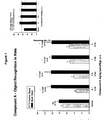
- Memory was assessed by using the three-trial novel object recognition test. On the first day (exploratory trial), rats were allowed to explore an open arena (44.5 x 44.5 x 30.5 cm) for 6 min. On the second day (acquisition trial), rats were allowed to explore the same arena in the presence of two identical objects (both object A) for 3 minutes. On the third day (retention or recall trial), performance was evaluated by allowing the same animal to re-explore the arena for 3 minutes in the presence of two different objects: the familiar object A and a novel object B. An inter-trial interval of 24 hours was imposed between the three NOR trials. Recognition memory was assessed by comparing the time spent exploring a novel (object B) versus a familiar (object A) object during the recall trial. Recognition index was assessed for each animal and expressed as a ratio ((time B / time A + time B) x 100).
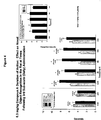
- (2S,3R)-N-2-((3-pyridinyl)methyl)-1-azabicyclo[2.2.2]oct-3-yl)-3,5-difluorobenzamide inhibited the binding of [ 3 H]methyllycaconitine (MLA) to rat native ⁇ 7 receptors in rat hippocampal membranes with a K i of 100 nM.
- (2S,3R)N-2-((3-pyridinyl)methyl)-1-azabicyclo[2.2.2]oct-3-yl)-3,5-difluorobenzamide inhibited the binding of [ 3 H]-nicotine to human recombinant ⁇ 4 ⁇ 2 nicotinic receptors with a K i of 1470 nM and [ 3 H]epibatidine to rat native ⁇ 4 ⁇ 2 receptors with a K i of 4120 nM.
- (2S,3R)-N-2-((3-pyridinyl)methyl)-1-azabicyclo[2.2.2]oct-3-yl)-3,5-difluorobenzamide also displayed reduced affinity for human native ganglion-type nicotinic receptors (likely ⁇ 3 ⁇ 4), inhibiting the binding of [ 3 H]epibatidine to receptors in SH-SY5Y membranes with a K i of 48 ⁇ M, and reduced affinity for human native muscle-type nicotinic receptors (likely ⁇ 1 ⁇ 1 ⁇ ), inhibiting the binding of [ 3 H]epibatidine to receptors in TE-671 membranes with a K i of 136 ⁇ M.
- (2S,3R)-N-2-((3-pyridiny))methyl)-1-azabicyclo[2.2.2]oct-3-yl)-3,5-difluorobenzamide improved long-term visual episodic/declarative memory as assessed by novel object recognition (NOR) task following oral dosing in normal rats.
- NOR novel object recognition
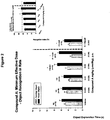
- animals treated with (2S,3R)-N-2-((3-pyridinyl)methyl)-1-azabicyclo[2.2.2]oct-3-yl)-3,5-difluorobenzamide exhibited recognition indexes of 70 ⁇ 4% at the 0.84 ⁇ mol/kg dose level and 74 ⁇ 3% and the 0.28 ⁇ mol/kg dose level.
- (2S,3R)-N-2-((3-pyridinyl)methyl)-1-azabicyclo[2.2.2]oct-3-yl)-3,5-difluorobenzamide demonstrated pro-cognitive effects at this dose level.
- (2S,3R)-N-2-((3-pyridinyl)methyl)-1-azabicyclo[2.2.2]oct-3-yl)-3,5-difluorobenzamide exhibited recognition indexes significantly above controls, indicating recognition of the familiar object following acute dosing.
- the dashed line at 65% denotes our criteria for biological cognitive enhancing activity. *P ⁇ 0.05.
- mice treated with (2S,3R)-N-2-((3-pyridinyl)methyl)-1-azabicyclo[2.2.2]oct-3-yl)-3,5-difluorobenzamide exhibited recognition indexes of 68 ⁇ 4% at 0.5h, 71 ⁇ 2% at 2h and 62 ⁇ 2% at 6 h suggesting that rats are able to recognize the familiar object for up to 6 h after dosing.
- Compound A (2S,3R)-N-2-((3-pyridinyl)methyl)-1-azabicyclo[2.2.2]oct-3-yl)-3,5-difluorobenzamide
- Compound B (2S,3R)-N-2-((3-pyridinyl)methyl)-1-azabicyclo[2.2.2]oct-3-yl)-4-fluorobenzamide are both partial agonist at the ⁇ 7 NNR.
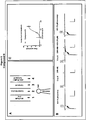
- Hump currents are defined as the tail current observed during co-application with endogenous ACh following agonist removal.
- Compound A provides an improved profile and a greater potential to modulate ⁇ 7 function in conditions, such as psychotic disorders, where this neurotransmission is compromised.
- Figure 7A represents an experimental design of loading Dynaflow chip to measure interaction of the ligand (Compound A, 200 nM) with acetylcholine (100 ⁇ M) regarding activation of nicotinic ⁇ 7 receptor.
- the channels were prepared as follows: Control solution (channel #2), application ligand itself (channel #3), application of acetylcholine itself (channel #1), and application of mixture of acetylcholine and ligand (channel #4).
- Figure 7B shows four representative current curves obtained with different application sequences:
- Figures 8A, 8B, and 8C represent the results obtained for Compound B.
- Figures 7A-C and Figures 8A-C substantial differences may be noted when ACh was co-applied with Compound A as compared to Compound B.
- Compound A enhances ACh-induced current.
- mice One of the most clinically predictive screening models of acute pain is the formalin test in mice (LeBars et al., 2001).
- a diluted solution of formalin is injected into the plantar surface of a subject's (rat or mouse) rear paw and nociceptive behavior is measured; for instance, licking and biting of the injected paw.
- Two phases of the response are observed. First an early phase, starting immediately after injection and lasting 5-10 minutes, followed by a late phase that can last from 15-60 minutes after injection. Nociceptive response is attributed to direct chemical stimulation in the early phase and inflammation / persistent pain in the later phase (Dubuisson and Dennis, 1977).
- the response in the late phase also depends on changes in processing of information in the spinal cord due to the afferent barrage during the early phase (Coderre et al., 1990).
- An advantage of the test is that two different types of stimuli are employed in the same assay to study the possibility of varying analgesic effects of a drug in the two phases of the test (Tj ⁇ lsen and Hole, 1997).
- mice adult male CD-1 mice (Charles River, Raleigh, NC) weighing approximately 20-25 grams) were removed from their home cage and weighed, then placed in a clear PlexiglasTM observation box for an acclimation period of 20-30 minutes. Mice were then removed from the observation chambers and (2S,3R)-N-2-((3-pyridinyl)methyl)-1-azabicydo[2.2.2]oct-3-yl)-3,5-difluorobenzamide (as the hydrochloride salt in 0.9% saline) (1, 3 or 10 mg/kg s.c.
- morphine (5mg/kg; s.c.) or 0.9% saline vehicle was administered subcutaneously in a volume of 1 mL/kg. Mice were then returned to the chamber for the predetermined pretreatment time of 30 minutes for (2S,3R)-N-2-((3-pyridinyl)methyl)-1-azabicyclo[2.2.2]oct-3-yl)-3,5-difluorobenzamide and morphine.
- the animals were injected with formalin solution (2.5% derived as a 1:4 dilution of 10% phosphate buffered formalin solution (Sigma):distilled water).
- formalin solution (2.5% derived as a 1:4 dilution of 10% phosphate buffered formalin solution (Sigma):distilled water).
- the subject's assigned paw was grasped gently and formalin solution was injected into the paw intra-dermally in the middle on the dorsal side.
- the subject was immediately returned to its observation chamber and a timer was started to mark the beginning of Phase I.
- Each subject was videotaped for the entire 40-minute session. When scoring the tapes, each subject was observed for 1 min at 5-min intervals over a 40-minute session. The time spent licking during that 1 min interval was recorded, and the presence or absence of paw favoring was noted.
- phase I of the test was defined as 0 to 5 minutes after formalin injection
- phase II was defined as 20 to 40 minutes after formalin injection.
- the time spent licking during the 1 minute intervals during those time frames was recorded and graphed as mean ⁇ S.E.M.
- ANOVAs 1-way analyses of variance
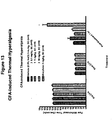
- CFA complete Freund's adjuvant
- Thermal hyperalgesia was tested using a Paw / Tail stimulator analgesia meter (IITC Model-336G, IITC, USA) with a thermally regulated glass floor set at 30 °C.
- a subject was placed within a plastic box atop an elevated glass floor and a light beam located under the glass floor was directed at the plantar surface of the right hind paw. The time required for the animal to withdraw the paw from the thermal stimulus was automatically recorded. The intensity of the light was adjusted to evoke an average group baseline latency from 12-14 seconds (pre-CFA) and a cut-off latency of 20 seconds was imposed. The latency for paw withdrawal was obtained for each rat and defined as the heat pain threshold.
- test substance, morphine and vehicle were administered by subcutaneous (s.c.) injection at time 0.
- the post-treatment level of thermal hyperalgesia was then measured at 60 minutes post-treatment.
- One-way ANOVA followed by Dunnett's test was applied for comparison between test substance treated groups and vehicle control group. Activity was considered significant at the P ⁇ 0.05 level.
- Peripheral neuropathy a major complication of diabetes, often results in spontaneous pain or the perception of pain from contact with a normally non-noxious stimulus. Such neuropathic pain is experienced by 20-24% of diabetic patients, or approximately 30 million people worldwide (Schmader, 2002).
- the streptozotocin (STZ) - induced diabetes model in rats provides a means to evaluate the efficacy of test compounds that offer therapeutic potential for peripheral neuropathy and to understand their putative mechanism of action.
- STZ streptozotocin
- the current study utilizes the STZ rat model of diabetic neuropathy to investigate the effects of (2S,3R)-N-2-((3-pyridinyl)methyl)-1-azabicyclo[2.2.2]oct-3-yl)-3,5-difluorobenzamide on mechanical allodynia, an assessment of pain.
- the development of diabetes was confirmed by measuring the blood glucose levels (BGL) of all animals on study day 3 (BGL> 300 mg/dL).
- BGL blood glucose levels
- BGL was measured again on study day 14 and only the animals that showed tactile allodynia were tested again for their BGL on study day 21.
- BGL was measured on study day 16 for animals that did not show tactile allodynia on study day 14. These animals were tested again for their BGL at study day 23.
- Rodents exhibit a paw withdrawal reflex when its paw is unexpectedly touched.
- the force of application increases as long as the researcher continued to advance the probe until the fiber bent After the fiber bent, the probe was advanced, causing the fiber to bend more, but without additional force being applied.
- the animal would indicate sensation by pulling back its paw.
- a stronger stimulus was presented; in the event of paw withdrawal, the next weaker stimulus was chosen. In this fashion, the resulting pattern of positive and negative responses was used to determine the paw withdrawal threshold.
- the set of Von Frey monofilaments provide an approximate logarithmic scale of actual force and a linear scale of perceived intensity.
- a table showing the force (g) and its corresponding size of monofilaments. Size 1.65 2.36 2.44 2.83 3.22 3.61 3.84 4.08 4.17 4.31 4.56 4.74 4.93 5.07 5.18 5.46 5.88 6.10 6.45 6.65 Force (g) 0.008 0.02 0.04 0.07 0.16 0.40 0.60 1.00 1.40 2.00 4.00 6.00 8.00 10 15 26 60 100 180 300
- the Von Frey data are presented as the minimum force (g) needed to withdraw each hind leg.
- a decrease in pain threshold was recorded 14/16 days post STZ injection. This decrease was expressed as an increase in the animal's sensitivity to the Von Frey filaments.
- the median paw withdrawal force was significantly lower (20.5 - 22.14 ⁇ 2.36 g; ⁇ 0.01 vs.
- the pain test was performed prior to Test Article injection (pre-TI injection) and 30 minutes after Test Article administration (post-TI injection).
- the positive control, gabapentin was administered 2 hours before pain testing on study days 14 or 16 and 21 or 23.
- insulin levels in serum were analyzed.
- the insulin level in the Vehicle control at study termination was 0.79 ⁇ 0.41 ⁇ g/l. No significant differences in insulin levels between treatments were observed.
- the db / db mouse a well established model of type 2 diabetes mellitus, is a leptin-deficient mutant that expresses an obese phenotype and also commonly expresses metabolic symptoms including hyperglycemia, hyperlipidemia and hyperinsulinemia (Halaas et al., 1995 and Lee et al., 1996).
- This experimental animal model of diabetes was employed in a study designed to determine the effects of (2S,3R)-N-2-((3-pyridinyl)methyl)-1-azabicyclo[2.2.2]oct-3-yl)-3,5-difluorobenzamide on body mass and several additional metabolic parameters.
- (2S,3R)-N-2-((3-pyridinyl)methyl)-1-azabicyclo[2.2.2]oct-3-yl)-3,5-difluorobenzamide was repeatedly administered orally (via gavage) at 1.0 mg/kg once daily starting from the age of approximately 3 weeks and continuing throughout the 7-week study.
- Nondiabetic heterozygote littermate mice ( dbl +; designated "Db") were used as controls.
- Body weight and food intake were determined twice weekly.
- the ⁇ 7 antagonist methyllycaconitine (MLA) was also given concurrently via gavage at 3 mg/kg daily to selected cohorts of db / db (designated "db") or dbl + mice.
- mice fasted overnight were assessed for glucose levels.
- mice fasted overnight were collected for measurements of tumor necrosis factor-a (TNF- ⁇ ), triglycerides and glycosylated hemoglobin (HbA1c). All data are expressed as mean ⁇ SEM. For each parameter investigated, differences among all groups were compared by one-way ANOVA with post-hoc Neuman-Keuls multiple comparison test.
- TNF- ⁇ tumor necrosis factor-a
- HbA1c glycosylated hemoglobin
- (2S,3R)-N-2-((3-pyridinyl)methyl)-1-azabicyclo[2.2.2]oct-3-yl)-3,5-difluorobenzamide significantly inhibited glycosylated HbA1c levels in obese mice ("db-Test Article").
- the reduction in glycosylated HbA1c by (2S,3R)-N-2-((3-pyridinyl)methyl)-1-azabicyclo[2.2.2]oct-3-yl)-3,5-difluorobenzamide was attenuated by co-administration of MLA.
- mice were treated with vehicle or (2S,3R)-N-2-((3-pyridinyl)methyl)-1-azabicyclo[2.2.2]oct-3-yl)-3,5-difluorobenzamide subcutaneously (s.c.) twice daily from day 21 to day 26 or once daily intratracheally (i.t.), preceding ovalbumin aerosol challenge by 30 min on days 21, 23 and 25 as well as methacholine challenge or bronchoalveolar lavage fluids (BALF) harvest on day 26.
- s.c. twice daily from day 21 to day 26 or once daily intratracheally (i.t.)
- ovalbumin aerosol challenge by 30 min on days 21, 23 and 25 as well as methacholine challenge or bronchoalveolar lavage fluids (BALF) harvest on day 26.
- BALF bronchoalveolar lavage fluids
- Dexamethasone the reference standard, was administered at 3 mg/kg orally (p.o.) once daily 60 min before OVA challenge on day 21, 23 and 25 and 60 min before methacholine provocation or BALF harvest on day 26.
- Noninvasive measurements of airway responsiveness were performed by using whole body plethysmography, in which increases in enhanced pause (Penh) serve as an index of airway obstruction. Responses to inhaled methacholine were measured and calculated as percentage of respective baseline values.
- Unpaired Student's t-test was used for comparison between the vehicle control and the sham group; one-way ANOVA and Dunnett's post-hoc analyses were applied for comparison between the vehicle control and treated groups. Statistical significance is considered at P ⁇ 0.05.
- Figure 21 illustrates the effect of (2S,3R)-N-2-((3-pyridinyl)methyl)-1-azabicyclo[2.2.2]oct-3-yl)-3,5-difluorobenzamide on % changes in Penh response to methacholine challenge in ovalbumin-sensitized mice.
- the Penh response to methacholine (10 and 30 mg/mL) was significantly augmented in OVA-sensitized animals compared to sham control.
- Dexamethasone at 3 mg/kg PO caused a significant inhibition of the methacholine (10 and 30 mg/mL)-induced increase in Penh values, both in absolute and % values compared to vehide-treated OVA animals, indicating efficacy against airway hyperresponsiveness.
- (2S,3R)-N-2-((3-pyridinyl)methyl)-1-azabicyclo[2.2.2]oct-3-yl)-3,5-difluorobenzamide at 0.1, 1, and 10 mg/kg bid s.c. caused significant inhibition of the methacholine-induced increase in Penh values; 10 mg/kg IT was also associated with significant inhibition.
- Figure 21 illustrates the effect of (2S,3R)-N-2-((3-pyridinyl)methyl)-1-azabicyclo[2.2.2]oct-3-yl)-3,5-difluorobenzamide on % changes in Penh response to methacholine challenge in ovalbumin-sensitized mice.
- (25,3R)-N-2-((3-pyridinyl)methyl)-1-azabicyclo[2.2.2]oct-3-yl)-3,5-difluorobenzamide and vehicle were administered subcutaneously bid or given intratracheally qd for 6 consecutive days from day 21 to day 25 at 30 min before OVA challenge and the last dosing was administrated at 30 min before MCh provocation on day 26.
- the Penh values were determined.
- One-way ANOVA followed by Dunnett's test was applied for comparison between the OVA immunized vehicle and other treatment groups. *P ⁇ 0.05 vs. OVA-vehicle control.
- Figure 22 illustrates the effect of (2S,3R)-N-2-((3-pyridinyl)methyl)-1-azabicyclo[2.2.2]oct-3-yl)-3,5-difluorobenzamide on white blood cell counts and differential cell counts in ovalbumin sensitized mice.
- (2S,3R)-N-2-((3-pyridinyl)methyl)-1-azabicydo[2.2.2]oct-3-yl)-3,5-difluorobenzamide and vehicle were administered subcutaneously bid or were given intratracheally qd for 6 consecutive days from day 21 to day 25 at 30 minutes before OVA challenge and the last dosing was administrated at 30 minutes before bronchoalveolar lavage fluid harvest on day 26. The total white blood cell count and differential cell counts were determined.
- One-way ANOVA followed by Dunnett's test was applied for comparison between the OVA immunized vehicle and other treatment groups. *P ⁇ 0.05 vs. OVA-vehicle control
- Figure 23 illustrates the effect of (2S,3R)-N-2-((3-pyridinyl)methyl)-1-azabicyclo[2.2.2]oct-3-yl)-3,5-difluorobenzamide on % white blood cell count and differential cell counts in ovalbumin sensitized mice.
- (2S,3R)-N-2-((3-pyridinyl)methyl)-1-azabicydo[2.2.2]oct-3-yl)-3,5-difluorobenzamide and vehicle were administered subcutaneously bid or were given intratracheally qd for 6 consecutive days from day 21 to day 25 at 30 minutes before OVA challenge and the last dosing was administrated at 30 minutes before bronchoalveolar lavage fluid harvest on day 26. The total white blood cell count and differential cell counts were determined. One-way ANOVA followed by Dunnett's test was applied for comparison between the OVA immunized vehicle and other treatment groups. *P ⁇ 0.05 vs. OVA-vehicle control.
- Test compounds for the experiments described herein were employed in free or salt form. Unless otherwise specified, the compound provided for in vivo testing was (2S,3R)-N-2-((3-pyridinyl)methyl)-1-azabicyclo[2.2.2]oct-3-yl)-3,5-difluorobenzamide hydrochloride, with dosage amounts given assuming the free base form.
Landscapes
- Health & Medical Sciences (AREA)
- Chemical & Material Sciences (AREA)
- Organic Chemistry (AREA)
- General Health & Medical Sciences (AREA)
- Veterinary Medicine (AREA)
- Medicinal Chemistry (AREA)
- Public Health (AREA)
- Pharmacology & Pharmacy (AREA)
- Life Sciences & Earth Sciences (AREA)
- Animal Behavior & Ethology (AREA)
- Bioinformatics & Cheminformatics (AREA)
- Engineering & Computer Science (AREA)
- General Chemical & Material Sciences (AREA)
- Nuclear Medicine, Radiotherapy & Molecular Imaging (AREA)
- Chemical Kinetics & Catalysis (AREA)
- Neurosurgery (AREA)
- Neurology (AREA)
- Biomedical Technology (AREA)
- Diabetes (AREA)
- Epidemiology (AREA)
- Hematology (AREA)
- Pain & Pain Management (AREA)
- Immunology (AREA)
- Rheumatology (AREA)
- Pulmonology (AREA)
- Dermatology (AREA)
- Obesity (AREA)
- Urology & Nephrology (AREA)
- Cardiology (AREA)
- Physical Education & Sports Medicine (AREA)
- Heart & Thoracic Surgery (AREA)
- Psychiatry (AREA)
- Child & Adolescent Psychology (AREA)
- Hospice & Palliative Care (AREA)
- Emergency Medicine (AREA)
- Endocrinology (AREA)
- Gastroenterology & Hepatology (AREA)
- Orthopedic Medicine & Surgery (AREA)
- Transplantation (AREA)
- Vascular Medicine (AREA)
Priority Applications (3)
| Application Number | Priority Date | Filing Date | Title |
|---|---|---|---|
| SI201030720T SI2389378T1 (sl) | 2009-01-26 | 2010-01-25 | Priprava in terapevtske uporabe (2s,3r)-n-2-((3-piridinil)metil)-1- azabiciklo(2.2.2)okt-3-il)-3,5-difluorobenzamida |
| PL10701307T PL2389378T3 (pl) | 2009-01-26 | 2010-01-25 | Wytwarzanie i zastosowanie lecznicze (2s,3r)-n-2-((3-pirydynylo)metylo)-1-azabicyklo[2.2.2]okt-3-ylo)-3,5-difluorobenzamidu |
| CY20141100590T CY1115616T1 (el) | 2009-01-26 | 2014-08-04 | Παρασκευη και θεραπευτικες εφαρμογες του (2s,3r)ν-2((3-πυρδινυλ)μεθυλ)-1-αζαδικυκλο[2.2.2]οκτ-3-υλ)-3,5-διφθοροβενζαμιδιου |
Applications Claiming Priority (2)
| Application Number | Priority Date | Filing Date | Title |
|---|---|---|---|
| US14726009P | 2009-01-26 | 2009-01-26 | |
| PCT/US2010/021926 WO2010085724A1 (en) | 2009-01-26 | 2010-01-25 | Preparation and therapeutic applications of (2s,3r)-n-2-((3-pyridinyl)methyl)-1-azabicyclo[2.2.2]oct-3-yl)-3,5-difluorobenzamide |
Publications (2)
| Publication Number | Publication Date |
|---|---|
| EP2389378A1 EP2389378A1 (en) | 2011-11-30 |
| EP2389378B1 true EP2389378B1 (en) | 2014-06-25 |
Family
ID=41719329
Family Applications (1)
| Application Number | Title | Priority Date | Filing Date |
|---|---|---|---|
| EP20100701307 Active EP2389378B1 (en) | 2009-01-26 | 2010-01-25 | Preparation and therapeutic applications of (2s,3r)-n-2-((3-pyridinyl)methyl)-1-azabicyclo[2.2.2]oct-3-yl)-3,5-difluorobenzamide |
Country Status (31)
| Country | Link |
|---|---|
| US (4) | US8476296B2 (it) |
| EP (1) | EP2389378B1 (it) |
| JP (1) | JP5600122B2 (it) |
| KR (1) | KR101737924B1 (it) |
| CN (1) | CN102292335B (it) |
| AR (1) | AR075152A1 (it) |
| AU (1) | AU2010206638B2 (it) |
| BR (1) | BRPI1006053A2 (it) |
| CA (1) | CA2749123C (it) |
| CL (1) | CL2010000059A1 (it) |
| CO (1) | CO6501143A2 (it) |
| DK (1) | DK2389378T3 (it) |
| EA (1) | EA201170976A1 (it) |
| EC (1) | ECSP11011220A (it) |
| ES (1) | ES2503465T3 (it) |
| HR (1) | HRP20140756T1 (it) |
| IL (1) | IL213620A0 (it) |
| MX (1) | MX2011007791A (it) |
| MY (1) | MY152387A (it) |
| NZ (1) | NZ593484A (it) |
| PE (1) | PE20120005A1 (it) |
| PL (1) | PL2389378T3 (it) |
| PT (1) | PT2389378E (it) |
| RS (1) | RS53521B1 (it) |
| SG (1) | SG172156A1 (it) |
| SI (1) | SI2389378T1 (it) |
| SM (1) | SMT201400152B (it) |
| TW (1) | TW201031664A (it) |
| UA (1) | UA105204C2 (it) |
| WO (1) | WO2010085724A1 (it) |
| ZA (1) | ZA201105126B (it) |
Families Citing this family (13)
| Publication number | Priority date | Publication date | Assignee | Title |
|---|---|---|---|---|
| US20110098312A1 (en) * | 2008-05-12 | 2011-04-28 | Targacept ,Inc | Methods for preventing the development of retinopathy by the oral administration of nnr ligands |
| TW201031664A (en) * | 2009-01-26 | 2010-09-01 | Targacept Inc | Preparation and therapeutic applications of (2S,3R)-N-2-((3-pyridinyl)methyl)-1-azabicyclo[2.2.2]oct-3-yl)-3,5-difluorobenzamide |
| JO3250B1 (ar) | 2009-09-22 | 2018-09-16 | Novartis Ag | إستعمال منشطات مستقبل نيكوتينيك أسيتيل كولين ألفا 7 |
| WO2012068553A2 (en) * | 2010-11-18 | 2012-05-24 | Dignity Health | Methods of diagnosing and treating neurodegenerative diseases |
| KR20140003580A (ko) | 2011-01-27 | 2014-01-09 | 노파르티스 아게 | 니코틴성 아세틸콜린 수용체 알파 7 활성화제의 용도 |
| WO2012127393A1 (en) | 2011-03-18 | 2012-09-27 | Novartis Ag | COMBINATIONS OF ALPHA 7 NICOTINIC ACETYLCHOLINE RECEPTOR ACTIVATORS AND mGluR5 ANTAGONISTS FOR USE IN DOPAMINE INDUCED DYSKINESIA IN PARKINSON'S DISEASE |
| JP6162705B2 (ja) * | 2011-10-20 | 2017-07-12 | ノバルティス アーゲー | アルファ7ニコチン性アセチルコリン受容体活性化剤による処置に対する応答性を予測するバイオマーカー |
| KR102043309B1 (ko) * | 2012-12-11 | 2019-11-11 | 노파르티스 아게 | 알파 7 니코틴성 아세틸콜린 수용체 활성화제 치료에 대한 반응성의 예측 바이오마커 |
| CN105263492B (zh) * | 2013-01-15 | 2018-04-10 | 诺华有限公司 | α7烟碱型乙酰胆碱受体激动剂在治疗发作性睡病中的应用 |
| BR112015016992A8 (pt) | 2013-01-15 | 2018-01-23 | Novartis Ag | uso de agonistas do receptor alfa 7 nicotínico de acetilcolina |
| EP2945633B1 (en) | 2013-01-15 | 2021-06-30 | Novartis AG | Use of alpha 7 nicotinic acetylcholine receptor agonists |
| US20150313884A1 (en) | 2013-01-15 | 2015-11-05 | Novartis Ag | Use of alpha 7 nicotinic acetylcholine receptor agonists |
| US9724340B2 (en) | 2015-07-31 | 2017-08-08 | Attenua, Inc. | Antitussive compositions and methods |
Family Cites Families (144)
| Publication number | Priority date | Publication date | Assignee | Title |
|---|---|---|---|---|
| US4187521A (en) | 1978-05-04 | 1980-02-05 | Basf Aktiengesellschaft | DC erase head |
| US4203990A (en) | 1979-04-30 | 1980-05-20 | G. D. Searle & Co. | Anti-diarrheal 2-substituted quinuclidines |
| FR2493854B1 (fr) | 1980-11-13 | 1985-10-11 | Naphtachimie Sa | Compositions de polyethylene ameliorees pour extrusion notamment pour extrusion-soufflage |
| EP0353189B1 (de) | 1988-07-28 | 1994-01-12 | Ciba-Geigy Ag | Kupfer- und Nickeldihalogenidkomplexe, Verfahren zu deren Herstellung und deren Verwendung |
| US4922901A (en) | 1988-09-08 | 1990-05-08 | R. J. Reynolds Tobacco Company | Drug delivery articles utilizing electrical energy |
| MX18467A (es) * | 1988-11-23 | 1993-07-01 | Pfizer | Agentes terapeuticos de quinuclidinas |
| EP0402056A3 (en) | 1989-06-06 | 1991-09-04 | Beecham Group p.l.c. | Azabicyclic compounds, process for their preparation and pharmaceutical compositions containing them |
| EP0412798A3 (en) | 1989-08-08 | 1992-07-01 | Merck Sharp & Dohme Ltd. | Substituted pyridines, their preparation, formulations and use in dementia |
| IN173570B (it) | 1989-11-23 | 1994-06-04 | Pfizer | |
| DK40890D0 (da) | 1990-02-16 | 1990-02-16 | Ferrosan As | Substituerede urinstofforbindelser, deres fremstilling og anvendelse |
| EP0492903A1 (en) | 1990-12-21 | 1992-07-01 | MERCK SHARP & DOHME LTD. | Substituted pyrazines, pyrimidines and pyridazines for use in the treatment of glaucoma |
| JP2657583B2 (ja) | 1991-03-01 | 1997-09-24 | ユニバーシテイ オブ フロリダ リサーチ ファンデーション インコーポレイテッド | 神経系変性疾患の治療に対するニコチン類似体の利用 |
| JPH0788356B2 (ja) * | 1991-06-21 | 1995-09-27 | ファイザー・インコーポレーテッド | アザノルボルナン誘導体 |
| WO1993009116A1 (fr) * | 1991-11-07 | 1993-05-13 | Yoshitomi Pharmaceutical Industries, Ltd. | Compose a base de quinuclidine et utilisation dudit compose en medecine |
| US5212188A (en) | 1992-03-02 | 1993-05-18 | R. J. Reynolds Tabacco Company | Method for treatment of neurodegenerative diseases |
| US5276043A (en) | 1992-04-10 | 1994-01-04 | R. J. Reynolds Tobacco Company | Method for treatment of neurodegenerative diseases |
| US5977144A (en) | 1992-08-31 | 1999-11-02 | University Of Florida | Methods of use and compositions for benzylidene- and cinnamylidene-anabaseines |
| EP0659078B1 (en) | 1992-08-31 | 2003-01-15 | University Of Florida Research Foundation, Inc. | Anabaseine derivatives useful in the treatment of degenerative diseases of the nervous system |
| IL107184A (en) | 1992-10-09 | 1997-08-14 | Abbott Lab | Heterocyclic ether compounds that enhance cognitive function |
| US5852041A (en) | 1993-04-07 | 1998-12-22 | Sibia Neurosciences, Inc. | Substituted pyridines useful as modulators of acethylcholine receptors |
| AU698101B2 (en) | 1993-06-01 | 1998-10-22 | Cortex Pharmaceuticals, Inc. | Alkaline and acid phosphatase inhibitors in treatment of neurological disorders |
| AU7474794A (en) | 1993-07-22 | 1995-02-20 | E.I. Du Pont De Nemours And Company | Arthropodicidal azacyclic heterocycles |
| US5493026A (en) | 1993-10-25 | 1996-02-20 | Organix, Inc. | Substituted 2-carboxyalkyl-3-(fluorophenyl)-8-(3-halopropen-2-yl) nortropanes and their use as imaging for agents for neurodegenerative disorders |
| JP3269125B2 (ja) | 1994-01-28 | 2002-03-25 | 東レ株式会社 | アトピー性皮膚炎治療薬 |
| JP3708962B2 (ja) | 1994-08-24 | 2005-10-19 | アストラゼネカ・アクチエボラーグ | 治療に有用なスピロ−アザ二環式化合物 |
| US5510355A (en) | 1994-09-06 | 1996-04-23 | Bencherif; Merouane | Depolarizing skeletal muscle relaxants |
| US5998404A (en) | 1994-10-24 | 1999-12-07 | Eli Lilly And Company | Heterocyclic compounds and their use |
| US5604231A (en) | 1995-01-06 | 1997-02-18 | Smith; Carr J. | Pharmaceutical compositions for prevention and treatment of ulcerative colitis |
| US5597919A (en) | 1995-01-06 | 1997-01-28 | Dull; Gary M. | Pyrimidinyl or Pyridinyl alkenyl amine compounds |
| US5824692A (en) | 1995-01-06 | 1998-10-20 | Lippiello; Patrick Michael | Pharmaceutical compositions for prevention and treatment of central nervous system disorders |
| US5616707A (en) | 1995-01-06 | 1997-04-01 | Crooks; Peter A. | Compounds which are useful for prevention and treatment of central nervous system disorders |
| US5859004A (en) | 1995-02-17 | 1999-01-12 | Novo Nordisk A/S | Use of heterocyclic compounds for the treatment of conditions caused by malfunctioning of the nicotinic cholinergic system |
| US5585388A (en) | 1995-04-07 | 1996-12-17 | Sibia Neurosciences, Inc. | Substituted pyridines useful as modulators of acetylcholine receptors |
| US5583140A (en) | 1995-05-17 | 1996-12-10 | Bencherif; Merouane | Pharmaceutical compositions for the treatment of central nervous system disorders |
| IL118279A (en) | 1995-06-07 | 2006-10-05 | Abbott Lab | Compounds 3 - Pyridyloxy (or Thio) Alkyl Heterocyclic Pharmaceutical Compositions Containing Them and Their Uses for Preparing Drugs to Control Synaptic Chemical Transmission |
| TWI238064B (en) | 1995-06-20 | 2005-08-21 | Takeda Chemical Industries Ltd | A pharmaceutical composition for prophylaxis and treatment of diabetes |
| EP0842172A1 (en) | 1995-06-29 | 1998-05-20 | Novo Nordisk A/S | Novel substituted azacyclic or azabicyclic compounds |
| JPH11512443A (ja) | 1995-09-22 | 1999-10-26 | ノボ ノルディスク アクティーゼルスカブ | 新規な置換アザ環式またはアザ二環式化合物 |
| AU7286996A (en) | 1995-10-18 | 1997-05-07 | Ciba-Geigy Ag | Thermopile powered transdermal drug delivery device |
| US5712270A (en) | 1995-11-06 | 1998-01-27 | American Home Products Corporation | 2-arylamidothiazole derivatives with CNS activity |
| US5616716A (en) | 1996-01-06 | 1997-04-01 | Dull; Gary M. | (3-(5-ethoxypyridin)yl)-alkenyl 1 amine compounds |
| US6096728A (en) | 1996-02-09 | 2000-08-01 | Amgen Inc. | Composition and method for treating inflammatory diseases |
| SE9600683D0 (sv) | 1996-02-23 | 1996-02-23 | Astra Ab | Azabicyclic esters of carbamic acids useful in therapy |
| US6166048A (en) | 1999-04-20 | 2000-12-26 | Targacept, Inc. | Pharmaceutical compositions for inhibition of cytokine production and secretion |
| US5663356A (en) | 1996-04-23 | 1997-09-02 | Ruecroft; Graham | Method for preparation of aryl substituted alefinic secondary amino compounds |
| US5726189A (en) | 1996-05-03 | 1998-03-10 | The United States Of America, Represented By The Secretary, Department Of Health And Human Services | Method for imaging nicotinic acetylcholinergic receptors in the brain using radiolabeled pyridyl-7-azabicyclo 2.2.1!heptanes |
| FR2756826B1 (fr) | 1996-12-05 | 1999-01-08 | Adir | Nouveaux derives tetrahydropyridiniques substitues, leur procede de preparation et les compositions pharmaceutiques qui les contiennent |
| ZA9711092B (en) | 1996-12-11 | 1999-07-22 | Smithkline Beecham Corp | Novel compounds. |
| US5861423A (en) | 1997-02-21 | 1999-01-19 | Caldwell; William Scott | Pharmaceutical compositions incorporating aryl substituted olefinic amine compounds |
| US5811442A (en) | 1997-02-21 | 1998-09-22 | Bencherif; Merouane | Pharmaceutical compositions for the treatment of conditions associated with decreased blood flow |
| CA2289574C (en) | 1997-05-30 | 2007-04-24 | Neurosearch A/S | 8-azabicyclo(3,2,1)oct-2-ene and octane derivatives as cholinergic ligands at nicotinic ach receptors |
| US6525065B1 (en) | 1997-06-30 | 2003-02-25 | Targacept, Inc. | Pharmaceutical compositions and methods for effecting dopamine release |
| PT994875E (pt) | 1997-06-30 | 2004-06-30 | Targacept Inc | Derivados de 3-piridil-1-aza-biciclo-alcano para a prevencao e tratamento de desordens do snc |
| AR013184A1 (es) | 1997-07-18 | 2000-12-13 | Astrazeneca Ab | Aminas heterociclicas espiroazobiciclicas, composicion farmaceutica, uso de dichas aminas para preparar medicamentos y metodo de tratamiento o profilaxis |
| JP2003512290A (ja) | 1997-09-10 | 2003-04-02 | メルク エンド カムパニー インコーポレーテッド | 家畜抗菌剤としての8a−アザライド |
| US5952339A (en) | 1998-04-02 | 1999-09-14 | Bencherif; Merouane | Pharmaceutical compositions and methods of using nicotinic antagonists for treating a condition or disorder characterized by alteration in normal neurotransmitter release |
| WO1999051602A1 (en) | 1998-04-02 | 1999-10-14 | R.J. Reynolds Tobacco Company | Azatricyclo[3.3.1.1] decane derivatives and pharmaceutical compositions containing them |
| EP1083889B1 (en) | 1998-06-01 | 2003-12-10 | Ortho-McNeil Pharmaceutical, Inc. | Tetrahydronaphtalene compounds and their use for the treatment of neurodegenerative diseases |
| US6310043B1 (en) | 1998-08-07 | 2001-10-30 | Governors Of The University Of Alberta | Treatment of bacterial infections |
| GB9821503D0 (en) | 1998-10-02 | 1998-11-25 | Novartis Ag | Organic compounds |
| FR2786769B1 (fr) | 1998-12-04 | 2002-10-25 | Synthelabo | Derives de 2,5-diazabicyclo[2.2.1]heptane, leur preparation et leur application en therapeutique |
| FR2786770B1 (fr) | 1998-12-04 | 2001-01-19 | Synthelabo | Derives de 1,4-diazabicyclo[3.2.2.]nonane, leur preparation et leur application en therapeutique |
| US6953855B2 (en) | 1998-12-11 | 2005-10-11 | Targacept, Inc. | 3-substituted-2(arylalkyl)-1-azabicycloalkanes and methods of use thereof |
| US6432975B1 (en) | 1998-12-11 | 2002-08-13 | Targacept, Inc. | Pharmaceutical compositions and methods for use |
| US6734215B2 (en) | 1998-12-16 | 2004-05-11 | University Of South Florida | Exo-S-mecamylamine formulation and use in treatment |
| SE9900100D0 (sv) | 1999-01-15 | 1999-01-15 | Astra Ab | New compounds |
| FR2790474B1 (fr) | 1999-03-05 | 2001-04-06 | Synthelabo | Derives de pyridopyranoazepines, leur preparation et leur application en therapeutique |
| FR2791678B1 (fr) | 1999-03-30 | 2001-05-04 | Synthelabo | Derives de 1,4-diazabicyclo [3.2.2] nonane-4-carboxylates et -carboxamides, leur preparation et leur application en therapeutique |
| EP1177196B1 (en) | 1999-05-04 | 2004-03-10 | Neurosearch A/S | Heteroaryl diazabicycloalkanes, their preparation and use |
| SE9904176D0 (sv) | 1999-11-18 | 1999-11-18 | Astra Ab | New use |
| SE0000540D0 (sv) | 2000-02-18 | 2000-02-18 | Astrazeneca Ab | New compounds |
| GB0010955D0 (en) | 2000-05-05 | 2000-06-28 | Novartis Ag | Organic compounds |
| US6610713B2 (en) | 2000-05-23 | 2003-08-26 | North Shore - Long Island Jewish Research Institute | Inhibition of inflammatory cytokine production by cholinergic agonists and vagus nerve stimulation |
| CZ294251B6 (cs) | 2000-06-27 | 2004-11-10 | Laboratorios S. A. L. V. A. T., S. A. | Karbamáty a jejich použití pro výrobu farmaceutického prostředku |
| ATE287888T1 (de) | 2000-07-04 | 2005-02-15 | Neurosearch As | Aryl- und heteroaryldiazabicycloalkane, deren zubereitung und verwendung |
| US6624167B1 (en) | 2000-08-04 | 2003-09-23 | Targacept, Inc. | Pharmaceutical compositions and methods for use |
| US6479510B2 (en) | 2000-08-18 | 2002-11-12 | Pharmacia & Upjohn Company | Quinuclidine-substituted aryl compounds for treatment of disease |
| US6492386B2 (en) | 2000-08-18 | 2002-12-10 | Pharmacia & Upjohn Company | Quinuclidine-substituted aryl compounds for treatment of disease |
| US6486172B2 (en) | 2000-08-18 | 2002-11-26 | Pharmacia & Upjohn Company | Quinuclidine-substituted aryl compounds for treatment of disease |
| US6492385B2 (en) | 2000-08-18 | 2002-12-10 | Pharmacia & Upjohn Company | Quinuclidine-substituted heteroaryl moieties for treatment of disease |
| EP1311505A2 (en) | 2000-08-21 | 2003-05-21 | PHARMACIA & UPJOHN COMPANY | Quinuclidine-substituted heteroaryl moieties for treatment of disease ( nicotinic acetylcholine receptor ligands ) |
| WO2002017358A2 (en) | 2000-08-21 | 2002-02-28 | Pharmacia & Upjohn Company | Quinuclidine-substituted heteroaryl moieties for treatment of disease (nicotinic acetylcholine receptor antagonists) |
| US6599916B2 (en) | 2000-08-21 | 2003-07-29 | Pharmacia & Upjohn Company | Quinuclidine-substituted heteroaryl moieties for treatment of disease |
| US6884807B2 (en) | 2000-12-01 | 2005-04-26 | Neurosearch, A/S | 3-substituted quinuclidines and their use as nicotinic agonists |
| JP4445704B2 (ja) | 2000-12-22 | 2010-04-07 | アルミラル・ソシエダッド・アノニマ | キヌクリジンカルバメート誘導体およびm3アンダゴニストとしてのそれらの使用 |
| US20020086871A1 (en) | 2000-12-29 | 2002-07-04 | O'neill Brian Thomas | Pharmaceutical composition for the treatment of CNS and other disorders |
| WO2002057275A1 (en) | 2001-01-17 | 2002-07-25 | University Of Kentucky Research Foundation | Boron-containing nicotine analogs for use in the treatment of cns pathologies |
| US6479172B2 (en) | 2001-01-26 | 2002-11-12 | Xerox Corporation | Electroluminescent (EL) devices |
| PE20021019A1 (es) * | 2001-04-19 | 2002-11-13 | Upjohn Co | Grupos azabiciclicos sustituidos |
| DE60218032T2 (de) | 2001-06-01 | 2007-08-16 | Astrazeneca Ab | Neuer, für die therapie geeigneter ligand für nikotinische acetylcholinrezeptoren |
| US6569865B2 (en) | 2001-06-01 | 2003-05-27 | Astrazeneca Ab | Spiro 1-azabicyclo[2.2.2]octane-3,2′(3′h)-furo[2,3-b]pyridine |
| AR036040A1 (es) | 2001-06-12 | 2004-08-04 | Upjohn Co | Compuestos de heteroarilo multiciclicos sustituidos con quinuclidinas y composiciones farmaceuticas que los contienen |
| EP1419162A1 (en) | 2001-08-24 | 2004-05-19 | Pharmacia & Upjohn Company | Substituted-aryl 7-aza 2.2.1]bicycloheptanes for the treatment of disease |
| BR0212101A (pt) | 2001-08-24 | 2004-08-24 | Pharmacia & Up John Company | 7-aza [2.2.1] biciclo-heptanos substituìdos com heteroarila para o tratamento de doenças |
| JP2005527472A (ja) | 2001-09-12 | 2005-09-15 | ファルマシア・アンド・アップジョン・カンパニー・エルエルシー | 疾患治療のための置換された7−アザ[2.2.1]ビシクロヘプタン |
| HUP0402289A2 (hu) | 2001-10-02 | 2005-02-28 | Pharmacia & Upjohn Company | Gyógyhatású azabiciklusos csoporttal helyettesített kondenzált heteroaril-származékok, ezeket tartalmazó gyógyszerkészítmények és alkalmazásuk |
| AU2002339810A1 (en) | 2001-10-16 | 2003-04-28 | Astrazeneca Ab | Azabicyclic compounds for the treatment of fibromyalgia syndrome |
| US6849620B2 (en) | 2001-10-26 | 2005-02-01 | Pfizer Inc | N-(azabicyclo moieties)-substituted hetero-bicyclic aromatic compounds for the treatment of disease |
| US6951868B2 (en) | 2001-11-09 | 2005-10-04 | Pfizer Inc. | Azabicyclic-phenyl-fused-heterocyclic compounds for treatment of disease |
| JP2005523288A (ja) | 2002-02-19 | 2005-08-04 | ファルマシア・アンド・アップジョン・カンパニー・エルエルシー | 疾病治療用の縮合した二環式−n−架橋−複素環式芳香族カルボキサミド |
| AU2003217275A1 (en) | 2002-02-19 | 2003-09-09 | Pharmacia And Upjohn Company | Azabicyclic compounds for the treatment of disease |
| CA2475773A1 (en) | 2002-02-20 | 2003-09-04 | Pharmacia & Upjohn Company | Azabicyclic compounds with alfa7 nicotinic acetylcholine receptor activity |
| DE10211415A1 (de) | 2002-03-15 | 2003-09-25 | Bayer Ag | Bicyclische N-Biarylamide |
| BR0309342A (pt) | 2002-04-18 | 2005-02-15 | Astrazeneca Ab | Composto, composição farmacêutica, uso de um composto, e, método de tratamento ou profilaxia de doenças ou condições humanas |
| EP1499618B1 (en) | 2002-04-18 | 2010-10-13 | AstraZeneca AB | Furyl compounds |
| US7417050B2 (en) | 2002-04-18 | 2008-08-26 | Astrazeneca Ab | Heterocyclic compounds |
| EP1542999A1 (en) | 2002-08-01 | 2005-06-22 | Pharmacia & Upjohn Company LLC | 1h-pyrazole and 1h-pyrrole-azabicyclic compounds with alfa-7 nachr activity |
| AU2003250322B2 (en) | 2002-08-14 | 2010-01-21 | Neurosearch A/S | Novel quinuclidine derivatives and their use |
| SE0202430D0 (sv) | 2002-08-14 | 2002-08-14 | Astrazeneca Ab | New Compounds |
| SE0202465D0 (sv) | 2002-08-14 | 2002-08-14 | Astrazeneca Ab | New compounds |
| JP2006501246A (ja) | 2002-08-30 | 2006-01-12 | メモリー・ファーマシューティカルズ・コーポレイション | 神経変性疾患の治療において有用なアナバセイン誘導体 |
| MXPA05003317A (es) | 2002-09-25 | 2005-07-05 | Memory Pharm Corp | Indazoles, benzotiazoles y benzoisotiazoles asi como preparacion y usos de los mismos. |
| WO2004039815A2 (en) | 2002-11-01 | 2004-05-13 | Pharmacia & Upjohn Company Llc | Compounds having both alpha7 nachr agonist and 5ht antagonist activity for treatment of cns diseases |
| WO2004039366A1 (en) | 2002-11-01 | 2004-05-13 | Pharmacia & Upjohn Company Llc | Nicotinic acetylcholine agonists in the treatment of glaucoma and retinal neuropathy |
| EA200500738A1 (ru) | 2002-12-06 | 2005-12-29 | ФАРМАЦИЯ ЭНД АПДЖОН КОМПАНИ ЭлЭлСи | КРИСТАЛЛИЧЕСКИЕ ФУМАРАТНЫЕ СОЛИ 1-АЗАБИЦИКЛО [2.2.2]ОКТЗАМЕЩЕННОГО ФУРО [2,3-c] ПИРИДИНИЛКАРБОКСАМИДА И ИХ КОМПОЗИЦИИ И ПОЛУЧЕНИЕ |
| WO2004052365A2 (en) | 2002-12-06 | 2004-06-24 | North Shore-Long Island Jewish Research Institute | Inhibition of inflamation using alpha 7 receptor-binding cholinergic agonists |
| CA2509142A1 (en) | 2002-12-11 | 2004-06-24 | Pharmacia & Upjohn Company Llc | Combination for the treatment of adhd |
| KR20050085535A (ko) | 2002-12-11 | 2005-08-29 | 파마시아 앤드 업존 캄파니 엘엘씨 | 알파 7 니코틴성 아세틸콜린 수용체 아고니스트와 다른화합물의 조합물을 사용한 질환의 치료 방법 |
| US6917746B2 (en) | 2002-12-17 | 2005-07-12 | 3M Innovative Properties Company | Apparatus and method for creating a fiber optic circuit |
| US6777617B2 (en) | 2002-12-30 | 2004-08-17 | 3M Innovative Properties Company | Telecommunications terminal |
| MXPA05006861A (es) | 2003-02-27 | 2005-12-12 | Neurosearch As | Derivados arildiazabiciclicos novedosos. |
| WO2004085433A2 (en) | 2003-03-28 | 2004-10-07 | Pharmacia & Upjohn Company Llc | Positive allosteric modulators of the nicotinic acetylcholine receptor |
| WO2004099202A1 (en) | 2003-05-05 | 2004-11-18 | Pharmacia & Upjohn Company Llc | Quinuclidines substituted bentodioxine carboxamides for the treatment of neurodegenerative diseases |
| CN1829721A (zh) | 2003-07-08 | 2006-09-06 | 阿斯利康(瑞典)有限公司 | 对α7烟碱乙酰胆碱受体具有亲和力的螺[1-氮杂二环[2.2.2]辛烷-3,5’-噁唑烷]-2’-酮衍生物 |
| WO2005030778A1 (en) | 2003-09-25 | 2005-04-07 | Astrazeneca Ab | Ligands |
| EP1678183A1 (en) | 2003-10-21 | 2006-07-12 | AstraZeneca AB | Spirofuropyridine aryl derivatives |
| US7309699B2 (en) | 2003-12-22 | 2007-12-18 | Abbott Laboratories | 3-Quinuclidinyl amino-substituted biaryl derivatives |
| US20050137203A1 (en) | 2003-12-22 | 2005-06-23 | Jianguo Ji | 3-quinuclidinyl amino-substituted biaryl derivatives |
| US20050245531A1 (en) | 2003-12-22 | 2005-11-03 | Abbott Laboratories | Fused bicycloheterocycle substituted quinuclidine derivatives |
| US20050137398A1 (en) | 2003-12-22 | 2005-06-23 | Jianguo Ji | 3-Quinuclidinyl heteroatom bridged biaryl derivatives |
| US20050137217A1 (en) | 2003-12-22 | 2005-06-23 | Jianguo Ji | Spirocyclic quinuclidinic ether derivatives |
| US7160876B2 (en) | 2003-12-22 | 2007-01-09 | Abbott Laboratories | Fused bicycloheterocycle substituted quinuclidine derivatives |
| WO2006001894A1 (en) | 2004-04-22 | 2006-01-05 | Memory Pharmaceutical Corporation | Indoles, 1h-indazoles, 1,2-benzisoxazoles, 1,2-benzoisothiazoles, and preparation and uses thereof |
| JP2007538011A (ja) | 2004-05-07 | 2007-12-27 | メモリー・ファーマシューティカルズ・コーポレイション | 1h−インダゾール、ベンゾチアゾール、1,2−ベンゾイソキサゾール、1,2−ベンゾイソチアゾール、およびクロモン、ならびにそれらの調製および使用 |
| KR20070090922A (ko) | 2004-12-15 | 2007-09-06 | 아스트라제네카 아베 | 니코틴성 아세틸콜린 수용체 리간드 |
| RU2418797C2 (ru) | 2004-12-22 | 2011-05-20 | Мемори Фармасьютиклз Корпорейшн | Лиганды никотинового рецептора альфа-7, их получение и применение |
| WO2006133303A1 (en) | 2005-06-07 | 2006-12-14 | University Of Florida Research Foundation, Inc. | Alpha 7 nicotinic receptor selective ligands |
| BRPI0614874A2 (pt) | 2005-08-22 | 2011-04-19 | Targacept Inc | diazatricicloalcanos substituìdos com heteroarila, métodos para sua preparação e uso dos mesmos |
| AU2006295397A1 (en) | 2005-09-23 | 2007-04-05 | Memory Pharmaceuticals Corporation | Indazoles, benzothiazoles, benzoisothiazoles, benzisoxazoles, pyrazolopyridines, isothiazolopyridines, and preparation and uses thereof |
| DE102007022728B4 (de) | 2007-05-11 | 2010-08-05 | Faurecia Autositze Gmbh | Rückenlehne eines Kraftfahrzeugsitzes |
| SA08290475B1 (ar) | 2007-08-02 | 2013-06-22 | Targacept Inc | (2s، 3r)-n-(2-((3-بيردينيل)ميثيل)-1-آزا بيسيكلو[2، 2، 2]أوكت-3-يل)بنزو فيوران-2-كربوكساميد، وصور أملاحه الجديدة وطرق استخدامه |
| US20110098312A1 (en) * | 2008-05-12 | 2011-04-28 | Targacept ,Inc | Methods for preventing the development of retinopathy by the oral administration of nnr ligands |
| TW201031664A (en) * | 2009-01-26 | 2010-09-01 | Targacept Inc | Preparation and therapeutic applications of (2S,3R)-N-2-((3-pyridinyl)methyl)-1-azabicyclo[2.2.2]oct-3-yl)-3,5-difluorobenzamide |
| JO3250B1 (ar) | 2009-09-22 | 2018-09-16 | Novartis Ag | إستعمال منشطات مستقبل نيكوتينيك أسيتيل كولين ألفا 7 |
-
2010
- 2010-01-12 TW TW99100658A patent/TW201031664A/zh unknown
- 2010-01-25 AU AU2010206638A patent/AU2010206638B2/en not_active Ceased
- 2010-01-25 UA UAA201110371A patent/UA105204C2/ru unknown
- 2010-01-25 EA EA201170976A patent/EA201170976A1/ru unknown
- 2010-01-25 MX MX2011007791A patent/MX2011007791A/es active IP Right Grant
- 2010-01-25 CL CL2010000059A patent/CL2010000059A1/es unknown
- 2010-01-25 US US12/740,970 patent/US8476296B2/en not_active Expired - Fee Related
- 2010-01-25 PT PT10701307T patent/PT2389378E/pt unknown
- 2010-01-25 JP JP2011548174A patent/JP5600122B2/ja not_active Expired - Fee Related
- 2010-01-25 BR BRPI1006053A patent/BRPI1006053A2/pt not_active IP Right Cessation
- 2010-01-25 CN CN201080005269.9A patent/CN102292335B/zh not_active Expired - Fee Related
- 2010-01-25 DK DK10701307T patent/DK2389378T3/da active
- 2010-01-25 AR ARP100100149 patent/AR075152A1/es not_active Application Discontinuation
- 2010-01-25 CA CA2749123A patent/CA2749123C/en active Active
- 2010-01-25 SI SI201030720T patent/SI2389378T1/sl unknown
- 2010-01-25 PL PL10701307T patent/PL2389378T3/pl unknown
- 2010-01-25 SG SG2011043551A patent/SG172156A1/en unknown
- 2010-01-25 KR KR1020117019595A patent/KR101737924B1/ko not_active Expired - Fee Related
- 2010-01-25 NZ NZ59348410A patent/NZ593484A/xx not_active IP Right Cessation
- 2010-01-25 RS RSP20140461 patent/RS53521B1/sr unknown
- 2010-01-25 ES ES10701307.0T patent/ES2503465T3/es active Active
- 2010-01-25 HR HRP20140756AT patent/HRP20140756T1/hr unknown
- 2010-01-25 MY MYPI2011003332 patent/MY152387A/en unknown
- 2010-01-25 EP EP20100701307 patent/EP2389378B1/en active Active
- 2010-01-25 WO PCT/US2010/021926 patent/WO2010085724A1/en not_active Ceased
- 2010-01-25 PE PE2011001372A patent/PE20120005A1/es not_active Application Discontinuation
-
2011
- 2011-06-16 IL IL213620A patent/IL213620A0/en unknown
- 2011-07-12 ZA ZA2011/05126A patent/ZA201105126B/en unknown
- 2011-07-22 CO CO11091887A patent/CO6501143A2/es active IP Right Grant
- 2011-07-22 EC ECSP11011220 patent/ECSP11011220A/es unknown
-
2013
- 2013-05-14 US US13/893,382 patent/US8901151B2/en active Active
-
2014
- 2014-10-17 SM SM201400152T patent/SMT201400152B/it unknown
- 2014-10-20 US US14/518,049 patent/US9173876B2/en not_active Expired - Fee Related
-
2015
- 2015-09-28 US US14/867,133 patent/US20170119746A1/en not_active Abandoned
Also Published As
Similar Documents
| Publication | Publication Date | Title |
|---|---|---|
| EP2389378B1 (en) | Preparation and therapeutic applications of (2s,3r)-n-2-((3-pyridinyl)methyl)-1-azabicyclo[2.2.2]oct-3-yl)-3,5-difluorobenzamide | |
| US20110312961A1 (en) | 2,5-Disubstituted Morpholine Orexin REceptor Antagonists | |
| EP2182949B1 (en) | (2s,3r)-n-(2-((3-pyridinyl)methyl)-1-azabicyclo[2.2.2]oct-3-yl)benzofuran-2-carboxamide, novel salt forms, and methods of use thereof | |
| HK1164319B (en) | Preparation and therapeutic applications of (2s,3r)-n-2-((3-pyridinyl)methyl)-1-azabicyclo[2.2.2]oct-3-yl)-3,5-difluorobenzamide | |
| AU2012238322A1 (en) | Preparation and therapeutic applications of (2S,3R)-N-2-((3-pyridinyl)methyl)-1-azabicyclo[2.2.2]oct-3-yl)-3,5-difluorobenzamide | |
| HK1168306A (en) | (2s,3r)-n-(2-((3-pyridinyl)methyl)-1-azabicyclo[2.2.2]oct-3-yl)benzofuran-2-carboxamide, novel salt forms, and methods of use thereof | |
| HK1168306B (en) | (2s,3r)-n-(2-((3-pyridinyl)methyl)-1-azabicyclo[2.2.2]oct-3-yl)benzofuran-2-carboxamide, novel salt forms, and methods of use thereof |
Legal Events
| Date | Code | Title | Description |
|---|---|---|---|
| PUAI | Public reference made under article 153(3) epc to a published international application that has entered the european phase |
Free format text: ORIGINAL CODE: 0009012 |
|
| 17P | Request for examination filed |
Effective date: 20110815 |
|
| AK | Designated contracting states |
Kind code of ref document: A1 Designated state(s): AT BE BG CH CY CZ DE DK EE ES FI FR GB GR HR HU IE IS IT LI LT LU LV MC MK MT NL NO PL PT RO SE SI SK SM TR |
|
| AX | Request for extension of the european patent |
Extension state: AL BA RS |
|
| 17Q | First examination report despatched |
Effective date: 20120727 |
|
| REG | Reference to a national code |
Ref country code: HK Ref legal event code: DE Ref document number: 1164319 Country of ref document: HK |
|
| RAP1 | Party data changed (applicant data changed or rights of an application transferred) |
Owner name: TARGACEPT, INC. |
|
| GRAP | Despatch of communication of intention to grant a patent |
Free format text: ORIGINAL CODE: EPIDOSNIGR1 |
|
| INTG | Intention to grant announced |
Effective date: 20140109 |
|
| GRAS | Grant fee paid |
Free format text: ORIGINAL CODE: EPIDOSNIGR3 |
|
| GRAA | (expected) grant |
Free format text: ORIGINAL CODE: 0009210 |
|
| AK | Designated contracting states |
Kind code of ref document: B1 Designated state(s): AT BE BG CH CY CZ DE DK EE ES FI FR GB GR HR HU IE IS IT LI LT LU LV MC MK MT NL NO PL PT RO SE SI SK SM TR |
|
| AX | Request for extension of the european patent |
Extension state: AL BA RS |
|
| REG | Reference to a national code |
Ref country code: GB Ref legal event code: FG4D |
|
| REG | Reference to a national code |
Ref country code: CH Ref legal event code: EP |
|
| REG | Reference to a national code |
Ref country code: DK Ref legal event code: T3 Effective date: 20140703 |
|
| REG | Reference to a national code |
Ref country code: AT Ref legal event code: REF Ref document number: 674615 Country of ref document: AT Kind code of ref document: T Effective date: 20140715 |
|
| REG | Reference to a national code |
Ref country code: IE Ref legal event code: FG4D |
|
| REG | Reference to a national code |
Ref country code: CH Ref legal event code: NV Representative=s name: ISLER AND PEDRAZZINI AG, CH |
|
| REG | Reference to a national code |
Ref country code: DE Ref legal event code: R096 Ref document number: 602010016969 Country of ref document: DE Effective date: 20140807 |
|
| REG | Reference to a national code |
Ref country code: HR Ref legal event code: TUEP Ref document number: P20140756 Country of ref document: HR |
|
| REG | Reference to a national code |
Ref country code: RO Ref legal event code: EPE |
|
| REG | Reference to a national code |
Ref country code: PT Ref legal event code: SC4A Free format text: AVAILABILITY OF NATIONAL TRANSLATION Effective date: 20140911 |
|
| REG | Reference to a national code |
Ref country code: SE Ref legal event code: TRGR |
|
| REG | Reference to a national code |
Ref country code: ES Ref legal event code: FG2A Ref document number: 2503465 Country of ref document: ES Kind code of ref document: T3 Effective date: 20141006 |
|
| REG | Reference to a national code |
Ref country code: NL Ref legal event code: T3 |
|
| REG | Reference to a national code |
Ref country code: GR Ref legal event code: EP Ref document number: 20140401339 Country of ref document: GR Effective date: 20140901 |
|
| REG | Reference to a national code |
Ref country code: HR Ref legal event code: T1PR Ref document number: P20140756 Country of ref document: HR |
|
| REG | Reference to a national code |
Ref country code: SK Ref legal event code: T3 Ref document number: E 16955 Country of ref document: SK |
|
| REG | Reference to a national code |
Ref country code: NO Ref legal event code: T2 Effective date: 20140625 |
|
| REG | Reference to a national code |
Ref country code: PL Ref legal event code: T3 |
|
| REG | Reference to a national code |
Ref country code: EE Ref legal event code: FG4A Ref document number: E009766 Country of ref document: EE Effective date: 20140901 |
|
| REG | Reference to a national code |
Ref country code: HK Ref legal event code: GR Ref document number: 1164319 Country of ref document: HK |
|
| REG | Reference to a national code |
Ref country code: HR Ref legal event code: ODRP Ref document number: P20140756 Country of ref document: HR Payment date: 20150223 Year of fee payment: 6 |
|
| REG | Reference to a national code |
Ref country code: DE Ref legal event code: R097 Ref document number: 602010016969 Country of ref document: DE |
|
| PGFP | Annual fee paid to national office [announced via postgrant information from national office to epo] |
Ref country code: SK Payment date: 20150220 Year of fee payment: 6 Ref country code: EE Payment date: 20150223 Year of fee payment: 6 Ref country code: SM Payment date: 20150215 Year of fee payment: 6 |
|
| PLBE | No opposition filed within time limit |
Free format text: ORIGINAL CODE: 0009261 |
|
| STAA | Information on the status of an ep patent application or granted ep patent |
Free format text: STATUS: NO OPPOSITION FILED WITHIN TIME LIMIT |
|
| PGFP | Annual fee paid to national office [announced via postgrant information from national office to epo] |
Ref country code: CY Payment date: 20150220 Year of fee payment: 6 Ref country code: HR Payment date: 20150223 Year of fee payment: 6 Ref country code: AT Payment date: 20150219 Year of fee payment: 6 Ref country code: GR Payment date: 20150226 Year of fee payment: 6 |
|
| 26N | No opposition filed |
Effective date: 20150326 |
|
| PG25 | Lapsed in a contracting state [announced via postgrant information from national office to epo] |
Ref country code: BE Free format text: LAPSE BECAUSE OF NON-PAYMENT OF DUE FEES Effective date: 20150131 |
|
| REG | Reference to a national code |
Ref country code: HU Ref legal event code: AG4A Ref document number: E023682 Country of ref document: HU |
|
| PG25 | Lapsed in a contracting state [announced via postgrant information from national office to epo] |
Ref country code: LU Free format text: LAPSE BECAUSE OF FAILURE TO SUBMIT A TRANSLATION OF THE DESCRIPTION OR TO PAY THE FEE WITHIN THE PRESCRIBED TIME-LIMIT Effective date: 20150125 |
|
| PGFP | Annual fee paid to national office [announced via postgrant information from national office to epo] |
Ref country code: NL Payment date: 20150720 Year of fee payment: 6 |
|
| PGFP | Annual fee paid to national office [announced via postgrant information from national office to epo] |
Ref country code: NO Payment date: 20150721 Year of fee payment: 6 Ref country code: PT Payment date: 20150720 Year of fee payment: 6 Ref country code: FI Payment date: 20150721 Year of fee payment: 6 Ref country code: DK Payment date: 20150718 Year of fee payment: 6 Ref country code: RO Payment date: 20150720 Year of fee payment: 6 Ref country code: LT Payment date: 20150720 Year of fee payment: 6 Ref country code: MC Payment date: 20150723 Year of fee payment: 6 Ref country code: CH Payment date: 20150721 Year of fee payment: 6 Ref country code: BG Payment date: 20150729 Year of fee payment: 6 Ref country code: CZ Payment date: 20150721 Year of fee payment: 6 |
|
| PG25 | Lapsed in a contracting state [announced via postgrant information from national office to epo] |
Ref country code: LV Free format text: LAPSE BECAUSE OF NON-PAYMENT OF DUE FEES Effective date: 20150125 |
|
| PGFP | Annual fee paid to national office [announced via postgrant information from national office to epo] |
Ref country code: IS Payment date: 20150717 Year of fee payment: 6 Ref country code: SI Payment date: 20150721 Year of fee payment: 6 Ref country code: BE Payment date: 20150723 Year of fee payment: 6 Ref country code: SE Payment date: 20150720 Year of fee payment: 6 Ref country code: HU Payment date: 20150717 Year of fee payment: 6 Ref country code: PL Payment date: 20150723 Year of fee payment: 6 |
|
| PG25 | Lapsed in a contracting state [announced via postgrant information from national office to epo] |
Ref country code: BE Free format text: LAPSE BECAUSE OF NON-PAYMENT OF DUE FEES Effective date: 20160131 |
|
| REG | Reference to a national code |
Ref country code: FR Ref legal event code: PLFP Year of fee payment: 7 |
|
| REG | Reference to a national code |
Ref country code: LT Ref legal event code: MM4D Effective date: 20160125 |
|
| REG | Reference to a national code |
Ref country code: HR Ref legal event code: PBON Ref document number: P20140756 Country of ref document: HR Effective date: 20160125 |
|
| REG | Reference to a national code |
Ref country code: EE Ref legal event code: MM4A Ref document number: E009766 Country of ref document: EE Effective date: 20160131 |
|
| REG | Reference to a national code |
Ref country code: NO Ref legal event code: MMEP Ref country code: DK Ref legal event code: EBP Effective date: 20160131 |
|
| REG | Reference to a national code |
Ref country code: CH Ref legal event code: PL |
|
| REG | Reference to a national code |
Ref country code: AT Ref legal event code: MM01 Ref document number: 674615 Country of ref document: AT Kind code of ref document: T Effective date: 20160125 |
|
| PG25 | Lapsed in a contracting state [announced via postgrant information from national office to epo] |
Ref country code: MC Free format text: LAPSE BECAUSE OF NON-PAYMENT OF DUE FEES Effective date: 20160201 |
|
| REG | Reference to a national code |
Ref country code: SK Ref legal event code: MM4A Ref document number: E 16955 Country of ref document: SK Effective date: 20160125 Ref country code: GR Ref legal event code: ML Ref document number: 20140401339 Country of ref document: GR Effective date: 20160803 |
|
| REG | Reference to a national code |
Ref country code: NL Ref legal event code: MM Effective date: 20160201 |
|
| REG | Reference to a national code |
Ref country code: SI Ref legal event code: KO00 Effective date: 20160906 |
|
| PG25 | Lapsed in a contracting state [announced via postgrant information from national office to epo] |
Ref country code: CH Free format text: LAPSE BECAUSE OF NON-PAYMENT OF DUE FEES Effective date: 20160131 Ref country code: NO Free format text: LAPSE BECAUSE OF NON-PAYMENT OF DUE FEES Effective date: 20160131 Ref country code: EE Free format text: LAPSE BECAUSE OF NON-PAYMENT OF DUE FEES Effective date: 20160131 Ref country code: IS Free format text: LAPSE BECAUSE OF FAILURE TO SUBMIT A TRANSLATION OF THE DESCRIPTION OR TO PAY THE FEE WITHIN THE PRESCRIBED TIME-LIMIT Effective date: 20160731 Ref country code: BG Free format text: LAPSE BECAUSE OF NON-PAYMENT OF DUE FEES Effective date: 20160930 Ref country code: LT Free format text: LAPSE BECAUSE OF NON-PAYMENT OF DUE FEES Effective date: 20160125 Ref country code: FI Free format text: LAPSE BECAUSE OF NON-PAYMENT OF DUE FEES Effective date: 20160125 Ref country code: HU Free format text: LAPSE BECAUSE OF NON-PAYMENT OF DUE FEES Effective date: 20160126 Ref country code: LI Free format text: LAPSE BECAUSE OF NON-PAYMENT OF DUE FEES Effective date: 20160131 |
|
| PG25 | Lapsed in a contracting state [announced via postgrant information from national office to epo] |
Ref country code: PT Free format text: LAPSE BECAUSE OF NON-PAYMENT OF DUE FEES Effective date: 20160725 Ref country code: AT Free format text: LAPSE BECAUSE OF NON-PAYMENT OF DUE FEES Effective date: 20160125 Ref country code: RO Free format text: LAPSE BECAUSE OF NON-PAYMENT OF DUE FEES Effective date: 20160125 Ref country code: GR Free format text: LAPSE BECAUSE OF NON-PAYMENT OF DUE FEES Effective date: 20160803 Ref country code: SI Free format text: LAPSE BECAUSE OF NON-PAYMENT OF DUE FEES Effective date: 20160126 Ref country code: SM Free format text: LAPSE BECAUSE OF NON-PAYMENT OF DUE FEES Effective date: 20160805 Ref country code: CZ Free format text: LAPSE BECAUSE OF NON-PAYMENT OF DUE FEES Effective date: 20160125 Ref country code: SE Free format text: LAPSE BECAUSE OF NON-PAYMENT OF DUE FEES Effective date: 20160126 Ref country code: CY Free format text: LAPSE BECAUSE OF NON-PAYMENT OF DUE FEES Effective date: 20160125 Ref country code: SK Free format text: LAPSE BECAUSE OF NON-PAYMENT OF DUE FEES Effective date: 20160125 Ref country code: HR Free format text: LAPSE BECAUSE OF NON-PAYMENT OF DUE FEES Effective date: 20160125 Ref country code: NL Free format text: LAPSE BECAUSE OF NON-PAYMENT OF DUE FEES Effective date: 20160201 |
|
| PGFP | Annual fee paid to national office [announced via postgrant information from national office to epo] |
Ref country code: MT Payment date: 20151026 Year of fee payment: 6 |
|
| REG | Reference to a national code |
Ref country code: FR Ref legal event code: PLFP Year of fee payment: 8 |
|
| PG25 | Lapsed in a contracting state [announced via postgrant information from national office to epo] |
Ref country code: DK Free format text: LAPSE BECAUSE OF NON-PAYMENT OF DUE FEES Effective date: 20160131 |
|
| PG25 | Lapsed in a contracting state [announced via postgrant information from national office to epo] |
Ref country code: PL Free format text: LAPSE BECAUSE OF NON-PAYMENT OF DUE FEES Effective date: 20160125 |
|
| PG25 | Lapsed in a contracting state [announced via postgrant information from national office to epo] |
Ref country code: MT Free format text: LAPSE BECAUSE OF NON-PAYMENT OF DUE FEES Effective date: 20160131 |
|
| REG | Reference to a national code |
Ref country code: FR Ref legal event code: PLFP Year of fee payment: 9 |
|
| REG | Reference to a national code |
Ref country code: DE Ref legal event code: R082 Ref document number: 602010016969 Country of ref document: DE Representative=s name: FLACH BAUER & PARTNER PATENTANWAELTE MBB, DE Ref country code: DE Ref legal event code: R082 Ref document number: 602010016969 Country of ref document: DE Representative=s name: FLACH BAUER STAHL PATENTANWAELTE PARTNERSCHAFT, DE |
|
| PG25 | Lapsed in a contracting state [announced via postgrant information from national office to epo] |
Ref country code: MK Free format text: LAPSE BECAUSE OF NON-PAYMENT OF DUE FEES Effective date: 20150126 |
|
| PG25 | Lapsed in a contracting state [announced via postgrant information from national office to epo] |
Ref country code: MT Free format text: LAPSE BECAUSE OF NON-PAYMENT OF DUE FEES Effective date: 20160125 |
|
| PGFP | Annual fee paid to national office [announced via postgrant information from national office to epo] |
Ref country code: IE Payment date: 20220127 Year of fee payment: 13 Ref country code: GB Payment date: 20220127 Year of fee payment: 13 Ref country code: DE Payment date: 20220127 Year of fee payment: 13 |
|
| PGFP | Annual fee paid to national office [announced via postgrant information from national office to epo] |
Ref country code: TR Payment date: 20220120 Year of fee payment: 13 Ref country code: IT Payment date: 20220119 Year of fee payment: 13 Ref country code: FR Payment date: 20220125 Year of fee payment: 13 Ref country code: ES Payment date: 20220201 Year of fee payment: 13 |
|
| REG | Reference to a national code |
Ref country code: DE Ref legal event code: R119 Ref document number: 602010016969 Country of ref document: DE |
|
| GBPC | Gb: european patent ceased through non-payment of renewal fee |
Effective date: 20230125 |
|
| PG25 | Lapsed in a contracting state [announced via postgrant information from national office to epo] |
Ref country code: GB Free format text: LAPSE BECAUSE OF NON-PAYMENT OF DUE FEES Effective date: 20230125 Ref country code: DE Free format text: LAPSE BECAUSE OF NON-PAYMENT OF DUE FEES Effective date: 20230801 |
|
| PG25 | Lapsed in a contracting state [announced via postgrant information from national office to epo] |
Ref country code: FR Free format text: LAPSE BECAUSE OF NON-PAYMENT OF DUE FEES Effective date: 20230131 |
|
| PG25 | Lapsed in a contracting state [announced via postgrant information from national office to epo] |
Ref country code: IT Free format text: LAPSE BECAUSE OF NON-PAYMENT OF DUE FEES Effective date: 20230125 Ref country code: IE Free format text: LAPSE BECAUSE OF NON-PAYMENT OF DUE FEES Effective date: 20230125 |
|
| REG | Reference to a national code |
Ref country code: ES Ref legal event code: FD2A Effective date: 20240402 |
|
| PG25 | Lapsed in a contracting state [announced via postgrant information from national office to epo] |
Ref country code: ES Free format text: LAPSE BECAUSE OF NON-PAYMENT OF DUE FEES Effective date: 20230126 |
|
| PG25 | Lapsed in a contracting state [announced via postgrant information from national office to epo] |
Ref country code: ES Free format text: LAPSE BECAUSE OF NON-PAYMENT OF DUE FEES Effective date: 20230126 |