EP2391709B1 - Surfaces de (méth)acrylate pouvant gonfler pour la culture de cellules dans des milieux chimiquement définis - Google Patents
Surfaces de (méth)acrylate pouvant gonfler pour la culture de cellules dans des milieux chimiquement définis Download PDFInfo
- Publication number
- EP2391709B1 EP2391709B1 EP10702387.1A EP10702387A EP2391709B1 EP 2391709 B1 EP2391709 B1 EP 2391709B1 EP 10702387 A EP10702387 A EP 10702387A EP 2391709 B1 EP2391709 B1 EP 2391709B1
- Authority
- EP
- European Patent Office
- Prior art keywords
- cells
- meth
- swellable
- acrylate
- cell culture
- Prior art date
- Legal status (The legal status is an assumption and is not a legal conclusion. Google has not performed a legal analysis and makes no representation as to the accuracy of the status listed.)
- Not-in-force
Links
Images





Classifications
-
- C—CHEMISTRY; METALLURGY
- C12—BIOCHEMISTRY; BEER; SPIRITS; WINE; VINEGAR; MICROBIOLOGY; ENZYMOLOGY; MUTATION OR GENETIC ENGINEERING
- C12N—MICROORGANISMS OR ENZYMES; COMPOSITIONS THEREOF; PROPAGATING, PRESERVING, OR MAINTAINING MICROORGANISMS; MUTATION OR GENETIC ENGINEERING; CULTURE MEDIA
- C12N5/00—Undifferentiated human, animal or plant cells, e.g. cell lines; Tissues; Cultivation or maintenance thereof; Culture media therefor
- C12N5/06—Animal cells or tissues; Human cells or tissues
- C12N5/0602—Vertebrate cells
- C12N5/0603—Embryonic cells ; Embryoid bodies
- C12N5/0606—Pluripotent embryonic cells, e.g. embryonic stem cells [ES]
-
- C—CHEMISTRY; METALLURGY
- C12—BIOCHEMISTRY; BEER; SPIRITS; WINE; VINEGAR; MICROBIOLOGY; ENZYMOLOGY; MUTATION OR GENETIC ENGINEERING
- C12N—MICROORGANISMS OR ENZYMES; COMPOSITIONS THEREOF; PROPAGATING, PRESERVING, OR MAINTAINING MICROORGANISMS; MUTATION OR GENETIC ENGINEERING; CULTURE MEDIA
- C12N1/00—Microorganisms; Compositions thereof; Processes of propagating, maintaining or preserving microorganisms or compositions thereof; Processes of preparing or isolating a composition containing a microorganism; Culture media therefor
- C12N1/38—Chemical stimulation of growth or activity by addition of chemical compounds which are not essential growth factors; Stimulation of growth by removal of a chemical compound
-
- C—CHEMISTRY; METALLURGY
- C12—BIOCHEMISTRY; BEER; SPIRITS; WINE; VINEGAR; MICROBIOLOGY; ENZYMOLOGY; MUTATION OR GENETIC ENGINEERING
- C12N—MICROORGANISMS OR ENZYMES; COMPOSITIONS THEREOF; PROPAGATING, PRESERVING, OR MAINTAINING MICROORGANISMS; MUTATION OR GENETIC ENGINEERING; CULTURE MEDIA
- C12N5/00—Undifferentiated human, animal or plant cells, e.g. cell lines; Tissues; Cultivation or maintenance thereof; Culture media therefor
- C12N5/0068—General culture methods using substrates
-
- C—CHEMISTRY; METALLURGY
- C12—BIOCHEMISTRY; BEER; SPIRITS; WINE; VINEGAR; MICROBIOLOGY; ENZYMOLOGY; MUTATION OR GENETIC ENGINEERING
- C12N—MICROORGANISMS OR ENZYMES; COMPOSITIONS THEREOF; PROPAGATING, PRESERVING, OR MAINTAINING MICROORGANISMS; MUTATION OR GENETIC ENGINEERING; CULTURE MEDIA
- C12N2533/00—Supports or coatings for cell culture, characterised by material
- C12N2533/30—Synthetic polymers
-
- C—CHEMISTRY; METALLURGY
- C12—BIOCHEMISTRY; BEER; SPIRITS; WINE; VINEGAR; MICROBIOLOGY; ENZYMOLOGY; MUTATION OR GENETIC ENGINEERING
- C12N—MICROORGANISMS OR ENZYMES; COMPOSITIONS THEREOF; PROPAGATING, PRESERVING, OR MAINTAINING MICROORGANISMS; MUTATION OR GENETIC ENGINEERING; CULTURE MEDIA
- C12N2533/00—Supports or coatings for cell culture, characterised by material
- C12N2533/50—Proteins
Definitions
- the present disclosure relates to cell culture articles, and more particularly to synthetic surfaces and articles for supporting the culture of undifferentiated stem cells in a chemically defined medium.
- Pluripotent stem cells such as human embryonic stem cells (hESCs) have the ability to differentiate into any of the three germ layers, giving rise to any adult cell type in human body. This unique property provides a potential for developing new treatments for a number of serious cell degenerative diseases, such as diabetes, spinal chord injury, heart diseases and the like.
- hESC-based treatments include obtaining and maintaining adequate numbers of undifferentiated hESCs in cell and tissue culture and controlling their differentiation in order to produce specific cell types.
- Stem cell cultures, such as hESC cell cultures are typically seeded with a small number of cells from a cell bank or stock and then amplified in the undifferentiated state until differentiation is desired for a given therapeutic application.
- the hESC or their differentiated cells are currently cultured in the presence of surfaces or media containing animal-derived components, such as feeder layers, fetal bovine serum, or MATRIGEL®.
- animal-derived components such as feeder layers, fetal bovine serum, or MATRIGEL®.
- the cell culture article of the present invention may be useful to provide for the culture of undifferentiated human embryonic stem cells or other cells for more than five passages, in the presence of chemically defined media.
- a method for culturing an isolated population of undifferentiated human embryonic stem cells in chemically defined medium on the claimed cell culture article which comprises a synthetic culture surface that has been sterilized by gamma irradiation is provided.
- the culture of isolated undifferentiated human embryonic stem cells may remain viable for at least five passages.
- the invention provides a cell culture article comprising: a swellable (meth)acrylate layer, wherein the swellable (meth)acrylate layer is formed from a composition comprising 2-carboxyethylacrylate, tetra(ethylene glycol) dimethacrylate, and one of hydroxyethyl methacrylate, hydroxypropyl methacrylate, 2-hydroxyethyl acrylate, 1-vinyl-2-pyrrolidone, di(ethylene glycol) ethyl ether methacrylate, acrylamide, ethylene glycol methyl ether methacrylate or 3-sulfopropyldimethyl-3-methacrylamidopropyl-ammonium; and a peptide comprising an amino acid sequence of XaanProGlnValThrArgGlyAspValPheThrMetPro), wherein n is an integer from 0 to 3 and Xaa is any amino acid; wherein the peptide is conjugated to the swellable
- the swellable (meth)acrylate layer is free of polypeptide crosslinkers.
- the swellable (meth)acrylate layer is formed from a composition comprising hydroxyethyl methacrylate, 2-carboxyethylacrylate, and tetra(ethylene glycol) dimethacrylate.
- the swellable (meth)acrylate layer is formed from a composition comprising about 60-90% hydroxyethyl methacrylate by volume, about 10-40% 2-carboxyethyacrylate by volume, and about 1-5% tetra(ethylene glycol) dimethacrylate by volume.
- the volume ratio of hydroxyethyl methacrylate/2-carboxyethylacrylate/tetra(ethylene glycol) dimethacrylate is about 80/20/3.
- the swellable (meth)acrylate layer is formed from a composition consisting essentially of hydroxyethyl methacrylate/2-carboxyethylacrylate/tetra(ethylene glycol) dimethacrylate at a volume ratio of about 80/20/3.
- the cell culture article may support culture and maintenance of undifferentiated stem cells, such as human embryonic stem cells, in a chemically defined medium.
- the polypeptide is conjugated to the swellable (meth)acrylate layer at a density of greater than about 5 picomoles per square millimeter of a surface of the swellable (meth)acrylate layer.
- the gamma irradiation comprises 10 - 25 kGy treatment.
- the invention provides a method for producing a cell culture article comprising: disposing monomers on a substrate surface of the cell culture article, wherein the monomers comprise (i) 2-carboxyethylacrylate, (ii) tetra(ethylene glycol) dimethacrylate, and (iii) one of hydroxyethyl methacrylate, hydroxypropyl methacrylate, 2-hydroxyethyl acrylate, 1-vinyl-2-pyrrolidone, di(ethylene glycol) ethyl ether methacrylate, acrylamide, ethylene glycol methyl ether methacrylate or 3-sulfopropyldimethyl-3-methacrylamidopropyl-ammonium; polymerizing the monomers on the substrate surface to form a swellable (meth)acrylate layer; conjugating to the swellable (meth)acrylate layer a peptide comprising an amino acid sequence of XaaGlyGlyProGlnValThrArg
- conjugating the peptide to the swellable (meth)acrylate layer comprises contacting the swellable (meth)acrylate layer with a composition comprising 1-ethyl-3-[3-dimethylaminopropyl]carbodiimide hydrochloride (EDC) to produce an activated swellable (meth)acrylate layer and contacting the activated swellable (meth)acrylate layer with the peptide.
- the composition further comprises N -hydroxysulfosuccinimide or N- hydroxysuccinimide.
- the method further comprises diluting the monomers in a solvent, and wherein disposing the monomers on the substrate surface comprises disposing the monomers on the substrate surface.
- Diluting the monomers in the solvent may comprise diluting the monomers in the solvent at a concentration from about 0.1% by volume to about 0.25% by volume.
- the gamma sterilization step comprises 10 - 25 kGy treatment.
- the invention provides a method for culturing an isolated population of undifferentiated stem cells comprising: providing a cell culture article according to claim 1 that has a synthetic culture surface that has been sterilized by irradiation; providing undifferentiated stem cells on the synthetic culture surface; culturing the undifferentiated stem cell in chemically defined media; and, maintaining undifferentiated stem cells in culture in the chemically defined media for at least five passages.
- the stem cells comprise undifferentiated human embryonic stem cells.
- the synthetic surface comprises a swellable (meth)acrylate layer, wherein the swellable (meth)acrylate layer is formed from a composition comprising 2-carboxyethylacrylate, tetra(ethylene glycol) dimethacrylate, and one of hydroxyethyl methacrylate, hydroxypropyl methacrylate, 2-hydroxyethyl acrylate, 1-vinyl-2-pyrrolidone, di(ethylene glycol) ethyl ether methacrylate, acrylamide, ethylene glycol methyl ether methacrylate or 3-sulfopropyldimethyl-3-methacrylamidopropyl-ammonium; and a polypeptide comprising an amino acid sequence of XaanProGlnValThrArgGlyAspValPheThrMetPro, wherein n is an integer from 0 to 3 and wherein Xaa is any amino acid; wherein the peptide is conjugated to the swell
- the swellable (meth)acrylate layer is free of polypeptide crosslinkers.
- the swellable (meth)acrylate layer is formed from a composition comprising hydroxyethyl methacrylate, 2-carboxyethyacrylate, and tetra(ethylene glycol) dimethacrylate.
- the swellable (meth)acrylate layer is formed from a composition comprising about 60-90% hydroxyethyl methacrylate by volume, about 10-40% 2-carboxyethyacrylate by volume, and about 1-5% tetra(ethylene glycol) dimethacrylate by volume.
- volume ratio of hydroxyethyl methacrylate/2-carboxyethylacrylate/tetra(ethylene glycol) dimethacrylate is about 80/20/3.
- percentage of hydroxyethyl methacrylate/2-carboxyethylacrylate/tetra(ethylene glycol) dimethacrylate in solvent is from 0.1% to 99.5%.
- the swellable (meth)acrylate layer is formed from a composition consisting essentially of hydroxyethyl methacrylate/2-carboxyethylacrylate/tetra(ethylene glycol) dimethacrylate at a volume ratio of about 80/20/3.
- the swellable (meth)acrylate layer is a uniform layer.
- the peptide is conjugated to the swellable (meth)acrylate at a density of greater than about 5 picomoles per square millimeter of a surface of the swellable (meth)acrylate.
- the peptide comprises an amino acid sequence of LysGlyGlyProGlnValThrArgGlyAspValPheThrMetPro.
- the chemically defined medium comprises basic fibroblast growth factor and transforming growth factor- ⁇ 1.
- the chemically defined medium may comprise about 80 ng/ml basic fibroblast growth factor and about 0.5 ng/ml transforming growth factor- ⁇ 1.
- at least one undifferentiated human embryonic stem cell is maintained in culture in the chemically defined media for at least ten passages.
- the gamma irradiation comprises 10 - 25 kGy treatment.
- the invention provides a cell culture system comprising: a cell culture article according to claim 1; a chemically defined medium; and one or more undifferentiated human stem cells, wherein the cells are in the medium and are in contact with the peptide.
- the chemically defined medium comprises basic fibroblast growth factor and transforming growth factor- ⁇ 1.
- the invention provides a method for culturing undifferentiated stem cells, comprising: contacting the undifferentiated human stem cells with the peptide conjugated swellable (meth)acrylate layer of the article of claim 1; and culturing the cells in a cell culture medium to maintain the cell in an undifferentiated state.
- the culture medium is a chemically defined culture medium which may comprises basic fibroblast growth factor and transforming growth factor- ⁇ 1.
- the culture medium comprises about 80 ng/ml basic fibroblast growth factor and about 0.5 ng/ml transforming growth factor- ⁇ 1.
- One or more of the various embodiments presented herein provide one or more advantages over prior surfaces for culturing stem cells, particularly undifferentiated stem cells.
- synthetic surfaces reduce potential contamination issues associated with surfaces having components obtained from or derived from animal sources. Such surfaces may also provide for improved shelf life compared to those surfaces with biological components.
- Embodiments of synthetic surfaces of the present invention may survive sterilization treatments by irradiation including e-beam or gamma irradiation.
- the ability to culture undifferentiated stem cells in chemically-defined media further reduces potential contamination issues.
- hydrogel has been used to describe cell culture surfaces.
- Hydrogel has been variously defined to include a gel or gelatin that can absorb water in an amount greater than or equal to 30% or up to 10,000% of its dry weight. Hydrogels have been classified according to water content. For example, hydrogels have been described as absorbing 30% water or more. When contacted with water, hydrogels swell but do not dissolve.
- hydrogel is a very broad term, describing a wide range of materials, having a wide range of water swelling and water absorbing characteristics.
- swellable (meth)acrylate or “SA” means a polymer matrix made from at least one ethylenically unsaturated monomer (acrylate or methacrylate monomers) having at least some degree of cross linking, and also having water absorbing or water swelling characteristics.
- the swellable (meth)acrylates for use in accordance with the present invention are synthetic. That is, they do not contain ingredients that are derived from animals or animal extracts.
- Embodiments of swellable (meth)acrylates may be conjugated to peptides or proteins (“swellable (meth)acrylate - peptide" or "SAP").
- Peptides or proteins may be synthesized or obtained through recombinant techniques, making them synthetic, non-animal-derived materials.
- This SA and SAP material may be referred to as a layer, coating, a surface, a material, or any other term known in the art to refer to a surface suitable for cell culture.
- the particular peptide sequence may be further identified.
- a SAP surface may be conjugated with a vitronectin peptide sequence and may be identified as SAP-VN.
- the EWC of embodiments of swellable (meth)acrylates suitable for use in the present invention ranges between 5% and 70% in water, and may be pH dependent. EWC can also be measured after exposure to other liquids such as buffer (for example, phosphate buffer, at pH 7.4).
- the EWC (in water) of SAs of the present invention may range between 5% and 70%, between 5% and 50%, between 5% and 40%, between 10% and 40% between 5% and 35%, between 10% and 35% or between 15% and 35% in water.
- the EWC of embodiments of SAPs of the present invention may be, for example, between 10 - 40% in water (data not shown).
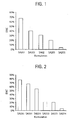
- FIGURE 1 illustrates EWC measurements of a selection of embodiments of SAs when exposed to water. EWC measurements were greater in buffer solutions at pH 7.4 than in water (data not shown). Components of the SAs tested in Figure 1 are reported in Table 1. IBA is isobutyl acrylate, a negative control.
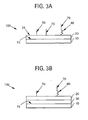
- FIGURE 2 illustrates EWC measurements of additional embodiments of SAs having increasing percentages of crosslinker. FIGURE 2 illustrates that as the percentage of crosslinker increases, the SA surfaces have a reduced equilibrium water content. More highly cross-linked SA surfaces become less swellable and harder.
- SA and SAP layers which have lower EWC measurements, and therefore do not absorb as much water, are better suited as materials for cell culture. This may be due to many factors. It may be that surfaces having a lower EWC do not delaminate as readily as surfaces having a higher EWC. This characteristic may be but one characteristic among many that lead to a successful cell culture coating, however. For example, subtle changes in the chemistry of the surface, the charge, the modulus, the EWC, or the hydrophobicity or hydrophilicity of the surface also contribute to the success of the surface as a cell culture surface. In embodiments, SA surfaces having an EWC below 40% may be particularly suitable for supporting hES cells in culture.
- the present disclosure describes, inter alia, articles having synthetic surfaces for culturing undifferentiated stem cells.
- the surfaces may support proliferation and maintenance of undifferentiated stem cells in chemically defined media.
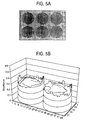
- the article 100 includes a base material substrate 10 having a surface 15.
- a swellable (meth)acrylate or SA coating layer 20 is disposed on the surface 15 of the base material 10. While not shown, it will be understood that SA coating 20 may be disposed on a portion of base material 10.
- the base material 10 may be any material suitable for culturing cells, including a ceramic substance, a glass, a plastic, a polymer or co-polymer, any combinations thereof, or a coating of one material on another.
- the base material may be flat or shaped.
- Such base materials 10 include glass materials such as soda-lime glass, pyrex glass, vycor glass, quartz glass; silicon; plastics or polymers, including dendritic polymers, such as poly(vinyl chloride), poly(vinyl alcohol), poly(methyl methacrylate), poly(vinyl acetate-co-maleic anhydride), poly(dimethylsiloxane) monomethacrylate, cyclic olefin polymers, fluorocarbon polymers, polystyrenes, polypropylene, polyethyleneimine; copolymers such as poly(vinyl acetate-co-maleic anhydride), poly(styrene-co-maleic anhydride), poly(ethylene-co-acrylic acid) or derivatives of these or the like.
- dendritic polymers such as poly(vinyl chloride), poly(vinyl alcohol), poly(methyl methacrylate), poly(vinyl acetate-co-maleic anhydride), poly(dimethylsi
- cyclic olefin copolymer means a polymer formed from more than one monomer species, where at least one of the monomer species is a cyclic olefin monomer and at least one other monomer species is not a cyclic olefm monomer species.
- cyclic olefin copolymers are formed from ethylene and norbonene monomers. Cyclic olefin copolymer resins are commercially available with trade name of TOPAS® from Boedeker Plastics, Inc.
- Examples of articles 100 suitable for cell culture include single and multi-well plates, such as 6, 12, 96, 384, and 1536 well plates, jars, petri dishes, flasks, beakers, plates, roller bottles, slides, such as chambered and multichambered culture slides, tubes, cover slips, bags, membranes, hollow fibers, beads and microcarriers, cups, spinner bottles, perfusion chambers, bioreactors, CellSTACK® (Coming, Incorporated) and fermenters.
- single and multi-well plates such as 6, 12, 96, 384, and 1536 well plates, jars, petri dishes, flasks, beakers, plates, roller bottles, slides, such as chambered and multichambered culture slides, tubes, cover slips, bags, membranes, hollow fibers, beads and microcarriers, cups, spinner bottles, perfusion chambers, bioreactors, CellSTACK® (Coming, Incorporated) and fermenters.
- SAs may be polymerized from acrylate or methacrylate monomers and acrylate or methacrylate cross-linkers.
- the term "(meth)acrylate” refers to compounds containing acrylate or methacrylate groups.
- the (meth)acrylate monomers may include 2-hydroxyethyl methacrylate (HEMA), 2-carboxyethyl acrylate, 1-vinyl-2-pyrrolidone, di(ethylene glycol) ethyl ether methacrylate, acrylamide, ethylene glycol methyl ether methacrylate, 3-sulfopropyldimethyl-3-methacrylamidopropyl-ammonium inner salt and mixtures of these.
- HEMA 2-hydroxyethyl methacrylate
- 2-carboxyethyl acrylate 1-vinyl-2-pyrrolidone
- di(ethylene glycol) ethyl ether methacrylate acrylamide
- ethylene glycol methyl ether methacrylate
- Tetra(ethylene glycol) dimethacrylate may operate as a cross-linker.
- poplypeptides are not incorporated into the coating as cross-linkers.
- Representative swellable (meth)acrylates for use in accordance with the present invention are illustrated in Table 1.
- SA coating 20 provides a surface 25 to which one or more polypeptides 70 may be conjugated.
- conjugated means covalently bound. Covalent binding of polypeptide 70 to SA 20 may occur through a linker 80.
- the SA surface 20 may include polymerized acrylate monomers; namely, hydroxyethyl methacrylate, 2-carboxyethylacrylate, and tetra(ethylene glycol) dimethacrylate. In numerous embodiments, the ratio (by volume) of hydroxyethyl methacrylate, 2-carboxyethylacrylate, and tetra(ethylene glycol) dimethacrylate is about 80/20/3 (v/v/v), respectively.
- the SA may be formulated using the following liquid aliquots of monomers (by volume): hydroxyethyl methacrylate ( ⁇ 60-90), 2-carboxyethylacrylate ( ⁇ 10-40), and tetra(ethylene glycol) dimethacrylate ( ⁇ 1-5), respectively.
- the SA layer 20 may consist essentially of polymerized hydroxyethyl methacrylate, 2-carboxyethylacrylate, and tetra(ethylene glycol) dimethacrylate monomers.
- the SA layer 20 may be substantially free of polypeptide crosslinkers.
- the SA may be formulated using the monomers (by volume for liquid monomers or weight for solid monomers): Monomer X (80), 2-carboxyethylacrylate (20), and tetra(ethylene glycol) dimethacrylate (3).
- Monomer X is: Hydroxypropyl methacrylate, 2-Hydroxyethyl acrylate, 1-vinyl-2-pyrrolidone, Di(ethylene glycol) ethyl ether methacrylate, acrylamide, ethylene glycol methyl ether methacrylate or 3-sulfopropyldimethyl-3-methacrylamidopropyl-ammonium.
- polypeptide 70 is an amino acid sequence that may be chemically synthesized or made by recombinant methods.
- peptide or polypeptide is not isolated from an animal source.
- Polypeptide 70 includes an amino acid sequence of XaanProGlnValThrArgGlyAspValPheThrMetPro, a vitronectin peptide sequence where n is an integer from 0 to 3 and where Xaa may be any amino acid or may be, for example, lysine.
- the Xaa amino acid sequence may be a conjugation sequence as, for example, LysGlyGly or LysTyrGly, which provides a functional group, in the lysine amino acid, for conjugating the peptide to the SA surface.
- a peptide may be acetylated or amidated to provide stability and protect the small amino acid from cleavage.
- a linker or spacer 80 such as a repeating poly(ethylene glycol) linker or any other suitable linker, may be used to increase distance from polypeptide 70 to surface 25 of SA layer 20. All, some, or none of the polypeptides 70 may be conjugated to SA layer 20 via linkers 80. An acrylate chain which provides a conjugation group may also act as spacer for conjugated peptides.
- Polypeptide 70 may be conjugated to the SA layer 20 at any density, preferably at a density suitable to support culture of undifferentiated stem cells, to form a swellable (meth)acrylate-peptide or SAP surface.
- Polypeptide 70 may be conjugated to SA layer 20 at a density of between about 1 pmol per mm 2 and about 50 pmol per mm 2 of surface 25 of swellable (meth)acrylate coating 20, which can be estimated by the area of surface 15 of base material substrate 10 that is coated in embodiments where surface 15 is uniformly coated by swellable (meth)acrylate layer 20.
- the polypeptide may be present at a density of greater than 1 pmol/mm 2 , greater than 5 pmol/mm 2 , greater than 6 pmol/mm 2 , greater than 7 pmol/mm 2 , greater than 8 pmol/mm 2 , greater than 9 pmol/mm 2 , greater than 10 pmol/mm 2 , greater than 12 pmol/mm 2 , greater than 15 pmol/mm 2 , or greater than 20 pmol/mm 2 of the surface 25 of the SA coating 20.
- the amount of polypeptide 70 present can vary depending on the composition of the SA layer 20, the thickness of the SA layer 20 and the nature of the polypeptide 70 itself. As discussed below in the Examples, higher densities of polypeptide 70 may be better able to support attachment and proliferation of undifferentiated stem cells in a chemically defined medium.
- Acrylate and methacrylate monomers may be synthesized as known in the art or obtained from a commercial vendor, such as Polysciences, Inc., Sigma Aldrich, Inc., and Sartomer, Inc.
- Polypeptides 70 may be synthesized as known in the art (or alternatively produced through molecular biological techniques) or obtained from a commercial vendor, such as GenScript Corporation.
- Linkers 80 may be synthesized as known in the art or obtained from a commercial vendor, such as discrete polyethylene glycol (dPEG) linkers available from Quanta BioDesign, Ltd.
- an intermediate layer 30 may be disposed between surface 15 of base material 10 and the SA coating 20.
- Intermediate layer 30 may be configured to improve binding of coating 20 to substrate 10, to facilitate monomer spreading, to render portions of the surface 10 that are uncoated cytophobic to encourage cell growth on coated areas, to provide a substrate compatible with a monomer or solvent where the monomer or solvent is incompatible with the base material 10, to provide topographical features if desired through, for example, patterned printing, or the like.
- substrate 10 is a glass substrate, it may be desirable to treat a surface of the glass substrate with an epoxy coating or a silane coating.
- intermediate layer 30 of polyamide, polyimide, polypropylene, polyethylene, or poly(meth)acrylate. While not shown, it will be understood that SA coating 20 may be disposed on a portion of intermediate layer 30. It will be further understood that intermediate layer 30 may be disposed on a portion of base material 10.
- surface 15 of base material 10 is treated, either physically or chemically, to impart a desirable property or characteristic to the surface 15.
- surface 15 may be corona discharge treated or plasma treated.
- vacuum or atmospheric pressure plasma include RF and microwave plasmas both primary and secondary, dielectric barrier discharge, and corona discharge generated in molecular or mixed gases including air, oxygen, nitrogen, argon, carbon dioxide, nitrous oxide, or water vapor.
- uniformly coated it is meant that the layer 20 in a given area, for example a surface of a well of a culture plate, completely coats the area at a thickness of about 5 nm or greater.
- the thickness of a uniformly coated surface may vary across the surface, there are no areas of the uniformly coated surfaces through which the underlying layer (either intermediate layer 30 or base material 10 ) is exposed. Cell responses across non-uniform surfaces tend to be more variable than cell responses across uniform surfaces.
- SAP coating layer 20 may have any desirable thickness.
- the average thickness of the coating layer 20 is less than about 10 micrometers.
- the average thickness may be less than about 5 micrometers, less than about 2 micrometers, less than about 1 micrometers, less than about 0.5 micrometers, such as about 0.1 micrometers.
- the polymer material forming SA layer 20 may be cross-linked to any suitable degree. Low degree of crosslinking may result in partial or complete swellable (meth)acrylate dissolution in water and lower polymerization reaction efficiency. In various embodiments, the crosslinking density of swellable (meth)acrylate layer 20 is between about 0.9% and about 9%.
- Article 100 in numerous embodiments, is cell culture ware having a well, such as a Petri dish, a multi-well plate, a flask, a beaker or other container having a well.
- article 100 formed from base material 10 may include one or more wells 50.
- Well 50 includes a sidewall 55 and a surface 15.
- a peptide-conjugated swellable (meth)acrylate (SAP) coating 20 may be disposed on surface 15 or sidewalls 55 (or, as discussed above with regard to FIG. 1 one or more intermediate layer 30 may be disposed between surface 15 or sidewall 55 and SA coating 20) or a portion thereof.
- SAP peptide-conjugated swellable (meth)acrylate
- 55 may be coated with SAP layer 20.
- article 100 includes a uniformly coated layer 20 having a surface 25 with an area greater than about 5 mm 2 .
- the area of the surface 15 is too small, reliable cell responses may not be readily observable because some cells, such as human embryonic stem cells, are seeded as colonies or clusters of cells (e.g., having a diameter of about 0.5 mm) and adequate surface is desirable to ensure attachment of sufficient numbers of colonies to produce a quantitative cell response.
- an article 100 has a well 50 having a uniformly coated surface 15, where the surface 15 has an area greater than about 0.1 cm 2 , greater than about 0.3 cm 2 , greater than about 0.9 cm 2 , or greater than about 1cm 2 .
- a synthetic SA layer may be disposed on a surface of a cell culture article via any known or future developed process.
- the synthetic SA layer provides a uniform layer that does not delaminate during typical cell culture conditions.
- the synthetic SA surface may be associated with the base material substrate via covalent or non-covalent interactions. Examples of non-covalent interactions that may associate the synthetic SA surface with the substrate include chemical adsorption, hydrogen bonding, surface interpenetration, ionic bonding, van der Waals forces, hydrophobic interactions, dipole-dipole interactions, mechanical interlocking, and combinations thereof.
- monomers are deposited on a surface of a cell culture article and polymerized in situ.
- the base material will be referred to herein as the "substrate" on which the synthetic SA material is deposited.
- Polymerization may be done in solution phase or in bulk phase.
- the solvent is compatible with the material forming the cell culture article and the monomers. It may be desirable to select a solvent that is non-toxic to the cells to be cultured and that does not interfere with the polymerization reaction. Alternatively, or in addition, selection of a solvent that can be substantially completely removed or removed to an extent that it is non-toxic or no longer interferes with polymerization may be desirable. In such circumstances, it may be desirable that the solvent be readily removable without harsh conditions, such as vacuum or extreme heat. Volatile solvents are examples of such readily removable solvents.
- solvents that may be suitable in various situations for coating articles as described herein include ethanol, isopropanol, acetyl acetate, ethyl acetate, dimethylformamide (DMF), and dimethylsulfoxide (DMSO).
- Ethanol may be a particularly suitable solvent when it is desired to remove solvent prior to polymerization.
- other solvents including acetone, methanol, ethyl acetate, butanone, acetonitrile, 2-propanol and 2-butanol may be applicable.
- the monomers may be diluted with solvent by any suitable amount to achieve the desired viscosity and monomer concentration.
- the monomer compositions used according to the teachings presented herein contain between about 0.1% to about 99% monomer.
- the monomer may be diluted with an ethanol or other solvent to provide a composition having between about 0.1% and about 50% monomer, or from about 0.1% to about 10% monomer by volume, or from about 0.1% to about 1% monomer by volume.
- the monomers may be diluted with solvent so that the SA layer achieves a desired thickness. As discussed above, if the deposited monomers are too thick, a non-uniform surface may result and the coating may likely de-laminate after contact with an aqueous medium.
- the synthetic SA layer is deposited on a surface of an intermediate layer that is associated with the base material via covalent or non-covalent interactions, either directly or via one or more additional intermediate layers (not shown).
- the intermediate layer will be referred to herein as the "substrate" onto which the synthetic SA layer is deposited.
- the surface of the base material is treated.
- the surface may be treated to improve binding of the synthetic SA layer to the base material surface, to facilitate monomer spreading on the base material surface, or the like.
- the base material may be treated for similar purposes with regard to an intermediate layer.
- the surface is plasma treated. High surface energy obtainable from such treatments may facilitate monomer spreading and uniform coating.
- a composition forming the layer may include one or more additional compounds such as surfactants, wetting agents, photoinitiators, thermal initiators, catalysts and activators.
- Any suitable polymerization initiator may be employed.
- a suitable initiator e.g. a radical initiator or a cationic initiator, suitable for use with the monomers.
- UV light is used to generate free radical monomers to initiate chain polymerization.
- Any suitable initiator may be used.
- polymerization initiators include organic peroxides, azo compounds, quinones, nitroso compounds, acyl halides, hydrazones, mercapto compounds, pyrylium compounds, imidazoles, chlorotriazines, benzoin, benzoin alkyl ethers, diketones, phenones, or mixtures thereof.
- Suitable commercially available, ultraviolet-activated and visible light-activated photoinitiators have tradenames such as IRGACURE 651, IRGACURE 184, IRGACURE 369, IRGACURE 819, DAROCUR 4265 and DAROCUR 1173 commercially available from Ciba Specialty Chemicals, Tarrytown, N.Y. and LUCIRIN TPO and LUCIRIN TPO-L commercially available from BASF (Charlotte, N.C.)
- a photosensitizer may also be included in a suitable initiator system.
- Representative photosensitizers have carbonyl groups or tertiary amino groups or mixtures thereof.
- Photosensitizers having a carbonyl groups include benzophenone, acetophenone, benzil, benzaldehyde, o-chlorobenzaldehyde, xanthone, thioxanthone, 9,10-anthraquinone, and other aromatic ketones.
- Photosensitizers having tertiary amines include methyldiethanolamine, ethyldiethanolamine, triethanolamine, phenylmethyl-ethanolamine, and dimethylaminoethylbenzoate.
- Commercially available photosensitizers include QUANTICURE ITX, QUANTICURE QTX, QUANTICURE PTX, QUANTICURE EPD from Biddle Sawyer Corp.
- the amount of photosensitizer or photoinitiator system may vary from about 0.01 to 10% by weight.
- cationic initiators include salts of onium cations, such as arylsulfonium salts, as well as organometallic salts such as ion arene systems.
- the solvent is removed prior to polymerizing.
- the solvent may be removed by any suitable mechanism or process. It has been found that removal of substantially all of the solvent prior to curing, allows for better control of curing kinetics and the amount of monomer converted. When conversion rates of the monomers are increased, waste generation and cytotoxicity are reduced. Using these methods, the resulting SA layer forms a network, but not an interpenetrating network.
- the monomers are polymerized. Whether polymerized in bulk phase (substantially solvent free) or solvent phase, the monomers are polymerized via an appropriate initiation mechanism. Many of such mechanisms are known in the art. For example, temperature may be increased to activate a thermal initiator, photoinitiators may be activated by exposure to appropriate wavelength of light, or the like. According to numerous embodiments, the monomer or monomer mixture is cured using UV light. The curing preferably occurs under inert gas protection, such as nitrogen protection, to prevent oxygen inhibition. Suitable UV light combined with gas protection may increase polymer conversion, insure coating integrity and reduce cytotoxicity.
- inert gas protection such as nitrogen protection
- the cured synthetic SA layer may be washed with solvent one or more times to remove impurities such as unreacted monomers or low molecular weight polymer species.
- the layer is washed with ethanol or an ethanol-water solution, e.g. 70% ethanol, greater than 90% ethanol, greater than 95% ethanol or greater than about 99% ethanol. Washing with a 70% ethanol solvent may not only serve to remove impurities, which may be cytotoxic, but also can serve to sterilize the surface prior to incubation with cells.
- a polypeptide may be conjugated to the polymerized SA layer via any suitable technique to form a SAP surface.
- a polypeptide may be conjugated to a polymerized SA layer 20 via an amino terminal amino acid, a carboxy terminal amino acid, or an internal amino acid.
- One suitable technique involves 1-ethyl-3-[3-dimethylaminopropyl] carbodiimide hydrochloride (EDC)/ N -hydroxysuccinimide (NHS) chemistry, as generally known in the art.
- EDC and NHS or N- hydroxysulfosuccinimide (sulfo-NHS) can react with carboxyl groups of the SA layer to produce amine reactive NHS esters.
- the incorporation of a monomer in the SA layer having a carboxyl group for conjugation with peptides is important.
- EDC reacts with a carboxyl group of the SA layer to produce an amine-reactive O -acylisourea intermediate that is susceptible to hydrolysis.
- the addition of NHS or sulfo-NHS stabilizes the amine-reactive O -acylisourea intermediate by converting it to an amine reactive NHS or sulfo-NHS ester, allowing for two step procedures.
- the polypeptide may then be added and the terminal amine of the polypeptide can react with the amine reactive ester to form a stable amide bond, thus conjugating the polypeptide to the SA layer.
- the N -terminal amino acid is preferably an amine containing amino acid such as lysine, ornithine, diaminobutyric acid, or diaminoproprionic acid.
- any acceptable nucleophile may be employed, such as hydroxylamines, hydrazines, hydroxyls, and the like.
- EDC/NHS chemistry results in a zero length crosslinking of polypeptide 70 to SA layer 20.
- Linkers or spacers such as poly(ethylene glycol) linkers (e.g., available from Quanta BioDesign, Ltd.) with a terminal amine may be added to the N -terminal amino acid of polypeptide 70.
- the linker is preferably a N -PG-amido-PEG x -acid where PG is a protecting group such as the Fmoc group, the BOC group, the CBZ group or any other group amenable to peptide synthesis and X is 2, 4, 6, 8, 12, 24 or any other discrete PEG which may be available.
- a 1 ⁇ M - 2500 ⁇ M polypeptide fluid composition such as a solution, suspension, or the like, is contacted with an activated SA layer to conjugate the polypeptide.
- the polypeptide concentration may be between about 100 ⁇ M and about 2000 ⁇ M, between about 500 ⁇ M and about 1500 ⁇ M, or about 1000 ⁇ M.
- the volume of the polypeptide composition and the concentration may be varied to achieve a desired density of polypeptide conjugated to the SA layer.
- a peptide density of between 1 and 50 pmol/mm 2 In some embodiments, a peptide density of between 3-8 pmol/mm 2 may provide a surface that is comparable to known cell culture surfaces such as Matrigel®.
- Sterilization can occur by various methods including assembly of sterile components under aseptic conditions (in an aseptic manufacturing facility) or terminal sterilization, i.e. exposure to sterilizing agents such as UV light, chemicals (ethanol, ethylene oxide) or ionizing radiation (gamma or electron) after assembly. Terminal sterilization is more desirable than aseptic manufacturing because it is very expensive to implement aseptic manufacturing on a large scale and it is prone to ongoing contamination issues. Radiation in the gamma frequency range (> 3 x 10 19 Hz) penetrates packaging materials and can be applied on large scale at ambient temperatures.
- Electron beam irradiation can be accomplished in seconds to a few minutes because it delivers a higher dose of radiation than gamma, allowing less oxygen to permeate the materials which may cause less damage than gamma treatments.
- Gamma irradiation is typically used for sterilizing cell culture ware after packaging.
- a sterility assurance level (SAL) of 10-3 is typically expected for cell culture products.
- SAL sterility assurance level
- E-beam or EB treatments also have advantages and are also contemplated in embodiments of the present invention.
- Peptide are short segments of macromolecular proteins and are known to be damaged by irradiation techniques.
- swellable (meth)acrylate surfaces conjugated to a peptide sequence identified as SEQ ID NO:1 undergo irradiation sterilization without losing function (See FIGURE 7 ).
- Other peptides conjugated to embodiments of the swellable (meth)acrylate surfaces described herein lost function after irradiation sterilization.
- a cell culture article having a SAP layer as described above may be seeded with cells.
- the cells may be of any cell type.
- the cells may be connective tissue cells, epithelial and endothelial cells, hepatocytes, skeletal or smooth muscle cells, heart muscle cells, intestinal cells, kidney cells, or cells from other organs, stem cells, islet cells, blood vessel cells, lymphocytes, cancer cells, or the like.
- the cells may be mammalian cells, preferably human cells, but may also be non-mammalian cells such as bacterial, yeast, or plant cells.
- the cells are stem cells which, as generally understood in the art, refer to cells that have the ability to continuously divide (self-renewal) and that are capable of differentiating into a diverse range of specialized cells.
- the stem cells are multipotent, totipotent, or pluripotent stem cells that may be isolated from an organ or tissue of a subject. Such cells are capable of giving rise to a fully differentiated or mature cell types.
- a stem cell may be a bone marrow-derived stem cell, autologous or otherwise, a neuronal stem cell, or an embryonic stem cell.
- a stem cell may be nestin positive.
- a stem cell may be a hematopoeietic stem cell.
- a stem cell may be a multi-lineage cell derived from epithelial and adipose tissues, umbilical cord blood, liver, brain or other organ.
- the stem cells are pluripotent stem cells, such as pluripotent embryonic stem cells isolated from a mammal. Suitable mammals may include rodents such as mice or rats, primates including human and non-human primates. These cells have applications in cell therapy, tissue repair, drug development, and the study of developmental biology. Many of these cell lines require the use of mouse or human feeder cells to inhibit differentiation.
- Tumor extract matrices are available such as Matrigel® (mouse sarcoma-derived commercial product containing a mixture of laminin, collagen IV, entactin, heparin sulfate proteoglycan and other proteins, available from BD Biosciences, Franklin Lakes, NJ.
- Matrigel® mouse sarcoma-derived commercial product containing a mixture of laminin, collagen IV, entactin, heparin sulfate proteoglycan and other proteins
- iPS cells include induced primate pluripotent stem (iPS) cells.
- iPS cells refer to cells, obtained from a juvenile or adult mammal, such as a human, that are genetically modified, e.g., by transfection with one or more appropriate vectors, such that they are reprogrammed to attain the phenotype of a pluripotent stem cell such as an hESC.
- Phenotypic traits attained by these reprogrammed cells include morphology resembling stem cells isolated from a blastocyst as well as surface antigen expression, gene expression and telomerase activity resembling blastocyst derived embryonic stem cells.
- the iPS cells typically have the ability to differentiate into at least one cell type from each of the primary germ layers: ectoderm, endoderm and mesoderm.
- the iPS cells like hESC, also form teratomas when injected into immuno-deficient mice, e.g., SCID mice. ( Takahashi et al., (2007) Cell 131(5):861 ; Yu et al., (2007) Science318:5858 ).
- Stem cells including embryonic stem cells (ESCs) and human embryonic stem cells (hESCs) are difficult to culture, especially in an undifferentiated, pluripotent state. Controlling these cells in culture, maintaining them in an undifferentiated state and subsequently directing them to differentiate in a reliable and reproducible manner has been challenging. Stem cells have required naturally derived components to survive in culture, in or on the cell culture surface (for example, Matrigel®) or in the medium (for example serum or conditioned media), or both. Spontaneous differentiation often occurs in culture, presumably resulting from soluble factors, cell-cell contact, and/or cell-matrix signaling.
- ESCs embryonic stem cells
- hESCs human embryonic stem cells
- the cells Prior to seeding cells, the cells may be harvested and suspended in a suitable medium, such as a growth medium in which the cells are to be cultured once seeded onto the surface.
- a suitable medium such as a growth medium in which the cells are to be cultured once seeded onto the surface.
- the cells may be suspended in and cultured in a serum-containing medium, a conditioned medium, or a chemically-defined medium.
- chemically-defined medium means cell culture media that contains no components of unknown composition. Chemically defined media may, in various embodiments, contain no proteins, hydrosylates, or peptides of unknown composition. In embodiments of the present invention, chemically defined media does not contain animal-derived ingredients.
- chemically defined media contains polypeptides or proteins of known composition. These polypeptides or proteins may be synthesized or recombinant.
- chemically defined media may contain recombinant growth hormones. Because all components of chemically defined media have a known chemical structure and are introduced to the media in known quantities, variability in culture conditions and thus cell response can be reduced, increasing reproducibility. In addition, the possibility of contamination from undefined and animal-derived constituents is removed.
- the ability to scale up is made easier due, at least in part, to the factors discussed above.
- chemically defined cell culture media commercially available from, for example, Invitrogen (Invitrogen Corporation, 1600 Faraday Avenue, PO Box 6482, Carlsbad, California 92008) as STEM PRO, a fully serum- and feeder-free (SFM) specially formulated from the growth and expansion of embryonic stem cells, and Stem Cell Technologies, Inc. as mTeSRTM1 maintenance media for human embryonic stem cells.
- One or more growth or other factors may be added to the medium in which cells are incubated with the synthetic SAP layer.
- the factors may facilitate cellular proliferation, adhesion, self-renewal, differentiation, or the like.
- factors that may be added to or included in the medium include muscle morphogenic factor (MMP), vascular endothelium growth factor (VEGF), interleukins, nerve growth factor (NGF), erythropoietin, platelet derived growth factor (PDGF), epidermal growth factor (EGF), activin (ACT), hematopoietic growth factors, retinoic acid (RA), interferons, fibroblastic growth factors, such as basic fibroblast growth factor (bFGF), bone morphogenetic protein (BMP), peptide growth factors, heparin binding growth factor (HBGF), hepatocyte growth factor, tumor necrosis factors, insulin-like growth factors (IGF) I and II, transforming growth factors, such as transforming growth factor- ⁇ 1 (TGF ⁇ 1), and colony stimulating
- the cells may be seeded at any suitable concentration. Typically, the cells are seeded at about 10,000 cells/cm 2 of substrate to about 500,000 cells/cm 2 . For example, cells may be seeded at about 50,000 cells/cm 2 of substrate to about 150,000 cells/cm 2 . However, higher and lower concentrations may readily be used.
- the incubation time and conditions such as temperature, CO 2 and O 2 levels, growth medium, and the like, will depend on the nature of the cells being cultured and can be readily modified. The amount of time that the cells are incubated on the surface may vary depending on the cell response desired.
- the cultured cells may be used for any suitable purpose, including (i) obtaining sufficient amounts of undifferentiated stem cells cultured on a synthetic surface in a chemically defined medium for use in investigational studies or for developing therapeutic uses, (ii) for investigational studies of the cells in culture, (iii) for developing therapeutic uses, (iv) for therapeutic purposes, (v) for studying gene expression, e.g. by creating cDNA libraries, and (vi) for studying drug and toxicity screening.
- EXAMPLE 1 Identification of Synthetic Surfaces for Culturing Undifferentiated Human Embryonic Stem Cells in Chemically Defined Medium
- SA coating surfaces were prepared from UV polymerizable monomers and include a hydrophilic monomer, a carboxyl group containing monomer, and a crosslinking monomer.
- Table 1 shows the combination of swellable (meth)acrylate monomers employed in embodiments of the present invention.
- SA formulations Swellable (meth)acrylate No. Hydrophilic Monomer (vol. %) Carboxyl group containing monomer (vol . %) Crosslinking monomer (vol.
- the monomers were diluted in ethanol to the concentration of 0.1% by volume, and Durocur 1173 (3% volume/monomer volume) and Irgacure 819 (0.1% volume/monomer volume) photoinitiators was added.
- the diluted monomer formulations were added to a plasma treated appropriately sized cell culture vessel format (e.g. 96-or 6-well plates) cyclic olefin copolymer (provided by Corning Life Science Development group).
- An appropriate amount of the mixture was added to form a coating of an appropriate thickness.
- a coating thickness below 2 microns is helpful for stability of the coating during conjugation reactions and cell culture assays.
- a volume of 2 ⁇ L - 5 ⁇ L was added to 96 well plates to form the appropriate coating thickness using BioTek Precision Pipetting System.
- the ethanol solvent was removed by evaporation at room temperature for 3 hr in fume hood. After the solvent was removed, the coatings were cured with 13mW/cm 2 pulsed (100 Hz) UV light (Xenon RC-801) for 1 min in N 2 purged box (with fused silica window).
- a dispensing technique requires that the solution of monomers be diluted in a solvent to allow the dispensed liquid to disperse across a surface.
- a 1% monomer solution diluted in a 99% ethanol solution may be an appropriate dilution.
- spin coating techniques allow for a range of between 0.1% - 99.9% monomer in solvent to be applied to a surface.
- the percent of acrylate monomers in the ethanol carrier solvent can be varied to achieve a wide range of desired coating thickness.
- spin coating allows these coatings to be applied to larger format surfaces, including 6-well plates, T175 flasks or larger flask formats. To deliver uniform coatings without any defects associated with delaminations, air pockets or other defects, the parameters of spin speed and spin time were modulated to ensure reproducible application of these coatings.
- a Zenor ZF-16-188 (Zeon Chemicals) film is placed in an O 2 microwave plasma for 13 seconds (Plasmatic Systems). After treatment the thin film was fitted into a vacuum porous chuck of the spin coating axle. The chuck was then secured on the spin coater from Laurell Technologies (WS650-15NPP/AS/10K). Approximately 3 ml of the acrylate formulation was manually dispensed on the thin film. Table 3 shows the parameters that were used to enable the coating to spread evenly on a 5 inch by 5 inch film. After the acrylate formulation is applied to the film, and the solvent is evaporated, the film is placed in the UV chamber, purged with Nitrogen and cured for 1 minute.
- the spun coated films were then laminated (via an in-mold labeling process) into 6-well plates and T-75 flasks.
- Table 2 Acrylate Concentration (%) Spin Speed (rpm) Spin Time (sec.) 5 1000 30 10 5000 30 15 3000 15 90 6000 30 100 5000 30
- the remaining NHS esters on the coating were blocked with 1M, pH 8.1 solution of ethanolamine or aminopropyl morpholine and the wells were washed with phosphate buffer, 1% SDS solution, and finally deionized water. Fluorescence was quantified using a Tecan microarray scanner. Alternatively, the polypeptides were quantified with the QuantiPro BCA assay kit available from Sigma-Aldrich.
- the peptide solution contained 1000 ⁇ M, 100 ⁇ M, 50 ⁇ M, 10 ⁇ M, 5 ⁇ M, 1 ⁇ M, or 0 ⁇ M total peptide.
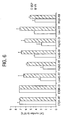
- FIGURE 5A is a photograph of a crystal violet stained 6-well plate coated with an embodiment of the synthetic swellable (meth)acrylate coating of the present invention (prior to peptide conjugation).
- FIGURE 5B is an absorbance image of two wells of a crystal violet stained 6-well plate showing uniform coating across the well.
- FIGURE 6 is a graph illustrating the effects of gamma and e-beam irradiation sterilization treatments compared to ethanol sterilization on cell response for embodiments of the SAP surfaces of the present invention.
- LowG and HighG represents substrates treated with low dose (10-15 kGy) or high dose (15-25 kGy) Gamma irradiation respectively.
- Low-EB and High EB represent substrates treated with low (15-25 kGy) or high (25-40 kGy) dose electron beam radiation respectively.
- RT and DI represent samples stored at room temperature or in dry ice respectively.
- swellable (meth)acrylate coated plates sterilized with 70% ethanol (ETOH) just prior to use were also used as controls to assess the impact of the sterilization.
- FIGURE 6 illustrates SAP surfaces (SA02 in Table 1) where the peptide is a BSP sequence (SAP-BSP) and where the peptide is a vitronectin (VN) sequence (SAP-VN) While both SAP surfaces provided appropriate surfaces for H7 hES cell adhesion and proliferation after EtOH sterilization, the SAP-VN surface retained its adhesive characteristics after low and high e-beam(EB) and gamma (G) sterilization treatments, when the treatments were provided at room temperature (RT) and on dry ice (DI). The SAP-BSP surface was damaged by the sterilization treatments.
- SAP-BSP BSP sequence
- VN vitronectin sequence
- FIGURE 7A - D shows photomicrographs of cells cultured on gamma sterilized SAP BSP or VN surfaces for 5 days.
- FIGURE 7A shows cells growing on a SAP surface conjugated with the BSP peptide sequence after 10 - 18kGy gamma irradiation sterilization treatment (at room temperature).
- FIGURE 7B shows cells growing on a SAP surface conjugated with the BSP peptide sequence after 15 - 25 kGy gamma irradiation sterilization treatment (at room temperature).
- FIGURE 7C shows cells growing on a SAP surface conjugated the VN peptide sequence (SEQ ID NO:1 or SEQ ID NO:5) after 10 - 18kGy gamma irradiation sterilization treatment (at room temperature).
- FIGURE 7D shows cells growing on a SAP surface conjugated the VN peptide sequence after 15 - 25kGy gamma irradiation sterilization treatment (at room temperature).
- the BSP conjugated coatings were more sensitive to the gamma and E-beam methods as evidenced by the reduced cell number observed only on the BSP conjugated surfaces ( FIGURE 6 ).
- the reduction in cell number on BSP conjugated acrylate surfaces was also associated with a cell colony morphology that was highly cystic ( FIGURE 7 ). This change in colony morphology may be associated with loss of cell surface markers for un-differentiated hES cells.
- Cells were trypsinized and allowed to recover in IMDM with 10% FBS for 30 minutes at 37°C, 5% CO 2 . After recovery, cells were washed and resuspended in 0.1% BSA in IMDM and seeded on peptide-conjugated acrylate coated plates and FN coated control wells at a density of 30,000 cells/well. Cell adhesion was allowed to take place for 1 hour at standard cell culture conditions. The media was aspirated from the wells and adherent cells were fixed and stained in 50 ⁇ L of 0.2% crystal violet in 20% methanol for 8 minutes at room temperature. Cellular absorption of crystal violet was quantified through addition of 1% SDS in H 2 O for 5 minutes prior to absorbance measurement at 570 nm.
- FIGURE 8 is a graph illustrating adhesion of HT1080 cells on SAP-VN surfaces where the peptide is fibronectin protein (FN) or a vitronectin sequence present in varying concentrations. Fibronectin coated wells were the positive control. FIGURE 8 illustrates that HT1080 cells adhere to embodiments of the SAP surfaces of the present invention in a concentration dependent manner.
- FN fibronectin protein
- FIGURE 8 illustrates that HT1080 cells adhere to embodiments of the SAP surfaces of the present invention in a concentration dependent manner.
- FIGURE 9 is a graph showing a comparison of AttoPhos fluorescence (expressed as a percentage of Matrigel®) measurements taken from H7 hES cells after 48 hours of culture on XaanProGlnValThrArgGlyAspValPheThrMetPro (VN) SAP (SAP-VN), XaaGlyGlyAsnGlyGluProArgGlyAspThrTyrArgAlaTyr, (BSP) (SAP-BSP) and control Matrigel® surfaces in the presence of X-Vivo-10 defined media (Geron Corp.
- SR media is composed of: KO-DMEM, 20% KO-SR (Invitrogen, Cat # 10828), 1 mM 1-glutamine, 1% NEAA, 0.1 mM 2-ME plus hbFGF at 80 ng/ml and TGFb1 at 0.5 ng/ml.
- FIGURE 9 shows a comparison of H7 cell culture performance using multiple synthetic media.
- hESC were cultured on described surfaces in 6wp for at least 10+ consecutive passages in chemically defined media X-Vivo-10 (Geron Corp. Menlo Park, CA, available from Lonza, Cat # 04-743Q)) supplemented with 80 ng/ml bFGF (R&D systems, Cat # 234-FSE/CF) and 0.5 ng/ml TGF ⁇ 1 (R&D systems, Cat. # 240B).
- Cells were typically passaged every 4-5 days (around 75% confluency) using enzymatic sub-cultivation procedure (collagenase IV treatment), followed by washing with DPBS, scraping and re-suspending in chemically defined culture medium. Cell colony morphology, cell number, viability and hESC-specific marker expression profile relative to cells cultured in parallel with Matrigel surface was assessed at each passage (described below).
- SAP-VN surfaces were prepared, varying the input peptide concentration from 0 - 1000 micromolar to create a broad range in peptide densities on the SAP surfaces. These surfaces were compared to SAP-BSP surfaces. Both peptide sequences were conjugated to swellable (meth)acrylate SA02 having 80% hydroxyethyl methacrylate, 20% 2-carboxyethyl acrylate and 3% tetra(ethylene glycol) dimethacrylate (as describe above) and the surfaces were sterilized using EtOH.
- the experimental plates were sterilized by spraying with 70% ETOH, drying in a laminar hood, and washing five times with 200 ⁇ l Dulbecco's Phosphate Buffered Saline (DPBS).
- DPBS Dulbecco's Phosphate Buffered Saline
- H7 hES cells were cultured on these surfaces for 48 hours in Xvivo chemically defined medium (Geron Corp.) supplemented with 80 ng/ml bFGF (R&D systems, Cat # 234-FSE/CF) and 0.5 ng/ml TGF ⁇ 1 (R&D systems, Cat. # 240B).
- the cells were then fixed and processed for AttoPhos activity using a Promega, assay (Cat. # S1000) to measure alkaline phosphatase activity, which is a known marker for undifferentiated hES cells.
- AttoPhos screening was performed as follows. Briefly, at the end of incubation time, cells were rinsed with 150 ⁇ l of DPBS and fixed with 4% paraformaldehyde for 10 min at room temperature (70 ⁇ l/well of 96-well plate). The cells were washed once with 150 ⁇ l of DPBS, and treated for 10 min with 100 ⁇ l of AttoPhos fluorescent substrate for alkaline phosphatase (Promega) (diluted 1:3 in DPBS) protected from light. AttoPhos fluorescent intensity at 485/535 nm was obtained using Victor 3 microplate reader (Perklin Elmer). AttoPhos fluorescent intensity for experimental surfaces was expressed as % of MATRIGEL control.
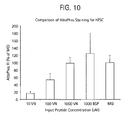
- AttoPhos fluorescent intensity (FI) for cells on all screened surfaces was normalized to the FI of cells on Matrigel®. As evident in FIGURE 10 , the surfaces conjugated with input peptide concentration greater than 100 micromolar showed cell attachment comparable to the Matrigel® control.
- Doubling Time - H7 hES cells were grown on SAP-VN and SAP-VN/BSP (a combination of VN sequence and BSP sequence coated cell culture substrates and Matrigel® as a control. These cells were allowed to propagate through 10 passages in cell culture. The doubling time (the time required for the population of cells to double) for each passage was measured.
- FIGURE 11 shows the doubling times for embodiments of SAPs of the present invention. These doubling times are comparable to those for cells propagated on Matrigel®.
- FIGURE 12 shows that gene expression was similar between H7 hES cells grown on Matrigel and grown on SAP-VN.
- FIGURE 13 shows the fluorescence (Oct4) and light microscopic images (Phase) of H7 hES cells grown on Matrigel and on SAP-VN (VN-AC) surfaces.
- the H7 hES cells grown on SAP-VN surfaces show similar morphology and protein expression to cells grown on Matrigel®.
- FIGURE 14A shows an optical image of H7 hES cells growing on a T75 flask coated with a SAP-VN coating.
- FIGURE 14B is a micrograph of a representative H7 colony at 2.5 X magnification (after 4 days in culture) on a T75 flask coated with 15% SAP-VN.
- FIGURE 14C shows the same magnification of a representative H7 colony grown on a Matrigel® coated flask.
Landscapes
- Health & Medical Sciences (AREA)
- Life Sciences & Earth Sciences (AREA)
- Engineering & Computer Science (AREA)
- Biomedical Technology (AREA)
- Chemical & Material Sciences (AREA)
- Bioinformatics & Cheminformatics (AREA)
- Organic Chemistry (AREA)
- Genetics & Genomics (AREA)
- Wood Science & Technology (AREA)
- Zoology (AREA)
- Biotechnology (AREA)
- Gynecology & Obstetrics (AREA)
- Reproductive Health (AREA)
- Developmental Biology & Embryology (AREA)
- Biochemistry (AREA)
- General Health & Medical Sciences (AREA)
- General Engineering & Computer Science (AREA)
- Microbiology (AREA)
- Cell Biology (AREA)
- General Chemical & Material Sciences (AREA)
- Medicinal Chemistry (AREA)
- Tropical Medicine & Parasitology (AREA)
- Virology (AREA)
- Apparatus Associated With Microorganisms And Enzymes (AREA)
- Micro-Organisms Or Cultivation Processes Thereof (AREA)
Claims (11)
- Un article de culture cellulaire contenant :une couche de (méth)acrylate dilatable, où la couche de (méth)acrylate dilatable est formée à partir d'une composition contenant 2-carboxyéthylacrylate, tétra(éthylène glycol) diméthacrylate, et un élément parmi hydroxyéthyle méthacrylate, hydroxypropyle méthacrylate, 2-hydroxyéthyle acrylate, 1-vinyle-2-pyrrolidone, di(éthylène glycol) éthyle éther méthacrylate, acrylamide, éthylène glycol méthyle éther méthacrylate ou 3-sulfopropylediméthyle-3-méthacrylamidopropyle-ammonium, et
un peptide contenant une séquence d'acides aminés deXaanProGlnValThrArgGlyAspValPheThrMetPro, où n est un entier de 0 à 3 et Xaa est tout acide aminé,où le peptide est conjugué à la couche de (méth)acrylate dilatable, et, où l'article de culture cellulaire a été stérilisé par irradiation gamma. - L'article de culture cellulaire selon la Revendication 1, où la couche de (méth)acrylate dilatable est formée à partir d'une composition contenant hydroxyéthyle méthacrylate, 2-carboxyéthylacrylate, et tétra(éthylène glycol) diméthacrylate.
- L'article de culture cellulaire selon la Revendication 1 où l'irradiation gamma comprend un traitement de 10 à 25 kGy.
- Un procédé de production de l'article de culture cellulaire selon la Revendication 1 comprenant :la disposition de monomères sur une surface de substrat de l'article de culture cellulaire, où les monomères contiennent (i) 2-carboxyéthylacrylate, (ii) tétra(éthylène glycol) diméthacrylate, et (iii) un élément parmi hydroxyéthyle méthacrylate, hydroxypropyle méthacrylate, 2-hydroxyéthyle acrylate, 1-vinyle-2-pyrrolidone, di(éthylène glycol) éthyle éther méthacrylate, acrylamide, éthylène glycol méthyle éther méthacrylate ou 3-sulfopropyldiméthyle-3-méthacrylamidopropyle-ammonium,la polymérisation des monomères sur la surface de substrat de façon à former une couche de (méth)acrylate dilatable,la conjugaison à la couche de (méth)acrylate dilatable d'un peptide contenant une séquence d'acides aminés de XaaGlyGlyProGlnValThrArgGlyAspValPheThrMetPro-NH2, où Xaa est tout acide aminé,la stérilisation de l'article de culture cellulaire au moyen d'une irradiation gamma.
- Le procédé selon la Revendication 4, comprenant en outre la dilution des monomères dans un solvant, et où la disposition des monomères sur la surface de substrat comprend la disposition des monomères sur la surface de substrat.
- Un système de culture cellulaire comprenant :un article de culture cellulaire selon la Revendication 1,un milieu chimiquement défini, etune ou plusieurs cellules souches humaines indifférenciées, où les cellules sont dans le milieu et sont en contact avec le peptide.
- Le système selon la Revendication 6, où le milieu chimiquement défini contient un facteur de croissance basique des fibroblastes et un facteur de croissance transformant-β1.
- Un procédé de culture de cellules souches indifférenciées, comprenant :la mise en contact des cellules souches humaines indifférenciées avec la couche de (méth)acrylate dilatable conjuguée au peptide de l'article selon la Revendication 1, etla culture des cellules dans un milieu de culture cellulaire de façon à maintenir la cellule dans un état indifférencié.
- Le procédé selon la Revendication 8, où le milieu de culture est un milieu de culture chimiquement défini.
- Le procédé selon la Revendication 8, où le milieu de culture contient un facteur de croissance basique des fibroblastes et un facteur de croissance transformant-β1.
- Le procédé selon la Revendication 8, où le milieu de culture contient environ 80 ng/ml de facteur de croissance basique des fibroblastes et environ 0,5 ng/ml de facteur de croissance transformant-β1.
Applications Claiming Priority (2)
| Application Number | Priority Date | Filing Date | Title |
|---|---|---|---|
| US12/362,974 US8329469B2 (en) | 2008-01-30 | 2009-01-30 | Swellable (meth)acrylate surfaces for culturing cells in chemically defined media |
| PCT/US2010/022497 WO2010088456A2 (fr) | 2009-01-30 | 2010-01-29 | Surfaces de (méth)acrylate pouvant gonfler pour la culture de cellules dans des milieux chimiquement définis |
Publications (2)
| Publication Number | Publication Date |
|---|---|
| EP2391709A2 EP2391709A2 (fr) | 2011-12-07 |
| EP2391709B1 true EP2391709B1 (fr) | 2014-11-12 |
Family
ID=42398221
Family Applications (1)
| Application Number | Title | Priority Date | Filing Date |
|---|---|---|---|
| EP10702387.1A Not-in-force EP2391709B1 (fr) | 2009-01-30 | 2010-01-29 | Surfaces de (méth)acrylate pouvant gonfler pour la culture de cellules dans des milieux chimiquement définis |
Country Status (11)
| Country | Link |
|---|---|
| US (2) | US8329469B2 (fr) |
| EP (1) | EP2391709B1 (fr) |
| JP (1) | JP2012516159A (fr) |
| KR (1) | KR20110127168A (fr) |
| CN (1) | CN102378812A (fr) |
| AU (1) | AU2010208137A1 (fr) |
| BR (1) | BRPI1007462A2 (fr) |
| CA (1) | CA2750933A1 (fr) |
| IL (1) | IL214363A0 (fr) |
| SG (1) | SG173478A1 (fr) |
| WO (1) | WO2010088456A2 (fr) |
Families Citing this family (34)
| Publication number | Priority date | Publication date | Assignee | Title |
|---|---|---|---|---|
| SG188096A1 (en) | 2008-01-30 | 2013-03-28 | Geron Corp | Synthetic surfaces for culturing stem cell derived oligodendrocyte progenitor cells |
| EP2247718B1 (fr) | 2008-01-30 | 2019-01-16 | Asterias Biotherapeutics, Inc. | Surfaces synthétiques pour la culture de cardiomyocytes issus de cellules souches |
| TW201042038A (en) * | 2009-05-28 | 2010-12-01 | Corning Inc | Synthetic microcarriers for culturing cells |
| EP2459701A1 (fr) | 2009-07-28 | 2012-06-06 | Corning Inc. | Microporteurs synthétiques pour cultiver des cellules |
| EP2361968B1 (fr) | 2010-02-26 | 2014-11-19 | Corning Incorporated | Microporteurs de polysaccharide synthétique pour cultiver des cellules |
| US20110027888A1 (en) * | 2009-07-29 | 2011-02-03 | Beltzer James P | Coated Fibers for Culturing Cells |
| WO2011022071A2 (fr) * | 2009-08-20 | 2011-02-24 | The Regents Of The University Of California | Compositions cardiaques |
| WO2011106222A2 (fr) * | 2010-02-23 | 2011-09-01 | Corning Incorporated | Substrats modifiés pour protéger des surfaces immobilisées de peptides contre une dégradation par rayonnement gamma |
| US20110207216A1 (en) | 2010-02-25 | 2011-08-25 | Arthur Winston Martin | Synthetic Peptide (Meth) Acrylate Microcarriers |
| WO2011142117A1 (fr) | 2010-05-11 | 2011-11-17 | パナソニック株式会社 | Substrat de culture de cellules et procédé de culture de cellules utilisant celui-ci |
| WO2012048276A2 (fr) | 2010-10-08 | 2012-04-12 | Caridianbct, Inc. | Procédés et systèmes configurables pour la culture et la récolte de cellules dans un système de bioréacteur à fibres creuses |
| WO2012109068A2 (fr) * | 2011-02-11 | 2012-08-16 | Corning Incorporated | Surface polymère de libération de cellule pouvant être clivée par une enzyme |
| AU2012256403B2 (en) | 2011-03-17 | 2016-10-20 | Corning Incorporated | Synthetic coating for cell culture |
| JP5916256B2 (ja) | 2011-05-05 | 2016-05-11 | コーニング インコーポレイテッド | 細胞培養のための合成組成物および被覆 |
| GB201110042D0 (en) * | 2011-06-14 | 2011-07-27 | Univ Edinburgh | Growth of cells |
| BR112014019157B1 (pt) * | 2012-02-02 | 2022-02-22 | Corning Incorporated | Meio de ligação sintético para cultura de célula |
| TWI512103B (zh) | 2012-11-12 | 2015-12-11 | Ind Tech Res Inst | 細胞培養系統、以及無血清細胞培養方法 |
| TWI601817B (zh) | 2013-10-02 | 2017-10-11 | 國立中央大學 | 細胞培養製品及其製造方法 |
| WO2015073913A1 (fr) | 2013-11-16 | 2015-05-21 | Terumo Bct, Inc. | Expansion de cellules dans un bioréacteur |
| WO2015148704A1 (fr) | 2014-03-25 | 2015-10-01 | Terumo Bct, Inc. | Remplacement passif de milieu |
| EP3198006B1 (fr) | 2014-09-26 | 2021-03-24 | Terumo BCT, Inc. | Alimentation programmée |
| WO2017004592A1 (fr) | 2015-07-02 | 2017-01-05 | Terumo Bct, Inc. | Croissance cellulaire à l'aide de stimuli mécaniques |
| US11965175B2 (en) | 2016-05-25 | 2024-04-23 | Terumo Bct, Inc. | Cell expansion |
| US11685883B2 (en) | 2016-06-07 | 2023-06-27 | Terumo Bct, Inc. | Methods and systems for coating a cell growth surface |
| US11104874B2 (en) | 2016-06-07 | 2021-08-31 | Terumo Bct, Inc. | Coating a bioreactor |
| US11873508B2 (en) * | 2017-01-20 | 2024-01-16 | Agency For Science, Technology And Research | Thermoresponsive microcarrier system and uses thereof |
| CN117247899A (zh) | 2017-03-31 | 2023-12-19 | 泰尔茂比司特公司 | 细胞扩增 |
| US11624046B2 (en) | 2017-03-31 | 2023-04-11 | Terumo Bct, Inc. | Cell expansion |
| US12234441B2 (en) | 2017-03-31 | 2025-02-25 | Terumo Bct, Inc. | Cell expansion |
| KR102783370B1 (ko) * | 2018-08-30 | 2025-03-17 | 인터페이스 인크. | 바닥재 및 장식용 구조체들을 위한 디지털 인쇄 |
| EP4314244B1 (fr) | 2021-03-23 | 2025-07-23 | Terumo BCT, Inc. | Capture et multiplication cellulaire |
| US12209689B2 (en) | 2022-02-28 | 2025-01-28 | Terumo Kabushiki Kaisha | Multiple-tube pinch valve assembly |
| USD1099116S1 (en) | 2022-09-01 | 2025-10-21 | Terumo Bct, Inc. | Display screen or portion thereof with a graphical user interface for displaying cell culture process steps and measurements of an associated bioreactor device |
| WO2025116481A1 (fr) * | 2023-11-30 | 2025-06-05 | 에스피투티엑스주식회사 | Support solide composite pour la synthèse de polymère biologique |
Family Cites Families (55)
| Publication number | Priority date | Publication date | Assignee | Title |
|---|---|---|---|---|
| US4578079A (en) | 1982-08-04 | 1986-03-25 | La Jolla Cancer Research Foundation | Tetrapeptide |
| US5695997A (en) | 1982-08-04 | 1997-12-09 | La Jolla Cancer Research Foundation | Tetrapeptide |
| US4792525A (en) | 1982-08-04 | 1988-12-20 | La Jolla Cancer Research Foundation | Tetrapeptide |
| US5916875A (en) | 1983-11-22 | 1999-06-29 | La Jolla Cancer Research Foundation | Tetrapeptide |
| US4908236A (en) | 1986-12-04 | 1990-03-13 | Millipore Corporation | Transparent porous membrane having hydrophilic surface and process |
| EP0355112A1 (fr) * | 1987-04-22 | 1990-02-28 | Michael Bay | Procedes de culture de cellules, et produits |
| JPH01309682A (ja) | 1988-06-03 | 1989-12-14 | Sanyo Chem Ind Ltd | 動物細胞培養用基体 |
| US5278063A (en) | 1989-09-28 | 1994-01-11 | Board Of Regents The University Of Texas System | Chemical modification of promote animal cell adhesion on surfaces |
| US5330911A (en) | 1989-09-28 | 1994-07-19 | Board Of Regents, The University Of Texas System | Surfaces having desirable cell adhesive effects |
| AU673160B2 (en) | 1992-02-28 | 1996-10-31 | Board Of Regents, The University Of Texas System | Photopolymerizable biodegradable hydrogels as tissue contacting materials and controlled-release carriers |
| EP0567886A3 (fr) | 1992-04-21 | 1994-11-02 | Kurashiki Boseki Kk | Composition pour une couche pour la culture de cellules adhésives animales et procédé de culture des cellules dans un milieu sans sérum. |
| WO1994007931A1 (fr) | 1992-09-29 | 1994-04-14 | Toray Industries, Inc. | Materiau hydrophile et membrane semi-permeable realisee a partir dudit materiau |
| JPH078273A (ja) | 1993-06-14 | 1995-01-13 | Kurabo Ind Ltd | 接着性動物細胞の無血清培養法 |
| US6284503B1 (en) | 1993-08-20 | 2001-09-04 | University Of Utah Research Foundation | Composition and method for regulating the adhesion of cells and biomolecules to hydrophobic surfaces |
| US6121027A (en) | 1997-08-15 | 2000-09-19 | Surmodics, Inc. | Polybifunctional reagent having a polymeric backbone and photoreactive moieties and bioactive groups |
| US6316522B1 (en) | 1997-08-18 | 2001-11-13 | Scimed Life Systems, Inc. | Bioresorbable hydrogel compositions for implantable prostheses |
| WO2002006373A1 (fr) | 2000-07-17 | 2002-01-24 | University Of Utah Research Foundation | Films d'hydrogel et procedes de fabrication et d'utilisation de ces films |
| JP2002191353A (ja) | 2000-10-17 | 2002-07-09 | Sanyo Chem Ind Ltd | 細胞培養支持体及びその製造方法 |
| DE60230593D1 (de) | 2001-02-06 | 2009-02-12 | Massachusetts Inst Technology | Peptidgerüstverkapselung von gewebszellen und verwendungen davon |
| EP1423093A4 (fr) | 2001-04-23 | 2005-11-30 | Wisconsin Alumni Res Found | Hydrogels modifies bifonctionnels |
| US20050276858A1 (en) | 2001-04-23 | 2005-12-15 | Kao Weiyuan J | Bifunctional-modified hydrogels |
| US6844028B2 (en) | 2001-06-26 | 2005-01-18 | Accelr8 Technology Corporation | Functional surface coating |
| US6598586B2 (en) | 2001-07-17 | 2003-07-29 | Murray, Inc. | Dual arm choke and throttle control |
| JP2005506839A (ja) | 2001-10-02 | 2005-03-10 | ベクトン・ディキンソン・アンド・カンパニー | 細胞外マトリックスおよび他の分子を使用する幹細胞の増殖および分化 |
| WO2003053216A2 (fr) | 2001-12-06 | 2003-07-03 | University Of Washington | Structures poreuses biodegradables utiles pour la croissance de tissus vivants et procedes de fabrication associes |
| US20070026518A1 (en) | 2005-03-29 | 2007-02-01 | The Regents Of The University Of California | Controlling stem cell destiny with tunable matrices |
| US8298606B2 (en) * | 2002-03-08 | 2012-10-30 | The Regents Of The University Of California | Methods and compositions for stabilizing the myocardium |
| JP2005523009A (ja) * | 2002-04-19 | 2005-08-04 | パムジーン ベー.ベー. | 基板プレート、基板プレートを製造するための方法および装置、および基板プレートを含む、バイオアッセイを実行するためのシステム |
| EP1539799B1 (fr) | 2002-06-21 | 2013-12-11 | The University of Utah Research Foundation | Composés reticulés et leurs procédés de préparation et d'utilisation |
| US20050019747A1 (en) | 2002-08-07 | 2005-01-27 | Anderson Daniel G. | Nanoliter-scale synthesis of arrayed biomaterials and screening thereof |
| DE60312525T2 (de) | 2002-08-09 | 2007-12-06 | Ottawa Health Research Institute, Ottawa | Biosynthetische matrix und deren verwendung |
| WO2004055057A1 (fr) | 2002-12-18 | 2004-07-01 | The University Of Melbourne | Preparation hydrogel et processus de fabrication de celle-ci |
| US8304238B2 (en) | 2003-03-24 | 2012-11-06 | Nat'l Institute for Environmental Studies | Cell culture medium and immobilized preparation of cell adhesion protein or peptide |
| EP1651706A1 (fr) | 2003-08-06 | 2006-05-03 | The Procter & Gamble Company | Matiere gonflable dans l'eau revetue |
| US7074615B2 (en) | 2003-08-15 | 2006-07-11 | Becton, Dickinson And Company | Peptides for enhanced cell attachment and cell growth |
| US20070167354A1 (en) | 2003-08-28 | 2007-07-19 | Kennedy Chad E | Hydrogels for modulating cell migration and matrix deposition |
| US20050136536A1 (en) | 2003-09-15 | 2005-06-23 | Anderson Daniel G. | Embryonic epithelial cells |
| EP1675943A4 (fr) * | 2003-09-15 | 2007-12-05 | Massachusetts Inst Technology | Synthese, a l'echelle du nanolitre, de biomateriaux en reseaux et criblage de ceux-ci |
| US20050059150A1 (en) | 2003-09-17 | 2005-03-17 | Becton, Dickinson And Company | Environments that maintain function of primary liver cells |
| US7384984B2 (en) | 2003-12-10 | 2008-06-10 | 3M Innovative Properties Company | Reactive hydrophilic oligomers |
| JP2007536936A (ja) | 2004-05-14 | 2007-12-20 | ベクトン・ディキンソン・アンド・カンパニー | 幹細胞集団および使用方法 |
| WO2005115490A2 (fr) | 2004-05-25 | 2005-12-08 | Surmodics, Inc. | Procede et reactif destines a preparer des revetements contenant des molecules biologiques |
| JP2006042794A (ja) | 2004-06-28 | 2006-02-16 | Sanyo Chem Ind Ltd | 細胞培養用樹脂ビーズ |
| JP2006174826A (ja) | 2004-11-24 | 2006-07-06 | Sanyo Chem Ind Ltd | 細胞培養用感温膨潤性樹脂ビーズ |
| WO2006138718A2 (fr) * | 2005-06-17 | 2006-12-28 | Drexel University | Echafaudages en trois dimensions destines a modifier des tissus fabriques par traitement d'extraits complexes de matrices extracellulaires naturelles |
| GB2443370A (en) | 2005-07-29 | 2008-04-30 | Australian Stem Cell Ct Ltd | Compositions and methods for growth of pluripotent cells |
| US20070029924A1 (en) | 2005-08-03 | 2007-02-08 | Nobuyuki Ushifusa | Image display device |
| JP2009529589A (ja) | 2006-03-15 | 2009-08-20 | ザ・ユニバーシティ・オブ・シドニー | 生体分子に結合する活性化ポリマー |
| US8241908B2 (en) | 2006-05-16 | 2012-08-14 | Becton, Dickinson And Company | Extracellular matrix coated surface for culturing cells |
| MX2009007101A (es) * | 2006-12-29 | 2009-12-01 | Univ Washington | Superficies y materiales antibioincrustación bifuncionales. |
| US8501905B2 (en) | 2007-03-22 | 2013-08-06 | The Regents Of The University Of California | Synthetic cell platforms and methods of use thereof |
| US8574906B2 (en) | 2007-08-09 | 2013-11-05 | Corning Incorporated | Cell culture surfaces having hydrogel supported proteins |
| JP2010538108A (ja) * | 2007-08-31 | 2010-12-09 | コーニング インコーポレイテッド | 高分子基板の反応表面 |
| US8354274B2 (en) * | 2008-01-30 | 2013-01-15 | Geron Corporation | Synthetic surfaces for culturing cells in chemically defined media |
| US20110027888A1 (en) * | 2009-07-29 | 2011-02-03 | Beltzer James P | Coated Fibers for Culturing Cells |
-
2009
- 2009-01-30 US US12/362,974 patent/US8329469B2/en not_active Expired - Fee Related
-
2010
- 2010-01-29 CN CN2010800106415A patent/CN102378812A/zh active Pending
- 2010-01-29 EP EP10702387.1A patent/EP2391709B1/fr not_active Not-in-force
- 2010-01-29 BR BRPI1007462-7A patent/BRPI1007462A2/pt not_active IP Right Cessation
- 2010-01-29 JP JP2011548322A patent/JP2012516159A/ja active Pending
- 2010-01-29 SG SG2011055118A patent/SG173478A1/en unknown
- 2010-01-29 CA CA2750933A patent/CA2750933A1/fr not_active Abandoned
- 2010-01-29 WO PCT/US2010/022497 patent/WO2010088456A2/fr not_active Ceased
- 2010-01-29 AU AU2010208137A patent/AU2010208137A1/en not_active Abandoned
- 2010-01-29 KR KR1020117020106A patent/KR20110127168A/ko not_active Withdrawn
-
2011
- 2011-07-31 IL IL214363A patent/IL214363A0/en unknown
-
2012
- 2012-11-05 US US13/668,867 patent/US8530236B2/en not_active Expired - Fee Related
Also Published As
| Publication number | Publication date |
|---|---|
| CA2750933A1 (fr) | 2010-08-05 |
| JP2012516159A (ja) | 2012-07-19 |
| US20090191632A1 (en) | 2009-07-30 |
| SG173478A1 (en) | 2011-09-29 |
| US8530236B2 (en) | 2013-09-10 |
| BRPI1007462A2 (pt) | 2015-08-25 |
| WO2010088456A2 (fr) | 2010-08-05 |
| WO2010088456A3 (fr) | 2011-02-24 |
| IL214363A0 (en) | 2011-09-27 |
| US8329469B2 (en) | 2012-12-11 |
| KR20110127168A (ko) | 2011-11-24 |
| CN102378812A (zh) | 2012-03-14 |
| AU2010208137A1 (en) | 2011-09-08 |
| EP2391709A2 (fr) | 2011-12-07 |
| US20130203165A1 (en) | 2013-08-08 |
Similar Documents
| Publication | Publication Date | Title |
|---|---|---|
| EP2391709B1 (fr) | Surfaces de (méth)acrylate pouvant gonfler pour la culture de cellules dans des milieux chimiquement définis | |
| EP2247747B1 (fr) | Méthode pour la fabrication d'un article pour culture cellulaire | |
| JP6080777B2 (ja) | 細胞培養のための合成被覆 | |
| EP2247718B1 (fr) | Surfaces synthétiques pour la culture de cardiomyocytes issus de cellules souches | |
| EP2809774B1 (fr) | Milieu d'attachement synthétique pour la culture cellulaire | |
| HK1152727A (en) | Synthetic surfaces for culturing stem cell derived cardiomyocytes |
Legal Events
| Date | Code | Title | Description |
|---|---|---|---|
| PUAI | Public reference made under article 153(3) epc to a published international application that has entered the european phase |
Free format text: ORIGINAL CODE: 0009012 |
|
| 17P | Request for examination filed |
Effective date: 20110826 |
|
| AK | Designated contracting states |
Kind code of ref document: A2 Designated state(s): AT BE BG CH CY CZ DE DK EE ES FI FR GB GR HR HU IE IS IT LI LT LU LV MC MK MT NL NO PL PT RO SE SI SK SM TR |
|
| RIN1 | Information on inventor provided before grant (corrected) |
Inventor name: SHOGBON, CHRISTOPHER, B. Inventor name: ZHOU, YUE Inventor name: FADEEV, ANDREI Inventor name: GEHMAN, JENNIFER Inventor name: MELKOUMIAN, ZARA Inventor name: WEBER, DAVID, M. Inventor name: MARTIN, ARTHUR, W. |
|
| DAX | Request for extension of the european patent (deleted) | ||
| 17Q | First examination report despatched |
Effective date: 20120615 |
|
| GRAP | Despatch of communication of intention to grant a patent |
Free format text: ORIGINAL CODE: EPIDOSNIGR1 |
|
| INTG | Intention to grant announced |
Effective date: 20140526 |
|
| GRAS | Grant fee paid |
Free format text: ORIGINAL CODE: EPIDOSNIGR3 |
|
| GRAA | (expected) grant |
Free format text: ORIGINAL CODE: 0009210 |
|
| AK | Designated contracting states |
Kind code of ref document: B1 Designated state(s): AT BE BG CH CY CZ DE DK EE ES FI FR GB GR HR HU IE IS IT LI LT LU LV MC MK MT NL NO PL PT RO SE SI SK SM TR |
|
| REG | Reference to a national code |
Ref country code: GB Ref legal event code: FG4D |
|
| REG | Reference to a national code |
Ref country code: CH Ref legal event code: EP |
|
| REG | Reference to a national code |
Ref country code: AT Ref legal event code: REF Ref document number: 695773 Country of ref document: AT Kind code of ref document: T Effective date: 20141115 |
|
| REG | Reference to a national code |
Ref country code: IE Ref legal event code: FG4D |
|
| REG | Reference to a national code |
Ref country code: DE Ref legal event code: R096 Ref document number: 602010020115 Country of ref document: DE Effective date: 20141224 |
|
| REG | Reference to a national code |
Ref country code: FR Ref legal event code: PLFP Year of fee payment: 6 |
|
| REG | Reference to a national code |
Ref country code: NL Ref legal event code: VDEP Effective date: 20141112 |
|
| REG | Reference to a national code |
Ref country code: AT Ref legal event code: MK05 Ref document number: 695773 Country of ref document: AT Kind code of ref document: T Effective date: 20141112 |
|
| PG25 | Lapsed in a contracting state [announced via postgrant information from national office to epo] |
Ref country code: ES Free format text: LAPSE BECAUSE OF FAILURE TO SUBMIT A TRANSLATION OF THE DESCRIPTION OR TO PAY THE FEE WITHIN THE PRESCRIBED TIME-LIMIT Effective date: 20141112 Ref country code: PT Free format text: LAPSE BECAUSE OF FAILURE TO SUBMIT A TRANSLATION OF THE DESCRIPTION OR TO PAY THE FEE WITHIN THE PRESCRIBED TIME-LIMIT Effective date: 20150312 Ref country code: IS Free format text: LAPSE BECAUSE OF FAILURE TO SUBMIT A TRANSLATION OF THE DESCRIPTION OR TO PAY THE FEE WITHIN THE PRESCRIBED TIME-LIMIT Effective date: 20150312 Ref country code: LT Free format text: LAPSE BECAUSE OF FAILURE TO SUBMIT A TRANSLATION OF THE DESCRIPTION OR TO PAY THE FEE WITHIN THE PRESCRIBED TIME-LIMIT Effective date: 20141112 Ref country code: NL Free format text: LAPSE BECAUSE OF FAILURE TO SUBMIT A TRANSLATION OF THE DESCRIPTION OR TO PAY THE FEE WITHIN THE PRESCRIBED TIME-LIMIT Effective date: 20141112 Ref country code: NO Free format text: LAPSE BECAUSE OF FAILURE TO SUBMIT A TRANSLATION OF THE DESCRIPTION OR TO PAY THE FEE WITHIN THE PRESCRIBED TIME-LIMIT Effective date: 20150212 Ref country code: FI Free format text: LAPSE BECAUSE OF FAILURE TO SUBMIT A TRANSLATION OF THE DESCRIPTION OR TO PAY THE FEE WITHIN THE PRESCRIBED TIME-LIMIT Effective date: 20141112 |
|
| PGFP | Annual fee paid to national office [announced via postgrant information from national office to epo] |
Ref country code: DE Payment date: 20150128 Year of fee payment: 6 |
|
| PG25 | Lapsed in a contracting state [announced via postgrant information from national office to epo] |
Ref country code: LV Free format text: LAPSE BECAUSE OF FAILURE TO SUBMIT A TRANSLATION OF THE DESCRIPTION OR TO PAY THE FEE WITHIN THE PRESCRIBED TIME-LIMIT Effective date: 20141112 Ref country code: SE Free format text: LAPSE BECAUSE OF FAILURE TO SUBMIT A TRANSLATION OF THE DESCRIPTION OR TO PAY THE FEE WITHIN THE PRESCRIBED TIME-LIMIT Effective date: 20141112 Ref country code: CY Free format text: LAPSE BECAUSE OF FAILURE TO SUBMIT A TRANSLATION OF THE DESCRIPTION OR TO PAY THE FEE WITHIN THE PRESCRIBED TIME-LIMIT Effective date: 20141112 Ref country code: PL Free format text: LAPSE BECAUSE OF FAILURE TO SUBMIT A TRANSLATION OF THE DESCRIPTION OR TO PAY THE FEE WITHIN THE PRESCRIBED TIME-LIMIT Effective date: 20141112 Ref country code: AT Free format text: LAPSE BECAUSE OF FAILURE TO SUBMIT A TRANSLATION OF THE DESCRIPTION OR TO PAY THE FEE WITHIN THE PRESCRIBED TIME-LIMIT Effective date: 20141112 Ref country code: HR Free format text: LAPSE BECAUSE OF FAILURE TO SUBMIT A TRANSLATION OF THE DESCRIPTION OR TO PAY THE FEE WITHIN THE PRESCRIBED TIME-LIMIT Effective date: 20141112 Ref country code: GR Free format text: LAPSE BECAUSE OF FAILURE TO SUBMIT A TRANSLATION OF THE DESCRIPTION OR TO PAY THE FEE WITHIN THE PRESCRIBED TIME-LIMIT Effective date: 20150213 |
|
| PGFP | Annual fee paid to national office [announced via postgrant information from national office to epo] |
Ref country code: FR Payment date: 20150119 Year of fee payment: 6 Ref country code: GB Payment date: 20150127 Year of fee payment: 6 |
|
| PG25 | Lapsed in a contracting state [announced via postgrant information from national office to epo] |
Ref country code: EE Free format text: LAPSE BECAUSE OF FAILURE TO SUBMIT A TRANSLATION OF THE DESCRIPTION OR TO PAY THE FEE WITHIN THE PRESCRIBED TIME-LIMIT Effective date: 20141112 Ref country code: SK Free format text: LAPSE BECAUSE OF FAILURE TO SUBMIT A TRANSLATION OF THE DESCRIPTION OR TO PAY THE FEE WITHIN THE PRESCRIBED TIME-LIMIT Effective date: 20141112 Ref country code: CZ Free format text: LAPSE BECAUSE OF FAILURE TO SUBMIT A TRANSLATION OF THE DESCRIPTION OR TO PAY THE FEE WITHIN THE PRESCRIBED TIME-LIMIT Effective date: 20141112 Ref country code: RO Free format text: LAPSE BECAUSE OF FAILURE TO SUBMIT A TRANSLATION OF THE DESCRIPTION OR TO PAY THE FEE WITHIN THE PRESCRIBED TIME-LIMIT Effective date: 20141112 Ref country code: DK Free format text: LAPSE BECAUSE OF FAILURE TO SUBMIT A TRANSLATION OF THE DESCRIPTION OR TO PAY THE FEE WITHIN THE PRESCRIBED TIME-LIMIT Effective date: 20141112 |
|
| REG | Reference to a national code |
Ref country code: DE Ref legal event code: R097 Ref document number: 602010020115 Country of ref document: DE |
|
| REG | Reference to a national code |
Ref country code: CH Ref legal event code: PL |
|
| PG25 | Lapsed in a contracting state [announced via postgrant information from national office to epo] |
Ref country code: LU Free format text: LAPSE BECAUSE OF FAILURE TO SUBMIT A TRANSLATION OF THE DESCRIPTION OR TO PAY THE FEE WITHIN THE PRESCRIBED TIME-LIMIT Effective date: 20150129 |
|
| PLBE | No opposition filed within time limit |
Free format text: ORIGINAL CODE: 0009261 |
|
| STAA | Information on the status of an ep patent application or granted ep patent |
Free format text: STATUS: NO OPPOSITION FILED WITHIN TIME LIMIT |
|
| PG25 | Lapsed in a contracting state [announced via postgrant information from national office to epo] |
Ref country code: MC Free format text: LAPSE BECAUSE OF FAILURE TO SUBMIT A TRANSLATION OF THE DESCRIPTION OR TO PAY THE FEE WITHIN THE PRESCRIBED TIME-LIMIT Effective date: 20141112 |
|
| 26N | No opposition filed |
Effective date: 20150813 |
|
| PG25 | Lapsed in a contracting state [announced via postgrant information from national office to epo] |
Ref country code: CH Free format text: LAPSE BECAUSE OF NON-PAYMENT OF DUE FEES Effective date: 20150131 Ref country code: LI Free format text: LAPSE BECAUSE OF NON-PAYMENT OF DUE FEES Effective date: 20150131 |
|
| REG | Reference to a national code |
Ref country code: IE Ref legal event code: MM4A |
|
| PG25 | Lapsed in a contracting state [announced via postgrant information from national office to epo] |
Ref country code: IT Free format text: LAPSE BECAUSE OF FAILURE TO SUBMIT A TRANSLATION OF THE DESCRIPTION OR TO PAY THE FEE WITHIN THE PRESCRIBED TIME-LIMIT Effective date: 20141112 |
|
| PG25 | Lapsed in a contracting state [announced via postgrant information from national office to epo] |
Ref country code: IE Free format text: LAPSE BECAUSE OF NON-PAYMENT OF DUE FEES Effective date: 20150129 |
|
| PG25 | Lapsed in a contracting state [announced via postgrant information from national office to epo] |
Ref country code: SI Free format text: LAPSE BECAUSE OF FAILURE TO SUBMIT A TRANSLATION OF THE DESCRIPTION OR TO PAY THE FEE WITHIN THE PRESCRIBED TIME-LIMIT Effective date: 20141112 |
|
| REG | Reference to a national code |
Ref country code: DE Ref legal event code: R119 Ref document number: 602010020115 Country of ref document: DE |
|
| GBPC | Gb: european patent ceased through non-payment of renewal fee |
Effective date: 20160129 |
|
| REG | Reference to a national code |
Ref country code: FR Ref legal event code: ST Effective date: 20160930 |
|
| PG25 | Lapsed in a contracting state [announced via postgrant information from national office to epo] |
Ref country code: DE Free format text: LAPSE BECAUSE OF NON-PAYMENT OF DUE FEES Effective date: 20160802 Ref country code: GB Free format text: LAPSE BECAUSE OF NON-PAYMENT OF DUE FEES Effective date: 20160129 |
|
| PG25 | Lapsed in a contracting state [announced via postgrant information from national office to epo] |
Ref country code: FR Free format text: LAPSE BECAUSE OF NON-PAYMENT OF DUE FEES Effective date: 20160201 |
|
| PG25 | Lapsed in a contracting state [announced via postgrant information from national office to epo] |
Ref country code: MT Free format text: LAPSE BECAUSE OF FAILURE TO SUBMIT A TRANSLATION OF THE DESCRIPTION OR TO PAY THE FEE WITHIN THE PRESCRIBED TIME-LIMIT Effective date: 20141112 |
|
| PG25 | Lapsed in a contracting state [announced via postgrant information from national office to epo] |
Ref country code: HU Free format text: LAPSE BECAUSE OF FAILURE TO SUBMIT A TRANSLATION OF THE DESCRIPTION OR TO PAY THE FEE WITHIN THE PRESCRIBED TIME-LIMIT; INVALID AB INITIO Effective date: 20100129 Ref country code: BG Free format text: LAPSE BECAUSE OF FAILURE TO SUBMIT A TRANSLATION OF THE DESCRIPTION OR TO PAY THE FEE WITHIN THE PRESCRIBED TIME-LIMIT Effective date: 20141112 Ref country code: SM Free format text: LAPSE BECAUSE OF FAILURE TO SUBMIT A TRANSLATION OF THE DESCRIPTION OR TO PAY THE FEE WITHIN THE PRESCRIBED TIME-LIMIT Effective date: 20141112 |
|
| PG25 | Lapsed in a contracting state [announced via postgrant information from national office to epo] |
Ref country code: BE Free format text: LAPSE BECAUSE OF NON-PAYMENT OF DUE FEES Effective date: 20150131 |
|
| PG25 | Lapsed in a contracting state [announced via postgrant information from national office to epo] |
Ref country code: TR Free format text: LAPSE BECAUSE OF FAILURE TO SUBMIT A TRANSLATION OF THE DESCRIPTION OR TO PAY THE FEE WITHIN THE PRESCRIBED TIME-LIMIT Effective date: 20141112 |
|
| PG25 | Lapsed in a contracting state [announced via postgrant information from national office to epo] |
Ref country code: MK Free format text: LAPSE BECAUSE OF FAILURE TO SUBMIT A TRANSLATION OF THE DESCRIPTION OR TO PAY THE FEE WITHIN THE PRESCRIBED TIME-LIMIT Effective date: 20141112 |