EP2465340A1 - EPSPS-Mutanten - Google Patents
EPSPS-Mutanten Download PDFInfo
- Publication number
- EP2465340A1 EP2465340A1 EP12152491A EP12152491A EP2465340A1 EP 2465340 A1 EP2465340 A1 EP 2465340A1 EP 12152491 A EP12152491 A EP 12152491A EP 12152491 A EP12152491 A EP 12152491A EP 2465340 A1 EP2465340 A1 EP 2465340A1
- Authority
- EP
- European Patent Office
- Prior art keywords
- epsps
- plant
- thr
- amino acid
- pro
- Prior art date
- Legal status (The legal status is an assumption and is not a legal conclusion. Google has not performed a legal analysis and makes no representation as to the accuracy of the status listed.)
- Granted
Links
Images


Classifications
-
- C—CHEMISTRY; METALLURGY
- C12—BIOCHEMISTRY; BEER; SPIRITS; WINE; VINEGAR; MICROBIOLOGY; ENZYMOLOGY; MUTATION OR GENETIC ENGINEERING
- C12N—MICROORGANISMS OR ENZYMES; COMPOSITIONS THEREOF; PROPAGATING, PRESERVING, OR MAINTAINING MICROORGANISMS; MUTATION OR GENETIC ENGINEERING; CULTURE MEDIA
- C12N15/00—Mutation or genetic engineering; DNA or RNA concerning genetic engineering, vectors, e.g. plasmids, or their isolation, preparation or purification; Use of hosts therefor
- C12N15/09—Recombinant DNA-technology
- C12N15/63—Introduction of foreign genetic material using vectors; Vectors; Use of hosts therefor; Regulation of expression
- C12N15/79—Vectors or expression systems specially adapted for eukaryotic hosts
- C12N15/82—Vectors or expression systems specially adapted for eukaryotic hosts for plant cells, e.g. plant artificial chromosomes (PACs)
- C12N15/8241—Phenotypically and genetically modified plants via recombinant DNA technology
- C12N15/8261—Phenotypically and genetically modified plants via recombinant DNA technology with agronomic (input) traits, e.g. crop yield
- C12N15/8271—Phenotypically and genetically modified plants via recombinant DNA technology with agronomic (input) traits, e.g. crop yield for stress resistance, e.g. heavy metal resistance
- C12N15/8274—Phenotypically and genetically modified plants via recombinant DNA technology with agronomic (input) traits, e.g. crop yield for stress resistance, e.g. heavy metal resistance for herbicide resistance
- C12N15/8275—Glyphosate
-
- C—CHEMISTRY; METALLURGY
- C12—BIOCHEMISTRY; BEER; SPIRITS; WINE; VINEGAR; MICROBIOLOGY; ENZYMOLOGY; MUTATION OR GENETIC ENGINEERING
- C12N—MICROORGANISMS OR ENZYMES; COMPOSITIONS THEREOF; PROPAGATING, PRESERVING, OR MAINTAINING MICROORGANISMS; MUTATION OR GENETIC ENGINEERING; CULTURE MEDIA
- C12N15/00—Mutation or genetic engineering; DNA or RNA concerning genetic engineering, vectors, e.g. plasmids, or their isolation, preparation or purification; Use of hosts therefor
- C12N15/09—Recombinant DNA-technology
- C12N15/63—Introduction of foreign genetic material using vectors; Vectors; Use of hosts therefor; Regulation of expression
- C12N15/79—Vectors or expression systems specially adapted for eukaryotic hosts
- C12N15/82—Vectors or expression systems specially adapted for eukaryotic hosts for plant cells, e.g. plant artificial chromosomes (PACs)
- C12N15/8201—Methods for introducing genetic material into plant cells, e.g. DNA, RNA, stable or transient incorporation, tissue culture methods adapted for transformation
- C12N15/8213—Targeted insertion of genes into the plant genome by homologous recombination
-
- C—CHEMISTRY; METALLURGY
- C12—BIOCHEMISTRY; BEER; SPIRITS; WINE; VINEGAR; MICROBIOLOGY; ENZYMOLOGY; MUTATION OR GENETIC ENGINEERING
- C12N—MICROORGANISMS OR ENZYMES; COMPOSITIONS THEREOF; PROPAGATING, PRESERVING, OR MAINTAINING MICROORGANISMS; MUTATION OR GENETIC ENGINEERING; CULTURE MEDIA
- C12N9/00—Enzymes; Proenzymes; Compositions thereof; Processes for preparing, activating, inhibiting, separating or purifying enzymes
- C12N9/10—Transferases (2.)
- C12N9/1085—Transferases (2.) transferring alkyl or aryl groups other than methyl groups (2.5)
- C12N9/1092—3-Phosphoshikimate 1-carboxyvinyltransferase (2.5.1.19), i.e. 5-enolpyruvylshikimate-3-phosphate synthase
Definitions
- the present invention relates to the production of a non-transgenic plant resistant or tolerant to an herbicide of the phosphonomethylglycine family, e.g., glyphosate.
- the present invention also relates to the use of a recombinagenic oligonucleobase to make a desired mutation in the chromosomal or episomal sequences of a plant in the gene encoding for 5-enol pyruvylshikimate-3-phosphate synthase (EPSPS).
- EPSPS 5-enol pyruvylshikimate-3-phosphate synthase
- the mutated protein which substantially maintains the catalytic activity of the wild-type protein, allows for increased resistance or tolerance of the plant to a herbicide of the phosphonome ylglycine family, and allows for the substantially normal growth or development of the plant, its organs, tissues or cells as compared to the wild-type plant regardless of the presence or absence of the herbicide.
- the present invention also relates to an E. coli cell having a mutated EPSPS gene, a non-transgenic plant cell in which the EPSPS gene has been mutated, a non-transgenic plant regenerated therefrom, as well as a plant resulting from a cross using a regenerated non-transgenic plant having a mutated EPSPS gene as one of the parents of the cross.
- the present mutated EPSPS protein has been changed in amino acid positions 159, 178, 182, 193, 244, 273 and/or 454 in the Arabidopsis EPSPS protein (NM 130093) or at an analogous amino acid residue in an EPSPS paralog.
- Herbicide-tolerant plants may reduce the need for tillage to control weeds thereby effectively reducing soil erosion.
- One herbicide which is the subject of much investigation in this regard is N-phosphonomethylglycine, Commonly referred to as glyphosate.
- Glyphosate inhibits the shikimic acid pathway which leads to the. biosynthesis of aromatic compounds including amino acids, hormones and vitamins.
- glyphosate curbs the conversion of phosphoenolpyvic acid (PEP) and 3-phosphoshikimic acid to 5-enolpyrumyl-3-phosphoshikimic acid by inhibiting the enzyme 5-enolpyruvylshikimate-3-phosphate synthase (hereinafter referred to as EPSP synthase or EPSPS).
- PEP phosphoenolpyvic acid
- EPSP synthase enzyme 5-enolpyruvylshikimate-3-phosphate synthase
- glyphosate includes any herbicidally effective form of N-phosphonomethylglycine (including any salt thereof), other forms which result in the production of the glyphosate anion in plants and any other herbicides of the phosphonomethlyglycine family.
- Tolerance of plants to glyphosate can be increased by introducing a mutant EPSPS gene having an alteration in the EPSPS amino acid coding sequence into the genome of the plant.
- Examples of some of the mutations in the EPSPS gene for inducing glyphosate tolerance are described in the following patents: U.S. Pat. No. 5,310,667 ; U.S. Pat. No. 5,866,775 ; U.S. Pat. No. 5,312,910 ; U.S. Pat. No. 5,145,783 .
- the EPSPS gene has a significantly lower enzymatic activity than the wild-type EPSPS.
- the apparent K m for PEP and the apparent K l for glyphosate for the wild-type EPSPS from E. coli are 10 ⁇ M and 0.5 ⁇ M, respectively, while for a glyphosate-tolerant isolate having a single amino acid substitution of alanine for glycine at position 96, these values are 220 ⁇ M and 4.0 mM, respectively.
- glyphosate-tolerant EPSPS genes have been constructed by mutagenesis. Again, the glyphosate-tolerant EPSPS had lower catalytic efficiency (V max /K m ), as shown by an increase in the K m for PEP, and a slight reduction of the V max of the wild-type plant enzyme (Kishore et al., 1998, Ann. Rev. Biochem. 57:627-663).
- Kmiec I teaches a method for introducing specific genetic alterations into a target gene.
- Kmiec I discloses, inter alia, recombinagenic oligonucleobases having two strands, in which a first strand contains two segments of at least 8 RNA-like nucleotides that are separated by a third segment of from 4 to about 50 DNA-like nucleotide, termed an "interposed DNA segment.”
- the nucleotides of the first strand are base paired to DNA-like nucleotides of a second strand.
- the first and second strands are additionally linked by a segment of single stranded nucleotides so that the first and second strands are parts of a single oligonucleotide chain.
- Kmiec I further teaches a method for introducing specific genetic alterations into a target gene. According to Kmiec I, the sequences of the RNA segments are selected to be homologous, i.e., identical, to the sequence of a first and a second fragment of the target gene.
- the sequence of the interposed DNA segment is homologous with the sequence of the target gene between the first and second fragment except for a region of difference, termed the "heterologous regions.”
- the heterologous region can effect an insertion or deletion, or can contain one or more bases that are mismatched with the sequence of target gene so as to effect a substitution.
- the sequence of the target gene is altered as directed by the heterologous region, such that the target gene becomes homologous with the sequence of the recombinagenic oligonucleobase.
- ribose and 2'-O-methylribose, i.e., 2'-methoxyribose, containing nucleotides can be used in recombinagenic oligonucleobases and that naturally-occurring deoxyribose-containing nucleotides can be used as DNA-like nucleotides.
- U.S. Pat. No. 5,731,181 to Kmiec specifically disclose the use of recombinagenic oligonucleobases to effect genetic changes in plant cells and discloses further examples of analogs and derivatives of RNA-like and DNA-like nucleotides that can be used to effect genetic changes in specific target genes.
- Other patents discussing the use of recombinagenic oligonucleobases include: U.S. Pat. Nos. 5,756,325 ; 5,871,984 ; 5,760,012 ; 5,888,983 ; 5,795,972 ; 5,780,296 ; 5,945,339 ; 6,004,804 ; and 6,010,907 and in International Patent No.
- Recombinagenic oligonucleobases include mixed duplex oligonucleotides, non-nucleotide containing molecules taught in Kmiec II and other molecules taught in the above-noted patents and patent publications.
- US Patent 6,870,075 discloses a method for producing a non-transgenic, herbicide resistant or tolerant plants employing recombinagenic oligonucleobases according to the methods disclosed in Kmiec I and Kmiec II.
- the EPSPS mutants disclosed in the '075 patent include changes made in the following amino acid positions of the EPSPS protein: Leu 173 , Gly 177 , Thr 178 , Ala 179 , Met 180 , Arg 181 , Pro 182 , Ser 98 , Ser 255 and Leu 198 in the Arabidopsis EPSPS protein or at an analogous amino acid residue in an EPSPS paralog.
- the present invention relates to additional amino acid mutations that can be made in any EPSPS gene from any species to produce a gene product that possesses resistance to glyphosate.
- a non-transgenic plant or plant cell having one or more mutations in the EPSPS gene is made.
- the resulting plant has increased resistance or tolerance to a member of the phosphonomethylglycine family such as glyphosate and exhibits substantially normal growth or development of the plant, its organs, tissues or cells, as compared to the corresponding wild-type plant or cell.
- the mutated gene produces a gene product having a substitution at one or more of the amino acid positions 160, 179, 183, 194, 244, 273 and/or 454 in the Arabidopsis EPSPS protein (AF360224) or at an analogous amino acid residue in an EPSPS paralog.
- the mutated plant is resistant to glyphosate and has substantially the same catalytic activity as compared to the wild-type EPSPS protein.
- the present invention includes a mutated EPSPS gene from an E coli and mutated E coli cells that produces a gene product having a substitution at one or more of the amino acid positions 82, 97, 101, 114, 164, 193 and 374.
- the mutated E coli EPSPS gene can be used for in vitro testing of the mutated gene product. Once active E coli mutants have been identified then corresponding mutants can then be made to an EPSPS gene in a desirable crop to impart herbicide resistance to the crop.
- the present invention also relates to a method for producing a non-transgenic plant having a mutated EPSPS gene that substantially maintains the catalytic activity of the wild-type protein regardless of the presence or absence of a herbicide of the phosphonomethylglycine family.
- the method comprises introducing into a plant cell a recombinagenic oligonucleobase with a targeted mutation in the EPSPS gene that produces a gene product having one or more of the aforementioned amino acid changes.
- the method further includes identifying a cell, seed, or plant having a mutated EPSPS gene and to culturing and regeneration methods to obtain a plant that produces seeds, henceforth a "fertile plant", and the production of seeds and additional plants from such a fertile plant including descendant (progeny) plants that contain the mutated EPSPS gene.
- the invention is further directed to a method of selectively controlling weeds in a field.
- the field comprises plants with the disclosed EPSPS gene alterations and weeds.
- the method comprises application to the field of a phospnomethyglycine herbicide to which the said plants are rendered resistant and the weeds are controlled.
- a preferred herbicide is glyphosate.
- the invention is also directed to novel mutations in the EPSPS gene and resulting novel gene product that confer resistance or tolerance to a member of the phosphonomethylglycine family, e.g., glyphosate, to a plant or wherein the mutated EPSPS has substantially the same enzymatic activity as compared to wild-type EPSPS. Additionally, the present invention is directed to a mutated E. coli EPSPS gene product (protein) that is used to screen EPSPS mutants for use as herbicide resistant mutations in plants.
- protein protein
- An oligonucleobase is a polymer of nucleobases, which polymer can hybridize by Watson-Crick base pairing to a DNA having the complementary sequence.
- Nucleobases comprise a base, which is a purine, pyrimidine, or a derivative or analog thereof.
- Nucleobases include peptide nucleobases, the subunits of peptide nucleic acids, and morpholine nucleobases as well as nucleosides and nucleotides.
- Nucleosides are nucleobases that contain a pentosefuranosyl moiety, e.g., an optionally substituted riboside or 2'-deoxyriboside.
- Nuclosides can be linked by one of several linkage moieties, which may or may not contain a phosphorus. Nucleosides that are linked by unsubstituted phosphodiester linkages are termed nucleotides.
- An oligonucleobase chain has a single 5' and 3' terminus, which are the ultimate nucleobases of the polymer.
- a particular oligonucleobase chain can contain nucleobases of all types.
- An oligonucleobase compound is a compound comprising one or more oligonucleobase chains that are complementary and hybridized by Watson-Crick base pairing.
- Nucleobases are either deoxyribo-type or ribo-type.
- Ribo-type nucleobases are pentosefuranosyl containing nucleobases wherein the 2' carbon is a methylene substituted with a hydroxyl, alkyloxy or halogen.
- Deoxyribo-type nucleobases are nucleobases other than ribo-type nucleobases and include all nucleobases that do not contain a pentosefuranosyl moiety.
- An oligonucleobase strand generically includes both oligonucleobase chains and segments or regions of oligonucleobase chains.
- An oligonucleobase strand has a 3' end and a 5' end. When a oligonucleobase strand is coextensive with a chain, the 3' and 5' ends of the strand are also 3' and 5' termini of the chain.
- substantially normal growth of a plant, plant organ, plant tissue or plant cell is defined as a growth rate or rate of cell division of the plant, plant organ, plant tissue, or plant cell that is at least 35%, at least 50%, at least 60%, or at least 75% of the growth rate or rate of cell division in a corresponding plant, plant organ, plant tissue or plant cell expressing the wild type EPSPS protein.
- substantially normal development of a plant, plant organ, plant tissue or plant cell is defined as the occurrence of one or more developmental events in the plant, plant organ, plant tissue or plant cell that are substantially the same as those occurring in a corresponding plant, plant organ, plant tissue or plant cell expressing the wild type EPSPS protein.
- plant organs include, but are not limited to, leaves, stems, roots, vegetative buds, floral buds, meristems, embryos, cotyledons, endosperm, sepals, petals, pistils, carpels, stamens, anthers, microspores, pollen, pollen tubes, ovules, ovaries and fruits, or sections, slices or discs taken therefrom.
- Plant tissues include, but are not limited to, callus tissues, ground tissues, vascular tissues, storage tissues, meristematic tissues, leaf tissues, shoot tissues, root tissues, gall tissues, plant tumor tissues, and reproductive tissues.
- Plant cells include, but are not limited to, isolated cells with cell walls, variously sized aggregates thereof, and protoplasts.
- Plants are substantially "tolerant” to glyphosate when they are subjected to it and provide a dose/response curve which is shifted to the right when compared with that provided by similarly subjected non-tolerant like plant.
- Such dose/response curves have "dose” plott on the X- is and “percentage kill", "herbicidal effect”, etc., plotted on the y-axis. Tolerant plants will require more herbicide than non-tolerant like plants in order to produce a given herbicidal effect.
- Plants which are substantially "resistant” to the glyphosate exhibit few, if any, necrotic, lytic, chlorotic or other lesions, when subjected to glyphosate at concentrations and rates which are typically employed by the agrochemical community to kill weeds in the field. Plants which are resistant to a herbicide are also tolerant of the herbicide.
- resistant and tolerant are to be construed as “tolerant and/or resistant” within the context of the present application.
- EPSPS homolog or any variation therefore refers to an EPSPS gene or EPSPS gene product found in another plant species that performs the same or substantially the same biological function as the EPSPS genes disclosed herein and where the nucleic acid sequences or polypeptide sequences (of the EPSPS gene product) are said to be "identical” or at least 50% similar (also referred to as 'percent identity' or 'substantially identical') as described below.
- Two polynucleotides or polypeptides are identical if the sequence of nucleotides or amino acid residues, respectively, in the two sequences is the same when aligned for maximum correspondence as described below.
- nucleic acids or polypeptide sequences refer to two or more sequences or subsequences that are the same or have a specified percentage of amino acid residues or nucleotides that are the same, when compared and aligned for maximum correspondence over a comparison window, as measured using one of the following sequence comparison algorithms or by manual alignment and visual inspection.
- percent sequence identity may be adjusted upwards to correct for the conservative nature of the substitution. Means for making this adjustment are well known to those of skill in the art. Typically this involves scoring a conservative substitution as a partial rather than a full mismatch, thereby increasing the percentage sequence identity.
- a conservative substitution is given a score between zero and 1.
- the scoring of conservative substitutions is calculated according to, e.g., the algorithm of Meyers & Miller, Computer Applic. Biol. Sci. 4: 11-17 (1988) e.g., as implemented in the program PC/GENE (Intelligenetics, Mountain View, Calif., USA).
- phrases "substantially identical,” and “percent identity” in the context of two nucleic acids or polypeptides, refer to sequences or subsequences that have at least 50%, advantageously 60%, preferably 70%, more preferably 80%, and most preferably 90-95% nucleotide or amino acid residue identity when aligned for maximum correspondence over a comparison window as measured using one of the following sequence comparison algorithms or by manual alignment and visual inspection.
- This definition also refers to the complement of a test sequence, which has substantial sequence or subsequence complementarity when the test sequence has substantial identity to a reference sequence.
- two polypeptides can also be “substantially identical”.if the two polypeptides are immunologically similar. Thus, overall protein structure may be similar while the primary structure of the two polypeptides display significant variation. Therefore a method to measure whether two polypeptides are substantially identical involves measuring the binding of monoclonal or polyclonal antibodies to each polypeptide. Two polypeptides are substantially identical if the antibodies specific for a first polypeptide bind to a second polypeptide with an affinity of at least one third of the affinity for the first polypeptide. For sequence comparison, typically one sequence acts as a reference sequence, to which test sequences are compared.
- test and reference sequences are input into a computer, subsequence coordinates are designated, if necessary, and sequence algorithm program parameters are designated.
- sequence comparison algorithm calculates the percent sequence identity for the test sequence(s) relative to the reference sequence, based on the designated program parameters.
- Optimal alignment of sequences for comparison can be conducted, e.g., by the local homology algorithm of Smith & Waterman, 0.4dv. Appl. Math. 2:482 (I 98 I), by the homology alignment algorithm of Needleman & Wunsch, J. Mol. Biol. 48:443 (1970), by the search for similarity method of Pearson & Lipman, Proc. Nat'I. Acad. Sci. USA 5 85:2444 (1988), by computerized implementations of these algorithms (GAP, BESTFIT, FASTA, and TFASTA in the Wisconsin Genetics Software Package, Genetics Computer Group, 575 Science Dr., Madison, Wis.), by software for alignments such as VECTOR NTI Version #6 by InforMax, Inc.
- HSPs high scoring sequence pairs
- T is referred to as the neighborhood word score threshold (Altschul et al, supra). These initial neighborhood word hits act as seeds for initiating searches to find longer HSPs containing them. The word hits are then extended in both directions along each sequence for as far as the cumulative alignment score can be increased. Cumulative scores are calculated using, for nucleotide sequences, the parameters M (reward score for a pair of matching residues; always>0) and N (penalty score for mismatching residues; always ⁇ 0). For amino acid sequences, a scoring matrix is used to calculate the cumulative score.
- Extension of the word hits in each direction are halted when: the cumulative alignment score falls off by the quantity X from its maximum achieved value; the cumulative score goes to zero or below, due to the accumulation of one or more negative-scoring residue alignments; or the end of either sequence is reached.
- the BLAST algorithm parameters W, T, and X determine the sensitivity and speed of the alignment.
- the BLASTP program uses as defaults a word length (W) of 3, an expectation (E) of 10, and the BLOSUM62 scoring matrix (see Henikoff& Henikoff, Proc.
- the-BLAST algorithm In addition to calculating percent sequence identity, the-BLAST algorithm also performs a statistical analysis of the similarity between two sequences (see, e.g., Karlin & Altschul, Proc. Nat'l. Acad. Sci. USA 90:5873-5787 (1993)).
- One measure of similarity provided by the BLAST algorithm is the smallest sum probability (P(N)), which provides an indication of probability by which a match between two nucleotide or amino acid sequences would occur by chance.
- a nucleic acid is considered similar to a reference sequence if the smallest sum probability in a comparison of the test nucleic acid to the reference nucleic acid is less than about 0.1, more preferably less than about 0.01, and most preferably less than about 0.001.
- a non-transgenic plant or plant cell having one or more mutations in the EPSPS gene is made.
- the resulting plant has increased resistance or tolerance to a member of the phosphonomethylglycine family such as glyphosate and exhibits substantially normal growth or development of the plant, its organs, tissues or cells, as compared to the corresponding wild-type plant or cell.
- the mutated gene produces a gene product having a substitution at one or more of the amino acid positions 160, 179, 183, 194, 244, 273 and 454 of the Arabidopsis EPSPS gene AF 360244 product or at an analogous amino acid position in an EPSPS homolog.
- the mutated plant is resistant to glyphosate and has substantially the same catalytic activity as compared to the wild-type EPSPS protein.
- in vitro screening can be done in a bacterial system to save time and resources. Growth curves of bacterial colonies expressing candidate mutant EPSPS genes can be generated to evaluate the mutant EPSPS genes in providing a glyphosate resistant phenotype.
- US Patent 6,870,075 discloses a Salmonella glyphosate resistance assay employing Arabidopsis mutant EPSPS genes transformed into a LacZ-Salmonella typhi strain.
- the E coli EPSPS gene also called the AroA gene, can be used to evaluate EPSPS mutants for glyphosate resistance.
- Corresponding amino acid positions in plant species are changed according to the present invention to produce a non-transgenic herbicide resistant plant.
- Below is a list of some preferred crops which list the amino acid positions in the EPSPS gene to be changed. Preferred amino acid substitutions are listed to the ri of the amino acid position number.
- E. coli is not a plant however it is contemplated in the present invention because the E. coli gene can be mutated in a bacterial cell culture system and then the mutated E. coli gene product (enzyme) can be assayed for enzymatic activity (k l and K m ) that will indicate resistance to glyphosate and function as a necessary enzyme product which is essential in plants.
- enzymatic activity k l and K m
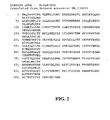
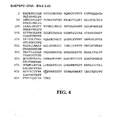
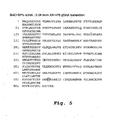
- coli homologous amino acid As can be seen from the above table and Fig. 1-5 there are some minor variations among the EPSPS genes between species and within species. This is to be expected. These minor variations should be taken into account when making mutants according to the present invention. Amino acids in analogous positions between the different genes are mutated to make glyphosate resistant plants. For example, the mutation in Arabidopsis AF360224 at position 179 (T>A) would be equivalent to a T>A mutation at position 178 in Arabidopsis 130093. Another example is seen in position L82 in the E coli EPSPS gene. Most plants have an L in the analgous position but idopsis has an F the analogous at 159 or 160 depending on the abidopsis gene as indicated in the above table.
- some species have more than one EPSPS gene.
- one or more of the genes are mutated according to the present invention to make a glyphosate resistant mutant. If the expression levels of the various EPSPS genes is known and is different then it is preferred to mutate the higher expressing EPSPS genes. In a preferred embodiment all of the EPSPS genes in a crop are mutated to make a glyphosate phenotype. For example, canola is known to have four EPSPS genes. Two genes are shown in Figs. 4 and 5 . A comparison will show a light difference between the two genes.
- the plant mutated according to the present invention can be of any species of dicotyledonous, monocotyledonous or gymnospermous plant, including any woody plant species that grows as a tree or shrub, any herbaceous species, or any species that produces edible fruits, seeds or vegetables, or any species that produces colorful or aromatic flowers.
- the plant may be selected from a species of plant from the group consisting of canola, sunflower, tobacco, sugar beet, sweet potato, yam, cotton, maize, wheat, barley, rice, sorghum, tomato, mango, peach, apple, pear, strawb banana, melon, potato, carrot, lettuce, onion, soya spp, sugar cane, pea, peanut, field beans, poplar, grape, citrus, alfalfa, rye, oats, turf and forage grasses, flax, oilseed rape, cucumber, morning glory, balsam, pepper, eggplant, mangold, lotus, cabbage, daisy, carnation, tulip, iris, lily, and nut producing plants insofar as they are not already specifically mentioned.
- the recombinagenic oligonucleobase can be introduced into a plant cell using any method commonly used in the art, including but not limited to, microcarriers (biolistic delivery), microfiber (whiskers), electroporation, direct DNA uptake and microinjection.
- the invention can be practiced with recombinagenic oligonucleobases having the conformations and chemistries described in the Kmiec I and, Kmiec II patents which are incorporated herein by reference.
- Kmiec I teaches a method for introducing specific genetic alterations into a target gene.
- the recombinagenic oligonucleobases in Kmiec I and/or Kmiec II contain two complementary strands, one of which contains at least one segment of RNA-type nucleotides (an "RNA segment”) that are base paired to DNA-type nucleotides of the other strand.
- Kmiec II discloses that purine and pyrimidine base-containing non-nucleotides can be substituted for nucleotides.
- recombinagenic oligonucleobase is used herein to denote the molecules that can be used in the methods of the present invention and include mixed duplex oligonucleotides, non-nucleotide containing molecules taught in Kmiec II; single stranded oligodeoxynucleotides and other recombinagenic molecules taught in the above noted patents and patent publications.
- the recombinagenic oligonucleobase is a mixed duplex oligonucleotide in which the RNA-type nucleotides of the mixed duplex oligonucleotide are made RNase resistant by replacing the 2'-hydroxyl with a fluoro, chloro or bromo functionality or by placing a substituent on the 2'-O.
- Suitable substituents include the substituents taught by the Kmiec II.
- Alternative substituents include the substituents taught by U.S. Pat. No. 5,334,711 (Sproat) and the substituents taught by patent publications EP 629 387 and EP 679 657 (collectively, the Martin Applications), which are incorporated herein by reference.
- RNA-type nucleotide means a 2'-hydroxyl or 2'-Substituted Nucleotide that is linked to other nucleotides of a mixed duplex oligonucleotide by an unsubstituted phosphodiester linkage or any of the non-natural linkages taught by Kmiec I or Kmiec II.
- deoxyribo-type nucleotide means a nucleotide having a 2'-H, which can be linked to other nucleotides of a MDON by an unsubstituted phosphodiester linkage or any of the non-natural linkages taught by Kmiec I or Kmiec II.
- the recombinagenic oligonuleobase is a mixed duplex oligonucleotide that is linked solely by unsubstituted phosphodiester bonds.
- the linkage is by substituted phosphodiesters, phosphodiester derivatives and non-phosphorus-based linkages as taught by Kmiec II.
- each RNA-type nucleotide in the mixed duplex oligonucleotide is a 2'-Substituted Nucleotide.
- 2'-Substituted Ribonucleotides are 2'-fluoro, 2'-methoxy, 2'-propyloxy, 2'-allyloxy, 2'-hydroxylethyloxy, 2'-oxyethyloxy, 2'-fluoropropyloxy and 2'-trifluoropropyloxy substituted ribonucleotides. More preferred embodiments of 2'-Substited Ribonucleotides are 2'-fluoro, 2'-methoxy, 2'-methoxyethyloxy, and 2'-allyloxy substituted nucleotides.
- the mixed duplex oligonucleotide is linked by unsubstituted phosphodiester bonds.
- RNA segment may not be affect by an interruption caused by the introduction of a deoxynucleotide between two RNA-type trinucleotides, accordingly, the term RNA segment encompasses such an "interrupted RNA segment.”
- An uninterrupted RNA segment is termed a contiguous RNA segment.
- an RNA segment can contain alternating RNase-resistant and unsubstituted 2'-OH nucleotides.
- the mixed duplex oligonucleotides preferably have fewer than 100 nucleotide and more preferably fewer than 85 nucleotides, but more than 50 nucleotides.
- the first and second strands are atson-Crick base paired.
- the strands of the mixed duplex oligonucleotide are covalently bonded by a linker, such as a single stranded hexa, penta or tetranucleotide so that the first and second strands are segments of a single oligonucleotide chain having a single 3' and a single 5' end.
- the 3' and 5' ends can be protected by the addition of a "hairpin cap" whereby the 3' and 5' terminal nucleotides are Watson-Crick paired to adjacent nucleotides.
- a second hairpin cap can, additionally, be placed at the junction between the first and second strands distant from the 3' and 5' ends, so that the Watson-Crick pairing between the first and second strands is stabilised.
- the first and second strands contain two regions that are homologous with two fragments of the target EPSPS gene, i.e., have the same sequence as the target gene.
- a homologous region contains the nucleotides of an RNA segment and may contain one or more DNA-type nucleotides of connecting DNA segment and may also contain DNA-type nucleotides that are not within the intervening DNA segment.
- the two regions of homology are separated by, and each is adjacent to, a region having a sequence that differs from the sequence of the target gene, termed a "heterologous region.”
- the heterologous region can contain one, two or three mismatched nucleotides.
- the mismatched nucleotides can be contiguous or alternatively can be separated by one or two nucleotides that are homologous with the target gene.
- the heterologous region can also contain an insertion or one, two, three or of five or fewer nucleotides.
- the sequence of the mixed duplex oligonucleotide may differ from the sequence of the target gene only by the deletion of one, two, three, or five or fewer nucleotides from the mixed duplex oligonucleotide.
- the length and position of the heterologous region is, in this case, deemed to be the length of the deletion, even though no nucleotides of the mixed duplex oligonucleotide are within the héterologous region.
- the distance between the fragments of the target gene that are complementary to the two homologous regions is identically the length of the heterologous region when a substitution or substitutions is intended.
- the heterologous region contains an insertion, the homologous regions are thereby separated in the mixed duplex oligonucleotide farther than their complementary homologous fragments are in the gene, and the converse is applicable when the heterologous region encodes a deletion.
- RNA segments of the mixed duplex oligonucleotides are each a part of a homologous region, i.e., a region that is identical in sequence to a fragment of the target gene, which segments together preferably contain at least 13 RNA-type nucleotides and preferably from 16 to 25 RNA-type nucleotides or yet more preferably 18-22 RNA-type nucleotides or most preferably 20 nucleotides.
- RNA segments of the homology regions are separated by and adjacent to, i.e., "connected by" an intervening DNA segment.
- each nucleotide of the heterologous region is a nucleotide of the intervening DNA segment
- An intervening DNA segment that contains the heterologous region of a mixed duplex oligomuleotide is termed a "mutator segment.”
- the change to be introduced into the target EPSPS gene is encoded by the heterologous region.
- the change to be introduced into the EPSPS gene may be a change in one or more bases of the EPSPS gene sequence that changes the native amino acid in that position to the desired amino acid.
- the Recombinagenic oligonucleobase is a single stranded oligodeoxynucleotide mutational vector or SSOMV, which is disclosed in International Patent Application PCT/LTS00/23457, which is incorporated herein by reference in its entirety.
- SSOMV single stranded oligodeoxynucleotide mutational vector
- the sequence of the SSOMV is based on the same principles as the mutational vectors described in U.S. Pat. Nos. 5,756,325 ; 5,871,984 ; 5,760,012 ; 5,888,983 ; 5,795,972 ; 5,780,296 ; 5,945,339 ; 6,004,804 ; and 6,010,907 and in International Publication Nos.
- the sequence of the SSOMV contains two regions that are homologous with the target sequence separated by a region that contains the desired genetic alteration termed the mutator region.
- the mutator region can have a sequence that is the same length as the sequence that separates the homologous regions in the target sequence, but having a different sequence. Such a mutator region will cause a substitution.
- the nuelcotides of the SSOMV are deoxyribonucleotidss that are linked by unmodified phosphodiester bonds except that the 3' terminal and/or 5' terminal intemucleotide linkage or alternatively the two 3' terminal and/or 5' terminal intemucleotide linkages can be a phosphorothioate or phosphoamidate.
- an internucleotide linkage is the linkage between nucleotides of the SSOMV and does not include the linkage between the 3' end nucleotide or 5' end nucleotide and a blocking substituent, see supra.
- the length of the SSOMV is between 21 and 55 deoxynucleotides and the lengths of the homology regions are, accordingly, a total length of at least 20 deoxynucleotides and at least two homology regions should each have lengths of at least 8 deoxynucleotides.
- the SSOMV can be designed to be complementary to either the coding or the non-coding strand of the target gene.
- both the mutator nucleotides be a pyrimidine.
- both the mutator nucleotide and the targeted nucleotide in the complementary strand be pyrimidines.
- Particularly preferred are SSOMV that encode transversion mutations, i.e., a C or T mutator nucleotide is mismatched, respectively, with a C or T nucleotide in the complementary strand.
- the SSOMV can contain a 5' blocking substituent that is attached to the 5' terminal carbons through a linker.
- the chemistry of the linker is not critical other than its length, which should preferably be at least 6 atoms long and that the linker should be flexible.
- a variety of non-toxic substituents such as biotin, cholesterol or other steroids or a non-intercalating cationic fluorescent dye can be used.
- reagents to make SSOMV are the reagents sold as Cy3 TM and Cy5 TM by Glen Research, Sterling VA, which are blocked phosphoroamidites that upon incorporation into an oligonucleotide yield 3,3,3',3'-tetramethyl N,N'-isopropyl substituted in onocarbocyanine and indodicarbocyanine dyes, respectively. Cy3 is the most preferred. When the indocarbocyanine is N-oxyalkyl substituted it can be conveniently linked to the 5' terminal of the oligodeoxpuolcofide through as a phosphodiester with a 5' terminal phosphate.
- the chemistry of the dye linker between the dye and the oligodeoxyucleotide is not critical and is chosen for synthetic convenience.
- the resulting 5' modification consists of a blocking substituent and linker together which are a N-hydroxypropyl, N'-phosphatidylpropyl 3,3,3',3'-tetramethyl indomonocarbocyamne.
- the indocarbocyanine dye is tetra substituted at the 3 and 3' positions of the indole rings. Without limitation as to theory these substitutions prevent the dye from being an intercalating dye.
- the identity of the substituents at these positions are not critical.
- the SSOMV can in addition have a 3' blocking substituent. Again the chemistry of the 3' blocking substituent is not critical.
- the recombinageneic oligonucleotide is a single-stranded oligodeoxynucleotide having a 3' end nucleotide, a 5' end nucleotide, having at least 25 deoxynucleotides and not more than 65 deoxucleotides, and having a sequence comprising at least two regions each of at least 8 deoxynucleotides that are each, respectively, identical to at least two regions of the targeted chromosomal gene, which regions together are at least 24 nucleotides in length, and which regions are separated by at least one nucleotide in the sequence of the targeted chromosomal gene or in the sequence of the oligodeoxynucleotide or both such that the sequence of the oligodeoxynucleotide is not identical to the sequence of the targeted chromosomal gene. See US Patent 6,271,360 which is incorporated herein by reference.
- microcarriers microspheres
- U.S. Pat. Nos. 4,945,050 ; 5,100,792 and 5,204,253 describe general techniques for selecting microcarriers and devices for projecting them.
- U.S. Pat. Nos. 5,484,956 and 5,489,520 describe the preparation of fertile transgenic corn using microprojectile bombardment of corn callus tissue. The biolistic techniques are also used in transforming immature corn embryos.
- microcarriers in the methods of the present invention are described in International Publication WO 99/07865 .
- ice cold microcarriers 60 mg/ml
- mixed duplex oligonucleotide 60 mg/ml
- 2.5 M CaCl.sub.2 2.5 M spermidine
- spermidine 0.1 M spermidine
- the mixture is gently agitated, e.g., by vortexing, for 10 minutes and let stand at room temperature for 10 minutes, whereupon the microcarriers are diluted in 5 volumes of ethanol, centrifuged and resuspended in 100% ethanol.
- Recombinagenic oligonucleobas can also be introduced into plant cells for the practice of the present invention using microfibers to penetrate the cell wall and cell membrane.
- U.S. Pat. No. 5,302,523 to Goffee et al. describes the use of 30.times.0.5 ⁇ m and 10.times.0.3 ⁇ m silicon carbide fibers to facilitate transformation of suspension maize cultures of Black Mexican Sweet. Any mechanical technique that can be used to introduce DNA for transformation of a plant cell using microfibers can be used to deliver recombinagenic oligonucleobases for use in making the present EPSPS mutants. The process disclosed by Coffee et al in U.S. Pat. No.
- 5,302,523 can be employed with regenerable plant cell materials to introduce the present recombinagenic oligonucleobases to effect the mutation of the EPSPS gene whereby a whole mutated plant can be recovered that exhibits the glyphosate resistant phenotype.
- An illustrative technique for microfiber delivery of a recombinagenic oligonucleobase is as follows: Sterile microfibers (2 ⁇ g) are suspended in 150 ⁇ l of plant culture medium containing about 10 .mu.g of a mixed duplex oligonucleotide. A suspension culture is allowed to settle and equal volumes of packed cells and the sterile fiber/nucleotide suspension are vortexed for 10 minutes and plated. Selective media are applied immediately or with a delay of up to about 120 hours as is appropriate for the particular trait.
- the Recombinagenic oligonucleobases can be delivered to the plant cell by electroporation of a protoplast derived from a plant part according to techniques that are well-known to one of ordinary skill in the art. See, e.g., Gallois et al., 1996, in Methods in Molecular Biology 55:89-107, Humana Press, Totowa, N.J.; Kipp et al., 1999, in Methods in Molecular Biology 133:213-221, Humana Press, Totowa, N.J.
- Recombinagenic oligonuclobases can also be introduced into microspores by electroporation. Upon release of the tetrad, the microspore is uninucleate and thinwalled. It begins to enlarge and develops a germpore before the exine forms. A microspore at this stage is potentially more amenable to transformation with exogenous DNA than other plant. cells.
- microspore development can be altered in vitro to produce either haploid embryos or embryogenic callus that can be regenerated into plants (Coumans et al., Plant Cell Rep. 7:618-621, 1989; Datta et al., Plant Sci. 67:83-88, 1990; Maheshwari et al., Am.
- transformed microspores can be regenerated directly into haploid plants or dihaploid fertile plants upon chromosome doubling by standard methods. See also co-pending application U.S. Ser. No. 09/680,858 entitled Compositions and Methods for Plant Genetic odification which is incorporated herein by reference.
- Microspore electroporation can be practiced with any plant species for which microspore culture is possible, including but not limited to plants in the families Grammae, Leguminoceae, Cruciferaceae, Solanaceac, Cucurbitaceae, Rosaccae, Poaceae, Lilaceae, Rutaceae, Vitaceae, including such species as corn (Zea mays), wheat (Tritic aestivum), rice (Oryza sativa), oats, barley, canola (Brassica napus, Brassica rapa, Brassica oleracea, and Brassicajuncea), cotton (Gossypium hirsuitum L.), various legume species (e.g., soybean [Glycine max], pea [Pisum sativum], etc.), grapes [Vitis vinifera], and a host of other important crop plants.
- Microspore embryogenesis both from anther and microspore culture, has been described in more than 170 species, belonging to 68 genera and 28 families of dicotyledons and monocotyledons (Raghavan, Embryogenesis in Agniosperms: A Developmental and Experimental Study, Cambridge University Press, Cambridge, England, 1986; Rhagavan, Cell Differentiation 21:213-226, 1987; Raemakers et al., Euphytica 81:93-107, 1995).
- Chromosome doubling from microspore or anther culture is a well-established technique for production of double-haploid homozogous plant lines in several crops (Heberle-Bors et al., In vitro pollen cultures: Progress and perspectives. In: Pollen Biotechnology. Gene expression and allergen characterization, vol. 85-109, ed. Mohapatra, S. S., and Knox, R. B., Chapman and Hall, New York, 1996).
- Microspore electroporation methods are described in Jardinaud et al., Plant Sci. 93:177-184, 1993, and Fennell and Hauptman, Plant Cell Reports 11:567-570, 1992. Methods for electroporation of MDON into plant protoplasts can also be adapted for use in microspore electroporation.
- the recombinagenic oligonucleobase can be delivered to the plant cell by whiskers or microinjection of the plant cell.
- the so called whiskers technique is performed essentially as describ in Frame et al., 1994, Plant J. 6:941-948.
- the recombinagenic oligonucleobase is added to the whiskers and used to transform the plant cells.
- the recombinagenic oligonuoleobase may be co-incubated with plasmids comprising sequences encoding proteins capable of forming recombinase complexes in plant cells such that recombination is catalyzed between the oligonucleotide and the target sequence in the EPSPS gene.
- Plants or plant cells can be tested for resistance or tolerance to a phosphonomethylglycine herbicide using commonly known methods in the art, e.g., by growing the plant or plant cell in the presence of a phosphonomethylglycine herbicide and measuring the rate of growth as compared to the growth rate of control plants in the absence of the herbicide.
- glyphosate concentrations of from about 0.01 to about 20 mM are employed in selection medium.
- T 97 ;P 101 ⁇ A 97 ;A 101 T178A;P182A (T -> A) ACA ⁇ GCA; (P -> A) CCA -> GCA c. T178A;P182T
- T 97 ;P 101 ⁇ A 97 ;T 101 T178A;P182T (T -> A) ACA ⁇ GCA;
Landscapes
- Health & Medical Sciences (AREA)
- Genetics & Genomics (AREA)
- Life Sciences & Earth Sciences (AREA)
- Engineering & Computer Science (AREA)
- Chemical & Material Sciences (AREA)
- Bioinformatics & Cheminformatics (AREA)
- Biomedical Technology (AREA)
- Organic Chemistry (AREA)
- Biotechnology (AREA)
- Wood Science & Technology (AREA)
- Zoology (AREA)
- General Engineering & Computer Science (AREA)
- Molecular Biology (AREA)
- General Health & Medical Sciences (AREA)
- Biochemistry (AREA)
- Microbiology (AREA)
- Plant Pathology (AREA)
- Cell Biology (AREA)
- Biophysics (AREA)
- Physics & Mathematics (AREA)
- Medicinal Chemistry (AREA)
- Breeding Of Plants And Reproduction By Means Of Culturing (AREA)
- Micro-Organisms Or Cultivation Processes Thereof (AREA)
- Agricultural Chemicals And Associated Chemicals (AREA)
- Enzymes And Modification Thereof (AREA)
- Peptides Or Proteins (AREA)
Priority Applications (3)
| Application Number | Priority Date | Filing Date | Title |
|---|---|---|---|
| EP14198330.4A EP2923563B1 (de) | 2006-01-12 | 2007-01-10 | EPSPS-Mutanten |
| PL12152491T PL2465340T3 (pl) | 2006-01-12 | 2007-01-10 | Mutanty EPSPS |
| SI200731626T SI2465340T1 (sl) | 2006-01-12 | 2007-01-10 | Mutantni epsps |
Applications Claiming Priority (2)
| Application Number | Priority Date | Filing Date | Title |
|---|---|---|---|
| US75843906P | 2006-01-12 | 2006-01-12 | |
| EP07716464A EP1978799A4 (de) | 2006-01-12 | 2007-01-10 | Epsps-mutanten |
Related Parent Applications (2)
| Application Number | Title | Priority Date | Filing Date |
|---|---|---|---|
| EP07716464A Division EP1978799A4 (de) | 2006-01-12 | 2007-01-10 | Epsps-mutanten |
| EP07716464.8 Division | 2007-01-10 |
Related Child Applications (1)
| Application Number | Title | Priority Date | Filing Date |
|---|---|---|---|
| EP14198330.4A Division EP2923563B1 (de) | 2006-01-12 | 2007-01-10 | EPSPS-Mutanten |
Publications (2)
| Publication Number | Publication Date |
|---|---|
| EP2465340A1 true EP2465340A1 (de) | 2012-06-20 |
| EP2465340B1 EP2465340B1 (de) | 2014-12-17 |
Family
ID=38288103
Family Applications (4)
| Application Number | Title | Priority Date | Filing Date |
|---|---|---|---|
| EP14198330.4A Active EP2923563B1 (de) | 2006-01-12 | 2007-01-10 | EPSPS-Mutanten |
| EP12152493.8A Active EP2465341B1 (de) | 2006-01-12 | 2007-01-10 | EPSPS-Mutanten |
| EP12152491.2A Active EP2465340B1 (de) | 2006-01-12 | 2007-01-10 | EPSPS-Mutanten |
| EP07716464A Withdrawn EP1978799A4 (de) | 2006-01-12 | 2007-01-10 | Epsps-mutanten |
Family Applications Before (2)
| Application Number | Title | Priority Date | Filing Date |
|---|---|---|---|
| EP14198330.4A Active EP2923563B1 (de) | 2006-01-12 | 2007-01-10 | EPSPS-Mutanten |
| EP12152493.8A Active EP2465341B1 (de) | 2006-01-12 | 2007-01-10 | EPSPS-Mutanten |
Family Applications After (1)
| Application Number | Title | Priority Date | Filing Date |
|---|---|---|---|
| EP07716464A Withdrawn EP1978799A4 (de) | 2006-01-12 | 2007-01-10 | Epsps-mutanten |
Country Status (14)
| Country | Link |
|---|---|
| US (3) | US8268622B2 (de) |
| EP (4) | EP2923563B1 (de) |
| JP (1) | JP2009523418A (de) |
| AU (1) | AU2007207813B2 (de) |
| CA (3) | CA3077776C (de) |
| DK (2) | DK2465341T3 (de) |
| ES (2) | ES2531882T3 (de) |
| NZ (4) | NZ613267A (de) |
| PL (2) | PL2465340T3 (de) |
| PT (2) | PT2465340E (de) |
| RU (1) | RU2441366C2 (de) |
| SI (2) | SI2465340T1 (de) |
| UA (1) | UA99594C2 (de) |
| WO (1) | WO2007084294A2 (de) |
Families Citing this family (77)
| Publication number | Priority date | Publication date | Assignee | Title |
|---|---|---|---|---|
| UA99594C2 (en) * | 2006-01-12 | 2012-09-10 | Сайбас Юроп Б.В. | Epsps mutants |
| AU2010335107B2 (en) | 2009-12-21 | 2014-07-03 | Keygene N.V. | Improved techniques for transfecting protoplasts |
| KR20140068008A (ko) | 2011-07-22 | 2014-06-05 | 리체텍 악티엔게젤샤프트 | ACCase 억제인자에 대해 저항성인 벼를 생산하는 조성물 및 방법 |
| US9303270B2 (en) | 2011-07-22 | 2016-04-05 | Ricetec Aktiengesellschaft | Rice resistant to HPPD and accase inhibiting herbicides |
| EP2809144B1 (de) | 2012-02-01 | 2019-11-13 | Dow AgroSciences LLC | Neuartige klasse von glyphosatresistenzgenen |
| AU2013205557B2 (en) * | 2012-04-17 | 2016-04-21 | Corteva Agriscience Llc | Synthetic brassica-derived chloroplast transit peptides |
| US12331303B2 (en) | 2013-03-15 | 2025-06-17 | Cibus Us Llc | Methods and compositions for increasing efficiency of targeted gene modification using oligonucleotide-mediated gene repair |
| US9957515B2 (en) | 2013-03-15 | 2018-05-01 | Cibus Us Llc | Methods and compositions for targeted gene modification |
| LT3527068T (lt) | 2013-03-15 | 2022-08-10 | Cibus Us Llc | Būdai ir kompozicijos, skirti padidinti tikslinės geno modifikacijos efektyvumą, panaudojant geno reparaciją, kuriai tarpininkauja oligonukleotidas |
| CA3221516A1 (en) | 2013-08-22 | 2015-02-26 | E. I. Du Pont De Nemours And Company | Plant genome modification using guide rna/cas endonuclease systems and methods of use |
| AU2014334590A1 (en) | 2013-10-18 | 2016-04-28 | Pioneer Hi-Bred International, Inc. | Glyphosate-N-acetyltransferase (GLYAT) sequences and methods of use |
| ES2974625T3 (es) | 2014-03-14 | 2024-06-28 | Cibus Us Llc | Procedimientos y composiciones para aumentar la eficacia de la modificación génica dirigida mediante reparación génica mediada por oligonucleótidos |
| AR100159A1 (es) | 2014-04-22 | 2016-09-14 | Du Pont | Genes de anhidrasa carbónica plastídica para el incremento de aceite en semillas con expresión incrementada de dgat |
| EP3553178A1 (de) | 2015-03-27 | 2019-10-16 | E. I. du Pont de Nemours and Company | Promotoren von u6-small-nuclear-rna-genen aus sojabohnen und deren verwendung in der konstitutiven expression von kleinen rna-genen in pflanzen |
| AR105418A1 (es) | 2015-05-11 | 2017-10-04 | Two Blades Found | Polinucleótidos y métodos para transferir resistencia a la roya asiática del poroto de soja |
| EP3294878A1 (de) | 2015-05-15 | 2018-03-21 | Pioneer Hi-Bred International, Inc. | Guide-rns/cas-endonuklease-systeme |
| WO2016205445A1 (en) | 2015-06-16 | 2016-12-22 | Pioneer Hi-Bred International, Inc. | Compositions and methods to control insect pests |
| US10801036B2 (en) * | 2015-07-02 | 2020-10-13 | Arcadia Biosciences Inc. | Wheat having resistance to glyphosate DUe to alterations in 5-enol-pyruvylshikimate-3 phosphate synthase |
| WO2021257206A1 (en) | 2020-06-17 | 2021-12-23 | Pioneer Hi-Bred International, Inc. | Generating maize plants with enhanced resistance to northern leaf blight |
| CN108138155A (zh) | 2015-10-20 | 2018-06-08 | 先锋国际良种公司 | 经由指导cas系统恢复非功能性基因产物的功能及使用方法 |
| ES2881392T3 (es) | 2015-10-30 | 2021-11-29 | Pioneer Hi Bred Int | Métodos y composiciones para transformación de plantas rápida |
| WO2017078836A1 (en) | 2015-11-06 | 2017-05-11 | Pioneer Hi-Bred International, Inc. | Methods and compositions of improved plant transformation |
| DK3387134T3 (da) | 2015-12-11 | 2020-12-21 | Danisco Us Inc | Fremgangsmåder og sammensætninger til øget nukleasemedieret genommodifikation og reducerede virkninger uden for målstedet |
| DK3390631T3 (da) | 2015-12-18 | 2020-07-13 | Danisco Us Inc | Fremgangsmåder og sammensætninger til t-rna-baseret guide-rna-ekspression |
| WO2017106414A1 (en) | 2015-12-18 | 2017-06-22 | Danisco Us Inc. | Methods and compositions for polymerase ii (pol-ii) based guide rna expression |
| BR112018012887B1 (pt) | 2015-12-22 | 2024-02-06 | Pioneer Hi-Bred International, Inc | Cassete de expressão, vetor, métodos de obtenção de célula vegetal e planta transgênica, métodos para expressar um polinucleotídeo |
| BR112018015348A2 (pt) | 2016-01-26 | 2018-12-18 | Pioneer Hi Bred Int | método para obter uma planta de milho ceroso, planta, semente, polinucleotídeo-guia e método para produzir uma planta híbrida de milho ceroso |
| KR102841205B1 (ko) * | 2016-02-09 | 2025-08-01 | 시버스 유에스 엘엘씨 | 올리고뉴클레오타이드 매개 유전자 보수를 사용한 표적화된 유전자 변형의 효율을 증가시키기 위한 방법 및 조성물 |
| EP3426780A1 (de) | 2016-03-11 | 2019-01-16 | Pioneer Hi-Bred International, Inc. | Neuartige cas9-systeme und verfahren zur verwendung |
| WO2017155715A1 (en) | 2016-03-11 | 2017-09-14 | Pioneer Hi-Bred International, Inc. | Novel cas9 systems and methods of use |
| CA3010628A1 (en) | 2016-03-11 | 2017-09-14 | Pioneer Hi-Bred International, Inc. | Novel cas9 systems and methods of use |
| EA201892293A1 (ru) | 2016-05-04 | 2019-04-30 | Пайонир Хай-Бред Интернэшнл, Инк. | Инсектицидные белки и способы их применения |
| BR112018076047A2 (pt) | 2016-06-16 | 2019-03-26 | Pioneer Hi Bred Int | elemento de silenciamento, construto de dna, cassete de expressão, célula hospedeira, composição, célula vegetal, planta ou parte de planta, semente transgênica, método para controlar um inseto-praga de planta e kit |
| RU2019101793A (ru) | 2016-06-24 | 2020-07-24 | Пайонир Хай-Бред Интернэшнл, Инк. | Регуляторные элементы растений и способы их применения |
| CA3026113A1 (en) | 2016-07-01 | 2018-01-04 | Pioneer Hi-Bred International, Inc. | Insecticidal proteins from plants and methods for their use |
| WO2018013333A1 (en) | 2016-07-12 | 2018-01-18 | Pioneer Hi-Bred International, Inc. | Compositions and methods to control insect pests |
| US11130959B2 (en) | 2016-08-05 | 2021-09-28 | Ricetec, Inc. | Methods and compositions for combinations of mutations associated with herbicide resistance/tolerance in rice |
| EP3535285B1 (de) | 2016-11-01 | 2022-04-06 | Pioneer Hi-Bred International, Inc. | Insektizide proteine und verfahren zu deren verwendung |
| CA3044404A1 (en) | 2016-12-14 | 2018-06-21 | Pioneer Hi-Bred International, Inc. | Insecticidal proteins and methods for their use |
| EP3558004A1 (de) | 2016-12-22 | 2019-10-30 | Pioneer Hi-Bred International, Inc. | Insektizide proteine und verfahren zu deren verwendung |
| CN106636025B (zh) | 2016-12-28 | 2017-11-14 | 四川天豫兴禾生物科技有限公司 | 一种水稻epsps突变体及其编码基因和应用 |
| WO2018140214A1 (en) | 2017-01-24 | 2018-08-02 | Pioneer Hi-Bred International, Inc. | Nematicidal protein from pseudomonas |
| CN110621780B (zh) | 2017-05-11 | 2024-03-19 | 先锋国际良种公司 | 杀昆虫蛋白及其使用方法 |
| US20200270622A1 (en) | 2017-09-25 | 2020-08-27 | Pioneer Hi-Bred International, Inc. | Tissue-preferred promoters and methods of use |
| WO2019075295A1 (en) | 2017-10-13 | 2019-04-18 | Pioneer Hi-Bred International, Inc. | SYSTEMS AND METHODS FOR CELL REPELLENCE OF A PLANT CELL |
| EP3728294A4 (de) | 2017-12-19 | 2021-12-29 | Pioneer Hi-Bred International, Inc. | Insektizidpolypeptide und verwendungen dafür |
| US20210054389A1 (en) | 2017-12-27 | 2021-02-25 | Pioneer Hi-Bred International, Inc. | Transformation of dicot plants |
| EP3759489A1 (de) | 2018-03-02 | 2021-01-06 | Pioneer Hi-Bred International, Inc. | Pflanzengesundheitstest |
| ES3036459T3 (en) | 2018-03-12 | 2025-09-19 | Pioneer Hi Bred Int | Methods for plant transformation |
| EP3764798B1 (de) | 2018-03-14 | 2025-12-17 | Pioneer Hi-Bred International, Inc. | Insektizide proteine aus pflanzen und verfahren zu deren verwendung |
| EP3764796B1 (de) | 2018-03-14 | 2025-12-03 | Pioneer Hi-Bred International, Inc. | Insektizide proteine aus pflanzen und verfahren zu deren verwendung |
| CN111902547B (zh) | 2018-03-23 | 2024-06-14 | 先锋国际良种公司 | 鉴定、选择和产生疾病抗性作物的方法 |
| CN111988988A (zh) | 2018-04-18 | 2020-11-24 | 先锋国际良种公司 | 鉴定、选择和产生抗白叶枯病水稻的方法 |
| CA3096516A1 (en) | 2018-05-22 | 2019-11-28 | Pioneer Hi-Bred International, Inc. | Plant regulatory elements and methods of use thereof |
| US11851668B2 (en) | 2018-06-06 | 2023-12-26 | Huazhong Agricultural University | Methods of identifying, selecting, and producing southern corn rust resistant crops |
| BR112020026640A2 (pt) | 2018-06-28 | 2021-04-06 | Pioneer Hi-Bred International, Inc. | Métodos para selecionar plantas transformadas |
| US12584140B2 (en) | 2018-07-12 | 2026-03-24 | Keygene N.V. | Type V CRISPR/nuclease-system for genome editing in plant cells |
| EP3844283A1 (de) | 2018-08-29 | 2021-07-07 | Pioneer Hi-Bred International, Inc. | Insektizide proteine und verfahren zu deren verwendung |
| EP3628738A1 (de) * | 2018-09-25 | 2020-04-01 | KWS SAAT SE & Co. KGaA | Verfahren zur bekämpfung von unkrautrüben und anderen unkrautarten |
| AU2019369415A1 (en) | 2018-10-31 | 2021-03-25 | Pioneer Hi-Bred International, Inc. | Compositions and methods for Ochrobactrum-mediated plant transformation |
| US20220010321A1 (en) | 2018-11-01 | 2022-01-13 | Keygene N.V. | Dual guide rna for crispr/cas genome editing in plants cells |
| BR112021017998A2 (pt) | 2019-03-11 | 2021-11-16 | Pioneer Hi Bred Int | Métodos para a produção de plantas clonais |
| EP3947425A1 (de) | 2019-03-27 | 2022-02-09 | Pioneer Hi-Bred International, Inc. | Transformation von pflanzenexplantaten |
| WO2020198496A1 (en) | 2019-03-28 | 2020-10-01 | Pioneer Hi-Bred International, Inc. | Modified agrobacterium strains and use thereof for plant transformation |
| US12543674B2 (en) | 2019-04-18 | 2026-02-10 | Pioneer Hi-Bred International, Inc. | Embryogenesis factors for cellular reprogramming of a plant cell |
| EP4017252A1 (de) | 2019-08-23 | 2022-06-29 | Pioneer Hi-Bred International, Inc. | Verfahren zur identifizierung, selektion und herstellung von gegen anthraknose-stielfäule resistenten kulturen |
| WO2021076346A1 (en) | 2019-10-18 | 2021-04-22 | Pioneer Hi-Bred International, Inc. | Maize event dp-202216-6 and dp-023211-2 stack |
| CN111153974A (zh) | 2020-01-15 | 2020-05-15 | 华中农业大学 | 玉米抗病基因和分子标记及其应用 |
| US12467061B2 (en) | 2020-04-15 | 2025-11-11 | Pioneer Hi-Bred International, Inc. | Plant pathogen effector and disease resistance gene identification, compositions, and methods of use |
| CA3186978A1 (en) | 2020-07-14 | 2022-01-20 | Pioneer Hi-Bred International, Inc. | Insecticidal proteins and methods for their use |
| EP4192848A1 (de) | 2020-08-10 | 2023-06-14 | Pioneer Hi-Bred International, Inc. | Pflanzenregulierungselemente und verfahren zur verwendung davon |
| WO2022072335A2 (en) | 2020-09-30 | 2022-04-07 | Pioneer Hi-Bred International, Inc. | Rapid transformation of monocot leaf explants |
| US20230407324A1 (en) | 2020-10-21 | 2023-12-21 | Pioneer Hi-Bred International, Inc. | Doubled haploid inducer |
| CA3197681A1 (en) | 2020-10-21 | 2022-04-28 | Pioneer Hi-Bred International, Inc. | Parthenogenesis factors and methods of using same |
| CN115216554A (zh) | 2021-04-16 | 2022-10-21 | 华中农业大学 | 植物病原体效应子和疾病抗性基因鉴定、组合物和使用方法 |
| AU2022324708A1 (en) | 2021-08-06 | 2024-02-15 | Kws Vegetables B.V. | Durable downy mildew resistance in spinach |
| WO2023183918A1 (en) | 2022-03-25 | 2023-09-28 | Pioneer Hi-Bred International, Inc. | Methods of parthenogenic haploid induction and haploid chromosome doubling |
Citations (28)
| Publication number | Priority date | Publication date | Assignee | Title |
|---|---|---|---|---|
| US4545060A (en) | 1983-09-19 | 1985-10-01 | Northern Telecom Limited | Decision feedback adaptive equalizer acting on zero states following a non-zero state |
| US4945050A (en) | 1984-11-13 | 1990-07-31 | Cornell Research Foundation, Inc. | Method for transporting substances into living cells and tissues and apparatus therefor |
| US5100792A (en) | 1984-11-13 | 1992-03-31 | Cornell Research Foundation, Inc. | Method for transporting substances into living cells and tissues |
| US5145783A (en) | 1987-05-26 | 1992-09-08 | Monsanto Company | Glyphosate-tolerant 5-endolpyruvyl-3-phosphoshikimate synthase |
| US5204253A (en) | 1990-05-29 | 1993-04-20 | E. I. Du Pont De Nemours And Company | Method and apparatus for introducing biological substances into living cells |
| US5302523A (en) | 1989-06-21 | 1994-04-12 | Zeneca Limited | Transformation of plant cells |
| US5310667A (en) | 1989-07-17 | 1994-05-10 | Monsanto Company | Glyphosate-tolerant 5-enolpyruvyl-3-phosphoshikimate synthases |
| US5312910A (en) | 1987-05-26 | 1994-05-17 | Monsanto Company | Glyphosate-tolerant 5-enolpyruvyl-3-phosphoshikimate synthase |
| US5334711A (en) | 1991-06-20 | 1994-08-02 | Europaisches Laboratorium Fur Molekularbiologie (Embl) | Synthetic catalytic oligonucleotide structures |
| EP0629387A1 (de) | 1993-06-11 | 1994-12-21 | SILCA S.p.A. | Geformte Hygienevorlage für die Inkontinenz |
| EP0679657A2 (de) | 1994-04-27 | 1995-11-02 | Ciba-Geigy Ag | Nukleoside und Oligonukleotide mit 2'-Ethergruppen |
| US5484956A (en) | 1990-01-22 | 1996-01-16 | Dekalb Genetics Corporation | Fertile transgenic Zea mays plant comprising heterologous DNA encoding Bacillus thuringiensis endotoxin |
| US5489520A (en) | 1990-04-17 | 1996-02-06 | Dekalb Genetics Corporation | Process of producing fertile transgenic zea mays plants and progeny comprising a gene encoding phosphinothricin acetyl transferase |
| US5565350A (en) | 1993-12-09 | 1996-10-15 | Thomas Jefferson University | Compounds and methods for site directed mutations in eukaryotic cells |
| US5731181A (en) | 1996-06-17 | 1998-03-24 | Thomas Jefferson University | Chimeric mutational vectors having non-natural nucleotides |
| US5760012A (en) | 1996-05-01 | 1998-06-02 | Thomas Jefferson University | Methods and compounds for curing diseases caused by mutations |
| US5780296A (en) | 1995-01-17 | 1998-07-14 | Thomas Jefferson University | Compositions and methods to promote homologous recombination in eukaryotic cells and organisms |
| WO1998049350A1 (en) | 1997-04-30 | 1998-11-05 | Regents Of The University Of Minnesota | In vivo use of recombinagenic oligonucleobases to correct genetic lesions in hepatocytes |
| US5866775A (en) | 1990-09-28 | 1999-02-02 | Monsanto Company | Glyphosate-tolerant 5-enolpyruvyl-3-phosphoshikimate synthases |
| WO1999007865A1 (en) | 1997-08-05 | 1999-02-18 | Kimeragen, Inc. | The use of mixed duplex oligonucleotides to effect localized genetic changes in plants |
| US5888983A (en) | 1996-05-01 | 1999-03-30 | Thomas Jefferson University | Method and oligonucleobase compounds for curing diseases caused by mutations |
| WO1999040789A1 (en) | 1998-02-12 | 1999-08-19 | Regents Of The University Of Minnesota | Methods and compounds for the genetic treatment of hyperlipidemia |
| WO1999058702A1 (en) | 1998-05-12 | 1999-11-18 | Kimeragen, Inc. | Cell-free chimeraplasty and eukaryotic use of heteroduplex mutational vectors |
| WO1999058723A1 (en) | 1998-05-12 | 1999-11-18 | Kimeragen, Inc. | Heteroduplex mutational vectors and use thereof in bacteria |
| US6271360B1 (en) | 1999-08-27 | 2001-08-07 | Valigen (Us), Inc. | Single-stranded oligodeoxynucleotide mutational vectors |
| US20030084473A1 (en) | 2001-08-09 | 2003-05-01 | Valigen | Non-transgenic herbicide resistant plants |
| US6566587B1 (en) * | 1995-07-19 | 2003-05-20 | Bayer Cropscience S.A. | Mutated 5-enolpyruvylshikimate-3-phosphate synthase, gene coding for said protein and transformed plants containing said gene |
| US6870075B1 (en) | 1999-10-07 | 2005-03-22 | Valigen (Us), Inc. | Methods of making non-transgenic herbicide resistant plants |
Family Cites Families (18)
| Publication number | Priority date | Publication date | Assignee | Title |
|---|---|---|---|---|
| US4971908A (en) * | 1987-05-26 | 1990-11-20 | Monsanto Company | Glyphosate-tolerant 5-enolpyruvyl-3-phosphoshikimate synthase |
| JPH0651777B2 (ja) * | 1989-02-21 | 1994-07-06 | 株式会社日立製作所 | 熱硬化性樹脂組成物及びそれを用いたコイル、パネル |
| US5633435A (en) | 1990-08-31 | 1997-05-27 | Monsanto Company | Glyphosate-tolerant 5-enolpyruvylshikimate-3-phosphate synthases |
| US5593874A (en) * | 1992-03-19 | 1997-01-14 | Monsanto Company | Enhanced expression in plants |
| US5454060A (en) * | 1994-08-03 | 1995-09-26 | Mcdermott; Neal J. | Foot dryer |
| FR2736929B1 (fr) | 1995-07-19 | 1997-08-22 | Rhone Poulenc Agrochimie | Sequence adn isolee pouvant servir de zone de regulation dans un gene chimere utilisable pour la transformation des plantes |
| FR2751347B1 (fr) | 1996-07-16 | 2001-12-07 | Rhone Poulenc Agrochimie | Gene chimere a plusieurs genes de tolerance herbicide, cellule vegetale et plante tolerantes a plusieurs herbicides |
| AU6882298A (en) | 1997-04-03 | 1998-10-22 | Dekalb Genetics Corporation | Glyphosate resistant maize lines |
| GB9711015D0 (en) | 1997-05-28 | 1997-07-23 | Zeneca Ltd | Improvements in or relating to organic compounds |
| RU2235778C2 (ru) * | 1999-04-29 | 2004-09-10 | Синджента Лимитед | Выделенный полинуклеотид, способный придавать растению устойчивость или толерантность к глифосатному гербициду, вектор, способ получения растений, толерантных или устойчивых к глифосатному гербициду, способ регенерации трансформированного растения и способ селективной борьбы с сорняками |
| MXPA01013123A (es) * | 1999-06-25 | 2002-06-21 | Basf Ag | Genes de corynebacterium glutamicum que codifican proteinas de via metabolica. |
| US7045684B1 (en) * | 2002-08-19 | 2006-05-16 | Mertec, Llc | Glyphosate-resistant plants |
| KR100524818B1 (ko) | 2003-12-24 | 2005-10-31 | 한국생명공학연구원 | 한세눌라 폴리모파의 시키메이트 경로 다기능 효소를코딩하는 유전자 및 이를 이용한 코리스메이트의 생합성방법 |
| SI1740039T1 (sl) * | 2004-04-30 | 2012-10-30 | Dow Agrosciences Llc | Novi geni z rezistenco na herbicide |
| UA99594C2 (en) * | 2006-01-12 | 2012-09-10 | Сайбас Юроп Б.В. | Epsps mutants |
| KR20100051795A (ko) | 2007-06-22 | 2010-05-18 | 키진 엔.브이. | 향상된 변형 올리고뉴클레오티드를 이용한 표적화 뉴클레오티드 교환 |
| BRPI0722219A2 (pt) | 2007-12-21 | 2014-08-05 | Keygene Nv | "um método de mutagênese melhorando utilizando a introdução de nucleobases mutagênicas mediada por polietileno glicol em protoplastos vegetais" |
| CN103834675A (zh) | 2008-09-26 | 2014-06-04 | 巴斯夫农化产品有限公司 | 除草剂-抗性的ahas-突变体及使用方法 |
-
2007
- 2007-01-10 UA UAA200810303A patent/UA99594C2/ru unknown
- 2007-01-10 SI SI200731626T patent/SI2465340T1/sl unknown
- 2007-01-10 AU AU2007207813A patent/AU2007207813B2/en active Active
- 2007-01-10 NZ NZ613267A patent/NZ613267A/en unknown
- 2007-01-10 EP EP14198330.4A patent/EP2923563B1/de active Active
- 2007-01-10 NZ NZ597682A patent/NZ597682A/en unknown
- 2007-01-10 RU RU2008133046/10A patent/RU2441366C2/ru active
- 2007-01-10 CA CA3077776A patent/CA3077776C/en active Active
- 2007-01-10 EP EP12152493.8A patent/EP2465341B1/de active Active
- 2007-01-10 ES ES12152493.8T patent/ES2531882T3/es active Active
- 2007-01-10 NZ NZ570009A patent/NZ570009A/en unknown
- 2007-01-10 US US12/160,725 patent/US8268622B2/en active Active
- 2007-01-10 PT PT12152491T patent/PT2465340E/pt unknown
- 2007-01-10 CA CA2923605A patent/CA2923605C/en active Active
- 2007-01-10 PL PL12152491T patent/PL2465340T3/pl unknown
- 2007-01-10 EP EP12152491.2A patent/EP2465340B1/de active Active
- 2007-01-10 EP EP07716464A patent/EP1978799A4/de not_active Withdrawn
- 2007-01-10 NZ NZ704098A patent/NZ704098A/en unknown
- 2007-01-10 SI SI200731625T patent/SI2465341T1/sl unknown
- 2007-01-10 JP JP2008550371A patent/JP2009523418A/ja active Pending
- 2007-01-10 WO PCT/US2007/000591 patent/WO2007084294A2/en not_active Ceased
- 2007-01-10 DK DK12152493.8T patent/DK2465341T3/en active
- 2007-01-10 PT PT12152493T patent/PT2465341E/pt unknown
- 2007-01-10 ES ES12152491.2T patent/ES2532112T3/es active Active
- 2007-01-10 PL PL12152493T patent/PL2465341T3/pl unknown
- 2007-01-10 DK DK12152491.2T patent/DK2465340T3/en active
- 2007-01-10 CA CA2636771A patent/CA2636771C/en active Active
-
2012
- 2012-09-17 US US13/621,662 patent/US20130019349A1/en not_active Abandoned
-
2018
- 2018-07-19 US US16/040,278 patent/US10612035B2/en active Active
Patent Citations (35)
| Publication number | Priority date | Publication date | Assignee | Title |
|---|---|---|---|---|
| US4545060A (en) | 1983-09-19 | 1985-10-01 | Northern Telecom Limited | Decision feedback adaptive equalizer acting on zero states following a non-zero state |
| US4945050A (en) | 1984-11-13 | 1990-07-31 | Cornell Research Foundation, Inc. | Method for transporting substances into living cells and tissues and apparatus therefor |
| US5100792A (en) | 1984-11-13 | 1992-03-31 | Cornell Research Foundation, Inc. | Method for transporting substances into living cells and tissues |
| US5312910A (en) | 1987-05-26 | 1994-05-17 | Monsanto Company | Glyphosate-tolerant 5-enolpyruvyl-3-phosphoshikimate synthase |
| US5145783A (en) | 1987-05-26 | 1992-09-08 | Monsanto Company | Glyphosate-tolerant 5-endolpyruvyl-3-phosphoshikimate synthase |
| US5302523A (en) | 1989-06-21 | 1994-04-12 | Zeneca Limited | Transformation of plant cells |
| US5310667A (en) | 1989-07-17 | 1994-05-10 | Monsanto Company | Glyphosate-tolerant 5-enolpyruvyl-3-phosphoshikimate synthases |
| US5484956A (en) | 1990-01-22 | 1996-01-16 | Dekalb Genetics Corporation | Fertile transgenic Zea mays plant comprising heterologous DNA encoding Bacillus thuringiensis endotoxin |
| US5489520A (en) | 1990-04-17 | 1996-02-06 | Dekalb Genetics Corporation | Process of producing fertile transgenic zea mays plants and progeny comprising a gene encoding phosphinothricin acetyl transferase |
| US5204253A (en) | 1990-05-29 | 1993-04-20 | E. I. Du Pont De Nemours And Company | Method and apparatus for introducing biological substances into living cells |
| US5866775A (en) | 1990-09-28 | 1999-02-02 | Monsanto Company | Glyphosate-tolerant 5-enolpyruvyl-3-phosphoshikimate synthases |
| US5334711A (en) | 1991-06-20 | 1994-08-02 | Europaisches Laboratorium Fur Molekularbiologie (Embl) | Synthetic catalytic oligonucleotide structures |
| EP0629387A1 (de) | 1993-06-11 | 1994-12-21 | SILCA S.p.A. | Geformte Hygienevorlage für die Inkontinenz |
| US5756325A (en) | 1993-12-09 | 1998-05-26 | Thomas Jefferson University | Compounds and methods for site directed mutations in eukaryotic cells |
| US5565350A (en) | 1993-12-09 | 1996-10-15 | Thomas Jefferson University | Compounds and methods for site directed mutations in eukaryotic cells |
| US5871984A (en) | 1993-12-09 | 1999-02-16 | Thomas Jefferson University | Compounds and methods for site directed mutations in eukaryotic cells |
| EP0679657A2 (de) | 1994-04-27 | 1995-11-02 | Ciba-Geigy Ag | Nukleoside und Oligonukleotide mit 2'-Ethergruppen |
| US5780296A (en) | 1995-01-17 | 1998-07-14 | Thomas Jefferson University | Compositions and methods to promote homologous recombination in eukaryotic cells and organisms |
| US5945339A (en) | 1995-01-17 | 1999-08-31 | Cornell Research Foundation, Inc. | Methods to promote homologous recombination in eukaryotic cells and organisms |
| US6566587B1 (en) * | 1995-07-19 | 2003-05-20 | Bayer Cropscience S.A. | Mutated 5-enolpyruvylshikimate-3-phosphate synthase, gene coding for said protein and transformed plants containing said gene |
| US5760012A (en) | 1996-05-01 | 1998-06-02 | Thomas Jefferson University | Methods and compounds for curing diseases caused by mutations |
| US5888983A (en) | 1996-05-01 | 1999-03-30 | Thomas Jefferson University | Method and oligonucleobase compounds for curing diseases caused by mutations |
| US5795972A (en) | 1996-06-17 | 1998-08-18 | Thomas Jefferson University | Chimeric mutational vectors having non-natural nucleotides |
| US5731181A (en) | 1996-06-17 | 1998-03-24 | Thomas Jefferson University | Chimeric mutational vectors having non-natural nucleotides |
| WO1998049350A1 (en) | 1997-04-30 | 1998-11-05 | Regents Of The University Of Minnesota | In vivo use of recombinagenic oligonucleobases to correct genetic lesions in hepatocytes |
| WO1999007865A1 (en) | 1997-08-05 | 1999-02-18 | Kimeragen, Inc. | The use of mixed duplex oligonucleotides to effect localized genetic changes in plants |
| WO1999040789A1 (en) | 1998-02-12 | 1999-08-19 | Regents Of The University Of Minnesota | Methods and compounds for the genetic treatment of hyperlipidemia |
| WO1999058723A1 (en) | 1998-05-12 | 1999-11-18 | Kimeragen, Inc. | Heteroduplex mutational vectors and use thereof in bacteria |
| US6004804A (en) | 1998-05-12 | 1999-12-21 | Kimeragen, Inc. | Non-chimeric mutational vectors |
| US6010907A (en) | 1998-05-12 | 2000-01-04 | Kimeragen, Inc. | Eukaryotic use of non-chimeric mutational vectors |
| WO1999058702A1 (en) | 1998-05-12 | 1999-11-18 | Kimeragen, Inc. | Cell-free chimeraplasty and eukaryotic use of heteroduplex mutational vectors |
| US6271360B1 (en) | 1999-08-27 | 2001-08-07 | Valigen (Us), Inc. | Single-stranded oligodeoxynucleotide mutational vectors |
| US6870075B1 (en) | 1999-10-07 | 2005-03-22 | Valigen (Us), Inc. | Methods of making non-transgenic herbicide resistant plants |
| US20050177899A1 (en) * | 1999-10-07 | 2005-08-11 | Beetham Peter R. | Non-transgenic herbicide resistant plants |
| US20030084473A1 (en) | 2001-08-09 | 2003-05-01 | Valigen | Non-transgenic herbicide resistant plants |
Non-Patent Citations (35)
| Title |
|---|
| "Protocols in Molecular Biology", 1995, CURRENT PROTOCOLS |
| ALTSCHUL ET AL., J. MOL. BIOL., vol. 215, 1990, pages 403 - 410 |
| ALTSCHUL ET AL., NUCLEIC ACIDS RES., vol. 33, 1977, pages 89 - 3402 |
| CLUSTALW; THOMPSON, J. D.; HIGGINS, D. G.; GIBSON, T. J.: "CLUSTALW: improving the sensitivity of progressive multiple sequence alignment through sequence weighting, position--specific gap penalties and weight matrix choice", NUCLEIC ACIDS RESEARCH, vol. 22, 1994, pages 4673 - 4680, XP002956304 |
| COUMANS ET AL., PLANT CELL REP., vol. 7, 1989, pages 618 - 621 |
| DATTA ET AL., PLANT SCI., vol. 67, 1990, pages 83 - 88 |
| FENNELL; HAUPTMAN, PLANT CELL REPORTS, vol. 11, 1992, pages 567 - 570 |
| FRAME, PLANT J, vol. 6, 1994, pages 941 - 948 |
| GALLOIS ET AL.: "Methods in Molecular Biology", vol. 55, 1996, HUMANA PRESS, pages: 89 - 107 |
| HEALY-FRIED MARTHA L ET AL: "Structural basis of glyphosate tolerance resulting from mutations of Pro(101) in Escherichia coli 5-enolpyruvylshikimate-3-phosphate synthase", JOURNAL OF BIOLOGICAL CHEMISTRY, THE AMERICAN SOCIETY OF BIOLOGICAL CHEMISTS, INC, US, vol. 282, no. 45, 9 November 2007 (2007-11-09), pages 32949 - 32955, XP002528570, ISSN: 0021-9258, DOI: 10.1074/JBC.M705624200 * |
| HEBERLE-BORS ET AL.: "Pollen Biotechnology. Gene expression and allergen characterization", vol. 85-109, 1996, CHAPMAN AND HALL, article "In vitro pollen cultures: Progress and perspectives" |
| HENIKOFF; HENIKOFF, PROC. NATL. ACAD. SCI. USA, vol. 89, 1989, pages 10915 |
| JARDINAUD ET AL., PLANT SCI., vol. 93, 1993, pages 177 - 184 |
| KARLIN; ALTSCHUL, PROC. NAT'L. ACAD. SCI. USA, vol. 90, 1993, pages 5873 - 5787 |
| KIPP ET AL.: "Methods in Molecular Biology", vol. 133, 1999, HUMANA PRESS, pages: 213 - 221 |
| KISBORE ET AL., ANN. REV. BIOCHEM., vol. 57, 1998, pages 627 - 663 |
| KISHORE ET AL., ANN. REV. BIOCHEM., vol. 57, 1988, pages 627 - 663 |
| KISHORE ET AL., FED. PROC., vol. 45, 1986, pages 1506 |
| KISHPRE ET AL., ANN. REV. BIOCHEM., vol. 57, 1998, pages 627 - 663 |
| MAHESHWARI ET AL., AM. J BOT, vol. 69, 1982, pages 865 - 879 |
| MEYERS; MILLER, COMPUTER APPLIC. BIOL. SCI., vol. 4, 1988, pages 11 - 17 |
| NEEDLEMAN; WUNSCH, J. MOL. BIOL., vol. 48, 1970, pages 443 |
| NEHLIN ET AL., PLANT SCI., vol. 111, 1995, pages 219 - 227 |
| NEHLM ET AL., PLANT SCI., vol. 111, 1995, pages 219 - 227 |
| PEARSON; LIPMAN, PROC. NAT'I. ACAD. SCI. USA, vol. 5 85, 1988, pages 2444 |
| RAEMAKERS ET AL., EUPHYTICA, vol. 81, 1995, pages 93 - 107 |
| RAGHAVAN: "Embryogenesis in Agniosperms: A Developmental and Experimental Study", 1986, CAMBRIDGE UNIVERSITY PRESS |
| RHAGAVAN, CELL DIFFERENTIATION, vol. 21, 1987, pages 213 - 226 |
| SCHAEFFER, ADV. IN CELL CULTURE, vol. 7, 1989, pages 161 - 182 |
| SCHULZ ET AL., ARCH. MICROBIOL, vol. 137, 1984, pages 121 - 123 |
| SHAH ET AL., SCIENCE, vol. 233, 1986, pages 478 - 481 |
| SOST ET AL., FEBS LETT., vol. 173, 1984, pages 238 - 241 |
| SOST; AMRHEIN, ARCH. BIOCHEM. BIOPHYS., vol. 282, 1990, pages 433 - 436 |
| SWANSON ET AL., PLANT CELL REP., vol. 6, 1987, pages 94 - 97 |
| SWEDISH UNIVERSITY OF AGRICULTURAL SCIENCES, 1999 |
Also Published As
Similar Documents
| Publication | Publication Date | Title |
|---|---|---|
| US10612035B2 (en) | EPSPS mutants | |
| US11160224B2 (en) | Non-transgenic herbicide resistant plants | |
| US20030084473A1 (en) | Non-transgenic herbicide resistant plants | |
| US20230141977A1 (en) | Targeted gene modification using oligonucleotide-mediated gene repair | |
| US20120122223A1 (en) | Mutated protoporphyrinogen ix oxidase (ppx) genes |
Legal Events
| Date | Code | Title | Description |
|---|---|---|---|
| PUAI | Public reference made under article 153(3) epc to a published international application that has entered the european phase |
Free format text: ORIGINAL CODE: 0009012 |
|
| AC | Divisional application: reference to earlier application |
Ref document number: 1978799 Country of ref document: EP Kind code of ref document: P |
|
| AK | Designated contracting states |
Kind code of ref document: A1 Designated state(s): AT BE BG CH CY CZ DE DK EE ES FI FR GB GR HU IE IS IT LI LT LU LV MC NL PL PT RO SE SI SK TR |
|
| 17P | Request for examination filed |
Effective date: 20121220 |
|
| RIC1 | Information provided on ipc code assigned before grant |
Ipc: C12N 15/82 20060101ALI20130424BHEP Ipc: C12N 9/10 20060101ALI20130424BHEP Ipc: C12N 15/09 20060101ALI20130424BHEP Ipc: A01H 5/00 20060101AFI20130424BHEP |
|
| 17Q | First examination report despatched |
Effective date: 20130507 |
|
| GRAP | Despatch of communication of intention to grant a patent |
Free format text: ORIGINAL CODE: EPIDOSNIGR1 |
|
| INTG | Intention to grant announced |
Effective date: 20140224 |
|
| GRAP | Despatch of communication of intention to grant a patent |
Free format text: ORIGINAL CODE: EPIDOSNIGR1 |
|
| RAP1 | Party data changed (applicant data changed or rights of an application transferred) |
Owner name: CIBUS EUROPE B.V. |
|
| INTG | Intention to grant announced |
Effective date: 20140718 |
|
| GRAS | Grant fee paid |
Free format text: ORIGINAL CODE: EPIDOSNIGR3 |
|
| GRAA | (expected) grant |
Free format text: ORIGINAL CODE: 0009210 |
|
| AC | Divisional application: reference to earlier application |
Ref document number: 1978799 Country of ref document: EP Kind code of ref document: P |
|
| AK | Designated contracting states |
Kind code of ref document: B1 Designated state(s): AT BE BG CH CY CZ DE DK EE ES FI FR GB GR HU IE IS IT LI LT LU LV MC NL PL PT RO SE SI SK TR |
|
| REG | Reference to a national code |
Ref country code: GB Ref legal event code: FG4D |
|
| REG | Reference to a national code |
Ref country code: CH Ref legal event code: EP |
|
| REG | Reference to a national code |
Ref country code: IE Ref legal event code: FG4D |
|
| REG | Reference to a national code |
Ref country code: AT Ref legal event code: REF Ref document number: 701196 Country of ref document: AT Kind code of ref document: T Effective date: 20150115 |
|
| REG | Reference to a national code |
Ref country code: DE Ref legal event code: R096 Ref document number: 602007039767 Country of ref document: DE Effective date: 20150219 |
|
| REG | Reference to a national code |
Ref country code: DK Ref legal event code: T3 Effective date: 20150223 |
|
| REG | Reference to a national code |
Ref country code: PT Ref legal event code: SC4A Free format text: AVAILABILITY OF NATIONAL TRANSLATION Effective date: 20150304 |
|
| REG | Reference to a national code |
Ref country code: CH Ref legal event code: NV Representative=s name: SCHMAUDER AND PARTNER AG PATENT- UND MARKENANW, CH |
|
| REG | Reference to a national code |
Ref country code: RO Ref legal event code: EPE |
|
| REG | Reference to a national code |
Ref country code: SE Ref legal event code: TRGR |
|
| REG | Reference to a national code |
Ref country code: ES Ref legal event code: FG2A Ref document number: 2532112 Country of ref document: ES Kind code of ref document: T3 Effective date: 20150324 |
|
| REG | Reference to a national code |
Ref country code: NL Ref legal event code: T3 |
|
| REG | Reference to a national code |
Ref country code: EE Ref legal event code: FG4A Ref document number: E010333 Country of ref document: EE Effective date: 20150312 |
|
| REG | Reference to a national code |
Ref country code: GR Ref legal event code: EP Ref document number: 20150400546 Country of ref document: GR Effective date: 20150421 |
|
| REG | Reference to a national code |
Ref country code: PL Ref legal event code: T3 |
|
| REG | Reference to a national code |
Ref country code: SK Ref legal event code: T3 Ref document number: E 18229 Country of ref document: SK |
|
| REG | Reference to a national code |
Ref country code: DE Ref legal event code: R097 Ref document number: 602007039767 Country of ref document: DE |
|
| PG25 | Lapsed in a contracting state [announced via postgrant information from national office to epo] |
Ref country code: MC Free format text: LAPSE BECAUSE OF FAILURE TO SUBMIT A TRANSLATION OF THE DESCRIPTION OR TO PAY THE FEE WITHIN THE PRESCRIBED TIME-LIMIT Effective date: 20141217 |
|
| PLBE | No opposition filed within time limit |
Free format text: ORIGINAL CODE: 0009261 |
|
| STAA | Information on the status of an ep patent application or granted ep patent |
Free format text: STATUS: NO OPPOSITION FILED WITHIN TIME LIMIT |
|
| 26N | No opposition filed |
Effective date: 20150918 |
|
| REG | Reference to a national code |
Ref country code: HU Ref legal event code: AG4A Ref document number: E024358 Country of ref document: HU |
|
| REG | Reference to a national code |
Ref country code: FR Ref legal event code: PLFP Year of fee payment: 10 |
|
| REG | Reference to a national code |
Ref country code: AT Ref legal event code: UEP Ref document number: 701196 Country of ref document: AT Kind code of ref document: T Effective date: 20141217 |
|
| REG | Reference to a national code |
Ref country code: FR Ref legal event code: PLFP Year of fee payment: 11 |
|
| PG25 | Lapsed in a contracting state [announced via postgrant information from national office to epo] |
Ref country code: CY Free format text: LAPSE BECAUSE OF FAILURE TO SUBMIT A TRANSLATION OF THE DESCRIPTION OR TO PAY THE FEE WITHIN THE PRESCRIBED TIME-LIMIT Effective date: 20141217 |
|
| REG | Reference to a national code |
Ref country code: FR Ref legal event code: PLFP Year of fee payment: 12 |
|
| REG | Reference to a national code |
Ref country code: LU Ref legal event code: HC Owner name: CIBUS EUROPE B.V.; NL Free format text: FORMER OWNER: CIBUS EUROPE B.V. Effective date: 20200714 |
|
| REG | Reference to a national code |
Ref country code: EE Ref legal event code: HE1A Ref document number: E010333 Country of ref document: EE |
|
| REG | Reference to a national code |
Ref country code: SK Ref legal event code: TE4A Ref document number: E 18229 Country of ref document: SK Owner name: CIBUS EUROPE B.V., CA, BREDA, NL Effective date: 20200818 |
|
| REG | Reference to a national code |
Ref country code: CH Ref legal event code: PCOW Free format text: NEW ADDRESS: CERESSTRAAT 13, 4811 CA BREDA (NL) |
|
| REG | Reference to a national code |
Ref country code: SI Ref legal event code: SP73 Owner name: CIBUS EUROPE B.V; NL Effective date: 20200918 |
|
| REG | Reference to a national code |
Ref country code: DE Ref legal event code: R082 Ref document number: 602007039767 Country of ref document: DE Representative=s name: ZIMMERMANN & PARTNER PATENTANWAELTE MBB, DE Ref country code: DE Ref legal event code: R081 Ref document number: 602007039767 Country of ref document: DE Owner name: CIBUS EUROPE B.V., NL Free format text: FORMER OWNER: CIBUS EUROPE B.V., WEMELDINGE, NL |
|
| REG | Reference to a national code |
Ref country code: HU Ref legal event code: HC9C Owner name: CIBUS EUROPE B.V., NL Free format text: FORMER OWNER(S): CIBUS EUROPE B.V., NL |
|
| P01 | Opt-out of the competence of the unified patent court (upc) registered |
Effective date: 20230424 |
|
| PGFP | Annual fee paid to national office [announced via postgrant information from national office to epo] |
Ref country code: ES Payment date: 20250428 Year of fee payment: 19 |
|
| PGFP | Annual fee paid to national office [announced via postgrant information from national office to epo] |
Ref country code: HU Payment date: 20250409 Year of fee payment: 19 |
|
| PGFP | Annual fee paid to national office [announced via postgrant information from national office to epo] |
Ref country code: CH Payment date: 20250501 Year of fee payment: 19 |
|
| PGFP | Annual fee paid to national office [announced via postgrant information from national office to epo] |
Ref country code: LT Payment date: 20251218 Year of fee payment: 20 |
|
| PGFP | Annual fee paid to national office [announced via postgrant information from national office to epo] |
Ref country code: CZ Payment date: 20251230 Year of fee payment: 20 |
|
| PGFP | Annual fee paid to national office [announced via postgrant information from national office to epo] |
Ref country code: PL Payment date: 20251219 Year of fee payment: 20 |
|
| PGFP | Annual fee paid to national office [announced via postgrant information from national office to epo] |
Ref country code: SK Payment date: 20251223 Year of fee payment: 20 |
|
| PGFP | Annual fee paid to national office [announced via postgrant information from national office to epo] |
Ref country code: SI Payment date: 20251226 Year of fee payment: 20 |
|
| PGFP | Annual fee paid to national office [announced via postgrant information from national office to epo] |
Ref country code: LU Payment date: 20260116 Year of fee payment: 20 Ref country code: NL Payment date: 20260116 Year of fee payment: 20 |
|
| PGFP | Annual fee paid to national office [announced via postgrant information from national office to epo] |
Ref country code: SE Payment date: 20260112 Year of fee payment: 20 |
|
| PGFP | Annual fee paid to national office [announced via postgrant information from national office to epo] |
Ref country code: GB Payment date: 20260209 Year of fee payment: 20 |
|
| PGFP | Annual fee paid to national office [announced via postgrant information from national office to epo] |
Ref country code: DK Payment date: 20260113 Year of fee payment: 20 Ref country code: DE Payment date: 20260305 Year of fee payment: 20 Ref country code: IE Payment date: 20260112 Year of fee payment: 20 |
|
| PGFP | Annual fee paid to national office [announced via postgrant information from national office to epo] |
Ref country code: AT Payment date: 20260109 Year of fee payment: 20 |
|
| PGFP | Annual fee paid to national office [announced via postgrant information from national office to epo] |
Ref country code: RO Payment date: 20260112 Year of fee payment: 20 Ref country code: BE Payment date: 20260113 Year of fee payment: 20 Ref country code: FI Payment date: 20260109 Year of fee payment: 20 Ref country code: IT Payment date: 20260122 Year of fee payment: 20 |
|
| REG | Reference to a national code |
Ref country code: CH Ref legal event code: U11 Free format text: ST27 STATUS EVENT CODE: U-0-0-U10-U11 (AS PROVIDED BY THE NATIONAL OFFICE) Effective date: 20260416 |
|
| PGFP | Annual fee paid to national office [announced via postgrant information from national office to epo] |
Ref country code: IS Payment date: 20260121 Year of fee payment: 20 Ref country code: FR Payment date: 20260108 Year of fee payment: 20 |
|
| PGFP | Annual fee paid to national office [announced via postgrant information from national office to epo] |
Ref country code: TR Payment date: 20260108 Year of fee payment: 20 |
|
| PGFP | Annual fee paid to national office [announced via postgrant information from national office to epo] |
Ref country code: PT Payment date: 20260105 Year of fee payment: 20 |
|
| PGFP | Annual fee paid to national office [announced via postgrant information from national office to epo] |
Ref country code: GR Payment date: 20260114 Year of fee payment: 20 |
|
| PGFP | Annual fee paid to national office [announced via postgrant information from national office to epo] |
Ref country code: EE Payment date: 20260126 Year of fee payment: 20 Ref country code: LV Payment date: 20260120 Year of fee payment: 20 |
|
| PGFP | Annual fee paid to national office [announced via postgrant information from national office to epo] |
Ref country code: BG Payment date: 20260122 Year of fee payment: 20 |