EP2479937A1 - Système de communication, noeud, serveur de gestion, et méthode et programme de communication - Google Patents
Système de communication, noeud, serveur de gestion, et méthode et programme de communication Download PDFInfo
- Publication number
- EP2479937A1 EP2479937A1 EP09849239A EP09849239A EP2479937A1 EP 2479937 A1 EP2479937 A1 EP 2479937A1 EP 09849239 A EP09849239 A EP 09849239A EP 09849239 A EP09849239 A EP 09849239A EP 2479937 A1 EP2479937 A1 EP 2479937A1
- Authority
- EP
- European Patent Office
- Prior art keywords
- processing operations
- array
- node
- packet
- processing
- Prior art date
- Legal status (The legal status is an assumption and is not a legal conclusion. Google has not performed a legal analysis and makes no representation as to the accuracy of the status listed.)
- Granted
Links
Images















Classifications
-
- H—ELECTRICITY
- H04—ELECTRIC COMMUNICATION TECHNIQUE
- H04L—TRANSMISSION OF DIGITAL INFORMATION, e.g. TELEGRAPHIC COMMUNICATION
- H04L45/00—Routing or path finding of packets in data switching networks
- H04L45/44—Distributed routing
-
- H—ELECTRICITY
- H04—ELECTRIC COMMUNICATION TECHNIQUE
- H04L—TRANSMISSION OF DIGITAL INFORMATION, e.g. TELEGRAPHIC COMMUNICATION
- H04L45/00—Routing or path finding of packets in data switching networks
- H04L45/34—Source routing
-
- H—ELECTRICITY
- H04—ELECTRIC COMMUNICATION TECHNIQUE
- H04L—TRANSMISSION OF DIGITAL INFORMATION, e.g. TELEGRAPHIC COMMUNICATION
- H04L45/00—Routing or path finding of packets in data switching networks
- H04L45/42—Centralised routing
-
- H—ELECTRICITY
- H04—ELECTRIC COMMUNICATION TECHNIQUE
- H04L—TRANSMISSION OF DIGITAL INFORMATION, e.g. TELEGRAPHIC COMMUNICATION
- H04L12/00—Data switching networks
- H04L12/54—Store-and-forward switching systems
- H04L12/56—Packet switching systems
- H04L12/5601—Transfer mode dependent, e.g. ATM
- H04L2012/5603—Access techniques
-
- H—ELECTRICITY
- H04—ELECTRIC COMMUNICATION TECHNIQUE
- H04L—TRANSMISSION OF DIGITAL INFORMATION, e.g. TELEGRAPHIC COMMUNICATION
- H04L45/00—Routing or path finding of packets in data switching networks
- H04L45/64—Routing or path finding of packets in data switching networks using an overlay routing layer
Definitions
- This invention relates to a communication system, a node, a control server, a communication method and a program. More particularly, it relates to a communication system, a node, a control server, a communication method and a program that forwards a packet via nodes arranged in a network for realization of communication.
- Patent Document 1 As a technique that allows a program to be run on nodes, such as routers or switches, arranged on a network, there is known an active network (see Non-Patent Document 1).
- an active network provided with a signaling control unit which, by advance signaling, arrays an active code in a network's node.
- Patent Document 2 there is disclosed an optical communication system in which an integrated service class may be applied in different packet rings for packet flows being forwarded through the different packet rings.
- a node device of the optical communication system extracts the inter-ring service class information contained in the inter-ring header information appended to a packet incoming from another packet ring. Based upon the so extracted inter-ring service class information, the node device refers to a table that has recorded the relationship of correspondence between the inter-ring service class and the intra-ring service class, as set between the packet rings, in order to decide on the intra-ring service class to be set for the incoming packet.
- the node device appends the intra-ring header information, inclusive of the so determined intra-ring service class information, to the incoming packet.
- Non-Patent Document 2 a technique termed source routing is known as a system that exercises route control in say an IP network. As set out in Non-Patent Document 2, the source routing is implemented by specifying an IP address of a relaying router.
- OpenFlow In these days, a technique termed OpenFlow has been proposed, as indicated in Non-Patent Document 3.
- OpenFlow communication is grasped as end-to-end flow, and route control, restoration from malfunctions, load distribution and optimization are accomplished on the flow basis.
- An OpenFlow switch operating as a forwarding node, includes a secure channel for communication with an OpenFlow controller, and is run in accordance with a flow table to which a command for addition or rewrite is given from time to time from an OpenFlow controller.
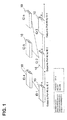
- FlowKey a set of rule (FlowKey), matched to a packet header, actions (Actions) that defines contents of the processing operation and the flow statistic Information (Stats) are defined from one flow to another (see Fig.6 ).
- Fig.29 illustrates action names and contents of actions defined in Non-Patent Document 4.
- OUTPUT is an action for outputting to a specified port (interface).
- SET_VLAN_VID down to SET_TP_DST are actions that modify the fields of a packet header.
- the OpenFlow switch retrieves, on receipt of a first packet, an entry having a rule (FlowKey) matched to the header information of the received packet from the flow table. If, as a result of retrieval, an entry that fits with the packet received is found, the OpenFlow switch performs the contents of the processing operation, as set out in an action field of the entry, on the packet received. If, conversely, an entry that fits with the packet received is not found, the OpenFlow switch forwards the received packet over a secure channel to the OpenFlow controller to request the OpenFlow controller to decide on a route for the received packet based upon the source as well as the destination of forwarding of the received packet. The OpenFlow switch then receives a flow entry that implements the communication, while updating the flow table.
- FlowKey rule
- Patent Documents 1-2 and Non-Patent Documents 1-4 are hereby incorporated by reference herein in their entirety.
- Non-Patent Document 3 it is necessary to arrange a flow table in each switch and to re-write the flow table from time to time.
- the flow table allows the processing contents dependent on flow characteristics to be selected and performed. If it is desired to intricately control the route or to assure high quality, then a number of entries equal to the number of the matching rules are needed in the flow table, thus possibly imposing much load on the switch and on the management by the controller.
- Non-Patent Document 1 and Patent Document 1 With the active network system of Non-Patent Document 1 and Patent Document 1, it is possible to have a desired node perform a specified processing operation without using the above-mentioned flow table. However, if the OpenFlow technique is applied to a switch that exercises flow control as in Non-Patent Document 3, it is necessary to provide each switch with a program library or to have a program itself contained in the packet. If so, the characteristic of Non-Patent Document 3 of simplifying the control function of a node being forwarded in order to have the function concentrated in a controller to the utmost extent possible might eventually be lost.
- the present invention provides a communication system including a node for a packet in a data forwarding route of a data forwarding network.
- the packet is added with a header containing an array of a plurality of processing operations to be performed by the individual nodes on the forwarding route of a data forwarding network.
- the node performs the processing operations the node is to perform in accordance with the array of processing operations.
- the present invention provides a node for a packet, arranged in a data forwarding route of a data forwarding network.
- the packet is added with a header including an array of a plurality of processing operations to be performed by the individual nodes arranged in the data forwarding route of the data forwarding network.
- the node performs the processing operations the node is to perform in accordance with the array of processing operations.
- the present invention provides a control sever that creates an array of processing operations and sends the array of the processing operations to a node that has sent an input packet.
- the array of processing operations includes processing operations to be performed by individual nodes on the forwarding path of the data forwarding network.
- the control server creates the array of processing operations based on information contained in a header of the input packet received from the node arranged in the data forwarding network.
- the present invention provides a method for communication including a step of appending to an input packet a header containing an array of processing operations to be performed by individual nodes on a forwarding route of a data forwarding network, and a step for each node on the forwarding route of the data forwarding network to perform the processing operation that the node has to perform in accordance with the array of the processing operations added to the input packet.
- the present method is coupled to a specific mechanical means in the form of a forwarding node including the data forwarding network.
- the present invention provides a program that may be run on a computer including the above mentioned node or the control server.
- the program may be recorded on a recording medium that may be read out by the computer.
- the present invention may be implemented as a computer program product.
- the number of tables per se or the number of entries in the table may be reduced, in performing a variety of processing operations, as the demand to simplify the control function of the node arranged in the network is met.
- the reason is that a header containing an array of a plurality of processing operations to be performed by the individual nodes on the forwarding route of the data forwarding network is appended to the input packet.
- the processing operations to be performed by the individual nodes on the forwarding route of the data forwarding network are designed to be performed in accordance with the array of the processing operations in the header appended to the input packet.
- a node of the communication system of the exemplary embodiments of the present invention has the function of identifying the processing operation to be performed by the node from an action array (an array of processing operations) in an action header appended to a received packet, and of performing the so identified processing operation.
- the action header is an array of processing operations to be performed by the individual nodes arranged on a forwarding route of a data forwarding network.
- the individual actions may, for example, be defined by (1) an action of changing the communication destination/ source IP address or communication destination/ source MAC address in the header or VLAN Tag to specified values, (2) an action of dropping (discarding) a packet, or by (3) an action of outputting packets (Output) at a plurality of specified ports (interfaces) See Fig.29 and pages 4 to 6 of Non-Patent Document 4, [3.3 Actions] and [Table 5].
- the packet may sequentially be processed by specified nodes on the route. It is therefore unnecessary to send an action code to each node as in the case of the active network referred to in connection with the related technique. It is also unnecessary to carry out the processing of adding an entry to a flow table in each node on the route.
- the action header may be appended to a packet by a node that initially received the packet.
- An action array (array of processing operations) in the action header may be acquired on inquiry at an external server. Or, a pre-stored action array (array of processing operations) may be embedded in a node.
- the action header may be deleted by a node which is a terminal node of the route.
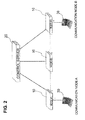
- Fig.2 shows a communication system according to an exemplary embodiment 1 of the present invention.
- a control server 20 and communication nodes 30 having communication with each other over the nodes 10.
- the example shown in Fig.2 has the three nodes 10, the sole control server 20 and the two communication nodes 30, this is only by way of illustration, such that any suitable optional numbers of these entities may be used.
- Fig.3 shows a detailed formulation of the node 10.
- the node 10 includes a server communication unit 11 that has communication with the control server 20, a flow table management unit 12 that manages a flow table 13, and a forwarding processor 14.
- the forwarding processor 14 includes an action extraction unit 17 that takes out the action the own node has to perform, from an action header appended to a packet received as user traffic, and that outputs the action so taken out to an action performing unit 18.
- the forwarding processor 14 also includes a table retrieving unit 15 that, in case the action header has not been appended to the packet received, retrieves a flow table 13 to output the result to an action array setting unit 16.
- the forwarding processor 14 also includes the action array setting unit 16.
- the action array setting unit 16 appends the action array of an entry that has been retrieved by the table retrieving unit 15 and that is to be performed in a node other than the own node as action header to the received packet.
- the forwarding processor 14 also includes an action performing unit 18 that performs an action for the received packet, output from the action extraction unit 17, viz., the action to be performed by the own node.
- the action array setting unit 16 also performs the processing operation of inquiring at the control server 20 as to the action array that is to be appended if the result of retrieval of the flow table 13 by the table retrieving unit 15 has indicated that there lacks the relevant entry.
- the node 10 of the present invention may be implemented by a formulation in which the action extraction unit 17 and the action array setting unit 16 are added to the OpenFlow switch.
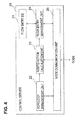
- Fig.4 shows an in-depth formulation of the control server 20.
- the control server 20 includes a flow entry database (flow entry DB) 21 where flow entries are stored, and a topology management unit 22 that constructs the information on the network topology based upon the connection relationships of the nodes 10 as collected by a node communication unit 25.
- the control server 20 also includes a route/ action calculation unit 23 that finds the packet forwarding route and the action array to be performed by the node 10 on the packet forwarding route based upon the information on the network topology constructed by the topology management unit 22.
- the control server 20 also includes a flow entry management unit 24 that registers the result calculated by the route/ action calculation unit 23 as flow entry in the flow entry DB 21, and that also responds to the request for addition or update of the flow entry or entries from the node 10.
- the control server 20 further includes a node communication unit 25 that has communication with the node 10. It is noted that, if there is no necessity to save the flow entry that has instructed addition or update to the node 10, the flow entry database (flow entry DB) 21 may be dispensed with. This flow entry database (flow entry DB) 21 may also be provided separately on, for example, an external server.
- Fig.5 shows example entries to be stored in the flow entry DB 21.
- each entry is made up of a DPID (data path ID), a FlowKey (a flow key or a matching key) and Actions (an action array).
- a DPID data path ID
- FlowKey a flow key or a matching key
- Actions an action array
- an action array of 'Output to Port #9 by DPID 1/ Output to Port #6 by DPID 2/ Output to Port #1 by DPID 3' is appended to a packet matched to a FlowKey (flow key or matching key) labeled A.
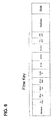
- Fig.6 shows a field constitution of the FlowKey (matching key).
- IP DA destination address
- IP DA destination address
- Fig.6 shows a field constitution of the FlowKey (matching key).
- the control server 20 may be implemented by modifying the configuration of the flow entry DB 21 of the OpenFlow controller or the contents of the flow entry that commands addition or modification to the node 10.
- Fig.7 depicts a flowchart showing the operation of the node 10.
- the node 10 extracts, on receipt of the packet from the communication node 30 or the other node 10 (step S001), the action to be performed by the own node from the action header of the packet received (step S002).
- step S003 If, as a result of action extraction, an action has been able to be extracted (No of step S003), then the node 10 performs the action to be performed by the own node 10 itself (step S009).
- step S003 If, as a result of action extraction, no action has been able to be extracted (Yes of step S003), then the node 10 retrieves the flow table 13 to check to see if there is any flow entry matched to the packet received (step S004).
- step S005 If, as a result of retrieval of the flow table 13, a flow entry, matched to the received packet, is found (Yes of step S005), then the node 10 extracts the action which the node 10 itself is to perform (step S008). The node appends the action array of the flow entry as found to the packet header of the received packet as action header (step S009). If the packet received is a packet next following a certain packet already registered in the flow entry DB 21, then extraction of the action to be performed by the node itself and creation of or addition to the action header are carried out using the result of retrieval from the flow table 13, as set out above.
- step S005 If, on the other hand, no flow entry matched to the packet received is found (No of step S005), then the node 10 sends the received packet in its entirety or in part to the control server 20 to request the latter to create an action array (step S006).
- the node 10 On receipt of the action array from the control server 20, the node 10 registers the flow entry received in the flow table 13 (step S007). The node 10 then receives a command to output a packet from the control server 20 (step S011). In case the command to output the packet is accompanied by a flow table retrieving command (Yes of step S012), the node 10 again searches if there is a flow entry that fits to the packet in question (step S004-2). The node 10 then extracts the action the node 10 itself is to perform (step S008), while appending the action array acquired as an action header to the packet header of the packet received (step S009).
- the command to output the packet is accompanied not by the flow table retrieving command, but by an action to be performed on the packet, i.e., an action of appending the action array to the packet and outputting the resulting packet at a specified port.
- the node performs the processing operation of extracting an action the node itself is to perform (step S008) and appending the action array acquired as action header to the received packet header in accordance with the action in question (step S009).
- the node 10 performs the action the node itself is to perform (step S010).
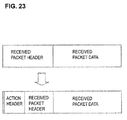
- the action header is appended by adding the action header at the leading end of the received packet by way of encapsulation, as shown in Fig.8 .
- Such a method in which an action is embedded in a header of the received packet may also be used. This will be explained as an exemplary embodiment 3 later on.
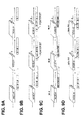
- the action array may be so formed that each node 10 will sequentially take out the action from the leading end, based upon an optional delimiter or a length field as separately provided, as shown in Fig.9A .
- each node 10 may perform the action, as the pointer bit at the leading end is incremented (added by one each time), as shown in Fig.9B .
- node #2 forwards a packet from a port #2 to a node #3 of the next hop, while the node #3 forwards the packet from a port #9 to the next hop.
- Such action array in which the ID of each node and the action to be performed are grouped together as a set, as shown in Fig.9C may also be used.
- the node #2 having an ID: B takes out 'B2' bearing the ID: B of the node #2 (own node) in the action header and forwards the packet from the port #2 to the node #3 of the next hop.
- the node #3, having an ID: C takes out 'C9' bearing its ID: C in the action header, and forwards the packet from the port #9 to the next hop.
- Such a method may also be used in which an area in the action header from which to take out the action is set for each node 10, as shown in Fig.9D .
- the node #2 configured for taking out an action from bits 0 to 3 of the action header, takes out '2' to forward the packet to the node #3 of the next hop at a port #2.
- the node #3 configured for taking out an action from bits 4 to 9 of the action header, takes out '9' to forward the packet to the node #3 of the next hop at the port #9.
- each node 10 may identify the action to be performed in each node 10 without the necessity to rewrite the action header each time.
- Fig.10 depicts a flowchart for illustrating the operation of the control server 20.
- the control server 20 on receipt of the request to create an action array from the node 10 in a step S101, as in the step S006 of Fig.7 , the control server 20 acquires the information on the network topology constructed by the topology management unit 22, and calculates the packet forwarding route in a step S102.
- the control server 20 calculates actions for the so calculated forwarding route, in a step S104, to create an action array in a step S105, except if the result of the calculations for the packet forwarding route indicates that forwarding is not possible due to node faults or to a route being unable to be formed (No of a step S103). If a route from the node 10 of DPID#1 to the node 10 of the DPID#2 and thence to the node 10 of the DPID#3 is sought, then an action array: 'Output to port #9 by DPID1/ Output to port #6 by DPID2/ Output to port #1 by DPID3' is created.
- the control server 20 When the action array has been created, the control server 20 creates a FlowKey (matching key) to verify the matching of the trailing side packet. The control server 20 then creates a flow entry in a step S106. In the flow entry, there are defined the information to the effect that the above-mentioned action array calculated is to be set in the packet received and the information regarding the action to be performed by the node that has received the packet. Finally, the control server 20 sends the flow entry to the node 10 of the source of request for the action array in a step S107 and commands the packet to be output in a step S109 in case the node 10 is not buffering a packet (No of a step S108).
- FlowKey matching key
- This packet output command is by specifying a packet to be output (packet received) and an action to be performed on the packet (processing operation of appending an action header to the packet and outputting the resulting packet at a port specified) or by commanding retrieval of the flow table and the packet to be output (packet received). It is noted that, in case the node 10 is buffering the packet (Yes of step S108), packet forwarding is not made, as will be set out later with reference to Figs.13 and 14 .
- Fig.11 depicts a sequence diagram showing the flow as from registering a new flow entry based upon a packet sent from a communication node A (received packet) until the packet (received packet) is forwarded to the next hop.
- the node 10 retrieves the flow table 13 in order to check to see whether or not the flow entry has already been created for the flow in question.
- This processing step is the same as the step S004 of Fig.7 . Since no relevant entry has been registered at this time point in the flow table 13, the node 10 requests the control server 20 to create an action array. This processing step is the same as the step S006 of Fig.7 .
- the control server 20 calculates the forwarding route for the received packet and the action array, as set out above.
- a flow entry bearing the information to the effect that the above-mentioned action array calculated is to be set in the packet received and the information regarding the action to be performed by the node that has received the packet is created. This processing step is the same as the steps S102 to S106 of Fig.10 .
- the node 10 that has received the flow entry as set out above registers the flow entry in the flow table 13. This processing step is the same as the step S007 of Fig.7 .
- the node 10 If then the node 10 has received a packet output command from the control server 20, then the node 10 extracts the action to be performed by the node itself. This processing operation is the same as the step S008 of Fig.7 . The node then appends an action header to the packet received. This processing operation is the same as the step S009 of Fig.7 . The node then outputs the resulting packet at a port specified. This processing operation is the same as the step S010 of Fig.7 .
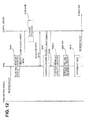
- Fig.12 is a modification of Fig.11 as to the operational sequence.
- the operational sequence of Fig. 12 differs from that of Fig.11 in that, when the control server 20 issues the packet output command in a step S109 of Fig. 10 after sending the flow entry, the control server 20 specifies the packet to be output (received packet), while commanding flow table retrieval as an action.
- the node 10 On receipt of the command, the node 10 again retrieves the flow table, using the received packet as a key (step S004-2 of Fig.12 ). Since the flow entry has been registered in the previous step S007, the flow entry for the received packet is retrieved. The node 10 extracts, from the flow entry, the action the node 10 itself has to perform. This processing operation is the same as the step S008 of Fig.7 . The node 10 appends an action header to the received packet. This processing operation is the same as the step S009 of Fig.7 . The node 10 then outputs the resulting packet at a specified port. This processing operation is the same as the step S010 of Fig.7 .
- the flowchart of Fig.7 is replaced by the flowchart of Fig.13
- the operational sequence of Fig.11 is replaced by the sequence of Fig.13
- the flowchart of Fig.13 and the operational sequence of Fig.14 respectively differ from the flowchart of Fig.7 and the operational sequence of Fig.11 in the following points: Viz., in the flowchart of Fig.13 and the operational sequence of Fig.14 , a packet saving processing operation (step S021) and a packet takeout processing operation (step S022) are newly added, and the packet output command from the control server 20 is dispensed with.
- a buffer ID that has stored the received packet is attached to the request to create the action array from the node 10 to the control server 20.
- the buffer ID received is attached to the flow entry.
- the node 10 After registering the flow entry (step S007), the node 10 takes out the received packet from the specified buffer ID (step S0022), while extracting the action the node 10 itself has to perform and appending the action header (steps S008 and S009). The node 10 then outputs the resulting packet at the specified port (step S010).
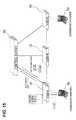
- the communication node A sends a packet having a header X to the communication node B ((1) of Fig.15 ).
- a node #1 that has received the packet retrieves its own flow table, however, there lacks a corresponding entry.
- the node #1 requests the control server 20 to create an action array coordinated to the packet ((2) Packet-In of Fig.15 ).
- the control server 20 creates a flow entry in which a proper matching key (X) and an action array (acts) coordinated to the packet sent from the node #1 are set.
- the control server then returns the so-created flow entry to the node #1 ((4) FlowMod (Add) of Fig.15 ).
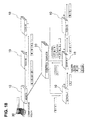
- Fig.16 shows a state in which the node #1 has registered the flow entry in the flow table. If, in this state, the control server 20 issues a packet output command to the node #1 ((5) Packet-Out of Fig.16 ), then the node #1 appends the action header (Acts) to the received packet to forward the resulting packet to a node #2 ((6) of Fig.16 ).
- the control server 20 issues a packet output command to the node #1 ((5) Packet-Out of Fig.16 )
- the node #1 appends the action header (Acts) to the received packet to forward the resulting packet to a node #2 ((6) of Fig.16 ).
- the node #2 reads out the action that is contained in the action header (Acts) and that the node #2 itself has to perform.
- the node #2 outputs the received packet at a port #5.
- the packet, output at the node #2, is delivered to a node #3.
- the node #3 reads out the action that is contained in the action header (Acts) and that the node #3 itself has to perform.
- the node #3 deletes the action header (Acts) and thereafter outputs the received packet from a port #9.
- the packet, output from the node #3, is delivered to a communication node B ((7) of Fig.16 ).
- the communication node A then forwards the trailing side packet to the communication node B ((8) of Fig.17 ), as shown in Fig.17 .
- the node #1 that has received the packet retrieves its own flow table without inquiring at the control server 20. By so doing, the node #1 creates an action header from the action array of the relevant entry to forward the packet to the node #2 ((9) of Fig.17 ). Thereafter, the packet is forwarded from the node #2 to the node #3 and so forth until finally the packet gets to the communication node B ((10) of Fig.17 ).
- the node in need of the breath-taking relaying may be found by the control server 20 at the time of calculating the route as well as the action array.
- the breath-taking relaying may be performed not only when the necessity arises, but also by advance forwarding of the flow entry to the node where the necessity for such processing operation is likely to arise.
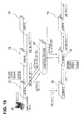
- the flow entry may be forwarded not only to the node #1 ((2) FlowMod of Fig.19 ) but also to the node #n-1((3) FlowMod of Fig.19 ), as shown in Fig.19 .
- Fig.20 shows a communication system according to the exemplary embodiment 2 of the present invention.
- the present exemplary embodiment differs from the exemplary embodiment 1, shown in Fig.2 , in that each node 10a includes an action table, and in that an action may be identified by pointing to a pointer in the action table.
- Fig.21 shows example flow entries stored in a flow entry DB of a control server 20a of the exemplary embodiment 2 of the present invention.
- each entry is made up of a DPID (data path ID), a FlowKey (a flow key or a matching key), a node where the action is to be performed, and a pointer of the action table.
- DPID data path ID
- FlowKey a flow key or a matching key
- an intermediate node 10a performs the breath-taking relaying operation, as shown in Fig.22 .
- the operations needed are as follows: An action that an action header stating an action array to be performed by the trailing side nodes #n and so forth is to be appended to the received packet, and that the resulting packet is sent, is stored in an action table of the node #n-1. It is then sufficient that the action header including a pointer to get the action performed is delivered to the node #n-1.
- Fig. 24 shows a frame format in case an action array is stored in a portion of a MAC DA field of a received packet. It is assumed that 46 bits left after excluding 7th and 8th bits as from the leading end of the MAC DA field (or lower order 2 bits of the first octet) represent a storage area for the action array. In case the number of output ports of each node is 64 at the maximum, the ports may uniquely be identified by 6 bits. Thus, if only ports are arrayed, as shown in Fig.9A , up to a maximum of seven actions may be accommodated.
- the ID of each node is to be appended, as in Fig.9C , and the length of the ID of each node is 8 bits, three actions at the maximum may be accommodated.
- the MAC DA field is used in the example of Fg.24, MAC SA or other fields may also be used.
- the MAC DA field and the MAC SA field may consecutively be arrayed. In these cases, the number of the actions that may be accommodated may be increased.
- a communication node A sends a packet having a header X to a communication node B ((1) of Fig.25 ), then a node #1 that has received the packet retrieves its own flow table. However, there is no corresponding entry. Hence, the node #1 requests a control server 20b to create an action array coordinated to the packet ((2) Packet-In of Fig.25 ).
- the control server 20b creates a flow entry that has set an action of substituting a header with an action array (X') for a matching key (X) and the header of the packet sent from the node #1, and returns the so-formed flow entry to the node #1 ((4) FlowMod of Fig.25 ).
- the control server 20b also creates a flow entry that has set an action of first restoring the header with the action array (X') to the original header (X) and subsequently outputting the resulting flow entry at a preset node.
- the control server 20b then sends the so-formed flow entry to a node #3 which represents the last hop of the route ((5) FlowMod (Add) of Fig.25 ).
- the control server 20(b) issues a command to the node #1 to output a packet in which the header is the header with an action array (X') ((6) Packet-Out of Fig.25 ).
- the node #1 forwards the received packet to a node #2.
- the node #2 reads out the action that is contained in the header with the action array (X') and that the node #2 itself has to perform. The node #2 then outputs the received packet at a port #5. The packet output from the node #2 is delivered to the node #3.
- the node #3 takes out the flow entry correlated with the header with the action array (X') and restores the header with the action array (X') to the original header (X).
- the node #3 outputs the restored packet at the port #9.
- the packet output at the node #3 is delivered to the communication bode B.
- the communication node A then sends the trailing packet to the communication node B, as shown in Fig.25 ((9) of Fig.25 ).
- the node #1 that has received the packet retrieves its own flow table without making an inquiry at the control server 20b.
- the node #1 sends the packet added with the header with the action array (X') to the node #2 in accordance with the contents of the relevant entry ((10) of Fig.25 ).
- the packet is then forwarded to the node #2 and thence to the node #3 and so forth, until finally the packet gets to the communication node B ((11) of Fig.25 ).
- the overhead may be reduced by an amount corresponding to the action header as compared to the exemplary embodiment 1.
- the present exemplary embodiment may be combined with the exemplary embodiment 2. For example, if a pointer pointing to an action on the action table in each node is used, as shown in Fig.25 , more actions may be accommodated in a sole header. To restore the header in the last hop in such case, it is sufficient that an action to restore the header (X') to the header (X) is stored in the action table of the node #3 and that a pointer (00x5) pointing to the action is specified for the node #3.
- the processing operation for header restoration may be implemented by a variety of methods. For example, a flow entry that allows the next action to be performed may be added to the flow table of the node #3 of the last hop, as shown in Fig.27 .
- IP DA Internet Protocol Destination Address
- ARP Address Resolution Protocol
- the MAC DA relevant to IP DA is acquired and (15) the header is restored using the MAC DA acquired. Thereafter, (16) the packet is sent to the receiving port of MAC DA.
- MAC SA field is not used to store an action array
- a method of having the following action performed may be used, as shown in Fig.28 .
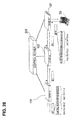
- This action causes the contents of the MAC DA field (00:00:00:00:00:01) to retreat into the MAC SA field, then stores the action array in the MAC DA field and re-writes the MAC DA field back into the node#3 of the last hop using the contents of the MAC SA field.
- the address (00:00:00:00:00:02) is entered in the MAC SA field, in the example of Fig.28 , the address may be any other arbitrary value.
- the destination of accommodation of the action array is not limited to the example of Fig.24 , such that it may be a MAC SA field, VAN_ID (VID), Type or any other suitable field.
- the action array may also be accommodated in a preset region, such as header of an upper layer or a data region.
- the control servers 20 and 20a to 20f of the exemplary embodiments may be implemented as dedicated servers.
- the nodes 10 and 10a to 10f may not only be the above mentioned OpenFlow switches, but may also be implemented as MPLS (Multi-Protocol Label Switching) switches in the MPLS networks.
- MPLS Multi-Protocol Label Switching
- the present invention may apply in case the network is such a one that allows a server to perform intensive management of the nodes in the network.
- the action array setting unit 16 is provided as an input node corresponding to the beginning point of the route, such as node #1 of Fig.18 , and as a node for a breath-taking relaying operation, such as a node #n-1 of Fig.18 .
- the action array setting unit 16 may thus be dispensed with if it has been known at the outset which node in the network corresponds to the inlet node or to the node for breath-taking relay node.
- a commercial network such as datacenter
- QoS Quality of Service
- at least the flow table of a node not in need of intermediate breath-taking relay processing may be dispensed with.
- the invention may thus be used to advantage for a commercial network, such as data center.
Landscapes
- Engineering & Computer Science (AREA)
- Computer Networks & Wireless Communication (AREA)
- Signal Processing (AREA)
- Data Exchanges In Wide-Area Networks (AREA)
Priority Applications (2)
| Application Number | Priority Date | Filing Date | Title |
|---|---|---|---|
| EP13183976.3A EP2731305B1 (fr) | 2009-09-14 | 2009-09-14 | Système de communication, noeud, serveur de commande et procédé de communication |
| EP13183971.4A EP2696541A1 (fr) | 2009-09-14 | 2009-09-14 | Système de communication, noeud, serveur de commande, procédé de communication et programme |
Applications Claiming Priority (1)
| Application Number | Priority Date | Filing Date | Title |
|---|---|---|---|
| PCT/JP2009/066026 WO2011030462A1 (fr) | 2009-09-14 | 2009-09-14 | Système de communication, noeud, serveur de gestion, et méthode et programme de communication |
Related Child Applications (4)
| Application Number | Title | Priority Date | Filing Date |
|---|---|---|---|
| EP13183976.3A Division EP2731305B1 (fr) | 2009-09-14 | 2009-09-14 | Système de communication, noeud, serveur de commande et procédé de communication |
| EP13183976.3A Division-Into EP2731305B1 (fr) | 2009-09-14 | 2009-09-14 | Système de communication, noeud, serveur de commande et procédé de communication |
| EP13183971.4A Division EP2696541A1 (fr) | 2009-09-14 | 2009-09-14 | Système de communication, noeud, serveur de commande, procédé de communication et programme |
| EP13183971.4A Division-Into EP2696541A1 (fr) | 2009-09-14 | 2009-09-14 | Système de communication, noeud, serveur de commande, procédé de communication et programme |
Publications (3)
| Publication Number | Publication Date |
|---|---|
| EP2479937A1 true EP2479937A1 (fr) | 2012-07-25 |
| EP2479937A4 EP2479937A4 (fr) | 2013-12-18 |
| EP2479937B1 EP2479937B1 (fr) | 2020-10-21 |
Family
ID=43732146
Family Applications (3)
| Application Number | Title | Priority Date | Filing Date |
|---|---|---|---|
| EP09849239.0A Active EP2479937B1 (fr) | 2009-09-14 | 2009-09-14 | Noeud, serveur de gestion, procéde et programme de communication pour procéder des paquets en utilisant openflow |
| EP13183971.4A Withdrawn EP2696541A1 (fr) | 2009-09-14 | 2009-09-14 | Système de communication, noeud, serveur de commande, procédé de communication et programme |
| EP13183976.3A Active EP2731305B1 (fr) | 2009-09-14 | 2009-09-14 | Système de communication, noeud, serveur de commande et procédé de communication |
Family Applications After (2)
| Application Number | Title | Priority Date | Filing Date |
|---|---|---|---|
| EP13183971.4A Withdrawn EP2696541A1 (fr) | 2009-09-14 | 2009-09-14 | Système de communication, noeud, serveur de commande, procédé de communication et programme |
| EP13183976.3A Active EP2731305B1 (fr) | 2009-09-14 | 2009-09-14 | Système de communication, noeud, serveur de commande et procédé de communication |
Country Status (7)
| Country | Link |
|---|---|
| US (2) | US8509252B2 (fr) |
| EP (3) | EP2479937B1 (fr) |
| JP (1) | JP5626214B2 (fr) |
| KR (3) | KR101408109B1 (fr) |
| CN (1) | CN102498693A (fr) |
| BR (1) | BR112012005704A2 (fr) |
| WO (1) | WO2011030462A1 (fr) |
Cited By (1)
| Publication number | Priority date | Publication date | Assignee | Title |
|---|---|---|---|---|
| US10263889B2 (en) | 2014-12-17 | 2019-04-16 | Huawei Technologies Co., Ltd. | Data forwarding method, device, and system in software-defined networking |
Families Citing this family (22)
| Publication number | Priority date | Publication date | Assignee | Title |
|---|---|---|---|---|
| WO2011148925A1 (fr) * | 2010-05-24 | 2011-12-01 | 日本電気株式会社 | Dispositif semi-conducteur et procédé et système d'acheminement des données |
| WO2012127894A1 (fr) * | 2011-03-18 | 2012-09-27 | 日本電気株式会社 | Système de réseau et procédé de commutation |
| CN102301663B (zh) * | 2011-07-06 | 2013-11-06 | 华为技术有限公司 | 一种报文处理方法及相关设备 |
| EP2787694B1 (fr) | 2011-12-02 | 2016-06-15 | Huawei Technologies Co., Ltd. | Procédé de transmission de message, procédé de réception de message, contrôleur openflow et premier commutateur openflow |
| US8923296B2 (en) * | 2012-02-23 | 2014-12-30 | Big Switch Networks, Inc. | System and methods for managing network packet forwarding with a controller |
| US9444842B2 (en) * | 2012-05-22 | 2016-09-13 | Sri International | Security mediation for dynamically programmable network |
| US9363152B2 (en) * | 2012-06-11 | 2016-06-07 | Microsoft Technology Licensing, Llc | Large-scale passive network monitoring using multiple tiers of ordinary network switches |
| WO2014000290A1 (fr) * | 2012-06-29 | 2014-01-03 | 华为技术有限公司 | Procédé, dispositif et système permettant de contrôler des paquets de données |
| CN103546304B (zh) * | 2012-07-11 | 2017-08-25 | 华为技术有限公司 | 业务处理方法、设备及系统 |
| JP5822275B2 (ja) * | 2012-09-07 | 2015-11-24 | 日本電信電話株式会社 | ネットワーク制御装置およびネットワーク制御方法 |
| US9813288B2 (en) | 2012-09-13 | 2017-11-07 | Nec Corporation | Control apparatus, control method, communication system, and program for issuing database operation command to operate database |
| US9071529B2 (en) * | 2012-10-08 | 2015-06-30 | Telefonaktiebolaget L M Ericsson (Publ) | Method and apparatus for accelerating forwarding in software-defined networks |
| FI20126105L (fi) * | 2012-10-25 | 2014-04-26 | Tellabs Oy | Menetelmä ja ohjauslaite ohjelmallisesti määriteltävän verkon konfiguroimiseksi |
| US9172550B2 (en) * | 2013-07-19 | 2015-10-27 | Globalfoundries U.S. 2 Llc Company | Management of a multicast system in a software-defined network |
| CN104579722A (zh) * | 2013-10-11 | 2015-04-29 | 中兴通讯股份有限公司 | 流统计能力的协商方法及装置 |
| FI20145041L (fi) * | 2014-01-17 | 2015-07-18 | Tellabs Oy | Verkkoelementti ja kontrolleri verkkoelementin hallitsemiseksi |
| CN105099913B (zh) | 2014-04-21 | 2018-07-20 | 新华三技术有限公司 | 一种报文转发方法及设备 |
| EP3139555A4 (fr) * | 2014-05-01 | 2017-12-27 | Nec Corporation | Dispositif de communication, dispositif de commande, système de communication, procédé pour traiter un paquet reçu, procédé pour commander un dispositif de communication et programme |
| US9553762B1 (en) | 2014-06-26 | 2017-01-24 | Altera Corporation | Network-on-chip with fixed and configurable functions |
| WO2019044035A1 (fr) * | 2017-08-31 | 2019-03-07 | 株式会社Nttドコモ | Système de communication et procédé de commande |
| US12526617B2 (en) | 2021-12-08 | 2026-01-13 | Palo Alto Networks, Inc. | Targeted PDU capture by a network device for roaming detection in wireless networks |
| KR102495450B1 (ko) * | 2022-06-10 | 2023-02-06 | 요다정보기술(주) | 클라우드 환경에서의 파일공유 시스템 |
Family Cites Families (30)
| Publication number | Priority date | Publication date | Assignee | Title |
|---|---|---|---|---|
| AU1199888A (en) * | 1987-03-13 | 1988-09-15 | Northern Telecom Limited | Communications system and components and methods for use therein |
| US5353283A (en) * | 1993-05-28 | 1994-10-04 | Bell Communications Research, Inc. | General internet method for routing packets in a communications network |
| JP2570963B2 (ja) | 1993-05-31 | 1997-01-16 | 日本電気株式会社 | パケット網における中継経路情報を用いたシグナリング方式 |
| JPH08251232A (ja) | 1995-03-15 | 1996-09-27 | Toshiba Corp | 通信・情報処理制御システム |
| JP3721784B2 (ja) * | 1998-05-27 | 2005-11-30 | 富士電機機器制御株式会社 | ネットワークシステム、送信装置、中継装置、および、記録媒体 |
| EP1051003B1 (fr) | 1999-05-07 | 2007-04-11 | Alcatel Lucent | Procédé, appareil et noeud source avec apparaeil de routage explicite/implicite |
| JP3499791B2 (ja) | 2000-01-07 | 2004-02-23 | 日本電信電話株式会社 | パケットルーチング方法及びパケットルーチング装置 |
| JP3543952B2 (ja) | 2000-07-21 | 2004-07-21 | 日本電気株式会社 | Mplsパケット転送方法およびパケット交換機 |
| JP3848067B2 (ja) | 2000-08-25 | 2006-11-22 | 株式会社エヌ・ティ・ティ・ドコモ | ネットワークにおけるルート設定方法、ルート管理方法及びアクティブルータ |
| US20030026268A1 (en) * | 2000-11-28 | 2003-02-06 | Siemens Technology-To-Business Center, Llc | Characteristic routing |
| US6990086B1 (en) * | 2001-01-26 | 2006-01-24 | Cisco Technology, Inc. | Method and system for label edge routing in a wireless network |
| US20020101868A1 (en) | 2001-01-30 | 2002-08-01 | David Clear | Vlan tunneling protocol |
| JP2002368787A (ja) | 2001-06-12 | 2002-12-20 | Fujitsu Ltd | 明示的経路指定中継装置 |
| FR2826215B1 (fr) | 2001-06-18 | 2003-12-19 | Cit Alcatel | Procede de transmission d'un message actif dans un circuit virtuel |
| DE60131551T2 (de) * | 2001-12-12 | 2008-10-23 | Alcatel Lucent | Telekommunikationsnetzwerk und entsprechenden Paketkopf |
| US7007142B2 (en) * | 2002-02-19 | 2006-02-28 | Intel Corporation | Network data storage-related operations |
| US8108554B1 (en) * | 2002-05-16 | 2012-01-31 | F5 Networks, Inc. | Method and system for automatically mapping secure network address translations |
| CN101505275A (zh) * | 2002-09-20 | 2009-08-12 | 松下电器产业株式会社 | 连接多个数据通信网络的中间网络元件 |
| JP2004153318A (ja) | 2002-10-28 | 2004-05-27 | Ntt Docomo Inc | パケット通信方法、パケット通信システム、送信元ノード、中継ノード及び中継器 |
| US20080008202A1 (en) * | 2002-10-31 | 2008-01-10 | Terrell William C | Router with routing processors and methods for virtualization |
| FR2848050B1 (fr) | 2002-12-02 | 2005-04-01 | Cit Alcatel | Dispositif d'acces a un reseau de telecommunication pour la degradation selective des flots de donnees |
| DE60302863T2 (de) | 2003-01-10 | 2006-09-14 | Alcatel | Signalisierung in gesteuerten aktiven Netzwerken |
| JP2007053789A (ja) * | 2003-02-03 | 2007-03-01 | Nippon Telegr & Teleph Corp <Ntt> | エッジルータ装置、コアルータ装置、及びネットワークシステム |
| US7797444B2 (en) | 2003-02-03 | 2010-09-14 | Nippon Telegraph And Telephone Corporation | Data transfer apparatus and data transfer system |
| JP4238086B2 (ja) | 2003-08-06 | 2009-03-11 | 株式会社エヌ・ティ・ティ・ドコモ | パケット転送制御方法、経路制御装置、フロー処理制御装置、端末管理装置、転送装置、処理サーバ装置、端末装置及びパケット転送システム |
| ATE496474T1 (de) * | 2006-05-02 | 2011-02-15 | Research In Motion Ltd | Mehrschichtiges envelope-verfahren und system zur inhaltslieferung |
| CN100469052C (zh) * | 2006-08-04 | 2009-03-11 | 北京方正奥德计算机系统有限公司 | 一种数据路由分配方法 |
| JP5076581B2 (ja) | 2007-03-23 | 2012-11-21 | 日本電気株式会社 | 光通信システムおよびノード装置およびサービスクラス設定方法 |
| JP5182146B2 (ja) * | 2009-02-23 | 2013-04-10 | 富士通株式会社 | 経路決定プログラム、管理装置及びネットワーク・システム |
| EP2572473B1 (fr) * | 2010-05-19 | 2014-02-26 | Telefonaktiebolaget L M Ericsson (PUBL) | Procédés et appareil destinés à être utilisés dans un réseau openflow |
-
2009
- 2009-09-14 JP JP2011530717A patent/JP5626214B2/ja active Active
- 2009-09-14 EP EP09849239.0A patent/EP2479937B1/fr active Active
- 2009-09-14 BR BR112012005704-9A patent/BR112012005704A2/pt not_active Application Discontinuation
- 2009-09-14 EP EP13183971.4A patent/EP2696541A1/fr not_active Withdrawn
- 2009-09-14 CN CN2009801614281A patent/CN102498693A/zh active Pending
- 2009-09-14 KR KR1020137023282A patent/KR101408109B1/ko not_active Expired - Fee Related
- 2009-09-14 EP EP13183976.3A patent/EP2731305B1/fr active Active
- 2009-09-14 KR KR1020137023279A patent/KR101408108B1/ko not_active Expired - Fee Related
- 2009-09-14 KR KR1020127007016A patent/KR101365667B1/ko not_active Expired - Fee Related
- 2009-09-14 WO PCT/JP2009/066026 patent/WO2011030462A1/fr not_active Ceased
-
2011
- 2011-07-05 US US13/176,628 patent/US8509252B2/en not_active Expired - Fee Related
-
2013
- 2013-07-11 US US13/939,431 patent/US9258220B2/en active Active
Non-Patent Citations (4)
| Title |
|---|
| "OpenFlow Switch Specifcation Version 0.9.0 (Wire Protocol 0x98)", INTERNET CITATION, 20 July 2009 (2009-07-20), pages 1-36, XP008157068, Retrieved from the Internet: URL:http://www.openflowswitch.org/documents/openflow-spec-v0.9.0.pdf [retrieved on 2012-10-10] * |
| NAUOS J ET AL: "Implementing an OpenFlow Switch on the NetFPGA platform", 4TH ACM/IEEE SYMPOSIUM ON ARCHITECTURES FOR NETWORKING AND COMMUNICATIONS SYSTEMS : SAN JOSE, CALIFORNIA, USA, 6 - 7 NOVEMBER 2008 ; [ANCS'08], CURRAN, RED HOOK, NY , 6 November 2008 (2008-11-06), pages 1-9, XP002692073, ISBN: 978-1-61567-121-2 Retrieved from the Internet: URL:http://yuba.stanford.edu/~jnaous/papers/ancs-openflow-08.pdf [retrieved on 2013-02-13] * |
| See also references of WO2011030462A1 * |
| SOHAIL MUNIR: "active networks - a survey", INTERNET CITATION, 14 August 1997 (1997-08-14), pages 1-10, XP002652513, Retrieved from the Internet: URL:http://www1.cse.wustl.edu/~jain/cis788-97/active_nets/index.htm [retrieved on 2011-07-21] * |
Cited By (1)
| Publication number | Priority date | Publication date | Assignee | Title |
|---|---|---|---|---|
| US10263889B2 (en) | 2014-12-17 | 2019-04-16 | Huawei Technologies Co., Ltd. | Data forwarding method, device, and system in software-defined networking |
Also Published As
| Publication number | Publication date |
|---|---|
| EP2731305A1 (fr) | 2014-05-14 |
| EP2696541A1 (fr) | 2014-02-12 |
| CN102498693A (zh) | 2012-06-13 |
| BR112012005704A2 (pt) | 2020-08-25 |
| EP2479937A4 (fr) | 2013-12-18 |
| JP5626214B2 (ja) | 2014-11-19 |
| US20130308650A1 (en) | 2013-11-21 |
| EP2731305A3 (fr) | 2014-07-09 |
| KR20120062793A (ko) | 2012-06-14 |
| KR101408109B1 (ko) | 2014-06-17 |
| KR101365667B1 (ko) | 2014-02-21 |
| KR101408108B1 (ko) | 2014-06-17 |
| KR20130109246A (ko) | 2013-10-07 |
| US20120008629A1 (en) | 2012-01-12 |
| US9258220B2 (en) | 2016-02-09 |
| EP2479937B1 (fr) | 2020-10-21 |
| WO2011030462A1 (fr) | 2011-03-17 |
| KR20130109245A (ko) | 2013-10-07 |
| US8509252B2 (en) | 2013-08-13 |
| EP2731305B1 (fr) | 2021-01-13 |
| JPWO2011030462A1 (ja) | 2013-02-04 |
Similar Documents
| Publication | Publication Date | Title |
|---|---|---|
| EP2731305B1 (fr) | Système de communication, noeud, serveur de commande et procédé de communication | |
| CN102792646B (zh) | 通信系统、控制装置、通信方法 | |
| CN104272679B (zh) | 通信系统、控制装置、通信方法以及记录介质 | |
| US8792388B2 (en) | Network system, controller, method and program | |
| JP5644775B2 (ja) | 通信システムおよびトポロジー情報作成方法 | |
| CN102804715A (zh) | 通信系统、节点、控制服务器、通信方法、以及程序 | |
| CN103119900A (zh) | 通信系统、控制设备、节点控制方法和节点控制程序 | |
| JP5888338B2 (ja) | 通信システムおよび通信方法 | |
| CN103262479A (zh) | 通信系统、节点、分组转发方法和程序 | |
| JP5573909B2 (ja) | 通信システム、ノード、制御装置、通信方法およびプログラム | |
| JP5637289B2 (ja) | 通信システム、ノード、制御サーバ、通信方法およびプログラム | |
| HK1174161A (en) | Communication system, node, control server, communication method and program | |
| JP6036940B2 (ja) | 通信システム、ノード、制御装置、通信方法およびプログラム | |
| JP5794355B2 (ja) | 通信システム、ノード、制御装置、通信方法およびプログラム |
Legal Events
| Date | Code | Title | Description |
|---|---|---|---|
| PUAI | Public reference made under article 153(3) epc to a published international application that has entered the european phase |
Free format text: ORIGINAL CODE: 0009012 |
|
| 17P | Request for examination filed |
Effective date: 20120329 |
|
| AK | Designated contracting states |
Kind code of ref document: A1 Designated state(s): AT BE BG CH CY CZ DE DK EE ES FI FR GB GR HR HU IE IS IT LI LT LU LV MC MK MT NL NO PL PT RO SE SI SK SM TR |
|
| DAX | Request for extension of the european patent (deleted) | ||
| REG | Reference to a national code |
Ref country code: HK Ref legal event code: DE Ref document number: 1174161 Country of ref document: HK |
|
| A4 | Supplementary search report drawn up and despatched |
Effective date: 20131114 |
|
| RIC1 | Information provided on ipc code assigned before grant |
Ipc: H04L 12/70 20130101AFI20131212BHEP |
|
| STAA | Information on the status of an ep patent application or granted ep patent |
Free format text: STATUS: EXAMINATION IS IN PROGRESS |
|
| 17Q | First examination report despatched |
Effective date: 20171123 |
|
| REG | Reference to a national code |
Ref country code: DE Ref legal event code: R079 Ref document number: 602009062954 Country of ref document: DE Free format text: PREVIOUS MAIN CLASS: H04L0012560000 Ipc: H04L0012700000 |
|
| GRAP | Despatch of communication of intention to grant a patent |
Free format text: ORIGINAL CODE: EPIDOSNIGR1 |
|
| STAA | Information on the status of an ep patent application or granted ep patent |
Free format text: STATUS: GRANT OF PATENT IS INTENDED |
|
| RIC1 | Information provided on ipc code assigned before grant |
Ipc: H04L 12/717 20130101ALI20200327BHEP Ipc: H04L 12/715 20130101ALI20200327BHEP Ipc: H04L 12/721 20130101ALI20200327BHEP Ipc: H04L 12/70 20130101AFI20200327BHEP |
|
| INTG | Intention to grant announced |
Effective date: 20200428 |
|
| GRAS | Grant fee paid |
Free format text: ORIGINAL CODE: EPIDOSNIGR3 |
|
| GRAA | (expected) grant |
Free format text: ORIGINAL CODE: 0009210 |
|
| STAA | Information on the status of an ep patent application or granted ep patent |
Free format text: STATUS: THE PATENT HAS BEEN GRANTED |
|
| AK | Designated contracting states |
Kind code of ref document: B1 Designated state(s): AT BE BG CH CY CZ DE DK EE ES FI FR GB GR HR HU IE IS IT LI LT LU LV MC MK MT NL NO PL PT RO SE SI SK SM TR |
|
| REG | Reference to a national code |
Ref country code: GB Ref legal event code: FG4D |
|
| REG | Reference to a national code |
Ref country code: CH Ref legal event code: EP |
|
| REG | Reference to a national code |
Ref country code: IE Ref legal event code: FG4D |
|
| REG | Reference to a national code |
Ref country code: DE Ref legal event code: R096 Ref document number: 602009062954 Country of ref document: DE |
|
| REG | Reference to a national code |
Ref country code: AT Ref legal event code: REF Ref document number: 1326964 Country of ref document: AT Kind code of ref document: T Effective date: 20201115 |
|
| REG | Reference to a national code |
Ref country code: AT Ref legal event code: MK05 Ref document number: 1326964 Country of ref document: AT Kind code of ref document: T Effective date: 20201021 |
|
| REG | Reference to a national code |
Ref country code: NL Ref legal event code: MP Effective date: 20201021 |
|
| PG25 | Lapsed in a contracting state [announced via postgrant information from national office to epo] |
Ref country code: GR Free format text: LAPSE BECAUSE OF FAILURE TO SUBMIT A TRANSLATION OF THE DESCRIPTION OR TO PAY THE FEE WITHIN THE PRESCRIBED TIME-LIMIT Effective date: 20210122 Ref country code: FI Free format text: LAPSE BECAUSE OF FAILURE TO SUBMIT A TRANSLATION OF THE DESCRIPTION OR TO PAY THE FEE WITHIN THE PRESCRIBED TIME-LIMIT Effective date: 20201021 Ref country code: PT Free format text: LAPSE BECAUSE OF FAILURE TO SUBMIT A TRANSLATION OF THE DESCRIPTION OR TO PAY THE FEE WITHIN THE PRESCRIBED TIME-LIMIT Effective date: 20210222 Ref country code: NL Free format text: LAPSE BECAUSE OF FAILURE TO SUBMIT A TRANSLATION OF THE DESCRIPTION OR TO PAY THE FEE WITHIN THE PRESCRIBED TIME-LIMIT Effective date: 20201021 Ref country code: NO Free format text: LAPSE BECAUSE OF FAILURE TO SUBMIT A TRANSLATION OF THE DESCRIPTION OR TO PAY THE FEE WITHIN THE PRESCRIBED TIME-LIMIT Effective date: 20210121 |
|
| REG | Reference to a national code |
Ref country code: HK Ref legal event code: WD Ref document number: 1174161 Country of ref document: HK |
|
| REG | Reference to a national code |
Ref country code: LT Ref legal event code: MG4D |
|
| PG25 | Lapsed in a contracting state [announced via postgrant information from national office to epo] |
Ref country code: IS Free format text: LAPSE BECAUSE OF FAILURE TO SUBMIT A TRANSLATION OF THE DESCRIPTION OR TO PAY THE FEE WITHIN THE PRESCRIBED TIME-LIMIT Effective date: 20210221 Ref country code: ES Free format text: LAPSE BECAUSE OF FAILURE TO SUBMIT A TRANSLATION OF THE DESCRIPTION OR TO PAY THE FEE WITHIN THE PRESCRIBED TIME-LIMIT Effective date: 20201021 Ref country code: AT Free format text: LAPSE BECAUSE OF FAILURE TO SUBMIT A TRANSLATION OF THE DESCRIPTION OR TO PAY THE FEE WITHIN THE PRESCRIBED TIME-LIMIT Effective date: 20201021 Ref country code: BG Free format text: LAPSE BECAUSE OF FAILURE TO SUBMIT A TRANSLATION OF THE DESCRIPTION OR TO PAY THE FEE WITHIN THE PRESCRIBED TIME-LIMIT Effective date: 20210121 Ref country code: LV Free format text: LAPSE BECAUSE OF FAILURE TO SUBMIT A TRANSLATION OF THE DESCRIPTION OR TO PAY THE FEE WITHIN THE PRESCRIBED TIME-LIMIT Effective date: 20201021 Ref country code: PL Free format text: LAPSE BECAUSE OF FAILURE TO SUBMIT A TRANSLATION OF THE DESCRIPTION OR TO PAY THE FEE WITHIN THE PRESCRIBED TIME-LIMIT Effective date: 20201021 Ref country code: SE Free format text: LAPSE BECAUSE OF FAILURE TO SUBMIT A TRANSLATION OF THE DESCRIPTION OR TO PAY THE FEE WITHIN THE PRESCRIBED TIME-LIMIT Effective date: 20201021 |
|
| PG25 | Lapsed in a contracting state [announced via postgrant information from national office to epo] |
Ref country code: HR Free format text: LAPSE BECAUSE OF FAILURE TO SUBMIT A TRANSLATION OF THE DESCRIPTION OR TO PAY THE FEE WITHIN THE PRESCRIBED TIME-LIMIT Effective date: 20201021 |
|
| REG | Reference to a national code |
Ref country code: DE Ref legal event code: R097 Ref document number: 602009062954 Country of ref document: DE |
|
| PG25 | Lapsed in a contracting state [announced via postgrant information from national office to epo] |
Ref country code: SM Free format text: LAPSE BECAUSE OF FAILURE TO SUBMIT A TRANSLATION OF THE DESCRIPTION OR TO PAY THE FEE WITHIN THE PRESCRIBED TIME-LIMIT Effective date: 20201021 Ref country code: RO Free format text: LAPSE BECAUSE OF FAILURE TO SUBMIT A TRANSLATION OF THE DESCRIPTION OR TO PAY THE FEE WITHIN THE PRESCRIBED TIME-LIMIT Effective date: 20201021 Ref country code: SK Free format text: LAPSE BECAUSE OF FAILURE TO SUBMIT A TRANSLATION OF THE DESCRIPTION OR TO PAY THE FEE WITHIN THE PRESCRIBED TIME-LIMIT Effective date: 20201021 Ref country code: EE Free format text: LAPSE BECAUSE OF FAILURE TO SUBMIT A TRANSLATION OF THE DESCRIPTION OR TO PAY THE FEE WITHIN THE PRESCRIBED TIME-LIMIT Effective date: 20201021 Ref country code: CZ Free format text: LAPSE BECAUSE OF FAILURE TO SUBMIT A TRANSLATION OF THE DESCRIPTION OR TO PAY THE FEE WITHIN THE PRESCRIBED TIME-LIMIT Effective date: 20201021 Ref country code: LT Free format text: LAPSE BECAUSE OF FAILURE TO SUBMIT A TRANSLATION OF THE DESCRIPTION OR TO PAY THE FEE WITHIN THE PRESCRIBED TIME-LIMIT Effective date: 20201021 |
|
| PLBE | No opposition filed within time limit |
Free format text: ORIGINAL CODE: 0009261 |
|
| STAA | Information on the status of an ep patent application or granted ep patent |
Free format text: STATUS: NO OPPOSITION FILED WITHIN TIME LIMIT |
|
| PG25 | Lapsed in a contracting state [announced via postgrant information from national office to epo] |
Ref country code: DK Free format text: LAPSE BECAUSE OF FAILURE TO SUBMIT A TRANSLATION OF THE DESCRIPTION OR TO PAY THE FEE WITHIN THE PRESCRIBED TIME-LIMIT Effective date: 20201021 |
|
| 26N | No opposition filed |
Effective date: 20210722 |
|
| PG25 | Lapsed in a contracting state [announced via postgrant information from national office to epo] |
Ref country code: IT Free format text: LAPSE BECAUSE OF FAILURE TO SUBMIT A TRANSLATION OF THE DESCRIPTION OR TO PAY THE FEE WITHIN THE PRESCRIBED TIME-LIMIT Effective date: 20201021 |
|
| PG25 | Lapsed in a contracting state [announced via postgrant information from national office to epo] |
Ref country code: SI Free format text: LAPSE BECAUSE OF FAILURE TO SUBMIT A TRANSLATION OF THE DESCRIPTION OR TO PAY THE FEE WITHIN THE PRESCRIBED TIME-LIMIT Effective date: 20201021 |
|
| REG | Reference to a national code |
Ref country code: CH Ref legal event code: PL |
|
| REG | Reference to a national code |
Ref country code: BE Ref legal event code: MM Effective date: 20210930 |
|
| PG25 | Lapsed in a contracting state [announced via postgrant information from national office to epo] |
Ref country code: IS Free format text: LAPSE BECAUSE OF FAILURE TO SUBMIT A TRANSLATION OF THE DESCRIPTION OR TO PAY THE FEE WITHIN THE PRESCRIBED TIME-LIMIT Effective date: 20210221 Ref country code: MC Free format text: LAPSE BECAUSE OF FAILURE TO SUBMIT A TRANSLATION OF THE DESCRIPTION OR TO PAY THE FEE WITHIN THE PRESCRIBED TIME-LIMIT Effective date: 20201021 |
|
| PG25 | Lapsed in a contracting state [announced via postgrant information from national office to epo] |
Ref country code: LU Free format text: LAPSE BECAUSE OF NON-PAYMENT OF DUE FEES Effective date: 20210914 Ref country code: IE Free format text: LAPSE BECAUSE OF NON-PAYMENT OF DUE FEES Effective date: 20210914 Ref country code: FR Free format text: LAPSE BECAUSE OF NON-PAYMENT OF DUE FEES Effective date: 20210930 Ref country code: BE Free format text: LAPSE BECAUSE OF NON-PAYMENT OF DUE FEES Effective date: 20210930 |
|
| PG25 | Lapsed in a contracting state [announced via postgrant information from national office to epo] |
Ref country code: LI Free format text: LAPSE BECAUSE OF NON-PAYMENT OF DUE FEES Effective date: 20210930 Ref country code: CH Free format text: LAPSE BECAUSE OF NON-PAYMENT OF DUE FEES Effective date: 20210930 |
|
| PG25 | Lapsed in a contracting state [announced via postgrant information from national office to epo] |
Ref country code: HU Free format text: LAPSE BECAUSE OF FAILURE TO SUBMIT A TRANSLATION OF THE DESCRIPTION OR TO PAY THE FEE WITHIN THE PRESCRIBED TIME-LIMIT; INVALID AB INITIO Effective date: 20090914 Ref country code: CY Free format text: LAPSE BECAUSE OF FAILURE TO SUBMIT A TRANSLATION OF THE DESCRIPTION OR TO PAY THE FEE WITHIN THE PRESCRIBED TIME-LIMIT Effective date: 20201021 |
|
| PG25 | Lapsed in a contracting state [announced via postgrant information from national office to epo] |
Ref country code: MK Free format text: LAPSE BECAUSE OF FAILURE TO SUBMIT A TRANSLATION OF THE DESCRIPTION OR TO PAY THE FEE WITHIN THE PRESCRIBED TIME-LIMIT Effective date: 20201021 |
|
| PG25 | Lapsed in a contracting state [announced via postgrant information from national office to epo] |
Ref country code: MT Free format text: LAPSE BECAUSE OF FAILURE TO SUBMIT A TRANSLATION OF THE DESCRIPTION OR TO PAY THE FEE WITHIN THE PRESCRIBED TIME-LIMIT Effective date: 20201021 |
|
| PGFP | Annual fee paid to national office [announced via postgrant information from national office to epo] |
Ref country code: DE Payment date: 20240918 Year of fee payment: 16 |
|
| PGFP | Annual fee paid to national office [announced via postgrant information from national office to epo] |
Ref country code: GB Payment date: 20240919 Year of fee payment: 16 |
|
| PG25 | Lapsed in a contracting state [announced via postgrant information from national office to epo] |
Ref country code: TR Free format text: LAPSE BECAUSE OF FAILURE TO SUBMIT A TRANSLATION OF THE DESCRIPTION OR TO PAY THE FEE WITHIN THE PRESCRIBED TIME-LIMIT Effective date: 20201021 |