EP2518162A1 - Séquençage multiétiquette et analyse écogénomique - Google Patents
Séquençage multiétiquette et analyse écogénomique Download PDFInfo
- Publication number
- EP2518162A1 EP2518162A1 EP12161878A EP12161878A EP2518162A1 EP 2518162 A1 EP2518162 A1 EP 2518162A1 EP 12161878 A EP12161878 A EP 12161878A EP 12161878 A EP12161878 A EP 12161878A EP 2518162 A1 EP2518162 A1 EP 2518162A1
- Authority
- EP
- European Patent Office
- Prior art keywords
- sequence
- samples
- tag
- sequences
- primer
- Prior art date
- Legal status (The legal status is an assumption and is not a legal conclusion. Google has not performed a legal analysis and makes no representation as to the accuracy of the status listed.)
- Granted
Links
Images







Classifications
-
- C—CHEMISTRY; METALLURGY
- C12—BIOCHEMISTRY; BEER; SPIRITS; WINE; VINEGAR; MICROBIOLOGY; ENZYMOLOGY; MUTATION OR GENETIC ENGINEERING
- C12Q—MEASURING OR TESTING PROCESSES INVOLVING ENZYMES, NUCLEIC ACIDS OR MICROORGANISMS; COMPOSITIONS OR TEST PAPERS THEREFOR; PROCESSES OF PREPARING SUCH COMPOSITIONS; CONDITION-RESPONSIVE CONTROL IN MICROBIOLOGICAL OR ENZYMOLOGICAL PROCESSES
- C12Q1/00—Measuring or testing processes involving enzymes, nucleic acids or microorganisms; Compositions therefor; Processes of preparing such compositions
- C12Q1/68—Measuring or testing processes involving enzymes, nucleic acids or microorganisms; Compositions therefor; Processes of preparing such compositions involving nucleic acids
- C12Q1/6876—Nucleic acid products used in the analysis of nucleic acids, e.g. primers or probes
- C12Q1/6888—Nucleic acid products used in the analysis of nucleic acids, e.g. primers or probes for detection or identification of organisms
- C12Q1/689—Nucleic acid products used in the analysis of nucleic acids, e.g. primers or probes for detection or identification of organisms for bacteria
-
- C—CHEMISTRY; METALLURGY
- C12—BIOCHEMISTRY; BEER; SPIRITS; WINE; VINEGAR; MICROBIOLOGY; ENZYMOLOGY; MUTATION OR GENETIC ENGINEERING
- C12Q—MEASURING OR TESTING PROCESSES INVOLVING ENZYMES, NUCLEIC ACIDS OR MICROORGANISMS; COMPOSITIONS OR TEST PAPERS THEREFOR; PROCESSES OF PREPARING SUCH COMPOSITIONS; CONDITION-RESPONSIVE CONTROL IN MICROBIOLOGICAL OR ENZYMOLOGICAL PROCESSES
- C12Q1/00—Measuring or testing processes involving enzymes, nucleic acids or microorganisms; Compositions therefor; Processes of preparing such compositions
- C12Q1/68—Measuring or testing processes involving enzymes, nucleic acids or microorganisms; Compositions therefor; Processes of preparing such compositions involving nucleic acids
- C12Q1/6844—Nucleic acid amplification reactions
- C12Q1/6858—Allele-specific amplification
-
- C—CHEMISTRY; METALLURGY
- C12—BIOCHEMISTRY; BEER; SPIRITS; WINE; VINEGAR; MICROBIOLOGY; ENZYMOLOGY; MUTATION OR GENETIC ENGINEERING
- C12Q—MEASURING OR TESTING PROCESSES INVOLVING ENZYMES, NUCLEIC ACIDS OR MICROORGANISMS; COMPOSITIONS OR TEST PAPERS THEREFOR; PROCESSES OF PREPARING SUCH COMPOSITIONS; CONDITION-RESPONSIVE CONTROL IN MICROBIOLOGICAL OR ENZYMOLOGICAL PROCESSES
- C12Q2600/00—Oligonucleotides characterized by their use
- C12Q2600/156—Polymorphic or mutational markers
-
- C—CHEMISTRY; METALLURGY
- C12—BIOCHEMISTRY; BEER; SPIRITS; WINE; VINEGAR; MICROBIOLOGY; ENZYMOLOGY; MUTATION OR GENETIC ENGINEERING
- C12Q—MEASURING OR TESTING PROCESSES INVOLVING ENZYMES, NUCLEIC ACIDS OR MICROORGANISMS; COMPOSITIONS OR TEST PAPERS THEREFOR; PROCESSES OF PREPARING SUCH COMPOSITIONS; CONDITION-RESPONSIVE CONTROL IN MICROBIOLOGICAL OR ENZYMOLOGICAL PROCESSES
- C12Q2600/00—Oligonucleotides characterized by their use
- C12Q2600/16—Primer sets for multiplex assays
Definitions
- the invention relates to the determination of polynucleotide sequences. It also relates to determining sequences in multiple samples, in some particulars in multiple environmental samples and in multiple clinical samples.
- the human genome sequencing project served a number of purposes. It served as a platform for programmatic development of improved sequencing technologies and of genome sequencing efforts. It also served to provide a framework for the production and distribution of sequencing information from increasingly large scale sequencing projects. These projects provided complete genome sequences for a succession of model organisms of increasingly large genetic complements. These accomplishments, culminating in the completion of a human genome sequence, highlight the very considerable power and throughput of contemporary sequencing technology.
- a lead technology of this type is a bead, emulsion amplification, and pyrosequencing-based method developed by 454 Life Sciences. (See Marguilles, et al. (2005) Nature 437: 376 , which is incorporated herein by reference in its entirety, particularly as to the aforementioned methods.
- the method utilizes a series of steps to deposit single, amplified DNA molecules in individual wells of a plate containing several million picoliter wells. The steps ensure that each well of the plate either contains no DNA or the amplified DNA from a single original molecule. Pyrosequencing is carried out in the wells by elongation of a primer template in much the same way as Sanger sequencing.
- Pyrosequencing does not involve chain termination and does not require separation of elongation products. Instead sequencing proceeds stepwise by single base addition cycles. In each cycle one of the four basses ⁇ A, T, G, or C ⁇ is included in the elongation reaction. The other three bases are omitted. A base is added to the growing chain if it is complementary to the next position on the template. Light is produced whenever a base is incorporated into the growing complimentary sequence. By interrogating with each of A, C, G, or T in succession, the identity of the base at each position can be determined. Sequencing reactions are carried out in many wells simultaneously. Signals are collected from all the wells at once using an imaging detector. Thus, a multitude of sequences can be determined at the same time
- each well containing a DNA will emit a signal for only one of the four bases for each position.
- runs of the same base at two or more positions in succession lead to the emission of proportionally stronger signals for the first position in the run. Consequently, reading out the sequence from a given well is a bit more complicated then simply noting, for each position, which of the four bases is added. Nevertheless, because signals are proportional to the number of incorporations, sequences can be accurately reconstructed from the signal strength for most runs.
- a device offered by 454 Life Sciences currently uses a 6.4 cm 2 picoliter well "plate” containing 1,600,000 picoliter sized wells for sequencing about 400,000 different templates.
- the throughput for a single run using this plate currently is about 100 million bases in four hours. Even though this is a first generation device, its throughput is nearly 100 times better than standard Sanger sequencing devices.
- Embodiments provide multiplex methods for the quantitative determination of polynucleotides in two or more samples, comprising:
- Embodiments provide multiplex methods for the quantitative determination of polynucleotides in two or more samples, comprising:
- Embodiments provide methods in accordance with any of the foregoing or the following wherein given polynucleotide sequences in a sample is quantified by a method comprising normalizing the number occurrences determined for the given sequence.
- the number of occurrences is normalized by dividing the number of occurrences determined for the given polynucleotide sequence by the total number of occurrences of polynucleotide sequences in the sample.
- the given polynucleotide sequences is that of a given variant of a variable genetic region and, in embodiments, the quantity of the given variant in the sample is normalized by dividing the number of occurrences of that variant by the total number of occurrences of all variants of the variable genetic region in the sample.
- Embodiments provide a multiplex method for determining polynucleotide sequences in two or more samples, comprising: attacking a first tag sequence to one or more polynucleotides of a first sample; attaching a second tag sequence different from said first tag sequence to one or more polynucleotides of a second sample; mixing the tagged polynucleotides of said first and second samples together; determining sequences of said polynucleotides comprising said first and said second tags; and identifying said first and second tags in said sequences; thereby identifying sequences of said polynucleotides of said first sample and second samples, wherein said sequences are determined without Southern blot transfer and/or without size-separating primer extension products and/or without electrophoresis.
- Embodiments provide a method according to any of the foregoing or the following, wherein the number of said polynucleotides in said first sample, n 1 , is any of 2, 5, 10, 25, 50, 100, 150, 200, 250, 500, 1,000, 1,500, 2,000, 2,500, 5,000, 7,500, 10,000, 12,500, 15,000, 17,500, 20,000, 25,000, 30,000, 35,000, 40,000, 50,000, 75,000, 100,000, 150,000, 200,000, 250,000, 500,000, 1,000,000 or more, and the number of said polynucleotides in said second sample, n 2 , is any of 2, 5, 10, 25, 50, 100, 150, 200, 250, 500, 1,000, 1,500, 2,000, 2,500, 5,000, 7,500, 10,000, 12,500, 15,000, 17,500, 20,000, 25,000, 30,000, 35,000, 40,000, 50,000, 75,000, 100,000, 150,000, 200,000, 250,000, 500,000, 1,000,000 or more.
- Embodiments provide a method according to any of the foregoing or the following, wherein the number of said samples and of said different tags therefor is 5,10, 15, 20, 25, 50, 75, 100, 150, 200, 250, 500, 1,000, 2,500, 5,000, 10,000 or more.
- Embodiments provide a method according to any of the foregoing or the following, wherein the are nucleotide sequences that are 2, 3, 4, 5, 6, 7, 8, 9, 10, 11, 12, 13, 14, 15, 16, 17, 18, 19, 20, 21, 22, 23, 24, 25, 26, 27, 28, 29, 30, 31, 32, 33, 34, 35, 36 nucleotides long or any combination thereof.
- Embodiments provide a method according to any of the foregoing or the following, wherein the tags are incorporated into said polynucleotides by a stop of ligation, provided that the step of ligation does not result in biasing.
- Embodiments provide a method according to any of the foregoing or the following, wherein the tags are incorporated into said polynucleotides by a step of ligation and/or by a step of amplication.
- Embodiments provide a method according to any of the foregoing or the following, wherein said tags are comprised in primers for amplification and are incorporated into said polynucleotides by amplification using said primers.
- Embodiments provide a method according to any of the foregoing or the following, wherein said tags are incorporated into said polynucleotides by a process comprising a step of cloning into a vector.
- Embodiments provide a method according to any of the foregoing or the following, wherein the tags are comprised in adapters for amplification and said adapters are ligated to polynucleotides in said samples.
- Embodiments provide a method in this regard, wherein further, said polynucleotides lighted thereby to said tags are amplified via said adapters.
- said adapters comprise a moiety for immobilization. In embodiments said moiety is a ligand; in embodiments it is biotin.
- said tags are comprised on adapters for bead emulsion amplification.
- the adapters are suitable for use in a sequencing system of 454 Life Sciences or other sequencing system in which bead emulsion amplification is carried out.
- Embodiments provide a method according to any of the foregoing or the following, wherein the primer for amplification comprises a sequence for PCR amplification, linear amplification, transcriptional amplification, rolling circle replication, or QB replication.
- Embodiments provide a method according to any of the foregoing or the following, wherein the primer for amplification comprises a sequence for PCR amplification.
- Embodiments provide a method according to any of the foregoing or the following, wherein each of said polynucleotides is disposed individually on a bead isolated from other polymicleotides.
- Embodiments provide a method according to any of the foregoing or the following, wherein each of said polynucleotides is disposed individually on a bead isolated from other said polynucleotides, is amplified while disposed therein, and the amplification products thereof also are disposed on said bead.
- Embodiments provide a method according to any of the foregoing or the following, wherein each of said polynucleotides is disposed individually on a bead isolated from other said polynucleotides, is amplified while disposed therein, the amplification products thereof also are disposed on said bead, and each said bead is disposed individually in a well isolated from other said beads.
- Embodiments provide a method according to any of the foregoing or the following, wherein the sequences are determined by pyrosequencing.
- Embodiments provide a method according to any of the foregoing or the following, wherein said samples are biological samples, each comprising one or more species.
- Embodiments provide a method according to any of the foregoing or the following, wherein at least one sequence of said polynucleotides is specific to a particular organism.
- Embodiments provide a method according to any of the foregoing or the following, wherein said sequences comprise a variable 16S rRNA sequence.
- Embodiments provide a method according to any of the foregoing or the following, wherein said sequences comprise a variable 18S rRNA sequence, a variable rRNA ITS sequence, a mitochondrial sequence, a microsatellite sequence, a metabolic enzyme sequence, and/or a genetic disease sequence.
- Embodiments provide a method according to any of the foregoing or the following, wherein the samples are microbial community samples.
- Embodiments provide a method according to any of the foregoing or the following, wherein the samples are microbial community samples for clinical analysis of a patient.
- Embodiments provide a method according to any of the foregoing or the following, wherein the samples are microbial community environmental samples.
- Embodiments provide a method according to any of the foregoing or the following, wherein the samples are microbial community soil samples.
- Embodiments provide a method according to any of the foregoing or the following, wherein the samples are microbial community water samples.
- Embodiments provide a method according to any of the foregoing or the following, wherein the samples are samples for SNP analysis.
- Embodiments provide a method according to any of the foregoing or the following, wherein the samples are samples for genotyping.
- Embodiments provide a multiplex method according to any of the foregoing or the following for determining polynucleotide sequences of two or more samples, comprising, amplifying polynucleotides of a first sample to produce first amplified polynucleotides comprising a first tag sequence; separately amplifying polynucleotides of a second sample to produce second amplified polynucleotides comprising a second tag sequence different from said first tag sequence; wherein the amplification products arising from different individual polynucleotides are spatially separated from one another; mixing together amplicons of said first and second samples; distributing the amplicons in the mixture into spatially distinct locations; sequencing the amplicons thus distributed using one or more primers that hybridize 5' to said tag sequences; identifying said tag sequences in the sequences of polynucleotides thus determined; and identifying by said tags polynucleotides of said first sample and polynucleotides of said second sample.
- Embodiments provide a method according to any of the foregoing or the following, comprising,
- Embodiments provide a method according to any of the foregoing or the following, further comprising, amplifying bead-immobilized polynucleotides in droplets of an emulsion thereby to clonally amplify said individual polynucleotides on said beads, wherein amplification comprises amplification of said tag sequence.
- Embodiments provide a method according to any of the foregoing or the following, further comprising, distributing individual droplets containing said amplified polynucleotides into wells under conditions that provide predominantly for 0 or 1 droplet per well, determining in individual wells the sequences of polynucleotides comprising said tag sequences, and by said tag sequences identifying polynucleotides of said first and said second samples.
- the invention provides methods in accordance with any of the foregoing or the following, for any one or more of detecting, monitoring, profiling, prognosticating, and/or diagnosing a disorder, disease, or the like.
- the invention provides methods in accordance with any of the foregoing or the following, for analyzing the composition, diversity, stability, dynamics, and/or changes in agricultural, food, biosecurity, veterinary, clinical, ecological, zoological, oceanological, and/or any other sample comprising one or more polynucleotides.
- kits comprising a plurality of two or more primers, each primer in said plurality comprising a tag sequence and a probe sequence specific to a target sequence, wherein:
- Embodiments provide kits in accordance with any of the foregoing or the following, wherein each of said primers further comprises a priming sequence 5' to the tag sequence but not necessarily adjacent thereto, and the priming sequence is the same in all of said primers, said kit further comprising a. prmier complimentary to and effective for polymerization from said priming sequence.
- kits comprising a plurality of two or more primers pairs, each primer in said plurality comprising a tag sequence and a probe sequence specific to a target sequence, wherein:
- kits in accordance with any of the foregoing or the following, wherein, the primers further comprise a priming sequence 5' to the tag sequence but not necessarily adjacent thereto, the priming sequence either is the same in all the primers, or one member of each pair has the same first priming sequence and the second member of each pair has the same second priming sequence, said kit further comprising disposed separately from one another in one or more containers one or more primers complementary to and effective for elongation from said priming
- Embodiments provide a kit useful in methods according to any of the foregoing or the following, comprising a set of primers and/or adapters, wherein each primer and/or adapter in said set comprises a tag sequence and a primer sequence.
- the primers and/or adapters further comprise a moiety for immobilization,
- the primers and/or adapters comprise biotin.
- the primers and/or adapters in the set comprise all tag sequences defined by 2, 3, 4, 5, 6, 7, or 8 base polynucleotide sequences, wherein each of said primers and/or adapters are disposed in containers separate from one another.
- the primers and/or adapters are suitable for use as 454 Life Sciences amplification adapters and/or primers.
- the primers and/or adapters further comprise any one or more of a primer sequence for any one or more of a 16S rRNA sequence, an 18S rRNA sequence, an ITS sequence, a mitochondrial sequence, a microsatellite sequence, a metabolic enzyme sequence, a genetic disease sequence, and/or any other sequence for amplification or analysis.
- the invention provides a kit, in accordance with any of the foregoing or the following, comprising a set of primers and/or adapters for use in a method according to any of the foregoing or the following, wherein each primer and/or adapter in said set comprises a tag sequence, the tag sequence of each of said primers and/or adapters is different from that of the other primers and/or adapters in said set, the primers and/or adapters further comprise a priming sequence that is the same in all of the primers and/or adapters in said set, the tag sequences are located 5'to the priming sequence and the different primers and/or adapters comprising each different tag sequence are disposed separately from one another.
- the tags are any number of bases long.
- the tags are 2, 3, 4, 5, 6, 8, 10, 12 bases long. In embodiments the tags are 4 bases long.
- the priming sequence is specific to any target polynucleotide of interest, In embodiments the priming sequence is specific to a sequence in 16S rRNA.
- the tags differ from each other by at least 2 bases. In embodiments the tags do not contain polynucleotide tracts within the tag. In embodiments the tags do not contain homo-polynucleotide tracts within or at the junction of the tag and PCR primer. In embodiments the tags do not contain polynucleotide tracts within or at the junction of the tag and emulsion PCR adapter. In embodiments, the tags are not reverse compliments of each other.
- a or "an” means one or more; at least one.
- Adapter means a polynucleotide sequence used to either attach single polynucleotide fragments to beads and/or to prime the emulsion PCR reaction and/or as a template to prime pyrosequencing reactions,
- ADH is used herein to mean amplicon length heterogeneity.
- Amplicon is used herein to refer to the products of an amplification reaction.
- “Clonally amplified” is used herein generally to mean amplification of a single starting molecule. Typically it also refers to the clustering together of the amplification products, isolated from other amplification templates or products.
- dsDNA meams double stranded DNA.
- Dysbiosis means a shift in a the species and abundance of species in a microbial community.
- Forward and reverse primers for amplifying a region of a polynucleotide by PCR flank the region to be amplified.
- Microbial community sample is used herein to refer to a sample, generally of a biological nature, containing two or more different microbes.
- Microbial community samples include, for instance, environmental samples, as well as biological, samples, such as samples for clinical analysis. The term applies as well to preparations, such as DNA preparations, derived from such samples.
- Multiplex sequencing herein refers to sequencing two or more types or samples of polynucleotides in a single reaction or in a single reaction vessel.
- PCA principal component analysis
- Picotiter plate means a plate having a large number of wells that hold a relatively small, volume, typically more wells than a 96-well microtiter plate, and smaller volumes than those of a typical 96-well microtiter plate well,
- Primer means a polynucleotide sequence that is used to amplify PCR products and/or to prime sequencing reactions
- ssDNA means single stranded DNA
- Tag means typically a heterologous sequence, such as a polynucleotide sequence that identifies another sequence with which it is associated as being of a given type or belonging to a given group.
- “Variable genetic region” as used herein means a genetic region that varies, such as between individual of a species and between species. The phrase does not denote a specific length, but, rather is used to denote a region comprising a variation the exact length of which may vary and may differ in different contexts.
- a double stranded polynucleotide the term includes one or the other and both stands of the region, and may be used to refer to one, the other, or to both strands, and it will generally be clear from the context which is meant.
- a specific example of a genetic region that varies between individuals is a genetic region that contains an SNP (single nucleotide polymorphism) site.
- variable genetic region in this regard is meant a region containing the SNP site, Different sequences of the SNP in this regard constitute the variants of the variable genetic region.
- a specific example of a variable genetic region that differs between species is the genes for 16S RNA which vary characteristically between microbes and can be used to identify microbes in mixed community samples as described in greater detail in some of the examples herein.
- the invention relates to multiplex sequencing analysis using tags.
- the invention provides methods for sequencing two or more samples simultaneously in a mixture with one another, wherein each sample is first linked to a sample-specific sequence tag, the tagged samples are mixed and sequenced, and the sequences from each sample then are identified by their respective sample-specific sequence tags,
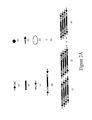
- Figure 1 provides a a general depiction of various aspects and embodiments of they invention in this regard, and the figure is discussed, by way of illustration below with reference to sequencing DNA from different samples.
- a plurality of samples (S 1, S 2 , through S j ) is shown topmost in the Figure.
- Each sample is comprised of a plurality of polynucleotides (P 1-1 to P 1-n1 in S 1 ; P 2-1 toP 2-n2 in S2; through P j-1 to P j-nj ).
- the polynucleotides in each sample are labeled separately with a tag polynucleotide sequence, all the polynucleotides in a given sample being tagged (in this illustration) with a single tag sequence, designated in the figure as T 1 for S 1 , T 2 for S 2 through T j for S j .
- the individual tagged polynucleotides are denoted accordingly.
- the tagged polynucleotides in each sample are designated collectively, for each sample, T 1 S 1 , T 2 S 2 through T j S j ,
- the tagged polynucleotides from the samples are mixed together to form a mixture, designated M i .
- the mixture is sequenced typically by a parallel sequencing method.
- the tag sequences are identified in the data thus obtained.
- the sequences are grouped by tag.
- the sequences from the individual samples are thereby identified.
- tags are 3 to 30, 4 to 25, 4 to 20 base long sequences. In embodiments the tags are 2,3,4, 5,6,7,8,9,10,11,12,13,14, 15, 16, 17, 18, 19, 20, 21, 22, 23, 24, 25, 26, 27, 28, 29, 30, 31, 32, 33, 34, 35, 36 nucleotides long or any combination thereof.
- sequences are determined without the use of gel electrophoresis. In embodiments the sequences are determined without the use of transfer of sequences from a gel onto a membrane or a filter for hybridization. In embodiments, sequences are determined by a parallel sequencing method, In embodiments the sequences are determined by pyrosequencing, sequencing by synthesis, hybridization sequencing, subtractive sequencing, pore sequencing or direct read sequencing.
- the tags are incorporated into polynucleotides in samples for sequencing by a step of ligation and/or by a step of amplification.
- the tags are comprised in primers for amplification.
- the tags are comprised in primers for PCR amplification, transcription amplification, rolling circle amplification, or amplification by Q ⁇ replicase.
- the tags are comprised in emulsion PCR adapters and primers for amplification.
- the tags are incorporated by a step of cloning into a vector.
- the samples are microbial community samples. In embodiments the samples are clinical samples. In embodiments the samples are environmental samples. In embodiments the samples are samples for SNP analysis. In embodiments the samples are, samples for genotyping. In embodiments the sequences are determined in one or more picotiter plates.
- the samples are fragmented genomic DNAs.
- the samples are fragmented Bacterial genomic DNA, Archae genomic DNA, Fungal genomic DNA, Eukaryotic genomic DNA, chloroplast DNA, and/of mitochondrial DNA.
- the samples are cDNAs.
- the samples are Eukaryotic cDNA, Bacterial cDNA, Archae cDNA, and/or Fungal cDNA,
- the tags are incorporated by a step of ligation and/or by a step of amplification.
- the samples are for any one or more of detecting, monitoring, profiling, prognosticating, and/or diagnosing a disorder disease, or the like.
- the samples are for analyzing the composition, diversity, stability, dynamics, and/or changes in agricultural, food, biosecurity, veterinary, clinical, ecological, zoological, ocea-nological, and/or any other sample comprising one or more polynucleotides,
- sequences are determined in wells of a titer plate. In embodiments the sequences are determined in one or more picotiter plates having a mask. In embodiments the sequences are determined in one more picotiter plates having a mask, wherein the mask defines 2, 4, 8, 16, 32, 64 or more compartments.
- a 454 picotiter plate in embodiments there are about 120,000 templates/plate and the read length averages about 250 bases per template. In embodiments, relating thereto there are 10 tags of 4 bases per 1/16 plate, 160 tags total, an average of about 750 templates per tag (and per sample), and about 187,500 bases sequenced per tag (and per sample).
- the tags are 10 base long sequences, there are 192 different tags, and the samples are analyzed in microliter plate format.
- the invention provides algorithms for deconvolving, from a mixture of sequences from two or more samples, the sequences of the samples in the mixture by identifying sample-specific tags in the sequences, grouping the sequences by the tags thus identified, thereby grouping together the sequence from each of said samples, apart from one another.
- the invention provides algorithms for deconvolving, from a mixture of sequences from two or more samples, the sequences of the samples in the mixture by identifying sample-specific tags in sequences, as follows:
- the algorithm can be implemented in any programming language.
- the algorithm is implemented in C, C++, JAVA, Fortran, or Basic.
- the algorithm is implemented as a PERL script.
- kits for multiplex sequencing as described herein comprising a set of primers and/or adapters, wherein each primer and/or adapter in said set comprises a tag sequence, a primer sequence and/or an emulsion PCR adapter.
- the primers and/or adapters further comprise a moiety for immobilization.
- the primers and/or adapters comprise biotin
- the primers and/or adapters in the set comprise all, tag sequences defined by 2, 3, 4, 5, 6, 7, or 8 base polynucleotide sequences, wherein said primers and/or adapters comprising different tag sequences are disposed in containers separate from one another.
- the primers and/or adapters are suitable for use as 454 Life Sciences amplification adapters and/or primers.
- the primers and/or adapters further comprise any one or more of a primer sequence for any one or more of a 16S rRNA sequence, an 18S rRNA. sequence, an ITS sequence, a mitochondrial sequence, a microsatellite sequence, a metabolic enzyme sequence, a genetic, disease sequence, and/or any other sequence for amplification or analysis.
- 454 Life Sciences a subsidiary of Roche Diagnostics, provides a device for pyrosequencing approximately 100,000,000 bases of about 400,000 different templates in a single run on a single picotiter plate.
- the company also provides masks that allows for the processing 2, 4, 8, or 16 different samples on one plate.
- the system provides about 1 million bases of sequence data on about 4,000 templates for each of 16 samples,
- the general process of sequencing using the 454 system is generally as follows: isolate DNA; optionally fragment the DNA; optionally render the DNA double stranded; ligate the DNA to adaptors; separate the strands of the dsDNA, bind the ssDNA to beads under conditions that result in a preponderance of beads that have either no DNA molecule bound to them or a single molecule of DNA bound to them; capture the beads in individual droplets of an emulsion of a PCR reaction mix in oil; carry out a PCR reaction on the emulsion-encapsulated bead-DNAs (whereby amplification products are captured on the beads); distribute the amplification products into picoliter wells so that there is either no bead in a well or one bead; and carry out pyrosequencing on all the beads in all the wells in parallel.
- EXAMPLE 2 Multiplex Pyrosequencing using 96 tagged adapter-PCR primers.
- 454 Life Sciences a subsidiary of Roche Diagnostics, provides a device for pyrosequencing approximately 100,000,000 bases of sequence for about 400,000 different templates in a single run on a single picotiter plate. At maximum capacity using the plate, the system provides about 10 million bases of sequence data for each of about 4,000 templates for each of 96 multitagged samples.
- the 96 tags are 6 bases in length and are used along with 6 bases of the forward or reverse primer to identify the reads that belong with each of the 96 individual samples (see Figure 2 ).
- DGGE D enaturing G radient G el E lectrophoresis
- TGGE T empemture G radient G el
- TTGE T emporal T emperature G radient G el
- T-RFLP T erminal- R estriction F ragment L ength P olymorphism
- SSCP S ingle S trand C onformation P olymorphism
- LH-PCR Length H eterogeneity PCR
- LH-PCR is probably the best technique for fingerprinting. It is inexpensive, fast, and can be used routinely to screen several hundred samples a day. It if useful as a routine survey tool that can be used to monitor the dynamics of natural soil microbial communities, and to quickly identify samples of interest by PCO analysis.
- LH-PCR has been used to extensively assess natural variation in bacterial communities by profiling the amplified variable regions of 16S rRNA genes in mixed microbial population samples, using PAGE. (See Mills 2000; Litchfield and Gillevet 2002; Lydell, Dowell et al. 2004). The LH-PCR products of the individual species in the population give rise to distinct bands in the gels.
- the "peak area" of each band is proportional to the abundance of the species in the community.
- LH-PCR of 16S rRNA variable regions has been used quite successfully to estimate species diversity in bacterioplankton communities, in particular. (See Suzuki, Rappe et al. 1998; Ritchie, Schuttter et al. 2000).
- Grouping samples can, to some extent, reduce the cost, time, and expense of such analyses. For instance, PCO analysis of LH-PCR data can be used to group samples with similar profiles for batch cloning and sequencing. Combining the samples this way reduces the time, expense, and work involved in analyzing the samples. Sequencing of at least 300 random clones is required to identify the bacterial components of the pooled sample down to 1% of the total bacterial populations in typical samples. This level of resolution is similar to that of ALH fingerprinting. Originally a novel approach, pooling similar sample prior to cloning and sequencing has proven to be robust and effective.
- Multitag Process multitagging techniques
- Multitag Ecogenomics high coverage sequencing of bacterial communities
- Multiplex Pyrosequencing Physical Synchronization Synchronization
- Elahi et al. 2002 Several publications use the term “Multiplex Pyrosequencing” (Pourmand, Elahi et al. 2002) to refer to generating composite signal from multiple targets that is read as a signature for a specific sample. The term is not used to refer to tag-based multiplexing in which sequences from different samples in a mixture are determined and then deconvolved from the mixed sequencing data using sample-specific incorporated during amplification reactions.)
- Multitag Process in a relativety simple series of steps accomplishes everything that otherwise would require not only community fingerprinting analysis, but also all of the cloning and sequencing processes previously required for high coverage Ecogenomic Analysis using conventional techniques.
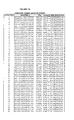
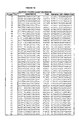
- short tags are added to the 5' ends of the forward and reverse PCR primers normally used for community analysis, These tags can be placed between the Emulsion PCR adapters and the PCT primers (see Figure 2 ). A different tag is attached to the primers for each of the samples to be combined. For instance primers that span a variable region of 16S rRNA genes may be used for analysis of bacterial and archael communities. 16S rRNA-specific primers with 4 base tags are set out in the Table 1 below. Likewise primers that span a variable region of an ITS gene may be used for analysis of fungal communities.
- any gene of interest can be used that provides conserved primer sites across a community, and sufficient variation in the between the primers for the desired resolution of individual species.
- genes specific to functional pathways such as anaerobic methane oxidation, or sulphur reduction can serve as targets for the amplification reaction, as well as 16S rRNA sequences.
- Table 1 shows a 16S rRNA-speciEc with a variety of 4 base tag sequences attached.
- primers are useful for amplifying 16S rRNAs in several samples that can then be sequenced together.
- the 16S rRNA in each sample is amplified using a different tag, but the same 16S primer sequence,
- the amplified rRNA sequences from the samples are combined and sequenced together.
- the rRNA sequences from the different samples then are identified and sorted out by their 4 base tag sequence plus the first 4 bases of each primer. It is to be appreciated that the sequences downstream of the shared 16S primer sequence will differ among the samples, as well as the tag sequence.
- the samples are individually amplified.
- the resulting amplicons comprise the primer sequences including the tags. Since unique tags are used for each sample, the tags in the amplicons from each sample will be different.
- the amplified DNAs are then pooled and sequenced by pyrosequencing as described above.
- the sequence data from a run is analyzed, in part, by grouping together all the sequences having the same tag. In this way, the sequences from each sample are demultiplexed from the sequencing data obtained from the mixture.
- the working of the invention in this regard is illustrated by the following simulation, carried out using conventionally obtained population data from cold seep samples.
- the algorithm for sequence analysis uses a PERL script to extract the first 100 bases of sequence. It then analyzes all the 100 bases sequences using a custom RDP PERL script.
- the script works as follows:
- IBD Inflammatory Bowel Diseases
- UC ulcerative colitis
- CD Crohn's disease
- IBDs are chronic, lifelong, relapsing illnesses, affecting close to 1 million Americans and costing approximately $2 billion per year to the US healthcare system.
- IBDs are of unknown cause, have no cure, and are increasing in incidence.
- the natural course of these diseases is characterized by periods of quiescence (inactive disease) interspersed with flare-ups (active disease), It is now widely accepted that flare-ups of IBD are due to a dysregutated inflammatory reaction to abnormal intestinal microflora dysbiosis), however.
- Amplicon Length Heterogeneity PCR has been used to study the gut microflora. It offers a rapid way of screening complex microbial communities, allowing for easy fingerprinting of microfloral changes.
- the LH-PCR fingerprinting is inexpensive and fast, with the ability to screen several hundred sample a day. It can be used as a routine survey tool to monitor the dynamics of natural soil microbial communities or to quickly identify samples of interest using PCO analysis.
- PCO analysis has been used to group samples with similar profiles, allowing them to be pooled for cloning and sequencing.
- Mulfitag Pyrosequencing is a novel pyrosequencing technology that allows many community samples to be sequenced together at high coverage without the necessity for fingerprinting, cloning, or the purification and separation techniques required by conventional methods for analyzing microbial communities, as described herein above. Multitag sequencing is more efficient, faster, and less costly than other methods.
- Multitag Pyrosequencing can be carried out using a set of specific tags on the end of standard universal small ribosomal sub-unit ("SSU") rRNA primers (See Table 1).
- a different set of the tagged primers is used to amplify the SSU rRNA. in each different environmental sample ( Figure 2 -Step 1).
- the PCR amplicons from all the samples are pooled.
- Emulsion PCR is performed and the amplicons arising from each molecule are captured on their respective beads. Following amplification, the beads are distributed into the wells of a picoliter plate ( Figure 2 -Step 2).
- the sequences, including the tagged sequences, of the amplicons on each bead are determined by pyrosequencing ( Figure 2 -Step 3).
- a PERL script or other suitable program is used to sort the information. using the tags and primer sequence as a key. Sequences with the same tags are identified thereby wiith their respective sample.
- the bacteria species in each sample then are identified by matching the SSU rRNA sequences to entries in the database of the Ribosomal Database Project (either RDP 8.1 or RDP 9.0)-
- the normalized-frequency with which a bacteria is thus identified in a given sample is indicative of its relative representation in the microbial community. Histograms based on these frequency determinations can be used for the non-parametric analysis of dysbiotic shifts involved in disease states.
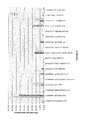
- Figure 3 depicts the results of such an experiment in which six Control, ten Crohns, and eight Ulcerative colitis mucosal samples were analyzed by Multitag pyrosequencing. Each of the segments in the stacked histogram bars represents the normalized abundance of that specific taxa in a specific sample.
- identification of the taxa was performed using BLAST analysis of the RDP 8.1 database. It can be seen that some taxa (i.e. Bacillus fragilis subgroup and Rumanococcus gnavus subgroup) are present in the same abundance in both control and disease states. Other taxa, such as Clostridium leptum are more dominant in Ulcerative colitis, while others (i.e. the Gloeothece gloeocapsa subgroup) are indicators of dysbiosis in the disease state.
- EXAMPLE 4 Distortion of the distribution of components of a microbial community by directly ligating Emulsion PCR adapters onto PCR amplicons.
Landscapes
- Chemical & Material Sciences (AREA)
- Life Sciences & Earth Sciences (AREA)
- Organic Chemistry (AREA)
- Proteomics, Peptides & Aminoacids (AREA)
- Health & Medical Sciences (AREA)
- Zoology (AREA)
- Wood Science & Technology (AREA)
- Engineering & Computer Science (AREA)
- Analytical Chemistry (AREA)
- Molecular Biology (AREA)
- Immunology (AREA)
- Microbiology (AREA)
- Biotechnology (AREA)
- Biochemistry (AREA)
- Bioinformatics & Cheminformatics (AREA)
- General Engineering & Computer Science (AREA)
- General Health & Medical Sciences (AREA)
- Genetics & Genomics (AREA)
- Biophysics (AREA)
- Physics & Mathematics (AREA)
- Chemical Kinetics & Catalysis (AREA)
- Measuring Or Testing Involving Enzymes Or Micro-Organisms (AREA)
Applications Claiming Priority (2)
| Application Number | Priority Date | Filing Date | Title |
|---|---|---|---|
| US85894806P | 2006-11-15 | 2006-11-15 | |
| EP07871488.8A EP2082063B1 (fr) | 2006-11-15 | 2007-11-15 | Sequencage multietiquette et analyse ecogenomique |
Related Parent Applications (3)
| Application Number | Title | Priority Date | Filing Date |
|---|---|---|---|
| EP07871488.8 Division | 2007-11-15 | ||
| EP07871488.8A Division EP2082063B1 (fr) | 2006-11-15 | 2007-11-15 | Sequencage multietiquette et analyse ecogenomique |
| EP07871488.8A Division-Into EP2082063B1 (fr) | 2006-11-15 | 2007-11-15 | Sequencage multietiquette et analyse ecogenomique |
Publications (2)
| Publication Number | Publication Date |
|---|---|
| EP2518162A1 true EP2518162A1 (fr) | 2012-10-31 |
| EP2518162B1 EP2518162B1 (fr) | 2018-03-07 |
Family
ID=39402482
Family Applications (2)
| Application Number | Title | Priority Date | Filing Date |
|---|---|---|---|
| EP12161878.9A Active EP2518162B1 (fr) | 2006-11-15 | 2007-11-15 | Séquençage multiétiquette et analyse écogénomique |
| EP07871488.8A Active EP2082063B1 (fr) | 2006-11-15 | 2007-11-15 | Sequencage multietiquette et analyse ecogenomique |
Family Applications After (1)
| Application Number | Title | Priority Date | Filing Date |
|---|---|---|---|
| EP07871488.8A Active EP2082063B1 (fr) | 2006-11-15 | 2007-11-15 | Sequencage multietiquette et analyse ecogenomique |
Country Status (6)
| Country | Link |
|---|---|
| US (4) | US8603749B2 (fr) |
| EP (2) | EP2518162B1 (fr) |
| CA (2) | CA2958994C (fr) |
| DK (1) | DK2518162T3 (fr) |
| ES (2) | ES2679996T3 (fr) |
| WO (1) | WO2008061193A2 (fr) |
Families Citing this family (152)
| Publication number | Priority date | Publication date | Assignee | Title |
|---|---|---|---|---|
| EP1591541B1 (fr) | 1997-04-01 | 2012-02-15 | Illumina Cambridge Limited | Methode de séquençage d'acide nucléique |
| ES2313143T3 (es) | 2005-04-06 | 2009-03-01 | Maurice Stroun | Metodo para el diagnostico de cancer mediante la deteccion de adn y arn circulantes. |
| US9029085B2 (en) | 2007-03-07 | 2015-05-12 | President And Fellows Of Harvard College | Assays and other reactions involving droplets |
| AR066922A1 (es) * | 2007-06-08 | 2009-09-23 | Monsanto Technology Llc | Metodos de mejoramiento molecular del germoplasma de una planta por secuenciamiento dirigido |
| EP2235210B1 (fr) | 2007-12-21 | 2015-03-25 | President and Fellows of Harvard College | Procédés de séquençage d'acides nucléiques |
| EP2326732A4 (fr) * | 2008-08-26 | 2012-11-14 | Fluidigm Corp | Procédés de dosage pour un débit amélioré d'échantillons et/ou de cibles |
| US11111514B2 (en) | 2008-09-05 | 2021-09-07 | Washington University | Method for multiplexed nucleic acid patch polymerase chain reaction |
| US8586310B2 (en) * | 2008-09-05 | 2013-11-19 | Washington University | Method for multiplexed nucleic acid patch polymerase chain reaction |
| US9909170B2 (en) | 2008-09-05 | 2018-03-06 | Washington University | Method for multiplexed nucleic acid patch polymerase chain reaction |
| EP3587594B1 (fr) | 2008-12-19 | 2022-04-13 | President and Fellows of Harvard College | Séquençage d'acide nucléique assisté par particules |
| JP5457222B2 (ja) | 2009-02-25 | 2014-04-02 | エフ.ホフマン−ラ ロシュ アーゲー | 小型化ハイスループット核酸分析 |
| DK2414547T3 (da) | 2009-04-02 | 2014-06-16 | Fluidigm Corp | Multiprimer-amplifikationsmetode til stregkodning af målnukleinsyrer |
| US12129514B2 (en) | 2009-04-30 | 2024-10-29 | Molecular Loop Biosolutions, Llc | Methods and compositions for evaluating genetic markers |
| EP2425240A4 (fr) | 2009-04-30 | 2012-12-12 | Good Start Genetics Inc | Procédés et compositions d'évaluation de marqueurs génétiques |
| EP3029141A1 (fr) * | 2009-08-20 | 2016-06-08 | Population Genetics Technologies Ltd. | Compositions et procédés de réarrangement d'acide nucléique intramoléculaire |
| CN104611423B (zh) * | 2009-11-16 | 2018-03-20 | 基因特力株式会社 | 基因分型的方法 |
| US9315857B2 (en) | 2009-12-15 | 2016-04-19 | Cellular Research, Inc. | Digital counting of individual molecules by stochastic attachment of diverse label-tags |
| US8835358B2 (en) | 2009-12-15 | 2014-09-16 | Cellular Research, Inc. | Digital counting of individual molecules by stochastic attachment of diverse labels |
| EP2619327B1 (fr) | 2010-09-21 | 2014-10-22 | Population Genetics Technologies LTD. | Niveau de confiance accru d'appels d'allèles par un comptage moléculaire |
| US9163281B2 (en) | 2010-12-23 | 2015-10-20 | Good Start Genetics, Inc. | Methods for maintaining the integrity and identification of a nucleic acid template in a multiplex sequencing reaction |
| JP6069224B2 (ja) | 2011-01-31 | 2017-02-01 | アプライズ バイオ, インコーポレイテッド | 細胞において複数のエピトープを同定する方法 |
| WO2012129363A2 (fr) | 2011-03-24 | 2012-09-27 | President And Fellows Of Harvard College | Détection et analyse d'acide nucléique d'une cellule isolée |
| TWI465572B (zh) * | 2011-05-19 | 2014-12-21 | Univ Chang Gung | Method, composition and system of amplification and detection of target microbial DNA |
| US9074204B2 (en) * | 2011-05-20 | 2015-07-07 | Fluidigm Corporation | Nucleic acid encoding reactions |
| EP2768983A4 (fr) | 2011-10-17 | 2015-06-03 | Good Start Genetics Inc | Méthodes d'identification de mutations associées à des maladies |
| US11177020B2 (en) | 2012-02-27 | 2021-11-16 | The University Of North Carolina At Chapel Hill | Methods and uses for molecular tags |
| CA2865575C (fr) | 2012-02-27 | 2024-01-16 | Cellular Research, Inc. | Compositions et trousses pour le comptage moleculaire |
| EP2820155B1 (fr) | 2012-02-28 | 2017-07-26 | Population Genetics Technologies Ltd. | Procédé de fixation d'une contre-séquence à un échantillon d'acides nucléiques |
| US8209130B1 (en) | 2012-04-04 | 2012-06-26 | Good Start Genetics, Inc. | Sequence assembly |
| US10227635B2 (en) | 2012-04-16 | 2019-03-12 | Molecular Loop Biosolutions, Llc | Capture reactions |
| US9840732B2 (en) | 2012-05-21 | 2017-12-12 | Fluidigm Corporation | Single-particle analysis of particle populations |
| DK2694669T3 (en) * | 2012-06-28 | 2017-07-24 | Taxon Biosciences Inc | PROCEDURES FOR THE PREPARATION OR CREATION OF A SYNTHETIC MICROBIAL CONSORTIUM IDENTIFIED BY COMPUTER ANALYSIS OF AMPLICON SEQUENCES |
| EP2882868B1 (fr) | 2012-08-08 | 2019-07-31 | H. Hoffnabb-La Roche Ag | Accroissement de la plage dynamique pour identifier de multiples épitopes dans des cellules |
| JP6367196B2 (ja) | 2012-08-14 | 2018-08-01 | テンエックス・ジェノミクス・インコーポレイテッド | マイクロカプセル組成物および方法 |
| US9701998B2 (en) | 2012-12-14 | 2017-07-11 | 10X Genomics, Inc. | Methods and systems for processing polynucleotides |
| US10273541B2 (en) | 2012-08-14 | 2019-04-30 | 10X Genomics, Inc. | Methods and systems for processing polynucleotides |
| US9951386B2 (en) | 2014-06-26 | 2018-04-24 | 10X Genomics, Inc. | Methods and systems for processing polynucleotides |
| US10584381B2 (en) | 2012-08-14 | 2020-03-10 | 10X Genomics, Inc. | Methods and systems for processing polynucleotides |
| US10221442B2 (en) | 2012-08-14 | 2019-03-05 | 10X Genomics, Inc. | Compositions and methods for sample processing |
| US10752949B2 (en) | 2012-08-14 | 2020-08-25 | 10X Genomics, Inc. | Methods and systems for processing polynucleotides |
| US11591637B2 (en) | 2012-08-14 | 2023-02-28 | 10X Genomics, Inc. | Compositions and methods for sample processing |
| US10323279B2 (en) | 2012-08-14 | 2019-06-18 | 10X Genomics, Inc. | Methods and systems for processing polynucleotides |
| US20160040229A1 (en) | 2013-08-16 | 2016-02-11 | Guardant Health, Inc. | Systems and methods to detect rare mutations and copy number variation |
| US10876152B2 (en) | 2012-09-04 | 2020-12-29 | Guardant Health, Inc. | Systems and methods to detect rare mutations and copy number variation |
| DE202013012824U1 (de) | 2012-09-04 | 2020-03-10 | Guardant Health, Inc. | Systeme zum Erfassen von seltenen Mutationen und einer Kopienzahlvariation |
| US11913065B2 (en) | 2012-09-04 | 2024-02-27 | Guardent Health, Inc. | Systems and methods to detect rare mutations and copy number variation |
| EP3567116A1 (fr) | 2012-12-14 | 2019-11-13 | 10X Genomics, Inc. | Procédés et systèmes de traitement de polynucléotides |
| US10533221B2 (en) | 2012-12-14 | 2020-01-14 | 10X Genomics, Inc. | Methods and systems for processing polynucleotides |
| KR102190198B1 (ko) | 2013-02-08 | 2020-12-14 | 10엑스 제노믹스, 인크. | 폴리뉴클레오티드 바코드 생성 |
| EP2774998A1 (fr) | 2013-03-08 | 2014-09-10 | Roche Diagniostics GmbH | Étiquettes de séquence améliorées |
| US8778609B1 (en) | 2013-03-14 | 2014-07-15 | Good Start Genetics, Inc. | Methods for analyzing nucleic acids |
| US9328382B2 (en) * | 2013-03-15 | 2016-05-03 | Complete Genomics, Inc. | Multiple tagging of individual long DNA fragments |
| SG11201508193TA (en) | 2013-04-17 | 2015-11-27 | Agency Science Tech & Res | Method for generating extended sequence reads |
| EP3578667B1 (fr) | 2013-04-17 | 2023-10-04 | Pioneer Hi-Bred International, Inc. | Procédés de caractérisation de composition de séquences d'adn dans un génome |
| US9567645B2 (en) | 2013-08-28 | 2017-02-14 | Cellular Research, Inc. | Massively parallel single cell analysis |
| US10395758B2 (en) | 2013-08-30 | 2019-08-27 | 10X Genomics, Inc. | Sequencing methods |
| JP2017504307A (ja) | 2013-10-07 | 2017-02-09 | セルラー リサーチ, インコーポレイテッド | アレイ上のフィーチャーをデジタルカウントするための方法およびシステム |
| US10851414B2 (en) | 2013-10-18 | 2020-12-01 | Good Start Genetics, Inc. | Methods for determining carrier status |
| US9824068B2 (en) | 2013-12-16 | 2017-11-21 | 10X Genomics, Inc. | Methods and apparatus for sorting data |
| ES2660989T3 (es) | 2013-12-28 | 2018-03-27 | Guardant Health, Inc. | Métodos y sistemas para detectar variantes genéticas |
| US9663831B2 (en) * | 2014-01-25 | 2017-05-30 | uBiome, Inc. | Method and system for microbiome analysis |
| CA2943624A1 (fr) | 2014-04-10 | 2015-10-15 | 10X Genomics, Inc. | Dispositifs fluidiques, systemes et procedes permettant d'encapsuler et de separer des reactifs, et leurs applications |
| WO2015175530A1 (fr) | 2014-05-12 | 2015-11-19 | Gore Athurva | Procédés pour la détection d'aneuploïdie |
| EP4574974A3 (fr) | 2014-06-26 | 2025-10-08 | 10x Genomics, Inc. | Procédés d'analyse d'acides nucléiques à partir de cellules individuelles ou de populations cellulaires |
| JP2017526046A (ja) | 2014-06-26 | 2017-09-07 | 10エックス ゲノミクス,インコーポレイテッド | 核酸配列アセンブルのプロセス及びシステム |
| WO2015200869A1 (fr) | 2014-06-26 | 2015-12-30 | 10X Genomics, Inc. | Analyse de séquences d'acides nucléiques |
| US12312640B2 (en) | 2014-06-26 | 2025-05-27 | 10X Genomics, Inc. | Analysis of nucleic acid sequences |
| WO2016025818A1 (fr) | 2014-08-15 | 2016-02-18 | Good Start Genetics, Inc. | Systèmes et procédés pour une analyse génétique |
| US11408024B2 (en) | 2014-09-10 | 2022-08-09 | Molecular Loop Biosciences, Inc. | Methods for selectively suppressing non-target sequences |
| JP2017536087A (ja) | 2014-09-24 | 2017-12-07 | グッド スタート ジェネティクス, インコーポレイテッド | 遺伝子アッセイのロバストネスを増大させるためのプロセス制御 |
| WO2016069939A1 (fr) | 2014-10-29 | 2016-05-06 | 10X Genomics, Inc. | Procédés et compositions de séquençage ciblé d'acides nucléiques |
| US9975122B2 (en) | 2014-11-05 | 2018-05-22 | 10X Genomics, Inc. | Instrument systems for integrated sample processing |
| US10233490B2 (en) | 2014-11-21 | 2019-03-19 | Metabiotech Corporation | Methods for assembling and reading nucleic acid sequences from mixed populations |
| US10066259B2 (en) | 2015-01-06 | 2018-09-04 | Good Start Genetics, Inc. | Screening for structural variants |
| CN107427808B (zh) | 2015-01-12 | 2020-10-23 | 10X基因组学有限公司 | 用于制备核酸测序文库的方法和系统以及用其制备的文库 |
| WO2016115273A1 (fr) | 2015-01-13 | 2016-07-21 | 10X Genomics, Inc. | Systèmes et procédés de visualisation d'informations de variation structurelle et de phasage |
| CN107208156B (zh) | 2015-02-09 | 2021-10-08 | 10X基因组学有限公司 | 用于使用变异识别数据来确定结构变异和定相的系统和方法 |
| EP3259371B1 (fr) | 2015-02-19 | 2020-09-02 | Becton, Dickinson and Company | Analyse à haut rendement de cellules uniques combinant des informations protéomiques et génomiques |
| EP3262407B1 (fr) | 2015-02-24 | 2023-08-30 | 10X Genomics, Inc. | Procédés et systèmes de traitement de cloisonnement |
| CN107532202A (zh) | 2015-02-24 | 2018-01-02 | 10X 基因组学有限公司 | 用于靶向核酸序列覆盖的方法 |
| CN107208158B (zh) | 2015-02-27 | 2022-01-28 | 贝克顿迪金森公司 | 空间上可寻址的分子条形编码 |
| EP3270160B1 (fr) * | 2015-03-13 | 2020-03-18 | Sysmex Corporation | Procédé de détection de substance à tester et kit de réactifs utilisé dans ledit procédé |
| EP3835431B1 (fr) | 2015-03-30 | 2022-11-02 | Becton, Dickinson and Company | Procédés pour codage à barres combinatoire |
| US11608516B2 (en) | 2015-04-15 | 2023-03-21 | Ecolab Usa Inc. | Method for determination of diversity and viability thresholds used to assess microorganisms in process samples |
| US11390914B2 (en) | 2015-04-23 | 2022-07-19 | Becton, Dickinson And Company | Methods and compositions for whole transcriptome amplification |
| WO2016196229A1 (fr) | 2015-06-01 | 2016-12-08 | Cellular Research, Inc. | Méthodes de quantification d'arn |
| US11302416B2 (en) | 2015-09-02 | 2022-04-12 | Guardant Health | Machine learning for somatic single nucleotide variant detection in cell-free tumor nucleic acid sequencing applications |
| US12540351B2 (en) | 2015-09-02 | 2026-02-03 | Guardant Health, Inc. | Identification of somatic mutations versus germline variants for cell-free DNA variant calling applications |
| JP6940484B2 (ja) | 2015-09-11 | 2021-09-29 | セルラー リサーチ, インコーポレイテッド | ライブラリー正規化のための方法および組成物 |
| SG10202108763UA (en) | 2015-12-04 | 2021-09-29 | 10X Genomics Inc | Methods and compositions for nucleic acid analysis |
| CN108603224B (zh) | 2015-12-16 | 2022-06-28 | 富鲁达公司 | 高水平多路复用扩增 |
| CN117174167A (zh) | 2015-12-17 | 2023-12-05 | 夸登特健康公司 | 通过分析无细胞dna确定肿瘤基因拷贝数的方法 |
| SG11201806757XA (en) | 2016-02-11 | 2018-09-27 | 10X Genomics Inc | Systems, methods, and media for de novo assembly of whole genome sequence data |
| WO2017181146A1 (fr) | 2016-04-14 | 2017-10-19 | Guardant Health, Inc. | Méthodes de détection précoce du cancer |
| US11384382B2 (en) | 2016-04-14 | 2022-07-12 | Guardant Health, Inc. | Methods of attaching adapters to sample nucleic acids |
| EP3452614B1 (fr) | 2016-05-02 | 2023-06-28 | Becton, Dickinson and Company | Codes à barres moléculaires précis |
| WO2017197343A2 (fr) | 2016-05-12 | 2017-11-16 | 10X Genomics, Inc. | Filtres microfluidiques sur puce |
| WO2017197338A1 (fr) | 2016-05-13 | 2017-11-16 | 10X Genomics, Inc. | Systèmes microfluidiques et procédés d'utilisation |
| US10301677B2 (en) | 2016-05-25 | 2019-05-28 | Cellular Research, Inc. | Normalization of nucleic acid libraries |
| CN109074430B (zh) | 2016-05-26 | 2022-03-29 | 贝克顿迪金森公司 | 分子标记计数调整方法 |
| US10202641B2 (en) | 2016-05-31 | 2019-02-12 | Cellular Research, Inc. | Error correction in amplification of samples |
| US10640763B2 (en) | 2016-05-31 | 2020-05-05 | Cellular Research, Inc. | Molecular indexing of internal sequences |
| AU2017331459B2 (en) | 2016-09-26 | 2023-04-13 | Becton, Dickinson And Company | Measurement of protein expression using reagents with barcoded oligonucleotide sequences |
| WO2018064486A1 (fr) | 2016-09-29 | 2018-04-05 | Counsyl, Inc. | Dépistage prénatal non invasif utilisant une optimisation de profondeur itérative dynamique |
| KR20240155386A (ko) | 2016-09-30 | 2024-10-28 | 가던트 헬쓰, 인크. | 무세포 핵산의 다중-해상도 분석 방법 |
| US9850523B1 (en) | 2016-09-30 | 2017-12-26 | Guardant Health, Inc. | Methods for multi-resolution analysis of cell-free nucleic acids |
| AU2017359048B2 (en) | 2016-11-08 | 2022-07-21 | Becton, Dickinson And Company | Methods for expression profile classification |
| KR102790039B1 (ko) | 2016-11-08 | 2025-04-04 | 벡톤 디킨슨 앤드 컴퍼니 | 세포 표지 분류 방법 |
| US10815525B2 (en) | 2016-12-22 | 2020-10-27 | 10X Genomics, Inc. | Methods and systems for processing polynucleotides |
| US10550429B2 (en) | 2016-12-22 | 2020-02-04 | 10X Genomics, Inc. | Methods and systems for processing polynucleotides |
| US10011872B1 (en) | 2016-12-22 | 2018-07-03 | 10X Genomics, Inc. | Methods and systems for processing polynucleotides |
| WO2018132459A1 (fr) * | 2017-01-10 | 2018-07-19 | Paragon Genomics, Inc. | Méthodes et compositions pour réduire des codes-barres moléculaires redondants créés dans des réactions d'extension d'amorce |
| ES2961580T3 (es) | 2017-01-13 | 2024-03-12 | Cellular Res Inc | Revestimiento hidrófilo de canales de fluidos |
| EP4310183B1 (fr) | 2017-01-30 | 2025-07-09 | 10X Genomics, Inc. | Procédés et systèmes de codage à barres de cellules uniques à base de gouttelettes |
| US12264411B2 (en) | 2017-01-30 | 2025-04-01 | 10X Genomics, Inc. | Methods and systems for analysis |
| CN110382708A (zh) | 2017-02-01 | 2019-10-25 | 赛卢拉研究公司 | 使用阻断性寡核苷酸进行选择性扩增 |
| CN110870018B (zh) | 2017-05-19 | 2024-11-22 | 10X基因组学有限公司 | 用于分析数据集的系统和方法 |
| US10844372B2 (en) | 2017-05-26 | 2020-11-24 | 10X Genomics, Inc. | Single cell analysis of transposase accessible chromatin |
| CN109526228B (zh) | 2017-05-26 | 2022-11-25 | 10X基因组学有限公司 | 转座酶可接近性染色质的单细胞分析 |
| WO2018226293A1 (fr) | 2017-06-05 | 2018-12-13 | Becton, Dickinson And Company | Indexation d'échantillon pour des cellules uniques |
| CN111051523B (zh) | 2017-11-15 | 2024-03-19 | 10X基因组学有限公司 | 功能化凝胶珠 |
| US10829815B2 (en) | 2017-11-17 | 2020-11-10 | 10X Genomics, Inc. | Methods and systems for associating physical and genetic properties of biological particles |
| WO2019126209A1 (fr) | 2017-12-19 | 2019-06-27 | Cellular Research, Inc. | Particules associées à des oligonucléotides |
| WO2019195166A1 (fr) | 2018-04-06 | 2019-10-10 | 10X Genomics, Inc. | Systèmes et procédés de contrôle de qualité dans un traitement de cellules uniques |
| EP3788171B1 (fr) | 2018-05-03 | 2023-04-05 | Becton, Dickinson and Company | Analyse multi-omique d'échantillons à haut débit |
| EP3788170B1 (fr) | 2018-05-03 | 2025-01-01 | Becton, Dickinson and Company | Codage à barres moléculaire sur des extrémités de transcrit en regard |
| WO2019217452A1 (fr) | 2018-05-08 | 2019-11-14 | Mgi Tech Co., Ltd. | Co-barcoding d'adn à base de billes à un seul tube pour séquençage, haplotypage et assemblage précis et rentables |
| WO2020047553A1 (fr) | 2018-08-31 | 2020-03-05 | Guardant Health, Inc. | Détection de variants génétiques basée sur des lectures fusionnées et non fusionnées |
| WO2020072380A1 (fr) | 2018-10-01 | 2020-04-09 | Cellular Research, Inc. | Détermination de séquences de transcripts 5' |
| EP3877520B1 (fr) | 2018-11-08 | 2025-03-19 | Becton, Dickson And Company | Analyse transcriptomique complète de cellules uniques à l'aide d'un amorçage aléatoire |
| EP4745247A2 (fr) | 2018-12-13 | 2026-05-20 | Becton Dickinson Co | Extension sélective dans une analyse de transcriptome entier de cellule unique |
| WO2020150356A1 (fr) | 2019-01-16 | 2020-07-23 | Becton, Dickinson And Company | Normalisation de réaction en chaîne de la polymérase par titrage d'amorce |
| CN113574178B (zh) | 2019-01-23 | 2024-10-29 | 贝克顿迪金森公司 | 与抗体关联的寡核苷酸 |
| CA3126428A1 (fr) | 2019-01-31 | 2020-08-06 | Guardant Health, Inc. | Compositions et methodes pour isoler de l'adn acellulaire |
| CN120099139A (zh) | 2019-02-14 | 2025-06-06 | 贝克顿迪金森公司 | 杂合体靶向和全转录物组扩增 |
| US11965208B2 (en) | 2019-04-19 | 2024-04-23 | Becton, Dickinson And Company | Methods of associating phenotypical data and single cell sequencing data |
| CN120099137A (zh) | 2019-07-22 | 2025-06-06 | 贝克顿迪金森公司 | 单细胞染色质免疫沉淀测序测定 |
| EP4055160B1 (fr) | 2019-11-08 | 2024-04-10 | Becton Dickinson and Company | Utilisation d'un amorçage aléatoire pour obtenir des informations v(d)j de pleine longueur pour le séquençage du répertoire immunitaire |
| EP4090763B1 (fr) | 2020-01-13 | 2024-12-04 | Becton Dickinson and Company | Procédés et compositions pour la quantification de protéines et d'arn |
| WO2021146219A1 (fr) | 2020-01-13 | 2021-07-22 | Becton, Dickinson And Company | Capture de cellules à l'aide d'oligonucléotides contenant de la du |
| ES2993319T3 (en) | 2020-01-29 | 2024-12-27 | Becton Dickinson Co | Barcoded wells for spatial mapping of single cells through sequencing |
| US12421558B2 (en) | 2020-02-13 | 2025-09-23 | 10X Genomics, Inc. | Systems and methods for joint interactive visualization of gene expression and DNA chromatin accessibility |
| CN115151810A (zh) | 2020-02-25 | 2022-10-04 | 贝克顿迪金森公司 | 实现使用单细胞样品作为单色补偿对照的双特异性探针 |
| US11661625B2 (en) | 2020-05-14 | 2023-05-30 | Becton, Dickinson And Company | Primers for immune repertoire profiling |
| US10941453B1 (en) | 2020-05-20 | 2021-03-09 | Paragon Genomics, Inc. | High throughput detection of pathogen RNA in clinical specimens |
| CN115803445A (zh) | 2020-06-02 | 2023-03-14 | 贝克顿迪金森公司 | 用于5撇基因表达测定的寡核苷酸和珠 |
| US11932901B2 (en) | 2020-07-13 | 2024-03-19 | Becton, Dickinson And Company | Target enrichment using nucleic acid probes for scRNAseq |
| WO2022026909A1 (fr) | 2020-07-31 | 2022-02-03 | Becton, Dickinson And Company | Dosage à cellule unique pour chromatine accessible par transposase |
| US11739443B2 (en) | 2020-11-20 | 2023-08-29 | Becton, Dickinson And Company | Profiling of highly expressed and lowly expressed proteins |
| US12392771B2 (en) | 2020-12-15 | 2025-08-19 | Becton, Dickinson And Company | Single cell secretome analysis |
| US11680293B1 (en) | 2022-04-21 | 2023-06-20 | Paragon Genomics, Inc. | Methods and compositions for amplifying DNA and generating DNA sequencing results from target-enriched DNA molecules |
| US12091715B2 (en) | 2022-04-21 | 2024-09-17 | Paragon Genomics, Inc. | Methods and compositions for reducing base errors of massive parallel sequencing using triseq sequencing |
Citations (6)
| Publication number | Priority date | Publication date | Assignee | Title |
|---|---|---|---|---|
| WO1998014610A2 (fr) * | 1996-10-04 | 1998-04-09 | The Perkin-Elmer Corporation | Procedes et compositions de capture de polynucleotides multiplex |
| WO2001083823A1 (fr) * | 2000-04-28 | 2001-11-08 | Quantum Dot Corporation | Procedes et compositions pour l'analyse de polynucleotides au moyen de sequences de capture generiques |
| WO2002061143A2 (fr) * | 2001-01-31 | 2002-08-08 | Ambion, Inc. | Analyse comparative des acides nucleiques par marquage de population |
| US20060008824A1 (en) * | 2004-05-20 | 2006-01-12 | Leland Stanford Junior University | Methods and compositions for clonal amplification of nucleic acid |
| US7211390B2 (en) | 1999-09-16 | 2007-05-01 | 454 Life Sciences Corporation | Method of sequencing a nucleic acid |
| US7244559B2 (en) | 1999-09-16 | 2007-07-17 | 454 Life Sciences Corporation | Method of sequencing a nucleic acid |
Family Cites Families (13)
| Publication number | Priority date | Publication date | Assignee | Title |
|---|---|---|---|---|
| US5695934A (en) * | 1994-10-13 | 1997-12-09 | Lynx Therapeutics, Inc. | Massively parallel sequencing of sorted polynucleotides |
| WO1998015644A2 (fr) * | 1996-09-27 | 1998-04-16 | The Chinese University Of Hong Kong | Procede de sequencage en parallele de polynucleotides |
| US6703228B1 (en) * | 1998-09-25 | 2004-03-09 | Massachusetts Institute Of Technology | Methods and products related to genotyping and DNA analysis |
| US7582420B2 (en) | 2001-07-12 | 2009-09-01 | Illumina, Inc. | Multiplex nucleic acid reactions |
| US20040110191A1 (en) | 2001-01-31 | 2004-06-10 | Winkler Matthew M. | Comparative analysis of nucleic acids using population tagging |
| CA2513889A1 (fr) * | 2003-01-29 | 2004-08-19 | 454 Corporation | Sequencage a double extremite |
| ATE461292T1 (de) * | 2003-09-10 | 2010-04-15 | Althea Technologies Inc | Erstellung von expressionsprofilen unter verwendung von mikroarrays |
| US20050221341A1 (en) * | 2003-10-22 | 2005-10-06 | Shimkets Richard A | Sequence-based karyotyping |
| GB0400584D0 (en) | 2004-01-12 | 2004-02-11 | Solexa Ltd | Nucleic acid chacterisation |
| AU2005216549A1 (en) * | 2004-02-27 | 2005-09-09 | President And Fellows Of Harvard College | Polony fluorescent in situ sequencing beads |
| US20060228721A1 (en) * | 2005-04-12 | 2006-10-12 | Leamon John H | Methods for determining sequence variants using ultra-deep sequencing |
| CA2910861C (fr) * | 2005-09-29 | 2018-08-07 | Michael Josephus Theresia Van Eijk | Criblage a haut debit de populations mutagenisees |
| CN101310024B (zh) * | 2005-11-14 | 2012-10-03 | 科因股份有限公司 | 高通量筛选转座子标记群体和大量平行的插入位点的序列鉴定方法 |
-
2007
- 2007-11-15 EP EP12161878.9A patent/EP2518162B1/fr active Active
- 2007-11-15 CA CA2958994A patent/CA2958994C/fr active Active
- 2007-11-15 ES ES12161878.9T patent/ES2679996T3/es active Active
- 2007-11-15 WO PCT/US2007/084840 patent/WO2008061193A2/fr not_active Ceased
- 2007-11-15 ES ES07871488.8T patent/ES2490601T3/es active Active
- 2007-11-15 CA CA2669728A patent/CA2669728C/fr active Active
- 2007-11-15 US US12/515,262 patent/US8603749B2/en active Active
- 2007-11-15 EP EP07871488.8A patent/EP2082063B1/fr active Active
- 2007-11-15 DK DK12161878.9T patent/DK2518162T3/en active
-
2013
- 2013-10-30 US US14/066,967 patent/US9453262B2/en active Active
-
2016
- 2016-08-18 US US15/240,525 patent/US11091813B2/en active Active
-
2019
- 2019-02-01 US US16/264,854 patent/US20190194727A1/en not_active Abandoned
Patent Citations (7)
| Publication number | Priority date | Publication date | Assignee | Title |
|---|---|---|---|---|
| WO1998014610A2 (fr) * | 1996-10-04 | 1998-04-09 | The Perkin-Elmer Corporation | Procedes et compositions de capture de polynucleotides multiplex |
| US7211390B2 (en) | 1999-09-16 | 2007-05-01 | 454 Life Sciences Corporation | Method of sequencing a nucleic acid |
| US7244559B2 (en) | 1999-09-16 | 2007-07-17 | 454 Life Sciences Corporation | Method of sequencing a nucleic acid |
| US7264929B2 (en) | 1999-09-16 | 2007-09-04 | 454 Life Sciences Corporation | Method of sequencing a nucleic acid |
| WO2001083823A1 (fr) * | 2000-04-28 | 2001-11-08 | Quantum Dot Corporation | Procedes et compositions pour l'analyse de polynucleotides au moyen de sequences de capture generiques |
| WO2002061143A2 (fr) * | 2001-01-31 | 2002-08-08 | Ambion, Inc. | Analyse comparative des acides nucleiques par marquage de population |
| US20060008824A1 (en) * | 2004-05-20 | 2006-01-12 | Leland Stanford Junior University | Methods and compositions for clonal amplification of nucleic acid |
Non-Patent Citations (28)
| Title |
|---|
| AMANN, R.: "Who is out there? Microbial Aspects of Biodiversity.", SYSTEM. APPL. MICROBIOL., vol. 23, 2000, pages 1 - 8 |
| BOWMAN, J. P.; R. D. MCCUAIG: "Biodiversity, Community Structural Shifts, and Biogeography of Prokaryotes within Antarctic Continental Shelf Sediment.", APPL. ENVIRON. MICROBIOL., vol. 69, no. 5, 2003, pages 2463 - 2483 |
| ECKBURG, P. B.; E. M. BIK ET AL.: "Diversity of the human intestinal microbial flora.", SCIENCE, vol. 308, 2005, pages 1635 - 1638 |
| FITZGERALD, K. M., MICROBIAL COMMUNITY DYNAMICS DURING THE BENCH-SCALE BIOREMEDIATION OF PETROLEUM-CONTAMINATED SOIL, 1999, pages 73 |
| FRISCHER, A. E.; J. M. DANFORTH ET AL.: "Whole-cell versus total RNA extraction for analysis of microbial. community structure with 16S rRNA-targeted oligonucleotide probes in salt marsh sediments.", APPL. ENVIRON. MICROBIOL., vol. 66, no. 7, 2000, pages 3037 - 3043 |
| GUARNER, F.; J.R. MATAGELADA: "Gut flora in health and disease.", LANCET, vol. 361, 2003, pages 512 - 9 |
| KIPPER, R.; M . THOMAS: "At the crossroads of genoniics and ecology: the promise of a canary on a chip.", BIOSCIENCE, vol. 54, 2004, pages 403 - 412 |
| LITCHFIELD., C. D.; P. M. GILLEVET: "Microbial diversity and complexity in hypersaline environments: A preliminary assessment.", JOURNAL OFHIDUSTT'TAL MICROBIOLOGY & BIOTECHNOLOGY, vol. 28, no. 1, 2002, pages 48 - 55 |
| LYDDL, C.; L. DOWELL ET AL.: "A population survey of members of the phylum Bacteroidetes &om salt marsh sediments the east of the United States.", MICROBIAI ECOLOGY, vol. 48, no. 2, 2004, pages 263 - 73 |
| MARGUIIES, M.; M'. EGHOHN ET AL.: "Genome in microfabricated high-deasity reactors.", NATURE, vol. 437, no. 7057, 31 July 2005 (2005-07-31), pages 376 - 80 |
| MARGUITLES ET AL., NATURE, vol. 437, 2005, pages 376 |
| MCCRAIG, A. E.; L. GLOVER; J.I. PROSSER: "Molecular analysis of bacterial community structure and diversity in unimproved and improved upland pastures.", APPL. ENVITON. MICROBIOL., vol. 65, 1999, pages 1721 - 1730 |
| MILLS, D. K.; K. FITZGERALD ET AL.: "A Comparison of DNA Profiling Techniques for Monitoring Nutrient Impact on Microbial Community Composition during Bioremediation of Petroleum Contaminated Soils.", J. MICROBIOL. METHOD, vol. 54, 2003, pages 57 - 74 |
| MILLS, D.: "Environmental Sciences and Public Policy/Biology", 2000, GEORGE MASON UNIVERSITY, article "Molecular Monitoring of Microbial Populations during Bioremediation of Contaminated Soils", pages: 217 |
| MORRIS, C. E.; M. BARDIN ET AL.: "Microbial biodiversity: approaches to experimental and hypothesis testing in primary scientific literature 1975 to 1999.", MICROBIOLOGY AND MOLECULAR BIOLOGY REVIEWS, vol. 66, 2002, pages 592 - 616 |
| PACE, N. R.: "A Molecular View of Microbial Diversity and the Biosphere.", SCIENCE, vol. 276, 1997, pages 734 - 739 |
| POINAR, H. N.; C. SCHWARZ ET AL.: "Metagenomics to paleogenomics: large- scale sequencing of mammoth DNA.", SCIENCE, vol. 311, no. 5759, 20 December 2005 (2005-12-20), pages 392 - 4 |
| POURMAND, N.; E. ELAHI ET AL.: "Multiplex Pyrosequencing.", NUCLEIC ACIDS RESEARCH, vol. 30, no. 7, 2002, pages 31 |
| RITCHIE, N. J.; M. E. SCHUTTER ET AL.: "Use of Length Heterogeneity PCR and Fatty Acid Methyl Ester Profiles to Characterize Microbial Communities in Soil.", APPLIED AND ENVIRONMENTAL MICROBIOLOGY, vol. 66, no. 4, 2000, pages 1668 - 1675 |
| S.; A. L. MILLS: "Soil Bacterial Community Changes Following Disturbance of the Overlying Plant Community.", SOIL, vol. 169, 2004, pages 35 - 65 |
| SCHULTZ, M.; R.B. SATOR: "Probiotics and inflammatory bowel disease.", AM. J. OF GASTROENTEROLOGY, vol. 95, no. 1, pages 19 - 21 |
| SEVIOUR, R. J.; T. MINO ET AL.: "The microbiology of biological phosphorus removal in activated sludge systems.", FEMS MICROBIOLOGY REVIEWS, vol. 27, 2003, pages 99 - 127 |
| SOGIN MITCHELL L ET AL: "Microbial diversity in the deep sea and the underexplored "rare biosphere"", PROCEEDINGS OF THE NATIONAL ACADEMY OF SCIENCES OF THE UNITED STATES OF AMERICA, vol. 103, no. 32, August 2006 (2006-08-01), pages 12115 - 12120, XP002494609, ISSN: 0027-8424 * |
| SPRING, S.; R. SCHULZE ET AL.: "Identification and characterization of ecologically significant prokaryotes in the sediment of freshwater lakes: molecular and cultivation studies.", FEMS MICROBIOLOGY REVIEWS, vol. 24, 2000, pages 573 - 590 |
| SUZUKI, M. T.: "The Effect of Protistan Bacterivory on Bacterioplankton Community Structure", DISSERTATION ABSTRACTS INTERNATIONAL PART B SCIENCE AND ENGINEERING, vol. 59, no. 2, August 1998 (1998-08-01) |
| SUZUKI, M.; M. S. RAPPE ET AL.: "Kinetic bias in estimates of coastal picoplankton community tructure obtained by measurements of small-subunit rRNA gene PCR amplicon length heterogeneity", APPLIED AND ENVIRONMENTAL MICROBIOLOGY, vol. 64, no. 11, 1998, pages 4522 - 4529 |
| THERON, J.; T. E. CLOETE: "Molecular techniques for determining microbial diversity and community structure in natural environment.", CRITICAL REVIEWS IN MICROBIOLOGY, vol. 26, 2000, pages 37 - 57 |
| VENTER, J. C.; S. LEVY ET AL.: "Massive parallelism, randomness and genomic advances.", NATURE GENETICS, vol. 33, March 2003 (2003-03-01), pages 219 - 27 |
Also Published As
| Publication number | Publication date |
|---|---|
| WO2008061193A3 (fr) | 2008-11-13 |
| ES2679996T3 (es) | 2018-09-03 |
| EP2518162B1 (fr) | 2018-03-07 |
| US8603749B2 (en) | 2013-12-10 |
| US20160355874A1 (en) | 2016-12-08 |
| US11091813B2 (en) | 2021-08-17 |
| US20100143908A1 (en) | 2010-06-10 |
| ES2490601T3 (es) | 2014-09-04 |
| WO2008061193A2 (fr) | 2008-05-22 |
| CA2958994A1 (fr) | 2008-05-22 |
| US20140194323A1 (en) | 2014-07-10 |
| EP2082063A2 (fr) | 2009-07-29 |
| DK2518162T3 (en) | 2018-06-18 |
| EP2082063B1 (fr) | 2014-05-07 |
| CA2669728C (fr) | 2017-04-11 |
| CA2669728A1 (fr) | 2008-05-22 |
| CA2958994C (fr) | 2019-05-07 |
| US20190194727A1 (en) | 2019-06-27 |
| US9453262B2 (en) | 2016-09-27 |
Similar Documents
| Publication | Publication Date | Title |
|---|---|---|
| US11091813B2 (en) | Multitag sequencing ecogenomics analysis | |
| US5753467A (en) | Method for the identification of microorganisms by the utilization of directed and arbitrary DNA amplification | |
| US20140155283A1 (en) | Microarray for detecting viable organisms | |
| KR102487135B1 (ko) | 기지 또는 미지의 유전자형의 다수의 기여자로부터 dna 혼합물을 분해 및 정량하기 위한 방법 및 시스템 | |
| Boughner et al. | Microbial ecology: where are we now? | |
| CA2905410A1 (fr) | Systemes et procedes pour la detection de changements de nombre de copie de genome | |
| Bhaskaran et al. | A Review of Next Generation Sequencing Methods and its Applications in Laboratory Diagnosis. | |
| Singh et al. | Next-generation sequencing technologies: approaches and applications for crop improvement | |
| US20110105346A1 (en) | Universal fingerprinting chips and uses thereof | |
| Chandler et al. | Diagnostic oligonucleotide microarray fingerprinting of Bacillus isolates | |
| Thies | Molecular methods for studying soil ecology | |
| US20050255459A1 (en) | Process and apparatus for using the sets of pseudo random subsequences present in genomes for identification of species | |
| Kumar et al. | Molecular tools for microbial diversity analysis | |
| CN104152568B (zh) | 高通量str序列核心重复数检测方法 | |
| Barbaro | Overview of NGS platforms and technological advancements for forensic applications | |
| Margulies et al. | The 454 life sciences picoliter sequencing system | |
| Saini et al. | Molecular tools for microbial diversity analysis | |
| Janczarek et al. | Genetic methods of identification, classification, and differentiation of bacteria | |
| Townsend et al. | Designing experiments using spotted microarrays to detect gene regulation differences within and among species | |
| Hardiman | Application of Ultra-High Throughput Sequencing and | |
| Hollister et al. | Nucleic Acid-Based Methods of Analysis | |
| Kumar et al. | and Metatranscriptomics | |
| Ablola et al. | The Role of Molecular Systematics in Microbiological Research and Public Health: A Systematic Review | |
| Sasi et al. | Advanced Molecular and Metagenomic Approaches for Microbial Diversity Analysis in Wastewater Treatment Systems | |
| Lents | Current and Future Uses of DNA Microarrays in Forensic Science |
Legal Events
| Date | Code | Title | Description |
|---|---|---|---|
| PUAI | Public reference made under article 153(3) epc to a published international application that has entered the european phase |
Free format text: ORIGINAL CODE: 0009012 |
|
| AC | Divisional application: reference to earlier application |
Ref document number: 2082063 Country of ref document: EP Kind code of ref document: P |
|
| AK | Designated contracting states |
Kind code of ref document: A1 Designated state(s): AT BE BG CH CY CZ DE DK EE ES FI FR GB GR HU IE IS IT LI LT LU LV MC MT NL PL PT RO SE SI SK TR |
|
| 17P | Request for examination filed |
Effective date: 20130430 |
|
| 17Q | First examination report despatched |
Effective date: 20131121 |
|
| GRAP | Despatch of communication of intention to grant a patent |
Free format text: ORIGINAL CODE: EPIDOSNIGR1 |
|
| INTG | Intention to grant announced |
Effective date: 20170920 |
|
| GRAS | Grant fee paid |
Free format text: ORIGINAL CODE: EPIDOSNIGR3 |
|
| GRAA | (expected) grant |
Free format text: ORIGINAL CODE: 0009210 |
|
| AC | Divisional application: reference to earlier application |
Ref document number: 2082063 Country of ref document: EP Kind code of ref document: P |
|
| AK | Designated contracting states |
Kind code of ref document: B1 Designated state(s): AT BE BG CH CY CZ DE DK EE ES FI FR GB GR HU IE IS IT LI LT LU LV MC MT NL PL PT RO SE SI SK TR |
|
| REG | Reference to a national code |
Ref country code: GB Ref legal event code: FG4D |
|
| REG | Reference to a national code |
Ref country code: CH Ref legal event code: EP Ref country code: AT Ref legal event code: REF Ref document number: 976618 Country of ref document: AT Kind code of ref document: T Effective date: 20180315 |
|
| REG | Reference to a national code |
Ref country code: DE Ref legal event code: R096 Ref document number: 602007054196 Country of ref document: DE |
|
| REG | Reference to a national code |
Ref country code: IE Ref legal event code: FG4D |
|
| REG | Reference to a national code |
Ref country code: DK Ref legal event code: T3 Effective date: 20180611 |
|
| REG | Reference to a national code |
Ref country code: SE Ref legal event code: TRGR |
|
| REG | Reference to a national code |
Ref country code: NL Ref legal event code: FP |
|
| REG | Reference to a national code |
Ref country code: LT Ref legal event code: MG4D |
|
| PG25 | Lapsed in a contracting state [announced via postgrant information from national office to epo] |
Ref country code: FI Free format text: LAPSE BECAUSE OF FAILURE TO SUBMIT A TRANSLATION OF THE DESCRIPTION OR TO PAY THE FEE WITHIN THE PRESCRIBED TIME-LIMIT Effective date: 20180307 Ref country code: LT Free format text: LAPSE BECAUSE OF FAILURE TO SUBMIT A TRANSLATION OF THE DESCRIPTION OR TO PAY THE FEE WITHIN THE PRESCRIBED TIME-LIMIT Effective date: 20180307 Ref country code: CY Free format text: LAPSE BECAUSE OF FAILURE TO SUBMIT A TRANSLATION OF THE DESCRIPTION OR TO PAY THE FEE WITHIN THE PRESCRIBED TIME-LIMIT Effective date: 20180307 |
|
| REG | Reference to a national code |
Ref country code: AT Ref legal event code: MK05 Ref document number: 976618 Country of ref document: AT Kind code of ref document: T Effective date: 20180307 |
|
| PG25 | Lapsed in a contracting state [announced via postgrant information from national office to epo] |
Ref country code: LV Free format text: LAPSE BECAUSE OF FAILURE TO SUBMIT A TRANSLATION OF THE DESCRIPTION OR TO PAY THE FEE WITHIN THE PRESCRIBED TIME-LIMIT Effective date: 20180307 Ref country code: GR Free format text: LAPSE BECAUSE OF FAILURE TO SUBMIT A TRANSLATION OF THE DESCRIPTION OR TO PAY THE FEE WITHIN THE PRESCRIBED TIME-LIMIT Effective date: 20180608 Ref country code: BG Free format text: LAPSE BECAUSE OF FAILURE TO SUBMIT A TRANSLATION OF THE DESCRIPTION OR TO PAY THE FEE WITHIN THE PRESCRIBED TIME-LIMIT Effective date: 20180607 |
|
| REG | Reference to a national code |
Ref country code: ES Ref legal event code: FG2A Ref document number: 2679996 Country of ref document: ES Kind code of ref document: T3 Effective date: 20180903 |
|
| PG25 | Lapsed in a contracting state [announced via postgrant information from national office to epo] |
Ref country code: RO Free format text: LAPSE BECAUSE OF FAILURE TO SUBMIT A TRANSLATION OF THE DESCRIPTION OR TO PAY THE FEE WITHIN THE PRESCRIBED TIME-LIMIT Effective date: 20180307 Ref country code: EE Free format text: LAPSE BECAUSE OF FAILURE TO SUBMIT A TRANSLATION OF THE DESCRIPTION OR TO PAY THE FEE WITHIN THE PRESCRIBED TIME-LIMIT Effective date: 20180307 Ref country code: PL Free format text: LAPSE BECAUSE OF FAILURE TO SUBMIT A TRANSLATION OF THE DESCRIPTION OR TO PAY THE FEE WITHIN THE PRESCRIBED TIME-LIMIT Effective date: 20180307 |
|
| PG25 | Lapsed in a contracting state [announced via postgrant information from national office to epo] |
Ref country code: SK Free format text: LAPSE BECAUSE OF FAILURE TO SUBMIT A TRANSLATION OF THE DESCRIPTION OR TO PAY THE FEE WITHIN THE PRESCRIBED TIME-LIMIT Effective date: 20180307 Ref country code: CZ Free format text: LAPSE BECAUSE OF FAILURE TO SUBMIT A TRANSLATION OF THE DESCRIPTION OR TO PAY THE FEE WITHIN THE PRESCRIBED TIME-LIMIT Effective date: 20180307 Ref country code: AT Free format text: LAPSE BECAUSE OF FAILURE TO SUBMIT A TRANSLATION OF THE DESCRIPTION OR TO PAY THE FEE WITHIN THE PRESCRIBED TIME-LIMIT Effective date: 20180307 |
|
| REG | Reference to a national code |
Ref country code: DE Ref legal event code: R097 Ref document number: 602007054196 Country of ref document: DE |
|
| REG | Reference to a national code |
Ref country code: GB Ref legal event code: 732E Free format text: REGISTERED BETWEEN 20181115 AND 20181130 |
|
| RAP2 | Party data changed (patent owner data changed or rights of a patent transferred) |
Owner name: METABIOMICS CORP. |
|
| PG25 | Lapsed in a contracting state [announced via postgrant information from national office to epo] |
Ref country code: PT Free format text: LAPSE BECAUSE OF FAILURE TO SUBMIT A TRANSLATION OF THE DESCRIPTION OR TO PAY THE FEE WITHIN THE PRESCRIBED TIME-LIMIT Effective date: 20180709 |
|
| REG | Reference to a national code |
Ref country code: GB Ref legal event code: 732E Free format text: REGISTERED BETWEEN 20181206 AND 20181212 |
|
| PLBE | No opposition filed within time limit |
Free format text: ORIGINAL CODE: 0009261 |
|
| REG | Reference to a national code |
Ref country code: DE Ref legal event code: R081 Ref document number: 602007054196 Country of ref document: DE Owner name: PRESCIENT METABIOMICS JV, LLC, CHICAGO, US Free format text: FORMER OWNER: BIOSPHEREX LLC, POTOMAC FALLS, VA., US |
|
| REG | Reference to a national code |
Ref country code: DE Ref legal event code: R081 Ref document number: 602007054196 Country of ref document: DE Owner name: PRESCIENT METABIOMICS JV, LLC, CHICAGO, US Free format text: FORMER OWNER: METABIOMICS CORP., AVON, CO, US |
|
| 26N | No opposition filed |
Effective date: 20181210 |
|
| REG | Reference to a national code |
Ref country code: CH Ref legal event code: NV Representative=s name: KIRKER AND CIE S.A., CH Ref country code: CH Ref legal event code: PFUS Owner name: METABIOMICS CORP., US Free format text: FORMER OWNER: BIOSPHEREX LLC, US Ref country code: CH Ref legal event code: PUE Owner name: PRESCIENT METABIOMICS JV, LLC, US Free format text: FORMER OWNER: METABIOMICS CORP., US |
|
| PG25 | Lapsed in a contracting state [announced via postgrant information from national office to epo] |
Ref country code: SI Free format text: LAPSE BECAUSE OF FAILURE TO SUBMIT A TRANSLATION OF THE DESCRIPTION OR TO PAY THE FEE WITHIN THE PRESCRIBED TIME-LIMIT Effective date: 20180307 |
|
| REG | Reference to a national code |
Ref country code: ES Ref legal event code: PC2A Owner name: PRESCIENT METABIOMICS JV, LLC Effective date: 20190227 |
|
| PLAA | Information modified related to event that no opposition was filed |
Free format text: ORIGINAL CODE: 0009299DELT |
|
| PLBE | No opposition filed within time limit |
Free format text: ORIGINAL CODE: 0009261 |
|
| R26N | No opposition filed (corrected) |
Effective date: 20181210 |
|
| RAP2 | Party data changed (patent owner data changed or rights of a patent transferred) |
Owner name: PRESCIENT METABIOMICS JV, LLC |
|
| REG | Reference to a national code |
Ref country code: NL Ref legal event code: PD Owner name: PRESCIENT METABIOMICS JV, LLC; US Free format text: DETAILS ASSIGNMENT: CHANGE OF OWNER(S), ASSIGNMENT; FORMER OWNER NAME: METABIOMICS CORP. Effective date: 20190319 |
|
| REG | Reference to a national code |
Ref country code: BE Ref legal event code: PD Owner name: PRESCIENT METABIOMICS JV, LLC; US Free format text: DETAILS ASSIGNMENT: CHANGE OF OWNER(S), CESSION; FORMER OWNER NAME: METABIOMICS CORP. Effective date: 20190320 |
|
| PG25 | Lapsed in a contracting state [announced via postgrant information from national office to epo] |
Ref country code: MC Free format text: LAPSE BECAUSE OF FAILURE TO SUBMIT A TRANSLATION OF THE DESCRIPTION OR TO PAY THE FEE WITHIN THE PRESCRIBED TIME-LIMIT Effective date: 20180307 Ref country code: LU Free format text: LAPSE BECAUSE OF NON-PAYMENT OF DUE FEES Effective date: 20181115 |
|
| PG25 | Lapsed in a contracting state [announced via postgrant information from national office to epo] |
Ref country code: MT Free format text: LAPSE BECAUSE OF NON-PAYMENT OF DUE FEES Effective date: 20181115 |
|
| PG25 | Lapsed in a contracting state [announced via postgrant information from national office to epo] |
Ref country code: TR Free format text: LAPSE BECAUSE OF FAILURE TO SUBMIT A TRANSLATION OF THE DESCRIPTION OR TO PAY THE FEE WITHIN THE PRESCRIBED TIME-LIMIT Effective date: 20180307 |
|
| PG25 | Lapsed in a contracting state [announced via postgrant information from national office to epo] |
Ref country code: HU Free format text: LAPSE BECAUSE OF FAILURE TO SUBMIT A TRANSLATION OF THE DESCRIPTION OR TO PAY THE FEE WITHIN THE PRESCRIBED TIME-LIMIT; INVALID AB INITIO Effective date: 20071115 |
|
| PG25 | Lapsed in a contracting state [announced via postgrant information from national office to epo] |
Ref country code: IS Free format text: LAPSE BECAUSE OF FAILURE TO SUBMIT A TRANSLATION OF THE DESCRIPTION OR TO PAY THE FEE WITHIN THE PRESCRIBED TIME-LIMIT Effective date: 20180707 |
|
| PGFP | Annual fee paid to national office [announced via postgrant information from national office to epo] |
Ref country code: NL Payment date: 20241126 Year of fee payment: 18 |
|
| PGFP | Annual fee paid to national office [announced via postgrant information from national office to epo] |
Ref country code: DE Payment date: 20241127 Year of fee payment: 18 |
|
| PGFP | Annual fee paid to national office [announced via postgrant information from national office to epo] |
Ref country code: DK Payment date: 20241126 Year of fee payment: 18 |
|
| PGFP | Annual fee paid to national office [announced via postgrant information from national office to epo] |
Ref country code: BE Payment date: 20241127 Year of fee payment: 18 |
|
| PGFP | Annual fee paid to national office [announced via postgrant information from national office to epo] |
Ref country code: GB Payment date: 20241127 Year of fee payment: 18 |
|
| PGFP | Annual fee paid to national office [announced via postgrant information from national office to epo] |
Ref country code: FR Payment date: 20241126 Year of fee payment: 18 |
|
| PGFP | Annual fee paid to national office [announced via postgrant information from national office to epo] |
Ref country code: IE Payment date: 20241127 Year of fee payment: 18 |
|
| PGFP | Annual fee paid to national office [announced via postgrant information from national office to epo] |
Ref country code: IT Payment date: 20241122 Year of fee payment: 18 Ref country code: ES Payment date: 20241202 Year of fee payment: 18 |
|
| PGFP | Annual fee paid to national office [announced via postgrant information from national office to epo] |
Ref country code: SE Payment date: 20241127 Year of fee payment: 18 |
|
| PGFP | Annual fee paid to national office [announced via postgrant information from national office to epo] |
Ref country code: CH Payment date: 20241201 Year of fee payment: 18 |