EP1591541B1 - Methode de séquençage d'acide nucléique - Google Patents
Methode de séquençage d'acide nucléique Download PDFInfo
- Publication number
- EP1591541B1 EP1591541B1 EP05012382A EP05012382A EP1591541B1 EP 1591541 B1 EP1591541 B1 EP 1591541B1 EP 05012382 A EP05012382 A EP 05012382A EP 05012382 A EP05012382 A EP 05012382A EP 1591541 B1 EP1591541 B1 EP 1591541B1
- Authority
- EP
- European Patent Office
- Prior art keywords
- nucleic acid
- colonies
- dna
- sequence
- primers
- Prior art date
- Legal status (The legal status is an assumption and is not a legal conclusion. Google has not performed a legal analysis and makes no representation as to the accuracy of the status listed.)
- Expired - Lifetime
Links
Images






Classifications
-
- C—CHEMISTRY; METALLURGY
- C12—BIOCHEMISTRY; BEER; SPIRITS; WINE; VINEGAR; MICROBIOLOGY; ENZYMOLOGY; MUTATION OR GENETIC ENGINEERING
- C12N—MICROORGANISMS OR ENZYMES; COMPOSITIONS THEREOF; PROPAGATING, PRESERVING, OR MAINTAINING MICROORGANISMS; MUTATION OR GENETIC ENGINEERING; CULTURE MEDIA
- C12N15/00—Mutation or genetic engineering; DNA or RNA concerning genetic engineering, vectors, e.g. plasmids, or their isolation, preparation or purification; Use of hosts therefor
- C12N15/09—Recombinant DNA-technology
- C12N15/10—Processes for the isolation, preparation or purification of DNA or RNA
- C12N15/1034—Isolating an individual clone by screening libraries
- C12N15/1065—Preparation or screening of tagged libraries, e.g. tagged microorganisms by STM-mutagenesis, tagged polynucleotides, gene tags
-
- C—CHEMISTRY; METALLURGY
- C12—BIOCHEMISTRY; BEER; SPIRITS; WINE; VINEGAR; MICROBIOLOGY; ENZYMOLOGY; MUTATION OR GENETIC ENGINEERING
- C12Q—MEASURING OR TESTING PROCESSES INVOLVING ENZYMES, NUCLEIC ACIDS OR MICROORGANISMS; COMPOSITIONS OR TEST PAPERS THEREFOR; PROCESSES OF PREPARING SUCH COMPOSITIONS; CONDITION-RESPONSIVE CONTROL IN MICROBIOLOGICAL OR ENZYMOLOGICAL PROCESSES
- C12Q1/00—Measuring or testing processes involving enzymes, nucleic acids or microorganisms; Compositions therefor; Processes of preparing such compositions
- C12Q1/68—Measuring or testing processes involving enzymes, nucleic acids or microorganisms; Compositions therefor; Processes of preparing such compositions involving nucleic acids
- C12Q1/6813—Hybridisation assays
- C12Q1/6834—Enzymatic or biochemical coupling of nucleic acids to a solid phase
-
- C—CHEMISTRY; METALLURGY
- C12—BIOCHEMISTRY; BEER; SPIRITS; WINE; VINEGAR; MICROBIOLOGY; ENZYMOLOGY; MUTATION OR GENETIC ENGINEERING
- C12Q—MEASURING OR TESTING PROCESSES INVOLVING ENZYMES, NUCLEIC ACIDS OR MICROORGANISMS; COMPOSITIONS OR TEST PAPERS THEREFOR; PROCESSES OF PREPARING SUCH COMPOSITIONS; CONDITION-RESPONSIVE CONTROL IN MICROBIOLOGICAL OR ENZYMOLOGICAL PROCESSES
- C12Q1/00—Measuring or testing processes involving enzymes, nucleic acids or microorganisms; Compositions therefor; Processes of preparing such compositions
- C12Q1/68—Measuring or testing processes involving enzymes, nucleic acids or microorganisms; Compositions therefor; Processes of preparing such compositions involving nucleic acids
- C12Q1/6813—Hybridisation assays
- C12Q1/6834—Enzymatic or biochemical coupling of nucleic acids to a solid phase
- C12Q1/6837—Enzymatic or biochemical coupling of nucleic acids to a solid phase using probe arrays or probe chips
-
- C—CHEMISTRY; METALLURGY
- C12—BIOCHEMISTRY; BEER; SPIRITS; WINE; VINEGAR; MICROBIOLOGY; ENZYMOLOGY; MUTATION OR GENETIC ENGINEERING
- C12Q—MEASURING OR TESTING PROCESSES INVOLVING ENZYMES, NUCLEIC ACIDS OR MICROORGANISMS; COMPOSITIONS OR TEST PAPERS THEREFOR; PROCESSES OF PREPARING SUCH COMPOSITIONS; CONDITION-RESPONSIVE CONTROL IN MICROBIOLOGICAL OR ENZYMOLOGICAL PROCESSES
- C12Q1/00—Measuring or testing processes involving enzymes, nucleic acids or microorganisms; Compositions therefor; Processes of preparing such compositions
- C12Q1/68—Measuring or testing processes involving enzymes, nucleic acids or microorganisms; Compositions therefor; Processes of preparing such compositions involving nucleic acids
- C12Q1/6844—Nucleic acid amplification reactions
- C12Q1/6853—Nucleic acid amplification reactions using modified primers or templates
-
- C—CHEMISTRY; METALLURGY
- C12—BIOCHEMISTRY; BEER; SPIRITS; WINE; VINEGAR; MICROBIOLOGY; ENZYMOLOGY; MUTATION OR GENETIC ENGINEERING
- C12Q—MEASURING OR TESTING PROCESSES INVOLVING ENZYMES, NUCLEIC ACIDS OR MICROORGANISMS; COMPOSITIONS OR TEST PAPERS THEREFOR; PROCESSES OF PREPARING SUCH COMPOSITIONS; CONDITION-RESPONSIVE CONTROL IN MICROBIOLOGICAL OR ENZYMOLOGICAL PROCESSES
- C12Q1/00—Measuring or testing processes involving enzymes, nucleic acids or microorganisms; Compositions therefor; Processes of preparing such compositions
- C12Q1/68—Measuring or testing processes involving enzymes, nucleic acids or microorganisms; Compositions therefor; Processes of preparing such compositions involving nucleic acids
- C12Q1/6844—Nucleic acid amplification reactions
- C12Q1/686—Polymerase chain reaction [PCR]
-
- C—CHEMISTRY; METALLURGY
- C12—BIOCHEMISTRY; BEER; SPIRITS; WINE; VINEGAR; MICROBIOLOGY; ENZYMOLOGY; MUTATION OR GENETIC ENGINEERING
- C12Q—MEASURING OR TESTING PROCESSES INVOLVING ENZYMES, NUCLEIC ACIDS OR MICROORGANISMS; COMPOSITIONS OR TEST PAPERS THEREFOR; PROCESSES OF PREPARING SUCH COMPOSITIONS; CONDITION-RESPONSIVE CONTROL IN MICROBIOLOGICAL OR ENZYMOLOGICAL PROCESSES
- C12Q1/00—Measuring or testing processes involving enzymes, nucleic acids or microorganisms; Compositions therefor; Processes of preparing such compositions
- C12Q1/68—Measuring or testing processes involving enzymes, nucleic acids or microorganisms; Compositions therefor; Processes of preparing such compositions involving nucleic acids
- C12Q1/6869—Methods for sequencing
-
- C—CHEMISTRY; METALLURGY
- C12—BIOCHEMISTRY; BEER; SPIRITS; WINE; VINEGAR; MICROBIOLOGY; ENZYMOLOGY; MUTATION OR GENETIC ENGINEERING
- C12Q—MEASURING OR TESTING PROCESSES INVOLVING ENZYMES, NUCLEIC ACIDS OR MICROORGANISMS; COMPOSITIONS OR TEST PAPERS THEREFOR; PROCESSES OF PREPARING SUCH COMPOSITIONS; CONDITION-RESPONSIVE CONTROL IN MICROBIOLOGICAL OR ENZYMOLOGICAL PROCESSES
- C12Q1/00—Measuring or testing processes involving enzymes, nucleic acids or microorganisms; Compositions therefor; Processes of preparing such compositions
- C12Q1/68—Measuring or testing processes involving enzymes, nucleic acids or microorganisms; Compositions therefor; Processes of preparing such compositions involving nucleic acids
- C12Q1/6869—Methods for sequencing
- C12Q1/6874—Methods for sequencing involving nucleic acid arrays, e.g. sequencing by hybridisation
Definitions
- This invention relates, inter alia, to the amplification of nucleic acids.
- nucleic acids of interest e.g., genomic or mitochondrial DNA or messenger RNA (mRNA)
- mRNA messenger RNA
- DNA ligases Several methods can be used to amplify DNA with biological means and are well known by those skilled in the art. Generally, the fragments of DNA are first inserted into vectors with the use of restriction enzymes and DNA ligases. A vector containing a fragment of interest can then be introduced into a biological host and amplified by means of well established protocols. Usually hosts are randomly spread over a growth medium (e.g. agar plates). They can then replicate to provide colonies that originated from individual host cells.
- a growth medium e.g. agar plates
- Another option is to transfer by sterile technique individually each colony into a container (e.g., 96 well plates) where further host cell replication can occur so that more DNA can be obtained from the colonies. Amplified nucleic acids can be recovered from the host cells with an appropriate purification process.
- a container e.g., 96 well plates
- Amplified nucleic acids can be recovered from the host cells with an appropriate purification process.
- Such a procedure is generally time and labour consuming, and difficult to automate.
- PCR polymerase chain reaction
- Amplification occurs during the PCR cycling, which includes a step during which double stranded DNA molecules are denatured (typically a reaction mix is heated, e.g. to 95°C in order to separate double stranded DNA molecules into two single stranded fragments), an annealing step (where the reaction mix is brought to e.g., 45°C in order to allow the primers to anneal to the single stranded templates) and an elongation step (DNA complementary to the single stranded fragment is synthesised via sequential nucleotide incorporation at the ends of the primers with the DNA polymerase enzyme).
- a reaction mix is heated, e.g. to 95°C in order to separate double stranded DNA molecules into two single stranded fragments
- an annealing step where the reaction mix is brought to e.g., 45°C in order to allow the primers to anneal to the single stranded templates
- an elongation step DNA complementary to the single strande
- graft is used herein to indicate that a moiety becomes attached to a surface and remains there unless and until it is desired to remove it.
- the amplification is generally performed in containers (e.g., in 96 well format plates) in such a way that each container contains the PCR product(s) of one reaction. With such methods, some of the PCR product become grafted to a surface of the container having primers therein which has been in contact with the reactant during the PCR cycling. The grafting to the surface simplifies subsequent assays and allows efficient automation.
- Arraying of DNA samples is more classically performed on membranes (e.g., nylon or nitro-cellulose membranes).
- membranes e.g., nylon or nitro-cellulose membranes.
- suitable robotics e.g., Q-botTM , Genetix ltd, Dorset BH23 3TG UK
- the DNA is covalently linked to a membrane by physicochemical means (e.g., UV irradiation).
- physicochemical means e.g., UV irradiation
- New approaches based on pre-arrayed glass slides arrays of reactive areas obtained by ink-jet technology ( Blanchard, A.P.and L. Hood, Oligonucleotide array synthesis using ink jets, Microbial and Comparative Genomics, 1:225 (1996 )) or arrays of reactive polyacrylamide gels ( Yershov, G. et al., DNA analysis and diagnostics on oligonucleotide microchips, Proceedings of the National Academy of Science, USA, 93:4913-4918 (1996 )) allow the arraying of up to 100 samples/mm 2 . With these technologies, only probe (oligonucleotide) grafting has been reported. Reported number of samples/mm 2 are still fairly low (25 to 64).
- DNA chips which can be arrays of oligonucleotides covalently bound to a surface and can be obtained with the use of micro-lithographic techniques ( Fodor, S.P.A. et al., Light directed, spatially addressable parallel chemical synthesis, Science 251:767(1991 )).
- chips with 625 probes/mm 2 are used in applications for molecular biology ( Lockhart, D.J. et al., Expression monitoring by hybridisation to high-density oligonucleotide arrays, Nature Biotechnology 14:1675 (1996 )).
- Probe densities of up to 250 000 samples/cm 2 are claimed to be achievable ( Chee, M.
- WO9604404 features methods and apparatus for performing nucleic acid hybridization and amplification processes on a support. Such methods and apparatus are useful for synthesizing nucleic acid and detecting target nucleic acid for diagnostics and therapeutics.
- Yershov and co-workers have presented a further development in the technology of sequencing by hybridization to oligonucleotide microchips (SHOM) and its application to diagnostics for genetic diseases ( Yershov, G et al 1996, Proceedings of the National Academy of Sciences USA, 93(10):4913-8 ).
- SHOM oligonucleotide microchips
- the authors constructed a robot to manufacture sequencing "microchips.”
- the microchip is an array of oligonucleotides immobilized into gel elements fixed on a glass plate. Hybridization of the microchip with fluorescently labeled DNA was monitored in real time simultaneously for all microchip elements with a two-wavelength fluorescent microscope equipped with a charge-coupled device camera.
- SHOM was used to detect beta-thalassemia mutations in patients by hybridizing PCR-amplified DNA with the microchips.
- a contiguous stacking hybridization technique was applied for the detection of mutations; it can simplify medical diagnostics and enhance its reliability.
- the use of multicolor monitoring of contiguous stacking hybridization is suggested by the authors for large-scale diagnostics and gene polymorphism studies. Other applications of the SHOM technology are also discussed by the authors.
- WO9106678 relates to an instrument and a method to determine the nucleotide sequence in a DNA molecule without the use of a gel electrophoresis step.
- the method employs an unknown primed single stranded DNA sequence which is immobilized or entrapped within a chamber with a polymerase so that the sequentially formed cDNA can be monitored at each addition of a blocked nucleotide by measurement of the presence of an innocuous marker on specified deoxyribonucleotides.
- the invention also relates to a method of determining the unknown DNA nucleotide sequence using blocked deoxynucleotides.
- the blocked dNTP has an innocuous marker so that its identity can be easily determined.
- the instrument and method provide a rapid accurate determination of a DNA nucleotide sequence without the use of gel electrophoresis.
- Fu and co-workers describe duplex probes with five base single-stranded overhangs can capture dsDNA targets from type IIS restriction nuclease digests ( Fu, DJ et al 1997, Nucleic Acids Research 125(3):677-679 ). Ligation generates a predesigned nick site, where DNA polymerase can generate sequencing ladders by strand displacement or nick translation in the presence of trace amounts of dideoxynucleotides. This allows dsDNA targets to be captured from mixtures and directly sequenced without subcloning, purification or denaturation.
- Lockhart and colleagues have developed an approach that is based on hybridization to small, high-density arrays containing tens of thousands of synthetic oligonucleotides.
- the arrays are designed based on sequence information alone and are synthesized in situ using a combination of photolithography and oligonucleotide chemistry ( Lockhart, DJ et al 1996, Nature Biotechnology 14(13):1675-80 ).
- RNAs present at a frequency of 1:300,000 are unambiguously detected, and detection was found to be quantitative over more than three orders of magnitude.
- the authors consider this approach to provide a way to use directly the growing body of sequence information for highly parallel experimental investigations. Because of the combinatorial nature of the chemistry and the ability to synthesize small arrays containing hundreds of thousands of specifically chosen oligonucleotides, the authors consider the method to be readily scalable to the simultaneous monitoring of tens of thousands of genes.
- WO-A-89/09282 discloses a method for the sequencing a target nucleic acid affixed to a support said method comprising the steps of hybridizing primers to said target sequence; extending the said primers by addition of nucleotides using a polymerase and detecting newly incorporated nucleotides used in the primer extension steps.
- the authors of WO,A-89/09282 also stipulate that the target sequence can be amplified by PCR on solid support preliminary to the sequencing analysis.
- the present invention aims to overcome or at least alleviate some of the disadvantages of prior art methods of nucleic acid sequencing.
- nucleic acid amplification and sequencing comprising the steps of:
- the single-stranded target nucleic acid sequence is provided by a method in which said single-stranded target nucleic acid is produced by providing a given nucleic acid sequence to be amplified (which sequence may be known or unknown) and adding thereto a first nucleic acid sequence and a second nucleic acid sequence; wherein said first nucleic acid sequence hybridises to one of said plurality of primers and said second nucleic acid sequence is complementary to a sequence which hybridises to one of said plurality of primers.
- the second nucleic acid sequence may be a sequence that is the same as the sequence of one of the plurality of primers.
- the single-stranded target nucleic acid squence may be provided by a method in which said single-stranded target nucleic acid is produced by providing a given nucleic acid sequence to be amplified (which sequence may be known or unknown) and adding thereto a first nucleic acid sequence and a second nucleic acid sequence; wherein said first nucleic acid sequence hybridises to one of said plurality of primers and said second nucleic acid sequence is the same as the sequence of one of said plurality of primers.
- the first and second nucleic acid sequences may be provided at first and second ends of said single-stranded target nucleic acid, although this is not essential.
- a tag may be provided to enable amplification products of a given nucleic acid sequence to be identified.
- the method of the present invention allows one or more distinct areas to be provided, each distinct area comprising a plurality of immobilised nucleic acid strands (hereafter called "colonies").
- These areas can contain large numbers of amplified nucleic acid molecules.
- These molecules may be DNA and/or RNA molecules and may be provided in single or double stranded form. Both a given strand and its complementary strand can be provided in amplified form in a single colony.
- Colonies of any particular size can be provided.
- preferred colonies measure from 10nm to 100 ⁇ m across their longest dimension, more preferably from 100nm to 10 ⁇ m across their longest dimension. Desirably a majority of the colonies present on a surface (i.e. at least 50% thereof) have sizes within the ranges given above.
- Colonies can be arranged in a predetermined manner or can be randomly arranged. Two or three dimensional colony configurations are possible. The configurations may be regular (e.g. having a polygonal outline or having a generally circular outline) or they may be irregular.
- Colonies can be provided at high densities. Densities of over one colony/mm 2 of surface can be achieved. Indeed densities of over 10 2 , over 10 3 or even over 10 4 colonies/mm 2 are achievable using the present invention.
- the present invention provides colony densities of 10 4-5 colonies/mm 2 , more preferably densities of 10 6-7 colonies/mm 2 , thus offering an improvement of 3 to 4 orders of magnitude relative to densities achievable using many of the prior art methods. It is this property of the invention that allows a great advantage over prior art, since the high density of DNA colonies allows a large number of diverse DNA templates (up to 10 6-7 colonies/mm 2 , to be randomly arrayed and amplified.
- the immobilised primers for use in the present invention can be provided by any suitable means, as long as a free 3'-OH end is available for primer extension. Where many different nucleic acid molecules are to be amplified, many different primers may be provided. Alternatively "universal" primers may be used, whereby only one or two different types of primer (depending upon the embodiment of the invention) can be used to amplify the different nucleic acid molecules. Universal primers can be used where the molecules to be amplified comprise first and second sequences, as described previously. The provision of universal primers is advantageous over methods such as those disclosed in WO96/04404 (Mosaic Technologies, Inc.) where specific primers must be prepared for each particular sequence to be amplified.
- Synthetic oligodeoxynucleotide primers are available commercially from many suppliers (e.g. Microsynth, Switzerland, Eurogentech, Belgium).
- Non covalent grafting of primers at the interface between an aqueous phase and a hydrophobic phase through an hydrophobic anchor is also possible for the present invention.
- Such anchoring is commonly used for bio-macromolecules in general ( S. Terrettaz et al. : Protein binding to supported lipid membranes, Langmuir 9,1361 (1993 )).
- Preferred forms of such interfaces would be liposomes, lipidic vesicles, emulsions, patterned bilayers, Langmuir or Langmuir-Blodgett films.
- the patterns may be obtained by directed pattering on templates, e.g., silicon chips patterned through micro-lithographic methods ( Goves, J.T.
- the patterns may also be obtained by due to the self-assembly properties of "colloids", e.g., emulsions or latex particles ( Larsen, A.E. and D.G. Grier, Like charge attractions in metastable colloidal crystallites, Nature 385,230 (1997 )).
- one, two or more different primers can be grafted onto a surface.
- the primers can be grafted homogeneously and simultaneously over the surface.
- microlithographic methods it is possible to provide immobilised primers in a controlled manner. If direct synthesis of oligonucleotides onto a solid support with a free 3'-OH end is desired, then micro-lithographic methods can be used to simultaneously synthesise many different oligonucleotide primers ( Pirrung, M.C. and Bradley, J.C. Comparison of methods for photochemical phosphoramidite-based DNA- synthesis. Journal Of Organic Chemistry 60(20):6270-6276, 1995 ). These may be provided in distinct areas that may correspond in configuration to colonies to be formed, (e.g. they may be several nanometers or micrometers across). Within each area, only a single type of primer oligonucleotide need be provided. Alternatively a mixture comprising a plurality of different primers may be provided. In either case, primers can be homogeneously distributed within each area. They may be provided in the form of a regular array.
- areas initially comprise only one type of immobilised primer they may be modified, if desired, to carry two or more different types of primer.
- One way to achieve this is to use molecules as templates for primer extension that have 3' ends that hybridise with a single type of primer initially present and that have 5' ends extending beyond the 3' ends of said primers.
- primer extension of one type of primer using the mixture of such templates followed by strand separation will result in different modified primers.
- the modified primers are referred to herein as "extended" primers in order to distinguish from the "primary" primers initially present on a surface).
- One, two or more different types of extended primer can be provided in this manner at any area where primary primers are initially located. Substantially equal portions of different templates can be used, if desired, in order to provide substantially equal proportions of different types of immobilised extended primer over a given area. If different proportions of different immobilised extended primers are desired, then this can be achieved by adjusting the proportions of different template molecules initially used accordingly.
- a restriction endonuclease cleavage site may be located within the primer.
- a primer may also be provided with a restriction endonuclease recognition site which directs DNA cleavage several bases distant (Type II restriction endonucleases). (For the avoidance of doubt, such sites are deemed to be present even if the primer and its complement are required to be present in a double stranded molecule for recognition and/or cleavage to occur.)
- a cleavage site and/or a recognition site may be produced when a primer is extended.
- restriction endonucleases can be useful in allowing an immobilised nucleic acid molecule within a colony to be cleaved so as to release at least a part thereof.
- ribozymes can be used to release at least parts of nucleic acid molecules from a surface (when such molecules are RNA molecules).
- Other methods are possible. For example if a covalent bond is used to link a primer to a surface this bond may be broken (e.g. by chemical, physical or enzymatic means).
- Primers for use in the present invention are preferably at least five bases long. Normally they will be less than 100 or less than 50 bases long. However this is not essential. Naturally occurring and/or non-naturally occurring bases may be present in the primers.
- target nucleic acid molecules also referred to herein as “templates” for use in the method of the present invention
- a target molecule (when in single-stranded form) comprises a first part having a sequence that can anneal with a first primer and a second part having a sequence complementary to a sequence that can anneal with a second primer.
- the second part has the same sequence as the second primer.
- the second primer may have a sequence that is the same as, or different from, the sequence of the first primer.
- the first and second parts of the target nucleic acid molecules are preferably located at the 3' and at the 5' ends respectively thereof. However this is not essential.
- the target molecule will usually also comprise a third part located between the first and second parts. This part of the molecule comprises a particular sequence to be replicated. It can be from any desired source and may have a known or unknown (sometimes referred to as "anonymous") sequence. It may be derived from random fractionation by mechanical means or by limited restriction enzyme digestion of a nucleic acid sample, for example.
- tags are defined by its function of enabling a particular nucleic acid molecule (or its complement) to be identified.
- target nucleic acid molecules can be provided by techniques known to those skilled in the art of nucleic acid manipulation. For example, two or more parts can be joined together by ligation. If necessary, prior to ligation appropriate modifications can be made to provide molecules in a form ready for ligation. For example if blunt end ligation is desired then a single-strand specific exonuclease such as S1 nuclease could be used to remove single stranded portions of molecules prior to ligation.
- Linkers and/or adapters may also be used in nucleic acid manipulation. (Techniques useful for nucleic acid manipulation are disclosed in Sambrook et al, Molecular Cloning, 2nd Edition, Cold Spring Harbor Laboratory Press (1989 ), for example.)
- a template molecule Once a template molecule has been synthesised it can be cloned into a vector and can be amplified in a suitable host before being used in the present invention. It may alternatively be amplified by PCR. As a further alternative, batches of template molecules can be synthesised chemically using automated DNA synthesisers (e.g. from Perkin-Elmer/Applied Biosystems, Foster City, CA).
- the present invention allows large numbers of nucleic acid molecules identical in sequence to be provided in a colony arising from a single molecule of template. Furthermore, the template can be re-used to generate further colonies. Thus it is not essential to provide large numbers of template molecules to be used in colony formation.
- the template can be of any desired length provided that it can participate in the method of the present invention. Preferably it is at least 10, more preferably at least 20 bases long. More preferably it is at least 100 or at least 1000 bases long. As is the case for primers for use in the present invention, templates may comprise naturally occurring and/or non-naturally occurring bases.
- reaction conditions suitable for the method of the present invention uses repeated steps of annealing of primers to templates, primer extension and separation of extended primers from templates. These steps can generally be performed using reagents and conditions known to those skilled in PCR (or reverse transcriptase plus PCR) techniques. PCR techniques are disclosed, for example, in “ PCR: Clinical Diagnostics and Research", published in 1992 by Springer-Verlag .
- nucleic acid polymerase can be used together with a supply of nucleoside triphosphate molecules (or other molecules that function as precursors of nucleotides present in DNA/RNA, such as modified nucleoside triphosphates) to extend primers in the presence of a suitable template.
- deoxyribonucleoside triphosphates are desirably provided.
- Preferred deoxyribonucleoside triphosphates are abbreviated; dTTP (deoxythymidine nucleoside triphosphate), dATP (deoxyadenosine nucleoside triphosphate), dCTP (deoxycytosine nucleoside triphosphate) and dGTP (deoxyguanosine nucleoside triphosphate).
- Preferred ribonucleoside triphosphates are UTP, ATP, CTP and GTP. However alternatives are possible. These may be naturally or non-naturally occurring.
- a buffer of the type generally used in PCR reactions may also be provided.
- a nucleic acid polymerase used to incorporate nucleotides during primer extension is preferably stable under the pertaining reaction conditions in order that it can be used several times. (This is particularly useful in automated amplification procedures.)
- the nucleic acid polymerase is preferably heat stable at the temperature used.
- heat stable polymerases are known to those skilled in the art. They are obtainable from thermophilic micro-organisms. They include the DNA dependent DNA polymerase known as Taq polymerase and also thermostable derivatives thereof.
- the nucleic acid polymerase need not however be DNA dependent. It may be RNA dependent. Thus it may be a reverse transcriptase - i.e. an RNA dependent DNA polymerase.
- annealing of a primer to its template takes place at a temperature of 25 to 90°C. Such a temperature range will normally be maintained during primer extension. Once sufficient time has elapsed to allow annealing and also to allow a desired degree of primer extension to occur, the temperature can be increased, if desired, to allow strand separation. At this stage the temperature will typically be increased to a temperature of 60 to 100°C. (High temperatures can also be used to reduce non-specific priming problems prior to annealing. They can be used to control the timing of colony initiation, e.g.
- the strands maybe separated by treatment with a solution of low salt and high pH (> 12) or by using a chaotropic salt (e.g. guanidinium hydrochloride) or by an organic solvent (e.g. formamide).
- a chaotropic salt e.g. guanidinium hydrochloride
- an organic solvent e.g. formamide
- a washing step will be performed.
- the washing step can be omitted between initial rounds of annealing, primer extension and strand separation, if it is desired to maintain the same templates in the vicinity of immobilised primers. This allows templates to be used several times to initiate colony formation. (It is preferable to provide a high concentration of template molecules initially so that many colonies are initiated at one stage.)
- the size of colonies can be controlled, e.g. by controlling the number of cycles of annealing, primer extension and strand separation that occur. Other factors which affect the size of colonies can also be controlled. These include the number and arrangement on a surface of immobilised primers, the conformation of a support onto which the primers are immobilised, the length and stiffness of template and/or primer molecules, temperature and the ionic strength and viscosity of a fluid in which the above-mentioned cycles can be performed.
- colonies may be used in nucleic acid sequencing (whether partial or full), in diagnosis, in screening, as supports for other components and/or for research purposes (preferred uses will be described in greater detail later on). If desired colonies may be modified to provide different colonies (referred to herein as "secondary colonies” in order to distinguish from the "primary colonies” initially formed).
- a surface comprising immobilised nucleic acid strands in the form of colonies of single stranded nucleic acid molecules is also within the scope of the present invention.
- each immobilised nucleic acid strand within a colony will be located on the surface so that an immobilised and complementary nucleic acid strand thereto is located on the surface within a distance of the length of said immobilised nucleic acid strand (i.e. within the length of one molecule).
- This allows very high densities of nucleic acid strands and their complements to be provided in immobilised form.
- a nucleic acid strand and its complement will preferably be substantially homogeneously distributed within the colony.
- such surfaces are obtained after treating primary colonies, e.g., by partial digestion by restriction enzymes or by partial digestion after strand separation (e.g., after heating) by an enzyme which digests single stranded DNA), or by chemical or physical means, (e.g., by irradiating with light colonies which have been stained by an intercalating dye e.g., ethidium bromide).
- single stranded colonies can be used to provide double stranded molecules. This can be done, for example, by providing a suitable primer (preferably in solution) that hybridises to the 3' ends of single stranded immobilised molecules and then extending that primer using a nucleic acid polymerase and a supply of nucleoside triphosphates (or other nucleotide precursors).
- a suitable primer preferably in solution
- non-bridged is used here to indicate that the molecules are not in the form of the bridge-like structures shown in e.g. figure 1h.
- small colonies can be provided that contain large numbers of nucleic acid molecules (whether single or double stranded). Many colonies can therefore be located on a surface having a small area. Colony densities that can be obtained may therefore be very high, as discussed supra.
- Different colonies will be comprised of different amplified nucleic acid strands and amplified complementary strands thereto.
- the present invention allows many different populations of amplified nucleic acid molecules and their complements to be located on a single surface having a relatively small surface area.
- the surface will usually be planar, although this is not essential.
- the present disclosure also describes an apparatus for providing a surface comprising colonies of the immobilised nucleic acid molecules discussed supra.
- Such an apparatus can include one or more of the following:
- immobilised nucleic acids produced via the method of the present invention can include a source of reactants and detecting means for detecting a signal that may be generated once one or more reactants have been applied to the immobilised nucleic acid molecules. They may also be provided with a surface comprising immobilised nucleic acid molecules in the form of colonies, as described supra .
- the means for detecting a signal has sufficient resolution to enable it to distinguish between signals generated from different colonies.
- Apparatuses of the present invention are preferably provided in automated form so that once they are activated, individual process steps can be repeated automatically.
- a surface having attached thereto a plurality of primers (only one primer is shown for simplicity).
- Each primer (1) is attached to the surface by a linkage indicated by a dark block. This may be a covalent or a non-covalent linkage but should be sufficiently strong to keep a primer in place on the surface.
- the primers are shown having a short nucleotide sequence (5'-ATT). In practice however longer sequences would generally be provided.
- Figure 1b shows a target molecule (II) that has annealed to a primer.
- the target molecule comprises at its 3' end a sequence (5'-ATT) that is complementary to the primer sequence (5'-ATT).
- the target molecule comprises a sequence (5'-ATT) that is the same as the primer sequence (although exact identity is not required).
- any sequence to be amplified (or the complement of any sequence to be amplified) can be provided.
- part of the sequence to be amplified has been shown as 5'-CCG.
- primer extension is shown.
- a DNA polymerase is used together with dATP, dTTP, dGTP and dCTP to extend the primer (5'-ATT) from its 3' end, using the target molecule as a template.
- an extended immobilised strand (III) is provided that is complementary to the target molecule.
- the target molecule can then be separated from the extended immobilised strand (e.g. by heating, as shown in Figure 1e) ).
- This separation step frees the extended, immobilised strand so that it can then be used to initiate a subsequent round of primer extension, as shown in Figures 1f) and 1g)
- the extended, immobilised strand bends over so that one end of that strand (having the terminal sequence 5'-AAT) anneals with another primer (2, 5'-ATT), as shown in Figure 1f) .
- That primer provides a 3' end from which primer extension can occur, this time using the extended, immobilised strand as a template.
- Primer extension is shown occurring in Figure 1g) and is shown completed in Figure 1h) .
- Figure 1i shows the two extended immobilised strands that were shown in Figure 1h) after separation from one another (e.g. by heating). Each of these strands can then themselves be used as templates in further rounds of primer extension initiated from new primers (3 and 4), as shown in Figures 1j) and 1k) .
- Four single stranded, immobilised strands can be provided after two rounds of amplification followed by a strand separation step (e.g. by heating), as shown in Figure 11 ). Two of these have sequences corresponding to the sequence of the target molecule originally used as a template. The other two have sequences complementary to the sequence of the target molecule originally used as a template. (In practice a given immobilised strand and its immobilised complement may anneal once.)
- each extended immobilised molecule will be located at a surface within one molecule length of another extended immobilised molecule.
- position 3 shown in Figure 11 is within one molecule length of position 1; position 1 is within one molecule length of position 2; and position 2 is within one molecule length of position 4.
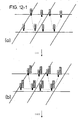
- Figure 2 is provided to illustrate how colony growth can occur (using the method described with reference to Figure 1 and to Figure 6 or any other method of the present invention for providing immobilised nucleic acid molecules).
- a flat plate is shown schematically in plan view having primers immobilised thereon in a square grid pattern (the primers are indicated by small dots).
- a regular grid is used solely for simplicity: in many real cases, the positions of the primers might indeed be less ordered or random.
- a template molecule has annealed to a primer and an initial bout of primer extension has occurred to provide an immobilised, extended nucleic acid strand.
- an end of that strand becomes free to anneal to further primers so that additional immobilised, extended nucleic acid strands can be produced.
- This is shown having occurred sequentially at positions indicated by the letter Y.
- the primer chosen for annealing is positioned next to the primer carrying the nucleic acid strand: in real cases, the nucleic acid strand could anneal with a primer which is not its next nearest neighbour. However, this primer will obviously be within a distance equal to the length of the nucleic acid strand.
- the resultant molecules can themselves anneal to other primers and the process can be continued to provide a colony comprising a large number of immobilised nucleic acid molecules in a relatively small area.
- Figure 3 shows a simplified version of the annealing, elongation and denaturing cycle. It also depicts the typical observations that can be made, as can be seen on the examples shown in figures 4 and 6 .
- the simultaneous amplification and immobilisation of nucleic acids using solid phase primers has been successfully achieved using the procedure described in Examples 1, 2 and 3 below:
- Oligonucleotides phosphorylated at their 5'-termini (Microsynth GmbH, Switzerland), were grafted onto Nucleolink plastic microtitre wells (Nunc, Roskilde, Denmark).
- the sequence of the oligonucleotide p57 corresponds to the sequence 5'-TTTTTTCACCAACCCAAACCAACCCAAACC and p58 corresponds to the sequence 5'-TTTTTTAGAAGGAGAAGGAAAGGGAAAGGG.
- Microtitre wells with p57 or p58 were prepared as follows.
- Colony generation was initiated in each well with 15 ⁇ l of priming mix; 1 nanogram template DNA (where the template DNA began with the sequence 5'-AGAAGGAGAAGGAAAGGGAAAGGG and terminated at the 3'-end with the sequence CCCTTTCCCTTTCCTTCTCCTTCT-3'), the four dNTPs (0.2 mM), 0.1% BSA (bovine serum albumin, Boehringer-Mannheim, Germany), 0.1% Tween 20, 8% DMSO (dimethylsulfoxide, Fluka Chemicals, Switzerland), 1X Amplitaq PCR buffer and 0.025 units/ ⁇ l of AmpliTaq DNA polymerase (Perkin Elmer, Foster City, CA).
- the priming reaction was a single round of PCR under the following conditions; 94°C for 4 minutes, 60°C for 30 seconds and 72°C for 45 seconds in a thermocycler (PTC 200, MJ Research, Watertown, MA). Then 100 ⁇ l TE buffer (10mM trisHCl, pH 7.5, 1mM EDTA) was used in three successive one minute long washes at 94°C. The DNA colonies were then formed by adding to each well, 20 ⁇ l of polymerisation mix, which was identical to the priming mix but lacking the template DNA.
- the wells were then placed in the PTC 200 thermocycler and colony growing was performed by incubating the sealed wells 4 minutes at 94°C and cycling for 50 repetitions the following conditions: 94°C for 45 seconds, 65°C for 2 minutes, 72°C for 45 seconds. After completion of this program, the wells were kept at 8°C until further use.
- a 640 base pair fragment corresponding to the central sequence of the template was amplified by PCR.
- the isolated fragment was labelled with biotin-N 4 -dCTP (NEN Life Sciences, Boston, MA) and a trace of [ ⁇ - 32 P]dCTP (Amersham, UK) using the Prime-it II labelling kit (Stratagene, San Diego, CA) to generate a biotinylated probe.
- the biotinylated probe was diluted in to a concentration of 2.5 nM in EasyHyb (Boehringer-Mannheim, Germany) and 15 ⁇ l was hybridized to each sample with the following temperature scheme (PTC 200 thermocycler): 94°C for 5 minutes, followed by 500 steps of 0.1°C decrease in temperature every 12 seconds (in other words, the temperature is decreased down to 45°C in 100 minutes).
- PTC 200 thermocycler 94°C for 5 minutes, followed by 500 steps of 0.1°C decrease in temperature every 12 seconds (in other words, the temperature is decreased down to 45°C in 100 minutes).
- the samples are then washed as follows; 1 time with 2X SSC/0.1% SDS (2X SSC; 0.3M NaCl/0.03M sodium citrate pH7.0/0.001 mg/ml sodium dodecyl sulfate) at room temperature, once with 2X SSC/0.1% SDS at 37°C and once with 0.2X SSC/0.1% SDS at 50°C.
- the wells are then incubated for 30 minutes with 50 ⁇ l of red fluorescent, Neutravidin-coated, 40 nm FluoSpheres (R) (580 nm excitation and 605 nm emission, Molecular Probes Inc., Eugene, OR) in TNT/0.1% BSA.
- the solution of microspheres is made from a dilution of 2 ⁇ l of the stock solution of microspheres into 1ml of TNT/0.1% BSA, which is then sonicated for 5 minutes in a 50 W ultra-sound water-bath (Elgasonic, Switzerland), followed by filtration through a 0.22 ⁇ m filter (Millex GV4). The wells are then counted (Cherenkov) on a Microbeta plate scintillation counter (WALLAC, Turku, Finland).
- Excess FluoSpheres (R) are removed by washing for 30 min in TNT/0.1%BSA at room temperature. Images of the stained samples are observed using a 20X objective on an inverted microscope (Axiovert S100TV, Carl Zeiss AG, Oberkochen, Germany) equipped with a Micromax 512x768 CCD camera (Princeton instruments, Trenton, NJ) through a XF43 filter set (PB546/FT580/LP590, Omega Optical, Brattleboro, VT) with a 5 second exposure.
- PB546/FT580/LP590 Omega Optical, Brattleboro, VT
- Figure 4 shows the hybridisation results for colony generation on tubes functionalised with either; (a) oligonucleotide p57 or (b) oligonucleotide p58.
- the control reaction shows very few fluorescent spots, since the sequence of the flanking regions on the template do not correspond to the primer sequences grafted onto the well.
- figure 4b shows the number of fluorescent spots detected when the primers grafted to the wells match the flanking sequences on the initiating DNA template. Calculating the number of fluorescent spots detected and taking into consideration the magnification, we can estimate that there are between 3 and 5 x 10 7 colonies/cm 2 .
- the photos are generated by the program, Winview 1.6.2 (Princeton Instruments, Trenton, NJ) with backgrounds and intensities normalised to the same values.
- FIG. 5 another embodiment of the present invention is illustrated. Here two different immobilised primers are used to provide primer extension.
- the target molecule shown is provided with a nucleotide sequence at its 3' end (AAT-3') that is complementary to the sequence of a first primer, (5'-ATT, I), which is grafted on the surface, so that annealing with that primer can occur.
- the sequence (5'-GGT) at the 5' end of the target molecule, III corresponds to the sequence (5'-GGT) of a second primer, II, which is also grafted to the surface, so that the sequence which is complementary to the sequence at the 5' end can anneal with that said second primer.
- said complementary sequence (5'-ACC) is chosen so that it will not anneal with the first primer (5'-ATT).
- the embodiment shown in Figure 5 has an advantage over the embodiment illustrated in Figure 1 since the possibility of one end of a single stranded target molecule annealing with another end of the same molecule in solution can be avoided and therefore amplification can proceed further. The possibility of annealing occurring between both ends of an immobilised complement to a target molecule can also be avoided.
- a template has been cloned in a vector (pBlueScript Skminus, Stratagene Inc, San Diego, CA) with the appropriate DNA sequence at the cloning site (i.e., corresponding to P1 and P2 at position 621 and 794 respectively), and 174 bp long linear double stranded DNA template has been obtained by PCR amplification, using P1 and P2.
- the template PCR product has been purified on Qiagen Qia-quick columns (Qiagen GmbH, Hilden, Germany) in order to remove the nucleotides and the primers used during the PCR amplification.
- the purified template in 50 ⁇ l solution containing 1X PCR buffer (Perkin Elmer, Foster City, CA) with the four deoxyribonucleoside triphosphates (dNTPs) at 0.2 mM, (Pharmacia, Uppsala, Sweden) and 2.5 units of AmpliTaq Gold DNA polymerase (Perkin Elmer, Foster City, CA) has been spread on the support, i.e. on the Nucleolink plates grafted with P1 and P2 (the plates have been rinsed with a solution containing 100 mM TRIS-HCl (pH 7.5), 150 mM NaCl and 0.1% Tween 20 (Fluka, Switzerland) at room temperature for 15 min).
- 1X PCR buffer Perkin Elmer, Foster City, CA
- dNTPs deoxyribonucleoside triphosphates
- AmpliTaq Gold DNA polymerase Perkin Elmer, Foster City, CA
- This solution has been incubated at 93°C for 9 minutes to activate the DNA polymerase and then 60 cycles (94°C/30 sec.,48°C/30 sec.,72°C/30 sec.) have been performed on a PTC 200 thermocycler.
- 60 cycles 94°C/30 sec.,48°C/30 sec.,72°C/30 sec.
- concentrations of PCR template have been tested (approximately 1, 0.5, 0.25, 0.125, 0.0625 ng/ ⁇ l) and for each sample a control reaction carried out without Taq polymerase has been performed (same conditions as above but without DNA polymerase).
- YO-PRO Molecular Probes, Portland OR
- YO-PRO Molecular Probes, Portland OR
- the resulting products have been observed on a confocal microscope using a 40X objective (LSM 410, Carl Zeiss AG, Oberkochen, Germany) with appropriate excitation (an 488 argon laser) and detection filters (510 low pass filter) (note: the bottom of each well is flat and allows observation with an inverted fluorescence microscope).
- the control well (without added DNA template, panel a) shows only rare objects which can be observed on a blank surface (these objects were useful at this stage for reporting that the focus was correct). These objects have an irregular shape, are 20 to 100 micro-meters in size and have a thickness much larger than the field depth of the observation.
- a great number of fluorescent spots can be observed. They present a circular shape, they are 1 to 5 micro meters in size and do not span the field of view. The number of spots depends on the concentration of the template used for initiating colony formation. From the observed size of the colonies, one can estimate that more than 10,000 distinct colonies can be arrayed within 1 mm 2 of support.
- Oligonucleotides (Microsynth GmbH, Switzerland) were grafted onto Nucleolink wells (Nunc, Denmark). Oligonucleotide P1 corresponds to the sequence 5'-TTTTTTCTCACTATAGGGCGAATTGG and oligonucleotide P2 corresponds to 5'-TTTTTTCTCACTAAAGGGAACAAAAGCTGG.
- a 45 ⁇ l of 10 mM 1-methyl-imidazole (pH 7.0) (Sigma Chemicals, St.Louis, MO) solution containing 360 fmol of P1 and 360 fmol of P2 was added.
- S1 and S2 are 704 base pair and 658bp fragments, respectively, which have been cloned into pBlueScript Skminus plasmids and subsequently amplified through a PCR using P1 and P2 as primers. The fragments were purified on Qiagen Qia-quick columns (QIAGEN GmbH, Germany) in order to remove the nucleotides and the primers.
- a 640base pair fragment corresponding to the central sequence of the S1 fragment, but not including the P1 or P2 sequence was amplified by PCR as previously described.
- the probe was labelled with biotin-16-dUTP (Boehringer-Mannheim, Germany) using the Prime-it II random primer labelling kit (Stratagene, San Diego, CA) according to the manufacturers instructions.
- the biotinylated probes were hybridized to the samples in EasyHyb buffer (Boehringer-Mannheim, Germany), using the following temperature scheme (in the PTC 200 thermocycler): 94°C for 5 minutes, followed by 68 steps of 0.5°C decrease in temperature every 30 seconds (in other words, the temperature is decreased down to 60 °C in 34 minutes), using sealed wells.
- the samples are then washed 3 times with 200 ⁇ l of TNT at room temperature.
- the wells are then incubated for 30 minutes with 50 ⁇ l TNT containing 0.1 mg/ml BSA.
- the wells are incubated 5 minutes with 15 ⁇ l of solution of red fluorescent, Neutravidin-coated, 40 nm FluoSpheres (R) (580 nm excitation and 605 nm emission, Molecular Probes, Portland, OR).
- the solution of microspheres is made of 2 ⁇ l of the stock solution of microspheres, which have been sonicated for 5 minutes in a 50 W ultra-sound water-bath (Elgasonic, Bienne, Switzerland), diluted in 1 ml of TNT solution containing 0.1 mg/ml BSA and filtered with Millex GV4 0.22 ⁇ m pore size filter (Millipore, Bedford, MA).
- the stained samples are observed using an inverted Axiovert 10 microscope using a 20X objective (Carl Zeiss AG, Oberkochen, Germany) equipped with a Micromax 512x768 CCD camera (Princeton Instruments, Trenton, NJ), using a XF43 filter set (PB546/FT580/LP590, Omega Optical, Brattleboro, VT), and 10 seconds of light collection.
- the files are converted to TIFF format and processed in the suitable software (PhotoPaint, Corel Corp., Ottawa, Canada).
- the processing consisted in inversion and linear contrast enhancement, in order to provide a picture suitable for black and white print-out on a laser printer.
- the figure 6B shows the results for 3 different ratios of the S1/S2 templates used in the initiating reaction: i) the S1/S2 is 1/0, many spots can be observed, ii) the S1/S2 is 1/10, and the number of spots is approximately 1/10 of the number of spots which can be observed in the i) image, as expected, and iii) the S1/S2 is 0/1, and only a few rare spots can be seen.
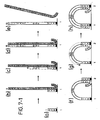
- Figure 7 is provided to show that the sequences shown at the 5' and 3' ends of the target molecule illustrated in Figures 1 and 5 need not be located at the ends of a target molecule.
- a target nucleic acid molecule (II) may have a sequence at each (or either) end that is neither involved in annealing with a primer nor in acting as a template to provide a complementary sequence that anneals with a primer (sequence 5'-AAA and sequence 5'-CCC).
- One of the internal sequences (5'-AAT) is used as a template to synthesise a complementary sequence, III, thereto (5'-TTT), as is clear from figures 7(a) to 7(e) .
- sequence 5'-TTT is not however itself used to provide a sequence complementary thereto, as is clear from figures 7(f) to 7(k) . It can be seen from Figure 7(l) that only one of the four immobilised strands shown after two rounds of primer extension and a strand separation step comprises the additional sequence 5'-TTT and that no strand comprising a complementary sequence (5'-AAA) to this sequence is present (i.e. only one strand significantly larger than the others is present). After several rounds of amplification the strand comprising the sequence 5'-TTT will represent an insignificant proportion of the total number of extended, immobilised nucleic acid molecules present.
- Amplified, single stranded nucleic acid molecules present in colonies provided by the present invention can themselves be used as templates to synthesise additional nucleic acid strands.
- Figure 8 illustrates one method of synthesising additional nucleic acids using immobilised nucleic acids as a starting point.
- Colonies will usually comprise both a given nucleic acid strand and its complement in immobilised form ( figure 8a ). Thus they can be used to provide additional copies not only of a given nucleic acid strand but also of its complement.
- primers TTA and TGG are provided by the present invention.
- These primers may be the same as primers initially used to provide the immobilised colonies, apart from being provided in free rather than immobilised form.
- the original DNA colony is denatured by heat to it single-stranded form ( figure 8b ), allowing primers TTA and TGG to anneal to the available 3' end of each DNA strand.
- Primer extension using AmpliTaq DNA polymerase and the four deoxyribonucleoside triphosphates (labelled or unlabeled) can then be used to synthesise complementary strands to immobilised nucleic acid strands or at least to parts thereof (step (iii)).
- Strands synthesised in this manner after separation from the immobilised strands, can, if desired, be annealed to one another (i.e. a given strand and its complement can anneal) to provide double-stranded nucleic acid molecules in solution. Alternatively they can be separated from one another to provide homogenous populations of single-stranded nucleic acid molecules in solution.
- nucleic acid strands in different colonies have different sequences
- primers can be provided to allow several or all of the colonies to be used as templates.
- Such primers may be a mixture of many different primers (e.g. a mixture of all of the primers originally used to provide all of the colonies, but with the primers being provided in solution rather than in immobilised form).
- Oligonucleotides (Microsynth GmbH Balgach, Switzerland) were grafted onto Nucleolink wells (Nunc, Denmark). Oligonucleotide P1 corresponds to the sequence 5'-TTTTTTTTCACCAACCCAAACCAACCCAAACC and oligonucleotide P2 corresponds to 5'-TTTTTTTTTTAGAAGGAGAAGGAAAGGGAAAGGG.
- a 45 ⁇ l of 10 mM 1-methyl-imidazole (pH 7.0) (Sigma Chemicals) solution containing 360 fmol of P1 and 360 fmol of P2 was added.
- Colony growing was initiated in each well with 15 ⁇ l of initiation mix (1X PCR buffer, 0.2 mM dNTPs and 0.75 units of AmpliTaq DNA polymerase, 20 nanograms of template DNA, where the template DNA was either S1 DNA or S2 DNA or a 1/1 mixture of S1 DNA and S2 DNA, as indicated in discussion to Example 3.
- S1 and S2 are 658 base pair and 704 b.p. fragments, respectively, which have been prepared as described in EXAMPLE 3.
- Each well was sealed with Cycleseal TM (Robbins Scientific Corp., Sunnyvale, CA) and incubated at 93°C for 9 minutes, 65°C for 5 minutes and 72°C for 2 minutes and back to 93°C. Then 200 pl TNT solution was used in three successive one minute long washes at 93°C. The initiation mix was then replaced by 15 ⁇ l growing mix (same as initiation mix, but without template DNA) and growing was performed by incubating the sealed wells 9 minutes at 93°C and repeating 40 times the following conditions: 93°C for 45 seconds, 65°C for 3 minutes, 72°C for 2 minutes. After completion of this program, the wells were kept at 6°C until further use. The temperature control was performed in a PTC 200 thermo-cycler.
- set A was left untreated, set B has been incubated for 10 minutes with BAL-31 exonuclease (New England Biolabs, Beverly, MA) at 37°C in BAL-31 buffer (BAL-31 essentially digests double stranded DNA which has both ends free), set C has been incubated for 10 minutes with S1 nuclease (Pharmacia, Uppsala, Sweden) at 37°C in S1 buffer (S1 nuclease essentially digests single stranded DNA), set D, E and F have been incubated with both BAL-31 and S1 nucleases. Reactions were stopped by rinsing the wells with TNT buffer.
- BAL-31 exonuclease New England Biolabs, Beverly, MA
- PCR (25 cycles, 30 sec. at 94°C , 45 sec. at 60°C, 45 sec. at 72°C) has been performed in the Nucleolink wells with 0.25 ⁇ M primers P70 (5'-CACCAACCCAAACCAACCCAAACCACGACTCACTATAGGGCGAA) and P71 (5'-AGAAGGAGAAGGAAAGGGAAAGGGTAAAGGGAACAAAAGCTGGA) in solution in sets A, B, C and D.
- P70 and P71 are suited for the amplification of both S1 and S2, since primer P70 contains the sequence of primer P1 and p71 contains P2.
- PCR has been performed with a set of forward (P150, 5'-GGTGCTGGTCCTCAGTCTGT) and reverse (P151, 5'-CCCGCTTACCAGTTTCCATT) primers which are within S1 and not within S2 so as to produce a 321 bp PCR product
- PCR has been performed with a set of forward (P152, 5'-CTGGCCTTATCCCTAACAGC) and reverse (P153, 5'-CGATCTTGGCTCATCACAAT) primers which are within S2 and not within S1 so as to produce a 390 bp PCR product.
- initially formed colonies it is also possible to modify initially formed colonies to provide different colonies (i.e. to provide colonies comprising immobilised nucleic acid molecules with different sequences from those molecules present in the initially formed colonies).
- initially formed colonies are referred to as “primary colonies” and the later formed colonies as “secondary colonies”.
- primary colonies and the later formed colonies as “secondary colonies”.
- secondary colonies A preliminary procedure is necessary to turn the primary colonies into “secondary primers" which will be suitable for secondary colony generation.
- Figure 10 shows how 'secondary primers' are generated using existing primary colonies.
- the primary colony ( figure 10a ) is left in the fully hybridised, double-stranded form.
- a single-strand specific DNA exonuclease might be used to remove all primers which have not been elongated.
- the DNA molecules forming the colonies can be cleaved by using endonucleases.
- endonucleases For example, a restriction enzyme that recognises a specific site within the colony (depicted by the 'RE' arrow in figure 10c) and cleaves the DNA colony (step (ii), figure 10 ).
- the enzymatically cleaved colony ( figure 10d ) can then be partially digested with a 3' to 5' double-strand specific exonuclease (e.g. E.coli exonuclease III, depicted by 'N', step (iii), figure 10d) .
- the secondary primers are available after denaturation (e.g., by heat) and washing ( figure 10e ).
- the double stranded DNA forming the colonies can be digested with the double-strand specific 3'-5' exonuclease, which digest only one strand of double stranded DNA.
- An important case is when the exonuclease digests only a few bases of the DNA molecule before being released in solution, and when digestion can proceed when another enzyme binds to the DNA molecule ( figure 10g ). In this case the exonuclease digestion will proceed until there remain only single stranded molecules which, on average, are half the length of the starting material, and are without any complementary parts (which could form partial duplexes) remaining in the single stranded molecules in a colony ( figure 10h ).
- Templates useful for secondary colony growing may include molecules having known sequences (or complements of such sequences). Alternatively templates may be derived from unsequenced molecules (e.g. random fragments). In either event the templates should be provided with one or more regions for annealing with nucleic acid strands present in the primary colonies.
- Figure 11 a-e show how a secondary colony can be generated when an appropriate template ( TP , figure 11a ) is provided for a second round of DNA colony generation on a support for secondary colony growing, holding secondary primers.
- treatment of the primary colony as described above has generated the secondary primers, SP1 and SP2 ( figure 11a ).
- the template TP will hybridise to its complementary secondary primer, SP1, and following an extension reaction using a DNA polymerase as described, will be extended as depicted ( figure 12b ).
- step ii reannealing
- step iv DNA polymerase
- the maximum size of a secondary colony provided by this embodiment of the present invention is restricted by the size of the primary colony onto which it grows.
- Several secondary growing processes can be used sequentially to create colonies for specific applications (i.e. a first colony can be replaced with a second colony, the second colony can be replaced with a third colony, etc.)
- Figure 12 shows how extended primers can be generated on an array of oligonucleotides. The same procedure could be applied to a support covered with colonies or secondary primers as described in section E.
- a support having a plurality of immobilised primers shown thereon. Different immobilised primers are shown present in different regions of the support (represented by squares). Primers having the sequence 5'-AAA are present in one square and primers having the sequence 5'-GGG are present in another square.
- Figures 12b) to 12d) show how the initial primers present (initial primers) are modified to give different primers (extended primers).
- those initial primers having the sequence 5'-AAA are modified to produce two different types of extended primers, having the sequences 5'-AAAGCC and 5'-AAATAC respectively. This is achieved by the hybridisation of oligonucleotide templates, 5'-GTATTT and 5'-GGCTTT to the primary primers immobilised on the surface ( figure 12b ), followed by DNA polymerase reaction.
- Those initial primers having the sequence 5'-GGG are modified to produce two different types of extended primers, having the sequences 5'-GGGTAT and 5'-GGGTAA ( figure 12d ) in a similar manner.
- the technique of producing extended primers is useful for transforming immobilised oligonucleotides provided on a DNA chip or other surface into immobilised primers useful in amplifying a particular target nucleic acid sequence and/or in amplifying a complementary strand thereto.
- the DNA of interest is first extracted from the biological sample and cut randomly into "small" pieces (e.g., 50 to 10,000 bases long, but preferentially 500 to 1000 base pairs in length, represented by bar 'I', figure 13a ). (This can be done e.g., by a phenol-chloroform extraction followed by ultrasound treatment, mechanical shearing, by partial digestion with frequent cutter restriction endonucleases or other methods known by those skilled in the art).
- the extracted and cut DNA fragments can be size-fractionated, e.g., by agarose gel electrophoresis, sucrose gradient centrifugation or gel chromatography. Fragments obtained within a single fraction can be used in providing templates in order to reduce the variability in size of the templates.
- the extracted, cut and (optionally) sorted template DNA fragments can be ligated with oligonucleotide linkers ( IIa and IIb, figure 13a ) containing the sequence of the primer(s) which have previously been grafted onto a support. This can be achieved, for instance, using "blunt-end" ligation.
- the template DNA fragments can be inserted into a biological vector at a site that is flanked by the sequence of the primers that are grafted on the support. This cloned DNA can be amplified within a biological host and extracted.
- the procedure is the same as that described in the previous section except that in this case, the oligonucleotide linkers used to tail the randomly cut genomic DNA fragments are now made of two parts; the sequence of the primers grafted onto the surface (P1 and P2, figure 13b ) and a "tag" sequence which is different for each sample and which will be used for identifying the origin of the DNA colony.
- the tag may not be unique, but a plurality of tags could be used.
- we will designate the DNA fragments obtained after such a suitable process by the expression : "tagged genomic DNA" ( III , Figure 13b ).
- This tagging procedure can be used for providing colonies carrying a means of identification which is independent from the sequence carried by the template itself. This could also be useful when some colonies are to be recovered specifically (using the procedure given in section D). This could also be useful in the case the recovered colonies are further processed, e.g., by creating new primary colonies and a cross reference between the original colonies and the new colonies is desired.
- the DNA of interest can first be extracted from a biological sample by any means known by those skilled in the art (as mentioned supra). Then the specific sequences of interest can be amplified with PCR (step (i), figure 13c ) using PCR primers ( IIa and IIb ) made of two parts; 1) at the 5'-end, the sequences corresponding to the sequences of primer oligonucleotide(s) that have been grafted onto a surface (P1 and P2)and 2) at the 3'-end, primer sequences specific to the sequence of interest (S1 and S2).
- PCR primers IIa and IIb
- step (i), figure 13d ) The procedure is the same as in the previous section except that in this case the DNA primers ( IIa and IIb ) used to perform the PCR amplification (step (i), figure 13d ) are now made of three parts; 1) the sequence of the primers grafted onto the surface (P1 and P2), 2) a "tag" sequence which is different for each sample and which will be used for the identifying the origin of the DNA colony and 3) primer sequences surrounding the specific sequence of interest (S1 and S2). Note that for each sample, a plurality of tags might be used, as in (ii) supra .
- the procedure is similar to the procedures described for preparing DNA fragments in the previous sections except that the starting point is to extract mRNA by any means known to those skilled in the art (e.g., by use of commercially available mRNA preparation kits).
- the mRNA can be copied into double-stranded cDNA by any means known to those skilled in the art (e.g. by using a reverse transcriptase and a DNA polymerase).
- the tags and primers described supra can be used in conjunction with the process of double-stranded cDNA synthesis to allow their incorporation into the templates.
- we will designate the mRNA fragments obtained after such suitable processes by the expressions: "prepared total mRNA" (cf.
- labels may be used to provide detectable signals. Examples include:
- Staining agents can be used in the present invention.
- DNA colonies can be incubated with a suitable DNA-specific staining agent, such as the intercalating dyes, ethidium bromide, YO-YO, YO-PRO (Molecular Probes, Eugene, OR).
- a suitable DNA-specific staining agent such as the intercalating dyes, ethidium bromide, YO-YO, YO-PRO (Molecular Probes, Eugene, OR).
- DNA colonies are first prepared for hybridisation. Then they are hybridised with a probe (labelled or unlabelled). If required, the hybridised probed is assayed, and the result is observed. This can be done with an apparatus of the present invention (e.g. as described supra ).
- colonies are treated with a DNA restriction endonuclease which is specific either for a sequence provided by a double stranded form of one of the primers originally grafted onto the surface where colonies are formed or for another sequence present in a template DNA molecule (see e.g. figure 16c ).
- the colonies can be heated to a temperature high enough for double stranded DNA molecules to be separated. After this thermal denaturing step, the colonies can be washed to remove the non-hybridised, detached single-stranded DNA strands, leaving a remaining attached single-strand DNA.
- the colonies can be partially digested with a double-strandspecific 3' to 5' DNA exonuclease (see section E, figure 10f ) which removes one strand of DNA duplexes starting from the 3' end, thus leaving a part of a DNA molecule in single stranded form.
- a double-strandspecific 3' to 5' DNA exonuclease see section E, figure 10f .
- DNA in colonies can first be heat denatured and then partially digested with an single-strand specific 3' to 5' DNA exonuclease which digests single stranded DNA starting from the 3' end.
- a further alternative is simply to heat denature DNA in the colonies.
- Single-stranded nucleic acid probes (labelled or unlabelled) can be hybridised to single-stranded DNA in colonies at the appropriate temperature and buffer conditions (which depends on the sequence of each probe, and can be determined using protocols known to those skilled in the art).
- a hybridised probe provided initially in unlabelled form can be used as a primer for the incorporation of the different (or a subset of the different) labelled (or a mix of labelled and unlabelled) deoxyribonucleoside triphosphates with a DNA polymerase.
- the incorporated labelled nucleotides can then be detected as described supra.
- the DNA colonies can be prepared for hybridisation by the methods described supra. Then they can be hybridised with a probe (labelled or initially unlabelled). If required, hybridised labelled probes are assayed and the result is observed with an apparatus as described previously. The probe may then be removed by heat denaturing and a probe specific for a second DNA sequence may be hybridised and detected. These steps maybe repeated with new probes as many times as desired.
- the probes can be assayed as described supra for unlabelled probes, except that only a subset (preferably 1 only) of the different (labelled or unlabelled) nucleotides are used at each cycle.
- the colonies can then be assayed for monitoring the incorporation of the nucleotides. This second process can be repeated until a sequence of a desired length has been determined.
- DNA colonies can be used as templates for in situ RNA synthesis as depicted in figure 14 .
- DNA colonies can be generated from templates and primers, such that a RNA polymerase promoter sequence is positioned at one end of the double-stranded DNA in the colony.
- DNA colonies can then be incubated with RNA polymerase and the newly synthesised RNA (cRNA) can be assayed as desired.
- the detection can be done non-specifically (e.g., staining) or in a sequence dependent way (e.g., hybridisation).
- the DNA template ( I , figure 14a ) to be amplified into a colony is generated by PCR reaction using primers ( IIa and IIb ) which have the following four parts; 1) sequence identical to the sequences of the primers grafted onto the surface ('P1' and 'P2'), 2) a "tag" sequence which is different for each sample , a sequence corresponding to a RNA polymerase promoter, ie. the T3, T7 and SP6 RNA promoters, ('RPP', figure 14a ) and 4 ) primer sequences surrounding the specific sequence of interest ('S1' and 'S2').
- primers IIa and IIb
- RNA polymerase specific for the RNA polymerase promoter ('RPP', figure 14c ). This will generate a copy of RNA specific for the DNA colony template (Template-cRNA, V, figure 14d ).
- cRNA thus synthesised can be isolated and used as hybridisation probes, as messenger RNA (mRNA) templates for in vitro protein synthesis or as templates for in situ RNA sequence analysis.
- mRNA messenger RNA
- colonies can be analysed in order to determine sequences of nucleic acid molecules which form the colonies. Since very large numbers of the same nucleic acid molecules can be provided within each colony the reliability of the sequencing data obtained is likely to be very high.
- sequences determined may be full or partial. Sequences can be determined for.nucleic acids present in one or more colonies. A plurality of sequences may be determined at the same time.
- sequence of a complementary strand to a nucleic acid strand to be sequenced may be obtained initially.
- this sequence can be converted using base-pairing rules to provide the desired sequence (or a part thereof). This conversion can be done via a computer or via a person. It can be done after each step of primer extension or can be done at a later stage.
- Sequencing can be done by various methods. For example methods relying on sequential restriction endonuclease digestion and linker ligation can be used. One such method is disclosed in WO95/27080 for example. This method comprises the steps of: ligating a probe to an end of a polynucleotide, the probe having a nuclease recognition site; identifying one or more nucleotides at the end of the polynucleotide; and cleaving the polynucleotide with a nuclease recognising the nuclease recognition site of the probe such that the polynucleotide is shortened by one or more nucleotides.
- amplified nucleic acid molecules are sequenced by allowing primers to hybridise with the nucleic acid molecules, extending the primers and detecting the nucleotides used in primer extension.
- primers Preferably, after extending a primer by a single nucleotide, the nucleotide is detected before a further nucleotide is used in primer extension (step-by-step sequencing).
- label is used in its broad sense to indicate any moiety that can be identified using an appropriate detection system.
- the label is not present in naturally-occurring nucleotides.
- labels are non-radioactive, such as fluorophores. However radioactive labels can be used.
- nucleotides are provided in labelled form the labels may be the same for different nucleotides. If the same label is used each nucleotide incorporation can be used to provide a cumulative increase of the same signal (e.g. of a signal detected at a particular wavelength). Alternatively different labels may be used for each type of nucleotide (which may be detected at different wavelengths).
- dATP dATP
- dTTP dTTP
- dCTP dCTP
- dGTP dGTP
- ATP a mixture of labelled and unlabelled nucleotides may be provided, as will be described in greater detail later on.
- the sequencing of nucleic acid molecules present in at least 2 different colonies is performed simultaneously. More preferably, sequencing of nucleic acid molecules present in over 10, over 100, over 1000 or even over 1,000,000 different colonies is performed simultaneously. Thus if colonies having different nucleic acids molecules are provided, many different sequences (full or partial) can be determined simultaneously - i.e. over 10, over 100, over 1000 or even over 1,000,000 different sequences may be determined simultaneously.
- controls may be provided, whereby a plurality of colonies comprising the same nucleic acid molecules are provided. By determining whether or not the same sequences are obtained for nucleic acid molecules in these colonies it can be ascertained whether or not the sequencing procedure is reliable.
- FIG 17 One sequencing method of the present invention is illustrated in figure 17 , which is entitled “in situ sequencing”.
- cyclic addition of the individual deoxyribonucleoside triphosphates and DNA polymerase will allow the determination of the DNA sequence immediately 3' to the sequencing primer.
- the addition of dGTP allows the determination of colony 1 to contain a 'G'.
- addition of dATP is detected in both colonies, determining that both colonies have an 'A' in the next position.
- colonies are provided initially in a form comprising double-stranded molecules the colonies can be processed to provide single-stranded molecules for use in sequencing as described above.
- double stranded molecules can be used for sequencing without such processing.
- a double stranded DNA molecule can be provided with a promoter sequence and step-by-step sequencing can then be performed using an RNA polymerase and labelled ribonucleotides (cf Figure 16 d )).
- Another alternative is for a nick to be introduced in a double stranded DNA molecule so that nick translation can be performed using labelled deoxyribonucleotides and a DNA polymerase with 5' to 3' exonuclease activity.
- double-stranded immobilised molecules present in a colony are cleaved and this is followed by a denaturing step.
- a denaturing step could be used initially and could be followed by a cleavage step.
- cleavage is carried out enzymatically.
- other means of cleavage are possible, such as chemical cleavage.
- Denaturing can be performed by any suitable means. For example it may be performed by heating and / or by changing the ionic strength of a medium in the vicinity of the nucleic acid molecules.
- primers for primer extension can be hybridised thereto.
- Oligonucleotides are preferred as primers. These are nucleic acid molecules that are typically 6 to 60, e.g. 15 to 25 nucleotides long. They may comprise naturally and / or non-naturally occurring nucleotides. (However other molecules, e.g. longer nucleic acid strands may alternatively be used as primers, if desired.)
- the primers for use in sequencing preferably hybridise to the same sequences present in amplified nucleic acid molecules as do primers that were used to provide said amplified nucleic acids. (Primers having the same / similar sequences can be used for both amplification and sequencing purposes).
- annealing conditions prevent non-specific hybridisation.
- These may be stringent conditions. Such conditions would typically be annealing temperatures close to a primer's Tm (melting temperature) at a given salt concentration (e.g. 50 nM primer in 200 mM NaCl buffer at 55°C for a 20-mer oligonucleotide with 50% GC content).
- salt concentration e.g. 50 nM primer in 200 mM NaCl buffer at 55°C for a 20-mer oligonucleotide with 50% GC content.
- Primers used for primer extension need not be provided in solution, since they can be provided in immobilised form.
- the primers should be provided in the vicinity of the immobilised molecules to which they are to be annealed. (Such primers may indeed already be present as excess immobilised primers that were not used in amplifying nucleic acid molecules during the formation of colonies.)
- the nucleic acid molecules present in colonies to be sequenced will include a sequence that hybridises to the primers to be used in sequencing (preferably under "stringent" conditions). This portion can be added to a given molecule prior to amplification (which molecule may have a totally / partially unknown sequence) using techniques known to those skilled in the art. For example it can be synthesised artificially and can be added to a given molecule using a ligase.
- RNA or DNA polymerases can be used.
- DNA polymerases are however the enzymes of choice for preferred embodiments. Several of these are commercially available. Polymerases which lack 3' to 5' exonuclease activity can be used, such as T7 DNA polymerase or the small (Klenow) fragment of DNA polymerase I may be used [ e.g. the modified T7 DNA polymerase SequenaseTM 2.0 (Amersham) or Klenow fragment (3' to 5' exo-, New England Biolabs)]. However it is not essential to use such polymerases.
- thermostable polymerases such as ThermoSequenaseTM (Amersham) or TaquenaseTM (ScienTech, St Louis, MO). Any nucleotides may be used for primer extension reactions (whether naturally occurring or non-naturally occurring).
- Preferred nucleotides are deoxyribonucleotides; dATP, dTTP, dGTP and dCTP (although for some applications the dTTP analogue dUTP is preferred) or ribonucleotides ATP, UTP, GTP and CTP; at least some of which are provided in labelled form.
- a washing step is preferably incorporated after each primer extension step in order to remove unincorporated nucleotides that may interfere with subsequent steps.
- the preferred washing solution should be compatible with polymerase activity and have a salt concentration that does not interfere with the annealing of primer molecules to the nucleic acid molecules to be sequenced. (In less preferred embodiments, the washing solution may interfere with polymerase activity. Here the washing solution would need to be removed before further primer extension.)
- a combination of labelled and non-labelled nucleotides can be used.
- the number of labels incorporated in each colony during primer extension can be sufficient to be detected by a detection device.
- the ratio of labelled to non-labelled nucleotides may be chosen so that, on average, labelled nucleotides are used in primer extension less than 50%, less than 20%, less than 10% or even less than 1% of the time (i.e. on average in a given primer extension step a nucleotide is incorporated in labelled form in less than 50%, less than 20%, less than 10 %, or less than 1% of the extended primers.)
- Steps b) and c) may be repeated one or more times.
- a plurality of different colonies are provided and several different sequences are determined simultaneously.
- This further embodiment of the present invention can be used to reduce costs, since relatively few labelled nucleotides are needed. It can also be used to reduce quenching effects.
- nucleotides for primer extension or to use a major portion thereof (eg. over 50 %, over 70% or over 90% of the nucleotides used may be labelled). This can be done for example if labels are selected so as to prevent or reduce quenching effects. Alternatively labels may be removed or neutralised at various stages should quenching effects become problematic (e.g. laser bleaching of fluorophores may be performed). However this can increase the number of steps required and it is therefore preferred that labels are not removed (or at least that they are not removed after each nucleotide has been incorporated but are only removed periodically). In other less preferred embodiments, the primer itself and its extension product may be removed and replaced with another primer.
- a plurality of labelled bases are incorporated into an extended primer during sequencing. This is advantageous in that it can speed up the sequencing procedure relative to methods in which, once a labelled base has been incorporated into an extended primer, the label must be removed before a further labelled base can be incorporated.
- the plurality of labelled bases may be in the form of one or more contiguous stretches, although this is not essential.
- the present invention therefore also includes within its scope a method for sequencing nucleic acid molecules, comprising the steps of:
- sequences of the nucleic acid molecules present at said first and said locations are different from one another - i.e. a plurality of colonies comprising different nucleic acid molecules are sequenced
- a detection system for fluorescent labels is a Charge-Coupled-Device (CCD) camera, which can optionally be coupled to a magnifying device. Any other device allowing detection and, preferably, also quantification of fluorescence on a surface may be used. Devices such as fluorescent imagers or confocal microscopes may be chosen.
- CCD Charge-Coupled-Device
- the labels may be radioactive and a radioactivity detection device would then be required. Ideally such devices would be real-time radioactivity imaging systems. Also less preferred are other devices relying on phosphor screens (Moleculal Dynamics) or autoradiography films for detection.
- a scanning system may be preferred for data collection.
- a detector may move relative to a plurality of colonies to be analysed. This is useful when all the colonies providing signals are not within the field of view of a detector.
- the detector may be maintained in a fixed position and colonies to be analysed may be moved into the field of view of the detector (e.g. by means of a movable platform) .
- the colonies may be maintained in fixed position and the detection device may be moved to bring them into its field of view.
- the detection system is preferably used in combination with an analysis system in order to determine the number (and preferably also the nature) of bases incorporated by primer extension at each colony after each step. This analysis may be performed immediately after each step or later on, using recorded data. The sequence of nucleic acid molecules present within a given colony can then be deduced from the number and type of nucleotides added after each step.
- the detection system is part of an apparatus comprising other components.
- the present invention includes an apparatus comprising a plurality of labelled nucleotides, a nucleic acid polymerase and detection means for detecting labelled nucleotides when incorporated into a nucleic acid molecule by primer extension, the detection means being adapted to distinguish between signals provided by labelled nucleotides incorporated at different colonies.
- the apparatus may also include temperature control, solvent delivery and washing means. It may be automated.
- the order of nucleotides applied to a given location can be chosen as desired. For example one may choose the sequential addition of nucleotides dATP, dTTP, dGTP, dCTP; dATP, dTTP, dGTP, dCTP; and so on. (Generally a single order of four nucleotides would be repeated, although this is not essential.)
- the order of nucleotides to be added at each step is preferably chosen according to a known sequence.
- Re-sequencing may be of particular interest for the analysis of a large number of similar template molecules in order to detect and identify sequence differences (e.g. for the analysis of recombinant plasmids in candidate clones after site directed mutagenesis or more importantly, for polymorphism screening in a population). Differences from a given sequence can be detected by the lack of incorporation of one or more nucleotides present in the given sequence at particular stages of primer extension. In contrast to most commonly used techniques, the present method allows for detection of any type of mutation such as point mutations, insertions or deletions. Furthermore, not only known existing mutations, but also previously unidentified mutations can be characterised by the provision of sequence information.
- long nucleic acid molecules may have to be sequenced by several sequencing reactions, each one allowing for determination of part of the complete sequence. These reactions may be carried out at different colonies (where the different colonies are each provided with the same nucleic acid molecules to be sequenced but different primers), or in successive cycles applied at the same colony (where between each cycles the primers and extension products are washed off and replaced by different primers).
- This embodiment of the present invention aims to solve the problem of screening a large population for the identification of given features of given genes, such as the detection of single nucleotide polymorphisms.
- it consists in generating tagged genomic DNA (see section G(ii) supra). (Thus each sample originating from a given individual sample has been labelled with a unique tag). This tagged DNA can be used for generating primary colonies on an appropriate surface comprising immobilised primers. Several successive probe hybridisation assays to the colonies can then be performed. Between each assay the preceding probe can be removed, e.g. by thermal denaturation and washing.
- a PCR amplification can be performed to specifically amplify the gene of interest and to link a tag and a colony generating primer (refer to section G(iv), preparation of "tagged DNA").
- Another advantage of using the present invention lies in the fact that it overcomes the problem arising with individuals who have heterozygous mutations for a given gene. While this problem may be addressed by existing sequencing methods to determine allelic polymorphisms, current high throughput mutation detection methods based on oligonucleotide probe hybridisation may lead to difficulties in the interpretation of results due to an unequal hybridisation of probes in cases of allelic polymorphisms and therefore errors can occur.
- each colony arises from a single copy of an amplified gene of interest. If an average of 10 colonies are generated for each individual locus, there will be an average of 5 colonies corresponding to one version of a gene and 5 colonies corresponding to the other version of the gene. Thus heterozygotic mutations can be scored by the number of times a single allele is detected per individual genome sample.
- This embodiment of the present invention provides a solution to the problem of identifying and characterising novel allelic polymorphisms within known genes in a large population of biological samples.
- tagged DNA each sample originating from a given individual has been tagged with a unique tag - see section G(iv)).
- This encoded DNA can then be used for generating primary colonies on an appropriate surface comprising immobilised primers.
- Several successive assays of probe hybridisation to the colonies can then be performed wherein between each cyclic assay the preceding probe can be removed by thermal denaturation and washing.
- the DNA sequence 3' to a specific probe may be determined directly by ' in situ sequencing' (section I(iii), Methods of sequencing).
- the present invention can allow the whole screening experiment to be performed in approximately one day, with one apparatus. This can be compared to the most powerful systems operational at the present time.
- Genomic DNA can be prepared, either directly from the total DNA of an organism of interest or from a vector into which DNA has been inserted.
- the prepared genomic DNA (from whatever source) can be used to generate DNA colonies.
- the DNA colonies can then be digested with a rare-cutting restriction enzyme, whose site is included in the linker, denatured and sequenced.
- Figure 16 depicts an example of de novo DNA sequencing.
- genomic DNA is fragmented into pieces of 100 to 2000 base pairs (see preparation of random DNA fragments, section G(i)). These fragments will be ligated to oligonucleotide linkers ( IIa and IIb , figure 16a ) which include sequences specific for the grafted primers on the surface ('P1' and 'P2'), a sequence which is recognised by a rare-cutting restriction nuclease ('RE') and a sequence corresponding to a sequencing primer ('SP'), resulting in templates ( III , figure 16b ).
- oligonucleotide linkers IIa and IIb , figure 16a
- oligonucleotide linkers IIa and IIb , figure 16a
- oligonucleotide linkers IIa and IIb , figure 16a
- oligonucleotide linkers IIa and IIb , figure 16a
- 'RE' rare-cutting
- the throughput obtainable can be at least 400 times higher than presently available methods.
- This embodiment of our invention means to solve the problem of monitoring the expression of a large number of genes simultaneously.
- the DNA used for this preparation is 'prepared genomic DNA' or 'tagged genomic DNA', as described in section G(i) and G(iii), respectively, and where the DNA is either from the whole genome of one (or several) organism(s) or from a subset thereof (e.g., from a library of previously isolated genes).
- the uppercase letters, "A", "B” and “D” represent colonies which have arisen from genes which exhibit high, medium and low expression levels, respectively, and "E” represents colonies arising from non-expressed genes (in real cases, all these situations may not necessarily be present simultaneously).
- the colonies are treated to turn then into supports (i.e. secondary primers) for secondary colony growing (step i in figure 17a ), as described in section E.
- the treated colonies are represented by underlined characters ( A , B , D , or E ).
- this support for secondary colony growing is used to regenerate colonies from mRNA (or cDNA) templates extracted from a biological sample, as described in section C. If the template is mRNA, the priming step of colony regeneration will be performed with a reverse transcriptase.
- step iii in figure 17c additional cycles of colony growing are performed (preferably 2 to 50), and the colonies which have not been totally regenerated during the previous steps finally become totally regenerated, "b” becomes “ B “, “d” becomes “ D " ( figure 17d ) : the colonies corresponding to genes with high and medium expression levels are all regenerated “ A “ and “B” or “ B “; the colonies corresponding to genes with low levels of expression are not all regenerated “D” and “ D “; the colonies corresponding to non-expressed sequences are not regenerated at all " E ".
- the relative levels of expression of the genes can be obtained by the following preferred methods:
- This embodiment of our invention has many advantages if compared to current state of the art including: a very high throughput; no requirement for prior amplification of the mRNA (even though prior amplification is compatible with or invention); small amounts of samples and reactants are required due to the high density of samples with our invention; the presence of highly expressed genes has no incidence on the ability to monitor genes with low levels of expression; the ability to simultaneously monitor low and high levels of expression within the set of genes of interest.
- this embodiment When the initial DNA in the generation of the primary DNA colony is made from the DNA of a whole genome, this embodiment also provides the following features: there is no interference between genes expressed at high level and at low level even though one has not performed specific amplification of the genes of interest.
- the ability of our invention to perform this type of mRNA expression monitoring is due to the fact that when the primary colonies are prepared, statistically, each piece of the initial genome will be represented by the same number of colonies. Thus, frequent and rare DNA will initiate the same number of colonies (e.g., one colony per added genome molecule). Quantitative information might be obtained both from frequent and rare mRNAs by monitoring the growing rate of the colonies.
- This embodiment of our invention means to solve the problem of isolating the genes which are specifically induced under given conditions, e.g., in specific tissues, different strains of a given species or under specific activation.
- a practical example is the identification of genes which are up or down regulated after drug administration.
- target sample a specific or activated biological sample which are up-regulated compared with a reference biological sample (hereafter called reference sample) is depicted in figure 18 .
- the DNA used for this preparation is prepared genomic DNA or tagged genomic DNA, as described in sections G(i) and G(ii), respectively, where the DNA is either from the whole genome of one (or several) organism(s) or from a subset thereof (e.g., from a library of previously isolated genes), and where both the primers used for colony generation (hereafter called P1 and P2) contain a endonuclease restriction site.
- step ii in figure 21b the secondary primers are used to regenerate colonies using mRNA or cDNA (represented by "mA + mB") extracted from the biological reference sample as a template, as described in G(v). If the template is mRNA, the first elongation step of colony regeneration will be performed with a reverse transcriptase. After enough colony growing cycles, preferably 5 to 100, only the colonies corresponding to genes expressed in the reference sample ("A" and "B") will be regenerated, as depicted in ( figure 18c ).
- step (iii) the colonies are digested with a restriction enzyme (represented by RE) which recognises a site in the flanking primer sequences, P1 and P2, which are grafted on the support and which were the basis of primary colony generation.
- RE restriction enzyme
- the colonies which have been regenerated during step (ii) will be digested. This is because the support for secondary colony growth is made of single stranded DNA molecules, which can not be digested by the restriction enzyme. Only the regenerated colonies are present in a double stranded form, and are digested. After digestion, the situation is the one depicted in figure 18d .
- the colonies corresponding to the genes expressed in the reference sample have totally disappeared, i.e., they are not even present as a support for secondary colony growth, and the colonies corresponding to genes expressed only in the target sample " C " and the colonies corresponding to non-expressed genes " D " are still present as a support for secondary colony generation.
- step (iv) mRNA (or cDNA) (represented by "mA + mC") extracted from the target sample is used to generate secondary colonies. Because colonies corresponding to mA and mB no longer exist, only the colonies corresponding to mC can be regenerated (ie. Only the mRNA specifically expressed in the target sample). After sufficient number of colony growing cycles (preferably 5 to 100), the situation is such that only the colonies corresponding to genes expressed specifically in the target sample are regenerated ("C", figure 18e ).
- step (v) the regenerated colonies "C" are used to generate copies of the DNA that they contain by performing several (preferably 1 to 20) colony growing cycles in the presence of the primers P1 and P2, as described in section D of the present invention.
- a PCR amplification is then performed using P1 and P2 in solution (described in section D) and the amplified DNA characterised by classical methods.
- step (ii) the mRNA used is the one extracted from the target biological sample ("mA + mC") instead of the mRNA extracted form the reference biological sample ("mA + mB"), and in step (iv) the mRNA used is the one extracted from the reference biological sample ("mA + mB") instead of the one extracted from the target sample ("mA + mC”).
Landscapes
- Chemical & Material Sciences (AREA)
- Life Sciences & Earth Sciences (AREA)
- Organic Chemistry (AREA)
- Proteomics, Peptides & Aminoacids (AREA)
- Health & Medical Sciences (AREA)
- Engineering & Computer Science (AREA)
- Zoology (AREA)
- Wood Science & Technology (AREA)
- Genetics & Genomics (AREA)
- Biotechnology (AREA)
- Bioinformatics & Cheminformatics (AREA)
- General Engineering & Computer Science (AREA)
- General Health & Medical Sciences (AREA)
- Microbiology (AREA)
- Molecular Biology (AREA)
- Biophysics (AREA)
- Physics & Mathematics (AREA)
- Biochemistry (AREA)
- Analytical Chemistry (AREA)
- Immunology (AREA)
- Chemical Kinetics & Catalysis (AREA)
- Biomedical Technology (AREA)
- Bioinformatics & Computational Biology (AREA)
- Crystallography & Structural Chemistry (AREA)
- Plant Pathology (AREA)
- Measuring Or Testing Involving Enzymes Or Micro-Organisms (AREA)
- Saccharide Compounds (AREA)
- Preparation Of Compounds By Using Micro-Organisms (AREA)
- Apparatus Associated With Microorganisms And Enzymes (AREA)
Claims (20)
- Méthode de séquençage de molécules d'acide nucléique amplifiées et immobilisées, comprenant :(a) la fourniture d'une colonie de séquences d'acide nucléique cibles à un seul brin grâce à l'utilisation des étapes suivantes :i. la fourniture d'une pluralité d'amorces qui sont immobilisées mais qui ont une extrémité exposée pour permettre une extension des amorces ;ii. le fait de laisser une molécule d'acide nucléique cible à un seul brin, qui comprend une première partie ayant une séquence qui peut subir un annelage avec une première amorce, et une deuxième partie ayant une séquence complémentaire à une séquence qui peut subir un annelage avec une deuxième amorce, et une troisième partie comprenant une séquence inconnue située entre les première et deuxième parties, subir un annelage avec une amorce parmi ladite pluralité d'amorces sur une partie de la longueur de ladite molécule d'acide nucléique à un seul brin et ensuite l'extension de cette amorce en utilisant la molécule d'acide nucléique à un seul brin ayant subi un annelage sous forme d'un modèle ou d'un gabarit, de façon à fournir un brin d'acide nucléique immobilisé étendu ;iii. la séparation de la molécule d'acide nucléique cible du brin d'acide nucléique immobilisé étendu ;(b) le fait de laisser des amorces s'hybrider avec les molécules d'acide nucléique de la colonie ;(c) l'extension des amorces ; et(d) la détection du nucléotide utilisé dans l'extension d'amorces.
- Méthode selon la revendication 1, dans laquelle l'étape (c) comprend la fourniture aux molécules d'acide nucléique amplifiées d'une polymérase d'acide nucléique et d'un nucléotide donné sous une forme marquée et non marquée ou sous une forme marquée uniquement dans les conditions qui permettent l'extension des amorces si une base complémentaire ou si une pluralité de telles bases est présente à la position appropriée dans les molécules d'acide nucléique amplifiées.
- Méthode selon l'une quelconque des revendications précédentes, dans laquelle les étapes (c) et (d) sont répétées une ou plusieurs fois.
- Méthode selon l'une quelconque des revendications 2 à 3, dans laquelle le marqueur lié à tout nucléotide ajouté par une extension d'amorces lors de la partie (c) et détecté lors de l'étape (d) est éliminé ou enlevé après l'étape (d).
- Méthode selon la revendication 1, dans laquelle la pluralité de séquences cibles est amplifiée sur une seule surface plane pour fournir une pluralité de colonies, chaque colonie comprenant une pluralité de molécules d'acide nucléique qui présentent les unes par rapport aux autres la même séquence.
- Méthode selon l'une quelconque des revendications précédentes qui est utilisée pour séquencer simultanément, totalement ou partiellement, les molécules d'acide nucléique présentes dans 2 colonies différentes ou plus présentant des molécules d'acide nucléique différentes.
- Méthode selon la revendication 6 qui est utilisée pour séquencer simultanément, totalement ou partiellement, les molécules d'acide nucléique présentes dans 10 colonies différentes ou plus présentant des molécules d'acide nucléique différentes.
- Méthode selon la revendication 6 qui est utilisée pour séquencer simultanément, totalement ou partiellement, les molécules d'acide nucléique présentes dans 100 colonies différentes ou plus présentant des molécules d'acide nucléique différentes.
- Méthode selon la revendication 6 qui est utilisée pour séquencer simultanément, totalement ou partiellement, les molécules d'acide nucléique présentes dans 1 000 colonies différentes ou plus présentant des molécules d'acide nucléique différentes.
- Méthode selon la revendication 6 qui est utilisée pour séquencer simultanément, totalement ou partiellement, les molécules d'acide nucléique présentes dans 1 000 000 colonies différentes ou plus présentant des molécules d'acide nucléique différentes.
- Méthode selon l'une quelconque des revendications précédentes, dans laquelle après l'étape (c), les nucléotides en excès qui n'ont pas été utilisés dans l'extension d'amorces sont éliminés ou enlevés.
- Méthode selon l'une quelconque des revendications précédentes, dans laquelle l'étape (d) utilise un appareil de prise de vues avec dispositif à couplage de charge couplé à un dispositif de grossissement.
- Méthode selon l'une quelconque des revendications précédentes, dans laquelle chacun des quatre nucléotides différents est utilisé dans une extension d'amorces.
- Méthode selon la revendication 13, dans laquelle lesdits quatre nucléotides différents sont utilisés dans un ordre prédéterminé dans des cycles répétés.
- Méthode selon la revendication 13 ou la revendication 14, dans laquelle les nucléotides sont dATP, dTTP, dGTP et dCTP sous une forme marquée.
- Méthode selon la revendication 13 ou la revendication 14, dans laquelle les nucléotides sont ATP, UTP, GTP et CTP sous une forme marquée.
- Méthode selon l'une quelconque des revendications précédentes, dans laquelle les molécules d'acide nucléique amplifiées ou les molécules d'acide nucléique à un seul brin sont l'ADN ou l'ARN.
- Méthode selon l'une quelconque des revendications précédentes, dans laquelle les molécules d'acide nucléique amplifiées ou les molécules d'acide nucléique à un seul brin et/ou les amorces comprennent des bases survenant naturellement et/ou des bases survenant artificiellement.
- Méthode selon l'une quelconque des revendications 1 à 18, dans laquelle les molécules d'acide nucléique amplifiées à un seul brin sont séquencées pour déterminer si une ou plusieurs différences de séquences par rapport à une séquence de référence connue sont présentes dans les molécules d'acide nucléique amplifiées.
- Méthode selon la revendication 19 destinée à être utilisée dans l'identification de polymorphismes ou de mutations dans les molécules d'acide nucléique amplifiées.
Priority Applications (2)
| Application Number | Priority Date | Filing Date | Title |
|---|---|---|---|
| EP15195603.4A EP3034626A1 (fr) | 1997-04-01 | 1998-04-01 | Methode de séquencage d'acide nucléique |
| EP10011729.0A EP2327797B1 (fr) | 1997-04-01 | 1998-04-01 | Methode de séquençage d'acide nucléique |
Applications Claiming Priority (9)
| Application Number | Priority Date | Filing Date | Title |
|---|---|---|---|
| GBGB9706528.8A GB9706528D0 (en) | 1997-04-01 | 1997-04-01 | Invention |
| GB9706529 | 1997-04-01 | ||
| GBGB9706529.6A GB9706529D0 (en) | 1997-04-01 | 1997-04-01 | Invention |
| GB9706528 | 1997-04-01 | ||
| GB9713238 | 1997-06-23 | ||
| GBGB9713238.5A GB9713238D0 (en) | 1997-06-23 | 1997-06-23 | Invention |
| GB9713236 | 1997-06-23 | ||
| GBGB9713236.9A GB9713236D0 (en) | 1997-06-23 | 1997-06-23 | Invention |
| EP98913952A EP0972081B1 (fr) | 1997-04-01 | 1998-04-01 | Methode d'amplification d'acide nucleique |
Related Parent Applications (2)
| Application Number | Title | Priority Date | Filing Date |
|---|---|---|---|
| EP98913952A Division EP0972081B1 (fr) | 1997-04-01 | 1998-04-01 | Methode d'amplification d'acide nucleique |
| EP98913952.2 Division | 1998-10-08 |
Related Child Applications (3)
| Application Number | Title | Priority Date | Filing Date |
|---|---|---|---|
| EP10011729.0A Division EP2327797B1 (fr) | 1997-04-01 | 1998-04-01 | Methode de séquençage d'acide nucléique |
| EP15195603.4A Division EP3034626A1 (fr) | 1997-04-01 | 1998-04-01 | Methode de séquencage d'acide nucléique |
| EP10011729.0 Division-Into | 2010-09-29 |
Publications (3)
| Publication Number | Publication Date |
|---|---|
| EP1591541A2 EP1591541A2 (fr) | 2005-11-02 |
| EP1591541A3 EP1591541A3 (fr) | 2006-07-05 |
| EP1591541B1 true EP1591541B1 (fr) | 2012-02-15 |
Family
ID=27451621
Family Applications (4)
| Application Number | Title | Priority Date | Filing Date |
|---|---|---|---|
| EP10011729.0A Expired - Lifetime EP2327797B1 (fr) | 1997-04-01 | 1998-04-01 | Methode de séquençage d'acide nucléique |
| EP05012382A Expired - Lifetime EP1591541B1 (fr) | 1997-04-01 | 1998-04-01 | Methode de séquençage d'acide nucléique |
| EP15195603.4A Withdrawn EP3034626A1 (fr) | 1997-04-01 | 1998-04-01 | Methode de séquencage d'acide nucléique |
| EP98913952A Expired - Lifetime EP0972081B1 (fr) | 1997-04-01 | 1998-04-01 | Methode d'amplification d'acide nucleique |
Family Applications Before (1)
| Application Number | Title | Priority Date | Filing Date |
|---|---|---|---|
| EP10011729.0A Expired - Lifetime EP2327797B1 (fr) | 1997-04-01 | 1998-04-01 | Methode de séquençage d'acide nucléique |
Family Applications After (2)
| Application Number | Title | Priority Date | Filing Date |
|---|---|---|---|
| EP15195603.4A Withdrawn EP3034626A1 (fr) | 1997-04-01 | 1998-04-01 | Methode de séquencage d'acide nucléique |
| EP98913952A Expired - Lifetime EP0972081B1 (fr) | 1997-04-01 | 1998-04-01 | Methode d'amplification d'acide nucleique |
Country Status (8)
| Country | Link |
|---|---|
| US (8) | US7985565B2 (fr) |
| EP (4) | EP2327797B1 (fr) |
| JP (1) | JP2002503954A (fr) |
| AT (2) | ATE545710T1 (fr) |
| AU (1) | AU6846698A (fr) |
| DE (1) | DE69837913T2 (fr) |
| ES (1) | ES2563643T3 (fr) |
| WO (1) | WO1998044151A1 (fr) |
Cited By (2)
| Publication number | Priority date | Publication date | Assignee | Title |
|---|---|---|---|---|
| US10072283B2 (en) | 2010-09-24 | 2018-09-11 | The Board Of Trustees Of The Leland Stanford Junior University | Direct capture, amplification and sequencing of target DNA using immobilized primers |
| US11965211B2 (en) | 2008-09-05 | 2024-04-23 | Aqtual, Inc. | Methods for sequencing samples |
Families Citing this family (820)
| Publication number | Priority date | Publication date | Assignee | Title |
|---|---|---|---|---|
| JP2002503954A (ja) | 1997-04-01 | 2002-02-05 | グラクソ、グループ、リミテッド | 核酸増幅法 |
| US6485944B1 (en) | 1997-10-10 | 2002-11-26 | President And Fellows Of Harvard College | Replica amplification of nucleic acid arrays |
| US6511803B1 (en) | 1997-10-10 | 2003-01-28 | President And Fellows Of Harvard College | Replica amplification of nucleic acid arrays |
| JP2001519538A (ja) | 1997-10-10 | 2001-10-23 | プレジデント・アンド・フェローズ・オブ・ハーバード・カレッジ | 核酸アレイのレプリカ増幅 |
| DE19753182A1 (de) * | 1997-11-21 | 1999-07-29 | Claas Junghans | Topologisch fixierte matrixgebundene Nukleinsäure |
| AR021833A1 (es) * | 1998-09-30 | 2002-08-07 | Applied Research Systems | Metodos de amplificacion y secuenciacion de acido nucleico |
| AU1042000A (en) * | 1998-10-21 | 2000-05-08 | Noxxon Pharma Ag | Method for the exponential amplification of molecular matrices |
| US6300070B1 (en) | 1999-06-04 | 2001-10-09 | Mosaic Technologies, Inc. | Solid phase methods for amplifying multiple nucleic acids |
| US20020119448A1 (en) * | 1999-06-23 | 2002-08-29 | Joseph A. Sorge | Methods of enriching for and identifying polymorphisms |
| US7244559B2 (en) | 1999-09-16 | 2007-07-17 | 454 Life Sciences Corporation | Method of sequencing a nucleic acid |
| US7211390B2 (en) | 1999-09-16 | 2007-05-01 | 454 Life Sciences Corporation | Method of sequencing a nucleic acid |
| US6274320B1 (en) | 1999-09-16 | 2001-08-14 | Curagen Corporation | Method of sequencing a nucleic acid |
| CA2389769A1 (fr) * | 1999-11-02 | 2001-05-10 | Celine Hu | Microreseaux moleculaires et procedes de production et d'utilisation de ces derniers |
| WO2001048242A2 (fr) * | 1999-12-29 | 2001-07-05 | Mergen Ltd. | Procedes d'amplification et de detection de plusieurs polynucleotides sur un support en phase solide |
| DE10010282B4 (de) * | 2000-02-25 | 2006-11-16 | Epigenomics Ag | Verfahren zur Detektion von Cytosin-Methylierung in DNA Proben |
| DE10010280B4 (de) * | 2000-02-25 | 2006-08-10 | Epigenomics Ag | Verfahren zur Detektion von Cytosin-Methylierung in DNA Proben |
| AU2001241723A1 (en) * | 2000-02-25 | 2001-09-03 | Affymetrix, Inc. | Methods for multi-stage solid phase amplification of nucleic acids |
| CA2402665A1 (fr) * | 2000-03-14 | 2001-09-20 | Investigen, Inc. | Compositions et procedes de detection simultanee de multiples entites biologiques |
| DE10027040A1 (de) * | 2000-06-02 | 2001-12-06 | Basf Lynx Bioscience Ag | Verfahren zur Herstellung von DNA-Arrays |
| US7846733B2 (en) | 2000-06-26 | 2010-12-07 | Nugen Technologies, Inc. | Methods and compositions for transcription-based nucleic acid amplification |
| US9708358B2 (en) | 2000-10-06 | 2017-07-18 | The Trustees Of Columbia University In The City Of New York | Massive parallel method for decoding DNA and RNA |
| AU2001296645A1 (en) | 2000-10-06 | 2002-04-15 | The Trustees Of Columbia University In The City Of New York | Massive parallel method for decoding dna and rna |
| AR031640A1 (es) | 2000-12-08 | 2003-09-24 | Applied Research Systems | Amplificacion isotermica de acidos nucleicos en un soporte solido |
| CA2430329A1 (fr) | 2000-12-13 | 2002-06-20 | Nugen Technologies, Inc. | Methodes et compositions de generation de copies multiples de sequences d'acides nucleiques et methodes de detection correspondantes |
| DE60222628T2 (de) * | 2001-01-30 | 2008-07-17 | Solexa Ltd., Saffron Walden | Herstellung von matrizen aus polynukleotiden |
| DE10106320A1 (de) * | 2001-02-09 | 2002-08-22 | Axaron Bioscience Ag | Erzeugung und Verwendung von Zufallsanordnungen klonaler Nukleinsäureinseln auf einer Oberfläche |
| MXPA02012739A (es) | 2001-03-09 | 2004-04-20 | Nugen Technologies Inc | Metodos y composiciones para amplificacion de secuencias de arn. |
| ATE439454T1 (de) * | 2001-04-02 | 2009-08-15 | Point 2 Point Genomics Ltd | Analyse von polynukleotiden mittels kombinatorischer pcr |
| CA2444649C (fr) | 2001-04-20 | 2012-10-02 | The Penn State Research Foundation | Procede de manipulation d'acides nucleiques |
| EP1256632A3 (fr) * | 2001-05-07 | 2004-01-02 | Smithkline Beecham Corporation | Criblage à haut rendement de polymorphismes |
| JP4395133B2 (ja) * | 2002-12-20 | 2010-01-06 | カリパー・ライフ・サイエンシズ・インク. | Dnaの単一分子増幅および検出 |
| CA2513899C (fr) | 2003-01-29 | 2013-03-26 | 454 Corporation | Procede d'amplification et de sequencage d'acides nucleiques |
| US7575865B2 (en) | 2003-01-29 | 2009-08-18 | 454 Life Sciences Corporation | Methods of amplifying and sequencing nucleic acids |
| GB0302058D0 (en) * | 2003-01-29 | 2003-02-26 | Univ Cranfield | Replication of nucleic acid arrays |
| US7402386B2 (en) | 2003-04-14 | 2008-07-22 | Nugen Technologies, Inc. | Global amplification using random priming by a composite primer |
| GB0324456D0 (en) * | 2003-10-20 | 2003-11-19 | Isis Innovation | Parallel DNA sequencing methods |
| US20060024681A1 (en) * | 2003-10-31 | 2006-02-02 | Agencourt Bioscience Corporation | Methods for producing a paired tag from a nucleic acid sequence and methods of use thereof |
| EP1701785A1 (fr) | 2004-01-07 | 2006-09-20 | Solexa Ltd. | Reseaux moleculaires modifies |
| GB0400584D0 (en) * | 2004-01-12 | 2004-02-11 | Solexa Ltd | Nucleic acid chacterisation |
| GB0402895D0 (en) * | 2004-02-10 | 2004-03-17 | Solexa Ltd | Arrayed polynucleotides |
| JP4541731B2 (ja) * | 2004-03-12 | 2010-09-08 | キヤノン株式会社 | 核酸検出方法 |
| ES2404311T3 (es) * | 2005-04-12 | 2013-05-27 | 454 Life Sciences Corporation | Métodos para determinar variantes de secuencias usando secuenciación ultraprofunda |
| US20060228721A1 (en) | 2005-04-12 | 2006-10-12 | Leamon John H | Methods for determining sequence variants using ultra-deep sequencing |
| EP3257949A1 (fr) | 2005-06-15 | 2017-12-20 | Complete Genomics Inc. | Analyse d'acide nucléique par des mélanges aléatoires de fragments non chevauchants |
| GB0514936D0 (en) | 2005-07-20 | 2005-08-24 | Solexa Ltd | Preparation of templates for nucleic acid sequencing |
| GB0514935D0 (en) | 2005-07-20 | 2005-08-24 | Solexa Ltd | Methods for sequencing a polynucleotide template |
| GB0514910D0 (en) | 2005-07-20 | 2005-08-24 | Solexa Ltd | Method for sequencing a polynucleotide template |
| GB0514909D0 (en) * | 2005-07-20 | 2005-08-24 | Solexa Ltd | Methods of nucleic acid amplification and sequencing |
| US11111543B2 (en) | 2005-07-29 | 2021-09-07 | Natera, Inc. | System and method for cleaning noisy genetic data and determining chromosome copy number |
| US9424392B2 (en) | 2005-11-26 | 2016-08-23 | Natera, Inc. | System and method for cleaning noisy genetic data from target individuals using genetic data from genetically related individuals |
| US11111544B2 (en) | 2005-07-29 | 2021-09-07 | Natera, Inc. | System and method for cleaning noisy genetic data and determining chromosome copy number |
| CA2621267A1 (fr) | 2005-09-07 | 2007-03-15 | Nugen Technologies, Inc. | Procedure d'amplication d'acide nucleique amelioree |
| GB0522310D0 (en) | 2005-11-01 | 2005-12-07 | Solexa Ltd | Methods of preparing libraries of template polynucleotides |
| GB0524069D0 (en) | 2005-11-25 | 2006-01-04 | Solexa Ltd | Preparation of templates for solid phase amplification |
| US7932029B1 (en) * | 2006-01-04 | 2011-04-26 | Si Lok | Methods for nucleic acid mapping and identification of fine-structural-variations in nucleic acids and utilities |
| SG169356A1 (en) * | 2006-02-08 | 2011-03-30 | Illumina Cambridge Ltd | Method for sequencing a polynucleotide template |
| WO2007107710A1 (fr) * | 2006-03-17 | 2007-09-27 | Solexa Limited | Procédés isothermiques pour créer des réseaux moléculaires clonales simples |
| WO2007109749A2 (fr) * | 2006-03-21 | 2007-09-27 | Wyeth | Procedes de prevention et de traitement des maladies amyloidogenes |
| WO2007111937A1 (fr) * | 2006-03-23 | 2007-10-04 | Applera Corporation | enrichissement dirige d'adn genomique pour un sequencage a haut rendement |
| CA2648149A1 (fr) | 2006-03-31 | 2007-11-01 | Solexa, Inc. | Systemes et procedes pour analyse de sequencage par synthese |
| EP2032686B1 (fr) | 2006-06-23 | 2022-01-12 | Illumina, Inc. | Dispositif et méthode pour la création d'amas ordonnés d'adn |
| US9328378B2 (en) * | 2006-07-31 | 2016-05-03 | Illumina Cambridge Limited | Method of library preparation avoiding the formation of adaptor dimers |
| US7754429B2 (en) | 2006-10-06 | 2010-07-13 | Illumina Cambridge Limited | Method for pair-wise sequencing a plurity of target polynucleotides |
| WO2008045158A1 (fr) | 2006-10-10 | 2008-04-17 | Illumina, Inc. | Compositions et procédés pour une sélection représentative d'acides nucléiques à partir de mélanges complexes |
| GB2457402B (en) | 2006-12-01 | 2011-10-19 | Univ Columbia | Four-color DNA sequencing by synthesis using cleavable fluorescent nucleotide reversible terminators |
| WO2008093098A2 (fr) | 2007-02-02 | 2008-08-07 | Illumina Cambridge Limited | Procedes pour indexer des echantillons et sequencer de multiples matrices nucleotidiques |
| US11940413B2 (en) | 2007-02-05 | 2024-03-26 | IsoPlexis Corporation | Methods and devices for sequencing nucleic acids in smaller batches |
| WO2008096146A1 (fr) | 2007-02-07 | 2008-08-14 | Solexa Limited | Préparation de matrices pour l'analyse de méthylation |
| US8617816B2 (en) | 2007-03-16 | 2013-12-31 | 454 Life Sciences, A Roche Company | System and method for detection of HIV drug resistant variants |
| JP5020734B2 (ja) * | 2007-07-31 | 2012-09-05 | 株式会社日立ハイテクノロジーズ | 核酸解析方法及び装置 |
| US20090093378A1 (en) * | 2007-08-29 | 2009-04-09 | Helen Bignell | Method for sequencing a polynucleotide template |
| JP2010537643A (ja) | 2007-08-29 | 2010-12-09 | アプライド バイオシステムズ, エルエルシー | 代替的な核酸配列決定法 |
| ITBO20070627A1 (it) * | 2007-09-14 | 2009-03-15 | Twof Inc | Metodo per la preparazione di dna microarray con sonde ad alta densita' lineare |
| DK2725107T3 (da) | 2007-10-19 | 2019-01-02 | Univ Columbia | DNA-sekventering med ikke-fluorescerende nukleotidreversible terminatorer og ddNTP'er modificeret med spaltbart mærke og nukleinsyre omfattende inosin med reversible terminatorer |
| WO2009051807A1 (fr) | 2007-10-19 | 2009-04-23 | The Trustees Of Columbia University In The City Of New York | Conception et synthèse de nucléotides fluorescents clivables en tant que terminateurs réversibles pour le séquençage de l'adn par synthèse |
| WO2012044847A1 (fr) | 2010-10-01 | 2012-04-05 | Life Technologies Corporation | Adaptateurs d'acides nucléiques et leurs utilisations |
| JP2011509095A (ja) | 2008-01-09 | 2011-03-24 | ライフ テクノロジーズ コーポレーション | 核酸配列決定のための対をなすタグのライブラリーを製造する方法 |
| US8202691B2 (en) * | 2008-01-25 | 2012-06-19 | Illumina, Inc. | Uniform fragmentation of DNA using binding proteins |
| WO2009097368A2 (fr) | 2008-01-28 | 2009-08-06 | Complete Genomics, Inc. | Procédés et compositions pour un appel de base efficace dans des réactions de séquençage |
| US8034568B2 (en) | 2008-02-12 | 2011-10-11 | Nugen Technologies, Inc. | Isothermal nucleic acid amplification methods and compositions |
| US20090226975A1 (en) * | 2008-03-10 | 2009-09-10 | Illumina, Inc. | Constant cluster seeding |
| US12060554B2 (en) | 2008-03-10 | 2024-08-13 | Illumina, Inc. | Method for selecting and amplifying polynucleotides |
| US9017973B2 (en) | 2008-03-19 | 2015-04-28 | Intelligent Biosystems, Inc. | Methods and compositions for incorporating nucleotides |
| WO2009117698A2 (fr) | 2008-03-21 | 2009-09-24 | Nugen Technologies, Inc. | Procédés d'amplification d'arn en présence d'adn |
| US8039817B2 (en) | 2008-05-05 | 2011-10-18 | Illumina, Inc. | Compensator for multiple surface imaging |
| EP2294214A2 (fr) * | 2008-05-07 | 2011-03-16 | Illumina, Inc. | Compositions et procédés pour fournir des substances à une matrice et provenant de celle-ci |
| US8383345B2 (en) | 2008-09-12 | 2013-02-26 | University Of Washington | Sequence tag directed subassembly of short sequencing reads into long sequencing reads |
| US9156010B2 (en) | 2008-09-23 | 2015-10-13 | Bio-Rad Laboratories, Inc. | Droplet-based assay system |
| US9417190B2 (en) | 2008-09-23 | 2016-08-16 | Bio-Rad Laboratories, Inc. | Calibrations and controls for droplet-based assays |
| US9399215B2 (en) | 2012-04-13 | 2016-07-26 | Bio-Rad Laboratories, Inc. | Sample holder with a well having a wicking promoter |
| US9132394B2 (en) | 2008-09-23 | 2015-09-15 | Bio-Rad Laboratories, Inc. | System for detection of spaced droplets |
| US9492797B2 (en) | 2008-09-23 | 2016-11-15 | Bio-Rad Laboratories, Inc. | System for detection of spaced droplets |
| EP4512526A3 (fr) | 2008-09-23 | 2025-06-04 | Bio-Rad Laboratories, Inc. | Système de dosage à base de gouttelettes |
| US8951939B2 (en) | 2011-07-12 | 2015-02-10 | Bio-Rad Laboratories, Inc. | Digital assays with multiplexed detection of two or more targets in the same optical channel |
| US12090480B2 (en) | 2008-09-23 | 2024-09-17 | Bio-Rad Laboratories, Inc. | Partition-based method of analysis |
| US11130128B2 (en) | 2008-09-23 | 2021-09-28 | Bio-Rad Laboratories, Inc. | Detection method for a target nucleic acid |
| US9764322B2 (en) | 2008-09-23 | 2017-09-19 | Bio-Rad Laboratories, Inc. | System for generating droplets with pressure monitoring |
| US12162008B2 (en) | 2008-09-23 | 2024-12-10 | Bio-Rad Laboratories, Inc. | Partition-based method of analysis |
| WO2011120020A1 (fr) | 2010-03-25 | 2011-09-29 | Quantalife, Inc. | Système de transport de gouttelettes à des fins de détection |
| US10512910B2 (en) | 2008-09-23 | 2019-12-24 | Bio-Rad Laboratories, Inc. | Droplet-based analysis method |
| FR2936246A1 (fr) * | 2008-09-24 | 2010-03-26 | Haploys | Methode d'amplification d'acides nucleiques et ses applications. |
| WO2010038042A1 (fr) | 2008-10-02 | 2010-04-08 | Illumina Cambridge Ltd. | Enrichissement d'échantillons d'acide nucléique pour des applications de séquençage |
| US20100087325A1 (en) * | 2008-10-07 | 2010-04-08 | Illumina, Inc. | Biological sample temperature control system and method |
| US8486865B2 (en) | 2008-11-03 | 2013-07-16 | The Regents Of The University Of California | Methods for detecting modification resistant nucleic acids |
| US8691510B2 (en) | 2008-11-07 | 2014-04-08 | Sequenta, Inc. | Sequence analysis of complex amplicons |
| US8748103B2 (en) | 2008-11-07 | 2014-06-10 | Sequenta, Inc. | Monitoring health and disease status using clonotype profiles |
| EP2364368B1 (fr) | 2008-11-07 | 2014-01-15 | Sequenta, Inc. | Procédés de surveillance de maladies par analyse de séquence |
| US9506119B2 (en) | 2008-11-07 | 2016-11-29 | Adaptive Biotechnologies Corp. | Method of sequence determination using sequence tags |
| US9528160B2 (en) | 2008-11-07 | 2016-12-27 | Adaptive Biotechnolgies Corp. | Rare clonotypes and uses thereof |
| US8628927B2 (en) | 2008-11-07 | 2014-01-14 | Sequenta, Inc. | Monitoring health and disease status using clonotype profiles |
| US9394567B2 (en) | 2008-11-07 | 2016-07-19 | Adaptive Biotechnologies Corporation | Detection and quantification of sample contamination in immune repertoire analysis |
| US9365901B2 (en) | 2008-11-07 | 2016-06-14 | Adaptive Biotechnologies Corp. | Monitoring immunoglobulin heavy chain evolution in B-cell acute lymphoblastic leukemia |
| GB0821981D0 (en) * | 2008-12-02 | 2009-01-07 | Genome Res Ltd | Method for use in polynucleotide sequencing |
| US8993230B2 (en) * | 2008-12-04 | 2015-03-31 | Pacific Biosciences of Californ, Inc. | Asynchronous sequencing of biological polymers |
| EP2607496B1 (fr) | 2008-12-23 | 2014-07-16 | Illumina, Inc. | Procédés utiles dans des protocoles de séquençage d'acide nucléique |
| ES2726702T3 (es) | 2009-01-15 | 2019-10-08 | Adaptive Biotechnologies Corp | Perfilado de la inmunidad adaptativa y métodos para la generación de anticuerpos monoclonales |
| WO2010117817A2 (fr) | 2009-03-30 | 2010-10-14 | Life Technologies Corporation | Méthodes de génération de sondes spécifiques cibles pour capture en solution |
| EP2425240A4 (fr) | 2009-04-30 | 2012-12-12 | Good Start Genetics Inc | Procédés et compositions d'évaluation de marqueurs génétiques |
| US9085798B2 (en) | 2009-04-30 | 2015-07-21 | Prognosys Biosciences, Inc. | Nucleic acid constructs and methods of use |
| US12129514B2 (en) | 2009-04-30 | 2024-10-29 | Molecular Loop Biosolutions, Llc | Methods and compositions for evaluating genetic markers |
| WO2010127304A2 (fr) * | 2009-05-01 | 2010-11-04 | Illumina, Inc. | Procédés de séquençage |
| EP2248914A1 (fr) | 2009-05-05 | 2010-11-10 | Max-Planck-Gesellschaft zur Förderung der Wissenschaften e.V. | Utilisation d'endonucléases à restriction de classe IIB dans des applications de séquençage de 2ème génération |
| US9334531B2 (en) | 2010-12-17 | 2016-05-10 | Life Technologies Corporation | Nucleic acid amplification |
| US9309557B2 (en) | 2010-12-17 | 2016-04-12 | Life Technologies Corporation | Nucleic acid amplification |
| US9309566B2 (en) | 2010-12-17 | 2016-04-12 | Life Technologies Corporation | Methods, compositions, systems, apparatuses and kits for nucleic acid amplification |
| US20120156728A1 (en) | 2010-12-17 | 2012-06-21 | Life Technologies Corporation | Clonal amplification of nucleic acid on solid surface with template walking |
| WO2010151416A1 (fr) | 2009-06-25 | 2010-12-29 | Fred Hutchinson Cancer Research Center | Procédé de mesure de l'immunité adaptative |
| EP2456892B1 (fr) | 2009-07-24 | 2014-10-01 | Illumina, Inc. | Procédé de séquençage d'une matrice polynucléotidique |
| PT2669387T (pt) | 2009-08-25 | 2016-09-20 | Illumina Inc | Métodos para selecção e amplificação de polinucleótidos |
| CA2767056C (fr) | 2009-09-02 | 2018-12-04 | Bio-Rad Laboratories, Inc. | Systeme de melange de fluides par coalescence d'emulsions multiples |
| US8182994B2 (en) | 2009-09-15 | 2012-05-22 | Illumina Cambridge Limited | Centroid markers for image analysis of high denisty clusters in complex polynucleotide sequencing |
| CA2778249C (fr) * | 2009-11-03 | 2018-12-04 | Htg Molecular Diagnostics, Inc. | Sequencage de protection de nuclease quantitatif |
| CN102648295B (zh) | 2009-12-07 | 2017-08-08 | 伊鲁米那股份有限公司 | 用于多重基因分型的多样品索引 |
| US9323888B2 (en) | 2010-01-19 | 2016-04-26 | Verinata Health, Inc. | Detecting and classifying copy number variation |
| US9260745B2 (en) | 2010-01-19 | 2016-02-16 | Verinata Health, Inc. | Detecting and classifying copy number variation |
| EP2513341B1 (fr) | 2010-01-19 | 2017-04-12 | Verinata Health, Inc | Identification de cellules polymorphes dans des mélanges d'adn génomique par séquençage du génome entier |
| US20120100548A1 (en) | 2010-10-26 | 2012-04-26 | Verinata Health, Inc. | Method for determining copy number variations |
| US20120010085A1 (en) | 2010-01-19 | 2012-01-12 | Rava Richard P | Methods for determining fraction of fetal nucleic acids in maternal samples |
| WO2011091063A1 (fr) | 2010-01-19 | 2011-07-28 | Verinata Health, Inc. | Procédés de détection définis par des partitions |
| US10388403B2 (en) | 2010-01-19 | 2019-08-20 | Verinata Health, Inc. | Analyzing copy number variation in the detection of cancer |
| EP2370599B1 (fr) | 2010-01-19 | 2015-01-21 | Verinata Health, Inc | Procédé pour déterminer des variations de nombre de copies |
| US20110312503A1 (en) | 2010-01-23 | 2011-12-22 | Artemis Health, Inc. | Methods of fetal abnormality detection |
| WO2011106368A2 (fr) | 2010-02-23 | 2011-09-01 | Illumina, Inc. | Procédés d'amplification destinés à minimiser le biais spécifique de séquence |
| US8399198B2 (en) | 2010-03-02 | 2013-03-19 | Bio-Rad Laboratories, Inc. | Assays with droplets transformed into capsules |
| CA2767182C (fr) | 2010-03-25 | 2020-03-24 | Bio-Rad Laboratories, Inc. | Generation de gouttelettes pour dosages sur gouttelettes |
| US8951940B2 (en) | 2010-04-01 | 2015-02-10 | Illumina, Inc. | Solid-phase clonal amplification and related methods |
| WO2011127099A1 (fr) | 2010-04-05 | 2011-10-13 | Prognosys Biosciences, Inc. | Tests biologiques à codage spatial |
| US10787701B2 (en) | 2010-04-05 | 2020-09-29 | Prognosys Biosciences, Inc. | Spatially encoded biological assays |
| US20190300945A1 (en) | 2010-04-05 | 2019-10-03 | Prognosys Biosciences, Inc. | Spatially Encoded Biological Assays |
| EP2567226B1 (fr) * | 2010-05-06 | 2016-08-10 | Adaptive Biotechnologies Corporation | Surveillance de l'état de santé et du stade d'une maladie à l'aide de profils de clonotype |
| US11339429B2 (en) | 2010-05-18 | 2022-05-24 | Natera, Inc. | Methods for non-invasive prenatal ploidy calling |
| US9677118B2 (en) | 2014-04-21 | 2017-06-13 | Natera, Inc. | Methods for simultaneous amplification of target loci |
| US20190010543A1 (en) | 2010-05-18 | 2019-01-10 | Natera, Inc. | Methods for simultaneous amplification of target loci |
| US11332785B2 (en) | 2010-05-18 | 2022-05-17 | Natera, Inc. | Methods for non-invasive prenatal ploidy calling |
| US11326208B2 (en) | 2010-05-18 | 2022-05-10 | Natera, Inc. | Methods for nested PCR amplification of cell-free DNA |
| US11322224B2 (en) | 2010-05-18 | 2022-05-03 | Natera, Inc. | Methods for non-invasive prenatal ploidy calling |
| US11939634B2 (en) | 2010-05-18 | 2024-03-26 | Natera, Inc. | Methods for simultaneous amplification of target loci |
| WO2011146632A1 (fr) | 2010-05-18 | 2011-11-24 | Gene Security Network Inc. | Procédés de classification de ploïdie prénatale non invasive |
| US10316362B2 (en) | 2010-05-18 | 2019-06-11 | Natera, Inc. | Methods for simultaneous amplification of target loci |
| US11332793B2 (en) | 2010-05-18 | 2022-05-17 | Natera, Inc. | Methods for simultaneous amplification of target loci |
| US11408031B2 (en) | 2010-05-18 | 2022-08-09 | Natera, Inc. | Methods for non-invasive prenatal paternity testing |
| US12152275B2 (en) | 2010-05-18 | 2024-11-26 | Natera, Inc. | Methods for non-invasive prenatal ploidy calling |
| US12221653B2 (en) | 2010-05-18 | 2025-02-11 | Natera, Inc. | Methods for simultaneous amplification of target loci |
| US9029103B2 (en) | 2010-08-27 | 2015-05-12 | Illumina Cambridge Limited | Methods for sequencing polynucleotides |
| US8483969B2 (en) | 2010-09-17 | 2013-07-09 | Illuminia, Inc. | Variation analysis for multiple templates on a solid support |
| WO2012050920A1 (fr) | 2010-09-29 | 2012-04-19 | Illumina, Inc. | Compositions et procédés de séquençage d'acides nucléiques |
| NZ610129A (en) | 2010-10-04 | 2014-08-29 | Genapsys Inc | Systems and methods for automated reusable parallel biological reactions |
| US9184099B2 (en) | 2010-10-04 | 2015-11-10 | The Board Of Trustees Of The Leland Stanford Junior University | Biosensor devices, systems and methods therefor |
| US9399217B2 (en) | 2010-10-04 | 2016-07-26 | Genapsys, Inc. | Chamber free nanoreactor system |
| GB2497912B (en) | 2010-10-08 | 2014-06-04 | Harvard College | High-throughput single cell barcoding |
| EP2633069B1 (fr) | 2010-10-26 | 2015-07-01 | Illumina, Inc. | Procédés de séquençage |
| EP2632593B1 (fr) | 2010-10-27 | 2021-09-29 | Illumina, Inc. | Cellules d'écoulement pour analyse biologique ou chimique |
| EP3574990B1 (fr) | 2010-11-01 | 2022-04-06 | Bio-Rad Laboratories, Inc. | Système de formation d'émulsions |
| US8575071B2 (en) | 2010-11-03 | 2013-11-05 | Illumina, Inc. | Reducing adapter dimer formation |
| US9074251B2 (en) | 2011-02-10 | 2015-07-07 | Illumina, Inc. | Linking sequence reads using paired code tags |
| WO2012061832A1 (fr) | 2010-11-05 | 2012-05-10 | Illumina, Inc. | Liaison entre des lectures de séquences à l'aide de codes marqueurs appariés |
| WO2012074855A2 (fr) | 2010-11-22 | 2012-06-07 | The Regents Of The University Of California | Procédés d'identification d'un transcrit cellulaire naissant d'arn |
| CN103608466B (zh) | 2010-12-22 | 2020-09-18 | 纳特拉公司 | 非侵入性产前亲子鉴定方法 |
| US9163281B2 (en) | 2010-12-23 | 2015-10-20 | Good Start Genetics, Inc. | Methods for maintaining the integrity and identification of a nucleic acid template in a multiplex sequencing reaction |
| US8951781B2 (en) | 2011-01-10 | 2015-02-10 | Illumina, Inc. | Systems, methods, and apparatuses to image a sample for biological or chemical analysis |
| CN103443338B (zh) | 2011-02-02 | 2017-09-22 | 华盛顿大学商业化中心 | 大规模平行邻接作图 |
| US20130344540A1 (en) * | 2011-02-03 | 2013-12-26 | Mark T. Reed | Methods for minimizing sequence specific bias |
| RU2671980C2 (ru) | 2011-02-09 | 2018-11-08 | Натера, Инк. | Способы неинвазивного пренатального установления плоидности |
| US12097495B2 (en) | 2011-02-18 | 2024-09-24 | Bio-Rad Laboratories, Inc. | Methods and compositions for detecting genetic material |
| CN103534360A (zh) | 2011-03-18 | 2014-01-22 | 伯乐生命医学产品有限公司 | 借助对信号的组合使用进行的多重数字分析 |
| RS57837B1 (sr) | 2011-04-12 | 2018-12-31 | Verinata Health Inc | Razrešavanje genomskih frakcija upotrebom broja kopija polimorfizama |
| GB201106254D0 (en) | 2011-04-13 | 2011-05-25 | Frisen Jonas | Method and product |
| GB2484764B (en) | 2011-04-14 | 2012-09-05 | Verinata Health Inc | Normalizing chromosomes for the determination and verification of common and rare chromosomal aneuploidies |
| US9411937B2 (en) | 2011-04-15 | 2016-08-09 | Verinata Health, Inc. | Detecting and classifying copy number variation |
| ES2986436T3 (es) | 2011-04-15 | 2024-11-11 | Univ Johns Hopkins | Sistema de secuenciación segura |
| EP3395957B1 (fr) | 2011-04-25 | 2020-08-12 | Bio-Rad Laboratories, Inc. | Procédés et compositions d'analyse d'acide nucléique |
| ES2597032T3 (es) | 2011-05-04 | 2017-01-13 | HTG Molecular Diagnostics, Inc | Mejoras en un ensayo cuantitativo de protección contra la nucleasa (qNPA) y secuenciación (qNPS) |
| US9926596B2 (en) | 2011-05-27 | 2018-03-27 | Genapsys, Inc. | Systems and methods for genetic and biological analysis |
| US8585973B2 (en) | 2011-05-27 | 2013-11-19 | The Board Of Trustees Of The Leland Stanford Junior University | Nano-sensor array |
| EP2732423A4 (fr) | 2011-07-13 | 2014-11-26 | Multiple Myeloma Res Foundation Inc | Procédés de collecte et de distribution de données |
| US9670540B2 (en) * | 2011-07-21 | 2017-06-06 | Cornell University | Methods and devices for DNA sequencing and molecular diagnostics |
| US10385475B2 (en) | 2011-09-12 | 2019-08-20 | Adaptive Biotechnologies Corp. | Random array sequencing of low-complexity libraries |
| CA2859660C (fr) | 2011-09-23 | 2021-02-09 | Illumina, Inc. | Procedes et compositions de sequencage d'acides nucleiques |
| AU2012316218B2 (en) | 2011-09-26 | 2016-03-17 | Gen-Probe Incorporated | Algorithms for sequence determinations |
| CA2852665A1 (fr) | 2011-10-17 | 2013-04-25 | Good Start Genetics, Inc. | Methodes d'identification de mutations associees a des maladies |
| WO2013059746A1 (fr) | 2011-10-19 | 2013-04-25 | Nugen Technologies, Inc. | Compositions et procédés pour l'amplification et le séquençage directionnels d'acide nucléique |
| GB2495909A (en) * | 2011-10-19 | 2013-05-01 | Genome Analysis Ct | Arrays comprising immobilized primer pair spots for amplifying target nucleic acids |
| EP2768982A4 (fr) | 2011-10-21 | 2015-06-03 | Adaptive Biotechnologies Corp | Quantification de génomes de cellules immunitaires adaptatives dans un mélange complexe de cellules |
| US8637242B2 (en) | 2011-11-07 | 2014-01-28 | Illumina, Inc. | Integrated sequencing apparatuses and methods of use |
| CN106591103B (zh) | 2011-12-01 | 2021-06-04 | 吉纳普赛斯股份有限公司 | 用于高效电子测序与检测的系统和方法 |
| US9824179B2 (en) | 2011-12-09 | 2017-11-21 | Adaptive Biotechnologies Corp. | Diagnosis of lymphoid malignancies and minimal residual disease detection |
| US9200274B2 (en) | 2011-12-09 | 2015-12-01 | Illumina, Inc. | Expanded radix for polymeric tags |
| US9499865B2 (en) | 2011-12-13 | 2016-11-22 | Adaptive Biotechnologies Corp. | Detection and measurement of tissue-infiltrating lymphocytes |
| US9823246B2 (en) | 2011-12-28 | 2017-11-21 | The Board Of Trustees Of The Leland Stanford Junior University | Fluorescence enhancing plasmonic nanoscopic gold films and assays based thereon |
| EP2802666B1 (fr) | 2012-01-13 | 2018-09-19 | Data2Bio | Génotypage par séquençage de nouvelle génération |
| EP2807292B1 (fr) | 2012-01-26 | 2019-05-22 | Tecan Genomics, Inc. | Compositions et procédés pour l'enrichissement en séquence d'acide nucléique ciblée et la génération d'une banque à efficacité élevée |
| WO2013117595A2 (fr) | 2012-02-07 | 2013-08-15 | Illumina Cambridge Limited | Enrichissement et amplification ciblés d'acides nucléiques sur un support |
| WO2013123442A1 (fr) | 2012-02-17 | 2013-08-22 | Fred Hutchinson Cancer Research Center | Compositions et procédés permettant d'identifier de manière précise des mutations |
| EP3372694A1 (fr) | 2012-03-05 | 2018-09-12 | Adaptive Biotechnologies Corporation | Détermination de chaînes de récepteur immunitaire appariées de sous-unités à adaptation de fréquence |
| NO2694769T3 (fr) | 2012-03-06 | 2018-03-03 | ||
| PT2828218T (pt) | 2012-03-20 | 2020-11-11 | Univ Washington Through Its Center For Commercialization | Métodos para baixar a taxa de erro da sequenciação paralela massiva de adn utilizando sequenciação duplex de consensus |
| US20130261984A1 (en) | 2012-03-30 | 2013-10-03 | Illumina, Inc. | Methods and systems for determining fetal chromosomal abnormalities |
| US8209130B1 (en) | 2012-04-04 | 2012-06-26 | Good Start Genetics, Inc. | Sequence assembly |
| US8812422B2 (en) | 2012-04-09 | 2014-08-19 | Good Start Genetics, Inc. | Variant database |
| US9444880B2 (en) | 2012-04-11 | 2016-09-13 | Illumina, Inc. | Cloud computing environment for biological data |
| US10227635B2 (en) | 2012-04-16 | 2019-03-12 | Molecular Loop Biosolutions, Llc | Capture reactions |
| HUE029357T2 (en) | 2012-05-08 | 2017-02-28 | Adaptive Biotechnologies Corp | Preparations and devices for measuring and calibrating amplification distortion in multiplex PCR reactions |
| US9012022B2 (en) | 2012-06-08 | 2015-04-21 | Illumina, Inc. | Polymer coatings |
| CA2877094A1 (fr) | 2012-06-18 | 2013-12-27 | Nugen Technologies, Inc. | Compositions et procedes pour la selection negative de sequences d'acide nucleique indesirable |
| US20150167084A1 (en) | 2012-07-03 | 2015-06-18 | Sloan Kettering Institute For Cancer Research | Quantitative Assessment of Human T-Cell Repertoire Recovery After Allogeneic Hematopoietic Stem Cell Transplantation |
| US20150011396A1 (en) | 2012-07-09 | 2015-01-08 | Benjamin G. Schroeder | Methods for creating directional bisulfite-converted nucleic acid libraries for next generation sequencing |
| CA2876505A1 (fr) * | 2012-07-17 | 2014-01-23 | Counsyl, Inc. | Systeme et procedes pour la detection d'une variation genetique |
| US9092401B2 (en) | 2012-10-31 | 2015-07-28 | Counsyl, Inc. | System and methods for detecting genetic variation |
| US9977861B2 (en) | 2012-07-18 | 2018-05-22 | Illumina Cambridge Limited | Methods and systems for determining haplotypes and phasing of haplotypes |
| NL2017959B1 (en) | 2016-12-08 | 2018-06-19 | Illumina Inc | Cartridge assembly |
| US20140100126A1 (en) | 2012-08-17 | 2014-04-10 | Natera, Inc. | Method for Non-Invasive Prenatal Testing Using Parental Mosaicism Data |
| EP3330384B1 (fr) | 2012-10-01 | 2019-09-25 | Adaptive Biotechnologies Corporation | Évaluation de l'immunocompétence par la diversité adaptative du récepteur immunitaire et la caractérisation de la clonalité |
| EP4592400A3 (fr) | 2012-10-17 | 2025-10-29 | 10x Genomics Sweden AB | Procédés et produits pour optimiser la detection localisée ou spatiale de l'expression génique dans un échantillon de tissu |
| US9365896B2 (en) | 2012-10-19 | 2016-06-14 | Agilent Technologies, Inc. | Addition of an adaptor by invasive cleavage |
| WO2015160439A2 (fr) | 2014-04-17 | 2015-10-22 | Adaptive Biotechnologies Corporation | Quantification de génomes de cellules de l'immunité acquise dans un mélange complexe de cellules |
| ES2886507T5 (es) | 2012-10-29 | 2024-11-15 | Univ Johns Hopkins | Prueba de Papanicolaou para cánceres de ovario y de endometrio |
| US9116139B2 (en) | 2012-11-05 | 2015-08-25 | Illumina, Inc. | Sequence scheduling and sample distribution techniques |
| EP2746405B1 (fr) | 2012-12-23 | 2015-11-04 | HS Diagnomics GmbH | Procédés et ensembles d'amorces de séquençage de PCR à haut rendement |
| US9683230B2 (en) | 2013-01-09 | 2017-06-20 | Illumina Cambridge Limited | Sample preparation on a solid support |
| WO2014108850A2 (fr) | 2013-01-09 | 2014-07-17 | Yeda Research And Development Co. Ltd. | Analyse de transcriptome à haut débit |
| US9805407B2 (en) | 2013-01-25 | 2017-10-31 | Illumina, Inc. | Methods and systems for using a cloud computing environment to configure and sell a biological sample preparation cartridge and share related data |
| DK2964624T3 (en) | 2013-03-08 | 2017-04-03 | Illumina Cambridge Ltd | RHODAMINE COMPOUNDS AND USE AS FLUORESCING LABELS |
| ES2620423T3 (es) | 2013-03-08 | 2017-06-28 | Illumina Cambridge Limited | Compuestos de polimetina y su uso como marcadores fluorescentes |
| DK2970951T3 (da) | 2013-03-13 | 2019-05-13 | Illumina Inc | Fremgangsmåder til nukleinsyresekventering |
| EP2971159B1 (fr) | 2013-03-14 | 2019-05-08 | Molecular Loop Biosolutions, LLC | Procédés d'analyse d'acides nucléiques |
| EP2971141B1 (fr) | 2013-03-15 | 2018-11-28 | Genapsys, Inc. | Systèmes pour l'analyse biologique |
| US9255265B2 (en) | 2013-03-15 | 2016-02-09 | Illumina, Inc. | Methods for producing stranded cDNA libraries |
| GB2525568B (en) | 2013-03-15 | 2020-10-14 | Abvitro Llc | Single cell barcoding for antibody discovery |
| US9822408B2 (en) | 2013-03-15 | 2017-11-21 | Nugen Technologies, Inc. | Sequential sequencing |
| WO2014172288A2 (fr) | 2013-04-19 | 2014-10-23 | Raindance Technologies, Inc. | Analyse d'analyte numérique |
| WO2014197377A2 (fr) | 2013-06-03 | 2014-12-11 | Good Start Genetics, Inc. | Procédés et systèmes pour stocker des données de lecture de séquence |
| CA2916662C (fr) | 2013-06-25 | 2022-03-08 | Prognosys Biosciences, Inc. | Procedes et systemes pour determiner des motifs spatiales de cibles biologiques dans un echantillon |
| US9708657B2 (en) | 2013-07-01 | 2017-07-18 | Adaptive Biotechnologies Corp. | Method for generating clonotype profiles using sequence tags |
| WO2015013465A2 (fr) | 2013-07-25 | 2015-01-29 | Dch Molecular Diagnostics, Inc. | Méthodes et compositions de détection d'une contamination bactérienne |
| US9352315B2 (en) | 2013-09-27 | 2016-05-31 | Taiwan Semiconductor Manufacturing Company, Ltd. | Method to produce chemical pattern in micro-fluidic structure |
| US10851414B2 (en) | 2013-10-18 | 2020-12-01 | Good Start Genetics, Inc. | Methods for determining carrier status |
| EP3058096A1 (fr) | 2013-10-18 | 2016-08-24 | Good Start Genetics, Inc. | Procédés d'évaluation d'une région génomique d'un sujet |
| US10415083B2 (en) | 2013-10-28 | 2019-09-17 | The Translational Genomics Research Institute | Long insert-based whole genome sequencing |
| US10540783B2 (en) | 2013-11-01 | 2020-01-21 | Illumina, Inc. | Image analysis useful for patterned objects |
| WO2015073711A1 (fr) | 2013-11-13 | 2015-05-21 | Nugen Technologies, Inc. | Compositions et procédés pour l'identification d'une lecture de séquençage en double |
| CA3181696A1 (fr) | 2013-12-03 | 2015-06-11 | Paul BELITZ | Procedes et systemes d'analyse de donnees d'image |
| CN107002117B (zh) | 2013-12-05 | 2021-12-10 | 生捷科技控股公司 | 核酸测序方法 |
| US10385335B2 (en) * | 2013-12-05 | 2019-08-20 | Centrillion Technology Holdings Corporation | Modified surfaces |
| CN106460032B (zh) | 2013-12-05 | 2019-12-24 | 生捷科技控股公司 | 图案化阵列的制备 |
| CA2932916C (fr) | 2013-12-10 | 2021-12-07 | Illumina, Inc. | Biocapteurs pour analyse biologique ou chimique et leurs methodes de fabrication |
| US10767222B2 (en) | 2013-12-11 | 2020-09-08 | Accuragen Holdings Limited | Compositions and methods for detecting rare sequence variants |
| US11286519B2 (en) | 2013-12-11 | 2022-03-29 | Accuragen Holdings Limited | Methods and compositions for enrichment of amplification products |
| WO2015089238A1 (fr) | 2013-12-11 | 2015-06-18 | Genapsys, Inc. | Systèmes et procédés d'analyse et d'informatique biologiques |
| WO2017062863A1 (fr) | 2015-10-09 | 2017-04-13 | Accuragen Holdings Limited | Procédés et compositions pour enrichissement de produits d'amplification |
| US11859246B2 (en) | 2013-12-11 | 2024-01-02 | Accuragen Holdings Limited | Methods and compositions for enrichment of amplification products |
| EP3957750B1 (fr) | 2013-12-20 | 2025-01-29 | Illumina, Inc. | Conservation des informations de connectivité génomique dans des échantillons d'adn génomiques fragmentés |
| US10537889B2 (en) | 2013-12-31 | 2020-01-21 | Illumina, Inc. | Addressable flow cell using patterned electrodes |
| US9677132B2 (en) | 2014-01-16 | 2017-06-13 | Illumina, Inc. | Polynucleotide modification on solid support |
| US9944924B2 (en) | 2014-01-16 | 2018-04-17 | Illumina, Inc. | Polynucleotide modification on solid support |
| KR102001554B1 (ko) * | 2014-01-16 | 2019-07-18 | 일루미나, 인코포레이티드 | 고형 지지체 상에서의 앰플리콘 제조 방법 및 시퀀싱 |
| KR101982388B1 (ko) | 2014-02-13 | 2019-05-27 | 일루미나, 인코포레이티드 | 통합된 소비자 게놈 서비스 |
| HRP20210953T1 (hr) | 2014-02-18 | 2021-09-03 | Illumina, Inc. | Postupci i pripravci za određivanje dnk profila |
| US9745614B2 (en) | 2014-02-28 | 2017-08-29 | Nugen Technologies, Inc. | Reduced representation bisulfite sequencing with diversity adaptors |
| WO2015134787A2 (fr) | 2014-03-05 | 2015-09-11 | Adaptive Biotechnologies Corporation | Procédés dans lesquels on utilise des molécules synthétiques contenant des randomères |
| SMT202000531T1 (it) | 2014-03-09 | 2020-11-10 | Univ Pennsylvania | Composizioni utili in trattamento di deficit di ornitina transcarbamilasi(otc) |
| EP3116651B1 (fr) | 2014-03-11 | 2020-04-22 | Illumina, Inc. | Cartouche microfluidique intégrée jetable, et procédés pour la fabriquer |
| EP2921556A1 (fr) | 2014-03-21 | 2015-09-23 | Lexogen GmbH | Procédé d'analyse d'ARN à préservation du nombre de copies |
| US11060139B2 (en) | 2014-03-28 | 2021-07-13 | Centrillion Technology Holdings Corporation | Methods for sequencing nucleic acids |
| US11390921B2 (en) | 2014-04-01 | 2022-07-19 | Adaptive Biotechnologies Corporation | Determining WT-1 specific T cells and WT-1 specific T cell receptors (TCRs) |
| US10066265B2 (en) | 2014-04-01 | 2018-09-04 | Adaptive Biotechnologies Corp. | Determining antigen-specific t-cells |
| EP3556864B1 (fr) | 2014-04-18 | 2020-12-09 | Genapsys, Inc. | Procédés et systèmes d'amplification d'acide nucléique |
| CA2945962C (fr) | 2014-04-21 | 2023-08-29 | Natera, Inc. | Detection de mutations et de la ploidie dans des segments chromosomiques |
| WO2015166768A1 (fr) * | 2014-05-02 | 2015-11-05 | 国立大学法人金沢大学 | Procédé d'analyse d'un acide nucléique dérivé d'une cellule unique |
| GB201408077D0 (en) | 2014-05-07 | 2014-06-18 | Illumina Cambridge Ltd | Polymethine compounds and their use as fluorescent labels |
| EP3140428B1 (fr) * | 2014-05-08 | 2021-07-28 | Fluidigm Corporation | Méthode d'étiquetage de séquences d'acides nucléiques |
| US11053548B2 (en) | 2014-05-12 | 2021-07-06 | Good Start Genetics, Inc. | Methods for detecting aneuploidy |
| CA3219413A1 (fr) * | 2014-05-16 | 2015-11-19 | Illumina, Inc. | Techniques de synthese d'acide nucleique |
| AU2015267189B2 (en) | 2014-05-27 | 2019-12-05 | Illumina, Inc. | Systems and methods for biochemical analysis including a base instrument and a removable cartridge |
| GB201409777D0 (en) | 2014-06-02 | 2014-07-16 | Illumina Cambridge Ltd | Methods of reducing density-dependent GC bias in isothermal amplification |
| US20180173846A1 (en) | 2014-06-05 | 2018-06-21 | Natera, Inc. | Systems and Methods for Detection of Aneuploidy |
| US20150353989A1 (en) | 2014-06-09 | 2015-12-10 | Illumina Cambridge Limited | Sample preparation for nucleic acid amplification |
| GB201410420D0 (en) | 2014-06-11 | 2014-07-23 | Illumina Cambridge Ltd | Methods for estimating cluster numbers |
| GB201410646D0 (en) * | 2014-06-14 | 2014-07-30 | Illumina Cambridge Ltd | Methods of increasing sequencing accuracy |
| US10017759B2 (en) | 2014-06-26 | 2018-07-10 | Illumina, Inc. | Library preparation of tagged nucleic acid |
| CN112430641A (zh) | 2014-06-30 | 2021-03-02 | 亿明达股份有限公司 | 使用单侧转座的方法和组合物 |
| CA2957633A1 (fr) | 2014-08-06 | 2016-02-11 | Nugen Technologies, Inc. | Mesures numeriques a partir de sequencage cible |
| GB2543728B (en) | 2014-08-12 | 2019-04-17 | Nextgen Jane Inc | Medical kit and method for processing a biological sample |
| US10174383B2 (en) | 2014-08-13 | 2019-01-08 | Vanadis Diagnostics | Method of estimating the amount of a methylated locus in a sample |
| WO2016025818A1 (fr) | 2014-08-15 | 2016-02-18 | Good Start Genetics, Inc. | Systèmes et procédés pour une analyse génétique |
| WO2016040446A1 (fr) | 2014-09-10 | 2016-03-17 | Good Start Genetics, Inc. | Procédés permettant la suppression sélective de séquences non cibles |
| WO2016040602A1 (fr) | 2014-09-11 | 2016-03-17 | Epicentre Technologies Corporation | Séquence au bisulfite à représentation réduite utilisant de l'uracile n-glycosylase (ung) et de l'endonucléase iv |
| EP3950944A1 (fr) | 2014-09-15 | 2022-02-09 | AbVitro LLC | Séquençage à haut débit de banque de nucléotides |
| JP2017536087A (ja) | 2014-09-24 | 2017-12-07 | グッド スタート ジェネティクス, インコーポレイテッド | 遺伝子アッセイのロバストネスを増大させるためのプロセス制御 |
| US9574991B2 (en) | 2014-10-14 | 2017-02-21 | Omnivision Technologies, Inc. | High-throughput fluorescence imaging system and device with sample heating capability, and associated methods |
| US9897791B2 (en) | 2014-10-16 | 2018-02-20 | Illumina, Inc. | Optical scanning systems for in situ genetic analysis |
| RU2736728C2 (ru) | 2014-10-17 | 2020-11-19 | Иллумина Кембридж Лимитед | Транспозиция с сохранением сцепления генов |
| CA2966201A1 (fr) | 2014-10-29 | 2016-05-06 | Adaptive Biotechnologies Corp. | Detection simultanee hautement multiplexee d'acides nucleiques codant pour des heterodimeres de recepteurs de l'immunite adaptative apparies a partir de nombreux echantillons |
| GB201419731D0 (en) | 2014-11-05 | 2014-12-17 | Illumina Cambridge Ltd | Sequencing from multiple primers to increase data rate and density |
| US20160146799A1 (en) | 2014-11-05 | 2016-05-26 | Nirmidas Biotech, Inc. | Metal composites for enhanced imaging |
| ES2768762T3 (es) | 2014-11-05 | 2020-06-23 | Illumina Cambridge Ltd | Reducción del daño al ADN durante la preparación de muestras y secuenciación usando agentes quelantes sideróforos |
| PT3218511T (pt) | 2014-11-11 | 2020-07-23 | Illumina Cambridge Ltd | Métodos e dispositivos para produção e sequenciamento de grupos monoclonais de ácido nucleico |
| CN114438174B (zh) | 2014-11-11 | 2025-07-15 | 伊鲁米那股份有限公司 | 使用crispr-cas系统的多核苷酸扩增 |
| US10246701B2 (en) | 2014-11-14 | 2019-04-02 | Adaptive Biotechnologies Corp. | Multiplexed digital quantitation of rearranged lymphoid receptors in a complex mixture |
| WO2016081712A1 (fr) | 2014-11-19 | 2016-05-26 | Bigdatabio, Llc | Systèmes et procédés de manipulations et d'analyse génomiques |
| AU2015353581A1 (en) | 2014-11-25 | 2017-06-15 | Adaptive Biotechnologies Corporation | Characterization of adaptive immune response to vaccination or infection using immune repertoire sequencing |
| WO2016090266A1 (fr) | 2014-12-05 | 2016-06-09 | Amyris, Inc. | Séquençage à haut débit de polynucléotides |
| WO2016112073A1 (fr) | 2015-01-06 | 2016-07-14 | Good Start Genetics, Inc. | Criblage de variants structuraux |
| CN107406890B (zh) | 2015-02-10 | 2023-07-18 | 亿明达股份有限公司 | 用于分析细胞组分的方法和组合物 |
| JP6773687B2 (ja) * | 2015-02-17 | 2020-10-21 | エムジーアイ テック カンパニー リミテッドMGI Tech Co., Ltd. | 制御された鎖置換を用いてのdna配列決定 |
| CA2976580A1 (fr) | 2015-02-24 | 2016-09-01 | Adaptive Biotechnologies Corp. | Methodes pour le diagnostic d'une maladie infectieuse et la determination du statut hla a l'aide du sequencage du repertoire immunitaire |
| US10576471B2 (en) | 2015-03-20 | 2020-03-03 | Illumina, Inc. | Fluidics cartridge for use in the vertical or substantially vertical position |
| WO2016156845A1 (fr) * | 2015-03-31 | 2016-10-06 | Illumina Cambridge Limited | Concatamérisation de surface de matrices |
| EP3277294B1 (fr) | 2015-04-01 | 2024-05-15 | Adaptive Biotechnologies Corp. | Procédé d'identification des récepteurs de lymphocytes t spécifiques à compatibilité humaine pour une cible antigénique |
| EP3901282B1 (fr) | 2015-04-10 | 2023-06-28 | Spatial Transcriptomics AB | Analyse de plusieurs acides nucléiques spatialement différenciés de spécimens biologiques |
| US10844428B2 (en) | 2015-04-28 | 2020-11-24 | Illumina, Inc. | Error suppression in sequenced DNA fragments using redundant reads with unique molecular indices (UMIS) |
| US11479812B2 (en) | 2015-05-11 | 2022-10-25 | Natera, Inc. | Methods and compositions for determining ploidy |
| GB201508858D0 (en) | 2015-05-22 | 2015-07-01 | Illumina Cambridge Ltd | Polymethine compounds with long stokes shifts and their use as fluorescent labels |
| US11274333B2 (en) | 2015-05-29 | 2022-03-15 | Molecular Cloning Laboratories (MCLAB) LLC | Compositions and methods for preparing sequencing libraries |
| AU2016269785B2 (en) | 2015-05-29 | 2019-02-28 | Illumina Cambridge Limited | Enhanced utilization of surface primers in clusters |
| WO2016196358A1 (fr) | 2015-05-29 | 2016-12-08 | Epicentre Technologies Corporation | Méthodes d'analyse d'acides nucléiques |
| EP3307908B1 (fr) | 2015-06-09 | 2019-09-11 | Life Technologies Corporation | Procédés pour le marquage moléculaire |
| WO2016207267A1 (fr) * | 2015-06-26 | 2016-12-29 | Global Bioenergies | Procédé de production d'alcool d'isoamyle |
| EP3878974A1 (fr) | 2015-07-06 | 2021-09-15 | Illumina Cambridge Limited | Préparation d'échantillons pour l'amplification d'acide nucléique |
| CA3176469A1 (fr) | 2015-07-27 | 2017-02-02 | Illumina, Inc. | Cartographie spatiale d'informations de sequence d'acide nucleique |
| EP3332034B1 (fr) | 2015-08-06 | 2024-09-25 | Arc Bio, LLC | Systèmes et procédés d'analyse génomique |
| US11286531B2 (en) | 2015-08-11 | 2022-03-29 | The Johns Hopkins University | Assaying ovarian cyst fluid |
| DK3334839T3 (da) | 2015-08-14 | 2021-04-26 | Illumina Inc | Systemer og fremgangsmåder under anvendelse af magnetisk reagerende sensorer til bestemmelse af en genetisk egenskab |
| EP3338096B1 (fr) | 2015-08-24 | 2024-03-06 | Illumina, Inc. | Accumulateur de pression en ligne et système de commande d'écoulement pour dosages biologiques ou chimiques |
| DE102015011970B4 (de) | 2015-09-09 | 2017-04-06 | Scienion Ag | Dispensiergerät und entsprechendes Dispensierverfahren |
| US20200231947A1 (en) | 2015-09-09 | 2020-07-23 | Qiagen Gmbh | Polymerase enzyme |
| US10450598B2 (en) | 2015-09-11 | 2019-10-22 | Illumina, Inc. | Systems and methods for obtaining a droplet having a designated concentration of a substance-of-interest |
| WO2017052300A1 (fr) * | 2015-09-24 | 2017-03-30 | Seegene, Inc. . | Analyse de multiples ensembles de données pour déterminer la présence ou l'absence d'analyte cible |
| GB201516987D0 (en) | 2015-09-25 | 2015-11-11 | Illumina Cambridge Ltd | Polymethine compounds and their use as fluorescent labels |
| US20180291413A1 (en) | 2015-10-06 | 2018-10-11 | Thermo Fisher Scientific Geneart Gmbh | Devices and methods for producing nucleic acids and proteins |
| US10577643B2 (en) | 2015-10-07 | 2020-03-03 | Illumina, Inc. | Off-target capture reduction in sequencing techniques |
| US10253352B2 (en) | 2015-11-17 | 2019-04-09 | Omniome, Inc. | Methods for determining sequence profiles |
| WO2017096322A1 (fr) | 2015-12-03 | 2017-06-08 | Accuragen Holdings Limited | Méthodes et compositions pour former des produits de ligature |
| KR20190090081A (ko) | 2015-12-07 | 2019-07-31 | 지머젠 인코포레이티드 | Htp 게놈 공학 플랫폼에 의한 미생물 균주 개량 |
| US9988624B2 (en) | 2015-12-07 | 2018-06-05 | Zymergen Inc. | Microbial strain improvement by a HTP genomic engineering platform |
| US11208649B2 (en) | 2015-12-07 | 2021-12-28 | Zymergen Inc. | HTP genomic engineering platform |
| BR112018011503A2 (pt) | 2015-12-07 | 2018-12-04 | Zymergen Inc | promotores da corynebacterium glutamicum |
| CA3006792A1 (fr) * | 2015-12-08 | 2017-06-15 | Twinstrand Biosciences, Inc. | Adaptateurs ameliores, procedes, et compositions pour le sequencage en double helice |
| CA3016077A1 (fr) | 2016-03-22 | 2017-09-28 | Counsyl, Inc. | Criblage combinatoire d'adn |
| WO2017180909A1 (fr) | 2016-04-13 | 2017-10-19 | Nextgen Jane, Inc. | Dispositifs, systèmes et procédés de collecte et de conservation d'échantillon |
| RU2760913C2 (ru) | 2016-04-15 | 2021-12-01 | Натера, Инк. | Способы выявления рака легкого |
| EP3235905A1 (fr) | 2016-04-20 | 2017-10-25 | QIAGEN GmbH | Procédé de génération d'une bibliothèque d'arn bicaténaire |
| DK3455372T3 (da) | 2016-05-11 | 2020-01-06 | Illumina Inc | Polynukleotidberigelse og -amplifikation ved anvendelse af argonautsystemer |
| CN109511265B (zh) | 2016-05-16 | 2023-07-14 | 安可济控股有限公司 | 通过链鉴定改进测序的方法 |
| US11708574B2 (en) | 2016-06-10 | 2023-07-25 | Myriad Women's Health, Inc. | Nucleic acid sequencing adapters and uses thereof |
| US10544390B2 (en) | 2016-06-30 | 2020-01-28 | Zymergen Inc. | Methods for generating a bacterial hemoglobin library and uses thereof |
| EP3478845A4 (fr) | 2016-06-30 | 2019-07-31 | Zymergen, Inc. | Procédés de production d'une banque de glucose perméase et utilisations associées |
| US10544456B2 (en) | 2016-07-20 | 2020-01-28 | Genapsys, Inc. | Systems and methods for nucleic acid sequencing |
| EP3904514A1 (fr) | 2016-07-22 | 2021-11-03 | Oregon Health & Science University | Bibliothèques de génome entier de cellules uniques et procédés d'indexage combinatoire pour leur fabrication |
| CN109844133A (zh) | 2016-08-15 | 2019-06-04 | 安可济控股有限公司 | 检测罕见序列变体的组合物和方法 |
| WO2018037281A1 (fr) | 2016-08-22 | 2018-03-01 | Biolumic Limited | Système, dispositif et méthodes de traitement de semences |
| US10428325B1 (en) | 2016-09-21 | 2019-10-01 | Adaptive Biotechnologies Corporation | Identification of antigen-specific B cell receptors |
| JP6839268B2 (ja) | 2016-09-22 | 2021-03-03 | イルミナ インコーポレイテッド | 体細胞コピー数多型検出 |
| US10385214B2 (en) | 2016-09-30 | 2019-08-20 | Illumina Cambridge Limited | Fluorescent dyes and their uses as biomarkers |
| WO2018067517A1 (fr) | 2016-10-04 | 2018-04-12 | Natera, Inc. | Procédés pour caractériser une variation de nombre de copies à l'aide d'un séquençage de ligature de proximité |
| MY194951A (en) | 2016-10-14 | 2022-12-28 | Illumina Inc | Cartridge assembly |
| DE102016120124B8 (de) | 2016-10-21 | 2018-08-23 | Gna Biosolutions Gmbh | Verfahren zum Durchführen einer Polymerase-Kettenreaktion und Vorrichtung zum Ausführen des Verfahrens |
| GB201618485D0 (en) | 2016-11-02 | 2016-12-14 | Ucl Business Plc | Method of detecting tumour recurrence |
| GB2563105B (en) | 2016-11-16 | 2022-10-19 | Catalog Tech Inc | Nucleic acid-based data storage |
| US10650312B2 (en) | 2016-11-16 | 2020-05-12 | Catalog Technologies, Inc. | Nucleic acid-based data storage |
| US10011870B2 (en) | 2016-12-07 | 2018-07-03 | Natera, Inc. | Compositions and methods for identifying nucleic acid molecules |
| SG11201810611YA (en) | 2016-12-22 | 2018-12-28 | Illumina Cambridge Ltd | Coumarin compounds and their uses as fluorescent labels |
| US11150179B2 (en) | 2017-01-06 | 2021-10-19 | Illumina, Inc. | Phasing correction |
| BR112019014042A2 (pt) | 2017-01-17 | 2020-02-04 | Illumina, Inc. | determinação de variante de splice oncogênica |
| SG11201906428SA (en) | 2017-01-18 | 2019-08-27 | Illumina Inc | Methods and systems for generation and error-correction of unique molecular index sets with heterogeneous molecular lengths |
| CN110249059B (zh) | 2017-01-20 | 2021-04-13 | 欧姆尼欧美公司 | 核酸的等位基因特异性捕获 |
| CA3050852C (fr) | 2017-01-20 | 2021-03-09 | Omniome, Inc. | Genotypage par liaison par polymerase |
| WO2018144217A1 (fr) | 2017-01-31 | 2018-08-09 | Counsyl, Inc. | Méthodes et compositions pour enrichissement de polynucléotides cibles |
| US10968447B2 (en) | 2017-01-31 | 2021-04-06 | Myriad Women's Health, Inc. | Methods and compositions for enrichment of target polynucleotides |
| WO2018148727A1 (fr) | 2017-02-13 | 2018-08-16 | Qiagen Waltham Inc. | Enzyme polymérase de 9°n |
| EP3580351A1 (fr) | 2017-02-13 | 2019-12-18 | Qiagen Sciences, LLC | Enzyme polymérase de 9°n |
| WO2018148723A1 (fr) | 2017-02-13 | 2018-08-16 | Qiagen Waltham Inc. | Enzyme polymérase de pyrococcus abyssi |
| WO2018148724A1 (fr) | 2017-02-13 | 2018-08-16 | Qiagen Waltham Inc. | Enzyme polymérase de pyrococcus furiosus |
| WO2018148726A1 (fr) | 2017-02-13 | 2018-08-16 | Qiagen Waltham Inc. | Enzyme polymérase issue du phage t4 |
| PT3589730T (pt) | 2017-02-28 | 2024-02-28 | Univ Pennsylvania | Vetor de vírus adenoassociado (aav) de clado f e suas utilizações |
| JOP20190200A1 (ar) | 2017-02-28 | 2019-08-27 | Univ Pennsylvania | تركيبات نافعة في معالجة ضمور العضل النخاعي |
| US20200377935A1 (en) | 2017-03-24 | 2020-12-03 | Life Technologies Corporation | Polynucleotide adapters and methods of use thereof |
| WO2018183942A1 (fr) | 2017-03-31 | 2018-10-04 | Grail, Inc. | Préparation de banques améliorées et leur utilisation pour la correction d'erreurs basées sur le séquençage et/ou l'identification de variants |
| US12492430B2 (en) | 2017-04-11 | 2025-12-09 | Tecan Genomics, Inc. | Library quantitation and qualification |
| AU2018260627B2 (en) | 2017-04-23 | 2024-08-22 | Illumina Cambridge Limited | Compositions and methods for improving sample identification in indexed nucleic acid libraries |
| AU2018259206B2 (en) | 2017-04-23 | 2024-07-11 | Illumina Cambridge Limited | Compositions and methods for improving sample identification in indexed nucleic acid libraries |
| CN110770353B (zh) | 2017-04-23 | 2024-11-26 | 伊鲁米那股份有限公司 | 用于改进编索引的核酸文库中的样品鉴定的组合物和方法 |
| EP3913053A1 (fr) | 2017-04-23 | 2021-11-24 | Illumina Cambridge Limited | Compositions et procédés permettant d'améliorer l'identification d'échantillons dans des bibliothèques d'acides nucléiques indexés |
| AU2018261332B2 (en) | 2017-05-01 | 2024-12-05 | Illumina, Inc. | Optimal index sequences for multiplex massively parallel sequencing |
| EP3622089B1 (fr) | 2017-05-08 | 2024-07-17 | Illumina, Inc. | Methode de sequence avec des courts adaptateurs universels pour l'indexage d'échantillons de polynucléotides |
| IL316926A (en) | 2017-05-11 | 2025-01-01 | Univ Pennsylvania | Gene therapy for neuronal ceroid lipofuscinosis |
| WO2018213803A1 (fr) | 2017-05-19 | 2018-11-22 | Neon Therapeutics, Inc. | Identification de néo-antigène immunogène |
| CA3061731A1 (fr) | 2017-05-19 | 2018-11-22 | Zymergen Inc. | Ingenierie genomique des voies de biosynthese conduisant a un accroissement du nadph |
| WO2018226893A2 (fr) | 2017-06-06 | 2018-12-13 | Zymergen Inc. | Plate-forme d'ingénierie génomique à haut rendement (htp) pour l'amélioration de saccharopolyspora spinosa |
| WO2018226900A2 (fr) | 2017-06-06 | 2018-12-13 | Zymergen Inc. | Plate-forme d'ingénierie génomique htp permettant d'améliorer les souches fongiques |
| WO2018226880A1 (fr) | 2017-06-06 | 2018-12-13 | Zymergen Inc. | Plate-forme d'ingénierie génomique htp permettant d'améliorer escherichia coli |
| WO2018226810A1 (fr) | 2017-06-06 | 2018-12-13 | Zymergen Inc. | Mutagenèse de transposon à haut débit |
| DK3635136T3 (da) | 2017-06-07 | 2022-01-10 | Univ Oregon Health & Science | Enkeltcelle-helgenombiblioteker til methyleringssekvensering |
| ES3055990T3 (en) | 2017-06-20 | 2026-02-17 | Illumina Inc | Methods for addressing inefficiencies in amplification reactions |
| AU2018293468A1 (en) | 2017-06-29 | 2020-01-30 | Biolumic Limited | Method to improve crop yield and/or quality |
| GB201711219D0 (en) | 2017-07-12 | 2017-08-23 | Illumina Cambridge Ltd | Short pendant arm linkers for nucleotides in sequencing applications |
| EP3662482A1 (fr) | 2017-07-31 | 2020-06-10 | Illumina Inc. | Système de séquençage comportant une agrégation d'échantillons biologiques multiplexés |
| EP3662084B1 (fr) | 2017-08-01 | 2024-10-30 | Illumina, Inc. | Billes d'hydrogel pour le séquençage nucléotidique |
| SG11201911869XA (en) | 2017-08-01 | 2020-01-30 | Illumina Inc | Spatial indexing of genetic material and library preparation using hydrogel beads and flow cells |
| WO2019023924A1 (fr) | 2017-08-01 | 2019-02-07 | Helitec Limited | Procédés d'enrichissement et de détermination de séquences nucléotidiques cibles |
| CN111868260B (zh) | 2017-08-07 | 2025-02-21 | 约翰斯霍普金斯大学 | 用于评估和治疗癌症的方法和材料 |
| WO2019038594A2 (fr) | 2017-08-21 | 2019-02-28 | Biolumic Limited | Plantes transgéniques à la croissance élevée et à la rusticité élevée |
| SK862017A3 (sk) | 2017-08-24 | 2020-05-04 | Grendar Marian Doc Mgr Phd | Spôsob použitia fetálnej frakcie a chromozómovej reprezentácie pri určovaní aneuploidného stavu v neinvazívnom prenatálnom testovaní |
| US11447818B2 (en) | 2017-09-15 | 2022-09-20 | Illumina, Inc. | Universal short adapters with variable length non-random unique molecular identifiers |
| CA3076378A1 (fr) | 2017-09-21 | 2019-03-28 | Genapsys, Inc. | Systemes et procedes de sequencage d'acides nucleiques |
| GB201716931D0 (en) | 2017-10-16 | 2017-11-29 | Illumina Cambridge Ltd | New fluorescent compounds and their use as biomarkers |
| US11099202B2 (en) | 2017-10-20 | 2021-08-24 | Tecan Genomics, Inc. | Reagent delivery system |
| CN118126816A (zh) | 2017-11-06 | 2024-06-04 | 伊鲁米那股份有限公司 | 核酸索引化技术 |
| AU2018366213B2 (en) | 2017-11-08 | 2025-05-15 | Twinstrand Biosciences, Inc. | Reagents and adapters for nucleic acid sequencing and methods for making such reagents and adapters |
| EP3513280A4 (fr) | 2017-11-13 | 2020-07-22 | The Multiple Myeloma Research Foundation, Inc. | Base de données intégrée, moléculaire, omique, d'immunothérapie, métabolique, épigénétique et clinique |
| NZ759171A (en) | 2017-11-16 | 2022-05-27 | Illumina Inc | Systems and methods for determining microsatellite instability |
| US11254980B1 (en) | 2017-11-29 | 2022-02-22 | Adaptive Biotechnologies Corporation | Methods of profiling targeted polynucleotides while mitigating sequencing depth requirements |
| CN110870016B (zh) | 2017-11-30 | 2024-09-06 | 伊鲁米那股份有限公司 | 用于序列变体呼出的验证方法和系统 |
| US12084720B2 (en) | 2017-12-14 | 2024-09-10 | Natera, Inc. | Assessing graft suitability for transplantation |
| KR102239487B1 (ko) | 2018-01-08 | 2021-04-14 | 일루미나, 인코포레이티드 | 반도체-기반 검출을 사용한 고-처리율 서열분석 |
| US11378544B2 (en) | 2018-01-08 | 2022-07-05 | Illumina, Inc. | High-throughput sequencing with semiconductor-based detection |
| CA3067140C (fr) | 2018-02-13 | 2023-03-21 | Illumina, Inc. | Sequencage d'adn a l'aide de billes d'hydrogel |
| AU2019236289B2 (en) | 2018-03-16 | 2024-12-05 | Catalog Technologies, Inc. | Chemical methods for nucleic acid-based data storage |
| WO2019183183A1 (fr) | 2018-03-20 | 2019-09-26 | Zymergen Inc. | Plateforme htp pour ingénierie génétique de cellules d'ovaire de hamster chinois |
| US11203782B2 (en) | 2018-03-29 | 2021-12-21 | Accuragen Holdings Limited | Compositions and methods comprising asymmetric barcoding |
| CN110832086A (zh) | 2018-04-02 | 2020-02-21 | 伊鲁米那股份有限公司 | 用于制造用于基于序列的遗传检验的对照的组合物和方法 |
| CN120905352A (zh) | 2018-04-02 | 2025-11-07 | 埃努梅拉分子股份有限公司 | 用于对核酸分子进行计数的方法、系统和组合物 |
| EP3553182A1 (fr) | 2018-04-11 | 2019-10-16 | Université de Bourgogne | Méthode de détection d'anomalies génétiques somatiques, combinaison de sondes de capture et d'un kit de détection |
| US12024738B2 (en) | 2018-04-14 | 2024-07-02 | Natera, Inc. | Methods for cancer detection and monitoring |
| SG11201911961RA (en) | 2018-04-20 | 2020-01-30 | Illumina Inc | Methods of encapsulating single cells, the encapsulated cells and uses thereof |
| KR20240027158A (ko) | 2018-05-15 | 2024-02-29 | 일루미나, 인코포레이티드 | 표면-결합 올리고뉴클레오타이드의 화학적 절단 및 탈보호를 위한 조성물 및 방법 |
| JP7585046B2 (ja) | 2018-05-16 | 2024-11-18 | カタログ テクノロジーズ, インコーポレイテッド | 核酸ベースのデータ記憶のための組成物および方法 |
| IL271454B2 (en) | 2018-05-17 | 2025-04-01 | Illumina Inc | Rapid single-cell genetic sequencing with low Aggregation bias |
| DK3810774T3 (da) | 2018-06-04 | 2023-12-11 | Illumina Inc | Enkeltcelletransskriptom-biblioteker med højt throughput og fremgangsmåder til fremstilling og anvendelse |
| WO2019241290A1 (fr) | 2018-06-12 | 2019-12-19 | Accuragen Holdings Limited | Méthodes et compositions pour former des produits de ligature |
| NL2021377B1 (en) | 2018-07-03 | 2020-01-08 | Illumina Inc | Interposer with first and second adhesive layers |
| US12234509B2 (en) | 2018-07-03 | 2025-02-25 | Natera, Inc. | Methods for detection of donor-derived cell-free DNA |
| BR112021000409A2 (pt) | 2018-07-12 | 2021-04-06 | Twinstrand Biosciences, Inc. | Métodos e reagentes para caracterizar edição genômica, expansão clonal e aplicações associadas |
| AU2019315604B2 (en) | 2018-08-03 | 2025-04-17 | Catolog Technologies, Inc | Systems and methods for storing and reading nucleic acid-based data with error protection |
| SG11202100765UA (en) | 2018-08-15 | 2021-03-30 | Illumina Inc | Compositions and methods for improving library enrichment |
| US20210332424A1 (en) | 2018-08-28 | 2021-10-28 | 10X Genomics, Inc. | Methods of generating an array |
| WO2020047005A1 (fr) | 2018-08-28 | 2020-03-05 | 10X Genomics, Inc. | Résolution de réseaux spatiaux |
| US11519033B2 (en) | 2018-08-28 | 2022-12-06 | 10X Genomics, Inc. | Method for transposase-mediated spatial tagging and analyzing genomic DNA in a biological sample |
| WO2020043803A1 (fr) | 2018-08-28 | 2020-03-05 | Sophia Genetics S.A. | Procédés de génération de bibliothèque d'adn asymétrique et séquençage en duplex facultativement intégré |
| EP3853358A1 (fr) | 2018-09-17 | 2021-07-28 | Omniome, Inc. | Polymérases modifiées pour un séquençage amélioré |
| EP3870704A4 (fr) | 2018-10-25 | 2023-01-11 | Illumina, Inc. | Procédés et compositions pour identifier des ligands sur des réseaux à l'aide d'indices et de codes à barres |
| WO2020086843A1 (fr) | 2018-10-26 | 2020-04-30 | Illumina, Inc. | Modulation de billes polymères pour traitement d'adn |
| NL2022043B1 (en) | 2018-11-21 | 2020-06-03 | Akershus Univ Hf | Tagmentation-Associated Multiplex PCR Enrichment Sequencing |
| CN112867801B (zh) | 2018-11-30 | 2024-07-12 | Illumina公司 | 使用单一测定分析多种分析物 |
| SG11202012762WA (en) | 2018-12-05 | 2021-01-28 | Illumina Cambridge Ltd | Methods and compositions for cluster generation by bridge amplification |
| WO2020123316A2 (fr) | 2018-12-10 | 2020-06-18 | 10X Genomics, Inc. | Procédés de détermination d'un emplacement d'un analyte biologique dans un échantillon biologique |
| US12529094B2 (en) | 2018-12-10 | 2026-01-20 | 10X Genomics, Inc. | Imaging system hardware |
| SG11202012748TA (en) | 2018-12-14 | 2021-01-28 | Illumina Cambridge Ltd | Decreasing phasing with unlabeled nucleotides during sequencing |
| CN112654714B (zh) | 2018-12-17 | 2024-10-11 | 伊卢米纳剑桥有限公司 | 用于测序的引物寡核苷酸 |
| SG11202012746XA (en) | 2018-12-17 | 2021-01-28 | Illumina Cambridge Ltd | Compositions for use in polyunucleotide sequencing |
| JP7587425B2 (ja) | 2018-12-18 | 2024-11-20 | イルミナ ケンブリッジ リミテッド | 単一表面プライマーを使用したペアエンドシーケンシングのための方法および組成物 |
| DK3899037T3 (da) | 2018-12-19 | 2023-11-06 | Illumina Inc | Fremgangsmåder til forbedring af polynukleotidklyngeklonalitetsprioritet |
| US11293061B2 (en) | 2018-12-26 | 2022-04-05 | Illumina Cambridge Limited | Sequencing methods using nucleotides with 3′ AOM blocking group |
| US11649485B2 (en) | 2019-01-06 | 2023-05-16 | 10X Genomics, Inc. | Generating capture probes for spatial analysis |
| US11926867B2 (en) | 2019-01-06 | 2024-03-12 | 10X Genomics, Inc. | Generating capture probes for spatial analysis |
| WO2020146740A1 (fr) | 2019-01-10 | 2020-07-16 | Iovance Biotherapeutics, Inc. | Système et procédés de surveillance de la clonalité et de la persistance d'une thérapie cellulaire adoptive |
| WO2020169635A1 (fr) | 2019-02-20 | 2020-08-27 | Grendar Marian | Procédé pour déterminer l'incertitude du niveau de mosaïcisme placentaire d'un échantillon dans un dépistage prénatal non invasif |
| CN114174531A (zh) | 2019-02-28 | 2022-03-11 | 10X基因组学有限公司 | 用空间条码化寡核苷酸阵列对生物分析物进行概况分析 |
| NL2023327B1 (en) | 2019-03-01 | 2020-09-17 | Illumina Inc | Multiplexed fluorescent detection of analytes |
| BR112020026528B1 (pt) | 2019-03-01 | 2024-02-15 | Illumina Cambridge Limited | Composto de cumarina substituído com amina exocíclica, nucleotídeo ou oligonucleotídeo, kit, método de sequenciamento e método para sintetizar o referido composto |
| CA3103636A1 (fr) | 2019-03-01 | 2020-09-10 | Illumina Cambridge Limited | Composes de coumarine substitues par une amine tertiaire et leurs utilisations en tant que marqueurs fluorescents |
| WO2020178231A1 (fr) | 2019-03-01 | 2020-09-10 | Illumina, Inc. | Détection fluorescente multiplexée d'analytes |
| BR112021006234A2 (pt) | 2019-03-01 | 2021-09-28 | Illumina, Inc. | Bibliotecas de células únicas e núcleos únicos de alto rendimento e métodos de preparo e uso |
| EP3938538A1 (fr) | 2019-03-15 | 2022-01-19 | 10X Genomics, Inc. | Méthodes d'utilisation de matrices spatiales pour le séquençage d'organismes unicellulaires |
| NL2023312B1 (en) | 2019-03-21 | 2020-09-28 | Illumina Inc | Artificial intelligence-based base calling |
| US11210554B2 (en) | 2019-03-21 | 2021-12-28 | Illumina, Inc. | Artificial intelligence-based generation of sequencing metadata |
| NL2023310B1 (en) | 2019-03-21 | 2020-09-28 | Illumina Inc | Training data generation for artificial intelligence-based sequencing |
| NL2023316B1 (en) | 2019-03-21 | 2020-09-28 | Illumina Inc | Artificial intelligence-based sequencing |
| NL2023311B9 (en) | 2019-03-21 | 2021-03-12 | Illumina Inc | Artificial intelligence-based generation of sequencing metadata |
| WO2020191389A1 (fr) | 2019-03-21 | 2020-09-24 | Illumina, Inc. | Génération de données d'apprentissage pour séquençage à base d'intelligence artificielle |
| EP3887542A1 (fr) | 2019-03-22 | 2021-10-06 | 10X Genomics, Inc. | Analyse spatiale tridimensionnelle |
| US11421271B2 (en) | 2019-03-28 | 2022-08-23 | Illumina Cambridge Limited | Methods and compositions for nucleic acid sequencing using photoswitchable labels |
| EP3947718A4 (fr) | 2019-04-02 | 2022-12-21 | Enumera Molecular, Inc. | Procédés, systèmes et compositions de comptage de molécules d'acide nucléique |
| GB201905303D0 (en) | 2019-04-15 | 2019-05-29 | Thermo Fisher Scient Geneart Gmbh | Multiplex assembly of nucleic acid molecules |
| US20200377937A1 (en) | 2019-05-03 | 2020-12-03 | Ultima Genomics, Inc. | Fast-forward sequencing by synthesis methods |
| CA3139819A1 (fr) | 2019-05-09 | 2020-11-12 | Catalog Technologies, Inc. | Structures de donnees et operations de recherche, de calcul et d'indexation dans une memoire de donnees a base d'adn |
| WO2020243579A1 (fr) | 2019-05-30 | 2020-12-03 | 10X Genomics, Inc. | Procédés de détection de l'hétérogénéité spatiale d'un échantillon biologique |
| US12305235B2 (en) | 2019-06-06 | 2025-05-20 | Natera, Inc. | Methods for detecting immune cell DNA and monitoring immune system |
| MX2021007803A (es) | 2019-07-12 | 2021-08-11 | Illumina Cambridge Ltd | Composiciones y metodos para preparar genotecas de secuenciacion de acido nucleico usando crispr/cas9 inmovilizadas en un soporte solido. |
| SG11202113372WA (en) | 2019-09-20 | 2021-12-30 | Illumina Inc | Methods and compositions for identifying ligands on arrays using indexes and barcodes |
| WO2021061694A1 (fr) | 2019-09-23 | 2021-04-01 | Zymergen Inc. | Procédé de contre-sélection chez des micro-organismes |
| EP4468252A3 (fr) | 2019-10-01 | 2025-02-19 | 10x Genomics, Inc. | Les systèmes et méthodes d'identification des caractéristiques morphologiques dans les échantillons de tissus |
| JP7726874B2 (ja) | 2019-10-11 | 2025-08-20 | カタログ テクノロジーズ, インコーポレイテッド | 核酸セキュリティーおよび認証 |
| WO2021092433A2 (fr) | 2019-11-08 | 2021-05-14 | 10X Genomics, Inc. | Amélioration de la spécificité de la liaison d'un analyte |
| EP4055155A1 (fr) | 2019-11-08 | 2022-09-14 | Pacific Biosciences of California, Inc. | Polymérases modifiées pour un séquençage amélioré par liaison |
| WO2021091611A1 (fr) | 2019-11-08 | 2021-05-14 | 10X Genomics, Inc. | Agents de capture d'analytes marqués spatialement pour le multiplexage d'analytes |
| WO2021102003A1 (fr) | 2019-11-18 | 2021-05-27 | 10X Genomics, Inc. | Systèmes et procédés de classification de tissu |
| AU2020388573A1 (en) | 2019-11-21 | 2022-06-23 | 10X Genomics, Inc, | Spatial analysis of analytes |
| JP2023510454A (ja) | 2019-11-27 | 2023-03-14 | イルミナ ケンブリッジ リミテッド | シクロオクタテトラエンを含有する色素及び組成物 |
| JP2023508792A (ja) | 2019-12-19 | 2023-03-06 | イルミナ インコーポレイテッド | ハイスループット単一細胞ライブラリー、並びに製造方法及び使用方法 |
| US12448648B2 (en) | 2019-12-23 | 2025-10-21 | Mgi Tech Co., Ltd. | Controlled strand-displacement for paired end sequencing |
| ES2982420T3 (es) | 2019-12-23 | 2024-10-16 | 10X Genomics Inc | Métodos para el análisis espacial mediante el uso de la ligazón con plantilla de ARN |
| CN115135984B (zh) | 2019-12-23 | 2025-12-23 | 10X基因组学有限公司 | 可逆固定试剂及其使用方法 |
| EP4081656A1 (fr) | 2019-12-23 | 2022-11-02 | 10X Genomics, Inc. | Compositions et méthodes d'utilisation d'échantillons biologiques fixés dans des dosages basés sur des compartiments |
| US12365942B2 (en) | 2020-01-13 | 2025-07-22 | 10X Genomics, Inc. | Methods of decreasing background on a spatial array |
| US12405264B2 (en) | 2020-01-17 | 2025-09-02 | 10X Genomics, Inc. | Electrophoretic system and method for analyte capture |
| EP3851542A1 (fr) | 2020-01-20 | 2021-07-21 | Tecan Genomics, Inc. | Épuisement de séquences non informatives abondantes |
| US11702693B2 (en) | 2020-01-21 | 2023-07-18 | 10X Genomics, Inc. | Methods for printing cells and generating arrays of barcoded cells |
| US11732299B2 (en) | 2020-01-21 | 2023-08-22 | 10X Genomics, Inc. | Spatial assays with perturbed cells |
| US20210230681A1 (en) | 2020-01-24 | 2021-07-29 | 10X Genomics, Inc. | Methods for spatial analysis using proximity ligation |
| US11821035B1 (en) | 2020-01-29 | 2023-11-21 | 10X Genomics, Inc. | Compositions and methods of making gene expression libraries |
| US12076701B2 (en) | 2020-01-31 | 2024-09-03 | 10X Genomics, Inc. | Capturing oligonucleotides in spatial transcriptomics |
| US11898205B2 (en) | 2020-02-03 | 2024-02-13 | 10X Genomics, Inc. | Increasing capture efficiency of spatial assays |
| US12110541B2 (en) | 2020-02-03 | 2024-10-08 | 10X Genomics, Inc. | Methods for preparing high-resolution spatial arrays |
| US12059674B2 (en) | 2020-02-03 | 2024-08-13 | Tecan Genomics, Inc. | Reagent storage system |
| US12112833B2 (en) | 2020-02-04 | 2024-10-08 | 10X Genomics, Inc. | Systems and methods for index hopping filtering |
| US11732300B2 (en) | 2020-02-05 | 2023-08-22 | 10X Genomics, Inc. | Increasing efficiency of spatial analysis in a biological sample |
| WO2021158925A1 (fr) | 2020-02-07 | 2021-08-12 | 10X Genomics, Inc. | Évaluation quantitative et automatisée de la performance de perméabilisation pour la transcriptomique spatiale |
| US11835462B2 (en) | 2020-02-11 | 2023-12-05 | 10X Genomics, Inc. | Methods and compositions for partitioning a biological sample |
| JP2023513314A (ja) | 2020-02-13 | 2023-03-30 | ザイマージェン インコーポレイテッド | メタゲノムライブラリーおよび天然物発見プラットフォーム |
| CN115428088A (zh) | 2020-02-13 | 2022-12-02 | 10X基因组学有限公司 | 用于基因表达和dna染色质可及性的联合交互式可视化的系统和方法 |
| EP4103748A4 (fr) | 2020-02-14 | 2024-03-13 | The Johns Hopkins University | Méthodes et matériels d'évaluation d'acides nucléiques |
| US12399123B1 (en) | 2020-02-14 | 2025-08-26 | 10X Genomics, Inc. | Spatial targeting of analytes |
| US12281357B1 (en) | 2020-02-14 | 2025-04-22 | 10X Genomics, Inc. | In situ spatial barcoding |
| CN115485391A (zh) | 2020-02-17 | 2022-12-16 | 10X基因组学有限公司 | 染色质相互作用的原位分析 |
| EP4484571A3 (fr) | 2020-02-21 | 2025-03-19 | 10X Genomics, Inc. | Procédés et compositions pour un dosage spatial in situ intégré |
| US11891654B2 (en) | 2020-02-24 | 2024-02-06 | 10X Genomics, Inc. | Methods of making gene expression libraries |
| US11926863B1 (en) | 2020-02-27 | 2024-03-12 | 10X Genomics, Inc. | Solid state single cell method for analyzing fixed biological cells |
| US11768175B1 (en) | 2020-03-04 | 2023-09-26 | 10X Genomics, Inc. | Electrophoretic methods for spatial analysis |
| PL3969618T3 (pl) | 2020-03-09 | 2024-01-03 | Illumina, Inc. | Sposoby sekwencjonowania polinukleotydów |
| JP7795919B2 (ja) | 2020-03-09 | 2026-01-08 | イルミナ,インコーポレイテッド | 核酸配列決定における改善 |
| EP4139485B1 (fr) | 2020-04-22 | 2023-09-06 | 10X Genomics, Inc. | Procédés d'analyse spatiale utilisant un appauvrissement d'arn ciblée |
| AU2021269069A1 (en) | 2020-05-08 | 2022-10-20 | Illumina, Inc. | Genome sequencing and detection techniques |
| WO2021231493A1 (fr) | 2020-05-11 | 2021-11-18 | Catalog Technologies, Inc. | Programmes et fonctions dans un stockage de données à base d'adn |
| EP4150065A2 (fr) | 2020-05-12 | 2023-03-22 | Illumina Inc | Génération d'acides nucléiques avec des bases modifiées au moyen de désoxynucléotidyl transférase terminale recombinante |
| US12416603B2 (en) | 2020-05-19 | 2025-09-16 | 10X Genomics, Inc. | Electrophoresis cassettes and instrumentation |
| EP4414459B1 (fr) | 2020-05-22 | 2025-09-03 | 10X Genomics, Inc. | Mesure spatio-temporelle simultanée de l'expression génique et de l'activité cellulaire |
| EP4153776B1 (fr) | 2020-05-22 | 2025-03-05 | 10X Genomics, Inc. | Analyse spatiale pour détecter des variants de séquence |
| WO2021242834A1 (fr) | 2020-05-26 | 2021-12-02 | 10X Genomics, Inc. | Procédé de réinitialisation d'un réseau |
| AU2021283174A1 (en) | 2020-06-02 | 2023-01-05 | 10X Genomics, Inc. | Nucleic acid library methods |
| EP4600376A3 (fr) | 2020-06-02 | 2025-10-22 | 10X Genomics, Inc. | Transcriptome spatial pour récepteurs d'antigènes |
| US12265079B1 (en) | 2020-06-02 | 2025-04-01 | 10X Genomics, Inc. | Systems and methods for detecting analytes from captured single biological particles |
| US12031177B1 (en) | 2020-06-04 | 2024-07-09 | 10X Genomics, Inc. | Methods of enhancing spatial resolution of transcripts |
| EP4421186B1 (fr) | 2020-06-08 | 2025-08-13 | 10X Genomics, Inc. | Procédés de détermination d'une marge chirurgicale et procédés d'utilisation de ceux-ci |
| WO2021252375A1 (fr) | 2020-06-08 | 2021-12-16 | The Broad Institute, Inc. | Indexation combinatoire à cellule unique, à partir d'acides nucléiques amplifiés |
| WO2021252617A1 (fr) | 2020-06-09 | 2021-12-16 | Illumina, Inc. | Procédés pour augmenter le rendement de bibliothèques de séquençage |
| EP4165207B1 (fr) | 2020-06-10 | 2024-09-25 | 10X Genomics, Inc. | Methode pour determiner la position d'un analyte dans un echantillon biologique |
| US12435363B1 (en) | 2020-06-10 | 2025-10-07 | 10X Genomics, Inc. | Materials and methods for spatial transcriptomics |
| WO2021252747A1 (fr) | 2020-06-10 | 2021-12-16 | 1Ox Genomics, Inc. | Procédés de distribution de fluide |
| US11787831B2 (en) | 2020-06-22 | 2023-10-17 | Illumina Cambridge Limited | Nucleosides and nucleotides with 3′ acetal blocking group |
| ES2994976T3 (en) | 2020-06-25 | 2025-02-05 | 10X Genomics Inc | Spatial analysis of dna methylation |
| US20210403993A1 (en) | 2020-06-30 | 2021-12-30 | Illumina, Inc. | Catalytically controlled sequencing by synthesis to produce scarless dna |
| IL299052A (en) | 2020-07-02 | 2023-02-01 | Illumina Inc | A method for calibrating the seeding efficiency of a nucleic acid library in flow cells |
| US12168801B1 (en) | 2020-07-02 | 2024-12-17 | 10X Genomics, Inc. | Hybrid/capture probe designs for full-length cDNA |
| US11761038B1 (en) | 2020-07-06 | 2023-09-19 | 10X Genomics, Inc. | Methods for identifying a location of an RNA in a biological sample |
| US12209280B1 (en) | 2020-07-06 | 2025-01-28 | 10X Genomics, Inc. | Methods of identifying abundance and location of an analyte in a biological sample using second strand synthesis |
| US11981960B1 (en) | 2020-07-06 | 2024-05-14 | 10X Genomics, Inc. | Spatial analysis utilizing degradable hydrogels |
| CN116018412A (zh) | 2020-07-08 | 2023-04-25 | Illumina公司 | 作为转座体载体的小珠 |
| US11981964B2 (en) | 2020-07-28 | 2024-05-14 | Illumina Cambridge Limited | Substituted coumarin dyes and uses as fluorescent labels |
| CN116171330A (zh) | 2020-08-06 | 2023-05-26 | Illumina公司 | 使用小珠连接的转座体制备rna和dna测序文库 |
| US12553898B1 (en) | 2020-08-10 | 2026-02-17 | 10X Genomics, Inc. | Fluorescent hybridization of antibody-oligonucleotide for multiplexing and signal amplification |
| EP4200416A1 (fr) | 2020-08-18 | 2023-06-28 | Illumina, Inc. | Transposition et sélection ciblées spécifiques d'une séquence et tri d'acides nucléiques |
| US11981958B1 (en) | 2020-08-20 | 2024-05-14 | 10X Genomics, Inc. | Methods for spatial analysis using DNA capture |
| US12580044B1 (en) | 2020-09-02 | 2026-03-17 | 10X Genomics, Inc. | Systems and methods for identifying cells that are antigen-specific for an immunogenic feature |
| MX2023001400A (es) | 2020-09-11 | 2023-04-25 | Illumina Cambridge Ltd | Metodos para enriquecer una secuencia diana a partir de una genoteca de secuenciación usando adaptadores de horquilla. |
| WO2022061150A2 (fr) | 2020-09-18 | 2022-03-24 | 10X Geonomics, Inc. | Appareil de manipulation d'échantillons et procédés d'enregistrement d'images |
| US11926822B1 (en) | 2020-09-23 | 2024-03-12 | 10X Genomics, Inc. | Three-dimensional spatial analysis |
| KR20230091116A (ko) | 2020-10-21 | 2023-06-22 | 일루미나, 인코포레이티드 | 다수의 삽입체를 포함하는 시퀀싱 주형, 및 시퀀싱 처리량을 개선하기 위한 조성물 및 방법 |
| US12071667B2 (en) | 2020-11-04 | 2024-08-27 | 10X Genomics, Inc. | Sequence analysis using meta-stable nucleic acid molecules |
| US11827935B1 (en) | 2020-11-19 | 2023-11-28 | 10X Genomics, Inc. | Methods for spatial analysis using rolling circle amplification and detection probes |
| JP2023552015A (ja) | 2020-12-02 | 2023-12-14 | イルミナ ソフトウェア, インコーポレイテッド | 遺伝子変異を検出するためのシステム及び方法 |
| US12509717B2 (en) | 2020-12-11 | 2025-12-30 | 10X Genomics, Inc. | Methods and compositions for multimodal in situ analysis |
| US20220195517A1 (en) | 2020-12-17 | 2022-06-23 | Illumina Cambridge Limited | Long stokes shift chromenoquinoline dyes and uses in sequencing applications |
| US20220195516A1 (en) | 2020-12-17 | 2022-06-23 | Illumina Cambridge Limited | Methods, systems and compositions for nucleic acid sequencing |
| US20220195196A1 (en) | 2020-12-17 | 2022-06-23 | Illumina Cambridge Limited | Alkylpyridinium coumarin dyes and uses in sequencing applications |
| EP4729631A2 (fr) | 2020-12-21 | 2026-04-22 | 10X Genomics, Inc. | Procédés, compositions et systèmes de capture de sondes et/ou de codes à barres |
| US20220195518A1 (en) | 2020-12-22 | 2022-06-23 | Illumina Cambridge Limited | Methods and compositions for nucleic acid sequencing |
| US12576400B2 (en) | 2021-01-08 | 2026-03-17 | Cellanome, Inc. | Methods for incubating and analyzing a cell in a compartment of a fluidic device |
| AU2022205377A1 (en) | 2021-01-08 | 2023-07-20 | Cellanome, Inc. | Devices and methods for analyzing biological samples |
| US12060603B2 (en) | 2021-01-19 | 2024-08-13 | 10X Genomics, Inc. | Methods for internally controlled in situ assays using padlock probes |
| US20220235403A1 (en) | 2021-01-26 | 2022-07-28 | 10X Genomics, Inc. | Nucleic acid analog probes for in situ analysis |
| EP4284944A1 (fr) | 2021-01-29 | 2023-12-06 | Illumina, Inc. | Procédés, compositions et kits pour améliorer l'efficacité d'ensemencement de cellules d'écoulement avec des polynucléotides |
| WO2022165313A1 (fr) | 2021-02-01 | 2022-08-04 | Regenxbio Inc. | Thérapie génique de céroïdes-lipofuscinoses neuronales |
| MX2023009046A (es) | 2021-02-04 | 2023-08-10 | Illumina Inc | Generacion de lectura unida indexada prolongada en globulos unidos con transposomas. |
| EP4421491A3 (fr) | 2021-02-19 | 2024-11-27 | 10X Genomics, Inc. | Procédé d'utilisation d'un dispositif de support d'analyse modulaire |
| EP4301873A1 (fr) | 2021-03-03 | 2024-01-10 | 10X Genomics, Inc. | Détection d'analytes in situ à l'aide d'origami d'acide nucléique |
| AU2022238446A1 (en) | 2021-03-18 | 2023-09-07 | 10X Genomics, Inc. | Multiplex capture of gene and protein expression from a biological sample |
| WO2022204032A1 (fr) | 2021-03-22 | 2022-09-29 | Illumina Cambridge Limited | Procédés d'amélioration de la clonalité de groupes d'acides nucléiques |
| KR20230160898A (ko) | 2021-03-24 | 2023-11-24 | 카탈로그 테크놀로지스, 인크. | 고정 소수점 숫자 표현 및 계산 회로 |
| WO2022212269A1 (fr) | 2021-03-29 | 2022-10-06 | Illumina, Inc. | Procédés améliorés de préparation de banques |
| JP2024513187A (ja) | 2021-03-29 | 2024-03-22 | イルミナ インコーポレイテッド | ライブラリー中のdna損傷を評価し、アンプリコンサイズバイアスを正規化するための組成物及び方法 |
| MX2023010495A (es) | 2021-03-30 | 2023-09-18 | Illumina Inc | Metodos mejorados de preparacion de genoteca y adn complementarios isotermicos. |
| CA3211172A1 (fr) | 2021-03-31 | 2022-10-06 | Illumina, Inc. | Procedes de preparation de banques de sequencage par marquage directionnel utilisant une technologie basee sur les transposons avec des identificateurs moleculaires uniques pour la correction d'erreurs |
| MX2023011660A (es) | 2021-03-31 | 2023-12-11 | Illumina Cambridge Ltd | Tecnicas de secuenciacion de genoteca de acido nucleico con deteccion de dimero adaptador. |
| JP7719206B2 (ja) | 2021-04-02 | 2025-08-05 | イルミナ インコーポレイテッド | 配列決定のためのヌクレオチド-試料スライド内の泡を検出するための機械学習モデル |
| EP4305196B1 (fr) | 2021-04-14 | 2025-04-02 | 10X Genomics, Inc. | Procédés de mesure d'une mauvaise localisation d'un analyte |
| WO2022232308A1 (fr) | 2021-04-27 | 2022-11-03 | Singular Genomics Systems, Inc. | Séquençage haute densité et amorçage multiplexé |
| WO2022232425A2 (fr) | 2021-04-29 | 2022-11-03 | Illumina, Inc. | Techniques d'amplification pour la caractérisation d'acides nucléiques |
| JP2024516191A (ja) | 2021-05-05 | 2024-04-12 | イルミナ ケンブリッジ リミテッド | ビス-ホウ素縮合複素環を含有する蛍光色素及び配列決定における使用 |
| EP4320271B1 (fr) | 2021-05-06 | 2025-03-19 | 10X Genomics, Inc. | Procédés pour augmenter la résolution d'une analyse spatiale |
| KR20240009435A (ko) | 2021-05-20 | 2024-01-22 | 일루미나, 인코포레이티드 | 합성에 의한 시퀀싱을 위한 조성물 및 방법 |
| CN113293205B (zh) | 2021-05-24 | 2024-11-26 | 深圳市真迈生物科技有限公司 | 测序方法 |
| WO2022256324A1 (fr) | 2021-06-01 | 2022-12-08 | 10X Genomics, Inc. | Procédés et compositions pour la détection d'analytes et la résolution de sondes |
| WO2022256422A1 (fr) | 2021-06-02 | 2022-12-08 | 10X Genomics, Inc. | Analyse d'échantillon à l'aide de sondes circularisables asymétriques |
| US20220403450A1 (en) | 2021-06-03 | 2022-12-22 | Illumina Software, Inc. | Systems and methods for sequencing nucleotides using two optical channels |
| WO2022256503A1 (fr) | 2021-06-03 | 2022-12-08 | 10X Genomics, Inc. | Procédés, compositions, kits et systèmes pour améliorer la capture d'analytes pour une analyse spatiale |
| US11859241B2 (en) | 2021-06-17 | 2024-01-02 | Element Biosciences, Inc. | Compositions and methods for pairwise sequencing |
| US11427855B1 (en) | 2021-06-17 | 2022-08-30 | Element Biosciences, Inc. | Compositions and methods for pairwise sequencing |
| CN117597453A (zh) | 2021-06-23 | 2024-02-23 | 伊鲁米纳公司 | 用于测序试剂的组合物、方法、试剂盒、料筒和系统 |
| US20240287505A1 (en) | 2021-06-24 | 2024-08-29 | Illumina, Inc. | Methods and compositions for combinatorial indexing of bead-based nucleic acids |
| WO2023278184A1 (fr) | 2021-06-29 | 2023-01-05 | Illumina, Inc. | Procédés et systèmes pour corriger une diaphonie dans un éclairage émis par des sites de réaction |
| WO2023278966A1 (fr) | 2021-06-29 | 2023-01-05 | Illumina, Inc. | Modèle d'apprentissage automatique pour générer des classifications de confiance pour des coordonnées génomiques |
| EP4364155B1 (fr) | 2021-06-29 | 2025-07-30 | Illumina, Inc. | Appel de base auto-appris, formé à l'aide de séquences d'oligos |
| BR112023026615A2 (pt) | 2021-06-29 | 2024-03-05 | Illumina Inc | Métrica de relação sinal-ruído para determinar chamadas de bases de nucleotídeos e qualidade de chamadas de bases |
| US12530882B2 (en) | 2021-07-01 | 2026-01-20 | Illumina, Inc. | Efficient artificial intelligence-based base calling of index sequences |
| WO2023288225A1 (fr) | 2021-07-13 | 2023-01-19 | 10X Genomics, Inc. | Procédés de préparation d'une matrice polymérisée à épaisseur contrôlable |
| WO2023287617A1 (fr) | 2021-07-13 | 2023-01-19 | Illumina, Inc. | Procédés et systèmes pour l'extraction en temps réel de diaphonie dans un éclairage émis à partir de sites de réaction |
| EP4374343B1 (fr) | 2021-07-19 | 2025-12-03 | Illumina, Inc. | Extraction d'intensité avec interpolation et adaptation pour appel de base |
| US20230021577A1 (en) | 2021-07-23 | 2023-01-26 | Illumina Software, Inc. | Machine-learning model for recalibrating nucleotide-base calls |
| AU2022319125A1 (en) | 2021-07-28 | 2024-01-18 | Illumina, Inc. | Quality score calibration of basecalling systems |
| AU2022317053B2 (en) | 2021-07-30 | 2025-01-02 | 10X Genomics, Inc. | Methods and compositions for synchronizing reactions in situ |
| US12139751B2 (en) | 2021-07-30 | 2024-11-12 | 10X Genomics, Inc. | Circularizable probes for in situ analysis |
| US12553805B2 (en) | 2021-08-02 | 2026-02-17 | 10X Genomics, Inc. | Methods of preserving a biological sample |
| US12529096B2 (en) | 2021-08-03 | 2026-01-20 | 10X Genomics, Inc. | Stabilization and/or compaction of nucleic acid structures |
| WO2023014741A1 (fr) | 2021-08-03 | 2023-02-09 | Illumina Software, Inc. | Assignation de bases utilisant de multiples modèles de systèmes d'assignation de bases |
| US12553079B2 (en) | 2021-08-03 | 2026-02-17 | 10X Genomics, Inc. | Nucleic acid concatemers and methods for stabilizing and/or compacting the same |
| US12460251B2 (en) | 2021-08-03 | 2025-11-04 | 10X Genomics, Inc. | Stabilization and/or compaction of nucleic acid molecules |
| US12391984B2 (en) | 2021-08-03 | 2025-08-19 | 10X Genomics, Inc. | Compositions and methods for rolling circle amplification |
| EP4446426B1 (fr) | 2021-08-16 | 2026-03-04 | 10X Genomics, Inc. | Sondes comprenant une région de code-barres divisée et procédés d'utilisation |
| EP4396376A1 (fr) | 2021-09-01 | 2024-07-10 | Illumina, Inc. | Modulation d'amplitude pour identification de base accélérée |
| WO2023034489A1 (fr) | 2021-09-01 | 2023-03-09 | 10X Genomics, Inc. | Procédés, compositions et kits pour bloquer une sonde de capture sur un réseau spatial |
| JP2024535663A (ja) | 2021-09-17 | 2024-10-02 | イルミナ インコーポレイテッド | ヌクレオチド配列決定における塩基コールエラーパターンからの障害ソースの自動的特定 |
| EP4405954A1 (fr) | 2021-09-21 | 2024-07-31 | Illumina, Inc. | Génome de référence de graphe et stratégie d'appel de bases utilisant des haplotypes attribués |
| WO2023056328A2 (fr) | 2021-09-30 | 2023-04-06 | Illumina, Inc. | Supports solides et procédés d'appauvrissement et/ou d'enrichissement de fragments de bibliothèque préparés à partir de bioéchantillons |
| US12480157B2 (en) | 2021-09-30 | 2025-11-25 | Illumina, Inc. | Polynucleotide sequencing |
| WO2023086880A1 (fr) | 2021-11-10 | 2023-05-19 | 10X Genomics, Inc. | Procédés, compositions et kits pour déterminer l'emplacement d'un analyte dans un échantillon biologique |
| US20230308275A1 (en) | 2021-11-19 | 2023-09-28 | Catalog Technologies, Inc. | Nucleic acid storage for blockchain and non-fungible tokens |
| WO2023102118A2 (fr) | 2021-12-01 | 2023-06-08 | 10X Genomics, Inc. | Procédés, compositions et systèmes pour la détection améliorée d'analytes in situ et analyse spatiale |
| WO2023102354A1 (fr) | 2021-12-02 | 2023-06-08 | Illumina Software, Inc. | Génération de corrections de signal spécifique à un groupe pour déterminer des appels de base nucléotidique |
| US20230183799A1 (en) | 2021-12-10 | 2023-06-15 | Illumina, Inc. | Parallel sample and index sequencing |
| EP4448786B1 (fr) | 2021-12-16 | 2026-02-04 | Illumina, Inc. | Procédés de clivage dirigé par métal de polynucléotides liés à une surface |
| EP4448792A1 (fr) | 2021-12-16 | 2024-10-23 | Illumina, Inc. | Regroupement hybride |
| AU2022413263A1 (en) | 2021-12-17 | 2024-01-18 | Illumina, Inc. | Orthogonal hybridization |
| WO2023122033A1 (fr) | 2021-12-20 | 2023-06-29 | 10X Genomics, Inc. | Auto-test pour dispositif d'imagerie |
| EP4453243B1 (fr) | 2021-12-20 | 2026-02-11 | Illumina, Inc. | Compositions de periodate et méthodes de clivage chimique de polynucléotides liés à la surface |
| AU2022421156A1 (en) | 2021-12-20 | 2024-01-18 | Illumina, Inc. | Periodate compositions and methods for chemical cleavage of surface-bound polynucleotides |
| WO2023119164A1 (fr) | 2021-12-21 | 2023-06-29 | Illumina Cambridge Limited | Compositions matricielles de cire-microsphère et leurs procédés de fabrication et d'utilisation |
| US20230215515A1 (en) | 2021-12-23 | 2023-07-06 | Illumina Software, Inc. | Facilitating secure execution of external workflows for genomic sequencing diagnostics |
| WO2023122363A1 (fr) | 2021-12-23 | 2023-06-29 | Illumina Software, Inc. | Résumés dynamiques d'état graphique pour séquençage de nucléotides |
| EP4423296A2 (fr) | 2021-12-27 | 2024-09-04 | 10X Genomics, Inc. | Procédés et compositions pour l'amplification par cercle roulant |
| US20230207050A1 (en) | 2021-12-28 | 2023-06-29 | Illumina Software, Inc. | Machine learning model for recalibrating nucleotide base calls corresponding to target variants |
| EP4457814A1 (fr) | 2021-12-29 | 2024-11-06 | Illumina, Inc. | Permutation automatique des versions de modèle d'analyse de variants pour les applications d'analyse génomique |
| WO2023126457A1 (fr) | 2021-12-29 | 2023-07-06 | Illumina Cambridge Ltd. | Procédés de séquençage d'acide nucléique à l'aide d'amorces liées à une surface |
| EP4733410A2 (fr) | 2022-01-21 | 2026-04-29 | 10X Genomics, Inc. | Signaux de lecture multiples pour analyser un échantillon |
| IL315106A (en) | 2022-02-23 | 2024-10-01 | Insitro Inc | Pooled optical screening and transcriptional measurements of cells comprising barcoded genetic perturbations |
| US20230313271A1 (en) | 2022-02-25 | 2023-10-05 | Illumina, Inc. | Machine-learning models for detecting and adjusting values for nucleotide methylation levels |
| JP2025507713A (ja) | 2022-02-25 | 2025-03-21 | イルミナ インコーポレイテッド | ヌクレオチド配列決定のための較正配列 |
| AU2023228860A1 (en) | 2022-03-04 | 2024-09-19 | Catalog Technologies, Inc. | Dna microarrays and component level sequencing for nucleic acid-based data storage and processing |
| AU2023236924A1 (en) | 2022-03-15 | 2024-10-24 | Illumina, Inc. | Paired-end sequencing |
| AU2023234670A1 (en) | 2022-03-15 | 2024-01-18 | Illumina, Inc. | Concurrent sequencing of forward and reverse complement strands on separate polynucleotides for methylation detection |
| US20230304086A1 (en) | 2022-03-28 | 2023-09-28 | Illumina Cambridge Limited | Labeled avidin and methods for sequencing |
| AU2023246772A1 (en) | 2022-03-29 | 2024-01-18 | Illumina Inc. | Chromenoquinoline dyes and uses in sequencing |
| CA3223037A1 (fr) | 2022-03-30 | 2023-10-05 | Oliver MILLER | Procedes de clivage chimique de polynucleotides lies a une surface |
| WO2023192900A1 (fr) | 2022-03-31 | 2023-10-05 | Illumina Singapore Pte. Ltd. | Nucléosides et nucléotides dotés d'un groupe de protection 3' vinyle utiles dans le séquençage par synthèse |
| US20230357845A1 (en) | 2022-03-31 | 2023-11-09 | Illumina, Inc. | Compositions and methods for improving sequencing signals |
| US20230348973A1 (en) | 2022-03-31 | 2023-11-02 | Illumina Cambridge Limited | Paired-end re-synthesis using blocked p5 primers |
| EP4505177A1 (fr) | 2022-04-01 | 2025-02-12 | 10x Genomics, Inc. | Compositions et procédés de masquage ciblé d'autofluorescence |
| US20230323427A1 (en) | 2022-04-06 | 2023-10-12 | 10X Genomics, Inc. | Methods and compositions for multiplex cell analysis |
| AU2023248405A1 (en) | 2022-04-07 | 2024-01-04 | Illumina, Inc. | Altered cytidine deaminases and methods of use |
| US20240287583A1 (en) | 2022-04-08 | 2024-08-29 | Illumina, Inc. | Aptamer dynamic range compression and detection techniques |
| WO2023212601A1 (fr) | 2022-04-26 | 2023-11-02 | Illumina, Inc. | Modèles d'apprentissage automatique pour sélectionner des sondes oligonucléotidiques pour des technologies de réseau |
| WO2023209606A1 (fr) | 2022-04-29 | 2023-11-02 | Illumina Cambridge Limited | Procédés et systèmes d'encapsulation de microsphères lyophilisées |
| EP4519674A1 (fr) | 2022-05-06 | 2025-03-12 | 10X Genomics, Inc. | Analyse d'un antigène et des interactions antigène-récepteur |
| US20230368866A1 (en) | 2022-05-10 | 2023-11-16 | Illumina Software, Inc. | Adaptive neural network for nucelotide sequencing |
| US20250320487A1 (en) | 2022-05-18 | 2025-10-16 | Illumina, Inc. | Preparation Of Size-Controlled Nucleic Acid Fragments |
| CN119301275A (zh) | 2022-05-31 | 2025-01-10 | 伊路米纳有限公司 | 用于核酸测序的组合物和方法 |
| EP4540607A1 (fr) | 2022-06-17 | 2025-04-23 | 10X Genomics, Inc. | Dé-réticulation catalytique d'échantillons pour analyse in situ |
| WO2023245203A1 (fr) | 2022-06-18 | 2023-12-21 | Reticula, Inc. | Procédés de séquençage de cellule unique et de réduction de taux d'erreur |
| KR20250034034A (ko) | 2022-06-24 | 2025-03-10 | 일루미나, 인코포레이티드 | 후보 분할 그룹을 지능적으로 식별하고 채점함으로써 분할-판독 정렬을 개선하는 방법 |
| US20260011405A1 (en) | 2022-06-27 | 2026-01-08 | Illumina, Inc. | Human leukocyte antigen (hla) genotyping |
| CA3260482A1 (fr) | 2022-06-27 | 2024-01-04 | Illumina, Inc. | Génération et mise en œuvre d'un génome à graphe de variation structurelle |
| CA3260497A1 (fr) | 2022-06-27 | 2024-01-04 | Illumina, Inc. | Accélérateurs pour un modèle d'imputation de génotypes |
| CN119604513A (zh) | 2022-06-28 | 2025-03-11 | 因美纳公司 | 含有稠合四环双硼杂环的荧光染料及其在测序中的用途 |
| US20240038327A1 (en) | 2022-07-26 | 2024-02-01 | Illumina Software, Inc. | Rapid single-cell multiomics processing using an executable file |
| US20240101978A1 (en) | 2022-08-12 | 2024-03-28 | 10X Genomics, Inc. | Puma1 polymerases and uses thereof |
| EP4573213A1 (fr) | 2022-08-15 | 2025-06-25 | Element Biosciences, Inc. | Capture sur surface à résolution spatiale d'acides nucléiques |
| WO2024040060A1 (fr) | 2022-08-16 | 2024-02-22 | 10X Genomics, Inc. | Ap50 polymérases et leurs utilisations |
| WO2024039516A1 (fr) | 2022-08-19 | 2024-02-22 | Illumina, Inc. | Détection de la troisième paire de bases de l'adn spécifique de site |
| KR20250073048A (ko) | 2022-09-16 | 2025-05-27 | 일루미나, 인코포레이티드 | 클러스터 분할 및 조건부 염기 호출 |
| KR20250075532A (ko) | 2022-09-19 | 2025-05-28 | 일루미나, 인코포레이티드 | 고정된 프라이머를 포함하는 변형가능한 중합체 |
| US20240102067A1 (en) | 2022-09-26 | 2024-03-28 | Illumina, Inc. | Resynthesis Kits and Methods |
| CN118974830A (zh) | 2022-09-29 | 2024-11-15 | 因美纳有限公司 | 用于推算靶变体的靶变体参考组 |
| WO2024073043A1 (fr) | 2022-09-30 | 2024-04-04 | Illumina, Inc. | Procédés d'utilisation de protéines de liaison cpg dans la cartographie de nucléotides cytosine modifiés |
| US20240110234A1 (en) | 2022-09-30 | 2024-04-04 | Illumina, Inc. | Amplification Compositions and Methods |
| US20240140939A1 (en) | 2022-09-30 | 2024-05-02 | Illumina Cambridge Limited | Compositions and methods for reducing photo damage during sequencing |
| US20240110221A1 (en) | 2022-09-30 | 2024-04-04 | Illumina, Inc. | Methods of modulating clustering kinetics |
| WO2024069581A1 (fr) | 2022-09-30 | 2024-04-04 | Illumina Singapore Pte. Ltd. | Complexes hélicase-cytidine désaminase et procédés d'utilisation |
| US20240124914A1 (en) | 2022-09-30 | 2024-04-18 | Illumina, Inc. | Thermophilic compositions for nucleic acid amplification |
| US20240124929A1 (en) | 2022-09-30 | 2024-04-18 | Illumina, Inc. | Mesophilic compositions for nucleic acid amplification |
| EP4594482A1 (fr) | 2022-09-30 | 2025-08-06 | Illumina, Inc. | Cytidine désaminases et procédés d'utilisation dans la cartographie de nucléotides cytosine modifiés |
| WO2024073519A1 (fr) | 2022-09-30 | 2024-04-04 | Illumina, Inc. | Modèle d'apprentissage automatique pour affiner des appels de variants structuraux |
| KR20250081825A (ko) | 2022-10-05 | 2025-06-05 | 일루미나, 인코포레이티드 | 기계 학습 아키텍처를 활용하는 다중 서열분석 파이프라인의 변이 호출 통합 |
| EP4602608A1 (fr) | 2022-10-11 | 2025-08-20 | Illumina, Inc. | Détection et correction de valeurs de méthylation à partir de dosages de séquençage de méthylation |
| WO2024081869A1 (fr) | 2022-10-14 | 2024-04-18 | 10X Genomics, Inc. | Procédés d'analyse d'échantillons biologiques |
| GB202215624D0 (en) | 2022-10-21 | 2022-12-07 | Dnae Diagnostics Ltd | Clonal amplification |
| WO2024102736A1 (fr) | 2022-11-08 | 2024-05-16 | 10X Genomics, Inc. | Procédés et compositions d'immobilisation pour détection in situ |
| EP4482979B1 (fr) | 2022-11-09 | 2025-10-01 | 10X Genomics, Inc. | Procédés, compositions et kits pour déterminer l'emplacement de plusieurs analytes dans un échantillon biologique |
| EP4573210B1 (fr) | 2022-11-16 | 2026-05-06 | 10X Genomics, Inc. | Procédé pour analyser l'expression des gènes dans un pellet des céllules |
| EP4619736A1 (fr) | 2022-11-18 | 2025-09-24 | 10X Genomics, Inc. | Systèmes et procédés d'atténuation active de vibrations |
| EP4622746A1 (fr) | 2022-11-22 | 2025-10-01 | 10X Genomics, Inc. | Systèmes et procédés d'interfaçage avec une bouteille |
| US12581050B2 (en) | 2022-11-23 | 2026-03-17 | 10X Genomics, Inc. | Optical assemblies for machine vision calibration |
| EP4627583A1 (fr) | 2022-11-30 | 2025-10-08 | Illumina, Inc. | Prédiction précise de variants à partir de données de séquençage de méthylation |
| EP4627113A1 (fr) | 2022-11-30 | 2025-10-08 | Illumina, Inc. | Correction chimio-enzymatique de transformations d'uracile faux positives |
| US20240209429A1 (en) | 2022-12-07 | 2024-06-27 | Illumina, Inc. | Monoclonal clustering using double stranded dna size exclusion with patterned seeding |
| WO2024123866A1 (fr) | 2022-12-09 | 2024-06-13 | Illumina, Inc. | Nucléosides et nucléotides à groupes bloquants 3´ et lieurs clivables |
| EP4634404A1 (fr) | 2022-12-16 | 2025-10-22 | 10X Genomics, Inc. | Procédés et compositions d'évaluation de performances |
| EP4638789A1 (fr) | 2022-12-21 | 2025-10-29 | 10X Genomics, Inc. | Procédés d'accroche d'acides ribonucléiques dans des échantillons biologiques |
| US20240212791A1 (en) | 2022-12-21 | 2024-06-27 | Illumina, Inc. | Context-dependent base calling |
| CN119095982A (zh) | 2022-12-22 | 2024-12-06 | 伊路米纳有限公司 | 用于边合成边测序的钯催化剂组合物和方法 |
| WO2024137765A1 (fr) | 2022-12-22 | 2024-06-27 | Illumina, Inc. | Compositions de catalyseur de métal de transition et procédés de séquençage par synthèse |
| CN119095984A (zh) | 2022-12-27 | 2024-12-06 | 伊路米纳有限公司 | 使用3'烯丙基封端的核苷酸的测序方法 |
| WO2024138746A1 (fr) | 2022-12-30 | 2024-07-04 | 深圳市真迈生物科技有限公司 | Procédé et appareil de commande de chargement de puce, système de séquençage et support de stockage |
| US20240263219A1 (en) | 2023-01-06 | 2024-08-08 | 10X Genomics, Inc. | Methods and compositions for in situ analysis of variant sequences |
| CA3246669A1 (fr) | 2023-01-06 | 2024-07-11 | Illumina, Inc. | Réduction des uraciles par polymérase |
| EP4662663A1 (fr) | 2023-02-06 | 2025-12-17 | Illumina, Inc. | Détermination et élimination d'interférence de lumière inter-groupes |
| WO2024168196A1 (fr) * | 2023-02-08 | 2024-08-15 | University Of Washington | Systèmes et procédés de synthèse enzymatique de polynucléotides contenant des paires de bases nucléotidiques non standard |
| AU2024228388A1 (en) | 2023-02-27 | 2025-10-02 | Adaptive Biotechnologies Corp. | Therapeutic t cell receptors targeting kras g12d |
| WO2024191806A1 (fr) | 2023-03-10 | 2024-09-19 | Illumina, Inc. | Techniques de détection d'aptamères |
| WO2024206407A2 (fr) | 2023-03-29 | 2024-10-03 | Illumina, Inc. | Colorants de naphtalimide et utilisations dans séquençage d'acides nucléiques |
| EP4689181A1 (fr) | 2023-03-30 | 2026-02-11 | Illumina, Inc. | Compositions et procédés de séquençage d'acides nucléiques |
| EP4706045A1 (fr) | 2023-03-30 | 2026-03-11 | Illumina, Inc. | Génotypage à répétition en tandem |
| EP4705515A1 (fr) | 2023-05-03 | 2026-03-11 | 10X Genomics, Inc. | Procédés et compositions pour dosage spatial |
| EP4720334A1 (fr) | 2023-05-26 | 2026-04-08 | Illumina, Inc. | Procédés de conservation de l'état de méthylation pendant le regroupement |
| EP4721076A1 (fr) | 2023-05-31 | 2026-04-08 | Illumina, Inc. | Amélioration d'un alignement de variants structuraux et appel de variant à l'aide d'un génome de référence de variant structural |
| EP4720331A1 (fr) | 2023-05-31 | 2026-04-08 | Illumina, Inc. | Réduction de faux positifs par réparation de polymérase par translésion |
| WO2024249591A1 (fr) | 2023-05-31 | 2024-12-05 | Illumina, Inc. | Procédés de séquençage double brin par synthèse |
| WO2024249973A2 (fr) | 2023-06-02 | 2024-12-05 | Illumina, Inc. | Liaison de gènes humains à des phénotypes cliniques à l'aide de réseaux neuronaux graphiques |
| EP4720341A1 (fr) | 2023-06-05 | 2026-04-08 | Illumina, Inc. | Identification et cartographie de sites de méthylation |
| WO2024256580A1 (fr) | 2023-06-14 | 2024-12-19 | Illumina, Inc. | Séquençage simultané avec des anneaux spatialement séparés |
| EP4728092A1 (fr) | 2023-06-14 | 2026-04-22 | Illumina, Inc. | Identification de cytosines modifiées |
| WO2025006565A1 (fr) | 2023-06-27 | 2025-01-02 | Illumina, Inc. | Appel de variant avec estimation du niveau de méthylation |
| EP4735634A1 (fr) | 2023-06-30 | 2026-05-06 | Illumina, Inc. | Systèmes et procédés de séquençage de polynucléotides à bases modifiées |
| EP4735635A1 (fr) | 2023-06-30 | 2026-05-06 | Illumina, Inc. | Systèmes et procédés de séquençage de polynucléotides avec des diagrammes de dispersion alternatifs |
| WO2025006874A1 (fr) | 2023-06-30 | 2025-01-02 | Illumina, Inc. | Modèle d'apprentissage automatique pour réétalonner des appels de génotype correspondant à des variants de lignée germinale et variants de mosaïque somatique |
| EP4735636A1 (fr) | 2023-06-30 | 2026-05-06 | Illumina, Inc. | Systèmes et procédés de séquençage de polynucléotides avec quatre nucléotides marqués |
| WO2025029831A1 (fr) | 2023-07-31 | 2025-02-06 | 10X Genomics, Inc. | Procédés et systèmes de clivage d'arn ciblé et d'amplification de cercle roulant amorcé par arn cible |
| IL326390A (en) | 2023-08-10 | 2026-04-01 | Univ Pennsylvania | Compositions and methods for treating spinal muscular atrophy |
| WO2025049700A1 (fr) | 2023-08-31 | 2025-03-06 | Illumina, Inc. | Compositions et procédés de séquençage d'acides nucléiques |
| WO2025049720A2 (fr) | 2023-08-31 | 2025-03-06 | Illumina, Inc. | Techniques de détection et de compression de plage dynamique d'aptamères |
| CN121969766A (zh) | 2023-08-31 | 2026-05-01 | 因美纳有限公司 | 适体检测技术 |
| WO2025054389A1 (fr) | 2023-09-07 | 2025-03-13 | Illumina, Inc. | Identification de la cytosine méthylée par l'utilisation de points de repère |
| WO2025050463A1 (fr) | 2023-09-08 | 2025-03-13 | The Regents Of The University Of Michigan | Arn dérivés de microarn, polypeptides et leurs utilisations |
| WO2025062001A1 (fr) | 2023-09-20 | 2025-03-27 | Illumina, Inc. | Séquençage optimisé d'acides nucléiques |
| WO2025062002A1 (fr) | 2023-09-20 | 2025-03-27 | Illumina, Inc. | Séquençage simultané à l'aide d'une traduction de coupure simple brin |
| WO2025061942A1 (fr) | 2023-09-20 | 2025-03-27 | Illumina, Inc. | Identification et correction d'erreur de séquençage |
| WO2025061922A1 (fr) | 2023-09-20 | 2025-03-27 | Illumina, Inc. | Procédés de séquençage |
| WO2025072783A1 (fr) | 2023-09-28 | 2025-04-03 | Illumina, Inc. | Cytidine désaminases modifiées et méthodes d'utilisation |
| WO2025072683A1 (fr) | 2023-09-29 | 2025-04-03 | Illumina, Inc. | Supports solides et procédés pour l'amplification par invasion de brin |
| US20250111899A1 (en) | 2023-09-29 | 2025-04-03 | Illumina, Inc. | Predicting insert lengths using primary analysis metrics |
| WO2025081064A2 (fr) | 2023-10-11 | 2025-04-17 | Illumina, Inc. | Désaminase thermophile et procédés d'identification de cytosine modifiée |
| WO2025090596A1 (fr) | 2023-10-26 | 2025-05-01 | Illumina, Inc. | Colorants à noyau naphtalimide 4,5-substitué et utilisations dans le séquençage d'acides nucléiques |
| US20250163505A1 (en) | 2023-11-17 | 2025-05-22 | Illumina, Inc. | Conjugated polymers or polymer dots as fluorescent labels |
| WO2025111463A1 (fr) | 2023-11-22 | 2025-05-30 | 10X Genomics, Inc. | Procédés de traitement des acides ribonucléiques dans des échantillons biologiques |
| WO2025117738A1 (fr) | 2023-11-28 | 2025-06-05 | Illumina, Inc. | Procédés d'amélioration d'efficacité de ligature d'indice moléculaire unique |
| WO2025123005A2 (fr) | 2023-12-07 | 2025-06-12 | Illumina, Inc. | Préparation et compositions d'acide nucléique cot-1 |
| WO2025129157A1 (fr) | 2023-12-15 | 2025-06-19 | The Trustees Of The University Of Pennsylvania | Thérapie génique pour le traitement de la maladie de canavan |
| US20250197933A1 (en) | 2023-12-18 | 2025-06-19 | Illumina, Inc. | Hydrogel nanoparticles as labeling scaffold in sequencing |
| WO2025137222A1 (fr) | 2023-12-19 | 2025-06-26 | Illumina, Inc. | Dosage de détection de méthylation |
| US20250210137A1 (en) | 2023-12-20 | 2025-06-26 | Illumina, Inc. | Directly determining signal-to-noise-ratio metrics for accelerated convergence in determining nucleotide-base calls and base-call quality |
| US20250207203A1 (en) | 2023-12-20 | 2025-06-26 | 10X Genomics, Inc. | In situ detection of copy number variations in biological samples |
| US20250210141A1 (en) | 2023-12-21 | 2025-06-26 | Illumina, Inc. | Enhanced mapping and alignment of nucleotide reads utilizing an improved haplotype data structure with allele-variant differences |
| US20250207193A1 (en) | 2023-12-22 | 2025-06-26 | Illumina, Inc. | Reusable flow cells and methods of using them for nucleic acid sequencing |
| US20250215491A1 (en) | 2023-12-28 | 2025-07-03 | Illumina, Inc. | Sequencing with single-stranded binding proteins |
| WO2025144716A1 (fr) | 2023-12-28 | 2025-07-03 | Illumina, Inc. | Nucléotides ayant des groupes de blocage 3'-o-glucoside clivables par voie enzymatique pour séquençage |
| US20250215494A1 (en) | 2023-12-29 | 2025-07-03 | Illumina, Inc. | Tricyclic polymethine dyes for nucleic acid sequencing |
| SE547614C2 (en) | 2024-01-15 | 2025-10-28 | Erik Benson | Capture surface of metapolonies |
| WO2025160089A1 (fr) | 2024-01-26 | 2025-07-31 | Illumina, Inc. | Construction de référence multigénome personnalisée pour une analyse de séquençage améliorée d'échantillons génomiques |
| WO2025174708A1 (fr) | 2024-02-13 | 2025-08-21 | Illumina, Inc. | Conception et procédé de compatibilité inter-plateformes de séquençage de cuves à circulation |
| WO2025178951A1 (fr) | 2024-02-22 | 2025-08-28 | Illumina, Inc. | Techniques de regroupement par compression de la plage dynamique dans les dosages d'analytes |
| WO2025184234A1 (fr) | 2024-02-28 | 2025-09-04 | Illumina, Inc. | Base de données d'haplotypes personnalisée pour mappage et alignement améliorés de lectures de nucléotides et appel de génotype amélioré |
| WO2025184226A1 (fr) | 2024-02-28 | 2025-09-04 | Illumina, Inc. | Nucléotides à coiffage terminal de phosphate |
| WO2025188906A1 (fr) | 2024-03-08 | 2025-09-12 | Illumina, Inc. | Nucléotides d'adénosine modifiés |
| WO2025193747A1 (fr) | 2024-03-12 | 2025-09-18 | Illumina, Inc. | Modèles d'apprentissage automatique pour ordonner et accélérer les tâches de séquençage ou les lames d'échantillons de nucléotides correspondantes |
| US20250288988A1 (en) | 2024-03-15 | 2025-09-18 | 10X Genomics, Inc. | Systems and methods for covering and sealing an open well |
| WO2025207535A1 (fr) | 2024-03-26 | 2025-10-02 | Illumina, Inc. | Surfaces photocommutables |
| WO2025217057A1 (fr) | 2024-04-08 | 2025-10-16 | Illumina, Inc. | Détection de variante à l'aide d'alignements de données de séquence améliorés |
| WO2025221895A1 (fr) | 2024-04-19 | 2025-10-23 | Illumina, Inc. | Échafaudages polymères solubles dans l'eau pour marquage de colorant |
| WO2025230914A1 (fr) | 2024-04-29 | 2025-11-06 | Illumina, Inc. | Nucléotides avec lieurs auto-immolables déclenchés par des enzymes pour le séquençage par synthèse |
| WO2025240241A1 (fr) | 2024-05-13 | 2025-11-20 | Illumina, Inc. | Modification de cycles de séquençage pendant une analyse de séquençage pour satisfaire des estimations de couverture personnalisées pour une région génomique cible |
| WO2025240918A1 (fr) | 2024-05-17 | 2025-11-20 | 10X Genomics, Inc. | Systèmes et procédés de génération de livres de codes |
| WO2025240924A1 (fr) | 2024-05-17 | 2025-11-20 | Illumina, Inc. | Systèmes d'égalisation aveugle pour applications d'appel de base |
| WO2025250996A2 (fr) | 2024-05-31 | 2025-12-04 | Illumina, Inc. | Modèles de génération et de réétalonnage d'appel pour mettre en œuvre des haplotypes de référence diploïdes personnalisés dans un appel de génotype |
| WO2025250794A1 (fr) | 2024-05-31 | 2025-12-04 | Illumina, Inc. | Détection d'allèle à deux copies |
| WO2025255457A1 (fr) | 2024-06-07 | 2025-12-11 | 10X Genomics, Inc. | Compositions et procédés de profilage spatial sur cible amélioré |
| WO2025264836A1 (fr) | 2024-06-18 | 2025-12-26 | Illumina, Inc. | Procédés pour augmenter la qualité de séquençage de régions riches en gc |
| WO2025264702A1 (fr) | 2024-06-18 | 2025-12-26 | 10X Genomics, Inc. | Hydrogels 3d pour le séquençage d'acides nucléiques |
| WO2025264831A1 (fr) | 2024-06-18 | 2025-12-26 | Illumina, Inc. | Procédés pour augmenter la qualité de séquençage de régions riches en gc |
| WO2026006771A1 (fr) | 2024-06-28 | 2026-01-02 | Illumina, Inc. | Scores de filtrage de grappe |
| WO2026006314A1 (fr) | 2024-06-28 | 2026-01-02 | Illumina, Inc. | Marquage de régions cibles avant le séquençage de nucléotides |
| WO2026006746A2 (fr) | 2024-06-28 | 2026-01-02 | Illumina, Inc. | Techniques de préparation et d'analyse d'acide nucléique |
| WO2026006774A1 (fr) | 2024-06-28 | 2026-01-02 | Illumina, Inc. | Cytidine désaminases modifiées et procédés d'utilisation |
| WO2026030370A1 (fr) | 2024-07-30 | 2026-02-05 | Illumina, Inc. | Génération de limites de décision de valeur d'intensité adaptative pour séquençage de nucléotides |
| WO2026030369A1 (fr) | 2024-07-31 | 2026-02-05 | 10X Genomics, Inc. | Procédés et compositions pour la détection d'analytes in situ |
| WO2026033007A1 (fr) * | 2024-08-07 | 2026-02-12 | F. Hoffmann-La Roche Ag | Amplification automatisée à l'état solide de constructions de banque pour séquençage en duplex |
| WO2026035914A1 (fr) | 2024-08-09 | 2026-02-12 | Illumina, Inc. | Nucléotides ayant des groupes bloquant 3'-hydroxy |
| WO2026043885A1 (fr) | 2024-08-20 | 2026-02-26 | 10X Genomics, Inc. | Procédés et systèmes de préparation d'une bibliothèque d'acides nucléiques |
| WO2026055487A1 (fr) | 2024-09-06 | 2026-03-12 | 10X Genomics, Inc. | Nucléotides modifiés avec espaceurs oligomères |
| WO2026072725A1 (fr) | 2024-09-25 | 2026-04-02 | Illumina, Inc. | Ajustement de l'emplacement d'un groupe d'oligonucléotides dans des images en temps réel à l'aide de régions spectrales de bord de bande |
| WO2026072464A1 (fr) | 2024-09-27 | 2026-04-02 | Illumina, Inc. | Mappage de lecture amélioré par des informations spatiales |
| WO2026072436A1 (fr) | 2024-09-27 | 2026-04-02 | Illumina, Inc. | Systèmes et procédés de quantification de la connectivité de lectures de séquences |
| WO2026073207A1 (fr) | 2024-09-30 | 2026-04-02 | Illumina, Inc. | Compositions et procédés de dosage fondés sur un liant par affinité |
Family Cites Families (107)
| Publication number | Priority date | Publication date | Assignee | Title |
|---|---|---|---|---|
| US4957858A (en) | 1986-04-16 | 1990-09-18 | The Salk Instute For Biological Studies | Replicative RNA reporter systems |
| EP0224126A3 (fr) | 1985-11-25 | 1989-02-01 | The University of Calgary | Oligodéoxynucléotides complémentaires liées par covalence utilisées comme "primer linkers" universels pour la détermination de la séquence d'acides nucléiques |
| IL86724A (en) | 1987-06-19 | 1995-01-24 | Siska Diagnostics Inc | Methods and kits for amplification and testing of nucleic acid sequences |
| WO1989001050A1 (fr) | 1987-07-31 | 1989-02-09 | The Board Of Trustees Of The Leland Stanford Junior University | Accroissement selectif de sequences de polynucleotides cibles |
| SE8801070D0 (sv) * | 1988-03-23 | 1988-03-23 | Pharmacia Ab | Method for immobilizing a dna sequence on a solid support |
| US6107023A (en) * | 1988-06-17 | 2000-08-22 | Genelabs Technologies, Inc. | DNA amplification and subtraction techniques |
| GB8818020D0 (en) | 1988-07-28 | 1988-09-01 | Ici Plc | Method for amplification of nucleotide sequences |
| WO1990002205A1 (fr) | 1988-08-25 | 1990-03-08 | Angenics, Inc. | Detection de sequences d'acides nucleiques par agglutination de particules |
| US5512439A (en) | 1988-11-21 | 1996-04-30 | Dynal As | Oligonucleotide-linked magnetic particles and uses thereof |
| GB8827160D0 (en) | 1988-11-21 | 1988-12-29 | Apothekernes Lab | Detection & quantitative determination of rna & dna |
| CA2004326A1 (fr) | 1988-12-23 | 1990-06-23 | Nanibushan Dattagupta | Essai de sequences utilisant des genes amplifies |
| IE66572B1 (en) | 1989-02-13 | 1996-01-24 | Geneco Pty Ltd | Detection of a nucleic acid sequence or a change therein |
| KR920700360A (ko) | 1989-03-22 | 1992-02-19 | 하리크 프리드리히 | 미끄럼 베어링 |
| US5629158A (en) * | 1989-03-22 | 1997-05-13 | Cemu Bitecknik Ab | Solid phase diagnosis of medical conditions |
| US5547839A (en) * | 1989-06-07 | 1996-08-20 | Affymax Technologies N.V. | Sequencing of surface immobilized polymers utilizing microflourescence detection |
| US5800992A (en) * | 1989-06-07 | 1998-09-01 | Fodor; Stephen P.A. | Method of detecting nucleic acids |
| GB2233654A (en) | 1989-07-07 | 1991-01-16 | Nat Res Dev | Immobilised polynucleotides |
| US5302509A (en) | 1989-08-14 | 1994-04-12 | Beckman Instruments, Inc. | Method for sequencing polynucleotides |
| WO1991006678A1 (fr) * | 1989-10-26 | 1991-05-16 | Sri International | Sequençage d'adn |
| CA2036946C (fr) * | 1990-04-06 | 2001-10-16 | Kenneth V. Deugau | Molecules de liaison pour indexation |
| US5326692B1 (en) * | 1992-05-13 | 1996-04-30 | Molecular Probes Inc | Fluorescent microparticles with controllable enhanced stokes shift |
| US5645994A (en) * | 1990-07-05 | 1997-07-08 | University Of Utah Research Foundation | Method and compositions for identification of species in a sample using type II topoisomerase sequences |
| GB9019512D0 (en) | 1990-09-06 | 1990-10-24 | Ici Plc | Assay method |
| CA2055755A1 (fr) | 1990-11-22 | 1992-05-23 | Toshihiko Kishimoto | Methode d'immobilisation de l'adn a un seul brin sur un porteur au terminal |
| DE69228247T2 (de) * | 1991-08-10 | 1999-07-08 | Medical Research Council, London | Behandlung von Zellpopulationen |
| WO1993004199A2 (fr) * | 1991-08-20 | 1993-03-04 | Scientific Generics Limited | Procedes de detection et de quantification d'acides nucleiques, et de production d'acides nucleiques marques, immobilises |
| EP0543484B1 (fr) | 1991-08-30 | 2001-01-31 | Research Development Corporation of Japan | Procédé d'amplification d'ADN |
| US5474796A (en) * | 1991-09-04 | 1995-12-12 | Protogene Laboratories, Inc. | Method and apparatus for conducting an array of chemical reactions on a support surface |
| AU672760B2 (en) | 1991-09-24 | 1996-10-17 | Keygene N.V. | Selective restriction fragment amplification: a general method for DNA fingerprinting |
| JPH07500734A (ja) * | 1991-10-31 | 1995-01-26 | ユニヴァーシティ オブ ピッツバーグ | オリゴヌクレオチドプローブのポリマーを用いる核酸配列の検出方法 |
| BR9206705A (pt) | 1991-11-01 | 1995-11-21 | Adelaide Children S Hospital | Processo de amplificação de fase sólida |
| DE4141178A1 (de) | 1991-12-13 | 1993-06-17 | Europ Lab Molekularbiolog | Verfahren zur sequenzierung von nukleinsaeuren |
| EP0675966B1 (fr) * | 1992-02-19 | 2004-10-06 | The Public Health Research Institute Of The City Of New York, Inc. | Nouvelles configurations d'oligonucleotides et utilisation de ces configurations pour le tri, l'isolement, le sequen age et la manipulation des acides nucleiques |
| GB9208733D0 (en) | 1992-04-22 | 1992-06-10 | Medical Res Council | Dna sequencing method |
| GB9214873D0 (en) | 1992-07-13 | 1992-08-26 | Medical Res Council | Process for categorising nucleotide sequence populations |
| US5849544A (en) | 1992-07-24 | 1998-12-15 | University Of Australia | Amplification and detection process |
| US5639423A (en) | 1992-08-31 | 1997-06-17 | The Regents Of The University Of Calfornia | Microfabricated reactor |
| RU2048522C1 (ru) * | 1992-10-14 | 1995-11-20 | Институт белка РАН | Способ размножения нуклеиновых кислот, способ их экспрессии и среда для их осуществления |
| US5795714A (en) * | 1992-11-06 | 1998-08-18 | Trustees Of Boston University | Method for replicating an array of nucleic acid probes |
| ATE217347T1 (de) * | 1992-12-04 | 2002-05-15 | Univ Yale | Diagnose mittels signalverstärkung durch ein ribozym |
| US5432065A (en) | 1993-03-30 | 1995-07-11 | United States Biochemical Corporation | Cycle sequencing with non-thermostable DNA polymerases |
| US5462854A (en) | 1993-04-19 | 1995-10-31 | Beckman Instruments, Inc. | Inverse linkage oligonucleotides for chemical and enzymatic processes |
| WO1994025603A1 (fr) | 1993-05-05 | 1994-11-10 | Boehringer Mannheim Gmbh | Cholesterol-oxydase du brevibacterium sterolicum |
| US5514539A (en) * | 1993-06-29 | 1996-05-07 | The United States Of America As Represented By The Department Of Health And Human Services | Nucleotide and deduced amino acid sequences of the envelope 1 gene of 51 isolates of hepatitis C virus and the use of reagents derived from these sequences in diagnostic methods and vaccines |
| CA2172963C (fr) | 1993-09-29 | 2007-09-11 | Reuben Matalon | Gene de l'aspartoacylase, proteine, et procedes de depistage de mutations associees a la maladie de canavan |
| US5645801A (en) * | 1993-10-21 | 1997-07-08 | Abbott Laboratories | Device and method for amplifying and detecting target nucleic acids |
| PL314191A1 (en) | 1993-11-02 | 1996-09-02 | Neurobiological Technologies | Method of treating rheumatoid artritis |
| JPH07203998A (ja) * | 1994-01-26 | 1995-08-08 | Hamamatsu Photonics Kk | 核酸塩基配列決定方法 |
| WO1995025538A1 (fr) * | 1994-03-18 | 1995-09-28 | The General Hospital Corporation | Methodes de detection de polymorphismes amplifies et clives des sites de restriction |
| US5552278A (en) | 1994-04-04 | 1996-09-03 | Spectragen, Inc. | DNA sequencing by stepwise ligation and cleavage |
| US6689561B1 (en) | 1994-04-14 | 2004-02-10 | The Regents Of The University Of California | Tumor suppressor gene and methods for detection of cancer, monitoring of tumor progression and cancer treatment |
| ATE220424T1 (de) | 1994-05-28 | 2002-07-15 | Tepnel Medical Ltd | Herstellung von nukleinsaeurekopien |
| US5589330A (en) | 1994-07-28 | 1996-12-31 | Genzyme Corporation | High-throughput screening method for sequence or genetic alterations in nucleic acids using elution and sequencing of complementary oligonucleotides |
| US6468751B1 (en) * | 1994-08-03 | 2002-10-22 | Mosaic Technologies, Inc. | Method and apparatus for performing amplification of nucleic acid on supports |
| US6060288A (en) * | 1994-08-03 | 2000-05-09 | Mosaic Technologies | Method for performing amplification of nucleic acid on supports |
| US5641658A (en) * | 1994-08-03 | 1997-06-24 | Mosaic Technologies, Inc. | Method for performing amplification of nucleic acid with two primers bound to a single solid support |
| US6090592A (en) * | 1994-08-03 | 2000-07-18 | Mosaic Technologies, Inc. | Method for performing amplification of nucleic acid on supports |
| JP3612092B2 (ja) | 1994-09-07 | 2005-01-19 | 株式会社日立製作所 | Dnaの分離・分取法及びその解析法 |
| US5843660A (en) * | 1994-09-30 | 1998-12-01 | Promega Corporation | Multiplex amplification of short tandem repeat loci |
| FR2726286B1 (fr) | 1994-10-28 | 1997-01-17 | Genset Sa | Procede d'amplification d'acides nucleiques en phase solide et trousse de reactifs utile pour la mise en oeuvre de ce procede |
| US5512441A (en) * | 1994-11-15 | 1996-04-30 | American Health Foundation | Quantative method for early detection of mutant alleles and diagnostic kits for carrying out the method |
| WO1996017082A2 (fr) | 1994-11-28 | 1996-06-06 | E.I. Du Pont De Nemours And Company | Sondes de microsatellites composes pour la detection de polymorphismes genetiques |
| WO1996024688A1 (fr) | 1995-02-07 | 1996-08-15 | Mosaic Technologies | Diagnostics bases sur la reparation de l'adn duplex |
| WO1996027025A1 (fr) * | 1995-02-27 | 1996-09-06 | Ely Michael Rabani | Dispositif, composes, algorithmes, et procedes de caracterisation et manipulation avec parallelisme moleculaire |
| DE69621507T2 (de) | 1995-03-28 | 2003-01-09 | Japan Science And Technology Corp., Kawaguchi | Verfahren zur molekularen Indexierung von Genen unter Verwendung von Restriktionsenzymen |
| AU5544696A (en) * | 1995-04-11 | 1996-10-30 | Trustees Of Boston University | Solid phase sequencing of biopolymers |
| US5750341A (en) | 1995-04-17 | 1998-05-12 | Lynx Therapeutics, Inc. | DNA sequencing by parallel oligonucleotide extensions |
| DE19515552A1 (de) | 1995-04-27 | 1996-10-31 | Europ Lab Molekularbiolog | Simultane Sequenzierung von Nukleinsäuren |
| WO1996036737A1 (fr) * | 1995-05-19 | 1996-11-21 | Ely Michael Rabani | Sequençage de polynucleotides parallele et en multiplex |
| US5753439A (en) * | 1995-05-19 | 1998-05-19 | Trustees Of Boston University | Nucleic acid detection methods |
| US5690894A (en) * | 1995-05-23 | 1997-11-25 | The Regents Of The University Of California | High density array fabrication and readout method for a fiber optic biosensor |
| US5882856A (en) * | 1995-06-07 | 1999-03-16 | Genzyme Corporation | Universal primer sequence for multiplex DNA amplification |
| AT402203B (de) | 1995-06-13 | 1997-03-25 | Himmler Gottfried Dipl Ing Dr | Verfahren zur transkriptionsfreien amplifizierung von nucleinsäuren |
| SE9504099D0 (sv) | 1995-11-16 | 1995-11-16 | Pharmacia Biotech Ab | A method of sequencing |
| DK0862656T3 (da) | 1995-11-21 | 2001-04-09 | Univ Yale | Unimolekylær segmentamplifikation og -detektering |
| AU2264197A (en) | 1996-02-09 | 1997-08-28 | Government Of The United States Of America, As Represented By The Secretary Of The Department Of Health And Human Services, The | Restriction display (rd-pcr) of differentially expressed mrnas |
| US5759780A (en) | 1996-03-29 | 1998-06-02 | Pathogenesis Corporation | Methods for enriching target nucleic acid sequences |
| US6458530B1 (en) | 1996-04-04 | 2002-10-01 | Affymetrix Inc. | Selecting tag nucleic acids |
| US5955268A (en) | 1996-04-26 | 1999-09-21 | Abbott Laboratories | Method and reagent for detecting multiple nucleic acid sequences in a test sample |
| EP2369007B1 (fr) | 1996-05-29 | 2015-07-29 | Cornell Research Foundation, Inc. | Détection de différences entre des séquences d'acides nucléiques faisant appel à la réaction de détection par ligation en chaîne couplée à la réaction de polymérisation en chaîne |
| US6203978B1 (en) | 1996-05-31 | 2001-03-20 | Du Vergier Ltd. | Capture of single stranded nucleic acids |
| US5939291A (en) * | 1996-06-14 | 1999-08-17 | Sarnoff Corporation | Microfluidic method for nucleic acid amplification |
| GB9620209D0 (en) | 1996-09-27 | 1996-11-13 | Cemu Bioteknik Ab | Method of sequencing DNA |
| US5837466A (en) * | 1996-12-16 | 1998-11-17 | Vysis, Inc. | Devices and methods for detecting nucleic acid analytes in samples |
| US5876936A (en) | 1997-01-15 | 1999-03-02 | Incyte Pharmaceuticals, Inc. | Nucleic acid sequencing with solid phase capturable terminators |
| US6309824B1 (en) | 1997-01-16 | 2001-10-30 | Hyseq, Inc. | Methods for analyzing a target nucleic acid using immobilized heterogeneous mixtures of oligonucleotide probes |
| JP2002503954A (ja) | 1997-04-01 | 2002-02-05 | グラクソ、グループ、リミテッド | 核酸増幅法 |
| JP2001517948A (ja) | 1997-04-01 | 2001-10-09 | グラクソ、グループ、リミテッド | 核酸配列決定法 |
| WO1998045474A1 (fr) | 1997-04-04 | 1998-10-15 | Innogenetics N.V. | Amplification isothermique en chaine par polymerase par oscillation controlee de la concentration d'ions metalliques divalents |
| US6235471B1 (en) * | 1997-04-04 | 2001-05-22 | Caliper Technologies Corp. | Closed-loop biochemical analyzers |
| ES2230701T3 (es) | 1997-07-07 | 2005-05-01 | Medical Research Council | Procedimiento de seleccion in vitro. |
| US6326489B1 (en) * | 1997-08-05 | 2001-12-04 | Howard Hughes Medical Institute | Surface-bound, bimolecular, double-stranded DNA arrays |
| US6124120A (en) * | 1997-10-08 | 2000-09-26 | Yale University | Multiple displacement amplification |
| JP2001519538A (ja) | 1997-10-10 | 2001-10-23 | プレジデント・アンド・フェローズ・オブ・ハーバード・カレッジ | 核酸アレイのレプリカ増幅 |
| US6511803B1 (en) * | 1997-10-10 | 2003-01-28 | President And Fellows Of Harvard College | Replica amplification of nucleic acid arrays |
| US6248558B1 (en) * | 1998-03-31 | 2001-06-19 | Vanderbilt University | Sequence and method for genetic engineering of proteins with cell membrane translocating activity |
| US5928875A (en) | 1998-05-27 | 1999-07-27 | Betzdearborn Inc. | Primers for the detection of spore forming bacteria |
| WO2000004193A1 (fr) * | 1998-07-20 | 2000-01-27 | Yale University | Procede pour detecter des acides nucleiques au moyen de ligature a mediation par cibles d'amorces bipartites |
| AR021833A1 (es) * | 1998-09-30 | 2002-08-07 | Applied Research Systems | Metodos de amplificacion y secuenciacion de acido nucleico |
| WO2000041524A2 (fr) | 1999-01-11 | 2000-07-20 | President And Fellows Of Harvard College | Amplification isotherme d'adn |
| US6300070B1 (en) | 1999-06-04 | 2001-10-09 | Mosaic Technologies, Inc. | Solid phase methods for amplifying multiple nucleic acids |
| US20020119448A1 (en) | 1999-06-23 | 2002-08-29 | Joseph A. Sorge | Methods of enriching for and identifying polymorphisms |
| US6107061A (en) | 1999-09-18 | 2000-08-22 | The Perkin-Elmer Corporation | Modified primer extension reactions for polynucleotide sequence detection |
| US7078225B2 (en) | 2000-06-02 | 2006-07-18 | Nippon Shokubai Co., Ltd. | Method for enzymatically producing an optically active cyanohydrin |
| AR031640A1 (es) | 2000-12-08 | 2003-09-24 | Applied Research Systems | Amplificacion isotermica de acidos nucleicos en un soporte solido |
| CA2669728C (fr) | 2006-11-15 | 2017-04-11 | Biospherex Llc | Sequencage multietiquette et analyse ecogenomique |
| US7792820B2 (en) | 2007-09-25 | 2010-09-07 | International Business Machines Corporation | System for intelligent consumer earcons |
-
1998
- 1998-04-01 JP JP54130898A patent/JP2002503954A/ja active Pending
- 1998-04-01 EP EP10011729.0A patent/EP2327797B1/fr not_active Expired - Lifetime
- 1998-04-01 EP EP05012382A patent/EP1591541B1/fr not_active Expired - Lifetime
- 1998-04-01 EP EP15195603.4A patent/EP3034626A1/fr not_active Withdrawn
- 1998-04-01 ES ES10011729.0T patent/ES2563643T3/es not_active Expired - Lifetime
- 1998-04-01 AT AT05012382T patent/ATE545710T1/de active
- 1998-04-01 DE DE69837913T patent/DE69837913T2/de not_active Expired - Lifetime
- 1998-04-01 AU AU68466/98A patent/AU6846698A/en not_active Abandoned
- 1998-04-01 EP EP98913952A patent/EP0972081B1/fr not_active Expired - Lifetime
- 1998-04-01 AT AT98913952T patent/ATE364718T1/de not_active IP Right Cessation
- 1998-04-01 WO PCT/GB1998/000961 patent/WO1998044151A1/fr not_active Ceased
-
2003
- 2003-06-02 US US10/449,010 patent/US7985565B2/en not_active Expired - Fee Related
-
2008
- 2008-04-16 US US12/148,133 patent/US8476044B2/en not_active Expired - Fee Related
-
2010
- 2010-04-30 US US12/771,324 patent/US8143008B2/en not_active Expired - Fee Related
-
2013
- 2013-03-14 US US13/828,047 patent/US8993271B2/en not_active Expired - Fee Related
- 2013-05-02 US US13/886,234 patent/US9902951B2/en not_active Expired - Fee Related
-
2014
- 2014-08-21 US US14/465,685 patent/US20140371100A1/en not_active Abandoned
- 2014-11-26 US US14/555,036 patent/US20150087531A1/en not_active Abandoned
-
2015
- 2015-01-20 US US14/601,013 patent/US9593328B2/en not_active Expired - Fee Related
Cited By (8)
| Publication number | Priority date | Publication date | Assignee | Title |
|---|---|---|---|---|
| US11965211B2 (en) | 2008-09-05 | 2024-04-23 | Aqtual, Inc. | Methods for sequencing samples |
| US12018336B2 (en) | 2008-09-05 | 2024-06-25 | Aqtual, Inc. | Methods for sequencing samples |
| US12209288B2 (en) | 2008-09-05 | 2025-01-28 | Aqtual, Inc. | Methods for sequencing samples |
| US12241129B2 (en) | 2008-09-05 | 2025-03-04 | Aqtual, Inc. | Methods for sequencing samples |
| US12241127B2 (en) | 2008-09-05 | 2025-03-04 | Aqtual, Inc. | Methods for sequencing samples |
| US12258635B2 (en) | 2008-09-05 | 2025-03-25 | Aqtual, Inc. | Methods for sequencing samples |
| US12467099B2 (en) | 2008-09-05 | 2025-11-11 | Aqtual, Inc. | Methods for sequencing samples |
| US10072283B2 (en) | 2010-09-24 | 2018-09-11 | The Board Of Trustees Of The Leland Stanford Junior University | Direct capture, amplification and sequencing of target DNA using immobilized primers |
Also Published As
| Publication number | Publication date |
|---|---|
| US20110045541A1 (en) | 2011-02-24 |
| US20150133320A1 (en) | 2015-05-14 |
| US20140371100A1 (en) | 2014-12-18 |
| ATE364718T1 (de) | 2007-07-15 |
| US20130231254A1 (en) | 2013-09-05 |
| US20080286795A1 (en) | 2008-11-20 |
| ATE545710T1 (de) | 2012-03-15 |
| EP2327797A1 (fr) | 2011-06-01 |
| US9593328B2 (en) | 2017-03-14 |
| DE69837913T2 (de) | 2008-02-07 |
| HK1155784A1 (en) | 2012-05-25 |
| US20150087531A1 (en) | 2015-03-26 |
| AU6846698A (en) | 1998-10-22 |
| EP0972081B1 (fr) | 2007-06-13 |
| US20050100900A1 (en) | 2005-05-12 |
| EP2327797B1 (fr) | 2015-11-25 |
| ES2563643T3 (es) | 2016-03-15 |
| US9902951B2 (en) | 2018-02-27 |
| US20130217586A1 (en) | 2013-08-22 |
| WO1998044151A1 (fr) | 1998-10-08 |
| JP2002503954A (ja) | 2002-02-05 |
| US8476044B2 (en) | 2013-07-02 |
| US8993271B2 (en) | 2015-03-31 |
| EP1591541A3 (fr) | 2006-07-05 |
| EP0972081A1 (fr) | 2000-01-19 |
| EP3034626A1 (fr) | 2016-06-22 |
| DE69837913D1 (de) | 2007-07-26 |
| EP1591541A2 (fr) | 2005-11-02 |
| US8143008B2 (en) | 2012-03-27 |
| US7985565B2 (en) | 2011-07-26 |
Similar Documents
| Publication | Publication Date | Title |
|---|---|---|
| EP1591541B1 (fr) | Methode de séquençage d'acide nucléique | |
| US6083726A (en) | Methods for polynucleotide synthesis and articles for polynucleotide hybridization | |
| EP1634963B1 (fr) | Procédé pour l'amplification des acides nucléiques utilisant des amorces immobilises | |
| EP0975802B1 (fr) | Methode de sequencage d'acide nucleique | |
| US20030022207A1 (en) | Arrayed polynucleotides and their use in genome analysis | |
| JP2004524012A (ja) | 固相支持体上における核酸の等温増幅 | |
| EP1356120A2 (fr) | Jeux de polynucleotides et utilisation de ceux-ci en analyse genomique | |
| EP1957667A1 (fr) | Methode d'enrichissement de cible | |
| WO2005078130A1 (fr) | Polynucleotides disposes en grille | |
| WO2004050915A1 (fr) | Determination de la methylation de sequences d'acide nucleique | |
| US20080108515A1 (en) | Arrayed polynucleotides | |
| HK1155784B (en) | Method of nucleic acid sequencing | |
| US20100130368A1 (en) | Method and system for sequencing polynucleotides | |
| MXPA01003266A (en) | Methods of nucleic acid amplification and sequencing |
Legal Events
| Date | Code | Title | Description |
|---|---|---|---|
| PUAI | Public reference made under article 153(3) epc to a published international application that has entered the european phase |
Free format text: ORIGINAL CODE: 0009012 |
|
| AC | Divisional application: reference to earlier application |
Ref document number: 0972081 Country of ref document: EP Kind code of ref document: P |
|
| AK | Designated contracting states |
Kind code of ref document: A2 Designated state(s): AT BE CH CY DE DK ES FI FR GB GR IE IT LI LU MC NL PT SE |
|
| RAP1 | Party data changed (applicant data changed or rights of an application transferred) |
Owner name: SOLEXA LTD. Owner name: SOLEXA, INC |
|
| PUAL | Search report despatched |
Free format text: ORIGINAL CODE: 0009013 |
|
| AK | Designated contracting states |
Kind code of ref document: A3 Designated state(s): AT BE CH CY DE DK ES FI FR GB GR IE IT LI LU MC NL PT SE |
|
| 17P | Request for examination filed |
Effective date: 20061206 |
|
| R17C | First examination report despatched (corrected) |
Effective date: 20070116 |
|
| AKX | Designation fees paid |
Designated state(s): AT BE CH CY DE DK ES FI FR GB GR IE IT LI LU MC NL PT SE |
|
| RAP1 | Party data changed (applicant data changed or rights of an application transferred) |
Owner name: SOLEXA, INC. Owner name: ILLUMINA CAMBRIDGE LIMITED |
|
| RAP1 | Party data changed (applicant data changed or rights of an application transferred) |
Owner name: ILLUMINA CAMBRIDGE LIMITED Owner name: ILLUMINA, INC. |
|
| GRAP | Despatch of communication of intention to grant a patent |
Free format text: ORIGINAL CODE: EPIDOSNIGR1 |
|
| GRAS | Grant fee paid |
Free format text: ORIGINAL CODE: EPIDOSNIGR3 |
|
| RIN1 | Information on inventor provided before grant (corrected) |
Inventor name: FARINELLI, LAURENT Inventor name: MAYER, PASCAL Inventor name: KAWASHIMA, ERIC |
|
| GRAA | (expected) grant |
Free format text: ORIGINAL CODE: 0009210 |
|
| AC | Divisional application: reference to earlier application |
Ref document number: 0972081 Country of ref document: EP Kind code of ref document: P |
|
| AK | Designated contracting states |
Kind code of ref document: B1 Designated state(s): AT BE CH CY DE DK ES FI FR GB GR IE IT LI LU MC NL PT SE |
|
| REG | Reference to a national code |
Ref country code: GB Ref legal event code: FG4D Ref country code: CH Ref legal event code: EP |
|
| REG | Reference to a national code |
Ref country code: IE Ref legal event code: FG4D |
|
| REG | Reference to a national code |
Ref country code: AT Ref legal event code: REF Ref document number: 545710 Country of ref document: AT Kind code of ref document: T Effective date: 20120315 Ref country code: CH Ref legal event code: NV Representative=s name: FIAMMENGHI-FIAMMENGHI |
|
| REG | Reference to a national code |
Ref country code: NL Ref legal event code: T3 |
|
| REG | Reference to a national code |
Ref country code: DE Ref legal event code: R096 Ref document number: 69842598 Country of ref document: DE Effective date: 20120419 |
|
| PGFP | Annual fee paid to national office [announced via postgrant information from national office to epo] |
Ref country code: IE Payment date: 20120424 Year of fee payment: 15 |
|
| PG25 | Lapsed in a contracting state [announced via postgrant information from national office to epo] |
Ref country code: BE Free format text: LAPSE BECAUSE OF FAILURE TO SUBMIT A TRANSLATION OF THE DESCRIPTION OR TO PAY THE FEE WITHIN THE PRESCRIBED TIME-LIMIT Effective date: 20120215 Ref country code: GR Free format text: LAPSE BECAUSE OF FAILURE TO SUBMIT A TRANSLATION OF THE DESCRIPTION OR TO PAY THE FEE WITHIN THE PRESCRIBED TIME-LIMIT Effective date: 20120516 Ref country code: PT Free format text: LAPSE BECAUSE OF FAILURE TO SUBMIT A TRANSLATION OF THE DESCRIPTION OR TO PAY THE FEE WITHIN THE PRESCRIBED TIME-LIMIT Effective date: 20120615 Ref country code: FI Free format text: LAPSE BECAUSE OF FAILURE TO SUBMIT A TRANSLATION OF THE DESCRIPTION OR TO PAY THE FEE WITHIN THE PRESCRIBED TIME-LIMIT Effective date: 20120215 |
|
| REG | Reference to a national code |
Ref country code: AT Ref legal event code: MK05 Ref document number: 545710 Country of ref document: AT Kind code of ref document: T Effective date: 20120215 |
|
| PG25 | Lapsed in a contracting state [announced via postgrant information from national office to epo] |
Ref country code: CY Free format text: LAPSE BECAUSE OF FAILURE TO SUBMIT A TRANSLATION OF THE DESCRIPTION OR TO PAY THE FEE WITHIN THE PRESCRIBED TIME-LIMIT Effective date: 20120215 |
|
| PG25 | Lapsed in a contracting state [announced via postgrant information from national office to epo] |
Ref country code: SE Free format text: LAPSE BECAUSE OF FAILURE TO SUBMIT A TRANSLATION OF THE DESCRIPTION OR TO PAY THE FEE WITHIN THE PRESCRIBED TIME-LIMIT Effective date: 20120215 Ref country code: DK Free format text: LAPSE BECAUSE OF FAILURE TO SUBMIT A TRANSLATION OF THE DESCRIPTION OR TO PAY THE FEE WITHIN THE PRESCRIBED TIME-LIMIT Effective date: 20120215 |
|
| PG25 | Lapsed in a contracting state [announced via postgrant information from national office to epo] |
Ref country code: IT Free format text: LAPSE BECAUSE OF FAILURE TO SUBMIT A TRANSLATION OF THE DESCRIPTION OR TO PAY THE FEE WITHIN THE PRESCRIBED TIME-LIMIT Effective date: 20120215 Ref country code: MC Free format text: LAPSE BECAUSE OF NON-PAYMENT OF DUE FEES Effective date: 20120430 |
|
| PLBE | No opposition filed within time limit |
Free format text: ORIGINAL CODE: 0009261 |
|
| STAA | Information on the status of an ep patent application or granted ep patent |
Free format text: STATUS: NO OPPOSITION FILED WITHIN TIME LIMIT |
|
| PGFP | Annual fee paid to national office [announced via postgrant information from national office to epo] |
Ref country code: ES Payment date: 20120510 Year of fee payment: 15 |
|
| 26N | No opposition filed |
Effective date: 20121116 |
|
| PG25 | Lapsed in a contracting state [announced via postgrant information from national office to epo] |
Ref country code: AT Free format text: LAPSE BECAUSE OF FAILURE TO SUBMIT A TRANSLATION OF THE DESCRIPTION OR TO PAY THE FEE WITHIN THE PRESCRIBED TIME-LIMIT Effective date: 20120215 |
|
| REG | Reference to a national code |
Ref country code: DE Ref legal event code: R097 Ref document number: 69842598 Country of ref document: DE Effective date: 20121116 |
|
| PG25 | Lapsed in a contracting state [announced via postgrant information from national office to epo] |
Ref country code: ES Free format text: LAPSE BECAUSE OF FAILURE TO SUBMIT A TRANSLATION OF THE DESCRIPTION OR TO PAY THE FEE WITHIN THE PRESCRIBED TIME-LIMIT Effective date: 20120526 |
|
| REG | Reference to a national code |
Ref country code: IE Ref legal event code: MM4A |
|
| PG25 | Lapsed in a contracting state [announced via postgrant information from national office to epo] |
Ref country code: IE Free format text: LAPSE BECAUSE OF NON-PAYMENT OF DUE FEES Effective date: 20130401 |
|
| PG25 | Lapsed in a contracting state [announced via postgrant information from national office to epo] |
Ref country code: LU Free format text: LAPSE BECAUSE OF NON-PAYMENT OF DUE FEES Effective date: 20120401 |
|
| REG | Reference to a national code |
Ref country code: FR Ref legal event code: PLFP Year of fee payment: 19 |
|
| REG | Reference to a national code |
Ref country code: FR Ref legal event code: PLFP Year of fee payment: 20 |
|
| PGFP | Annual fee paid to national office [announced via postgrant information from national office to epo] |
Ref country code: FR Payment date: 20170313 Year of fee payment: 20 |
|
| PGFP | Annual fee paid to national office [announced via postgrant information from national office to epo] |
Ref country code: GB Payment date: 20170329 Year of fee payment: 20 |
|
| PGFP | Annual fee paid to national office [announced via postgrant information from national office to epo] |
Ref country code: NL Payment date: 20170412 Year of fee payment: 20 |
|
| PGFP | Annual fee paid to national office [announced via postgrant information from national office to epo] |
Ref country code: CH Payment date: 20170412 Year of fee payment: 20 |
|
| PGFP | Annual fee paid to national office [announced via postgrant information from national office to epo] |
Ref country code: DE Payment date: 20171102 Year of fee payment: 20 |
|
| REG | Reference to a national code |
Ref country code: DE Ref legal event code: R071 Ref document number: 69842598 Country of ref document: DE |
|
| REG | Reference to a national code |
Ref country code: NL Ref legal event code: MK Effective date: 20180331 |
|
| REG | Reference to a national code |
Ref country code: CH Ref legal event code: PL |
|
| REG | Reference to a national code |
Ref country code: GB Ref legal event code: PE20 Expiry date: 20180331 |
|
| PG25 | Lapsed in a contracting state [announced via postgrant information from national office to epo] |
Ref country code: GB Free format text: LAPSE BECAUSE OF EXPIRATION OF PROTECTION Effective date: 20180331 |