EP2535349A1 - Fusions d'anticorps à double spécificité - Google Patents
Fusions d'anticorps à double spécificité Download PDFInfo
- Publication number
- EP2535349A1 EP2535349A1 EP12183571A EP12183571A EP2535349A1 EP 2535349 A1 EP2535349 A1 EP 2535349A1 EP 12183571 A EP12183571 A EP 12183571A EP 12183571 A EP12183571 A EP 12183571A EP 2535349 A1 EP2535349 A1 EP 2535349A1
- Authority
- EP
- European Patent Office
- Prior art keywords
- seq
- fab
- antibody
- single domain
- fusion protein
- Prior art date
- Legal status (The legal status is an assumption and is not a legal conclusion. Google has not performed a legal analysis and makes no representation as to the accuracy of the status listed.)
- Withdrawn
Links
Images


Classifications
-
- C—CHEMISTRY; METALLURGY
- C07—ORGANIC CHEMISTRY
- C07K—PEPTIDES
- C07K16/00—Immunoglobulins [IG], e.g. monoclonal or polyclonal antibodies
- C07K16/46—Hybrid immunoglobulins
- C07K16/468—Immunoglobulins having two or more different antigen binding sites, e.g. multifunctional antibodies
-
- A—HUMAN NECESSITIES
- A61—MEDICAL OR VETERINARY SCIENCE; HYGIENE
- A61P—SPECIFIC THERAPEUTIC ACTIVITY OF CHEMICAL COMPOUNDS OR MEDICINAL PREPARATIONS
- A61P1/00—Drugs for disorders of the alimentary tract or the digestive system
- A61P1/04—Drugs for disorders of the alimentary tract or the digestive system for ulcers, gastritis or reflux esophagitis, e.g. antacids, inhibitors of acid secretion, mucosal protectants
-
- A—HUMAN NECESSITIES
- A61—MEDICAL OR VETERINARY SCIENCE; HYGIENE
- A61P—SPECIFIC THERAPEUTIC ACTIVITY OF CHEMICAL COMPOUNDS OR MEDICINAL PREPARATIONS
- A61P1/00—Drugs for disorders of the alimentary tract or the digestive system
- A61P1/16—Drugs for disorders of the alimentary tract or the digestive system for liver or gallbladder disorders, e.g. hepatoprotective agents, cholagogues, litholytics
-
- A—HUMAN NECESSITIES
- A61—MEDICAL OR VETERINARY SCIENCE; HYGIENE
- A61P—SPECIFIC THERAPEUTIC ACTIVITY OF CHEMICAL COMPOUNDS OR MEDICINAL PREPARATIONS
- A61P11/00—Drugs for disorders of the respiratory system
-
- A—HUMAN NECESSITIES
- A61—MEDICAL OR VETERINARY SCIENCE; HYGIENE
- A61P—SPECIFIC THERAPEUTIC ACTIVITY OF CHEMICAL COMPOUNDS OR MEDICINAL PREPARATIONS
- A61P11/00—Drugs for disorders of the respiratory system
- A61P11/02—Nasal agents, e.g. decongestants
-
- A—HUMAN NECESSITIES
- A61—MEDICAL OR VETERINARY SCIENCE; HYGIENE
- A61P—SPECIFIC THERAPEUTIC ACTIVITY OF CHEMICAL COMPOUNDS OR MEDICINAL PREPARATIONS
- A61P11/00—Drugs for disorders of the respiratory system
- A61P11/06—Antiasthmatics
-
- A—HUMAN NECESSITIES
- A61—MEDICAL OR VETERINARY SCIENCE; HYGIENE
- A61P—SPECIFIC THERAPEUTIC ACTIVITY OF CHEMICAL COMPOUNDS OR MEDICINAL PREPARATIONS
- A61P13/00—Drugs for disorders of the urinary system
- A61P13/12—Drugs for disorders of the urinary system of the kidneys
-
- A—HUMAN NECESSITIES
- A61—MEDICAL OR VETERINARY SCIENCE; HYGIENE
- A61P—SPECIFIC THERAPEUTIC ACTIVITY OF CHEMICAL COMPOUNDS OR MEDICINAL PREPARATIONS
- A61P17/00—Drugs for dermatological disorders
-
- A—HUMAN NECESSITIES
- A61—MEDICAL OR VETERINARY SCIENCE; HYGIENE
- A61P—SPECIFIC THERAPEUTIC ACTIVITY OF CHEMICAL COMPOUNDS OR MEDICINAL PREPARATIONS
- A61P17/00—Drugs for dermatological disorders
- A61P17/02—Drugs for dermatological disorders for treating wounds, ulcers, burns, scars, keloids, or the like
-
- A—HUMAN NECESSITIES
- A61—MEDICAL OR VETERINARY SCIENCE; HYGIENE
- A61P—SPECIFIC THERAPEUTIC ACTIVITY OF CHEMICAL COMPOUNDS OR MEDICINAL PREPARATIONS
- A61P17/00—Drugs for dermatological disorders
- A61P17/06—Antipsoriatics
-
- A—HUMAN NECESSITIES
- A61—MEDICAL OR VETERINARY SCIENCE; HYGIENE
- A61P—SPECIFIC THERAPEUTIC ACTIVITY OF CHEMICAL COMPOUNDS OR MEDICINAL PREPARATIONS
- A61P19/00—Drugs for skeletal disorders
- A61P19/02—Drugs for skeletal disorders for joint disorders, e.g. arthritis, arthrosis
-
- A—HUMAN NECESSITIES
- A61—MEDICAL OR VETERINARY SCIENCE; HYGIENE
- A61P—SPECIFIC THERAPEUTIC ACTIVITY OF CHEMICAL COMPOUNDS OR MEDICINAL PREPARATIONS
- A61P25/00—Drugs for disorders of the nervous system
-
- A—HUMAN NECESSITIES
- A61—MEDICAL OR VETERINARY SCIENCE; HYGIENE
- A61P—SPECIFIC THERAPEUTIC ACTIVITY OF CHEMICAL COMPOUNDS OR MEDICINAL PREPARATIONS
- A61P27/00—Drugs for disorders of the senses
- A61P27/02—Ophthalmic agents
-
- A—HUMAN NECESSITIES
- A61—MEDICAL OR VETERINARY SCIENCE; HYGIENE
- A61P—SPECIFIC THERAPEUTIC ACTIVITY OF CHEMICAL COMPOUNDS OR MEDICINAL PREPARATIONS
- A61P27/00—Drugs for disorders of the senses
- A61P27/02—Ophthalmic agents
- A61P27/12—Ophthalmic agents for cataracts
-
- A—HUMAN NECESSITIES
- A61—MEDICAL OR VETERINARY SCIENCE; HYGIENE
- A61P—SPECIFIC THERAPEUTIC ACTIVITY OF CHEMICAL COMPOUNDS OR MEDICINAL PREPARATIONS
- A61P29/00—Non-central analgesic, antipyretic or antiinflammatory agents, e.g. antirheumatic agents; Non-steroidal antiinflammatory drugs [NSAID]
-
- A—HUMAN NECESSITIES
- A61—MEDICAL OR VETERINARY SCIENCE; HYGIENE
- A61P—SPECIFIC THERAPEUTIC ACTIVITY OF CHEMICAL COMPOUNDS OR MEDICINAL PREPARATIONS
- A61P3/00—Drugs for disorders of the metabolism
- A61P3/08—Drugs for disorders of the metabolism for glucose homeostasis
- A61P3/10—Drugs for disorders of the metabolism for glucose homeostasis for hyperglycaemia, e.g. antidiabetics
-
- A—HUMAN NECESSITIES
- A61—MEDICAL OR VETERINARY SCIENCE; HYGIENE
- A61P—SPECIFIC THERAPEUTIC ACTIVITY OF CHEMICAL COMPOUNDS OR MEDICINAL PREPARATIONS
- A61P35/00—Antineoplastic agents
-
- A—HUMAN NECESSITIES
- A61—MEDICAL OR VETERINARY SCIENCE; HYGIENE
- A61P—SPECIFIC THERAPEUTIC ACTIVITY OF CHEMICAL COMPOUNDS OR MEDICINAL PREPARATIONS
- A61P37/00—Drugs for immunological or allergic disorders
- A61P37/02—Immunomodulators
-
- A—HUMAN NECESSITIES
- A61—MEDICAL OR VETERINARY SCIENCE; HYGIENE
- A61P—SPECIFIC THERAPEUTIC ACTIVITY OF CHEMICAL COMPOUNDS OR MEDICINAL PREPARATIONS
- A61P37/00—Drugs for immunological or allergic disorders
- A61P37/02—Immunomodulators
- A61P37/06—Immunosuppressants, e.g. drugs for graft rejection
-
- A—HUMAN NECESSITIES
- A61—MEDICAL OR VETERINARY SCIENCE; HYGIENE
- A61P—SPECIFIC THERAPEUTIC ACTIVITY OF CHEMICAL COMPOUNDS OR MEDICINAL PREPARATIONS
- A61P37/00—Drugs for immunological or allergic disorders
- A61P37/08—Antiallergic agents
-
- A—HUMAN NECESSITIES
- A61—MEDICAL OR VETERINARY SCIENCE; HYGIENE
- A61P—SPECIFIC THERAPEUTIC ACTIVITY OF CHEMICAL COMPOUNDS OR MEDICINAL PREPARATIONS
- A61P43/00—Drugs for specific purposes, not provided for in groups A61P1/00-A61P41/00
-
- A—HUMAN NECESSITIES
- A61—MEDICAL OR VETERINARY SCIENCE; HYGIENE
- A61P—SPECIFIC THERAPEUTIC ACTIVITY OF CHEMICAL COMPOUNDS OR MEDICINAL PREPARATIONS
- A61P9/00—Drugs for disorders of the cardiovascular system
-
- A—HUMAN NECESSITIES
- A61—MEDICAL OR VETERINARY SCIENCE; HYGIENE
- A61P—SPECIFIC THERAPEUTIC ACTIVITY OF CHEMICAL COMPOUNDS OR MEDICINAL PREPARATIONS
- A61P9/00—Drugs for disorders of the cardiovascular system
- A61P9/10—Drugs for disorders of the cardiovascular system for treating ischaemic or atherosclerotic diseases, e.g. antianginal drugs, coronary vasodilators, drugs for myocardial infarction, retinopathy, cerebrovascula insufficiency, renal arteriosclerosis
-
- A—HUMAN NECESSITIES
- A61—MEDICAL OR VETERINARY SCIENCE; HYGIENE
- A61P—SPECIFIC THERAPEUTIC ACTIVITY OF CHEMICAL COMPOUNDS OR MEDICINAL PREPARATIONS
- A61P9/00—Drugs for disorders of the cardiovascular system
- A61P9/12—Antihypertensives
-
- C—CHEMISTRY; METALLURGY
- C07—ORGANIC CHEMISTRY
- C07K—PEPTIDES
- C07K16/00—Immunoglobulins [IG], e.g. monoclonal or polyclonal antibodies
-
- C—CHEMISTRY; METALLURGY
- C07—ORGANIC CHEMISTRY
- C07K—PEPTIDES
- C07K16/00—Immunoglobulins [IG], e.g. monoclonal or polyclonal antibodies
- C07K16/18—Immunoglobulins [IG], e.g. monoclonal or polyclonal antibodies against material from animals or humans
-
- C—CHEMISTRY; METALLURGY
- C07—ORGANIC CHEMISTRY
- C07K—PEPTIDES
- C07K16/00—Immunoglobulins [IG], e.g. monoclonal or polyclonal antibodies
- C07K16/18—Immunoglobulins [IG], e.g. monoclonal or polyclonal antibodies against material from animals or humans
- C07K16/24—Immunoglobulins [IG], e.g. monoclonal or polyclonal antibodies against material from animals or humans against cytokines, lymphokines or interferons
- C07K16/244—Interleukins [IL]
- C07K16/245—IL-1
-
- C—CHEMISTRY; METALLURGY
- C07—ORGANIC CHEMISTRY
- C07K—PEPTIDES
- C07K2317/00—Immunoglobulins specific features
- C07K2317/20—Immunoglobulins specific features characterized by taxonomic origin
- C07K2317/24—Immunoglobulins specific features characterized by taxonomic origin containing regions, domains or residues from different species, e.g. chimeric, humanized or veneered
-
- C—CHEMISTRY; METALLURGY
- C07—ORGANIC CHEMISTRY
- C07K—PEPTIDES
- C07K2317/00—Immunoglobulins specific features
- C07K2317/30—Immunoglobulins specific features characterized by aspects of specificity or valency
- C07K2317/31—Immunoglobulins specific features characterized by aspects of specificity or valency multispecific
-
- C—CHEMISTRY; METALLURGY
- C07—ORGANIC CHEMISTRY
- C07K—PEPTIDES
- C07K2317/00—Immunoglobulins specific features
- C07K2317/50—Immunoglobulins specific features characterized by immunoglobulin fragments
- C07K2317/52—Constant or Fc region; Isotype
- C07K2317/522—CH1 domain
-
- C—CHEMISTRY; METALLURGY
- C07—ORGANIC CHEMISTRY
- C07K—PEPTIDES
- C07K2317/00—Immunoglobulins specific features
- C07K2317/50—Immunoglobulins specific features characterized by immunoglobulin fragments
- C07K2317/54—F(ab')2
-
- C—CHEMISTRY; METALLURGY
- C07—ORGANIC CHEMISTRY
- C07K—PEPTIDES
- C07K2317/00—Immunoglobulins specific features
- C07K2317/50—Immunoglobulins specific features characterized by immunoglobulin fragments
- C07K2317/55—Fab or Fab'
-
- C—CHEMISTRY; METALLURGY
- C07—ORGANIC CHEMISTRY
- C07K—PEPTIDES
- C07K2317/00—Immunoglobulins specific features
- C07K2317/50—Immunoglobulins specific features characterized by immunoglobulin fragments
- C07K2317/56—Immunoglobulins specific features characterized by immunoglobulin fragments variable (Fv) region, i.e. VH and/or VL
- C07K2317/569—Single domain, e.g. dAb, sdAb, VHH, VNAR or nanobody®
-
- C—CHEMISTRY; METALLURGY
- C07—ORGANIC CHEMISTRY
- C07K—PEPTIDES
- C07K2317/00—Immunoglobulins specific features
- C07K2317/60—Immunoglobulins specific features characterized by non-natural combinations of immunoglobulin fragments
- C07K2317/64—Immunoglobulins specific features characterized by non-natural combinations of immunoglobulin fragments comprising a combination of variable region and constant region components
-
- C—CHEMISTRY; METALLURGY
- C07—ORGANIC CHEMISTRY
- C07K—PEPTIDES
- C07K2317/00—Immunoglobulins specific features
- C07K2317/90—Immunoglobulins specific features characterized by (pharmaco)kinetic aspects or by stability of the immunoglobulin
- C07K2317/92—Affinity (KD), association rate (Ka), dissociation rate (Kd) or EC50 value
Definitions
- the present invention relates to new dual specificity antibody fusion proteins.
- Such antibodies comprise a first specificity to an antigen of interest, and a second specificity for a second antigen of interest, for example a serum carrier protein for use in extending their in vivo serum half-life.
- a serum carrier protein for use in extending their in vivo serum half-life.
- antibody fragments such as Fv, Fab, Fab' and F(ab') 2 fragments and other antibody fragments.
- Fv, Fab, Fab' and F(ab') 2 fragments retain the antigen binding activity of whole antibodies and can also exhibit improved tissue penetration and pharmacokinetic properties in comparison to whole immunoglobulin molecules.
- antibody fragments are proving to be versatile therapeutic agents, as seen by the recent success of products such as ReoPro® and Lucentis®.
- Antibodies with dual specificity i.e . which bind to two different antigens have been previously described (for reviews, see Segal et al., 1999, Curr. Opin. Immunol. 11:558-562 ; Plückthun & Pack, 1997, Immunotechnology, 3:83-105 ; Fischer and Leger, 2007, Pathobiology, 74, 3-14 ).
- Dual specificity antibodies are also described in WO02/02773 , US2007065440 , US2006257406 , US2006106203 and US2006280734 .
- Previous approaches to making hetero-bispecific antibody-based molecules have generally employed chemical cross-linking or protein engineering techniques.
- Single variable domain antibodies also known as single domain antibodies or dAbs, correspond to the variable regions of either the heavy (VH) or light (VL) chain of an antibody.
- Murine single-domain antibodies were described by Ward et al., 1989, Nature, 341, 544-546 .
- Human and 'camelised' human single domain antibodies have also been described ( Holt et al., 2003, Trends in Biotechnology, 21, 484-490 ).
- Single domain antibodies have also been obtained from the camelids (camels and llamas) and cartilaginous fish (wobbegong and nurse sharks).
- VhH high affinity single V-like domains
- V-NAR high affinity single V-like domains
- Single domain antibody-enzyme fusions have been described in EP0368684 .
- Single domain-effector group fusions have also been described in WO2004/058820 which comprise a single variable domain.
- Dual variable domain immunoglobulins have been described in W02007/024715 .
- Dual specific ligands comprising two single domain antibodies with differing specificities have been described in EP1517921 .
- Another approach has been to modify the antibody fragment by conjugation to an agent that interacts with the FcRn receptor (see, for example, WO97/34631 )
- Yet another approach to extend half-life has been to use polypeptides that bind serum albumin (see, for example, Smith et al., 2001, Bioconjugate Chem. 12:750-756 ; EP0486525 ; US6267964 ; WO04/001064 ; WO02/076489 ; and WO01/45746 ).
- thyroxine-binding protein thyroxine-binding protein
- transthyretin ⁇ 1-acid glycoprotein
- transferrin fibrinogen and albumin
- Serum carrier proteins circulate within the body with half-lives measured in days, for example, 5 days for thyroxine-binding protein or 2 days for transthyretin ( Bartalena & Robbins, 1993, Clinics in Lab. Med. 13:583-598 ), or 65 hours in the second phase of turnover of iodinated ⁇ 1-acid glycoprotein ( Bree et al., 1986, Clin. Pharmacokin. 11:336-342 ).
- the present invention provides improved dual specificity antibody fusion proteins which can be produced recombinantly and are capable of binding two antigens simultaneously.
- the present invention provides dual specificity antibody fusion proteins which comprise an immunoglobulin moiety with a first specificity for an antigen of interest, and further comprise a single domain antibody (dAb) with specificity for a second antigen of interest.
- dAb single domain antibody
- the present invention also provides dual specificity antibody fusion proteins which comprise an immunoglobulin moiety with a first specificity for an antigen of interest, and further comprise at least one single domain antibody with specificity for a second antigen of interest.
- a dual specificity antibody fusion of the invention will be capable of selectively binding to two antigens of interest.
- an antigen of interest bound by the Fab or Fab' fragment may be a cell-associated protein, for example a cell surface protein on cells such as bacterial cells, yeast cells, T-cells, endothelial cells or tumour cells, or it may be a soluble protein.
- Antigens of interest may also be any medically relevant protein such as those proteins upregulated during disease or infection, for example receptors and/or their corresponding ligands.
- cell surface proteins include adhesion molecules, for example integrins such as ⁇ 1 integrins e.g.
- VLA-4 E-selectin, P selectin or L-selectin
- Soluble antigens include interleukins such as IL-1, IL-2, IL-3, IL-4, IL-5, IL-6, IL-8, IL-12, IL-16 or IL-17, viral antigens for example respiratory syncytial virus or cytomegalovirus antigens, immunoglobulins, such as IgE, interferons such as interferon ⁇ , interferon ⁇ or interferon ⁇ , tumour necrosis factor- ⁇ , tumor necrosis factor- ⁇ , colony stimulating factors such as G-CSF or GM-CSF, and platelet derived growth factors such as PDGF- ⁇ , and PDGF- ⁇ and where appropriate receptors thereof.
- Other antigens include bacterial cell surface antigens, bacterial toxins, viruses such as influenza, EBV, HepA, B and C, bioterrorism agents, radionuclides and heavy metals, and snake and spider venoms and toxins.
- the antibody fusion protein of the invention may be used to functionally alter the activity of the antigen of interest.
- the antibody fusion protein may neutralize, antagonize or agonise the activity of said antigen, directly or indirectly.
- a second antigen of interest bound by the single domain antibody or antibodies in the dual specificity antibody fusion proteins of the invention may be a cell-associated protein, for example a cell surface protein on cells such as bacterial cells, yeast cells, T-cells, endothelial cells or tumour cells, or it may be a soluble protein.
- Antigens of interest may also be any medically relevant protein such as those proteins upregulated during disease or infection, for example receptors and/or their corresponding ligands.
- Particular examples of cell surface proteins include adhesion molecules, for example integrins such as ⁇ 1 integrins e.g.
- VLA-4 E-selectin, P selectin or L-selectin
- Soluble antigens include interleukins such as IL-1, IL-2, IL-3, IL-4, IL-5, IL-6, IL-8, IL-12, IL-16 or IL-17, viral antigens for example respiratory syncytial virus or cytomegalovirus antigens, immunoglobulins, such as IgE, interferons such as interferon ⁇ , interferon ⁇ or interferon ⁇ , tumour necrosis factor- ⁇ , tumor necrosis factor- ⁇ , colony stimulating factors such as G-CSF or GM-CSF, and platelet derived growth factors such as PDGF- ⁇ , and PDGF- ⁇ and where appropriate receptors thereof.
- Other antigens include bacterial cell surface antigens, bacterial toxins, viruses such as influenza, EBV, HepA, B and C, bioterrorism agents, radionuclides and heavy metals, and snake and spider venoms and toxins.
- antigens which may be bound by the single domain antibody or antibodies include serum carrier proteins, polypeptides which enable cell-mediated effector function recruitment and nuclide chelator proteins.
- the present invention provides dual specificity antibody fusion proteins which comprise an immunoglobulin moiety with a first specificity for an antigen of interest, and further comprise a single domain antibody with specificity for a second protein, the latter providing the ability to recruit effector functions, such as complement pathway activation and/or effector cell recruitment.
- fusion proteins of the present invention may be used to chelate radionuclides by virtue of a single domain antibody which binds to a nuclide chelator protein. Such fusion proteins are of use in imaging or radionuclide targeting approaches to therapy.
- an isolated dual specificity antibody fusion protein comprising an antibody Fab or Fab' fragment with specificity for an antigen of interest, said fragment being fused to at least one dAb which has specificity for a recruitment polypeptide, said dAb providing the ability to recruit cell-mediated effector function(s), directly or indirectly, by binding to said recruitment polypeptide.
- the recruitment of effector function may be direct in that effector function is associated with a cell, said cell bearing a recruitment molecule on its surface. Indirect recruitment may occur when binding of a dAb to a recruitment molecule causes release of, for example, a factor which in turn may directly or indirectly recruit effector function, or may be via activation of a signalling pathway. Examples include TNF ⁇ , IL2, IL6, IL8, IL 17, IFN ⁇ , histamine, C1q, opsonin and other members of the classical and alternative complement activation cascades, such as C2, C4, C3-convertase, and C5 to C9.
- 'a recruitment polypeptide' includes a Fc ⁇ R such as Fc ⁇ RI, Fc ⁇ RII and Fc ⁇ RIII, a complement pathway protein such as, but without limitation, C1q and C3, a CD marker protein (Cluster of Differentiation marker) such as, but without limitation, CD68, CD115, CD16, CD80, CD83, CD86, CD56, CD64, CD3, CD4, CD8, CD28, CD45, CD19, CD20 and CD22.
- a CD marker protein Cluster of Differentiation marker
- CD marker proteins include CD1, CD1d, CD2, CD5, CD8, CD9, CD10, CD11, CD11a, CD11b, CD11c, CD13, CD14, CD15, CD16, CD18, CD19, CD20, CD21, CD22, CD23, CD24, CD25, CD26, CD27, CD28, CD29, CD30, CD31, CD32, CD33, CD34, CD35, CD36, CD37, CD38, CD40, CD43, CD44, CD45, CD46, CD49, CD49a, CD49b, CD49c, CD49d, CD52, CD53, CD54, CD55, CD56, CD58, CD59, CD61, CD62, D62E, CD62L, CD62P, CD63, CD64, CD66e, CD68, CD70, CD71, CD72, CD79, CD80, CD81, CD82, CD83, CD84, CD85, CD86, CD88, CD89, CD90, CD94, CD95, CD
- the second protein for which the dAb has specificity is a complement pathway protein, with C1q being particularly preferred.
- the second protein for which the dAb has specificity is a CD marker protein, with CD68, CD80, CD86, CD64, CD3, CD4, CD8 CD45, CD16 and CD35 being particularly preferred.
- an isolated dual specificity antibody fusion protein comprising an antibody fragment with specificity for an antigen of interest, said fragment being fused to at least one dAb which has specificity for a CD molecule selected from the group consisting of CD68, CD80, CD86, CD64, CD3, CD4, CD8 CD45, CD16 and CD35.
- the single domain antibody or antibodies provide an extended half-life to the immunoglobulin moiety with the first specificity.
- a dual specificity antibody fusion protein comprising an antibody Fab or Fab' fragment with specificity for an antigen of interest, said fragment being fused to at least one single domain antibody which has specificity for a serum carrier protein, a circulating immunoglobulin molecule, or CD35/CR1, said single domain antibody providing an extended half-life to the antibody fragment with specificity for said antigen of interest by binding to said serum carrier protein, circulating immunoglobulin molecule or CD35/CR1.
- an isolated dual specificity antibody fusion protein comprising an antibody Fab or Fab' fragment with specificity for an antigen of interest, said fragment being fused to at least one single domain antibody which has specificity for a serum carrier protein, a circulating immunoglobulin molecule, or CD35/CR1, said single domain antibody providing an extended half-life to the antibody fragment with specificity for said antigen of interest by binding to said serum carrier protein, circulating immunoglobulin molecule or CD35/CR1.
- 'serum carrier proteins' include thyroxine-binding protein, transthyretin, ⁇ 1-acid glycoprotein, transferrin, fibrinogen and albumin, or a fragment of any thereof.
- a 'circulating immunoglobulin molecule' includes IgG1, IgG2, IgG3, IgG4, sIgA, IgM and IgD, or a fragment of any thereof.
- CD35/CR1 is a protein present on red blood cells which have a half life of 36 days (normal range of 28 to 47 days; Lanaro et al., 1971, Cancer, 28(3):658-661 ).
- the second protein for which the dAb has specificity is a serum carrier protein, with a human serum carrier protein being particularly preferred.
- the serum carrier protein is human serum albumin.
- a dual specificity antibody fusion protein comprising an antibody Fab or Fab' fragment with specificity for an antigen of interest, said fragment being fused to at least one single domain antibody which has specificity for human serum albumin.
- the present invention provides an isolated dual specificity antibody fusion protein comprising an antibody Fab or Fab' fragment with specificity for an antigen of interest, said fragment being fused to at least one single domain antibody which has specificity for human serum albumin.
- the antibody fragment with specificity for an antigen of interest is a Fab fragment. In another embodiment, the antibody fragment with specificity for an antigen of interest is a Fab' fragment.
- the antibody fusion proteins of the invention are translation fusion proteins, i.e. genetic fusions, the sequence of each of which is encoded by an expression vector.
- the antibody fusion protein components have been fused using chemical means, i.e. by chemical conjugation or chemical cross-linking. Such chemical means are known in the art.
- the antibody fragments are Fab' fragments which possess a native or a modified hinge region.
- the antibody fragment for use in preparing a dual specificity antibody fusion protein of the invention is a Fab' fragment
- said fragment is generally extended at the C-terminus of the heavy chain by one or more amino acids.
- an antibody fusion of the invention can comprise a Fab' fragment translation fused (or chemically fused) to a dAb, directly or via a linker.
- suitable antibody Fab' fragments include those described in WO2005003170 and W02005003171 .
- an antibody fusion of the invention can comprise a Fab fragment translation fused (or chemically fused) to a linker sequence which in turn is translation fused (or chemically fused) to a dAb.
- the Fab fragment is a Fab fragment which terminates at the interchain cysteines, as described in W02005/003169 .
- the antibody Fab or Fab' fragments of use in the present invention can be from any species but are preferably derived from a monoclonal antibody, a human antibody, or are humanised fragments.
- An antibody fragment for use in the present invention can be derived from any class (e.g. IgG, IgE, IgM, IgD or IgA) or subclass of immunoglobulin molecule and may be obtained from any species including for example mouse, rat, shark, rabbit, pig, hamster, camel, llama, goat or human.
- the antibody Fab or Fab' fragment is a monoclonal, fully human, humanized or chimeric antibody fragment. In one embodiment the antibody Fab or Fab' fragments are fully human or humanised.
- Monoclonal antibodies may be prepared by any method known in the art such as the hybridoma technique ( Kohler & Milstein, Nature, 1975, 256, 495-497 ), the trioma technique, the human B-cell hybridoma technique ( Kozbor et al., Immunology Today, 1983, 4, 72 ) and the EBV-hybridoma technique ( Cole et al., "Monoclonal Antibodies and Cancer Therapy", pp. 77-96, Alan R. Liss, Inc., 1985 ).
- Antibodies for use in the invention may also be generated using single lymphocyte antibody methods by cloning and expressing immunoglobulin variable region cDNAs generated from single lymphocytes selected for the production of specific antibodies by, for example, the methods described by Babcook, J. et al., Proc. Natl. Acad. Sci. USA, 1996, 93(15), 7843-7848 , WO 92/02551 , WO2004/051268 and WO2004/106377 .
- Humanized antibodies are antibody molecules from non-human species having one or more complementarity determining regions (CDRs) from the non-human species and a framework region from a human immunoglobulin molecule (see, for example, US 5,585,089 ).
- CDRs complementarity determining regions
- the antibodies for use in the present invention can also be generated using various phage display methods known in the art and include those disclosed by Brinkman et al., J. Immunol. Methods, 1995, 182, 41-50 ; Ames et al., J. Immunol. Methods, 1995, 184, 177-186 ; Kettleborough et al. Eur. J.
- transgenic mice or other organisms, including other mammals, may be used to generate humanized antibodies.
- Fully human antibodies are those antibodies in which the variable regions and the constant regions (where present) of both the heavy and the light chains are all of human origin, or substantially identical to sequences of human origin, not necessarily from the same antibody.
- Examples of fully human antibodies may include antibodies produced for example by the phage display methods described above and antibodies produced by mice in which the murine immunoglobulin variable and constant region genes have been replaced by their human counterparts eg. as described in general terms in EP0546073 B1 , US 5,545,806 , US 5,569,825 , US 5,625,126 , US 5,633,425 , US 5,661,016 , US5,770,429 , EP 0438474 B1 and EP0463151 B1 .
- the antibody Fab or Fab' fragment starting material for use in the present invention may be obtained from any whole antibody, especially a whole monoclonal antibody, using any suitable enzymatic cleavage and/or digestion techniques, for example by treatment with pepsin.
- the antibody starting material may be prepared by the use of recombinant DNA techniques involving the manipulation and re-expression of DNA encoding antibody variable and/or constant regions. Standard molecular biology techniques may be used to modify, add or delete amino acids or domains as desired. Any alterations to the variable or constant regions are still encompassed by the terms 'variable' and 'constant' regions as used herein.
- the antibody fragment starting material may be obtained from any species including for example mouse, rat, rabbit, hamster, camel, llama, goat or human. Parts of the antibody fragment may be obtained from more than one species, for example the antibody fragments may be chimeric. In one example, the constant regions are from one species and the variable regions from another. The antibody fragment starting material may also be modified. In another example, the variable region of the antibody fragment has been created using recombinant DNA engineering techniques. Such engineered versions include those created for example from natural antibody variable regions by insertions, deletions or changes in or to the amino acid sequences of the natural antibodies.
- variable region domains containing at least one CDR and, optionally, one or more framework amino acids from one antibody and the remainder of the variable region domain from a second antibody.
- the methods for creating and manufacturing these antibody fragments are well known in the art (see for example, Boss et al., US 4,816,397 ; Cabilly et al., US 6,331,415 ; Shrader et al., WO 92/02551 ; Ward et al., 1989, Nature, 341, 544 ; Orlandi et al., 1989, Proc.Natl.Acad.Sci.
- each single domain antibody fused to the Fab or Fab' fragment may linked directly or via a linker.
- linker regions for linking a dAb to a Fab or Fab' include, but are not limited to, flexible linker sequences and rigid linker sequences.
- Flexible linker sequences include those disclosed in Huston et al.,1988, PNAS 85:5879-5883 ; Wright & Deonarain, Mol. Immunol., 2007, 44(11):2860-2869 ; Alfthan et al., Prot. Eng., 1995, 8(7):725-731 ; Luo et al., J. Biochem., 1995, 118(4):825-831 ; Tang et al., 1996, J. Biol. Chem.
- rigid linkers examples include the peptide sequences GAPAPAAPAPA (SEQ ID NO:34), PPPP (SEQ ID NO:35) and PPP.
- an antibody hinge sequence or part thereof is used as a linker, eg. the upper hinge sequence.
- antibody Fab' fragments for use in the present invention possess a native or a modified hinge region.
- Such hinge regions are used as a natural linker to the dAb moiety.
- the native hinge region is the hinge region normally associated with the C H 1 domain of the antibody molecule.
- a modified hinge region is any hinge that differs in length and/or composition from the native hinge region.
- Such hinges can include hinge regions from any other species, such as human, mouse, rat, rabbit, hamster, camel, llama or goat hinge regions.
- Other modified hinge regions may comprise a complete hinge region derived from an antibody of a different class or subclass from that of the C H 1 domain.
- a C H 1 domain of class ⁇ 1 may be attached to a hinge region of class ⁇ 4.
- the modified hinge region may comprise part of a natural hinge or a repeating unit in which each unit in the repeat is derived from a natural hinge region.
- the natural hinge region may be altered by converting one or more cysteine or other residues into neutral residues, such as alanine, or by converting suitably placed residues into cysteine residues. By such means the number of cysteine residues in the hinge region may be increased or decreased.
- the hinge cysteine(s) from the light chain interchain cysteine can affect properties of the hinge such as flexibility e.g. glycines may be incorporated into the hinge to increase rotational flexibility or prolines may be incorporated to reduce flexibility.
- glycines may be incorporated into the hinge to increase rotational flexibility or prolines may be incorporated to reduce flexibility.
- combinations of charged or hydrophobic residues may be incorporated into the hinge to confer multimerisation properties, see for example, Richter et al., 2001, Prot. Eng. 14(10):775-783 for use of charged or ionic tails, e.g ., acidic tails as linkers and Kostelny et al., 1992, J. Immunol. 5(1):1547-1553 for leucine zipper sequences.
- Other modified hinge regions may be entirely synthetic and may be designed to possess desired properties such as length, composition and flexibility.
- Hinge linker sequences SEQ ID NO: SEQUENCE 36 DKTHTCAA 37 DKTHTCPPCPA 38 DKTHTCPPCPATCPPCPA 39 DKTHTCPPCPATCPPCPATCPPCPA 40 DKTHTCPPCPAGKPTLYNSLVMSDTAGTCY 41 DKTHTCPPCPAGKPTHVNVSVVMAEVDGTCY 42 DKTHTCCVECPPCPA 43 DKTHTCPRCPEPKSCDTPPPCPRCPA 44 DKTHTCPSCPA
- Single variable domains also known as single domain antibodies or dAbs for use in the present invention can be generated using methods known in the art and include those disclosed in W02005118642 , Ward et al., 1989, Nature, 341, 544-546 and Holt et al., 2003, Trends in Biotechnology, 21, 484-490 .
- a single domain antibody for use in present invention is a heavy chain variable domain (VH) or a light chain domain (VL). Each light chain domain may be either of the kappa or lambda subgroup. Methods for isolating VH and VL domains have been described in the art, see for example EP0368684 and Ward et al., supra. Such domains may be derived from any suitable species or antibody starting material.
- the single domain antibody may be derived from a rodent, a human or other species.
- the single domain antibody is humanised.
- the single domain antibody is derived from a phage display library, using the methods described in for example, W02005/118642 , Jespers et al., 2004, Nature Biotechnology, 22, 1161-1165 and Holt et al., 2003, Trends in Biotechnology, 21, 484-490 .
- Preferably such single domain antibodies are fully human but may also be derived from other species. It will be appreciated that the sequence of the single domain antibody once isolated may be modified to improve the characteristics of the single domain antibody, for example solubility, as described in Holt et al., supra.
- the dAb is a human sequence obtained from scFv phage-display or from a transgenic HumouseTM or VelocimouseTM or a humanised rodent.
- the dAb is obtained from a human or humanised rodent, a camelid or a shark. Such a dAb will preferably be humanised.
- the single domain antibody is a VHH domain based on camelid immunoglobulins as described in EP0656946 .
- a camel or a llama is immunised with an antigen of interest and blood collected when the titre is appropriate.
- the gene encoding the dAb may be cloned by single cell PCR, or the B cell(s) encoding the dAb may be immortalised by EBV transformation, or by fusion to an immortal cell line.
- the present invention provides dual specificity antibody fusion proteins comprising an antibody Fab or Fab' fragment with specificity for an antigen of interest, said fragment being fused to at least one single domain antibody, directly or via a linker, which has specificity for a second antigen of interest.
- the antibody fragment eg. Fab or Fab' fragment is fused at the N-terminus of the heavy or the light chain variable region to a dAb directly or via a linker.
- the antibody Fab or Fab' fragment is fused at the C-terminus of the heavy or light chain to a dAb directly or via a linker.
- the heavy and light chains of the antibody Fab or Fab' fragment are each fused at the C-terminus to a dAb directly or via a linker.
- the linkage can be a chemical conjugation but is most preferably a translation fusion, i.e. a genetic fusion where the sequence of each is encoded in sequence by an expression vector.
- the N-terminus of the single domain antibody will be fused to the C-terminus of the heavy or light chain of the Fab or Fab' fragment, directly or via a linker, and where the single domain antibody is fused to the N-terminus of the Fab or Fab' it will be fused via its C-terminus, optionally via a linker.
- the present invention provides a dual specificity antibody fusion protein comprising or consisting of an antibody Fab or Fab' fragment with specificity for an antigen of interest, said fragment being fused to a single domain antibody at the N-terminus of the heavy or light chain which has specificity for a second antigen of interest.
- the present invention provides a dual specificity antibody fusion protein comprising or consisting of an antibody Fab or Fab' fragment with specificity for an antigen of interest, said fragment being fused to a single domain antibody at the C-terminus of the heavy or light chain which has specificity for a second antigen of interest.
- the present invention provides a dual specificity antibody fusion protein comprising or consisting of an antibody Fab or Fab' fragment with specificity for an antigen of interest, said fragment being fused to at least one single domain antibody at the C-terminus of the heavy or light chain which has specificity for a second antigen of interest.
- the present invention provides a dual specificity antibody fusion protein comprising or consisting of an antibody Fab or Fab' fragment with specificity for an antigen of interest, said fragment being fused to two single domain antibodies wherein each single domain antibody is fused in linear sequence to each other, optionally via a linker and the resulting single domain antibody fusion is fused to the C-terminus of the light chain or the heavy chain of the Fab or Fab' fragment.
- the present invention provides a dual specificity antibody fusion protein comprising or consisting of an antibody Fab or Fab' fragment with specificity for an antigen of interest, said fragment being fused to two single domain antibodies wherein one single domain antibody is fused to the C-terminus of the light chain of the Fab or Fab' fragment and the other single domain antibody is fused to the C-terminus of the heavy chain of the Fab or Fab' fragment, said single domain antibodies having specificity for a second antigen of interest.
- the heavy and light chains of the Fab or Fab' fragment each comprise a single domain antibody at the C-terminus
- the two single domain antibodies are identical i.e. have the same binding specificity for the same antigen. In one example, they bind the same epitope on the same antigen.
- the single domain antibodies may both be the same VH dAb, the same VHH dAb or the same VL dAb.
- the heavy and light chains of the Fab or Fab' fragment each comprise a single domain antibody at the C-terminus
- the two single domain antibodies are a complementary VH/VL pair which bind the antigen co-operatively i.e. they are a complementary VH/VL pair which have the same binding specificity. Typically they will be a VH/VL pair derived from the same antibody.
- the dual specificity antibody fusion protein of the present invention comprises two single domain antibodies which are a complementary VH/VL pair
- the VH single domain antibody is fused to the C-terminus of the heavy chain constant region (CH1) and the VL single domain antibody is fused to the C-terminus of the light chain constant region (C kappa or C lambda).
- the dual specificity antibody fusion protein of the present invention comprises two single domain antibodies which are a complementary VH/VL pair
- the VL single domain antibody is fused to the C-terminus of the heavy chain constant region (CH1) and the VH single domain antibody is fused to the C-terminus of the light chain constant region (C kappa or C lambda).
- the single domain antibody or antibodies bind to a second antigen, different from that bound by the Fab or Fab' fragment component.
- the dAbs for use in the present invention exhibit specificity for a complement pathway protein, a CD marker protein or an Fc ⁇ R.
- the dAb is preferably specific for a CD molecule.
- the dAb exhibits specificity for a CD molecule selected from the group consisting of CD68, CD80, CD86, CD64, CD3, CD4, CD8 CD45, CD16 and CD35.
- the dAbs for use in the present invention exhibit specificity for a serum carrier protein, a circulating immunoglobulin molecule, or CD35/CR1, the serum carrier protein preferably being a human serum carrier protein such as thyroxine-binding protein, transthyretin, ⁇ 1-acid glycoprotein, transferrin, fibrinogen or serum albumin.
- the dAb exhibits specificity for human serum albumin.
- a rabbit, mouse, rat, camel or a llama is immunised with a serum carrier protein, a circulating immunoglobulin molecule, or CD35/CR1 (e.g. human serum albumin) and blood collected when the titre is appropriate.
- the gene encoding the dAb may be cloned by single cell PCR, or the B cell(s) encoding the dAb may be immortalised by EBV transformation, or by fusion to an immortal cell line.
- the single domain antibody may be obtained by phage display as described herein above.
- the single domain antibody or antibodies bind human serum albumin. In one embodiment the single domain antibody or antibodies bind human serum albumin, murine serum albumin and rat serum albumin.
- the single domain antibody which binds serum albumin is a dAb provided in W02005/118642 (see for example figures 1c and 1d) or a VHH provided in WO2004/041862 or a humanised nanobody described in, for example table III of WO2006/122787 .
- a single domain antibody which binds human serum albumin for use in the present invention is a heavy chain VH single domain antibody which comprises at least one of a CDR having the sequence given in Figure 5 (e) SEQ ID NO:56 or Figure 5 (k) SEQ ID NO:62 for CDR-H1, a CDR having the sequence given in Figure 5(f) SEQ ID NO:57 or Figure 5 (1) SEQ ID NO:63 for CDR-H2 and a CDR having the sequence given in Figure 5 (g) SEQ ID NO:58 or Figure 5 (m) SEQ ID NO:64 for CDR-H3.
- a single domain antibody which binds human serum albumin for use in the present invention is a heavy chain VH antibody, wherein at least two of CDR-H1, CDR-H2 and CDR-H3 of the VH domain are selected from the following: the sequence given in SEQ ID NO:56 or SEQ ID NO:62 for CDR-H1, the sequence given in SEQ ID NO:57 or SEQ ID NO:63 for CDR-H2 and the sequence given in SEQ ID NO:58 or SEQ ID NO:64 for CDR-H3.
- the single domain antibody may comprise a VH domain wherein CDR-H1 has the sequence given in SEQ ID NO:56 and CDR-H2 has the sequence given in SEQ ID NO:57.
- the single domain antibody may comprise a VH domain wherein CDR-H1 has the sequence given in SEQ ID NO:56 and CDR-H3 has the sequence given in SEQ ID NO:58.
- CDR-H1 has the sequence given in SEQ ID NO:56
- CDR-H3 has the sequence given in SEQ ID NO:58.
- a single domain antibody which binds human serum albumin for use in the present invention is a heavy chain VH single domain antibody, wherein the VH domain comprises the sequence given in SEQ ID NO:56 for CDR-H1, the sequence given in SEQ ID NO:57 for CDR-H2 and the sequence given in SEQ ID NO:58 for CDR-H3.
- a single domain antibody which binds human serum albumin for use in the present invention is a heavy chain VH single domain antibody, wherein the VH domain comprises the sequence given in SEQ ID NO:62 for CDR-H1, the sequence given in SEQ ID NO:63 for CDR-H2 and the sequence given in SEQ ID NO:64 for CDR-H3.
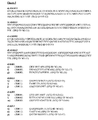
- a single domain antibody which binds human serum albumin for use in the present invention is a humanised heavy chain VH single domain antibody, dAbH1, having the sequence given in Figure 5 (a) (SEQ ID NO:52).
- dAbH1 humanised heavy chain VH single domain antibody
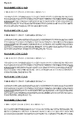
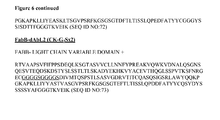
- Figure 6 SEQ ID NO:68.
- the single domain antibody which binds human serum albumin for use in the present invention is a humanised heavy chain VH single domain antibody, dAbH2, having the sequence given in Figure 5 (c) (SEQ ID NO:54).
- dAbH2 humanised heavy chain VH single domain antibody
- Figure 6 SEQ ID NO:69.
- the Kabat residue designations do not always correspond directly with the linear numbering of the amino acid residues.
- the actual linear amino acid sequence may contain fewer or additional amino acids than in the strict Kabat numbering corresponding to a shortening of, or insertion into, a structural component, whether framework or complementarity determining region (CDR), of the basic variable domain structure.
- CDR complementarity determining region
- the correct Kabat numbering of residues may be determined for a given antibody by alignment of residues of homology in the sequence of the antibody with a "standard" Kabat numbered sequence.
- the CDRs of the heavy chain variable domain are located at residues 31-35 (CDR-H1), residues 50-65 (CDR-H2) and residues 95-102 (CDR-H3) according to the Kabat numbering system.
- CDR-H1 Chothia, C. and Lesk, A.M. J. Mol. Biol., 196, 901-917 (1987 )
- the loop equivalent to CDR-H1 extends from residue 26 to residue 32.
- 'CDR-H1' comprises residues 26 to 35, as described by a combination of the Kabat numbering system and Chothia's topological loop definition.
- the CDRs of the light chain variable domain are located at residues 24-34 (CDR-L1), residues 50-56 (CDR-L2) and residues 89-97 (CDR-L3) according to the Kabat numbering system.
- a single domain antibody which binds human serum albumin for use in the present invention is a light chain VL single domain antibody which comprises at least one of a CDR having the sequence given in Figure 5 (h) SEQ ID NO:59 or Figure 5 (n) SEQ ID NO:65 for CDR-L1, a CDR having the sequence given in Figure 5(i) SEQ ID NO:60 or Figure 5 (o) SEQ ID NO:66 for CDR-L2 and a CDR having the sequence given in Figure 5 (j) SEQ ID NO:61 or Figure 5 (p) SEQ ID NO:67 for CDR-L3.
- a single domain antibody which binds human serum albumin for use in the present invention is a light chain VL antibody, wherein at least two of CDR-L1, CDR-L2 and CDR-L3 of the VL domain are selected from the following: the sequence given in SEQ ID NO:59 or SEQ ID NO:65 for CDR-L1, the sequence given in SEQ ID NO:60 or SEQ ID NO:66 for CDR-L2 and the sequence given in SEQ ID NO:61 or SEQ ID NO:67 for CDR-L3.
- the domain antibody may comprise a VL domain wherein CDR-L1 has the sequence given in SEQ ID NO:59 and CDR-L2 has the sequence given in SEQ ID NO:60.
- the domain antibody may comprise a VL domain wherein CDR-L1 has the sequence given in SEQ ID NO:59 and CDR-L3 has the sequence given in SEQ ID NO:61.
- CDR-L1 has the sequence given in SEQ ID NO:59
- CDR-L3 has the sequence given in SEQ ID NO:61.
- a single domain antibody which binds human serum albumin for use in the present invention is a light chain VL domain antibody, wherein the VL domain comprises the sequence given in SEQ ID NO:59 for CDR-L1, the sequence given in SEQ ID NO:60 for CDR-L2 and the sequence given in SEQ ID NO:61 for CDR-L3.
- a single domain antibody which binds human serum albumin for use in the present invention is a light chain VL domain antibody, wherein the VL domain comprises the sequence given in SEQ ID NO:65 for CDR-L1, the sequence given in SEQ ID NO:66 for CDR-L2 and the sequence given in SEQ ID NO:67 for CDR-L3.
- a single domain antibody which binds human serum albumin for use in the present invention is a humanised light chain VL single domain antibody, dAbL1, having the sequence given in Figure 5 (b) (SEQ ID NO:53).
- dAbL1 humanised light chain VL single domain antibody
- An example of a suitable CH1-dAbL1 fusion and a Ck1-dAbL1 fusion both comprising a G 4 S linker is given in Figure 6 (SEQ ID NO:70 and SEQ ID NO:72).
- a single domain antibody which binds human serum albumin for use in the present invention is a humanised light chain VL single domain antibody, dAbL2, having the sequence given in Figure 5 (d) (SEQ ID NO:55).
- dAbL2 humanised light chain VL single domain antibody
- An example of a suitable CH1-dAbL2 fusion and a Ck1-dAbL2 fusion both comprising a G 4 S linker is given in Figure 6 (SEQ ID NO:71 and SEQ ID NO:73).
- the heavy and light chains of the Fab or Fab' fragment each comprise a single domain antibody at the C-terminus and the two single domain antibodies are a complementary VH/VL pair which bind the antigen co-operatively as described herein above
- the VH dAb is dAbH1 (SEQ ID NO:52) and the VL dAb is dAbL1 (SEQ ID NO:53).
- the heavy and light chains of the Fab or Fab' fragment each comprise a single domain antibody at the C-terminus the two single domain antibodies are a complementary VH/VL pair which bind the antigen co-operatively as described herein above, the VH dAb is dAbH2 (SEQ ID NO:54) and the VL dAb is dAbL2 (SEQ ID NO:55).
- the present invention provides albumin binding antibodies or fragments thereof containing one or more of the CDRs provided herein above and in Figure 5 (e-p).
- Said CDRs may be incorporated into any suitable antibody framework and into any suitable antibody format.
- Such antibodies include whole antibodies and functionally active fragments or derivatives thereof which may be, but are not limited to, monoclonal, humanised, fully human or chimeric antibodies.
- albumin binding antibodies may comprise a complete antibody molecule having full length heavy and light chains or a fragment thereof and may be, but are not limited to Fab, modified Fab, Fab', F(ab') 2 , Fv, single domain antibodies, scFv, bi, tri or tetra-valent antibodies, Bis-scFv, diabodies, triabodies, tetrabodies and epitope-binding fragments of any of the above (see for example Holliger and Hudson, 2005, Nature Biotech. 23(9): 1126-1136 ; Adair and Lawson, 2005, Drug Design Reviews - Online 2(3), 209-217 ).
- Multi-valent antibodies may comprise multiple specificities or may be monospecific (see for example WO 92/22853 and WO05/113605 ). It will be appreciated that this aspect of the invention also extends to variants of these albumin binding antibodies.
- albumin binding antibodies in particular single domain antibodies may be conjugated to any other antibody or protein or other molecule, as desired or used in any other suitable context.
- the single domain antibodies dAbH1, dAbL1, dAbH2, dAbL2 as described above and shown in Figure 5 (a-d) may be incorporated into any suitable antibody format or used as single domain antibodies in any suitable context, such as a fusion or conjugate.
- antibodies of this aspect of the invention comprise the sequence given in Figure 5(e) for CDR-H1, the sequence given in Figure 5(f) for CDR-H2 and the sequence given in Figure 5(g) for CDR-H3.
- antibodies of this aspect of the invention comprise the sequence given in Figure 5(k) for CDR-H1, the sequence given in Figure 5(1) for CDR-H2 and the sequence given in Figure 5(m) for CDR-H3.
- antibodies of this aspect of the invention comprise the sequence given in Figure 5(h) for CDR-L1, the sequence given in Figure 5(i) for CDR-L2 and the sequence given in Figure 5(j) for CDR-L3.
- antibodies of this aspect of the invention comprise the sequence given in Figure 5(n) for CDR-L1, the sequence given in Figure 5(o) for CDR-L2 and the sequence given in Figure 5(p) for CDR-L3.
- the binding affinity of the single domain antibody for albumin will be sufficient to extend the half-life of the Fab or Fab' in vivo. It has been reported that an affinity for albumin of less than or equal to 2.5 ⁇ M affinity will extend half-life in vivo ( Nguyen, A. et al (2006) Protein Engineering, Design & Selection, 19(7), 291-297 ).
- the single domain antibody molecules of the present invention preferably have a binding affinity suited to their purpose and the antigen to which they bind.
- the single domain antibodies have a high binding affinity, for example picomolar.
- the single domain antibodies have a binding affinity for antigen which is nanomolar or micromolar. Affinity may be measured using any suitable method known in the art, including BIAcore as described in the Examples herein using natural or recombinant antigen.
- the single domain antibody molecules of the present invention which bind albumin have a binding affinity of about 2 ⁇ M or better. In one embodiment the single domain antibody molecule of the present invention has a binding affinity of about 1 ⁇ M or better. In one embodiment the single domain antibody molecule of the present invention has a binding affinity of about 500nM or better. In one embodiment the single domain antibody molecule of the present invention has a binding affinity of about 200nM or better. In one embodiment the domain antibody molecule of the present invention has a binding affinity of about 1nM or better. It will be appreciated that the affinity of single domain antibodies provided by the present invention and known in the art may be altered using any suitable method known in the art.
- the present invention therefore also relates to variants of the domain antibody molecules of the present invention, which have an improved affinity for albumin.
- variants can be obtained by a number of affinity maturation protocols including mutating the CDRs ( Yang et al., J. Mol. Biol., 254, 392-403, 1995 ), chain shuffling ( Marks et al., Bio/Technology, 10, 779-783, 1992 ), use of mutator strains of E . coli ( Low et al., J. Mol. Biol., 250, 359-368, 1996 ), DNA shuffling ( Patten et al., Curr. Opin.
- the present invention also provides an isolated DNA sequence encoding a dual specificity antibody fusion protein of the present invention.
- the DNA sequences of the present invention may comprise synthetic DNA, for instance produced by chemical processing, cDNA, genomic DNA or any combination thereof.
- DNA sequences which encode the dual specificity antibody fusion protein of the present invention can be obtained by methods well known to those skilled in the art. For example, DNA sequences coding for part or all of the antibody fragments, linkers and/or dAbs may be synthesised as desired from the determined DNA sequences or on the basis of the corresponding amino acid sequences.
- Standard techniques of molecular biology may be used to prepare DNA sequences coding for the dual specificity antibody fusion protein of the present invention. Desired DNA sequences may be synthesised completely or in part using oligonucleotide synthesis techniques. Site-directed mutagenesis and polymerase chain reaction (PCR) techniques may be used as appropriate.
- PCR polymerase chain reaction
- the present invention further relates to a cloning or expression vector comprising one or more DNA sequences of the present invention. Accordingly, provided is a cloning or expression vector comprising one or more DNA sequences encoding a dual specificity antibody fusion protein of the present invention.
- the cloning or expression vector comprises a single DNA sequence encoding the entire dual specificity antibody fusion protein.
- the cloning or expression vector comprises DNA encoded transcription units in sequence such that a translation fusion protein is produced.
- a fusion protein of the invention can have the dAb at the N-terminus or the C-terminus and thus, the dAb DNA encoded transcription unit will be first or last, respectively, within the DNA sequence encoding the translation fusion.
- a translation fusion may comprise an N-terminal dAb and a C-terminal Fab or Fab'.
- a translation fusion may comprise an N-terminal Fab or Fab' and a C-terminal dAb.
- one vector may comprise a translation fusion comprising a Fab or Fab' heavy chain and a C-terminal dAb and another vector may comprise a translation fusion comprising a Fab or Fab' light chain and a C-terminal dAb.
- the vector will comprise DNA transcription units in sequence order; a DNA transcription unit encoding the dAb moiety, optionally a DNA transcription unit encoding a linker sequence, and a DNA transcription unit encoding an antibody fragment.
- the vector will comprise DNA transcription units in sequence order; a DNA transcription unit encoding an antibody fragment, optionally a DNA transcription unit encoding a linker sequence, and a DNA transcription unit encoding dAb moiety with specificity for a serum carrier protein, a circulating immunoglobulin molecule, or CD35/CR1, for example, human serum albumin.
- a translation fusion of the invention can be in different configurations including, for example but without limitation, dAb-linker-Fab, Fab-linker-dAb, dAb-Fab, Fab-dAb, Fab'-dAb, dAb-Fab', dAb-linker Fab', Fab'-linker-dAb.
- the first may comprise the heavy chain of a Fab or Fab' fused to a dAb and the second may comprise the light chain of a Fab or Fab' fused to a dAb.
- DNA code for an antibody fragment comprised within a translation fusion of the invention can be incorporated into a vector as a transcription unit in configurations as known to the person skilled in the art, for example a transcription unit can comprise code for the light chain followed by the heavy chain code, or vice versa; see, in particular, Humphreys et al., 2002, Protein Expression and Purification, 26:309-320 .
- a vector according to the present invention comprises an appropriate leader sequence, such as an antibody leader sequence.
- an appropriate leader sequence such as an antibody leader sequence.
- leader sequences are well known in the art.
- a host cell comprising one or more cloning or expression vectors comprising one or more DNA sequences encoding a dual specificity antibody fusion protein of the present invention.
- Any suitable host cell/vector system may be used for expression of the DNA sequences encoding the dual specificity antibody fusion protein.
- Bacterial, for example E . coli, and other microbial systems may be used or eukaryotic, for example mammalian, host cell expression systems may also be used.
- Suitable mammalian host cells include NS0, CHO, myeloma or hybridoma cells. Accordingly in one embodiment the fusion protein of the present invention is expressed in E.coli. In another embodiment the fusion protein of the present invention is expressed in mammalian cells.
- the present invention also provides a process for the production of a dual specificity antibody fusion protein comprising culturing a host cell comprising a vector of the present invention under conditions suitable for the expression of protein from the DNA sequence encoding said dual specificity antibody fusion protein.
- the invention further provides methods for isolating the dual specificity antibody fusion protein.
- a dual specificity antibody fusion protein of the present invention may be purified, where necessary, using any suitable method known in the art.
- chromatographic techniques such as ion exchange, size exclusion, protein G or hydrophobic interaction chromatography may be used.
- the size of a dual specificity antibody fusion protein may be confirmed by conventional methods known in the art such as size exclusion chromatography and non-reducing SDS-PAGE. Such techniques can be used to confirm that the protein has not dimerised and/or does not have a portion missing, e.g. the dAb portion. If dimers are detected then the monomeric dual specificity antibody fusion protein may be purified away from the dimeric species using conventional chromatography techniques as described above.
- Dual specificity antibody fusion proteins of the invention are useful in the treatment of diseases or disorders including inflammatory diseases and disorders, immune disease and disorders, fibrotic disorders and cancers.
- inflammatory disease or "disorder” and “immune disease or disorder” includes rheumatoid arthritis, psoriatic arthritis, still's disease, Muckle Wells disease, psoriasis, Crohn's disease, ulcerative colitis, SLE (Systemic Lupus Erythematosus), asthma, allergic rhinitis, atopic dermatitis, multiple sclerosis, vasculitis, Type I diabetes mellitus, transplantation and graft-versus-host disease.
- fibrotic disorder includes idiopathic pulmonary fibrosis (IPF), systemic sclerosis (or scleroderma), kidney fibrosis, diabetic nephropathy, IgA nephropathy, hypertension, end-stage renal disease, peritoneal fibrosis (continuous ambulatory peritoneal dialysis), liver cirrhosis, age-related macular degeneration (ARMD), retinopathy, cardiac reactive fibrosis, scarring, keloids, bums, skin ulcers, angioplasty, coronary bypass surgery, arthroplasty and cataract surgery.
- IPF idiopathic pulmonary fibrosis
- systemic sclerosis or scleroderma
- kidney fibrosis diabetic nephropathy
- IgA nephropathy IgA nephropathy
- hypertension end-stage renal disease
- peritoneal fibrosis continuous ambulatory peritoneal dialysis
- liver cirrhosis liver cirr
- cancer includes a malignant new growth that arises from epithelium, found in skin or, more commonly, the lining of body organs, for example: breast, ovary, prostate, lung, kidney, pancreas, stomach, bladder or bowel. Cancers tend to infiltrate into adjacent tissue and spread (metastasise) to distant organs, for example: to bone, liver, lung or the brain.
- a pharmaceutical composition which comprises an antibody fusion of the invention in association with one or more pharmaceutically acceptable carriers, excipients or diluents. Also provided is the use of an antibody fusion protein of the invention for the manufacture of a medicament for the treatment of a disease or disorder. Most preferably, the disease or disorder is an inflammatory disease or disorder.
- compositions according to the invention may take a form suitable for oral, buccal, parenteral, subcutaneous, nasal, topical, ophthalmic or rectal administration, or a form suitable for administration by inhalation or insufflation.
- the single domain antibody or antibodies of the antibody fusion protein bind to albumin
- the pharmaceutical compositions may take the form of, for example, tablets, lozenges or capsules prepared by conventional means with pharmaceutically acceptable excipients such as binding agents (e.g. pregelatinised maize starch, polyvinylpyrrolidone or hydroxypropyl methyl cellulose); fillers (e.g. lactose, microcrystalline cellulose or calcium hydrogenphosphate); lubricants (e.g. magnesium stearate, talc or silica); disintegrants (e.g. potato starch or sodium glycollate); or wetting agents (e.g. sodium lauryl sulphate).
- binding agents e.g. pregelatinised maize starch, polyvinylpyrrolidone or hydroxypropyl methyl cellulose
- fillers e.g. lactose, microcrystalline cellulose or calcium hydrogenphosphate
- lubricants e.g. magnesium stearate, talc or silica
- disintegrants e.g. potato starch or sodium glycollate
- Liquid preparations for oral administration may take the form of, for example, solutions, syrups or suspensions, or they may be presented as a dry product for constitution with water or other suitable vehicle before use.
- Such liquid preparations may be prepared by conventional means with pharmaceutically acceptable additives such as suspending agents, emulsifying agents, non-aqueous vehicles or preservatives.
- the preparations may also contain buffer salts, flavouring agents, colouring agents or sweetening agents, as appropriate.
- Preparations for oral administration may be suitably formulated to give controlled release of the active compound.
- compositions may take the form of tablets or lozenges formulated in conventional manner.
- the bispecific antibodies of the invention may be formulated for parenteral administration by injection, e.g. by bolus injection or infusion.
- Formulations for injection may be presented in unit dosage form, e.g. in glass ampoules or multi-dose containers, e.g. glass vials.
- the compositions for injection may take such forms as suspensions, solutions or emulsions in oily or aqueous vehicles, and may contain formulatory agents such as suspending, stabilising, preserving and/or dispersing agents.
- the active ingredient may be in powder form for constitution with a suitable vehicle, e.g. sterile pyrogen-free water, before use.
- the bispecific antibodies of the invention may also be formulated as a depot preparation. Such long-acting formulations may be administered by implantation or by intramuscular injection.
- the compounds according to the present invention may be conveniently delivered in the form of an aerosol spray presentation for pressurised packs or a nebuliser, with the use of a suitable propellant, e.g. dichlorodifluoromethane, fluorotrichloromethane, dichlorotetrafluoroethane, carbon dioxide or other suitable gas or mixture of gases.
- a suitable propellant e.g. dichlorodifluoromethane, fluorotrichloromethane, dichlorotetrafluoroethane, carbon dioxide or other suitable gas or mixture of gases.
- compositions may, if desired, be presented in a pack or dispenser device which may contain one or more unit dosage forms containing the active ingredient.
- the pack or dispensing device may be accompanied by instructions for administration.
- the compounds according to the present invention may be conveniently formulated in a suitable ointment containing the active component suspended or dissolved in one or more pharmaceutically acceptable carriers.
- Particular carriers include, for example, mineral oil, liquid petroleum, propylene glycol, polyoxyethylene, polyoxypropylene, emulsifying wax and water.
- the compounds according to the present invention may be formulated in a suitable lotion containing the active component suspended or dissolved in one or more pharmaceutically acceptable carriers.
- Particular carriers include, for example, mineral oil, sorbitan monostearate, polysorbate 60, cetyl esters wax, cetearyl alcohol, benzyl alcohol, 2-octyldodecanol and water.
- the compounds according to the present invention may be conveniently formulated as microionized suspensions in isotonic, pH-adjusted sterile saline, either with or without a preservative such as a bactericidal or fungicidal agent, for example phenylmercuric nitrate, benzylalkonium chloride or chlorhexidine acetate.
- a preservative such as a bactericidal or fungicidal agent, for example phenylmercuric nitrate, benzylalkonium chloride or chlorhexidine acetate.
- compounds may be formulated in an ointment such as petrolatum.
- the compounds according to the present invention may be conveniently formulated as suppositories. These can be prepared by mixing the active component with a suitable non-irritating excipient which is solid at room temperature but liquid at rectal temperature and so will melt in the rectum to release the active component.
- suitable non-irritating excipient include, for example, cocoa butter, beeswax and polyethylene glycols.
- daily dosages may range from around 10 ng/kg to 1000 mg/kg, typically from 100 ng/kg to 100 mg/kg, e.g. around 0.01 mg/kg to 40 mg/kg body weight for oral or buccal administration, from around 10 ng/kg to 50 mg/kg body weight for parenteral administration, and from around 0.05 mg to around 1000 mg, e.g. from around 0.5 mg to around 1000 mg, for nasal administration or administration by inhalation or insufflation.
- An in-frame DNA encoded transcription unit encoding a dAb with specificity for human serum albumin was produced using recombinant DNA technology.
- an in-frame DNA encoded transcription unit encoding a dAb with specificity for a recruitment protein can be produced using recombinant DNA technology.
- DNA was synthesised encoding a human kappa light chain constant region (with the Km3 allotype of the kappa constant region), a peptide linker and a dAb and cloned as a SacI-PvuII restriction fragment into the UCB-Celltech in-house expression vector pTTOD(Fab) (a derivative of pTTO-1, described in Popplewell et al., Methods Mol. Biol. 2005; 308: 17-30 ) which contains DNA encoding the human gamma-1 CH1 constant region.
- pTTOD(Fab) a derivative of pTTO-1, described in Popplewell et al., Methods Mol. Biol. 2005; 308: 17-30
- DNA was synthesised encoding a human CH1 fragment (of the ⁇ 1 isotype) followed by a linker encoding sequence and a dAb. This was sublcloned as an ApaI-EcoRI restriction fragment into the UCB-Celltech in-house expression vector pTTOD(Fab) (a derivative of pTTO-1, described in Popplewell et al., above) which contains DNA encoding the human gamma-1 CH1 constant region.
- pTTOD(Fab) a derivative of pTTO-1, described in Popplewell et al., above
- the antibody chain to which the dAb is fused is denoted either as CK or LC for the cKappa light chain and as CH1 or HC for the heavy chain constant domain, CH1.
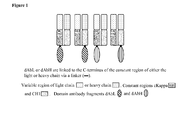
- Fab-dAb fusion proteins were constructed by fusing dAbL3 or dAbH4 to the C-terminus of the constant region of either the light or heavy chain of FabA.
- a flexible (SGGGGSE (SEQ ID NO:1)) or a rigid (G(APAPA) 2 (SEQ ID NO: 34)) linker was used to link the dAb to the cKappa region (SEQ ID NO:75) whereas the linker DKTHTS (SEQ ID NO:2) was used to link the dAb to the CH1 region (SEQ ID NO:76).
- the DNA sequence coding for the constant region-dAb fusion was manufactured synthetically as fragments to enable sub-cloning into the FabA sequence of the in-house pTTOD vector.
- Light chain-dAb fusions were constructed by sub-cloning the Sac I -Apa I fragment of the synthesized genes, encoding a C-terminal cKappa fused to either dAbL3 or dAbH4 via either a (SGGGGSE (SEQ ID NO:1)) or a rigid (G(APAPA) 2 (SEQ ID NO: 34)) linker, into the corresponding sites of a plasmid capable of expressing FabA.
- SGGGGSE SEQ ID NO:1
- G(APAPA) 2 SEQ ID NO: 34
- Heavy chain-dAb fusions were constructed by sub-cloning the Apa I -Eco RI fragment of the synthesised genes, encoding a C-terminal CHI fused to either dAbL3 or dAbH4 via a DKTHTS linker, into the corresponding sites of a plasmid capable of expressing FabA.
- Fab' A is derived from an IL-1 beta binding antibody, the heavy and light chain sequences of which are provided in SEQ ID NOs:74 and 75 respectively as shown in Figure 7 .
- the hinge of the heavy chain was altered to DKTHTS even where no dAb is attached to the heavy chain (SEQ ID NO:76).
- FabA comprises the same light chain sequence (SEQ ID NO:75) and a truncated heavy chain sequence which terminates at the interchain cysteine (SEQ ID NO:77).
- dAbL3 and dAbH4 are light and heavy chain domain antibodies respectively which bind human serum albumin.
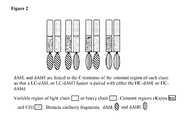
- FabA-didAb with dAbL3 or dAbH4 on both light and heavy chains were constructed by sub-cloning the Apa I -Eco RI fragment coding for CH1-dAb fusions into the existing Fab-dAb plasmids where the dAb is fused to the light chain via the flexible linker.
- FabB-dAbs FabB-dAbH1 (CH1-G 4 Sx2), FabB-dAbH2 (CH1-G 4 Sx2), FabB-dAbL1 (CH1-G 4 Sx2), FabB-dAbL2 (CH1-G 4 Sx2) were all assembled by PCR then cloned into a mammalian expression vector under the control of the HCMV-MIE promoter and SV40E polyA sequence. These were paired with a similar vector containing the FabB light chain for expression in mammalian cells (see below).
- FabB is derived from an antibody which bids a cell surface co-stimulatory molecule.
- dAbH1, dAbH2, dAbL1 and dAbL2 were obtained as described in Example 3.
- FabB-dAbs The FabB-dAbs, FabB-dAbH1 (CH1-G 4 Sx2), FabB-dAbH2 (CH1-G 4 Sx2), FabB-dAbL1 (CK-G 4 Sx2), FabB-dAbL2 (CK-G 4 Sx2) were all assembled by PCR then cloned into a mammalian expression vector under the control of the HCMV-MIE promoter and SV40E polyA sequence.
- HEK293 cells were transfected with the heavy and light chain plasmids using Invitrogen's 293fectin transfection reagent according to the manufacturer's instructions. Briefly, 2 ⁇ g heavy chain plasmid + 2 ⁇ g light chain plasmid was incubated with 10 ⁇ l 293fectin + 340 ⁇ l Optimem media for 20mins at RT. The mixture was then added to 5x10 6 HEK293 cells in suspension and incubated for 4 days with shaking at 37°C.
- Binding affinities and kinetic parameters for the interactions of Fab-dAb constructs were determined by surface plasmon resonance (SPR) conducted on a Biacore T100 using CM5 sensor chips and HBS-EP (10mM HEPES (pH7.4), 150mM NaCl, 3mM EDTA, 0.05% v/v surfactant P20) running buffer.
- Fab-dAb samples were captured to the sensor chip surface using either a human F(ab') 2 -specific goat Fab (Jackson ImmunoResearch, 109-006-097) or an in-house generated anti human CH1 monoclonal antibody. Covalent immobilisation of the capture antibody was achieved by standard amine coupling chemistry.
- Each assay cycle consisted of firstly capturing the Fab-dAb using a 1 min injection, before an association phase consisting of a 3 min injection of antigen, after which dissociation was monitored for 5 min. After each cycle, the capture surface was regenerated with 2 x 1 min injections of 40mM HCl followed by 30s of 5mM NaOH. The flow rates used were 10 ⁇ l/min for capture, 30 ⁇ l/min for association and dissociation phases, and 10 ⁇ l/min for regeneration.
- a titration of antigen for human serum albumin typically 62.5nM-2 ⁇ M, for IL-1 ⁇ 1.25-40nM was performed, a blank flow-cell was used for reference subtraction and buffer-blank injections were included to subtract instrument noise and drift.
- E.coli pellets containing the Fab-dAbs within the periplasm were re-suspended in original culture volume with 100mM Tris/HCl, 10mM EDTA pH 7.4. These suspensions were then incubated at 4°C for 16 hours at 250rpm. The re-suspended pellets were centrifuged at 10000xg for 1 hour at 4°C. The supernatants were removed and 0.45 ⁇ m filtered.
- the Fab-dAbs were captured from the filtered supernatant by Protein-G chromatography. Briefly the supernatants were applied, with a 20 minute residence time, to a Gammabind Plus Sepharose (GE Healthcare) column equilibrated in 20mM phosphate, 150mM NaCl pH7.1. The column was washed with 20mM phosphate, 150mM NaCl pH7.1 and the bound material eluted with 0.1M glycine/HCl pH2.8. The elution peak was collected and pH adjusted to ⁇ pH5 with 1M sodium acetate. The pH adjusted elutions were concentrated and diafiltered into 50mM sodium acetate pH4.5 using a 10k MWCO membrane.
- GE Healthcare Gammabind Plus Sepharose
- the Fab-dAbs were further purified by cation exchange chromatography at pH4.5 with a NaCl elution gradient. Briefly the diafiltered Protein-G eluates were applied to a Source15S (GE Healthcare) column equilibrated in 50mM sodium acetate pH4.5. The column was washed with 50mM sodium acetate pH4.5 and the bound material eluted with a 20 column volume linear gradient from 0 to 1M NaCl in 50mM sodium acetate pH4.5. Third column volume fractions were collected through out the gradient. The fractions were analysed by A280 and SDS-PAGE and relevant fractions pooled.
- the Fab-dAbs were further purified by gel filtration. Briefly the FabA-dAbL3 (CK-SG 4 SE) pooled ion exchange elution fractions were applied to a Superdex200 (GE Healthcare) column equilibrated in 50mM sodium acetate, 125mM NaCl pH 5.0 and eluted with an isocratic gradient of 50mM sodium acetate, 125mM NaCl pH 5.0. 1/120 column volume fractions were collected through out the gradient. The fractions were analysed by A280 and SDS-PAGE and relevant fractions pooled.
- the pooled ion exchange elution fractions were concentrated and diafiltered into 50mM sodium acetate, 125mM NaCl pH 5.0 using a 10k MWCO membrane.
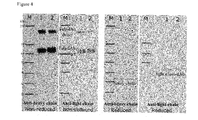
- Samples were diluted with water where required and then to 10 ⁇ l was added 10 ⁇ L 2X sample running buffer. For non-reduced samples, 2 ⁇ L of 100mM NEM was added at this point, for reduced samples 2 ⁇ L of 10X reducing agent was added. The sample were vortexed, incubated at 85°C for 5 mins, cooled and centrifuged at 12500 rpm for 30secs. The prepared samples were loaded on to a 4-20% acrylamine Tris/Glycine SDS gel and run for 100mins at 125V. The gels were either transferred onto PVDF membranes for Western blotting or stained with Coomassie Blue protein stain.
- mouse anti-human heavy chain 1/7000 dilution in blocking buffer for 1hr.
- HRP-goat anti-mouse 1/2000 dilution in blocking buffer for 1hr.
- Samples (2 ⁇ g) were analysed on a 2.1mm C8 Poroshell column at 80°C, with a flow rate of 2ml/min and a gradient of 18-38% B over 4mins.
- the yields of Fab-dAb were measured using a sandwich ELISA. Briefly, the Fab-dAb was captured with an anti-CH1 antibody then revealed with an anti-kappa-HRP.
- the light chain grafted sequences were sub-cloned into the rabbit light chain expression vector pVRbcK which contains the DNA encoding the rabbit C-Kappa constant region.
- the heavy chain grafted sequences were sub-cloned into the rabbit heavy chain expression vector pVRbHFab, which contains the DNA encoding the rabbit Fab' heavy chain constant region. Plasmids were co-transfected into CHO cells and the antibodies produced screened for albumin binding and affinity (Table 1). Transfections of CHO cells were performed using the LipofectamineTM 2000 procedure according to manufacturer's instructions (InVitrogen, catalogue No. 11668).
- Humanised VL and VH regions were designed using human V-region acceptor frameworks and donor residues in the framework regions.
- One grafted VL region (L1 (SEQ ID NO:53) and L2 (SEQ ID NO:55)) and one VH region (CH1 (SEQ ID NO:52) and H2 (SEQ ID NO:54)) were designed for each of antibodies 1 and 2 and genes were built by oligonucleotide assembly and PCR mutagenesis.
- the grafted domain antibodies and their CDRs are shown in Figure 5 .
- Table 1 Affinities of anti-albumin antibodies as rabbit Fab as humanised IgG Human SA nM murineSA nM Human SA nM Antibody 1 0.31 2.6 0.82 Antibody 2 0.33 12 0.13
- FabB-dAb constructs were produced as described in the methods and the supernatants from the tranfected HEK293 cells containing the FabB-dAbs were tested directly in BIAcore.
- FabB-dAb constructs were assessed to assess the interaction of HSA with FabB-dAb constructs. These consisted of either dAbL1, dAbH2 or dAbL3 fused to the C-terminus of CH1 of FabB (See Figure 6 ).
- FabB-didAb constructs were produced as described in the methods and the supernatants from the tranfected HEK293 cells containing the didAbs tested directly in BIAcore.
- Plasmids for expression of the Fab-dAbs, Fab'A-dAbL3 (CK-SG 4 SE) Fab'A-dAbL3 (CK-G[APAPA] 2 ) in E.coli were constructed as described in the methods.
- the Fab-dAbs were expressed into the periplasm of the E.coli and purified to homogeneity as described in the methods.
- the purity of the Fab-dAbs were assessed by high temperature reverse phase HPLC, SDS-PAGE and Western blotting.
- the Fab-dAbs were also assessed for antigen binding by Biacore.
- Fab-dAb samples were prepared under non-reduced and reduced conditions and run on a gel as described in the methods. The gel was Coomassie stained. The banding profile of both Fab-dAb samples, Fab'A-dAbL3 (CK-SG 4 SE) and Fab'A-dAbL3 (CK-G[APAPA] 2 ), corresponds well to the profile observed by high temperature reverse phase HPLC ( figure 3 ).
- Fab-dAb samples were subjected to non-reduced SDS-PAGE followed by western blot analysis with anti-light chain and anti-heavy chain antibodies as described in the methods. This confirmed that the dAb was on the light chain of the Fab and that the heavy chain was unmodified in both samples ( figure 4 ). It also demonstrates that all bands detected by coomassie stained, non-reduced SDS PAGE are Fab-dAb related products.
- each construct to bind simultaneously to both human serum albumin and the IL-1 ⁇ antigen was assessed by capturing each construct to the sensor chip surface, before performing either separate 3 min injections of 5 ⁇ M human serum albumin or 100nM IL-1 ⁇ , or a mixed solution of both 5 ⁇ M human serum albumin and 100nM IL-1 ⁇ .
- For each Fab-dAb construct the response seen for the combined HSA/IL-1 ⁇ solution was almost identical to the sum of the responses of the independent injections, see table 7. This shows that the Fab-dAbs are capable of simultaneous binding to both IL-1 ⁇ and human serum albumin, and that binding of either IL-1 ⁇ or human serum albumin does not inhibit the interaction of the other.
- FabA-dAbs and FabA-didAb fusions terminating with a C-terminal HIS6 tag were expressed in Escherichia coli. After periplasmic extraction, dAb fusion proteins were purified via the C-terminal His6 tag. Fab expression was analysed by Western blotting of a non-reduced gel with anti-CH1 and anti-cKappa antibodies. FabA-dAb and FabA-didAb were expressed as full-length proteins and were shown to react to both antibody detection reagents.
- Binding assays were performed on a variety of constructs in which dAbL3 or dAbH4 fused to either the light or heavy chain of the FabA (see Table 8 for details of the constructs and summary of the binding data). Although constructs carrying only dAbH4, on either the light or heavy chain, were seen to bind HSA with comparatively poor affinity ( ⁇ 9 ⁇ M and 3 ⁇ M respectively), higher affinity binding was observed for constructs carrying dAbL3, either as a single fusion (on either light or heavy chain) or partnered with a second dAb (dAbL3 or dAbH4) on the opposing chain.
Landscapes
- Health & Medical Sciences (AREA)
- Chemical & Material Sciences (AREA)
- Organic Chemistry (AREA)
- General Health & Medical Sciences (AREA)
- Medicinal Chemistry (AREA)
- Life Sciences & Earth Sciences (AREA)
- Chemical Kinetics & Catalysis (AREA)
- General Chemical & Material Sciences (AREA)
- Nuclear Medicine, Radiotherapy & Molecular Imaging (AREA)
- Bioinformatics & Cheminformatics (AREA)
- Pharmacology & Pharmacy (AREA)
- Animal Behavior & Ethology (AREA)
- Public Health (AREA)
- Veterinary Medicine (AREA)
- Engineering & Computer Science (AREA)
- Immunology (AREA)
- Biochemistry (AREA)
- Proteomics, Peptides & Aminoacids (AREA)
- Molecular Biology (AREA)
- Genetics & Genomics (AREA)
- Biophysics (AREA)
- Pulmonology (AREA)
- Dermatology (AREA)
- Diabetes (AREA)
- Heart & Thoracic Surgery (AREA)
- Ophthalmology & Optometry (AREA)
- Cardiology (AREA)
- Rheumatology (AREA)
- Urology & Nephrology (AREA)
- Obesity (AREA)
- Transplantation (AREA)
- Neurology (AREA)
- Neurosurgery (AREA)
- Pain & Pain Management (AREA)
- Vascular Medicine (AREA)
- Hematology (AREA)
- Endocrinology (AREA)
- Emergency Medicine (AREA)
- Biomedical Technology (AREA)
- Orthopedic Medicine & Surgery (AREA)
Applications Claiming Priority (3)
| Application Number | Priority Date | Filing Date | Title |
|---|---|---|---|
| GB0718834A GB0718834D0 (en) | 2007-09-26 | 2007-09-26 | Antibody fusions |
| GB0718832A GB0718832D0 (en) | 2007-09-26 | 2007-09-26 | Antibody fusions |
| EP08806478.7A EP2195341B1 (fr) | 2007-09-26 | 2008-09-26 | Fusions d'anticorps à double spécificité |
Related Parent Applications (2)
| Application Number | Title | Priority Date | Filing Date |
|---|---|---|---|
| EP08806478.7A Division-Into EP2195341B1 (fr) | 2007-09-26 | 2008-09-26 | Fusions d'anticorps à double spécificité |
| EP08806478.7 Division | 2008-09-26 |
Publications (1)
| Publication Number | Publication Date |
|---|---|
| EP2535349A1 true EP2535349A1 (fr) | 2012-12-19 |
Family
ID=40291217
Family Applications (4)
| Application Number | Title | Priority Date | Filing Date |
|---|---|---|---|
| EP12183571A Withdrawn EP2535349A1 (fr) | 2007-09-26 | 2008-09-26 | Fusions d'anticorps à double spécificité |
| EP08806478.7A Active EP2195341B1 (fr) | 2007-09-26 | 2008-09-26 | Fusions d'anticorps à double spécificité |
| EP12183573.0A Active EP2535350B1 (fr) | 2007-09-26 | 2008-09-26 | Fusions d'anticorps à double spécificité |
| EP12183574A Ceased EP2535351A3 (fr) | 2007-09-26 | 2008-09-26 | Fusions d'anticorps à double spécificité |
Family Applications After (3)
| Application Number | Title | Priority Date | Filing Date |
|---|---|---|---|
| EP08806478.7A Active EP2195341B1 (fr) | 2007-09-26 | 2008-09-26 | Fusions d'anticorps à double spécificité |
| EP12183573.0A Active EP2535350B1 (fr) | 2007-09-26 | 2008-09-26 | Fusions d'anticorps à double spécificité |
| EP12183574A Ceased EP2535351A3 (fr) | 2007-09-26 | 2008-09-26 | Fusions d'anticorps à double spécificité |
Country Status (7)
| Country | Link |
|---|---|
| US (5) | US8629246B2 (fr) |
| EP (4) | EP2535349A1 (fr) |
| JP (2) | JP5592792B2 (fr) |
| CN (2) | CN104004088B (fr) |
| CA (1) | CA2700714C (fr) |
| ES (2) | ES2667729T3 (fr) |
| WO (1) | WO2009040562A1 (fr) |
Cited By (1)
| Publication number | Priority date | Publication date | Assignee | Title |
|---|---|---|---|---|
| WO2015197789A1 (fr) * | 2014-06-26 | 2015-12-30 | Ucb Biopharma Sprl | Constructions d'anticorps multi-spécifiques |
Families Citing this family (252)
| Publication number | Priority date | Publication date | Assignee | Title |
|---|---|---|---|---|
| EP2535349A1 (fr) | 2007-09-26 | 2012-12-19 | UCB Pharma S.A. | Fusions d'anticorps à double spécificité |
| CA2737241C (fr) * | 2008-09-26 | 2017-08-29 | Ucb Pharma S.A. | Proteines de fusion d'anticorps multivalentes |
| NZ594315A (en) | 2009-02-17 | 2013-05-31 | Ucb Pharma Sa | Antibody molecules having specificity for human ox40 |
| GB0904214D0 (en) | 2009-03-11 | 2009-04-22 | Ucb Pharma Sa | Biological products |
| UY32663A (es) * | 2009-05-28 | 2010-12-31 | Glaxo Group Ltd | Proteinas de union a antigeno |
| JP5901517B2 (ja) * | 2009-05-28 | 2016-04-13 | グラクソ グループ リミテッドGlaxo Group Limited | 抗原結合性タンパク質 |
| EP2437767B1 (fr) * | 2009-06-01 | 2015-07-08 | MedImmune, LLC | Molécules ayant une demi-vie prolongée et leurs utilisations |
| WO2011028952A1 (fr) | 2009-09-02 | 2011-03-10 | Xencor, Inc. | Compositions et procédés pour une co-liaison bivalente et monovalente simultanée d'antigènes |
| WO2011030107A1 (fr) * | 2009-09-10 | 2011-03-17 | Ucb Pharma S.A. | Anticorps multivalents |
| GB201005063D0 (en) * | 2010-03-25 | 2010-05-12 | Ucb Pharma Sa | Biological products |
| GB0920127D0 (en) * | 2009-11-17 | 2009-12-30 | Ucb Pharma Sa | Antibodies |
| GB201000467D0 (en) * | 2010-01-12 | 2010-02-24 | Ucb Pharma Sa | Antibodies |
| TW201134488A (en) | 2010-03-11 | 2011-10-16 | Ucb Pharma Sa | PD-1 antibodies |
| EP2545078A1 (fr) | 2010-03-11 | 2013-01-16 | UCB Pharma, S.A. | Anticorps pd-1 |
| GB201005064D0 (en) | 2010-03-25 | 2010-05-12 | Ucb Pharma Sa | Biological products |
| EP2596114A4 (fr) * | 2010-07-14 | 2014-01-08 | Amgen Inc | Immunoglobuline à insertion de domaine |
| AU2011283694B2 (en) | 2010-07-29 | 2017-04-13 | Xencor, Inc. | Antibodies with modified isoelectric points |
| AU2011333738A1 (en) | 2010-11-24 | 2013-07-11 | Glaxo Group Limited | Multispecific antigen binding proteins targeting HGF |
| WO2012072731A2 (fr) | 2010-12-01 | 2012-06-07 | Glaxo Group Limited | Domaines variables améliorés à liaison unique d'anti-albumine sérique |
| GB201100282D0 (en) | 2011-01-07 | 2011-02-23 | Ucb Pharma Sa | Biological methods |
| US10208349B2 (en) | 2011-01-07 | 2019-02-19 | Ucb Biopharma Sprl | Lipocalin 2 as a biomarker for IL-17 inhibitor therapy efficacy |
| ME02734B (fr) | 2011-01-14 | 2017-10-20 | Ucb Biopharma Sprl | Molécules d'anticorps se liant à il-17a et il-17f |
| WO2012158818A2 (fr) | 2011-05-16 | 2012-11-22 | Fabion Pharmaceuticals, Inc. | Protéines de fusion contenant un fab multi-spécifique et procédé d'utilisation |
| EP2723380B1 (fr) * | 2011-06-24 | 2019-08-21 | Stephen D. Gillies | Protéines hybrides d'immunoglobuline à chaîne légère et leurs procédés d'utilisation |
| HRP20180226T1 (hr) | 2011-07-13 | 2018-03-09 | Ucb Biopharma Sprl | Bakterijski soj domaćina koji eksprimira rekombinantnu dsbc |
| PL2758432T3 (pl) | 2011-09-16 | 2019-08-30 | Ucb Biopharma Sprl | Przeciwciała neutralizujące przeciw głównym egzotoksynom tcda i tcdb z clostridium difficile |
| US12466897B2 (en) | 2011-10-10 | 2025-11-11 | Xencor, Inc. | Heterodimeric human IgG1 polypeptides with isoelectric point modifications |
| US10851178B2 (en) | 2011-10-10 | 2020-12-01 | Xencor, Inc. | Heterodimeric human IgG1 polypeptides with isoelectric point modifications |
| UA112203C2 (uk) | 2011-11-11 | 2016-08-10 | Юсб Фарма С.А. | Злитий білок біоспецифічного антитіла, який зв'язується з ox40 людини та сироватковим альбуміном людини |
| WO2013068571A1 (fr) | 2011-11-11 | 2013-05-16 | Ucb Pharma S.A. | Anticorps se liant à l'albumine et leurs fragments de liaison |
| GB201208370D0 (en) | 2012-05-14 | 2012-06-27 | Ucb Pharma Sa | Antibodies |
| GB201208367D0 (en) | 2012-05-14 | 2012-06-27 | Ucb Pharma Sa | Biological product |
| US8945553B2 (en) * | 2012-05-22 | 2015-02-03 | Bristol-Myers Squibb Company | Bispecific antibodies to IL-23 and IL-17A/F |
| EP2931750B8 (fr) * | 2012-12-17 | 2021-11-03 | Cell Medica Inc. | Anticorps dirigés contre il-1 béta |
| GB201223276D0 (en) | 2012-12-21 | 2013-02-06 | Ucb Pharma Sa | Antibodies and methods of producing same |
| US11053316B2 (en) | 2013-01-14 | 2021-07-06 | Xencor, Inc. | Optimized antibody variable regions |
| US10131710B2 (en) | 2013-01-14 | 2018-11-20 | Xencor, Inc. | Optimized antibody variable regions |
| US9605084B2 (en) | 2013-03-15 | 2017-03-28 | Xencor, Inc. | Heterodimeric proteins |
| US10487155B2 (en) | 2013-01-14 | 2019-11-26 | Xencor, Inc. | Heterodimeric proteins |
| KR102211837B1 (ko) | 2013-01-14 | 2021-02-03 | 젠코어 인코포레이티드 | 신규한 이형이량체 단백질 |
| US10968276B2 (en) | 2013-03-12 | 2021-04-06 | Xencor, Inc. | Optimized anti-CD3 variable regions |
| US9701759B2 (en) | 2013-01-14 | 2017-07-11 | Xencor, Inc. | Heterodimeric proteins |
| WO2014113510A1 (fr) | 2013-01-15 | 2014-07-24 | Xencor, Inc. | Elimination rapide de complexes antigéniques à l'aide de nouveaux anticorps |
| EP2961773B1 (fr) * | 2013-02-26 | 2019-03-20 | Roche Glycart AG | Molécules bispécifiques de liaison à l'antigène activant les lymphocytes t |
| US10519242B2 (en) | 2013-03-15 | 2019-12-31 | Xencor, Inc. | Targeting regulatory T cells with heterodimeric proteins |
| US10106624B2 (en) | 2013-03-15 | 2018-10-23 | Xencor, Inc. | Heterodimeric proteins |
| EP2970486B1 (fr) | 2013-03-15 | 2018-05-16 | Xencor, Inc. | Modulation de cellules t avec des anticorps bispecifiques et des fusions fc |
| US10858417B2 (en) | 2013-03-15 | 2020-12-08 | Xencor, Inc. | Heterodimeric proteins |
| JP6449272B2 (ja) * | 2013-07-08 | 2019-01-09 | ナンジン レジェンド バイオテック カンパニー,リミテッドNanjing Legend Biotech Co.,Ltd. | タンパク質の血清半減期を増加する組成物及び方法 |
| BR112016004355A2 (pt) * | 2013-08-30 | 2017-10-17 | Aprilbio Co Ltd | constructo de fusão de parte efetora de fab anti-soroalbumina e método de preparação do mesmo |
| GB201315487D0 (en) | 2013-08-30 | 2013-10-16 | Ucb Pharma Sa | Antibodies |
| US9758588B2 (en) | 2013-09-30 | 2017-09-12 | Becton, Dickinson And Company | Blocking reagent compositions and methods of making and using the same |
| HUE035875T2 (hu) | 2013-10-25 | 2018-06-28 | Psioxus Therapeutics Ltd | Heterológ géneket tartalmazó onkolitikus adenovírusok |
| GB201320066D0 (en) | 2013-11-13 | 2013-12-25 | Ucb Pharma Sa | Biological products |
| EP3107569A4 (fr) * | 2014-02-20 | 2018-02-21 | Alder Biopharmaceuticals, Inc. | Anticorps anti-acth et leur utilisation |
| EP3699195A3 (fr) | 2014-03-28 | 2020-11-04 | Xencor, Inc. | Anticorps bispécifiques se liant à cd38 et cd3 |
| CA2944767C (fr) * | 2014-04-04 | 2022-07-12 | Mayo Foundation For Medical Education And Research | Isotypage d'immunoglobulines par masse moleculaire precise |
| GB201406608D0 (en) | 2014-04-12 | 2014-05-28 | Psioxus Therapeutics Ltd | Virus |
| GB201409558D0 (en) | 2014-05-29 | 2014-07-16 | Ucb Biopharma Sprl | Method |
| GB201411320D0 (en) | 2014-06-25 | 2014-08-06 | Ucb Biopharma Sprl | Antibody construct |
| WO2016001810A1 (fr) | 2014-07-01 | 2016-01-07 | Pfizer Inc. | Diabodies hétérodimères bispécifiques et leurs utilisations |
| GB201412659D0 (en) | 2014-07-16 | 2014-08-27 | Ucb Biopharma Sprl | Molecules |
| GB201412658D0 (en) | 2014-07-16 | 2014-08-27 | Ucb Biopharma Sprl | Molecules |
| BR112017005631A2 (pt) * | 2014-09-19 | 2018-06-26 | City Of Hope | células t com receptor de antígeno coestimulador quimérico direcionadas à il13ra2 |
| US10259887B2 (en) | 2014-11-26 | 2019-04-16 | Xencor, Inc. | Heterodimeric antibodies that bind CD3 and tumor antigens |
| EP3223907A2 (fr) | 2014-11-26 | 2017-10-04 | Xencor, Inc. | Anticorps hétérodimériques se liant aux antigènes cd3 et cd38 |
| PE20171324A1 (es) | 2014-11-26 | 2017-09-11 | Xencor Inc | Anticuerpos heterodimericos que se unen a cd3 y a antigenos tumorales |
| WO2016105450A2 (fr) | 2014-12-22 | 2016-06-30 | Xencor, Inc. | Anticorps trispécifiques |
| US10544220B2 (en) | 2015-01-08 | 2020-01-28 | Genmab A/S | Bispecific antibodies against CD3 and CD20 |
| US10227411B2 (en) | 2015-03-05 | 2019-03-12 | Xencor, Inc. | Modulation of T cells with bispecific antibodies and FC fusions |
| AU2016249839B2 (en) * | 2015-04-17 | 2021-09-09 | Ventana Medical Systems, Inc. | Antibodies, compositions, and immunohistochemistry methods for detecting C4.4a |
| GB201506869D0 (en) | 2015-04-22 | 2015-06-03 | Ucb Biopharma Sprl | Method |
| GB201506870D0 (en) | 2015-04-22 | 2015-06-03 | Ucb Biopharma Sprl | Method |
| TW201702271A (zh) | 2015-04-30 | 2017-01-16 | 哈佛大學校長及研究員協會 | 治療代謝病症之抗-ap2抗體及抗原結合劑 |
| US10676723B2 (en) | 2015-05-11 | 2020-06-09 | David Gordon Bermudes | Chimeric protein toxins for expression by therapeutic bacteria |
| GB201508180D0 (en) | 2015-05-13 | 2015-06-24 | Ucb Biopharma Sprl | Antibodies |
| US9708412B2 (en) | 2015-05-21 | 2017-07-18 | Harpoon Therapeutics, Inc. | Trispecific binding proteins and methods of use |
| JP6851322B2 (ja) | 2015-05-27 | 2021-03-31 | ユーシービー バイオファルマ エスアールエル | 神経疾患を治療する方法 |
| CN106188305A (zh) * | 2015-06-01 | 2016-12-07 | 中山大学 | 具有融合至常规Fab片段的单域抗原结合片段的二价抗体 |
| GB201510758D0 (en) | 2015-06-18 | 2015-08-05 | Ucb Biopharma Sprl | Novel TNFa structure for use in therapy |
| HUE057952T2 (hu) | 2015-06-24 | 2022-06-28 | Hoffmann La Roche | Anti-transzferrin receptor antitestek testreszabott affinitással |
| WO2017005734A1 (fr) | 2015-07-06 | 2017-01-12 | Ucb Biopharma Sprl | Anticorps se liant à tau |
| US10344081B2 (en) | 2015-07-06 | 2019-07-09 | Ucb Biopharma Sprl | Tau-binding antibodies |
| GB201601075D0 (en) | 2016-01-20 | 2016-03-02 | Ucb Biopharma Sprl | Antibodies molecules |
| GB201601073D0 (en) | 2016-01-20 | 2016-03-02 | Ucb Biopharma Sprl | Antibodies |
| GB201601077D0 (en) | 2016-01-20 | 2016-03-02 | Ucb Biopharma Sprl | Antibody molecule |
| TWI873952B (zh) * | 2015-10-02 | 2025-02-21 | 瑞士商赫孚孟拉羅股份公司 | 雙特異性抗‐人類cd20/人類轉鐵蛋白受體抗體及使用方法 |
| AR106189A1 (es) | 2015-10-02 | 2017-12-20 | Hoffmann La Roche | ANTICUERPOS BIESPECÍFICOS CONTRA EL A-b HUMANO Y EL RECEPTOR DE TRANSFERRINA HUMANO Y MÉTODOS DE USO |
| DK3359688T3 (da) | 2015-10-05 | 2021-08-23 | Biogen Ma Inc | Molekylære signaturer til anvendelse til diagnose og analyse af respons på behandling af autoimmune sygdomme |
| CN116059350A (zh) | 2015-10-27 | 2023-05-05 | Ucb生物制药有限责任公司 | 使用抗-il-17a/f抗体的治疗方法 |
| GB201521391D0 (en) | 2015-12-03 | 2016-01-20 | Ucb Biopharma Sprl | Antibodies |
| GB201521389D0 (en) | 2015-12-03 | 2016-01-20 | Ucb Biopharma Sprl | Method |
| GB201521393D0 (en) | 2015-12-03 | 2016-01-20 | Ucb Biopharma Sprl | Antibodies |
| GB201521383D0 (en) | 2015-12-03 | 2016-01-20 | Ucb Biopharma Sprl And Ucb Celltech | Method |
| GB201521382D0 (en) | 2015-12-03 | 2016-01-20 | Ucb Biopharma Sprl | Antibodies |
| CA3007030A1 (fr) | 2015-12-07 | 2017-06-15 | Xencor, Inc. | Anticorps heterodimees se liant a cd3 et psma |
| GB201522394D0 (en) | 2015-12-18 | 2016-02-03 | Ucb Biopharma Sprl | Antibodies |
| KR20180098671A (ko) | 2016-01-11 | 2018-09-04 | 인히브릭스, 인크. | 다가 및 다중특이적 ox40-결합 융합 단백질 |
| GB201602414D0 (en) | 2016-02-10 | 2016-03-23 | Nascient Ltd | Biological materials and uses thereof |
| EP3430058A4 (fr) | 2016-03-15 | 2019-10-23 | Generon (Shanghai) Corporation Ltd. | Protéines de fusion à fab multispécifiques et leur utilisation |
| CA3022494A1 (fr) | 2016-05-01 | 2017-11-09 | Ucb Biopharma Sprl | Domaine de liaison a une proteine porteuse serique, avec affinite genetiquement modifiee |
| WO2017201493A1 (fr) | 2016-05-20 | 2017-11-23 | Harpoon Therapeutics, Inc. | Protéines se liant au fragment monocaténaire variable de cd3 |
| US11623958B2 (en) | 2016-05-20 | 2023-04-11 | Harpoon Therapeutics, Inc. | Single chain variable fragment CD3 binding proteins |
| EP3493844A4 (fr) * | 2016-05-20 | 2021-03-24 | Harpoon Therapeutics Inc. | Protéine de liaison à l'albumine sérique à domaine unique |
| GB201610198D0 (en) | 2016-06-10 | 2016-07-27 | Ucb Biopharma Sprl | Anti-ige antibodies |
| JP7010854B2 (ja) | 2016-06-14 | 2022-01-26 | ゼンコア インコーポレイテッド | 二重特異性チェックポイント阻害剤抗体 |
| CN109715663B (zh) | 2016-06-28 | 2022-11-25 | Xencor股份有限公司 | 结合生长抑素受体2的异源二聚抗体 |
| WO2018011421A1 (fr) | 2016-07-14 | 2018-01-18 | Genmab A/S | Anticorps multispécifiques dirigés contre cd40 et cd137 |
| IL303187A (en) | 2016-08-29 | 2023-07-01 | Akamis Bio Ltd | Adenovirus with bispecific T cell activator |
| US10793632B2 (en) | 2016-08-30 | 2020-10-06 | Xencor, Inc. | Bispecific immunomodulatory antibodies that bind costimulatory and checkpoint receptors |
| MY203000A (en) | 2016-10-14 | 2024-06-01 | Xencor Inc | Il15/il15r� heterodimeric fc-fusion proteins |
| WO2018083258A1 (fr) | 2016-11-03 | 2018-05-11 | Psioxus Therapeutics Limited | Adénovirus oncolytique codant pour au moins trois transgènes |
| WO2018083257A1 (fr) | 2016-11-03 | 2018-05-11 | Psioxus Therapeutics Limited | Adénovirus oncolytiques codant pour des transgènes |
| WO2018098356A1 (fr) | 2016-11-23 | 2018-05-31 | Harpoon Therapeutics, Inc. | Protéines trispécifiques ciblang le psma et procédés d'utilisation |
| AU2017363300A1 (en) | 2016-11-23 | 2019-06-20 | Harpoon Therapeutics, Inc. | Prostate specific membrane antigen binding protein |
| US11129906B1 (en) | 2016-12-07 | 2021-09-28 | David Gordon Bermudes | Chimeric protein toxins for expression by therapeutic bacteria |
| GB201621635D0 (en) | 2016-12-19 | 2017-02-01 | Ucb Biopharma Sprl | Crystal structure |
| GB201621728D0 (en) | 2016-12-20 | 2017-02-01 | Ucb Biopharma Sprl | Methods |
| WO2018119142A1 (fr) | 2016-12-21 | 2018-06-28 | Amgen Inc. | Formulations d'anticorps anti-tnf alpha |
| PE20191716A1 (es) | 2017-02-08 | 2019-12-05 | Bristol Myers Squibb Co | Polipeptidos de relaxina modificada que comprenden un mejorador farmacocinetico y sus usos |
| US11535668B2 (en) | 2017-02-28 | 2022-12-27 | Harpoon Therapeutics, Inc. | Inducible monovalent antigen binding protein |
| DK3592769T3 (da) | 2017-03-09 | 2024-08-12 | Genmab As | Antistoffer mod pd-l1 |
| WO2018183366A1 (fr) | 2017-03-28 | 2018-10-04 | Syndax Pharmaceuticals, Inc. | Polythérapies d'anticorps csf-1r ou csf-1 et thérapie reposant sur des lymphocytes t |
| JP7330942B2 (ja) | 2017-03-31 | 2023-08-22 | ジェンマブ ホールディング ビー.ブイ. | 二重特異性抗cd37抗体、モノクローナル抗cd37抗体、およびそれらの使用方法 |
| WO2018209304A1 (fr) | 2017-05-12 | 2018-11-15 | Harpoon Therapeutics, Inc. | Protéines trispécifiques ciblant la msln et procédés d'utilisation |
| EP3621994A4 (fr) | 2017-05-12 | 2020-12-30 | Harpoon Therapeutics, Inc. | Protéines de liaison à la mésothéline |
| CN111278459A (zh) | 2017-05-19 | 2020-06-12 | 赛达克斯制药股份有限公司 | 组合疗法 |
| DK3630143T5 (da) | 2017-06-01 | 2024-09-02 | Akamis Bio Ltd | Onkolytisk virus og fremgangsmåde |
| US20200165347A1 (en) | 2017-06-30 | 2020-05-28 | Aslan Pharmaceuticals Pte Ltd | Method of treatment using il-13r antibody |
| WO2019006472A1 (fr) | 2017-06-30 | 2019-01-03 | Xencor, Inc. | Protéines de fusion fc hétérodimères ciblées contenant il-15/il-15ra et domaines de liaison à l'antigène |
| SG11202000198QA (en) | 2017-08-04 | 2020-02-27 | Genmab As | Binding agents binding to pd-l1 and cd137 and use thereof |
| US12202911B2 (en) | 2017-10-10 | 2025-01-21 | Numab Therapeutics AG | Multispecific antibody comprising CD137 binding domain and PDL1 binding domain |
| EP3470426A1 (fr) | 2017-10-10 | 2019-04-17 | Numab Therapeutics AG | Anticorps multi-spécifique |
| MX2020003915A (es) | 2017-10-13 | 2020-10-08 | Harpoon Therapeutics Inc | Proteinas trispecificas y metodos de uso. |
| IL315737A (en) | 2017-10-13 | 2024-11-01 | Harpoon Therapeutics Inc | B-cell maturation antigen-binding proteins |
| US10981992B2 (en) | 2017-11-08 | 2021-04-20 | Xencor, Inc. | Bispecific immunomodulatory antibodies that bind costimulatory and checkpoint receptors |
| JP2021502100A (ja) | 2017-11-08 | 2021-01-28 | ゼンコア インコーポレイテッド | 新規抗pd−1配列を用いた二重特異性および単一特異性抗体 |
| IL275426B2 (en) | 2017-12-19 | 2025-03-01 | Xencor Inc | Engineered il-2 fc fusion proteins |
| AU2018387829B2 (en) | 2017-12-22 | 2024-12-19 | Argenx Bvba | Bispecific antigen binding construct |
| CN109970856B (zh) | 2017-12-27 | 2022-08-23 | 信达生物制药(苏州)有限公司 | 抗lag-3抗体及其用途 |
| GB201802487D0 (en) | 2018-02-15 | 2018-04-04 | Argenx Bvba | Cytokine combination therapy |
| GB201802486D0 (en) | 2018-02-15 | 2018-04-04 | Ucb Biopharma Sprl | Methods |
| WO2019179391A1 (fr) * | 2018-03-19 | 2019-09-26 | Wuxi Biologics (Shanghai) Co., Ltd. | Nouvelles molécules d'anticorps pd-1/ctla-4 bispécifiques |
| US12415843B2 (en) * | 2018-03-19 | 2025-09-16 | The Regents Of The University Of California | Antibody-interferon fusion proteins for enhancing adoptive T cell therapies for the treatment of cancer |
| CA3096052A1 (fr) | 2018-04-04 | 2019-10-10 | Xencor, Inc. | Anticorps heterodimeres qui se lient a la proteine d'activation des fibroblastes |
| EP3781598A1 (fr) | 2018-04-18 | 2021-02-24 | Xencor, Inc. | Protéines de fusion hétérodimères ciblant tim-3 contenant des protéines de fusion fc d'il-15/il-15ra et domaines de liaison à l'antigène de tim-3 |
| SG11202010163QA (en) | 2018-04-18 | 2020-11-27 | Xencor Inc | Pd-1 targeted heterodimeric fusion proteins containing il-15/il-15ra fc-fusion proteins and pd-1 antigen binding domains and uses thereof |
| BR112020023330A2 (pt) | 2018-05-14 | 2021-04-20 | Harpoon Therapeutics, Inc. | porção de ligação para ativação condicional de moléculas de imunoglobulina |
| MX2020013808A (es) | 2018-06-18 | 2021-05-27 | UCB Biopharma SRL | Antagonista de gremlina-1 para la prevencion y el tratamiento del cancer. |
| GB201811368D0 (en) | 2018-07-11 | 2018-08-29 | Ucb Biopharma Sprl | Antibody |
| WO2020036867A1 (fr) | 2018-08-13 | 2020-02-20 | Inhibrx, Inc. | Polypeptides se liant à ox40 et utilisations associées |
| EP3841120B1 (fr) | 2018-08-21 | 2025-09-24 | Citryll B.V. | Anticorps se liant à l'histone citrullinée 2a et/ou 4 |
| EP3847196A4 (fr) | 2018-09-07 | 2023-01-04 | ITabMed (HK) Limited | Protéines de liaison à un antigène bispécifiques et leurs utilisations |
| US12195544B2 (en) | 2018-09-21 | 2025-01-14 | Harpoon Therapeutics, Inc. | EGFR binding proteins and methods of use |
| US10815311B2 (en) | 2018-09-25 | 2020-10-27 | Harpoon Therapeutics, Inc. | DLL3 binding proteins and methods of use |
| AU2019355971B2 (en) | 2018-10-03 | 2025-05-08 | Xencor, Inc. | IL-12 heterodimeric Fc-fusion proteins |
| EP3860715A1 (fr) | 2018-10-04 | 2021-08-11 | Genmab Holding B.V. | Compositions pharmaceutiques comprenant des anticorps anti-cd37 bispécifiques |
| CN113646051A (zh) | 2018-10-16 | 2021-11-12 | Ucb生物制药有限责任公司 | 重症肌无力的治疗方法 |
| GB201817309D0 (en) | 2018-10-24 | 2018-12-05 | Ucb Biopharma Sprl | Antibodies |
| GB201817311D0 (en) | 2018-10-24 | 2018-12-05 | Ucb Biopharma Sprl | Antibodies |
| CA3118789A1 (fr) | 2018-11-06 | 2020-05-14 | Genmab A/S | Formulation d'anticorps |
| WO2020132810A1 (fr) | 2018-12-24 | 2020-07-02 | Generon (Shanghai) Corporation Ltd. | Protéines multispécifiques de liaison à l'antigène pouvant se lier à cd19 et cd3, et leur utilisation |
| GB201900732D0 (en) | 2019-01-18 | 2019-03-06 | Ucb Biopharma Sprl | Antibodies |
| TWI756621B (zh) * | 2019-01-25 | 2022-03-01 | 大陸商信達生物製藥(蘇州)有限公司 | 新型雙特異性抗體分子以及同時結合pd-l1和lag-3的雙特異性抗體 |
| CN113710229B (zh) | 2019-02-25 | 2026-01-06 | 芝加哥大学 | 用与抗炎剂连接的ecm亲和肽治疗炎症性和自身免疫性病症的方法和组合物 |
| CA3132185A1 (fr) | 2019-03-01 | 2020-09-10 | Xencor, Inc. | Anticorps heterodimeres qui se lient a enpp3 et cd3 |
| AU2020275002A1 (en) | 2019-05-14 | 2021-12-23 | Harpoon Therapeutics, Inc. | EpCAM binding proteins and methods of use |
| CN110669137B (zh) * | 2019-10-24 | 2021-07-16 | 高新 | 一种多特异性抗体及其制备方法和用途 |
| EP3816185A1 (fr) | 2019-11-04 | 2021-05-05 | Numab Therapeutics AG | Anticorps multi-spécifique contra pd-l1 et antigène associé à une tumeur |
| GB201917480D0 (en) | 2019-11-29 | 2020-01-15 | Univ Oxford Innovation Ltd | Antibodies |
| CN110950967B (zh) * | 2019-12-13 | 2022-05-13 | 山东民康生物科技有限公司 | 抗人血清白蛋白纳米抗体与il-2融合蛋白及制备方法 |
| GB201919061D0 (en) | 2019-12-20 | 2020-02-05 | Ucb Biopharma Sprl | Multi-specific antibody |
| GB201919058D0 (en) | 2019-12-20 | 2020-02-05 | Ucb Biopharma Sprl | Multi-specific antibodies |
| GB201919062D0 (en) | 2019-12-20 | 2020-02-05 | Ucb Biopharma Sprl | Antibody |
| GB202001447D0 (en) | 2020-02-03 | 2020-03-18 | Ucb Biopharma Sprl | Antibodies |
| WO2021155916A1 (fr) | 2020-02-04 | 2021-08-12 | BioNTech SE | Traitement impliquant une vaccination d'antigène et des agents de liaison se liant à pd-l1 et cd137 |
| CN115335406B (zh) * | 2020-02-12 | 2026-01-30 | 伊莱利利公司 | 抗体或抗原-结合片段的结晶 |
| WO2021160269A1 (fr) | 2020-02-13 | 2021-08-19 | UCB Biopharma SRL | Anticorps bispécifiques anti-cd44-ctla4 |
| US20230151108A1 (en) | 2020-02-13 | 2023-05-18 | UCB Biopharma SRL | Bispecific antibodies against cd9 and cd137 |
| ES2975410T3 (es) | 2020-02-13 | 2024-07-05 | UCB Biopharma SRL | Anticuerpos biespecíficos que se unen a HVEM y CD9 |
| EP4103612A1 (fr) | 2020-02-13 | 2022-12-21 | UCB Biopharma SRL | Anticorps bispécifiques contre cd9 |
| WO2021160267A1 (fr) | 2020-02-13 | 2021-08-19 | UCB Biopharma SRL | Anticorps bispécifiques dirigés contre cd9 et cd7 |
| WO2021164722A1 (fr) | 2020-02-21 | 2021-08-26 | 江苏恒瑞医药股份有限公司 | Anticorps anti-il-2 et fragment de liaison à l'antigène de celui-ci et utilisation médicale de ceux-ci |
| CN115768463A (zh) | 2020-02-21 | 2023-03-07 | 哈普恩治疗公司 | Flt3结合蛋白及使用方法 |
| TWI908779B (zh) * | 2020-03-17 | 2025-12-21 | 美商西雅圖免疫公司 | 引導及導航控制(gnc)抗體樣蛋白質及製造與使用其之方法 |
| MX2022009936A (es) | 2020-03-18 | 2022-09-12 | Genmab As | Anticuerpos que se unen al dominio v-set que contiene el inhibidor de activacion de celulas t 1 (b7h4). |
| IL296732A (en) | 2020-03-27 | 2022-11-01 | UCB Biopharma SRL | Autonomous knob domain peptides |
| CN113461824A (zh) * | 2020-03-31 | 2021-10-01 | 普米斯生物技术(珠海)有限公司 | 一种构建多特异性抗体的平台 |
| MX2022013797A (es) | 2020-05-08 | 2022-11-30 | Genmab As | Anticuerpos biespecificos contra cd3 y cd20. |
| JP2023525060A (ja) | 2020-05-14 | 2023-06-14 | 江蘇恒瑞医薬股▲ふん▼有限公司 | 抗cd25抗体、その抗原結合断片及びその医薬用途 |
| WO2021231976A1 (fr) | 2020-05-14 | 2021-11-18 | Xencor, Inc. | Anticorps hétérodimères qui se lient à l'antigène membranaire spécifique de la prostate (psma) et cd3 |
| EP3915580A1 (fr) | 2020-05-29 | 2021-12-01 | Numab Therapeutics AG | Anticorps multi-spécifique |
| EP4177274A4 (fr) | 2020-07-02 | 2024-04-03 | Beijing Tuo Jie Biopharmaceutical Co. Ltd. | Anticorps anti-fxi/fxia, fragment de liaison à l'antigène de celui-ci et utilisation pharmaceutique de celui-ci |
| TWI888610B (zh) | 2020-07-27 | 2025-07-01 | 大陸商上海拓界生物醫藥科技有限公司 | 抗cd79b抗體藥物偶聯物、其製備方法及其醫藥用途 |
| KR20230065256A (ko) | 2020-08-06 | 2023-05-11 | 비온테크 에스이 | 코로나바이러스 s 단백질용 결합제 |
| GB202012326D0 (en) | 2020-08-07 | 2020-09-23 | Citryll B V | Diagnostic |
| CA3192204A1 (fr) | 2020-08-19 | 2022-02-24 | Xencor, Inc. | Anticorps anti-cd28 et/ou compositions anti-b7h3 |
| KR20230066040A (ko) | 2020-09-10 | 2023-05-12 | 젠맵 에이/에스 | 만성 림프구성 백혈병을 치료하기 위한 cd3 및 cd20에 대한 이중특이적 항체 |
| US20240034812A1 (en) | 2020-09-10 | 2024-02-01 | Genmab A/S | Bispecific antibody against cd3 and cd20 in combination therapy for treating diffuse large b-cell lymphoma |
| JP2023546071A (ja) | 2020-10-13 | 2023-11-01 | アルミラル・ソシエダッド・アノニマ | 二重特異性分子およびそれを用いた処置方法 |
| JP2023547795A (ja) | 2020-10-15 | 2023-11-14 | ユーシービー バイオファルマ エスアールエル | Cd45を多量体化する結合分子 |
| EP3988568A1 (fr) | 2020-10-21 | 2022-04-27 | Numab Therapeutics AG | Traitement combiné |
| JP2023550596A (ja) | 2020-11-02 | 2023-12-04 | ユーシービー バイオファルマ エスアールエル | 運動ニューロン神経変性障害の治療のための抗trem1中和抗体の使用 |
| AR124250A1 (es) | 2020-12-07 | 2023-03-01 | UCB Biopharma SRL | Anticuerpos |
| PE20231953A1 (es) | 2020-12-07 | 2023-12-06 | UCB Biopharma SRL | Anticuerpos multiespecificos y combinaciones de anticuerpos |
| JP2024504471A (ja) | 2021-02-02 | 2024-01-31 | ヌマブ セラピューティックス アーゲー | Ror1およびcd3に対する特異性を有する多重特異性抗体 |
| GB202102227D0 (en) | 2021-02-17 | 2021-03-31 | UCB Biopharma SRL | Antibodies |
| US11739144B2 (en) | 2021-03-09 | 2023-08-29 | Xencor, Inc. | Heterodimeric antibodies that bind CD3 and CLDN6 |
| EP4305065A1 (fr) | 2021-03-10 | 2024-01-17 | Xencor, Inc. | Anticorps hétérodimères qui se lient au cd3 et au gpc3 |
| TW202305010A (zh) | 2021-04-25 | 2023-02-01 | 大陸商江蘇恆瑞醫藥股份有限公司 | 抗masp2抗體、其抗原結合片段及醫藥用途 |
| IL308100A (en) | 2021-05-03 | 2023-12-01 | UCB Biopharma SRL | Antibodies |
| EP4085973A1 (fr) | 2021-05-04 | 2022-11-09 | Citryll B.V. | Inhibition de pièges extracellulaires éosinophiles |
| KR20240005856A (ko) | 2021-05-04 | 2024-01-12 | 씨트릴 비.브이. | 세포 외 트랩 억제 |
| WO2022234146A1 (fr) | 2021-05-07 | 2022-11-10 | Genmab A/S | Compositions pharmaceutiques comprenant des anticorps bispécifiques se liant à b7h4 et cd3 |
| BR112023027006A2 (pt) | 2021-06-21 | 2024-03-12 | BioNTech SE | Método para reduzir ou prevenir a progressão de um tumor ou tratar um câncer em um sujeito, e, agente de ligação |
| JP2024523514A (ja) | 2021-06-28 | 2024-06-28 | 江蘇恒瑞医薬股▲ふん▼有限公司 | 抗cd40抗体、その抗原結合断片及び医薬用途 |
| WO2023285878A1 (fr) | 2021-07-13 | 2023-01-19 | Aviation-Ophthalmology | Procédés de détection, de traitement et de prévention de maladies, troubles et états oculaires induits par gpr68 |
| CN113527503A (zh) * | 2021-07-27 | 2021-10-22 | 福建医科大学 | 一种用于类风湿性关节炎的抗VEGF和TNF-α双特异性纳米抗体融合蛋白 |
| GB202111905D0 (en) | 2021-08-19 | 2021-10-06 | UCB Biopharma SRL | Antibodies |
| JP2024530978A (ja) | 2021-08-25 | 2024-08-27 | 江▲蘇▼恒瑞医▲薬▼股▲フン▼有限公司 | 融合タンパク質を含む医薬組成物 |
| EP4403574A4 (fr) | 2021-09-15 | 2025-10-29 | Jiangsu Hengrui Pharmaceuticals Co Ltd | Protéine se liant de manière spécifique à pd-1 et son utilisation pharmaceutique |
| EP4413039A1 (fr) | 2021-10-08 | 2024-08-14 | Genmab A/S | Anticorps se liant à cd30 et cd3 |
| EP4183800A1 (fr) | 2021-11-19 | 2023-05-24 | Medizinische Hochschule Hannover | Nouveaux anticorps neutralisants du sars-cov-2 |
| WO2023151661A1 (fr) | 2022-02-11 | 2023-08-17 | 江苏恒瑞医药股份有限公司 | Immunoconjugué et son utilisation |
| WO2023174521A1 (fr) | 2022-03-15 | 2023-09-21 | Genmab A/S | Agents de liaison se liant à epcam et cd137 |
| GB202205203D0 (en) | 2022-04-08 | 2022-05-25 | UCB Biopharma SRL | Combination with inhibitor |
| GB202205200D0 (en) | 2022-04-08 | 2022-05-25 | Ucb Biopharma Sprl | Combination with chemotherapy |
| WO2024038095A1 (fr) | 2022-08-16 | 2024-02-22 | Iome Bio | Nouveaux anticorps anti-rgmb |
| WO2024050354A1 (fr) | 2022-08-31 | 2024-03-07 | Washington University | Molécules de liaison à l'antigène d'alphavirus et leurs utilisations |
| GB202214756D0 (en) | 2022-10-07 | 2022-11-23 | Univ Oxford Innovation Ltd | Product |
| GB202216284D0 (en) | 2022-11-02 | 2022-12-14 | Ucl Business Ltd | Self-regulation |
| AU2023400451A1 (en) | 2022-11-28 | 2025-05-22 | UCB Biopharma SRL | Treatment of fibromyalgia |
| TW202432588A (zh) | 2022-12-28 | 2024-08-16 | 大陸商蘇州盛迪亞生物醫藥有限公司 | 一種cd40結合分子的組成物及醫藥用途 |
| KR20250156744A (ko) | 2023-03-15 | 2025-11-03 | 상하이 맙젠 바이오텍 리미티드 | Pd-1/pvrig/tigit 결합 단백질을 함유하는 약학적 조성물 및 이의 의약적 용도 |
| EP4442705A1 (fr) | 2023-04-03 | 2024-10-09 | Citryll B.V. | Dosage |
| AR132290A1 (es) | 2023-04-05 | 2025-06-11 | Genmab As | Composiciones farmacéuticas que comprenden anticuerpos que se unen a cd30 y cd3 |
| TW202509077A (zh) | 2023-06-30 | 2025-03-01 | 丹麥商珍美寶股份有限公司 | 與纖維母細胞活化蛋白α及死亡受體4結合之抗體 |
| CN121794382A (zh) * | 2023-08-15 | 2026-04-03 | 明慧医药(杭州)有限公司 | 特异性结合cdcp1的单域抗体及其应用 |
| TW202508641A (zh) | 2023-08-16 | 2025-03-01 | 大陸商上海邁晉生物醫藥科技有限公司 | 一種包含免疫綴合物的醫藥組成物及其用途 |
| WO2025056180A1 (fr) | 2023-09-15 | 2025-03-20 | BioNTech SE | Procédés de traitement faisant appel à des agents se liant à epcam et cd137 en combinaison avec des antagonistes de liaison à l'axe pd-1 |
| TW202532432A (zh) * | 2023-09-22 | 2025-08-16 | 比利時商艾伯霖克斯公司 | 二及多價白蛋白結合劑 |
| GB202316779D0 (en) | 2023-11-01 | 2023-12-13 | Ucl Business Ltd | Antigen binding protein |
| GB202318703D0 (en) | 2023-12-07 | 2024-01-24 | Citryll B V | Diagnostic agent |
| GB202318820D0 (en) | 2023-12-08 | 2024-01-24 | UCB Biopharma SRL | Antibodies |
| WO2025133290A1 (fr) | 2023-12-21 | 2025-06-26 | Temper Bio | Protéine pour la régulation immunitaire |
| TW202540204A (zh) | 2024-01-26 | 2025-10-16 | 西班牙商阿爾米雷爾有限公司 | 雙特異性分子及使用其的治療方法 |
| GB202403366D0 (en) | 2024-03-08 | 2024-04-24 | Univ Oxford Innovation Ltd | Product |
| WO2025196217A1 (fr) | 2024-03-21 | 2025-09-25 | UCB Biopharma SRL | Traitement de tauopathies avec des anticorps se liant à la protéine tau |
| WO2025238135A2 (fr) | 2024-05-17 | 2025-11-20 | UCB Biopharma SRL | Anticorps ayant une spécificité de liaison pour l'il-11 |
| WO2025238133A1 (fr) | 2024-05-17 | 2025-11-20 | UCB Biopharma SRL | Anticorps multispécifique avec spécificité de liaison pour l'il-11 et l'il-17 |
| WO2026027660A1 (fr) | 2024-08-02 | 2026-02-05 | UCB Biopharma SRL | Formulations d'anticorps anti-gremlin-1 |
| WO2026057816A1 (fr) | 2024-09-13 | 2026-03-19 | UCB Biopharma SRL | Traitement de tauopathies avec des anticorps se liant à la protéine tau |
Citations (61)
| Publication number | Priority date | Publication date | Assignee | Title |
|---|---|---|---|---|
| US4816397A (en) | 1983-03-25 | 1989-03-28 | Celltech, Limited | Multichain polypeptides or proteins and processes for their production |
| WO1990002809A1 (fr) | 1988-09-02 | 1990-03-22 | Protein Engineering Corporation | Production et selection de proteines de liaison diversifiees de recombinaison |
| EP0368684A1 (fr) | 1988-11-11 | 1990-05-16 | Medical Research Council | Clonage de séquences d'immunoglobulines de domaines variables. |
| WO1991009967A1 (fr) | 1989-12-21 | 1991-07-11 | Celltech Limited | Anticorps humanises |
| WO1991010737A1 (fr) | 1990-01-11 | 1991-07-25 | Molecular Affinities Corporation | Production d'anticorps utilisant des librairies de genes |
| WO1992001047A1 (fr) | 1990-07-10 | 1992-01-23 | Cambridge Antibody Technology Limited | Procede de production de chainon de paires a liaison specifique |
| WO1992002551A1 (fr) | 1990-08-02 | 1992-02-20 | B.R. Centre Limited | Procedes de production de proteines presentant une fonction souhaitee |
| EP0486525A1 (fr) | 1989-08-01 | 1992-05-27 | Cemu Bioteknik Ab | Conjugues de proteines ou de peptides stabilises. |
| WO1992018619A1 (fr) | 1991-04-10 | 1992-10-29 | The Scripps Research Institute | Banques de recepteurs heterodimeres utilisant des phagemides |
| WO1992022853A1 (fr) | 1991-06-18 | 1992-12-23 | Kodak Limited | Appareil de traitement photographique |
| WO1993011236A1 (fr) | 1991-12-02 | 1993-06-10 | Medical Research Council | Production d'anticorps anti-auto-antigenes a partir de repertoires de segments d'anticorps affiches sur phage |
| US5223409A (en) | 1988-09-02 | 1993-06-29 | Protein Engineering Corp. | Directed evolution of novel binding proteins |
| EP0656946A1 (fr) | 1992-08-21 | 1995-06-14 | Vrije Universiteit Brussel | Immunoglobulines exemptes de chaines legeres |
| WO1995015982A2 (fr) | 1993-12-08 | 1995-06-15 | Genzyme Corporation | Procede de generation d'anticorps specifiques |
| US5427908A (en) | 1990-05-01 | 1995-06-27 | Affymax Technologies N.V. | Recombinant library screening methods |
| WO1995020401A1 (fr) | 1994-01-31 | 1995-08-03 | Trustees Of Boston University | Banques d'anticorps polyclonaux |
| US5516637A (en) | 1994-06-10 | 1996-05-14 | Dade International Inc. | Method involving display of protein binding pairs on the surface of bacterial pili and bacteriophage |
| EP0438474B1 (fr) | 1988-10-12 | 1996-05-15 | Medical Research Council | Production d'anticorps a partir d'animaux transgeniques |
| EP0463151B1 (fr) | 1990-01-12 | 1996-06-12 | Cell Genesys, Inc. | Generation d'anticorps xenogeniques |
| US5545806A (en) | 1990-08-29 | 1996-08-13 | Genpharm International, Inc. | Ransgenic non-human animals for producing heterologous antibodies |
| US5569825A (en) | 1990-08-29 | 1996-10-29 | Genpharm International | Transgenic non-human animals capable of producing heterologous antibodies of various isotypes |
| US5585089A (en) | 1988-12-28 | 1996-12-17 | Protein Design Labs, Inc. | Humanized immunoglobulins |
| US5625126A (en) | 1990-08-29 | 1997-04-29 | Genpharm International, Inc. | Transgenic non-human animals for producing heterologous antibodies |
| US5633425A (en) | 1990-08-29 | 1997-05-27 | Genpharm International, Inc. | Transgenic non-human animals capable of producing heterologous antibodies |
| US5661016A (en) | 1990-08-29 | 1997-08-26 | Genpharm International Inc. | Transgenic non-human animals capable of producing heterologous antibodies of various isotypes |
| WO1997034631A1 (fr) | 1996-03-18 | 1997-09-25 | Board Of Regents, The University Of Texas System | Domaines analogues a l'immunoglobuline a demi-vies prolongees |
| US5677425A (en) | 1987-09-04 | 1997-10-14 | Celltech Therapeutics Limited | Recombinant antibody |
| US5698426A (en) | 1990-09-28 | 1997-12-16 | Ixsys, Incorporated | Surface expression libraries of heteromeric receptors |
| US5733743A (en) | 1992-03-24 | 1998-03-31 | Cambridge Antibody Technology Limited | Methods for producing members of specific binding pairs |
| US5750753A (en) | 1996-01-24 | 1998-05-12 | Chisso Corporation | Method for manufacturing acryloxypropysilane |
| WO1998025971A1 (fr) | 1996-12-10 | 1998-06-18 | Celltech Therapeutics Limited | Fragments d'anticorps monovalents |
| WO1998025791A1 (fr) | 1996-12-10 | 1998-06-18 | Brose Fahrzeugteile Gmbh & Co. Kg | Dispositif de reglage |
| US5770429A (en) | 1990-08-29 | 1998-06-23 | Genpharm International, Inc. | Transgenic non-human animals capable of producing heterologous antibodies |
| US5780225A (en) | 1990-01-12 | 1998-07-14 | Stratagene | Method for generating libaries of antibody genes comprising amplification of diverse antibody DNAs and methods for using these libraries for the production of diverse antigen combining molecules |
| WO1998037200A2 (fr) | 1997-02-21 | 1998-08-27 | Genentech, Inc. | Conjugues de polymeres et de fragments d'anticorps et anticorps monoclonaux humanises anti-il-8 |
| US5821047A (en) | 1990-12-03 | 1998-10-13 | Genentech, Inc. | Monovalent phage display |
| WO1999015549A2 (fr) | 1997-09-19 | 1999-04-01 | Celltech Therapeutics Limited | Peptides |
| WO1999064460A1 (fr) | 1998-06-10 | 1999-12-16 | Celltech Therapeutics Limited | Fragments d'anticorps bivalents |
| WO2001045746A2 (fr) | 1999-12-24 | 2001-06-28 | Genentech, Inc. | Methodes et compositions permettant de prolonger les demi-vies d'elimination de composes bioactifs |
| US6267964B1 (en) | 1989-08-01 | 2001-07-31 | Affibody Technology Sweden Ab | Stabilized protein or peptide conjugates able to bond albumin having extended biological half-lives |
| US6331415B1 (en) | 1983-04-08 | 2001-12-18 | Genentech, Inc. | Methods of producing immunoglobulins, vectors and transformed host cells for use therein |
| WO2002002773A2 (fr) | 2000-06-29 | 2002-01-10 | Abbott Laboratories | Anticorps a double specificite, procedes de fabrication et d"utilisation |
| WO2002076489A1 (fr) | 2001-03-09 | 2002-10-03 | Dyax Corp. | Groupes de liaison d'albumine serique |
| WO2004001064A2 (fr) | 2002-06-21 | 2003-12-31 | Dyax Corporation | Ligands propres a un cible et associes a une proteine serique et procede d'identification correspondant |
| WO2004003019A2 (fr) * | 2002-06-28 | 2004-01-08 | Domantis Limited | Ligand |
| WO2004032832A2 (fr) * | 2002-09-16 | 2004-04-22 | Elusys Therapeutics, Inc. | Molecule bispecifique comprenant un anticorps anti cr1 reticule a un fragment d'anticorps a liaison antigenique |
| WO2004041862A2 (fr) | 2002-11-08 | 2004-05-21 | Ablynx N.V. | Anticorps a domaine unique diriges contre le facteur de necrose tumorale alpha et leurs utilisations |
| WO2004051268A1 (fr) | 2002-12-03 | 2004-06-17 | Celltech R & D Limited | Dosage biologique permettant d'identifier des cellules productrices d'anticorps |
| WO2004058820A2 (fr) | 2002-12-27 | 2004-07-15 | Domantis Limited | Fusion de fc |
| WO2004106377A1 (fr) | 2003-05-30 | 2004-12-09 | Celltech R & D Limited | Methodes de production d'anticorps |
| WO2005003170A2 (fr) | 2003-07-01 | 2005-01-13 | Celltech R & D Limited | Fragments d'anticorps modifies |
| WO2005003171A2 (fr) | 2003-07-01 | 2005-01-13 | Celltech R & D Limited | Fragments d'anticorps modifies |
| WO2005003169A2 (fr) | 2003-07-01 | 2005-01-13 | Celltech R & D Limited | Fragments d'anticorps fab modifies |
| WO2005113605A1 (fr) | 2004-05-19 | 2005-12-01 | Celltech R & D Limited | Anticorps réticulés |
| WO2005118642A2 (fr) | 2004-06-01 | 2005-12-15 | Domantis Limited | Compositions de medicaments, fusions et conjugues |
| US7074405B1 (en) * | 1998-06-22 | 2006-07-11 | Immunomedics, Inc. | Use of bi-specific antibodies for pre-targeting diagnosis and therapy |
| US20060257406A1 (en) | 2002-12-27 | 2006-11-16 | Domantis Limited | Ligand |
| WO2006122787A1 (fr) | 2005-05-18 | 2006-11-23 | Ablynx Nv | Proteines de liaison a l'albumine serique |
| US20060280734A1 (en) | 2002-12-27 | 2006-12-14 | Domantis Limited | Retargeting |
| WO2007024715A2 (fr) | 2005-08-19 | 2007-03-01 | Abbott Laboratories | Immunoglobuline a deux domaines variables et utilisations de celle-ci |
| US20070065440A1 (en) | 2003-10-08 | 2007-03-22 | Domantis Limited | Antibody compositions and methods |
Family Cites Families (51)
| Publication number | Priority date | Publication date | Assignee | Title |
|---|---|---|---|---|
| EP0281604B1 (fr) | 1986-09-02 | 1993-03-31 | Enzon Labs Inc. | Molecules de liaison de chaines de polypeptide simples |
| DE4118120A1 (de) * | 1991-06-03 | 1992-12-10 | Behringwerke Ag | Tetravalente bispezifische rezeptoren, ihre herstellung und verwendung |
| ATE207080T1 (de) | 1991-11-25 | 2001-11-15 | Enzon Inc | Multivalente antigen-bindende proteine |
| CA2140280A1 (fr) | 1992-08-17 | 1994-03-03 | Avi J. Ashkenazi | Immunoadhesines bispecifiques |
| GB9221657D0 (en) * | 1992-10-15 | 1992-11-25 | Scotgen Ltd | Recombinant bispecific antibodies |
| ES2156149T3 (es) | 1992-12-04 | 2001-06-16 | Medical Res Council | Proteinas de union multivalente y multiespecificas, su fabricacion y su uso. |
| WO1995009917A1 (fr) | 1993-10-07 | 1995-04-13 | The Regents Of The University Of California | Anticorps bispecifiques et tetravalents, obtenus par genie genetique |
| US5972901A (en) * | 1994-03-23 | 1999-10-26 | Case Western Reserve University | Serpin enzyme complex receptor--mediated gene transfer |
| JPH0825785A (ja) * | 1994-07-21 | 1996-01-30 | Brother Ind Ltd | 立体画像形成用シート |
| US5641870A (en) * | 1995-04-20 | 1997-06-24 | Genentech, Inc. | Low pH hydrophobic interaction chromatography for antibody purification |
| WO1997038102A1 (fr) | 1996-04-04 | 1997-10-16 | Unilever Plc | Proteine, polyvalente et a specificites multiples, de fixation sur un antigene |
| ATE283925T1 (de) * | 1996-07-23 | 2004-12-15 | Tanox Pharma B V | Induzierung von t zell toleranz unter verwendung eines löslichen moleküls, dass gleichzeitig zwei kostimulierungswege blockieren kann |
| DK1027439T3 (da) * | 1997-10-27 | 2010-05-10 | Bac Ip Bv | Multivalente antigenbindende proteiner |
| PT1049787E (pt) * | 1998-01-23 | 2005-04-29 | Vlaams Interuniv Inst Biotech | Derivados de anticorpos multipropositos |
| DE19819846B4 (de) * | 1998-05-05 | 2016-11-24 | Deutsches Krebsforschungszentrum Stiftung des öffentlichen Rechts | Multivalente Antikörper-Konstrukte |
| US20060228364A1 (en) | 1999-12-24 | 2006-10-12 | Genentech, Inc. | Serum albumin binding peptides for tumor targeting |
| JP2003531588A (ja) * | 2000-04-11 | 2003-10-28 | ジェネンテック・インコーポレーテッド | 多価抗体とその用途 |
| DE10021678A1 (de) | 2000-05-05 | 2002-04-18 | Stefan Duebel | Antikörperkonstrukte mit variablen Regionen |
| CA2409991A1 (fr) * | 2000-05-24 | 2001-11-29 | Imclone Systems Incorporated | Proteines bispecifiques de liaison a l'antigene du type immunoglobulines, et procede de production correspondant |
| US20020010334A1 (en) * | 2000-06-30 | 2002-01-24 | Xun Li | Processes to prepare pyrimidinediones |
| CA2410551A1 (fr) | 2000-06-30 | 2002-01-10 | Vlaams Interuniversitair Instituut Voor Biotechnologie Vzw (Vib) | Proteines de fusion heterodimeres |
| WO2002008293A2 (fr) | 2000-07-25 | 2002-01-31 | Immunomedics Inc. | Proteine de liaison cible multivalente |
| DK1399484T3 (da) * | 2001-06-28 | 2010-11-08 | Domantis Ltd | Dobbelt-specifik ligand og anvendelse af denne |
| EP1293514B1 (fr) * | 2001-09-14 | 2006-11-29 | Affimed Therapeutics AG | Multimères d'anticorps Fv monocaténaires en tandem |
| JP2005289809A (ja) * | 2001-10-24 | 2005-10-20 | Vlaams Interuniversitair Inst Voor Biotechnologie Vzw (Vib Vzw) | 突然変異重鎖抗体 |
| AU2003201092A1 (en) | 2002-01-17 | 2003-07-30 | Koninklijke Philips Electronics N.V. | Optical scanning device |
| JP2006517789A (ja) * | 2003-01-10 | 2006-08-03 | アブリンクス エン.ヴェー. | 治療用ポリペプチド、その相同物、その断片、および血小板媒介凝集の調節での使用 |
| NZ544924A (en) | 2003-06-27 | 2009-03-31 | Biogen Idec Inc | Modified binding molecules comprising connecting peptides |
| US7107710B2 (en) | 2004-05-24 | 2006-09-19 | Normand Savard | Mounting bracket for side blade |
| RU2411957C2 (ru) * | 2004-12-02 | 2011-02-20 | Домантис Лимитед | Способы лечения респираторного заболевания с применением антагонистов рецептора интерлейкина-1 типа 1 |
| ES2971647T3 (es) * | 2005-04-15 | 2024-06-06 | Macrogenics Inc | Diacuerpos covalentes y usos de los mismos |
| US7612181B2 (en) * | 2005-08-19 | 2009-11-03 | Abbott Laboratories | Dual variable domain immunoglobulin and uses thereof |
| GB0601513D0 (en) | 2006-01-25 | 2006-03-08 | Univ Erasmus Medical Ct | Binding molecules 3 |
| MX2008010561A (es) | 2006-02-15 | 2009-03-02 | Imclone Systems Inc | Anticuerpos funcionales. |
| CA2646508A1 (fr) | 2006-03-17 | 2007-09-27 | Biogen Idec Ma Inc. | Compositions polypeptidiques stabilisees |
| NZ573646A (en) | 2006-06-12 | 2012-04-27 | Wyeth Llc | Single-chain multivalent binding proteins with effector function |
| AT503889B1 (de) | 2006-07-05 | 2011-12-15 | Star Biotechnologische Forschungs Und Entwicklungsges M B H F | Multivalente immunglobuline |
| JP2010532764A (ja) * | 2007-07-06 | 2010-10-14 | トゥルビオン・ファーマシューティカルズ・インコーポレーテッド | C末端に配置された特異的結合性ドメインを有する結合性ペプチド |
| EP2014680A1 (fr) | 2007-07-10 | 2009-01-14 | Friedrich-Alexander-Universität Erlangen-Nürnberg | Dérivés d'anticorps bi-spécifiques ou tri-spécifiques trivalents, recombinants, à simple chaîne |
| KR20100058509A (ko) | 2007-07-31 | 2010-06-03 | 메디뮨 엘엘씨 | 다중특이적 에피토프 결합 단백질 및 이의 용도 |
| CA2696263C (fr) | 2007-08-15 | 2017-06-13 | Bing Liu | Anticorps monospecifiques et multispecifiques, et procedes d'utilisation |
| EP2535349A1 (fr) * | 2007-09-26 | 2012-12-19 | UCB Pharma S.A. | Fusions d'anticorps à double spécificité |
| EP2050764A1 (fr) | 2007-10-15 | 2009-04-22 | sanofi-aventis | Nouveau format d'anticorps bispécifique polyvalent |
| EP2650311A3 (fr) | 2007-11-27 | 2014-06-04 | Ablynx N.V. | Séquences d'acides aminés dirigées contre des cytokines hétérodimériques et/ou leurs récepteurs et polypeptides les comprenant |
| US20090148905A1 (en) | 2007-11-30 | 2009-06-11 | Claire Ashman | Antigen-binding constructs |
| US8227577B2 (en) | 2007-12-21 | 2012-07-24 | Hoffman-La Roche Inc. | Bivalent, bispecific antibodies |
| CA2737241C (fr) * | 2008-09-26 | 2017-08-29 | Ucb Pharma S.A. | Proteines de fusion d'anticorps multivalentes |
| RU2011127198A (ru) | 2008-12-04 | 2013-01-10 | Эбботт Лэборетриз | Иммуноглобулины с двойными вариабельными доменами и их применение |
| PE20120540A1 (es) | 2009-05-27 | 2012-05-09 | Hoffmann La Roche | Anticuerpos triespecificos o tetraespecificos |
| WO2011030107A1 (fr) | 2009-09-10 | 2011-03-17 | Ucb Pharma S.A. | Anticorps multivalents |
| GB201005063D0 (en) | 2010-03-25 | 2010-05-12 | Ucb Pharma Sa | Biological products |
-
2008
- 2008-09-26 EP EP12183571A patent/EP2535349A1/fr not_active Withdrawn
- 2008-09-26 CA CA2700714A patent/CA2700714C/fr not_active Expired - Fee Related
- 2008-09-26 EP EP08806478.7A patent/EP2195341B1/fr active Active
- 2008-09-26 WO PCT/GB2008/003331 patent/WO2009040562A1/fr not_active Ceased
- 2008-09-26 CN CN201410124303.4A patent/CN104004088B/zh not_active Expired - Fee Related
- 2008-09-26 ES ES12183573.0T patent/ES2667729T3/es active Active
- 2008-09-26 EP EP12183573.0A patent/EP2535350B1/fr active Active
- 2008-09-26 EP EP12183574A patent/EP2535351A3/fr not_active Ceased
- 2008-09-26 JP JP2010526367A patent/JP5592792B2/ja not_active Expired - Fee Related
- 2008-09-26 ES ES08806478.7T patent/ES2622460T3/es active Active
- 2008-09-26 US US12/679,873 patent/US8629246B2/en not_active Expired - Fee Related
- 2008-09-26 CN CN200880113719.9A patent/CN101842387B/zh not_active Expired - Fee Related
-
2013
- 2013-12-09 US US14/101,083 patent/US9309327B2/en not_active Expired - Fee Related
-
2014
- 2014-08-01 JP JP2014157867A patent/JP6106640B2/ja not_active Expired - Fee Related
-
2016
- 2016-07-06 US US15/058,460 patent/US9828438B2/en not_active Expired - Fee Related
-
2017
- 2017-10-24 US US15/792,373 patent/US10100130B2/en not_active Expired - Fee Related
-
2019
- 2019-01-21 US US16/124,650 patent/US11427650B2/en active Active
Patent Citations (71)
| Publication number | Priority date | Publication date | Assignee | Title |
|---|---|---|---|---|
| US4816397A (en) | 1983-03-25 | 1989-03-28 | Celltech, Limited | Multichain polypeptides or proteins and processes for their production |
| US6331415B1 (en) | 1983-04-08 | 2001-12-18 | Genentech, Inc. | Methods of producing immunoglobulins, vectors and transformed host cells for use therein |
| US5677425A (en) | 1987-09-04 | 1997-10-14 | Celltech Therapeutics Limited | Recombinant antibody |
| US5223409A (en) | 1988-09-02 | 1993-06-29 | Protein Engineering Corp. | Directed evolution of novel binding proteins |
| WO1990002809A1 (fr) | 1988-09-02 | 1990-03-22 | Protein Engineering Corporation | Production et selection de proteines de liaison diversifiees de recombinaison |
| US5571698A (en) | 1988-09-02 | 1996-11-05 | Protein Engineering Corporation | Directed evolution of novel binding proteins |
| US5403484A (en) | 1988-09-02 | 1995-04-04 | Protein Engineering Corporation | Viruses expressing chimeric binding proteins |
| EP0438474B1 (fr) | 1988-10-12 | 1996-05-15 | Medical Research Council | Production d'anticorps a partir d'animaux transgeniques |
| EP0368684A1 (fr) | 1988-11-11 | 1990-05-16 | Medical Research Council | Clonage de séquences d'immunoglobulines de domaines variables. |
| US5585089A (en) | 1988-12-28 | 1996-12-17 | Protein Design Labs, Inc. | Humanized immunoglobulins |
| EP0486525A1 (fr) | 1989-08-01 | 1992-05-27 | Cemu Bioteknik Ab | Conjugues de proteines ou de peptides stabilises. |
| US6267964B1 (en) | 1989-08-01 | 2001-07-31 | Affibody Technology Sweden Ab | Stabilized protein or peptide conjugates able to bond albumin having extended biological half-lives |
| WO1991009967A1 (fr) | 1989-12-21 | 1991-07-11 | Celltech Limited | Anticorps humanises |
| WO1991010737A1 (fr) | 1990-01-11 | 1991-07-25 | Molecular Affinities Corporation | Production d'anticorps utilisant des librairies de genes |
| EP0463151B1 (fr) | 1990-01-12 | 1996-06-12 | Cell Genesys, Inc. | Generation d'anticorps xenogeniques |
| US5780225A (en) | 1990-01-12 | 1998-07-14 | Stratagene | Method for generating libaries of antibody genes comprising amplification of diverse antibody DNAs and methods for using these libraries for the production of diverse antigen combining molecules |
| US5427908A (en) | 1990-05-01 | 1995-06-27 | Affymax Technologies N.V. | Recombinant library screening methods |
| US5580717A (en) | 1990-05-01 | 1996-12-03 | Affymax Technologies N.V. | Recombinant library screening methods |
| US5969108A (en) | 1990-07-10 | 1999-10-19 | Medical Research Council | Methods for producing members of specific binding pairs |
| WO1992001047A1 (fr) | 1990-07-10 | 1992-01-23 | Cambridge Antibody Technology Limited | Procede de production de chainon de paires a liaison specifique |
| WO1992002551A1 (fr) | 1990-08-02 | 1992-02-20 | B.R. Centre Limited | Procedes de production de proteines presentant une fonction souhaitee |
| US5545806A (en) | 1990-08-29 | 1996-08-13 | Genpharm International, Inc. | Ransgenic non-human animals for producing heterologous antibodies |
| US5569825A (en) | 1990-08-29 | 1996-10-29 | Genpharm International | Transgenic non-human animals capable of producing heterologous antibodies of various isotypes |
| US5770429A (en) | 1990-08-29 | 1998-06-23 | Genpharm International, Inc. | Transgenic non-human animals capable of producing heterologous antibodies |
| US5625126A (en) | 1990-08-29 | 1997-04-29 | Genpharm International, Inc. | Transgenic non-human animals for producing heterologous antibodies |
| US5633425A (en) | 1990-08-29 | 1997-05-27 | Genpharm International, Inc. | Transgenic non-human animals capable of producing heterologous antibodies |
| US5661016A (en) | 1990-08-29 | 1997-08-26 | Genpharm International Inc. | Transgenic non-human animals capable of producing heterologous antibodies of various isotypes |
| EP0546073B1 (fr) | 1990-08-29 | 1997-09-10 | GenPharm International, Inc. | production et utilisation des animaux non humains transgeniques capable de produire des anticorps heterologues |
| US5698426A (en) | 1990-09-28 | 1997-12-16 | Ixsys, Incorporated | Surface expression libraries of heteromeric receptors |
| US5821047A (en) | 1990-12-03 | 1998-10-13 | Genentech, Inc. | Monovalent phage display |
| US5658727A (en) | 1991-04-10 | 1997-08-19 | The Scripps Research Institute | Heterodimeric receptor libraries using phagemids |
| WO1992018619A1 (fr) | 1991-04-10 | 1992-10-29 | The Scripps Research Institute | Banques de recepteurs heterodimeres utilisant des phagemides |
| WO1992022853A1 (fr) | 1991-06-18 | 1992-12-23 | Kodak Limited | Appareil de traitement photographique |
| WO1993011236A1 (fr) | 1991-12-02 | 1993-06-10 | Medical Research Council | Production d'anticorps anti-auto-antigenes a partir de repertoires de segments d'anticorps affiches sur phage |
| US5733743A (en) | 1992-03-24 | 1998-03-31 | Cambridge Antibody Technology Limited | Methods for producing members of specific binding pairs |
| EP0656946A1 (fr) | 1992-08-21 | 1995-06-14 | Vrije Universiteit Brussel | Immunoglobulines exemptes de chaines legeres |
| WO1995015982A2 (fr) | 1993-12-08 | 1995-06-15 | Genzyme Corporation | Procede de generation d'anticorps specifiques |
| WO1995020401A1 (fr) | 1994-01-31 | 1995-08-03 | Trustees Of Boston University | Banques d'anticorps polyclonaux |
| US5516637A (en) | 1994-06-10 | 1996-05-14 | Dade International Inc. | Method involving display of protein binding pairs on the surface of bacterial pili and bacteriophage |
| US5750753A (en) | 1996-01-24 | 1998-05-12 | Chisso Corporation | Method for manufacturing acryloxypropysilane |
| WO1997034631A1 (fr) | 1996-03-18 | 1997-09-25 | Board Of Regents, The University Of Texas System | Domaines analogues a l'immunoglobuline a demi-vies prolongees |
| WO1998025791A1 (fr) | 1996-12-10 | 1998-06-18 | Brose Fahrzeugteile Gmbh & Co. Kg | Dispositif de reglage |
| WO1998025971A1 (fr) | 1996-12-10 | 1998-06-18 | Celltech Therapeutics Limited | Fragments d'anticorps monovalents |
| WO1998037200A2 (fr) | 1997-02-21 | 1998-08-27 | Genentech, Inc. | Conjugues de polymeres et de fragments d'anticorps et anticorps monoclonaux humanises anti-il-8 |
| WO1999015549A2 (fr) | 1997-09-19 | 1999-04-01 | Celltech Therapeutics Limited | Peptides |
| US6642356B1 (en) | 1997-09-19 | 2003-11-04 | Celltech Therapeutics Limited | Peptides which function as hinge regions in protein |
| WO1999064460A1 (fr) | 1998-06-10 | 1999-12-16 | Celltech Therapeutics Limited | Fragments d'anticorps bivalents |
| US7074405B1 (en) * | 1998-06-22 | 2006-07-11 | Immunomedics, Inc. | Use of bi-specific antibodies for pre-targeting diagnosis and therapy |
| WO2001045746A2 (fr) | 1999-12-24 | 2001-06-28 | Genentech, Inc. | Methodes et compositions permettant de prolonger les demi-vies d'elimination de composes bioactifs |
| WO2002002773A2 (fr) | 2000-06-29 | 2002-01-10 | Abbott Laboratories | Anticorps a double specificite, procedes de fabrication et d"utilisation |
| WO2002076489A1 (fr) | 2001-03-09 | 2002-10-03 | Dyax Corp. | Groupes de liaison d'albumine serique |
| WO2004001064A2 (fr) | 2002-06-21 | 2003-12-31 | Dyax Corporation | Ligands propres a un cible et associes a une proteine serique et procede d'identification correspondant |
| EP1517921A2 (fr) | 2002-06-28 | 2005-03-30 | Domantis Limited | Domaines singuliers variables d'immunoglobuline liant les antigenes et leur construktions bi-specifiques |
| US20060106203A1 (en) | 2002-06-28 | 2006-05-18 | Domantis Limited | Ligand |
| WO2004003019A2 (fr) * | 2002-06-28 | 2004-01-08 | Domantis Limited | Ligand |
| WO2004032832A2 (fr) * | 2002-09-16 | 2004-04-22 | Elusys Therapeutics, Inc. | Molecule bispecifique comprenant un anticorps anti cr1 reticule a un fragment d'anticorps a liaison antigenique |
| WO2004041862A2 (fr) | 2002-11-08 | 2004-05-21 | Ablynx N.V. | Anticorps a domaine unique diriges contre le facteur de necrose tumorale alpha et leurs utilisations |
| WO2004041863A2 (fr) * | 2002-11-08 | 2004-05-21 | Ablynx N.V. | Anticorps a domaine unique diriges contre un interferon gamma et leurs utilisations |
| WO2004051268A1 (fr) | 2002-12-03 | 2004-06-17 | Celltech R & D Limited | Dosage biologique permettant d'identifier des cellules productrices d'anticorps |
| US20060280734A1 (en) | 2002-12-27 | 2006-12-14 | Domantis Limited | Retargeting |
| WO2004058820A2 (fr) | 2002-12-27 | 2004-07-15 | Domantis Limited | Fusion de fc |
| US20060257406A1 (en) | 2002-12-27 | 2006-11-16 | Domantis Limited | Ligand |
| WO2004106377A1 (fr) | 2003-05-30 | 2004-12-09 | Celltech R & D Limited | Methodes de production d'anticorps |
| WO2005003171A2 (fr) | 2003-07-01 | 2005-01-13 | Celltech R & D Limited | Fragments d'anticorps modifies |
| WO2005003169A2 (fr) | 2003-07-01 | 2005-01-13 | Celltech R & D Limited | Fragments d'anticorps fab modifies |
| WO2005003170A2 (fr) | 2003-07-01 | 2005-01-13 | Celltech R & D Limited | Fragments d'anticorps modifies |
| US20070065440A1 (en) | 2003-10-08 | 2007-03-22 | Domantis Limited | Antibody compositions and methods |
| WO2005113605A1 (fr) | 2004-05-19 | 2005-12-01 | Celltech R & D Limited | Anticorps réticulés |
| WO2005118642A2 (fr) | 2004-06-01 | 2005-12-15 | Domantis Limited | Compositions de medicaments, fusions et conjugues |
| WO2006122787A1 (fr) | 2005-05-18 | 2006-11-23 | Ablynx Nv | Proteines de liaison a l'albumine serique |
| WO2007024715A2 (fr) | 2005-08-19 | 2007-03-01 | Abbott Laboratories | Immunoglobuline a deux domaines variables et utilisations de celle-ci |
Non-Patent Citations (57)
| Title |
|---|
| "Maniatis Manual", COLD SPRING HARBOR PUBLISHING |
| ADAIR; LAWSON, DRUG DESIGN REVIEWS - ONLINE, vol. 2, no. 3, 2005, pages 209 - 217 |
| ALFTHAN ET AL., PROT. ENG., vol. 8, no. 7, 1995, pages 725 - 731 |
| AMES ET AL., J. IMMUNOL. METHODS, vol. 184, 1995, pages 177 - 186 |
| BABCOOK, J. ET AL., PROC. NATL. ACAD. SCI. USA, vol. 93, no. 15, 1996, pages 7843 - 7848 |
| BARTALENA; ROBBINS, CLINICS IN LAB. MED., vol. 13, 1993, pages 583 - 598 |
| BIRD ET AL., SCIENCE, vol. 242, 1988, pages 423 |
| BREE ET AL., CLIN. PHARMACOKIN., vol. 11, 1986, pages 336 - 342 |
| BRINKMAN ET AL., J. IMMUNOL. METHODS, vol. 182, 1995, pages 41 - 50 |
| BURTON ET AL., ADVANCES IN IMMUNOLOGY, vol. 57, 1994, pages 191 - 280 |
| CHOTHIA, C.; LESK, A.M., J. MOL. BIOL., vol. 196, 1987, pages 901 - 917 |
| COLE ET AL.: "Monoclonal Antibodies and Cancer Therapy", 1985, ALAN R. LISS, INC., pages: 77 - 96 |
| COPPIETERS KEN ET AL: "Formatted anti-tumor necrosis factor alpha VHH proteins derived from camelids show superior potency and targeting to inflamed joints in a murine model of collagen-induced arthritis", ARTHRITIS AND RHEUMATISM, LIPPINCOTT, PHILADELPHIA, US, vol. 54, no. 6, 1 June 2006 (2006-06-01), pages 1856 - 1866, XP002410952, ISSN: 0004-3591 * |
| CRAMERI ET AL., NATURE, vol. 391, 1998, pages 288 - 291 |
| F. M. AUSUBEL: "Current Protocols in Molecular Biology", 1999, WILEY INTERSCIENCE |
| FISCHER; LEGER, PATHOBIOLOGY, vol. 74, 2007, pages 3 - 14 |
| GITLIN ET AL., J. CLIN. INVEST, vol. 10, 1964, pages 1938 - 1951 |
| HARMSEN ET AL: "Prolonged in vivo residence times of llama single-domain antibody fragments in pigs by binding to porcine immunoglobulins", VACCINE, BUTTERWORTH SCIENTIFIC. GUILDFORD, GB, vol. 23, no. 41, 30 September 2005 (2005-09-30), pages 4926 - 4934, XP005063278, ISSN: 0264-410X * |
| HOLLIGER; HUDSON, NATURE BIOTECH., vol. 23, no. 9, 2005, pages 1126 - 1136 |
| HOLLIGER; HUDSON, NATURE BIOTECHNOLOGY, vol. 23, no. 9, 2005, pages 1126 - 1136 |
| HOLT ET AL., TRENDS IN BIOTECHNOLOGY, vol. 21, 2003, pages 484 - 490 |
| HUMPHREYS ET AL., PROTEIN EXPRESSION AND PURIFICATION, vol. 26, 2002, pages 309 - 320 |
| HUSTON ET AL., PNAS, vol. 85, 1988, pages 5879 - 5883 |
| JESPERS ET AL., NATURE BIOTECHNOLOGY, vol. 22, 2004, pages 1161 - 1165 |
| KABAT ET AL.: "Sequences of Proteins of Immunological Interest", 1987, NIH |
| KETTLEBOROUGH ET AL., EUR. J. IMMUNOL., vol. 24, 1994, pages 952 - 958 |
| KOHLER; MILSTEIN, NATURE, vol. 256, 1975, pages 495 - 497 |
| KOSTELNY ET AL., J. IMMUNOL., vol. 5, no. 1, 1992, pages 1547 - 1553 |
| KOZBOR ET AL., IMMUNOLOGY TODAY, vol. 4, 1983, pages 72 |
| LANARO ET AL., CANCER, vol. 28, no. 3, 1971, pages 658 - 661 |
| LOW ET AL., J. MOL. BIOL., vol. 250, 1996, pages 359 - 368 |
| LUO ET AL., J. BIOCHEM., vol. 118, no. 4, 1995, pages 825 - 831 |
| MARKS ET AL., BIO/TECHNOLOGY, vol. 10, 1992, pages 779 - 783 |
| MEDASAN ET AL., J. IMMUNOL., vol. 158, 1997, pages 2211 - 2217 |
| MOUNTAIN; ADAIR, BIOTECHNOL. GENET. ENG. REV, vol. 10, 1992, pages 1 - 142 |
| NGUYEN, A. ET AL., PROTEIN ENGINEERING, DESIGN & SELECTION, vol. 19, no. 7, 2006, pages 291 - 297 |
| ORLANDI ET AL., PROC.NATL.ACAD.SCI. USA, vol. 86, 1989, pages 3833 |
| PATTEN ET AL., CURR. OPIN. BIOTECHNOL., vol. 8, 1997, pages 724 - 733 |
| PERSIC ET AL., GENE, vol. 187, 1997, pages 9 - 18 |
| PETERS, ADV PROTEIN CHEM., vol. 37, 1985, pages 161 - 245 |
| PLUCKTHUN; PACK, IMMUNOTECHNOLOGY, vol. 3, 1997, pages 83 - 105 |
| POPPLEWELL ET AL., METHODS MOL. BIOL., vol. 308, 2005, pages 17 - 30 |
| RICHTER ET AL., PROT. ENG., vol. 14, no. 10, 2001, pages 775 - 783 |
| RIDGWAY ET AL., PROTEIN ENG., vol. 9, no. 7, 1996, pages 617 - 621 |
| RIECHMANN ET AL., NATURE, vol. 322, 1988, pages 323 |
| SEGAL ET AL., CURR. OPIN. IMMUNOL., vol. 11, 1999, pages 558 - 562 |
| SHEN ET AL: "Single variable domain antibody as a versatile building block for the construction of IgG-like bispecific antibodies", JOURNAL OF IMMUNOLOGICAL METHODS, ELSEVIER SCIENCE PUBLISHERS B.V.,AMSTERDAM, NL, vol. 318, no. 1-2, 3 January 2007 (2007-01-03), pages 65 - 74, XP005820137, ISSN: 0022-1759 * |
| SMITH ET AL., BIOCONJUGATE CHEM., vol. 12, 2001, pages 750 - 756 |
| TANG ET AL., J. BIOL. CHEM., vol. 271, no. 26, 1996, pages 15682 - 15686 |
| THOMPSON ET AL., J. MOL. BIOL., vol. 256, 1996, pages 77 - 88 |
| TURNER ET AL., JIMM, vol. 205, 1997, pages 42 - 54 |
| VERMA ET AL., JOURNAL OF IMMUNOLOGICAL METHODS, vol. 216, 1998, pages 165 - 181 |
| WALDEMAN; STROBER, PROGR. ALLERGY, vol. 13, 1969, pages 1 - 110 |
| WARD ET AL., NATURE, vol. 341, 1989, pages 544 |
| WARD ET AL., NATURE, vol. 341, 1989, pages 544 - 546 |
| WRIGHT; DEONARAIN, MOL. IMMUNOL., vol. 44, no. 11, 2007, pages 2860 - 2869 |
| YANG ET AL., J. MOL. BIOL., vol. 254, 1995, pages 392 - 403 |
Cited By (2)
| Publication number | Priority date | Publication date | Assignee | Title |
|---|---|---|---|---|
| WO2015197789A1 (fr) * | 2014-06-26 | 2015-12-30 | Ucb Biopharma Sprl | Constructions d'anticorps multi-spécifiques |
| CN106459217A (zh) * | 2014-06-26 | 2017-02-22 | Ucb生物制药私人有限公司 | 多特异性抗体构建体 |
Also Published As
| Publication number | Publication date |
|---|---|
| US20100239582A1 (en) | 2010-09-23 |
| US20180118853A1 (en) | 2018-05-03 |
| JP2015002744A (ja) | 2015-01-08 |
| CA2700714C (fr) | 2018-09-11 |
| US20160311930A1 (en) | 2016-10-27 |
| EP2535351A3 (fr) | 2013-04-03 |
| EP2535350B1 (fr) | 2018-01-24 |
| US10100130B2 (en) | 2018-10-16 |
| US11427650B2 (en) | 2022-08-30 |
| JP5592792B2 (ja) | 2014-09-17 |
| CN104004088B (zh) | 2017-11-07 |
| US9309327B2 (en) | 2016-04-12 |
| US9828438B2 (en) | 2017-11-28 |
| US20190127489A1 (en) | 2019-05-02 |
| CN104004088A (zh) | 2014-08-27 |
| EP2195341A1 (fr) | 2010-06-16 |
| EP2535350A1 (fr) | 2012-12-19 |
| ES2622460T3 (es) | 2017-07-06 |
| EP2535351A2 (fr) | 2012-12-19 |
| JP6106640B2 (ja) | 2017-04-05 |
| ES2667729T3 (es) | 2018-05-14 |
| WO2009040562A1 (fr) | 2009-04-02 |
| JP2010539921A (ja) | 2010-12-24 |
| CA2700714A1 (fr) | 2009-04-02 |
| US8629246B2 (en) | 2014-01-14 |
| US20140194596A1 (en) | 2014-07-10 |
| EP2195341B1 (fr) | 2017-03-22 |
| CN101842387A (zh) | 2010-09-22 |
| CN101842387B (zh) | 2014-05-07 |
Similar Documents
| Publication | Publication Date | Title |
|---|---|---|
| US11427650B2 (en) | Dual specificity antibody fusions | |
| US20200048372A1 (en) | Biological Products | |
| EP2480577B1 (fr) | Anticorps multivalents stabilisés par un pont disulfure |
Legal Events
| Date | Code | Title | Description |
|---|---|---|---|
| PUAI | Public reference made under article 153(3) epc to a published international application that has entered the european phase |
Free format text: ORIGINAL CODE: 0009012 |
|
| AC | Divisional application: reference to earlier application |
Ref document number: 2195341 Country of ref document: EP Kind code of ref document: P |
|
| AK | Designated contracting states |
Kind code of ref document: A1 Designated state(s): AT BE BG CH CY CZ DE DK EE ES FI FR GB GR HR HU IE IS IT LI LT LU LV MC MT NL NO PL PT RO SE SI SK TR |
|
| AX | Request for extension of the european patent |
Extension state: AL BA MK RS |
|
| RIN1 | Information on inventor provided before grant (corrected) |
Inventor name: DAVE, EMMA Inventor name: HUMPHREYS, DAVID PAUL |
|
| 17P | Request for examination filed |
Effective date: 20130619 |
|
| RAX | Requested extension states of the european patent have changed |
Extension state: RS Payment date: 20130619 Extension state: MK Payment date: 20130619 Extension state: BA Payment date: 20130619 Extension state: AL Payment date: 20130619 |
|
| RBV | Designated contracting states (corrected) |
Designated state(s): AT BE BG CH CY CZ DE DK EE ES FI FR GB GR HR HU IE IS IT LI LT LU LV MC MT NL NO PL PT RO SE SI SK TR |
|
| 17Q | First examination report despatched |
Effective date: 20131112 |
|
| RAP1 | Party data changed (applicant data changed or rights of an application transferred) |
Owner name: UCB BIOPHARMA SPRL |
|
| STAA | Information on the status of an ep patent application or granted ep patent |
Free format text: STATUS: THE APPLICATION IS DEEMED TO BE WITHDRAWN |
|
| 18D | Application deemed to be withdrawn |
Effective date: 20160426 |