EP2556020B1 - Hydrophobe siliciumpartikel und herstellungsverfahren dafür - Google Patents
Hydrophobe siliciumpartikel und herstellungsverfahren dafür Download PDFInfo
- Publication number
- EP2556020B1 EP2556020B1 EP11766266.8A EP11766266A EP2556020B1 EP 2556020 B1 EP2556020 B1 EP 2556020B1 EP 11766266 A EP11766266 A EP 11766266A EP 2556020 B1 EP2556020 B1 EP 2556020B1
- Authority
- EP
- European Patent Office
- Prior art keywords
- silica particles
- agent
- hydrosiloxane
- groups
- reaction mixture
- Prior art date
- Legal status (The legal status is an assumption and is not a legal conclusion. Google has not performed a legal analysis and makes no representation as to the accuracy of the status listed.)
- Active
Links
Images

Classifications
-
- G—PHYSICS
- G03—PHOTOGRAPHY; CINEMATOGRAPHY; ANALOGOUS TECHNIQUES USING WAVES OTHER THAN OPTICAL WAVES; ELECTROGRAPHY; HOLOGRAPHY
- G03G—ELECTROGRAPHY; ELECTROPHOTOGRAPHY; MAGNETOGRAPHY
- G03G9/00—Developers
- G03G9/08—Developers with toner particles
- G03G9/097—Plasticisers; Charge controlling agents
- G03G9/09708—Inorganic compounds
- G03G9/09725—Silicon-oxides; Silicates
-
- C—CHEMISTRY; METALLURGY
- C09—DYES; PAINTS; POLISHES; NATURAL RESINS; ADHESIVES; COMPOSITIONS NOT OTHERWISE PROVIDED FOR; APPLICATIONS OF MATERIALS NOT OTHERWISE PROVIDED FOR
- C09C—TREATMENT OF INORGANIC MATERIALS, OTHER THAN FIBROUS FILLERS, TO ENHANCE THEIR PIGMENTING OR FILLING PROPERTIES ; PREPARATION OF CARBON BLACK ; PREPARATION OF INORGANIC MATERIALS WHICH ARE NO SINGLE CHEMICAL COMPOUNDS AND WHICH ARE MAINLY USED AS PIGMENTS OR FILLERS
- C09C1/00—Treatment of specific inorganic materials other than fibrous fillers; Preparation of carbon black
- C09C1/28—Compounds of silicon
- C09C1/30—Silicic acid
- C09C1/3081—Treatment with organo-silicon compounds
-
- C—CHEMISTRY; METALLURGY
- C01—INORGANIC CHEMISTRY
- C01P—INDEXING SCHEME RELATING TO STRUCTURAL AND PHYSICAL ASPECTS OF SOLID INORGANIC COMPOUNDS
- C01P2002/00—Crystal-structural characteristics
- C01P2002/80—Crystal-structural characteristics defined by measured data other than those specified in group C01P2002/70
- C01P2002/86—Crystal-structural characteristics defined by measured data other than those specified in group C01P2002/70 by NMR- or ESR-data
-
- C—CHEMISTRY; METALLURGY
- C01—INORGANIC CHEMISTRY
- C01P—INDEXING SCHEME RELATING TO STRUCTURAL AND PHYSICAL ASPECTS OF SOLID INORGANIC COMPOUNDS
- C01P2006/00—Physical properties of inorganic compounds
- C01P2006/12—Surface area
-
- Y—GENERAL TAGGING OF NEW TECHNOLOGICAL DEVELOPMENTS; GENERAL TAGGING OF CROSS-SECTIONAL TECHNOLOGIES SPANNING OVER SEVERAL SECTIONS OF THE IPC; TECHNICAL SUBJECTS COVERED BY FORMER USPC CROSS-REFERENCE ART COLLECTIONS [XRACs] AND DIGESTS
- Y10—TECHNICAL SUBJECTS COVERED BY FORMER USPC
- Y10T—TECHNICAL SUBJECTS COVERED BY FORMER US CLASSIFICATION
- Y10T428/00—Stock material or miscellaneous articles
- Y10T428/29—Coated or structually defined flake, particle, cell, strand, strand portion, rod, filament, macroscopic fiber or mass thereof
- Y10T428/2982—Particulate matter [e.g., sphere, flake, etc.]
- Y10T428/2991—Coated
- Y10T428/2993—Silicic or refractory material containing [e.g., tungsten oxide, glass, cement, etc.]
- Y10T428/2995—Silane, siloxane or silicone coating
Definitions
- This invention relates to hydrophobizing silica particles, including colloidal silica, and, more particularly, to hydrophobizing silica particles with hydrosiloxane agents.
- Electrophotographic image formation comprises developing an electrostatic latent image formed on a photoreceptor with a toner comprising a colorant dispersed in a binder resin, transferring the toner image to a receiving paper, and fixing the transferred toner image by means of, for example, a hot roll.
- the photoreceptor is cleaned after the transferring step to prepare for the next latent image formation.
- Silica particles are often combined with toner particles in order to improve selected properties of the toner particles, including fluidity, transferability, fixability, and cleaning properties.
- the silica particles are subjected to a chemical treatment to render the surface of the particles hydrophobic. Many different methods are known for treating the surface of silica particles.
- silica particles have been treated with a variety of agents, for example, polydimethylsiloxane (PDMS), in fluidized bed reactors at elevated temperatures, e.g, 250-300°C.
- PDMS polydimethylsiloxane
- two processes take place simultaneously: (i) depolymerization of the polymer into smaller volatile fragments (e.g., D3 and D4) that evaporate from the system and (ii) oxidation of methyl groups, breaking the methyl-silicon bond (see Dvornic, "Thermal Properties of Polysiloxanes," in Silicon Containing Polymers, Jones, et al., eds., Netherlands: Kluwer Academic Publishers, 2000, pp 185-212 ).
- Dvornic "Thermal Properties of Polysiloxanes," in Silicon Containing Polymers, Jones, et al., eds., Netherlands: Kluwer Academic Publishers, 2000, pp 185-212 ).
- U.S. Patent No. 6,899,951 discloses conditioning mixtures of organopolysiloxanes with precipitated silicas; the polymer attaches to the silica surface via the siloxane bridges of the polymer.
- colloidal silicas can be treated with small molecule agents, e.g., hexamethyldisilazane and alkoxysilanes, in aqueous media (see U.S. Patent Publications Nos. 2006/0171872 and 2008/0070140 , US 2008/070146 A1 and EP 1988129 A2 ).
- Siloxanes may be employed to increase the hydrophobicity of the surface.
- U.S. Patents Nos. 6,830,811 and 6,184,408 disclose treatment of silica particles with short dimethylsiloxane oligomers. The reactions are carried out under acidic conditions under which the oligomers are cleaved. Thus, siloxane groups are attached to the surface.
- CN 101205423 discloses a process of preparing hydrophobic silica particles, wherein these particles are treated with polymethyl hydrogen siloxane (PMHS), which is a homopolymer.
- PMHS polymethyl hydrogen siloxane
- a powdered base material is treated with a reactive alkyl polysiloxane and a methyl hydrogen polysiloxane.
- the treatment can be conducted in an organic solvent, such as isopropanol or xylene.
- toner additives with higher molecular weight silicones to provide additional hydrophobicity and reduce surface energy. It is further desirable to provide a surface treatment that will be stable with respect to organic solvents and polymers that can extract adsorbed hydrophobic compounds from the surface of silica toner additives. It is further desirable to provide a surface treatment for silica particles that reduces water adsorption.
- hydrosiloxane co-polymers to treat silica particles has been shown to increase the amount of hydrophobizing material that is attached to the surface of these particles, in comparison to PDMS treatment.
- the present invention is defined by the appended claims.
- the disclosure is a (1) method of preparing hydrophobic silica particles.
- the method includes:
- the reaction mixture may further include a base or an acid.
- Step b) may include dispersing the hydrosiloxane agent in an aqueous dispersion of the silica particles, and the dispersed silica particles may be non-aggregated.
- the reaction mixture may include a second treatment agent, and the second treatment agent may be added to the reaction mixture in step b).
- the method may further include combining a second treatment agent with a dispersion of the silica particles before step b).
- the second treatment agent may be a hydrophobizing agent or a charge modifying agent.
- Chemically modifying may include replacing the hydride on at least a portion of the Si-H groups with at least one of an alkoxide, a hydroxide, or -CH 3 , -CH 2 CH 3 , -CH 2 CH 2 CH 3 , -CH 2 CH 2 CF 3 , or-CH 2 CH 2 -R f with R f being a C 1 to C 8 perfluoroalkyl group .
- the solvent may include a water-miscible organic solvent.
- the silica particles in step b) may have a particle size of 5 nm to 600 nm and may be colloidal silica particles, fumed silica particles, co-fumed silica particles, or precipitated silica particles.
- Step b) may include dispersing the hydrosiloxane agent in an aqueous dispersion of the silica particles.
- the reaction mixture may include a second treatment agent.
- the second treatment agent may be added to the reaction mixture or combined with a dispersion of the silica particles before step b) .
- the particle composition may be the reaction product of silica particles with a hydrosiloxane agent and a second treatment agent.
- the second treatment agent may be a hydrophobizing agent or a charge-modifying agent.
- the silica particles may have a particle size of 5 nm to 600 nm and may be colloidal silica particles, fumed silica particles, co-fumed silica particles, or precipitated silica particles.
- the reaction product may be in the form of a dry powder.
- the reaction product may be the reaction product of silica particles and both a hydrosiloxane agent and a second treatment agent, and the second treatment agent may be a hydrophobizing agent or a charge-modifying agent.
- the silica particles may have a particle size of 5 nm to 600 nm.
- the silica particles may be colloidal silica particles, fumed silica particles, co-fumed silica particles, or precipitated silica particles.
- the hydrosiloxane agent is a co-multimer (e.g., a co-polymer) including at least one mer having an dialkyl- and/or arylalkylsilane group (or that is terminated with an alkylated or aralkylated silane) and at least one mer having a leaving group such as hydride or alkoxide.
- the three types of mers in the hydrosiloxane agent may be arranged in blocks (including more than three blocks, for example, multiple blocks of each type of mer) or randomly. The depiction of the three types of mers in the formula above is not meant to indicate a block copolymer but rather the relative numbers n, m, and k of each kind of mer, regardless of arrangement.
- the silicon atom in the mers containing an R 6 group can react to form a bond directly to the surface of a silica particle.
- Mers including methyl, R 4 , and R 5 groups help impart additional hydrophobicity to silica particles with which the hydrosiloxane agent is reacted.
- the presence in the hydrosiloxane agent of multiple mers having a leaving group provides multiple points of attachment for the hydrosiloxane agent to the surface of a silica particle without necessarily cleaving the siloxane backbone.
- the leaving group renders the hydrosiloxane agent more soluble in aqueous solvent than siloxane chains of similar molecular weight but having only aliphatic pendant groups (e.g., polydimethylsiloxane, or PDMS), thereby enabling reactions with aqueous dispersions of silica particles or dispersions in mixed solvents including water.
- aliphatic pendant groups e.g., polydimethylsiloxane, or PDMS
- the primary mechanism for attachment of PDMS is via hydrolysis of the siloxane (Si-O-Si) bonds, which breaks up the polymer into shorter oligomers.
- the resulting terminal silanol groups then react via condensation to attach the oligomers to the surface. While this mechanism is still important for the hydrosiloxane agent, it is believed that another important mechanism for attachment is via reaction at the R 6 group, a mechanism that is not available to PDMS-type polymers.
- the number average molecular weight of the hydrosiloxane agent may be at least 325, at least 340, at least 385, at least 400, at least 445, at least 460, at least 505, at least 520, at least 565, at least 625, at least 700, at least 775, at least 850, or at least 900 (e.g., 900 to 950, 950 to 1000, 1000 to 1500, 1500 to 2000, 2000 to 2500, 2500 to 3000, 3000 to 3500, 3500 to 4000, 4000 to 5000, 5000 to 6000, 6000 to 7000, 7000 to 8000, 8000 to 9000, 9000 to 10000, 10000 to 12500, 12500 to 15000, 15000 to 17500, or 17500 to 20000).
- 900 to 950, 950 to 1000 1000 to 1500, 1500 to 2000, 2000 to 2500, 2500 to 3000, 3000 to 3500, 3500 to 4000, 4000 to 5000, 5000 to 6000, 6000 to 7000
- the viscosity of the hydrosiloxane agent is from 5 to 50 cSt.
- the viscosity may be from 5 to 10 cSt, from 10 to 15 cSt, from 15 to 20 cSt, from 20 to 25 cSt, from 25 to 30 cSt, from 30 to 35 cSt, from 35 to 40 cSt, from 40 to 45 cSt, or from 45 to 50 cSt.
- the sum of n, m, and k is at least 2, at least 3, at least 4, at least 5, at least 6, at least 7, at least 8, at least 9, at least 10, at least 11, at least 12, at least 13, at least 14, or at least 15.
- the sum of n, m, and k may be from 15 to 330 (e.g., 15 to 20, 20 to 30, 30 to 40, 40 to 50, 50 to 60, 60 to 70, 70 to 80, 80 to 90, 90 to 100, 100 to 125, 125 to 150, 150 to 175, 175 to 200, 200 to 230, 230 to 260, 260 to 300, or 200 to 330).
- the proportion of n groups, i.e., n/(n+m+k) may be at least 5%, at least 10%, at least 15%, at least 20%, at least 30%, at least 40%, or at least 50%.
- Hydrophobic silica particles encompasses varying levels or degrees of hydrophobicity. The degree of hydrophobicity imparted to the silica particles will vary depending upon the type and amount of treating agent used.
- the silica particles to be treated are fumed, co-fumed, precipitated, or colloidal silica particles.
- the silica particles may be produced utilizing techniques known to those skilled in the art. See , e.g., Kodas and Hampden-Smith, Aerosol Processing of Materials, Wiley-VCH, 1998 .
- the production of a fumed metal oxide is a well-documented process which involves the hydrolysis of suitable feed stock vapor (such as silicon tetrachloride) in a flame of hydrogen and oxygen. Molten particles of roughly spherical shape are formed in the combustion process, and the particle diameters may be varied through control of process parameters.
- molten spheres fuse with one another by undergoing collisions at their contact points to form branched, three dimensional chain-like aggregates.
- the formation of the aggregates is considered to be irreversible as a result of the fusion between the primary particles.
- the aggregates undergo further collisions that may result in some mechanical entanglements to form agglomerates.
- These agglomerates are thought to be loosely held together by van der Waals forces and can be reversed, i.e. de-agglomerated, by proper dispersion in a suitable media.
- silica particles described herein may include other oxides such as those of aluminum, titanium, zirconium, iron, niobium, vanadium, tungsten, tin, or germanium.
- Such aggregates may be formed by introducing appropriate feed stocks (e.g. chloride compounds) into a flame in conjunction with an appropriate fumed silica feed stock.
- Non-limiting examples of fumed silica particles include CAB-O-SIL® fumed silica available from Cabot Corporation, HDK® fumed silica products available from Wacker Chemie AG, and AEROSIL® fumed silica available from Evonik Corporation. Fumed silica particles are also commercially available in dispersed form, for example, including CAB-O-SPERSE® products available from Cabot Corporation and AERODISP® products available from Evonik Corporation.
- Precipitated silica particles may be manufactured utilizing conventional techniques and are often formed by the coagulation of the desired particles from an aqueous medium under the influence of high salt concentrations, acids, or other coagulants.
- the silica particles are filtered, washed, dried, and separated from residues of other reaction products by conventional techniques known to those skilled in the art.
- Precipitated particles are often aggregated in the sense that numerous primary particles coagulate to one another to form a somewhat spherical aggregated cluster.
- aggregated clusters are structurally different from fumed or pyrogenically prepared particles, which are chain-like structures of aggregated primary particles in which the primary particles are fused to one another.
- Non-limiting examples of commercially available precipitated silicas include Hi-Sil® products from PPG Industries, Inc. and SIPERNAT® products available from Evonik Corporation.
- Colloidal silicas are commercially available or can be prepared by known methods from various starting materials (e.g., wet-process type silicas). Colloidal silica particles are typically fabricated in a manner similar to precipitated silica particles (i.e., they are coagulated from an aqueous medium) but remain dispersed in a liquid medium (often water alone or with a co-solvent and/or stabilizing agent). Silica particles can be prepared, for example, from silicic acid derived from an alkali silicate solution having a pH of 9 to 11, wherein the silicate anions undergo polymerization to produce discrete silica particles having the desired average particle size in the form of an aqueous dispersion.
- the colloidal silica starting material will be available as a sol, which is a dispersion of colloidal silica in a suitable solvent, most often water alone or with a co-solvent and/or stabilizing agent.
- a sol which is a dispersion of colloidal silica in a suitable solvent, most often water alone or with a co-solvent and/or stabilizing agent.
- Non-limiting examples of commercially available colloidal silica suitable for use in the invention include SNOWTEX® products from Nissan Chemical, NexSilTM and NexSil ATM series products available from Nyacol Nanotechnologies, Inc., QuartronTM products available from Fuso Chemical, and Levasil® products available from H. C. Starck.
- Colloidal silica particles may have a primary particle size from 5 to 600 nm, for example, from 5 to 10 nm, from 10 to 30 nm, from 30 to 50 nm, from 50 to 70 nm, from 70 to 100 nm, from 100 to 150 nm, from 150 to 200 nm, from 200 to 250 nm, from 250 to 300 nm, from 300 to 350 nm, from 350 to 400 nm, from 400 to 450 nm, from 450 to 500 nm, from 500 to 550 nm or from 550 to 600 nm.
- the silica particles may be non-aggregated (e.g., substantially spherical) or slightly aggregated.
- the ratio of the aggregate diameter to the primary particle diameter may be from 1.5 to 3, for example, from 1.5 to 1.8, from 1.8 to 2.1, from 2.1 to 2.5, from 2.5 to 2.8, or from 2.8 to 3.
- any of the silica particles described above may have a BET surface area (ASTM D6556-07) of 2 to 400 m 2 /g, for example, from 2 m 2 /g to 5 m 2 /g, from 5 m 2 /g to 10 m 2 /g, from 10 m 2 /g to 25 m 2 /g, from 25 m 2 /g to 50 m 2 /g, from 50 m 2 /g to 100 m 2 /g, from 100 m 2 /g to 150 m 2 /g, from 150 m 2 /g to 200 m 2 /g, from 200 m 2 /g to 250 m 2 /g, from 250 m 2 /g to 300 m 2 /g, from 300 m 2 /g to 350 m 2 /g, or from 350 m 2 /g to 400 m 2 /g.
- BET surface area ASTM D6556-07
- a method for preparing hydrophobic silica particles.
- the number average molecular weight and viscosity of the hydrosiloxane agent, the value of n, the sum of n, m, and k, and the proportion of n to the sum of n, m and k may be varied as described above.
- a reaction mixture comprising a solvent, silica particles dispersed in the solvent, and the hydrosiloxane agent is prepared, wherein the reaction mixture has a pH from 1 to 6 or from 8 to 12. Where R 6 is -H, the solvent includes at least one of water, methanol, and ethanol. The reaction mixture is then dried to provide hydrophobic silica particles.
- the Si-H bond is cleaved by hydrolysis or alcoholysis (depending on the reaction media), with the hydride replaced with a hydroxyl group (from water) or ethoxy or methoxy groups (from the corresponding alcohol).
- the hydroxyl or alkoxy group then acts as a leaving group as the neighboring silicon atom reacts with the surface of the silica particles. Hydride groups from unreacted Si-H groups may also react directly with the particle surface.
- the hydrosiloxane agent may be attached to the surface of the silica particles without substantial cleavage of the siloxane backbone.
- the precursor may be fluorinated at the same hydride groups by reaction with a fluorinated vinyl compound, preferably in the presence of a catalyst, for example, Karstedt catalyst.
- a catalyst for example, Karstedt catalyst.
- Other catalysts appropriate for the addition of olefins to Si-H groups are also known to those of skill in the art; appropriate catalysts are available from Gelest, Inc. (Morrisville, PA) and other sources.
- Exemplary vinyl compounds include any that would result in the fluorinated -CH 2 CH 2 -R f groups with R f being a C 1 to C 8 perfluoroalkyl group.
- the proportion of hydrosiloxane units that may be modified with fluorinated or other chemical groups may be adjusted to provide additional hydrophobicity or other properties to the hydrosiloxane agent using techniques available to those of skill in the art.
- from 10% to 90% of the hydride groups on the polymer for example, 15% to 20%, 20% to 30%, 30% to 40%, 40% to 50%, 50% to 60%, 60% to 70%, 70% to 80%, or 80% to 90% of the hydride groups on the hydrosiloxane agent, are reacted with a vinyl compound.
- a reaction mixture may be prepared by combining the hydrosiloxane agent, silica particles, and a solvent in any order.
- the hydrosiloxane agent may be added to a dispersion of silica particles, to which additional aqueous or non-aqueous solvent may also be added.
- the hydrosiloxane agent may be dissolved in a solvent (which may be a mixture of solvents), and silica particles or a dispersion of silica particles may be added.
- the reaction mixture may include additional components, for example, to adjust the pH up or down.
- treatment of silica particles with hydrosiloxane agents including alkyl- and/or arylhydrosiloxane groups and dialkyl- and/or arylalkylsiloxane groups covalently attaches these polymers to the silica particles while still allowing the dialkyl- or arylalkylsiloxane groups to impart hydrophobicity to the particle.
- prior art high-temperature PDMS treatments provide far less chemical attachment to the silica particle; a large proportion of the PDMS may be extracted by organic solvents, rendering the treatment less stable in non-aqueous media and leaving a higher proportion of hydrophilic hydroxyl groups on the surface.
- hydrosiloxane agents described herein are far more soluble in aqueous media than dialkylsiloxane polymers, facilitating their reaction with dispersed silica particles, e.g., colloidal silica particles in aqueous media. This is especially so after hydrolysis or alcoholysis of the hydride group.
- the silica particles may be provided as a commercially available dispersion of silica particles (e.g., a commercially available colloidal silica), several examples of which are disclosed above.
- the silica particles can be dispersed by any suitable method.
- a dispersion of silica particles can be prepared by dispersing silica particles, e.g., precipitated or fumed silica, in water or alcohol, with or without additional co-solvent (including mixtures of water and alcohol), using a high-shear mixer.
- the silica particles may be any of the silica particles described above.
- the dispersion of silica particles preferably is colloidally stable.
- the colloidal stability of the dispersion prevents any substantial portion of the particles from irreversibly agglomerating or gelling, or from settling out of the dispersion during use.
- the dispersion of silica particles used in conjunction with the invention preferably has a degree of colloidal stability such that the average overall particle size of the silica particles in dispersion, as measured by dynamic light scattering, does not change over a period of 1 hour or more (e.g., 8 hours or more, or 24 hours or more), more preferably 2 weeks or more (e.g., 4 weeks or more, or 6 weeks or more), most preferably 8 weeks or more (e.g., 10 weeks or more, or 12 weeks or more), or even even 16 weeks or more.
- a degree of colloidal stability such that the average overall particle size of the silica particles in dispersion, as measured by dynamic light scattering, does not change over a period of 1 hour or more (e.g., 8 hours or more, or 24 hours or more), more preferably 2 weeks or more (e.g., 4 weeks or more, or 6 weeks or more), most preferably 8 weeks or more (e.g., 10 weeks or more, or 12 weeks or more), or even even 16 weeks or
- the reaction mixture can be acidic or basic as disclosed above.
- the pH of the reaction mixture can be, for example, between 8 and 12, for example, from 8 to 9, from 9 to 10, from 10 to 11, or from 11 to 12.
- the pH of the reaction mixture may be between 6 and 1, for example, from 6 to 5, from 5 to 4, from 4 to 3, from 3 to 2, or from 2 to 1.
- the pH of the reaction mixture can be adjusted to desired levels, for example, by adding an acid or a base to the reaction mixture.
- the pH of the dispersion of silica particles may have or be adjusted to any of the above ranges.
- the reaction mixture may include an organic solvent, e.g, the reaction mixture may include only organic solvent or a mixture of organic and aqueous solvents. If the reaction mixture also includes an aqueous solvent, the organic solvent preferably is water-soluble or water-miscible. More preferably, the organic solvent is water-soluble.
- the water-soluble organic solvent can be any suitable water-soluble organic solvent, such as an alcohol (e.g., methanol, ethanol, n-propanol, 2-propanol, n-butanol, isobutanol, sec-butanol, tert-butanol, n-propanol, ethylene glycol, and propylene glycol), ketone (e.g., acetone and 2-butanone), ether (e.g., tetrahydrofuran and 1,2-dimethoxyethane). Mixtures of two or more of any of these solvents may also be employed.
- an alcohol e.g., methanol, ethanol, n-propanol, 2-propanol, n-butanol, isobutanol, sec-butanol, tert-butanol, n-propanol, ethylene glycol, and propylene glycol
- ketone e.g., ace
- water and water-soluble organic solvent can be combined with a dispersion of silica particles in any order.
- the water can be added before the water-soluble organic solvent, or vice versa.
- the water is added first, to reduce the concentration of solids to a suitable amount before addition of the water-soluble organic solvent, especially when using a base-stabilized dispersion.
- the organic solvent to water volume ratio can be any suitable ratio.
- the ratio may be less than 10 (e.g., 8 or less, 6 or less, 5 or less, 3 or less, 2 or less, or 1 or less).
- the ratio can be 0.05 or more (e.g., 0.1 or more, 0.5 or more, 0.7 or more, 1 or more, or 1.2 or more), such as 0.05 to 10 (e.g., from 0.1 to 5, or from 0.2 to 2).
- the ratio may be from 0.05 to 0.1, from 0.1 to 0.2, from 0.2 to 1, from 1 to 2, from 2 to 3, from 3 to 5, from 5 to 6, from 6 to 8, or from 8 to 10.
- the reaction mixture can contain any suitable amount of silica particles.
- the reaction mixture typically comprises 45 wt. % or less (e.g., 35 wt. % or less, 25 wt. % or less, 15 wt. % or less, 10 wt. % or less, or 5 wt. % or less) silica particles.
- the reaction mixture can comprise 5 wt. % or more (e.g., 10 wt. % or more, 15 wt. % or more, 20 wt. % or more, 25 wt. % or more, or 30 wt. % or more) silica particles.
- the reaction mixture can comprise, for example, from 5 wt. % to 45 wt.
- silica particles e.g., from 10 wt. % to 45 wt. %, from 15 wt. % to 35 wt. %, or from 15 wt. % to 20 wt. %) silica particles.
- the silica particles can be treated with a second treatment agent, including but not limited to an organosilane compound.
- the second treatment agent may also provide hydrophobicity.
- Preferred hydrophobicity-imparting agents are silazane compounds, siloxane compounds, and silane compounds.
- silane compounds include alkylhalosilanes, alkylsilanes, and alkoxysilanes.
- Alkoxysilanes include compounds having the general formula: R' x Si(OR") 4-x wherein R' is selected from the group consisting of C 1 -C 30 branched and straight chain alkyl, alkenyl, C 3 -C 10 cycloalkyl, and C 6 -C 10 aryl, R" is C 1 -C 10 branched or straight chain alkyl, and x is an integer of 1-3.
- Alkylhalosilanes include compounds having the general formula R' x SiR" y Q 4-x-y , where R' and R" are as defined above, Q is a halogen, preferably chlorine, and y is 1, 2, or 3.
- Non-limiting examples of useful silazane compounds include hexamethyldisilazane (HMDZ), hexamethylcyclotrisilazane, octamethylcyclotetrasilazane, and the like.
- HMDZ may be used to cap unreacted hydroxyl groups on the surface of the silica particle and unreacted silanol groups in the co-polymer.
- useful siloxane compounds include octamethylcyclotetrasiloxane, hexamethylcyclotrisiloxane, and the like.
- Preferred hydrophobicity-imparting agents are hexamethyldisilazane, isobutytrimethoxysilane, octyltrimethoxysilane and cyclic silazanes such as those disclosed in U.S. Patent No. 5989768 .
- Such cyclic silazanes are represented by the formula where wherein R 7 and R 8 are independently selected from the group consisting of: hydrogen, halogen, alkyl, alkoxy, aryl, and aryloxy; Rg is selected from the group consisting of: hydrogen, (CH 2 ) r CH 3 , wherein r is an integer between 0 and 3, C(O)(CH 2 ) r CH 3 , wherein r is an integer between 0 and 3, C(O)NH 2 ; C(O)NH(CH 2 ) r CH 3 , wherein r is an integer between 0 and 3, and C(O)N[(CH 2 ) r CH 3 ](CH 2 ) s CH 3 , wherein r and s are integers between 0 and 3; and R 10 is represented by the formula [(CH 2 ) a (CHX) b (CYZ) c ], wherein X, Y and Z are independently selected from the group consisting of: hydrogen, halogen,
- the cyclic silazane is a five or six member ring having the formula wherein R 11 is represented by the formula [(CH 2 ) a (CHX) b (CYZ) c ], wherein X, Y and Z are independently selected from the group consisting of: hydrogen, halogen, alkyl, alkoxy, aryl, and aryloxy, and a, b, and c are integers between 0 and 6 satisfying the condition that (a+b+c) equals an integer between 3 and 4.
- the second treatment agent may be a charge modifying agent.
- charge modifying agents include but are not limited to 3-(2,4-dinitrophenylamino) propyltriethoxsilane (DNPS), 3,5-dinitrobenzamido-n-propyltriethoxysilane, 3-(triethoxysilylpropyl)-p-nitrobenzamide (TESPNBA), pentafluorophenyltriethoxysilane (PFPTES), and 2-(4-chlorosulfonylphenyl)ethyltrimethoxysilane (CSPES).
- DNPS 3-(2,4-dinitrophenylamino) propyltriethoxsilane
- TESPNBA 3,5-dinitrobenzamido-n-propyltriethoxysilane
- TESPNBA 3-(triethoxysilylpropyl)-p-nitrobenzamide
- PFPTES pentafluorophenyltri
- the silica particles may be treated with the hydrosiloxane agent before, after, or simultaneously with the second treatment agent.
- the organic solvent when used, is preferably added to a dispersion of silica particles before or simultaneously with the hydrosiloxane agent.
- the silica particles are treated with the hydrosiloxane agent, followed by optional treatment with the second treatment agent.
- the reaction mixture typically will comprise no more than 50 wt. % of organic solvent, and preferably will comprise not more than 40 wt. % of organic solvent.
- precipitated, co-fumed, orfumed silica particles may be treated in an organic solvent or mixture of organic solvents including methanol, ethanol, or both.
- the amount of the hydrosiloxane agent that is included in the reaction mixture can be any suitable amount.
- the amount of the hydrosiloxane agent is typically up to 20 ⁇ mole/m 2 silica particles (e.g., up to 15 ⁇ mole/m 2 , up to 10 ⁇ mole/m 2 , up to 5 ⁇ mole/m 2 , up to 1 ⁇ mole/m 2 , or up to 0.5 ⁇ mole/m 2 ).
- the amount of the hydrosiloxane agent can be 0.1 ⁇ mole/m 2 silica particles or more (e.g., 0.25 ⁇ mole/m 2 or more, 0.5 ⁇ mole/m 2 or more, 1 ⁇ mole/m 2 or more, 1.5 ⁇ mole/m 2 or more, 2 ⁇ mole/m 2 or more, or 5 ⁇ mole/m 2 or more).
- the amount of the second treatment agent that used to treat the silica particles can be any suitable amount.
- the amount of the second treatment agent is typically up to 20 ⁇ mole/m 2 silica particles (e.g., up to 15 ⁇ mole/m 2 , up to 10 ⁇ mole/m 2 , up to 5 ⁇ mole/m 2 , up to 1 ⁇ mole/m 2 , or up to 0.5 ⁇ mole/m 2 ).
- the amount of the second treatment agent can be 0.1 ⁇ mole/m 2 silica particles or more (e.g., 0.25 ⁇ mole/m 2 or more, 0.5 ⁇ mole/m 2 or more, 1 ⁇ mole/m 2 or more, 1.5 ⁇ mole/m 2 or more, 2 ⁇ mole/m 2 or more, or 5 ⁇ mole/m 2 or more).
- the reaction mixture can be maintained at any temperature and for a sufficient period of time to allow the hydrosiloxane agent and optional second treatment agent to react completely, or to any extent desired, with the dispersed silica particles (e.g., react with the silanol groups on the surface of silica particles).
- the reaction mixture is maintained at a temperature of 50° C to 75° C (e.g., 50° C to 55° C, 55° C to 60° C, 60 ° C to 65° C, 65° C to 70° C, or 70° C to 75° C), for 30 minutes or longer (e.g., 120 minutes or longer, 180 minutes or longer, or 240 minutes or longer).
- reaction times may be required depending upon particular reaction conditions (e.g., temperature and concentration of reagents).
- the reaction mixture may be maintained at the desired temperature for 30 min. to 60 min., 60 min. to 120 minutes, 120 min. to 180 min., 180 min to 240 min., 2 hours to 5 hours, 5 hours to 7 hours, 7 hours to 10 hours, 10 hours to 15 hours, or 15 hours to 20 hours.
- Higher temperatures than 75° C may be used; however, the temperature should be lower than the boiling point of the solvent or any of its components.
- the reaction mixture can be contained in an open or closed reactor. While the reaction mixture can be maintained in an atmosphere of air, oxygen can be excluded from the reaction atmosphere, in which event the reaction mixture can be maintained under an atmosphere consisting essentially of nitrogen, argon, or a mixture thereof.
- the hydrosiloxane agent and/or second treatment agent can be combined with the silica particles in any suitable manner.
- a dispersion of silica particles can be combined with the hydrosiloxane agent to provide the reaction mixture, and the reaction mixture can be maintained at any temperature and for a sufficient time to allow the hydrosiloxane agent to react with the dispersed silica particles as described herein.
- the second treatment agent can then be added to the reaction mixture, and this combination may be maintained at any temperature and for a sufficient time, including the times and temperatures listed above for the reaction mixture, to allow the second treatment agent to react with the dispersed silica particles as described herein.
- a dispersion of silica particles may be combined with the second treatment agent to pre-react the silica particles with the second treatment agent at any temperature and for a sufficient time to allow the second treatment agent to react with the dispersed silica particles as described herein.
- the second treatment agent may be allowed to react with the dispersed silica particles for any of the times and temperatures described above for the reaction mixture.
- the hydrosiloxane agent is subsequently added to the dispersion of pre-reacted silica particles to provide the reaction mixture.
- the hydrosiloxane and second treatment agents can be combined simultaneously, or substantially simultaneously, with a dispersion of silica particles to provide a reaction mixture.
- the hydrosiloxane and second treatment agents can be charged simultaneously, or stepwise, into a reaction vessel containing the dispersion of silica particles so that not more than 5 minutes (e.g., not more than 10 minutes, or not more than 30 minutes) elapses between addition of the hydrosiloxane and second treatment agents.
- the hydrophobic silica particles preferably are isolated from the reaction mixture and dried.
- the hydrophobic silica particles can be dried after isolation from the reaction mixture, or directly from the reaction mixture, e.g., by evaporating the volatile components of the reaction mixture from the hydrophobic silica particles. Evaporation of the volatile components of the reaction mixture can be accomplished using any suitable techniques, e.g., heat and/or reduced atmospheric pressure. When heat is used, the hydrophobic silica particles can be heated to any suitable drying temperature, for example, by using an oven or other similar device, or by spray drying.
- Spray drying involves spraying the reaction mixture, or some portion thereof, comprising the hydrophobic silica particles as a fine mist into a drying chamber, wherein the fine mist is contacted with hot air causing the evaporation of volatile components of the reaction mixture.
- the drying temperature chosen will depend, at least in part, on the specific components of the reaction mixture that require evaporation. Typically, the drying temperature will be 40° C. or higher (e.g., 50° C. or higher) such as 70° C. or higher (e.g., 80° C. or higher) or even 120° C. or higher (e.g., 130° C. or higher). Thus, the drying temperatures fall generally within the range of 40° C. to 250° C. (e.g., 50° C. to 200° C.), such as 60° C. to 200° C. (e.g., 70° C. to 175° C.), or 80° C. to 150° C. (e.g., 90° C. to 130° C.).
- 40° C. to 250° C. e.g., 50° C. to 200° C.
- 60° C. to 200° C. e.g., 70° C. to 175° C.
- 80° C. to 150° C. e.g
- the hydrophobic silica particles can be dried at any pressure that will provide a useful rate of evaporation.
- drying temperatures of 120° C. and higher e.g., 120° C. to 150° C.
- drying pressures of 125 kPa or less e.g., 75 kPa to 125 kPa
- 100 kPa or less e.g., 75 kPa or less
- reduced pressure e.g., pressures of 100 kPa or less, 75 kPa or less, or even 50 kPa or less
- the hydrophobic silica particles can be dried by lyophilization, wherein the liquid components of the reaction mixture are converted to a solid phase (i.e., frozen) and then to a gas phase by the application of a vacuum.
- the reaction mixture comprising the hydrophobic silica particles can be brought to a suitable temperature (e.g., -20° C. or less, or -10° C. or less, or even -5° C. or less) to freeze the liquid components of the reaction mixture, and a vacuum can be applied to evaporate those components of the reaction mixture to provide dry hydrophobic silica particles.
- the hydrophobic silica particles can be washed prior to or after isolation and/or drying from the reaction mixture. Washing the treated silica particles can be performed using a suitable washing solvent, such as water, a water-miscible organic solvent, a water-immiscible solvent, or a mixture thereof.
- the washing solvent can be added to the reaction mixture and the resulting mixture suitably mixed, followed by filtration, centrifugation, or drying to isolate the washed treated silica particles.
- the treated silica particles can be isolated from the reaction mixture prior to washing.
- the washed, treated silica particles can be further washed with additional washing steps followed by additional filtration, centrifugation, and/or drying steps.
- the hydrophobic silica particles have a particle size that is dependent, at least in part, on the starting particle size of the silica particles dispersed in the reaction mixture.
- Preferred average particle sizes of the hydrophobic silica particles prepared in accordance with the method of the invention are as described with respect to the treated silica particles of the invention.
- the average particle size of the hydrophobic particles prepared in accordance with the method of the invention is within about 50%, preferably within about 30% (e.g., within about 20%, about 15%, about 10%, or even about 5%) of the average particle size of the silica particles dispersed in solvent before reaction with the hydrosiloxane agent or optional second treatment agent.
- the hydrophobic silica particle may be further physically processed after drying. Suitable processes include but are not limited to wet or dry grinding, hammer milling, and jet milling.
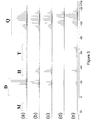
- the 29 Si NMR spectra of surface treated silica particles exhibit signal patterns in several well separated regions.
- NMR spectra were acquired using a Bruker Avance II NMR spectrometer with 1 H resonance frequency at 400.13 MHz, and 29 Si resonance frequency at 79.49 MHz, respectively.
- a 4-mm double resonance magic angle spinning (MAS) solid-state NMR probe was used.
- MAS 4-mm double resonance magic angle spinning
- CP cross polarization
- CP/MAS magic angle spinning
- a magic angle spinning rate of 8000 Hz and a CP contact time of 10 ms were used.
- CPMG Carr-Purcell-Meiboom-Gill
- the NMR measurements were performed with the duration between the refocusing pulses of 6.5 ms, a recycle delay of 3 s, and the number of scans between 1000 and 4000.
- the 1 H and 29 Si NMR chemical shifts in ppm were referenced to the tetramethylsilane standard.
- the signal patterns in the NMR spectra are due to the presence of various surface siloxane functional groups, commonly referred as M, D, T and Q structural units.
- the M, D, T, and Q notations refer to the number of oxygen atoms bonded to the silicon as monooxo, dioxo, trioxo, and quaternary, respectively, as shown in Figure 1 , where R is an alkyl group.
- the 29 Si NMR signals of the M, D, T and Q units appear in the well-separated regions with chemical shifts between 2 and 20 ppm, between 0 and -25 ppm, between -40 and -70 ppm, and between -75 and -130 ppm, respectively, when the alkyl groups is a saturated aliphatic group, such as a methyl group.
- the 29 Si NMR signals appears in another well-resolved region (denoted as H) between -30 and -40 ppm.
- the 29 Si NMR is a very powerful analytical technique for characterizing the surface treatment of silicas with siloxane based polymers and copolymers, including hydrosiloxane copolymers.
- the distribution of various attached alkylsiloxyl groups e.g., M, D, T, and H
- the surface silanol groups can also be determined from the distribution of the 29 Si NMR signals within the Q region.
- the high number of T groups indicate that multiple siloxyl groups on a single copolymer chain were attached to the surface; in contrast, typically only one (linear) or two groups (loop) of a single PDMS homopolymer chain were attached to the surface. Consequently, the morphology of attached polymer chains on silica particles treated with the hydrosiloxane agent is also very unique. A much higher percentage of the material attached to the silica particles treated with the hydrosiloxane agent is composed of short loops than for PDMS treated silica particles. These short loops on the copolymer treated silica render the attached polymer less mobile than tethered PDMS oligomers.
- the hydrophobic silica particles can be formulated as a dry particle composition (e.g., a dry powder) or as a wet particle composition (e.g., dispersion) comprising the hydrophobic silica particles.
- the dispersion can comprise any suitable dispersant, preferably water alone or with a co-solvent, treating agents, or additives of any type commonly used in dispersions of hydrophobic silica particles.
- the hydrophobic silica particles are especially useful in toner compositions.
- the number average molecular weight and viscosity of the hydrosiloxane agent, the value of n, the sum of n, m, and k, and the proportion of n to the sum of n, m and k may be varied as described above.
- the toner particles can be any suitable toner particles.
- Suitable toner particles typically comprise a colorant and a binder resin.
- the colorant can be any suitable colorant.
- a wide range of colored pigments, dyes, or combinations of pigments and dyes can be used as the colorant.
- the colorant can be blue, brown, black such as carbon black, cyan, green, violet, magenta, red, yellow, as well as mixtures thereof.
- Suitable classes of colored pigments and dyes include, for example, anthraquinones, phthalocyanine blues, phthalocyanine greens, diazos, monoazos, pyranthrones, perylenes, heterocyclic yellows, quinacridones, and (thio)indigoids.
- the colorant can be present in any suitable amount, e.g., an amount sufficient to provide the desired color to the toner composition. Generally, the colorant is present in an amount of 1% by weight to 30% by weight of the toner composition; however, lesser or greater amounts of the colorant can be utilized.
- the binder resin can be any suitable binder resin.
- suitable binder resins include homopolymers and copolymers of polyesters, polyamides, polyolefins, styrene acrylates, styrene methacrylates, styrene butadienes, crosslinked styrene polymers, epoxies, polyurethanes, vinyl resins, including homopolymers or copolymers of two or more vinyl monomers, polyesters, and mixtures thereof.
- the binder resin can include (a) homopolymers of styrene and its derivatives and copolymers thereof such as polystyrene, poly-p-chlorostyrene, polyvinyltoluene, styrene p-chlorostyrene copolymer, and styrene vinyltoluene copolymer, (b) copolymers of styrene and acrylic acid ester such as styrenemethyl acrylate copolymer, styrene ethyl acrylate copolymer, styrene-n-butyl acrylate copolymer, and styrene-2-ethylhexyl acrylate copolymer, (c) copolymers of styrene and methacrylic acid ester such as styrene methyl methacrylate, styrene ethyl methacrylate,
- binder resin can be present in any suitable amount, typically 60 wt. % to 95 wt. % (e.g., 65 wt. % to 90 wt. %, or 70 wt. % or 85 wt. %) of the toner composition.
- the surface-treated silica particles can be present in any suitable amount in the toner composition.
- the surface-treated silica particles can be present in an amount of 0.01 wt. % or more (e.g., 0.05 wt. % or more, 0.1 wt. % or more, 0.5 wt. % or more, 1 wt. % or more, 2 wt. % or more, 3 wt. % or more, 4 wt. % or more, or 5 wt. % or more) based on the total weight of the toner composition.
- the surface-treated silica particles can be present in an amount of 10 wt. % or less (e.g., 8 wt.
- the surface-treated silica particles can be present in an amount of 0.01 wt. % to 10 wt. % (e.g., 0.1 wt. % to 8 wt. %, or 0.5 wt. % or 5 wt. %) based on the total weight of the toner composition.
- Optional additives can be present in the toner composition, such as, for example, magnetic material; carrier additives; positive or negative charge controlling agents such as quaternary ammonium salts, pyridinum salts, sulfates, phosphates, and carboxylates; flow aid additives; silicone oils; waxes such as commercially available polypropylenes and polyethylenes; and other known additives.
- these additives are present in an amount of 0.05 wt. % to 30 wt. % (e.g., 0.1 wt. % to 25 wt. %, or 1 wt. % to 20 wt. %) of the toner composition; however, lesser or greater amounts of the additives can be utilized depending on the particular system and desired properties.
- Conventional equipment for dry blending of powders can be used for mixing or blending the surface-treated silica particles with toner particles to form a toner composition.
- the toner composition can be prepared by a number of known methods, such as admixing and heating the surface-treated silica particles, the colorants, the binder resin, and optional charge-enhancing additives and other additives in conventional toner extrusion devices and related equipment. Other methods include spray drying, melt dispersion, extrusion processing, dispersion polymerization, and suspension polymerization, optionally followed by mechanical attrition and classification to provide toner particles having a desired average size and a desired particle size distribution.
- the toner composition can be used alone in mono-component developers or can be mixed with suitable dual-component developers.
- the carrier vehicles which can be used to form developer compositions can be selected from various materials. Such materials typically include carrier core particles and core particles overcoated with a thin layer of film-forming resin to help establish the correct triboelectric relationship and charge level with the toner employed.
- Suitable carriers for two-component toner compositions include iron powder, ferrite powder, and nickel powder, all of which are typically coated with a resin coating such as an epoxy or fluorocarbon resin, and any other carrier known to those of skill in the art.
- the tribocharge of toner compositions containing the treated silica particles can be either positive or negative.
- the tribocharge of a toner composition containing the inventive treated silica particles is affected by the presence of the treated particles. Without wishing to be bound by a particular theory, it is thought that the presence of the treated silica particles stabilizes and increases the positive or negative tribocharge of toner compositions containing the silica particles.
- Toner compositions containing the treated silica particles can be formulated, for example, by mixing 4 wt. % of the treated particles in a laboratory blender with pulverized styrene acrylate toner particles free of any external additives and having an average diameter of 9 ⁇ m.
- Toner compositions containing the treated particles can be developed, for example, by rolling for 30 minutes at a 2/98 wt. % toner/carrier ratio in glass jars.
- the carrier can be 70 ⁇ m Cu--Zn ferrite coated with silicone resin. Samples can be conditioned in a standard humidity chamber at either a high humidity and high temperature (30° C and 80% relative humidity) or at a low humidity and low temperature (18° C and 15% relative humidity) overnight.
- the tribocharge of toner compositions containing the treated silica particles can be either positive or negative. Tribocharge measurements can be made using suitable techniques and equipment known in the art (e.g., Vertex T-150 tribocharger). Measurements can be made after conditioning the toner particles (e.g., of a toner composition comprising about 4 wt. % treated silica particles) overnight in a standard humidity chamber at 30° C. and 80% relative humidity (HH) and at 18° C. and 15% relative humidity (LL).
- suitable techniques and equipment known in the art e.g., Vertex T-150 tribocharger. Measurements can be made after conditioning the toner particles (e.g., of a toner composition comprising about 4 wt. % treated silica particles) overnight in a standard humidity chamber at 30° C. and 80% relative humidity (HH) and at 18° C. and 15% relative humidity (LL).
- NH 4 OH concentrated ammonium hydroxide
- the temperature of the reaction mixture was increased to 70 °C and the reaction was allowed to proceed for 6 h, after which the slurry was transferred into a Pyrex tray and left to dry in a forced air oven at 110 °C overnight.
- the resulting dry powder of white color was ground using a laboratory grinder or jet milled.
- the final product was tested for carbon content.
- a sample of each dried product was extracted with toluene for 3 hours and then dried under vacuum at 90-100 °C for 18 hours and subsequently tested for carbon content in a LECO-C200 analyzer (LECO Corporation, St. Joseph, MO) according to the manufacturer's instructions.
- Colloidal silica (ST-OL, available from Nissan Chemical, as received pH ⁇ 2.5) was treated in the same matter as Sample 1, except that the pH of the colloidal silica slurry was not adjusted with ammonium hydroxide.
- the loading of the methylhydrosiloxane-dimethylsiloxane co-polymer loading was 11.4 g.
- the carbon content in the final product was 3.29 wt% before extraction and 1.33 wt% after the extraction with toluene.
- the post-extraction carbon content corresponds to a copolymer attachment level of 0.35 ⁇ mol/m 2 .
- the stirring motor was set at 200 rpm and stirring and slow purging with N 2 continued through the treatment.
- Colloidal silica (ST-OL, available from Nissan Chemical) was treated in the same matter as Sample 1 through the addition of the hydrosiloxane copolymer. After copolymer addition, the mixture allowed to react for 4 h at 70 °C, following which 12.5 g of HMDZ was added. The reaction was allowed to proceed an additional four hours, after which the slurry was transferred into a Pyrex tray and dried in a forced air oven at 110 °C overnight.
- Sample #11-14 treatment of colloidal silica with a cyclic silazane, methylhydrosiloxane ⁇ dimethylsiloxane copolymer, and HMDZ
- colloidal silica dispersion (ST-OL, 20.8 wt% silica, pH ⁇ 2.5, surface area approximately 60 m2/g, manufactured by Nissan Chemical) was added to a 2 L three-neck round bottom flask fitted with a condenser, overhead stirrer, and a thermocouple.
- 4.8 g of N-methyl-aza-2,2,4-trimethylsila-cyclopentane ( CAS# 18387-19-4 ) was added to the silica dispersion with approximately 100 mL isopropanol to prevent foaming. The mixture was heated to 70 °C and reacted 1.5 h with 150 rpm stirring.
- the reaction was conducted under a nitrogen blanket. 50 mL of toluene was charged into a 100 mL three-neck round bottom flask fitted with a condenser, thermocouple, and nitrogen inlet. 20 g of methylhydrosiloxane-dimethylsiloxane copolymer, 0.05 mL (5 mmol) of Karstedt catalyst ( CAS#68487-92-2 , available from Gelest, Inc.), and 7.81 g (31.8 mmol) of Zonyl PFBE intermediate (Sigma-Aldrich Co., Milwaukee, WI) were added into the flask sequentially.
- Karstedt catalyst CAS#68487-92-2 , available from Gelest, Inc.
- Zonyl PFBE intermediate Sigma-Aldrich Co., Milwaukee, WI
- reaction temperature was raised to 90 °C, and the mixture was allowed to react overnight, during which the mixture was constantly stirred using a magnetic stirrer. The next day, the toluene was removed on a rotary evaporator, and the 1 H and 29 Si NMR spectra of the product were recorded.
- Step 2 Treatment of PL-10H colloidal silica with modified copolymer.
- Toner was prepared by mixing 50 g polyester toner (Sinonar, TW) and 4 wt% additive, representing Samples #1-3 and 7-10 using a kitchen blender. To avoid overheating the toner, the blender was pulsed at 5 s intervals for 3 minutes. After blending , the toner-additive mixture was rolled an additional one hour. The toner was added to a carrier, 75 micrometer silicone-coated Cu-Zn ferrite particles, at 2 wt% loading. The carrier-toner mixtures were placed in glass jars and put in a humidity chamber for conditioning. HH conditioning was performed at 30 °C and 80% relative humidity; LL conditioning was performed at 18 °C and 15% relative humidity.
- the tribocharge data presented in Table 5 and Table 6 demonstrate that the treatment with the siloxane co-polymer affords materials with charging properties similar to that of HMDZ treated silica, which is widely used in toner formulations.
- the decrease of triboelectrostatic charge at HH conditions i.e., the tribocharge becomes less negative
- samples #1 - #3 and #7 - #10 parallels the decrease in copolymer loading.
- a small improvement in tribocharge humidity sensitivity is observed for materials with the higher copolymer loadings.
- Post-treatment with HMDZ does not affect the tribocharge performance significantly.
- the resultant mixture was stirred at 200 rpm 4-5 h at 70°C, after which 119 g hexamethyldisilazane was added.
- the final mixture stirred at 70°C for 6 h, then cooled to room temperature and stirred an additional 12 h.
- the dispersion was transferred to a Pyrex dish and dried for 24 h in a forced air oven at 120°C.
- the carbon content in the final product was 2.42 wt% before extraction and 2.06 wt% after the extraction with toluene.
- the temperature of the reaction mixture was increased to 70 °C, and the reaction was allowed to proceed for 6 h, after which the slurry was transferred into a Pyrex tray and left to dry in a forced air oven at 110 °C overnight.
- the resulting dry powder had a white color and was ground using laboratory grinder.
- THF tetrahydrofuran
- 29 Si CPMG MAS NMR spectra of Sample 18 and Sample 19 are shown in Figure 3 in comparison with the spectrum for Cab-O-SilTM TS-720 (Spectrum a, Sample 17), a commercial product available from Cabot Corporation.
- Table 8 lists the number M, D, H, and T functional groups per nm 2 of the surface as calculated from the 29 Si CPMG MAS spectra, assuming a silica surface area of is 200 m 2 /g.
- Table 8 Sample M D H T M+D+T+H 18 0.06 0.69 0.68 0.08 1.51 19 0.08 0.46 1.21 0.15 1.90 TS-720 0.06 1.03 0 0.33 1.42
Landscapes
- Chemical & Material Sciences (AREA)
- Inorganic Chemistry (AREA)
- Physics & Mathematics (AREA)
- General Physics & Mathematics (AREA)
- Organic Chemistry (AREA)
- Silicon Compounds (AREA)
- Developing Agents For Electrophotography (AREA)
- Compositions Of Macromolecular Compounds (AREA)
Claims (17)
- Verfahren zur Herstellung von hydrophoben Siliciumdioxid-Teilchen, umfassend:a) Bereitstellen einer Hydrosiloxan-Verbindung mit der folgenden Formel
 wobei R1 = -H, -CH3,R2 = -H, -CH3,R3 = -CH3, -CH2CH3, -CH2CH2CH3, -CH2Ar, -CH2CH2Ar, -Ar, -CH2CH2CF3 oder -CH2CH2-Rf, wobei Rf eine C1- bis C8-Perfluoralkylgruppe ist,R4 = -CH3, -CH2CH3, -CH2CH2CH3, -CH2CH2CF3 oder -CH2CH2-Rf, wobei Rf eine C1- bis C8-Perfluoralkylgruppe ist,R5 = -CH3, -CH2CH3, -CH2Ar, -CH2CH2Ar oder -Ar,R6 = -H, -OH, -OCH3 oder -OCH2CH3,Ar unsubstituiertes oder mit einer oder mehreren Methyl-, Halogen-, Ethyl-, Trifluormethyl-, Pentafluormethyl- oder -CH2CF3-Gruppen substituiertes Phenyl ist,n, m und k ganze Zahlen sind; n ≥ 1, m ≥ 1, k ≥ 0,und wobei die Hydrosiloxan-Verbindung ein zahlenmittleres Molekulargewichts von 282 bis 20.000 hat;b) Inkontaktbringen von Siliciumdioxid-Teilchen mit der Hydrosiloxan-Verbindung in Gegenwart eines Lösungsmittels, wobei das Lösungsmittel, die Siliciumdioxid-Teilchen und die Hydrosiloxan-Verbindung ein Reaktionsgemisch bilden, wobei das Reaktionsgemisch einen pH-Wert von 1 bis 6 oder von 8 bis 12 aufweist und wobei, wenn R6 -H ist, das Lösungsmittel mindestens eines von Wasser, Methanol und Ethanol umfasst; undc) Trocknen der Reaktionsmischung, um hydrophobe Kieselsäure-Partikel zu erhalten.
 - Verfahren nach Anspruch 1, wobei die Siliciumdioxid-Teilchen kolloidale Siliciumdioxid-Teilchen, pyrogene Siliciumdioxid-Teilchen, mit pyrogener Kieselsäure abgeschiedene Siliciumdioxid-Teilchen oder gefällte Siliciumdioxid-Teilchen sind.
- Verfahren nach einem der Ansprüche 1 - 2, wobei Schritt b) das Dispergieren der Hydrosiloxan-Verbindung in einer wässrigen Dispersion der Siliciumdioxid-Teilchen umfasst.
- Verfahren nach einem der Ansprüche 1 bis 3, wobei das Reaktionsgemisch ein zweites Behandlungsmittel umfasst.
- Verfahren nach Anspruch 4, wobei das zweite Behandlungsmittel ein Hydrophobierungsmittel oder ein ladungsmodifizierendes Mittel ist.
- Verfahren nach einem der Ansprüche 1 bis 5, wobei Schritt a) die Modifizierung eines Hydrosiloxan-Vorläufers mit der folgenden Formel umfasst:
 wobei R1 = -H, -CH3,R2 = -H, -CH3,R3 = -CH3, -CH2CH3, -CH2CH2CH3, -CH2Ar, -CH2CH2Ar, -Ar, -CH2CH2CF3 oder -CH2CH2-Rf, wobei Rf eine C1- bis C8-Perfluoralkylgruppe ist,R5 = -CH3, -CH2CH3, -CH2Ar, -CH2CH2Ar oder -Ar,Ar unsubstituiertes oder mit einer oder mehreren Methyl-, Halogen-, Ethyl-, Trifluormethyl-, Pentafluormethyl- oder -CH2CF3-Gruppen substituiertes Phenyl ist,n und m ganze Zahlen sind; n ≥ 1, m ≥ 1,und wobei der Hydrosiloxan-Vorläufer ein zahlenmittleres Molekulargewichts von 282 bis 20.000 hat;
durch chemisches Modifizieren mindestens eines Teils der Si-H-Gruppen. - Verfahren nach Anspruch 6, wobei das chemische Modifizieren das Ersetzen des Hydrids an mindestens einem Teil der Si-H-Gruppen durch mindestens eines von einem Alkoxid, einem Hydroxid oder -CH3, -CH2CH3, -CH2CH2CH3, -CH2CH2CF3 oder -CH2CH2-Rf, wobei Rf eine C1- bis C8-Perfluoralkylgruppe ist.
- Hydrophobe Siliciumdioxid-Teilchen, hergestellt durch das Verfahren nach einem der Ansprüche 1 bis 7.
- Teilchenzusammensetzung, umfassend das Reaktionsprodukt einer Dispersion von Siliciumdioxid-Teilchen bei einem pH-Wert von 1 bis 6 oder 8 bis 12 und mindestens eine Hydrosiloxan-Verbindung der Formel:
 wobei R1 = -H, -CH3,R2 = -H, -CH3,R3 = -CH3, -CH2CH3, -CH2CH2CH3, -CH2Ar, -CH2CH2Ar, -Ar, -CH2CH2CF3 oder -CH2CH2-Rf, wobei Rf eine C1- bis C8-Perfluoralkylgruppe ist,R4 = -CH3, -CH2CH3, -CH2CH2CH3, -CH2CH2CF3 oder -CH2CH2-Rf, wobei Rf eine C1- bis C8-Perfluoralkylgruppe ist,R5 = -CH3, -CH2CH3, -CH2Ar, -CH2CH2Ar oder -Ar,R6 = -H, -OH, -OCH3 oder -OCH2CH3,Ar unsubstituiertes oder mit einer oder mehreren Methyl-, Halogen-, Ethyl-, Trifluormethyl-, Pentafluormethyl- oder -CH2CF3-Gruppen substituiertes Phenyl ist,n, m und k ganze Zahlen sind; n ≥ 1, m ≥ 1,und wobei die Hydrosiloxan-Verbindung ein zahlenmittleres Molekulargewichts von 282 bis 20.000 hat.
 - Teilchenzusammensetzung nach Anspruch 9, worin die Siliciumdioxid-Teilchen kolloidale Siliciumdioxid-Teilchen, pyrogene Siliciumdioxid-Teilchen, mit pyrogener Kieselsäure abgeschiedene Siliciumdioxid-Teilchen oder gefällte Siliciumdioxid-Teilchen sind.
- Teilchenzusammensetzung nach Anspruch 9 oder 10, wobei die Teilchenzusammensetzung das Reaktionsprodukt von Siliciumdioxid-Teilchen mit einer Hydrosiloxan-Verbindung und einem zweiten Behandlungsmittel ist.
- Teilchenzusammensetzung nach Anspruch 11, wobei das zweite Behandlungsmittel ein Hydrophobierungsmittel oder ein ladungsmodifizierendes Mittel ist.
- Die Teilchenzusammensetzung nach einem der Ansprüche 9 - 12, wobei das Reaktionsprodukt in Form eines trockenen Pulvers vorliegt.
- Tonerzusammensetzung, umfassend Tonerteilchen und das Reaktionsprodukt einer Dispersion von Siliciumdioxid-Teilchen bei einem pH-Wert von 1 bis 6 oder 8 bis 12 und mindestens eine Hydrosiloxan-Verbindung mit der Formel:
 wobei R1 = -H, -CH3,R2 = -H, -CH3,R3 = -CH3, -CH2CH3, -CH2CH2CH3, -CH2Ar, -CH2CH2Ar, -Ar, -CH2CH2CF3 oder -CH2CH2-Rf, wobei Rf eine C1- bis C8-Perfluoralkylgruppe ist,R4 = -CH3, -CH2CH3, -CH2CH2CH3, -CH2CH2CF3 oder -CH2CH2-Rf, wobei Rf eine C1- bis C8-Perfluoralkylgruppe ist,R5 = -CH3, -CH2CH3, -CH2Ar, -CH2CH2Ar oder -Ar,R6 = -H, -OH, -OCH3 oder -OCH2CH3,Ar unsubstituiertes oder mit einer oder mehreren Methyl-, Halogen-, Ethyl-, Trifluormethyl-, Pentafluormethyl- oder -CH2CF3-Gruppen substituiertes Phenyl ist,n, m und k ganze Zahlen sind; n ≥ 1, m ≥ 1, k ≥ 0,und wobei die Hydrosiloxan-Verbindung ein zahlenmittleres Molekulargewichts von 282 bis 20.000 hat.
 - Tonerzusammensetzung nach Anspruch 14, worin die Siliciumdioxid-Teilchen kolloidale Siliciumdioxid-Teilchen, pyrogene Siliciumdioxid-Teilchen, mit pyrogener Kieselsäure abgeschiedene Siliciumdioxid-Teilchen oder gefällte Siliciumdioxid-Teilchen sind.
- Tonerzusammensetzung nach Anspruch 14 oder 15, worin das Reaktionsprodukt das Reaktionsprodukt von Siliciumdioxid-Teilchen und sowohl der Hydrosiloxan-Verbindung als auch einem zweiten Behandlungsmittel ist.
- Tonerzusammensetzung nach Anspruch 16, worin das zweite Behandlungsmittel ein Hydrophobierungsmittel oder ein ladungsmodifizierendes Mittel ist.
Applications Claiming Priority (2)
| Application Number | Priority Date | Filing Date | Title |
|---|---|---|---|
| US12/798,540 US20110244382A1 (en) | 2010-04-06 | 2010-04-06 | Hydrophobic silica particles and method of producing same |
| PCT/US2011/000587 WO2011126552A2 (en) | 2010-04-06 | 2011-04-01 | Hydrophobic silica particles and method of producing same |
Publications (3)
| Publication Number | Publication Date |
|---|---|
| EP2556020A2 EP2556020A2 (de) | 2013-02-13 |
| EP2556020A4 EP2556020A4 (de) | 2015-10-14 |
| EP2556020B1 true EP2556020B1 (de) | 2020-06-24 |
Family
ID=44710073
Family Applications (1)
| Application Number | Title | Priority Date | Filing Date |
|---|---|---|---|
| EP11766266.8A Active EP2556020B1 (de) | 2010-04-06 | 2011-04-01 | Hydrophobe siliciumpartikel und herstellungsverfahren dafür |
Country Status (4)
| Country | Link |
|---|---|
| US (2) | US20110244382A1 (de) |
| EP (1) | EP2556020B1 (de) |
| JP (1) | JP5732524B2 (de) |
| WO (1) | WO2011126552A2 (de) |
Families Citing this family (28)
| Publication number | Priority date | Publication date | Assignee | Title |
|---|---|---|---|---|
| CA2841345C (en) | 2011-07-11 | 2016-03-22 | Cabot Corporation | Oil emulsification and polycyclic aromatic hydrocarbon adsorption using fine particles as dispersants |
| FR2979107A1 (fr) * | 2011-08-16 | 2013-02-22 | Bluestar Silicones France | Procede de preparation d'une silice greffee par un compose organosilicie |
| JP2013092748A (ja) | 2011-10-26 | 2013-05-16 | Cabot Corp | 複合体粒子を含むトナー添加剤 |
| KR101944238B1 (ko) * | 2011-12-08 | 2019-01-31 | 바스프 에스이 | 전기화학적 셀들 및 그 용도 |
| US9774057B2 (en) * | 2011-12-08 | 2017-09-26 | Basf Se | Mixtures and use thereof in lithium ion batteries |
| WO2013148241A1 (en) | 2012-03-26 | 2013-10-03 | Cabot Corporation | Treated fumed silica |
| US8946118B2 (en) * | 2012-07-10 | 2015-02-03 | Red Lion Chem Tech, Llc | Removal of hydrophobic contaminants |
| WO2014153355A1 (en) | 2013-03-20 | 2014-09-25 | Cabot Corporation | Composite particles and a process for making the same |
| JP2016057457A (ja) * | 2014-09-09 | 2016-04-21 | 富士ゼロックス株式会社 | 静電荷像現像剤、画像形成方法、及び、画像形成装置 |
| CA2992259C (en) * | 2015-07-15 | 2020-06-02 | Cabot Corporation | Methods of making an elastomer composite reinforced with silica and products containing same |
| IT201600073305A1 (it) | 2015-07-15 | 2018-01-13 | Cabot Corp | Composito di elastomero rinforzato con silice e prodotti che lo contengono. |
| MY185382A (en) | 2015-09-29 | 2021-05-16 | Cabot Specialty Fluids Inc | Low solids oil based well fluid with particle-stabilized emulsion |
| PT3178887T (pt) * | 2015-12-09 | 2018-10-11 | Evonik Degussa Gmbh | Sílica hidrofóbica para composição de tóner eletrofotográfico |
| CN109642091B (zh) | 2016-07-01 | 2021-10-08 | 卡博特公司 | 具有带有低结构炭黑芯的经包覆的聚集体的复合颗粒、具有高的电阻率和光学密度的涂料和墨、由其制得的器件、以及其制造方法 |
| CN109906411B (zh) | 2016-11-04 | 2022-12-27 | 卡博特公司 | 含结晶聚酯和有机硅的纳米复合物 |
| WO2018204174A1 (en) | 2017-05-03 | 2018-11-08 | Cabot Corporation | Carbon black with an stsa of 80 to 150 m2/g, an oan of at least 180 ml/100g and a coan of at least 110 ml/100g and rubber compounds incorporating same |
| KR20210041024A (ko) | 2018-08-07 | 2021-04-14 | 캐보트 코포레이션 | 토너 첨가제용 복합 입자 |
| CZ308405B6 (cs) * | 2019-06-27 | 2020-07-29 | Stavoklima S.R.O. | Způsob zamezení ztráty tlakové diference při otevření dveří a systém k provádění tohoto způsobu |
| KR102780988B1 (ko) * | 2020-02-04 | 2025-03-17 | 캐보트 코포레이션 | 액체-기반 적층 제조를 위한 조성물 |
| JP2021148999A (ja) * | 2020-03-19 | 2021-09-27 | 富士フイルムビジネスイノベーション株式会社 | 静電荷像現像用トナー、静電荷像現像剤、トナーカートリッジ、プロセスカートリッジ、画像形成装置及び画像形成方法 |
| JP2021148997A (ja) * | 2020-03-19 | 2021-09-27 | 富士フイルムビジネスイノベーション株式会社 | 静電荷像現像用トナー、静電荷像現像剤、トナーカートリッジ、プロセスカートリッジ、画像形成装置及び画像形成方法 |
| JP7735758B2 (ja) * | 2021-03-25 | 2025-09-09 | 富士フイルムビジネスイノベーション株式会社 | シリカ粒子 |
| JP2022170735A (ja) * | 2021-04-28 | 2022-11-10 | キヤノン株式会社 | トナーおよび二成分現像剤 |
| JP7618496B2 (ja) * | 2021-04-28 | 2025-01-21 | キヤノン株式会社 | トナー |
| US12203026B2 (en) | 2021-08-31 | 2025-01-21 | Nissan Chemical Corporation | Dispersion of surface-treated silica-containing inorganic oxide particles and method for producing same |
| JP2024537022A (ja) | 2021-09-24 | 2024-10-10 | エボニック オペレーションズ ゲーエムベーハー | サブミクロンの表面改質金属酸化物粒子 |
| WO2023230251A1 (en) | 2022-05-27 | 2023-11-30 | Cabot Corporation | Aerogel composition for thermal insulation |
| KR20250026864A (ko) * | 2022-06-29 | 2025-02-25 | 와커 헤미 아게 | 액상에서 실리카를 개질하는 방법 |
Family Cites Families (47)
| Publication number | Priority date | Publication date | Assignee | Title |
|---|---|---|---|---|
| DE3750157T2 (de) | 1986-12-01 | 1994-11-10 | Canon Kk | Entwickler für die Entwicklung elektrostatischer latenter Bilder und Bildherstellungsverfahren. |
| US4950502A (en) | 1987-09-10 | 1990-08-21 | Dow Corning Corporation | Method of hydrophobing silica |
| JPH02180963A (ja) | 1989-01-06 | 1990-07-13 | Shin Etsu Chem Co Ltd | オルガノポリシロキサン組成物 |
| US5013585A (en) | 1989-06-13 | 1991-05-07 | Shin-Etsu Chemical Co., Ltd. | Method for the preparation of surface-modified silica particles |
| US5520917A (en) * | 1992-07-27 | 1996-05-28 | Suzuki Yushi Industries Co., Ltd. | Materials in the form of colored spherical fine particles |
| JPH0683099A (ja) * | 1992-08-31 | 1994-03-25 | Mitsubishi Materials Corp | 電子写真用現像剤 |
| JP3318997B2 (ja) * | 1993-02-03 | 2002-08-26 | 三菱マテリアル株式会社 | 疎水性シリカ粉体、その製法および電子写真用現像剤 |
| JPH07323204A (ja) | 1994-05-30 | 1995-12-12 | Toray Dow Corning Silicone Co Ltd | 抑泡剤組成物 |
| DE19500674A1 (de) | 1995-01-12 | 1996-07-18 | Degussa | Oberflächenmodifizierte pyrogen hergestellte Mischoxide, Verfahren zu ihrer Herstellung und Verwendung |
| US5756788A (en) | 1995-06-14 | 1998-05-26 | Sunsmart, Inc. | Silicone polymer-coated, hydrophobized metal oxides |
| JP3229174B2 (ja) | 1995-08-21 | 2001-11-12 | 日本アエロジル株式会社 | 表面改質金属酸化物微粉末およびその製造方法 |
| EP0869762B1 (de) | 1995-10-30 | 2003-07-30 | Sunsmart, Inc. | Mit silikonpolymer beschichtete hydrophobisierte metalloxide |
| US5989768A (en) | 1997-03-06 | 1999-11-23 | Cabot Corporation | Charge-modified metal oxides with cyclic silazane and electrostatographic systems incorporating same |
| FR2764894B1 (fr) | 1997-06-24 | 1999-09-24 | Rhodia Chimie Sa | Procede de preparation d'une suspension de silice dans une matrice silicone vulcanisable a temperature ambiante et a chaud pour former des elastomeres |
| US5908660A (en) | 1997-09-03 | 1999-06-01 | Dow Corning Corporation | Method of preparing hydrophobic precipitated silica |
| JP4034430B2 (ja) * | 1997-09-10 | 2008-01-16 | 三好化成株式会社 | 有機ケイ素化合物処理粉体基材、その製造方法及び前記基材を含有する化粧料 |
| US6051672A (en) | 1998-08-24 | 2000-04-18 | Dow Corning Corporation | Method for making hydrophobic non-aggregated colloidal silica |
| US6184408B1 (en) | 1999-04-28 | 2001-02-06 | Dow Corning Corporation | Method for preparation of hydrophobic precipitated silica |
| US6623791B2 (en) | 1999-07-30 | 2003-09-23 | Ppg Industries Ohio, Inc. | Coating compositions having improved adhesion, coated substrates and methods related thereto |
| WO2001048094A1 (en) | 1999-12-24 | 2001-07-05 | Nippon Aerosil Co., Ltd. | Surface-modified inorganic oxide powder, process for producing the same, and use thereof |
| US20010016202A1 (en) * | 2000-01-14 | 2001-08-23 | Shiseido Company, Ltd. | Silicone-treated powder, process of production thereof and composition containing the same |
| DE60120553T2 (de) | 2000-04-28 | 2007-06-06 | Ricoh Co., Ltd. | Toner, externes Additiv, und Bilderzeugungsverfahren |
| JP4723080B2 (ja) * | 2000-11-28 | 2011-07-13 | 東レ・ダウコーニング株式会社 | 防振性シリコーンコンパウンド |
| DE10138490A1 (de) | 2001-08-04 | 2003-02-13 | Degussa | Hydrophobe Fällungskieselsäure mit hohem Weißgrad und extrem niedriger Feuchtigkeitsaufnahme |
| DE10138492A1 (de) | 2001-08-04 | 2003-02-13 | Degussa | Hydrophobe, nicht getemperte Fällungskieselsäure mit hohem Weißgrad |
| DE10145162A1 (de) * | 2001-09-13 | 2003-04-10 | Wacker Chemie Gmbh | Kieselsäure mit geringem Gehalt an Kieselsäure-Silanolgruppen |
| JP3891265B2 (ja) | 2001-11-30 | 2007-03-14 | 信越化学工業株式会社 | 疎水性シリカ微粉末及びその製造方法 |
| US6830811B2 (en) | 2002-10-02 | 2004-12-14 | Dow Corning Corporation | Method of preparing hydrophobic partially aggregated colloidal silica |
| DE602004004885T2 (de) | 2003-03-31 | 2007-11-15 | Nippon Paper Industries Co. Ltd. | Tintenstrahlaufzeichnungsmedium |
| DE10319937A1 (de) | 2003-05-02 | 2004-12-02 | Wacker-Chemie Gmbh | Organofunktionelle oberflächenmodifizierte Metalloxide |
| ATE368004T1 (de) | 2003-05-14 | 2007-08-15 | Degussa | Oberflächenmodifizierte fällungskieselsäuren |
| US7008982B2 (en) | 2003-09-29 | 2006-03-07 | J.M. Huber Corporation | Surface treated silicas |
| DE102004029069A1 (de) | 2004-06-16 | 2005-12-29 | Degussa Ag | Oberflächenmodifizierte Silicagele |
| US7390349B2 (en) * | 2004-08-05 | 2008-06-24 | Agilent Technologies, Inc. | Polyhydrosiloxane compounds and articles and use thereof |
| JP5032328B2 (ja) * | 2004-10-20 | 2012-09-26 | キャボット コーポレイション | 水性コロイドシリカ分散液からの直接的疎水性シリカの製造法 |
| EP1674534B1 (de) | 2004-12-23 | 2010-10-13 | Evonik Degussa GmbH | Oberflächenmodifizierte Siliciumdioxid-Titandioxid-Mischoxide |
| DE102005006870A1 (de) | 2005-02-14 | 2006-08-24 | Byk-Chemie Gmbh | Oberflächenmodifizierte Nanopartikel, Verfahren zu ihrer Herstellung und ihre Verwendung |
| JP4993983B2 (ja) | 2005-09-28 | 2012-08-08 | 信越化学工業株式会社 | オルガノポリシロキサン表面処理剤系及び該処理剤系で表面処理された粉体、並びに該粉体を含有する化粧料 |
| DE102006039273A1 (de) | 2006-08-22 | 2008-02-28 | Evonik Degussa Gmbh | Pyrogenes Siliciumdioxid zur Verwendung als Hilfsstoff in pharmazeutischen und kosmetischen Zusammensetzungen |
| JP5133993B2 (ja) | 2006-09-01 | 2013-01-30 | キャボット コーポレイション | 表面処理された金属酸化物粒子 |
| US8435474B2 (en) | 2006-09-15 | 2013-05-07 | Cabot Corporation | Surface-treated metal oxide particles |
| US8202502B2 (en) | 2006-09-15 | 2012-06-19 | Cabot Corporation | Method of preparing hydrophobic silica |
| US20080070146A1 (en) * | 2006-09-15 | 2008-03-20 | Cabot Corporation | Hydrophobic-treated metal oxide |
| CN101205423A (zh) * | 2006-12-18 | 2008-06-25 | 天津科技大学 | 一种疏水性纳米二氧化硅的制备方法 |
| JP4579265B2 (ja) * | 2007-04-25 | 2010-11-10 | 信越化学工業株式会社 | 高度の流動性を有する疎水性球状シリカ微粒子、その製造方法、それを用いた静電荷像現像用トナー外添剤およびそれを含有する有機樹脂組成物 |
| US8945804B2 (en) | 2008-07-09 | 2015-02-03 | Cabot Corporation | Treated metal oxide particles and toner compositions |
| WO2010038538A1 (ja) | 2008-10-01 | 2010-04-08 | 日本アエロジル株式会社 | 疎水性シリカ微粒子及び電子写真用トナー組成物 |
-
2010
- 2010-04-06 US US12/798,540 patent/US20110244382A1/en not_active Abandoned
-
2011
- 2011-04-01 WO PCT/US2011/000587 patent/WO2011126552A2/en not_active Ceased
- 2011-04-01 US US13/639,548 patent/US8895145B2/en active Active
- 2011-04-01 JP JP2013503739A patent/JP5732524B2/ja active Active
- 2011-04-01 EP EP11766266.8A patent/EP2556020B1/de active Active
Non-Patent Citations (1)
| Title |
|---|
| None * |
Also Published As
| Publication number | Publication date |
|---|---|
| EP2556020A4 (de) | 2015-10-14 |
| US20110244382A1 (en) | 2011-10-06 |
| EP2556020A2 (de) | 2013-02-13 |
| JP5732524B2 (ja) | 2015-06-10 |
| JP2013527107A (ja) | 2013-06-27 |
| US8895145B2 (en) | 2014-11-25 |
| WO2011126552A3 (en) | 2012-02-23 |
| US20130029258A1 (en) | 2013-01-31 |
| WO2011126552A2 (en) | 2011-10-13 |
Similar Documents
| Publication | Publication Date | Title |
|---|---|---|
| EP2556020B1 (de) | Hydrophobe siliciumpartikel und herstellungsverfahren dafür | |
| KR101376388B1 (ko) | 처리된 금속 산화물 입자 및 토너 조성물 | |
| EP2176361B1 (de) | Oberflächenbearbeitete metalloxidpartikel | |
| US6800413B2 (en) | Low-silanol silica | |
| JP4615952B2 (ja) | 改質疎水化シリカ及びその製造方法 | |
| US9612546B2 (en) | External additive for toner, method of producing the same, and toner comprising the same | |
| JP5644789B2 (ja) | 粉体組成物 | |
| US10222717B2 (en) | Hydrophobic silica for electrophotographic toner composition | |
| JP6382608B2 (ja) | 正帯電性シリカ粒子及びその製造方法 | |
| JP5020224B2 (ja) | 表面処理シリカの製造方法 | |
| US8029761B2 (en) | Surface-treated metal oxide particles | |
| JP4578400B2 (ja) | 電子写真用トナー外添剤 | |
| JP4346403B2 (ja) | 表面処理シリカ粒子及びその用途 | |
| JP2014162681A (ja) | 表面処理シリカ粉末及びその製造方法 | |
| JP2005292592A (ja) | 表面処理シリカ | |
| US8435707B2 (en) | Toner additive comprising carbon-silica dual phase particles | |
| JP2025010768A (ja) | 表面処理ゾルゲルシリカ粒子、表面処理ゾルゲルシリカ粒子の製造方法及び静電荷像現像用トナー外添剤 |
Legal Events
| Date | Code | Title | Description |
|---|---|---|---|
| PUAI | Public reference made under article 153(3) epc to a published international application that has entered the european phase |
Free format text: ORIGINAL CODE: 0009012 |
|
| 17P | Request for examination filed |
Effective date: 20121106 |
|
| AK | Designated contracting states |
Kind code of ref document: A2 Designated state(s): AL AT BE BG CH CY CZ DE DK EE ES FI FR GB GR HR HU IE IS IT LI LT LU LV MC MK MT NL NO PL PT RO RS SE SI SK SM TR |
|
| DAX | Request for extension of the european patent (deleted) | ||
| RIC1 | Information provided on ipc code assigned before grant |
Ipc: G03G 9/08 20060101ALI20150902BHEP Ipc: C01B 33/159 20060101ALI20150902BHEP Ipc: G03G 9/097 20060101ALI20150902BHEP Ipc: C01B 33/18 20060101AFI20150902BHEP Ipc: C09C 1/30 20060101ALI20150902BHEP |
|
| A4 | Supplementary search report drawn up and despatched |
Effective date: 20150914 |
|
| STAA | Information on the status of an ep patent application or granted ep patent |
Free format text: STATUS: EXAMINATION IS IN PROGRESS |
|
| 17Q | First examination report despatched |
Effective date: 20190218 |
|
| REG | Reference to a national code |
Ref country code: DE Ref legal event code: R079 Ref document number: 602011067459 Country of ref document: DE Free format text: PREVIOUS MAIN CLASS: C01B0033180000 Ipc: G03G0009097000 |
|
| RIC1 | Information provided on ipc code assigned before grant |
Ipc: C09C 1/30 20060101ALI20190828BHEP Ipc: G03G 9/097 20060101AFI20190828BHEP |
|
| GRAP | Despatch of communication of intention to grant a patent |
Free format text: ORIGINAL CODE: EPIDOSNIGR1 |
|
| STAA | Information on the status of an ep patent application or granted ep patent |
Free format text: STATUS: GRANT OF PATENT IS INTENDED |
|
| INTG | Intention to grant announced |
Effective date: 20191010 |
|
| GRAJ | Information related to disapproval of communication of intention to grant by the applicant or resumption of examination proceedings by the epo deleted |
Free format text: ORIGINAL CODE: EPIDOSDIGR1 |
|
| STAA | Information on the status of an ep patent application or granted ep patent |
Free format text: STATUS: EXAMINATION IS IN PROGRESS |
|
| GRAP | Despatch of communication of intention to grant a patent |
Free format text: ORIGINAL CODE: EPIDOSNIGR1 |
|
| STAA | Information on the status of an ep patent application or granted ep patent |
Free format text: STATUS: GRANT OF PATENT IS INTENDED |
|
| INTG | Intention to grant announced |
Effective date: 20200123 |
|
| GRAS | Grant fee paid |
Free format text: ORIGINAL CODE: EPIDOSNIGR3 |
|
| GRAA | (expected) grant |
Free format text: ORIGINAL CODE: 0009210 |
|
| STAA | Information on the status of an ep patent application or granted ep patent |
Free format text: STATUS: THE PATENT HAS BEEN GRANTED |
|
| AK | Designated contracting states |
Kind code of ref document: B1 Designated state(s): AL AT BE BG CH CY CZ DE DK EE ES FI FR GB GR HR HU IE IS IT LI LT LU LV MC MK MT NL NO PL PT RO RS SE SI SK SM TR |
|
| REG | Reference to a national code |
Ref country code: GB Ref legal event code: FG4D |
|
| REG | Reference to a national code |
Ref country code: CH Ref legal event code: EP |
|
| REG | Reference to a national code |
Ref country code: DE Ref legal event code: R096 Ref document number: 602011067459 Country of ref document: DE |
|
| REG | Reference to a national code |
Ref country code: AT Ref legal event code: REF Ref document number: 1284495 Country of ref document: AT Kind code of ref document: T Effective date: 20200715 |
|
| REG | Reference to a national code |
Ref country code: IE Ref legal event code: FG4D |
|
| PG25 | Lapsed in a contracting state [announced via postgrant information from national office to epo] |
Ref country code: SE Free format text: LAPSE BECAUSE OF FAILURE TO SUBMIT A TRANSLATION OF THE DESCRIPTION OR TO PAY THE FEE WITHIN THE PRESCRIBED TIME-LIMIT Effective date: 20200624 Ref country code: FI Free format text: LAPSE BECAUSE OF FAILURE TO SUBMIT A TRANSLATION OF THE DESCRIPTION OR TO PAY THE FEE WITHIN THE PRESCRIBED TIME-LIMIT Effective date: 20200624 Ref country code: GR Free format text: LAPSE BECAUSE OF FAILURE TO SUBMIT A TRANSLATION OF THE DESCRIPTION OR TO PAY THE FEE WITHIN THE PRESCRIBED TIME-LIMIT Effective date: 20200925 Ref country code: NO Free format text: LAPSE BECAUSE OF FAILURE TO SUBMIT A TRANSLATION OF THE DESCRIPTION OR TO PAY THE FEE WITHIN THE PRESCRIBED TIME-LIMIT Effective date: 20200924 Ref country code: LT Free format text: LAPSE BECAUSE OF FAILURE TO SUBMIT A TRANSLATION OF THE DESCRIPTION OR TO PAY THE FEE WITHIN THE PRESCRIBED TIME-LIMIT Effective date: 20200624 |
|
| REG | Reference to a national code |
Ref country code: LT Ref legal event code: MG4D |
|
| PG25 | Lapsed in a contracting state [announced via postgrant information from national office to epo] |
Ref country code: LV Free format text: LAPSE BECAUSE OF FAILURE TO SUBMIT A TRANSLATION OF THE DESCRIPTION OR TO PAY THE FEE WITHIN THE PRESCRIBED TIME-LIMIT Effective date: 20200624 Ref country code: RS Free format text: LAPSE BECAUSE OF FAILURE TO SUBMIT A TRANSLATION OF THE DESCRIPTION OR TO PAY THE FEE WITHIN THE PRESCRIBED TIME-LIMIT Effective date: 20200624 Ref country code: BG Free format text: LAPSE BECAUSE OF FAILURE TO SUBMIT A TRANSLATION OF THE DESCRIPTION OR TO PAY THE FEE WITHIN THE PRESCRIBED TIME-LIMIT Effective date: 20200924 Ref country code: HR Free format text: LAPSE BECAUSE OF FAILURE TO SUBMIT A TRANSLATION OF THE DESCRIPTION OR TO PAY THE FEE WITHIN THE PRESCRIBED TIME-LIMIT Effective date: 20200624 |
|
| REG | Reference to a national code |
Ref country code: NL Ref legal event code: MP Effective date: 20200624 |
|
| REG | Reference to a national code |
Ref country code: AT Ref legal event code: MK05 Ref document number: 1284495 Country of ref document: AT Kind code of ref document: T Effective date: 20200624 |
|
| PG25 | Lapsed in a contracting state [announced via postgrant information from national office to epo] |
Ref country code: NL Free format text: LAPSE BECAUSE OF FAILURE TO SUBMIT A TRANSLATION OF THE DESCRIPTION OR TO PAY THE FEE WITHIN THE PRESCRIBED TIME-LIMIT Effective date: 20200624 Ref country code: AL Free format text: LAPSE BECAUSE OF FAILURE TO SUBMIT A TRANSLATION OF THE DESCRIPTION OR TO PAY THE FEE WITHIN THE PRESCRIBED TIME-LIMIT Effective date: 20200624 |
|
| PG25 | Lapsed in a contracting state [announced via postgrant information from national office to epo] |
Ref country code: IT Free format text: LAPSE BECAUSE OF FAILURE TO SUBMIT A TRANSLATION OF THE DESCRIPTION OR TO PAY THE FEE WITHIN THE PRESCRIBED TIME-LIMIT Effective date: 20200624 Ref country code: CZ Free format text: LAPSE BECAUSE OF FAILURE TO SUBMIT A TRANSLATION OF THE DESCRIPTION OR TO PAY THE FEE WITHIN THE PRESCRIBED TIME-LIMIT Effective date: 20200624 Ref country code: RO Free format text: LAPSE BECAUSE OF FAILURE TO SUBMIT A TRANSLATION OF THE DESCRIPTION OR TO PAY THE FEE WITHIN THE PRESCRIBED TIME-LIMIT Effective date: 20200624 Ref country code: SM Free format text: LAPSE BECAUSE OF FAILURE TO SUBMIT A TRANSLATION OF THE DESCRIPTION OR TO PAY THE FEE WITHIN THE PRESCRIBED TIME-LIMIT Effective date: 20200624 Ref country code: EE Free format text: LAPSE BECAUSE OF FAILURE TO SUBMIT A TRANSLATION OF THE DESCRIPTION OR TO PAY THE FEE WITHIN THE PRESCRIBED TIME-LIMIT Effective date: 20200624 Ref country code: AT Free format text: LAPSE BECAUSE OF FAILURE TO SUBMIT A TRANSLATION OF THE DESCRIPTION OR TO PAY THE FEE WITHIN THE PRESCRIBED TIME-LIMIT Effective date: 20200624 Ref country code: PT Free format text: LAPSE BECAUSE OF FAILURE TO SUBMIT A TRANSLATION OF THE DESCRIPTION OR TO PAY THE FEE WITHIN THE PRESCRIBED TIME-LIMIT Effective date: 20201026 Ref country code: ES Free format text: LAPSE BECAUSE OF FAILURE TO SUBMIT A TRANSLATION OF THE DESCRIPTION OR TO PAY THE FEE WITHIN THE PRESCRIBED TIME-LIMIT Effective date: 20200624 |
|
| PG25 | Lapsed in a contracting state [announced via postgrant information from national office to epo] |
Ref country code: SK Free format text: LAPSE BECAUSE OF FAILURE TO SUBMIT A TRANSLATION OF THE DESCRIPTION OR TO PAY THE FEE WITHIN THE PRESCRIBED TIME-LIMIT Effective date: 20200624 Ref country code: PL Free format text: LAPSE BECAUSE OF FAILURE TO SUBMIT A TRANSLATION OF THE DESCRIPTION OR TO PAY THE FEE WITHIN THE PRESCRIBED TIME-LIMIT Effective date: 20200624 Ref country code: IS Free format text: LAPSE BECAUSE OF FAILURE TO SUBMIT A TRANSLATION OF THE DESCRIPTION OR TO PAY THE FEE WITHIN THE PRESCRIBED TIME-LIMIT Effective date: 20201024 |
|
| REG | Reference to a national code |
Ref country code: DE Ref legal event code: R097 Ref document number: 602011067459 Country of ref document: DE |
|
| PG25 | Lapsed in a contracting state [announced via postgrant information from national office to epo] |
Ref country code: DK Free format text: LAPSE BECAUSE OF FAILURE TO SUBMIT A TRANSLATION OF THE DESCRIPTION OR TO PAY THE FEE WITHIN THE PRESCRIBED TIME-LIMIT Effective date: 20200624 |
|
| PLBE | No opposition filed within time limit |
Free format text: ORIGINAL CODE: 0009261 |
|
| STAA | Information on the status of an ep patent application or granted ep patent |
Free format text: STATUS: NO OPPOSITION FILED WITHIN TIME LIMIT |
|
| 26N | No opposition filed |
Effective date: 20210325 |
|
| PG25 | Lapsed in a contracting state [announced via postgrant information from national office to epo] |
Ref country code: SI Free format text: LAPSE BECAUSE OF FAILURE TO SUBMIT A TRANSLATION OF THE DESCRIPTION OR TO PAY THE FEE WITHIN THE PRESCRIBED TIME-LIMIT Effective date: 20200624 |
|
| PG25 | Lapsed in a contracting state [announced via postgrant information from national office to epo] |
Ref country code: MC Free format text: LAPSE BECAUSE OF FAILURE TO SUBMIT A TRANSLATION OF THE DESCRIPTION OR TO PAY THE FEE WITHIN THE PRESCRIBED TIME-LIMIT Effective date: 20200624 |
|
| GBPC | Gb: european patent ceased through non-payment of renewal fee |
Effective date: 20210401 |
|
| PG25 | Lapsed in a contracting state [announced via postgrant information from national office to epo] |
Ref country code: LU Free format text: LAPSE BECAUSE OF NON-PAYMENT OF DUE FEES Effective date: 20210401 |
|
| REG | Reference to a national code |
Ref country code: BE Ref legal event code: MM Effective date: 20210430 |
|
| PG25 | Lapsed in a contracting state [announced via postgrant information from national office to epo] |
Ref country code: CH Free format text: LAPSE BECAUSE OF NON-PAYMENT OF DUE FEES Effective date: 20210430 Ref country code: LI Free format text: LAPSE BECAUSE OF NON-PAYMENT OF DUE FEES Effective date: 20210430 Ref country code: GB Free format text: LAPSE BECAUSE OF NON-PAYMENT OF DUE FEES Effective date: 20210401 Ref country code: FR Free format text: LAPSE BECAUSE OF NON-PAYMENT OF DUE FEES Effective date: 20210430 |
|
| PG25 | Lapsed in a contracting state [announced via postgrant information from national office to epo] |
Ref country code: IE Free format text: LAPSE BECAUSE OF NON-PAYMENT OF DUE FEES Effective date: 20210401 |
|
| PG25 | Lapsed in a contracting state [announced via postgrant information from national office to epo] |
Ref country code: IS Free format text: LAPSE BECAUSE OF FAILURE TO SUBMIT A TRANSLATION OF THE DESCRIPTION OR TO PAY THE FEE WITHIN THE PRESCRIBED TIME-LIMIT Effective date: 20201024 |
|
| PG25 | Lapsed in a contracting state [announced via postgrant information from national office to epo] |
Ref country code: BE Free format text: LAPSE BECAUSE OF NON-PAYMENT OF DUE FEES Effective date: 20210430 |
|
| PG25 | Lapsed in a contracting state [announced via postgrant information from national office to epo] |
Ref country code: HU Free format text: LAPSE BECAUSE OF FAILURE TO SUBMIT A TRANSLATION OF THE DESCRIPTION OR TO PAY THE FEE WITHIN THE PRESCRIBED TIME-LIMIT; INVALID AB INITIO Effective date: 20110401 Ref country code: CY Free format text: LAPSE BECAUSE OF FAILURE TO SUBMIT A TRANSLATION OF THE DESCRIPTION OR TO PAY THE FEE WITHIN THE PRESCRIBED TIME-LIMIT Effective date: 20200624 |
|
| P01 | Opt-out of the competence of the unified patent court (upc) registered |
Effective date: 20230530 |
|
| PG25 | Lapsed in a contracting state [announced via postgrant information from national office to epo] |
Ref country code: MK Free format text: LAPSE BECAUSE OF FAILURE TO SUBMIT A TRANSLATION OF THE DESCRIPTION OR TO PAY THE FEE WITHIN THE PRESCRIBED TIME-LIMIT Effective date: 20200624 |
|
| PG25 | Lapsed in a contracting state [announced via postgrant information from national office to epo] |
Ref country code: TR Free format text: LAPSE BECAUSE OF FAILURE TO SUBMIT A TRANSLATION OF THE DESCRIPTION OR TO PAY THE FEE WITHIN THE PRESCRIBED TIME-LIMIT Effective date: 20200624 |
|
| PG25 | Lapsed in a contracting state [announced via postgrant information from national office to epo] |
Ref country code: MT Free format text: LAPSE BECAUSE OF FAILURE TO SUBMIT A TRANSLATION OF THE DESCRIPTION OR TO PAY THE FEE WITHIN THE PRESCRIBED TIME-LIMIT Effective date: 20200624 |
|
| PGFP | Annual fee paid to national office [announced via postgrant information from national office to epo] |
Ref country code: DE Payment date: 20250317 Year of fee payment: 15 |