EP2561807B1 - Verfahren zur Bearbeitung von Analytsensordaten zur Sensorkalibrierung - Google Patents
Verfahren zur Bearbeitung von Analytsensordaten zur Sensorkalibrierung Download PDFInfo
- Publication number
- EP2561807B1 EP2561807B1 EP12193934.2A EP12193934A EP2561807B1 EP 2561807 B1 EP2561807 B1 EP 2561807B1 EP 12193934 A EP12193934 A EP 12193934A EP 2561807 B1 EP2561807 B1 EP 2561807B1
- Authority
- EP
- European Patent Office
- Prior art keywords
- sensor
- data
- glucose
- baseline
- analyte
- Prior art date
- Legal status (The legal status is an assumption and is not a legal conclusion. Google has not performed a legal analysis and makes no representation as to the accuracy of the status listed.)
- Expired - Lifetime
Links
Images


















Classifications
-
- A—HUMAN NECESSITIES
- A61—MEDICAL OR VETERINARY SCIENCE; HYGIENE
- A61B—DIAGNOSIS; SURGERY; IDENTIFICATION
- A61B5/00—Measuring for diagnostic purposes; Identification of persons
- A61B5/145—Measuring characteristics of blood in vivo, e.g. gas concentration or pH-value ; Measuring characteristics of body fluids or tissues, e.g. interstitial fluid or cerebral tissue
- A61B5/14546—Measuring characteristics of blood in vivo, e.g. gas concentration or pH-value ; Measuring characteristics of body fluids or tissues, e.g. interstitial fluid or cerebral tissue for measuring analytes not otherwise provided for, e.g. ions, cytochromes
-
- A—HUMAN NECESSITIES
- A61—MEDICAL OR VETERINARY SCIENCE; HYGIENE
- A61B—DIAGNOSIS; SURGERY; IDENTIFICATION
- A61B5/00—Measuring for diagnostic purposes; Identification of persons
- A61B5/0002—Remote monitoring of patients using telemetry, e.g. transmission of vital signals via a communication network
- A61B5/0031—Implanted circuitry
-
- A—HUMAN NECESSITIES
- A61—MEDICAL OR VETERINARY SCIENCE; HYGIENE
- A61B—DIAGNOSIS; SURGERY; IDENTIFICATION
- A61B5/00—Measuring for diagnostic purposes; Identification of persons
- A61B5/145—Measuring characteristics of blood in vivo, e.g. gas concentration or pH-value ; Measuring characteristics of body fluids or tissues, e.g. interstitial fluid or cerebral tissue
- A61B5/14507—Measuring characteristics of blood in vivo, e.g. gas concentration or pH-value ; Measuring characteristics of body fluids or tissues, e.g. interstitial fluid or cerebral tissue specially adapted for measuring characteristics of body fluids other than blood
- A61B5/1451—Measuring characteristics of blood in vivo, e.g. gas concentration or pH-value ; Measuring characteristics of body fluids or tissues, e.g. interstitial fluid or cerebral tissue specially adapted for measuring characteristics of body fluids other than blood for interstitial fluid
-
- A—HUMAN NECESSITIES
- A61—MEDICAL OR VETERINARY SCIENCE; HYGIENE
- A61B—DIAGNOSIS; SURGERY; IDENTIFICATION
- A61B5/00—Measuring for diagnostic purposes; Identification of persons
- A61B5/145—Measuring characteristics of blood in vivo, e.g. gas concentration or pH-value ; Measuring characteristics of body fluids or tissues, e.g. interstitial fluid or cerebral tissue
- A61B5/14532—Measuring characteristics of blood in vivo, e.g. gas concentration or pH-value ; Measuring characteristics of body fluids or tissues, e.g. interstitial fluid or cerebral tissue for measuring glucose, e.g. by tissue impedance measurement
-
- A—HUMAN NECESSITIES
- A61—MEDICAL OR VETERINARY SCIENCE; HYGIENE
- A61B—DIAGNOSIS; SURGERY; IDENTIFICATION
- A61B5/00—Measuring for diagnostic purposes; Identification of persons
- A61B5/145—Measuring characteristics of blood in vivo, e.g. gas concentration or pH-value ; Measuring characteristics of body fluids or tissues, e.g. interstitial fluid or cerebral tissue
- A61B5/1468—Measuring characteristics of blood in vivo, e.g. gas concentration or pH-value ; Measuring characteristics of body fluids or tissues, e.g. interstitial fluid or cerebral tissue using chemical or electrochemical methods, e.g. by polarographic means
- A61B5/1473—Measuring characteristics of blood in vivo, e.g. gas concentration or pH-value ; Measuring characteristics of body fluids or tissues, e.g. interstitial fluid or cerebral tissue using chemical or electrochemical methods, e.g. by polarographic means invasive, e.g. introduced into the body by a catheter
-
- A—HUMAN NECESSITIES
- A61—MEDICAL OR VETERINARY SCIENCE; HYGIENE
- A61B—DIAGNOSIS; SURGERY; IDENTIFICATION
- A61B5/00—Measuring for diagnostic purposes; Identification of persons
- A61B5/145—Measuring characteristics of blood in vivo, e.g. gas concentration or pH-value ; Measuring characteristics of body fluids or tissues, e.g. interstitial fluid or cerebral tissue
- A61B5/1468—Measuring characteristics of blood in vivo, e.g. gas concentration or pH-value ; Measuring characteristics of body fluids or tissues, e.g. interstitial fluid or cerebral tissue using chemical or electrochemical methods, e.g. by polarographic means
- A61B5/1486—Measuring characteristics of blood in vivo, e.g. gas concentration or pH-value ; Measuring characteristics of body fluids or tissues, e.g. interstitial fluid or cerebral tissue using chemical or electrochemical methods, e.g. by polarographic means using enzyme electrodes, e.g. with immobilised oxidase
- A61B5/14865—Measuring characteristics of blood in vivo, e.g. gas concentration or pH-value ; Measuring characteristics of body fluids or tissues, e.g. interstitial fluid or cerebral tissue using chemical or electrochemical methods, e.g. by polarographic means using enzyme electrodes, e.g. with immobilised oxidase invasive, e.g. introduced into the body by a catheter or needle or using implanted sensors
-
- A—HUMAN NECESSITIES
- A61—MEDICAL OR VETERINARY SCIENCE; HYGIENE
- A61B—DIAGNOSIS; SURGERY; IDENTIFICATION
- A61B5/00—Measuring for diagnostic purposes; Identification of persons
- A61B5/145—Measuring characteristics of blood in vivo, e.g. gas concentration or pH-value ; Measuring characteristics of body fluids or tissues, e.g. interstitial fluid or cerebral tissue
- A61B5/1495—Calibrating or testing of in-vivo probes
-
- A—HUMAN NECESSITIES
- A61—MEDICAL OR VETERINARY SCIENCE; HYGIENE
- A61B—DIAGNOSIS; SURGERY; IDENTIFICATION
- A61B2560/00—Constructional details of operational features of apparatus; Accessories for medical measuring apparatus
- A61B2560/02—Operational features
- A61B2560/0223—Operational features of calibration, e.g. protocols for calibrating sensors
-
- A—HUMAN NECESSITIES
- A61—MEDICAL OR VETERINARY SCIENCE; HYGIENE
- A61B—DIAGNOSIS; SURGERY; IDENTIFICATION
- A61B5/00—Measuring for diagnostic purposes; Identification of persons
- A61B5/145—Measuring characteristics of blood in vivo, e.g. gas concentration or pH-value ; Measuring characteristics of body fluids or tissues, e.g. interstitial fluid or cerebral tissue
- A61B5/14503—Measuring characteristics of blood in vivo, e.g. gas concentration or pH-value ; Measuring characteristics of body fluids or tissues, e.g. interstitial fluid or cerebral tissue invasive, e.g. introduced into the body by a catheter or needle or using implanted sensors
-
- A—HUMAN NECESSITIES
- A61—MEDICAL OR VETERINARY SCIENCE; HYGIENE
- A61B—DIAGNOSIS; SURGERY; IDENTIFICATION
- A61B5/00—Measuring for diagnostic purposes; Identification of persons
- A61B5/145—Measuring characteristics of blood in vivo, e.g. gas concentration or pH-value ; Measuring characteristics of body fluids or tissues, e.g. interstitial fluid or cerebral tissue
- A61B5/1468—Measuring characteristics of blood in vivo, e.g. gas concentration or pH-value ; Measuring characteristics of body fluids or tissues, e.g. interstitial fluid or cerebral tissue using chemical or electrochemical methods, e.g. by polarographic means
-
- A—HUMAN NECESSITIES
- A61—MEDICAL OR VETERINARY SCIENCE; HYGIENE
- A61B—DIAGNOSIS; SURGERY; IDENTIFICATION
- A61B5/00—Measuring for diagnostic purposes; Identification of persons
- A61B5/145—Measuring characteristics of blood in vivo, e.g. gas concentration or pH-value ; Measuring characteristics of body fluids or tissues, e.g. interstitial fluid or cerebral tissue
- A61B5/1468—Measuring characteristics of blood in vivo, e.g. gas concentration or pH-value ; Measuring characteristics of body fluids or tissues, e.g. interstitial fluid or cerebral tissue using chemical or electrochemical methods, e.g. by polarographic means
- A61B5/1473—Measuring characteristics of blood in vivo, e.g. gas concentration or pH-value ; Measuring characteristics of body fluids or tissues, e.g. interstitial fluid or cerebral tissue using chemical or electrochemical methods, e.g. by polarographic means invasive, e.g. introduced into the body by a catheter
- A61B5/14735—Measuring characteristics of blood in vivo, e.g. gas concentration or pH-value ; Measuring characteristics of body fluids or tissues, e.g. interstitial fluid or cerebral tissue using chemical or electrochemical methods, e.g. by polarographic means invasive, e.g. introduced into the body by a catheter comprising an immobilised reagent
-
- A—HUMAN NECESSITIES
- A61—MEDICAL OR VETERINARY SCIENCE; HYGIENE
- A61B—DIAGNOSIS; SURGERY; IDENTIFICATION
- A61B5/00—Measuring for diagnostic purposes; Identification of persons
- A61B5/145—Measuring characteristics of blood in vivo, e.g. gas concentration or pH-value ; Measuring characteristics of body fluids or tissues, e.g. interstitial fluid or cerebral tissue
- A61B5/1468—Measuring characteristics of blood in vivo, e.g. gas concentration or pH-value ; Measuring characteristics of body fluids or tissues, e.g. interstitial fluid or cerebral tissue using chemical or electrochemical methods, e.g. by polarographic means
- A61B5/1486—Measuring characteristics of blood in vivo, e.g. gas concentration or pH-value ; Measuring characteristics of body fluids or tissues, e.g. interstitial fluid or cerebral tissue using chemical or electrochemical methods, e.g. by polarographic means using enzyme electrodes, e.g. with immobilised oxidase
-
- Y—GENERAL TAGGING OF NEW TECHNOLOGICAL DEVELOPMENTS; GENERAL TAGGING OF CROSS-SECTIONAL TECHNOLOGIES SPANNING OVER SEVERAL SECTIONS OF THE IPC; TECHNICAL SUBJECTS COVERED BY FORMER USPC CROSS-REFERENCE ART COLLECTIONS [XRACs] AND DIGESTS
- Y02—TECHNOLOGIES OR APPLICATIONS FOR MITIGATION OR ADAPTATION AGAINST CLIMATE CHANGE
- Y02A—TECHNOLOGIES FOR ADAPTATION TO CLIMATE CHANGE
- Y02A90/00—Technologies having an indirect contribution to adaptation to climate change
- Y02A90/10—Information and communication technologies [ICT] supporting adaptation to climate change, e.g. for weather forecasting or climate simulation
Definitions
- the present invention relates generally to methods for analyte sensor data processing. Particularly, the present invention relates to calibration of sensors.
- Diabetes mellitus is a disorder in which the pancreas cannot create sufficient insulin (Type I or insulin dependent) and/or in which insulin is not effective (Type 2 or non-insulin dependent).
- Type I or insulin dependent in which the pancreas cannot create sufficient insulin
- Type 2 or non-insulin dependent in which insulin is not effective
- a hypoglycemic reaction low blood sugar
- SMBG self-monitoring blood glucose
- a diabetic carries a self-monitoring blood glucose (SMBG) monitor, which typically comprises uncomfortable finger pricking methods. Due to the lack of comfort and convenience, a diabetic will normally only measure his or her glucose level two to four times per day. Unfortunately, these time intervals are so far spread apart that the diabetic will likely find out too late, sometimes incurring dangerous side effects, of a hyper- or hypoglycemic condition.
- a long term sensor implanted in a diabetic person can provide substantially continuous blood glucose measurements to a receiver carried by the diabetic and obviate the finger pricking method. Due to its biological interface, after it is implanted a long term sensor typically requires a waiting period after which its sensor data must be calibrated using the finger prick method or the like.
- WO 0049941 discloses a method of calibrating glucose monitor data. The method includes the following steps:
- tThe invention provides a method of calibrating a continuous glucose sensor in a sensor system comprising the continuous glucose sensor, comprising: receiving sensor data from the continuous glucose sensor implanted in a host; providing prior distribution information; the sensor system using the prior distribution information to select a slope and/or baseline; and using the selected slope and/or baseline in calibrating the sensor data; wherein the prior distribution information is information obtained prior to sensor insertion for selecting the baseline and/or the slope, wherein the prior distribution information comprises a distribution of slopes and/or baselines.
- multiple calibration lines can be drawn dependent upon the method of utilizing calibration data to draw a calibration line, wherein the prior distribution information regarding the distribution of slopes and/or baselines is used to select one of the multiple calibration lines.
- the baseline is selected based on the prior distribution information by selecting the most probable baseline from the distribution of baselines and/or the slope is selected based on the prior distribution information by selecting the most probable slope from the distribution of slopes.
- both the baseline and the slope are selected based on the prior distribution information in that, of multiple possible calibration lines, the calibration line is selected that has the slope and the baseline closest to the maximum joint probability of both the slope and the baseline distributions.
- the slope and baseline closest to the maximum joint probability is determined geometrically, wherein each slope and baseline determined from retrospective analysis of a sample set of implanted sensors is plotted as a matched pair in a slope-baseline plot, wherein the set of matched pairs form a cloud distribution, with the center of highest density corresponding to the highest probability of slope and baseline combination, wherein a set of possible calibration lines for the sensor to be calibrated make up a line in the slope-baseline plot, wherein the point on the line closest to the center of highest density is chosen as providing the selected slope and the baseline to be used in calibrating the sensor data.
- either the slope or the baseline probability is given preference by weighting more heavily having the slope or the baseline closer to the most probable value.
- the distribution of slopes and/ baselines is obtained from retrospective analysis of a sample set of implanted sensors.
- the prior distribution information is used to select the most probable set of parameters that correlates with calibration data to define a calibration curve, the method comprising using the set of parameters to calibrate the sensor data.
- the method comprises: receiving reference glucose data from a reference glucose source; matching time corresponding sensor data and reference data to provide one or more matched data pairs; wherein a plurality of calibration lines are possible dependent on a method of utilizing the matched pair; using the prior distribution information to select one of the calibration lines; using the selected calibration line to calibrate the sensor data.
- only a single matched data pair is obtained such that numerous calibration lines having various baselines and slopes can be drawn through the single matched data pair, or wherein multiple matched data pairs are obtained that are clustered closely together such that numerous calibration lines may be drawn that pass close to all of the matched data pairs in the cluster.
- A/D Converter as used herein is a broad term, and is to be given its ordinary and customary meaning to a person of ordinary skill in the art (and is not to be limited to a special or customized meaning), and refers without limitation to hardware that converts analog signals into digital signals.
- analyte as used herein is a broad term, and is to be given its ordinary and customary meaning to a person of ordinary skill in the art (and is not to be limited to a special or customized meaning), and refers without limitation to a substance or chemical constituent in a biological fluid (for example, blood, interstitial fluid, cerebral spinal fluid, lymph fluid or urine) that can be analyzed. Analytes can include naturally occurring substances, artificial substances, metabolites, and/or reaction products. In some embodiments, the analyte for measurement by the sensing regions, devices, and methods is glucose.
- analytes are contemplated as well, including but not limited to acarboxyprothrombin; acylcarnitine; adenine phosphoribosyl transferase; adenosine deaminase; albumin; alpha-fetoprotein; amino acid profiles (arginine (Krebs cycle), histidine/urocanic acid, homocysteine, phenylalanine/tyrosine, tryptophan); andrenostenedione; antipyrine; arabinitol enantiomers; arginase; benzoylecgonine (cocaine); biotinidase; biopterin; c-reactive protein; carnitine; carnosinase; CD4; ceruloplasmin; chenodeoxycholic acid; chloroquine; cholesterol; cholinesterase; conjugated 1-ß hydroxy-cholic acid; cortisol; creatine kinase; creatine kinase
- Salts, sugar, protein, fat, vitamins and hormones naturally occurring in blood or interstitial fluids can also constitute analytes in certain embodiments.
- the analyte can be naturally present in the biological fluid, for example, a metabolic product, a hormone, an antigen, an antibody, and the like.
- the analyte can be introduced into the body, for example, a contrast agent for imaging, a radioisotope, a chemical agent, a fluorocarbon-based synthetic blood, or a drug or pharmaceutical composition, including but not limited to insulin; ethanol; cannabis (marijuana, tetrahydrocannabinol, hashish); inhalants (nitrous oxide, amyl nitrite, butyl nitrite, chlorohydrocarbons, hydrocarbons); cocaine (crack cocaine); stimulants (amphetamines, methamphetamines, Ritalin, Cylert, Preludin, Didrex, PreState, Voranil, Sandrex, Plegine); depressants (barbituates, methaqualone, tranquilizers such as Valium, Librium, Miltown, Serax, Equanil, Tranxene); hallucinogens (phencyclidine, lysergic acid, mescaline, peyote, p
- Analytes such as neurochemicals and other chemicals generated within the body can also be analyzed, such as, for example, ascorbic acid, uric acid, dopamine, noradrenaline, 3-methoxytyramine (3MT), 3,4-dihydroxyphenylacetic acid (DOPAC), homovanillic acid (HVA), 5-hydroxytryptamine (5HT), and 5-hydroxyindoleacetic acid (FHIAA).
- analyte sensor as used herein is a broad term, and is to be given its ordinary and customary meaning to a person of ordinary skill in the art (and is not to be limited to a special or customized meaning), and refers without limitation to any mechanism (e.g., enzymatic or non-enzymatic) by which analyte can be quantified.
- some embodiments utilize a membrane that contains glucose oxidase that catalyzes the conversion of oxygen and glucose to hydrogen peroxide and gluconate: Glucose + O 2 ⁇ Gluconate + H 2 O 2 Because for each glucose molecule metabolized, there is a proportional change in the co-reactant O 2 and the product H 2 O 2 , one can use an electrode to monitor the current change in either the co-reactant or the product to determine glucose concentration.
- biointerface membrane as used herein is a broad term, and is to be given its ordinary and customary meaning to a person of ordinary skill in the art (and is not to be limited to a special or customized meaning), and refers without limitation to a permeable membrane that can be comprised of two or more domains and constructed of materials of a few microns thickness or more, which can be placed over the sensor body to keep host cells (e.g., macrophages) from gaining proximity to, and thereby damaging, the sensing membrane or forming a barrier cell layer and interfering with the transport of analyte across the tissue-device interface.
- host cells e.g., macrophages
- exit-site as used herein is a broad term and is used in its ordinary sense, including, without limitation, the area where a medical device (for example, a sensor and/or needle) exits from the host's body.
- Clarke Error Grid is a broad term, and is to be given its ordinary and customary meaning to a person of ordinary skill in the art (and is not to be limited to a special or customized meaning), and refers without limitation to an error grid analysis, which evaluates the clinical significance of the difference between a reference glucose value and a sensor generated glucose value, taking into account (1) the value of the reference glucose measurement; (2) the value of the sensor glucose measurement; (3) the relative difference between the two values; and (4) the clinical significance of this difference. See Clarke et al., “Evaluating Clinical Accuracy of Systems for Self-Monitoring of Blood Glucose", Diabetes Care, Volume 10, Number 5, September-October 1987 .
- Clinical acceptability is a broad term, and is to be given its ordinary and customary meaning to a person of ordinary skill in the art (and is not to be limited to a special or customized meaning), and refers without limitation to determination of the risk of inaccuracies to a patient.
- Clinical acceptability considers a deviation between time corresponding glucose measurements (e . g ., data from a glucose sensor and data from a reference glucose monitor) and the risk ( e . g ., to the decision making of a diabetic patient) associated with that deviation based on the glucose value indicated by the sensor and/or reference data.
- One example of clinical acceptability can be 85% of a given set of measured analyte values within the "A" and "B" region of a standard Clarke Error Grid when the sensor measurements are compared to a standard reference measurement.
- cordant as used herein is a broad term, and is to be given its ordinary and customary meaning to a person of ordinary skill in the art (and is not to be limited to a special or customized meaning), and refers without limitation to being in agreement or harmony, and/or free from discord.
- congruence is a broad term, and is to be given its ordinary and customary meaning to a person of ordinary skill in the art (and is not to be limited to a special or customized meaning), and refers without limitation to the quality or state of agreeing, coinciding, or being concordant. In one example, congruence can be determined using rank correlation.
- Consensus Error Grid is a broad term, and is to be given its ordinary and customary meaning to a person of ordinary skill in the art (and is not to be limited to a special or customized meaning), and refers without limitation to an error grid analysis that assigns a specific level of clinical risk to any possible error between two time corresponding glucose measurements.
- the Consensus Error Grid is divided into zones signifying the degree of risk posed by the deviation. See Parkes et al., "A New Consensus Error Grid to Evaluate the Clinical Significance of Inaccuracies in the Measurement of Blood Glucose", Diabetes Care, Volume 23, Number 8, August 2000 .
- continuous as it relates to analyte sensing or an analyte sensor and as used herein is a broad term, and is to be given its ordinary and customary meaning to a person of ordinary skill in the art (and is not to be limited to a special or customized meaning), and refers without limitation to continuously, continually, and/or intermittently (regularly or irregularly) monitoring an analyte concentration, performed, for example, about every 1 second to 20 minutes.
- counts is a broad term, and is to be given its ordinary and customary meaning to a person of ordinary skill in the art (and is not to be limited to a special or customized meaning), and refers without limitation to a unit of measurement of a digital signal.
- a raw data signal measured in counts is directly related to a voltage (converted by an A/D converter), which is directly related to current.
- data association and data association function are broad terms, and are to be given their ordinary and customary meaning to a person of ordinary skill in the art (and are not to be limited to a special or customized meaning), and refer without limitation to a statistical analysis of data and particularly its correlation to, or deviation from, from a particular curve.
- a data association function is used to show data association.
- the data that forms that calibration set as described herein can be analyzed mathematically to determine its correlation to, or deviation from, a curve ( e . g ., line or set of lines) that defines the conversion function; this correlation or deviation is the data association.
- a data association function is used to determine data association.
- Examples of data association functions include, but are not limited to, linear regression, non-linear mapping/regression, rank ( e . g ., non-parametric) correlation, least mean square fit, mean absolute deviation (MAD), mean absolute relative difference.
- the correlation coefficient of linear regression is indicative of the amount of data association of the calibration set that forms the conversion function, and thus the quality of the calibration.
- domain is a broad term, and is to be given its ordinary and customary meaning to a person of ordinary skill in the art (and is not to be limited to a special or customized meaning), and refers without limitation to regions of the biointerface membrane that can be layers, uniform or non-uniform gradients (for example, anisotropic) or provided as portions of the membrane.
- EEPROM electrically erasable programmable read-only memory, which is user-modifiable read-only memory (ROM) that can be erased and reprogrammed ( e . g ., written to) repeatedly through the application of higher than normal electrical voltage.
- electrochemically reactive surface is a broad term, and is to be given its ordinary and customary meaning to a person of ordinary skill in the art (and is not to be limited to a special or customized meaning), and refers without limitation to the surface of an electrode where an electrochemical reaction takes place.
- a working electrode measures hydrogen peroxide produced by the enzyme catalyzed reaction of the analyte being detected reacts creating an electric current (for example, detection of glucose analyte utilizing glucose oxidase produces H 2 O 2 as a by product, H 2 O 2 reacts with the surface of the working electrode producing two protons (2H + ), two electrons (2e - ) and one molecule of oxygen (O 2 ) which produces the electronic current being detected).
- a reducible species for example, O 2 is reduced at the electrode surface in order to balance the current being generated by the working electrode.
- connection is a broad term, and is to be given its ordinary and customary meaning to a person of ordinary skill in the art (and is not to be limited to a special or customized meaning), and refers without limitation to any electronic connection known to those in the art that can be utilized to interface the sensor head electrodes with the electronic circuitry of a device such as mechanical ( e . g ., pin and socket) or soldered.
- connection is a broad term, and is to be given its ordinary and customary meaning to a person of ordinary skill in the art (and is not to be limited to a special or customized meaning), and refers without limitation to any electronic connection known to those in the art that can be utilized to interface the sensing region electrodes with the electronic circuitry of a device such as mechanical (for example, pin and socket) or soldered.
- ex vivo portion is a broad term, and is to be given its ordinary and customary meaning to a person of ordinary skill in the art (and is not to be limited to a special or customized meaning), and refers without limitation to the portion of the device (for example, sensor) adapted to remain and/or exist outside the living body of a host.
- host as used herein is a broad term, and is to be given its ordinary and customary meaning to a person of ordinary skill in the art (and is not to be limited to a special or customized meaning), and refers without limitation to mammals, particularly humans.
- in vivo portion is a broad term, and is to be given its ordinary and customary meaning to a person of ordinary skill in the art (and is not to be limited to a special or customized meaning), and refers without limitation to the portion of the device (for example, sensor) adapted for insertion and/or existence within the living body of a host.
- jitter is a broad term, and is to be given its ordinary and customary meaning to a person of ordinary skill in the art (and is not to be limited to a special or customized meaning), and refers without limitation to uncertainty or variability of waveform timing, which can be cause by ubiquitous noise caused by a circuit and/or environmental effects; jitter can be seen in amplitude, phase timing, or the width of the signal pulse.
- long term is a broad term, and is to be given its ordinary and customary meaning to a person of ordinary skill in the art (and is not to be limited to a special or customized meaning), and refers without limitation to the lifespan of an analyte sensor.
- long term analyte sensor is used herein relative to the term “short term analyte sensor” and designates an analyte sensor with a lifespan that is more than the lifespan of the short term analyte sensor.
- a short term analyte sensor can have a lifespan of about less than about an hour to about three weeks, and a long term analyte sensor has a corresponding lifespan of longer than three weeks.
- matched data pairs is a broad term, and is to be given its ordinary and customary meaning to a person of ordinary skill in the art (and is not to be limited to a special or customized meaning), and refers without limitation to reference data (e . g ., one or more reference analyte data points) matched with substantially time corresponding sensor data ( e . g ., one or more sensor data points).
- microprocessor as used herein is a broad term, and is to be given its ordinary and customary meaning to a person of ordinary skill in the art (and is not to be limited to a special or customized meaning), and refers without limitation to a computer system or processor designed to perform arithmetic and logic operations using logic circuitry that responds to and processes the basic instructions that drive a computer.
- noncontinuous is a broad term, and is to be given its ordinary and customary meaning to a person of ordinary skill in the art (and is not to be limited to a special or customized meaning), and refers without limitation to single point analyte monitoring of an analyte concentration, for example, performed using blood glucose meters (e . g ., using finger stick blood samples) and optical measuring techniques (e . g ., near infrared spectroscopy, infrared spectroscopy, raman spectroscopy, photoacoustic spectroscopy, scatter and polarization changes), etc.
- blood glucose meters e . g ., using finger stick blood samples
- optical measuring techniques e . g ., near infrared spectroscopy, infrared spectroscopy, raman spectroscopy, photoacoustic spectroscopy, scatter and polarization changes
- operable connection is broad terms, and are to be given their ordinary and customary meaning to a person of ordinary skill in the art (and are not to be limited to a special or customized meaning), and refer without limitation to one or more components being linked to another component(s) in a manner that allows transmission of signals between the components, e . g ., wired or wirelessly.
- one or more electrodes can be used to detect the amount of analyte in a sample and convert that information into a signal; the signal can then be transmitted to an electronic circuit means. In this case, the electrode is "operably linked" to the electronic circuitry.
- oxygen antenna domain is a broad term, and is to be given its ordinary and customary meaning to a person of ordinary skill in the art (and is not to be limited to a special or customized meaning), and refers without limitation to a domain composed of a material that has higher oxygen solubility than aqueous media so that it concentrates oxygen from the biological fluid surrounding the biointerface membrane.
- the domain can then act as an oxygen reservoir during times of minimal oxygen need and has the capacity to provide on demand a higher oxygen gradient to facilitate oxygen transport across the membrane. This enhances function in the enzyme reaction domain and at the counter electrode surface when glucose conversion to hydrogen peroxide in the enzyme domain consumes oxygen from the surrounding domains.
- this ability of the oxygen antenna domain to apply a higher flux of oxygen to critical domains when needed improves overall sensor function.
- quality of calibration is a broad term, and is to be given its ordinary and customary meaning to a person of ordinary skill in the art (and is not to be limited to a special or customized meaning), and refers without limitation to the statistical association of matched data pairs in the calibration set used to create the conversion function.
- an R-value can be calculated for a calibration set to determine its statistical data association, wherein an R-value greater than 0.79 determines a statistically acceptable calibration quality, while an R-value less than 0.79 determines statistically unacceptable calibration quality.
- raw data signal is a broad term, and is to be given its ordinary and customary meaning to a person of ordinary skill in the art (and is not to be limited to a special or customized meaning), and refers without limitation to an analog or digital signal directly related to the measured analyte from the analyte sensor.
- the raw data signal is digital data in "counts" converted by an A/D converter from an analog signal ( e . g ., voltage or amps) representative of an analyte concentration.
- RF transceiver as used herein is a broad term, and is to be given its ordinary and customary meaning to a person of ordinary skill in the art (and is not to be limited to a special or customized meaning), and refers without limitation to a radio frequency transmitter and/or receiver for transmitting and/or receiving signals.
- R-value is a broad term, and is to be given its ordinary and customary meaning to a person of ordinary skill in the art (and is not to be limited to a special or customized meaning), and refers without limitation to one conventional way of summarizing the correlation of data; that is, a statement of what residuals (e . g ., root mean square deviations) are to be expected if the data are fitted to a straight line by the a regression.
- sensing membrane as used herein is a broad term, and is to be given its ordinary and customary meaning to a person of ordinary skill in the art (and is not to be limited to a special or customized meaning), and refers without limitation to a permeable or semi-permeable membrane that can be comprised of two or more domains and constructed of materials of a few microns thickness or more, which are permeable to oxygen and can or can not be permeable to an analyte of interest.
- the sensing membrane comprises an immobilized glucose oxidase enzyme, which enables an electrochemical reaction to occur to measure a concentration of glucose.
- sensing region is a broad term, and is to be given its ordinary and customary meaning to a person of ordinary skill in the art (and is not to be limited to a special or customized meaning), and refers without limitation to the region of a monitoring device responsible for the detection of a particular analyte.
- the sensing region generally comprises a non-conductive body, a working electrode (anode), a reference electrode (optional), and/or a counter electrode (cathode) passing through and secured within the body forming electrochemically reactive surfaces on the body and an electronic connective means at another location on the body, and a multi-domain membrane affixed to the body and covering the electrochemically reactive surface.
- a sensor head as used herein is a broad term, and is to be given its ordinary and customary meaning to a person of ordinary skill in the art (and is not to be limited to a special or customized meaning), and refers without limitation to the region of a monitoring device responsible for the detection of a particular analyte.
- a sensor head comprises a non-conductive body, a working electrode (anode), a reference electrode and a counter electrode (cathode) passing through and secured within the body forming an electrochemically reactive surface at one location on the body and an electronic connective means at another location on the body, and a sensing membrane affixed to the body and covering the electrochemically reactive surface.
- the counter electrode has a greater electrochemically reactive surface area than the working electrode.
- a biological sample e . g ., blood or interstitial fluid
- an enzyme e . g ., glucose oxidase
- the reaction of the biological sample results in the formation of reaction products that allow a determination of the analyte ( e . g ., glucose) level in the biological sample.
- the sensing membrane further comprises an enzyme domain ( e . g ., and enzyme layer), and an electrolyte phase ( e . g ., a free-flowing liquid phase comprising an electrolyte-containing fluid described further below).
- short term as used herein is a broad term, and is to be given its ordinary and customary meaning to a person of ordinary skill in the art (and is not to be limited to a special or customized meaning), and refers without limitation to the lifespan of an analyte sensor.
- short term analyte sensor is used herein relative to the term “long term analyte sensor” and designates an analyte sensor with a lifespan less than the lifespan of a long term analyte sensor.
- a short term analyte sensor can have a lifespan of less than an hour to about three weeks, and a long term analyte sensor has a corresponding lifespan of longer than three weeks.
- SRAM static random access memory
- Eq and Eqs (equivalents); mEq (milliequivalents); M (molar); mM (millimolar) ⁇ M (micromolar); N (Normal); mol (moles); mmol (millimoles); ⁇ mol (micromoles); nmol (nanomoles); g (grams); mg (milligrams); ⁇ g (micrograms); Kg (kilograms); L (liters); mL (milliliters); dL (deciliters); ⁇ L (microliters); cm (centimeters); mm (millimeters); ⁇ m (micrometers); nm (nanometers); h and hr (hours); min. (minutes); s and sec. (seconds); °C (degrees Centigrade).
- Some of the aspects of the disclosure relate to calibrating a substantially continuous analyte sensor (e . g ., a subcutaneous, transdermal ( e . g ., transcutaneous), or intravascular device) using sensor data from another substantially continuous analyte sensor.
- the analyte sensor can be any type of sensor that measures a concentration of an analyte of interest or a substance indicative of the concentration or presence of the analyte.
- the analyte sensors can be short or long term sensors.
- the sensor data from a short term substantially continuous analyte sensor is used to calibrate the sensor data from another short term substantially continuous analyte sensor.
- the sensor data from a short term substantially continuous analyte sensor is used to calibrate the sensor data from a long term substantially continuous analyte sensor.
- the sensor data from a long term substantially continuous analyte sensor is used to calibrate the sensor data from another long term substantially continuous analyte sensor.
- the sensor data from a long term substantially continuous analyte sensor is used to calibrate the sensor data from a short term substantially continuous analyte sensor.
- the analyte sensors can use any method of analyte-sensing, including enzymatic, chemical, physical, electrochemical, spectrophotometric, polarimetric, calorimetric, radiometric, or the like.
- Figure 1A is a schematic illustrating one embodiment of a system where data from one is used to calibrate another sensor.
- the system includes two substantially continuous analyte sensors, sensor A and sensor B , configured to provide sensor data to a receiver.
- Sensor A and sensor B can be any substantially continuous analyte sensors capable of determining the level of an analyte in the body, for example glucose, oxygen, lactase, insulin, hormones, cholesterol, medicaments, viruses, or the like.
- Sensor A and sensor B can be short term or long term sensors.
- Sensor A and sensor B detect information relating to an analyte in the host 6 and transmit the information ( e . g ., sensor data) to the receiver 8.
- the transmission of the sensor data can be through a wire or wireless communication channel.
- sensor A and sensor B measure the same analyte (e . g ., glucose). If there is correlation and/or a predictive relationship between the sensor data from sensor A and sensor B , the sensor data from one analyte sensor can be used to calibrate the sensor data from the other analyte sensor. If sensor A and sensor B measure two different analytes but there is correlation and/or predictive behavior between the sensor data for the two different analytes, the sensor data from one analyte sensor can be used to calibrate the sensor data from the other analyte sensor. In such an embodiment, the receiver is configured to receive the sensor data from both sensors, process the data, and calibrate one of the sensors, using e . g ., data processing and calibration techniques as described herein and other suitable sensor calibration techniques.
- analyte e . g ., glucose
- Figure 1B is a schematic illustrating another embodiment of a system where data from one sensor is used to calibrate another sensor.
- This embodiment also includes two substantially continuous analyte sensors, sensor C and sensor D , that detect information relating to an analyte in the host 6 and transmit the information to a receiver.
- Sensor A and sensor B can be short term or long term sensors.
- sensor C transmits sensor data to receiver A and sensor D transmits sensor data to receiver B .
- Receiver A and receiver B are configured to communicate information with each other (e . g ., analyte measurement information, corresponding timestamp of analyte measurement, etc.) so that the sensor data from one sensor can be used to calibrate the sensor data from the other.
- the communication protocol, content, and data format for one sensor and its receiver can be different than for the other sensor and its receiver.
- Some of the embodiments described and illustrated herein, e . g ., Figures 1C and 1E include one receiver that can receive data from one or more sensors. However, in such embodiments, additional receivers can be employed ( e . g ., one receiver for each sensor).
- Figure 1C is a schematic illustrating an embodiment of a system that calibrates a long term sensor using sensor data from a short term sensor.
- a long term analyte sensor can have an initial instability time period during which it is unstable for environmental, physiological, or other reasons. For example, for a long term analyte sensor implanted subcutaneously, its stabilization can be dependent upon the maturity of the tissue ingrowth around and within the sensor (see, e . g ., U.S. Publication No. US-2005-0112169-A1 ). Accordingly, determination of sensor stability can include waiting a time period ( e . g ., an implantable sensor is known to require a time period for tissue, and a transdermal ( e .
- this g ., transcutaneous) sensor is known to require time to equilibrate the sensor with the user's tissue); in some embodiments, this waiting period is from about one minute to about three weeks. This waiting period can be predetermined by prior testing the sensor under similar conditions, and/or by analysis of the data from the sensor to determine that the sensor is stable.
- the short term sensor measures the analyte and provides data to a receiver during the waiting period. Once the long term sensor is deemed to be stable, the data from the long term sensor requires calibration to provide an accurate value. Where the sensor data from the short term sensor has a correlative or predictive relationship with the sensor data from the long term sensor, the data from the short term sensor can be used to calibrate the long term sensor.
- Calibration of the sensor data from a long term sensor using sensor data provided by the short term sensor facilitates the use of the long term sensor data sooner and/or reduces or obviates the need to calibrate the long term sensor with single point calibration techniques, e . g ., using finger stick blood samples, optical measuring techniques etc.
- the sensor data from a long term sensor can change over time, due to, for example, a decrease in its sensitivity.
- a long term sensor can be recalibrated by employing a short term sensor on the same host as the long term sensor and then using the sensor data from the short term sensor to calibrate the sensor data from the long term sensor.
- a substantially continuous short term e . g ., transcutaneous
- a short term sensor taking a measurement every five minutes provides sensor data for 288 measurements in a day.
- the receiver translates the short sensor data to estimate analyte values, which are used to re-calibrate the long term sensor using e . g ., data processing techniques described herein, including data processing techniques described in reference to Figs. 16 and 17 .
- a short term sensor can be used to trouble shoot a long term sensor, for example, when the long term sensor is wholly implanted in the host and experiences malfunctioning. In such a situation, a short term sensor can be inserted into the host ( e . g ., a transcutaneous sensor) and the data compared to that of the long term sensor ( e .
- short and/or long term sensors can be used to diagnose problems in other short and/or long term sensors.
- Figure 1D is a schematic illustrating an embodiment of a system that calibrates a long term sensor using sensor data from one or more short term sensors.
- a single short term sensor is not able to provide sensor data for the entire waiting period of the long term sensor.
- the lifespan of the short term sensor may be less than the requisite waiting period. Accordingly, the use of two or more short term sensors can be used to provide sensor data for the entire waiting period for a long term sensor if the waiting period is greater than three days.
- two or more short term sensors are used to provide analyte measurements during the waiting period of a long term sensor.
- a short term sensor A is used to provide analyte measurements to a receiver for its usable lifespan.
- short term sensor B Prior to the end of the lifespan of sensor A, short term sensor B is employed to also provide analyte measurements to a receiver for the host 6, so that sensor A and sensor B are both providing sensor data during an overlapping time period. If the waiting period of the long term sensor is longer than the period that can be covered by sensor A and B, another short-term sensor can be employed prior to the end of the lifespan of sensor B. Substitution of short term sensors in an overlapping manner can be repeated until the expiration of the waiting period.
- the long term sensor can be calibrated using sensor data from one or more of the short term sensors.
- one or more short-term sensor may be implanted near the time when the long term sensor is expected to start working rather than having the short term sensors implanted during the entire waiting period of the long term sensor.
- the sensor data from one short term sensor can be used to calibrate the other short term sensor.
- the receiver can use the sensor data from sensor A to calibrate the sensor data from B, which can be used to calibrate each successive short term sensor employed on the host 6 .
- one or more of the short term sensors are calibrated in-vitro , e . g ., by a benchtop calibration process that predetermines the information particular to the sensor.
- the series of short term sensors need not overlap each other for calibration purposes.
- a benchtop calibrated short term sensor can be used to calibrate a long term implantable glucose sensor so that manual glucose measurements (SMBG) are not needed.
- SMBG manual glucose measurements
- the sensing mechanism of an enzyme-electrode based glucose sensor depends on two phenomena that are linear with glucose concentration: (1) diffusion of glucose through a membrane system situated between interstitial fluid and the electrode surface, and (2) an enzymatic reaction within the membrane system.
- calibration requires at least two independent, paired measurements ( x 1 , y 1 ; x 2 , y 2 ) to solve for m and b and thus allow glucose estimation when only the sensor signal, y is available.
- prior information e . g ., benchtop tests
- prior information determine the sensitivity of the sensor and/or the baseline signal of the sensor by analyzing sensor data from measurements taken by the sensor of a controlled solution ( e . g ., prior to inserting the sensor).
- the long term sensor can be benchtop calibrated and then once implanted, the calibration of the data from the long term sensor can be adjusted using additional reference data, for example, reference data from a short term sensor.
- additional reference data for example, reference data from a short term sensor.
- reference data for example, reference data from a short term sensor.
- This change (a 10% change in signal amplitude, for example) over a period of time (two weeks) can be solved for with periodic use of a short term sensor as follows: a user implanted with a long term sensor inserts a short term sensor, the short term sensor glucose values (if collected at 5 min intervals, there are 288 per day) are used as the reference values, x , to which the long term sensor values, y , can be calibrated.
- the sensor data for one long term sensor is used to calibrate the sensor data from another long term sensor.
- Long term sensor A can be employed on the host 6 and calibrated using, e.g., data from a short term sensor, a long term sensor, or another calibration technique.
- long term sensor B Prior to the end of the lifespan of long term sensor A, long term sensor B can be implanted into the host 6. Once long term sensor B is stable, sensor data from long term sensor A can be used to calibrate the sensor data from long tem sensor B. This calibration process can be repeated for additional long term sensors employed on host 6, so that a series of long term sensors can be employed, with the sensor data from each newly employed sensor being calibrated using sensor data from the previously employed long term sensor.
- a patient can have continuity of data while only undergoing one procedure for each long term implant, for example, once per year.
- Sensor A is implanted at time 0. After 11 months, Sensor B is implanted, and Sensor A is left in place. During the next month, Sensor B starts up and is calibrated using data from sensor A. At time 23 months, Sensor C is implanted and Sensor A is removed. Sensor B is used to calibrate Sensor C, and so forth for as long as the patient wishes to continue placing new sensors. Other time frames of sensor implantation and overlap are also possible.
- Figure 1F is a schematic illustrating an embodiment of a system that calibrates a short term sensor using sensor data from a short term sensor.
- transdermal e . g ., transcutaneous
- tissue e . g ., due to electrochemical break-in.
- a second short term sensor can be implanted into the user's tissue ( e . g ., at another location) to allow that sensor to equilibrate while the first short term sensor is still providing data.
- the first short term sensor can provide additional data, including calibration information, time lag information, drift information, and the like, to the second short term sensor to increase its intelligence and enhance its performance.
- the sensors of the preferred embodiments can be employed sequentially and/or simultaneously (e . g ., redundant sensors).
- one or more short or long term sensors can be used simultaneously in order to compare, trouble-shoot, and/or provide increased data to the host.
- transient problems experienced by one sensor can be negated by the use of the other sensor.
- An analyte sensor uses any known method, including invasive, minimally invasive, and non-invasive sensing techniques, to provide an output signal indicative of the concentration of the analyte of interest.
- the output signal is typically a raw signal that is used to provide a value that can be used for calibrating another analyte sensor or an analyte sensor used in another application.
- Appropriate smoothing, calibration, and evaluation methods can be applied to the raw signal and/or system as a whole to provide relevant and acceptable analyte data for calibrating another analyte sensor or the same analyte sensor used in another application.
- the analyte sensor(s) useful with the preferred embodiments can be any device capable of measuring the concentration of an analyte of interest.
- One exemplary embodiment is described below, which calibrates a long term implantable glucose sensor based on data from a short term implantable glucose sensor.
- the devices and methods described herein can be applied to any device capable of detecting a concentration of analyte of and providing an output signal that represents the concentration of the analyte for use in calibrating another sensor.
- the short term sensors for use as described herein include a transcutaneous analyte sensor system that includes an applicator for inserting the transcutaneous (transdermal) analyte sensor under a host's skin.
- the sensor system includes a sensor for sensing the analyte, wherein the sensor is associated with a mounting unit adapted for mounting on the skin of the host.
- the mounting unit houses the electronics unit associated with the sensor and is adapted for fastening to the host's skin.
- the system further includes a receiver for receiving and/or processing sensor data.
- Fig. 2 is a perspective view of a transcutaneous analyte sensor system 10.
- the sensor includes an applicator 12, a mounting unit 14, and an electronics unit 16.
- the system can further include a receiver 158, such as is described in more detail with reference to Fig. 14 .
- the mounting unit (housing) 14 includes a base 24 adapted for mounting on the skin of a host, a sensor adapted for transdermal (e . g .,transcutaneous) insertion through the skin of a host (see Fig. 5A ), and one or more contacts 28 configured to provide secure electrical contact between the sensor and the electronics unit 16.
- the mounting unit 14 is designed to maintain the integrity of the sensor in the host so as to reduce or eliminate translation of motion between the mounting unit, the host, and/or the sensor.
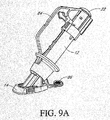
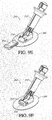
- an applicator 12 is provided for inserting the sensor 32 through the host's skin at the appropriate insertion angle with the aid of a needle (see Figs. 7 through 9 ), and for subsequent removal of the needle using a continuous push-pull action.
- the applicator comprises an applicator body 18 that guides the applicator components (see Figs. 7 through 9 ) and includes an applicator body base 60 configured to mate with the mounting unit 14 during insertion of the sensor into the host.
- the mate between the applicator body base 60 and the mounting unit 14 can use any known mating configuration, for example, a snap-fit, a press-fit, an interference-fit, or the like, to discourage separation during use.
- One or more release latches 30 enable release of the applicator body base 60, for example, when the applicator body base 60 is snap fit into the mounting unit 14.
- the electronics unit 16 includes hardware, firmware, and/or software that enable measurement of levels of the analyte via the sensor.
- the electronics unit 16 can comprise a potentiostat, a power source for providing power to the sensor, other components useful for signal processing, and preferably an RF module for transmitting data from the electronics unit 16 to a receiver.
- Electronics can be affixed to a printed circuit board (PCB), or the like, and can take a variety of forms.
- the electronics can take the form of an integrated circuit (IC), such as an Application-Specific Integrated Circuit (ASIC), a microcontroller, or a processor.
- IC integrated circuit
- ASIC Application-Specific Integrated Circuit
- electronics unit 16 houses the sensor electronics, which comprise systems and methods for processing sensor analyte data. Examples of systems and methods for processing sensor analyte data are described in more detail in U.S. Publication No. US-2005-0027463-A1 .
- the electronics unit 16 is configured to releasably mate with the mounting unit 14 in a manner similar to that described above with reference to the applicator body base 60.
- the electronics unit 16 includes contacts on its backside (not shown) configured to electrically connect with the contacts 28, such as are described in more detail with reference to Figs. 3 through 5 .
- the electronics unit 16 is configured with programming, for example initialization, calibration reset, failure testing, or the like, each time it is initially inserted into the mounting unit 14 and/or each time it initially communicates with the sensor 32.
- Fig. 3 is a perspective view of a sensor system of a preferred embodiment, shown in its functional position, including a mounting unit and an electronics unit matingly engaged therein.
- Figs. 13A to 13C illustrate the sensor is its functional position for measurement of an analyte concentration in a host.
- the mounting unit 14, also referred to as a housing comprises a base 24 adapted for fastening to a host's skin.
- the base can be formed from a variety of hard or soft materials, and preferably comprises a low profile for minimizing protrusion of the device from the host during use.
- the base 24 is formed at least partially from a flexible material, which is believed to provide numerous advantages over conventional transcutaneous sensors, which, unfortunately, can suffer from motion-related artifacts associated with the host's movement when the host is using the device.
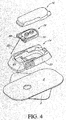
- Fig. 4 is an exploded perspective view of a sensor system of a preferred embodiment, showing a mounting unit, an associated contact subassembly, and an electronics unit.
- the contacts 28 are mounted on or in a subassembly hereinafter referred to as a contact subassembly 26 (see Fig. 5A ), which includes a contact holder 34 configured to fit within the base 24 of the mounting unit 14 and a hinge 38 that allows the contact subassembly 26 to pivot between a first position (for insertion) and a second position (for use) relative to the mounting unit 14, which is described in more detail with reference to Figs. 11 and 12 .
- hinge is a broad term and is used in its ordinary sense, including, without limitation, to refer to any of a variety of pivoting, articulating, and/or hinging mechanisms, such as an adhesive hinge, a sliding joint, and the like; the term hinge does not necessarily imply a fulcrum or fixed point about which the articulation occurs.
- the mounting unit 14 is provided with an adhesive pad 8, preferably disposed on the mounting unit's back surface and preferably including a releasable backing layer 9.
- an adhesive pad can be placed over some or all of the sensor system after sensor insertion is complete to ensure adhesion, and optionally to ensure an airtight seal or watertight seal around the wound exit-site (or sensor insertion site) (not shown).
- Appropriate adhesive pads can be chosen and designed to stretch, elongate, conform to, and/or aerate the region ( e . g ., host's skin).
- the adhesive pad 8 is formed from spun-laced, open- or closed-cell foam, and/or non-woven fibers, and includes an adhesive disposed thereon, however a variety of adhesive pads appropriate for adhesion to the host's skin can be used, as is appreciated by one skilled in the art of medical adhesive pads.
- a double-sided adhesive pad is used to adhere the mounting unit to the host's skin.
- the adhesive pad includes a foam layer, for example, a layer wherein the foam is disposed between the adhesive pad's side edges and acts as a shock absorber.
- the surface area of the adhesive pad 8 is greater than the surface area of the mounting unit's back surface.
- the adhesive pad can be sized with substantially the same surface area as the back surface of the base portion.
- the adhesive pad has a surface area on the side to be mounted on the host's skin that is greater than about 1, 1.25, 1.5, 1.75, 2, 2.25, or 2.5 times the surface area of the back surface 25 of the mounting unit base 24.
- Such a greater surface area can increase adhesion between the mounting unit and the host's skin, minimize movement between the mounting unit and the host's skin, and/or protect the wound exit-site (sensor insertion site) from environmental and/or biological contamination.
- the adhesive pad can be smaller in surface area than the back surface assuming a sufficient adhesion can be accomplished.
- the adhesive pad 8 is substantially the same shape as the back surface 25 of the base 24, although other shapes can also be advantageously employed, for example, butterfly-shaped, round, square, or rectangular.
- the adhesive pad backing can be designed for two-step release, for example, a primary release wherein only a portion of the adhesive pad is initially exposed to allow adjustable positioning of the device, and a secondary release wherein the remaining adhesive pad is later exposed to firmly and securely adhere the device to the host's skin once appropriately positioned.
- the adhesive pad is preferably waterproof.
- a stretch-release adhesive pad is provided on the back surface of the base portion to enable easy release from the host's skin at the end of the useable life of the sensor, as is described in more detail with reference to Figs. 10A to 10C .
- the adhesive pad can be bonded using a bonding agent activated by or accelerated by an ultraviolet, acoustic, radio frequency, or humidity cure.
- a eutectic bond of first and second composite materials can form a strong adhesion.
- the surface of the mounting unit can be pretreated utilizing ozone, plasma, chemicals, or the like, in order to enhance the bondability of the surface.
- a bioactive agent is preferably applied locally at the insertion site (exit-site) prior to or during sensor insertion.
- Suitable bioactive agents include those which are known to discourage or prevent bacterial growth and infection, for example, anti-inflammatory agents, antimicrobials, antibiotics, or the like. It is believed that the diffusion or presence of a bioactive agent can aid in prevention or elimination of bacteria adjacent to the exit-site. Additionally or alternatively, the bioactive agent can be integral with or coated on the adhesive pad, or no bioactive agent at all is employed.
- Fig. 5A is an exploded perspective view of the contact subassembly 26 in one embodiment, showing its individual components.
- a watertight (waterproof or water-resistant) sealing member 36 also referred to as a sealing material or seal, fits within a contact holder 34 and provides a watertight seal configured to surround the electrical connection at the electrode terminals within the mounting unit in order to protect the electrodes (and the respective operable connection with the contacts of the electronics unit 16 ) from damage due to moisture, humidity, dirt, and other external environmental factors.
- the sealing member 36 is formed from an elastomeric material, such as silicone; however, a variety of other elastomeric or sealing materials can also be used, for example, silicone-polyurethane hybrids, polyurethanes, and polysulfides.
- the sealing member is configured to compress within the contact subassembly when the electronics unit is mated to the mounting unit.
- the sealing member 36 comprises a self-lubricating material, for example, self-lubricating silicone or other materials impregnated with or otherwise comprising a lubricant configured to be released during use.
- the sealing member 36 includes a self-sealing material, for example, one that leaches out a sealant such as a silicone oil.
- a sealant such as a silicone oil.
- bumps, ridges, or other raised portions can be added to a component of the sensor system, such as to the contact subassembly 26 ( e . g ., housing adjacent to the sealing member), electronics unit 16 and/or sealing member 36 to provide additional compression and improve the seal formed around the contacts 28 and/or sensor 32 when the contacts 28 are mated to the sensor electronics.
- the sealing member is selected using a durometer.
- a durometer is an instrument used for measuring the indentation hardness of rubber, plastics, and other materials. Durometers are built to various standards from ASTM, DIN, JIS, and ISO. The hardness of plastics is most commonly measured by the Shore (Durometer) test or Rockwell hardness test. Both methods measure the resistance of plastics toward indentation and provide an empirical hardness value.
- Shore Hardness using either the Shore A or Shore D scale, is the preferred method for rubbers/elastomers and is also commonly used for softer plastics such as polyolefins, fluoropolymers, and vinyls. The Shore A scale is used for softer rubbers while the Shore D scale is used for harder ones. In preferred embodiments, the Shore A scale is employed in connection with selection of a sealing member.
- the Shore hardness is measured with a Durometer and sometimes referred to as "Durometer hardness.”
- the hardness value is determined by the penetration of the Durometer indenter foot into the sample. Because of the resilience of rubbers and plastics, the indentation reading may change over time, so the indentation time is sometimes reported along with the hardness number.
- the ASTM test method designation for the Shore Durometer hardness test is ASTM D2240. The results obtained from this test are a useful measure of relative resistance to indentation of various grades of polymers.
- a durometer in the selection of a sealing member enables selection of a material with optimal durometer hardness that balances the advantages of a lower durometer hardness with the advantages of a higher durometer hardness.
- a guide tube e . g ., cannula
- a compression set e . g ., some retention of a compressed shape caused by compression of the material over time
- Compression set can also result from certain sterilization procedures (e . g ., radiation sterilization such as electron beam or gamma radiation).
- a lower durometer hardness provides a better conformation (e . g ., seal) surrounding the contacts and/or sensor as compared to a higher durometer hardness.
- a lower durometer hardness enables a design wherein less force is required to create the seal ( e . g ., to snap the electronics unit into the mounting unit, for example, as in the embodiment illustrated in Fig. 5A ) as compared to a higher durometer hardness, thereby increasing the ease of use of the device.
- the benefits of a lower durometer hardness silicone material must be balanced with potential disadvantages in manufacturing.
- silicone oils are often produced by compounding with a silicone oil.
- some silicone oil may leach or migrate during manufacture and/or sterilization, which may corrupt aspects of the manufacturing process (e . g ., adhesion of glues and/or effectiveness of coating processes).
- a higher durometer hardness material generally provides greater stability of the material, which may reduce or avoid damage to the sealing member cause by pressure or other forces.
- a sealing member 36 with a durometer hardness of from about 5 to about 80 Shore A is employed, more preferably a durometer hardness of from about 10 to about 50 Shore A, and even more preferably from about 20 to about 50 Shore A.
- the sealing member is fabricated using a silicone of about 20 Shore A to maximize the conformance of the seal around the contacts and/or sensor while minimizing the force required to compress the silicone for that conformance.
- the sealing member is formed from a silicone of about 50 Shore A so as to provide increased strength of the sealing member ( e . g ., its resistance to compression). While a few representative examples have been provided above, one skilled in the art appreciates that higher or lower durometer hardness sealing material may also be suitable for use.
- a sealing member 36 with a durometer hardness of about 10 Shore A is used.
- the sealing material tends to "weep" out, further increasing conformance of the seal against the adjacent parts.
- a sealing material with a durometer hardness of about 0 (zero) Shore A is used as a sealant and/or in combination with a sealant, also referred to as a lubricant, which in some embodiments is a hydrophobic fluid filling material such as a grease, silicone, petroleum jelly, or the like.
- a sealant also referred to as a lubricant
- the sensor and/or contacts are encased in a housing that contains the sealant, causing the material to "squeeze” around contacts and/or sensor.
- Any suitable hydrophobic fluid filling material can be employed.
- synthetic or petroleum hydrocarbon-based materials, silicone-based materials, ester-based greases, and other pharmaceutical-grade materials are also known ink.
- the sealing member can comprise a material that has been modified to enhance the desirable properties of the sealing member 36.
- one or more filler materials or stiffening agents such as glass beads, polymer beads, composite beads, beads comprising various inert materials, carbon black, talc, titanium oxide, silicone dioxide, and the like.
- the filler material is incorporated into the sealing member material to mechanically stiffen the sealing member.
- use of a filler material or stiffening agent in the sealing member material can provide a variety of enhanced properties including increased modulus of elasticity, crosslink density, hardness, and stiffness, and decreased creep, for example.
- gases are chemically (or otherwise) injected into the sealing member material.
- the sealing material can comprise a polymeric foam (e . g ., a polyurethane foam, a latex foam, a styrene-butadiene foam, and the like), or a dispersion of gas bubbles in a grease or jelly.
- a polymeric foam e . g ., a polyurethane foam, a latex foam, a styrene-butadiene foam, and the like
- a dispersion of gas bubbles in a grease or jelly e. g ., a polyurethane foam, a latex foam, a styrene-butadiene foam, and the like
- the seal 36 is designed to form an interference fit with the electronics unit and can be formed from a variety of materials, for example, flexible plastics, or noble metals.
- materials for example, flexible plastics, or noble metals.
- the contact holder 34 can be integrally designed as a part of the mounting unit, rather than as a separate piece thereof.
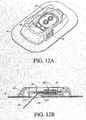
- a sealant can be provided in or around the sensor ( e . g ., within or on the contact subassembly or sealing member), such as is described in more detail with reference to Figs 12A and 12B .
- sealing materials with durometer hardnesses in the described ranges can provide improved sealing in a variety of sensor applications.
- a sealing member as described in the preferred embodiments e . g ., selected using a durometer to ensure optimal durometer hardness, and the like
- the sealing member 36 is formed with a raised portion 37 surrounding the contacts 28.
- the raised portion 37 enhances the interference fit surrounding the contacts 28 when the electronics unit 16 is mated to the mounting unit 14. Namely, the raised portion surrounds each contact and presses against the electronics unit 16 to form a tight seal around the electronics unit.
- Figs. 5D to 5H a variety of alternative sealing member configurations are described with reference to Figs. 5D to 5H , below.
- Contacts 28 fit within the seal 36 and provide for electrical connection between the sensor 32 and the electronics unit 16.
- the contacts are designed to ensure a stable mechanical and electrical connection of the electrodes that form the sensor 32 (see Fig. 6A to 6C ) to mutually engaging contacts 28 thereon.
- a stable connection can be provided using a variety of known methods, for example, domed metallic contacts, cantilevered fingers, pogo pins, or the like, as is appreciated by one skilled in the art.
- the contacts 28 are formed from a conductive elastomeric material, such as a carbon black elastomer, through which the sensor 32 extends (see Figs. 11B and 12B ).
- Conductive elastomers are advantageously employed because their resilient properties create a natural compression against mutually engaging contacts, forming a secure press fit therewith.
- conductive elastomers can be molded in such a way that pressing the elastomer against the adjacent contact performs a wiping action on the surface of the contact, thereby creating a cleaning action during initial connection.
- the sensor 32 extends through the contacts 28 wherein the sensor is electrically and mechanically secure by the relaxation of elastomer around the sensor (see Figs. 8A to 8D ).
- a conductive, stiff plastic forms the contacts, which are shaped to comply upon application of pressure (for example, a leaf-spring shape).
- Contacts of such a configuration can be used instead of a metallic spring, for example, and advantageously avoid the need for crimping or soldering through compliant materials; additionally, a wiping action can be incorporated into the design to remove contaminants from the surfaces during connection.
- Non-metallic contacts can be advantageous because of their seamless manufacturability, robustness to thermal compression, non-corrosive surfaces, and native resistance to electrostatic discharge (ESD) damage due to their higher-than-metal resistance.
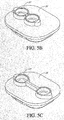
- Figs. 5B and 5C are perspective views of alternative contact configurations.
- Fig. 5B is an illustration of a narrow contact configuration.
- Fig. 5C is an illustration of a wide contact configuration.
- One skilled in the art appreciates that a variety of configurations are suitable for the contacts of the preferred embodiments, whether elastomeric, stiff plastic or other materials are used. In some circumstances, it can be advantageous to provide multiple contact configurations (such as illustrated in Figs. 5A to 5C ) to differentiate sensors from each other.
- the architecture of the contacts can include one or more configurations each designed (keyed) to fit with a particular electronics unit.
- Figs. 5D to 5H are schematic cross-sectional views of a portion of the contact subassembly; namely, a variety of alternative embodiments of the sealing member 36 are illustrated.
- a sensor 32 is shown, which is configured for operable connection to sensor electronics for measuring an analyte in a host such as described in more detail elsewhere herein.
- two electrical contacts 28, as described in more detail elsewhere herein, are configured to operably connect the sensor to the sensor electronics.
- the sealing member 36 in each of these alternative configurations e . g ., Figs. 5D to 5H ) at least partially surrounds the sensor and/or the electrical contacts to seal the electrical contacts from moisture when the sensor is operably connected to the sensor electronics.
- Fig. 5D is a schematic cross-sectional view of the sealing member 36 in an embodiment similar to Fig. 5A , including gaps 400 that are maintained when the one or more electrical contacts are operably connected to the sensor electronics.
- these air gaps provide for some flexibility of the sealing member 36 to deform or compress to seal the electrical contacts 28 from moisture or other environmental effects.
- a sealing member with a certain elasticity can be compressed or deformed by the insertion and/or retraction forces applied thereto.
- the sealing member is configured to be maintained ( e . g ., held substantially in place) on the housing ( e . g ., contact subassembly 26 or base 34 ) without substantial translation, deformation, and/or compression ( e . g ., during sensor insertion).
- Fig. 5D illustrates one such implementation, wherein one or more depressions 402 are configured to receive mating protrusions ( e .
- the base 34 of the contact subassembly 26 comprises reinforcing mechanical supports configured to hold the sealing member as described above.
- a sealing member substantially stationary e . g ., without substantial translation, deformation and/or compression
- a wide variety of systems and methods for holding the sealing member can be implemented with a sealing member of any particular design.
- Fig. 5E is a schematic cross-sectional view of the sealing member 36 in an alternative embodiment without gaps. In certain circumstances, full contact between mating members may be preferred.
- Fig. 5F is a schematic cross-sectional view of a sealing member 36 in an alternative embodiment wherein one or more gaps 400 are provided.
- the gaps 400 extend into the sealing member and encompass at least a portion of the sensor 32.
- the gaps 400 or "deep wells" of Fig. 5F are designed to interrupt the path that moisture may take, avoiding contact of the moisture at the contacts 28. If moisture is able to travel along the path of the sensor, the abrupt change of surface tension at the opening 404 of the gap 400 in the sealing member 36 substantially deters the moisture from traveling to the contacts 28.
- Fig. 5G is a schematic cross-sectional view of the sealing member 36 in another alternative embodiment wherein one or more gaps 400 are provided.
- the gaps extend from the bottom side of the sealing member 36, which can be helpful in maintaining a stable position of the contacts 28 and/or reduces "pumping" of air gaps in some situations.
- gaps 400 can be filled by a sealant, which also may be referred to as a lubricant, for example, oil, grease, or gel.
- the sealant includes petroleum jelly and is used to provide a moisture barrier surrounding the sensor. Referring to Fig. 5F , filling the gaps 400 with a sealant provides an additional moisture barrier to reduce or avoid moisture from traveling to the contacts 28. Sealant can be used to fill gaps or crevices in any sealing member configuration.
- a channel 406 through the sealing member 36 in order to create an additional pathway for sealant (e . g . lubricant) in order to expel air and/or to provide a path for excess sealant to escape.
- sealant e . g . lubricant
- more than one channel is provided.
- Fig. 5H is a schematic cross-sectional view of a sealing member 36 in an alternative embodiment wherein a large gap 400 is provided between the sealing member upper portion 408 and the sealing member lower portion 410. These portions 408, 410 may or may not be connected; however, they are configured to sandwich the sensor and sealant (e . g ., grease) therebetween.
- the sealing member 36 illustrated with reference to Fig. 5H can provide ease of manufacture and/or product assembly with a comprehensive sealing ability. Additional gaps (with or without sealant) can be provided in a variety of locations throughout the sealing member 36; these additional gaps, for example, provide space for excess sealant.
- the senor 32 includes a distal portion 42, also referred to as the in vivo portion, adapted to extend out of the mounting unit for insertion under the host's skin, and a proximal portion 40, also referred to as an ex vivo portion, adapted to remain above the host's skin after sensor insertion and to operably connect to the electronics unit 16 via contacts 28.
- the sensor 32 includes two or more electrodes: a working electrode 44 and at least one additional electrode, which can function as a counter electrode and/or reference electrode, hereinafter referred to as the reference electrode 46.
- a membrane system is preferably deposited over the electrodes, such as described in more detail with reference to Figs. 6A to 6C , below.
- Fig. 6A is an expanded cutaway view of a proximal portion 40 of the sensor in one embodiment, showing working and reference electrodes.
- the working and reference electrodes 44, 46 extend through the contacts 28 to form electrical connection therewith (see Figs. 11B and 12B ).
- the working electrode 44 is in electrical contact with one of the contacts 28 and the reference electrode 46 is in electrical contact with the other contact 28, which in turn provides for electrical connection with the electronics unit 16 when it is mated with the mounting unit 14.
- Mutually engaging electrical contacts permit operable connection of the sensor 32 to the electronics unit 16 when connected to the mounting unit 14; however other methods of electrically connecting the electronics unit 16 to the sensor 32 are also possible.
- the reference electrode can be configured to extend from the sensor and connect to a contact at another location on the mounting unit ( e . g ., non-coaxially).
- Detachable connection between the mounting unit 14 and electronics unit 16 provides improved manufacturability, namely, the relatively inexpensive mounting unit 14 can be disposed of when replacing the sensor system after its usable life, while the relatively more expensive electronics unit 16 can be reused with multiple sensor systems.
- the contacts 28 are formed into a variety of alternative shapes and/or sizes.
- the contacts 28 can be discs, spheres, cuboids, and the like.
- the contacts 28 can be designed to extend from the mounting unit in a manner that causes an interference fit within a mating cavity or groove of the electronics unit, forming a stable mechanical and electrical connection therewith.
- Fig. 6B is an expanded cutaway view of a distal portion of the sensor in one embodiment, showing working and reference electrodes.
- the sensor is formed from a working electrode 44 and a reference electrode 46 helically wound around the working electrode 44.
- An insulator 45 is disposed between the working and reference electrodes to provide necessary electrical insulation therebetween. Certain portions of the electrodes are exposed to enable electrochemical reaction thereon, for example, a window 43 can be formed in the insulator to expose a portion of the working electrode 44 for electrochemical reaction.
- each electrode is formed from a fine wire with a diameter of from about 0.001 or less to about 0.010 inches or more, for example, and is formed from, e . g ., a plated insulator, a plated wire, or bulk electrically conductive material.
- a variety of known transcutaneous sensor configurations can be employed with the transcutaneous analyte sensor system of the preferred embodiments, such as U.S. Patent No. 5,711,861 to Ward et al. , U.S. Patent No. 6,642,015 to Vachon et al. , U.S. Patent No. 6,654,625 to Say et al.
- the working electrode comprises a wire formed from a conductive material, such as platinum, platinum-iridium, palladium, graphite, gold, carbon, conductive polymer, alloys, or the like.
- a conductive material such as platinum, platinum-iridium, palladium, graphite, gold, carbon, conductive polymer, alloys, or the like.
- the electrodes can by formed by a variety of manufacturing techniques (bulk metal processing, deposition of metal onto a substrate, or the like), it can be advantageous to form the electrodes from plated wire (e . g ., platinum on steel wire) or bulk metal ( e . g ., platinum wire). It is believed that electrodes formed from bulk metal wire provide superior performance ( e . g ., in contrast to deposited electrodes), including increased stability of assay, simplified manufacturability, resistance to contamination ( e . g ., which can be introduced in deposition processes), and improved surface reaction ( e . g ., due to purity of material
- the working electrode 44 is configured to measure the concentration of an analyte.
- the working electrode measures the hydrogen peroxide produced by an enzyme catalyzed reaction of the analyte being detected and creates a measurable electronic current
- glucose oxidase produces hydrogen peroxide as a byproduct
- hydrogen peroxide reacts with the surface of the working electrode producing two protons (2H + ), two electrons (2e - ) and one molecule of oxygen (O 2 ), which produces the electronic current being detected.
- the working electrode 44 is covered with an insulating material 45, for example, a non-conductive polymer. Dip-coating, spray-coating, vapor-deposition, or other coating or deposition techniques can be used to deposit the insulating material on the working electrode.
- the insulating material comprises parylene, which can be an advantageous polymer coating for its strength, lubricity, and electrical insulation properties. Generally, parylene is produced by vapor deposition and polymerization of para-xylylene (or its substituted derivatives). While not wishing to be bound by theory, it is believed that the lubricious ( e . g ., smooth) coating ( e .
- parylene on the sensors of the preferred embodiments contributes to minimal trauma and extended sensor life.
- any suitable insulating material can be used, for example, fluorinated polymers, polyethyleneterephthalate, polyurethane, polyimide, other nonconducting polymers, or the like. Glass or ceramic materials can also be employed. Other materials suitable for use include surface energy modified coating systems such as are marketed under the trade names AMC18, AMC148, AMC141, and AMC321 by Advanced Materials Components Express of Bellafonte, PA. In some alternative embodiments, however, the working electrode may not require a coating of insulator.
- the reference electrode 46 which can function as a reference electrode alone, or as a dual reference and counter electrode, is formed from silver, silver/silver chloride, or the like. Preferably, the reference electrode 46 is juxtapositioned and/or twisted with or around the working electrode 44; however other configurations are also possible ( e . g ., an intradermal or on-skin reference electrode). In the illustrated embodiments, the reference electrode 46 is helically wound around the working electrode 44. The assembly of wires is then optionally coated or adhered together with an insulating material, similar to that described above, so as to provide an insulating attachment.
- a silver wire is formed onto the sensor as described above, and subsequently chloridized to form silver/silver chloride reference electrode.
- chloridizing the silver wire as described herein enables the manufacture of a reference electrode with optimal in vivo performance. Namely, by controlling the quantity and amount of chloridization of the silver to form silver/silver chloride, improved break-in time, stability of the reference electrode, and extended life has been shown with the preferred embodiments. Additionally, use of silver chloride as described above allows for relatively inexpensive and simple manufacture of the reference electrode.
- a portion of the coated assembly structure can be stripped or otherwise removed, for example, by hand, excimer lasing, chemical etching, laser ablation, grit-blasting ( e . g ., with sodium bicarbonate or other suitable grit), or the like, to expose the electroactive surfaces.
- grit blasting is implemented to expose the electroactive surfaces, preferably utilizing a grit material that is sufficiently hard to ablate the polymer material, while being sufficiently soft so as to minimize or avoid damage to the underlying metal electrode ( e .
- sodium bicarbonate is an advantageous grit-material because it is sufficiently hard to ablate, e . g ., a parylene coating without damaging, e . g ., an underlying platinum conductor.
- One additional advantage of sodium bicarbonate blasting includes its polishing action on the metal as it strips the polymer layer, thereby eliminating a cleaning step that might otherwise be necessary.
- a radial window 43 is formed through the insulating material 45 to expose a circumferential electroactive surface of the working electrode. Additionally, sections 41 of electroactive surface of the reference electrode are exposed. For example, the 41 sections of electroactive surface can be masked during deposition of an outer insulating layer or etched after deposition of an outer insulating layer.
- cellular attack or migration of cells to the sensor can cause reduced sensitivity and/or function of the device, particularly after the first day of implantation.
- the exposed electroactive surface is distributed circumferentially about the sensor ( e . g ., as in a radial window)
- the available surface area for reaction can be sufficiently distributed so as to minimize the effect of local cellular invasion of the sensor on the sensor signal.
- a tangential exposed electroactive window can be formed, for example, by stripping only one side of the coated assembly structure.
- the window can be provided at the tip of the coated assembly structure such that the electroactive surfaces are exposed at the tip of the sensor.
- Other methods and configurations for exposing electroactive surfaces can also be employed.
- the working electrode has a diameter of from about 0.001 inches or less to about 0.010 inches or more, preferably from about 0.002 inches to about 0.008 inches, and more preferably from about 0.004 inches to about 0.005 inches.
- the length of the window can be from about 0.1 mm (about 0.004 inches) or less to about 2 mm (about 0.078 inches) or more, and preferably from about 0.5 mm (about 0.02 inches) to about 0.75 mm (0.03 inches).
- the exposed surface area of the working electrode is preferably from about 0.000013 in 2 (0.0000839cm 2 ) or less to about 0.0025 in 2 (0.016129 cm 2 ) or more (assuming a diameter of from about 0.001 inches to about 0.010 inches and a length of from about 0.004 inches to about 0.078 inches).
- the preferred exposed surface area of the working electrode is selected to produce an analyte signal with a current in the picoAmp range, such as is described in more detail elsewhere herein.
- a current in the picoAmp range can be dependent upon a variety of factors, for example the electronic circuitry design (e.g., sample rate, current draw, A/D converter bit resolution, etc.), the membrane system (e.g., permeability of the analyte through the membrane system), and the exposed surface area of the working electrode.
- the exposed electroactive working electrode surface area can be selected to have a value greater than or less than the above-described ranges taking into consideration alterations in the membrane system and/or electronic circuitry.
- it can be advantageous to minimize the surface area of the working electrode while maximizing the diffusivity of glucose in order to optimize the signal-to-noise ratio while maintaining sensor performance in both high and low glucose concentration ranges.
- the exposed surface area of the working (and/or other) electrode can be increased by altering the cross-section of the electrode itself.
- the cross-section of the working electrode can be defined by a cross, star, cloverleaf, ribbed, dimpled, ridged, irregular, or other non-circular configuration; thus, for any predetermined length of electrode, a specific increased surface area can be achieved (as compared to the area achieved by a circular cross-section).
- Increasing the surface area of the working electrode can be advantageous in providing an increased signal responsive to the analyte concentration, which in turn can be helpful in improving the signal-to-noise ratio, for example.
- additional electrodes can be included within the assembly, for example, a three-electrode system (working, reference, and counter electrodes) and/or an additional working electrode (e . g ., an electrode which can be used to generate oxygen, which is configured as a baseline subtracting electrode, or which is configured for measuring additional analytes).
- a three-electrode system working, reference, and counter electrodes
- an additional working electrode e . g ., an electrode which can be used to generate oxygen, which is configured as a baseline subtracting electrode, or which is configured for measuring additional analytes.
- U.S. Publication No. US-2005-0161346-A1 and U.S. Publication No. US-2005-0143635-A1 describe some systems and methods for implementing and using additional working, counter, and/or reference electrodes.
- the two working electrodes are juxtapositioned ( e .
- the working electrodes can be formed in a double-, triple-, quad-, etc. helix configuration along the length of the sensor (for example, surrounding a reference electrode, insulated rod, or other support structure).
- the resulting electrode system can be configured with an appropriate membrane system, wherein the first working electrode is configured to measure a first signal comprising glucose and baseline and the additional working electrode is configured to measure a baseline signal consisting of baseline only ( e . g ., configured to be substantially similar to the first working electrode without an enzyme disposed thereon). In this way, the baseline signal can be subtracted from the first signal to produce a glucose-only signal that is substantially not subject to fluctuations in the baseline and/or interfering species on the signal.
- the working electrode comprises a tube with a reference electrode disposed or coiled inside, including an insulator therebetween.
- the reference electrode comprises a tube with a working electrode disposed or coiled inside, including an insulator therebetween.
- a polymer (e . g ., insulating) rod is provided, wherein the electrodes are deposited ( e . g ., electro-plated) thereon.
- a metallic (e . g ., steel) rod is provided, coated with an insulating material, onto which the working and reference electrodes are deposited.
- one or more working electrodes are helically wound around a reference electrode.
- the electrodes and membrane systems of the preferred embodiments are coaxially formed, namely, the electrodes and/or membrane system all share the same central axis.
- a coaxial design of the sensor enables a symmetrical design without a preferred bend radius.
- the coaxial design of the preferred embodiments do not have a preferred bend radius and therefore are not subject to regular bending about a particular plane (which can cause fatigue failures and the like).
- non-coaxial sensors can be implemented with the sensor system of the preferred embodiments.
- the coaxial sensor design of the preferred embodiments enables the diameter of the connecting end of the sensor (proximal portion) to be substantially the same as that of the sensing end (distal portion) such that the needle is able to insert the sensor into the host and subsequently slide back over the sensor and release the sensor from the needle, without slots or other complex multicomponent designs.
- the two wires of the sensor are held apart and configured for insertion into the host in proximal but separate locations.
- the separation of the working and reference electrodes in such an embodiment can provide additional electrochemical stability with simplified manufacture and electrical connectivity. It is appreciated by one skilled in the art that a variety of electrode configurations can be implemented with the preferred embodiments.
- the senor includes an antimicrobial portion configured to extend through the exit-site when the sensor is implanted in the host.
- the sensor is designed with in vivo and ex vivo portions as described in more detail elsewhere herein; additionally, the sensor comprises a transition portion, also referred to as an antimicrobial portion, located between the in vivo and ex vivo portions 42, 40.
- the antimicrobial portion is designed to provide antimicrobial effects to the exit-site and adjacent tissue when implanted in the host.
- the antimicrobial portion comprises silver, e . g ., the portion of a silver reference electrode that is configured to extend through the exit-site when implanted.
- exit-site infections are a common adverse occurrence associated with some conventional transcutaneous medical devices
- the devices of preferred embodiments are designed at least in part to minimize infection, to minimize irritation, and/or to extend the duration of implantation of the sensor by utilizing a silver reference electrode to extend through the exit-site when implanted in a patient.
- the silver may reduce local tissue infections (within the tissue and at the exit-site); namely, steady release of molecular quantities of silver is believed to have an antimicrobial effect in biological tissue ( e .
- passive antimicrobial effects g ., reducing or preventing irritation and infection
- passive antimicrobial effects also referred to as passive antimicrobial effects.
- passive antimicrobial effects can contribute to extended life of a transcutaneous analyte sensor, enabling a functional lifetime past a few days, e.g., seven days or longer.
- active antimicrobial systems and methods are provided in the sensor system in order to further enhance the antimicrobial effects at the exit-site.
- an auxiliary silver wire is disposed on or around the sensor, wherein the auxiliary silver wire is connected to electronics and configured to pass a current sufficient to enhance its antimicrobial properties (active antimicrobial effects), as is appreciated by one skilled in the art.
- the current can be passed continuously or intermittently, such that sufficient antimicrobial properties are provided.
- the senor remains substantially stationary within the tissue of the host, such that migration or motion of the sensor with respect to the surrounding tissue is minimized. Migration or motion is believed to cause inflammation at the sensor implant site due to irritation, and can also cause noise on the sensor signal due to motion-related artifact, for example. Therefore, it can be advantageous to provide an anchoring mechanism that provides support for the sensor's in vivo portion to avoid the above-mentioned problems. Combining advantageous sensor geometry with an advantageous anchoring minimizes additional parts and allows for an optimally small or low profile design of the sensor.
- the sensor includes a surface topography, such as the helical surface topography provided by the reference electrode surrounding the working electrode.
- a surface topography could be provided by a roughened surface, porous surface (e . g . porous parylene), ridged surface, or the like.
- the anchoring can be provided by prongs, spines, barbs, wings, hooks, a bulbous portion (for example, at the distal end), an S-bend along the sensor, a rough surface topography, a gradually changing diameter, combinations thereof, or the like, which can be used alone or in combination with the helical surface topography to stabilize the sensor within the subcutaneous tissue.
- transcutaneous devices are believed to suffer from motion artifact associated with host movement when the host is using the device.
- various movements on the sensor for example, relative movement within and between the subcutaneous space, dermis, skin, and external portions of the sensor
- stresses on the device which is known to produce artifacts on the sensor signal.
- design considerations for example, stress considerations
- the distal portion 42 of the sensor can benefit in general from greater flexibility as it encounters greater mechanical stresses caused by movement of the tissue within the patient and relative movement between the in vivo and ex vivo portions of the sensor.
- the proximal portion 40 of the sensor can benefit in general from a stiffer, more robust design to ensure structural integrity and/or reliable electrical connections.
- a stiffer design can minimize crimping of the sensor and/or ease in retraction of the needle from the sensor.
- the flexibility is believed to compensate for patient movement, and noise associated therewith.
- column strength for retraction of the needle over the sensor
- electrical connections, and integrity can be enhanced.
- a stiffer distal end and/or a more flexible proximal end can be advantageous as described in U.S. Publication No. US-2006-0015024-A1 .
- the preferred embodiments provide a distal portion 42 of the sensor 32 designed to be more flexible than a proximal portion 40 of the sensor.
- the variable stiffness of the preferred embodiments can be provided by variable pitch of any one or more helically wound wires of the device, variable cross-section of any one or more wires of the device, and/or variable hardening and/or softening of any one or more wires of the device, such as is described in more detail with reference to U.S. Publication No. US-2006-0015024-A1 .
- Fig. 6C is a cross-sectional view through the sensor on line C-C of Fig. 6B showing the exposed electroactive surface of the working electrode surrounded by the membrane system in one embodiment.
- a membrane system is deposited over at least a portion of the electroactive surfaces of the sensor 32 (working electrode and optionally reference electrode) and provides protection of the exposed electrode surface from the biological environment, diffusion resistance (limitation) of the analyte if needed, a catalyst for enabling an enzymatic reaction, limitation or blocking of interferents, and/or hydrophilicity at the electrochemically reactive surfaces of the sensor interface.
- suitable membrane systems are described in U.S. Publication No. US-2005-0245799-A1 .
- the membrane system includes a plurality of domains, for example, an electrode domain 47, an interference domain 48, an enzyme domain 49 (for example, including glucose oxidase), and a resistance domain 50, as shown in Fig. 6C , and can include a high oxygen solubility domain, and/or a bioprotective domain (not shown), such as is described in more detail in U.S. Publication No. US-2005-0245799-A1 .
- the membrane system can be deposited on the exposed electroactive surfaces using known thin film techniques (for example, vapor deposition, spraying, electro-depositing, dipping, or the like). In alternative embodiments, however, other vapor deposition processes ( e .
- the membrane system can be disposed over (or deposited on) the electroactive surfaces using any known method, as will be appreciated by one skilled in the art.
- one or more domains of the membrane systems are formed from materials such as described above in connection with the porous layer, such as silicone, polytetrafluoroethylene, polyethylene-co-tetrafluoroethylene, polyolefin, polyester, polycarbonate, biostable polytetrafluoroethylene, homopolymers, copolymers, terpolymers of polyurethanes, polypropylene (PP), polyvinylchloride (PVC), polyvinylidene fluoride (PVDF), polybutylene terephthalate (PBT), polymethylmethacrylate (PMMA), polyether ether ketone (PEEK), polyurethanes, cellulosic polymers, polysulfones and block copolymers thereof including, for example, di-block, tri-block, alternating, random and graft copolymers.
- silicone polytetrafluoroethylene, polyethylene-co-tetrafluoroethylene, polyolefin, polyester, polycarbonate,
- the membrane system comprises an electrode domain.
- the electrode domain 47 is provided to ensure that an electrochemical reaction occurs between the electroactive surfaces of the working electrode and the reference electrode, and thus the electrode domain 47 is preferably situated more proximal to the electroactive surfaces than the interference and/or enzyme domain.
- the electrode domain includes a coating that maintains a layer of water at the electrochemically reactive surfaces of the sensor.
- the electrode domain is present to provide an environment between the surfaces of the working electrode and the reference electrode which facilitates an electrochemical reaction between the electrodes.
- a humectant in a binder material can be employed as an electrode domain; this allows for the full transport of ions in the aqueous environment.
- the electrode domain can also assist in stabilizing the operation of the sensor by accelerating electrode start-up and drifting problems caused by inadequate electrolyte.
- the material that forms the electrode domain can also provide an environment that protects against pH-mediated damage that can result from the formation of a large pH gradient due to the electrochemical activity of the electrodes.
- the electrode domain 47 includes a flexible, water-swellable, hydrogel film having a "dry film” thickness of from about 0.05 micron or less to about 20 microns or more, more preferably from about 0.05, 0.1, 0.15, 0.2, 0.25, 0.3, 0.35, 0.4, 0.45, 0.5, 1, 1.5, 2, 2.5, 3, or 3.5 microns to about 4, 5, 6, 7, 8, 9, 10, 11, 12, 13, 14, 15, 16, 17, 18, 19, or 19.5 microns, and more preferably still from about 2, 2.5 or 3 microns to about 3.5, 4, 4.5, or 5 microns.
- “Dry film” thickness refers to the thickness of a cured film cast from a coating formulation by standard coating techniques.
- the electrode domain 47 is formed of a curable mixture of a urethane polymer and a hydrophilic polymer.
- Particularly preferred coatings are formed of a polyurethane polymer having carboxylate or hydroxyl functional groups and non-ionic hydrophilic polyether segments, wherein the polyurethane polymer is crosslinked with a water soluble carbodiimide (e . g ., 1-ethyl-3-(3-dimethylaminopropyl)carbodiimide (EDC)) in the presence of polyvinylpyrrolidone and cured at a moderate temperature of about 50°C.
- a water soluble carbodiimide e . g ., 1-ethyl-3-(3-dimethylaminopropyl)carbodiimide (EDC)
- the electrode domain 47 is formed from a hydrophilic polymer such as polyvinylpyrrolidone (PVP).
- PVP polyvinylpyrrolidone
- An electrode domain formed from PVP has been shown to reduce break-in time of analyte sensors; for example, a glucose sensor utilizing a cellulosic-based interference domain such as described in more detail below.
- the electrode domain is deposited by vapor deposition, spray coating, dip coating, or other thin film techniques on the electroactive surfaces of the sensor.
- the electrode domain is formed by dip-coating the electroactive surfaces in an electrode layer solution and curing the domain for a time of from about 15 minutes to about 30 minutes at a temperature of from about 40°C to about 55°C (and can be accomplished under vacuum ( e . g ., 20 to 30 mmHg)).
- a preferred insertion rate of from about 1 to about 3 inches per minute into the electrode layer solution, with a preferred dwell time of from about 0.5 to about 2 minutes in the electrode layer solution, and a preferred withdrawal rate of from about 0.25 to about 2 inches per minute from the electrode layer solution provide a functional coating.
- values outside of those set forth above can be acceptable or even desirable in certain embodiments, for example, depending upon solution viscosity and solution surface tension, as is appreciated by one skilled in the art.
- the electroactive surfaces of the electrode system are dip-coated one time (one layer) and cured at 50°C under vacuum for 20 minutes.
- an independent electrode domain 47 is described herein, in some embodiments sufficient hydrophilicity can be provided in the interference domain and/or enzyme domain (the domain adjacent to the electroactive surfaces) so as to provide for the full transport of ions in the aqueous environment (e.g. without a distinct electrode domain). In these embodiments, an electrode domain is not necessary.
- Interferents are molecules or other species that are reduced or oxidized at the electrochemically reactive surfaces of the sensor, either directly or via an electron transfer agent, to produce a false positive analyte signal.
- an interference domain 48 is provided that substantially restricts, resists, or blocks the flow of one or more interfering species.
- Some known interfering species for a glucose sensor include acetaminophen, ascorbic acid, bilirubin, cholesterol, creatinine, dopamine, ephedrine, ibuprofen, L-dopa, methyl dopa, salicylate, tetracycline, tolazamide, tolbutamide, triglycerides, and uric acid.
- the interference domain of the preferred embodiments is less permeable to one or more of the interfering species than to the analyte, e . g ., glucose.
- the interference domain 48 is formed from one or more cellulosic derivatives.
- cellulosic derivatives include polymers such as cellulose acetate, cellulose acetate butyrate, 2-hydroxyethyl cellulose, cellulose acetate phthalate, cellulose acetate propionate, cellulose acetate trimellitate, and the like.
- the interference domain 48 is formed from cellulose acetate butyrate.
- a casting solution or dispersion of cellulose acetate butyrate at a weight percent of from about 15% to about 25%, preferably from about 15%, 16%, 17%, 18%, 19% to about 20%, 21%, 22%, 23%, 24% or 25%, and more preferably about 18% is preferred.
- the casting solution includes a solvent or solvent system, for example an acetone:ethanol solvent system. Higher or lower concentrations can be preferred in certain embodiments.
- a plurality of layers of cellulose acetate butyrate can be advantageously combined to form the interference domain in some embodiments, for example, three layers can be employed.
- cellulose acetate butyrate components with different molecular weights in a single solution, or to deposit multiple layers of cellulose acetate butyrate from different solutions comprising cellulose acetate butyrate of different molecular weights, different concentrations, and/or different chemistries ( e . g ., functional groups). It can also be desirable to include additional substances in the casting solutions or dispersions, e.g., functionalizing agents, crosslinking agents, other polymeric substances, substances capable of modifying the hydrophilicity/hydrophobicity of the resulting layer, and the like.
- additional substances in the casting solutions or dispersions e.g., functionalizing agents, crosslinking agents, other polymeric substances, substances capable of modifying the hydrophilicity/hydrophobicity of the resulting layer, and the like.
- the interference domain 48 is formed from cellulose acetate.
- Cellulose acetate with a molecular weight of from about 30,000 daltons or less to about 100,000 daltons or more, preferably from about 35,000, 40,000, or 45,000 daltons to about 55,000, 60,000, 65,000, 70,000, 75,000, 80,000, 85,000, 90,000, or 95,000 daltons, and more preferably about 50,000 daltons is preferred.
- a casting solution or dispersion of cellulose acetate at a weight percent of about 3% to about 10%, preferably from about 3.5%, 4.0%, 4.5%, 5.0%, 5.5%, 6.0%, or 6.5% to about 7.5%, 8.0%, 8.5%, 9.0%, or 9.5%, and more preferably about 8% is preferred.
- higher or lower molecular weights and/or cellulose acetate weight percentages can be preferred. It can be desirable to employ a mixture of cellulose acetates with molecular weights in a single solution, or to deposit multiple layers of cellulose acetate from different solutions comprising cellulose acetates of different molecular weights, different concentrations, or different chemistries ( e . g ., functional groups). It can also be desirable to include additional substances in the casting solutions or dispersions such as described in more detail above.
- Layer(s) prepared from combinations of cellulose acetate and cellulose acetate butyrate, or combinations of layer(s) of cellulose acetate and layer(s) of cellulose acetate butyrate can also be employed to form the interference domain 48.
- additional polymers such as Nafion®
- cellulosic derivatives can be used in combination with cellulosic derivatives to provide equivalent and/or enhanced function of the interference domain 48.
- a 5 wt % Nafion® casting solution or dispersion can be used in combination with a 8 wt % cellulose acetate casting solution or dispersion, e . g ., by dip coating at least one layer of cellulose acetate and subsequently dip coating at least one layer Nafion® onto a needle-type sensor such as described with reference to the preferred embodiments. Any number of coatings or layers formed in any order may be suitable for forming the interference domain of the preferred embodiments.
- more than one cellulosic derivative can be used to form the interference domain 48 of the preferred embodiments.
- the formation of the interference domain on a surface utilizes a solvent or solvent system in order to solvate the cellulosic derivative (or other polymer) prior to film formation thereon.
- acetone and ethanol are used as solvents for cellulose acetate; however one skilled in the art appreciates the numerous solvents that are suitable for use with cellulosic derivatives (and other polymers).
- the preferred relative amounts of solvent can be dependent upon the cellulosic derivative (or other polymer) used, its molecular weight, its method of deposition, its desired thickness, and the like.
- a percent solute of from about 1% to about 25% is preferably used to form the interference domain solution so as to yield an interference domain having the desired properties.
- the cellulosic derivative (or other polymer) used, its molecular weight, method of deposition, and desired thickness can be adjusted, depending upon one or more other of the parameters, and can be varied accordingly as is appreciated by one skilled in the art.
- the interference domain 48 includes a thin, hydrophobic membrane that is non-swellable and restricts diffusion of low molecular weight species.
- the interference domain 48 is permeable to relatively low molecular weight substances, such as hydrogen peroxide, but restricts the passage of higher molecular weight substances, including glucose and ascorbic acid.
- the interference domain 48 is deposited directly onto the electroactive surfaces of the sensor for a domain thickness of from about 0.05 microns or less to about 20 microns or more, more preferably from about 0.05, 0.1, 0.15, 0.2, 0.25, 0.3, 0.35, 0.4, 0.45, 0.5, 1, 1.5, 2, 2.5, 3, or 3.5 microns to about 4, 5, 6, 7, 8, 9, 10, 11, 12, 13, 14, 15, 16, 17, 18, 19, or 19.5 microns, and more preferably still from about 1, 1.5 or 2 microns to about 2.5 or 3 microns.
- Thicker membranes can also be desirable in certain embodiments, but thinner membranes are generally preferred because they have a lower impact on the rate of diffusion of hydrogen peroxide from the enzyme membrane to the electrodes.
- the membrane systems of the preferred embodiments can be formed and/or deposited on the exposed electroactive surfaces (e . g ., one or more of the working and reference electrodes) using known thin film techniques (for example, casting, spray coating, drawing down, electro-depositing, dip coating, and the like), however casting or other known application techniques can also be utilized.
- the interference domain is deposited by vapor deposition, spray coating, or dip coating.
- the interference domain is formed by dip coating the sensor into an interference domain solution using an insertion rate of from about 20 inches/min to about 60 inches/min, preferably 40 inches/min, a dwell time of from about 0 minute to about 5 seconds, preferably 0 seconds, and a withdrawal rate of from about 20 inches/minute to about 60 inches/minute, preferably about 40 inches/minute, and curing (drying) the domain from about 1 minute to about 30 minutes, preferably from about 3 minutes to about 15 minutes (and can be accomplished at room temperature or under vacuum ( e . g ., 20 to 30 mmHg)).
- a 3-minute cure (i.e. , dry) time is preferred between each layer applied.
- a 15 minute cure (i.e., dry) time is preferred between each layer applied.
- the dip process can be repeated at least one time and up to 10 times or more.
- the preferred number of repeated dip processes depends upon the cellulosic derivative(s) used, their concentration, conditions during deposition ( e . g ., dipping) and the desired thickness ( e . g ., sufficient thickness to provide functional blocking of (or resistance to) certain interferents), and the like.
- 1 to 3 microns may be preferred for the interference domain thickness; however, values outside of these can be acceptable or even desirable in certain embodiments, for example, depending upon viscosity and surface tension, as is appreciated by one skilled in the art.
- an interference domain is formed from three layers of cellulose acetate butyrate.
- an interference domain is formed from 10 layers of cellulose acetate.
- the interference domain can be formed using any known method and combination of cellulose acetate and cellulose acetate butyrate, as will be appreciated by one skilled in the art.
- the electroactive surface can be cleaned prior to application of the interference domain 48.
- the interference domain 48 of the preferred embodiments can be useful as a bioprotective or biocompatible domain, namely, a domain that interfaces with host tissue when implanted in an animal ( e . g ., a human) due to its stability and biocompatibility.
- the membrane system further includes an enzyme domain 49 disposed more distally from the electroactive surfaces than the interference domain 48; however other configurations can be desirable.
- the enzyme domain provides an enzyme to catalyze the reaction of the analyte and its co-reactant, as described in more detail below.
- the enzyme domain includes glucose oxidase; however other oxidases, for example, galactose oxidase or uricase oxidase, can also be used.
- the sensor's response is preferably limited by neither enzyme activity nor co-reactant concentration. Because enzymes, including glucose oxidase, are subject to deactivation as a function of time even in ambient conditions, this behavior is compensated for in forming the enzyme domain.
- the enzyme domain is constructed of aqueous dispersions of colloidal polyurethane polymers including the enzyme.
- the enzyme domain is constructed from an oxygen enhancing material, for example, silicone, or fluorocarbon, in order to provide a supply of excess oxygen during transient ischemia.
- the enzyme is immobilized within the domain. See, e . g ., U.S. Publication No. US-2005-0054909-A1 .
- the enzyme domain is deposited onto the interference domain for a domain thickness of from about 0.05 micron or less to about 20 microns or more, more preferably from about 0.05, 0.1, 0.15, 0.2, 0.25, 0.3, 0.35, 0.4, 0.45, 0.5, 1, 1.5, 2, 2.5, 3, or 3.5 microns to about 4, 5, 6, 7, 8, 9, 10, 11, 12, 13, 14, 15, 16, 17, 18, 19, or 19.5 microns, and more preferably still from about 2, 2.5 or 3 microns to about 3.5, 4, 4.5, or 5 microns.
- the enzyme domain can be deposited directly onto the electroactive surfaces.
- the enzyme domain is deposited by spray or dip coating.
- the enzyme domain is formed by dip coating the interference domain coated sensor into an enzyme domain solution and curing the domain for from about 15 to about 30 minutes at a temperature of from about 40°C to about 55°C (and can be accomplished under vacuum ( e . g ., 20 to 30 mmHg)).
- a preferred insertion rate of from about 0.25 inch per minute to about 3 inches per minute, with a preferred dwell time of from about 0.5 minutes to about 2 minutes, and a preferred withdrawal rate of from about 0.25 inch per minute to about 2 inches per minute provides a functional coating.
- the enzyme domain is formed by dip coating two times (namely, forming two layers) in an enzyme domain solution and curing at 50°C under vacuum for 20 minutes.
- the enzyme domain can be formed by dip coating and/or spray coating one or more layers at a predetermined concentration of the coating solution, insertion rate, dwell time, withdrawal rate, and/or desired thickness.
- the membrane system includes a resistance domain 50 disposed more distal from the electroactive surfaces than the enzyme domain.
- a resistance domain 50 disposed more distal from the electroactive surfaces than the enzyme domain.
- an immobilized enzyme-based glucose sensor employing oxygen as co-reactant is preferably supplied with oxygen in non-rate-limiting excess in order for the sensor to respond linearly to changes in glucose concentration, while not responding to changes in oxygen concentration. Specifically, when a glucose-monitoring reaction is oxygen limited, linearity is not achieved above minimal concentrations of glucose.
- a linear response to glucose levels can be obtained only for glucose concentrations of up to about 40 mg/dL. However, in a clinical setting, a linear response to glucose levels is desirable up to at least about 400 mg/dL.
- the resistance domain includes a semipermeable membrane that controls the flux of oxygen and glucose to the underlying enzyme domain, preferably rendering oxygen in a non-rate-limiting excess.
- the resistance domain exhibits an oxygen to glucose permeability ratio of from about 50:1 or less to about 400:1 or more, preferably about 200:1.
- one-dimensional reactant diffusion is adequate to provide excess oxygen at all reasonable glucose and oxygen concentrations found in the subcutaneous matrix (see Rhodes et al., Anal. Chem., 66:1520-1529 (1994 )).
- a lower ratio of oxygen-to-glucose can be sufficient to provide excess oxygen by using a high oxygen solubility domain (for example, a silicone or fluorocarbon-based material or domain) to enhance the supply/transport of oxygen to the enzyme domain. If more oxygen is supplied to the enzyme, then more glucose can also be supplied to the enzyme without creating an oxygen rate-limiting excess.
- the resistance domain is formed from a silicone composition, such as is described in U.S. Publication No. US-2005-0090607-A1 .
- the resistance domain includes a polyurethane membrane with both hydrophilic and hydrophobic regions to control the diffusion of glucose and oxygen to an analyte sensor, the membrane being fabricated easily and reproducibly from commercially available materials.
- a suitable hydrophobic polymer component is a polyurethane, or polyetherurethaneurea.
- Polyurethane is a polymer produced by the condensation reaction of a diisocyanate and a difunctional hydroxyl-containing material.
- a polyurethaneurea is a polymer produced by the condensation reaction of a diisocyanate and a difunctional amine-containing material.
- Preferred diisocyanates include aliphatic diisocyanates containing from about 4 to about 8 methylene units.
- Diisocyanates containing cycloaliphatic moieties can also be useful in the preparation of the polymer and copolymer components of the membranes of preferred embodiments.
- the material that forms the basis of the hydrophobic matrix of the resistance domain can be any of those known in the art as appropriate for use as membranes in sensor devices and as having sufficient permeability to allow relevant compounds to pass through it, for example, to allow an oxygen molecule to pass through the membrane from the sample under examination in order to reach the active enzyme or electrochemical electrodes.
- non-polyurethane type membranes examples include vinyl polymers, polyethers, polyesters, polyamides, inorganic polymers such as polysiloxanes and polycarbosiloxanes, natural polymers such as cellulosic and protein based materials, and mixtures or combinations thereof.
- the hydrophilic polymer component is polyethylene oxide.
- one useful hydrophobic-hydrophilic copolymer component is a polyurethane polymer that includes about 20% hydrophilic polyethylene oxide.
- the polyethylene oxide portions of the copolymer are thermodynamically driven to separate from the hydrophobic portions of the copolymer and the hydrophobic polymer component.
- the 20% polyethylene oxide-based soft segment portion of the copolymer used to form the final blend affects the water pick-up and subsequent glucose permeability of the membrane.
- the resistance domain is deposited onto the enzyme domain to yield a domain thickness of from about 0.05 microns or less to about 20 microns or more, more preferably from about 0.05, 0.1, 0.15, 0.2, 0.25, 0.3, 0.35, 0.4, 0.45, 0.5, 1, 1.5, 2, 2.5, 3, or 3.5 microns to about 4, 5, 6, 7, 8, 9, 10, 11, 12, 13, 14, 15, 16, 17, 18, 19, or 19.5 microns, and more preferably still from about 2, 2.5 or 3 microns to about 3.5, 4, 4.5, or 5 microns.
- the resistance domain is deposited onto the enzyme domain by vapor deposition, spray coating, or dip coating.
- spray coating is the preferred deposition technique. The spraying process atomizes and mists the solution, and therefore most or all of the solvent is evaporated prior to the coating material settling on the underlying domain, thereby minimizing contact of the solvent with the enzyme.
- physical vapor deposition e . g ., ultrasonic vapor deposition
- the vapor deposition apparatus and process include an ultrasonic nozzle that produces a mist of micro-droplets in a vacuum chamber.
- the micro-droplets move turbulently within the vacuum chamber, isotropically impacting and adhering to the surface of the substrate.
- vapor deposition as described above can be implemented to provide high production throughput of membrane deposition processes ( e . g ., at least about 20 to about 200 or more electrodes per chamber), greater consistency of the membrane on each sensor, and increased uniformity of sensor performance, for example, as described below.
- depositing the resistance domain includes formation of a membrane system that substantially blocks or resists ascorbate (a known electrochemical interferant in hydrogen peroxide-measuring glucose sensors). While not wishing to be bound by theory, it is believed that during the process of depositing the resistance domain as described in the preferred embodiments, a structural morphology is formed that is characterized in that ascorbate does not substantially permeate therethrough.
- ascorbate a known electrochemical interferant in hydrogen peroxide-measuring glucose sensors
- the resistance domain is deposited on the enzyme domain by spray coating a solution of from about 1 wt. % to about 5 wt. % polymer and from about 95 wt. % to about 99 wt. % solvent.
- a solution of resistance domain material including a solvent
- Tetrahydrofuran (THF) is one solvent that minimally or negligibly affects the enzyme of the enzyme domain upon spraying.
- Other solvents can also be suitable for use, as is appreciated by one skilled in the art.
- spraying the resistance domain material and rotating the sensor at least one time by 180° can typically provide adequate coverage by the resistance domain.
- Spraying the resistance domain material and rotating the sensor at least two times by 120° provides even greater coverage (one layer of 360° coverage), thereby ensuring resistivity to glucose, such as is described in more detail above.
- the resistance domain is spray coated and subsequently cured for a time of from about 15 minutes to about 90 minutes at a temperature of from about 40°C to about 60°C (and can be accomplished under vacuum ( e . g ., from 20 to 30 mmHg)).
- a cure time of up to about 90 minutes or more can be advantageous to ensure complete drying of the resistance domain.
- the resistance domain is formed by spray coating at least six layers (namely, rotating the sensor seventeen times by 120° for at least six layers of 360° coverage) and curing at 50°C under vacuum for 60 minutes.
- the resistance domain can be formed by dip coating or spray coating any layer or plurality of layers, depending upon the concentration of the solution, insertion rate, dwell time, withdrawal rate, and/or the desired thickness of the resulting film. Additionally, curing in a convention oven can also be employed.
- a variable frequency microwave oven can be used to cure the membrane domains/layers.
- microwave ovens directly excite the rotational mode of solvents. Consequently, microwave ovens cure coatings from the inside out rather than from the outside in as with conventional convection ovens. This direct rotational mode excitation is responsible for the typically observed "fast" curing within a microwave oven.
- VFM Variable Frequency Microwave
- VFM curing can increase the rate and completeness of solvent evaporation from a liquid membrane solution applied to a sensor, as compared to the rate and completeness of solvent evaporation observed for curing in conventional convection ovens.
- VFM is can be used together with convection oven curing to further accelerate cure time.
- conventional microwave ovens e . g ., fixed frequency microwave ovens
- the preferred embodiments further include an additional treatment step, which can be performed directly after the formation of the interference domain and/or some time after the formation of the entire membrane system (or anytime in between).
- the additional treatment step is performed during (or in combination with) sterilization of the sensor.
- the membrane system (or interference domain) is treated by exposure to ionizing radiation, for example, electron beam radiation, UV radiation, X-ray radiation, gamma radiation, and the like.
- ionizing radiation for example, electron beam radiation, UV radiation, X-ray radiation, gamma radiation, and the like.
- the membrane can be exposed to visible light when suitable photoinitiators are incorporated into the interference domain. While not wishing to be bound by theory, it is believed that exposing the interference domain to ionizing radiation substantially crosslinks the interference domain and thereby creates a tighter, less permeable network than an interference domain that has not been exposed to ionizing radiation.
- the membrane system (or interference domain) is crosslinked by forming free radicals, which may include the use of ionizing radiation, thermal initiators, chemical initiators, photoinitiators (e . g ., UV and visible light), and the like.
- Any suitable initiator or any suitable initiator system can be employed, for example, ⁇ -hydroxyketone, ⁇ -aminoketone, ammonium persulfate (APS), redox systems such as APS/bisulfite, or potassium permanganate.
- Suitable thermal initiators include but are not limited to potassium persulfate, ammonium persulfate, sodium persulfate, and mixtures thereof.
- a preferred exposure time is from about 6k or 12kGy to about 25 or 50 kGy, more preferably about 25kGy.
- the exposure is sufficient for substantially crosslinking the interference domain to form free radicals, but does not destroy or significantly break down the membrane or does not significantly damage the underlying electroactive surfaces.
- UV radiation is employed to treat the membrane
- UV rays from about 200 nm to about 400 nm are preferred; however values outside of this range can be employed in certain embodiments, dependent upon the cellulosic derivative and/or other polymer used.
- one or more additional domains can be provided adjacent to the interference domain for preventing delamination that may be caused by the crosslinking treatment.
- These additional domains can be "tie layers" (i.e ., film layers that enhance adhesion of the interference domain to other domains of the membrane system).
- a membrane system is formed that includes the following domains: resistance domain, enzyme domain, electrode domain, and cellulosic-based interference domain, wherein the electrode domain is configured to ensure adhesion between the enzyme domain and the interference domain.
- UV radiation of greater than about 290 nm is preferred.
- photoinitiator from about 0.01 to about 1 wt % photoinitiator is preferred weight-to-weight with a preselected cellulosic polymer (e . g ., cellulose acetate); however values outside of this range can be desirable dependent upon the cellulosic polymer selected.
- a preselected cellulosic polymer e . g ., cellulose acetate
- sterilization of the transcutaneous sensor can be completed after final assembly, utilizing methods such as electron beam radiation, gamma radiation, glutaraldehyde treatment, or the like.
- the sensor can be sterilized prior to or after packaging.
- one or more sensors can be sterilized using variable frequency microwave chamber(s), which can increase the speed and reduce the cost of the sterilization process.
- one or more sensors can be sterilized using ethylene oxide (EtO) gas sterilization, for example, by treating with 100% ethylene oxide, which can be used when the sensor electronics are not detachably connected to the sensor and/or when the sensor electronics must undergo a sterilization process.
- one or more packaged sets of transcutaneous sensors e.g., 1, 2, 3, 4, or 5 sensors or more are sterilized simultaneously.
- mutarotase an enzyme that converts ⁇ D-glucose to ⁇ D-glucose
- mutarotase is incorporated into the membrane system.
- Mutarotase can be incorporated into the enzyme domain and/or can be incorporated into another domain of the membrane system.
- glucose exists in two distinct isomers, ⁇ and ⁇ , which are in equilibrium with one another in solution and in the blood or interstitial fluid. At equilibrium, ⁇ is present at a relative concentration of about 35.5% and ⁇ is present in the relative concentration of about 64.5% (see Okuda et. al., Anal Biochem. 1971 Sep; 43(1):312-5 ).
- Glucose oxidase which is a conventional enzyme used to react with glucose in glucose sensors, reacts with ⁇ D-glucose and not with ⁇ D-glucose. Since only the ⁇ D-glucose isomer reacts with the glucose oxidase, errant readings may occur in a glucose sensor responsive to a shift of the equilibrium between the ⁇ D-glucose and the ⁇ D-glucose. Many compounds, such as calcium, can affect equilibrium shifts of ⁇ D-glucose and ⁇ D-glucose. For example, as disclosed in U.S. Patent No. 3,964,974 to Banaugh et al. , compounds that exert a mutarotation accelerating effect on a D-glucose include histidine, aspartic acid, imidazole, glutamic acid, a hydroxyl pyridine, and phosphate.
- a shift in ⁇ D-glucose and ⁇ D-glucose equilibrium can cause a glucose sensor based on glucose oxidase to err high or low.
- the sensor of the preferred embodiments can be configured to measure total glucose in the host, including ⁇ D-glucose and ⁇ D-glucose by the incorporation of the mutarotase enzyme, which converts ⁇ D-glucose to ⁇ D-glucose.
- sensors of some embodiments described herein include an interference domain in order to block or reduce one or more interferents
- sensors with the membrane systems of the preferred embodiments including an electrode domain 47, an enzyme domain 48, and a resistance domain 49
- the membrane system of the preferred embodiments including an electrode domain 47, an enzyme domain 48, and a resistance domain 49
- the processing process of spraying the depositing the resistance domain by spray coating, as described herein forms results in a structural morphology that is substantially resistance resistant to ascorbate.
- certain sensors depend upon an enzyme within the membrane system through which the host's bodily fluid passes and in which the analyte (for example, glucose) within the bodily fluid reacts in the presence of a co-reactant (for example, oxygen) to generate a product.
- the product is then measured using electrochemical methods, and thus the output of an electrode system functions as a measure of the analyte.
- the sensor is a glucose oxidase based glucose sensor
- the species measured at the working electrode is H 2 O 2 .
- An enzyme, glucose oxidase catalyzes the conversion of oxygen and glucose to hydrogen peroxide and gluconate according to the following reaction: Glucose + O 2 ⁇ Gluconate + H 2 O 2
- H 2 O 2 Because for each glucose molecule reacted there is a proportional change in the product, H 2 O 2 , one can monitor the change in H 2 O 2 to determine glucose concentration. Oxidation of H 2 O 2 by the working electrode is balanced by reduction of ambient oxygen, enzyme generated H 2 O 2 and other reducible species at a counter electrode, for example. See Fraser, D.M., "An Introduction to In vivo Biosensing: Progress and Problems.” In “Biosensors and the Body,” D.M. Fraser, ed., 1997, pp. 1-56 John Wiley and Sons, New York )).
- glucose concentration is generally about one hundred times or more that of the oxygen concentration. Consequently, oxygen is a limiting reactant in the electrochemical reaction, and when insufficient oxygen is provided to the sensor, the sensor is unable to accurately measure glucose concentration. Thus, depressed sensor function or inaccuracy is believed to be a result of problems in availability of oxygen to the enzyme and/or electroactive surface(s).
- an oxygen conduit for example, a high oxygen solubility domain formed from silicone or fluorochemicals
- the oxygen conduit can be formed as a part of the coating (insulating) material or can be a separate conduit associated with the assembly of wires that forms the sensor.
- the distal portion 42 includes a porous material disposed over some portion thereof, which modifies the host's tissue response to the sensor.
- the porous material surrounding the sensor advantageously enhances and extends sensor performance and lifetime in the short term by slowing or reducing cellular migration to the sensor and associated degradation that would otherwise be caused by cellular invasion if the sensor were directly exposed to the in vivo environment.
- the porous material can provide stabilization of the sensor via tissue ingrowth into the porous material in the long term.
- Suitable porous materials include silicone, polytetrafluoroethylene, expanded polytetrafluoroethylene, polyethylene-co-tetrafluoroethylene, polyolefin, polyester, polycarbonate, biostable polytetrafluoroethylene, homopolymers, copolymers, terpolymers of polyurethanes, polypropylene (PP), polyvinylchloride (PVC), polyvinylidene fluoride (PVDF), polyvinyl alcohol (PVA), polybutylene terephthalate (PBT), polymethylmethacrylate (PMMA), polyether ether ketone (PEEK), polyamides, polyurethanes, cellulosic polymers, polysulfones and block copolymers thereof including, for example, di-block, tri-block, alternating, random and graft copolymers, as well as metals, ceramics, cellulose, hydrogel polymers, poly (2-hydroxyethyl methacrylate, pHEMA), hydroxy
- the porous material surrounding the sensor provides unique advantages in the short term (e . g ., one to 30 days) that can be used to enhance and extend sensor performance and lifetime.
- short term e . g ., one to 30 days
- long term e . g ., greater than 30 days
- the in vivo portion of the sensor (the portion of the sensor that is implanted into the host's tissue) is encased (partially or fully) in a porous material.
- the porous material can be wrapped around the sensor (for example, by wrapping the porous material around the sensor or by inserting the sensor into a section of porous material sized to receive the sensor).
- the porous material can be deposited on the sensor (for example, by electrospinning of a polymer directly thereon).
- the sensor is inserted into a selected section of porous biomaterial.
- Other methods for surrounding the in vivo portion of the sensor with a porous material can also be used as is appreciated by one skilled in the art.
- the porous material surrounding the sensor advantageously slows or reduces cellular migration to the sensor and associated degradation that would otherwise be caused by cellular invasion if the sensor were directly exposed to the in vivo environment.
- the porous material provides a barrier that makes the migration of cells towards the sensor more tortuous and therefore slower (providing short term advantages). It is believed that this reduces or slows the sensitivity loss normally observed in a short-term sensor over time.
- the porous material is a high oxygen solubility material, such as porous silicone
- the high oxygen solubility porous material surrounds some of or the entire in vivo portion 42 of the sensor.
- High oxygen solubility materials are materials that dynamically retain a high availability of oxygen that can be used to compensate for the local oxygen deficit during times of transient ischemia (e . g ., silicone and fluorocarbons). It is believed that some signal noise normally seen by a conventional sensor can be attributed to an oxygen deficit.
- porous silicone surrounds the sensor and thereby effectively increases the concentration of oxygen local (proximal) to the sensor.
- an increase in oxygen availability proximal to the sensor as achieved by this embodiment ensures that an excess of oxygen over glucose is provided to the sensor; thereby reducing the likelihood of oxygen limited reactions therein. Accordingly, by providing a high oxygen solubility material (e . g ., porous silicone) surrounding the in vivo portion of the sensor, it is believed that increased oxygen availability, reduced signal noise, longevity, and ultimately enhanced sensor performance can be achieved.
- a high oxygen solubility material e . g ., porous silicone
- a bioactive agent is incorporated into the above described porous material and/or membrane system, which diffuses out into the environment adjacent to the sensing region, such as is described in U.S. Publication No. US-2005-0031689-A1 . Additionally or alternately, a bioactive agent can be administered locally at the exit-site or implantation-site.
- Suitable bioactive agents are those that modify the host's tissue response to the sensor, for example anti-inflammatory agents, anti-infective agents, anesthetics, inflammatory agents, growth factors, immunosuppressive agents, antiplatelet agents, anti-coagulants, anti-proliferates, ACE inhibitors, cytotoxic agents, anti-barrier cell compounds, vascularization-inducing compounds, anti-sense molecules, or mixtures thereof, such as are described in more detail in co-pending U.S. Patent Publication No. US-2005-0031689-A1 .
- a suitable bioactive agent can be chosen to ensure that tissue ingrowth does not substantially occur within the pores of the porous material. Namely, by providing a tissue modifying bioactive agent, such as an anti-inflammatory agent (for example, Dexamethasone), substantially tissue ingrowth can be inhibited, at least in the short term, in order to maintain sufficient glucose transport through the pores of the porous material to maintain a stable sensitivity.
- a tissue modifying bioactive agent such as an anti-inflammatory agent (for example, Dexamethasone)
- substantially tissue ingrowth can be inhibited, at least in the short term, in order to maintain sufficient glucose transport through the pores of the porous material to maintain a stable sensitivity.
- a suitable bioactive agent such as a vascularization-inducing compound or anti-barrier cell compound, can be chosen to encourage tissue ingrowth without barrier cell formation.
- the in vivo portion of the sensor is designed with porosity therethrough, for example, a design wherein the sensor wires are configured in a mesh, loose helix configuration (namely, with spaces between the wires), or with micro-fabricated holes therethrough.
- porosity within the sensor modifies the host's tissue response to the sensor, because tissue ingrowth into and/or through the in vivo portion of the sensor increases stability of the sensor and/or improves host acceptance of the sensor, thereby extending the lifetime of the sensor in vivo.
- the senor is manufactured partially or wholly using a continuous reel-to-reel process, wherein one or more manufacturing steps are automated.
- a manufacturing process can be provided substantially without the need for manual mounting and fixing steps and substantially without the need human interaction.
- a process can be utilized wherein a plurality of sensors of the preferred embodiments, including the electrodes, insulator, and membrane system, are continuously manufactured in a semi-automated or automated process.
- a plurality of twisted pairs is continuously formed into a coil, wherein a working electrode is coated with an insulator material around which a plurality of reference electrodes is wound.
- the plurality of twisted pairs are preferably indexed and subsequently moved from one station to the next whereby the membrane system is serially deposited according to the preferred embodiments.
- the coil is continuous and remains as such during the entire sensor fabrication process, including winding of the electrodes, insulator application, and membrane coating processes. After drying of the membrane system, each individual sensor is cut from the continuous coil.
- a continuous reel-to-reel process for manufacturing the sensor eliminates possible sensor damage due to handling by eliminating handling steps, and provides faster manufacturing due to faster trouble shooting by isolation when a product fails. Additionally, a process run can be facilitated because of elimination of steps that would otherwise be required ( e . g ., steps in a manual manufacturing process). Finally, increased or improved product consistency due to consistent processes within a controlled environment can be achieved in a machine or robot driven operation.
- vapor deposition e . g ., physical vapor deposition
- Vapor deposition can be used to coat one or more insulating layers onto the electrodes and one or more of the domains of the membrane system onto the electrochemically reactive surfaces.
- the vapor deposition process can be a part of a continuous manufacturing process, for example, a semi-automated or fully-automated manufacturing process.
- Physical vapor deposition processes are generally preferred. In such physical vapor deposition processes in the gas phase for forming a thin film, source material is physically transferred in a vacuum to the substrate without any chemical reaction(s) involved.
- Physical vapor deposition processes include evaporation ( e .
- vapor deposition processes can be implemented to provide high production throughput of membrane deposition processes (e . g ., deposition on at least about 20 to about 200 or more electrodes per chamber), greater consistency of the membrane on each sensor, and increased uniformity of sensor performance.
- Fig. 7 is an exploded side view of an applicator, showing the components that enable sensor and needle insertion.
- the applicator 12 includes an applicator body 18 that aides in aligning and guiding the applicator components.
- the applicator body 18 includes an applicator body base 60 that matingly engages the mounting unit 14 and an applicator body cap 62 that enables appropriate relationships (for example, stops) between the applicator components.
- the guide tube subassembly 20 includes a guide tube carrier 64 and a guide tube 66.
- the guide tube is a cannula.
- the guide tube carrier 64 slides along the applicator body 18 and maintains the appropriate relative position of the guide tube 66 during insertion and subsequent retraction.
- the guide tube 66 extends through the contact subassembly 26 to maintain an opening that enables easy insertion of the needle therethrough (see Figs. 8A to 8D ).
- the guide tube subassembly 20 is pulled back, engaging with and causing the needle and associated moving components to retract back into the applicator 12 (See Figs. 8C and 8D ).
- a lubricant e . g ., petroleum jelly
- a lubricant is placed within the sealing member 36 of the contact subassembly such that it surrounds the guide tube ( e . g ., cannula), thereby allowing the guide tube to easily retract back into the applicator, for example, without causing compression or deformation of the sealing member 36.
- a needle subassembly 68 is provided that includes a needle carrier 70 and needle 72.
- the needle carrier 70 cooperates with the other applicator components and carries the needle 72 between its extended and retracted positions.
- the needle can be of any appropriate size that can encompass the sensor 32 and aid in its insertion into the host. Preferred sizes include from about 32 gauge or less to about 18 gauge or more, more preferably from about 28 gauge to about 25 gauge, to provide a comfortable insertion for the host. Referring to the inner diameter of the needle, approximately 0.006 inches to approximately 0.023 inches is preferable, and 0.013 inches is most preferable.
- the needle carrier 70 is configured to engage with the guide tube carrier 64, while the needle 72 is configured to slidably nest within the guide tube 66, which allows for easy guided insertion (and retraction) of the needle through the contact subassembly 26.
- a push rod subassembly 74 is provided that includes a push rod carrier 76 and a push rod 78.
- the push rod carrier 76 cooperates with other applicator components to ensure that the sensor is properly inserted into the host's skin, namely the push rod carrier 76 carries the push rod 78 between its extended and retracted positions.
- the push rod 78 is configured to slidably nest within the needle 72, which allows for the sensor 32 to be pushed (released) from the needle 72 upon retraction of the needle, which is described in more detail with reference to Figs. 8A through 8D .
- a slight bend or serpentine shape is designed into or allowed in the sensor in order to maintain the sensor within the needle by interference. While not wishing to be bound by theory, it is believed that a slight friction fit of the sensor within the needle minimizes motion of the sensor during withdrawal of the needle and maintains the sensor within the needle prior to withdrawal of the needle.
- a plunger subassembly 22 is provided that includes a plunger 80 and plunger cap 82.
- the plunger subassembly 22 cooperates with other applicators components to ensure proper insertion and subsequent retraction of the applicator components.
- the plunger 80 is configured to engage with the push rod to ensure the sensor remains extended (namely, in the host) during retraction, such as is described in more detail with reference to Fig. 8C .
- Figs. 8A through 8D are schematic side cross-sectional views that illustrate the applicator components and their cooperating relationships at various stages of sensor insertion.
- Fig. 8A illustrates the needle and sensor loaded prior to sensor insertion.
- Fig. 8B illustrates the needle and sensor after sensor insertion.
- Fig. 8C illustrates the sensor and needle during needle retraction.
- Fig. 8D illustrates the sensor remaining within the contact subassembly after needle retraction.
- automation of one or more of the stages can also be employed.
- spring-loaded mechanisms that can be triggered to automatically insert and/or retract the sensor, needle, or other cooperative applicator components can be implemented.
- the sensor 32 is shown disposed within the needle 72, which is disposed within the guide tube 66.
- the guide tube 66 is provided to maintain an opening within the contact subassembly 26 and/or contacts 28 to provide minimal friction between the needle 72 and the contact subassembly 26 and/or contacts 28 during insertion and retraction of the needle 72.
- the guide tube is an optional component, which can be advantageous in some embodiments wherein the contact subassembly 26 and/or the contacts 28 are formed from an elastomer or other material with a relatively high friction coefficient, and which can be omitted in other embodiments wherein the contact subassembly 26 and or the contacts 28 are formed from a material with a relatively low friction coefficient (for example, hard plastic or metal).
- a guide tube, or the like can be preferred in embodiments wherein the contact subassembly 26 and/or the contacts 28 are formed from a material designed to frictionally hold the sensor 32 (see Fig. 8D ), for example, by the relaxing characteristics of an elastomer, or the like.
- the guide tube is provided to ease insertion of the needle through the contacts, while allowing for a frictional hold of the contacts on the sensor 32 upon subsequent needle retraction. Stabilization of the sensor in or on the contacts 28 is described in more detail with reference to Fig. 8D and following.
- Fig. 8A illustrates the needle and sensor inserted into the contacts subassembly as the initial loaded configuration
- alternative embodiments contemplate a step of loading the needle through the guide tube 66 and/or contacts 28 prior to sensor insertion.
- the sensor 32 and needle 72 are shown in an extended position.
- the pushrod 78 has been forced to a forward position, for example by pushing on the plunger shown in Fig. 7 , or the like.
- the plunger 22 ( Fig. 7 ) is designed to cooperate with other of the applicator components to ensure that sensor 32 and the needle 72 extend together to a forward position (as shown); namely, the push rod 78 is designed to cooperate with other of the applicator components to ensure that the sensor 32 maintains the forward position simultaneously within the needle 72.
- the needle 72 is shown during the retraction process.
- the push rod 78 is held in its extended (forward) position in order to maintain the sensor 32 in its extended (forward) position until the needle 72 has substantially fully retracted from the contacts 28.
- the cooperating applicator components retract the needle 72 and guide tube 66 backward by a pulling motion (manual or automated) thereon.
- the guide tube carrier 64 ( Fig. 7 ) engages with cooperating applicator components such that a backward (retraction) motion applied to the guide tube carrier retracts the needle 72 and guide tube 66, without (initially) retracting the push rod 78.
- the push rod 78 can be omitted and the sensor 32 held it its forward position by a cam, elastomer, or the like, which is in contact with a portion of the sensor while the needle moves over another portion of the sensor.
- One or more slots can be cut in the needle to maintain contact with the sensor during needle retraction.
- the needle 72, guide tube 66, and push rod 78 are all retracted from contact subassembly 26, leaving the sensor 32 disposed therein.
- the cooperating applicator components are designed such that when the needle 72 has substantially cleared from the contacts 28 and/or contact subassembly 26, the push rod 78 is retracted along with the needle 72 and guide tube 66.
- the applicator 12 can then be released (manually or automatically) from the contacts 28, such as is described in more detail elsewhere herein, for example with reference to Figs. 9D and 10A .
- the preferred embodiments are generally designed with elastomeric contacts to ensure a retention force that retains the sensor 32 within the mounting unit 14 and to ensure stable electrical connection of the sensor 32 and its associated contacts 28.
- the illustrated embodiments and associated text describe the sensor 32 extending through the contacts 28 to form a friction fit therein, a variety of alternatives are contemplated.
- the sensor is configured to be disposed adjacent to the contacts (rather than between the contacts).
- the contacts can be constructed in a variety of known configurations, for example, metallic contacts, cantilevered fingers, pogo pins, or the like, which are configured to press against the sensor after needle retraction.
- a contact 28 is formed from a material with a durometer hardness of from about 5 to about 80 Shore A, more preferably from about 10 to about 50 Shore A, and even more preferably from about 20 to about 50 Shore A.
- the contact 28 is formed from a material with a durometer hardness of about 20 Shore A to maximize conformance ( e . g ., compression) of the contact around the sensor and/or within the sealing member.
- the contact 28 is formed from a material with a durometer hardness of about 50 Shore A to increase the strength of the contact 28 (e.g., increase resistance to compression). While a few examples have been provided above, one skilled in the art will appreciate that higher or lower durometer hardness sealing materials can also be advantageously employed.
- the durometer hardness of the elastomeric contacts 28 is higher than the durometer hardness of the sealing member 36.
- the durometer hardness of the contacts is about 50 Shore A and the durometer hardness of the sealing member is about 20 Shore A; however, a variety of durometer hardness materials within the preferred range (typically, from about 5 Shore A to about 80 Shore A) can be chosen.
- the higher durometer hardness contacts generally provide greater stability while the lower durometer hardness sealing member generally provides superior compression and/or seal around the contacts.
- the durometer hardness of the sealing member 36 is higher than the durometer hardness of the elastomeric contacts 28.
- the durometer hardness of the sealing member is about 50 Shore A and the durometer hardness of the contacts is about 20 Shore A, however a variety of durometer hardness materials within the preferred range (typically, from about 5 Shore A to about 80 Shore A) can be chosen.
- the higher durometer hardness sealing member provides greater stability while the lower durometer hardness contacts provide superior compression and/or seal.
- the illustrated embodiments are designed with coaxial contacts 28; namely, the contacts 28 are configured to contact the working and reference electrodes 44, 46 axially along the proximal portion 40 of the sensor 32 (see Fig. 6A ). As shown in Fig. 6A , the working electrode 44 extends farther than the reference electrode 46, which allows coaxial connection of the electrodes 44, 46 with the contacts 28 at locations spaced along the proximal portion of the sensor (see also Figs. 10B and 11B ). Although the illustrated embodiments employ a coaxial design, other designs are contemplated within the scope of the preferred embodiments. For example, the reference electrode can be positioned substantially adjacent to (but spaced apart from) the working electrode at the proximal portion of the sensor. In this way, the contacts 28 can be designed side-by-side rather than co- axially along the axis of the sensor.
- Fig. 9A is a perspective view of an applicator and mounting unit in one embodiment including a safety latch mechanism 84.
- the safety latch mechanism 84 is configured to lock the plunger subassembly 22 in a stationary position such that it cannot be accidentally pushed prior to release of the safety latch mechanism.
- the sensor system 10 is preferably packaged ( e . g ., shipped) in this locked configuration, wherein the safety latch mechanism 84 holds the plunger subassembly 22 in its extended position, such that the sensor 32 cannot be prematurely inserted ( e . g ., accidentally released).
- the safety latch mechanism 84 is configured such that a pulling force shown in the direction of the arrow (see Fig.
- Fig. 9A additionally illustrates a force-locking mechanism 86 included in certain alternative embodiments of the sensor system, wherein the force-locking mechanism 86 is configured to ensure a proper mate between the electronics unit 16 and the mounting unit 14 (see Fig. 13A , for example).
- the force-locking mechanism 86 is configured to ensure a proper mate between the electronics unit 16 and the mounting unit 14 (see Fig. 13A , for example).
- an appropriate force may be required to ensure a seal has sufficiently formed therebetween; in some circumstances, it can be advantageous to ensure the electronics unit has been properly mated ( e . g ., snap-fit or sealingly mated) to the mounting unit.
- the force-locking mechanism 86 allows the user to ensure a proper mate and/or seal therebetween.
- a user pivots ( e . g ., lifts or twists) the force-locking mechanism such that it provides force on the electronics unit 16 by pulling up on the circular tab illustrated in Fig. 9A ; the force-locking mechanism is preferably released thereafter.
- Figs. 9B to 9D are side views of an applicator and mounting unit in one embodiment, showing various stages of sensor insertion.
- Fig. 9B is a side view of the applicator matingly engaged to the mounting unit prior to sensor insertion.
- Fig. 9C is a side view of the mounting unit and applicator after the plunger subassembly has been pushed, extending the needle and sensor from the mounting unit (namely, through the host's skin).
- Fig. 9D is a side view of the mounting unit and applicator after the guide tube subassembly has been retracted, retracting the needle back into the applicator.
- the preferred embodiments advantageously provide a system and method for easy insertion of the sensor and subsequent retraction of the needle in a single push-pull motion. Because of the mechanical latching system of the applicator, the user provides a continuous force on the plunger cap 82 and guide tube carrier 64 that inserts and retracts the needle in a continuous motion. When a user grips the applicator, his or her fingers grasp the guide tube carrier 64 while his or her thumb (or another finger) is positioned on the plunger cap 82. The user squeezes his or her fingers and thumb together continuously, which causes the needle to insert (as the plunger slides forward) and subsequently retract (as the guide tube carrier slides backward) due to the system of latches located within the applicator ( Figs.
- a continuous torque when the applicator components are configured to rotatingly engage one another, can replace the continuous force.
- Fig. 9B shows the mounting unit and applicator in the ready position.
- the sensor system can be shipped in this configuration, or the user can be instructed to mate the applicator 12 with the mounting unit 14 prior to sensor insertion.
- the insertion angle ⁇ is preferably fixed by the mating engagement of the applicator 12.
- the insertion angle ⁇ is fixed in the applicator 12 by the angle of the applicator body base 60 with the shaft of the applicator body 18.
- a variety of systems and methods of ensuring proper placement can be implemented. Proper placement ensures that at least a portion of the sensor 32 extends below the dermis of the host upon insertion.
- the sensor system 10 is designed with a variety of adjustable insertion angles.
- the insertion angle ⁇ is from about 0 to about 90 degrees, more preferably from about 30 to about 60 degrees, and even more preferably about 45 degrees.
- the mounting unit is placed at an appropriate location on the host's skin, for example, the skin of the arm, thigh, or abdomen.
- the backing layer 9 from the adhesive pad 8 and pressing the base portion of the mounting unit on the skin adheres the mounting unit to the host's skin.
- Fig. 9C shows the mounting unit and applicator after the needle 72 has been extended from the mounting unit 14 (namely, inserted into the host) by pushing the push rod subassembly 22 into the applicator 12.
- the sensor 32 is disposed within the needle 72 (namely, in position within the host), and held by the cooperating applicator components.
- the mounting unit and/or applicator can be configured with the needle/sensor initially extended. In this way, the mechanical design can be simplified and the plunger-assisted insertion step can be eliminated or modified.
- the needle can be simply inserted by a manual force to puncture the host's skin, and only one (pulling) step is required on the applicator, which removes the needle from the host's skin.
- Fig. 9D shows the mounting unit and applicator after the needle 72 has been retracted into the applicator 12, exposing the sensor 32 to the host's tissue.
- the push rod subassembly maintains the sensor in its extended position (namely, within the host).
- retraction of the needle irreversibly locks the needle within the applicator so that it cannot be accidentally and/or intentionally released, reinserted, or reused.
- the applicator is preferably configured as a disposable device to reduce or eliminate a possibility of exposure of the needle after insertion into the host. However a reusable or reloadable applicator is also contemplated in some alternative embodiments.
- the applicator 12 can be released from the mounting unit, for example, by pressing the release latch(es) 30, and the applicator disposed of appropriately.
- other mating and release configurations can be implemented between the mounting unit and the applicator, or the applicator can automatically release from the mounting unit after sensor insertion and subsequent needle retraction.
- a retention hold e . g ., ball and detent configuration holds and releases the electronics unit (or applicator).
- the mounting unit is configured to releasably mate with the applicator and electronics unit in a manner such that when the applicator is releasably mated to the mounting unit ( e . g ., after sensor insertion), the electronics unit is configured to slide into the mounting unit, thereby triggering release of the applicator and simultaneous mating of the electronics unit to the mounting unit.
- Cooperating mechanical components for example, sliding ball and detent type configurations, can be used to accomplish the simultaneous mating of electronics unit and release of the applicator.
- Figs. 9E to 9G are perspective views of a sensor system 310 of an alternative embodiment, including an applicator 312, electronics unit 316, and mounting unit 314, showing various stages of applicator release and/or electronic unit mating.
- Fig. 9E is a perspective view of the applicator matingly engaged to the mounting unit after sensor insertion.
- Fig. 9F is a perspective view of the mounting unit and applicator matingly engaged while the electronics unit is slidingly inserted into the mounting unit.
- Fig. 9G is a perspective view of the electronics unit matingly engaged with the mounting unit after the applicator has been released.
- the sensor system 310 comprises a sensor adapted for transcutaneous insertion into a host's skin; a housing 314 adapted for placement adjacent to the host's skin; an electronics unit 316 releasably attachable to the housing; and an applicator 312 configured to insert the sensor through the housing 314 and into the skin of the host, wherein the applicator 312 is adapted to releasably mate with the housing 314, and wherein the system 310 is configured to release the applicator 312 from the housing when the electronics unit 316 is attached to the housing 314.
- Fig. 9E shows the sensor system 310 after the sensor has been inserted and prior to release of the applicator 312.
- the electronics unit 316 is designed to slide into the mounting unit 314.
- the electronics unit 316 is configured and arranged to slide into the mounting unit 314 in only one orientation.
- the insertion end is slightly tapered and dovetailed in order to guide insertion of the electronics unit 316 into the housing 314; however other self-alignment configurations are possible. In this way, the electronics unit 316 self-aligns and orients the electronics unit 316 in the housing, ensuring a proper fit and a secure electronic connection with the sensor.
- Fig. 9F shows the sensor system 310 after the electronics unit 316 has been inserted therein.
- the electronic unit 316 slide-fits into the mounting unit.
- the sensor system 310 can be designed to allow the electronics unit 316 to be attached to the mounting unit 314 ( i.e ., operably connected to the sensor) before the sensor system 310 is affixed to the host.
- this design provides mechanical stability for the sensor during transmitter insertion.
- Fig. 9G shows the sensor system 310 upon release of the applicator 312 from the mounting unit 314 and electronics unit 316.
- the sensor system 310 is configured such that mating the electronics unit to the mounting unit triggers the release of the applicator 312 from the mounting unit 314.
- the above described sensor system 310 also referred to as the slide-in system, allows for self-alignment of the electronics unit, creates an improved seal around the contacts due to greater holding force, provides mechanical stability for the sensor during insertion of the electronics unit, and causes automatic release of the applicator and simultaneous lock of the electronics unit into the mounting unit.
- the sensor system 310 further enables a reduction in volume, as compared to, for example, the sensor system 10 described above.
- Figs. 9H and 9I are comparative top views of the sensor system shown in the alternative embodiment illustrated in Figs. 9E to 9G and compared to the embodiments illustrated elsewhere (see Figs. 1 to 3 and 10 to 12 , for example).
- the alternative embodiment described with reference to Figs. 9E to 9G further enables reduced size (e . g ., mass, volume, and the like) of the device as compared to certain other devices. It has been discovered that the size (including volume and/or surface area) of the device can affect the function of the device. For example, motion of the mounting unit/electronics unit caused by external influences ( e .
- slide-in system 310 described herein including the systems and methods for inserting the sensor and connecting the electronics unit to the mounting unit, enables the mounting unit 316 /electronics unit 314 subassembly to have a volume of less than about 10 cm 3 , more preferably less than about 8 cm 3 , and even more preferably less than about 6 cm 3 , 5 cm 3 , or 4 cm 3 or less.
- the mounting unit 316 /electronics unit 314 subassembly comprises a first major surface and a second major surface opposite the first major surface.
- the first and second major surfaces together preferably account for at least about 50% of the surface area of the device; the first and second major surfaces each define a surface area, wherein the surface area of each major surface is less than or equal to about 10 cm 2 , preferably less than or equal to about 8 cm 2 , and more preferably less than or equal to about 6.5 cm 2 , 6 cm 2 , 5.5 cm 2 , 5 cm 2 , 4.5 cm 2 , or 4 cm 2 or less.
- the mounting unit 316 /electronics unit 314 subassembly has a length 320 of less than about 40 mm by a width 322 of less than about 20 mm and a thickness of less than about 10 mm, and more preferably a length 320 less than or equal to about 35 mm by a width 322 less than or equal to about 18 mm by a thickness of less than or equal to about 9 mm.
- the mounting unit 14 /electronics unit 16 assembly has the following dimensional properties: preferably a length of about 6 cm or less, more preferably about 5 cm or less, more preferably still about 4.6 cm or less, even more preferably 4 cm or less, and most preferably about 3 cm or less; preferably a width of about 5 cm or less, more preferably about 4 cm or less, even more preferably 3 cm or less, even more preferably still about 2 cm or less, and most preferably about 1.5 cm or less; and/or preferably a thickness of about 2 cm or less, more preferably about 1.3 cm or less, more preferably still about 1 cm or less, even more preferably still about 0.7cm or less, and most preferably about 0.5 cm or less.
- the mounting unit 14 /electronics unit 16 assembly preferably has a volume of about 20 cm 3 or less, more preferably about 10 cm 3 or less, more preferably still about 5 cm 3 or less, and most preferably about 3 cm 3 or less; and preferably weighs 12 g or less, more preferably about 9 g or less, and most preferably about 6 g or less, although in some embodiments the electronics unit may weigh more than about 12 g, e.g., up to about 25 g, 45g, or 90 g.
- the senor 32 exits the base of the mounting unit 14 at a location distant from an edge of the base. In some embodiments, the sensor 32 exits the base of the mounting unit 14 at a location substantially closer to the center than the edges thereof. While not wishing to be bound by theory, it is believed that by providing an exit port for the sensor 32 located away from the edges, the sensor 32 can be protected from motion between the body and the mounting unit, snagging of the sensor by an external source, and/or environmental contaminants ( e . g ., microorganisms) that can migrate under the edges of the mounting unit. In some embodiments, the sensor exits the mounting unit away from an outer edge of the device.
- the senor exits the mounting unit 14 at an edge or near an edge of the device.
- the mounting unit is configured such that the exit port (location) of the sensor is adjustable; thus, in embodiments wherein the depth of the sensor insertion is adjustable, six-degrees of freedom can thereby be provided.
- an adhesive pad is used with the sensor system.
- a variety of design parameters are desirable when choosing an adhesive pad for the mounting unit. For example: 1) the adhesive pad can be strong enough to maintain full contact at all times and during all movements (devices that release even slightly from the skin have a greater risk of contamination and infection), 2) the adhesive pad can be waterproof or water permeable such that the host can wear the device even while heavily perspiring, showering, or even swimming in some cases, 3) the adhesive pad can be flexible enough to withstand linear and rotational forces due to host movements, 4) the adhesive pad can be comfortable for the host, 5) the adhesive pad can be easily releasable to minimize host pain, 6) and/or the adhesive pad can be easily releasable so as to protect the sensor during release.
- these design parameters are difficult to simultaneously satisfy using known adhesive pads, for example, strong medical adhesive pads are available but are usually non-precise (for example, requiring significant "ripping" force during release) and can be painful during release due to the strength of their adhesion.
- the preferred embodiments provide an adhesive pad 8' for mounting the mounting unit onto the host, including a sufficiently strong medical adhesive pad that satisfies one or more strength and flexibility requirements described above, and further provides a for easy, precise and pain-free release from the host's skin.
- Fig. 10A is a side view of the sensor assembly, illustrating the sensor implanted into the host with mounting unit adhered to the host's skin via an adhesive pad in one embodiment.
- the adhesive pad 8' is formed from an extensible material that can be removed easily from the host's skin by stretching it lengthwise in a direction substantially parallel to (or up to about 35 degrees from) the plane of the skin. It is believed that this easy, precise, and painless removal is a function of both the high extensibility and easy stretchability of the adhesive pad.
- the extensible adhesive pad includes a polymeric foam layer or is formed from adhesive pad foam. It is believed that the conformability and resiliency of foam aids in conformation to the skin and flexibility during movement of the skin.
- a stretchable solid adhesive pad such as a rubber-based or an acrylate-based solid adhesive pad can be used.
- the adhesive pad comprises a film, which can aid in increasing load bearing strength and rupture strength of the adhesive pad
- Figs. 10B to 10C illustrate initial and continued release of the mounting unit from the host's skin by stretching the extensible adhesive pad in one embodiment.
- the backing adhesive pad is pulled in a direction substantially parallel to (or up to about 35 degrees from) the plane of the device.
- the extensible adhesive pad stretches and releases from the skin in a relatively easy and painless manner.
- the mounting unit is bonded to the host's skin via a single layer of extensible adhesive pad 8', which is illustrated in Figs. 10A to 10C .
- the extensible adhesive pad includes a substantially non-extensible pull-tab 52, which can include a light adhesive pad layer that allows it to be held on the mounting unit 14 prior to release. Additionally, the adhesive pad can further include a substantially non-extensible holding tab 54, which remains attached to the mounting unit during release stretching to discourage complete and/or uncontrolled release of the mounting unit from the skin.
- the adhesive pad 8' includes two-sides, including the extensible adhesive pad and a backing adhesive pad (not shown).
- the backing adhesive pad is bonded to the mounting unit's back surface 25 while the extensible adhesive pad 8' is bonded to the host's skin.
- Both adhesive pads provide sufficient strength, flexibility, and waterproof or water permeable characteristics appropriate for their respective surface adhesion.
- the backing and extensible adhesive pads are particularly designed with an optimized bond for their respective bonding surfaces (namely, the mounting unit and the skin).
- the adhesive pad 8' includes a double-sided extensible adhesive pad surrounding a middle layer or backing layer (not shown).
- the backing layer can comprise a conventional backing film or can be formed from foam to enhance comfort, conformability, and flexibility.
- each side of the double-sided adhesive pad is respectively designed for appropriate bonding surface (namely, the mounting unit and skin).
- stretch-release configurations are possible. Controlled release of one or both sides of the adhesive pad can be facilitated by the relative lengths of each adhesive pad side, by incorporation of a non-adhesive pad zone, or the like.
- Figs. 11A and 11B are perspective and side cross-sectional views, respectively, of the mounting unit immediately following sensor insertion and release of the applicator from the mounting unit.
- the contact subassembly 26 is held in its insertion position, substantially at the insertion angle ⁇ of the sensor. Maintaining the contact subassembly 26 at the insertion angle ⁇ during insertion enables the sensor 32 to be easily inserted straight through the contact subassembly 26.
- the contact subassembly 26 further includes a hinge 38 that allows movement of the contact subassembly 26 from an angled to a flat position.
- hinge is a broad term and is used in its ordinary sense, including, without limitation, a mechanism that allows articulation of two or more parts or portions of a device.
- the term is broad enough to include a sliding hinge, for example, a ball and detent type hinging mechanism.
- the illustrated embodiments describe a fixed insertion angle designed into the applicator
- alternative embodiments can design the insertion angle into other components of the system.
- the insertion angle can be designed into the attachment of the applicator with the mounting unit, or the like.
- a variety of adjustable insertion angles can be designed into the system to provide for a variety of host dermis configurations.
- Fig. 11B illustrates the sensor 32 extending from the mounting unit 14 by a preselected distance, which defines the depth of insertion of the sensor into the host.
- the dermal and subcutaneous make-up of animals and humans is variable and a fixed depth of insertion may not be appropriate for all implantations.
- the distance that the sensor extends from the mounting unit is adjustable to accommodate a variety of host body-types.
- the applicator 12 can be designed with a variety of adjustable settings, which control the distance that the needle 72 (and therefore the sensor 32 ) extends upon sensor insertion.
- adjustable sensor insertion depths which are considered within the scope of the preferred embodiments.
- the preferred insertion depth is from about 0.1 mm or less to about 2 cm or more, preferably from about 0.15, 0.2, 0.25, 0.3, 0.35, 0.4, or 0.45 mm to about 0.5, 0.6, 0.7, 0.8, 0.9, 1, 1.1, 1.2, 1.3, 1.4, 1.5, 1.6, 1.7, 1.8, or 1.9 cm.
- Figs. 12A and 12B are perspective and side cross-sectional views, respectively, of the mounting unit after articulating the contact subassembly to its functional position (which is also referred to as an inserted, implanted, or sensing position).
- the hinge 38 enables the contact subassembly 26 to tilt from its insertion position ( Fig. 11 ) to its functional position ( Fig. 12 ) by pressing downward on the contact subassembly, for example.
- Certain embodiments provide this pivotal movement via two separate pieces (the contact subassembly 26 and the mounting unit 14 connected by a hinge, for example, a mechanical or adhesive pad joint or hinge).
- a hinge for example, a mechanical or adhesive pad joint or hinge.
- a variety of pivoting, articulating, and/or hinging mechanisms can be employed with the sensors of preferred embodiments.
- the hinge can be formed as a part of the contact subassembly 26.
- the contact subassembly can be formed from a flexible piece of material (such as silicone, urethane rubber, or other flexible or elastomeric material), wherein the material is sufficiently flexible to enable bending or hinging of the contact subassembly from an angle appropriate for insertion ( Figs. 11A and 11B ) to a lower functional configuration ( Figs. 12A and 12B ).
- the relative pivotal movement of the contact subassembly is advantageous, for example, for enabling the design of a low profile device while providing support for an appropriate needle insertion angle.
- the sensor system In its insertion position, the sensor system is designed for easy sensor insertion while forming a stable electrical connection with the associated contacts 28. In its functional position, the sensor system maintains a low profile for convenience, comfort, and discreetness during use.
- the sensor systems of preferred embodiments are advantageously designed with a hinging configuration to provide an optimum guided insertion angle while maintaining a low profile device during sensor use.
- a shock-absorbing member or feature is incorporated into the design of the sensor and configured to absorb movement of the in vivo and/or ex vivo portion of the sensor.
- Conventional analyte sensors can suffer from motion-related artifact associated with host movement when the host is using the device. For example, when a transcutaneous analyte sensor is inserted into the host, various movements on the sensor (for example, relative movement between the in vivo portion and the ex vivo portion and/or movement within the host) create stresses on the device and can produce noise in the sensor signal.
- a shock-absorbing member is located on the sensor/mounting unit in a location that absorbs stresses associated with the above-described movement.
- the senor 32 bends from a substantially straight to substantially bent configuration upon pivoting of the contact subassembly from the insertion to functional position.
- the substantially straight sensor configuration during insertion advantageously provides ease of sensor insertion, while the substantial bend in the sensor in its functional position advantageously provides stability on the proximal end of the sensor with flexibility/mobility on the distal end of the sensor.
- motion within the mounting unit e . g ., caused by external forces to the mounting unit, movement of the skin, and the like
- the bend formed within the sensor 32 functions to break column strength, causing flexion that effectively absorbs movements on the sensor during use.
- the senor can be designed with a length such that when the contact subassembly 26 is pivoted to its functional position ( Fig. 11 B) , the sensor pushes forward and flexes, allowing it to absorb motion between the in vivo and ex vivo portions of the sensor. It is believed that both of the above advantages minimize motion artifact on the sensor signal and/or minimize damage to the sensor caused by movement, both of which (motion artifact and damage) have been observed in conventional transcutaneous sensors.
- the shock-absorbing member can be an expanding and contracting member, such as a spring, accordion, telescoping, or bellows-type device.
- the shock absorbing member can be located such that relative movement between the sensor, the mounting unit, and the host is absorbed without (or minimally) affecting the connection of the sensor to the mounting unit and/or the sensor stability within the implantation site; for example, the shock-absorbing member can be formed as a part of or connected to the sensor 32.
- Figs. 13A to 13C are perspective and side views of a sensor system including the mounting unit 14 and electronics unit 16 attached thereto.
- the transcutaneous analyte sensor system 10 measures a concentration of an analyte or a substance indicative of the concentration or presence of the analyte as described above.
- the analyte sensor can be a sensor capable of determining the level of any suitable analyte in the body, for example, oxygen, lactase, insulin, hormones, cholesterol, medicaments, viruses, or the like.
- the electronics unit 16 is connected to the mounting unit 14, the sensor 32 is able to measure levels of the analyte in the host.
- Detachable connection between the mounting unit 14 and electronics unit 16 provides improved manufacturability, namely, the relatively inexpensive mounting unit 14 can be disposed of when replacing the sensor system after its usable life, while the relatively more expensive electronics unit 16 can be reusable with multiple sensor systems.
- the electronics unit 16 is configured with programming, for example, initialization, calibration reset, failure testing, or the like, each time it is initially inserted into the cavity and/or each time it initially communicates with the sensor 32.
- an integral (non-detachable) electronics unit can be configured as is appreciated by one skilled in the art.
- a variety of mechanical joints are contemplated, for example, snap fit, interference fit, or slide fit.
- tabs 120 are provided on the mounting unit 14 and/or electronics unit 16 that enable a secure connection therebetween.
- the tabs 120 of the illustrated embodiment can improve ease of mechanical connection by providing alignment of the mounting unit and electronics unit and additional rigid support for force and counter force by the user ( e . g ., fingers) during connection.
- other configurations with or without guiding tabs are contemplated, such as illustrated in Figs. 11 and 12 , for example.
- a drift of the sensor signal can cause inaccuracies in sensor performance and/or require re-calibration of the sensor. Accordingly, it can be advantageous to provide a sealant, whereby moisture (e . g ., water and water vapor) cannot substantially penetrate to the sensor and its connection to the electrical contacts.
- the sealant described herein can be used alone or in combination with the sealing member 36 described in more detail above, to seal the sensor from moisture in the external environment.
- the sealant fills in holes, crevices, or other void spaces between the mounting unit 14 and electronics unit 16 and/or around the sensor 32 within the mounting unit 32.
- the sealant can surround the sensor in the portion of the sensor 32 that extends through the contacts 28.
- the sealant can be disposed within the additional void spaces, for example a hole 122 that extends through the sealing member 36.
- the sealant comprises a water impermeable material or compound, for example, oil, grease, or gel.
- the sealant which also can be referred to as a lubricant in certain embodiments, comprises petroleum jelly and is used to provide a moisture barrier surrounding the sensor 32.
- petroleum jelly was liquefied by heating, after which a sensor 32 was immersed into the liquefied petroleum jelly to coat the outer surfaces thereof. The sensor was then assembled into a housing and inserted into a host, during which deployment the sensor was inserted through the electrical contacts 28 and the petroleum jelly conforming therebetween.
- contacts 28 are configured to electrically connect with mutually engaging contacts on the electronics unit 16.
- the mutually engaging contacts operatively connect upon detachable connection of the electronics unit 16 with the mounting unit 14, and are substantially sealed from external moisture by sealing member 36.
- Even with the sealing member some circumstances can exist wherein moisture can penetrate into the area surrounding the sensor 32 and or contacts, for example, exposure to a humid or wet environment ( e . g ., caused by sweat, showering, or other environmental causes). It has been observed that exposure of the sensor to moisture can be a cause of baseline signal drift of the sensor over time.
- the baseline is the component of a glucose sensor signal that is not related to glucose (the amount of signal if no glucose is present), which is ideally constant over time.
- the baseline can fluctuate over time, also referred to as drift, which can be caused, for example, by changes in a host's metabolism, cellular migration surrounding the sensor, interfering species, humidity in the environment, and the like.
- the mounting unit is designed to provide ventilation (e . g ., a vent hole 124 ) between the exit-site and the sensor.
- a filter (not shown) is provided in the vent hole 124 that allows the passage of air, while preventing contaminants from entering the vent hole 124 from the external environment. While not wishing to be bound by theory, it is believed that ventilation to the exit-site (or to the sensor 32 ) can reduce or eliminate trapped moisture or bacteria, which can otherwise increase the growth and/or lifetime of bacteria adjacent to the sensor.
- a sealing material which seals the needle and/or sensor from contamination of the external environment during and after sensor insertion.
- one problem encountered in conventional transcutaneous devices is infection of the exit-site of the wound.
- bacteria or contaminants can migrate from ex vivo, for example, any ex vivo portion of the device or the ex vivo environment, through the exit-site of the needle/sensor, and into the subcutaneous tissue, causing contamination and infection.
- Bacteria and/or contaminants can originate from handling of the device, exposed skin areas, and/or leakage from the mounting unit (external to) on the host.
- the insertion-aiding device for example, needle
- the insertion-aiding device is an integral part of the mounting unit; namely, the device stores the insertion device after insertion of the sensor, which is isolated from the exit-site (namely, point-of-entry of the sensor) after insertion.
- these alternative embodiments provide a sealing material on the mounting unit, interposed between the housing and the skin, wherein the needle and/or sensor are adapted to extend through, and be sealed by, the sealing material.
- the sealing material is preferably formed from a flexible material that substantially seals around the needle/sensor.
- Appropriate flexible materials include malleable materials, elastomers, gels, greases, or the like ( e . g ., see U.S. Patent No. 4,259,540 and U.S. Patent No. 5,285,513 ).
- not all embodiments include a sealing material, and in some embodiments a clearance hole or other space surrounding the needle and/or sensor is preferred.
- the base 24 of the mounting unit 14 is formed from a flexible material, for example silicone, which by its elastomeric properties seals the needle and/or sensor at the exit port 126, such as is illustrated in Figs. 12A and 12B .
- sealing material can be formed as a unitary or integral piece with the back surface 25 of the mounting unit 14, or with an adhesive pad 8 on the back surface of the mounting unit, however alternatively can be a separate part secured to the device.
- the sealing material can extend through the exit port 126 above or below the plane of the adhesive pad surface, or the exit port 126 can comprise a septum seal such as those used in the medical storage and disposal industries (for example, silica gel sandwiched between upper and lower seal layers, such as layers comprising chemically inert materials such as PTFE).
- a septum seal such as those used in the medical storage and disposal industries (for example, silica gel sandwiched between upper and lower seal layers, such as layers comprising chemically inert materials such as PTFE).
- septum seals can be implemented into the exit port of the preferred embodiments described herein.
- the sealing material is integral with or a separate part attached to the mounting unit 14, the exit port 126 is advantageously sealed so as to reduce or eliminate the migration of bacteria or other contaminants to or from the exit-site of the wound and/or within the mounting unit.
- the exit-port 126 includes a layer of sealing material, such as a silicone membrane, that encloses the exit-port in a configuration that protects the exit-site from contamination that can migrate from the mounting unit or spacing external to the exit-site.
- a seal is formed therebetween.
- Elastomeric sealing materials can be advantageous in some embodiments because the elasticity provides a conforming seal between the needle/sensor and the mounting unit and/or because the elasticity provides shock-absorbing qualities allowing relative movement between the device and the various layers of the host's tissue, for example.
- the sealing material includes a bioactive agent incorporated therein.
- bioactive agents include those which are known to discourage or prevent bacteria and infection, for example, anti-inflammatory, antimicrobials, antibiotics, or the like. It is believed that diffusion or presence of a bioactive agent can aid in prevention or elimination of bacteria adjacent to the exit-site.
- the senor 32 measures an analyte concentration continuously or continually, for example, at an interval of from about fractions of a second to about 10 minutes or more.
- Fig. 14 is a perspective view of a sensor system, including wireless communication between a sensor and a receiver.
- the electronics unit 16 is wirelessly connected to a receiver 158 via one- or two-way RF transmissions or the like.
- a wired connection is also contemplated.
- the receiver 158 provides much of the processing and display of the sensor data, and can be selectively worn and/or removed at the host's convenience.
- the sensor system 10 can be discreetly worn, and the receiver 158, which provides much of the processing and display of the sensor data, can be selectively worn and/or removed at the host's convenience.
- the receiver 158 includes programming for retrospectively and/or prospectively initiating a calibration, converting sensor data, updating the calibration, evaluating received reference and sensor data, and evaluating the calibration for the analyte sensor, such as described in more detail with reference to U.S. Publication No. US-2005-0027463-A1 .
- Figs. 15A and 15B are perspective views of a receiver in one preferred embodiment, wherein the receiver, also referred to as a communication station, is provided with a docking station for receiving and holding the electronics unit (from the sensor assembly) when not in use.
- the electronics unit 16 is detachable from and reusable with multiple sensor assemblies 10, in multiple applications, such as described herein.
- This embodiment provides a docking station 98 on the receiver 158 that enables storage, electrical connection, and/or battery recharge, for example, for the electronics unit 16 while not in use on a sensor assembly 10.
- Complementary contacts or pins can be provided on the electronics unit 16 and the docking station 98 that enable operable connection therebetween.
- the receiver includes programming that resets calibration when the electronics unit 16 is docked on the receiver 158.
- the receiver is configured to reset states in the battery, such as initializing a new (unused) electronics unit to work with the receiver when the electronics unit 16 is docked on the receiver 158.
- the host's removes and disposes of the sensor assembly 10, saving the reusable electronics unit 16 for use with another sensor assembly, which can be a few minutes to a few days later, or more, after disposing of the previous sensor assembly.
- the docketing station is provided on an alternative communication station other than the receiver, for example a personal computer, server, personal digital assistant, or the like; wherein the functionality described below can be implemented in a similar manner.
- the receiver is configured to test operation of the electronics unit by stepping the electrodes through different current draws and disabling usage of the electronics unit if a failure is detected.
- the described embodiments provide an analyte sensor assembly that enables a comfortable and reliable system for measuring an analyte level for short term applications, e . g ., up to 7 days or more, without surgery.
- the host can remove the sensor and mounting from the skin, dispose of the sensor and mounting unit (preferably saving the electronics unit for reuse).
- the reusable electronics unit can be inserted with another sensor assembly or be implanted surgically and thus provide continuous sensor output for short or long periods of time in another application.
- Data provided by the analyte sensor assembly can be used to calibrate other sensors, e . g ., long term sensors including the implantable long term glucose sensor described hereinbelow.
- Fig. 16 is an exploded perspective view of one exemplary embodiment of a long term continuous glucose sensor 1310A.
- the sensor is preferably wholly implanted into the subcutaneous tissue of a host, such as described in U.S. Publication No. US-2006-0015020-A1 ; U.S. Publication No. US-2005-0245799-A1 ; U.S. Publication No. US-2005-0192557-A1 ; U.S. Publication No. US-2004-0199059-A1 ; U.S. Publication No. US-2005-0027463-A1 ; and U.S. Patent Number 6,001,067 .
- a body 1320 and a sensing region 1321 house the electrodes 1322 and sensor electronics (see Fig. 17 ).
- the three electrodes 1322 are operably connected to the sensor electronics (see Fig. 17 ) and are covered by a sensing membrane 1323 and a biointerface membrane 1324, which are attached by a clip 1325.
- the three electrodes 1322 include a platinum working electrode, a platinum counter electrode, and a silver/silver chloride reference electrode.
- the top ends of the electrodes are in contact with an electrolyte phase (not shown), which is a free-flowing fluid phase disposed between the sensing membrane 1323 and the electrodes 1322.
- the sensing membrane 1323 includes an enzyme, for example, glucose oxidase, and covers the electrolyte phase.
- the biointerface membrane 1324 such as described above, covers the sensing membrane 1323 and serves, at least in part, to protect the sensor 1310A from external forces that can result in environmental stress cracking of the sensing membrane 1323.
- U.S. Publication No. US-2005-0112169-A1 describes a biointerface membrane that can be used in conjunction with the preferred embodiments.
- the biointerface membrane 1324 generally includes a cell disruptive domain most distal from the electrochemically reactive surfaces and a cell impermeable domain less distal from the electrochemically reactive surfaces than the cell disruptive domain.
- the cell disruptive domain is preferably designed to support tissue ingrowth, disrupt contractile forces typically found in a foreign body response, encourage vascularity within the membrane, and disrupt the formation of a barrier cell layer.
- the cell impermeable domain is preferably resistant to cellular attachment, impermeable to cells, and composed of a biostable material.
- the sensing membrane 1323 generally provides one or more of the following functions: 1) supporting tissue ingrowth; 2) protection of the exposed electrode surface from the biological environment, 3) diffusion resistance (limitation) of the analyte, 4) a catalyst for enabling an enzymatic reaction, 5) limitation or blocking of interfering species, and 6) hydrophilicity at the electrochemically reactive surfaces of the sensor interface, such as described in U.S. Publication No. US-2005-0245799-A1 .
- the sensing membrane 1323 preferably includes a plurality of domains or layers, for example, an electrolyte domain, an interference domain, an enzyme domain (for example, glucose oxidase), a resistance domain, and can additionally include an oxygen domain (not shown), and/or a bioprotective domain (not shown), such as described in more detail herein and in U.S. Publication No. US-2005-0245799-A1 .
- a sensing membrane modified for other devices for example, by including fewer or additional domains is within the scope of the preferred embodiments.
- the domains of the biointerface and sensing membranes are formed from materials such as silicone, polytetrafluoroethylene, polyethylene-co-tetrafluoroethylene, polyolefin, polyester, polycarbonate, biostable polytetrafluoroethylene, homopolymers, copolymers, terpolymers of polyurethanes, polypropylene (PP), polyvinylchloride (PVC), polyvinylidene fluoride (PVDF), polybutylene terephthalate (PBT), polymethylmethacrylate (PMMA), polyether ether ketone (PEEK), polyurethanes, cellulosic polymers, polysulfones and block copolymers thereof including, for example, di-block, tri-block, alternating, random and graft copolymers.
- PP polypropylene
- PVC polyvinylchloride
- PVDF polyvinylidene fluoride
- PBT polybutylene terephthalate
- the counter electrode is provided to balance the current generated by the species being measured at the working electrode.
- the species being measured at the working electrode is H 2 O 2 .
- Glucose oxidase catalyzes the conversion of oxygen and glucose to hydrogen peroxide and gluconate according to the following reaction: Glucose + O 2 ⁇ Gluconate + H 2 O 2
- the change in H 2 O 2 can be monitored to determine glucose concentration because for each glucose molecule metabolized, there is a proportional change in the product H 2 O 2 .
- Oxidation of H 2 O 2 by the working electrode is balanced by reduction of ambient oxygen, enzyme generated H 2 O 2 , or other reducible species at the counter electrode.
- the H 2 O 2 produced from the glucose oxidase reaction further reacts at the surface of working electrode and produces two protons (2H + ), two electrons (2e - ), and one oxygen molecule (O 2 ).
- a potentiostat is employed to monitor the electrochemical reaction at the electrochemical cell.
- the potentiostat applies a constant potential to the working and reference electrodes to determine a current value.
- the current that is produced at the working electrode (and flows through the circuitry to the counter electrode) is substantially proportional to the amount of H 2 O 2 that diffuses to the working electrode. Accordingly, a raw signal can be produced that is representative of the concentration of glucose in the user's body, and therefore can be utilized to estimate a meaningful glucose value, such as is described herein.
- a potentiostat 134 is shown, which is operably connected to an electrode system (such as described above) and provides a voltage to the electrodes, which biases the sensor to enable measurement of an current signal indicative of the analyte concentration in the host (also referred to as the analog portion).
- the potentiostat includes a resistor (not shown) that translates the current into voltage.
- a current to frequency converter is provided that is configured to continuously integrate the measured current, for example, using a charge counting device.
- An A/D converter 136 digitizes the analog signal into a digital signal, also referred to as "counts" for processing. Accordingly, the resulting raw data stream in counts, also referred to as raw sensor data, is directly related to the current measured by the potentiostat 134.
- a processor module 138 includes the central control unit that controls the processing of the sensor electronics 132.
- the processor module includes a microprocessor, however a computer system other than a microprocessor can be used to process data as described herein, for example an ASIC can be used for some or all of the sensor's central processing.
- the processor typically provides semi-permanent storage of data, for example, storing data such as sensor identifier (ID) and programming to process data streams (for example, programming for data smoothing and/or replacement of signal artifacts such as is described in U.S. Publication No. US-2005-0043598-A1 ).
- the processor additionally can be used for the system's cache memory, for example for temporarily storing recent sensor data.
- the processor module comprises memory storage components such as ROM, RAM, dynamic-RAM, static-RAM, non-static RAM, EEPROM, rewritable ROMs, flash memory, or the like.
- the processor module comprises a digital filter, for example, an infinite impulse response (IIR) or finite impulse response (FIR) filter, configured to smooth the raw data stream from the A/D converter.
- digital filters are programmed to filter data sampled at a predetermined time interval (also referred to as a sample rate).
- time intervals also referred to as a sample rate.
- the processor module can be programmed to request a digital value from the A/D converter at a predetermined time interval, also referred to as the acquisition time.
- the values obtained by the processor are advantageously averaged over the acquisition time due the continuity of the current measurement. Accordingly, the acquisition time determines the sample rate of the digital filter.
- the processor module is configured with a programmable acquisition time, namely, the predetermined time interval for requesting the digital value from the A/D converter is programmable by a user within the digital circuitry of the processor module. An acquisition time of from about 2 seconds to about 512 seconds is preferred; however any acquisition time can be programmed into the processor module.
- a programmable acquisition time is advantageous in optimizing noise filtration, time lag, and processing/battery power.
- the processor module is configured to build the data packet for transmission to an outside source, for example, an RF transmission to a receiver as described in more detail below.
- the data packet comprises a plurality of bits that can include a preamble, a unique identifier identifying the electronics unit, the receiver, or both, ( e . g ., sensor ID code), data ( e . g ., raw data, filtered data, and/or an integrated value) and/or error detection or correction.
- the data (transmission) packet has a length of from about 8 bits to about 128 bits, preferably about 48 bits; however, larger or smaller packets can be desirable in certain embodiments.
- the processor module can be configured to transmit any combination of raw and/or filtered data.
- the transmission packet contains a fixed preamble, a unique ID of the electronics unit, a single five-minute average ( e . g ., integrated) sensor data value, and a cyclic redundancy code (CRC).
- CRC cyclic red
- the processor module further comprises a transmitter portion that determines the transmission interval of the sensor data to a receiver, or the like.
- the transmitter portion which determines the interval of transmission, is configured to be programmable.
- a coefficient can be chosen ( e . g ., a number of from about 1 to about 100, or more), wherein the coefficient is multiplied by the acquisition time (or sampling rate), such as described above, to define the transmission interval of the data packet.
- the transmission interval is programmable from about 2 seconds to about 850 minutes, more preferably from about 30 second to about 5 minutes; however, any transmission interval can be programmable or programmed into the processor module.
- a variety of alternative systems and methods for providing a programmable transmission interval can also be employed.
- data transmission can be customized to meet a variety of design criteria (e . g ., reduced battery consumption, timeliness of reporting sensor values, etc.)
- the preferred embodiments are configured to measure the current flow in the picoAmp range, and in some embodiments, femtoAmps. Namely, for every unit (mg/dL) of glucose measured, at least one picoAmp of current is measured.
- the analog portion of the A/D converter 136 is configured to continuously measure the current flowing at the working electrode and to convert the current measurement to digital values representative of the current.
- the current flow is measured by a charge counting device ( e . g ., a capacitor).
- a charge counting device provides a value ( e . g ., digital value) representative of the current flow integrated over time ( e .
- the value is integrated over a few seconds, a few minutes, or longer. In one exemplary embodiment, the value is integrated over 5 minutes; however, other integration periods can be chosen.
- a signal is provided, whereby a high sensitivity maximizes the signal received by a minimal amount of measured hydrogen peroxide (e . g ., minimal glucose requirements without sacrificing accuracy even in low glucose ranges), reducing the sensitivity to oxygen limitations in vivo ( e.g., in oxygen-dependent glucose sensors).
- the electronics unit is programmed with a specific ID, which is programmed (automatically or by the user) into a receiver to establish a secure wireless communication link between the electronics unit and the receiver.
- the transmission packet is Manchester encoded; however, a variety of known encoding techniques can also be employed.
- a battery 144 is operably connected to the sensor electronics 132 and provides the power for the sensor.
- the battery is a lithium manganese dioxide battery; however, any appropriately sized and powered battery can be used (for example, AAA, nickel-cadmium, zinc-carbon, alkaline, lithium, nickel-metal hydride, lithium-ion, zinc-air, zinc-mercury oxide, silver-zinc, and/or hermetically-sealed).
- the battery is rechargeable, and/or a plurality of batteries can be used to power the system.
- the sensor can be transcutaneously powered via an inductive coupling, for example.
- a quartz crystal 96 is operably connected to the processor 138 and maintains system time for the computer system as a whole, for example for the programmable acquisition time within the processor module.
- Optional temperature probe 140 is shown, wherein the temperature probe is located on the electronics assembly or the glucose sensor itself.
- the temperature probe can be used to measure ambient temperature in the vicinity of the glucose sensor. This temperature measurement can be used to add temperature compensation to the calculated glucose value.
- An RF module 148 is operably connected to the processor 138 and transmits the sensor data from the sensor to a receiver within a wireless transmission 150 via antenna 152.
- a second quartz crystal 154 provides the time base for the RF carrier frequency used for data transmissions from the RF transceiver.
- other mechanisms such as optical, infrared radiation (IR), ultrasonic, or the like, can be used to transmit and/or receive data.
- the hardware and software are designed for low power requirements to increase the longevity of the device (for example, to enable a life of from about 3 to about 24 months, or more) with maximum RF transmittance from the in vivo environment to the ex vivo environment for wholly implantable sensors (for example, a distance of from about one to ten meters or more).
- a high frequency carrier signal of from about 402 MHz to about 433 MHz is employed in order to maintain lower power requirements.
- the RF module employs a one-way RF communication link to provide a simplified ultra low power data transmission and receiving scheme.
- the RF transmission can be OOK or FSK modulated, preferably with a radiated transmission power (EIRP) fixed at a single power level of typically less than about 100 microwatts, preferably less than about 75 microwatts, more preferably less than about 50 microwatts, and most preferably less than about 25 microwatts.
- EIRP radiated transmission power
- the carrier frequency is adapted for physiological attenuation levels, which is accomplished by tuning the RF module in a simulated in vivo environment to ensure RF functionality after implantation; accordingly, the preferred glucose sensor can sustain sensor function for 3 months, 6 months, 12 months, or 24 months or more.
- start-up mode When a sensor is first implanted into host tissue, the sensor and receiver are initialized. This is referred to as start-up mode, and involves optionally resetting the sensor data and calibrating the sensor 32. In selected embodiments (e.g ., transcutaneous sensors), mating the electronics unit 16 to the mounting unit 14 triggers a start-up mode. In other embodiments, the start-up mode is triggered by the receiver, which is described in more detail with reference to Fig. 21 , below.
- the electronics unit 16 indicates to the receiver ( Figs. 14 and 17 ) that calibration is to be initialized (or re-initialized).
- the electronics unit 16 transmits a series of bits within a transmitted data packet wherein a sensor code can be included in the periodic transmission of the device.
- the status code is used to communicate sensor status to the receiving device.
- the status code can be inserted into any location in the transmitted data packet, with or without other sensor information.
- the status code is designed to be unique or near unique to an individual sensor, which can be accomplished using a value that increments, decrements, or changes in some way after the transmitter detects that a sensor has been removed and/or attached to the transmitter.
- the status code can be configured to follow a specific progression, such as a BCD interpretation of a Gray code.
- the sensor electronics 132 are configured to detect a current drop to zero in the working electrode 44 associated with removal of a sensor 32 from the host (or the electronics unit 16 from the mounting unit 14 ), which can be configured to trigger an increment of the status code. If the incremented value reaches a maximum, it can be designed to roll over to 0. In some embodiments, the sensor electronics are configured to detect a voltage change cycle associated with removal and/or re-insertion of the sensor, which can be sensed in the counter electrode ( e . g ., of a three-electrode sensor), which can be configured to trigger an increment of the status code.
- the counter electrode e . g ., of a three-electrode sensor
- the sensor electronics 132 can be configured to send a special value (for example, 0) that indicates that the electronics unit is not attached when removal of the sensor (or electronics unit) is detected.
- This special value can be used to trigger a variety of events, for example, to halt display of analyte values. Incrementing or decrementing routines can be used to skip this special value.
- an analyte sensor (both short and long term) produces a raw data signal that is indicative of the analyte concentration of a user.
- the above described glucose sensor is only one example of an abundance of analyte sensors that are able to provide a raw data signal output indicative of the concentration of the analyte of interest.
- the devices and methods of the preferred embodiments including data smoothing, calibration, evaluation, and other data processing, can be applied to raw data obtained from any analyte sensor capable of producing a output signal.
- Raw data signals received from an analyte sensor can include signal noise, which degrades the quality of the data.
- the use of smoothing algorithms help improve the signal-to-noise ratio in the sensor by reducing signal jitter, for example.
- One example of a conventional data smoothing algorithms include finite impulse response filter (FIR), which is particularly suited for reducing high-frequency noise (see Steil et al. U.S. Patent No. 6,558,351 ).
- FIR finite impulse response filter
- Other analyte sensors have utilized heuristic and moving average type algorithms to accomplish data smoothing of signal jitter in data signals, for example.
- transient, low frequency, non-analyte related signal fluctuations e . g ., transient ischemia and/or long transient periods of postural effects that interfere with sensor function due to lack of oxygen and/or other physiological effects.
- this attenuation of transient low frequency non-analyte related signal noise is accomplished using a recursive filter.
- a recursive filter is an equation that uses moving averages as inputs; that is, a recursive filter includes previous averages as part of the next filtered output. Recursive filters are advantageous at least in part due to their computational efficiency.
- Figure 18 is a graph that illustrates data smoothing of a raw data signal in one embodiment.
- This polynomial equation includes coefficients that are dependent on sample rate and frequency behavior of the filter. In this exemplary embodiment, frequency behavior passes low frequencies up to cycle lengths of 40 minutes, and is based on a 30 second sample rate.
- data smoothing can be implemented in the sensor and the smoothed data transmitted to a receiver for additional processing.
- raw data can be sent from the sensor to a receiver for data smoothing and additional processing therein.
- the sensor is integral with the receiver and therefore no transmission of data is required.
- the sensor is an implantable glucose sensor
- data smoothing is performed in the sensor to ensure a continuous stream of data.
- data smoothing can be transmitted from the sensor to the receiver, and the data smoothing performed at the receiver; however that there can be a risk of transmit-loss in the radio transmission from the sensor to the receiver when the transmission is wireless.
- the raw sensor signal can be more consistent within the sensor ( in vivo ) than the raw signal transmitted to a source ( e . g ., receiver) outside the body ( e .
- a multiple point data loss in the filter can take, for example, anywhere from 25 to 40 minutes for the smoothed data to recover to where it would have been had there been no data loss.
- FIGS 19A to 19D are schematic views of a receiver in first, second, third, and fourth embodiments, respectively.
- a receiver 1640 comprises systems necessary to receive, process, and display sensor data from an analyte sensor, such as described elsewhere herein.
- the receiver 1640 can be a pager-sized device, for example, and comprise a user interface that has a plurality of buttons 1642 and a liquid crystal display (LCD) screen 1644, and which can include a backlight.
- the user interface can also include a keyboard, a speaker, and a vibrator such as described with reference to Fig. 20A .
- a user is able to toggle through some or all of the screens shown in Figs. 19A to 19D using a toggle button on the receiver.
- the user is able to interactively select the type of output displayed on their user interface.
- the sensor output can have alternative configurations.
- Fig. 20A is a block diagram that illustrates the configuration of the medical device in one embodiment, including a continuous analyte sensor, a receiver, and an external device.
- the analyte sensor system is any sensor configuration that provides an output signal indicative of a concentration of an analyte (e . g ., invasive, minimally-invasive, and/or non-invasive sensors as described above).
- the output signal is sent to a receiver 158 and received by an input module 174, which is described in more detail below.
- the output signal is typically a raw data stream that is used to provide a useful value of the measured analyte concentration to a patient or a doctor, for example.
- the raw data stream can be continuously or periodically algorithmically smoothed or otherwise modified to diminish outlying points that do not accurately represent the analyte concentration, for example due to signal noise or other signal artifacts, such as described in U.S. Patent No. 6,931,327 .
- the receiver 158 which is operatively linked to the sensor system 10, receives a data stream from the sensor system 10 via the input module 174.
- the input module includes a quartz crystal operably connected to an RF transceiver (not shown) that together function to receive and synchronize data streams from the sensor system 10.
- the input module 174 can be configured in any manner that is capable of receiving data from the sensor. Once received, the input module 174 sends the data stream to a processor 176 that processes the data stream, such as is described in more detail below.
- the processor 176 is the central control unit that performs the processing, such as storing data, analyzing data streams, calibrating analyte sensor data, estimating analyte values, comparing estimated analyte values with time corresponding measured analyte values, analyzing a variation of estimated analyte values, downloading data, and controlling the user interface by providing analyte values, prompts, messages, warnings, alarms, or the like.
- the processor includes hardware and software that performs the processing described herein, for example flash memory provides permanent or semi-permanent storage of data, storing data such as sensor ID, receiver ID, and programming to process data streams (for example, programming for performing estimation and other algorithms described elsewhere herein) and random access memory (RAM) stores the system's cache memory and is helpful in data processing.
- flash memory provides permanent or semi-permanent storage of data, storing data such as sensor ID, receiver ID, and programming to process data streams (for example, programming for performing estimation and other algorithms described elsewhere herein) and random access memory (RAM) stores the system's cache memory and is helpful in data processing.
- RAM random access memory
- the input module 174 or processor module 176 performs a Cyclic Redundancy Check (CRC) to verify data integrity, with or without a method of recovering the data if there is an error.
- CRC Cyclic Redundancy Check
- error correction techniques such as those that use Hamming codes or Reed-Solomon encoding/decoding methods are employed to correct for errors in the data stream.
- an iterative decoding technique is employed, wherein the decoding is processed iteratively ( e . g ., in a closed loop) to determine the most likely decoded signal.
- This type of decoding can allow for recovery of a signal that is as low as 0.5 dB above the noise floor, which is in contrast to conventional non-iterative decoding techniques (such as Reed-Solomon), which requires approximately 3 dB or about twice the signal power to recover the same signal ( e . g ., a turbo code).
- conventional non-iterative decoding techniques such as Reed-Solomon
- An output module 178 which is integral with and/or operatively connected with the processor 176, includes programming for generating output based on the data stream received from the sensor system 10 and its processing incurred in the processor 176. In some embodiments, output is generated via a user interface 160.
- the user interface 160 comprises a keyboard 162, speaker 164, vibrator 166, backlight 168, liquid crystal display (LCD) screen 170, and one or more buttons 172.
- the components that comprise the user interface 160 include controls to allow interaction of the user with the receiver.
- the keyboard 162 can allow, for example, input of user information about himself/herself, such as mealtime, exercise, insulin administration, customized therapy recommendations, and reference analyte values.
- the speaker 164 can produce, for example, audible signals or alerts for conditions such as present and/or estimated hyperglycemic or hypoglycemic conditions in a person with diabetes.
- the vibrator 166 can provide, for example, tactile signals or alerts for reasons such as described with reference to the speaker, above.
- the backlight 168 can be provided, for example, to aid the user in reading the LCD 170 in low light conditions.
- the LCD 170 can be provided, for example, to provide the user with visual data output, such as is described in U.S. Publication No. US-2005-0203360-A1 .
- Figs. 20B to 20D illustrate some additional visual displays that can be provided on the screen 170.
- the LCD is a touch-activated screen, enabling each selection by a user, for example, from a menu on the screen.
- the buttons 172 can provide for toggle, menu selection, option selection, mode selection, and reset, for example.
- a microphone can be provided to allow for voice-activated control.
- prompts or messages can be displayed on the user interface to convey information to the user, such as reference outlier values, requests for reference analyte values, therapy recommendations, deviation of the measured analyte values from the estimated analyte values, or the like. Additionally, prompts can be displayed to guide the user through calibration or trouble-shooting of the calibration.
- the receiver and/or a device connected to the receiver is configured to audibly output the user's analyte value(s), trend information (increasing or decreasing analyte values), and the like, hereinafter referred to as the audible output module.
- the audible output module additionally includes: high and low blood glucose limits at which the module will audibly output the user's analyte value and/or trend information; English and non-English language versions; and choice of male or female voice.
- the audible output is transmitted to an earbud worn by the patient for use where privacy is required or by a patient who is somewhat audibly impaired.
- the audible output module can be particularly advantageous in applications wherein the user is visually and/or hearing impaired, or is unable to visually check their receiver due to other circumstances (e . g ., operating a motor vehicle or machinery, engaged in a business meeting or social event, or the like).
- data output from the output module 178 can provide wired or wireless, one- or two-way communication between the receiver 158 and an external device 180.
- the external device 180 can be any device that wherein interfaces or communicates with the receiver 158.
- the external device 180 is a computer, and the receiver 158 is able to download historical data for retrospective analysis by the patient or physician, for example.
- the external device 180 is a modem or other telecommunications station, and the receiver 158 is able to send alerts, warnings, emergency messages, or the like, via telecommunication lines to another party, such as a doctor or family member.
- the external device 180 is an insulin pen, and the receiver 158 is able to communicate therapy recommendations, such as insulin amount and time to the insulin pen.
- the external device 180 is an insulin pump, and the receiver 158 is able to communicate therapy recommendations, such as insulin amount and time to the insulin pump.
- the external device 180 can include other technology or medical devices, for example pacemakers, implanted analyte sensor patches, other infusion devices, telemetry devices, or the like.
- the user interface 160 including keyboard 162, buttons 172, a microphone (not shown), and the external device 180, can be configured to allow input of data.
- Data input can be helpful in obtaining information about the patient (for example, meal time, exercise, or the like), receiving instructions from a physician (for example, customized therapy recommendations, targets, or the like), and downloading software updates, for example.
- Keyboard, buttons, touch-screen, and microphone are all examples of mechanisms by which a user can input data directly into the receiver.
- a server, personal computer, personal digital assistant, insulin pump, and insulin pen are examples of external devices that can provide useful information to the receiver.
- Other devices internal or external to the sensor that measure other aspects of a patient's body can be used to provide input helpful in data processing.
- the user interface can prompt the patient to select an activity most closely related to their present activity, which can be helpful in linking to an individual's physiological patterns, or other data processing.
- a temperature sensor and/or heart rate monitor can provide information helpful in linking activity, metabolism, and glucose excursions of an individual. While a few examples of data input have been provided here, a variety of information can be input, which can be helpful in data processing.
- Fig. 20B is an illustration of an LCD screen 170 showing continuous and single point glucose information in the form of a trend graph 184 and a single numerical value 186.
- the trend graph shows upper and lower boundaries 182 representing a target range between which the host should maintain his/her glucose values.
- the receiver is configured such that these boundaries 182 can be configured or customized by a user, such as the host or a care provider.
- visual boundaries 182 in combination with continuous analyte values over time ( e . g ., a trend graph 184 ), a user can better learn how to control his/her analyte concentration ( e .
- a person with diabetes can better learn how to control his/her glucose concentration) as compared to single point (single numerical value 186 ) alone.
- Fig. 20B illustrates a 1 hour trend graph ( e . g ., depicted with a time range 188 of 1 hour), a variety of time ranges can be represented on the screen 170, for example, 3 hour, 9 hour, 1 day, and the like.
- Fig. 20C is an illustration of an LCD screen 170 showing a low alert screen that can be displayed responsive to a host's analyte concentration falling below a lower boundary (see boundaries 182 ).
- a host's glucose concentration has fallen to 55 mg/dL, which is below the lower boundary set in Fig. 20B , for example.
- the arrow 190 represents the direction of the analyte trend, for example, indicating that the glucose concentration is continuing to drop.
- the annotation 192 (“LOW") is helpful in immediately and clearly alerting the host that his/her glucose concentration has dropped below a preset limit, and what may be considered to be a clinically safe value, for example.
- 20D is an illustration of an LCD screen 170 showing a high alert screen that can be displayed responsive to a host's analyte concentration rising above an upper boundary (see boundaries 182 ).
- a host's glucose concentration has risen to 200 mg/dL, which is above a boundary set by the host, thereby triggering the high alert screen.
- the arrow 190 represents the direction of the analyte trend, for example, indicating that the glucose concentration is continuing to rise.
- the annotation 192 (“HIGH") is helpful in immediately and clearly alerting the host that his/her glucose concentration has above a preset limit, and what may be considered to be a clinically safe value, for example.
- screens can be provided for illustrating any of the information described in the preferred embodiments, as well as additional information.
- a user can toggle between these screens ( e . g ., using buttons 172 ) and/or the screens can be automatically displayed responsive to programming within the receiver 158, and can be simultaneously accompanied by another type of alert (audible or tactile, for example).
- the receiver 158 can have a length of from about 8 cm to about 15 cm, a width of from about 3.5 cm to about 10 cm, and/or a thickness of from about 1 cm to about 3.5 cm. In some embodiments the receiver 158 can have a volume of from about 120 cm 3 to about 180 cm 3 , and can have a weight of from about 70 g to 130 g. The dimensions and volume can be higher or lower, depending, e . g ., on the type of devices integrated ( e . g ., finger stick devices, pumps, PDAs, and the like.), the type of user interface employed, and the like.
- the receiver 158 is an application-specific device. In some embodiments the receiver 158 can be a device used for other functions, such as are described in U.S. Patent 6,558,320 .
- the receiver 158 can be integrated into a personal computer (PC), a personal digital assistant (PDA), a cell phone, or another fixed or portable computing device.
- the integration of the receiver 158 function into a more general purpose device can comprise the addition of software and/or hardware to the device.
- Communication between the sensor electronics 16 and the receiver 158 function of the more general purpose device can be implemented with wired or wireless technologies.
- a PDA can be configured with a data communications port and/or a wireless receiver. After the user establishes a communication link between the electronics unit 16 and the PDA, the electronics unit 16 transmits data to the PDA which then processes the data according to software which has been loaded thereon so as to display.
- FIG. 21 is a flow chart that illustrates the initial calibration and data output of sensor data from a sensor, e . g ., a short term or long term analyte sensor.
- Calibration of an analyte sensor comprises data processing that uses sensor data and other information to determine an estimated analyte measurement that is meaningful to a user or useful for further data processing.
- One or more reference values can be used to calibrate the sensor data.
- reference values can be obtained from sensor data of another analyte sensor.
- a substantially continuous short term sensor can be used to calibrate another substantially continuous short term sensor or a substantially continuous long term sensor
- a substantially continuous long term sensor can be used to calibrate another substantially continuous long term sensor or a substantially continuous short term sensor.
- Reference values can also be obtained from a non-continuous monitoring system, such as a self-monitored blood analyte test (e . g ., finger stick blood samples), an optical sensor, etc.
- a self-monitored blood analyte test e . g ., finger stick blood samples
- an optical sensor etc.
- reference values can be obtained from in-vitro benchtop sources during a benchtop calibration process.
- reference solutions of analyte may be used for in-vitro calibration where the reference value for the concentration is known from the reference solution preparation.
- Figure 21 illustrates initial calibration of an analyte sensor using reference data from any reference analyte source, including another analyte sensor (for example, a previously calibrated analyte sensor).
- a sensor data receiving module also referred to as the sensor data module, receives sensor data (e . g ., a data stream), including one or more time-spaced sensor data points, from a sensor via the receiver, which can be in wired or wireless communication with the sensor.
- the sensor data point(s) can be smoothed, such as described with reference to Figure 18 , above.
- the receiver e . g ., computer system
- the receiver can be configured so that data is not displayed to a user until initial calibration and possibly stabilization of the sensor has been determined.
- a reference data receiving module receives reference data from a reference analyte source, including one or more reference data points.
- the reference data is based on sensor data from another substantially continuous analyte sensor, e . g ., an analyte sensor described herein, or another type of suitable analyte sensor.
- a previously calibrated short or long term glucose sensor providing sensor data for a host can provide reference data for use in calibrating sensor data from a long term glucose sensor implanted in the same host.
- a data matching module also referred to as the processor module, matches reference data (e . g ., one or more reference analyte data points) with substantially time corresponding sensor data ( e . g ., one or more sensor data points) to provide one or more matched data pairs.
- reference data e . g ., one or more reference analyte data points
- sensor data e . g ., one or more sensor data points
- one reference data point is matched to one time corresponding sensor data point to form a matched data pair.
- a plurality of reference data points are averaged (e . g ., equally or non-equally weighted average, mean-value, median, or the like) and matched to one time corresponding sensor data point to form a matched data pair.
- one reference data point is matched to a plurality of time corresponding sensor data points averaged to form a matched data pair.
- a plurality of reference data points are averaged and matched to a plurality of time corresponding sensor data points averaged to form a matched data pair.
- a line is produced from the reference data points as a function of time. The line may be produced by connecting individual data points, from smoothed data points, or as a best-fit through the application of an appropriate algorithm. A line produced from a series of sensor data points may be matched to the line produced from the reference data points.
- time corresponding sensor data comprises one or more sensor data points that occur 5 min ( e . g ., +/- 21 ⁇ 2 minutes) after the reference analyte data timestamp ( e . g ., the time that the reference analyte data is obtained).
- the 15 minute time delay has been chosen to account for an approximately 10 minute delay introduced by the filter used in data smoothing and an approximately 5 minute physiological time-lag (e . g ., the time necessary for the analyte to diffusion through a membrane(s) of an analyte sensor).
- the time corresponding sensor value can be more or less than the above-described embodiment, for example ⁇ 60 minutes.
- Variability in time correspondence of sensor and reference data can be attributed to, for example a longer or shorter time delay introduced by the data smoothing filter, or if the configuration of the analyte sensor incurs a greater or lesser physiological time lag.
- time delay information from a short term sensor can be used by a long term sensor as described above.
- time delay information from a first short term sensor can be used by a second short term sensor as described above.
- time delay information from a first long term sensor can be used by a second long term sensor as described above.
- tests are used to evaluate the best matched pair using a reference data point against individual sensor values over a predetermined time period (e . g ., about 30 minutes).
- the reference data point is matched with sensor data points at 5-minute intervals and each matched pair is evaluated.
- the matched pair with the best correlation can be selected as the matched pair for data processing.
- matching a reference data point with an average of a plurality of sensor data points over a predetermined time period can be used to form a matched pair.
- a calibration set module also referred to as the processor module, forms an initial calibration set from a set of one or more matched data pairs, which are used to determine the relationship between the reference analyte data and the sensor analyte data, such as will be described in more detail with reference to block 267, below.
- the matched data pairs, which make up the initial calibration set can be selected according to predetermined criteria.
- the criteria for the initial calibration set can be the same as, or different from, the criteria for the update calibration set, which is described in more detail with reference to Figure 24 .
- the number (n) of data pair(s) selected for the initial calibration set is one.
- n data pairs are selected for the initial calibration set wherein n is a function of the frequency of the received reference data points.
- a substantially continuous analyte sensor can provide numerous data points for use as reference data ( e . g ., dozens or even hundreds).
- a substantially continuous analyte sensor provides about 288 reference data points per day (about every five minutes for twenty-four hours).
- six data pairs make up the initial calibration set.
- the data pairs are selected only within a certain analyte value threshold, for example wherein the reference analyte value is from about 40 and to about 400 mg/dL.
- the data pairs that form the initial calibration set are selected according to their time stamp.
- the calibration set is selected such as described with reference to Figure 24 .
- an optional stability determination module determines the stability of the analyte sensor over a period of time.
- Some analyte sensors can have an initial instability time period during which the analyte sensor is unstable for environmental, physiological, or other reasons.
- initial sensor instability is an embodiment wherein the analyte sensor is implanted subcutaneously; in this example embodiment, stabilization of the analyte sensor can be dependent upon the maturity of the tissue ingrowth around and within the sensor.
- Another example of initial sensor instability is in an embodiment wherein the analyte sensor is inserted transdermally ( e . g ., transcutaneously); in this example embodiment, stabilization of the analyte sensor can be dependent upon electrode stabilization and/or sweat, for example.
- determination of sensor stability can include waiting a predetermined time period (e . g ., an implantable sensor is known to require a time period for tissue ingrowth, and a transdermal ( e . g ., transcutaneous) sensor is known to require time to equilibrate the sensor with the user's tissue); in some embodiments, this waiting period is from about one minute to about six weeks.
- the sensitivity e . g ., sensor signal strength with respect to analyte concentration
- amplitude and/or variability of sensor sensitivity can be evaluated to determine the stability of the sensor.
- detection of pH levels, oxygen, hypochlorite, interfering species (e . g ., ascorbate, urea, and acetaminophen), correlation between sensor and reference values (e . g ., R-value), baseline drift and/or offset, and the like can be used to determine the stability of the sensor.
- the sensor is a glucose sensor
- the sensor is a glucose sensor such as described with reference to Figs.
- the counter electrode can be monitored for oxygen deprivation, which can be used to evaluate sensor stability or functionality.
- a short term sensor or a series of short term sensors employed for the same user provides sensor data to the user during the waiting period.
- the sensors can be employed so that they provide sensor data in discrete or overlapping periods.
- the sensor data from one short term sensor can be used to calibrate another short term sensor, or be used to confirm the validity of a subsequently employed short term sensor.
- the data can also be used for calibrating the implantable long term sensor so that data from the long term sensor can be used immediately upon completion of the waiting period.
- the system determines whether the analyte sensor is sufficiently stable according to certain criteria, such as described above.
- the system waits a predetermined time period believed necessary for sufficient tissue ingrowth and evaluates the sensor sensitivity ( e . g ., from about one minute to about six weeks).
- the receiver determines sufficient stability based on oxygen concentration near the sensor head.
- the sensor determines sufficient stability based on a reassessment of baseline drift and/or offset. A few examples of determining sufficient stability are given here, however a variety of known tests and parameters can be used to determine sensor stability without departing from the spirit and scope of the preferred embodiments.
- the processing returns to block 261, wherein the receiver receives sensor data such as described in more detail above. The above-described steps are repeated until sufficient stability is determined.
- the conversion function module uses the calibration set to create a conversion function.
- the conversion function substantially defines the relationship between the reference analyte data and the analyte sensor data.
- a linear least squares regression is performed on the initial calibration set such as described with reference to Figure 14A .
- Figure 22A is a graph that illustrates a regression performed on a calibration set to create a conversion function in one exemplary embodiment.
- a linear least squares regression is performed on the initial calibration set.
- the x-axis represents reference analyte data; the y-axis represents sensor data.
- the conversion function can comprise two or more different optimal conversions to account for optimal conversion variability due to dependence on parameters, such as time of day, calories consumed, exercise, or analyte concentration above or below a set threshold, for example.
- the conversion function is adapted for the estimated glucose concentration (e.g., high vs. low).
- the estimated glucose concentration e.g., high vs. low.
- the cells surrounding the implant will consume at least a small amount of glucose as it diffuses toward the glucose sensor. Assuming the cells consume substantially the same amount of glucose whether the glucose concentration is low or high, this phenomenon will have a greater effect on the concentration of glucose during low blood sugar episodes than the effect on the concentration of glucose during relatively higher blood sugar episodes.
- the conversion function is adapted to compensate for the sensitivity differences in blood sugar level.
- the conversion function comprises two different regression lines wherein a first regression line is applied when the estimated blood glucose concentration is at or below a certain threshold (e.g., 150 mg/dL) and a second regression line is applied when the estimated blood glucose concentration is at or above a certain threshold (e.g., 150 mg/dL).
- a predetermined pivot of the regression line that forms the conversion function can be applied when the estimated blood is above or below a set threshold (e.g., 150 mg/dL), wherein the pivot and threshold are determined from a retrospective analysis of the performance of a conversion function and its performance at a range of glucose concentrations.
- the regression line that forms the conversion function is pivoted about a point in order to comply with clinical acceptability standards (e.g., Clarke Error Grid, Consensus Grid, mean absolute relative difference, or other clinical cost function).
- clinical acceptability standards e.g., Clarke Error Grid, Consensus Grid, mean absolute relative difference, or other clinical cost function.
- the senor is calibrated with a single-point through the use of a dual-electrode system to simplify sensor calibration.
- a first electrode functions as a hydrogen peroxide sensor including a membrane system containing glucose-oxidase disposed thereon, which operates as described herein.
- a second electrode is a hydrogen peroxide sensor that is configured similar to the first electrode, but with a modified membrane system (with the enzyme domain removed, for example). This second electrode provides a signal composed mostly of the baseline signal, b.
- U.S. Publication No. US-2005-0143635-A1 describes systems and methods for subtracting the baseline from a sensor signal.
- the analyte sensor is configured to transmit signals obtained from each electrode separately ( e.g., without subtraction of the baseline signal).
- the receiver can process these signals to determine additional information about the sensor and/or analyte concentration. For example, by comparing the signals from the first and second electrodes, changes in baseline and/or sensitivity can be detected and/or measured and used to update calibration ( e.g., without the use of a reference analyte value). In one such example, by monitoring the corresponding first and second signals over time, an amount of signal contributed by baseline can be measured. In another such example, by comparing fluctuations in the correlating signals over time, changes in sensitivity can be detected and/or measured.
- prior information e.g., obtained from in vivo or in vitro tests
- prior information can be provided to guide or validate the baseline ( b ) and/or sensitivity ( m) determined from the regression analysis.
- boundaries can be set for the regression line that defines the conversion function such that working sensors are calibrated accurately and easily (with two points), and non-working sensors are prevented from being calibrated. If the boundaries are drawn too tightly, a working sensor may not enter into calibration. Likewise, if the boundaries are drawn too loosely, the scheme can result in inaccurate calibration or can permit non-working sensors to enter into calibration. For example, subsequent to performing regression, the resulting slope and/or baseline are tested to determine whether they fall within a predetermined acceptable threshold (boundaries). These predetermined acceptable boundaries can be obtained from in vivo or in vitro tests (e.g., by a retrospective analysis of sensor sensitivities and/or baselines collected from a set of sensors/patients, assuming that the set is representative of future data).
- the regression is considered acceptable.
- steps can be taken to either correct the regression or fail-safe such that a system will not process or display errant data. This can be useful in situations wherein regression results in errant slope or baseline values. For example, when points (matched pairs) used for regression are too close in value, the resulting regression statistically is less accurate than when the values are spread farther apart.
- a sensor that is not properly deployed or is damaged during deployment can yield a skewed or errant baseline signal.
- Figure 22B is a graph that illustrates one example of using prior information for slope and baseline.
- the x-axis represents reference glucose data (blood glucose) from a reference glucose source in mg/dL; the y-axis represents sensor data from a transcutaneous glucose sensor of the preferred embodiments in counts.
- An upper boundary line 215 is a regression line that represents an upper boundary of "acceptability” in this example; the lower boundary line 216 is a regression line that represents a lower boundary of "acceptability” in this example.
- the boundary lines 215 , 216 were obtained from retrospective analysis of in vivo sensitivities and baselines of glucose sensors as described in the preferred embodiments.
- a plurality of matched data pairs 217 represent data pairs in a calibration set obtained from a glucose sensor as described in the preferred embodiments.
- the matched data pairs are plotted according to their sensor data and time-corresponding reference glucose data.
- a regression line 218 represents the result of regressing the matched data pairs 217 using least squares regression. In this example, the regression line falls within the upper and lower boundaries 215, 216 indicating that the sensor calibration is acceptable.
- the system may be configured to assume a preset baseline value and re-run the regression (or a modified version of the regression) with the assumed baseline, where the assumed baseline value is derived from in vivo or in vitro testing. Subsequently, the newly derived slope and baseline are again tested to determine whether they fall within the predetermined acceptable boundaries. The processing continues in response to the results of the boundary test in a similar fashion.
- regression lines with higher slope have a lower baseline while regression lines with lower slope (sensitivity) have a higher baseline.
- the step of assuming a baseline and testing against boundaries can be repeated using a variety of different assumed baselines based on the baseline, sensitivity, in vitro testing, and/or in vivo testing. For example, if a boundary test fails due to high sensitivity, then a higher baseline is assumed and the regression re-run and boundary-tested. It is preferred that after about two iterations of assuming a baseline and/or sensitivity and running a modified regression, the system assumes an error has occurred (if the resulting regression lines fall outside the boundaries) and fail-safe.
- the term "fail-safe" includes modifying the system processing and/or display of data responsive to a detected error to avoid reporting of inaccurate or clinically irrelevant analyte values.
- information obtained prior to sensor insertion can be provided for selecting the baseline ( b ) and/or slope ( m ) determined from the regression analysis.
- a distribution of slopes and/or baselines typically obtained may be determined (or estimated) from retrospective analysis of a sample set of implanted sensors. This prior distribution information may be used to enable the sensor system to select a preferred combination of slope and/or baseline to be used in calibration.
- a plurality of possible calibration lines can be drawn dependent upon the method of utilizing these matched pairs to draw a calibration line. For example, where only a single matched pair is obtained, numerous calibration lines having various baselines and slopes may be drawn through the single matched pair. The single matched pair alone does not provide enough information to determine the best calibration line. Similarly, where multiple matched pairs are obtained that are clustered closely together, numerous calibration lines may be drawn that pass close to all of the matched pairs in the cluster ( e.g., numerous calibration lines are similarly correlated with the matched pairs).
- some of these multiple calibration lines may not represent the best calibration (e.g., due to error in the reference glucose, small distribution of pairs, only one matched pair, and the like). Accordingly, in one embodiment, prior information regarding the typical distribution of slopes and/or baselines may be used to select one of the multiple calibration lines.
- a baseline can be selected, during calibration, based on the prior distribution information described above (e.g., by selecting the most probable baseline from the distribution of baselines).
- a slope can be selected, during calibration, based on the prior distribution information described above (e.g., by selecting the most probable slope from the distribution of slopes).
- both a baseline and slope are selected, during calibration, based on the prior distribution information described above.
- the calibration line is chosen that has a slope and baseline closest to the maximum joint probability of both the slope and baseline distributions.
- preference may be given to either the slope or baseline such that having either a slope or baseline closer to its most probable value is weighted more heavily.
- the slope and baseline closest to the maximum joint probability may be determined geometrically (e.g., when both the slope and baseline have normal distributions).
- each slope and baseline determined (or estimated) from retrospective analysis is plotted as a matched pair 230 in a slope-baseline plot.
- the set of matched pairs 230 form a cloud distribution, with the center of highest density corresponding to the highest probability of slope and baseline combination.
- the set of possible calibration lines for the sensor to be calibrated make up a line 232 in the slope-baseline plot.
- the point on this line 234 closest to the center of highest matched pair 230 density may be chosen as providing the slope and baseline of the selected calibration line. Either the slope or the baseline probabilities may be given preference by scaling the cloud distribution along either the baseline or slope axes.
- the use of prior distribution information may be extended to more complex cases.
- the desired calibration curve is not linear (e.g., it has three or more parameters).
- the most probable set of parameters e.g., based on the prior distributions
- the still correlates with the calibration data may be used to define the calibration curve.
- prior information e.g., in vitro or in vivo testing
- signal processing or other information for assisting in the calibration process can be used alone or in combination to reduce or eliminate the dependency of the calibration on reference analyte values obtained by the host.
- a sensor data transformation module uses the conversion function to transform sensor data into substantially real-time analyte value estimates, also referred to as calibrated data, as sensor data is continuously (or intermittently) received from the sensor.
- the sensor data which can be provided to the receiver in "counts," is translated to estimate analyte value(s) in mg/dL.
- the senor and/or reference analyte values are stored in a database for retrospective analysis.
- an output module provides output to the user via the user interface.
- the output is representative of the estimated analyte value, which is determined by converting the sensor data into a meaningful analyte value such as described in more detail with reference to block 268 , above.
- User output can be in the form of a numeric estimated analyte value, an indication of directional trend of analyte concentration, and/or a graphical representation of the estimated analyte data over a period of time, for example.
- Other representations of the estimated analyte values are also possible, for example audio and tactile.
- real-time continuous analyte information can be displayed on the user interface so that the user can regularly and proactively care for his/her diabetic condition within the bounds set by his/her physician.
- the conversion function is used to predict analyte values at future points in time. These predicted values can be used to alert the user of upcoming hypoglycemic or hyperglycemic events. Additionally, predicted values can be used to compensate for the time lag (e.g., 15 minute time lag such as described elsewhere herein), so that an estimate analyte value displayed to the user represents the instant time, rather than a time delayed estimated value.
- time lag e.g. 15 minute time lag such as described elsewhere herein
- the substantially real time estimated analyte value, a predicted future estimate analyte value, a rate of change, and/or a directional trend of the analyte concentration is used to control the administration of a constituent to the user, including an appropriate amount and time, in order to control an aspect of the user's biological system.
- a constituent to the user including an appropriate amount and time
- the analyte data e.g., estimated glucose value, rate of change, and/or directional trend
- the conventional analyte meters e.g., self-monitored blood analyte tests
- the conventional analyte meters are known to have a +-20% error in analyte values. For example, gross errors in analyte readings are known to occur due to patient error in self-administration of the blood analyte test. In one such example, if the user has traces of sugar on his/her finger while obtaining a blood sample for a glucose concentration test, then the measured glucose value will likely be much higher than the actual glucose value in the blood. Additionally, it is known that self-monitored analyte tests (e.g., test strips) are occasionally subject to manufacturing error.
- Another cause for error includes infrequency and time delay that can occur if a user does not self-test regularly, or if a user self-tests regularly but does not enter the reference value at the appropriate time or with the appropriate time stamp.
- Providing reference data using a substantially continuous sensor overcomes those errors associated with irregular self-tests.
- the receiver can be configured to evaluate the clinical acceptability of received reference analyte data prior to their acceptance as a valid reference value.
- the reference analyte data (and/or sensor analyte data) is evaluated with respect to substantially time corresponding sensor data (and/or substantially time corresponding reference analyte data) to determine the clinical acceptability of the reference analyte and/or sensor analyte data.
- Clinical acceptability considers a deviation between time corresponding glucose measurements (e.g., data from a glucose sensor and data from a reference glucose monitor) and the risk (e.g., to the decision making of a diabetic patient) associated with that deviation based on the glucose value indicated by the sensor and/or reference data. Evaluating the clinical acceptability of reference and sensor analyte data, and controlling the user interface dependent thereon, can minimize clinical risk.
- the receiver evaluates clinical acceptability each time reference data is obtained. In another embodiment, the receiver evaluates clinical acceptability after the initial calibration and stabilization of the sensor, such as described with reference to Figure 21 , above. In some embodiments, the receiver evaluates clinical acceptability as an initial pre-screen of reference analyte data, for example after determining if the reference glucose measurement is from about 40 to about 400 mg/dL. In other embodiments, other methods of pre-screening data can be used, for example by determining if a reference analyte data value is physiologically feasible based on previous reference analyte data values ( e.g., below a maximum rate of change).
- the sensor data receiving module 261 receives substantially continuous sensor data (e.g., a data stream) via a receiver and converts that data into estimated analyte values.
- substantially continuous is broad enough to include a data stream of individual measurements taken at time intervals ( e.g., time-spaced) of from fractions of a second up to, e.g., 1, 2, or 5 minutes.
- time intervals e.g., time-spaced
- sensor data is continuously converted, it can be occasionally recalibrated such as described in more detail below with reference to Figure 24 .
- Initial calibration and re-calibration of the sensor requires a reference analyte value.
- the receiver can receive reference analyte data at any time for appropriate processing. These reference analyte values can be evaluated for clinical acceptability such as described below as a fail-safe against reference analyte test errors.
- the reference data is pre-screened according to environmental and physiological issues, such as time of day, oxygen concentration, postural effects, and patient-entered environmental data.
- the sensor comprises an implantable glucose sensor
- an oxygen sensor within the glucose sensor is used to determine if sufficient oxygen is being provided to successfully complete the necessary enzyme and electrochemical reactions for glucose sensing.
- the counter electrode could be monitored for a "rail-effect", that is, when insufficient oxygen is provided at the counter electrode causing the counter electrode to reach operational ( e.g., circuitry) limits.
- a clinical acceptability evaluation module in the receiver (not shown), also referred to as a clinical module, evaluates newly received reference data and/or time corresponding sensor data.
- the rate of change of the reference data as compared to previous data is assessed for clinical acceptability. That is, the rate of change and acceleration (or deceleration) of many analytes has certain physiological limits within the body. Accordingly, a limit can be set to determine if the new matched pair is within a physiologically feasible range, indicated by a rate of change from the previous data that is within known physiological and/or statistical limits.
- any algorithm that predicts a future value of an analyte can be used to predict and then compare an actual value to a time corresponding predicted value to determine if the actual value falls within a clinically acceptable range based on the predictive algorithm, for example.
- the clinical acceptability evaluation module matches the reference data with a substantially time corresponding converted sensor value such as described with reference to Figure 21 above, and plots the matched data on a Clarke Error Grid such as described in more detail with reference to Figure 23 .
- Figure 23 is a graph of two data pairs on a Clarke Error Grid to illustrate the evaluation of clinical acceptability in one exemplary embodiment.
- the Clarke Error Grid can be used by the clinical acceptability evaluation module to evaluate the clinical acceptability of the disparity between a reference glucose value and a sensor glucose (e.g., estimated glucose) value, if any, in an embodiment wherein the sensor is a glucose sensor.
- the x-axis represents glucose reference glucose data and the y-axis represents estimated glucose sensor data. Matched data pairs are plotted accordingly to their reference and sensor values, respectively.
- matched pairs that fall within the A and B regions of the Clarke Error Grid are considered clinically acceptable, while matched pairs that fall within the C, D, and E regions of the Clarke Error Grid are not considered clinically acceptable.
- Figure 23 shows a first matched pair 1992 is shown which falls within the A region of the Clarke Error Grid, therefore is it considered clinically acceptable.
- a second matched pair 94 is shown which falls within the C region of the Clarke Error Grid, therefore it is not considered clinically acceptable. Further description of evaluating reference data for its clinical acceptability is included in U.S. Publication No. US-2005-0027180-A1 .
- Figure 24 is a flow chart that illustrates the process of evaluation of calibration data for best calibration based on inclusion criteria of matched data pairs in one embodiment.
- Calibration of analyte sensors can be variable over time; that is, the conversion function suitable for one point in time may not be suitable for another point in time (e.g., hours, days, weeks, or months later).
- the maturation of tissue ingrowth over time can cause variability in the calibration of the analyte sensor.
- physiological changes in the user e.g., metabolism, interfering blood constituents, lifestyle changes
- a continuously updating calibration algorithm is disclosed that includes reforming the calibration set, and thus recalculating the conversion function, over time according to a set of inclusion criteria.
- the reference data receiving module also referred to as the reference input module, receives one or more new reference analyte values (e.g., data point) from the reference analyte source.
- the reference analyte value can be pre-screened according to criteria such as described in more detail with reference to Figure 21 , block 62 .
- the reference analyte values can be evaluated for clinical acceptability such as described in more detail with reference to Figure 23 .
- the data matching module also referred to as the processor module, forms one or more updated matched data pairs by matching new reference data to substantially time corresponding sensor data, such as described in more detail with reference to Figure 21 , block 63 .
- a calibration evaluation module evaluates the new matched pair(s) inclusion into the calibration set.
- the receiver simply adds the updated matched data pair into the calibration set, displaces the oldest and/or least concordant matched pair from the calibration set, and proceeds to recalculate the conversion function accordingly (block 105 ).
- the calibration evaluation includes evaluating only the new matched data pair. In some embodiments, the calibration evaluation includes evaluating all of the matched data pairs in the existing calibration set and including the new matched data pair; in such embodiments not only is the new matched data pair evaluated for inclusion (or exclusion), but additionally each of the data pairs in the calibration set are individually evaluated for inclusion (or exclusion). In some alternative embodiments, the calibration evaluation includes evaluating all possible combinations of matched data pairs from the existing calibration set and including the new matched data pair to determine which combination best meets the inclusion criteria. In some additional alternative embodiments, the calibration evaluation includes a combination of at least two of the above-described embodiments.
- Inclusion criteria comprise one or more criteria that define a set of matched data pairs that form a substantially optimal calibration set.
- One inclusion criterion comprises ensuring the time stamp of the matched data pairs (that make up the calibration set) span at least a set time period ( e.g., three hours).
- Another inclusion criterion comprises ensuring that the time stamps of the matched data pairs are not more than a set age ( e.g., one week old).
- Another inclusion criterion ensures that the matched pairs of the calibration set have a substantially distributed amount of high and low raw sensor data, estimated sensor analyte values, and/or reference analyte values.
- Another criterion comprises ensuring all raw sensor data, estimated sensor analyte values, and/or reference analyte values are within a predetermined range (e.g., 40 to 400 mg/dL for glucose values).
- Another criterion comprises evaluating the rate of change of the analyte concentration (e.g., from sensor data) during the time stamp of the matched pair(s). For example, sensor and reference data obtained during the time when the analyte concentration is undergoing a slow rate of change can be less susceptible inaccuracies caused by time lag and other physiological and non-physiological effects.
- Another criterion comprises evaluating the congruence of respective sensor and reference data in each matched data pair; the matched pairs with the most congruence can be chosen.
- Another criterion comprises evaluating physiological changes (e.g., low oxygen due to a user's posture that can effect the function of a subcutaneously implantable analyte sensor, or other effects such as described with reference to Figure 21 ) to ascertain a likelihood of error in the sensor value.
- Valuation of calibration set criteria can comprise evaluating one, some, or all of the above described inclusion criteria. It is contemplated that additional embodiments can comprise additional inclusion criteria not explicitly described herein.
- the evaluation of the calibration set determines whether to maintain the previously established calibration set, or if the calibration set can be updated ( e.g., modified) with the new matched data pair.
- the oldest matched data pair is simply displaced when a new matched data pair is included.
- a new calibration set can include not only the determination to include the new matched data pair, but in some embodiments, can also determine which of the previously matched data pairs can be displaced from the calibration set.
- the conversion function module recreates the conversion function using the modified calibration set.
- the calculation of the conversion function is described in more detail with reference to Figure 21 .
- the sensor data transformation module converts sensor data to calibrated data using the updated conversion function. Conversion of raw sensor data into estimated analyte values is described in more detail with reference to Figure 21 .
- FIG. 25 is a flow chart that illustrates the process of evaluating the quality of the calibration in one embodiment.
- the calibration quality can be evaluated by determining the statistical association of data that forms the calibration set, which determines the confidence associated with the conversion function used in calibration and conversion of raw sensor data into estimated analyte values.
- calibration quality can be evaluated after initial or updated calculation of the conversion function such as described elsewhere herein.
- calibration quality can be performed at any time during the data processing.
- a sensor data receiving module also referred to as the sensor data module, receives the sensor data from the sensor such as described in more detail with reference to Figure 21 .
- a reference data receiving module receives reference data from a reference analyte source, such as a substantially continuous analyte monitor, and as described in more detail with reference to Figure 21 .
- the data matching module also referred to as the processor module, matches received reference data with substantially time corresponding sensor data to provide one or more matched data pairs, such as described in more detail with reference to Figure 21 .
- the calibration set module also referred to as the processor module, forms a calibration set from one or more matched data pairs such as described in more detail with reference to Figs. 21 and 24 .
- the conversion function module calculates a conversion function using the calibration set, such as described in more detail with reference to Figs. 21 and 16 .
- the sensor data transformation module continuously (or intermittently) converts received sensor data into estimated analyte values, also referred to as calibrated data, such as described in more detail with reference to Figs. 21 and 24 .
- a quality evaluation module evaluates the quality of the calibration.
- the quality of the calibration is based on the association of the calibration set data using statistical analysis.
- Statistical analysis can comprise any known cost function such as linear regression, non-linear mapping/regression, rank ( e.g ., non-parametric) correlation, least mean square fit, mean absolute deviation (MAD), mean absolute relative difference, and the like.
- the result of the statistical analysis provides a measure of the association of data used in calibrating the system.
- a threshold of data association can be set to determine if sufficient quality is exhibited in a calibration set.
- the quality of the calibration is determined by evaluating the calibration set for clinical acceptability, such as described with reference to blocks 82 and 83 (e.g ., Clarke Error Grid, Consensus Grid, or clinical acceptability test).
- the matched data pairs that form the calibration set can be plotted on a Clarke Error Grid, such that when all matched data pairs fall within the A and B regions of the Clarke Error Grid, then the calibration is determined to be clinically acceptable.
- the quality of the calibration is determined based initially on the association of the calibration set data using statistical analysis, and then by evaluating the calibration set for clinical acceptability. If the calibration set fails the statistical and/or the clinical test, the processing returns to block 115 to recalculate the conversion function with a new ( e.g., optimized) set of matched data pairs.
- the processing loop (block 115 to block 117 ) iterates until the quality evaluation module 1) determines clinical acceptability, 2) determines sufficient statistical data association, 3) determines both clinical acceptability and sufficient statistical data association, or 4) surpasses a threshold of iterations; after which the processing continues to block 118 .
- Figs. 26A and 26B illustrate one exemplary embodiment wherein the accuracy of the conversion function is determined by evaluating the correlation coefficient from linear regression of the calibration set that formed the conversion function.
- a threshold e.g ., 0.79 is set for the R-value obtained from the correlation coefficient.
- Figure 26A and 26B are graphs that illustrate an evaluation of the quality of calibration based on data association in one exemplary embodiment using a correlation coefficient. Particularly, Figs. 26A and 26B pictorially illustrate the results of the linear least squares regression performed on a first and a second calibration set ( Figs. 26A and 26B , respectively).
- the x-axis represents reference analyte data; the y-axis represents sensor data.
- the graph pictorially illustrates regression that determines the conversion function.
- the regression line (and thus the conversion function) formed by the regression of the first calibration set of Figure 26A is the same as the regression line (and thus the conversion function) formed by the regression of the second calibration set of Figure 26B .
- the correlation of the data in the calibration set to the regression line in Figure 26A is significantly different than the correlation of the data in the calibration set to the regression line in Figure 26A .
- an R-value can be used to summarize the residuals (e.g., root mean square deviations) of the data when fitted to a straight line via least squares method, in this exemplary embodiment.
- i is an index (1 to n)
- x is a reference analyte value
- y is a sensor analyte value
- x is an average of 1/ n reference analyte values
- y is an average of 1/ n sensor analyte values.
- the calculated R-value is about 0.99, which can also be expressed as the correlation coefficient of regression. Accordingly, the calibration exhibits sufficient data association (and thus insufficient quality) because it falls above the 0.79 threshold set in this exemplary embodiment.
- the calculated R-value is about 0.77, which can also be expressed as the correlation coefficient of regression. Accordingly, the calibration exhibits insufficient data association (and thus insufficient quality) because it falls below the 0.79 threshold set in this exemplary embodiment.
- the interface control module also referred to as the fail-safe module, controls the user interface based upon the quality of the calibration. If the calibration is exhibits sufficient quality, then the then the first reference analyte value is discarded, and the repeated reference analyte value is accepted the process continues, and the user interface can function as normal; that is providing output for the user such as described in more detail with reference to Figure 21 . If however the calibration is not deemed sufficient in quality, then fail-safe module begins the initial stages of fail-safe mode, which are described in more detail in U.S. Publication No. US-2005-0027463-A1 .
- In-vivo sensitivity was assumed for calibration throughout the first day. The mean absolute relative difference found across 43 matched pairs over 3 days was 20.17%. In-vivo sensitivity is usually greater than in-vitro sensitivity (typically 2-3x higher). This may be due to enhanced transport of glucose when the membranes interact with molecules in the tissues, such as proteins or lipid in the interstitial fluid.
- one substantially continuous glucose sensor was used to calibrate another substantially continuous glucose sensor, where both sensors were used in the same host.
- the data specifically illustrates the use of a short-term (e.g., transcutaneous) sensor to calibrate a long term (e.g., implantable) sensor, but the methods described are applicable to other combinations, including (1) use of a short-term sensor to calibrate another short term sensor; (2) use of a long-term sensor to calibrate another long-term sensor; (3) use of a long term sensor to calibrate a short term sensor.
- a regression relationship e.g. ordinary least-squares
- a short term substantially continuous sensor was employed in a host in which a long term sensor was already implanted.
- the data from the substantially continuous short term sensor was used to run a prospective calibration on the substantially continuous long term sensor.
- a plurality of data points (e.g., about 20) from the short term sensor (referred to in Figure 30 as "STS" and depicted with a diamond symbol) were used as reference data to calibrate the sensor data from the long term sensor (referred to in Figure 30 as "LTS" and depicted with a dot symbol).
- the top graph in Figure 30 shows sensor data (counts (left y-axis)) from an un-calibrated long term sensor and sensor data (glucose measurements (right y-axis)) from a calibrated short term sensor.
- the top graph in Figure 30 shows roughly 6 days of un-calibrated long term sensor data for a particular host. On day five, a calibrated short term sensor was employed on the same host.
- the lower graph in Figure 30 shows a close-up of the overlay of the sensor data from the long term sensor and, beginning on day five, the sensor data from the short term sensor.
- sensor data from a short term analyte sensor was used to calibrate a subsequently employed short term sensor.
- Short term data was collected over a two and a half-day time period from a substantially continuous short term sensor employed on a human host.
- Finger stick glucose measurements (referred to in Figure 32 as "Calpts" and depicted with large round dots) were used to calibrate Sensor No. 1.
- Glucose values (read off of the left y-axis) were derived from the Calibrated Sensor No. 1 sensor data.
- the Calibrated Sensor No. 1 data is referred to in Figure 32 as "Calglucose 1" and depicted as small dots.
- a second substantially continuous short term sensor (referred to in Figure 32 as "Sensor2") was employed on the same host as Sensor No. 1, and sensor data was collected about every 5 minutes for one day (e.g., 288 data points). Digital count data (read off of the right y-axis) from the Sensor No. 2 is depicted in Figure 32 as diamonds.
- the sensor data from Sensor No. 2 was calibrated using a retrospective calibration analysis, i . e ., least squares regression correlation coefficient, and evaluated using a mean absolute relative difference (MARD).
- the results of the regression are illustrated in Figure 33 , which shows 288 digital count data points from Sensor No. 2 matched to glucose values from Sensor No. 1 at corresponding times.
- the regression data was then prospectively applied to the data collected by Sensor No. 2 on Day 4.
- the Calibrated Sensor 2 data is depicted in Figure 32 as medium-sized round dots and referred to in Figure 32 as "Calglucose2.” After one day, a finger stick glucose measurement was taken at about 12:00:00. The sensor data from Figure 32 closely corresponded to the glucose measurement from the finger stick glucose measurement.
Landscapes
- Health & Medical Sciences (AREA)
- Life Sciences & Earth Sciences (AREA)
- Physics & Mathematics (AREA)
- Engineering & Computer Science (AREA)
- Molecular Biology (AREA)
- General Health & Medical Sciences (AREA)
- Pathology (AREA)
- Biomedical Technology (AREA)
- Heart & Thoracic Surgery (AREA)
- Medical Informatics (AREA)
- Veterinary Medicine (AREA)
- Surgery (AREA)
- Animal Behavior & Ethology (AREA)
- Biophysics (AREA)
- Public Health (AREA)
- Optics & Photonics (AREA)
- Chemical & Material Sciences (AREA)
- Chemical Kinetics & Catalysis (AREA)
- General Chemical & Material Sciences (AREA)
- Emergency Medicine (AREA)
- Computer Networks & Wireless Communication (AREA)
- Measurement Of The Respiration, Hearing Ability, Form, And Blood Characteristics Of Living Organisms (AREA)
- Investigating Or Analyzing Materials By The Use Of Electric Means (AREA)
Claims (11)
- Verfahren zur Kalibrierung eines kontinuierlichen Glukosesensors in einem Sensorsystem, das den kontinuierlichen Glukosesensor aufweist, wobei dieses aufweist:Empfangen von Sensordaten von dem kontinuierlichen Glukosesensor, der in einem Host implantiert ist;Bereitstellen von Vorverteilungsinformationen; wobeidas Sensorsystem die Vorverteilungsinformationen verwendet, um eine Steigung und/oder Basislinie auszuwählen; undVerwenden der ausgewählten Steigung und/oder Basislinie zur Kalibrierung der Sensordaten; wobeidie Vorverteilungsinformationen Informationen sind, die vor dem Einbringen des Sensors erhalten werden, zur Auswahl der Basislinie und/oder der Steigung, wobei die Vorverteilungsinformationen eine Verteilung von Steigungen und/oder Basislinien umfassen.
- Verfahren nach Anspruch 1, bei dem mehrere Kalibrierungslinien gezogen werden können, in Abhängigkeit des Verfahrens zur Nutzung der Kalibrierungsdaten zum Ziehen einer Kalibrierungslinie, wobei die Vorverteilungsinformationen, welche die Verteilung von Steigungen und/oder Basislinien betreffen, zur Auswahl einer der mehrerer Kalibrierungslinien verwendet werden.
- Verfahren nach Anspruch 1 oder 2, bei dem die Basislinie basierend auf den Vorverteilungsinformationen ausgewählt wird, durch Auswählen der wahrscheinlichsten Basislinie aus der Verteilung von Basislinien, und/oder die Steigung basierend auf den Vorverteilungsinformationen ausgewählt wird, durch Auswählen der wahrscheinlichsten Steigung aus der Verteilung von Steigungen.
- Verfahren nach Anspruch 1, 2 oder 3, bei dem sowohl die Basislinie als auch die Steigung basierend auf den Vorverteilungsinformationen ausgewählt werden, wobei aus mehreren möglich Kalibrierungslinien die Kalibrierungslinie ausgewählt wird, bei der die Steigung und die Basislinie der maximalen gemeinsamen Wahrscheinlichkeit sowohl der Steigungs- als auch der Basislinienverteilungen am nächsten kommt.
- Verfahren nach Anspruch 4, bei dem die Steigung und die Basislinie, die der maximalen gemeinsamen Wahrscheinlichkeit am nächsten kommen, geometrisch bestimmt werden, wobei jede Steigung und Basislinie, die aus einer retrospektiven Analyse eines Probensatzes von implantierten Sensoren bestimmt werden, als ein zusammengehöriges Paar in einer graphischen Steigung/Basislinie-Darstellung dargestellt werden, wobei der Satz zusammengehöriger Paare eine wolkenartige Verteilung ausbildet, dessen Zentrum höchster Dichte der höchsten Wahrscheinlichkeit der Steigungs- und Basislinienkombination entspricht, wobei ein Satz möglicher Kalibrierungslinien für den zu kalibrierenden Sensor eine Linie in der graphischen Steigung/Basislinie-Darstellung bildet, wobei der Punkt auf der Linie, der dem Zentrum der höchsten Dichte am nächsten liegt zur Bereitstellung der ausgewählten Steigung und Basislinie, die zur Kalibrierung der Sensordaten zu verwenden sind ausgewählt wird.
- Verfahren nach Anspruch 3, 4 oder 5, bei dem entweder der Steigungs- oder Basislinienwahrscheinlichkeit Vorrang eingeräumt wird, indem bei der Steigung oder Basislinie die größere Nähe zum wahrscheinlichsten Wert stärker gewichtet wird.
- Verfahren nach einem der vorigen Ansprüche, bei dem die Verteilung der Steigungen und/oder Basislinien aus einer retrospektiven Analyse eines Probensatzes von implantierten Sensoren erhalten wird.
- Verfahren nach einem der vorigen Ansprüche, bei dem die Vorverteilungsinformationen verwendet werden, um zur Definition einer Kalibrierungskurve den wahrscheinlichsten Satz von Parametern auszuwählen, der mit Kalibrierungsdaten korreliert, wobei das Verfahren die Verwendung des Satzes von Parametern zur Kalibrierung der Sensordaten umfasst.
- Verfahren nach einem der vorigen Ansprüche, wobei dieses aufweist:Empfangen von Referenzglukosedaten aus einer Reifenglukosequelle;Abgleichen von Zeit entsprechenden Sensordaten und Referenzdaten, um ein oder mehrere zusammengehörige Datenpaare bereitzustellen; wobeimehrere Kalibrierungslinien möglich sind, in Abhängigkeit eines Verfahrens zur Nutzung der zusammengehörigen Paare;Verwenden der Vorverteilungsinformationen, um eine der Kalibrierungslinien auszuwählen;Verwenden der ausgewählten Kalibrierungslinie, um die Sensordaten zu kalibrieren.
- Verfahren nach Anspruch 9, bei dem lediglich ein einziges zusammengehöriges Datenpaar erhalten wird, so dass zahlreiche Kalibrierungslinien, die verschiedene Basislinien und Steigungen aufweisen, durch das einzige zusammengehörige Datenpaar gezogen werden können, oder bei dem mehrere zusammengehörige Datenpaare erhalten werden, die dicht gebündelt sind, so dass zahlreiche Kalibrierungslinien gezogen werden können, die in der Nähe aller zusammengehöriger Datenpaare in der Bündelung verlaufen.
- Verfahren nach einem der vorigen Ansprüche, bei dem der kontinuierliche Glukosesensor ein transkutaner Sensor ist.
Applications Claiming Priority (2)
| Application Number | Priority Date | Filing Date | Title |
|---|---|---|---|
| US66074305P | 2005-03-10 | 2005-03-10 | |
| EP06748336.2A EP1855588B1 (de) | 2005-03-10 | 2006-03-10 | Verfahren zur verarbeitung von analytsensordaten zur sensorkalibrierung |
Related Parent Applications (3)
| Application Number | Title | Priority Date | Filing Date |
|---|---|---|---|
| EP06748336.2A Division EP1855588B1 (de) | 2004-07-13 | 2006-03-10 | Verfahren zur verarbeitung von analytsensordaten zur sensorkalibrierung |
| EP06748336.2A Division-Into EP1855588B1 (de) | 2004-07-13 | 2006-03-10 | Verfahren zur verarbeitung von analytsensordaten zur sensorkalibrierung |
| EP06748336.2 Division | 2006-03-10 |
Publications (2)
| Publication Number | Publication Date |
|---|---|
| EP2561807A1 EP2561807A1 (de) | 2013-02-27 |
| EP2561807B1 true EP2561807B1 (de) | 2016-10-05 |
Family
ID=36992272
Family Applications (10)
| Application Number | Title | Priority Date | Filing Date |
|---|---|---|---|
| EP21175692.9A Revoked EP3932297B1 (de) | 2005-03-10 | 2006-03-10 | Verfahren zur verarbeitung von analytsensordaten zur sensorkalibrierung |
| EP20210129.1A Revoked EP3821803B1 (de) | 2005-03-10 | 2006-03-10 | System and verfahren zur bearbeitung von analytsensordaten zur sensorkalibrierung |
| EP06748336.2A Expired - Lifetime EP1855588B1 (de) | 2004-07-13 | 2006-03-10 | Verfahren zur verarbeitung von analytsensordaten zur sensorkalibrierung |
| EP20204077.0A Expired - Lifetime EP3797682B1 (de) | 2005-03-10 | 2006-03-10 | Verfahren zur verarbeitung von analytsensordaten zur sensorkalibrierung |
| EP23170732.4A Withdrawn EP4248864A3 (de) | 2005-03-10 | 2006-03-10 | Verfahren zur verarbeitung von analytsensordaten zur sensorkalibrierung |
| EP13156245.6A Expired - Lifetime EP2596747B1 (de) | 2005-03-10 | 2006-03-10 | System and Verfahren zur Bearbeitung von Analytsensordaten zur Sensorkalibrierung |
| EP17198022.0A Expired - Lifetime EP3305191B1 (de) | 2005-03-10 | 2006-03-10 | Verfahren zur bearbeitung von analytsensordaten zur sensorkalibrierung |
| EP23171025.2A Withdrawn EP4252649A3 (de) | 2005-03-10 | 2006-03-10 | Verfahren zur verarbeitung von analytsensordaten zur sensorkalibrierung |
| EP19185160.9A Expired - Lifetime EP3571995B1 (de) | 2005-03-10 | 2006-03-10 | System und verfahren zur verarbeitung von analytsensordaten zur sensorkalibrierung |
| EP12193934.2A Expired - Lifetime EP2561807B1 (de) | 2005-03-10 | 2006-03-10 | Verfahren zur Bearbeitung von Analytsensordaten zur Sensorkalibrierung |
Family Applications Before (9)
| Application Number | Title | Priority Date | Filing Date |
|---|---|---|---|
| EP21175692.9A Revoked EP3932297B1 (de) | 2005-03-10 | 2006-03-10 | Verfahren zur verarbeitung von analytsensordaten zur sensorkalibrierung |
| EP20210129.1A Revoked EP3821803B1 (de) | 2005-03-10 | 2006-03-10 | System and verfahren zur bearbeitung von analytsensordaten zur sensorkalibrierung |
| EP06748336.2A Expired - Lifetime EP1855588B1 (de) | 2004-07-13 | 2006-03-10 | Verfahren zur verarbeitung von analytsensordaten zur sensorkalibrierung |
| EP20204077.0A Expired - Lifetime EP3797682B1 (de) | 2005-03-10 | 2006-03-10 | Verfahren zur verarbeitung von analytsensordaten zur sensorkalibrierung |
| EP23170732.4A Withdrawn EP4248864A3 (de) | 2005-03-10 | 2006-03-10 | Verfahren zur verarbeitung von analytsensordaten zur sensorkalibrierung |
| EP13156245.6A Expired - Lifetime EP2596747B1 (de) | 2005-03-10 | 2006-03-10 | System and Verfahren zur Bearbeitung von Analytsensordaten zur Sensorkalibrierung |
| EP17198022.0A Expired - Lifetime EP3305191B1 (de) | 2005-03-10 | 2006-03-10 | Verfahren zur bearbeitung von analytsensordaten zur sensorkalibrierung |
| EP23171025.2A Withdrawn EP4252649A3 (de) | 2005-03-10 | 2006-03-10 | Verfahren zur verarbeitung von analytsensordaten zur sensorkalibrierung |
| EP19185160.9A Expired - Lifetime EP3571995B1 (de) | 2005-03-10 | 2006-03-10 | System und verfahren zur verarbeitung von analytsensordaten zur sensorkalibrierung |
Country Status (4)
| Country | Link |
|---|---|
| US (39) | US7920906B2 (de) |
| EP (10) | EP3932297B1 (de) |
| ES (2) | ES2893775T3 (de) |
| WO (1) | WO2006099151A2 (de) |
Families Citing this family (492)
| Publication number | Priority date | Publication date | Assignee | Title |
|---|---|---|---|---|
| US5593852A (en) | 1993-12-02 | 1997-01-14 | Heller; Adam | Subcutaneous glucose electrode |
| US6001067A (en) | 1997-03-04 | 1999-12-14 | Shults; Mark C. | Device and method for determining analyte levels |
| US9155496B2 (en) | 1997-03-04 | 2015-10-13 | Dexcom, Inc. | Low oxygen in vivo analyte sensor |
| US8527026B2 (en) | 1997-03-04 | 2013-09-03 | Dexcom, Inc. | Device and method for determining analyte levels |
| US7899511B2 (en) | 2004-07-13 | 2011-03-01 | Dexcom, Inc. | Low oxygen in vivo analyte sensor |
| US6134461A (en) | 1998-03-04 | 2000-10-17 | E. Heller & Company | Electrochemical analyte |
| US6949816B2 (en) | 2003-04-21 | 2005-09-27 | Motorola, Inc. | Semiconductor component having first surface area for electrically coupling to a semiconductor chip and second surface area for electrically coupling to a substrate, and method of manufacturing same |
| US8480580B2 (en) | 1998-04-30 | 2013-07-09 | Abbott Diabetes Care Inc. | Analyte monitoring device and methods of use |
| US8346337B2 (en) | 1998-04-30 | 2013-01-01 | Abbott Diabetes Care Inc. | Analyte monitoring device and methods of use |
| US6175752B1 (en) | 1998-04-30 | 2001-01-16 | Therasense, Inc. | Analyte monitoring device and methods of use |
| US8974386B2 (en) | 1998-04-30 | 2015-03-10 | Abbott Diabetes Care Inc. | Analyte monitoring device and methods of use |
| US8465425B2 (en) | 1998-04-30 | 2013-06-18 | Abbott Diabetes Care Inc. | Analyte monitoring device and methods of use |
| US9066695B2 (en) | 1998-04-30 | 2015-06-30 | Abbott Diabetes Care Inc. | Analyte monitoring device and methods of use |
| US8688188B2 (en) | 1998-04-30 | 2014-04-01 | Abbott Diabetes Care Inc. | Analyte monitoring device and methods of use |
| US6560471B1 (en) | 2001-01-02 | 2003-05-06 | Therasense, Inc. | Analyte monitoring device and methods of use |
| EP1397068A2 (de) | 2001-04-02 | 2004-03-17 | Therasense, Inc. | Gerät und verfahren zur blutzuckerverfolgung |
| US20030032874A1 (en) | 2001-07-27 | 2003-02-13 | Dexcom, Inc. | Sensor head for use with implantable devices |
| US10022078B2 (en) | 2004-07-13 | 2018-07-17 | Dexcom, Inc. | Analyte sensor |
| US9282925B2 (en) | 2002-02-12 | 2016-03-15 | Dexcom, Inc. | Systems and methods for replacing signal artifacts in a glucose sensor data stream |
| US8010174B2 (en) | 2003-08-22 | 2011-08-30 | Dexcom, Inc. | Systems and methods for replacing signal artifacts in a glucose sensor data stream |
| US7613491B2 (en) | 2002-05-22 | 2009-11-03 | Dexcom, Inc. | Silicone based membranes for use in implantable glucose sensors |
| US8260393B2 (en) | 2003-07-25 | 2012-09-04 | Dexcom, Inc. | Systems and methods for replacing signal data artifacts in a glucose sensor data stream |
| US9247901B2 (en) | 2003-08-22 | 2016-02-02 | Dexcom, Inc. | Systems and methods for replacing signal artifacts in a glucose sensor data stream |
| US7381184B2 (en) | 2002-11-05 | 2008-06-03 | Abbott Diabetes Care Inc. | Sensor inserter assembly |
| US7811231B2 (en) | 2002-12-31 | 2010-10-12 | Abbott Diabetes Care Inc. | Continuous glucose monitoring system and methods of use |
| US8066639B2 (en) | 2003-06-10 | 2011-11-29 | Abbott Diabetes Care Inc. | Glucose measuring device for use in personal area network |
| JP4708342B2 (ja) | 2003-07-25 | 2011-06-22 | デックスコム・インコーポレーテッド | 埋設可能な装置に用いる酸素増大膜システム |
| US8423113B2 (en) | 2003-07-25 | 2013-04-16 | Dexcom, Inc. | Systems and methods for processing sensor data |
| WO2007120442A2 (en) | 2003-07-25 | 2007-10-25 | Dexcom, Inc. | Dual electrode system for a continuous analyte sensor |
| US8160669B2 (en) | 2003-08-01 | 2012-04-17 | Dexcom, Inc. | Transcutaneous analyte sensor |
| US8369919B2 (en) | 2003-08-01 | 2013-02-05 | Dexcom, Inc. | Systems and methods for processing sensor data |
| US8275437B2 (en) | 2003-08-01 | 2012-09-25 | Dexcom, Inc. | Transcutaneous analyte sensor |
| US9135402B2 (en) | 2007-12-17 | 2015-09-15 | Dexcom, Inc. | Systems and methods for processing sensor data |
| US20190357827A1 (en) | 2003-08-01 | 2019-11-28 | Dexcom, Inc. | Analyte sensor |
| US8761856B2 (en) | 2003-08-01 | 2014-06-24 | Dexcom, Inc. | System and methods for processing analyte sensor data |
| US8060173B2 (en) | 2003-08-01 | 2011-11-15 | Dexcom, Inc. | System and methods for processing analyte sensor data |
| US7494465B2 (en) | 2004-07-13 | 2009-02-24 | Dexcom, Inc. | Transcutaneous analyte sensor |
| US7774145B2 (en) | 2003-08-01 | 2010-08-10 | Dexcom, Inc. | Transcutaneous analyte sensor |
| US8676287B2 (en) | 2003-08-01 | 2014-03-18 | Dexcom, Inc. | System and methods for processing analyte sensor data |
| US8285354B2 (en) | 2003-08-01 | 2012-10-09 | Dexcom, Inc. | System and methods for processing analyte sensor data |
| US8886273B2 (en) | 2003-08-01 | 2014-11-11 | Dexcom, Inc. | Analyte sensor |
| US8845536B2 (en) | 2003-08-01 | 2014-09-30 | Dexcom, Inc. | Transcutaneous analyte sensor |
| US7591801B2 (en) | 2004-02-26 | 2009-09-22 | Dexcom, Inc. | Integrated delivery device for continuous glucose sensor |
| US8626257B2 (en) | 2003-08-01 | 2014-01-07 | Dexcom, Inc. | Analyte sensor |
| US20140121989A1 (en) | 2003-08-22 | 2014-05-01 | Dexcom, Inc. | Systems and methods for processing analyte sensor data |
| US7920906B2 (en) | 2005-03-10 | 2011-04-05 | Dexcom, Inc. | System and methods for processing analyte sensor data for sensor calibration |
| US7299082B2 (en) | 2003-10-31 | 2007-11-20 | Abbott Diabetes Care, Inc. | Method of calibrating an analyte-measurement device, and associated methods, devices and systems |
| USD902408S1 (en) | 2003-11-05 | 2020-11-17 | Abbott Diabetes Care Inc. | Analyte sensor control unit |
| WO2005051170A2 (en) | 2003-11-19 | 2005-06-09 | Dexcom, Inc. | Integrated receiver for continuous analyte sensor |
| US9247900B2 (en) | 2004-07-13 | 2016-02-02 | Dexcom, Inc. | Analyte sensor |
| ATE480761T1 (de) | 2003-12-05 | 2010-09-15 | Dexcom Inc | Kalibrationsmethoden für einen kontinuierlich arbeitenden analytsensor |
| US8364231B2 (en) | 2006-10-04 | 2013-01-29 | Dexcom, Inc. | Analyte sensor |
| US11633133B2 (en) | 2003-12-05 | 2023-04-25 | Dexcom, Inc. | Dual electrode system for a continuous analyte sensor |
| US8423114B2 (en) | 2006-10-04 | 2013-04-16 | Dexcom, Inc. | Dual electrode system for a continuous analyte sensor |
| US8532730B2 (en) | 2006-10-04 | 2013-09-10 | Dexcom, Inc. | Analyte sensor |
| US8287453B2 (en) | 2003-12-05 | 2012-10-16 | Dexcom, Inc. | Analyte sensor |
| US20080197024A1 (en) * | 2003-12-05 | 2008-08-21 | Dexcom, Inc. | Analyte sensor |
| EP2329763B1 (de) | 2003-12-09 | 2017-06-21 | DexCom, Inc. | Signalverarbeitung in einem durchgehenden Analytsensor |
| WO2005089103A2 (en) | 2004-02-17 | 2005-09-29 | Therasense, Inc. | Method and system for providing data communication in continuous glucose monitoring and management system |
| US8808228B2 (en) | 2004-02-26 | 2014-08-19 | Dexcom, Inc. | Integrated medicament delivery device for use with continuous analyte sensor |
| US8792955B2 (en) | 2004-05-03 | 2014-07-29 | Dexcom, Inc. | Transcutaneous analyte sensor |
| US8277713B2 (en) | 2004-05-03 | 2012-10-02 | Dexcom, Inc. | Implantable analyte sensor |
| CA3090413C (en) | 2004-06-04 | 2023-10-10 | Abbott Diabetes Care Inc. | Glucose monitoring and graphical representations in a data management system |
| US8886272B2 (en) | 2004-07-13 | 2014-11-11 | Dexcom, Inc. | Analyte sensor |
| US8565848B2 (en) | 2004-07-13 | 2013-10-22 | Dexcom, Inc. | Transcutaneous analyte sensor |
| US8989833B2 (en) | 2004-07-13 | 2015-03-24 | Dexcom, Inc. | Transcutaneous analyte sensor |
| US7783333B2 (en) | 2004-07-13 | 2010-08-24 | Dexcom, Inc. | Transcutaneous medical device with variable stiffness |
| US8452368B2 (en) | 2004-07-13 | 2013-05-28 | Dexcom, Inc. | Transcutaneous analyte sensor |
| US20070144535A1 (en) * | 2004-09-21 | 2007-06-28 | Hegde Anant V | Implant for treatment of sleep disorders |
| IL165365A0 (en) | 2004-11-24 | 2006-01-15 | Q Core Ltd | Finger-type peristaltic pump |
| US8308457B2 (en) | 2004-11-24 | 2012-11-13 | Q-Core Medical Ltd. | Peristaltic infusion pump with locking mechanism |
| US8512243B2 (en) | 2005-09-30 | 2013-08-20 | Abbott Diabetes Care Inc. | Integrated introducer and transmitter assembly and methods of use |
| US9572534B2 (en) | 2010-06-29 | 2017-02-21 | Abbott Diabetes Care Inc. | Devices, systems and methods for on-skin or on-body mounting of medical devices |
| US9398882B2 (en) | 2005-09-30 | 2016-07-26 | Abbott Diabetes Care Inc. | Method and apparatus for providing analyte sensor and data processing device |
| US9259175B2 (en) | 2006-10-23 | 2016-02-16 | Abbott Diabetes Care, Inc. | Flexible patch for fluid delivery and monitoring body analytes |
| US8613703B2 (en) | 2007-05-31 | 2013-12-24 | Abbott Diabetes Care Inc. | Insertion devices and methods |
| US8333714B2 (en) | 2006-09-10 | 2012-12-18 | Abbott Diabetes Care Inc. | Method and system for providing an integrated analyte sensor insertion device and data processing unit |
| US8029441B2 (en) | 2006-02-28 | 2011-10-04 | Abbott Diabetes Care Inc. | Analyte sensor transmitter unit configuration for a data monitoring and management system |
| US9636450B2 (en) | 2007-02-19 | 2017-05-02 | Udo Hoss | Pump system modular components for delivering medication and analyte sensing at seperate insertion sites |
| US8571624B2 (en) | 2004-12-29 | 2013-10-29 | Abbott Diabetes Care Inc. | Method and apparatus for mounting a data transmission device in a communication system |
| US7883464B2 (en) | 2005-09-30 | 2011-02-08 | Abbott Diabetes Care Inc. | Integrated transmitter unit and sensor introducer mechanism and methods of use |
| US9743862B2 (en) | 2011-03-31 | 2017-08-29 | Abbott Diabetes Care Inc. | Systems and methods for transcutaneously implanting medical devices |
| US20100331646A1 (en) * | 2009-06-30 | 2010-12-30 | Abbott Diabetes Care Inc. | Health Management Devices and Methods |
| US20090105569A1 (en) | 2006-04-28 | 2009-04-23 | Abbott Diabetes Care, Inc. | Introducer Assembly and Methods of Use |
| US9788771B2 (en) | 2006-10-23 | 2017-10-17 | Abbott Diabetes Care Inc. | Variable speed sensor insertion devices and methods of use |
| US7731657B2 (en) | 2005-08-30 | 2010-06-08 | Abbott Diabetes Care Inc. | Analyte sensor introducer and methods of use |
| US7697967B2 (en) | 2005-12-28 | 2010-04-13 | Abbott Diabetes Care Inc. | Method and apparatus for providing analyte sensor insertion |
| US10226207B2 (en) | 2004-12-29 | 2019-03-12 | Abbott Diabetes Care Inc. | Sensor inserter having introducer |
| US20060217771A1 (en) * | 2005-02-07 | 2006-09-28 | Medtronic, Inc. | Potassium monitoring |
| US7545272B2 (en) | 2005-02-08 | 2009-06-09 | Therasense, Inc. | RF tag on test strips, test strip vials and boxes |
| US8133178B2 (en) | 2006-02-22 | 2012-03-13 | Dexcom, Inc. | Analyte sensor |
| US20090076360A1 (en) | 2007-09-13 | 2009-03-19 | Dexcom, Inc. | Transcutaneous analyte sensor |
| US8744546B2 (en) | 2005-05-05 | 2014-06-03 | Dexcom, Inc. | Cellulosic-based resistance domain for an analyte sensor |
| US8112240B2 (en) | 2005-04-29 | 2012-02-07 | Abbott Diabetes Care Inc. | Method and apparatus for providing leak detection in data monitoring and management systems |
| US20060280202A1 (en) * | 2005-06-13 | 2006-12-14 | Analog Devices, Inc. | MEMS sensor with configuration module |
| US20070169551A1 (en) * | 2005-06-13 | 2007-07-26 | Analog Devices, Inc. | MEMS Sensor System with Configurable Signal Module |
| US20070112261A1 (en) * | 2005-08-24 | 2007-05-17 | Medtronic Minimed, Inc. | Automobile Glucose Sensor Monitoring System and Method for Using the Same |
| CN102440785A (zh) | 2005-08-31 | 2012-05-09 | 弗吉尼亚大学专利基金委员会 | 传感器信号处理方法及传感器信号处理装置 |
| US9521968B2 (en) | 2005-09-30 | 2016-12-20 | Abbott Diabetes Care Inc. | Analyte sensor retention mechanism and methods of use |
| US8880138B2 (en) | 2005-09-30 | 2014-11-04 | Abbott Diabetes Care Inc. | Device for channeling fluid and methods of use |
| US7766829B2 (en) | 2005-11-04 | 2010-08-03 | Abbott Diabetes Care Inc. | Method and system for providing basal profile modification in analyte monitoring and management systems |
| US11298058B2 (en) | 2005-12-28 | 2022-04-12 | Abbott Diabetes Care Inc. | Method and apparatus for providing analyte sensor insertion |
| CA2636034A1 (en) | 2005-12-28 | 2007-10-25 | Abbott Diabetes Care Inc. | Medical device insertion |
| US8114268B2 (en) | 2005-12-30 | 2012-02-14 | Medtronic Minimed, Inc. | Method and system for remedying sensor malfunctions detected by electrochemical impedance spectroscopy |
| US8114269B2 (en) | 2005-12-30 | 2012-02-14 | Medtronic Minimed, Inc. | System and method for determining the point of hydration and proper time to apply potential to a glucose sensor |
| US7985330B2 (en) | 2005-12-30 | 2011-07-26 | Medtronic Minimed, Inc. | Method and system for detecting age, hydration, and functional states of sensors using electrochemical impedance spectroscopy |
| US9757061B2 (en) | 2006-01-17 | 2017-09-12 | Dexcom, Inc. | Low oxygen in vivo analyte sensor |
| US7736310B2 (en) | 2006-01-30 | 2010-06-15 | Abbott Diabetes Care Inc. | On-body medical device securement |
| US7826879B2 (en) | 2006-02-28 | 2010-11-02 | Abbott Diabetes Care Inc. | Analyte sensors and methods of use |
| US7981034B2 (en) | 2006-02-28 | 2011-07-19 | Abbott Diabetes Care Inc. | Smart messages and alerts for an infusion delivery and management system |
| US7885698B2 (en) | 2006-02-28 | 2011-02-08 | Abbott Diabetes Care Inc. | Method and system for providing continuous calibration of implantable analyte sensors |
| EP1991110B1 (de) | 2006-03-09 | 2018-11-07 | DexCom, Inc. | Systeme und verfahren zur aufbereitung von analytensensordaten |
| US7653425B2 (en) | 2006-08-09 | 2010-01-26 | Abbott Diabetes Care Inc. | Method and system for providing calibration of an analyte sensor in an analyte monitoring system |
| US7630748B2 (en) | 2006-10-25 | 2009-12-08 | Abbott Diabetes Care Inc. | Method and system for providing analyte monitoring |
| US7618369B2 (en) * | 2006-10-02 | 2009-11-17 | Abbott Diabetes Care Inc. | Method and system for dynamically updating calibration parameters for an analyte sensor |
| US8224415B2 (en) | 2009-01-29 | 2012-07-17 | Abbott Diabetes Care Inc. | Method and device for providing offset model based calibration for analyte sensor |
| US8346335B2 (en) | 2008-03-28 | 2013-01-01 | Abbott Diabetes Care Inc. | Analyte sensor calibration management |
| US8226891B2 (en) | 2006-03-31 | 2012-07-24 | Abbott Diabetes Care Inc. | Analyte monitoring devices and methods therefor |
| US8140312B2 (en) | 2007-05-14 | 2012-03-20 | Abbott Diabetes Care Inc. | Method and system for determining analyte levels |
| US9326709B2 (en) | 2010-03-10 | 2016-05-03 | Abbott Diabetes Care Inc. | Systems, devices and methods for managing glucose levels |
| US9675290B2 (en) | 2012-10-30 | 2017-06-13 | Abbott Diabetes Care Inc. | Sensitivity calibration of in vivo sensors used to measure analyte concentration |
| US8219173B2 (en) | 2008-09-30 | 2012-07-10 | Abbott Diabetes Care Inc. | Optimizing analyte sensor calibration |
| US8473022B2 (en) | 2008-01-31 | 2013-06-25 | Abbott Diabetes Care Inc. | Analyte sensor with time lag compensation |
| US9339217B2 (en) | 2011-11-25 | 2016-05-17 | Abbott Diabetes Care Inc. | Analyte monitoring system and methods of use |
| US8478557B2 (en) | 2009-07-31 | 2013-07-02 | Abbott Diabetes Care Inc. | Method and apparatus for providing analyte monitoring system calibration accuracy |
| US7801582B2 (en) | 2006-03-31 | 2010-09-21 | Abbott Diabetes Care Inc. | Analyte monitoring and management system and methods therefor |
| US9392969B2 (en) | 2008-08-31 | 2016-07-19 | Abbott Diabetes Care Inc. | Closed loop control and signal attenuation detection |
| US8374668B1 (en) | 2007-10-23 | 2013-02-12 | Abbott Diabetes Care Inc. | Analyte sensor with lag compensation |
| US9229630B2 (en) * | 2006-04-03 | 2016-01-05 | Respironics Oxytec, Inc | User interface for a portable oxygen concentrator |
| WO2007120381A2 (en) | 2006-04-14 | 2007-10-25 | Dexcom, Inc. | Analyte sensor |
| US9176141B2 (en) * | 2006-05-15 | 2015-11-03 | Cercacor Laboratories, Inc. | Physiological monitor calibration system |
| US7920907B2 (en) | 2006-06-07 | 2011-04-05 | Abbott Diabetes Care Inc. | Analyte monitoring system and method |
| US9119582B2 (en) | 2006-06-30 | 2015-09-01 | Abbott Diabetes Care, Inc. | Integrated analyte sensor and infusion device and methods therefor |
| US8932216B2 (en) | 2006-08-07 | 2015-01-13 | Abbott Diabetes Care Inc. | Method and system for providing data management in integrated analyte monitoring and infusion system |
| US8206296B2 (en) | 2006-08-07 | 2012-06-26 | Abbott Diabetes Care Inc. | Method and system for providing integrated analyte monitoring and infusion system therapy management |
| US8478377B2 (en) | 2006-10-04 | 2013-07-02 | Dexcom, Inc. | Analyte sensor |
| AU2007308804A1 (en) | 2006-10-26 | 2008-05-02 | Abbott Diabetes Care, Inc. | Method, system and computer program product for real-time detection of sensitivity decline in analyte sensors |
| US8535025B2 (en) | 2006-11-13 | 2013-09-17 | Q-Core Medical Ltd. | Magnetically balanced finger-type peristaltic pump |
| IL179231A0 (en) | 2006-11-13 | 2007-03-08 | Q Core Ltd | A finger-type peristaltic pump comprising a ribbed anvil |
| IL179234A0 (en) | 2006-11-13 | 2007-03-08 | Q Core Ltd | An anti-free flow mechanism |
| US10914698B2 (en) | 2006-11-16 | 2021-02-09 | General Electric Company | Sensing method and system |
| US9658178B2 (en) | 2012-09-28 | 2017-05-23 | General Electric Company | Sensor systems for measuring an interface level in a multi-phase fluid composition |
| US9589686B2 (en) | 2006-11-16 | 2017-03-07 | General Electric Company | Apparatus for detecting contaminants in a liquid and a system for use thereof |
| US9538657B2 (en) | 2012-06-29 | 2017-01-03 | General Electric Company | Resonant sensor and an associated sensing method |
| US9389296B2 (en) * | 2012-07-26 | 2016-07-12 | General Electric Company | Method for sensor reader calibration |
| US9536122B2 (en) | 2014-11-04 | 2017-01-03 | General Electric Company | Disposable multivariable sensing devices having radio frequency based sensors |
| US8852094B2 (en) * | 2006-12-22 | 2014-10-07 | Masimo Corporation | Physiological parameter system |
| US7946985B2 (en) * | 2006-12-29 | 2011-05-24 | Medtronic Minimed, Inc. | Method and system for providing sensor redundancy |
| US20080199894A1 (en) | 2007-02-15 | 2008-08-21 | Abbott Diabetes Care, Inc. | Device and method for automatic data acquisition and/or detection |
| US8732188B2 (en) | 2007-02-18 | 2014-05-20 | Abbott Diabetes Care Inc. | Method and system for providing contextual based medication dosage determination |
| US8930203B2 (en) | 2007-02-18 | 2015-01-06 | Abbott Diabetes Care Inc. | Multi-function analyte test device and methods therefor |
| WO2008105768A1 (en) * | 2007-03-01 | 2008-09-04 | Dexcom, Inc. | Analyte sensor |
| US8123686B2 (en) | 2007-03-01 | 2012-02-28 | Abbott Diabetes Care Inc. | Method and apparatus for providing rolling data in communication systems |
| US20080228056A1 (en) | 2007-03-13 | 2008-09-18 | Michael Blomquist | Basal rate testing using frequent blood glucose input |
| EP1972267A1 (de) | 2007-03-20 | 2008-09-24 | Roche Diagnostics GmbH | System zur in-vivo Messung einer Analytkonzentration |
| US20100257139A1 (en) * | 2007-03-29 | 2010-10-07 | Gm Global Technology Operations, Inc. | Vehicle Data Security Method and System |
| ES2784736T3 (es) | 2007-04-14 | 2020-09-30 | Abbott Diabetes Care Inc | Procedimiento y aparato para proporcionar el procesamiento y control de datos en un sistema de comunicación médica |
| WO2008130898A1 (en) | 2007-04-14 | 2008-10-30 | Abbott Diabetes Care, Inc. | Method and apparatus for providing data processing and control in medical communication system |
| US7768387B2 (en) | 2007-04-14 | 2010-08-03 | Abbott Diabetes Care Inc. | Method and apparatus for providing dynamic multi-stage signal amplification in a medical device |
| US9204827B2 (en) | 2007-04-14 | 2015-12-08 | Abbott Diabetes Care Inc. | Method and apparatus for providing data processing and control in medical communication system |
| ES2817503T3 (es) | 2007-04-14 | 2021-04-07 | Abbott Diabetes Care Inc | Procedimiento y aparato para proporcionar el procesamiento y control de datos en un sistema de comunicación médica |
| US8140142B2 (en) * | 2007-04-14 | 2012-03-20 | Abbott Diabetes Care Inc. | Method and apparatus for providing data processing and control in medical communication system |
| US8461985B2 (en) | 2007-05-08 | 2013-06-11 | Abbott Diabetes Care Inc. | Analyte monitoring system and methods |
| US8456301B2 (en) | 2007-05-08 | 2013-06-04 | Abbott Diabetes Care Inc. | Analyte monitoring system and methods |
| US7928850B2 (en) | 2007-05-08 | 2011-04-19 | Abbott Diabetes Care Inc. | Analyte monitoring system and methods |
| US8665091B2 (en) * | 2007-05-08 | 2014-03-04 | Abbott Diabetes Care Inc. | Method and device for determining elapsed sensor life |
| US8560038B2 (en) | 2007-05-14 | 2013-10-15 | Abbott Diabetes Care Inc. | Method and apparatus for providing data processing and control in a medical communication system |
| US8239166B2 (en) | 2007-05-14 | 2012-08-07 | Abbott Diabetes Care Inc. | Method and apparatus for providing data processing and control in a medical communication system |
| US20080312845A1 (en) * | 2007-05-14 | 2008-12-18 | Abbott Diabetes Care, Inc. | Method and apparatus for providing data processing and control in a medical communication system |
| US8103471B2 (en) | 2007-05-14 | 2012-01-24 | Abbott Diabetes Care Inc. | Method and apparatus for providing data processing and control in a medical communication system |
| US8600681B2 (en) | 2007-05-14 | 2013-12-03 | Abbott Diabetes Care Inc. | Method and apparatus for providing data processing and control in a medical communication system |
| US9125548B2 (en) | 2007-05-14 | 2015-09-08 | Abbott Diabetes Care Inc. | Method and apparatus for providing data processing and control in a medical communication system |
| US8260558B2 (en) | 2007-05-14 | 2012-09-04 | Abbott Diabetes Care Inc. | Method and apparatus for providing data processing and control in a medical communication system |
| US10002233B2 (en) | 2007-05-14 | 2018-06-19 | Abbott Diabetes Care Inc. | Method and apparatus for providing data processing and control in a medical communication system |
| US8444560B2 (en) | 2007-05-14 | 2013-05-21 | Abbott Diabetes Care Inc. | Method and apparatus for providing data processing and control in a medical communication system |
| US20080287755A1 (en) * | 2007-05-17 | 2008-11-20 | Isense Corporation | Method and apparatus for trend alert calculation and display |
| WO2008144616A1 (en) * | 2007-05-18 | 2008-11-27 | Heidi Kay | Lipid raft, caveolin protein, and caveolar function modulation compounds and associated synthetic and therapeutic methods |
| US7751907B2 (en) | 2007-05-24 | 2010-07-06 | Smiths Medical Asd, Inc. | Expert system for insulin pump therapy |
| US8221345B2 (en) | 2007-05-30 | 2012-07-17 | Smiths Medical Asd, Inc. | Insulin pump based expert system |
| CA2688184A1 (en) | 2007-06-08 | 2008-12-18 | Dexcom, Inc. | Integrated medicament delivery device for use with continuous analyte sensor |
| US8160900B2 (en) | 2007-06-29 | 2012-04-17 | Abbott Diabetes Care Inc. | Analyte monitoring and management device and method to analyze the frequency of user interaction with the device |
| US8834366B2 (en) | 2007-07-31 | 2014-09-16 | Abbott Diabetes Care Inc. | Method and apparatus for providing analyte sensor calibration |
| US20090143725A1 (en) * | 2007-08-31 | 2009-06-04 | Abbott Diabetes Care, Inc. | Method of Optimizing Efficacy of Therapeutic Agent |
| EP4159114B1 (de) | 2007-10-09 | 2024-04-10 | DexCom, Inc. | Integriertes insulin-abgabesystem mit kontinuierlichem glucosesensor |
| US8216138B1 (en) | 2007-10-23 | 2012-07-10 | Abbott Diabetes Care Inc. | Correlation of alternative site blood and interstitial fluid glucose concentrations to venous glucose concentration |
| US8409093B2 (en) | 2007-10-23 | 2013-04-02 | Abbott Diabetes Care Inc. | Assessing measures of glycemic variability |
| US8377031B2 (en) | 2007-10-23 | 2013-02-19 | Abbott Diabetes Care Inc. | Closed loop control system with safety parameters and methods |
| US8417312B2 (en) | 2007-10-25 | 2013-04-09 | Dexcom, Inc. | Systems and methods for processing sensor data |
| US7783442B2 (en) * | 2007-10-31 | 2010-08-24 | Medtronic Minimed, Inc. | System and methods for calibrating physiological characteristic sensors |
| JP4952525B2 (ja) * | 2007-11-09 | 2012-06-13 | オムロンヘルスケア株式会社 | 血中成分濃度測定装置および血中成分濃度測定方法 |
| US9839395B2 (en) | 2007-12-17 | 2017-12-12 | Dexcom, Inc. | Systems and methods for processing sensor data |
| US20090164239A1 (en) | 2007-12-19 | 2009-06-25 | Abbott Diabetes Care, Inc. | Dynamic Display Of Glucose Information |
| US20090177147A1 (en) | 2008-01-07 | 2009-07-09 | Michael Blomquist | Insulin pump with insulin therapy coaching |
| US8986253B2 (en) | 2008-01-25 | 2015-03-24 | Tandem Diabetes Care, Inc. | Two chamber pumps and related methods |
| US8229535B2 (en) | 2008-02-21 | 2012-07-24 | Dexcom, Inc. | Systems and methods for blood glucose monitoring and alert delivery |
| US8396528B2 (en) * | 2008-03-25 | 2013-03-12 | Dexcom, Inc. | Analyte sensor |
| US8583204B2 (en) | 2008-03-28 | 2013-11-12 | Dexcom, Inc. | Polymer membranes for continuous analyte sensors |
| US8682408B2 (en) | 2008-03-28 | 2014-03-25 | Dexcom, Inc. | Polymer membranes for continuous analyte sensors |
| US11730407B2 (en) | 2008-03-28 | 2023-08-22 | Dexcom, Inc. | Polymer membranes for continuous analyte sensors |
| US8207859B2 (en) * | 2008-04-28 | 2012-06-26 | Medtronic Minimed, Inc. | Automobile physiological monitoring system and method for using the same |
| US9295786B2 (en) * | 2008-05-28 | 2016-03-29 | Medtronic Minimed, Inc. | Needle protective device for subcutaneous sensors |
| US8591410B2 (en) | 2008-05-30 | 2013-11-26 | Abbott Diabetes Care Inc. | Method and apparatus for providing glycemic control |
| US8924159B2 (en) | 2008-05-30 | 2014-12-30 | Abbott Diabetes Care Inc. | Method and apparatus for providing glycemic control |
| US8620398B2 (en) * | 2008-06-02 | 2013-12-31 | Abbott Diabetes Care Inc. | Reference electrodes having an extended lifetime for use in long term amperometric sensors |
| US8876755B2 (en) | 2008-07-14 | 2014-11-04 | Abbott Diabetes Care Inc. | Closed loop control system interface and methods |
| WO2010027771A1 (en) | 2008-08-27 | 2010-03-11 | Edwards Lifesciences Corporation | Analyte sensor |
| US8622988B2 (en) * | 2008-08-31 | 2014-01-07 | Abbott Diabetes Care Inc. | Variable rate closed loop control and methods |
| US20100057040A1 (en) | 2008-08-31 | 2010-03-04 | Abbott Diabetes Care, Inc. | Robust Closed Loop Control And Methods |
| US8734422B2 (en) | 2008-08-31 | 2014-05-27 | Abbott Diabetes Care Inc. | Closed loop control with improved alarm functions |
| US9943644B2 (en) | 2008-08-31 | 2018-04-17 | Abbott Diabetes Care Inc. | Closed loop control with reference measurement and methods thereof |
| AU2009293019A1 (en) | 2008-09-19 | 2010-03-25 | Tandem Diabetes Care Inc. | Solute concentration measurement device and related methods |
| US8560039B2 (en) | 2008-09-19 | 2013-10-15 | Dexcom, Inc. | Particle-containing membrane and particulate electrode for analyte sensors |
| US8986208B2 (en) | 2008-09-30 | 2015-03-24 | Abbott Diabetes Care Inc. | Analyte sensor sensitivity attenuation mitigation |
| US9149220B2 (en) | 2011-04-15 | 2015-10-06 | Dexcom, Inc. | Advanced analyte sensor calibration and error detection |
| US9326707B2 (en) | 2008-11-10 | 2016-05-03 | Abbott Diabetes Care Inc. | Alarm characterization for analyte monitoring devices and systems |
| US8103456B2 (en) | 2009-01-29 | 2012-01-24 | Abbott Diabetes Care Inc. | Method and device for early signal attenuation detection using blood glucose measurements |
| US20100198034A1 (en) | 2009-02-03 | 2010-08-05 | Abbott Diabetes Care Inc. | Compact On-Body Physiological Monitoring Devices and Methods Thereof |
| US9186075B2 (en) * | 2009-03-24 | 2015-11-17 | Covidien Lp | Indicating the accuracy of a physiological parameter |
| US9446194B2 (en) | 2009-03-27 | 2016-09-20 | Dexcom, Inc. | Methods and systems for promoting glucose management |
| EP2413781B1 (de) * | 2009-03-31 | 2019-07-24 | Abbott Diabetes Care Inc. | Übernacht-insulinabgabe mit geschlossenem kreislauf mit modell-prädiktiver kontrolle und blutzuckermessfehlermodell |
| WO2010121084A1 (en) | 2009-04-15 | 2010-10-21 | Abbott Diabetes Care Inc. | Analyte monitoring system having an alert |
| WO2010121229A1 (en) * | 2009-04-16 | 2010-10-21 | Abbott Diabetes Care Inc. | Analyte sensor calibration management |
| US9226701B2 (en) * | 2009-04-28 | 2016-01-05 | Abbott Diabetes Care Inc. | Error detection in critical repeating data in a wireless sensor system |
| EP2425209A4 (de) | 2009-04-29 | 2013-01-09 | Abbott Diabetes Care Inc | Verfahren und system für die echtzeit-kalibrierung eines analytsensors mit rückwirkender füllung |
| EP2432377A1 (de) | 2009-05-22 | 2012-03-28 | Abbott Diabetes Care, Inc. | Bedienbarkeitsfunktionen für integrierte insulinfreisetzungssysteme |
| WO2010138856A1 (en) | 2009-05-29 | 2010-12-02 | Abbott Diabetes Care Inc. | Medical device antenna systems having external antenna configurations |
| US8613892B2 (en) | 2009-06-30 | 2013-12-24 | Abbott Diabetes Care Inc. | Analyte meter with a moveable head and methods of using the same |
| US20110027458A1 (en) * | 2009-07-02 | 2011-02-03 | Dexcom, Inc. | Continuous analyte sensors and methods of making same |
| US9351677B2 (en) | 2009-07-02 | 2016-05-31 | Dexcom, Inc. | Analyte sensor with increased reference capacity |
| EP4252648A3 (de) | 2009-07-23 | 2024-01-03 | Abbott Diabetes Care Inc. | Kontinuierliche analytmesssysteme sowie systeme und verfahren zur implantation davon |
| DK3936032T3 (da) | 2009-07-23 | 2024-07-29 | Abbott Diabetes Care Inc | Realtidshåndtering af data relateret til fysiologisk styring af glukoseniveauer |
| EP3284494A1 (de) | 2009-07-30 | 2018-02-21 | Tandem Diabetes Care, Inc. | Tragbares infusionspumpensystem |
| EP2290371A1 (de) * | 2009-08-27 | 2011-03-02 | F. Hoffmann-La Roche AG | Kalibrierverfahren zur prospektiven Kalibrierung eines Messgeräts |
| EP4070728A1 (de) | 2009-08-31 | 2022-10-12 | Abbott Diabetes Care, Inc. | Anzeigeeinheiten für ein medizinisches gerät |
| US8993331B2 (en) | 2009-08-31 | 2015-03-31 | Abbott Diabetes Care Inc. | Analyte monitoring system and methods for managing power and noise |
| EP2473963A4 (de) | 2009-08-31 | 2014-01-08 | Abbott Diabetes Care Inc | Medizinische geräte und verfahren |
| EP2473098A4 (de) | 2009-08-31 | 2014-04-09 | Abbott Diabetes Care Inc | Analytsignalverarbeitungsvorrichtung und -verfahren |
| US9320461B2 (en) | 2009-09-29 | 2016-04-26 | Abbott Diabetes Care Inc. | Method and apparatus for providing notification function in analyte monitoring systems |
| US9357951B2 (en) | 2009-09-30 | 2016-06-07 | Dexcom, Inc. | Transcutaneous analyte sensor |
| US9399091B2 (en) | 2009-09-30 | 2016-07-26 | Medtronic, Inc. | System and method to regulate ultrafiltration |
| WO2011041531A1 (en) | 2009-09-30 | 2011-04-07 | Abbott Diabetes Care Inc. | Interconnect for on-body analyte monitoring device |
| EP2494323A4 (de) | 2009-10-30 | 2014-07-16 | Abbott Diabetes Care Inc | Verfahren und vorrichtung zur erkennung unnormaler hypoglykämischer werte |
| US8882701B2 (en) | 2009-12-04 | 2014-11-11 | Smiths Medical Asd, Inc. | Advanced step therapy delivery for an ambulatory infusion pump and system |
| US8371832B2 (en) | 2009-12-22 | 2013-02-12 | Q-Core Medical Ltd. | Peristaltic pump with linear flow control |
| WO2011091336A1 (en) * | 2010-01-22 | 2011-07-28 | Abbott Diabetes Care Inc. | Method and apparatus for providing notification in analyte monitoring systems |
| USD924406S1 (en) | 2010-02-01 | 2021-07-06 | Abbott Diabetes Care Inc. | Analyte sensor inserter |
| DE102010001779A1 (de) * | 2010-02-10 | 2011-08-11 | Hamilton Bonaduz Ag | Kalibrierbare Sensoreinheit für Reaktionsbehälter |
| US9041730B2 (en) | 2010-02-12 | 2015-05-26 | Dexcom, Inc. | Receivers for analyzing and displaying sensor data |
| KR20130039717A (ko) * | 2010-03-22 | 2013-04-22 | 임팩 헬스, 엘엘씨 | 독립적인 체외 진단 장치 |
| DK3622883T3 (da) | 2010-03-24 | 2021-07-19 | Abbott Diabetes Care Inc | Indførerer til medicinsk indretning og fremgangsmåder til at indføre og anvende medicinske indretninger |
| US9089292B2 (en) | 2010-03-26 | 2015-07-28 | Medtronic Minimed, Inc. | Calibration of glucose monitoring sensor and/or insulin delivery system |
| US9457158B2 (en) | 2010-04-12 | 2016-10-04 | Q-Core Medical Ltd. | Air trap for intravenous pump |
| US11490957B2 (en) | 2010-06-16 | 2022-11-08 | Biosense Webster (Israel) Ltd. | Spectral sensing of ablation |
| US10314650B2 (en) | 2010-06-16 | 2019-06-11 | Biosense Webster (Israel) Ltd. | Spectral sensing of ablation |
| US8635046B2 (en) | 2010-06-23 | 2014-01-21 | Abbott Diabetes Care Inc. | Method and system for evaluating analyte sensor response characteristics |
| DE102010030488A1 (de) * | 2010-06-24 | 2011-12-29 | Endress + Hauser Conducta Gesellschaft für Mess- und Regeltechnik mbH + Co. KG | Verfahren zum Abgleich eines Messgerätes in der Prozessanalysetechnik |
| US11064921B2 (en) | 2010-06-29 | 2021-07-20 | Abbott Diabetes Care Inc. | Devices, systems and methods for on-skin or on-body mounting of medical devices |
| US10092229B2 (en) | 2010-06-29 | 2018-10-09 | Abbott Diabetes Care Inc. | Calibration of analyte measurement system |
| JP5757816B2 (ja) * | 2010-08-05 | 2015-08-05 | アークレイ株式会社 | マウントユニット、センサユニット、及び測定装置 |
| US10231653B2 (en) | 2010-09-29 | 2019-03-19 | Dexcom, Inc. | Advanced continuous analyte monitoring system |
| WO2012048168A2 (en) | 2010-10-07 | 2012-04-12 | Abbott Diabetes Care Inc. | Analyte monitoring devices and methods |
| US9182786B2 (en) * | 2010-10-18 | 2015-11-10 | Koninklijke Philips N.V. | System comprising a docking station and a handheld device |
| EP2633310A4 (de) * | 2010-10-26 | 2016-02-24 | Abbott Diabetes Care Inc | Analytmessvorrichtungen und -systeme sowie komponenten und verfahren in zusammenhang damit |
| US8542023B2 (en) | 2010-11-09 | 2013-09-24 | General Electric Company | Highly selective chemical and biological sensors |
| FI3954781T3 (fi) | 2010-12-09 | 2024-10-08 | Abbott Diabetes Care Inc | Analyyttiantureita, joissa on havaintopinta, jossa on pieniä havaintopisteitä |
| WO2012095829A2 (en) | 2011-01-16 | 2012-07-19 | Q-Core Medical Ltd. | Methods, apparatus and systems for medical device communication, control and localization |
| US10136845B2 (en) | 2011-02-28 | 2018-11-27 | Abbott Diabetes Care Inc. | Devices, systems, and methods associated with analyte monitoring devices and devices incorporating the same |
| TW201241463A (en) * | 2011-04-15 | 2012-10-16 | Askey Computer Corp | Calibration method and device |
| US9750862B2 (en) * | 2011-04-29 | 2017-09-05 | Medtronic, Inc. | Adaptive system for blood fluid removal |
| US9848778B2 (en) | 2011-04-29 | 2017-12-26 | Medtronic, Inc. | Method and device to monitor patients with kidney disease |
| US9456755B2 (en) | 2011-04-29 | 2016-10-04 | Medtronic, Inc. | Method and device to monitor patients with kidney disease |
| US20120323515A1 (en) | 2011-06-14 | 2012-12-20 | Microsoft Corporation | User-mounted device calibration using external data |
| EP3556285B2 (de) | 2011-06-16 | 2026-03-18 | Abbott Diabetes Care, Inc. | Analytüberwachungsvorrichtungen, -verfahren und -systeme mit temperaturkompensation |
| WO2013001425A2 (en) * | 2011-06-27 | 2013-01-03 | Q-Core Medical Ltd. | Methods, circuits, devices, apparatuses, encasements and systems for identifying if a medical infusion system is decalibrated |
| CN103889481B (zh) | 2011-08-02 | 2016-03-09 | 美敦力公司 | 带有具有可控的顺应性容积的流动路径的血液透析系统 |
| US10857277B2 (en) | 2011-08-16 | 2020-12-08 | Medtronic, Inc. | Modular hemodialysis system |
| WO2013066849A1 (en) | 2011-10-31 | 2013-05-10 | Abbott Diabetes Care Inc. | Model based variable risk false glucose threshold alarm prevention mechanism |
| EP3677182B1 (de) | 2011-11-07 | 2022-05-04 | Abbott Diabetes Care Inc. | Analytüberwachungsvorrichtung und -verfahren |
| US9317656B2 (en) | 2011-11-23 | 2016-04-19 | Abbott Diabetes Care Inc. | Compatibility mechanisms for devices in a continuous analyte monitoring system and methods thereof |
| US8710993B2 (en) | 2011-11-23 | 2014-04-29 | Abbott Diabetes Care Inc. | Mitigating single point failure of devices in an analyte monitoring system and methods thereof |
| FI3300658T3 (fi) | 2011-12-11 | 2024-03-01 | Abbott Diabetes Care Inc | Analyyttianturimenetelmiä |
| WO2013103906A1 (en) | 2012-01-04 | 2013-07-11 | Medtronic, Inc. | Multi-staged filtration system for blood fluid removal |
| EP2825096B1 (de) | 2012-03-16 | 2023-04-26 | Dexcom, Inc. | Systeme und verfahren zur verarbeitung von analytsensordaten |
| US9931065B2 (en) | 2012-04-04 | 2018-04-03 | Dexcom, Inc. | Transcutaneous analyte sensors, applicators therefor, and associated methods |
| US9335910B2 (en) | 2012-04-23 | 2016-05-10 | Tandem Diabetes Care, Inc. | System and method for reduction of inadvertent activation of medical device during manipulation |
| US9462970B2 (en) | 2012-04-24 | 2016-10-11 | Abbott Diabetes Care Inc. | Methods of lag-compensation for analyte measurements, and devices related thereto |
| US9180242B2 (en) | 2012-05-17 | 2015-11-10 | Tandem Diabetes Care, Inc. | Methods and devices for multiple fluid transfer |
| US9555186B2 (en) | 2012-06-05 | 2017-01-31 | Tandem Diabetes Care, Inc. | Infusion pump system with disposable cartridge having pressure venting and pressure feedback |
| US10453573B2 (en) | 2012-06-05 | 2019-10-22 | Dexcom, Inc. | Dynamic report building |
| US9238100B2 (en) | 2012-06-07 | 2016-01-19 | Tandem Diabetes Care, Inc. | Device and method for training users of ambulatory medical devices |
| US9715327B2 (en) | 2012-06-07 | 2017-07-25 | Tandem Diabetes Care, Inc. | Preventing inadvertent changes in ambulatory medical devices |
| US10881339B2 (en) | 2012-06-29 | 2021-01-05 | Dexcom, Inc. | Use of sensor redundancy to detect sensor failures |
| US10598627B2 (en) | 2012-06-29 | 2020-03-24 | Dexcom, Inc. | Devices, systems, and methods to compensate for effects of temperature on implantable sensors |
| US20150328403A1 (en) * | 2012-07-03 | 2015-11-19 | Edwards Lifesciences Corporation | Glucose consumption monitor |
| US20140012511A1 (en) | 2012-07-09 | 2014-01-09 | Dexcom, Inc. | Systems and methods for leveraging smartphone features in continuous glucose monitoring |
| US10598650B2 (en) | 2012-08-22 | 2020-03-24 | General Electric Company | System and method for measuring an operative condition of a machine |
| JP6251270B2 (ja) | 2012-08-22 | 2017-12-20 | ゼネラル・エレクトリック・カンパニイ | 機械の動作状態を測定するためのワイヤレスシステムおよび方法 |
| EP2890297B1 (de) | 2012-08-30 | 2018-04-11 | Abbott Diabetes Care, Inc. | Ausfallerkennung bei kontinuierlichen analytüberwachungsdaten bei datenabweichungen |
| US9968306B2 (en) | 2012-09-17 | 2018-05-15 | Abbott Diabetes Care Inc. | Methods and apparatuses for providing adverse condition notification with enhanced wireless communication range in analyte monitoring systems |
| US9907492B2 (en) | 2012-09-26 | 2018-03-06 | Abbott Diabetes Care Inc. | Method and apparatus for improving lag correction during in vivo measurement of analyte concentration with analyte concentration variability and range data |
| US9788765B2 (en) | 2012-09-28 | 2017-10-17 | Dexcom, Inc. | Zwitterion surface modifications for continuous sensors |
| US10684268B2 (en) | 2012-09-28 | 2020-06-16 | Bl Technologies, Inc. | Sensor systems for measuring an interface level in a multi-phase fluid composition |
| US9258350B2 (en) * | 2012-10-01 | 2016-02-09 | Dexcom, Inc. | Analyte data retriever |
| US20140129151A1 (en) | 2012-11-07 | 2014-05-08 | Dexcom, Inc. | Systems and methods for managing glycemic variability |
| US10905816B2 (en) | 2012-12-10 | 2021-02-02 | Medtronic, Inc. | Sodium management system for hemodialysis |
| WO2014100428A1 (en) * | 2012-12-20 | 2014-06-26 | Becton, Dickinson And Company | System and method for using multiple sensor calibration methods |
| US9801541B2 (en) | 2012-12-31 | 2017-10-31 | Dexcom, Inc. | Remote monitoring of analyte measurements |
| US9730621B2 (en) | 2012-12-31 | 2017-08-15 | Dexcom, Inc. | Remote monitoring of analyte measurements |
| US9211092B2 (en) | 2013-01-03 | 2015-12-15 | Dexcom, Inc. | End of life detection for analyte sensors |
| US11565029B2 (en) | 2013-01-09 | 2023-01-31 | Medtronic, Inc. | Sorbent cartridge with electrodes |
| US9707328B2 (en) | 2013-01-09 | 2017-07-18 | Medtronic, Inc. | Sorbent cartridge to measure solute concentrations |
| US9713666B2 (en) | 2013-01-09 | 2017-07-25 | Medtronic, Inc. | Recirculating dialysate fluid circuit for blood measurement |
| US11154648B2 (en) | 2013-01-09 | 2021-10-26 | Medtronic, Inc. | Fluid circuits for sorbent cartridge with sensors |
| US10543052B2 (en) | 2013-02-01 | 2020-01-28 | Medtronic, Inc. | Portable dialysis cabinet |
| US9526822B2 (en) | 2013-02-01 | 2016-12-27 | Medtronic, Inc. | Sodium and buffer source cartridges for use in a modular controlled compliant flow path |
| US10010663B2 (en) | 2013-02-01 | 2018-07-03 | Medtronic, Inc. | Fluid circuit for delivery of renal replacement therapies |
| US10850016B2 (en) | 2013-02-01 | 2020-12-01 | Medtronic, Inc. | Modular fluid therapy system having jumpered flow paths and systems and methods for cleaning and disinfection |
| US9623164B2 (en) | 2013-02-01 | 2017-04-18 | Medtronic, Inc. | Systems and methods for multifunctional volumetric fluid control |
| US9144640B2 (en) | 2013-02-02 | 2015-09-29 | Medtronic, Inc. | Sorbent cartridge configurations for improved dialysate regeneration |
| US9827361B2 (en) | 2013-02-02 | 2017-11-28 | Medtronic, Inc. | pH buffer measurement system for hemodialysis systems |
| US9855110B2 (en) | 2013-02-05 | 2018-01-02 | Q-Core Medical Ltd. | Methods, apparatus and systems for operating a medical device including an accelerometer |
| US10357606B2 (en) | 2013-03-13 | 2019-07-23 | Tandem Diabetes Care, Inc. | System and method for integration of insulin pumps and continuous glucose monitoring |
| EP4235684B1 (de) | 2013-03-14 | 2025-03-26 | Dexcom, Inc. | Systeme und verfahren zur verarbeitung und übertragung von sensordaten |
| US10335075B2 (en) | 2013-03-14 | 2019-07-02 | Dexcom, Inc. | Advanced calibration for analyte sensors |
| US9173998B2 (en) | 2013-03-14 | 2015-11-03 | Tandem Diabetes Care, Inc. | System and method for detecting occlusions in an infusion pump |
| US10820860B2 (en) | 2013-03-14 | 2020-11-03 | One Drop Biosensor Technologies, Llc | On-body microsensor for biomonitoring |
| US9182368B2 (en) | 2013-03-14 | 2015-11-10 | Sano Intelligence, Inc. | Method of manufacturing a sensor for sensing analytes |
| US9445445B2 (en) | 2013-03-14 | 2016-09-13 | Dexcom, Inc. | Systems and methods for processing and transmitting sensor data |
| EP4420603A3 (de) * | 2013-03-15 | 2024-11-20 | Abbott Diabetes Care, Inc. | System und verfahren zur diabetesverwaltung auf basis von glucosemedian, glucosevariabilität und hypoglykämischem risiko |
| US9474475B1 (en) | 2013-03-15 | 2016-10-25 | Abbott Diabetes Care Inc. | Multi-rate analyte sensor data collection with sample rate configurable signal processing |
| US10016561B2 (en) | 2013-03-15 | 2018-07-10 | Tandem Diabetes Care, Inc. | Clinical variable determination |
| US9603995B2 (en) | 2013-03-15 | 2017-03-28 | Tandem Diabetes Care. Inc. | Device and method for setting therapeutic parameters for an infusion device |
| US10076285B2 (en) | 2013-03-15 | 2018-09-18 | Abbott Diabetes Care Inc. | Sensor fault detection using analyte sensor data pattern comparison |
| US9737250B2 (en) | 2013-03-15 | 2017-08-22 | Dexcom, Inc. | Membrane for continuous analyte sensors |
| US10433773B1 (en) | 2013-03-15 | 2019-10-08 | Abbott Diabetes Care Inc. | Noise rejection methods and apparatus for sparsely sampled analyte sensor data |
| US9486171B2 (en) | 2013-03-15 | 2016-11-08 | Tandem Diabetes Care, Inc. | Predictive calibration |
| JP5675889B2 (ja) * | 2013-05-08 | 2015-02-25 | メドトロニック ミニメド インコーポレイテッド | センサ値を用いてインスリンを注入するための閉ループ装置または半閉ループ装置 |
| US20140373599A1 (en) * | 2013-06-25 | 2014-12-25 | Texas Instruments Incorporated | Detection and locking to the absorption spectra of gasses using quartz enhanced photoacoustic sprectroscopy |
| EP3041528A4 (de) | 2013-09-06 | 2017-04-26 | Tandem Diabetes Care, Inc. | System und verfahren zur verringerung des risikos bei der automatischen dosierung von arzneimitteln |
| US10076283B2 (en) | 2013-11-04 | 2018-09-18 | Medtronic, Inc. | Method and device to manage fluid volumes in the body |
| US10537875B2 (en) | 2013-11-26 | 2020-01-21 | Medtronic, Inc. | Precision recharging of sorbent materials using patient and session data |
| US9884145B2 (en) | 2013-11-26 | 2018-02-06 | Medtronic, Inc. | Parallel modules for in-line recharging of sorbents using alternate duty cycles |
| US10595775B2 (en) | 2013-11-27 | 2020-03-24 | Medtronic, Inc. | Precision dialysis monitoring and synchronization system |
| US9855359B2 (en) | 2013-12-23 | 2018-01-02 | Verily Life Sciences Llc | Analyte sensors with ethylene oxide immunity |
| US11229382B2 (en) | 2013-12-31 | 2022-01-25 | Abbott Diabetes Care Inc. | Self-powered analyte sensor and devices using the same |
| US9861748B2 (en) * | 2014-02-06 | 2018-01-09 | Medtronic Minimed, Inc. | User-configurable closed-loop notifications and infusion systems incorporating same |
| WO2015122964A1 (en) * | 2014-02-11 | 2015-08-20 | Dexcom, Inc. | Packaging system for analyte sensors |
| WO2015138989A1 (en) | 2014-03-13 | 2015-09-17 | Sano Intelligence, Inc. | System for monitoring body chemistry |
| US10595754B2 (en) | 2014-03-13 | 2020-03-24 | Sano Intelligence, Inc. | System for monitoring body chemistry |
| EP4151150B1 (de) | 2014-03-30 | 2025-08-27 | Abbott Diabetes Care Inc. | Verfahren und gerät zum bestimmen von mahlzeitenbeginn und peak-ereignissen in analytischen überwachungssystemen |
| FI3128902T3 (fi) | 2014-04-10 | 2023-11-16 | Dexcom Inc | Anturi analyytin jatkuvaan seurantaan |
| EP3624475B1 (de) * | 2014-05-21 | 2024-03-20 | Abbott Diabetes Care, Inc. | Verwaltung von mehreren vorrichtungen innerhalb einer analytüberwachungsumgebung |
| US10357757B2 (en) | 2014-06-24 | 2019-07-23 | Medtronic, Inc. | Stacked sorbent assembly |
| EP3160535B1 (de) | 2014-06-24 | 2024-10-02 | Mozarc Medical US LLC | Modulare dialysatregenerationsanordnung |
| WO2016019133A1 (en) | 2014-07-30 | 2016-02-04 | Tandem Diabetes Care, Inc. | Temporary suspension for closed-loop medicament therapy |
| US20160029966A1 (en) * | 2014-07-31 | 2016-02-04 | Sano Intelligence, Inc. | Method and system for processing and analyzing analyte sensor signals |
| US11219413B2 (en) * | 2014-08-26 | 2022-01-11 | Dexcom, Inc. | Systems and methods for securing a continuous analyte sensor to a host |
| US10194843B2 (en) * | 2014-09-03 | 2019-02-05 | Nova Biomedical Corporation | Subcutaneous sensor inserter and method |
| EP3197356B1 (de) | 2014-09-22 | 2020-12-16 | Dexcom, Inc. | Verfahren zur modusumschaltung |
| US9872633B2 (en) * | 2014-09-29 | 2018-01-23 | Becton, Dickinson And Company | Cannula insertion detection |
| WO2016065190A1 (en) | 2014-10-23 | 2016-04-28 | Abbott Diabetes Care Inc. | Electrodes having at least one sensing structure and methods for making and using the same |
| US9713665B2 (en) | 2014-12-10 | 2017-07-25 | Medtronic, Inc. | Degassing system for dialysis |
| US9895479B2 (en) | 2014-12-10 | 2018-02-20 | Medtronic, Inc. | Water management system for use in dialysis |
| US10098993B2 (en) | 2014-12-10 | 2018-10-16 | Medtronic, Inc. | Sensing and storage system for fluid balance |
| US10874787B2 (en) | 2014-12-10 | 2020-12-29 | Medtronic, Inc. | Degassing system for dialysis |
| DE102015107563A1 (de) * | 2015-05-13 | 2016-11-17 | Endress+Hauser Conducta Gmbh+Co. Kg | Verfahren zur Inbetriebnahme eines Sensors, Computerprogrammprodukt, computerlesbarer Datenträger und Sensor |
| AU2016260547B2 (en) | 2015-05-14 | 2020-09-03 | Abbott Diabetes Care Inc. | Compact medical device inserters and related systems and methods |
| US10213139B2 (en) | 2015-05-14 | 2019-02-26 | Abbott Diabetes Care Inc. | Systems, devices, and methods for assembling an applicator and sensor control device |
| US20160345830A1 (en) | 2015-05-27 | 2016-12-01 | Senseonics, Incorporated | Wireless analyte monitoring |
| US20160356632A1 (en) * | 2015-06-02 | 2016-12-08 | Empire Technology Development Llc | Sensor degradation compensation |
| EP3317790B1 (de) * | 2015-07-01 | 2024-02-07 | Verily Life Sciences LLC | Multiple sensoren für biometrische analyse |
| US9798886B2 (en) * | 2015-07-08 | 2017-10-24 | International Business Machines Corporation | Bio-medical sensing platform |
| JP6986007B2 (ja) | 2015-07-10 | 2021-12-22 | アボット ダイアベティス ケア インコーポレイテッドAbbott Diabetes Care Inc. | 生理学的パラメータに対する動的グルコースプロファイル応答のシステム、デバイス及び方法 |
| US10279107B2 (en) | 2015-08-20 | 2019-05-07 | Tandem Diabetes Care, Inc. | Drive mechanism for infusion pump |
| US20170112533A1 (en) | 2015-10-21 | 2017-04-27 | Dexcom, Inc. | Transcutaneous analyte sensors, applicators therefor, and associated methods |
| US10335534B2 (en) | 2015-11-06 | 2019-07-02 | Medtronic, Inc. | Dialysis prescription optimization for decreased arrhythmias |
| US10551226B2 (en) * | 2015-11-19 | 2020-02-04 | Jabil Inc. | System and method for scalable cloud-based sensor calibration |
| EP3397140A4 (de) | 2015-12-28 | 2019-08-21 | Dexcom, Inc. | Systeme und verfahren zur fern- und host-überwachung von kommunikationen |
| US10569016B2 (en) | 2015-12-29 | 2020-02-25 | Tandem Diabetes Care, Inc. | System and method for switching between closed loop and open loop control of an ambulatory infusion pump |
| EP3895614B1 (de) | 2015-12-30 | 2023-01-25 | Dexcom, Inc. | Enzym-immobilisierte haftschicht für analytsensoren |
| ES2976108T3 (es) | 2015-12-30 | 2024-07-23 | Dexcom Inc | Sistemas y métodos de sensor de analito transcutáneo |
| EP3409204B1 (de) * | 2016-01-29 | 2023-08-30 | Terumo Kabushiki Kaisha | Vorrichtung zur erkennung biologischer informationen |
| US11432750B2 (en) | 2016-03-14 | 2022-09-06 | Abbott Diabetes Care Inc. | In vivo enzyme activity sensors and methods |
| CA3007516C (en) | 2016-03-31 | 2021-11-23 | Dexcom, Inc. | Systems and methods for display device and sensor electronics unit communication |
| US10994064B2 (en) | 2016-08-10 | 2021-05-04 | Medtronic, Inc. | Peritoneal dialysate flow path sensing |
| US12329892B2 (en) | 2016-04-04 | 2025-06-17 | Mozarc Medical Us Llc | Dextrose concentration sensor for a peritoneal dialysis system |
| US10874790B2 (en) | 2016-08-10 | 2020-12-29 | Medtronic, Inc. | Peritoneal dialysis intracycle osmotic agent adjustment |
| US10765373B2 (en) | 2016-04-29 | 2020-09-08 | Senseonics, Incorporated | Real-time denoising and prediction for a continuous glucose monitoring system |
| WO2017192397A1 (en) * | 2016-05-02 | 2017-11-09 | Dexcom, Inc. | System and method for providing alerts optimized for a user |
| US11013843B2 (en) | 2016-09-09 | 2021-05-25 | Medtronic, Inc. | Peritoneal dialysis fluid testing system |
| US10981148B2 (en) | 2016-11-29 | 2021-04-20 | Medtronic, Inc. | Zirconium oxide module conditioning |
| US10282838B2 (en) * | 2017-01-09 | 2019-05-07 | General Electric Company | Image analysis for assessing image data |
| US10357603B2 (en) | 2017-01-11 | 2019-07-23 | Tandem Diabetes Care, Inc. | Electromagnetic signal-based infusion pump control |
| WO2018136400A1 (en) | 2017-01-18 | 2018-07-26 | Dexcom, Inc. | Sensors for continuous analyte monitoring |
| CA3050721A1 (en) | 2017-01-23 | 2018-07-26 | Abbott Diabetes Care Inc. | Systems, devices and methods for analyte sensor insertion |
| US20180214033A1 (en) * | 2017-02-02 | 2018-08-02 | Edwards Lifesciences Corporation | Hemodynamic monitor providing enhanced cardiac output measurements |
| US10555597B2 (en) * | 2017-02-08 | 2020-02-11 | Case-Mate, Inc. | Phone ring holder |
| WO2018167693A1 (en) * | 2017-03-14 | 2018-09-20 | Microsystemes Nxtsens Inc. | Method and system for installing a sensor in a body |
| US11291497B2 (en) | 2017-03-16 | 2022-04-05 | Gyrus Acmi, Inc. | Ablation needle with a semipermeable ring |
| EP4621804A3 (de) | 2017-03-21 | 2025-12-10 | Abbott Diabetes Care, Inc. | Verfahren, vorrichtungen und system zur bereitstellung von diagnose und therapie von diabetischen zuständen |
| CN115644863A (zh) | 2017-05-03 | 2023-01-31 | 雅培糖尿病护理公司 | 具有传感器数据的基于持续期的调整的系统、装置及方法 |
| US10960381B2 (en) | 2017-06-15 | 2021-03-30 | Medtronic, Inc. | Zirconium phosphate disinfection recharging and conditioning |
| CN111093472A (zh) | 2017-06-19 | 2020-05-01 | 德克斯康公司 | 施加经皮分析物传感器的施加器和相关制造方法 |
| KR102933948B1 (ko) | 2017-06-23 | 2026-03-03 | 덱스콤, 인크. | 경피성 분석 센서, 이를 위한 어플리케이터 및 관련 방법 |
| US11116898B2 (en) | 2017-06-26 | 2021-09-14 | Abbott Diabetes Care Inc. | Artificial pancreas integrated CGM architectures and designs |
| DE202018006591U1 (de) | 2017-08-18 | 2021-07-21 | Abbott Diabetes Care, Inc. | Systeme und Vorrichtungen betreffend die individualisierte Kalibrierung und/oder Herstellung von medizinischen Vorrichtungen |
| EP4706526A2 (de) | 2017-09-26 | 2026-03-11 | Senseonics, Incorporated | Verfahren und systeme zur gewichtung von kalibrierungspunkten und zur aktualisierung von verzögerungsparametern |
| US10670744B2 (en) * | 2017-10-23 | 2020-06-02 | General Electric Company | Current measurement in an imaging system |
| DK3928687T3 (da) | 2017-10-24 | 2024-09-30 | Dexcom Inc | Bærbar indretning med på forhånd forbundet analytsensor |
| US11331022B2 (en) | 2017-10-24 | 2022-05-17 | Dexcom, Inc. | Pre-connected analyte sensors |
| WO2019112889A1 (en) | 2017-12-05 | 2019-06-13 | Abbott Diabetes Care Inc. | Medical devices having a dynamic surface profile and methods for production and use thereof |
| US11278654B2 (en) | 2017-12-07 | 2022-03-22 | Medtronic, Inc. | Pneumatic manifold for a dialysis system |
| KR102387573B1 (ko) * | 2017-12-12 | 2022-04-18 | 삼성전자주식회사 | 내부 장치, 외부 장치, 사용자 단말 및 전자 장치 및 이들의 동작 방법 |
| US10624591B1 (en) | 2018-02-07 | 2020-04-21 | Verily Life Sciences Llc | Annotations of continuous glucose monitoring data |
| US11089980B1 (en) * | 2018-01-17 | 2021-08-17 | Verily Life Sciences Llc | Investigation of glycemic events in blood glucose data |
| US11475988B1 (en) | 2018-01-17 | 2022-10-18 | Verily Ufe Sciences LLC | Imputation of blood glucose monitoring data |
| US11033667B2 (en) | 2018-02-02 | 2021-06-15 | Medtronic, Inc. | Sorbent manifold for a dialysis system |
| WO2019152908A1 (en) | 2018-02-05 | 2019-08-08 | Tandem Diabetes Care, Inc. | Methods and systems for detecting infusion pump conditions |
| US11110215B2 (en) | 2018-02-23 | 2021-09-07 | Medtronic, Inc. | Degasser and vent manifolds for dialysis |
| WO2019173220A1 (en) * | 2018-03-05 | 2019-09-12 | J. Craig Venter Institute, Inc. | System and method for wireless detection of oral health status |
| US11006831B2 (en) * | 2018-03-05 | 2021-05-18 | Mothership Medical, Inc. | Wireless biological monitoring |
| WO2019213319A1 (en) | 2018-05-03 | 2019-11-07 | Dexcom, Inc. | Systems and method for activating analyte sensor electronics |
| US11850045B2 (en) | 2018-05-04 | 2023-12-26 | Dexcom, Inc. | Systems and methods relating to an analyte sensor system having a battery located within a disposable base |
| CN119924827A (zh) | 2018-06-07 | 2025-05-06 | 雅培糖尿病护理公司 | 用于分析物监测系统的聚焦灭菌和已灭菌的子组件 |
| DE202019005660U1 (de) | 2018-06-07 | 2021-07-12 | Abbott Diabetes Care, Inc. | Fokussierte Sterilisation und sterilisierte Teilanordnungen für Analytüberwachungssysteme |
| USD888252S1 (en) | 2018-06-18 | 2020-06-23 | Dexcom, Inc. | Transcutaneous analyte sensor applicator |
| USD926325S1 (en) | 2018-06-22 | 2021-07-27 | Dexcom, Inc. | Wearable medical monitoring device |
| US11457843B2 (en) | 2018-08-03 | 2022-10-04 | Dexcom, Inc. | Systems and methods for communication with analyte sensor electronics |
| US12285552B2 (en) | 2018-08-14 | 2025-04-29 | Mozarc Medical Us Llc | Precision dialysis therapy based on sorbent effluent analysis |
| US10441832B1 (en) | 2018-08-17 | 2019-10-15 | Johnson Controls Technology Company | Systems and methods for building fire detection |
| US11235187B2 (en) * | 2018-08-17 | 2022-02-01 | Johnson Controls Tyco IP Holdings LLP | Systems and methods for detecting building conditions based on wireless signal degradation |
| US11213616B2 (en) | 2018-08-24 | 2022-01-04 | Medtronic, Inc. | Recharge solution for zirconium phosphate |
| US11806457B2 (en) | 2018-11-16 | 2023-11-07 | Mozarc Medical Us Llc | Peritoneal dialysis adequacy meaurements |
| US11806456B2 (en) | 2018-12-10 | 2023-11-07 | Mozarc Medical Us Llc | Precision peritoneal dialysis therapy based on dialysis adequacy measurements |
| WO2020123997A1 (en) * | 2018-12-13 | 2020-06-18 | The Regents Of The University Of California | Non-living surrogate indicators and methods for sanitation validation |
| CN113195022A (zh) | 2018-12-21 | 2021-07-30 | 雅培糖尿病护理公司 | 用于分析物传感器插入的系统、装置和方法 |
| US12433976B2 (en) | 2019-01-08 | 2025-10-07 | Mozarc Medical Us Llc | Bicarbonate sensor for dialysis |
| US10888655B2 (en) | 2019-02-19 | 2021-01-12 | Tandem Diabetes Care, Inc. | System and method of pairing an infusion pump with a remote control device |
| CN110031883B (zh) * | 2019-03-05 | 2022-06-07 | 中国辐射防护研究院 | 一种基于无线电容式高电离辐射剂量传感器 |
| US11241252B2 (en) * | 2019-03-22 | 2022-02-08 | Medos International Sarl | Skin foundation access portal |
| EP3712728B1 (de) * | 2019-03-22 | 2025-05-14 | ABB Schweiz AG | Vorrichtung zur vorhersage von ausrüstungsschäden |
| US11305057B2 (en) | 2019-03-26 | 2022-04-19 | Tandem Diabetes Care, Inc. | Method and system of operating an infusion pump with a remote control device |
| USD1002852S1 (en) | 2019-06-06 | 2023-10-24 | Abbott Diabetes Care Inc. | Analyte sensor device |
| USD979751S1 (en) | 2019-06-17 | 2023-02-28 | My01 Ip Holdings Inc. | Implanting, sensing and reading device |
| KR20210016297A (ko) | 2019-08-02 | 2021-02-15 | 바이오나임 코포레이션 | 생체 신호 모니터링 기기 |
| US12478328B2 (en) | 2019-08-02 | 2025-11-25 | Bionime Corporation | Physiological signal monitoring device |
| WO2021024131A1 (en) | 2019-08-02 | 2021-02-11 | Bionime Corporation | Physiological signal monitoring device |
| US11737689B2 (en) | 2019-08-02 | 2023-08-29 | Bionime Corporation | Physiological signal monitoring device |
| US11707213B2 (en) | 2019-08-02 | 2023-07-25 | Bionime Corporation | Physiological signal monitoring device |
| WO2021024128A1 (en) | 2019-08-02 | 2021-02-11 | Bionime Corporation | Physiological signal monitoring device |
| US11399747B2 (en) | 2019-08-02 | 2022-08-02 | Bionime Corporation | Physiological signal monitoring device |
| WO2021050294A1 (en) * | 2019-09-10 | 2021-03-18 | Integrated Energy Services Corporation | System and method for assuring building air quality |
| EP3825662B1 (de) | 2019-11-18 | 2022-11-16 | Eitan Medical Ltd. | Schneller test für medizinpumpe |
| US11562057B2 (en) | 2020-02-05 | 2023-01-24 | Quantum Digital Solutions Corporation | Ecosystem security platforms for enabling data exchange between members of a digital ecosystem using digital genomic data sets |
| IL273038B (en) | 2020-03-03 | 2022-02-01 | Ben Zion Karmon | bone graft |
| US11833327B2 (en) * | 2020-03-06 | 2023-12-05 | Medtronic Minimed, Inc. | Analyte sensor configuration and calibration based on data collected from a previously used analyte sensor |
| BR112022025015A2 (pt) | 2020-06-30 | 2023-01-10 | Ecolab Usa Inc | Método de calibração de um sensor óptico para medição de cálcio, e, sistema |
| JP2023534645A (ja) | 2020-07-08 | 2023-08-10 | アボット ダイアベティス ケア インコーポレイテッド | 干渉信号を低減するための強化を特徴とする検体センサ |
| CA3188510A1 (en) | 2020-08-31 | 2022-03-03 | Vivek S. RAO | Systems, devices, and methods for analyte sensor insertion |
| US12569168B2 (en) | 2020-09-15 | 2026-03-10 | Abbott Diabetes Care Inc. | Systems, devices, and methods for analyte monitoring |
| CA3186905A1 (en) | 2020-09-15 | 2022-03-24 | Abbott Diabetes Care Inc. | Systems, devices, and methods for an analyte sensor |
| US11806503B2 (en) | 2020-10-29 | 2023-11-07 | Medtronic Minimed, Inc. | Removable wearable device and related attachment methods |
| USD999913S1 (en) | 2020-12-21 | 2023-09-26 | Abbott Diabetes Care Inc | Analyte sensor inserter |
| AU2021410547B2 (en) | 2020-12-23 | 2025-12-18 | Abbott Diabetes Care Inc. | Analyte sensors with reduced interferent signal and methods |
| JP2024501962A (ja) | 2020-12-30 | 2024-01-17 | アボット ダイアベティス ケア インコーポレイテッド | 検体モニタのためのデバイス |
| EP4271271A4 (de) | 2020-12-31 | 2025-02-26 | Abbott Diabetes Care, Inc. | Eingebettete systeme in medizinischen überwachungssystemen |
| USD1050151S1 (en) * | 2021-12-03 | 2024-11-05 | Abbott Diabetes Care Inc. | Display screen or portion thereof with graphical user interface |
| EP4679262A3 (de) | 2021-02-04 | 2026-04-01 | Quantum Digital Solutions Corporation | Auf cyphergenen basierende ökosystemsicherheitsplattformen |
| US12196705B2 (en) | 2021-03-09 | 2025-01-14 | Analog Devices International Unlimited Company | Fluid sensor module |
| US12569601B2 (en) | 2021-04-07 | 2026-03-10 | Mozarc Medical Us Llc | Increased operational capabilities of a dialysis system |
| USD1086030S1 (en) | 2021-04-21 | 2025-07-29 | One Health Biosensing Inc. | Charging station |
| USD1076079S1 (en) | 2021-04-21 | 2025-05-20 | One Health Biosensing Inc. | Applicator assembly |
| USD988882S1 (en) | 2021-04-21 | 2023-06-13 | Informed Data Systems Inc. | Sensor assembly |
| CA3203740A1 (en) * | 2021-05-17 | 2022-11-24 | Dexcom, Inc. | Data-stream bridging for sensor transitions |
| US12397093B2 (en) | 2021-05-18 | 2025-08-26 | Mozarc Medical Us Llc | Sorbent cartridge designs |
| US12324619B2 (en) | 2021-06-07 | 2025-06-10 | Biosense Webster (Israel) Ltd. | Automatic anatomical feature identification and map segmentation |
| US11319810B1 (en) | 2021-06-23 | 2022-05-03 | China University Of Geosciences (Wuhan) | Monitoring device for deformation of locked patch crack of rock slope and arrangement method |
| US12154673B2 (en) | 2021-08-02 | 2024-11-26 | Mozarc Medical Us Llc | Artificial intelligence assisted home therapy settings for dialysis |
| US11850344B2 (en) | 2021-08-11 | 2023-12-26 | Mozarc Medical Us Llc | Gas bubble sensor |
| EP4402587A2 (de) | 2021-09-15 | 2024-07-24 | Abbott Diabetes Care, Inc. | Modulares analytkonnektivitätssystem für erweiterbare kommunikation mit verschiedenen arten von physiologischen sensoren |
| US11965763B2 (en) | 2021-11-12 | 2024-04-23 | Mozarc Medical Us Llc | Determining fluid flow across rotary pump |
| US20230152189A1 (en) * | 2021-11-17 | 2023-05-18 | Analog Devices International Unlimited Company | Sensing system with improved fluidics control |
| US11944733B2 (en) | 2021-11-18 | 2024-04-02 | Mozarc Medical Us Llc | Sodium and bicarbonate control |
| CA3260707A1 (en) | 2022-07-05 | 2024-01-11 | Biolinq Incorporated | SENSOR ASSEMBLY OF A CONTINUOUS ANALYTE MONITORING DEVICE BASED ON A MICRO-NECK ARCH |
| EP4566235A2 (de) | 2022-08-03 | 2025-06-11 | Quantum Digital Solutions Corporation | Cyphergenefähige digitale ökosysteme und cyphergeneaktivierte digitale signaturen |
| US12547988B2 (en) | 2023-04-13 | 2026-02-10 | Saudi Arabian Oil Company | Digital greasing intelligent tool |
| US20240358289A1 (en) * | 2023-04-28 | 2024-10-31 | Dexcom, Inc. | Overlapping data streams and sensor transitions |
| KR20250055108A (ko) * | 2023-10-17 | 2025-04-24 | 주식회사 아이센스 | 연속 생체정보 센서의 초기 교정 방법 |
| WO2025217563A1 (en) | 2024-04-12 | 2025-10-16 | Glucotrack, Inc. | Low power implantable glucose sensors and methods of glucose measurement |
| WO2026006533A1 (en) | 2024-06-26 | 2026-01-02 | Quantum Digital Solutions Corporation | Collusion-resistant identity-based and quantum-resilient secure correlation schemes |
| US12564675B1 (en) | 2025-01-02 | 2026-03-03 | Manta MedTech LLC | Autopilot drug-delivery system |
| CN121208294B (zh) * | 2025-11-28 | 2026-03-06 | 中国人民解放军空军工程大学 | 一种带环氧涂层铝合金板件表面缺陷的检测方法 |
Citations (17)
| Publication number | Priority date | Publication date | Assignee | Title |
|---|---|---|---|---|
| US5791344A (en) | 1993-11-19 | 1998-08-11 | Alfred E. Mann Foundation For Scientific Research | Patient monitoring system |
| WO2000049941A1 (en) | 1999-02-25 | 2000-08-31 | Minimed Inc. | Glucose monitor calibration methods |
| US6366794B1 (en) | 1998-11-20 | 2002-04-02 | The University Of Connecticut | Generic integrated implantable potentiostat telemetry unit for electrochemical sensors |
| US20020043651A1 (en) * | 2000-04-04 | 2002-04-18 | Darrow Christopher B. | Fluorescent lifetime assays for non-invasive quantification of analytes such as glucose |
| US6475750B1 (en) | 1999-05-11 | 2002-11-05 | M-Biotech, Inc. | Glucose biosensor |
| US6522903B1 (en) | 2000-10-19 | 2003-02-18 | Medoptix, Inc. | Glucose measurement utilizing non-invasive assessment methods |
| US6587704B1 (en) | 1999-06-16 | 2003-07-01 | Orsense Ltd. | Method for non-invasive optical measurements of blood parameters |
| WO2003094714A1 (en) | 2002-05-08 | 2003-11-20 | Medtronic Minimed, Inc. | Real time self-adjusting calibration algorithm |
| US20040018486A1 (en) | 1998-09-30 | 2004-01-29 | Cygnus, Inc. | Method and device for predicting physiological values |
| US20040127777A1 (en) | 2001-01-26 | 2004-07-01 | Ruchti Timothy L. | Indirect measurement of tissue analytes through tissue properties |
| US6809653B1 (en) | 1998-10-08 | 2004-10-26 | Medtronic Minimed, Inc. | Telemetered characteristic monitor system and method of using the same |
| US20040244151A1 (en) | 2001-09-28 | 2004-12-09 | Tetsuya Sakata | Measuring instrument and concentration measuring device |
| US6835553B2 (en) | 1999-05-11 | 2004-12-28 | M-Biotech, Inc. | Photometric glucose measurement system using glucose-sensitive hydrogel |
| US20050004439A1 (en) | 2000-02-23 | 2005-01-06 | Medtronic Minimed, Inc. | Real time self-adjusting calibration algorithm |
| US20050027180A1 (en) | 2003-08-01 | 2005-02-03 | Goode Paul V. | System and methods for processing analyte sensor data |
| WO2005070287A1 (de) | 2004-01-27 | 2005-08-04 | Disetronic Licensing Ag | Abgleich von sensoren oder messsystemen |
| EP1391728B1 (de) | 2002-08-21 | 2014-07-30 | LifeScan, Inc. | Verfahren zur Zuordnung von Kalibriercodes zu diagnostischen Teststreifen anhand von Kalibrationsparametern |
Family Cites Families (2103)
| Publication number | Priority date | Publication date | Assignee | Title |
|---|---|---|---|---|
| US62334A (en) | 1867-02-26 | Arthur-holmes | ||
| US52641A (en) | 1866-02-13 | Improvement in stamping-heads | ||
| US65604A (en) | 1867-06-11 | Napoleon b | ||
| US1002207A (en) | 1909-04-15 | 1911-08-29 | Parlin & Orendorff Co | Disk furrow-opener. |
| US1031452A (en) | 1910-03-01 | 1912-07-02 | Georg Korf | Wing for flying-machines. |
| US1052470A (en) | 1912-04-15 | 1913-02-11 | Louis A Essner | Shut-off device or valve for carbureters. |
| DE19852258A1 (de) | 1998-11-11 | 2000-05-18 | Agfa Gevaert Ag | Strahlungsempfindliches Aufzeichnungsmaterial zur Herstellung von Wasserlos-Offsetdruckplatten |
| US1498738A (en) | 1921-08-30 | 1924-06-24 | Ste Chim Usines Rhone | Method of and apparatus for coating wires and the like |
| US1564641A (en) | 1922-04-10 | 1925-12-08 | Chicago Miniature Lamp Works | Detector for wireless systems |
| US1726766A (en) | 1924-12-13 | 1929-09-03 | Vitapack Corp | Apparatus for packing cashew nuts |
| US2057029A (en) | 1935-05-08 | 1936-10-13 | Cameron Machine Co | Machine for combining and winding two or more webs of flexible material |
| US2402306A (en) | 1943-10-07 | 1946-06-18 | Turkel Henry | Retaining guard guide for needles |
| US2497894A (en) | 1944-10-14 | 1950-02-21 | Nat Standard Co | Method of electroplating fine wire of low elastic limit |
| US2719797A (en) | 1950-05-23 | 1955-10-04 | Baker & Co Inc | Platinizing tantalum |
| US2882696A (en) | 1956-06-04 | 1959-04-21 | Anheuser Busch | Defrost system for refrigerated cabinets |
| US2910256A (en) | 1957-08-30 | 1959-10-27 | Leidolf Richard | Accordion wire coils |
| US3022639A (en) | 1959-09-18 | 1962-02-27 | Revco Inc | Built-in refrigeration apparatus with defrost controls |
| US3210578A (en) | 1962-01-12 | 1965-10-05 | Westinghouse Electric Corp | Multispeed motor connector |
| BE629985A (de) | 1962-11-29 | |||
| US3218819A (en) | 1963-05-16 | 1965-11-23 | Revco Inc | Refrigeration apparatus |
| US3381371A (en) | 1965-09-27 | 1968-05-07 | Sanders Associates Inc | Method of constructing lightweight antenna |
| US3539455A (en) | 1965-10-08 | 1970-11-10 | Leland C Clark Jr | Membrane polarographic electrode system and method with electrochemical compensation |
| GB1172356A (en) | 1966-03-25 | 1969-11-26 | Atomic Energy Authority Uk | Improvements in or relating to Valves for Fluid Lines |
| US3556950A (en) | 1966-07-15 | 1971-01-19 | Ibm | Method and apparatus for automatic electrochemical analysis |
| GB1191363A (en) | 1968-02-19 | 1970-05-13 | Pavelle Ltd | Improvements in or relating to Electronic Thermostats. |
| US3610226A (en) | 1968-02-27 | 1971-10-05 | Anthony M Albisser | A double lumen cannula for blood sampling |
| US3562352A (en) | 1968-09-06 | 1971-02-09 | Avco Corp | Polysiloxane-polyurethane block copolymers |
| US3607329A (en) | 1969-04-22 | 1971-09-21 | Us Interior | Cellulose acetate butyrate semipermeable membranes and their production |
| JPS4810633B1 (de) | 1969-04-25 | 1973-04-05 | ||
| SE392582B (sv) | 1970-05-21 | 1977-04-04 | Gore & Ass | Forfarande vid framstellning av ett porost material, genom expandering och streckning av en tetrafluoretenpolymer framstelld i ett pastabildande strengsprutningsforfarande |
| USRE31916E (en) | 1970-11-10 | 1985-06-18 | Becton Dickinson & Company | Electrochemical detection cell |
| US3933593A (en) | 1971-02-22 | 1976-01-20 | Beckman Instruments, Inc. | Rate sensing batch analysis method |
| US3791871A (en) | 1971-04-14 | 1974-02-12 | Lockheed Aircraft Corp | Electrochemical cell |
| US3728678A (en) | 1971-09-03 | 1973-04-17 | Bell Telephone Labor Inc | Error-correcting systems utilizing rate {178 {11 diffuse codes |
| CH559912A5 (de) | 1971-09-09 | 1975-03-14 | Hoffmann La Roche | |
| US3872455A (en) | 1971-11-17 | 1975-03-18 | Monitron Ind | Physiological measurement display system |
| GB1412983A (en) | 1971-11-30 | 1975-11-05 | Debell & Richardson | Method of producing porous plastic materials |
| US3943918A (en) | 1971-12-02 | 1976-03-16 | Tel-Pac, Inc. | Disposable physiological telemetric device |
| US3957651A (en) | 1971-12-16 | 1976-05-18 | Chemical Systems Incorporated | Microporous polyester membranes and polymer assisted phase inversion process for their manufacture |
| US3837339A (en) | 1972-02-03 | 1974-09-24 | Whittaker Corp | Blood glucose level monitoring-alarm system and method therefor |
| US3775182A (en) | 1972-02-25 | 1973-11-27 | Du Pont | Tubular electrochemical cell with coiled electrodes and compressed central spindle |
| US3780727A (en) | 1972-02-25 | 1973-12-25 | Hoffmann La Roche | Cardiac pacer monitoring means with rate and pulse discrimination |
| US3874850A (en) | 1972-07-24 | 1975-04-01 | Radiometer As | Blood analyzing method and apparatus |
| GB1442303A (en) | 1972-09-08 | 1976-07-14 | Radiometer As | Cell for electro-chemical analysis |
| CS164231B2 (de) | 1972-09-28 | 1975-11-07 | ||
| US3949388A (en) | 1972-11-13 | 1976-04-06 | Monitron Industries, Inc. | Physiological sensor and transmitter |
| US3910256A (en) | 1972-12-29 | 1975-10-07 | Primary Childrens Hospital | Automated blood analysis system |
| US3838682A (en) | 1972-12-29 | 1974-10-01 | Primary Childrens Hospital | Automated blood analysis system |
| US3908657A (en) | 1973-01-15 | 1975-09-30 | Univ Johns Hopkins | System for continuous withdrawal of blood |
| US3929971A (en) | 1973-03-30 | 1975-12-30 | Research Corp | Porous biomaterials and method of making same |
| US3826244A (en) | 1973-07-20 | 1974-07-30 | Us Health Education & Welfare | Thumbtack microelectrode and method of making same |
| US3926760A (en) | 1973-09-28 | 1975-12-16 | Du Pont | Process for electrophoretic deposition of polymer |
| US3882011A (en) | 1973-12-26 | 1975-05-06 | Pine Instr Company | Electrode for electroanalytic studies |
| US3898984A (en) | 1974-02-04 | 1975-08-12 | Us Navy | Ambulatory patient monitoring system |
| US4067322A (en) | 1974-07-19 | 1978-01-10 | Johnson Joseph H | Disposable, pre-gel body electrodes |
| US4109505A (en) | 1974-07-22 | 1978-08-29 | Primary Children's Hospital | Automated blood analysis system |
| US3966580A (en) | 1974-09-16 | 1976-06-29 | The University Of Utah | Novel protein-immobilizing hydrophobic polymeric membrane, process for producing same and apparatus employing same |
| US3957613A (en) | 1974-11-01 | 1976-05-18 | General Electric Company | Miniature probe having multifunctional electrodes for sensing ions and gases |
| US4245634A (en) | 1975-01-22 | 1981-01-20 | Hospital For Sick Children | Artificial beta cell |
| US3978684A (en) | 1975-04-17 | 1976-09-07 | Thermo King Corporation | Refrigeration system |
| US3982530A (en) | 1975-04-22 | 1976-09-28 | Egon Storch | Penial appliance |
| US4036749A (en) | 1975-04-30 | 1977-07-19 | Anderson Donald R | Purification of saline water |
| US3930462A (en) | 1975-05-08 | 1976-01-06 | United Technologies Corporation | Slurry dip tank |
| US4003621A (en) | 1975-06-16 | 1977-01-18 | Technical Wire Products, Inc. | Electrical connector employing conductive rectilinear elements |
| US4052754A (en) | 1975-08-14 | 1977-10-11 | Homsy Charles A | Implantable structure |
| US3979274A (en) | 1975-09-24 | 1976-09-07 | The Yellow Springs Instrument Company, Inc. | Membrane for enzyme electrodes |
| CH591237A5 (de) | 1975-11-06 | 1977-09-15 | Bbc Brown Boveri & Cie | |
| US4016866A (en) | 1975-12-18 | 1977-04-12 | General Electric Company | Implantable electrochemical sensor |
| US4040908A (en) | 1976-03-12 | 1977-08-09 | Children's Hospital Medical Center | Polarographic analysis of cholesterol and other macromolecular substances |
| US4037563A (en) | 1976-03-29 | 1977-07-26 | John M. Pflueger | Aquarium viewing window |
| US4119406A (en) | 1976-05-06 | 1978-10-10 | Miles Laboratories, Inc. | Calibration apparatus |
| US4055175A (en) | 1976-05-07 | 1977-10-25 | Miles Laboratories, Inc. | Blood glucose control apparatus |
| US4043144A (en) | 1976-06-17 | 1977-08-23 | Dole Refrigerating Company | Hot gas defrost system |
| US4024312A (en) | 1976-06-23 | 1977-05-17 | Johnson & Johnson | Pressure-sensitive adhesive tape having extensible and elastic backing composed of a block copolymer |
| US4068660A (en) | 1976-07-12 | 1978-01-17 | Deseret Pharmaceutical Co., Inc. | Catheter placement assembly improvement |
| GB1527801A (en) | 1976-07-21 | 1978-10-11 | Rolfe P | Catheters |
| US4101395A (en) | 1976-08-30 | 1978-07-18 | Tokuyama Soda Kabushiki Kaisha | Cathode-structure for electrolysis |
| DE2658734C3 (de) | 1976-12-24 | 1979-10-31 | Draegerwerk Ag, 2400 Luebeck | Funktionsüberwachung für einen elektrochemischen Gassensor |
| JPS5388055A (en) | 1977-01-13 | 1978-08-03 | Toray Silicone Co Ltd | Silicone rubber composition for shaft sealing |
| US4129128A (en) | 1977-02-23 | 1978-12-12 | Mcfarlane Richard H | Securing device for catheter placement assembly |
| FR2387659A1 (fr) | 1977-04-21 | 1978-11-17 | Armines | Dispositif de controle et regulation de la glycemie |
| DE2726450C3 (de) | 1977-06-11 | 1982-01-14 | Dr. Eduard Fresenius, Chemisch-pharmazeutische Industrie KG Apparatebau KG, 6380 Bad Homburg | Katheter-Meßanordnung zur elektrochemischen Analyse |
| DE2734247C2 (de) | 1977-07-29 | 1984-07-19 | Fresenius AG, 6380 Bad Homburg | Vorrichtung zur fortlaufenden chemischen Analyse im lebenden Körper |
| GB1599654A (en) | 1977-08-05 | 1981-10-07 | Holman R R | Automatic lancet |
| JPS5441190A (en) | 1977-09-08 | 1979-04-02 | Omron Tateisi Electronics Co | Measuring electrode |
| US4151845A (en) | 1977-11-25 | 1979-05-01 | Miles Laboratories, Inc. | Blood glucose control apparatus |
| CS200909B1 (en) | 1977-12-23 | 1980-10-31 | Petr Slovak | Haemodlialysation device |
| JPS5921500B2 (ja) | 1978-01-28 | 1984-05-21 | 東洋紡績株式会社 | 酸素電極用酵素膜 |
| NL7801867A (nl) | 1978-02-20 | 1979-08-22 | Philips Nv | Inrichting voor het transcutaan meten van de partieele zuurstofdruk in bloed. |
| US4172770A (en) | 1978-03-27 | 1979-10-30 | Technicon Instruments Corporation | Flow-through electrochemical system analytical method |
| DK143246C (da) | 1978-03-28 | 1981-11-30 | Radiometer As | Elektrodeanordning til transcutan p(co2)-maaling |
| US4259540A (en) | 1978-05-30 | 1981-03-31 | Bell Telephone Laboratories, Incorporated | Filled cables |
| DE2824630A1 (de) | 1978-06-05 | 1979-12-13 | Wacker Chemie Gmbh | Waermehaertbare organopolysiloxanmassen |
| JPS5519160A (en) | 1978-07-28 | 1980-02-09 | Terumo Corp | Protector for sampling needle of blood body fluids sampler |
| US4344438A (en) | 1978-08-02 | 1982-08-17 | The United States Of America As Represented By The Department Of Health, Education And Welfare | Optical sensor of plasma constituents |
| US4215703A (en) | 1978-08-29 | 1980-08-05 | Willson James K V | Variable stiffness guide wire |
| US4240438A (en) | 1978-10-02 | 1980-12-23 | Wisconsin Alumni Research Foundation | Method for monitoring blood glucose levels and elements |
| US4225410A (en) | 1978-12-04 | 1980-09-30 | Technicon Instruments Corporation | Integrated array of electrochemical sensors |
| AU530979B2 (en) | 1978-12-07 | 1983-08-04 | Aus. Training Aids Pty. Ltd., | Detecting position of bullet fired at target |
| US4255500A (en) | 1979-03-29 | 1981-03-10 | General Electric Company | Vibration resistant electrochemical cell having deformed casing and method of making same |
| US4253469A (en) | 1979-04-20 | 1981-03-03 | The Narda Microwave Corporation | Implantable temperature probe |
| USRE32361E (en) | 1979-05-14 | 1987-02-24 | Medtronic, Inc. | Implantable telemetry transmission system for analog and digital data |
| US4286039A (en) | 1979-05-15 | 1981-08-25 | Savin Corporation | Method and apparatus for removing excess developing liquid from photoconductive surfaces |
| JPS5627643A (en) | 1979-08-14 | 1981-03-18 | Toshiba Corp | Electrochemical measuring device |
| US4319578A (en) | 1979-10-09 | 1982-03-16 | General Mills, Inc. | Micro pH electrode assembly for wire transmission |
| US4260725A (en) | 1979-12-10 | 1981-04-07 | Bausch & Lomb Incorporated | Hydrophilic contact lens made from polysiloxanes which are thermally bonded to polymerizable groups and which contain hydrophilic sidechains |
| US4403984A (en) | 1979-12-28 | 1983-09-13 | Biotek, Inc. | System for demand-based adminstration of insulin |
| US4369785A (en) | 1980-02-21 | 1983-01-25 | Contemporary Ocu-Flo, Inc. | Surgical fluid flow system |
| US4686137A (en) | 1980-02-29 | 1987-08-11 | Thoratec Laboratories Corp. | Moisture vapor permeable materials |
| US5120813A (en) | 1980-02-29 | 1992-06-09 | Th. Goldschmidt Ag | Moisture vapor permeable materials |
| SE419903B (sv) | 1980-03-05 | 1981-08-31 | Enfors Sven Olof | Enzymelektrod |
| NL8001420A (nl) | 1980-03-10 | 1981-10-01 | Cordis Europ | Voor een elektrochemische meting toepasbare elektrode omvattend samenstel, in het bijzonder een als een isfet uitgevoerd samenstel, en werkwijze ter vervaardiging van het samenstel. |
| US4329993A (en) | 1980-06-18 | 1982-05-18 | American Hospital Supply Corporation | Catheter with trans-luminal electrical conductor |
| EP0047013B1 (de) | 1980-09-02 | 1986-01-22 | Medtronic, Inc. | Subkutan implantierbare Leitung mit Mitteln zum Verabreichen eines Medikaments |
| DE3134275C2 (de) | 1980-09-10 | 1986-11-20 | AVL AG, Schaffhausen | Kapillarkörper für eine Kapillar-Referenzelektrode |
| IE51643B1 (en) | 1980-10-15 | 1987-01-21 | Smith & Nephew Ass | Coated articles and materials suitable for coating |
| US4425920A (en) | 1980-10-24 | 1984-01-17 | Purdue Research Foundation | Apparatus and method for measurement and control of blood pressure |
| US4327725A (en) | 1980-11-25 | 1982-05-04 | Alza Corporation | Osmotic device with hydrogel driving member |
| US4353888A (en) | 1980-12-23 | 1982-10-12 | Sefton Michael V | Encapsulation of live animal cells |
| JPS57113361A (en) | 1980-12-30 | 1982-07-14 | Horiba Ltd | Composite electrode equipped with field-effect transistor as ion responder |
| JPS57118152A (en) | 1981-01-14 | 1982-07-22 | Matsushita Electric Ind Co Ltd | Enzyme electrode |
| US4436094A (en) | 1981-03-09 | 1984-03-13 | Evreka, Inc. | Monitor for continuous in vivo measurement of glucose concentration |
| JPS57156004A (en) | 1981-03-20 | 1982-09-27 | Nitto Electric Ind Co Ltd | Gas separating membrane |
| US4826706A (en) | 1981-04-29 | 1989-05-02 | Phelps Dodge Industries, Inc. | Method and apparatus for manufacturing magnet wire |
| US4442841A (en) | 1981-04-30 | 1984-04-17 | Mitsubishi Rayon Company Limited | Electrode for living bodies |
| US4990231A (en) | 1981-06-12 | 1991-02-05 | Raychem Corporation | Corrosion protection system |
| FR2508305B1 (fr) | 1981-06-25 | 1986-04-11 | Slama Gerard | Dispositif pour provoquer une petite piqure en vue de recueillir une goutte de sang |
| US4378016A (en) | 1981-07-15 | 1983-03-29 | Biotek, Inc. | Artificial endocrine gland containing hormone-producing cells |
| US4402694A (en) | 1981-07-16 | 1983-09-06 | Biotek, Inc. | Body cavity access device containing a hormone source |
| US4419535A (en) | 1981-07-31 | 1983-12-06 | Hara Robert J O | Multi-cable conduit for floors and walls |
| US4453537A (en) | 1981-08-04 | 1984-06-12 | Spitzer Daniel E | Apparatus for powering a body implant device |
| DE3138194A1 (de) | 1981-09-25 | 1983-04-14 | Basf Ag, 6700 Ludwigshafen | Wasserunloesliches poroeses proteinmaterial, dessen herstellung und verwendung |
| DE3278334D1 (en) | 1981-10-23 | 1988-05-19 | Genetics Int Inc | Sensor for components of a liquid mixture |
| US4431004A (en) | 1981-10-27 | 1984-02-14 | Bessman Samuel P | Implantable glucose sensor |
| IT1142930B (it) | 1981-11-04 | 1986-10-15 | Luigi Bernardi | Apparecchio portatile che infonde insulina sulla base dei rilevamenti glicemici |
| US4418148A (en) | 1981-11-05 | 1983-11-29 | Miles Laboratories, Inc. | Multilayer enzyme electrode membrane |
| US4415666A (en) | 1981-11-05 | 1983-11-15 | Miles Laboratories, Inc. | Enzyme electrode membrane |
| NL193256C (nl) | 1981-11-10 | 1999-04-02 | Cordis Europ | Sensorsysteem. |
| US4454295A (en) | 1981-11-16 | 1984-06-12 | Uco Optics, Inc. | Cured cellulose ester, method of curing same, and use thereof |
| JPS5886172A (ja) | 1981-11-18 | 1983-05-23 | テルモ株式会社 | 医用物質移動装置 |
| US4432366A (en) | 1981-11-27 | 1984-02-21 | Cordis Corporation | Reference electrode catheter |
| US4494950A (en) | 1982-01-19 | 1985-01-22 | The Johns Hopkins University | Plural module medication delivery system |
| JPS58124912A (ja) | 1982-01-22 | 1983-07-25 | Mitsubishi Heavy Ind Ltd | 検出器の異常診断装置 |
| US4457339A (en) | 1982-03-03 | 1984-07-03 | Coulter Electronics, Inc. | Multiprogrammable pinch valve module |
| US4403847A (en) | 1982-03-29 | 1983-09-13 | Eastman Kodak Company | Electrographic transfer apparatus |
| FI831399A7 (fi) | 1982-04-29 | 1983-10-30 | Agripat Sa | Karkaistua polyvinyylialkoholia oleva piilolinssi |
| US4493714A (en) | 1982-05-06 | 1985-01-15 | Teijin Limited | Ultrathin film, process for production thereof, and use thereof for concentrating a specified gas in a gaseous mixture |
| FR2528693B1 (fr) | 1982-06-22 | 1985-01-11 | Mabille Pierre | Appareil de prophylaxie dentaire |
| EP0098592A3 (de) | 1982-07-06 | 1985-08-21 | Fujisawa Pharmaceutical Co., Ltd. | Tragbare künstliche Bauchspeicheldrüse |
| US6248077B1 (en) | 1982-07-19 | 2001-06-19 | Edwards Lifesciences Corp. | System for sensing a characteristic of fluid flowing to or from a body |
| US4509531A (en) | 1982-07-28 | 1985-04-09 | Teledyne Industries, Inc. | Personal physiological monitor |
| DE3228551A1 (de) | 1982-07-30 | 1984-02-02 | Siemens AG, 1000 Berlin und 8000 München | Verfahren zur bestimmung der zuckerkonzentration |
| US4571292A (en) | 1982-08-12 | 1986-02-18 | Case Western Reserve University | Apparatus for electrochemical measurements |
| US4579120A (en) | 1982-09-30 | 1986-04-01 | Cordis Corporation | Strain relief for percutaneous lead |
| AU573730B2 (en) | 1982-10-25 | 1988-06-23 | Antarctic Pharma Ab | Enzyme composition from euphausiaceae (antarctic krill) as cleaning agent |
| US4603152A (en) | 1982-11-05 | 1986-07-29 | Baxter Travenol Laboratories, Inc. | Antimicrobial compositions |
| US4527240A (en) | 1982-12-29 | 1985-07-02 | Kvitash Vadim I | Balascopy method for detecting and rapidly evaluating multiple imbalances within multi-parametric systems |
| US5059654A (en) | 1983-02-14 | 1991-10-22 | Cuno Inc. | Affinity matrices of modified polysaccharide supports |
| US4614514A (en) | 1983-02-16 | 1986-09-30 | M/A Com, Inc. | Microwave sterilizer |
| US4795435A (en) | 1983-02-25 | 1989-01-03 | E. R. Squibb & Sons, Inc. | Device for protecting a wound |
| US4506680A (en) | 1983-03-17 | 1985-03-26 | Medtronic, Inc. | Drug dispensing body implantable lead |
| CA1247960A (en) | 1983-03-24 | 1989-01-03 | Hideki Aoki | Transcutaneously implantable element |
| US5682884A (en) | 1983-05-05 | 1997-11-04 | Medisense, Inc. | Strip electrode with screen printing |
| CA1226036A (en) | 1983-05-05 | 1987-08-25 | Irving J. Higgins | Analytical equipment and sensor electrodes therefor |
| CA1219040A (en) | 1983-05-05 | 1987-03-10 | Elliot V. Plotkin | Measurement of enzyme-catalysed reactions |
| US5509410A (en) | 1983-06-06 | 1996-04-23 | Medisense, Inc. | Strip electrode including screen printing of a single layer |
| JPS59211459A (ja) | 1983-05-17 | 1984-11-30 | 帝人株式会社 | 血液処理器の滅菌方法 |
| US4484987A (en) | 1983-05-19 | 1984-11-27 | The Regents Of The University Of California | Method and membrane applicable to implantable sensor |
| US4650547A (en) | 1983-05-19 | 1987-03-17 | The Regents Of The University Of California | Method and membrane applicable to implantable sensor |
| US4675346A (en) | 1983-06-20 | 1987-06-23 | Loctite Corporation | UV curable silicone rubber compositions |
| US4663824A (en) | 1983-07-05 | 1987-05-12 | Matsushita Electric Industrial Co., Ltd. | Aluminum electrolytic capacitor and a manufacturing method therefor |
| US4535786A (en) | 1983-07-25 | 1985-08-20 | Kater John A R | Measurement of body fluid chemistry |
| US4538616A (en) | 1983-07-25 | 1985-09-03 | Robert Rogoff | Blood sugar level sensing and monitoring transducer |
| US4655880A (en) | 1983-08-01 | 1987-04-07 | Case Western Reserve University | Apparatus and method for sensing species, substances and substrates using oxidase |
| US4519973A (en) | 1983-08-03 | 1985-05-28 | Medtronic, Inc. | Ion selective membranes for use in ion sensing electrodes |
| US4486290A (en) | 1983-08-03 | 1984-12-04 | Medtronic, Inc. | Combination ion selective sensing electrode |
| US4600495A (en) | 1983-08-03 | 1986-07-15 | Medtronic, Inc. | Flow through ion selective electrode |
| US4565665A (en) | 1983-08-03 | 1986-01-21 | Medtronic, Inc. | Flow through ion selective electrode |
| US4565666A (en) | 1983-08-03 | 1986-01-21 | Medtronic, Inc. | Method of producing combination ion selective sensing electrode |
| US4578215A (en) | 1983-08-12 | 1986-03-25 | Micro-Circuits Company | Electrical conductivity-enhancing and protecting material |
| US4573968A (en) | 1983-08-16 | 1986-03-04 | Ivac Corporation | Infusion and blood chemistry monitoring system |
| US4554927A (en) | 1983-08-30 | 1985-11-26 | Thermometrics Inc. | Pressure and temperature sensor |
| DE3477543D1 (en) | 1983-09-02 | 1989-05-11 | Minntech Corp | Implantable parenteral hyperalimentation catheter system |
| JPS6081560A (ja) | 1983-10-11 | 1985-05-09 | Nissan Motor Co Ltd | 無段変速機の制御装置 |
| GB2149918A (en) | 1983-11-03 | 1985-06-19 | John Anderson | Sudden infant death syndrome monitor |
| US4867741A (en) | 1983-11-04 | 1989-09-19 | Portnoy Harold D | Physiological draining system with differential pressure and compensating valves |
| GB8331422D0 (en) | 1983-11-24 | 1984-01-04 | Bates W & A Ltd | Mixing particulate materials |
| US4685903A (en) | 1984-01-06 | 1987-08-11 | Pacesetter Infusion, Ltd. | External infusion pump apparatus |
| US4739380A (en) | 1984-01-19 | 1988-04-19 | Integrated Ionics, Inc. | Integrated ambient sensing devices and methods of manufacture |
| US4527999A (en) | 1984-03-23 | 1985-07-09 | Abcor, Inc. | Separation membrane and method of preparing and using same |
| US5562614A (en) | 1993-11-22 | 1996-10-08 | Advanced Cardiovascular Systems, Inc. | Programmable manifold system for automatic fluid delivery |
| JPS60231156A (ja) | 1984-04-30 | 1985-11-16 | Kuraray Co Ltd | 液絡式の比較電極 |
| US4753652A (en) | 1984-05-04 | 1988-06-28 | Children's Medical Center Corporation | Biomaterial implants which resist calcification |
| US4883057A (en) | 1984-05-09 | 1989-11-28 | Research Foundation, The City University Of New York | Cathodic electrochemical current arrangement with telemetric application |
| US4583976A (en) | 1984-05-31 | 1986-04-22 | E. R. Squibb & Sons, Inc. | Catheter support |
| US4747822A (en) | 1984-07-09 | 1988-05-31 | Peabody Alan M | Continuous flow peritoneal dialysis system and method |
| US4561963A (en) | 1984-07-30 | 1985-12-31 | Zinetics Medical Technology Corporation | Antimony and graphite hydrogen ion electrode and method of making such electrode |
| CA1258496A (en) | 1984-07-30 | 1989-08-15 | Teruyoshi Uchida | Insulated noble metal wire and porous membrane as po.sub.2 bioelectrode |
| DE3429596A1 (de) | 1984-08-10 | 1986-02-20 | Siemens AG, 1000 Berlin und 8000 München | Vorrichtung zur physiologischen frequenzsteuerung eines mit einer reizelektrode versehenen herzschrittmachers |
| AU592772B2 (en) | 1984-09-05 | 1990-01-25 | Vaso Products Australia Pty. Limited | Control of blood flow |
| FR2570182B1 (fr) | 1984-09-13 | 1988-04-15 | Framatome Sa | Methode de validation de la valeur d'un parametre |
| US5030333A (en) | 1984-09-13 | 1991-07-09 | Children's Hospital Medical Center | Polarographic method for measuring both analyte and oxygen with the same detecting electrode of an electroenzymatic sensor |
| US5171689A (en) | 1984-11-08 | 1992-12-15 | Matsushita Electric Industrial Co., Ltd. | Solid state bio-sensor |
| US4602922A (en) | 1984-11-09 | 1986-07-29 | Research Foundation Of State University Of New York | Method of making membranes for gas separation and the composite membranes |
| US4963595A (en) | 1985-01-04 | 1990-10-16 | Thoratec Laboratories Corporation | Polysiloxane-polylactone block copolymers |
| US5235003A (en) | 1985-01-04 | 1993-08-10 | Thoratec Laboratories Corporation | Polysiloxane-polylactone block copolymers |
| US5088981A (en) | 1985-01-18 | 1992-02-18 | Howson David C | Safety enhanced device and method for effecting application of a therapeutic agent |
| US4810243A (en) | 1985-01-18 | 1989-03-07 | Intelligent Medicine, Inc. | Device and method for effecting application of a therapeutic agent |
| US4740468A (en) | 1985-02-14 | 1988-04-26 | Syntex (U.S.A.) Inc. | Concentrating immunochemical test device and method |
| US4577642A (en) | 1985-02-27 | 1986-03-25 | Medtronic, Inc. | Drug dispensing body implantable lead employing molecular sieves and methods of fabrication |
| US4838281A (en) | 1985-02-28 | 1989-06-13 | Alcon Laboratories, Inc. | Linear suction control system |
| DE3536693A1 (de) | 1985-03-20 | 1986-09-25 | Lasertechnik GmbH, 6050 Heusenstamm | Vorrichtung zur anregung einer entladung in einem lasergas |
| US4958148A (en) | 1985-03-22 | 1990-09-18 | Elmwood Sensors, Inc. | Contrast enhancing transparent touch panel device |
| JPS61232859A (ja) | 1985-04-05 | 1986-10-17 | 呉羽化学工業株式会社 | 医用ポンプ装置 |
| US4787398A (en) | 1985-04-08 | 1988-11-29 | Garid, Inc. | Glucose medical monitoring system |
| US5279294A (en) | 1985-04-08 | 1994-01-18 | Cascade Medical, Inc. | Medical diagnostic system |
| US4625730A (en) | 1985-04-09 | 1986-12-02 | The Johns Hopkins University | Patient ECG recording control for an automatic implantable defibrillator |
| US4781798A (en) | 1985-04-19 | 1988-11-01 | The Regents Of The University Of California | Transparent multi-oxygen sensor array and method of using same |
| JPS61271418A (ja) | 1985-05-28 | 1986-12-01 | Fuji Electric Co Ltd | プロセス制御用計算機システムにおける計測器検定方式 |
| US4671288A (en) | 1985-06-13 | 1987-06-09 | The Regents Of The University Of California | Electrochemical cell sensor for continuous short-term use in tissues and blood |
| US5030310A (en) | 1985-06-28 | 1991-07-09 | Miles Inc. | Electrode for electrochemical sensors |
| US4786394A (en) | 1985-08-29 | 1988-11-22 | Diamond Sensor Systems, Inc. | Apparatus for chemical measurement of blood characteristics |
| US4805624A (en) | 1985-09-09 | 1989-02-21 | The Montefiore Hospital Association Of Western Pa | Low-potential electrochemical redox sensors |
| US4592824A (en) | 1985-09-13 | 1986-06-03 | Centre Suisse D'electronique Et De Microtechnique S.A. | Miniature liquid junction reference electrode and an integrated solid state electrochemical sensor including the same |
| US4680268A (en) | 1985-09-18 | 1987-07-14 | Children's Hospital Medical Center | Implantable gas-containing biosensor and method for measuring an analyte such as glucose |
| US4890620A (en) | 1985-09-20 | 1990-01-02 | The Regents Of The University Of California | Two-dimensional diffusion glucose substrate sensing electrode |
| US4689309A (en) | 1985-09-30 | 1987-08-25 | Miles Laboratories, Inc. | Test device, method of manufacturing same and method of determining a component in a sample |
| JPS6283849A (ja) | 1985-10-04 | 1987-04-17 | Reiji Yoshinaka | コラ−ゲンの精製法 |
| JPS6283649A (ja) | 1985-10-08 | 1987-04-17 | Matsushita Electric Ind Co Ltd | 血糖測定器 |
| US4839296A (en) | 1985-10-18 | 1989-06-13 | Chem-Elec, Inc. | Blood plasma test method |
| DE3537919A1 (de) | 1985-10-24 | 1987-04-30 | Kessler Manfred | Anordnung zur stabilisierung einer gas-bezugselektrode |
| US4852604A (en) | 1985-10-30 | 1989-08-01 | Automation, Inc. | Ink monitor system |
| US4647643A (en) | 1985-11-08 | 1987-03-03 | Becton, Dickinson And Company | Soft non-blocking polyurethanes |
| JPS6283849U (de) | 1985-11-12 | 1987-05-28 | ||
| JPS6283649U (de) | 1985-11-14 | 1987-05-28 | ||
| US4776343A (en) | 1985-11-19 | 1988-10-11 | Graphic Controls Corporation | Disposable pressure transducer for use with a catheter |
| US4894339A (en) | 1985-12-18 | 1990-01-16 | Seitaikinouriyou Kagakuhin Sinseizogijutsu Kenkyu Kumiai | Immobilized enzyme membrane for a semiconductor sensor |
| JPS62174260A (ja) | 1986-01-20 | 1987-07-31 | Shin Etsu Chem Co Ltd | フルオロシリコ−ンゴム組成物 |
| US4705503A (en) | 1986-02-03 | 1987-11-10 | Regents Of The University Of Minnesota | Metabolite sensor including a chemical concentration sensitive flow controller for a drug delivery system |
| JPS62180263A (ja) | 1986-02-04 | 1987-08-07 | Terumo Corp | 酸素センサ− |
| GB8602732D0 (en) | 1986-02-04 | 1986-03-12 | Univ Brunel | Taking samples from patients |
| US4684538A (en) | 1986-02-21 | 1987-08-04 | Loctite Corporation | Polysiloxane urethane compounds and adhesive compositions, and method of making and using the same |
| US4791932A (en) | 1986-03-05 | 1988-12-20 | Cordis Corporation | Extracorporeal sensing module |
| JPS62225513A (ja) | 1986-03-26 | 1987-10-03 | Shin Etsu Chem Co Ltd | ブロツク・グラフト共重合体及びその製造法 |
| JPS62224361A (ja) | 1986-03-26 | 1987-10-02 | アイシン精機株式会社 | 血液ポンプ駆動装置 |
| US4685463A (en) | 1986-04-03 | 1987-08-11 | Williams R Bruce | Device for continuous in vivo measurement of blood glucose concentrations |
| JPS6340532A (ja) | 1986-04-05 | 1988-02-20 | 日本光電工業株式会社 | 血液成分の監視装置 |
| JPS62240025A (ja) | 1986-04-10 | 1987-10-20 | 住友電気工業株式会社 | カテ−テル型センサ |
| US4757022A (en) | 1986-04-15 | 1988-07-12 | Markwell Medical Institute, Inc. | Biological fluid measuring device |
| US4994167A (en) | 1986-04-15 | 1991-02-19 | Markwell Medical Institute, Inc. | Biological fluid measuring device |
| WO1987006342A1 (en) | 1986-04-15 | 1987-10-22 | Markwell Medical Institute, Inc. | Biological fluid measuring device |
| US4909908A (en) | 1986-04-24 | 1990-03-20 | Pepi Ross | Electrochemical cncentration detector method |
| US4795542A (en) | 1986-04-24 | 1989-01-03 | St. Jude Medical, Inc. | Electrochemical concentration detector device |
| CA1339465C (en) | 1986-04-30 | 1997-09-16 | Richard J. Massey | Electrochemiluminescent assays |
| US4789467A (en) | 1986-04-30 | 1988-12-06 | Baxter Travenol Laboratories, Inc. | Automated disinfection system |
| US4703756A (en) | 1986-05-06 | 1987-11-03 | The Regents Of The University Of California | Complete glucose monitoring system with an implantable, telemetered sensor module |
| US4731726A (en) | 1986-05-19 | 1988-03-15 | Healthware Corporation | Patient-operated glucose monitor and diabetes management system |
| DE3772450D1 (de) | 1986-05-22 | 1991-10-02 | Siemens Ag | Messvorrichtung zur intrakardialen erfassung der blutsauerstoffsaettigung. |
| GB8612861D0 (en) | 1986-05-27 | 1986-07-02 | Cambridge Life Sciences | Immobilised enzyme biosensors |
| US4726381A (en) | 1986-06-04 | 1988-02-23 | Solutech, Inc. | Dialysis system and method |
| US4763658A (en) | 1986-06-04 | 1988-08-16 | Solutech, Inc. | Dialysis system 2nd method |
| US4750496A (en) | 1987-01-28 | 1988-06-14 | Xienta, Inc. | Method and apparatus for measuring blood glucose concentration |
| US4703989A (en) | 1986-06-13 | 1987-11-03 | Cobe Laboratories, Inc. | Electrical connectors for a liquid sensor |
| JPS636451A (ja) | 1986-06-27 | 1988-01-12 | Terumo Corp | 酵素センサ |
| US4684558A (en) | 1986-06-30 | 1987-08-04 | Nepera Inc. | Adhesive polyethylene oxide hydrogel sheet and its production |
| US4874363A (en) | 1986-07-25 | 1989-10-17 | Abell Walter L | Colon hydrotherapy and evacuator system |
| US4935346A (en) | 1986-08-13 | 1990-06-19 | Lifescan, Inc. | Minimum procedure system for the determination of analytes |
| EP0259668B1 (de) | 1986-09-01 | 1990-12-12 | Siemens Aktiengesellschaft | Kolbenpumpe für ein Medikamentendosiergerät |
| US5002572A (en) | 1986-09-11 | 1991-03-26 | Picha George J | Biological implant with textured surface |
| US4763648A (en) | 1986-09-12 | 1988-08-16 | Migada, Inc. | Method and apparatus for arterial and venous blood sampling |
| US4960691A (en) | 1986-09-29 | 1990-10-02 | Abbott Laboratories | Chromatographic test strip for determining ligands or receptors |
| US5055171A (en) | 1986-10-06 | 1991-10-08 | T And G Corporation | Ionic semiconductor materials and applications thereof |
| ATE91178T1 (de) | 1986-10-16 | 1993-07-15 | Abbott Lab | Analytisches geraet und verfahren zum nachweis von chlamydia trachomatis und neisseria gonorrhoeae. |
| AU617667B2 (en) | 1986-11-04 | 1991-12-05 | Allergan, Inc. | Open-cell, silicone-elastomer medical implant and method for making |
| US5007929B1 (en) | 1986-11-04 | 1994-08-30 | Medical Products Dev | Open-cell silicone-elastomer medical implant |
| FR2607696B1 (fr) | 1986-12-03 | 1995-08-11 | Gosserez Olivier | Prothese mammaire implantable contrariant la formation d'une coque retractile |
| US4694861A (en) | 1986-12-22 | 1987-09-22 | Beckman Instruments, Inc. | Rotary pinch valve |
| US5071769A (en) | 1986-12-22 | 1991-12-10 | Abbott Laboratories | Method and device for ketone measurement |
| DE3774680D1 (de) | 1986-12-22 | 1992-01-02 | Siemens Ag | Anordnung zur untersuchung eines fluessigen mediums und verfahren zum betrieb der anordnung. |
| DE3700119A1 (de) | 1987-01-03 | 1988-07-14 | Inst Diabetestechnologie Gemei | Implantierbarer elektrochemischer sensor |
| US4891324A (en) | 1987-01-07 | 1990-01-02 | Syntex (U.S.A.) Inc. | Particle with luminescer for assays |
| AT391063B (de) | 1987-01-08 | 1990-08-10 | Blum Gmbh Julius | Verbindungsbeschlag zur befestigung der reling einer schublade |
| US4755168A (en) | 1987-01-27 | 1988-07-05 | Pat Romanelli | Medical drainage pump with irrigation |
| US5048525A (en) | 1987-01-30 | 1991-09-17 | Minnesota Mining And Manufacturing Company | Blood parameter measurement system with compliant element |
| US4934369A (en) | 1987-01-30 | 1990-06-19 | Minnesota Mining And Manufacturing Company | Intravascular blood parameter measurement system |
| US4951669A (en) | 1987-01-30 | 1990-08-28 | Minnesota Mining And Manufacturing Company | Blood parameter measurement system |
| US4830013A (en) | 1987-01-30 | 1989-05-16 | Minnesota Mining And Manufacturing Co. | Intravascular blood parameter measurement system |
| AT391998B (de) | 1987-02-02 | 1990-12-27 | Falko Dr Skrabal | Vorrichtung zur bestimmung der konzentration zumindest einer medizinischen substanz in lebenden organismen |
| US4734092A (en) | 1987-02-18 | 1988-03-29 | Ivac Corporation | Ambulatory drug delivery device |
| US4854322A (en) | 1987-02-25 | 1989-08-08 | Ash Medical Systems, Inc. | Capillary filtration and collection device for long-term monitoring of blood constituents |
| US5002054A (en) | 1987-02-25 | 1991-03-26 | Ash Medical Systems, Inc. | Interstitial filtration and collection device and method for long-term monitoring of physiological constituents of the body |
| US4777953A (en) | 1987-02-25 | 1988-10-18 | Ash Medical Systems, Inc. | Capillary filtration and collection method for long-term monitoring of blood constituents |
| DE3851358D1 (de) | 1987-02-27 | 1994-10-13 | Shimadzu Corp | Vorrichtung zur Steuerung der Infusionsgeschwindigkeit. |
| US4781680A (en) | 1987-03-02 | 1988-11-01 | Vir Engineering | Resealable injection site |
| GB8705907D0 (en) | 1987-03-12 | 1987-04-15 | Genetics Int Inc | Ion selective electrodes |
| DE3875149T2 (de) | 1987-03-27 | 1993-02-11 | Fujitsu Ltd | Miniaturisierter biofuehler mit miniaturisierter sauerstoffelektrode sowie sein herstellungsverfahren. |
| US4886562A (en) | 1987-03-31 | 1989-12-12 | The Boeing Company | Method of manufacturing reinforced optical fiber |
| US4935345A (en) | 1987-04-07 | 1990-06-19 | Arizona Board Of Regents | Implantable microelectronic biochemical sensor incorporating thin film thermopile |
| US4759828A (en) | 1987-04-09 | 1988-07-26 | Nova Biomedical Corporation | Glucose electrode and method of determining glucose |
| US4832034A (en) | 1987-04-09 | 1989-05-23 | Pizziconi Vincent B | Method and apparatus for withdrawing, collecting and biosensing chemical constituents from complex fluids |
| US5352348A (en) | 1987-04-09 | 1994-10-04 | Nova Biomedical Corporation | Method of using enzyme electrode |
| EP0494705A3 (en) | 1987-04-10 | 1992-09-02 | The Flinders University Of South Australia | Determination of ions in fluids |
| US4749985A (en) | 1987-04-13 | 1988-06-07 | United States Of America As Represented By The United States Department Of Energy | Functional relationship-based alarm processing |
| EP0288793A3 (de) | 1987-04-22 | 1990-04-25 | Abbott Laboratories | Vorrichtung und Verfahren für die Ausführung eines festphasen Immunoassays |
| DE3862797D1 (de) | 1987-04-22 | 1991-06-20 | Siemens Ag | Kolbenpumpe fuer ein medikamentendosiergeraet. |
| EP0290683A3 (de) | 1987-05-01 | 1988-12-14 | Diva Medical Systems B.V. | System und Vorrichtung zur medizinischen Behandlung der Zuckerkrankheit |
| US4976687A (en) | 1987-05-11 | 1990-12-11 | James Martin | Apparatus for controlling the supplying of intravenous fluids |
| US4820281A (en) | 1987-05-21 | 1989-04-11 | Ivy Medical, Inc. | Drop volume measurement system |
| US5540828A (en) | 1987-06-08 | 1996-07-30 | Yacynych; Alexander | Method for making electrochemical sensors and biosensors having a polymer modified surface |
| US5286364A (en) | 1987-06-08 | 1994-02-15 | Rutgers University | Surface-modified electochemical biosensor |
| US4810470A (en) | 1987-06-19 | 1989-03-07 | Miles Inc. | Volume independent diagnostic device |
| US4834101A (en) | 1987-06-26 | 1989-05-30 | The University Of Michigan | Catheter-type electrochemical sensors |
| JPH07122624B2 (ja) | 1987-07-06 | 1995-12-25 | ダイキン工業株式会社 | バイオセンサ |
| US4805625A (en) | 1987-07-08 | 1989-02-21 | Ad-Tech Medical Instrument Corporation | Sphenoidal electrode and insertion method |
| US4997627A (en) | 1987-07-17 | 1991-03-05 | Fisher Scientific Company | Sample analysis |
| US4925444A (en) | 1987-08-07 | 1990-05-15 | Baxter Travenol Laboratories, Inc. | Closed multi-fluid delivery system and method |
| US4974929A (en) | 1987-09-22 | 1990-12-04 | Baxter International, Inc. | Fiber optical probe connector for physiologic measurement devices |
| US4919649A (en) | 1987-09-30 | 1990-04-24 | Sherwood Medical Company | Fluid delivery system |
| NL8702370A (nl) | 1987-10-05 | 1989-05-01 | Groningen Science Park | Werkwijze en stelsel voor glucosebepaling en daarvoor bruikbaar meetcelsamenstel. |
| JPH02504593A (ja) | 1987-10-14 | 1990-12-27 | ネスル・エス・エイ | 外科灌注吸引システム |
| DE3736678A1 (de) * | 1987-10-29 | 1989-05-11 | Draegerwerk Ag | Verfahren und vorrichtung zum betreiben und kalibrieren mehrerer fuehler fuer biologische oder physiologische messwerte |
| US4831070A (en) | 1987-11-02 | 1989-05-16 | Dow Corning Corporation | Moldable elastomeric pressure sensitive adhesives |
| EP0339086B1 (de) | 1987-11-04 | 1996-09-11 | Igen, Inc. | Elektrochemilumineszente rhenium-fraktionen und verfahren |
| GB8725936D0 (en) | 1987-11-05 | 1987-12-09 | Genetics Int Inc | Sensing system |
| US5773286A (en) | 1987-11-17 | 1998-06-30 | Cytotherapeutics, Inc. | Inner supported biocompatible cell capsules |
| US5006110A (en) | 1987-12-01 | 1991-04-09 | Pacesetter Infusion, Ltd. | Air-in-line detector infusion system |
| US4852573A (en) | 1987-12-04 | 1989-08-01 | Kennedy Philip R | Implantable neural electrode |
| NL8802307A (nl) | 1987-12-17 | 1989-07-17 | Mr W M H Kerbosch B V Handelen | Inrichting voor het regelen van de stroomsnelheid van een infusievloeistof bij een infusiesysteem. |
| ES2050697T3 (es) | 1987-12-21 | 1994-06-01 | Abbott Lab | Metodos y dispositivos de ensayo de fijacion cromatografico. |
| US4813424A (en) | 1987-12-23 | 1989-03-21 | University Of New Mexico | Long-life membrane electrode for non-ionic species |
| JPH0773569B2 (ja) | 1988-01-14 | 1995-08-09 | オリンパス光学工業株式会社 | 内視鏡 |
| US4890621A (en) | 1988-01-19 | 1990-01-02 | Northstar Research Institute, Ltd. | Continuous glucose monitoring and a system utilized therefor |
| US5362307A (en) | 1989-01-24 | 1994-11-08 | The Regents Of The University Of California | Method for the iontophoretic non-invasive-determination of the in vivo concentration level of an inorganic or organic substance |
| EP0400042B1 (de) | 1988-02-08 | 1997-01-08 | I-Stat Corporation | Metalloxid-elektrode |
| US5019096A (en) | 1988-02-11 | 1991-05-28 | Trustees Of Columbia University In The City Of New York | Infection-resistant compositions, medical devices and surfaces and methods for preparing and using same |
| US4822336A (en) | 1988-03-04 | 1989-04-18 | Ditraglia John | Blood glucose level sensing |
| US4934375A (en) | 1988-03-04 | 1990-06-19 | Spectramed, Inc. | Flush-valve assembly for blood pressure measurement catheter |
| DE68924026T3 (de) | 1988-03-31 | 2008-01-10 | Matsushita Electric Industrial Co., Ltd., Kadoma | Biosensor und dessen herstellung. |
| DE3812584A1 (de) | 1988-04-13 | 1989-10-26 | Mic Medical Instr Corp | Vorrichtung zur biofeedbackkontrolle von koerperfunktionen |
| US4955861A (en) | 1988-04-21 | 1990-09-11 | Therex Corp. | Dual access infusion and monitoring system |
| US4793555A (en) | 1988-04-22 | 1988-12-27 | Dow Corning Corporation | Container, method and composition for controlling the release of a volatile liquid from an aqueous mixture |
| US5244630A (en) | 1988-04-22 | 1993-09-14 | Abbott Laboratories | Device for performing solid-phase diagnostic assay |
| US4951657A (en) | 1988-04-22 | 1990-08-28 | Dow Corning Corporation | Heat sealable membrane for transdermal drug release |
| US4952618A (en) | 1988-05-03 | 1990-08-28 | Minnesota Mining And Manufacturing Company | Hydrocolloid/adhesive composition |
| US4886070A (en) | 1988-05-11 | 1989-12-12 | Thermometrics, Inc. | Method of in vivo calibration of a pressure sensor |
| US5034112A (en) | 1988-05-19 | 1991-07-23 | Nissan Motor Company, Ltd. | Device for measuring concentration of nitrogen oxide in combustion gas |
| DE3817411A1 (de) | 1988-05-21 | 1989-11-30 | Fresenius Ag | Mehrfachinfusionssystem |
| NL8801400A (nl) | 1988-06-01 | 1990-01-02 | Akzo Nv | Inrichting voor het onttrekken van een optimale hoeveelheid bloed per tijdseenheid aan een donor. |
| US5026348A (en) | 1988-06-06 | 1991-06-25 | The General Hospital Corporation | Apparatus and method for the detection of IV catheter obstruction and extravasation |
| US5089424A (en) | 1988-06-14 | 1992-02-18 | Abbott Laboratories | Method and apparatus for heterogeneous chemiluminescence assay |
| JPH022913A (ja) | 1988-06-16 | 1990-01-08 | Bridgestone Corp | 修飾電極 |
| US4849458A (en) | 1988-06-17 | 1989-07-18 | Matrix Medica, Inc. | Segmented polyether polyurethane |
| US4900305A (en) | 1988-06-27 | 1990-02-13 | Queen's University At Kingston | Ambulatory infusion pump |
| CA1299653C (en) | 1988-07-07 | 1992-04-28 | Markwell Medical Institute, Inc. | Biological fluid measuring device |
| US5208147A (en) | 1988-07-21 | 1993-05-04 | Radiometer A/S | Means for measuring a characteristic in a sample fluid |
| GB8817421D0 (en) | 1988-07-21 | 1988-08-24 | Medisense Inc | Bioelectrochemical electrodes |
| US4907857A (en) | 1988-07-25 | 1990-03-13 | Abbott Laboratories | Optical fiber distribution system for an optical fiber sensor |
| US4863016A (en) | 1988-07-25 | 1989-09-05 | Abbott Laboratories | Packaging for a sterilizable calibratable medical device |
| US5328848A (en) | 1988-07-25 | 1994-07-12 | Abbott Laboratories | Method for hydrating and calibrating a sterilizable fiber-optic catheter |
| EP0352631A3 (de) | 1988-07-25 | 1991-07-10 | Abbott Laboratories | Optisches Faser-Verteilungssystem in einem optischen Faser-Sensor |
| US4925268A (en) | 1988-07-25 | 1990-05-15 | Abbott Laboratories | Fiber-optic physiological probes |
| GB8817997D0 (en) | 1988-07-28 | 1988-09-01 | Cambridge Life Sciences | Enzyme electrodes & improvements in manufacture thereof |
| US4815471A (en) | 1988-08-01 | 1989-03-28 | Precision Interconnect Corporation | Catheter assembly |
| EP0353328A1 (de) | 1988-08-03 | 1990-02-07 | Dräger Nederland B.V. | Polarographische-amperometrische Drei-Elektroden-Messsonde |
| US4946439A (en) | 1988-08-15 | 1990-08-07 | Critikon, Inc. | Dual source parenteral infusion system with secondary infusion module |
| US5340722A (en) | 1988-08-24 | 1994-08-23 | Avl Medical Instruments Ag | Method for the determination of the concentration of an enzyme substrate and a sensor for carrying out the method |
| US5000194A (en) | 1988-08-25 | 1991-03-19 | Cochlear Corporation | Array of bipolar electrodes |
| US5037497A (en) | 1988-08-30 | 1991-08-06 | Cochlear Corporation | Method of fabricating an array of recessed radially oriented bipolar electrodes |
| US4961434A (en) | 1988-08-30 | 1990-10-09 | Stypulkowski Paul H | Array of recessed radially oriented bipolar electrodes |
| US4994026A (en) | 1988-08-31 | 1991-02-19 | W. R. Grace & Co.-Conn. | Gravity flow fluid balance system |
| US5098377A (en) | 1988-09-06 | 1992-03-24 | Baxter International Inc. | Multimodal displacement pump and dissolution system for same |
| US5438984A (en) | 1988-09-08 | 1995-08-08 | Sudor Partners | Apparatus and method for the collection of analytes on a dermal patch |
| US5096669A (en) | 1988-09-15 | 1992-03-17 | I-Stat Corporation | Disposable sensing device for real time fluid analysis |
| US4960594A (en) | 1988-09-22 | 1990-10-02 | Derma-Lock Medical Corporation | Polyurethane foam dressing |
| NL8802481A (nl) | 1988-10-10 | 1990-05-01 | Texas Instruments Holland | Transponder alsmede werkwijze voor het vervaardigen daarvan. |
| US5108889A (en) | 1988-10-12 | 1992-04-28 | Thorne, Smith, Astill Technologies, Inc. | Assay for determining analyte using mercury release followed by detection via interaction with aluminum |
| US4957483A (en) | 1988-10-21 | 1990-09-18 | Den-Tal-Ez, Inc. | Sterilizable syringe |
| ZA898290B (en) | 1988-11-03 | 1991-06-26 | Igen Inc | Electrochemiluminescent assays |
| CA2002083C (en) | 1988-11-03 | 2001-01-09 | Haresh P. Shah | Enhanced electrochemiluminescence |
| AU641374B2 (en) | 1988-11-03 | 1993-09-23 | Igen, Inc. | Electrochemiluminescent reaction utilizing amine-derived reductant |
| US4974592A (en) | 1988-11-14 | 1990-12-04 | American Sensor Systems Corporation | Continuous on-line blood monitoring system |
| US5212050A (en) | 1988-11-14 | 1993-05-18 | Mier Randall M | Method of forming a permselective layer |
| US5063081A (en) | 1988-11-14 | 1991-11-05 | I-Stat Corporation | Method of manufacturing a plurality of uniform microfabricated sensing devices having an immobilized ligand receptor |
| US5200051A (en) | 1988-11-14 | 1993-04-06 | I-Stat Corporation | Wholly microfabricated biosensors and process for the manufacture and use thereof |
| US6306594B1 (en) | 1988-11-14 | 2001-10-23 | I-Stat Corporation | Methods for microdispensing patterened layers |
| US5009251A (en) | 1988-11-15 | 1991-04-23 | Baxter International, Inc. | Fluid flow control |
| US4921480A (en) | 1988-11-21 | 1990-05-01 | Sealfon Andrew I | Fixed volume infusion device |
| US5006050A (en) | 1988-12-09 | 1991-04-09 | James E. Cooke | High accuracy disposable cassette infusion pump |
| JPH073321Y2 (ja) | 1988-12-10 | 1995-01-30 | 株式会社堀場製作所 | 流通型過酸化水素電極 |
| US5372709A (en) | 1988-12-13 | 1994-12-13 | Bio-Flo Limited | Fluid flow control apparatus |
| US5360404A (en) | 1988-12-14 | 1994-11-01 | Inviro Medical Devices Ltd. | Needle guard and needle assembly for syringe |
| WO1990007575A1 (en) | 1988-12-30 | 1990-07-12 | Anderson David M | Stabilized microporous materials and hydrogel materials |
| US5458631A (en) | 1989-01-06 | 1995-10-17 | Xavier; Ravi | Implantable catheter with electrical pulse nerve stimulators and drug delivery system |
| AU5088690A (en) | 1989-01-06 | 1990-08-01 | Regents Of The University Of California, The | Keratoconjunctivitis cytotoxin and methods for its use and production |
| US5068536A (en) | 1989-01-19 | 1991-11-26 | Futrex, Inc. | Method for providing custom calibration for near infrared instruments for measurement of blood glucose |
| US5077476A (en) | 1990-06-27 | 1991-12-31 | Futrex, Inc. | Instrument for non-invasive measurement of blood glucose |
| US4940065A (en) | 1989-01-23 | 1990-07-10 | Regents Of The University Of California | Surgically implantable peripheral nerve electrode |
| AT392847B (de) | 1989-01-27 | 1991-06-25 | Avl Verbrennungskraft Messtech | Sensorelektrodenanordnung |
| US5089421A (en) | 1989-02-06 | 1992-02-18 | Susan Dieffenbach | Method and apparatus for analyzing blood |
| US4967940A (en) | 1989-02-21 | 1990-11-06 | Minnesota Mining And Manufacturing Co. | Method and apparatus for precision squeeze tube valving, pumping and dispensing of work fluid(s) |
| DE69027233T2 (de) | 1989-03-03 | 1996-10-10 | Edward W Stark | Verfahren und Vorrichtung zur Signalbehandlung |
| DK115989D0 (da) | 1989-03-09 | 1989-03-09 | Nordisk Gentofte | Fremgangsmaade og middel til maaling af en vaeskekomponent |
| US5269891A (en) | 1989-03-09 | 1993-12-14 | Novo Nordisk A/S | Method and apparatus for determination of a constituent in a fluid |
| JP3046837B2 (ja) | 1989-03-10 | 2000-05-29 | バイシス・インコーポレーテツド | 固定化されたオリゴヌクレオチドのプローブおよびそれらの使用 |
| ATE157404T1 (de) | 1989-03-17 | 1997-09-15 | Abbott Lab | Verfahren und vorrichtung zur hybridisierung von nukleinsäure mit verbesserter reaktionskinetik |
| JPH02298855A (ja) | 1989-03-20 | 1990-12-11 | Assoc Univ Inc | 固定化酵素とレドックス重合体を用いた電気化学的バイオセンサー |
| US5089112A (en) | 1989-03-20 | 1992-02-18 | Associated Universities, Inc. | Electrochemical biosensor based on immobilized enzymes and redox polymers |
| CA1328359C (en) | 1989-03-27 | 1994-04-12 | Michael D. Mintz | Fluid sample collection and delivery system and methods particularly adapted for body fluid sampling |
| US4989607A (en) | 1989-03-30 | 1991-02-05 | Preston Keusch | Highly conductive non-stringy adhesive hydrophilic gels and medical electrode assemblies manufactured therefrom |
| US4986671A (en) | 1989-04-12 | 1991-01-22 | Luxtron Corporation | Three-parameter optical fiber sensor and system |
| US4953552A (en) | 1989-04-21 | 1990-09-04 | Demarzo Arthur P | Blood glucose monitoring system |
| US5046496A (en) | 1989-04-26 | 1991-09-10 | Ppg Industries, Inc. | Sensor assembly for measuring analytes in fluids |
| GB8909613D0 (en) * | 1989-04-27 | 1989-06-14 | Pickup John C | Glucose-sensing electrode |
| US5145565A (en) | 1989-05-01 | 1992-09-08 | Spacelabs, Inc. | Contamination-free method and apparatus for measuring body fluid chemical parameters |
| US4975636A (en) | 1989-05-01 | 1990-12-04 | Hewlett-Packard Company | Method and apparatus for selecting and displaying a high resolution window from a main display |
| US5178957A (en) | 1989-05-02 | 1993-01-12 | Minnesota Mining And Manufacturing Company | Noble metal-polymer composites and flexible thin-film conductors prepared therefrom |
| EP0396788A1 (de) | 1989-05-08 | 1990-11-14 | Dräger Nederland B.V. | Verfahren und Sensor zur Messung des Glucosegehalts von Glucose enthaltenden Flüssigkeiten |
| US5178142A (en) | 1989-05-23 | 1993-01-12 | Vivascan Corporation | Electromagnetic method and apparatus to measure constituents of human or animal tissue |
| IT1231916B (it) | 1989-05-29 | 1992-01-15 | Ampliscientifica S R L | Pancreas artificiale indossabile |
| US5298022A (en) | 1989-05-29 | 1994-03-29 | Amplifon Spa | Wearable artificial pancreas |
| US4988341A (en) | 1989-06-05 | 1991-01-29 | Eastman Kodak Company | Sterilizing dressing device and method for skin puncture |
| US5045601A (en) | 1989-06-13 | 1991-09-03 | Biointerface Technologies, Inc. | Pressure-sensitive adhesive compositions suitable for medical uses |
| FR2648353B1 (fr) | 1989-06-16 | 1992-03-27 | Europhor Sa | Sonde de microdialyse |
| US4927407A (en) | 1989-06-19 | 1990-05-22 | Regents Of The University Of Minnesota | Cardiac assist pump with steady rate supply of fluid lubricant |
| CH677149A5 (de) | 1989-07-07 | 1991-04-15 | Disetronic Ag | |
| CA1341592C (en) | 1989-07-07 | 2009-04-14 | Abbott Laboratories | Ion capture reagents and methods for performing binding assays |
| US4979509A (en) | 1989-07-19 | 1990-12-25 | Northstar Research Institute, Ltd. | Continuous glucose monitoring and a system utilized therefor |
| US5431160A (en) | 1989-07-19 | 1995-07-11 | University Of New Mexico | Miniature implantable refillable glucose sensor and material therefor |
| US4986271A (en) | 1989-07-19 | 1991-01-22 | The University Of New Mexico | Vivo refillable glucose sensor |
| US5264105A (en) | 1989-08-02 | 1993-11-23 | Gregg Brian A | Enzyme electrodes |
| US5320725A (en) | 1989-08-02 | 1994-06-14 | E. Heller & Company | Electrode and method for the detection of hydrogen peroxide |
| US5264104A (en) | 1989-08-02 | 1993-11-23 | Gregg Brian A | Enzyme electrodes |
| US5262035A (en) | 1989-08-02 | 1993-11-16 | E. Heller And Company | Enzyme electrodes |
| US4944299A (en) | 1989-08-08 | 1990-07-31 | Siemens-Pacesetter, Inc. | High speed digital telemetry system for implantable device |
| US5101814A (en) | 1989-08-11 | 1992-04-07 | Palti Yoram Prof | System for monitoring and controlling blood glucose |
| US5190041A (en) | 1989-08-11 | 1993-03-02 | Palti Yoram Prof | System for monitoring and controlling blood glucose |
| AU640162B2 (en) | 1989-08-28 | 1993-08-19 | Lifescan, Inc. | Blood separation and analyte detection techniques |
| US5041092A (en) | 1989-08-29 | 1991-08-20 | Medical Engineering Corporation | Urethral indwelling catheter with magnetically controlled drainage valve and method |
| CA1325149C (en) | 1989-08-31 | 1993-12-14 | Gavin Mcgregor | Variable intensity remote controlled needleless injector |
| US5050612A (en) | 1989-09-12 | 1991-09-24 | Matsumura Kenneth N | Device for computer-assisted monitoring of the body |
| US5002590A (en) | 1989-09-19 | 1991-03-26 | Bend Research, Inc. | Countercurrent dehydration by hollow fibers |
| CA2025476A1 (en) | 1989-09-27 | 1991-03-28 | Shan F. Ching | Hydrophilic laminated porous membranes and methods of preparing same |
| DE3933373A1 (de) | 1989-10-06 | 1991-04-18 | Thomas Hoell | Blutsensorsystem fuer die analytische in-vivo bestimmung eines blutbestandteils |
| FR2652736A1 (fr) | 1989-10-06 | 1991-04-12 | Neftel Frederic | Dispositif implantable d'evaluation du taux de glucose. |
| JPH03133440A (ja) | 1989-10-18 | 1991-06-06 | Nishitomo:Kk | 婦人用体温計 |
| US5376556A (en) | 1989-10-27 | 1994-12-27 | Abbott Laboratories | Surface-enhanced Raman spectroscopy immunoassay |
| US5190038A (en) | 1989-11-01 | 1993-03-02 | Novametrix Medical Systems, Inc. | Pulse oximeter with improved accuracy and response time |
| IT1251509B (it) | 1989-11-24 | 1995-05-16 | Leonardo Cammilli | Defibrillatore impiantabile con riconoscimento automatico della fibrillazione ventricolare, ad azione farmacologica |
| US5067491A (en) | 1989-12-08 | 1991-11-26 | Becton, Dickinson And Company | Barrier coating on blood contacting devices |
| US5030199A (en) | 1989-12-11 | 1991-07-09 | Medical Engineering Corporation | Female incontinence control device with magnetically operable valve and method |
| US5082550A (en) | 1989-12-11 | 1992-01-21 | The United States Of America As Represented By The Department Of Energy | Enzyme electrochemical sensor electrode and method of making it |
| US5140985A (en) | 1989-12-11 | 1992-08-25 | Schroeder Jon M | Noninvasive blood glucose measuring device |
| US5985129A (en) | 1989-12-14 | 1999-11-16 | The Regents Of The University Of California | Method for increasing the service life of an implantable sensor |
| EP0505442B1 (de) | 1989-12-14 | 1997-02-05 | The Regents Of The University Of California | Verfahren zur erhöhung der funktionslebensdauer eines implantierbaren fühlers |
| US5342789A (en) | 1989-12-14 | 1994-08-30 | Sensor Technologies, Inc. | Method and device for detecting and quantifying glucose in body fluids |
| FR2656423A1 (fr) | 1989-12-22 | 1991-06-28 | Rhone Poulenc Chimie | Biocapteur electrochimique. |
| US5243696A (en) | 1989-12-29 | 1993-09-07 | General Signal Corporation | Programmable electronic display for a chart recorder |
| US5183549A (en) | 1990-01-26 | 1993-02-02 | Commtech International Management Corporation | Multi-analyte sensing electrolytic cell |
| US5188591A (en) | 1990-01-26 | 1993-02-23 | Dorsey Iii James H | Irrigation control valve for endoscopic instrument |
| EP0440044A1 (de) | 1990-01-31 | 1991-08-07 | Abbott Laboratories | Verfahren zur Vermeidung humaner Anti-Maus-Antikörper-Störungen in den in vitro diagnostischen Bestimmungsverfahren |
| ATE157702T1 (de) | 1990-02-07 | 1997-09-15 | Abbott Lab | Alkalische phosphatase mit verbesserter spezifischer aktivität zur verwendung in indikatorreagenzien |
| CA2034285A1 (en) | 1990-02-09 | 1991-08-10 | Masao Yafuso | Method and system for monitoring of blood constituents in vivo |
| US5109850A (en) | 1990-02-09 | 1992-05-05 | Massachusetts Institute Of Technology | Automatic blood monitoring for medication delivery method and apparatus |
| US5108819A (en) | 1990-02-14 | 1992-04-28 | Eli Lilly And Company | Thin film electrical component |
| US5127405A (en) | 1990-02-16 | 1992-07-07 | The Boc Group, Inc. | Biomedical fiber optic probe with frequency domain signal processing |
| US5162407A (en) | 1990-03-06 | 1992-11-10 | Investors Diversified Capital, Inc. | Silicone rubber sealant composition |
| US5055198A (en) | 1990-03-07 | 1991-10-08 | Shettigar U Ramakrishna | Autologous blood recovery membrane system and method |
| US5031618A (en) | 1990-03-07 | 1991-07-16 | Medtronic, Inc. | Position-responsive neuro stimulator |
| US5316008A (en) | 1990-04-06 | 1994-05-31 | Casio Computer Co., Ltd. | Measurement of electrocardiographic wave and sphygmus |
| JPH07101215B2 (ja) | 1990-04-11 | 1995-11-01 | 国立身体障害者リハビリテーションセンター総長 | 生体機能物質固定化電極を用いた分析法 |
| US5161532A (en) | 1990-04-19 | 1992-11-10 | Teknekron Sensor Development Corporation | Integral interstitial fluid sensor |
| US5165407A (en) | 1990-04-19 | 1992-11-24 | The University Of Kansas | Implantable glucose sensor |
| US5713926A (en) | 1990-04-25 | 1998-02-03 | Cardiac Pacemakers, Inc. | Implantable intravenous cardiac stimulation system with pulse generator housing serving as optional additional electrode |
| WO1991016416A1 (en) | 1990-04-26 | 1991-10-31 | Markwell Medical Institute, Inc. | Wearable blood glucose monitor |
| US5152746A (en) | 1990-04-30 | 1992-10-06 | Zimmer, Inc. | Low pressure irrigation system |
| GB9009761D0 (en) | 1990-05-01 | 1990-06-20 | Secr Defence | Substrate regenerating biosensor |
| US5331555A (en) | 1990-05-11 | 1994-07-19 | Sharp Kabushiki Kaisha | Electronic apparatus |
| US5047627A (en) | 1990-05-18 | 1991-09-10 | Abbott Laboratories | Configuration fiber-optic blood gas sensor bundle and method of making |
| IT1248934B (it) | 1990-06-01 | 1995-02-11 | Fidia Spa | Membrane forate biocompatibili,processi per la loro preparazione,loro impiego come supporto per la crescita in vitro di cellule epiteliali, pelli artificiali cosi' ottenute e loro impiego nei trapianti di pelle |
| US5302440A (en) | 1990-06-04 | 1994-04-12 | Elbert Davis | Polymer coated contact surface |
| US5282844A (en) | 1990-06-15 | 1994-02-01 | Medtronic, Inc. | High impedance, low polarization, low threshold miniature steriod eluting pacing lead electrodes |
| US5147725A (en) | 1990-07-03 | 1992-09-15 | Corvita Corporation | Method for bonding silicone rubber and polyurethane materials and articles manufactured thereby |
| EP0465708B1 (de) | 1990-07-11 | 1996-05-22 | Siemens Aktiengesellschaft | Anordnung zur elektrochemischen Bestimmung des Sauerstoffpartialdruckes pO2 in einem flüssigen Messmedium und Verfahren zum Betrieb der Anordnung |
| US5087312A (en) | 1990-07-11 | 1992-02-11 | Boehringer Mannheim Gmbh | Thermopile having reduced thermal noise |
| EP0467078B1 (de) | 1990-07-18 | 1996-05-08 | Abbott Laboratories | Analyt-Austauschreagenz zur Verwendung in spezifischen Bindungstests, -vorrichtungen und -sätzen |
| AT398694B (de) | 1990-07-19 | 1995-01-25 | Avl Verbrennungskraft Messtech | Vorrichtung zur bestimmung der konzentration von zumindest einer in organischem gewebe vorliegenden substanz |
| US5250439A (en) | 1990-07-19 | 1993-10-05 | Miles Inc. | Use of conductive sensors in diagnostic assays |
| US5202261A (en) | 1990-07-19 | 1993-04-13 | Miles Inc. | Conductive sensors and their use in diagnostic assays |
| US5112455A (en) | 1990-07-20 | 1992-05-12 | I Stat Corporation | Method for analytically utilizing microfabricated sensors during wet-up |
| JPH0820412B2 (ja) | 1990-07-20 | 1996-03-04 | 松下電器産業株式会社 | 使い捨てセンサを用いた定量分析方法、及び装置 |
| US5261892A (en) | 1990-07-25 | 1993-11-16 | Abbott Laboratories | Sensor delivery device |
| US5746898A (en) | 1990-08-10 | 1998-05-05 | Siemens Aktiengesellschaft | Electrochemical-enzymatic sensor |
| US5176662A (en) | 1990-08-23 | 1993-01-05 | Minimed Technologies, Ltd. | Subcutaneous injection set with improved cannula mounting arrangement |
| ATE129882T1 (de) | 1990-08-28 | 1995-11-15 | Meadox Medicals Inc | Selbsttragendes gewebtes gefässtransplantat. |
| EP0473065A3 (en) | 1990-08-29 | 1992-08-26 | Abbott Laboratories | Simultaneous assay for detecting two or more analytes |
| US5165406A (en) | 1990-09-13 | 1992-11-24 | Via Medical Corporation | Electrochemical sensor apparatus and method |
| KR960012335B1 (ko) | 1990-09-17 | 1996-09-18 | 후지쓰 가부시끼가이샤 | 산소전극 |
| US5098659A (en) | 1990-09-24 | 1992-03-24 | Abbott Laboratories | Apparatus for continuously monitoring a plurality of chemical analytes through a single optical fiber and method of making |
| WO1992005775A1 (en) | 1990-09-28 | 1992-04-16 | Pfizer Inc. | Dispensing device containing a hydrophobic medium |
| US5232434A (en) | 1990-10-05 | 1993-08-03 | Aisin Seiki Kabushiki Kaisha | Fluid feeding pump unit |
| US5380536A (en) | 1990-10-15 | 1995-01-10 | The Board Of Regents, The University Of Texas System | Biocompatible microcapsules |
| DE59007402D1 (de) | 1990-10-30 | 1994-11-10 | Siemens Ag | Anordnung bzw. Ventilator zur Regelung der Durchflussmenge eines fliessenden Mediums, insbesondere eines Gases. |
| US5545223A (en) | 1990-10-31 | 1996-08-13 | Baxter International, Inc. | Ported tissue implant systems and methods of using same |
| US5713888A (en) | 1990-10-31 | 1998-02-03 | Baxter International, Inc. | Tissue implant systems |
| US5314471A (en) | 1991-07-24 | 1994-05-24 | Baxter International Inc. | Tissue inplant systems and methods for sustaining viable high cell densities within a host |
| US5344454A (en) | 1991-07-24 | 1994-09-06 | Baxter International Inc. | Closed porous chambers for implanting tissue in a host |
| EP0507933B1 (de) | 1990-10-31 | 1996-05-22 | Baxter International Inc. | Vaskularisation erlaubendes implantatmaterial |
| US5210017A (en) | 1990-11-19 | 1993-05-11 | Genentech, Inc. | Ligand-mediated immunofunctional hormone binding protein assay method |
| KR920703137A (ko) | 1990-11-22 | 1992-12-17 | 마에타 카쯔노수케 | 이식재 |
| US5135297A (en) | 1990-11-27 | 1992-08-04 | Bausch & Lomb Incorporated | Surface coating of polymer objects |
| CA2098313C (en) | 1990-12-12 | 2001-06-19 | Covidien Ag | Infrared thermometer utilizing calibration mapping |
| US5527288A (en) | 1990-12-13 | 1996-06-18 | Elan Medical Technologies Limited | Intradermal drug delivery device and method for intradermal delivery of drugs |
| TW279133B (de) | 1990-12-13 | 1996-06-21 | Elan Med Tech | |
| NL9002764A (nl) | 1990-12-14 | 1992-07-01 | Tno | Elektrode, voorzien van een polymeerbekleding met een daaraan gebonden redox-enzym. |
| US5243983A (en) | 1990-12-14 | 1993-09-14 | Georgia Tech Research Corporation | Non-invasive blood glucose measurement system and method using stimulated raman spectroscopy |
| US5224929A (en) | 1990-12-21 | 1993-07-06 | C. R. Bard, Inc. | Irrigation/aspiration cannula and valve assembly |
| EP0566629A4 (de) | 1990-12-28 | 1995-01-25 | Abbott Lab | Gleichzeitige bestimmung einer vielzahl von analyten unter verwendung eines zeitaufgelösten chemilumineszenzassays. |
| US5354449A (en) | 1991-01-10 | 1994-10-11 | Band David M | pH electrode |
| AU1356792A (en) | 1991-01-25 | 1992-08-27 | Markwell Medical Institute, Inc. | Implantable biological fluid measuring device |
| US5720293A (en) | 1991-01-29 | 1998-02-24 | Baxter International Inc. | Diagnostic catheter with memory |
| US5348788A (en) | 1991-01-30 | 1994-09-20 | Interpore Orthopaedics, Inc. | Mesh sheet with microscopic projections and holes |
| IL100866A (en) | 1991-02-06 | 1995-10-31 | Igen Inc | Method and apparatus for magnetic microparticulate based luminescence assay including plurality of magnets |
| IL100867A (en) | 1991-02-06 | 1995-12-08 | Igen Inc | Method and apparatus for improved luminescence assays |
| FR2672219B1 (fr) | 1991-02-06 | 1998-09-11 | Hospal Ind | Procede de commande de la circulation du sang dans un circuit a aiguille unique. |
| DE4105222A1 (de) | 1991-02-20 | 1992-08-27 | Schaefer Wieland Dr Sc | Einstabmikromesskette |
| US5207218A (en) | 1991-02-27 | 1993-05-04 | Medtronic, Inc. | Implantable pulse generator |
| US5262305A (en) | 1991-03-04 | 1993-11-16 | E. Heller & Company | Interferant eliminating biosensors |
| US5593852A (en) | 1993-12-02 | 1997-01-14 | Heller; Adam | Subcutaneous glucose electrode |
| JPH04278450A (ja) | 1991-03-04 | 1992-10-05 | Adam Heller | バイオセンサー及び分析物を分析する方法 |
| US5632272A (en) | 1991-03-07 | 1997-05-27 | Masimo Corporation | Signal processing apparatus |
| US5490505A (en) | 1991-03-07 | 1996-02-13 | Masimo Corporation | Signal processing apparatus |
| US5469855A (en) | 1991-03-08 | 1995-11-28 | Exergen Corporation | Continuous temperature monitor |
| US5773270A (en) | 1991-03-12 | 1998-06-30 | Chiron Diagnostics Corporation | Three-layered membrane for use in an electrochemical sensor system |
| US5119463A (en) | 1991-04-09 | 1992-06-02 | Abbott Laboratories | Compound optical probe employing single optical waveguide |
| US5122925A (en) | 1991-04-22 | 1992-06-16 | Control Products, Inc. | Package for electronic components |
| CA2109085C (en) | 1991-04-25 | 2003-03-11 | Keith E. Dionne | Implantable biocompatible immunoisolatory vehicle for delivery of selected therapeutic products |
| US5397848A (en) | 1991-04-25 | 1995-03-14 | Allergan, Inc. | Enhancing the hydrophilicity of silicone polymers |
| US5176658A (en) | 1991-05-03 | 1993-01-05 | Sherwood Medical Company | Valve assembly for use in medical devices |
| DE4115414C2 (de) | 1991-05-10 | 1995-07-06 | Meinhard Prof Dr Knoll | Verfahren zur Herstellung von miniaturisierten Chemo- und Biosensorelementen mit ionenselektiver Membran sowie von Trägern für diese Elemente |
| US5271736A (en) | 1991-05-13 | 1993-12-21 | Applied Medical Research | Collagen disruptive morphology for implants |
| JP3118015B2 (ja) | 1991-05-17 | 2000-12-18 | アークレイ株式会社 | バイオセンサーおよびそれを用いた分離定量方法 |
| FI88223C (fi) | 1991-05-22 | 1993-04-13 | Polar Electro Oy | Telemetrisk saendarenhet |
| JP3267614B2 (ja) | 1991-05-30 | 2002-03-18 | アボツト・ラボラトリーズ | カルボキシメチルアミロースに結合させた結合メンバーを使用するイオン捕獲アッセイ |
| JP3084642B2 (ja) | 1991-05-30 | 2000-09-04 | 株式会社ジェルテック | 整姿用パッド並びにその製造方法 |
| US5112301A (en) | 1991-06-19 | 1992-05-12 | Strato Medical Corporation | Bidirectional check valve catheter |
| US5267564A (en) | 1991-06-14 | 1993-12-07 | Siemens Pacesetter, Inc. | Pacemaker lead for sensing a physiologic parameter of the body |
| US5284570A (en) | 1991-06-26 | 1994-02-08 | Ppg Industries, Inc. | Fluid sample analyte collector and calibration assembly |
| EP0520443B1 (de) | 1991-06-26 | 1997-01-08 | Ppg Industries, Inc. | Elektrochemischer Sensoraufbau |
| EP0520430B1 (de) | 1991-06-27 | 1996-12-18 | Rohm Co., Ltd. | Bildlaser |
| US5273517A (en) | 1991-07-09 | 1993-12-28 | Haemonetics Corporation | Blood processing method and apparatus with disposable cassette |
| JP2816262B2 (ja) | 1991-07-09 | 1998-10-27 | 工業技術院長 | 炭素微小センサー電極およびその製造方法 |
| KR100212178B1 (ko) | 1991-07-10 | 1999-08-02 | 리차드 제이 마세이 | 입자농도 및 화학발광 검출을 이용한 개선된 발광 검정 장치 및 방법 |
| US5362761A (en) | 1991-07-11 | 1994-11-08 | Lignyte Co., Ltd. | Process for fabricating porous silicone product |
| US5766151A (en) | 1991-07-16 | 1998-06-16 | Heartport, Inc. | Endovascular system for arresting the heart |
| JP2740587B2 (ja) | 1991-07-18 | 1998-04-15 | 工業技術院長 | 微小複合電極およびその製造方法 |
| US5453278A (en) | 1991-07-24 | 1995-09-26 | Baxter International Inc. | Laminated barriers for tissue implants |
| KR100334696B1 (ko) | 1991-08-05 | 2002-04-27 | 리차아드제이마세이 | 표적화된 촉매 단백질에 의해 활성화되는 선구 약제 |
| US5328451A (en) | 1991-08-15 | 1994-07-12 | Board Of Regents, The University Of Texas System | Iontophoretic device and method for killing bacteria and other microbes |
| US5972630A (en) | 1991-08-19 | 1999-10-26 | Dade Behring Marburg Gmbh | Homogeneous immunoassays using enzyme inhibitors |
| US5429129A (en) | 1991-08-22 | 1995-07-04 | Sensor Devices, Inc. | Apparatus for determining spectral absorption by a specific substance in a fluid |
| KR930003929A (ko) | 1991-08-23 | 1993-03-22 | 겐시로 오가와 | 수액의 점적량 조절장치 |
| US5174123A (en) | 1991-08-23 | 1992-12-29 | Thermo King Corporation | Methods and apparatus for operating a refrigeration system |
| US5198771A (en) | 1991-09-03 | 1993-03-30 | Transducer Research, Inc. | Potentiostatic apparatus and methods |
| US5604234A (en) | 1991-09-05 | 1997-02-18 | Abbott Laboratories | Substituted thiol macrolactam immunomodulators |
| ATE137912T1 (de) | 1991-09-13 | 1996-06-15 | Rodney Arthur Stafford | Elektronisches identifizierungssystem für tieren |
| US5312361A (en) | 1991-09-13 | 1994-05-17 | Zadini Filiberto P | Automatic cannulation device |
| DE4130742A1 (de) | 1991-09-16 | 1993-03-18 | Inst Diabetestechnologie Gemei | Verfahren und anordnung zur bestimmung der konzentration von inhaltsstoffen in koerperfluessigkeiten |
| MX9205293A (es) | 1991-09-20 | 1993-05-01 | Syntex Sinergen Neuroscience J | Factores neurotrofico derivado del glial |
| GB9120144D0 (en) | 1991-09-20 | 1991-11-06 | Imperial College | A dialysis electrode device |
| US5222980A (en) | 1991-09-27 | 1993-06-29 | Medtronic, Inc. | Implantable heart-assist device |
| US5322063A (en) | 1991-10-04 | 1994-06-21 | Eli Lilly And Company | Hydrophilic polyurethane membranes for electrochemical glucose sensors |
| US5605162A (en) | 1991-10-15 | 1997-02-25 | Advanced Cardiovascular Systems, Inc. | Method for using a variable stiffness guidewire |
| US5681572A (en) | 1991-10-18 | 1997-10-28 | Seare, Jr.; William J. | Porous material product and process |
| US5249576A (en) | 1991-10-24 | 1993-10-05 | Boc Health Care, Inc. | Universal pulse oximeter probe |
| EP0539625A1 (de) | 1991-10-28 | 1993-05-05 | Dräger Medical Electronics B.V. | Elektrochemischer Sensor zur Bestimmung des Glukosegehalts von Flüssigkeiten |
| US5660177A (en) | 1991-11-04 | 1997-08-26 | Biofield Corp. | D.C. biopotential sensing electrode assemblies for apparatus for disease, injury and bodily condition screening or sensing |
| US5866217A (en) | 1991-11-04 | 1999-02-02 | Possis Medical, Inc. | Silicone composite vascular graft |
| DK0612232T3 (da) | 1991-11-06 | 1999-11-08 | Bioderm Inc | Tillukkende sårforbinding samt applikator |
| US5220920A (en) | 1991-11-08 | 1993-06-22 | Via Medical Corporation | Electrochemical measurement system having interference reduction circuit |
| ZA929351B (en) | 1991-12-11 | 1993-06-04 | Igen Inc | Electrochemiluminescent label for DNA assays. |
| DE69233329T2 (de) | 1991-12-18 | 2004-08-05 | Icu Medical, Inc., Irvine | Verfahren zum Flüssigkeitstransfer |
| US5372427A (en) | 1991-12-19 | 1994-12-13 | Texas Instruments Incorporated | Temperature sensor |
| US5298645A (en) | 1991-12-23 | 1994-03-29 | Abbott Laboratories | Polymeric buffering composition for fiber-optic physiological probe |
| US5271815A (en) | 1991-12-26 | 1993-12-21 | Via Medical Corporation | Method for measuring glucose |
| WO1993012712A1 (en) | 1991-12-31 | 1993-07-08 | Vivascan Corporation | Blood constituent determination based on differential spectral analysis |
| AU3274693A (en) | 1991-12-31 | 1993-07-28 | Abbott Laboratories | Composite membrane |
| US5310469A (en) | 1991-12-31 | 1994-05-10 | Abbott Laboratories | Biosensor with a membrane containing biologically active material |
| US5296144A (en) | 1992-01-02 | 1994-03-22 | World Trade Corporation | Composite membrane of a hydrophilic asymmetric membrane coated with an organosiloxane block copolymer |
| US5285792A (en) | 1992-01-10 | 1994-02-15 | Physio-Control Corporation | System for producing prioritized alarm messages in a medical instrument |
| US5217594A (en) | 1992-01-15 | 1993-06-08 | Enzyme Technology Research Group, Inc. | Convenient determination of trace lead in whole blood and other fluids |
| US5246867A (en) | 1992-01-17 | 1993-09-21 | University Of Maryland At Baltimore | Determination and quantification of saccharides by luminescence lifetimes and energy transfer |
| EP0554716B1 (de) | 1992-01-22 | 1997-12-03 | Alaris Medical Systems, Inc. | Zustandbestimmung einer Flüssigkeitsschlauchleitung |
| DE69215204T2 (de) | 1992-01-29 | 1997-03-13 | Hewlett Packard Gmbh | Verfahren und System zur Überwachung von Lebensfunktionen |
| US5582497A (en) | 1992-01-29 | 1996-12-10 | Wing Labo Co., Ltd. | Automatic warehouse system |
| WO1993014693A1 (en) | 1992-02-01 | 1993-08-05 | The Victoria University Of Manchester | Electrode |
| NL9200207A (nl) | 1992-02-05 | 1993-09-01 | Nedap Nv | Implanteerbare biomedische sensorinrichting, in het bijzonder voor meting van de glucoseconcentratie. |
| US5284140A (en) | 1992-02-11 | 1994-02-08 | Eli Lilly And Company | Acrylic copolymer membranes for biosensors |
| US5328927A (en) | 1992-03-03 | 1994-07-12 | Merck Sharpe & Dohme, Ltd. | Hetercyclic compounds, processes for their preparation and pharmaceutical compositions containing them |
| US5265999A (en) | 1992-03-05 | 1993-11-30 | Eastman Kodak Company | Apparatus for handling rolls of web material |
| US5423738A (en) | 1992-03-13 | 1995-06-13 | Robinson; Thomas C. | Blood pumping and processing system |
| CA2129042C (en) | 1992-03-20 | 2002-02-19 | Thomas E. Rohr | Magnetically assisted binding assays using magnetically-labeled binding members |
| WO1993020440A1 (en) | 1992-03-27 | 1993-10-14 | Abbott Laboratories | Automated continuous and random access analytical system and components thereof |
| WO1993020441A1 (en) | 1992-03-27 | 1993-10-14 | Abbott Laboratories | Automated continuous and random access analytical system and components thereof |
| US5376313A (en) | 1992-03-27 | 1994-12-27 | Abbott Laboratories | Injection molding a plastic assay cuvette having low birefringence |
| CA2129367C (en) | 1992-03-27 | 2000-12-05 | Frederic L. Clark | Methods for providing homogeneous reagents |
| CA2129368C (en) | 1992-03-27 | 2002-01-22 | Linda S. Schmidt | Assay verification control for analytical methods |
| US5372719A (en) | 1992-03-30 | 1994-12-13 | Perseptive Biosystems, Inc. | Molecular imaging |
| US5382514A (en) | 1992-03-31 | 1995-01-17 | The United States Of America As Represented By The Secretary Of The Department Of Health And Human Services | In vivo angiogenesis assay |
| DE69319771T2 (de) | 1992-03-31 | 1999-04-22 | Dai Nippon Printing Co., Ltd., Tokio/Tokyo | Immobilisierte Enzym-Elektrode, Zusammensetzung zu ihrer Herstellung und elektrisch leitfähige Enzyme |
| ATE208169T1 (de) | 1992-04-01 | 2001-11-15 | Baxter Int | Systeme zum einpflanzen von gefässbildendem gewebe |
| JPH07505297A (ja) | 1992-04-06 | 1995-06-15 | アボツト・ラボラトリーズ | 内面全反射を使用して核酸または被分析物質を検出する方法及び装置 |
| US5356375A (en) | 1992-04-06 | 1994-10-18 | Namic U.S.A. Corporation | Positive pressure fluid delivery and waste removal system |
| US5985693A (en) | 1994-09-30 | 1999-11-16 | Elm Technology Corporation | High density three-dimensional IC interconnection |
| AU3694793A (en) | 1992-04-15 | 1993-10-21 | Fisher & Paykel Limited | Liquid supply apparatus |
| US5324322A (en) | 1992-04-20 | 1994-06-28 | Case Western Reserve University | Thin film implantable electrode and method of manufacture |
| US5589563A (en) | 1992-04-24 | 1996-12-31 | The Polymer Technology Group | Surface-modifying endgroups for biomedical polymers |
| CA2134087C (en) | 1992-04-24 | 2007-07-17 | Robert S. Ward | Copolymers and non-porous, semi-permeable membrane thereof and its use for permeating molecules of predetermined molecular weight range |
| FR2690622B1 (fr) | 1992-04-29 | 1995-01-20 | Chronotec | Système de pompe à perfusion ambulatoire programmable. |
| US5302093A (en) | 1992-05-01 | 1994-04-12 | Mcgaw, Inc. | Disposable cassette with negative head height fluid supply and method |
| US5287753A (en) | 1992-05-02 | 1994-02-22 | Advanced Technology Laboratories, Inc. | Continuous display of peak and mean blood flow velocities |
| US5437635A (en) | 1992-05-06 | 1995-08-01 | Mcgaw, Inc. | Tube flow limiter, safety flow clip, and tube pincher mechanism |
| US5711001A (en) | 1992-05-08 | 1998-01-20 | Motorola, Inc. | Method and circuit for acquisition by a radio receiver |
| US5316452A (en) | 1992-05-11 | 1994-05-31 | Gilbert Corporation | Dispensing assembly with interchangeable cartridge pumps |
| GR1002549B (el) | 1992-05-12 | 1997-01-28 | Lifescan Inc. | Λωρις εξετασεως με μεταφορικο μεσο δια μεταφορα ρευστου. |
| US5405510A (en) | 1992-05-18 | 1995-04-11 | Ppg Industries, Inc. | Portable analyte measuring system for multiple fluid samples |
| GB9211402D0 (en) | 1992-05-29 | 1992-07-15 | Univ Manchester | Sensor devices |
| US5366756A (en) | 1992-06-15 | 1994-11-22 | United States Surgical Corporation | Method for treating bioabsorbable implant material |
| US5344451A (en) | 1992-06-24 | 1994-09-06 | Dayton Michael P | Synthetic reconstructive implant device |
| US5335658A (en) | 1992-06-29 | 1994-08-09 | Minnesota Mining And Manufacturing Company | Intravascular blood parameter sensing system |
| US5330521A (en) | 1992-06-29 | 1994-07-19 | Cohen Donald M | Low resistance implantable electrical leads |
| US5434412A (en) | 1992-07-15 | 1995-07-18 | Myron J. Block | Non-spectrophotometric measurement of analyte concentrations and optical properties of objects |
| US5208313A (en) | 1992-07-16 | 1993-05-04 | Surface Coatings, Inc. | Waterproof breathable polyurethane membranes and porous substrates protected therewith |
| JPH0634596A (ja) | 1992-07-20 | 1994-02-08 | Fujitsu Ltd | 酸素電極、バイオセンサ、及び、その製造方法 |
| US5676651A (en) | 1992-08-06 | 1997-10-14 | Electric Boat Corporation | Surgically implantable pump arrangement and method for pumping body fluids |
| US5378227A (en) | 1992-08-11 | 1995-01-03 | Cobe Laboratories, Inc. | Biological/pharmaceutical method and apparatus for collecting and mixing fluids |
| US5330634A (en) | 1992-08-28 | 1994-07-19 | Via Medical Corporation | Calibration solutions useful for analyses of biological fluids and methods employing same |
| JP2541081B2 (ja) | 1992-08-28 | 1996-10-09 | 日本電気株式会社 | バイオセンサ及びバイオセンサの製造・使用方法 |
| US6093546A (en) | 1992-09-03 | 2000-07-25 | Roche Diagnostics | Process for preparing test elements |
| US5356782A (en) | 1992-09-03 | 1994-10-18 | Boehringer Mannheim Corporation | Analytical test apparatus with on board negative and positive control |
| US6283761B1 (en) | 1992-09-08 | 2001-09-04 | Raymond Anthony Joao | Apparatus and method for processing and/or for providing healthcare information and/or healthcare-related information |
| US5298144A (en) | 1992-09-15 | 1994-03-29 | The Yellow Springs Instrument Company, Inc. | Chemically wired fructose dehydrogenase electrodes |
| US5376070A (en) | 1992-09-29 | 1994-12-27 | Minimed Inc. | Data transfer system for an infusion pump |
| DE69331333T2 (de) | 1992-10-01 | 2002-08-14 | Australian Membrane And Biotechnology Research Institute Ltd., North Ryde | Verbesserte sensormembranen |
| GB9221099D0 (en) | 1992-10-07 | 1992-11-18 | Ecossensors Ltd | Improvements in and relating to gas permeable membranes for amperometric gas electrodes |
| US5314406A (en) | 1992-10-09 | 1994-05-24 | Symbiosis Corporation | Endoscopic electrosurgical suction-irrigation instrument |
| US5258616A (en) | 1992-10-15 | 1993-11-02 | Abbott Laboratories | Optical distribution system incorporating an improved absorbance-based optical fiber sensor |
| US5311013A (en) | 1992-10-15 | 1994-05-10 | Abbott Laboratories | Optical fiber distribution system for an optical fiber sensor in a luminescent sensor system |
| US5750029A (en) | 1992-10-16 | 1998-05-12 | Suprex Corporation | Method and apparatus for determination of analyte concentration |
| US5387327A (en) | 1992-10-19 | 1995-02-07 | Duquesne University Of The Holy Ghost | Implantable non-enzymatic electrochemical glucose sensor |
| WO1994010553A1 (en) | 1992-10-23 | 1994-05-11 | Optex Biomedical, Inc. | Fibre-optic probe for the measurement of fluid parameters |
| US5368224A (en) | 1992-10-23 | 1994-11-29 | Nellcor Incorporated | Method for reducing ambient noise effects in electronic monitoring instruments |
| JPH0824680B2 (ja) | 1992-10-26 | 1996-03-13 | 日本電気株式会社 | 吸引浸出液採取装置 |
| EP0721360A1 (de) | 1992-11-09 | 1996-07-17 | SIPIN, Anatole J. | KONTROLLIERTES üBERTRAGUNGSSYSTEM FüR FLUIDE |
| US5899855A (en) | 1992-11-17 | 1999-05-04 | Health Hero Network, Inc. | Modular microprocessor-based health monitoring system |
| US20010011224A1 (en) | 1995-06-07 | 2001-08-02 | Stephen James Brown | Modular microprocessor-based health monitoring system |
| US5933136A (en) | 1996-12-23 | 1999-08-03 | Health Hero Network, Inc. | Network media access control system for encouraging patient compliance with a treatment plan |
| US5956501A (en) | 1997-01-10 | 1999-09-21 | Health Hero Network, Inc. | Disease simulation system and method |
| US5601435A (en) | 1994-11-04 | 1997-02-11 | Intercare | Method and apparatus for interactively monitoring a physiological condition and for interactively providing health related information |
| US5307263A (en) | 1992-11-17 | 1994-04-26 | Raya Systems, Inc. | Modular microprocessor-based health monitoring system |
| US7624028B1 (en) | 1992-11-17 | 2009-11-24 | Health Hero Network, Inc. | Remote health monitoring and maintenance system |
| ZA938555B (en) | 1992-11-23 | 1994-08-02 | Lilly Co Eli | Technique to improve the performance of electrochemical sensors |
| DE4336336A1 (de) | 1992-11-23 | 1994-05-26 | Lang Volker | Kasetteninfusionssystem |
| US6256522B1 (en) | 1992-11-23 | 2001-07-03 | University Of Pittsburgh Of The Commonwealth System Of Higher Education | Sensors for continuous monitoring of biochemicals and related method |
| FR2698535B1 (fr) | 1992-11-30 | 1995-01-20 | Drevet Jean Baptiste | Dispositif de régulation et de contrôle de l'écoulement du liquide céphalo-rachidien dans un circuit de drainage. |
| US5285513A (en) | 1992-11-30 | 1994-02-08 | At&T Bell Laboratories | Optical fiber cable provided with stabilized waterblocking material |
| US5342348A (en) | 1992-12-04 | 1994-08-30 | Kaplan Aaron V | Method and device for treating and enlarging body lumens |
| US5400267A (en) | 1992-12-08 | 1995-03-21 | Hemostatix Corporation | Local in-device memory feature for electrically powered medical equipment |
| US5448992A (en) | 1992-12-10 | 1995-09-12 | Sunshine Medical Instruments, Inc. | Method and apparatus for non-invasive phase sensitive measurement of blood glucose concentration |
| GB2273533B (en) | 1992-12-18 | 1996-09-25 | Minnesota Mining & Mfg | Pumping cassette with integral manifold |
| US5626563A (en) | 1993-01-12 | 1997-05-06 | Minnesota Mining And Manufacturing Company | Irrigation system with tubing cassette |
| US5445610A (en) | 1993-01-15 | 1995-08-29 | University Of Cincinnati | Portable peritoneal dialysis cycler |
| US5587273A (en) | 1993-01-21 | 1996-12-24 | Advanced Microbotics Corporation | Molecularly imprinted materials, method for their preparation and devices employing such materials |
| US5380491A (en) | 1993-01-21 | 1995-01-10 | Cdc Technologies, Inc. | Apparatus for pumping and directing fluids for hematology testing |
| US5299571A (en) | 1993-01-22 | 1994-04-05 | Eli Lilly And Company | Apparatus and method for implantation of sensors |
| US5434087A (en) | 1993-02-24 | 1995-07-18 | Abbott Laboratories | Folate immunoassay utilizing folate binding protein in a multiclonal antibody format |
| US5354272A (en) | 1993-03-02 | 1994-10-11 | Baxter International Inc. | Improved injectate delivery system |
| US5457194A (en) | 1993-03-17 | 1995-10-10 | Abbott Laboratories | Substituted aliphatic amine-containing macrocyclic immunomodulators |
| JPH08507789A (ja) | 1993-03-17 | 1996-08-20 | アボツト・ラボラトリーズ | 大環状アミド及び尿素免疫調節剤 |
| WO1994022367A1 (en) | 1993-03-30 | 1994-10-13 | Pfizer Inc. | Radiotelemetry impedance plethysmography device |
| JP3322939B2 (ja) | 1993-03-30 | 2002-09-09 | 株式会社東芝 | プロセス計装ラック |
| US5411866A (en) | 1993-03-30 | 1995-05-02 | National Research Council Of Canada | Method and system for determining bioactive substances |
| US5667487A (en) | 1993-04-07 | 1997-09-16 | Henley; Julian L. | Ionosonic drug delivery apparatus |
| US5387329A (en) | 1993-04-09 | 1995-02-07 | Ciba Corning Diagnostics Corp. | Extended use planar sensors |
| JPH06307898A (ja) | 1993-04-22 | 1994-11-04 | Nippon Steel Corp | 検出器の異常監視装置 |
| DE59410066D1 (de) | 1993-04-23 | 2002-04-11 | Boehringer Mannheim Gmbh | System zur Analyse von Inhaltsstoffen flüssiger Proben |
| US5425717A (en) | 1993-05-07 | 1995-06-20 | The Kendall Company | Epidural catheter system utilizing splittable needle |
| US5824651A (en) | 1993-05-10 | 1998-10-20 | Universite De Montreal | Process for modification of implant surface with bioactive conjugates for improved integration |
| WO1996005501A1 (en) | 1993-05-14 | 1996-02-22 | Igen, Inc. | Apparatus and methods for carrying out electrochemiluminescence test measurements |
| WO1994026414A1 (en) | 1993-05-17 | 1994-11-24 | Syntex (U.S.A.) Inc. | Reaction container for specific binding assays and method for its use |
| US5404877A (en) | 1993-06-04 | 1995-04-11 | Telectronics Pacing Systems, Inc. | Leadless implantable sensor assembly and a cardiac emergency warning alarm |
| US5380268A (en) | 1993-06-07 | 1995-01-10 | Wheeler; Douglas E. | Body fluid flow control valve and method |
| US5336102A (en) | 1993-06-07 | 1994-08-09 | Ford Motor Company | Connector interface seal |
| US5352351A (en) | 1993-06-08 | 1994-10-04 | Boehringer Mannheim Corporation | Biosensing meter with fail/safe procedures to prevent erroneous indications |
| SE9302157D0 (sv) | 1993-06-22 | 1993-06-22 | Siemens-Elema Ab | Foerfarande och anordning foer att renspola en kateter |
| US5417395A (en) | 1993-06-30 | 1995-05-23 | Medex, Inc. | Modular interconnecting component support plate |
| US5871499A (en) | 1993-06-30 | 1999-02-16 | Novatrix, Inc. | Child birth assisting system |
| JP3174060B2 (ja) | 1993-07-01 | 2001-06-11 | ザ、プロクター、エンド、ギャンブル、カンパニー | 熱可塑性エラストマー性コポリマーとそれを含有したヘア及びスキンケア組成物 |
| AU692786B2 (en) | 1993-07-02 | 1998-06-18 | Materials Evolution And Development Usa, Inc. | Implantable system for cell growth control |
| AU7323994A (en) | 1993-07-13 | 1995-02-13 | Sims Deltec, Inc. | Medical pump and method of programming |
| AU7107394A (en) | 1993-07-16 | 1995-02-13 | Cygnus Therapeutic Systems | Noninvasive glucose monitor |
| US5688244A (en) | 1993-07-20 | 1997-11-18 | Lang; Volker | Apparatus for monitoring infusion |
| US5545200A (en) | 1993-07-20 | 1996-08-13 | Medtronic Cardiorhythm | Steerable electrophysiology catheter |
| US5417115A (en) | 1993-07-23 | 1995-05-23 | Honeywell Inc. | Dielectrically isolated resonant microsensors |
| US5658443A (en) | 1993-07-23 | 1997-08-19 | Matsushita Electric Industrial Co., Ltd. | Biosensor and method for producing the same |
| US5368562A (en) | 1993-07-30 | 1994-11-29 | Pharmacia Deltec, Inc. | Systems and methods for operating ambulatory medical devices such as drug delivery devices |
| US5515851A (en) | 1993-07-30 | 1996-05-14 | Goldstein; James A. | Angiographic fluid control system |
| DE4427363A1 (de) | 1993-08-03 | 1995-03-09 | A & D Co Ltd | Chemischer Einmalsensor |
| CA2127172C (en) | 1993-08-05 | 1998-07-14 | Amy H. Chu | Analyte detection device and process |
| US5508203A (en) | 1993-08-06 | 1996-04-16 | Fuller; Milton E. | Apparatus and method for radio frequency spectroscopy using spectral analysis |
| US5358409A (en) | 1993-08-31 | 1994-10-25 | Cardiometrics, Inc. | Rotary connector for flexible elongate member having electrical properties |
| DE4329898A1 (de) | 1993-09-04 | 1995-04-06 | Marcus Dr Besson | Kabelloses medizinisches Diagnose- und Überwachungsgerät |
| DE69419420T2 (de) | 1993-09-10 | 1999-11-18 | Ottawa Heart Institute Research Corp., Ottawa | Elektrohydraulisches ventrikulares unterstützungssystem |
| JP3102613B2 (ja) | 1993-09-16 | 2000-10-23 | 松下電器産業株式会社 | バイオセンサ |
| JP2900767B2 (ja) * | 1993-09-20 | 1999-06-02 | 株式会社日立製作所 | 仮想計算機システムの仮想計算機走行時間間隔制御方式 |
| FR2710413B1 (fr) | 1993-09-21 | 1995-11-03 | Asulab Sa | Dispositif de mesure pour capteurs amovibles. |
| WO1995008355A1 (en) | 1993-09-24 | 1995-03-30 | Baxter International Inc. | Methods for enhancing vascularization of implant devices |
| EP1443329B1 (de) | 1993-09-24 | 2010-09-15 | Abbott Laboratories | Verfahren zum gleichzeitigen Durchführen von mehreren Assays |
| US5416026A (en) | 1993-10-04 | 1995-05-16 | I-Stat Corporation | Method for detecting the change in an analyte due to hemolysis in a fluid sample |
| DE4334247B4 (de) | 1993-10-08 | 2006-11-02 | Codman Neuro Sciences Sàrl | Verfahren zur Verstellung einer schaltbaren durchflußbegrenzenden Vorrichtung und eine nach dem Verfahren arbeitende Vorrichtung |
| US5582184A (en) | 1993-10-13 | 1996-12-10 | Integ Incorporated | Interstitial fluid collection and constituent measurement |
| CA2174330C (en) | 1993-10-21 | 2003-09-23 | Julian Gordon | Apparatus and method for detecting a target ligand |
| WO1995011699A1 (en) | 1993-10-29 | 1995-05-04 | The Trustees Of Boston University | Physiologically stable compositions of butyric acid, and butyric acid salts and derivatives as anti-neoplastic agents |
| US5781455A (en) | 1993-11-02 | 1998-07-14 | Kyoto Daiichi Kagaku Co., Ltd. | Article of manufacture comprising computer usable medium for a portable blood sugar value measuring apparatus |
| US5545220A (en) | 1993-11-04 | 1996-08-13 | Lipomatrix Incorporated | Implantable prosthesis with open cell textured surface and method for forming same |
| KR970010981B1 (ko) | 1993-11-04 | 1997-07-05 | 엘지전자 주식회사 | 알콜농도 측정용 바이오센서 및 바이오센서 제조방법과 바이오센서를 이용한 음주 측정기 |
| US5885211A (en) | 1993-11-15 | 1999-03-23 | Spectrix, Inc. | Microporation of human skin for monitoring the concentration of an analyte |
| US5814599A (en) | 1995-08-04 | 1998-09-29 | Massachusetts Insitiute Of Technology | Transdermal delivery of encapsulated drugs |
| US6336269B1 (en) | 1993-11-16 | 2002-01-08 | Benjamin N. Eldridge | Method of fabricating an interconnection element |
| US6835898B2 (en) | 1993-11-16 | 2004-12-28 | Formfactor, Inc. | Electrical contact structures formed by configuring a flexible wire to have a springable shape and overcoating the wire with at least one layer of a resilient conductive material, methods of mounting the contact structures to electronic components, and applications for employing the contact structures |
| US5997501A (en) | 1993-11-18 | 1999-12-07 | Elan Corporation, Plc | Intradermal drug delivery device |
| US5423749A (en) | 1993-11-18 | 1995-06-13 | Minnesota Mining And Manufacturing Company | Cardioplegia administration system and method |
| US5497772A (en) | 1993-11-19 | 1996-03-12 | Alfred E. Mann Foundation For Scientific Research | Glucose monitoring system |
| DE4339811C2 (de) | 1993-11-23 | 1996-07-18 | Fresenius Ag | Dosiervorrichtung zum volumetrischen Dosieren eines flüssigen Additivs |
| US5512248A (en) | 1993-11-23 | 1996-04-30 | Van; Jack F. J. | Twin-probe blood sample diluting device |
| US5553616A (en) | 1993-11-30 | 1996-09-10 | Florida Institute Of Technology | Determination of concentrations of biological substances using raman spectroscopy and artificial neural network discriminator |
| US5508509A (en) | 1993-11-30 | 1996-04-16 | Minnesota Mining And Manufacturing Company | Sensing elements and methods for uniformly making individual sensing elements |
| US5421923A (en) | 1993-12-03 | 1995-06-06 | Baxter International, Inc. | Ultrasonic welding horn with sonics dampening insert |
| US5443080A (en) | 1993-12-22 | 1995-08-22 | Americate Transtech, Inc. | Integrated system for biological fluid constituent analysis |
| US5437824A (en) | 1993-12-23 | 1995-08-01 | Moghan Medical Corp. | Method of forming a molded silicone foam implant having open-celled interstices |
| US5478751A (en) | 1993-12-29 | 1995-12-26 | Abbott Laboratories | Self-venting immunodiagnositic devices and methods of performing assays |
| US5549675A (en) | 1994-01-11 | 1996-08-27 | Baxter International, Inc. | Method for implanting tissue in a host |
| DE4401400A1 (de) | 1994-01-19 | 1995-07-20 | Ernst Prof Dr Pfeiffer | Verfahren und Anordnung zur kontinuierlichen Überwachung der Konzentration eines Metaboliten |
| US5378229A (en) | 1994-01-25 | 1995-01-03 | Cordis Corporation | Check valve manifold assembly for use in angioplasty |
| US6127154A (en) | 1994-02-10 | 2000-10-03 | Mosbach; Klaus | Methods for direct synthesis of compounds having complementary structure to a desired molecular entity and use thereof |
| US5549651A (en) | 1994-05-25 | 1996-08-27 | Lynn; Lawrence A. | Luer-receiving medical valve and fluid transfer method |
| US5522804A (en) | 1994-02-15 | 1996-06-04 | Lynn; Lawrence A. | Aspiration, mixing, and injection syringe |
| US5437999A (en) | 1994-02-22 | 1995-08-01 | Boehringer Mannheim Corporation | Electrochemical sensor |
| US5562615A (en) | 1994-02-28 | 1996-10-08 | Corpak, Inc. | Free flow detector for an enternal feeding pump |
| US5711302A (en) | 1994-03-03 | 1998-01-27 | Merit Medical Systems, Inc. | Disposable transducer with digital processing and readout |
| US5482446A (en) | 1994-03-09 | 1996-01-09 | Baxter International Inc. | Ambulatory infusion pump |
| US5536249A (en) | 1994-03-09 | 1996-07-16 | Visionary Medical Products, Inc. | Pen-type injector with a microprocessor and blood characteristic monitor |
| US5531679A (en) | 1994-03-14 | 1996-07-02 | Schulman; Joseph H. | Fluidic infusion system for catheter or probe |
| US5390671A (en) | 1994-03-15 | 1995-02-21 | Minimed Inc. | Transcutaneous sensor insertion set |
| US5391250A (en) | 1994-03-15 | 1995-02-21 | Minimed Inc. | Method of fabricating thin film sensors |
| US5431174A (en) | 1994-04-04 | 1995-07-11 | Via Medical Corporation | Method of fluid delivery and collection |
| US5609575A (en) | 1994-04-11 | 1997-03-11 | Graseby Medical Limited | Infusion pump and method with dose-rate calculation |
| AUPM506894A0 (en) | 1994-04-14 | 1994-05-05 | Memtec Limited | Novel electrochemical cells |
| US5451260A (en) | 1994-04-15 | 1995-09-19 | Cornell Research Foundation, Inc. | Method and apparatus for CVD using liquid delivery system with an ultrasonic nozzle |
| US5569186A (en) | 1994-04-25 | 1996-10-29 | Minimed Inc. | Closed loop infusion pump system with removable glucose sensor |
| US5466356A (en) | 1994-04-29 | 1995-11-14 | Mine Safety Appliances Company | Potentiostat circuit for electrochemical cells |
| US5584876A (en) | 1994-04-29 | 1996-12-17 | W. L. Gore & Associates, Inc. | Cell excluding sheath for vascular grafts |
| DE4415896A1 (de) | 1994-05-05 | 1995-11-09 | Boehringer Mannheim Gmbh | Analysesystem zur Überwachung der Konzentration eines Analyten im Blut eines Patienten |
| US5651767A (en) | 1994-05-06 | 1997-07-29 | Alfred F. Mann Foundation For Scientific Research | Replaceable catheter system for physiological sensors, stimulating electrodes and/or implantable fluid delivery systems |
| US5484404A (en) | 1994-05-06 | 1996-01-16 | Alfred E. Mann Foundation For Scientific Research | Replaceable catheter system for physiological sensors, tissue stimulating electrodes and/or implantable fluid delivery systems |
| US5482473A (en) | 1994-05-09 | 1996-01-09 | Minimed Inc. | Flex circuit connector |
| US5472317A (en) | 1994-06-03 | 1995-12-05 | Minimed Inc. | Mounting clip for a medication infusion pump |
| EP0685735B1 (de) | 1994-06-03 | 2002-01-16 | Metrohm Ag | Vorrichtung für die Voltammetrie, Indikatorelektroden-Anordnung für eine solche Vorrichtung, insbesondere als Teil einer Bandkassette, und Reihenanalyse-Verfahren für die Voltammetrie |
| US5624409A (en) | 1994-06-10 | 1997-04-29 | Fluidsense Corporation | Variable-pulse dynamic fluid flow controller |
| WO1995034814A1 (en) | 1994-06-13 | 1995-12-21 | Abbott Laboratories | Plasma treatment of polymeric materials to enhance immobilization of analytes thereto |
| DE4422068A1 (de) | 1994-06-23 | 1996-01-04 | Siemens Ag | Elektrokatalytischer Glucosesensor |
| US5771890A (en) | 1994-06-24 | 1998-06-30 | Cygnus, Inc. | Device and method for sampling of substances using alternating polarity |
| US5494562A (en) | 1994-06-27 | 1996-02-27 | Ciba Corning Diagnostics Corp. | Electrochemical sensors |
| US5529066A (en) | 1994-06-27 | 1996-06-25 | Cb-Carmel Biotechnology Ltd. | Implantable capsule for enhancing cell electric signals |
| US5474552A (en) | 1994-06-27 | 1995-12-12 | Cb-Carmel Biotechnology Ltd. | Implantable drug delivery pump |
| US5429735A (en) | 1994-06-27 | 1995-07-04 | Miles Inc. | Method of making and amperometric electrodes |
| US6218624B1 (en) | 1994-07-05 | 2001-04-17 | Belden Wire & Cable Company | Coaxial cable |
| DK0769932T3 (da) | 1994-07-08 | 1999-06-23 | Baxter Int | Implanteret indretning indeholdende tumorceller til behandling af cancer |
| US5480711A (en) | 1994-07-12 | 1996-01-02 | Ruefer; Bruce G. | Nano-porous PTFE biomaterial |
| US5514253A (en) | 1994-07-13 | 1996-05-07 | I-Stat Corporation | Method of measuring gas concentrations and microfabricated sensing device for practicing same |
| US5840576A (en) | 1994-07-20 | 1998-11-24 | Cytotherapeutics, Inc. | Methods and compositions of growth control for cells encapsulated within bioartificial organs |
| US5582593A (en) | 1994-07-21 | 1996-12-10 | Hultman; Barry W. | Ambulatory medication delivery system |
| US6007845A (en) | 1994-07-22 | 1999-12-28 | Massachusetts Institute Of Technology | Nanoparticles and microparticles of non-linear hydrophilic-hydrophobic multiblock copolymers |
| US5509888A (en) | 1994-07-26 | 1996-04-23 | Conceptek Corporation | Controller valve device and method |
| US5591453A (en) | 1994-07-27 | 1997-01-07 | The Trustees Of The University Of Pennsylvania | Incorporation of biologically active molecules into bioactive glasses |
| US5513636A (en) | 1994-08-12 | 1996-05-07 | Cb-Carmel Biotechnology Ltd. | Implantable sensor chip |
| US5786141A (en) | 1994-08-26 | 1998-07-28 | Bard; Allen J. | Electrogenerated chemiluminescence labels for analysis and/or referencing |
| US5462051A (en) | 1994-08-31 | 1995-10-31 | Colin Corporation | Medical communication system |
| US6335203B1 (en) | 1994-09-08 | 2002-01-01 | Lifescan, Inc. | Optically readable strip for analyte detection having on-strip orientation index |
| US5515170A (en) | 1994-09-08 | 1996-05-07 | Lifescan, Inc. | Analyte detection device having a serpentine passageway for indicator strips |
| US5922530A (en) | 1994-09-08 | 1999-07-13 | Lifescan, Inc. | Stable coupling dye for photometric determination of analytes |
| US5526120A (en) | 1994-09-08 | 1996-06-11 | Lifescan, Inc. | Test strip with an asymmetrical end insuring correct insertion for measuring |
| US5569219A (en) | 1994-09-13 | 1996-10-29 | Hakki; A-Hamid | Collapsible catheter |
| AT402452B (de) | 1994-09-14 | 1997-05-26 | Avl Verbrennungskraft Messtech | Planarer sensor zum erfassen eines chemischen parameters einer probe |
| US5624537A (en) | 1994-09-20 | 1997-04-29 | The University Of British Columbia - University-Industry Liaison Office | Biosensor and interface membrane |
| US5840026A (en) | 1994-09-21 | 1998-11-24 | Medrad, Inc. | Patient specific dosing contrast delivery systems and methods |
| ZA958073B (en) | 1994-09-28 | 1996-04-23 | Anthony William Manicom | Method of and apparatus for administering a drug to a patient |
| US5486776A (en) | 1994-09-29 | 1996-01-23 | Xilinx, Inc. | Antifuse-based programmable logic circuit |
| US5577499A (en) | 1994-10-03 | 1996-11-26 | Teves; Leonides Y. | Blood analyzer |
| US5552112A (en) | 1995-01-26 | 1996-09-03 | Quiclave, Llc | Method and system for sterilizing medical instruments |
| US5807406A (en) | 1994-10-07 | 1998-09-15 | Baxter International Inc. | Porous microfabricated polymer membrane structures |
| JPH10509696A (ja) | 1994-10-12 | 1998-09-22 | フォーカル, インコーポレイテッド | 生分解性ポリマーを介する標的化送達 |
| US6045671A (en) | 1994-10-18 | 2000-04-04 | Symyx Technologies, Inc. | Systems and methods for the combinatorial synthesis of novel materials |
| US5558957A (en) | 1994-10-26 | 1996-09-24 | International Business Machines Corporation | Method for making a thin flexible primary battery for microelectronics applications |
| DE4438660A1 (de) | 1994-10-28 | 1996-05-02 | Boehringer Mannheim Gmbh | Biolumineszenzmarkierte Hapten-Konjugate für den Einsatz in kompetitiven Immunoassays |
| CA2159052C (en) | 1994-10-28 | 2007-03-06 | Rainer Alex | Injection device |
| US5516832A (en) | 1994-11-03 | 1996-05-14 | Dow Corning Corporation | Curable silicone rubber composition |
| IE72524B1 (en) | 1994-11-04 | 1997-04-23 | Elan Med Tech | Analyte-controlled liquid delivery device and analyte monitor |
| US5872499A (en) | 1994-12-02 | 1999-02-16 | Poulsen; Peder U. | Current sensing relay |
| US5866434A (en) | 1994-12-08 | 1999-02-02 | Meso Scale Technology | Graphitic nanotubes in luminescence assays |
| US6014213A (en) | 1994-12-12 | 2000-01-11 | Visible Genetics Inc. | High dynamic range apparatus for separation and detection of polynucleotide fragments |
| EP0722691A1 (de) | 1994-12-24 | 1996-07-24 | Roche Diagnostics GmbH | System zur Bestimmung von Gewebeeigenschaften |
| US5590651A (en) | 1995-01-17 | 1997-01-07 | Temple University - Of The Commonwealth System Of Higher Education | Breathable liquid elimination analysis |
| US5697366A (en) | 1995-01-27 | 1997-12-16 | Optical Sensors Incorporated | In situ calibration system for sensors located in a physiologic line |
| US5837728A (en) | 1995-01-27 | 1998-11-17 | Molecular Design International | 9-cis retinoic acid esters and amides and uses thereof |
| US5741319A (en) | 1995-01-27 | 1998-04-21 | Medtronic, Inc. | Biocompatible medical lead |
| US5792767A (en) | 1995-01-27 | 1998-08-11 | Abbott Laboratories | Bicyclic substituted hexahydrobenz e! isoindole alpha-1 adrenergic antagonists |
| US5597823A (en) | 1995-01-27 | 1997-01-28 | Abbott Laboratories | Tricyclic substituted hexahydrobenz [e]isoindole alpha-1 adrenergic antagonists |
| US5676820A (en) | 1995-02-03 | 1997-10-14 | New Mexico State University Technology Transfer Corp. | Remote electrochemical sensor |
| US5575293A (en) | 1995-02-06 | 1996-11-19 | Promex, Inc. | Apparatus for collecting and staging tissue |
| US5697899A (en) | 1995-02-07 | 1997-12-16 | Gensia | Feedback controlled drug delivery system |
| US5586553A (en) | 1995-02-16 | 1996-12-24 | Minimed Inc. | Transcutaneous sensor insertion set |
| US5568806A (en) | 1995-02-16 | 1996-10-29 | Minimed Inc. | Transcutaneous sensor insertion set |
| US5628619A (en) | 1995-03-06 | 1997-05-13 | Sabratek Corporation | Infusion pump having power-saving modes |
| EP0821726B1 (de) | 1995-03-10 | 2014-05-07 | Meso Scale Technologies, LLC. | Mehrfaches, mehr-spezifisches elektrochemilumineszenz-testen |
| DE19510712C2 (de) | 1995-03-15 | 2001-03-29 | Dmv Medizintechnik Gmbh | Verfahren und Vorrichtung zur Einleitung eines Gases |
| US5582697A (en) | 1995-03-17 | 1996-12-10 | Matsushita Electric Industrial Co., Ltd. | Biosensor, and a method and a device for quantifying a substrate in a sample liquid using the same |
| US5607565A (en) | 1995-03-27 | 1997-03-04 | Coulter Corporation | Apparatus for measuring analytes in a fluid sample |
| US5882494A (en) | 1995-03-27 | 1999-03-16 | Minimed, Inc. | Polyurethane/polyurea compositions containing silicone for biosensor membranes |
| US5640470A (en) | 1995-03-27 | 1997-06-17 | Abbott Laboratories | Fiber-optic detectors with terpolymeric analyte-permeable matrix coating |
| US5786439A (en) | 1996-10-24 | 1998-07-28 | Minimed Inc. | Hydrophilic, swellable coatings for biosensors |
| TW393498B (en) | 1995-04-04 | 2000-06-11 | Novartis Ag | The preparation and use of Polysiloxane-comprising perfluoroalkyl ethers |
| DE29624309U1 (de) | 1995-04-04 | 2002-01-03 | Commonwealth Scientific And Industrial Research Organisation, Campbell | Dauertraglinsen |
| WO1996032076A1 (en) | 1995-04-11 | 1996-10-17 | Baxter Internatonal Inc. | Tissue implant systems |
| US5569188A (en) | 1995-04-11 | 1996-10-29 | Mackool; Richard J. | Apparatus for controlling fluid flow through a surgical instrument and the temperature of an ultrasonic instrument |
| FR2733104B1 (fr) | 1995-04-12 | 1997-06-06 | Droz Francois | Repondeur de petites dimensions et procede de fabrication de tels repondeurs |
| US6656157B1 (en) | 1995-04-20 | 2003-12-02 | Acist Medical Systems, Inc. | Infinitely refillable syringe |
| US6340588B1 (en) * | 1995-04-25 | 2002-01-22 | Discovery Partners International, Inc. | Matrices with memories |
| US5620579A (en) | 1995-05-05 | 1997-04-15 | Bayer Corporation | Apparatus for reduction of bias in amperometric sensors |
| GB9509410D0 (en) | 1995-05-10 | 1995-07-05 | Imperial College | Molecular imaging |
| US5752512A (en) | 1995-05-10 | 1998-05-19 | Massachusetts Institute Of Technology | Apparatus and method for non-invasive blood analyte measurement |
| US5714391A (en) | 1995-05-17 | 1998-02-03 | Matsushita Electric Industrial Co., Ltd. | Method of manufacturing a compound semiconductor thin film for a photoelectric or solar cell device |
| WO1996036870A1 (en) | 1995-05-18 | 1996-11-21 | Igen, Inc. | Method for derivitizing electrodes and assay methods using such derivitized electrodes |
| US6060640A (en) | 1995-05-19 | 2000-05-09 | Baxter International Inc. | Multiple-layer, formed-in-place immunoisolation membrane structures for implantation of cells in host tissue |
| US5628310A (en) | 1995-05-19 | 1997-05-13 | Joseph R. Lakowicz | Method and apparatus to perform trans-cutaneous analyte monitoring |
| JPH11507402A (ja) | 1995-05-26 | 1999-06-29 | アイジェン・インコーポレーテッド | 分子的にインプリントされた粒状ポリマー及び同ポリマーのペルフロオロカーボン液中における安定化懸濁重合 |
| US5806517A (en) | 1995-05-26 | 1998-09-15 | The Regents Of The University Of Colorado | In vivo electrochemistry computer system and method |
| US5665065A (en) | 1995-05-26 | 1997-09-09 | Minimed Inc. | Medication infusion device with blood glucose data input |
| FI111215B (fi) | 1995-05-31 | 2003-06-30 | Polar Electro Oy | Telemetristä tiedonsiirtoa käyttävä menetelmä ja järjestelmä sydänsykkeen mittaukseen |
| US5609629A (en) | 1995-06-07 | 1997-03-11 | Med Institute, Inc. | Coated implantable medical device |
| US6020122A (en) | 1995-06-07 | 2000-02-01 | Abbott Laboratories | Hepatitis C virus second envelope (HCV-E2) glycoprotein expression system |
| US6165154A (en) | 1995-06-07 | 2000-12-26 | Deka Products Limited Partnership | Cassette for intravenous-line flow-control system |
| WO1996039993A1 (en) | 1995-06-07 | 1996-12-19 | Gore Hybrid Technologies, Inc. | An implantable containment apparatus for a therapeutical device and method for loading and reloading the device therein |
| US5626561A (en) | 1995-06-07 | 1997-05-06 | Gore Hybrid Technologies, Inc. | Implantable containment apparatus for a therapeutical device and method for loading and reloading the device therein |
| US5584813A (en) | 1995-06-07 | 1996-12-17 | Minimed Inc. | Subcutaneous injection set |
| US5743262A (en) | 1995-06-07 | 1998-04-28 | Masimo Corporation | Blood glucose monitoring system |
| US5630978A (en) | 1995-06-07 | 1997-05-20 | Yissum Research Development Co. Of The Hebrew University Of Jerusalem | Preparation of biologically active molecules by molecular imprinting |
| US5656707A (en) | 1995-06-16 | 1997-08-12 | Regents Of The University Of Minnesota | Highly cross-linked polymeric supports |
| US6413410B1 (en) | 1996-06-19 | 2002-07-02 | Lifescan, Inc. | Electrochemical cell |
| AUPN363995A0 (en) | 1995-06-19 | 1995-07-13 | Memtec Limited | Electrochemical cell |
| US5637135A (en) | 1995-06-26 | 1997-06-10 | Capillary Technology Corporation | Chromatographic stationary phases and adsorbents from hybrid organic-inorganic sol-gels |
| US5840148A (en) | 1995-06-30 | 1998-11-24 | Bio Medic Data Systems, Inc. | Method of assembly of implantable transponder |
| US5995860A (en) | 1995-07-06 | 1999-11-30 | Thomas Jefferson University | Implantable sensor and system for measurement and control of blood constituent levels |
| US5662616A (en) | 1995-07-07 | 1997-09-02 | Bousquet; Gerald G. | Transcutaneous access device |
| US6183437B1 (en) | 1995-07-10 | 2001-02-06 | Frank J. Walker | Electronic control unit and tubing assembly system for automatically controlling urinary irrigation |
| US5688239A (en) | 1995-07-10 | 1997-11-18 | Walker; Frank J. | Urinary tract treating assembly with prostate flushing |
| CA2226176C (en) | 1995-07-12 | 2003-09-16 | Cygnus, Inc. | Hydrogel patch |
| US5800383A (en) | 1996-07-17 | 1998-09-01 | Aquarius Medical Corporation | Fluid management system for arthroscopic surgery |
| US6024720A (en) | 1995-07-18 | 2000-02-15 | Aquarius Medical Corporation | Fluid management system for arthroscopic surgery |
| US5611900A (en) | 1995-07-20 | 1997-03-18 | Michigan State University | Microbiosensor used in-situ |
| US5673694A (en) | 1995-08-08 | 1997-10-07 | Henry Ford Health System | Method and apparatus for continuous measurement of central venous oxygen saturation |
| US7016713B2 (en) | 1995-08-09 | 2006-03-21 | Inlight Solutions, Inc. | Non-invasive determination of direction and rate of change of an analyte |
| US6212424B1 (en) | 1998-10-29 | 2001-04-03 | Rio Grande Medical Technologies, Inc. | Apparatus and method for determination of the adequacy of dialysis by non-invasive near-infrared spectroscopy |
| US6001471A (en) | 1995-08-11 | 1999-12-14 | 3M Innovative Properties Company | Removable adhesive tape with controlled sequential release |
| AUPN487495A0 (en) | 1995-08-18 | 1995-09-14 | Cardiac Crc Nominees Pty Limited | A multipolar transmural probe |
| US5810736A (en) | 1995-08-22 | 1998-09-22 | Pail; Opher | Wrist pulse monitor |
| US6082289A (en) | 1995-08-24 | 2000-07-04 | Speedline Technologies, Inc. | Liquid dispensing system with controllably movable cartridge |
| US5827223A (en) | 1995-08-31 | 1998-10-27 | Alaris Medical Systems, Inc. | Upstream occulsion detection system |
| US5658802A (en) | 1995-09-07 | 1997-08-19 | Microfab Technologies, Inc. | Method and apparatus for making miniaturized diagnostic arrays |
| US5989409A (en) | 1995-09-11 | 1999-11-23 | Cygnus, Inc. | Method for glucose sensing |
| US5735273A (en) | 1995-09-12 | 1998-04-07 | Cygnus, Inc. | Chemical signal-impermeable mask |
| US5665215A (en) | 1995-09-25 | 1997-09-09 | Bayer Corporation | Method and apparatus for making predetermined events with a biosensor |
| US5628890A (en) | 1995-09-27 | 1997-05-13 | Medisense, Inc. | Electrochemical sensor |
| US6689265B2 (en) | 1995-10-11 | 2004-02-10 | Therasense, Inc. | Electrochemical analyte sensors using thermostable soybean peroxidase |
| US5972199A (en) | 1995-10-11 | 1999-10-26 | E. Heller & Company | Electrochemical analyte sensors using thermostable peroxidase |
| US5665222A (en) | 1995-10-11 | 1997-09-09 | E. Heller & Company | Soybean peroxidase electrochemical sensor |
| DE19537952A1 (de) | 1995-10-12 | 1997-04-17 | Boehringer Mannheim Gmbh | Verfahren zum Nachweis eines Analyten |
| US5855613A (en) | 1995-10-13 | 1999-01-05 | Islet Sheet Medical, Inc. | Retrievable bioartificial implants having dimensions allowing rapid diffusion of oxygen and rapid biological response to physiological change |
| US5965125A (en) | 1995-10-25 | 1999-10-12 | Transkaryotic Therapies, Inc. | Hybrid matrix implants and explants |
| JP3592416B2 (ja) | 1995-10-31 | 2004-11-24 | 晃敏 吉田 | 眼内物質の測定装置 |
| JP3570800B2 (ja) | 1995-11-01 | 2004-09-29 | 株式会社東海理化電機製作所 | センサ機能を備えたカテーテル |
| US5839439A (en) | 1995-11-13 | 1998-11-24 | Nellcor Puritan Bennett Incorporated | Oximeter sensor with rigid inner housing and pliable overmold |
| US5711861A (en) | 1995-11-22 | 1998-01-27 | Ward; W. Kenneth | Device for monitoring changes in analyte concentration |
| DE69633573T2 (de) | 1995-11-22 | 2005-10-06 | Medtronic MiniMed, Inc., Northridge | Detektion von biologischen molekülen unter verwendung von chemischer amplifikation und optischem sensor |
| US6162201A (en) | 1995-12-01 | 2000-12-19 | Cohen; Kenneth L. | Internal urinary catheter |
| US5630921A (en) | 1995-12-07 | 1997-05-20 | Elsag International N.V. | Electrochemical sensor |
| US6063637A (en) | 1995-12-13 | 2000-05-16 | California Institute Of Technology | Sensors for sugars and other metal binding analytes |
| US5730654A (en) | 1995-12-18 | 1998-03-24 | Raya Systems, Inc. | Multi-player video game for health education |
| ATE330644T1 (de) | 1995-12-18 | 2006-07-15 | Angiotech Biomaterials Corp | Vernetzten polymerisatmassen und verfahren für ihre verwendung |
| EP0879012A1 (de) | 1995-12-18 | 1998-11-25 | Abbott Laboratories | Extraktion und überwachung von körperflüssigkeiten |
| ATE396644T1 (de) | 1995-12-19 | 2008-06-15 | Abbott Lab | Vorrichtung zum detektieren eines analyten und zur verabreichung einer therapeutischen substanz |
| ATE223933T1 (de) | 1995-12-22 | 2002-09-15 | Novartis Erfind Verwalt Gmbh | Polyurethane aus polysiloxan-polyol-makromeren |
| CA2212826C (en) | 1995-12-28 | 2002-02-19 | Cygnus, Inc. | Methods for monitoring a physiological analyte |
| US5588560A (en) | 1996-01-11 | 1996-12-31 | Dow Corning Corporation | Ergonomeric dispenser for viscous materials |
| US5637083A (en) | 1996-01-19 | 1997-06-10 | Pudenz-Schulte Medical Research Corporation | Implantable adjustable fluid flow control valve |
| US5711685A (en) | 1996-01-23 | 1998-01-27 | Tescorp Seismic Products, Inc. | Electrical connector having removable seal at cable entry end |
| US5795453A (en) | 1996-01-23 | 1998-08-18 | Gilmartin; Markas A. T. | Electrodes and metallo isoindole ringed compounds |
| AU2260397A (en) | 1996-01-31 | 1997-08-22 | Trustees Of The University Of Pennsylvania, The | Remote control drug delivery device |
| FI118509B (fi) | 1996-02-12 | 2007-12-14 | Nokia Oyj | Menetelmä ja laitteisto potilaan veren glukoosipitoisuuden ennustamiseksi |
| FI960636L (fi) | 1996-02-12 | 1997-08-13 | Nokia Mobile Phones Ltd | Menetelmä potilaan terveydentilan valvomiseksi |
| DE19605246A1 (de) | 1996-02-13 | 1997-08-14 | Siemens Ag | Verfahren zur Eichung von Gasmeßsonsoren für gelöste Gase und Verfahren zur Konzentrationsmessung von CO2 in Blut mit Hilfe eines solchen Eichverfahrens |
| US6266551B1 (en) | 1996-02-15 | 2001-07-24 | Biosense, Inc. | Catheter calibration and usage monitoring system |
| US5670375A (en) | 1996-02-21 | 1997-09-23 | Biomerieux Vitek, Inc. | Sample card transport method for biological sample testing machine |
| US20010044588A1 (en) | 1996-02-22 | 2001-11-22 | Mault James R. | Monitoring system |
| US6009343A (en) | 1996-02-23 | 1999-12-28 | Abbott Laboratories | Enhanced transdermal transport of fluid using vacuum |
| US5833603A (en) | 1996-03-13 | 1998-11-10 | Lipomatrix, Inc. | Implantable biosensing transponder |
| US5728296A (en) | 1996-03-20 | 1998-03-17 | Bio-Rad Laboratories, Inc. | Selective recognition of solutes in chromatographic media by artificially created affinity |
| GB9606829D0 (en) | 1996-03-30 | 1996-06-05 | Jeffrey Peter | Supplying materials etc |
| US5863460A (en) | 1996-04-01 | 1999-01-26 | Chiron Diagnostics Corporation | Oxygen sensing membranes and methods of making same |
| US6165156A (en) | 1996-04-02 | 2000-12-26 | Avitar, Inc. | Device and method for fastening a catheter |
| US5766432A (en) | 1996-04-17 | 1998-06-16 | University Of Massachusetts | Method and device for eliminating electrode drift |
| US5782880A (en) | 1996-04-23 | 1998-07-21 | Medtronic, Inc. | Low energy pacing pulse waveform for implantable pacemaker |
| US6407195B2 (en) | 1996-04-25 | 2002-06-18 | 3M Innovative Properties Company | Tackified polydiorganosiloxane oligourea segmented copolymers and a process for making same |
| US5820589A (en) | 1996-04-30 | 1998-10-13 | Medtronic, Inc. | Implantable non-invasive rate-adjustable pump |
| US5674236A (en) | 1996-04-30 | 1997-10-07 | Medtronic, Inc. | Lancet for capillary puncture blood samples |
| DE19618597B4 (de) | 1996-05-09 | 2005-07-21 | Institut für Diabetestechnologie Gemeinnützige Forschungs- und Entwicklungsgesellschaft mbH an der Universität Ulm | Verfahren zur Bestimmung der Konzentration von Gewebeglucose |
| US6048691A (en) | 1996-05-13 | 2000-04-11 | Motorola, Inc. | Method and system for performing a binding assay |
| US5776324A (en) | 1996-05-17 | 1998-07-07 | Encelle, Inc. | Electrochemical biosensors |
| US6015392A (en) | 1996-05-17 | 2000-01-18 | Mercury Diagnostics, Inc. | Apparatus for sampling body fluid |
| US5857983A (en) | 1996-05-17 | 1999-01-12 | Mercury Diagnostics, Inc. | Methods and apparatus for sampling body fluid |
| KR0165522B1 (ko) | 1996-05-23 | 1999-03-20 | 김광호 | 혈증성분 무혈진단을 위한 최적지점 검색장치및 이를 이용한 무혈진단기 |
| US5954685A (en) | 1996-05-24 | 1999-09-21 | Cygnus, Inc. | Electrochemical sensor with dual purpose electrode |
| US5964261A (en) | 1996-05-29 | 1999-10-12 | Baxter International Inc. | Implantation assembly |
| US5914182A (en) | 1996-06-03 | 1999-06-22 | Gore Hybrid Technologies, Inc. | Materials and methods for the immobilization of bioactive species onto polymeric substrates |
| US5735285A (en) | 1996-06-04 | 1998-04-07 | Data Critical Corp. | Method and hand-held apparatus for demodulating and viewing frequency modulated biomedical signals |
| EP0914178B1 (de) | 1996-06-18 | 2003-03-12 | Alza Corporation | Vorrichtung zur verbesserung der transdermalen verabreichung von medikamenten oder der abnahme von körperflüssigkeiten |
| US5879294A (en) * | 1996-06-28 | 1999-03-09 | Hutchinson Technology Inc. | Tissue chromophore measurement system |
| CA2259254C (en) | 1996-07-08 | 2008-02-19 | Animas Corporation | Implantable sensor and system for in vivo measurement and control of fluid constituent levels |
| JP2943700B2 (ja) | 1996-07-10 | 1999-08-30 | 日本電気株式会社 | バイオセンサ |
| DE69734599T2 (de) | 1996-07-11 | 2007-02-08 | Medtronic, Inc., Minneapolis | Minimalinvasive implantierbare vorrichtung zur überwachung physiologischer vorgänge |
| US5707502A (en) | 1996-07-12 | 1998-01-13 | Chiron Diagnostics Corporation | Sensors for measuring analyte concentrations and methods of making same |
| US5696314A (en) | 1996-07-12 | 1997-12-09 | Chiron Diagnostics Corporation | Multilayer enzyme electrode membranes and methods of making same |
| US6325978B1 (en) | 1998-08-04 | 2001-12-04 | Ntc Technology Inc. | Oxygen monitoring and apparatus |
| AU3892297A (en) | 1996-07-26 | 1998-02-20 | Ikonos Corporation | Sensor for detecting heparin and other analytes |
| US5703359A (en) | 1996-07-29 | 1997-12-30 | Leybold Inficon, Inc. | Composite membrane and support assembly |
| US5758643A (en) | 1996-07-29 | 1998-06-02 | Via Medical Corporation | Method and apparatus for monitoring blood chemistry |
| US6054142A (en) | 1996-08-01 | 2000-04-25 | Cyto Therapeutics, Inc. | Biocompatible devices with foam scaffolds |
| US5783556A (en) | 1996-08-13 | 1998-07-21 | Genentech, Inc. | Formulated insulin-containing composition |
| US5804048A (en) | 1996-08-15 | 1998-09-08 | Via Medical Corporation | Electrode assembly for assaying glucose |
| US6174329B1 (en) | 1996-08-22 | 2001-01-16 | Advanced Cardiovascular Systems, Inc. | Protective coating for a stent with intermediate radiopaque coating |
| US6544193B2 (en) | 1996-09-04 | 2003-04-08 | Marcio Marc Abreu | Noninvasive measurement of chemical substances |
| US5763787A (en) | 1996-09-05 | 1998-06-09 | Rosemont Inc. | Carrier assembly for fluid sensor |
| US5770208A (en) | 1996-09-11 | 1998-06-23 | Nabi | Staphylococcus aureus B-linked hexosamine antigen |
| US5836887A (en) | 1996-09-19 | 1998-11-17 | Colin Corporation | Physical information monitor system having means for determining reference range for abnormality determination, based on moving average of previously obtained values |
| US5932175A (en) | 1996-09-25 | 1999-08-03 | Via Medical Corporation | Sensor apparatus for use in measuring a parameter of a fluid sample |
| US5714123A (en) | 1996-09-30 | 1998-02-03 | Lifescan, Inc. | Protective shield for a blood glucose strip |
| US6168568B1 (en) | 1996-10-04 | 2001-01-02 | Karmel Medical Acoustic Technologies Ltd. | Phonopneumograph system |
| US5963132A (en) | 1996-10-11 | 1999-10-05 | Avid Indentification Systems, Inc. | Encapsulated implantable transponder |
| DE19642453C2 (de) | 1996-10-15 | 1998-07-23 | Bosch Gmbh Robert | Anordnung für Gassensorelektroden |
| US6001068A (en) | 1996-10-22 | 1999-12-14 | Terumo Kabushiki Kaisha | Guide wire having tubular connector with helical slits |
| US6180221B1 (en) | 1996-10-28 | 2001-01-30 | Thomas & Betts International, Inc. | Conductive elastomer for grafting to thermoplastic and thermoset substrates |
| ATE230115T1 (de) | 1996-10-30 | 2003-01-15 | Amira Medical | Sycronisiertes analyttestsystem |
| WO1998020960A1 (en) | 1996-11-12 | 1998-05-22 | Whatman, Inc. | Hydrophilic polymeric phase inversion membrane |
| EP0944731B1 (de) | 1996-11-14 | 2006-01-18 | Radiometer Medical ApS | Enzymsensor |
| DE19648272A1 (de) | 1996-11-21 | 1998-05-28 | Emitec Emissionstechnologie | Verfahren und Vorrichtung zur Bestimmung einer Zelldichte eines Wabenkörpers, insbesondere für einen Abgaskatalysator |
| JP3970938B2 (ja) | 1996-11-22 | 2007-09-05 | セラコス・インコーポレイテッド | 一定流速の流体ポンプ装置 |
| AU5461298A (en) | 1996-12-04 | 1998-06-29 | Enact Health Management Systems | System for downloading and reporting medical information |
| US5804384A (en) | 1996-12-06 | 1998-09-08 | Vysis, Inc. | Devices and methods for detecting multiple analytes in samples |
| US6071251A (en) | 1996-12-06 | 2000-06-06 | Abbott Laboratories | Method and apparatus for obtaining blood for diagnostic tests |
| US5810770A (en) | 1996-12-13 | 1998-09-22 | Stryker Corporation | Fluid management pump system for surgical procedures |
| US5811487A (en) | 1996-12-16 | 1998-09-22 | Dow Corning Corporation | Thickening silicones with elastomeric silicone polyethers |
| US5964993A (en) | 1996-12-19 | 1999-10-12 | Implanted Biosystems Inc. | Glucose sensor |
| US5836989A (en) | 1996-12-26 | 1998-11-17 | Medtronic, Inc. | Method and apparatus for controlling an implanted medical device in a time-dependent manner |
| US5914026A (en) | 1997-01-06 | 1999-06-22 | Implanted Biosystems Inc. | Implantable sensor employing an auxiliary electrode |
| US5947911A (en) | 1997-01-09 | 1999-09-07 | Via Medical Corporation | Method and apparatus for reducing purge volume in a blood chemistry monitoring system |
| JP3121356B2 (ja) | 1997-01-17 | 2000-12-25 | ビア メディカル コーポレイション | 診断試験で使用されるセンサーの較正方法 |
| US6213739B1 (en) | 1997-01-17 | 2001-04-10 | Niagara Pump Corporation | Linear peristaltic pump |
| US6122351A (en) | 1997-01-21 | 2000-09-19 | Med Graph, Inc. | Method and system aiding medical diagnosis and treatment |
| US5928155A (en) | 1997-01-24 | 1999-07-27 | Cardiox Corporation | Cardiac output measurement with metabolizable analyte containing fluid |
| US20070142776A9 (en) | 1997-02-05 | 2007-06-21 | Medtronic Minimed, Inc. | Insertion device for an insertion set and method of using the same |
| US6093172A (en) | 1997-02-05 | 2000-07-25 | Minimed Inc. | Injector for a subcutaneous insertion set |
| US5851197A (en) | 1997-02-05 | 1998-12-22 | Minimed Inc. | Injector for a subcutaneous infusion set |
| US6607509B2 (en) | 1997-12-31 | 2003-08-19 | Medtronic Minimed, Inc. | Insertion device for an insertion set and method of using the same |
| US7329239B2 (en) | 1997-02-05 | 2008-02-12 | Medtronic Minimed, Inc. | Insertion device for an insertion set and method of using the same |
| JP3394262B2 (ja) | 1997-02-06 | 2003-04-07 | セラセンス、インク. | 小体積インビトロ被検体センサー |
| US6891317B2 (en) | 2001-05-22 | 2005-05-10 | Sri International | Rolled electroactive polymers |
| US5913833A (en) | 1997-02-07 | 1999-06-22 | Abbott Laboratories | Method and apparatus for obtaining biological fluids |
| US5749907A (en) | 1997-02-18 | 1998-05-12 | Pacesetter, Inc. | System and method for identifying and displaying medical data which violate programmable alarm conditions |
| US6208894B1 (en) | 1997-02-26 | 2001-03-27 | Alfred E. Mann Foundation For Scientific Research And Advanced Bionics | System of implantable devices for monitoring and/or affecting body parameters |
| US7114502B2 (en) | 1997-02-26 | 2006-10-03 | Alfred E. Mann Foundation For Scientific Research | Battery-powered patient implantable device |
| US5977241A (en) | 1997-02-26 | 1999-11-02 | Integument Technologies, Inc. | Polymer and inorganic-organic hybrid composites and methods for making same |
| EP1011426A1 (de) | 1997-02-26 | 2000-06-28 | Diasense, Inc. | Individuelle eichung von nicht-invasiven messgeräten zur selbstüberwachung der blut-glukose |
| US6159147A (en) | 1997-02-28 | 2000-12-12 | Qrs Diagnostics, Llc | Personal computer card for collection of real-time biological data |
| US6862465B2 (en) | 1997-03-04 | 2005-03-01 | Dexcom, Inc. | Device and method for determining analyte levels |
| US7899511B2 (en) | 2004-07-13 | 2011-03-01 | Dexcom, Inc. | Low oxygen in vivo analyte sensor |
| US7657297B2 (en) | 2004-05-03 | 2010-02-02 | Dexcom, Inc. | Implantable analyte sensor |
| US6741877B1 (en) | 1997-03-04 | 2004-05-25 | Dexcom, Inc. | Device and method for determining analyte levels |
| US6001067A (en) | 1997-03-04 | 1999-12-14 | Shults; Mark C. | Device and method for determining analyte levels |
| US9155496B2 (en) | 1997-03-04 | 2015-10-13 | Dexcom, Inc. | Low oxygen in vivo analyte sensor |
| US7192450B2 (en) | 2003-05-21 | 2007-03-20 | Dexcom, Inc. | Porous membranes for use with implantable devices |
| US20050033132A1 (en) | 1997-03-04 | 2005-02-10 | Shults Mark C. | Analyte measuring device |
| US6558321B1 (en) | 1997-03-04 | 2003-05-06 | Dexcom, Inc. | Systems and methods for remote monitoring and modulation of medical devices |
| GB9704737D0 (en) | 1997-03-07 | 1997-04-23 | Optel Instr Limited | Biological measurement system |
| FR2760962B1 (fr) | 1997-03-20 | 1999-05-14 | Sillonville Francis Klefstad | Systeme d'assistance et de surveillance medicale a distance |
| JP2001517991A (ja) | 1997-03-21 | 2001-10-09 | ネルコー・ピューリタン・ベネット・インコーポレイテッド | データ信号適応平均化方法及び装置 |
| US6139718A (en) | 1997-03-25 | 2000-10-31 | Cygnus, Inc. | Electrode with improved signal to noise ratio |
| US6270455B1 (en) | 1997-03-28 | 2001-08-07 | Health Hero Network, Inc. | Networked system for interactive communications and remote monitoring of drug delivery |
| US6068668A (en) | 1997-03-31 | 2000-05-30 | Motorola, Inc. | Process for forming a semiconductor device |
| US5942442A (en) | 1997-04-02 | 1999-08-24 | The Perkin-Elmer Corporation | Detection of low level analytes in samples using agglutination reaction capillary slide test and apparatus therefor |
| US5891740A (en) | 1997-04-02 | 1999-04-06 | The Perkin-Elmer Corporation | Detection of low level hydrophobic analytes in environmental samples using agglutination reaction capillary slide test and apparatus therefor |
| US6121416A (en) | 1997-04-04 | 2000-09-19 | Genentech, Inc. | Insulin-like growth factor agonist molecules |
| US5961451A (en) | 1997-04-07 | 1999-10-05 | Motorola, Inc. | Noninvasive apparatus having a retaining member to retain a removable biosensor |
| JP3957765B2 (ja) | 1997-04-07 | 2007-08-15 | ジェネンテク・インコーポレイテッド | 抗vegf抗体 |
| US5942979A (en) | 1997-04-07 | 1999-08-24 | Luppino; Richard | On guard vehicle safety warning system |
| US6059946A (en) | 1997-04-14 | 2000-05-09 | Matsushita Electric Industrial Co., Ltd. | Biosensor |
| US5944661A (en) | 1997-04-16 | 1999-08-31 | Giner, Inc. | Potential and diffusion controlled solid electrolyte sensor for continuous measurement of very low levels of transdermal alcohol |
| AT404992B (de) | 1997-04-17 | 1999-04-26 | Avl List Gmbh | Sensor zur bestimmung eines enzymsubstrates |
| US5911219A (en) | 1997-04-18 | 1999-06-15 | Aylsworth; Alonzo C. | Therapeutic gas flow meter and monitor |
| US5928189A (en) | 1997-04-22 | 1999-07-27 | Phillips; Robert E. | Activity responsive therapeutic delivery system |
| DE19717790A1 (de) | 1997-04-26 | 1998-10-29 | Convergenza Ag | Vorrichtung mit einem therapeutischen Katheter |
| US6115634A (en) | 1997-04-30 | 2000-09-05 | Medtronic, Inc. | Implantable medical device and method of manufacture |
| US5935785A (en) | 1997-04-30 | 1999-08-10 | Motorola, Inc. | Binding assay methods |
| US5779665A (en) | 1997-05-08 | 1998-07-14 | Minimed Inc. | Transdermal introducer assembly |
| US6018033A (en) | 1997-05-13 | 2000-01-25 | Purdue Research Foundation | Hydrophilic, hydrophobic, and thermoreversible saccharide gels and forms, and methods for producing same |
| US5998224A (en) | 1997-05-16 | 1999-12-07 | Abbott Laboratories | Magnetically assisted binding assays utilizing a magnetically responsive reagent |
| US5807312A (en) | 1997-05-23 | 1998-09-15 | Dzwonkiewicz; Mark R. | Bolus pump apparatus |
| TW357517B (en) | 1997-05-29 | 1999-05-01 | Koji Akai | Monitoring system |
| US6274686B1 (en) | 1997-05-30 | 2001-08-14 | Klaus Mosbach | Amide containing molecular imprinted polymers |
| SE9702118D0 (sv) | 1997-06-04 | 1997-06-04 | Siemens Elema Ab | Blodanalyssystem |
| US5954643A (en) | 1997-06-09 | 1999-09-21 | Minimid Inc. | Insertion set for a transcutaneous sensor |
| US7267665B2 (en) | 1999-06-03 | 2007-09-11 | Medtronic Minimed, Inc. | Closed loop system for controlling insulin infusion |
| US6558351B1 (en) | 1999-06-03 | 2003-05-06 | Medtronic Minimed, Inc. | Closed loop system for controlling insulin infusion |
| US6586661B1 (en) | 1997-06-12 | 2003-07-01 | North Carolina State University | Regulation of quinolate phosphoribosyl transferase expression by transformation with a tobacco quinolate phosphoribosyl transferase nucleic acid |
| DK0988534T3 (da) | 1997-06-12 | 2011-05-23 | Clinical Micro Sensors Inc | Elektroniske fremgangsmåder og apparat til detektering af analytter |
| US6093167A (en) | 1997-06-16 | 2000-07-25 | Medtronic, Inc. | System for pancreatic stimulation and glucose measurement |
| CA2294610A1 (en) | 1997-06-16 | 1998-12-23 | George Moshe Katz | Methods of calibrating and testing a sensor for in vivo measurement of an analyte and devices for use in such methods |
| US6013711A (en) | 1997-06-18 | 2000-01-11 | Ck Witco Corporation | Hydrophilic polysiloxane compositions |
| US5938636A (en) | 1997-06-20 | 1999-08-17 | The Bd Of Regents Of The University Of California | Autoinfuser for resuscitation and method of infusion fluid injection |
| US5928182A (en) | 1997-07-02 | 1999-07-27 | Johnson & Johnson Professional, Inc. | Pediatric programmable hydrocephalus valve |
| US6090087A (en) | 1997-07-04 | 2000-07-18 | Tsukada Medical Research Co., Ltd. | Simplified, automatic opening and closing type urination device |
| US6309526B1 (en) | 1997-07-10 | 2001-10-30 | Matsushita Electric Industrial Co., Ltd. | Biosensor |
| EP1027459A1 (de) | 1997-07-14 | 2000-08-16 | Abbott Laboratories | Telemedizin |
| SE9702739D0 (sv) | 1997-07-17 | 1997-07-17 | Siemens Elema Ab | Förfarande för sköljning och kalibrering av sensor ingående i ett kroppsvätskeanalyssystem |
| US5861019A (en) | 1997-07-25 | 1999-01-19 | Medtronic Inc. | Implantable medical device microstrip telemetry antenna |
| US5823802A (en) | 1997-07-30 | 1998-10-20 | General Motors Corporation | Electrical connector with combination seal and contact member |
| WO1999009149A1 (en) | 1997-08-01 | 1999-02-25 | Massachusetts Institute Of Technology | Three-dimensional polymer matrices |
| US5871514A (en) | 1997-08-01 | 1999-02-16 | Medtronic, Inc. | Attachment apparatus for an implantable medical device employing ultrasonic energy |
| US6171276B1 (en) | 1997-08-06 | 2001-01-09 | Pharmacia & Upjohn Ab | Automated delivery device and method for its operation |
| WO1999007277A1 (de) | 1997-08-09 | 1999-02-18 | Roche Diagnostics Gmbh | Analysevorrichtung zur in-vivo-analyse im körper eines patienten |
| US5904666A (en) | 1997-08-18 | 1999-05-18 | L.Vad Technology, Inc. | Method and apparatus for measuring flow rate and controlling delivered volume of fluid through a valve aperture |
| GB9717906D0 (en) | 1997-08-23 | 1997-10-29 | Univ Manchester | Sensor Devices And Analytical Methods |
| US6402703B1 (en) | 1997-08-28 | 2002-06-11 | Visco Technologies, Inc. | Dual riser/single capillary viscometer |
| US6731976B2 (en) | 1997-09-03 | 2004-05-04 | Medtronic, Inc. | Device and method to measure and communicate body parameters |
| US6129823A (en) | 1997-09-05 | 2000-10-10 | Abbott Laboratories | Low volume electrochemical sensor |
| US6051372A (en) | 1997-09-09 | 2000-04-18 | Nimbus Biotechnologie Gmbh | Template induced patterning of surfaces and their reversible stabilization using phase transitions of the patterned material |
| US6071391A (en) | 1997-09-12 | 2000-06-06 | Nok Corporation | Enzyme electrode structure |
| US5999848A (en) | 1997-09-12 | 1999-12-07 | Alfred E. Mann Foundation | Daisy chainable sensors and stimulators for implantation in living tissue |
| US6259937B1 (en) | 1997-09-12 | 2001-07-10 | Alfred E. Mann Foundation | Implantable substrate sensor |
| US5999849A (en) | 1997-09-12 | 1999-12-07 | Alfred E. Mann Foundation | Low power rectifier circuit for implantable medical device |
| US5917346A (en) | 1997-09-12 | 1999-06-29 | Alfred E. Mann Foundation | Low power current to frequency converter circuit for use in implantable sensors |
| US8257725B2 (en) | 1997-09-26 | 2012-09-04 | Abbott Laboratories | Delivery of highly lipophilic agents via medical devices |
| US6117290A (en) | 1997-09-26 | 2000-09-12 | Pepex Biomedical, Llc | System and method for measuring a bioanalyte such as lactate |
| WO1999017095A1 (en) | 1997-09-30 | 1999-04-08 | M-Biotech, Inc. | Biosensor |
| US5904671A (en) | 1997-10-03 | 1999-05-18 | Navot; Nir | Tampon wetness detection system |
| US7115884B1 (en) | 1997-10-06 | 2006-10-03 | Trustees Of Tufts College | Self-encoding fiber optic sensor |
| US5879828A (en) | 1997-10-10 | 1999-03-09 | Minnesota Mining And Manufacturing Company | Membrane electrode assembly |
| US5967986A (en) | 1997-11-25 | 1999-10-19 | Vascusense, Inc. | Endoluminal implant with fluid flow sensing capability |
| US6585763B1 (en) | 1997-10-14 | 2003-07-01 | Vascusense, Inc. | Implantable therapeutic device and method |
| US6409674B1 (en) | 1998-09-24 | 2002-06-25 | Data Sciences International, Inc. | Implantable sensor with wireless communication |
| US6296615B1 (en) | 1999-03-05 | 2001-10-02 | Data Sciences International, Inc. | Catheter with physiological sensor |
| US6033366A (en) | 1997-10-14 | 2000-03-07 | Data Sciences International, Inc. | Pressure measurement device |
| US5938679A (en) | 1997-10-14 | 1999-08-17 | Hewlett-Packard Company | Apparatus and method for minimally invasive blood sampling |
| EP0910023A2 (de) | 1997-10-17 | 1999-04-21 | Siemens Aktiengesellschaft | Verfahren und Anordnung zur neuronalen Modellierung eines dynamischen Systems mit nichtlinearem stochastischem Verhalten |
| US6119028A (en) | 1997-10-20 | 2000-09-12 | Alfred E. Mann Foundation | Implantable enzyme-based monitoring systems having improved longevity due to improved exterior surfaces |
| US6104280A (en) | 1997-10-20 | 2000-08-15 | Micron Technology, Inc. | Method of manufacturing and testing an electronic device, and an electronic device |
| US6088608A (en) | 1997-10-20 | 2000-07-11 | Alfred E. Mann Foundation | Electrochemical sensor and integrity tests therefor |
| US6081736A (en) | 1997-10-20 | 2000-06-27 | Alfred E. Mann Foundation | Implantable enzyme-based monitoring systems adapted for long term use |
| ATE293465T1 (de) | 1997-10-23 | 2005-05-15 | Morten Mernoe | Infusionspumpensystem und -einheit |
| FI107080B (fi) | 1997-10-27 | 2001-05-31 | Nokia Mobile Phones Ltd | Mittauslaite |
| US6032667A (en) | 1997-10-30 | 2000-03-07 | Instrumentarium Corporation | Variable orifice pulse valve |
| US6319566B1 (en) | 1997-11-12 | 2001-11-20 | John C. Polanyi | Method of molecular-scale pattern imprinting at surfaces |
| EP1037553B1 (de) | 1997-11-12 | 2007-01-24 | Lightouch Medical, Inc. | Verfahren zur nicht invasiven analytenmessung |
| US6117643A (en) | 1997-11-25 | 2000-09-12 | Ut Battelle, Llc | Bioluminescent bioreporter integrated circuit |
| DE19824036A1 (de) | 1997-11-28 | 1999-06-02 | Roche Diagnostics Gmbh | Analytisches Meßgerät mit Stechhilfe |
| US6155992A (en) | 1997-12-02 | 2000-12-05 | Abbott Laboratories | Method and apparatus for obtaining interstitial fluid for diagnostic tests |
| US5990684A (en) | 1997-12-02 | 1999-11-23 | Merrill; John H. | Method and apparatus for continuously monitoring an aqueous flow to detect and quantify ions |
| US6070093A (en) | 1997-12-02 | 2000-05-30 | Abbott Laboratories | Multiplex sensor and method of use |
| US6036924A (en) | 1997-12-04 | 2000-03-14 | Hewlett-Packard Company | Cassette of lancet cartridges for sampling blood |
| DE19753847A1 (de) | 1997-12-04 | 1999-06-10 | Roche Diagnostics Gmbh | Analytisches Testelement mit Kapillarkanal |
| US5902722A (en) | 1997-12-05 | 1999-05-11 | The Perkin-Elmer Corporation | Method of detecting organisms in a sample |
| US6579690B1 (en) | 1997-12-05 | 2003-06-17 | Therasense, Inc. | Blood analyte monitoring through subcutaneous measurement |
| DE19755529A1 (de) | 1997-12-13 | 1999-06-17 | Roche Diagnostics Gmbh | Analysensystem für Probenflüssigkeiten |
| US6106486A (en) | 1997-12-22 | 2000-08-22 | Radi Medical Systems Ab | Guide wire |
| US6893552B1 (en) | 1997-12-29 | 2005-05-17 | Arrowhead Center, Inc. | Microsensors for glucose and insulin monitoring |
| US6432050B1 (en) | 1997-12-30 | 2002-08-13 | Remon Medical Technologies Ltd. | Implantable acoustic bio-sensing system and method |
| WO1999033504A1 (en) | 1997-12-31 | 1999-07-08 | Minimed Inc. | Insertion device for an insertion set and method of using the same |
| US7066884B2 (en) | 1998-01-08 | 2006-06-27 | Sontra Medical, Inc. | System, method, and device for non-invasive body fluid sampling and analysis |
| US6306347B1 (en) | 1998-01-21 | 2001-10-23 | Bayer Corporation | Optical sensor and method of operation |
| US6030827A (en) | 1998-01-23 | 2000-02-29 | I-Stat Corporation | Microfabricated aperture-based sensor |
| US7070577B1 (en) | 1998-02-02 | 2006-07-04 | Medtronic, Inc | Drive circuit having improved energy efficiency for implantable beneficial agent infusion or delivery device |
| AU2570999A (en) | 1998-02-02 | 1999-08-16 | Medtronic, Inc. | Implantable drug infusion device having a safety valve |
| US6191860B1 (en) | 1998-02-06 | 2001-02-20 | Orsense Ltd. | Optical shutter, spectrometer and method for spectral analysis |
| US7004924B1 (en) | 1998-02-11 | 2006-02-28 | Nxstage Medical, Inc. | Methods, systems, and kits for the extracorporeal processing of blood |
| US6198969B1 (en) | 1998-02-12 | 2001-03-06 | Advanced Bionics Corporation | Implantable connector for multi-output neurostimulators |
| DE69928229T2 (de) | 1998-02-17 | 2006-08-03 | Abbott Laboratories, Abbott Park | Gerät zum entnehmen und analysieren von interstitieller flüssigkeit |
| US6027479A (en) | 1998-02-27 | 2000-02-22 | Via Medical Corporation | Medical apparatus incorporating pressurized supply of storage liquid |
| US6056718A (en) | 1998-03-04 | 2000-05-02 | Minimed Inc. | Medication infusion set |
| US6134461A (en) | 1998-03-04 | 2000-10-17 | E. Heller & Company | Electrochemical analyte |
| US6103033A (en) | 1998-03-04 | 2000-08-15 | Therasense, Inc. | Process for producing an electrochemical biosensor |
| US6013113A (en) | 1998-03-06 | 2000-01-11 | Wilson Greatbatch Ltd. | Slotted insulator for unsealed electrode edges in electrochemical cells |
| JPH11258381A (ja) | 1998-03-10 | 1999-09-24 | Mitsubishi Heavy Ind Ltd | 検出器異常診断方法 |
| US6024699A (en) | 1998-03-13 | 2000-02-15 | Healthware Corporation | Systems, methods and computer program products for monitoring, diagnosing and treating medical conditions of remotely located patients |
| US6159186A (en) | 1998-03-13 | 2000-12-12 | Wft Projects (Proprietary) Limited | Infusion delivery system |
| CA2265119C (en) | 1998-03-13 | 2002-12-03 | Cygnus, Inc. | Biosensor, iontophoretic sampling system, and methods of use thereof |
| US5928130A (en) | 1998-03-16 | 1999-07-27 | Schmidt; Bruno | Apparatus and method for implanting radioactive seeds in tissue |
| US6299583B1 (en) | 1998-03-17 | 2001-10-09 | Cardiox Corporation | Monitoring total circulating blood volume and cardiac output |
| US5904708A (en) | 1998-03-19 | 1999-05-18 | Medtronic, Inc. | System and method for deriving relative physiologic signals |
| GB9805896D0 (en) | 1998-03-20 | 1998-05-13 | Eglise David | Remote analysis system |
| HUP0101587A3 (en) | 1998-03-27 | 2003-03-28 | Genentech Inc | Antagonists for treatment of cd11/cd18 adhesion receptor mediated disorders |
| JP3104672B2 (ja) | 1998-03-31 | 2000-10-30 | 日本電気株式会社 | 電流検出型センサ素子およびその製造方法 |
| US6091975A (en) | 1998-04-01 | 2000-07-18 | Alza Corporation | Minimally invasive detecting device |
| US6175767B1 (en) | 1998-04-01 | 2001-01-16 | James H. Doyle, Sr. | Multichannel implantable inner ear stimulator |
| US6340428B1 (en) | 1998-04-02 | 2002-01-22 | Matsushita Electric Industrial Co., Inc. | Device and method for determining the concentration of a substrate |
| US6074775A (en) | 1998-04-02 | 2000-06-13 | The Procter & Gamble Company | Battery having a built-in controller |
| US6537318B1 (en) | 1998-04-06 | 2003-03-25 | Konjac Technologies, Llc | Use of glucomannan hydrocolloid as filler material in prostheses |
| JPH11296598A (ja) | 1998-04-07 | 1999-10-29 | Seizaburo Arita | 血糖値の予測システム及び予測方法並びにこの方法を記録した記録媒体 |
| US6065154A (en) | 1998-04-07 | 2000-05-23 | Lifecor, Inc. | Support garments for patient-worn energy delivery apparatus |
| US5998247A (en) | 1998-04-09 | 1999-12-07 | Texas Instruments - Acer Incorporated | Process to fabricate the non-silicide region for electrostatic discharge protection circuit |
| US6534711B1 (en) | 1998-04-14 | 2003-03-18 | The Goodyear Tire & Rubber Company | Encapsulation package and method of packaging an electronic circuit module |
| US6241863B1 (en) | 1998-04-27 | 2001-06-05 | Harold G. Monbouquette | Amperometric biosensors based on redox enzymes |
| WO1999055396A1 (en) | 1998-04-27 | 1999-11-04 | Surmodics, Inc. | Bioactive agent release coating |
| US7647237B2 (en) | 1998-04-29 | 2010-01-12 | Minimed, Inc. | Communication station and software for interfacing with an infusion pump, analyte monitor, analyte meter, or the like |
| US6223080B1 (en) | 1998-04-29 | 2001-04-24 | Medtronic, Inc. | Power consumption reduction in medical devices employing multiple digital signal processors and different supply voltages |
| US6175752B1 (en) | 1998-04-30 | 2001-01-16 | Therasense, Inc. | Analyte monitoring device and methods of use |
| US8974386B2 (en) | 1998-04-30 | 2015-03-10 | Abbott Diabetes Care Inc. | Analyte monitoring device and methods of use |
| US6949816B2 (en) * | 2003-04-21 | 2005-09-27 | Motorola, Inc. | Semiconductor component having first surface area for electrically coupling to a semiconductor chip and second surface area for electrically coupling to a substrate, and method of manufacturing same |
| CA2331256A1 (en) | 1998-05-04 | 1999-11-11 | Gamut Technology, Inc. | Flexible armored communication cable and method of manufacture |
| GB2337122B (en) | 1998-05-08 | 2002-11-13 | Medisense Inc | Test strip |
| PT1077636E (pt) | 1998-05-13 | 2004-06-30 | Cygnus Therapeutic Systems | Processamento de sinal para medicao de analitos fisiologicos |
| PT1077634E (pt) | 1998-05-13 | 2003-12-31 | Cygnus Therapeutic Systems | Monitorizacao de substancias fisiologicas a analisar |
| EP1078258B1 (de) | 1998-05-13 | 2003-07-30 | Cygnus, Inc. | Vorrichtung zum vorhersagen von physiologischen messwerten |
| JP3507437B2 (ja) | 1998-05-13 | 2004-03-15 | シグナス, インコーポレイテッド | 経皮サンプリング系のための収集アセンブリ |
| US6241663B1 (en) | 1998-05-18 | 2001-06-05 | Abbott Laboratories | Method for improving non-invasive determination of the concentration of analytes in a biological sample |
| US6129757A (en) | 1998-05-18 | 2000-10-10 | Scimed Life Systems | Implantable members for receiving therapeutically useful compositions |
| US6526298B1 (en) | 1998-05-18 | 2003-02-25 | Abbott Laboratories | Method for the non-invasive determination of analytes in a selected volume of tissue |
| US6121611A (en) | 1998-05-20 | 2000-09-19 | Molecular Imaging Corporation | Force sensing probe for scanning probe microscopy |
| US6302855B1 (en) | 1998-05-20 | 2001-10-16 | Novo Nordisk A/S | Medical apparatus for use by a patient for medical self treatment of diabetes |
| US5995208A (en) | 1998-05-28 | 1999-11-30 | Abbott Laboratories | Intravascular oximetry catheter |
| US7540875B2 (en) | 1998-06-01 | 2009-06-02 | Avatar Design & Development, Inc. | Surgical cutting tool with automatically retractable blade assembly |
| US6702972B1 (en) | 1998-06-09 | 2004-03-09 | Diametrics Medical Limited | Method of making a kink-resistant catheter |
| US7344499B1 (en) | 1998-06-10 | 2008-03-18 | Georgia Tech Research Corporation | Microneedle device for extraction and sensing of bodily fluids |
| US6077660A (en) | 1998-06-10 | 2000-06-20 | Abbott Laboratories | Diagnostic assay requiring a small sample of biological fluid |
| US6346114B1 (en) | 1998-06-11 | 2002-02-12 | Stat Medical Devices, Inc. | Adjustable length member such as a cap of a lancet device for adjusting penetration depth |
| US6022366A (en) | 1998-06-11 | 2000-02-08 | Stat Medical Devices Inc. | Lancet having adjustable penetration depth |
| US6187062B1 (en) | 1998-06-16 | 2001-02-13 | Alcatel | Current collection through thermally sprayed tabs at the ends of a spirally wound electrochemical cell |
| US6294281B1 (en) | 1998-06-17 | 2001-09-25 | Therasense, Inc. | Biological fuel cell and method |
| US6077299A (en) | 1998-06-22 | 2000-06-20 | Eyetronic, Llc | Non-invasively adjustable valve implant for the drainage of aqueous humor in glaucoma |
| US6761816B1 (en) | 1998-06-23 | 2004-07-13 | Clinical Micro Systems, Inc. | Printed circuit boards with monolayers and capture ligands |
| US6290839B1 (en) | 1998-06-23 | 2001-09-18 | Clinical Micro Sensors, Inc. | Systems for electrophoretic transport and detection of analytes |
| EP0967788A2 (de) | 1998-06-26 | 1999-12-29 | Hewlett-Packard Company | Dynamische Erzeugung von mehrfachen Auflösungen und Ziegel-basierten Bildern von flach komprimierten Bildern |
| US6495023B1 (en) | 1998-07-09 | 2002-12-17 | Michigan State University | Electrochemical methods for generation of a biological proton motive force and pyridine nucleotide cofactor regeneration |
| US6066088A (en) | 1998-07-13 | 2000-05-23 | Phillip Davis Inventions, Inc. | Intraurethral magnetic valve |
| US7077328B2 (en) | 1998-07-31 | 2006-07-18 | Abbott Laboratories | Analyte test instrument system including data management system |
| US6272382B1 (en) | 1998-07-31 | 2001-08-07 | Advanced Bionics Corporation | Fully implantable cochlear implant system |
| EP1460516B1 (de) | 1998-07-31 | 2008-05-07 | Abbott Laboratories | Ankoppelstation für ein tragbares Analysegerät |
| US6115622A (en) | 1998-08-06 | 2000-09-05 | Medtronic, Inc. | Ambulatory recorder having enhanced sampling technique |
| EP1104254A2 (de) | 1998-08-13 | 2001-06-06 | Whitland Research Limited | Optische vorrichtung |
| US6554798B1 (en) | 1998-08-18 | 2003-04-29 | Medtronic Minimed, Inc. | External infusion device with remote programming, bolus estimator and/or vibration alarm capabilities |
| US6248067B1 (en) | 1999-02-05 | 2001-06-19 | Minimed Inc. | Analyte sensor and holter-type monitor system and method of using the same |
| US6558320B1 (en) | 2000-01-20 | 2003-05-06 | Medtronic Minimed, Inc. | Handheld personal data assistant (PDA) with a medical device and method of using the same |
| JP2000060826A (ja) | 1998-08-19 | 2000-02-29 | Omron Corp | 非侵襲生体成分測定装置 |
| US6107083A (en) | 1998-08-21 | 2000-08-22 | Bayer Corporation | Optical oxidative enzyme-based sensors |
| US6233080B1 (en) | 1998-08-26 | 2001-05-15 | Ciena Corporation | Crosstalk-free signal source for dense wavelength division multiplexed systems |
| JP4689825B2 (ja) | 1998-08-26 | 2011-05-25 | センサーズ・フォー・メデセン・アンド・サイエンス・インコーポレーテッド | 光学式検知装置 |
| US6087182A (en) | 1998-08-27 | 2000-07-11 | Abbott Laboratories | Reagentless analysis of biological samples |
| US6403349B1 (en) | 1998-09-02 | 2002-06-11 | Abbott Laboratories | Elongase gene and uses thereof |
| DE19841173A1 (de) | 1998-09-09 | 2000-03-16 | Meier Bernd Horst | Verfahren und Vorrichtung zur Bewegung und Volumenbestimmung von Flüssigkeiten und Gasen und Vorrichtung zur Durchführung einer Beatmung |
| US6325788B1 (en) | 1998-09-16 | 2001-12-04 | Mckay Douglas William | Treatment of wound or joint for relief of pain and promotion of healing |
| WO2000015108A1 (en) | 1998-09-17 | 2000-03-23 | Cygnus, Inc. | Press device for a gel/sensor assembly |
| US6740518B1 (en) | 1998-09-17 | 2004-05-25 | Clinical Micro Sensors, Inc. | Signal detection techniques for the detection of analytes |
| US20060240070A1 (en) | 1998-09-24 | 2006-10-26 | Cromack Keith R | Delivery of highly lipophilic agents via medical devices |
| US8257724B2 (en) | 1998-09-24 | 2012-09-04 | Abbott Laboratories | Delivery of highly lipophilic agents via medical devices |
| US5951521A (en) | 1998-09-25 | 1999-09-14 | Minimed Inc. | Subcutaneous implantable sensor set having the capability to remove deliver fluids to an insertion site |
| US6254586B1 (en) | 1998-09-25 | 2001-07-03 | Minimed Inc. | Method and kit for supplying a fluid to a subcutaneous placement site |
| EP1115435B2 (de) | 1998-09-30 | 2012-07-25 | Medtronic MiniMed, Inc. | Kommunikationsstation und - software mit einer infusionspumpe, analytenüberwachungsanlage, analytenmessgerät , oder ähnliche geräte |
| US6180416B1 (en) | 1998-09-30 | 2001-01-30 | Cygnus, Inc. | Method and device for predicting physiological values |
| US6402689B1 (en) | 1998-09-30 | 2002-06-11 | Sicel Technologies, Inc. | Methods, systems, and associated implantable devices for dynamic monitoring of physiological and biological properties of tumors |
| US6201980B1 (en) | 1998-10-05 | 2001-03-13 | The Regents Of The University Of California | Implantable medical sensor system |
| US6591125B1 (en) | 2000-06-27 | 2003-07-08 | Therasense, Inc. | Small volume in vitro analyte sensor with diffusible or non-leachable redox mediator |
| US6338790B1 (en) | 1998-10-08 | 2002-01-15 | Therasense, Inc. | Small volume in vitro analyte sensor with diffusible or non-leachable redox mediator |
| US6494879B2 (en) | 1998-10-15 | 2002-12-17 | Scimed Life Systems, Inc. | Treating urinary retention |
| ATE241705T1 (de) | 1998-10-23 | 2003-06-15 | Pierre Beuret | Wärmebehandlungsanlage für eine charge metallischer werkstücke |
| US6016448A (en) | 1998-10-27 | 2000-01-18 | Medtronic, Inc. | Multilevel ERI for implantable medical devices |
| US6248093B1 (en) | 1998-10-29 | 2001-06-19 | Minimed Inc. | Compact pump drive system |
| US6057377A (en) | 1998-10-30 | 2000-05-02 | Sandia Corporation | Molecular receptors in metal oxide sol-gel materials prepared via molecular imprinting |
| US6159497A (en) | 1998-10-30 | 2000-12-12 | Noven Pharmaceuticals, Inc. | Patch applicator |
| US6156013A (en) | 1998-11-04 | 2000-12-05 | Mahurkar; Sakharam D. | Safety syringe |
| JP2000149072A (ja) | 1998-11-06 | 2000-05-30 | Nippon Signal Co Ltd:The | 非接触式icカード処理装置 |
| US6164921A (en) | 1998-11-09 | 2000-12-26 | Moubayed; Ahmad Maher | Curvilinear peristaltic pump having insertable tubing assembly |
| US6329488B1 (en) | 1998-11-10 | 2001-12-11 | C. R. Bard, Inc. | Silane copolymer coatings |
| JP2002529204A (ja) | 1998-11-13 | 2002-09-10 | エラン・フアルマ・インターナシヨナル・リミテツド | 薬品を給送するシステム及び方法 |
| US6371963B1 (en) | 1998-11-17 | 2002-04-16 | Scimed Life Systems, Inc. | Device for controlled endoscopic penetration of injection needle |
| US20030099682A1 (en) | 1998-11-20 | 2003-05-29 | Francis Moussy | Apparatus and method for control of tissue/implant interactions |
| US6615061B1 (en) | 1998-11-23 | 2003-09-02 | Abbott Laboratories | Optical sensor having a selectable sampling distance for determination of analytes |
| US6353226B1 (en) | 1998-11-23 | 2002-03-05 | Abbott Laboratories | Non-invasive sensor capable of determining optical parameters in a sample having multiple layers |
| US6066083A (en) | 1998-11-27 | 2000-05-23 | Syntheon Llc | Implantable brachytherapy device having at least partial deactivation capability |
| EP1135677A1 (de) | 1998-12-02 | 2001-09-26 | UT-Battelle, LLC | In vivo biosensorapparat und verfahren zu ihrer verwendung |
| US6201993B1 (en) | 1998-12-09 | 2001-03-13 | Medtronic, Inc. | Medical device telemetry receiver having improved noise discrimination |
| US6477479B1 (en) | 1998-12-11 | 2002-11-05 | Symyx Technologies | Sensor array for rapid materials characterization |
| US6128519A (en) | 1998-12-16 | 2000-10-03 | Pepex Biomedical, Llc | System and method for measuring a bioanalyte such as lactate |
| JP2002532165A (ja) | 1998-12-18 | 2002-10-02 | メドトロニック ミニメド インコーポレイテッド | 医療装置と共に使われる、微小突刺し部材を備える挿入セット及びそのような挿入セットの使用方法 |
| US6329929B1 (en) | 1998-12-21 | 2001-12-11 | Medtronic Inc. | Telemetry system with phase-locking noise suppressing receiver |
| WO2000038570A1 (en) | 1998-12-31 | 2000-07-06 | Ball Semiconductor, Inc. | Miniature implanted orthopedic sensors |
| CN1315432C (zh) | 1999-01-04 | 2007-05-16 | 泰尔茂株式会社 | 体液采集检测装置 |
| US6169155B1 (en) | 1999-01-14 | 2001-01-02 | Dow Corning Corporation | Silicone gel composition and silicone gel produced therefrom |
| US6524861B1 (en) | 1999-01-22 | 2003-02-25 | Medical Laboratory Automation, Inc. | Blood coagulation analyzer |
| US6309384B1 (en) | 1999-02-01 | 2001-10-30 | Adiana, Inc. | Method and apparatus for tubal occlusion |
| US6475372B1 (en) | 2000-02-02 | 2002-11-05 | Lifescan, Inc. | Electrochemical methods and devices for use in the determination of hematocrit corrected analyte concentrations |
| JP2002536103A (ja) | 1999-02-12 | 2002-10-29 | シグナス, インコーポレイテッド | 生物学的系に存在する分析物の頻繁な測定のためのデバイスおよび方法 |
| US6045567A (en) | 1999-02-23 | 2000-04-04 | Lifescan Inc. | Lancing device causing reduced pain |
| FR2790041B1 (fr) | 1999-02-23 | 2002-01-18 | Fresenius Vial | Procede de controle d'un dispositif de pompage comportant une pompe munie d'un tube souple et dispositif de mise en oeuvre du procede |
| US6197040B1 (en) | 1999-02-23 | 2001-03-06 | Lifescan, Inc. | Lancing device having a releasable connector |
| US6418332B1 (en) | 1999-02-25 | 2002-07-09 | Minimed | Test plug and cable for a glucose monitor |
| US6360888B1 (en) | 1999-02-25 | 2002-03-26 | Minimed Inc. | Glucose sensor package system |
| USD433755S (en) | 1999-02-25 | 2000-11-14 | Minimed Inc. | Glucose sensor |
| US6416651B1 (en) | 1999-02-26 | 2002-07-09 | Honeywell Measurex | Multi-electrode composition measuring device and method |
| US8636648B2 (en) | 1999-03-01 | 2014-01-28 | West View Research, Llc | Endoscopic smart probe |
| US8019421B2 (en) | 1999-03-05 | 2011-09-13 | Metacure Limited | Blood glucose level control |
| US20040249421A1 (en) | 2000-09-13 | 2004-12-09 | Impulse Dynamics Nv | Blood glucose level control |
| ATE308470T1 (de) | 1999-03-12 | 2005-11-15 | Glaxo Group Ltd | Dossierventil |
| US6230059B1 (en) | 1999-03-17 | 2001-05-08 | Medtronic, Inc. | Implantable monitor |
| US6106494A (en) | 1999-03-19 | 2000-08-22 | Stryker Corporation | Self-contained fluid management pump system for surgical procedures |
| US6099511A (en) | 1999-03-19 | 2000-08-08 | Merit Medical Systems, Inc. | Manifold with check valve positioned within manifold body |
| US6261280B1 (en) | 1999-03-22 | 2001-07-17 | Medtronic, Inc | Method of obtaining a measure of blood glucose |
| GB9907815D0 (en) | 1999-04-06 | 1999-06-02 | Univ Cambridge Tech | Implantable sensor |
| US6285897B1 (en) | 1999-04-07 | 2001-09-04 | Endonetics, Inc. | Remote physiological monitoring system |
| EP1164925A1 (de) | 1999-04-07 | 2002-01-02 | SPECTRX, Inc. | Messungsversucheinrichtung für charakteristiken in einem fluidum auf einer kontinuierlichen basis |
| EP1175176B1 (de) | 1999-04-07 | 2010-09-22 | Endonetics, Inc. | Implantierbare beobachtungssonde |
| US6308089B1 (en) | 1999-04-14 | 2001-10-23 | O.B. Scientific, Inc. | Limited use medical probe |
| US6189536B1 (en) | 1999-04-15 | 2001-02-20 | Medtronic Inc. | Method for protecting implantable devices |
| US6223083B1 (en) | 1999-04-16 | 2001-04-24 | Medtronic, Inc. | Receiver employing digital filtering for use with an implantable medical device |
| US6200265B1 (en) | 1999-04-16 | 2001-03-13 | Medtronic, Inc. | Peripheral memory patch and access method for use with an implantable medical device |
| US6368658B1 (en) | 1999-04-19 | 2002-04-09 | Scimed Life Systems, Inc. | Coating medical devices using air suspension |
| CA2369336A1 (en) | 1999-04-22 | 2000-11-02 | Cygnus, Inc. | Hydrogel in an iontophoretic device to measure glucose |
| US6192891B1 (en) | 1999-04-26 | 2001-02-27 | Becton Dickinson And Company | Integrated system including medication delivery pen, blood monitoring device, and lancer |
| SE9901511D0 (sv) | 1999-04-27 | 1999-04-27 | Siemens Elema Ab | Backventil för narkosapparat |
| US6254061B1 (en) | 1999-04-30 | 2001-07-03 | Scimed Life Systems, Inc. | Medical suction valve |
| WO2000066204A1 (en) | 1999-04-30 | 2000-11-09 | University Of Southern California | Implantable microbolus infusion pump |
| US6669663B1 (en) | 1999-04-30 | 2003-12-30 | Medtronic, Inc. | Closed loop medicament pump |
| US6471675B1 (en) | 1999-04-30 | 2002-10-29 | Medtronic, Inc. | Passive flow control devices for implantable pumps |
| JP3140007B2 (ja) | 1999-05-06 | 2001-03-05 | 日本コーリン株式会社 | 下肢上肢血圧指数測定装置 |
| US6465066B1 (en) | 1999-05-11 | 2002-10-15 | The Coca-Cola Company | Packaged potable liquid and packaging for potable liquid |
| US6514689B2 (en) | 1999-05-11 | 2003-02-04 | M-Biotech, Inc. | Hydrogel biosensor |
| US6300002B1 (en) | 1999-05-13 | 2001-10-09 | Moltech Power Systems, Inc. | Notched electrode and method of making same |
| US6359444B1 (en) | 1999-05-28 | 2002-03-19 | University Of Kentucky Research Foundation | Remote resonant-circuit analyte sensing apparatus with sensing structure and associated method of sensing |
| US6546268B1 (en) | 1999-06-02 | 2003-04-08 | Ball Semiconductor, Inc. | Glucose sensor |
| US7806886B2 (en) | 1999-06-03 | 2010-10-05 | Medtronic Minimed, Inc. | Apparatus and method for controlling insulin infusion with state variable feedback |
| ATE324922T1 (de) | 1999-06-08 | 2006-06-15 | Altea Therapeutics Corp | Vorrichtung zur mikroporation eines biologischen gewebes mittels einer filmgewebe schnittstellenvorrichtung und verfahren |
| US6298255B1 (en) | 1999-06-09 | 2001-10-02 | Aspect Medical Systems, Inc. | Smart electrophysiological sensor system with automatic authentication and validation and an interface for a smart electrophysiological sensor system |
| US6972080B1 (en) | 1999-06-10 | 2005-12-06 | Matsushita Electric Industrial Co., Ltd. | Electrochemical device for moving particles covered with protein |
| US6684904B2 (en) | 1999-06-15 | 2004-02-03 | Seiko Instruments Inc. | Variable pressure valve apparatus |
| JP2000356275A (ja) | 1999-06-15 | 2000-12-26 | Seiko Instruments Inc | 可変圧力弁装置 |
| EP1191875A1 (de) * | 1999-06-17 | 2002-04-03 | Medtronic MiniMed, Inc. | Kennzeichenmonitorsystem zur verwendung mit einem analytsensor |
| GB2351153B (en) | 1999-06-18 | 2003-03-26 | Abbott Lab | Electrochemical sensor for analysis of liquid samples |
| US6423035B1 (en) | 1999-06-18 | 2002-07-23 | Animas Corporation | Infusion pump with a sealed drive mechanism and improved method of occlusion detection |
| EP1192269A2 (de) | 1999-06-18 | 2002-04-03 | Therasense, Inc. | Stofftransportliitierrter in vivo sensor |
| US6991643B2 (en) | 2000-12-20 | 2006-01-31 | Usgi Medical Inc. | Multi-barbed device for retaining tissue in apposition and methods of use |
| GB9915181D0 (en) | 1999-06-29 | 1999-09-01 | Drew Scient Ltd | Amperometric sensor |
| US6306424B1 (en) | 1999-06-30 | 2001-10-23 | Ethicon, Inc. | Foam composite for the repair or regeneration of tissue |
| US7247138B2 (en) | 1999-07-01 | 2007-07-24 | Medtronic Minimed, Inc. | Reusable analyte sensor site and method of using the same |
| US6368274B1 (en) | 1999-07-01 | 2002-04-09 | Medtronic Minimed, Inc. | Reusable analyte sensor site and method of using the same |
| US6804558B2 (en) | 1999-07-07 | 2004-10-12 | Medtronic, Inc. | System and method of communicating between an implantable medical device and a remote computer system or health care provider |
| US6413393B1 (en) | 1999-07-07 | 2002-07-02 | Minimed, Inc. | Sensor including UV-absorbing polymer and method of manufacture |
| DE19935063A1 (de) | 1999-07-28 | 2001-02-01 | Basf Ag | Pfropfpolymerisate als Gashydratinhibitoren |
| US6310110B1 (en) | 1999-07-30 | 2001-10-30 | Michael A. Markowitz | Molecularly-imprinted material made by template-directed synthesis |
| ATE373642T1 (de) | 1999-08-03 | 2007-10-15 | Abbott Lab | Kalium kanalaktivatoren |
| US6179806B1 (en) | 1999-08-05 | 2001-01-30 | Scimed Life Systems, Inc. | Self-occluding catheter |
| US20020019330A1 (en) | 1999-08-11 | 2002-02-14 | Richard Murray | Novel methods of diagnosis of angiogenesis, compositions, and methods of screening for angiogenesis modulators |
| US6471689B1 (en) | 1999-08-16 | 2002-10-29 | Thomas Jefferson University | Implantable drug delivery catheter system with capillary interface |
| WO2001012746A1 (en) | 1999-08-17 | 2001-02-22 | Porex Technologies Corporation | Self-sealing materials and devices comprising same |
| US6673022B1 (en) | 1999-08-20 | 2004-01-06 | Innerspace Medical, Inc. | Gas column pressure monitoring catheters |
| US6923763B1 (en) | 1999-08-23 | 2005-08-02 | University Of Virginia Patent Foundation | Method and apparatus for predicting the risk of hypoglycemia |
| US7113821B1 (en) | 1999-08-25 | 2006-09-26 | Johnson & Johnson Consumer Companies, Inc. | Tissue electroperforation for enhanced drug delivery |
| US6346583B1 (en) | 1999-08-25 | 2002-02-12 | General Electric Company | Polar solvent compatible polyethersiloxane elastomers |
| US6515273B2 (en) | 1999-08-26 | 2003-02-04 | Masimo Corporation | System for indicating the expiration of the useful operating life of a pulse oximetry sensor |
| US6919566B1 (en) | 1999-08-31 | 2005-07-19 | Nir Diagnostics Inc. | Method of calibrating a spectroscopic device |
| CA2382113A1 (en) | 1999-08-31 | 2001-03-08 | Cme Telemetrix Inc. | Method of calibrating a spectroscopic device |
| US6312469B1 (en) | 1999-09-13 | 2001-11-06 | Medtronic Inc. | Lamina prosthesis for delivery of medical treatment |
| US6343225B1 (en) | 1999-09-14 | 2002-01-29 | Implanted Biosystems, Inc. | Implantable glucose sensor |
| US6251280B1 (en) | 1999-09-15 | 2001-06-26 | University Of Tennessee Research Corporation | Imprint-coating synthesis of selective functionalized ordered mesoporous sorbents for separation and sensors |
| WO2001020334A1 (en) | 1999-09-15 | 2001-03-22 | The Regents Of The University Of California | Glucose sensing molecules having selected fluorescent properties |
| AT408182B (de) | 1999-09-17 | 2001-09-25 | Schaupp Lukas Dipl Ing Dr Tech | Einrichtung zur in vivo-messung von grössen in lebenden organismen |
| ES2298155T3 (es) | 1999-09-20 | 2008-05-16 | Roche Diagnostics Operations, Inc. | Metodo para la monitorizacion de un analito utilizando un biosensor electroquimico que puede desconectarse al aplicar un potencial electrico. |
| US6579257B1 (en) | 1999-09-21 | 2003-06-17 | Medtronic, Inc. | Automated occlusion clamp for centrifugal blood pumps |
| US7063086B2 (en) | 1999-09-23 | 2006-06-20 | Fisher & Paykel Healthcare Limited | Breathing assistance apparatus |
| EP1217942A1 (de) | 1999-09-24 | 2002-07-03 | Healthetech, Inc. | Physiologisches überwachungsgerät und damit verbundener computer, anzeigegerät und kommunikationseinheit |
| US6387324B1 (en) | 1999-09-30 | 2002-05-14 | Therox, Inc. | Apparatus and method for blood oxygenation |
| US7276146B2 (en) | 2001-11-16 | 2007-10-02 | Roche Diagnostics Operations, Inc. | Electrodes, methods, apparatuses comprising micro-electrode arrays |
| US20050103624A1 (en) | 1999-10-04 | 2005-05-19 | Bhullar Raghbir S. | Biosensor and method of making |
| US6767440B1 (en) | 2001-04-24 | 2004-07-27 | Roche Diagnostics Corporation | Biosensor |
| US6662439B1 (en) | 1999-10-04 | 2003-12-16 | Roche Diagnostics Corporation | Laser defined features for patterned laminates and electrodes |
| JP2001104470A (ja) | 1999-10-04 | 2001-04-17 | Seiko Instruments Inc | 弁装置及びこれを用いた弁システム |
| US7073246B2 (en) | 1999-10-04 | 2006-07-11 | Roche Diagnostics Operations, Inc. | Method of making a biosensor |
| US6645359B1 (en) | 2000-10-06 | 2003-11-11 | Roche Diagnostics Corporation | Biosensor |
| US6464849B1 (en) | 1999-10-07 | 2002-10-15 | Pepex Biomedical, L.L.C. | Sensor for measuring a bioanalyte such as lactate |
| US6713773B1 (en) | 1999-10-07 | 2004-03-30 | Mitec, Inc. | Irradiation system and method |
| JP2004513669A (ja) | 1999-10-08 | 2004-05-13 | ヘルセテック インコーポレイテッド | 集積カロリー管理システム |
| US6541107B1 (en) | 1999-10-25 | 2003-04-01 | Dow Corning Corporation | Nanoporous silicone resins having low dielectric constants |
| EP1229830B1 (de) | 1999-10-27 | 2006-05-24 | Hospira Sedation, Inc. | Modul zur gewinnung von elektroenzephalographiesignalen eines patienten |
| US6406426B1 (en) | 1999-11-03 | 2002-06-18 | Criticare Systems | Medical monitoring and alert system for use with therapeutic devices |
| US6517508B1 (en) | 1999-11-03 | 2003-02-11 | Dsu Medical Corporation | Set for blood processing |
| US6616819B1 (en) | 1999-11-04 | 2003-09-09 | Therasense, Inc. | Small volume in vitro analyte sensor and methods |
| JP3985022B2 (ja) | 1999-11-08 | 2007-10-03 | アークレイ株式会社 | 体液測定装置、およびこの体液測定装置に挿着して使用する挿着体 |
| US6527729B1 (en) | 1999-11-10 | 2003-03-04 | Pacesetter, Inc. | Method for monitoring patient using acoustic sensor |
| SE9904087D0 (sv) | 1999-11-11 | 1999-11-11 | Pacesetter Ab | Recommended replacement time of an implantable medical device |
| JP3426549B2 (ja) | 1999-11-12 | 2003-07-14 | 本田技研工業株式会社 | 排気管の接続構造 |
| KR20020065519A (ko) | 1999-11-15 | 2002-08-13 | 아이-스탯 코오포레이션 | 유체 샘플 중의 응고물을 분석하기 위한 장치 및 방법 |
| US8268143B2 (en) | 1999-11-15 | 2012-09-18 | Abbott Diabetes Care Inc. | Oxygen-effect free analyte sensor |
| DE60035123T2 (de) | 1999-11-15 | 2008-01-31 | Therasense, Inc., Alameda | Übergangsmetallkomplexe, die über ein bewegliches zwischenglied an ein polymer gebunden sind |
| US6875386B1 (en) | 1999-11-17 | 2005-04-05 | Isense Corp. | Neovascularization promoting membrane for bioimplants |
| US6925393B1 (en) | 1999-11-18 | 2005-08-02 | Roche Diagnostics Gmbh | System for the extrapolation of glucose concentration |
| DE19956822B4 (de) | 1999-11-25 | 2004-01-29 | Siemens Ag | Verfahren zur Bestimmung der NOx-Konzentration |
| GB9928071D0 (en) | 1999-11-29 | 2000-01-26 | Polybiomed Ltd | Blood compatible medical articles |
| US6522927B1 (en) | 1999-12-01 | 2003-02-18 | Vertis Neuroscience, Inc. | Electrode assembly for a percutaneous electrical therapy system |
| WO2001040272A2 (en) | 1999-12-01 | 2001-06-07 | Selective Genetics, Inc. | In situ bioreactors and methods of use thereof |
| US6612984B1 (en) | 1999-12-03 | 2003-09-02 | Kerr, Ii Robert A. | System and method for collecting and transmitting medical data |
| US6520997B1 (en) | 1999-12-08 | 2003-02-18 | Baxter International Inc. | Porous three dimensional structure |
| EP1238632B1 (de) | 1999-12-13 | 2011-05-11 | ARKRAY, Inc. | Körperflüssigkeitsmessgerät mit lanzette und dafür verwendeter lanzettenhalter |
| US6418346B1 (en) | 1999-12-14 | 2002-07-09 | Medtronic, Inc. | Apparatus and method for remote therapy and diagnosis in medical devices via interface systems |
| US6413395B1 (en) | 1999-12-16 | 2002-07-02 | Roche Diagnostics Corporation | Biosensor apparatus |
| US7060031B2 (en) | 1999-12-17 | 2006-06-13 | Medtronic, Inc. | Method and apparatus for remotely programming implantable medical devices |
| US6497655B1 (en) | 1999-12-17 | 2002-12-24 | Medtronic, Inc. | Virtual remote monitor, alert, diagnostics and programming for implantable medical device systems |
| JP3852734B2 (ja) | 1999-12-20 | 2006-12-06 | セイコーインスツル株式会社 | 圧力可変弁装置及び該弁装置の設定圧力調整装置 |
| US6711424B1 (en) | 1999-12-22 | 2004-03-23 | Orsense Ltd. | Method of optical measurement for determing various parameters of the patient's blood |
| CA2396749C (en) | 2000-01-21 | 2011-07-19 | Medical Research Group, Inc. | Ambulatory medical apparatus and method having telemetry modifiable control software |
| US7369635B2 (en) | 2000-01-21 | 2008-05-06 | Medtronic Minimed, Inc. | Rapid discrimination preambles and methods for using the same |
| US6648821B2 (en) | 2000-01-21 | 2003-11-18 | Medtronic Minimed, Inc. | Microprocessor controlled ambulatory medical apparatus with hand held communication device |
| JP4703083B2 (ja) | 2000-01-21 | 2011-06-15 | メドトロニック ミニメド インコーポレイテッド | 医療システム |
| WO2003008014A2 (en) | 2000-01-21 | 2003-01-30 | Medical Research Group | Ambulatory medical apparatus with hand held communication device |
| US20020016535A1 (en) | 2000-01-28 | 2002-02-07 | Martin W. Blake | Subcutaneous glucose measurement device |
| US6406672B1 (en) | 2000-01-28 | 2002-06-18 | Roche Diagnostics | Plasma retention structure providing internal flow |
| US6687521B2 (en) | 2000-02-03 | 2004-02-03 | Hamamatsu Photonics K.K. | Noninvasion biological optical measuring instrument, measured portion holding device, and method for manufacturing the same |
| EP1130393A3 (de) | 2000-02-03 | 2001-11-28 | Nihon Kohden Corporation | Gas sensor und gas sensor system |
| EP1253852B1 (de) | 2000-02-10 | 2007-09-19 | Medtronic MiniMed, Inc. | Analytensensor |
| US6438498B1 (en) | 2000-02-10 | 2002-08-20 | I-Stat Corporation | System, method and computer implemented process for assaying coagulation in fluid samples |
| US6484045B1 (en) | 2000-02-10 | 2002-11-19 | Medtronic Minimed, Inc. | Analyte sensor and method of making the same |
| US7003336B2 (en) | 2000-02-10 | 2006-02-21 | Medtronic Minimed, Inc. | Analyte sensor method of making the same |
| US20030060765A1 (en) | 2000-02-16 | 2003-03-27 | Arthur Campbell | Infusion device menu structure and method of using the same |
| SE516343C2 (sv) | 2000-02-22 | 2001-12-17 | Johan Trygg | Metod och anordning för kalibrering av indata |
| CN1310980A (zh) | 2000-02-29 | 2001-09-05 | 迪亚西斯公司 | 处理各种体液的方法和设备 |
| US6743253B2 (en) | 2000-02-29 | 2004-06-01 | Biomod Surfaces | Polyurethane-sealed biocompatible device and method for its preparation |
| JP4010005B2 (ja) | 2000-02-29 | 2007-11-21 | ニプロ株式会社 | 薬液注入器の注入速度調整装置 |
| US6551838B2 (en) | 2000-03-02 | 2003-04-22 | Microchips, Inc. | Microfabricated devices for the storage and selective exposure of chemicals and devices |
| US6706159B2 (en) | 2000-03-02 | 2004-03-16 | Diabetes Diagnostics | Combined lancet and electrochemical analyte-testing apparatus |
| US6344021B1 (en) | 2000-03-03 | 2002-02-05 | Robert W. Juster | Magnetic therapy patch |
| US6551496B1 (en) | 2000-03-03 | 2003-04-22 | Ysi Incorporated | Microstructured bilateral sensor |
| US6572542B1 (en) | 2000-03-03 | 2003-06-03 | Medtronic, Inc. | System and method for monitoring and controlling the glycemic state of a patient |
| US6484132B1 (en) | 2000-03-07 | 2002-11-19 | Lockheed Martin Energy Research Corporation | Condition assessment of nonlinear processes |
| GB0005564D0 (en) | 2000-03-08 | 2000-05-03 | Inverness Medical Ltd | Measurjement of substances in liquid |
| US6498941B1 (en) | 2000-03-09 | 2002-12-24 | Advanced Cardiovascular Systems, Inc. | Catheter based probe and method of using same for detecting chemical analytes |
| US6365670B1 (en) | 2000-03-10 | 2002-04-02 | Wacker Silicones Corporation | Organopolysiloxane gels for use in cosmetics |
| US6405066B1 (en) | 2000-03-17 | 2002-06-11 | The Regents Of The University Of California | Implantable analyte sensor |
| WO2001069222A2 (en) | 2000-03-17 | 2001-09-20 | F. Hoffmann-La Roche Ag | Implantable analyte sensor |
| US6629997B2 (en) | 2000-03-27 | 2003-10-07 | Kevin A. Mansmann | Meniscus-type implant with hydrogel surface reinforced by three-dimensional mesh |
| US6612111B1 (en) | 2000-03-27 | 2003-09-02 | Lifescan, Inc. | Method and device for sampling and analyzing interstitial fluid and whole blood samples |
| CA2403646A1 (en) | 2000-03-28 | 2001-10-04 | Inverness Medical Technology, Inc. | Continuous process for manufacture of disposable electro-chemical sensor |
| CA2404262C (en) | 2000-03-29 | 2009-03-24 | University Of Virginia Patent Foundation | Method, system, and computer program product for the evaluation of glycemic control in diabetes from self-monitoring data |
| PL191428B1 (pl) | 2000-04-06 | 2006-05-31 | Htl Strefa Sp Z Oo | Zespół regulacji głębokości nakłucia w przyrządzie do nakłuwania |
| US6610012B2 (en) | 2000-04-10 | 2003-08-26 | Healthetech, Inc. | System and method for remote pregnancy monitoring |
| US6736783B2 (en) | 2000-04-12 | 2004-05-18 | Merck & Co., Inc. | Automated blood sampling apparatus |
| US6440068B1 (en) | 2000-04-28 | 2002-08-27 | International Business Machines Corporation | Measuring user health as measured by multiple diverse health measurement devices utilizing a personal storage device |
| AU2001261145B2 (en) | 2000-05-03 | 2005-08-11 | The United States Government, As Represented By The Department Of The Navy | Biological identification system with integrated sensor chip |
| US6599281B1 (en) | 2000-05-03 | 2003-07-29 | Aspect Medical Systems, Inc. | System and method for adaptive drug delivery |
| IT1314759B1 (it) | 2000-05-08 | 2003-01-03 | Menarini Farma Ind | Strumentazione per la misura ed il controllo del contenuto di glucosiolattato o altri metaboliti in fluidi biologici |
| WO2001088524A1 (en) | 2000-05-12 | 2001-11-22 | Therasense, Inc. | Electrodes with multilayer membranes and methods of using and making the electrodes |
| US7006858B2 (en) | 2000-05-15 | 2006-02-28 | Silver James H | Implantable, retrievable sensors and immunosensors |
| US7181261B2 (en) | 2000-05-15 | 2007-02-20 | Silver James H | Implantable, retrievable, thrombus minimizing sensors |
| US6442413B1 (en) | 2000-05-15 | 2002-08-27 | James H. Silver | Implantable sensor |
| US7769420B2 (en) | 2000-05-15 | 2010-08-03 | Silver James H | Sensors for detecting substances indicative of stroke, ischemia, or myocardial infarction |
| US6885883B2 (en) | 2000-05-16 | 2005-04-26 | Cygnus, Inc. | Methods for improving performance and reliability of biosensors |
| US6459917B1 (en) | 2000-05-22 | 2002-10-01 | Ashok Gowda | Apparatus for access to interstitial fluid, blood, or blood plasma components |
| WO2001090733A1 (en) | 2000-05-23 | 2001-11-29 | Radiometer Medical A/S | A sensor membrane, a method for the preparation thereof, a sensor and a layered membrane structure for such sensor |
| US6506168B1 (en) | 2000-05-26 | 2003-01-14 | Abbott Laboratories | Apparatus and method for obtaining blood for diagnostic tests |
| US7395158B2 (en) | 2000-05-30 | 2008-07-01 | Sensys Medical, Inc. | Method of screening for disorders of glucose metabolism |
| US6487429B2 (en) | 2000-05-30 | 2002-11-26 | Sensys Medical, Inc. | Use of targeted glycemic profiles in the calibration of a noninvasive blood glucose monitor |
| AU2001265128A1 (en) | 2000-05-30 | 2001-12-11 | Massachusetts Institute Of Technology | Methods and devices for sealing microchip reservoir devices |
| US20020132279A1 (en) | 2000-05-30 | 2002-09-19 | Linda Hockersmith | Formula to manipulate blood glucose via the calculated ingestion of carbohydrate |
| IL136673A0 (en) | 2000-06-11 | 2001-06-14 | Orsense Ltd | A method and device for measuring the concentration of glucose or other substance in blood |
| WO2002100266A1 (en) | 2000-06-13 | 2002-12-19 | Edward Henry Mathews | A dietary system: 'blood sugar predicting system' |
| US6991652B2 (en) | 2000-06-13 | 2006-01-31 | Burg Karen J L | Tissue engineering composite |
| US7261690B2 (en) | 2000-06-16 | 2007-08-28 | Bodymedia, Inc. | Apparatus for monitoring health, wellness and fitness |
| US6565535B2 (en) | 2000-06-16 | 2003-05-20 | Nardo Zaias | Medical infusion and aspiration system |
| US6494830B1 (en) | 2000-06-22 | 2002-12-17 | Guidance Interactive Technologies, Inc. | Handheld controller for monitoring/using medical parameters |
| US6773565B2 (en) | 2000-06-22 | 2004-08-10 | Kabushiki Kaisha Riken | NOx sensor |
| US6699188B2 (en) | 2000-06-22 | 2004-03-02 | Guidance Interactive Technologies | Interactive reward devices and methods |
| US6400974B1 (en) | 2000-06-29 | 2002-06-04 | Sensors For Medicine And Science, Inc. | Implanted sensor processing system and method for processing implanted sensor output |
| WO2002002755A2 (en) | 2000-07-05 | 2002-01-10 | Bayer Aktiengesellschaft | Regulation of human thimet oligopeptidase-like enzyme |
| WO2002002006A1 (en) | 2000-07-05 | 2002-01-10 | Seely Andrew J E | Method and apparatus for multiple patient parameter variability analysis and display |
| US6569521B1 (en) | 2000-07-06 | 2003-05-27 | 3M Innovative Properties Company | Stretch releasing pressure sensitive adhesive tape and articles |
| US6477392B1 (en) | 2000-07-14 | 2002-11-05 | Futrex Inc. | Calibration of near infrared quantitative measurement device using optical measurement cross-products |
| WO2002005702A2 (en) | 2000-07-18 | 2002-01-24 | Healthetech, Inc. | Closed loop glycemic index system |
| JP2004513681A (ja) | 2000-07-21 | 2004-05-13 | メドトロニック,インコーポレイテッド | 生体パラメータを測定しかつ通信する装置及び方法 |
| US6795068B1 (en) | 2000-07-21 | 2004-09-21 | Sony Computer Entertainment Inc. | Prop input device and method for mapping an object from a two-dimensional camera image to a three-dimensional space for controlling action in a game program |
| US6494882B1 (en) | 2000-07-25 | 2002-12-17 | Verimetra, Inc. | Cutting instrument having integrated sensors |
| US6589229B1 (en) | 2000-07-31 | 2003-07-08 | Becton, Dickinson And Company | Wearable, self-contained drug infusion device |
| US6685668B1 (en) | 2000-07-31 | 2004-02-03 | Abbott Laboratories | Closed-loop IV fluid flow control |
| US6300884B1 (en) | 2000-08-08 | 2001-10-09 | Motorola Inc. | Method for decoding a quadrature encoded signal |
| US6683535B1 (en) | 2000-08-09 | 2004-01-27 | Alderon Industries, Llc | Water detection system and method |
| EP1315533A4 (de) | 2000-08-15 | 2007-06-27 | Univ Kentucky Res Found | Programmierbare mehrdosenvorrichtung für intranasale medikamentenverabreichung |
| WO2002016535A2 (en) | 2000-08-18 | 2002-02-28 | The Procter & Gamble Company | Compositions and methods for odor and fungal control of protective garments |
| US6633772B2 (en) | 2000-08-18 | 2003-10-14 | Cygnus, Inc. | Formulation and manipulation of databases of analyte and associated values |
| ES2304394T3 (es) | 2000-08-18 | 2008-10-16 | Animas Technologies Llc | Dispositivo para la prediccion de eventos hipoglucemicos. |
| US6553244B2 (en) | 2000-08-18 | 2003-04-22 | Cygnus, Inc. | Analyte monitoring device alarm augmentation system |
| AU2001288292A1 (en) | 2000-08-21 | 2002-03-04 | Euroceltique S.A. | Near infrared blood glucose monitoring system |
| US6436068B1 (en) | 2000-08-24 | 2002-08-20 | Gust H. Bardy | Instrument for implanting sensors and solid materials in a subcutaneous location and method thereof |
| US20020026111A1 (en) | 2000-08-28 | 2002-02-28 | Neil Ackerman | Methods of monitoring glucose levels in a subject and uses thereof |
| US6628975B1 (en) | 2000-08-31 | 2003-09-30 | Mallinckrodt Inc. | Oximeter sensor with digital memory storing data |
| US6553241B2 (en) | 2000-08-31 | 2003-04-22 | Mallinckrodt Inc. | Oximeter sensor with digital memory encoding sensor expiration data |
| US6591123B2 (en) | 2000-08-31 | 2003-07-08 | Mallinckrodt Inc. | Oximeter sensor with digital memory recording sensor data |
| JP2004521667A (ja) | 2000-09-08 | 2004-07-22 | インシュレット コーポレイション | 患者の輸液のための装置、システム及び方法 |
| US6572579B1 (en) | 2000-09-13 | 2003-06-03 | Image-Guided Neurologics, Inc. | Drug delivery and catheter systems, apparatus and processes |
| US7404819B1 (en) | 2000-09-14 | 2008-07-29 | C.R. Bard, Inc. | Implantable prosthesis |
| US6685450B2 (en) | 2000-09-22 | 2004-02-03 | Sorenson Development, Inc. | Flexible tube positive displacement pump |
| US6575905B2 (en) | 2000-09-22 | 2003-06-10 | Knobbe, Lim & Buckingham | Method and apparatus for real-time estimation of physiological parameters |
| FR2815199B1 (fr) | 2000-10-10 | 2003-01-17 | Canon Kk | Procedes de turbocodage circulaire de grande distance minimale, et systemes pour leur mise en oeuvre |
| US6712025B2 (en) | 2000-10-13 | 2004-03-30 | Dogwatch, Inc. | Receiver/stimulus unit for an animal control system |
| US7198603B2 (en) | 2003-04-14 | 2007-04-03 | Remon Medical Technologies, Inc. | Apparatus and methods using acoustic telemetry for intrabody communications |
| AU2000280282A1 (en) | 2000-10-17 | 2002-04-29 | Abbott Laboratories | Diagnostic assay for a sample of biological fluid |
| US6603995B1 (en) | 2000-10-19 | 2003-08-05 | Reynolds Medical Limited | Body monitoring apparatus |
| US6585675B1 (en) | 2000-11-02 | 2003-07-01 | Chf Solutions, Inc. | Method and apparatus for blood withdrawal and infusion using a pressure controller |
| US7144496B2 (en) | 2000-11-02 | 2006-12-05 | Pall Corporation | Biological fluid analysis device |
| DE60126325T2 (de) | 2000-11-09 | 2007-11-08 | Insulet Corp., Beverly | Gerät zur transkutanen abgabe von medikamenten |
| US6695860B1 (en) | 2000-11-13 | 2004-02-24 | Isense Corp. | Transcutaneous sensor insertion device |
| US6379201B1 (en) | 2000-11-20 | 2002-04-30 | Brunswick Corporation | Marine engine cooling system with a check valve to facilitate draining |
| US6645142B2 (en) | 2000-12-01 | 2003-11-11 | Optiscan Biomedical Corporation | Glucose monitoring instrument having network connectivity |
| US6609071B2 (en) | 2000-12-06 | 2003-08-19 | Project Cd | System for monitoring and controlling pressure and concentration values in a fluid conduit |
| JP2002174610A (ja) | 2000-12-08 | 2002-06-21 | Nec Corp | バイオセンサ及びバイオセンサを用いた液体試料の測定方法 |
| US20020072720A1 (en) | 2000-12-11 | 2002-06-13 | Hague Clifford W. | Rigid soluble materials for use with needle-less infusion sets, sensor sets and injection devices and methods of making the same |
| JP3816873B2 (ja) | 2000-12-11 | 2006-08-30 | クリストフ ミートケ ゲゼルシャフト ミット ベシュレンクテル ハフツング ウント コンパニー コマンディトゲゼルシャフト | 水頭症用バルブ |
| JP3677500B2 (ja) | 2000-12-13 | 2005-08-03 | 松下電器産業株式会社 | 分析素子、それを用いた測定器および基質定量法 |
| US6712796B2 (en) | 2000-12-15 | 2004-03-30 | Kirk Buhler | High hysteresis valve |
| US6520937B2 (en) | 2000-12-18 | 2003-02-18 | Scimed Life Systems, Inc. | Fluid injection device |
| US7052483B2 (en) | 2000-12-19 | 2006-05-30 | Animas Corporation | Transcutaneous inserter for low-profile infusion sets |
| JP2002189015A (ja) | 2000-12-20 | 2002-07-05 | Sankyo Co Ltd | 酵素電極による反応電流測定方法 |
| US6742635B2 (en) | 2000-12-20 | 2004-06-01 | Jr286 Inc. | Sports bag including an attached mat |
| IL156245A0 (en) | 2000-12-22 | 2004-01-04 | Dca Design Int Ltd | Drive mechanism for an injection device |
| US6642015B2 (en) | 2000-12-29 | 2003-11-04 | Minimed Inc. | Hydrophilic polymeric material for coating biosensors |
| US6560471B1 (en) | 2001-01-02 | 2003-05-06 | Therasense, Inc. | Analyte monitoring device and methods of use |
| AU2002239810A1 (en) | 2001-01-02 | 2002-07-16 | The Charles Stark Draper Laboratory, Inc. | Tissue engineering of three-dimensional vascularized using microfabricated polymer assembly technology |
| US6793802B2 (en) | 2001-01-04 | 2004-09-21 | Tyson Bioresearch, Inc. | Biosensors having improved sample application and measuring properties and uses thereof |
| US6666821B2 (en) | 2001-01-08 | 2003-12-23 | Medtronic, Inc. | Sensor system |
| US7078582B2 (en) | 2001-01-17 | 2006-07-18 | 3M Innovative Properties Company | Stretch removable adhesive articles and methods |
| US20040197846A1 (en) | 2001-01-18 | 2004-10-07 | Linda Hockersmith | Determination of glucose sensitivity and a method to manipulate blood glucose concentration |
| US6968743B2 (en) | 2001-01-22 | 2005-11-29 | Integrated Sensing Systems, Inc. | Implantable sensing device for physiologic parameter measurement |
| BR0206604A (pt) | 2001-01-22 | 2004-02-17 | Hoffmann La Roche | Dispositivo de lanceta que tem ação capilar |
| US6547839B2 (en) | 2001-01-23 | 2003-04-15 | Skc Co., Ltd. | Method of making an electrochemical cell by the application of polysiloxane onto at least one of the cell components |
| US6510329B2 (en) | 2001-01-24 | 2003-01-21 | Datex-Ohmeda, Inc. | Detection of sensor off conditions in a pulse oximeter |
| KR20020063020A (ko) | 2001-01-26 | 2002-08-01 | 한국과학기술연구원 | 미세 섬유상 고분자웹의 제조 방법 |
| US6520477B2 (en) | 2001-02-01 | 2003-02-18 | William Trimmer | Micro pump |
| DE10104462A1 (de) | 2001-02-01 | 2002-08-29 | Draeger Medical Ag | Atemstromsensor |
| US6841389B2 (en) | 2001-02-05 | 2005-01-11 | Glucosens, Inc. | Method of determining concentration of glucose in blood |
| DE10105549A1 (de) | 2001-02-06 | 2002-08-29 | Roche Diagnostics Gmbh | System zur Überwachung der Konzentration von Analyten in Körperflüssigkeiten |
| US7014610B2 (en) | 2001-02-09 | 2006-03-21 | Medtronic, Inc. | Echogenic devices and methods of making and using such devices |
| AU2002248565A1 (en) | 2001-02-15 | 2002-08-28 | David A. Gough | Membrane and electrode structure for implantable sensor |
| US6927246B2 (en) | 2001-02-15 | 2005-08-09 | Medtronic Minimed, Inc. | Polymers functionalized with fluorescent boronate motifs and methods for making them |
| IL157328A0 (en) | 2001-02-16 | 2004-02-19 | Genentech Inc | Treatment involving dkk-1 or antagonists thereof |
| CA2434731C (en) | 2001-02-22 | 2010-01-26 | Insulet Corporation | Modular infusion device and method |
| US6541266B2 (en) | 2001-02-28 | 2003-04-01 | Home Diagnostics, Inc. | Method for determining concentration of an analyte in a test strip |
| US6782343B2 (en) | 2001-02-28 | 2004-08-24 | Asm International N.V. | Resource consumption calculator |
| US6620151B2 (en) | 2001-03-01 | 2003-09-16 | Advanced Neuromodulation Systems, Inc. | Non-constant pressure infusion pump |
| US7315767B2 (en) | 2001-03-06 | 2008-01-01 | Solianis Holding Ag | Impedance spectroscopy based systems and methods |
| WO2002072167A1 (en) | 2001-03-13 | 2002-09-19 | Implant Sciences Corporation. | Drug eluting encapsulated stent |
| US20030023461A1 (en) | 2001-03-14 | 2003-01-30 | Dan Quintanilla | Internet based therapy management system |
| US6968294B2 (en) | 2001-03-15 | 2005-11-22 | Koninklijke Philips Electronics N.V. | Automatic system for monitoring person requiring care and his/her caretaker |
| US7142811B2 (en) | 2001-03-16 | 2006-11-28 | Aura Communications Technology, Inc. | Wireless communication over a transducer device |
| US6952603B2 (en) | 2001-03-16 | 2005-10-04 | Roche Diagnostics Operations, Inc. | Subcutaneous analyte sensor |
| US6702249B2 (en) | 2001-03-19 | 2004-03-09 | Seiko Instruments Inc. | Pressure-variable valve device and set-pressure adjusting device for the valve device |
| US6572745B2 (en) | 2001-03-23 | 2003-06-03 | Virotek, L.L.C. | Electrochemical sensor and method thereof |
| FR2822383B1 (fr) | 2001-03-23 | 2004-12-17 | Perouse Lab | Prothese pour reconstruction plastique a proprietes d'hydrophilicite ameliorees, et procede pour leur obtention |
| US6576102B1 (en) | 2001-03-23 | 2003-06-10 | Virotek, L.L.C. | Electrochemical sensor and method thereof |
| EP1397068A2 (de) | 2001-04-02 | 2004-03-17 | Therasense, Inc. | Gerät und verfahren zur blutzuckerverfolgung |
| JP4450556B2 (ja) | 2001-04-06 | 2010-04-14 | ディセトロニック・ライセンシング・アクチェンゲゼルシャフト | 注入装置 |
| DE10117285B4 (de) | 2001-04-06 | 2016-08-04 | Roche Diabetes Care Gmbh | Kanülensystem |
| US7288085B2 (en) | 2001-04-10 | 2007-10-30 | Medtronic, Inc. | Permanent magnet solenoid pump for an implantable therapeutic substance delivery device |
| US6574490B2 (en) | 2001-04-11 | 2003-06-03 | Rio Grande Medical Technologies, Inc. | System for non-invasive measurement of glucose in humans |
| US6454710B1 (en) | 2001-04-11 | 2002-09-24 | Motorola, Inc. | Devices and methods for monitoring an analyte |
| US6528584B2 (en) | 2001-04-12 | 2003-03-04 | The University Of Akron | Multi-component polymeric networks containing poly(ethylene glycol) |
| US7167734B2 (en) | 2001-04-13 | 2007-01-23 | Abbott Laboratories | Method for optical measurements of tissue to determine disease state or concentration of an analyte |
| DE10119036C1 (de) | 2001-04-18 | 2002-12-12 | Disetronic Licensing Ag | Tauchsensor zur Messung der Konzentration eines Analyten mit Hilfe einer Oxidase |
| WO2002087681A2 (en) | 2001-04-30 | 2002-11-07 | Medtronic,Inc. | Implantable medical device and patch system |
| US6535764B2 (en) | 2001-05-01 | 2003-03-18 | Intrapace, Inc. | Gastric treatment and diagnosis device and method |
| US20020188216A1 (en) | 2001-05-03 | 2002-12-12 | Kayyali Hani Akram | Head mounted medical device |
| US6723086B2 (en) | 2001-05-07 | 2004-04-20 | Logiq Wireless Solutions, Inc. | Remote controlled transdermal medication delivery device |
| US20020164836A1 (en) | 2001-05-07 | 2002-11-07 | Advanced Semiconductor Engineering Inc. | Method of manufacturing printed circuit board |
| US6613379B2 (en) | 2001-05-08 | 2003-09-02 | Isense Corp. | Implantable analyte sensor |
| US6841715B2 (en) | 2001-05-10 | 2005-01-11 | Tri-State Hospital Supply, Corp. | Window dressing |
| US7029689B2 (en) | 2001-05-10 | 2006-04-18 | Georgia Tech Research Corporation | Tubular construct for implantation |
| US6932894B2 (en) | 2001-05-15 | 2005-08-23 | Therasense, Inc. | Biosensor membranes composed of polymers containing heterocyclic nitrogens |
| US6945965B2 (en) | 2001-05-16 | 2005-09-20 | Howard Anthony Whiting | Remote controlled urinary leg/bed bag drain valve |
| US20020177763A1 (en) | 2001-05-22 | 2002-11-28 | Burns David W. | Integrated lancets and methods |
| IL143374A0 (en) | 2001-05-24 | 2002-04-21 | Transscan Medical Ltd | Anomaly detection based on signal variations |
| US6549796B2 (en) | 2001-05-25 | 2003-04-15 | Lifescan, Inc. | Monitoring analyte concentration using minimally invasive devices |
| US6960466B2 (en) | 2001-05-31 | 2005-11-01 | Instrumentation Laboratory Company | Composite membrane containing a cross-linked enzyme matrix for a biosensor |
| US6872297B2 (en) | 2001-05-31 | 2005-03-29 | Instrumentation Laboratory Company | Analytical instruments, biosensors and methods thereof |
| EP1397488B1 (de) | 2001-06-01 | 2006-08-16 | Roche Diagnostics GmbH | Neuen reagenzien in chemilumineszenz-nachweisverfahren |
| US20040248225A1 (en) | 2001-06-01 | 2004-12-09 | Dieter Heindl | Luciferin hydrazides |
| JP4698070B2 (ja) | 2001-06-07 | 2011-06-08 | パナソニック株式会社 | プラズマディスプレイパネルの駆動方法及びプラズマディスプレイ装置 |
| US20040023253A1 (en) | 2001-06-11 | 2004-02-05 | Sandeep Kunwar | Device structure for closely spaced electrodes |
| US6721586B2 (en) | 2001-06-12 | 2004-04-13 | Lifescan, Inc. | Percutaneous biological fluid sampling and analyte measurement devices and methods |
| US6793632B2 (en) | 2001-06-12 | 2004-09-21 | Lifescan, Inc. | Percutaneous biological fluid constituent sampling and measurement devices and methods |
| US6837988B2 (en) | 2001-06-12 | 2005-01-04 | Lifescan, Inc. | Biological fluid sampling and analyte measurement devices and methods |
| US6501976B1 (en) | 2001-06-12 | 2002-12-31 | Lifescan, Inc. | Percutaneous biological fluid sampling and analyte measurement devices and methods |
| US7025774B2 (en) | 2001-06-12 | 2006-04-11 | Pelikan Technologies, Inc. | Tissue penetration device |
| US6767341B2 (en) | 2001-06-13 | 2004-07-27 | Abbott Laboratories | Microneedles for minimally invasive drug delivery |
| US7179226B2 (en) | 2001-06-21 | 2007-02-20 | Animas Corporation | System and method for managing diabetes |
| US7011630B2 (en) | 2001-06-22 | 2006-03-14 | Animas Technologies, Llc | Methods for computing rolling analyte measurement values, microprocessors comprising programming to control performance of the methods, and analyte monitoring devices employing the methods |
| US6802827B2 (en) | 2001-06-26 | 2004-10-12 | Stig O. Andersson | Hypodermic implant device |
| GB0115793D0 (en) | 2001-06-28 | 2001-08-22 | Univ Cranfield | A novel mediator for electrochemical detection |
| US6827250B2 (en) | 2001-06-28 | 2004-12-07 | Microchips, Inc. | Methods for hermetically sealing microchip reservoir devices |
| US6991702B2 (en) | 2001-07-04 | 2006-01-31 | Nag-Yong Kim | Electronic spinning apparatus |
| US6569309B2 (en) | 2001-07-05 | 2003-05-27 | Asahi Kasei Kabushiki Kaisha | Fuel cell type reactor and method for producing a chemical compound by using the same |
| US7150737B2 (en) | 2001-07-13 | 2006-12-19 | Sci/Med Life Systems, Inc. | Methods and apparatuses for navigating the subarachnoid space |
| US20030208113A1 (en) | 2001-07-18 | 2003-11-06 | Mault James R | Closed loop glycemic index system |
| WO2003009208A1 (en) | 2001-07-20 | 2003-01-30 | Medical Research Group | Method and apparatus for communicating between an ambulatory medical device and a control device via telemetry using randomized data |
| WO2003008013A2 (en) | 2001-07-20 | 2003-01-30 | Medical Research Group | Ambulatory medical apparatus and method using a telemetry system with predefined reception listening methods |
| WO2003009207A1 (en) | 2001-07-20 | 2003-01-30 | Medical Research Group | Ambulatory medical apparatus and method using a robust communication protocol |
| US20030021729A1 (en) | 2001-07-26 | 2003-01-30 | Bayer Corporation | Removable cover for a glucose meter |
| US6702857B2 (en) | 2001-07-27 | 2004-03-09 | Dexcom, Inc. | Membrane for use with implantable devices |
| US20030032874A1 (en) | 2001-07-27 | 2003-02-13 | Dexcom, Inc. | Sensor head for use with implantable devices |
| US6767441B1 (en) | 2001-07-31 | 2004-07-27 | Nova Biomedical Corporation | Biosensor with peroxidase enzyme |
| US6544212B2 (en) | 2001-07-31 | 2003-04-08 | Roche Diagnostics Corporation | Diabetes management system |
| JP4283669B2 (ja) | 2001-08-01 | 2009-06-24 | アークレイ株式会社 | 分析用具、分析装置、および分析用具の製造方法 |
| US7481759B2 (en) | 2001-08-03 | 2009-01-27 | Cardiac Pacemakers, Inc. | Systems and methods for treatment of coronary artery disease |
| US20040054263A1 (en) | 2001-08-20 | 2004-03-18 | Piet Moerman | Wireless diabetes management devices and methods for using the same |
| ES2355333T3 (es) | 2001-08-22 | 2011-03-24 | Instrumentation Laboratory Company | Método y aparato para calibrar sensores . |
| US6986739B2 (en) | 2001-08-23 | 2006-01-17 | Sciperio, Inc. | Architecture tool and methods of use |
| US7456025B2 (en) | 2001-08-28 | 2008-11-25 | Porex Corporation | Sintered polymer membrane for analyte detection device |
| US6663615B1 (en) | 2001-09-04 | 2003-12-16 | The Ohio State University | Dual stage microvalve and method of use |
| CA2459315C (en) | 2001-09-07 | 2010-09-28 | Medtronic Minimed, Inc. | Safety limits for closed-loop infusion pump control |
| US6770067B2 (en) | 2001-09-07 | 2004-08-03 | Medtronic Minimed, Inc. | Infusion device and driving mechanism for same |
| US8152789B2 (en) | 2001-10-23 | 2012-04-10 | Medtronic Minimed, Inc. | System and method for providing closed loop infusion formulation delivery |
| US7025760B2 (en) | 2001-09-07 | 2006-04-11 | Medtronic Minimed, Inc. | Method and system for non-vascular sensor implantation |
| US6645219B2 (en) | 2001-09-07 | 2003-11-11 | Amira Medical | Rotatable penetration depth adjusting arrangement |
| US6997921B2 (en) | 2001-09-07 | 2006-02-14 | Medtronic Minimed, Inc. | Infusion device and driving mechanism for same |
| US6827702B2 (en) | 2001-09-07 | 2004-12-07 | Medtronic Minimed, Inc. | Safety limits for closed-loop infusion pump control |
| US7323142B2 (en) | 2001-09-07 | 2008-01-29 | Medtronic Minimed, Inc. | Sensor substrate and method of fabricating same |
| US6595756B2 (en) | 2001-09-07 | 2003-07-22 | Medtronic Minimed, Inc. | Electronic control system and process for electromagnetic pump |
| ATE519420T1 (de) | 2001-09-11 | 2011-08-15 | Arkray Inc | Instrument zur messung einer konzentration eines bestandteils in einer flüssigkeitsprobe |
| US6650915B2 (en) | 2001-09-13 | 2003-11-18 | Fovioptics, Inc. | Non-invasive measurement of blood analytes using photodynamics |
| US7052591B2 (en) | 2001-09-21 | 2006-05-30 | Therasense, Inc. | Electrodeposition of redox polymers and co-electrodeposition of enzymes by coordinative crosslinking |
| US6830562B2 (en) | 2001-09-27 | 2004-12-14 | Unomedical A/S | Injector device for placing a subcutaneous infusion set |
| JP2003108679A (ja) | 2001-09-28 | 2003-04-11 | Toshiba Corp | 在宅療養者支援システムおよび方法 |
| US6723077B2 (en) | 2001-09-28 | 2004-04-20 | Hewlett-Packard Development Company, L.P. | Cutaneous administration system |
| US6802957B2 (en) | 2001-09-28 | 2004-10-12 | Marine Biological Laboratory | Self-referencing enzyme-based microsensor and method of use |
| US7258681B2 (en) | 2001-10-04 | 2007-08-21 | Scimed Life Systems, Inc. | Angiographic fluid control system |
| CN1702456A (zh) | 2001-10-10 | 2005-11-30 | 生命扫描有限公司 | 电化学电池 |
| GB0125094D0 (en) | 2001-10-18 | 2001-12-12 | Drew Scient Ltd | Amperometric sensor |
| US6923936B2 (en) | 2001-10-23 | 2005-08-02 | Medtronic Minimed, Inc. | Sterile device and method for producing same |
| US6809507B2 (en) | 2001-10-23 | 2004-10-26 | Medtronic Minimed, Inc. | Implantable sensor electrodes and electronic circuitry |
| US7097775B2 (en) | 2001-10-26 | 2006-08-29 | Second Sight Medical Products, Inc. | Coated microfluidic delivery system |
| US6843899B2 (en) | 2001-11-06 | 2005-01-18 | North Carolina State University | 2D/3D chemical sensors and methods of fabricating and operating the same |
| US7061593B2 (en) | 2001-11-08 | 2006-06-13 | Optiscan Biomedical Corp. | Device and method for in vitro determination of analyte concentrations within body fluids |
| US6989891B2 (en) | 2001-11-08 | 2006-01-24 | Optiscan Biomedical Corporation | Device and method for in vitro determination of analyte concentrations within body fluids |
| US6705833B2 (en) | 2001-11-15 | 2004-03-16 | Hewlett-Packard Development Company, L.P. | Airflow flapper valve |
| US20030116447A1 (en) | 2001-11-16 | 2003-06-26 | Surridge Nigel A. | Electrodes, methods, apparatuses comprising micro-electrode arrays |
| EP1448489B1 (de) | 2001-11-16 | 2010-08-25 | Stefan Ufer | Flexibler sensor und herstellungsverfahren |
| WO2003044514A1 (en) | 2001-11-20 | 2003-05-30 | Arkray, Inc. | Fail judging method for analysis and analyzer |
| US6755785B2 (en) | 2001-11-20 | 2004-06-29 | Matsushita Electric Industrial Co., Ltd. | Ultrasonic image generating apparatus and ultrasonic image generating method |
| CA2467643A1 (en) | 2001-11-21 | 2003-06-05 | Porex Corporation | Discrete hydrophilic-hydrophobic porous materials and methods for making the same |
| US6814845B2 (en) | 2001-11-21 | 2004-11-09 | University Of Kansas | Method for depositing an enzyme on an electrically conductive substrate |
| US20040030294A1 (en) | 2001-11-28 | 2004-02-12 | Mahurkar Sakharam D. | Retractable needle single use safety syringe |
| KR100407822B1 (ko) | 2001-12-04 | 2003-12-01 | 한국전자통신연구원 | 전기화학식 면역 센서와 이를 이용한 생화학 시료검출장치 및 방법 |
| US20050101841A9 (en) | 2001-12-04 | 2005-05-12 | Kimberly-Clark Worldwide, Inc. | Healthcare networks with biosensors |
| US6679865B2 (en) | 2001-12-07 | 2004-01-20 | Nedrip Ltd. | Fluid flow meter for gravity fed intravenous fluid delivery systems |
| AU2002358128A1 (en) | 2001-12-17 | 2003-06-30 | Danfoss A/S | Method and device for monitoring analyte concentration by optical detection |
| US7204823B2 (en) | 2001-12-19 | 2007-04-17 | Medtronic Minimed, Inc. | Medication delivery system and monitor |
| US6952604B2 (en) | 2001-12-21 | 2005-10-04 | Becton, Dickinson And Company | Minimally-invasive system and method for monitoring analyte levels |
| US6872927B2 (en) | 2001-12-26 | 2005-03-29 | Lambda Technologies, Inc. | Systems and methods for processing pathogen-contaminated mail pieces |
| US7399277B2 (en) | 2001-12-27 | 2008-07-15 | Medtronic Minimed, Inc. | System for monitoring physiological characteristics |
| US7022072B2 (en) | 2001-12-27 | 2006-04-04 | Medtronic Minimed, Inc. | System for monitoring physiological characteristics |
| US20050027182A1 (en) | 2001-12-27 | 2005-02-03 | Uzair Siddiqui | System for monitoring physiological characteristics |
| US7018336B2 (en) | 2001-12-27 | 2006-03-28 | Medtronic Minimed, Inc. | Implantable sensor flush sleeve |
| US20080255438A1 (en) | 2001-12-27 | 2008-10-16 | Medtronic Minimed, Inc. | System for monitoring physiological characteristics |
| US7524309B2 (en) | 2001-12-28 | 2009-04-28 | Medtronic Minimed, Inc. | Variable length flexible conduit feeder |
| US20080125751A1 (en) | 2002-01-14 | 2008-05-29 | Edwards Lifesciences Corporation | Temperature compensation for enzyme electrodes |
| WO2003061475A1 (en) | 2002-01-23 | 2003-07-31 | Danfoss A/S | Method and device for monitoring analyte concentration by use of differential osmotic pressure measurement |
| WO2003063700A1 (en) | 2002-01-29 | 2003-08-07 | Sicel Technologies, Inc. | Implantable sensor housing and fabrication methods |
| US20030143746A1 (en) | 2002-01-31 | 2003-07-31 | Sage Burton H. | Self-calibrating body anayte monitoring system |
| US6863800B2 (en) | 2002-02-01 | 2005-03-08 | Abbott Laboratories | Electrochemical biosensor strip for analysis of liquid samples |
| US9282925B2 (en) | 2002-02-12 | 2016-03-15 | Dexcom, Inc. | Systems and methods for replacing signal artifacts in a glucose sensor data stream |
| US7613491B2 (en) | 2002-05-22 | 2009-11-03 | Dexcom, Inc. | Silicone based membranes for use in implantable glucose sensors |
| US9247901B2 (en) | 2003-08-22 | 2016-02-02 | Dexcom, Inc. | Systems and methods for replacing signal artifacts in a glucose sensor data stream |
| US10022078B2 (en) | 2004-07-13 | 2018-07-17 | Dexcom, Inc. | Analyte sensor |
| US8260393B2 (en) | 2003-07-25 | 2012-09-04 | Dexcom, Inc. | Systems and methods for replacing signal data artifacts in a glucose sensor data stream |
| US8010174B2 (en) | 2003-08-22 | 2011-08-30 | Dexcom, Inc. | Systems and methods for replacing signal artifacts in a glucose sensor data stream |
| US8364229B2 (en) | 2003-07-25 | 2013-01-29 | Dexcom, Inc. | Analyte sensors having a signal-to-noise ratio substantially unaffected by non-constant noise |
| FR2836047B1 (fr) | 2002-02-21 | 2004-04-02 | Henri Mehier | Installation destinee a la delivrance de calories dans tout ou partie d'un tissu cellulaire humain ou animal |
| US20030157409A1 (en) | 2002-02-21 | 2003-08-21 | Sui-Yang Huang | Polymer lithium battery with ionic electrolyte |
| US7238165B2 (en) | 2002-02-21 | 2007-07-03 | Design Mentor, Inc. | Fluid pump |
| US7335179B2 (en) | 2002-02-25 | 2008-02-26 | Novashunt Ag | Vesicular shunt for the drainage of excess fluid |
| US20030161937A1 (en) | 2002-02-25 | 2003-08-28 | Leiby Mark W. | Process for coating three-dimensional substrates with thin organic films and products |
| US7311690B2 (en) | 2002-02-25 | 2007-12-25 | Novashunt Ag | Implantable fluid management system for the removal of excess fluid |
| US20030212379A1 (en) | 2002-02-26 | 2003-11-13 | Bylund Adam David | Systems and methods for remotely controlling medication infusion and analyte monitoring |
| AU2003213638A1 (en) | 2002-02-26 | 2003-09-09 | Sterling Medivations, Inc. | Insertion device for an insertion set and method of using the same |
| US7169907B2 (en) | 2002-03-01 | 2007-01-30 | Roche Diagnostics Operations, Inc. | Derivatives, immunogens, and antibodies for detecting ecstasy-class drugs |
| US7101980B2 (en) | 2002-03-01 | 2006-09-05 | Roche Diagnostics Operations, Inc. | Derivatives, conjugates, and antibodies for detecting ecstasy-class analytes |
| US20030170917A1 (en) | 2002-03-01 | 2003-09-11 | Roche Diagnostics Corporation | Compounds, antibodies, reagent kits, methods of producing antibodies, and methods of detecting analytes |
| US7419821B2 (en) | 2002-03-05 | 2008-09-02 | I-Stat Corporation | Apparatus and methods for analyte measurement and immunoassay |
| US6998247B2 (en) | 2002-03-08 | 2006-02-14 | Sensys Medical, Inc. | Method and apparatus using alternative site glucose determinations to calibrate and maintain noninvasive and implantable analyzers |
| CA2478822C (en) | 2002-03-11 | 2016-07-12 | Passport Technologies, Inc. | Transdermal drug delivery patch system, method of making same and method of using same |
| JP2003270264A (ja) | 2002-03-20 | 2003-09-25 | Denso Corp | 半導体式力学量センサ |
| EP1702561B1 (de) | 2002-03-22 | 2011-05-04 | Animas Technologies LLC | Leistungsverbesserung einer Analytenüberwachungsvorrichtung |
| US6936006B2 (en) | 2002-03-22 | 2005-08-30 | Novo Nordisk, A/S | Atraumatic insertion of a subcutaneous device |
| JP3808393B2 (ja) | 2002-03-28 | 2006-08-09 | 富士写真フイルム株式会社 | 血液検査ユニットおよび血液検査装置 |
| US7863038B2 (en) | 2002-03-29 | 2011-01-04 | Board Of Regents, The University Of Texas System | Implantable biosensor from stratified nanostructured membranes |
| GB2388898B (en) | 2002-04-02 | 2005-10-05 | Inverness Medical Ltd | Integrated sample testing meter |
| JP2003297163A (ja) | 2002-04-03 | 2003-10-17 | Hitachi Cable Ltd | エナメル線製造方法 |
| US20030225437A1 (en) | 2002-04-04 | 2003-12-04 | Ferguson Patrick J. | Device for retaining material |
| US7027848B2 (en) | 2002-04-04 | 2006-04-11 | Inlight Solutions, Inc. | Apparatus and method for non-invasive spectroscopic measurement of analytes in tissue using a matched reference analyte |
| AU2003233468A1 (en) | 2002-04-05 | 2003-10-27 | Eyelab Group, Llc | Monitoring blood substances using self-sampled tears |
| EP1493015A4 (de) | 2002-04-05 | 2006-01-04 | Powerzyme Inc | Analytsensor |
| US7198606B2 (en) | 2002-04-19 | 2007-04-03 | Pelikan Technologies, Inc. | Method and apparatus for a multi-use body fluid sampling device with analyte sensing |
| US7410468B2 (en) | 2002-04-19 | 2008-08-12 | Pelikan Technologies, Inc. | Method and apparatus for penetrating tissue |
| US20070227907A1 (en) | 2006-04-04 | 2007-10-04 | Rajiv Shah | Methods and materials for controlling the electrochemistry of analyte sensors |
| FI118172B (fi) | 2002-04-22 | 2007-08-15 | Inion Ltd | Kirurginen implantti |
| US7069078B2 (en) | 2002-04-22 | 2006-06-27 | Medtronic, Inc. | Insulin-mediated glucose uptake monitor |
| US7153265B2 (en) | 2002-04-22 | 2006-12-26 | Medtronic Minimed, Inc. | Anti-inflammatory biosensor for reduced biofouling and enhanced sensor performance |
| US7813780B2 (en) | 2005-12-13 | 2010-10-12 | Medtronic Minimed, Inc. | Biosensors and methods for making and using them |
| US6960192B1 (en) | 2002-04-23 | 2005-11-01 | Insulet Corporation | Transcutaneous fluid delivery system |
| US6743635B2 (en) | 2002-04-25 | 2004-06-01 | Home Diagnostics, Inc. | System and methods for blood glucose sensing |
| WO2003090614A1 (en) | 2002-04-25 | 2003-11-06 | Matsushita Electric Industrial Co., Ltd. | Dosage determination supporting device, injector, and health management supporting system |
| US6983867B1 (en) | 2002-04-29 | 2006-01-10 | Dl Technology Llc | Fluid dispense pump with drip prevention mechanism and method for controlling same |
| US7008979B2 (en) | 2002-04-30 | 2006-03-07 | Hydromer, Inc. | Coating composition for multiple hydrophilic applications |
| US7368190B2 (en) | 2002-05-02 | 2008-05-06 | Abbott Diabetes Care Inc. | Miniature biological fuel cell that is operational under physiological conditions, and associated devices and methods |
| DE10393059D2 (de) | 2002-05-09 | 2005-05-04 | Hemoteq Gmbh | Verbindungen und Verfahren zur hemokompatiblen Beschichtung von Oberflächen |
| US7343188B2 (en) | 2002-05-09 | 2008-03-11 | Lifescan, Inc. | Devices and methods for accessing and analyzing physiological fluid |
| US7060192B2 (en) | 2002-05-09 | 2006-06-13 | Lifescan, Inc. | Methods of fabricating physiological sample collection devices |
| US6801041B2 (en) | 2002-05-14 | 2004-10-05 | Abbott Laboratories | Sensor having electrode for determining the rate of flow of a fluid |
| SE524166C2 (sv) | 2002-05-17 | 2004-07-06 | Hemapure Ab | Sensorenhet och metod för att avkänna en blodrelaterad parameter och system innefattande sådan sensorenhet |
| KR100441152B1 (ko) | 2002-05-20 | 2004-07-21 | 주식회사 인포피아 | 바이오 센서 |
| US7226978B2 (en) | 2002-05-22 | 2007-06-05 | Dexcom, Inc. | Techniques to improve polyurethane membranes for implantable glucose sensors |
| US20060258761A1 (en) | 2002-05-22 | 2006-11-16 | Robert Boock | Silicone based membranes for use in implantable glucose sensors |
| AU2003240018A1 (en) | 2002-05-31 | 2003-12-19 | Dow Corning Toray Silicone Co., Ltd. | Cartridge for moisture-curable sealant |
| US20030225324A1 (en) | 2002-06-03 | 2003-12-04 | Anderson Edward J. | Noninvasive detection of a physiologic Parameter within a body tissue of a patient |
| US8996090B2 (en) | 2002-06-03 | 2015-03-31 | Exostat Medical, Inc. | Noninvasive detection of a physiologic parameter within a body tissue of a patient |
| EP1371419A1 (de) | 2002-06-12 | 2003-12-17 | F. Hoffmann-La Roche AG | Verfahren und Vorrichtung zur Detektion eines Analyten in einer Probe |
| US7548491B2 (en) | 2002-06-13 | 2009-06-16 | General Motors Corporation | Personalized key system for a mobile vehicle |
| EP1518123B1 (de) | 2002-06-28 | 2008-10-29 | November Aktiengesellschaft Gesellschaft für Molekulare Medizin | Vorrichtung und verfahren zum elektrochemischen nachweis |
| US7125722B2 (en) | 2002-07-03 | 2006-10-24 | Abbott Laboratories | Apparatus and method for handling fluids for analysis |
| US6858020B2 (en) | 2002-07-08 | 2005-02-22 | Ideal Instrument, Inc. | Vaccinator device |
| US7316662B2 (en) | 2002-07-09 | 2008-01-08 | Gambro Lundia Ab | Infusion device for medical use |
| US7233649B2 (en) | 2002-07-12 | 2007-06-19 | Utstarcom, Inc. | Faster modem method and apparatus |
| US20040010207A1 (en) | 2002-07-15 | 2004-01-15 | Flaherty J. Christopher | Self-contained, automatic transcutaneous physiologic sensing system |
| WO2004059589A2 (en) | 2002-07-19 | 2004-07-15 | Smiths Detection-Pasadena, Inc. | Non-specific sensor array detectors |
| US8512276B2 (en) | 2002-07-24 | 2013-08-20 | Medtronic Minimed, Inc. | System for providing blood glucose measurements to an infusion device |
| US20040068230A1 (en) | 2002-07-24 | 2004-04-08 | Medtronic Minimed, Inc. | System for providing blood glucose measurements to an infusion device |
| US7278983B2 (en) | 2002-07-24 | 2007-10-09 | Medtronic Minimed, Inc. | Physiological monitoring device for controlling a medication infusion device |
| WO2004010844A2 (en) | 2002-07-26 | 2004-02-05 | Cas Medical Systems, Inc. | Method for spectrophotometric blood oxygenation monitoring |
| US7223253B2 (en) | 2002-07-29 | 2007-05-29 | Gore Enterprise Holdings, Inc. | Blood aspiration system and methods of use |
| US6892093B2 (en) | 2002-08-01 | 2005-05-10 | Ge Medical Systems Information Technologies Inc. | Method and apparatus for real time display of filtered electrocardiogram data |
| US7150975B2 (en) | 2002-08-19 | 2006-12-19 | Animas Technologies, Llc | Hydrogel composition for measuring glucose flux |
| WO2004021877A1 (en) | 2002-09-04 | 2004-03-18 | Pendragon Medical Ltd. | Method and device for measuring glucose |
| US7070591B2 (en) | 2002-09-17 | 2006-07-04 | Transoma Medical, Inc. | Vascular access port with physiological sensor |
| US20040106741A1 (en) | 2002-09-17 | 2004-06-03 | Kriesel Joshua W. | Nanofilm compositions with polymeric components |
| US6957655B2 (en) | 2002-09-20 | 2005-10-25 | Advanced Neuromodulation Systems, Inc. | Apparatus for dosage control |
| US7150741B2 (en) | 2002-09-20 | 2006-12-19 | Advanced Neuromodulation Systems, Inc. | Programmable dose control module |
| US8303511B2 (en) | 2002-09-26 | 2012-11-06 | Pacesetter, Inc. | Implantable pressure transducer system optimized for reduced thrombosis effect |
| US7162289B2 (en) | 2002-09-27 | 2007-01-09 | Medtronic Minimed, Inc. | Method and apparatus for enhancing the integrity of an implantable sensor device |
| US6767632B2 (en) | 2002-09-27 | 2004-07-27 | Axelgaard Manufacturing Company, Ltd. | Dermal fastener |
| US7192405B2 (en) | 2002-09-30 | 2007-03-20 | Becton, Dickinson And Company | Integrated lancet and bodily fluid sensor |
| US7207968B1 (en) | 2002-10-07 | 2007-04-24 | Harcinske John C | Drinking dispenser for bedridden patients |
| AU2003269844A1 (en) | 2002-10-07 | 2004-04-23 | Novo Nordisk A/S | Needle device comprising a plurality of needles |
| CN1859943B (zh) | 2002-10-11 | 2010-09-29 | 贝克顿·迪金森公司 | 用于控制患者体内葡萄糖的浓度的系统 |
| US20050080345A1 (en) | 2002-10-11 | 2005-04-14 | Finburgh Simon E. | Apparatus and methods for non-invasively measuring hemodynamic parameters |
| US20040180391A1 (en) | 2002-10-11 | 2004-09-16 | Miklos Gratzl | Sliver type autonomous biosensors |
| US9237865B2 (en) | 2002-10-18 | 2016-01-19 | Medtronic Minimed, Inc. | Analyte sensors and methods for making and using them |
| US20040074785A1 (en) | 2002-10-18 | 2004-04-22 | Holker James D. | Analyte sensors and methods for making them |
| US20050272989A1 (en) | 2004-06-04 | 2005-12-08 | Medtronic Minimed, Inc. | Analyte sensors and methods for making and using them |
| US6737158B1 (en) | 2002-10-30 | 2004-05-18 | Gore Enterprise Holdings, Inc. | Porous polymeric membrane toughened composites |
| US7248912B2 (en) | 2002-10-31 | 2007-07-24 | The Regents Of The University Of California | Tissue implantable sensors for measurement of blood solutes |
| US7087017B2 (en) | 2002-10-31 | 2006-08-08 | Medtronic, Inc. | Atraumatic sensor lead assemblies |
| US7381184B2 (en) | 2002-11-05 | 2008-06-03 | Abbott Diabetes Care Inc. | Sensor inserter assembly |
| US7572237B2 (en) | 2002-11-06 | 2009-08-11 | Abbott Diabetes Care Inc. | Automatic biological analyte testing meter with integrated lancing device and methods of use |
| EP1567559A4 (de) | 2002-11-12 | 2008-04-16 | Polymer Technology Group Inc | Steuerung der molekularen architektur einer polymeroberfläche über amphipatische endgruppen |
| US7228160B2 (en) | 2002-11-13 | 2007-06-05 | Sorenson Medical, Inc. | System, apparatus and method for inferring glucose levels within the peritoneum with implantable sensors |
| US7395105B2 (en) | 2002-12-10 | 2008-07-01 | Koninklijke Philips Electronics, N.V. | Wearable device for bioelectrical interaction with motion artifact correction means |
| US20040122353A1 (en) | 2002-12-19 | 2004-06-24 | Medtronic Minimed, Inc. | Relay device for transferring information between a sensor system and a fluid delivery system |
| US20040120848A1 (en) | 2002-12-20 | 2004-06-24 | Maria Teodorczyk | Method for manufacturing a sterilized and calibrated biosensor-based medical device |
| US7229288B2 (en) | 2002-12-20 | 2007-06-12 | Medtronic Minimed, Inc. | Method, system, and program for using a virtual environment to provide information on using a product |
| US7255690B2 (en) | 2002-12-26 | 2007-08-14 | Medtronic Minimed, Inc. | Infusion device having piston operated driving mechanism and positive pressure reservoir |
| US6932584B2 (en) | 2002-12-26 | 2005-08-23 | Medtronic Minimed, Inc. | Infusion device and driving mechanism and process for same with actuator for multiple infusion uses |
| US20040127818A1 (en) | 2002-12-27 | 2004-07-01 | Roe Steven N. | Precision depth control lancing tip |
| US7811231B2 (en) | 2002-12-31 | 2010-10-12 | Abbott Diabetes Care Inc. | Continuous glucose monitoring system and methods of use |
| US20040133131A1 (en) | 2003-01-03 | 2004-07-08 | Kuhn David L. | In vivo ruminant health sensor |
| US7228162B2 (en) | 2003-01-13 | 2007-06-05 | Isense Corporation | Analyte sensor |
| US7120483B2 (en) | 2003-01-13 | 2006-10-10 | Isense Corporation | Methods for analyte sensing and measurement |
| US6902544B2 (en) | 2003-01-22 | 2005-06-07 | Codman & Shurtleff, Inc. | Troubleshooting accelerator system for implantable drug delivery pumps |
| US20040158294A1 (en) | 2003-02-12 | 2004-08-12 | Medtronic, Inc. | Self-powered implantable element |
| US20040161853A1 (en) | 2003-02-13 | 2004-08-19 | Zhongping Yang | Implantable chemical sensor with rugged optical coupler |
| US6965791B1 (en) | 2003-03-26 | 2005-11-15 | Sorenson Medical, Inc. | Implantable biosensor system, apparatus and method |
| US7070580B2 (en) | 2003-04-01 | 2006-07-04 | Unomedical A/S | Infusion device and an adhesive sheet material and a release liner |
| US7447298B2 (en) | 2003-04-01 | 2008-11-04 | Cabot Microelectronics Corporation | Decontamination and sterilization system using large area x-ray source |
| CA2519771C (en) | 2003-04-02 | 2011-11-29 | Neurostream Technologies Inc. | Implantable nerve signal sensing and stimulation device for treating foot drop and other neurological disorders |
| US7587287B2 (en) | 2003-04-04 | 2009-09-08 | Abbott Diabetes Care Inc. | Method and system for transferring analyte test data |
| DE10315544B4 (de) | 2003-04-04 | 2007-02-15 | Roche Diagnostics Gmbh | Verfahren zur Herstellung einer Stech- und Mess-Vorrichtung sowie Vorrichtung |
| US7134999B2 (en) | 2003-04-04 | 2006-11-14 | Dexcom, Inc. | Optimized sensor geometry for an implantable glucose sensor |
| DK1618768T3 (da) | 2003-04-15 | 2013-09-08 | Senseonics Inc | Implanterbar sensorbearbejdningssystem med integreret printkort-antenne |
| US7048727B1 (en) | 2003-04-18 | 2006-05-23 | Gerald Moss | Continuous feeding and decompressing device and method |
| CA2559330A1 (en) | 2003-04-21 | 2004-11-04 | Stratagent Life Sciences | Apparatus and methods for repetitive microjet drug delivery |
| US6797877B1 (en) | 2003-04-28 | 2004-09-28 | Jonn Maneely Company | Electrical metallic tube, coupling, and connector apparatus and method |
| US7266400B2 (en) | 2003-05-06 | 2007-09-04 | Orsense Ltd. | Glucose level control method and system |
| US20040225199A1 (en) | 2003-05-08 | 2004-11-11 | Evanyk Shane Walter | Advanced physiological monitoring systems and methods |
| EP1475113A1 (de) | 2003-05-08 | 2004-11-10 | Novo Nordisk A/S | Externer Nadeleinsetzer |
| CA2525631C (en) | 2003-05-13 | 2012-12-18 | Medtronic, Inc. | Moisture curable materials for delivery of agents, methods, and medical devices |
| KR20060003100A (ko) | 2003-05-16 | 2006-01-09 | 블루 멤브레인스 게엠베하 | 생체적합성 코팅제를 포함하는 의료용 이식물 |
| US7687586B2 (en) | 2003-05-21 | 2010-03-30 | Isense Corporation | Biosensor membrane material |
| US7875293B2 (en) | 2003-05-21 | 2011-01-25 | Dexcom, Inc. | Biointerface membranes incorporating bioactive agents |
| US6789634B1 (en) | 2003-05-28 | 2004-09-14 | Smith International, Inc | Self-lubricating elastomeric seal with polarized graphite |
| US8460243B2 (en) | 2003-06-10 | 2013-06-11 | Abbott Diabetes Care Inc. | Glucose measuring module and insulin pump combination |
| US8066639B2 (en) | 2003-06-10 | 2011-11-29 | Abbott Diabetes Care Inc. | Glucose measuring device for use in personal area network |
| US20040254433A1 (en) | 2003-06-12 | 2004-12-16 | Bandis Steven D. | Sensor introducer system, apparatus and method |
| US7146202B2 (en) | 2003-06-16 | 2006-12-05 | Isense Corporation | Compound material analyte sensor |
| US7108733B2 (en) | 2003-06-20 | 2006-09-19 | Massachusetts Institute Of Technology | Metal slurry for electrode formation and production method of the same |
| EP1642125B1 (de) | 2003-06-20 | 2017-09-27 | Roche Diabetes Care GmbH | Biosensor mit mehreren elektrischen funktionalitäten |
| JP2007524816A (ja) | 2003-06-20 | 2007-08-30 | エフ ホフマン−ラ ロッシュ アクチェン ゲゼルシャフト | 細い均一な試薬ストリップの製造方法およびその試薬 |
| US20050118344A1 (en) | 2003-12-01 | 2005-06-02 | Pacetti Stephen D. | Temperature controlled crimping |
| US7510564B2 (en) | 2003-06-27 | 2009-03-31 | Abbott Diabetes Care Inc. | Lancing device |
| US8288544B2 (en) | 2003-07-01 | 2012-10-16 | Roche Diagnostics Operations, Inc. | Electrochemical affinity biosensor system and methods |
| EP1646312A1 (de) | 2003-07-09 | 2006-04-19 | Glucon Inc. | Tragbares blutzuckermessgerät |
| US8454566B2 (en) | 2003-07-10 | 2013-06-04 | Medtronic Minimed, Inc. | Methods and compositions for the inhibition of biofilms on medical devices |
| DE10332283A1 (de) | 2003-07-16 | 2005-02-03 | Roche Diagnostics Gmbh | System zur Entnahme von Körperflüssigkeit |
| US8425926B2 (en) | 2003-07-16 | 2013-04-23 | Yongxing Qiu | Antimicrobial medical devices |
| WO2005010518A1 (en) | 2003-07-23 | 2005-02-03 | Dexcom, Inc. | Rolled electrode array and its method for manufacture |
| US20070173709A1 (en) | 2005-04-08 | 2007-07-26 | Petisce James R | Membranes for an analyte sensor |
| US7460898B2 (en) | 2003-12-05 | 2008-12-02 | Dexcom, Inc. | Dual electrode system for a continuous analyte sensor |
| WO2005012873A2 (en) | 2003-07-25 | 2005-02-10 | Dexcom, Inc. | Electrode systems for electrochemical sensors |
| US20050056552A1 (en) | 2003-07-25 | 2005-03-17 | Simpson Peter C. | Increasing bias for oxygen production in an electrode system |
| US7108778B2 (en) | 2003-07-25 | 2006-09-19 | Dexcom, Inc. | Electrochemical sensors including electrode systems with increased oxygen generation |
| US7366556B2 (en) | 2003-12-05 | 2008-04-29 | Dexcom, Inc. | Dual electrode system for a continuous analyte sensor |
| JP4708342B2 (ja) | 2003-07-25 | 2011-06-22 | デックスコム・インコーポレーテッド | 埋設可能な装置に用いる酸素増大膜システム |
| US9763609B2 (en) | 2003-07-25 | 2017-09-19 | Dexcom, Inc. | Analyte sensors having a signal-to-noise ratio substantially unaffected by non-constant noise |
| US7424318B2 (en) | 2003-12-05 | 2008-09-09 | Dexcom, Inc. | Dual electrode system for a continuous analyte sensor |
| US8423113B2 (en) | 2003-07-25 | 2013-04-16 | Dexcom, Inc. | Systems and methods for processing sensor data |
| WO2007120442A2 (en) | 2003-07-25 | 2007-10-25 | Dexcom, Inc. | Dual electrode system for a continuous analyte sensor |
| US20050176136A1 (en) | 2003-11-19 | 2005-08-11 | Dexcom, Inc. | Afinity domain for analyte sensor |
| US7467003B2 (en) | 2003-12-05 | 2008-12-16 | Dexcom, Inc. | Dual electrode system for a continuous analyte sensor |
| DE10335131A1 (de) | 2003-07-31 | 2005-02-24 | Blue Membranes Gmbh | Verfahren und Herstellung von porösen kohlenstoffbasierten Formkörpern |
| US7774145B2 (en) | 2003-08-01 | 2010-08-10 | Dexcom, Inc. | Transcutaneous analyte sensor |
| US8886273B2 (en) | 2003-08-01 | 2014-11-11 | Dexcom, Inc. | Analyte sensor |
| US8369919B2 (en) | 2003-08-01 | 2013-02-05 | Dexcom, Inc. | Systems and methods for processing sensor data |
| US8676287B2 (en) | 2003-08-01 | 2014-03-18 | Dexcom, Inc. | System and methods for processing analyte sensor data |
| US9135402B2 (en) | 2007-12-17 | 2015-09-15 | Dexcom, Inc. | Systems and methods for processing sensor data |
| US8160669B2 (en) | 2003-08-01 | 2012-04-17 | Dexcom, Inc. | Transcutaneous analyte sensor |
| EP1502613A1 (de) | 2003-08-01 | 2005-02-02 | Novo Nordisk A/S | Gerät mit Rückziehvorrichting für eine Nadel |
| US7591801B2 (en) | 2004-02-26 | 2009-09-22 | Dexcom, Inc. | Integrated delivery device for continuous glucose sensor |
| US8626257B2 (en) | 2003-08-01 | 2014-01-07 | Dexcom, Inc. | Analyte sensor |
| US20070208245A1 (en) | 2003-08-01 | 2007-09-06 | Brauker James H | Transcutaneous analyte sensor |
| US8845536B2 (en) | 2003-08-01 | 2014-09-30 | Dexcom, Inc. | Transcutaneous analyte sensor |
| US8275437B2 (en) | 2003-08-01 | 2012-09-25 | Dexcom, Inc. | Transcutaneous analyte sensor |
| US7494465B2 (en) | 2004-07-13 | 2009-02-24 | Dexcom, Inc. | Transcutaneous analyte sensor |
| US8285354B2 (en) | 2003-08-01 | 2012-10-09 | Dexcom, Inc. | System and methods for processing analyte sensor data |
| US7172075B1 (en) | 2003-08-08 | 2007-02-06 | Accord Partner Limited | Defect free composite membranes, method for producing said membranes and use of the same |
| US7211074B2 (en) | 2003-08-12 | 2007-05-01 | Sherwood Services Ag | Valved catheter |
| WO2005018443A1 (en) | 2003-08-15 | 2005-03-03 | Animas Technologies Llc | Microprocessors, devices, and methods for use in monitoring of physiological analytes |
| US6954662B2 (en) | 2003-08-19 | 2005-10-11 | A.D. Integrity Applications, Ltd. | Method of monitoring glucose level |
| US7920906B2 (en) | 2005-03-10 | 2011-04-05 | Dexcom, Inc. | System and methods for processing analyte sensor data for sensor calibration |
| US7632234B2 (en) | 2003-08-29 | 2009-12-15 | Medtronic, Inc. | Implantable biosensor devices for monitoring cardiac marker molecules |
| EP1670356A1 (de) | 2003-09-03 | 2006-06-21 | Life Patch International, Inc. | Persönliche diagnostische vorrichtungen und relevante verfahren |
| US7723099B2 (en) | 2003-09-10 | 2010-05-25 | Abbott Point Of Care Inc. | Immunoassay device with immuno-reference electrode |
| US7682833B2 (en) | 2003-09-10 | 2010-03-23 | Abbott Point Of Care Inc. | Immunoassay device with improved sample closure |
| CA2538038C (en) | 2003-09-11 | 2015-10-27 | Theranos, Inc. | Medical device for analyte monitoring and drug delivery |
| US7361155B2 (en) | 2003-09-16 | 2008-04-22 | Therafuse, Inc. | Compensating liquid delivery system and method |
| US7433727B2 (en) | 2003-09-24 | 2008-10-07 | Legacy Good Samaritan Hospital And Medical Center | Implantable biosensor |
| JP2007514460A (ja) | 2003-09-30 | 2007-06-07 | エフ ホフマン−ラ ロッシュ アクチェン ゲゼルシャフト | 増大した生物適合性を示すセンサー |
| JP2007507278A (ja) | 2003-10-06 | 2007-03-29 | ナイキャスト リミテッド | 医療用移植体をコートする方法及び装置 |
| US7481818B2 (en) | 2003-10-20 | 2009-01-27 | Lifescan | Lancing device with a floating probe for control of penetration depth |
| US20050090607A1 (en) | 2003-10-28 | 2005-04-28 | Dexcom, Inc. | Silicone composition for biocompatible membrane |
| US6928380B2 (en) | 2003-10-30 | 2005-08-09 | International Business Machines Corporation | Thermal measurements of electronic devices during operation |
| US7299082B2 (en) * | 2003-10-31 | 2007-11-20 | Abbott Diabetes Care, Inc. | Method of calibrating an analyte-measurement device, and associated methods, devices and systems |
| PL1685393T3 (pl) | 2003-10-31 | 2007-07-31 | Lifescan Scotland Ltd | Elektrochemiczny pasek testowy do zmniejszania efektu bezpośredniego prądu interferencyjnego |
| EP1694200B1 (de) | 2003-11-03 | 2010-09-29 | MicroCHIPS, Inc. | Medizinprodukt zum messen von glucose |
| US7577470B2 (en) | 2003-11-13 | 2009-08-18 | Medtronic Minimed, Inc. | Long term analyte sensor array |
| US8414489B2 (en) | 2003-11-13 | 2013-04-09 | Medtronic Minimed, Inc. | Fabrication of multi-sensor arrays |
| US7100628B1 (en) | 2003-11-18 | 2006-09-05 | Creare Inc. | Electromechanically-assisted regulator control assembly |
| WO2005051170A2 (en) | 2003-11-19 | 2005-06-09 | Dexcom, Inc. | Integrated receiver for continuous analyte sensor |
| US9247900B2 (en) | 2004-07-13 | 2016-02-02 | Dexcom, Inc. | Analyte sensor |
| CA2536192A1 (en) | 2003-11-20 | 2005-06-09 | Angiotech International Ag | Soft tissue implants and anti-scarring agents |
| KR100510169B1 (ko) | 2003-11-25 | 2005-08-24 | 김택영 | 탈지면에 분리망이 형성된 메쉬코튼과 그 제조방법 |
| JP4594236B2 (ja) | 2003-11-27 | 2010-12-08 | ソリアニス・ホールディング・アーゲー | グルコースレベルを測定するための方法 |
| US8425416B2 (en) | 2006-10-04 | 2013-04-23 | Dexcom, Inc. | Analyte sensor |
| US8423114B2 (en) | 2006-10-04 | 2013-04-16 | Dexcom, Inc. | Dual electrode system for a continuous analyte sensor |
| US20100185071A1 (en) | 2003-12-05 | 2010-07-22 | Dexcom, Inc. | Dual electrode system for a continuous analyte sensor |
| US8425417B2 (en) | 2003-12-05 | 2013-04-23 | Dexcom, Inc. | Integrated device for continuous in vivo analyte detection and simultaneous control of an infusion device |
| US20080200788A1 (en) | 2006-10-04 | 2008-08-21 | Dexcorn, Inc. | Analyte sensor |
| US8364231B2 (en) | 2006-10-04 | 2013-01-29 | Dexcom, Inc. | Analyte sensor |
| US20080197024A1 (en) | 2003-12-05 | 2008-08-21 | Dexcom, Inc. | Analyte sensor |
| US8287453B2 (en) | 2003-12-05 | 2012-10-16 | Dexcom, Inc. | Analyte sensor |
| US8364230B2 (en) | 2006-10-04 | 2013-01-29 | Dexcom, Inc. | Analyte sensor |
| US8532730B2 (en) | 2006-10-04 | 2013-09-10 | Dexcom, Inc. | Analyte sensor |
| ATE480761T1 (de) | 2003-12-05 | 2010-09-15 | Dexcom Inc | Kalibrationsmethoden für einen kontinuierlich arbeitenden analytsensor |
| ES2646312T3 (es) | 2003-12-08 | 2017-12-13 | Dexcom, Inc. | Sistemas y métodos para mejorar sensores de analito electromecánicos |
| EP2329763B1 (de) | 2003-12-09 | 2017-06-21 | DexCom, Inc. | Signalverarbeitung in einem durchgehenden Analytsensor |
| ATE408370T1 (de) | 2003-12-22 | 2008-10-15 | Paul Hadvary | Dermal befestigte sensorvorrichtung |
| FR2864449A1 (fr) | 2003-12-29 | 2005-07-01 | Ela Medical Sa | Dispositif medical implantable actif, notamment stimulateur cardiaque, a gestion perfectionnee des commutations automatiques de mode aai/ddd en presence de bav paroxystiques |
| US7384397B2 (en) | 2003-12-30 | 2008-06-10 | Medtronic Minimed, Inc. | System and method for sensor recalibration |
| US8147426B2 (en) | 2003-12-31 | 2012-04-03 | Nipro Diagnostics, Inc. | Integrated diagnostic test system |
| US20050154264A1 (en) | 2004-01-08 | 2005-07-14 | International Business Machines Corporation | Personal stress level monitor and systems and methods for using same |
| US7637868B2 (en) | 2004-01-12 | 2009-12-29 | Dexcom, Inc. | Composite material for implantable device |
| US20050182451A1 (en) | 2004-01-12 | 2005-08-18 | Adam Griffin | Implantable device with improved radio frequency capabilities |
| US20070206193A1 (en) | 2004-01-13 | 2007-09-06 | Glucon, Inc. | Photoacoustic Sensor |
| EP1711101A1 (de) | 2004-01-15 | 2006-10-18 | Glucon Inc. | Tragbarer blutzuckermesser |
| DE102004002874A1 (de) | 2004-01-20 | 2005-08-11 | Roche Diagnostics Gmbh | Analysegerät zur Analyse von Blutproben |
| US7254425B2 (en) | 2004-01-23 | 2007-08-07 | Abbott Laboratories | Method for detecting artifacts in data |
| WO2005070482A1 (en) | 2004-01-26 | 2005-08-04 | Novo Nordisk A/S | Impulse chamber for jet delivery device |
| PT2843848T (pt) | 2004-01-27 | 2018-01-17 | Altivera L L C | Sensores de identificação por radiofrequência de diagnóstico e aplicações dos mesmos |
| US7699964B2 (en) | 2004-02-09 | 2010-04-20 | Abbott Diabetes Care Inc. | Membrane suitable for use in an analyte sensor, analyte sensor, and associated method |
| US8165651B2 (en) | 2004-02-09 | 2012-04-24 | Abbott Diabetes Care Inc. | Analyte sensor, and associated system and method employing a catalytic agent |
| CA2496646A1 (en) | 2004-02-12 | 2005-08-12 | Flowtec Medical Inc. | Fluid monitoring device |
| US7364592B2 (en) | 2004-02-12 | 2008-04-29 | Dexcom, Inc. | Biointerface membrane with macro-and micro-architecture |
| CN101189271A (zh) | 2004-02-13 | 2008-05-28 | 北卡罗来纳大学查珀尔希尔分校 | 制造微流体设备的功能材料和新型方法 |
| WO2005089103A2 (en) | 2004-02-17 | 2005-09-29 | Therasense, Inc. | Method and system for providing data communication in continuous glucose monitoring and management system |
| WO2005084257A2 (en) | 2004-02-26 | 2005-09-15 | Vpn Solutions, Llc | Composite thin-film glucose sensor |
| US8808228B2 (en) | 2004-02-26 | 2014-08-19 | Dexcom, Inc. | Integrated medicament delivery device for use with continuous analyte sensor |
| WO2005098431A1 (en) | 2004-03-05 | 2005-10-20 | Egomedical Swiss Ag | Analyte test system for determining the concentration of an analyte in a physiological fluid |
| PL2705792T3 (pl) | 2004-03-06 | 2015-10-30 | Hoffmann La Roche | Urządzenie do pobierania próbki płynu ustrojowego |
| EP1576933A1 (de) | 2004-03-11 | 2005-09-21 | 3M Espe Ag | Kapsel zum Lagern, zum Mischen und zum Ausbringen von Materialen |
| US7648494B2 (en) | 2004-03-26 | 2010-01-19 | Unomedical A/S | Infusion set and injector device for infusion set |
| EP1582874B1 (de) | 2004-03-31 | 2008-07-09 | Roche Diagnostics GmbH | Modulare Analysevorrichtung |
| US6971274B2 (en) | 2004-04-02 | 2005-12-06 | Sierra Instruments, Inc. | Immersible thermal mass flow meter |
| US20050228238A1 (en) | 2004-04-09 | 2005-10-13 | Arnold Monitzer | Patient parameter automatic acquisition system |
| KR20050099714A (ko) | 2004-04-12 | 2005-10-17 | 삼성전자주식회사 | 고집적 저전력 글리치리스 클럭 선택회로 및 이를구비하는 디지털 프로세싱 시스템 |
| US8792955B2 (en) | 2004-05-03 | 2014-07-29 | Dexcom, Inc. | Transcutaneous analyte sensor |
| US20050245799A1 (en) | 2004-05-03 | 2005-11-03 | Dexcom, Inc. | Implantable analyte sensor |
| US7722527B2 (en) | 2004-05-03 | 2010-05-25 | Ams Research Corporation | Surgical implants and related methods |
| US9101302B2 (en) | 2004-05-03 | 2015-08-11 | Abbott Diabetes Care Inc. | Analyte test device |
| US8277713B2 (en) | 2004-05-03 | 2012-10-02 | Dexcom, Inc. | Implantable analyte sensor |
| WO2005111558A1 (en) | 2004-05-14 | 2005-11-24 | Koninklijke Philips Electronics N. V. | Fiber optic probe |
| WO2005114218A2 (en) | 2004-05-15 | 2005-12-01 | Genentech, Inc. | Cross-screening system and methods for detecting a molecule having binding affinity for a target molecule |
| US7241266B2 (en) | 2004-05-20 | 2007-07-10 | Digital Angel Corporation | Transducer for embedded bio-sensor using body energy as a power source |
| EP1765455A2 (de) | 2004-06-01 | 2007-03-28 | Microchips, Inc. | Vorrichtungen und verfahren zur messung und verstärkung des wirkstoff- oder analyttransports zu/von einem medizinischen implantat |
| US7118667B2 (en) | 2004-06-02 | 2006-10-10 | Jin Po Lee | Biosensors having improved sample application and uses thereof |
| CA3090413C (en) | 2004-06-04 | 2023-10-10 | Abbott Diabetes Care Inc. | Glucose monitoring and graphical representations in a data management system |
| GB0412670D0 (en) | 2004-06-07 | 2004-07-07 | Univ Surrey | An electrode device process for making an electrode device and a method of ele trochemical detection using an electrode device |
| US20070100222A1 (en) | 2004-06-14 | 2007-05-03 | Metronic Minimed, Inc. | Analyte sensing apparatus for hospital use |
| US7299081B2 (en) | 2004-06-15 | 2007-11-20 | Abbott Laboratories | Analyte test device |
| US7556723B2 (en) | 2004-06-18 | 2009-07-07 | Roche Diagnostics Operations, Inc. | Electrode design for biosensor |
| US7565197B2 (en) | 2004-06-18 | 2009-07-21 | Medtronic, Inc. | Conditional requirements for remote medical device programming |
| US20060001538A1 (en) | 2004-06-30 | 2006-01-05 | Ulrich Kraft | Methods of monitoring the concentration of an analyte |
| EP1612561A1 (de) | 2004-07-02 | 2006-01-04 | Roche Diagnostics GmbH | Instrument zur leistungsfähigen Verarbeitung von Analysevorrichtungen |
| DE602004009775T2 (de) | 2004-07-02 | 2008-08-28 | Roche Diagnostics Gmbh | Vorrichtung zur zuverlässige Analyse |
| EP1614464A1 (de) | 2004-07-03 | 2006-01-11 | Roche Diagnostics GmbH | Verbindungsstück zwischen Flüssigkeitsbehältern |
| US20060015020A1 (en) | 2004-07-06 | 2006-01-19 | Dexcom, Inc. | Systems and methods for manufacture of an analyte-measuring device including a membrane system |
| US7313425B2 (en) | 2004-07-08 | 2007-12-25 | Orsense Ltd. | Device and method for non-invasive optical measurements |
| DE102004033219A1 (de) | 2004-07-09 | 2006-02-02 | Roche Diagnostics Gmbh | Verfahren zur selektiven Sterilisation von diagnostischen Testelementen |
| US7246551B2 (en) | 2004-07-09 | 2007-07-24 | Protedyne Corporation | Liquid handling device with surface features at a seal |
| EP3718479B1 (de) | 2004-07-13 | 2021-12-15 | Dexcom, Inc. | Transkutaner analytsensor |
| US8452368B2 (en) | 2004-07-13 | 2013-05-28 | Dexcom, Inc. | Transcutaneous analyte sensor |
| US7783333B2 (en) | 2004-07-13 | 2010-08-24 | Dexcom, Inc. | Transcutaneous medical device with variable stiffness |
| US20170367627A1 (en) | 2004-07-13 | 2017-12-28 | Dexcom, Inc. | Transcutaneous analyte sensor |
| US8886272B2 (en) | 2004-07-13 | 2014-11-11 | Dexcom, Inc. | Analyte sensor |
| US8989833B2 (en) | 2004-07-13 | 2015-03-24 | Dexcom, Inc. | Transcutaneous analyte sensor |
| US20080242961A1 (en) | 2004-07-13 | 2008-10-02 | Dexcom, Inc. | Transcutaneous analyte sensor |
| US8565848B2 (en) | 2004-07-13 | 2013-10-22 | Dexcom, Inc. | Transcutaneous analyte sensor |
| US8962165B2 (en) | 2006-05-02 | 2015-02-24 | The Penn State Research Foundation | Materials and configurations for scalable microbial fuel cells |
| US20060017575A1 (en) | 2004-07-20 | 2006-01-26 | Medtronic, Inc. | Alert system and method for an implantable medical device |
| US20060100588A1 (en) | 2004-07-23 | 2006-05-11 | Lennart Brunnberg | Needle handling device |
| US7512432B2 (en) | 2004-07-27 | 2009-03-31 | Abbott Laboratories | Sensor array |
| US7344500B2 (en) | 2004-07-27 | 2008-03-18 | Medtronic Minimed, Inc. | Sensing system with auxiliary display |
| CN101010590A (zh) | 2004-07-28 | 2007-08-01 | 弗·哈夫曼-拉罗切有限公司 | 胰多肽作为β细胞衰竭的靶标/标记物 |
| EP1781164A1 (de) | 2004-08-10 | 2007-05-09 | Novo Nordisk A/S | Verfahren zur bildung einer sterilisierten sensorpackung und sterilisierte sensorpackung |
| WO2006018425A2 (en) | 2004-08-16 | 2006-02-23 | Novo Nordisk A/S | Multiphase biocompatible semi-permeable membrane for biosensors |
| US8137618B2 (en) | 2004-08-18 | 2012-03-20 | Abbott Laboratories | Blood glucose monitoring kit |
| US7534330B2 (en) | 2004-08-24 | 2009-05-19 | University Of South Florida | Epoxy enhanced polymer membrane to increase durability of biosensors |
| US7291107B2 (en) | 2004-08-26 | 2007-11-06 | Roche Diagnostics Operations, Inc. | Insulin bolus recommendation system |
| US20060047215A1 (en) | 2004-09-01 | 2006-03-02 | Welch Allyn, Inc. | Combined sensor assembly |
| JP2008511373A (ja) * | 2004-09-03 | 2008-04-17 | ノボ・ノルデイスク・エー/エス | 体内物質の濃度を測定するためのシステムを較正する方法及びその方法を実行するための装置 |
| US7468033B2 (en) | 2004-09-08 | 2008-12-23 | Medtronic Minimed, Inc. | Blood contacting sensor |
| US20060065527A1 (en) | 2004-09-24 | 2006-03-30 | Sendx Medical, Inc. | Polymeric reference electrode |
| US7608042B2 (en) | 2004-09-29 | 2009-10-27 | Intellidx, Inc. | Blood monitoring system |
| US20060094945A1 (en) | 2004-10-28 | 2006-05-04 | Sontra Medical Corporation | System and method for analyte sampling and analysis |
| US10111613B2 (en) | 2004-11-02 | 2018-10-30 | Medtronic, Inc. | Methods for data retention in an implantable medical device |
| WO2006050843A1 (en) | 2004-11-09 | 2006-05-18 | F. Hoffmann-La Roche Ag | Aminoquinazolines compounds |
| EP1843805A4 (de) | 2004-11-09 | 2015-05-06 | Angiotech Pharm Inc | Antimikrobielle nadelbeschichtung zur erweiterten infusion |
| EP1836495A2 (de) | 2004-11-17 | 2007-09-26 | BioVeris Corporation | Elektrochemilumineszente untersuchung |
| WO2006055031A2 (en) | 2004-11-18 | 2006-05-26 | Siemens Medical Solutions Usa, Inc. | Method and system for local visualization for tubular structures |
| US20060122864A1 (en) | 2004-12-02 | 2006-06-08 | Gottesman Janell M | Patient management network |
| CA2589355A1 (en) | 2004-12-06 | 2005-12-06 | Surmodics, Inc. | Multifunctional medical articles |
| CN100367906C (zh) | 2004-12-08 | 2008-02-13 | 圣美迪诺医疗科技(湖州)有限公司 | 皮下植入式生物传感器 |
| US8883487B2 (en) | 2004-12-23 | 2014-11-11 | Abbott Point Of Care Inc. | Molecular diagnostics system and methods |
| US7697967B2 (en) | 2005-12-28 | 2010-04-13 | Abbott Diabetes Care Inc. | Method and apparatus for providing analyte sensor insertion |
| US9636450B2 (en) | 2007-02-19 | 2017-05-02 | Udo Hoss | Pump system modular components for delivering medication and analyte sensing at seperate insertion sites |
| US20070027381A1 (en) | 2005-07-29 | 2007-02-01 | Therasense, Inc. | Inserter and methods of use |
| US7883464B2 (en) | 2005-09-30 | 2011-02-08 | Abbott Diabetes Care Inc. | Integrated transmitter unit and sensor introducer mechanism and methods of use |
| US8512243B2 (en) | 2005-09-30 | 2013-08-20 | Abbott Diabetes Care Inc. | Integrated introducer and transmitter assembly and methods of use |
| US8333714B2 (en) | 2006-09-10 | 2012-12-18 | Abbott Diabetes Care Inc. | Method and system for providing an integrated analyte sensor insertion device and data processing unit |
| US7731657B2 (en) | 2005-08-30 | 2010-06-08 | Abbott Diabetes Care Inc. | Analyte sensor introducer and methods of use |
| US8613703B2 (en) | 2007-05-31 | 2013-12-24 | Abbott Diabetes Care Inc. | Insertion devices and methods |
| US7418285B2 (en) | 2004-12-29 | 2008-08-26 | Abbott Laboratories | Analyte test sensor and method of manufacturing the same |
| US9259175B2 (en) | 2006-10-23 | 2016-02-16 | Abbott Diabetes Care, Inc. | Flexible patch for fluid delivery and monitoring body analytes |
| US9398882B2 (en) | 2005-09-30 | 2016-07-26 | Abbott Diabetes Care Inc. | Method and apparatus for providing analyte sensor and data processing device |
| US20060155212A1 (en) | 2005-01-10 | 2006-07-13 | Madonia James R | Self flushing luer activated blood sampling devices |
| US20060166629A1 (en) | 2005-01-24 | 2006-07-27 | Therasense, Inc. | Method and apparatus for providing EMC Class-B compliant RF transmitter for data monitoring an detection systems |
| US20060171980A1 (en) | 2005-02-01 | 2006-08-03 | Helmus Michael N | Implantable or insertable medical devices having optimal surface energy |
| US7545272B2 (en) | 2005-02-08 | 2009-06-09 | Therasense, Inc. | RF tag on test strips, test strip vials and boxes |
| US7364562B2 (en) | 2005-10-06 | 2008-04-29 | Optiscan Biomedical Corp. | Anti-clotting apparatus and methods for fluid handling system |
| US7241586B2 (en) | 2005-02-17 | 2007-07-10 | Medtronic Minimed, Inc. | Polypeptide formulations and methods for making, using and characterizing them |
| US20090076360A1 (en) | 2007-09-13 | 2009-03-19 | Dexcom, Inc. | Transcutaneous analyte sensor |
| KR100659498B1 (ko) | 2005-03-10 | 2006-12-20 | 애니젠 주식회사 | 벤조퓨로인돌계 칼륨 채널 개시제 |
| US8133178B2 (en) | 2006-02-22 | 2012-03-13 | Dexcom, Inc. | Analyte sensor |
| AU2006223579A1 (en) | 2005-03-11 | 2006-09-21 | Genentech, Inc. | Gene disruptions, compositions and methods relating thereto |
| JP2008535548A (ja) | 2005-03-21 | 2008-09-04 | アボット ダイアビーティーズ ケア インコーポレイテッド | 統合医薬注入/検体モニタリングシステムを提供するための方法及びシステム |
| GB0505763D0 (en) | 2005-03-22 | 2005-04-27 | Enigma Diagnostics Ltd | Polymorphism detection method |
| EP2327429B1 (de) | 2005-03-23 | 2014-09-17 | Abbott Laboratories | Verabreichung stark lipophiler wirkstoffe mittels medizinischer vorrichtungen |
| WO2006105146A2 (en) | 2005-03-29 | 2006-10-05 | Arkal Medical, Inc. | Devices, systems, methods and tools for continuous glucose monitoring |
| US20060224326A1 (en) | 2005-03-31 | 2006-10-05 | St Ores John W | Integrated data collection and analysis for clinical study |
| WO2007059476A2 (en) | 2005-11-15 | 2007-05-24 | Luminous Medical, Inc. | Blood analyte determinations |
| WO2006110193A2 (en) | 2005-04-08 | 2006-10-19 | Dexcom, Inc. | Cellulosic-based interference domain for an analyte sensor |
| DE102005017364B4 (de) | 2005-04-14 | 2007-02-01 | Roche Diagnostics Gmbh | Analysegerät mit auswechselbarem Testfeldträger |
| US20060263763A1 (en) | 2005-04-15 | 2006-11-23 | Simpson Peter C | Analyte sensing biointerface |
| US8060174B2 (en) | 2005-04-15 | 2011-11-15 | Dexcom, Inc. | Analyte sensing biointerface |
| JP5022621B2 (ja) | 2005-04-27 | 2012-09-12 | 三星エスディアイ株式会社 | 円筒状のリチウム二次電池 |
| US7904158B2 (en) | 2005-04-28 | 2011-03-08 | Medtronic, Inc. | Measurement of coronary sinus parameters to optimize left ventricular performance |
| US20060245131A1 (en) | 2005-04-29 | 2006-11-02 | Ramey Blaine E | Electrical protection circuitry for a docking station base of a hand held meter and method thereof |
| US8700157B2 (en) | 2005-04-29 | 2014-04-15 | Medtronic, Inc. | Telemetry head programmer for implantable medical device and system and method |
| US8112240B2 (en) | 2005-04-29 | 2012-02-07 | Abbott Diabetes Care Inc. | Method and apparatus for providing leak detection in data monitoring and management systems |
| US7686787B2 (en) | 2005-05-06 | 2010-03-30 | Medtronic Minimed, Inc. | Infusion device and method with disposable portion |
| US20060253085A1 (en) | 2005-05-06 | 2006-11-09 | Medtronic Minimed, Inc. | Dual insertion set |
| US20060263839A1 (en) | 2005-05-17 | 2006-11-23 | Isense Corporation | Combined drug delivery and analyte sensor apparatus |
| EP1885870A1 (de) | 2005-05-17 | 2008-02-13 | Radiometer Medical ApS | Enzymsensor mit wasserhaltiger spacer-schicht |
| US20060275859A1 (en) | 2005-05-17 | 2006-12-07 | Kjaer Thomas | Enzyme sensor including a water-containing spacer layer |
| WO2006130268A1 (en) | 2005-06-01 | 2006-12-07 | Medtronic, Inc. | Correlating a non-polysomnographic physiological parameter set with sleep states |
| JP2008542764A (ja) | 2005-06-02 | 2008-11-27 | アイセンス コーポレーション | 検体センサにおけるフィルタリング及び複数のデータポイントの使用 |
| US7620437B2 (en) | 2005-06-03 | 2009-11-17 | Abbott Diabetes Care Inc. | Method and apparatus for providing rechargeable power in data monitoring and management systems |
| US20060276771A1 (en) | 2005-06-06 | 2006-12-07 | Galley Paul J | System and method providing for user intervention in a diabetes control arrangement |
| US7905999B2 (en) | 2005-06-08 | 2011-03-15 | Abbott Laboratories | Biosensor strips and methods of preparing same |
| US20070129618A1 (en) | 2005-06-20 | 2007-06-07 | Daniel Goldberger | Blood parameter testing system |
| US20070031283A1 (en) | 2005-06-23 | 2007-02-08 | Davis Charles Q | Assay cartridges and methods for point of care instruments |
| US20070116600A1 (en) | 2005-06-23 | 2007-05-24 | Kochar Manish S | Detection device and methods associated therewith |
| US7334594B2 (en) | 2005-06-29 | 2008-02-26 | Codman & Shurtleff, Inc. | Apparatus and method for adjusting a locking mechanism of a shunt valve |
| US20070016449A1 (en) | 2005-06-29 | 2007-01-18 | Gary Cohen | Flexible glucose analysis using varying time report deltas and configurable glucose target ranges |
| EP1742039A1 (de) | 2005-07-07 | 2007-01-10 | F. Hoffmann-La Roche Ltd. | Verfahren zur Ermittlung der Konzentration einer nichtflüchtigen Analyt. |
| EP1901646B1 (de) | 2005-07-14 | 2017-04-05 | Abbott Point of Care Inc. | Durch licht gebildete siliciumsensorenmembran |
| WO2007009911A1 (en) | 2005-07-21 | 2007-01-25 | F. Hoffmann-La Roche Ag | PYRIDO [2 , 3-D] PYRIMIDINE-2 , 4-DIAMINE COMPOUNDS AS PTPlB INHIBITORS |
| US7359723B2 (en) | 2005-08-02 | 2008-04-15 | Qualcomm Incorporated | Systems, devices and methods for providing a reward based upon use of a mobile communications device |
| US20070060869A1 (en) | 2005-08-16 | 2007-03-15 | Tolle Mike C V | Controller device for an infusion pump |
| US20070060870A1 (en) | 2005-08-16 | 2007-03-15 | Tolle Mike Charles V | Controller device for an infusion pump |
| US20070093786A1 (en) | 2005-08-16 | 2007-04-26 | Medtronic Minimed, Inc. | Watch controller for a medical device |
| US20070111196A1 (en) | 2005-08-19 | 2007-05-17 | Javier Alarcon | Sterilization of Biosensors |
| US20070112261A1 (en) | 2005-08-24 | 2007-05-17 | Medtronic Minimed, Inc. | Automobile Glucose Sensor Monitoring System and Method for Using the Same |
| US20070060801A1 (en) | 2005-08-31 | 2007-03-15 | Isense Corporation | Transcutaneous introducer assembly |
| ES2575660T3 (es) | 2005-09-09 | 2016-06-30 | F. Hoffmann-La Roche Ag | Sistema, herramientas, dispositivos y programa para el cuidado diabético |
| US7713240B2 (en) | 2005-09-13 | 2010-05-11 | Medtronic Minimed, Inc. | Modular external infusion device |
| US7162290B1 (en) | 2005-09-16 | 2007-01-09 | Palco Labs, Inc. | Method and apparatus for blood glucose testing from a reversible infusion line |
| US9072476B2 (en) | 2005-09-23 | 2015-07-07 | Medtronic Minimed, Inc. | Flexible sensor apparatus |
| US7725148B2 (en) | 2005-09-23 | 2010-05-25 | Medtronic Minimed, Inc. | Sensor with layered electrodes |
| US9521968B2 (en) | 2005-09-30 | 2016-12-20 | Abbott Diabetes Care Inc. | Analyte sensor retention mechanism and methods of use |
| US7756561B2 (en) | 2005-09-30 | 2010-07-13 | Abbott Diabetes Care Inc. | Method and apparatus for providing rechargeable power in data monitoring and management systems |
| US20070179435A1 (en) | 2005-12-21 | 2007-08-02 | Braig James R | Analyte detection system with periodic sample draw and body fluid analyzer |
| US20080072663A1 (en) | 2006-08-15 | 2008-03-27 | Optiscan Biomedical Corporation | Accurate and timely body fluid analysis |
| US7766829B2 (en) | 2005-11-04 | 2010-08-03 | Abbott Diabetes Care Inc. | Method and system for providing basal profile modification in analyte monitoring and management systems |
| US9615851B2 (en) | 2005-11-11 | 2017-04-11 | Waveform Technologies, Inc. | Method and apparatus for insertion of a sensor |
| US20070173706A1 (en) | 2005-11-11 | 2007-07-26 | Isense Corporation | Method and apparatus for insertion of a sensor |
| US7452068B2 (en) | 2005-11-14 | 2008-11-18 | Nike, Inc. | Eyewear with clip-on frame and lens |
| US7729737B2 (en) | 2005-11-22 | 2010-06-01 | Isense Corporation | Method and apparatus for background current arrangements for a biosensor |
| US7922971B2 (en) | 2005-11-30 | 2011-04-12 | Abbott Diabetes Care Inc. | Integrated meter for analyzing biological samples |
| US8105244B2 (en) | 2005-11-30 | 2012-01-31 | Abbott Diabetes Care Inc. | Integrated sensor for analyzing biological samples |
| US7963917B2 (en) | 2005-12-05 | 2011-06-21 | Echo Therapeutics, Inc. | System and method for continuous non-invasive glucose monitoring |
| US20070129524A1 (en) | 2005-12-06 | 2007-06-07 | Sunkara Hari B | Thermoplastic polyurethanes comprising polytrimethylene ether soft segments |
| US7941200B2 (en) | 2005-12-08 | 2011-05-10 | Roche Diagnostics Operations, Inc. | System and method for determining drug administration information |
| US20070135699A1 (en) | 2005-12-12 | 2007-06-14 | Isense Corporation | Biosensor with antimicrobial agent |
| EP1798542A1 (de) | 2005-12-19 | 2007-06-20 | Roche Diagnostics GmbH | Analytisches Verfahren und Gerät |
| US7759408B2 (en) | 2005-12-21 | 2010-07-20 | Bausch & Lomb Incorporated | Silicon-containing monomers end-capped with polymerizable cationic hydrophilic groups |
| US8515518B2 (en) | 2005-12-28 | 2013-08-20 | Abbott Diabetes Care Inc. | Analyte monitoring |
| US8353881B2 (en) | 2005-12-28 | 2013-01-15 | Abbott Diabetes Care Inc. | Infusion sets for the delivery of a therapeutic substance to a patient |
| CA2636034A1 (en) | 2005-12-28 | 2007-10-25 | Abbott Diabetes Care Inc. | Medical device insertion |
| US8160670B2 (en) | 2005-12-28 | 2012-04-17 | Abbott Diabetes Care Inc. | Analyte monitoring: stabilizer for subcutaneous glucose sensor with incorporated antiglycolytic agent |
| US7519409B2 (en) | 2005-12-29 | 2009-04-14 | Medtronic, Inc. | Implantable cell/tissue-based biosensing device |
| US20070173712A1 (en) | 2005-12-30 | 2007-07-26 | Medtronic Minimed, Inc. | Method of and system for stabilization of sensors |
| US7774038B2 (en) | 2005-12-30 | 2010-08-10 | Medtronic Minimed, Inc. | Real-time self-calibrating sensor system and method |
| EP1973503B1 (de) | 2006-01-04 | 2013-09-25 | The Trustees of the University of Pennsylvania | Sauerstoffsensor zur internen überwachung von gewebesauerstoff in vivo |
| US7574266B2 (en) | 2006-01-19 | 2009-08-11 | Medtronic, Inc. | System and method for telemetry with an implantable medical device |
| US8344966B2 (en) | 2006-01-31 | 2013-01-01 | Abbott Diabetes Care Inc. | Method and system for providing a fault tolerant display unit in an electronic device |
| US7367942B2 (en) | 2006-02-02 | 2008-05-06 | Palco Labs, Inc. | Method and apparatus for testing blood glucose in a reversible infusion line |
| CN103736165B (zh) | 2006-02-09 | 2017-05-10 | 德卡产品有限公司 | 流体分配器件、流体流的测量方法和系统及流体输送系统 |
| FI4282332T3 (fi) | 2006-02-22 | 2024-07-08 | Dexcom Inc | Analyyttianturi |
| AU2007221292B2 (en) | 2006-02-27 | 2012-10-04 | Edwards Lifesciences Corporation | Method and apparatus for using flex circuit technology to create a reference electrode channel |
| EP1991111B1 (de) | 2006-02-27 | 2011-04-06 | Edwards Lifesciences Corporation | Wassergel für intravenösen amperometrischen biosensor |
| AU2007221172A1 (en) | 2006-02-27 | 2007-09-07 | Edwards Lifesciences Corporation | Flux limiting membrane for intravenous amperometric biosensor |
| EP2131635A1 (de) | 2006-02-27 | 2009-12-09 | Edwards Lifesciences Corporation | Aktive Elektrode und Verfahren um diese herzustellen mittels der flexiblen Leiterplatten Technologie |
| CA2577760A1 (en) | 2006-02-27 | 2007-08-27 | Tyco Healthcare Group Lp | Pressurized dip coating system |
| JP5213252B2 (ja) | 2006-02-27 | 2013-06-19 | エドワーズ ライフサイエンシーズ コーポレイション | 一体化したバイオセンサを有するカテーテル |
| US7885698B2 (en) * | 2006-02-28 | 2011-02-08 | Abbott Diabetes Care Inc. | Method and system for providing continuous calibration of implantable analyte sensors |
| US7981034B2 (en) | 2006-02-28 | 2011-07-19 | Abbott Diabetes Care Inc. | Smart messages and alerts for an infusion delivery and management system |
| US7826879B2 (en) | 2006-02-28 | 2010-11-02 | Abbott Diabetes Care Inc. | Analyte sensors and methods of use |
| EP1991110B1 (de) | 2006-03-09 | 2018-11-07 | DexCom, Inc. | Systeme und verfahren zur aufbereitung von analytensensordaten |
| US7576657B2 (en) | 2006-03-22 | 2009-08-18 | Symbol Technologies, Inc. | Single frequency low power RFID device |
| US7824333B2 (en) | 2006-03-31 | 2010-11-02 | Lifescan, Inc. | Diabetes management methods and systems |
| US7620438B2 (en) | 2006-03-31 | 2009-11-17 | Abbott Diabetes Care Inc. | Method and system for powering an electronic device |
| US7618369B2 (en) | 2006-10-02 | 2009-11-17 | Abbott Diabetes Care Inc. | Method and system for dynamically updating calibration parameters for an analyte sensor |
| US7653425B2 (en) | 2006-08-09 | 2010-01-26 | Abbott Diabetes Care Inc. | Method and system for providing calibration of an analyte sensor in an analyte monitoring system |
| US8346335B2 (en) | 2008-03-28 | 2013-01-01 | Abbott Diabetes Care Inc. | Analyte sensor calibration management |
| US20070233013A1 (en) | 2006-03-31 | 2007-10-04 | Schoenberg Stephen J | Covers for tissue engaging members |
| US8005188B2 (en) | 2006-04-11 | 2011-08-23 | Bayer Healthcare Llc | Test-sensor production monitoring using XRF spectrometry |
| WO2007120381A2 (en) | 2006-04-14 | 2007-10-25 | Dexcom, Inc. | Analyte sensor |
| US8478406B2 (en) | 2006-04-24 | 2013-07-02 | Medtronic, Inc. | Apparatus and methods of delivering an enhanced refractory period stimulation therapy |
| US8770482B2 (en) | 2006-04-26 | 2014-07-08 | Roche Diagnostics Operations, Inc. | Apparatus and method to administer and manage an intelligent base unit for a handheld medical device |
| US7684872B2 (en) | 2006-04-26 | 2010-03-23 | Medtronic, Inc. | Contactless interconnect for transducers |
| US7359837B2 (en) | 2006-04-27 | 2008-04-15 | Medtronic, Inc. | Peak data retention of signal data in an implantable medical device |
| US20070255125A1 (en) | 2006-04-28 | 2007-11-01 | Moberg Sheldon B | Monitor devices for networked fluid infusion systems |
| US7855653B2 (en) | 2006-04-28 | 2010-12-21 | Medtronic, Inc. | External voiding sensor system |
| US20070255126A1 (en) | 2006-04-28 | 2007-11-01 | Moberg Sheldon B | Data communication in networked fluid infusion systems |
| US20070258395A1 (en) | 2006-04-28 | 2007-11-08 | Medtronic Minimed, Inc. | Wireless data communication protocols for a medical device network |
| US8092385B2 (en) | 2006-05-23 | 2012-01-10 | Intellidx, Inc. | Fluid access interface |
| US20070276211A1 (en) | 2006-05-26 | 2007-11-29 | Jose Mir | Compact minimally invasive biomedical monitor |
| US7920907B2 (en) | 2006-06-07 | 2011-04-05 | Abbott Diabetes Care Inc. | Analyte monitoring system and method |
| US7862622B2 (en) | 2006-06-08 | 2011-01-04 | College Park Industries, Inc. | Prosthetic foot with adjustable heel height |
| US20080004601A1 (en) | 2006-06-28 | 2008-01-03 | Abbott Diabetes Care, Inc. | Analyte Monitoring and Therapy Management System and Methods Therefor |
| GB0612834D0 (en) | 2006-06-28 | 2006-08-09 | Glysure Ltd | Sensor calibration |
| US7468397B2 (en) | 2006-06-30 | 2008-12-23 | Bausch & Lomb Incorporated | Polymerizable siloxane-quaternary amine copolymers |
| US9119582B2 (en) | 2006-06-30 | 2015-09-01 | Abbott Diabetes Care, Inc. | Integrated analyte sensor and infusion device and methods therefor |
| JP5159778B2 (ja) | 2006-07-25 | 2013-03-13 | グルメトリックス,インコーポレイテッド | グルコース検知における使用のための蛍光色素 |
| US7871456B2 (en) | 2006-08-10 | 2011-01-18 | The Regents Of The University Of California | Membranes with controlled permeability to polar and apolar molecules in solution and methods of making same |
| EP2059271A2 (de) | 2006-08-10 | 2009-05-20 | Medtronic, Inc. | Vorrichtungen mit photokatalytischen oberflächen und anwendungen davon |
| US8068331B2 (en) | 2006-09-06 | 2011-11-29 | Roche Diagnostics Operations, Inc. | Enclosure to prevent fluid ingress of a device having a touch screen interface |
| US20080071328A1 (en) | 2006-09-06 | 2008-03-20 | Medtronic, Inc. | Initiating medical system communications |
| US8895239B2 (en) | 2006-09-20 | 2014-11-25 | American Sterilizer Company | Genetically engineered biological indicator |
| US8914090B2 (en) | 2006-09-27 | 2014-12-16 | The University Of Connecticut | Implantable biosensor and methods of use thereof |
| EP1905514A1 (de) | 2006-09-30 | 2008-04-02 | Roche Diagnostics GmbH | Vorrichtung mit reversibel verschliessbarem Fluidventil |
| US8298142B2 (en) | 2006-10-04 | 2012-10-30 | Dexcom, Inc. | Analyte sensor |
| US8478377B2 (en) | 2006-10-04 | 2013-07-02 | Dexcom, Inc. | Analyte sensor |
| US7831287B2 (en) | 2006-10-04 | 2010-11-09 | Dexcom, Inc. | Dual electrode system for a continuous analyte sensor |
| US8449464B2 (en) | 2006-10-04 | 2013-05-28 | Dexcom, Inc. | Analyte sensor |
| US8275438B2 (en) | 2006-10-04 | 2012-09-25 | Dexcom, Inc. | Analyte sensor |
| US8447376B2 (en) | 2006-10-04 | 2013-05-21 | Dexcom, Inc. | Analyte sensor |
| US8562528B2 (en) | 2006-10-04 | 2013-10-22 | Dexcom, Inc. | Analyte sensor |
| WO2008048709A1 (en) | 2006-10-15 | 2008-04-24 | Roche Diagnostic Gmbh | Diagnostic test element and process for its production |
| US7312042B1 (en) | 2006-10-24 | 2007-12-25 | Abbott Diabetes Care, Inc. | Embossed cell analyte sensor and methods of manufacture |
| AU2007308804A1 (en) | 2006-10-26 | 2008-05-02 | Abbott Diabetes Care, Inc. | Method, system and computer program product for real-time detection of sensitivity decline in analyte sensors |
| US7740580B2 (en) | 2006-10-31 | 2010-06-22 | Abbott Diabetes Care Inc. | Analyte monitoring |
| US8579853B2 (en) | 2006-10-31 | 2013-11-12 | Abbott Diabetes Care Inc. | Infusion devices and methods |
| US8158081B2 (en) | 2006-10-31 | 2012-04-17 | Abbott Diabetes Care Inc. | Analyte monitoring devices |
| US20080119705A1 (en) | 2006-11-17 | 2008-05-22 | Medtronic Minimed, Inc. | Systems and Methods for Diabetes Management Using Consumer Electronic Devices |
| CA2749561C (en) | 2006-11-29 | 2014-02-18 | Medtronic Minimed, Inc. | Methods and apparatuses for detecting medical device acceleration, temperature, and humidity conditions |
| US8255034B2 (en) | 2006-11-30 | 2012-08-28 | Abbott Diabetes Care Inc. | Lyotropic liquid crystal coated analyte monitoring device and methods of use |
| US20080139910A1 (en) | 2006-12-06 | 2008-06-12 | Metronic Minimed, Inc. | Analyte sensor and method of using the same |
| US20080139903A1 (en) | 2006-12-08 | 2008-06-12 | Isense Corporation | Method and apparatus for insertion of a sensor using an introducer |
| WO2008076868A2 (en) | 2006-12-18 | 2008-06-26 | Abbott Laboratories | Methods and compositions related to modulation of receptor tyrosine kinase orphan receptor-1 (ror-1) |
| US7802467B2 (en) | 2006-12-22 | 2010-09-28 | Abbott Diabetes Care Inc. | Analyte sensors and methods of use |
| WO2008080591A1 (en) | 2006-12-28 | 2008-07-10 | Disetronic Licensing Ag | Transmission module for a portable medical device |
| US7946985B2 (en) | 2006-12-29 | 2011-05-24 | Medtronic Minimed, Inc. | Method and system for providing sensor redundancy |
| US20080161666A1 (en) | 2006-12-29 | 2008-07-03 | Abbott Diabetes Care, Inc. | Analyte devices and methods |
| US8845530B2 (en) | 2007-01-02 | 2014-09-30 | Isense Corporation | Resposable biosensor assembly and method of sensing |
| US8808515B2 (en) | 2007-01-31 | 2014-08-19 | Abbott Diabetes Care Inc. | Heterocyclic nitrogen containing polymers coated analyte monitoring device and methods of use |
| US10154804B2 (en) | 2007-01-31 | 2018-12-18 | Medtronic Minimed, Inc. | Model predictive method and system for controlling and supervising insulin infusion |
| US7939664B2 (en) | 2007-05-01 | 2011-05-10 | Glumetrics Inc. | Pyridinium boronic acid quenchers for use in analyte sensors |
| US8738107B2 (en) | 2007-05-10 | 2014-05-27 | Medtronic Minimed, Inc. | Equilibrium non-consuming fluorescence sensor for real time intravascular glucose measurement |
| WO2008098011A1 (en) | 2007-02-06 | 2008-08-14 | Glumetrics, Inc. | Method for polymerizing a monomer solution within a cavity to generate a smooth polymer surface |
| US7751863B2 (en) | 2007-02-06 | 2010-07-06 | Glumetrics, Inc. | Optical determination of ph and glucose |
| CA2677009A1 (en) | 2007-02-06 | 2008-08-14 | Glumetrics, Inc. | Optical systems and methods for rationmetric measurement of blood glucose concentration |
| US20080199894A1 (en) | 2007-02-15 | 2008-08-21 | Abbott Diabetes Care, Inc. | Device and method for automatic data acquisition and/or detection |
| US8121857B2 (en) | 2007-02-15 | 2012-02-21 | Abbott Diabetes Care Inc. | Device and method for automatic data acquisition and/or detection |
| WO2008115409A1 (en) | 2007-03-19 | 2008-09-25 | Bayer Healthcare Llc | Continuous analyte monitoring assembly and method of forming the same |
| DK1972270T3 (da) | 2007-03-23 | 2011-01-24 | Hoffmann La Roche | Fremgangsmåde og glucoseovervågningssystem til overvågning af individuelt metabolisk respons |
| EP1977829A1 (de) | 2007-03-29 | 2008-10-08 | Roche Diagnostics GmbH | Vorrichtung zur parallelen Durchführung mehrerer Analysen |
| WO2008124597A1 (en) | 2007-04-04 | 2008-10-16 | Isense Corporation | Analyte sensing device having one or more sensing electrodes |
| ES2568958T3 (es) | 2007-04-21 | 2016-05-05 | F. Hoffmann-La Roche Ag | Sistema analítico para detectar un analito en un fluido corporal y elemento de punción y análisis integrado desechable |
| EP2142152A1 (de) | 2007-04-26 | 2010-01-13 | Isense Corporation | Haftverband |
| US20080275326A1 (en) | 2007-05-01 | 2008-11-06 | Joachim Kasielke | Sensor for monitoring a condition of a patient |
| WO2008137405A1 (en) | 2007-05-01 | 2008-11-13 | F. Hoffmann-La Roche Ag | Management of inhalable insulin data |
| EP1987761B1 (de) | 2007-05-03 | 2019-10-23 | F. Hoffmann-La Roche AG | Schlauchförmiger Sensor zum Nachweis eines Analyten |
| EP4403105A3 (de) | 2007-05-08 | 2024-10-16 | Abbott Diabetes Care, Inc. | Analytüberwachungssystem und -verfahren |
| JP2010527010A (ja) | 2007-05-10 | 2010-08-05 | グルメトリクス、 インク. | 被分析物センサーを較正する装置および方法 |
| US20090232801A1 (en) | 2007-05-30 | 2009-09-17 | Abbot Laboratories | Humanized Antibodies Which Bind To AB (1-42) Globulomer And Uses Thereof |
| PE20090329A1 (es) | 2007-05-30 | 2009-03-27 | Abbott Lab | Anticuerpos humanizados contra el globulomero ab(20-42) y sus usos |
| US20080300572A1 (en) | 2007-06-01 | 2008-12-04 | Medtronic Minimed, Inc. | Wireless monitor for a personal medical device system |
| CA2688184A1 (en) | 2007-06-08 | 2008-12-18 | Dexcom, Inc. | Integrated medicament delivery device for use with continuous analyte sensor |
| WO2009005983A2 (en) | 2007-06-11 | 2009-01-08 | Anthony Joseph Cesaroni | Body temperature controlling system |
| US7691917B2 (en) | 2007-06-14 | 2010-04-06 | Bausch & Lomb Incorporated | Silcone-containing prepolymers |
| US20080312518A1 (en) | 2007-06-14 | 2008-12-18 | Arkal Medical, Inc | On-demand analyte monitor and method of use |
| US7836718B2 (en) | 2007-06-29 | 2010-11-23 | Electrolux Home Products, Inc. | Hot gas defrost method and apparatus |
| DK2222686T3 (en) | 2007-07-11 | 2015-09-21 | Medtronic Minimed Inc | Polyviologenboronsyredeaktivatorer for use in analytsensorer |
| EP2181160B1 (de) | 2007-08-06 | 2016-05-11 | Medtronic Minimed, Inc. | POLYMERISIERBARE HPTS-MONO-cysMA-LEUCHTFARBSTOFFE FÜR ANALYTSENSOREN |
| US20090062645A1 (en) * | 2007-09-03 | 2009-03-05 | Jens Fehre | Method for diagnosis and treatment of prostate cancer |
| US20090085768A1 (en) | 2007-10-02 | 2009-04-02 | Medtronic Minimed, Inc. | Glucose sensor transceiver |
| US7731659B2 (en) | 2007-10-18 | 2010-06-08 | Lifescan Scotland Limited | Method for predicting a user's future glycemic state |
| US7695434B2 (en) | 2007-10-19 | 2010-04-13 | Lifescan Scotland, Ltd. | Medical device for predicting a user's future glycemic state |
| US8417312B2 (en) | 2007-10-25 | 2013-04-09 | Dexcom, Inc. | Systems and methods for processing sensor data |
| US7783442B2 (en) | 2007-10-31 | 2010-08-24 | Medtronic Minimed, Inc. | System and methods for calibrating physiological characteristic sensors |
| EP2217316A4 (de) | 2007-11-21 | 2013-01-16 | Glumetrics Inc | Verwendung eines intravaskulären equilibrium-sensors für enge glykämische kontrolle |
| US9839395B2 (en) | 2007-12-17 | 2017-12-12 | Dexcom, Inc. | Systems and methods for processing sensor data |
| US20090299155A1 (en) | 2008-01-30 | 2009-12-03 | Dexcom, Inc. | Continuous cardiac marker sensor system |
| WO2009105337A2 (en) | 2008-02-20 | 2009-08-27 | Dexcom, Inc. | Continuous medicament sensor system for in vivo use |
| US8229535B2 (en) | 2008-02-21 | 2012-07-24 | Dexcom, Inc. | Systems and methods for blood glucose monitoring and alert delivery |
| WO2009116906A1 (en) | 2008-03-19 | 2009-09-24 | Telefonaktiebolaget Lm Ericsson (Publ) | Nfc communications for implanted medical data acquisition devices |
| US20090242399A1 (en) | 2008-03-25 | 2009-10-01 | Dexcom, Inc. | Analyte sensor |
| US8396528B2 (en) | 2008-03-25 | 2013-03-12 | Dexcom, Inc. | Analyte sensor |
| US20090247855A1 (en) | 2008-03-28 | 2009-10-01 | Dexcom, Inc. | Polymer membranes for continuous analyte sensors |
| WO2009129186A2 (en) | 2008-04-17 | 2009-10-22 | Glumetrics, Inc. | Sensor for percutaneous intravascular deployment without an indwelling cannula |
| KR101184137B1 (ko) | 2008-07-25 | 2012-09-18 | 가부시키가이샤 어드밴티스트 | 클럭 변환 회로 및 이를 이용한 시험 장치 |
| US8560039B2 (en) | 2008-09-19 | 2013-10-15 | Dexcom, Inc. | Particle-containing membrane and particulate electrode for analyte sensors |
| EP2236077A1 (de) | 2009-03-31 | 2010-10-06 | Sensile Pat AG | Medizinische Vorrichtung zum Messen einer Analytkonzentration |
| US20110027458A1 (en) | 2009-07-02 | 2011-02-03 | Dexcom, Inc. | Continuous analyte sensors and methods of making same |
| US8394053B2 (en) | 2009-11-06 | 2013-03-12 | Crisi Medical Systems, Inc. | Medication injection site and data collection system |
| US9447227B2 (en) | 2013-10-03 | 2016-09-20 | Sabic Global Technologies B.V. | Flexible polyurethane foam and associated method and article |
-
2006
- 2006-03-09 US US11/373,628 patent/US7920906B2/en active Active
- 2006-03-10 EP EP21175692.9A patent/EP3932297B1/de not_active Revoked
- 2006-03-10 EP EP20210129.1A patent/EP3821803B1/de not_active Revoked
- 2006-03-10 EP EP06748336.2A patent/EP1855588B1/de not_active Expired - Lifetime
- 2006-03-10 EP EP20204077.0A patent/EP3797682B1/de not_active Expired - Lifetime
- 2006-03-10 EP EP23170732.4A patent/EP4248864A3/de not_active Withdrawn
- 2006-03-10 EP EP13156245.6A patent/EP2596747B1/de not_active Expired - Lifetime
- 2006-03-10 EP EP17198022.0A patent/EP3305191B1/de not_active Expired - Lifetime
- 2006-03-10 EP EP23171025.2A patent/EP4252649A3/de not_active Withdrawn
- 2006-03-10 WO PCT/US2006/008616 patent/WO2006099151A2/en not_active Ceased
- 2006-03-10 EP EP19185160.9A patent/EP3571995B1/de not_active Expired - Lifetime
- 2006-03-10 ES ES20210129T patent/ES2893775T3/es not_active Expired - Lifetime
- 2006-03-10 EP EP12193934.2A patent/EP2561807B1/de not_active Expired - Lifetime
- 2006-03-10 ES ES19185160T patent/ES2884942T3/es not_active Expired - Lifetime
-
2010
- 2010-01-07 US US12/683,755 patent/US8611978B2/en not_active Expired - Fee Related
- 2010-01-07 US US12/683,724 patent/US8579816B2/en not_active Expired - Fee Related
- 2010-03-26 US US12/748,154 patent/US8560037B2/en not_active Expired - Fee Related
-
2012
- 2012-07-13 US US13/548,627 patent/US9078608B2/en active Active
- 2012-09-07 US US13/607,162 patent/US9314196B2/en active Active
-
2013
- 2013-07-09 US US13/938,103 patent/US9220449B2/en active Active
-
2016
- 2016-03-09 US US15/065,623 patent/US9918668B2/en not_active Expired - Fee Related
-
2017
- 2017-10-18 US US15/787,595 patent/US20180055423A1/en not_active Abandoned
-
2019
- 2019-06-28 US US16/457,383 patent/US10610135B2/en not_active Expired - Lifetime
- 2019-06-28 US US16/457,628 patent/US10610136B2/en not_active Expired - Lifetime
- 2019-06-28 US US16/457,692 patent/US10617336B2/en not_active Expired - Lifetime
- 2019-06-28 US US16/457,693 patent/US20190320955A1/en not_active Abandoned
- 2019-06-28 US US16/457,688 patent/US10610137B2/en not_active Expired - Lifetime
- 2019-07-05 US US16/504,145 patent/US20190320956A1/en not_active Abandoned
- 2019-07-05 US US16/504,150 patent/US20190320957A1/en not_active Abandoned
- 2019-07-05 US US16/504,159 patent/US20190343436A1/en not_active Abandoned
- 2019-07-31 US US16/528,372 patent/US10856787B2/en not_active Expired - Lifetime
- 2019-07-31 US US16/528,316 patent/US10918316B2/en not_active Expired - Lifetime
- 2019-07-31 US US16/528,379 patent/US10918317B2/en not_active Expired - Lifetime
- 2019-11-21 US US16/691,252 patent/US10743801B2/en not_active Expired - Lifetime
- 2019-11-21 US US16/691,107 patent/US10898114B2/en not_active Expired - Lifetime
- 2019-11-21 US US16/690,977 patent/US10709364B2/en not_active Expired - Lifetime
- 2019-11-21 US US16/691,325 patent/US10716498B2/en not_active Expired - Lifetime
-
2020
- 2020-01-14 US US16/742,807 patent/US10918318B2/en not_active Expired - Lifetime
- 2020-01-14 US US16/742,793 patent/US10925524B2/en not_active Expired - Lifetime
- 2020-01-14 US US16/742,824 patent/US20200155050A1/en not_active Abandoned
- 2020-01-14 US US16/742,706 patent/US20200155049A1/en not_active Abandoned
- 2020-08-03 US US16/983,885 patent/US20200359946A1/en not_active Abandoned
- 2020-08-03 US US16/983,980 patent/US20200359947A1/en not_active Abandoned
- 2020-08-03 US US16/983,882 patent/US20200359945A1/en not_active Abandoned
- 2020-10-21 US US17/076,714 patent/US20210045667A1/en not_active Abandoned
- 2020-10-21 US US17/076,719 patent/US20210045670A1/en not_active Abandoned
- 2020-10-21 US US17/076,718 patent/US20210045669A1/en not_active Abandoned
- 2020-10-21 US US17/076,716 patent/US11000213B2/en not_active Expired - Lifetime
- 2020-10-21 US US17/076,730 patent/US20210038136A1/en not_active Abandoned
-
2021
- 2021-01-28 US US17/161,463 patent/US20210145333A1/en not_active Abandoned
- 2021-01-28 US US17/161,448 patent/US11051726B2/en not_active Expired - Lifetime
- 2021-05-10 US US17/316,112 patent/US20210267509A1/en not_active Abandoned
Patent Citations (18)
| Publication number | Priority date | Publication date | Assignee | Title |
|---|---|---|---|---|
| US5791344A (en) | 1993-11-19 | 1998-08-11 | Alfred E. Mann Foundation For Scientific Research | Patient monitoring system |
| US20040018486A1 (en) | 1998-09-30 | 2004-01-29 | Cygnus, Inc. | Method and device for predicting physiological values |
| US6809653B1 (en) | 1998-10-08 | 2004-10-26 | Medtronic Minimed, Inc. | Telemetered characteristic monitor system and method of using the same |
| US6366794B1 (en) | 1998-11-20 | 2002-04-02 | The University Of Connecticut | Generic integrated implantable potentiostat telemetry unit for electrochemical sensors |
| WO2000049941A1 (en) | 1999-02-25 | 2000-08-31 | Minimed Inc. | Glucose monitor calibration methods |
| US6475750B1 (en) | 1999-05-11 | 2002-11-05 | M-Biotech, Inc. | Glucose biosensor |
| US6835553B2 (en) | 1999-05-11 | 2004-12-28 | M-Biotech, Inc. | Photometric glucose measurement system using glucose-sensitive hydrogel |
| US6587704B1 (en) | 1999-06-16 | 2003-07-01 | Orsense Ltd. | Method for non-invasive optical measurements of blood parameters |
| US20050004439A1 (en) | 2000-02-23 | 2005-01-06 | Medtronic Minimed, Inc. | Real time self-adjusting calibration algorithm |
| US20020043651A1 (en) * | 2000-04-04 | 2002-04-18 | Darrow Christopher B. | Fluorescent lifetime assays for non-invasive quantification of analytes such as glucose |
| US6522903B1 (en) | 2000-10-19 | 2003-02-18 | Medoptix, Inc. | Glucose measurement utilizing non-invasive assessment methods |
| US20040127777A1 (en) | 2001-01-26 | 2004-07-01 | Ruchti Timothy L. | Indirect measurement of tissue analytes through tissue properties |
| US20040244151A1 (en) | 2001-09-28 | 2004-12-09 | Tetsuya Sakata | Measuring instrument and concentration measuring device |
| WO2003094714A1 (en) | 2002-05-08 | 2003-11-20 | Medtronic Minimed, Inc. | Real time self-adjusting calibration algorithm |
| EP1391728B1 (de) | 2002-08-21 | 2014-07-30 | LifeScan, Inc. | Verfahren zur Zuordnung von Kalibriercodes zu diagnostischen Teststreifen anhand von Kalibrationsparametern |
| US20050027180A1 (en) | 2003-08-01 | 2005-02-03 | Goode Paul V. | System and methods for processing analyte sensor data |
| WO2005011489A1 (en) | 2003-08-01 | 2005-02-10 | Dexcom, Inc. | Processing analyte sensor data |
| WO2005070287A1 (de) | 2004-01-27 | 2005-08-04 | Disetronic Licensing Ag | Abgleich von sensoren oder messsystemen |
Non-Patent Citations (1)
| Title |
|---|
| SHIRLEY DOWDY , STANLEY WEARDEN , DANIEL CHILKO: "Statistics for Research", 1 January 2005, WILEY, Hoboken, New Jersey, ISBN: 978-0-471-47743-3, article ANONYMOUS: "9. Distributions of Two Variables", pages: 238 - 250, XP093260153 |
Also Published As
Similar Documents
| Publication | Publication Date | Title |
|---|---|---|
| US11051726B2 (en) | System and methods for processing analyte sensor data for sensor calibration | |
| US20220125355A1 (en) | System and methods for processing analyte sensor data for sensor calibration |
Legal Events
| Date | Code | Title | Description |
|---|---|---|---|
| PUAI | Public reference made under article 153(3) epc to a published international application that has entered the european phase |
Free format text: ORIGINAL CODE: 0009012 |
|
| AC | Divisional application: reference to earlier application |
Ref document number: 1855588 Country of ref document: EP Kind code of ref document: P |
|
| AK | Designated contracting states |
Kind code of ref document: A1 Designated state(s): AT BE BG CH CY CZ DE DK EE ES FI FR GB GR HU IE IS IT LI LT LU LV MC NL PL PT RO SE SI SK TR |
|
| RIN1 | Information on inventor provided before grant (corrected) |
Inventor name: BRAUKER, JAMES H. Inventor name: KAMATH, APURV ULLAS Inventor name: PRYOR, JACK Inventor name: GOODE, PAUL V. |
|
| RIN1 | Information on inventor provided before grant (corrected) |
Inventor name: BRAUKER, JAMES H. Inventor name: GOODE, PAUL V. Inventor name: KAMATH, APURV ULLAS Inventor name: PRYOR, JACK |
|
| 17P | Request for examination filed |
Effective date: 20130827 |
|
| RBV | Designated contracting states (corrected) |
Designated state(s): AT BE BG CH CY CZ DE DK EE ES FI FR GB GR HU IE IS IT LI LT LU LV MC NL PL PT RO SE SI SK TR |
|
| 17Q | First examination report despatched |
Effective date: 20140512 |
|
| REG | Reference to a national code |
Ref country code: DE Ref legal event code: R079 Ref document number: 602006050533 Country of ref document: DE Free format text: PREVIOUS MAIN CLASS: A61B0005050000 Ipc: A61B0005145000 |
|
| GRAP | Despatch of communication of intention to grant a patent |
Free format text: ORIGINAL CODE: EPIDOSNIGR1 |
|
| RIC1 | Information provided on ipc code assigned before grant |
Ipc: A61B 5/1473 20060101ALI20160405BHEP Ipc: A61B 5/1486 20060101ALI20160405BHEP Ipc: A61B 5/145 20060101AFI20160405BHEP Ipc: A61B 5/1495 20060101ALI20160405BHEP Ipc: A61B 5/1468 20060101ALI20160405BHEP |
|
| INTG | Intention to grant announced |
Effective date: 20160418 |
|
| GRAS | Grant fee paid |
Free format text: ORIGINAL CODE: EPIDOSNIGR3 |
|
| GRAA | (expected) grant |
Free format text: ORIGINAL CODE: 0009210 |
|
| AC | Divisional application: reference to earlier application |
Ref document number: 1855588 Country of ref document: EP Kind code of ref document: P |
|
| AK | Designated contracting states |
Kind code of ref document: B1 Designated state(s): AT BE BG CH CY CZ DE DK EE ES FI FR GB GR HU IE IS IT LI LT LU LV MC NL PL PT RO SE SI SK TR |
|
| REG | Reference to a national code |
Ref country code: GB Ref legal event code: FG4D |
|
| REG | Reference to a national code |
Ref country code: CH Ref legal event code: EP |
|
| REG | Reference to a national code |
Ref country code: AT Ref legal event code: REF Ref document number: 833879 Country of ref document: AT Kind code of ref document: T Effective date: 20161015 |
|
| REG | Reference to a national code |
Ref country code: IE Ref legal event code: FG4D |
|
| REG | Reference to a national code |
Ref country code: DE Ref legal event code: R096 Ref document number: 602006050533 Country of ref document: DE |
|
| REG | Reference to a national code |
Ref country code: NL Ref legal event code: FP |
|
| REG | Reference to a national code |
Ref country code: LT Ref legal event code: MG4D |
|
| PG25 | Lapsed in a contracting state [announced via postgrant information from national office to epo] |
Ref country code: LV Free format text: LAPSE BECAUSE OF FAILURE TO SUBMIT A TRANSLATION OF THE DESCRIPTION OR TO PAY THE FEE WITHIN THE PRESCRIBED TIME-LIMIT Effective date: 20161005 |
|
| REG | Reference to a national code |
Ref country code: AT Ref legal event code: MK05 Ref document number: 833879 Country of ref document: AT Kind code of ref document: T Effective date: 20161005 |
|
| REG | Reference to a national code |
Ref country code: FR Ref legal event code: PLFP Year of fee payment: 12 |
|
| PG25 | Lapsed in a contracting state [announced via postgrant information from national office to epo] |
Ref country code: LT Free format text: LAPSE BECAUSE OF FAILURE TO SUBMIT A TRANSLATION OF THE DESCRIPTION OR TO PAY THE FEE WITHIN THE PRESCRIBED TIME-LIMIT Effective date: 20161005 Ref country code: GR Free format text: LAPSE BECAUSE OF FAILURE TO SUBMIT A TRANSLATION OF THE DESCRIPTION OR TO PAY THE FEE WITHIN THE PRESCRIBED TIME-LIMIT Effective date: 20170106 Ref country code: SE Free format text: LAPSE BECAUSE OF FAILURE TO SUBMIT A TRANSLATION OF THE DESCRIPTION OR TO PAY THE FEE WITHIN THE PRESCRIBED TIME-LIMIT Effective date: 20161005 |
|
| PG25 | Lapsed in a contracting state [announced via postgrant information from national office to epo] |
Ref country code: ES Free format text: LAPSE BECAUSE OF FAILURE TO SUBMIT A TRANSLATION OF THE DESCRIPTION OR TO PAY THE FEE WITHIN THE PRESCRIBED TIME-LIMIT Effective date: 20161005 Ref country code: PL Free format text: LAPSE BECAUSE OF FAILURE TO SUBMIT A TRANSLATION OF THE DESCRIPTION OR TO PAY THE FEE WITHIN THE PRESCRIBED TIME-LIMIT Effective date: 20161005 Ref country code: PT Free format text: LAPSE BECAUSE OF FAILURE TO SUBMIT A TRANSLATION OF THE DESCRIPTION OR TO PAY THE FEE WITHIN THE PRESCRIBED TIME-LIMIT Effective date: 20170206 Ref country code: FI Free format text: LAPSE BECAUSE OF FAILURE TO SUBMIT A TRANSLATION OF THE DESCRIPTION OR TO PAY THE FEE WITHIN THE PRESCRIBED TIME-LIMIT Effective date: 20161005 Ref country code: IS Free format text: LAPSE BECAUSE OF FAILURE TO SUBMIT A TRANSLATION OF THE DESCRIPTION OR TO PAY THE FEE WITHIN THE PRESCRIBED TIME-LIMIT Effective date: 20170205 Ref country code: BE Free format text: LAPSE BECAUSE OF FAILURE TO SUBMIT A TRANSLATION OF THE DESCRIPTION OR TO PAY THE FEE WITHIN THE PRESCRIBED TIME-LIMIT Effective date: 20161005 Ref country code: AT Free format text: LAPSE BECAUSE OF FAILURE TO SUBMIT A TRANSLATION OF THE DESCRIPTION OR TO PAY THE FEE WITHIN THE PRESCRIBED TIME-LIMIT Effective date: 20161005 |
|
| REG | Reference to a national code |
Ref country code: DE Ref legal event code: R026 Ref document number: 602006050533 Country of ref document: DE |
|
| PLBI | Opposition filed |
Free format text: ORIGINAL CODE: 0009260 |
|
| PG25 | Lapsed in a contracting state [announced via postgrant information from national office to epo] |
Ref country code: SK Free format text: LAPSE BECAUSE OF FAILURE TO SUBMIT A TRANSLATION OF THE DESCRIPTION OR TO PAY THE FEE WITHIN THE PRESCRIBED TIME-LIMIT Effective date: 20161005 Ref country code: EE Free format text: LAPSE BECAUSE OF FAILURE TO SUBMIT A TRANSLATION OF THE DESCRIPTION OR TO PAY THE FEE WITHIN THE PRESCRIBED TIME-LIMIT Effective date: 20161005 Ref country code: CZ Free format text: LAPSE BECAUSE OF FAILURE TO SUBMIT A TRANSLATION OF THE DESCRIPTION OR TO PAY THE FEE WITHIN THE PRESCRIBED TIME-LIMIT Effective date: 20161005 Ref country code: DK Free format text: LAPSE BECAUSE OF FAILURE TO SUBMIT A TRANSLATION OF THE DESCRIPTION OR TO PAY THE FEE WITHIN THE PRESCRIBED TIME-LIMIT Effective date: 20161005 Ref country code: RO Free format text: LAPSE BECAUSE OF FAILURE TO SUBMIT A TRANSLATION OF THE DESCRIPTION OR TO PAY THE FEE WITHIN THE PRESCRIBED TIME-LIMIT Effective date: 20161005 |
|
| 26 | Opposition filed |
Opponent name: ROCHE DIABETES CARE GMBH Effective date: 20170705 Opponent name: ABBOTT DIABETES CARE INC. Effective date: 20170704 |
|
| PLAX | Notice of opposition and request to file observation + time limit sent |
Free format text: ORIGINAL CODE: EPIDOSNOBS2 |
|
| PG25 | Lapsed in a contracting state [announced via postgrant information from national office to epo] |
Ref country code: BG Free format text: LAPSE BECAUSE OF FAILURE TO SUBMIT A TRANSLATION OF THE DESCRIPTION OR TO PAY THE FEE WITHIN THE PRESCRIBED TIME-LIMIT Effective date: 20170105 Ref country code: IT Free format text: LAPSE BECAUSE OF FAILURE TO SUBMIT A TRANSLATION OF THE DESCRIPTION OR TO PAY THE FEE WITHIN THE PRESCRIBED TIME-LIMIT Effective date: 20161005 |
|
| REG | Reference to a national code |
Ref country code: CH Ref legal event code: PL |
|
| PG25 | Lapsed in a contracting state [announced via postgrant information from national office to epo] |
Ref country code: SI Free format text: LAPSE BECAUSE OF FAILURE TO SUBMIT A TRANSLATION OF THE DESCRIPTION OR TO PAY THE FEE WITHIN THE PRESCRIBED TIME-LIMIT Effective date: 20161005 Ref country code: MC Free format text: LAPSE BECAUSE OF FAILURE TO SUBMIT A TRANSLATION OF THE DESCRIPTION OR TO PAY THE FEE WITHIN THE PRESCRIBED TIME-LIMIT Effective date: 20161005 |
|
| PLAF | Information modified related to communication of a notice of opposition and request to file observations + time limit |
Free format text: ORIGINAL CODE: EPIDOSCOBS2 |
|
| REG | Reference to a national code |
Ref country code: IE Ref legal event code: MM4A |
|
| PG25 | Lapsed in a contracting state [announced via postgrant information from national office to epo] |
Ref country code: LU Free format text: LAPSE BECAUSE OF NON-PAYMENT OF DUE FEES Effective date: 20170310 |
|
| PLBB | Reply of patent proprietor to notice(s) of opposition received |
Free format text: ORIGINAL CODE: EPIDOSNOBS3 |
|
| PG25 | Lapsed in a contracting state [announced via postgrant information from national office to epo] |
Ref country code: IE Free format text: LAPSE BECAUSE OF NON-PAYMENT OF DUE FEES Effective date: 20170310 Ref country code: LI Free format text: LAPSE BECAUSE OF NON-PAYMENT OF DUE FEES Effective date: 20170331 Ref country code: CH Free format text: LAPSE BECAUSE OF NON-PAYMENT OF DUE FEES Effective date: 20170331 |
|
| REG | Reference to a national code |
Ref country code: FR Ref legal event code: PLFP Year of fee payment: 13 |
|
| RDAF | Communication despatched that patent is revoked |
Free format text: ORIGINAL CODE: EPIDOSNREV1 |
|
| STAA | Information on the status of an ep patent application or granted ep patent |
Free format text: STATUS: THE PATENT HAS BEEN GRANTED |
|
| APBM | Appeal reference recorded |
Free format text: ORIGINAL CODE: EPIDOSNREFNO |
|
| APBP | Date of receipt of notice of appeal recorded |
Free format text: ORIGINAL CODE: EPIDOSNNOA2O |
|
| APAH | Appeal reference modified |
Free format text: ORIGINAL CODE: EPIDOSCREFNO |
|
| APBQ | Date of receipt of statement of grounds of appeal recorded |
Free format text: ORIGINAL CODE: EPIDOSNNOA3O |
|
| PG25 | Lapsed in a contracting state [announced via postgrant information from national office to epo] |
Ref country code: HU Free format text: LAPSE BECAUSE OF FAILURE TO SUBMIT A TRANSLATION OF THE DESCRIPTION OR TO PAY THE FEE WITHIN THE PRESCRIBED TIME-LIMIT; INVALID AB INITIO Effective date: 20060310 |
|
| PG25 | Lapsed in a contracting state [announced via postgrant information from national office to epo] |
Ref country code: CY Free format text: LAPSE BECAUSE OF NON-PAYMENT OF DUE FEES Effective date: 20161005 |
|
| PG25 | Lapsed in a contracting state [announced via postgrant information from national office to epo] |
Ref country code: TR Free format text: LAPSE BECAUSE OF FAILURE TO SUBMIT A TRANSLATION OF THE DESCRIPTION OR TO PAY THE FEE WITHIN THE PRESCRIBED TIME-LIMIT Effective date: 20161005 |
|
| PLAB | Opposition data, opponent's data or that of the opponent's representative modified |
Free format text: ORIGINAL CODE: 0009299OPPO |
|
| R26 | Opposition filed (corrected) |
Opponent name: ABBOTT DIABETES CARE INC. Effective date: 20170704 |
|
| P01 | Opt-out of the competence of the unified patent court (upc) registered |
Effective date: 20230519 |
|
| APBU | Appeal procedure closed |
Free format text: ORIGINAL CODE: EPIDOSNNOA9O |
|
| PLBP | Opposition withdrawn |
Free format text: ORIGINAL CODE: 0009264 |
|
| PGFP | Annual fee paid to national office [announced via postgrant information from national office to epo] |
Ref country code: NL Payment date: 20250219 Year of fee payment: 20 |
|
| PGFP | Annual fee paid to national office [announced via postgrant information from national office to epo] |
Ref country code: DE Payment date: 20250218 Year of fee payment: 20 |
|
| PGFP | Annual fee paid to national office [announced via postgrant information from national office to epo] |
Ref country code: FR Payment date: 20250218 Year of fee payment: 20 |
|
| PGFP | Annual fee paid to national office [announced via postgrant information from national office to epo] |
Ref country code: GB Payment date: 20250221 Year of fee payment: 20 |
|
| REG | Reference to a national code |
Ref country code: DE Ref legal event code: R071 Ref document number: 602006050533 Country of ref document: DE |
|
| REG | Reference to a national code |
Ref country code: NL Ref legal event code: MK Effective date: 20260309 |
|
| REG | Reference to a national code |
Ref country code: GB Ref legal event code: PE20 Expiry date: 20260309 |