EP2565644B1 - Zuckeranalysevorrichtung und analyseverfahren dafür - Google Patents
Zuckeranalysevorrichtung und analyseverfahren dafür Download PDFInfo
- Publication number
- EP2565644B1 EP2565644B1 EP11774946.5A EP11774946A EP2565644B1 EP 2565644 B1 EP2565644 B1 EP 2565644B1 EP 11774946 A EP11774946 A EP 11774946A EP 2565644 B1 EP2565644 B1 EP 2565644B1
- Authority
- EP
- European Patent Office
- Prior art keywords
- column
- reducing sugars
- boric acid
- mobile phase
- eluate
- Prior art date
- Legal status (The legal status is an assumption and is not a legal conclusion. Google has not performed a legal analysis and makes no representation as to the accuracy of the status listed.)
- Not-in-force
Links
- 235000000346 sugar Nutrition 0.000 title claims description 80
- 238000004458 analytical method Methods 0.000 title claims description 39
- KGBXLFKZBHKPEV-UHFFFAOYSA-N boric acid Chemical compound OB(O)O KGBXLFKZBHKPEV-UHFFFAOYSA-N 0.000 claims description 73
- 239000004327 boric acid Substances 0.000 claims description 73
- 150000008163 sugars Chemical class 0.000 claims description 61
- 238000000034 method Methods 0.000 claims description 53
- 150000001413 amino acids Chemical class 0.000 claims description 36
- 239000007864 aqueous solution Substances 0.000 claims description 23
- 238000001816 cooling Methods 0.000 claims description 18
- 238000010438 heat treatment Methods 0.000 claims description 18
- 238000000926 separation method Methods 0.000 claims description 18
- 229910017053 inorganic salt Inorganic materials 0.000 claims description 15
- NBSCHQHZLSJFNQ-QTVWNMPRSA-N D-Mannose-6-phosphate Chemical compound OC1O[C@H](COP(O)(O)=O)[C@@H](O)[C@H](O)[C@@H]1O NBSCHQHZLSJFNQ-QTVWNMPRSA-N 0.000 claims description 12
- 239000011259 mixed solution Substances 0.000 claims description 12
- 239000012488 sample solution Substances 0.000 claims description 11
- 230000005284 excitation Effects 0.000 claims description 10
- 239000003957 anion exchange resin Substances 0.000 claims description 6
- 238000004440 column chromatography Methods 0.000 claims description 6
- 238000005406 washing Methods 0.000 claims description 4
- 239000000243 solution Substances 0.000 description 65
- 229940024606 amino acid Drugs 0.000 description 32
- 235000001014 amino acid Nutrition 0.000 description 32
- FAPWRFPIFSIZLT-UHFFFAOYSA-M Sodium chloride Chemical group [Na+].[Cl-] FAPWRFPIFSIZLT-UHFFFAOYSA-M 0.000 description 30
- 238000005349 anion exchange Methods 0.000 description 18
- 238000001917 fluorescence detection Methods 0.000 description 17
- 239000012086 standard solution Substances 0.000 description 16
- 239000011780 sodium chloride Substances 0.000 description 15
- 239000003153 chemical reaction reagent Substances 0.000 description 14
- 238000001514 detection method Methods 0.000 description 13
- XLYOFNOQVPJJNP-UHFFFAOYSA-N water Substances O XLYOFNOQVPJJNP-UHFFFAOYSA-N 0.000 description 12
- ODKSFYDXXFIFQN-UHFFFAOYSA-N arginine Natural products OC(=O)C(N)CCCNC(N)=N ODKSFYDXXFIFQN-UHFFFAOYSA-N 0.000 description 10
- 239000004475 Arginine Substances 0.000 description 9
- HEMHJVSKTPXQMS-UHFFFAOYSA-M Sodium hydroxide Chemical compound [OH-].[Na+] HEMHJVSKTPXQMS-UHFFFAOYSA-M 0.000 description 9
- 229960003121 arginine Drugs 0.000 description 9
- WCUXLLCKKVVCTQ-UHFFFAOYSA-M Potassium chloride Chemical compound [Cl-].[K+] WCUXLLCKKVVCTQ-UHFFFAOYSA-M 0.000 description 8
- 150000001450 anions Chemical class 0.000 description 8
- 235000009697 arginine Nutrition 0.000 description 8
- -1 arginine Chemical class 0.000 description 7
- 238000004811 liquid chromatography Methods 0.000 description 7
- 239000008213 purified water Substances 0.000 description 7
- SHZGCJCMOBCMKK-UHFFFAOYSA-N D-mannomethylose Natural products CC1OC(O)C(O)C(O)C1O SHZGCJCMOBCMKK-UHFFFAOYSA-N 0.000 description 6
- 238000002347 injection Methods 0.000 description 6
- 239000007924 injection Substances 0.000 description 6
- WQZGKKKJIJFFOK-QTVWNMPRSA-N D-mannopyranose Chemical compound OC[C@H]1OC(O)[C@@H](O)[C@@H](O)[C@@H]1O WQZGKKKJIJFFOK-QTVWNMPRSA-N 0.000 description 5
- PNNNRSAQSRJVSB-SLPGGIOYSA-N Fucose Natural products C[C@H](O)[C@@H](O)[C@H](O)[C@H](O)C=O PNNNRSAQSRJVSB-SLPGGIOYSA-N 0.000 description 5
- MSWZFWKMSRAUBD-UHFFFAOYSA-N beta-D-galactosamine Natural products NC1C(O)OC(CO)C(O)C1O MSWZFWKMSRAUBD-UHFFFAOYSA-N 0.000 description 5
- 229930182830 galactose Natural products 0.000 description 5
- 239000000203 mixture Substances 0.000 description 5
- 230000007935 neutral effect Effects 0.000 description 5
- 238000002360 preparation method Methods 0.000 description 5
- 150000003839 salts Chemical class 0.000 description 5
- 239000000523 sample Substances 0.000 description 5
- SHZGCJCMOBCMKK-DHVFOXMCSA-N L-fucopyranose Chemical compound C[C@@H]1OC(O)[C@@H](O)[C@H](O)[C@@H]1O SHZGCJCMOBCMKK-DHVFOXMCSA-N 0.000 description 4
- WQZGKKKJIJFFOK-PHYPRBDBSA-N alpha-D-galactose Chemical compound OC[C@H]1O[C@H](O)[C@H](O)[C@@H](O)[C@H]1O WQZGKKKJIJFFOK-PHYPRBDBSA-N 0.000 description 4
- 150000002772 monosaccharides Chemical class 0.000 description 4
- 239000001103 potassium chloride Substances 0.000 description 4
- 235000011164 potassium chloride Nutrition 0.000 description 4
- 239000011347 resin Substances 0.000 description 4
- 229920005989 resin Polymers 0.000 description 4
- 230000035945 sensitivity Effects 0.000 description 4
- MSWZFWKMSRAUBD-GASJEMHNSA-N 2-amino-2-deoxy-D-galactopyranose Chemical compound N[C@H]1C(O)O[C@H](CO)[C@H](O)[C@@H]1O MSWZFWKMSRAUBD-GASJEMHNSA-N 0.000 description 3
- ODKSFYDXXFIFQN-BYPYZUCNSA-P L-argininium(2+) Chemical compound NC(=[NH2+])NCCC[C@H]([NH3+])C(O)=O ODKSFYDXXFIFQN-BYPYZUCNSA-P 0.000 description 3
- PNNNRSAQSRJVSB-UHFFFAOYSA-N L-rhamnose Natural products CC(O)C(O)C(O)C(O)C=O PNNNRSAQSRJVSB-UHFFFAOYSA-N 0.000 description 3
- 238000010828 elution Methods 0.000 description 3
- 150000002337 glycosamines Chemical class 0.000 description 3
- 239000012528 membrane Substances 0.000 description 3
- WQZGKKKJIJFFOK-SVZMEOIVSA-N (+)-Galactose Chemical compound OC[C@H]1OC(O)[C@H](O)[C@@H](O)[C@H]1O WQZGKKKJIJFFOK-SVZMEOIVSA-N 0.000 description 2
- OWEGMIWEEQEYGQ-UHFFFAOYSA-N 100676-05-9 Natural products OC1C(O)C(O)C(CO)OC1OCC1C(O)C(O)C(O)C(OC2C(OC(O)C(O)C2O)CO)O1 OWEGMIWEEQEYGQ-UHFFFAOYSA-N 0.000 description 2
- MSWZFWKMSRAUBD-IVMDWMLBSA-N 2-amino-2-deoxy-D-glucopyranose Chemical compound N[C@H]1C(O)O[C@H](CO)[C@@H](O)[C@@H]1O MSWZFWKMSRAUBD-IVMDWMLBSA-N 0.000 description 2
- DBTMGCOVALSLOR-UHFFFAOYSA-N 32-alpha-galactosyl-3-alpha-galactosyl-galactose Natural products OC1C(O)C(O)C(CO)OC1OC1C(O)C(OC2C(C(CO)OC(O)C2O)O)OC(CO)C1O DBTMGCOVALSLOR-UHFFFAOYSA-N 0.000 description 2
- BTBUEUYNUDRHOZ-UHFFFAOYSA-N Borate Chemical compound [O-]B([O-])[O-] BTBUEUYNUDRHOZ-UHFFFAOYSA-N 0.000 description 2
- RXVWSYJTUUKTEA-UHFFFAOYSA-N D-maltotriose Natural products OC1C(O)C(OC(C(O)CO)C(O)C(O)C=O)OC(CO)C1OC1C(O)C(O)C(O)C(CO)O1 RXVWSYJTUUKTEA-UHFFFAOYSA-N 0.000 description 2
- 229930091371 Fructose Natural products 0.000 description 2
- 239000005715 Fructose Substances 0.000 description 2
- RFSUNEUAIZKAJO-ARQDHWQXSA-N Fructose Chemical compound OC[C@H]1O[C@](O)(CO)[C@@H](O)[C@@H]1O RFSUNEUAIZKAJO-ARQDHWQXSA-N 0.000 description 2
- IAJILQKETJEXLJ-UHFFFAOYSA-N Galacturonsaeure Natural products O=CC(O)C(O)C(O)C(O)C(O)=O IAJILQKETJEXLJ-UHFFFAOYSA-N 0.000 description 2
- WQZGKKKJIJFFOK-GASJEMHNSA-N Glucose Natural products OC[C@H]1OC(O)[C@H](O)[C@@H](O)[C@@H]1O WQZGKKKJIJFFOK-GASJEMHNSA-N 0.000 description 2
- 102000003886 Glycoproteins Human genes 0.000 description 2
- 108090000288 Glycoproteins Proteins 0.000 description 2
- HNDVDQJCIGZPNO-YFKPBYRVSA-N L-histidine Chemical compound OC(=O)[C@@H](N)CC1=CN=CN1 HNDVDQJCIGZPNO-YFKPBYRVSA-N 0.000 description 2
- KDXKERNSBIXSRK-YFKPBYRVSA-N L-lysine Chemical compound NCCCC[C@H](N)C(O)=O KDXKERNSBIXSRK-YFKPBYRVSA-N 0.000 description 2
- SHZGCJCMOBCMKK-JFNONXLTSA-N L-rhamnopyranose Chemical compound C[C@@H]1OC(O)[C@H](O)[C@H](O)[C@H]1O SHZGCJCMOBCMKK-JFNONXLTSA-N 0.000 description 2
- KDXKERNSBIXSRK-UHFFFAOYSA-N Lysine Natural products NCCCCC(N)C(O)=O KDXKERNSBIXSRK-UHFFFAOYSA-N 0.000 description 2
- 239000004472 Lysine Substances 0.000 description 2
- GUBGYTABKSRVRQ-PICCSMPSSA-N Maltose Natural products O[C@@H]1[C@@H](O)[C@H](O)[C@@H](CO)O[C@@H]1O[C@@H]1[C@@H](CO)OC(O)[C@H](O)[C@H]1O GUBGYTABKSRVRQ-PICCSMPSSA-N 0.000 description 2
- 238000002835 absorbance Methods 0.000 description 2
- 239000002253 acid Substances 0.000 description 2
- IAJILQKETJEXLJ-QTBDOELSSA-N aldehydo-D-glucuronic acid Chemical compound O=C[C@H](O)[C@@H](O)[C@H](O)[C@H](O)C(O)=O IAJILQKETJEXLJ-QTBDOELSSA-N 0.000 description 2
- 125000000129 anionic group Chemical group 0.000 description 2
- WQZGKKKJIJFFOK-VFUOTHLCSA-N beta-D-glucose Chemical compound OC[C@H]1O[C@@H](O)[C@H](O)[C@@H](O)[C@@H]1O WQZGKKKJIJFFOK-VFUOTHLCSA-N 0.000 description 2
- GUBGYTABKSRVRQ-QUYVBRFLSA-N beta-maltose Chemical compound OC[C@H]1O[C@H](O[C@H]2[C@H](O)[C@@H](O)[C@H](O)O[C@@H]2CO)[C@H](O)[C@@H](O)[C@@H]1O GUBGYTABKSRVRQ-QUYVBRFLSA-N 0.000 description 2
- 229910021538 borax Inorganic materials 0.000 description 2
- 230000000052 comparative effect Effects 0.000 description 2
- 229940110377 dl- arginine Drugs 0.000 description 2
- 230000000694 effects Effects 0.000 description 2
- 230000003028 elevating effect Effects 0.000 description 2
- 229960002442 glucosamine Drugs 0.000 description 2
- 239000008103 glucose Substances 0.000 description 2
- 229940097043 glucuronic acid Drugs 0.000 description 2
- 238000004128 high performance liquid chromatography Methods 0.000 description 2
- HNDVDQJCIGZPNO-UHFFFAOYSA-N histidine Natural products OC(=O)C(N)CC1=CN=CN1 HNDVDQJCIGZPNO-UHFFFAOYSA-N 0.000 description 2
- 150000002500 ions Chemical class 0.000 description 2
- FYGDTMLNYKFZSV-UHFFFAOYSA-N mannotriose Natural products OC1C(O)C(O)C(CO)OC1OC1C(CO)OC(OC2C(OC(O)C(O)C2O)CO)C(O)C1O FYGDTMLNYKFZSV-UHFFFAOYSA-N 0.000 description 2
- 238000005259 measurement Methods 0.000 description 2
- 239000002609 medium Substances 0.000 description 2
- 238000002156 mixing Methods 0.000 description 2
- 229920001542 oligosaccharide Polymers 0.000 description 2
- 150000002482 oligosaccharides Chemical class 0.000 description 2
- 239000011541 reaction mixture Substances 0.000 description 2
- 235000010339 sodium tetraborate Nutrition 0.000 description 2
- 239000008399 tap water Substances 0.000 description 2
- 235000020679 tap water Nutrition 0.000 description 2
- BSVBQGMMJUBVOD-UHFFFAOYSA-N trisodium borate Chemical compound [Na+].[Na+].[Na+].[O-]B([O-])[O-] BSVBQGMMJUBVOD-UHFFFAOYSA-N 0.000 description 2
- 238000011144 upstream manufacturing Methods 0.000 description 2
- FYGDTMLNYKFZSV-BYLHFPJWSA-N β-1,4-galactotrioside Chemical compound O[C@@H]1[C@@H](O)[C@H](O)[C@@H](CO)O[C@H]1O[C@@H]1[C@H](CO)O[C@@H](O[C@@H]2[C@@H](O[C@@H](O)[C@H](O)[C@H]2O)CO)[C@H](O)[C@H]1O FYGDTMLNYKFZSV-BYLHFPJWSA-N 0.000 description 2
- NWUYHJFMYQTDRP-UHFFFAOYSA-N 1,2-bis(ethenyl)benzene;1-ethenyl-2-ethylbenzene;styrene Chemical compound C=CC1=CC=CC=C1.CCC1=CC=CC=C1C=C.C=CC1=CC=CC=C1C=C NWUYHJFMYQTDRP-UHFFFAOYSA-N 0.000 description 1
- 239000005711 Benzoic acid Substances 0.000 description 1
- ZOXJGFHDIHLPTG-UHFFFAOYSA-N Boron Chemical compound [B] ZOXJGFHDIHLPTG-UHFFFAOYSA-N 0.000 description 1
- 230000005526 G1 to G0 transition Effects 0.000 description 1
- ODKSFYDXXFIFQN-BYPYZUCNSA-N L-arginine Chemical compound OC(=O)[C@@H](N)CCCN=C(N)N ODKSFYDXXFIFQN-BYPYZUCNSA-N 0.000 description 1
- 229930064664 L-arginine Natural products 0.000 description 1
- 235000014852 L-arginine Nutrition 0.000 description 1
- 239000004793 Polystyrene Substances 0.000 description 1
- 150000007513 acids Chemical class 0.000 description 1
- PNNNRSAQSRJVSB-KCDKBNATSA-N aldehydo-L-fucose Chemical compound C[C@H](O)[C@@H](O)[C@@H](O)[C@H](O)C=O PNNNRSAQSRJVSB-KCDKBNATSA-N 0.000 description 1
- 150000001447 alkali salts Chemical class 0.000 description 1
- WQZGKKKJIJFFOK-PQMKYFCFSA-N alpha-D-mannose Chemical compound OC[C@H]1O[C@H](O)[C@@H](O)[C@@H](O)[C@@H]1O WQZGKKKJIJFFOK-PQMKYFCFSA-N 0.000 description 1
- 239000012491 analyte Substances 0.000 description 1
- 239000012736 aqueous medium Substances 0.000 description 1
- 238000007664 blowing Methods 0.000 description 1
- 229910052796 boron Inorganic materials 0.000 description 1
- 238000004364 calculation method Methods 0.000 description 1
- 150000001720 carbohydrates Chemical class 0.000 description 1
- 239000003729 cation exchange resin Substances 0.000 description 1
- 238000004587 chromatography analysis Methods 0.000 description 1
- 238000010586 diagram Methods 0.000 description 1
- 238000011156 evaluation Methods 0.000 description 1
- 239000011521 glass Substances 0.000 description 1
- 229960002885 histidine Drugs 0.000 description 1
- 235000014304 histidine Nutrition 0.000 description 1
- 230000001678 irradiating effect Effects 0.000 description 1
- 229960003646 lysine Drugs 0.000 description 1
- 235000018977 lysine Nutrition 0.000 description 1
- 238000004519 manufacturing process Methods 0.000 description 1
- 239000000463 material Substances 0.000 description 1
- 238000011017 operating method Methods 0.000 description 1
- 239000003002 pH adjusting agent Substances 0.000 description 1
- 229920002223 polystyrene Polymers 0.000 description 1
- 239000011148 porous material Substances 0.000 description 1
- 238000004445 quantitative analysis Methods 0.000 description 1
- 125000001453 quaternary ammonium group Chemical group 0.000 description 1
- 230000000717 retained effect Effects 0.000 description 1
- 238000010206 sensitivity analysis Methods 0.000 description 1
- 239000011734 sodium Substances 0.000 description 1
- OBHLNVXMRZXIII-MVNLRXSJSA-M sodium;[(2r,3r,4s,5s)-2,3,4,5-tetrahydroxy-6-oxohexyl] hydrogen phosphate Chemical compound [Na+].OP(=O)([O-])OC[C@@H](O)[C@@H](O)[C@H](O)[C@H](O)C=O OBHLNVXMRZXIII-MVNLRXSJSA-M 0.000 description 1
- 239000000126 substance Substances 0.000 description 1
Images
Classifications
-
- G—PHYSICS
- G01—MEASURING; TESTING
- G01N—INVESTIGATING OR ANALYSING MATERIALS BY DETERMINING THEIR CHEMICAL OR PHYSICAL PROPERTIES
- G01N30/00—Investigating or analysing materials by separation into components using adsorption, absorption or similar phenomena or using ion-exchange, e.g. chromatography or field flow fractionation
- G01N30/02—Column chromatography
- G01N30/62—Detectors specially adapted therefor
- G01N30/74—Optical detectors
-
- G—PHYSICS
- G01—MEASURING; TESTING
- G01N—INVESTIGATING OR ANALYSING MATERIALS BY DETERMINING THEIR CHEMICAL OR PHYSICAL PROPERTIES
- G01N30/00—Investigating or analysing materials by separation into components using adsorption, absorption or similar phenomena or using ion-exchange, e.g. chromatography or field flow fractionation
- G01N30/96—Investigating or analysing materials by separation into components using adsorption, absorption or similar phenomena or using ion-exchange, e.g. chromatography or field flow fractionation using ion-exchange
-
- G—PHYSICS
- G01—MEASURING; TESTING
- G01N—INVESTIGATING OR ANALYSING MATERIALS BY DETERMINING THEIR CHEMICAL OR PHYSICAL PROPERTIES
- G01N30/00—Investigating or analysing materials by separation into components using adsorption, absorption or similar phenomena or using ion-exchange, e.g. chromatography or field flow fractionation
- G01N30/02—Column chromatography
- G01N30/88—Integrated analysis systems specially adapted therefor, not covered by a single one of the groups G01N30/04 - G01N30/86
-
- G—PHYSICS
- G01—MEASURING; TESTING
- G01N—INVESTIGATING OR ANALYSING MATERIALS BY DETERMINING THEIR CHEMICAL OR PHYSICAL PROPERTIES
- G01N21/00—Investigating or analysing materials by the use of optical means, i.e. using sub-millimetre waves, infrared, visible or ultraviolet light
- G01N21/75—Systems in which material is subjected to a chemical reaction, the progress or the result of the reaction being investigated
- G01N21/77—Systems in which material is subjected to a chemical reaction, the progress or the result of the reaction being investigated by observing the effect on a chemical indicator
- G01N2021/7769—Measurement method of reaction-produced change in sensor
- G01N2021/7786—Fluorescence
-
- G—PHYSICS
- G01—MEASURING; TESTING
- G01N—INVESTIGATING OR ANALYSING MATERIALS BY DETERMINING THEIR CHEMICAL OR PHYSICAL PROPERTIES
- G01N30/00—Investigating or analysing materials by separation into components using adsorption, absorption or similar phenomena or using ion-exchange, e.g. chromatography or field flow fractionation
- G01N30/02—Column chromatography
- G01N30/88—Integrated analysis systems specially adapted therefor, not covered by a single one of the groups G01N30/04 - G01N30/86
- G01N2030/8809—Integrated analysis systems specially adapted therefor, not covered by a single one of the groups G01N30/04 - G01N30/86 analysis specially adapted for the sample
- G01N2030/8813—Integrated analysis systems specially adapted therefor, not covered by a single one of the groups G01N30/04 - G01N30/86 analysis specially adapted for the sample biological materials
- G01N2030/8836—Integrated analysis systems specially adapted therefor, not covered by a single one of the groups G01N30/04 - G01N30/86 analysis specially adapted for the sample biological materials involving saccharides
-
- G—PHYSICS
- G01—MEASURING; TESTING
- G01N—INVESTIGATING OR ANALYSING MATERIALS BY DETERMINING THEIR CHEMICAL OR PHYSICAL PROPERTIES
- G01N21/00—Investigating or analysing materials by the use of optical means, i.e. using sub-millimetre waves, infrared, visible or ultraviolet light
- G01N21/62—Systems in which the material investigated is excited whereby it emits light or causes a change in wavelength of the incident light
- G01N21/63—Systems in which the material investigated is excited whereby it emits light or causes a change in wavelength of the incident light optically excited
- G01N21/64—Fluorescence; Phosphorescence
-
- Y—GENERAL TAGGING OF NEW TECHNOLOGICAL DEVELOPMENTS; GENERAL TAGGING OF CROSS-SECTIONAL TECHNOLOGIES SPANNING OVER SEVERAL SECTIONS OF THE IPC; TECHNICAL SUBJECTS COVERED BY FORMER USPC CROSS-REFERENCE ART COLLECTIONS [XRACs] AND DIGESTS
- Y10—TECHNICAL SUBJECTS COVERED BY FORMER USPC
- Y10T—TECHNICAL SUBJECTS COVERED BY FORMER US CLASSIFICATION
- Y10T436/00—Chemistry: analytical and immunological testing
- Y10T436/14—Heterocyclic carbon compound [i.e., O, S, N, Se, Te, as only ring hetero atom]
-
- Y—GENERAL TAGGING OF NEW TECHNOLOGICAL DEVELOPMENTS; GENERAL TAGGING OF CROSS-SECTIONAL TECHNOLOGIES SPANNING OVER SEVERAL SECTIONS OF THE IPC; TECHNICAL SUBJECTS COVERED BY FORMER USPC CROSS-REFERENCE ART COLLECTIONS [XRACs] AND DIGESTS
- Y10—TECHNICAL SUBJECTS COVERED BY FORMER USPC
- Y10T—TECHNICAL SUBJECTS COVERED BY FORMER US CLASSIFICATION
- Y10T436/00—Chemistry: analytical and immunological testing
- Y10T436/14—Heterocyclic carbon compound [i.e., O, S, N, Se, Te, as only ring hetero atom]
- Y10T436/142222—Hetero-O [e.g., ascorbic acid, etc.]
-
- Y—GENERAL TAGGING OF NEW TECHNOLOGICAL DEVELOPMENTS; GENERAL TAGGING OF CROSS-SECTIONAL TECHNOLOGIES SPANNING OVER SEVERAL SECTIONS OF THE IPC; TECHNICAL SUBJECTS COVERED BY FORMER USPC CROSS-REFERENCE ART COLLECTIONS [XRACs] AND DIGESTS
- Y10—TECHNICAL SUBJECTS COVERED BY FORMER USPC
- Y10T—TECHNICAL SUBJECTS COVERED BY FORMER US CLASSIFICATION
- Y10T436/00—Chemistry: analytical and immunological testing
- Y10T436/14—Heterocyclic carbon compound [i.e., O, S, N, Se, Te, as only ring hetero atom]
- Y10T436/142222—Hetero-O [e.g., ascorbic acid, etc.]
- Y10T436/143333—Saccharide [e.g., DNA, etc.]
Definitions
- the present invention relates to an apparatus for separation analysis of reducing sugars by a post-column fluorescence detection/boric acid complex anion exchange method as well as a method for separation analysis using the apparatus, and, in particular, to an apparatus for separation analysis of reducing sugars by the post-column fluorescence detection/boric acid complex anion exchange method comprising a heater for heating to cause a basic amino acid to react with a sample solution having undergone separation by column chromatography, and a back-pressure generator installed in the flow path between the heater and a fluorometric detector.
- a method for analysis of reducing sugars which comprises subjecting a sample containing reducing sugars to liquid chromatography using as a mobile phase an aqueous solution containing boric acid to obtain an eluate, adding to the eluate, in the flow path, a boric acid aqueous solution containing a basic amino acid, such as arginine, causing a reaction to proceed by heating, then cooling the reaction solution, and irradiating the reaction solution with excitation light to measure the intensity of fluorescence or measuring absorbance (Patent Document 1).
- the apparatus used there comprises a liquid chromatography system with an extended flow path to which is connected a supply channel for a boric acid aqueous solution containing a basic amino acid and are attached a heater, a cooling device, an excitation light irradiator, and a device for measuring fluorescence intensity or the like.
- the provision of the supply channel is indispensable in order to add a boric acid aqueous solution containing a basic amino acid to the eluate from the liquid chromatography for letting the reaction proceed.
- both of the above methods for analysis of reducing sugars utilize production of strong fluorogenic derivatives by the heat reaction of reducing sugars with a basic amino acid, such as arginine, in the presence of boric acid (Non-patent Document 1).
- These strong fluorogenic derivatives are brown-colored melanoidine, which is formed by the heat reaction (Maillard reaction) of reducing sugars with a basic amino acid (an amino compound), and emits light at the wavelength of 430 nm when irradiated with excitation light at the wavelength of 320 nm.
- These methods for analysis of reducing sugars utilize the properties of reducing sugars that they readily bind to boric acid to form an anionic complex ion, and that this anionic complex ion is retained in an anion exchanger column.
- an aqueous solution (pH 7-10) is employed as a mobile phase which contains a basic amino acid at a concentration of 0.01-5 % and boric acid at a concentration of 0.05-0.5 M.
- Those amino acids which can be employed above are arginine, lysine, histidine, and the like.
- Patent Documents 3, 4 it is also known to perform the analysis of sugars employing a mobile phase for liquid chromatography with a gradient formed by a 0.1 M borate buffer and a 0.4 M borate buffer.
- the reducing sugars which can be analyzed using the post-column fluorescence detection/boric acid complex anion exchange method are those which undergo the Maillard reaction with the basic amino acids, including monosaccharides such as glucose, mannose, galactose, fructose, and rhamnose; oligosaccharides such as maltose and maltotriose; amino sugars such as glucosamine, galactosamine; and uronic acids such as glucuronic acid.
- monosaccharides such as glucose, mannose, galactose, fructose, and rhamnose
- oligosaccharides such as maltose and maltotriose
- amino sugars such as glucosamine, galactosamine
- uronic acids such as glucuronic acid.
- Examples of analytes of this method include reducing sugars derived from sugar chains of glycoproteins.
- Reducing sugars which form sugar chains of glycoproteins include monosaccharides such as mannose, galactose, and fucose; amino sugars such as galactosamine.
- Such sugar chains sometimes contain mannose-6-phosphate (M6P).
- Non-patent Document 1 Mikami H. et. al., Bunseki Kagaku (1983) 32, E207 HIROHISA MIKAMI ET AL: "Post-Column Fluorometric Detection of Reducing Sugars in High Performance Liquid Chromatography Using Arginine", BUNSEKI KAGAKU - JAPAN ANALYST, NIPPON BUNSEKI KAGAKKAI, TOKYO, JP, vol. 32, no.
- a purpose of the present invention is to enhance detection sensitivity in the post-column fluorescence detection/boric acid complex anion exchange method, by eliminating noises in the fluorescence detected by a fluorometric detector which take place as a result of heating and cooling the flow path.
- the inventor of the present invention attempted, in the post-column fluorescence detection/boric acid complex anion exchange method, to place a back-pressure generator in the flow path between the heater, which caused a basic amino acid to react by heat with the sample solution separated by column chromatography, and a fluorometric detector.
- a back-pressure generator in the flow path between the heater, which caused a basic amino acid to react by heat with the sample solution separated by column chromatography, and a fluorometric detector.
- the placing of the back-pressure generator can eliminate noises in the fluorescence detected by the fluorometric detector, and thereby enhance detection sensitivity.
- the present invention was completed on the basis of these findings.
- the present invention provides as follows.
- the present invention enables to enhance detection sensitivity by eliminating noises. Therefore, the apparatus, or the method, for separation analysis according to the present invention enables direct use of detection results, without need of rectifying them by any special software, thereby making not only simple but accurate detection possible.
- boric acid aqueous solution includes a solution which further contains a small amount of a base or basic salt as a pH adjusting agent, such as sodium hydroxide (or sodium borate) for adjusting the pH as needed.
- a base or basic salt such as sodium hydroxide (or sodium borate) for adjusting the pH as needed.
- concentration of boric acid when used in connection with a boric acid aqueous solution, means the concentration of boron in the aqueous solution calculated as boric acid (H 3 BO 3 ). Therefore, the term also includes boric acid added in the form of a salt (e.g., sodium borate).
- a salt e.g., sodium borate
- the conditions in performing the post-column fluorescence detection/boric acid complex anion exchange method as long as they allow separation and analysis of reducing sugars, including those described in the aforementioned literatures.
- the method can be conducted under the conditions shown in Tables 1 and 2 (methods I and II).
- method I the concentration of an inorganic salt is increased over time, and so is the concentration of boric acid in method II.
- M6P is included among the reducing sugars to be analyzed, method I shown in Table 1 or like methods can be employed particularly preferably for separation analysis of M6P. [Table 1] Table 1.
- Ratio of solution B in mobile phases and time when for the mobile phases are flown through the column Type of mobile phase Method I
- Method II Time (min) Solution B (v/v %) Time (min) Solution B (v/v%) 1st Mobile phase 0 - 35 10 0 - 5 0 2nd Mobile phase 35 - 60 10 ⁇ 75 5 - 50 0 ⁇ 100 2nd Mobile phase 60 - 70 100 50 - 70 100 1st Mobile phase 70 and thereafter 10 70 and thereafter 0
- the time when the sample loading is completed is taken as the reference time (0 minute).
- solution A and solution B used as the mobile phase solutions either alone or in the form of their mixture are both aqueous solutions.
- the ratio may be raised either continuously or intermittently, it is preferably raised continuously, most preferably in a linear fashion (i.e., continuously and at a constant rate).
- the raising of the ratio of solution B may be carried out until the analyte reducing sugars have been eluted.
- first mobile phase refers to the mobile phase which is employed first when starting the chromatography after the sample loading on the column is completed.
- the first mobile phase is an aqueous solution containing boric acid at a predetermined concentration and may contain a water-soluble inorganic salt at a predetermined concentration.
- concentration of boric acid in the first mobile phase is preferably in the range of 50-150 mM.
- concentration of water-soluble inorganic salt in the first mobile phase is preferably in a range of 0-30 mM.
- second mobile phase means the mobile phase which is passed through the column to elute the reducing sugars, after passage of the first mobile phase through the column, and contains an elevated concentration of boric acid of water-soluble inorganic salt, as compared with the first mobile phase (In table 2 above, the second mobile phase is a mobile phase in which the ratio of solution B is elevated).
- mobile phase When referred to simply as “mobile phase”, the term includes the first mobile phase and second mobile phase, without distinction.
- the concentration of boric acid in the mobile phase is preferably 50-150 mM, more preferably 75-125 mM, and particularly preferably about 100 mM.
- pH of the mobile phase used here is preferably in the range of 7.5 to 9.5, and particularly preferably about 9.
- the concentration of boric acid in the mobile phase when the concentration of boric acid is elevated in the second mobile phase as performed in method II described above, it is preferable to elevate the concentration of the boric acid in the mobile phase from 100 mM to 400 mM, through the range may be changed as desired according to the type of reducing sugars to be analyzed.
- the pH of solution A that is employed here is preferably in the range of 7.5 to 8.5, and particularly preferably about 8, and the pH of solution B is preferably in the range of 8.5 to 9.5, and particularly preferably about 9.
- the flow rate of the mobile phase should be appropriately adjusted according to the analytical equipment employed and the type of reducing sugars to be analyzed so that a good analytical result may be obtained. In general the flow rate is adjusted to 0.1 to 1 mL/min, though it may be adjusted to less than 0.1 mL/min or more than 1 mL/min, depending, e.g., on the characteristics of the analytical instrument.
- the anion exchanger resin employed in the anion exchanger column chromatography in the present invention may be a weak anion exchanger resin or a strong anion exchanger resin, though a strong anion exchanger resin is preferably employed.
- elution from an anion exchanger column may be carried out at room temperature, it is preferably carried out while heating the column in an oven or the like. When heating, the column, however, the temperature should not exceed about 70° C, and preferably it is set at about 65° C.
- the basic amino acids used in the present invention are preferably arginine, lysine or histidine, and arginine is particularly preferred. While one of basic amino acids may be employed alone, two or more basic amino acids may also be employed in a mixture. Further, the basic amino acid used therein may be added by injection in the form of a reagent solution, i.e., an aqueous solution containing the same, into the eluate flowing through the flow path out of the column. The injection speed of a basic amino acid may be set as desired insofar as the speed is kept constant during a single round of analysis.
- such injection may be performed so that its concentration (final concentration) after mixing with the eluate from the column in the flow path may become 0.1-2 w/v%, preferably 0.5-1.8 w/v%, and more preferably 1.0-1.5 w/v%.
- Addition of a basic amino acid is performed preferably, for example, by injection in the form of a boric acid aqueous solution containing the basic amino acid.
- the concentration of boric acid in the aqueous solution may be adjusted to be equal to the boric acid concentration in the mobile phase, though it may be allowed that its concentrations differ from each other to some extent.
- a basic amino acid instead of being injected later into the flow path in the form of a reagent solution, may be included and dissolved in advance in the mobile phase at a predetermined concentration.
- a supply channel which is necessary if a reagent solution is later added which contains a basic amino acids to the eluate, may be eliminated.
- the concentration of amino acid in the mobile phase may be adjusted to 0.1-2 w/v%, preferably 0.5-1.8 w/v%, and more preferably 1.0-1.5 w/v%.
- the reaction temperature at which the reaction is allowed to proceed between reducing sugars and a basic amino acid contained in the eluate from the column (the eluate after the addition of the basic amino acid where a basic amino acid is added to the eluate from the column) by heat may be set at 140-180° C, and preferably at about 150° C.
- the reaction taking place here is the Maillard reaction, in which the reducing group of the reducing sugars reacts with a basic amino acid to form a brown substance (melanoidine).
- the heater is a device having a heating zone for heating the solution in the flow path for a predetermined length of time up to a predetermined temperature, and any heater having such a heating zone may be used without particular limitation.
- the length of time of heating within the heater though there is no particular limitation if it is sufficient to let the Maillard reaction proceed, is generally 1 to 20 minutes.
- the eluate after the heat reaction is preferably cooled down by being passed through a cooling device.
- the temperature of eluate after cooling down is preferably 15 to 70° C.
- This cooling may be performed, e.g., by air cooling or water cooling the flow path with a cooling device. Air cooling, for example, may be performed by blowing the flow path with a fan. In the case of water cooling, tap water may be used directly.
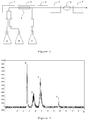
- the eluate after heat reaction may be cooled down to a temperature in the column oven by passing the flow path through a cooling bath (5 in Fig. 1 ).
- a back-pressure generator used in the present invention is installed in a flow path to increase the pressure of the solution in the flow path on the upstream side of it (back pressure).
- the back-pressure generator has the effect to reduce noises in the fluorescence detected by the fluorometric detector in the post-column detection method.
- Any sort of back-pressure generator may be employed without particular limitation as long as it can generate a back pressure.
- Back pressure for example, can be generated by narrowing the flow path inside the back-pressure generator.
- a back-pressure regulator on the market [1/16. flange-type unit (4 ⁇ 1.3 cm), mfd.
- back-pressure regulators are devices generally used as a device to be attached to a detector exit to generate a constant back pressure in the detector.
- a back-pressure generator is installed in the flow path between a heater and a fluorometric detector.
- a back-pressure generator is placed preferably downstream of the cooling device.
- the sugars that can be analyzed according to the present invention are such reducing sugars that undergo the Maillard reaction with basic amino acids. Examples of them include monosaccharides such as glucose, mannose, galactose, fructose, rhamnose, fucose and the like; oligosaccharides such as maltose, maltotriose and the like; amino sugars such as glucosamine, galactosamine and the like, uronic acid such as glucuronic acid; and phosphated saccharides such as mannose-6-phosphate, and in particular, monosaccharides such as mannose, galactose and fucose; and phosphated sugars such as mannose-6-phosphate.
- monosaccharides such as glucose, mannose, galactose, fructose, rhamnose, fucose and the like
- oligosaccharides such as maltose, maltotriose and the like
- amino sugars such as gluco
- Sugars to be analyzed are prepared in the form of a sample solution, i.e., a solution obtained by dissolving them in a desired medium at desired concentrations.
- the medium used here is an aqueous medium, and preferably pure water or a solution of the same composition as the first mobile phase.
- D(+)-mannose, 100 mg of L(-)-fucose, and 300 mg of D(+)-galactose were dissolved in purified water to make 100-mL of solution. This solution was diluted 20-fold with purified water and the diluted solution was used as the neutral reducing sugar mixture standard solution. Ten mg of sodium mannose-6-phosphate was dissolved in water to make a 5 mL of solution and this was used as the M6P standard solution. Eighteen mL of the neutral reducing sugar mixture standard solution and 2.5 mL of the M6P standard solution were mixed and were used as the reducing sugar standard solution.
- solution A 100 mM boric acid solution (pH 9.0)
- solution B 100 mM boric acid-200 mM sodium chloride solution (pH 9.0)
- Shim-pack ISA-07/S2504 (4.0 mm I.D. ⁇ 250 mm, base material: polystyrene gel, stationary phase: quaternary ammonium group, Shimazu Corp.) was attached to Shimazu HPLC System LC-10Avp (reducing sugar analysis system), and further, Shim-pack guard column ISA (4.0 mm I.D. ⁇ 50 mm, Shimazu Corp.) was set as a column oven for heating the column.
- a Heat Block (ALB-221, mfd. by Asahi Techno Glass) was set downstream of the column outlet as a heater. The column was heated at 65° C in the column oven, and the heater was set at 150° C.
- a cooling bath (a bath filled with tap water at room temperature) was installed downstream of the Heat Block, downstream of which was installed a back-pressure regulator (M&S Instruments Inc., U-167) as a back-pressure generator.
- a fluorometric detection system was installed further downstream of this and adjusted so that it would irradiate excitation light at the wavelength of 320 nm and detect fluorescent light at the wavelength of 430 nm.
- the arrangement of the apparatus and the flow paths are illustrated in Fig. 1 .
- Solutions A and B were set on the autosampler of the reducing sugar analysis system, and the reagent solution was set so as to be supplied downstream of the column outlet (upstream of the Heat Block) (See Fig. 1 ). After the column was equilibrated with the first mobile phase prepared by mixing solution A and solution B at a volume ratio of 90:10 (thus, containing 100 mM boric acid and 20 mM sodium chloride), the reducing sugar standard solution was loaded onto the column.
- the first mobile phase was allowed to flow through the column at the flow rate of 0.3 mL/min for 35 min, and then the volume ratio between solution A and solution B was changed in a linear fashion to 25:75 over 25 min at the same flow rate (thus, containing 100 mM boric acid, while sodium chloride being increased up to 150 mM), and further the volume ratio of solution B was set at 100% (thus, containing 100 mM boric acid and 200 mM sodium chloride) and the solution was allowed to flow at the same flow rate for 10 min, and then solution A and solution B were allowed to flow at a volume ratio of 90: 10 (thus, containing 100 mM boric acid and 20 mM sodium chloride) as was the case of the first mobile phase.
- the reagent solution was supplied to the flow path so as to mix with the eluate from the column in the downstream of the column outlet, at a flow rate of 0.2 mL/min.
- Table 3 shows the conditions in the post-column fluorescence detection/boric acid complex anion exchange method used there. [Table 3] Table 3.
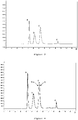
- Example 2 Under the same condition as in Example 1, the reducing sugar standard solution was analyzed. Then, under the same condition as in Example 1 except that solution B was prepared using 200 mM of potassium chloride, instead of 200 mM of sodium chloride, as the inorganic salt contained in solution B, the reducing sugar standard solution was analyzed, and the both results were compared.
- the present invention can be used as an apparatus for high sensitivity analysis of reducing sugars in the post-column fluorescence detection/boric acid complex anion exchange method, as it removes noises in fluorescence detected by a fluorometric detector
Landscapes
- Physics & Mathematics (AREA)
- Health & Medical Sciences (AREA)
- Life Sciences & Earth Sciences (AREA)
- Chemical & Material Sciences (AREA)
- Analytical Chemistry (AREA)
- Biochemistry (AREA)
- General Health & Medical Sciences (AREA)
- General Physics & Mathematics (AREA)
- Immunology (AREA)
- Pathology (AREA)
- Spectroscopy & Molecular Physics (AREA)
- Investigating Or Analysing Materials By The Use Of Chemical Reactions (AREA)
- Investigating, Analyzing Materials By Fluorescence Or Luminescence (AREA)
- Investigating Or Analysing Biological Materials (AREA)
Claims (5)
- Vorrichtung zur Trennanalyse von reduzierenden Zuckern, welche in einer Probenlösung enthalten sind, unter Verwendung von Säulenchromatographie, umfassend eine Säule zur Trennung der reduzierenden Zucker, welche in der Probelösung enthalten sind, einen Heizer, um die im Eluat der Säule enthaltenen reduzierenden Zucker zur Reaktion mit einer basischen Aminosäure zu bringen, einen fluorometrischen Detektor zur Messung der Intensität der Fluoreszenz, welche vom Eluat unter kontinuierlicher Bestrahlung mit anregendem Licht nach der Reaktion im Heizer abgegeben wird, und einen Gegendruckerzeuger, wobei die Vorrichtung dadurch gekennzeichnet ist, dass die Säule eine Anionentauscherharzsäule ist und dass der Gegendruckerzeuger zwischen dem Heizer und dem fluorometrischen Detektor angebracht ist.
- Vorrichtung zur Trennanalyse von reduzierenden Zuckern nach Anspruch 1, wobei weiter eine Kühlvorrichtung zwischen dem Heizer und dem Gegendruckerzeuger installiert ist.
- Verfahren zur Trennanalyse von reduzierenden Zuckern unter Verwendung einer Vorrichtung nach Anspruch 1 oder 2, umfassend
Beladen der Probenflüssigkeit, welche reduzierende Zucker enthält, auf die Anionentauscherharzsäule,
Waschen der Säule mittels Durchleiten eines ausreichenden Volumens einer ersten mobilen Phase, welche eine wässrige Lösung, enthaltend Borsäure in einer vorgegebenen Konzentration, ist,
kontinuierliches Zuführen zur Säule einer zweiten mobilen Phase mit einer vorgegebenen Flussrate, welche eine wässrige Lösung von Borsäure, enthaltend eine erhöhte Konzentration an Borsäure oder ein wasserlösliches, anorganisches Salz im Vergleich zur ersten mobilen Phase ist, um die reduzierenden Zucker zu eluieren,
kontinuierliches Leiten des Eluats von der Säule zu einem Fließweg,
kontinuierliches Hinzufügen von wenigstens einer basischen Aminosäure zum Eluat mit einer vorgegebenen Rate,
Durchfließen lassen des Eluats, welches die zugefügte basische Aminosäure enthält, durch den Heizer mit einer vorgegebenen Temperatur, welcher am Fließweg über eine vorgegebene Zeitspanne bereitgestellt ist, um die gemischte Lösung zu erhitzen,
Durchfließen lassen der gemischten Lösung durch den Gegendruckerzeuger nach dem Heizen, und
Aussetzen der gemischten Lösung dem fluorometrischen Detektor, um die Intensität des fluoreszierenden Lichts aufzuzeichnen. - Verfahren zur Trennanalyse von reduzierenden Zuckern unter Verwendung einer Vorrichtung nach Anspruch 1 oder 2, umfassend
Beladen der Probenflüssigkeit, welche reduzierende Zucker enthält, auf die Anionentauscherharzsäule,
Waschen der Säule mittels Durchleiten eines ausreichenden Volumens einer ersten mobilen Phase, welche eine wässrige Lösung, enthaltend wenigstens eine basische Aminosäure in einer vorgegebenen Konzentration und Borsäure in einer vorgegebenen Konzentration, ist,
kontinuierliches Zuführen einer zweiten mobilen Phase zur Säule mit einer vorgegebenen Flussrate, welche eine wässrige Lösung von Borsäure, enthaltend eine erhöhte Konzentration an Borsäure oder wasserlösliches, anorganisches Salz im Vergleich zur ersten mobilen Phase ist, um die reduzierenden Zucker zu eluieren,
kontinuierliches Leiten des Eluats von der Säule zu einem Fließweg,
Durchfließen lassen des Eluats durch den Heizer mit einer vorgegebenen Temperatur, welcher am Fließweg über eine vorgegebene Zeitspanne bereitgestellt wird, um die gemischte Lösung zu erhitzen,
Durchfließen lassen der gemischten Lösung durch den Gegendruckerzeuger nach dem Heizen, und
Aussetzen der gemischten Lösung dem fluorometrischen Detektor, um die Intensität des fluoreszierenden Lichts aufzuzeichnen. - Verfahren nach Anspruch 3 oder 4, wobei die reduzierenden Zucker Mannose-6-phosphat enthalten.
Applications Claiming Priority (2)
| Application Number | Priority Date | Filing Date | Title |
|---|---|---|---|
| JP2010104324 | 2010-04-28 | ||
| PCT/JP2011/060040 WO2011136165A1 (ja) | 2010-04-28 | 2011-04-25 | 糖類の分析装置及び分析方法 |
Publications (3)
| Publication Number | Publication Date |
|---|---|
| EP2565644A1 EP2565644A1 (de) | 2013-03-06 |
| EP2565644A4 EP2565644A4 (de) | 2014-06-25 |
| EP2565644B1 true EP2565644B1 (de) | 2017-08-02 |
Family
ID=44861464
Family Applications (1)
| Application Number | Title | Priority Date | Filing Date |
|---|---|---|---|
| EP11774946.5A Not-in-force EP2565644B1 (de) | 2010-04-28 | 2011-04-25 | Zuckeranalysevorrichtung und analyseverfahren dafür |
Country Status (5)
| Country | Link |
|---|---|
| US (1) | US8673648B2 (de) |
| EP (1) | EP2565644B1 (de) |
| JP (1) | JPWO2011136165A1 (de) |
| CN (1) | CN102859352A (de) |
| WO (1) | WO2011136165A1 (de) |
Families Citing this family (4)
| Publication number | Priority date | Publication date | Assignee | Title |
|---|---|---|---|---|
| WO2012133269A1 (ja) * | 2011-03-29 | 2012-10-04 | 日本ケミカルリサーチ株式会社 | マンノース-6-リン酸の分析装置及び分析法 |
| JP2020508678A (ja) * | 2017-02-28 | 2020-03-26 | アメリカン ステリライザー カンパニー | 蛍光による微生物の検出のための回復培地 |
| CN109632986B (zh) * | 2018-12-13 | 2022-07-01 | 金日制药(中国)有限公司 | 一种糖及糖醇类化合物的柱后衍生检测方法 |
| CN114487227B (zh) * | 2022-01-27 | 2024-10-15 | 唐传生物科技(厦门)有限公司 | 一种用于单糖分析的高效液相法 |
Family Cites Families (14)
| Publication number | Priority date | Publication date | Assignee | Title |
|---|---|---|---|---|
| JPS5914191B2 (ja) * | 1978-11-21 | 1984-04-03 | 株式会社島津製作所 | 糖類の分析法およびその装置 |
| JPS58216953A (ja) * | 1982-06-10 | 1983-12-16 | Shimadzu Corp | 糖類の分析法及びその装置 |
| JPS59111059A (ja) * | 1982-12-17 | 1984-06-27 | Funakoshi Yakuhin Kk | 高速液体クロマトグラフイ−用試薬およびその製造方法 |
| JPH076966B2 (ja) * | 1984-07-14 | 1995-01-30 | 株式会社島津製作所 | 糖類の分析法及びその装置 |
| JP2002131326A (ja) * | 2000-10-25 | 2002-05-09 | Shimadzu Corp | ポストカラム試薬混合反応装置 |
| JP3735666B2 (ja) * | 2001-12-27 | 2006-01-18 | 独立行政法人産業技術総合研究所 | 糖類混合物の同時分析方法及びそれに用いる分析装置 |
| US7010964B2 (en) * | 2002-10-31 | 2006-03-14 | Nanostream, Inc. | Pressurized microfluidic devices with optical detection regions |
| JP4018975B2 (ja) * | 2002-12-16 | 2007-12-05 | 野村化学株式会社 | 逆相液体クロマトグラフィー |
| JP4182219B2 (ja) * | 2004-02-26 | 2008-11-19 | 独立行政法人産業技術総合研究所 | リン酸化糖の分析方法及び定量方法 |
| CN1271403C (zh) * | 2004-07-16 | 2006-08-23 | 上海中医药大学 | 一种多糖定量检测方法及系统 |
| JP4413133B2 (ja) | 2004-12-27 | 2010-02-10 | 日本ハム株式会社 | フコイダン含量の測定方法及びフコイダン含有食品 |
| JP2007120972A (ja) * | 2005-10-25 | 2007-05-17 | Jasco Corp | 超臨界システム |
| JP2008042550A (ja) | 2006-08-07 | 2008-02-21 | Nippon Telegr & Teleph Corp <Ntt> | 光通信システム |
| JP2009036685A (ja) * | 2007-08-03 | 2009-02-19 | Shimadzu Corp | 還元糖の分析方法 |
-
2011
- 2011-04-25 CN CN2011800211153A patent/CN102859352A/zh active Pending
- 2011-04-25 JP JP2012512828A patent/JPWO2011136165A1/ja active Pending
- 2011-04-25 US US13/643,308 patent/US8673648B2/en not_active Expired - Fee Related
- 2011-04-25 WO PCT/JP2011/060040 patent/WO2011136165A1/ja not_active Ceased
- 2011-04-25 EP EP11774946.5A patent/EP2565644B1/de not_active Not-in-force
Non-Patent Citations (1)
| Title |
|---|
| None * |
Also Published As
| Publication number | Publication date |
|---|---|
| EP2565644A4 (de) | 2014-06-25 |
| WO2011136165A1 (ja) | 2011-11-03 |
| JPWO2011136165A1 (ja) | 2013-07-18 |
| US8673648B2 (en) | 2014-03-18 |
| CN102859352A (zh) | 2013-01-02 |
| EP2565644A1 (de) | 2013-03-06 |
| US20130095570A1 (en) | 2013-04-18 |
Similar Documents
| Publication | Publication Date | Title |
|---|---|---|
| Kochetkov et al. | Radiation chemistry of carbohydrates | |
| EP2565644B1 (de) | Zuckeranalysevorrichtung und analyseverfahren dafür | |
| US8522603B2 (en) | Method for analysis of saccharides | |
| Cortacero-Ramırez et al. | Analysis of carbohydrates in beverages by capillary electrophoresis with precolumn derivatization and UV detection | |
| Chen et al. | The Pre‐and Post‐Column Derivatization on Monosaccharide Composition Analysis, a Review | |
| US9250191B2 (en) | Method for analysing amino acids and a reagent for use with the same | |
| Esposito | On-column formation and analysis of trimethylsilyl derivatives | |
| Walborg Jr et al. | Automated system for ion-exchange chromatography of saccharides | |
| Flamini et al. | Fast determination of the total free resveratrol content in wine by direct‐exposure‐probe, positive‐ion chemical ionization and collision‐induced‐dissociation mass spectrometry | |
| CN114487227B (zh) | 一种用于单糖分析的高效液相法 | |
| US8906692B2 (en) | Instrument and method for analysis of mannose 6-phosphate | |
| JPS5914191B2 (ja) | 糖類の分析法およびその装置 | |
| JPS58216953A (ja) | 糖類の分析法及びその装置 | |
| Ijiri et al. | Sensitive determination of rhodamine 110-labeled monosaccharides in glycoprotein by capillary electrophoresis with laser-induced fluorescence detection | |
| JPH076966B2 (ja) | 糖類の分析法及びその装置 | |
| CN212134486U (zh) | 一种光谱仪 | |
| JP2846059B2 (ja) | 糖類の分析方法および分析装置 | |
| Bian et al. | Spectrofluorometric determination of total bilirubin in human serum samples using tetracycline-Eu3+ | |
| Nakao et al. | 1-Minute quality control tests for positron emission tomography radiopharmaceuticals | |
| CN1010984B (zh) | 糖类的分析法及其装置 | |
| JPS6367662B2 (de) | ||
| WO2004085480A2 (en) | Process and composition for assaying carbohydrates | |
| CN109632986A (zh) | 一种糖及糖醇类化合物的柱后衍生检测方法 | |
| JPH071258B2 (ja) | 金属イオンの分析法 | |
| CN116908335A (zh) | 一种高效液相色谱法检测卤代植物醇含量的方法 |
Legal Events
| Date | Code | Title | Description |
|---|---|---|---|
| PUAI | Public reference made under article 153(3) epc to a published international application that has entered the european phase |
Free format text: ORIGINAL CODE: 0009012 |
|
| 17P | Request for examination filed |
Effective date: 20121022 |
|
| AK | Designated contracting states |
Kind code of ref document: A1 Designated state(s): AL AT BE BG CH CY CZ DE DK EE ES FI FR GB GR HR HU IE IS IT LI LT LU LV MC MK MT NL NO PL PT RO RS SE SI SK SM TR |
|
| DAX | Request for extension of the european patent (deleted) | ||
| A4 | Supplementary search report drawn up and despatched |
Effective date: 20140526 |
|
| RIC1 | Information provided on ipc code assigned before grant |
Ipc: G01N 30/88 20060101ALI20140520BHEP Ipc: G01N 21/78 20060101ALI20140520BHEP Ipc: G01N 30/26 20060101ALI20140520BHEP Ipc: G01N 30/84 20060101AFI20140520BHEP Ipc: G01N 30/74 20060101ALI20140520BHEP Ipc: G01N 30/96 20060101ALN20140520BHEP |
|
| GRAP | Despatch of communication of intention to grant a patent |
Free format text: ORIGINAL CODE: EPIDOSNIGR1 |
|
| STAA | Information on the status of an ep patent application or granted ep patent |
Free format text: STATUS: GRANT OF PATENT IS INTENDED |
|
| RIC1 | Information provided on ipc code assigned before grant |
Ipc: G01N 30/74 20060101ALI20170214BHEP Ipc: G01N 21/78 20060101ALI20170214BHEP Ipc: G01N 30/26 20060101ALI20170214BHEP Ipc: G01N 30/88 20060101ALI20170214BHEP Ipc: G01N 30/84 20060101AFI20170214BHEP Ipc: G01N 30/96 20060101ALN20170214BHEP |
|
| INTG | Intention to grant announced |
Effective date: 20170303 |
|
| RAP1 | Party data changed (applicant data changed or rights of an application transferred) |
Owner name: JCR PHARMACEUTICALS CO., LTD. |
|
| RIN1 | Information on inventor provided before grant (corrected) |
Inventor name: YOKOYAMA, TETSUO |
|
| GRAS | Grant fee paid |
Free format text: ORIGINAL CODE: EPIDOSNIGR3 |
|
| GRAA | (expected) grant |
Free format text: ORIGINAL CODE: 0009210 |
|
| STAA | Information on the status of an ep patent application or granted ep patent |
Free format text: STATUS: THE PATENT HAS BEEN GRANTED |
|
| AK | Designated contracting states |
Kind code of ref document: B1 Designated state(s): AL AT BE BG CH CY CZ DE DK EE ES FI FR GB GR HR HU IE IS IT LI LT LU LV MC MK MT NL NO PL PT RO RS SE SI SK SM TR |
|
| REG | Reference to a national code |
Ref country code: GB Ref legal event code: FG4D |
|
| REG | Reference to a national code |
Ref country code: CH Ref legal event code: EP Ref country code: AT Ref legal event code: REF Ref document number: 915031 Country of ref document: AT Kind code of ref document: T Effective date: 20170815 |
|
| REG | Reference to a national code |
Ref country code: IE Ref legal event code: FG4D |
|
| REG | Reference to a national code |
Ref country code: DE Ref legal event code: R082 Ref document number: 602011040191 Country of ref document: DE Representative=s name: ISARPATENT - PATENT- UND RECHTSANWAELTE BEHNIS, DE Ref country code: DE Ref legal event code: R082 Ref document number: 602011040191 Country of ref document: DE Representative=s name: ISARPATENT - PATENT- UND RECHTSANWAELTE BARTH , DE Ref country code: DE Ref legal event code: R082 Ref document number: 602011040191 Country of ref document: DE Representative=s name: ISARPATENT - PATENTANWAELTE- UND RECHTSANWAELT, DE |
|
| REG | Reference to a national code |
Ref country code: DE Ref legal event code: R096 Ref document number: 602011040191 Country of ref document: DE |
|
| REG | Reference to a national code |
Ref country code: NL Ref legal event code: MP Effective date: 20170802 |
|
| REG | Reference to a national code |
Ref country code: AT Ref legal event code: MK05 Ref document number: 915031 Country of ref document: AT Kind code of ref document: T Effective date: 20170802 |
|
| REG | Reference to a national code |
Ref country code: LT Ref legal event code: MG4D |
|
| PG25 | Lapsed in a contracting state [announced via postgrant information from national office to epo] |
Ref country code: NL Free format text: LAPSE BECAUSE OF FAILURE TO SUBMIT A TRANSLATION OF THE DESCRIPTION OR TO PAY THE FEE WITHIN THE PRESCRIBED TIME-LIMIT Effective date: 20170802 Ref country code: LT Free format text: LAPSE BECAUSE OF FAILURE TO SUBMIT A TRANSLATION OF THE DESCRIPTION OR TO PAY THE FEE WITHIN THE PRESCRIBED TIME-LIMIT Effective date: 20170802 Ref country code: SE Free format text: LAPSE BECAUSE OF FAILURE TO SUBMIT A TRANSLATION OF THE DESCRIPTION OR TO PAY THE FEE WITHIN THE PRESCRIBED TIME-LIMIT Effective date: 20170802 Ref country code: NO Free format text: LAPSE BECAUSE OF FAILURE TO SUBMIT A TRANSLATION OF THE DESCRIPTION OR TO PAY THE FEE WITHIN THE PRESCRIBED TIME-LIMIT Effective date: 20171102 Ref country code: HR Free format text: LAPSE BECAUSE OF FAILURE TO SUBMIT A TRANSLATION OF THE DESCRIPTION OR TO PAY THE FEE WITHIN THE PRESCRIBED TIME-LIMIT Effective date: 20170802 Ref country code: FI Free format text: LAPSE BECAUSE OF FAILURE TO SUBMIT A TRANSLATION OF THE DESCRIPTION OR TO PAY THE FEE WITHIN THE PRESCRIBED TIME-LIMIT Effective date: 20170802 Ref country code: AT Free format text: LAPSE BECAUSE OF FAILURE TO SUBMIT A TRANSLATION OF THE DESCRIPTION OR TO PAY THE FEE WITHIN THE PRESCRIBED TIME-LIMIT Effective date: 20170802 |
|
| PG25 | Lapsed in a contracting state [announced via postgrant information from national office to epo] |
Ref country code: BG Free format text: LAPSE BECAUSE OF FAILURE TO SUBMIT A TRANSLATION OF THE DESCRIPTION OR TO PAY THE FEE WITHIN THE PRESCRIBED TIME-LIMIT Effective date: 20171102 Ref country code: LV Free format text: LAPSE BECAUSE OF FAILURE TO SUBMIT A TRANSLATION OF THE DESCRIPTION OR TO PAY THE FEE WITHIN THE PRESCRIBED TIME-LIMIT Effective date: 20170802 Ref country code: RS Free format text: LAPSE BECAUSE OF FAILURE TO SUBMIT A TRANSLATION OF THE DESCRIPTION OR TO PAY THE FEE WITHIN THE PRESCRIBED TIME-LIMIT Effective date: 20170802 Ref country code: IS Free format text: LAPSE BECAUSE OF FAILURE TO SUBMIT A TRANSLATION OF THE DESCRIPTION OR TO PAY THE FEE WITHIN THE PRESCRIBED TIME-LIMIT Effective date: 20171202 Ref country code: GR Free format text: LAPSE BECAUSE OF FAILURE TO SUBMIT A TRANSLATION OF THE DESCRIPTION OR TO PAY THE FEE WITHIN THE PRESCRIBED TIME-LIMIT Effective date: 20171103 Ref country code: PL Free format text: LAPSE BECAUSE OF FAILURE TO SUBMIT A TRANSLATION OF THE DESCRIPTION OR TO PAY THE FEE WITHIN THE PRESCRIBED TIME-LIMIT Effective date: 20170802 Ref country code: ES Free format text: LAPSE BECAUSE OF FAILURE TO SUBMIT A TRANSLATION OF THE DESCRIPTION OR TO PAY THE FEE WITHIN THE PRESCRIBED TIME-LIMIT Effective date: 20170802 |
|
| PG25 | Lapsed in a contracting state [announced via postgrant information from national office to epo] |
Ref country code: CZ Free format text: LAPSE BECAUSE OF FAILURE TO SUBMIT A TRANSLATION OF THE DESCRIPTION OR TO PAY THE FEE WITHIN THE PRESCRIBED TIME-LIMIT Effective date: 20170802 Ref country code: DK Free format text: LAPSE BECAUSE OF FAILURE TO SUBMIT A TRANSLATION OF THE DESCRIPTION OR TO PAY THE FEE WITHIN THE PRESCRIBED TIME-LIMIT Effective date: 20170802 Ref country code: RO Free format text: LAPSE BECAUSE OF FAILURE TO SUBMIT A TRANSLATION OF THE DESCRIPTION OR TO PAY THE FEE WITHIN THE PRESCRIBED TIME-LIMIT Effective date: 20170802 |
|
| REG | Reference to a national code |
Ref country code: DE Ref legal event code: R097 Ref document number: 602011040191 Country of ref document: DE |
|
| PG25 | Lapsed in a contracting state [announced via postgrant information from national office to epo] |
Ref country code: EE Free format text: LAPSE BECAUSE OF FAILURE TO SUBMIT A TRANSLATION OF THE DESCRIPTION OR TO PAY THE FEE WITHIN THE PRESCRIBED TIME-LIMIT Effective date: 20170802 Ref country code: SK Free format text: LAPSE BECAUSE OF FAILURE TO SUBMIT A TRANSLATION OF THE DESCRIPTION OR TO PAY THE FEE WITHIN THE PRESCRIBED TIME-LIMIT Effective date: 20170802 Ref country code: SM Free format text: LAPSE BECAUSE OF FAILURE TO SUBMIT A TRANSLATION OF THE DESCRIPTION OR TO PAY THE FEE WITHIN THE PRESCRIBED TIME-LIMIT Effective date: 20170802 Ref country code: IT Free format text: LAPSE BECAUSE OF FAILURE TO SUBMIT A TRANSLATION OF THE DESCRIPTION OR TO PAY THE FEE WITHIN THE PRESCRIBED TIME-LIMIT Effective date: 20170802 |
|
| PLBE | No opposition filed within time limit |
Free format text: ORIGINAL CODE: 0009261 |
|
| STAA | Information on the status of an ep patent application or granted ep patent |
Free format text: STATUS: NO OPPOSITION FILED WITHIN TIME LIMIT |
|
| 26N | No opposition filed |
Effective date: 20180503 |
|
| PG25 | Lapsed in a contracting state [announced via postgrant information from national office to epo] |
Ref country code: SI Free format text: LAPSE BECAUSE OF FAILURE TO SUBMIT A TRANSLATION OF THE DESCRIPTION OR TO PAY THE FEE WITHIN THE PRESCRIBED TIME-LIMIT Effective date: 20170802 |
|
| PG25 | Lapsed in a contracting state [announced via postgrant information from national office to epo] |
Ref country code: MC Free format text: LAPSE BECAUSE OF FAILURE TO SUBMIT A TRANSLATION OF THE DESCRIPTION OR TO PAY THE FEE WITHIN THE PRESCRIBED TIME-LIMIT Effective date: 20170802 |
|
| REG | Reference to a national code |
Ref country code: CH Ref legal event code: PL |
|
| REG | Reference to a national code |
Ref country code: BE Ref legal event code: MM Effective date: 20180430 |
|
| GBPC | Gb: european patent ceased through non-payment of renewal fee |
Effective date: 20180425 |
|
| REG | Reference to a national code |
Ref country code: IE Ref legal event code: MM4A |
|
| PG25 | Lapsed in a contracting state [announced via postgrant information from national office to epo] |
Ref country code: LU Free format text: LAPSE BECAUSE OF NON-PAYMENT OF DUE FEES Effective date: 20180425 |
|
| PG25 | Lapsed in a contracting state [announced via postgrant information from national office to epo] |
Ref country code: LI Free format text: LAPSE BECAUSE OF NON-PAYMENT OF DUE FEES Effective date: 20180430 Ref country code: BE Free format text: LAPSE BECAUSE OF NON-PAYMENT OF DUE FEES Effective date: 20180430 Ref country code: GB Free format text: LAPSE BECAUSE OF NON-PAYMENT OF DUE FEES Effective date: 20180425 Ref country code: CH Free format text: LAPSE BECAUSE OF NON-PAYMENT OF DUE FEES Effective date: 20180430 |
|
| PG25 | Lapsed in a contracting state [announced via postgrant information from national office to epo] |
Ref country code: IE Free format text: LAPSE BECAUSE OF NON-PAYMENT OF DUE FEES Effective date: 20180425 Ref country code: FR Free format text: LAPSE BECAUSE OF NON-PAYMENT OF DUE FEES Effective date: 20180430 |
|
| PG25 | Lapsed in a contracting state [announced via postgrant information from national office to epo] |
Ref country code: MT Free format text: LAPSE BECAUSE OF NON-PAYMENT OF DUE FEES Effective date: 20180425 |
|
| PG25 | Lapsed in a contracting state [announced via postgrant information from national office to epo] |
Ref country code: TR Free format text: LAPSE BECAUSE OF FAILURE TO SUBMIT A TRANSLATION OF THE DESCRIPTION OR TO PAY THE FEE WITHIN THE PRESCRIBED TIME-LIMIT Effective date: 20170802 |
|
| PG25 | Lapsed in a contracting state [announced via postgrant information from national office to epo] |
Ref country code: PT Free format text: LAPSE BECAUSE OF FAILURE TO SUBMIT A TRANSLATION OF THE DESCRIPTION OR TO PAY THE FEE WITHIN THE PRESCRIBED TIME-LIMIT Effective date: 20170802 Ref country code: HU Free format text: LAPSE BECAUSE OF FAILURE TO SUBMIT A TRANSLATION OF THE DESCRIPTION OR TO PAY THE FEE WITHIN THE PRESCRIBED TIME-LIMIT; INVALID AB INITIO Effective date: 20110425 |
|
| PG25 | Lapsed in a contracting state [announced via postgrant information from national office to epo] |
Ref country code: CY Free format text: LAPSE BECAUSE OF FAILURE TO SUBMIT A TRANSLATION OF THE DESCRIPTION OR TO PAY THE FEE WITHIN THE PRESCRIBED TIME-LIMIT Effective date: 20170802 Ref country code: MK Free format text: LAPSE BECAUSE OF NON-PAYMENT OF DUE FEES Effective date: 20170802 |
|
| PG25 | Lapsed in a contracting state [announced via postgrant information from national office to epo] |
Ref country code: AL Free format text: LAPSE BECAUSE OF FAILURE TO SUBMIT A TRANSLATION OF THE DESCRIPTION OR TO PAY THE FEE WITHIN THE PRESCRIBED TIME-LIMIT Effective date: 20170802 |
|
| PGFP | Annual fee paid to national office [announced via postgrant information from national office to epo] |
Ref country code: DE Payment date: 20210430 Year of fee payment: 11 |
|
| REG | Reference to a national code |
Ref country code: DE Ref legal event code: R119 Ref document number: 602011040191 Country of ref document: DE |
|
| PG25 | Lapsed in a contracting state [announced via postgrant information from national office to epo] |
Ref country code: DE Free format text: LAPSE BECAUSE OF NON-PAYMENT OF DUE FEES Effective date: 20221103 |