EP2598619B1 - Polyalkyl(meth)acrylates pour l'improvement des characteristiques des lubrifiants - Google Patents
Polyalkyl(meth)acrylates pour l'improvement des characteristiques des lubrifiants Download PDFInfo
- Publication number
- EP2598619B1 EP2598619B1 EP11728821.7A EP11728821A EP2598619B1 EP 2598619 B1 EP2598619 B1 EP 2598619B1 EP 11728821 A EP11728821 A EP 11728821A EP 2598619 B1 EP2598619 B1 EP 2598619B1
- Authority
- EP
- European Patent Office
- Prior art keywords
- meth
- acrylate
- polyalkyl
- acrylates
- weight
- Prior art date
- Legal status (The legal status is an assumption and is not a legal conclusion. Google has not performed a legal analysis and makes no representation as to the accuracy of the status listed.)
- Not-in-force
Links
Images
Classifications
-
- C—CHEMISTRY; METALLURGY
- C08—ORGANIC MACROMOLECULAR COMPOUNDS; THEIR PREPARATION OR CHEMICAL WORKING-UP; COMPOSITIONS BASED THEREON
- C08F—MACROMOLECULAR COMPOUNDS OBTAINED BY REACTIONS ONLY INVOLVING CARBON-TO-CARBON UNSATURATED BONDS
- C08F261/00—Macromolecular compounds obtained by polymerising monomers on to polymers of oxygen-containing monomers as defined in group C08F16/00
-
- C—CHEMISTRY; METALLURGY
- C10—PETROLEUM, GAS OR COKE INDUSTRIES; TECHNICAL GASES CONTAINING CARBON MONOXIDE; FUELS; LUBRICANTS; PEAT
- C10M—LUBRICATING COMPOSITIONS; USE OF CHEMICAL SUBSTANCES EITHER ALONE OR AS LUBRICATING INGREDIENTS IN A LUBRICATING COMPOSITION
- C10M149/00—Lubricating compositions characterised by the additive being a macromolecular compound containing nitrogen
- C10M149/02—Macromolecular compounds obtained by reactions only involving carbon-to-carbon unsaturated bonds
-
- C—CHEMISTRY; METALLURGY
- C08—ORGANIC MACROMOLECULAR COMPOUNDS; THEIR PREPARATION OR CHEMICAL WORKING-UP; COMPOSITIONS BASED THEREON
- C08F—MACROMOLECULAR COMPOUNDS OBTAINED BY REACTIONS ONLY INVOLVING CARBON-TO-CARBON UNSATURATED BONDS
- C08F120/00—Homopolymers of compounds having one or more unsaturated aliphatic radicals, each having only one carbon-to-carbon double bond, and only one being terminated by only one carboxyl radical or a salt, anhydride, ester, amide, imide or nitrile thereof
- C08F120/02—Monocarboxylic acids having less than ten carbon atoms; Derivatives thereof
- C08F120/10—Esters
- C08F120/12—Esters of monohydric alcohols or phenols
- C08F120/16—Esters of monohydric alcohols or phenols of phenols or of alcohols containing two or more carbon atoms
- C08F120/18—Esters of monohydric alcohols or phenols of phenols or of alcohols containing two or more carbon atoms with acrylic or methacrylic acids
-
- C—CHEMISTRY; METALLURGY
- C10—PETROLEUM, GAS OR COKE INDUSTRIES; TECHNICAL GASES CONTAINING CARBON MONOXIDE; FUELS; LUBRICANTS; PEAT
- C10M—LUBRICATING COMPOSITIONS; USE OF CHEMICAL SUBSTANCES EITHER ALONE OR AS LUBRICATING INGREDIENTS IN A LUBRICATING COMPOSITION
- C10M101/00—Lubricating compositions characterised by the base-material being a mineral or fatty oil
- C10M101/02—Petroleum fractions
-
- C—CHEMISTRY; METALLURGY
- C10—PETROLEUM, GAS OR COKE INDUSTRIES; TECHNICAL GASES CONTAINING CARBON MONOXIDE; FUELS; LUBRICANTS; PEAT
- C10M—LUBRICATING COMPOSITIONS; USE OF CHEMICAL SUBSTANCES EITHER ALONE OR AS LUBRICATING INGREDIENTS IN A LUBRICATING COMPOSITION
- C10M103/00—Lubricating compositions characterised by the base-material being an inorganic material
-
- C—CHEMISTRY; METALLURGY
- C10—PETROLEUM, GAS OR COKE INDUSTRIES; TECHNICAL GASES CONTAINING CARBON MONOXIDE; FUELS; LUBRICANTS; PEAT
- C10M—LUBRICATING COMPOSITIONS; USE OF CHEMICAL SUBSTANCES EITHER ALONE OR AS LUBRICATING INGREDIENTS IN A LUBRICATING COMPOSITION
- C10M103/00—Lubricating compositions characterised by the base-material being an inorganic material
- C10M103/06—Metal compounds
-
- C—CHEMISTRY; METALLURGY
- C10—PETROLEUM, GAS OR COKE INDUSTRIES; TECHNICAL GASES CONTAINING CARBON MONOXIDE; FUELS; LUBRICANTS; PEAT
- C10M—LUBRICATING COMPOSITIONS; USE OF CHEMICAL SUBSTANCES EITHER ALONE OR AS LUBRICATING INGREDIENTS IN A LUBRICATING COMPOSITION
- C10M105/00—Lubricating compositions characterised by the base-material being a non-macromolecular organic compound
- C10M105/02—Well-defined hydrocarbons
-
- C—CHEMISTRY; METALLURGY
- C10—PETROLEUM, GAS OR COKE INDUSTRIES; TECHNICAL GASES CONTAINING CARBON MONOXIDE; FUELS; LUBRICANTS; PEAT
- C10M—LUBRICATING COMPOSITIONS; USE OF CHEMICAL SUBSTANCES EITHER ALONE OR AS LUBRICATING INGREDIENTS IN A LUBRICATING COMPOSITION
- C10M105/00—Lubricating compositions characterised by the base-material being a non-macromolecular organic compound
- C10M105/02—Well-defined hydrocarbons
- C10M105/04—Well-defined hydrocarbons aliphatic
-
- C—CHEMISTRY; METALLURGY
- C10—PETROLEUM, GAS OR COKE INDUSTRIES; TECHNICAL GASES CONTAINING CARBON MONOXIDE; FUELS; LUBRICANTS; PEAT
- C10M—LUBRICATING COMPOSITIONS; USE OF CHEMICAL SUBSTANCES EITHER ALONE OR AS LUBRICATING INGREDIENTS IN A LUBRICATING COMPOSITION
- C10M105/00—Lubricating compositions characterised by the base-material being a non-macromolecular organic compound
- C10M105/08—Lubricating compositions characterised by the base-material being a non-macromolecular organic compound containing oxygen
-
- C—CHEMISTRY; METALLURGY
- C10—PETROLEUM, GAS OR COKE INDUSTRIES; TECHNICAL GASES CONTAINING CARBON MONOXIDE; FUELS; LUBRICANTS; PEAT
- C10M—LUBRICATING COMPOSITIONS; USE OF CHEMICAL SUBSTANCES EITHER ALONE OR AS LUBRICATING INGREDIENTS IN A LUBRICATING COMPOSITION
- C10M105/00—Lubricating compositions characterised by the base-material being a non-macromolecular organic compound
- C10M105/08—Lubricating compositions characterised by the base-material being a non-macromolecular organic compound containing oxygen
- C10M105/10—Lubricating compositions characterised by the base-material being a non-macromolecular organic compound containing oxygen having hydroxy groups bound to acyclic or cycloaliphatic carbon atoms
- C10M105/12—Lubricating compositions characterised by the base-material being a non-macromolecular organic compound containing oxygen having hydroxy groups bound to acyclic or cycloaliphatic carbon atoms monohydroxy
-
- C—CHEMISTRY; METALLURGY
- C10—PETROLEUM, GAS OR COKE INDUSTRIES; TECHNICAL GASES CONTAINING CARBON MONOXIDE; FUELS; LUBRICANTS; PEAT
- C10M—LUBRICATING COMPOSITIONS; USE OF CHEMICAL SUBSTANCES EITHER ALONE OR AS LUBRICATING INGREDIENTS IN A LUBRICATING COMPOSITION
- C10M105/00—Lubricating compositions characterised by the base-material being a non-macromolecular organic compound
- C10M105/08—Lubricating compositions characterised by the base-material being a non-macromolecular organic compound containing oxygen
- C10M105/10—Lubricating compositions characterised by the base-material being a non-macromolecular organic compound containing oxygen having hydroxy groups bound to acyclic or cycloaliphatic carbon atoms
- C10M105/14—Lubricating compositions characterised by the base-material being a non-macromolecular organic compound containing oxygen having hydroxy groups bound to acyclic or cycloaliphatic carbon atoms polyhydroxy
-
- C—CHEMISTRY; METALLURGY
- C10—PETROLEUM, GAS OR COKE INDUSTRIES; TECHNICAL GASES CONTAINING CARBON MONOXIDE; FUELS; LUBRICANTS; PEAT
- C10M—LUBRICATING COMPOSITIONS; USE OF CHEMICAL SUBSTANCES EITHER ALONE OR AS LUBRICATING INGREDIENTS IN A LUBRICATING COMPOSITION
- C10M105/00—Lubricating compositions characterised by the base-material being a non-macromolecular organic compound
- C10M105/08—Lubricating compositions characterised by the base-material being a non-macromolecular organic compound containing oxygen
- C10M105/22—Carboxylic acids or their salts
- C10M105/26—Carboxylic acids or their salts having more than one carboxyl group bound to an acyclic carbon atom or cycloaliphatic carbon atom
-
- C—CHEMISTRY; METALLURGY
- C10—PETROLEUM, GAS OR COKE INDUSTRIES; TECHNICAL GASES CONTAINING CARBON MONOXIDE; FUELS; LUBRICANTS; PEAT
- C10M—LUBRICATING COMPOSITIONS; USE OF CHEMICAL SUBSTANCES EITHER ALONE OR AS LUBRICATING INGREDIENTS IN A LUBRICATING COMPOSITION
- C10M149/00—Lubricating compositions characterised by the additive being a macromolecular compound containing nitrogen
-
- C—CHEMISTRY; METALLURGY
- C10—PETROLEUM, GAS OR COKE INDUSTRIES; TECHNICAL GASES CONTAINING CARBON MONOXIDE; FUELS; LUBRICANTS; PEAT
- C10M—LUBRICATING COMPOSITIONS; USE OF CHEMICAL SUBSTANCES EITHER ALONE OR AS LUBRICATING INGREDIENTS IN A LUBRICATING COMPOSITION
- C10M149/00—Lubricating compositions characterised by the additive being a macromolecular compound containing nitrogen
- C10M149/02—Macromolecular compounds obtained by reactions only involving carbon-to-carbon unsaturated bonds
- C10M149/04—Macromolecular compounds obtained by reactions only involving carbon-to-carbon unsaturated bonds containing monomers having an unsaturated radical bound to an amino group
-
- C—CHEMISTRY; METALLURGY
- C10—PETROLEUM, GAS OR COKE INDUSTRIES; TECHNICAL GASES CONTAINING CARBON MONOXIDE; FUELS; LUBRICANTS; PEAT
- C10M—LUBRICATING COMPOSITIONS; USE OF CHEMICAL SUBSTANCES EITHER ALONE OR AS LUBRICATING INGREDIENTS IN A LUBRICATING COMPOSITION
- C10M149/00—Lubricating compositions characterised by the additive being a macromolecular compound containing nitrogen
- C10M149/02—Macromolecular compounds obtained by reactions only involving carbon-to-carbon unsaturated bonds
- C10M149/06—Macromolecular compounds obtained by reactions only involving carbon-to-carbon unsaturated bonds containing monomers having an unsaturated radical bound to an amido or imido group
-
- C—CHEMISTRY; METALLURGY
- C10—PETROLEUM, GAS OR COKE INDUSTRIES; TECHNICAL GASES CONTAINING CARBON MONOXIDE; FUELS; LUBRICANTS; PEAT
- C10M—LUBRICATING COMPOSITIONS; USE OF CHEMICAL SUBSTANCES EITHER ALONE OR AS LUBRICATING INGREDIENTS IN A LUBRICATING COMPOSITION
- C10M149/00—Lubricating compositions characterised by the additive being a macromolecular compound containing nitrogen
- C10M149/02—Macromolecular compounds obtained by reactions only involving carbon-to-carbon unsaturated bonds
- C10M149/10—Macromolecular compounds obtained by reactions only involving carbon-to-carbon unsaturated bonds containing monomers having an unsaturated radical bound to a nitrogen-containing hetero ring
-
- C—CHEMISTRY; METALLURGY
- C10—PETROLEUM, GAS OR COKE INDUSTRIES; TECHNICAL GASES CONTAINING CARBON MONOXIDE; FUELS; LUBRICANTS; PEAT
- C10M—LUBRICATING COMPOSITIONS; USE OF CHEMICAL SUBSTANCES EITHER ALONE OR AS LUBRICATING INGREDIENTS IN A LUBRICATING COMPOSITION
- C10M2203/00—Organic non-macromolecular hydrocarbon compounds and hydrocarbon fractions as ingredients in lubricant compositions
- C10M2203/10—Petroleum or coal fractions, e.g. tars, solvents, bitumen
- C10M2203/102—Aliphatic fractions
- C10M2203/1025—Aliphatic fractions used as base material
-
- C—CHEMISTRY; METALLURGY
- C10—PETROLEUM, GAS OR COKE INDUSTRIES; TECHNICAL GASES CONTAINING CARBON MONOXIDE; FUELS; LUBRICANTS; PEAT
- C10M—LUBRICATING COMPOSITIONS; USE OF CHEMICAL SUBSTANCES EITHER ALONE OR AS LUBRICATING INGREDIENTS IN A LUBRICATING COMPOSITION
- C10M2209/00—Organic macromolecular compounds containing oxygen as ingredients in lubricant compositions
- C10M2209/02—Macromolecular compounds obtained by reactions only involving carbon-to-carbon unsaturated bonds
- C10M2209/08—Macromolecular compounds obtained by reactions only involving carbon-to-carbon unsaturated bonds containing monomers having an unsaturated radical bound to a carboxyl radical, e.g. acrylate type
- C10M2209/084—Acrylate; Methacrylate
-
- C—CHEMISTRY; METALLURGY
- C10—PETROLEUM, GAS OR COKE INDUSTRIES; TECHNICAL GASES CONTAINING CARBON MONOXIDE; FUELS; LUBRICANTS; PEAT
- C10M—LUBRICATING COMPOSITIONS; USE OF CHEMICAL SUBSTANCES EITHER ALONE OR AS LUBRICATING INGREDIENTS IN A LUBRICATING COMPOSITION
- C10M2215/00—Organic non-macromolecular compounds containing nitrogen as ingredients in lubricant Compositions
- C10M2215/24—Organic non-macromolecular compounds containing nitrogen as ingredients in lubricant Compositions having hydrocarbon substituents containing thirty or more carbon atoms, e.g. nitrogen derivatives of substituted succinic acid
- C10M2215/28—Amides; Imides
-
- C—CHEMISTRY; METALLURGY
- C10—PETROLEUM, GAS OR COKE INDUSTRIES; TECHNICAL GASES CONTAINING CARBON MONOXIDE; FUELS; LUBRICANTS; PEAT
- C10M—LUBRICATING COMPOSITIONS; USE OF CHEMICAL SUBSTANCES EITHER ALONE OR AS LUBRICATING INGREDIENTS IN A LUBRICATING COMPOSITION
- C10M2217/00—Organic macromolecular compounds containing nitrogen as ingredients in lubricant compositions
- C10M2217/02—Macromolecular compounds obtained from nitrogen containing monomers by reactions only involving carbon-to-carbon unsaturated bonds
- C10M2217/022—Macromolecular compounds obtained from nitrogen containing monomers by reactions only involving carbon-to-carbon unsaturated bonds containing monomers having an unsaturated radical bound to an amino group
- C10M2217/023—Macromolecular compounds obtained from nitrogen containing monomers by reactions only involving carbon-to-carbon unsaturated bonds containing monomers having an unsaturated radical bound to an amino group the amino group containing an ester bond
-
- C—CHEMISTRY; METALLURGY
- C10—PETROLEUM, GAS OR COKE INDUSTRIES; TECHNICAL GASES CONTAINING CARBON MONOXIDE; FUELS; LUBRICANTS; PEAT
- C10M—LUBRICATING COMPOSITIONS; USE OF CHEMICAL SUBSTANCES EITHER ALONE OR AS LUBRICATING INGREDIENTS IN A LUBRICATING COMPOSITION
- C10M2217/00—Organic macromolecular compounds containing nitrogen as ingredients in lubricant compositions
- C10M2217/02—Macromolecular compounds obtained from nitrogen containing monomers by reactions only involving carbon-to-carbon unsaturated bonds
- C10M2217/024—Macromolecular compounds obtained from nitrogen containing monomers by reactions only involving carbon-to-carbon unsaturated bonds containing monomers having an unsaturated radical bound to an amido or imido group
-
- C—CHEMISTRY; METALLURGY
- C10—PETROLEUM, GAS OR COKE INDUSTRIES; TECHNICAL GASES CONTAINING CARBON MONOXIDE; FUELS; LUBRICANTS; PEAT
- C10M—LUBRICATING COMPOSITIONS; USE OF CHEMICAL SUBSTANCES EITHER ALONE OR AS LUBRICATING INGREDIENTS IN A LUBRICATING COMPOSITION
- C10M2217/00—Organic macromolecular compounds containing nitrogen as ingredients in lubricant compositions
- C10M2217/02—Macromolecular compounds obtained from nitrogen containing monomers by reactions only involving carbon-to-carbon unsaturated bonds
- C10M2217/028—Macromolecular compounds obtained from nitrogen containing monomers by reactions only involving carbon-to-carbon unsaturated bonds containing monomers having an unsaturated radical bound to a nitrogen-containing hetero ring
-
- C—CHEMISTRY; METALLURGY
- C10—PETROLEUM, GAS OR COKE INDUSTRIES; TECHNICAL GASES CONTAINING CARBON MONOXIDE; FUELS; LUBRICANTS; PEAT
- C10M—LUBRICATING COMPOSITIONS; USE OF CHEMICAL SUBSTANCES EITHER ALONE OR AS LUBRICATING INGREDIENTS IN A LUBRICATING COMPOSITION
- C10M2217/00—Organic macromolecular compounds containing nitrogen as ingredients in lubricant compositions
- C10M2217/06—Macromolecular compounds obtained by functionalisation op polymers with a nitrogen containing compound
-
- C—CHEMISTRY; METALLURGY
- C10—PETROLEUM, GAS OR COKE INDUSTRIES; TECHNICAL GASES CONTAINING CARBON MONOXIDE; FUELS; LUBRICANTS; PEAT
- C10N—INDEXING SCHEME ASSOCIATED WITH SUBCLASS C10M RELATING TO LUBRICATING COMPOSITIONS
- C10N2030/00—Specified physical or chemical properties which is improved by the additive characterising the lubricating composition, e.g. multifunctional additives
- C10N2030/02—Pour-point; Viscosity index
-
- C—CHEMISTRY; METALLURGY
- C10—PETROLEUM, GAS OR COKE INDUSTRIES; TECHNICAL GASES CONTAINING CARBON MONOXIDE; FUELS; LUBRICANTS; PEAT
- C10N—INDEXING SCHEME ASSOCIATED WITH SUBCLASS C10M RELATING TO LUBRICATING COMPOSITIONS
- C10N2030/00—Specified physical or chemical properties which is improved by the additive characterising the lubricating composition, e.g. multifunctional additives
- C10N2030/04—Detergent property or dispersant property
-
- C—CHEMISTRY; METALLURGY
- C10—PETROLEUM, GAS OR COKE INDUSTRIES; TECHNICAL GASES CONTAINING CARBON MONOXIDE; FUELS; LUBRICANTS; PEAT
- C10N—INDEXING SCHEME ASSOCIATED WITH SUBCLASS C10M RELATING TO LUBRICATING COMPOSITIONS
- C10N2030/00—Specified physical or chemical properties which is improved by the additive characterising the lubricating composition, e.g. multifunctional additives
- C10N2030/06—Oiliness; Film-strength; Anti-wear; Resistance to extreme pressure
-
- C—CHEMISTRY; METALLURGY
- C10—PETROLEUM, GAS OR COKE INDUSTRIES; TECHNICAL GASES CONTAINING CARBON MONOXIDE; FUELS; LUBRICANTS; PEAT
- C10N—INDEXING SCHEME ASSOCIATED WITH SUBCLASS C10M RELATING TO LUBRICATING COMPOSITIONS
- C10N2030/00—Specified physical or chemical properties which is improved by the additive characterising the lubricating composition, e.g. multifunctional additives
- C10N2030/14—Metal deactivation
Definitions
- the present invention relates to polyalkyl (meth) acrylates for improving lubricating oil properties.
- the present invention describes processes for the preparation and use of these polyalkyl (meth) acrylates.
- polymers which lead to a dispersion of the soot particles in the lubricating oil, which may contain, inter alia, monomer units derived from amine derivatives of maleic acid.
- Such polymers are used inter alia in DE 102007031247 A1 .
- WO 2007/070845 A2 WO 2004/0254080 A1 and US 5,942,471 explained.
- the publication DE 102007031247 A1 describes polyalkyl (meth) acrylate (PAMA) copolymers with maleic anhydride (MSA) in which the MSA groups are reacted with amines, especially with N-phenyl-1,4-phenylenediamine (DPA).
- MSA maleic anhydride
- DPA N-phenyl-1,4-phenylenediamine
- the use of the polymers as a dispersant for dispersing soot is set forth. An improvement of the friction properties of these polymers is not described.
- the composition of the polymers is limited to pure methacrylate and acrylate copolymers with MSA.
- the document WO 2007/070845 A2 describes reaction products with amines based on MSA-containing PAMAs.
- the WO 2007/070845 A2 described polymers are used in combination with a dispersant in a base oil, the resulting lubricant in particular for lowering the fuel consumption (fuel economy) leads in a defined test bench motor test.
- the friction coefficient of the lubricants should be improved.
- the additive should have increased compatibility with conventional additives, in particular PIB succinimides, so that the coefficient of friction is not excessively impaired even when these additives are added.
- the additive should lead to an increase in the dispersing effect, in particular the Russdisperg réelle.
- the lubricant should have an increased viscosity index without otherwise affecting other properties in an unacceptable manner.
- gray staining surface fatigue, micro-pitting
- pitting sub-surface fatigue, pitting
- a further object of the invention was to provide additives which can be prepared simply and inexpensively, in particular commercially available components should be used. Here, the production should be possible on an industrial scale without the need for new or structurally complex systems.
- the additive should lead to an improvement in fuel consumption, without affecting the environmental compatibility of the lubricant is impaired.
- a lubricant with the polyalkyl (meth) acrylates according to the invention exhibits an improved coefficient of friction.
- the additive has an increased compatibility conventional additives, in particular PIB succinimides, so that the coefficient of friction is not excessively impaired even with the addition of these additives.
- the additive leads to an increase in the dispersing effect, in particular the soot dispersion.
- the lubricant has an increased viscosity index, without thereby affecting other properties in an unacceptable manner.
- relatively small amounts of the present additives which show a high thickening effect are sufficient.
- the present invention provides additives that can be prepared easily and inexpensively, in particular, commercially available components can be used.
- the production can be done on an industrial scale, without the need for new or structurally complex systems are needed.
- the additives of the present invention can provide a variety of desirable properties in the lubricant. As a result, the number of different additives can be minimized.
- the additive can lead to an improvement in fuel consumption, with no adverse effects on the environmental compatibility associated with this.
- polyalkyl (meth) acrylates according to the invention exhibit an excellent thickening effect and high shear stability. Furthermore, relatively small amounts of the present polyalkyl (meth) acrylates increase the viscosity index of different lubricating oils.
- the polymer of the invention is based on (meth) acrylates.
- Polyalkyl (meth) acrylates are polymers by which polymerization of alkyl (meth) acrylates can be obtained.
- the term (meth) acrylates include methacrylates and acrylates as well as mixtures of both. These monomers are well known.
- Polyalkyl (meth) acrylates preferably comprise at least 40% by weight, more preferably at least 60% by weight, especially preferably at least 80% by weight and most preferably at least 90% by weight of repeating units derived from (meth) acrylates, preferably Alkyl (meth) acrylates are derived.
- the polyalkyl (meth) acrylates can preferably be obtained by free-radical polymerization. Accordingly, the proportion by weight of the respective repeating units which comprise these polymers results from the proportions by weight of corresponding monomers used to prepare the polymers.
- Examples of (meth) acrylates of the formula (I) include linear and branched (meth) acrylates which are derived from saturated alcohols, such as methyl (meth) acrylate, Ethyl (meth) acrylate, n-propyl (meth) acrylate, iso-propyl (meth) acrylate, n-butyl (meth) acrylate, tert-butyl (meth) acrylate and pentyl (meth) acrylate; and cycloalkyl (meth) acrylates such as cyclopentyl (meth) acrylate.
- saturated alcohols such as methyl (meth) acrylate, Ethyl (meth) acrylate, n-propyl (meth) acrylate, iso-propyl (meth) acrylate, n-butyl (meth) acrylate, tert-butyl (meth) acrylate and pentyl (meth)
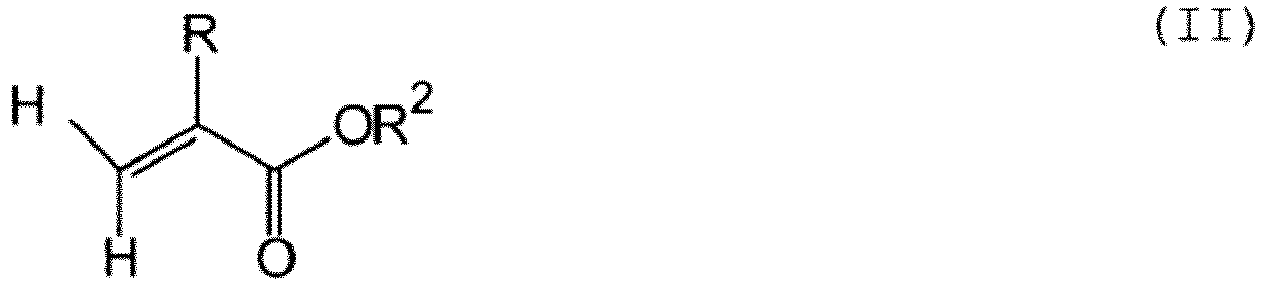
- the (meth) acrylates of the formula (II) include, in particular, linear and branched (meth) acrylates. which are derived from saturated alcohols, such as hexyl (meth) acrylate, 2-ethylhexyl (meth) acrylate, heptyl (meth) acrylate, 2-tert-butylheptyl (meth) acrylate, octyl (meth) acrylate, 3-iso-propylheptyl (meth) acrylate, nonyl (meth) acrylate, decyl (meth) acrylate, undecyl (meth) acrylate, 5-methylundecyl (meth) acrylate, dodecyl (meth) acrylate, 2-methyldodecyl (meth) acrylate, tridecyl (meth) acrylate , 5-methyltridecyl (meth) acrylate, tetradecyl
- oleyl (meth) acrylate For example, oleyl (meth) acrylate; Cycloalkyl (meth) acrylates such as cyclohexyl (meth) acrylate, 3-vinylcyclohexyl (meth) acrylate, bornyl (meth) acrylate, 2,4,5-tri-t-butyl-3-vinylcyclohexyl (meth) acrylate, 2,3 , 4,5-tetra-t-butylcyclohexyl (meth) acrylate;
- Examples of monomers of the formula (III) include linear and branched (meth) acrylates which are derived from saturated alcohols, such as cetyleicosyl (meth) acrylate, stearyl eicosyl (meth) acrylate and / or eicosyltetratriacontyl (meth) acrylate; Cycloalkyl (meth) acrylates, such as 2,3,4,5-tetra-t-hexylcyclohexyl (meth) acrylate.
- the monomers of the formula (III) include so-called polyolefin-based macromonomers with (meth) acrylate groups which are described, inter alia, in US Pat DE 10 2007 032 120 A1 , filed on 09.07.2007 with the German Patent Office with the application number DE102007032120.3 ; and DE 10 2007 046 223 A1 , filed on 26.09.2007 with the German Patent Office with the application number DE 102007046223.0 ; wherein the disclosures of these references, in particular the therein described (meth) acrylates having at least 23 carbon atoms in the radical for purposes of disclosure in the present application are incorporated by reference thereto.
- Polyolefin-based macromonomers are known in the art. These repeating units comprise at least one group derived from polyolefins. Polyolefins are known in the art, these being obtained by polymerization of alkenes and / or alkadienes derived from the Carbon and hydrogen elements, for example, C 2 -C 1C alkenes such as ethylene, propylene, n-butene, isobutene, norbornene and / or C 4 -C 1C- alkadienes such as butadiene, isoprene, norbornadiene, can be obtained.
- C 2 -C 1C alkenes such as ethylene, propylene, n-butene, isobutene, norbornene
- C 4 -C 1C- alkadienes such as butadiene, isoprene, norbornadiene
- the repeating units derived from polyolefin-based macromonomers preferably comprise at least 70% by weight and more preferably at least 80% by weight and most preferably at least 90% by weight of groups derived from alkenes and / or alkadienes Weight of repeating units derived from polyolefin-based macromonomers.
- the polyolefinic groups may in particular also be hydrogenated.
- repeat units derived from polyolefin-based macromonomers may include other groups. These include low levels of copolymerizable monomers.
- These monomers are known per se and include, inter alia, alkyl (meth) acrylates, styrene monomers, fumarates, maleates, vinyl esters and / or vinyl ethers.
- the proportion of these groups based on copolymerizable monomers is preferably at most 30% by weight, particularly preferably at most 15% by weight, based on the weight of repeating units derived from polyolefin-based macromonomers.
- the repeating units derived from polyolefin-based macromonomers may include initial groups and / or end groups that function to functionalize or that are due to the production of repeating units derived from polyolefin-based macromonomers.
- the proportion of these initial groups and / or end groups is preferably at most 30 wt .-%, more preferably at most 15% by weight, based on the weight of repeating units derived from polyolefin-based macromonomers.
- the number average molecular weight of repeating units derived from polyolefin-based macromonomers is in the range of 500 to 50,000 g / mol, more preferably 700 to 10,000 g / mol, especially 1,500 to 4900 g / mol, and most preferably 2000 to 3000 g / mol.
- the repeating units derived from polyolefin-based macromonomers preferably have a low melting temperature, which is measured by DSC.
- the melting temperature of the recurring units derived from the polyolefin-based macromonomers is preferably less than or equal to -10 ° C., particularly preferably less than or equal to -20 ° C., particularly preferably less than or equal to -40 ° C. Most notably preferably, no melting temperature can be measured according to DSC in the repeating units derived from the polyolefin-based macromonomers.
- the monomers of the formula (III) in particular include long-chain branched (meth) acrylates, which inter alia in US 6,746,993 , filed on 07.08.2002 with the US Patent Office (USPTO) with the application number 10 / 212.784 ; and US 2004/077509 , filed on 01.08.2003 with the US Patent Office (USPTO) with the application number 10 / 632.108 ; wherein the disclosures of these references, in particular the therein described (meth) acrylates having at least 23 carbon atoms in the radical for purposes of disclosure in the present application are incorporated by reference thereto.
- Alkyl (meth) acrylates with a long-chain alcohol radical in particular the components (II) and (III), can be obtained, for example, by reacting (meth) acrylates and / or the corresponding acids with long-chain fatty alcohols, in which case a mixture of esters, such as For example, (meth) acrylates with different long-chain alcohol radicals formed.
- These fatty alcohols include Oxo Alcohol® 7911, Oxo Alcohol® 7900, Oxo Alcohol® 1100; Alfol® 610, Alfol® 810, Lial® 125 and Nafol® grades (Sasol); C13-C15 alcohol (BASF); Epal® 610 and Epal® 810 (Afton); Linevol® 79, Linevol® 911 and Neodol® 25 (Shell); Dehydad®, Hydrenol® and Lorol® types (Cognis); Acropol® 35 and Exxal® 10 (Exxon Chemicals); Kalcol® 2465 (Kao Chemicals).
- the polyalkyl (meth) acrylate comprises repeating units derived from amine derivatives of a polar ethylenically unsaturated monomer.
- polar ethylenically unsaturated monomer illustrates that the monomer can be radically polymerized.
- polar expresses that even after the reaction with an amine, e.g. to a higher order amine (primary to secondary or secondary to tertiary), an amide or an imide in the vicinity of the reaction site is particularly polar.
- the groups which belong to this include in particular resulting imide groups or carboxylic acid groups formed, for example, in the reaction of acid anhydrides with amines, or hydroxy groups obtained in the reaction of epoxides.
- Carboxylic acid groups may be present in the form of the free acid or as salt.
- the amide group of the amine derivative accordingly preferably represents an imide group.
- the term "environment of the reaction site" indicates that the polar groups which are formed for at most 6, preferably at most 5, covalent bonds are formed by the amine or amide groups obtained. Group are removed, based on the distance between the oxygen atom and nitrogen atom.
- the polar ethylenically unsaturated monomer of which the amine derivative is derived maleic acid, maleic anhydride or a maleic acid derivative, such as maleic acid monoesters or maleic diesters, with maleic anhydride being particularly preferred.
- the residue of the amine derivative of a polar ethylenically unsaturated monomer formed by the amine is derived from the primary amine N-phenyl-1,4-phenylenediamine (DPA).
- repeating units derived from amine derivatives of a polar ethylenically unsaturated monomer are produced in the polyalkyl (meth) acrylate according to the invention characterized in that first a polymer is prepared with reactive, polar repeating units, which are preferably derived from maleic anhydride. Subsequently, these reactive groups are reacted with the amine set forth above to form the polyalkyl (meth) acrylates of the present invention.
- the monomer mixture may comprise monomers which can be copolymerized with the monomers described above.
- monomers which can be copolymerized with the monomers described above.
- Aryl (meth) acrylates such as benzyl methacrylate or phenyl methacrylate, wherein the aryl radicals may each be unsubstituted or substituted up to four times;
- Styrenic monomers such as styrene, substituted styrenes having an alkyl substituent in the side chain, such.
- styrene and ⁇ -ethylstyrene substituted styrenes having an alkyl substituent on the ring such as vinyltoluene and p-methylstyrene, halogenated styrenes such as monochlorostyrenes, dichlorostyrenes, tribromostyrenes and tetrabromostyrenes; Itaconic acid and itaconic acid derivatives such as itaconic acid monoester, itaconic diester and itaconic anhydride; Fumaric acid and fumaric acid derivatives such as fumaric acid monoesters, fumaric diesters and fumaric anhydride; Vinyl and isoprenyl ethers, for example alkyl vinyl ethers, in particular methyl vinyl ether, ethyl vinyl ether and dodecyl vinyl ether; Vinyl esters, for example vinyl acetate; 1-alkenes, in particular 1-butene, 1-pentene
- dispersing monomers can be used.
- Dispersing monomers have long been used for the functionalization of polymeric additives in lubricating oils and are therefore known to the skilled person (see. RM Mortier, ST Orslik (eds.): “Chemistry and Technology of Lubricants", Blackie Academic & Professional, London, 2nd ed. 1997 ).
- dispersing monomers of the formula (IV) include aminoalkyl (meth) acrylates, aminoalkyl (meth) acrylamides, hydroxylalkyl (meth) acrylates, heterocyclic (meth) acrylates and / or carbonyl-containing (meth) acrylates.
- the hydroxyalkyl (meth) acrylates include, inter alia, 2-hydroxypropyl (meth) acrylate, 3,4-dihydroxybutyl (meth) acrylate, 2-hydroxyethyl (meth) acrylate, 3-hydroxypropyl (meth) acrylate, 2,5-dimethyl 1,6-hexanediol (meth) acrylate and 1,10-decanediol (meth) acrylate.
- Carbonyl-containing (meth) acrylates include, for example, 2-carboxyethyl (meth) acrylate, carboxymethyl (meth) acrylate, N- (methacryloyloxy) formamide, acetonyl (meth) acrylate, succinic mono-2- (meth) acryloyloxyethyl ester, N- (meth) acryloylmorpholine, N- (meth) acryloyl-2-pyrrolidinone, N- (2- (meth) acryloyloxyethyl) -2-pyrrolidinone, N- (3- (meth) acryloyloxypropyl) -2-pyrrolidinone, N- (2- (meth ) acryloyloxypentadecyl) -2-pyrrolidinone, N- (3- (meth) acryloyloxyheptadecyl) -2-pyrrolidinone and N- (2- (meth
- heterocyclic (meth) acrylates include 2- (1-imidazolyl) ethyl (meth) acrylate, Oxazolidinylethyl (meth) acrylate, 2- (4-morpholinyl) ethyl (meth) acrylate 1- (2-methacryloyloxyethyl) -2-pyrrolidone, N-methacryloylmorpholine, N-methacryloyl-2-pyrrolidinone, N- (2-methacryloyloxyethyl) - 2-pyrrolidinone, N- (3-methacryloyloxypropyl) -2-pyrrolidinone.
- the aminoalkyl (meth) acrylates include in particular N, N-dimethylaminoethyl (meth) acrylate, N, N-dimethylaminopropyl (meth) acrylate, N, N-diethylaminopentyl (meth) acrylate, N, N-dibutylaminohexadecyl (meth) acrylate.
- aminoalkyl (meth) acrylamides can be used as dispersing monomers, such as N, N-dimethylaminopropyl (meth) acrylamide.
- phosphorus, boron and / or silicon-containing (meth) acrylates can be used as dispersing monomers, such as 2- (dimethylphosphato) propyl (meth) acrylate, 2- (ethylenephosphito) propyl (meth) acrylate, dimethylphosphinomethyl (meth) acrylate , Dimethylphosphonoethyl (meth) acrylate, diethyl (meth) acryloylphosphonate, dipropyl (meth) acryloylphosphate, 2- (dibutylphosphono) ethyl (meth) acrylate, 2,3-butylene (meth) acryloylethylborate, methyldiethoxy (meth) acryloylethoxysilane, diethylphosphatoethyl (meth) acrylate.
- 2- (dimethylphosphato) propyl (meth) acrylate 2- (ethylenephosphito) propyl (meth
- heterocyclic vinyl compounds include 2-vinylpyridine, 3-vinylpyridine, 4-vinylpyridine, 2-methyl-5-vinylpyridine, 3-ethyl-4-vinylpyridine, 2,3-dimethyl-5-vinylpyridine, vinylpyrimidine, vinylpiperidine, 9-vinylcarbazole, 3-vinylcarbazole, 4-vinylcarbazole, 1-vinylimidazole, N-vinylimidazole, 2-methyl-1-vinylimidazole, N-vinylpyrrolidone, N-vinylpyrrolidine, 3-vinylpyrrolidine, N-vinylcaprolactam, N-vinylbutyrolactam, vinyloxolane, Vinylfuran, vinylthiophene, vinylthiolane, vinylthiazoles and hydrogenated vinylthiazoles, vinyloxazoles and hydrogenated vinyloxazoles.
- the particularly preferred dispersing monomers include, in particular, ethylenically unsaturated compounds which comprise at least one nitrogen atom, these particularly preferably from the heterocyclic vinyl compounds and / or aminoalkyl (meth) acrylates, aminoalkyl (meth) acrylamides and / or heterocyclic (meth) acrylates set forth above are selected.
- styrene monomers in particular styrene monomers, heterocyclic monomers, vinyl ethers and / or vinyl esters are used, styrene monomers in particular being preferred.
- the proportion of comonomers can be varied depending on the purpose and property profile of the polymer. In general, this proportion can be in the range from 0 to 30 wt .-%, preferably 0.01 to 20 wt .-% and particularly preferably 0.1 to 10 wt .-%.
- the proportion of styrenic monomers, heterocyclic monomers, vinyl ethers and / or vinyl esters can be particularly preferably in the range of 0.1 to 20 wt .-%, particularly preferably in the range of 1 to 10 wt .-% are.
- the aforementioned ethylenically unsaturated monomers can be used individually or as mixtures. It is further possible to vary the monomer composition during the polymerization of the backbone to obtain defined structures, graft polymers.
- the weight ratio of grafting to grafting in the range of 1 to 2000 to 1 to 5, more preferably 1: 1000 to 1 to 10 and particularly preferably 1 to 100 to 1 to 20.
- the graft can be very short-chained, this property can be determined by comparative experiments in which the graft polymerization is carried out without grafting.
- the number-average degree of polymerization of the graft may be at most 10, more preferably at most 5, and most preferably at most 3 repeat units.
- polyalkyl (meth) acrylates which preferably have a specific viscosity in the range from 5 to 35 ml / g, particularly preferably in the range from 5.5 to 25 at 100 ° C.
- polyalkyl (meth) acrylates which preferably have a weight-average molecular weight M w in the range from 5000 to 10,000,000 g / mol, preferably 10,000 to 1,000,000 g / mol, more preferably 10,000 to 750,000 g / mol, and most preferably 200,000 to 500000 g / mol.
- the number average molecular weight M n may preferably be in the range from 1000 to 500 000 g / mol, particularly preferably 2500 to 500 000 g / mol and very particularly preferably 5000 to 250 000 g / mol.
- polyalkyl (meth) acrylates whose polydispersity index M w / M n in the range from 1.1 to 5.0, more preferably in the range from 1.4 to 4.5, and very particularly preferably in the range from 1.6 to, are also suitable 3.0 is.
- the number average and weight average molecular weights can be determined by known methods, for example, gel permeation chromatography (GPC), preferably using a PMMA standard.
- the molecular weight of the polymer may be made prior to derivatization thereof with an amine.
- polyalkyl (meth) acrylates from the above-described compositions is known per se.
- the ATRP method is known per se. This reaction is, for example, of JS. Wang, et al., J. Am. Chem. Soc., Vol.117, p.5614-5615 (1995 ), from Matyjaszewski, Macromolecules, vol.28, p.7901-7910 (1995 ).
- the patent applications disclose WO 96/30421 . WO 97/47661 . WO 97/18247 . WO 98/40415 and WO 99/10387 Variants of the previously discussed ATRP.
- polymers according to the invention can also be obtained, for example, by RAFT methods. This method is for example in WO 98/01478 and WO 2004/083169 which is expressly referred to for purposes of the disclosure.
- polymers according to the invention are obtainable by NMP processes (nitroxide mediated polymerization), which inter alia in US 4581429 are described.
- the radical polymerization of the ethylenically unsaturated compounds can be carried out in a manner known per se.
- the usual free-radical polymerization is, inter alia, in Ullmann's Encyclopedia of Industrial Chemistry, Sixth Editi on set.
- the polymerization is started by using at least one polymerization initiator for the radical polymerization.
- polymerization initiators include, among others, the well-known in the art azo initiators, such as 2,2'-azobisisobutyronitrile, 2,2'-azobis (2,4-dimethylvaleronitrile) and 1,1-Azobiscyclohexancarbonitril, organic peroxides, such as dicumyl peroxide, diacyl peroxides, such as Dilauroyl peroxide, peroxydicarbonates, such as diisopropyl peroxydicarbonate, peresters, such as tert. Butyl peroxy-2-ethylhexanoate, and the like.
- particularly suitable polymerization initiators comprise in particular the following compounds: methyl ethyl ketone peroxide, acetylacetone peroxide, dilauroyl peroxide, tert-butyl per-2-ethylhexanoate, ketone peroxide, tert-butyl peroctoate, methyl isobutyl ketone peroxide, cyclohexanone peroxide, dibenzoyl peroxide, tert-butyl peroxybenzoate, tert.
- polymerization initiators having a half-life of 1 hour at a temperature in the range from 25 ° C. to 200 ° C., preferably in the range from 50 ° C. to 150 ° C., in particular in the range from 50 ° C. to 100 ° C., are very particularly preferred .
- peroxidic polymerization initiators in particular tert-butyl peroctoate, are particularly suitable for the present purposes.
- the process can be carried out either in the presence or absence of a chain transfer agent.
- chain transfer agents also called molecular weight regulators, it is possible to use typical species described for free-radical polymerizations, as are known to the person skilled in the art.
- the sulfur-free molecular weight regulators include, but are not limited to, dimeric ⁇ -methylstyrene (2,4-diphenyl-4-methyl-1-pentene), enol ethers of aliphatic and / or cycloaliphatic aldehydes, terpenes, ⁇ -terpinene, terpinolene, 1,4-cyclohexadiene, 1,4-dihydronaphthalene, 1,4,5,8-tetrahydronaphthalene, 2,5-dihydrofuran, 2,5-dimethylfuran and / or 3,6-dihydro-2H-pyran, preferred is dimeric ⁇ -methylstyrene.
- Mercury compounds, dialkyl sulfides, dialkyl disulfides and / or diaryl sulfides can preferably be used as the sulfur-containing molecular weight regulator.
- the following polymerization regulators are exemplified: di-n-butylsulfide, di-n-octylsulfide, diphenylsulfide, thiodiglycol, ethylthioethanol, diisopropyl disulfide, di-n-butyl disulfide, di-n-hexyl disulfide, diacetyl disulfide, diethanol sulfide, di-t-butyl trisulfide and dimethyl sulfoxide.
- Preferred compounds used as molecular weight regulators are mercapto compounds, dialkyl sulfides, dialkyl disulfides and / or diaryl sulfides. Examples of these compounds are ethyl thioglycolate, 2-ethylhexyl thioglycolate, pentaerythritol tetrathioglycolate, cysteine, 2-mercaptoethanol, 1, 3-mercaptopropanol, 3-mercaptopropane-1,2-diol, 1,4-mercaptobutanol, mercaptoacetic acid, 3-mercaptopropionic acid, thioglycolic acid, mercaptosuccinic acid , Thioglycerol, thioacetic acid, thiourea and alkylmercaptans such as n-butylmercaptan, n-hexylmercaptan, t-dodecylmercaptan or n-d
- Particularly preferably used polymerization regulators are mercapto alcohols and mercaptocarboxylic acids.
- the use of n-dodecyl mercaptan and tert-dodecyl mercaptan as chain transfer agents is very particularly preferred.
- the repeating units derived from amine derivatives of a polar ethylenically unsaturated Monomer are derived in the polyalkyl (meth) acrylate by a polymer-analogous reaction according to the above-stated preparation of a polyalkyl (meth) acrylate produced. Accordingly, it is preferred to first prepare a polymer having reactive polar moieties wherein the reactive moieties are reacted with an amine of the kind set forth above.
- the reactive polar units include in particular anhydride units.
- the reaction of the reactive polar units contained in the polymer, preferably the anhydride groups, with amines can usually take place between 40.degree. C. and 180.degree. C., preferably between 80.degree. C. and 180.degree. C. and more preferably between 100.degree. C. and 160.degree ,
- the amine may preferably be added in equimolar amount to the reactive polar groups, preferably the anhydride groups. If excess amounts of amine are added, this may subsequently be separated from the mixture. If the proportions are too low, reactive groups remain which, if appropriate, can be converted into less reactive groups by addition of small amounts of water.
- the amine may be added in pure form or added in a suitable solvent to the reaction mixture.
- suitable solvent especially esters, e.g. Butyl acetate or diisononyl adipate (Plastomoll DNA).
- the polymers of the invention are preferably used to improve lubricating oil properties.
- the lubricating oils include, in particular, mineral oils, synthetic oils and natural oils.
- Mineral oils are known per se and commercially available. They are generally obtained from petroleum or crude oil by distillation and / or refining and, if appropriate, further purification and refining processes, the term "mineral oil” in particular falling to the relatively high-boiling fractions of crude oil or crude oil. In general, the boiling point of mineral oil is higher than 200 ° C, preferably higher than 300 ° C, at 5000 Pa. The production by smoldering of shale oil, coking of hard coal, distillation under exclusion of air from brown coal and hydrogenation of hard coal or lignite is also possible. Accordingly, mineral oils, depending on the origin of different proportions of aromatic, cyclic, branched and linear hydrocarbons.
- paraffin-based, naphthenic and aromatic fractions in crude oils or mineral oils, the terms paraffin-basic fraction for longer-chained or highly branched iso-alkanes and naphthenic moiety for cycloalkanes.
- mineral oils depending on their origin and processing different proportions of n-alkanes, iso-alkanes with a low degree of branching, so-called monomethyl branched paraffins, and compounds with heteroatoms, especially O, N and / or S, which are attributed polar properties .
- the assignment is difficult, however, since individual alkane molecules can have both long-chain branched groups and cycloalkane radicals and aromatic moieties.
- the assignment can be made, for example, according to DIN 51 378.
- Polar proportions may also be determined according to ASTM D 2007.
- the proportion of n-alkanes in preferred mineral oils is less than 3 wt .-%, the proportion of O, N and / or S-containing compounds less than 6 wt .-%.
- the proportion of aromatics and monomethyl branched paraffins is generally in the range of 0 to 40 wt .-%.
- mineral oil mainly comprises naphthenic and paraffinic alkanes, which generally have more than 13, preferably more than 18 and most preferably more than 20 carbon atoms.
- the proportion of these compounds is generally greater than or equal to 60 wt .-%, preferably greater than or equal to 80 wt .-%, without this being a restriction.
- a preferred mineral oil contains from 0.5 to 30% by weight of aromatic fractions, from 15 to 40% by weight of naphthenic fractions, from 35 to 80% by weight of paraffinic fractions, up to 3% by weight of n-alkanes and 0.05% to 5 wt .-% polar Compounds, in each case based on the total weight of the mineral oil.
- An improved class of mineral oils (reduced sulfur content, reduced nitrogen content, higher viscosity index, lower pour point) is given by hydrotreating the mineral oils ( hydroisomerization, hydrocracking, hydro treating, hydro finishing ) .
- hydrotreating the mineral oils hydroisomerization, hydrocracking, hydro treating, hydro finishing .
- essentially all aromatic components are reduced in hydrogen presence and naphthenic components are built up.
- Synthetic oils include, but are not limited to, organic esters such as diesters and polyesters, polyalkylene glycols, polyethers, synthetic hydrocarbons, especially polyolefins, of which polyalphaolefins (PAO) are preferred, silicone oils and perfluoroalkyl ethers.
- synthetic base oils with origin from gas to liquid (GTL), coal to liquid (CTL) or biomass to liquid (BTL) processes can be used. They are usually slightly more expensive than the mineral oils, but have advantages in terms of their performance.
- Natural oils are animal or vegetable oils, such as claw oils or jojoba oils.
- Base oils for lubricating oil formulations are grouped according to API (American Petroleum Institute). Mineral oils are subdivided into Group I (not hydrogen treated) and, depending on the degree of saturation, sulfur content and viscosity index, in Groups II and III (both hydrogen-treated). PAOs correspond to Group IV. All other base oils are grouped in Group V.
- lubricating oils can also be used as mixtures and are often commercially available.
- the concentration of the polyalkyl (meth) acrylate according to the invention in the lubricating oil composition is preferably in the range from 0.01 to 30% by weight, more preferably in the range from 0.1 to 20% by weight and most preferably in the range from 0, 5 - 15 wt .-%, based on the total weight of the composition.
- the lubricating oil compositions set forth herein may also contain further additives and additives.
- additives include VI improvers, pour point improvers and DI additives (dispersants, detergents, defoamers, corrosion inhibitors, antioxidants, anti-wear and extreme pressure additives, friction modifiers).
- the additionally usable VI improvers include in particular polyalkyl (meth) acrylates having 1 to 30 carbon atoms in the alcohol group (PAMA, partially N / O-functional with advantageous additive properties as a dispersant, wear protection additive and / or Reibwertver baseer), ranging from those in claim 1 and poly (iso) butenes (PIB), fumarate-olefin copolymers, styrene-maleate copolymers, hydrogenated styrene-diene copolymers (HSD) and olefin copolymers (OCP).
- PAMA polyalkyl (meth) acrylates having 1 to 30 carbon atoms in the alcohol group
- PIB poly (iso) butenes
- PIB poly (iso) butenes
- HSD hydrogenated styrene-diene copolymers
- OCP olefin copolymers
- the pour point improvers include, in particular, polyalkyl (meth) acrylates (PAMA) having 1 to 30 carbon atoms in the alcohol group.
- PAMA polyalkyl (meth) acrylates
- Useful dispersants include, but are not limited to, poly (isobutylene) derivatives, eg, poly (isobutylene) -succinimides (PIBSI); Ethylene-propylene oligomers with N / O functionalities.
- poly (isobutylene) derivatives eg, poly (isobutylene) -succinimides (PIBSI); Ethylene-propylene oligomers with N / O functionalities.
- the preferred detergents include, but are not limited to, metal-containing compounds such as phenates; salicylates; Thiophosphonates, in particular thiopyrophosphonates, thiophosphonates and phosphonates; Sulfonates and carbonates.
- metal these compounds may in particular contain calcium, magnesium and barium. These compounds can preferably be used neutral or overbased.
- Defoamers are also of particular interest, and these are often subdivided into silicone-containing and silicone-free defoamers.
- the silicone-containing antifoams include, but are not limited to, linear poly (dimethylsiloxane) and cyclic Poly (dimethylsiloxane).
- silicone-free defoamers it is often possible to use polyethers, for example poly (ethylene glycol) or tributyl phosphate.
- the lubricating oil compositions according to the invention may comprise corrosion inhibitors . These are often subdivided into anti-rust additives and metal passivators / deactivators ( metal passivator / desactivator ).
- antirust additives such as, for example, petroleum sulfonates or (often overbased) synthetic alkylbenzenesulfonates, for example dinonylnaphthene sulfonate; Carboxylic acid derivatives such as lanolin (wool fat), oxidized paraffins, zinc naphthenates, acylated succinic acids, 4-nonylphenoxyacetic acid, amides and imides (N-acylsarcosine, imidazoline derivatives); Amine-neutralized mono- and dialkylphosphoric acid esters; morpholine; Dicycylohexylamine or diethanolamine be used.
- the metal passivators / deactivators include, but are not limited to, benzotriazole, tolyltriazole, 2-mercaptobenzothiazole, dialkyl-2,5-dimercapto-1,3,4-thiadiazole; N, N'-disalicylidenethylenediamine, N, N'-disalicylidenepropylenediamine; Zinc dialkyldithiophosphates and dialkyldithiocarbamates.
- friction modifiers are friction modifiers .
- mechanically active compounds such as molybdenum disulfide, graphite (also fluorinated), poly (trifluoroethylene), polyamide, polyimide
- Adsorption layer-forming compounds such as long-chain carboxylic acids, fatty acid esters, ethers, alcohols, amines, amides, imides
- Compounds which form layers by tribochemical reactions such as, for example, saturated fatty acids, phosphoric acid and thiophosphoric acid esters, xanthates, sulfurized fatty acids
- Compounds which form polymer-like layers such as ethoxylated dicarboxylic acid, dialkylphthalic, methacrylates, unsaturated fatty acids, sulfurized olefins or organometallic compounds, such as molybdenum (Molybdändithiophosphate and MoDTC) and their combinations with ZnDTP, copper-containing organic compounds are used
- ZnDTP e.g. is primarily a wear protection additive and extreme pressure additive, but also has the character of an antioxidant and corrosion inhibitor (here: metal passivator / deactivator).
- Preferred lubricating oil compositions have a viscosity measured in accordance with ASTM D 445 at 40 ° C in the range of 10 to 120 mm 2 / s, more preferably in the range of 15 to 100 mm 2 / s.
- the kinematic viscosity KV 100 measured at 100 ° C. is preferably at least 2.0 mm 2 / s, more preferably at least 3.5 mm 2 / s and most preferably at least 4.0 mm 2 / s.
- preferred lubricating oil compositions have an ASTM D 2270 viscosity index in the range of 100 to 500, more preferably in the range of 125 to 400, and most preferably in the range of 150 to 350.
- the stated values can surprisingly be achieved according to a particular aspect of the present invention by using predominantly the polyalkyl (meth) acrylates according to the invention for improving the viscosity index.
- preferably at least 20% by weight, more preferably at least 40% by weight and especially preferably at least 60% by weight of the compounds used to improve the viscosity index represent polyalkyl (meth) acrylates according to the invention.
- HTHS high-shear viscosity
- the high-shear viscosity HTHS measured at 100 ° C. is preferably at most 10 mPas, particularly preferably at most 7 mPas and very particularly preferably at most 5 mPas.
- HTHS 10C -HTHS 15C is preferably at most 4 mPas, more preferably at most 3.3 mPas and most preferably at most 2.5 mPas.
- the ratio of high-shear viscosity at 100 ° C. HTHS 10C to high-shear viscosity at 150 ° C. HTHS 15C , HTHS 10C / HTHS 15C is preferably at most 2.0, particularly preferably at most 1.9.
- the high-shear viscosity HTHS can be measured at the respective temperature in accordance with ASTM D4683.
- the permanent shear stability index (PSSI) according to ASTM D2603 ref. B (12.5 minute sonication) may be less than or equal to 50, more preferably less than or equal to 35.
- lubricating oil compositions can be obtained which have a permanent shear stability index (PSSI) according to DIN 51381 (30 cycles Bosch pump) of at most 35, preferably at most 25 and most preferably at most 5.
- the wear can be determined, for example, on a four-ball apparatus (VKA, four-ball apparatus ) standardized according to DIN 51350-3 or DIN 51350-5, in which a rotating ball is pressed under load onto three identical fixed balls.
- VKA four-ball apparatus
- the mean value is formed for each load step (150N and 300N).
- the final result is the sum of the two mean values, resulting from the mean diameter of the dome at 150 N and 300 N, respectively.
- the measurement is preferably started at room temperature, after the end of the test the temperature is usually not more than 60 ° C. This test is referred to below as the VKA test.
- the present lubricants can be used in particular as gear oil, engine oil or hydraulic oil. Surprising advantages can be found in particular Use of the present lubricants in Handschalt- (manual), automated Handschalt- (automated manual), dual clutch (double clutch) or direct transmissions (DSG), automatic (automatic) and continuously variable transmissions (continuous variable transmission CVC) achieve. Furthermore, the present lubricants may, in particular in transfer (transfer case) and axle (axle) and differential gear (differential) may be used.
- the area (integral) under the determined coefficient of friction curve of the candidate is set in relation to the surface area of the reference oil.
- the reference oil used is an API group III oil without the addition of film-forming polymers with an HTHS150 of 3.50 mPas.
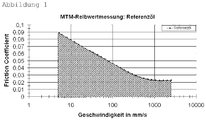
- the area was 64.5 mm * s -1 at 100 ° C, see hatched area in illustration 1 , At 120 ° C, the surface area for the reference oil was only 45.96 mm * s -1 .
- the coefficient of friction reduction can be calculated as follows:
- the friction coefficient is usually very small, since the high speed of much oil is entered from the friction surfaces in the lubrication gap. With decreasing sliding speed is always less oil is entered into the lubrication gap, and the coefficients of friction increase. Of particular interest is to reduce the coefficients of friction, especially at low sliding speeds. Therefore, not only the friction reduction with respect to the entire speed range (5-2500 mm / s) is of interest, but also the friction reduction at low sliding speeds (2-200 mm / s). The friction reduction at low speeds is calculated as follows:
- the shell four-ball apparatus is a standardized in DIN 51 350 Part 1 tester for determining the welding and Gutkraft (DIN 51 350 parts 2 and 3) and various friction and wear characteristics of lubricants (DIN 51 350 Part 3 and 5).
- DIN 51 350 Part 1 tester for determining the welding and Gutkraft (DIN 51 350 parts 2 and 3) and various friction and wear characteristics of lubricants (DIN 51 350 Part 3 and 5).
- a rotating ball bearing ball is pressed under load on three similar but stationary balls.
- the test bench is widely used in the lubricant industry where it is routinely used for product development and quality control.
- the wear is determined by optical measurement of the resulting dome. From the individually measured calotte diameters, the mean value is formed for each load step (150N and 300N). As a result, the Sum of the two mean values, resulting from mean dome diameter at 150 N and 300 N, respectively.
- a regulator (n-dodecylmercaptan nDDM) was used, which was mixed in the stated amount of the monomer mixture (base polymer only).
- the monomer feed consisted of the remaining monomer mixture with the stated amount of initiator in the feed.
- the feed was even over 3.5 hours. 2 hours after the end of the feed, it was necessary to re-feed again with 0.2% of initiator at the indicated reaction temperature.
- the batch was kept at the reaction temperature for at least 5 half-lives of the initiator had elapsed.
- tBPB tert-butyl perbenzoate
- the amount of tBPB refers to the amount of base polymer plus the added grafting monomer. 1 and 2 hours after the start of the grafting reaction, 0.125% tBPB is replenished again. After the last addition of initiator stirring is continued for at least 3 hours at 130.degree.
- the polymerizations of Examples 1 to 9 set forth in Table 1 were graft polymerizations, where the indication in the square brackets describes the composition of the graft base.
- Table 1 Information on the preparation of the polymers used Composition of the polymer [% by weight] Solids content * [%] initiator nDDM [%] Polymerization temperature [° C] example 1 [PLMA co-Sty-MMA] -g-MSA 70 tBPO 0.10 100 86.3 - 9.7 - 1 - 3 0.27% Example 2 [PLMA co-EHMA] -g-MSA 70 tBPO 0, 05 110 68, 4 - 30.1 - 1.5 0.20% Example 3 [PLMA-co-MMA] -g-MSA 70 tBPO 0, 19 110 87.3 - 9.7 - 3 0.24% Example 4 [PLMA-co-MMA-Sty] -g-MSA 55 tBPO - 90 86.3 - 9.7 - 1 - 3 0.35% Example 5 [PLMA DPMA SMA MMA] -g-MSA 75 tBPO 0.30 110 86.9 - 0.2 - 0.2 - 9.7 - 3 3.
- the resulting polymers were derivatized with an amine in a polymer-analogous reaction.
- the reaction of the maleic anhydride (MSA) or glycidyl methacrylate contained in the polymers with the amines N-phenyl-1,4-phenylenediamine (DPA) or N, N-dimethylamino-propylamine (DMAPA) listed in Table 2 was carried out at about 140.degree ,
- the amine was added in equimolar amount to MSA or GLMA.
- the amine was added either in pure form or diluted in a suitable solvent. For example, butyl acetate or Plastomoll DNA are preferred. Any resulting water was expelled by blowing dry nitrogen.
- Nexbase 3060 is a commercially available Group III oil RMF 5/2 is a commercial 150 N oil
- the lubricants according to the invention show an excellent high shear viscosity measured at 150 ° C. HTHS, the values determined for some examples ranging from 3.19 (Example 12) to 3.83 (Example 5).
- Table 4 Friction values Total area Area low speed Friction improvement total in% Friction improvement Low Speed in% reference 64.51 9.25 0.0 0.0
- Example 11 53.83 5.02 16.6 45.7
- Example 12 ** 61,40 6.91 4.8 25.3
- Example 15 55.07 5.16 14.6 44.2 ** ) Comparative Example
- the wear behavior was determined in a fully formulated oil with the addition of a commercially available ashless wear protection package.
- This was the inventive polymer according to Example 1 in a mixture of APE Core 80N: APE Core 150N 70:30 adjusted to a KV100 of 9.50 mm 2 / s.
- the oil contained about 0.90% by weight of said ashless wear protection package.
Landscapes
- Chemical & Material Sciences (AREA)
- Chemical Kinetics & Catalysis (AREA)
- Organic Chemistry (AREA)
- Oil, Petroleum & Natural Gas (AREA)
- General Chemical & Material Sciences (AREA)
- Health & Medical Sciences (AREA)
- Emergency Medicine (AREA)
- Medicinal Chemistry (AREA)
- Polymers & Plastics (AREA)
- Engineering & Computer Science (AREA)
- Lubricants (AREA)
- Addition Polymer Or Copolymer, Post-Treatments, Or Chemical Modifications (AREA)
- Graft Or Block Polymers (AREA)
- Organic Low-Molecular-Weight Compounds And Preparation Thereof (AREA)
Claims (12)
- Poly(méth)acrylate d'alkyle pour l'amélioration de propriétés d'huiles lubrifiantes, comprenant des unités de répétition qui sont dérivées de (méth)acrylates contenant 6 à 22 atomes de carbone dans le radical alcool, caractérisé en ce que le polymère est un copolymère greffé, la base de greffage comprenant :a) 0 à 40 % en poids d'unités de répétition qui sont dérivées de (méth)acrylates de formule (I)
 b) 20 à 99,9 % en poids d'unités de répétition qui sont dérivées de (méth)acrylates de formule (II)
 c) 0 à 20 % en poids d'unités de répétition qui sont dérivées de (méth)acrylates de formule (III)
et la charge de greffage comprend 0,1 à 10 % en poids d'unités de répétition qui sont dérivées de dérivés d'amine d'un monomère polaire éthyléniquement insaturé, le monomère polaire éthyléniquement insaturé duquel le dérivé d'amine est dérivé étant l'acide maléique, l'anhydride de l'acide maléique ou un dérivé de l'acide maléique, et le dérivé d'amine étant dérivé de N-phényl-1,4-phénylène-diamine. - Poly(méth)acrylate d'alkyle selon la revendication 1, caractérisé en ce que le dérivé de l'acide maléique est un monoester de l'acide maléique ou un diester de l'acide maléique.
- Poly(méth)acrylate d'alkyle selon la revendication 1, caractérisé en ce que le monomère polaire éthyléniquement insaturé est l'anhydride de l'acide maléique.
- Poly(méth)acrylate d'alkyle selon au moins l'une quelconque des revendications précédentes, caractérisé en ce que le poly(méth)acrylate d'alkyle présente une viscosité spécifique dans la plage allant de 5 à 35 ml/g à 100 °C.
- Poly(méth)acrylate d'alkyle selon au moins l'une quelconque des revendications précédentes, caractérisé en ce que le poly(méth)acrylate d'alkyle comprend des unités de répétition qui sont dérivées de monomères de styrène, de monomères hétérocycliques, qui sont choisis dans le groupe constitué par la 2-vinylpyridine, la 3-vinylpyridine, la 4-vinylpyridine, la 2-méthyl-5-vinylpyridine, la 3-éthyl-4-vinylpyridine, la 2,3-diméthyl-5-vinylpyridine, la vinylpyrimidine, la vinylpipéridine, le 9-vinylcarbazole, le 3-vinylcarbazole, le 4-vinylcarbazole, le 1-vinylimidazole, le N-vinylimidazole, le 2-méthyl-1-vinylimidazole, la N-vinylpyrrolidone, la N-vinylpyrrolidine, la 3-vinylpyrrolidine, le N-vinylcaprolactame, le N-vinylbutyrolactame, le vinyloxolane, le vinylfurane, le vinylthiophène, le vinylthiolane, les vinylthiazoles, les vinylthiazoles hydrogénés, les vinyloxazoles et les vinyloxazoles hydrogénés, les éthers de vinyle et/ou les esters de vinyle.
- Poly(méth)acrylate d'alkyle selon la revendication 5, caractérisé en ce que le poly(méth)acrylate d'alkyle comprend 0,1 à 20 % en poids d'unités de répétition qui sont dérivées de monomères de styrène, de monomères hétérocycliques, d'éthers de vinyle et/ou d'esters de vinyle.
- Poly(méth)acrylate d'alkyle selon la revendication 5 ou 6, caractérisé en ce que les monomères de styrène sont choisis dans le groupe constitué par le styrène, les styrènes substitués avec un substituant alkyle dans la chaîne latérale, les styrènes substitués avec un substituant alkyle sur le cycle et les styrènes halogénés.
- Poly(méth)acrylate d'alkyle selon au moins l'une quelconque des revendications précédentes, caractérisé en ce que le poly(méth)acrylate d'alkyle comprenda) 0 à 40 % en poids d'unités de répétition qui sont dérivées de (méth)acrylates de formule (I)
 b) 50 à 99,9 % en poids d'unités de répétition qui sont dérivées de (méth)acrylates de formule (II)
 c) 0,5 à 20 % en poids d'unités de répétition qui sont dérivées de (méth)acrylates de formule (III)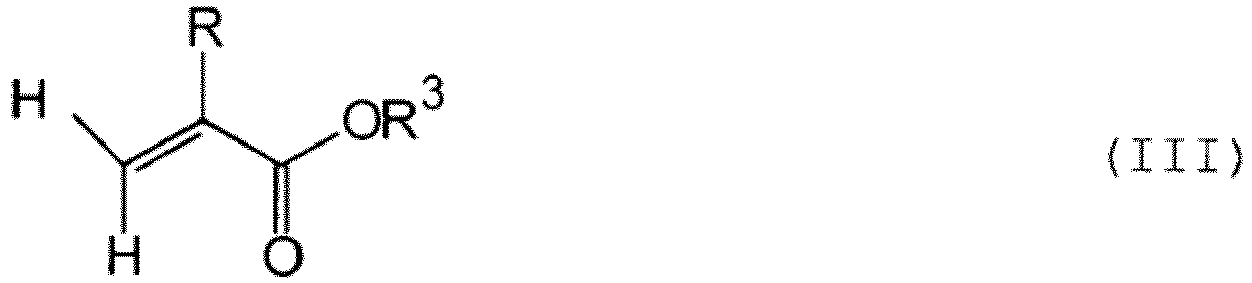
etd) 0,1 à 10 % en poids d'unités de répétition qui sont dérivées de dérivés d'amine d'un monomère polaire éthyléniquement insaturé. - Procédé de fabrication d'un poly(méth)acrylate d'alkyle selon au moins l'une quelconque des revendications 1 à 8, caractérisé en ce qu'une base de greffage est tout d'abord fabriquée par polymérisation de (méth)acrylates contenant 6 à 22 atomes de carbone, sur laquelle des monomères polaires éthyléniquement insaturés sont ensuite greffés.
- Composition lubrifiante contenant au moins un poly(méth)acrylate d'alkyle selon au moins l'une quelconque des revendications 1 à 8 ou pouvant être obtenu par un procédé selon la revendication 9.
- Composition lubrifiante selon la revendication 10, caractérisée en ce que la composition lubrifiante comprend 0,01 à 30 % en poids d'un poly(méth)acrylate d'alkyle selon au moins l'une quelconque des revendications 1 à 8 ou pouvant être obtenu par un procédé selon la revendication 9.
- Utilisation d'un poly(méth)acrylate d'alkyle selon au moins l'une quelconque des revendications 1 à 8 ou pouvant être obtenu par un procédé selon la revendication 9 pour la réduction du frottement.
Applications Claiming Priority (2)
| Application Number | Priority Date | Filing Date | Title |
|---|---|---|---|
| DE102010038615A DE102010038615A1 (de) | 2010-07-29 | 2010-07-29 | Polyalkyl(meth)acrylat zur Verbesserung von Schmieröleigenschaften |
| PCT/EP2011/060670 WO2012013432A1 (fr) | 2010-07-29 | 2011-06-27 | Poly((méth)acrylate d'alkyle) destiné à l'amélioration des propriétés d'huiles lubrifiantes |
Publications (2)
| Publication Number | Publication Date |
|---|---|
| EP2598619A1 EP2598619A1 (fr) | 2013-06-05 |
| EP2598619B1 true EP2598619B1 (fr) | 2017-11-29 |
Family
ID=44342873
Family Applications (1)
| Application Number | Title | Priority Date | Filing Date |
|---|---|---|---|
| EP11728821.7A Not-in-force EP2598619B1 (fr) | 2010-07-29 | 2011-06-27 | Polyalkyl(meth)acrylates pour l'improvement des characteristiques des lubrifiants |
Country Status (14)
| Country | Link |
|---|---|
| US (1) | US9777098B2 (fr) |
| EP (1) | EP2598619B1 (fr) |
| JP (1) | JP5950911B2 (fr) |
| KR (1) | KR101850568B1 (fr) |
| CN (1) | CN103003400B (fr) |
| BR (1) | BR112013002202B1 (fr) |
| CA (1) | CA2806929C (fr) |
| DE (1) | DE102010038615A1 (fr) |
| ES (1) | ES2655594T3 (fr) |
| MX (1) | MX359995B (fr) |
| RU (1) | RU2584160C2 (fr) |
| SG (1) | SG187126A1 (fr) |
| TR (1) | TR201802542T4 (fr) |
| WO (1) | WO2012013432A1 (fr) |
Families Citing this family (28)
| Publication number | Priority date | Publication date | Assignee | Title |
|---|---|---|---|---|
| KR20150143721A (ko) * | 2013-04-18 | 2015-12-23 | 에보니크 오일 아디티페스 게엠베하 | 연료 소비를 감소시키기 위한 변속기 오일 제제 |
| US20170218295A1 (en) * | 2014-08-18 | 2017-08-03 | Evonik Oil Additives Gmbh | Hydraulic fluids in plastic injection molding processes |
| RU2692103C2 (ru) * | 2014-12-18 | 2019-06-21 | Эвоник Оил Эддитивс Гмбх | Способ получения сополимеров алкилметакрилатов и малеинового ангидрида |
| FR3035663B1 (fr) | 2015-04-30 | 2017-06-02 | Total Marketing Services | Composition lubrifiante ultra-fluide |
| WO2017120286A1 (fr) * | 2016-01-06 | 2017-07-13 | Ecolab Usa Inc. | Compositions d'inhibiteurs de paraffine |
| AR107305A1 (es) | 2016-01-06 | 2018-04-18 | Ecolab Usa Inc | Composiciones de inhibidores de parafina estables a la temperatura |
| CA3019857C (fr) * | 2016-04-07 | 2024-06-25 | Ecolab Usa Inc. | Molecules a logp faible pour un point de solidification diminue de concentres d'inhibiteur de paraffine |
| US10113133B2 (en) * | 2016-04-26 | 2018-10-30 | Afton Chemical Corporation | Random copolymers of acrylates as polymeric friction modifiers, and lubricants containing same |
| WO2018024563A1 (fr) * | 2016-08-05 | 2018-02-08 | Basf Se | Macromonomères comportant des groupes polyisobutène et leurs homopolymères ou copolymères |
| US10544241B2 (en) | 2016-09-15 | 2020-01-28 | Fina Technology, Inc. | Farnesene-based macromonomers and methods of making and using the same |
| JP6955332B2 (ja) * | 2016-11-17 | 2021-10-27 | シェルルブリカンツジャパン株式会社 | 潤滑油組成物 |
| MX386485B (es) * | 2016-12-08 | 2025-03-04 | Mexicano Inst Petrol | Desemulsionantes para aceites crudos con base en copolimeros aleatorios acrilico-aminoacrilico de masa molecular controlada. |
| CN110088254B (zh) * | 2016-12-19 | 2022-02-18 | 赢创运营有限公司 | 包含分散剂梳形聚合物的润滑油组合物 |
| US10351792B2 (en) * | 2017-05-09 | 2019-07-16 | Afton Chemical Corporation | Poly (meth)acrylate with improved viscosity index for lubricant additive application |
| US10858575B2 (en) | 2017-06-02 | 2020-12-08 | Championx Usa Inc. | Temperature-stable corrosion inhibitor compositions and methods of use |
| JP7143395B2 (ja) * | 2017-07-14 | 2022-09-28 | エボニック オペレーションズ ゲーエムベーハー | イミド官能性を有するくし型ポリマー |
| CN110016101B (zh) * | 2018-01-08 | 2021-08-31 | 中国石油天然气股份有限公司 | 烟炱分散型聚甲基丙烯酸酯类化合物的制备方法 |
| JP7411555B2 (ja) * | 2018-01-23 | 2024-01-11 | エボニック オペレーションズ ゲーエムベーハー | 高分子無機ナノ粒子組成物、それらの製造方法、及び潤滑剤としてのそれらの使用 |
| KR102587269B1 (ko) * | 2018-01-23 | 2023-10-11 | 에보닉 오퍼레이션스 게엠베하 | 중합체성-무기 나노입자 조성물, 이의 제조 방법 및 윤활제 첨가제로서의 이들의 용도 |
| US10144900B1 (en) | 2018-02-02 | 2018-12-04 | Afton Chemical Corporation | Poly (meth)acrylate star polymers for lubricant additive applications |
| JP2019151766A (ja) * | 2018-03-05 | 2019-09-12 | 株式会社日本触媒 | 潤滑油添加剤の製造方法 |
| JP7237753B2 (ja) * | 2019-06-28 | 2023-03-13 | 出光興産株式会社 | 内燃機関用潤滑油組成物 |
| US11384311B2 (en) * | 2019-12-16 | 2022-07-12 | Infineum International Limited | High viscosity index comb polymer viscosity modifiers and methods of modifying lubricant viscosity using same |
| US20210179960A1 (en) * | 2019-12-16 | 2021-06-17 | Infineum International Limited | High Viscosity Index Comb Copolymer Viscosity Modifiers and Methods of Modify Lubricant Viscosity Using Same |
| US20210179965A1 (en) * | 2019-12-16 | 2021-06-17 | Infineum International Limited | High Viscosity Index Comb Copolymer Viscosity Modifiers and Methods of Modifying Lubricant Viscosity Using Same |
| US11365273B2 (en) * | 2019-12-16 | 2022-06-21 | Infineum International Limited | High viscosity index comb polymer viscosity modifiers and methods of modifying lubricant viscosity using same |
| CN112852522B (zh) * | 2020-11-30 | 2022-06-17 | 大连同康新材料科技有限公司 | 一种嵌段型聚(甲基)丙烯酸酯类聚合物作为润滑油中纳米铜添加剂的分散剂的应用 |
| JP7411739B1 (ja) | 2022-08-10 | 2024-01-11 | エボニック オペレーションズ ゲーエムベーハー | 自動車工業用の銅腐食抑制剤組成物 |
Family Cites Families (28)
| Publication number | Priority date | Publication date | Assignee | Title |
|---|---|---|---|---|
| GB982077A (en) | 1960-06-27 | 1965-02-03 | California Research Corp | Lubricant composition and polymer additive therefor |
| DE3486145T2 (de) | 1983-07-11 | 1993-09-23 | Commw Scient Ind Res Org | Verfahren zur polymerisation und nach diesem verfahren hergestellte polymere. |
| US4668412A (en) * | 1985-06-27 | 1987-05-26 | Texaco Inc. | Lubricating oil containing dispersant VII and pour depressant |
| CA2013891C (fr) * | 1989-04-18 | 2003-01-14 | Joseph M. Bollinger | Additif d'indice de viscosite pour dispersant polymethacrylate |
| US5942471A (en) | 1992-07-01 | 1999-08-24 | Ethyl Corporation | Dispersant and antioxidant VI improvers based on olefin copolymers containing phenothiazine and aromatic amine groups |
| DE4330971A1 (de) * | 1993-09-13 | 1995-03-16 | Basf Ag | Copolymerisate sowie deren Reaktionsprodukte mit Aminen als Kraftstoff- und Schmierstoffadditiv |
| US5763548A (en) | 1995-03-31 | 1998-06-09 | Carnegie-Mellon University | (Co)polymers and a novel polymerization process based on atom (or group) transfer radical polymerization |
| US5807937A (en) | 1995-11-15 | 1998-09-15 | Carnegie Mellon University | Processes based on atom (or group) transfer radical polymerization and novel (co) polymers having useful structures and properties |
| ATE207082T1 (de) | 1996-06-12 | 2001-11-15 | Univ Warwick | Polymerisation-katalysator und -verfahren |
| ES2166092T3 (es) | 1996-07-10 | 2002-04-01 | Du Pont | Polimerizacion con caracteristicas vivientes. |
| US5858524A (en) | 1996-11-07 | 1999-01-12 | Air Products And Chemicals, Inc. | Flexible laminates bonded with water-based laminating ink vehicles and laminating adhesives |
| TW593347B (en) | 1997-03-11 | 2004-06-21 | Univ Carnegie Mellon | Improvements in atom or group transfer radical polymerization |
| US6071980A (en) | 1997-08-27 | 2000-06-06 | E. I. Du Pont De Nemours And Company | Atom transfer radical polymerization |
| US6025308A (en) | 1998-09-10 | 2000-02-15 | R. T. Vanderbilt Company, Inc. | Amine-functionalized polymers |
| US6746993B2 (en) | 2001-04-06 | 2004-06-08 | Sanyo Chemical Industries, Ltd. | Viscosity index improver and lube oil containing the same |
| DE10335360B4 (de) | 2002-08-02 | 2010-09-09 | Sanyo Chemical Industries, Ltd. | Verwendung eines öllöslichen Copolymers als Viskositätsindex-Verbesserer |
| US6841695B2 (en) | 2003-03-18 | 2005-01-11 | Rohmax Additives Gmbh | Process for preparing dithioesters |
| DE10314776A1 (de) | 2003-03-31 | 2004-10-14 | Rohmax Additives Gmbh | Schmierölzusammensetzung mit guten Reibeigenschaften |
| US7378379B2 (en) | 2003-06-10 | 2008-05-27 | The Lubrizol Corporation | Functionalized polymer composition for grease |
| CN100400559C (zh) | 2003-07-24 | 2008-07-09 | 华东理工大学 | 含烯丙基长链酯与顺丁烯二酸酐单体的含氮聚合物及制法 |
| US7560420B2 (en) | 2004-12-23 | 2009-07-14 | Rohmax Additives Gmbh | Oil composition for lubricating an EGR equipped diesel engine and an EGR equipped diesel engine comprising same |
| DE102005015931A1 (de) | 2005-04-06 | 2006-10-12 | Rohmax Additives Gmbh | Polyalkyl(meth) acrylat-Copolymere mit hervorragenden Eigenschaften |
| JP2008539325A (ja) * | 2005-04-28 | 2008-11-13 | カストロール リミティド | 多機能分散剤グラフトポリマー |
| EP1974003A2 (fr) | 2005-12-15 | 2008-10-01 | The Lubrizol Corporation | Lubrifiant de moteur pour une economie de carburant amelioree |
| US20080033114A1 (en) * | 2006-07-28 | 2008-02-07 | Sanjay Srinivasan | Alkyl acrylate copolymer VI modifiers and uses thereof |
| DE102007032120A1 (de) | 2007-07-09 | 2009-01-15 | Evonik Rohmax Additives Gmbh | Verwendung von Kammpolymeren zur Verringerung des Kraftstoffverbrauchs |
| DE102007046223A1 (de) | 2007-09-26 | 2009-04-02 | Evonik Rohmax Additives Gmbh | Verwendung von Kammpolymeren zur Verringerung des Kraftstoffverbrauchs |
| DE102007036856A1 (de) | 2007-08-06 | 2009-02-26 | Evonik Rohmax Additives Gmbh | Verwendung von Estergruppen-umfassenden Polymeren als Antifatigue-Additive |
-
2010
- 2010-07-29 DE DE102010038615A patent/DE102010038615A1/de not_active Withdrawn
-
2011
- 2011-06-27 US US13/702,317 patent/US9777098B2/en not_active Expired - Fee Related
- 2011-06-27 KR KR1020137002197A patent/KR101850568B1/ko not_active Expired - Fee Related
- 2011-06-27 SG SG2013003991A patent/SG187126A1/en unknown
- 2011-06-27 CN CN201180028732.6A patent/CN103003400B/zh not_active Expired - Fee Related
- 2011-06-27 RU RU2013108705/04A patent/RU2584160C2/ru active
- 2011-06-27 WO PCT/EP2011/060670 patent/WO2012013432A1/fr not_active Ceased
- 2011-06-27 CA CA2806929A patent/CA2806929C/fr not_active Expired - Fee Related
- 2011-06-27 JP JP2013521032A patent/JP5950911B2/ja active Active
- 2011-06-27 MX MX2013000690A patent/MX359995B/es active IP Right Grant
- 2011-06-27 ES ES11728821.7T patent/ES2655594T3/es active Active
- 2011-06-27 TR TR2018/02542T patent/TR201802542T4/tr unknown
- 2011-06-27 BR BR112013002202-7A patent/BR112013002202B1/pt not_active IP Right Cessation
- 2011-06-27 EP EP11728821.7A patent/EP2598619B1/fr not_active Not-in-force
Also Published As
| Publication number | Publication date |
|---|---|
| TR201802542T4 (tr) | 2018-03-21 |
| KR20130100969A (ko) | 2013-09-12 |
| BR112013002202A2 (pt) | 2016-05-24 |
| WO2012013432A1 (fr) | 2012-02-02 |
| RU2013108705A (ru) | 2014-09-10 |
| CN103003400B (zh) | 2015-05-06 |
| BR112013002202B1 (pt) | 2019-04-09 |
| KR101850568B1 (ko) | 2018-04-19 |
| RU2584160C2 (ru) | 2016-05-20 |
| EP2598619A1 (fr) | 2013-06-05 |
| CA2806929C (fr) | 2018-01-23 |
| MX359995B (es) | 2018-10-18 |
| US9777098B2 (en) | 2017-10-03 |
| US20130079265A1 (en) | 2013-03-28 |
| DE102010038615A1 (de) | 2012-02-02 |
| MX2013000690A (es) | 2013-03-08 |
| ES2655594T3 (es) | 2018-02-20 |
| SG187126A1 (en) | 2013-02-28 |
| JP5950911B2 (ja) | 2016-07-13 |
| JP2013537572A (ja) | 2013-10-03 |
| CN103003400A (zh) | 2013-03-27 |
| CA2806929A1 (fr) | 2012-02-02 |
Similar Documents
| Publication | Publication Date | Title |
|---|---|---|
| EP2598619B1 (fr) | Polyalkyl(meth)acrylates pour l'improvement des characteristiques des lubrifiants | |
| EP2164885B1 (fr) | Utilisation de polymères en peigne pour réduire la consommation de carburant | |
| DE102010028195A1 (de) | Schmiermittel für Getriebe | |
| DE102009001447A1 (de) | Verwendung von Kammpolymeren zur Verbesserung des Lasttragevermögens | |
| EP2986653A1 (fr) | Formulation d'huile pour boîte de vitesses réduisant la consommation de carburant | |
| DE102007036856A1 (de) | Verwendung von Estergruppen-umfassenden Polymeren als Antifatigue-Additive | |
| EP2714871B1 (fr) | Lubrifiantes avec polymers phosphorises | |
| WO2010102903A1 (fr) | Utilisation de polymères en peigne comme additifs antifatigue | |
| EP2686352B1 (fr) | Copolymères comprenant des groupes esters et utilisation desdits copolymères dans des lubrifiants | |
| DE102007032120A1 (de) | Verwendung von Kammpolymeren zur Verringerung des Kraftstoffverbrauchs | |
| DE102007046223A1 (de) | Verwendung von Kammpolymeren zur Verringerung des Kraftstoffverbrauchs | |
| EP2710103B1 (fr) | Polymers modifiant la friction pour surfaces revêtue avec dlc |
Legal Events
| Date | Code | Title | Description |
|---|---|---|---|
| PUAI | Public reference made under article 153(3) epc to a published international application that has entered the european phase |
Free format text: ORIGINAL CODE: 0009012 |
|
| 17P | Request for examination filed |
Effective date: 20121127 |
|
| AK | Designated contracting states |
Kind code of ref document: A1 Designated state(s): AL AT BE BG CH CY CZ DE DK EE ES FI FR GB GR HR HU IE IS IT LI LT LU LV MC MK MT NL NO PL PT RO RS SE SI SK SM TR |
|
| DAX | Request for extension of the european patent (deleted) | ||
| 17Q | First examination report despatched |
Effective date: 20161222 |
|
| GRAP | Despatch of communication of intention to grant a patent |
Free format text: ORIGINAL CODE: EPIDOSNIGR1 |
|
| INTG | Intention to grant announced |
Effective date: 20170821 |
|
| GRAS | Grant fee paid |
Free format text: ORIGINAL CODE: EPIDOSNIGR3 |
|
| GRAA | (expected) grant |
Free format text: ORIGINAL CODE: 0009210 |
|
| AK | Designated contracting states |
Kind code of ref document: B1 Designated state(s): AL AT BE BG CH CY CZ DE DK EE ES FI FR GB GR HR HU IE IS IT LI LT LU LV MC MK MT NL NO PL PT RO RS SE SI SK SM TR |
|
| REG | Reference to a national code |
Ref country code: CH Ref legal event code: EP |
|
| REG | Reference to a national code |
Ref country code: AT Ref legal event code: REF Ref document number: 950387 Country of ref document: AT Kind code of ref document: T Effective date: 20171215 |
|
| REG | Reference to a national code |
Ref country code: IE Ref legal event code: FG4D Free format text: LANGUAGE OF EP DOCUMENT: GERMAN |
|
| REG | Reference to a national code |
Ref country code: DE Ref legal event code: R096 Ref document number: 502011013359 Country of ref document: DE |
|
| REG | Reference to a national code |
Ref country code: ES Ref legal event code: FG2A Ref document number: 2655594 Country of ref document: ES Kind code of ref document: T3 Effective date: 20180220 |
|
| REG | Reference to a national code |
Ref country code: NL Ref legal event code: FP |
|
| REG | Reference to a national code |
Ref country code: LT Ref legal event code: MG4D |
|
| PG25 | Lapsed in a contracting state [announced via postgrant information from national office to epo] |
Ref country code: NO Free format text: LAPSE BECAUSE OF FAILURE TO SUBMIT A TRANSLATION OF THE DESCRIPTION OR TO PAY THE FEE WITHIN THE PRESCRIBED TIME-LIMIT Effective date: 20180228 Ref country code: SE Free format text: LAPSE BECAUSE OF FAILURE TO SUBMIT A TRANSLATION OF THE DESCRIPTION OR TO PAY THE FEE WITHIN THE PRESCRIBED TIME-LIMIT Effective date: 20171129 Ref country code: LT Free format text: LAPSE BECAUSE OF FAILURE TO SUBMIT A TRANSLATION OF THE DESCRIPTION OR TO PAY THE FEE WITHIN THE PRESCRIBED TIME-LIMIT Effective date: 20171129 Ref country code: FI Free format text: LAPSE BECAUSE OF FAILURE TO SUBMIT A TRANSLATION OF THE DESCRIPTION OR TO PAY THE FEE WITHIN THE PRESCRIBED TIME-LIMIT Effective date: 20171129 |
|
| PG25 | Lapsed in a contracting state [announced via postgrant information from national office to epo] |
Ref country code: LV Free format text: LAPSE BECAUSE OF FAILURE TO SUBMIT A TRANSLATION OF THE DESCRIPTION OR TO PAY THE FEE WITHIN THE PRESCRIBED TIME-LIMIT Effective date: 20171129 Ref country code: HR Free format text: LAPSE BECAUSE OF FAILURE TO SUBMIT A TRANSLATION OF THE DESCRIPTION OR TO PAY THE FEE WITHIN THE PRESCRIBED TIME-LIMIT Effective date: 20171129 Ref country code: BG Free format text: LAPSE BECAUSE OF FAILURE TO SUBMIT A TRANSLATION OF THE DESCRIPTION OR TO PAY THE FEE WITHIN THE PRESCRIBED TIME-LIMIT Effective date: 20180228 Ref country code: GR Free format text: LAPSE BECAUSE OF FAILURE TO SUBMIT A TRANSLATION OF THE DESCRIPTION OR TO PAY THE FEE WITHIN THE PRESCRIBED TIME-LIMIT Effective date: 20180301 Ref country code: RS Free format text: LAPSE BECAUSE OF FAILURE TO SUBMIT A TRANSLATION OF THE DESCRIPTION OR TO PAY THE FEE WITHIN THE PRESCRIBED TIME-LIMIT Effective date: 20171129 |
|
| REG | Reference to a national code |
Ref country code: FR Ref legal event code: PLFP Year of fee payment: 8 |
|
| PG25 | Lapsed in a contracting state [announced via postgrant information from national office to epo] |
Ref country code: DK Free format text: LAPSE BECAUSE OF FAILURE TO SUBMIT A TRANSLATION OF THE DESCRIPTION OR TO PAY THE FEE WITHIN THE PRESCRIBED TIME-LIMIT Effective date: 20171129 Ref country code: CY Free format text: LAPSE BECAUSE OF FAILURE TO SUBMIT A TRANSLATION OF THE DESCRIPTION OR TO PAY THE FEE WITHIN THE PRESCRIBED TIME-LIMIT Effective date: 20171129 Ref country code: CZ Free format text: LAPSE BECAUSE OF FAILURE TO SUBMIT A TRANSLATION OF THE DESCRIPTION OR TO PAY THE FEE WITHIN THE PRESCRIBED TIME-LIMIT Effective date: 20171129 Ref country code: SK Free format text: LAPSE BECAUSE OF FAILURE TO SUBMIT A TRANSLATION OF THE DESCRIPTION OR TO PAY THE FEE WITHIN THE PRESCRIBED TIME-LIMIT Effective date: 20171129 Ref country code: EE Free format text: LAPSE BECAUSE OF FAILURE TO SUBMIT A TRANSLATION OF THE DESCRIPTION OR TO PAY THE FEE WITHIN THE PRESCRIBED TIME-LIMIT Effective date: 20171129 |
|
| REG | Reference to a national code |
Ref country code: DE Ref legal event code: R097 Ref document number: 502011013359 Country of ref document: DE |
|
| PG25 | Lapsed in a contracting state [announced via postgrant information from national office to epo] |
Ref country code: PL Free format text: LAPSE BECAUSE OF FAILURE TO SUBMIT A TRANSLATION OF THE DESCRIPTION OR TO PAY THE FEE WITHIN THE PRESCRIBED TIME-LIMIT Effective date: 20171129 Ref country code: RO Free format text: LAPSE BECAUSE OF FAILURE TO SUBMIT A TRANSLATION OF THE DESCRIPTION OR TO PAY THE FEE WITHIN THE PRESCRIBED TIME-LIMIT Effective date: 20171129 Ref country code: SM Free format text: LAPSE BECAUSE OF FAILURE TO SUBMIT A TRANSLATION OF THE DESCRIPTION OR TO PAY THE FEE WITHIN THE PRESCRIBED TIME-LIMIT Effective date: 20171129 |
|
| PG25 | Lapsed in a contracting state [announced via postgrant information from national office to epo] |
Ref country code: MT Free format text: LAPSE BECAUSE OF FAILURE TO SUBMIT A TRANSLATION OF THE DESCRIPTION OR TO PAY THE FEE WITHIN THE PRESCRIBED TIME-LIMIT Effective date: 20171129 |
|
| PLBE | No opposition filed within time limit |
Free format text: ORIGINAL CODE: 0009261 |
|
| STAA | Information on the status of an ep patent application or granted ep patent |
Free format text: STATUS: NO OPPOSITION FILED WITHIN TIME LIMIT |
|
| 26N | No opposition filed |
Effective date: 20180830 |
|
| PG25 | Lapsed in a contracting state [announced via postgrant information from national office to epo] |
Ref country code: SI Free format text: LAPSE BECAUSE OF FAILURE TO SUBMIT A TRANSLATION OF THE DESCRIPTION OR TO PAY THE FEE WITHIN THE PRESCRIBED TIME-LIMIT Effective date: 20171129 |
|
| REG | Reference to a national code |
Ref country code: CH Ref legal event code: PL |
|
| PG25 | Lapsed in a contracting state [announced via postgrant information from national office to epo] |
Ref country code: MC Free format text: LAPSE BECAUSE OF FAILURE TO SUBMIT A TRANSLATION OF THE DESCRIPTION OR TO PAY THE FEE WITHIN THE PRESCRIBED TIME-LIMIT Effective date: 20171129 Ref country code: LU Free format text: LAPSE BECAUSE OF NON-PAYMENT OF DUE FEES Effective date: 20180627 |
|
| REG | Reference to a national code |
Ref country code: IE Ref legal event code: MM4A |
|
| PG25 | Lapsed in a contracting state [announced via postgrant information from national office to epo] |
Ref country code: CH Free format text: LAPSE BECAUSE OF NON-PAYMENT OF DUE FEES Effective date: 20180630 Ref country code: IE Free format text: LAPSE BECAUSE OF NON-PAYMENT OF DUE FEES Effective date: 20180627 Ref country code: LI Free format text: LAPSE BECAUSE OF NON-PAYMENT OF DUE FEES Effective date: 20180630 |
|
| REG | Reference to a national code |
Ref country code: AT Ref legal event code: MM01 Ref document number: 950387 Country of ref document: AT Kind code of ref document: T Effective date: 20180627 |
|
| PG25 | Lapsed in a contracting state [announced via postgrant information from national office to epo] |
Ref country code: AT Free format text: LAPSE BECAUSE OF NON-PAYMENT OF DUE FEES Effective date: 20180627 |
|
| PG25 | Lapsed in a contracting state [announced via postgrant information from national office to epo] |
Ref country code: HU Free format text: LAPSE BECAUSE OF FAILURE TO SUBMIT A TRANSLATION OF THE DESCRIPTION OR TO PAY THE FEE WITHIN THE PRESCRIBED TIME-LIMIT; INVALID AB INITIO Effective date: 20110627 Ref country code: PT Free format text: LAPSE BECAUSE OF FAILURE TO SUBMIT A TRANSLATION OF THE DESCRIPTION OR TO PAY THE FEE WITHIN THE PRESCRIBED TIME-LIMIT Effective date: 20171129 |
|
| PG25 | Lapsed in a contracting state [announced via postgrant information from national office to epo] |
Ref country code: MK Free format text: LAPSE BECAUSE OF NON-PAYMENT OF DUE FEES Effective date: 20171129 |
|
| PG25 | Lapsed in a contracting state [announced via postgrant information from national office to epo] |
Ref country code: AL Free format text: LAPSE BECAUSE OF FAILURE TO SUBMIT A TRANSLATION OF THE DESCRIPTION OR TO PAY THE FEE WITHIN THE PRESCRIBED TIME-LIMIT Effective date: 20171129 Ref country code: IS Free format text: LAPSE BECAUSE OF FAILURE TO SUBMIT A TRANSLATION OF THE DESCRIPTION OR TO PAY THE FEE WITHIN THE PRESCRIBED TIME-LIMIT Effective date: 20180329 |
|
| PGFP | Annual fee paid to national office [announced via postgrant information from national office to epo] |
Ref country code: TR Payment date: 20200626 Year of fee payment: 10 |
|
| PGFP | Annual fee paid to national office [announced via postgrant information from national office to epo] |
Ref country code: NL Payment date: 20200625 Year of fee payment: 10 Ref country code: BE Payment date: 20200625 Year of fee payment: 10 |
|
| PGFP | Annual fee paid to national office [announced via postgrant information from national office to epo] |
Ref country code: ES Payment date: 20200825 Year of fee payment: 10 |
|
| PGFP | Annual fee paid to national office [announced via postgrant information from national office to epo] |
Ref country code: IT Payment date: 20200625 Year of fee payment: 10 |
|
| REG | Reference to a national code |
Ref country code: DE Ref legal event code: R081 Ref document number: 502011013359 Country of ref document: DE Owner name: EVONIK OPERATIONS GMBH, DE Free format text: FORMER OWNER: EVONIK OIL ADDITIVES GMBH, 64293 DARMSTADT, DE |
|
| REG | Reference to a national code |
Ref country code: NL Ref legal event code: HC Owner name: EVONIK OPERATIONS GMBH; DE Free format text: DETAILS ASSIGNMENT: CHANGE OF OWNER(S), CHANGE OF OWNER(S) NAME; FORMER OWNER NAME: EVONIK DEGUSSA GMBH Effective date: 20210209 Ref country code: NL Ref legal event code: PD Owner name: EVONIK DEGUSSA GMBH; DE Free format text: DETAILS ASSIGNMENT: CHANGE OF OWNER(S), MERGE; FORMER OWNER NAME: EVONIK OIL ADDITIVES GMBH Effective date: 20210209 |
|
| REG | Reference to a national code |
Ref country code: ES Ref legal event code: PC2A Owner name: EVONIK OPERATIONS GMBH Effective date: 20210322 |
|
| REG | Reference to a national code |
Ref country code: GB Ref legal event code: 732E Free format text: REGISTERED BETWEEN 20210325 AND 20210331 |
|
| REG | Reference to a national code |
Ref country code: BE Ref legal event code: HC Owner name: EVONIK OPERATIONS GMBH; DE Free format text: DETAILS ASSIGNMENT: CHANGE OF OWNER(S), CHANGE OF OWNER(S) NAME Effective date: 20210223 Ref country code: BE Ref legal event code: PD Owner name: EVONIK DEGUSSA GMBH; DE Free format text: DETAILS ASSIGNMENT: CHANGE OF OWNER(S), MERGE Effective date: 20210223 |
|
| REG | Reference to a national code |
Ref country code: NL Ref legal event code: MM Effective date: 20210701 |
|
| REG | Reference to a national code |
Ref country code: BE Ref legal event code: MM Effective date: 20210630 |
|
| PG25 | Lapsed in a contracting state [announced via postgrant information from national office to epo] |
Ref country code: NL Free format text: LAPSE BECAUSE OF NON-PAYMENT OF DUE FEES Effective date: 20210701 |
|
| PG25 | Lapsed in a contracting state [announced via postgrant information from national office to epo] |
Ref country code: TR Free format text: LAPSE BECAUSE OF NON-PAYMENT OF DUE FEES Effective date: 20210627 |
|
| PG25 | Lapsed in a contracting state [announced via postgrant information from national office to epo] |
Ref country code: IT Free format text: LAPSE BECAUSE OF NON-PAYMENT OF DUE FEES Effective date: 20210627 Ref country code: BE Free format text: LAPSE BECAUSE OF NON-PAYMENT OF DUE FEES Effective date: 20210630 |
|
| REG | Reference to a national code |
Ref country code: ES Ref legal event code: FD2A Effective date: 20220906 |
|
| PG25 | Lapsed in a contracting state [announced via postgrant information from national office to epo] |
Ref country code: ES Free format text: LAPSE BECAUSE OF NON-PAYMENT OF DUE FEES Effective date: 20210628 |
|
| P01 | Opt-out of the competence of the unified patent court (upc) registered |
Effective date: 20230526 |
|
| PGFP | Annual fee paid to national office [announced via postgrant information from national office to epo] |
Ref country code: DE Payment date: 20230620 Year of fee payment: 13 |
|
| PGFP | Annual fee paid to national office [announced via postgrant information from national office to epo] |
Ref country code: GB Payment date: 20230622 Year of fee payment: 13 |
|
| PGFP | Annual fee paid to national office [announced via postgrant information from national office to epo] |
Ref country code: FR Payment date: 20240628 Year of fee payment: 14 |
|
| REG | Reference to a national code |
Ref country code: DE Ref legal event code: R119 Ref document number: 502011013359 Country of ref document: DE |
|
| GBPC | Gb: european patent ceased through non-payment of renewal fee |
Effective date: 20240627 |
|
| PG25 | Lapsed in a contracting state [announced via postgrant information from national office to epo] |
Ref country code: DE Free format text: LAPSE BECAUSE OF NON-PAYMENT OF DUE FEES Effective date: 20250101 |
|
| PG25 | Lapsed in a contracting state [announced via postgrant information from national office to epo] |
Ref country code: GB Free format text: LAPSE BECAUSE OF NON-PAYMENT OF DUE FEES Effective date: 20240627 |
|
| PG25 | Lapsed in a contracting state [announced via postgrant information from national office to epo] |
Ref country code: FR Free format text: LAPSE BECAUSE OF NON-PAYMENT OF DUE FEES Effective date: 20250630 |