EP2601196B1 - N-demethylierung von 6-keto morphinanen - Google Patents
N-demethylierung von 6-keto morphinanen Download PDFInfo
- Publication number
- EP2601196B1 EP2601196B1 EP11746372.9A EP11746372A EP2601196B1 EP 2601196 B1 EP2601196 B1 EP 2601196B1 EP 11746372 A EP11746372 A EP 11746372A EP 2601196 B1 EP2601196 B1 EP 2601196B1
- Authority
- EP
- European Patent Office
- Prior art keywords
- formula
- hydrocarbyl
- compound
- chosen
- substituted
- Prior art date
- Legal status (The legal status is an assumption and is not a legal conclusion. Google has not performed a legal analysis and makes no representation as to the accuracy of the status listed.)
- Not-in-force
Links
- 238000010520 demethylation reaction Methods 0.000 title description 14
- XUSCOHKHRDQKCI-ARFHVFGLSA-N (1S,9R,10R)-17-azatetracyclo[7.5.3.01,10.02,7]heptadeca-2,4,6-trien-13-one Chemical class C1C(=O)CC[C@H]2[C@]3([H])NCC[C@@]21C1=CC=CC=C1C3 XUSCOHKHRDQKCI-ARFHVFGLSA-N 0.000 title description 2
- 150000001875 compounds Chemical class 0.000 claims description 161
- -1 alkene acetal Chemical class 0.000 claims description 89
- 125000001183 hydrocarbyl group Chemical group 0.000 claims description 88
- 238000006243 chemical reaction Methods 0.000 claims description 65
- 238000000034 method Methods 0.000 claims description 57
- 239000001257 hydrogen Substances 0.000 claims description 40
- 229910052739 hydrogen Inorganic materials 0.000 claims description 40
- YXFVVABEGXRONW-UHFFFAOYSA-N Toluene Chemical compound CC1=CC=CC=C1 YXFVVABEGXRONW-UHFFFAOYSA-N 0.000 claims description 39
- 150000002431 hydrogen Chemical class 0.000 claims description 35
- DHKHKXVYLBGOIT-UHFFFAOYSA-N acetaldehyde Diethyl Acetal Natural products CCOC(C)OCC DHKHKXVYLBGOIT-UHFFFAOYSA-N 0.000 claims description 31
- 229910052736 halogen Inorganic materials 0.000 claims description 28
- HEDRZPFGACZZDS-UHFFFAOYSA-N Chloroform Chemical compound ClC(Cl)Cl HEDRZPFGACZZDS-UHFFFAOYSA-N 0.000 claims description 26
- 150000002367 halogens Chemical class 0.000 claims description 26
- 239000002904 solvent Substances 0.000 claims description 25
- 125000000217 alkyl group Chemical group 0.000 claims description 24
- 125000003118 aryl group Chemical group 0.000 claims description 23
- LYCAIKOWRPUZTN-UHFFFAOYSA-N Ethylene glycol Chemical compound OCCO LYCAIKOWRPUZTN-UHFFFAOYSA-N 0.000 claims description 21
- XEKOWRVHYACXOJ-UHFFFAOYSA-N Ethyl acetate Chemical compound CCOC(C)=O XEKOWRVHYACXOJ-UHFFFAOYSA-N 0.000 claims description 20
- 125000002887 hydroxy group Chemical group [H]O* 0.000 claims description 20
- LFQSCWFLJHTTHZ-UHFFFAOYSA-N Ethanol Chemical compound CCO LFQSCWFLJHTTHZ-UHFFFAOYSA-N 0.000 claims description 18
- AFVFQIVMOAPDHO-UHFFFAOYSA-N Methanesulfonic acid Chemical group CS(O)(=O)=O AFVFQIVMOAPDHO-UHFFFAOYSA-N 0.000 claims description 17
- 239000012649 demethylating agent Substances 0.000 claims description 16
- WEVYAHXRMPXWCK-UHFFFAOYSA-N Acetonitrile Chemical compound CC#N WEVYAHXRMPXWCK-UHFFFAOYSA-N 0.000 claims description 15
- RTZKZFJDLAIYFH-UHFFFAOYSA-N Diethyl ether Chemical compound CCOCC RTZKZFJDLAIYFH-UHFFFAOYSA-N 0.000 claims description 15
- 125000003342 alkenyl group Chemical group 0.000 claims description 14
- INAXVFBXDYWQFN-XHSDSOJGSA-N morphinan Chemical compound C1C2=CC=CC=C2[C@]23CCCC[C@H]3[C@@H]1NCC2 INAXVFBXDYWQFN-XHSDSOJGSA-N 0.000 claims description 13
- HSJKGGMUJITCBW-UHFFFAOYSA-N 3-hydroxybutanal Chemical class CC(O)CC=O HSJKGGMUJITCBW-UHFFFAOYSA-N 0.000 claims description 12
- 125000004093 cyano group Chemical group *C#N 0.000 claims description 12
- 239000012038 nucleophile Substances 0.000 claims description 12
- 125000002252 acyl group Chemical group 0.000 claims description 11
- 150000008050 dialkyl sulfates Chemical class 0.000 claims description 11
- 239000012535 impurity Substances 0.000 claims description 11
- OKTJSMMVPCPJKN-UHFFFAOYSA-N Carbon Chemical compound [C] OKTJSMMVPCPJKN-UHFFFAOYSA-N 0.000 claims description 10
- WYURNTSHIVDZCO-UHFFFAOYSA-N Tetrahydrofuran Chemical compound C1CCOC1 WYURNTSHIVDZCO-UHFFFAOYSA-N 0.000 claims description 10
- 229910052799 carbon Inorganic materials 0.000 claims description 10
- 150000002084 enol ethers Chemical class 0.000 claims description 8
- 125000001997 phenyl group Chemical group [H]C1=C([H])C([H])=C(*)C([H])=C1[H] 0.000 claims description 8
- 125000000547 substituted alkyl group Chemical group 0.000 claims description 8
- IHBSVVZENGBQDY-BBWFWOEESA-N N-Methyl morphinan Chemical compound C1C2=CC=CC=C2[C@]23CCN(C)[C@H]1[C@@H]2CCCC3 IHBSVVZENGBQDY-BBWFWOEESA-N 0.000 claims description 7
- 238000004821 distillation Methods 0.000 claims description 7
- 125000000468 ketone group Chemical group 0.000 claims description 7
- YLQBMQCUIZJEEH-UHFFFAOYSA-N tetrahydrofuran Natural products C=1C=COC=1 YLQBMQCUIZJEEH-UHFFFAOYSA-N 0.000 claims description 7
- MVPPADPHJFYWMZ-UHFFFAOYSA-N chlorobenzene Chemical compound ClC1=CC=CC=C1 MVPPADPHJFYWMZ-UHFFFAOYSA-N 0.000 claims description 6
- 125000005017 substituted alkenyl group Chemical group 0.000 claims description 6
- 125000003107 substituted aryl group Chemical group 0.000 claims description 6
- KEAYESYHFKHZAL-UHFFFAOYSA-N Sodium Chemical group [Na] KEAYESYHFKHZAL-UHFFFAOYSA-N 0.000 claims description 5
- 125000004453 alkoxycarbonyl group Chemical group 0.000 claims description 5
- 125000002877 alkyl aryl group Chemical group 0.000 claims description 5
- 239000003795 chemical substances by application Substances 0.000 claims description 5
- 229940098779 methanesulfonic acid Drugs 0.000 claims description 5
- 239000012454 non-polar solvent Substances 0.000 claims description 5
- 239000012312 sodium hydride Substances 0.000 claims description 5
- 229910000104 sodium hydride Inorganic materials 0.000 claims description 5
- 125000000391 vinyl group Chemical group [H]C([*])=C([H])[H] 0.000 claims description 5
- 125000003710 aryl alkyl group Chemical group 0.000 claims description 4
- 125000001797 benzyl group Chemical group [H]C1=C([H])C([H])=C(C([H])=C1[H])C([H])([H])* 0.000 claims description 4
- 230000001335 demethylating effect Effects 0.000 claims description 4
- VAYGXNSJCAHWJZ-UHFFFAOYSA-N dimethyl sulfate Chemical group COS(=O)(=O)OC VAYGXNSJCAHWJZ-UHFFFAOYSA-N 0.000 claims description 4
- AHWALFGBDFAJAI-UHFFFAOYSA-N phenyl carbonochloridate Chemical compound ClC(=O)OC1=CC=CC=C1 AHWALFGBDFAJAI-UHFFFAOYSA-N 0.000 claims description 4
- YKYONYBAUNKHLG-UHFFFAOYSA-N propyl acetate Chemical compound CCCOC(C)=O YKYONYBAUNKHLG-UHFFFAOYSA-N 0.000 claims description 4
- 229920002554 vinyl polymer Polymers 0.000 claims description 4
- 150000001408 amides Chemical class 0.000 claims description 3
- 239000000010 aprotic solvent Substances 0.000 claims description 3
- KPUWHANPEXNPJT-UHFFFAOYSA-N disiloxane Chemical compound [SiH3]O[SiH3] KPUWHANPEXNPJT-UHFFFAOYSA-N 0.000 claims description 3
- 125000003500 enol ether group Chemical group 0.000 claims description 3
- RIFGWPKJUGCATF-UHFFFAOYSA-N ethyl chloroformate Chemical group CCOC(Cl)=O RIFGWPKJUGCATF-UHFFFAOYSA-N 0.000 claims description 3
- 150000004678 hydrides Chemical class 0.000 claims description 3
- 150000004703 alkoxides Chemical class 0.000 claims description 2
- 125000004183 alkoxy alkyl group Chemical group 0.000 claims description 2
- 125000004390 alkyl sulfonyl group Chemical group 0.000 claims description 2
- BVKZGUZCCUSVTD-UHFFFAOYSA-N carbonic acid Chemical class OC(O)=O BVKZGUZCCUSVTD-UHFFFAOYSA-N 0.000 claims description 2
- 125000002777 acetyl group Chemical class [H]C([H])([H])C(*)=O 0.000 claims 5
- 230000003287 optical effect Effects 0.000 claims 2
- WSLDOOZREJYCGB-UHFFFAOYSA-N 1,2-Dichloroethane Chemical compound ClCCCl WSLDOOZREJYCGB-UHFFFAOYSA-N 0.000 claims 1
- 125000005587 carbonate group Chemical group 0.000 claims 1
- JMMWKPVZQRWMSS-UHFFFAOYSA-N isopropanol acetate Natural products CC(C)OC(C)=O JMMWKPVZQRWMSS-UHFFFAOYSA-N 0.000 claims 1
- 229940011051 isopropyl acetate Drugs 0.000 claims 1
- GWYFCOCPABKNJV-UHFFFAOYSA-N isovaleric acid Chemical compound CC(C)CC(O)=O GWYFCOCPABKNJV-UHFFFAOYSA-N 0.000 claims 1
- XLYOFNOQVPJJNP-UHFFFAOYSA-N water Substances O XLYOFNOQVPJJNP-UHFFFAOYSA-N 0.000 description 33
- YMWUJEATGCHHMB-UHFFFAOYSA-N Dichloromethane Chemical compound ClCCl YMWUJEATGCHHMB-UHFFFAOYSA-N 0.000 description 26
- KWYUFKZDYYNOTN-UHFFFAOYSA-M Potassium hydroxide Chemical compound [OH-].[K+] KWYUFKZDYYNOTN-UHFFFAOYSA-M 0.000 description 24
- HEMHJVSKTPXQMS-UHFFFAOYSA-M Sodium hydroxide Chemical compound [OH-].[Na+] HEMHJVSKTPXQMS-UHFFFAOYSA-M 0.000 description 24
- 239000000203 mixture Substances 0.000 description 23
- 239000007787 solid Substances 0.000 description 23
- 239000000370 acceptor Substances 0.000 description 22
- ZMXDDKWLCZADIW-UHFFFAOYSA-N N,N-Dimethylformamide Chemical compound CN(C)C=O ZMXDDKWLCZADIW-UHFFFAOYSA-N 0.000 description 21
- 230000015572 biosynthetic process Effects 0.000 description 21
- 238000003786 synthesis reaction Methods 0.000 description 20
- IAZDPXIOMUYVGZ-UHFFFAOYSA-N Dimethylsulphoxide Chemical compound CS(C)=O IAZDPXIOMUYVGZ-UHFFFAOYSA-N 0.000 description 18
- VEXZGXHMUGYJMC-UHFFFAOYSA-N Hydrochloric acid Chemical compound Cl VEXZGXHMUGYJMC-UHFFFAOYSA-N 0.000 description 16
- 239000011541 reaction mixture Substances 0.000 description 16
- 239000000243 solution Substances 0.000 description 16
- OKKJLVBELUTLKV-UHFFFAOYSA-N Methanol Chemical compound OC OKKJLVBELUTLKV-UHFFFAOYSA-N 0.000 description 15
- 150000001241 acetals Chemical class 0.000 description 13
- 125000004432 carbon atom Chemical group C* 0.000 description 13
- 150000002576 ketones Chemical group 0.000 description 12
- BMYNFMYTOJXKLE-UHFFFAOYSA-N 3-azaniumyl-2-hydroxypropanoate Chemical compound NCC(O)C(O)=O BMYNFMYTOJXKLE-UHFFFAOYSA-N 0.000 description 10
- UIIMBOGNXHQVGW-UHFFFAOYSA-M Sodium bicarbonate Chemical compound [Na+].OC([O-])=O UIIMBOGNXHQVGW-UHFFFAOYSA-M 0.000 description 10
- 229940127240 opiate Drugs 0.000 description 10
- UHOVQNZJYSORNB-UHFFFAOYSA-N Benzene Chemical compound C1=CC=CC=C1 UHOVQNZJYSORNB-UHFFFAOYSA-N 0.000 description 9
- IJGRMHOSHXDMSA-UHFFFAOYSA-N Atomic nitrogen Chemical compound N#N IJGRMHOSHXDMSA-UHFFFAOYSA-N 0.000 description 8
- SECXISVLQFMRJM-UHFFFAOYSA-N N-Methylpyrrolidone Chemical compound CN1CCCC1=O SECXISVLQFMRJM-UHFFFAOYSA-N 0.000 description 8
- DNIAPMSPPWPWGF-UHFFFAOYSA-N Propylene glycol Chemical compound CC(O)CO DNIAPMSPPWPWGF-UHFFFAOYSA-N 0.000 description 8
- 229960001701 chloroform Drugs 0.000 description 8
- CSCPPACGZOOCGX-UHFFFAOYSA-N Acetone Chemical compound CC(C)=O CSCPPACGZOOCGX-UHFFFAOYSA-N 0.000 description 7
- VHUUQVKOLVNVRT-UHFFFAOYSA-N Ammonium hydroxide Chemical compound [NH4+].[OH-] VHUUQVKOLVNVRT-UHFFFAOYSA-N 0.000 description 7
- 125000004429 atom Chemical group 0.000 description 7
- 239000000047 product Substances 0.000 description 7
- 239000003039 volatile agent Substances 0.000 description 7
- ZWEHNKRNPOVVGH-UHFFFAOYSA-N 2-Butanone Chemical compound CCC(C)=O ZWEHNKRNPOVVGH-UHFFFAOYSA-N 0.000 description 6
- XTHFKEDIFFGKHM-UHFFFAOYSA-N Dimethoxyethane Chemical compound COCCOC XTHFKEDIFFGKHM-UHFFFAOYSA-N 0.000 description 6
- ZHNUHDYFZUAESO-UHFFFAOYSA-N Formamide Chemical compound NC=O ZHNUHDYFZUAESO-UHFFFAOYSA-N 0.000 description 6
- CSNNHWWHGAXBCP-UHFFFAOYSA-L Magnesium sulfate Chemical compound [Mg+2].[O-][S+2]([O-])([O-])[O-] CSNNHWWHGAXBCP-UHFFFAOYSA-L 0.000 description 6
- IMNFDUFMRHMDMM-UHFFFAOYSA-N N-Heptane Chemical compound CCCCCCC IMNFDUFMRHMDMM-UHFFFAOYSA-N 0.000 description 6
- 229910006069 SO3H Inorganic materials 0.000 description 6
- CDBYLPFSWZWCQE-UHFFFAOYSA-L Sodium Carbonate Chemical compound [Na+].[Na+].[O-]C([O-])=O CDBYLPFSWZWCQE-UHFFFAOYSA-L 0.000 description 6
- QAOWNCQODCNURD-UHFFFAOYSA-N Sulfuric acid Chemical compound OS(O)(=O)=O QAOWNCQODCNURD-UHFFFAOYSA-N 0.000 description 6
- 150000002148 esters Chemical class 0.000 description 6
- 235000019439 ethyl acetate Nutrition 0.000 description 6
- 239000003921 oil Substances 0.000 description 6
- 125000001424 substituent group Chemical class 0.000 description 6
- JOXIMZWYDAKGHI-UHFFFAOYSA-N toluene-4-sulfonic acid Chemical compound CC1=CC=C(S(O)(=O)=O)C=C1 JOXIMZWYDAKGHI-UHFFFAOYSA-N 0.000 description 6
- QKQQEIVDLRUZRP-UUWFMWQGSA-N (4r,7ar,12bs)-7,9-dimethoxy-1,2,3,4,7a,13-hexahydro-4,12-methanobenzofuro[3,2-e]isoquinoline Chemical compound C([C@@H](NCC1)C2=CC=C3OC)C4=CC=C(OC)C5=C4[C@@]21[C@H]3O5 QKQQEIVDLRUZRP-UUWFMWQGSA-N 0.000 description 5
- XBDQKXXYIPTUBI-UHFFFAOYSA-M Propionate Chemical compound CCC([O-])=O XBDQKXXYIPTUBI-UHFFFAOYSA-M 0.000 description 5
- ZMANZCXQSJIPKH-UHFFFAOYSA-N Triethylamine Chemical compound CCN(CC)CC ZMANZCXQSJIPKH-UHFFFAOYSA-N 0.000 description 5
- 239000002253 acid Substances 0.000 description 5
- 125000004423 acyloxy group Chemical group 0.000 description 5
- 238000004587 chromatography analysis Methods 0.000 description 5
- 125000005842 heteroatom Chemical group 0.000 description 5
- XMBWDFGMSWQBCA-UHFFFAOYSA-N hydrogen iodide Chemical compound I XMBWDFGMSWQBCA-UHFFFAOYSA-N 0.000 description 5
- 125000002496 methyl group Chemical group [H]C([H])([H])* 0.000 description 5
- VLKZOEOYAKHREP-UHFFFAOYSA-N n-Hexane Chemical compound CCCCCC VLKZOEOYAKHREP-UHFFFAOYSA-N 0.000 description 5
- QKQQEIVDLRUZRP-UHFFFAOYSA-N northebaine Natural products COC1=CC=C2C(NCC3)CC4=CC=C(OC)C5=C4C23C1O5 QKQQEIVDLRUZRP-UHFFFAOYSA-N 0.000 description 5
- 239000012044 organic layer Substances 0.000 description 5
- 239000012074 organic phase Substances 0.000 description 5
- 150000003839 salts Chemical class 0.000 description 5
- 229910000030 sodium bicarbonate Inorganic materials 0.000 description 5
- ITMCEJHCFYSIIV-UHFFFAOYSA-N triflic acid Chemical compound OS(=O)(=O)C(F)(F)F ITMCEJHCFYSIIV-UHFFFAOYSA-N 0.000 description 5
- SPEUIVXLLWOEMJ-UHFFFAOYSA-N 1,1-dimethoxyethane Chemical group COC(C)OC SPEUIVXLLWOEMJ-UHFFFAOYSA-N 0.000 description 4
- 0 CN(CC1)C(Cc2c(*)c(*)c3*)C(*)(CC4)C11c2c3OC1C4(OC)O* Chemical compound CN(CC1)C(Cc2c(*)c(*)c3*)C(*)(CC4)C11c2c3OC1C4(OC)O* 0.000 description 4
- KFZMGEQAYNKOFK-UHFFFAOYSA-N Isopropanol Chemical compound CC(C)O KFZMGEQAYNKOFK-UHFFFAOYSA-N 0.000 description 4
- 229930194542 Keto Natural products 0.000 description 4
- BZLVMXJERCGZMT-UHFFFAOYSA-N Methyl tert-butyl ether Chemical compound COC(C)(C)C BZLVMXJERCGZMT-UHFFFAOYSA-N 0.000 description 4
- YNAVUWVOSKDBBP-UHFFFAOYSA-N Morpholine Chemical compound C1COCCN1 YNAVUWVOSKDBBP-UHFFFAOYSA-N 0.000 description 4
- MZRVEZGGRBJDDB-UHFFFAOYSA-N N-Butyllithium Chemical compound [Li]CCCC MZRVEZGGRBJDDB-UHFFFAOYSA-N 0.000 description 4
- ATHHXGZTWNVVOU-UHFFFAOYSA-N N-methylformamide Chemical compound CNC=O ATHHXGZTWNVVOU-UHFFFAOYSA-N 0.000 description 4
- GRYLNZFGIOXLOG-UHFFFAOYSA-N Nitric acid Chemical compound O[N+]([O-])=O GRYLNZFGIOXLOG-UHFFFAOYSA-N 0.000 description 4
- 125000003545 alkoxy group Chemical group 0.000 description 4
- 125000000304 alkynyl group Chemical group 0.000 description 4
- 125000003368 amide group Chemical group 0.000 description 4
- 239000008346 aqueous phase Substances 0.000 description 4
- 125000004104 aryloxy group Chemical group 0.000 description 4
- QVGXLLKOCUKJST-UHFFFAOYSA-N atomic oxygen Chemical group [O] QVGXLLKOCUKJST-UHFFFAOYSA-N 0.000 description 4
- SRSXLGNVWSONIS-UHFFFAOYSA-N benzenesulfonic acid Chemical compound OS(=O)(=O)C1=CC=CC=C1 SRSXLGNVWSONIS-UHFFFAOYSA-N 0.000 description 4
- 125000003917 carbamoyl group Chemical group [H]N([H])C(*)=O 0.000 description 4
- XTEGARKTQYYJKE-UHFFFAOYSA-N chloric acid Chemical compound OCl(=O)=O XTEGARKTQYYJKE-UHFFFAOYSA-N 0.000 description 4
- 238000002425 crystallisation Methods 0.000 description 4
- 230000008025 crystallization Effects 0.000 description 4
- 125000004122 cyclic group Chemical group 0.000 description 4
- ZUOUZKKEUPVFJK-UHFFFAOYSA-N diphenyl Chemical compound C1=CC=CC=C1C1=CC=CC=C1 ZUOUZKKEUPVFJK-UHFFFAOYSA-N 0.000 description 4
- GUVUOGQBMYCBQP-UHFFFAOYSA-N dmpu Chemical compound CN1CCCN(C)C1=O GUVUOGQBMYCBQP-UHFFFAOYSA-N 0.000 description 4
- 238000001704 evaporation Methods 0.000 description 4
- 230000008020 evaporation Effects 0.000 description 4
- 238000000605 extraction Methods 0.000 description 4
- UQSQSQZYBQSBJZ-UHFFFAOYSA-N fluorosulfonic acid Chemical compound OS(F)(=O)=O UQSQSQZYBQSBJZ-UHFFFAOYSA-N 0.000 description 4
- IXCSERBJSXMMFS-UHFFFAOYSA-N hcl hcl Chemical compound Cl.Cl IXCSERBJSXMMFS-UHFFFAOYSA-N 0.000 description 4
- 229940071870 hydroiodic acid Drugs 0.000 description 4
- 230000007062 hydrolysis Effects 0.000 description 4
- 238000006460 hydrolysis reaction Methods 0.000 description 4
- BDAGIHXWWSANSR-UHFFFAOYSA-N methanoic acid Natural products OC=O BDAGIHXWWSANSR-UHFFFAOYSA-N 0.000 description 4
- 125000004184 methoxymethyl group Chemical group [H]C([H])([H])OC([H])([H])* 0.000 description 4
- 229910017604 nitric acid Inorganic materials 0.000 description 4
- 125000000449 nitro group Chemical group [O-][N+](*)=O 0.000 description 4
- LQNUZADURLCDLV-UHFFFAOYSA-N nitrobenzene Chemical compound [O-][N+](=O)C1=CC=CC=C1 LQNUZADURLCDLV-UHFFFAOYSA-N 0.000 description 4
- 229910052757 nitrogen Inorganic materials 0.000 description 4
- BWHMMNNQKKPAPP-UHFFFAOYSA-L potassium carbonate Chemical compound [K+].[K+].[O-]C([O-])=O BWHMMNNQKKPAPP-UHFFFAOYSA-L 0.000 description 4
- 238000001556 precipitation Methods 0.000 description 4
- 125000002924 primary amino group Chemical group [H]N([H])* 0.000 description 4
- BDERNNFJNOPAEC-UHFFFAOYSA-N propan-1-ol Chemical compound CCCO BDERNNFJNOPAEC-UHFFFAOYSA-N 0.000 description 4
- 125000006239 protecting group Chemical group 0.000 description 4
- 125000000446 sulfanediyl group Chemical group *S* 0.000 description 4
- QCQCHGYLTSGIGX-GHXANHINSA-N 4-[[(3ar,5ar,5br,7ar,9s,11ar,11br,13as)-5a,5b,8,8,11a-pentamethyl-3a-[(5-methylpyridine-3-carbonyl)amino]-2-oxo-1-propan-2-yl-4,5,6,7,7a,9,10,11,11b,12,13,13a-dodecahydro-3h-cyclopenta[a]chrysen-9-yl]oxy]-2,2-dimethyl-4-oxobutanoic acid Chemical compound N([C@@]12CC[C@@]3(C)[C@]4(C)CC[C@H]5C(C)(C)[C@@H](OC(=O)CC(C)(C)C(O)=O)CC[C@]5(C)[C@H]4CC[C@@H]3C1=C(C(C2)=O)C(C)C)C(=O)C1=CN=CC(C)=C1 QCQCHGYLTSGIGX-GHXANHINSA-N 0.000 description 3
- ZCYVEMRRCGMTRW-UHFFFAOYSA-N 7553-56-2 Chemical compound [I] ZCYVEMRRCGMTRW-UHFFFAOYSA-N 0.000 description 3
- QTBSBXVTEAMEQO-UHFFFAOYSA-N Acetic acid Chemical compound CC(O)=O QTBSBXVTEAMEQO-UHFFFAOYSA-N 0.000 description 3
- WKBOTKDWSSQWDR-UHFFFAOYSA-N Bromine atom Chemical compound [Br] WKBOTKDWSSQWDR-UHFFFAOYSA-N 0.000 description 3
- UFHFLCQGNIYNRP-UHFFFAOYSA-N Hydrogen Chemical compound [H][H] UFHFLCQGNIYNRP-UHFFFAOYSA-N 0.000 description 3
- CPELXLSAUQHCOX-UHFFFAOYSA-N Hydrogen bromide Chemical compound Br CPELXLSAUQHCOX-UHFFFAOYSA-N 0.000 description 3
- NTIZESTWPVYFNL-UHFFFAOYSA-N Methyl isobutyl ketone Chemical compound CC(C)CC(C)=O NTIZESTWPVYFNL-UHFFFAOYSA-N 0.000 description 3
- UIHCLUNTQKBZGK-UHFFFAOYSA-N Methyl isobutyl ketone Natural products CCC(C)C(C)=O UIHCLUNTQKBZGK-UHFFFAOYSA-N 0.000 description 3
- FXHOOIRPVKKKFG-UHFFFAOYSA-N N,N-Dimethylacetamide Chemical compound CN(C)C(C)=O FXHOOIRPVKKKFG-UHFFFAOYSA-N 0.000 description 3
- LRHPLDYGYMQRHN-UHFFFAOYSA-N N-Butanol Chemical class CCCCO LRHPLDYGYMQRHN-UHFFFAOYSA-N 0.000 description 3
- SJRJJKPEHAURKC-UHFFFAOYSA-N N-Methylmorpholine Chemical compound CN1CCOCC1 SJRJJKPEHAURKC-UHFFFAOYSA-N 0.000 description 3
- 125000002619 bicyclic group Chemical group 0.000 description 3
- GDTBXPJZTBHREO-UHFFFAOYSA-N bromine Substances BrBr GDTBXPJZTBHREO-UHFFFAOYSA-N 0.000 description 3
- 229910052794 bromium Inorganic materials 0.000 description 3
- 239000000872 buffer Substances 0.000 description 3
- 125000000484 butyl group Chemical group [H]C([*])([H])C([H])([H])C([H])([H])C([H])([H])[H] 0.000 description 3
- SBZXBUIDTXKZTM-UHFFFAOYSA-N diglyme Chemical compound COCCOCCOC SBZXBUIDTXKZTM-UHFFFAOYSA-N 0.000 description 3
- 125000001495 ethyl group Chemical group [H]C([H])([H])C([H])([H])* 0.000 description 3
- 239000000284 extract Substances 0.000 description 3
- 125000000524 functional group Chemical group 0.000 description 3
- 239000007789 gas Substances 0.000 description 3
- 229910000041 hydrogen chloride Inorganic materials 0.000 description 3
- 150000004679 hydroxides Chemical class 0.000 description 3
- 239000011630 iodine Substances 0.000 description 3
- 229910052740 iodine Inorganic materials 0.000 description 3
- 125000001449 isopropyl group Chemical group [H]C([H])([H])C([H])(*)C([H])([H])[H] 0.000 description 3
- 125000002950 monocyclic group Chemical group 0.000 description 3
- 229910052760 oxygen Inorganic materials 0.000 description 3
- 239000001301 oxygen Substances 0.000 description 3
- 125000004430 oxygen atom Chemical group O* 0.000 description 3
- 239000011736 potassium bicarbonate Substances 0.000 description 3
- 229910000028 potassium bicarbonate Inorganic materials 0.000 description 3
- TYJJADVDDVDEDZ-UHFFFAOYSA-M potassium hydrogencarbonate Chemical compound [K+].OC([O-])=O TYJJADVDDVDEDZ-UHFFFAOYSA-M 0.000 description 3
- 239000002244 precipitate Substances 0.000 description 3
- 238000002360 preparation method Methods 0.000 description 3
- 125000001436 propyl group Chemical group [H]C([*])([H])C([H])([H])C([H])([H])[H] 0.000 description 3
- 235000013772 propylene glycol Nutrition 0.000 description 3
- 229960004063 propylene glycol Drugs 0.000 description 3
- 229910000029 sodium carbonate Inorganic materials 0.000 description 3
- HXJUTPCZVOIRIF-UHFFFAOYSA-N sulfolane Chemical compound O=S1(=O)CCCC1 HXJUTPCZVOIRIF-UHFFFAOYSA-N 0.000 description 3
- XJZOLKDBHJPTAT-ATNYCFDYSA-N (4r,4ar,7ar,12bs)-7,9-dimethoxy-3-methyl-2,4,4a,5,7a,13-hexahydro-1h-4,12-methanobenzofuro[3,2-e]isoquinoline Chemical compound C([C@@H](N(CC1)C)[C@@H]2CC=C3OC)C4=CC=C(OC)C5=C4[C@@]21[C@H]3O5 XJZOLKDBHJPTAT-ATNYCFDYSA-N 0.000 description 2
- AVQQQNCBBIEMEU-UHFFFAOYSA-N 1,1,3,3-tetramethylurea Chemical compound CN(C)C(=O)N(C)C AVQQQNCBBIEMEU-UHFFFAOYSA-N 0.000 description 2
- SCYULBFZEHDVBN-UHFFFAOYSA-N 1,1-Dichloroethane Chemical compound CC(Cl)Cl SCYULBFZEHDVBN-UHFFFAOYSA-N 0.000 description 2
- CYSGHNMQYZDMIA-UHFFFAOYSA-N 1,3-Dimethyl-2-imidazolidinon Chemical compound CN1CCN(C)C1=O CYSGHNMQYZDMIA-UHFFFAOYSA-N 0.000 description 2
- RYHBNJHYFVUHQT-UHFFFAOYSA-N 1,4-Dioxane Chemical compound C1COCCO1 RYHBNJHYFVUHQT-UHFFFAOYSA-N 0.000 description 2
- QZTKDVCDBIDYMD-UHFFFAOYSA-N 2,2'-[(2-amino-2-oxoethyl)imino]diacetic acid Chemical compound NC(=O)CN(CC(O)=O)CC(O)=O QZTKDVCDBIDYMD-UHFFFAOYSA-N 0.000 description 2
- IHPYMWDTONKSCO-UHFFFAOYSA-N 2,2'-piperazine-1,4-diylbisethanesulfonic acid Chemical compound OS(=O)(=O)CCN1CCN(CCS(O)(=O)=O)CC1 IHPYMWDTONKSCO-UHFFFAOYSA-N 0.000 description 2
- JKMHFZQWWAIEOD-UHFFFAOYSA-N 2-[4-(2-hydroxyethyl)piperazin-1-yl]ethanesulfonic acid Chemical compound OCC[NH+]1CCN(CCS([O-])(=O)=O)CC1 JKMHFZQWWAIEOD-UHFFFAOYSA-N 0.000 description 2
- RILZRCJGXSFXNE-UHFFFAOYSA-N 2-[4-(trifluoromethoxy)phenyl]ethanol Chemical compound OCCC1=CC=C(OC(F)(F)F)C=C1 RILZRCJGXSFXNE-UHFFFAOYSA-N 0.000 description 2
- 125000001340 2-chloroethyl group Chemical group [H]C([H])(Cl)C([H])([H])* 0.000 description 2
- JWUJQDFVADABEY-UHFFFAOYSA-N 2-methyltetrahydrofuran Chemical compound CC1CCCO1 JWUJQDFVADABEY-UHFFFAOYSA-N 0.000 description 2
- DVLFYONBTKHTER-UHFFFAOYSA-N 3-(N-morpholino)propanesulfonic acid Chemical compound OS(=O)(=O)CCCN1CCOCC1 DVLFYONBTKHTER-UHFFFAOYSA-N 0.000 description 2
- OSWFIVFLDKOXQC-UHFFFAOYSA-N 4-(3-methoxyphenyl)aniline Chemical compound COC1=CC=CC(C=2C=CC(N)=CC=2)=C1 OSWFIVFLDKOXQC-UHFFFAOYSA-N 0.000 description 2
- DLFVBJFMPXGRIB-UHFFFAOYSA-N Acetamide Chemical compound CC(N)=O DLFVBJFMPXGRIB-UHFFFAOYSA-N 0.000 description 2
- XKRFYHLGVUSROY-UHFFFAOYSA-N Argon Chemical compound [Ar] XKRFYHLGVUSROY-UHFFFAOYSA-N 0.000 description 2
- DKPFZGUDAPQIHT-UHFFFAOYSA-N Butyl acetate Natural products CCCCOC(C)=O DKPFZGUDAPQIHT-UHFFFAOYSA-N 0.000 description 2
- XDTMQSROBMDMFD-UHFFFAOYSA-N Cyclohexane Chemical compound C1CCCCC1 XDTMQSROBMDMFD-UHFFFAOYSA-N 0.000 description 2
- LCGLNKUTAGEVQW-UHFFFAOYSA-N Dimethyl ether Chemical compound COC LCGLNKUTAGEVQW-UHFFFAOYSA-N 0.000 description 2
- 239000005977 Ethylene Substances 0.000 description 2
- 229910005185 FSO3H Inorganic materials 0.000 description 2
- OWXMKDGYPWMGEB-UHFFFAOYSA-N HEPPS Chemical compound OCCN1CCN(CCCS(O)(=O)=O)CC1 OWXMKDGYPWMGEB-UHFFFAOYSA-N 0.000 description 2
- DOJXGHGHTWFZHK-UHFFFAOYSA-N Hexachloroacetone Chemical compound ClC(Cl)(Cl)C(=O)C(Cl)(Cl)Cl DOJXGHGHTWFZHK-UHFFFAOYSA-N 0.000 description 2
- XOBKSJJDNFUZPF-UHFFFAOYSA-N Methoxyethane Chemical compound CCOC XOBKSJJDNFUZPF-UHFFFAOYSA-N 0.000 description 2
- JGFZNNIVVJXRND-UHFFFAOYSA-N N,N-Diisopropylethylamine (DIPEA) Chemical compound CCN(C(C)C)C(C)C JGFZNNIVVJXRND-UHFFFAOYSA-N 0.000 description 2
- FSVCELGFZIQNCK-UHFFFAOYSA-N N,N-bis(2-hydroxyethyl)glycine Chemical compound OCCN(CCO)CC(O)=O FSVCELGFZIQNCK-UHFFFAOYSA-N 0.000 description 2
- MKWKNSIESPFAQN-UHFFFAOYSA-N N-cyclohexyl-2-aminoethanesulfonic acid Chemical compound OS(=O)(=O)CCNC1CCCCC1 MKWKNSIESPFAQN-UHFFFAOYSA-N 0.000 description 2
- OHLUUHNLEMFGTQ-UHFFFAOYSA-N N-methylacetamide Chemical compound CNC(C)=O OHLUUHNLEMFGTQ-UHFFFAOYSA-N 0.000 description 2
- JGORUXKMRLIJSV-UHFFFAOYSA-N Norhydrocodone Natural products O1C2C(=O)CCC3C4CC5=CC=C(OC)C1=C5C23CCN4 JGORUXKMRLIJSV-UHFFFAOYSA-N 0.000 description 2
- MHABMANUFPZXEB-UHFFFAOYSA-N O-demethyl-aloesaponarin I Natural products O=C1C2=CC=CC(O)=C2C(=O)C2=C1C=C(O)C(C(O)=O)=C2C MHABMANUFPZXEB-UHFFFAOYSA-N 0.000 description 2
- JUJWROOIHBZHMG-UHFFFAOYSA-N Pyridine Chemical compound C1=CC=NC=C1 JUJWROOIHBZHMG-UHFFFAOYSA-N 0.000 description 2
- PMZURENOXWZQFD-UHFFFAOYSA-L Sodium Sulfate Chemical compound [Na+].[Na+].[O-]S([O-])(=O)=O PMZURENOXWZQFD-UHFFFAOYSA-L 0.000 description 2
- DKGAVHZHDRPRBM-UHFFFAOYSA-N Tert-Butanol Chemical compound CC(C)(C)O DKGAVHZHDRPRBM-UHFFFAOYSA-N 0.000 description 2
- DHXVGJBLRPWPCS-UHFFFAOYSA-N Tetrahydropyran Chemical compound C1CCOCC1 DHXVGJBLRPWPCS-UHFFFAOYSA-N 0.000 description 2
- KXKVLQRXCPHEJC-UHFFFAOYSA-N acetic acid trimethyl ester Natural products COC(C)=O KXKVLQRXCPHEJC-UHFFFAOYSA-N 0.000 description 2
- 150000001335 aliphatic alkanes Chemical class 0.000 description 2
- 229910052783 alkali metal Inorganic materials 0.000 description 2
- 150000001340 alkali metals Chemical class 0.000 description 2
- 229910052784 alkaline earth metal Inorganic materials 0.000 description 2
- 150000001342 alkaline earth metals Chemical class 0.000 description 2
- 239000007864 aqueous solution Substances 0.000 description 2
- 125000005161 aryl oxy carbonyl group Chemical group 0.000 description 2
- 229940092714 benzenesulfonic acid Drugs 0.000 description 2
- WPYMKLBDIGXBTP-UHFFFAOYSA-N benzoic acid Chemical compound OC(=O)C1=CC=CC=C1 WPYMKLBDIGXBTP-UHFFFAOYSA-N 0.000 description 2
- 239000004305 biphenyl Substances 0.000 description 2
- 235000010290 biphenyl Nutrition 0.000 description 2
- KGBXLFKZBHKPEV-UHFFFAOYSA-N boric acid Chemical compound OB(O)O KGBXLFKZBHKPEV-UHFFFAOYSA-N 0.000 description 2
- 239000004327 boric acid Substances 0.000 description 2
- 239000012267 brine Substances 0.000 description 2
- GZUXJHMPEANEGY-UHFFFAOYSA-N bromomethane Chemical compound BrC GZUXJHMPEANEGY-UHFFFAOYSA-N 0.000 description 2
- AXCZMVOFGPJBDE-UHFFFAOYSA-L calcium dihydroxide Chemical compound [OH-].[OH-].[Ca+2] AXCZMVOFGPJBDE-UHFFFAOYSA-L 0.000 description 2
- 239000000920 calcium hydroxide Substances 0.000 description 2
- 229910001861 calcium hydroxide Inorganic materials 0.000 description 2
- 239000003153 chemical reaction reagent Substances 0.000 description 2
- 229940005991 chloric acid Drugs 0.000 description 2
- NEHMKBQYUWJMIP-UHFFFAOYSA-N chloromethane Chemical compound ClC NEHMKBQYUWJMIP-UHFFFAOYSA-N 0.000 description 2
- KRVSOGSZCMJSLX-UHFFFAOYSA-L chromic acid Substances O[Cr](O)(=O)=O KRVSOGSZCMJSLX-UHFFFAOYSA-L 0.000 description 2
- NKDDWNXOKDWJAK-UHFFFAOYSA-N dimethoxymethane Chemical compound COCOC NKDDWNXOKDWJAK-UHFFFAOYSA-N 0.000 description 2
- CCIVGXIOQKPBKL-UHFFFAOYSA-M ethanesulfonate Chemical compound CCS([O-])(=O)=O CCIVGXIOQKPBKL-UHFFFAOYSA-M 0.000 description 2
- 150000002170 ethers Chemical class 0.000 description 2
- 125000005448 ethoxyethyl group Chemical group [H]C([H])([H])C([H])([H])OC([H])([H])C([H])([H])* 0.000 description 2
- KLKFAASOGCDTDT-UHFFFAOYSA-N ethoxymethoxyethane Chemical compound CCOCOCC KLKFAASOGCDTDT-UHFFFAOYSA-N 0.000 description 2
- 239000000706 filtrate Substances 0.000 description 2
- 235000019253 formic acid Nutrition 0.000 description 2
- WBJINCZRORDGAQ-UHFFFAOYSA-N formic acid ethyl ester Natural products CCOC=O WBJINCZRORDGAQ-UHFFFAOYSA-N 0.000 description 2
- AWJWCTOOIBYHON-UHFFFAOYSA-N furo[3,4-b]pyrazine-5,7-dione Chemical compound C1=CN=C2C(=O)OC(=O)C2=N1 AWJWCTOOIBYHON-UHFFFAOYSA-N 0.000 description 2
- 125000005843 halogen group Chemical group 0.000 description 2
- 125000001072 heteroaryl group Chemical group 0.000 description 2
- 125000000623 heterocyclic group Chemical group 0.000 description 2
- GNOIPBMMFNIUFM-UHFFFAOYSA-N hexamethylphosphoric triamide Chemical compound CN(C)P(=O)(N(C)C)N(C)C GNOIPBMMFNIUFM-UHFFFAOYSA-N 0.000 description 2
- FUZZWVXGSFPDMH-UHFFFAOYSA-N hexanoic acid Chemical compound CCCCCC(O)=O FUZZWVXGSFPDMH-UHFFFAOYSA-N 0.000 description 2
- ZXEKIIBDNHEJCQ-UHFFFAOYSA-N isobutanol Chemical compound CC(C)CO ZXEKIIBDNHEJCQ-UHFFFAOYSA-N 0.000 description 2
- 125000000959 isobutyl group Chemical group [H]C([H])([H])C([H])(C([H])([H])[H])C([H])([H])* 0.000 description 2
- 239000010410 layer Substances 0.000 description 2
- JMNBVZIBJMAJJU-UHFFFAOYSA-N lithium;methylazanide Chemical compound [Li+].[NH-]C JMNBVZIBJMAJJU-UHFFFAOYSA-N 0.000 description 2
- NRUBUZBAZRTHHX-UHFFFAOYSA-N lithium;propan-2-ylazanide Chemical compound [Li+].CC(C)[NH-] NRUBUZBAZRTHHX-UHFFFAOYSA-N 0.000 description 2
- 238000004519 manufacturing process Methods 0.000 description 2
- 229940043265 methyl isobutyl ketone Drugs 0.000 description 2
- 125000004092 methylthiomethyl group Chemical group [H]C([H])([H])SC([H])([H])* 0.000 description 2
- PYLWMHQQBFSUBP-UHFFFAOYSA-N monofluorobenzene Chemical compound FC1=CC=CC=C1 PYLWMHQQBFSUBP-UHFFFAOYSA-N 0.000 description 2
- MBHINSULENHCMF-UHFFFAOYSA-N n,n-dimethylpropanamide Chemical compound CCC(=O)N(C)C MBHINSULENHCMF-UHFFFAOYSA-N 0.000 description 2
- 125000001624 naphthyl group Chemical group 0.000 description 2
- 125000004433 nitrogen atom Chemical group N* 0.000 description 2
- LYGJENNIWJXYER-UHFFFAOYSA-N nitromethane Chemical compound C[N+]([O-])=O LYGJENNIWJXYER-UHFFFAOYSA-N 0.000 description 2
- JGORUXKMRLIJSV-ZWUPXRALSA-N norhydrocodone Chemical compound O=C([C@H]1O2)CC[C@@H]3[C@@]4([H])NCC[C@@]13C1=C2C(OC)=CC=C1C4 JGORUXKMRLIJSV-ZWUPXRALSA-N 0.000 description 2
- RGSFGYAAUTVSQA-UHFFFAOYSA-N pentamethylene Natural products C1CCCC1 RGSFGYAAUTVSQA-UHFFFAOYSA-N 0.000 description 2
- PGMYKACGEOXYJE-UHFFFAOYSA-N pentyl acetate Chemical compound CCCCCOC(C)=O PGMYKACGEOXYJE-UHFFFAOYSA-N 0.000 description 2
- VLTRZXGMWDSKGL-UHFFFAOYSA-N perchloric acid Chemical compound OCl(=O)(=O)=O VLTRZXGMWDSKGL-UHFFFAOYSA-N 0.000 description 2
- 229910000027 potassium carbonate Inorganic materials 0.000 description 2
- FVSKHRXBFJPNKK-UHFFFAOYSA-N propionitrile Chemical compound CCC#N FVSKHRXBFJPNKK-UHFFFAOYSA-N 0.000 description 2
- 239000003586 protic polar solvent Substances 0.000 description 2
- 235000017557 sodium bicarbonate Nutrition 0.000 description 2
- 239000012279 sodium borohydride Substances 0.000 description 2
- 229910000033 sodium borohydride Inorganic materials 0.000 description 2
- PNGLEYLFMHGIQO-UHFFFAOYSA-M sodium;3-(n-ethyl-3-methoxyanilino)-2-hydroxypropane-1-sulfonate;dihydrate Chemical compound O.O.[Na+].[O-]S(=O)(=O)CC(O)CN(CC)C1=CC=CC(OC)=C1 PNGLEYLFMHGIQO-UHFFFAOYSA-M 0.000 description 2
- HPALAKNZSZLMCH-UHFFFAOYSA-M sodium;chloride;hydrate Chemical compound O.[Na+].[Cl-] HPALAKNZSZLMCH-UHFFFAOYSA-M 0.000 description 2
- 238000003756 stirring Methods 0.000 description 2
- 239000000126 substance Substances 0.000 description 2
- 150000003460 sulfonic acids Chemical class 0.000 description 2
- 239000000725 suspension Substances 0.000 description 2
- NUMQCACRALPSHD-UHFFFAOYSA-N tert-butyl ethyl ether Chemical compound CCOC(C)(C)C NUMQCACRALPSHD-UHFFFAOYSA-N 0.000 description 2
- 125000000999 tert-butyl group Chemical group [H]C([H])([H])C(*)(C([H])([H])[H])C([H])([H])[H] 0.000 description 2
- ILMRJRBKQSSXGY-UHFFFAOYSA-N tert-butyl(dimethyl)silicon Chemical group C[Si](C)C(C)(C)C ILMRJRBKQSSXGY-UHFFFAOYSA-N 0.000 description 2
- 125000001412 tetrahydropyranyl group Chemical group 0.000 description 2
- VZCYOOQTPOCHFL-UHFFFAOYSA-N trans-butenedioic acid Natural products OC(=O)C=CC(O)=O VZCYOOQTPOCHFL-UHFFFAOYSA-N 0.000 description 2
- 230000009466 transformation Effects 0.000 description 2
- AQRLNPVMDITEJU-UHFFFAOYSA-N triethylsilane Chemical compound CC[SiH](CC)CC AQRLNPVMDITEJU-UHFFFAOYSA-N 0.000 description 2
- 125000000025 triisopropylsilyl group Chemical group C(C)(C)[Si](C(C)C)(C(C)C)* 0.000 description 2
- 125000002221 trityl group Chemical group [H]C1=C([H])C([H])=C([H])C([H])=C1C([*])(C1=C(C(=C(C(=C1[H])[H])[H])[H])[H])C1=C([H])C([H])=C([H])C([H])=C1[H] 0.000 description 2
- RRQYJINTUHWNHW-UHFFFAOYSA-N 1-ethoxy-2-(2-ethoxyethoxy)ethane Chemical compound CCOCCOCCOCC RRQYJINTUHWNHW-UHFFFAOYSA-N 0.000 description 1
- LJCZNYWLQZZIOS-UHFFFAOYSA-N 2,2,2-trichlorethoxycarbonyl chloride Chemical compound ClC(=O)OCC(Cl)(Cl)Cl LJCZNYWLQZZIOS-UHFFFAOYSA-N 0.000 description 1
- ROSFUFIOLRQOON-UHFFFAOYSA-N 2,4-Dimethyl-1,3-dioxolane Chemical group CC1COC(C)O1 ROSFUFIOLRQOON-UHFFFAOYSA-N 0.000 description 1
- SXGZJKUKBWWHRA-UHFFFAOYSA-N 2-(N-morpholiniumyl)ethanesulfonate Chemical compound [O-]S(=O)(=O)CC[NH+]1CCOCC1 SXGZJKUKBWWHRA-UHFFFAOYSA-N 0.000 description 1
- QVTLZROTWTYOHH-UHFFFAOYSA-N 2-methylpropyl carbonobromidate Chemical compound CC(C)COC(Br)=O QVTLZROTWTYOHH-UHFFFAOYSA-N 0.000 description 1
- YOETUEMZNOLGDB-UHFFFAOYSA-N 2-methylpropyl carbonochloridate Chemical compound CC(C)COC(Cl)=O YOETUEMZNOLGDB-UHFFFAOYSA-N 0.000 description 1
- 125000003903 2-propenyl group Chemical group [H]C([*])([H])C([H])=C([H])[H] 0.000 description 1
- LDZNCSVWVMBVST-UHFFFAOYSA-N 2-trimethylsilylethyl hydrogen carbonate Chemical compound C[Si](C)(C)CCOC(O)=O LDZNCSVWVMBVST-UHFFFAOYSA-N 0.000 description 1
- FEWJPZIEWOKRBE-UHFFFAOYSA-M 3-carboxy-2,3-dihydroxypropanoate Chemical compound OC(=O)C(O)C(O)C([O-])=O FEWJPZIEWOKRBE-UHFFFAOYSA-M 0.000 description 1
- 125000004172 4-methoxyphenyl group Chemical group [H]C1=C([H])C(OC([H])([H])[H])=C([H])C([H])=C1* 0.000 description 1
- 239000007991 ACES buffer Substances 0.000 description 1
- QTBSBXVTEAMEQO-UHFFFAOYSA-M Acetate Chemical compound CC([O-])=O QTBSBXVTEAMEQO-UHFFFAOYSA-M 0.000 description 1
- 239000004135 Bone phosphate Substances 0.000 description 1
- ZOXJGFHDIHLPTG-UHFFFAOYSA-N Boron Chemical compound [B] ZOXJGFHDIHLPTG-UHFFFAOYSA-N 0.000 description 1
- 239000008000 CHES buffer Substances 0.000 description 1
- DCERHCFNWRGHLK-UHFFFAOYSA-N C[Si](C)C Chemical compound C[Si](C)C DCERHCFNWRGHLK-UHFFFAOYSA-N 0.000 description 1
- 239000004215 Carbon black (E152) Substances 0.000 description 1
- ZAMOUSCENKQFHK-UHFFFAOYSA-N Chlorine atom Chemical compound [Cl] ZAMOUSCENKQFHK-UHFFFAOYSA-N 0.000 description 1
- KRKNYBCHXYNGOX-UHFFFAOYSA-K Citrate Chemical compound [O-]C(=O)CC(O)(CC([O-])=O)C([O-])=O KRKNYBCHXYNGOX-UHFFFAOYSA-K 0.000 description 1
- PJWWRFATQTVXHA-UHFFFAOYSA-N Cyclohexylaminopropanesulfonic acid Chemical compound OS(=O)(=O)CCCNC1CCCCC1 PJWWRFATQTVXHA-UHFFFAOYSA-N 0.000 description 1
- RGHNJXZEOKUKBD-SQOUGZDYSA-M D-gluconate Chemical compound OC[C@@H](O)[C@@H](O)[C@H](O)[C@@H](O)C([O-])=O RGHNJXZEOKUKBD-SQOUGZDYSA-M 0.000 description 1
- AEMOLEFTQBMNLQ-AQKNRBDQSA-N D-glucopyranuronic acid Chemical compound OC1O[C@H](C(O)=O)[C@@H](O)[C@H](O)[C@H]1O AEMOLEFTQBMNLQ-AQKNRBDQSA-N 0.000 description 1
- FEWJPZIEWOKRBE-JCYAYHJZSA-N Dextrotartaric acid Chemical compound OC(=O)[C@H](O)[C@@H](O)C(O)=O FEWJPZIEWOKRBE-JCYAYHJZSA-N 0.000 description 1
- ZAFNJMIOTHYJRJ-UHFFFAOYSA-N Diisopropyl ether Chemical compound CC(C)OC(C)C ZAFNJMIOTHYJRJ-UHFFFAOYSA-N 0.000 description 1
- HWBLTYHIEYOAOL-UHFFFAOYSA-N Diisopropyl sulfate Chemical compound CC(C)OS(=O)(=O)OC(C)C HWBLTYHIEYOAOL-UHFFFAOYSA-N 0.000 description 1
- IAYPIBMASNFSPL-UHFFFAOYSA-N Ethylene oxide Chemical compound C1CO1 IAYPIBMASNFSPL-UHFFFAOYSA-N 0.000 description 1
- PXGOKWXKJXAPGV-UHFFFAOYSA-N Fluorine Chemical compound FF PXGOKWXKJXAPGV-UHFFFAOYSA-N 0.000 description 1
- BDAGIHXWWSANSR-UHFFFAOYSA-M Formate Chemical compound [O-]C=O BDAGIHXWWSANSR-UHFFFAOYSA-M 0.000 description 1
- VZCYOOQTPOCHFL-OWOJBTEDSA-N Fumaric acid Chemical compound OC(=O)\C=C\C(O)=O VZCYOOQTPOCHFL-OWOJBTEDSA-N 0.000 description 1
- 239000007995 HEPES buffer Substances 0.000 description 1
- CKLJMWTZIZZHCS-REOHCLBHSA-N L-aspartic acid Chemical compound OC(=O)[C@@H](N)CC(O)=O CKLJMWTZIZZHCS-REOHCLBHSA-N 0.000 description 1
- WHUUTDBJXJRKMK-VKHMYHEASA-N L-glutamic acid Chemical compound OC(=O)[C@@H](N)CCC(O)=O WHUUTDBJXJRKMK-VKHMYHEASA-N 0.000 description 1
- JVTAAEKCZFNVCJ-UHFFFAOYSA-M Lactate Chemical compound CC(O)C([O-])=O JVTAAEKCZFNVCJ-UHFFFAOYSA-M 0.000 description 1
- AMQJEAYHLZJPGS-UHFFFAOYSA-N N-Pentanol Chemical class CCCCCO AMQJEAYHLZJPGS-UHFFFAOYSA-N 0.000 description 1
- YNLCVAQJIKOXER-UHFFFAOYSA-N N-[tris(hydroxymethyl)methyl]-3-aminopropanesulfonic acid Chemical compound OCC(CO)(CO)NCCCS(O)(=O)=O YNLCVAQJIKOXER-UHFFFAOYSA-N 0.000 description 1
- JOCBASBOOFNAJA-UHFFFAOYSA-N N-tris(hydroxymethyl)methyl-2-aminoethanesulfonic acid Chemical compound OCC(CO)(CO)NCCS(O)(=O)=O JOCBASBOOFNAJA-UHFFFAOYSA-N 0.000 description 1
- 229910002651 NO3 Inorganic materials 0.000 description 1
- NHNBFGGVMKEFGY-UHFFFAOYSA-N Nitrate Chemical compound [O-][N+]([O-])=O NHNBFGGVMKEFGY-UHFFFAOYSA-N 0.000 description 1
- RIKMCJUNPCRFMW-ISWURRPUSA-N Noroxycodone Chemical compound O=C([C@@H]1O2)CC[C@@]3(O)[C@H]4CC5=CC=C(OC)C2=C5[C@@]13CCN4 RIKMCJUNPCRFMW-ISWURRPUSA-N 0.000 description 1
- 239000008896 Opium Substances 0.000 description 1
- MUBZPKHOEPUJKR-UHFFFAOYSA-N Oxalic acid Chemical compound OC(=O)C(O)=O MUBZPKHOEPUJKR-UHFFFAOYSA-N 0.000 description 1
- BRUQQQPBMZOVGD-XFKAJCMBSA-N Oxycodone Chemical compound O=C([C@@H]1O2)CC[C@@]3(O)[C@H]4CC5=CC=C(OC)C2=C5[C@@]13CCN4C BRUQQQPBMZOVGD-XFKAJCMBSA-N 0.000 description 1
- 239000007990 PIPES buffer Substances 0.000 description 1
- 229910019142 PO4 Inorganic materials 0.000 description 1
- 239000004146 Propane-1,2-diol Substances 0.000 description 1
- LCTONWCANYUPML-UHFFFAOYSA-M Pyruvate Chemical compound CC(=O)C([O-])=O LCTONWCANYUPML-UHFFFAOYSA-M 0.000 description 1
- RJFAYQIBOAGBLC-BYPYZUCNSA-N Selenium-L-methionine Chemical compound C[Se]CC[C@H](N)C(O)=O RJFAYQIBOAGBLC-BYPYZUCNSA-N 0.000 description 1
- VYPSYNLAJGMNEJ-UHFFFAOYSA-N Silicium dioxide Chemical compound O=[Si]=O VYPSYNLAJGMNEJ-UHFFFAOYSA-N 0.000 description 1
- XUIMIQQOPSSXEZ-UHFFFAOYSA-N Silicon Chemical compound [Si] XUIMIQQOPSSXEZ-UHFFFAOYSA-N 0.000 description 1
- QAOWNCQODCNURD-UHFFFAOYSA-L Sulfate Chemical compound [O-]S([O-])(=O)=O QAOWNCQODCNURD-UHFFFAOYSA-L 0.000 description 1
- 229920002253 Tannate Polymers 0.000 description 1
- 208000034953 Twin anemia-polycythemia sequence Diseases 0.000 description 1
- 125000001931 aliphatic group Chemical group 0.000 description 1
- 229930013930 alkaloid Natural products 0.000 description 1
- 230000029936 alkylation Effects 0.000 description 1
- 238000005804 alkylation reaction Methods 0.000 description 1
- HSFWRNGVRCDJHI-UHFFFAOYSA-N alpha-acetylene Natural products C#C HSFWRNGVRCDJHI-UHFFFAOYSA-N 0.000 description 1
- 239000000908 ammonium hydroxide Substances 0.000 description 1
- 239000005557 antagonist Substances 0.000 description 1
- 229910052786 argon Inorganic materials 0.000 description 1
- 150000004945 aromatic hydrocarbons Chemical class 0.000 description 1
- 229940009098 aspartate Drugs 0.000 description 1
- 239000012298 atmosphere Substances 0.000 description 1
- 239000002585 base Substances 0.000 description 1
- 125000003785 benzimidazolyl group Chemical group N1=C(NC2=C1C=CC=C2)* 0.000 description 1
- 125000004618 benzofuryl group Chemical group O1C(=CC2=C1C=CC=C2)* 0.000 description 1
- 125000003354 benzotriazolyl group Chemical group N1N=NC2=C1C=CC=C2* 0.000 description 1
- 125000004541 benzoxazolyl group Chemical group O1C(=NC2=C1C=CC=C2)* 0.000 description 1
- HSDAJNMJOMSNEV-UHFFFAOYSA-N benzyl chloroformate Chemical compound ClC(=O)OCC1=CC=CC=C1 HSDAJNMJOMSNEV-UHFFFAOYSA-N 0.000 description 1
- 239000007998 bicine buffer Substances 0.000 description 1
- IEPBPSSCIZTJIF-UHFFFAOYSA-N bis(2,2,2-trichloroethyl) carbonate Chemical compound ClC(Cl)(Cl)COC(=O)OCC(Cl)(Cl)Cl IEPBPSSCIZTJIF-UHFFFAOYSA-N 0.000 description 1
- JKJWYKGYGWOAHT-UHFFFAOYSA-N bis(prop-2-enyl) carbonate Chemical compound C=CCOC(=O)OCC=C JKJWYKGYGWOAHT-UHFFFAOYSA-N 0.000 description 1
- 229910052796 boron Inorganic materials 0.000 description 1
- 150000001642 boronic acid derivatives Chemical class 0.000 description 1
- ZYSAVXVGWOCMMF-UHFFFAOYSA-N bromo formate Chemical compound BrOC=O ZYSAVXVGWOCMMF-UHFFFAOYSA-N 0.000 description 1
- 125000001246 bromo group Chemical group Br* 0.000 description 1
- BTANRVKWQNVYAZ-UHFFFAOYSA-N butan-2-ol Chemical compound CCC(C)O BTANRVKWQNVYAZ-UHFFFAOYSA-N 0.000 description 1
- CDQSJQSWAWPGKG-UHFFFAOYSA-N butane-1,1-diol Chemical compound CCCC(O)O CDQSJQSWAWPGKG-UHFFFAOYSA-N 0.000 description 1
- 125000004369 butenyl group Chemical group C(=CCC)* 0.000 description 1
- YQWJNECSANJUPJ-UHFFFAOYSA-N butyl carbonobromidate Chemical compound CCCCOC(Br)=O YQWJNECSANJUPJ-UHFFFAOYSA-N 0.000 description 1
- NRDQFWXVTPZZAZ-UHFFFAOYSA-N butyl carbonochloridate Chemical compound CCCCOC(Cl)=O NRDQFWXVTPZZAZ-UHFFFAOYSA-N 0.000 description 1
- 125000000480 butynyl group Chemical group [*]C#CC([H])([H])C([H])([H])[H] 0.000 description 1
- 125000000609 carbazolyl group Chemical group C1(=CC=CC=2C3=CC=CC=C3NC12)* 0.000 description 1
- 125000002837 carbocyclic group Chemical group 0.000 description 1
- 150000001721 carbon Chemical group 0.000 description 1
- 150000005323 carbonate salts Chemical class 0.000 description 1
- 125000003178 carboxy group Chemical group [H]OC(*)=O 0.000 description 1
- 150000001732 carboxylic acid derivatives Chemical class 0.000 description 1
- 239000000460 chlorine Substances 0.000 description 1
- 229910052801 chlorine Inorganic materials 0.000 description 1
- FZFAMSAMCHXGEF-UHFFFAOYSA-N chloro formate Chemical compound ClOC=O FZFAMSAMCHXGEF-UHFFFAOYSA-N 0.000 description 1
- 125000001309 chloro group Chemical group Cl* 0.000 description 1
- 238000003776 cleavage reaction Methods 0.000 description 1
- 229940066364 cough suppressants opium alkaloid and derivative Drugs 0.000 description 1
- 239000013058 crude material Substances 0.000 description 1
- 239000012043 crude product Substances 0.000 description 1
- 150000001924 cycloalkanes Chemical class 0.000 description 1
- 125000000753 cycloalkyl group Chemical group 0.000 description 1
- 238000007269 dehydrobromination reaction Methods 0.000 description 1
- LNNWVNGFPYWNQE-GMIGKAJZSA-N desomorphine Chemical compound C1C2=CC=C(O)C3=C2[C@]24CCN(C)[C@H]1[C@@H]2CCC[C@@H]4O3 LNNWVNGFPYWNQE-GMIGKAJZSA-N 0.000 description 1
- 229950003851 desomorphine Drugs 0.000 description 1
- AQEFLFZSWDEAIP-UHFFFAOYSA-N di-tert-butyl ether Chemical compound CC(C)(C)OC(C)(C)C AQEFLFZSWDEAIP-UHFFFAOYSA-N 0.000 description 1
- QYVGVAWVGWSUOW-UHFFFAOYSA-N dibenzyl sulfate Chemical compound C=1C=CC=CC=1COS(=O)(=O)OCC1=CC=CC=C1 QYVGVAWVGWSUOW-UHFFFAOYSA-N 0.000 description 1
- LMEDOLJKVASKTP-UHFFFAOYSA-N dibutyl sulfate Chemical compound CCCCOS(=O)(=O)OCCCC LMEDOLJKVASKTP-UHFFFAOYSA-N 0.000 description 1
- DENRZWYUOJLTMF-UHFFFAOYSA-N diethyl sulfate Chemical compound CCOS(=O)(=O)OCC DENRZWYUOJLTMF-UHFFFAOYSA-N 0.000 description 1
- 229940008406 diethyl sulfate Drugs 0.000 description 1
- XYYVYLMBEZUESM-UHFFFAOYSA-N dihydrocodeine Natural products C1C(N(CCC234)C)C2C=CC(=O)C3OC2=C4C1=CC=C2OC XYYVYLMBEZUESM-UHFFFAOYSA-N 0.000 description 1
- 229940113088 dimethylacetamide Drugs 0.000 description 1
- 230000003292 diminished effect Effects 0.000 description 1
- 150000002009 diols Chemical class 0.000 description 1
- GAFRWLVTHPVQGK-UHFFFAOYSA-N dipentyl sulfate Chemical compound CCCCCOS(=O)(=O)OCCCCC GAFRWLVTHPVQGK-UHFFFAOYSA-N 0.000 description 1
- BNIILDVGGAEEIG-UHFFFAOYSA-L disodium hydrogen phosphate Chemical compound [Na+].[Na+].OP([O-])([O-])=O BNIILDVGGAEEIG-UHFFFAOYSA-L 0.000 description 1
- 229910000397 disodium phosphate Inorganic materials 0.000 description 1
- 230000008030 elimination Effects 0.000 description 1
- 238000003379 elimination reaction Methods 0.000 description 1
- PQLFROTZSIMBKR-UHFFFAOYSA-N ethenyl carbonochloridate Chemical compound ClC(=O)OC=C PQLFROTZSIMBKR-UHFFFAOYSA-N 0.000 description 1
- HHFAWKCIHAUFRX-UHFFFAOYSA-N ethoxide Chemical compound CC[O-] HHFAWKCIHAUFRX-UHFFFAOYSA-N 0.000 description 1
- DWEAWIIFRNAEGA-UHFFFAOYSA-N ethoxymethyl carbonobromidate Chemical compound CCOCOC(Br)=O DWEAWIIFRNAEGA-UHFFFAOYSA-N 0.000 description 1
- OTYAISOUCGEWIE-UHFFFAOYSA-N ethoxymethyl carbonochloridate Chemical compound CCOCOC(Cl)=O OTYAISOUCGEWIE-UHFFFAOYSA-N 0.000 description 1
- XCPXPFNKTCFWTA-UHFFFAOYSA-N ethyl carbonobromidate Chemical compound CCOC(Br)=O XCPXPFNKTCFWTA-UHFFFAOYSA-N 0.000 description 1
- 125000002534 ethynyl group Chemical group [H]C#C* 0.000 description 1
- 239000012467 final product Substances 0.000 description 1
- 229910052731 fluorine Inorganic materials 0.000 description 1
- 239000011737 fluorine Substances 0.000 description 1
- 239000006260 foam Substances 0.000 description 1
- 239000012458 free base Substances 0.000 description 1
- 125000002541 furyl group Chemical group 0.000 description 1
- 229940050410 gluconate Drugs 0.000 description 1
- 229940097042 glucuronate Drugs 0.000 description 1
- 229930195712 glutamate Natural products 0.000 description 1
- 150000002390 heteroarenes Chemical class 0.000 description 1
- ACCCMOQWYVYDOT-UHFFFAOYSA-N hexane-1,1-diol Chemical compound CCCCCC(O)O ACCCMOQWYVYDOT-UHFFFAOYSA-N 0.000 description 1
- 125000006038 hexenyl group Chemical group 0.000 description 1
- 125000004051 hexyl group Chemical group [H]C([H])([H])C([H])([H])C([H])([H])C([H])([H])C([H])([H])C([H])([H])* 0.000 description 1
- 125000005980 hexynyl group Chemical group 0.000 description 1
- 238000004128 high performance liquid chromatography Methods 0.000 description 1
- BHEPBYXIRTUNPN-UHFFFAOYSA-N hydridophosphorus(.) (triplet) Chemical compound [PH] BHEPBYXIRTUNPN-UHFFFAOYSA-N 0.000 description 1
- 229930195733 hydrocarbon Natural products 0.000 description 1
- 150000002430 hydrocarbons Chemical class 0.000 description 1
- LLPOLZWFYMWNKH-CMKMFDCUSA-N hydrocodone Chemical compound C([C@H]1[C@H](N(CC[C@@]112)C)C3)CC(=O)[C@@H]1OC1=C2C3=CC=C1OC LLPOLZWFYMWNKH-CMKMFDCUSA-N 0.000 description 1
- 229960000240 hydrocodone Drugs 0.000 description 1
- OROGSEYTTFOCAN-UHFFFAOYSA-N hydrocodone Natural products C1C(N(CCC234)C)C2C=CC(O)C3OC2=C4C1=CC=C2OC OROGSEYTTFOCAN-UHFFFAOYSA-N 0.000 description 1
- 238000007327 hydrogenolysis reaction Methods 0.000 description 1
- 125000002883 imidazolyl group Chemical group 0.000 description 1
- 125000005945 imidazopyridyl group Chemical group 0.000 description 1
- 125000003453 indazolyl group Chemical group N1N=C(C2=C1C=CC=C2)* 0.000 description 1
- 125000003406 indolizinyl group Chemical group C=1(C=CN2C=CC=CC12)* 0.000 description 1
- 125000001041 indolyl group Chemical group 0.000 description 1
- KQNPFQTWMSNSAP-UHFFFAOYSA-N isobutyric acid Chemical compound CC(C)C(O)=O KQNPFQTWMSNSAP-UHFFFAOYSA-N 0.000 description 1
- ODBLHEXUDAPZAU-UHFFFAOYSA-N isocitric acid Chemical compound OC(=O)C(O)C(C(O)=O)CC(O)=O ODBLHEXUDAPZAU-UHFFFAOYSA-N 0.000 description 1
- 125000000904 isoindolyl group Chemical group C=1(NC=C2C=CC=CC12)* 0.000 description 1
- 125000000555 isopropenyl group Chemical group [H]\C([H])=C(\*)C([H])([H])[H] 0.000 description 1
- 125000002183 isoquinolinyl group Chemical group C1(=NC=CC2=CC=CC=C12)* 0.000 description 1
- 125000000842 isoxazolyl group Chemical group 0.000 description 1
- 229910052943 magnesium sulfate Inorganic materials 0.000 description 1
- 229940049920 malate Drugs 0.000 description 1
- VZCYOOQTPOCHFL-UPHRSURJSA-N maleic acid Chemical compound OC(=O)\C=C/C(O)=O VZCYOOQTPOCHFL-UPHRSURJSA-N 0.000 description 1
- BJEPYKJPYRNKOW-UHFFFAOYSA-N malic acid Chemical compound OC(=O)C(O)CC(O)=O BJEPYKJPYRNKOW-UHFFFAOYSA-N 0.000 description 1
- NBTOZLQBSIZIKS-UHFFFAOYSA-N methoxide Chemical compound [O-]C NBTOZLQBSIZIKS-UHFFFAOYSA-N 0.000 description 1
- GPKUICFDWYEPTK-UHFFFAOYSA-N methoxycyclohexatriene Chemical compound COC1=CC=C=C[CH]1 GPKUICFDWYEPTK-UHFFFAOYSA-N 0.000 description 1
- 229940102396 methyl bromide Drugs 0.000 description 1
- GTCAXTIRRLKXRU-UHFFFAOYSA-N methyl carbamate Chemical class COC(N)=O GTCAXTIRRLKXRU-UHFFFAOYSA-N 0.000 description 1
- QQHNGZNHRRLNKI-UHFFFAOYSA-N methyl carbonobromidate Chemical compound COC(Br)=O QQHNGZNHRRLNKI-UHFFFAOYSA-N 0.000 description 1
- XMJHPCRAQCTCFT-UHFFFAOYSA-N methyl chloroformate Chemical compound COC(Cl)=O XMJHPCRAQCTCFT-UHFFFAOYSA-N 0.000 description 1
- QJQYPZZUKLQGGT-UHFFFAOYSA-N methyl hypobromite Chemical compound COBr QJQYPZZUKLQGGT-UHFFFAOYSA-N 0.000 description 1
- 238000007069 methylation reaction Methods 0.000 description 1
- DVSDBMFJEQPWNO-UHFFFAOYSA-N methyllithium Chemical compound C[Li] DVSDBMFJEQPWNO-UHFFFAOYSA-N 0.000 description 1
- NPZXCTIHHUUEEJ-CMKMFDCUSA-N metopon Chemical compound O([C@@]1(C)C(=O)CC[C@@H]23)C4=C5[C@@]13CCN(C)[C@@H]2CC5=CC=C4O NPZXCTIHHUUEEJ-CMKMFDCUSA-N 0.000 description 1
- 229950006080 metopon Drugs 0.000 description 1
- 239000002480 mineral oil Substances 0.000 description 1
- 235000010446 mineral oil Nutrition 0.000 description 1
- 230000004048 modification Effects 0.000 description 1
- 238000012986 modification Methods 0.000 description 1
- 150000004682 monohydrates Chemical class 0.000 description 1
- UIWVQFSAXYWENY-UHFFFAOYSA-N n'-ethylacetohydrazide Chemical compound CCNNC(C)=O UIWVQFSAXYWENY-UHFFFAOYSA-N 0.000 description 1
- PSHKMPUSSFXUIA-UHFFFAOYSA-N n,n-dimethylpyridin-2-amine Chemical compound CN(C)C1=CC=CC=N1 PSHKMPUSSFXUIA-UHFFFAOYSA-N 0.000 description 1
- UZHSEJADLWPNLE-GRGSLBFTSA-N naloxone Chemical compound O=C([C@@H]1O2)CC[C@@]3(O)[C@H]4CC5=CC=C(O)C2=C5[C@@]13CCN4CC=C UZHSEJADLWPNLE-GRGSLBFTSA-N 0.000 description 1
- 229960004127 naloxone Drugs 0.000 description 1
- DQCKKXVULJGBQN-XFWGSAIBSA-N naltrexone Chemical compound N1([C@@H]2CC3=CC=C(C=4O[C@@H]5[C@](C3=4)([C@]2(CCC5=O)O)CC1)O)CC1CC1 DQCKKXVULJGBQN-XFWGSAIBSA-N 0.000 description 1
- 229960003086 naltrexone Drugs 0.000 description 1
- QIQXTHQIDYTFRH-UHFFFAOYSA-N octadecanoic acid Chemical compound CCCCCCCCCCCCCCCCCC(O)=O QIQXTHQIDYTFRH-UHFFFAOYSA-N 0.000 description 1
- 238000005580 one pot reaction Methods 0.000 description 1
- 229940005483 opioid analgesics Drugs 0.000 description 1
- 229960001027 opium Drugs 0.000 description 1
- 150000007524 organic acids Chemical class 0.000 description 1
- 150000007530 organic bases Chemical class 0.000 description 1
- 150000002894 organic compounds Chemical class 0.000 description 1
- 239000003960 organic solvent Substances 0.000 description 1
- 125000001715 oxadiazolyl group Chemical group 0.000 description 1
- 125000002971 oxazolyl group Chemical group 0.000 description 1
- OEOFQABUOAWYMP-UHFFFAOYSA-N oxiren-2-ol Chemical group OC1=CO1 OEOFQABUOAWYMP-UHFFFAOYSA-N 0.000 description 1
- 229960002085 oxycodone Drugs 0.000 description 1
- UWJJYHHHVWZFEP-UHFFFAOYSA-N pentane-1,1-diol Chemical compound CCCCC(O)O UWJJYHHHVWZFEP-UHFFFAOYSA-N 0.000 description 1
- NBIIXXVUZAFLBC-UHFFFAOYSA-K phosphate Chemical compound [O-]P([O-])([O-])=O NBIIXXVUZAFLBC-UHFFFAOYSA-K 0.000 description 1
- 239000010452 phosphate Substances 0.000 description 1
- ACVYVLVWPXVTIT-UHFFFAOYSA-M phosphinate Chemical compound [O-][PH2]=O ACVYVLVWPXVTIT-UHFFFAOYSA-M 0.000 description 1
- 150000003013 phosphoric acid derivatives Chemical class 0.000 description 1
- XNGIFLGASWRNHJ-UHFFFAOYSA-L phthalate(2-) Chemical compound [O-]C(=O)C1=CC=CC=C1C([O-])=O XNGIFLGASWRNHJ-UHFFFAOYSA-L 0.000 description 1
- PJGSXYOJTGTZAV-UHFFFAOYSA-N pinacolone Chemical compound CC(=O)C(C)(C)C PJGSXYOJTGTZAV-UHFFFAOYSA-N 0.000 description 1
- 239000003880 polar aprotic solvent Substances 0.000 description 1
- 239000002798 polar solvent Substances 0.000 description 1
- LKYFCJNDMTXBKT-UHFFFAOYSA-N propan-2-yl carbonobromidate Chemical compound CC(C)OC(Br)=O LKYFCJNDMTXBKT-UHFFFAOYSA-N 0.000 description 1
- IVRIRQXJSNCSPQ-UHFFFAOYSA-N propan-2-yl carbonochloridate Chemical compound CC(C)OC(Cl)=O IVRIRQXJSNCSPQ-UHFFFAOYSA-N 0.000 description 1
- ULWHHBHJGPPBCO-UHFFFAOYSA-N propane-1,1-diol Chemical compound CCC(O)O ULWHHBHJGPPBCO-UHFFFAOYSA-N 0.000 description 1
- 125000004368 propenyl group Chemical group C(=CC)* 0.000 description 1
- BKSCPSKSRXNUHB-UHFFFAOYSA-N propyl carbonobromidate Chemical compound CCCOC(Br)=O BKSCPSKSRXNUHB-UHFFFAOYSA-N 0.000 description 1
- QQKDTTWZXHEGAQ-UHFFFAOYSA-N propyl carbonochloridate Chemical compound CCCOC(Cl)=O QQKDTTWZXHEGAQ-UHFFFAOYSA-N 0.000 description 1
- 125000002568 propynyl group Chemical group [*]C#CC([H])([H])[H] 0.000 description 1
- 238000000746 purification Methods 0.000 description 1
- 125000000561 purinyl group Chemical group N1=C(N=C2N=CNC2=C1)* 0.000 description 1
- 125000003373 pyrazinyl group Chemical group 0.000 description 1
- 125000003226 pyrazolyl group Chemical group 0.000 description 1
- 125000002098 pyridazinyl group Chemical group 0.000 description 1
- UMJSCPRVCHMLSP-UHFFFAOYSA-N pyridine Natural products COC1=CC=CN=C1 UMJSCPRVCHMLSP-UHFFFAOYSA-N 0.000 description 1
- 125000004076 pyridyl group Chemical group 0.000 description 1
- 125000000714 pyrimidinyl group Chemical group 0.000 description 1
- 125000000168 pyrrolyl group Chemical group 0.000 description 1
- 125000002943 quinolinyl group Chemical group N1=C(C=CC2=CC=CC=C12)* 0.000 description 1
- 150000003254 radicals Chemical class 0.000 description 1
- 239000000376 reactant Substances 0.000 description 1
- 238000010992 reflux Methods 0.000 description 1
- 125000006413 ring segment Chemical group 0.000 description 1
- YGSDEFSMJLZEOE-UHFFFAOYSA-M salicylate Chemical compound OC1=CC=CC=C1C([O-])=O YGSDEFSMJLZEOE-UHFFFAOYSA-M 0.000 description 1
- 229960001860 salicylate Drugs 0.000 description 1
- 229920006395 saturated elastomer Polymers 0.000 description 1
- 230000007017 scission Effects 0.000 description 1
- 239000000741 silica gel Substances 0.000 description 1
- 229910002027 silica gel Inorganic materials 0.000 description 1
- 229910052710 silicon Inorganic materials 0.000 description 1
- 239000010703 silicon Substances 0.000 description 1
- ODZPKZBBUMBTMG-UHFFFAOYSA-N sodium amide Chemical compound [NH2-].[Na+] ODZPKZBBUMBTMG-UHFFFAOYSA-N 0.000 description 1
- 239000011343 solid material Substances 0.000 description 1
- 239000007858 starting material Substances 0.000 description 1
- KDYFGRWQOYBRFD-UHFFFAOYSA-L succinate(2-) Chemical compound [O-]C(=O)CCC([O-])=O KDYFGRWQOYBRFD-UHFFFAOYSA-L 0.000 description 1
- 229940095064 tartrate Drugs 0.000 description 1
- 229960003080 taurine Drugs 0.000 description 1
- KKEYFWRCBNTPAC-UHFFFAOYSA-L terephthalate(2-) Chemical compound [O-]C(=O)C1=CC=C(C([O-])=O)C=C1 KKEYFWRCBNTPAC-UHFFFAOYSA-L 0.000 description 1
- 125000003831 tetrazolyl group Chemical group 0.000 description 1
- LLPOLZWFYMWNKH-UHFFFAOYSA-N trans-dihydrocodeinone Natural products C1C(N(CCC234)C)C2CCC(=O)C3OC2=C4C1=CC=C2OC LLPOLZWFYMWNKH-UHFFFAOYSA-N 0.000 description 1
- 125000001425 triazolyl group Chemical group 0.000 description 1
- 125000006168 tricyclic group Chemical group 0.000 description 1
- 125000000026 trimethylsilyl group Chemical group [H]C([H])([H])[Si]([*])(C([H])([H])[H])C([H])([H])[H] 0.000 description 1
- BSVBQGMMJUBVOD-UHFFFAOYSA-N trisodium borate Chemical compound [Na+].[Na+].[Na+].[O-]B([O-])[O-] BSVBQGMMJUBVOD-UHFFFAOYSA-N 0.000 description 1
- RYFMWSXOAZQYPI-UHFFFAOYSA-K trisodium phosphate Chemical compound [Na+].[Na+].[Na+].[O-]P([O-])([O-])=O RYFMWSXOAZQYPI-UHFFFAOYSA-K 0.000 description 1
- 229910000406 trisodium phosphate Inorganic materials 0.000 description 1
- 229940070710 valerate Drugs 0.000 description 1
- NQPDZGIKBAWPEJ-UHFFFAOYSA-N valeric acid Chemical compound CCCCC(O)=O NQPDZGIKBAWPEJ-UHFFFAOYSA-N 0.000 description 1
- 238000005406 washing Methods 0.000 description 1
Classifications
-
- C—CHEMISTRY; METALLURGY
- C07—ORGANIC CHEMISTRY
- C07D—HETEROCYCLIC COMPOUNDS
- C07D489/00—Heterocyclic compounds containing 4aH-8, 9 c- Iminoethano-phenanthro [4, 5-b, c, d] furan ring systems, e.g. derivatives of [4, 5-epoxy]-morphinan of the formula:
- C07D489/06—Heterocyclic compounds containing 4aH-8, 9 c- Iminoethano-phenanthro [4, 5-b, c, d] furan ring systems, e.g. derivatives of [4, 5-epoxy]-morphinan of the formula: with a hetero atom directly attached in position 14
- C07D489/08—Oxygen atom
-
- C—CHEMISTRY; METALLURGY
- C07—ORGANIC CHEMISTRY
- C07D—HETEROCYCLIC COMPOUNDS
- C07D489/00—Heterocyclic compounds containing 4aH-8, 9 c- Iminoethano-phenanthro [4, 5-b, c, d] furan ring systems, e.g. derivatives of [4, 5-epoxy]-morphinan of the formula:
- C07D489/02—Heterocyclic compounds containing 4aH-8, 9 c- Iminoethano-phenanthro [4, 5-b, c, d] furan ring systems, e.g. derivatives of [4, 5-epoxy]-morphinan of the formula: with oxygen atoms attached in positions 3 and 6, e.g. morphine, morphinone
Definitions
- the present invention generally relates to the N-demethylation of a morphinan comprising a ketone functional group.
- N-demethylation of opiate derivatives is a necessary chemical step in the preparation of "Nal" products, including naltrexone and naloxone. All of the "Nal” compounds are prepared from nor-opiates (opiates contained an NH group) and are derived from natural opiates or their derivatives that have been N-demethylated. Therefore the conversion of an N-methyl functional group into an N-alkyl functional group via an NH functional group is an important transformation process in the production of opiates.
- One of the current processes for the N-demethylation of an opiate containing a ketone group is to convert the opiate into an alkyloxy- or aryloxy-carbonyl opiate, followed by its hydrolysis to form a nor-opiate.
- oxycodone is converted into ethoxycarbonyl-noroxycodone
- the subsequent hydrolysis of ethoxycarbonyl-noroxycodone with either a strong acid or a strong base forms noroxycodone.
- the transformation is accompanied with the formation of aldol dimer impurities that are extremely difficult to remove from the desired product.
- there is a need for improved processes for the N-demethylation of opiates comprising ketone groups such that the formation of aldol dimer impurities is minimized or eliminated.
- L-selectride as a General Reagent for the O-Demethylation and N-Decarbomethoxylation of Opium Alkaloids and Derivatives
- Journal of Organic Chemistry, vol. 63, No. 13, 1998, pages 4392-4396 showed that L-selectride is an efficient and general O-demethylating agent for the opium alkaloids and their derivatives and also an efficient reagent for the cleavage of methyl carbamates, thus offering a convenient method for the N-demethylation of opioids.
- the present invention provides processes for demethylating 6-keto morphinans such that substantially no aldol dimer impurities are formed
- one aspect of the present invention encompasses a process for demethylating an N-methyl morphinan comprising a 6-ketone group.
- the process comprises protecting the 6-ketone group by forming an alkene acetal, a dialkyl acetal, or an enol ether group at carbon 6, and then removing the N-methyl group by contact with a hydrocarbyl haloformate to form a 6-ketone-protected, N-hydrocarboxycarbonyl morphinan.
- Another aspect of the invention provides a process for preparing a compound comprising Formula (III) from a compound comprising Formula (I).
- the process comprises (a) contacting the compound comprising Formula (I) with an agent that forms a ketone protecting group such that a compound comprising Formula (II) is formed, and (b) contacting the compound comprising Formula (II) with an N-demethylating agent comprising LC(O)OZ and a proton acceptor to form the compound comprising Formula (III) according to the following reaction scheme: wherein:
- N-methyl morphinans comprising 6-ketone functional groups may be demethylated such that substantially no aldol dimer impurities are formed.
- methods are disclosed for protecting the 6-ketone group prior to the demethylation reaction. Consequently, the demethylated morphinans may be readily purified and isolated without having to perform elaborate purification procedures to remove aldol dimer impurities.
- One aspect of the invention encompasses a process for demethylating an N-methyl morphinan comprising a 6-ketone group.
- the process comprises protecting the 6-ketone group by forming an alkene acetal, a dialkyl acetal, or an enol ether group at carbon 6 such that a 6-ketone-protected, N-methyl morphinan is formed.
- the process further comprises removing the N-methyl group by contacting the 6-ketone-protected, N-methyl morphinan with a hydrocarbyl haloformate to form a 6-ketone-protected, N-hydrocarboxycarbonyl morphinan.
- the morphinans detailed herein include any compound comprising a morphinan structure as diagrammed below.
- the ring atoms of the core morphinan structure are numbered as diagrammed below, wherein R is hydrogen, hydrocarbyl or substituted hydrocarbyl:
- Morphinan compounds have asymmetric centers.
- the core morphinan compound may have at least four chiral carbons (designated by asterisks); namely, C-5, C-13, C-14, and C-9.
- an N-hydrocarboxycarbonyl morphinan compound comprising Formula (III) is prepared from a 6-ketone, N-methyl morphinan comprising Formula (I).
- the process comprises contacting the compound comprising Formula (I) with an agent that forms a ketone protecting group such that a compound comprising Formula (II) is formed.
- the process further comprises contacting the compound comprising Formula (II) with an N-demethylating agent comprising LC(O)OZ and a proton acceptor to form the compound comprising Formula (III). Since the ketone functional group is protected during the N-demethylation reaction, substantially no aldol dimer impurities are formed.
- the compound comprising Formula (III) may be converted into a normorphinan compound by contact with a nucleophile, and the ketone protecting groups may be removed by contact with a proton donor.
- Reaction Scheme 1 depicts the synthesis of the compound comprising Formula (III) in accordance with this aspect of the invention: wherein:
- R 1 , R 2 , and R 14 are independently chosen from hydrogen, halogen, hydroxyl, alkyoxy, acyl, alkyl, alkenyl, aryl, substituted alkyl, substituted alkenyl, substituted aryl, alkoxycarbonyl, and aroxycarbonyl.
- R 1 and R 2 are hydrogen
- R 14 is hydrogen, hydroxyl, or protected hydroxyl.
- R 3 is chosen from hydrogen, alkyl, alkenyl, aryl, substituted alkyl, substituted alkenyl, substituted aryl, acyl, alkoxycarbonyl, aryloxycarbonyl, acetal, ether, silyl ether, and alkylsulfonyl.
- R 3 is hydrogen, methyl, or an oxygen protecting group.
- Y is ethylene acetal, propylene acetal, dimethyl acetal, diethyl acetal, methyl enol ether, or ethyl enol ether.
- Z is chosen from alkyl, alkenyl, alkylaryl, aralkyl, aryl, substituted alkyl, substituted alkenyl, substituted alkylaryl, substituted aralkyl, and substituted aryl
- Preferred Z groups include alkyl, methyl, ethyl, propyl, isopropyl, butyl, isobutyl, tert-butyl, phenyl, benzyl, methoxymethyl, vinyl, and 2-chloroethyl. Even more preferred Z groups are alkyl and phenyl.
- R 1 and R 2 are hydrogen;
- R 3 is hydrogen, methyl, or an oxygen protecting group;
- R 14 is hydrogen, hydroxy, or protected hydroxy;
- Y is ethylene acetal, dimethyl acetal, or methyl enol ether; and
- Z is alkyl or phenyl.
- the process commences with protection of the 6-ketone group of the compound comprising Formula (I) by contact with an agent that forms a ketone protecting group.
- the ketone protecting group may be an alkene acetal, a dialkyl acetal, or an enol ether. The formation of each type of ketone protecting group is described below.
- the compound comprising Formula (I) may be an alkene acetal comprising Formula (Ia): wherein:
- the compound comprising Formula (I) may be contacted with an alkene diol and a proton donor.
- the alkene diol comprises from about 2 to 6 carbon atoms.
- suitable alkene diols include ethanediol, propanediol, a butanediol, a pentanediol, and a hexanediol.
- the alkene diol may be ethylene glycol (i.e., ethane-1,2-diol) or propylene glycol (i.e., propane-1,2-diol)
- the amount of alkene diol contacted with the compound comprising Formula (I) can and will vary.
- the molar ratio of the compound comprising Formula (I) to the alkene diol may range from about 1:1 to about 1:50.
- the molar ratio of the compound comprising Formula (I) to the alkene diol may be about 1:1, 1:2, 1:3, 1:4, 1:5, 1:6, 1:8, 1:10, 1:15, 1:20, 1:25, 1:30, 1:35, 1:40, or 1:50.
- the molar ratio of the compound comprising Formula (I) to the alkene diol may range from about 1:4 to about 1:30.
- proton donors are suitable for use in this process.
- the proton donor has a pKa of less than about 0.
- proton donors having this characteristic include hydrogen halides (e.g., hydrochloric acid (HCl), hydrobromic acid (HBr), hydroiodic acid (HI), and the like); halogen oxoacids (e.g., chloric acid (HClO 3 ), perchloric acid (HClO 4 ), and corresponding compounds for bromine and iodine); sulfuric acid (H 2 SO 4 ); fluorosulfuric acid (FSO 3 H) nitric acid (HNO 3 ) fluoroantimonic acid; fluoroboric acid; hexafluorophosphoric acid; chromic acid; boric acid; and sulfonic acids (e.g., methanesulfonic acid (or mesylic acid, CH 3 SO 3 H), ethanesulfonic acid (or esylic
- hydrogen halides
- the molar ratio of the compound comprising Formula (I) to the proton donor may vary. In general, the molar ratio of the compound comprising Formula (I) to the proton donor may range from about 1:0.1 to about 1:10. In some embodiments, the molar ratio of the compound comprising Formula (I) to the proton donor may be about 1:0.1, 1:0.25, 1:0.5, 1:1, 1:1.5, 1:2, 1:2.5, 1:3, 1:3.5, 1:4, 1:4.5, 1:5, 1:6, 1:7, 1:8, 1:9, or 1:10. In an exemplary embodiment, molar ratio of the compound comprising Formula (I) to the proton donor may be about 1:3.
- the compound comprising Formula (II) may be a dialkyl acetal comprising Formula (IIb): wherein:
- R 5 and R 6 are independently alkyl or substituted alkyl, wherein the alkyl comprises from 1 to 8 carbon atoms.
- the compound comprising Formula (I) may be contacted with at least one alcohol and a proton donor.
- the at least one alcohol may be an alkanol comprising from 1 to 8 carbon atoms.
- Suitable alkanols include, without limit, methanol, ethanol, n-propanol, isopropanol, butanols, pentanols, and the like.
- the amount of alcohol that is contacted with the compound comprising Formula (I) can and will vary.
- the molar ratio of the compound comprising Formula (I) to the alcohol may range from about 1:1 to about 1:300.
- the molar ratio of the compound comprising Formula (I) to the alcohol may range from about 1:1 to about 1:5, from about 1:5 to about 1:25, from about 1:25 to about 1:100, or from about 1:100 to about 1:300.
- the molar ratio of the compound comprising Formula (I) to the alcohol may range from about 1:150 to about 1:200, or more preferably about 1:180.
- a variety of proton donor may be used to prepare the compound comprising Formula (IIb).
- the proton donor may have a pKa of less than about 0. Suitable proton donors are listed above in section (II)(a)(i).
- the amount of proton donor contacted with the compound comprising Formula (I) may vary.
- the molar ratio of the compound comprising Formula (I) to the proton donor may range from about 1:0.1 to about 1:5.
- the molar ratio of the compound comprising Formula (I) to the proton donor may be about 1:0.1, 1:0.2, 1:0.3, 1:0.4, 1:0.5, 1:0.6, 1:0.8, 1:1, 1:1.5, 1:2, 1:2.5, 1:3, 1:3.5, 1:4, 1:4.5, or 1:5.
- the molar ratio of the compound comprising Formula (I) to the proton donor may range from about 1:1 to about 1:1.5, or more preferably about 1:1.05.
- the compound comprising Formula (II) may be an enol ether comprising Formula (IIc): wherein:
- R 7 is alkyl or substituted alkyl, wherein the alkyl comprises from 1 to 8 carbon atoms.
- the compound comprising Formula (IIc) may be formed by either of two methods. First, the compound comprising Formula (IIc) may be formed by contacting the compound comprising Formula (I) with an alcohol and a proton donor essentially as detailed above in section (II)(a)(ii), followed by distillation of the alcohol. Those of skill in the art are familiar with suitable distillation techniques. Second, the compound comprising Formula (IIc) may be formed by contacting the compound comprising Formula (I) with a proton acceptor and a dialkyl sulfate.
- a variety of proton acceptors are suitable for use in preparation of the compound comprising Formula (IIc).
- the proton acceptor has a pKa greater than about 13, or more preferably greater than about 20.
- suitable proton acceptors having this characteristic include hydroxides of alkali metals and alkaline earth metals (such as, for example, NaOH and Ca(OH) 2 and the like), as well as group 1 salts of carbanions, alkyl amides, and hydrides (such as, for example, butyl lithium, lithium methyl amide, lithium isopropyl amide, sodium hydride, sodium borohydride, and the like).
- the proton acceptor may be sodium hydride.
- the amount of proton acceptor used in the process can and will vary.
- the molar ratio of the compound comprising Formula (I) to the proton acceptor may range from about 1:1 to about 1:3.
- the molar ratio of the compound comprising Formula (I) to the proton acceptor may be about 1:1.0, 1:1.2, 1:1.4, 1:1.5, 1:1.6, 1:1.8, 1:2.0, 1:2.2, 1:2.4, 1:2.6, 1:2.8, or 1:3.0.
- the molar ratio of the compound comprising Formula (I) to the proton acceptor may be about 1:1.5.
- dialkyl sulfate used to prepare the compound comprising Formula (IIc) can and will vary.
- suitable dialkyl sulfates include dimethyl sulfate, diethyl sulfate, dipropyl sulfate, diisopropyl sulfate, dibutyl sulfate, dipentyl sulfate, and dibenzyl sulfate.
- the dialkyl sulfate may be dimethyl sulfate.
- the amount of dialkyl sulfate used to prepare the compound comprising Formula (II) may vary.
- the molar ratio of the compound comprising Formula (I) to the dialkyl sulfate may range from about 1:1 to about 1:3.
- the molar ratio of the compound comprising Formula (I) to the dialkyl sulfate may be about 1:1.0, 1:1.2, 1:1.4, 1:1.6, 1:1.8, 1:2.0, 1:2.2, 1:2.4, 1:2.6, 1:2.8, or 1:3.0..
- the molar ratio of the compound comprising Formula (I) to the dialkyl sulfate may be about 1:1.4.
- Suitable solvents include nonpolar solvents, aprotic polar solvents, and combinations thereof.
- Non-limiting examples of suitable nonpolar solvents include benzene, butyl acetate, tert-butyl methyl ether, chlorobenzene, chloroform, chloromethane, cyclohexane, dichloromethane, dichloroethane, di-tert-butyl ether, dimethyl ether, diethylene glycol, diethyl ether, diglyme, diisopropyl ether, ethyl tert-butyl ether, ethylene oxide, fluorobenzene, heptane, hexane, methyl tert-butyl ether, toluene, and combinations thereof.
- Suitable aprotic solvents include, without limit, acetone, acetonitrile, diethoxymethane, N,N-dimethylformamide (DMF), dimethyl sulfoxide (DMSO), N,N-dimethylpropionamide, 1,3-dimethyl-3,4,5,6-tetrahydro-2(1H)-pyrimidinone (DMPU), 1,3-dimethyl-2-imidazolidinone (DMI), 1,2-dimethoxyethane (DME), dimethoxymethane, bis(2-methoxyethyl)ether, N,N-dimethylacetamide (DMAC), N-methyl-2-pyrrolidinone (NMP), 1,4-dioxane, ethyl acetate, ethyl formate, formamide, hexachloroacetone, hexamethylphosphoramide, methyl acetate, N-methylacetamide, methylethyl ketone, methylisobuty
- the amount of solvent added to the reaction mixture can and will vary.
- the molar ratio of the solvent to the compound comprising Formula (I) may range from about 0.5:1 to about 100:1.
- the molar ratio of the solvent to the compound comprising Formula (I) may range from 0.5:1 to about 5:1, from about 5:1 to about 25:1, or from about 25:1 to about 100:1.
- the molar ratio of the solvent to the compound comprising Formula (I) may range from about 0.5:1 to about 20:1.
- the reactions detailed above in (i), (ii), and (iii) may be conducted at a temperature that ranges from about 0°C to about 60°C.
- the reaction may be conducted at a temperature that ranges from about 0°C to 10°C, from about 10°C to about 20°C, from about 20°C to about 30°C, from about 30°C to about 40°C, or from about 40°C to about 60°C.
- the temperature of the reaction may be less than about 40°C.
- the reaction is generally performed under ambient pressure.
- the reaction is allowed to proceed for a sufficient period of time until the reaction is complete, as determined by chromatography (e.g., HPLC).
- a "completed reaction” generally means that the reaction mixture contains a significantly diminished amount of the compound comprising Formula (I), and a significantly increased amount of the compound comprising Formula (II) compared to the amounts of each present at the beginning of the reaction.
- the amount of the compound comprising Formula (I) remaining in the reaction mixture after the reaction is complete may be less than about 3%, and preferably less than about 1%.
- the reaction may proceed for about 2 minutes to about 8 hours.
- the reaction may be allowed to proceed for about 5, 10, 20, 30, 40, 50 or 60 minutes, or for about 1.5, 2, 2.5, 3, 3.5, 4, 4.5, 5, 6, 7, or 8 hours.
- the compound comprising Formula (II) may be isolated from the reaction mixture using techniques known to those of skill in the art.
- suitable techniques include precipitation, extraction, evaporation, distillation, chromatography, and crystallization.
- the yield of the compound comprising Formula (II) can and will vary. Typically, the yield of the compound comprising Formula (II) may be at least about 65%. In one embodiment, the yield of the compound comprising Formula (II) may range from about 65% to about 75%. In another embodiment, the yield of the compound comprising Formula (II) may range from about 75% to about 85%. In a further embodiment, the yield of the compound comprising Formula (II) may range from about 85% to about 95%. In still another embodiment, the yield of the compound comprising Formula (II) may be greater than about 95%.
- the process further comprises removing the N-methyl group of the ketone protected compound comprising Formula (II).
- the compound comprising Formula (II) is contacted with an N-demethylating agent comprising LC(O)OZ and a proton acceptor, each of which are detailed below, to form the compound comprising Formula (III).
- N-demethilating agent comprising LC(O)OZ
- N-demethylating agents are suitable for use in this process.
- the N-demethylating agent will be a hydrocarbyl haloformate having the formula LC(O)OZ, wherein L and Z are as defined above.
- L may be chloro or bromo
- Z may be methyl, ethyl, propyl, isopropyl, butyl, isobutyl, tert-butyl, phenyl, benzyl, methoxymethyl, vinyl, or 2-chloroethyl.
- the N-demethylating agent may be an alkyl haloformate (e.g., methyl chloroformate, methyl bromoformate, ethyl chloroformate, ethyl bromoformate, propyl chloroformate, propyl bromoformate, isopropyl chloroformate, isopropyl bromoformate, butyl chloroformate, butyl bromoformate, isobutyl chloroformate, isobutyl bromoformate, and the like), an alkoxyalkyl haloformate (e.g., methyoxymethyl chloroformate, methyoxymethyl bromoformate, ethoxymethyl chloroformate, ethoxymethyl bromoformate, and so forth), benzyl haloformate, phenyl haloformate, vinyl haloformate, or 2-chloroalkyl haloformate.
- the alkyl comprises from one to eight carbon atoms.
- the N-demethylating agent may be an alkyl chloroformate, phenyl chloroformate, benzyl chloroformate, vinyl chloroformate, or 2-chloroalkyl chloroformate.
- the molar ratio of the compound comprising Formula (II) to the N-demethylating agent can and will vary depending. In general, the molar ratio of the compound comprising Formula (II) to the N-demethylating agent to may range from about 1:1 to about 1:3. In various embodiments, the molar ratio of the compound comprising Formula (II) to the N-demethylating agent may be about 1:1.0, 1:1.1, 1:1.2, 1:1.3, 1:1.4, 1: 9 .5, 1:1.6, 1:1.7: 1:1.8, 1:1.9, 1:2.0, 1:2.1, 1:2.2. 1:2.3, 1:2.4. 1:2.5, 1:2.6, 1:2.7, 1:2.8, 1:2.9, or 1:3.0. In an exemplary embodiment, the molar ratio of the compound comprising Formula (II) to the N-demethylating agent may be about 1:1 2.
- the reaction is typically carried out in the presence of a proton acceptor.
- the proton acceptor has a pKa of between about 7 and about 13, preferably between about 8 and about 10.
- Representative proton acceptors include, but are not limited to, borate salts (such as, for example, Na 3 BO 3 ), di- and tribasic phosphate salts (such as, for example, Na 2 HPO 4 and Na 3 PO 4 ) bicarbonate salts (such as, for example, NaHCO 3 KHCO 3 mixtures thereof, and the like), hydroxide salts (such as, for example, NaOH, KOH, mixtures thereof, and the like), carbonate salts (such as, for example, Na 2 CO 3 K 2 CO 3 , mixtures thereof, and the like), organic bases (such as, for example, pyridine, triethylamine, diisopropylethylamine, N- methylmorpholine, N,N dimethylaminopyridine, and mixtures thereof), organic buffers (such as, for example, N -(2-acetamido)-2-aminoethane sulfonic acid (ACES), N -(2-acetamido)-i
- the organic buffer preferably lacks a hydroxy-substituted nitrogen atom, as this substituent may compete for reaction with a hydrocarbyl haloformate reactant.
- the proton acceptor is chosen from NaHCO 3 KHCO 3 K 2 CO 3 , NaOH, KOH, and mixtures thereof.
- the proton acceptor is NaHCO 3 KHCO 3 or a combination thereof.
- the molar ratio of the compound comprising Formula (II) to the proton acceptor may range from about 1:1 to about 1:6. In some embodiments, the molar ratio of the compound comprising Formula (II) to the proton acceptor may be about 1:1, 1:1.5, 1:2, 1:2.5, 1:3, 1:3.5, 1:4, 1:4.5, 1:5, 1:5.5, or 1:6. In an exemplary embodiment, the molar ratio of the compound comprising Formula (II) to the proton acceptor may range from about 1:2 to about 1:3.
- the reaction is generally conducted in the presence of a solvent.
- the solvent may be a nonpolar organic solvent or a polar aprotic solvent.
- Representative nonpolar solvents include, but are not limited to, alkane and substituted alkane solvents (including cycloalkanes), aromatic hydrocarbons, esters, ethers, ketones, and combinations thereof.
- nonpolar solvents that may be employed include, for example, benzene, butyl acetate, t-butyl methylether, t-butyl methylketone, chlorobenzene, chloroform, cyclohexane, dichloromethane, dichloroethane, diethyl ether, ethyl acetate, fluorobenzene, heptane, hexanes, isobutylmethylketone, methylethylketone, methylisobutyl ketone, pentyl acetate, propyl acetates, toluene, and combinations thereof.
- Non-limiting examples of suitable aprotic solvents include acetone, acetonitrile, diethoxymethane, N,N-dimethylformamide (DMF), dimethyl sulfoxide (DMSO), N,N-dimethylpropionamide, 1,3-dimethyl-3,4,5,6-tetrahydro-2(1H)-pyrimidinone (DMPU), 1,3-dimethyl-2-imidazolidinone (DMI), 1,2-dimethoxyethane (DME), dimethoxymethane, bis(2-methoxyethyl)ether, N,N-dimethylacetamide (DMAC), N-methyl-2-pyrrolidinone (NMP), 1,4-dioxane, ethyl formate, formamide, hexachloroacetone, hexamethylphosphoramide, methyl acetate, N-methylacetamide, N-methylformamide, methylene chloride, methoxyethane, morpholine,
- the molar ratio of the solvent to the compound comprising Formula (II) will range from about 0.5:1 to about 100:1. In various embodiments, the molar ratio of the solvent to the compound comprising Formula (II) may range from 0.5:1 to about 5:1, from about 5:1 to about 25:1, or from about 25:1 to about 100:1. In preferred embodiments, the molar ratio of the solvent to the compound comprising Formula (II) may range from about 0.5:1 to about 20:1. In an exemplary embodiment, the molar ratio of the solvent to the compound comprising Formula (II) may range from about 2:1 to about 10:1.
- the reaction will be conducted at a temperature that ranges from about 0°C to about 120°C, or more preferably from about 20°C to about 80°C.
- the demethylation reaction may be conducted at about 30°C, about 40°C, about 50°C, about 55°C, about 60°C, about 65°C about 70°C, about 75°C, or about 80°C.
- the reaction is typically performed under ambient pressure, and preferably in an inert atmosphere (e.g., nitrogen or argon).
- the reaction is allowed to proceed for a sufficient period of time until the reaction is complete, as defined above.
- the amount of the compound comprising Formula (II) remaining in the reaction mixture after the reaction is complete may be less than about 3%, and preferably less than about 1%.
- the reaction may proceed for about 1 hour to about 24 hours, and more typically, for about 2 hours to about 8 hours.
- the compound comprising Formula (III) may be isolated from the reaction mixture using techniques known to those of skill in the art.
- suitable techniques include precipitation, extraction, evaporation, distillation, chromatography, and crystallization.
- the yield of the compound comprising Formula (III) can and will vary. Typically, the yield of the compound comprising Formula (III) may be at least about 40%. In one embodiment, the yield of the compound comprising Formula (III) may range from about 40% to about 60%. In another embodiment, the yield of the compound comprising Formula (III) may range from about 60% to about 80%. In a further embodiment, the yield of the compound comprising Formula (III) may range from about 80% to about 90%. In still another embodiment, the yield of the compound comprising Formula (III) may be greater than about 90%, or more preferably greater than about 95%.
- the compound comprising Formula (III) contains substantially no aldol dimer impurities.
- the compound comprising Formula (III) comprises less than about 0.05% by weight of an aldol dimer impurity.
- the level of the aldol dimer impurity is less than about 0.01%, less than about 0.005%, or less than about 0.001%.
- the process may further comprise contacting the compound comprising Formula (III) with a nucleophile such that the N-hydrocarboxycarbonyl group is cleaved to form a compound comprising Formula (IV).
- Reaction Scheme 2 illustrates this reaction process:
- nucleophiles are suitable for use in this step of the process.
- the nucleophile may have a pKa greater than about 13.
- Nucleophiles having this characteristic include hydroxides of alkali metals and alkaline earth metals (such as, for example, NaOH and Ca(OH) 2 and the like); alkoxides (such as, e.g., methoxide, ethoxide, and so forth); group 1 salts of carbanions (such as, e.g., methyl lithium, butyl lithium, and so forth); amides (such as, e.g., sodium amide, lithium methylamide, lithium isopropyl amide, and the like); and hydrides (such as, for example, sodium hydride, NaBH 4 , and the like).
- the nucleophile may be potassium hydroxide or sodium hydroxide.
- the amount of nucleophile added to the reaction mixture can and will vary.
- the molar ratio of the compound comprising Formula (III) to the nucleophile may range from about 1:1 to about 1:8.
- the molar ratio of the compound comprising Formula (III) to the nucleophile may be about 1:1, 1:1.5, 1:2, 1:2.5, 1:3, 1:3.5, 1:4, 1:4.5, 1:5, 1:5.5, 1:6, 1:6.5, 1:7, 1:7.5, or 1:8.
- the ratio of the compound comprising Formula (III) to the nucleophile may be about 1:4.
- Suitable solvents are detailed above in section (II)(b)(iii).
- the solvent may further comprise a protic solvent.
- suitable protic solvents include water; an alcohol such as methanol, ethanol, isopropanol, n-propanol, isobutanol, n-butanol, s-butanol, t-butanol, and the like; a diol such as propylene glycol; an organic acid such as formic acid, acetic acid, and so forth; an amide such as formamide, acetamide, and the like; and combinations of any of the above.
- the hydrolysis step may be conducted at a temperature that ranges from about 50°C to about 100°C.
- the temperature of the reaction may be 50°C, 55°C, 60°C, 65°C, 70°C, 75°C, 80°C, 85°C, 90°C, 95°C, or 100°C.
- the reaction may be conducted at a temperature that ranges form about 60°C to about 90°C.
- the reaction is allowed to proceed for a sufficient period of time until the reaction is complete, as detailed above.
- the amount of the compound comprising Formula (III) remaining in the reaction mixture may be less than about 3%, and preferably less than about 1%.
- the reaction may proceed for about 1 hour to about 12 hours, and more typically, for about 2 hours to about 6 hours.
- the compound comprising Formula (IV) may be isolated from the reaction mixture using techniques known to those of skill in the art. Non-limiting examples of suitable techniques include precipitation, extraction, evaporation, distillation, chromatography, and crystallization.
- the compound comprising Formula (IV) may be used as is, or may be converted to another compound using techniques familiar to those of skill in the art.
- the yield of the compound comprising Formula (IV) can and will vary. Typically, the yield of the compound comprising Formula (IV) may be at least about 35%. In one embodiment, the yield of the compound comprising Formula (IV) may range from about 35% to about 65%. In another embodiment, the yield of the compound comprising Formula (IV) may range from about 65% to about 75%. In yet another embodiment, the yield of the compound comprising Formula (IV) may range from about 75% to about 85%. In a further embodiment, the yield of the compound comprising Formula (IV) may range from about 85% to about 95%. In still another embodiment, the yield of the compound comprising Formula (IV) may be greater than about 95%.
- the compound comprising Formula (IV) also may be contacted with a proton donor such that the ketone protecting group is removed to form a compound comprising Formula (V), as diagrammed below in Reaction Scheme 3:
- proton donors are suitable for use in this reaction.
- the proton donor may have a pKa less than 0, or more preferably less than -2.
- proton donors having this characteristic include hydrogen halides (e.g., hydrochloric acid (HCl), hydrobromic acid (HBr), hydroiodic acid (HI), and the like); halogen oxoacids (e.g., chloric acid (HClO 3 ), perchloric acid (HClO 4 ), and corresponding compounds for bromine and iodine); sulfuric acid (H 2 SO 4 ); fluorosulfuric acid (FSO 3 H); nitric acid (HNO 3 ) fluoroantimonic acid; fluoroboric acid; hexafluorophosphoric acid; chromic acid; boric acid; and sulfonic acids (e.g., methanesulfonic acid (or mesylic acid, CH 3 SO 3 H), ethanesulfonic
- hydrogen halides
- the amount of proton donor contacted with the compound comprising Formula (IV) can and will vary.
- the molar ratio of the compound comprising Formula (IV) to the proton donor may range from about 1:2 to about 1:10.
- the molar ratio of the compound comprising Formula (III) to the proton donor may be about 1:2, 1:2.5, 1:3, 1:3.5, 1:4, 1:4.5, 1:5, 1:5.5, 1:6, 1:6.5, 1:7, 1:7.5, 1:8, 1:9, or 1:10.
- the ratio of the compound comprising Formula (IV) to the proton donor may be about 1:5.5.
- Contact with the proton donor may be performed in the presence of a solvent. Suitable solvents are detailed above in section (II)(c).
- the reaction may be conducted at a temperature that ranges from about 25°C to about 80°C. In various embodiments, the temperature of the reaction may be 25°C, 30°C, 35°C, 40°C, 45°C, 50°C, 55°C, 60°C, 65°C, 70°C, 75°C, or 80°C. In preferred embodiments, the reaction may be conducted at a temperature that ranges form about 40°C to about 50°C.
- the reaction is allowed to proceed for a sufficient period of time until the reaction is complete, as detailed above.
- the amount of the compound comprising Formula (IV) remaining in the reaction mixture may be less than about 3%, and preferably less than about 1 %. In general, the reaction may proceed for about 30 minutes to about 12 hours.
- the compound comprising Formula (V) may be isolated from the reaction mixture using techniques known to those of skill in the art. Non-limiting examples of suitable techniques include precipitation, extraction, evaporation, distillation, chromatography, and crystallization.
- the compound comprising Formula (V) may be used as is, or may be converted to another compound using techniques familiar to those of skill in the art.
- the yield of the compound comprising Formula (V) can and will vary. Typically, the yield of the compound comprising Formula (V) may be at least about 35%. In one embodiment, the yield of the compound comprising Formula (V) may range from about 35% to about 65%. In another embodiment, the yield of the compound comprising Formula (V) may range from about 65% to about 75%. In yet another embodiment, the yield of the compound comprising Formula (V) may range from about 75% to about 85%. In a further embodiment, the yield of the compound comprising Formula (V) may range from about 85% to about 95%. In still another embodiment, the yield of the compound comprising Formula (V) may be greater than about 95%.
- each chiral center of the morphinans may have an R or an S configuration.
- the compounds described herein may have at least four chiral centers, namely carbons C-5, C-9, C-13, and C-14. At each chiral center, the stereochemistry at the carbon atom is independently R or S .
- the configuration of C-5, C-9, C-13, and C-14, respectively, may be RRRR, RRRS, RRSR, RSRR, SRRR, RRSS, RSSR, SSRR, SRRS, SRSR, RSRS, RSSS, SRSS, SSRS, SSSR, or SSSS, provided that the C-15 and C-16 atoms are both on the alpha face of the molecule or both on the beta face of the molecule.
- the compound comprising any of Formulas (I), (II), (IIa), (IIb), (IIc), (III), (IV), or (V) may be a free base or a pharmaceutically acceptable salt.
- Pharmaceutically acceptable salts include, without limitation, acetate, aspartate, benzoate, bitartrate, citrate, formate, gluconate, glucuronate, glutamate, fumarate, hydrochloride, hydrobromide, hydroiodide, hypophosphite, isobutyrate, isocitrate, lactate, malate, maleate, meconate, methylbromide, methanesulfonate, monohydrate, mucate, nitrate, oxalate, phenylpriopionate, phosphate, phthalate, propionate, pyruvate, salicylate, stearate, succinate, sulfate, tannate, tartrate, terephthalate, valerate, and the like
- acyl denotes the moiety formed by removal of the hydroxy group from the group COOH of an organic carboxylic acid, e.g., RC(O)-, wherein R is R 1 , R 1 O-, R 1 R 2 N-, or R 1 S-, R 1 is hydrocarbyl, heterosubstituted hydrocarbyl, or heterocyclo, and R 2 is hydrogen, hydrocarbyl, or substituted hydrocarbyl.
- acyloxy denotes an acyl group as described above bonded through an oxygen linkage (O), e.g., RC(O)O- wherein R is as defined in connection with the term "acyl.”
- O oxygen linkage
- alkyl as used herein describes groups which are preferably lower alkyl containing from one to eight carbon atoms in the principal chain and up to 20 carbon atoms. They may be straight or branched chain or cyclic and include methyl, ethyl, propyl, isopropyl, butyl, hexyl and the like.
- alkenyl as used herein describes groups which are preferably lower alkenyl containing from two to eight carbon atoms in the principal chain and up to 20 carbon atoms. They may be straight or branched chain or cyclic and include ethenyl, propenyl, isopropenyl, butenyl, isobutenyl, hexenyl, and the like.
- alkynyl as used herein describes groups which are preferably lower alkynyl containing from two to eight carbon atoms in the principal chain and up to 20 carbon atoms. They may be straight or branched chain and include ethynyl, propynyl, butynyl, isobutynyl, hexynyl, and the like.
- aromatic as used herein alone or as part of another group denotes optionally substituted homo- or heterocyclic conjugated planar ring or ring system comprising delocalized electrons. These aromatic groups are preferably monocyclic (e.g., furan or benzene), bicyclic, or tricyclic groups containing from 5 to 14 atoms in the ring portion.
- aromatic encompasses "aryl” groups defined below.
- aryl or “Ar” as used herein alone or as part of another group denote optionally substituted homocyclic aromatic groups, preferably monocyclic or bicyclic groups containing from 6 to 10 carbons in the ring portion, such as phenyl, biphenyl, naphthyl, substituted phenyl, substituted biphenyl, or substituted naphthyl.
- Carbocyclo or “carbocyclic” as used herein alone or as part of another group denote optionally substituted, aromatic or non-aromatic, homocyclic ring or ring system in which all of the atoms in the ring are carbon, with preferably 5 or 6 carbon atoms in each ring.
- substituents include one or more of the following groups: hydrocarbyl, substituted hydrocarbyl, alkyl, alkoxy, acyl, acyloxy, alkenyl, alkenoxy, aryl, aryloxy, amino, amido, acetal, carbamyl, carbocyclo, cyano, ester, ether, halogen, heterocyclo, hydroxy, keto, ketal, phospho, nitro, and thio.
- halogen or halo as used herein alone or as part of another group refer to chlorine, bromine, fluorine, and iodine.
- heteroatom refers to atoms other than carbon and hydrogen.
- heteroaromatic as used herein alone or as part of another group denotes optionally substituted aromatic groups having at least one heteroatom in at least one ring, and preferably 5 or 6 atoms in each ring.
- the heteroaromatic group preferably has 1 or 2 oxygen atoms and/or 1 to 4 nitrogen atoms in the ring, and is bonded to the remainder of the molecule through a carbon.
- Exemplary groups include furyl, benzofuryl, oxazolyl, isoxazolyl, oxadiazolyl, benzoxazolyl, benzoxadiazolyl, pyrrolyl, pyrazolyl, imidazolyl, triazolyl, tetrazolyl, pyridyl, pyrimidyl, pyrazinyl, pyridazinyl, indolyl, isoindolyl, indolizinyl, benzimidazolyl, indazolyl, benzotriazolyl, tetrazolopyridazinyl, carbazolyl, purinyl, quinolinyl, isoquinolinyl, imidazopyridyl, and the like.
- substituents include one or more of the following groups: hydrocarbyl, substituted hydrocarbyl, alkyl, alkoxy, acyl, acyloxy, alkenyl, alkenoxy, aryl, aryloxy, amino, amido, acetal, carbamyl, carbocyclo, cyano, ester, ether, halogen, heterocyclo, hydroxy, keto, ketal, phospho, nitro, and thio.
- heterocyclo or “heterocyclic” as used herein alone or as part of another group denote optionally substituted, fully saturated or unsaturated, monocyclic or bicyclic, aromatic or non-aromatic groups having at least one heteroatom in at least one ring, and preferably 5 or 6 atoms in each ring.
- the heterocyclo group preferably has 1 or 2 oxygen atoms and/or 1 to 4 nitrogen atoms in the ring, and is bonded to the remainder of the molecule through a carbon or heteroatom.
- Exemplary heterocyclo groups include heteroaromatics as described above.
- substituents include one or more of the following groups: hydrocarbyl, substituted hydrocarbyl, alkyl, alkoxy, acyl, acyloxy, alkenyl, alkenoxy, aryl, aryloxy, amino, amido, acetal, carbamyl, carbocyclo, cyano, ester, ether, halogen, heterocyclo, hydroxy, keto, ketal, phospho, nitro, and thio.
- hydrocarbon and “hydrocarbyl” as used herein describe organic compounds or radicals consisting exclusively of the elements carbon and hydrogen. These moieties include alkyl, alkenyl, alkynyl, and aryl moieties. These moieties also include alkyl, alkenyl, alkynyl, and aryl moieties substituted with other aliphatic or cyclic hydrocarbon groups, such as alkaryl, alkenaryl and alkynaryl. Unless otherwise indicated, these moieties preferably comprise 1 to 20 carbon atoms.
- oxygen protecting group denotes a group capable of protecting an oxygen atom (and hence, forming a protected hydroxy), wherein the protecting group may be removed, subsequent to the reaction for which protection is employed, without disturbing the remainder of the molecule.
- Exemplary protecting groups include ethers (e.g., allyl, triphenylmethyl (trityl or Tr), p-methoxybenzyl (PMB), p-methoxyphenyl (PMP)), acetals (e.g., methoxymethyl (MOM), ⁇ -methoxyethoxymethyl (MEM), tetrahydropyranyl (THP), ethoxy ethyl (EE), methylthiomethyl (MTM), 2-methoxy-2-propyl (MOP), 2-trimethylsilylethoxymethyl (SEM)), esters (e.g., benzoate (Bz), allyl carbonate, 2,2,2-trichloroethyl carbonate (Troc), 2-trimethylsilylethyl carbonate), silyl ethers (e.g., trimethylsilyl (TMS), triethylsilyl (TES), triisopropylsilyl (TIPS), triphenylsilyl (
- substituted hydrocarbyl moieties described herein are hydrocarbyl moieties which are substituted with at least one atom other than carbon, including moieties in which a carbon chain atom is substituted with a heteroatom such as nitrogen, oxygen, silicon, phosphorous, boron, or a halogen atom, and moieties in which the carbon chain comprises additional substituents.
- substituents include alkyl, alkoxy, acyl, acyloxy, alkenyl, alkenoxy, aryl, aryloxy, amino, amido, acetal, carbamyl, carbocyclo, cyano, ester, ether, halogen, heterocyclo, hydroxy, keto, ketal, phospho, nitro, and thio.
- the organic phase was separated and washed with water (2 x 30 mL); the aqueous washings were combined with the aqueous phase; the combined aqueous phases were extracted with 1:9 MeOHldichloromethane (4 x 70 mL); the organic phases were combined and washed with 2N sodium hydroxide solution (4 x 50 mL), then dried over anhydrous sodium sulfate. After removing the volatiles on rotavapor, the residue was further dried in vacuum at 60°C for 12 hrs, it gave 2.2 g of light yellow solid.
- Dihydrocyclic-ethylene-acetal-norcodeinone (275 g) was dissolved in chloroform (1375 mL) and ethylene glycol (186 mL) and cooled down to 0-10°C.
- MeSO 3 H (87 mL) was added to form a solution while maintaining the reaction temperature below 15°C during the addition.
- NBA (115.6 g, 1 eq) was added over 3 h at 0 -10°C.
- the solution was stirred for 30 min and transferred into an icy cooled solution of 5% NH 4 OH (1100 mL).
- the aqueous layer was extracted with chloroform (275 mL).
- the combined organic layer was washed with water (2 x 825 mL), pumped down to dryness to give the crude product as solids.
- Dihydrocyclic-ethylene-acetal-N-norcodeinone (10 g) was dissolved in a solution of HBr in water (made from 12 mL of c-HBr and 38 mL of water). I t was heated at 40°C for 40 min, cooled down to 5°C for 3 h, and filtered. The solids obtained were washed with cool solution of 5% HBr in water (2 x 4 mL, 5°C), dried in vacuum at 60°C. for 18 h to give 6.8 g of solids.
Landscapes
- Chemical & Material Sciences (AREA)
- Organic Chemistry (AREA)
- Organic Low-Molecular-Weight Compounds And Preparation Thereof (AREA)
Claims (15)
- Verfahren zur Demethylierung eines N-Methylmorphinans, umfassend eine 6-Ketongruppe, wobei das Verfahren umfasst Schützen der 6-Ketongruppe durch Bilden eines Alkenacetals, eines Dialkylacetals oder einer Enolethergruppe am Kohlenstoff 6 und Entfernen der N-Methylgruppe durch Umsetzung mit einem Hydrocarbylhalogenformiat, um ein 6-Keton-geschütztes N-Hydrocarboxycarbonylmorphinan zu bilden.
- Verfahren nach Anspruch 1, wobei das 6-Keton-geschützte N-Hydrocarboxycarbonylmorphinan hydrolysiert wird, um ein 6-Keton-geschütztes Normorphinan zu bilden.
- Verfahren nach Anspruch 3, wobei das 6-Keton-geschützte Normorphinan hydrolysiert wird, um ein 6-Ketonnormorphinan zu bilden.
- Verfahren nach Anspruch 1, wobei das 6-Keton-geschützte N-Hydrocarboxycarbonylmorphinan eine Verbindung, umfassend die Formel (III) ist, wobei das Verfahren des Weiteren umfassta) Inkontaktbringen einer Verbindung, umfassend die Formel (I), mit einem Mittel, das eine Ketonschutzgruppe bildet, derart, dass eine Verbindung, umfassend die Formel (II), gebildet wird, undb) Inkontaktbringen der Verbindung, umfassend die Formel (II), mit einem N-Demethylierungsmittel, umfassend LC(O)OZ, und einem Protonenakzeptor, um die Verbindung, umfassend die Formel (III), zu bilden
 R1 und R2 unabhängig ausgewählt sind aus Wasserstoff, Halogen, Hydroxy, Amino, Cyano, {-}OR8, Hydrocarbyl und substituiertem Hydrocarbyl,R3 ausgewählt ist aus Wasserstoff, Hydrocarbyl und substituiertem Hydrocarbyl,R14 ausgewählt ist aus Wasserstoff, Halogen, Hydroxy, {-}OR8, Hydrocarbyl und substituiertem Hydrocarbyl, R8 und Z unabhängig ausgewählt sind aus Hydrocarbyl und substituiertem Hydrocarbyl,L Halogen ist undY ausgewählt ist aus Alkenacetal, Dialkylacetal und Enolether, wobei jede gestrichelte Linie eine optionale Doppelbindung bezeichnet.
- Verfahren nach Anspruch 4, wobei:R1, R2 und R14 unabhängig ausgewählt sind aus Wasserstoff, Halogen, Hydroxy, Alkoxy, Acyl, Alkyl, Alkenyl, Aryl, substituiertem Alkyl, substituiertem Alkenyl, substituiertem Aryl, Alkoxycarbonyl und Aroxycarbonyl,R3 ausgewählt ist aus Wasserstoff, Alkyl, Alkenyl, Aryl, substituiertem Alkyl, substituiertem Alkenyl, substituiertem Aryl, Acyl, Alkoxycarbonyl, Aroxycarbonyl, Acetal, Ether, Silylether und Alkylsulfonyl undZ ausgewählt ist aus Alkyl, Alkenyl, Alkylaryl, Aralkyl, Aryl, substituiertem Alkyl, substituiertem Alkenyl, substituiertem Alkylaryl, substituiertem Aralkyl und substituiertem Aryl.
- Verfahren nach einem der Ansprüche 4 oder 5, wobei die Verbindung, umfassend Formel (II), ausgewählt ist aus:(a) einem Alkenacetal, umfassend Formel (IIa), das gebildet ist durch Inkontaktbringen der Verbindung, umfassend Formel (I), mit einem Alkendiol und einem Protonendonor, wobei die Verbindung, umfassend Formel (IIa), ist:
 R1 und R2 unabhängig ausgewählt sind aus Wasserstoff, Halogen, Hydroxy, Amino, Cyano, {-}OR8, Hydrocarbyl und substituiertem Hydrocarbyl,R3 ausgewählt ist aus Wasserstoff, Hydrocarbyl und substituiertem Hydrocarbyl,R14 ausgewählt ist aus Wasserstoff, Halogen, Hydroxy, {-}OR8, Hydrocarbyl und substituiertem Hydrocarbyl undR8 ausgewählt ist aus Hydrocarbyl und substituiertem Hydrocarbyl,(b) einem Dialkylacetal, umfassend Formel (IIb), das gebildet ist durch Inkontaktbringen der Verbindung, umfassend Formel (I), mit mindestens einem Alkohol und einem Protonendonor, wobei die Verbindung, umfassend Formel (IIb), ist:
 R1 und R2 unabhängig ausgewählt sind aus Wasserstoff, Halogen, Hydroxy, Amino, Cyano, {-}OR8, Hydrocarbyl und substituiertem Hydrocarbyl,R3 ausgewählt ist aus Wasserstoff, Hydrocarbyl und substituiertem Hydrocarbyl,R14 ausgewählt ist aus Wasserstoff, Halogen, Hydroxy, {-}OR8, Hydrocarbyl und substituiertem Hydrocarbyl undR5, R6 und R8 unabhängig ausgewählt sind aus Hydrocarbyl und substituiertem Hydrocarbyl, und(c) einem Enolether, umfassend Formel (IIc), der gebildet ist entweder a) durch Inkontaktbringen der Verbindung, umfassend Formel (I), mit einem Alkohol und einem Protonendoner und nachfolgender Destillation des Alkohols oder b) durch Inkontaktbringen der Verbindung, umfassend Formel (I), mit einem Protonenakzeptor und einem Dialkylsulfat, wobei die Verbindung, umfassend Formel (IIc), ist:
 R1 und R2 unabhängig ausgewählt sind aus Wasserstoff, Halogen, Hydroxy, Amino, Cyano, {-}OR8, Hydrocarbyl und substituiertem Hydrocarbyl,R3 ausgewählt ist aus Wasserstoff, Hydrocarbyl und substituiertem Hydrocarbyl,R14 ausgewählt ist aus Wasserstoff, Halogen, Hydroxy, {-}OR8, Hydrocarbyl und substituiertem Hydrocarbyl undR7 und R8 unabhängig ausgewählt sind aus Hydrocarbyl und substituiertem Hydrocarbyl.
- Verfahren nach einem der Ansprüche 4 bis 6, wobei der Reaktionsschritt (a) durchgeführt wird in Gegenwart eines aprotischen Lösungsmittels, eines nichtpolaren Lösungsmittels oder Kombinationen davon, das Gewichtsverhältnis des Lösungsmittels zu der Verbindung, umfassend Formel (I), im Bereich von etwa 0,5:1 bis etwa 20:1 liegt, der Reaktionsschritt (a) durchgeführt wird bei einer Temperatur von etwa 0°C bis etwa 60°C, das N-Demethylierungsmittel ausgewählt ist aus Alkylhalogenformiat, Alkoxyalkylhalogenformiat, Phenylhalogenformiat, Benzylhalogenformiat, Vinylhalogenformiat und 2-Chloralkylhalogenformiat, der Protonenakzeptor einen pKa-Wert größer als etwa 7 aufweist, das Molverhältnis der Verbindung, umfassend Formel (II), zu LC(O)OZ zu dem Protonenakzeptor im Bereich von etwa 1:1:1 bis etwa 1:3:6 liegt, der Reaktionsschritt (b) durchgeführt wird in Gegenwart eines Lösungsmittels, ausgewählt aus Acetonitril, Chlorbenzol, Chloroform, 1,2-Dichlorethan, Ethylacetat, n-Propylacetat, Isopropylacetat, Tetrahydrofuran, Toluol und Kombinationen davon, das Gewichtsverhältnis des Lösungsmittels zu der Verbindung, umfassend Formel (II), im Bereich von etwa 0,5:1 bis etwa 20:1 liegt, und der Reaktionsschritt (b) durchgeführt wird bei einer Temperatur von etwa 0°C bis etwa 120°C.
- Verfahren nach einem der Ansprüche 4 bis 7, des Weiteren umfassend das Inkontaktbringen der Verbindung, umfassend Formel (III), mit einem Nucleophil, ausgewählt aus einem Amid, einem Alkoxid, einem Hydrid, um eine Verbindung, umfassend Formel (IV), zu bilden:
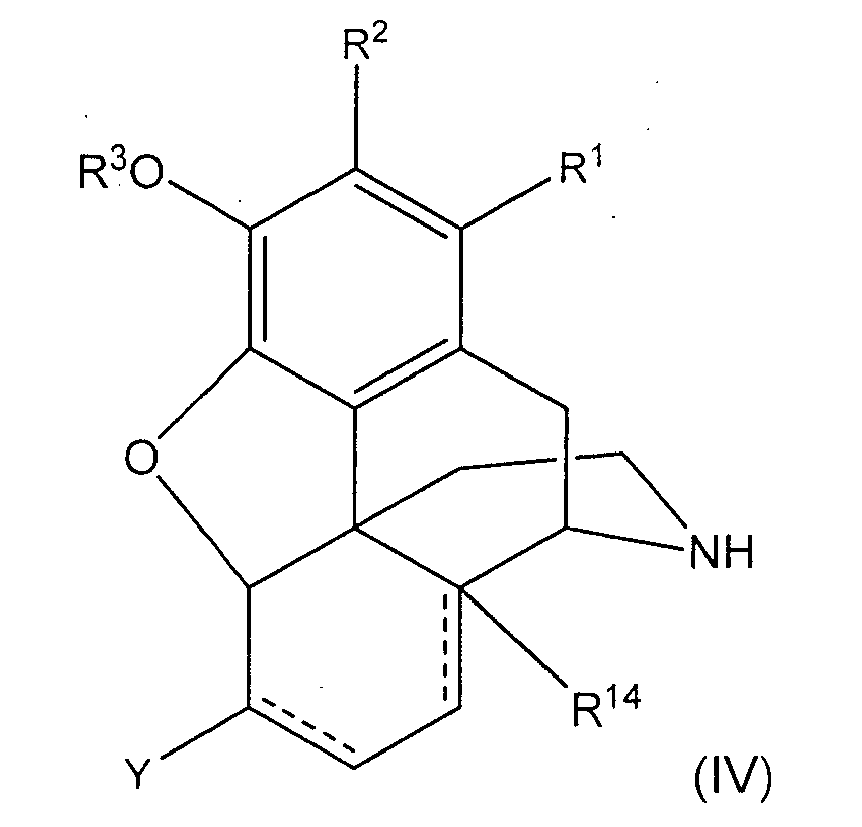 R1 und R2 unabhängig ausgewählt sind aus Wasserstoff, Halogen, Hydroxy, Amino, Cyano, {-}OR8, Hydrocarbyl und substituiertem Hydrocarbyl,R3 ausgewählt ist aus Wasserstoff, Hydrocarbyl und substituiertem Hydrocarbyl,R14 ausgewählt ist aus Wasserstoff, Halogen, Hydroxy, {-}OR8, Hydrocarbyl und substituiertem Hydrocarbyl,R8 Hydrocarbyl oder substituiertes Hydrocarbyl ist, undY ausgewählt ist aus cyclischem Alkenacetal, Dialkenolacetal und Enolether, wobei jede gestrichelte Linie eine optionale Doppelbindung bezeichnet.
- Verfahren nach Anspruch 8, des Weiteren umfassend das Inkontaktbringen der Verbindung, umfassend Formel (IV), mit einem Protonendonor, um eine Verbindung, umfassend Formel (V), zu bilden:
 R1 und R2 unabhängig ausgewählt sind aus Wasserstoff, Halogen, Hydroxy, Amino, Cyano, {-}OR8, Hydrocarbyl und substituiertem Hydrocarbyl,R3 ausgewählt ist aus Wasserstoff, Hydrocarbyl und substituiertem Hydrocarbyl,R14 ausgewählt ist aus Wasserstoff, Halogen, Hydroxy, {-}OR8, Hydrocarbyl und substituiertem Hydrocarbyl undR8 Hydrocarbyl oder substituiertes Hydrocarbyl ist.
- Verfahren nach Anspruch 9, wobei der Protonendonor einen pKa-Wert von weniger als etwa -2 aufweist und das Molverhältnis der Verbindung, umfassend Formel (IV), zu dem Protonendonor etwa 1:2 bis etwa 1:10 beträgt.
- Verfahren nach Anspruch 6, wobei das Alkendiol Ethylenglycol ist, der Protonendonor Methansulfonsäure ist, das Molverhältnis der Verbindung, umfassend Formel (I), zu Ethylenglycol zu Methansulfonsäure etwa 1:4-30:3 beträgt und der Reaktionsschritt (a) durchgeführt wird bei einer Temperatur von weniger als etwa 40°C.
- Verfahren nach Anspruch 6, wobei der Protonenakzeptor Natriumhydrid ist, das Dialkylsulfat Dimethylsulfat ist, das Molverhältnis der Verbindung, umfassend Formel (I), zu dem Protonenakzeptor zu dem Dialkylsulfat etwa 1:1,5:1,4 beträgt und der Reaktionsschritt (a) durchgeführt wird bei einer Temperatur von weniger als etwa 40°C.
- Verfahren nach Anspruch 11 oder 12, wobei das N-Demethylierungsmittel Ethylchlorformiat oder Phenylchlorformiat ist, der Protonenakzeptor ein Carbonat- oder Bicarbonatsalz ist, das Molverhältnis der Verbindung, umfassend Formel (II), zu dem Demethylierungsmittel zu dem Protonenakzeptor im Bereich von etwa 1:1,2:2-3 liegt, der Reaktionsschritt (b) durchgeführt wird bei einer Temperatur von etwa 40°C bis etwa 80°C, die Verbindung, umfassend Formel (III), weniger als etwa 0,05 Gew.-% einer Aldoldimerverunreinigung umfasst, und die optische Aktivität der Verbindungen, umfassend Formeln (I), (II) oder (III), ausgewählt ist aus dem (-)-Enantiomer, (+)-Enantiomer und Kombinationen davon und die Konfigurationen an C-5, C-13, C-14 und C-9 ausgewählt sind aus RRRR, RRRS, RRSR, RSRR, SRRR, RRSS, RSSR, SSRR, SRRS, SRSR, RSRS, RSSS, SRSS, SSRS, SSSR und SSSS, mit der Maßgabe, dass C-15 und C-16 beide entweder auf der alpha-Seite oder der beta-Seite des Moleküls sind.
- Verfahren nach einem der Ansprüche 4 bis 13, wobei die optische Aktivität der Verbindungen, umfassend Formeln (I), (II) oder (III), ausgewählt ist aus dem (-)-Enantiomer, (+)-Enantiomer und Kombinationen davon und die Konfiguration an C-5, C-13, C-14 und C-9 ausgewählt ist aus RRRR, RRRS, RRSR, RSRR, SRRR, RRSS, RSSR, SSRR, SRRS, SRSR, RSRS, RSSS, SRSS, SSRS, SSSR und SSSS, mit der Maßgabe, dass C-15 und C-16 beide entweder auf der alpha-Seite oder der beta-Seite des Moleküls sind.
- Verfahren nach einem der Ansprüche 1 bis 14, wobei das 6-Keton-geschützte N-Hydrocarboxycarbonylmorphinan weniger als etwa 0,05 Gew.-% einer Aldoldimerverunreinigung umfasst.
Priority Applications (1)
| Application Number | Priority Date | Filing Date | Title |
|---|---|---|---|
| PL11746372T PL2601196T3 (pl) | 2010-08-04 | 2011-08-03 | N-demetylowanie 6-ketomorfinanów |
Applications Claiming Priority (2)
| Application Number | Priority Date | Filing Date | Title |
|---|---|---|---|
| US37065310P | 2010-08-04 | 2010-08-04 | |
| PCT/US2011/046345 WO2012018872A1 (en) | 2010-08-04 | 2011-08-03 | N-demethylation of 6-keto morphinans |
Publications (2)
| Publication Number | Publication Date |
|---|---|
| EP2601196A1 EP2601196A1 (de) | 2013-06-12 |
| EP2601196B1 true EP2601196B1 (de) | 2014-04-30 |
Family
ID=44513172
Family Applications (1)
| Application Number | Title | Priority Date | Filing Date |
|---|---|---|---|
| EP11746372.9A Not-in-force EP2601196B1 (de) | 2010-08-04 | 2011-08-03 | N-demethylierung von 6-keto morphinanen |
Country Status (8)
| Country | Link |
|---|---|
| US (1) | US8624030B2 (de) |
| EP (1) | EP2601196B1 (de) |
| JP (2) | JP2013532731A (de) |
| AU (1) | AU2011285840B2 (de) |
| CA (1) | CA2806596A1 (de) |
| ES (1) | ES2470315T3 (de) |
| PL (1) | PL2601196T3 (de) |
| WO (1) | WO2012018872A1 (de) |
Families Citing this family (8)
| Publication number | Priority date | Publication date | Assignee | Title |
|---|---|---|---|---|
| HUE043963T2 (hu) | 2009-12-04 | 2019-09-30 | Alkermes Pharma Ireland Ltd | Morfinán származékok gyógyszer-túladagolás kezelésére |
| PL2601195T3 (pl) * | 2010-08-04 | 2014-10-31 | Mallinckrodt Llc | Tandemowy sposób wytwarzania n-alkilomorfinanów |
| ES2470315T3 (es) * | 2010-08-04 | 2014-06-23 | Mallinckrodt Llc | N-desmetilaci�n de 6-ceto morfinanos |
| EP2608670B1 (de) | 2010-08-23 | 2018-10-31 | Alkermes Pharma Ireland Limited | Verfahren zur behandlung von durch antipsychotika induzierter gewichtszunahme |
| US9211293B2 (en) | 2011-12-15 | 2015-12-15 | Alkermes Pharma Ireland Limited | Opioid agonist antagonist combinations |
| US20160244459A1 (en) * | 2013-05-24 | 2016-08-25 | Rhodes Technologies | Opioid ketal compounds and uses thereof |
| MX371334B (es) * | 2013-11-18 | 2020-01-27 | SpecGx LLC | Preparacion de normorfinanos. |
| WO2022101444A1 (en) | 2020-11-12 | 2022-05-19 | Alkermes Pharma Ireland Limited | Immediate release multilayer tablet |
Family Cites Families (4)
| Publication number | Priority date | Publication date | Assignee | Title |
|---|---|---|---|---|
| GB9713703D0 (en) * | 1997-06-30 | 1997-09-03 | Johnson Matthey Plc | Preparation of opiates |
| US8101757B2 (en) * | 2007-12-17 | 2012-01-24 | Mallinckrodt Llc | Processes for the preparation of normorphinan salts |
| EP2222677A1 (de) * | 2007-12-17 | 2010-09-01 | Mallinckrodt Inc. | N-demethylierung von n-methylmorphinanen |
| ES2470315T3 (es) * | 2010-08-04 | 2014-06-23 | Mallinckrodt Llc | N-desmetilaci�n de 6-ceto morfinanos |
-
2011
- 2011-08-03 ES ES11746372.9T patent/ES2470315T3/es active Active
- 2011-08-03 JP JP2013523294A patent/JP2013532731A/ja active Pending
- 2011-08-03 WO PCT/US2011/046345 patent/WO2012018872A1/en not_active Ceased
- 2011-08-03 AU AU2011285840A patent/AU2011285840B2/en not_active Ceased
- 2011-08-03 US US13/196,929 patent/US8624030B2/en active Active
- 2011-08-03 CA CA2806596A patent/CA2806596A1/en not_active Abandoned
- 2011-08-03 PL PL11746372T patent/PL2601196T3/pl unknown
- 2011-08-03 EP EP11746372.9A patent/EP2601196B1/de not_active Not-in-force
-
2015
- 2015-07-29 JP JP2015149359A patent/JP2015193658A/ja active Pending
Also Published As
| Publication number | Publication date |
|---|---|
| ES2470315T3 (es) | 2014-06-23 |
| PL2601196T3 (pl) | 2014-09-30 |
| JP2013532731A (ja) | 2013-08-19 |
| US20120035366A1 (en) | 2012-02-09 |
| AU2011285840A1 (en) | 2013-03-21 |
| AU2011285840B2 (en) | 2014-07-10 |
| US8624030B2 (en) | 2014-01-07 |
| CA2806596A1 (en) | 2012-02-09 |
| WO2012018872A1 (en) | 2012-02-09 |
| EP2601196A1 (de) | 2013-06-12 |
| JP2015193658A (ja) | 2015-11-05 |
Similar Documents
| Publication | Publication Date | Title |
|---|---|---|
| US8624030B2 (en) | N-demethylation of 6-keto morphinans | |
| JP5688974B2 (ja) | (+)−オピエートの生成のためのプロセスおよび化合物 | |
| US8017777B2 (en) | Process for the preparation of buprenorphine and derivatives for buprenorphine | |
| CA2709882A1 (en) | N-demethylation of n-methyl morphinans | |
| US20110269964A1 (en) | N-Alkylation of Opiates | |
| US20100081814A1 (en) | Processes for increasing the yield of opiate alkaloid derivatives | |
| US8703949B2 (en) | Tandem process for preparing N-alkyl morphinans | |
| US9012468B2 (en) | One pot process for producing 6-hydroxyl nal-opiate | |
| US9127009B2 (en) | Preparation of normorphinans |
Legal Events
| Date | Code | Title | Description |
|---|---|---|---|
| PUAI | Public reference made under article 153(3) epc to a published international application that has entered the european phase |
Free format text: ORIGINAL CODE: 0009012 |
|
| 17P | Request for examination filed |
Effective date: 20130128 |
|
| AK | Designated contracting states |
Kind code of ref document: A1 Designated state(s): AL AT BE BG CH CY CZ DE DK EE ES FI FR GB GR HR HU IE IS IT LI LT LU LV MC MK MT NL NO PL PT RO RS SE SI SK SM TR |
|
| DAX | Request for extension of the european patent (deleted) | ||
| GRAP | Despatch of communication of intention to grant a patent |
Free format text: ORIGINAL CODE: EPIDOSNIGR1 |
|
| INTG | Intention to grant announced |
Effective date: 20131205 |
|
| GRAS | Grant fee paid |
Free format text: ORIGINAL CODE: EPIDOSNIGR3 |
|
| GRAA | (expected) grant |
Free format text: ORIGINAL CODE: 0009210 |
|
| AK | Designated contracting states |
Kind code of ref document: B1 Designated state(s): AL AT BE BG CH CY CZ DE DK EE ES FI FR GB GR HR HU IE IS IT LI LT LU LV MC MK MT NL NO PL PT RO RS SE SI SK SM TR |
|
| REG | Reference to a national code |
Ref country code: GB Ref legal event code: FG4D Ref country code: CH Ref legal event code: EP |
|
| REG | Reference to a national code |
Ref country code: AT Ref legal event code: REF Ref document number: 665059 Country of ref document: AT Kind code of ref document: T Effective date: 20140515 |
|
| REG | Reference to a national code |
Ref country code: IE Ref legal event code: FG4D |
|
| REG | Reference to a national code |
Ref country code: DE Ref legal event code: R096 Ref document number: 602011006616 Country of ref document: DE Effective date: 20140612 |
|
| REG | Reference to a national code |
Ref country code: ES Ref legal event code: FG2A Ref document number: 2470315 Country of ref document: ES Kind code of ref document: T3 Effective date: 20140623 |
|
| REG | Reference to a national code |
Ref country code: AT Ref legal event code: MK05 Ref document number: 665059 Country of ref document: AT Kind code of ref document: T Effective date: 20140430 |
|
| REG | Reference to a national code |
Ref country code: LT Ref legal event code: MG4D |
|
| REG | Reference to a national code |
Ref country code: PL Ref legal event code: T3 |
|
| REG | Reference to a national code |
Ref country code: NL Ref legal event code: VDEP Effective date: 20140430 |
|
| PG25 | Lapsed in a contracting state [announced via postgrant information from national office to epo] |
Ref country code: CY Free format text: LAPSE BECAUSE OF FAILURE TO SUBMIT A TRANSLATION OF THE DESCRIPTION OR TO PAY THE FEE WITHIN THE PRESCRIBED TIME-LIMIT Effective date: 20140430 Ref country code: IS Free format text: LAPSE BECAUSE OF FAILURE TO SUBMIT A TRANSLATION OF THE DESCRIPTION OR TO PAY THE FEE WITHIN THE PRESCRIBED TIME-LIMIT Effective date: 20140830 Ref country code: LT Free format text: LAPSE BECAUSE OF FAILURE TO SUBMIT A TRANSLATION OF THE DESCRIPTION OR TO PAY THE FEE WITHIN THE PRESCRIBED TIME-LIMIT Effective date: 20140430 Ref country code: BG Free format text: LAPSE BECAUSE OF FAILURE TO SUBMIT A TRANSLATION OF THE DESCRIPTION OR TO PAY THE FEE WITHIN THE PRESCRIBED TIME-LIMIT Effective date: 20140730 Ref country code: GR Free format text: LAPSE BECAUSE OF FAILURE TO SUBMIT A TRANSLATION OF THE DESCRIPTION OR TO PAY THE FEE WITHIN THE PRESCRIBED TIME-LIMIT Effective date: 20140731 Ref country code: FI Free format text: LAPSE BECAUSE OF FAILURE TO SUBMIT A TRANSLATION OF THE DESCRIPTION OR TO PAY THE FEE WITHIN THE PRESCRIBED TIME-LIMIT Effective date: 20140430 Ref country code: NL Free format text: LAPSE BECAUSE OF FAILURE TO SUBMIT A TRANSLATION OF THE DESCRIPTION OR TO PAY THE FEE WITHIN THE PRESCRIBED TIME-LIMIT Effective date: 20140430 Ref country code: NO Free format text: LAPSE BECAUSE OF FAILURE TO SUBMIT A TRANSLATION OF THE DESCRIPTION OR TO PAY THE FEE WITHIN THE PRESCRIBED TIME-LIMIT Effective date: 20140730 |
|
| PG25 | Lapsed in a contracting state [announced via postgrant information from national office to epo] |
Ref country code: AT Free format text: LAPSE BECAUSE OF FAILURE TO SUBMIT A TRANSLATION OF THE DESCRIPTION OR TO PAY THE FEE WITHIN THE PRESCRIBED TIME-LIMIT Effective date: 20140430 Ref country code: RS Free format text: LAPSE BECAUSE OF FAILURE TO SUBMIT A TRANSLATION OF THE DESCRIPTION OR TO PAY THE FEE WITHIN THE PRESCRIBED TIME-LIMIT Effective date: 20140430 Ref country code: HR Free format text: LAPSE BECAUSE OF FAILURE TO SUBMIT A TRANSLATION OF THE DESCRIPTION OR TO PAY THE FEE WITHIN THE PRESCRIBED TIME-LIMIT Effective date: 20140430 Ref country code: LV Free format text: LAPSE BECAUSE OF FAILURE TO SUBMIT A TRANSLATION OF THE DESCRIPTION OR TO PAY THE FEE WITHIN THE PRESCRIBED TIME-LIMIT Effective date: 20140430 Ref country code: SE Free format text: LAPSE BECAUSE OF FAILURE TO SUBMIT A TRANSLATION OF THE DESCRIPTION OR TO PAY THE FEE WITHIN THE PRESCRIBED TIME-LIMIT Effective date: 20140430 |
|
| PG25 | Lapsed in a contracting state [announced via postgrant information from national office to epo] |
Ref country code: PT Free format text: LAPSE BECAUSE OF FAILURE TO SUBMIT A TRANSLATION OF THE DESCRIPTION OR TO PAY THE FEE WITHIN THE PRESCRIBED TIME-LIMIT Effective date: 20140901 |
|
| PG25 | Lapsed in a contracting state [announced via postgrant information from national office to epo] |
Ref country code: RO Free format text: LAPSE BECAUSE OF FAILURE TO SUBMIT A TRANSLATION OF THE DESCRIPTION OR TO PAY THE FEE WITHIN THE PRESCRIBED TIME-LIMIT Effective date: 20140430 Ref country code: CZ Free format text: LAPSE BECAUSE OF FAILURE TO SUBMIT A TRANSLATION OF THE DESCRIPTION OR TO PAY THE FEE WITHIN THE PRESCRIBED TIME-LIMIT Effective date: 20140430 Ref country code: BE Free format text: LAPSE BECAUSE OF FAILURE TO SUBMIT A TRANSLATION OF THE DESCRIPTION OR TO PAY THE FEE WITHIN THE PRESCRIBED TIME-LIMIT Effective date: 20140430 Ref country code: EE Free format text: LAPSE BECAUSE OF FAILURE TO SUBMIT A TRANSLATION OF THE DESCRIPTION OR TO PAY THE FEE WITHIN THE PRESCRIBED TIME-LIMIT Effective date: 20140430 Ref country code: DK Free format text: LAPSE BECAUSE OF FAILURE TO SUBMIT A TRANSLATION OF THE DESCRIPTION OR TO PAY THE FEE WITHIN THE PRESCRIBED TIME-LIMIT Effective date: 20140430 Ref country code: SK Free format text: LAPSE BECAUSE OF FAILURE TO SUBMIT A TRANSLATION OF THE DESCRIPTION OR TO PAY THE FEE WITHIN THE PRESCRIBED TIME-LIMIT Effective date: 20140430 |
|
| REG | Reference to a national code |
Ref country code: DE Ref legal event code: R097 Ref document number: 602011006616 Country of ref document: DE |
|
| PLBE | No opposition filed within time limit |
Free format text: ORIGINAL CODE: 0009261 |
|
| STAA | Information on the status of an ep patent application or granted ep patent |
Free format text: STATUS: NO OPPOSITION FILED WITHIN TIME LIMIT |
|
| PG25 | Lapsed in a contracting state [announced via postgrant information from national office to epo] |
Ref country code: LU Free format text: LAPSE BECAUSE OF FAILURE TO SUBMIT A TRANSLATION OF THE DESCRIPTION OR TO PAY THE FEE WITHIN THE PRESCRIBED TIME-LIMIT Effective date: 20140803 Ref country code: MC Free format text: LAPSE BECAUSE OF FAILURE TO SUBMIT A TRANSLATION OF THE DESCRIPTION OR TO PAY THE FEE WITHIN THE PRESCRIBED TIME-LIMIT Effective date: 20140430 |
|
| REG | Reference to a national code |
Ref country code: CH Ref legal event code: PL |
|
| 26N | No opposition filed |
Effective date: 20150202 |
|
| PG25 | Lapsed in a contracting state [announced via postgrant information from national office to epo] |
Ref country code: CH Free format text: LAPSE BECAUSE OF NON-PAYMENT OF DUE FEES Effective date: 20140831 Ref country code: LI Free format text: LAPSE BECAUSE OF NON-PAYMENT OF DUE FEES Effective date: 20140831 |
|
| REG | Reference to a national code |
Ref country code: DE Ref legal event code: R097 Ref document number: 602011006616 Country of ref document: DE Effective date: 20150202 |
|
| REG | Reference to a national code |
Ref country code: IE Ref legal event code: MM4A |
|
| PG25 | Lapsed in a contracting state [announced via postgrant information from national office to epo] |
Ref country code: SI Free format text: LAPSE BECAUSE OF FAILURE TO SUBMIT A TRANSLATION OF THE DESCRIPTION OR TO PAY THE FEE WITHIN THE PRESCRIBED TIME-LIMIT Effective date: 20140430 |
|
| REG | Reference to a national code |
Ref country code: FR Ref legal event code: PLFP Year of fee payment: 5 |
|
| PG25 | Lapsed in a contracting state [announced via postgrant information from national office to epo] |
Ref country code: IE Free format text: LAPSE BECAUSE OF NON-PAYMENT OF DUE FEES Effective date: 20140803 |
|
| PGFP | Annual fee paid to national office [announced via postgrant information from national office to epo] |
Ref country code: GB Payment date: 20150827 Year of fee payment: 5 Ref country code: DE Payment date: 20150827 Year of fee payment: 5 Ref country code: ES Payment date: 20150826 Year of fee payment: 5 |
|
| PGFP | Annual fee paid to national office [announced via postgrant information from national office to epo] |
Ref country code: TR Payment date: 20150723 Year of fee payment: 5 Ref country code: FR Payment date: 20150817 Year of fee payment: 5 Ref country code: PL Payment date: 20150724 Year of fee payment: 5 |
|
| PGFP | Annual fee paid to national office [announced via postgrant information from national office to epo] |
Ref country code: IT Payment date: 20150825 Year of fee payment: 5 |
|
| PG25 | Lapsed in a contracting state [announced via postgrant information from national office to epo] |
Ref country code: SM Free format text: LAPSE BECAUSE OF FAILURE TO SUBMIT A TRANSLATION OF THE DESCRIPTION OR TO PAY THE FEE WITHIN THE PRESCRIBED TIME-LIMIT Effective date: 20140430 |
|
| PG25 | Lapsed in a contracting state [announced via postgrant information from national office to epo] |
Ref country code: MT Free format text: LAPSE BECAUSE OF FAILURE TO SUBMIT A TRANSLATION OF THE DESCRIPTION OR TO PAY THE FEE WITHIN THE PRESCRIBED TIME-LIMIT Effective date: 20140430 |
|
| PG25 | Lapsed in a contracting state [announced via postgrant information from national office to epo] |
Ref country code: HU Free format text: LAPSE BECAUSE OF FAILURE TO SUBMIT A TRANSLATION OF THE DESCRIPTION OR TO PAY THE FEE WITHIN THE PRESCRIBED TIME-LIMIT; INVALID AB INITIO Effective date: 20110803 |
|
| REG | Reference to a national code |
Ref country code: DE Ref legal event code: R119 Ref document number: 602011006616 Country of ref document: DE |
|
| GBPC | Gb: european patent ceased through non-payment of renewal fee |
Effective date: 20160803 |
|
| REG | Reference to a national code |
Ref country code: FR Ref legal event code: ST Effective date: 20170428 |
|
| PG25 | Lapsed in a contracting state [announced via postgrant information from national office to epo] |
Ref country code: GB Free format text: LAPSE BECAUSE OF NON-PAYMENT OF DUE FEES Effective date: 20160803 Ref country code: DE Free format text: LAPSE BECAUSE OF NON-PAYMENT OF DUE FEES Effective date: 20170301 Ref country code: FR Free format text: LAPSE BECAUSE OF NON-PAYMENT OF DUE FEES Effective date: 20160831 |
|
| PG25 | Lapsed in a contracting state [announced via postgrant information from national office to epo] |
Ref country code: IT Free format text: LAPSE BECAUSE OF NON-PAYMENT OF DUE FEES Effective date: 20160803 |
|
| PG25 | Lapsed in a contracting state [announced via postgrant information from national office to epo] |
Ref country code: PL Free format text: LAPSE BECAUSE OF NON-PAYMENT OF DUE FEES Effective date: 20160803 |
|
| PG25 | Lapsed in a contracting state [announced via postgrant information from national office to epo] |
Ref country code: ES Free format text: LAPSE BECAUSE OF NON-PAYMENT OF DUE FEES Effective date: 20160804 |
|
| REG | Reference to a national code |
Ref country code: ES Ref legal event code: FD2A Effective date: 20180627 |
|
| PG25 | Lapsed in a contracting state [announced via postgrant information from national office to epo] |
Ref country code: MK Free format text: LAPSE BECAUSE OF FAILURE TO SUBMIT A TRANSLATION OF THE DESCRIPTION OR TO PAY THE FEE WITHIN THE PRESCRIBED TIME-LIMIT Effective date: 20140430 |
|
| PG25 | Lapsed in a contracting state [announced via postgrant information from national office to epo] |
Ref country code: AL Free format text: LAPSE BECAUSE OF FAILURE TO SUBMIT A TRANSLATION OF THE DESCRIPTION OR TO PAY THE FEE WITHIN THE PRESCRIBED TIME-LIMIT Effective date: 20140430 |
|
| PG25 | Lapsed in a contracting state [announced via postgrant information from national office to epo] |
Ref country code: TR Free format text: LAPSE BECAUSE OF NON-PAYMENT OF DUE FEES Effective date: 20160803 |