EP2614904B1 - Verfahren zur herstellung von kupferpulver für leitfähige pasten - Google Patents
Verfahren zur herstellung von kupferpulver für leitfähige pasten Download PDFInfo
- Publication number
- EP2614904B1 EP2614904B1 EP11828827.3A EP11828827A EP2614904B1 EP 2614904 B1 EP2614904 B1 EP 2614904B1 EP 11828827 A EP11828827 A EP 11828827A EP 2614904 B1 EP2614904 B1 EP 2614904B1
- Authority
- EP
- European Patent Office
- Prior art keywords
- copper
- fine particles
- particles
- complexing
- copper powder
- Prior art date
- Legal status (The legal status is an assumption and is not a legal conclusion. Google has not performed a legal analysis and makes no representation as to the accuracy of the status listed.)
- Active
Links
Images




Classifications
-
- B—PERFORMING OPERATIONS; TRANSPORTING
- B22—CASTING; POWDER METALLURGY
- B22F—WORKING METALLIC POWDER; MANUFACTURE OF ARTICLES FROM METALLIC POWDER; MAKING METALLIC POWDER; APPARATUS OR DEVICES SPECIALLY ADAPTED FOR METALLIC POWDER
- B22F9/00—Making metallic powder or suspensions thereof
- B22F9/16—Making metallic powder or suspensions thereof using chemical processes
- B22F9/18—Making metallic powder or suspensions thereof using chemical processes with reduction of metal compounds
- B22F9/24—Making metallic powder or suspensions thereof using chemical processes with reduction of metal compounds starting from liquid metal compounds, e.g. solutions
-
- B—PERFORMING OPERATIONS; TRANSPORTING
- B22—CASTING; POWDER METALLURGY
- B22F—WORKING METALLIC POWDER; MANUFACTURE OF ARTICLES FROM METALLIC POWDER; MAKING METALLIC POWDER; APPARATUS OR DEVICES SPECIALLY ADAPTED FOR METALLIC POWDER
- B22F1/00—Metallic powder; Treatment of metallic powder, e.g. to facilitate working or to improve properties
- B22F1/05—Metallic powder characterised by the size or surface area of the particles
- B22F1/052—Metallic powder characterised by the size or surface area of the particles characterised by a mixture of particles of different sizes or by the particle size distribution
-
- B—PERFORMING OPERATIONS; TRANSPORTING
- B22—CASTING; POWDER METALLURGY
- B22F—WORKING METALLIC POWDER; MANUFACTURE OF ARTICLES FROM METALLIC POWDER; MAKING METALLIC POWDER; APPARATUS OR DEVICES SPECIALLY ADAPTED FOR METALLIC POWDER
- B22F1/00—Metallic powder; Treatment of metallic powder, e.g. to facilitate working or to improve properties
- B22F1/05—Metallic powder characterised by the size or surface area of the particles
- B22F1/054—Nanosized particles
- B22F1/056—Submicron particles having a size above 100 nm up to 300 nm
-
- B—PERFORMING OPERATIONS; TRANSPORTING
- B82—NANOTECHNOLOGY
- B82Y—SPECIFIC USES OR APPLICATIONS OF NANOSTRUCTURES; MEASUREMENT OR ANALYSIS OF NANOSTRUCTURES; MANUFACTURE OR TREATMENT OF NANOSTRUCTURES
- B82Y30/00—Nanotechnology for materials or surface science, e.g. nanocomposites
-
- C—CHEMISTRY; METALLURGY
- C22—METALLURGY; FERROUS OR NON-FERROUS ALLOYS; TREATMENT OF ALLOYS OR NON-FERROUS METALS
- C22C—ALLOYS
- C22C9/00—Alloys based on copper
-
- H—ELECTRICITY
- H01—ELECTRIC ELEMENTS
- H01B—CABLES; CONDUCTORS; INSULATORS; SELECTION OF MATERIALS FOR THEIR CONDUCTIVE, INSULATING OR DIELECTRIC PROPERTIES
- H01B1/00—Conductors or conductive bodies characterised by the conductive materials; Selection of materials as conductors
- H01B1/02—Conductors or conductive bodies characterised by the conductive materials; Selection of materials as conductors mainly consisting of metals or alloys
- H01B1/026—Alloys based on copper
-
- H—ELECTRICITY
- H01—ELECTRIC ELEMENTS
- H01B—CABLES; CONDUCTORS; INSULATORS; SELECTION OF MATERIALS FOR THEIR CONDUCTIVE, INSULATING OR DIELECTRIC PROPERTIES
- H01B1/00—Conductors or conductive bodies characterised by the conductive materials; Selection of materials as conductors
- H01B1/20—Conductive material dispersed in non-conductive organic material
- H01B1/22—Conductive material dispersed in non-conductive organic material the conductive material comprising metals or alloys
-
- B—PERFORMING OPERATIONS; TRANSPORTING
- B22—CASTING; POWDER METALLURGY
- B22F—WORKING METALLIC POWDER; MANUFACTURE OF ARTICLES FROM METALLIC POWDER; MAKING METALLIC POWDER; APPARATUS OR DEVICES SPECIALLY ADAPTED FOR METALLIC POWDER
- B22F2301/00—Metallic composition of the powder or its coating
- B22F2301/10—Copper
Definitions
- the present invention relates generally to a method for producing a copper powder for conductive paste. More specifically, the invention relates to a method for producing a copper powder for use in conductive pastes for forming internal electrodes of multilayer ceramic electronic parts, such as multilayer ceramic capacitors and multilayer ceramic inductors, and external electrodes of small multilayer ceramic capacitors, multilayer ceramic inductors or the like.
- a plurality of dielectric ceramic green sheets of barium titanate ceramics or the like are prepared, and a conductive paste for internal electrode is printed on each of the sheets so as to have a predetermined pattern. Then, the sheets are stacked and pressed to prepare a laminated product wherein the dielectric ceramic green sheets and the layers of the conductive paste are alternately laminated.
- the laminated product is cut into a plurality of chips having a predetermined shape. The chips are simultaneously burned at a high temperature to prepare the element assemblies of multilayer ceramic capacitors.
- a conductive paste for external electrode which contains a conductive powder, a glass powder and an organic vehicle as principal components, is applied on the end face of each of the element assemblies, which allows the internal electrode to expose, to be dried, and then, burned at a high temperature to prepare an external electrode. Thereafter, a coating of nickel, tin or the like is formed on the external electrode by electroplating or the like if necessary.
- copper Since copper has a higher electrical conductivity and a lower melting point than those of nickel, it can improve the characteristics of multilayer ceramic capacitors, and it can contribute to energy saving for production, such as the reduction of burning temperature, so that it is expected as one of favorable metallic materials for internal electrodes in future.
- fine particles of copper are mainly used for conductive pastes for external electrodes of multilayer ceramic capacitors and so forth.
- Such fine particles of copper have particle diameters of about 0.5 to 10 micrometers in accordance with the size of multilayer ceramic capacitors and so forth, and have various shapes, such as spherical, flaky and undefined shapes.
- the fine particles of copper having the above-described size and shape are mixed in typical conductive paste for external electrodes to be used.
- the fine particles of copper obtained by the method disclosed in Japanese Patent Laid-Open No. 63-186803 have a mean particle diameter of 1.0 to 1.8 micrometers, and are not sufficient to be used as fine particles of copper for internal electrodes.
- the pH-adjusted aqueous copper ion solution and the pH-adjusted aqueous reducing agent solution are used for reducing copper ions to copper particles via cuprous oxide in this method, the control of particle diameters is unstable, and aggregation (bonding of particles) is caused so as not to obtain a constant shape, so that there are some cases where the particle size distribution is broader.
- the fine particles of copper obtained by the method disclosed in Japanese Patent Laid-Open No. 63-186805 have a mean particle diameter of 0.8 to 2.0 micrometers, and are not sufficient to be used as fine particles of copper for internal electrodes.
- the pH-adjusted aqueous copper ion solution and the pH-adjusted aqueous reducing agent solution are used for reducing copper ions to copper particles via cuprous oxide in this method, the control of particle diameters is unstable, and aggregation (bonding of particles) is caused so as not to obtain a constant shape, so that there are some cases where the particle size distribution is broader.
- the fine particles of copper obtained by the method disclosed in Japanese Patent Laid-Open No. 63-186811 have a mean particle diameter of 0.3 to 0.7 micrometers, which is smaller than that of the fine particles of copper obtained by each of the methods disclosed in Japanese Patent Laid-Open Nos. 63-186803 and 63-186805 , but they are not sufficient to be used as fine particles of copper for internal electrodes.
- the borohydride compound is used as a reducing agent, there are some cases where workability and stability are deteriorated by causing autolysis if the pH of the reducing agent is low when the pH is adjusted. On the other hand, if the pH of the reducing agent is raised, the borohydride compound is stabilized.
- the fine particles of copper obtained by the method disclosed in Japanese Patent Laid-Open No. 1-225705 have a mean particle diameter of 0.7 to 1.5 micrometers, and are not sufficient to be used as fine particles of copper for internal electrodes.
- hydroquinone is used as a reducing agent, so that it is difficult to further decrease the size of the fine particles of copper even if the pH and temperature in reaction are controlled.
- the pH-adjusted aqueous copper ion solution and the pH-adjusted aqueous reducing agent solution are used for reducing copper ions to copper particles via cuprous oxide in this method, the control of particle diameters is unstable, and aggregation (bonding of particles) is caused so as not to obtain a constant shape, so that there are some cases where the particle size distribution is broader.
- the fine particles of copper obtained by the method disclosed in Japanese Patent Laid-Open No. 63-274706 have a mean particle diameter of 0.16 to 0.61 micrometers . It is considered that they can be used as a copper powder for internal electrodes judging from the mean particle diameter.
- the reduction of copper ions is carried out in a high pH range (pH 12-13.5), so that copper ions are reduced to copper particles via copper hydroxide, copper oxide and cuprous oxide.
- the control of particle diameters is unstable, and aggregation (bonding of particles) is caused so as not to obtain a constant shape, so that there are some cases where the particle size distribution is broader.
- the fine particles of copper obtained by the method disclosed in Japanese Patent Laid-Open No. 2003-342621 have a mean particle diameter of 0.5 to 4.0 micrometers, and are not sufficient to be used as fine particles of copper for internal electrodes.
- cuprous oxide generated from bivalent copper ions are reduced to cupric oxide, and thereafter, cupric oxide thus obtained are further reduced to copper particles.
- the reduction of cupric oxide to copper particles is a so-called dissolving and depositing reaction. If this method is used for producing copper particles having a large particle diameter to some extent, the control of particle diameters can be stably carried out, and the particle size distribution can be sharp.
- it is difficult to obtain fine particles of copper for internal electrodes and it is difficult to obtain fine particles which are separated from each other (the fine particles containing no intergrowth particles and no aggregation particles).
- the fine particles of copper obtained by the method disclosed in Japanese Patent Laid-Open No. 2004-256857 have, as mean particle diameters, a primary particle diameter of 0.25 to 0.5 micrometers and a secondary particle diameter of 0.3 to 0.6 micrometers. It is considered that they can be used as a copper powder for internal electrodes judging from the mean particle diameters.
- the tap density of the copper powder is in the range of from 3.2 g/cm 3 to 3. 4 g/cm 3 which is a high tap density as fine particles, so that it is considered that the dispersibility of the copper powder is excellent.
- a copper powder for conductive paste which comprises monodisperse and spherical fine copper particles having a sharp particle size distribution and containing no coarse particles and which can form a thinner electrode film while avoiding a bad influence on electric characteristics thereof, by a method according to claim 1.
- a method for producing a copper powder for conductive paste comprising the steps of: complexing copper by adding a complexing agent to an aqueous solution containing copper while blowing air into the solution; stopping the blowing of air after complexing copper; and thereafter, adding a reducing agent to the solution to deposit copper particles by reduction, wherein the complexing agent is citric acid, wherein the reducing agent is at least one reducing agent selected from the group consisting of hypophosphoric acid, sodium hypophosphite, hydrazine, sodium borohydride and formalin, wherein the aqueous solution containing copper is an aqueous solution containing cuprous oxide or copper oxide, wherein the equivalent weight of the complexing agent added to the aqueous solution containing copper is in the range of from 0.035 to 0.065 with respect to that of copper contained in the aqueous solution containing copper, and wherein the equivalent weight of the reducing agent added to the aqueous solution containing copper is not less than 3 with
- the complexing of copper is preferably carried out for a period of time which is not shorter than 15 minutes.
- a copper powder for conductive paste wherein the 50% particle diameter (D 50 ) of the copper powder is in the range of from 0.1 to 0.5 micrometers and the maximum particle diameter (D max ) thereof is not greater than 1.5 micrometers if they are measured by a laser diffraction particle size distribution measuring apparatus, and wherein the BET specific surface area of the copper powder is not less than 3 m 2 /g if it is measured by a chemical adsorption method.
- a conductive paste which contains the above-described copper powder for conductive paste, as a conductive powder.
- a copper powder for conductive paste which comprises monodisperse and spherical fine copper particles having a sharp particle size distribution and containing no coarse particles and which can form a thinner electrode film while avoiding a bad influence on electric characteristics thereof.
- a complexing agent in the method for producing a copper powder for conductive paste according to the present invention, after copper is complexed by adding a complexing agent to an aqueous solution containing copper while blowing air into the solution, the blowing of air is stopped, and then, a reducing agent is added to the solution to deposit copper particles by reduction.
- the reducing agent is added to the aqueous solution containing the obtained complex of copper and/or complex ions of copper.
- the complex of copper and/or complex ions of copper are reduced directly to fine nuclei of copper to be allowed to grow while complex of copper and/or complex ions of copper are formed to suppress the reactivity of copper in the reaction solution, so that the agglomeration, aggregation and bonding of copper particles due to the sudden reaction of copper can be suppressed to obtain copper particles.
- bivalent copper ions are neutralized to generate copper hydroxide, and temperature is adjusted to accelerate dehydration to generate copper oxide.
- a method for primary reducing copper oxide to cuprous oxide with a weak reducing agent, such as sugars to secondary reduce the generated cuprous oxide to copper particles with a strong reducing agent, such as hydrazine.
- a strong reducing agent such as hydrazine.
- a method for producing a copper powder for conductive paste according to the present invention after the complexing is preferably carried out at a temperature of about 30 °C for a period of time, which is not shorter than 15 minutes, while blowing air into a reaction solution, an inert gas is fed into the solution to carry out reduction.
- an inert gas is fed into the solution to carry out reduction.
- the aqueous solution containing copper serving as raw materials is an aqueous solution containing cuprous oxide or copper oxide.
- the complexing agent is citric acid. If the amount of the complexing agent to be used is too small, the amount of the complex of copper and/or complex ions of copper is decreased to deteriorate the effects of suppressing the reactivity of copper in the reaction solution, so that it is difficult to synthesize fine particles of copper having such characteristics that they are monodisperse fine particles containing no coarse particles. On the other hand, if the amount of the complexing agent to be used is too large, the reactivity of copper in the reaction solution is too low, so that it is difficult to synthesize fine particles of copper having such characteristics that they are monodisperse fine particles containing no coarse particles.
- the equivalent weight of the complexing agent is in the range of from 0.035 to 0.065, with respect to the amount of substance of copper, assuming that 1 mol of the complexing agent corresponds to an equivalent weight of 1 with respect to 1 mol of Cu existing in the reaction solution.
- the amount of air to be blown should not be limited if it is possible to form the complex of copper and/or complex ions of copper in the reaction solution. If the amount of air to be blown is too small, it is not possible to sufficiently form the complex of copper and/or complex ions of copper, so that the number of fine nuclei of copper to be generated is decreased to deteriorate the effects of suppressing the reactivity of copper in the reaction solution. Therefore, it is difficult to synthesize fine particles of copper having such characteristics that they are monodisperse fine particles containing no coarse particles.
- the equivalent weight of the reducing agent to be added is 3 or more, assuming that the equivalent weight of the reducing agent required to reduce copper of monovalent cuprous oxide is 1.
- any method capable of uniformly mixing the reaction solution can be used.
- a method for stirring the solution by means of a magnet stirrer and a method for placing a stirring bar having blades in the reaction solution to rotate the bar by an external motor to stir the solution.
- the reaction temperature during the reduction may be in the range of from 20 °C to 100 °C, and preferably in the range of from 60 °C to 95 °C in view of the controllability of the reaction.
- the reducing agent is at least one reducing agent selected from the group consisting of hypophosphoric acid, sodium hypophosphite, hydrazine, sodium borohydride and formalin, and more preferably hydrazine.
- the copper powder containing slurry thus obtained is filtered and washed with water to obtain a massive copper cake.
- the filtering and water washing method may be any one of: a method for water-washing the powder while fixing it by means of a filter press or the like; a method for decanting the slurry, removing a supernatant liquid from the slurry, adding pure water to the slurry to stir it, and thereafter, decanting the slurry again to repeatedly remove a supernatant liquid; and a method for repulping the copper powder after filtering, and thereafter, repeating filtering again.
- a method capable of removing a larger amount of impurities locally remaining in the copper powder there is preferably used.
- a substance having the effect of corrosion prevention such as a fatty acid and benzoazole, may be dissolved in a lower alcohol or the like to be passed through the washed copper cake or to be used for repulping the washed copper cake, to coat the copper cake with the substance.
- the moisture in the copper cake may be replaced with a lower alcohol in order to advance the drying of the copper cake. It is possible to obtain fine particles of copper by drying the obtained copper cake in a non-oxidizing atmosphere (drying in an atmosphere of nitrogen or drying in a vacuum). If necessary, dry crushing, screening, air classification or the like may be carried out.
- the copper powder for conductive paste which is produced by the above-described method for producing a copper powder for conductive paste according to the present invention, comprises monodisperse and fine particles having a sharp particle size distribution and containing no coarse particles, and is suitably used as a copper powder for conductive paste for forming internal and external electrodes of multilayer ceramic capacitors and so forth.
- This copper powder for conductive paste can be used for producing a conductive paste by a known method.
- the conductive paste thus produced can be used for forming a thinner electrode film while avoiding a bad influence on electric characteristics thereof, and can be used for forming internal and external electrodes of multilayer ceramic capacitors and so forth.
- the copper powder for conductive paste which is produced by the method for producing a copper powder for conductive paste according to the present invention, has a 50% particle diameter (D 50 ), which is in the range of from 0.1 to 0.5 micrometers, and a detected maximum particle diameter (D max ), which is not greater than 1.5 micrometers, if they are measured by a laser diffraction particle size distribution measuring apparatus. If the 50% particle diameter (D 50 ) of the copper powder is in the range of from 0.1 to 0.5 micrometers when it is measured by the laser diffraction particle size distribution measuring apparatus, it is possible to provide a thinner internal electrode film (a thickness of 1.5 micrometers or less in recent years) which is required to increase the capacity of multilayer ceramic capacitors or the like and to decrease the size thereof.
- D 50 50% particle diameter
- D max detected maximum particle diameter
- the detected maximum particle diameter (D max ) of the copper powder is not greater than 1.5 micrometers, it is possible to prevent coarse particles existing in the thinner internal electrode film from breaking the dielectric materials of dielectric ceramic green sheets to cause insulating failure when the internal electrode is laminated on the dielectric ceramic green sheets.
- the copper powder for conductive paste which is produced by the method for producing a copper powder for conductive paste according to the present invention, has a BET specific surface area which is not less than 3 m 2 /g, preferably not less than 4 m 2 /g, if it is measured by a chemical adsorption method. If the BET specific surface area of the copper powder is not less than 3 m 2 /g when it is measured by the chemical adsorption method, the copper powder can comprise monodisperse and fine particles of copper containing no coarse particles.
- the BET specific surface area of the copper powder is less than 3 m 2 /g when it is measured by the chemical adsorption method, there is some possibility that the copper powder may contain coarse particles which are not suitably used as a copper powder for use in a conductive paste for forming an internal electrode or the like.
- Fine particles of copper were obtained by the same method as that in Example 1, except that the amount of the introduced citric acid was 4.70 g (equivalent weight of 0.037).
- Fine particles of copper were obtained by the same method as that in Example 1, except that the amount of the introduced citric acid was 8.00 g (equivalent weight of 0.063).
- Fine particles of copper were obtained by the same method as that in Example 1, except that the amount of the introduced hydrazine hydrate was 15.08 g (equivalent weight of 3.20).
- Fine particles of copper were obtained by the same method as that in Example 1, except that the amount of the introduced hydrazine hydrate was 20.10 g (equivalent weight of 4.27).
- Fine particles of copper were obtained by the same method as that in Example 1, except that the amount of the introduced hydrazine hydrate was 22.62 g (equivalent weight of 4.81).
- Fine particles of copper were obtained by the same method as that in Example 1, except that the amount of the introduced hydrazine hydrate was 27.66 g (equivalent weight of 5.88).
- Fine particles of copper were obtained by the same method as that in Example 1, except that the amount of the introduced hydrazine hydrate was 30.17 g (equivalent weight of 6.41).
- Fine particles of copper were obtained by the same method as that in Example 1, except that the amount of the introduced hydrazine hydrate was 60.30 g (equivalent weight of 12.81).
- Fine particles of copper were obtained by the same method as that in Example 1, except that the amount of the introduced hydrazine hydrate was 90.45 g (equivalent weight of 19.22).
- Fine particles of copper were obtained by the same method as that in Example 1, except that the reaction was allowed at 30 °C for 15 minutes for carrying out the complexing treatment.
- Fine particles of copper were obtained by the same method as that in Example 1, except that the reaction was allowed at 30 °C for 30 minutes for carrying out the complexing treatment.
- Fine particles of copper were obtained by the same method as that in Example 1, except that the reaction was allowed at 30 °C for 6 hours for carrying out the complexing treatment.
- Fine particles of copper were obtained by the same method as that in Example 1, except that the reaction was allowed at 30 °C for 12 hours for carrying out the complexing treatment.
- Fine particles of copper were obtained by the same method as that in Example 1, except that the reaction was allowed at 30 °C for 24 hours for carrying out the complexing treatment.
- Fine particles of copper were obtained by the same method as that in Example 1, except that the reaction was allowed at 30 °C for 38 hours for carrying out the complexing treatment.
- Fine particles of copper were obtained by the same method as that in Example 1, except that the amount of the introduced citric acid was 0.51 g (equivalent weight of 0.004).
- Fine particles of copper were obtained by the same method as that in Example 1, except that the amount of the introduced citric acid was 2.67 g (equivalent weight of 0.021).
- Fine particles of copper were obtained by the same method as that in Example 1, except that the amount of the introduced citric acid was 4.06 g (equivalent weight of 0.032).
- Fine particles of copper were obtained by the same method as that in Example 1, except that the amount of the introduced citric acid was 10 . 66 g (equivalent weight of 0.084).
- Fine particles of copper were obtained by the same method as that in Example 1, except that the reaction was allowed without blowing air into the reaction vessel (the complexing time was zero).
- Fine particles of copper were obtained by the same method as that in Example 1, except that nitrogen gas was substituted for air when the complexing treatment was carried out.
- the particle size distribution, 50% particle diameter (D 50 ) and D max (the detected maximum particle diameter) of the copper powder obtained in each of the examples and comparative examples were measured by a laser diffraction particle size distribution measuring apparatus (LS-230 produced by Beckman Coulter, Inc.). Furthermore, the copper powder obtained in each of the examples and comparative examples, together with pure water, was placed in a beaker to be sufficiently dispersed by an ultrasonic dispersing vessel or the like, and the liquid thus obtained was used as a measurement sample.
- the real part of the index of refraction of the liquid was set to be 1.322 with respect to a laser and PIDS (Polarization Intensity Differential Scattering) at 450 nm, 600 nm and 900 nm, and the real part of the index of refraction of the sample was set to be 1.5 with respect to a laser and PIDS at 450 nm, 600 nm and 900 nm, the imaginary part of the index of refraction of the sample being set to be 0 with respect to a laser, 10 with respect to PIDS at 450 nm, and 0.3 with respect to PIDS at 600 nm and 900 nm.
- PIDS Polarization Intensity Differential Scattering
- the form of particle and mean particle diameter of the copper powder obtained in each of the examples and comparative examples were evaluated by a field emission scanning electron microscope (SEM) (S-4700 type produced by Hitachi, Ltd.). Furthermore, the mean particle diameter of free particles of copper (free particle diameter) observed by SEM was calculated from the 50 % Heywood diameter of 200 particles. The field of view in photograph of 20,000 magnifications was used for calculating the particle diameter. If the number of 200 particles could not be measured, the number of the particle diameters of all of the free particles of copper in the field of view were calculated.
- SEM field emission scanning electron microscope
- the specific surface area of the copper powder obtained in each of the examples and comparative examples was derived by the BET method using a BET specific surface area measuring apparatus (4SORB-US produced by Yuasa Ionics Co., Ltd.), and the BET particle diameter of the copper powder was calculated from the derived specific surface area assuming that the density of free particles of copper was 8.9 g/cm 2 .
- the difference in particle size distribution ((D 90 - D 10 ) / D 50 ) between particles having approximating particle diameters is in the range of from 0.600 to 1.173, which is smaller than the range of from 1.255 to 5.472, so that it is possible to stably produce fine particles of copper having such characteristic that they are monodisperse and fine particles containing no coarse particles (having a very small maximum particle diameter of 1.5 micrometers or less).
- Examples 1-3 wherein the amount of the introduced citric acid is in the range of from 4.70 to 8.00 g (the equivalent weight of 0.037 to 0.063) are compared with Comparative Examples 2-5 wherein the amount of the introduced citric acid is in the range of from 0.51 to 4.06 g and 10.66 g (the equivalent weight of 0.004 to 0.032 and 0.084), it can be seen that the maximum particle diameter of the copper powder is very small if the amount of the introduced citric acid is in the range in Examples 1-3.
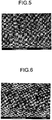
- Example 1 wherein air is blown into the reaction vessel
- Comparative Example 8 wherein nitrogen gas is blown into the reaction vessel
Landscapes
- Chemical & Material Sciences (AREA)
- Engineering & Computer Science (AREA)
- Nanotechnology (AREA)
- Physics & Mathematics (AREA)
- Materials Engineering (AREA)
- General Chemical & Material Sciences (AREA)
- Chemical Kinetics & Catalysis (AREA)
- Spectroscopy & Molecular Physics (AREA)
- Dispersion Chemistry (AREA)
- Inorganic Chemistry (AREA)
- Metallurgy (AREA)
- Organic Chemistry (AREA)
- Mechanical Engineering (AREA)
- Crystallography & Structural Chemistry (AREA)
- General Physics & Mathematics (AREA)
- Condensed Matter Physics & Semiconductors (AREA)
- Composite Materials (AREA)
- Manufacture Of Metal Powder And Suspensions Thereof (AREA)
- Powder Metallurgy (AREA)
- Conductive Materials (AREA)
- Ceramic Capacitors (AREA)
- Fixed Capacitors And Capacitor Manufacturing Machines (AREA)
- Non-Insulated Conductors (AREA)
Claims (2)
- Verfahren zur Herstellung eines Kupferpulvers für eine leitfähige Paste, wobei das Verfahren die Schritte umfasst:Komplexierung von Kupfer durch Zugabe eines Komplexbildners zu einer Kupfer enthaltenden wässrigen Lösung, während Luft in die Lösung eingeblasen wird;Beenden des Einblasens von Luft nach der Komplexierung von Kupfer; unddanach Zugabe eines Reduktionsmittels zu der Lösung, um durch Reduktion Kupferpartikel abzuscheiden,wobei der Komplexbildner Zitronensäure ist,wobei das Reduktionsmittel mindestens ein Reduktionsmittel ist, welches aus der Gruppe bestehend aus Hypophosphorsäure, Natriumhypophosphit, Hydrazin, Natriumborhydrid und Formalin ausgewählt ist,wobei die Kupfer enthaltende wässrige Lösung eine wässrige Lösung ist, die Kupfer(I)-oxid oder Kupfer(II)-oxid enthält,wobei das äquivalente Gewicht des zu der Kupfer enthaltenden wässrigen Lösung zugegebenen Komplexbildners im Bereich von 0,035 bis 0,065 liegt, bezogen auf dasjenige des in der Kupfer enthaltenden wässrigen Lösung enthaltenen Kupfers, undwobei das äquivalente Gewicht des zu der Kupfer enthaltenden wässrigen Lösung zugegebenen Reduktionsmittels nicht weniger als 3 beträgt, bezogen auf dasjenige des in der Kupfer enthaltenden wässrigen Lösung enthaltenen Kupfers.
- Verfahren zur Herstellung eines Kupferpulvers für eine leitfähige Paste nach Anspruch 1, wobei die Komplexierung des Kupfers über einen Zeitraum durchgeführt wird, der nicht kürzer ist als 15 Minuten.
Applications Claiming Priority (3)
| Application Number | Priority Date | Filing Date | Title |
|---|---|---|---|
| JP2010220699 | 2010-09-30 | ||
| JP2011196635A JP5820202B2 (ja) | 2010-09-30 | 2011-09-09 | 導電性ペースト用銅粉およびその製造方法 |
| PCT/JP2011/071175 WO2012043267A1 (ja) | 2010-09-30 | 2011-09-12 | 導電性ペースト用銅粉およびその製造方法 |
Publications (3)
| Publication Number | Publication Date |
|---|---|
| EP2614904A1 EP2614904A1 (de) | 2013-07-17 |
| EP2614904A4 EP2614904A4 (de) | 2017-06-07 |
| EP2614904B1 true EP2614904B1 (de) | 2020-04-22 |
Family
ID=45892734
Family Applications (1)
| Application Number | Title | Priority Date | Filing Date |
|---|---|---|---|
| EP11828827.3A Active EP2614904B1 (de) | 2010-09-30 | 2011-09-12 | Verfahren zur herstellung von kupferpulver für leitfähige pasten |
Country Status (6)
| Country | Link |
|---|---|
| US (1) | US9248504B2 (de) |
| EP (1) | EP2614904B1 (de) |
| JP (1) | JP5820202B2 (de) |
| KR (2) | KR101945166B1 (de) |
| CN (1) | CN103079732B (de) |
| WO (1) | WO2012043267A1 (de) |
Families Citing this family (23)
| Publication number | Priority date | Publication date | Assignee | Title |
|---|---|---|---|---|
| CN103231071A (zh) * | 2013-04-09 | 2013-08-07 | 昆明理工大学 | 一种多元络合法制备超细铜粉的方法 |
| CN103480855A (zh) * | 2013-05-28 | 2014-01-01 | 昆明物语科技有限公司 | 一种铜浆用超细铜粉的制备方法 |
| JP2015111563A (ja) * | 2013-11-06 | 2015-06-18 | Dowaエレクトロニクス株式会社 | 銅粒子分散液およびそれを用いた導電膜の製造方法 |
| JP2015133317A (ja) * | 2013-12-10 | 2015-07-23 | Dowaエレクトロニクス株式会社 | 導電性ペーストおよびそれを用いた導電膜の製造方法 |
| CN105290414A (zh) * | 2014-06-11 | 2016-02-03 | 南京理工大学 | 一种合成纳米铜颗粒的方法 |
| KR102115522B1 (ko) * | 2014-10-22 | 2020-05-26 | 삼성전기주식회사 | 페이스트용 조성물, 그 제조 방법 및 이를 포함하는 세라믹 전자 부품의 제조 방법 |
| JP6433351B2 (ja) | 2015-03-19 | 2018-12-05 | 株式会社ノリタケカンパニーリミテド | 被覆銅粉末、銅ペースト、および銅導体膜 |
| JP5907301B1 (ja) * | 2015-05-15 | 2016-04-26 | 住友金属鉱山株式会社 | 銀コート銅粉及びそれを用いた銅ペースト、導電性塗料、導電性シート、並びに銀コート銅粉の製造方法 |
| JP6597008B2 (ja) * | 2015-07-16 | 2019-10-30 | 株式会社村田製作所 | 積層セラミックコンデンサ及び積層セラミックコンデンサの製造方法 |
| JP6815619B2 (ja) * | 2015-12-24 | 2021-01-20 | 三井金属鉱業株式会社 | 銅粒子の製造方法 |
| JP2017179428A (ja) * | 2016-03-29 | 2017-10-05 | Dowaエレクトロニクス株式会社 | 導電性材料、導電膜の形成方法、回路基板、半導体装置及び半導体装置の製造方法 |
| JP6868627B2 (ja) * | 2016-08-03 | 2021-05-12 | 株式会社Adeka | 銅粉の製造方法 |
| JP6130616B1 (ja) * | 2017-02-07 | 2017-05-17 | 大陽日酸株式会社 | 銅微粒子及びその製造方法、並びに焼結体 |
| JP6908398B2 (ja) * | 2017-03-08 | 2021-07-28 | 株式会社Adeka | 樹脂組成物、硬化物を形成する方法および硬化物 |
| JP6787364B2 (ja) * | 2018-05-16 | 2020-11-18 | 株式会社村田製作所 | 導電性ペースト |
| JP2020059914A (ja) * | 2018-10-04 | 2020-04-16 | 三菱マテリアル株式会社 | 接合材料用粒子及びその製造方法、接合用ペースト及びその調製方法並びに接合体の製造方法 |
| US20220040759A1 (en) * | 2018-10-04 | 2022-02-10 | Mitsubishi Materials Corporation | Particles for joining material and production method thereof, joining paste and preparation method thereof, and production method of joined body |
| JP7139258B2 (ja) * | 2019-01-22 | 2022-09-20 | 大陽日酸株式会社 | 銅微粒子、導電性材料、銅微粒子の製造方法 |
| JP7000621B1 (ja) * | 2021-06-17 | 2022-01-19 | 古河ケミカルズ株式会社 | 銅微粒子の製造方法 |
| MY198451A (en) * | 2021-09-03 | 2023-08-29 | Ls Cable & System Ltd | Indeterminate Copper Materials for Electrolytic Copper Foil and Method for Preparing the same |
| CN120092307A (zh) * | 2022-10-19 | 2025-06-03 | 昭荣化学工业株式会社 | 导电性糊剂和电子部件的制造方法 |
| CN117620195A (zh) * | 2023-11-02 | 2024-03-01 | 北京氦舶新材料有限责任公司 | 球形纳米铜粉及其宏量制备方法 |
| WO2025215867A1 (ja) * | 2024-04-10 | 2025-10-16 | 株式会社村田製作所 | 積層セラミックコンデンサ |
Family Cites Families (22)
| Publication number | Priority date | Publication date | Assignee | Title |
|---|---|---|---|---|
| US3844799A (en) * | 1973-12-17 | 1974-10-29 | Ibm | Electroless copper plating |
| US3954594A (en) * | 1974-09-04 | 1976-05-04 | Rockwell International Corporation | Electrochemical cell for decreasing the cyanide and heavy metal content of an aqueous solution |
| JPH07107168B2 (ja) | 1987-01-27 | 1995-11-15 | 田中貴金属工業株式会社 | 銅微粒子の製造方法 |
| JPS63186805A (ja) | 1987-01-27 | 1988-08-02 | Tanaka Kikinzoku Kogyo Kk | 銅微粒子の製造方法 |
| JPS63186811A (ja) | 1987-01-27 | 1988-08-02 | Tanaka Kikinzoku Kogyo Kk | 銅微粒子の製造方法 |
| JPS63274706A (ja) | 1987-05-02 | 1988-11-11 | Nippon Chem Ind Co Ltd:The | 金属微粉末の製造法 |
| JPH01225705A (ja) | 1988-03-03 | 1989-09-08 | Tanaka Kikinzoku Kogyo Kk | 銅微粒子の製造方法 |
| US6620344B2 (en) * | 1999-05-28 | 2003-09-16 | Dowa Mining Co., Ltd. | Copper particle clusters and powder containing the same suitable as conductive filler of conductive paste |
| KR100743844B1 (ko) * | 1999-12-01 | 2007-08-02 | 도와 마이닝 가부시끼가이샤 | 구리 분말 및 구리 분말의 제조 방법 |
| JP2002363618A (ja) * | 2001-06-11 | 2002-12-18 | Sumitomo Electric Ind Ltd | 銅超微粒子とその製造方法 |
| US6645444B2 (en) * | 2001-06-29 | 2003-11-11 | Nanospin Solutions | Metal nanocrystals and synthesis thereof |
| JP4195581B2 (ja) | 2002-05-27 | 2008-12-10 | 三井金属鉱業株式会社 | 銅粉の製造方法及びその方法で得られた銅粉 |
| JP4145127B2 (ja) * | 2002-11-22 | 2008-09-03 | 三井金属鉱業株式会社 | フレーク銅粉及びそのフレーク銅粉の製造方法並びにそのフレーク銅粉を用いた導電性ペースト |
| JP4242176B2 (ja) | 2003-02-25 | 2009-03-18 | 石原産業株式会社 | 銅微粒子及びその製造方法 |
| JP2005023395A (ja) * | 2003-07-04 | 2005-01-27 | Murata Mfg Co Ltd | ニッケル粉末の製造方法 |
| JP4868716B2 (ja) * | 2004-04-28 | 2012-02-01 | 三井金属鉱業株式会社 | フレーク銅粉及び導電性ペースト |
| KR20070083988A (ko) * | 2004-10-29 | 2007-08-24 | 나노다이나믹스 인코퍼레이티드 | 초미립 금속 분말의 수성 제조 방법 |
| US8470066B2 (en) * | 2004-10-29 | 2013-06-25 | Clarkson University | Aqueous-based method for producing ultra-fine metal powders |
| KR20100024431A (ko) * | 2007-06-28 | 2010-03-05 | 닛코 킨조쿠 가부시키가이샤 | 구형상 구리 미분 및 그 제조 방법 |
| JP5392884B2 (ja) * | 2007-09-21 | 2014-01-22 | 三井金属鉱業株式会社 | 銅粉の製造方法 |
| JP5306966B2 (ja) | 2008-10-27 | 2013-10-02 | 古河電気工業株式会社 | 銅微粒子分散水溶液の製造方法、及び銅微粒子分散水溶液の保管方法 |
| JP2010144197A (ja) * | 2008-12-16 | 2010-07-01 | Mitsui Mining & Smelting Co Ltd | 金属粉及び金属粉の製造方法 |
-
2011
- 2011-09-09 JP JP2011196635A patent/JP5820202B2/ja active Active
- 2011-09-12 CN CN201180041129.1A patent/CN103079732B/zh active Active
- 2011-09-12 KR KR1020187013464A patent/KR101945166B1/ko active Active
- 2011-09-12 US US13/814,891 patent/US9248504B2/en active Active
- 2011-09-12 EP EP11828827.3A patent/EP2614904B1/de active Active
- 2011-09-12 KR KR1020137011001A patent/KR20130103540A/ko not_active Ceased
- 2011-09-12 WO PCT/JP2011/071175 patent/WO2012043267A1/ja not_active Ceased
Non-Patent Citations (1)
| Title |
|---|
| None * |
Also Published As
| Publication number | Publication date |
|---|---|
| EP2614904A1 (de) | 2013-07-17 |
| JP2012092432A (ja) | 2012-05-17 |
| CN103079732B (zh) | 2015-09-02 |
| EP2614904A4 (de) | 2017-06-07 |
| CN103079732A (zh) | 2013-05-01 |
| KR20130103540A (ko) | 2013-09-23 |
| KR20180054914A (ko) | 2018-05-24 |
| US20130177471A1 (en) | 2013-07-11 |
| WO2012043267A1 (ja) | 2012-04-05 |
| JP5820202B2 (ja) | 2015-11-24 |
| KR101945166B1 (ko) | 2019-02-01 |
| US9248504B2 (en) | 2016-02-02 |
Similar Documents
| Publication | Publication Date | Title |
|---|---|---|
| EP2614904B1 (de) | Verfahren zur herstellung von kupferpulver für leitfähige pasten | |
| JP5519938B2 (ja) | 導電性ペースト用銅粉の製造方法 | |
| JP5393451B2 (ja) | 高分散性球状銀粉末粒子の製造方法およびそれから形成された銀粒子 | |
| US6174344B1 (en) | Copper fine powder and method for preparing the same | |
| JP5176824B2 (ja) | 銀被覆銅微粒子とその分散液及びその製造方法 | |
| JP4449676B2 (ja) | 銅微粒子の製造方法 | |
| EP1721690A1 (de) | Hochkristallines silberpulver und herstellungsverfahren dafür | |
| WO2014104032A1 (ja) | 銅粉末の製造方法及び銅粉末、銅ペースト | |
| JP6799936B2 (ja) | ニッケル粒子、導電性ペースト、内部電極及び積層セラミックコンデンサ | |
| KR20100087112A (ko) | 구리 미립자와 그 제조 방법 및 구리 미립자 분산액 | |
| US20130205950A1 (en) | Method for producing nanoparticles from a noble metal and use of the nanoparticles thus produced | |
| JP2012526191A (ja) | 銀粒子およびその製造方法 | |
| JP2012525506A (ja) | 銀粒子およびその製造方法 | |
| JP2013541640A (ja) | 銀粒子およびその製造方法 | |
| JP5424545B2 (ja) | 銅微粒子及びその製造方法、並びに銅微粒子分散液 | |
| KR101282389B1 (ko) | 초미립 동분 슬러리 및 초미립 동분 슬러리의 제조 방법 | |
| JP4100244B2 (ja) | ニッケル粉末とその製造方法 | |
| TWI544977B (zh) | 導電性糊用銅粉及其製造方法 | |
| JP2007224422A (ja) | 銀粉およびこれを用いたペースト | |
| KR20200061193A (ko) | 단분산 은 분말의 제조방법 | |
| JP7069311B2 (ja) | 銀粉末の製造方法及び銀粉末を含む導電性ペースト | |
| JP4059035B2 (ja) | ニッケル粉末の製造方法、ニッケル粉末、導電性ペーストおよび積層セラミック電子部品 | |
| KR102423669B1 (ko) | 형상 제어가 가능한 구리 입자의 제조방법 및 이에 의해 제조된 구리 입자를 포함하는 도전성 잉크 조성물 |
Legal Events
| Date | Code | Title | Description |
|---|---|---|---|
| PUAI | Public reference made under article 153(3) epc to a published international application that has entered the european phase |
Free format text: ORIGINAL CODE: 0009012 |
|
| 17P | Request for examination filed |
Effective date: 20130410 |
|
| AK | Designated contracting states |
Kind code of ref document: A1 Designated state(s): AL AT BE BG CH CY CZ DE DK EE ES FI FR GB GR HR HU IE IS IT LI LT LU LV MC MK MT NL NO PL PT RO RS SE SI SK SM TR |
|
| DAX | Request for extension of the european patent (deleted) | ||
| RA4 | Supplementary search report drawn up and despatched (corrected) |
Effective date: 20170508 |
|
| RIC1 | Information provided on ipc code assigned before grant |
Ipc: B22F 9/24 20060101AFI20170428BHEP Ipc: C22C 1/04 20060101ALI20170428BHEP Ipc: H01B 1/22 20060101ALI20170428BHEP Ipc: H01B 13/00 20060101ALI20170428BHEP Ipc: B22F 9/20 20060101ALI20170428BHEP Ipc: H01B 5/00 20060101ALI20170428BHEP Ipc: H01B 1/02 20060101ALI20170428BHEP Ipc: C22C 9/00 20060101ALI20170428BHEP Ipc: B22F 1/00 20060101ALI20170428BHEP Ipc: B82Y 30/00 20110101ALI20170428BHEP |
|
| STAA | Information on the status of an ep patent application or granted ep patent |
Free format text: STATUS: EXAMINATION IS IN PROGRESS |
|
| 17Q | First examination report despatched |
Effective date: 20190517 |
|
| RIC1 | Information provided on ipc code assigned before grant |
Ipc: B82Y 30/00 20110101ALI20191010BHEP Ipc: B22F 1/00 20060101ALI20191010BHEP Ipc: B22F 9/24 20060101AFI20191010BHEP Ipc: H01B 1/22 20060101ALI20191010BHEP Ipc: C22C 9/00 20060101ALI20191010BHEP Ipc: C22C 1/04 20060101ALI20191010BHEP Ipc: H01B 1/02 20060101ALI20191010BHEP |
|
| GRAP | Despatch of communication of intention to grant a patent |
Free format text: ORIGINAL CODE: EPIDOSNIGR1 |
|
| STAA | Information on the status of an ep patent application or granted ep patent |
Free format text: STATUS: GRANT OF PATENT IS INTENDED |
|
| INTG | Intention to grant announced |
Effective date: 20191115 |
|
| GRAS | Grant fee paid |
Free format text: ORIGINAL CODE: EPIDOSNIGR3 |
|
| GRAA | (expected) grant |
Free format text: ORIGINAL CODE: 0009210 |
|
| STAA | Information on the status of an ep patent application or granted ep patent |
Free format text: STATUS: THE PATENT HAS BEEN GRANTED |
|
| AK | Designated contracting states |
Kind code of ref document: B1 Designated state(s): AL AT BE BG CH CY CZ DE DK EE ES FI FR GB GR HR HU IE IS IT LI LT LU LV MC MK MT NL NO PL PT RO RS SE SI SK SM TR |
|
| REG | Reference to a national code |
Ref country code: GB Ref legal event code: FG4D |
|
| REG | Reference to a national code |
Ref country code: CH Ref legal event code: EP |
|
| REG | Reference to a national code |
Ref country code: DE Ref legal event code: R096 Ref document number: 602011066433 Country of ref document: DE |
|
| REG | Reference to a national code |
Ref country code: IE Ref legal event code: FG4D |
|
| REG | Reference to a national code |
Ref country code: AT Ref legal event code: REF Ref document number: 1259417 Country of ref document: AT Kind code of ref document: T Effective date: 20200515 |
|
| REG | Reference to a national code |
Ref country code: LT Ref legal event code: MG4D |
|
| REG | Reference to a national code |
Ref country code: NL Ref legal event code: MP Effective date: 20200422 |
|
| PG25 | Lapsed in a contracting state [announced via postgrant information from national office to epo] |
Ref country code: IS Free format text: LAPSE BECAUSE OF FAILURE TO SUBMIT A TRANSLATION OF THE DESCRIPTION OR TO PAY THE FEE WITHIN THE PRESCRIBED TIME-LIMIT Effective date: 20200822 Ref country code: PT Free format text: LAPSE BECAUSE OF FAILURE TO SUBMIT A TRANSLATION OF THE DESCRIPTION OR TO PAY THE FEE WITHIN THE PRESCRIBED TIME-LIMIT Effective date: 20200824 Ref country code: LT Free format text: LAPSE BECAUSE OF FAILURE TO SUBMIT A TRANSLATION OF THE DESCRIPTION OR TO PAY THE FEE WITHIN THE PRESCRIBED TIME-LIMIT Effective date: 20200422 Ref country code: NL Free format text: LAPSE BECAUSE OF FAILURE TO SUBMIT A TRANSLATION OF THE DESCRIPTION OR TO PAY THE FEE WITHIN THE PRESCRIBED TIME-LIMIT Effective date: 20200422 Ref country code: SE Free format text: LAPSE BECAUSE OF FAILURE TO SUBMIT A TRANSLATION OF THE DESCRIPTION OR TO PAY THE FEE WITHIN THE PRESCRIBED TIME-LIMIT Effective date: 20200422 Ref country code: GR Free format text: LAPSE BECAUSE OF FAILURE TO SUBMIT A TRANSLATION OF THE DESCRIPTION OR TO PAY THE FEE WITHIN THE PRESCRIBED TIME-LIMIT Effective date: 20200723 Ref country code: FI Free format text: LAPSE BECAUSE OF FAILURE TO SUBMIT A TRANSLATION OF THE DESCRIPTION OR TO PAY THE FEE WITHIN THE PRESCRIBED TIME-LIMIT Effective date: 20200422 Ref country code: NO Free format text: LAPSE BECAUSE OF FAILURE TO SUBMIT A TRANSLATION OF THE DESCRIPTION OR TO PAY THE FEE WITHIN THE PRESCRIBED TIME-LIMIT Effective date: 20200722 |
|
| REG | Reference to a national code |
Ref country code: AT Ref legal event code: MK05 Ref document number: 1259417 Country of ref document: AT Kind code of ref document: T Effective date: 20200422 |
|
| PG25 | Lapsed in a contracting state [announced via postgrant information from national office to epo] |
Ref country code: BG Free format text: LAPSE BECAUSE OF FAILURE TO SUBMIT A TRANSLATION OF THE DESCRIPTION OR TO PAY THE FEE WITHIN THE PRESCRIBED TIME-LIMIT Effective date: 20200722 Ref country code: LV Free format text: LAPSE BECAUSE OF FAILURE TO SUBMIT A TRANSLATION OF THE DESCRIPTION OR TO PAY THE FEE WITHIN THE PRESCRIBED TIME-LIMIT Effective date: 20200422 Ref country code: HR Free format text: LAPSE BECAUSE OF FAILURE TO SUBMIT A TRANSLATION OF THE DESCRIPTION OR TO PAY THE FEE WITHIN THE PRESCRIBED TIME-LIMIT Effective date: 20200422 Ref country code: RS Free format text: LAPSE BECAUSE OF FAILURE TO SUBMIT A TRANSLATION OF THE DESCRIPTION OR TO PAY THE FEE WITHIN THE PRESCRIBED TIME-LIMIT Effective date: 20200422 |
|
| PG25 | Lapsed in a contracting state [announced via postgrant information from national office to epo] |
Ref country code: AL Free format text: LAPSE BECAUSE OF FAILURE TO SUBMIT A TRANSLATION OF THE DESCRIPTION OR TO PAY THE FEE WITHIN THE PRESCRIBED TIME-LIMIT Effective date: 20200422 |
|
| REG | Reference to a national code |
Ref country code: DE Ref legal event code: R097 Ref document number: 602011066433 Country of ref document: DE |
|
| PG25 | Lapsed in a contracting state [announced via postgrant information from national office to epo] |
Ref country code: DK Free format text: LAPSE BECAUSE OF FAILURE TO SUBMIT A TRANSLATION OF THE DESCRIPTION OR TO PAY THE FEE WITHIN THE PRESCRIBED TIME-LIMIT Effective date: 20200422 Ref country code: EE Free format text: LAPSE BECAUSE OF FAILURE TO SUBMIT A TRANSLATION OF THE DESCRIPTION OR TO PAY THE FEE WITHIN THE PRESCRIBED TIME-LIMIT Effective date: 20200422 Ref country code: AT Free format text: LAPSE BECAUSE OF FAILURE TO SUBMIT A TRANSLATION OF THE DESCRIPTION OR TO PAY THE FEE WITHIN THE PRESCRIBED TIME-LIMIT Effective date: 20200422 Ref country code: ES Free format text: LAPSE BECAUSE OF FAILURE TO SUBMIT A TRANSLATION OF THE DESCRIPTION OR TO PAY THE FEE WITHIN THE PRESCRIBED TIME-LIMIT Effective date: 20200422 Ref country code: CZ Free format text: LAPSE BECAUSE OF FAILURE TO SUBMIT A TRANSLATION OF THE DESCRIPTION OR TO PAY THE FEE WITHIN THE PRESCRIBED TIME-LIMIT Effective date: 20200422 Ref country code: IT Free format text: LAPSE BECAUSE OF FAILURE TO SUBMIT A TRANSLATION OF THE DESCRIPTION OR TO PAY THE FEE WITHIN THE PRESCRIBED TIME-LIMIT Effective date: 20200422 Ref country code: RO Free format text: LAPSE BECAUSE OF FAILURE TO SUBMIT A TRANSLATION OF THE DESCRIPTION OR TO PAY THE FEE WITHIN THE PRESCRIBED TIME-LIMIT Effective date: 20200422 Ref country code: SM Free format text: LAPSE BECAUSE OF FAILURE TO SUBMIT A TRANSLATION OF THE DESCRIPTION OR TO PAY THE FEE WITHIN THE PRESCRIBED TIME-LIMIT Effective date: 20200422 |
|
| PG25 | Lapsed in a contracting state [announced via postgrant information from national office to epo] |
Ref country code: SK Free format text: LAPSE BECAUSE OF FAILURE TO SUBMIT A TRANSLATION OF THE DESCRIPTION OR TO PAY THE FEE WITHIN THE PRESCRIBED TIME-LIMIT Effective date: 20200422 Ref country code: PL Free format text: LAPSE BECAUSE OF FAILURE TO SUBMIT A TRANSLATION OF THE DESCRIPTION OR TO PAY THE FEE WITHIN THE PRESCRIBED TIME-LIMIT Effective date: 20200422 |
|
| PLBE | No opposition filed within time limit |
Free format text: ORIGINAL CODE: 0009261 |
|
| STAA | Information on the status of an ep patent application or granted ep patent |
Free format text: STATUS: NO OPPOSITION FILED WITHIN TIME LIMIT |
|
| 26N | No opposition filed |
Effective date: 20210125 |
|
| PG25 | Lapsed in a contracting state [announced via postgrant information from national office to epo] |
Ref country code: MC Free format text: LAPSE BECAUSE OF FAILURE TO SUBMIT A TRANSLATION OF THE DESCRIPTION OR TO PAY THE FEE WITHIN THE PRESCRIBED TIME-LIMIT Effective date: 20200422 |
|
| REG | Reference to a national code |
Ref country code: CH Ref legal event code: PL |
|
| GBPC | Gb: european patent ceased through non-payment of renewal fee |
Effective date: 20200912 |
|
| PG25 | Lapsed in a contracting state [announced via postgrant information from national office to epo] |
Ref country code: SI Free format text: LAPSE BECAUSE OF FAILURE TO SUBMIT A TRANSLATION OF THE DESCRIPTION OR TO PAY THE FEE WITHIN THE PRESCRIBED TIME-LIMIT Effective date: 20200422 |
|
| REG | Reference to a national code |
Ref country code: BE Ref legal event code: MM Effective date: 20200930 |
|
| PG25 | Lapsed in a contracting state [announced via postgrant information from national office to epo] |
Ref country code: LU Free format text: LAPSE BECAUSE OF NON-PAYMENT OF DUE FEES Effective date: 20200912 |
|
| PG25 | Lapsed in a contracting state [announced via postgrant information from national office to epo] |
Ref country code: FR Free format text: LAPSE BECAUSE OF NON-PAYMENT OF DUE FEES Effective date: 20200930 |
|
| PG25 | Lapsed in a contracting state [announced via postgrant information from national office to epo] |
Ref country code: GB Free format text: LAPSE BECAUSE OF NON-PAYMENT OF DUE FEES Effective date: 20200912 Ref country code: IE Free format text: LAPSE BECAUSE OF NON-PAYMENT OF DUE FEES Effective date: 20200912 Ref country code: LI Free format text: LAPSE BECAUSE OF NON-PAYMENT OF DUE FEES Effective date: 20200930 Ref country code: BE Free format text: LAPSE BECAUSE OF NON-PAYMENT OF DUE FEES Effective date: 20200930 Ref country code: CH Free format text: LAPSE BECAUSE OF NON-PAYMENT OF DUE FEES Effective date: 20200930 |
|
| PG25 | Lapsed in a contracting state [announced via postgrant information from national office to epo] |
Ref country code: TR Free format text: LAPSE BECAUSE OF FAILURE TO SUBMIT A TRANSLATION OF THE DESCRIPTION OR TO PAY THE FEE WITHIN THE PRESCRIBED TIME-LIMIT Effective date: 20200422 Ref country code: MT Free format text: LAPSE BECAUSE OF FAILURE TO SUBMIT A TRANSLATION OF THE DESCRIPTION OR TO PAY THE FEE WITHIN THE PRESCRIBED TIME-LIMIT Effective date: 20200422 Ref country code: CY Free format text: LAPSE BECAUSE OF FAILURE TO SUBMIT A TRANSLATION OF THE DESCRIPTION OR TO PAY THE FEE WITHIN THE PRESCRIBED TIME-LIMIT Effective date: 20200422 |
|
| PG25 | Lapsed in a contracting state [announced via postgrant information from national office to epo] |
Ref country code: MK Free format text: LAPSE BECAUSE OF FAILURE TO SUBMIT A TRANSLATION OF THE DESCRIPTION OR TO PAY THE FEE WITHIN THE PRESCRIBED TIME-LIMIT Effective date: 20200422 |
|
| PGFP | Annual fee paid to national office [announced via postgrant information from national office to epo] |
Ref country code: DE Payment date: 20250730 Year of fee payment: 15 |