EP2653788B1 - Appareil de cuisson combiné - Google Patents
Appareil de cuisson combiné Download PDFInfo
- Publication number
- EP2653788B1 EP2653788B1 EP13001513.4A EP13001513A EP2653788B1 EP 2653788 B1 EP2653788 B1 EP 2653788B1 EP 13001513 A EP13001513 A EP 13001513A EP 2653788 B1 EP2653788 B1 EP 2653788B1
- Authority
- EP
- European Patent Office
- Prior art keywords
- cooking
- generator
- steam
- cooking chamber
- food
- Prior art date
- Legal status (The legal status is an assumption and is not a legal conclusion. Google has not performed a legal analysis and makes no representation as to the accuracy of the status listed.)
- Active
Links
Images

Classifications
-
- F—MECHANICAL ENGINEERING; LIGHTING; HEATING; WEAPONS; BLASTING
- F24—HEATING; RANGES; VENTILATING
- F24C—DOMESTIC STOVES OR RANGES ; DETAILS OF DOMESTIC STOVES OR RANGES, OF GENERAL APPLICATION
- F24C15/00—Details
- F24C15/32—Arrangements of ducts for hot gases, e.g. in or around baking ovens
- F24C15/322—Arrangements of ducts for hot gases, e.g. in or around baking ovens with forced circulation
- F24C15/327—Arrangements of ducts for hot gases, e.g. in or around baking ovens with forced circulation with air moisturising
-
- F—MECHANICAL ENGINEERING; LIGHTING; HEATING; WEAPONS; BLASTING
- F24—HEATING; RANGES; VENTILATING
- F24C—DOMESTIC STOVES OR RANGES ; DETAILS OF DOMESTIC STOVES OR RANGES, OF GENERAL APPLICATION
- F24C7/00—Stoves or ranges heated by electric energy
- F24C7/08—Arrangement or mounting of control or safety devices
- F24C7/082—Arrangement or mounting of control or safety devices on ranges, e.g. control panels, illumination
- F24C7/085—Arrangement or mounting of control or safety devices on ranges, e.g. control panels, illumination on baking ovens
-
- H—ELECTRICITY
- H05—ELECTRIC TECHNIQUES NOT OTHERWISE PROVIDED FOR
- H05B—ELECTRIC HEATING; ELECTRIC LIGHT SOURCES NOT OTHERWISE PROVIDED FOR; CIRCUIT ARRANGEMENTS FOR ELECTRIC LIGHT SOURCES, IN GENERAL
- H05B6/00—Heating by electric, magnetic or electromagnetic fields
- H05B6/64—Heating using microwaves
- H05B6/647—Aspects related to microwave heating combined with other heating techniques
- H05B6/6473—Aspects related to microwave heating combined with other heating techniques combined with convection heating
- H05B6/6479—Aspects related to microwave heating combined with other heating techniques combined with convection heating using steam
Definitions
- the invention relates to a cooking appliance for cooking food and a method for operating a cooking appliance.
- Conventional cooking appliances differ in the energy source used for cooking: Microwave ovens generate microwaves to irradiate the food. Conventional ovens use heating elements to heat the cooking chamber. Steam cooking appliances, on the other hand, generate steam in the cooking chamber, to which the food is exposed.
- the object of the invention is to provide a cooking process and a cooking appliance that improve the cooking result.
- the cooking appliance has a cooking chamber for accommodating food.
- Cooking in the context of this invention is intended to encompass all types of heating of food, i.e., warming, heating, but also thawing food, dishes, liquids, etc.
- the cooking chamber is typically defined by the walls of a hollow body, also called a muffle in the context of ovens, whose open side can be closed with a door.
- a steam generator is provided, which allows the supply of steam, in particular water vapor, into the cooking chamber.
- the claimed steam generator is also intended to include internal steam generators, in which the steam is generated within the cooking chamber, for example, by heating water.
- a container for holding water is preferably connected to the cooking appliance.
- a microwave generator is provided for heating the food in the cooking chamber.
- the hot air generator typically comprises a heating element for heating air in the cooking chamber and a fan for distributing/circulating heated air within the cooking chamber.
- a heating device may be provided, for example in the form of a resistance heater, which, depending on its arrangement in/on the cooking chamber, is also known as "top heat,”"bottomheat,” or “grill” in conventional ovens. If the hot air generator and the heating device are provided together, the resistance heating of the heating device is preferably provided in addition to the heating element of the hot air generator.
- a control system is provided, preferably an electronic control system for the operation of the cooking appliance.
- the control system activates the steam generator, the microwave generator and the hot air generator or the heating device within a cooking process for cooking the food.
- three different cooking methods namely steam cooking, microwave cooking and hot air or heating cooking, are used in a common cooking process.
- the temporal use of these cooking methods may take place at least partially simultaneously or at different times.
- the cooking process for cooking a is preferably determined by a cooking program, which cooking program is carried out by the control system and includes the use of these three cooking methods, which are based on different energy sources and different influences on the food.
- the control system automatically controls the sequence of cooking modes without user intervention. This includes activating and/or deactivating and/or changing the steam generator, the hot air generator, or the heating device, as well as changing the microwave generator alone.
- control system determines the starting point and duration of the respective cooking mode and thus the start and end of the associated generator operation.
- a user of such a cooking appliance may enter the desired cooking program via an input device, for example, one or more selector switches.
- a cooking program may represent the preparation of a dish.
- An example cooking program might be "potato gratin.”
- a cooking program may also represent a desired cooking characteristic, such as "energy-efficient” or “gentle,” or even a desired food class.
- a cooking program may also be defined by a multi-stage selection by the user, for example, as a "gentle” or “fast” cooking program.
- the hot air generator may be operated first before the microwave generator and steam generator are switched on. Any temporal combination and sequence of cooking methods is intended to be encompassed by the method.
- a cooking process may also be included in which the different cooking methods are carried out one after the other and do not have a common temporal overlap, i.e., one generator is always switched off first before the next generator is switched on.
- all three generators are operated simultaneously, at least temporarily.
- Such a program element is preferably executed by a controller of the cooking appliance, which controller may have a microprocessor for initiating the steps, as well as a memory for storing the program element.
- the controller controls the various actuators of the cooking appliance, in particular the steam, microwave, and hot air generators, or the heating device.
- the three cooking methods mentioned above can be activated simultaneously at the start of the cooking process. This results in a very fast cooking process.
- steam cooking alone can be activated at the start of the cooking process. This achieves gentle cooking while at the same time cooking is relatively fast.
- microwave cooking alone can be activated at the start of the cooking process. This achieves fast cooking results.
- the temperature in the cooking chamber is regulated in two stages, first to a first target temperature and then to a second, different target temperature which, for example, is higher than the first target temperature. This implements a cooking method that is gentle on the surface of the food being cooked.
- the second target temperature is lower than the first target temperature.
- the cooking result can be significantly improved, since the use of three different cooking modes during a cooking process allows the food to be cooked as individually as possible.
- the addition of microwaves can be delayed until at least a certain steam level is reached in the cooking chamber, assuming that the steam is primarily considered a transfer medium for the microwave to the food. This may result in better energy absorption by the food.
- power distribution can be improved, and local drying out of the food can be prevented.
- hot air cooking and steam cooking are defined as the basic cooking modes, and the associated generators are activated at the beginning of the cooking process, which in turn can be accelerated by the addition of microwaves.
- Hot air can also be used to support steam cooking: During a heating phase of the water in the external evaporator, the cooking chamber can be preheated with hot air. In this mode, too, the microwave can serve as an "accelerator.” This allows energy to be immediately introduced into the food, especially at the start of cooking, but also allows heat to be drawn into the interior of the food during continuous heating.
- the cooking chamber can also be first warmed with steam and hot air before the microwave is switched on for the actual reheating. The steam ensures that the food does not dry out; the hot air reduces the residual water in the plate. Combining all three cooking methods results in less dry food, more firmness, less residual water, and time savings.
- the cooking appliance can be operated preferably via a selector switch by selecting a specific cooking program.
- a cooking program preferably carries out the cooking process automatically and automatically adds steam, microwave, and hot air at the desired time. This program-controlled operation relieves the user of unnecessary tasks.
- the cooking process for example, between the start of the cooking process by selecting the program and the end of the cooking process, for example, as a result of the program ending, they no longer have to worry about the dosage, duration, etc. of the respective cooking modes.
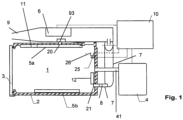
- the cooking appliance according to Fig. 1 comprises a cooking chamber 1, which is delimited by walls 2 and a door 3.
- the cooking chamber 1 may, for example, have a capacity of 50 liters or more, for example 56 liters.
- the cooking appliance shown can be operated at least as a steam cooker, a microwave cooker, a convection cooker and/or an oven, as well as a combined steam/microwave cooker, a combined steam/convection cooker, a combined microwave/convection cooker, and a combined steam/microwave/convection cooker.
- convection cooking should always alternatively or additionally include conventional heating with bottom and/or top heat and/or grill.
- Combined in this sense encompasses the use of the various cooking methods during a cooking process for a food item to be cooked. This can occur simultaneously or at different times; In any case, the activation of the associated generators takes place within a cooking process with regard to the food to be cooked, and this preferably takes place fully automatically without intervention by the user of the cooking appliance. If the cooking appliance offers the selection/input of cooking programs, then within a selected cooking program, Depending on the cooking process, different cooking methods are used. For example, steam cooking can be used at the beginning of the cooking process in combination with convection cooking, while microwave cooking is activated later in the cooking process.
- the cooking appliance according to Figure 1 contains a schematically drawn steam generator 4, which is separate from the cooking chamber 1 and whose steam is supplied to the cooking chamber 1 via a supply line 41.
- a microwave generator with the reference numeral 11 is schematically arranged in the ceiling and may, for example, deliver a maximum output of 700 watts.
- the cooking appliance further contains a hot air generator 12 for generating and distributing heated air in the cooking chamber 1.
- This hot air generator 12 is also only schematically drawn on the rear wall.
- the cooking appliance may have the heating devices known from a conventional oven, for example a resistive top heat 5a arranged on the ceiling and a resistive bottom heat 5b arranged on or below the floor, or a grill heater (not shown).
- heaters arranged on the sides of the walls may also be provided to heat the cooking chamber 1.
- a fan 6 is arranged as a blower in a horizontally aligned exhaust air shaft 9, which is designed, for example, as a radial fan or a cross-flow fan.
- the exhaust air shaft 9 projects beyond the cooking chamber 1 and has an opening on the underside of this projection, to which a hose 7 is connected.
- the hose 7 opens into an opening 21 of the cooking chamber 1.
- a schematically drawn sensor 8 is arranged in the hose 7 for measuring gas escaping from the cooking chamber 1, and in particular steam escaping from the cooking chamber 1.
- This sensor 8 is designed in the present case as a temperature sensor, for example as an NTC resistor, and is located in the lower section of the hose 7. arranged to measure the temperature of the water vapor passing through this point.
- a further opening 20 is optionally arranged in the ceiling of the cooking chamber 1.
- the further opening 20 has a diameter of approximately 2.5 cm and can be closed or opened by a flap 93. When the flap 93 is open, steam can be extracted from the cooking chamber 1.
- a temperature sensor 25 is provided in the cooking chamber 1 for recording a temperature in the cooking chamber 1.
- a core temperature sensor can also be present (not shown), for example in the form of a needle that is inserted into the food to be cooked.
- a humidity sensor 26 can optionally be provided in the cooking chamber 1, which measures the relative humidity in the cooking chamber 1 and by which steam generation or steam supply by the steam generator 4 is controlled as an alternative or in addition to the gas outlet sensor 8.
- a controller 10 is provided to control the steam generator 4, the microwave generator 11, the hot air generator 12, the top and bottom heat 5a, 5b, the radial fan 6, and other components of the cooking appliance. If a cooking program is set by the user on an input unit, for example in the form of a selector switch, the controller then automatically calls up an associated cooking program in the form of software, which controls the temporal operation of the individual generators. Within the cooking program, which thus defines the cooking process, the steam generator 4 is activated at least once, the microwave generator 11 at least once, and the hot air generator 12 or the heating device 5a, 5b at least once. This mode of operation represents the previously mentioned combined steam cooking/hot air/microwave operation.
- the switching on/activation and/or switching off/deactivation of the individual generators can be triggered by sensor signals, by the operating states of the individual generators, or at fixed times.
- the controller 10 preferably controls the entire cooking process using all three generators 4, 11, and 12 independently and preferably without user interaction.
- the program sequence may be fixed or variable depending on the possible influencing factors mentioned above.
- Cooking programs can be tailored either to the type of dish or to the cooking method.
- the cooking method may include, for example, “quick cooking,” “gentle cooking,” “energy-efficient cooking,” “regenerating,” or similar.
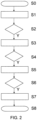
- FIG. 2 shows a flowchart for a method according to an advantageous development of the invention.
- a user of the cooking appliance selects a cooking program, preferably by means of an input or selector switch, which calls up a stored cooking program, the execution of which begins the cooking process.
- this cooking program should include the "regenerating" of food. During regeneration, prepared cold or cooled food is heated for consumption.
- a control system of the cooking appliance automatically begins executing the cooking program in step S1 by starting the microwave generator in step S1 with an initial power of, for example, 500 watts.
- the steam generator and the hot air generator are also started.
- step S2 a check is carried out to determine whether a cooking chamber temperature, for example, measured with the temperature sensor 25, Figure 1 , has reached a first target temperature of, for example, 130° Celsius. If this is not the case, all three generators remain in operation (for reasons of clarity, all N-loops are omitted in the flow chart). Otherwise (Y), in step S3, only the hot air operation is changed so that the cooking chamber temperature is set to The first target temperature remains regulated. The microwave feed continues at the first power level; the steam feed from the steam generator also remains unchanged.
- step S4 it is now checked whether a gas outlet sensor 8 according to Figure 1 an assigned threshold is reached. If this is not the case, steam continues to be supplied, microwaves are added, and the cooking chamber temperature is regulated to the first target temperature by the hot air generator. If, however, sufficient steam has been generated so that the gas outlet sensor exceeds its assigned threshold (Y), then in step S5 the steam addition is reduced, as is the microwave addition, whereas the cooking chamber temperature remains regulated unchanged to the first target temperature by the hot air generator. In this case, the reduction in the steam addition occurs depending on the signal from the gas outlet sensor.
- the steam generator is only operated when, for example, the assigned threshold is undershot by the signal from the gas outlet sensor and is reactivated until the threshold is exceeded again.
- a clocking of the steam addition occurs, the clocking of which is determined by the aforementioned threshold.
- the reduction in microwave addition depends on the steam addition rate: The greater the steam addition rate, i.e., the longer the interval between steam additions, the more the microwave addition is reduced.
- the reduction in microwave power may, for example, be proportional to the steam addition rate.
- step S6 a check is then made to determine whether the pulse pauses are greater than a predefined limit, i.e., whether the pulse rate has fallen below a predefined level. If this is the case (Y), in step S7, the microwave power is reduced to a second setpoint, in this case, approximately 200 watts, the steam addition is deactivated, and The cooking chamber temperature is regulated by the hot air generator to a second, lower target temperature, for example 110° Celsius.
- a predefined limit i.e., whether the pulse rate has fallen below a predefined level.
- step S8 the controller terminates the operation of the still active microwave generator and hot air generator, for example, time-controlled or initiated by the user.
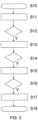
- FIG. 3 shows a flowchart for a method according to an advantageous development of the invention.
- a user of the cooking appliance again selects a cooking program, in this case the "Potato Gratin" cooking program, which is geared towards cooking a specific dish or at least a type of dish.
- a control system of the cooking appliance again automatically begins the cooking process by starting the microwave generator at an initial high power of, for example, 700 watts. At the same time, the steam generator and the hot air generator are also started.
- step S12 it is checked whether the cooking chamber temperature, for example measured with the temperature sensor 25 from Figure 1 , has reached a first target temperature of, for example, 200° Celsius. If this is not the case, all three generators continue to operate as they started. Otherwise (Y), in step S13, the measured cooking chamber temperature is regulated to the first predetermined target temperature. The microwave output is reduced to a second power of approximately 400 watts; the steam output by the steam generator remains unchanged.
- step S16 a check is then performed to determine whether a period of time x has already passed since the threshold was exceeded by the gas outlet sensor signal, where x is, for example, 12 minutes. If this is the case (Y), the microwave generator is shut down in step S17. The steam supply remains shut down, and the hot air generator regulates to a second target temperature of 210° Celsius. In step S18, the control system then terminates operation of the still-active hot air generator.
- FIG. 4 shows a flowchart for a method according to a further advantageous development of the invention.
- a user of the cooking appliance again selects a cooking program, in this case the "Power Steam” cooking program for gentle cooking of the food.
- a control system of the cooking appliance automatically begins the cooking process in step S21 by starting the microwave generator with an initial power of, for example, 400 watts, and simultaneously starting the steam generator and the hot air generator.
- a check is made as to whether the cooking chamber temperature, for example measured with the temperature sensor 25 from Figure 1 , has reached a first target temperature of, for example, 100° Celsius. If this is not the case, all three generators remain in operation.
- step S23 only the hot air operation is changed so that the hot air generator is now operated at a reduced level.
- Reduced hot air operation refers to intermittent operation. By no longer continuously adding hot air but intermittently adding it, the supplied hot air energy is reduced.
- the duration of hot air addition can depend, for example, on the duration of steam addition.
- a ratio between steam addition and hot air addition can be specified for reduced operation. This ratio can relate to the duration of the addition of hot air and steam or to their energy ratio.
- the microwave addition remains unchanged at the first power level of 400 watts; the steam addition by the steam generator also remains unchanged.
- step S24 it is now checked whether the gas outlet sensor 8 according to Figure 1 has reached an assigned threshold. If this is not the case, steam continues to be supplied, microwaves are added, and the hot air generator is operated as described in step S23. However, if sufficient steam has been generated so that the gas outlet sensor exceeds the assigned threshold (Y), the steam addition is reduced in step S25 by operating the steam generator in a timed manner depending on the signal from the gas outlet sensor. The microwave addition remains unchanged. The hot air generator is also operated unchanged.
- step S26 a check is then made to determine whether the cycle pauses between steam additions are greater than a predefined limit, i.e., whether the cycle rate has fallen below a predefined level. If this is the case (Yes), in step S27, the microwave addition is reduced the longer the cycle pauses are, and preferably proportionally to the cycle pauses. The hot air generator and steam generator remain in the mode defined in step S23. In step S28, the customer then terminates the operation of the still active generators at a time of their choosing.
Landscapes
- Engineering & Computer Science (AREA)
- Chemical & Material Sciences (AREA)
- Combustion & Propulsion (AREA)
- Mechanical Engineering (AREA)
- General Engineering & Computer Science (AREA)
- Physics & Mathematics (AREA)
- Electromagnetism (AREA)
- Electric Ovens (AREA)
Claims (12)
- Appareil de cuisson pour cuire des aliments, comprenantune chambre de cuisson (1) destinée à recevoir les aliments à cuire,un générateur de vapeur (4) destiné à alimenter la chambre de cuisson (1) en vapeur,un générateur de micro-ondes (11) destiné à chauffer les aliments à cuire,un générateur d'air chaud (12) et/ou un dispositif de chauffage (5a, 5b) destiné à chauffer la chambre de cuisson (1),une commande (10) pour l'activation automatique du générateur de vapeur (4), du générateur de micro-ondes (11) et du générateur d'air chaud (12) ou du dispositif de chauffage (5a, 5b) dans le cadre d'un processus de cuisson commun pour la cuisson des aliments,caractérisé en ce que la commande (10) est conçue pour modifier automatiquement la puissance du générateur de micro-ondes (11) en fonction d'un signal de capteur d'un capteur de fuite de gaz (8) destiné à détecter le gaz s'échappant de l'espace de cuisson (1), le terme « modifier » n'englobant pas l'activation ou la désactivation du générateur de micro-ondes.
- Appareil de cuisson selon l'une des revendications précédentes,avec un dispositif d'entrée pour entrer un programme de cuisson,dans lequel la commande (10) est conçue pour activer automatiquement le générateur de vapeur (4), le générateur de micro-ondes (11) et le générateur d'air chaud (12) ou le dispositif de chauffage (5a, 5b) en fonction du programme de cuisson entré.
- Appareil de cuisson selon la revendication 2,
dans lequel la commande (10) est conçue pour désactiver automatiquement le générateur de vapeur (4), le générateur de micro-ondes (11) et le générateur d'air chaud (12) ou le dispositif de chauffage (5a, 5b) en fonction du programme de cuisson entré. - Appareil de cuisson selon l'une des revendications précédentes,
dans lequel le dispositif de chauffage (5a, 5b) comprend :- un dispositif de chauffage supérieur (5a), et/ou- un dispositif de chauffage inférieur (5b), et/ou- un dispositif de gril. - Appareil de cuisson selon l'une des revendications précédentes,avec un clapet (93) pour fermer une ouverture (20) dans l'espace de cuisson (1),dans lequel la commande (10) est conçue pour déplacer automatiquement le clapet (93) afin d'ouvrir et/ou de fermer l'ouverture (20) pendant le processus de cuisson.
- Procédé pour cuire des aliments dans un appareil de cuisson avec une chambre de cuisson destinée à recevoir les aliments selon l'une des revendications précédentes, comprenant les étapes suivantes dans le cadre d'un processus de cuisson commun :a) introduire de la vapeur dans la chambre de cuisson (1) au moyen d'un générateur de vapeur,b) chauffer les aliments dans la chambre de cuisson (1) au moyen de micro-ondes d'un générateur de micro-ondes,c) chauffer la chambre de cuisson (1) à l'aide d'un générateur d'air chaud (12) et/ou d'un dispositif de chauffage (5a, 5b),caractérisé en ce qu'une commande (10) est conçue pour modifier automatiquement la puissance du générateur de micro-ondes (11) en fonction d'un signal de capteur d'un capteur de fuite de gaz (8) destiné à détecter le gaz s'échappant de la chambre de cuisson (1), le terme « modifier » n'englobant pas l'activation ou la désactivation du générateur de micro-ondes.
- Procédé selon la revendication 6,
dans lequel une séquence simultanée ou décalée dans le temps des étapes a) à c) est déclenchée automatiquement au cours du processus de cuisson en fonction d'un programme de cuisson sélectionné. - Procédé selon la revendication 6 ou 7,
dans lequel les étapes a) à c) sont déclenchées simultanément au début du processus de cuisson. - Procédé selon la revendication 6 ou 7,
dans lequel seule l'étape a) est déclenchée au début du processus de cuisson. - Procédé selon la revendication 6 ou 7,
dans lequel seule l'étape b) est déclenchée au début du processus de cuisson. - Procédé selon l'une des revendications 7 à 8,dans lequel, à l'étape c), l'espace de cuisson (1) est chauffé dans une première phase à une première température de consigne, etdans lequel, à l'étape c), l'espace de cuisson (1) est chauffé dans une deuxième phase à une deuxième température de consigne qui diffère de la première température de consigne.
- Procédé selon l'une des revendications 6 à 11 précédentes,dans lequel une commande (10) commence et termine automatiquement les étapes a) à c) en fonction d'un programme de cuisson entré, etdans lequel le début et la fin de chacune des étapes a) à c) sont déclenchés par un ou plusieurs des événements suivants :- un début du processus de cuisson par l'entrée d'un programme de cuisson,- un signal d'un capteur de fuite de gaz (8) pour détecter le gaz s'échappant de l'espace de cuisson (1),- un signal d'un capteur de température (25) pour détecter une température dans l'espace de cuisson (1),- un signal d'un capteur de température à cœur pour l'introduction dans l'aliment à cuire,- un paramètre de fonctionnement d'un générateur de vapeur (4) pour l'alimentation en vapeur de la chambre de cuisson (1),- un paramètre de fonctionnement d'un générateur de micro-ondes (11) pour la production des micro-ondes,- un paramètre de fonctionnement du générateur d'air chaud (12) ou du dispositif de chauffage (5a, 5b),- une synchronisation d'une addition de vapeur par le générateur de vapeur (4),- l'atteinte d'un moment prédéfini,- l'écoulement d'un intervalle de temps.
Applications Claiming Priority (1)
| Application Number | Priority Date | Filing Date | Title |
|---|---|---|---|
| CH00532/12A CH704191A2 (de) | 2012-04-18 | 2012-04-18 | Gargerät und Verfahren zum Garen von Gargut. |
Publications (2)
| Publication Number | Publication Date |
|---|---|
| EP2653788A1 EP2653788A1 (fr) | 2013-10-23 |
| EP2653788B1 true EP2653788B1 (fr) | 2025-06-25 |
Family
ID=46146477
Family Applications (1)
| Application Number | Title | Priority Date | Filing Date |
|---|---|---|---|
| EP13001513.4A Active EP2653788B1 (fr) | 2012-04-18 | 2013-03-25 | Appareil de cuisson combiné |
Country Status (4)
| Country | Link |
|---|---|
| EP (1) | EP2653788B1 (fr) |
| CN (1) | CN103375826B (fr) |
| AU (1) | AU2013202494B2 (fr) |
| CH (1) | CH704191A2 (fr) |
Families Citing this family (32)
| Publication number | Priority date | Publication date | Assignee | Title |
|---|---|---|---|---|
| KR20140030023A (ko) | 2012-08-29 | 2014-03-11 | 삼성전자주식회사 | 조리장치 및 그 제어방법 |
| CH705766A2 (de) * | 2013-03-07 | 2013-04-30 | V Zug Ag | Backofen mit klimagesteuerter Temperaturbegrenzung. |
| DE102014107895A1 (de) * | 2014-06-04 | 2015-12-17 | Rational Aktiengesellschaft | Verfahren zum Steuern eines Gargeräts |
| CN104688002B (zh) * | 2014-08-04 | 2018-07-13 | 广东美的厨房电器制造有限公司 | 烹饪装置及其控制方法 |
| CN104121612B (zh) * | 2014-08-11 | 2017-02-01 | 广东美的厨房电器制造有限公司 | 蒸汽微波炉的控制方法及控制系统 |
| CN104665573A (zh) * | 2014-08-22 | 2015-06-03 | 广东美的厨房电器制造有限公司 | 烹饪设备和烹饪设备的控制方法 |
| DE102014113664A1 (de) * | 2014-09-22 | 2016-03-24 | Rational Aktiengesellschaft | Gargerät sowie Verfahren zum Garen von Gargut |
| DE102014223375A1 (de) * | 2014-11-17 | 2016-05-19 | BSH Hausgeräte GmbH | Verfahren zum Betreiben eines Haushaltsgargeräts |
| CN106658807B (zh) * | 2017-01-18 | 2019-08-16 | 广东美的厨房电器制造有限公司 | 加热控制方法、装置及微波烤箱 |
| CN110200516A (zh) | 2017-08-09 | 2019-09-06 | 沙克忍者运营有限责任公司 | 烹饪系统 |
| CN108012363B (zh) * | 2017-11-30 | 2021-12-03 | 广东美的厨房电器制造有限公司 | 微波加热装置 |
| USD914436S1 (en) | 2018-06-19 | 2021-03-30 | Sharkninja Operating Llc | Air diffuser with food preparation pot |
| USD903413S1 (en) | 2018-08-09 | 2020-12-01 | Sharkninja Operating Llc | Cooking basket |
| USD883014S1 (en) | 2018-08-09 | 2020-05-05 | Sharkninja Operating Llc | Food preparation device |
| USD934027S1 (en) | 2018-08-09 | 2021-10-26 | Sharkninja Operating Llc | Reversible cooking rack |
| USD883015S1 (en) | 2018-08-09 | 2020-05-05 | Sharkninja Operating Llc | Food preparation device and parts thereof |
| US11033146B2 (en) | 2019-02-25 | 2021-06-15 | Sharkninja Operating Llc | Cooking device and components thereof |
| WO2020176477A1 (fr) | 2019-02-25 | 2020-09-03 | Sharkninja Operating Llc | Système de cuisson avec protection |
| CN111972971B (zh) * | 2019-05-23 | 2021-12-03 | 九阳股份有限公司 | 一种蒸烤烹饪方法和蒸烤烹饪设备 |
| USD982375S1 (en) | 2019-06-06 | 2023-04-04 | Sharkninja Operating Llc | Food preparation device |
| USD918654S1 (en) | 2019-06-06 | 2021-05-11 | Sharkninja Operating Llc | Grill plate |
| DE102019134699A1 (de) * | 2019-12-17 | 2021-06-17 | Rational Aktiengesellschaft | Verfahren zum Regenerieren von Lebensmitteln |
| CN111083821B (zh) * | 2019-12-31 | 2022-02-11 | 广东美的厨房电器制造有限公司 | 控制方法、装置、设备和计算机可读存储介质 |
| CN111513554B (zh) * | 2020-03-23 | 2022-04-05 | 华帝股份有限公司 | 微蒸烤一体机的烹饪控制方法及应用其的微蒸烤一体机 |
| US11647861B2 (en) | 2020-03-30 | 2023-05-16 | Sharkninja Operating Llc | Cooking device and components thereof |
| CN112401641A (zh) * | 2020-11-17 | 2021-02-26 | 长沙易爱餐饮管理有限公司 | 加热火力曲线获取方法、装置、设备、介质以及烹饪方法 |
| CN112586531B (zh) * | 2020-12-14 | 2022-04-15 | 广东美的厨房电器制造有限公司 | 烹饪器具的控制方法、烹饪器具和可读存储介质 |
| CN116249235A (zh) * | 2021-12-08 | 2023-06-09 | 惠而浦公司 | 用于微波器具的热阻加热板 |
| CN114568962B (zh) * | 2022-03-25 | 2024-04-16 | 芜湖美的智能厨电制造有限公司 | 蒸烤设备及其烹饪控制方法和装置 |
| DE102022114160A1 (de) * | 2022-06-03 | 2023-12-14 | Topinox Sarl | Verfahren zum Garen eines Garguts in einer bestimmten Garzeit |
| DE102022127080A1 (de) | 2022-10-17 | 2023-12-14 | Miele & Cie. Kg | Verfahren zum Betreiben eines Gargeräts und Gargerät |
| CN117170265A (zh) * | 2023-10-09 | 2023-12-05 | 上海鲜选网络科技有限公司 | 基于混合加热烹饪曲线的烹饪进程优化方法及预制菜烹饪系统 |
Citations (5)
| Publication number | Priority date | Publication date | Assignee | Title |
|---|---|---|---|---|
| US4115678A (en) * | 1976-02-26 | 1978-09-19 | Hitachi Heating Appliances Co., Ltd. | Microwave oven |
| DE19718399A1 (de) * | 1997-04-30 | 1998-11-05 | Rational Gmbh | Verfahren zum individuellen Führen eines Garprozesses und zugehöriges Gargerät |
| WO2006069563A1 (fr) * | 2004-12-27 | 2006-07-06 | Rational Ag | Appareil de cuisson comportant au moins un reseau de capteurs de gaz, systeme d'echantillonnage pour un tel appareil de cuisson, procede de cuisson mettant en oeuvre un tel appareil de cuisson et procede de nettoyage d'un tel appareil de cuisson |
| EP1847203A1 (fr) * | 2007-06-26 | 2007-10-24 | V-Zug AG | Préparation de produits de cuisson à détection de sortie de vapeur |
| EP1906100A2 (fr) * | 2006-08-17 | 2008-04-02 | BSH Bosch und Siemens Hausgeräte GmbH | Appareil de cuisson et procédé destiné au réglage d'un vaporisateur dans un appareil de cuisson |
Family Cites Families (8)
| Publication number | Priority date | Publication date | Assignee | Title |
|---|---|---|---|---|
| DE3205123A1 (de) * | 1982-02-12 | 1983-08-18 | Licentia Gmbh | Verfahren und einrichtung zum automatischen garen von nahrungsmittel in einem mikrowellengeraet |
| DE10117937A1 (de) * | 2001-04-10 | 2002-12-05 | Rational Ag | Garverfahren und Gargerät unter Einsatz von Radiowellen |
| EP1483943B1 (fr) * | 2002-03-12 | 2007-03-28 | Matsushita Electric Industrial Co., Ltd. | Appareil de chauffage haute frequence et procede de commande de celui-ci |
| JP4739688B2 (ja) * | 2004-04-27 | 2011-08-03 | パナソニック株式会社 | 加熱調理器 |
| PL1767860T3 (pl) * | 2005-09-21 | 2012-02-29 | Whirlpool Co | Sposób działania piekarnika zawierającego system ogrzewania, system mikrofalowy i system parowy |
| JP5530676B2 (ja) * | 2008-08-20 | 2014-06-25 | ホシザキ電機株式会社 | 加熱調理器 |
| JP2010054176A (ja) * | 2008-08-29 | 2010-03-11 | Sharp Corp | 加熱調理器 |
| ES2656147T3 (es) * | 2009-09-11 | 2018-02-23 | Enodis Corporation | Horno microondas de impacto con asistencia por vapor |
-
2012
- 2012-04-18 CH CH00532/12A patent/CH704191A2/de not_active Application Discontinuation
-
2013
- 2013-03-25 EP EP13001513.4A patent/EP2653788B1/fr active Active
- 2013-04-04 AU AU2013202494A patent/AU2013202494B2/en active Active
- 2013-04-18 CN CN201310134815.4A patent/CN103375826B/zh active Active
Patent Citations (5)
| Publication number | Priority date | Publication date | Assignee | Title |
|---|---|---|---|---|
| US4115678A (en) * | 1976-02-26 | 1978-09-19 | Hitachi Heating Appliances Co., Ltd. | Microwave oven |
| DE19718399A1 (de) * | 1997-04-30 | 1998-11-05 | Rational Gmbh | Verfahren zum individuellen Führen eines Garprozesses und zugehöriges Gargerät |
| WO2006069563A1 (fr) * | 2004-12-27 | 2006-07-06 | Rational Ag | Appareil de cuisson comportant au moins un reseau de capteurs de gaz, systeme d'echantillonnage pour un tel appareil de cuisson, procede de cuisson mettant en oeuvre un tel appareil de cuisson et procede de nettoyage d'un tel appareil de cuisson |
| EP1906100A2 (fr) * | 2006-08-17 | 2008-04-02 | BSH Bosch und Siemens Hausgeräte GmbH | Appareil de cuisson et procédé destiné au réglage d'un vaporisateur dans un appareil de cuisson |
| EP1847203A1 (fr) * | 2007-06-26 | 2007-10-24 | V-Zug AG | Préparation de produits de cuisson à détection de sortie de vapeur |
Also Published As
| Publication number | Publication date |
|---|---|
| AU2013202494A1 (en) | 2013-11-07 |
| EP2653788A1 (fr) | 2013-10-23 |
| CH704191A2 (de) | 2012-05-31 |
| CN103375826B (zh) | 2017-10-20 |
| CN103375826A (zh) | 2013-10-30 |
| AU2013202494B2 (en) | 2017-02-02 |
Similar Documents
| Publication | Publication Date | Title |
|---|---|---|
| CH704191A2 (de) | Gargerät und Verfahren zum Garen von Gargut. | |
| DE102008060899B4 (de) | Gargerät zum Energiesparen beim Betrieb | |
| CH705766A2 (de) | Backofen mit klimagesteuerter Temperaturbegrenzung. | |
| CH712395A2 (de) | Kombigargerät mit Steuerung. | |
| DE102012013275B4 (de) | Verfahren zum Durchführen eines Garvorgangs mit einem Koch- und/oder Bratgerät | |
| EP3860351B1 (fr) | Procédé de fonctionnement d'un dispositif de traitement à la vapeur ménagère et dispositif de traitement à la vapeur ménagère | |
| EP2174199B1 (fr) | Procédé pour la conduite économe en énergie d'un processus de traitement d'aliments ou d'un processus de nettoyage d'une chambre de traitement et appareil de cuisson correspondant | |
| EP4248134A1 (fr) | Appareil de cuisson électroménager et procédé pour faire fonctionner cet appareil | |
| EP2445311B1 (fr) | Appareil de cuisson combiné | |
| EP2251607A2 (fr) | Procédé d'exécution d'un processus de préparation pour un aliment | |
| EP2256415B1 (fr) | Procédé d'exécution d'un programme de cuisson sans préchauffage séparé dans un four de cuisson | |
| DE102009001739B3 (de) | Gargerät mit einem Garraum und Verfahren zum Zubereiten eines Garguts mittels Dampf | |
| EP2144481B1 (fr) | Procédé de réglage d'une arrivée d'humidité ainsi que rayonnement de micro-ondes et appareil de cuisson correspondant | |
| EP2860457A1 (fr) | Procédé de fonctionnement d'un appareil de cuisson et appareil de cuisson destiné à la réalisation du procédé | |
| EP3267114A1 (fr) | Procédé de commande d'un four de cuisson et four de cuisson | |
| DE102013215847A1 (de) | Verfahren zum Durchführen eines Zubereitungsvorgangs mit einer Absenk-Zeitdauer sowie Gargerät zum Durchführen eines derartigen Verfahrens | |
| CH696039A5 (de) | Kombinierter Backofen mit Mikrowelle und Trocknungsfunktion. | |
| WO2019219362A1 (fr) | Procédé de fonctionnement d'un appareil électroménager à micro-ondes | |
| EP2860458A1 (fr) | Procédé de fonctionnement d'un appareil de cuisson sous la forme d'un étuveur combiné et appareil de cuisson destiné à la réalisation du procédé | |
| DE69917525T2 (de) | Verfahren zum Kochen von Nahrungsmitteln in einem Garofen | |
| DE102019202389A1 (de) | Gargerät mit Dampfbehandlungsfunktion | |
| DE102014223375A1 (de) | Verfahren zum Betreiben eines Haushaltsgargeräts | |
| EP2608635A1 (fr) | Appareil de cuisson et procédé de fonctionnement d'un appareil de cuisson | |
| EP4411248A1 (fr) | Utilisation de la chaleur résiduelle dans un appareil de cuisson | |
| DE20320945U1 (de) | Gargerät zum Regenerieren von Gargut |
Legal Events
| Date | Code | Title | Description |
|---|---|---|---|
| PUAI | Public reference made under article 153(3) epc to a published international application that has entered the european phase |
Free format text: ORIGINAL CODE: 0009012 |
|
| AK | Designated contracting states |
Kind code of ref document: A1 Designated state(s): AL AT BE BG CH CY CZ DE DK EE ES FI FR GB GR HR HU IE IS IT LI LT LU LV MC MK MT NL NO PL PT RO RS SE SI SK SM TR |
|
| AX | Request for extension of the european patent |
Extension state: BA ME |
|
| 17P | Request for examination filed |
Effective date: 20140423 |
|
| RBV | Designated contracting states (corrected) |
Designated state(s): AL AT BE BG CH CY CZ DE DK EE ES FI FR GB GR HR HU IE IS IT LI LT LU LV MC MK MT NL NO PL PT RO RS SE SI SK SM TR |
|
| STAA | Information on the status of an ep patent application or granted ep patent |
Free format text: STATUS: EXAMINATION IS IN PROGRESS |
|
| 17Q | First examination report despatched |
Effective date: 20161216 |
|
| RAP1 | Party data changed (applicant data changed or rights of an application transferred) |
Owner name: V-ZUG AG |
|
| GRAP | Despatch of communication of intention to grant a patent |
Free format text: ORIGINAL CODE: EPIDOSNIGR1 |
|
| STAA | Information on the status of an ep patent application or granted ep patent |
Free format text: STATUS: GRANT OF PATENT IS INTENDED |
|
| INTG | Intention to grant announced |
Effective date: 20250306 |
|
| GRAS | Grant fee paid |
Free format text: ORIGINAL CODE: EPIDOSNIGR3 |
|
| GRAA | (expected) grant |
Free format text: ORIGINAL CODE: 0009210 |
|
| STAA | Information on the status of an ep patent application or granted ep patent |
Free format text: STATUS: THE PATENT HAS BEEN GRANTED |
|
| P01 | Opt-out of the competence of the unified patent court (upc) registered |
Free format text: CASE NUMBER: APP_20265/2025 Effective date: 20250429 |
|
| AK | Designated contracting states |
Kind code of ref document: B1 Designated state(s): AL AT BE BG CH CY CZ DE DK EE ES FI FR GB GR HR HU IE IS IT LI LT LU LV MC MK MT NL NO PL PT RO RS SE SI SK SM TR |
|
| REG | Reference to a national code |
Ref country code: GB Ref legal event code: FG4D Free format text: NOT ENGLISH |
|
| REG | Reference to a national code |
Ref country code: CH Ref legal event code: EP |
|
| REG | Reference to a national code |
Ref country code: CH Ref legal event code: EP |
|
| REG | Reference to a national code |
Ref country code: IE Ref legal event code: FG4D Free format text: LANGUAGE OF EP DOCUMENT: GERMAN |
|
| REG | Reference to a national code |
Ref country code: DE Ref legal event code: R096 Ref document number: 502013016593 Country of ref document: DE |
|
| PG25 | Lapsed in a contracting state [announced via postgrant information from national office to epo] |
Ref country code: FI Free format text: LAPSE BECAUSE OF FAILURE TO SUBMIT A TRANSLATION OF THE DESCRIPTION OR TO PAY THE FEE WITHIN THE PRESCRIBED TIME-LIMIT Effective date: 20250625 |
|
| REG | Reference to a national code |
Ref country code: LT Ref legal event code: MG9D |
|
| PG25 | Lapsed in a contracting state [announced via postgrant information from national office to epo] |
Ref country code: GR Free format text: LAPSE BECAUSE OF FAILURE TO SUBMIT A TRANSLATION OF THE DESCRIPTION OR TO PAY THE FEE WITHIN THE PRESCRIBED TIME-LIMIT Effective date: 20250926 Ref country code: NO Free format text: LAPSE BECAUSE OF FAILURE TO SUBMIT A TRANSLATION OF THE DESCRIPTION OR TO PAY THE FEE WITHIN THE PRESCRIBED TIME-LIMIT Effective date: 20250925 |
|
| PG25 | Lapsed in a contracting state [announced via postgrant information from national office to epo] |
Ref country code: BG Free format text: LAPSE BECAUSE OF FAILURE TO SUBMIT A TRANSLATION OF THE DESCRIPTION OR TO PAY THE FEE WITHIN THE PRESCRIBED TIME-LIMIT Effective date: 20250625 |
|
| PG25 | Lapsed in a contracting state [announced via postgrant information from national office to epo] |
Ref country code: HR Free format text: LAPSE BECAUSE OF FAILURE TO SUBMIT A TRANSLATION OF THE DESCRIPTION OR TO PAY THE FEE WITHIN THE PRESCRIBED TIME-LIMIT Effective date: 20250625 |
|
| PG25 | Lapsed in a contracting state [announced via postgrant information from national office to epo] |
Ref country code: RS Free format text: LAPSE BECAUSE OF FAILURE TO SUBMIT A TRANSLATION OF THE DESCRIPTION OR TO PAY THE FEE WITHIN THE PRESCRIBED TIME-LIMIT Effective date: 20250925 |
|
| PG25 | Lapsed in a contracting state [announced via postgrant information from national office to epo] |
Ref country code: LV Free format text: LAPSE BECAUSE OF FAILURE TO SUBMIT A TRANSLATION OF THE DESCRIPTION OR TO PAY THE FEE WITHIN THE PRESCRIBED TIME-LIMIT Effective date: 20250625 |
|
| REG | Reference to a national code |
Ref country code: NL Ref legal event code: MP Effective date: 20250625 |
|
| PG25 | Lapsed in a contracting state [announced via postgrant information from national office to epo] |
Ref country code: NL Free format text: LAPSE BECAUSE OF FAILURE TO SUBMIT A TRANSLATION OF THE DESCRIPTION OR TO PAY THE FEE WITHIN THE PRESCRIBED TIME-LIMIT Effective date: 20250625 |
|
| PG25 | Lapsed in a contracting state [announced via postgrant information from national office to epo] |
Ref country code: PT Free format text: LAPSE BECAUSE OF FAILURE TO SUBMIT A TRANSLATION OF THE DESCRIPTION OR TO PAY THE FEE WITHIN THE PRESCRIBED TIME-LIMIT Effective date: 20251027 |
|
| PG25 | Lapsed in a contracting state [announced via postgrant information from national office to epo] |
Ref country code: IS Free format text: LAPSE BECAUSE OF FAILURE TO SUBMIT A TRANSLATION OF THE DESCRIPTION OR TO PAY THE FEE WITHIN THE PRESCRIBED TIME-LIMIT Effective date: 20251025 |
|
| PG25 | Lapsed in a contracting state [announced via postgrant information from national office to epo] |
Ref country code: SM Free format text: LAPSE BECAUSE OF FAILURE TO SUBMIT A TRANSLATION OF THE DESCRIPTION OR TO PAY THE FEE WITHIN THE PRESCRIBED TIME-LIMIT Effective date: 20250625 |
|
| PG25 | Lapsed in a contracting state [announced via postgrant information from national office to epo] |
Ref country code: CZ Free format text: LAPSE BECAUSE OF FAILURE TO SUBMIT A TRANSLATION OF THE DESCRIPTION OR TO PAY THE FEE WITHIN THE PRESCRIBED TIME-LIMIT Effective date: 20250625 |
|
| PG25 | Lapsed in a contracting state [announced via postgrant information from national office to epo] |
Ref country code: PL Free format text: LAPSE BECAUSE OF FAILURE TO SUBMIT A TRANSLATION OF THE DESCRIPTION OR TO PAY THE FEE WITHIN THE PRESCRIBED TIME-LIMIT Effective date: 20250625 |
|
| PG25 | Lapsed in a contracting state [announced via postgrant information from national office to epo] |
Ref country code: EE Free format text: LAPSE BECAUSE OF FAILURE TO SUBMIT A TRANSLATION OF THE DESCRIPTION OR TO PAY THE FEE WITHIN THE PRESCRIBED TIME-LIMIT Effective date: 20250625 |
|
| PG25 | Lapsed in a contracting state [announced via postgrant information from national office to epo] |
Ref country code: RO Free format text: LAPSE BECAUSE OF FAILURE TO SUBMIT A TRANSLATION OF THE DESCRIPTION OR TO PAY THE FEE WITHIN THE PRESCRIBED TIME-LIMIT Effective date: 20250625 Ref country code: SK Free format text: LAPSE BECAUSE OF FAILURE TO SUBMIT A TRANSLATION OF THE DESCRIPTION OR TO PAY THE FEE WITHIN THE PRESCRIBED TIME-LIMIT Effective date: 20250625 |
|
| PG25 | Lapsed in a contracting state [announced via postgrant information from national office to epo] |
Ref country code: ES Free format text: LAPSE BECAUSE OF FAILURE TO SUBMIT A TRANSLATION OF THE DESCRIPTION OR TO PAY THE FEE WITHIN THE PRESCRIBED TIME-LIMIT Effective date: 20250625 |
|
| REG | Reference to a national code |
Ref country code: CH Ref legal event code: U11 Free format text: ST27 STATUS EVENT CODE: U-0-0-U10-U11 (AS PROVIDED BY THE NATIONAL OFFICE) Effective date: 20260401 |
|
| PG25 | Lapsed in a contracting state [announced via postgrant information from national office to epo] |
Ref country code: DK Free format text: LAPSE BECAUSE OF FAILURE TO SUBMIT A TRANSLATION OF THE DESCRIPTION OR TO PAY THE FEE WITHIN THE PRESCRIBED TIME-LIMIT Effective date: 20250625 |
|
| PGFP | Annual fee paid to national office [announced via postgrant information from national office to epo] |
Ref country code: DE Payment date: 20260319 Year of fee payment: 14 |
|
| PG25 | Lapsed in a contracting state [announced via postgrant information from national office to epo] |
Ref country code: IT Free format text: LAPSE BECAUSE OF FAILURE TO SUBMIT A TRANSLATION OF THE DESCRIPTION OR TO PAY THE FEE WITHIN THE PRESCRIBED TIME-LIMIT Effective date: 20250625 |
|
| PLBE | No opposition filed within time limit |
Free format text: ORIGINAL CODE: 0009261 |
|
| STAA | Information on the status of an ep patent application or granted ep patent |
Free format text: STATUS: NO OPPOSITION FILED WITHIN TIME LIMIT |
|
| REG | Reference to a national code |
Ref country code: CH Ref legal event code: L10 Free format text: ST27 STATUS EVENT CODE: U-0-0-L10-L00 (AS PROVIDED BY THE NATIONAL OFFICE) Effective date: 20260507 |