EP2653789A2 - Procédé et système destinés à tempérer des composants - Google Patents
Procédé et système destinés à tempérer des composants Download PDFInfo
- Publication number
- EP2653789A2 EP2653789A2 EP13156578.0A EP13156578A EP2653789A2 EP 2653789 A2 EP2653789 A2 EP 2653789A2 EP 13156578 A EP13156578 A EP 13156578A EP 2653789 A2 EP2653789 A2 EP 2653789A2
- Authority
- EP
- European Patent Office
- Prior art keywords
- temperature
- tempering
- return
- flow
- controller
- Prior art date
- Legal status (The legal status is an assumption and is not a legal conclusion. Google has not performed a legal analysis and makes no representation as to the accuracy of the status listed.)
- Granted
Links
Images

Classifications
-
- F—MECHANICAL ENGINEERING; LIGHTING; HEATING; WEAPONS; BLASTING
- F24—HEATING; RANGES; VENTILATING
- F24F—AIR-CONDITIONING; AIR-HUMIDIFICATION; VENTILATION; USE OF AIR CURRENTS FOR SCREENING
- F24F11/00—Control or safety arrangements
- F24F11/70—Control systems characterised by their outputs; Constructional details thereof
- F24F11/80—Control systems characterised by their outputs; Constructional details thereof for controlling the temperature of the supplied air
- F24F11/83—Control systems characterised by their outputs; Constructional details thereof for controlling the temperature of the supplied air by controlling the supply of heat-exchange fluids to heat-exchangers
- F24F11/84—Control systems characterised by their outputs; Constructional details thereof for controlling the temperature of the supplied air by controlling the supply of heat-exchange fluids to heat-exchangers using valves
-
- F—MECHANICAL ENGINEERING; LIGHTING; HEATING; WEAPONS; BLASTING
- F24—HEATING; RANGES; VENTILATING
- F24F—AIR-CONDITIONING; AIR-HUMIDIFICATION; VENTILATION; USE OF AIR CURRENTS FOR SCREENING
- F24F11/00—Control or safety arrangements
- F24F11/70—Control systems characterised by their outputs; Constructional details thereof
- F24F11/72—Control systems characterised by their outputs; Constructional details thereof for controlling the supply of treated air, e.g. its pressure
-
- F—MECHANICAL ENGINEERING; LIGHTING; HEATING; WEAPONS; BLASTING
- F24—HEATING; RANGES; VENTILATING
- F24F—AIR-CONDITIONING; AIR-HUMIDIFICATION; VENTILATION; USE OF AIR CURRENTS FOR SCREENING
- F24F3/00—Air-conditioning systems in which conditioned primary air is supplied from one or more central stations to distributing units in the rooms or spaces where it may receive secondary treatment; Apparatus specially designed for such systems
- F24F3/06—Air-conditioning systems in which conditioned primary air is supplied from one or more central stations to distributing units in the rooms or spaces where it may receive secondary treatment; Apparatus specially designed for such systems characterised by the arrangements for the supply of heat-exchange fluid for the subsequent treatment of primary air in the room units
-
- F—MECHANICAL ENGINEERING; LIGHTING; HEATING; WEAPONS; BLASTING
- F24—HEATING; RANGES; VENTILATING
- F24F—AIR-CONDITIONING; AIR-HUMIDIFICATION; VENTILATION; USE OF AIR CURRENTS FOR SCREENING
- F24F5/00—Air-conditioning systems or apparatus not covered by F24F1/00 or F24F3/00, e.g. using solar heat or combined with household units such as an oven or water heater
- F24F5/0089—Systems using radiation from walls or panels
- F24F5/0092—Systems using radiation from walls or panels ceilings, e.g. cool ceilings
-
- G—PHYSICS
- G05—CONTROLLING; REGULATING
- G05D—SYSTEMS FOR CONTROLLING OR REGULATING NON-ELECTRIC VARIABLES
- G05D23/00—Control of temperature
- G05D23/01—Control of temperature without auxiliary power
- G05D23/02—Control of temperature without auxiliary power with sensing element expanding and contracting in response to changes of temperature
- G05D23/08—Control of temperature without auxiliary power with sensing element expanding and contracting in response to changes of temperature with bimetallic element
-
- G—PHYSICS
- G05—CONTROLLING; REGULATING
- G05D—SYSTEMS FOR CONTROLLING OR REGULATING NON-ELECTRIC VARIABLES
- G05D23/00—Control of temperature
- G05D23/19—Control of temperature characterised by the use of electric means
- G05D23/1927—Control of temperature characterised by the use of electric means using a plurality of sensors
-
- G—PHYSICS
- G05—CONTROLLING; REGULATING
- G05D—SYSTEMS FOR CONTROLLING OR REGULATING NON-ELECTRIC VARIABLES
- G05D23/00—Control of temperature
- G05D23/19—Control of temperature characterised by the use of electric means
- G05D23/1927—Control of temperature characterised by the use of electric means using a plurality of sensors
- G05D23/193—Control of temperature characterised by the use of electric means using a plurality of sensors sensing the temperaure in different places in thermal relationship with one or more spaces
- G05D23/1931—Control of temperature characterised by the use of electric means using a plurality of sensors sensing the temperaure in different places in thermal relationship with one or more spaces to control the temperature of one space
-
- F—MECHANICAL ENGINEERING; LIGHTING; HEATING; WEAPONS; BLASTING
- F24—HEATING; RANGES; VENTILATING
- F24D—DOMESTIC- OR SPACE-HEATING SYSTEMS, e.g. CENTRAL HEATING SYSTEMS; DOMESTIC HOT-WATER SUPPLY SYSTEMS; ELEMENTS OR COMPONENTS THEREFOR
- F24D2220/00—Components of central heating installations excluding heat sources
- F24D2220/02—Fluid distribution means
- F24D2220/0264—Hydraulic balancing valves
-
- F—MECHANICAL ENGINEERING; LIGHTING; HEATING; WEAPONS; BLASTING
- F24—HEATING; RANGES; VENTILATING
- F24D—DOMESTIC- OR SPACE-HEATING SYSTEMS, e.g. CENTRAL HEATING SYSTEMS; DOMESTIC HOT-WATER SUPPLY SYSTEMS; ELEMENTS OR COMPONENTS THEREFOR
- F24D3/00—Hot-water central heating systems
- F24D3/12—Tube and panel arrangements for ceiling, wall, or underfloor heating
-
- F—MECHANICAL ENGINEERING; LIGHTING; HEATING; WEAPONS; BLASTING
- F24—HEATING; RANGES; VENTILATING
- F24D—DOMESTIC- OR SPACE-HEATING SYSTEMS, e.g. CENTRAL HEATING SYSTEMS; DOMESTIC HOT-WATER SUPPLY SYSTEMS; ELEMENTS OR COMPONENTS THEREFOR
- F24D3/00—Hot-water central heating systems
- F24D3/12—Tube and panel arrangements for ceiling, wall, or underfloor heating
- F24D3/14—Tube and panel arrangements for ceiling, wall, or underfloor heating incorporated in a ceiling, wall or floor
-
- Y—GENERAL TAGGING OF NEW TECHNOLOGICAL DEVELOPMENTS; GENERAL TAGGING OF CROSS-SECTIONAL TECHNOLOGIES SPANNING OVER SEVERAL SECTIONS OF THE IPC; TECHNICAL SUBJECTS COVERED BY FORMER USPC CROSS-REFERENCE ART COLLECTIONS [XRACs] AND DIGESTS
- Y02—TECHNOLOGIES OR APPLICATIONS FOR MITIGATION OR ADAPTATION AGAINST CLIMATE CHANGE
- Y02B—CLIMATE CHANGE MITIGATION TECHNOLOGIES RELATED TO BUILDINGS, e.g. HOUSING, HOUSE APPLIANCES OR RELATED END-USER APPLICATIONS
- Y02B30/00—Energy efficient heating, ventilation or air conditioning [HVAC]
Definitions
- the invention relates to a tempering for tempering, ie for heating or cooling of a component.
- a tempering for tempering ie for heating or cooling of a component.
- Such components are e.g. a floor, wall or ceiling of a living or working room; but it can also be isolated heating or cooling walls.
- a temperature control system suitable for carrying out this tempering process typically comprises a temperature control device, a temperature control arrangement, a feed line and a return line, which are all connected to one another.
- This temperature control system also includes a control and regulation unit with an actuator, a flow temperature sensor and a return temperature sensor.
- the adjustment of the flow of the tempering fluid is usually carried out statically by means of mechanical flow actuators.
- the thermal actuators are designed as a two-step control and the energy to be delivered, for example, designed as a heating system temperature control is essentially adjusted by a complex hydraulic balancing the TOP meter.
- the installer requires parameters for setting the flow to be achieved.
- the parameters are influenced by the pipe diameter (silting up) and the flow pressure (eg by opening and closing several parallel strands) of the tempering fluid.
- the resulting flow and return temperature is further influenced by the flow temperature and the temperature of the temperature control.
- the flow temperature and the temperature of the temperature control Despite experience and application of the greatest care, however, only an inaccurate setting of the individual strands or heating circuits is possible. This results in an uneven heat distribution on the one hand, or an insufficient energy efficiency on the other.
- Next are in conversions the theoretical determined control variables not available and can only be determined with great effort.
- Another problem is inaccurate room thermostats that often perform a simple on / off function on such a floor heating.
- a flow temperature of the tempering fluid and with the return temperature sensor a return temperature of the tempering fluid is detected with the flow temperature sensor.
- a temperature difference between the flow temperature and the return temperature of the tempering fluid is detected with a controller of the controller, wherein the controller causes from this temperature difference, the actuator of the valve for adjusting the opening degree of the valve, that the average temperature difference between the flow temperature and the return temperature of the Tempering fluid is in a predetermined range of values.
- the controller detects the respective temperature differences between the common, detected by the flow temperature sensor flow temperature and the 2 to n individual detected by the return temperature sensor return temperatures of the tempering. In this case, an individual temperature difference between the flow temperature and one of the 2 to n return temperatures of the tempering fluid is detected by the controller of the controller. Based on these individual temperature differences, the controller causes the actuators of the 2 to n valves to adjust the opening degree of these valves such that the individual average temperature differences between the flow temperature and the respective return temperature of the tempering fluid are each in a predetermined range of values.
- the controller comprises a regulator which is designed to detect a temperature difference between the flow temperature and the return temperature of the temperature control fluid.
- the controller is designed such that, starting from this temperature difference, it causes the actuator of the valve to adjust the opening degree of the valve such that the mean temperature difference between the flow temperature and the return temperature of the temperature control fluid is in a predetermined range of values.
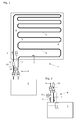
- FIG. 1 shows a schematic plan view of a simpler tempering according to a first embodiment.
- This tempering system is suitable for carrying out the method according to the invention for controlling the temperature of a component.
- This simpler tempering system 1 for carrying out the tempering method according to the invention comprises a tempering device 3 designed for heating or cooling a tempering fluid 2.
- This simpler tempering system 1 additionally comprises a tempering arrangement 5 (in the exemplary form of an embodiment shown in FIG. 1) for passing the tempering fluid 2 through a component 4 to be tempered the component 4 threaded, meandering pipe).
- This simpler tempering 1 also comprises a flow line 6, via which the temperature control 3 is connected to the temperature control 5 for supplying the tempering 2, and a return line 7 through which the temperature control 5 is connected to the temperature control 3 for returning the tempering.
- This simpler tempering 1 also includes a controller 8.
- This control 8 comprises a valve 9 with an actuator 10, this actuator 10 is designed to set an opening degree of the valve 9 used in the flow line 6 or in the return line 7 of the simpler temperature control system 1.
- the controller 8 includes a flow temperature sensor 11 and a return temperature sensor 12. This controller 8 is configured to drive the actuator 10.
- the flow temperature sensor 11 is designed to detect a flow temperature of the tempering 2 and the return temperature sensor 12 is for detecting a return temperature of the tempering 2.
- the controller 8 of the inventive simpler tempering 1 further comprises a controller 13 which is designed to detect a temperature difference between the flow temperature and the return temperature of the tempering 2. In this case, the controller 13 is designed so that it causes starting from this temperature difference, the actuator 10 of the valve 9 for adjusting the opening degree of the valve 9, that the average temperature difference between the flow temperature and the return temperature of the tempering 2 is in a predetermined range of values.
- a flow temperature of the tempering fluid 2 and, with the return temperature sensor 12, a return temperature of the tempering fluid 2 are detected by the flow temperature sensor 11.
- a regulator 13 which is encompassed by the controller 8
- a temperature difference between the flow temperature and the return temperature of the tempering fluid (2) is detected.
- the actuator 10 of the valve 9 such for adjusting the opening degree of this valve 9, that the average temperature difference between the flow temperature and the return temperature of the tempering 2 is in a predetermined range of values.
- the flow temperature of the tempering 2 is preferably in the flow line 6 and the return temperature of the tempering 2 is preferably detected in the return line 7.
- both temperature sensors 11, 12 are located outside of the component 4 (ie at the "beginning" or “end” of the temperature control arrangement 5) and are thus accessible at any time, for example, for maintenance work.
- the temperature difference between the flow temperature and the return temperature can be constant (cf. Fig. 5 ) or variable, for example, oscillating (see. Fig. 6 ) and accept different values. In order to correspond to these different operating states, it is therefore spoken of a mean temperature difference.
- the predetermined value range for this average temperature difference preferably comprises less than 20 ° C and is preferably 1 to 10 ° C and more preferably 2 to 6 ° C.
- the controller 13 as soon as it determines that the measured flow temperature reaches a predetermined value, causes the actuator 10 to close the valve 9.
- This rule is particularly useful when e.g. When heating a living room floor 4, the controller determines that the flow temperature exceeds the return temperature by too high a value. With this preferably temporary closure of the valve 9, overheating of the living room floor can be prevented. This will e.g. prevents damage to the floor covering (for example parquet).
- a temperature difference between a current room temperature and a selected desired temperature is detected from temperature data recorded and provided with a thermostat 14 of the simpler temperature control system 1, and that in the flow line 6 or In the return line 7 arranged closing valve 24 is opened or closed according to a certain value of this temperature difference.
- This rule is particularly useful when a 2-point control is to be used to set a maximum temperature difference, for example, 2 ° C between the setpoint temperature and the actual temperature (room temperature).
- the controller 13 of the controller 8 and with a room thermometer also an actual temperature of a room in the vicinity of the component 4 is detected, the controller 13, as soon as he determines that the measured flow temperature deviates from the actual temperature by a predetermined range of values, the actuator 10 causes the valve 9 to close.
- This rule is particularly useful if, for example, when heating a living room floor 4, the room temperature rises unexpectedly (eg by sunlight or the operation of a fireplace).
- This range of values can be adapted to the actual conditions, for example 10 ° C, 5 ° C or 2 ° C.
- valve 9 With this preferably temporary closure of the valve 9 can be prevented that the living room floor by a too low flow temperature unintentionally heat is withdrawn. During heating, these value ranges are typically below the actual temperature; During cooling, these ranges of values are typically above the actual temperature.
- Fig. 1 shows a schematic plan view of a simpler temperature control system 1 according to a first embodiment, in which the sensors for the flow temperature 11 and the return temperature 12 are arranged close to the valve 9 used here in the return line 7.
- the actuator 10 with the controller 13 is disposed directly at the valve 9.
- the controller 13 is electrically connected to the flow temperature sensor 11 and the return temperature sensor 12, which is shown here by dotted lines.
- the closure valve 24 is inserted here in the flow line 6.
- the entire controller 8 is outside the component 4 and also outside the tempering device 3rd
- FIG. 2 Comparable to the shows FIG. 2 a schematic partial plan view of the control of a simpler tempering according to a second embodiment, in which the sensors for the flow temperature 11 and the return temperature 12 are arranged close to the valve 9 used here in the flow line 6.
- the actuator 10 is again arranged directly at the valve 9.
- the controller 13 is located at a practically arbitrary distance to the previously mentioned components of the controller 8 and is located in the vicinity of the temperature control device 3 or even integrated into the latter.
- the controller 13 is electrically connected to the flow temperature sensor 11 and to the return temperature sensor 12 and to the actuator 10, which is shown here by dotted lines.
- the closure valve 24 is inserted here in the return line 7.
- the controller 8 is distributed to an area outside the component 4 and to an area at or within the temperature control device 3.
- FIG. 3 shows a schematic plan view of a more complex temperature control 1 'for performing the inventive method for controlling the temperature of components 4, wherein different embodiments are shown.
- This more complex tempering system 1 ' comprises two tempering arrangements 5, 5' (in each case in the exemplary form of pipes laid in the component 4 in a loop-like or meandering manner) for passing the tempering fluid 2 through the component 4 to be tempered.
- the two tempering arrangements 5, 5 ' connected via a common flow line 6 with the temperature control device 3.
- This more complex tempering system 1 ' also comprises two return lines 7, 7' for returning the tempering fluid 2 from the two temperature control arrangements 5, 5 'to the temperature control device 3.
- This more complex tempering system 1 'further comprises two return temperature sensors 12,12', wherein each return temperature sensor 12,12 'on or in one of the return lines 7,7' and the flow temperature sensor 11 is arranged on or in the common flow line 6.
- This complex temperature control system 1 ' also comprises two valves 9,9', each equipped with an actuator 10,10 'and in each case a separate flow line 6', 6 "after a flow distributor bar 23 or in each one of the return lines 7.7
- the actuators 10, 10 ' are designed to set an opening degree of the respective valve 9, 9' and the controller 8 is designed to drive the actuators 10, 10 '.
- this more complex tempering system 1 ' may have two tempering arrangements 5, 5', but it may also be more than two (that is, n ) tempering arrangements.
- the number of return lines 7, 7 ', return temperature sensors 12, 12', valves 9, 9 'and actuators 10, 10' also increases correspondingly to the number of tempering arrangements, so that with all of these components with a more complex temperature control system 1 'with a number from 2 to n can be expected.
- the 2 to n tempering arrangements 5, 5 ' are connected to the temperature control device 3 via a common feed line 6.
- this more complex tempering system 1' can comprise a supply distributor bar 23 or, alternatively, a simple T unit for connecting the common supply conduit 6 to the separate supply conduit 6 ', 6 " a more complex temperature control system 1 'more than two separate flow lines 6', 6 "includes, the expert will typically always provide a flow distributor bar 23. If, as shown, only two tempering arrangements 5, 5 'are present, this more complex tempering system 1' can have two separate return lines 7, 7 '; however, these two return lines 7, 7 'can alternatively be connected to the temperature control device 3 via a return distributor bar 23' or alternatively via a simple T piece and then a common return line. If a more complex temperature control system 1 'has more than two temperature control arrangements 5, 5', the skilled person will typically always provide a return manifold 23 '.
- the 2 to n valves 9, 9 ' which are each equipped with an actuator 10, 10', can each be fitted with a separate supply line 6 ', 6 "(in FIG Fig. 3 dotted drawn and seen in the direction of flow) after a flow distributor bar 23 (bold drawn drawn) or alternatively in each case one of the return lines 7,7 'are used.
- the insertion of the 2 to n valves 9,9 'in each one of the return lines 7,7' is preferably (in the flow direction) in front of a return manifold 23 '(bold dotted line), if such a return manifold 23' is provided is.
- the sensors for the flow temperature 11 and for the return temperature 12,12 'near the flow distributor beam 23 and near the return manifold 23' are arranged.
- the valves 9, 9 ' are arranged with the associated actuators 10, 10' in the vicinity of the return temperature sensors 12, 12 'and before the return distributor bar 23' or alternatively after the supply distributor bar 23.
- Particularly preferred are the temperature sensors 11,12,12 'outside of the component 4 (ie at the "beginning" or "end” of the temperature control assemblies 5,5') and are therefore accessible at any time for example for maintenance.
- the electrical connections between the actuators 10, 10 'and the regulator 13 arranged in the temperature control device 13 are not shown here.
- the controller 13 is also electrically connected to the flow temperature sensor 11 and the return temperature sensors 12,12 ', which is shown here by dotted lines.
- the closure valve 24 is usually inserted into the return line 7.
- the controller 8 is distributed to an area outside of the component 4 and to an area at or within the tempering device 3. In this example, a check valve 24 has been dispensed with.
- the inventive method is carried out with such a complex temperature control 1 'by the controller 13, the respective temperature differences between the common, detected by the flow temperature sensor 11 flow temperature and the two (generally 2 to n ) individual detected by the return temperature sensor 12,12' return temperatures of Temperierfluids 2 detected.
- an individual temperature difference between the flow temperature and one of the two (generally 2 to n ) return temperatures of the tempering fluid 2 is detected by the controller 13 of the control 8.
- the controller 13 Based on these individual temperature differences causes the controller 13, the actuators 10,10 'of the two (generally 2 to n ) valves 9,9' so to adjust the opening degree of these valves 9,9 'that the individual mean temperature differences between the flow temperature and the respective return temperature of the tempering 2 in each case a predetermined range of values.
- the value ranges of the temperature differences and flow rates controlled by the controller 13 are different in the two (generally 2 to n ) temperature control arrangements 5, 5 '.
- the predetermined value ranges of the temperature differences regulated by the controller 13 are 1 ° C to 10 ° C, preferably 2 ° C to 6 ° C.
- a temperature control method became a living space floor with a total surface of 40 m 2 with two Heating circuits, ie equipped with two temperature control arrangements 5,5 'of such a complex temperature control system 1'.
- the first temperature control arrangement 5 supplied a first partial area of 20 m 2 and the second temperature control arrangement 5 'a second partial area of 20 m 2 of the living space floor.
- Both Temperieran für extracten 5,5 ' were connected via a common flow line 6 to a trained for heating temperature control 3, said common feed line 6 a operatively connected to a controller 13 and a controller 8 flow temperature sensor 11 included.
- a check valve 24 has been dispensed with.
- a room temperature sensor was used to measure the room temperature, but this measurement only indicated the effect of the tempering process, but did not affect the tempering process itself.
- the flow of the tempering 2 with open valves 9,9 ' was about 2.5 l / min.
- This example shows that the temperature of a living space can be controlled very precisely with this relatively simple tempering process, despite different outside temperatures.
- the FIG. 4 shows a selection of exemplary actuator / controller combinations.
- the Fig. 4A shows a designed as a controller 13 bimetallic actuator 10.
- This bimetallic actuator / regulator 15 is arranged between the flow line 6 and the return line 7, that it contacts the two lines, each with one of the components of the bimetal.
- the contact of the bimetallic actuator / regulator 15 with the flow line 6 and with the return line 7 is so intense that each material component of the bimetallic actuator / regulator 15 assumes either the flow temperature or the return temperature.
- This bimetallic actuator / regulator 15 comprises a lever which is formed from the two components of the bimetal and which presses on a valve part of the valve 9 which is guided in a spring-biased manner by approximately one stroke 16.
- the mean value range of the temperature difference between supply and return temperatures can be adjusted be that it is 1 ° C to 10 ° C and preferably 2 ° C to 6 ° C, and that controlled by this currentless bimetallic actuator / regulator 15 controlled flows in the temperature control assemblies 5,5 '0.2 l / min to 10 l / min amount.
- the Fig. 4B shows an expansion actuator in combination with a regulator which is designed as a Schmitt trigger.
- the Schmitt trigger 17 is electrically connected on the input side to the flow temperature sensor 11 and also to the return temperature sensor 12 or is electrically connected to the expansion actuator 18 on the output side.
- the expansion actuator 18 includes an electric heater and a self-contained actuator cartridge with temperature-dependent volume. Now, if the flow temperature is higher than the return temperature, the Schmitt trigger 17 detects this temperature difference and he causes the electric heater in the expansion actuator 18 to heat the actuator cartridge so that this by a corresponding amount (maximum by the hub 16 ) expands. As a result, the spring-guided valve body of the valve 9 is moved by an amount which corresponds precisely to the temperature difference.
- the valve body brings the valve 9 in an enlarged open position, so that more tempering fluid 2 can circulate through the temperature control 5.
- the mean value range of the temperature difference between flow and return temperatures can be set to be 1 ° C to 10 ° C and preferably 2 ° C to 6 ° C , And that the flow rates in the temperature control assemblies 5.5 '0.2 l / min to 10 l / min.
- the Fig. 4C shows an actuator designed as an electric motor in combination with a differential amplifier.
- the differential amplifier 19 is the input side electrically connected to the flow temperature sensor 11 and also to the return temperature sensor 12 and the output side electrically connected to the electric motor 20 of the actuator, which also includes a spindle. Now, if the flow temperature is higher than the return temperature, the differential amplifier 19 detects this temperature difference and it causes the electric motor 20 in the actuator to drive the spindle so that this by a corresponding amount (maximum by the stroke 16) moves against the valve 9. As a result, the spring-guided valve body of the valve 9 is moved by an amount which corresponds precisely to the temperature difference.
- the valve body brings the valve 9 in an enlarged open position, so that more tempering fluid 2 can circulate through the temperature control 5.
- the mean value range of the temperature difference between flow and return temperatures can be adjusted to be 1 ° C to 10 ° C and preferably 2 ° C to 6 ° C, and that the flow rates in the temperature control arrangements are 5.5 '0.2 l / min to 10 l / min.
- the Fig. 4D shows a solenoid actuator in combination with a microprocessor.
- the microprocessor 21 is the input side electrically connected to the flow temperature sensor 11 and also to the return temperature sensor 12 and the output side electrically connected to the coil of a solenoid actuator 22, which also comprises a core.
- the microprocessor 21 detects this temperature difference and it causes the coil of the solenoid actuator 22 to drive the core so that this by a corresponding amount (maximum of the stroke 16) against the valve. 9 emotional.
- the spring-guided valve body of the valve 9 is moved by an amount which corresponds precisely to the temperature difference.
- the mean value range of the temperature difference between flow and return temperatures can be set to be 1 ° C to 10 ° C, and preferably 2 ° C to 6 ° C, and that the flow rates in the temperature control arrangements are 5.5 '0.2 l / min to 10 l / min.
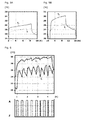
- the FIG. 5A shows in a temperature / time diagram, the temperature profile of the flow temperature T v and the return temperature T r at a constant flow of the tempering of 2.5 l / min and with a resulting, constant temperature difference between flow temperature and return temperature of about 2.0 ° C.
- the FIG. 5B shows in a temperature / time diagram, the temperature profile of the flow temperature T v and the return temperature T r at a constant flow of the tempering of 0.5 l / min and with a resulting, constant temperature difference between flow temperature and return temperature of about 4.0 ° C.
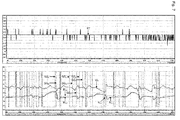
- the FIG. 6 shows in a temperature / time diagram, the temperature profile of the flow temperature T v and the return temperature T r with a control 8, in which the valve 9 was pulsed opened and closed again.
- the shows Fig. 6 Shown here is a possible control behavior in which the mean spread of the flow temperature T v and the return temperature T r directly with the actuator 10 and with this actuator 10th associated valve 9 is set dynamically.
- the upper curve shows the flow temperature T v , the lower curve, the return temperature T r and the pulse curve, the actuator signal, wherein A is 100% on and Z for 0%.
- the controller 13 sets this value independently of the pressure of the tempering 2, regardless of the flow of the tempering 2, regardless of the flow temperature and regardless of the temperature of the temperature control 3.
- the maximum total temperature difference between the flow temperature and the return temperature is about 6 ° C
- the maximum current temperature difference between the flow temperature and the return temperature is about 5 ° C
- the average resulting temperature difference between the flow temperature and the return temperature is about 4 ° C.
- tempering fluid 2 is understood to be any fluid, gas or gas-liquid mixture which is used for heating (supplying energy) and / or for cooling (discharging energy) and thus also for transporting of energy or heat can be used.
- floor heaters for example, a water-antifreeze mixture may be used, and in refrigeration circuits, a liquid having a high heat of vaporization capacity is often used.
- tempering 3 for example, a pellet, gas or oil burner with a boiler or a cooling unit with a coolant tank in question.
- one or more floors, one or more walls and / or a ceiling or several ceilings of living or working spaces can be considered as the component 4 to be tempered.
- These components can also be present, for example, in storage rooms or showrooms.
- These components can also be designed as a stand-alone, hanging or horizontal heating or cooling walls.
- thermocontrol systems 1,1 As an exemplary fluidic connection in temperature control systems 1,1 'apply here lines for conducting tempering fluids, such as pipes and the like.
- exemplary electrical connections in temperature control systems 1,1 'here are electrical cables for conducting electrical signals but also wireless connections for transmitting electronic data or signals.
- the valves 9,9 'are preferably designed as flow control valves and in the open state preferably always have a minimum opening degree which causes a minimum flow of the tempering fluid 2 of 0.1 to 2 l / min.
- the actuators 10, 10 ' comprise spring-loaded plungers.
Landscapes
- Engineering & Computer Science (AREA)
- Combustion & Propulsion (AREA)
- Mechanical Engineering (AREA)
- General Engineering & Computer Science (AREA)
- Chemical & Material Sciences (AREA)
- Physics & Mathematics (AREA)
- General Physics & Mathematics (AREA)
- Automation & Control Theory (AREA)
- Remote Sensing (AREA)
- Life Sciences & Earth Sciences (AREA)
- Sustainable Development (AREA)
- Control Of Temperature (AREA)
- Thermal Sciences (AREA)
- Heat Treatment Of Articles (AREA)
- Heating, Cooling, Or Curing Plastics Or The Like In General (AREA)
- Steam Or Hot-Water Central Heating Systems (AREA)
Applications Claiming Priority (1)
| Application Number | Priority Date | Filing Date | Title |
|---|---|---|---|
| CH00266/12A CH706146A2 (de) | 2012-02-29 | 2012-02-29 | Verfahren und System zum Temperieren von Bauteilen. |
Publications (3)
| Publication Number | Publication Date |
|---|---|
| EP2653789A2 true EP2653789A2 (fr) | 2013-10-23 |
| EP2653789A3 EP2653789A3 (fr) | 2018-04-18 |
| EP2653789B1 EP2653789B1 (fr) | 2020-01-15 |
Family
ID=47900551
Family Applications (1)
| Application Number | Title | Priority Date | Filing Date |
|---|---|---|---|
| EP13156578.0A Active EP2653789B1 (fr) | 2012-02-29 | 2013-02-25 | Procédé et système destinés à tempérer des composants |
Country Status (3)
| Country | Link |
|---|---|
| US (1) | US9267694B2 (fr) |
| EP (1) | EP2653789B1 (fr) |
| CH (1) | CH706146A2 (fr) |
Cited By (5)
| Publication number | Priority date | Publication date | Assignee | Title |
|---|---|---|---|---|
| DE102017123560A1 (de) | 2017-10-10 | 2019-04-11 | Eut Edelstahl Umformtechnik Gmbh | Selbstregulierende Einstellvorrichtung für ein Durchflussregelventil, ein Temperierungssystem als auch eine Verteilervorrichtung mit derselben, sowie Verfahren hierzu |
| US10697650B2 (en) | 2016-07-27 | 2020-06-30 | Computime Ltd. | Automatic balance valve control |
| US10712021B2 (en) | 2018-06-27 | 2020-07-14 | Computime Ltd. | Pulse modulated heating, ventilation, and air conditioning (HVAC) control |
| US10739017B2 (en) | 2018-08-20 | 2020-08-11 | Computime Ltd. | Determination of hydronic valve opening point |
| DE102019120126A1 (de) * | 2019-07-25 | 2021-01-28 | Straub Kg | Einstellvorrichtung und Verfahren zur Ermittlung eines hydraulischen Schwellwerts eines Ventils |
Families Citing this family (12)
| Publication number | Priority date | Publication date | Assignee | Title |
|---|---|---|---|---|
| US9091240B2 (en) * | 2013-01-24 | 2015-07-28 | Caterpillar Inc. | Compressed natural gas fuel mass control system |
| DE102013114925A1 (de) * | 2013-12-27 | 2015-07-02 | Agratec Invest Ag | Biogasproduktionsverfahren und Biogasproduktionsvorrichtung |
| EP3120209B1 (fr) * | 2014-03-18 | 2020-05-06 | IMI Hydronic Engineering, Inc. | Composants intelligents de rattrapage destinés à être utilisés dans un système de transfert de fluide |
| JP6458649B2 (ja) * | 2015-06-01 | 2019-01-30 | 富士通株式会社 | 冷却装置、冷却方法及び情報処理システム |
| DK179749B1 (en) * | 2016-06-30 | 2019-05-07 | Danfoss A/S | CONTROL OF FLOW REGULATING DEVICE |
| JP6804740B2 (ja) * | 2017-02-27 | 2020-12-23 | 清水建設株式会社 | 放射空調システム |
| US20180298611A1 (en) * | 2017-04-17 | 2018-10-18 | David R. Hall | Configurable Hydronic Structural Panel |
| CN108509001B (zh) * | 2018-04-02 | 2021-01-15 | 联想(北京)有限公司 | 电子设备及其水冷服务器 |
| US20200149748A1 (en) * | 2018-11-14 | 2020-05-14 | Francesco Giovanni Longo | Building System |
| US11092354B2 (en) | 2019-06-20 | 2021-08-17 | Johnson Controls Tyco IP Holdings LLP | Systems and methods for flow control in an HVAC system |
| US11149976B2 (en) * | 2019-06-20 | 2021-10-19 | Johnson Controls Tyco IP Holdings LLP | Systems and methods for flow control in an HVAC system |
| CN112032818B (zh) * | 2020-08-02 | 2022-01-14 | 杭州云谷科技股份有限公司 | 一种水系统供暖的室温协同控制方法 |
Citations (1)
| Publication number | Priority date | Publication date | Assignee | Title |
|---|---|---|---|---|
| DE4417941A1 (de) | 1994-05-21 | 1995-11-23 | Johann Binder | Vorrichtung zum Anschluß wenigstens eines Fußbodenheizelementes an den Vor- und Rücklauf eines Heizsystems sowie Heizsystem mit einer solchen Vorrichtung |
Family Cites Families (58)
| Publication number | Priority date | Publication date | Assignee | Title |
|---|---|---|---|---|
| GB1025727A (en) * | 1963-10-31 | 1966-04-14 | Ranco Inc | Ice bank control circuits |
| GB2034111B (en) | 1978-10-03 | 1983-02-16 | British Gas Corp | Temperature sensing device and apparatus for balancing wetcentral heating systems |
| DE2943081A1 (de) | 1979-10-25 | 1981-05-14 | Robert Bosch Gmbh, 7000 Stuttgart | Sammelheizung mit einem umlaufenden heizmedium |
| US4363441A (en) * | 1980-04-23 | 1982-12-14 | Emanuel Feinberg | Thermal energy usage meter for multiple unit building |
| SE8006391L (sv) * | 1980-09-12 | 1982-03-13 | Jacob Weitman | Sett att reglera en vermevexlare |
| GB2095379B (en) * | 1981-03-24 | 1984-11-14 | Exxon Research Engineering Co | Method and apparatus for regulating fluid flows in parallel-connected conduits |
| US4745767A (en) * | 1984-07-26 | 1988-05-24 | Sanyo Electric Co., Ltd. | System for controlling flow rate of refrigerant |
| DE3445634C2 (de) * | 1984-12-14 | 1993-12-09 | Held Kurt | Verfahren und Vorrichtung zum Beheizen der erwärmbaren Maschinenteile einer Doppelbandpresse |
| EP0189614B1 (fr) | 1984-12-24 | 1989-03-15 | Nederlandse Organisatie voor toegepast-natuurwetenschappelijk onderzoek TNO | Appareil et procédé pour ajuster une installation de chauffage central |
| DE3545602C1 (de) * | 1985-12-21 | 1987-08-13 | Danfoss As | Steuerschaltung fuer eine Kuehlvorrichtung |
| JP2640682B2 (ja) * | 1988-10-27 | 1997-08-13 | ファナック株式会社 | ワイヤ放電加工装置の加工液温度の異常表示方式 |
| US5144811A (en) * | 1991-01-10 | 1992-09-08 | Hughes Aircraft Company | Condensation control system for water-cooled electronics |
| US5244148A (en) * | 1992-07-30 | 1993-09-14 | Fluidmaster, Inc. | Adaptable heater control |
| US5435379A (en) * | 1992-08-14 | 1995-07-25 | Texas Instruments Incorporated | Method and apparatus for low-temperature semiconductor processing |
| US5643482A (en) * | 1996-01-16 | 1997-07-01 | Heat Timer Corporation | Snow melt control system |
| JPH1019283A (ja) * | 1996-07-01 | 1998-01-23 | Sunpot Co Ltd | 温水暖房装置 |
| DE19911866B4 (de) * | 1999-03-17 | 2018-10-18 | Xylem Ip Holdings Llc | Vorrichtung zum Abgleich von Heizkreisen in Großflächen-Heizungsanlagen |
| US6711017B2 (en) * | 2001-07-17 | 2004-03-23 | Hitachi Kokusai Electric Inc. | Cooling apparatus for electronic unit |
| US6817408B2 (en) * | 2001-10-17 | 2004-11-16 | Graham Corporation | Heat exchanger with integral internal temperature sensor |
| US8463441B2 (en) * | 2002-12-09 | 2013-06-11 | Hudson Technologies, Inc. | Method and apparatus for optimizing refrigeration systems |
| DE10310282A1 (de) * | 2003-03-07 | 2004-09-16 | Rittal Gmbh & Co. Kg | Flüssigkeits-Kühlsystem |
| GB0317330D0 (en) * | 2003-07-24 | 2003-08-27 | Diamond H Controls Ltd | Gas valve mechanism and multi-port valve |
| NL1025309C2 (nl) | 2004-01-23 | 2005-07-26 | Nedap Nv | Systeem voor het onafhankelijk regelen van de temperaturen in verschillende ruimten en van de temperaturen van één of meerdere warmwaterboilers. |
| US7477950B2 (en) * | 2004-09-28 | 2009-01-13 | Dymocom, Inc. | Method and system for controlling a network of water appliances |
| JP2006215882A (ja) * | 2005-02-04 | 2006-08-17 | Hitachi Ltd | ディスクアレイ装置及びその液冷装置 |
| GB2428282B (en) * | 2005-07-14 | 2007-05-09 | David Neill | Heating/cooling systems |
| JP4534227B2 (ja) * | 2005-09-30 | 2010-09-01 | Smc株式会社 | 水冷却式恒温液循環装置及び該装置における循環液温度制御方法 |
| CN101421560B (zh) * | 2006-02-10 | 2010-06-23 | 丹佛斯公司 | 对大热容量系统的控制 |
| US7510174B2 (en) * | 2006-04-14 | 2009-03-31 | Kammerzell Larry L | Dew point cooling tower, adhesive bonded heat exchanger, and other heat transfer apparatus |
| US7454308B1 (en) * | 2006-05-09 | 2008-11-18 | Steven Wayne Carroll | System for detection of waterlogging in steam heating coils |
| JP4254838B2 (ja) * | 2006-10-11 | 2009-04-15 | コニカミノルタビジネステクノロジーズ株式会社 | 画像処理システム、画像処理装置及びプログラム |
| US8430068B2 (en) * | 2007-05-31 | 2013-04-30 | James Wallace Harris | Cooling system having inlet control and outlet regulation |
| KR101068471B1 (ko) * | 2007-11-12 | 2011-09-29 | 주식회사 경동네트웍 | 온수시스템 및 그 제어방법 |
| US7808780B2 (en) * | 2008-02-28 | 2010-10-05 | International Business Machines Corporation | Variable flow computer cooling system for a data center and method of operation |
| US8763414B2 (en) * | 2008-03-31 | 2014-07-01 | Google Inc. | Warm floor data center |
| FR2931226B1 (fr) * | 2008-05-19 | 2013-08-16 | Acome Soc Coop Production | Procede et systeme de controle d'un circuit hydraulique a plusieurs boucles d'echange de chaleur |
| US20100100090A1 (en) * | 2008-10-17 | 2010-04-22 | Medicold Limited | Thermotherapy application and control system |
| DE102009004319A1 (de) * | 2009-01-10 | 2010-07-22 | Henry Klein | Verfahren, Computerprogramm und Regelgerät für einen temperaturbasierten hydraulischen Abgleich |
| US8145363B2 (en) * | 2009-05-28 | 2012-03-27 | American Power Conversion Corporation | Systems and methods for controlling load dynamics in a pumped refrigerant cooling system |
| GB2471834A (en) * | 2009-07-09 | 2011-01-19 | Hewlett Packard Development Co | Cooling Module with a Chiller Unit, Flow Control, and Able to Utilise Free Cooling |
| US20110112693A1 (en) * | 2009-08-27 | 2011-05-12 | Jim Jiaming Ye | Water cooling system of building structure for air conditioning system |
| US8452459B2 (en) * | 2009-08-31 | 2013-05-28 | Fisher-Rosemount Systems, Inc. | Heat exchange network heat recovery optimization in a process plant |
| US8583290B2 (en) * | 2009-09-09 | 2013-11-12 | International Business Machines Corporation | Cooling system and method minimizing power consumption in cooling liquid-cooled electronics racks |
| US8286442B2 (en) * | 2009-11-02 | 2012-10-16 | Exaflop Llc | Data center with low power usage effectiveness |
| US8113010B2 (en) * | 2009-11-02 | 2012-02-14 | Exaflop Llc | Data center cooling |
| JP4854779B2 (ja) * | 2009-12-09 | 2012-01-18 | シャープ株式会社 | 空気調和機、膨張弁の開度制御方法およびプログラム |
| ES2351458B1 (es) * | 2010-03-16 | 2011-10-19 | Inventia 2007, S.L. | Sistema de suministro de agua con regulacion de caudal y temperatura. |
| AT12048U1 (de) * | 2010-03-23 | 2011-09-15 | Stefan Ing Petters | Vorrichtung zur übertragung von wärme |
| JP5496771B2 (ja) * | 2010-05-13 | 2014-05-21 | 株式会社Kelk | 温度制御装置を用いた温度制御方法 |
| EP2591646B1 (fr) * | 2010-07-06 | 2014-12-24 | Sam Technologies GmbH | Système et procédé de refroidissement d'un ordinateur |
| US9158312B2 (en) * | 2010-07-07 | 2015-10-13 | Grand Mate Co., Ltd. | Method and device for controlling outlet water temperature of water heater |
| US9163619B2 (en) * | 2010-09-17 | 2015-10-20 | Safoco, Inc. | Valve actuator control system and method of use |
| US8757504B2 (en) * | 2010-10-22 | 2014-06-24 | Tai-Her Yang | Temperature unifying and heat storing system of semiconductor heat loss through natural temperature maintaining member |
| WO2012065275A1 (fr) * | 2010-11-17 | 2012-05-24 | Belimo Holding Ag | Dispositif et procédé de commande de l'ouverture d'une soupape dans un système hvac |
| US20120197446A1 (en) * | 2010-12-01 | 2012-08-02 | Glaudel Stephen P | Advanced feed-forward valve-control for a mass flow controller |
| JP5694018B2 (ja) * | 2011-03-16 | 2015-04-01 | 株式会社日本自動車部品総合研究所 | 冷却装置 |
| CA2799677C (fr) * | 2011-12-22 | 2017-01-24 | Cenovus Fccl Ltd. | Generateur de vapeur et methode de production de vapeur |
| US9513019B2 (en) * | 2013-11-27 | 2016-12-06 | Advanced Conservation Technologies Development, Inc. | Methods and apparatus for remotely monitoring and/or controlling a plumbing system |
-
2012
- 2012-02-29 CH CH00266/12A patent/CH706146A2/de not_active Application Discontinuation
-
2013
- 2013-02-25 EP EP13156578.0A patent/EP2653789B1/fr active Active
- 2013-02-26 US US13/777,600 patent/US9267694B2/en active Active
Patent Citations (1)
| Publication number | Priority date | Publication date | Assignee | Title |
|---|---|---|---|---|
| DE4417941A1 (de) | 1994-05-21 | 1995-11-23 | Johann Binder | Vorrichtung zum Anschluß wenigstens eines Fußbodenheizelementes an den Vor- und Rücklauf eines Heizsystems sowie Heizsystem mit einer solchen Vorrichtung |
Cited By (8)
| Publication number | Priority date | Publication date | Assignee | Title |
|---|---|---|---|---|
| US10697650B2 (en) | 2016-07-27 | 2020-06-30 | Computime Ltd. | Automatic balance valve control |
| DE102017123560A1 (de) | 2017-10-10 | 2019-04-11 | Eut Edelstahl Umformtechnik Gmbh | Selbstregulierende Einstellvorrichtung für ein Durchflussregelventil, ein Temperierungssystem als auch eine Verteilervorrichtung mit derselben, sowie Verfahren hierzu |
| WO2019072813A1 (fr) | 2017-10-10 | 2019-04-18 | Eut Edelstahl Umformtechnik Gmbh | Dispositif de réglage autorégulateur pour une soupape de régulation de débit, système de mise en température en tant qu'un dispositif de distribution pourvu dudit dispositif de réglage ainsi que procédés correspondants |
| DE102017123560B4 (de) | 2017-10-10 | 2024-09-12 | Eut Edelstahl Umformtechnik Gmbh | Selbstregulierende Einstellvorrichtung für ein Durchflussregelventil |
| US10712021B2 (en) | 2018-06-27 | 2020-07-14 | Computime Ltd. | Pulse modulated heating, ventilation, and air conditioning (HVAC) control |
| US10739017B2 (en) | 2018-08-20 | 2020-08-11 | Computime Ltd. | Determination of hydronic valve opening point |
| DE102019120126A1 (de) * | 2019-07-25 | 2021-01-28 | Straub Kg | Einstellvorrichtung und Verfahren zur Ermittlung eines hydraulischen Schwellwerts eines Ventils |
| DE102019120126B4 (de) | 2019-07-25 | 2021-08-05 | Straub Kg | Einstellvorrichtung und Verfahren zur Ermittlung eines hydraulischen Schwellwerts eines Ventils |
Also Published As
| Publication number | Publication date |
|---|---|
| EP2653789A3 (fr) | 2018-04-18 |
| EP2653789B1 (fr) | 2020-01-15 |
| US9267694B2 (en) | 2016-02-23 |
| CH706146A2 (de) | 2013-08-30 |
| US20130220590A1 (en) | 2013-08-29 |
Similar Documents
| Publication | Publication Date | Title |
|---|---|---|
| EP2653789B1 (fr) | Procédé et système destinés à tempérer des composants | |
| DE102017123560B4 (de) | Selbstregulierende Einstellvorrichtung für ein Durchflussregelventil | |
| EP1936288B1 (fr) | Procédé et système destinés à la détection d'un équilibrage hydraulique d'une installation de chauffage | |
| EP2965161B1 (fr) | Procédé et système de régulation de la température d'éléments structuraux | |
| EP0935181B1 (fr) | Procédé et dispositif de régulation par auto-apprentissage pour un système de chauffage | |
| DE102009004319A1 (de) | Verfahren, Computerprogramm und Regelgerät für einen temperaturbasierten hydraulischen Abgleich | |
| EP2354682B1 (fr) | Procédé et dispositif destinés au réglage d'un dispositif de thermorégulation | |
| EP3378928B1 (fr) | Procédé de fonctionnement un module d'humidification, module d'humidification et incubateur ou armoire climatisée pourvus de module d'humidification | |
| EP1933220B1 (fr) | Procédé de détermination de l'état d'alimentation d'un circuit de chauffage ou d'un bâtiment et régulateur d'état d'alimentation | |
| DE102008049619A1 (de) | Gebäudeheizsystem | |
| EP3473939B1 (fr) | Procédé de fonctionnement d'une installation de chauffage et installation de chauffage | |
| EP2175206A2 (fr) | Procédé d'équilibrage des températures de pièces d'un bâtiment | |
| EP2009536A1 (fr) | Procédé et dispositif destinés à l'installation de la réserve de puissance de chauffe | |
| DE10108852C1 (de) | Raumtemperaturregelung | |
| DE102015222110A1 (de) | Verfahren zum Durchführen eines automatisierten hydraulischen Abgleichs, Ventil und Heizungsanlage hierzu | |
| EP3553408A1 (fr) | Procédé de fonctionnement d'un appareil chauffant hybride et appareil chauffant hybride | |
| DE102015113340A1 (de) | Heizungsanlage und Verfahren zum Betreiben einer Heizungsanlage | |
| DE102010056301B4 (de) | Verfahren zur automatischen Optimierung einer Aufheizphase eines Heizsystems sowie ein Heizsystem | |
| EP3425474B1 (fr) | Procédé de commande d'un entraînement thermoélectrique à 2 points d'une vanne d'un système de chauffage et/ou de refroidissement | |
| DE19602388A1 (de) | Verfahren und Vorrichtung zum bedarfsgeführten Betreiben eines Heizkörpers | |
| EP2894408B1 (fr) | Procédé de régulation de la température de pièces d'un bâtiment | |
| DE202014010256U1 (de) | System zum Temperieren von Bauteilen | |
| DE2906607A1 (de) | Vorrichtung zum befuellen von verdunstern | |
| EP1450111B1 (fr) | Procédé pour determiner une demande de chaleur et dispositif de chauffage pour mettre ledit procédé en oeuvre | |
| DE102018130192A1 (de) | Verfahren zum Betrieb einer Kontrolleinrichtung und Kontrolleinrichtung |
Legal Events
| Date | Code | Title | Description |
|---|---|---|---|
| PUAI | Public reference made under article 153(3) epc to a published international application that has entered the european phase |
Free format text: ORIGINAL CODE: 0009012 |
|
| AK | Designated contracting states |
Kind code of ref document: A2 Designated state(s): AL AT BE BG CH CY CZ DE DK EE ES FI FR GB GR HR HU IE IS IT LI LT LU LV MC MK MT NL NO PL PT RO RS SE SI SK SM TR |
|
| AX | Request for extension of the european patent |
Extension state: BA ME |
|
| PUAL | Search report despatched |
Free format text: ORIGINAL CODE: 0009013 |
|
| AK | Designated contracting states |
Kind code of ref document: A3 Designated state(s): AL AT BE BG CH CY CZ DE DK EE ES FI FR GB GR HR HU IE IS IT LI LT LU LV MC MK MT NL NO PL PT RO RS SE SI SK SM TR |
|
| AX | Request for extension of the european patent |
Extension state: BA ME |
|
| RIC1 | Information provided on ipc code assigned before grant |
Ipc: G05D 23/19 20060101ALI20180309BHEP Ipc: F24D 3/14 20060101ALI20180309BHEP Ipc: F24D 3/12 20060101AFI20180309BHEP Ipc: F24F 3/06 20060101ALI20180309BHEP Ipc: F24F 5/00 20060101ALI20180309BHEP Ipc: G05D 23/08 20060101ALI20180309BHEP Ipc: F24D 19/10 20060101ALI20180309BHEP |
|
| STAA | Information on the status of an ep patent application or granted ep patent |
Free format text: STATUS: REQUEST FOR EXAMINATION WAS MADE |
|
| 17P | Request for examination filed |
Effective date: 20180921 |
|
| RBV | Designated contracting states (corrected) |
Designated state(s): AL AT BE BG CH CY CZ DE DK EE ES FI FR GB GR HR HU IE IS IT LI LT LU LV MC MK MT NL NO PL PT RO RS SE SI SK SM TR |
|
| STAA | Information on the status of an ep patent application or granted ep patent |
Free format text: STATUS: EXAMINATION IS IN PROGRESS |
|
| 17Q | First examination report despatched |
Effective date: 20190405 |
|
| RIC1 | Information provided on ipc code assigned before grant |
Ipc: G05D 23/08 20060101ALI20190704BHEP Ipc: F24F 5/00 20060101ALI20190704BHEP Ipc: F24F 11/72 20180101ALI20190704BHEP Ipc: F24F 3/06 20060101ALI20190704BHEP Ipc: G05D 23/19 20060101ALI20190704BHEP Ipc: F24D 19/10 20060101ALI20190704BHEP Ipc: F24D 3/14 20060101ALI20190704BHEP Ipc: F24D 3/12 20060101AFI20190704BHEP |
|
| GRAP | Despatch of communication of intention to grant a patent |
Free format text: ORIGINAL CODE: EPIDOSNIGR1 |
|
| STAA | Information on the status of an ep patent application or granted ep patent |
Free format text: STATUS: GRANT OF PATENT IS INTENDED |
|
| INTG | Intention to grant announced |
Effective date: 20190828 |
|
| GRAJ | Information related to disapproval of communication of intention to grant by the applicant or resumption of examination proceedings by the epo deleted |
Free format text: ORIGINAL CODE: EPIDOSDIGR1 |
|
| STAA | Information on the status of an ep patent application or granted ep patent |
Free format text: STATUS: EXAMINATION IS IN PROGRESS |
|
| GRAP | Despatch of communication of intention to grant a patent |
Free format text: ORIGINAL CODE: EPIDOSNIGR1 |
|
| STAA | Information on the status of an ep patent application or granted ep patent |
Free format text: STATUS: GRANT OF PATENT IS INTENDED |
|
| INTC | Intention to grant announced (deleted) | ||
| RAP1 | Party data changed (applicant data changed or rights of an application transferred) |
Owner name: OBLAMATIK AG |
|
| GRAS | Grant fee paid |
Free format text: ORIGINAL CODE: EPIDOSNIGR3 |
|
| GRAA | (expected) grant |
Free format text: ORIGINAL CODE: 0009210 |
|
| STAA | Information on the status of an ep patent application or granted ep patent |
Free format text: STATUS: THE PATENT HAS BEEN GRANTED |
|
| INTG | Intention to grant announced |
Effective date: 20191120 |
|
| AK | Designated contracting states |
Kind code of ref document: B1 Designated state(s): AL AT BE BG CH CY CZ DE DK EE ES FI FR GB GR HR HU IE IS IT LI LT LU LV MC MK MT NL NO PL PT RO RS SE SI SK SM TR |
|
| REG | Reference to a national code |
Ref country code: CH Ref legal event code: EP Ref country code: GB Ref legal event code: FG4D Free format text: NOT ENGLISH |
|
| REG | Reference to a national code |
Ref country code: IE Ref legal event code: FG4D Free format text: LANGUAGE OF EP DOCUMENT: GERMAN |
|
| REG | Reference to a national code |
Ref country code: DE Ref legal event code: R096 Ref document number: 502013014200 Country of ref document: DE |
|
| REG | Reference to a national code |
Ref country code: AT Ref legal event code: REF Ref document number: 1225483 Country of ref document: AT Kind code of ref document: T Effective date: 20200215 |
|
| REG | Reference to a national code |
Ref country code: CH Ref legal event code: NV Representative=s name: OK PAT AG PATENTE MARKEN LIZENZEN, CH |
|
| REG | Reference to a national code |
Ref country code: NL Ref legal event code: FP |
|
| REG | Reference to a national code |
Ref country code: LT Ref legal event code: MG4D |
|
| PG25 | Lapsed in a contracting state [announced via postgrant information from national office to epo] |
Ref country code: NO Free format text: LAPSE BECAUSE OF FAILURE TO SUBMIT A TRANSLATION OF THE DESCRIPTION OR TO PAY THE FEE WITHIN THE PRESCRIBED TIME-LIMIT Effective date: 20200415 Ref country code: PT Free format text: LAPSE BECAUSE OF FAILURE TO SUBMIT A TRANSLATION OF THE DESCRIPTION OR TO PAY THE FEE WITHIN THE PRESCRIBED TIME-LIMIT Effective date: 20200607 Ref country code: RS Free format text: LAPSE BECAUSE OF FAILURE TO SUBMIT A TRANSLATION OF THE DESCRIPTION OR TO PAY THE FEE WITHIN THE PRESCRIBED TIME-LIMIT Effective date: 20200115 Ref country code: FI Free format text: LAPSE BECAUSE OF FAILURE TO SUBMIT A TRANSLATION OF THE DESCRIPTION OR TO PAY THE FEE WITHIN THE PRESCRIBED TIME-LIMIT Effective date: 20200115 |
|
| REG | Reference to a national code |
Ref country code: SK Ref legal event code: T3 Ref document number: E 34278 Country of ref document: SK |
|
| PG25 | Lapsed in a contracting state [announced via postgrant information from national office to epo] |
Ref country code: IS Free format text: LAPSE BECAUSE OF FAILURE TO SUBMIT A TRANSLATION OF THE DESCRIPTION OR TO PAY THE FEE WITHIN THE PRESCRIBED TIME-LIMIT Effective date: 20200515 Ref country code: HR Free format text: LAPSE BECAUSE OF FAILURE TO SUBMIT A TRANSLATION OF THE DESCRIPTION OR TO PAY THE FEE WITHIN THE PRESCRIBED TIME-LIMIT Effective date: 20200115 Ref country code: SE Free format text: LAPSE BECAUSE OF FAILURE TO SUBMIT A TRANSLATION OF THE DESCRIPTION OR TO PAY THE FEE WITHIN THE PRESCRIBED TIME-LIMIT Effective date: 20200115 Ref country code: LV Free format text: LAPSE BECAUSE OF FAILURE TO SUBMIT A TRANSLATION OF THE DESCRIPTION OR TO PAY THE FEE WITHIN THE PRESCRIBED TIME-LIMIT Effective date: 20200115 Ref country code: GR Free format text: LAPSE BECAUSE OF FAILURE TO SUBMIT A TRANSLATION OF THE DESCRIPTION OR TO PAY THE FEE WITHIN THE PRESCRIBED TIME-LIMIT Effective date: 20200416 Ref country code: BG Free format text: LAPSE BECAUSE OF FAILURE TO SUBMIT A TRANSLATION OF THE DESCRIPTION OR TO PAY THE FEE WITHIN THE PRESCRIBED TIME-LIMIT Effective date: 20200415 |
|
| REG | Reference to a national code |
Ref country code: DE Ref legal event code: R097 Ref document number: 502013014200 Country of ref document: DE |
|
| PG25 | Lapsed in a contracting state [announced via postgrant information from national office to epo] |
Ref country code: EE Free format text: LAPSE BECAUSE OF FAILURE TO SUBMIT A TRANSLATION OF THE DESCRIPTION OR TO PAY THE FEE WITHIN THE PRESCRIBED TIME-LIMIT Effective date: 20200115 Ref country code: LT Free format text: LAPSE BECAUSE OF FAILURE TO SUBMIT A TRANSLATION OF THE DESCRIPTION OR TO PAY THE FEE WITHIN THE PRESCRIBED TIME-LIMIT Effective date: 20200115 Ref country code: DK Free format text: LAPSE BECAUSE OF FAILURE TO SUBMIT A TRANSLATION OF THE DESCRIPTION OR TO PAY THE FEE WITHIN THE PRESCRIBED TIME-LIMIT Effective date: 20200115 Ref country code: ES Free format text: LAPSE BECAUSE OF FAILURE TO SUBMIT A TRANSLATION OF THE DESCRIPTION OR TO PAY THE FEE WITHIN THE PRESCRIBED TIME-LIMIT Effective date: 20200115 Ref country code: SM Free format text: LAPSE BECAUSE OF FAILURE TO SUBMIT A TRANSLATION OF THE DESCRIPTION OR TO PAY THE FEE WITHIN THE PRESCRIBED TIME-LIMIT Effective date: 20200115 Ref country code: RO Free format text: LAPSE BECAUSE OF FAILURE TO SUBMIT A TRANSLATION OF THE DESCRIPTION OR TO PAY THE FEE WITHIN THE PRESCRIBED TIME-LIMIT Effective date: 20200115 Ref country code: LU Free format text: LAPSE BECAUSE OF NON-PAYMENT OF DUE FEES Effective date: 20200225 Ref country code: MC Free format text: LAPSE BECAUSE OF FAILURE TO SUBMIT A TRANSLATION OF THE DESCRIPTION OR TO PAY THE FEE WITHIN THE PRESCRIBED TIME-LIMIT Effective date: 20200115 |
|
| REG | Reference to a national code |
Ref country code: CH Ref legal event code: PFUS Owner name: OBLAMATIK AG, CH Free format text: FORMER OWNER: OBLAMATIK AG, CH |
|
| PLBE | No opposition filed within time limit |
Free format text: ORIGINAL CODE: 0009261 |
|
| STAA | Information on the status of an ep patent application or granted ep patent |
Free format text: STATUS: NO OPPOSITION FILED WITHIN TIME LIMIT |
|
| 26N | No opposition filed |
Effective date: 20201016 |
|
| PG25 | Lapsed in a contracting state [announced via postgrant information from national office to epo] |
Ref country code: IE Free format text: LAPSE BECAUSE OF NON-PAYMENT OF DUE FEES Effective date: 20200225 Ref country code: FR Free format text: LAPSE BECAUSE OF NON-PAYMENT OF DUE FEES Effective date: 20200315 |
|
| PG25 | Lapsed in a contracting state [announced via postgrant information from national office to epo] |
Ref country code: PL Free format text: LAPSE BECAUSE OF FAILURE TO SUBMIT A TRANSLATION OF THE DESCRIPTION OR TO PAY THE FEE WITHIN THE PRESCRIBED TIME-LIMIT Effective date: 20200115 Ref country code: SI Free format text: LAPSE BECAUSE OF FAILURE TO SUBMIT A TRANSLATION OF THE DESCRIPTION OR TO PAY THE FEE WITHIN THE PRESCRIBED TIME-LIMIT Effective date: 20200115 |
|
| GBPC | Gb: european patent ceased through non-payment of renewal fee |
Effective date: 20200415 |
|
| PG25 | Lapsed in a contracting state [announced via postgrant information from national office to epo] |
Ref country code: GB Free format text: LAPSE BECAUSE OF NON-PAYMENT OF DUE FEES Effective date: 20200415 |
|
| PG25 | Lapsed in a contracting state [announced via postgrant information from national office to epo] |
Ref country code: TR Free format text: LAPSE BECAUSE OF FAILURE TO SUBMIT A TRANSLATION OF THE DESCRIPTION OR TO PAY THE FEE WITHIN THE PRESCRIBED TIME-LIMIT Effective date: 20200115 Ref country code: MT Free format text: LAPSE BECAUSE OF FAILURE TO SUBMIT A TRANSLATION OF THE DESCRIPTION OR TO PAY THE FEE WITHIN THE PRESCRIBED TIME-LIMIT Effective date: 20200115 Ref country code: CY Free format text: LAPSE BECAUSE OF FAILURE TO SUBMIT A TRANSLATION OF THE DESCRIPTION OR TO PAY THE FEE WITHIN THE PRESCRIBED TIME-LIMIT Effective date: 20200115 |
|
| PG25 | Lapsed in a contracting state [announced via postgrant information from national office to epo] |
Ref country code: MK Free format text: LAPSE BECAUSE OF FAILURE TO SUBMIT A TRANSLATION OF THE DESCRIPTION OR TO PAY THE FEE WITHIN THE PRESCRIBED TIME-LIMIT Effective date: 20200115 Ref country code: AL Free format text: LAPSE BECAUSE OF FAILURE TO SUBMIT A TRANSLATION OF THE DESCRIPTION OR TO PAY THE FEE WITHIN THE PRESCRIBED TIME-LIMIT Effective date: 20200115 |
|
| REG | Reference to a national code |
Ref country code: DE Ref legal event code: R082 Ref document number: 502013014200 Country of ref document: DE Representative=s name: SKM-IP SCHMID KRAUSS KUTTENKEULER MALESCHA SCH, DE Ref country code: DE Ref legal event code: R082 Ref document number: 502013014200 Country of ref document: DE Representative=s name: COHAUSZ & FLORACK PATENT- UND RECHTSANWAELTE P, DE |
|
| PGFP | Annual fee paid to national office [announced via postgrant information from national office to epo] |
Ref country code: CZ Payment date: 20240214 Year of fee payment: 12 Ref country code: SK Payment date: 20240115 Year of fee payment: 12 |
|
| REG | Reference to a national code |
Ref country code: SK Ref legal event code: MM4A Ref document number: E 34278 Country of ref document: SK Effective date: 20250225 |
|
| PG25 | Lapsed in a contracting state [announced via postgrant information from national office to epo] |
Ref country code: CZ Free format text: LAPSE BECAUSE OF NON-PAYMENT OF DUE FEES Effective date: 20250225 |
|
| PG25 | Lapsed in a contracting state [announced via postgrant information from national office to epo] |
Ref country code: SK Free format text: LAPSE BECAUSE OF NON-PAYMENT OF DUE FEES Effective date: 20250225 |
|
| PGFP | Annual fee paid to national office [announced via postgrant information from national office to epo] |
Ref country code: NL Payment date: 20260106 Year of fee payment: 14 |
|
| REG | Reference to a national code |
Ref country code: CH Ref legal event code: U11 Free format text: ST27 STATUS EVENT CODE: U-0-0-U10-U11 (AS PROVIDED BY THE NATIONAL OFFICE) Effective date: 20260301 |
|
| PGFP | Annual fee paid to national office [announced via postgrant information from national office to epo] |
Ref country code: DE Payment date: 20260102 Year of fee payment: 14 |
|
| PGFP | Annual fee paid to national office [announced via postgrant information from national office to epo] |
Ref country code: AT Payment date: 20260127 Year of fee payment: 14 |
|
| PGFP | Annual fee paid to national office [announced via postgrant information from national office to epo] |
Ref country code: BE Payment date: 20260105 Year of fee payment: 14 Ref country code: IT Payment date: 20260122 Year of fee payment: 14 |
|
| REG | Reference to a national code |
Ref country code: DE Ref legal event code: R082 Ref document number: 502013014200 Country of ref document: DE Representative=s name: COHAUSZ & FLORACK PATENT- UND RECHTSANWAELTE P, DE |
|
| PGFP | Annual fee paid to national office [announced via postgrant information from national office to epo] |
Ref country code: CH Payment date: 20260301 Year of fee payment: 14 |