EP2663496B1 - Système d'emballage - Google Patents
Système d'emballage Download PDFInfo
- Publication number
- EP2663496B1 EP2663496B1 EP12701843.0A EP12701843A EP2663496B1 EP 2663496 B1 EP2663496 B1 EP 2663496B1 EP 12701843 A EP12701843 A EP 12701843A EP 2663496 B1 EP2663496 B1 EP 2663496B1
- Authority
- EP
- European Patent Office
- Prior art keywords
- packaging
- product
- chute
- weighing
- packaging material
- Prior art date
- Legal status (The legal status is an assumption and is not a legal conclusion. Google has not performed a legal analysis and makes no representation as to the accuracy of the status listed.)
- Active
Links
Images


Classifications
-
- B—PERFORMING OPERATIONS; TRANSPORTING
- B65—CONVEYING; PACKING; STORING; HANDLING THIN OR FILAMENTARY MATERIAL
- B65B—MACHINES, APPARATUS OR DEVICES FOR, OR METHODS OF, PACKAGING ARTICLES OR MATERIALS; UNPACKING
- B65B5/00—Packaging individual articles in containers or receptacles, e.g. bags, sacks, boxes, cartons, cans, jars
- B65B5/04—Packaging single articles
-
- B—PERFORMING OPERATIONS; TRANSPORTING
- B65—CONVEYING; PACKING; STORING; HANDLING THIN OR FILAMENTARY MATERIAL
- B65B—MACHINES, APPARATUS OR DEVICES FOR, OR METHODS OF, PACKAGING ARTICLES OR MATERIALS; UNPACKING
- B65B61/00—Auxiliary devices, not otherwise provided for, for operating on sheets, blanks, webs, binding material, containers or packages
- B65B61/02—Auxiliary devices, not otherwise provided for, for operating on sheets, blanks, webs, binding material, containers or packages for perforating, scoring, slitting, or applying code or date marks on material prior to packaging
- B65B61/025—Auxiliary devices, not otherwise provided for, for operating on sheets, blanks, webs, binding material, containers or packages for perforating, scoring, slitting, or applying code or date marks on material prior to packaging for applying, e.g. printing, code or date marks on material prior to packaging
-
- B—PERFORMING OPERATIONS; TRANSPORTING
- B65—CONVEYING; PACKING; STORING; HANDLING THIN OR FILAMENTARY MATERIAL
- B65B—MACHINES, APPARATUS OR DEVICES FOR, OR METHODS OF, PACKAGING ARTICLES OR MATERIALS; UNPACKING
- B65B25/00—Packaging other articles presenting special problems
- B65B25/02—Packaging agricultural or horticultural products
- B65B25/04—Packaging fruit or vegetables
-
- B—PERFORMING OPERATIONS; TRANSPORTING
- B65—CONVEYING; PACKING; STORING; HANDLING THIN OR FILAMENTARY MATERIAL
- B65B—MACHINES, APPARATUS OR DEVICES FOR, OR METHODS OF, PACKAGING ARTICLES OR MATERIALS; UNPACKING
- B65B25/00—Packaging other articles presenting special problems
- B65B25/06—Packaging slices or specially-shaped pieces of meat, cheese, or other plastic or tacky products
-
- B—PERFORMING OPERATIONS; TRANSPORTING
- B65—CONVEYING; PACKING; STORING; HANDLING THIN OR FILAMENTARY MATERIAL
- B65B—MACHINES, APPARATUS OR DEVICES FOR, OR METHODS OF, PACKAGING ARTICLES OR MATERIALS; UNPACKING
- B65B25/00—Packaging other articles presenting special problems
- B65B25/06—Packaging slices or specially-shaped pieces of meat, cheese, or other plastic or tacky products
- B65B25/064—Packaging slices or specially-shaped pieces of meat, cheese, or other plastic or tacky products of poultry
-
- B—PERFORMING OPERATIONS; TRANSPORTING
- B65—CONVEYING; PACKING; STORING; HANDLING THIN OR FILAMENTARY MATERIAL
- B65B—MACHINES, APPARATUS OR DEVICES FOR, OR METHODS OF, PACKAGING ARTICLES OR MATERIALS; UNPACKING
- B65B5/00—Packaging individual articles in containers or receptacles, e.g. bags, sacks, boxes, cartons, cans, jars
- B65B5/04—Packaging single articles
- B65B5/045—Packaging single articles in bags
Definitions
- the present invention relates to packaging systems.
- the invention relates particularly to packaging systems for poultry.
- meat products such as poultry are packaged by placing the product in a plastics tray and wrapping the product and tray with a film, for example a heat shrinkable film.
- a film for example a heat shrinkable film.
- Such packaging is that it is relatively cumbersome and is not environmentally friendly.
- Another problem is that conventional packaging production lines normally require that the meat products are weighed and labelled after packaging is completed, usually on a separate machine. It would be desirable to provide a packaging apparatus that mitigated the above-identified problems.
- EP 2490950 disclose packaging systems for poultry. EP 2490950 is included in the state of the art under Article 54(3) EPC. It would be desirable to provide a packaging system that improves on these systems.
- a first aspect of the invention provides a packaging system as claimed in claim 1.
- the system may comprise a packaging apparatus, a weighing apparatus, a printer, and means for transferring a weighed product to said packaging apparatus, wherein said weighing apparatus is located adjacent said packaging apparatus such that said weighed product is the next product to be packaged, and wherein said printer is arranged to receive information relating to the weight of said weighed product and to print said information, or information derived therefrom, directly onto the packaging of the weighed and packaged product, or onto a label for the weighed and packaged product.
- the packaging system is typically incorporated into a production line for weighing and packaging a plurality of products in succession.
- the weighing point is adjacent the packaging apparatus, and the arrangement is such that each product is weighed just before being packaged.
- the product is weighed after the preceding product has been packaged (or at least placed into or otherwise allocated to its respective packaging) such that no other non-packaged products are in the packaging production line between the weighing apparatus and the packaging apparatus.
- the weighed product is the next to be packaged and so the weight-related information provided to the printer relates to the product next being packaged.
- said transferring means comprises a slide or chute arranged to transfer products from the weighing apparatus to said packaging apparatus under the influence of gravity.
- the weighing apparatus is preferably located above the packaging apparatus.
- said weighing apparatus comprises a hopper or container coupled to a weighing device.
- the weighing hopper/container may comprise a first door, or other release mechanism, for selectably holding a product in the hopper/container or releasing the product from the hopper/container. Said first door is preferably held in its holding state while a product is received and weighed, and is opened after the product has been weighed.
- the preferred arrangement is such that said first door is aligned, or movable into alignment, with said transfer means (preferably the upper end of the chute) so that products leaving the hopper/container via the first door are transferred to the packaging apparatus.
- the hopper/container may include a second door, or other release mechanism, for selectably holding a product in the hopper/container or releasing the product from the hopper/container.
- Said second door is preferably held in its holding state while a product is received and weighed, and is opened after the product has been weighed.
- the second door may be aligned with a rejection area, or means for transferring products to the rejection area.
- the system may open one or other of said doors after a product has been weighed and in response to determining if the weight of the product meets one or more criterion.
- the packaging apparatus comprises a bagging machine, i.e. a machine configured to place the products into individual bags, preferably quad seal bags.
- the packaging apparatus preferably comprises a vertical form fill and seal machine (sometimes referred to as a VFF seal machine, or a VFF&S machine).
- the system includes at least one conveyor for delivering products to the weighing apparatus.
- Said at least one conveyor typically includes an elevating conveyor arranged to elevate the products to a height from which they may be transferred to the weighing apparatus, preferably under the influence of gravity.
- the weighing apparatus, and in particular the product receiving portion of the weighing apparatus is located below the discharging end of the elevating conveyor.
- a holding hopper is provided between the discharging end of the elevating conveyor and the weighing apparatus.
- a feed conveyor is provided for feeding products to said elevating conveyor.
- Said elevating conveyor and, when present, said feed conveyor are preferably arranged to be index operated, i.e. moved incrementally, conveniently under control of a controller.
- said elevating conveyor and, when present, said feed conveyor each comprises a flighted conveyor.
- controller typically comprises a suitably programmed computer.
- the packaging apparatus is configured to make a hermetically sealed 4 corner package (especially of the type known as a quad seal bag), and advantageously includes means for injecting a product preserving gas into the package, e.g. at a level that will satisfy a shelf life of 12-14 days.
- the package comprises a bag formed from one or more sheets of plastics, e.g. a laminated plastics film.
- products to be packaged e.g. fresh, tied tray-less chickens or other poultry products
- the package is printed with relevant information, e.g. product weight, date, time, bar code and/or batch code, as required.
- a second aspect of the invention provides a poultry package shaped and dimensioned to receive a poultry product, preferably a single bird, said package comprising a bag formed from flexible material, preferably plastics, being sealed in use at opposing ends and preferably having at least one crease on opposing sides extending between said opposing ends.
- the bag is preferably a quad seal bag.
- a third aspect of the invention provides a method of individually packaging a succession of products, especially a poultry products, as claimed in claim 35.
- Embodiments of the present invention are particularly suited for packaging meat products, especially poultry products such as chickens, ducks, turkeys etc., particularly whole birds. It will be understood however that the apparatus may alternatively be used to package other products.
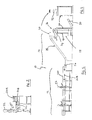
- the apparatus 10 includes a handling station 12, an elevation station 14, a weighing station 16 and a packaging station 18.
- Embodiments of the invention are particularly suited for use in packaging poultry products, especially whole birds, but may be used for packaging other products.
- the handling station 12 comprises one or more conveyors 20 for conveying products towards the packaging station 18.
- the handling station 12 includes a bulk conveyor 20A and an indexing conveyor 20B.
- the bulk conveyor 20A is preferably raised with respect to the indexing conveyor 20B, although this arrangement could be reversed.
- the conveyors 20A, 20B may be at substantially the same level.
- the conveyors 20A, 20B run substantially parallel with one another and are located adjacent one another so that products may readily be transferred from one to the other (and in particular from the bulk conveyor 20A to the indexing conveyor 20B) by an operator 22.
- a tying station for example in the form of a shelf 24 that projects from the handling station 12, conveniently from the indexing conveyor 20B, may be provided to allow the operator 22 to tie the products, or otherwise process the products during the handling stage.
- the indexing conveyor 20B is configured for indexing, e.g. flighted indexing in which case the conveyor 20B comprises a plurality of flights (not visible).
- each flight comprises a conveying element, e.g. a plate or slat, that extends between parallel driven chains, or other endless loops, or is located on a conveying belt. Adjacent flights are spaced-apart from one another by a fixed distance.
- indexing may be achieved by any other suitable means, for example by a plurality of parallel, spaced apart dividers extending transversely across the conveyor (which may for example be a belt-type conveyor), or by a plurality of indexing markers spaced apart along the length of the conveyor.
- One or more sensors are provided for detecting the flights (or other indexing markers) in order to implement the indexing.
- a controller (not shown) controls the drive means for the belt 20B and is typically configured to stop the indexing belt 20B when a sensor detects a flight.
- the indexing of the conveyor 20B is co-ordinated with the operation of the packaging station 18 by the controller, which may for example comprise a suitably programmed PLC controller, and/or computer(s).
- the controller comprises a central computer programmed to co-ordinate the operation of the various components of the system, and being in communication with one or more other computers or processors that control respective system components.
- The, or each, sensor may also, in conjunction with the controller, be used to monitor production rate by detecting if a flight is empty. If a flight is empty, throughput or efficiency is reduced in comparison to all flights carrying product.
- the indexing conveyor 20B projects beyond the bulk conveyor 20A in the direction of conveyance and at the end adjacent the elevation station 14.
- the conveyors 20A, 20B may take any suitable form, e.g. belt conveyors, and may be driven by any suitable drive means, e.g. shaft mounted motor gearboxes (not shown).
- the timing of the indexing is advantageously synchronised with the operation of the packaging station 18 by the controller, as is described in more detail hereinafter.
- the elevation station 14 comprises an elevating conveyor 28 that has a lower end 26 located and positioned to receive products from the end of the indexing conveyor 20B.
- the elevating conveyor 28 has an upper end 30 and, between the ends 26, 30, the conveyor 28 comprises an inclined section for raising the products.
- the conveyor 28 may take any suitable form, e.g. a belt conveyor, and may be driven by any suitable drive means, e.g. shaft mounted motor gearboxes (not shown).
- the timing of the indexing is advantageously synchronised with the operation of the packaging station 18 by the controller, as is described in more detail hereinafter.
- the conveyor 28 is also configured for indexing, e.g.
- the conveyor 28 comprises a plurality flights or other indexing components, associated with one or more sensors for detecting the flights, and may be driven in an indexed manner under the control of the controller.
- the conveyor 28 may be similar to the conveyor 20B and the same descriptions apply.
- the conveyors 20B, 28 may be indexed independently of the other.
- the controller may control respective drive means for each conveyor 20B, 28 independently of the other.
- a weighing machine (not shown) is provided adjacent the upper end 30 of the conveyor 28 in order to receive products from the conveyor 28 one at a time.
- the weighing machine is preferably co-operable with, e.g. mechanically coupled to, a weighing hopper 34 in order to weigh the contents of the hopper, as is described in more detail hereinafter.
- An intermediate holding hopper 32 may be provided between the conveyor 28 and the weighing hopper 34.
- Means for transferring products from the end 30 of the conveyor 28 into the intermediate hopper 32 (when present) or directly into the weighing hopper (when the intermediate hopper 32 is not present) are provided and may take any suitable form, e.g. a chute, slide, rollers and/or one or more actuators for pushing the products. Alternatively, products may fall into the hopper 32 or 34 (as applicable) under the influence of gravity. In the preferred embodiment, the weighing hopper 34 is located beneath the intermediate hopper 32.
- the hopper 32 serves as a buffer, holding the product until the weighing hopper 34 is available.
- the hopper 32 includes a release mechanism (not shown), e.g. a door, that is opened and closed under the control of the controller by any suitable means, e.g. an actuator.
- a release mechanism e.g. a door
- the door is closed to retain the product.
- the weighing hopper 34 is ready for the product, the door is opened and the product is transferred to the weighing hopper 34.
- the product may fall from one hopper to the next or may be transferred by any other suitable means, e.g. a slide.
- the weighing hopper 34 is preferably incorporated into an independent frame such that it is isolated from vibrations of the system 10.
- one or more retractable support members e.g. extendible actuators (not shown) are co-operable with the hopper 34 to engage and hold the hopper 34 as a product is transferred to the hopper 34.
- the support members are retracted after the product is received by the hopper 34 to allow the weighing machine associated with the hopper 34 to weigh the product.
- the support member(s) reduce the risk if damage being caused to the weighing device.
- the support member(s) are conveniently controlled by the controller.
- the weighing hopper 34 has a first outlet and a second outlet (not shown), each having a respective door that may be opened or closed under the control of the controller by any suitable means, e.g. a respective actuator (not shown).
- the first outlet is aligned with a packaging apparatus 40, which is part of the packaging station 18, and the second outlet is aligned with a rejection area, e.g. a bin or conveyor (not shown).
- the doors are closed while the product is received and weighed.
- the first door is opened to allow the product to be transferred to the packaging apparatus 40. If the product is outside of the weight criteria, then the second door is opened to allow the product to be transferred to the rejection area.
- the hopper 34 is arranged with respect to the rejection area and the packaging apparatus such that products may be transferred under the action of gravity.
- the operation of the system 10 is indexed to the operation of the packaging machine 40, for example the controller is programmed to advance the index by one in response to determining that the packaging machine is ready to receive a product.
- this is achieved by reference to the operation of the weighing hopper 34: when the weighing hopper 34 is ready to receive the next product, i.e. when it is empty and its doors are closed, the controller may take this as an indication that the index may be advanced by one.
- the indexed conveyors 20B, 28 are moved forwards toward the packing station by an appropriate increment such that the next product is transferred to the intermediate hopper 32 (when present) or to the weighing hopper 34.
- the intermediate hopper 32 When the intermediate hopper 32 is present, its contents are transferred to the weighing hopper 34 in response to the index being incremented by one.
- the packaging apparatus 40 comprises a bagging machine, i.e. a machine configured to place the products into individual bags.
- the packaging machine 40 preferably comprises a vertical form fill and seal machine (sometimes referred to as a VFF seal machine, or a VFF&S machine).
- the packaging apparatus 40 may comprise an AB330 Mark VFF seal machine as provided by Ancholme machinery, North Linconshire, England.
- the apparatus 40 is preferably the type that produces and fills a quad seal bag.
- the apparatus is configured to operate on sheet plastics, and comprises means to form the sheet plastics into a bag that is open at one end (for the purposes of filling).
- the apparatus 40 further includes means for heat-sealing the other end of the bag, creasing and folding the sides of the bag between the two ends to create two parallel edges along each side, each edge being heat-sealed. This results in four seals along the sides of the bag, two at each side, hence the name quad seal.
- the open end of the bag is heat sealed after it has been filled.
- the product is dropped from the hopper 34 into an open ended bag, which is then sealed.
- a chute, or forming tube 41 is provided between the weighing hopper 34 and the packaging apparatus 40 for transferring products therebetween.
- the packaging station 18 advantageously includes a printer (not shown) for printing information onto the bags.
- the printer receives information from the weighing machine, directly or via the controller, in respect of each product. Since the hopper 34, and therefore the weighing point, is adjacent the packing station 18, and more particularly beside the packaging apparatus 40, the weight information provided to the printer relates to the product being packaged.
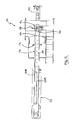
- the apparatus 110 includes a handling station 112, an elevation station 114, a weighing station 116 and a packaging station 118.
- the handling station 112 comprises one or more conveyors for conveying products towards the packaging station 118, e.g. a bulk conveyor 120A and an indexing conveyor 120B.
- the bulk conveyor 120A is at a lower level than the indexing conveyor 120B.
- the elevation station 114 comprises an elevating conveyor 128 that has a lower end 126 located and positioned to receive products from the end of the indexing conveyor 120B. It will be understood that in alternative embodiments, the handling station and/or the elevation station may be omitted.
- FIG. 6 shows the controller, indicated as 119, which in addition to (or instead of as applicable) performing the tasks described above, may also control the operation of the weighing station 116 and packaging station 118, preferably in the manner described below.
- a sizing apparatus 121 for determining whether or not each product meets one or more size requirements.
- the apparatus 121 comprises a frame 123 through which each product passes during use, the frame 123 supporting one or more sensing devices, e.g. optical sensing devices, that are configured to define one or more thresholds for the height and/or width and/or length of the product.
- a first sensing device 125 ( Figure 6 ) may be configured to define, e.g. optically, a threshold above the surface, e.g. the conveyor surface, on which the product lies in order to determine if the product's height is greater than or less than the height defined by the threshold.
- a respective pair of laterally spaced apart sensors may be positioned to define respective spaced apart thresholds against which the products width and/or height can be assessed.
- the output of the sensors is provided to the controller 119, which determines if the product meets one or more relevant size requirements. Products that do not meet the size requirements may be rejected. In the preferred embodiment, rejection of out-sizes products is performed at a later stage as described below.
- means for rejecting the product may be provided at the sizing apparatus 121. In the preferred embodiment, the sizing apparatus 121 is located before the weighing station 116, preferably at the end 130 of conveyor 128.
- the weighing station 116 comprises any suitable weighing apparatus, e.g. an electro-mechanical weighing apparatus, which in the present example is incorporated into a platform 117.
- a container 152 preferably comprising an open ended sleeve-like body, receives the product during weighing.
- the container 152 may rest upon the platform 117 during weighing.
- a first door 154 is provided in the platform 117.
- the door 154 is located at the top of the forming chute 141. When the door 154 is closed, a product within the container 152 rests on the door 154 and may be weighed by the weighing apparatus.
- the container 152 and door 154 may together serve as a weighing hopper.
- the door 154 When the door 154 is open, a product is able to fall under gravity into the forming chute 141.
- the door 154 may take any suitable form, e.g. a slidable or hinged door with one or more slidable or hinged leaves, and is operable between its open and closed states by any suitable actuating mechanism (not shown), conveniently under the control of the controller 119.
- the door 154 may be integrated with the container 152.
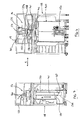
- the container 152 is movable between a first position (shown in Figure 6 ) in which is located above and in register with the upper end of the forming chute 141, and a second position (not illustrated) in which it is located above and in register with a reject chute 156.
- the container 152 may be moved by any suitable actuating mechanism, for example a linear actuator 158, conveniently under the control of controller 119. Conveniently, the actuating mechanism effects a sliding movement of the container 152 as indicated by arrow A.
- a product may be sent to the reject chute 156 if the sizing apparatus 121 indicates that it is too big or too small, and/or if the weighing apparatus indicates that it is too heavy or too light.
- the container 152 is positioned out of register with the upper end of the chute 141 until it is appropriate to feed the product into the chute 141 at which time the container 152 is moved into register with the upper end of the chute 141 (in which case the door 154 may be omitted). If the door is omitted then the platform 117 may support the product as the container 152 moves.
- the product is weighed while it is being held in the container 152.
- the weighing platform is located at the end 130 of conveyor 128, and is advanced to fall into the container 152 after being weighed. The advantage of this arrangement is that because the product does not fall onto the weighing platform, little or no settling time is required before weighing can take place.
- the container 152 together with the door 154 and/or platform 117 as applicable, serve as a holding mechanism for holding the product during its weighing cycle (which may be during or after the act of weighing by the weighing apparatus) and passing it to the forming chute 141 at the end of the weighing cycle.
- the door 154 forms part of means for transferring the product to the packaging apparatus 140.
- the container 152, together with the door 154 and/or platform 117 as applicable may form part of the means for transferring the product to the packaging apparatus 140.
- the chute 141 may also be considered as part of means for transferring the product to the packaging apparatus, in particular to the location at which they are packaged, namely the lower end of the chute 141.
- Means for transferring products from the end 130 of the conveyor 128 to the container 152 are provided, conveniently comprising guide rods 160, although any other suitable guiding device, e.g. chute or slide, could be used.
- a bagging device 162 is provided at the lower end of the forming chute 141.
- the preferred bagging device 162 comprises retaining means operable between a closed state (as illustrated in Figure 7 ) and an open state.
- a product may be retained inside the forming chute 141 by the device 162.
- the open state the product is able to drop out of the chute 141 under gravity.
- the chute 141 is typically substantially vertical during use, but may take other dispositions provided the product is able to fall through the chute in a direction from the upper end to the lower end.
- the preferred bagging device 162 is configured to provide three main functions: firstly to selectively retain or release the product with respect to the lower end of the chute 141; secondly to close packaging material 170 as part of a bag forming process that is described in more detail hereinafter, and thirdly to sever the packaging material to create separate bags or packages.
- the bagging device 162 is configured to form a transverse seal, preferably a heat seal, across the sleeve to close the packaging material.
- the bagging device 162 preferably comprises a heat sealing device, conveniently comprising a pair of opposable jaws.
- the opposable jaws also provide the retaining means, and may also include cutting edges to provide the severing function.
- the bagging device 162 may be operable to open or close the lower end of chute 141, form a seal across the sleeve to serve as one end of a bag, and/or sever a sealed section of the packaging material from the sleeve.
- the device 162 may comprise a separate door or other barrier to provide the retaining means, a separate sealing device and/or a separate cutter for severing the bags, each of which may be operable independently of the other.
- the operation of the bagging device 162 is controlled by the controller 119 as is described in more detail hereinafter.
- the packaging station 118 includes a forming apparatus 172 that is co-operable with a dispensing apparatus 174 to feed packaging material 170 along the forming chute 141 (in the direction indicated by arrow B in Figure 7 ) and to form the packaging material into a sleeve around the outside surface of the chute 141.
- the forming apparatus 172 is not shown in Figures 4 to 7 for reasons of clarity.
- the packaging material typically starts in sheet form on a roll (not shown) mounted on a holder 176.
- the dispensing apparatus 174 is configured to draw the packaging material from the roll and feed it to the forming apparatus 172.
- the forming apparatus 172 gathers the packaging material and forms it into a sleeve around the chute 141.
- the apparatus 172 may comprise a suitably shaped frame 173 located around the chute 141.
- One or more rollers may be provided as required to guide the packaging material between the dispensing apparatus 174 and forming apparatus and/or through the forming apparatus 172.
- the forming apparatus 172 includes a sealing device, preferably a heat sealing device, configured to form a seal along the edges of the packaging material, when brought together to form the sleeve shape, in order to form the sleeve.
- the sealing device is static with respect to the chute 141 and forms the seal as the packaging material is feed past it.
- the dispensing apparatus 172 and the forming apparatus 172 are controlled by the controller 119, in particular to control the timing with which the sleeve of packaging material 170 is feed along the forming chute 141.
- the dispensing apparatus 172, the forming apparatus 172, and the bagging device 162 are the main components of the packaging apparatus 140.
- the chute 141 may also be considered as part of the packaging apparatus since it facilitates forming the packaging as described above, although it also performs the function of transferring the products to the packaging apparatus 140, in particular to the location at which they are packaged, namely the lower end of the chute 141.
- a packaging station 118 includes a printer which is represented in the drawings by a printer head 180.
- the printer head 180 is positioned to print information onto the packaging material 170 at a location adjacent the lower end of the forming chute 141.
- the printer head 180 is positioned to print information onto the packaging material 170 at a location that is above the bagging device 162 by an amount that does not exceed the length of the bags 182 that are formed by the packaging apparatus 140.
- each product in turn reaches the upper end 130 of conveyor 128 it is checked by the sizing apparatus 121 and the controller 119 determines if it is outside of the pre-determined size limit(s).
- the product is then advanced to the edge of the conveyor 128 whereupon it falls under gravity and guided by the rods 160 into the container 152, the door 154 being closed to retain the product in the container 152.
- the weighing apparatus weighs the product and the weight is recorded by the controller 119.
- the door 154 is then opened to allow the product to fall down the chute 141, the bagging device 162 being closed to retain the product at the lower end of the chute 141.
- the relevant section of packaging material is that which is next to be formed into a bag or other package. Typically this is the end, i.e. lowest section, of the sleeve of packaging material. Preferably, it is the section of packaging material that is located around the lower end of the chute 141. Printing may occur before, after and/or simultaneously with the product being released into the chute 141.
- the weight of the product is printed onto the packaging material at least before the next product is released into the chute 141 and preferably before the next product is weighed.
- the preferred arrangement is such that, during at least part of the packaging cycle when the product is located at the lower end of the chute 141, its corresponding weight (and any other information that is desired) is printed on the section of packaging material that surrounds the lower end of the chute 141 and is in register with the product. It is noted that, at this stage, the packaging material has not yet been formed into a bag, i.e. the printing has taken place before the bag or other final product package is created.
- the next step is to put the product into the correspondingly printed section of packaging material and transform it into a bag (or package) containing the product.
- a seal is formed across the packaging material by the bagging device 162. Typically, this seal will have already been formed by the bagging device 162 when it last closed. The seal defines one end of the bag into which the product is to be placed.
- the controller 119 causes the dispensing apparatus 174 and forming apparatus 172 to advance the sleeve of packaging material (in the direction indicated by arrow B in Figure 7 ) such that the section 170A that is to form the bag for the product is below the lower end of the chute 141, as illustrated in Figure 7 .
- the bagging device 162 is operated to release the product so that it may leave the chute 141 under gravity and so enter the section of packaging material below the chute 141.
- the packaging material may be advanced first, in which case the product is dropped into the packaging material, or afterwards in which case the product is lowered out of the chute 141 by the packaging material.
- the bagging device 162 is then operated to form a seal across the packaging material, which seal defines the other end of the bag 182.
- the bagging device 162 severs the bag 182 from the sleeve of packaging material, leaving a seal across the sleeve at the lower end of the chute 141, which seal defines one end of the next bag to be formed.
- the bagging device 162 closes the lower end of the chute 141 ready to retain the next product.
- the sealing, severing and closing is performed in one operation by closing the bagging device 162.
- the apparatus 110 performs, for each product, a combined weighing and packaging cycle in which the product is weighed, the weight (and any other required data) is printed onto packaging, and a package (bag) is formed from the printed packaging into which the respective product is inserted.
- a package bag
- the product is weighed after the preceding product has been packaged (or at least placed into or otherwise allocated to its respective packaging) such that no other non-packaged products are in the packaging production line between the weighing apparatus and the packaging apparatus.
- the weighed product is the next to be packaged and so the weight-related information provided to the printer relates to the product next being packaged.
- the retaining part of the bagging device 162 may be omitted, or left open when the product is dropped into the chute 141 from the weighing station 116, in which case the seal across the packaging sleeve serves as the retaining means for the product.
- the product may be dropped from the upper end of the chute 141 onto the seal when the seal is located at the lower end of the chute, in which case the operation of the apparatus maybe the same as described above apart from the opening and closing of retaining means.
- the section of the packaging that is to form the bag may be advanced beyond the end of the chute before the product is released from the weighing station.
- Such configurations are however better suited to packaging relatively light products since heavier products may damage the seal upon impact.
- the printing may be performed after the packaging is advanced beyond the end of the chute 141, in which case the printer 180 is relocated to print on packaging below the chute 141. It is preferred however to print on the packaging material while in register with the chute 141 to provide a support surface for printing.
- the printer may comprise a thermal transfer coder, e.g. the 3i (trade mark) thermal transfer coder provided by Markem-Imaje Ltd. of Salford, England.
- the printer may be configured to print any required information onto the bag, e.g. price, product weight, cooking time and/or best before/sell by dates.
- the information is conveniently printed directly onto the surface of the bag/packaging material. Since the product is weighed just before being packaged, it is ensured that the information printed onto a bag relates to the specific product in the bag. This is particularly important in relation to the weight of the product.
- the printer may conveniently be controlled by the aforementioned system controller.
- the packaging station 18, 118 may also, or alternatively, be provided with a labelling apparatus (not shown) for applying labels, especially adhesive labels, to the packaging material and/or bags.
- the labels may be pre-printed (e.g. relating to a retailer, a product source or a promotion). Alternatively, the labels may be printed at the packaging station 18, 118 with information, e.g. weight, relating to a respective product being packaged.
- the labelling apparatus includes, or is co-operable with a printer, e.g. printer 180. In such embodiments, the printer prints the relevant information onto a label for each product during the weighing and packaging cycle, and the label is applied to the packaging material in the same way as described in the embodiments above, i.e. an indirect printing process to replace or supplement the direct printing described above.
- the labelling apparatus may conveniently be controlled by the aforementioned system controller.
- a conveyor 50, 150 e.g. a belt conveyor, is typically provided for conveying packaged products 182 away from the packaging station 18, 118.
- the packaging apparatus 40, 140 is configured to make a hermetically sealed 4 corner package (especially of the type known as a quad seal bag), and advantageously includes means for injecting a product preserving gas into the package, e.g. at a level that will satisfy a shelf life of 12-14 days.
- the package comprises a bag formed from one or more sheets of plastics, e.g. a laminated plastics film.
- products to be packaged e.g. fresh, tied tray-less chickens or other poultry products, are provided to the packing apparatus from an indexed conveyor system. Each product is weighed, after which it is conveyed via gravity into a forming tube of the packaging apparatus.
- the package is printed with relevant information, e.g. product weight, date, time, bar code and/or batch code, as required.
Landscapes
- Engineering & Computer Science (AREA)
- Mechanical Engineering (AREA)
- Life Sciences & Earth Sciences (AREA)
- Agronomy & Crop Science (AREA)
- Basic Packing Technique (AREA)
- Auxiliary Devices For And Details Of Packaging Control (AREA)
- Containers And Plastic Fillers For Packaging (AREA)
- Container Filling Or Packaging Operations (AREA)
Claims (15)
- Système d'emballage (10, 110) permettant d'emballer individuellement une succession de produits au moyen d'un matériau d'emballage (170), le système comportant un appareil d'emballage (40, 140), un appareil de pesage (30, 116), au moins un transporteur (28, 128) servant à acheminer des produits jusqu'à l'appareil de pesage, une imprimante (180), et un moyen (41, 141) servant à transférer un produit pesé jusqu'au niveau dudit appareil d'emballage, dans lequel ladite imprimante est agencée pour recevoir des informations se rapportant au poids dudit produit pesé et pour imprimer lesdites informations, ou des informations en dérivant, directement sur le matériau d'emballage pour le produit pesé, ou sur une étiquette pour le produit pesé, le système comportant par ailleurs un dispositif de commande informatisé (119) servant à commander le fonctionnement de l'appareil d'emballage, de l'appareil de pesage, dudit au moins un transporteur et de l'imprimante, caractérisé en ce que ledit appareil de pesage est situé de manière adjacente par rapport audit appareil d'emballage de telle sorte que ledit produit pesé est le prochain produit à être emballé par ledit appareil d'emballage au moyen dudit matériau d'emballage, le dispositif de commande étant configuré à des fins de mise en oeuvre d'une succession de cycles de pesage et d'emballage, un cycle respectif pour chacun desdits produits, dans lequel le produit respectif est pesé, l'emballage respectif est imprimé et/ou étiqueté, et le produit respectif est emballé.
- Système d'emballage selon la revendication 1, dans lequel ledit moyen de transfert (41, 141) comporte une goulotte agencée pour transférer des produits depuis l'appareil de pesage (30, 116) sous l'influence de la gravité, et dans lequel, de préférence, un dispositif ensacheur (162) est situé au niveau d'une extrémité inférieure lors de l'utilisation de ladite goulotte, ledit dispositif ensacheur comportant un dispositif de scellage configuré pour former un scellage en travers d'une section dudit matériau d'emballage se trouvant lors de l'utilisation au niveau de ladite extrémité inférieure de ladite goulotte.
- Système d'emballage selon la revendication 2, dans lequel le dispositif ensacheur (162) comprend un dispositif de retenue (154) servant à retenir de manière libérable le produit pesé au niveau de ladite extrémité inférieure de ladite goulotte (141), et de préférence également un dispositif de découpage servant à découper ledit matériau d'emballage au niveau dudit scellage.
- Système d'emballage selon la revendication 2 ou la revendication 3, dans lequel ladite imprimante (180) est configurée pour imprimer sur une section dudit matériau d'emballage (170) qui est dans l'alignement de ladite extrémité inférieure de la goulotte (141).
- Système d'emballage selon l'une quelconque des revendications 2 à 4, comprenant par ailleurs un appareil d'étiquetage positionné pour poser une ou plusieurs étiquettes sur une section dudit matériau d'emballage (170) qui est dans l'alignement de ladite extrémité inférieure de la goulotte (141), et dans lequel, de préférence, ladite imprimante (180) est configurée pour imprimer des informations se rapportant audit produit pesé sur une ou plusieurs étiquettes respectives desdites étiquettes.
- Système d'emballage selon l'une quelconque des revendications précédentes, dans lequel ledit appareil d'emballage (40, 140) comprend un appareil de distribution de matériau d'emballage (174) fonctionnant pour distribuer ledit matériau d'emballage (170), de préférence par incréments comme quoi une longueur prédéterminée de matériau d'emballage est distribuée.
- Système d'emballage selon l'une quelconque des revendications précédentes, dans lequel ledit appareil d'emballage (40, 140) comprend par ailleurs un appareil de façonnage de matériau d'emballage (172) configuré pour amener ledit matériau d'emballage (170) à former un manchon, et dans lequel, de préférence, ledit appareil de façonnage est configuré pour amener ledit matériau d'emballage à former un manchon autour de l'extérieur de ladite goulotte (141), ledit appareil de distribution (174) et ledit appareil de façonnage étant de préférence en mesure de coopérer pour distribuer ledit manchon de matériau d'emballage le long de l'extérieur de ladite goulotte.
- Système d'emballage selon l'une quelconque des revendications précédentes, comprenant par ailleurs un mécanisme de maintien (152, 154) servant à tenir chaque produit au cours d'un cycle de pesage respectif, le mécanisme de maintien fonctionnant pour faire passer le produit tenu jusqu'au niveau de l'appareil d'emballage (40, 140) à la fin du cycle de pesage, et dans lequel, de préférence, le mécanisme de maintien est situé au-dessus dudit appareil d'emballage, encore plus de préférence au niveau de l'extrémité supérieure lors de l'utilisation de ladite goulotte, et dans lequel, de préférence, ledit mécanisme de maintien comporte un volet (154) fonctionnant entre un état fermé dans lequel il permet au mécanisme de maintien de retenir le produit, et un état ouvert dans lequel il permet au produit de passer au niveau de l'appareil d'emballage.
- Système d'emballage selon la revendication 8, dans lequel ledit mécanisme de maintien (152, 154) comporte un contenant (152) pour ledit produit, ledit contenant ayant une extrémité supérieure ouverte servant à recevoir ledit produit, et dans lequel, de préférence, ledit contenant est mobile jusque sur une position et à distance de celle-ci où il est dans l'alignement de ladite goulotte (141), ledit volet (154) étant de préférence positionné et configuré pour ouvrir ou fermer ladite goulotte, et dans lequel, de préférence, ledit contenant est mobile jusque sur une position et à distance de celle-ci où il est dans l'alignement d'une goulotte de rejet.
- Système d'emballage selon l'une quelconque des revendications précédentes, dans lequel ledit dispositif de commande (119) est configuré à des fins de mise en oeuvre desdits cycles de telle sorte que chaque produit respectif est pesé après que l'emballage du produit précédent a été imprimé et/ou étiqueté, et de préférence après que le produit précédent a été inséré dans son emballage respectif.
- Système d'emballage selon la revendication 10, dans lequel, par rapport à chaque cycle, ledit dispositif de commande (119) est configuré pour amener ledit appareil de distribution (174) à distribuer ledit matériau d'emballage (170) le long de ladite goulotte (141) selon une quantité correspondant à la longueur d'un emballage pour ledit produit, et dans lequel, de préférence, par rapport à chaque cycle, ledit dispositif de commande est configuré pour amener ladite imprimante (180) à imprimer lesdites informations sur une section dudit matériau d'emballage qui est dans l'alignement de l'extrémité inférieure de ladite goulotte et par la suite pour amener ledit appareil de distribution à distribuer ledit matériau d'emballage le long de ladite goulotte selon une quantité correspondant à la longueur d'un emballage pour ledit produit.
- Système d'emballage selon l'une quelconque des revendications précédentes, dans lequel ledit appareil d'emballage (40, 140) est configuré pour façonner ledit matériau d'emballage (170) en un sac ayant des extrémités scellées, et, de préférence, deux bords parallèles le long de chaque côté entre lesdites extrémités.
- Système d'emballage selon la revendication 12 quand dépendante de la revendication 7, dans lequel ledit appareil de façonnage (172) comprend un moyen servant à plier les côtés du matériau d'emballage (170) pour créer au moins un mais de préférence deux bords sensiblement parallèles s'acheminant de manière sensiblement parallèle par rapport à ladite goulotte (141), et éventuellement un moyen de scellage servant à sceller ledit matériau d'emballage le long d'au moins l'un desdits bords.
- Système d'emballage selon l'une quelconque des revendications précédentes, dans lequel ledit au moins un transporteur (28, 128) comprend un transporteur élévateur agencé pour élever les produits jusqu'à une hauteur en provenance de laquelle ils peuvent être transférés sur l'appareil de pesage (30, 116), de préférence sous l'influence de la gravité, et dans lequel ledit au moins un transporteur est de préférence actionné par indexation par ledit dispositif de commande (119).
- Procédé permettant d'emballer individuellement une succession de produits, en particulier des produits de type volaille, au moyen d'un matériau d'emballage (170) et d'un système d'emballage (10, 110) comportant un appareil d'emballage (40, 140), un appareil de pesage (30, 116), au moins un transporteur (28, 128) servant à acheminer des produits jusqu'à l'appareil de pesage, une imprimante (180), et un dispositif de commande informatisé (119) servant à commander le fonctionnement de l'appareil d'emballage, de l'appareil de pesage, d'au moins un transporteur et de l'imprimante, dans lequel ledit appareil de pesage est situé de manière adjacente par rapport audit appareil d'emballage, ledit procédé comportant l'étape consistant à peser un produit au moyen dudit appareil de pesage ; l'étape consistant à transférer le produit pesé jusqu'au niveau dudit appareil d'emballage, et l'étape consistant à amener ledit produit pesé à être le prochain produit emballé par ledit appareil d'emballage au moyen dudit matériau d'emballage ; et l'étape consistant à amener ladite imprimante à imprimer des informations se rapportant au poids dudit produit pesé, ou des informations en dérivant, directement sur le matériau d'emballage pour le produit pesé, ou sur une étiquette pour le produit pesé.
Priority Applications (3)
| Application Number | Priority Date | Filing Date | Title |
|---|---|---|---|
| EP15195016.9A EP3006349A1 (fr) | 2011-01-11 | 2012-01-11 | Système d'emballage |
| HRP20160176TT HRP20160176T1 (hr) | 2011-01-11 | 2012-01-11 | Sustav za pakiranje |
| PL12701843T PL2663496T3 (pl) | 2011-01-11 | 2012-01-11 | System pakowania |
Applications Claiming Priority (2)
| Application Number | Priority Date | Filing Date | Title |
|---|---|---|---|
| GBGB1100420.7A GB201100420D0 (en) | 2011-01-11 | 2011-01-11 | Packaging system |
| PCT/EP2012/050350 WO2012095446A1 (fr) | 2011-01-11 | 2012-01-11 | Système d'emballage |
Related Child Applications (1)
| Application Number | Title | Priority Date | Filing Date |
|---|---|---|---|
| EP15195016.9A Division EP3006349A1 (fr) | 2011-01-11 | 2012-01-11 | Système d'emballage |
Publications (2)
| Publication Number | Publication Date |
|---|---|
| EP2663496A1 EP2663496A1 (fr) | 2013-11-20 |
| EP2663496B1 true EP2663496B1 (fr) | 2015-11-18 |
Family
ID=43664076
Family Applications (2)
| Application Number | Title | Priority Date | Filing Date |
|---|---|---|---|
| EP12701843.0A Active EP2663496B1 (fr) | 2011-01-11 | 2012-01-11 | Système d'emballage |
| EP15195016.9A Withdrawn EP3006349A1 (fr) | 2011-01-11 | 2012-01-11 | Système d'emballage |
Family Applications After (1)
| Application Number | Title | Priority Date | Filing Date |
|---|---|---|---|
| EP15195016.9A Withdrawn EP3006349A1 (fr) | 2011-01-11 | 2012-01-11 | Système d'emballage |
Country Status (12)
| Country | Link |
|---|---|
| US (1) | US10683123B2 (fr) |
| EP (2) | EP2663496B1 (fr) |
| AU (1) | AU2012206628B2 (fr) |
| BR (1) | BR112013017737B1 (fr) |
| CA (1) | CA2824193C (fr) |
| DK (1) | DK2663496T3 (fr) |
| EA (1) | EA027582B1 (fr) |
| ES (1) | ES2563111T3 (fr) |
| GB (2) | GB201100420D0 (fr) |
| HR (1) | HRP20160176T1 (fr) |
| PL (1) | PL2663496T3 (fr) |
| WO (1) | WO2012095446A1 (fr) |
Cited By (1)
| Publication number | Priority date | Publication date | Assignee | Title |
|---|---|---|---|---|
| IT202300007890A1 (it) * | 2023-04-21 | 2024-10-21 | Elisam S R L | Apparecchiatura per il riempimento di scatole di cartone a settori |
Families Citing this family (9)
| Publication number | Priority date | Publication date | Assignee | Title |
|---|---|---|---|---|
| ITMO20080063A1 (it) * | 2008-03-05 | 2009-09-06 | Inovapak Srl | Apparati e metodi per produrre contenitori |
| FR3026721B1 (fr) * | 2014-10-02 | 2017-09-08 | Sermiac | Dispositif de remplissage et de pesage de sacs souples |
| DE102017108966A1 (de) | 2017-04-26 | 2018-10-31 | Multivac Marking & Inspection Gmbh & Co. Kg | Gewichtsauszeichnungskontrolle für Verpackungen |
| MX2019014605A (es) * | 2017-06-06 | 2020-08-20 | Mat Handling Systems Inc | Sistema y metodo para identificar y transferir paquetes desde un primer transportador a un segundo transportador. |
| CN109051010B (zh) * | 2018-09-14 | 2024-09-13 | 南通金轮精密智造有限公司 | 一种筒子纱智能包装生产线 |
| CN111169753A (zh) * | 2020-01-17 | 2020-05-19 | 深圳市中核海得威生物科技有限公司 | 用于将集气卡自动装入铝箔袋的装置 |
| US11753256B2 (en) | 2020-06-22 | 2023-09-12 | Material Handling Systems, Inc. | Conveyor system with multiple robot singulators |
| CN113830351B (zh) * | 2021-09-10 | 2023-04-28 | 金华市农业科学研究院(浙江省农业机械研究院) | 一种薯类自动称量装袋装置 |
| CN114435674A (zh) * | 2022-03-15 | 2022-05-06 | 安丘华涛食品有限公司 | 一种粉条包装生产线 |
Citations (1)
| Publication number | Priority date | Publication date | Assignee | Title |
|---|---|---|---|---|
| EP2490950A1 (fr) * | 2009-10-23 | 2012-08-29 | Precitec Corporation | Appareil permettant d'enfermer des produits dans un conditionnement ayant une poignée |
Family Cites Families (25)
| Publication number | Priority date | Publication date | Assignee | Title |
|---|---|---|---|---|
| US2656658A (en) * | 1951-02-07 | 1953-10-27 | John P Grady | Bagmaking and filling machine |
| US3194710A (en) * | 1960-08-24 | 1965-07-13 | William F Stremke | Automatic labelling machine |
| US3540184A (en) * | 1967-08-28 | 1970-11-17 | Bemis Co Inc | Packaging method |
| US3650773A (en) * | 1970-02-09 | 1972-03-21 | Schreiber Cheese Co L D | Weighing and labeling system |
| BE792630A (fr) * | 1971-12-16 | 1973-03-30 | Spang & Brands Maschf | Dispositif d'alimentation d'un conduit de remplissage d'une machine d'emballage automatique |
| FR2348855A1 (fr) * | 1976-04-23 | 1977-11-18 | Boulant Et Cie | Dispositif pour l'emballage automatique de produits fragiles |
| SE446226B (sv) * | 1980-02-26 | 1986-08-18 | Teraoka Seikosho Kk | Anordning for att meta vikt, berekna pris och utfora forpackning |
| US4548024A (en) * | 1981-03-19 | 1985-10-22 | Weldotron Corporation | Integrated stretch-wrap packaging system |
| US4709532A (en) * | 1986-12-03 | 1987-12-01 | W. R. Grace & Co., Cryovac Div. | Vertical form-fill seal process and machine with product catching device |
| US5009058A (en) * | 1990-01-29 | 1991-04-23 | Nsw Corporation, Inc. | Automatic baling machine |
| US5271210A (en) * | 1993-03-12 | 1993-12-21 | Ossid Corporation | Packaging machine with reciprocating conveyor |
| US5684275A (en) * | 1995-01-17 | 1997-11-04 | Ossid Corporation | Computer controlled weighing and labelling apparatus |
| JPH09301310A (ja) * | 1996-05-08 | 1997-11-25 | Ishida Co Ltd | 箱詰め装置 |
| US5758477A (en) * | 1997-07-14 | 1998-06-02 | Wilson, Jr.; Ollie B. | Interface device for packaging equipment |
| US6314706B1 (en) * | 1999-06-04 | 2001-11-13 | Technica Co., Ltd. | Vertical type of bag-making, filling and packaging apparatus and a packaging method thereof |
| DE19957891A1 (de) * | 1999-12-01 | 2001-06-07 | Rovema Gmbh | Schlauchbeutelmaschine |
| US6357210B1 (en) * | 1999-12-09 | 2002-03-19 | Glopak Inc. | Apparatus for filing cases with bag containing deformable products |
| US6416798B1 (en) * | 2000-03-07 | 2002-07-09 | Sargento Foods Inc. | Packaging having protected information and method |
| US6976346B2 (en) * | 2003-06-12 | 2005-12-20 | Delaware Capital Formation, Inc. | Automatic netting packaging machine |
| US6883297B2 (en) * | 2002-07-12 | 2005-04-26 | Poly-Clip System Corp. | Apparatus for enclosing material in a net |
| DK1545985T3 (da) * | 2002-07-12 | 2010-02-01 | Poly Clip System Corp | Netemballeringsautomat |
| PL1664041T3 (pl) * | 2003-09-22 | 2008-12-31 | Euro Celtique Sa | Przydatne do leczenia bólu związki fenylowo-karboksyamidowe |
| US7555880B2 (en) * | 2003-09-24 | 2009-07-07 | Gainco, Inc. | Automated process for counting and filling containers with meat and poultry products |
| WO2005030585A1 (fr) * | 2003-09-24 | 2005-04-07 | Gainco, Inc. | Procede automatise pour compter des recipients et les remplir de produits carnes et de produits de volaille |
| MXPA06014676A (es) * | 2004-06-15 | 2007-06-22 | Tipper Tie Inc | Aparato de empaque de engrapado modular y dispositivo, metodos y sistemas asociados. |
-
2011
- 2011-01-11 GB GBGB1100420.7A patent/GB201100420D0/en not_active Ceased
-
2012
- 2012-01-11 AU AU2012206628A patent/AU2012206628B2/en active Active
- 2012-01-11 WO PCT/EP2012/050350 patent/WO2012095446A1/fr not_active Ceased
- 2012-01-11 DK DK12701843.0T patent/DK2663496T3/da active
- 2012-01-11 PL PL12701843T patent/PL2663496T3/pl unknown
- 2012-01-11 EA EA201300809A patent/EA027582B1/ru unknown
- 2012-01-11 BR BR112013017737A patent/BR112013017737B1/pt active IP Right Grant
- 2012-01-11 HR HRP20160176TT patent/HRP20160176T1/hr unknown
- 2012-01-11 GB GB1313934.0A patent/GB2501046A/en not_active Withdrawn
- 2012-01-11 US US13/979,074 patent/US10683123B2/en active Active
- 2012-01-11 CA CA2824193A patent/CA2824193C/fr active Active
- 2012-01-11 ES ES12701843.0T patent/ES2563111T3/es active Active
- 2012-01-11 EP EP12701843.0A patent/EP2663496B1/fr active Active
- 2012-01-11 EP EP15195016.9A patent/EP3006349A1/fr not_active Withdrawn
Patent Citations (1)
| Publication number | Priority date | Publication date | Assignee | Title |
|---|---|---|---|---|
| EP2490950A1 (fr) * | 2009-10-23 | 2012-08-29 | Precitec Corporation | Appareil permettant d'enfermer des produits dans un conditionnement ayant une poignée |
Cited By (1)
| Publication number | Priority date | Publication date | Assignee | Title |
|---|---|---|---|---|
| IT202300007890A1 (it) * | 2023-04-21 | 2024-10-21 | Elisam S R L | Apparecchiatura per il riempimento di scatole di cartone a settori |
Also Published As
| Publication number | Publication date |
|---|---|
| AU2012206628A1 (en) | 2013-08-29 |
| EP3006349A1 (fr) | 2016-04-13 |
| EP2663496A1 (fr) | 2013-11-20 |
| CA2824193C (fr) | 2019-10-29 |
| PL2663496T3 (pl) | 2016-07-29 |
| CA2824193A1 (fr) | 2012-07-19 |
| EA201300809A1 (ru) | 2014-07-30 |
| WO2012095446A1 (fr) | 2012-07-19 |
| US20130283732A1 (en) | 2013-10-31 |
| GB201100420D0 (en) | 2011-02-23 |
| GB201313934D0 (en) | 2013-09-18 |
| HRP20160176T1 (hr) | 2016-06-03 |
| GB2501046A (en) | 2013-10-09 |
| US10683123B2 (en) | 2020-06-16 |
| BR112013017737B1 (pt) | 2020-02-04 |
| EA027582B1 (ru) | 2017-08-31 |
| ES2563111T3 (es) | 2016-03-10 |
| AU2012206628B2 (en) | 2016-12-15 |
| DK2663496T3 (da) | 2016-02-29 |
| BR112013017737A2 (pt) | 2016-10-11 |
Similar Documents
| Publication | Publication Date | Title |
|---|---|---|
| EP2663496B1 (fr) | Système d'emballage | |
| US4067172A (en) | Carton set-up and loading machine | |
| US20240034504A1 (en) | Pack to pouch systems | |
| EP1465809B1 (fr) | Appareil et procede d'ouverture de paquets | |
| RU2520651C2 (ru) | Устройство для загрузки групп изделий | |
| US4548018A (en) | Apparatus for horizontally forming, filling and sealing film pouch material | |
| EP1602583B1 (fr) | Unité pour le transfer des produits d'une machine de conditionnement à une ligne d'alimentation d'une machine de boîte | |
| US12497204B2 (en) | Patch to pouch systems | |
| US3543466A (en) | Method and apparatus for opening,filling and closing of bags | |
| MX2013009430A (es) | Sistema para desembalar cajas de carton. | |
| US4124966A (en) | Automatic wicketted bag loader | |
| JPH0199909A (ja) | パッケージ包装方法及び機械 | |
| IT8349313A1 (it) | Apparecchiatura di imballaggio per confezioni dotate di stecche, come gelati o simili. | |
| US4991374A (en) | Packaging machine for slide-fastener manufacture | |
| KR101679626B1 (ko) | 박스 자동 포장 장치 | |
| US3877199A (en) | Frankfurter packaging machine | |
| KR101903672B1 (ko) | 인-카톤 파우치 자동 포장기용 빨대 공급장치 | |
| WO1993012003A2 (fr) | Procede et dispositif de conditionnement | |
| JPH03275405A (ja) | カートニングマシンとそのカートン取り出し装置、及び能書供給装置 | |
| NZ516329A (en) | Method of packing products where information about a characteristic of the product is acquired and used to pack the product | |
| LT6172B (lt) | Automatizuota pirštinių produktų pakavimo linija |
Legal Events
| Date | Code | Title | Description |
|---|---|---|---|
| PUAI | Public reference made under article 153(3) epc to a published international application that has entered the european phase |
Free format text: ORIGINAL CODE: 0009012 |
|
| 17P | Request for examination filed |
Effective date: 20130812 |
|
| AK | Designated contracting states |
Kind code of ref document: A1 Designated state(s): AL AT BE BG CH CY CZ DE DK EE ES FI FR GB GR HR HU IE IS IT LI LT LU LV MC MK MT NL NO PL PT RO RS SE SI SK SM TR |
|
| DAX | Request for extension of the european patent (deleted) | ||
| 17Q | First examination report despatched |
Effective date: 20140818 |
|
| GRAP | Despatch of communication of intention to grant a patent |
Free format text: ORIGINAL CODE: EPIDOSNIGR1 |
|
| INTG | Intention to grant announced |
Effective date: 20150527 |
|
| GRAS | Grant fee paid |
Free format text: ORIGINAL CODE: EPIDOSNIGR3 |
|
| GRAA | (expected) grant |
Free format text: ORIGINAL CODE: 0009210 |
|
| AK | Designated contracting states |
Kind code of ref document: B1 Designated state(s): AL AT BE BG CH CY CZ DE DK EE ES FI FR GB GR HR HU IE IS IT LI LT LU LV MC MK MT NL NO PL PT RO RS SE SI SK SM TR |
|
| REG | Reference to a national code |
Ref country code: GB Ref legal event code: FG4D |
|
| REG | Reference to a national code |
Ref country code: CH Ref legal event code: EP |
|
| REG | Reference to a national code |
Ref country code: AT Ref legal event code: REF Ref document number: 761420 Country of ref document: AT Kind code of ref document: T Effective date: 20151215 |
|
| REG | Reference to a national code |
Ref country code: IE Ref legal event code: FG4D |
|
| REG | Reference to a national code |
Ref country code: DE Ref legal event code: R096 Ref document number: 602012012340 Country of ref document: DE |
|
| REG | Reference to a national code |
Ref country code: HR Ref legal event code: TUEP Ref document number: P20160176 Country of ref document: HR |
|
| REG | Reference to a national code |
Ref country code: DK Ref legal event code: T3 Effective date: 20160223 |
|
| REG | Reference to a national code |
Ref country code: SE Ref legal event code: TRGR |
|
| REG | Reference to a national code |
Ref country code: ES Ref legal event code: FG2A Ref document number: 2563111 Country of ref document: ES Kind code of ref document: T3 Effective date: 20160310 |
|
| REG | Reference to a national code |
Ref country code: LT Ref legal event code: MG4D |
|
| REG | Reference to a national code |
Ref country code: NL Ref legal event code: FP |
|
| PG25 | Lapsed in a contracting state [announced via postgrant information from national office to epo] |
Ref country code: IS Free format text: LAPSE BECAUSE OF FAILURE TO SUBMIT A TRANSLATION OF THE DESCRIPTION OR TO PAY THE FEE WITHIN THE PRESCRIBED TIME-LIMIT Effective date: 20160318 Ref country code: NO Free format text: LAPSE BECAUSE OF FAILURE TO SUBMIT A TRANSLATION OF THE DESCRIPTION OR TO PAY THE FEE WITHIN THE PRESCRIBED TIME-LIMIT Effective date: 20160218 Ref country code: LT Free format text: LAPSE BECAUSE OF FAILURE TO SUBMIT A TRANSLATION OF THE DESCRIPTION OR TO PAY THE FEE WITHIN THE PRESCRIBED TIME-LIMIT Effective date: 20151118 |
|
| PG25 | Lapsed in a contracting state [announced via postgrant information from national office to epo] |
Ref country code: LV Free format text: LAPSE BECAUSE OF FAILURE TO SUBMIT A TRANSLATION OF THE DESCRIPTION OR TO PAY THE FEE WITHIN THE PRESCRIBED TIME-LIMIT Effective date: 20151118 Ref country code: FI Free format text: LAPSE BECAUSE OF FAILURE TO SUBMIT A TRANSLATION OF THE DESCRIPTION OR TO PAY THE FEE WITHIN THE PRESCRIBED TIME-LIMIT Effective date: 20151118 Ref country code: GR Free format text: LAPSE BECAUSE OF FAILURE TO SUBMIT A TRANSLATION OF THE DESCRIPTION OR TO PAY THE FEE WITHIN THE PRESCRIBED TIME-LIMIT Effective date: 20160219 Ref country code: RS Free format text: LAPSE BECAUSE OF FAILURE TO SUBMIT A TRANSLATION OF THE DESCRIPTION OR TO PAY THE FEE WITHIN THE PRESCRIBED TIME-LIMIT Effective date: 20151118 Ref country code: PT Free format text: LAPSE BECAUSE OF FAILURE TO SUBMIT A TRANSLATION OF THE DESCRIPTION OR TO PAY THE FEE WITHIN THE PRESCRIBED TIME-LIMIT Effective date: 20160318 |
|
| REG | Reference to a national code |
Ref country code: HR Ref legal event code: T1PR Ref document number: P20160176 Country of ref document: HR |
|
| PG25 | Lapsed in a contracting state [announced via postgrant information from national office to epo] |
Ref country code: CZ Free format text: LAPSE BECAUSE OF FAILURE TO SUBMIT A TRANSLATION OF THE DESCRIPTION OR TO PAY THE FEE WITHIN THE PRESCRIBED TIME-LIMIT Effective date: 20151118 |
|
| REG | Reference to a national code |
Ref country code: FR Ref legal event code: PLFP Year of fee payment: 5 |
|
| REG | Reference to a national code |
Ref country code: DE Ref legal event code: R097 Ref document number: 602012012340 Country of ref document: DE |
|
| PG25 | Lapsed in a contracting state [announced via postgrant information from national office to epo] |
Ref country code: RO Free format text: LAPSE BECAUSE OF FAILURE TO SUBMIT A TRANSLATION OF THE DESCRIPTION OR TO PAY THE FEE WITHIN THE PRESCRIBED TIME-LIMIT Effective date: 20151118 Ref country code: EE Free format text: LAPSE BECAUSE OF FAILURE TO SUBMIT A TRANSLATION OF THE DESCRIPTION OR TO PAY THE FEE WITHIN THE PRESCRIBED TIME-LIMIT Effective date: 20151118 Ref country code: SK Free format text: LAPSE BECAUSE OF FAILURE TO SUBMIT A TRANSLATION OF THE DESCRIPTION OR TO PAY THE FEE WITHIN THE PRESCRIBED TIME-LIMIT Effective date: 20151118 Ref country code: SM Free format text: LAPSE BECAUSE OF FAILURE TO SUBMIT A TRANSLATION OF THE DESCRIPTION OR TO PAY THE FEE WITHIN THE PRESCRIBED TIME-LIMIT Effective date: 20151118 Ref country code: LU Free format text: LAPSE BECAUSE OF FAILURE TO SUBMIT A TRANSLATION OF THE DESCRIPTION OR TO PAY THE FEE WITHIN THE PRESCRIBED TIME-LIMIT Effective date: 20160111 |
|
| PLBE | No opposition filed within time limit |
Free format text: ORIGINAL CODE: 0009261 |
|
| STAA | Information on the status of an ep patent application or granted ep patent |
Free format text: STATUS: NO OPPOSITION FILED WITHIN TIME LIMIT |
|
| PG25 | Lapsed in a contracting state [announced via postgrant information from national office to epo] |
Ref country code: MC Free format text: LAPSE BECAUSE OF FAILURE TO SUBMIT A TRANSLATION OF THE DESCRIPTION OR TO PAY THE FEE WITHIN THE PRESCRIBED TIME-LIMIT Effective date: 20151118 |
|
| 26N | No opposition filed |
Effective date: 20160819 |
|
| PG25 | Lapsed in a contracting state [announced via postgrant information from national office to epo] |
Ref country code: SI Free format text: LAPSE BECAUSE OF FAILURE TO SUBMIT A TRANSLATION OF THE DESCRIPTION OR TO PAY THE FEE WITHIN THE PRESCRIBED TIME-LIMIT Effective date: 20151118 |
|
| REG | Reference to a national code |
Ref country code: FR Ref legal event code: PLFP Year of fee payment: 6 |
|
| PG25 | Lapsed in a contracting state [announced via postgrant information from national office to epo] |
Ref country code: MT Free format text: LAPSE BECAUSE OF FAILURE TO SUBMIT A TRANSLATION OF THE DESCRIPTION OR TO PAY THE FEE WITHIN THE PRESCRIBED TIME-LIMIT Effective date: 20151118 |
|
| REG | Reference to a national code |
Ref country code: AT Ref legal event code: UEP Ref document number: 761420 Country of ref document: AT Kind code of ref document: T Effective date: 20151118 |
|
| PG25 | Lapsed in a contracting state [announced via postgrant information from national office to epo] |
Ref country code: CY Free format text: LAPSE BECAUSE OF FAILURE TO SUBMIT A TRANSLATION OF THE DESCRIPTION OR TO PAY THE FEE WITHIN THE PRESCRIBED TIME-LIMIT Effective date: 20151118 Ref country code: HU Free format text: LAPSE BECAUSE OF FAILURE TO SUBMIT A TRANSLATION OF THE DESCRIPTION OR TO PAY THE FEE WITHIN THE PRESCRIBED TIME-LIMIT; INVALID AB INITIO Effective date: 20120111 |
|
| PG25 | Lapsed in a contracting state [announced via postgrant information from national office to epo] |
Ref country code: MT Free format text: LAPSE BECAUSE OF FAILURE TO SUBMIT A TRANSLATION OF THE DESCRIPTION OR TO PAY THE FEE WITHIN THE PRESCRIBED TIME-LIMIT Effective date: 20160131 Ref country code: MK Free format text: LAPSE BECAUSE OF FAILURE TO SUBMIT A TRANSLATION OF THE DESCRIPTION OR TO PAY THE FEE WITHIN THE PRESCRIBED TIME-LIMIT Effective date: 20151118 |
|
| REG | Reference to a national code |
Ref country code: FR Ref legal event code: PLFP Year of fee payment: 7 |
|
| PG25 | Lapsed in a contracting state [announced via postgrant information from national office to epo] |
Ref country code: BG Free format text: LAPSE BECAUSE OF FAILURE TO SUBMIT A TRANSLATION OF THE DESCRIPTION OR TO PAY THE FEE WITHIN THE PRESCRIBED TIME-LIMIT Effective date: 20151118 |
|
| PG25 | Lapsed in a contracting state [announced via postgrant information from national office to epo] |
Ref country code: AL Free format text: LAPSE BECAUSE OF FAILURE TO SUBMIT A TRANSLATION OF THE DESCRIPTION OR TO PAY THE FEE WITHIN THE PRESCRIBED TIME-LIMIT Effective date: 20151118 |
|
| REG | Reference to a national code |
Ref country code: HR Ref legal event code: ODRP Ref document number: P20160176 Country of ref document: HR Payment date: 20181220 Year of fee payment: 8 |
|
| REG | Reference to a national code |
Ref country code: HR Ref legal event code: ODRP Ref document number: P20160176 Country of ref document: HR Payment date: 20200211 Year of fee payment: 9 |
|
| REG | Reference to a national code |
Ref country code: HR Ref legal event code: ODRP Ref document number: P20160176 Country of ref document: HR Payment date: 20210107 Year of fee payment: 10 |
|
| REG | Reference to a national code |
Ref country code: HR Ref legal event code: ODRP Ref document number: P20160176 Country of ref document: HR Payment date: 20220111 Year of fee payment: 11 |
|
| REG | Reference to a national code |
Ref country code: HR Ref legal event code: ODRP Ref document number: P20160176 Country of ref document: HR Payment date: 20230109 Year of fee payment: 12 |
|
| REG | Reference to a national code |
Ref country code: HR Ref legal event code: ODRP Ref document number: P20160176 Country of ref document: HR Payment date: 20240111 Year of fee payment: 13 |
|
| REG | Reference to a national code |
Ref country code: HR Ref legal event code: ODRP Ref document number: P20160176 Country of ref document: HR Payment date: 20250207 Year of fee payment: 14 |
|
| REG | Reference to a national code |
Ref country code: HR Ref legal event code: ODRP Ref document number: P20160176 Country of ref document: HR Payment date: 20260122 Year of fee payment: 15 |
|
| PGFP | Annual fee paid to national office [announced via postgrant information from national office to epo] |
Ref country code: NL Payment date: 20260130 Year of fee payment: 15 |
|
| REG | Reference to a national code |
Ref country code: CH Ref legal event code: U11 Free format text: ST27 STATUS EVENT CODE: U-0-0-U10-U11 (AS PROVIDED BY THE NATIONAL OFFICE) Effective date: 20260217 |
|
| PGFP | Annual fee paid to national office [announced via postgrant information from national office to epo] |
Ref country code: SE Payment date: 20260130 Year of fee payment: 15 |
|
| PGFP | Annual fee paid to national office [announced via postgrant information from national office to epo] |
Ref country code: GB Payment date: 20260121 Year of fee payment: 15 |
|
| PGFP | Annual fee paid to national office [announced via postgrant information from national office to epo] |
Ref country code: ES Payment date: 20260227 Year of fee payment: 15 |
|
| PGFP | Annual fee paid to national office [announced via postgrant information from national office to epo] |
Ref country code: IE Payment date: 20260123 Year of fee payment: 15 Ref country code: DK Payment date: 20260130 Year of fee payment: 15 Ref country code: DE Payment date: 20260130 Year of fee payment: 15 |
|
| PGFP | Annual fee paid to national office [announced via postgrant information from national office to epo] |
Ref country code: HR Payment date: 20260122 Year of fee payment: 15 Ref country code: AT Payment date: 20260202 Year of fee payment: 15 |
|
| PGFP | Annual fee paid to national office [announced via postgrant information from national office to epo] |
Ref country code: BE Payment date: 20260130 Year of fee payment: 15 Ref country code: IT Payment date: 20260130 Year of fee payment: 15 |
|
| PGFP | Annual fee paid to national office [announced via postgrant information from national office to epo] |
Ref country code: FR Payment date: 20260130 Year of fee payment: 15 |
|
| PGFP | Annual fee paid to national office [announced via postgrant information from national office to epo] |
Ref country code: TR Payment date: 20260123 Year of fee payment: 15 |
|
| PGFP | Annual fee paid to national office [announced via postgrant information from national office to epo] |
Ref country code: CH Payment date: 20260217 Year of fee payment: 15 |
|
| PGFP | Annual fee paid to national office [announced via postgrant information from national office to epo] |
Ref country code: PL Payment date: 20260127 Year of fee payment: 15 |