EP2673082B1 - Catalyseur dénox mobile exempt de v, contenant du ce - Google Patents
Catalyseur dénox mobile exempt de v, contenant du ce Download PDFInfo
- Publication number
- EP2673082B1 EP2673082B1 EP12744223.4A EP12744223A EP2673082B1 EP 2673082 B1 EP2673082 B1 EP 2673082B1 EP 12744223 A EP12744223 A EP 12744223A EP 2673082 B1 EP2673082 B1 EP 2673082B1
- Authority
- EP
- European Patent Office
- Prior art keywords
- catalyst
- cerium oxide
- titanium dioxide
- colloidal
- crystallites
- Prior art date
- Legal status (The legal status is an assumption and is not a legal conclusion. Google has not performed a legal analysis and makes no representation as to the accuracy of the status listed.)
- Active
Links
Images







Classifications
-
- B—PERFORMING OPERATIONS; TRANSPORTING
- B01—PHYSICAL OR CHEMICAL PROCESSES OR APPARATUS IN GENERAL
- B01J—CHEMICAL OR PHYSICAL PROCESSES, e.g. CATALYSIS OR COLLOID CHEMISTRY; THEIR RELEVANT APPARATUS
- B01J37/00—Processes, in general, for preparing catalysts; Processes, in general, for activation of catalysts
- B01J37/12—Oxidising
-
- B—PERFORMING OPERATIONS; TRANSPORTING
- B01—PHYSICAL OR CHEMICAL PROCESSES OR APPARATUS IN GENERAL
- B01D—SEPARATION
- B01D53/00—Separation of gases or vapours; Recovering vapours of volatile solvents from gases; Chemical or biological purification of waste gases, e.g. engine exhaust gases, smoke, fumes, flue gases, aerosols
- B01D53/34—Chemical or biological purification of waste gases
- B01D53/92—Chemical or biological purification of waste gases of engine exhaust gases
- B01D53/94—Chemical or biological purification of waste gases of engine exhaust gases by catalytic processes
- B01D53/9404—Removing only nitrogen compounds
- B01D53/9409—Nitrogen oxides
- B01D53/9413—Processes characterised by a specific catalyst
- B01D53/9418—Processes characterised by a specific catalyst for removing nitrogen oxides by selective catalytic reduction [SCR] using a reducing agent in a lean exhaust gas
-
- B—PERFORMING OPERATIONS; TRANSPORTING
- B01—PHYSICAL OR CHEMICAL PROCESSES OR APPARATUS IN GENERAL
- B01J—CHEMICAL OR PHYSICAL PROCESSES, e.g. CATALYSIS OR COLLOID CHEMISTRY; THEIR RELEVANT APPARATUS
- B01J13/00—Colloid chemistry, e.g. the production of colloidal materials or their solutions, not otherwise provided for; Making microcapsules or microballoons
-
- B—PERFORMING OPERATIONS; TRANSPORTING
- B01—PHYSICAL OR CHEMICAL PROCESSES OR APPARATUS IN GENERAL
- B01J—CHEMICAL OR PHYSICAL PROCESSES, e.g. CATALYSIS OR COLLOID CHEMISTRY; THEIR RELEVANT APPARATUS
- B01J21/00—Catalysts comprising the elements, oxides, or hydroxides of magnesium, boron, aluminium, carbon, silicon, titanium, zirconium, or hafnium
- B01J21/06—Silicon, titanium, zirconium or hafnium; Oxides or hydroxides thereof
- B01J21/063—Titanium; Oxides or hydroxides thereof
-
- B—PERFORMING OPERATIONS; TRANSPORTING
- B01—PHYSICAL OR CHEMICAL PROCESSES OR APPARATUS IN GENERAL
- B01J—CHEMICAL OR PHYSICAL PROCESSES, e.g. CATALYSIS OR COLLOID CHEMISTRY; THEIR RELEVANT APPARATUS
- B01J23/00—Catalysts comprising metals or metal oxides or hydroxides, not provided for in group B01J21/00
- B01J23/02—Catalysts comprising metals or metal oxides or hydroxides, not provided for in group B01J21/00 of the alkali- or alkaline earth metals or beryllium
-
- B—PERFORMING OPERATIONS; TRANSPORTING
- B01—PHYSICAL OR CHEMICAL PROCESSES OR APPARATUS IN GENERAL
- B01J—CHEMICAL OR PHYSICAL PROCESSES, e.g. CATALYSIS OR COLLOID CHEMISTRY; THEIR RELEVANT APPARATUS
- B01J23/00—Catalysts comprising metals or metal oxides or hydroxides, not provided for in group B01J21/00
- B01J23/06—Catalysts comprising metals or metal oxides or hydroxides, not provided for in group B01J21/00 of zinc, cadmium or mercury
-
- B—PERFORMING OPERATIONS; TRANSPORTING
- B01—PHYSICAL OR CHEMICAL PROCESSES OR APPARATUS IN GENERAL
- B01J—CHEMICAL OR PHYSICAL PROCESSES, e.g. CATALYSIS OR COLLOID CHEMISTRY; THEIR RELEVANT APPARATUS
- B01J23/00—Catalysts comprising metals or metal oxides or hydroxides, not provided for in group B01J21/00
- B01J23/10—Catalysts comprising metals or metal oxides or hydroxides, not provided for in group B01J21/00 of rare earths
-
- B—PERFORMING OPERATIONS; TRANSPORTING
- B01—PHYSICAL OR CHEMICAL PROCESSES OR APPARATUS IN GENERAL
- B01J—CHEMICAL OR PHYSICAL PROCESSES, e.g. CATALYSIS OR COLLOID CHEMISTRY; THEIR RELEVANT APPARATUS
- B01J23/00—Catalysts comprising metals or metal oxides or hydroxides, not provided for in group B01J21/00
- B01J23/14—Catalysts comprising metals or metal oxides or hydroxides, not provided for in group B01J21/00 of germanium, tin or lead
-
- B—PERFORMING OPERATIONS; TRANSPORTING
- B01—PHYSICAL OR CHEMICAL PROCESSES OR APPARATUS IN GENERAL
- B01J—CHEMICAL OR PHYSICAL PROCESSES, e.g. CATALYSIS OR COLLOID CHEMISTRY; THEIR RELEVANT APPARATUS
- B01J23/00—Catalysts comprising metals or metal oxides or hydroxides, not provided for in group B01J21/00
- B01J23/16—Catalysts comprising metals or metal oxides or hydroxides, not provided for in group B01J21/00 of arsenic, antimony, bismuth, vanadium, niobium, tantalum, polonium, chromium, molybdenum, tungsten, manganese, technetium or rhenium
-
- B—PERFORMING OPERATIONS; TRANSPORTING
- B01—PHYSICAL OR CHEMICAL PROCESSES OR APPARATUS IN GENERAL
- B01J—CHEMICAL OR PHYSICAL PROCESSES, e.g. CATALYSIS OR COLLOID CHEMISTRY; THEIR RELEVANT APPARATUS
- B01J23/00—Catalysts comprising metals or metal oxides or hydroxides, not provided for in group B01J21/00
- B01J23/16—Catalysts comprising metals or metal oxides or hydroxides, not provided for in group B01J21/00 of arsenic, antimony, bismuth, vanadium, niobium, tantalum, polonium, chromium, molybdenum, tungsten, manganese, technetium or rhenium
- B01J23/24—Chromium, molybdenum or tungsten
-
- B—PERFORMING OPERATIONS; TRANSPORTING
- B01—PHYSICAL OR CHEMICAL PROCESSES OR APPARATUS IN GENERAL
- B01J—CHEMICAL OR PHYSICAL PROCESSES, e.g. CATALYSIS OR COLLOID CHEMISTRY; THEIR RELEVANT APPARATUS
- B01J23/00—Catalysts comprising metals or metal oxides or hydroxides, not provided for in group B01J21/00
- B01J23/16—Catalysts comprising metals or metal oxides or hydroxides, not provided for in group B01J21/00 of arsenic, antimony, bismuth, vanadium, niobium, tantalum, polonium, chromium, molybdenum, tungsten, manganese, technetium or rhenium
- B01J23/24—Chromium, molybdenum or tungsten
- B01J23/30—Tungsten
-
- B—PERFORMING OPERATIONS; TRANSPORTING
- B01—PHYSICAL OR CHEMICAL PROCESSES OR APPARATUS IN GENERAL
- B01J—CHEMICAL OR PHYSICAL PROCESSES, e.g. CATALYSIS OR COLLOID CHEMISTRY; THEIR RELEVANT APPARATUS
- B01J23/00—Catalysts comprising metals or metal oxides or hydroxides, not provided for in group B01J21/00
- B01J23/16—Catalysts comprising metals or metal oxides or hydroxides, not provided for in group B01J21/00 of arsenic, antimony, bismuth, vanadium, niobium, tantalum, polonium, chromium, molybdenum, tungsten, manganese, technetium or rhenium
- B01J23/32—Manganese, technetium or rhenium
-
- B—PERFORMING OPERATIONS; TRANSPORTING
- B01—PHYSICAL OR CHEMICAL PROCESSES OR APPARATUS IN GENERAL
- B01J—CHEMICAL OR PHYSICAL PROCESSES, e.g. CATALYSIS OR COLLOID CHEMISTRY; THEIR RELEVANT APPARATUS
- B01J23/00—Catalysts comprising metals or metal oxides or hydroxides, not provided for in group B01J21/00
- B01J23/38—Catalysts comprising metals or metal oxides or hydroxides, not provided for in group B01J21/00 of noble metals
- B01J23/48—Silver or gold
- B01J23/50—Silver
-
- B—PERFORMING OPERATIONS; TRANSPORTING
- B01—PHYSICAL OR CHEMICAL PROCESSES OR APPARATUS IN GENERAL
- B01J—CHEMICAL OR PHYSICAL PROCESSES, e.g. CATALYSIS OR COLLOID CHEMISTRY; THEIR RELEVANT APPARATUS
- B01J23/00—Catalysts comprising metals or metal oxides or hydroxides, not provided for in group B01J21/00
- B01J23/70—Catalysts comprising metals or metal oxides or hydroxides, not provided for in group B01J21/00 of the iron group metals or copper
-
- B—PERFORMING OPERATIONS; TRANSPORTING
- B01—PHYSICAL OR CHEMICAL PROCESSES OR APPARATUS IN GENERAL
- B01J—CHEMICAL OR PHYSICAL PROCESSES, e.g. CATALYSIS OR COLLOID CHEMISTRY; THEIR RELEVANT APPARATUS
- B01J37/00—Processes, in general, for preparing catalysts; Processes, in general, for activation of catalysts
- B01J37/02—Impregnation, coating or precipitation
- B01J37/0201—Impregnation
-
- B—PERFORMING OPERATIONS; TRANSPORTING
- B01—PHYSICAL OR CHEMICAL PROCESSES OR APPARATUS IN GENERAL
- B01J—CHEMICAL OR PHYSICAL PROCESSES, e.g. CATALYSIS OR COLLOID CHEMISTRY; THEIR RELEVANT APPARATUS
- B01J37/00—Processes, in general, for preparing catalysts; Processes, in general, for activation of catalysts
- B01J37/02—Impregnation, coating or precipitation
- B01J37/0215—Coating
-
- B—PERFORMING OPERATIONS; TRANSPORTING
- B01—PHYSICAL OR CHEMICAL PROCESSES OR APPARATUS IN GENERAL
- B01J—CHEMICAL OR PHYSICAL PROCESSES, e.g. CATALYSIS OR COLLOID CHEMISTRY; THEIR RELEVANT APPARATUS
- B01J37/00—Processes, in general, for preparing catalysts; Processes, in general, for activation of catalysts
- B01J37/08—Heat treatment
- B01J37/10—Heat treatment in the presence of water, e.g. steam
-
- B—PERFORMING OPERATIONS; TRANSPORTING
- B82—NANOTECHNOLOGY
- B82Y—SPECIFIC USES OR APPLICATIONS OF NANOSTRUCTURES; MEASUREMENT OR ANALYSIS OF NANOSTRUCTURES; MANUFACTURE OR TREATMENT OF NANOSTRUCTURES
- B82Y30/00—Nanotechnology for materials or surface science, e.g. nanocomposites
-
- B—PERFORMING OPERATIONS; TRANSPORTING
- B01—PHYSICAL OR CHEMICAL PROCESSES OR APPARATUS IN GENERAL
- B01D—SEPARATION
- B01D2251/00—Reactants
- B01D2251/20—Reductants
- B01D2251/206—Ammonium compounds
- B01D2251/2062—Ammonia
-
- B—PERFORMING OPERATIONS; TRANSPORTING
- B01—PHYSICAL OR CHEMICAL PROCESSES OR APPARATUS IN GENERAL
- B01D—SEPARATION
- B01D2251/00—Reactants
- B01D2251/20—Reductants
- B01D2251/206—Ammonium compounds
- B01D2251/2067—Urea
-
- B—PERFORMING OPERATIONS; TRANSPORTING
- B01—PHYSICAL OR CHEMICAL PROCESSES OR APPARATUS IN GENERAL
- B01D—SEPARATION
- B01D2251/00—Reactants
- B01D2251/20—Reductants
- B01D2251/208—Hydrocarbons
-
- B—PERFORMING OPERATIONS; TRANSPORTING
- B01—PHYSICAL OR CHEMICAL PROCESSES OR APPARATUS IN GENERAL
- B01D—SEPARATION
- B01D2255/00—Catalysts
- B01D2255/10—Noble metals or compounds thereof
- B01D2255/104—Silver
-
- B—PERFORMING OPERATIONS; TRANSPORTING
- B01—PHYSICAL OR CHEMICAL PROCESSES OR APPARATUS IN GENERAL
- B01D—SEPARATION
- B01D2255/00—Catalysts
- B01D2255/20—Metals or compounds thereof
- B01D2255/206—Rare earth metals
- B01D2255/2063—Lanthanum
-
- B—PERFORMING OPERATIONS; TRANSPORTING
- B01—PHYSICAL OR CHEMICAL PROCESSES OR APPARATUS IN GENERAL
- B01D—SEPARATION
- B01D2255/00—Catalysts
- B01D2255/20—Metals or compounds thereof
- B01D2255/206—Rare earth metals
- B01D2255/2065—Cerium
-
- B—PERFORMING OPERATIONS; TRANSPORTING
- B01—PHYSICAL OR CHEMICAL PROCESSES OR APPARATUS IN GENERAL
- B01D—SEPARATION
- B01D2255/00—Catalysts
- B01D2255/20—Metals or compounds thereof
- B01D2255/206—Rare earth metals
- B01D2255/2066—Praseodymium
-
- B—PERFORMING OPERATIONS; TRANSPORTING
- B01—PHYSICAL OR CHEMICAL PROCESSES OR APPARATUS IN GENERAL
- B01D—SEPARATION
- B01D2255/00—Catalysts
- B01D2255/20—Metals or compounds thereof
- B01D2255/206—Rare earth metals
- B01D2255/2068—Neodymium
-
- B—PERFORMING OPERATIONS; TRANSPORTING
- B01—PHYSICAL OR CHEMICAL PROCESSES OR APPARATUS IN GENERAL
- B01D—SEPARATION
- B01D2255/00—Catalysts
- B01D2255/20—Metals or compounds thereof
- B01D2255/207—Transition metals
- B01D2255/20707—Titanium
-
- B—PERFORMING OPERATIONS; TRANSPORTING
- B01—PHYSICAL OR CHEMICAL PROCESSES OR APPARATUS IN GENERAL
- B01D—SEPARATION
- B01D2255/00—Catalysts
- B01D2255/20—Metals or compounds thereof
- B01D2255/207—Transition metals
- B01D2255/2073—Manganese
-
- B—PERFORMING OPERATIONS; TRANSPORTING
- B01—PHYSICAL OR CHEMICAL PROCESSES OR APPARATUS IN GENERAL
- B01D—SEPARATION
- B01D2255/00—Catalysts
- B01D2255/20—Metals or compounds thereof
- B01D2255/207—Transition metals
- B01D2255/20738—Iron
-
- B—PERFORMING OPERATIONS; TRANSPORTING
- B01—PHYSICAL OR CHEMICAL PROCESSES OR APPARATUS IN GENERAL
- B01D—SEPARATION
- B01D2255/00—Catalysts
- B01D2255/20—Metals or compounds thereof
- B01D2255/207—Transition metals
- B01D2255/20746—Cobalt
-
- B—PERFORMING OPERATIONS; TRANSPORTING
- B01—PHYSICAL OR CHEMICAL PROCESSES OR APPARATUS IN GENERAL
- B01D—SEPARATION
- B01D2255/00—Catalysts
- B01D2255/20—Metals or compounds thereof
- B01D2255/207—Transition metals
- B01D2255/20761—Copper
-
- B—PERFORMING OPERATIONS; TRANSPORTING
- B01—PHYSICAL OR CHEMICAL PROCESSES OR APPARATUS IN GENERAL
- B01D—SEPARATION
- B01D2255/00—Catalysts
- B01D2255/20—Metals or compounds thereof
- B01D2255/207—Transition metals
- B01D2255/20769—Molybdenum
-
- B—PERFORMING OPERATIONS; TRANSPORTING
- B01—PHYSICAL OR CHEMICAL PROCESSES OR APPARATUS IN GENERAL
- B01D—SEPARATION
- B01D2255/00—Catalysts
- B01D2255/20—Metals or compounds thereof
- B01D2255/207—Transition metals
- B01D2255/20776—Tungsten
-
- B—PERFORMING OPERATIONS; TRANSPORTING
- B01—PHYSICAL OR CHEMICAL PROCESSES OR APPARATUS IN GENERAL
- B01D—SEPARATION
- B01D2255/00—Catalysts
- B01D2255/20—Metals or compounds thereof
- B01D2255/207—Transition metals
- B01D2255/20784—Chromium
-
- B—PERFORMING OPERATIONS; TRANSPORTING
- B01—PHYSICAL OR CHEMICAL PROCESSES OR APPARATUS IN GENERAL
- B01D—SEPARATION
- B01D2255/00—Catalysts
- B01D2255/20—Metals or compounds thereof
- B01D2255/207—Transition metals
- B01D2255/20792—Zinc
-
- B—PERFORMING OPERATIONS; TRANSPORTING
- B01—PHYSICAL OR CHEMICAL PROCESSES OR APPARATUS IN GENERAL
- B01D—SEPARATION
- B01D2255/00—Catalysts
- B01D2255/20—Metals or compounds thereof
- B01D2255/209—Other metals
- B01D2255/2094—Tin
-
- B—PERFORMING OPERATIONS; TRANSPORTING
- B01—PHYSICAL OR CHEMICAL PROCESSES OR APPARATUS IN GENERAL
- B01D—SEPARATION
- B01D2255/00—Catalysts
- B01D2255/20—Metals or compounds thereof
- B01D2255/209—Other metals
- B01D2255/2098—Antimony
-
- B—PERFORMING OPERATIONS; TRANSPORTING
- B01—PHYSICAL OR CHEMICAL PROCESSES OR APPARATUS IN GENERAL
- B01D—SEPARATION
- B01D2255/00—Catalysts
- B01D2255/90—Physical characteristics of catalysts
- B01D2255/92—Dimensions
- B01D2255/9202—Linear dimensions
-
- B—PERFORMING OPERATIONS; TRANSPORTING
- B01—PHYSICAL OR CHEMICAL PROCESSES OR APPARATUS IN GENERAL
- B01J—CHEMICAL OR PHYSICAL PROCESSES, e.g. CATALYSIS OR COLLOID CHEMISTRY; THEIR RELEVANT APPARATUS
- B01J2235/00—Indexing scheme associated with group B01J35/00, related to the analysis techniques used to determine the catalysts form or properties
- B01J2235/15—X-ray diffraction
-
- B—PERFORMING OPERATIONS; TRANSPORTING
- B01—PHYSICAL OR CHEMICAL PROCESSES OR APPARATUS IN GENERAL
- B01J—CHEMICAL OR PHYSICAL PROCESSES, e.g. CATALYSIS OR COLLOID CHEMISTRY; THEIR RELEVANT APPARATUS
- B01J2235/00—Indexing scheme associated with group B01J35/00, related to the analysis techniques used to determine the catalysts form or properties
- B01J2235/30—Scanning electron microscopy; Transmission electron microscopy
-
- B—PERFORMING OPERATIONS; TRANSPORTING
- B01—PHYSICAL OR CHEMICAL PROCESSES OR APPARATUS IN GENERAL
- B01J—CHEMICAL OR PHYSICAL PROCESSES, e.g. CATALYSIS OR COLLOID CHEMISTRY; THEIR RELEVANT APPARATUS
- B01J35/00—Catalysts, in general, characterised by their form or physical properties
- B01J35/70—Catalysts, in general, characterised by their form or physical properties characterised by their crystalline properties, e.g. semi-crystalline
- B01J35/77—Compounds characterised by their crystallite size
Definitions
- the present invention relates to a catalyst effective for selective reduction of nitrogen oxides (NOx) with ammonia or ammonia precursors, a method of making said catalyst by combining cerium oxide (CeO 2 ) and titanium dioxide (TiO 2 ), optionally of the anatase form, with a specific morphology, and a method of using said catalyst for NOx removal from the emissions of mobile sources such as light or heavy duty trucks.
- NOx nitrogen oxides
- SiO 2 cerium oxide
- TiO 2 titanium dioxide
- WO 2008/024635 discloses a nanocomposite particle comprising titanium dioxide nanoparticles, metal oxide nanoparticles, and a surface stabilizer. The metal oxide nanoparticles are formed hydrothermally in the presence of the titanium dioxide nanoparticles.
- WO 2006/119549 discloses a catalyst comprising a catalytic material supported on a support, characterised in that the support comprises particles predominantly having a maximum particle size of less than 1000 nm and an aspect ratio of greater than 2, and the catalytic material is mainly present in the form of discrete islands of catalytic material supported on the support, with a substantial proportion of the islands of catalytic material being separate and isolated from other islands of catalytic material.
- WO 2008/025753 discloses a composition
- a composition comprising a supported oxide, made of a cerium oxide, on a silica, alumina, titanium or zirconium based support.
- the composition comprises particles of said supported oxide, deposited on said support, individualized or in the form of aggregates, being no bigger than 500 nm and having, after 6 hours calcination at a temperature of at least 800 °C, measured reducibility between 30 °C and 900 °C of at least 80%.
- Catalysts comprising a composite oxide of two or more metals selected from the group consisting of Si, Ti and Zr and an oxide of one or more metals selected from the group consisting of V, Mo, Sn, Ce and W are disclosed in EP 0 547 226 .
- catalysts comprising at least one catalytic oxide selected from a binary oxide comprising titanium and silicon and a ternary oxide comprising Ti, Zr and Si, combined with a first catalytic oxide comprising V, W, Mo, U, Cu, Fe, Mn, or Ce and an and a second catalytic oxide comprising Sn, Zn, Ti, Zr, Ni, Co, Nb, Ta, P, Br, Bi, Sb, alkali metals and alkaline earth metals are disclosed in US 4,221,768 .
- catalysts comprising cerium oxide embedded in titanium oxide are disclosed in US 7,585,807 . The limitation of this prior art is that little attention is paid to how one would optimize catalyst performance by modifying the active phase morphology.
- An object of the present invention is to develop a non-toxic alternative to the vanadium pentoxide deposited on tungsten oxide/titania catalysts, which is less expensive than current zeolite based alternatives used for NO x reduction.
- a further object of the present invention is to provide a catalyst having improved capability for removal of NOx by SCR from emissions of mobile sources.
- Another object of the present invention is to provide a method for preparing such a catalyst.
- a still further object of the present invention is to provide a process for selectively reducing NOx in an exhaust gas.
- a catalyst for removal of NOx from exhaust gas comprising cerium oxide and titanium dioxide, optionally anatase titanium dioxide, wherein the cerium oxide has two distinct morphologies, namely a first portion of the cerium oxide forms at least one agglomerate of cerium oxide containing crystallites interdispersed in the titanium dioxide, and a second portion of the cerium oxide forms at least one cerium oxide containing island on a surface of the titanium dioxide; along with a method for producing the catalyst, a process for selectively reducing NOx levels in an exhaust gas using the catalyst, and an SCR canister containing the catalyst therein.
- the present invention relates to a catalyst for removing nitrogen oxides, which has a high activity and thermal stability, and is efficient for the removal of NOx from exhaust gas even at high temperatures and after aging.
- the present invention catalyst provides a low cost alternative to commercial iron on beta zeolite with comparable if not superior performance, and further provides a superior, non-toxic alternative to vanadium oxide on tungsten oxide/titania catalysts.
- the present invention catalyst may be employed in many possible uses, particularly for NOx removal from the emissions of mobile sources such as light or heavy duty trucks.
- the present invention relates to a catalyst comprising cerium oxide (CeO 2 ) and anatase titanium dioxide (TiO 2 ) in a specific morphology that shows improved catalytic activity over commercial iron on beta-zeolite and vanadia on tungsten-silica-titania catalysts.
- the morphology involves two forms of cerium oxide. A first portion interacts strongly and directly with the anatase titanium dioxide by forming small islands directly on a surface of the anatase titanium oxide. A second portion interacts less strongly and indirectly by forming a network of agglomerated, porous cerium oxide nanometer-scale crystallites in discrete domains inter-dispersed among the anatase titanium dioxide particles.
- the two forms of cerium oxide may be contained in a mixture or separately on the surface of the titanium dioxide.
- the morphology of the present catalyst may be controlled by the method of formation. Specifically, the distribution of cerium oxide in these two states is controlled by the way in which the cerium oxide was combined with the anatase titanium dioxide by using a combination of precipitation deposition of soluble cerium salts with variable amounts of colloidal cerium oxide suspensions.
- the order of addition of the colloidal CeO 2 and Ce in salt form contributed to the improvement of catalytic activity.
- the present invention catalyst wherein DT-51 is first combined with colloidal CeO 2 and then impregnated with Ce salts, is compared to a composition wherein DT-51 is first impregnated with Ce salts and then combined with colloidal CeO 2 , the results clearly show that the increased catalytic activity is observed only when the colloidal CeO 2 is added to the DT-51 prior to depositing the soluble Ce source. When the orders are reversed, there is little apparent improvement in activity.
- a catalyst according to an embodiment of the present invention and preferably obtained by a process comprising first combining promoted DT-51 with colloidal CeO 2 and then impregnating the DT-51 with Ce salts, after being subjected to hydrothermal aging, produces an unexpected rate improvement of >310% over hydrothermally treated DT-51 impregnated with Ce alone, and >350% over hydrothermally treated DT-51 combined with colloidal CeO 2 alone.
- the catalyst of the present invention comprises cerium oxide (CeO 2 ) and anatase titanium dioxide (TiO 2 ) in a specific morphology.
- the morphology involves two forms of cerium oxide. The first portion interacts strongly and directly with the anatase titanium dioxide by forming small islands directly on a surface of the anatase titanium oxide. The second portion interacts less strongly and indirectly by forming a network of agglomerated, porous cerium oxide nanometer-scale crystallites in discrete domains inter-dispersed among the anatase titanium dioxide particles.
- the titanium dioxide morphology is comprised of 25 to 750 nm aggregates, preferably 50 to 500 nm aggregates, with some particles optionally being in 50-200 nm aggregates, of 2 to 40 nm anatase crystallites, preferably 5 to 30 nm crystallites, with some crystallites optionally being between 8 and 20 nm.
- X-ray diffraction of these samples show line broadening which, according to the Scherrer Equation, indicates an average crystallite size of 20 nm with the possibility that the mean ranges are between 3 and 50 nm.
- DT-51 is a nanocrystalline anatase derived from the sulfate process. It is available as a dry powder with average particle size of approximately 1 micron diameter. Surface area ranges from 80 to 100 m 2 , and residual sulfate content falls between 0.8 and 1.7% when measured as SO 3 .
- the performance of DT-51 in the present invention can be improved by the use of one or several types of promoters. Those which may increase thermal stability can be chosen from a group of elements including alumina, phosphorous, lanthanum, or preferably zirconium and silica. Silica can be added in a number of ways, but one method of deposits a unique form of silicon oxide and is of particular efficacy is described in US Ser.
- Acidity of titania may be increased by addition of niobium, strontium, boron, or preferably tungsten and molybdenum, and activity of the resulting catalyst may be modified by addition of manganese, cobalt, chromium, silver, bismuth, copper, europium, tin, zinc, praseodymium, antimony or preferably iron.
- the promoters can be used individually or in any combination for the reasons identified or because they offer other advantages. For example, an element such as tungsten can improve thermal stability although it may be added to titania in order to increase acidity.
- An exemplary morphology of an embodiment prepared from colloidal cerium oxide such as that available from Aldrich Chemicals at 20% solids loading in 2.5% acetic acid, or that available from NanoTek, product name CE-6042 at 18% solids with 30 nm average particle size, or product name CE-6082 from NanoTek with alkaline dispersant and 30 nm average particle size, or product name CE-6080 with alkaline dispersant and 720 nm average particle size, or product name Needrahl available from Taki Chemical Co.
- colloidal CeO 2 With 15% solids, or that sold by Alfa-Aesar at 20% solids loading dispersed in 0.2 molar nitrate with particle size ranging between 10 and 20 nm, or preferably Alfa-Aesar colloidal dispersion of 20% solids dispersed in 0.4 mole/mole CeO 2 with 10-20 nm particles It is also possible to form a colloidal suspension of CeO 2 by milling solid cerium oxide to the proper particle size in the presence of water and a dispersant. Another method of forming colloidal CeO 2 involves dissolving a cerium salt in water then slowly raising pH to above 1.5 and preferably above 2 where a precipitate begins to form then re-acidifying with nitric acid to pH 1.5.
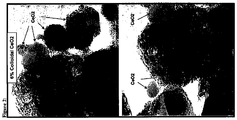
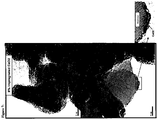
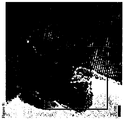
- Materials prepared by combining colloidal cerium oxide with anatase titanium dioxide exhibit predominantly composite structures as illustrated in Figures 1-4 .
- This exemplary sample composite comprises discrete rounded cerium oxide crystallites generally between 5 and 10 nm in diameter with the occasional crystal diameter falling between 1 to 15 nm.
- According to XRD line broadening the medium diameter of the cerium oxide crystallites is around 7.5 nm and may range from 5-10 nm in diameter.
- the crystallites are inter-dispersed among anatase titanium dioxide particles exhibiting limited interaction as determined by high contact angles. The particles usually bounded by the ⁇ 111 ⁇ or ⁇ 200 ⁇ surfaces and exhibit a thin amorphous layer at the surface.
- cerium oxide crystallites may occur to form polycrystalline structures which increase in size and prevalence with increasing addition of colloidal suspension. It is possible that the interaction of the cerium oxide crystallites with anatase is at least strong enough to prevent significant sintering and particle growth of both anatase and cerium oxide crystallites.
- Ce salts such as cerium(III) chloride, cerium(III) fluoride, cerium(III) iodide, cerium (III) bromide, cerium(III) nitrate hexahydrate, ammonium cerium(IV) sulfate, cerium(III) acetate, cerium
- This sample prepared by impregnation of water soluble Ce salts, shows structures consistent with topotaxial growth of thin over-layers of cerium oxide on top of anatase crystallites.
- the over-layers form slabs of cerium oxide islands which are typically less than 3 nm thick although over-layer structures of > 5 nm may be found.
- the width of islands is usually less than 10 nm in diameter but can range up to 20 nm in diameter.
- the islands are highly wetting indicative of a strong interaction between the over-layer and the anatase substrate.
- the islands show nascent crystallinity as suggested by the formation of discernable cerium oxide lattice spacing generally of 5 layers or less with some as thick as 15-20 layers.
- the location of the islands appears to prefer the high energy ⁇ 103 ⁇ anatase surface and possibly others.
- the orientation preferentially exposes the higher energy ceria ⁇ 200 ⁇ face at the top of the islands and parallel to the anatase surface.
- the long edges are comprised primarily of the ⁇ 111 ⁇ surface. Given the thin, flat geometry, the ratio of ⁇ 200 ⁇ to ⁇ 111 ⁇ exposed surfaces is higher for the islands compared to that for the sample prepared from colloidal ceria.
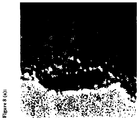
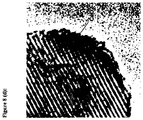
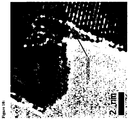
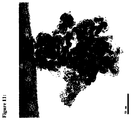
- the unexpected improvement in performance achieved by depositing colloidal cerium oxide followed by impregnating with soluble cerium salts may be characterized by the two distinct morphologies, exemplary of the individual preparation techniques, existing together in a single sample. Further, it may be possible that the two morphologies exist in intimate contact with each other as related to the method and order of deposition. Representations of combinations of morphologies are shown in the micrographs of Figures 11-12 . These micrographs are taken from samples prepared by first treating anatase TiO 2 with colloidal CeO 2 and then impregnating with soluble cerium salts. Figures 9 & 10 show specifically a spherical cerium oxide crystallite, characteristic of treating with colloidal cerium oxide, directly in contact with a cerium oxide island or slab, which is representative of soluble cerium salt impregnation.
- SCR in mobile sources such as light or heavy duty trucks is typically performed by first injecting a reducing agent into the exhaust gas, then passing the exhaust gas containing the reducing agent through a canister, or "can,” containing a DeNOx catalyst, to result in reduction of the NOx.
- the canister containing the catalyst is typically directly in-line in the exhaust system of the vehicle, so that the exhaust from the engine passes directly into the canister, then following NOx reduction, the resulting exhaust passes out of the canister through the vehicles exhaust pipes.
- Typical reducing agents include ammonia, urea, and hydrocarbons.
- the present invention further relates to a diesel engine exhaust system containing the present invention catalyst therein.
- the present invention catalyst can be present in the exhaust system as pressed beads, pellets, extruded cylinders or, preferably for optimal vapor-solid contact with minimal pressure drop as a honeycomb monolith.
- the present invention can be formed into these various shapes by mixing with water and various binders, kneading into a paste, and pressing or extruding into the desired shape, whether pellet, sphere, cylinders or monolith.
- the present invention can be mixed with binder and sufficient water to form a fluid slurry, contacted with a shaped substrate such as a cordierite monolith such as that produced by Corning Inc. to form a thin washcoat layer.
- the monolith, thus produced is generally encapsulated in a cylindrical can, open at both ends for final application in the diesel exhaust system.
- the catalysts prepared according to the Examples described below are tested in two separate manners.
- the first involves a screening method to rapidly evaluate catalyst performance.
- a 0.2g sample of catalyst in the powder form is tested in a fixed bed reactor.
- the composition of the reactor feed is 500 ppm NO, 500 ppm NH 3 , 10 vol.% O 2 , 5.5 vol.% H 2 O, and balance N 2 .
- Gas hourly space velocity (GHSV) is 100 1/hr-g catalyst. NO conversion is measured at 250°C.
- the measurements are made by first establishing steady state while passing the effluent stream through the reactor to determine the catalyst performance, and then bypassing the reactor to determine concentration measurements in the absence of reaction. Conversion is determined by the relative difference.
- the second manner of testing is done over an extended period of time at several temperatures.
- the reactor feed composition is 1000 ppm NO, variable NH 3 , 10 vol% O 2 , 5 vol% H 2 O, and balance N 2 .
- Gas hourly space velocity (GHSV) is 330 1/hr-g catalyst, and catalyst performance is measured at 200, 250, 300, 400, and 500°C. Conversion is measured at increasing ammonia concentrations of 200, 400, 600, 800, and 1000 ppm for each respective temperature. The values reported represent the maximum NO conversion at each temperature.
- Powders were calcined at 600°C prior to analysis.
- the samples were further prepared for TEM analysis by dipping holey carbon coated Cu TEM grids directly into the powder.
- the grids were then viewed in the TEM at magnifications ranging from 15,000 to 400,000X.
- Analysis was performed using a JEOL 2000FX II TEM operated at 200kV. During the imaging process particular attention was given to characterizing particle morphology and phase distribution. Images were collected with a Gatan MultiScan CCD camera.
- Cerium is impregnated onto the support by dissolving ammonium cerium nitrate in deionized water and combining this solution with a slurry of anatase titanium dioxide (Cristal Inorganic Chemicals trade name DT-51) in water in sufficient quantity to obtain 6 weight percent Ce relative to total solids.
- the water is removed by evaporation, the resulting solid is dried at 100C for 6 hrs and calcined at 600C for 6 hrs in air using a muffle furnace.
- This sample is referred to as "fresh”.
- a portion of this sample is further treated hydrothermally as described above. We refer to the sample treated this way as “aged”, since the treatment is intended to accelerate aging induced by long term use under actual conditions.
- Colloidal cerium oxide (20% solids in water; Alfa-Aesar Product # 40125) is mixed with a slurry of DT-51 in water in sufficient quantity to obtain 6 weight percent Ce relative to total solids.
- the pH of the solution is adjusted to 5 using dilute ammonium hydroxide and the water is removed via evaporation.
- the resulting solid is further dried and calcined as described in Example 1. A portion of this sample is also aged as described in Example 1.
- Colloidal cerium oxide is mixed with a slurry of DT-51 in water in sufficient quantity to obtain 3 weight percent Ce versus total solids. Ammonium cerium nitrate is then dissolved in water and added to the slurry in sufficient quantity to obtain an additional 3 w% Ce. Water is removed by evaporation, and the resulting solid is further dried and calcined as described in Example 1. A portion of this sample is also aged as described in Example 1.
- Ammonium cerium nitrate is dissolved in water and added to a slurry of DT-51 in sufficient quantity to obtain 3 w% Ce relative to total solids. Colloidal cerium oxide is then added to this slurry to obtain an additional 3 w% Ce. Water is removed by evaporation, and the resulting solid is further dried and calcined as described in Example 1. A portion of this sample is also aged as described in Example 1.
- a support is designed to improve the activity of the catalyst, as well as its stability to the hydrothermal treatment to induce aging.
- the support is prepared by first suspending DT-51 in water by mixing and further neutralizing to pH 5.5 by adding dilute ammonium hydroxide. Ammonium paratungstate is then added to the slurry to obtain a nominal 6 w% WO 3 loading on a solids basis. Following this step silicic acid is added according to US Ser. No. 12/533,414 at a target loading of 2.5 w% SiO 2 . This mixture is again neutralized to pH 5.5 and allowed to mix for 20 minutes. Finally, zirconium sulfate is added to the slurry in sufficient quantities to obtain 0.4 w% Zr. Again the slurry is neutralized to pH 5.5 with dilute ammonium hydroxide and filtered to remove water. The sample is dried at 100°C for 6 hrs and calcined at 500°C for 6 hrs.
- the support is further transformed into a catalyst by first suspending the calcined powder in water with stirring and combining it with colloidal cerium oxide in sufficient quantities to obtain a loading of 12.5 w% CeO 2 based on total solids.
- Ammonium cerium nitrate is dissolved in water and added to the slurry in a quantity to increase Ce by another 3 w%.
- Dilute ammonium hydroxide is added to the slurry to adjust the pH to 5 and the mixture is filtered.
- the solid is then dried and calcined as described in Example 1. A portion of this sample is also aged as described in Example 1.
- Example 6 The versatility of the preparation can be demonstrated by starting the support synthesis with the DT51 precursor gel taken from the manufacturing process prior to calcination.
- the titania gel of about 250 m 2 /g is slurried in water.
- Ammonium paratungstate is added to the slurry to obtain a nominal 7 w% WO 3 loading on a solids basis.
- the slurry is neutralized to pH 5.5.
- silicic acid is added according to US Ser. No. 12/533,414 at a target loading of 6 w% SiO 2 .
- the slurry is again neutralized to pH 5.5 with dilute ammonium hydroxide and filtered to remove water.
- the sample is dried at 100°C for 6 hrs and calcined at 500°C for 6 hrs.
- the support is further transformed into a catalyst by suspending the calcined powder in water with stirring and combining it with colloidal cerium oxide in sufficient quantity to obtain a loading of 10 w% CeO 2 based on total solids.
- Ammonium cerium nitrate is dissolved in water in a quantity to increase Ce by another 3 w% in addition to zirconium sulfate in an amount sufficient to deposit 0.2% Zr relative to total solids.
- the solution is added to the slurry and dilute ammonium hydroxide is added to the slurry to effect a codeposition of insoluble Ce and Zr by adjusting the pH to 5.
- the mixture is filtered.
- the solid is then dried and calcined as described in Example 1. A portion of this sample is also aged as described in Example 1.
- Example 3 The catalyst of Example 3 is further analyzed with transmission electron microscopy and images are exhibited in Figures 9 and 10 .
- FIG. 10 is an enlarged TEM image of the Example 3 catalyst showing greater detail of the intimate contact between spherical ex-colloid crystallites and islands.
- Example 5 The catalyst of Example 5 is further analyzed with transmission electron microscopy and images are exhibited in Figures 11 and 12 .
- the unique morphology is apparent as two forms of CeO 2 are seen as structures of porous nanometer-scale crystallites in discrete domains inter-dispersed among the anatase titanium dioxide particles (as seen from lower magnification in the upper micrograph) as well as small islands which form directly on top of the anatase titanium oxide and interact strongly with the support (as seen with increased magnification displayed in the area enlargement).
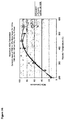
- Example 5 The performance of the catalyst prepared in Example 5 is evaluated in extended reactor tests and compared to commercially-equivalent materials of a nominal 4 w% iron in beta zeolite and 2 w% vanadium oxide on tungsten and silica stabilized anatase titanium oxide (Trade Name DT58 from Cristal Inorganic Chemicals). The results at maximum NOx conversion are shown in Figure 13 .
- Catalysts were prepared in a method similar to that described in Example 5 with the exception that the amount of colloidal cerium oxide was successively increased from 2.5 to 10 w%. Results from the rapid screening test show that activity after freshly calcining the catalyst as well as after the 750°C hydrothermal treatment increase with increasing colloidal CeO 2 content.
- a support is prepared by suspending DT-51 in water with stirring and neutralizing to pH 5.5 by adding dilute ammonium hydroxide. Ammonium paratungstate is then added to the slurry to obtain a nominal 6 w% WO 3 loading. Silicic acid is added according to US Ser. No. 12/533,414 at a target loading of 4 w% SiO 2 . This mixture is again neutralized to pH 5.5 and allowed to mix for 20 minutes. The sample is dried at 100°C for 6 hrs and calcined at 500°C for 6 hrs.
- the support is further transformed into a catalyst by suspending the calcined powder in water and adding aqueous ammonium cerium nitrate in increasing quantities. Dilute ammonium hydroxide is added to the slurry to adjust the pH to 5 and the mixture is filtered. The solid is then dried at 100°C and calcined at 600°C and aged at 750°C as described in Example 1.
- Table 3 The results of the rapid screening tests are shown in Table 3 below. It can be seen that conversion after hydrothermal aging consistently increases with cerium loading. Table 3 Effect of increasing loading of deposited Ce Example 12 750 °C HT Treatment Ce (W%) WO 3 (W%) SiO 2 (W%) 250°C NO Conversion (%) DeNOx Rate (k ⁇ tau) 0.5 6 4 16.6 0.18 1 6 4 30.1 0.36 2 6 4 45.0 0.60 2.75 6 4 52.7 0.75 3 6 4 54.7 0.79 3 6 4 54.0 0.78 3 6 4 53.6 0.77 3.25 6 4 53.3 0.76
- a support is prepared as described in Example 12 with the exception that the tungsten oxide loading was varied from 1 to 9 w%.
- a catalyst was prepared from this support by suspending the calcined powder in water by stirring and adding aqueous ammonium cerium nitrate in sufficient quantity to yield 3 w% Ce. Dilute ammonium hydroxide is added to the slurry to adjust the pH to 5. The mixture is filtered, and the solid is dried at 100°C.
- a support is prepared as described in Example 12 with the exception that the silicon oxide loading was varied from 0 to 6 w%.
- a catalyst was prepared from this support by suspending the calcined powder in water by stirring and adding aqueous ammonium cerium nitrate in sufficient quantity to yield 3 w% Ce. Dilute ammonium hydroxide is added to the slurry to adjust the pH to 5, and the mixture is filtered. The resulting is dried at 100°C, calcined at 600°C, and a portion is aged by hydrothermal treatment as described in Example 1.
- Table 5 shows that adding silica to the formulation initially lowers measured catalyst conversion after freshly calcining at 600°C. However, the stability to resist deactivation from hydrothermal treatment improves. Table 5 Effect of increasing silicon oxide loading Example 14 600°C Calcination 750 °C HT Treatment Ce (W%) WO 3 (W%) SiO 2 (W%) 250°C NO Conversion (%) DeNOx Rate (k ⁇ tau) 250°C NO Conversion (%) DeNOx Rate (k ⁇ tau) 3 6 0 64.8 1.04 42.3 0.55 3 6 2 51.8 0.73 51.1 0.72 3 6 4 55.4 0.81 54.0 0.78 3 6 6 50.5 0.70 NM NM NM
- a catalyst is prepared by first adding dissolved ammonium molybdate to colloidal cerium oxide while stirring. This slurry is then combined with a slurry of DT-51. When applied, the amount of molybdenum added is sufficient to achieve a 1.1 w% MoO 3 loading, and cerium oxide is added to achieve a 12.5 w% composition relative to total solids present. The pH is adjusted to 4 and allowed to mix for 20 minutes. The mixture is filtered, and the resulting solid is dried at 100°C, calcined at 600°C, and a portion is aged by hydrothermal treatment as described in Example 1.
- Table 6 below shows that adding molybdenum to the colloidal cerium oxide does not improve the conversion of a freshly calcined catalyst, but it does improve the conversion stability after 750°C hydrothermal treatment of the catalyst.
- Table 6 Effect of depositing molybdenum oxide on colloidal cerium oxide.
- Example 15 600°C Calcination 750 °C HT Treatment CeO 2 (w%) MoO 3 (w%) 250°C NO Conversion (%) DeNOx Rate (k ⁇ tau) 250°C NO Conversion (%) DeNOx Rate (k ⁇ tau) 12.5 0 32.6 0.39 14.6 0.16 12.5 1.1 32.7 0.40 25.8 0.30
- a catalyst is prepared as described in Example 15 with the exception that ammonium paratungstate was substituted for ammonia molybdate at quantities to achieve increasing WO 3 loadings.
- the table below shows that increasing the tungsten oxide loading on cerium oxide increases NOx conversion of both freshly calcined and hydrothermally aged catalysts.
- Table 7 Effect of depositing tungsten oxide on colloidal cerium oxide Example 16 600°C Calcination 750 °C HT Treatment CeO 2 (w%) WO 3 (w%) 250°C NO Conversion (%) DeNOx Rate (k ⁇ tau) 250°C NO Conversion (%) DeNOx Rate (k ⁇ tau) 12.5 2 37.1 0.46 31.0 0.37 12.5 3 39.4 0.50 34.0 0.42 12.5 40.2 0.51 40.1 0.51
- a catalyst is prepared in accordance with the method disclosed by Kato et al. in US Patent 7,585,807 B2 .
- a support is prepared by first suspending DT-51 in water by mixing and further neutralizing it to pH 5.5 by adding dilute ammonium hydroxide. Ammonium paratungstate is then added to the slurry to obtain a nominal 6 w% WO 3 loading. Following this step, silicic acid is added to the slurry by treating sodium silicate with sufficient ion exchange resin to replace all the sodium present with hydrogen ions and adding this immediately to the slurry suspension. The target loading is 2.5 w% SiO 2 . This mixture is again neutralized to pH 5.5 and allowed to mix for 20 minutes. Finally, zirconium sulfate is added to the slurry in sufficient quantities to obtain 0.4 w% Zr. Again the slurry is neutralized to pH 5.5 with dilute ammonium hydroxide and filtered to remove water. The sample is dried at 100°C for 6 hrs and calcined at 500°C for 6 hrs.
- the support is further transformed into a catalyst by suspending the calcined powder in water and adding colloidal cerium oxide as taught in US 7,585,807 B2 .
- the solid is then dried at 100°C and calcined at 600°C and a portion is aged at 750°C under hydrothermal conditions as described in Example 1.
- the support is prepared by depositing a nominal loading of 6 w% WO 3 , 10 w% CeO 2 , 0.4 w% Zr and 2.5 w% SiO2 on to DT51.
- a support is prepared by first suspending DT-51 in water by mixing and further neutralizing it to pH 5.5 by adding dilute ammonium hydroxide. Ammonium paratungstate is then added to the slurry to obtain a nominal 6 w% WO 3 loading.
- silicic acid is added according to US Ser. No. 12/533,414 at a target loading of 2.5 w% SiO 2 . This mixture is again neutralized to pH 5.5 and allowed to mix for 20 minutes.
- the slurry is combined with colloidal cerium oxide in sufficient quantities to obtain a loading of 10% CeO 2 .
- zirconium sulfate is added to the slurry in sufficient quantities to obtain 0.4 w% Zr.
- the slurry is neutralized to pH 5.5 with dilute ammonium hydroxide and filtered to remove water. The sample is dried at 100°C for 6 hrs and calcined at 500°C for 6 hrs.
- a catalyst was prepared from this support by suspending the calcined powder in water with stirring.
- a second solution is prepared by dissolving ammonium cerium nitrate in sufficient quantity to deposit an additional 3 w% Ce relative to total solids. The two solutions are combined, and then dilute ammonium hydroxide is added to the slurry to adjust the pH to 5. The mixture is filtered, and the resulting solid is dried at 100°C, calcined at 600°C, and a portion is aged by hydrothermal treatment as described in Example 1.
- a support is prepared according to the description in Example 17.
- a catalyst was prepared from this support by suspending the calcined powder in water with stirring.
- a second solution is prepared by dissolving ammonium cerium nitrate in sufficient quantity to deposit an additional 3 w% along with varying amounts of ammonium iron(II)sulfate. The two solutions are combined, and then dilute ammonium hydroxide is added to the slurry to adjust the pH to 5. The mixture is filtered, and the resulting solid is dried at 100°C, calcined at 600°C, and a portion is aged by hydrothermal treatment as described in Example 1.
- Example 18a is prepared with an amount of iron(II)sulfate sufficient to achieve a loading of 0.05 w% iron. The amount of iron added in Example 18b is intended to achieve a loading of 0.2 w% Fe relative to total solids present.
- Table 8 further shows that small amounts of iron improve conversion of NOx, but too much iron can lead to lower conversion from hydrothermally aged samples.
- Table 8 Relative reactor performance catalysts prepared according to Comparative Example 1, Example 15, Example 16a, and Example 16b Example Composition 600°C Calcination 750 °C HT Treatment Fe (w%) Ce (w%) CeO 2 (w%) WO 3 (w%) SiO 2 (w%) Zr (w%) 250°C NO Conversion (%) DeNOx Rate (k ⁇ tau) 250°C NO Conversion (%) DeNOx Rate (k ⁇ tau) Comparative Example 1 0 0 13 6 2.5 0.4 55.7 0.81 57.2 0.85 Example 17 0 3 10 6 2.5 0.4 74.4 1.36 64.8 1.04 Example 18a 0.05 3 10 6 2.5 0.4 87.9 2.11 67.9 1.14 Example 18b 0.2 3 10 6 2.5 0.4 73.3 1.34 59.1 0.89
Landscapes
- Chemical & Material Sciences (AREA)
- Engineering & Computer Science (AREA)
- Chemical Kinetics & Catalysis (AREA)
- Materials Engineering (AREA)
- Organic Chemistry (AREA)
- Nanotechnology (AREA)
- Physics & Mathematics (AREA)
- General Chemical & Material Sciences (AREA)
- Composite Materials (AREA)
- Analytical Chemistry (AREA)
- Biomedical Technology (AREA)
- Oil, Petroleum & Natural Gas (AREA)
- Health & Medical Sciences (AREA)
- Thermal Sciences (AREA)
- Environmental & Geological Engineering (AREA)
- Condensed Matter Physics & Semiconductors (AREA)
- General Physics & Mathematics (AREA)
- Crystallography & Structural Chemistry (AREA)
- Combustion & Propulsion (AREA)
- Dispersion Chemistry (AREA)
- Catalysts (AREA)
- Exhaust Gas Treatment By Means Of Catalyst (AREA)
- Exhaust Gas After Treatment (AREA)
Claims (14)
- Catalyseur comprenant du dioxyde de titane et deux morphologies distinctes d'oxyde de cérium, les morphologies d'oxyde de cérium comprenant (i) au moins un agglomérat de cristallites comprenant de l'oxyde de cérium interdispersé dans du dioxyde de titane, et (ii) au moins un îlot comprenant de l'oxyde de cérium sur une surface du dioxyde de titane.
- Catalyseur selon la revendication 1, le dioxyde de titane étant du dioxyde de titane de type anatase.
- Catalyseur selon la revendication 1, l'au moins un agglomérat de cristallites et l'au moins un îlot étant en un mélange sur la surface du dioxyde de titane.
- Catalyseur selon la revendication 1, l'au moins un agglomérat de cristallites et l'au moins un îlot étant distincts et ne se superposant pas sur la surface du dioxyde de titane.
- Catalyseur selon la revendication 1, le dioxyde de titane étant sous forme d'au moins un agrégat de cristallites d'anatase, les cristallites d'anatase étant d'un diamètre de 2 à 50 nm, et l'au moins un agrégat étant d'un diamètre de 25 à 150 nm.
- Catalyseur selon la revendication 1, l'au moins un agglomérat de cristallites comprenant de l'oxyde de cérium interdispersé dans le dioxyde de titane étant préparé à partir d'oxyde de cérium colloïdal.
- Catalyseur selon la revendication 1, l'au moins un agglomérat de cristallites comprenant de l'oxyde de cérium interdispersé dans le dioxyde de titane comprenant des cristallites d'un diamètre compris entre 3 et 15 nanomètres.
- Catalyseur selon la revendication 1, l'au moins un îlot comprenant de l'oxyde de cérium sur une surface du dioxyde de titane comprenant de l'oxyde de cérium non colloïdal, la source d'oxyde de cérium non colloïdal étant un sel de Ce soluble.
- Catalyseur selon la revendication 1, l'au moins un îlot comprenant de l'oxyde de cérium dispersé sur une surface du dioxyde de titane comprenant un treillis d'oxyde de cérium.
- Catalyseur selon la revendication 1, le catalyseur étant traité hydrothermiquement.
- Procédé de production d'un catalyseur selon la revendication 1, comprenant l'ajout d'une première partie d'oxyde de cérium à du dioxyde de titane, et subséquemment l'ajout d'une deuxième partie d'oxyde de cérium au dioxyde de titane, la première partie d'oxyde de cérium étant de l'oxyde de cérium colloïdal, et la deuxième partie d'oxyde de cérium étant une source soluble de Ce.
- Procédé de réduction de manière sélective des niveaux de NOx dans un gaz d'échappement comprenant la mise en contact du gaz d'échappement comprenant des NOx avec un catalyseur selon la revendication 1 en présence d'un agent de réduction.
- Support de TiO2 activé comprenant
le catalyseur selon la revendication 1 ;
et au moins un activateur choisi dans le groupe constitué par l'alumine, le phosphore, le lanthane, le zirconium, la silice, le niobium, le strontium, le bore, le tungstène, le molybdène, le manganèse, le cobalt, le chrome, l'argent, le bismuth, le cuivre, l'europium, l'étain, le zinc, le praséodyme, l'antimoine, le fer, et des oxydes correspondants. - Procédé de production d'un catalyseur tel que défini dans la revendication 11, le CeO2 colloïdal étant formé par un procédé comprenant la dissolution d'un sel de cérium dans de l'eau, ensuite l'élévation lente du pH jusqu'au-dessus de 1,5 jusqu'à ce qu'un précipité commence à se former, ensuite la ré-acidification avec de l'acide nitrique à pH 1,5.
Priority Applications (2)
| Application Number | Priority Date | Filing Date | Title |
|---|---|---|---|
| PL12744223T PL2673082T3 (pl) | 2011-02-07 | 2012-01-25 | Ruchomy katalizator denox wolny od v, zawierający ce |
| SI201231861T SI2673082T1 (sl) | 2011-02-07 | 2012-01-25 | Mobilni DeNOx katalizator, ki vsebuje Ce in je brez V |
Applications Claiming Priority (2)
| Application Number | Priority Date | Filing Date | Title |
|---|---|---|---|
| US13/022,325 US8617502B2 (en) | 2011-02-07 | 2011-02-07 | Ce containing, V-free mobile denox catalyst |
| PCT/US2012/022502 WO2012109015A1 (fr) | 2011-02-07 | 2012-01-25 | Catalyseur dénox mobile exempt de v, contenant du ce |
Publications (3)
| Publication Number | Publication Date |
|---|---|
| EP2673082A1 EP2673082A1 (fr) | 2013-12-18 |
| EP2673082A4 EP2673082A4 (fr) | 2017-11-29 |
| EP2673082B1 true EP2673082B1 (fr) | 2020-09-23 |
Family
ID=46600749
Family Applications (1)
| Application Number | Title | Priority Date | Filing Date |
|---|---|---|---|
| EP12744223.4A Active EP2673082B1 (fr) | 2011-02-07 | 2012-01-25 | Catalyseur dénox mobile exempt de v, contenant du ce |
Country Status (18)
| Country | Link |
|---|---|
| US (1) | US8617502B2 (fr) |
| EP (1) | EP2673082B1 (fr) |
| KR (1) | KR101930968B1 (fr) |
| CN (1) | CN103596678B (fr) |
| AR (1) | AR085147A1 (fr) |
| AU (1) | AU2012214792B2 (fr) |
| BR (2) | BR112013019992B1 (fr) |
| CA (1) | CA2826684C (fr) |
| DK (1) | DK2673082T3 (fr) |
| MX (1) | MX340863B (fr) |
| PL (1) | PL2673082T3 (fr) |
| SA (1) | SA112330246B1 (fr) |
| SG (1) | SG192610A1 (fr) |
| SI (1) | SI2673082T1 (fr) |
| TW (1) | TWI566829B (fr) |
| UA (1) | UA114081C2 (fr) |
| WO (1) | WO2012109015A1 (fr) |
| ZA (1) | ZA201305575B (fr) |
Families Citing this family (34)
| Publication number | Priority date | Publication date | Assignee | Title |
|---|---|---|---|---|
| JP5732297B2 (ja) * | 2011-03-31 | 2015-06-10 | エヌ・イーケムキャット株式会社 | アンモニア酸化触媒、および排気ガス浄化装置並びに排気ガス浄化方法 |
| US9011809B2 (en) * | 2011-03-31 | 2015-04-21 | N.E. Chemcat Corporation | Ammonia oxidation catalyst, exhaust gas purification device using same, and exhaust gas purification method |
| EP2522418A1 (fr) * | 2011-05-11 | 2012-11-14 | Sachtleben Pigment GmbH | Matières brutes pour catalyseurs de DeNOx sans vanadium ou réduits en vanadium et leur procédé de fabrication |
| SI2888042T1 (sl) * | 2012-08-24 | 2020-08-31 | Tronox Llc | Nosilni materiali za katalizatorje, katalizatorji, postopki za njihovo izdelavo in njihove uporabe |
| CN103846083A (zh) * | 2014-03-24 | 2014-06-11 | 南京理工大学 | 钨钛复合氧化物负载氧化铈的催化剂、制备方法及其应用 |
| WO2016036592A1 (fr) * | 2014-09-05 | 2016-03-10 | Basf Corporation | Zircone dopée à l'oxyde de titane en tant que support métallique du groupe du platine dans des catalyseurs pour le traitement de flux d'échappement de moteur à combustion |
| CN105288886A (zh) * | 2015-11-13 | 2016-02-03 | 朱忠良 | 一种适合高污染天气的呼吸面罩 |
| CN105435383A (zh) * | 2015-11-13 | 2016-03-30 | 朱忠良 | 一种适合高污染天气的呼吸面罩 |
| US20170232424A1 (en) * | 2016-02-17 | 2017-08-17 | Toyota Jidosha Kabushiki Kaisha | Exhaust gas purification catalyst and production method thereof |
| JP2017144423A (ja) * | 2016-02-17 | 2017-08-24 | トヨタ自動車株式会社 | 排ガス浄化用触媒及びその製造方法 |
| CN105618093A (zh) * | 2016-02-26 | 2016-06-01 | 东营信拓汽车消声器有限公司 | 一种蜂窝型低温烟气脱硝催化剂及制备方法 |
| CN105749943A (zh) * | 2016-02-26 | 2016-07-13 | 东营信拓汽车消声器有限公司 | 一种低温烟气脱硝催化剂粉体及其制备方法 |
| CN105688668A (zh) * | 2016-02-26 | 2016-06-22 | 东营信拓汽车消声器有限公司 | 一种小型工业锅炉模块化脱硝设备 |
| US10807071B2 (en) * | 2016-05-05 | 2020-10-20 | University Of Connecticut | Mesoporous metal doped cerium oxide catalyst |
| CN106111149A (zh) * | 2016-06-16 | 2016-11-16 | 浙江三龙催化剂有限公司 | 船舶用脱硝催化剂及其制备方法 |
| CN106111150A (zh) * | 2016-06-16 | 2016-11-16 | 浙江三龙催化剂有限公司 | 船舶用脱硝催化剂 |
| CN106268755A (zh) * | 2016-08-10 | 2017-01-04 | 安徽元琛环保科技股份有限公司 | 一种无钒脱硝催化剂的制备方法 |
| CN106215929B (zh) * | 2016-08-18 | 2019-01-29 | 上海众仕环境科技股份有限公司 | 一种铈基脱硝催化剂及其制备工艺 |
| KR101823777B1 (ko) * | 2016-08-24 | 2018-01-31 | 부산대학교 산학협력단 | 비정질 복합 금속 산화물 및 이의 제조 방법 |
| CN106732531B (zh) * | 2016-12-09 | 2020-07-28 | 大唐国际化工技术研究院有限公司 | 一种scr脱硝催化剂及其制备方法和用途 |
| CN106824171A (zh) * | 2017-01-12 | 2017-06-13 | 中国科学院兰州化学物理研究所 | 一种宽工作温度抗硫蜂窝式脱硝催化剂及其制备方法 |
| CN106807393A (zh) * | 2017-01-12 | 2017-06-09 | 中国科学院兰州化学物理研究所 | 一种低温低so2氧化率蜂窝式脱硝催化剂及其制备方法 |
| US11909046B2 (en) | 2017-03-07 | 2024-02-20 | The Research Foundation For The State University Of New York | Synthetic methods for crystallite size control of bimetallic polyanionic battery compositions |
| KR101987534B1 (ko) * | 2017-06-01 | 2019-06-10 | 부산대학교 산학협력단 | 높은 산소저장능을 갖는 촉매 복합체 및 이의 제조 방법 |
| EP3482825A1 (fr) * | 2017-11-14 | 2019-05-15 | Umicore Ag & Co. Kg | Catalyseur rcs |
| CN108837820B (zh) * | 2018-06-06 | 2021-09-28 | 中北大学 | 一种Ce-NbOx/介孔二氧化钛高效脱硝催化剂及其制备方法 |
| CN108889297B (zh) * | 2018-07-31 | 2020-12-29 | 包头稀土研究院 | Scr催化剂及其制备方法和应用 |
| CN109158108A (zh) * | 2018-09-11 | 2019-01-08 | 上海电力学院 | 一种用于低温烟气脱硝的催化剂及其制备方法和应用 |
| CN109126817B (zh) * | 2018-11-07 | 2021-07-16 | 东北大学 | 一种铁、钨、锌改良氧化铈/氧化锰scr脱硝催化剂及其制备方法 |
| CN111450815B (zh) * | 2019-01-22 | 2022-09-20 | 中国石油化工股份有限公司 | 用于制备二氧化钛-二氧化铈复合成型物的组合物及方法 |
| CN110237839A (zh) * | 2019-05-27 | 2019-09-17 | 内蒙古希捷环保科技有限责任公司 | 稀土基中低温烟气蜂窝式脱硝催化剂及其制备方法 |
| WO2021092831A1 (fr) * | 2019-11-14 | 2021-05-20 | 江西新科环保股份有限公司 | Procédé de préparation d'un catalyseur de dénitration scr |
| KR102241948B1 (ko) * | 2019-12-19 | 2021-04-20 | 한서대학교 산학협력단 | 내황성이 개선된 선택적 촉매환원반응용 저온 탈질촉매 및 그 제조방법 |
| CN112544632A (zh) * | 2020-12-31 | 2021-03-26 | 代思炜 | 一种溴化铈掺杂二氧化钛可视灭菌制剂 |
Family Cites Families (41)
| Publication number | Priority date | Publication date | Assignee | Title |
|---|---|---|---|---|
| US3279884A (en) | 1963-10-31 | 1966-10-18 | Basf Ag | Selective removal of oxides of nitrogen from gas mixtures containing oxygen |
| US4048112A (en) | 1973-09-10 | 1977-09-13 | Mitsubishi Chemical Industries Ltd. | Catalyst for selective reduction of nitrogen oxides |
| US4085193A (en) | 1973-12-12 | 1978-04-18 | Mitsubishi Petrochemical Co. Ltd. | Catalytic process for reducing nitrogen oxides to nitrogen |
| JPS52122293A (en) | 1976-04-08 | 1977-10-14 | Nippon Shokubai Kagaku Kogyo Co Ltd | Catalyst for purifying nox |
| US4568663A (en) * | 1984-06-29 | 1986-02-04 | Exxon Research And Engineering Co. | Cobalt catalysts for the conversion of methanol to hydrocarbons and for Fischer-Tropsch synthesis |
| FR2583736B1 (fr) | 1985-06-20 | 1987-08-14 | Rhone Poulenc Spec Chim | Nouveau compose de cerium iv et son procede de preparation. |
| JPH0817939B2 (ja) | 1986-11-19 | 1996-02-28 | 三菱化学株式会社 | 排煙脱硝触媒 |
| DE3723072A1 (de) | 1987-07-11 | 1989-01-19 | Basf Ag | Verfahren zur entfernung von stickoxiden aus abgasen |
| US5430230A (en) | 1991-04-30 | 1995-07-04 | Nippon Shokubai Co., Ltd. | Method for disposing of organohalogen compounds by oxidative decomposition |
| CA2124439A1 (fr) | 1991-11-26 | 1993-06-10 | Kenneth E. Voss | Catalyseur d'oxydation et applications |
| NL9302288A (nl) | 1993-12-31 | 1995-07-17 | Univ Delft Tech | Werkwijze voor het behandelen van stikstofoxiden-bevattend gas onder toepassing van een ceriumzeoliet. |
| JP2003521363A (ja) * | 1998-11-13 | 2003-07-15 | エンゲルハード・コーポレーシヨン | 排気ガス放出を減少させる触媒および方法 |
| US6399540B1 (en) | 1999-08-12 | 2002-06-04 | Sumitomo Chemical Co., Ltd. | Porous titania, catalyst comprising the porous titania |
| JP4798909B2 (ja) | 2001-09-27 | 2011-10-19 | 日揮触媒化成株式会社 | 窒素酸化物除去用触媒およびその製造方法 |
| FR2833253B1 (fr) | 2001-12-12 | 2004-10-08 | Rhodia Elect & Catalysis | Procede de preparation d'un oxyde a base de zirconium et de titane, oxydes ainsi obtenus et utilisation de ces oxydes comme catalyseurs |
| JP4225735B2 (ja) * | 2002-03-01 | 2009-02-18 | バブコック日立株式会社 | 窒素酸化物除去用触媒、その製造方法および窒素酸化物の除去方法 |
| WO2004022229A1 (fr) | 2002-09-04 | 2004-03-18 | The University Of Chicago | Nouveau catalyseur pour reduire de maniere selective le nox au moyen d'hydrocarbures |
| WO2004070025A2 (fr) | 2003-02-05 | 2004-08-19 | Juan Saus | Nouvelles isoformes de la proteine liant l'antigene de goodpasture et troubles induits par une proteine incorrectement repliee |
| US7655137B2 (en) * | 2003-07-14 | 2010-02-02 | Headwaters Technology Innovation, Llc | Reforming catalysts having a controlled coordination structure and methods for preparing such compositions |
| US7640936B2 (en) * | 2003-10-27 | 2010-01-05 | Philip Morris Usa Inc. | Preparation of mixed metal oxide catalysts from nanoscale particles |
| US7743772B2 (en) * | 2004-06-16 | 2010-06-29 | Philip Morris Usa Inc. | Silver and silver oxide catalysts for the oxidation of carbon monoxide in cigarette smoke |
| US7378069B2 (en) | 2004-07-27 | 2008-05-27 | Los Alamos National Security, Llc | Catalyst and method for reduction of nitrogen oxides |
| US7491676B2 (en) | 2004-10-19 | 2009-02-17 | Millennium Inorganic Chemicals | High activity titania supported metal oxide DeNOx catalysts |
| WO2006119549A1 (fr) * | 2005-05-12 | 2006-11-16 | Very Small Particle Company Pty Ltd | Catalyseur ameliore |
| US7820583B2 (en) | 2006-08-24 | 2010-10-26 | Millennium Inorganic Chemicals, Inc. | Nanocomposite particle and process of preparing the same |
| FR2905371B1 (fr) | 2006-08-31 | 2010-11-05 | Rhodia Recherches & Tech | Composition a reductibilite elevee a base d'un oxyde de cerium nanometrique sur un support, procede de preparation et utilisation comme catalyseur |
| US20080095682A1 (en) | 2006-10-19 | 2008-04-24 | Kharas Karl C | Ce-Zr-R-O CATALYSTS, ARTICLES COMPRISING THE Ce Zr R O CATALYSTS AND METHODS OF MAKING AND USING THE Ce-Zr-R-O CATALYSTS |
| FR2907445B1 (fr) | 2006-10-20 | 2010-09-03 | Rhodia Recherches & Tech | Composition a acidite elevee a base d'oxyde de zirconium, d'oxyde de titane et d'oxyde de tungstene,procede de preparation et utilisation dans le traitement des gaz d'echappement |
| FR2907444B1 (fr) | 2006-10-20 | 2008-12-19 | Rhodia Recherches & Tech | Composition a acidite elevee a base d'oxydes de zirconium,de silicium et d'au moins un autre element choisi parmi le titane,l'aluminium,le tungstene,le molybdene,le cerium,le fer et le manganese |
| KR101434936B1 (ko) | 2006-10-23 | 2014-08-27 | 우미코레 아게 운트 코 카게 | 선택적 촉매 환원용 바나듐 비함유 촉매 및 이의 제조방법 |
| MY145792A (en) | 2006-11-17 | 2012-04-30 | Dow Global Technologies Inc | Hydro-oxidation process using a catalyst prepared from a gold cluster complex |
| MX377321B (es) | 2007-04-26 | 2025-03-07 | Johnson Matthey Plc | Catalizadores de reduccion catalitica selectiva de metal de transicion/zeolita. |
| US20080279740A1 (en) * | 2007-05-11 | 2008-11-13 | Augustine Steven M | DeNOx catalyst preparation method |
| GB2450484A (en) | 2007-06-25 | 2008-12-31 | Johnson Matthey Plc | Non-Zeolite base metal catalyst |
| JP2009093553A (ja) | 2007-10-11 | 2009-04-30 | Sharp Corp | 商品発注装置 |
| US20090196812A1 (en) | 2008-01-31 | 2009-08-06 | Basf Catalysts Llc | Catalysts, Systems and Methods Utilizing Non-Zeolitic Metal-Containing Molecular Sieves Having the CHA Crystal Structure |
| US7879759B2 (en) * | 2009-02-16 | 2011-02-01 | Augustine Steve M | Mobile DeNOx catalyst |
| US8148295B2 (en) | 2009-02-16 | 2012-04-03 | Millennium Inorganic Chemicals, Inc. | Catalyst promoters in vanadium-free mobile catalyst |
| US7968492B2 (en) * | 2009-05-11 | 2011-06-28 | Millennium Inorganic Chemicals, Inc. | Layered catalyst to improve selectivity or activity of manganese containing vanadium-free mobile catalyst |
| US8545796B2 (en) | 2009-07-31 | 2013-10-01 | Cristal Usa Inc. | Silica-stabilized ultrafine anatase titania, vanadia catalysts, and methods of production thereof |
| US8247343B2 (en) * | 2009-11-13 | 2012-08-21 | Chapman David M | Stable sub-micron titania sols |
-
2011
- 2011-02-07 US US13/022,325 patent/US8617502B2/en active Active
-
2012
- 2012-01-25 CN CN201280008079.1A patent/CN103596678B/zh active Active
- 2012-01-25 UA UAA201310763A patent/UA114081C2/uk unknown
- 2012-01-25 KR KR1020137023504A patent/KR101930968B1/ko active Active
- 2012-01-25 BR BR112013019992-0A patent/BR112013019992B1/pt active IP Right Grant
- 2012-01-25 EP EP12744223.4A patent/EP2673082B1/fr active Active
- 2012-01-25 AU AU2012214792A patent/AU2012214792B2/en not_active Ceased
- 2012-01-25 SI SI201231861T patent/SI2673082T1/sl unknown
- 2012-01-25 PL PL12744223T patent/PL2673082T3/pl unknown
- 2012-01-25 MX MX2013009079A patent/MX340863B/es active IP Right Grant
- 2012-01-25 CA CA2826684A patent/CA2826684C/fr active Active
- 2012-01-25 DK DK12744223.4T patent/DK2673082T3/da active
- 2012-01-25 SG SG2013059126A patent/SG192610A1/en unknown
- 2012-01-25 BR BR122019009200-1A patent/BR122019009200B1/pt active IP Right Grant
- 2012-01-25 WO PCT/US2012/022502 patent/WO2012109015A1/fr not_active Ceased
- 2012-02-03 TW TW101103552A patent/TWI566829B/zh not_active IP Right Cessation
- 2012-02-04 SA SA112330246A patent/SA112330246B1/ar unknown
- 2012-02-06 AR ARP120100377A patent/AR085147A1/es active IP Right Grant
-
2013
- 2013-07-23 ZA ZA2013/05575A patent/ZA201305575B/en unknown
Non-Patent Citations (1)
| Title |
|---|
| None * |
Also Published As
| Publication number | Publication date |
|---|---|
| AU2012214792A1 (en) | 2012-08-16 |
| US8617502B2 (en) | 2013-12-31 |
| TWI566829B (zh) | 2017-01-21 |
| MX340863B (es) | 2016-07-28 |
| AU2012214792B2 (en) | 2016-08-25 |
| BR112013019992A2 (pt) | 2017-02-21 |
| BR112013019992B1 (pt) | 2020-03-31 |
| KR101930968B1 (ko) | 2018-12-19 |
| UA114081C2 (xx) | 2017-04-25 |
| ZA201305575B (en) | 2014-09-25 |
| SG192610A1 (en) | 2013-09-30 |
| AR085147A1 (es) | 2013-09-11 |
| TW201244818A (en) | 2012-11-16 |
| CA2826684A1 (fr) | 2012-08-16 |
| DK2673082T3 (da) | 2020-12-07 |
| KR20140033000A (ko) | 2014-03-17 |
| PL2673082T3 (pl) | 2021-04-19 |
| SI2673082T1 (sl) | 2021-04-30 |
| AU2012214792A8 (en) | 2013-08-29 |
| EP2673082A4 (fr) | 2017-11-29 |
| BR122019009200B1 (pt) | 2020-12-15 |
| CA2826684C (fr) | 2019-04-02 |
| US20120201732A1 (en) | 2012-08-09 |
| CN103596678B (zh) | 2017-12-15 |
| WO2012109015A1 (fr) | 2012-08-16 |
| SA112330246B1 (ar) | 2015-03-30 |
| MX2013009079A (es) | 2014-06-11 |
| EP2673082A1 (fr) | 2013-12-18 |
| CN103596678A (zh) | 2014-02-19 |
Similar Documents
| Publication | Publication Date | Title |
|---|---|---|
| US8617502B2 (en) | Ce containing, V-free mobile denox catalyst | |
| TWI432258B (zh) | 觸媒承載材料及製造方法 | |
| RU2556207C2 (ru) | Состав катализатора для селективного каталитического восстановления выхлопного газа | |
| KR101735851B1 (ko) | 배기 가스의 선택적 촉매 환원을 위한 촉매 조성물 | |
| US6150288A (en) | Composite oxide, composite oxide carrier and catalyst | |
| CA2661635C (fr) | Catalyseur d'elimination d'oxyde d'azote, et procede d'elimination d'oxyde d'azote | |
| JP5564109B2 (ja) | 特有の多孔度を有する酸化セリウムおよび酸化ジルコニウムを含む組成物、この調製方法および触媒作用におけるこの使用 | |
| WO2008150462A2 (fr) | Catalyseur pour la réduction sélective d'oxydes d'azote, son procédé de fabrication et d'utilisation | |
| US11007514B2 (en) | Ammonia facilitated cation loading of zeolite catalysts | |
| JP5716603B2 (ja) | Scr触媒、排ガス浄化フィルタ、及び排ガス浄化装置 | |
| DE69705901T2 (de) | Katalysator zur Reinigung von Abgasen | |
| JPH09155192A (ja) | 排ガス浄化用触媒 | |
| DE102004020259A1 (de) | Oxidationskatalysator für die simultane Entfernung von Kohlenmonoxid und Kohlenwasserstoffen aus sauerstoffreichen Abgasen und Verfahren zu seiner Herstellung | |
| JP2017530000A (ja) | 熱安定性nh3−scr触媒組成物 | |
| CN114929367B (zh) | 耐久性铜scr催化剂 | |
| KR20190132914A (ko) | 내열성이 개선된 제올라이트 및 이를 이용한 촉매 복합체 | |
| JP5628049B2 (ja) | シリカ担体上の酸化ジルコニウム、酸化チタン、または混合ジルコニウムチタン酸化物をベースとする組成物、調製方法、および触媒としての使用 | |
| CN116547058A (zh) | Al-P复合氧化物和使用其的废气净化用催化剂 | |
| DE102004048974A1 (de) | Oxidationskatalysator für die Entfernung von Schadstoffen aus sauerstoffreichen Abgasen und Verfahren zu seiner Herstellung | |
| CN121155568A (zh) | 复合相结构稀土锰化合物催化材料及其制备方法、催化剂 | |
| HK1165353B (en) | Catalyst composition for selective catalytic reduction of exhaust gases |
Legal Events
| Date | Code | Title | Description |
|---|---|---|---|
| PUAI | Public reference made under article 153(3) epc to a published international application that has entered the european phase |
Free format text: ORIGINAL CODE: 0009012 |
|
| 17P | Request for examination filed |
Effective date: 20130806 |
|
| AK | Designated contracting states |
Kind code of ref document: A1 Designated state(s): AL AT BE BG CH CY CZ DE DK EE ES FI FR GB GR HR HU IE IS IT LI LT LU LV MC MK MT NL NO PL PT RO RS SE SI SK SM TR |
|
| DAX | Request for extension of the european patent (deleted) | ||
| RA4 | Supplementary search report drawn up and despatched (corrected) |
Effective date: 20171030 |
|
| RIC1 | Information provided on ipc code assigned before grant |
Ipc: B01J 23/06 20060101ALI20171024BHEP Ipc: B01J 23/50 20060101ALI20171024BHEP Ipc: B01J 23/02 20060101ALI20171024BHEP Ipc: B01J 21/06 20060101ALI20171024BHEP Ipc: B01J 23/14 20060101ALI20171024BHEP Ipc: B01J 23/30 20060101ALI20171024BHEP Ipc: B01J 23/10 20060101AFI20171024BHEP Ipc: B01D 53/94 20060101ALI20171024BHEP Ipc: B01J 37/10 20060101ALI20171024BHEP Ipc: B01J 35/00 20060101ALI20171024BHEP Ipc: B01J 37/02 20060101ALI20171024BHEP Ipc: B01J 23/16 20060101ALI20171024BHEP Ipc: B01J 23/24 20060101ALI20171024BHEP Ipc: B01J 23/70 20060101ALI20171024BHEP Ipc: B01J 23/32 20060101ALI20171024BHEP Ipc: B82Y 30/00 20110101ALI20171024BHEP |
|
| STAA | Information on the status of an ep patent application or granted ep patent |
Free format text: STATUS: EXAMINATION IS IN PROGRESS |
|
| 17Q | First examination report despatched |
Effective date: 20181127 |
|
| RAP1 | Party data changed (applicant data changed or rights of an application transferred) |
Owner name: TRONOX LLC |
|
| GRAP | Despatch of communication of intention to grant a patent |
Free format text: ORIGINAL CODE: EPIDOSNIGR1 |
|
| STAA | Information on the status of an ep patent application or granted ep patent |
Free format text: STATUS: GRANT OF PATENT IS INTENDED |
|
| INTG | Intention to grant announced |
Effective date: 20200625 |
|
| GRAS | Grant fee paid |
Free format text: ORIGINAL CODE: EPIDOSNIGR3 |
|
| GRAA | (expected) grant |
Free format text: ORIGINAL CODE: 0009210 |
|
| STAA | Information on the status of an ep patent application or granted ep patent |
Free format text: STATUS: THE PATENT HAS BEEN GRANTED |
|
| AK | Designated contracting states |
Kind code of ref document: B1 Designated state(s): AL AT BE BG CH CY CZ DE DK EE ES FI FR GB GR HR HU IE IS IT LI LT LU LV MC MK MT NL NO PL PT RO RS SE SI SK SM TR |
|
| REG | Reference to a national code |
Ref country code: GB Ref legal event code: FG4D |
|
| REG | Reference to a national code |
Ref country code: CH Ref legal event code: EP |
|
| REG | Reference to a national code |
Ref country code: IE Ref legal event code: FG4D |
|
| REG | Reference to a national code |
Ref country code: AT Ref legal event code: REF Ref document number: 1315832 Country of ref document: AT Kind code of ref document: T Effective date: 20201015 Ref country code: DE Ref legal event code: R096 Ref document number: 602012072453 Country of ref document: DE |
|
| REG | Reference to a national code |
Ref country code: DK Ref legal event code: T3 Effective date: 20201203 |
|
| PG25 | Lapsed in a contracting state [announced via postgrant information from national office to epo] |
Ref country code: HR Free format text: LAPSE BECAUSE OF FAILURE TO SUBMIT A TRANSLATION OF THE DESCRIPTION OR TO PAY THE FEE WITHIN THE PRESCRIBED TIME-LIMIT Effective date: 20200923 Ref country code: SE Free format text: LAPSE BECAUSE OF FAILURE TO SUBMIT A TRANSLATION OF THE DESCRIPTION OR TO PAY THE FEE WITHIN THE PRESCRIBED TIME-LIMIT Effective date: 20200923 Ref country code: GR Free format text: LAPSE BECAUSE OF FAILURE TO SUBMIT A TRANSLATION OF THE DESCRIPTION OR TO PAY THE FEE WITHIN THE PRESCRIBED TIME-LIMIT Effective date: 20201224 Ref country code: NO Free format text: LAPSE BECAUSE OF FAILURE TO SUBMIT A TRANSLATION OF THE DESCRIPTION OR TO PAY THE FEE WITHIN THE PRESCRIBED TIME-LIMIT Effective date: 20201223 Ref country code: BG Free format text: LAPSE BECAUSE OF FAILURE TO SUBMIT A TRANSLATION OF THE DESCRIPTION OR TO PAY THE FEE WITHIN THE PRESCRIBED TIME-LIMIT Effective date: 20201223 Ref country code: FI Free format text: LAPSE BECAUSE OF FAILURE TO SUBMIT A TRANSLATION OF THE DESCRIPTION OR TO PAY THE FEE WITHIN THE PRESCRIBED TIME-LIMIT Effective date: 20200923 |
|
| PG25 | Lapsed in a contracting state [announced via postgrant information from national office to epo] |
Ref country code: LV Free format text: LAPSE BECAUSE OF FAILURE TO SUBMIT A TRANSLATION OF THE DESCRIPTION OR TO PAY THE FEE WITHIN THE PRESCRIBED TIME-LIMIT Effective date: 20200923 Ref country code: RS Free format text: LAPSE BECAUSE OF FAILURE TO SUBMIT A TRANSLATION OF THE DESCRIPTION OR TO PAY THE FEE WITHIN THE PRESCRIBED TIME-LIMIT Effective date: 20200923 |
|
| REG | Reference to a national code |
Ref country code: NL Ref legal event code: MP Effective date: 20200923 |
|
| REG | Reference to a national code |
Ref country code: LT Ref legal event code: MG4D |
|
| PG25 | Lapsed in a contracting state [announced via postgrant information from national office to epo] |
Ref country code: LT Free format text: LAPSE BECAUSE OF FAILURE TO SUBMIT A TRANSLATION OF THE DESCRIPTION OR TO PAY THE FEE WITHIN THE PRESCRIBED TIME-LIMIT Effective date: 20200923 Ref country code: NL Free format text: LAPSE BECAUSE OF FAILURE TO SUBMIT A TRANSLATION OF THE DESCRIPTION OR TO PAY THE FEE WITHIN THE PRESCRIBED TIME-LIMIT Effective date: 20200923 Ref country code: PT Free format text: LAPSE BECAUSE OF FAILURE TO SUBMIT A TRANSLATION OF THE DESCRIPTION OR TO PAY THE FEE WITHIN THE PRESCRIBED TIME-LIMIT Effective date: 20210125 Ref country code: RO Free format text: LAPSE BECAUSE OF FAILURE TO SUBMIT A TRANSLATION OF THE DESCRIPTION OR TO PAY THE FEE WITHIN THE PRESCRIBED TIME-LIMIT Effective date: 20200923 Ref country code: SM Free format text: LAPSE BECAUSE OF FAILURE TO SUBMIT A TRANSLATION OF THE DESCRIPTION OR TO PAY THE FEE WITHIN THE PRESCRIBED TIME-LIMIT Effective date: 20200923 Ref country code: EE Free format text: LAPSE BECAUSE OF FAILURE TO SUBMIT A TRANSLATION OF THE DESCRIPTION OR TO PAY THE FEE WITHIN THE PRESCRIBED TIME-LIMIT Effective date: 20200923 |
|
| PG25 | Lapsed in a contracting state [announced via postgrant information from national office to epo] |
Ref country code: IS Free format text: LAPSE BECAUSE OF FAILURE TO SUBMIT A TRANSLATION OF THE DESCRIPTION OR TO PAY THE FEE WITHIN THE PRESCRIBED TIME-LIMIT Effective date: 20210123 Ref country code: ES Free format text: LAPSE BECAUSE OF FAILURE TO SUBMIT A TRANSLATION OF THE DESCRIPTION OR TO PAY THE FEE WITHIN THE PRESCRIBED TIME-LIMIT Effective date: 20200923 Ref country code: AL Free format text: LAPSE BECAUSE OF FAILURE TO SUBMIT A TRANSLATION OF THE DESCRIPTION OR TO PAY THE FEE WITHIN THE PRESCRIBED TIME-LIMIT Effective date: 20200923 |
|
| REG | Reference to a national code |
Ref country code: DE Ref legal event code: R097 Ref document number: 602012072453 Country of ref document: DE |
|
| PG25 | Lapsed in a contracting state [announced via postgrant information from national office to epo] |
Ref country code: SK Free format text: LAPSE BECAUSE OF FAILURE TO SUBMIT A TRANSLATION OF THE DESCRIPTION OR TO PAY THE FEE WITHIN THE PRESCRIBED TIME-LIMIT Effective date: 20200923 |
|
| PLBE | No opposition filed within time limit |
Free format text: ORIGINAL CODE: 0009261 |
|
| STAA | Information on the status of an ep patent application or granted ep patent |
Free format text: STATUS: NO OPPOSITION FILED WITHIN TIME LIMIT |
|
| REG | Reference to a national code |
Ref country code: AT Ref legal event code: UEP Ref document number: 1315832 Country of ref document: AT Kind code of ref document: T Effective date: 20200923 |
|
| PG25 | Lapsed in a contracting state [announced via postgrant information from national office to epo] |
Ref country code: MC Free format text: LAPSE BECAUSE OF FAILURE TO SUBMIT A TRANSLATION OF THE DESCRIPTION OR TO PAY THE FEE WITHIN THE PRESCRIBED TIME-LIMIT Effective date: 20200923 |
|
| REG | Reference to a national code |
Ref country code: CH Ref legal event code: PL |
|
| 26N | No opposition filed |
Effective date: 20210624 |
|
| PG25 | Lapsed in a contracting state [announced via postgrant information from national office to epo] |
Ref country code: LU Free format text: LAPSE BECAUSE OF NON-PAYMENT OF DUE FEES Effective date: 20210125 |
|
| PG25 | Lapsed in a contracting state [announced via postgrant information from national office to epo] |
Ref country code: IT Free format text: LAPSE BECAUSE OF FAILURE TO SUBMIT A TRANSLATION OF THE DESCRIPTION OR TO PAY THE FEE WITHIN THE PRESCRIBED TIME-LIMIT Effective date: 20200923 |
|
| PG25 | Lapsed in a contracting state [announced via postgrant information from national office to epo] |
Ref country code: LI Free format text: LAPSE BECAUSE OF NON-PAYMENT OF DUE FEES Effective date: 20210131 Ref country code: CH Free format text: LAPSE BECAUSE OF NON-PAYMENT OF DUE FEES Effective date: 20210131 |
|
| PG25 | Lapsed in a contracting state [announced via postgrant information from national office to epo] |
Ref country code: IE Free format text: LAPSE BECAUSE OF NON-PAYMENT OF DUE FEES Effective date: 20210125 |
|
| PG25 | Lapsed in a contracting state [announced via postgrant information from national office to epo] |
Ref country code: HU Free format text: LAPSE BECAUSE OF FAILURE TO SUBMIT A TRANSLATION OF THE DESCRIPTION OR TO PAY THE FEE WITHIN THE PRESCRIBED TIME-LIMIT; INVALID AB INITIO Effective date: 20120125 Ref country code: CY Free format text: LAPSE BECAUSE OF FAILURE TO SUBMIT A TRANSLATION OF THE DESCRIPTION OR TO PAY THE FEE WITHIN THE PRESCRIBED TIME-LIMIT Effective date: 20200923 |
|
| P01 | Opt-out of the competence of the unified patent court (upc) registered |
Effective date: 20230609 |
|
| P02 | Opt-out of the competence of the unified patent court (upc) changed |
Effective date: 20230621 |
|
| PG25 | Lapsed in a contracting state [announced via postgrant information from national office to epo] |
Ref country code: MT Free format text: LAPSE BECAUSE OF FAILURE TO SUBMIT A TRANSLATION OF THE DESCRIPTION OR TO PAY THE FEE WITHIN THE PRESCRIBED TIME-LIMIT Effective date: 20200923 |
|
| PG25 | Lapsed in a contracting state [announced via postgrant information from national office to epo] |
Ref country code: TR Free format text: LAPSE BECAUSE OF FAILURE TO SUBMIT A TRANSLATION OF THE DESCRIPTION OR TO PAY THE FEE WITHIN THE PRESCRIBED TIME-LIMIT Effective date: 20200923 |
|
| PGFP | Annual fee paid to national office [announced via postgrant information from national office to epo] |
Ref country code: GB Payment date: 20251219 Year of fee payment: 15 |
|
| PGFP | Annual fee paid to national office [announced via postgrant information from national office to epo] |
Ref country code: MK Payment date: 20251219 Year of fee payment: 15 |
|
| PGFP | Annual fee paid to national office [announced via postgrant information from national office to epo] |
Ref country code: DK Payment date: 20251217 Year of fee payment: 15 |
|
| PGFP | Annual fee paid to national office [announced via postgrant information from national office to epo] |
Ref country code: FR Payment date: 20251217 Year of fee payment: 15 |
|
| PGFP | Annual fee paid to national office [announced via postgrant information from national office to epo] |
Ref country code: BE Payment date: 20251217 Year of fee payment: 15 |
|
| PGFP | Annual fee paid to national office [announced via postgrant information from national office to epo] |
Ref country code: PL Payment date: 20251219 Year of fee payment: 15 |
|
| PGFP | Annual fee paid to national office [announced via postgrant information from national office to epo] |
Ref country code: DE Payment date: 20251217 Year of fee payment: 15 |
|
| PGFP | Annual fee paid to national office [announced via postgrant information from national office to epo] |
Ref country code: AT Payment date: 20251218 Year of fee payment: 15 |
|
| PGFP | Annual fee paid to national office [announced via postgrant information from national office to epo] |
Ref country code: CZ Payment date: 20260105 Year of fee payment: 15 |
|
| PGFP | Annual fee paid to national office [announced via postgrant information from national office to epo] |
Ref country code: SI Payment date: 20260106 Year of fee payment: 15 |