EP2704697B1 - Formulations de paracétamol à libération prolongée - Google Patents
Formulations de paracétamol à libération prolongée Download PDFInfo
- Publication number
- EP2704697B1 EP2704697B1 EP12782731.9A EP12782731A EP2704697B1 EP 2704697 B1 EP2704697 B1 EP 2704697B1 EP 12782731 A EP12782731 A EP 12782731A EP 2704697 B1 EP2704697 B1 EP 2704697B1
- Authority
- EP
- European Patent Office
- Prior art keywords
- paracetamol
- sustained release
- formulation
- immediate release
- dose
- Prior art date
- Legal status (The legal status is an assumption and is not a legal conclusion. Google has not performed a legal analysis and makes no representation as to the accuracy of the status listed.)
- Active
Links
Images




Classifications
-
- A—HUMAN NECESSITIES
- A61—MEDICAL OR VETERINARY SCIENCE; HYGIENE
- A61K—PREPARATIONS FOR MEDICAL, DENTAL OR TOILETRY PURPOSES
- A61K9/00—Medicinal preparations characterised by special physical form
- A61K9/20—Pills, tablets, discs, rods
- A61K9/2072—Pills, tablets, discs, rods characterised by shape, structure or size; Tablets with holes, special break lines or identification marks; Partially coated tablets; Disintegrating flat shaped forms
- A61K9/2086—Layered tablets, e.g. bilayer tablets; Tablets of the type inert core-active coat
- A61K9/209—Layered tablets, e.g. bilayer tablets; Tablets of the type inert core-active coat containing drug in at least two layers or in the core and in at least one outer layer
-
- A—HUMAN NECESSITIES
- A61—MEDICAL OR VETERINARY SCIENCE; HYGIENE
- A61K—PREPARATIONS FOR MEDICAL, DENTAL OR TOILETRY PURPOSES
- A61K31/00—Medicinal preparations containing organic active ingredients
- A61K31/16—Amides, e.g. hydroxamic acids
- A61K31/165—Amides, e.g. hydroxamic acids having aromatic rings, e.g. colchicine, atenolol, progabide
- A61K31/167—Amides, e.g. hydroxamic acids having aromatic rings, e.g. colchicine, atenolol, progabide having the nitrogen of a carboxamide group directly attached to the aromatic ring, e.g. lidocaine, paracetamol
-
- A—HUMAN NECESSITIES
- A61—MEDICAL OR VETERINARY SCIENCE; HYGIENE
- A61K—PREPARATIONS FOR MEDICAL, DENTAL OR TOILETRY PURPOSES
- A61K9/00—Medicinal preparations characterised by special physical form
- A61K9/20—Pills, tablets, discs, rods
- A61K9/2004—Excipients; Inactive ingredients
- A61K9/2022—Organic macromolecular compounds
- A61K9/205—Polysaccharides, e.g. alginate, gums; Cyclodextrin
- A61K9/2054—Cellulose; Cellulose derivatives, e.g. hydroxypropyl methylcellulose
-
- A—HUMAN NECESSITIES
- A61—MEDICAL OR VETERINARY SCIENCE; HYGIENE
- A61K—PREPARATIONS FOR MEDICAL, DENTAL OR TOILETRY PURPOSES
- A61K9/00—Medicinal preparations characterised by special physical form
- A61K9/20—Pills, tablets, discs, rods
- A61K9/2004—Excipients; Inactive ingredients
- A61K9/2022—Organic macromolecular compounds
- A61K9/205—Polysaccharides, e.g. alginate, gums; Cyclodextrin
- A61K9/2059—Starch, including chemically or physically modified derivatives; Amylose; Amylopectin; Dextrin
-
- A—HUMAN NECESSITIES
- A61—MEDICAL OR VETERINARY SCIENCE; HYGIENE
- A61P—SPECIFIC THERAPEUTIC ACTIVITY OF CHEMICAL COMPOUNDS OR MEDICINAL PREPARATIONS
- A61P29/00—Non-central analgesic, antipyretic or antiinflammatory agents, e.g. antirheumatic agents; Non-steroidal antiinflammatory drugs [NSAID]
-
- A—HUMAN NECESSITIES
- A61—MEDICAL OR VETERINARY SCIENCE; HYGIENE
- A61P—SPECIFIC THERAPEUTIC ACTIVITY OF CHEMICAL COMPOUNDS OR MEDICINAL PREPARATIONS
- A61P29/00—Non-central analgesic, antipyretic or antiinflammatory agents, e.g. antirheumatic agents; Non-steroidal antiinflammatory drugs [NSAID]
- A61P29/02—Non-central analgesic, antipyretic or antiinflammatory agents, e.g. antirheumatic agents; Non-steroidal antiinflammatory drugs [NSAID] without antiinflammatory effect
-
- A—HUMAN NECESSITIES
- A61—MEDICAL OR VETERINARY SCIENCE; HYGIENE
- A61P—SPECIFIC THERAPEUTIC ACTIVITY OF CHEMICAL COMPOUNDS OR MEDICINAL PREPARATIONS
- A61P9/00—Drugs for disorders of the cardiovascular system
- A61P9/02—Non-specific cardiovascular stimulants, e.g. drugs for syncope, antihypotensives
Definitions
- the present invention is directed to twice daily sustained release pharmaceutical compositions of paracetamol having an immediate release phase and a sustained release phase of paracetamol and having unique and advantageous pharmacokinetic properties.
- the present invention relates to pharmaceutical compositions containing N-acetyl-p-aminophenol, known by the generic names paracetamol, acetaminophen and APAP (hereinafter referred to as paracetamol).
- paracetamol N-acetyl-p-aminophenol
- acetaminophen acetaminophen
- APAP APAP
- Paracetamol is an analgesic and antipyretic agent widely used in prescription and non-prescription medicines, often in combination with other biologically active compounds, such as various opiate derivatives.
- medication compliance is an essential component for achieving optimal efficacy. Issues of compliance are particularly important for elderly patients who can have a range of co-morbidities requiring pharmacological treatment. Sustained release paracetamol formulations can improve a patient's quality of life by reducing the number of doses to be taken, and providing steadier levels of the drug in the blood as determined by plasma or serum drug concentrations.
- Paracetamol is recommended as first-line treatment because it effectively relieves the mild to moderate pain of OA, while avoiding non-steroidal anti-inflammatory drug (NSAID)-associated risks, such as gastrointestinal (GI), cardiovascular and renal complications and has few drug interactions.
- NSAIDs such as ibuprofen and aspirin have the potential to produce significant adverse GI effects when used regularly.
- Elderly patients are also at a greater risk from serious GI events.
- a paracetamol product designed for three times daily dosing (tid) will contain enough paracetamol to give close to the maximum daily dose when two tablets are taken three times daily, i.e., about 600 mg to 667 mg per tablet.
- Such a product is sold as Panadol® Extend around the world and is described in US 7,943,170 .
- the product described in US 7,943,170 is a sustained release bilayer tablet containing 665 mg of paracetamol. These tablets contain 70% of paracetamol in a sustained release layer and 30% in an immediate release layer.
- the sustained release layer in these tablets is provided by a matrix comprising a mixture of hydroxypropylmethylcellulose and polyvinyl-pyrrolidone.
- EP-A-305051 (McNeil, Inc) is a sustained release bilayer tablet containing either 650 or 667 mg of paracetamol. These tablets contain equal amounts of paracetamol in an immediate release layer and a sustained release layer.
- the sustained release layer in these tablets is provided by a matrix comprising a mixture of hydroxyethylcellulose and polyvinyl-pyrrolidone.
- McNeil, Inc. markets such a bilayer tablet as Tylenol® Extended Relief in the US.
- the product described in US 5,773,031, Shah et al. is a mixture of polymeric coated, sustained release acetaminophen particles and uncoated, quick release acetaminophen particles pressed together in a tablet.
- the coating is water permeable, but not soluble or pH dependent, e.g., a water-insoluble, pH independent coating.
- the patent does not describe a release rate profile for the acetaminophen.
- US 2005/158382 A1 discloses triple layer tablets comprising an immediate release layer of paracetamol and hydrocodone bitartrate, a sustained release layer of paracetamol and a sustained release layer of hydrocodone bitartrate.
- the tablets are administrable on a twice-a-day basis.
- a formulation for twice daily administration e.g., a 12 hour dosing regimen of paracetamol, which can achieve and maintain a therapeutic effectiveness for up to 12 hours, suitably at steady state.
- the present invention is directed to a sustained release formulation for oral administration containing 2000mg of paracetamol per unit dose administered as two bilayer tablets, each tablet containing 1000mg of paracetamol present in a sustained release phase and in an immediate release phase, in which the ratio of the paracetamol in the sustained release phase to the immediate release phase is 80-90% to 10-20%, and wherein the sustained release phase comprises 4% to 6% by weight of at least one high viscosity hypromellose, 0.5% to 3% by weight of at least one binding agent which is povidone, from 1% to 2% by weight of a low viscosity hypromellose, 0.5% to 3% by weight of at least one modified starch, and wherein the ratio of high-viscosity hypromellose to low viscosity hypromellose is 3.3 to 0.85, wherein when ingested by a human, the formulation reduces the maximum attained plasma-paracetamol concentration by at least about 4.5% at steady state (relative to rapid-release
- the invention is directed to the above sustained release formulation for oral administration providing a therapeutically effective plasma paracetamol concentration over a 12 hour period for use in the treatment of pain in a human in need thereof wherein the formulation has the following in vitro bio-dissolution profile of the dissolution release ranges at various time points (as determined by USP Type II apparatus, rotating paddle, with 900 ml of Phosphate buffer at pH 7.4, 37 °C set at rotating speed of 75rpm) of:
- PK pharmacokinetics
- PD pharmacodynamics
- steady state means that the blood plasma concentration curve for a given drug does not substantially fluctuate after repeated doses to dose of the formulation.
- dosage form refers to at least one dosage unit form of the present invention, that is one tablet containing 1000mg each of paracetamol (in the present invention, each single dose of paracetamol is contained in 2 unit dosage forms of the sustained release formulation herein for twice-a-day administration, for a total daily intake of 4000mg).
- a single dose, unit dosage or unit dose mean that the human patient has received a single dose of the drug formulation and the drug plasma concentration has not achieved a steady state.
- a single dose, unit dosage or unit dose consists of two tablets, each tablet containing 1000mg of sustained release paracetamol for a total of 2000mg per single dose, unit dosage or unit dose.
- multiple dose means that the human patient has received at least two doses of the drug formulation in accordance with the dosing interval for that formulation (e.g., on a twice-a-day basis). Patients who have received multiple doses of the sustained release formulation of the invention may or may not have attained steady state drug plasma levels, as the term multiple dose is defined herein.
- the term "mean”, when preceding a pharmacokinetic value represents the arithmetic mean value of the pharmacokinetic value taken from a population of patients unless otherwise specified (e.g., geometric mean).
- C max refers to the maximum plasma concentration
- C min refers to the minimum plasma concentration reached after a drug has been dosed and prior to the administration of a second dose.
- T max refers to the time to reach maximum plasma concentration.
- K el hour
- T 1/2 0.693/K el
- T lag refers to the time delay prior to the start of drug absorption. This may be due to physiologic factors such as stomach emptying time and intestinal mobility.
- T 1/2 (hour) refers to the half life or half time elimination. It is the time required for serum concentrations to decrease by one-half after absorption and distribution are complete. See DiPiro JT, Talbert RL, Yee GC, et al: Pharmacotherapy: A Pathophysiologic Approach, 7e .
- bioavailability means the rate and extent to which the active drug substance is absorbed from a pharmaceutical dosage form and becomes available at the site of action.
- bioequivalence is the absence of a significant difference in the rate and extent to which the active ingredient becomes available at the site of drug action when administered at the same molar dose under similar conditions in an appropriately designed study.
- a generic containing the same active ingredient in the same amount is considered to be bioequivalent to a brand/reference and/or listed drug product if the rate and extent of absorption do not show a significant difference from the listed drug, or the extent of absorption does not show a significant difference and any difference in rate is intentional or not medically significant.
- the term "generic drug” means a drug product that is comparable to a brand/reference listed drug product in dosage form, strength, route of administration, quality and performance characteristics and intended use.
- the present invention is directed to a sustained release formulation of paracetamol that provides efficacy over a period of at least 10 hours or more, or alternatively at least 12 hours, and can therefore be optionally dosed twice daily.
- the present invention is also directed to an optionally twice daily administration of a unit dosage sustained release formulation of paracetamol that has a lower C max in the fasted state, and has a slower rate of absorption as compared to a conventional immediate release formulation of paracetamol (of a similar daily dose).
- the present invention is also directed to an optionally twice daily administration of a sustained release formulation of paracetamol that provides an equivalent time duration of plasma paracetamol concentration at or above therapeutic level, i.e., greater than or equal to 3 - 5 ⁇ g/ml.
- the duration of action is over a period of at least 10 hours, preferably longer, e.g., up to 11 or 12 hours.
- the present invention is also directed to an optionally twice daily administration of a unit dosage sustained release formulation of paracetamol which provides for a lower fluctuation index than a conventional immediate release formulation of a similar amount of paracetamol administered over the course of the day.
- the present invention is an optionally twice daily administration of a unit dosage sustained release formulation of paracetamol that is well absorbed in both a fed and fasted state.
- the formulation provides for more than 90% relative bioavailability, as compared to a conventional immediate release formulation and as compared to an 8-hour extended release formulation on a dose adjusted basis.
- the present invention is an optionally twice daily administered unit dosage sustained release formulation of paracetamol that provides certain pharmacokinetic parameters, such as a lower K el (elimination rate) and a longer half - time elimination (T 1 ⁇ 2) that are significantly different when compared to a conventional immediate release formulation and when compared to an 8-hour extended release formulation in a single dose study.
- certain pharmacokinetic parameters such as a lower K el (elimination rate) and a longer half - time elimination (T 1 ⁇ 2) that are significantly different when compared to a conventional immediate release formulation and when compared to an 8-hour extended release formulation in a single dose study.
- the present invention is an optionally twice daily administered unit dosage sustained release formulation of paracetamol that provides a median time to reach a plasma paracetamol concentration of up to 4 ⁇ g/ml that is similar to a conventional immediate release formulation.
- the amount of paracetamol in the immediate release layer of the present invention available to the subject in a clinical study was only 1/5th the dose (200mg) available in the conventional formulation (e.g., a 1000mg (2x 500mg tablet dose).
- the present invention is an optionally twice daily administered unit dosage of 2000mg paracetamol in a sustained release formulation of paracetamol that delivers 1000mg paracetamol per tablet in a two (2) tablet administration wherein each tablet is an easy to swallow condensed tablet dosage form weighing only about 1110mg thus providing improved patient compliance.
- the present invention is an optionally twice daily administered unit dosage sustained release formulation of paracetamol that provides a biorelevant dissolution profile that is significantly longer, e.g., 12 hours as opposed to 5 hours for an 8-hour extended release product, i.e., Panadol Extend®, or 30 minutes for a conventional immediate release dosage form of paracetamol.
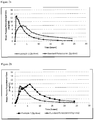
- the present invention is an optionally twice daily administered unit dosage sustained release formulation of paracetamol that provides the following biorelevant dissolution profile, see Figure 1a .
- the present inventive sustained release formulation has been found to be bioequivalent in the fed and fasted state to a 4 times daily conventional immediate release formulation and to a 3 times daily 8-hour extended release formulation Panadol Extend®. See Figure 4 .
- all doses of the sustained release formulation administered herein comprise a 2000mg unit dosage of paracetamol, as administered.
- sustained release formulations of paracetamol as exemplified herein are comprised of two bilayer tablets, each tablet containing 1000mg of paracetamol. Compliance with a twice daily oral dosing regimen is recognized to be better than with a four times daily dosing regimen of an immediate release paracetamol product. Two systematic reviews, as described below, support this assertion showing good evidence that the number of dosing time points significantly affects compliance.
- a potential disadvantage concerning a formulation containing more than the standard dose of paracetamol (500 mg) is accidental or intentional overdose. In such circumstances more paracetamol will be ingested from a sustained release formulation compared to a conventional immediate release formulation for any given number of unit doses such as tablets. The large ingestion of paracetamol could have serious consequences for an overdose patient, especially if a large amount of the dose is absorbed before rescue therapy could be initiated. It would therefore be preferable if the unit dose (such as a tablet or capsule) was designed to limit the amount of paracetamol released and therefore absorbed in the first few hours following dosing. An advantageous sustained release formulation should therefore demonstrate a lower C max than a conventional immediate release formulation which would be indicative of a lower initial exposure.
- a further advantage for a product designed to have a lower C max and a slower rate of absorption where the extent of absorption is essentially complete is that it should have the advantage of maintaining therapeutic levels of paracetamol in plasma for extended periods following dosing and hence provide analgesia for longer than a conventional immediate release tablet or capsule.
- the product of the present invention shows systemic levels of paracetamol remaining at more constant levels, thus benefiting the patient.
- the fluctuation index of the present invention has been shown to be lower than a conventional immediate release formulation.
- a therapeutic level constitutes a level of paracetamol in the plasma of the patient of at least about 3ug/ml. In another embodiment of the invention a therapeutic level of paracetamol constitutes at least about 4ug/ml. In yet another embodiment of the invention a therapeutic level of paracetamol constitutes at least about 5ug/ml.
- the sustained release formulations provide a therapeutic plasma level of paracetamol of at least 3ug/ml for about 10 hours. In another embodiment of the invention the sustained release formulation provides a therapeutic plasma level of paracetamol of at least 4ug/ml for 8 about hours. In yet another embodiment, the sustained release formulation provides a therapeutic plasma level of paracetamol of at least 5ug/ml for about 6 hours.
- the sustained release formulation provides the time duration of plasma paracetamol concentration at or above therapeutic level ( ⁇ 4 ⁇ g/ml) for a single dose of 2000mg sustained release paracetamol which is about double that for a single dose of 1000mg immediate release paracetamol.
- the time duration of plasma paracetamol concentration at or above therapeutic level ( ⁇ 4 ⁇ g/ml) for a single dose of 2000mg sustained release paracetamol is about 8.0-8.6 hrs and the time duration of plasma paracetamol concentration at or above therapeutic level ( ⁇ 4 ⁇ g/ml) for a single dose of an immediate release 1000mg dose of paracetamol is about 4.0-4.2 hrs.
- the sustained release formulation provides a time duration of plasma paracetamol concentration at or above therapeutic level ( ⁇ 4 ⁇ g/ml) for a single dose of 2000mg sustained release paracetamol which is 36 to 46% greater than that for a single dose of an extended release 1330mg dose of paracetamol, formulated for administration three times daily.
- the time duration of plasma paracetamol concentration at or above therapeutic level ( ⁇ 4 ⁇ g/ml) for a single dose of 2000mg sustained release paracetamol is about 8.0-8.6 hrs and the time duration of plasma paracetamol concentration at or above therapeutic level ( ⁇ 4 ⁇ g/ml) for a single dose of an extended release 1330mg dose of paracetamol is about 5.9-6.2 hrs.
- the sustained release formulation provides a median time to maximum plasma concentration (T max ) of the paracetamol from about 3 hours to about 6.5 hours after administration of a single dose of 2000mg sustained release paracetamol.
- the sustained release formulation provides a width (time duration) at or above 50% of the height of a mean plasma concentration/time curve of the paracetamol from about 7 hrs to about 9 hrs after administration of a single dose of 2000mg sustained release paracetamol.
- the sustained release formulation provides a maximum mean plasma concentration (C max ) of the paracetamol which is more than about 3 to about 4 times the minimum mean plasma level concentration (C min ) of paracetamol at about 12 hours after administration of a single dose of 2000mg sustained release paracetamol.
- the sustained release formulation provides a mean plasma concentration (C max ) of the paracetamol of from about 6.3 ⁇ g/ml to about 17.1 ⁇ g/ml, based on administration of a single dose of 2000mg sustained release paracetamol.
- the mean plasma concentration (C max ) of the paracetamol is from about 8.9 ⁇ g/ml to about 12.5 ⁇ g/ml, based on administration of a single dose of 2000mg sustained release paracetamol.
- the mean plasma concentration (C max ) of the paracetamol is from about 8 ⁇ g/ml to about 13 ⁇ g/ml, based on administration of a single dose of 2000mg sustained release paracetamol.
- the sustained release formulation provides a mean plasma concentration (C max ) of the paracetamol of from about 9 ⁇ g/ml to about 17 ⁇ g /ml, based on administration of a repeat dose (steady state) of 2000mg sustained release paracetamol.
- sustained release formulation of paracetamol comprising a sustained release phase of paracetamol and an immediate release phase of paracetamol, the formulation having single dose pharmacokinetic characteristics in fasted and fed states:
- sustained release formulation according to the formulations described herein has single dose pharmacokinetic characteristics in the fasted and fed state of:
- the mean AUC (0- ⁇ ) is about 77 ⁇ g*h/ml to 133 ⁇ g*h/ml in the fasted state based upon administration of a 2000mg sustained release dose of paracetamol as defined above.
- the mean AUC (0- ⁇ ) is about 85 ⁇ g*h/ml to 120 ⁇ g*h/ml in the fasted state based upon administration of a 2000mg sustained release dose of paracetamol as defined above.
- the mean AUC (0- ⁇ ) is about 95 ⁇ g*h/ml to 115 ⁇ g*h/ml in the fasted state based upon administration of a 2000mg sustained release dose of paracetamol as defined above.
- the geometric mean AUC (0- ⁇ ) is about 100 ⁇ g*h/ml to 110 ⁇ g*h/ml in the fasted state.
- sustained release formulation of paracetamol comprising a sustained release phase of paracetamol and an immediate release phase of paracetamol, the formulation having single dose pharmacokinetic characteristics in fasted and fed states:
- sustained release formulation of paracetamol comprising a sustained release phase of paracetamol and an immediate release phase of paracetamol, the formulation having single dose pharmacokinetic characteristics in fasted and fed states:
- the mean AUC (0-24) of the sustained release formulation described herein at steady state is between about 124 ⁇ g*h/ml and about 204 and ⁇ g*h/ml; with a mean of about 165 ⁇ g*h/ml.
- the mean AUC (0-24) of an immediate release formulation of paracetamol is between about 124 ⁇ g*h/ml and about 212 ⁇ g*h/ml; with a mean of about 168 ⁇ g*h/ml.
- the mean AUC (0-24) of the sustained release formulation described herein for a single dose is between about 64 ⁇ g*h/ml and about 124 ⁇ g*h/ml; with a mean of about 86-89 ⁇ g*h/ml in the fasted state.
- the mean is about 95-97 ⁇ g*h/ml in the fed state.
- the mean AUC (0- ⁇ ) of the sustained release formulation described herein at steady state is between about 133 ⁇ g*h/ml and about 217 ⁇ g*h/ml; with a mean of about 175 ⁇ g*h/ml.
- the mean AUC (0- ⁇ ) of an immediate release formulation of paracetamol is between about 129 ⁇ g*h/ml and about 225 ⁇ g*h/ml; with a mean of about 177 ⁇ g*h/ml.
- the mean AUC (0-6) of the sustained release formulation described herein in a fasted state is between about 29 g * h/ml and about 51 ⁇ g*h/ml; with a mean of about 40 ⁇ g*h/ml.
- the mean AUC (0-6) of an immediate release formulation of paracetamol is between about 31 ⁇ g*h/ml and about 51 ⁇ g*h/ml; with a mean of about 41 ⁇ g*h/ml.
- the mean AUC (0-6) of the sustained release formulation described herein in a fed state is between about 24 ⁇ g*h/ml and about 52 ⁇ g*h/ml; with a mean of about 38 ⁇ g*h/ml.
- the mean AUC (0-6) of an immediate release formulation of paracetamol is between about 25 ⁇ g*h/ml and about 40 ⁇ g*h/ml; with a mean of about 33 ⁇ g*h/ml.
- a sustained release formulation having the above noted characteristics has an immediate release phase that produces or provides to the patient a therapeutic plasma concentration of paracetamol of 4 ⁇ g/ml in about 0.5 hours (median time).
- steady state plasma levels of paracetamol should be more constant than those achieved following multiple dosing of a conventional immediate release formulation.
- a convenient measure of the fluctuation in plasma concentrations is the fluctuation index (FI) which is defined as (C max -C min ) /C average .
- FI fluctuation index
- the formulation of the present invention showed a greater fluctuation than Panadol® Extend (FI mean value of 1.4 as compared to 1.2) in paracetamol plasma concentrations.
- the sustained release formulations described herein provide a mean AUC (0-24) or mean AUC (0- ⁇ ) of at least 80% to about 125% of the mean AUC (0-24) or mean AUC (0- ⁇ ) as provided by administration of 1000mg of an immediate release reference standard 4 times daily, wherein the daily dose of the reference standard is substantially equal to a twice daily dose of the sustained release paracetamol formulation.
- the sustained release formulation described herein provides a mean AUC (0-24) or mean AUC (0- ⁇ ) of at least about 95% to about 105% of the mean AUC (0-24) or mean AUC (0- ⁇ ) provided by administration of 1000mg of an immediate release reference standard 4 times daily, wherein the 4 times daily dose of the reference standard is substantially equal to a twice daily dose of 2000mg of the sustained release paracetamol formulation.
- the sustained release formulations as described herein provide a mean AUC (0-6) of at least 95% to about 105% of the mean AUC (0-6) provided by administration of 1000mg of an immediate release reference standard 4 times daily, wherein the daily dose of the reference standard is substantially equal to a twice daily dose of 2000mg of the sustained release paracetamol formulation.
- the sustained release formulations as described herein provide a mean AUC (0-6) of at least 85% to about 115% of the mean AUC (0-6) provided by administration of 1000mg of an immediate release reference standard 4 times daily, wherein the daily dose of the reference standard is substantially equal to a twice daily dose of 2000mg of the sustained release paracetamol formulation (in the fed state).
- a single 2000mg dose of a formulation of the present invention demonstrated greater than 90% relative bioavailability as compared to a single 1000mg dose of a conventional immediate release paracetamol formulation based upon a dose corrected adjustment.
- a single 2000mg dose of the formulation of the present invention demonstrated greater than 90% relative bioavailability as compared a single 1330mg dose of an 8-hour extended release formulation, Panadol Extend®, based upon a dose corrected adjustment.
- sustained release formulation of paracetamol comprising a sustained release phase of paracetamol and an immediate release phase of paracetamol, the formulation having repeat dose pharmacokinetic characteristics:
- a sustained release formulation as described herein provides a mean AUC (0- ⁇ ) in a patient in a range between about 173 ⁇ g*h/ml to 175 ⁇ g*h/ml at steady state (when the unit dosage of 2000mg is administered twice daily).
- sustained release formulation of paracetamol comprising a sustained release phase of paracetamol and an immediate release phase of paracetamol, the formulation having repeat dose pharmacokinetic characteristics:
- sustained release formulation of paracetamol comprising a sustained release phase of paracetamol and an immediate release phase of paracetamol, the formulation having repeat dose pharmacokinetic characteristics:
- the formulation described herein provides a mean AUC (0- ⁇ ) in a patient in a range between about 173 ⁇ g*h/ml and 175 ⁇ g*h/ml at steady state (when administered twice daily).
- the present invention is directed to a sustained release formulation for oral administration containing 2000mg of paracetamol per unit dose administered as two bilayer tablets, each tablet containing 1000mg of paracetamol present in a sustained release phase and in an immediate release phase, in which the ratio of the paracetamol in the sustained release phase to the immediate release phase is 80-90% to 10-20%, and wherein the sustained release phase comprises 4% to 6% by weight of at least one high viscosity hypromellose, 0.5% to 3% by weight of at least one binding agent which is povidone, from 1% to 2% by weight of a low viscosity hypromellose, 0.5% to 3% by weight of at least one modified starch, and wherein the ratio of high-viscosity hypromellose to low visco
- the above sustained release formulation for oral administration provides a therapeutically effective plasma paracetamol concentration over a 12 hour period for use in the treatment of pain in a human in need thereof wherein the formulation has the following in vitro bio-dissolution profile of the dissolution release ranges at various time points (as determined by USP Type II apparatus, rotating paddle, with 900 ml of Phosphate buffer at pH 7.4, 37 °C set at rotating speed of 75rpm) of:
- 15 to 50% is released at 120 minutes.
- 28 to 70% is released at 240 minutes.
- 81 to 100% is released at 600 minutes.
- a sustained-release dosage form should release the paracetamol at a controlled rate such that the amount of active ingredient available in the body to treat the condition is maintained at a relatively constant level over an extended period of time. That is, it is desirable that paracetamol be released at a reproducible, predictable rate which is substantially independent of physiological factors which can vary considerably among different individuals and even over time for a particular individual.
- the release of an active ingredient from a controlled release dosage form is generally controlled either by diffusion through a coating, diffusion of the agent from a monolithic device, or by erosion of a coating by a process which is dependent upon enzymes or pH. Because such factors can vary from time to time for a particular individual, and can also vary from one individual to another, enzymes or pH dependent sustained-release pharmaceutical formulations generally may not provide a reproducible rate of release of the active pharmaceutical ingredient. Thus these types of formulations do not minimize intra-subject and inter-subject variation in bioavailability of the active ingredient.
- Similarity factor (f2) is a recognized method for the determination of the similarity between the dissolution profiles of a reference and a test compound. Similarity factor (f2) is a logarithmic transformation of the sum of squared error. The similarity factor (f2) is 100 when the test and reference profiles are identical and approaches zero as the dissimilarity increases. The similarity factor has also been adapted to apply to the determination of the similarity between the dissolution profiles of a reference and test compound as they relate to modified release formulations, such as those exemplified herein.
- the f2 similarity factor has been adopted in the SUPAC guidelines and by the FDA guidance on dissolution testing of immediate release dosage forms (FDA Guidance for Industry, Dissolution Testing of Immediate Release Solid Oral Dosage Forms, FDA, (CDER), August 1997 ( Dissolution Tech. 4, 15-22, 1997 ).
- the f2 similarity factor has been adopted in the FDA in the SUPAC guidelines for modified release solid oral dosage forms (FDA Guidance for Industry, SUPAC-MR: Modified Release Solid Oral Dosage Forms, Scale-Up and Postapproval Changes: Chemistry, Manufacturing, and Controls; In Vitro Dissolution Testing and In Vivo Bioequivalence Documentation; CDER; September 1997).
- the FDA Guidance for Industry on Dissolution Testing of Immediate Release Solid Oral Dosage Forms may be found at http://www.fda.gov/cder/guidance/1713bp1.pdf.
- the sustained release dosage form of the present invention comprises a bi-layer tablet having a sustained release (SR) phase layer and an immediate release phase layer.
- SR sustained release
- the SR phase contains a therapeutically effective amount of paracetamol, suitably in granulate form.
- the immediate release phase and the sustained release phase will both contain paracetamol and other pharmaceutically acceptable carriers and functional excipients that are suitably combined together into the separate layers of a bi-layer tablet.
- the present invention is also directed to formulations of sustained release paracetamol that have an in vitro dissolution profile generated using the USP Type II apparatus, rotating paddle method as described herein with a similarity factor (f2) between 50 and 100 when calculated using one of the examples of the present invention described herein in Figure 1a and 1b as the reference profile. Examples 2 to 5c in Fig. 1b are outside the scope of the invention.
- sustained release dosage form which is a single layer unit (a monolith tablet) having a sustained release phase of paracetamol and an immediate release phase of paracetamol.
- the sustained release phase is a separate blend, granules or pellets which form an intragranular component
- the immediate phase can be comprised of separate blends, granules or pellets to form the extragranular component.
- the immediate release phase and the sustained release phase can be then admixed together with any other pharmaceutically acceptable excipients desired before being compressed into a single layer tablet.
- sustained release dosage form which is a single layer unit having a therapeutically effective amount of paracetamol present only as a sustained release intragranular phase.
- the extragranular phase comprises a non-water soluble matrix forming polymer and other suitable carriers and excipients.
- This dosage form does not have an immediate release component of paracetamol.
- granulate is a material that has been adapted and preprocessed by suitable means such as slugging, aqueous or non-aqueous wet granulation, fluidized bed granulation, spray drying or roller compaction to form granules.
- suitable means such as slugging, aqueous or non-aqueous wet granulation, fluidized bed granulation, spray drying or roller compaction to form granules.
- a component of the granulate is referred to as "intragranular” or an “intragranular component”
- extragranular a component that is admixed with said granulate
- the paracetamol in either the bilayer or monolith dosage form is approximately a 80:20 ratio of sustained release to immediate release amounts of paracetamol.
- the paracetamol is in an approximate 90:10 ratio of sustained to immediate release amounts.
- the paracetamol is present in an amount of about 900mg in the sustained release phase and about 100mg in the immediate release phase.
- the ratios of sustained release to immediate release phase represent the proportional amount of each layer in a bi-layer dosage form.
- the ratios represent the amount of paracetamol in the sustained release intragranular component versus the immediate release extragranular component of a single layer dosage form, which is not according to the invention.
- the amount of sustained release intragranular component containing paracetamol is 100%. In this embodiment there is no immediate release phase. See a representative example of this in Table 3, Example 3, which is not according to the invention.
- the sustained release layer of the bilayer tablets comprises at least one high viscosity hypromellose (HPMC) ingredient.
- HPMC is a water soluble matrix-forming polymer used to provide a sustained release effect of paracetamol.
- the viscosity of the HPMC used in the SR phase is in the range of about 3500-6000 centipoise.
- the high viscosity HPMC can suitably be a blend of multiple high viscosity HPMC's resulting in a total overall range of 3500-6000 centipoise.
- the amount of matrix-forming polymer in the sustained release phase and the relative amounts of paracetamol in the sustained release and immediate release phases are selected so as to provide the desired in vitro dissolution rate as described herein.
- a bilayer tablet having a sustained release layer and an immediate release layer.
- the sustained release layer comprises a therapeutically effective amount of paracetamol, 4% to 6% by weight of at least one high viscosity hypromellose, 0.5% to 3% by weight of at least one binding agent which is povidone, from 1% to 2% by weight of a low viscosity hypromellose, 0.5% to 3% by weight of at least one modified starch, and optionally one or more other pharmaceutically acceptable intragranular components including but not limited to a second pharmaceutically acceptable active ingredient, other pharmaceutically acceptable excipients and/or adjuvants.
- the ratio of high-viscosity hypromellose to low viscosity hypromellose is 3.3 to 0.85. In another embodiment the ratio of high to low is about 3:1. For representative examples of this range, see Working Example 1.
- the viscosity of the low viscosity hypromellose is in the range of about 10-30 centipoises. In another embodiment the low viscosity is about 15 centipoises.
- the amount of at least one binding agent in the sustained release phase of the bilayer tablet is from 0.5% to 3% w/w. In one embodiment there are at least two binding agents present in the SR phase.
- the amount of at least one modified starch in the sustained release phase of the bilayer tablet is from 0.5% to 3% w/w.
- the amount of modified starch is about 1% w/w of the SR phase. In one embodiment there are at least two modified starches present in the SR phase. Suitably, the modified starch is pre-gelatinized.
- the amount of the high viscosity hypromellose present in the sustained release phase is from 4% to 6% of the sustained release phase formulation weight. In yet another embodiment the amount of high viscosity HPMC is present in an amount of about 5% w/w of the sustained release phase formulation weight.
- the amount of the low viscosity hypromellose present in the sustained release phase is from 1% to 2% of the sustained release phase formulation weight. In another embodiment the amount of low viscosity HPMC is of about 1.6% w/w of the sustained release phase formulation weight.
- the SR phase comprises paracetamol, povidone, pre-gelatinized corn starch, and a high and low viscosity HPMC.
- the immediate release layer may be prepared by combining a directly compressible commercially available grade of paracetamol with a lubricant, and one or more disintegrating agents if necessary or desired. Binders and other excipients and/or adjuvants may be included in the immediate release layer, also if necessary or desired.
- Paracetamol in the immediate release layer is generally combined with a modified starch such as a pre-gelatinized starch, e.g., corn starch, a disintegrant, or super disintegrant such as croscarmellose sodium or Explotab®, a binder and a lubricant.
- sustained release phase will be comprised of an intragranular component of paracetamol and a high viscosity hypromellose as defined above, at least one binding agent, a low viscosity hypromellose as defined above, at least one modified starch, and optionally one or more other pharmaceutically acceptable intragranular components including but not limited to a second pharmaceutically acceptable active ingredient, and optional excipients and/or adjuvants.
- These components form the SR granulate.
- the SR blend could be made into pellets and compressed accordingly with the extragranular immediate release blend.
- a suitable amount of the high viscosity hypromellose present in the sustained release phase granulate is from about 3% to about 7% of the sustained release phase formulation weight. In another embodiment, the amount of high viscosity hypromellose is from about 4% to about 6% of the sustained release phase formulation weight. In another embodiment, the amount of high viscosity HPMC is present in an amount of about 5% w/w of the sustained release phase formulation weight.
- the amount of the low viscosity hypromellose present in the sustained release phase granulate is from about 0.5% to about 3% of the sustained release phase formulation weight. In another embodiment, the amount of low viscosity hypromellose is from about 1% to about 2% of the sustained release phase formulation weight. In another embodiment the amount of low viscosity HPMC is of about 1.6% w/w of the sustained release phase formulation weight.
- the total amount of cellulosic derivatives of HPMC present in the SR granulate range from about 3% to about 10% by weight of the total amount of sustained release components. This encompasses both the high and the low viscosity HPMC's.
- the amount of at least one binding agent in the sustained release phase granulate is from about 0.5% to about 3% w/w. In one embodiment there are at least two binding agents present in the SR granulate.
- the amount of at least one modified starch in the sustained release phase granulate is from about 0.5% to about 3% w/w. In one embodiment there are at least two modified starches present in the SR granulate.
- a suitable extragranular component or phase i.e., the immediate release phase
- an extragranular component can be prepared by combining paracetamol with a modified starch, such as a pre-gelatinized starch, e.g., corn starch, a disintegrant or super disintegrant, such as croscarmellose sodium, a binder and a lubricant. Most commercially available blends of immediate release paracetamol will be satisfactory for this component.
- the ratio of high-viscosity hypromellose to low viscosity hypromellose can be altered to be about a 2:1 ratio.
- a suitable amount of the high viscosity hypromellose present in the sustained release phase is from about 0.5% to about 4% of the sustained release phase formulation weight.
- a suitable amount of low viscosity hypromellose in the sustained release phase is from about 0.5% to about 3% by weight of the sustained release phase.
- the extragranular phase will necessarily be comprised of a second, and different sustained release polymer, such as Kollidon® SR (BASF) suitably, in the amount of 4-8% by weight of the total composition.
- BASF Kollidon® SR
- Kollidon® SR is derived from a polyvinyl acetate-dispersion (such as Kollicoat SR 30D) and is a powder consisting of polyvinyl acetate (8 parts w/w) and polyvinyl pyrrolidone (2 parts w/w).
- the extragranular phase also includes a suitable lubricant, and optionally a second pharmaceutically acceptable active ingredient, and any other optional excipients and/or adjuvants as needed or desired.
- a suitable lubricant and optionally a second pharmaceutically acceptable active ingredient, and any other optional excipients and/or adjuvants as needed or desired.
- Example 3 A representative example of this type of formulation is shown in Example 3 herein. This example is not according to the invention.
- the present invention includes the binding agent povidone.
- the starch is of vegetable origin, such as modified corn starch, modified wheat starch, potato starch, or pre-gelatinized starch e.g., available commercially as Starch 1500 G or Prejel; or a combination of two or more thereof.
- low to medium viscosity means a viscosity in the range of from about 15 to about 1000 mPas. It is recognized in the art that the determination of the viscosity of cellulosic derivatives is based upon standard techniques and grading in the art e.g., for HPMC, viscosity may be determined at 20°C with a 2% solution using a Ubbelohde viscometer, or for HPC, viscosity may be determined at 25°C with a 2-10% solution using a Brookfield LVF viscometer. It is recognized in the art that certain cellulosic derivatives, such as hypromellose, will have varying roles in a formulation, depending upon the amount used. For example hypromellose (low or medium viscosity) may function as a binding agent, a coating agent, or as a matrix forming agent.
- binding agent is present as an intragranular component, it is recognized that a modest amount of binding agent e.g., up to about an additional 3.0%- 10.0% by weight of the intragranular binding agent content of the composition, may also be present extragranularly.
- modified starches can also be binding agents there will be at least two different components present in the particular phase.
- the starch is pre-gelatinized starch.
- Pre-gelatinized starch is a starch that has been chemically and/or mechanically processed. Typically pre-gelatinized starch contains 5% of free amylase, 15% of free amylopectin, and 80% unmodified starch. Pre-gelatinized starch may be obtained from corn (or maize), potato or rice starch.
- the granulate provides an intimate admixture of a combination of ingredients and may then be mixed with one or more pharmaceutically acceptable extragranular components of the composition i.e., with any pharmaceutically acceptable ingredient e.g., a diluent, flavor, sweetening agent, binder, disintegrant, glidant, lubricant, anti-adherent, anti-static agent, anti-oxidant, desiccant, or a second pharmaceutically acceptable active agent. It is recognized that these same ingredients may be present both as an intragranular and as an extragranular ingredient.
- any pharmaceutically acceptable ingredient e.g., a diluent, flavor, sweetening agent, binder, disintegrant, glidant, lubricant, anti-adherent, anti-static agent, anti-oxidant, desiccant, or a second pharmaceutically acceptable active agent. It is recognized that these same ingredients may be present both as an intragranular and as an extragranular ingredient.
- inactive ingredients that may optionally be employed in relatively small quantities, and which do not affect the fundamental and essential characteristics of the invention which include lubricants, flow agents, and binders that facilitate compression.
- Suitable disintegrating agents include a non-super disintegrant, a super disintegrant or a combination of both.
- Suitable non-super disintegrants include conventional disintegrants such as starch (corn or maize), pre-gelatinized starch e.g., Starch 1500 G, clays (Veegum or Bentonite), microcrystalline cellulose, cellulose or powdered cellulose. It is recognized in the art, that some excipients may perform more than one role in a given pharmaceutical formulation. For example certain excipients, e.g., starches including pre-gelatinized starch, and microcrystalline cellulose (hereinbefore identified as binding agents) function as both binders and disintegrants.
- a "super disintegrant” represents a class of disintegrating agent which may generally be used in lower amounts in pharmaceutical preparations, as compared to conventional disintegrants.
- super disintegrants include sodium starch glycolate, the sodium salt of carboxymethyl starch, modified cellulose and cross-linked polyvinyl pyrrolidone.
- Sodium starch glycolate is available commercially under the trade names Explotab® (Edward Mendell Co.), Primojel® (Generichem Corp) and Tablo® (Blanver, Brazil).
- An example of modified cellulose includes croscarmellose, the sodium salt of carboxymethyl cellulose.
- Croscarmellose is available commercially under the trade names AcDiSol® (FMC Corp.), Nymcel ZSX® (Nyma, Netherlands), Primellose® (Avebe, Netherlands), Solutab® (Blanver, Brazil).
- An example of a cross-linked polyvinyl pyrrolidone includes crospovidone, and is commercially available under the trade names Kollidon CL® or Kollidon CL-M (Basf Corp.), and Polyplasdone XL® (ISP Corp).
- a suitable super disintegrant includes croscarmellose sodium or sodium starch glycolate (Explotab) or a combination thereof. A super disintegrant may be used extragranularly, in an amount ranging from about 0.5% to about 5.0% by weight of the composition.
- Suitable preservative or antimicrobial agents for use include potassium sorbate or a paraben, i.e., one or more hydroxy benzoic acid esters e.g., methyl, ethyl, propyl or butyl, suitably singularly or as mixtures.
- Parabens are commercially available under the Nipa® brand name, e.g., Nipasept® sodium.
- Suitable lubricants include magnesium, calcium or sodium stearate, stearic acid or talc that may be added in suitable amounts.
- the lubricant is magnesium stearate.
- Suitable flow agents include silicon dioxide (Cab-O-Sil, SyloidTM), that may be added in an amount from about 0.5% to about 1% by weight.
- the compressed tablet may further comprise a film coat e.g., hypromellose.
- a film coat e.g., hypromellose.
- the film coat is a transparent film coat e.g., a dye, although an opaque film coat e.g., as obtained when using a film coat in combination with an opacifier or a pigment such as titanium dioxide or a lake may also be used.
- an Opadry coating system from Colorcon.
- the immediate release layer may be compressed directly on a previously compressed sustained release layer, or alternatively, the sustained release layer may be compressed onto a previously compressed immediate release layer.
- compositions of the invention may also contain other pharmaceutically active agents.
- pharmaceutically active agent includes, but is not limited to, drugs, nutritional agents, as described herein. This term includes bioactive agents, active agents, therapeutic agents, or drug(s) as defined herein, and follows the guidelines from the European Union Guide to Good Manufacturing Practice. Such substances are intended to furnish pharmacological activity or other direct effect in the cure, mitigation, treatment, or prevention of disease or to affect the structure and function of the body. The pharmacological activity may be prophylactic, or for treatment of a disease state.
- Drug substances include those intended for oral administration. A description of these classes of drugs and a listing of species within each class can be found in Martindale, The Extra Pharmacopoeia, Twenty-ninth Edition, The Pharmaceutical Press, London, 1989 . The drug substances are commercially available and/or can be prepared by techniques known in the art.
- Suitable pharmaceutically active agents include but are not limited to other analgesics such as codeine, hydrocodone, oxycodone, tramadol and propoxyphene; anti-inflammatory analgesics such as NSAIDs e.g., aspirin and ibuprofen; decongestants such as pseudoephedrine and phenylephrine; antitussives such as pholcodine and dextromethorphan; expectorants such as guaifenesin and bromhexine; diuretics such as pamabrom; non-sedating and sedating antihistamines such as diphenydramine, doxylamine and mepyramine; gastrointestinal agents such as metoclopramide; triptans such as sumatriptan; muscle relaxants such as methocarbamol.
- Compositions may also contain a pharmaceutically acceptable adjuvant, for example caffeine.
- Pharmaceutically active agents and adjuvants e.g., may
- compositions of the present invention can be formulated by conventional methods of admixture such as granulating, blending, filling and compressing.
- tablets can be produced by a wet granulation process, where the immediate release phase and sustained release phase are separately prepared.
- the active drug substance and excipients are screened and mixed in a high shear mixer granulator or fluid bed dryer.
- the blend is granulated by the addition of a granulating solution (typically purified water, disintegration agent dissolved/dispersed in purified water, or drug dissolved/dispersed in purified water or a suitable solvent) sprayed into the high shear mixer granulator or fluid bed dryer.
- a granulating solution typically purified water, disintegration agent dissolved/dispersed in purified water, or drug dissolved/dispersed in purified water or a suitable solvent
- wetting agents e.g., surfactants can be added.
- the resulting granules are dried usually with residual moisture of 1-5% by tray, fluid bed or microwave drying techniques.
- the dried granules are milled to produce a uniform particle size, the granules are blended with extragranular excipients as necessary, typically a lubricant and glidant (e.g., magnesium stearate, silicon dioxide).
- a lubricant and glidant e.g., magnesium stearate, silicon dioxide.
- the separately prepared immediate release and sustained release granules are then compressed together using a rotary bilayer tablet press if desired.
- the sustained release granules are admixed with the immediate release extragranular components and compressed together using a rotary tablet press, etc.
- These resulting tablets can all be coated in a pan coater typically with a 1-5% aqueous film coat, followed by a wax polishing.
- Single layer tablets are not according to the invention.
- tablets can be produced by a direct compression process.
- the active drug substance and excipients for the immediate release and sustained release phases are separately screened and mixed in a suitable blender e.g., a cone, cube or V-blender. Other excipients are added as necessary, and further blended.
- the separately prepared immediate release and sustained release phases can be combined and compressed together using a rotary tablet press as hereinbefore described.
- the resulting tablets can be coated in a pan coater.
- Tablets can also be prepared by using both methods of wet granulation and direct compression.
- the sustained release phase can be prepared by wet granulation as described herein, while the immediate release phase can be prepared by blending the excipients for direct compression.
- commercially available blends of immediate release paracetamol are also available for direct compression such as the DC90 paracetamol supplied by Rhodia. The two phases can then be combined and compressed together as hereinbefore described.
- a suitable dissolution rate profile for the product described herein is wherein at least 10-30% of the paracetamol is released from the composition at 30 minutes and wherein at least 80% of the paracetamol is released from the composition at 600 minutes as determined by a dissolution method that utilizes a USP paddle apparatus rotating at 75 rpm, employing 900ml of phosphate buffer at pH7.4.
- a pharmaceutical composition not according to the invention, having an immediate release phase and a sustained release phase of paracetamol in a bilayer tablet, said composition comprising about 1000mg of paracetamol per unit dose and a pharmaceutically acceptable carrier, is characterized in having an in vitro paracetamol dissolution profile (as determined by the USP type II apparatus, rotating paddle, with 900ml of Phosphate buffer at pH7.4, 37C set at rotating speed of 75 rpm) with the following constraints:
- a pharmaceutical composition not according to the invention, having an immediate release phase and a sustained release phase of paracetamol in a monolith tablet, said composition comprising about 1000mg of paracetamol per unit dose and a pharmaceutically acceptable carrier, is characterized in having an in vitro paracetamol dissolution profile (as determined by the USP type II apparatus, rotating paddle, with 900ml of Phosphate buffer at pH7.4, 37C set at rotating speed of 75 rpm) with the following constraints:
- the in vitro dissolution profile has the following constraints:
- the in vitro dissolution profile has the following constraints:
- a bilayer extended release paracetamol tablet is prepared using the following ingredients:
- the total tablet weight is about 1100mg, with about 1000mg of paracetamol per tablet.
- Layer 1 has a total weight of about 1000mg (approx 900.0mg paracetamol), and
- Layer 2 has a total weight of about 110mg (about 100 mg paracetamol).
- the mixtures for each of the layers are prepared and the layers are compressed on a suitable type rotary bi-layer tablet press.
- a single layer extended release paracetamol tablet is prepared using the following ingredients:
- the total tablet weight is about 1100mg, with about 1000mg of paracetamol per tablet.
- the final mix is now ready for compression. Compress the tablets on a suitable size rotary tablet press.
- a single layer extended release paracetamol tablet is prepared using the following ingredients:
- Intragranular Components 1 Paracetamol fine 1000.0 2 Hypromellose (HPMC) 2208 4000 cP 32.6 3 Povidone K25 21.7 4 Pregel starch fine 10.9 5 Hypromellose (HPMC) 2910 15 cP 17.4 Extragranular Components: 6 Kollidon SR 69.3 7 Magnesium Stearate 3.0 Final Tablet weight (mg) 1154.9
- Blend is now ready for compression on a suitable size rotary tablet press.
- a single layer sustained release acetaminophen tablet is prepared using the following ingredients:
- an extended release paracetamol tablet wherein the dissolution rate is controlled by the Hypromellose component.
- a current available supplier of HPMC is Shin-Etsu with the grade being identified as 90SH-4000SR having an average viscosity of 4000cps.
- 90SH-4000SR Shin-Etsu Chemical Co., Ltd.
- K4M & K4MCR Colorcon
- IVMS In vivo modeling and simulation
- ADME drug absorption, distribution, metabolism and excretion
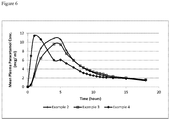
- Example Formulations 1 to 4 The PK characteristics of Example Formulations 1 to 4 herein were assessed by a single dose clinical study in semi-fed state. Surprisingly, it was found that the formulation of Example 1 gave plasma concentrations above 4 ⁇ g/ml for the longest period of time (8.1 hours). This was similar to the time-period of two doses of a standard paracetamol formulation (8.3 hours).
- Example 1 Formulation maintained plasma paracetamol concentrations higher than 3 ⁇ g/ml up to the 11 th hour post-dose.
- the Example 1 Formulation also had the highest mean value of AUC (0-12 hours) (75.2 ⁇ g*h/ml).
- the T max value for the Example 1 Formulation (4.5 hours) was among the highest of the formulations.
- the formulation of Example 1 also demonstrated the highest T ⁇ 5 ⁇ g/ml among the 4 formulations as shown below.
- the T ⁇ 3 ⁇ g/ml for the formulation of Example 1 (10.3 hours) was similar to the other 3 candidates.
- Example 1 The formulation of Example 1 was evaluated to determine bioequivalence at steady state (final 24 hours of dosing) between 2000mg paracetamol of Example 1 given twice a day, 1330mg dose of an 8-hour extended release paracetamol formulation, Panadol® Extend given 3 times a day and 1000mg of a conventional immediate release paracetamol formulation, Panadol®, given 4 times a day for 3 days.
- Example 1 Formulation 2000mg paracetamol twice a day was bioequivalent to both an 8-hour extended release paracetamol formulation, Panadol® Extend (1330mg paracetamol 3 times a day) and a conventional immediate release paracetamol formulation, Panadol® (1000mg paracetamol 4 times a day) with regards to paracetamol C max , AUC 0-t and AUC 0-inf .
- Panadol® 1000mg paracetamol 4 times a day
- the PK characteristics of the bi-layer formulation of Example 1 were assessed in a single dose study in order to determine absorption and food effect characteristics of the formulation in a fed and fasted state.
- the formulation of example 1 was given as a single 2000mg paracetamol dose (1000mg x 2 tablets).
- the conventional immediate release formulation Pandaol ® was given as a single 1000mg dose (500mg x 2 tablets).
- 2000mg of the Example 1 Formulation was well absorbed in both fasted and fed states with more than 90% relative bioavailability as compared to a conventional immediate release formulation, Panadol®. Time at or above the therapeutic level ( ⁇ 4 ⁇ g/ml) from 2000mg of Example 1 formulation was approximately double that of one dose (1000mg) of standard Panadol®.
- one aspect of the present invention is the time that paracetamol must be present in the blood at a concentration of at least 3 ⁇ g/ml, such as for about a 10 hour window.
- Another aspect of the present invention is the time that paracetamol must be present in the blood at a concentration of at least 4 ⁇ g/ml, such as for about an 8 hour window.
- Another aspect of the present invention is the time that paracetamol must be present in the blood at a concentration of at least 5 ⁇ g/ml, such as for about a 6 hour window, when dosed at 2000mg paracetamol twice daily, and as compared to the conventional immediate release formulation when taken as a 1000mg dose four times per day.
- Another aspect of the invention is the plasma C max value obtained by the formulations of the present invention. Even though the formulations of the present invention were given at a higher dose of paracetamol (2000mg) than other conventional formulations, the C max in the fasted state is lower than a conventional immediate release formulation dosed at half that amount (1000mg). As a result of a lower C max , additional adverse effects would not be expected to be observed with the formulations of the present invention as compared to a conventional immediate release formulation.
- one aspect of the invention is a mean plasma concentration of at least 5 ⁇ g/ml which should be maintained for at least about 6 hours; or a mean plasma concentration of at least 4ug/ml which should be maintained for at least about 8.0 hours; or mean plasma concentration of at least about 3ug/ml for at least about 10 hours.
- the mean plasma concentration should be maintained for these time periods longer than a standard immediate release formulation.
- the extent of absorption of the paracetamol should be equivalent to a conventional immediate release paracetamol. It is also desired that the therapeutically active drug plasma concentration of paracetamol should be attained rapidly by the immediate release phase of the paracetamol.
- Another aspect of the invention is the slope of the decline in plasma level of APAP.
- the elimination rate constant (K el ) for the formulation of the present invention was 25% lower than that for the conventional immediate release formulation. This is related to a slower controlled release rate of paracetamol from the tablets of the formulation, such as those exemplified by Example 1, as compared to a conventional immediate release formulation.
- the elimination rate constants of Example 1 tablets and the tablets of an 8-hr extended release formulation, Panadol® Extend, were also found to be comparable (0.26 hr -1 and 0.27 hr -1 , respectively).
- a biorelevant dissolution process was developed to reflect in vivo drug release or absorption. Dissolution of various commercially available sustained release products was assessed in different dissolution media, at different pH and different rotations per minute. The data was correlated with known in vivo data for the same formulation. The best correlation was obtained with a USP Apparatus II in 900 ml of 40mM phosphate buffer, at pH 7.4 and at 75 RPM. This fluid was used for all the tested formulations.
- Figures 1a & 1b demonstrate the dissolution characteristics of the example formulations and commercially available immediate release paracetamol formulation, Panadol®, and an 8 hour extended release formulation, Panadol® Extend.
- Figure 5 demonstrates the Therapeutic Effect Time (TET) of the various example formulations.
Landscapes
- Health & Medical Sciences (AREA)
- Public Health (AREA)
- Life Sciences & Earth Sciences (AREA)
- Animal Behavior & Ethology (AREA)
- Chemical & Material Sciences (AREA)
- Veterinary Medicine (AREA)
- Medicinal Chemistry (AREA)
- General Health & Medical Sciences (AREA)
- Pharmacology & Pharmacy (AREA)
- Epidemiology (AREA)
- Engineering & Computer Science (AREA)
- Bioinformatics & Cheminformatics (AREA)
- Pain & Pain Management (AREA)
- Organic Chemistry (AREA)
- Nuclear Medicine, Radiotherapy & Molecular Imaging (AREA)
- General Chemical & Material Sciences (AREA)
- Chemical Kinetics & Catalysis (AREA)
- Heart & Thoracic Surgery (AREA)
- Rheumatology (AREA)
- Cardiology (AREA)
- Acyclic And Carbocyclic Compounds In Medicinal Compositions (AREA)
- Medicinal Preparation (AREA)
Claims (4)
- Formulation à libération prolongée pour administration orale contenant 2000 mg de paracétamol par dose unitaire administrée sous la forme de comprimés bicouches, chaque comprimé contenant 1000 mg de paracétamol présent dans une phase à libération prolongée et dans une phase à libération immédiate, dans laquelle la proportion du paracétamol dans la phase à libération prolongée par rapport à la phase à libération immédiate est de 80-90 % à 10-20 %, et dans laquelle la phase à libération prolongée comprend 4 % à 6 % en poids d'au moins une hypromellose de viscosité élevée, 0,5 % à 3 % en poids d'au moins un agent de liaison qui est la povidone, de 1 % à 2 % en poids d'une hypromellose de viscosité basse, 0,5 % à 3 % en poids d'au moins un amidon modifié, et dans laquelle le rapport entre l'hypromellose de viscosité élevée et l'hypromellose de viscosité basse est de 3,3 à 0,85, dans laquelle quand elle est ingérée par un humain, la formulation réduit la concentration plasmatique en paracétamol maximale atteinte d'au moins environ 4,5 % à l'état d'équilibre (par rapport aux formulations de paracétamol à libération rapide), et augmente la durée pour atteindre une concentration plasmatique maximale en paracétamol (T max ) d'au moins environ 140 % à l'état d'équilibre (par rapport aux formulations de paracétamol à libération rapide), tout en ayant un effet insignifiant sur la surface sous la courbe de concentration plasmatique en paracétamol-temps SSC(0-24) ; SSC(0-24) moyenne d'environ 165 µg*h/ml pour le paracétamol à libération prolongée à l'état d'équilibre (2000 mg dosés toutes les 12 heures) par rapport à une SSC(0-24) moyenne d'environ 168 µg*h/ml pour 1000 mg de libération immédiate à l'état d'équilibre (dosés toutes les 6 heures) et dans laquelle la formulation est administrée à plusieurs reprises (état d'équilibre).
- Formulation à libération prolongée selon la revendication 1, dans laquelle le rapport entre l'hypromellose de viscosité élevée et l'hypromellose de viscosité basse est d'environ 3 : 1.
- Formulation à libération prolongée selon la revendication 1, dans laquelle la proportion de paracétamol dans la phase à libération prolongée par rapport à la phase à libération immédiate est de 90 : 10.
- Formulation à libération prolongée selon l'une quelconque des revendications 1 à 3 pour une administration orale fournissant une concentration plasmatique en paracétamol thérapeutiquement efficace sur une période de 12 heures pour une utilisation dans le traitement de la douleur chez un humain en ayant besoin dans laquelle la formulation présente le profil de bio-dissolution in vitro suivant des plages de libération par dissolution à divers moments temporels (tel que déterminé par un appareil USP de type II, aube rotative, avec 900 ml de tampon au phosphate à pH 7,4, 37 °C réglé à une vitesse de rotation de 75 tours/minute) de :• 2 à 15 % libérés à 15 minutes ;• 4 à 22 % libérés à 30 minutes ;• 10 à 40 % libérés à 60 minutes ;• 22 à 62 % libérés à 180 minutes ;• 50 à 88 % libérés à 360 minutes ;• > 90 % libérés après 720 minutes.
Applications Claiming Priority (2)
| Application Number | Priority Date | Filing Date | Title |
|---|---|---|---|
| US201161483320P | 2011-05-06 | 2011-05-06 | |
| PCT/US2012/036528 WO2012154563A1 (fr) | 2011-05-06 | 2012-05-04 | Formulations de paracétamol à libération prolongée |
Publications (3)
| Publication Number | Publication Date |
|---|---|
| EP2704697A1 EP2704697A1 (fr) | 2014-03-12 |
| EP2704697A4 EP2704697A4 (fr) | 2015-01-07 |
| EP2704697B1 true EP2704697B1 (fr) | 2018-09-12 |
Family
ID=47139543
Family Applications (1)
| Application Number | Title | Priority Date | Filing Date |
|---|---|---|---|
| EP12782731.9A Active EP2704697B1 (fr) | 2011-05-06 | 2012-05-04 | Formulations de paracétamol à libération prolongée |
Country Status (19)
| Country | Link |
|---|---|
| US (1) | US20140065213A1 (fr) |
| EP (1) | EP2704697B1 (fr) |
| CN (1) | CN103648486A (fr) |
| AP (1) | AP3878A (fr) |
| AU (1) | AU2012253834B2 (fr) |
| BR (1) | BR112013028668A2 (fr) |
| CA (1) | CA2835330A1 (fr) |
| CL (1) | CL2013003176A1 (fr) |
| CO (1) | CO6801767A2 (fr) |
| CR (1) | CR20130572A (fr) |
| DO (1) | DOP2013000258A (fr) |
| EA (1) | EA201391643A1 (fr) |
| GT (1) | GT201300270A (fr) |
| MX (1) | MX2013012918A (fr) |
| NI (1) | NI201300116A (fr) |
| SG (1) | SG194605A1 (fr) |
| TW (1) | TW201306881A (fr) |
| WO (1) | WO2012154563A1 (fr) |
| ZA (1) | ZA201308316B (fr) |
Families Citing this family (5)
| Publication number | Priority date | Publication date | Assignee | Title |
|---|---|---|---|---|
| MY140561A (en) | 2002-02-20 | 2009-12-31 | Nycomed Gmbh | Dosage form containing pde 4 inhibitor as active ingredient |
| AR096223A1 (es) * | 2013-05-10 | 2015-12-16 | Glaxosmithkline Llc | Pastilla de nicotina para administración oral |
| BE1021194B1 (nl) * | 2014-07-07 | 2015-07-14 | Nordic Specialty Pharma Bvba | Paracetamol tabletten |
| US9579288B2 (en) | 2015-03-03 | 2017-02-28 | Saniona A/S | Tesofensine and beta blocker combination formulations |
| BE1023116B1 (nl) * | 2015-07-24 | 2016-11-23 | Nordic Specialty Pharma Bvba | Paracetamol omvattend preparaat met vertraagde en aanhoudende afgifte |
Family Cites Families (19)
| Publication number | Priority date | Publication date | Assignee | Title |
|---|---|---|---|---|
| US4820522A (en) * | 1987-07-27 | 1989-04-11 | Mcneilab, Inc. | Oral sustained release acetaminophen formulation and process |
| GB8724763D0 (en) * | 1987-10-22 | 1987-11-25 | Aps Research Ltd | Sustained-release formulations |
| US5009895A (en) * | 1990-02-02 | 1991-04-23 | Merck & Co., Inc. | Sustained release with high and low viscosity HPMC |
| KR100354702B1 (ko) * | 1993-11-23 | 2002-12-28 | 유로-셀티크 소시에떼 아노뉨 | 약학조성물의제조방법및서방형조성물 |
| AUPN940796A0 (en) * | 1996-04-23 | 1996-05-16 | F.H. Faulding & Co. Limited | Taste masked pharmaceutical compositions |
| US20030064108A1 (en) * | 1996-04-23 | 2003-04-03 | Stefan Lukas | Taste masked pharmaceutical compositions |
| EA002806B1 (ru) * | 1997-09-11 | 2002-10-31 | Нюкомед Данмарк А/С | Многоединичные композиции с модифицированным высвобождением нестероидных противовоспалительных лекарственных веществ (nsaid) |
| CN1406126A (zh) * | 1998-10-01 | 2003-03-26 | 诺瓦提斯公司 | 新型缓释口服制剂 |
| GB0009522D0 (en) * | 2000-04-19 | 2000-06-07 | Smithkline Beecham Plc | Composition |
| GB0114069D0 (en) * | 2001-06-08 | 2001-08-01 | Smithkline Beecham Plc | Composition |
| DK1519717T3 (da) * | 2002-07-05 | 2011-01-10 | Temrel Ltd | Sammensætning til kontrolleret frisætning |
| CA2540056C (fr) * | 2003-09-26 | 2015-03-24 | Alza Corporation | Preparations a liberation regulee a base d'analgesiques opioides et non opioides |
| US20080031901A1 (en) * | 2004-09-24 | 2008-02-07 | Abbott Laboratories | Sustained release monoeximic formulations of opioid and nonopioid analgesics |
| JP5630943B2 (ja) * | 2004-07-07 | 2014-11-26 | エイ・エフ・ティ・ファーマスーティカルズ・リミテッドAft Pharmaceuticals Limited | 複合剤組成物 |
| MX2010008420A (es) * | 2008-02-01 | 2012-09-19 | Abbott Lab | Hidrocodona acetaminofen de liberacion extendida y metodos relacionados y sus usos. |
| US8377453B2 (en) * | 2008-03-11 | 2013-02-19 | Depomed, Inc. | Gastric retentive extended-release dosage forms comprising combinations of a non-opioid analgesic and an opioid analgesic |
| CN107028908A (zh) * | 2008-10-27 | 2017-08-11 | 阿尔扎公司 | 对乙酰氨基酚/曲马多口服延释剂型 |
| US8021420B2 (en) * | 2009-03-12 | 2011-09-20 | Medtronic Vascular, Inc. | Prosthetic valve delivery system |
| RU2012112552A (ru) * | 2009-08-31 | 2013-10-10 | Дипомед, Инк. | Удерживаемые в желудке фармацевтические композиции для немедленного и продленного высвобождения ацетаминофена |
-
2012
- 2012-05-04 AU AU2012253834A patent/AU2012253834B2/en active Active
- 2012-05-04 EA EA201391643A patent/EA201391643A1/ru unknown
- 2012-05-04 CA CA2835330A patent/CA2835330A1/fr not_active Abandoned
- 2012-05-04 WO PCT/US2012/036528 patent/WO2012154563A1/fr not_active Ceased
- 2012-05-04 US US14/115,896 patent/US20140065213A1/en not_active Abandoned
- 2012-05-04 CN CN201280033402.0A patent/CN103648486A/zh active Pending
- 2012-05-04 BR BR112013028668A patent/BR112013028668A2/pt active Search and Examination
- 2012-05-04 TW TW101116070A patent/TW201306881A/zh unknown
- 2012-05-04 MX MX2013012918A patent/MX2013012918A/es not_active Application Discontinuation
- 2012-05-04 AP AP2013007224A patent/AP3878A/en active
- 2012-05-04 EP EP12782731.9A patent/EP2704697B1/fr active Active
- 2012-05-04 SG SG2013078928A patent/SG194605A1/en unknown
-
2013
- 2013-11-01 CO CO13259868A patent/CO6801767A2/es not_active Application Discontinuation
- 2013-11-04 NI NI201300116A patent/NI201300116A/es unknown
- 2013-11-05 GT GT201300270A patent/GT201300270A/es unknown
- 2013-11-06 DO DO2013000258A patent/DOP2013000258A/es unknown
- 2013-11-06 CL CL2013003176A patent/CL2013003176A1/es unknown
- 2013-11-06 ZA ZA2013/08316A patent/ZA201308316B/en unknown
- 2013-11-06 CR CR20130572A patent/CR20130572A/es unknown
Non-Patent Citations (1)
| Title |
|---|
| None * |
Also Published As
| Publication number | Publication date |
|---|---|
| CL2013003176A1 (es) | 2014-07-04 |
| AP2013007224A0 (en) | 2013-11-30 |
| US20140065213A1 (en) | 2014-03-06 |
| EP2704697A1 (fr) | 2014-03-12 |
| NZ617198A (en) | 2016-01-29 |
| WO2012154563A1 (fr) | 2012-11-15 |
| EA201391643A1 (ru) | 2014-07-30 |
| DOP2013000258A (es) | 2014-07-15 |
| GT201300270A (es) | 2014-12-16 |
| TW201306881A (zh) | 2013-02-16 |
| EP2704697A4 (fr) | 2015-01-07 |
| MX2013012918A (es) | 2013-11-21 |
| AP3878A (en) | 2016-10-31 |
| SG194605A1 (en) | 2013-12-30 |
| BR112013028668A2 (pt) | 2017-01-24 |
| ZA201308316B (en) | 2014-07-30 |
| CN103648486A (zh) | 2014-03-19 |
| AU2012253834B2 (en) | 2016-06-16 |
| CO6801767A2 (es) | 2013-11-29 |
| AU2012253834A1 (en) | 2013-12-05 |
| NI201300116A (es) | 2014-11-13 |
| CA2835330A1 (fr) | 2012-11-15 |
| CR20130572A (es) | 2014-03-20 |
Similar Documents
| Publication | Publication Date | Title |
|---|---|---|
| AU2007234864B2 (en) | Fast release paracetamol tablets | |
| US5451409A (en) | Sustained release matrix system using hydroxyethyl cellulose and hydroxypropyl cellulose polymer blends | |
| US7943170B2 (en) | Sustained release paracetamol containing compositions | |
| CN101257894A (zh) | 高水溶性药物的缓释药物组合物 | |
| CZ120698A3 (cs) | Matrice směsi polymerů na plynulé uvolňování léků pro farmaceutické aplikace | |
| US8604084B2 (en) | Method | |
| AU2001260212A1 (en) | Composition | |
| AU2012253834B2 (en) | Sustained release paracetamol formulations | |
| JP2020128429A (ja) | レボカルニチンを含有する医薬錠剤 | |
| EP1100472B1 (fr) | Compositions pharmaceutiques contenant de l'ibuprofene et du domperidone | |
| KR102270521B1 (ko) | 구토억제 서방형 고체 제형 | |
| NZ617198B2 (en) | Sustained release paracetamol formulations | |
| JP2006335771A (ja) | 徐放性製剤およびその製造方法 | |
| AU2022392482A1 (en) | Controlled release formulations of flavoxate and process for preparation thereof | |
| JP2004217566A (ja) | 製剤のゲル強度の増強方法および徐放性製剤 | |
| EP0975337A2 (fr) | Composition therapeutique | |
| AU2016210691A1 (en) | Controlled release formulations of paracetamol | |
| JP2005015371A (ja) | プソイドエフェドリン類含有徐放性固形製剤 |
Legal Events
| Date | Code | Title | Description |
|---|---|---|---|
| PUAI | Public reference made under article 153(3) epc to a published international application that has entered the european phase |
Free format text: ORIGINAL CODE: 0009012 |
|
| 17P | Request for examination filed |
Effective date: 20131202 |
|
| AK | Designated contracting states |
Kind code of ref document: A1 Designated state(s): AL AT BE BG CH CY CZ DE DK EE ES FI FR GB GR HR HU IE IS IT LI LT LU LV MC MK MT NL NO PL PT RO RS SE SI SK SM TR |
|
| AX | Request for extension of the european patent |
Extension state: BA ME |
|
| RAP1 | Party data changed (applicant data changed or rights of an application transferred) |
Owner name: GLAXOSMITHKLINE LLC |
|
| REG | Reference to a national code |
Ref country code: HK Ref legal event code: DE Ref document number: 1190074 Country of ref document: HK |
|
| RIC1 | Information provided on ipc code assigned before grant |
Ipc: A61P 9/02 20060101ALI20141121BHEP Ipc: A61K 9/22 20060101ALI20141121BHEP Ipc: A61K 9/20 20060101AFI20141121BHEP Ipc: A61K 31/167 20060101ALI20141121BHEP Ipc: A61K 9/24 20060101ALI20141121BHEP |
|
| A4 | Supplementary search report drawn up and despatched |
Effective date: 20141204 |
|
| RAP1 | Party data changed (applicant data changed or rights of an application transferred) |
Owner name: GLAXOSMITHKLINE LLC |
|
| 17Q | First examination report despatched |
Effective date: 20160803 |
|
| STAA | Information on the status of an ep patent application or granted ep patent |
Free format text: STATUS: EXAMINATION IS IN PROGRESS |
|
| RAP1 | Party data changed (applicant data changed or rights of an application transferred) |
Owner name: GLAXOSMITHKLINE LLC |
|
| REG | Reference to a national code |
Ref country code: DE Ref legal event code: R079 Ref document number: 602012051029 Country of ref document: DE Free format text: PREVIOUS MAIN CLASS: A61K0009220000 Ipc: A61K0009240000 |
|
| GRAP | Despatch of communication of intention to grant a patent |
Free format text: ORIGINAL CODE: EPIDOSNIGR1 |
|
| STAA | Information on the status of an ep patent application or granted ep patent |
Free format text: STATUS: GRANT OF PATENT IS INTENDED |
|
| RIC1 | Information provided on ipc code assigned before grant |
Ipc: A61P 29/02 20060101ALI20180212BHEP Ipc: A61K 9/24 20060101AFI20180212BHEP Ipc: A61K 31/167 20060101ALI20180212BHEP |
|
| INTG | Intention to grant announced |
Effective date: 20180302 |
|
| GRAS | Grant fee paid |
Free format text: ORIGINAL CODE: EPIDOSNIGR3 |
|
| GRAA | (expected) grant |
Free format text: ORIGINAL CODE: 0009210 |
|
| STAA | Information on the status of an ep patent application or granted ep patent |
Free format text: STATUS: THE PATENT HAS BEEN GRANTED |
|
| RAP1 | Party data changed (applicant data changed or rights of an application transferred) |
Owner name: GLAXOSMITHKLINE CONSUMER HEALTHCARE (UK) IP LIMITE |
|
| AK | Designated contracting states |
Kind code of ref document: B1 Designated state(s): AL AT BE BG CH CY CZ DE DK EE ES FI FR GB GR HR HU IE IS IT LI LT LU LV MC MK MT NL NO PL PT RO RS SE SI SK SM TR |
|
| AX | Request for extension of the european patent |
Extension state: BA ME |
|
| REG | Reference to a national code |
Ref country code: GB Ref legal event code: FG4D |
|
| REG | Reference to a national code |
Ref country code: CH Ref legal event code: EP |
|
| REG | Reference to a national code |
Ref country code: IE Ref legal event code: FG4D |
|
| REG | Reference to a national code |
Ref country code: DE Ref legal event code: R096 Ref document number: 602012051029 Country of ref document: DE |
|
| REG | Reference to a national code |
Ref country code: AT Ref legal event code: REF Ref document number: 1039747 Country of ref document: AT Kind code of ref document: T Effective date: 20181015 |
|
| REG | Reference to a national code |
Ref country code: SE Ref legal event code: TRGR |
|
| REG | Reference to a national code |
Ref country code: NL Ref legal event code: MP Effective date: 20180912 |
|
| REG | Reference to a national code |
Ref country code: LT Ref legal event code: MG4D |
|
| PG25 | Lapsed in a contracting state [announced via postgrant information from national office to epo] |
Ref country code: BG Free format text: LAPSE BECAUSE OF FAILURE TO SUBMIT A TRANSLATION OF THE DESCRIPTION OR TO PAY THE FEE WITHIN THE PRESCRIBED TIME-LIMIT Effective date: 20181212 Ref country code: NO Free format text: LAPSE BECAUSE OF FAILURE TO SUBMIT A TRANSLATION OF THE DESCRIPTION OR TO PAY THE FEE WITHIN THE PRESCRIBED TIME-LIMIT Effective date: 20181212 Ref country code: GR Free format text: LAPSE BECAUSE OF FAILURE TO SUBMIT A TRANSLATION OF THE DESCRIPTION OR TO PAY THE FEE WITHIN THE PRESCRIBED TIME-LIMIT Effective date: 20181213 Ref country code: LT Free format text: LAPSE BECAUSE OF FAILURE TO SUBMIT A TRANSLATION OF THE DESCRIPTION OR TO PAY THE FEE WITHIN THE PRESCRIBED TIME-LIMIT Effective date: 20180912 Ref country code: RS Free format text: LAPSE BECAUSE OF FAILURE TO SUBMIT A TRANSLATION OF THE DESCRIPTION OR TO PAY THE FEE WITHIN THE PRESCRIBED TIME-LIMIT Effective date: 20180912 |
|
| PG25 | Lapsed in a contracting state [announced via postgrant information from national office to epo] |
Ref country code: AL Free format text: LAPSE BECAUSE OF FAILURE TO SUBMIT A TRANSLATION OF THE DESCRIPTION OR TO PAY THE FEE WITHIN THE PRESCRIBED TIME-LIMIT Effective date: 20180912 Ref country code: LV Free format text: LAPSE BECAUSE OF FAILURE TO SUBMIT A TRANSLATION OF THE DESCRIPTION OR TO PAY THE FEE WITHIN THE PRESCRIBED TIME-LIMIT Effective date: 20180912 Ref country code: HR Free format text: LAPSE BECAUSE OF FAILURE TO SUBMIT A TRANSLATION OF THE DESCRIPTION OR TO PAY THE FEE WITHIN THE PRESCRIBED TIME-LIMIT Effective date: 20180912 |
|
| REG | Reference to a national code |
Ref country code: AT Ref legal event code: MK05 Ref document number: 1039747 Country of ref document: AT Kind code of ref document: T Effective date: 20180912 |
|
| PG25 | Lapsed in a contracting state [announced via postgrant information from national office to epo] |
Ref country code: NL Free format text: LAPSE BECAUSE OF FAILURE TO SUBMIT A TRANSLATION OF THE DESCRIPTION OR TO PAY THE FEE WITHIN THE PRESCRIBED TIME-LIMIT Effective date: 20180912 Ref country code: PL Free format text: LAPSE BECAUSE OF FAILURE TO SUBMIT A TRANSLATION OF THE DESCRIPTION OR TO PAY THE FEE WITHIN THE PRESCRIBED TIME-LIMIT Effective date: 20180912 Ref country code: ES Free format text: LAPSE BECAUSE OF FAILURE TO SUBMIT A TRANSLATION OF THE DESCRIPTION OR TO PAY THE FEE WITHIN THE PRESCRIBED TIME-LIMIT Effective date: 20180912 Ref country code: IS Free format text: LAPSE BECAUSE OF FAILURE TO SUBMIT A TRANSLATION OF THE DESCRIPTION OR TO PAY THE FEE WITHIN THE PRESCRIBED TIME-LIMIT Effective date: 20190112 Ref country code: CZ Free format text: LAPSE BECAUSE OF FAILURE TO SUBMIT A TRANSLATION OF THE DESCRIPTION OR TO PAY THE FEE WITHIN THE PRESCRIBED TIME-LIMIT Effective date: 20180912 Ref country code: IT Free format text: LAPSE BECAUSE OF FAILURE TO SUBMIT A TRANSLATION OF THE DESCRIPTION OR TO PAY THE FEE WITHIN THE PRESCRIBED TIME-LIMIT Effective date: 20180912 Ref country code: RO Free format text: LAPSE BECAUSE OF FAILURE TO SUBMIT A TRANSLATION OF THE DESCRIPTION OR TO PAY THE FEE WITHIN THE PRESCRIBED TIME-LIMIT Effective date: 20180912 Ref country code: EE Free format text: LAPSE BECAUSE OF FAILURE TO SUBMIT A TRANSLATION OF THE DESCRIPTION OR TO PAY THE FEE WITHIN THE PRESCRIBED TIME-LIMIT Effective date: 20180912 Ref country code: AT Free format text: LAPSE BECAUSE OF FAILURE TO SUBMIT A TRANSLATION OF THE DESCRIPTION OR TO PAY THE FEE WITHIN THE PRESCRIBED TIME-LIMIT Effective date: 20180912 |
|
| PG25 | Lapsed in a contracting state [announced via postgrant information from national office to epo] |
Ref country code: SK Free format text: LAPSE BECAUSE OF FAILURE TO SUBMIT A TRANSLATION OF THE DESCRIPTION OR TO PAY THE FEE WITHIN THE PRESCRIBED TIME-LIMIT Effective date: 20180912 Ref country code: SM Free format text: LAPSE BECAUSE OF FAILURE TO SUBMIT A TRANSLATION OF THE DESCRIPTION OR TO PAY THE FEE WITHIN THE PRESCRIBED TIME-LIMIT Effective date: 20180912 Ref country code: PT Free format text: LAPSE BECAUSE OF FAILURE TO SUBMIT A TRANSLATION OF THE DESCRIPTION OR TO PAY THE FEE WITHIN THE PRESCRIBED TIME-LIMIT Effective date: 20190112 |
|
| REG | Reference to a national code |
Ref country code: DE Ref legal event code: R097 Ref document number: 602012051029 Country of ref document: DE |
|
| PLBE | No opposition filed within time limit |
Free format text: ORIGINAL CODE: 0009261 |
|
| STAA | Information on the status of an ep patent application or granted ep patent |
Free format text: STATUS: NO OPPOSITION FILED WITHIN TIME LIMIT |
|
| PG25 | Lapsed in a contracting state [announced via postgrant information from national office to epo] |
Ref country code: DK Free format text: LAPSE BECAUSE OF FAILURE TO SUBMIT A TRANSLATION OF THE DESCRIPTION OR TO PAY THE FEE WITHIN THE PRESCRIBED TIME-LIMIT Effective date: 20180912 |
|
| 26N | No opposition filed |
Effective date: 20190613 |
|
| PG25 | Lapsed in a contracting state [announced via postgrant information from national office to epo] |
Ref country code: SI Free format text: LAPSE BECAUSE OF FAILURE TO SUBMIT A TRANSLATION OF THE DESCRIPTION OR TO PAY THE FEE WITHIN THE PRESCRIBED TIME-LIMIT Effective date: 20180912 |
|
| REG | Reference to a national code |
Ref country code: DE Ref legal event code: R119 Ref document number: 602012051029 Country of ref document: DE |
|
| REG | Reference to a national code |
Ref country code: CH Ref legal event code: PL |
|
| PG25 | Lapsed in a contracting state [announced via postgrant information from national office to epo] |
Ref country code: MC Free format text: LAPSE BECAUSE OF FAILURE TO SUBMIT A TRANSLATION OF THE DESCRIPTION OR TO PAY THE FEE WITHIN THE PRESCRIBED TIME-LIMIT Effective date: 20180912 Ref country code: CH Free format text: LAPSE BECAUSE OF NON-PAYMENT OF DUE FEES Effective date: 20190531 Ref country code: LI Free format text: LAPSE BECAUSE OF NON-PAYMENT OF DUE FEES Effective date: 20190531 |
|
| REG | Reference to a national code |
Ref country code: BE Ref legal event code: MM Effective date: 20190531 |
|
| PG25 | Lapsed in a contracting state [announced via postgrant information from national office to epo] |
Ref country code: LU Free format text: LAPSE BECAUSE OF NON-PAYMENT OF DUE FEES Effective date: 20190504 |
|
| PG25 | Lapsed in a contracting state [announced via postgrant information from national office to epo] |
Ref country code: TR Free format text: LAPSE BECAUSE OF FAILURE TO SUBMIT A TRANSLATION OF THE DESCRIPTION OR TO PAY THE FEE WITHIN THE PRESCRIBED TIME-LIMIT Effective date: 20180912 |
|
| PG25 | Lapsed in a contracting state [announced via postgrant information from national office to epo] |
Ref country code: DE Free format text: LAPSE BECAUSE OF NON-PAYMENT OF DUE FEES Effective date: 20191203 Ref country code: IE Free format text: LAPSE BECAUSE OF NON-PAYMENT OF DUE FEES Effective date: 20190504 |
|
| PG25 | Lapsed in a contracting state [announced via postgrant information from national office to epo] |
Ref country code: BE Free format text: LAPSE BECAUSE OF NON-PAYMENT OF DUE FEES Effective date: 20190531 |
|
| PG25 | Lapsed in a contracting state [announced via postgrant information from national office to epo] |
Ref country code: FR Free format text: LAPSE BECAUSE OF NON-PAYMENT OF DUE FEES Effective date: 20190531 |
|
| REG | Reference to a national code |
Ref country code: HK Ref legal event code: WD Ref document number: 1190074 Country of ref document: HK |
|
| PG25 | Lapsed in a contracting state [announced via postgrant information from national office to epo] |
Ref country code: CY Free format text: LAPSE BECAUSE OF FAILURE TO SUBMIT A TRANSLATION OF THE DESCRIPTION OR TO PAY THE FEE WITHIN THE PRESCRIBED TIME-LIMIT Effective date: 20180912 |
|
| PG25 | Lapsed in a contracting state [announced via postgrant information from national office to epo] |
Ref country code: MT Free format text: LAPSE BECAUSE OF FAILURE TO SUBMIT A TRANSLATION OF THE DESCRIPTION OR TO PAY THE FEE WITHIN THE PRESCRIBED TIME-LIMIT Effective date: 20180912 Ref country code: HU Free format text: LAPSE BECAUSE OF FAILURE TO SUBMIT A TRANSLATION OF THE DESCRIPTION OR TO PAY THE FEE WITHIN THE PRESCRIBED TIME-LIMIT; INVALID AB INITIO Effective date: 20120504 |
|
| PG25 | Lapsed in a contracting state [announced via postgrant information from national office to epo] |
Ref country code: MK Free format text: LAPSE BECAUSE OF FAILURE TO SUBMIT A TRANSLATION OF THE DESCRIPTION OR TO PAY THE FEE WITHIN THE PRESCRIBED TIME-LIMIT Effective date: 20180912 |
|
| PGFP | Annual fee paid to national office [announced via postgrant information from national office to epo] |
Ref country code: FI Payment date: 20250423 Year of fee payment: 14 |
|
| PGFP | Annual fee paid to national office [announced via postgrant information from national office to epo] |
Ref country code: GB Payment date: 20250423 Year of fee payment: 14 |
|
| PGFP | Annual fee paid to national office [announced via postgrant information from national office to epo] |
Ref country code: SE Payment date: 20250423 Year of fee payment: 14 |