EP2705830A1 - Utilisation de venins d'araignée pour le blanchiment de la peau/dépigmentation et composition comprenant des dérivés de venins d'araignée - Google Patents
Utilisation de venins d'araignée pour le blanchiment de la peau/dépigmentation et composition comprenant des dérivés de venins d'araignée Download PDFInfo
- Publication number
- EP2705830A1 EP2705830A1 EP12006270.8A EP12006270A EP2705830A1 EP 2705830 A1 EP2705830 A1 EP 2705830A1 EP 12006270 A EP12006270 A EP 12006270A EP 2705830 A1 EP2705830 A1 EP 2705830A1
- Authority
- EP
- European Patent Office
- Prior art keywords
- araneus
- argiope
- spider
- venoms
- venom
- Prior art date
- Legal status (The legal status is an assumption and is not a legal conclusion. Google has not performed a legal analysis and makes no representation as to the accuracy of the status listed.)
- Withdrawn
Links
Images

Classifications
-
- A—HUMAN NECESSITIES
- A61—MEDICAL OR VETERINARY SCIENCE; HYGIENE
- A61K—PREPARATIONS FOR MEDICAL, DENTAL OR TOILETRY PURPOSES
- A61K8/00—Cosmetics or similar toiletry preparations
- A61K8/18—Cosmetics or similar toiletry preparations characterised by the composition
- A61K8/96—Cosmetics or similar toiletry preparations characterised by the composition containing materials, or derivatives thereof of undetermined constitution
- A61K8/98—Cosmetics or similar toiletry preparations characterised by the composition containing materials, or derivatives thereof of undetermined constitution of animal origin
- A61K8/987—Cosmetics or similar toiletry preparations characterised by the composition containing materials, or derivatives thereof of undetermined constitution of animal origin of species other than mammals or birds
-
- A—HUMAN NECESSITIES
- A61—MEDICAL OR VETERINARY SCIENCE; HYGIENE
- A61K—PREPARATIONS FOR MEDICAL, DENTAL OR TOILETRY PURPOSES
- A61K8/00—Cosmetics or similar toiletry preparations
- A61K8/18—Cosmetics or similar toiletry preparations characterised by the composition
- A61K8/30—Cosmetics or similar toiletry preparations characterised by the composition containing organic compounds
- A61K8/33—Cosmetics or similar toiletry preparations characterised by the composition containing organic compounds containing oxygen
- A61K8/36—Carboxylic acids; Salts or anhydrides thereof
- A61K8/365—Hydroxycarboxylic acids; Ketocarboxylic acids
-
- A—HUMAN NECESSITIES
- A61—MEDICAL OR VETERINARY SCIENCE; HYGIENE
- A61K—PREPARATIONS FOR MEDICAL, DENTAL OR TOILETRY PURPOSES
- A61K8/00—Cosmetics or similar toiletry preparations
- A61K8/18—Cosmetics or similar toiletry preparations characterised by the composition
- A61K8/30—Cosmetics or similar toiletry preparations characterised by the composition containing organic compounds
- A61K8/40—Cosmetics or similar toiletry preparations characterised by the composition containing organic compounds containing nitrogen
- A61K8/43—Guanidines
-
- A—HUMAN NECESSITIES
- A61—MEDICAL OR VETERINARY SCIENCE; HYGIENE
- A61K—PREPARATIONS FOR MEDICAL, DENTAL OR TOILETRY PURPOSES
- A61K8/00—Cosmetics or similar toiletry preparations
- A61K8/18—Cosmetics or similar toiletry preparations characterised by the composition
- A61K8/30—Cosmetics or similar toiletry preparations characterised by the composition containing organic compounds
- A61K8/40—Cosmetics or similar toiletry preparations characterised by the composition containing organic compounds containing nitrogen
- A61K8/44—Aminocarboxylic acids or derivatives thereof, e.g. aminocarboxylic acids containing sulfur; Salts; Esters or N-acylated derivatives thereof
- A61K8/442—Aminocarboxylic acids or derivatives thereof, e.g. aminocarboxylic acids containing sulfur; Salts; Esters or N-acylated derivatives thereof substituted by amido group(s)
-
- A—HUMAN NECESSITIES
- A61—MEDICAL OR VETERINARY SCIENCE; HYGIENE
- A61P—SPECIFIC THERAPEUTIC ACTIVITY OF CHEMICAL COMPOUNDS OR MEDICINAL PREPARATIONS
- A61P17/00—Drugs for dermatological disorders
-
- A—HUMAN NECESSITIES
- A61—MEDICAL OR VETERINARY SCIENCE; HYGIENE
- A61P—SPECIFIC THERAPEUTIC ACTIVITY OF CHEMICAL COMPOUNDS OR MEDICINAL PREPARATIONS
- A61P19/00—Drugs for skeletal disorders
- A61P19/02—Drugs for skeletal disorders for joint disorders, e.g. arthritis, arthrosis
-
- A—HUMAN NECESSITIES
- A61—MEDICAL OR VETERINARY SCIENCE; HYGIENE
- A61Q—SPECIFIC USE OF COSMETICS OR SIMILAR TOILETRY PREPARATIONS
- A61Q19/00—Preparations for care of the skin
- A61Q19/02—Preparations for care of the skin for chemically bleaching or whitening the skin
-
- A—HUMAN NECESSITIES
- A61—MEDICAL OR VETERINARY SCIENCE; HYGIENE
- A61K—PREPARATIONS FOR MEDICAL, DENTAL OR TOILETRY PURPOSES
- A61K2800/00—Properties of cosmetic compositions or active ingredients thereof or formulation aids used therein and process related aspects
- A61K2800/40—Chemical, physico-chemical or functional or structural properties of particular ingredients
Definitions
- the present invention relates to the use of spider venoms for skin whitening/depigmenting and to compositions comprising spider venoms derivatives.
- Melanogenesis is the scientific term to refer to skin pigmentation. Although melanogenesis is necessary as a mechanism of defense against UV radiation, a disruption of this process may cause an abnormal accumulation of melanin called hyperpigmentation, including freckles, melisma and senile lentigines.
- melanogenesis pathway takes place in the epidermis, in particular in dendritic cells, which interact with keratinocytes: melanocytes. These latter contain specific organelles called melanosomes: site of the synthesis of different pigments (melanins), responsible for our specific skin color, i.e. phototype.
- the melanogenic pathway is a complex process that allows the production of two different skin pigments: black-brown eumelanins and yellow to reddish pheomelanins.
- Tyrosinase is the key enzyme required for melanin production. Her first function is the hydroxylation of tyrosine to dihydroxyphenylalanine (DOPA), the rate-limiting step of this process. Tyrosinase allows the oxidation of DOPA to DOPAquinone. Then, two pathways can be chosen.
- DOPAquinone is oxidized spontaneously to dopachrome, a red intermediate product. This latter can cyclize spontaneously to give 5,6-dihydroxyindole (DHI), a black insoluble molecule, or be converted into 5,6-dihydroxyindole-2-carboxylic-acid (DHICA) in the presence of a second enzyme: Tyrosinase-Related-Protein 2 (TRP-2).
- TRP-2 Tyrosinase-Related-Protein 2
- This second intermediate must be in the presence of a DHICA oxidase activity to be converted into DHICA-melanins. This activity is ported by Tyrosinase-Related-Protein 1 (TRP-1).
- Senegal A prospective, descriptive study has been performed over a 6-month period in Senegal including 86 female patients with a mean age of 29-34 years-old (range 16-49 years-old).
- the break-down by skin-bleaching products showed that topical corticosteroids were the most frequently used (78%), followed by hydroquinone (56%), products based on vegetable extracts (31,7%), caustic products (8,5%) and finally, products of unknown composition (41,4%). Two components or more are frequently combined (86.5%).
- dyschromia including hyperpigmentation of the joints, was clearly the most common. This remains a significant stigma associated with artificial depigmentation, with 85.4% sensitivity. Striae atrophicae (72%) and skin atrophy (52.4%) were also very common, testifying to the very frequent use of corticosteroids.
- the inventors have focused on finding novel tyrosinase inhibitors to level the DOPA oxidase activity of tyrosinase and the DHICA oxidase activity of TRP-1. They have surprisingly found that some venoms, particularly spider venoms, contain this DOPA oxidase-inhibiting activity and DHICA oxidase-inhibiting activity. In addition, the inventors have isolated from a venom of spider a molecule having both DOPA oxidase-inhibiting activity and DHICA-oxidase inhibiting activity.
- a first object of the invention relates to a topical composition comprising spider venoms, fractions or derivatives thereof.
- Another object of the invention relates to the use of spider venoms, fractions or derivatives thereof as a skin whitening/depigmenting cosmetic agent.
- Another object of the invention relates to a composition
- a composition comprising spider venoms, fractions of derivatives thereof as defined in the invention for treating and/or preventing hyperpigmentation such as melasma, chloasma, lentigines, vitiligo, freckles, post-inflammatory hyperpigmentation due to an abrasion, a burn, a scar, a dermatosis, a contact allergy; naevi, hyperpigmentation with a genetic determinism, hyperpigmentation of metabolic or drug origin, melanomas or any other hyperpigmentary lesions.
- the invention relates to a non-therapeutic method for whitening/depigmenting human skin comprising the step of topically applying an effective amount on said human skin of spider venoms, fractions or derivatives thereof as defined in the invention.
- a first object of the invention relates to a topical composition comprising spider venoms, fractions or derivatives thereof.
- topical composition refers to a composition that is applied externally to any part of the body excluding mucous membranes such as the eyes, mouth, and so on.
- the topical composition may, therefore, be applied to any part of the body excluding mucous membranes such as the eyes, mouth, and so on.
- the topical composition of the invention may also be incorporated into sponges, swabs, pads and or wipes, which are the used to apply the topical composition to any part of the body excluding mucous membranes such as the eyes, mouth, and so on.
- Spider venom refers to molecules produced by spiders and injected into their victims by the means of a bite, sting or other sharp body feature, to kill or paralyze them.
- Such molecules of the venoms comprise but are not limited to neurotoxins, cytolysins and hemolysins.
- fraction refers to a fraction of spider venom, i.e. to a partially purified extract or compounds purified from the venom of a spider.
- extract refers to a substance extracted to a natural product, regardless of the extraction method or the composition of the ingredients. For example, it includes one obtained by extracting soluble ingredients from a natural product using water or an organic solvent, or one obtained by extracting only specific ingredients, such as oil, from a natural product.
- derivative refers to any chemical or biological compound derived from an active molecule of venom. Derivatives include but are not limited to analogs.
- analog refers to a chemical compound that is structurally similar to another but differs slightly in composition. Thus an analog is a compound that is similar to or comparable in function and appearance to the reference compound.
- Another object of the invention relates to the use of spider venoms, fractions or derivatives thereof as a skin whitening/depigmenting cosmetic agent.
- skin whitening agent refers to any compound or substance that have the effect of altering the pigment of the skin as long as the agent has anti-tyrosinase activity and/or anti/melanogenesis activity.
- depigmenting refers to the reduction of the pigmentation of the skin that already exists and/or also to the prevention of any additional pigmentation greater to the natural pigmentation.
- depigmentation is obtained by reducing the formation or rate of formation of melanin.
- the spider venoms are chosen among venoms of spiders belonging to the genus Argiope or Araneus.
- the genus Argiope consists in the following species:
- the genus Araneus consists in the following species:
- the spider venoms are chosen among Argiope Lobata, Argiope Bruennichi and Araneus tartaricus venoms.
- Argiope lobata is a species of spider belonging to the family of Araneidae. It has a wide distribution encompassing the whole Africa and stretching to southern Europe and into Asia.
- Argiope bruennichi is a species of spider belonging to the family of Araneidae. Its distribution encompasses central and northern Europe, northern Africa and parts of Asia.
- Araneus tartaricus is a species of spider belonging to the family of Araneidae. It is found in western Asia.
- the spider venom of the invention is the venom of Argiope Lobata.
- the spider venom derivative of the invention is represented by formula (1).
- R1- R'2 (1) wherein
- the spider venom derivative of the invention is represented by formula (1').
- the spider venom derivatives are selected in the group comprising:
- Argiotoxin-636 also known as argiopine
- Argiopine is a polyamine isolated from the venom of A. lobata. (CHEMBL 1098240, CHEBI 724404). and 2,4-Dihydroxyphenylacetic acid (2,4-DHPAA), represented by formula (3)
- 2,4-dihydroxyphenylacetic acid (2,4-DHPAA, C 8 H 8 N 4 ) is an aromatic molecule corresponding to the aromatic portion of argiotoxin-636.
- the use of the whitening/ depigmenting cosmetic agent of the invention is for preventing and/or treating photo-induced or chronologic signs of aging of the skin.
- photo-induced signs of aging refers to the extrinsic aging of the skin, caused by the sun and more particularly by ultraviolet rays, which induce an increase in free radicals and oxidative stress in the dermis.
- chronologic signs of aging refers to intrinsic aging of the skin, caused by genetic and metabolic and leading to a progressive atrophy and degeneration of the dermis, hypodermis and support structures of the skin.
- Another object of the invention relates to a composition
- a composition comprising spider venoms, fractions of derivatives thereof as defined in the invention for treating and/or preventing hyperpigmentation such as melasma, chloasma, lentigines, vitiligo, freckles, post-inflammatory hyperpigmentation due to an abrasion, a burn, a scar, a dermatosis, a contact allergy; naevi, hyperpigmentation with a genetic determinism, hyperpigmentation of metabolic or drug origin, melanomas or any other hyperpigmentary lesions.
- treating means to cure an already present disease state or condition in a patient or subject. Treating can also include arresting the development of a disease state or condition, and relieving or ameliorating, i.e. causing regression of the disease state or condition.
- preventing means to completely or almost completely stop a disease state or condition from occurring in a patient or subject, especially when the patient or subject is predisposed to such or at risk of contracting a disease state or condition. Preventing can also include arresting the development of a disease state or condition.
- hyperpigmentation refers to a range of skin disorders caused by an increased production of melanin and results in localized areas of increase skin pigmentation.
- Hyperpigmentation can refer to regional hyperpigmentation due to melanocytic hyperactivity, such as idiopathic melasma, to localized hyperpigmentation due to benign melanocytic hyperactivity and proliferation, such as senescent pigmentary blemishes (senile lentigo), and to accidental hyperpigmentation, such as photo-sensitization or cicatricial hyperpigmentation, and for the treatment of certain leukodermias, such as vitiligo.
- the invention relates to a non-therapeutic method for whitening/depigmenting human skin comprising the step of topically applying an effective amount on said human skin of spider venoms, fractions or derivatives thereof as defined in the invention.
- the term "effective amount" of a composition comprising an active agent means a sufficient amount of said composition to provide the desired effect.
- therapeutic effect refers to the inhibition of the abnormal condition.
- therapeutic effect also refers to the inhibition of factors causing or contributing to the abnormal condition.
- a therapeutic effect relieves to some extent one or more of the symptoms of the abnormal condition.
- Venoms to test were fractionated by HPLC.
- Solvents were purchased from CARLO ERBA and venoms are obtained thanks to LATOXAN.
- the first step is the fractionation of venoms to obtain twenty equivalent fractions in order to localize an eventual activity and identify the active molecule.
- 2mL of venoms solutions at 7mg/mL are manually injected after blend and filtration on MILLIPORE MILLEX-GN, Nylon 0.2 ⁇ m.
- HPLC used is an HPLC Kontron Instruments, the absorbance is measured by UV-VIS detector at 214nm and the column is a reversed phase column (EUROSPHER 100 or 300-5 C18, 120*16mm).
- Method HPLC has two solvents:
- the flow is 4mL/min and the method can go from 0 to 60% of solvent B in 60min then 60 to 100% of solvent B in 3min.
- This step must be repeated five times. Each even fractions should be pooled together to obtain more product.
- Mushroom (Agaricus bisporus) tyrosinase (SIGMA-ALDRICH, T3824) has both DHICA oxidase and DOPA oxidase activity.
- the effect of different venoms, synthetic molecules and peptides on the DOPA oxidase activity of tyrosinase was determined spectrophotometrically.
- the DOPA oxidase-inhibiting activity of tyrosinase was determined using L-DOPA as substrate.
- the quantity of Dopachrome (red pigment) formed was measured against blank at 475nm.
- This protocol was developed to visualize the DHICA oxidase-inhibiting activity, using different venoms, synthetic molecules, peptides...
- the assay of DHICA oxidase-inhibiting activity (in vitro) is performed by UV spectrophotometry.
- the substrate DHICA is transformed to DHICA quinone complex, which is trapped by the MBTH, placed initially in excess in the reaction medium.
- MBTH was obtained from ALFA AESAR and DHICA was prepared according to ITO & WAKAMATSU (1988).
- DHICA oxidase was measured by the MBTH assay.
- MBTH captures the indole-quinone generated by the oxidation of dihydroxyindole compounds. It would be expected that if DHICA is being converted to indole-5,6-quinone-2-carboxylic acid by DHICA oxidase activity of mushroom tyrosinase, the indole product would be trapped by MBTH and the production of hydrazone-quinone adduct (IQCA-MBTH) could be detected by spectrophotometry at 492nm. (OLIVARES et al. (2001))
- DHICA oxidase-inhibiting activity using mushroom tyrosinase was assayed in vitro conditions following the procedure described by (WINDER & HARRIS (1991)) for DOPA oxidase with minor modifications.
- DHICA solution at 0.5mM (in 1mM EDTA solution), 50 ⁇ L MBTH (3-methyl-2-benzothiazolinone)-buffer solution (5mM MBTH, 2.5% N,N-dimethylformamide, 125mM potassium phosphate, pH7), 2 ⁇ L of a solution at 1mg/mL mushroom tyrosinase (added last), different volumes of inhibiting solutions depending on inhibitors tested and completed the volume final to 200 ⁇ L, using a phosphate buffer solution, pH7.
- MBTH 3-methyl-2-benzothiazolinone
- the solutions were assayed at different concentrations: V21 (1 ⁇ L), V21 (0.4 ⁇ L), AXOLIGHT (1%), AXOLIGHT (2%), L (20 ⁇ M), spermine (200 ⁇ M), spermidine (200 ⁇ M), PaSSO 3 Ca (10%), PaSSO 3 Ca (2%) + AXOLIGHT (2%), kojic acid (10, 25 and 50 ⁇ M).
- fractions were' purified by HPLC (ALLIANCE 2695 purchased from WATERS with a 2998 PDA Detector two different wavelengths 214 and 280nm).
- Measurements were performed with an AUTOFLEX II mass spectrometer (BRUKER DALTONIK) equipped with a 337-nm nitrogen laser. Spectra were recorded in the positive linear mode. Each spectrum was obtained at 400 nm and the acquisition time ranged from 30 to 60 seconds per spot. The method of identification included the mass to charge ratio (m/z) from 0 to 10 kDa.
- This assay is based on the reduction of the tetrazolium ring of water soluble MTT (3-[4,5-dimethylthiazol-2-yl]-2,5-diphenyltetrazolium bromide) into insoluble purple formazan crystals by the mitochondrial succinate dehydrogenase enzyme.
- MTT water soluble MTT
- the amount of formazan produced is the directly related to the number of living cells, dead cells having no mitochondrial activity. MTT can thus be used to score cell viability and/or cell proliferation.
- IGR39 melanoma cells were seeded at 5,000 cells/well in a 96-well plate and incubated in standard culture conditions (DMEM supplemented with 10% fetal calf serum; 37°C; 5% CO2). After 24h, the culture medium was removed and replaced with 100 ⁇ l of fresh medium containing various concentrations of 2,4-DHPAA and cells were routinely cultured for an additional period of 72h. Cells were then exposed to 50 ⁇ l of 0.5mg/ml MTT in culture medium and cultured for 2 h at 37°C. After washing with phosphate-buffered saline, 100 ⁇ l of dimethylsulfoxide were added to each well and the amount of formazan produced was evaluated by measure of the absorbance at 600 nm.
- Venom 21 spider venom, has a DOPA oxidase-inhibiting activity of the mushroom tyrosinase. Venom 21 shows the most interesting DOPA oxidase-inhibiting activity of the 86 venoms tested.
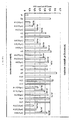
- the figure 1 shows the results obtained with 16 spider venoms.
- Venoms 1 (A1) (which is the venom 21 of the previous screening), 4 (A4), 6 (A6), 13 (A13) and 16 (A16) show an important DOPA oxidase-inhibiting activity because they have the lowest absorbance, compared to other spider venoms.
- A1 (50 ⁇ L) as an absorbance of about 0.1 and an inhibiting activity of DOPA oxidase of 90.9%.
- A4 (50 ⁇ L) has an absorbance of about 0.2 and an inhibiting activity of DOPA oxidase of 74.5%.
- A6 (50 ⁇ L) has an absorbance of about 0.3 and an inhibiting activity of DOPA oxidase of 41.0%.
- A13 (50 ⁇ L) has an absorbance of about 0,250 and an inhibiting activity of DOPA oxidase of 56.3%.
- A16 (50 ⁇ L) has an absorbance of about 0.175 and an inhibiting activity of DOPA oxidase of 76.5%.
- Venoms 6 and 13 extracted from Araneus Cornutus and Lycosa Singoriensis do not present any reproducibility in DOPA inhibiting activity.
- the venom 4 extracted from Araneus tartaricus, the venom 16, extracted from Argiope Bruennichi and the venom 21 extracted from Argiope lobata have been further studied for their activities.
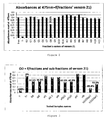
- Figure 2 shows the inhibiting activity of different fractions of V21.
- Fraction G8 exhibits the lowest absorbance (about 0.25) and thus the highest inhibiting activity of DOPA oxidase activity (35.6%)
- fractionation of the fraction G8 of the venom 21 was done by Alliance HPLC to isolate the active molecules and characterize them by mass spectrometry.
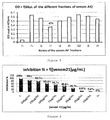
- Figure 3 shows the inhibiting activity of the different sub-fractions of fraction G8.
- Sub-fraction 5 exhibits the lowest absorbance (between 0.3 and 0.4) and the highest inhibiting activity (between 40 and 44%).
- the DOPA oxidase-inhibiting activity of the fraction G8 appears to be localized in the sub-fraction 5.
- the G8 fraction has been pooled and lyophilized.
- the interest peak of the HPLC profile of the G8 fraction is the peak at 17,558 min. It corresponds to the peak at 17,921 min of the venom 21 HPLC profile.
- the molecular weight of the molecule characterized by mass spectrometry is 636,787 g/mol. In the literature, this molecule corresponds to Argiotoxine-636.
- the fractions of the venom 4 are named I2-I11 / J2-J11, and those of the venom 16 are called K2-K11 / L2-L11.
- the 12mL of each fraction are lyophilized and taken in 1mL of HPLC water. Then, the screening approach is the same as for the venom 21.
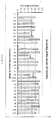
- Figure 4 shows the absorbance and thus the inhibiting activity of different fractions of the venom 16. It appears that the fraction K6 has the lower absorbance (between 0.3 and 0.4) and the highest inhibiting activity (between 35 and 41%).
- Figure 5 shows the absorbance and thus the inhibiting activity of different fractions of the venom 4. It appears that the fraction I7 has the lower absorbance (between 0.3 and 0.4) and the highest inhibiting activity (47%).
- 400 ⁇ L of K6 and 400 ⁇ L of 17 have been fractionated by semi-prep HPLC and many sub-fractions at different times have been recovered. Each sub-fraction has been lyophilized and taken in 100 ⁇ L of water HPLC.
- Each active sub-fraction is undergoing characterization of the active molecule having the inhibiting activity of the DOPA oxidase activity.
- IC50 half maximal inhibitory concentration
- Figure 6 shows the IC50 curve of venom 21. This curve shows that 500 ⁇ g/mL of V21 inhibits 88% of the DOPA oxidase activity and 10 ⁇ g/mL of V21 inhibits 5.6% of DOPA oxidase activity. A concentration of 62.5 ⁇ g/mL of V21 inhibits 50% of DOPA oxidase activity.
- Doses-responses curve with kojic acid has been realized to use as reference. It permits to correlate DOPA oxidase-inhibiting activity with another inhibitor.
- the 2,4-DHPAA is the aromatic portion of argiotoxine-636.
- Figure 7 shows the percentage of inhibition of the DOPA oxidase activity depending on the concentration of 2,4-DHPAA. This figure suggests that mushroom tyrosinase has two different active sites for the L-DOPA substrate with two different affinities. So, the 2,4-DHPAA would be a competitive inhibitor. Here, the activity is low, the IC50 is about 6mM, but it is not the entire molecule which has been extracted from the venom of Argiope Lobata. The same experiment has to be realized another time.
- Figure 8 shows the percentage of inhibition of the DHICA oxidase activity depending on the concentration of 2,4-DHPAA.
- the IC 50 of 2,4 DHPAA is around 0.8mg/ml or 4.8mM.
- the principle of the MTT assay is based on the metabolism of MTT by mitochondrial enzyme which is called succinate dehydrogenase. If the cells are living, the MTT crosses the cytoplasmic and is metabolized by the mitochondria.
- a 96-well plate has been used.
- Melanosomes IGR-39 cells were used for cell viability test.
- the culture medium which was used is DMEM + SVF.
- Cells were treated with different concentrations of 2,4-DHPAA performed directly in each well, from a sterile stock solution at 10mg/mL. Incubation time was 72 hours at 37 ° C. Once this is complete, the medium was replaced by a new medium containing 0.5mg/ml MTT. Incubated 2 h at 37 ° C. Cells were washed with 100 ⁇ L of PBS. After its removal, 100 ⁇ L DMSO was add to realize both cells lysis and dissolution of MTT metabolized by mitochondria.
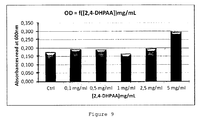
- Figure 9 presents the absorbance, linked to the quantity of formazan produced in the cells, depending on the concentration of 2,4-DHPAA.
- concentration of 2,4-DHPAA comprised between 0.1 mg/mL and 2.5 mg/mL
- the absorbance is comprised between 1.150 and 0.200.
- the absorbance is about 0.300.
- 2,4-DHPAA has no cytotoxicity in the concentration range between 0 to 5mg/mL either between 0 to 29750 ⁇ M.
Landscapes
- Health & Medical Sciences (AREA)
- Life Sciences & Earth Sciences (AREA)
- Veterinary Medicine (AREA)
- Public Health (AREA)
- General Health & Medical Sciences (AREA)
- Animal Behavior & Ethology (AREA)
- Birds (AREA)
- Epidemiology (AREA)
- Dermatology (AREA)
- Zoology (AREA)
- Organic Chemistry (AREA)
- Medicinal Chemistry (AREA)
- Chemical & Material Sciences (AREA)
- Pharmacology & Pharmacy (AREA)
- Emergency Medicine (AREA)
- Bioinformatics & Cheminformatics (AREA)
- Engineering & Computer Science (AREA)
- Chemical Kinetics & Catalysis (AREA)
- General Chemical & Material Sciences (AREA)
- Nuclear Medicine, Radiotherapy & Molecular Imaging (AREA)
- Orthopedic Medicine & Surgery (AREA)
- Immunology (AREA)
- Rheumatology (AREA)
- Physical Education & Sports Medicine (AREA)
- Cosmetics (AREA)
- Pharmaceuticals Containing Other Organic And Inorganic Compounds (AREA)
- Medicines That Contain Protein Lipid Enzymes And Other Medicines (AREA)
- Medicines Containing Material From Animals Or Micro-Organisms (AREA)
Priority Applications (11)
| Application Number | Priority Date | Filing Date | Title |
|---|---|---|---|
| EP12006270.8A EP2705830A1 (fr) | 2012-09-05 | 2012-09-05 | Utilisation de venins d'araignée pour le blanchiment de la peau/dépigmentation et composition comprenant des dérivés de venins d'araignée |
| CA2906241A CA2906241A1 (fr) | 2012-09-05 | 2013-09-05 | Utilisation de venins d'araignees pour le blanchiment/la depigmentation de la peau et composition comprenant des molecules de venins d'araignees ou des analogues synthetiques |
| EP13762403.7A EP2892500B1 (fr) | 2012-09-05 | 2013-09-05 | Utilisation de venins d'araignées pour le blanchiment/la dépigmentation de la peau et composition comprenant des molécules de venins d'araignées ou des analogues synthétiques |
| FR1302064A FR2994847B1 (fr) | 2012-09-05 | 2013-09-05 | Utilisation de venins d'araignee pour le blanchiment ou la depigmentation de la peau et compositions comprenant des molecules de venins d'araignee ou des analogues synthetiques de celles ci |
| PCT/EP2013/002666 WO2014037111A2 (fr) | 2012-09-05 | 2013-09-05 | Utilisation de venins d'araignées pour le blanchiment/la dépigmentation de la peau et composition comprenant des molécules de venins d'araignées ou des analogues synthétiques |
| US14/425,732 US10064814B2 (en) | 2012-09-05 | 2013-09-05 | Use of spider venoms for skin whitening/depigmenting and composition comprising spider venoms molecules or synthetic analogs |
| BR112015004741A BR112015004741A2 (pt) | 2012-09-05 | 2013-09-05 | composição tópica, uso de venenos de aranha, moléculas ou análogos sintéticos dos mesmos, composição e método não terapêutico para o clareamento/despigmentação da pele humana |
| AP2015008298A AP2015008298A0 (en) | 2012-09-05 | 2013-09-05 | Use of spider venoms for skin whitening/depigmenting and composition spider venoms molecules or synthetic analogs |
| MA37966A MA37966B1 (fr) | 2012-09-05 | 2013-09-05 | Utilisation de venins d'araignées pour le blanchiment/la dépigmentation de la peau et composition comprenant des molécules de venins d'araignées ou des analogues synthétiques |
| TNP2015000077A TN2015000077A1 (en) | 2012-09-05 | 2015-03-03 | Use of spider venoms for skin whitening/depigmenting and composition comprising spider venoms molecules or synthetic analogs |
| ZA2015/01446A ZA201501446B (en) | 2012-09-05 | 2015-03-03 | Use of spider venoms for skin whitening/depigmenting and composition comprising spider venoms molecules or synthetic analogs |
Applications Claiming Priority (1)
| Application Number | Priority Date | Filing Date | Title |
|---|---|---|---|
| EP12006270.8A EP2705830A1 (fr) | 2012-09-05 | 2012-09-05 | Utilisation de venins d'araignée pour le blanchiment de la peau/dépigmentation et composition comprenant des dérivés de venins d'araignée |
Publications (1)
| Publication Number | Publication Date |
|---|---|
| EP2705830A1 true EP2705830A1 (fr) | 2014-03-12 |
Family
ID=46832191
Family Applications (2)
| Application Number | Title | Priority Date | Filing Date |
|---|---|---|---|
| EP12006270.8A Withdrawn EP2705830A1 (fr) | 2012-09-05 | 2012-09-05 | Utilisation de venins d'araignée pour le blanchiment de la peau/dépigmentation et composition comprenant des dérivés de venins d'araignée |
| EP13762403.7A Not-in-force EP2892500B1 (fr) | 2012-09-05 | 2013-09-05 | Utilisation de venins d'araignées pour le blanchiment/la dépigmentation de la peau et composition comprenant des molécules de venins d'araignées ou des analogues synthétiques |
Family Applications After (1)
| Application Number | Title | Priority Date | Filing Date |
|---|---|---|---|
| EP13762403.7A Not-in-force EP2892500B1 (fr) | 2012-09-05 | 2013-09-05 | Utilisation de venins d'araignées pour le blanchiment/la dépigmentation de la peau et composition comprenant des molécules de venins d'araignées ou des analogues synthétiques |
Country Status (10)
| Country | Link |
|---|---|
| US (1) | US10064814B2 (fr) |
| EP (2) | EP2705830A1 (fr) |
| AP (1) | AP2015008298A0 (fr) |
| BR (1) | BR112015004741A2 (fr) |
| CA (1) | CA2906241A1 (fr) |
| FR (1) | FR2994847B1 (fr) |
| MA (1) | MA37966B1 (fr) |
| TN (1) | TN2015000077A1 (fr) |
| WO (1) | WO2014037111A2 (fr) |
| ZA (1) | ZA201501446B (fr) |
Cited By (1)
| Publication number | Priority date | Publication date | Assignee | Title |
|---|---|---|---|---|
| EP3187167A1 (fr) * | 2015-12-30 | 2017-07-05 | Nexgen Biotechnologies, Inc. | Polypeptide sv82, et composition cosmetique pour la reduction des rides et le maintien de l'elasticité de la peau, comprienant le polypeptide sv82 comme ingredient actif |
Citations (2)
| Publication number | Priority date | Publication date | Assignee | Title |
|---|---|---|---|---|
| EP0623339A1 (fr) * | 1993-04-29 | 1994-11-09 | L'oreal | Utilisation de dérivés de la resorcine substitués en position(s)4,4 et 5 ou 4 et 6 dans des compositions cosmétiques ou dermopharmaceutiques à action dépigmentante |
| KR20110082335A (ko) * | 2010-01-11 | 2011-07-19 | 대한민국(관리부서:농촌진흥청장) | 봉독을 유효성분으로 함유하는 피부 미백 및 피부질환 예방 및 치료용 조성물 |
Family Cites Families (5)
| Publication number | Priority date | Publication date | Assignee | Title |
|---|---|---|---|---|
| GB2177701B (en) * | 1985-07-08 | 1989-07-12 | Peter Norman Russell Usherwood | Glutamate antagonists |
| DE69333527T2 (de) * | 1993-02-23 | 2005-06-16 | Brigham & Women's Hospital, Inc., Boston | Calciumrezeptoraktive moleküle |
| WO2003015713A2 (fr) * | 2001-08-20 | 2003-02-27 | Maiken Nedergaard | Traitement de tumeurs gliales avec des antagonistes du glutamate |
| US7689957B2 (en) | 2007-09-10 | 2010-03-30 | Synopsys, Inc. | Identifying and improving robust designs using statistical timing analysis |
| WO2011103577A1 (fr) * | 2010-02-22 | 2011-08-25 | Schloss John V | Produits alimentaires améliorés, préparation, et procédés thérapeutiques |
-
2012
- 2012-09-05 EP EP12006270.8A patent/EP2705830A1/fr not_active Withdrawn
-
2013
- 2013-09-05 AP AP2015008298A patent/AP2015008298A0/xx unknown
- 2013-09-05 CA CA2906241A patent/CA2906241A1/fr not_active Abandoned
- 2013-09-05 MA MA37966A patent/MA37966B1/fr unknown
- 2013-09-05 BR BR112015004741A patent/BR112015004741A2/pt not_active IP Right Cessation
- 2013-09-05 FR FR1302064A patent/FR2994847B1/fr not_active Expired - Fee Related
- 2013-09-05 EP EP13762403.7A patent/EP2892500B1/fr not_active Not-in-force
- 2013-09-05 US US14/425,732 patent/US10064814B2/en not_active Expired - Fee Related
- 2013-09-05 WO PCT/EP2013/002666 patent/WO2014037111A2/fr not_active Ceased
-
2015
- 2015-03-03 ZA ZA2015/01446A patent/ZA201501446B/en unknown
- 2015-03-03 TN TNP2015000077A patent/TN2015000077A1/fr unknown
Patent Citations (2)
| Publication number | Priority date | Publication date | Assignee | Title |
|---|---|---|---|---|
| EP0623339A1 (fr) * | 1993-04-29 | 1994-11-09 | L'oreal | Utilisation de dérivés de la resorcine substitués en position(s)4,4 et 5 ou 4 et 6 dans des compositions cosmétiques ou dermopharmaceutiques à action dépigmentante |
| KR20110082335A (ko) * | 2010-01-11 | 2011-07-19 | 대한민국(관리부서:농촌진흥청장) | 봉독을 유효성분으로 함유하는 피부 미백 및 피부질환 예방 및 치료용 조성물 |
Non-Patent Citations (2)
| Title |
|---|
| DATABASE CA [online] CHEMICAL ABSTRACTS SERVICE, COLUMBUS, OHIO, US; 2011, "Bee venoms for whitening the skin and preventing and treating skin diseases", XP002696816, Database accession no. 155:202152 * |
| GRISHIN E V ET AL: "Isolation and structure analysis of components from venom of the spider Argiope lobata", TOXICON, ELMSFORD, NY, US, vol. 27, no. 5, 1 January 1989 (1989-01-01), pages 541 - 549, XP025523944, ISSN: 0041-0101, [retrieved on 19890101], DOI: 10.1016/0041-0101(89)90115-3 * |
Cited By (2)
| Publication number | Priority date | Publication date | Assignee | Title |
|---|---|---|---|---|
| EP3187167A1 (fr) * | 2015-12-30 | 2017-07-05 | Nexgen Biotechnologies, Inc. | Polypeptide sv82, et composition cosmetique pour la reduction des rides et le maintien de l'elasticité de la peau, comprienant le polypeptide sv82 comme ingredient actif |
| US9879060B2 (en) | 2015-12-30 | 2018-01-30 | Nexgen Biotechnologies, Inc. | SV82 polypeptide, and cosmetic composition for reducing skin wrinkles and maintaining skin elasticity comprising SV82 polypeptide as active ingredient |
Also Published As
| Publication number | Publication date |
|---|---|
| WO2014037111A9 (fr) | 2015-07-02 |
| CA2906241A1 (fr) | 2014-03-13 |
| MA37966B1 (fr) | 2018-04-30 |
| EP2892500B1 (fr) | 2019-05-08 |
| US20150231061A1 (en) | 2015-08-20 |
| TN2015000077A1 (en) | 2016-06-29 |
| BR112015004741A2 (pt) | 2017-07-04 |
| WO2014037111A3 (fr) | 2014-12-18 |
| ZA201501446B (en) | 2015-12-23 |
| EP2892500A2 (fr) | 2015-07-15 |
| FR2994847A1 (fr) | 2014-03-07 |
| AP2015008298A0 (en) | 2015-03-31 |
| WO2014037111A2 (fr) | 2014-03-13 |
| FR2994847B1 (fr) | 2021-04-30 |
| US10064814B2 (en) | 2018-09-04 |
Similar Documents
| Publication | Publication Date | Title |
|---|---|---|
| US20140206842A1 (en) | Peptides Modified with Triterpenoids and Small Organic Molecules: Synthesis and use in Cosmeceutical | |
| CN113576933A (zh) | 一种具有美白功效的组合物及其制备方法和应用 | |
| KR102854323B1 (ko) | 시계꽃 종자 추출물 및 이를 포함하는 미용적, 약제학적 또는 피부과학적 조성물들 | |
| KR20120052012A (ko) | 쌀뜨물 발효액을 이용한 탈모방지용 천연샴푸 | |
| KR20090007079A (ko) | 아로니아 추출물을 포함하는 화장료 조성물 | |
| US8383594B2 (en) | Peptides modified with triterpenoids and small organic molecules: synthesis and use in cosmeceuticals | |
| WO2021014057A1 (fr) | Composition cosmétique de blanchiment de la peau comprenant de l'hexylresorcinol, de l'undecylenoyl phenylalanine et du trimethoxybenzylidene pentanedione | |
| JP2003081749A (ja) | 皮膚外用剤 | |
| KR20220166356A (ko) | 모링가 페레그리나 종자 케이크의 추출물, 이의 제조 방법 및 화장품 또는 뉴트리코스메틱 조성물에서의 이의 용도 | |
| KR100824595B1 (ko) | 곰취 추출물을 유효성분으로 함유하는 화장료 조성물 | |
| KR100728813B1 (ko) | 고려엉겅퀴 추출물을 주요 활성성분으로 함유하는피부외용제 조성물 | |
| KR20220082192A (ko) | 오이풀 추출물을 유효성분으로 포함하는 항산화, 피부미백 및 피부주름 개선용 화장료 조성물 | |
| EP2705830A1 (fr) | Utilisation de venins d'araignée pour le blanchiment de la peau/dépigmentation et composition comprenant des dérivés de venins d'araignée | |
| KR100441596B1 (ko) | 미백과 세포 증식효과를 갖는 혼합 식물추출물을 함유한화장료 조성물 | |
| KR102287416B1 (ko) | 샤인머스켓, 청사과, 청매실 및 그린파파야의 복합과실 추출물 및 이를 함유한 화장료 조성물 | |
| Emami et al. | Anti-Melanogenic Activity of Different Extracts from Aerial Parts of Nepeta glomerulosa on Murine Melanoma B16F10 Cells: Anti-Melanogenic Activity of Nepeta glomeruloas on Murine Melanoma B16F10 Cells | |
| JP7840653B2 (ja) | 肌美容用化粧料 | |
| JP4587755B2 (ja) | 抗炎症剤、美白剤、及び抗老化剤、並びに皮膚化粧料 | |
| Dangre et al. | Effect of Pleurotus nebrodensis extract on melanin synthesis: a natural alternative for cosmetics. | |
| KR102845219B1 (ko) | 쌀과 시금치의 혼합 추출물을 포함하는 항산화 및 미백 효과를 가지는 화장료 조성물 | |
| JP7854223B1 (ja) | ショウガ抽出物を有効成分として含有する皮膚美白及び皮膚弾力改善効果を有する組成物 | |
| NL2029500B1 (en) | Cosmetic preparation using hedychium coronarium as an anti-aging skin care factor and preparation method thereof | |
| JP7772369B2 (ja) | 新規ケトン類化合物、ラジカル消去剤、ヒアルロニダーゼ活性阻害剤、pge2産生抑制剤、チロシナーゼ活性阻害剤、エラスターゼ活性阻害剤、i型コラーゲン産生促進剤及び毛乳頭細胞増殖促進剤 | |
| FR2962039A1 (fr) | Utilisation d'un extrait de populus balsamifera comme agent depigmentant | |
| JP2007131602A (ja) | 美白用外用剤 |
Legal Events
| Date | Code | Title | Description |
|---|---|---|---|
| PUAI | Public reference made under article 153(3) epc to a published international application that has entered the european phase |
Free format text: ORIGINAL CODE: 0009012 |
|
| AK | Designated contracting states |
Kind code of ref document: A1 Designated state(s): AL AT BE BG CH CY CZ DE DK EE ES FI FR GB GR HR HU IE IS IT LI LT LU LV MC MK MT NL NO PL PT RO RS SE SI SK SM TR |
|
| AX | Request for extension of the european patent |
Extension state: BA ME |
|
| RIN1 | Information on inventor provided before grant (corrected) |
Inventor name: DE POMYERS, HAROLD Inventor name: BERTIN, DENIS Inventor name: GIGMES, DIDIER Inventor name: MABROUK, KAMEL Inventor name: BENGELOUNE, ABD HAQ Inventor name: ROUDAUT, HERMINE Inventor name: LUIS, JOSE Inventor name: VERDONI, MARION |
|
| 17P | Request for examination filed |
Effective date: 20140912 |
|
| RBV | Designated contracting states (corrected) |
Designated state(s): AL AT BE BG CH CY CZ DE DK EE ES FI FR GB GR HR HU IE IS IT LI LT LU LV MC MK MT NL NO PL PT RO RS SE SI SK SM TR |
|
| RIN1 | Information on inventor provided before grant (corrected) |
Inventor name: BENGELOUNE, ABD HAQ Inventor name: BERTIN, DENIS Inventor name: DE POMYERS, HAROLD Inventor name: GIGMES, DIDIER Inventor name: LUIS, JOSE Inventor name: MABROUK, KAMEL Inventor name: ROUDAUT, HERMINE Inventor name: VERDONI, MARION |
|
| 17Q | First examination report despatched |
Effective date: 20160701 |
|
| STAA | Information on the status of an ep patent application or granted ep patent |
Free format text: STATUS: EXAMINATION IS IN PROGRESS |
|
| RAP1 | Party data changed (applicant data changed or rights of an application transferred) |
Owner name: LABORATOIRE IN'OYA SAS Owner name: AIX-MARSEILLE UNIVERSITE Owner name: LATOXAN SAS Owner name: LE CENTRE NATIONAL DE LA RECHERCHE SCIENTIFIQUE (C |
|
| STAA | Information on the status of an ep patent application or granted ep patent |
Free format text: STATUS: THE APPLICATION HAS BEEN WITHDRAWN |
|
| 18W | Application withdrawn |
Effective date: 20180314 |