EP2706422A1 - Procédé de surveillance assistée par ordinateur du fonctionnement d'un système technique, en particulier d'une installation de production d'énergie électrique - Google Patents
Procédé de surveillance assistée par ordinateur du fonctionnement d'un système technique, en particulier d'une installation de production d'énergie électrique Download PDFInfo
- Publication number
- EP2706422A1 EP2706422A1 EP12183930.2A EP12183930A EP2706422A1 EP 2706422 A1 EP2706422 A1 EP 2706422A1 EP 12183930 A EP12183930 A EP 12183930A EP 2706422 A1 EP2706422 A1 EP 2706422A1
- Authority
- EP
- European Patent Office
- Prior art keywords
- gas turbine
- technical system
- weighted
- data
- determined
- Prior art date
- Legal status (The legal status is an assumption and is not a legal conclusion. Google has not performed a legal analysis and makes no representation as to the accuracy of the status listed.)
- Granted
Links
- 238000000034 method Methods 0.000 title claims abstract description 101
- 238000012544 monitoring process Methods 0.000 title claims abstract description 23
- 239000013598 vector Substances 0.000 claims abstract description 28
- 238000012549 training Methods 0.000 claims abstract description 20
- 238000010248 power generation Methods 0.000 claims abstract description 12
- 238000004590 computer program Methods 0.000 claims abstract description 4
- 239000007789 gas Substances 0.000 claims description 82
- 230000008569 process Effects 0.000 claims description 34
- 238000013528 artificial neural network Methods 0.000 claims description 18
- 230000007257 malfunction Effects 0.000 claims description 15
- 238000010200 validation analysis Methods 0.000 claims description 14
- 238000004422 calculation algorithm Methods 0.000 claims description 8
- 230000001105 regulatory effect Effects 0.000 claims description 7
- 238000002485 combustion reaction Methods 0.000 claims description 6
- MWUXSHHQAYIFBG-UHFFFAOYSA-N nitrogen oxide Inorganic materials O=[N] MWUXSHHQAYIFBG-UHFFFAOYSA-N 0.000 claims description 6
- 238000001816 cooling Methods 0.000 claims description 5
- 230000001537 neural effect Effects 0.000 claims description 5
- UGFAIRIUMAVXCW-UHFFFAOYSA-N Carbon monoxide Chemical compound [O+]#[C-] UGFAIRIUMAVXCW-UHFFFAOYSA-N 0.000 claims description 3
- 239000006185 dispersion Substances 0.000 claims description 3
- 239000000446 fuel Substances 0.000 claims description 3
- 239000010687 lubricating oil Substances 0.000 claims description 3
- 230000000306 recurrent effect Effects 0.000 claims description 3
- 238000013179 statistical model Methods 0.000 claims description 3
- 238000012706 support-vector machine Methods 0.000 claims description 3
- 229910002091 carbon monoxide Inorganic materials 0.000 claims description 2
- 239000003344 environmental pollutant Substances 0.000 claims description 2
- 231100000719 pollutant Toxicity 0.000 claims description 2
- 239000010729 system oil Substances 0.000 claims description 2
- XLYOFNOQVPJJNP-UHFFFAOYSA-N water Substances O XLYOFNOQVPJJNP-UHFFFAOYSA-N 0.000 description 6
- 238000004364 calculation method Methods 0.000 description 4
- 238000010586 diagram Methods 0.000 description 4
- 230000006870 function Effects 0.000 description 4
- 230000003287 optical effect Effects 0.000 description 4
- 230000008901 benefit Effects 0.000 description 3
- 238000010606 normalization Methods 0.000 description 3
- 238000004393 prognosis Methods 0.000 description 3
- 230000000712 assembly Effects 0.000 description 2
- 238000000429 assembly Methods 0.000 description 2
- 238000005516 engineering process Methods 0.000 description 2
- 230000007774 longterm Effects 0.000 description 2
- 238000012986 modification Methods 0.000 description 2
- 230000004048 modification Effects 0.000 description 2
- 230000006978 adaptation Effects 0.000 description 1
- 230000003044 adaptive effect Effects 0.000 description 1
- 230000002411 adverse Effects 0.000 description 1
- 230000006399 behavior Effects 0.000 description 1
- 239000002775 capsule Substances 0.000 description 1
- 230000001364 causal effect Effects 0.000 description 1
- 230000008859 change Effects 0.000 description 1
- 230000000052 comparative effect Effects 0.000 description 1
- 230000006835 compression Effects 0.000 description 1
- 238000007906 compression Methods 0.000 description 1
- 230000001419 dependent effect Effects 0.000 description 1
- 238000011161 development Methods 0.000 description 1
- 230000018109 developmental process Effects 0.000 description 1
- 230000000694 effects Effects 0.000 description 1
- 238000011156 evaluation Methods 0.000 description 1
- 238000012821 model calculation Methods 0.000 description 1
- 238000004886 process control Methods 0.000 description 1
- 230000001012 protector Effects 0.000 description 1
- 230000001172 regenerating effect Effects 0.000 description 1
- 230000005236 sound signal Effects 0.000 description 1
Images

Classifications
-
- G—PHYSICS
- G01—MEASURING; TESTING
- G01M—TESTING STATIC OR DYNAMIC BALANCE OF MACHINES OR STRUCTURES; TESTING OF STRUCTURES OR APPARATUS, NOT OTHERWISE PROVIDED FOR
- G01M15/00—Testing of engines
- G01M15/04—Testing internal-combustion engines
- G01M15/05—Testing internal-combustion engines by combined monitoring of two or more different engine parameters
-
- G—PHYSICS
- G05—CONTROLLING; REGULATING
- G05B—CONTROL OR REGULATING SYSTEMS IN GENERAL; FUNCTIONAL ELEMENTS OF SUCH SYSTEMS; MONITORING OR TESTING ARRANGEMENTS FOR SUCH SYSTEMS OR ELEMENTS
- G05B23/00—Testing or monitoring of control systems or parts thereof
- G05B23/02—Electric testing or monitoring
- G05B23/0205—Electric testing or monitoring by means of a monitoring system capable of detecting and responding to faults
- G05B23/0218—Electric testing or monitoring by means of a monitoring system capable of detecting and responding to faults characterised by the fault detection method dealing with either existing or incipient faults
- G05B23/0224—Process history based detection method, e.g. whereby history implies the availability of large amounts of data
- G05B23/024—Quantitative history assessment, e.g. mathematical relationships between available data; Functions therefor; Principal component analysis [PCA]; Partial least square [PLS]; Statistical classifiers, e.g. Bayesian networks, linear regression or correlation analysis; Neural networks
-
- G—PHYSICS
- G01—MEASURING; TESTING
- G01M—TESTING STATIC OR DYNAMIC BALANCE OF MACHINES OR STRUCTURES; TESTING OF STRUCTURES OR APPARATUS, NOT OTHERWISE PROVIDED FOR
- G01M15/00—Testing of engines
- G01M15/14—Testing gas-turbine engines or jet-propulsion engines
Definitions
- the invention relates to a method and a device for computer-aided monitoring of the operation of a technical system, in particular an electric power generation plant. Furthermore, the invention relates to a corresponding technical system and a computer program product.
- thermodynamic processes are imaged by corresponding modeling equation systems, which are then processed for real-time calculation in a control center of the technical system.
- the process models output corresponding setpoint values of output variables of the technical system based on current input variables of the system. The setpoints are then compared with the actually occurring process variables and with larger ones Deviations, a malfunction of the technical system is detected or issued an alarm.
- the object of the invention is therefore to provide a simple and efficient method for computer-aided monitoring of a technical system.
- the inventive method is used for computer-aided monitoring of the operation of a technical system, in particular an electric power generation plant and particularly preferably a gas turbine.
- the technical system is characterized at corresponding operating times by a state vector of a number of input variables and at least one output to be monitored, the number of input variables and the at least one output variable operating parameters of the technical system and / or sizes that the operation of the technical system influence.
- the at least one output variable is predicted for respective operating times based on input variables which have occurred during operation of the technical system with a data-driven model which has been learned by means of training data from known state vectors.
- the input variables which have occurred during operation of the technical system comprise at least the input variables which occurred at the respective operating time and may optionally also contain input variables at further preceding times.
- different data-driven models can be used to forecast the at least one output variable.
- a neural network in particular a recurrent neural network, is used.
- neural network structures can be used, which are described in the publications [2], [3] and [4]. The entire disclosure content of these documents is incorporated by reference into the content of the present application.
- a step b) of the method according to the invention one or more density estimators, which by means of known input variables of the Training data are learned, applied to the number of input variables at the appropriate time of operation, whereby a confidence measure is determined, which is the higher, the greater the similarity of the input variables to the corresponding operating time to known inputs from the training data.
- the density estimator (s) thus provide information about how tightly known input variables from the training data lie in the environment of the input variables used for the prognosis. A high confidence measure thus represents a higher density in the data space of the input variables.
- known prior art methods can be used.
- the density estimator used is a Neural Clouds algorithm which is described in reference [6] and is also referred to as a data encapsulator.
- the algorithm from reference [6] is described in more detail in the detailed description.
- This algorithm is also used for density estimation in the method of document [5].
- the entire disclosure content of the publications [5] and [6] is incorporated by reference into the content of the present application.
- a weighted deviation between the at least one predicted output variable and the at least one output variable occurring during operation of the technical system is determined for respective cycles from a plurality of successive operating times, averaged over the number of state vectors in the respective cycle in the averaged weighted deviation state vectors whose number of input variables have low confidence measures are less weighted.
- a threshold of the confidence measure may be introduced where appropriate, with only confidence measures above the threshold included in the weighted average deviation.
- a malfunction of the technical system is detected, if all averaged weighted deviations for a number of consecutive cycles greater than a predetermined threshold number, meeting one or more criteria comprising the criterion that those deviations exceed a predetermined threshold in magnitude.
- this criterion may be the sole criterion for detecting a fault if the direction in which the value of the predicted output deviates from the actual output is irrelevant.
- step d if all averaged weighted deviations for the number of consecutive cycles greater than the predetermined number threshold satisfy the further criterion that they correspond to predicted outputs which are always smaller or smaller, then erroneous operation is determined in step d) always larger than the corresponding, occurring during operation of the technical system output variables. An error is thus detected when the deviation is not only in magnitude above a threshold, but also takes place in a certain direction. For certain outputs, e.g. the below-mentioned compressor efficiency of a gas turbine, only deviations are relevant in which the predicted output is exclusively smaller or exclusively larger than the actual size that has occurred during operation of the technical system.
- the inventive method has the advantage that the data-driven model used can be learned in a simple way with training data and provides accurate forecasts for specific technical systems.
- data-driven models require little computation time in the execution phase.
- predicted output variables which originate from input variables which have little similarity to training data are less influential in the determination of the averaged weighted deviation, which means the reliability the predictions or the finding of a malfunction of the technical system increases.
- an alarm is issued and / or one or more safety measures to protect the technical system initiated.
- the alarm may be the output of a signal, e.g. an acoustic and / or optical and / or haptic signal, and / or the sending of a message, e.g. SMS and / or e-mail and the like.
- the safeguards can consist in relieving or completely shutting down the technical system.
- the at least one output variable which is monitored by the method according to the invention, can be an arbitrary operating variable or variable influencing the operation of the technical system.
- the output variable may comprise a measured variable in the technical system and / or be determined from one or more measured variables in the technical system.
- the method according to the invention also has the advantage that the output variable can be a controlled variable in operation of the technical system, which is kept constant. This is possible because the controlled variable is compared to a predicted controlled variable which may deviate from the regulated value in case of system malfunction.
- the number of input variables contained in a respective state vector is determined based on a trainable statistical model.
- the statistical model described in the publications [1] or [2] can be used for this purpose.
- the entire disclosure content of the publications [1] and [2] is incorporated by reference into the content of the present application. If necessary, there is also the possibility that the number of input variables, which are contained in a respective state vector based on expert knowledge.
- the data-driven model used in the invention is preferably a neural network. Nevertheless, the method according to the invention can also be combined with data-driven models in the form of support vector machines and / or Gaussian processes.
- the averaged weighted deviation is determined such that only state vectors whose number of input variables have confidence levels above a confidence threshold are taken into account in the weighted weighted deviation, wherein the state vectors considered in the weighted average deviation are preferably the same are heavily weighted. Nevertheless, there is also the possibility that the individual deviations for the corresponding state vectors in the cycle are multiplied by a factor, which is greater the greater the confidence measure of the corresponding input variables of the state vector. Such a factor may e.g. be modeled by a function.
- the predetermined threshold value is determined by means of validation data comprising known state vectors at corresponding operating times, wherein for respective operating times from the validation data, the dispersion of the deviations between the at least one output variable, which with the learned data-driven model based on input variables from the Validation data is predicted, and the at least one output variable is determined, which is included in the state vector of the validation data in at the respective operating time, wherein from the dispersion of the deviations of the predetermined threshold value is determined such that the predetermined threshold is greater, the greater the scatter is.
- the Scattering by the standard deviation or variance of the frequency distribution of the deviations determined by means of the validation data or the scattering depends on the standard deviation of the variance (s), wherein the predetermined threshold preferably represents the standard deviation or the variance multiplied by a positive factor. It has been shown that with such a choice of the threshold value, a malfunction of the technical system can be distinguished very well from a normal operation.
- step d) each time the averaged weighted deviation for one cycle satisfies the criterion (s) exceeding the criterion that it exceeds a predetermined threshold in absolute value, a counter is incremented, each time the counter is incremented Warning is issued and then a malfunction of the technical system is determined if the count continues counting that the number of consecutive cycles is greater than the predetermined number threshold, the counter is reset to an initial value when the average weighted deviation does not meet the criteria.
- the criteria may optionally include the further criterion that the average weighted deviation corresponds to one or more predicted outputs which are always smaller or larger than the corresponding outputs occurring during operation of the technical system.
- various types of warnings may be output depending on how many consecutive cycles since the counter is reset, the averaged weighted deviations meet the one or more criteria. In this way different levels of alerts can be implemented depending on urgency.
- the warning may also indicate the output of a signal, e.g. an acoustic and / or optical and / or haptic signal, and / or the sending of a message, e.g. SMS and / or e-mail.
- a signal e.g. an acoustic and / or optical and / or haptic signal
- a message e.g. SMS and / or e-mail.
- learning of the data-driven model and / or the density estimator (s) is repeated at predetermined intervals with new state vectors as training data during the operation of the technical system.
- the computer-aided monitoring method is adapted adaptively during operation of the technical system to newly added operating data.
- the method according to the invention monitors the operation of an electrical power generation plant comprising a gas turbine.
- the method may also be applicable to other power plants, e.g. Steam turbines or wind turbines or wind turbines, are used.
- the degree of compression of the gas turbine or the controlled exhaust gas temperature of the gas turbine is used as the output variable.
- the input variables used are the position of guide vanes in the compressor, the rotational speed of the gas turbine, the ambient humidity, the inlet pressure in the compressor, the inlet temperature in the compressor and a volume flow in the compressor when injecting water. The last-mentioned input variable is set to zero if no water is injected during operation of the gas turbine.
- the invention further relates to a device for computer-aided monitoring of Operating a technical system and in particular an electric power generation plant, wherein the device comprises a computer unit which is designed such that the computer unit according to the invention the method or one or more preferred variants of the method according to the invention are feasible.
- the invention further comprises a technical system which contains the device according to the invention described above.
- the invention relates to a computer program product with a program code stored on a machine-readable carrier for carrying out the method according to the invention or one or more preferred variants of the method according to the invention when the program code is executed on a computer.
- the method according to the invention in relation to the monitoring of a technical system in the form of a gas turbine will now be described. Nevertheless, the method according to the invention is also suitable for any other technical systems or electrical power generation systems applicable, such as steam turbines or regenerative energy generation systems, such as wind turbines.
- a so-called soft sensor is realized by means of computer-aided methods, with which desired values of corresponding process variables of the technical system are determined. If these setpoint values deviate strongly from the actual process variables, an appropriate warning or, in the case of a longer deviation, an alarm is output, as will be described in more detail below.
- the compressor efficiency was used, which is a known quantity and can be determined from corresponding pressures and temperatures in the compressor.
- the exhaust gas temperature (so-called OTC temperature) of the turbine was used as output variable. This size is in contrast to the compressor efficiency regulated in the operation of the turbine Size that is kept as constant as possible.
- the input quantities x (t) are used in the embodiment of FIG Fig. 1 on the one hand by a data-driven model in the form of a neural network NN (block B1) and on the other hand by a density estimator DE (block B2) processed.
- input variables for further operating times can also be included in the neural network NN.
- the corresponding output variable y (t) is predicted, which - as mentioned above - can represent, for example, the compressor efficiency or the exhaust gas temperature of the turbine.
- Any neural networks known from the prior art can be used to predict the quantity y (t), such as multi-layer perceptron networks, recurrent neural networks and the like.
- the neural network disclosed in reference [3] can be used to predict the output y (t).
- other methods such as Support Vector Machines or Gaussian processes, may also be used to predict the output variable y (t).
- the neural network NN was trained in advance with corresponding training data from state vectors including the known input variables and output variables for different operating times.
- the in Fig. 1 Density protectors DE used for the input variables x (t) at the current operating time, a confidence measure C (t), which shows whether the corresponding vector of input variables in a range of the state space of the input variables in which many vectors from known input variables of the training data occur .
- the density estimator was also learned well in advance with the training data.
- the data encapsulator DE from document [6] which is based on neural clouds, is used as the density estimator.
- the density estimate based on this method is known and therefore only roughly outlined.
- the aim of the density estimation is to determine for a corresponding data set or data point from input variables at the corresponding operating time of its "novelty" to the extent to which further data sets of the training data are similar to the considered data record, the similarity being described by a distance of the data records from each other. This distance is given by the Euclidean distance of the data points in the data space.
- a normalization of the individual data records or data points is first carried out based on a min-max normalization method.
- Fig. 1 the difference between the predicted output variable y (t) and the actually occurring output variable y 0 (t) is determined as a signed deviation or error e (t) via the subtracter SU.
- the confidence measure C (t) which is preferably between 0 and 1 (0 corresponds to no confidence and 1 to a very high confidence) and is determined via the data capsule DE, is then further processed in block B3.
- a suitable threshold value C Th is predetermined, wherein confidence values below a threshold value C Th are assigned the value 0 and confidence values which are the same or greater than the threshold value are assigned the value 1 becomes.
- a weighted confidence measure C * (t) is determined, which assumes either the value 0 or the value 1.
- a weighted error e * (t) is obtained which, in the case of a high confidence measure, corresponds to the original error e (t) and otherwise has the value 0.
- a mean weighted error E (t) is determined for corresponding cycles CY from a predetermined number of past operating times. This error is the sum of the errors e * (t) for the operating times in the cycle CY, divided by the number of operating times in the cycle CY.
- the calculation of E (t) is in Fig. 1 indicated by a corresponding sum sign, wherein over the number of times t * in the corresponding cycle CY is summed. To determine E (t), this sum is still to be divided by the number of operating times in the cycle.
- the average weighted error E (t) thus represents the average error between the predicted and the actual output, taking into account the confidences C (t) output via the data encapsulator DE. If the confidence exceeds a certain level, the corresponding forecast is trusted and this in the calculation considered the mean error. Otherwise, the corresponding forecast is rejected.
- a hard threshold C Th it is also possible to use a function according to which corresponding errors e (t) flow more or less strongly into the calculation of the mean weighted error E (t).
- the confidence C (t) itself can be included as the weighting factor for the corresponding error e (t) in the weighted sum of the errors.
- the threshold C Th can be chosen differently depending on the configuration of the method. In a preferred Embodiment, a value of C Th at 0.95 has proven to be practicable.
- the errors E (t) detected in the respective cycles CY are finally read in block B5 of FIG Fig. 1 further processed. There it is determined whether the error E (t) exceeds or falls below a predetermined threshold. Whether exceeding or falling below the error is detected depends on whether deviations are to be detected in which the target size is smaller or larger than the predicted size. For example, in the case of a target in the form of compressor efficiency, only those deviations are considered critical where the actual compressor efficiency y 0 (t) is less than the predicted compressor efficiency, as this indicates a malfunction in the gas turbine which in the long term Total failure of the turbine can result. Nonetheless, in the method according to the invention, embodiments in which both a positive and a negative deviation between the target variable and the predicted variable are classified as critical are also possible. In this case, it is determined in block B5 whether the amount of mean error E (t) exceeds a corresponding (positive) threshold E Th .
- a counter Cnt is increased from its current count value Cnt (t-1) by 1 to the new count value Cnt (t). If, on the other hand, there is no exceeding or undershooting of the threshold value E Th , the counter is reset to 0.
- a corresponding warning W is also output. For example, a sound signal may be output via a user interface in a gas turbine monitoring system. Furthermore, it is also possible to send a corresponding SMS or e-mail to the control system or for the operation of the gas turbine responsible bodies or persons.
- the warning be coupled to how high the value of the counter Cnt is.
- Different warning levels can be set in this way. For example, at a low warning level, only an audible signal may be emitted, whereas at higher alert levels, an SMS and finally an email is sent.
- the current count Cnt (t) is further processed in block B6. There, it is checked whether the count value is above a predetermined number threshold Cnt Th . If this is the case, ie if a deviation between the predicted and the actual output variable has been occurring for some time, an alarm A is finally output which, depending on the embodiment of the method according to the invention, can be configured differently. In particular, in the case of an alarm-analogous to the warning-a signal can be output or an SMS or e-mail can be sent. However, automatic alarm measures of the control system are preferably linked to the alarm.
- a partial discharge of the gas turbine or a complete discharge of the gas turbine can be carried out by appropriate control of the generator of the turbine and optionally also a stop of the turbine can be performed.
- a stop of the turbine can be performed.
- different alarm levels can be set depending on how high the count is.
- the determination of the above threshold value E Th for the averaged weighted deviation is carried out in a preferred embodiment of the invention based on validation data which represents known state vectors of input variables and the output quantity but which have not been used for learning the neural network or the data capsulator.
- the scattering of the deviations between an output quantity determined via the learned neural network and which was determined from the validation data by means of corresponding input variables and the corresponding output variable are determined from the validation data.
- the scattering is by the standard deviation of the frequency distribution represents these deviations. The larger the standard deviation, the higher the threshold E Th is set in order to avoid false alarms resulting from a strong variance between predicted and actual output.
- the threshold E Th corresponds to the product of the standard deviation and a factor that depends on the technical system under consideration or on the data-driven model used. In case the compressor efficiency is analyzed as output, a factor of 3.5 has been found to be practicable.
- the number threshold Cnt Th is also set as a function of this factor.
- the number threshold may be set to twice the maximum value of the count value Cnt (t) obtained in the evaluation of the validation data using the previously determined threshold value E Th .
- Fig. 1 described monitoring method can be used to process any process control and comparative variables of technical systems and in particular of fossil-fired thermal power plants and their components.
- the compressor efficiency can be used as a monitored output variable.
- Compressor efficiency is a very important virtual process variable that very well reflects the condition quality of the gas turbine compressor and is a very sensitive indicator of damage or other adverse effects on the gas turbine.
- the compressor efficiency is subject to a number of influences, such as ambient conditions or the load state of the gas turbine, so that this efficiency can basically be within a large permissible value range.
- a suitable desired value of this compressor efficiency is now determined as a function of the operating conditions, on the basis of which malfunctions of the gas turbine can be established in good time before a total failure of the turbine.
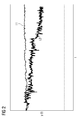
- FIG. 2 shows a prognosis of an unregulated output variable y (t), which may be carried out by the method according to the invention, which may be, for example, the compressor efficiency described above.
- the output variable y (t) Along the abscissa are the corresponding operating times t and plotted along the ordinate, the output variable y (t).
- the line L1 describes the predicted outputs and the line L2 the actually occurring outputs.
- the scenario gives the Fig. 2 Again, that the actual output size is continuously smaller than the corresponding forecast.
- a corresponding alarm can now be output in the event that the predicted output variable is larger than the actual output variable by at least a predetermined value over a relatively long period of time.
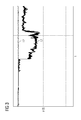
- Fig. 3 shows a diagram analogous to Fig. 2 , wherein now a regulated output is processed, which is kept constant during operation of the gas turbine.
- Such an output variable is, for example, the exhaust gas temperature of the turbine, which is usually regulated to a constant value.
- the exhaust gas temperature is conventionally not suitable as an indicator of gas turbine malfunction.
- such a controlled variable can still be used for condition monitoring of the gas turbine, because this variable is compared with a predicted setpoint value, with larger deviations once again emitting an alarm.
- the time evolution of the predicted output is indicated by the line L1 and the regulated output by the line L2. Due to the regulation of the output, the line L2 substantially represents a constant value. Nonetheless, for the predicted value along the line L1, there is sometimes a significant deviation from the regulated value. In such a case, a corresponding alarm can be issued.
- the method according to the invention is applied primarily to real and virtual process parameters for target groups of an electric power generation plant.
- Target assemblies represent in particular the machine types gas turbine, steam turbine, boiler, generator and auxiliary systems.
- the monitoring according to the invention is preferably carried out based on thermodynamic success factors such as temperatures, pressures, mass and volume flows, efficiencies and the like. But also non-thermodynamic deterministic processes, such as e.g. the vibration behavior of the target assemblies can be included.
- a gas turbine in particular the compressor efficiency and the compressor air mass flow can be used as process parameters with respect to the compressor.
- process variables e.g. Turbine efficiency or turbine inlet temperatures are considered.
- process parameters may include combustion chamber dynamics (i.e., combustion chamber buzzing), emissions from the gas turbine, and the like.
- horizontal and vertical bearing and housing vibrations can be used as process parameters.
- pressures and temperatures come into consideration.
- corresponding pressures, temperatures and volume flows can be incorporated as process variables for the lube oil and bearing system of the turbine.
- the embodiments of the invention described above have a number of advantages.
- using soft-sensor technology using a data-driven model in combination with a density estimator reliable monitoring of a technical system can be achieved without requiring analytical process modeling for corresponding process output parameters.
- Only input parameters must be determined or known that have a significant causal influence on the output parameters.
- the corresponding input parameters can be determined by the methods mentioned in the publications [1] and [2] or based on expert knowledge.
- setpoint values for such process variables can be provided which were hitherto inaccessible by analytical process modeling, since the creation of corresponding models was, for example, too time-consuming or was not covered by the current state of knowledge.
- inventive method allows the application of the soft sensor technology to controlled process variables, which are kept at a constant value during operation of the technical system.
- Many process variables in a technical system are tracked as target parameters by means of closed control loops to a setpoint.
- the control reserve is sufficient, disturbances in the technical system can be corrected and the controlled target value remains constant.
- multichannel control systems which by Depending on many input variables, very different scenarios are conceivable, which can lead to a controller intervention.
Landscapes
- Physics & Mathematics (AREA)
- Engineering & Computer Science (AREA)
- General Physics & Mathematics (AREA)
- Chemical & Material Sciences (AREA)
- Combustion & Propulsion (AREA)
- Artificial Intelligence (AREA)
- Evolutionary Computation (AREA)
- Mathematical Physics (AREA)
- Automation & Control Theory (AREA)
- Testing And Monitoring For Control Systems (AREA)
- Testing Or Calibration Of Command Recording Devices (AREA)
Priority Applications (6)
| Application Number | Priority Date | Filing Date | Title |
|---|---|---|---|
| EP12183930.2A EP2706422B1 (fr) | 2012-09-11 | 2012-09-11 | Procédé de surveillance assistée par ordinateur du fonctionnement d'un système technique, en particulier d'une installation de production d'énergie électrique |
| US14/427,418 US20150241304A1 (en) | 2012-09-11 | 2013-08-23 | Method for the computer-assisted monitoring of the operation of a technical system, particularly of an electrical energy-generating installation |
| PCT/EP2013/067517 WO2014040838A1 (fr) | 2012-09-11 | 2013-08-23 | Procédé de surveillance informatisée du fonctionnement d'un système technique, en particulier d'une installation de production d'énergie électrique |
| KR1020157009209A KR101994465B1 (ko) | 2012-09-11 | 2013-08-23 | 기술 시스템, 특히 전기 에너지-발생 설비의 동작의 컴퓨터-보조 모니터링을 위한 방법 |
| EP13765659.1A EP2895926A1 (fr) | 2012-09-11 | 2013-08-23 | Procédé de surveillance informatisée du fonctionnement d'un système technique, en particulier d'une installation de production d'énergie électrique |
| ARP130103233A AR092515A1 (es) | 2012-09-11 | 2013-09-11 | Procedimiento para la supervision, apoyada por computadora, de la operacion de un sistema tecnico, en especial de una instalacion para la generacion de energia electrica |
Applications Claiming Priority (1)
| Application Number | Priority Date | Filing Date | Title |
|---|---|---|---|
| EP12183930.2A EP2706422B1 (fr) | 2012-09-11 | 2012-09-11 | Procédé de surveillance assistée par ordinateur du fonctionnement d'un système technique, en particulier d'une installation de production d'énergie électrique |
Publications (2)
| Publication Number | Publication Date |
|---|---|
| EP2706422A1 true EP2706422A1 (fr) | 2014-03-12 |
| EP2706422B1 EP2706422B1 (fr) | 2016-07-27 |
Family
ID=46940320
Family Applications (2)
| Application Number | Title | Priority Date | Filing Date |
|---|---|---|---|
| EP12183930.2A Not-in-force EP2706422B1 (fr) | 2012-09-11 | 2012-09-11 | Procédé de surveillance assistée par ordinateur du fonctionnement d'un système technique, en particulier d'une installation de production d'énergie électrique |
| EP13765659.1A Withdrawn EP2895926A1 (fr) | 2012-09-11 | 2013-08-23 | Procédé de surveillance informatisée du fonctionnement d'un système technique, en particulier d'une installation de production d'énergie électrique |
Family Applications After (1)
| Application Number | Title | Priority Date | Filing Date |
|---|---|---|---|
| EP13765659.1A Withdrawn EP2895926A1 (fr) | 2012-09-11 | 2013-08-23 | Procédé de surveillance informatisée du fonctionnement d'un système technique, en particulier d'une installation de production d'énergie électrique |
Country Status (5)
| Country | Link |
|---|---|
| US (1) | US20150241304A1 (fr) |
| EP (2) | EP2706422B1 (fr) |
| KR (1) | KR101994465B1 (fr) |
| AR (1) | AR092515A1 (fr) |
| WO (1) | WO2014040838A1 (fr) |
Cited By (1)
| Publication number | Priority date | Publication date | Assignee | Title |
|---|---|---|---|---|
| EP3360015A1 (fr) * | 2015-12-23 | 2018-08-15 | Siemens Aktiengesellschaft | Procédé et capteur logiciel permettant de déterminer une puissance d'un générateur d'énergie |
Families Citing this family (10)
| Publication number | Priority date | Publication date | Assignee | Title |
|---|---|---|---|---|
| JP6847343B2 (ja) * | 2015-02-23 | 2021-03-24 | 学校法人沖縄科学技術大学院大学学園 | 再生可能エネルギーの変動に対する予測誤差を決定するシステムおよび方法 |
| US10416619B2 (en) | 2016-07-25 | 2019-09-17 | General Electric Company | System modeling, control and optimization |
| DE102017204434A1 (de) | 2017-03-16 | 2018-09-20 | Siemens Aktiengesellschaft | Verfahren und Anordnung zur Messung einer Gastemperaturverteilung in einer Brennkammer |
| DE102019207059A1 (de) * | 2019-05-15 | 2020-11-19 | Siemens Aktiengesellschaft | Verfahren zur Validierung von Systemparametern eines Energiesystems, Verfahren zum Betrieb eines Energiesystems sowie Energiemanagementsystem für ein Energiesystem |
| GB201908496D0 (en) | 2019-06-13 | 2019-07-31 | Rolls Royce Plc | Computer-implemented methods for determining compressor operability |
| GB201908494D0 (en) * | 2019-06-13 | 2019-07-31 | Rolls Royce Plc | Computer-implemented methods for training a machine learning algorithm |
| CN111311883B (zh) * | 2020-05-12 | 2020-08-14 | 成都千嘉科技有限公司 | 一种燃气报警器更换预警方法及装置、电子设备 |
| DE102021201874A1 (de) * | 2021-02-26 | 2022-09-01 | Thyssenkrupp Ag | Verfahren zum Betrieb einer fehlertolerant ausgebildeten Gerätesteuerung und Gerätesteuerung |
| DE102023120690A1 (de) * | 2023-08-03 | 2025-02-06 | Rolls-Royce Solutions GmbH | Verfahren zum Betreiben einer Leistungsvorrichtung, Steuervorrichtung für eine Leistungsvorrichtung und Leistungsanordnung mit einer Leistungsvorrichtung und einer solchen Steuervorrichtung |
| KR102669930B1 (ko) * | 2023-11-23 | 2024-05-30 | 한국전자기술연구원 | 메타모델 기반 가변 igv 제어 유체기기 동작 주파수 가상 센싱 방법 및 시스템 |
Citations (5)
| Publication number | Priority date | Publication date | Assignee | Title |
|---|---|---|---|---|
| WO2005033809A1 (fr) | 2003-09-30 | 2005-04-14 | Siemens Aktiengesellschaft | Procede, programme informatique comprenant des moyens de code de programme et progiciel informatique servant a analyser des grandeurs influant sur un processus de combustion dans une chambre de combustion au moyen d'un modele statistique apte a l'apprentissage |
| WO2005081076A2 (fr) | 2004-02-24 | 2005-09-01 | Siemens Aktiengesellschaft | Procede, programme informatique avec systemes de code de programme, et produit de programme informatique pour prevoir l'etat d'une chambre de combustion par utilisation d'un reseau neuronal recurrent |
| WO2009053183A2 (fr) | 2007-10-26 | 2009-04-30 | Siemens Aktiengesellschaft | Procédé d'analyse du fonctionnement d'une turbine à gaz |
| WO2011129805A1 (fr) * | 2010-04-12 | 2011-10-20 | Siemens Aktiengesellschaft | Procédé de commande informatisée, en boucle fermée et/ou en boucle ouverte, d'un système technique |
| WO2012164075A2 (fr) * | 2011-06-03 | 2012-12-06 | Siemens Aktiengesellschaft | Procédé pour générer, de manière assistée par ordinateur, un modèle piloté par des données d'un système technique, notamment d'une turbine à gaz ou d'une éolienne |
Family Cites Families (5)
| Publication number | Priority date | Publication date | Assignee | Title |
|---|---|---|---|---|
| US20020013664A1 (en) * | 2000-06-19 | 2002-01-31 | Jens Strackeljan | Rotating equipment diagnostic system and adaptive controller |
| US7380213B2 (en) * | 2001-12-28 | 2008-05-27 | Kimberly-Clark Worldwide, Inc. | User interface for reporting event-based production information in product manufacturing |
| US7487029B2 (en) * | 2004-05-21 | 2009-02-03 | Pratt & Whitney Canada | Method of monitoring gas turbine engine operation |
| US7293400B2 (en) * | 2004-09-30 | 2007-11-13 | General Electric Company | System and method for sensor validation and fusion |
| DE102008020379A1 (de) * | 2008-04-23 | 2009-10-29 | Siemens Aktiengesellschaft | Verfahren zur rechnergestützten Steuerung und/oder Regelung eines technischen Systems |
-
2012
- 2012-09-11 EP EP12183930.2A patent/EP2706422B1/fr not_active Not-in-force
-
2013
- 2013-08-23 KR KR1020157009209A patent/KR101994465B1/ko not_active Expired - Fee Related
- 2013-08-23 US US14/427,418 patent/US20150241304A1/en not_active Abandoned
- 2013-08-23 EP EP13765659.1A patent/EP2895926A1/fr not_active Withdrawn
- 2013-08-23 WO PCT/EP2013/067517 patent/WO2014040838A1/fr not_active Ceased
- 2013-09-11 AR ARP130103233A patent/AR092515A1/es unknown
Patent Citations (5)
| Publication number | Priority date | Publication date | Assignee | Title |
|---|---|---|---|---|
| WO2005033809A1 (fr) | 2003-09-30 | 2005-04-14 | Siemens Aktiengesellschaft | Procede, programme informatique comprenant des moyens de code de programme et progiciel informatique servant a analyser des grandeurs influant sur un processus de combustion dans une chambre de combustion au moyen d'un modele statistique apte a l'apprentissage |
| WO2005081076A2 (fr) | 2004-02-24 | 2005-09-01 | Siemens Aktiengesellschaft | Procede, programme informatique avec systemes de code de programme, et produit de programme informatique pour prevoir l'etat d'une chambre de combustion par utilisation d'un reseau neuronal recurrent |
| WO2009053183A2 (fr) | 2007-10-26 | 2009-04-30 | Siemens Aktiengesellschaft | Procédé d'analyse du fonctionnement d'une turbine à gaz |
| WO2011129805A1 (fr) * | 2010-04-12 | 2011-10-20 | Siemens Aktiengesellschaft | Procédé de commande informatisée, en boucle fermée et/ou en boucle ouverte, d'un système technique |
| WO2012164075A2 (fr) * | 2011-06-03 | 2012-12-06 | Siemens Aktiengesellschaft | Procédé pour générer, de manière assistée par ordinateur, un modèle piloté par des données d'un système technique, notamment d'une turbine à gaz ou d'une éolienne |
Non-Patent Citations (5)
| Title |
|---|
| B. LANG ET AL.: "Neural Clouds for Monitoring of Complex Systems", OPTICAL MEMORY AND NEURAL NETWORKS (INFORMATION OPTICS, vol. 17, no. 3, 2008, pages 183 - 192 |
| B. LANG ET AL: "Neural Clouds for Monitoring of Complex Systems", OPTICAL MEMORY AND NEURAL NETWORKS (INFORMATION OPTICS), 1 January 2008 (2008-01-01), pages 183 - 192, XP055049602, Retrieved from the Internet <URL:http://rd.springer.com/content/pdf/10.3103/S1060992X08030016> [retrieved on 20130115] * |
| D. JURICIC ET AL: "FAULT DETECTION BASED ON GAUSSIAN PROCESS MODELS", PROCEEDINGS 5TH MATHMOD VIENNA, 1 February 2006 (2006-02-01), pages 1 - 10, XP055049598, Retrieved from the Internet <URL:http://dsc.ijs.si/jus.kocijan/GPdyn/2006/JurKoc06.pdf> [retrieved on 20130115] * |
| ENRICO ZIO ET AL: "Confidence in signal reconstruction by the Evolving Clustering Method", PROGNOSTICS AND SYSTEM HEALTH MANAGEMENT CONFERENCE (PHM-SHENZHEN), 2011, IEEE, 24 May 2011 (2011-05-24), pages 1 - 7, XP031998471, ISBN: 978-1-4244-7951-1, DOI: 10.1109/PHM.2011.5939535 * |
| ILYA MOKHOV ET AL: "Advanced Forecasting and Classification Technique for Condition Monitoring of Rotating Machinery", 16 December 2007, INTELLIGENT DATA ENGINEERING AND AUTOMATED LEARNING - IDEAL 2007; [LECTURE NOTES IN COMPUTER SCIENCE], SPRINGER BERLIN HEIDELBERG, BERLIN, HEIDELBERG, PAGE(S) 37 - 46, ISBN: 978-3-540-77225-5, XP019085429 * |
Cited By (1)
| Publication number | Priority date | Publication date | Assignee | Title |
|---|---|---|---|---|
| EP3360015A1 (fr) * | 2015-12-23 | 2018-08-15 | Siemens Aktiengesellschaft | Procédé et capteur logiciel permettant de déterminer une puissance d'un générateur d'énergie |
Also Published As
| Publication number | Publication date |
|---|---|
| EP2706422B1 (fr) | 2016-07-27 |
| KR20150054974A (ko) | 2015-05-20 |
| AR092515A1 (es) | 2015-04-22 |
| KR101994465B1 (ko) | 2019-06-28 |
| US20150241304A1 (en) | 2015-08-27 |
| EP2895926A1 (fr) | 2015-07-22 |
| WO2014040838A1 (fr) | 2014-03-20 |
Similar Documents
| Publication | Publication Date | Title |
|---|---|---|
| EP2706422B1 (fr) | Procédé de surveillance assistée par ordinateur du fonctionnement d'un système technique, en particulier d'une installation de production d'énergie électrique | |
| EP2697695B1 (fr) | Procédé pour générer, de manière assistée par ordinateur, un modèle piloté par des données d'un système technique, notamment d'une turbine à gaz ou d'une éolienne | |
| EP0895197B1 (fr) | Procédé pour surveiller des installations avec des composants mécaniques | |
| EP1543394B1 (fr) | Procede et dispositif pour surveiller une installation technique comprenant plusieurs systemes, notamment une centrale electrique | |
| DE102017112042A1 (de) | Bedrohungserrennung und -lokalisierung für überwachungsknoten eines industrieanlagensteuersystems | |
| CH702625A2 (de) | System und Verfahren zur Überwachung einer Gasturbine. | |
| WO2012055699A1 (fr) | Système d'information de maintenance, capteur d'état à utiliser dans ce système et procédé pouvant être mis en oeuvre au moyen de ce système pour décider de la nécessité d'effectuer une maintenance | |
| EP2092499A1 (fr) | Procédés et dispositif pour optimiser une configuration d'alarme | |
| WO2015043806A1 (fr) | Procédé de commande et/ou de régulation assistée(s) par ordinateur d'un système technique | |
| EP3451101B1 (fr) | Procédé de détermination d'une cause d'un mauvais fonctionnement dans un composant de véhicule | |
| EP3649033B1 (fr) | Procédé pour l'analyse d'un comportement fonctionnel d'un composant d'une installation technique, programme informatique et support d'enregistrement lisible par ordinateur | |
| DE102012216574A1 (de) | Verfahren zur rechnergestützten Steuerung und/oder Regelung eines technischen Systems | |
| EP3432091A1 (fr) | Procédé et dispositif de commande d'un système technique | |
| EP2971768B2 (fr) | Développement d'un modèle supérieur pour contrôler et/ou surveiller un système de compresseurs | |
| DE112022006990T5 (de) | Anomalieerkennungsvorrichtung, mechanisches system und anomalieerkennungsverfahren | |
| EP3429050A1 (fr) | Procédé de réglage de la puissance active d'un parc éolien et parc éolien correspondant | |
| CN106682159A (zh) | 一种阈值配置方法 | |
| DE102008037532A1 (de) | Automatische Detektion und Meldung von Verschleiss innerer Turbinenkomponenten | |
| EP0922246B1 (fr) | Procede pour l'analyse d'un etat de processus dans une installation technique | |
| EP2971769B1 (fr) | Entrée de schéma r&i pour un procédé de contrôle et/ou de surveillance d'un système de compresseurs | |
| EP1189126B1 (fr) | Procédé de surveillance d'une installation | |
| EP3961333A1 (fr) | Système et procédé de détermination d'une cause d'anomalie de fonctionnement d'une machine ainsi que programme informatique et les supports de données lisibles électroniquement | |
| Stuchlý et al. | Reliability evaluation as a means of increasing the efficiency of equipment maintenance | |
| DE102023207829A1 (de) | Verfahren und System zum Erkennen von Anomalien in einem Satz von Signalen | |
| Helsen et al. | Integrated condition monitoring of a fleet of offshore wind turbines with focus on acceleration streaming processing |
Legal Events
| Date | Code | Title | Description |
|---|---|---|---|
| PUAI | Public reference made under article 153(3) epc to a published international application that has entered the european phase |
Free format text: ORIGINAL CODE: 0009012 |
|
| AK | Designated contracting states |
Kind code of ref document: A1 Designated state(s): AL AT BE BG CH CY CZ DE DK EE ES FI FR GB GR HR HU IE IS IT LI LT LU LV MC MK MT NL NO PL PT RO RS SE SI SK SM TR |
|
| AX | Request for extension of the european patent |
Extension state: BA ME |
|
| 17P | Request for examination filed |
Effective date: 20140718 |
|
| RBV | Designated contracting states (corrected) |
Designated state(s): AL AT BE BG CH CY CZ DE DK EE ES FI FR GB GR HR HU IE IS IT LI LT LU LV MC MK MT NL NO PL PT RO RS SE SI SK SM TR |
|
| GRAP | Despatch of communication of intention to grant a patent |
Free format text: ORIGINAL CODE: EPIDOSNIGR1 |
|
| INTG | Intention to grant announced |
Effective date: 20160211 |
|
| GRAS | Grant fee paid |
Free format text: ORIGINAL CODE: EPIDOSNIGR3 |
|
| GRAA | (expected) grant |
Free format text: ORIGINAL CODE: 0009210 |
|
| AK | Designated contracting states |
Kind code of ref document: B1 Designated state(s): AL AT BE BG CH CY CZ DE DK EE ES FI FR GB GR HR HU IE IS IT LI LT LU LV MC MK MT NL NO PL PT RO RS SE SI SK SM TR |
|
| REG | Reference to a national code |
Ref country code: GB Ref legal event code: FG4D Free format text: NOT ENGLISH |
|
| REG | Reference to a national code |
Ref country code: CH Ref legal event code: EP |
|
| REG | Reference to a national code |
Ref country code: AT Ref legal event code: REF Ref document number: 816273 Country of ref document: AT Kind code of ref document: T Effective date: 20160815 |
|
| REG | Reference to a national code |
Ref country code: IE Ref legal event code: FG4D Free format text: LANGUAGE OF EP DOCUMENT: GERMAN |
|
| REG | Reference to a national code |
Ref country code: DE Ref legal event code: R096 Ref document number: 502012007761 Country of ref document: DE |
|
| PGFP | Annual fee paid to national office [announced via postgrant information from national office to epo] |
Ref country code: GB Payment date: 20160914 Year of fee payment: 5 |
|
| REG | Reference to a national code |
Ref country code: LT Ref legal event code: MG4D |
|
| REG | Reference to a national code |
Ref country code: NL Ref legal event code: MP Effective date: 20160727 |
|
| PG25 | Lapsed in a contracting state [announced via postgrant information from national office to epo] |
Ref country code: NO Free format text: LAPSE BECAUSE OF FAILURE TO SUBMIT A TRANSLATION OF THE DESCRIPTION OR TO PAY THE FEE WITHIN THE PRESCRIBED TIME-LIMIT Effective date: 20161027 Ref country code: IT Free format text: LAPSE BECAUSE OF FAILURE TO SUBMIT A TRANSLATION OF THE DESCRIPTION OR TO PAY THE FEE WITHIN THE PRESCRIBED TIME-LIMIT Effective date: 20160727 Ref country code: RS Free format text: LAPSE BECAUSE OF FAILURE TO SUBMIT A TRANSLATION OF THE DESCRIPTION OR TO PAY THE FEE WITHIN THE PRESCRIBED TIME-LIMIT Effective date: 20160727 Ref country code: NL Free format text: LAPSE BECAUSE OF FAILURE TO SUBMIT A TRANSLATION OF THE DESCRIPTION OR TO PAY THE FEE WITHIN THE PRESCRIBED TIME-LIMIT Effective date: 20160727 Ref country code: IS Free format text: LAPSE BECAUSE OF FAILURE TO SUBMIT A TRANSLATION OF THE DESCRIPTION OR TO PAY THE FEE WITHIN THE PRESCRIBED TIME-LIMIT Effective date: 20161127 Ref country code: FI Free format text: LAPSE BECAUSE OF FAILURE TO SUBMIT A TRANSLATION OF THE DESCRIPTION OR TO PAY THE FEE WITHIN THE PRESCRIBED TIME-LIMIT Effective date: 20160727 Ref country code: HR Free format text: LAPSE BECAUSE OF FAILURE TO SUBMIT A TRANSLATION OF THE DESCRIPTION OR TO PAY THE FEE WITHIN THE PRESCRIBED TIME-LIMIT Effective date: 20160727 Ref country code: LT Free format text: LAPSE BECAUSE OF FAILURE TO SUBMIT A TRANSLATION OF THE DESCRIPTION OR TO PAY THE FEE WITHIN THE PRESCRIBED TIME-LIMIT Effective date: 20160727 |
|
| PG25 | Lapsed in a contracting state [announced via postgrant information from national office to epo] |
Ref country code: BE Free format text: LAPSE BECAUSE OF NON-PAYMENT OF DUE FEES Effective date: 20160930 Ref country code: PL Free format text: LAPSE BECAUSE OF FAILURE TO SUBMIT A TRANSLATION OF THE DESCRIPTION OR TO PAY THE FEE WITHIN THE PRESCRIBED TIME-LIMIT Effective date: 20160727 Ref country code: LV Free format text: LAPSE BECAUSE OF FAILURE TO SUBMIT A TRANSLATION OF THE DESCRIPTION OR TO PAY THE FEE WITHIN THE PRESCRIBED TIME-LIMIT Effective date: 20160727 Ref country code: SE Free format text: LAPSE BECAUSE OF FAILURE TO SUBMIT A TRANSLATION OF THE DESCRIPTION OR TO PAY THE FEE WITHIN THE PRESCRIBED TIME-LIMIT Effective date: 20160727 Ref country code: GR Free format text: LAPSE BECAUSE OF FAILURE TO SUBMIT A TRANSLATION OF THE DESCRIPTION OR TO PAY THE FEE WITHIN THE PRESCRIBED TIME-LIMIT Effective date: 20161028 Ref country code: ES Free format text: LAPSE BECAUSE OF FAILURE TO SUBMIT A TRANSLATION OF THE DESCRIPTION OR TO PAY THE FEE WITHIN THE PRESCRIBED TIME-LIMIT Effective date: 20160727 Ref country code: PT Free format text: LAPSE BECAUSE OF FAILURE TO SUBMIT A TRANSLATION OF THE DESCRIPTION OR TO PAY THE FEE WITHIN THE PRESCRIBED TIME-LIMIT Effective date: 20161128 |
|
| PG25 | Lapsed in a contracting state [announced via postgrant information from national office to epo] |
Ref country code: RO Free format text: LAPSE BECAUSE OF FAILURE TO SUBMIT A TRANSLATION OF THE DESCRIPTION OR TO PAY THE FEE WITHIN THE PRESCRIBED TIME-LIMIT Effective date: 20160727 Ref country code: EE Free format text: LAPSE BECAUSE OF FAILURE TO SUBMIT A TRANSLATION OF THE DESCRIPTION OR TO PAY THE FEE WITHIN THE PRESCRIBED TIME-LIMIT Effective date: 20160727 Ref country code: MC Free format text: LAPSE BECAUSE OF FAILURE TO SUBMIT A TRANSLATION OF THE DESCRIPTION OR TO PAY THE FEE WITHIN THE PRESCRIBED TIME-LIMIT Effective date: 20160727 |
|
| REG | Reference to a national code |
Ref country code: CH Ref legal event code: PL |
|
| REG | Reference to a national code |
Ref country code: DE Ref legal event code: R097 Ref document number: 502012007761 Country of ref document: DE |
|
| PG25 | Lapsed in a contracting state [announced via postgrant information from national office to epo] |
Ref country code: CZ Free format text: LAPSE BECAUSE OF FAILURE TO SUBMIT A TRANSLATION OF THE DESCRIPTION OR TO PAY THE FEE WITHIN THE PRESCRIBED TIME-LIMIT Effective date: 20160727 Ref country code: SK Free format text: LAPSE BECAUSE OF FAILURE TO SUBMIT A TRANSLATION OF THE DESCRIPTION OR TO PAY THE FEE WITHIN THE PRESCRIBED TIME-LIMIT Effective date: 20160727 Ref country code: BG Free format text: LAPSE BECAUSE OF FAILURE TO SUBMIT A TRANSLATION OF THE DESCRIPTION OR TO PAY THE FEE WITHIN THE PRESCRIBED TIME-LIMIT Effective date: 20161027 Ref country code: SM Free format text: LAPSE BECAUSE OF FAILURE TO SUBMIT A TRANSLATION OF THE DESCRIPTION OR TO PAY THE FEE WITHIN THE PRESCRIBED TIME-LIMIT Effective date: 20160727 Ref country code: DK Free format text: LAPSE BECAUSE OF FAILURE TO SUBMIT A TRANSLATION OF THE DESCRIPTION OR TO PAY THE FEE WITHIN THE PRESCRIBED TIME-LIMIT Effective date: 20160727 |
|
| PLBE | No opposition filed within time limit |
Free format text: ORIGINAL CODE: 0009261 |
|
| STAA | Information on the status of an ep patent application or granted ep patent |
Free format text: STATUS: NO OPPOSITION FILED WITHIN TIME LIMIT |
|
| REG | Reference to a national code |
Ref country code: IE Ref legal event code: MM4A |
|
| REG | Reference to a national code |
Ref country code: FR Ref legal event code: ST Effective date: 20170531 |
|
| 26N | No opposition filed |
Effective date: 20170502 |
|
| PG25 | Lapsed in a contracting state [announced via postgrant information from national office to epo] |
Ref country code: FR Free format text: LAPSE BECAUSE OF NON-PAYMENT OF DUE FEES Effective date: 20160930 Ref country code: IE Free format text: LAPSE BECAUSE OF NON-PAYMENT OF DUE FEES Effective date: 20160911 Ref country code: CH Free format text: LAPSE BECAUSE OF NON-PAYMENT OF DUE FEES Effective date: 20160930 Ref country code: LI Free format text: LAPSE BECAUSE OF NON-PAYMENT OF DUE FEES Effective date: 20160930 |
|
| PG25 | Lapsed in a contracting state [announced via postgrant information from national office to epo] |
Ref country code: SI Free format text: LAPSE BECAUSE OF FAILURE TO SUBMIT A TRANSLATION OF THE DESCRIPTION OR TO PAY THE FEE WITHIN THE PRESCRIBED TIME-LIMIT Effective date: 20160727 Ref country code: LU Free format text: LAPSE BECAUSE OF NON-PAYMENT OF DUE FEES Effective date: 20160911 |
|
| REG | Reference to a national code |
Ref country code: BE Ref legal event code: MM Effective date: 20160930 |
|
| GBPC | Gb: european patent ceased through non-payment of renewal fee |
Effective date: 20170911 |
|
| PG25 | Lapsed in a contracting state [announced via postgrant information from national office to epo] |
Ref country code: HU Free format text: LAPSE BECAUSE OF FAILURE TO SUBMIT A TRANSLATION OF THE DESCRIPTION OR TO PAY THE FEE WITHIN THE PRESCRIBED TIME-LIMIT; INVALID AB INITIO Effective date: 20120911 Ref country code: CY Free format text: LAPSE BECAUSE OF FAILURE TO SUBMIT A TRANSLATION OF THE DESCRIPTION OR TO PAY THE FEE WITHIN THE PRESCRIBED TIME-LIMIT Effective date: 20160727 |
|
| PG25 | Lapsed in a contracting state [announced via postgrant information from national office to epo] |
Ref country code: MT Free format text: LAPSE BECAUSE OF FAILURE TO SUBMIT A TRANSLATION OF THE DESCRIPTION OR TO PAY THE FEE WITHIN THE PRESCRIBED TIME-LIMIT Effective date: 20160727 Ref country code: MK Free format text: LAPSE BECAUSE OF FAILURE TO SUBMIT A TRANSLATION OF THE DESCRIPTION OR TO PAY THE FEE WITHIN THE PRESCRIBED TIME-LIMIT Effective date: 20160727 |
|
| PG25 | Lapsed in a contracting state [announced via postgrant information from national office to epo] |
Ref country code: GB Free format text: LAPSE BECAUSE OF NON-PAYMENT OF DUE FEES Effective date: 20170911 |
|
| PG25 | Lapsed in a contracting state [announced via postgrant information from national office to epo] |
Ref country code: TR Free format text: LAPSE BECAUSE OF FAILURE TO SUBMIT A TRANSLATION OF THE DESCRIPTION OR TO PAY THE FEE WITHIN THE PRESCRIBED TIME-LIMIT Effective date: 20160727 Ref country code: AL Free format text: LAPSE BECAUSE OF FAILURE TO SUBMIT A TRANSLATION OF THE DESCRIPTION OR TO PAY THE FEE WITHIN THE PRESCRIBED TIME-LIMIT Effective date: 20160727 |
|
| REG | Reference to a national code |
Ref country code: AT Ref legal event code: MM01 Ref document number: 816273 Country of ref document: AT Kind code of ref document: T Effective date: 20170911 |
|
| PG25 | Lapsed in a contracting state [announced via postgrant information from national office to epo] |
Ref country code: AT Free format text: LAPSE BECAUSE OF NON-PAYMENT OF DUE FEES Effective date: 20170911 |
|
| REG | Reference to a national code |
Ref country code: DE Ref legal event code: R081 Ref document number: 502012007761 Country of ref document: DE Owner name: SIEMENS ENERGY GLOBAL GMBH & CO. KG, DE Free format text: FORMER OWNER: SIEMENS AKTIENGESELLSCHAFT, 80333 MUENCHEN, DE |
|
| PGFP | Annual fee paid to national office [announced via postgrant information from national office to epo] |
Ref country code: DE Payment date: 20201118 Year of fee payment: 9 |
|
| REG | Reference to a national code |
Ref country code: DE Ref legal event code: R119 Ref document number: 502012007761 Country of ref document: DE |
|
| PG25 | Lapsed in a contracting state [announced via postgrant information from national office to epo] |
Ref country code: DE Free format text: LAPSE BECAUSE OF NON-PAYMENT OF DUE FEES Effective date: 20220401 |