EP2716304B1 - LIPOSOME CONTENANT UNE MOLÉCULE ARNsh POUR LA THYMIDYLATE SYNTHASE, ET SON UTILISATION - Google Patents
LIPOSOME CONTENANT UNE MOLÉCULE ARNsh POUR LA THYMIDYLATE SYNTHASE, ET SON UTILISATION Download PDFInfo
- Publication number
- EP2716304B1 EP2716304B1 EP12790050.4A EP12790050A EP2716304B1 EP 2716304 B1 EP2716304 B1 EP 2716304B1 EP 12790050 A EP12790050 A EP 12790050A EP 2716304 B1 EP2716304 B1 EP 2716304B1
- Authority
- EP
- European Patent Office
- Prior art keywords
- antitumor agent
- shrna
- peg
- cationic liposome
- antitumor
- Prior art date
- Legal status (The legal status is an assumption and is not a legal conclusion. Google has not performed a legal analysis and makes no representation as to the accuracy of the status listed.)
- Active
Links
Images




Classifications
-
- A—HUMAN NECESSITIES
- A61—MEDICAL OR VETERINARY SCIENCE; HYGIENE
- A61K—PREPARATIONS FOR MEDICAL, DENTAL OR TOILETRY PURPOSES
- A61K45/00—Medicinal preparations containing active ingredients not provided for in groups A61K31/00 - A61K41/00
- A61K45/06—Mixtures of active ingredients without chemical characterisation, e.g. antiphlogistics and cardiaca
-
- A—HUMAN NECESSITIES
- A61—MEDICAL OR VETERINARY SCIENCE; HYGIENE
- A61K—PREPARATIONS FOR MEDICAL, DENTAL OR TOILETRY PURPOSES
- A61K31/00—Medicinal preparations containing organic active ingredients
- A61K31/33—Heterocyclic compounds
- A61K31/395—Heterocyclic compounds having nitrogen as a ring hetero atom, e.g. guanethidine or rifamycins
- A61K31/495—Heterocyclic compounds having nitrogen as a ring hetero atom, e.g. guanethidine or rifamycins having six-membered rings with two or more nitrogen atoms as the only ring heteroatoms, e.g. piperazine or tetrazines
- A61K31/505—Pyrimidines; Hydrogenated pyrimidines, e.g. trimethoprim
- A61K31/513—Pyrimidines; Hydrogenated pyrimidines, e.g. trimethoprim having oxo groups directly attached to the heterocyclic ring, e.g. cytosine
-
- A—HUMAN NECESSITIES
- A61—MEDICAL OR VETERINARY SCIENCE; HYGIENE
- A61K—PREPARATIONS FOR MEDICAL, DENTAL OR TOILETRY PURPOSES
- A61K31/00—Medicinal preparations containing organic active ingredients
- A61K31/70—Carbohydrates; Sugars; Derivatives thereof
- A61K31/7088—Compounds having three or more nucleosides or nucleotides
- A61K31/7105—Natural ribonucleic acids, i.e. containing only riboses attached to adenine, guanine, cytosine or uracil and having 3'-5' phosphodiester links
-
- A—HUMAN NECESSITIES
- A61—MEDICAL OR VETERINARY SCIENCE; HYGIENE
- A61P—SPECIFIC THERAPEUTIC ACTIVITY OF CHEMICAL COMPOUNDS OR MEDICINAL PREPARATIONS
- A61P35/00—Antineoplastic agents
-
- C—CHEMISTRY; METALLURGY
- C12—BIOCHEMISTRY; BEER; SPIRITS; WINE; VINEGAR; MICROBIOLOGY; ENZYMOLOGY; MUTATION OR GENETIC ENGINEERING
- C12N—MICROORGANISMS OR ENZYMES; COMPOSITIONS THEREOF; PROPAGATING, PRESERVING, OR MAINTAINING MICROORGANISMS; MUTATION OR GENETIC ENGINEERING; CULTURE MEDIA
- C12N15/00—Mutation or genetic engineering; DNA or RNA concerning genetic engineering, vectors, e.g. plasmids, or their isolation, preparation or purification; Use of hosts therefor
- C12N15/09—Recombinant DNA-technology
- C12N15/11—DNA or RNA fragments; Modified forms thereof; Non-coding nucleic acids having a biological activity
- C12N15/113—Non-coding nucleic acids modulating the expression of genes, e.g. antisense oligonucleotides; Antisense DNA or RNA; Triplex- forming oligonucleotides; Catalytic nucleic acids, e.g. ribozymes; Nucleic acids used in co-suppression or gene silencing
- C12N15/1137—Non-coding nucleic acids modulating the expression of genes, e.g. antisense oligonucleotides; Antisense DNA or RNA; Triplex- forming oligonucleotides; Catalytic nucleic acids, e.g. ribozymes; Nucleic acids used in co-suppression or gene silencing against enzymes
-
- A—HUMAN NECESSITIES
- A61—MEDICAL OR VETERINARY SCIENCE; HYGIENE
- A61K—PREPARATIONS FOR MEDICAL, DENTAL OR TOILETRY PURPOSES
- A61K9/00—Medicinal preparations characterised by special physical form
- A61K9/0012—Galenical forms characterised by the site of application
- A61K9/0019—Injectable compositions; Intramuscular, intravenous, arterial, subcutaneous administration; Compositions to be administered through the skin in an invasive manner
-
- A—HUMAN NECESSITIES
- A61—MEDICAL OR VETERINARY SCIENCE; HYGIENE
- A61K—PREPARATIONS FOR MEDICAL, DENTAL OR TOILETRY PURPOSES
- A61K9/00—Medicinal preparations characterised by special physical form
- A61K9/10—Dispersions; Emulsions
- A61K9/127—Synthetic bilayered vehicles, e.g. liposomes or liposomes with cholesterol as the only non-phosphatidyl surfactant
- A61K9/1271—Non-conventional liposomes, e.g. PEGylated liposomes or liposomes coated or grafted with polymers
- A61K9/1272—Non-conventional liposomes, e.g. PEGylated liposomes or liposomes coated or grafted with polymers comprising non-phosphatidyl surfactants as bilayer-forming substances, e.g. cationic lipids or non-phosphatidyl liposomes coated or grafted with polymers
-
- C—CHEMISTRY; METALLURGY
- C12—BIOCHEMISTRY; BEER; SPIRITS; WINE; VINEGAR; MICROBIOLOGY; ENZYMOLOGY; MUTATION OR GENETIC ENGINEERING
- C12N—MICROORGANISMS OR ENZYMES; COMPOSITIONS THEREOF; PROPAGATING, PRESERVING, OR MAINTAINING MICROORGANISMS; MUTATION OR GENETIC ENGINEERING; CULTURE MEDIA
- C12N2310/00—Structure or type of the nucleic acid
- C12N2310/10—Type of nucleic acid
- C12N2310/14—Type of nucleic acid interfering nucleic acids [NA]
-
- C—CHEMISTRY; METALLURGY
- C12—BIOCHEMISTRY; BEER; SPIRITS; WINE; VINEGAR; MICROBIOLOGY; ENZYMOLOGY; MUTATION OR GENETIC ENGINEERING
- C12N—MICROORGANISMS OR ENZYMES; COMPOSITIONS THEREOF; PROPAGATING, PRESERVING, OR MAINTAINING MICROORGANISMS; MUTATION OR GENETIC ENGINEERING; CULTURE MEDIA
- C12N2320/00—Applications; Uses
- C12N2320/30—Special therapeutic applications
- C12N2320/31—Combination therapy
-
- C—CHEMISTRY; METALLURGY
- C12—BIOCHEMISTRY; BEER; SPIRITS; WINE; VINEGAR; MICROBIOLOGY; ENZYMOLOGY; MUTATION OR GENETIC ENGINEERING
- C12N—MICROORGANISMS OR ENZYMES; COMPOSITIONS THEREOF; PROPAGATING, PRESERVING, OR MAINTAINING MICROORGANISMS; MUTATION OR GENETIC ENGINEERING; CULTURE MEDIA
- C12N2320/00—Applications; Uses
- C12N2320/30—Special therapeutic applications
- C12N2320/32—Special delivery means, e.g. tissue-specific
Definitions
- the present invention relates to an antitumor agent comprising, as an active ingredient, a liposome containing a shRNA molecule targeting a thymidylate synthase and the use thereof.
- the present invention relates to the use of such antitumor agent in combination with a chemotherapeutic agent.
- RNAi molecules that cause RNA interference have been gaining attention as useful tools for treatment of tumors and the like.
- RNAi molecules that can inhibit tumor growth have been developed.
- the present inventors previously reported an RNAi molecule targeting thymidylate synthase (hereafter referred to as "TS”) involved in DNA synthesis.
- TS thymidylate synthase
- RNAi molecule remarkably inhibits TS expression and thus exhibits the antitumor effects, and that the RNAi molecule potentiates the antitumor effects of a 5-FU antitumor agent (and particularly a compound drug of tegafur, gimeracil, and oteracil potassium) ( WO2010/113844 ).
- RNAi molecules quickly disintegrate upon in vivo administration. Therefore, it has been very difficult to deliver RNAi molecules at sufficient amounts for targeting tumors.
- RNAi molecule delivery methods are currently under development.
- a method comprising incorporating DNA encoding an RNAi molecule (and particularly an RNAi molecule having a short hairpin structure (shRNA)) into an adequate vector and administering the vector ( WO2010/113844 ).
- shRNA short hairpin structure
- it is necessary to directly inject the vector into a tumor for administration.
- an easier administration method e.g., intravenous administration
- RNAi molecules prepared by mixing an RNAi molecule with a liposome
- lipoplexes complexes prepared by mixing an RNAi molecule with a liposome
- Qixin Leng et al., Drug Future, 2009 September, 34(9), 721 Sherry Y. Wu et al., The AAPS Journal, Vol. 11, No. 4, December 2009 ; and B. Ozpolat et al., Journal of Internal Medicine 267; 44-53 2009 .
- lipoplexes upon repetitive administration of such lipoplexes, the lipoplexes are quickly trapped by the cells of immune systems of living bodies to which the lipoplexes have been administered. In such case, sufficient RNAi effects cannot be obtained. In addition, such administration can cause serious side effects, which is problematic.
- An object of the present invention is to provide a method for convenient and efficient in vivo delivery of shRNA targeting TS.
- the present inventors found that when shRNA capable of inhibiting TS expression is electrostatically bound to the surface of a PEG-modified cationic liposome, the shRNA bound to the liposome can be readily delivered to cancer cells.
- the present inventors found that when a PEG-modified cationic liposome to which shRNA has been bound is used in combination with a chemotherapeutic agent, and particularly, a 5-FU antitumor agent, cancer cell targetability can be enhanced, thereby allowing remarkably improving effects against cancer cells.
- the present inventors found that when a PEG-modified cationic liposome to which shRNA has been bound is used in combination with a chemotherapeutic agent having TS inhibitory action (e.g., a 5-FU antitumor agent or a pemetrexed sodium hydrate), sensitivity of cancer cells against the chemotherapeutic agent can be enhanced, thereby potentiating the antitumor effects.
- a chemotherapeutic agent having TS inhibitory action e.g., a 5-FU antitumor agent or a pemetrexed sodium hydrate
- the antitumor agent comprising, as an active ingredient, a liposome containing a shRNA molecule targeting a thymidylate synthase of the present invention can inhibit growth of TS-expressing tumors via in vivo administration.
- the short hairpin RNA (hereafter referred to as "shRNA”) capable of inhibiting expression of thymidylate synthase (hereafter referred to as "TS”) of the present invention exhibits TS-specific RNAi action when it targets an mRNA portion of thymidylate synthase. Accordingly, the short hairpin RNA can remarkably inhibit TS expression.
- TS thymidylate synthase
- Stringent conditions can be determined based on the melting temperature (Tm) for nucleic acid at which a hybrid is formed in accordance with a conventional method.
- washing conditions that allows maintenance of hybridization comprise, for example, generally "1 x SSC, 0.1% SDS, 37°C,” more strictly “0.5 x SSC, 0.1% SDS, 42°C,” and further strictly “0.1 x SSC, 0.1% SDS, 65°C.”
- the shRNA of the present invention comprises a sense strand having a nucleotide sequence of ORF encoding TS or a nucleotide sequence partially identical thereto and an antisense strand that hybridizes under stringent conditions to the sense strand.
- a nucleotide sequence of ORF or a nucleotide sequence partially identical thereto means a nucleotide sequence obtained by substituting thymine with uracil in the nucleotide sequence of ORF or a nucleotide sequence partially identical thereto.
- the sense strand consists of 15 to 25 nucleotides and preferably 19 nucleotides.
- the nucleotide sequence of the sense strand is desirably identical to the nucleotide sequence of ORF encoding TS. However, it may be a substantially identical (i.e., homologous) sequence.
- the nucleotide sequence of a sense strand may comprise the ORF nucleotide sequence including a substitution, a deletion, an insertion, and/or an addition of 1 or a plurarity of (i.e., 1 to 3) nucleotides, preferably 1 to 2 nucleotides, and more preferably 1 nucleotide.
- the antisense strand has a nucleotide sequence that can hybridize to the sense strand under stringent conditions.
- the antisense strand may comprise a mismatch, including a substitution, a deletion, an insertion, and/or an addition of 1 to 3 nucleotides, preferably 1 or 2 nucleotides, and more preferably 1 nucleotide as long as it can hybridize under stringent conditions.
- the antisense strand consists of a nucleotide sequence perfectly complementary to the sense strand.
- the nucleotide sequences of a sense strand and an antisense strand can be selected based on a known nucleotide sequence encoding TS (GenBank: CR601528.1). There are a variety of known methods for selecting such nucleotide sequences. For example, an siRNA Design Support System (Takara Bio Inc.) can be used.
- Examples of a sense strand used in the present invention include, but are not limited to, a sense strand consisting of any of the following nucleotide sequences: 5'-GUAACACCAUCGAUCAUGA-3' (SEQ ID NO: 1); 5'-GAAUACAGAGAUAUGGAAU-3' (SEQ ID NO: 3); 5'-CGAUCAUGAUGUAGAGUGU-3' (SEQ ID NO: 5); and 5'-GGGUGUUUUGGAGGAGUUGTT-3' (SEQ ID NO: 11).
- shRNA of the present invention comprises: a sense strand (5'-GUAACACCAUCGAUCAUGA-3'; SEQ ID NO: 1) and an antisense strand (5'-UCAUGAUCGAUGGUGUUAC-3'; SEQ ID NO: 2); a sense strand (5'-GAAUACAGAGAUAUGGAAU-3'; SEQ ID NO: 3) and an antisense strand (5'-AUUCCAUAUCUCUGUAUUC; SEQ ID NO: 4); a sense strand (5'-CGAUCAUGAUGUAGAGUGU-3'; SEQ ID NO: 5) and an antisense strand (5'-ACACUCUACAUCAUGAUCG-3'; SEQ ID NO: 6); or a sense strand (5'-GGGUGUUUUGGAGGAGUUGTT-3'; SEQ ID NO: 11) and an antisense strand (5'-AACAACUCCUCCAAAACACCC-3'; SEQ ID NO: 12).
- a sense strand 5'-GUAACACCA
- shRNA of the present invention comprises a sense strand consisting of the nucleotide sequence shown in SEQ ID NO: 1 and an antisense strand consisting of the nucleotide sequence shown in SEQ ID NO: 2.
- a sense strand and an antisense strand are linked via a linker portion.
- the linker portion forms a loop such that the resulting strand is folded. Accordingly, the antisense strand and the sense strand hybridize to each other, resulting in formation of a double strand.
- a linker portion contained in a shRNA molecule is not particularly limited and thus it may be a polynucleotide linker or a non-polynucleotide linker as long as it links a sense strand and an antisense strand so as to form a stem loop structure.
- a polynucleotide linker is the same consisiting of 2 to 22 nucleotides known in the art.
- UAGUGCUCCUGGUUG SEQ ID NO: 7
- UUCAAGAGA CCACC
- CUCGAG CCACACC
- UUCAAGAGA AUG, CCC
- UUCG UAGUGCUCCUGGUUG
- shRNA of the present invention has an overhang comprising at least 2 nucleotides at the 3' end.
- the term "overhang” refers to a nucleotide added at the 3' end of an antisense strand that does not have a nucleotide capable of complementarily binding at a position corresponding to a sense strand. If an antisense strand does not have an overhang at the 3' end, the degree of TS expression inhibition caused by shRNA decreases by approximately 40% to 60% upon transfection with the use of a PEG-modified cationic liposome described in detail below, compared with a case in which an antisense strand has an overhang at the 3' end. Types or numbers of nucleotides of the overhang are not limited.
- such overhand consists of a sequence comprising 1 to 5 nucleotides, preferably 1 to 3 nucleotides, and more preferably 1 or 2 nucleotides.
- a sequence include TTT, UU, and TT.
- UU is used.
- shRNA is a single strand RNA consisting of the nucleotide sequence shown in SEQ ID NO: 8.
- a sense strand or an antisense strand may be phosphorylated at the 5' end according to need.
- Triphosphoric acid (ppp) may be bound to the 5' end.
- PEG-modified cationic liposome of the present invention one or a plurality of polyethyleneglycol (PEG) molecules are covalently bound to the cationic liposome surface, allowing the cationic liposome to have improved ability to circulate in vivo.
- PEG polyethyleneglycol
- the cationic liposome can be produced by a known method, such as a thin film shaking method (the Bangham method) ( A. D. Bangham et al., J. Mol. Biol., 13, 238-252 (1965 ); A. D. Bangham and R. W. Horne, J. Mol. Biol., 8, 660-668 (1964 )).
- a thin film shaking method the Bangham method
- a phospholipid is dissolved in an organic solvent such as chloroform in a container such as a flask.
- the organic solvent is evaporated to form a lipid membrane on the bottom of the container.
- An aqueous solution such as buffer is introduced thereinto, followed by agitation.
- a suspension containing liposomes can be obtained.
- the cationic liposome of the present invention has uni- or multi-lamellar membranes consisting of at least one phospholipid selected from the group consisting of dioleoylphosphatidylethanolamine (hereafter referred to as "DOPE”), palmitoyloleoylglycerophosphocholine (hereafter referred to as "POPC”), cholesterol (hereafter referred to as "CHOL”), O,O'-ditetradecanoyl-N-( ⁇ -trimethylammonioacetyl)diethanolaminechloride (hereafter referred to as "DC-6-14”), hydrogenated purified yolk phosphatidylcholine, hydrogenated purified soybean phosphatidylcholine, dipalmitoyl phosphatidylcholine, distearoyl phosphatidylcholine, and 1-palmitoyl-2-oleoyl phosphatidylcholine.
- DOPE dioleoylphosphatidylethanol
- the cationic liposome of the present invention consisits of DOPE, POPC, CHOL, and DC-6-14.
- a PEG molecule bound to the cationic liposome surface is selected from PEG molecules having molecular weights of 500 to 5000 and preferably approximately 2000. Binding of PEG to a cationic liposome can be carried out by a known method which is not particularly limited. However, a post insertion method or the like can be used. Specifically, after formation of the cationic liposome, a PEGylated phospholipid is incubated with the cationic liposome under appropriate conditions (e.g., 30°C to 60°C for 30 minutes to 3 hours).
- the lipid portion of the PEGylated phospholipid can be incorporated into the outer phospholipid membrane of the cationic liposome in a manner such that PEG is exposed on the cationic liposome surface.
- the amount of the PEGylated phospholipid used for the incorporation accounts for 3% to 10% and preferably 5% (molar percentage) of the total lipid amount of the cationic liposome.
- the PEGylated phospholipid that can be used according to the present invention include, but are not limited to, mPEG 2000 -DSPE.
- the PEG-modified cationic liposome of the present invention has a particle size of 80 to 200 nm and preferably approximately 100 nm.
- the PEG-modified cationic liposome of the present invention has a zeta potential of 10 to 40 mV and preferably approximately 25 mV.
- the above shRNA is covalently or noncovalently bound to the membrane surface of the PEG-modified cationic liposome.
- agitation allows uniform dispersion of the shRNA on the surface of PEG-modified cationic liposome at binding. Therefore, it is possible to prevent irregular tissue distribution of the PEG-modified cationic liposome due to nonuniform binding of shRNA on the liposome.
- the PEG-modified cationic liposome containing shRNA has a particle size of 120 to 600 nm and preferably 200 to 300 nm.
- the PEG-modified cationic liposome containing shRNA has a zeta potential of 5 to 30 mV and preferably approximately 10 to 25 mV according to the present invention.
- the surface charge of the PEG-modified cationic liposome containing shRNA is close to neutral.
- the PEG-modified cationic liposome containing shRNA is unlikely to bind to a serum protein due to PEG-induced steric hindrance. Therefore, the liposome can be prevented from being trapped in lung alveoli, allowing the liposome to have improved ability to circulate in vivo.
- the PEG-modified cationic liposome containing shRNA of the present invention may contain further shRNA or siRNA targeting a different gene expressed in tumor cells, in addition to the above shRNA.
- a different gene expressed in tumor cells include, but are not limited to, genes encoding factors involved in tumor cell proliferation, for example, the growth regulatory factor group (consisting of VEGF, EGFR, PDGF, HGF, Wint, Bcl-2, survivin, and the like) and the nucleotide synthesis-related enzyme group (consisting of ribonucleotide reductase, DNA polymerase, and the like).
- the above shRNA and the siRNA or sh RNA targeting a different gene expressed in tumor cells may be bound to an identical PEG-modified cationic liposome or they may be separately bound to different PEG-modified cationic liposomes.
- PEG-modified cationic liposome containing shRNA is sometimes referred to as "PEG-modified lipoplex.”
- the PEG-modified cationic liposome containing shRNA can be used as an antitumor agent for treating cancer.
- Cancers exhibiting high TS expression levels can be treated with the antitumor agent of the present invention.
- examples of such cancers include, but are not particularly limited to, colorectal cancer, liver cancer, kidney cancer, head and neck cancer, esophageal cancer, gastric cancer, biliary tract cancer, gallbladder and bile duct cancer, pancreatic cancer, lung cancer, mammary cancer, ovarian cancer, cervical cancer, uterine body cancer, bladder cancer, prostate cancer, testicular tumor, osteogenic and soft-tissue sarcomas, leukaemia, malignant lymphoma, multiple myeloma, skin cancer, brain tumor and plura malignant mesothelioma.
- colorectal cancer gastric cancer, head and neck cancer, lung cancer, mammary cancer, pancreatic cancer, biliary tract cancer, liver cancer and plura malignant mesothelioma.
- colorectal cancer and plura malignant mesothelioma are particularly preferable.
- the antitumor agent of the present invention may contain additives that can be used for production of medicines, in addition to the PEG-modified cationic liposome containing shRNA.
- additives include excipients, binders, disintegrators, lubricants, diluents, solubilizers, suspending agents, isotonizing agents, pH modifiers, buffers, stabilizers, colorants, flavoring agents, corrigents, and histidine.
- excipients include lactose, sucrose, sodium chloride, glucose, maltose, mannitol, erythritol, xylitol, maltitol, inositol, dextran, sorbitol, albumin, urea, starch, calcium carbonate, kaoline, crystalline cellulose, silica, methylcellulose, glycerine, sodium alginate, gum Arabic, and a mixture of any thereof.
- lubricants include purified talc, stearate, sodium borate, polyethylene glycol, and a mixture of any thereof.
- binders include simple syrup, glucose solution, starch solution, gelatin solution, polyvinyl alcohol, polyvinyl ether, polyvinyl pyrrolidone, carboxymethyl cellulose, shellac, methylcellulose, ethyl cellulose, water, ethanol, potassium phosphate, and a mixture of any thereof.
- disintegrators include dry starch, sodium alginate, agar powder, laminaran powder, sodium bicarbonate, calcium carbonate, polyoxyethylene sorbitan fatty acid esters, sodium lauryl sulfate, stearic acid monoglyceride, starch, lactose, and a mixture of any thereof.
- diluents include water, ethyl alcohol, macrogol, propylene glycol, ethoxylated isostearyl alcohol, polyoxylated isostearyl alcohol, polyoxyethylene sorbitan fatty acid esters, and a mixture of any thereof.
- stabilizers include sodium pyrosulfife, ethylenediaminetetraacetic acid, thioglycolic acid, thiolactic acid, and a mixture of any thereof.
- isotonizing agents include sodium chloride, boric acid, glucose, glycerine, and a mixture of any thereof.
- pH modifiers and buffers include sodium citrate, citric acid, sodium acetate, sodium phosphate, and a mixture of any thereof.
- the antitumor agent of the present invention can be administered through an oral or parenteral route (e.g., intravenous administration, intraarterial administration, topical administration via injection, intraperitoneal or intrathoracic administration, subcutaneous administration, intramuscular administration, sublingual administration, percutaneous absorption, or intrarectal administration).
- an oral or parenteral route e.g., intravenous administration, intraarterial administration, topical administration via injection, intraperitoneal or intrathoracic administration, subcutaneous administration, intramuscular administration, sublingual administration, percutaneous absorption, or intrarectal administration.
- the antitumor agent of the present invention can be administered via intravenous administration, intraperitoneal administration, or intrathoracic administration.
- the antitumor agent of the present invention can be prepared in an adequate dosage form in accordance with the route of administration.
- the antitumor agent can be prepared in various dosage forms, such as injection preparations, suspensions, emulsifiers, ointments, creams, tablets, capsules, granule preparations, powder preparations, pills, fine grains, troches, drug preparations for intrarectal administration, oleagenous suppositories, or water-soluble suppositories.
- Effects of the antitumor agent of the present invention can be evaluated by administering the antitumor agent to cells or tissues from the above cancer or individuals who have contracted the cancer, comparing the tumor sizes with the cellular or tissue tumor sizes from the above cancer or individuals who have contracted the cancer to which the antitumor agent has not been administered (or prior to administration), and confirming whether or not tumor shrinkage or disappearance can be observed.
- Cancer cells used for evaluation of effects of the antitumor agent of the present invention are not limited to a particular type of cancer cells, as long as TS is expressed in the cells.
- cancer cells used for evaluation of effects of the antitumor agent of the present invention include: human colorectal cancer cell lines such as DLD-1, DLD-1/5FU (a 5-FU-resistant DLD-1 cell line), KM12C/5FU (a 5-FU-resistant KM12C cell line), and HT29/5FU (a 5-FU-resistant HT29 cell line); and a human gastric cancer cell line such as NUGC-3/5FU (a 5-FU-resistant NUGC-3 cell line) ; and a human mesothelioma cell line (METO 211 H).
- human colorectal cancer cell lines such as DLD-1, DLD-1/5FU (a 5-FU-resistant DLD-1 cell line), KM12C/5FU (a 5-FU-resistant KM12C cell line), and HT29/5FU (a 5-FU-resistant HT29 cell line)
- a human gastric cancer cell line such as NUGC-3/5FU (a 5-FU-resistant NUGC-3 cell line)
- a human mesothelioma cell line
- the antitumor agent of the present invention is capable of exerting antitumor effects that are two, three, four, five, ten, twenty, thirty, forty, fifty, one hundred, or more times as great as an antitumor agent comprising RNAi molecule targeting TS mRNA as an active ingredient, which is known in the art.
- a viral vector containing DNA encoding shRNA has been conventionally used for in vivo delivery of shRNA to target cells ( WO2010/113844 ).
- the DNA encoding shRNA is transferred into cells by making use of water pressure upon injection of the viral vector or viral infection, resulting in intranuclear expression of shRNA.
- the expressed shRNA comes into contact with an enzyme called "dicer" such that the stem loop construct is cleaved therefrom.
- siRNA consisting of a double strand RNA (consisting of strands complementary to each other) is formed such that RNAi action is exhibited.
- shRNA complexed with a PEG-modified cationic liposome in the agent is delivered to tumor cells.
- shRNA delivered to tumor cells is transferred to the insides of cells via endocytosis.
- shRNA of the present invention is not shRNA expressed in target cells. The present inventors found for the first time that exogenous shRNA introduced extracellularly in vivo can exhibit RNAi action without being degraded and thus it can inhibit expression of an endogenous gene expressed in target cells.
- siRNA is coupled to a PEG-modified cationic liposome
- a sense strand or antisense strand alone of siRNA that does not form a double strand (consisting of strands complementary to each other) would bind to the PEG-modified cationic liposome during the manufacturing process.
- Such PEG-modified cationic liposome containing only a sense strand or antisense strand of siRNA can be regarded as an impurity and therefore such liposome is an undesirable pharmacological product.
- PEG-modified cationic liposome containing shRNA such impurity is unlikely to be formed and thus the liposome can be a desirable pharmacological product.
- the antitumor agent of the present invention can be used with an existing chemotherapeutic agent.
- an existing chemotherapeutic agent include an antitumor agent having TS inhibitory action.
- Such "antitumor agent having TS inhibitory action” is not particularly limited as long as it can inhibit the function of TS.
- Examples thereof include 5-FU antitumor agents, pemetrexed sodium hydrate, raltitrexed (Tomudex), methotrexate (MTX), and OSI-7904L (OSI).
- TS expression level The relationship between the TS expression level and the sensitivity of a 5-FU antitumor agent has been reported ( Patrick G. Johnston et al., Cancer Res 1995; 55: 1407-12 and Kun-Huei Yeh et al., Cancer 1998; 82: 1626-31 ).
- 5-FU antitumor agents are remarkably effective for cancer patients with relatively low TS expression levels, while on the other hand, cancer patients with relatively high TS expression levels have resistance to 5-FU antitumor agents.
- Administraton of the antitumor agent of the present invention enables suppression of TS production in tumor tissue, allowing an increase in the sensitivity of a 5-FU antitumor agent in such tumor tissue.
- the PEG-modified cationic liposome is selectively accumulated in tumors when used in combination with a 5-FU antitumor agent ( Yusuke Doi et al., Cancer Sci, November, 2010, vol. 101, no. 11, 2470-2475 ).
- the antitumor agent of the present invention containing the PEG-modified cationic liposome When used in combination with a 5-FU antitumor agent, the agent has the above effects and thus shRNA can be delivered to tumors with good efficienty.
- the antitumor agent of the present invention is capable of exerting antitumor effects that are two, three, four, five, or more times as great as a 5-FU antitumor agent or the antitumor agent of the present invention used alone.
- Examples of 5-FU antitumor agents include 5-FU and a 5-FU derivative from which 5-FU is produced as an active metabolite.
- An example of a 5-FU derivative is an agent containing tegafur.
- a 5-FU derivative is preferably a compound drug containing tegafur. Specific examples thereof include a compound drug of tegafur and uracil (e.g., UFT (registered trademark) (Taiho Phamaceutical Co., Ltd.)), a compound drug of tegafur, gimeracil, and oteracil potassium.
- TS-1 registered trademark
- Taiho Phamaceutical Co., Ltd. The compound drug of tegafur, gimeracil, and oteracil potassium (e.g., TS-1 (registered trademark), Taiho Phamaceutical Co., Ltd.) described below is particularly preferable.
- 5-FU antitumor agent is herein referred to as "S-1,” or "TS-1.”
- S-1 5-FU antitumor agent
- pemetrexed sodium hydrate is Alimta (registered trademark) (Eli Lilly Japan K.K.).
- shRNA can be efficiently delivered to tumors when pemetrexed sodium hydrate and the antitumor agent of the present invention are used in combination.
- a combination use of pemetrexed sodium hydrate and the antitumor agent of the present invention results in remarkably significant antitumor effects that are two, three, four, five, or more times as great as the those of pemetrexed sodium hydrate or the antitumor agent of the present invention used alone.
- the antitumor agent of the present invention can be used in combination with a different existing chemotherapeutic agent in addition to or instead of the antitumor agent having TS inhibitory action.
- chemotherapeutic agent include cyclophosphamide, nitrogen mustard N-oxide, ifosfamide, melphalan, busulphan, mitobronitol, carboquone, thiotepa, ranimustine, nimustine, temozolomide, carmustine, pemetrexed disodium, methotrexate, 6-mercaptopurine riboside, mercaptopurine, doxifluridine, carmofur, cytarabine, cytarabine ocfosfate, enocitabine, gemcitabine, fludarabine, pemetrexed, cisplatin, carboplatin, oxaliplatin, paclitaxel, docetaxel, irinotecan hydrochloride
- chemotherapeutic agents selected from the examples can be used.
- shRNA can be efficiently delivered to tumors when the above chemotherapeutic agent and the antitumor agent of the present invention are used in combination.
- the combination use of the chemotherapeutic agent and the antitumor agent of the present invention results in remarkably significant antitumor effects two, three, four, five, or more times as great as the chemotherapeutic agent or the antitumor agent of the present invention used alone.
- a combined product of the antitumor agent of the present invention and an existing chemotherapeutic agent can be provided as long as the antitumor agent of the present invention and the existing chemotherapeutic agent are administered in combination.
- Such “combined product” may be a compound drug containing the antitumor agent of the present invention and the existing chemotherapeutic agent as active ingredients.
- a single package (a formulation kit) containing the antitumor agent of the present invention and the existing chemotherapeutic agent appropriate for combined administration can be produced/packaged/distributed.
- combined administration can be referred to not only simultaneous administration of the antitumor agent of the present invention and the existing chemotherapeutic agent but also administration of the antitumor agent of the present invention and the existing chemotherapeutic agent at certain intervals.
- the administration dose and the administration frequency of the antitumor agent of the present invention can vary depending on factors such as patient age and weight, and severity of disease.
- the antitumor agent of the present invention can be administered at a single dose appropriately within the range of 0.0001 mg to 100 mg in terms of shRNA per kg body weight 1 to 3 times every day or every 1 to 21 days.
- the PEG-modified cationic liposome containing shRNA contained in the antitumor agent of the present invention has greater ability to circulate in vivo than a conventionally known complex (lipoplex) comprising an RNAi molecule and a liposome. Therefore, it is possible to avoid frequent administration. Such administration allows avoidance of in vivo foreign body detection by the immune system.
- the administration dose and the administration frequency of the existing chemotherapeutic agent can vary depending on factors such as types of chemical substances contained as active ingredients, patient age and weight, and severity of disease.
- the existing chemotherapeutic agent can be administered at a single dose appropriately within the range of 0.0001 mg to 1000 mg per kg body weight 1 to 3 times every day or every 1 to 14 days.
- the existing chemotherapeutic agent is a 5-FU antitumor agent, it can be administered at a daily dose of 60 to 160 mg in terms of tegafur every day or every 1 to 7 days.
- the existing chemotherapeutic agent can be administered at lower doses and frequencies when used in combination with the antitumor agent of the present invention compared with a case in which it is administered alone.
- side effects include, but are not limited to, bone-marrow suppression, hemolytic anemia, disseminated intravascular coagulation syndrome, fulminant hepatic failure, dehydration, enteritis, interstitial pneumonia, stomatitis, gastrointestinal tract ulcer, gastrointestinal tract hemorrhage, perforation of the gastrointestinal tract, acute renal failure, muco-cutaneo-ocular syndrome, toxic epidermal necrolysis, psychoneurotic disorder, acute pancreatitis, rhabdomyolysis, and anosmia.
- the present disclosure also relates to a method for treating cancer using the antitumor agent of the present invention.
- cancers treatable by the method include the cancers defined above.
- the administration routes and the dosages of the antitumor agent of the present invention and the existing chemotherapeutic agents are as described above.
- siRNA and shRNA described below were synthesized by a conventionally known method.
- siRNA targeting TS used herein is syntheseized as the siRNA targeting TS that has been confirmed to have the antitumor effects ( WO2010/113844 ). It comprises the sense strand and the antisense strand shown below.
- siRNA targeting TS is hereafter referred to as "siTS.”
- siRNA targeting luciferase was synthesized as control siRNA.
- the siRNA comprises the sense strand and the antisense strand shown below.
- siRNA targeting luciferase is hereafter referred to as "siCont.”
- shRNA targeting TS used herein is syntheseized as the shRNA targeting TS that has been confirmed to have the antitumor effects ( WO2010/113844 ) It comprises the following sequence.
- shRNA targeting TS is hereafter referred to as "shTS.”
- Example 2 siRNA and shRNA-induced TS expression inhibition
- LipofectamineTM RNAi MAX (hereafter referred to as "Lf RNAi MAX"), which is a cationic liposome, was used as a transfection reagent.
- shRNA or siRNA prepared in Example 1 and Lf RNAi MAX were separately diluted with OptiMEM.
- the resulting solutions were mixed at a ratio of shRNA or siRNA to Lf RNAi MAX of 100 (pmol) : 5 ( ⁇ L).
- equivalent amounts of the shRNA or siRNA solution and the Lf RNAi MAX solution were used.
- the obtained liquid mixture was left at room temperature for 10 to 20 minutes, resulting in complex (lipoplex) formation.
- Each lipoplex was directly added to a 10-cm dish containing OptiMEM to adjust the total volume to 5 ml.
- DLD-1 or DLD-1/FU cell suspension (10 ml) was seeded on the dish (500,000 cells/dish) so as to result in a final total volume of 15 ml, followed by transfection.
- the final concentration of shRNA or siRNA was adjusted to 1, 5, or 10 nM.
- culture was carried out in a medium at 37°C under 5% CO 2 for 72 hours. Then, the cell extract was prepared by the method described below.
- the sample (6 ⁇ L corresponding to 9 ⁇ g of protein/lane) was applied to gel.
- Such gel was connected to a power supply (Bio-Rad laboratories), and electrophoresis was performed for approximately 80 minutes at a constant current of 40 mA for two gel sheets (20 mA for a single gel sheet).
- Hybond-ECL Filter paper cut in pieces with adequate sizes and Hybond-ECL were immersed in blotting buffer for pretreatment. After SDS-PAGE, a transfer apparatus was used for transferring protein to Hybond-ECL. Hybond-ECL subjected to transfer was immersed in blocking buffer (5% skim milk) for blocking at room temperature for 1 hour and washed 3 times (5 minutes each) with Tween buffer.
- blocking buffer 5% skim milk
- TS and ⁇ -actin For detection of TS and ⁇ -actin, overnight reaction was carried out at 4°C using the following primary antibodies each diluted with Tween buffer: a mouse monoclonal anti-human TS antibody (1:1000) (ANASPEC, Inc., CA, USA); and a mouse monoclonal anti-human ⁇ -actin antibody (1:500) (Bio Vision, Inc., CA, USA). Washing with Tween buffer was conducted 3 times (5 minutes each). Then, reaction was carried out at room temperature for 1 hour using a secondary antibody (an HRP-conjugated goat anti-mouse secondary antibody (1:2000) (MP Biomedicals, LLC, Japan)) solution diluted with Tween buffer. Washing with Tween buffer was conducted 3 times (5 minutes each), followed by a reaction with an ECL chemiluminescence reagent for approximately 1 minute. The band of each protein of interest was detected on X-ray film.
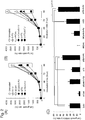
- Fig. 1 shows the results.
- Example 3 Cancer cell (Human colorectal cancer cell) proliferation inhibitory effects of siRNA and shRNA
- experimentaion was performed on a 96-well plate scale.
- a lipoplex obtained as in the case of Example 2 was directly added to wells containing OptiMEM to adjust the total volume to 50 ⁇ l per well.
- a DLD-1 or DLD-1/FU cell (human colonic intestinal adenocarcinoma cell) suspension (2,000 cells/100 ⁇ l) was added to the wells to which the lipoplex had been added (final total volume: 150 ⁇ l), followed by transfection.
- the final concentration of shRNA or siRNA per well was 5 nM.
- the medium was removed from each well 24 hours after the initiation of transfection.
- a fresh medium containing or not containing an existing chemotherapeutic agent, 5-FU was added thereto (200 ⁇ l per well).
- 5-FU was added to DLD-1 so as to result in a concentration of 0.1 ⁇ g/mL.
- 5-FU was added to DLD-1/FU so as to result in a concentration of 10 ⁇ g/mL.
- the medium was removed 0, 24, 48, 72, or 96 hours after the addition of the fresh medium.
- a 0.5% MTT (3-(4,5-dimethylthiazole-2-yl)-2,5-diphenyltetrazolium bromide) solution was added thereto (50 ⁇ L per well), followed by incubation at 37°C under 5% CO 2 for 4 hours. Also, the 0.5% MTT solution was added to cell-free wells to obtain a background absorbance.
- Figs. 2 and 3 show the results.
- siTS and shTS were found to have significantly inhibited proliferation of DLD-1 cells and DLD-1/FU cells in the presence of 5-FU.
- Cationic liposome was prepared using the Bangham method.
- Cationic lipids i.e., DOPE, POPC, CHOL, and DC-6-14
- DOPE DOPE
- POPC POPC
- CHOL CHOL
- DC-6-14 3:2:3:2 (molar ratio).
- the samples were introduced into a plugged test tube and mixed therein (the total lipid amount: 150 mmol).
- chloroform was removed therefrom under reduced pressure using a rotary evapolator (IWAKI, Tokyo). Subsequently, the test tube was placed overnight in a vacuum pump for complete removal of chloroform.
- a lipid thin film was formed in the test tube.
- a 9% sucrose solution (30 mL, pH 7.4) was added as an internal water phase to the lipid thin film, followed by intensive agitation at 37°C.
- MLVs multilamellar vesicles
- final lipid concentration: 50 mM final lipid concentration: 50 mM.
- the obtained solution was heated to 37°C, during which LUVs (large unilamellar vesicles) having particle sizes of approximately 100 nm were prepared using 200-, 100-, and 50-nm polycarbonate membranes (Nucleopore, CA, USA) by an extrusion method.
- the particle sizes and zeta potentials of the liposomes were determied using an NICOMP 370 (Particle Sizing System, CA, USA) (with a dinamic light scattering method and an electrophoresis light scattering method, respectively).
- the average particle size was found to be 119.9 nm and the zeta potential was found to be 25.56 mV for the prepared liposomes.
- the liposomes were PEGylated by a post insertion method.
- the liposome solution was prepared.
- a 9% sucrose solution in which mPEG 2000 -DSPE had been completely dissolved was added to the liposome solution such that the molar percentage of mPEG 2000 -DSPE accounted for 5% of the total amount of lipids (DOPE, POPC, CHOL, and DC-6-14), followed by mild shaking in an incubator provided with a shaker at 37°C for 1 hour.
- the average particle size and zeta potential for the prepared PEG-modified lipoplex were found to be 286.8 nm and 15.81 mV, respectively.
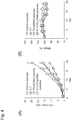
- mice were subcutaneously inoculated with a DLD-1 cell suspension (2 x 10 6 cells/100 ⁇ L). On Day 8 from tumor cell inoculation, mice with tumor volumes of 50-100 mm 3 were subjected to an in vivo experiment.
- the PEG-modified lipoplex was administered via the mouse caudal vein to the DLD-1 tumor-bearing mice at a dose of 80 ⁇ g/300 ⁇ L (in terms of the shRNA amount) at 1-day intervals for 8 times in total starting on day 8 after tumor transplantation.
- TS-1 Taiho Phamaceutical Co., Ltd.
- the agent was orally administered every day for 15 days at a dose of 6.9 mg (tegafur)/kg starting on day 8 after tumor transplantation.
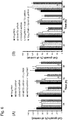
- Carcinostatic activity was examined based on changes in tumor volume and body weight.
- Tumor volume nm 3 long diameter of tumor ⁇ short diameter of tumor 2 ⁇ 0.5
- Figs. 4 and 5 show the results.
- the experiment was carried out according to the method described in Example 3, except for using human plura malignant mesothelioma cell line (MSTO 211H) instead of human colorectal carcinoma cell line (DLD-1 or DLD-1/FU) and using pemetrexed sodium hydrate (Alimta (registered trademark) (Eli Lilly Japan K.K.)) instead of 5-FU as an exsisting chemotherapeutic agent.
- MSTO 211H human plura malignant mesothelioma cell line
- DLD-1 or DLD-1/FU human colorectal carcinoma cell line
- pemetrexed sodium hydrate Aligna (registered trademark) (Eli Lilly Japan K.K.)
- shTS significantly inhibited proliferation of MSTO 211H cells in the presence of pemetrexed sodium hydrate.
- mice were subcutaneously inoculated with a MSTO 211H cell suspension (5 x 10 6 cells/100 ⁇ L). On day 14 from tumor cell inoculation, mice with tumor volumes of 50-100 mm 3 were subjected to an in vivo experiment.
- the PEG-modified lipoplex prepared in Example 5 was administered via the mouse caudal vein to the MSTO 211H tumor bearing mice at a dose of 40 ⁇ g/200 ⁇ L (in terms of the shRNA amount) at 1-day intervals for 6 times in total starting on day 14 after tumor transplantation.
- the existing chemotherapeutic agent pemetrexed sodium hydrate (Alimta (registered trademark) (Eli Lilly Japan K.K.)
- the agent was intraperitoneally administered 6 times in total (day 1, 2, 3, 8, 9 and 10) with 100 mg/kg starting on day 14 after tumor transplantation.
- TGI tumor growth inhibition rate
- Figs. 7 shows the result.
- Proliferation of TS-expressing tumor can be inhibited via in vivo administration of the antitumor agent containing, as an active ingredient, a liposome containing a shRNA molecule targeting a thymidylate synthase of the present invention. Further, if the antitumor agent is used in combination with a chemotherapeutic agent, cancer tissue targetability is promoted and thus the antitumor effects can be remarkably improved. It is expected that the present invention will contribute to the field of cancer therapy.
Landscapes
- Health & Medical Sciences (AREA)
- Life Sciences & Earth Sciences (AREA)
- Chemical & Material Sciences (AREA)
- General Health & Medical Sciences (AREA)
- Genetics & Genomics (AREA)
- Engineering & Computer Science (AREA)
- Medicinal Chemistry (AREA)
- Pharmacology & Pharmacy (AREA)
- Animal Behavior & Ethology (AREA)
- Public Health (AREA)
- Veterinary Medicine (AREA)
- Molecular Biology (AREA)
- Biomedical Technology (AREA)
- Epidemiology (AREA)
- Organic Chemistry (AREA)
- Bioinformatics & Cheminformatics (AREA)
- Biochemistry (AREA)
- Biotechnology (AREA)
- Wood Science & Technology (AREA)
- Zoology (AREA)
- General Engineering & Computer Science (AREA)
- Virology (AREA)
- Biophysics (AREA)
- Physics & Mathematics (AREA)
- Plant Pathology (AREA)
- Microbiology (AREA)
- Nuclear Medicine, Radiotherapy & Molecular Imaging (AREA)
- General Chemical & Material Sciences (AREA)
- Chemical Kinetics & Catalysis (AREA)
- Medicinal Preparation (AREA)
- Pharmaceuticals Containing Other Organic And Inorganic Compounds (AREA)
- Medicines That Contain Protein Lipid Enzymes And Other Medicines (AREA)
Claims (13)
- Agent antitumoral, qui comprend un petit ARN en épingle à cheveux (shARN) capable d'inhiber l'expression de thymidylate synthase (TS) par une action d'ARNi et un liposome cationique modifié par PEG, dans lequel l'ARNsh est lié à la surface du liposome cationique modifié par PEG et a une avancée comprenant au moins deux nucléotides à l'extrémité 3', dans lequel le liposome cationique modifié par PEG est composé de dioléoylphosphatidyléthanolamine (DOPE), palmitoyloléoylglycérophosphocholine (POPC), cholestérol (CHOL), et chlorure d'O,O'-ditétradécanoyl-N-(α-triméthylammonioacetyl)diéthanolamine (DC-6-14) à un ratio molaire de 3:2:3:2.
- Agent antitumoral selon la revendication 1, dans lequel l'ARNsh comprend un brin sens consistant en la séquence nucléotidique représentée dans SEQ ID NO : 1 et un brin antisens qui s'hybride sous des conditions strictes au brin sens.
- Agent antitumoral selon la revendication 1 ou 2, dans lequel l'ARNsh comprend un brin sens consistant en la séquence nucléotidique représentée dans SEQ ID NO : 1 et un brin antisens consistant en la séquence nucléotidique représentée dans SEQ ID NO : 2.
- Agent antitumoral selon l'une quelconque des revendications 1 à 3, dans lequel l'ARNsh est constitué de la séquence nucléotidique représentée dans SEQ ID NO : 8.
- Agent tumoral selon l'une quelconque des revendications 1 à 4, dans lequel la taille des particules de l'agent antitumoral est de 200 à 300 nm.
- Agent antitumoral selon l'une quelconque des revendications 1 à 5, dans lequel en outre de l'ARNsi ou de l'ARNsh capable d'inhiber l'expression d'un gène choisi dans le groupe constitué de gènes impliqués dans une prolifération de cellules tumorales est lié à la surface du liposome cationique modifié par PEG.
- Agent antitumoral selon la revendication 6, dans lequel le gène impliqué dans une prolifération de cellules tumorales est choisi dans le groupe constitué de gènes codant pour VEGF, EGFR, PDGF, HGF, Wint, Bcl-2, survivine, ribonucléotide réductase, et ADN polymérase.
- Agent antitumoral selon l'une quelconque des revendications 1 à 7, qui est à utiliser dans un procédé de traitement de tumeurs.
- Agent antitumoral selon l'une quelconque des revendications 1 à 7, qui est à utiliser en combinaison avec un agent de chimiothérapie pour traiter des tumeurs.
- Produit combiné, qui contient l'agent antitumoral selon l'une quelconque des revendications 1 à 7 et un agent de chimiothérapie pour traiter les tumeurs.
- Agent antitumoral selon la revendication 9 ou le produit combiné selon la revendication 10, dans lequel l'agent de chimiothérapie pour traiter des tumeurs est un agent antitumoral ayant une action d'inhibition de TS.
- Agent antitumoral ou le produit combiné selon la revendication 11, dans lequel l'agent antitumoral ayant une action d'inhibition de TS est un agent antitumoral 5-FU ou un hydrate de sodium de pémétrexed.
- Agent antitumoral ou le produit combiné selon la revendication 12, dans lequel l'agent antitumoral 5-FU et un composé médicamenteux de tégafur, giméracil, et otéracil potassium.
Priority Applications (2)
| Application Number | Priority Date | Filing Date | Title |
|---|---|---|---|
| PL12790050T PL2716304T3 (pl) | 2011-05-23 | 2012-05-22 | Liposom zawierający cząsteczkę shRNA skierowaną na syntazę tymidylanową oraz jego zastosowanie |
| HRP20171919TT HRP20171919T1 (hr) | 2011-05-23 | 2012-05-22 | Shrna-molekula koja sadrži liposom ciljano protiv sinteze timidilata i njezina uporaba |
Applications Claiming Priority (2)
| Application Number | Priority Date | Filing Date | Title |
|---|---|---|---|
| JP2011114946 | 2011-05-23 | ||
| PCT/JP2012/063082 WO2012161196A1 (fr) | 2011-05-23 | 2012-05-22 | Liposome contenant une molécule arnsh pour la thymidylate synthase, et son utilisation |
Publications (3)
| Publication Number | Publication Date |
|---|---|
| EP2716304A1 EP2716304A1 (fr) | 2014-04-09 |
| EP2716304A4 EP2716304A4 (fr) | 2014-10-29 |
| EP2716304B1 true EP2716304B1 (fr) | 2017-10-11 |
Family
ID=47217272
Family Applications (1)
| Application Number | Title | Priority Date | Filing Date |
|---|---|---|---|
| EP12790050.4A Active EP2716304B1 (fr) | 2011-05-23 | 2012-05-22 | LIPOSOME CONTENANT UNE MOLÉCULE ARNsh POUR LA THYMIDYLATE SYNTHASE, ET SON UTILISATION |
Country Status (13)
| Country | Link |
|---|---|
| US (1) | US20120301537A1 (fr) |
| EP (1) | EP2716304B1 (fr) |
| JP (1) | JP5941460B2 (fr) |
| CN (1) | CN103561775B (fr) |
| DK (1) | DK2716304T3 (fr) |
| ES (1) | ES2653923T3 (fr) |
| HR (1) | HRP20171919T1 (fr) |
| HU (1) | HUE037803T2 (fr) |
| NO (1) | NO2716304T3 (fr) |
| PL (1) | PL2716304T3 (fr) |
| PT (1) | PT2716304T (fr) |
| TW (1) | TWI442927B (fr) |
| WO (1) | WO2012161196A1 (fr) |
Families Citing this family (13)
| Publication number | Priority date | Publication date | Assignee | Title |
|---|---|---|---|---|
| WO2013009701A2 (fr) | 2011-07-08 | 2013-01-17 | The University Of North Carolina At Chapel Hill | Nanoparticules de métal-bisphosphonate pour thérapie anticancéreuse et imagerie, ainsi que pour traiter des troubles des os |
| EP2777707A1 (fr) | 2013-03-11 | 2014-09-17 | Wake Forest University Health Sciences | Procédé de traitement de tumeurs cérébrales |
| WO2014178152A1 (fr) * | 2013-04-30 | 2014-11-06 | Delta-Fly Pharma株式会社 | Liposome administré localement et application associée |
| US10517822B2 (en) | 2013-11-06 | 2019-12-31 | The University Of Chicago | Nanoscale carriers for the delivery or co-delivery of chemotherapeutics, nucleic acids and photosensitizers |
| JP2017507946A (ja) * | 2014-02-26 | 2017-03-23 | エスリス ゲーエムベーハーethris GmbH | Rnaを胃腸内投与するための組成物 |
| AU2015337909B2 (en) * | 2014-10-30 | 2018-12-13 | Delta-Fly Pharma, Inc. | New production method of lipoplex for local administration and antitumor drug using lipoplex |
| EP3439666A4 (fr) | 2016-05-20 | 2019-12-11 | The University of Chicago | Nanoparticules pour chimiothérapie, thérapie ciblée, thérapie photodynamique, immunothérapie et n'importe quelle combinaison de ces dernières |
| US11331272B2 (en) * | 2017-01-18 | 2022-05-17 | Temasek Life Sciences Laboratory Limited | Hyperstabilized liposomes increase targeting of mitotic cells |
| US20200163880A1 (en) * | 2017-07-13 | 2020-05-28 | Danmarks Tekniske Universitet | Cationic liposomes |
| EP3638367A4 (fr) | 2017-08-02 | 2021-07-21 | The University of Chicago | Couches organométalliques nanométriques et nanoplaques organométalliques pour thérapie photodynamique induite par rayons x, radiothérapie, thérapie radiodynamique, chimiothérapie, immunothérapie, et toute combinaison de celles-ci |
| JP6297737B1 (ja) | 2017-09-25 | 2018-03-20 | ジェイ−ネットワーク,インコーポレイテッド | 正に帯電した荷電ニオソームの調製方法及び荷電ニオソーム |
| CN116688145A (zh) * | 2022-02-28 | 2023-09-05 | 山东大学 | 一种药物和基因共载的脂质体复合物在抗肿瘤领域的应用 |
| CN114557964B (zh) * | 2022-03-17 | 2024-03-12 | 西安艾领克生物科技有限公司 | 一种可载rna的阳离子梭型柔性脂质体及其制备方法和应用 |
Family Cites Families (9)
| Publication number | Priority date | Publication date | Assignee | Title |
|---|---|---|---|---|
| US8202846B2 (en) * | 2000-03-16 | 2012-06-19 | Cold Spring Harbor Laboratory | Methods and compositions for RNA interference |
| JP4543188B2 (ja) * | 2004-03-10 | 2010-09-15 | 学校法人日本医科大学 | ヒトチミジル酸合成酵素に対するRNAiとして作用するRNA配列 |
| CN101277704A (zh) * | 2005-04-12 | 2008-10-01 | 因特拉迪格姆公司 | 用于治疗癌症及其它新血管生成疾病的RNAi治疗剂的组合物和方法 |
| JP2009534342A (ja) * | 2006-04-20 | 2009-09-24 | サイレンス・セラピューティクス・アーゲー | 血管内皮に特異的に送達するためのリポプレックス処方剤 |
| JPWO2008035461A1 (ja) * | 2006-09-22 | 2010-01-28 | 大鵬薬品工業株式会社 | 胃癌の術後補助化学治療法 |
| CA2721333C (fr) * | 2008-04-15 | 2020-12-01 | Protiva Biotherapeutics, Inc. | Nouvelles formulations lipidiques pour l'administration d'acides nucleiques |
| US8927207B2 (en) * | 2008-06-05 | 2015-01-06 | Research Foundation Of State University Of New York | miRNAs as therapeutic targets in cancer |
| PT2415870T (pt) * | 2009-03-31 | 2016-10-25 | Delta-Fly Pharma Inc | Molécula de arni para timidilato sintase e utilização da mesma |
| JP5446781B2 (ja) | 2009-11-26 | 2014-03-19 | トヨタ自動車株式会社 | 左右独立駆動車両の駆動ユニット冷却装置 |
-
2011
- 2011-10-14 US US13/273,960 patent/US20120301537A1/en not_active Abandoned
-
2012
- 2012-05-22 CN CN201280025004.4A patent/CN103561775B/zh active Active
- 2012-05-22 ES ES12790050.4T patent/ES2653923T3/es active Active
- 2012-05-22 JP JP2013516384A patent/JP5941460B2/ja active Active
- 2012-05-22 NO NO12790050A patent/NO2716304T3/no unknown
- 2012-05-22 PL PL12790050T patent/PL2716304T3/pl unknown
- 2012-05-22 HU HUE12790050A patent/HUE037803T2/hu unknown
- 2012-05-22 DK DK12790050.4T patent/DK2716304T3/da active
- 2012-05-22 HR HRP20171919TT patent/HRP20171919T1/hr unknown
- 2012-05-22 EP EP12790050.4A patent/EP2716304B1/fr active Active
- 2012-05-22 PT PT127900504T patent/PT2716304T/pt unknown
- 2012-05-22 WO PCT/JP2012/063082 patent/WO2012161196A1/fr not_active Ceased
- 2012-05-23 TW TW101118465A patent/TWI442927B/zh active
Non-Patent Citations (1)
| Title |
|---|
| None * |
Also Published As
| Publication number | Publication date |
|---|---|
| US20120301537A1 (en) | 2012-11-29 |
| JP5941460B2 (ja) | 2016-06-29 |
| PL2716304T3 (pl) | 2018-03-30 |
| CN103561775B (zh) | 2016-08-17 |
| HUE037803T2 (hu) | 2018-09-28 |
| CN103561775A (zh) | 2014-02-05 |
| EP2716304A1 (fr) | 2014-04-09 |
| DK2716304T3 (da) | 2017-11-27 |
| JPWO2012161196A1 (ja) | 2014-07-31 |
| NO2716304T3 (fr) | 2018-03-10 |
| PT2716304T (pt) | 2018-01-03 |
| HRP20171919T1 (hr) | 2018-02-09 |
| TWI442927B (zh) | 2014-07-01 |
| TW201300113A (zh) | 2013-01-01 |
| ES2653923T3 (es) | 2018-02-09 |
| EP2716304A4 (fr) | 2014-10-29 |
| WO2012161196A1 (fr) | 2012-11-29 |
| HK1190325A1 (zh) | 2014-07-04 |
Similar Documents
| Publication | Publication Date | Title |
|---|---|---|
| EP2716304B1 (fr) | LIPOSOME CONTENANT UNE MOLÉCULE ARNsh POUR LA THYMIDYLATE SYNTHASE, ET SON UTILISATION | |
| EP2246056A1 (fr) | Agent d'amélioration d'un effet antitumoral comprenant une préparation d'oxaliplatine liposome, et agent antitumoral comprenant la préparation de liposome | |
| US8524876B2 (en) | RNAi molecule targeting thymidylate synthase and application thereof | |
| EP3213755B1 (fr) | Nouveau procédé de fabrication de lipoplexe pour une administration par voie locale, et médicament antitumoral utilisant le lipoplexe | |
| EP2992874B1 (fr) | Liposome pour administration topique et son application | |
| US8592572B2 (en) | Liposome containing shRNA molecule targeting a thymidylate synthase and use thereof | |
| WO2020139866A2 (fr) | Compositions et méthodes pour le traitement du cancer | |
| HK1190325B (en) | Liposome containing shrna molecule for thymidylate synthase, and use for same | |
| HK1236991A1 (en) | Rnai molecule for thymidylate synthase and use thereof |
Legal Events
| Date | Code | Title | Description |
|---|---|---|---|
| PUAI | Public reference made under article 153(3) epc to a published international application that has entered the european phase |
Free format text: ORIGINAL CODE: 0009012 |
|
| 17P | Request for examination filed |
Effective date: 20131118 |
|
| AK | Designated contracting states |
Kind code of ref document: A1 Designated state(s): AL AT BE BG CH CY CZ DE DK EE ES FI FR GB GR HR HU IE IS IT LI LT LU LV MC MK MT NL NO PL PT RO RS SE SI SK SM TR |
|
| DAX | Request for extension of the european patent (deleted) | ||
| A4 | Supplementary search report drawn up and despatched |
Effective date: 20140925 |
|
| RIC1 | Information provided on ipc code assigned before grant |
Ipc: A61K 31/713 20060101ALI20140919BHEP Ipc: A61K 9/127 20060101ALI20140919BHEP Ipc: A61K 47/24 20060101ALI20140919BHEP Ipc: A61K 48/00 20060101AFI20140919BHEP Ipc: A61K 47/28 20060101ALI20140919BHEP Ipc: A61K 45/00 20060101ALI20140919BHEP Ipc: A61K 31/513 20060101ALI20140919BHEP Ipc: C12N 15/113 20100101ALI20140919BHEP Ipc: A61K 47/18 20060101ALI20140919BHEP Ipc: A61P 35/00 20060101ALI20140919BHEP |
|
| 17Q | First examination report despatched |
Effective date: 20151005 |
|
| GRAP | Despatch of communication of intention to grant a patent |
Free format text: ORIGINAL CODE: EPIDOSNIGR1 |
|
| INTG | Intention to grant announced |
Effective date: 20170503 |
|
| GRAS | Grant fee paid |
Free format text: ORIGINAL CODE: EPIDOSNIGR3 |
|
| RAP1 | Party data changed (applicant data changed or rights of an application transferred) |
Owner name: DELTA-FLY PHARMA, INC. |
|
| GRAA | (expected) grant |
Free format text: ORIGINAL CODE: 0009210 |
|
| AK | Designated contracting states |
Kind code of ref document: B1 Designated state(s): AL AT BE BG CH CY CZ DE DK EE ES FI FR GB GR HR HU IE IS IT LI LT LU LV MC MK MT NL NO PL PT RO RS SE SI SK SM TR |
|
| REG | Reference to a national code |
Ref country code: GB Ref legal event code: FG4D |
|
| REG | Reference to a national code |
Ref country code: CH Ref legal event code: EP |
|
| REG | Reference to a national code |
Ref country code: IE Ref legal event code: FG4D |
|
| REG | Reference to a national code |
Ref country code: AT Ref legal event code: REF Ref document number: 935444 Country of ref document: AT Kind code of ref document: T Effective date: 20171115 |
|
| REG | Reference to a national code |
Ref country code: DE Ref legal event code: R096 Ref document number: 602012038455 Country of ref document: DE |
|
| REG | Reference to a national code |
Ref country code: DK Ref legal event code: T3 Effective date: 20171123 |
|
| REG | Reference to a national code |
Ref country code: HR Ref legal event code: TUEP Ref document number: P20171919 Country of ref document: HR |
|
| REG | Reference to a national code |
Ref country code: SE Ref legal event code: TRGR |
|
| REG | Reference to a national code |
Ref country code: PT Ref legal event code: SC4A Ref document number: 2716304 Country of ref document: PT Date of ref document: 20180103 Kind code of ref document: T Free format text: AVAILABILITY OF NATIONAL TRANSLATION Effective date: 20171220 |
|
| REG | Reference to a national code |
Ref country code: NL Ref legal event code: FP |
|
| REG | Reference to a national code |
Ref country code: HR Ref legal event code: T1PR Ref document number: P20171919 Country of ref document: HR Ref country code: ES Ref legal event code: FG2A Ref document number: 2653923 Country of ref document: ES Kind code of ref document: T3 Effective date: 20180209 |
|
| REG | Reference to a national code |
Ref country code: LT Ref legal event code: MG4D Ref country code: NO Ref legal event code: T2 Effective date: 20171011 |
|
| PG25 | Lapsed in a contracting state [announced via postgrant information from national office to epo] |
Ref country code: LT Free format text: LAPSE BECAUSE OF FAILURE TO SUBMIT A TRANSLATION OF THE DESCRIPTION OR TO PAY THE FEE WITHIN THE PRESCRIBED TIME-LIMIT Effective date: 20171011 |
|
| REG | Reference to a national code |
Ref country code: FR Ref legal event code: PLFP Year of fee payment: 7 |
|
| PG25 | Lapsed in a contracting state [announced via postgrant information from national office to epo] |
Ref country code: RS Free format text: LAPSE BECAUSE OF FAILURE TO SUBMIT A TRANSLATION OF THE DESCRIPTION OR TO PAY THE FEE WITHIN THE PRESCRIBED TIME-LIMIT Effective date: 20171011 Ref country code: BG Free format text: LAPSE BECAUSE OF FAILURE TO SUBMIT A TRANSLATION OF THE DESCRIPTION OR TO PAY THE FEE WITHIN THE PRESCRIBED TIME-LIMIT Effective date: 20180111 Ref country code: IS Free format text: LAPSE BECAUSE OF FAILURE TO SUBMIT A TRANSLATION OF THE DESCRIPTION OR TO PAY THE FEE WITHIN THE PRESCRIBED TIME-LIMIT Effective date: 20180211 |
|
| REG | Reference to a national code |
Ref country code: GR Ref legal event code: EP Ref document number: 20170403610 Country of ref document: GR Effective date: 20180518 |
|
| REG | Reference to a national code |
Ref country code: DE Ref legal event code: R097 Ref document number: 602012038455 Country of ref document: DE |
|
| PG25 | Lapsed in a contracting state [announced via postgrant information from national office to epo] |
Ref country code: EE Free format text: LAPSE BECAUSE OF FAILURE TO SUBMIT A TRANSLATION OF THE DESCRIPTION OR TO PAY THE FEE WITHIN THE PRESCRIBED TIME-LIMIT Effective date: 20171011 Ref country code: CZ Free format text: LAPSE BECAUSE OF FAILURE TO SUBMIT A TRANSLATION OF THE DESCRIPTION OR TO PAY THE FEE WITHIN THE PRESCRIBED TIME-LIMIT Effective date: 20171011 Ref country code: SK Free format text: LAPSE BECAUSE OF FAILURE TO SUBMIT A TRANSLATION OF THE DESCRIPTION OR TO PAY THE FEE WITHIN THE PRESCRIBED TIME-LIMIT Effective date: 20171011 |
|
| PLBE | No opposition filed within time limit |
Free format text: ORIGINAL CODE: 0009261 |
|
| STAA | Information on the status of an ep patent application or granted ep patent |
Free format text: STATUS: NO OPPOSITION FILED WITHIN TIME LIMIT |
|
| PG25 | Lapsed in a contracting state [announced via postgrant information from national office to epo] |
Ref country code: SM Free format text: LAPSE BECAUSE OF FAILURE TO SUBMIT A TRANSLATION OF THE DESCRIPTION OR TO PAY THE FEE WITHIN THE PRESCRIBED TIME-LIMIT Effective date: 20171011 Ref country code: RO Free format text: LAPSE BECAUSE OF FAILURE TO SUBMIT A TRANSLATION OF THE DESCRIPTION OR TO PAY THE FEE WITHIN THE PRESCRIBED TIME-LIMIT Effective date: 20171011 |
|
| 26N | No opposition filed |
Effective date: 20180712 |
|
| REG | Reference to a national code |
Ref country code: HU Ref legal event code: AG4A Ref document number: E037803 Country of ref document: HU |
|
| PG25 | Lapsed in a contracting state [announced via postgrant information from national office to epo] |
Ref country code: SI Free format text: LAPSE BECAUSE OF FAILURE TO SUBMIT A TRANSLATION OF THE DESCRIPTION OR TO PAY THE FEE WITHIN THE PRESCRIBED TIME-LIMIT Effective date: 20171011 |
|
| PG25 | Lapsed in a contracting state [announced via postgrant information from national office to epo] |
Ref country code: MC Free format text: LAPSE BECAUSE OF FAILURE TO SUBMIT A TRANSLATION OF THE DESCRIPTION OR TO PAY THE FEE WITHIN THE PRESCRIBED TIME-LIMIT Effective date: 20171011 |
|
| REG | Reference to a national code |
Ref country code: HR Ref legal event code: ODRP Ref document number: P20171919 Country of ref document: HR Payment date: 20190430 Year of fee payment: 8 |
|
| PG25 | Lapsed in a contracting state [announced via postgrant information from national office to epo] |
Ref country code: MT Free format text: LAPSE BECAUSE OF NON-PAYMENT OF DUE FEES Effective date: 20180522 |
|
| REG | Reference to a national code |
Ref country code: HR Ref legal event code: ODRP Ref document number: P20171919 Country of ref document: HR Payment date: 20200518 Year of fee payment: 9 |
|
| PG25 | Lapsed in a contracting state [announced via postgrant information from national office to epo] |
Ref country code: MK Free format text: LAPSE BECAUSE OF NON-PAYMENT OF DUE FEES Effective date: 20171011 Ref country code: CY Free format text: LAPSE BECAUSE OF FAILURE TO SUBMIT A TRANSLATION OF THE DESCRIPTION OR TO PAY THE FEE WITHIN THE PRESCRIBED TIME-LIMIT Effective date: 20171011 |
|
| PG25 | Lapsed in a contracting state [announced via postgrant information from national office to epo] |
Ref country code: AL Free format text: LAPSE BECAUSE OF FAILURE TO SUBMIT A TRANSLATION OF THE DESCRIPTION OR TO PAY THE FEE WITHIN THE PRESCRIBED TIME-LIMIT Effective date: 20171011 |
|
| REG | Reference to a national code |
Ref country code: HR Ref legal event code: ODRP Ref document number: P20171919 Country of ref document: HR Payment date: 20210517 Year of fee payment: 10 |
|
| REG | Reference to a national code |
Ref country code: AT Ref legal event code: UEP Ref document number: 935444 Country of ref document: AT Kind code of ref document: T Effective date: 20171011 |
|
| REG | Reference to a national code |
Ref country code: HR Ref legal event code: ODRP Ref document number: P20171919 Country of ref document: HR Payment date: 20220518 Year of fee payment: 11 |
|
| REG | Reference to a national code |
Ref country code: HR Ref legal event code: ODRP Ref document number: P20171919 Country of ref document: HR Payment date: 20230518 Year of fee payment: 12 |
|
| REG | Reference to a national code |
Ref country code: HR Ref legal event code: ODRP Ref document number: P20171919 Country of ref document: HR Payment date: 20240510 Year of fee payment: 13 |
|
| REG | Reference to a national code |
Ref country code: HR Ref legal event code: ODRP Ref document number: P20171919 Country of ref document: HR Payment date: 20250508 Year of fee payment: 14 |
|
| PGFP | Annual fee paid to national office [announced via postgrant information from national office to epo] |
Ref country code: NL Payment date: 20250521 Year of fee payment: 14 |
|
| PGFP | Annual fee paid to national office [announced via postgrant information from national office to epo] |
Ref country code: FI Payment date: 20250526 Year of fee payment: 14 |
|
| PGFP | Annual fee paid to national office [announced via postgrant information from national office to epo] |
Ref country code: DE Payment date: 20250521 Year of fee payment: 14 Ref country code: PL Payment date: 20250512 Year of fee payment: 14 |
|
| PGFP | Annual fee paid to national office [announced via postgrant information from national office to epo] |
Ref country code: GB Payment date: 20250521 Year of fee payment: 14 Ref country code: DK Payment date: 20250526 Year of fee payment: 14 Ref country code: ES Payment date: 20250627 Year of fee payment: 14 |
|
| PGFP | Annual fee paid to national office [announced via postgrant information from national office to epo] |
Ref country code: HU Payment date: 20250523 Year of fee payment: 14 Ref country code: NO Payment date: 20250523 Year of fee payment: 14 |
|
| PGFP | Annual fee paid to national office [announced via postgrant information from national office to epo] |
Ref country code: LU Payment date: 20250521 Year of fee payment: 14 Ref country code: BE Payment date: 20250521 Year of fee payment: 14 Ref country code: IT Payment date: 20250527 Year of fee payment: 14 |
|
| PGFP | Annual fee paid to national office [announced via postgrant information from national office to epo] |
Ref country code: HR Payment date: 20250508 Year of fee payment: 14 |
|
| PGFP | Annual fee paid to national office [announced via postgrant information from national office to epo] |
Ref country code: PT Payment date: 20250508 Year of fee payment: 14 Ref country code: LV Payment date: 20250514 Year of fee payment: 14 |
|
| PGFP | Annual fee paid to national office [announced via postgrant information from national office to epo] |
Ref country code: FR Payment date: 20250528 Year of fee payment: 14 |
|
| PGFP | Annual fee paid to national office [announced via postgrant information from national office to epo] |
Ref country code: GR Payment date: 20250523 Year of fee payment: 14 |
|
| PGFP | Annual fee paid to national office [announced via postgrant information from national office to epo] |
Ref country code: CH Payment date: 20250601 Year of fee payment: 14 |
|
| PGFP | Annual fee paid to national office [announced via postgrant information from national office to epo] |
Ref country code: AT Payment date: 20250522 Year of fee payment: 14 |
|
| PGFP | Annual fee paid to national office [announced via postgrant information from national office to epo] |
Ref country code: TR Payment date: 20250513 Year of fee payment: 14 |
|
| PGFP | Annual fee paid to national office [announced via postgrant information from national office to epo] |
Ref country code: IE Payment date: 20250521 Year of fee payment: 14 |
|
| PGFP | Annual fee paid to national office [announced via postgrant information from national office to epo] |
Ref country code: SE Payment date: 20250521 Year of fee payment: 14 |