EP2717054B1 - Procédé d'inhibition d'une réaction non spécifique dans un réactif de mesure de pivka-ii - Google Patents
Procédé d'inhibition d'une réaction non spécifique dans un réactif de mesure de pivka-ii Download PDFInfo
- Publication number
- EP2717054B1 EP2717054B1 EP12789768.4A EP12789768A EP2717054B1 EP 2717054 B1 EP2717054 B1 EP 2717054B1 EP 12789768 A EP12789768 A EP 12789768A EP 2717054 B1 EP2717054 B1 EP 2717054B1
- Authority
- EP
- European Patent Office
- Prior art keywords
- pivka
- antibody
- carrier particles
- prothrombin
- ions
- Prior art date
- Legal status (The legal status is an assumption and is not a legal conclusion. Google has not performed a legal analysis and makes no representation as to the accuracy of the status listed.)
- Active
Links
Images




Classifications
-
- G—PHYSICS
- G01—MEASURING; TESTING
- G01N—INVESTIGATING OR ANALYSING MATERIALS BY DETERMINING THEIR CHEMICAL OR PHYSICAL PROPERTIES
- G01N33/00—Investigating or analysing materials by specific methods not covered by groups G01N1/00 - G01N31/00
- G01N33/48—Biological material, e.g. blood, urine; Haemocytometers
- G01N33/50—Chemical analysis of biological material, e.g. blood, urine; Testing involving biospecific ligand binding methods; Immunological testing
- G01N33/53—Immunoassay; Biospecific binding assay; Materials therefor
-
- G—PHYSICS
- G01—MEASURING; TESTING
- G01N—INVESTIGATING OR ANALYSING MATERIALS BY DETERMINING THEIR CHEMICAL OR PHYSICAL PROPERTIES
- G01N33/00—Investigating or analysing materials by specific methods not covered by groups G01N1/00 - G01N31/00
- G01N33/48—Biological material, e.g. blood, urine; Haemocytometers
- G01N33/50—Chemical analysis of biological material, e.g. blood, urine; Testing involving biospecific ligand binding methods; Immunological testing
- G01N33/86—Chemical analysis of biological material, e.g. blood, urine; Testing involving biospecific ligand binding methods; Immunological testing involving blood coagulating time or factors, or their receptors
-
- G—PHYSICS
- G01—MEASURING; TESTING
- G01N—INVESTIGATING OR ANALYSING MATERIALS BY DETERMINING THEIR CHEMICAL OR PHYSICAL PROPERTIES
- G01N33/00—Investigating or analysing materials by specific methods not covered by groups G01N1/00 - G01N31/00
- G01N33/48—Biological material, e.g. blood, urine; Haemocytometers
- G01N33/50—Chemical analysis of biological material, e.g. blood, urine; Testing involving biospecific ligand binding methods; Immunological testing
- G01N33/53—Immunoassay; Biospecific binding assay; Materials therefor
- G01N33/536—Immunoassay; Biospecific binding assay; Materials therefor with immune complex formed in liquid phase
- G01N33/537—Immunoassay; Biospecific binding assay; Materials therefor with immune complex formed in liquid phase with separation of immune complex from unbound antigen or antibody
- G01N33/539—Immunoassay; Biospecific binding assay; Materials therefor with immune complex formed in liquid phase with separation of immune complex from unbound antigen or antibody involving precipitating reagent, e.g. ammonium sulfate
- G01N33/541—Double or second antibody, i.e. precipitating antibody
-
- G—PHYSICS
- G01—MEASURING; TESTING
- G01N—INVESTIGATING OR ANALYSING MATERIALS BY DETERMINING THEIR CHEMICAL OR PHYSICAL PROPERTIES
- G01N33/00—Investigating or analysing materials by specific methods not covered by groups G01N1/00 - G01N31/00
- G01N33/48—Biological material, e.g. blood, urine; Haemocytometers
- G01N33/50—Chemical analysis of biological material, e.g. blood, urine; Testing involving biospecific ligand binding methods; Immunological testing
- G01N33/53—Immunoassay; Biospecific binding assay; Materials therefor
- G01N33/536—Immunoassay; Biospecific binding assay; Materials therefor with immune complex formed in liquid phase
- G01N33/542—Immunoassay; Biospecific binding assay; Materials therefor with immune complex formed in liquid phase with steric inhibition or signal modification, e.g. fluorescent quenching
-
- G—PHYSICS
- G01—MEASURING; TESTING
- G01N—INVESTIGATING OR ANALYSING MATERIALS BY DETERMINING THEIR CHEMICAL OR PHYSICAL PROPERTIES
- G01N33/00—Investigating or analysing materials by specific methods not covered by groups G01N1/00 - G01N31/00
- G01N33/48—Biological material, e.g. blood, urine; Haemocytometers
- G01N33/50—Chemical analysis of biological material, e.g. blood, urine; Testing involving biospecific ligand binding methods; Immunological testing
- G01N33/53—Immunoassay; Biospecific binding assay; Materials therefor
- G01N33/543—Immunoassay; Biospecific binding assay; Materials therefor with an insoluble carrier for immobilising immunochemicals
-
- G—PHYSICS
- G01—MEASURING; TESTING
- G01N—INVESTIGATING OR ANALYSING MATERIALS BY DETERMINING THEIR CHEMICAL OR PHYSICAL PROPERTIES
- G01N33/00—Investigating or analysing materials by specific methods not covered by groups G01N1/00 - G01N31/00
- G01N33/48—Biological material, e.g. blood, urine; Haemocytometers
- G01N33/50—Chemical analysis of biological material, e.g. blood, urine; Testing involving biospecific ligand binding methods; Immunological testing
- G01N33/82—Chemical analysis of biological material, e.g. blood, urine; Testing involving biospecific ligand binding methods; Immunological testing involving vitamins or their receptors
Definitions
- the present invention relates to an immunoassay of PIVKA-II, a PIVKA-II assay reagent, and a PIVKA-II assay kit.
- PIVKA-II refers to a protein classified as prothrombin, which is the blood coagulation factor II, without coagulation factor activity, and is also referred to as abnormal prothrombin.
- Prothrombin is synthesized in liver and the generation process requires conversion of glutamic acid (Glu) residues into ⁇ -carboxyglutamic acid (Gla) residues by vitamin K-dependent ⁇ -glutamyl carboxylase.
- Glu glutamic acid
- Ga ⁇ -carboxyglutamic acid
- PIVKA-II has all or a portion of 10 residues not converted into Gla and remaining as Glu residues.
- PIVKA-II was initially found in the blood of vitamin K deficient or vitamin K antagonist-treated patients.
- PIVKA-II is recently measured as a tumor marker of hepatoma.
- PIVKA-II is an abbreviation of protein induced by Vitamin K absence or antagonists-II and is also referred to as des- ⁇ -carboxy prothrombin (DCP) (References: Weitz, I. C., and Liebman, H. A., (1993) Hepatology 18, 990-997 ; Suzuki M, Shiraha H, Fujikawa T, Takaoka N, Ueda N, Nakanishi Y, Koike K, Takaki A, Shiratori Y, J Biol Chem, 2005 Feb 25; 280 (8), 6409-15 ; A. Nakao, A. Virji, Y. Iwaki, B. Carr, S. Iwatsuki, and E. Starzl, Hepatogastroenterology, 1991 October, 38(5), 450-453 ).
- DCP des- ⁇ -carboxy prothrombin
- Non-Patent Literature 1 a method of separating prothrombin and PIVKA-II by using HPLC ( Anal Biochem, 1984 Feb; 137(1), 227-9 ), a method of separating prothrombin and PIVKA-II with polyacrylamide gel-affinity electrophoresis using calcium lactate (Non-Patent Literature 1), an ELISA-based method using an antibody specifically reactive with PIVKA-II (DCP) (Non-Patent Literature 2), etc.
- Non-Patent Literature 1 calcium lactate is used at the time of electrophoresis and this is intended to generate a difference in electrophoretic mobility between normal prothrombin and PIVKA-II due to the presence of calcium-binding capacity of the Gla residues so as to separate the both.
- Non-Patent Literature 2 PIVKA-II is measured by using an antibody (C4B6) specifically binding to PIVKA-II only under the presence of calcium ions.
- C4B6 antibody is reported as an anti-PIVKA-II antibody requiring the presence of calcium ions for specifically measuring PIVKA-II until now. Therefore, the addition of calcium is usually not required for using an antibody specifically reactive with PIVKA-II (DCP) in a measuring method of PIVKA-II.
- the current mainstream of methods for specifically measuring PIVKA-II in a sample is a method based on EIA (enzyme immunoassay), RIA (radioimmunoassay), or ELISA (enzyme-linked immunoassay) of measuring through a two-step sandwich method using a monoclonal antibody specifically reactive with PIVKA-II (DCP) and an anti-prothrombin polyclonal antibody (e.g., JP H05-43357 A (Translation of PCT Application) and JP H09-43237 A ).
- EIA enzyme immunoassay
- RIA radioimmunoassay
- ELISA enzyme-linked immunoassay
- Patent Literature 1 is an example of measuring PIVKA-II by utilizing agglutination of carrier particles.
- a summary of the technique of Patent Literature 1 is as follows. First, a sample is added to magnetic particles carrying a PIVKA-II specific antibody to bind PIVKA-II in the sample to the antibody. At this point, normal prothrombin in the sample is not bound to the magnetic particles. The magnetic particles are trapped by a magnet and washed to remove normal prothrombin. Fluorescent-labeled particles carrying an anti-prothrombin antibody reactive with both PIVKA-II and normal prothrombin is then added to the magnetic particles.
- a sandwich structure is formed with the magnetic particles and the fluorescent-labeled particles bound through the two antibodies to PIVKA-II.
- the sandwich structure is trapped by a magnet and washed to remove the free fluorescent-labeled particles.
- the sandwich structure is alkali-treated to dissociate the fluorescent-labeled particles from PIVKA-II to measure fluorescence intensity.
- the fluorescence intensity is proportional to PIVKA-II concentration in the sample.
- Patent Literature 1 is a heterogeneous measuring method having the steps of B/F separation/washing and employs as the detection principle the measurement of fluorescence intensity derived from the fluorescent-labeled particles rather than utilizing as the detection principle the optical measurement of agglutination of the carrier particles itself.
- Patent Literature 2 teaches in Examples a basic technique of latex agglutination test employing as the detection principle the optical measurement of agglutination of carrier particles itself in a homogeneous system without the need of the steps of B/F separation/washing.
- the document teaches "a highly-sensitive immunoassay method characterized in that two different types of monoclonal antibodies to human CEA are carried by two types of latex carriers and are reacted with human CEA in a water solvent to selectively agglutinate the conjugates of the latex carriers and human CEA, wherein the two types of latex particles have average particle diameters different from each other and within a range of 0.05 to 0.500 ⁇ m and said monoclonal antibodies are carried by the respective latex particles".
- Patent Literature 2 The technique taught in Patent Literature 2 is very excellent in terms of simplicity. When this technique is used, human CEA concentration in a sample can be measured by adding the sample to two types of latex particles carrying two different types of monoclonal antibodies to human CEA and directly measuring a change in absorbance associated with agglutination of the latex particles.
- PIVKA-II if at least one of the monoclonal antibodies has a property of specifically binding to PIVKA-II, specificity of a measurement system can be ensured and, therefore, the other monoclonal antibody does not have to have the property of specifically binding to PIVKA-II as long as it binds to prothrombin (either normal or abnormal). If at least either one of the monoclonal antibodies is specific to PIVKA-II, the presence of calcium ions is normally not necessary in the measuring method of PIVKA-II.
- the present inventors attempted to develop a simple and highly-reliable PIVKA-II measuring method employing the principle of a carrier particle-agglutination test based on the technique of Patent Literature 2. It is known that, in an immunoassay such as a latex immune agglutination method, a nonspecific reaction due to interference by rheumatoid factor and a heterophilic antibody (e.g., an anti-mouse immunoglobulin antibody (HAMA) and anti-goat immunoglobulin antibody (HAGA)) can cause a problem depending on the sample to be measured.
- HAMA anti-mouse immunoglobulin antibody
- HAGA anti-goat immunoglobulin antibody
- a method of removing the Fc site of the antibody to be bound to latex particles and a method of adding an anti-HAMA agent (Heteroblock manufactured by OMEGA Biologicals and HBR manufactured by Scantibodies Lab) etc., to the solution for immune reaction are generally known.
- the study of the present inventors revealed the occurrence of nonspecific agglutination, in an agglutination test using two types of latex particles respectively carrying two types of monoclonal antibodies for measuring PIVKA-II, that cannot be inhibited by the removal of the Fc site of antibody and by the use of anti-HAMA agents: one type of the monoclonal antibodies having a property of specifically binding to PIVKA-II and the other type of the monoclonal antibodies having a property of specifically binding to prothrombin (normal prothrombin and PIVKA-II).
- a problem to be solved by the present invention is to inhibit nonspecific agglutination reactions in an agglutination test using two types of monoclonal antibodies for measuring PIVKA-II and two types of carrier particles carrying these monoclonal antibodies.
- the inventors have found that, in an agglutination test using two types of carrier particles respectively carrying two types of monoclonal antibodies for measuring PIVKA-II, i.e., one type of the monoclonal antibodies having a property of specifically binding to PIVKA-II and the other type of the monoclonal antibodies having a property of specifically binding to prothrombin, the addition of divalent metal ions to reaction solution can inhibit the nonspecific agglutination reaction.
- the invention completed by the present inventors based on the above findings includes the following items (1) to (4).
- a biological sample refers to a biological sample of a mammal, preferably, a human.
- a biological sample may be any sample in which prothrombin may exist (e.g., those derived from a tissue expressing prothrombin or body fluid through which prothrombin circulates) and is preferably blood, serum, plasma, or lymph fluid.
- PIVKA-II refers to PIVKA-II of a mammal, preferably, a human.
- Prothrombin In this description, both normal prothrombin and abnormal prothrombin are collectively referred to as "prothrombin”. As used herein, “abnormal prothrombin” refers to PIVKA-II, and “normal prothrombin” refers to prothrombin other than PIVKA-II.
- a "monoclonal antibody” may refer to an antibody itself or may refer to a fragment such as Fab fragment and F(ab') 2 fragment having binding activity to an antigen.
- the monoclonal antibody may be acquired by any acquisition methods: it may be an antibody acquired by classical immunization of an antigen to a nonhuman animal or an antibody acquired by a gene recombination technique or a gene immunization method.
- the antibody may bind to a known labeling substance such as peroxidase, alkaline phosphatase, biotin, colloidal metal, and FITC.
- a "reagent containing an antibody or antibodies” may also contain a salt, a buffering agent, a preservative, a surfactant, a reducing agent, and a cryoprotectant.
- a salt e.g., sodium bicarbonate, sodium bicarbonate, sodium bicarbonate, sodium bicarbonate, sodium bicarbonate, sodium bicarbonate, sodium bicarbonate, sodium bicarbonate, sodium bicarbonate, sodium bicarbonate, sodium bicarbonate, sodium bicarbonate, sodium bicarbonate, sodium bicarbonate, sodium bicarbonate, sodium bicarbonate, sodium bicarbonate, sodium bicarbonate, sodium bicarbonate, sodium bicarbonate, sodium bicarbonate, sodium bicarbonate, sodium bicarbonate, sodium bicarbonate, sodium bicarbonate, sodium bicarbonate, sodium bicarbonate, sodium bicarbonate, sodium bicarbonate, sodium bicarbonate, sodium bicarbonate, sodium bicarbonate, sodium bicarbonate, sodium bicarbonate, sodium bicarbonate, sodium bicarbonate, sodium bicarbonate, sodium bicarbonate, sodium
- Immobilization As used herein, the term “immobilization”, “solid-phased”, and “sensitization” are used in the same meaning.
- Carrier particles (insoluble carriers) used in the present invention include, for example, organic polymer powders, inorganic material powders, microorganisms, hemocytes, and cell debris.
- the organic polymer powders include, for example, natural polymer powders such as insoluble agarose, cellulose, and insoluble dextran, and synthetic polymer powders such as polystyrene, styrene-styrene sulfonate copolymer, acrylonitrile-butadiene-styrene copolymer, vinyl chloride-acrylic acid ester copolymer, and vinyl acetate- acrylic acid ester copolymer, and particularly, latex particles acquired by uniformly suspending synthetic polymer powders are preferable.
- natural polymer powders such as insoluble agarose, cellulose, and insoluble dextran
- synthetic polymer powders such as polystyrene, styrene-styrene sulfonate copolymer, acrylonitrile-butadiene-styrene copolymer, vinyl chloride-acrylic acid ester copolymer, and vinyl acetate- acrylic acid ester copoly
- the inorganic material powders include, for example, metal pieces of gold, titanium, iron, nickel, etc., silica, alumina, and carbon powders.
- the average particle diameter of the insoluble carriers is typically 0.05 to 1.0 ⁇ m.
- the particle diameters and the materials of the two types of carrier particles carrying two types of monoclonal antibodies may be the same or different.
- Divalent metal ions refer to Be 2+ , Mg 2+ , Ca 2+ , Sr 2+ , Ba 2+ , or Ra 2+ . Among these, Ca 2+ or Mg 2+ is preferable, and Mg 2+ is more preferable.
- Concentration of Be 2+ , Mg 2+ , Ca 2+ , Sr 2+ , Ba 2+ , or Ra 2+ is preferably 1 to 50 mmol/L, 2 to 50 mmol/L, 3 to 50 mmol/L, 5 to 50 mmol/L, 7 to 50 mmol/L, or 10 to 50 mmol/L, more preferably 2 to 30 mmol/L, 3 to 30 mmol/L, 5 to 30 mmol/L, 7 to 30 mmol/L, or 10 to 30 mmol/L, further preferably 3 to 20 mmol/L, 5 to 20 mmol/L, 7 to 20 mmol/L, or 10 to 20 mmol/L.
- the divalent metal ions of the present invention are not derived from biological samples to be measured for PIVKA-II. Above concentrations indicate the concentration at the time of agglutination reaction of PIVKA-II and carrier particles to which antibodies are immobilized.
- the divalent metal ions can easily obtained and used as halides such as MgCl 2 and CaCl 2 or in the forms of inorganic acid salts such as MgSO 4 and CaSO 4 , alkali salts such as Mg(OH) 2 and Ca(OH) 2 , and organic acid salts such as MgC 2 O 4 and CaC 2 O 4 .
- carrier particles are "brought into contact” with a biological sample, this means that the carrier particles and the biological sample are mixed in the form of solid, aqueous solution, or suspension.
- Agglutination means that multiple carrier particles of the same type or different types to which antibodies are immobilized are bound to each other via binding between PIVKA-II and the antibodies. This agglutination causes a change in the intensity, wavelength, or phase of transmitted or scattered light when light is applied to a suspension containing the carrier particles.
- a method for optical measurement is preferably a method using a spectrophotometer or a light scattering photometer.
- Optically measuring agglutination As used herein, “optically measuring agglutination” of particles means that measurement is performed while agglutination of a plurality of types of particles is continuing. Therefore, “optically measuring agglutination” does not mean that one type of particles is separated from the other particles and optically measured after particles have once agglutinated.
- PIVKA-II Specifically binding to PIVKA-II: As used herein, when an antibody "specifically binds to PIVKA-II", this means that the antibody binds to PIVKA-II and does not bind to a substance other than PIVKA-II and particularly means that the antibody does not bind to normal prothrombin.
- prothrombin Specifically binding to prothrombin: As used herein, when an antibody "specifically binds to prothrombin”, this means that the antibody binds to at least one of normal prothrombin and PIVKA-II and does not bind to a substance other than normal prothrombin and PIVKA-II.
- does not bind does not mean complete absence of binding, and an antibody causing some nonspecific binding is usable in the present invention unless an error more than acceptable level is generated when concentration of PIVKA-II is measured.
- Binding to different epitopes When a plurality of monoclonal antibodies used in the method, reagent, or kit of the present invention "bind to different epitopes", this means that the respective antibodies recognize different sites on PIVKA-II. This is because the plurality of monoclonal antibodies should not compete with each other when binding to PIVKA-II.
- Nonspecific agglutination As used herein, “nonspecific agglutination” or “nonspecific agglutination reaction” refers to aggregation other than specific agglutination. It is practically difficult to directly distinguish the difference between specific agglutination and nonspecific agglutination and, if a measurement value is away from an expected value in optical measurement, it is considered that "nonspecific agglutination” is observed.
- a reagent for measuring concentration of PIVKA-II through an agglutination reaction of the present invention includes the following constituent elements:
- the elements 1 to 3 may be formed as respective independent constituent reagents or two or more of the elements may be combined as needed to form a constituent reagent.
- the reagent is configured in the form of a first reagent and a second reagent.
- a specific example in the case of configuration in the form of the first reagent and the second reagent can be a reagent (kit) made up of the first reagent containing the element 3 and the second reagent containing the elements 1 and 2, which is preferred for the present invention. Above configuration will further be described.
- the first reagent adjusts (diluting) concentrations of a target substance and impurities and adjusts pH and ion intensity at the time of agglutination reaction in the reaction system.
- the second reagent causes an agglutination reaction by the carrier particles to which antibodies are immobilized after a measurement environment is created by the first reagent.
- the first reagent or the second reagent can contain commonly used pH buffering agents, salts, proteins, peptides, surfactants, reaction accelerators (sensitizers), nonspecific reaction-inhibiting agents, preservation stabilizers, preservatives, etc., as needed along with the elements 1 to 3 to the extent that the agglutination reaction by the carrier particles to which antibodies are immobilized is not blocked.
- Preferred pH and salt concentration at the time of the agglutination reaction can be, for example, pH 5 to 9 and 5 to 500 mmol/L, respectively, and the pH and salt concentration can be achieved by a combination of the first reagent and the second reagent.
- the first reagent and the second reagent are named based on the order of contact with a biological sample and may be named in a different manner.
- the first reagent can be referred to as a diluting solution
- the second reagent can be referred to as a latex reagent.
- the explanation above is not intended to limit the reagent and, for example, the elements 1 to 3 may appropriately be contained in both the first and second reagents or only in the second reagent. Those skilled in the art will easily understand that such appropriate modifications are possible.
- a kit of parts for measuring concentration of PIVKA-II through an agglutination reaction includes the following constituent elements:
- the kit refers to a form of the reagent when the elements C explicitly/implicitly describes in an understandable manner that the element A and the element B are combined to be used for the measurement of PIVKA-II. Therefore, obviously not only when the element A, the element B, and the element C are packed in the same package or when the first reagent and the second reagent are concurrently distributed, but also even when each of the first and second reagents is independently/separately distributed, the kit of the present invention may be formed as long as the elements C has such a description.
- the document of the element C may have any name and form such as an attached document, a pamphlet, and a catalogue and may be in writing or recorded in an electronic medium.
- the kit may also include a substance for concentration calibration (so-called calibrator), a sample with known PIVKA-II concentration for precision control (so-called control), etc., for calculating the PIVKA-II concentration in a biological sample.
- calibrator substance for concentration calibration
- control sample with known PIVKA-II concentration for precision control
- Patent Literature 3 The antibody production method described in the first example of Patent Literature 3 will hereinafter be cited in a partially abbreviated manner.
- (B) BaSO 4 and BaCO 3 were added to the plasma of warfarin administered patients at a ratio of 100 mg/mL each and stirred for 120 minutes to adsorb and remove normal prothrombin and the plasma was added to DE-52 cellulose for ion exchange, applied to the affinity column using a monoclonal antibody against a portion common to both normal prothrombin and PIVKA-II, eluted with 4M guanidine hydrochloride, dialyzed, and concentrated to purify PIVKA-II.
- PIVKA-II (50 ⁇ g) was intraperitoneally administered to BALB/C mice (female, four weeks old) along with the same volume of Freund's complete adjuvant; after two weeks, PIVKA-II (15 ⁇ g) was further administered into the tail vein and spleen cells were excised three days later; and the cells were fused with the tumor cell strain P3U1.
- the cell fusion was performed by the method of Watanabe et al. using polyethylene glycol 4,000. Cloning was then performed three times with a limiting dilution method using a 96-well microplate.
- the assay for the cloning was performed by using decarboxylated human prothrombin of (A) above and, eventually, native PIVKA-II. Identification symbols ..., MU-3, ... were applied to respective cell lines of antibody-producing hybridomas established by the cloning. .... The monoclonal anti-PIVKA-II antibody was acquired from the cell line MU-3 in the usual manner.”
- the epitopic site of the MU-3 antibody is a "decarboxyl-peptide site at 13th to 23th positions of the amino acid sequence of prothrombin" as a result of a detailed study of the binding ability using peptide fragments of various lengths synthesized based on the Gla region amino acid sequence of PIVKA-II ( JP H07-20127 A ).
- Patent Literature 3 JP H05-43357 A (Translation of PCT Application)
- JP H07-20127 A JP H07-20127 A
- Anti-PIVKA-II antibodies other than MU-3 are also known.
- 2G4 antibody described in JP H09-43237 A and an antibody the epitopic site of which is a decarboxyl-peptide site at 13th to 27th positions of the amino acid sequence of PIVKA-II as described in International Publication Pamphlet No. WO 2010/104815 are considered to be usable as the anti-PIVKA-II antibody of the present invention.
- PIVKA-II (1 mg/mL) purified from Coumadin plasma (manufactured by UNIGLOBE RESEARCH CORPORATION) and Freund's complete adjuvant (manufactured by GIBCO) were mixed one-to-one and emulsified and were subcutaneously administered to eight-week old female BALB/C mice (produced by Charles River Laboratories Japan) at a dose of 50 ⁇ g/100 ⁇ L four times at two-week intervals and, after three days from the final immunization, the spleen was excised.
- the spleen cells acquired from the excised spleen and myeloma cells SP2/O-Ag14 were mixed at a ratio of 10 to 1 for cell fusion in the presence of 50 wt% polyethylene glycol 1540 (manufactured by Wako Pure Chemical Industries).
- the fused cells were suspended in HAT medium at 2.5 ⁇ 10 6 cells/mL with respect to spleen cells and dispensed by 0.2 mL to 96-well culture plates (manufactured by CORNING).
- the fused cells were cultured at 37 °C in 5 vol% CO 2 incubator. After about two weeks, the culture supernatant of wells with growing hybridomas was evaluated in accordance with the ELISA method described below to select hybridomas producing an antibody reactive with PIVKA-II.
- the 24209 monoclonal antibody (24209-antibody) and the 24219 monoclonal antibody (24219-antibody) were prepared from the hybridoma 09 and hybridoma 19, respectively, by the following method.
- the hybridoma was intraperitoneally administered in an amount of 0.5 ⁇ 10 6 cells to 12-week-old female BALB/c mice preliminarily intraperitoneally injected with 0.5 mL of pristane two weeks before.
- the ascites were collected after about 14 days, and supernatant was acquired by centrifugation.
- the supernatant was mixed with the same amount of adsorption buffer solution (3 mol/L NaCl-1.5 mol/L Glycine-NaOH, pH 8.5) and then filtrated.
- the filtrate was passed through a protein A column (HiTrap rProteinA FF manufactured by GE Healthcare Japan) equilibrated with the adsorption buffer solution to adsorb antibodies with the column.
- the monoclonal antibodies were eluted with 0.1 mol/L citrate buffer solution (pH 3.0) and purified.
- hybridomas 09 and 19 were deposited at International Patent Organism Depositary, National Institute of Advanced Industrial Science and Technology (Tsukuba Central 6, 1-1-1 Higashi, Tsukuba, Ibaraki, Japan) (date of receipt: May 11, 2011 ) under the accession numbers FERM BP-11381 and FERM BP-11382, respectively.
- a glass reaction container (capacity: 2 L) equipped with a stirring machine, a reflux condenser, a temperature detector, a nitrogen introduction tube, and a jacket was filled with 1,100 g of distilled water, 200 g of styrene, 0.2 g of sodium styrene sulfonate, and an aqueous solution of 1.5 g of potassium persuphate dissolved in 50 g of distilled water, and after the inside of the container was replaced with nitrogen gas, polymerization was performed for 48 hours while stirring at 70 °C.
- the solution was filtrated with filter paper to extract latex particles.
- the particle diameter of the acquired latex particles were measured by using a transmission electron microscope apparatus (manufactured by JEOL Ltd., "model JEM-1010") for imaging the latex particles at a magnification of 10,000 times and performing the image analysis of 100 or more particles.
- the average particle diameter was 0.3 ⁇ m.
- the latex particles may be denoted by Lx.
- Tris-HCl Tris-hydrochloric acid buffer solution (hereinafter, referred to as Tris-HCl), pH 7.5) having the average particle diameter of 0.3 ⁇ m as described above
- 1 mL of 24209-antibody solution diluted to 0.60 mg/mL with 5 mmol/L Tris-HCl (pH 7.5) was added and stirred at 4 °C for two hours.
- 1 mL of 5 mmol/L Tris-HCl (pH 7.5) containing 0.5 wt% BSA was added and stirred at 4 °C for one hour.
- the latex particles having the average particle diameter of 0.3 ⁇ m and the 24219-antibody were used for producing a 24219-antibody-sensitized latex particle solution in the same method as described above.
- the latex particles having the average particle diameter of 0.3 ⁇ m and the MU3-antibody were used for producing an MU3-antibody-sensitized latex particle solution in the same method as described above.
- the first reagent was acquired by preparing 100 mmol/L Bis-Tris (pH 6.0) solution containing 300 mmol/L sodium chloride, 0.2 wt% BSA, 200 ⁇ g/mL Heteroblock (manufactured by OMEGA Biologicals), and 0.9 wt% of polyvinyl pyrrolidone K-90 (hereinafter, PVP).
- the first reagent may be referred to as R1 for convenience.
- the second reagent was acquired by mixing the MU3-antibody-sensitized latex particle solution with either the 24209-antibody-sensitized latex particle solution or the 24219-antibody-sensitized latex particle solution in equal amounts (see the examples) and diluting the solution with 5 mmol/L Tris-HCl (pH 7.5) to absorbance of 6.0 Abs at a wavelength of 600 nm.
- this mixed solution (second reagent) may be referred to as R2 for convenience.
- PIVKA-II concentrations in serum and plasma were measured by using Picolumi (registered trademark) PIVKA-II (manufactured by Sanko Junyaku Co., Ltd.). The measurement values of PIVKA-II were compared with measurement values from the measuring method of the present invention.
- Picolumi (registered trademark) PIVKA-II is widely distributed as an in vitro diagnostic reagent and, because of the principle of two-step electrochemiluminescence immunoassay, the reagent rarely causes nonspecific reaction.
- the first and second reagents were combined and samples were measured by using a Hitachi 7170 Automated Analyzer. Specifically, after 150 ⁇ L of the first reagent was added to 10 ⁇ L of the sample and stirred, temperature was kept at 37 °C for five minutes and 50 ⁇ L of the second reagent was added and stirred. Changes in absorbance associated with agglutination formation due to the antibody-sensitized latex particles were then measured for five minutes at a dominant wavelength of 570 nm and a sub-wavelength of 800 nm.
- Plasma samples containing PIVKA-II at a concentration of 27, 1177, 4063, or 6603 mAU/mL were also prepared for performing the same operation.
- the compositions of R1 and R2 used in Example 1 are shown in Table 1.
- [Table 1] R1 100mM Bis-Tris pH6.0 300mM NaCl 200 ⁇ g/mL Heteroblock 0.
- an R 2 value representative of correlation between the concentration of PIVKA-II and the absorbance was about 0.52 and nonspecific agglutination reaction was observed in the control, i.e., R1 free of calcium ions.
- the R 2 value was about 0.54 and no improvement in linearity was observed.
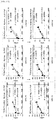
- the respective R 2 value was about 0.97, about 0.95, or about 0.96 and significant improvement in linearity was observed. See Fig. 1 .
- the R 2 value was from about 0.94 to about 0.98 regardless of whether calcium ions were added to R1 and nonspecific agglutination reaction was not observed.
- Serum samples containing PIVKA-II at a concentration of 18 (two samples at the same concentration; in duplicate), 1063, 1570, 1729, or 4050 mAU/mL and plasma samples containing PIVKA-II at a concentration of 27, 111, 1065, or 2534 mAU/mL were prepared to conduct the same experiment as Example 1.
- magnesium ions at a concentration of 10 mmol/L were used instead of calcium ions.
- an experiment using calcium ions at a concentration of 10 mmol/L was also conducted.
- the R 2 value was about 0.54 comparable with Example 1 and nonspecific agglutination reaction was observed in the control that is R1 free of calcium ions or magnesium ions.
- the R 2 value was about 0.92 and the improvement in linearity observed in Example 1 was reproduced.
- magnesium ions were added to R1 at 10 mmol/L, the R 2 value was about 0.87 and significant improvement in linearity was observed as was the case with calcium ions. See Fig. 2 .
- the R 2 value was about 0.89 in the control that is R1 free of calcium ions or magnesium ions; however, when calcium ions or magnesium ions were added at 10 mmol/L, the respective R 2 value was about 0.99 or about 1.00 and improvement in linearity was observed.
- the compositions of R1 and R2 used in Example 2 are shown in Table 2.
- Buffer pH MgCl 2 PVP 1 100mM BisTris 6.0 - 1.0% 2 100mM BisTris 6.5 - 1.0% 3 100mM BisTris 7.0 - 0.95% 4 100mM Tris 7.5 - 0.95% 5 100mM Tris 8.0 - 1.2% 6 100mM BisTris 6.0 10mM 1.1% 7 100mM BisTris 6.5 10mM 1.0% 8 10 0mM BisTris 7.0 10mM 0.825% 9 100mM Tris 7.5 10mM 0.8% 10 100mM Tris 8.0 10mM 1.0% R2 Equal amounts of the 24219-antibody-sensitized latex particle solution and the MU3-antibody-sensitized latex particle solution were mixed and the mixed solution was diluted with 5 mM Tris-HCl (pH 7.5) to an absorbance of 6.0 Abs at a wavelength of 600 nm.
- Serum samples containing PIVKA-II at a concentration of 18 (two samples at the same concentration; in duplicate), 1063, 1570, 1729, 2905, or 4050 mAU/mL and plasma samples containing PIVKA-II at a concentration of 27, 111, 1065, or 2534 mAU/mL were prepared to conduct the same experiment as Example 1.
- magnesium ions at concentrations of 1, 5, and 10 mmol/L were used instead of calcium ions.
- the immunoassay of PIVKA-II, the PIVKA-II assay reagent, and the PIVKA-II assay kit are utilizable for detection of infantile vitamin K deficiency hemorrhage and hepatoma.
Landscapes
- Health & Medical Sciences (AREA)
- Life Sciences & Earth Sciences (AREA)
- Immunology (AREA)
- Engineering & Computer Science (AREA)
- Hematology (AREA)
- Molecular Biology (AREA)
- Biomedical Technology (AREA)
- Chemical & Material Sciences (AREA)
- Urology & Nephrology (AREA)
- Cell Biology (AREA)
- Microbiology (AREA)
- Biotechnology (AREA)
- Food Science & Technology (AREA)
- Medicinal Chemistry (AREA)
- Physics & Mathematics (AREA)
- Analytical Chemistry (AREA)
- Biochemistry (AREA)
- General Health & Medical Sciences (AREA)
- General Physics & Mathematics (AREA)
- Pathology (AREA)
- Peptides Or Proteins (AREA)
Claims (11)
- Procédé de mesure d'une concentration de PIVKA-II dans un échantillon biologique comprenant les étapes de :mise en contact de premières particules de support sur lesquelles un premier anticorps monoclonal est immobilisé et de secondes particules de support sur lesquelles un second anticorps monoclonal est immobilisé en contact avec l'échantillon biologique dans lequel de la prothrombine peut exister en présence d'ions de métal divalent qui ne proviennent pas de l'échantillon biologique ; etde mesure optique d'une agglutination desdites premières particules de support et desdites secondes particules de support,dans lequel l'un des premier et second anticorps monoclonaux est un anticorps se liant spécifiquement au PIVKA-II, alors que l'autre est un anticorps se liant spécifiquement à la prothrombine,dans lequel les deux anticorps se lient à des épitopes différents, etdans lequel les ions de métal divalent sont des ions d'un ou de plusieurs choisis dans le groupe constitué de Be2+, Mg2+, Ca2+, Sr2+, Ba2+ et Ra2+.
- Procédé selon la revendication 1, dans lequel les ions de métal divalent sont des ions d'un ou de plusieurs choisis dans le groupe constitué de Be2+, Mg2+, Ca2+, Sr2+ et Ra2+.
- Procédé selon la revendication 1 ou 2, dans lequel la concentration des ions de métal divalent est de 1 à 50 mmol/L.
- Procédé selon la revendication 1 ou 3, dans lequel les ions de métal divalent sont des ions d'un ou de plusieurs choisis dans le groupe constitué de Mg2+ et Ca2+.
- Procédé selon la revendication 1 ou 4, dans lequel les premières ou secondes particules de support sont des particules de latex.
- Procédé selon la revendication 1, dans lequel l'étape de mise en contact et l'étape de mesure sont réalisées dans la même solution réactionnelle ou dans la même cuve de réaction.
- Procédé selon l'une quelconque des revendications précédentes, dans lequel l'échantillon biologique dans lequel la prothrombine peut exister est du sérum, du plasma ou du fluide lymphatique.
- Utilisation d'un réactif comprenant :des premières particules de support sur lesquelles un premier anticorps monoclonal est immobilisé ;des secondes particules de support sur lesquelles un second anticorps monoclonal est immobilisé ; etdes ions de métal divalent,dans lequel l'un des premier et second anticorps monoclonaux est un anticorps se liant spécifiquement au PIVKA-II, alors que l'autre est un anticorps se liant spécifiquement à la prothrombine,dans lequel les deux anticorps se lient à des épitopes différents, etdans lequel les ions de métal divalent sont des ions d'un ou de plusieurs choisis dans le groupe constitué de Be2+, Mg2+, Ca2+, Sr2+, Ba2+ et Ra2+pour mesurer la contraction de PIVKA-II par une réaction d'agglutination.
- Utilisation selon la revendication 8, dans lequel ni les premières particules de support ni les secondes particules de support ne sont des particules de support fluorescentes.
- Utilisation d'un kit de parties comprenant :un premier réactif contenant des ions de métal divalent ; etun second réactif contenant des premières particules de support sur lesquelles un premier anticorps monoclonal est immobilisé et des secondes particules de support sur lesquelles un second anticorps monoclonal est immobilisé,dans laquelle l'un des premier et second anticorps monoclonaux est un anticorps se liant spécifiquement au PIVKA-II, alors que l'autre est un anticorps se liant spécifiquement à la prothrombine,dans lequel les deux anticorps se lient à des épitopes différents, etdans lequel les ions de métal divalent sont des ions d'un ou de plusieurs choisis dans le groupe constitué de Be2+, Mg2+, Ca2+, Sr2+, Ba2+ et Ra2+pour mesurer la contraction de PIVKA-II par une réaction d'agglutination.
- Utilisation selon la revendication 10, dans lequel ni les premières particules de support ni les secondes particules de support ne sont des particules de support fluorescentes.
Applications Claiming Priority (2)
| Application Number | Priority Date | Filing Date | Title |
|---|---|---|---|
| JP2011114776 | 2011-05-23 | ||
| PCT/JP2012/063220 WO2012161226A1 (fr) | 2011-05-23 | 2012-05-23 | Procédé d'inhibition d'une réaction non spécifique dans un réactif de mesure de pivka-ii |
Publications (3)
| Publication Number | Publication Date |
|---|---|
| EP2717054A1 EP2717054A1 (fr) | 2014-04-09 |
| EP2717054A4 EP2717054A4 (fr) | 2014-12-31 |
| EP2717054B1 true EP2717054B1 (fr) | 2018-11-28 |
Family
ID=47217302
Family Applications (1)
| Application Number | Title | Priority Date | Filing Date |
|---|---|---|---|
| EP12789768.4A Active EP2717054B1 (fr) | 2011-05-23 | 2012-05-23 | Procédé d'inhibition d'une réaction non spécifique dans un réactif de mesure de pivka-ii |
Country Status (7)
| Country | Link |
|---|---|
| US (1) | US9952230B2 (fr) |
| EP (1) | EP2717054B1 (fr) |
| JP (1) | JP6016789B2 (fr) |
| KR (1) | KR101974230B1 (fr) |
| CN (1) | CN103597351A (fr) |
| CA (1) | CA2834432C (fr) |
| WO (1) | WO2012161226A1 (fr) |
Families Citing this family (5)
| Publication number | Priority date | Publication date | Assignee | Title |
|---|---|---|---|---|
| CN104360079B (zh) * | 2014-12-05 | 2016-01-20 | 重庆乾德生物技术有限公司 | 一种pivka-ⅱ检测试剂盒 |
| CN107727864A (zh) * | 2016-07-01 | 2018-02-23 | 首都医科大学附属北京佑安医院 | 一种检测血清中异常脱羧凝血酶原的蛋白芯片、试剂盒及其制备方法 |
| CN106468711A (zh) * | 2016-09-07 | 2017-03-01 | 北京热景生物技术股份有限公司 | Dcp快速分离检测试剂盒 |
| CN107748261A (zh) * | 2017-06-30 | 2018-03-02 | 首都医科大学附属北京佑安医院 | 一种检测血清中异常脱羧凝血酶原的蛋白芯片、试剂盒及其制备方法 |
| US12222351B2 (en) | 2018-10-09 | 2025-02-11 | Sekisui Medical Co., Ltd. | Immunoassay and measurement reagent for leucine-rich alpha2 glycoprotein |
Citations (1)
| Publication number | Priority date | Publication date | Assignee | Title |
|---|---|---|---|---|
| JP3307422B2 (ja) * | 1992-04-10 | 2002-07-24 | 株式会社ヤトロン | ヒトpivka−iiの免疫学的測定方法 |
Family Cites Families (15)
| Publication number | Priority date | Publication date | Assignee | Title |
|---|---|---|---|---|
| US4486530A (en) * | 1980-08-04 | 1984-12-04 | Hybritech Incorporated | Immunometric assays using monoclonal antibodies |
| JPS6122813A (ja) | 1985-05-14 | 1986-01-31 | 加藤 節子 | 寝具類のカバ− |
| JP2702616B2 (ja) | 1991-03-12 | 1998-01-21 | エーザイ株式会社 | Pivka−iiの測定試薬 |
| JPH0543357A (ja) | 1991-08-06 | 1993-02-23 | Asahi Glass Co Ltd | 無機水硬性板材の製造方法 |
| JPH0720127A (ja) | 1993-05-07 | 1995-01-24 | Eisai Co Ltd | 各種pivkaの測定方法および測定試薬 |
| JP2867325B2 (ja) | 1995-08-03 | 1999-03-08 | 株式会社エスアールエル | 抗pivka−ii抗体産生ハイブリドーマ及び免疫学的測定方法 |
| JPH09249699A (ja) * | 1996-03-11 | 1997-09-22 | Fujirebio Inc | 抗ヒトpivka−iiモノクローナル抗体、該抗体を産生するハイブリドーマ、該抗体を用いた測定試薬及び測定方法 |
| JP3652029B2 (ja) | 1996-10-16 | 2005-05-25 | 積水化学工業株式会社 | 高感度免疫測定法 |
| CA2244326C (fr) * | 1997-08-11 | 2006-03-28 | Shinichi Eda | Essai d'agglutination par diffusion de la lumiere, ameliore par des microparticules; reactifs microparticulaires utiles a cette fin |
| US6624295B1 (en) * | 1998-08-28 | 2003-09-23 | Genentech, Inc. | Human anti-factor IX/IXa antibodies |
| JP4020606B2 (ja) | 2001-09-05 | 2007-12-12 | 株式会社三菱化学ヤトロン | Pivka−iiの測定方法 |
| EP2302078B1 (fr) * | 2004-11-03 | 2015-07-15 | Iris Molecular Diagnostics, Inc. | Microbulles utilisées dans la concentration par affinité |
| US8283162B2 (en) | 2009-03-10 | 2012-10-09 | Abbott Laboratories | Antibodies relating to PIVKAII and uses thereof |
| US9133259B2 (en) * | 2010-10-15 | 2015-09-15 | The Regents Of The University Of California | Cartilage oligomeric matrix protein (COMP)—growth factor complexes and uses thereof |
| CN107102135A (zh) * | 2011-05-20 | 2017-08-29 | 阿波特日本有限公司 | 用于减少非特异性结合的免疫检验方法和试剂 |
-
2012
- 2012-05-23 WO PCT/JP2012/063220 patent/WO2012161226A1/fr not_active Ceased
- 2012-05-23 EP EP12789768.4A patent/EP2717054B1/fr active Active
- 2012-05-23 CN CN201280025115.5A patent/CN103597351A/zh active Pending
- 2012-05-23 KR KR1020137033654A patent/KR101974230B1/ko active Active
- 2012-05-23 US US14/116,155 patent/US9952230B2/en active Active
- 2012-05-23 JP JP2013516420A patent/JP6016789B2/ja active Active
- 2012-05-23 CA CA2834432A patent/CA2834432C/fr active Active
Patent Citations (1)
| Publication number | Priority date | Publication date | Assignee | Title |
|---|---|---|---|---|
| JP3307422B2 (ja) * | 1992-04-10 | 2002-07-24 | 株式会社ヤトロン | ヒトpivka−iiの免疫学的測定方法 |
Also Published As
| Publication number | Publication date |
|---|---|
| JP6016789B2 (ja) | 2016-10-26 |
| EP2717054A1 (fr) | 2014-04-09 |
| CN103597351A (zh) | 2014-02-19 |
| CA2834432C (fr) | 2020-01-07 |
| JPWO2012161226A1 (ja) | 2014-07-31 |
| US20140113387A1 (en) | 2014-04-24 |
| KR20140057495A (ko) | 2014-05-13 |
| EP2717054A4 (fr) | 2014-12-31 |
| WO2012161226A1 (fr) | 2012-11-29 |
| KR101974230B1 (ko) | 2019-04-30 |
| US9952230B2 (en) | 2018-04-24 |
| CA2834432A1 (fr) | 2012-11-29 |
Similar Documents
| Publication | Publication Date | Title |
|---|---|---|
| EP1970704B1 (fr) | Reactif de mesure de l'agregation et procede de mesure de l'agregation | |
| EP2754672B1 (fr) | Anticorps apte à se lier à une région spécifique de la périostine, et procédé de mesure de la périostine à l'aide de celui-ci | |
| EP2599865B1 (fr) | Anticorps monoclonal anti-fdp, réactif de mesure de fdp, kit de réactifs contenant ledit anticorps et méthode de mesure de fdp associé | |
| EP2717054B1 (fr) | Procédé d'inhibition d'une réaction non spécifique dans un réactif de mesure de pivka-ii | |
| KR20130032869A (ko) | 신규 단클론항체 및 d 다이머의 면역학적 측정법 | |
| EP3264085A1 (fr) | Procédé de dosage immunologique et réactif de dosage utilisé dans le procédé | |
| CN112740037A (zh) | 糖化血红蛋白(%)测定方法 | |
| WO2012014996A1 (fr) | Réactif et kit de réactif pour la mesure de pdf, et procédé de mesure | |
| EP3264083B1 (fr) | Procédé de dosage immunologique de l-fabp | |
| EP3264084A1 (fr) | Procédé de dosage immunologique et réactif de dosage utilisé dans ledit procédé | |
| WO2014147873A1 (fr) | Anticorps se liant de manière spécifique à un produit de dégradation de hmgb1, et procédé de mesure ainsi que réactif de mesure de produit de dégradation de hmgb1 | |
| HK1195123B (en) | Method for inhibiting non-specific reaction in pivka-ii measurement reagent | |
| HK1195123A (en) | Method for inhibiting non-specific reaction in pivka-ii measurement reagent | |
| JP2000069963A (ja) | アポリポプロテインe4特異モノクローナル抗体 | |
| KR20150114558A (ko) | 인독실 황산의 측정 방법 | |
| JP7715637B2 (ja) | 免疫反応を利用したアナライトの測定方法及び測定試薬 | |
| JP2024119083A (ja) | Hmgb1の免疫学的測定時にhmgb2の測りこみを抑制する方法及びhmgb1を特異的に測定する免疫学的測定方法及びhmgb1を特異的に測定する免疫学的測定試薬 | |
| JP2019027957A (ja) | L−fabpの免疫学的測定方法及び該方法に用いられる測定試薬 | |
| KR101225846B1 (ko) | 인간 오로트산 포스포리보실 트랜스퍼라아제 단백질의측정법 | |
| JP2021063020A (ja) | Hmgb1の分解産物に結合する抗体、hmgb1分解産物の測定方法及びhmgb1分解産物の測定試薬 | |
| EP2124055A1 (fr) | Coffret pour immuno-essai de bsh, et procede de mesure de bsh | |
| HK1117848B (en) | Assay method for human orotate phosphoribosyltransferase protein |
Legal Events
| Date | Code | Title | Description |
|---|---|---|---|
| PUAI | Public reference made under article 153(3) epc to a published international application that has entered the european phase |
Free format text: ORIGINAL CODE: 0009012 |
|
| 17P | Request for examination filed |
Effective date: 20131121 |
|
| AK | Designated contracting states |
Kind code of ref document: A1 Designated state(s): AL AT BE BG CH CY CZ DE DK EE ES FI FR GB GR HR HU IE IS IT LI LT LU LV MC MK MT NL NO PL PT RO RS SE SI SK SM TR |
|
| DAX | Request for extension of the european patent (deleted) | ||
| REG | Reference to a national code |
Ref country code: HK Ref legal event code: DE Ref document number: 1195123 Country of ref document: HK |
|
| A4 | Supplementary search report drawn up and despatched |
Effective date: 20141202 |
|
| RIC1 | Information provided on ipc code assigned before grant |
Ipc: G01N 33/53 20060101ALI20141126BHEP Ipc: G01N 33/541 20060101ALI20141126BHEP Ipc: G01N 33/86 20060101ALI20141126BHEP Ipc: G01N 33/543 20060101AFI20141126BHEP Ipc: G01N 33/542 20060101ALI20141126BHEP Ipc: G01N 33/82 20060101ALI20141126BHEP |
|
| 17Q | First examination report despatched |
Effective date: 20161013 |
|
| STAA | Information on the status of an ep patent application or granted ep patent |
Free format text: STATUS: EXAMINATION IS IN PROGRESS |
|
| RAP1 | Party data changed (applicant data changed or rights of an application transferred) |
Owner name: SEKISUI MEDICAL CO., LTD. |
|
| GRAP | Despatch of communication of intention to grant a patent |
Free format text: ORIGINAL CODE: EPIDOSNIGR1 |
|
| STAA | Information on the status of an ep patent application or granted ep patent |
Free format text: STATUS: GRANT OF PATENT IS INTENDED |
|
| INTG | Intention to grant announced |
Effective date: 20180709 |
|
| RIN1 | Information on inventor provided before grant (corrected) |
Inventor name: YAMAMOTO, MITSUAKI Inventor name: MATSUMOTO, TAKUJI |
|
| GRAS | Grant fee paid |
Free format text: ORIGINAL CODE: EPIDOSNIGR3 |
|
| GRAA | (expected) grant |
Free format text: ORIGINAL CODE: 0009210 |
|
| STAA | Information on the status of an ep patent application or granted ep patent |
Free format text: STATUS: THE PATENT HAS BEEN GRANTED |
|
| AK | Designated contracting states |
Kind code of ref document: B1 Designated state(s): AL AT BE BG CH CY CZ DE DK EE ES FI FR GB GR HR HU IE IS IT LI LT LU LV MC MK MT NL NO PL PT RO RS SE SI SK SM TR |
|
| REG | Reference to a national code |
Ref country code: GB Ref legal event code: FG4D |
|
| REG | Reference to a national code |
Ref country code: CH Ref legal event code: EP |
|
| REG | Reference to a national code |
Ref country code: AT Ref legal event code: REF Ref document number: 1070841 Country of ref document: AT Kind code of ref document: T Effective date: 20181215 |
|
| REG | Reference to a national code |
Ref country code: DE Ref legal event code: R096 Ref document number: 602012054118 Country of ref document: DE |
|
| REG | Reference to a national code |
Ref country code: IE Ref legal event code: FG4D |
|
| REG | Reference to a national code |
Ref country code: NL Ref legal event code: MP Effective date: 20181128 |
|
| REG | Reference to a national code |
Ref country code: LT Ref legal event code: MG4D |
|
| REG | Reference to a national code |
Ref country code: AT Ref legal event code: MK05 Ref document number: 1070841 Country of ref document: AT Kind code of ref document: T Effective date: 20181128 |
|
| PG25 | Lapsed in a contracting state [announced via postgrant information from national office to epo] |
Ref country code: BG Free format text: LAPSE BECAUSE OF FAILURE TO SUBMIT A TRANSLATION OF THE DESCRIPTION OR TO PAY THE FEE WITHIN THE PRESCRIBED TIME-LIMIT Effective date: 20190228 Ref country code: NO Free format text: LAPSE BECAUSE OF FAILURE TO SUBMIT A TRANSLATION OF THE DESCRIPTION OR TO PAY THE FEE WITHIN THE PRESCRIBED TIME-LIMIT Effective date: 20190228 Ref country code: HR Free format text: LAPSE BECAUSE OF FAILURE TO SUBMIT A TRANSLATION OF THE DESCRIPTION OR TO PAY THE FEE WITHIN THE PRESCRIBED TIME-LIMIT Effective date: 20181128 Ref country code: AT Free format text: LAPSE BECAUSE OF FAILURE TO SUBMIT A TRANSLATION OF THE DESCRIPTION OR TO PAY THE FEE WITHIN THE PRESCRIBED TIME-LIMIT Effective date: 20181128 Ref country code: LV Free format text: LAPSE BECAUSE OF FAILURE TO SUBMIT A TRANSLATION OF THE DESCRIPTION OR TO PAY THE FEE WITHIN THE PRESCRIBED TIME-LIMIT Effective date: 20181128 Ref country code: FI Free format text: LAPSE BECAUSE OF FAILURE TO SUBMIT A TRANSLATION OF THE DESCRIPTION OR TO PAY THE FEE WITHIN THE PRESCRIBED TIME-LIMIT Effective date: 20181128 Ref country code: ES Free format text: LAPSE BECAUSE OF FAILURE TO SUBMIT A TRANSLATION OF THE DESCRIPTION OR TO PAY THE FEE WITHIN THE PRESCRIBED TIME-LIMIT Effective date: 20181128 Ref country code: IS Free format text: LAPSE BECAUSE OF FAILURE TO SUBMIT A TRANSLATION OF THE DESCRIPTION OR TO PAY THE FEE WITHIN THE PRESCRIBED TIME-LIMIT Effective date: 20190328 Ref country code: LT Free format text: LAPSE BECAUSE OF FAILURE TO SUBMIT A TRANSLATION OF THE DESCRIPTION OR TO PAY THE FEE WITHIN THE PRESCRIBED TIME-LIMIT Effective date: 20181128 |
|
| PG25 | Lapsed in a contracting state [announced via postgrant information from national office to epo] |
Ref country code: GR Free format text: LAPSE BECAUSE OF FAILURE TO SUBMIT A TRANSLATION OF THE DESCRIPTION OR TO PAY THE FEE WITHIN THE PRESCRIBED TIME-LIMIT Effective date: 20190301 Ref country code: PT Free format text: LAPSE BECAUSE OF FAILURE TO SUBMIT A TRANSLATION OF THE DESCRIPTION OR TO PAY THE FEE WITHIN THE PRESCRIBED TIME-LIMIT Effective date: 20190328 Ref country code: SE Free format text: LAPSE BECAUSE OF FAILURE TO SUBMIT A TRANSLATION OF THE DESCRIPTION OR TO PAY THE FEE WITHIN THE PRESCRIBED TIME-LIMIT Effective date: 20181128 Ref country code: RS Free format text: LAPSE BECAUSE OF FAILURE TO SUBMIT A TRANSLATION OF THE DESCRIPTION OR TO PAY THE FEE WITHIN THE PRESCRIBED TIME-LIMIT Effective date: 20181128 Ref country code: AL Free format text: LAPSE BECAUSE OF FAILURE TO SUBMIT A TRANSLATION OF THE DESCRIPTION OR TO PAY THE FEE WITHIN THE PRESCRIBED TIME-LIMIT Effective date: 20181128 |
|
| PG25 | Lapsed in a contracting state [announced via postgrant information from national office to epo] |
Ref country code: NL Free format text: LAPSE BECAUSE OF FAILURE TO SUBMIT A TRANSLATION OF THE DESCRIPTION OR TO PAY THE FEE WITHIN THE PRESCRIBED TIME-LIMIT Effective date: 20181128 |
|
| PG25 | Lapsed in a contracting state [announced via postgrant information from national office to epo] |
Ref country code: PL Free format text: LAPSE BECAUSE OF FAILURE TO SUBMIT A TRANSLATION OF THE DESCRIPTION OR TO PAY THE FEE WITHIN THE PRESCRIBED TIME-LIMIT Effective date: 20181128 Ref country code: CZ Free format text: LAPSE BECAUSE OF FAILURE TO SUBMIT A TRANSLATION OF THE DESCRIPTION OR TO PAY THE FEE WITHIN THE PRESCRIBED TIME-LIMIT Effective date: 20181128 Ref country code: IT Free format text: LAPSE BECAUSE OF FAILURE TO SUBMIT A TRANSLATION OF THE DESCRIPTION OR TO PAY THE FEE WITHIN THE PRESCRIBED TIME-LIMIT Effective date: 20181128 Ref country code: DK Free format text: LAPSE BECAUSE OF FAILURE TO SUBMIT A TRANSLATION OF THE DESCRIPTION OR TO PAY THE FEE WITHIN THE PRESCRIBED TIME-LIMIT Effective date: 20181128 |
|
| REG | Reference to a national code |
Ref country code: DE Ref legal event code: R097 Ref document number: 602012054118 Country of ref document: DE |
|
| PG25 | Lapsed in a contracting state [announced via postgrant information from national office to epo] |
Ref country code: SK Free format text: LAPSE BECAUSE OF FAILURE TO SUBMIT A TRANSLATION OF THE DESCRIPTION OR TO PAY THE FEE WITHIN THE PRESCRIBED TIME-LIMIT Effective date: 20181128 Ref country code: SM Free format text: LAPSE BECAUSE OF FAILURE TO SUBMIT A TRANSLATION OF THE DESCRIPTION OR TO PAY THE FEE WITHIN THE PRESCRIBED TIME-LIMIT Effective date: 20181128 Ref country code: EE Free format text: LAPSE BECAUSE OF FAILURE TO SUBMIT A TRANSLATION OF THE DESCRIPTION OR TO PAY THE FEE WITHIN THE PRESCRIBED TIME-LIMIT Effective date: 20181128 Ref country code: RO Free format text: LAPSE BECAUSE OF FAILURE TO SUBMIT A TRANSLATION OF THE DESCRIPTION OR TO PAY THE FEE WITHIN THE PRESCRIBED TIME-LIMIT Effective date: 20181128 |
|
| PLBE | No opposition filed within time limit |
Free format text: ORIGINAL CODE: 0009261 |
|
| STAA | Information on the status of an ep patent application or granted ep patent |
Free format text: STATUS: NO OPPOSITION FILED WITHIN TIME LIMIT |
|
| PG25 | Lapsed in a contracting state [announced via postgrant information from national office to epo] |
Ref country code: SI Free format text: LAPSE BECAUSE OF FAILURE TO SUBMIT A TRANSLATION OF THE DESCRIPTION OR TO PAY THE FEE WITHIN THE PRESCRIBED TIME-LIMIT Effective date: 20181128 |
|
| 26N | No opposition filed |
Effective date: 20190829 |
|
| REG | Reference to a national code |
Ref country code: CH Ref legal event code: PL |
|
| PG25 | Lapsed in a contracting state [announced via postgrant information from national office to epo] |
Ref country code: CH Free format text: LAPSE BECAUSE OF NON-PAYMENT OF DUE FEES Effective date: 20190531 Ref country code: MC Free format text: LAPSE BECAUSE OF FAILURE TO SUBMIT A TRANSLATION OF THE DESCRIPTION OR TO PAY THE FEE WITHIN THE PRESCRIBED TIME-LIMIT Effective date: 20181128 Ref country code: LI Free format text: LAPSE BECAUSE OF NON-PAYMENT OF DUE FEES Effective date: 20190531 |
|
| REG | Reference to a national code |
Ref country code: BE Ref legal event code: MM Effective date: 20190531 |
|
| PG25 | Lapsed in a contracting state [announced via postgrant information from national office to epo] |
Ref country code: LU Free format text: LAPSE BECAUSE OF NON-PAYMENT OF DUE FEES Effective date: 20190523 |
|
| PG25 | Lapsed in a contracting state [announced via postgrant information from national office to epo] |
Ref country code: TR Free format text: LAPSE BECAUSE OF FAILURE TO SUBMIT A TRANSLATION OF THE DESCRIPTION OR TO PAY THE FEE WITHIN THE PRESCRIBED TIME-LIMIT Effective date: 20181128 |
|
| PG25 | Lapsed in a contracting state [announced via postgrant information from national office to epo] |
Ref country code: IE Free format text: LAPSE BECAUSE OF NON-PAYMENT OF DUE FEES Effective date: 20190523 |
|
| PG25 | Lapsed in a contracting state [announced via postgrant information from national office to epo] |
Ref country code: BE Free format text: LAPSE BECAUSE OF NON-PAYMENT OF DUE FEES Effective date: 20190531 |
|
| PG25 | Lapsed in a contracting state [announced via postgrant information from national office to epo] |
Ref country code: CY Free format text: LAPSE BECAUSE OF FAILURE TO SUBMIT A TRANSLATION OF THE DESCRIPTION OR TO PAY THE FEE WITHIN THE PRESCRIBED TIME-LIMIT Effective date: 20181128 |
|
| PG25 | Lapsed in a contracting state [announced via postgrant information from national office to epo] |
Ref country code: MT Free format text: LAPSE BECAUSE OF FAILURE TO SUBMIT A TRANSLATION OF THE DESCRIPTION OR TO PAY THE FEE WITHIN THE PRESCRIBED TIME-LIMIT Effective date: 20181128 Ref country code: HU Free format text: LAPSE BECAUSE OF FAILURE TO SUBMIT A TRANSLATION OF THE DESCRIPTION OR TO PAY THE FEE WITHIN THE PRESCRIBED TIME-LIMIT; INVALID AB INITIO Effective date: 20120523 |
|
| PG25 | Lapsed in a contracting state [announced via postgrant information from national office to epo] |
Ref country code: MK Free format text: LAPSE BECAUSE OF FAILURE TO SUBMIT A TRANSLATION OF THE DESCRIPTION OR TO PAY THE FEE WITHIN THE PRESCRIBED TIME-LIMIT Effective date: 20181128 |
|
| REG | Reference to a national code |
Ref country code: FR Ref legal event code: PLFP Year of fee payment: 12 |
|
| P01 | Opt-out of the competence of the unified patent court (upc) registered |
Effective date: 20230522 |
|
| PGFP | Annual fee paid to national office [announced via postgrant information from national office to epo] |
Ref country code: DE Payment date: 20250402 Year of fee payment: 14 |
|
| PGFP | Annual fee paid to national office [announced via postgrant information from national office to epo] |
Ref country code: FR Payment date: 20250401 Year of fee payment: 14 |
|
| PGFP | Annual fee paid to national office [announced via postgrant information from national office to epo] |
Ref country code: GB Payment date: 20260323 Year of fee payment: 15 |