EP2719772A1 - Procédé de détection de champignons, solution de réaction pour pcr et vecteur pour la détection de champignons - Google Patents
Procédé de détection de champignons, solution de réaction pour pcr et vecteur pour la détection de champignons Download PDFInfo
- Publication number
- EP2719772A1 EP2719772A1 EP12796704.0A EP12796704A EP2719772A1 EP 2719772 A1 EP2719772 A1 EP 2719772A1 EP 12796704 A EP12796704 A EP 12796704A EP 2719772 A1 EP2719772 A1 EP 2719772A1
- Authority
- EP
- European Patent Office
- Prior art keywords
- fungi
- sequence
- base sequence
- probe
- represented
- Prior art date
- Legal status (The legal status is an assumption and is not a legal conclusion. Google has not performed a legal analysis and makes no representation as to the accuracy of the status listed.)
- Withdrawn
Links
Images








Classifications
-
- C—CHEMISTRY; METALLURGY
- C12—BIOCHEMISTRY; BEER; SPIRITS; WINE; VINEGAR; MICROBIOLOGY; ENZYMOLOGY; MUTATION OR GENETIC ENGINEERING
- C12Q—MEASURING OR TESTING PROCESSES INVOLVING ENZYMES, NUCLEIC ACIDS OR MICROORGANISMS; COMPOSITIONS OR TEST PAPERS THEREFOR; PROCESSES OF PREPARING SUCH COMPOSITIONS; CONDITION-RESPONSIVE CONTROL IN MICROBIOLOGICAL OR ENZYMOLOGICAL PROCESSES
- C12Q1/00—Measuring or testing processes involving enzymes, nucleic acids or microorganisms; Compositions therefor; Processes of preparing such compositions
- C12Q1/68—Measuring or testing processes involving enzymes, nucleic acids or microorganisms; Compositions therefor; Processes of preparing such compositions involving nucleic acids
- C12Q1/6876—Nucleic acid products used in the analysis of nucleic acids, e.g. primers or probes
- C12Q1/6888—Nucleic acid products used in the analysis of nucleic acids, e.g. primers or probes for detection or identification of organisms
- C12Q1/6895—Nucleic acid products used in the analysis of nucleic acids, e.g. primers or probes for detection or identification of organisms for plants, fungi or algae
-
- C—CHEMISTRY; METALLURGY
- C12—BIOCHEMISTRY; BEER; SPIRITS; WINE; VINEGAR; MICROBIOLOGY; ENZYMOLOGY; MUTATION OR GENETIC ENGINEERING
- C12N—MICROORGANISMS OR ENZYMES; COMPOSITIONS THEREOF; PROPAGATING, PRESERVING, OR MAINTAINING MICROORGANISMS; MUTATION OR GENETIC ENGINEERING; CULTURE MEDIA
- C12N15/00—Mutation or genetic engineering; DNA or RNA concerning genetic engineering, vectors, e.g. plasmids, or their isolation, preparation or purification; Use of hosts therefor
- C12N15/09—Recombinant DNA-technology
- C12N15/11—DNA or RNA fragments; Modified forms thereof; Non-coding nucleic acids having a biological activity
-
- C—CHEMISTRY; METALLURGY
- C12—BIOCHEMISTRY; BEER; SPIRITS; WINE; VINEGAR; MICROBIOLOGY; ENZYMOLOGY; MUTATION OR GENETIC ENGINEERING
- C12Q—MEASURING OR TESTING PROCESSES INVOLVING ENZYMES, NUCLEIC ACIDS OR MICROORGANISMS; COMPOSITIONS OR TEST PAPERS THEREFOR; PROCESSES OF PREPARING SUCH COMPOSITIONS; CONDITION-RESPONSIVE CONTROL IN MICROBIOLOGICAL OR ENZYMOLOGICAL PROCESSES
- C12Q1/00—Measuring or testing processes involving enzymes, nucleic acids or microorganisms; Compositions therefor; Processes of preparing such compositions
- C12Q1/68—Measuring or testing processes involving enzymes, nucleic acids or microorganisms; Compositions therefor; Processes of preparing such compositions involving nucleic acids
- C12Q1/6844—Nucleic acid amplification reactions
- C12Q1/686—Polymerase chain reaction [PCR]
-
- C—CHEMISTRY; METALLURGY
- C12—BIOCHEMISTRY; BEER; SPIRITS; WINE; VINEGAR; MICROBIOLOGY; ENZYMOLOGY; MUTATION OR GENETIC ENGINEERING
- C12Q—MEASURING OR TESTING PROCESSES INVOLVING ENZYMES, NUCLEIC ACIDS OR MICROORGANISMS; COMPOSITIONS OR TEST PAPERS THEREFOR; PROCESSES OF PREPARING SUCH COMPOSITIONS; CONDITION-RESPONSIVE CONTROL IN MICROBIOLOGICAL OR ENZYMOLOGICAL PROCESSES
- C12Q2600/00—Oligonucleotides characterized by their use
- C12Q2600/156—Polymorphic or mutational markers
-
- C—CHEMISTRY; METALLURGY
- C12—BIOCHEMISTRY; BEER; SPIRITS; WINE; VINEGAR; MICROBIOLOGY; ENZYMOLOGY; MUTATION OR GENETIC ENGINEERING
- C12Q—MEASURING OR TESTING PROCESSES INVOLVING ENZYMES, NUCLEIC ACIDS OR MICROORGANISMS; COMPOSITIONS OR TEST PAPERS THEREFOR; PROCESSES OF PREPARING SUCH COMPOSITIONS; CONDITION-RESPONSIVE CONTROL IN MICROBIOLOGICAL OR ENZYMOLOGICAL PROCESSES
- C12Q2600/00—Oligonucleotides characterized by their use
- C12Q2600/16—Primer sets for multiplex assays
Definitions
- fungi in the method of inspecting fungi according to the present invention, it is preferred that at least two or more types of fungi selected from the group consisting of xerophilic fungi, xerophilous fungi and hygrophilous fungi be simultaneously cultivated in a prescribed single culture medium and each of the cultivated fungi be simultaneously and specifically.
- the method for inspecting fungi it is preferable to place a plurality of types of fungi which have been cultivated in a container in which beads for pulverizing physically the cell wall of fungi are accommodated, followed by mixing, and to extract genomic DNA all at once.
- the method for detecting fungi is a method which comprises the steps of amplifying DNA fragments including a target region in fungal DNA and confirming the presence or absence of an amplified product, wherein the ITS region and the ⁇ -tubulin gene are used as a target region.
- the target region in the method for detecting fungi in this embodiment means a region to be amplified in the fungal DNA.
- a specific spacer, a gene or the like can be used as such a region.
- both of the ITS region (Internal Transcribed Spacer) region and the ⁇ -tubulin gene are used simultaneously.
- the method for amplifying a DNA fragment including a target region is not particularly restricted.
- a PCR (polymerase chain reaction) method can preferably be used.
- the PCR method by using a reaction solution for PCR containing a primer set for amplifying target regions, specific regions in a fungal DNA are amplified.
- a common thermal cycler or the like can be used, and the PCR can be conducted under the following reaction conditions:
- a method for confirming the presence or absence of an amplified product a method by electrophoresis or detection by using a DNA chip or the like can preferably be used.
- primers a primer set for amplifying the ITS region in a fungal DNA and a primer set for amplifying the ⁇ -tubulin gene are used.
- the reaction solution for PCR is used when amplification of DNA fragments containing a target region is conducted by the PCR method.
- the reaction solution for PCR it is preferable to use one having the following composition. Specifically, it is preferable to use a solution for PCR containing a nucleic acid synthetic substrate (dNTPmixture (dCTP, dATP, dTTP, dGTP)), primer sets, a nucleic acid synthesis enzyme (such as Nova Taq polymerase), a labeled component (such as Cy5-dCTP), genomic DNA of the sample, a buffer solution, and water as a remaining capacity component.
- a buffer solution Ampdirect (R) (manufactured by Shimadzu Corporation) can be used, for example.
- primer set used in the reaction solution for PCR in this embodiment contains a primer set for amplifying the ITS region and a primer set for amplifying the ⁇ -tubulin gene.
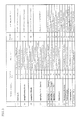
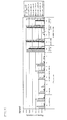
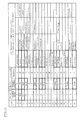
- the following primer sets can be used, for example. That is, as shown in FIG. 2 , as the primer set for amplifying the ITS region, a primer set having a forward primer composed of a base sequence shown in sequence No. 1 and a reverse primer composed of a base sequence shown in sequence No. 2 can preferably be used. Further, as a primer set for amplifying the ⁇ -tubulin gene, a primer set composed of a forward primer composed of a base sequence shown in sequence No. 3 and a reverse primer composed of a base sequence shown in sequence No. 4 can preferably be used.
- the concentration ratio of the primer set for amplifying the ⁇ -tubulin gene and the primer set for amplifying the ITS region be 1:0.9 to 1:0.1. Due to such a concentration ratio of the primer sets, these regions to be amplified can be preferably amplified.
- the ITS region is present in a quantity of 100 copies or more. On the other hand, only one copy is present for the ⁇ -tubulin gene. Further, the size of an amplified product of the ITS region by the PCR method is about 250 bp, the size of an amplified product of the ⁇ -tubulin gene by the PCR method is 350 to 550 bp.
- the concentration of the primer set for amplifying the ⁇ -tubulin gene and the concentration of the primer sets for amplifying the ITS region are the same in the reaction solution for PCR, there is a problem that an amplified product of the ⁇ -tubulin gene cannot be obtained in a sufficient amount, thereby leading to lowering in accuracy of detection.
- the concentration of the primer set for amplifying the ITS region in the reaction solution for PCR is decreased excessively, the effects of amplifying the ITS region may become small.
- concentration ratio of the primer set for amplifying the ⁇ -tubulin gene and the primer set for amplifying the ITS region an optimum conditions for the concentration ratio are required to be found.
- both the ITS region and the ⁇ -tubulin gene can preferably be amplified by the above-mentioned concentration ratio.
- the concentration ratio of the primer set for amplifying the ⁇ -tubulin gene and the primer set for amplifying the ITS region is allowed to be 1:0.5 to 1:0.25 is more preferable. The reason is that, when fungi is detected based on the fluorescent intensity after conducting fluorescence labeling of an amplified product, the fluorescence of the ITS region and the ⁇ -tubulin gene can be obtained at a high intensity.
- the reaction solution for PCR of this embodiment contain a primer for specifically amplifying Cladosporium sp.
- a primer for specifically amplifying Cladosporium sp it is possible to use a forward primer composed of a base sequence shown in sequence No. 5 of FIG. 2 , for example.
- the primer set for amplifying the ITS region and the primer set for amplifying the ⁇ -tubulin gene are used, although an amplified product can be obtained by PCR for the ⁇ -tubulin gene of Cladosporium sp., a probe selected from a sequence which is complementary to the ⁇ -tubulin gene and the amplified product cannot be hybridized sufficiently, whereby Cladosporium sp. could not be detected appropriately.
- Cladosporium sp. a forward primer which can specifically detect this fungus was added to the reaction solution for PCR, and a new amplified product was obtained. As explained later in detail in Examples, this type of fungi could appropriately be detected when this new amplified product was added dropwise to a carrier for detecting fungi of this embodiment.
- this forward primer which is for appropriately amplifying Cladosporium sp. is used to amplify the ⁇ -tubulin gene.
- this forward primer can amplify the ⁇ -tubulin gene of Cladosporium sp.
- the final concentration of the forward primer specific to Cladosporium sp. in the reaction solution for PCR be 0.5 ⁇ M or less, with 0.125 ⁇ M to 0.5 ⁇ M being more preferable. Within such a range of the final concentration of the forward primer specific to Cladosporium sp. it is possible to detect Cladosporium sp. preferably.
- the final concentration of the forward primer specific to Cladosporium sp. is 0.25 ⁇ M to 0.5 ⁇ M, it is possible to detect Cladosporium sp. more preferably. In particular, a final concentration of 0.25 ⁇ M is further preferable, since it is possible to almost minimize the effects exerted on the detection of other types of fungi.
- each primer in the above-mentioned primer set is not limited to the above-mentioned base sequence, and it is possible to use a sequence which has been appropriately modified within the range that fulfils the same function. That is, it can be a base sequence in which one or few bases are missing, substituted or added. It is also possible to allow it to be hybridized under stringent conditions to the nucleic acid fragment comprising a nucleotide sequence complementary to the respective base sequence.
- the stringent conditions refer to conditions under which a specific hybrid is formed and a non-specific hybrid is not formed.
- they are the conditions under which DNA having a high degree of homology (homology of 90% or more, preferably 95% or more) relative to the above-mentioned primer set hybridizes with a DNA consisting of a base sequence complementary to the primer set.
- Tm melting point
- hybridization occurs at a temperature which is lower than the melting point (Tm) of a perfect hybrid by about 5°C to about 30°C, preferably about 10°C to about 25°C.
- the carrier for detecting fungi is characterized in that, according to one or two or more types of fungi, a probe having a base sequence selected from the ITS region and a probe having a base sequence selected from the ⁇ -tubulin gene are fixed, and can be configured by using a DNA chip or the like.
- the carrier for detecting fungi of this embodiment is provided with both a probe connecting with an amplified product of the ITS region and connecting with an amplified product of the ⁇ -tubulin gene according to the type of fungi.
- the following probe can be used according to the type of fungi.
- a probe for detecting Eurotium sp. at least any of a probe having a base sequence shown in sequence No. 6 or 7 selected from the ITS region and a probe having a base sequence shown in sequence No. 8 selected from the ⁇ -tubulin gene can be used.
- probes for detecting Aspergillus penicillioides at least any of probes having a base sequence shown in sequence Nos. 9 to 11 selected from the ITS region and a probe having a base sequence shown in sequence No. 12 selected from the ⁇ -tubulin gene can be used.
- a probe for detecting Aspergillus vitricola at least any of a probe having a base sequence shown in sequence No. 13 or 14 selected from the ITS region and a probe having a base sequence shown in sequence No. 15 selected from the ⁇ -tubulin gene can be used.
- probes having a base sequence shown in sequence Nos. 16 to 20 selected from the ITS region and a probe having a base sequence shown in sequence No. 21 selected from the ⁇ -tubulin gene can be used.
- a probe having a base sequence shown in sequence No. 22 selected from the ITS region and a probe having a base sequence shown in sequence No. 23 selected from the ⁇ -tubulin gene can be used.
- a probe having a base sequence shown in sequence No. 26 selected from the ITS region and a probe having a base sequence shown in sequence No. 27 selected from the ⁇ -tubulin gene can be used.
- a probe for detecting Penicillium sp. at least any of a probe having a base sequence shown in sequence No. 28 or 29 selected from the ITS region and at least any of probes having a base sequence shown in sequence Nos. 30 to 32 selected from the ⁇ -tubulin gene can be used.
- a probe for detecting Stachybotrys chartarum a probe having a base sequence shown in sequence No. 33 selected from the ITS region and a probe having a base sequence shown in sequence No. 34 selected from the ⁇ -tubulin gene can be used.
- a probe for detecting Fusarium solani a probe having a base sequence shown in sequence No. 35 and a probe having a base sequence shown in sequence No. 36 selected from the ⁇ -tubulin gene can be used.
- a probe for detecting Cladosporium sp. a probe having a base sequence shown in sequence No. 37 and at least any of a probe having a base sequence shown in sequence No. 38 or 39 can be used.
- a probe having a base sequence shown in sequence No. 40 selected from the ITS region and a probe having a base sequence shown in sequence No. 41 selected from the ⁇ -tubulin gene can be used.
- the carrier for detecting fungi of this embodiment is one in which one or more of the above-mentioned probe groups for detecting each of fungi is fixed.
- the carrier for detecting fungi of this embodiment by fixing probes which respectively are connected to an amplified product of the ITS region and the ⁇ -tubulin gene, occurrence of incorrect judgment based on the false positive reaction is reduced, whereby a wide range of fungi can be detected with a high degree of accuracy.
- the carrier for detecting fungi of this embodiment can be used by a common method. Although no specific restrictions are imposed on the method, the carrier can be used as follows, for example.
- an amplified product of PCR obtained by the method for detecting fungi according to this embodiment is mixed with one obtained by adding 0.3% SDS (sodium dodecyl sulfate) to a buffer (3 x SSC citric acid - physiological saline), and the resultant is added dropwise to the carrier for detecting fungi of this embodiment.
- SDS sodium dodecyl sulfate
- a PCR product which was not hybridized is washed away from the carrier for detecting fungi by using the above-mentioned buffer.
- the carrier is then mounted in a label detecting apparatus to measure the fluorescence intensity, whereby detection of fungi can be conducted.
- each of the above-mentioned probes to be fixed to the carrier for detecting fungi of this embodiment, as in the case of the sequence of each primer in the above-mentioned primer set, it is possible to use a probe which has been appropriately modified as long as it fulfils the same function. That is, it can be a base sequence in which one or several bases are missing, substituted or added. Further, it is possible to allow the probe to be one which can be hybridized under stringent conditions to the nucleic acid fragment comprising a base sequence complementary to each base sequence.
- probes to be fixed to the carrier for detecting fungi of this embodiment in addition to the above-mentioned probe, a probe having a base sequence complementary to one in which one or several bases are missing, substituted or added in the respective base sequence, or one having a base sequence complementary to a probe which can be hybridized under stringent conditions to the nucleic acid fragment comprising a base sequence can be used.
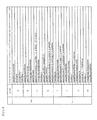
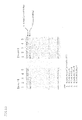
- an amplified product obtained by the PCR method in the method for detecting fungi of this embodiment includes a nucleic acid fragment having a base sequence complementary to a nucleic acid fragment which is hybridized with the above-mentioned probe. Therefore, a base sequence complementary to the sequence Nos. 6 to 41 shown in FIG. 3 and a probe comprising a base sequence which is equivalent to these sequences can be hybridized with a nucleic acid fragment having a base sequence which is complementary to nucleic acid fragments which are hybridized with the above-mentioned probe.
- each object fungi can be detected.
- the method for detecting fungi according to this embodiment may be a method in which a plurality of types of fungi are cultivated, the plurality of types of fungi thus cultivated are mixed, genomic DNA are extracted all at once, and each of the plurality of types of fungi are simultaneously and specifically detected, and the method for detecting fungi is not limited to the following embodiment and examples.
- the method for detecting fungi of this embodiment comprises the following steps.
- air in a food manufacturing site, a clinical site, environments for protecting cultural assets or the like is collected. Then, the collected air is sprayed to an exclusive culture medium in the form of a strip for an air sampler.
- M40Y medium MY10G medium, MY30G medium or the like which can cultivate any of xerophilic fungi, xerophilous fungi and hygrophilous fungi, as explained later in the Examples.
- M40Y medium is particularly preferable since it is possible to cultivate any of the above-mentioned fungi differing in nature highly efficiently.
- the fungi be allowed to stand in a dark place of 23°C to 27°C for about 2 to 7 days.
- M40Y medium, MY10G medium and MY30G medium are thought to be a medium for cultivating xerophilic fungi and not suited to cultivation of hygrophilous fungi.
- the colony of various types of fungi are collected all at one without separating individually. Then, for example, after placing the collected samples in a vial or the like which has been charged with ⁇ 0.5 mm zirconia beads, the sample was frozen by immersing the vial in liquid nitrogen. Thereafter, by using a shaker or the like, the cells of the fungi are crushed. No specific restrictions are imposed on the destruction method of the cells as long as DNA can be extracted. Cells may be crushed by other methods.
- a common method such as the CTAB method (Cetyl trimethyl ammonium bromide), a method using a DNA extraction apparatus or the like can be used.
- a primer set capable of amplifying the ITS1 region of rDNA of each of fungi is added to a reaction solution for PCR, and the specific region in genomic DNA of fungi in the above-mentioned sample is amplified.
- a primer set capable of amplifying the ITS1 region of rDNA of each of fungi is added to a reaction solution for PCR, and the specific region in genomic DNA of fungi in the above-mentioned sample is amplified.
- the forward primer and the reverse primer one having a base sequence shown in sequence No. 42 and one having a base sequence shown in sequence No. 43 can respectively be used.
- the PCR apparatus a common thermal cycler or the like can be used.
- nucleic acid synthesis substrate dNTPmixture (dCTP, dATP, dTTP, dGTP), primer sets, a nucleic acid synthase (Nova Taq polymerase or the like), and a labeling component (Cy5-dCTP or the like)
- genomic DNA of the sample a buffer, and water as the remaining capacitive component
- a buffer Ampdirect (R) (Shimadzu Corporation) can be used, for example.
- the following conditions are preferable, for example.
- DNA chip used in this embodiment is one in which a probe selected from DNA of fungi to be detected is fixed.
- a spot type DNA chip and a composite type DNA chip can be used.
- a probe which is connected with an amplification region which is amplified by a primer set contained in a reaction solution for PCR is synthesized in advance, and immobilized on the substrate of the DNA chip.
- a probe for detecting Aspergillus vitricola one composed of a base sequence represented by the sequence No. 44 can be used.
- a probe for detecting Aspergillus penicillioides one composed of a base sequence represented by the sequence No. 45 can be used.
- a probe for detecting Eurotium sp. one composed of a base sequence represented by the sequence No. 46 can be used.
- a PCR amplified product is added dropwise to a DNA chip, a label of a PCR amplified product which has been hybridized on the above-mentioned probe for detecting fungi is detected. Specifically, it can be conducted by the following procedure.
- a prescribed buffer is mixed with a PCR amplified product, and the resultant is added dropwise to a DNA chip.
- the DNA chip is allowed to stand at 45°C for 1 hour. Thereafter, a PCR amplified product which has not been hybridized by the prescribed buffer is washed away from the DNA chip.
- the DNA chip is mounted in a label detection apparatus to detect the label, and judgment is conducted whether fungi to be detected are present or not.
- a label detection apparatus a common apparatus such as a fluorescent scanning apparatus can be used.
- the label or its detection method is not limited to fluorescence, and other methods may be used.
- a plurality of types of fungi can be simultaneously cultivated by using a culture medium capable of cultivating any of xerophilic, xerophious and hygrophilous fungi. Then, the cultivated fungi are mixed, and genomic DNA is extracted all at once, and by using a DNA chip, each of the plurality of types of fungi can be simultaneously and specifically detected.
- Test 1 in the method for detecting fungi according to the present invention, in detecting various types of fungi by a DNA chip analysis using a multiplex PCR, in order to find a concentration range of each primer set in a PCR reaction solution which realizes simultaneous amplification of both the ITS region of the ⁇ -tubulin gene, Test 1 was conducted.
- fungi to be detected a wild fungi collected from the facility environment were used. That is, air in the facility environment was collected by using an air sampler, and the collected air was blown to each of the culture mediums A to D for cultivation. Cultivation was conducted by allowing the samples to stand in a dark place at 25°C for 7 days.
- colony of various types of fungi generated in the culture medium were collected all at once and placed in a vial filled with ⁇ 0.5 mm zirconia beads.
- the vial was immersed in liquid nitrogen to allow the sample to be frozen. Then, by using a shaker, the cells of the fungi were crushed.
- genomic DNA of fungi was extracted by means of a DNA extracting apparatus.
- the ITS region and the ⁇ -tubulin gene of each of fungi were simultaneously amplified.
- a forward primer (F primer) comprising the base sequence represented by sequence No. 1 and a reverse primer (R primer) comprising the base sequence represented by sequence No. 2, both are shown in FIG. 2 are used.
- a forward primer comprising the base sequence represented by sequence No. 3 and a reverse primer comprising g the base sequence represented by sequence No. 4, both are shown in FIG. 2 are used. Both primer sets are synthesized by Operon Biotechnologies, Inc.
- reaction solution for PCR for each of the samples A to D by means of Ampdirect (R) (manufactured by Shimadzu Corporation), a solution of the following composition was prepared in an amount of 20 ⁇ l.
- the final concentration ratio of the primer set for amplifying the ⁇ -tubulin gene and the primer set for amplifying the ITS region according to samples A to D, the following five types of the concentration ratio were prepared, and a test was conducted for each ratio.
- PCR amplified product was mixed with a buffer (3 x SSC citric acid - physiological saline + 0.3% SDS), and the resultant mixture was heated at 94°C for 5 minutes, and added dropwise to the DNA chip.
- This DNA chip was allowed to stand at 45°C for 1 hour. By using the above-mentioned buffer, a PCR amplified product was washed away from the DNA chip.
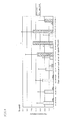
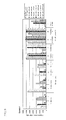
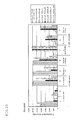
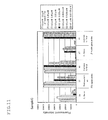
- FIG. 5 , FIG. 6 , FIG. 7 and FIG. 8 respectively show the fluorescent intensity according to the various concentration ratios of the primer set, in which FIG. 5 shows the intensity using Sample A, FIG. 6 shows the intensity using Sample B, FIG. 7 shows the intensity using Sample C and FIG. 8 shows the intensity using Sample D.
- FIGs 9 to 12 show the fluorescent intensity according to the various concentration ratios of the primer set, in which FIG. 9 shows the intensity using Sample A, FIG. 10 shows the intensity using Sample B, FIG. 11 shows the intensity using Sample C and FIG. 12 shows the intensity using Sample D.
- the "N" in FIGs. 5 to 8 shows the number of probes in FIGs. 9 to 12 .
- test 2 was conducted.
- PCR was conducted in the same manner as in test 1 by using five types of a reaction solution for PCR of which the ratio of the final concentration of the primer set for the ⁇ -tubulin gene and the final concentration of the primer set for the ITS region was as follows.
- (Lane 1) 0.5 ⁇ M: 0.5 ⁇ M (Lane 2) 0.5 ⁇ M: 0.25 ⁇ M (Lane 3) 0.5 ⁇ M: 0.125 ⁇ M (Lane 4) 0.5 ⁇ M: 0.0625 ⁇ M (Lane 5) 0.5 ⁇ M: 0.03125 ⁇ M
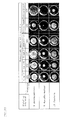
- the resulting amplified product was analyzed by using MultiNA (R) (manufactured by Shimadzu Corporation). The results obtained are shown in FIG. 13 .
- the band of lane 1 is indicated in a light color
- the band of lane 2 is indicated in a slightly darker color
- the bands of lanes 3 to 5 are indicated in a dark color.
- the band of lanes 1 and 2 are dark
- the band of the lane 3 is slightly dark and bands of lanes 4 and 5 are light.
- sample C as for the ⁇ -tubulin gene, the bands of lanes 1 and 2 are indicated in a light color and the bands of lanes 3 to 5 are indicated in a relatively dark color.
- the bands of lanes 1 to 3 are indicated in a dark color and the bands of lanes 4 and 5 are indicated in a light color.
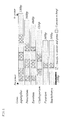
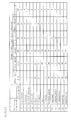
- fungi to be detected as in the case of test 1, those obtained by blowing wild fungi collected from the facility environment to each of culture mediums for Samples E to H, followed by cultivation, were used. The colonies of various fungi generated in the culture mediums for Samples E to H were incubated separately, and each colony was subjected to a DNA sequence analysis to confirm the type of fungi. The results are shown in FIG. 4 .
- colonies of various fungi generated in the culture medium were collected all at once, and the cells of the fungi were crushed and genomic DNA was extracted.
- the ITS region and the ⁇ -tubulin gene were amplified by the PCR method.
- a primer set for amplifying the ITS region comprising a base sequence shown in sequence No. 1 and a base sequence shown in sequence No. 2
- a primer set for amplifying the ⁇ -tubulin gene comprising a base sequence represented by sequence No. 3 and a base sequence represented by sequence No. 4, both are shown in FIG. 2 , were used.
- reaction solution for PCR for each of samples E to H, Ampdirect (R) (manufactured by Shimadzu Corporation) was used, 20 ⁇ l of a reaction solution having the following composition was prepared.
- reaction solution for PCR for each of samples E to H, was used, 20 ⁇ l of a reaction solution having the same composition as mentioned above, except that the composition of the primer for amplifying the ITS region was changed as follows:
- reaction solution for PCR differing in final concentration of the primer set for amplifying the ⁇ -tubulin gene and the primer set for amplifying the ITS region; i.e. 0.5 ⁇ M: 0.25 ⁇ M and 0.5 ⁇ M: 0.125 ⁇ M, were prepared, and a test was conducted for each.
- the reaction conditions of PCR are the same as those for test 1.
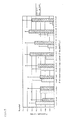
- the DNA chip As the DNA chip, of the probes shown in FIG. 3 , one to which the following probes were immobilized was used. Other configurations were the same as those for test 1, and the fluorescent intensity in the probe was measured. According to the concentration ratio of the primer set, an average value of the fluorescent intensity in the probe for measuring the ITS region and an average value of the fluorescent intensity in the probe for measuring the ⁇ -tubulin gene were calculated. The results are shown in FIG. 14 . Meanwhile, the "N" in FIG. 14 indicates the number of probes x frequency of test (x 3).
- the colony of each species was collected all at once, and the genomic DNA of the fungi was extracted in the same manner as in test 1.
- the ITS region and the ⁇ -tubulin gene were amplified simultaneously in the same manner as in test 1.
- reaction solution for PCR differing in final concentration ratio of the primer set for amplifying the ⁇ -tubulin gene and the primer set for amplifying the ITS region; i.e. 0.5 ⁇ M: 0.25 ⁇ M and 0.5 ⁇ M: 0.125 ⁇ M, were prepared.
- 0.5 ⁇ M: 0.25 ⁇ M and 0.5 ⁇ M: 0.125 ⁇ M were prepared.
- each reaction solution for PCR as for the DNA of the sample, 1.0 ⁇ l of each of the strains 1 to 4 (the total amount: 4.0 ⁇ l) was contained.
- the ITS region and the ⁇ -tubulin gene of each of fungi were amplified.
- FIG. 15 shows the concentration ratio of the primer set and the fluorescent intensity according to each probe.
- strains 1 to 4 it can be confirmed that they can be detected by the method for detecting fungi of the present invention in which the ITS region and the ⁇ -tubulin gene are target regions.
- test 4 as mentioned above, when the primer set for amplifying the ⁇ -tubulin gene (sequence Nos. 3, 4) was used, as for Cladsoporium sphaerospermum, no fluorescence was detected in the probe for the ⁇ -tubulin gene.
- test 4 a probe which can be complementary connected to the ⁇ -tubulin gene is immobilized to the DNA chip, and hence, the reason that no fluorescence was detected in the probe was not clear.
- reaction solution for PCR a reaction solution for PCR in which the final concentration ratio of the primer set for amplifying the ⁇ -tubulin gene and the primer set for amplifying the ITS region was 0.5 ⁇ M:0.125 ⁇ M was prepared, and the forward primer for amplifying the ⁇ -tubulin gene exclusively for Cladosporium sp. was added such that the final concentration thereof became 0 ⁇ M, 0.5 ⁇ M and 0.25 ⁇ M, whereby 3 types of the solution for PCR were prepared.
- MY malt (Malt Extract, manufactured by DIFCO Laboratories) + Yeast (Yeast Extract, manufactured by DIFCO Laboratories)
- the water activity value thereof was measured in a dedicated sealed container by using a Rotronic water activity measurement apparatus (manufactured by GSI Creos Corporation).
- the DNA chip was mounted in a label detection apparatus (BIOSHOT, a scanner exclusive for gene silicon, manufactured by Toyo Kohan Co., Ltd.), and the fluorescent intensity in each probe was measured.
- a label detection apparatus BIOSHOT, a scanner exclusive for gene silicon, manufactured by Toyo Kohan Co., Ltd.
- the genomic DNA was extracted from the types of fungi obtained by cultivating separately according to the colony as mentioned above, and an amplified product was obtained by the PCR method.
- M40Y or the like are used as the culture medium.
- the type of the culture medium is not limited to this, and can be changed appropriately.
- another solid culture medium having a water activity value of less than 1.0 and 0.90 or more and a sugar concentration of 5% to 50% can be used.
Landscapes
- Chemical & Material Sciences (AREA)
- Life Sciences & Earth Sciences (AREA)
- Organic Chemistry (AREA)
- Engineering & Computer Science (AREA)
- Proteomics, Peptides & Aminoacids (AREA)
- Health & Medical Sciences (AREA)
- Analytical Chemistry (AREA)
- Zoology (AREA)
- Wood Science & Technology (AREA)
- Biotechnology (AREA)
- Genetics & Genomics (AREA)
- Bioinformatics & Cheminformatics (AREA)
- Molecular Biology (AREA)
- General Engineering & Computer Science (AREA)
- General Health & Medical Sciences (AREA)
- Biophysics (AREA)
- Physics & Mathematics (AREA)
- Biochemistry (AREA)
- Microbiology (AREA)
- Immunology (AREA)
- Mycology (AREA)
- Botany (AREA)
- Chemical Kinetics & Catalysis (AREA)
- Biomedical Technology (AREA)
- Plant Pathology (AREA)
- Measuring Or Testing Involving Enzymes Or Micro-Organisms (AREA)
- Apparatus Associated With Microorganisms And Enzymes (AREA)
Applications Claiming Priority (2)
| Application Number | Priority Date | Filing Date | Title |
|---|---|---|---|
| JP2011129632 | 2011-06-09 | ||
| PCT/JP2012/001991 WO2012169099A1 (fr) | 2011-06-09 | 2012-03-22 | Procédé de détection de champignons, solution de réaction pour pcr et vecteur pour la détection de champignons |
Publications (2)
| Publication Number | Publication Date |
|---|---|
| EP2719772A1 true EP2719772A1 (fr) | 2014-04-16 |
| EP2719772A4 EP2719772A4 (fr) | 2014-11-26 |
Family
ID=47295692
Family Applications (1)
| Application Number | Title | Priority Date | Filing Date |
|---|---|---|---|
| EP12796704.0A Withdrawn EP2719772A4 (fr) | 2011-06-09 | 2012-03-22 | Procédé de détection de champignons, solution de réaction pour pcr et vecteur pour la détection de champignons |
Country Status (6)
| Country | Link |
|---|---|
| US (1) | US10370729B2 (fr) |
| EP (1) | EP2719772A4 (fr) |
| JP (1) | JP5935803B2 (fr) |
| KR (1) | KR101564823B1 (fr) |
| CN (1) | CN103635592B (fr) |
| WO (1) | WO2012169099A1 (fr) |
Families Citing this family (22)
| Publication number | Priority date | Publication date | Assignee | Title |
|---|---|---|---|---|
| JP2014217374A (ja) * | 2013-04-10 | 2014-11-20 | 東洋製罐グループホールディングス株式会社 | カビ検出用担体、カビの検出方法、及びカビ検出用キット |
| JP2015080428A (ja) * | 2013-10-22 | 2015-04-27 | 東洋製罐グループホールディングス株式会社 | 微生物の検査方法 |
| US11421285B2 (en) | 2014-06-04 | 2022-08-23 | Quest Diagnostics Investments Incorporated | Method for direct microbial identification |
| KR101719792B1 (ko) * | 2014-07-23 | 2017-03-28 | 대한민국 | 인삼의 푸사리움 솔라니 진단용 프라이머 및 이의 용도 |
| JP6413701B2 (ja) * | 2014-11-28 | 2018-10-31 | 東洋製罐グループホールディングス株式会社 | 生物検出用担体、及び生物の検出方法 |
| WO2016203740A1 (fr) * | 2015-06-17 | 2016-12-22 | 東洋製罐グループホールディングス株式会社 | Procédé d'étude de microorganismes, kit d'étude de microorganismes, micropuce pour l'étude de microorganismes, support pour détection de moisissures, procédé de détection de moisissures et kit de détection de moisissures |
| JP2017029094A (ja) * | 2015-08-04 | 2017-02-09 | 東洋製罐グループホールディングス株式会社 | カビ検出用担体、カビの検出方法、及びカビ検出用キット |
| JP6880554B2 (ja) * | 2016-03-09 | 2021-06-02 | 東洋製罐グループホールディングス株式会社 | カビ検出用担体、カビの検出方法、及びカビ検出用キット |
| CN106676193B (zh) * | 2017-03-06 | 2020-07-24 | 山西省农业科学院食用菌研究所 | 一种青霉菌鉴别用分子标记及引物和探针 |
| CN107058578A (zh) * | 2017-05-31 | 2017-08-18 | 太原格因生物科技有限公司 | 乳制品中粘红酵母的检测探针、基因芯片和方法 |
| CN107841571A (zh) * | 2017-09-13 | 2018-03-27 | 宁波基内生物技术有限公司 | 一种检测烟曲霉特异性基因的引物、探针、方法及试剂盒 |
| CN108070675B (zh) * | 2018-02-10 | 2020-04-21 | 杭州缔蓝生物技术有限公司 | 一种同时检测三种曲霉的引物探针组合和荧光定量pcr试剂盒 |
| JP2018143251A (ja) * | 2018-06-19 | 2018-09-20 | 東洋製罐グループホールディングス株式会社 | 微生物の検査方法 |
| JP7685202B2 (ja) * | 2020-03-10 | 2025-05-29 | 国立研究開発法人農業・食品産業技術総合研究機構 | 標的核酸検出用オリゴヌクレオチド及びその用途 |
| CN111549165A (zh) * | 2020-05-06 | 2020-08-18 | 兰州百源基因技术有限公司 | 腐皮镰刀菌的rt-qpcr检测的引物、探针、试剂盒及方法 |
| JP7235077B2 (ja) * | 2020-09-09 | 2023-03-08 | Toto株式会社 | 防カビ性および防藻性の試験方法 |
| CN112522434B (zh) * | 2020-12-24 | 2023-02-03 | 中山大学附属第三医院 | 一种用于同时检测多种致病性真菌的引物组及试剂盒 |
| CN113684303B (zh) * | 2021-09-09 | 2024-07-26 | 三只松鼠股份有限公司 | 一种用于检测坚果中霉菌的引物组合、试剂盒及坚果中产霉菌毒素真菌种类的检测方法 |
| CN115094160A (zh) * | 2022-07-22 | 2022-09-23 | 河南科技大学 | 牡丹枝孢霉的检测方法及在油用牡丹红斑病诊断上的应用 |
| KR20250031317A (ko) | 2023-08-28 | 2025-03-07 | 국립한국해양대학교산학협력단 | ddPCR을 이용한 위해성 평가 방법 |
| JP7824254B2 (ja) * | 2023-08-31 | 2026-03-04 | 株式会社明治 | 培地、及びそれを用いた好乾性菌の選択的検出又はスクリーニング方法 |
| CN117248055B (zh) * | 2023-09-12 | 2024-06-25 | 深圳市海微生物科技有限公司 | 曲霉菌的荧光定量pcr检测试剂盒及其应用 |
Family Cites Families (19)
| Publication number | Priority date | Publication date | Assignee | Title |
|---|---|---|---|---|
| WO2002081701A1 (fr) * | 2001-03-30 | 2002-10-17 | Tohoku Techno Arch Co., Ltd. | Reseau de polynucleotides fongiques |
| CN1300338C (zh) * | 2004-07-09 | 2007-02-14 | 中国科学院上海微系统与信息技术研究所 | 曲霉菌基因检测芯片及其制作方法和使用方法 |
| PT103277B (pt) * | 2005-05-17 | 2007-03-30 | Univ Do Minho | Fragmentos de dna e primers para a detecção e identificação de espécies de cândida clinicamente relevantes |
| JP2007195454A (ja) | 2006-01-26 | 2007-08-09 | Kao Corp | カビの形態観察方法 |
| JP4427516B2 (ja) | 2006-02-01 | 2010-03-10 | 国立大学法人九州大学 | ハウスダストアレルギーの原因となるダニ・カビ類の検出・識別システム |
| JP5077984B2 (ja) | 2006-06-29 | 2012-11-21 | 独立行政法人産業技術総合研究所 | 穀類又はナッツ類の流通過程におけるマイコトキシン汚染を予測する方法 |
| CN1896284B (zh) * | 2006-06-30 | 2013-09-11 | 博奥生物有限公司 | 一种鉴别等位基因类型的方法 |
| JP5015518B2 (ja) | 2006-08-04 | 2012-08-29 | 東洋鋼鈑株式会社 | ハウスダストアレルギーの原因となるダニ・カビ類の検出・識別用マイクロアレイ |
| JP5196848B2 (ja) | 2007-05-14 | 2013-05-15 | キヤノン株式会社 | プローブセット、プローブ担体、検査方法及びdna検出用キット |
| JP5196859B2 (ja) | 2007-05-14 | 2013-05-15 | キヤノン株式会社 | プローブセット、プローブ担体、検査方法及びdna検出用キット |
| JP5548388B2 (ja) | 2008-05-28 | 2014-07-16 | 花王株式会社 | ネオサルトリア属に属する菌類及びアスペルギルスフミガタスの検出方法 |
| CN103923990B (zh) | 2008-05-28 | 2016-04-27 | 花王株式会社 | 耐热菌类的检测方法 |
| JP5548345B2 (ja) * | 2008-05-29 | 2014-07-16 | 花王株式会社 | 耐熱性菌類の検出方法 |
| JP5562007B2 (ja) * | 2008-11-11 | 2014-07-30 | 花王株式会社 | ゲオスミチア(Geosmithia)属に属する菌類の検出方法 |
| JP5548357B2 (ja) * | 2008-11-11 | 2014-07-16 | 花王株式会社 | アスペルギルスフミガタス(Aspergillusfumigatus)類縁菌の検出方法 |
| JP5568233B2 (ja) | 2008-12-02 | 2014-08-06 | 株式会社Ihi | カビ検出用プローブ、カビ検出用dnaチップ、カビの検出方法、カビの生死判別方法及びカビの同定方法 |
| JP4418016B2 (ja) | 2009-05-11 | 2010-02-17 | 国立大学法人九州大学 | ハウスダストアレルギーの原因となるダニ・カビ類の検出・識別システム |
| JP5718575B2 (ja) | 2010-02-01 | 2015-05-13 | 東洋製罐グループホールディングス株式会社 | 特定カビ検出用マイクロアレイ、及び特定カビ検出用マイクロアレイの使用方法 |
| US8975489B2 (en) * | 2010-12-02 | 2015-03-10 | The Samuel Roberts Noble Foundation | Grass fungal endophytes and uses thereof |
-
2012
- 2012-03-22 WO PCT/JP2012/001991 patent/WO2012169099A1/fr not_active Ceased
- 2012-03-22 KR KR1020137032473A patent/KR101564823B1/ko active Active
- 2012-03-22 EP EP12796704.0A patent/EP2719772A4/fr not_active Withdrawn
- 2012-03-22 CN CN201280028342.3A patent/CN103635592B/zh not_active Expired - Fee Related
- 2012-03-22 JP JP2013519349A patent/JP5935803B2/ja active Active
-
2013
- 2013-12-05 US US14/098,260 patent/US10370729B2/en active Active
Also Published As
| Publication number | Publication date |
|---|---|
| KR101564823B1 (ko) | 2015-10-30 |
| EP2719772A4 (fr) | 2014-11-26 |
| CN103635592A (zh) | 2014-03-12 |
| JP5935803B2 (ja) | 2016-06-15 |
| KR20140008449A (ko) | 2014-01-21 |
| CN103635592B (zh) | 2016-08-17 |
| JPWO2012169099A1 (ja) | 2015-02-23 |
| US20140141993A1 (en) | 2014-05-22 |
| US10370729B2 (en) | 2019-08-06 |
| WO2012169099A1 (fr) | 2012-12-13 |
Similar Documents
| Publication | Publication Date | Title |
|---|---|---|
| US10370729B2 (en) | Method for detecting fungi, reaction solution for PCR, and carrier for detecting fungi | |
| EP2712922B1 (fr) | Procédé de détection de champignons tolérants à la chaleur | |
| JP2014217374A (ja) | カビ検出用担体、カビの検出方法、及びカビ検出用キット | |
| US20180195135A1 (en) | Method for examining microorganism, kit for examining microorganism, microarray for examining microorganism, carrier for detecting fungi, method for detecting fungi and kit for detecting fungi | |
| JP2014003946A (ja) | サーモアスカス属真菌の検出方法 | |
| JP5919631B2 (ja) | カビの検査方法 | |
| JP5548388B2 (ja) | ネオサルトリア属に属する菌類及びアスペルギルスフミガタスの検出方法 | |
| JP5718575B2 (ja) | 特定カビ検出用マイクロアレイ、及び特定カビ検出用マイクロアレイの使用方法 | |
| CN102272305A (zh) | 属于Geosmithia属的菌类的检测方法 | |
| JP5548385B2 (ja) | 耐熱性菌類の検出方法 | |
| JP2014018092A (ja) | ケトミウム・グロボーサム関連種群の検出方法 | |
| JP6880554B2 (ja) | カビ検出用担体、カビの検出方法、及びカビ検出用キット | |
| JP5769377B2 (ja) | 特定カビ検出システム、特定カビ検出方法、及びpcr反応液 | |
| JP5873356B2 (ja) | モニリエラ属真菌の検出方法 | |
| JP5697881B2 (ja) | パエシロマイセスサトゥラタス及びパエシロマイセスディバリカタスの検出方法 | |
| JP5548386B2 (ja) | ハミゲラ属に属する菌類及びクラドスポリウム属に属する菌類の検出方法 | |
| JP6291721B2 (ja) | 微生物の検査方法 | |
| WO2015170362A1 (fr) | Procédé d'analyse de micro-organismes | |
| JP2018143147A (ja) | カビ検出用担体、カビの検出方法、及びカビ検出用キット | |
| KR101420495B1 (ko) | 클로렐라의 종간 및 종 내의 균주 특이적 마이크로새틀라이트 분자 마커 | |
| JP6200134B2 (ja) | ケトミウム・インディカム・クレードの検出方法 | |
| JP2017029094A (ja) | カビ検出用担体、カビの検出方法、及びカビ検出用キット | |
| JP2015195773A (ja) | アスペルギルス・カーボナリウスの検出方法 |
Legal Events
| Date | Code | Title | Description |
|---|---|---|---|
| PUAI | Public reference made under article 153(3) epc to a published international application that has entered the european phase |
Free format text: ORIGINAL CODE: 0009012 |
|
| 17P | Request for examination filed |
Effective date: 20131209 |
|
| AK | Designated contracting states |
Kind code of ref document: A1 Designated state(s): AL AT BE BG CH CY CZ DE DK EE ES FI FR GB GR HR HU IE IS IT LI LT LU LV MC MK MT NL NO PL PT RO RS SE SI SK SM TR |
|
| DAX | Request for extension of the european patent (deleted) | ||
| A4 | Supplementary search report drawn up and despatched |
Effective date: 20141024 |
|
| RIC1 | Information provided on ipc code assigned before grant |
Ipc: C12N 15/09 20060101ALI20141020BHEP Ipc: C12Q 1/68 20060101AFI20141020BHEP Ipc: C12M 1/00 20060101ALI20141020BHEP |
|
| 17Q | First examination report despatched |
Effective date: 20150820 |
|
| STAA | Information on the status of an ep patent application or granted ep patent |
Free format text: STATUS: EXAMINATION IS IN PROGRESS |
|
| STAA | Information on the status of an ep patent application or granted ep patent |
Free format text: STATUS: THE APPLICATION IS DEEMED TO BE WITHDRAWN |
|
| 18D | Application deemed to be withdrawn |
Effective date: 20200225 |