EP2770001B1 - Utilisation de sels d'étain d'un acide carbonique lors de la fabrication de systèmes en polyuréthane - Google Patents
Utilisation de sels d'étain d'un acide carbonique lors de la fabrication de systèmes en polyuréthane Download PDFInfo
- Publication number
- EP2770001B1 EP2770001B1 EP14169212.9A EP14169212A EP2770001B1 EP 2770001 B1 EP2770001 B1 EP 2770001B1 EP 14169212 A EP14169212 A EP 14169212A EP 2770001 B1 EP2770001 B1 EP 2770001B1
- Authority
- EP
- European Patent Office
- Prior art keywords
- acid
- tin
- foams
- polyurethane
- catalyst system
- Prior art date
- Legal status (The legal status is an assumption and is not a legal conclusion. Google has not performed a legal analysis and makes no representation as to the accuracy of the status listed.)
- Active
Links
Images
Classifications
-
- C—CHEMISTRY; METALLURGY
- C08—ORGANIC MACROMOLECULAR COMPOUNDS; THEIR PREPARATION OR CHEMICAL WORKING-UP; COMPOSITIONS BASED THEREON
- C08L—COMPOSITIONS OF MACROMOLECULAR COMPOUNDS
- C08L75/00—Compositions of polyureas or polyurethanes; Compositions of derivatives of such polymers
- C08L75/04—Polyurethanes
- C08L75/08—Polyurethanes from polyethers
-
- C—CHEMISTRY; METALLURGY
- C08—ORGANIC MACROMOLECULAR COMPOUNDS; THEIR PREPARATION OR CHEMICAL WORKING-UP; COMPOSITIONS BASED THEREON
- C08G—MACROMOLECULAR COMPOUNDS OBTAINED OTHERWISE THAN BY REACTIONS ONLY INVOLVING UNSATURATED CARBON-TO-CARBON BONDS
- C08G18/00—Polymeric products of isocyanates or isothiocyanates
- C08G18/06—Polymeric products of isocyanates or isothiocyanates with compounds having active hydrogen
- C08G18/08—Processes
- C08G18/16—Catalysts
- C08G18/18—Catalysts containing secondary or tertiary amines or salts thereof
- C08G18/1816—Catalysts containing secondary or tertiary amines or salts thereof having carbocyclic groups
-
- C—CHEMISTRY; METALLURGY
- C08—ORGANIC MACROMOLECULAR COMPOUNDS; THEIR PREPARATION OR CHEMICAL WORKING-UP; COMPOSITIONS BASED THEREON
- C08G—MACROMOLECULAR COMPOUNDS OBTAINED OTHERWISE THAN BY REACTIONS ONLY INVOLVING UNSATURATED CARBON-TO-CARBON BONDS
- C08G18/00—Polymeric products of isocyanates or isothiocyanates
- C08G18/06—Polymeric products of isocyanates or isothiocyanates with compounds having active hydrogen
- C08G18/08—Processes
- C08G18/16—Catalysts
- C08G18/22—Catalysts containing metal compounds
- C08G18/24—Catalysts containing metal compounds of tin
- C08G18/244—Catalysts containing metal compounds of tin tin salts of carboxylic acids
-
- C—CHEMISTRY; METALLURGY
- C08—ORGANIC MACROMOLECULAR COMPOUNDS; THEIR PREPARATION OR CHEMICAL WORKING-UP; COMPOSITIONS BASED THEREON
- C08G—MACROMOLECULAR COMPOUNDS OBTAINED OTHERWISE THAN BY REACTIONS ONLY INVOLVING UNSATURATED CARBON-TO-CARBON BONDS
- C08G18/00—Polymeric products of isocyanates or isothiocyanates
- C08G18/06—Polymeric products of isocyanates or isothiocyanates with compounds having active hydrogen
- C08G18/28—Polymeric products of isocyanates or isothiocyanates with compounds having active hydrogen characterised by the compounds used containing active hydrogen
- C08G18/40—High-molecular-weight compounds
- C08G18/48—Polyethers
- C08G18/4833—Polyethers containing oxyethylene units
-
- C—CHEMISTRY; METALLURGY
- C08—ORGANIC MACROMOLECULAR COMPOUNDS; THEIR PREPARATION OR CHEMICAL WORKING-UP; COMPOSITIONS BASED THEREON
- C08G—MACROMOLECULAR COMPOUNDS OBTAINED OTHERWISE THAN BY REACTIONS ONLY INVOLVING UNSATURATED CARBON-TO-CARBON BONDS
- C08G18/00—Polymeric products of isocyanates or isothiocyanates
- C08G18/06—Polymeric products of isocyanates or isothiocyanates with compounds having active hydrogen
- C08G18/70—Polymeric products of isocyanates or isothiocyanates with compounds having active hydrogen characterised by the isocyanates or isothiocyanates used
- C08G18/72—Polyisocyanates or polyisothiocyanates
- C08G18/74—Polyisocyanates or polyisothiocyanates cyclic
- C08G18/76—Polyisocyanates or polyisothiocyanates cyclic aromatic
- C08G18/7614—Polyisocyanates or polyisothiocyanates cyclic aromatic containing only one aromatic ring
- C08G18/7621—Polyisocyanates or polyisothiocyanates cyclic aromatic containing only one aromatic ring being toluene diisocyanate including isomer mixtures
-
- C—CHEMISTRY; METALLURGY
- C08—ORGANIC MACROMOLECULAR COMPOUNDS; THEIR PREPARATION OR CHEMICAL WORKING-UP; COMPOSITIONS BASED THEREON
- C08G—MACROMOLECULAR COMPOUNDS OBTAINED OTHERWISE THAN BY REACTIONS ONLY INVOLVING UNSATURATED CARBON-TO-CARBON BONDS
- C08G2110/00—Foam properties
- C08G2110/0008—Foam properties flexible
-
- C—CHEMISTRY; METALLURGY
- C08—ORGANIC MACROMOLECULAR COMPOUNDS; THEIR PREPARATION OR CHEMICAL WORKING-UP; COMPOSITIONS BASED THEREON
- C08G—MACROMOLECULAR COMPOUNDS OBTAINED OTHERWISE THAN BY REACTIONS ONLY INVOLVING UNSATURATED CARBON-TO-CARBON BONDS
- C08G2110/00—Foam properties
- C08G2110/0041—Foam properties having specified density
- C08G2110/005—< 50kg/m3
-
- C—CHEMISTRY; METALLURGY
- C08—ORGANIC MACROMOLECULAR COMPOUNDS; THEIR PREPARATION OR CHEMICAL WORKING-UP; COMPOSITIONS BASED THEREON
- C08G—MACROMOLECULAR COMPOUNDS OBTAINED OTHERWISE THAN BY REACTIONS ONLY INVOLVING UNSATURATED CARBON-TO-CARBON BONDS
- C08G2110/00—Foam properties
- C08G2110/0083—Foam properties prepared using water as the sole blowing agent
Definitions
- the invention relates to the use of metal salts of carboxylic acids, in particular 3,5,5-trimethylhexanoic acid and n-octanoic acid, and their solutions in the production of polyurethane systems (PUR systems) in accordance with claim 1.
- PUR systems polyurethane systems
- Polyurethane systems are z. B. polyurethane coatings, polyurethane adhesives, polyurethane sealants, polyurethane elastomers or polyurethane foams / foams.
- polyurethane foams are used in a wide variety of areas.
- a particularly important market for various types of PUR foams such as conventional flexible foams based on ether and ester polyol, cold foams (often also referred to as HR foams), rigid foams, integral foams and microcellular foams, as well as foams whose properties lie between these classifications, e.g. . B. semi-hard systems, represents the automotive and furniture industries.
- B. rigid foams are used as headliners, ester foams for the interior lining of the doors and for punched-out sun visors, cold and soft foams for seating systems and mattresses.
- Catalysts suitable for one-component moisture-reactive polyurethane compositions usually contain tin compounds, such as tin carboxylates, in particular tin octoate (corresponds to tin 2-ethylhexanoate), often combined with tertiary amines.
- tin compounds such as tin carboxylates, in particular tin octoate (corresponds to tin 2-ethylhexanoate), often combined with tertiary amines.
- tin octoate is used in the production of flexible PUR foams based on polyetherols in Steve Lee, Huntsman Polyurethanes, The Polyurethanes Book, Verlag Wiley, pp. 140, 143-144 and Ron Herrington, Flexible Polyurethane Foams, Dow Chemical, p. 2.30 described.
- the tin octoate serves as a catalyst for the reaction of isocyanates with polyols (also known as a gel catalyst) via a complex transition state.
- polyols also known as a gel catalyst
- the tin octoate hydrolyzes and releases both the salt of 2-ethylhexanoic acid and the acid itself.
- the decomposition is desirable because in this way the reverse reaction of the urethane bond to the starting materials is prevented, but should, if possible, not lead to the release of substances that may be toxicologically questionable.
- stannous octoate e.g. B. in BE 779607 , GB 1432281 , GB 1422056 , GB 1382538 , GB 1012653 , GB 982280 called.
- preferred catalyst systems used are those which contain tin octoate.
- catalyst systems In order to meet the requirements of the automotive and furniture industries and their foam suppliers with regard to emissions and toxicity specifications, which have become much more stringent in recent years, catalyst systems have already been developed that contain less toxic ligands that can be polymerized into the foam. Such systems are for example in EP 1013704 described. The disadvantage of these systems is that they are used in high quantities and the associated costs due to the low tin content and the strong shielding of the active tin by the ligands. To date, these systems have represented one of the few alternatives to the widespread tin octoate catalyst system (tin (II) salt of 2-ethylhexanoic acid) or organotin compounds, such as Dibutyltin dilaurate.
- tin (II) salt of 2-ethylhexanoic acid tin (II) salt of 2-ethylhexanoic acid
- organotin compounds such as Dibutyltin dilaurate.
- the latter systems are to be viewed critically with regard to the toxicity of the emitting substances.
- the 2-ethylhexanoic acid released during and after foaming, for example, is cause for concern because of its possible teratogenic (developmental) effects in humans (R 63).
- Bismuth catalysts represent a further alternative to conventional tin catalysts.
- Bismuth carboxylates for example bismuth octoate (bismuth salt of 2-ethylhexanoic acid)
- bismuth catalysts for polyurethane compositions as in WO 98/36007 mentioned.
- the catalytic activity of bismuth compounds with regard to the isocyanate-water reaction is significantly lower than that of tin catalysts and the emission of 2-ethylhexanoic acid also poses a problem with this catalyst system.
- US3595734A discloses the use of tin salts, such as tin nosooctoate, as catalysts in the production of PU foams.
- US3347804A discloses the use of mixtures of tin, lead and zinc naphthenates and octoates as catalysts in the production of PU foams.
- US2006199933A1 discloses a curable composition including a metal carboxylate and / or a carboxylic acid, neodecanoic acid and 2,2 dimethyloctanoic acid being particularly suitable.
- the tin (II) salt of neodecanoic acid is also used as the metal carboxylate.
- WO2008116605A1 discloses catalyst systems based on metal carboxylates for the production of PU foams.
- Dibutyltin dilaurate, tin dipalmitate, zinc diricinolate and the bismuth and zinc salts of neodecanoic acid are used as metal carboxylates.
- US4031049A discloses a method of making a highly resilient cellular polyurethane using a catalyst system. This consists of a tin salt of a carboxylic acid according to the formula Sn (OCOR) 2 or a tin salt compound of the formula R ' a SnX b , in which X also corresponds to a carboxylate of the formula OCOR. R and R 'are hydrocarbon radicals.
- EP1013704A2 discloses the use of metal salts of ricinoleic acid in the manufacture of polyurethane foams. Tin is also used as a metal.
- the carboxylic acids used include ricinoleic acid, oleic acid and stearic acid.
- the object of the present invention was therefore to provide a catalyst system which does not have one or more of the aforementioned disadvantages.
- the present invention therefore relates to the use of catalyst systems suitable for catalyzing the production of polyurethane systems, which are characterized in that the catalyst systems contain at least one tin salt of a carboxylic acid, to the carbonyl carbon atom of which a hydrogen atom or a hydrocarbon radical is bonded, with the proviso that the carboxylic acid does not exclusively have a single ethyl or n-propyl branch in the 2-position (i.e., in addition to the ethyl or n-propyl branch in the 2-position, the carboxylic acid must also have at least one further branch in the alkyl chain in any position, such as methyl branches, have or be linear), the acid having at least one methyl group branch, and the catalyst system containing one or more organic solvents, and the catalyst system having as metal salts exclusively those which are salts of carboxylic acids that are unbranched or exclusively have methyl branches, in the production of flexible polyurethane foams / foams based on ether and ester poly
- the catalyst system to be used according to the invention has the advantage that it is suitable for the production of flexible foams based on ether and ester polyols as well as rigid foams and foams whose properties are between these classifications, such as semi-rigid foams.
- polyurethane systems can be produced using toxicologically harmless starting materials which do not emit any toxicologically unacceptable cleavage products even under extreme thermal conditions.
- the catalyst systems according to the invention also have the advantage that there is a wider range of processing options available in the production of PU foam. These advantages can be achieved without changing or significantly worsening the other physical properties, such as density, hardness, rebound resilience or compressive strength. The compressive strength can even be improved by using the catalyst system according to the invention.
- the catalyst system to be used according to the invention which is suitable for catalysis in the production of polyurethane foams, is characterized in that it is a metal salt of a carboxylic acid, to whose carbonyl carbon atom a hydrogen atom or a hydrocarbon radical is bonded, with the proviso that the carboxylic acid is not exclusively has a single ethyl or n-propyl branch in the 2-position, contains and fulfills the further requirements of claim 1.
- the hydrocarbon radical is preferably selected such that the acid has at least one, preferably from 6 to 17, preferably from 8 to 13 carbon atoms.
- the hydrocarbon radical can be saturated or unsaturated, preferably saturated. It contains acids which have no branch or at least one methyl group branch.
- Branches of methyl groups are understood to mean that it is an alkylcarboxylic acid whose alkyl radical is branched and which has one or more methyl groups.
- the catalyst system has, as metal salts, exclusively those which are salts of carboxylic acids which are or are unbranched exclusively have methyl branches, in accordance with claim 1.
- Catalyst systems which can preferably be used according to the invention and which contain at least one metal salt of a carboxylic acid having methyl groups have one or more metal salts selected from the salts of n-octanoic acid, n-nonanoic acid or 3,5,5-trimethylhexanoic acid (isononanoic acid).
- the metal salts are salts of tin.
- the catalyst system has the metal salts in combination with one or more organic solvents. If the metal salt is dissolved or used in combination with a solvent, the catalyst system preferably contains an organic aprotic solvent. If the catalyst system contains an organic solvent, this is preferably selected from polyols, esters, polyesters, olefins, phthalates, end-capped polyethers or mineral oils. If the metal salt is dissolved or used in combination with a solvent, the mass ratio of metal salt to solvent is preferably from 100 to 1 to 1 to 2, more preferably from 50 to 1 to 1 to 1 and particularly preferably from 25 to 1 to 2 to 1.
- the catalyst system can contain other components, such as. B. one or more tertiary amines, one or more silicone stabilizers and optionally one or more Have emulsifiers. However, it is preferably present or dissolved.
- the catalyst system to be used according to the invention can be used for the production of polyurethane foams.
- the catalyst system to be used according to the invention is added to the reaction mixture before or during the reaction, preferably metered in with the aid of a mixing head.
- the catalyst system can contain other components, such as. B. water, tertiary amine, silicone stabilizer and optionally emulsifier.
- Such a solution of the catalyst is often referred to as an activator solution.
- Tin sononate and tin n-octoate have the advantage that fluctuations in concentration do not result in foam problems.
- the direct metering of the viscous tin octoate (salt of 2-ethylhexanoic acid) into the polyurethane system components, in particular foaming components, on the other hand, can lead to problems due to the small amounts required and the strong influence of this catalyst on the gel reaction. Since many foamers only have direct dosing, a product that is less subject to fluctuations is a great advantage.
- the catalyst system can also be metered in in diluted form.
- Anhydrous solutions are to be preferred because some transition metal salts are only partially hydrolytically stable.
- the catalyst systems of the invention are as catalysts in the customary formulations for the production of Polyurethane systems, in particular polyurethane foams / foams, consisting of one or more organic isocyanates with two or more isocyanate functions, one or more polyols with two or more isocyanate-reactive groups, optionally further catalysts for the isocyanate-polyol and / or isocyanate reactions
- Water and / or the isocyanate trimerization, water, optionally physical blowing agents, optionally flame retardants and optionally further additives, can be used.
- Suitable isocyanates for the purposes of this invention are preferably all polyfunctional organic isocyanates, such as 4,4'-diphenylmethane diisocyanate (MDI), toluene diisocyanate (TDI), hexamethylene diisocyanate (HMDI) and isophorone diisocyanate (IPDI).
- MDI 4,4'-diphenylmethane diisocyanate
- TDI toluene diisocyanate
- HMDI hexamethylene diisocyanate
- IPDI isophorone diisocyanate
- the mixture of MDI and more highly condensed analogues with an average functionality of 2 to 4, as well as the various isomers of TDI in pure form or as a mixture of isomers, known as “polymeric MDI” (“crude MDI”) is particularly suitable.
- Suitable polyols for the purposes of this invention are preferably all organic substances with several isocyanate-reactive groups, as well as their preparations.
- Preferred polyols are all polyether polyols and polyester polyols customarily used for the production of polyurethane systems, in particular polyurethane foams.
- Polyether polyols are obtained by reacting polyhydric alcohols or amines with alkylene oxides.
- Polyester polyols are based on esters of polybasic carboxylic acids (which can be either aliphatic, for example adipic acid, or aromatic, for example phthalic acid or terephthalic acid) with polyhydric alcohols (mostly glycols).
- polyethers natural oil based polyols, NOPs
- These polyols are made from natural oils such as soy or palm oil and can be used unmodified or modified.
- a suitable ratio of isocyanate and polyol is in the range from 10 to 1000, preferably 40 to 350. This index describes the ratio of isocyanate actually used to isocyanate calculated (for a stoichiometric reaction with polyol).
- An index of 100 stands for a molar ratio of the reactive groups of 1 to 1.
- Suitable further catalysts for the purposes of this invention are substances which catalyze the gel reaction (isocyanate-polyol), the blowing reaction (isocyanate-water) or the dimerization or trimerization of the isocyanate.
- Typical examples include amines such as triethylamine, dimethylcyclohexylamine, tetramethylethylenediamine, tetramethylhexanediamine, pentamethyldiethylenetriamine, pentamethyldipropylenetriamine, triethylenediamine, dimethylpiperazine, 1,2-dimethylimidazole, N-ethylmorpholine, tris (dimethylaminopropyl) hexahydro-1,3,5-triazine, dimethylaminoethanol, dimethylaminoethoxyethanol and bis (dimethylaminoethyl) ether, tin compounds such as dibutyltin dilaurate, and potassium salts such as potassium acetate.
- Suitable water contents for the purposes of this invention depend on whether there are physical blowing agents in addition to water be used or not. In the case of purely water-blown foams, the values are typically 1 to 20 pphp; if other blowing agents are also used, the amount used is usually reduced to 0 or 0.1 to 5 pphp. Neither water nor other blowing agents are used to achieve high foam density.
- Suitable physical blowing agents for the purposes of this invention are gases, for example liquefied CO 2 , and volatile liquids, for example hydrocarbons with 4 or 5 carbon atoms, preferably cyclo-, iso- and n-pentane, fluorocarbons, preferably HFC 245fa, HFC 134a and HFC 365mfc, chlorofluorocarbons, preferably HCFC 141b, oxygen-containing compounds such as methyl formate and dimethoxymethane, or chlorinated hydrocarbons, preferably dichloromethane and 1,2-dichloroethane.
- ketones e.g. acetone
- aldehydes e.g. methylal
- Suitable flame retardants for the purposes of this invention are preferably liquid organic phosphorus compounds, such as halogen-free organic phosphates, e.g. triethyl phosphate (TEP), halogenated phosphates, e.g. tris (1-chloro-2-propyl) phosphate (TCPP) and tris (2-chloroethyl) phosphate ( TCEP) and organic phosphonates, e.g. dimethyl methanephosphonate (DMMP), dimethyl propane phosphonate (DMPP), or solids such as ammonium polyphosphate (APP) and red phosphorus.
- halogenated compounds are used as flame retardants, for example halogenated polyols, as well as solids such as expandable graphite and melamine are suitable.
- the processing of the formulations to give foams can be carried out by any of the methods familiar to the person skilled in the art, for example by hand mixing or preferably with the aid of high pressure foaming machines.
- Discontinuous processes for example for the production of molded foams, refrigerators and panels, or continuous processes, for example for insulation boards, metal composite elements, blocks or spray processes, can be used.
- polyurethane systems in particular polyurethane foams, to be obtained which are characterized in that they contain at least one or more carboxylic acids, to whose carbonyl carbon atom a hydrocarbon radical is bonded, with the proviso that the carboxylic acid does not contain a single ethyl or n-propyl group 2-position, or their metal salt, in particular the carboxylic acids / salts described above.
- the polyurethane systems, preferably polyurethane foams preferably contain exclusively those carboxylic acids or their salts which are exclusively unbranched or have methyl group branches.
- Preferred polyurethane systems are distinguished by the fact that the mass fraction of carboxylic acids or carboxylates to whose carbonyl carbon atom a hydrocarbon radical is bonded, with the proviso that the carboxylic acid has no individual ethyl or n-propyl branch in the 2-position , from 0.001 to 5 mass% based on the weight of the entire foam, preferably from 0.01 to 1.5 mass%.
- the polyurethane systems can, for. B. polyurethane coatings, polyurethane adhesives, polyurethane sealants, polyurethane elastomers or polyurethane foams, in particular a flexible polyurethane foam, a rigid polyurethane foam, a viscoelastic foam, an HR foam, a semi-rigid polyurethane foam, a thermoformable polyurethane foam or an integral foam.
- polyurethane is to be understood as a generic term for a polymer made from di- or polyisocyanates and polyols or other isocyanate-reactive species, such as amines, whereby the urethane bond need not be the exclusive or predominant type of bond. Polyisocyanurates and polyureas are also expressly included.
- the polyurethane systems in particular the polyurethane foams, can, for. B. as refrigerator insulation, insulation board, sandwich element, pipe insulation, spray foam, 1- & 1.5-component can foam, imitation wood, model foam, packaging foam, mattresses, furniture upholstery, automobile seat cushions, headrests, instrument panels, automobile interior trim, automobile headliners Sound absorbing material, steering wheel, shoe sole, carpet backing foam, filter foam, sealing foam, sealant and adhesive can be used.
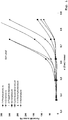
- Fig. 1 shows a graph with the results of Example 36, in which the amount of tin in the respective catalyst system is indicated in mmol on the X axis and the porosity in mm liquid column (FS) of the foams obtained is indicated on the Y axis.
- Molecules that are as structurally related as possible with 2-ethylhexanoic acid, 2-ethylbutyric acid and 2-propylheptanoic acid, the tin isononate (tin salt of 3,5,5-trimethylhexanoic acid) were selected as compounds not according to the invention.
- Table 1 summarizes the variable constituents of the formulations of the example foams 1 to 35.
- Tests e) to g) were carried out according to ASTM D 1564-71.
- the air permeability / porosity of the foam was determined by measuring the dynamic pressure on the foam.
- the back pressure measured was given in mm of alcohol column, the lower back pressure values characterizing the more open foam. The values were measured in the range from 0 to 300 mm.
- the washing bottle is only mandatory if the apparatus is not fed from the internal line, but directly with technical bottle gas.
- the support nozzle is specified by an edge length of 100 x 100 mm, a weight between 800 and 1000 g, clear width of the outflow opening of 5 mm, clear width of the lower support ring of 30 mm.
- the measuring liquid (technical alcohol (ethanol)) can be colored to increase the optical contrast.
- the nitrogen inlet pressure was set to 1 bar using a reducing valve.
- the flow rate was adjusted to the corresponding 480 L / h using the flow control screw.
- the amount of liquid in the graduated glass tube was brought to a level by alcohol so that no pressure difference can be built up or read off.
- the support nozzle is placed at the corners with congruent edges, which becomes the center of the test body estimated. It is read when a constant dynamic pressure has been established.
- stable polyurethane foams can be produced when the metal salts of the (methyl) -alkylcarboxylic acids according to the invention are added.
- the parts by weight of the respective catalysts were calculated so that the tin content in the systems to be compared is equimolar.
- the open-cell content of the foams is reduced when the amount of tin sononate used increases only from 6 to 126 mm dynamic pressure ethanol column, with n-octanoic acid only from 8 to 104 mm.
- the acid emission is determined based on the Mercedes-Benz test specification PB VWT 709.
- the thermal desorption is carried out with a "TDS2" thermal desorber with a sample changer from Gerstel, Mülheim, in conjunction with a Hewlett Packard HP6890 / HP5973 GC / MSD system.
- the peak which is recognized as eg 2-ethylhexanoic acid by means of the mass spectrum, is determined over its peak area with the response factor of the toluene from the calibration as ppm toluene equivalent.
- Table 3 summarizes the results of the acid emissions from selected examples. Table 3: Results of the emission determinations No. according to the invention acid Tin catalyst [parts] Total emission [ ⁇ g / g] Acid emission [ ⁇ g / g] Share of total emissions [%] 2 No 2-ethylhexane 0.2 830 613 74 12 Yes Isononane 0.215 770 512 66 7th No 2-propylheptane 0.23 1190 805 68 17 [2] Yes n-octane 0.2 500 202 40 32 Yes n-nonane 0.215 380 119 31 [2] without mixing in DPG
- Example 36 Determination of the influence of the catalyst content (tin content) on the porosity of the foams
- Foams were produced as indicated in Examples 1 to 35, the concentration of the catalyst system being varied.
- the foams were made using tin salts of 2-ethylhexanoic acid, 3,3-dimethylbutyric acid, 2-propylheptanoic acid, cyclohexanecarboxylic acid and n-octanoic acid.
- the foams obtained were examined for their porosity. The results of these investigations are in Fig. 1 shown.
Landscapes
- Chemical & Material Sciences (AREA)
- Health & Medical Sciences (AREA)
- Chemical Kinetics & Catalysis (AREA)
- Medicinal Chemistry (AREA)
- Polymers & Plastics (AREA)
- Organic Chemistry (AREA)
- Polyurethanes Or Polyureas (AREA)
- Sealing Material Composition (AREA)
- Paints Or Removers (AREA)
- Adhesives Or Adhesive Processes (AREA)
Claims (1)
- Utilisation de systèmes de catalyseur appropriés pour la catalyse de la préparation de systèmes de polyuréthane, le système de catalyseur contenant un sel d'étain d'un acide carboxylique, à l'atome de carbone du carbonyle duquel un atome d'hydrogène ou un radical hydrocarboné est lié, à condition que l'acide carboxylique ne présente pas exclusivement une unique ramification de type éthyle ou n-propyle en position 2, l'acide présentant au moins une ramification de groupe méthyle, et le système de catalyseur contenant un ou plusieurs solvants organiques, et le système de catalyseur ne présentant, en tant que sels métalliques, qu'exclusivement ceux qui sont des sels d'acides carboxylique qui sont non ramifiés ou qui présentent exclusivement des ramifications méthyle,
lors de la préparation de mousses/de matériaux alvéolaires de polyuréthane flexibles à base d'étherpolyols et d'esterpolyols,
le système de catalyseur étant ajouté au mélange réactionnel avant ou pendant la réaction.
Priority Applications (1)
| Application Number | Priority Date | Filing Date | Title |
|---|---|---|---|
| PL14169212T PL2770001T3 (pl) | 2009-07-18 | 2010-06-18 | Zastosowanie soli cyny kwasu karboksylowego przy wytwarzaniu systemów poliuretanowych |
Applications Claiming Priority (3)
| Application Number | Priority Date | Filing Date | Title |
|---|---|---|---|
| DE102009033710A DE102009033710A1 (de) | 2009-07-18 | 2009-07-18 | Verwendung von Metallsalzen einer Carbonsäure bei der Herstellung von Polyurethansystemen |
| EP12172115.3A EP2500369B2 (fr) | 2009-07-18 | 2010-06-18 | Utilisation de sels d'etain d'un acide carboxylique lors de la fabrication de systèmes polyuréthane |
| EP10166434A EP2289960B1 (fr) | 2009-07-18 | 2010-06-18 | Utilisation de sels métalliques d'un acide carbonique lors de la fabrication de systèmes en polyuréthane |
Related Parent Applications (3)
| Application Number | Title | Priority Date | Filing Date |
|---|---|---|---|
| EP12172115.3A Division EP2500369B2 (fr) | 2009-07-18 | 2010-06-18 | Utilisation de sels d'etain d'un acide carboxylique lors de la fabrication de systèmes polyuréthane |
| EP12172115.3A Division-Into EP2500369B2 (fr) | 2009-07-18 | 2010-06-18 | Utilisation de sels d'etain d'un acide carboxylique lors de la fabrication de systèmes polyuréthane |
| EP10166434A Division EP2289960B1 (fr) | 2009-07-18 | 2010-06-18 | Utilisation de sels métalliques d'un acide carbonique lors de la fabrication de systèmes en polyuréthane |
Publications (2)
| Publication Number | Publication Date |
|---|---|
| EP2770001A1 EP2770001A1 (fr) | 2014-08-27 |
| EP2770001B1 true EP2770001B1 (fr) | 2021-01-06 |
Family
ID=42537792
Family Applications (3)
| Application Number | Title | Priority Date | Filing Date |
|---|---|---|---|
| EP14169212.9A Active EP2770001B1 (fr) | 2009-07-18 | 2010-06-18 | Utilisation de sels d'étain d'un acide carbonique lors de la fabrication de systèmes en polyuréthane |
| EP12172115.3A Active EP2500369B2 (fr) | 2009-07-18 | 2010-06-18 | Utilisation de sels d'etain d'un acide carboxylique lors de la fabrication de systèmes polyuréthane |
| EP10166434A Revoked EP2289960B1 (fr) | 2009-07-18 | 2010-06-18 | Utilisation de sels métalliques d'un acide carbonique lors de la fabrication de systèmes en polyuréthane |
Family Applications After (2)
| Application Number | Title | Priority Date | Filing Date |
|---|---|---|---|
| EP12172115.3A Active EP2500369B2 (fr) | 2009-07-18 | 2010-06-18 | Utilisation de sels d'etain d'un acide carboxylique lors de la fabrication de systèmes polyuréthane |
| EP10166434A Revoked EP2289960B1 (fr) | 2009-07-18 | 2010-06-18 | Utilisation de sels métalliques d'un acide carbonique lors de la fabrication de systèmes en polyuréthane |
Country Status (11)
| Country | Link |
|---|---|
| US (2) | US8841403B2 (fr) |
| EP (3) | EP2770001B1 (fr) |
| JP (1) | JP5530283B2 (fr) |
| CN (2) | CN103214644B (fr) |
| BR (1) | BRPI1002427B1 (fr) |
| DE (1) | DE102009033710A1 (fr) |
| DK (1) | DK2770001T3 (fr) |
| ES (2) | ES2854294T3 (fr) |
| HU (1) | HUE053662T2 (fr) |
| PL (3) | PL2500369T5 (fr) |
| PT (1) | PT2770001T (fr) |
Families Citing this family (22)
| Publication number | Priority date | Publication date | Assignee | Title |
|---|---|---|---|---|
| DE102009033710A1 (de) | 2009-07-18 | 2011-01-20 | Evonik Goldschmidt Gmbh | Verwendung von Metallsalzen einer Carbonsäure bei der Herstellung von Polyurethansystemen |
| DE102010003672A1 (de) | 2010-04-07 | 2011-10-13 | Evonik Goldschmidt Gmbh | Herstellung und Verwendung von Metallsalzen von Alkyloxid- und/oder Arylalkyloxid-Oligomeren und -Polymeren mit Säureendgruppen bei der Herstellung von Polyurethansystemen |
| DE102011079791A1 (de) | 2011-07-26 | 2013-01-31 | Evonik Goldschmidt Gmbh | Additivzusammensetzung, einsetzbar zur Steuerung der Schaumeigenschaften bei der Herstellung von Polyurethanweichschäumen, die Polyole auf Basis nachwachsender Rohstoffe enthalten |
| DE102011109540A1 (de) | 2011-08-03 | 2013-02-07 | Evonik Goldschmidt Gmbh | Alkylcarbonat endverschlossene Polyethersilioxane und Verfahren zu deren Herstellung |
| US9611639B2 (en) | 2011-12-29 | 2017-04-04 | Firestone Building Products Co., LLC | Roofing membranes with expandable graphite as flame retardant |
| US9441140B2 (en) | 2012-07-12 | 2016-09-13 | Firestone Building Products Co., LLC | Asphaltic sheet materials including expandable graphite |
| US8968853B2 (en) | 2012-11-07 | 2015-03-03 | Firestone Building Products Company, Llc | Pressure-sensitive adhesives including expandable graphite |
| EP2752243A1 (fr) * | 2013-01-04 | 2014-07-09 | Evonik Industries AG | Utilisation de sels d'étain de l'acide néodécanoïque lors de la fabrication de systèmes en polyuréthane |
| DE102013201829A1 (de) | 2013-02-05 | 2014-08-07 | Evonik Industries Ag | Amine, geeignet zur Verwendung bei der Herstellung von Polyurethanen |
| US10017943B1 (en) | 2013-02-14 | 2018-07-10 | Firestone Building Products Co., LLC | Liquid coatings including expandable graphite |
| DE102013204991A1 (de) | 2013-03-21 | 2014-09-25 | Evonik Industries Ag | Herstellung von Polyurethanschäumen, die Polyole auf Polyolefinbasis enthalten |
| US10415249B2 (en) | 2014-07-03 | 2019-09-17 | Firestone Building Products Co., LLC | EPDM roofing membranes with expandable graphite as flame retardant |
| DE102014215382A1 (de) | 2014-08-05 | 2016-02-11 | Evonik Degussa Gmbh | Stickstoffhaltige Verbindungen, geeignet zur Verwendung bei der Herstellung von Polyurethanen |
| DE102014215388A1 (de) | 2014-08-05 | 2016-02-11 | Evonik Degussa Gmbh | Stickstoffhaltige Verbindungen, geeignet zur Verwendung bei der Herstellung von Polyurethanen |
| DE102014215384A1 (de) | 2014-08-05 | 2016-02-11 | Evonik Degussa Gmbh | Stickstoffhaltige Verbindungen, geeignet zur Verwendung bei der Herstellung von Polyurethanen |
| DE102014218635A1 (de) | 2014-09-17 | 2016-03-17 | Evonik Degussa Gmbh | Herstellung von viskoelastischen Polyurethansystemen unter Einsatz von Blockpolymeren mit verknüpften Siloxanblöcken als Zellöffner |
| US10307165B2 (en) * | 2015-09-24 | 2019-06-04 | Ethicon Llc | Apparatus and method for radially bunching a bodily lumen |
| WO2018202564A1 (fr) * | 2017-05-05 | 2018-11-08 | Basf Se | Masse de scellement polyuréthane stable au stockage pour enrober des fibres creuses lors de la fabrication d'éléments filtrants |
| EP4658698A1 (fr) | 2023-02-03 | 2025-12-10 | Galata Chemicals, LLC | Procédé de fabrication de mousse de polyuréthane |
| EP4722268A1 (fr) | 2023-05-30 | 2026-04-08 | Nitto Kasei Co., Ltd. | Composition de catalyseur pour la production de mousse de polyuréthane et procédé de production de mousse de polyuréthane faisant appel à celle-ci |
| JPWO2024262458A1 (fr) | 2023-06-23 | 2024-12-26 | ||
| US12258435B1 (en) | 2024-02-06 | 2025-03-25 | Patcham Usa Llc | Method for preparing low density polyurethanes using catalysts that are free from tertiary amines and tin |
Family Cites Families (45)
| Publication number | Priority date | Publication date | Assignee | Title |
|---|---|---|---|---|
| NL125854C (fr) | 1958-11-03 | |||
| NL247436A (fr) | 1959-01-17 | |||
| DE1177159B (de) † | 1959-11-30 | 1964-09-03 | M & T Chemicals Inc | Verfahren zum Stabilisieren von Stannosalzen aliphatischer oder aromatischer Carbonsaeuren gegen oxydativen Abbau |
| DE1251018B (de) | 1960-04-27 | 1967-09-28 | The General Tire & Rubber Com pany, Akron Ohio (V St A) | Verfahren zur Herstellung von Polyurethanschaumstoffen |
| NL292809A (fr) | 1962-05-17 | |||
| GB1012653A (en) | 1963-01-15 | 1965-12-08 | Du Pont | Polyurethane foams and processes for their preparation |
| US3347804A (en) * | 1963-05-24 | 1967-10-17 | Ferro Corp | Mixtures of tin, lead and zinc naphthenates and octoates as catalysts for polyurethane foams |
| US3245958A (en) * | 1965-05-04 | 1966-04-12 | Hooker Chemical Corp | Reaction of an isocyanate with an active hydrogen compound using an antimony carboxylate catalyst |
| US3595734A (en) * | 1965-07-20 | 1971-07-27 | Freudenberg Carl Kg | Production of foamed articles |
| US3468991A (en) | 1965-07-20 | 1969-09-23 | Freudenberg Carl Kg | Production of foamed articles |
| US3470121A (en) | 1966-09-15 | 1969-09-30 | Allied Chem | Novel polyol compositions and filled polyurethanes prepared therefrom |
| GB1197314A (en) | 1967-05-01 | 1970-07-01 | Nuodex Ltd | Improvements relating to the production of Polyurethanes |
| US3714077A (en) † | 1970-04-01 | 1973-01-30 | Gen Tire & Rubber Co | Urethane foam catalyst system |
| US4031049A (en) * | 1970-08-03 | 1977-06-21 | Furane Plastics, Inc. | Polyurethane cross-linking agents |
| BE779607A (fr) | 1972-02-21 | 1972-06-16 | Air Prod & Chem | Catalyseurs pour le polyurethane et procede de fabrication de mousses de polyurethane |
| DE2231413A1 (de) | 1972-06-27 | 1974-01-10 | Bayer Ag | Verfahren zur herstellung von polyurethanschaumstoffen |
| GB1422056A (en) | 1973-05-29 | 1976-01-21 | Ici Ltd | Polyurethane foams |
| US3925266A (en) | 1973-06-18 | 1975-12-09 | Gen Tire & Rubber Co | Flexible polyetherurethane foams with improved resilience |
| DE2444829A1 (de) * | 1974-09-19 | 1976-04-08 | Kabel Metallwerke Ghh | Verfahren zur herstellung von durch aufpfropfen einer silanverbindung in anwesenheit von feuchtigkeit vernetzbaren thermoplasten oder elastomeren |
| US4438038A (en) * | 1981-02-17 | 1984-03-20 | Nuodex Inc. | Process for the production of oil-soluble metal salts |
| US4456696A (en) | 1981-04-09 | 1984-06-26 | Abbott Laboratories | Catalyst for making polyurethanes |
| DE3411361A1 (de) * | 1984-03-28 | 1985-10-10 | Akzo Gmbh, 5600 Wuppertal | Einbettmaterial, verfahren zu seiner herstellung und seine verwendung |
| US4584362A (en) * | 1985-02-27 | 1986-04-22 | Cosan Chemical Corporation | Bismuth catalyst system for preparing polyurethane elastomers |
| US5021598A (en) * | 1989-07-24 | 1991-06-04 | Mooney Chemicals, Inc. | Process for making bismuth carboxylates |
| US5206200A (en) | 1991-04-22 | 1993-04-27 | W. R. Grace & Co.-Conn. | Tin catalysts for hydrolysis of latent amine curing agents |
| US5605939A (en) | 1996-01-26 | 1997-02-25 | Arco Chemical Technology, L.P. | Poly(oxypropylene/oxyethylene) random polyols useful in preparing flexible high resilience foam with reduced tendencies toward shrinkage and foam prepared therewith |
| UA61089C2 (uk) | 1996-11-08 | 2003-11-17 | Хантсмен Ай Сі Ай Кемікалз, Ллс | Спосіб одержання жорстких та еластичних пінополіуретанових матеріалів |
| US5852137A (en) | 1997-01-29 | 1998-12-22 | Essex Specialty Products | Polyurethane sealant compositions |
| EP1013704B1 (fr) | 1998-12-21 | 2003-03-19 | Goldschmidt AG | Utilisation de sels métalliques d'acide ricinolique dans la préparation de mousses de polyuréthane |
| AU6842500A (en) * | 1999-10-07 | 2001-05-10 | Huntsman International Llc | Process for making rigid and flexible polyurethane foams containing a fire-retardant |
| JP2002047330A (ja) * | 2000-08-01 | 2002-02-12 | Mitsui Chemicals Inc | ポリウレタン発泡体 |
| JP2003026751A (ja) | 2001-07-18 | 2003-01-29 | Nitto Kasei Co Ltd | ポリウレタン用硬化触媒組成物およびウレタン硬化性組成物 |
| EP1375546A1 (fr) | 2002-06-21 | 2004-01-02 | Crompton GmbH | Catalyseurs à l'étain à basse émission |
| PL374319A1 (en) | 2002-06-21 | 2005-10-17 | Recticel | Micro-cellular or non-cellular light-stable polyurethane material and method for the production thereof |
| US8003744B2 (en) * | 2003-08-25 | 2011-08-23 | Kaneka Corporation | Curing composition with improved heat resistance |
| JP2005307164A (ja) | 2004-03-23 | 2005-11-04 | Tosoh Corp | ポリウレタン樹脂製造用触媒組成物及びポリウレタン樹脂の製造方法 |
| US20060035994A1 (en) | 2004-05-17 | 2006-02-16 | Kaplan Warren A | Method for preparing phthalate polyester polyol-based dimensionally stable spray polyurethane foam |
| WO2006125258A1 (fr) * | 2005-05-24 | 2006-11-30 | Pacific Brands Household Products Pty Ltd | Mousse de polyurethanne ignifuge de faible resilience |
| DE602006013835D1 (de) * | 2005-08-17 | 2010-06-02 | Akzo Nobel Coatings Int Bv | Beschichtungszusammensetzung, enthaltend ein polyisocyanat und ein polyol |
| JP2007169432A (ja) | 2005-12-21 | 2007-07-05 | Hirono Kagaku Kogyo Kk | 無溶剤型ポリウレタン組成物およびその硬化生成物 |
| JP2007308656A (ja) * | 2006-05-22 | 2007-11-29 | Sunstar Engineering Inc | 硬化性組成物 |
| GB0705685D0 (en) * | 2007-03-24 | 2007-05-02 | Nauer Fritz Ag | Polyurethane foam |
| CN101842404B (zh) | 2007-08-27 | 2014-06-18 | 陶氏环球技术有限责任公司 | 具有铋化合物的基于天然油的柔性聚氨酯泡沫的催化剂 |
| MX2010005069A (es) * | 2009-05-27 | 2010-11-26 | Bayer Materialscience Ag | Procedimiento para la fabricacion de espumas blandas de poliuretano con emision reducida. |
| DE102009033710A1 (de) | 2009-07-18 | 2011-01-20 | Evonik Goldschmidt Gmbh | Verwendung von Metallsalzen einer Carbonsäure bei der Herstellung von Polyurethansystemen |
-
2009
- 2009-07-18 DE DE102009033710A patent/DE102009033710A1/de not_active Withdrawn
-
2010
- 2010-06-18 EP EP14169212.9A patent/EP2770001B1/fr active Active
- 2010-06-18 PT PT141692129T patent/PT2770001T/pt unknown
- 2010-06-18 EP EP12172115.3A patent/EP2500369B2/fr active Active
- 2010-06-18 ES ES14169212T patent/ES2854294T3/es active Active
- 2010-06-18 ES ES10166434T patent/ES2392330T3/es active Active
- 2010-06-18 EP EP10166434A patent/EP2289960B1/fr not_active Revoked
- 2010-06-18 PL PL12172115T patent/PL2500369T5/pl unknown
- 2010-06-18 PL PL10166434T patent/PL2289960T3/pl unknown
- 2010-06-18 HU HUE14169212A patent/HUE053662T2/hu unknown
- 2010-06-18 DK DK14169212.9T patent/DK2770001T3/da active
- 2010-06-18 PL PL14169212T patent/PL2770001T3/pl unknown
- 2010-07-14 US US12/836,155 patent/US8841403B2/en active Active
- 2010-07-15 CN CN201310128320.0A patent/CN103214644B/zh active Active
- 2010-07-15 BR BRPI1002427-1A patent/BRPI1002427B1/pt not_active IP Right Cessation
- 2010-07-15 CN CN2010102316208A patent/CN101955573B/zh active Active
- 2010-07-16 JP JP2010161685A patent/JP5530283B2/ja active Active
-
2013
- 2013-10-29 US US14/065,974 patent/US20140058004A1/en not_active Abandoned
Non-Patent Citations (1)
| Title |
|---|
| None * |
Also Published As
| Publication number | Publication date |
|---|---|
| PL2770001T3 (pl) | 2021-06-14 |
| US20110015290A1 (en) | 2011-01-20 |
| JP2011021188A (ja) | 2011-02-03 |
| EP2289960B1 (fr) | 2012-08-22 |
| HUE053662T2 (hu) | 2021-07-28 |
| DE102009033710A1 (de) | 2011-01-20 |
| CN101955573A (zh) | 2011-01-26 |
| ES2854294T3 (es) | 2021-09-21 |
| EP2500369A1 (fr) | 2012-09-19 |
| BRPI1002427A2 (pt) | 2012-05-15 |
| CN101955573B (zh) | 2013-04-24 |
| CN103214644A (zh) | 2013-07-24 |
| BRPI1002427B1 (pt) | 2019-10-29 |
| CN103214644B (zh) | 2016-02-24 |
| DK2770001T3 (da) | 2021-03-29 |
| PL2500369T5 (pl) | 2018-05-30 |
| US8841403B2 (en) | 2014-09-23 |
| PT2770001T (pt) | 2021-02-25 |
| EP2289960A1 (fr) | 2011-03-02 |
| US20140058004A1 (en) | 2014-02-27 |
| JP5530283B2 (ja) | 2014-06-25 |
| EP2500369B2 (fr) | 2018-01-03 |
| EP2500369B1 (fr) | 2014-08-06 |
| PL2500369T3 (pl) | 2014-12-31 |
| EP2770001A1 (fr) | 2014-08-27 |
| PL2289960T3 (pl) | 2013-01-31 |
| ES2392330T3 (es) | 2012-12-07 |
Similar Documents
| Publication | Publication Date | Title |
|---|---|---|
| EP2770001B1 (fr) | Utilisation de sels d'étain d'un acide carbonique lors de la fabrication de systèmes en polyuréthane | |
| EP2556099B1 (fr) | Fabrication et utilisation de sels métalliques d'oligomères et de polymères d'oxyde d'alkyle et/ou d'oxyde d'arylalkyle à groupes terminaux acides lors de la fabrication de systèmes de polyuréthane | |
| EP2762509B1 (fr) | Composition destinée à être utilisée dans la fabrication de systèmes polyuréthanes | |
| EP3010951B1 (fr) | Composition de polyéther de siloxane-isocyanate | |
| EP2557101B1 (fr) | Formule contenant étain et / ou sels de zinc d'acide ricinoléique, urée, polyéthylène glycol et alcool de sucre et utilisation de la formule dans la fabrication de systèmes de polyuréthane | |
| EP2062905B1 (fr) | Mélanges de liaisons contenant du phosphore, leur procédé de fabrication et leur utilisation comme agent ignifuge | |
| EP3071615B1 (fr) | Utilisation de pentaethylène hexamine dans la préparation des systèmes polyuréthane | |
| EP3067343B1 (fr) | Antioxydants destinés à fabriquer des systèmes PUR à faible émission | |
| EP4004079B1 (fr) | Fabrication des mousses polyuréthanes | |
| DE102012206193A1 (de) | Guanidingruppen aufweisende Verbindungen und deren Verwendung als Additive bei der Herstellung von Polyurethansystemen | |
| EP3205678A1 (fr) | Matelas et/ou coussins a faible emission et resistants au vieillissement | |
| EP2557100B1 (fr) | Composition comprenant de l'étain et / ou des sels de zinc d'acide ricinoléique et au moins un carboxylate d'étain et utilisation de la composition dans la fabrication de systèmes de polyuréthane | |
| EP1013704B1 (fr) | Utilisation de sels métalliques d'acide ricinolique dans la préparation de mousses de polyuréthane | |
| EP2941317B1 (fr) | Utilisation de sels d'étain de l'acide néodécanoïque lors de la préparation de mousse de polyuréthanes | |
| WO2014009086A1 (fr) | Procédé de fabrication de mousses de polyuréthane molles à faible rejet |
Legal Events
| Date | Code | Title | Description |
|---|---|---|---|
| PUAI | Public reference made under article 153(3) epc to a published international application that has entered the european phase |
Free format text: ORIGINAL CODE: 0009012 |
|
| 17P | Request for examination filed |
Effective date: 20140521 |
|
| AC | Divisional application: reference to earlier application |
Ref document number: 2289960 Country of ref document: EP Kind code of ref document: P Ref document number: 2500369 Country of ref document: EP Kind code of ref document: P |
|
| AK | Designated contracting states |
Kind code of ref document: A1 Designated state(s): AL AT BE BG CH CY CZ DE DK EE ES FI FR GB GR HR HU IE IS IT LI LT LU LV MC MK MT NL NO PL PT RO SE SI SK SM TR |
|
| STAA | Information on the status of an ep patent application or granted ep patent |
Free format text: STATUS: EXAMINATION IS IN PROGRESS |
|
| 17Q | First examination report despatched |
Effective date: 20180703 |
|
| RAP1 | Party data changed (applicant data changed or rights of an application transferred) |
Owner name: EVONIK OPERATIONS GMBH |
|
| RIC1 | Information provided on ipc code assigned before grant |
Ipc: C08G 18/18 20060101AFI20200819BHEP Ipc: C08G 101/00 20060101ALI20200819BHEP Ipc: C08G 18/76 20060101ALI20200819BHEP Ipc: C08G 18/24 20060101ALI20200819BHEP Ipc: C08L 75/08 20060101ALN20200819BHEP Ipc: C08G 18/48 20060101ALI20200819BHEP |
|
| GRAP | Despatch of communication of intention to grant a patent |
Free format text: ORIGINAL CODE: EPIDOSNIGR1 |
|
| STAA | Information on the status of an ep patent application or granted ep patent |
Free format text: STATUS: GRANT OF PATENT IS INTENDED |
|
| RIC1 | Information provided on ipc code assigned before grant |
Ipc: C08G 18/48 20060101ALI20200907BHEP Ipc: C08L 75/08 20060101ALN20200907BHEP Ipc: C08G 18/18 20060101AFI20200907BHEP Ipc: C08G 101/00 20060101ALI20200907BHEP Ipc: C08G 18/24 20060101ALI20200907BHEP Ipc: C08G 18/76 20060101ALI20200907BHEP |
|
| INTG | Intention to grant announced |
Effective date: 20200928 |
|
| GRAS | Grant fee paid |
Free format text: ORIGINAL CODE: EPIDOSNIGR3 |
|
| GRAA | (expected) grant |
Free format text: ORIGINAL CODE: 0009210 |
|
| STAA | Information on the status of an ep patent application or granted ep patent |
Free format text: STATUS: THE PATENT HAS BEEN GRANTED |
|
| AC | Divisional application: reference to earlier application |
Ref document number: 2289960 Country of ref document: EP Kind code of ref document: P Ref document number: 2500369 Country of ref document: EP Kind code of ref document: P |
|
| AK | Designated contracting states |
Kind code of ref document: B1 Designated state(s): AL AT BE BG CH CY CZ DE DK EE ES FI FR GB GR HR HU IE IS IT LI LT LU LV MC MK MT NL NO PL PT RO SE SI SK SM TR |
|
| REG | Reference to a national code |
Ref country code: GB Ref legal event code: FG4D Free format text: NOT ENGLISH |
|
| REG | Reference to a national code |
Ref country code: AT Ref legal event code: REF Ref document number: 1352294 Country of ref document: AT Kind code of ref document: T Effective date: 20210115 Ref country code: CH Ref legal event code: EP |
|
| REG | Reference to a national code |
Ref country code: DE Ref legal event code: R096 Ref document number: 502010016838 Country of ref document: DE |
|
| REG | Reference to a national code |
Ref country code: IE Ref legal event code: FG4D Free format text: LANGUAGE OF EP DOCUMENT: GERMAN |
|
| REG | Reference to a national code |
Ref country code: PT Ref legal event code: SC4A Ref document number: 2770001 Country of ref document: PT Date of ref document: 20210225 Kind code of ref document: T Free format text: AVAILABILITY OF NATIONAL TRANSLATION Effective date: 20210218 |
|
| REG | Reference to a national code |
Ref country code: DK Ref legal event code: T3 Effective date: 20210326 |
|
| REG | Reference to a national code |
Ref country code: NL Ref legal event code: FP |
|
| REG | Reference to a national code |
Ref country code: LT Ref legal event code: MG9D |
|
| REG | Reference to a national code |
Ref country code: HU Ref legal event code: AG4A Ref document number: E053662 Country of ref document: HU |
|
| PG25 | Lapsed in a contracting state [announced via postgrant information from national office to epo] |
Ref country code: HR Free format text: LAPSE BECAUSE OF FAILURE TO SUBMIT A TRANSLATION OF THE DESCRIPTION OR TO PAY THE FEE WITHIN THE PRESCRIBED TIME-LIMIT Effective date: 20210106 Ref country code: GR Free format text: LAPSE BECAUSE OF FAILURE TO SUBMIT A TRANSLATION OF THE DESCRIPTION OR TO PAY THE FEE WITHIN THE PRESCRIBED TIME-LIMIT Effective date: 20210407 Ref country code: FI Free format text: LAPSE BECAUSE OF FAILURE TO SUBMIT A TRANSLATION OF THE DESCRIPTION OR TO PAY THE FEE WITHIN THE PRESCRIBED TIME-LIMIT Effective date: 20210106 Ref country code: LT Free format text: LAPSE BECAUSE OF FAILURE TO SUBMIT A TRANSLATION OF THE DESCRIPTION OR TO PAY THE FEE WITHIN THE PRESCRIBED TIME-LIMIT Effective date: 20210106 Ref country code: BG Free format text: LAPSE BECAUSE OF FAILURE TO SUBMIT A TRANSLATION OF THE DESCRIPTION OR TO PAY THE FEE WITHIN THE PRESCRIBED TIME-LIMIT Effective date: 20210406 Ref country code: NO Free format text: LAPSE BECAUSE OF FAILURE TO SUBMIT A TRANSLATION OF THE DESCRIPTION OR TO PAY THE FEE WITHIN THE PRESCRIBED TIME-LIMIT Effective date: 20210406 |
|
| PG25 | Lapsed in a contracting state [announced via postgrant information from national office to epo] |
Ref country code: SE Free format text: LAPSE BECAUSE OF FAILURE TO SUBMIT A TRANSLATION OF THE DESCRIPTION OR TO PAY THE FEE WITHIN THE PRESCRIBED TIME-LIMIT Effective date: 20210106 Ref country code: LV Free format text: LAPSE BECAUSE OF FAILURE TO SUBMIT A TRANSLATION OF THE DESCRIPTION OR TO PAY THE FEE WITHIN THE PRESCRIBED TIME-LIMIT Effective date: 20210106 |
|
| REG | Reference to a national code |
Ref country code: ES Ref legal event code: FG2A Ref document number: 2854294 Country of ref document: ES Kind code of ref document: T3 Effective date: 20210921 |
|
| PG25 | Lapsed in a contracting state [announced via postgrant information from national office to epo] |
Ref country code: IS Free format text: LAPSE BECAUSE OF FAILURE TO SUBMIT A TRANSLATION OF THE DESCRIPTION OR TO PAY THE FEE WITHIN THE PRESCRIBED TIME-LIMIT Effective date: 20210506 |
|
| REG | Reference to a national code |
Ref country code: DE Ref legal event code: R097 Ref document number: 502010016838 Country of ref document: DE |
|
| PG25 | Lapsed in a contracting state [announced via postgrant information from national office to epo] |
Ref country code: EE Free format text: LAPSE BECAUSE OF FAILURE TO SUBMIT A TRANSLATION OF THE DESCRIPTION OR TO PAY THE FEE WITHIN THE PRESCRIBED TIME-LIMIT Effective date: 20210106 Ref country code: SM Free format text: LAPSE BECAUSE OF FAILURE TO SUBMIT A TRANSLATION OF THE DESCRIPTION OR TO PAY THE FEE WITHIN THE PRESCRIBED TIME-LIMIT Effective date: 20210106 |
|
| PLBE | No opposition filed within time limit |
Free format text: ORIGINAL CODE: 0009261 |
|
| STAA | Information on the status of an ep patent application or granted ep patent |
Free format text: STATUS: NO OPPOSITION FILED WITHIN TIME LIMIT |
|
| PG25 | Lapsed in a contracting state [announced via postgrant information from national office to epo] |
Ref country code: SK Free format text: LAPSE BECAUSE OF FAILURE TO SUBMIT A TRANSLATION OF THE DESCRIPTION OR TO PAY THE FEE WITHIN THE PRESCRIBED TIME-LIMIT Effective date: 20210106 Ref country code: RO Free format text: LAPSE BECAUSE OF FAILURE TO SUBMIT A TRANSLATION OF THE DESCRIPTION OR TO PAY THE FEE WITHIN THE PRESCRIBED TIME-LIMIT Effective date: 20210106 |
|
| 26N | No opposition filed |
Effective date: 20211007 |
|
| REG | Reference to a national code |
Ref country code: DK Ref legal event code: EBP Effective date: 20210630 |
|
| PG25 | Lapsed in a contracting state [announced via postgrant information from national office to epo] |
Ref country code: MC Free format text: LAPSE BECAUSE OF FAILURE TO SUBMIT A TRANSLATION OF THE DESCRIPTION OR TO PAY THE FEE WITHIN THE PRESCRIBED TIME-LIMIT Effective date: 20210106 Ref country code: AL Free format text: LAPSE BECAUSE OF FAILURE TO SUBMIT A TRANSLATION OF THE DESCRIPTION OR TO PAY THE FEE WITHIN THE PRESCRIBED TIME-LIMIT Effective date: 20210106 Ref country code: CZ Free format text: LAPSE BECAUSE OF NON-PAYMENT OF DUE FEES Effective date: 20210618 |
|
| REG | Reference to a national code |
Ref country code: CH Ref legal event code: PL |
|
| GBPC | Gb: european patent ceased through non-payment of renewal fee |
Effective date: 20210618 |
|
| PG25 | Lapsed in a contracting state [announced via postgrant information from national office to epo] |
Ref country code: SI Free format text: LAPSE BECAUSE OF FAILURE TO SUBMIT A TRANSLATION OF THE DESCRIPTION OR TO PAY THE FEE WITHIN THE PRESCRIBED TIME-LIMIT Effective date: 20210106 |
|
| PG25 | Lapsed in a contracting state [announced via postgrant information from national office to epo] |
Ref country code: LU Free format text: LAPSE BECAUSE OF NON-PAYMENT OF DUE FEES Effective date: 20210618 |
|
| PG25 | Lapsed in a contracting state [announced via postgrant information from national office to epo] |
Ref country code: LI Free format text: LAPSE BECAUSE OF NON-PAYMENT OF DUE FEES Effective date: 20210630 Ref country code: IE Free format text: LAPSE BECAUSE OF NON-PAYMENT OF DUE FEES Effective date: 20210618 Ref country code: GB Free format text: LAPSE BECAUSE OF NON-PAYMENT OF DUE FEES Effective date: 20210618 Ref country code: CH Free format text: LAPSE BECAUSE OF NON-PAYMENT OF DUE FEES Effective date: 20210630 |
|
| PG25 | Lapsed in a contracting state [announced via postgrant information from national office to epo] |
Ref country code: IS Free format text: LAPSE BECAUSE OF FAILURE TO SUBMIT A TRANSLATION OF THE DESCRIPTION OR TO PAY THE FEE WITHIN THE PRESCRIBED TIME-LIMIT Effective date: 20210506 |
|
| PG25 | Lapsed in a contracting state [announced via postgrant information from national office to epo] |
Ref country code: DK Free format text: LAPSE BECAUSE OF NON-PAYMENT OF DUE FEES Effective date: 20210630 |
|
| PG25 | Lapsed in a contracting state [announced via postgrant information from national office to epo] |
Ref country code: CY Free format text: LAPSE BECAUSE OF FAILURE TO SUBMIT A TRANSLATION OF THE DESCRIPTION OR TO PAY THE FEE WITHIN THE PRESCRIBED TIME-LIMIT Effective date: 20210106 |
|
| P01 | Opt-out of the competence of the unified patent court (upc) registered |
Effective date: 20230524 |
|
| PG25 | Lapsed in a contracting state [announced via postgrant information from national office to epo] |
Ref country code: MK Free format text: LAPSE BECAUSE OF FAILURE TO SUBMIT A TRANSLATION OF THE DESCRIPTION OR TO PAY THE FEE WITHIN THE PRESCRIBED TIME-LIMIT Effective date: 20210106 |
|
| PG25 | Lapsed in a contracting state [announced via postgrant information from national office to epo] |
Ref country code: TR Free format text: LAPSE BECAUSE OF NON-PAYMENT OF DUE FEES Effective date: 20210618 Ref country code: MT Free format text: LAPSE BECAUSE OF FAILURE TO SUBMIT A TRANSLATION OF THE DESCRIPTION OR TO PAY THE FEE WITHIN THE PRESCRIBED TIME-LIMIT Effective date: 20210106 |
|
| PGFP | Annual fee paid to national office [announced via postgrant information from national office to epo] |
Ref country code: PL Payment date: 20250609 Year of fee payment: 16 Ref country code: DE Payment date: 20250618 Year of fee payment: 16 |
|
| PGFP | Annual fee paid to national office [announced via postgrant information from national office to epo] |
Ref country code: BE Payment date: 20250618 Year of fee payment: 16 Ref country code: NL Payment date: 20250618 Year of fee payment: 16 |
|
| PGFP | Annual fee paid to national office [announced via postgrant information from national office to epo] |
Ref country code: PT Payment date: 20250605 Year of fee payment: 16 |
|
| PGFP | Annual fee paid to national office [announced via postgrant information from national office to epo] |
Ref country code: HU Payment date: 20250620 Year of fee payment: 16 Ref country code: FR Payment date: 20250624 Year of fee payment: 16 |
|
| PGFP | Annual fee paid to national office [announced via postgrant information from national office to epo] |
Ref country code: AT Payment date: 20250620 Year of fee payment: 16 |
|
| PGFP | Annual fee paid to national office [announced via postgrant information from national office to epo] |
Ref country code: ES Payment date: 20250728 Year of fee payment: 16 |
|
| PGFP | Annual fee paid to national office [announced via postgrant information from national office to epo] |
Ref country code: IT Payment date: 20250624 Year of fee payment: 16 |